EP4238839B1 - Road vehicle equipped with a braking system without front compartment encumbrance - Google Patents
Road vehicle equipped with a braking system without front compartment encumbrance Download PDFInfo
- Publication number
- EP4238839B1 EP4238839B1 EP23159562.0A EP23159562A EP4238839B1 EP 4238839 B1 EP4238839 B1 EP 4238839B1 EP 23159562 A EP23159562 A EP 23159562A EP 4238839 B1 EP4238839 B1 EP 4238839B1
- Authority
- EP
- European Patent Office
- Prior art keywords
- vehicle
- braking unit
- brake pedal
- road vehicle
- pedal
- Prior art date
- Legal status (The legal status is an assumption and is not a legal conclusion. Google has not performed a legal analysis and makes no representation as to the accuracy of the status listed.)
- Active
Links
Images

Classifications
-
- B—PERFORMING OPERATIONS; TRANSPORTING
- B60—VEHICLES IN GENERAL
- B60T—VEHICLE BRAKE CONTROL SYSTEMS OR PARTS THEREOF; BRAKE CONTROL SYSTEMS OR PARTS THEREOF, IN GENERAL; ARRANGEMENT OF BRAKING ELEMENTS ON VEHICLES IN GENERAL; PORTABLE DEVICES FOR PREVENTING UNWANTED MOVEMENT OF VEHICLES; VEHICLE MODIFICATIONS TO FACILITATE COOLING OF BRAKES
- B60T7/00—Brake-action initiating means
- B60T7/02—Brake-action initiating means for personal initiation
- B60T7/04—Brake-action initiating means for personal initiation foot actuated
- B60T7/042—Brake-action initiating means for personal initiation foot actuated by electrical means, e.g. using travel or force sensors
-
- B—PERFORMING OPERATIONS; TRANSPORTING
- B60—VEHICLES IN GENERAL
- B60T—VEHICLE BRAKE CONTROL SYSTEMS OR PARTS THEREOF; BRAKE CONTROL SYSTEMS OR PARTS THEREOF, IN GENERAL; ARRANGEMENT OF BRAKING ELEMENTS ON VEHICLES IN GENERAL; PORTABLE DEVICES FOR PREVENTING UNWANTED MOVEMENT OF VEHICLES; VEHICLE MODIFICATIONS TO FACILITATE COOLING OF BRAKES
- B60T11/00—Transmitting braking action from initiating means to ultimate brake actuator without power assistance or drive or where such assistance or drive is irrelevant
- B60T11/04—Transmitting braking action from initiating means to ultimate brake actuator without power assistance or drive or where such assistance or drive is irrelevant transmitting mechanically
-
- B—PERFORMING OPERATIONS; TRANSPORTING
- B60—VEHICLES IN GENERAL
- B60T—VEHICLE BRAKE CONTROL SYSTEMS OR PARTS THEREOF; BRAKE CONTROL SYSTEMS OR PARTS THEREOF, IN GENERAL; ARRANGEMENT OF BRAKING ELEMENTS ON VEHICLES IN GENERAL; PORTABLE DEVICES FOR PREVENTING UNWANTED MOVEMENT OF VEHICLES; VEHICLE MODIFICATIONS TO FACILITATE COOLING OF BRAKES
- B60T11/00—Transmitting braking action from initiating means to ultimate brake actuator without power assistance or drive or where such assistance or drive is irrelevant
- B60T11/10—Transmitting braking action from initiating means to ultimate brake actuator without power assistance or drive or where such assistance or drive is irrelevant transmitting by fluid means, e.g. hydraulic
- B60T11/16—Master control, e.g. master cylinders
- B60T11/18—Connection thereof to initiating means
-
- B—PERFORMING OPERATIONS; TRANSPORTING
- B60—VEHICLES IN GENERAL
- B60T—VEHICLE BRAKE CONTROL SYSTEMS OR PARTS THEREOF; BRAKE CONTROL SYSTEMS OR PARTS THEREOF, IN GENERAL; ARRANGEMENT OF BRAKING ELEMENTS ON VEHICLES IN GENERAL; PORTABLE DEVICES FOR PREVENTING UNWANTED MOVEMENT OF VEHICLES; VEHICLE MODIFICATIONS TO FACILITATE COOLING OF BRAKES
- B60T7/00—Brake-action initiating means
- B60T7/02—Brake-action initiating means for personal initiation
- B60T7/04—Brake-action initiating means for personal initiation foot actuated
- B60T7/06—Disposition of pedal
-
- B—PERFORMING OPERATIONS; TRANSPORTING
- B62—LAND VEHICLES FOR TRAVELLING OTHERWISE THAN ON RAILS
- B62D—MOTOR VEHICLES; TRAILERS
- B62D25/00—Superstructure or monocoque structure sub-units; Parts or details thereof not otherwise provided for
- B62D25/08—Front or rear portions
-
- B—PERFORMING OPERATIONS; TRANSPORTING
- B62—LAND VEHICLES FOR TRAVELLING OTHERWISE THAN ON RAILS
- B62D—MOTOR VEHICLES; TRAILERS
- B62D25/00—Superstructure or monocoque structure sub-units; Parts or details thereof not otherwise provided for
- B62D25/20—Floors or bottom sub-units
-
- B—PERFORMING OPERATIONS; TRANSPORTING
- B62—LAND VEHICLES FOR TRAVELLING OTHERWISE THAN ON RAILS
- B62D—MOTOR VEHICLES; TRAILERS
- B62D63/00—Motor vehicles or trailers not otherwise provided for
- B62D63/02—Motor vehicles
- B62D63/04—Component parts or accessories
-
- G—PHYSICS
- G05—CONTROLLING; REGULATING
- G05G—CONTROL DEVICES OR SYSTEMS INSOFAR AS CHARACTERISED BY MECHANICAL FEATURES ONLY
- G05G1/00—Controlling members, e.g. knobs or handles; Assemblies or arrangements thereof; Indicating position of controlling members
- G05G1/30—Controlling members actuated by foot
- G05G1/46—Means, e.g. links, for connecting the pedal to the controlled unit
-
- B—PERFORMING OPERATIONS; TRANSPORTING
- B60—VEHICLES IN GENERAL
- B60T—VEHICLE BRAKE CONTROL SYSTEMS OR PARTS THEREOF; BRAKE CONTROL SYSTEMS OR PARTS THEREOF, IN GENERAL; ARRANGEMENT OF BRAKING ELEMENTS ON VEHICLES IN GENERAL; PORTABLE DEVICES FOR PREVENTING UNWANTED MOVEMENT OF VEHICLES; VEHICLE MODIFICATIONS TO FACILITATE COOLING OF BRAKES
- B60T2270/00—Further aspects of brake control systems not otherwise provided for
- B60T2270/82—Brake-by-Wire, EHB
-
- G—PHYSICS
- G05—CONTROLLING; REGULATING
- G05G—CONTROL DEVICES OR SYSTEMS INSOFAR AS CHARACTERISED BY MECHANICAL FEATURES ONLY
- G05G1/00—Controlling members, e.g. knobs or handles; Assemblies or arrangements thereof; Indicating position of controlling members
- G05G1/30—Controlling members actuated by foot
- G05G1/44—Controlling members actuated by foot pivoting
Definitions
- the present invention relates to a road vehicle comprising a braking system without front compartment encumbrance.
- the present invention finds advantageous, but not exclusive, application in a braking system for high-performance vehicles, to which the following description will make explicit reference without thereby losing generality.
- the systems comprise a brake pedal and a braking unit that is mechanically connected to the brake pedal and configured to actuate the brakes at the wheels.
- floor pedal braking systems are known, where the pedal is hinged to the bottom of the road vehicle and therefore, when braking, looking at the system sideways from the left of the vehicle, the pedal substantially rotates anticlockwise; suspended pedal braking systems are also known, where the pedal is hinged to an upper portion of the vehicle pedal compartment and therefore, when braking, looking at the system sideways from the left, the pedal substantially rotates clockwise.
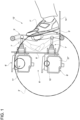
- Both configurations are characterised by the fact that the pedal is configured to push a rod provided with two ends, of which one is connected to the pedal by a joint and the other is connected to the braking unit to actuate the brakes (see Figure 1 ).
- the braking unit also known as the power brake or brake assist unit
- the braking unit is arranged along the plane in which the brake pedal rotates, so as to directly move the rod between the pedal and the unit.
- the braking unit is arranged within the front compartment of the car (usually occupied by an engine and separated from the passenger compartment by a bulkhead), in particular in a position along the longitudinal axis of the vehicle passing through the brake pedal.
- the floor pedal configuration may interfere with the front axle shaft of the road vehicle.
- shock absorbers external to the wheel well, e.g., horizontal ones
- the suspended pedal configuration may interfere with the encumbrance of these shock absorbers.
- the presence of rigid elements, such as the braking units within the front compartment increases the risk for the driver in the event of a front crash, reducing the deformable volume.
- a brake unit of the type mentioned above wherein the pedal force is transmitted to a brake cylinder with a lateral offset is known from Patent Application Publication US 2010/0313698 A1 .
- the object of the present invention is to provide a road vehicle comprising a braking system without front compartment encumbrance, which is at least partially free from the drawbacks described above and at the same time simple and inexpensive to manufacture.
- a road vehicle provided with a related braking system is provided as claimed in the following independent claims and, preferably, in any one of the claims directly or indirectly dependent on the independent claims.
- the reference numeral 1 indicates, as a whole, a road vehicle configured to be driven by a driver and provided with four wheels 2, two at the front (e.g., driving wheels) and two at the rear.
- the vehicle 1 is provided with a passenger compartment 3 which is adapted to at least accommodate the driver.
- second component does not imply the presence of a “first” component. These terms are in fact used as labels to improve clarity and should not be understood in a limiting way.
- the road vehicle 1 comprises a vehicle body 4, which in turn comprises at least a vehicle frame and a bodywork.
- the vehicle body 4 defines along its length a longitudinal axis LA of the road vehicle 1 and along its width a transversal axis TA of the road vehicle 1.
- the road vehicle 1 further comprises a brake pedal 5, which is configured to be pressed by the driver to actuate the brakes of the road vehicle 1.
- the brake pedal 5 is mounted on the vehicle 1 so that it is integrally hinged to the vehicle body 4. In other words, the pedal 5 is mounted so that it can move by rotating around a rotation axis AX.
- the vehicle 1 comprises a braking unit 6 which is also mounted integral with the vehicle body 4.
- the braking unit is mechanically connected, via a motion transmission system 7, to the brake pedal 5 and is configured to actuate, depending on the motion transmitted by the brake pedal 5, the brakes of the road vehicle 1 (each arranged at a respective wheel 2).
- the braking unit 6 is arranged, in relation to the brake pedal 5, offset along the transversal axis TA of the road vehicle 1.
- the braking unit 6 is located in a position that is not along the forward moving direction of the vehicle 1 in relation to the brake pedal 5.
- the vehicle 1 comprises a front compartment 8, which is configured to accommodate at least one engine (an electric, hybrid or internal combustion engine).
- the vehicle 1 further comprises a bulkhead 9 ( Figure 2 ), which separates the passenger compartment 3 and the front compartment 8 from each other.
- the braking unit 6 is arranged, in relation to the bulkhead 9, on the side opposite the front compartment 8.
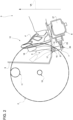
- the braking unit 6 does not interfere with either a front axle shaft 10 (if the brake pedal 5 is a floor pedal) or with a shock absorber 11 not included in the wheel well.
- Figure 1 shows two different prior art solutions (in which the reference numbers are used, for the same objects, with the superscript ').
- the white colour depicts a braking system with a floor pedal 5'
- the grey colour depicts a braking system with a suspended pedal 5'. It is immediately apparent that the floor system braking unit 6' interferes with the front axle shaft 10', whereas the suspended system braking unit 6' interferes with the shock absorber 10'.
- the different arrangement of the braking unit 6 compared to the solutions in Figure 1 i.e., on the opposite side of the bulkhead 9 relative to the front compartment 8, prevents complex operations, such as for example the perforation of the bulkhead, resulting in soundproofing, since the front compartment 8, if it accommodates an engine (whether it is an internal combustion or electric engine) produces a noise that is unpleasant if it enters the passenger compartment 3.
- the road vehicle 1 further comprises a pedal compartment 12, which at least partially houses the brake pedal 5 and is configured to accommodate, in use, at least one foot F of a driver.
- the braking unit 6 is arranged laterally offset, along the transversal axis TA of the road vehicle 1, in relation to the pedal compartment 12.
- the vehicle 1 further comprises a central tunnel 13 (shown in the non-limiting embodiments in Figures 3 and 6 ).
- the central tunnel 13 extends at least partially along the longitudinal axis LA of the road vehicle 1 (preferably centrally).
- the central tunnel 13 is configured to house wiring, piping, connections and electrical systems of any kind (also batteries, in the case of hybrid or electric vehicles).
- the braking unit 6 is arranged within the central tunnel 13. In this way, it is possible to avoid soundproofing around the hole generated to connect the brake pedal 5 to the braking unit 6, as the inside of the central tunnel 14 is usually noiseless compared to the inside of the front compartment 8.
- the braking unit 6 is arranged at least not in front (at the rear) of the brake pedal 5 along the longitudinal axis LA of the vehicle 1 in the driving direction. In general, removing the encumbrance of the braking unit 6 from the portion in front of the brake pedal 5 (that is, behind the bulkhead) increases the safety of the vehicle 1 in the event of a front crash, as this creates an empty area (or in any case an area free of solid and rigid elements such as the braking unit 6) which allows the crash to be better absorbed.
- the braking unit 6 is arranged at least not higher than the brake pedal 5 along a vertical axis VA (i.e., vertically lower in relation to the ground).
- VA vertical axis
- the brake pedal 5 is hinged to a vehicular bottom 14, which delimits the pedal compartment 12 at the bottom. In this way, a floor pedal configuration is obtained, which is preferable in some high-performance vehicles for the above-mentioned barycentric reasons.
- the motion transmission system 7 comprises at least one splined shaft 15, of which a first portion 16 is connected by form-fit coupling to the brake pedal 5 (in particular, to one end 17 thereof opposite the pedal plate 18), and a second end 19 is connected by form-fit coupling to a linkage 20 transmitting the motion of the pedal to the braking unit 6, so as to actuate the brakes of the road vehicle 1.
- the splined shaft 15 extends along the transversal axis TA of the road vehicle, particularly horizontally.
- the linkage 20 comprises at least one arm 21 (preferably acting as a connecting rod) which is provided with a third end 22 mechanically connected (by form-fit coupling) to the end 19 of the splined shaft 15.
- the motion transmission system 7, comprising both the linkage 20 and the splined shaft 15, is configured to give the driver exactly the same feedback on the brake pedal 5 he/she would have with a direct connection between the pedal 5 and the braking unit 6.
- the torsion of the shaft 15, as well as any elasticity/deformation of each component of the system 7 shall preferably be taken into account.
- the movement of the arm 21 rotationally corresponds (for example with a 1:1 ratio or different, but in the reverse direction) to the movement of the brake pedal 5, thus at least partially changing the feedback on the brake pedal 5 for the driver.
- the linkage 20 further comprises a rod 23, also provided with two ends, one of which is coupled to the braking unit 6 and acts as an element directly actuating the braking unit 6, whereas the opposite end is connected, via a joint 24 (e.g., of the axial or spherical type, a bearing crossed by a pin, etc.), to a fourth end 25 of the arm 21 (opposite the third end 22).
- a joint 24 e.g., of the axial or spherical type, a bearing crossed by a pin, etc.
- the linkage 20 is configured to transform the rotary motion of the pedal 5 (transmitted to the splined shaft 15 and the arm 21) into an axial movement of the rod 23 which actuates the braking unit 6 and thus the brakes of the road vehicle 1.
- the splined shaft 15 is movable in rotation within a tubular support element 26, which is mounted integral with the bottom 14 of the road vehicle 1.
- the braking unit 6 comprises a brake assist module 27 (in particular, an electrical, hydraulic or electro-hydraulic brake assist module) of a known type and not further detailed below, which allows the driver to exert less pressure on the brake pedal 5 than that exerted then on the brakes of the road vehicle 1.
- the assist module 27 amplifies the signal received from the brake pedal 5.
- the braking unit 6 is of the brake-by-wire type.
- the braking unit 6 is substantially arranged in the centre line (i.e., substantially in the middle of the width) of the vehicle 1, preferably along the longitudinal axis LA. In this way, it is possible to avoid changing the shape and position of the braking unit 6, which remains the same for both left-hand drive and right-hand drive vehicles.
- the driver presses the brake pedal 5, the motion of which is reflected on the motion transmission system 7, i.e., the splined shaft 15, the arm 21 and the rod 23, actuating the braking unit 6 which activates the brakes of the road vehicle 1.
- the motion transmission system 7 i.e., the splined shaft 15, the arm 21 and the rod 23, actuating the braking unit 6 which activates the brakes of the road vehicle 1.
- the present invention has several advantages.
- moving the braking unit frees up space in the front compartment, which can be used for other components.
- passive safety is improved by eliminating the assist module in front of the driver's feet, reducing possible damage in the event of a front crash.
- a further advantage of the present invention lies in reducing the variations between right-hand drive and left-hand drive versions of the same vehicle, allowing the braking unit to remain in the same position in both configurations.
Landscapes
- Engineering & Computer Science (AREA)
- Transportation (AREA)
- Mechanical Engineering (AREA)
- Chemical & Material Sciences (AREA)
- Combustion & Propulsion (AREA)
- Physics & Mathematics (AREA)
- General Physics & Mathematics (AREA)
- Automation & Control Theory (AREA)
- Braking Elements And Transmission Devices (AREA)
- Mechanical Control Devices (AREA)
Description
- This patent application claims priority from
Italian Patent Application no. 102022000003983 filed on March 3, 2022 - The present invention relates to a road vehicle comprising a braking system without front compartment encumbrance.
- In particular, the present invention finds advantageous, but not exclusive, application in a braking system for high-performance vehicles, to which the following description will make explicit reference without thereby losing generality.
- As is known, different types of braking systems for road vehicles are available on the market.
- Generally, the systems comprise a brake pedal and a braking unit that is mechanically connected to the brake pedal and configured to actuate the brakes at the wheels.
- In particular, floor pedal braking systems are known, where the pedal is hinged to the bottom of the road vehicle and therefore, when braking, looking at the system sideways from the left of the vehicle, the pedal substantially rotates anticlockwise; suspended pedal braking systems are also known, where the pedal is hinged to an upper portion of the vehicle pedal compartment and therefore, when braking, looking at the system sideways from the left, the pedal substantially rotates clockwise.
- Both configurations are characterised by the fact that the pedal is configured to push a rod provided with two ends, of which one is connected to the pedal by a joint and the other is connected to the braking unit to actuate the brakes (see
Figure 1 ). - Usually, regardless of whether it is in the floor or suspended configuration, the braking unit (also known as the power brake or brake assist unit) is arranged along the plane in which the brake pedal rotates, so as to directly move the rod between the pedal and the unit. In other words, the braking unit is arranged within the front compartment of the car (usually occupied by an engine and separated from the passenger compartment by a bulkhead), in particular in a position along the longitudinal axis of the vehicle passing through the brake pedal.
- Especially in high-performance vehicles, it has been noted that, unless the wheelbase is excessively lengthened, the floor pedal configuration may interfere with the front axle shaft of the road vehicle.
- In addition, it was noted that, in the case of shock absorbers external to the wheel well, e.g., horizontal ones, the suspended pedal configuration may interfere with the encumbrance of these shock absorbers.
- Moreover, the presence of rigid elements, such as the braking units within the front compartment, increases the risk for the driver in the event of a front crash, reducing the deformable volume.
- A brake unit of the type mentioned above wherein the pedal force is transmitted to a brake cylinder with a lateral offset is known from Patent Application Publication
US 2010/0313698 A1 . - The object of the present invention is to provide a road vehicle comprising a braking system without front compartment encumbrance, which is at least partially free from the drawbacks described above and at the same time simple and inexpensive to manufacture.
- In accordance with the present invention, a road vehicle provided with a related braking system is provided as claimed in the following independent claims and, preferably, in any one of the claims directly or indirectly dependent on the independent claims.
- The present invention will now be described with reference to the accompanying drawings, which illustrate some non-limiting embodiments thereof, in which:
-
Figure 1 is a schematic side view, with details removed for clarity, of a pedal compartment showing two possible solutions in accordance with the prior art; -
Figure 2 is a schematic side view, with details removed for clarity, of a pedal compartment in which there is a braking system in accordance with the present invention; -
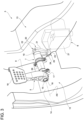
Figure 3 is a schematic perspective view, with details removed for clarity, of the pedal compartment inFigure 2 ; -
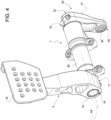
Figure 4 is a front perspective view of a part of the braking system inFigures 2 and3 ; -
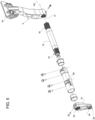
Figure 5 is a rear exploded perspective view of the part inFigure 4 ; -
Figure 6 is a plan schematic view, with details removed for clarity, of a possible embodiment of a road vehicle in accordance with the present invention. - With reference to the accompanying figures, the reference numeral 1 indicates, as a whole, a road vehicle configured to be driven by a driver and provided with four
wheels 2, two at the front (e.g., driving wheels) and two at the rear. The vehicle 1 is provided with apassenger compartment 3 which is adapted to at least accommodate the driver. - The same reference numbers and letters in the figures identify the same elements or components having the same function.
- In the context of the present description the term "second" component does not imply the presence of a "first" component. These terms are in fact used as labels to improve clarity and should not be understood in a limiting way.
- The road vehicle 1 comprises a vehicle body 4, which in turn comprises at least a vehicle frame and a bodywork. The vehicle body 4 defines along its length a longitudinal axis LA of the road vehicle 1 and along its width a transversal axis TA of the road vehicle 1.
- As shown in the non-limiting embodiments of
Figures 2 to 6 , the road vehicle 1 further comprises abrake pedal 5, which is configured to be pressed by the driver to actuate the brakes of the road vehicle 1. Thebrake pedal 5 is mounted on the vehicle 1 so that it is integrally hinged to the vehicle body 4. In other words, thepedal 5 is mounted so that it can move by rotating around a rotation axis AX. - Furthermore, the vehicle 1 comprises a
braking unit 6 which is also mounted integral with the vehicle body 4. The braking unit is mechanically connected, via amotion transmission system 7, to thebrake pedal 5 and is configured to actuate, depending on the motion transmitted by thebrake pedal 5, the brakes of the road vehicle 1 (each arranged at a respective wheel 2). - Advantageously, but not limitingly, as shown in the non-limiting embodiments in
Figures 3 and6 , thebraking unit 6 is arranged, in relation to thebrake pedal 5, offset along the transversal axis TA of the road vehicle 1. In other words, thebraking unit 6 is located in a position that is not along the forward moving direction of the vehicle 1 in relation to thebrake pedal 5. - In some preferred non-limiting cases, the vehicle 1 comprises a front compartment 8, which is configured to accommodate at least one engine (an electric, hybrid or internal combustion engine). In particular, the vehicle 1 further comprises a bulkhead 9 (
Figure 2 ), which separates thepassenger compartment 3 and the front compartment 8 from each other. - Advantageously, but not necessarily, the
braking unit 6 is arranged, in relation to thebulkhead 9, on the side opposite the front compartment 8. This way, referring to the non-limiting embodiment inFigure 2 , thebraking unit 6 does not interfere with either a front axle shaft 10 (if thebrake pedal 5 is a floor pedal) or with ashock absorber 11 not included in the wheel well. In contrast,Figure 1 shows two different prior art solutions (in which the reference numbers are used, for the same objects, with the superscript '). In particular, the white colour depicts a braking system with a floor pedal 5', whereas the grey colour depicts a braking system with a suspended pedal 5'. It is immediately apparent that the floor system braking unit 6' interferes with the front axle shaft 10', whereas the suspended system braking unit 6' interferes with the shock absorber 10'. - The different arrangement of the
braking unit 6 compared to the solutions inFigure 1 , i.e., on the opposite side of thebulkhead 9 relative to the front compartment 8, prevents complex operations, such as for example the perforation of the bulkhead, resulting in soundproofing, since the front compartment 8, if it accommodates an engine (whether it is an internal combustion or electric engine) produces a noise that is unpleasant if it enters thepassenger compartment 3. - Preferably, the road vehicle 1 further comprises a
pedal compartment 12, which at least partially houses thebrake pedal 5 and is configured to accommodate, in use, at least one foot F of a driver. In particular, thebraking unit 6 is arranged laterally offset, along the transversal axis TA of the road vehicle 1, in relation to thepedal compartment 12. - Advantageously, but not necessarily, the vehicle 1 further comprises a central tunnel 13 (shown in the non-limiting embodiments in
Figures 3 and6 ). In detail, thecentral tunnel 13 extends at least partially along the longitudinal axis LA of the road vehicle 1 (preferably centrally). Usually, thecentral tunnel 13 is configured to house wiring, piping, connections and electrical systems of any kind (also batteries, in the case of hybrid or electric vehicles). - In particular, the
braking unit 6 is arranged within thecentral tunnel 13. In this way, it is possible to avoid soundproofing around the hole generated to connect thebrake pedal 5 to thebraking unit 6, as the inside of thecentral tunnel 14 is usually noiseless compared to the inside of the front compartment 8. - In some preferred non-limiting cases, the
braking unit 6 is arranged at least not in front (at the rear) of thebrake pedal 5 along the longitudinal axis LA of the vehicle 1 in the driving direction. In general, removing the encumbrance of thebraking unit 6 from the portion in front of the brake pedal 5 (that is, behind the bulkhead) increases the safety of the vehicle 1 in the event of a front crash, as this creates an empty area (or in any case an area free of solid and rigid elements such as the braking unit 6) which allows the crash to be better absorbed. - Advantageously, but not necessarily, the
braking unit 6 is arranged at least not higher than thebrake pedal 5 along a vertical axis VA (i.e., vertically lower in relation to the ground). In this way, with particular reference to high-performance vehicles (for which it is a constant target), the centre of gravity of the vehicle 1 is further lowered compared to the configurations shown inFigure 1 . - In some non-limiting cases, such as those shown in
Figures 2 and3 , thebrake pedal 5 is hinged to avehicular bottom 14, which delimits thepedal compartment 12 at the bottom. In this way, a floor pedal configuration is obtained, which is preferable in some high-performance vehicles for the above-mentioned barycentric reasons. - Advantageously, but not necessarily, and as shown in the non-limiting embodiments in
Figures 4 and5 , themotion transmission system 7 comprises at least onesplined shaft 15, of which afirst portion 16 is connected by form-fit coupling to the brake pedal 5 (in particular, to oneend 17 thereof opposite the pedal plate 18), and asecond end 19 is connected by form-fit coupling to alinkage 20 transmitting the motion of the pedal to thebraking unit 6, so as to actuate the brakes of the road vehicle 1. - Advantageously, but not necessarily, the
splined shaft 15 extends along the transversal axis TA of the road vehicle, particularly horizontally. - In particular, as shown in the non-limiting embodiments in
Figures 4 and5 , thelinkage 20 comprises at least one arm 21 (preferably acting as a connecting rod) which is provided with athird end 22 mechanically connected (by form-fit coupling) to theend 19 of thesplined shaft 15. - In some preferred non-limiting cases, the
motion transmission system 7, comprising both thelinkage 20 and thesplined shaft 15, is configured to give the driver exactly the same feedback on thebrake pedal 5 he/she would have with a direct connection between thepedal 5 and thebraking unit 6. To do this, the torsion of theshaft 15, as well as any elasticity/deformation of each component of the system 7 (e.g., the core of the brake pedal 5), shall preferably be taken into account. - In other non-limiting cases, not shown, for example, the movement of the
arm 21 rotationally corresponds (for example with a 1:1 ratio or different, but in the reverse direction) to the movement of thebrake pedal 5, thus at least partially changing the feedback on thebrake pedal 5 for the driver. - According to the non-limiting embodiments in
Figures 2 and3 , thelinkage 20 further comprises arod 23, also provided with two ends, one of which is coupled to thebraking unit 6 and acts as an element directly actuating thebraking unit 6, whereas the opposite end is connected, via a joint 24 (e.g., of the axial or spherical type, a bearing crossed by a pin, etc.), to afourth end 25 of the arm 21 (opposite the third end 22). - Therefore, preferably, but without limitation, the
linkage 20 is configured to transform the rotary motion of the pedal 5 (transmitted to thesplined shaft 15 and the arm 21) into an axial movement of therod 23 which actuates thebraking unit 6 and thus the brakes of the road vehicle 1. - According to some preferred non-limiting embodiments, such as that shown in
Figures 3 ,4 and5 , thesplined shaft 15 is movable in rotation within atubular support element 26, which is mounted integral with the bottom 14 of the road vehicle 1. - Preferably, the
braking unit 6 comprises a brake assist module 27 (in particular, an electrical, hydraulic or electro-hydraulic brake assist module) of a known type and not further detailed below, which allows the driver to exert less pressure on thebrake pedal 5 than that exerted then on the brakes of the road vehicle 1. In other words, theassist module 27 amplifies the signal received from thebrake pedal 5. In particular, thebraking unit 6 is of the brake-by-wire type. - In some preferred non-limiting cases, such as that shown in
Figure 6 , thebraking unit 6 is substantially arranged in the centre line (i.e., substantially in the middle of the width) of the vehicle 1, preferably along the longitudinal axis LA. In this way, it is possible to avoid changing the shape and position of thebraking unit 6, which remains the same for both left-hand drive and right-hand drive vehicles. - In use, the driver presses the
brake pedal 5, the motion of which is reflected on themotion transmission system 7, i.e., thesplined shaft 15, thearm 21 and therod 23, actuating thebraking unit 6 which activates the brakes of the road vehicle 1. - Although the invention described above makes particular reference to a very precise embodiment, it is not to be construed as limited to this embodiment, since all the variants, modifications or simplifications covered by the attached claims, such as, for example, a different position of the braking unit, a different type of motion transmission system, a different type of vehicle, etc., fall within its scope.
- The present invention has several advantages.
- Firstly, moving the braking unit frees up space in the front compartment, which can be used for other components. In any case, passive safety is improved by eliminating the assist module in front of the driver's feet, reducing possible damage in the event of a front crash.
- It is also no longer necessary to drill the holes in the bulkhead, which are used for the connection between the pedal and the assist module, and therefore the soundproofing of the passenger compartment is improved and facilitated, thereby increasing driving pleasure.
- A further advantage of the present invention lies in reducing the variations between right-hand drive and left-hand drive versions of the same vehicle, allowing the braking unit to remain in the same position in both configurations.
- Finally, by moving the braking unit lower and more centrally than in the prior art, the height of the centre of gravity of the road vehicle is also reduced.
-
- 1
- vehicle
- 2
- wheels
- 3
- passenger compartment
- 4
- body
- 5
- brake pedal
- 6
- braking unit
- 7
- motion transmission system
- 8
- front compartment
- 9
- bulkhead
- 10
- front axle shaft
- 11
- shock absorber
- 12
- pedal compartment
- 13
- central tunnel
- 14
- vehicular bottom
- 15
- splined shaft
- 16
- first end
- 17
- pedal end
- 18
- pedal plate
- 19
- second end
- 20
- linkage
- 21
- arm
- 22
- third end
- 23
- rod
- 24
- joint
- 25
- fourth end
- 26
- support element
- 27
- assist module
- AX
- pedal rotation axis
- F
- driver's foot
- LA
- longitudinal axis
- TA
- transversal axis
- VA
- vertical axis
Claims (11)
- A road vehicle (1) comprising:- a vehicle body (4) which defines along its length a longitudinal axis (LA) of the road vehicle (1) and along its width a transversal axis (TA) of the road vehicle (1);- a brake pedal (5), which is mounted on the vehicle (1) so that it is hinged to the vehicle body (4);- a braking unit (6) mounted integral to the vehicle body (4); the braking unit (6) being mechanically connected, by means of a motion transmission system (7), to the brake pedal (5) and configured to actuate, depending on the motion transmitted by the brake pedal (5), the brakes of the road vehicle (1);- a front compartment (8) configured to accommodate at least one engine, a passenger compartment (3) and a bulkhead (9), the bulkhead (9) separating the passenger compartment (3) and the front compartment (8) from each other;the road vehicle (1) being characterised in that the braking unit (6) is arranged, in relation to the brake pedal (5), offset along the transversal axis (TA) of the road vehicle (1); wherein the braking unit (6) is arranged, in relation to the bulkhead (9), on the side opposite the front compartment (8).
- The vehicle (1) according to claim 1, wherein the braking unit (6) is arranged laterally offset, along the transversal axis (TA) of the road vehicle (1), in relation to a pedals compartment (12), configured to accommodate, in use, at least one foot of a driver.
- The vehicle (1) according to any one of the preceding claims, and comprising a central tunnel (13), which extends at least partially along the longitudinal axis (LA) of the road vehicle (1); wherein the braking unit (6) is arranged within the central tunnel (13).
- The vehicle (1) according to any one of the preceding claims, wherein the braking unit (6) is arranged at least not in front of the brake pedal (5) along the longitudinal axis (LA) of the vehicle (1) in the driving direction.
- The vehicle (1) according to any one of the preceding claims, wherein the braking unit (6) is arranged at least not higher than the brake pedal (5) along a vertical axis (VA).
- The vehicle (1) according to any one of the preceding claims, wherein the brake pedal (5) is hinged to a vehicular bottom (14).
- The vehicle (1) according to any one of the preceding claims, wherein the motion transmission system (7) comprises at least one splined shaft (15), of which a first portion is connected by form-fit coupling to the brake pedal (5), and a second portion is connected by form-fit coupling to a linkage (20) transmitting the motion of the pedal (5) to the braking unit (6), so as to actuate the brakes.
- The vehicle (1) according to claim 7, wherein the splined shaft (15) extends along the transversal axis (TA) of the road vehicle (1).
- The vehicle (1) according to claim 7 or 8, wherein the splined shaft (15) is movable in rotation within a tubular support element (26), which is mounted integral with a bottom of the road vehicle (1).
- The vehicle (1) according to any one of the preceding claims, wherein the braking unit (6) comprises a brake assist module (27).
- The vehicle (1) according to any one of the preceding claims, wherein the braking unit (6) is of the brake-by-wire type.
Applications Claiming Priority (1)
| Application Number | Priority Date | Filing Date | Title |
|---|---|---|---|
| IT102022000003983A IT202200003983A1 (en) | 2022-03-03 | 2022-03-03 | ROAD VEHICLE EQUIPPED WITH A BRAKING SYSTEM WITHOUT CLUBING THE FRONT COMPARTMENT |
Publications (2)
| Publication Number | Publication Date |
|---|---|
| EP4238839A1 EP4238839A1 (en) | 2023-09-06 |
| EP4238839B1 true EP4238839B1 (en) | 2024-10-02 |
Family
ID=81648795
Family Applications (1)
| Application Number | Title | Priority Date | Filing Date |
|---|---|---|---|
| EP23159562.0A Active EP4238839B1 (en) | 2022-03-03 | 2023-03-02 | Road vehicle equipped with a braking system without front compartment encumbrance |
Country Status (5)
| Country | Link |
|---|---|
| US (1) | US12545218B2 (en) |
| EP (1) | EP4238839B1 (en) |
| JP (1) | JP2023129324A (en) |
| CN (1) | CN116691613A (en) |
| IT (1) | IT202200003983A1 (en) |
Family Cites Families (3)
| Publication number | Priority date | Publication date | Assignee | Title |
|---|---|---|---|---|
| KR0138416B1 (en) * | 1995-12-21 | 1998-06-01 | 김태구 | The brake system with link structure |
| KR20050043373A (en) * | 2003-11-06 | 2005-05-11 | 현대자동차주식회사 | Subsidiary pedal system of driving training vehicle |
| JP4696216B2 (en) * | 2009-06-16 | 2011-06-08 | 三菱自動車工業株式会社 | Pedal device |
-
2022
- 2022-03-03 IT IT102022000003983A patent/IT202200003983A1/en unknown
-
2023
- 2023-02-27 JP JP2023028647A patent/JP2023129324A/en active Pending
- 2023-02-28 US US18/176,067 patent/US12545218B2/en active Active
- 2023-03-02 EP EP23159562.0A patent/EP4238839B1/en active Active
- 2023-03-03 CN CN202310207801.4A patent/CN116691613A/en active Pending
Also Published As
| Publication number | Publication date |
|---|---|
| US20230278533A1 (en) | 2023-09-07 |
| CN116691613A (en) | 2023-09-05 |
| IT202200003983A1 (en) | 2023-09-03 |
| US12545218B2 (en) | 2026-02-10 |
| EP4238839A1 (en) | 2023-09-06 |
| JP2023129324A (en) | 2023-09-14 |
Similar Documents
| Publication | Publication Date | Title |
|---|---|---|
| US8864153B2 (en) | Automotive rear suspension subassembly | |
| JP2004521826A (en) | Rear axle of a passenger car with five individual links | |
| CN103358840B (en) | Electric vehicle | |
| JP2008168804A (en) | Arrangement structure of vehicle drive device | |
| JP2006264622A (en) | Power steering device | |
| US4114712A (en) | Motor vehicle with special arrangement of front wheels, front door, driver's cabin and engine | |
| EP4094964B1 (en) | Electric truck | |
| EP4238839B1 (en) | Road vehicle equipped with a braking system without front compartment encumbrance | |
| EP1939073A2 (en) | Vehicle having steerable rear wheels | |
| US9122301B2 (en) | Steering and brake arrangements | |
| US9180907B2 (en) | Steering system for utility vehicles with bilateral actuation | |
| EP1767420B1 (en) | Anti-intrusion pedal system | |
| US20180346030A1 (en) | Subframe for a rear axle of a motor vehicle | |
| EP1418068A1 (en) | Vehicle with improved cargo space | |
| JP2009101810A (en) | Vehicle front structure | |
| GB2030531A (en) | Steering systems for motor vehicles | |
| EP1642819B1 (en) | Swing arm supporting structure for motorcycle | |
| CN111688793A (en) | Steering device for vehicle | |
| JP2014073805A (en) | Rack-and-pinion type steering device for vehicle | |
| EP0854071B1 (en) | Releasable brake pedal assembly | |
| JP2014503414A (en) | Power steering system for automobiles with two steering axles | |
| RU2837292C1 (en) | Single-axle trailer inertial brake | |
| CN203511783U (en) | Front portion structure for vehicle body | |
| KR100447747B1 (en) | steering apparatus for vehicle | |
| CN221293779U (en) | Automobile chassis module and electric automobile |
Legal Events
| Date | Code | Title | Description |
|---|---|---|---|
| PUAI | Public reference made under article 153(3) epc to a published international application that has entered the european phase |
Free format text: ORIGINAL CODE: 0009012 |
|
| STAA | Information on the status of an ep patent application or granted ep patent |
Free format text: STATUS: THE APPLICATION HAS BEEN PUBLISHED |
|
| AK | Designated contracting states |
Kind code of ref document: A1 Designated state(s): AL AT BE BG CH CY CZ DE DK EE ES FI FR GB GR HR HU IE IS IT LI LT LU LV MC ME MK MT NL NO PL PT RO RS SE SI SK SM TR |
|
| STAA | Information on the status of an ep patent application or granted ep patent |
Free format text: STATUS: REQUEST FOR EXAMINATION WAS MADE |
|
| 17P | Request for examination filed |
Effective date: 20231107 |
|
| RBV | Designated contracting states (corrected) |
Designated state(s): AL AT BE BG CH CY CZ DE DK EE ES FI FR GB GR HR HU IE IS IT LI LT LU LV MC ME MK MT NL NO PL PT RO RS SE SI SK SM TR |
|
| GRAP | Despatch of communication of intention to grant a patent |
Free format text: ORIGINAL CODE: EPIDOSNIGR1 |
|
| STAA | Information on the status of an ep patent application or granted ep patent |
Free format text: STATUS: GRANT OF PATENT IS INTENDED |
|
| RIC1 | Information provided on ipc code assigned before grant |
Ipc: G05G 1/44 20080401ALI20240320BHEP Ipc: B60T 11/18 20060101ALI20240320BHEP Ipc: B60T 7/06 20060101AFI20240320BHEP Ipc: G05G 1/46 20080401ALI20240320BHEP |
|
| INTG | Intention to grant announced |
Effective date: 20240423 |
|
| GRAS | Grant fee paid |
Free format text: ORIGINAL CODE: EPIDOSNIGR3 |
|
| GRAA | (expected) grant |
Free format text: ORIGINAL CODE: 0009210 |
|
| STAA | Information on the status of an ep patent application or granted ep patent |
Free format text: STATUS: THE PATENT HAS BEEN GRANTED |
|
| AK | Designated contracting states |
Kind code of ref document: B1 Designated state(s): AL AT BE BG CH CY CZ DE DK EE ES FI FR GB GR HR HU IE IS IT LI LT LU LV MC ME MK MT NL NO PL PT RO RS SE SI SK SM TR |
|
| REG | Reference to a national code |
Ref country code: GB Ref legal event code: FG4D |
|
| REG | Reference to a national code |
Ref country code: CH Ref legal event code: EP |
|
| REG | Reference to a national code |
Ref country code: IE Ref legal event code: FG4D |
|
| REG | Reference to a national code |
Ref country code: DE Ref legal event code: R096 Ref document number: 602023000632 Country of ref document: DE |
|
| REG | Reference to a national code |
Ref country code: LT Ref legal event code: MG9D |
|
| REG | Reference to a national code |
Ref country code: NL Ref legal event code: MP Effective date: 20241002 |
|
| REG | Reference to a national code |
Ref country code: AT Ref legal event code: MK05 Ref document number: 1728259 Country of ref document: AT Kind code of ref document: T Effective date: 20241002 |
|
| PG25 | Lapsed in a contracting state [announced via postgrant information from national office to epo] |
Ref country code: NL Free format text: LAPSE BECAUSE OF FAILURE TO SUBMIT A TRANSLATION OF THE DESCRIPTION OR TO PAY THE FEE WITHIN THE PRESCRIBED TIME-LIMIT Effective date: 20241002 |
|
| PG25 | Lapsed in a contracting state [announced via postgrant information from national office to epo] |
Ref country code: NL Free format text: LAPSE BECAUSE OF FAILURE TO SUBMIT A TRANSLATION OF THE DESCRIPTION OR TO PAY THE FEE WITHIN THE PRESCRIBED TIME-LIMIT Effective date: 20241002 |
|
| PG25 | Lapsed in a contracting state [announced via postgrant information from national office to epo] |
Ref country code: PT Free format text: LAPSE BECAUSE OF FAILURE TO SUBMIT A TRANSLATION OF THE DESCRIPTION OR TO PAY THE FEE WITHIN THE PRESCRIBED TIME-LIMIT Effective date: 20250203 Ref country code: HR Free format text: LAPSE BECAUSE OF FAILURE TO SUBMIT A TRANSLATION OF THE DESCRIPTION OR TO PAY THE FEE WITHIN THE PRESCRIBED TIME-LIMIT Effective date: 20241002 Ref country code: IS Free format text: LAPSE BECAUSE OF FAILURE TO SUBMIT A TRANSLATION OF THE DESCRIPTION OR TO PAY THE FEE WITHIN THE PRESCRIBED TIME-LIMIT Effective date: 20250202 |
|
| PG25 | Lapsed in a contracting state [announced via postgrant information from national office to epo] |
Ref country code: FI Free format text: LAPSE BECAUSE OF FAILURE TO SUBMIT A TRANSLATION OF THE DESCRIPTION OR TO PAY THE FEE WITHIN THE PRESCRIBED TIME-LIMIT Effective date: 20241002 |
|
| PG25 | Lapsed in a contracting state [announced via postgrant information from national office to epo] |
Ref country code: BG Free format text: LAPSE BECAUSE OF FAILURE TO SUBMIT A TRANSLATION OF THE DESCRIPTION OR TO PAY THE FEE WITHIN THE PRESCRIBED TIME-LIMIT Effective date: 20241002 |
|
| PG25 | Lapsed in a contracting state [announced via postgrant information from national office to epo] |
Ref country code: ES Free format text: LAPSE BECAUSE OF FAILURE TO SUBMIT A TRANSLATION OF THE DESCRIPTION OR TO PAY THE FEE WITHIN THE PRESCRIBED TIME-LIMIT Effective date: 20241002 |
|
| PG25 | Lapsed in a contracting state [announced via postgrant information from national office to epo] |
Ref country code: NO Free format text: LAPSE BECAUSE OF FAILURE TO SUBMIT A TRANSLATION OF THE DESCRIPTION OR TO PAY THE FEE WITHIN THE PRESCRIBED TIME-LIMIT Effective date: 20250102 |
|
| PG25 | Lapsed in a contracting state [announced via postgrant information from national office to epo] |
Ref country code: AT Free format text: LAPSE BECAUSE OF FAILURE TO SUBMIT A TRANSLATION OF THE DESCRIPTION OR TO PAY THE FEE WITHIN THE PRESCRIBED TIME-LIMIT Effective date: 20241002 Ref country code: GR Free format text: LAPSE BECAUSE OF FAILURE TO SUBMIT A TRANSLATION OF THE DESCRIPTION OR TO PAY THE FEE WITHIN THE PRESCRIBED TIME-LIMIT Effective date: 20250103 Ref country code: LV Free format text: LAPSE BECAUSE OF FAILURE TO SUBMIT A TRANSLATION OF THE DESCRIPTION OR TO PAY THE FEE WITHIN THE PRESCRIBED TIME-LIMIT Effective date: 20241002 |
|
| PG25 | Lapsed in a contracting state [announced via postgrant information from national office to epo] |
Ref country code: PL Free format text: LAPSE BECAUSE OF FAILURE TO SUBMIT A TRANSLATION OF THE DESCRIPTION OR TO PAY THE FEE WITHIN THE PRESCRIBED TIME-LIMIT Effective date: 20241002 Ref country code: CZ Free format text: LAPSE BECAUSE OF FAILURE TO SUBMIT A TRANSLATION OF THE DESCRIPTION OR TO PAY THE FEE WITHIN THE PRESCRIBED TIME-LIMIT Effective date: 20241002 |
|
| PG25 | Lapsed in a contracting state [announced via postgrant information from national office to epo] |
Ref country code: RS Free format text: LAPSE BECAUSE OF FAILURE TO SUBMIT A TRANSLATION OF THE DESCRIPTION OR TO PAY THE FEE WITHIN THE PRESCRIBED TIME-LIMIT Effective date: 20250102 |
|
| PG25 | Lapsed in a contracting state [announced via postgrant information from national office to epo] |
Ref country code: SM Free format text: LAPSE BECAUSE OF FAILURE TO SUBMIT A TRANSLATION OF THE DESCRIPTION OR TO PAY THE FEE WITHIN THE PRESCRIBED TIME-LIMIT Effective date: 20241002 |
|
| REG | Reference to a national code |
Ref country code: DE Ref legal event code: R097 Ref document number: 602023000632 Country of ref document: DE |
|
| PG25 | Lapsed in a contracting state [announced via postgrant information from national office to epo] |
Ref country code: DK Free format text: LAPSE BECAUSE OF FAILURE TO SUBMIT A TRANSLATION OF THE DESCRIPTION OR TO PAY THE FEE WITHIN THE PRESCRIBED TIME-LIMIT Effective date: 20241002 |
|
| PGFP | Annual fee paid to national office [announced via postgrant information from national office to epo] |
Ref country code: IT Payment date: 20250331 Year of fee payment: 3 |
|
| PG25 | Lapsed in a contracting state [announced via postgrant information from national office to epo] |
Ref country code: EE Free format text: LAPSE BECAUSE OF FAILURE TO SUBMIT A TRANSLATION OF THE DESCRIPTION OR TO PAY THE FEE WITHIN THE PRESCRIBED TIME-LIMIT Effective date: 20241002 |
|
| PG25 | Lapsed in a contracting state [announced via postgrant information from national office to epo] |
Ref country code: RO Free format text: LAPSE BECAUSE OF FAILURE TO SUBMIT A TRANSLATION OF THE DESCRIPTION OR TO PAY THE FEE WITHIN THE PRESCRIBED TIME-LIMIT Effective date: 20241002 |
|
| PG25 | Lapsed in a contracting state [announced via postgrant information from national office to epo] |
Ref country code: SK Free format text: LAPSE BECAUSE OF FAILURE TO SUBMIT A TRANSLATION OF THE DESCRIPTION OR TO PAY THE FEE WITHIN THE PRESCRIBED TIME-LIMIT Effective date: 20241002 |
|
| PLBE | No opposition filed within time limit |
Free format text: ORIGINAL CODE: 0009261 |
|
| STAA | Information on the status of an ep patent application or granted ep patent |
Free format text: STATUS: NO OPPOSITION FILED WITHIN TIME LIMIT |
|
| PG25 | Lapsed in a contracting state [announced via postgrant information from national office to epo] |
Ref country code: SE Free format text: LAPSE BECAUSE OF FAILURE TO SUBMIT A TRANSLATION OF THE DESCRIPTION OR TO PAY THE FEE WITHIN THE PRESCRIBED TIME-LIMIT Effective date: 20241002 |
|
| 26N | No opposition filed |
Effective date: 20250703 |
|
| PG25 | Lapsed in a contracting state [announced via postgrant information from national office to epo] |
Ref country code: MC Free format text: LAPSE BECAUSE OF FAILURE TO SUBMIT A TRANSLATION OF THE DESCRIPTION OR TO PAY THE FEE WITHIN THE PRESCRIBED TIME-LIMIT Effective date: 20241002 |
|
| PG25 | Lapsed in a contracting state [announced via postgrant information from national office to epo] |
Ref country code: LU Free format text: LAPSE BECAUSE OF NON-PAYMENT OF DUE FEES Effective date: 20250302 |
|
| REG | Reference to a national code |
Ref country code: BE Ref legal event code: MM Effective date: 20250331 |
|
| PG25 | Lapsed in a contracting state [announced via postgrant information from national office to epo] |
Ref country code: BE Free format text: LAPSE BECAUSE OF NON-PAYMENT OF DUE FEES Effective date: 20250331 |
|
| PG25 | Lapsed in a contracting state [announced via postgrant information from national office to epo] |
Ref country code: IE Free format text: LAPSE BECAUSE OF NON-PAYMENT OF DUE FEES Effective date: 20250302 |
|
| PGFP | Annual fee paid to national office [announced via postgrant information from national office to epo] |
Ref country code: DE Payment date: 20260320 Year of fee payment: 4 |
|
| PGFP | Annual fee paid to national office [announced via postgrant information from national office to epo] |
Ref country code: FR Payment date: 20260323 Year of fee payment: 4 |