EP4237845B1 - Verfahren zum nachweis und zur quantifizierung von tetrakis(hydroxymethyl)phosphoniumsulfat (thps) in bioziden produkten - Google Patents
Verfahren zum nachweis und zur quantifizierung von tetrakis(hydroxymethyl)phosphoniumsulfat (thps) in bioziden produkten Download PDFInfo
- Publication number
- EP4237845B1 EP4237845B1 EP21819691.3A EP21819691A EP4237845B1 EP 4237845 B1 EP4237845 B1 EP 4237845B1 EP 21819691 A EP21819691 A EP 21819691A EP 4237845 B1 EP4237845 B1 EP 4237845B1
- Authority
- EP
- European Patent Office
- Prior art keywords
- thps
- kmno
- water
- absorption
- water sample
- Prior art date
- Legal status (The legal status is an assumption and is not a legal conclusion. Google has not performed a legal analysis and makes no representation as to the accuracy of the status listed.)
- Active
Links
Images




Classifications
-
- G—PHYSICS
- G01—MEASURING; TESTING
- G01N—INVESTIGATING OR ANALYSING MATERIALS BY DETERMINING THEIR CHEMICAL OR PHYSICAL PROPERTIES
- G01N21/00—Investigating or analysing materials by the use of optical means, i.e. using sub-millimetre waves, infrared, visible or ultraviolet light
- G01N21/17—Systems in which incident light is modified in accordance with the properties of the material investigated
- G01N21/25—Colour; Spectral properties, i.e. comparison of effect of material on the light at two or more different wavelengths or wavelength bands
- G01N21/31—Investigating relative effect of material at wavelengths characteristic of specific elements or molecules, e.g. atomic absorption spectrometry
- G01N21/314—Investigating relative effect of material at wavelengths characteristic of specific elements or molecules, e.g. atomic absorption spectrometry with comparison of measurements at specific and non-specific wavelengths
- G01N21/3151—Investigating relative effect of material at wavelengths characteristic of specific elements or molecules, e.g. atomic absorption spectrometry with comparison of measurements at specific and non-specific wavelengths using two sources of radiation of different wavelengths
-
- G—PHYSICS
- G01—MEASURING; TESTING
- G01N—INVESTIGATING OR ANALYSING MATERIALS BY DETERMINING THEIR CHEMICAL OR PHYSICAL PROPERTIES
- G01N21/00—Investigating or analysing materials by the use of optical means, i.e. using sub-millimetre waves, infrared, visible or ultraviolet light
- G01N21/17—Systems in which incident light is modified in accordance with the properties of the material investigated
- G01N21/25—Colour; Spectral properties, i.e. comparison of effect of material on the light at two or more different wavelengths or wavelength bands
- G01N21/31—Investigating relative effect of material at wavelengths characteristic of specific elements or molecules, e.g. atomic absorption spectrometry
- G01N21/33—Investigating relative effect of material at wavelengths characteristic of specific elements or molecules, e.g. atomic absorption spectrometry using ultraviolet light
-
- A—HUMAN NECESSITIES
- A01—AGRICULTURE; FORESTRY; ANIMAL HUSBANDRY; HUNTING; TRAPPING; FISHING
- A01N—PRESERVATION OF BODIES OF HUMANS OR ANIMALS OR PLANTS OR PARTS THEREOF; BIOCIDES, e.g. AS DISINFECTANTS, AS PESTICIDES OR AS HERBICIDES; PEST REPELLANTS OR ATTRACTANTS; PLANT GROWTH REGULATORS
- A01N57/00—Biocides, pest repellants or attractants, or plant growth regulators containing organic phosphorus compounds
- A01N57/34—Biocides, pest repellants or attractants, or plant growth regulators containing organic phosphorus compounds having phosphorus-to-halogen bonds; Phosphonium salts
-
- G—PHYSICS
- G01—MEASURING; TESTING
- G01N—INVESTIGATING OR ANALYSING MATERIALS BY DETERMINING THEIR CHEMICAL OR PHYSICAL PROPERTIES
- G01N21/00—Investigating or analysing materials by the use of optical means, i.e. using sub-millimetre waves, infrared, visible or ultraviolet light
- G01N21/75—Systems in which material is subjected to a chemical reaction, the progress or the result of the reaction being investigated
- G01N21/77—Systems in which material is subjected to a chemical reaction, the progress or the result of the reaction being investigated by observing the effect on a chemical indicator
- G01N21/78—Systems in which material is subjected to a chemical reaction, the progress or the result of the reaction being investigated by observing the effect on a chemical indicator producing a change of colour
-
- G—PHYSICS
- G01—MEASURING; TESTING
- G01N—INVESTIGATING OR ANALYSING MATERIALS BY DETERMINING THEIR CHEMICAL OR PHYSICAL PROPERTIES
- G01N31/00—Investigating or analysing non-biological materials by the use of the chemical methods specified in the subgroup; Apparatus specially adapted for such methods
- G01N31/22—Investigating or analysing non-biological materials by the use of the chemical methods specified in the subgroup; Apparatus specially adapted for such methods using chemical indicators
-
- G—PHYSICS
- G01—MEASURING; TESTING
- G01N—INVESTIGATING OR ANALYSING MATERIALS BY DETERMINING THEIR CHEMICAL OR PHYSICAL PROPERTIES
- G01N33/00—Investigating or analysing materials by specific methods not covered by groups G01N1/00 - G01N31/00
- G01N33/18—Water
- G01N33/1826—Organic contamination in water
-
- G—PHYSICS
- G01—MEASURING; TESTING
- G01N—INVESTIGATING OR ANALYSING MATERIALS BY DETERMINING THEIR CHEMICAL OR PHYSICAL PROPERTIES
- G01N33/00—Investigating or analysing materials by specific methods not covered by groups G01N1/00 - G01N31/00
- G01N33/18—Water
- G01N33/1826—Organic contamination in water
- G01N33/184—Herbicides, pesticides, fungicides, insecticides or the like
-
- G—PHYSICS
- G01—MEASURING; TESTING
- G01N—INVESTIGATING OR ANALYSING MATERIALS BY DETERMINING THEIR CHEMICAL OR PHYSICAL PROPERTIES
- G01N21/00—Investigating or analysing materials by the use of optical means, i.e. using sub-millimetre waves, infrared, visible or ultraviolet light
- G01N21/17—Systems in which incident light is modified in accordance with the properties of the material investigated
- G01N21/25—Colour; Spectral properties, i.e. comparison of effect of material on the light at two or more different wavelengths or wavelength bands
- G01N21/31—Investigating relative effect of material at wavelengths characteristic of specific elements or molecules, e.g. atomic absorption spectrometry
- G01N21/314—Investigating relative effect of material at wavelengths characteristic of specific elements or molecules, e.g. atomic absorption spectrometry with comparison of measurements at specific and non-specific wavelengths
- G01N2021/3181—Investigating relative effect of material at wavelengths characteristic of specific elements or molecules, e.g. atomic absorption spectrometry with comparison of measurements at specific and non-specific wavelengths using LEDs
-
- G—PHYSICS
- G01—MEASURING; TESTING
- G01N—INVESTIGATING OR ANALYSING MATERIALS BY DETERMINING THEIR CHEMICAL OR PHYSICAL PROPERTIES
- G01N21/00—Investigating or analysing materials by the use of optical means, i.e. using sub-millimetre waves, infrared, visible or ultraviolet light
- G01N21/01—Arrangements or apparatus for facilitating the optical investigation
- G01N21/03—Cuvette constructions
- G01N21/05—Flow-through cuvettes
-
- G—PHYSICS
- G01—MEASURING; TESTING
- G01N—INVESTIGATING OR ANALYSING MATERIALS BY DETERMINING THEIR CHEMICAL OR PHYSICAL PROPERTIES
- G01N21/00—Investigating or analysing materials by the use of optical means, i.e. using sub-millimetre waves, infrared, visible or ultraviolet light
- G01N21/84—Systems specially adapted for particular applications
- G01N21/85—Investigating moving fluids or granular solids
Definitions
- the present disclosure is generally related to detection and quantification of a compound in a biocide composition.
- Tetrakis(hydroxymethyl)phosphonium sulfate is the main active component in biocide products commonly used in the oil and gas industry for microbial control in water systems.
- the THPS-based biocides are generally considered environment-friendly since they are readily degradable.
- THPS is traditionally detected and quantified using iodometric titration methods or various commercial test kits.
- the Solvay TOLCIDE Biocides Test kit and LOVIBOND THPS kit are commonly used commercial test kits.
- these test kits have a limited detection range for THPS (e.g., 0 - 100 ppm).
- US 2014/253721 A1 describes methods and systems for colorimetrically analyzing a liquid medium by analyzing chemical test strip images.
- the present application discloses methods for detecting and quantifying tetrakis(hydroxymethyl)phosphonium sulfate (THPS) in a water sample.
- a water sample comprising THPS or suspected of comprising THPS
- a KMnO 4 solution to form a mixture.
- An intensity of KMnO 4 absorption in the mixture at a wavelength of 525 nm is then measured. Once the intensity of KMnO 4 absorption at 525 nm in the mixture has been measured, the measured intensity of KMnO 4 absorption is normalized by subtracting a background intensity at a wavelength of 650 nm.
- the normalized intensity of KMnO 4 absorption measurement is then used to determine the presence and/or concentration of THPS in the water sample by comparing the normalized intensity of KMnO4 absorption with KMnO 4 absorption intensity values of calibration samples comprising KMnO 4 and known THPS concentrations.
- a flow diagram displaying steps for a method 100 for detecting and quantifying THPS in a water sample begins at step S105 where a water sample is collected.
- the water sample comprises or is suspected of comprising THPS or a THPS-containing biocide.
- the water sample can be a freshwater sample or a saltwater sample, such as Arabian Gulf Seawater (AGS).
- AGS has a salinity around 57,000 mg/L, which is much higher than the average salinity in the world's oceans (approximately 35,000 mg/L).
- the water sample can be collected from an existing body of water, or from a water treatment facility or water distribution network known to comprise THPS or THPS-based biocides.
- the water can be collected from a conduit of the water treatment facility.
- the collected water sample is mixed with a potassium permanganate (KMnO 4 ) solution to form a mixture.
- a potassium permanganate (KMnO 4 ) solution equal amounts of the water sample and the KMnO 4 solution are mixed together.
- the KMnO 4 solution is a 0.5 to 2.5 millimolar (mM) KMnO 4 solution.
- the KMnO 4 solution is a 1-2 millimolar (mM) KMnO 4 solution.
- the KMnO 4 solution can have a pH of approximately 5.0 in accordance with one or more embodiments.
- the KMnO 4 solution comprises water that has been deionized to a high degree and purified using resin filters, such as a water purified using the MILLI-Q ® Water Purification System ("MILLI-Q water").
- MILLI-Q water MILLI-Q ® Water Purification System
- the KMnO 4 solution is a 1 mM KMnO 4 in MILLI-Q water (pH 5.0).
- the collected water sample and the KMnO 4 solution are mixed for a period sufficient to enable a reaction between the KMnO 4 solution and the THPS in the water sample.
- the inventors determined that the mole ratio of the reaction between THPS and permanganate is approximately 2:1, meaning that 2 moles of THPS is able to decolorize 1 mole of KMnO 4 .
- the water sample is mixed with the KMnO 4 solution for at least 2 minutes. In one or more embodiments, the water sample is mixed with the KMnO 4 solution for approximately 1 to 5 minutes. In one or more preferred embodiments, the water sample is mixed with the KMnO 4 solution for approximately 2 minutes.
- the KMnO 4 absorption in the water-KMnO 4 mixture is measured at a wavelength of 525 nm.
- THPS present in the water sample reacts with the KMnO 4 solution.
- the resulting measured absorption at 525 nm of the KMnO 4 solution following reaction with the THPS is correlated with THPS concentration in the water sample.
- the THPS concentration in the water sample can be accurately determined for water samples comprising THPS in a range of approximately 5-1500 ppm.
- the present methods have a dynamic range of approximately 5-1500 ppm for THPS. This dynamic range applies to freshwater samples and saltwater samples. This concentration range covers the normal biocide treatment concentration and residual concentration encountered in water treatment facilities and distribution networks in the oil and gas industry.
- the measured absorption of KMnO 4 at the wavelength of 525 nm is normalized by subtracting the background intensity at the wavelength of 650 nm. More specifically, the measured absorption of KMnO 4 at the wavelength of 525 nm represents the KMnO 4 color change after the reaction with THPS.
- the absorption of KMnO 4 in the mixture at the wavelength of 650 nm is measured, which corresponds to the background absorption (background intensity) of the solution.
- the measured absorption of KMnO 4 at the wavelength of 525 nm is then normalized by subtracting the measured absorption of KMnO 4 at 650 nm (the background intensity). Normalization by subtracting the 650 nm background absorption improves the lower detection limit of THPS in the present methods.
- the presence and concentration of THPS in the water sample is determined.
- the presence and concentration of THPS in the water sample is determined by comparing the normalized absorption measurement of KMnO 4 at the wavelength of 525 nm with intensity values of calibration samples comprising KMnO 4 and known THPS concentrations.
- a correlation equation (or calibration curve) is established between the THPS concentration in a given water sample and the measured normalized absorption (intensity) of KMnO 4 .
- a change in absorption (intensity) due to the reaction of the THPS and of KMnO 4 is correlated with the concentration of THPS in the water sample.
- a calibration curve is established between the THPS concentration in given samples and normalized absorption of the KMnO 4 .
- the absorption of KMnO 4 in the samples for the calibration curve are normalized by subtracting the 650 nm background absorption.
- the concentration of THPS in the water sample is determined by matching the normalized measured absorption of the KMnO 4 at the wavelength of 525 nm with its normalized absorption (intensity) value on the curve and the corresponding THPS concentration value on the curve.
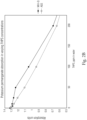
- Figs. 2A-2B show example graphs showing the absorption of KMnO 4 absorption at 525 nm as a function of THPS concentrations in samples of Arabian Gulf Seawater (AGS) and Milli-Q water in accordance with one or more embodiments.
- AGS is widely used in the Middle East region for reservoir injection for pressure maintenance of oil reservoirs.
- the AGS is transported through complex pipeline network for reservoir injection, and the microbial activities in the AGS are controlled by biocide treatment (e.g., THPS).
- biocide treatment e.g., THPS
- Figs. 2A-2B samples comprising 0 to 1000 ppm of THPS were prepared in AGS and Milli-Q water. Equal volumes (1.5 mL) of the THPS-containing sample (both AGS and Milli-Q water) and 1.0 mM KMnO 4 (pH 5.0) were mixed and allowed to react for 2 minutes. Then, the intensity of the permanganate (KMnO 4 ) absorption at 525 nm was measured and normalized by subtracting the background intensity at 650 nm.
- Fig. 2A shows the KMnO 4 absorption at 525 nm as a function of THPS concentrations (0-1000 ppm), and Fig. 2B shows a zoomed in version of the 0-200 ppm region of the graph of Fig. 2A .
- the absorption of KMnO 4 showed a linear relationship with THPS at the range of THPS concentrations between approximately 0 and 200 ppm, with a dynamic range of approximately 2-500 ppm.
- the dynamic range can be expanded to approximately 5-1500 ppm of THPS by increasing the concentration of the KMnO 4 solution. For example, at a concentration of 1 mM for KMnO 4 at 525 nm, the dynamic range is approximately 2-500 ppm.
- the dynamic range increases to approximately 5-1500 ppm.
- the results shown in Figs. 2A-2B also indicate that the function of THPS concentration with 1mM KMnO 4 absorption at 525 nm is comparable in Milli-Q water samples and AGS samples, and that THPS can be detected at levels as low as 2 ppm, and as high as 500 ppm, in accordance with one or more embodiments.
- the dynamic range for detection of THPS in the water samples at a concentration of 2 mM for KMnO 4 at 525 nm is approximately 10-700 ppm. The above dynamic ranges are applicable to freshwater and saltwater samples.
- the limit of detection is approximately 2 ppm.
- the dynamic detection range for THPS concentration in the sample is approximately 2-500 ppm.
- the dynamic range of the THPS in AGS can be expanded to approximately 5-1500 ppm.
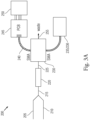
- Figs. 3A-3B display various aspects of an exemplary THPS sensor 200 for the present methods in accordance with one or more embodiments.
- the sensor 200 comprises a sample reservoir 205 for the water sample comprising THPS and a reservoir 210 for the KMnO 4 solution.
- the THPS sensor 200 also includes a first conduit 215 for transferring the water sample comprising THPS and the KMnO 4 solution from their respective reservoirs to a mixing coil 220.
- the water sample comprising THPS and the KMnO 4 solution are mixed (step S110).
- the mixture is transferred via a second conduit 225 to a flow cell 230.
- the flow cell 230 is a Z-flow cell.
- the senor 200 further includes a 565-nm light-emitting diode (LED) 235 and a reference 625-nm LED 236, which are operatively attached to the flow cell 230.
- the two LEDs 235 and 236 can be replaced with a multicolor LED.
- the mixture comprising the water sample and the KMnO 4 solution is exposed to the light emitted by the two LEDs 235 and 236 for absorption measurement.
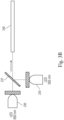
- Fig. 3B shows a preferred optical configuration for the Z-flow cell, in which the 565-nm light-emitting diode (LED) 235 and the reference 625-nm LED 236 are arranged perpendicularly and directed at a dichroic mirror 237.
- the THPS sensor 200 optimizes the light levels that are coupled into the flow cell by introducing a reference channel (650 nm LED).
- the Z-flow cell is a typical Z-flow cell having a Z-shaped fluidic path, which allows continuous flow up through the flow cell, and minimizes bubble entrapment.
- a Z-flow cell When combined with spectrometers, light sources and accessories, a Z-flow cell allows rapid analysis of the samples by measuring the optical absorbance of fluids moving through the flow injection system. Different optical pathlengths and internal volumes in Z-cells are available depending on the analytical needs.
- the Z- flow cell 230 can include SMA connectors for attachment to optical configuration and the microcontroller, respectively.
- the two LED lights 235, 236 with specific wavelengths (565 nm and 650 nm, respectively) pass through the fluid (KMnO 4 and sample mixture) and the absorption is measured by a spectrometer.
- the flow cell 230 (e.g., Z-flow cell) has an absorption path length of approximately 1 cm.
- a signal is transported via a patch cable 240 (e.g., 1.5 mm patch cable with an SMA connector) to a microcontroller 245 (e.g., printed circuit board [PCB] microcontroller).
- a micro-processor platform 250 e.g., Feather, PC technology
- the mixture of the THPS water sample and the KMnO 4 is passed out of the flow cell 230 via a third conduit 255 and can be disposed of as waste.
- the THPS sensor 200 is an online sensor that is operatively connected to a water treatment facility or water distribution network, for example, such that real-time measurements of THPS in the water treatment facility or water distribution network can be determined.
- the sensor 200 can also be configured to transmit measurements (wired or wireless transmissions) and data to a control center remote from the sensor 200.
- the absorption measurements can be performed with instruments other than a sensor.
- lab-based instruments can be used to measure the absorption of the KMnO 4 mixture.
- Such lab-based instruments can include, for example, spectrometers or spectrophotometers.
- suitable spectrophotometers are Mettler Toledo Spectrophotometer UV5 and UV7 and Konica Minolta Spectrophotometer CM-5 and CM-3600A.
- a biocide product approximated as containing 20-40% THPS and 10-20% surfactant, was used in this experiment.
- the biocide product was diluted in AGS into samples comprising approximately 0, 1, 2, 5, 10, 25, 50, 100, 200, 500, 1000 ppm THPS. Then, each of these samples were mixed with and 1 mM KMnO 4 in MilliQ water (pH 5.0) in equal volumes and allowed to react for approximately 2 minutes. The intensity of the KMnO 4 absorption at 525 nm was then measured and normalized by subtracting the background intensity at 650 nm. This process was then repeated but using a pure THPS instead of a THPS-containing biocide. The series of samples containing pure THPS (at equal concentrations as shown above for the biocide product) were then compared to the biocide-containing samples.
- Fig. 4 shows the normalized absorption as function of the approximate THPS concentrations in AGS for the THPS biocide-containing samples. For comparison, Fig. 4 also shows the corresponding samples containing pure THPS.
- Fig. 5 shows a zoomed in version of the graph of Fig. 4 , focusing on the 0-200 ppm region of interest. As shown in Figs. 4 and 5 , KMnO 4 absorption is an effective way to measure the THPS content in AGS, with a linear range between 0 and 200 ppm, a dynamic range of approximately 2-500 ppm, and a limit of detection (LOD) of approximately 2 ppm. There is a small offset in the graphs of Figs.
- THPS samples of 0, 1, 4, 16, 64 and 256 ppm were prepared in fresh water, and 1.5 mL aliquots from each sample were transferred to respective reaction vials. Then 1.5 mL of acidic 0.6 mM KMnO 4 was added to each reaction vial, such that the THPS and the KMnO 4 reacted with one another. For each sample, 2 mL were transferred to an absorption cuvette and the absorption in the range of 400-700 nm was measured. This process was then repeated but using THPS samples in salt water (sea water) instead of fresh water.
- salt water salt water
- Fig. 6 shows an exemplary calibration curve for freshwater and saltwater samples in accordance with one or more embodiments.
- the KMnO 4 absorption decreases as the concentration THPS increases.
- a change in intensity of KMnO 4 absorption in the mixture is correlated with the concentration of THPS in the water sample.
- the calibration curve is established between the THPS concentration in given samples and the intensity of the KMnO 4 absorption.
Landscapes
- Life Sciences & Earth Sciences (AREA)
- Physics & Mathematics (AREA)
- Health & Medical Sciences (AREA)
- Chemical & Material Sciences (AREA)
- General Health & Medical Sciences (AREA)
- Immunology (AREA)
- Biochemistry (AREA)
- Pathology (AREA)
- General Physics & Mathematics (AREA)
- Analytical Chemistry (AREA)
- Engineering & Computer Science (AREA)
- Spectroscopy & Molecular Physics (AREA)
- Chemical Kinetics & Catalysis (AREA)
- Plasma & Fusion (AREA)
- Medicinal Chemistry (AREA)
- Food Science & Technology (AREA)
- Plant Pathology (AREA)
- Pest Control & Pesticides (AREA)
- Agronomy & Crop Science (AREA)
- Dentistry (AREA)
- Environmental Sciences (AREA)
- Zoology (AREA)
- Wood Science & Technology (AREA)
- Biophysics (AREA)
- Molecular Biology (AREA)
- Toxicology (AREA)
- Investigating Or Analysing Materials By Optical Means (AREA)
Claims (15)
- Verfahren zum Detektieren von Tetrakis(hydroxymethyl)phosphoniumsulfat, THPS, in einer Wasserprobe, dadurch gekennzeichnet, dass das Verfahren Folgendes umfasst:Vermischen einer Wasserprobe mit einer KMnO4-Lösung (S110), um ein Gemisch zu bilden;Messen einer Intensität einer KMnO4-Absorption in dem Gemisch bei einer Wellenlänge von 525 nm (S115);Normalisieren der gemessenen Intensität durch Subtrahieren einer Hintergrundintensität bei einer Wellenlänge von 650 nm (S120); undBestimmen einer Gegenwart von THPS in der Wasserprobe (S125) durch Vergleichen der normalisierten Intensität mit Intensitätswerten der KMnO4-Absorption von Kalibrierungsproben, umfassend KMnO4 und bekannte THPS-Konzentrationen.
- Verfahren nach Anspruch 1, wobei das Wasser Süßwasser oder Salzwasser ist.
- Verfahren nach Anspruch 2, wobei das Salzwasser Meerwasser aus dem Persischen Golf ist.
- Verfahren nach Anspruch 1, wobei das Gemisch gleiche Volumina der Wasserprobe und der KMnO4-Lösung umfasst.
- Verfahren nach Anspruch 1, wobei die Intensität der KMnO4-Absorption in dem Gemisch unter Verwendung eines Sensors (200) gemessen wird.
- Verfahren nach Anspruch 5, wobei der Sensor (200) eine 565-nm-LED (235) und eine 650-nm-LED (236) umfasst, die an einer Z-Strömungszelle mit einem Z-förmigen fluidischen Pfad (230) angeordnet sind.
- Verfahren nach Anspruch 5, wobei die Wasserprobe aus Wasser entnommen wird, das in einer Leitung fließt, und wobei der Sensor (200) ein Online-Sensor in Fluidverbindung mit der Wasserleitung ist und ausgelegt ist, um Echtzeitmessungen des in der Leitung strömenden Wassers durchzuführen.
- Verfahren nach Anspruch 1, wobei eine Detektionsgrenze für THPS in der Wasserprobe etwa 2 ppm beträgt.
- Verfahren zum Quantifizieren von Tetrakis(hydroxymethyl)phosphoniumsulfat, THPS, in in einer Leitung strömendem Wasser, dadurch gekennzeichnet, dass das Verfahren Folgendes umfasst:Vermischen einer Wasserprobe, umfassend THPS, aus der Leitung mit einer KMnO4-Lösung, wobei das THPS in der Wasserprobe mit der KMnO4-Lösung reagiert;Messen einer Intensität der KMnO4-Absorption in dem Gemisch bei einer Wellenlänge von 525 nm;Normalisieren der gemessenen Intensität durch Subtrahieren einer Hintergrundintensität bei einer Wellenlänge von 650 nm; undBestimmen einer Konzentration von THPS in der Wasserprobe basierend auf einem Vergleich zwischen der normalisierten Intensität und von Intensitätswerten der KMnO4-Absorption von Kalibrierungsproben, umfassend KMnO4 und bekannte THPS-Konzentrationen.
- Verfahren nach Anspruch 9, wobei die bestimmte Konzentration von THPS für Wasserproben mit einem THPS-Gehalt von etwa 2 bis 500 ppm genau ist.
- Verfahren nach Anspruch 9, wobei die Wasserprobe ein Biozid auf THPS-Basis umfasst.
- Verfahren nach Anspruch 9, wobei die Wasserprobe zumindest 2 min lang mit der KMnO4-Lösung vermischt wird.
- Verfahren nach Anspruch 9, wobei das Wasser Meerwasser aus dem Persischen Golf (AGS) ist und wobei der dynamische Bereich der Konzentration von THPS in AGS etwa 5 bis 1500 ppm beträgt.
- Verfahren nach Anspruch 9, wobei das Gemisch gleiche Volumina der Wasserprobe und der KMnO4-Lösung umfasst.
- Verfahren nach Anspruch 9, wobei die Intensität der KMnO4-Absortpion in dem Gemisch unter Verwendung eines Sensors (200) gemessen wird und wobei der Sensor (200) ein Online-Sensor in Fluidkommunikation mit der Leitung ist und ausgelegt ist, um EchtzeitMessungen durchzuführen.
Applications Claiming Priority (2)
| Application Number | Priority Date | Filing Date | Title |
|---|---|---|---|
| US17/084,108 US11385171B2 (en) | 2020-10-29 | 2020-10-29 | Methods for detecting and quantifying tetrakis(hydroxymethyl)phosphonium sulfate (THPS) in biocide products |
| PCT/US2021/072053 WO2022094561A1 (en) | 2020-10-29 | 2021-10-27 | Methods for detecting and quantifying tetrakis(hydroxymethyl)phosphonium sulfate (thps) in biocide products |
Publications (3)
| Publication Number | Publication Date |
|---|---|
| EP4237845A1 EP4237845A1 (de) | 2023-09-06 |
| EP4237845C0 EP4237845C0 (de) | 2024-11-27 |
| EP4237845B1 true EP4237845B1 (de) | 2024-11-27 |
Family
ID=78821224
Family Applications (1)
| Application Number | Title | Priority Date | Filing Date |
|---|---|---|---|
| EP21819691.3A Active EP4237845B1 (de) | 2020-10-29 | 2021-10-27 | Verfahren zum nachweis und zur quantifizierung von tetrakis(hydroxymethyl)phosphoniumsulfat (thps) in bioziden produkten |
Country Status (5)
| Country | Link |
|---|---|
| US (1) | US11385171B2 (de) |
| EP (1) | EP4237845B1 (de) |
| CN (1) | CN116529596B (de) |
| SA (1) | SA121430261B1 (de) |
| WO (1) | WO2022094561A1 (de) |
Families Citing this family (2)
| Publication number | Priority date | Publication date | Assignee | Title |
|---|---|---|---|---|
| US11739011B2 (en) * | 2020-07-13 | 2023-08-29 | Saudi Arabian Oil Company | Systems and methods for testing biocide |
| US20260049927A1 (en) * | 2024-08-16 | 2026-02-19 | Saudi Arabian Oil Company | Analyzer for automatically detecting and quantifying tetrakis(hydroxymethyl)phosphonium sulfate in biocide products |
Family Cites Families (10)
| Publication number | Priority date | Publication date | Assignee | Title |
|---|---|---|---|---|
| ZA801052B (en) | 1979-03-10 | 1981-09-30 | British Petroleum Co | Apparatus and method for the determination of biocide concentration in aqueous systems |
| CN102507560A (zh) * | 2011-11-08 | 2012-06-20 | 湖北兴发化工集团股份有限公司 | 四羟甲基硫酸磷中甲醛含量的测定方法 |
| US9329159B2 (en) | 2013-03-08 | 2016-05-03 | Ecolab Usa Inc. | Methods and systems for analyzing a liquid medium |
| WO2015054695A2 (en) | 2013-10-11 | 2015-04-16 | Immunetics, Inc. | Led assay reader with touchscreen control and barcode sample id |
| US9772287B2 (en) | 2014-04-16 | 2017-09-26 | Saudi Arabian Oil Company | Sensor for monitoring for the presence and measurement of aqueous aldehyde biocides |
| US20170044035A1 (en) | 2015-08-11 | 2017-02-16 | Baker Hughes Incorporated | Oilfield wastewater treatment |
| DE102016117733A1 (de) | 2015-10-09 | 2017-04-13 | Endress+Hauser Conducta Gmbh+Co. Kg | Messeinrichtung |
| GB201614585D0 (en) | 2016-08-26 | 2016-10-12 | Bactest Ltd | Methods and apparatus for monitoring ballast water |
| EP3630913A1 (de) | 2017-05-26 | 2020-04-08 | Saudi Arabian Oil Company | Eisensulfidentfernung in ölfeldanwendungen |
| GB201712580D0 (en) | 2017-08-04 | 2017-09-20 | Lux Assure Ltd | Biocide detection |
-
2020
- 2020-10-29 US US17/084,108 patent/US11385171B2/en active Active
-
2021
- 2021-10-27 EP EP21819691.3A patent/EP4237845B1/de active Active
- 2021-10-27 CN CN202180073221.XA patent/CN116529596B/zh active Active
- 2021-10-27 WO PCT/US2021/072053 patent/WO2022094561A1/en not_active Ceased
- 2021-10-27 SA SA121430261A patent/SA121430261B1/ar unknown
Also Published As
| Publication number | Publication date |
|---|---|
| US20220136965A1 (en) | 2022-05-05 |
| SA121430261B1 (ar) | 2023-02-05 |
| CN116529596B (zh) | 2025-10-10 |
| EP4237845A1 (de) | 2023-09-06 |
| EP4237845C0 (de) | 2024-11-27 |
| CN116529596A (zh) | 2023-08-01 |
| WO2022094561A1 (en) | 2022-05-05 |
| US11385171B2 (en) | 2022-07-12 |
Similar Documents
| Publication | Publication Date | Title |
|---|---|---|
| Moo et al. | New development of optical fibre sensor for determination of nitrate and nitrite in water | |
| Karrat et al. | Development of a simplified spectrophotometric method for nitrite determination in water samples | |
| Andrade-Eiroa et al. | Environmental applications of excitation-emission spectrofluorimetry: an in-depth review I | |
| Kröckel et al. | Fluorescence detection for phosphate monitoring using reverse injection analysis | |
| Patey et al. | Determination of nitrate and phosphate in seawater at nanomolar concentrations | |
| Li et al. | Continuous colorimetric determination of trace ammonium in seawater with a long-path liquid waveguide capillary cell | |
| Martz et al. | A submersible autonomous sensor for spectrophotometric pH measurements of natural waters | |
| Gimbert et al. | Environmental applications of liquid-waveguide-capillary cells coupled with spectroscopic detection | |
| EP4237845B1 (de) | Verfahren zum nachweis und zur quantifizierung von tetrakis(hydroxymethyl)phosphoniumsulfat (thps) in bioziden produkten | |
| CA2806491C (en) | Simultaneous determination of multiple analytes in industrial water system | |
| Filik et al. | A novel fiber optic spectrophotometric determination of nitrite using Safranin O and cloud point extraction | |
| EP2162738B1 (de) | Verfahren zur bestimmung der polymerkonzentration in wassersystemen | |
| Lin et al. | An automated spectrophotometric method for the direct determination of nitrite and nitrate in seawater: Nitrite removal with sulfamic acid before nitrate reduction using the vanadium reduction method | |
| Uriarte et al. | Simple-to-use and portable device for free chlorine determination based on microwave-assisted synthesized carbon dots and smartphone images | |
| Cadeado et al. | A palm-sized wireless device for colorimetric nitrite determination in water | |
| Horstkotte et al. | A miniature and field-applicable multipumping flow analyzer for ammonium monitoring in seawater with fluorescence detection | |
| Charles et al. | Determination of cadmium in marine waters: on-line preconcentration and flow-through fluorescence detection | |
| Nascimento et al. | Flow-based green ceramics microdevice with smartphone image colorimetric detection for free chlorine determination in drinking water | |
| Ribas et al. | Use of dimethylglyoxime for the spectrophotometric flow-based determination of nickel in natural waters | |
| Cortés-Bautista et al. | Portable determinations for legislated dissolved nitrogen forms in several environmental water samples as a study case | |
| Buazar et al. | Digital colorimetric detection of ammonium in water samples after microextraction procedure using deep eutectic solvent, based on DLLME method | |
| Patey et al. | Interferences in the analysis of nanomolar concentrations of nitrate and phosphate in oceanic waters | |
| US11460402B2 (en) | Methods for detecting and quantifying glutaraldehyde-based products in water | |
| Abi Kaed Bey et al. | A high-resolution analyser for the measurement of ammonium in oligotrophic seawater | |
| Jones et al. | Sequential injection analysis Ferrozine spectrophotometry versus Luminol chemiluminescence for continuous online monitoring of the concentration and speciation of iron |
Legal Events
| Date | Code | Title | Description |
|---|---|---|---|
| STAA | Information on the status of an ep patent application or granted ep patent |
Free format text: STATUS: UNKNOWN |
|
| STAA | Information on the status of an ep patent application or granted ep patent |
Free format text: STATUS: THE INTERNATIONAL PUBLICATION HAS BEEN MADE |
|
| PUAI | Public reference made under article 153(3) epc to a published international application that has entered the european phase |
Free format text: ORIGINAL CODE: 0009012 |
|
| STAA | Information on the status of an ep patent application or granted ep patent |
Free format text: STATUS: REQUEST FOR EXAMINATION WAS MADE |
|
| 17P | Request for examination filed |
Effective date: 20230405 |
|
| AK | Designated contracting states |
Kind code of ref document: A1 Designated state(s): AL AT BE BG CH CY CZ DE DK EE ES FI FR GB GR HR HU IE IS IT LI LT LU LV MC MK MT NL NO PL PT RO RS SE SI SK SM TR |
|
| P01 | Opt-out of the competence of the unified patent court (upc) registered |
Effective date: 20230908 |
|
| DAV | Request for validation of the european patent (deleted) | ||
| DAX | Request for extension of the european patent (deleted) | ||
| GRAP | Despatch of communication of intention to grant a patent |
Free format text: ORIGINAL CODE: EPIDOSNIGR1 |
|
| STAA | Information on the status of an ep patent application or granted ep patent |
Free format text: STATUS: GRANT OF PATENT IS INTENDED |
|
| INTG | Intention to grant announced |
Effective date: 20240605 |
|
| GRAS | Grant fee paid |
Free format text: ORIGINAL CODE: EPIDOSNIGR3 |
|
| GRAA | (expected) grant |
Free format text: ORIGINAL CODE: 0009210 |
|
| STAA | Information on the status of an ep patent application or granted ep patent |
Free format text: STATUS: THE PATENT HAS BEEN GRANTED |
|
| AK | Designated contracting states |
Kind code of ref document: B1 Designated state(s): AL AT BE BG CH CY CZ DE DK EE ES FI FR GB GR HR HU IE IS IT LI LT LU LV MC MK MT NL NO PL PT RO RS SE SI SK SM TR |
|
| REG | Reference to a national code |
Ref country code: GB Ref legal event code: FG4D |
|
| REG | Reference to a national code |
Ref country code: CH Ref legal event code: EP |
|
| REG | Reference to a national code |
Ref country code: DE Ref legal event code: R096 Ref document number: 602021022583 Country of ref document: DE |
|
| REG | Reference to a national code |
Ref country code: IE Ref legal event code: FG4D |
|
| U01 | Request for unitary effect filed |
Effective date: 20241206 |
|
| P04 | Withdrawal of opt-out of the competence of the unified patent court (upc) registered |
Free format text: CASE NUMBER: APP_66591/2024 Effective date: 20241216 |
|
| U07 | Unitary effect registered |
Designated state(s): AT BE BG DE DK EE FI FR IT LT LU LV MT NL PT RO SE SI Effective date: 20241219 |
|
| PG25 | Lapsed in a contracting state [announced via postgrant information from national office to epo] |
Ref country code: IS Free format text: LAPSE BECAUSE OF FAILURE TO SUBMIT A TRANSLATION OF THE DESCRIPTION OR TO PAY THE FEE WITHIN THE PRESCRIBED TIME-LIMIT Effective date: 20250327 Ref country code: HR Free format text: LAPSE BECAUSE OF FAILURE TO SUBMIT A TRANSLATION OF THE DESCRIPTION OR TO PAY THE FEE WITHIN THE PRESCRIBED TIME-LIMIT Effective date: 20241127 |
|
| PG25 | Lapsed in a contracting state [announced via postgrant information from national office to epo] |
Ref country code: ES Free format text: LAPSE BECAUSE OF FAILURE TO SUBMIT A TRANSLATION OF THE DESCRIPTION OR TO PAY THE FEE WITHIN THE PRESCRIBED TIME-LIMIT Effective date: 20241127 |
|
| PG25 | Lapsed in a contracting state [announced via postgrant information from national office to epo] |
Ref country code: NO Free format text: LAPSE BECAUSE OF FAILURE TO SUBMIT A TRANSLATION OF THE DESCRIPTION OR TO PAY THE FEE WITHIN THE PRESCRIBED TIME-LIMIT Effective date: 20250227 |
|
| PG25 | Lapsed in a contracting state [announced via postgrant information from national office to epo] |
Ref country code: GR Free format text: LAPSE BECAUSE OF FAILURE TO SUBMIT A TRANSLATION OF THE DESCRIPTION OR TO PAY THE FEE WITHIN THE PRESCRIBED TIME-LIMIT Effective date: 20250228 |
|
| PG25 | Lapsed in a contracting state [announced via postgrant information from national office to epo] |
Ref country code: PL Free format text: LAPSE BECAUSE OF FAILURE TO SUBMIT A TRANSLATION OF THE DESCRIPTION OR TO PAY THE FEE WITHIN THE PRESCRIBED TIME-LIMIT Effective date: 20241127 |
|
| PG25 | Lapsed in a contracting state [announced via postgrant information from national office to epo] |
Ref country code: RS Free format text: LAPSE BECAUSE OF FAILURE TO SUBMIT A TRANSLATION OF THE DESCRIPTION OR TO PAY THE FEE WITHIN THE PRESCRIBED TIME-LIMIT Effective date: 20250227 |
|
| PG25 | Lapsed in a contracting state [announced via postgrant information from national office to epo] |
Ref country code: SM Free format text: LAPSE BECAUSE OF FAILURE TO SUBMIT A TRANSLATION OF THE DESCRIPTION OR TO PAY THE FEE WITHIN THE PRESCRIBED TIME-LIMIT Effective date: 20241127 |
|
| PG25 | Lapsed in a contracting state [announced via postgrant information from national office to epo] |
Ref country code: SK Free format text: LAPSE BECAUSE OF FAILURE TO SUBMIT A TRANSLATION OF THE DESCRIPTION OR TO PAY THE FEE WITHIN THE PRESCRIBED TIME-LIMIT Effective date: 20241127 |
|
| PG25 | Lapsed in a contracting state [announced via postgrant information from national office to epo] |
Ref country code: CZ Free format text: LAPSE BECAUSE OF FAILURE TO SUBMIT A TRANSLATION OF THE DESCRIPTION OR TO PAY THE FEE WITHIN THE PRESCRIBED TIME-LIMIT Effective date: 20241127 |
|
| PLBE | No opposition filed within time limit |
Free format text: ORIGINAL CODE: 0009261 |
|
| STAA | Information on the status of an ep patent application or granted ep patent |
Free format text: STATUS: NO OPPOSITION FILED WITHIN TIME LIMIT |
|
| 26N | No opposition filed |
Effective date: 20250828 |
|
| U20 | Renewal fee for the european patent with unitary effect paid |
Year of fee payment: 5 Effective date: 20250930 |
|
| PGFP | Annual fee paid to national office [announced via postgrant information from national office to epo] |
Ref country code: GB Payment date: 20251023 Year of fee payment: 5 |