EP4236260B1 - Anfrageverarbeitungsverfahren und zugehörige vorrichtung - Google Patents
Anfrageverarbeitungsverfahren und zugehörige vorrichtung Download PDFInfo
- Publication number
- EP4236260B1 EP4236260B1 EP22859937.9A EP22859937A EP4236260B1 EP 4236260 B1 EP4236260 B1 EP 4236260B1 EP 22859937 A EP22859937 A EP 22859937A EP 4236260 B1 EP4236260 B1 EP 4236260B1
- Authority
- EP
- European Patent Office
- Prior art keywords
- request
- invoker
- interface
- response data
- hidl
- Prior art date
- Legal status (The legal status is an assumption and is not a legal conclusion. Google has not performed a legal analysis and makes no representation as to the accuracy of the status listed.)
- Active
Links
Images










Classifications
-
- H—ELECTRICITY
- H04—ELECTRIC COMMUNICATION TECHNIQUE
- H04L—TRANSMISSION OF DIGITAL INFORMATION, e.g. TELEGRAPHIC COMMUNICATION
- H04L67/00—Network arrangements or protocols for supporting network services or applications
- H04L67/50—Network services
- H04L67/56—Provisioning of proxy services
- H04L67/562—Brokering proxy services
-
- H—ELECTRICITY
- H04—ELECTRIC COMMUNICATION TECHNIQUE
- H04L—TRANSMISSION OF DIGITAL INFORMATION, e.g. TELEGRAPHIC COMMUNICATION
- H04L69/00—Network arrangements, protocols or services independent of the application payload and not provided for in the other groups of this subclass
- H04L69/30—Definitions, standards or architectural aspects of layered protocol stacks
- H04L69/32—Architecture of open systems interconnection [OSI] 7-layer type protocol stacks, e.g. the interfaces between the data link level and the physical level
- H04L69/322—Intralayer communication protocols among peer entities or protocol data unit [PDU] definitions
Definitions
- This application relates to the field of electronic information technologies, and in particular, to a request processing method and a related apparatus.
- US2012/054851A1 describes that a proxy consolidates multiple TCP requests from clients into one TCP connection between a proxy and server. It is described that a persistent TCP connection is opened between the proxy and server, and a connection request is received from a client at the proxy. It is described that a unique identifier is registered for the client, and the server is signaled over the persistent connection to register the unique identifier. It is described that a client connection is established between the client and proxy responsive to the connection request. It is described that a content request is received from the client over the client connection.
- an application side usually interacts with a modem and a hardware abstraction layer (Hardware Abstraction Layer, HAL) of the modem by invoking an HAL interface definition language (HAL interface definition language, HIDL) interface.
- HAL interface definition language HAL interface definition language
- the HIDL interface has implementations at a client (Client) end and a server (Server) end.
- the client end refers to a party that invokes a method through the HIDL.
- the server end refers to a party that implements the HIDL interface, accepts invocation of the client end, and returns data.
- a solution in which an application side delivers a request to a modem (Modem) for processing is as follows: When an invoker on the application side delivers a request, a client end of an HIDL interface corresponding to the invoker is invoked, the request delivered by the invoker is processed at a server end of an HIDL interface at an HAL layer, the server end of the HIDL interface delivers the request to the modem, and the modem performs processing to obtain response data corresponding to the request.
- client ends and server ends of HIDL interfaces are one-to-one bound. A server end of each HIDL interface is fixedly registered with a client end of one HIDL interface.
- a server end of one HIDL interface can only fixedly receive a request delivered by a client end of one HIDL interface and return a result to the client end, and a function that a server end of one HIDL interface simultaneously processes requests delivered by client ends of a plurality of HIDL interfaces is not supported.
- This application provides a request processing method and a related apparatus, to resolve a problem that a server end of one HIDL interface is not supported in simultaneously processing requests delivered by client ends of a plurality of HIDL interfaces.
- Appended claim 1 defines a request processing method.
- Appended claim 7 defines a request processing method.
- Appended claim 12 defines an electronic device. The invention and its scope of protection is defined by these claims. The following aspects and implementations of the summary provide examples of how technical subject matters can be combined.
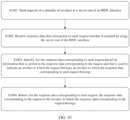
- this application discloses a request processing method, applied to a first device.
- the request processing method includes: sending requests of a plurality of invokers to a server Server end of a first device interface, where the request carries information used to indicate an invoker to which the request belongs; receiving response data that corresponds to each request and that is returned by the server end of the first device interface, where the response data corresponding to the request carries information used to indicate an invoker to which the request belongs; identifying, for the response data corresponding to each request based on the information that is carried in the response data corresponding to the request and that is used to indicate the invoker to which the request belongs, an invoker to which the response data corresponding to the request belongs; and returning, for the response data corresponding to each request, the response data corresponding to the request to the invoker to which the response data corresponding to the request belongs.
- the invoker to which the response data corresponding to the request belongs is identified based on the information that is carried in the response data corresponding to the request and that is used to indicate the invoker to which the request belongs, and then the response data corresponding to each request can be returned to the invoker to which the response data belongs.
- the first device interface is an HIDL interface of the first device, and after the sending requests of a plurality of invokers to a server Server end of a first device interface, the method further includes: sending a request of each invoker to a modem of the first device by using a server end of the HIDL interface of the first device; processing each request by using the modem of the first device, to obtain the response data corresponding to each request; and receiving the response data that corresponds to each request and that is returned by the modem by using the server end of the HIDL interface of the first device.
- the first device interface may alternatively be another type of interface. This is not limited.
- the sending a request of each invoker to a modem of the first device by using a server end of the HIDL interface of the first device includes: invoking the server end of the HIDL interface of the first device by using an interface proxy module, to send the request of each invoker to the modem of the first device.
- the interface proxy module pre-creates a proxy object of a client end of an HIDL interface corresponding to each invoker.
- the receiving the response data that corresponds to each request and that is returned by the modem by using the server end of the HIDL interface of the first device includes: receiving, by using the interface proxy module, the response data that corresponds to each request and that is returned by the modem by using the server end of the HIDL interface of the first device.
- the requests of the plurality of invokers include a request of an invoker on the first device and/or a request of an invoker on a second device.
- the processing, for the request of each invoker, a serial parameter in the request based on an identifier of the invoker, so that a processed serial parameter in the request can be used to indicate the invoker to which the request belongs includes: offsetting, for the request of each invoker based on the identifier of the invoker, the serial parameter in the request by an offset value corresponding to the invoker, so that the processed serial parameter in the request can be used to indicate the invoker to which the request belongs.
- the serial parameter in the request is offset by the offset value corresponding to the invoker, so that the offset-processed serial parameter can be used to indicate the invoker to which the request belongs.
- the information used to indicate the invoker to which the request belongs is an identifier of the invoker to which the request belongs.
- the receiving response data that corresponds to each request and that is returned by the server end of the first device interface includes: receiving, by using a client end of the first device interface, the response data that corresponds to each request and that is returned by the server end of the first device interface.
- a field used to support receiving of an identifier of each invoker is preset in the client end of the first device interface, and a field used to support receiving of the identifier of each invoker is preset in the server end of the first device interface.
- the field used to support receiving of the identifier of each invoker is preset in the client end of the first device interface, and the field used to support receiving of the identifier of each invoker is preset in the server end of the first device interface. Therefore, both the client end and the server end can support receiving of the request and the response data that carry the identifier of the invoker to which the request belongs.
- the method before the returning, for the response data corresponding to each request, the response data corresponding to the request to the invoker to which the response data corresponding to the request belongs, the method further includes: restoring, for response data corresponding to each request belonging to the first device, a processed serial parameter in the response data corresponding to the request, or restoring, for response data corresponding to each request belonging to the first device and the second device, a processed serial parameter in the response data corresponding to the request.
- the processing a serial parameter in the request, so that a processed serial parameter in the request can be used to indicate the invoker to which the request belongs includes: offsetting, based on the identifier of the invoker, the serial parameter in the request by an offset value corresponding to the invoker, so that the processed serial parameter in the request can be used to indicate the invoker to which the request belongs.
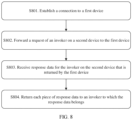
- this application discloses another request processing method, applied to a second device.
- the request processing method includes: sending a request of an invoker on the second device to a first device, so that the first device sends the request of the invoker on the second device to a server end of a first device interface, and receives response data that corresponds to each request and that is returned by the server end of the first device interface, where the request carries information used to indicate the invoker to which the request belongs, and the first device and the second device are in a connected state; receiving response data that corresponds to each request belonging to the second device and that is returned by the first device, where an invoker to which the response data corresponding to the request belongs is identified by the first device based on information that is carried in the response data corresponding to the request and that is used to indicate the invoker to which the request belongs; and returning, for the response data corresponding to each request, the response data to the invoker to which the response data belongs.
- the invoker to which the response data corresponding to the request belongs is identified by the first device based on the information that is carried in the response data corresponding to the request and that is used to indicate the invoker to which the request belongs. Therefore, the second device can receive the response data that corresponds to each request belonging to the second device and that is returned by the first device, and then return, for the response data corresponding to each request, the response data to the invoker to which the response data belongs. In this way, requests of a plurality of invokers on different devices are processed by using the server end of the first device interface.
- the method before the sending a request of an invoker on the second device to a first device, the method further includes: receiving a request of an invoker on the first device by using an interface proxy module.
- the interface proxy module pre-creates a proxy object of a client end of an HIDL interface corresponding to the invoker on the first device and a proxy object of a client end of an HIDL interface corresponding to the invoker on the second device.
- the method before the sending a request of an invoker on the second device to a first device, the method further includes: processing, for a request of each invoker on the second device, a serial parameter in the request based on an identifier of the invoker, so that a processed serial parameter in the request can be used to indicate the invoker to which the request belongs.
- the method before the returning, for the response data corresponding to each request, the response data to the invoker to which the response data belongs, the method further includes: restoring, for the response data corresponding to each request belonging to the second device, a processed serial parameter in the response data corresponding to the request.
- the processing, for a request of each invoker on the second device, a serial parameter in the request based on an identifier of the invoker, so that a processed serial parameter in the request can be used to indicate the invoker to which the request belongs includes: offsetting, for the request of each invoker on the second device based on the identifier of the invoker, the serial parameter in the request by an offset value corresponding to the invoker, so that the processed serial parameter in the request can be used to indicate the invoker to which the request belongs.
- the method further includes: identifying, for the response data corresponding to each request based on the information that is carried in the response data corresponding to the request and that is used to indicate the invoker to which the request belongs, the invoker to which the response data corresponding to the request belongs.
- the identifying, for the response data corresponding to each request based on the processed serial parameter in the response data corresponding to the request, the invoker to which the response data corresponding to the request belongs includes: performing, for the response data corresponding to each request, matching between the processed serial parameter in the response data corresponding to the request and a serial parameter value range corresponding to each invoker, and determining a matched invoker as the invoker to which the response data corresponding to the request belongs.
- this application discloses an electronic device, including: one or more processors, a memory, a display, a wireless communications module, and a mobile communications module.
- the memory, the display, the wireless communications module, and the mobile communications module are coupled to the one or more processors, the memory is configured to store computer program code, the computer program code includes computer instructions, and when the one or more processors execute the computer instructions, the electronic device performs the request processing method according to any one of the implementations of the first aspect, or the request processing method according to any one of the implementations of the second aspect.
- this application discloses a request processing apparatus.
- the request processing apparatus includes a processing unit, a storage unit, a display unit, and a transceiver unit, the storage unit is configured to store one or more programs, and the processing unit is configured to execute the one or more programs.
- the one or more programs include instructions, and the instructions are used to perform the request processing method according to any one of the implementations of the first aspect, or the request processing method according to any one of the implementations of the second aspect.
- words such as “example” or “for example” are used to represent giving examples, illustrations, or descriptions. Any embodiment or design solution described as “example” or “for example” in embodiments of this application should not be construed as being more preferred or advantageous than other embodiments or design solutions. Specifically, the words such as “example” or “for example” are used to present related concepts in a specific manner.
- an invoker on an application side initiates a request and invokes a client end of an HIDL interface corresponding to the invoker, and the request initiated by the invoker is processed at a server end of the HIDL interface.
- the server end of the HIDL interface sends the request to a modem, the modem invokes the server end of the HIDL interface after obtaining response data corresponding to the request through processing, then the server end of the HIDL interface returns the response data corresponding to the request to the client end of the HIDL interface, and the client end of the HIDL interface returns the response data to the corresponding invoker.
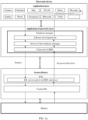
- the application side refers to a program that runs on an application processor, for example, a program at an application layer or an application framework layer.
- the invoker is, for example, an application (Application, App) or a telephony manager (telephony).
- a telephony manager of the electronic device is an invoker.
- an SMS message application at an application layer of the electronic device triggers a request (Request)
- the request is delivered from the local application layer of the electronic device to the telephony manager (Telephony) at an application framework layer.
- the request invokes an Android open source project (Android Open Source Project, AOSP) software development kit (Software Development Kit, SDK) application programming interface (Application Programming Interface, API) in the telephony manager.
- AOSP SDK API invokes a service (Telephony Service) interface of the telephony manager.
- the telephony service invokes a client end of an HIDL interface.
- the client end of the HIDL interface invokes a server end of the HIDL interface in a local system library.
- the server end of the HIDL interface sends the request to a vendor radio interface layer (Vendor-RIL), and the Vendor-RIL sends the request to a local modem (Modem) for processing.
- the server end of the HIDL interface is on an RIL module at an HAL layer.
- the local modem obtains response data (Response) corresponding to the request, then the modem reports the response to the client end of the HIDL interface in the telephony manager through the Vendor-RIL and the server end of the HIDL interface, and then the response is sent to the SMS message application through the telephony service and the software development kit in the telephony manager.
- the local modem may also actively report an indication (Indication) to the telephony manager by invoking the server end of the HIDL interface, and then the telephony manager continues to report the indication to the SMS message application.
- a reporting process of the indication may be the same as that of the response, and details are not described herein.
- a server end of one HIDL interface in the electronic device can only fixedly receive a request delivered by a client end of one HIDL interface, and return a corresponding response to the client end.
- a server end of each HIDL interface is fixedly registered with a client end of one HIDL interface.
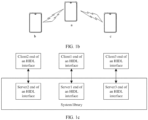
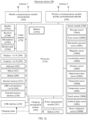
- a plurality of server ends are created at an HAL layer of an electronic device, so that a plurality of devices share a cellular capability, or different operating systems of a same device can use a cellular capability. For example, as shown in FIG. 1c , a server end needs to be independently established for each client end at the HAL layer. Different client ends may be different operating systems located on a same device, or may be different devices.
- a mobile phone a is a first device, and mobile phones b and c are second devices.
- the mobile phone b and the mobile phone c want to share a cellular capability of the mobile phone a
- the mobile phone a needs to separately establish server ends at the HAL layer for the mobile phone b and the mobile phone c.
- the first device separately establishes a server end for each second device or each operating system.
- a quantity of server ends started in the first device is fixedly configured in code, and cannot be dynamically adjusted with an increase or a decrease in a quantity of shared devices.
- the code needs to be continuously adjusted at the HAL layer to support different quantities of client ends. This is inconvenient for use.
- the first device mentioned in this application is an electronic device that provides a modem
- the second device mentioned in this application is an electronic device that uses the modem of the first device.
- a request delivered by an invoker carries information used to describe the invoker to which the request belongs, to identify an invoker to which each request belongs, so that requests delivered by a plurality of invokers are processed by invoking a server end of a same HIDL interface by using an interface proxy module, and response data corresponding to each request can be returned to a corresponding invoker.
- a proxy mode is a design mode that provides an additional access manner for a target object by creating a proxy object of the target object.
- the target object is an interface, for example, may be a client end of an HIDL interface, or may be a client end of a radio HIDL interface in HIDL interfaces.
- the target object is accessed through the proxy object, so that an additional function operation can be provided by using the proxy object without modifying the original target object, to extend a function of the original target object.
- the request mentioned in embodiments of this application may be a request delivered by an invoker on an application side to a modem, for example, may be a request in a cellular communication service.
- a request in a cellular communication service may be referred to as cellular communication services.
- all services or capabilities related to cellular communication may be referred to as cellular communication services.
- a call, an SMS message, a SIM card change, and call forwarding may all be referred to as cellular communication services.
- Embodiments provided in this application may be applicable to a scenario in which a plurality of devices share a cellular capability.
- the mobile phone b and the mobile phone c may share a cellular capability of the mobile phone a by using the method provided in embodiments of this application.
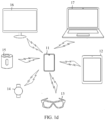
- the first device may be a mobile phone 11 in FIG. 1d .
- the second device may be a tablet 12, smart glasses 13, a watch 14, a sound box 15, a smart screen 16, or a notebook computer 17 in FIG. 1d .
- Embodiments provided in this application may enable second devices to share a cellular capability or a modem of the first device.
- a request processing method provided in embodiments of this application may be further applicable to a scenario in which a single operating system in the first device uses one modem. For example, in a same operating system, a plurality of independent communication services or applications may share one modem.
- requesting party information may be added to requests to distinguish between invokers of the requests.
- the requesting party information may be a serial (Serial) parameter, or may be a user-defined parameter or a newly added field.
- the second device or the first device may distinguish, by using serial parameters, between invokers to which requests belong.
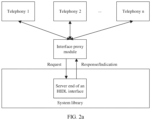
- the interface proxy module may be a proxy for client ends of a plurality of HIDL interfaces.
- the interface proxy module receives requests delivered by n invokers: telephony 1, telephony 2, ..., and telephony n.
- n invokers telephony 1, telephony 2, ..., and telephony n.
- the electronic device may alternatively determine an invoker by using a newly added field or a user-defined parameter.
- a request sent by an invoker for example, a telephony
- a client end of the first device may identify the identity of the invoker by using the newly added field or parameter.
- the client end of the HIDL interface receives the request, refer to related descriptions in step S601 in FIG. 6a .
- the invokers shown in FIG. 2a and FIG. 2b may be in a same operating system, or may be distributed in different operating systems. The n invokers may be all in the first device, or may be distributed in a plurality of different devices (that is, distributed in a plurality of second devices and the first device). In addition to the telephony shown in FIG. 2a , the invoker may alternatively be another type of invoker such as an IP multimedia subsystem (IP Multimedia Subsystem, IMS) application. In addition, a type of an interface is not limited in embodiments of this application. In addition to the HIDL interface, there may be a first device interface of another type.
- IP Multimedia Subsystem IP Multimedia Subsystem
- the second device in embodiments of this application may be an electronic device such as a mobile phone, a tablet computer, a desktop computer, a laptop computer, a laptop computer, an ultra-mobile personal computer (Ultra-mobile Personal Computer, UMPC), a handheld computer, a netbook, a personal digital assistant (Personal Digital Assistant, PDA), a wearable electronic device, or a smartwatch.
- the first device is an electronic device that has a cellular communication capability, such as a mobile phone or a smart call watch.
- a specific form of the electronic device is not specifically limited in this application.
- the second device in embodiments of this application is a device that uses a cellular communication capability of the first device, and the first device is a device that has a cellular communication capability.
- the electronic device 200 may include a processor 210, an external memory interface 220, an internal memory 221, a universal serial bus (universal serial bus, USB) interface 230, a charging management module 240, a power management module 241, a battery 242, an antenna 1, an antenna 2, a mobile communications module 250, a wireless communications module 260, an audio module 270, a speaker 270A, a receiver 270B, a microphone 270C, a headset jack 270D, a sensor module 280, a button 290, a motor 291, an indicator 292, a camera 293, a display 294, a subscriber identification module (subscriber identification module, SIM) card interface 295, and the like.
- SIM subscriber identification module
- the sensor module 280 may include a pressure sensor 280A, a gyro sensor 280B, a barometric pressure sensor 280C, a magnetic sensor 280D, an acceleration sensor 280E, a distance sensor 280F, an optical proximity sensor 280G, a fingerprint sensor 280H, a temperature sensor 280J, a touch sensor 280K, an ambient light sensor 280L, a bone conduction sensor 280M, and the like.
- the structure shown in this embodiment does not constitute a specific limitation on the electronic device 200.
- the electronic device 200 may include more or fewer components than those shown in the figure, or combine some components, or split some components, or have different component arrangements.
- the components shown in the figure may be implemented by hardware, software, or a combination of software and hardware.
- the processor 210 may include one or more processing units.
- the processor 210 may include an application processor (application processor, AP), a modem, a graphics processing unit (graphics processing unit, GPU), an image signal processor (image signal processor, ISP), a controller, a video codec, a digital signal processor (digital signal processor, DSP), a baseband processor, and/or a neural-network processing unit (neural-network processing unit, NPU).
- Different processing units may be independent components, or may be integrated into one or more processors.
- the processor 210 may perform the request processing method in any one of embodiments of this application.
- the controller may be a nerve center and a command center of the electronic device 200.
- the controller may generate an operation control signal based on instruction operation code and a time sequence signal, to complete control of instruction fetching and instruction execution.
- a memory may further be disposed in the processor 210, to store instructions and data.
- the charging management module 240 is configured to receive charging input from a charger.
- the charger may be a wireless charger, or may be a wired charger.
- the charging management module 240 may further supply power to the electronic device through the power management module 241.
- the power management module 241 is configured to connect the battery 242, the charging management module 240, and the processor 210.
- the power management module 241 receives input of the battery 242 and/or the charging management module 240, and supplies power to the processor 210, the internal memory 221, the display 294, the camera 293, the wireless communications module 260, and the like.
- the electronic device 200 implements a display function by using the GPU, the display 294, the application processor, and the like.
- the GPU is a microprocessor for image processing, and is connected to the display 294 and the application processor.
- the content provider is configured to store and obtain data and make the data accessible to the application.
- the data may include videos, images, audio, calls that are made and received, browsing history and bookmarks, a phone book, and the like.
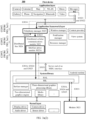
- the interface proxy module 3011A creates a proxy object oriented to a client end of an HIDL interface in the second device, and the proxy object oriented to the client end of the HIDL interface in the second device may be configured to receive a request delivered by an invoker on the second device, and forward the request to the first device.
- the proxy object oriented to the client end of the HIDL interface in the second device may be understood as a proxy object of a request interface, that is, requests delivered by invokers on the second device are all received by the proxy object of the request interface.
- the request that is delivered by the invoker on the second device and that is received by the distributed cellular communications module 3011 of the second device further includes an identifier of the invoker that delivers the request.
- the distributed cellular communications module 3011 of the second device performs offset processing on a serial (serial) parameter in the request based on the identifier of the invoker, and an offset-processed serial parameter in the request can indicate the invoker corresponding to the request.
- the distributed bus 3013 is configured to establish a connection channel between the distributed cellular communications module 3011 of the second device and the distributed cellular communications module 3022 of the first device, to connect the distributed cellular communications module 3011 of the second device and the distributed cellular communications module 3022 of the first device.
- the distributed bus 3013 may be responsible for device discovery, self-connection, authentication management, and the like under a same account in a short distance, a local area network, or a remote field.
- the distributed bus may also be responsible for scheduling management, quality of service experience evaluation, and the like of different channels. This is transparent to the application layer.
- the distributed bus may also be responsible for maintaining a channel and providing a low-power standby mechanism.
- the distributed bus may also be responsible for forwarding/responding to control plane signaling (for example, a request and response data corresponding to the request in the following request processing method and request processing system in embodiments of this application) and encryption encapsulation.
- the application layer and the application framework layer run in the virtual machine.
- the virtual machine executes a binary file of a Java file at the application layer and the application framework layer.
- the virtual machine is configured to perform functions such as object lifecycle management, stack management, thread management, security and abnormity management, and garbage collection.
- the system library may include a plurality of function modules, for example, a surface manager (surface manager), a media library (Media Libraries), a three-dimensional graphics processing library (for example, OpenGL ES), a 2D graphics engine (for example, SGL), a hardware abstraction layer (Hardware Abstraction Layer, HAL), and a radio interface layer (Radio Interface Layer, RIL) module at the HAL.
- the RIL module is further provided with a server end of an HIDL interface.
- the three-dimensional graphics processing library is configured to implement three-dimensional graphics drawing, image rendering, composition, layer processing, and the like.
- the 2D graphics engine is a drawing engine for 2D drawing.
- the kernel layer is a layer between hardware and software.
- the kernel layer includes at least a display driver, a camera driver, an audio driver, and a sensor driver.
- the first device further includes a modem 3021, and the modem 3021 is configured to process a received request to obtain response data corresponding to the request, and then send the response data corresponding to the request to the distributed cellular communications module 3022.
- the first device may also be provided with the distributed cellular communications module 3022 at an application framework layer of the first device.
- the distributed communications module 3022 may also be provided with an interface proxy module 3022A.
- the interface proxy module 3022A may create a proxy object oriented to a client end of an HIDL interface in the first device.
- the proxy object oriented to the client end of the HIDL interface in the first device is configured to receive response data that is corresponding to all requests and that is sent by a server end of the HIDL interface in the first device.
- the distributed cellular communications module 3022 may also receive a request of the second device and a request delivered by an invoker on the first device. It may be understood that the request of the second device received by the distributed cellular communications module 3022 may be a request processed by the interface proxy module of the second device, or may be an unprocessed request.
- the distributed cellular communications module 3022 may identify an invoker by using requesting party information. For a specific manner, refer to the manner shown in FIG. 2a and FIG. 2b .
- a principle and an execution process of a distributed bus 3024 of the first device are consistent with those of the distributed bus 3013 of the second device. Details are not described herein.
- a process of processing the request of the cellular communication service of the second device in the system in FIG. 3a(1) and FIG. 3a(2) may be that the second device performs step S3011 to trigger the request of the cellular communication service.
- step S3012 is performed: The second device sends the request of the cellular communication service to a local telephony manager.
- the telephony manager of the second device serves as an invoker, invokes the interface proxy module of the second device, and sends the request of the cellular communication service to the distributed cellular communications module of the second device.
- the interface proxy module of the second device pre-creates a proxy object of a request interface, which is a proxy for an interface invoked by the client end of the HIDL interface to the server end of the HIDL interface, or may be considered as a request interface of the client end. It should be noted that delivery of a request by the client end of the HIDL interface and receiving of response data corresponding to the request are processed asynchronously, that is, are not processed by a same interface.
- the distributed cellular communications module of the second device performs offset processing on a serial parameter in the request of the cellular communication service, where an offset-processed serial parameter in the request can indicate the invoker corresponding to the request.
- step S3011 For an execution process and a principle of step S3011 to step S3014, refer to related content in step S401 to step S406 in FIG. 4A and FIG. 4B and step S601 in FIG. 6a .
- step S3015 the distributed cellular communications module of the second device forwards the request of the cellular communication service to the distributed cellular communications module of the first device.
- step S407 For an execution process and a principle of step S3015, refer to related content in step S407 in FIG. 4A and FIG. 4B .
- the first device performs step S3016.
- the distributed cellular communications module of the first device sends the request of the cellular communication service to the modem of the first device by using the server end of the HIDL interface, and the modem of the first device processes the request of the cellular communication service to obtain response data corresponding to the request of the cellular communication service.
- the processed request of the cellular communication service can be used to identify the invoker to which the request belongs.
- step S3016 For an execution process and a principle of step S3016, refer to relate content in step S409 to step S411 in FIG. 4A and FIG. 4B , step S602 and step S603 in FIG. 6a , and the following Table 1.
- a transmission path of the request of the cellular communication service of the second device in the system in FIG. 3a(1) and FIG. 3a(2) may be shown by a solid-line arrow in FIG. 3a(1) and FIG. 3a(2) .
- a request delivered by the first device and the second device may be another request other than the request of the cellular communication service.
- a format, content, or the like of the request is not limited in this embodiment of this application.
- an invoker on the first device or the second device may be another invoker other than the telephony manager.
- an IP multimedia subsystem (IP Multimedia Subsystem, IMS) application may also serve as an invoker to invoke the interface proxy module 3011A.
- IMS IP Multimedia Subsystem
- For a transmission process of a request delivered by the IP multimedia subsystem in the request processing system 300 refer to the transmission process of the request delivered by the telephony manager 3012 in the request processing system 300. Details are not described herein.
- an upper-layer application that is, the application layer and the application framework layer
- invokes a distributed cellular communications module This is not limited in this embodiment of this application.
- a process of processing the request of the cellular communication service of the first device in the system shown in FIG. 3a(1) and FIG. 3a(2) may be that the first device performs step S3021 to trigger the request of the cellular communication service. Then, step S3022 is performed: The first device sends the request of the cellular communication service to a local telephony manager. In step S3023, the telephony manager of the first device serves as an invoker, invokes the interface proxy module of the first device, and sends the request of the cellular communication service to the distributed cellular communications module of the first device.
- the interface proxy module of the first device pre-creates a proxy object of a request interface, which is a proxy for an interface invoked by the client end of the HIDL interface of the first device to the server end of the HIDL interface, or may be considered as a request interface of the client end of the first device.
- a proxy object of a request interface which is a proxy for an interface invoked by the client end of the HIDL interface of the first device to the server end of the HIDL interface, or may be considered as a request interface of the client end of the first device.
- the distributed cellular communications module of the first device performs offset processing on a serial parameter in the request of the cellular communication service, where an offset-processed serial parameter in the request can indicate the invoker corresponding to the request.
- the distributed cellular communications module of the first device may alternatively identify, by using a user-defined parameter or field in the request, the invoker to which the request belongs. For details, refer to related content in step S601 in FIG. 6a .
- the first device performs step S3025.
- the distributed cellular communications module of the first device sends the request of the cellular communication service to the modem of the first device by using the server end of the HIDL interface, and the modem of the first device processes the request of the cellular communication service to obtain response data corresponding to the request of the cellular communication service.
- an execution process and a principle of step S3025 refer to relate content in step S410 and step S411 in FIG. 4A and FIG. 4B , and step S602 and step S603 in FIG. 6a .
- the second device sends a socket (socket) connection request to the first device.
- creating the proxy object of the client end of the HIDL interface of the second device may be understood as creating a proxy object of a request interface of the second device.
- the request interface of the second device is an interface invoked by the client end of the HIDL interface of the second device to a server end of the HIDL interface.
- a proxy object of a client end of an HIDL interface corresponding to each invoker may be created, that is, proxy may be provided for client ends of HIDL interfaces corresponding to all invokers.
- an instance of the client end of the HIDL interface invoked by the invoker on the second device may be changed to the proxy object of the client end of the HIDL interface of the second device that is created in step S403, so that in a subsequent request processing process after step S403, the invoker may not invoke the native client end of the HIDL interface, but invoke the proxy object of the client end of the HIDL interface of the second device that is created in step S403.
- the first device may also create a proxy object of a client end of another type of interface.
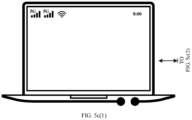
- a Wi-Fi icon 50 is displayed in an interface after the mobile phone is connected to Wi-Fi
- a Wi-Fi icon 51 is displayed in an interface after the notebook computer is connected to Wi-Fi.
- the mobile phone and the notebook computer establish a connection by accessing same Wi-Fi, and after the mobile phone and the notebook computer cooperate to complete step S401 to step S404, both a 5G signal status of a SIM card 1 and a 5G signal status of a SIM card 2 on the mobile phone are shared with the notebook computer.
- Signal statuses displayed by a 5G signal status icon 52 of the SIM card 1 and a 5G signal status icon 53 of the SIM card 2 on the mobile phone are consistent with signal statuses displayed by a 5G signal status icon 54 and a 5G signal status icon 55 on the notebook computer, and the notebook computer can synchronously obtain the signal statuses on the mobile phone.
- An invoker on the second device invokes the proxy object of the client end of the HIDL interface of the second device, and delivers a request of the invoker to the proxy object of the client end of the HIDL interface of the second device.
- the request of the invoker carries an identifier of the invoker, and is used to describe the invoker to which the request belongs.
- the identifier of the invoker is allocated by the first device to the invoker on the second device.
- the identifier of the invoker may be carried in the request of the invoker, or may be independently sent to the proxy object of the client end of the HIDL interface.
- a trigger manner a generation manner, a specific request type, a quantity, and content of the request of the invoker, refer to regulations of an operating system such as Android or iOS. This is not limited in this embodiment of this application.
- step S405 is as follows: The invoker on the second device invokes the interface proxy module, and delivers the request of the invoker to the interface proxy module.
- the invoker may be the telephony manager 3012 shown in FIG. 3a(1) and FIG. 3a(2) .
- a manner in which step S405 is performed may be:
- the telephony manager 3012 invokes the interface proxy module 3011A, and delivers an SMS message sending request to the interface proxy module 3011A.
- the second device offsets, based on the identifier of the invoker, a serial parameter in the request of the invoker by an offset value corresponding to the invoker, so that a processed serial parameter in the request can be used to describe the invoker to which the request belongs.
- the request received by using the proxy object of the client end of the HIDL interface of the second device has a serial parameter, and the serial parameter represents a quantity of times the invoker sends a request.
- a serial parameter in the request is consistent with a serial parameter in response data corresponding to the request. Therefore, the invoker may determine, by using a serial parameter, a specific request corresponding to received response data. For each invoker, each time the invoker delivers a request of the invoker, a serial parameter in the request of the invoker increases by 1 compared with a serial parameter in a request delivered last time, that is, the serial parameter in the request of the invoker can indicate a quantity of times the invoker delivers the request.
- the processed serial parameter in the request in step S406 is an offset-processed serial parameter.
- the invokers to which the requests belong can be identified by using processed serial parameters. For example, if there are two telephony managers in the second device, after requests of the two telephony managers are processed in step S406, which telephony manager is an invoker to which a request belongs can be identified by reading a processed serial parameter.
- response data corresponding to the request of the invoker still carries a serial parameter that is consistent with that in step S406. Therefore, after processing in step S406, in subsequently obtained response data corresponding to the request of the invoker, the invoker to which the request belongs can also be identified.
- a list between identifiers of all invokers and offset values corresponding to the invokers may be preset, so that offset values corresponding to different invokers are different from each other, and value ranges of serial parameters in requests of different invokers do not overlap.
- the list between identifiers of all invokers and offset values corresponding to the invokers may be pre-stored in the second device and the first device. All the invokers include both the invoker on the second device and the invoker on the first device.
- an offset value corresponding to the invoker is searched for in the list by using an identifier of the invoker to which the request belongs, and then a serial parameter in the request of the invoker is offset by the offset value corresponding to the invoker.
- value ranges to which serial parameters in requests of different invokers belong are different, and a value range of each serial parameter is corresponding to one invoker. Therefore, a processed serial parameter in the request can be used to describe the invoker to which the request belongs.
- a value range of the processed serial parameter may be used to describe the invoker to which the request belongs.
- a relationship between an identifier of an invoker and an offset value corresponding to the invoker may be set as follows: When the identifier (Client Id) of the invoker is 1, a value range of a serial parameter corresponding to the identifier is set to 0 to offset value - 1; when Client Id is 2, a value range of a serial parameter corresponding to the identifier is set to offset value to 2 * offset value - 1; or when Client Id is N, a value range of a serial parameter corresponding to the identifier is set to (N-1) * offset value to N * offset value - 1.
- offset value is a preset value, for example, offset value may be preset to 10000000.
- the first device has one telephony manager, an allocated invoker identifier of the telephony manager is 1, the second device has two telephony managers, and invoker identifiers allocated by the first device are 2 and 3 respectively.
- offset value is 10000000
- a value range corresponding to the telephony manager whose Client Id is 3 is 20000000 to 19999999, that is, an offset value by which a serial parameter in a request delivered by
- a correspondence between an identifier of an invoker and an offset value corresponding to the invoker may be freely set, provided that after a serial parameter in a request of an invoker is offset by an offset value corresponding to the invoker, the invoker to which the request belongs can be indicated by using a processed serial parameter in the request.
- offset value setting rules corresponding to invokers does not affect implementation of this embodiment of this application.
- step S406 may be performed by using an interface proxy module.
- an additional function may be extended for the proxy object of the client end of the HIDL interface of the second device that is created by the interface proxy module, so that the proxy object of the client end of the HIDL interface of the second device may perform step S406 when receiving a request of an invoker on the second device.
- the interface proxy module that performs step S406 may be the interface proxy module 3011A in FIG. 3a(1) and FIG. 3a(2) .
- step S408 can be performed by using the proxy object of the client end of the HIDL interface of the first device.
- the first device offsets, based on the identifier of the invoker, a serial parameter in the request of the invoker by an offset value corresponding to the invoker, so that a processed serial parameter in the request can be used to describe the invoker to which the request belongs.
- the request processed by the first device in step S409 is only a request from the invoker on the first device.
- the request processed by the first device in step S409 is only a request from the invoker on the first device.
- the request processed by the first device in step S409 is only a request from the invoker on the first device.
- the first device sends a request of each invoker to the modem of the first device by using the server end of the HIDL interface of the first device
- the request of each invoker in step S410 includes both a request forwarded by the second device to the first device in step S407 and a request delivered by the invoker on the first device in step S408, that is, requests of all invokers are sent to the modem of the first device by using a server end of a same HIDL interface of the first device.
- serial parameters in the requests sent to the modem of the first device in step S410 are offset-processed, and can indicate invokers to which the requests belong.
- the response data corresponding to the request may be understood as a response result corresponding to the request, and the response data corresponding to the request is in a one-to-one correspondence with the request.
- the response data corresponding to the request may be result data used to indicate whether an SMS message is successfully sent.
- the response data corresponding to the request processed by the modem still carries the serial parameter. It may be learned from the foregoing content that, after the foregoing processing, the serial parameter may be used to indicate the invoker to which the request belongs. Therefore, the serial parameter in the response data corresponding to the request may also be used to know the invoker to which the request belongs.
- the modem processes the request in a sequence in which the modem receives the request.
- the modem of the first device returns the response data corresponding to each request to the proxy object of the client end of the HIDL interface of the first device by using the server end of the HIDL interface.
- the server end of the HIDL interface may invoke the response data corresponding to each request back to the proxy object of the client end of the HIDL interface of the first device, that is, the proxy object of the client end of the HIDL interface of the first device receives response data corresponding to all requests.
- the response data that is corresponding to each request and that is returned by the modem of the first device by using the server end of the HIDL interface may be received by using the interface proxy module of the first device.
- the interface proxy module of the first device refer to the interface proxy module 3022A in FIG. 3a(1) and FIG. 3a(2) .
- the first device identifies, for the response data corresponding to each request based on a processed serial parameter in the response data corresponding to the request, an invoker to which the response data corresponding to the request belongs.
- the processed serial parameter in the response data corresponding to the request is actually the serial parameter that is mentioned in the foregoing step and that can be used to indicate the invoker to which the request belongs. Therefore, according to the processed serial parameter in the response data corresponding to the request, the invoker to which the response data corresponding to the request belongs can be identified. Therefore, the first device can know a specific invoker to which the response data corresponding to the request is to be returned, so that the request sent by the invoker and the received response data are in a one-to-one correspondence.
- a server end of each HIDL interface is fixedly registered with a client end of one HIDL interface, to ensure that response data corresponding to the request can be returned to an invoker corresponding to the client end of the HIDL interface.
- the invoker to which the response data corresponding to the request belongs is identified by using the processed serial parameter in the response data corresponding to the request, to ensure that the response data corresponding to the request can be returned to the invoker that initiates the request, so that requests are processed by using a server end of a same HIDL interface.
- the first device may perform step S413 by using an interface proxy module, for example, the interface proxy module 3022A shown in FIG. 3a(1) and FIG. 3a(2) .
- an interface proxy module for example, the interface proxy module 3022A shown in FIG. 3a(1) and FIG. 3a(2) .
- additional function extension may be performed on the proxy object of the client end of the HIDL interface of the first device that is created on the interface proxy module 3022A, so that the interface proxy module 3022A of the first device can perform step S413 by using the proxy object of the client end of the HIDL interface of the first device.
- an implementation of performing step S413 includes: performing, for the response data corresponding to each request, matching between the processed serial parameter in the response data corresponding to the request and a serial parameter value range corresponding to each invoker, and determining a matched invoker as the invoker to which the response data corresponding to the request belongs.
- offset processing is performed on the serial parameter in the request, so that value ranges to which requests of different invokers belong are different. For details, refer to related content in the foregoing Table 1. Details are not described herein again.
- the first device stores a correspondence between an identifier of an invoker and a serial parameter.
- an invoker corresponding to a matched value range can be determined as the invoker to which the response data corresponding to the request belongs. For example, as shown in Table 1, if a processed serial parameter in response data corresponding to a request matches a range of 0 to offset value - 1, an identifier of an invoker to which the response data belongs is 1.
- the first device returns response data belonging to the invoker on the second device to the second device.
- the first device identifies that response data corresponding to some requests belongs to the first device, and response data corresponding to some requests belongs to the second device, so that response data corresponding to requests of two different devices can be distinguished, and then the response data for the invoker on the second device is selected and returned to the second device.
- the distributed cellular communications module of the first device may return the response data for the invoker on the second device to the distributed cellular communications module of the second device.
- the first device restores, for each piece of response data belonging to the invoker on the first device, a processed serial parameter in the response data corresponding to the request.
- the modem of the first device obtains response data corresponding to each request through processing.
- step S603 For a process and a principle of performing step S603, refer to related content of step S411 performed by the first device in FIG. 4A and FIG. 4B . Details are not described herein again.
- the modem of the first device returns the response data corresponding to each request to the client end of the HIDL interface of the first device by using the server end of the HIDL interface of the first device.
- both the server end of the HIDL interface and the client end of the HIDL interface mentioned in step S604 support receiving of the identifier of each invoker, it can also be supported that the response data that is corresponding to each request and that is returned to the client end of the HIDL interface of the first device carries the identifier of the invoker.
- the invoker to which the response data corresponding to each request belongs may be identified according to the identifier of the invoker carried in the response data corresponding to the request, so that in a case of a plurality of invokers, only a server end of one HIDL interface and a client end of one HIDL interface is required to ensure that the request delivered by the invoker and received response data are in a one-to-one correspondence.
- step S605 may be performed by the interface proxy module 3022A in FIG. 3a(1) and FIG. 3a(2) .
- the interface proxy module 3022A refers to related content of the interface proxy module 3022A in FIG. 3a(1) and FIG. 3a(2) .
- step S606 For an execution process and a principle of step S606, refer to step S417. Details are not described herein again.
- a process in which the first device sends an indication to an invoker to which the indication belongs may be consistent with the process in which the response data is sent to the invoker to which the response data belongs. Details are not described herein.
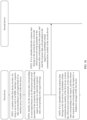
- an application framework layer of a first device in FIG. 6b includes three invokers: a telephony manager 601, a telephony manager 602, and a telephony manager 603.
- a client end 604 of a newly added HIDL interface is further disposed at the application framework layer, and a server end 605 of a newly added HIDL interface is disposed on a system library.
- step S601 a request 601A of the telephony manager 601, a request 602A of the telephony manager 602, and a request 603A of the telephony manager 603 are delivered to the client end 604 of the HIDL interface.
- step S602 and step S603 all the requests delivered by the plurality of telephony managers are sent to the modem of the first device by using the server end 605 of the HIDL interface, and the modem of the first device obtains response data corresponding to each request.
- step S604 and step S605 the modem of the first device sends the response data corresponding to each request to the server end 605 of the HIDL interface of the first device, and the server end 605 of the HIDL interface of the first device returns the response data corresponding to each request to the client end 604 of the HIDL interface of the first device. Then, for the response data corresponding to each request, an invoker to which the response data corresponding to each request belongs is identified according to an identifier of the invoker carried in the response data corresponding to the request.
- step S606 the client end 604 of the HIDL interface of the first device returns response data 601B corresponding to the request belonging to the telephony manager 601 to the telephony manager 601, returns response data 602B corresponding to the request belonging to the telephony manager 602 to the telephony manager 602, and returns response data 603B corresponding to the request belonging to the telephony manager 603 to the telephony manager 603.
- Time at which the telephony manager 601, the telephony manager 602, and the telephony manager 603 deliver the requests may be random.
- interfaces for example, the HIDL interface
- first device interface a newly added (or new) HIDL interface mentioned in this embodiment of this application may also be referred to as an HIDL interface for short.
- an identifier of the invoker may be used as the information used to indicate the invoker to which the request belongs. Therefore, there are many specific formats, content, and the like for the information that is carried in the request and the response data corresponding to the request and that is used to indicate the invoker to which the request belongs. This is not limited in this embodiment of this application.
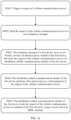
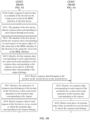
- an embodiment of this application further discloses a request processing method.
- the method is applied to a first device and specifically includes the following steps.
- the plurality of invokers include an invoker on the first device and a plurality of invokers on the second device.
- the request carries information used to indicate the invoker to which the request belongs.
- step S703 For an execution process and a principle of step S703, refer to related content in step S412 and related content in step S604. Details are not described herein again.
- the HIDL interface mentioned in step S73 may alternatively be another type of first device interface. This is not limited in this application.
- step S704 For an execution process and a principle of step S704, refer to related content in step S413 and related content in step S605. Details are not described herein again.
- step S706 For an execution process and a principle of step S706, refer to related content in step S417 and step S418 and related content in step S606. Details are not described herein again.
- a first device and a second device establish a connection.
Landscapes
- Engineering & Computer Science (AREA)
- Computer Networks & Wireless Communication (AREA)
- Signal Processing (AREA)
- Computer Security & Cryptography (AREA)
- Computer And Data Communications (AREA)
- Telephonic Communication Services (AREA)
Claims (12)
- Ein Anforderungsverarbeitungsverfahren, angewendet auf ein erstes Gerät, wobei das Anforderungsverarbeitungsverfahren Folgendes umfasst:Senden (S601, S702) von Anforderungen einer Vielzahl von Aufrufern an ein Server-Ende einer ersten Geräte-Schnittstelle, wobei die Anforderung Informationen enthält, die verwendet werden, um einen Aufrufer anzugeben, zu dem die Anforderung gehört, wobei die Informationen, die verwendet werden, um den Aufrufer anzugeben, zu dem die Anforderung gehört, ein Bezeichner des Aufrufers sind, zu dem die Anforderung gehört, und wobei die erste Geräte-Schnittstelle eine Hardware-Abstraktionsschicht-Schnittstellendefinitionssprache HIDL-Schnittstelle des ersten Geräts ist;Senden (S602) einer Anforderung jedes Aufrufers an ein Modem des ersten Geräts unter Verwendung eines Server-Endes der HIDL-Schnittstelle des ersten Geräts, wobei die Anforderung des Aufrufers den Bezeichner des Aufrufers enthält;Verarbeiten (S603) jeder Anforderung unter Verwendung des Modems des ersten Geräts, um Antwortdaten zu erhalten, die jeder Anforderung entsprechen;Empfangen (S604, S703) der Antwortdaten, die jeder Anforderung entsprechen und die vom Modem unter Verwendung des Server-Endes der ersten Geräte-Schnittstelle zurückgegeben werden, wobei die Antwortdaten, die der Anforderung entsprechen, Informationen enthalten, die verwendet werden, um einen Aufrufer anzugeben, zu dem die Anforderung gehört, wobei das Empfangen der Antwortdaten, die jeder Anforderung entsprechen und die vom Modem unter Verwendung des Server-Endes der ersten Geräte-Schnittstelle zurückgegeben werden, Folgendes umfasst: Empfangen von Antwortdaten unter Verwendung eines Client-Endes der HIDL-Schnittstelle der ersten Geräte-Schnittstelle;Identifizieren (S605, S704), für die Antwortdaten, die jeder Anforderung entsprechen, basierend auf einem Bezeichner eines Aufrufers, der in den Antwortdaten enthalten ist, die der Anforderung entsprechen und der verwendet wird, um den Aufrufer anzugeben, zu dem die Anforderung gehört, eines Aufrufers, zu dem die Antwortdaten gehören, die der Anforderung entsprechen; undZurückgeben (S606, S706), für die Antwortdaten, die jeder Anforderung entsprechen, der Antwortdaten, die der Anforderung entsprechen, an den Aufrufer, zu dem die Antwortdaten gehören, die der Anforderung entsprechen.
- Das Anforderungsverarbeitungsverfahren gemäß Anspruch 1, wobei das Senden einer Anforderung jedes Aufrufers an ein Modem des ersten Geräts unter Verwendung eines Server-Endes der HIDL-Schnittstelle des ersten Geräts Folgendes umfasst:Aufrufen des Server-Endes der HIDL-Schnittstelle des ersten Geräts unter Verwendung eines Schnittstellen-Proxymoduls, um die Anforderung jedes Aufrufers an das Modem des ersten Geräts zu senden, wobei das Schnittstellen-Proxymodul vorab ein Proxy-Objekt des Client-Endes einer HIDL-Schnittstelle erstellt, die jedem Aufrufer entspricht; undDas Empfangen der Antwortdaten, die jeder Anforderung entsprechen und die vom Modem unter Verwendung des Server-Endes der HIDL-Schnittstelle des ersten Geräts zurückgegeben werden, umfasst:
Empfangen der Antwortdaten, die jeder Anfrage entsprechen und die vom Modem unter Verwendung des Server-Endes der HIDL-Schnittstelle des ersten Geräts zurückgegeben werden, durch Verwendung des Schnittstellen-Proxy-Moduls. - Das Anforderungsverarbeitungsverfahren gemäß einem der Ansprüche 1 bis 2, wobei die Anforderungen der Vielzahl von Aufrufern eine Anforderung eines Aufrufers auf dem ersten Gerät und/oder eine Anforderung eines Aufrufers auf einem zweiten Gerät umfassen.
- Das Anforderungsverarbeitungsverfahren gemäß Anspruch 1,
Wobei ein Feld, das zur Unterstützung des Empfangs einer Kennung jedes Aufrufers verwendet wird, im Client-Ende der Schnittstelle des ersten Geräts voreingestellt ist, und ein Feld, das zur Unterstützung des Empfangs der Kennung jedes Aufrufers verwendet wird, im Server-Ende der Schnittstelle des ersten Geräts voreingestellt ist. - Das Anforderungsverarbeitungsverfahren gemäß Anspruch 3, wobei, wenn die Anforderungen der Vielzahl von Aufrufern die Anforderung des Aufrufers auf dem ersten Gerät und die Anforderung des Aufrufers auf dem zweiten Gerät umfassen, vor dem Senden von Anforderungen einer Vielzahl von Aufrufern an ein Server-Ende einer Schnittstelle des ersten Geräts, das Verfahren weiterhin umfasst:
Verarbeiten einer seriellen Parameter in der Anforderung für eine Anforderung jedes Aufrufers auf dem ersten Gerät basierend auf einer Kennung des Aufrufers, sodass ein verarbeiteter serieller Parameter in der Anforderung verwendet werden kann, um den Aufrufer anzugeben, zu dem die Anforderung gehört, oder Verarbeiten einer seriellen Parameter in der Anforderung für eine Anforderung jedes Aufrufers auf dem ersten Gerät und dem zweiten Gerät basierend auf einer Kennung des Aufrufers, sodass ein verarbeiteter serieller Parameter in der Anforderung verwendet werden kann, um den Aufrufer anzugeben, zu dem die Anforderung gehört, wobei Informationen, die verwendet werden, um den Aufrufer anzugeben, zu dem die Anforderung gehört, der verarbeitete serielle Parameter in der Anforderung sind. - Das Anforderungsverarbeitungsverfahren gemäß Anspruch 5, wobei vor dem Zurückgeben der Antwortdaten, die jeder Anforderung entsprechen, die Antwortdaten, die der Anforderung entsprechen, an den Aufrufer, zu dem die Antwortdaten gehören, das Verfahren weiterhin umfasst:
Wiederherstellen eines verarbeiteten seriellen Parameters in den Antwortdaten, die der Anforderung entsprechen, für Antwortdaten, die jeder Anforderung gehören, die dem ersten Gerät gehören, oder Wiederherstellen eines verarbeiteten seriellen Parameters in den Antwortdaten, die der Anforderung entsprechen, für Antwortdaten, die jeder Anforderung gehören, die dem ersten Gerät und dem zweiten Gerät gehören. - Ein Anforderungsverarbeitungsverfahren, angewendet auf ein zweites Gerät, wobei das Anforderungsverarbeitungsverfahren umfasst:Senden (S401) einer Socket-Verbindungsanfrage an ein erstes Gerät, wobei die Socket-Verbindungsanfrage Informationen enthält, die verwendet werden, um jeden Aufrufer auf dem zweiten Gerät zu beschreiben, und wobei sich das erste Gerät und das zweite Gerät in einem verbundenen Zustand befinden;Empfangen (S402) von einem ersten Gerät eines Identifikators, der jedem Aufrufer entspricht;Erstellen (S403) eines Proxy-Objekts eines Client-Endes einer HIDL-Schnittstelle des zweiten Geräts, wobei das Proxy-Objekt des Client-Endes der HIDL-Schnittstelle des zweiten Geräts konfiguriert ist, eine Anfrage eines Aufrufers auf dem zweiten Gerät zu empfangen und die Anfrage an das erste Gerät weiterzuleiten, und wobei ein Proxy-Objekt des Client-Endes der HIDL-Schnittstelle des ersten Geräts konfiguriert ist, eine Anfrage eines Aufrufers auf dem ersten Gerät zu empfangen und die Anfrage des Aufrufers auf dem ersten Gerät an ein Server-Ende der HIDL-Schnittstelle des ersten Geräts zu senden;Aufrufen (S405) durch einen Aufrufer auf dem zweiten Gerät des Proxy-Objekts des Client-Endes der HIDL-Schnittstelle des zweiten Geräts und Übermitteln einer Anfrage des Aufrufers an das Proxy-Objekt des Client-Endes der HIDL-Schnittstelle des zweiten Geräts, wobei die Anfrage des Aufrufers den Identifikator des Aufrufers enthält und verwendet wird, um den Aufrufer zu beschreiben, zu dem die Anfrage gehört;Offsetting (S406) basierend auf dem Identifikator des Aufrufers, eines seriellen Parameters in der Anfrage des Aufrufers durch einen Offset-Wert, der dem Aufrufer entspricht, sodass ein verarbeiteter serieller Parameter in der Anfrage verwendet werden kann, um den Aufrufer zu beschreiben, zu dem die Anfrage gehört;Weiterleiten (S407) durch das Proxy-Objekt des Client-Endes der HIDL-Schnittstelle des zweiten Geräts, das durch das zweite Gerät erstellt wurde, der Anfrage des Aufrufers auf dem zweiten Gerät an das erste Gerät;Empfangen (S414) von einem ersten Gerät von Antwortdaten, die zu einem Aufrufer auf dem zweiten Gerät gehören, an das zweite Gerät, wobei der verarbeitete serielle Parameter in der Anfrage verwendet wird, um einen Aufrufer zu identifizieren, zu dem die Antwortdaten gehören, die der Anfrage entsprechen; undZurückgeben (S418) der Antwortdaten für die Antwortdaten, die jeder Anfrage entsprechen, an den Aufrufer, zu dem die Antwortdaten gehören.
- Das Anfragenverarbeitungsverfahren gemäß Anspruch 7, wobei das Verfahren weiterhin umfasst:
Empfangen einer Anfrage eines Aufrufers auf dem ersten Gerät durch Verwendung eines Schnittstellen-Proxy-Moduls, wobei das Schnittstellen-Proxy-Modul das Proxy-Objekt des Client-Endes der HIDL-Schnittstelle, das dem Aufrufer auf dem ersten Gerät entspricht, und das Proxy-Objekt eines Client-Endes einer HIDL-Schnittstelle, das dem Aufrufer auf dem zweiten Gerät entspricht, vorab erstellt. - Das Anforderungsverarbeitungsverfahren gemäß Anspruch 3, wobei vor dem Senden von Anforderungen einer Vielzahl von Aufrufern an ein Server-Ende einer ersten Geräte-Schnittstelle das Verfahren weiterhin umfasst:Verarbeitung, für die Anforderung jedes Aufrufers, eines seriellen Parameters in der Anforderung basierend auf einem Identifikator des Aufrufers, sodass ein verarbeiteter serieller Parameter in der Anforderung verwendet werden kann, um den Aufrufer anzugeben, zu dem die Anforderung gehört, wobei die Information, die verwendet wird, um den Aufrufer anzugeben, zu dem die Anforderung gehört, der verarbeitete serielle Parameter in der Anforderung ist; undvor der Rückgabe, für die Antwortdaten, die jeder Anforderung entsprechen, der Antwortdaten, die der Anforderung entsprechen, an den Aufrufer, zu dem die Antwortdaten gehören, umfasst das Verfahren weiterhin:
Wiederherstellung, für die Antwortdaten, die jeder Anforderung entsprechen, eines verarbeiteten seriellen Parameters in den Antwortdaten, die der Anforderung entsprechen. - Das Anforderungsverarbeitungsverfahren gemäß Anspruch 9, wobei die Verarbeitung, für die Anforderung jedes Aufrufers, eines seriellen Parameters in der Anforderung basierend auf einem Identifikator des Aufrufers, sodass ein verarbeiteter serieller Parameter in der Anforderung verwendet werden kann, um den Aufrufer anzugeben, zu dem die Anforderung gehört, umfasst:
Offset, für die Anforderung jedes Aufrufers basierend auf dem Identifikator des Aufrufers, des seriellen Parameters in der Anforderung durch einen Offset-Wert, der dem Aufrufer entspricht, sodass der verarbeitete serielle Parameter in der Anforderung verwendet werden kann, um den Aufrufer anzugeben, zu dem die Anforderung gehört. - Das Anforderungsverarbeitungsverfahren gemäß Anspruch 7 oder 10, wobei die Identifizierung, für die Antwortdaten, die jeder Anforderung entsprechen, basierend auf den Informationen, die in den Antwortdaten enthalten sind und die verwendet werden, um den Aufrufer anzugeben, zu dem die Anforderung gehört, eines Aufrufers, zu dem die Antwortdaten gehören, umfasst:
Durchführung, für die Antwortdaten, die jeder Anforderung entsprechen, eines Abgleichs zwischen dem verarbeiteten seriellen Parameter in den Antwortdaten, die der Anforderung entsprechen, und einem seriellen Parameterwertbereich, der jedem Aufrufer entspricht, und Bestimmung eines übereinstimmenden Aufrufers als den Aufrufer, zu dem die Antwortdaten gehören. - Ein elektronisches Gerät, umfassend einen oder mehrere Prozessoren, einen Speicher, ein Display, ein drahtloses Kommunikationsmodul und ein mobiles Kommunikationsmodul, wobei
Der Speicher, das Display, das drahtlose Kommunikationsmodul und das mobile Kommunikationsmodul sind mit einem oder mehreren Prozessoren gekoppelt. Der Speicher ist konfiguriert, um Computerprogrammcodes zu speichern. Der Computerprogrammcodes umfasst Computeranweisungen, und wenn der oder die Prozessoren die Computeranweisungen ausführen, führt das elektronische Gerät das Anforderungsverarbeitungsverfahren gemäß einem der Ansprüche 1 bis 6 oder das Anforderungsverarbeitungsverfahren gemäß einem der Ansprüche 7 bis 11 aus.
Applications Claiming Priority (2)
| Application Number | Priority Date | Filing Date | Title |
|---|---|---|---|
| CN202110993034.5A CN115733884B (zh) | 2021-08-25 | 2021-08-25 | 请求的处理方法及相关装置 |
| PCT/CN2022/092926 WO2023024589A1 (zh) | 2021-08-25 | 2022-05-16 | 请求的处理方法及相关装置 |
Publications (3)
| Publication Number | Publication Date |
|---|---|
| EP4236260A1 EP4236260A1 (de) | 2023-08-30 |
| EP4236260A4 EP4236260A4 (de) | 2024-05-22 |
| EP4236260B1 true EP4236260B1 (de) | 2025-07-09 |
Family
ID=85290191
Family Applications (1)
| Application Number | Title | Priority Date | Filing Date |
|---|---|---|---|
| EP22859937.9A Active EP4236260B1 (de) | 2021-08-25 | 2022-05-16 | Anfrageverarbeitungsverfahren und zugehörige vorrichtung |
Country Status (4)
| Country | Link |
|---|---|
| US (1) | US12388906B2 (de) |
| EP (1) | EP4236260B1 (de) |
| CN (1) | CN115733884B (de) |
| WO (1) | WO2023024589A1 (de) |
Family Cites Families (14)
| Publication number | Priority date | Publication date | Assignee | Title |
|---|---|---|---|---|
| JP5159261B2 (ja) | 2007-11-12 | 2013-03-06 | インターナショナル・ビジネス・マシーンズ・コーポレーション | セッションを管理する技術 |
| US8996657B2 (en) * | 2010-09-01 | 2015-03-31 | Canon Kabushiki Kaisha | Systems and methods for multiplexing network channels |
| US10057382B2 (en) * | 2015-09-24 | 2018-08-21 | Amrita Vishwa Vidyapeetham | Intelligent “IoT gateway” |
| CN105808320B (zh) * | 2016-03-11 | 2018-12-04 | 四川安嵌科技有限公司 | 基于Linux容器的设备虚拟化系统及方法 |
| US10019298B2 (en) * | 2016-08-17 | 2018-07-10 | Google Llc | Middleware interface and middleware interface generator |
| WO2018126076A1 (en) * | 2016-12-30 | 2018-07-05 | Intel Corporation | Data packaging protocols for communications between iot devices |
| CN109669723B (zh) | 2017-10-13 | 2023-06-13 | 斑马智行网络(香港)有限公司 | 硬件访问方法、装置、设备和机器可读介质 |
| US11190609B2 (en) * | 2019-06-28 | 2021-11-30 | Amazon Technologies, Inc. | Connection pooling for scalable network services |
| CN112468979B (zh) * | 2019-09-06 | 2022-02-25 | 华为技术有限公司 | 一种电子设备的sim卡掉卡恢复方法及电子设备 |
| CN111813724B (zh) * | 2020-05-20 | 2023-06-30 | 北京元心科技有限公司 | Hidl接口适配系统、方法及相应设备、存储介质 |
| CN112969024B (zh) * | 2020-06-30 | 2022-03-11 | 华为技术有限公司 | 一种摄像头的调用方法、电子设备和摄像头 |
| CN111880866B (zh) * | 2020-07-30 | 2024-03-12 | 广州方硅信息技术有限公司 | 跨进程回调执行方法、装置、设备及存储介质 |
| CN112769837B (zh) | 2021-01-13 | 2023-07-04 | 北京洛塔信息技术有限公司 | 基于WebSocket的通信传输方法、装置、设备、系统及存储介质 |
| CN118647015B (zh) * | 2021-05-14 | 2025-08-19 | 华为技术有限公司 | 联网方法、相关装置及系统 |
-
2021
- 2021-08-25 CN CN202110993034.5A patent/CN115733884B/zh active Active
-
2022
- 2022-05-16 EP EP22859937.9A patent/EP4236260B1/de active Active
- 2022-05-16 WO PCT/CN2022/092926 patent/WO2023024589A1/zh not_active Ceased
- 2022-05-16 US US18/254,684 patent/US12388906B2/en active Active
Also Published As
| Publication number | Publication date |
|---|---|
| CN115733884B (zh) | 2023-10-24 |
| CN115733884A (zh) | 2023-03-03 |
| EP4236260A1 (de) | 2023-08-30 |
| WO2023024589A1 (zh) | 2023-03-02 |
| EP4236260A4 (de) | 2024-05-22 |
| US12388906B2 (en) | 2025-08-12 |
| US20240305695A1 (en) | 2024-09-12 |
Similar Documents
| Publication | Publication Date | Title |
|---|---|---|
| EP4102368B1 (de) | Anrufverfahren einer geräteübergreifenden anwendung und elektronische vorrichtung | |
| WO2022048385A1 (zh) | 一种迁移配置文件的方法及装置 | |
| EP4224981A1 (de) | Verfahren zur verwendung einer zellularen kommunikationsfunktion, zugehörige vorrichtung und system | |
| CN114741008B (zh) | 分布式跨设备协同方法、电子设备及通信系统 | |
| US12309881B2 (en) | Communication connection method and electronic device | |
| CN116156044B (zh) | 设备协同方法及相关装置 | |
| CN108431763B (zh) | 通过网络服务管理多个云存储装置 | |
| EP3852344B1 (de) | Verfahren und vorrichtung zur domänennamenauflösung durch senden eines schlüsselwerts an einen grs-server | |
| CN117785498B (zh) | 数据访问方法、电子设备和计算机可读存储介质 | |
| EP4528475A1 (de) | Bildschirmübergreifendes teilungsverfahren, grafische schnittstelle und zugehörige vorrichtung | |
| CN112825072B (zh) | 通信终端以及数据共享方法 | |
| CN119182770A (zh) | 端云协同工作的方法、相关装置及通信系统 | |
| EP4236260B1 (de) | Anfrageverarbeitungsverfahren und zugehörige vorrichtung | |
| CN113891310B (zh) | 协作通信方法、用户设备及系统 | |
| CN115878307A (zh) | 访问资源的方法及电子设备 | |
| CN113642010B (zh) | 一种获取扩展存储设备数据的方法及移动终端 | |
| CN114675786B (zh) | 一种大容量存储挂载方法、装置、终端及介质 | |
| CN116414575A (zh) | 一种剪贴板数据的隐私保护方法及电子设备 | |
| HK40080487A (en) | Request processing method and related apparatus | |
| CN118590437A (zh) | 路由方法、终端设备及计算机可读存储介质 | |
| CN118101641A (zh) | 截图分享方法及电子设备 | |
| HK40080487B (zh) | 请求的处理方法及相关装置 | |
| CN115146293A (zh) | 一种文件加、解密方法、设备及介质 | |
| CN116033592B (zh) | 蜂窝通信功能的使用方法和装置 | |
| CN115175266B (zh) | 一种数据包发送方法、装置、终端及介质 |
Legal Events
| Date | Code | Title | Description |
|---|---|---|---|
| STAA | Information on the status of an ep patent application or granted ep patent |
Free format text: STATUS: THE INTERNATIONAL PUBLICATION HAS BEEN MADE |
|
| PUAI | Public reference made under article 153(3) epc to a published international application that has entered the european phase |
Free format text: ORIGINAL CODE: 0009012 |
|
| STAA | Information on the status of an ep patent application or granted ep patent |
Free format text: STATUS: REQUEST FOR EXAMINATION WAS MADE |
|
| 17P | Request for examination filed |
Effective date: 20230524 |
|
| AK | Designated contracting states |
Kind code of ref document: A1 Designated state(s): AL AT BE BG CH CY CZ DE DK EE ES FI FR GB GR HR HU IE IS IT LI LT LU LV MC MK MT NL NO PL PT RO RS SE SI SK SM TR |
|
| A4 | Supplementary search report drawn up and despatched |
Effective date: 20240424 |
|
| RIC1 | Information provided on ipc code assigned before grant |
Ipc: H04L 67/00 20220101AFI20240418BHEP |
|
| DAV | Request for validation of the european patent (deleted) | ||
| DAX | Request for extension of the european patent (deleted) | ||
| GRAP | Despatch of communication of intention to grant a patent |
Free format text: ORIGINAL CODE: EPIDOSNIGR1 |
|
| STAA | Information on the status of an ep patent application or granted ep patent |
Free format text: STATUS: GRANT OF PATENT IS INTENDED |
|
| INTG | Intention to grant announced |
Effective date: 20241209 |
|
| GRAJ | Information related to disapproval of communication of intention to grant by the applicant or resumption of examination proceedings by the epo deleted |
Free format text: ORIGINAL CODE: EPIDOSDIGR1 |
|
| STAA | Information on the status of an ep patent application or granted ep patent |
Free format text: STATUS: REQUEST FOR EXAMINATION WAS MADE |
|
| GRAS | Grant fee paid |
Free format text: ORIGINAL CODE: EPIDOSNIGR3 |
|
| STAA | Information on the status of an ep patent application or granted ep patent |
Free format text: STATUS: GRANT OF PATENT IS INTENDED |
|
| GRAP | Despatch of communication of intention to grant a patent |
Free format text: ORIGINAL CODE: EPIDOSNIGR1 |
|
| INTG | Intention to grant announced |
Effective date: 20250408 |
|
| GRAA | (expected) grant |
Free format text: ORIGINAL CODE: 0009210 |
|
| STAA | Information on the status of an ep patent application or granted ep patent |
Free format text: STATUS: THE PATENT HAS BEEN GRANTED |
|
| AK | Designated contracting states |
Kind code of ref document: B1 Designated state(s): AL AT BE BG CH CY CZ DE DK EE ES FI FR GB GR HR HU IE IS IT LI LT LU LV MC MK MT NL NO PL PT RO RS SE SI SK SM TR |
|
| REG | Reference to a national code |
Ref country code: GB Ref legal event code: FG4D |
|
| REG | Reference to a national code |
Ref country code: CH Ref legal event code: EP |
|
| REG | Reference to a national code |
Ref country code: IE Ref legal event code: FG4D |
|
| REG | Reference to a national code |
Ref country code: DE Ref legal event code: R096 Ref document number: 602022017474 Country of ref document: DE |
|
| REG | Reference to a national code |
Ref country code: NL Ref legal event code: FP |
|
| PG25 | Lapsed in a contracting state [announced via postgrant information from national office to epo] |
Ref country code: PT Free format text: LAPSE BECAUSE OF FAILURE TO SUBMIT A TRANSLATION OF THE DESCRIPTION OR TO PAY THE FEE WITHIN THE PRESCRIBED TIME-LIMIT Effective date: 20251110 |
|
| REG | Reference to a national code |
Ref country code: AT Ref legal event code: MK05 Ref document number: 1812944 Country of ref document: AT Kind code of ref document: T Effective date: 20250709 |
|
| PG25 | Lapsed in a contracting state [announced via postgrant information from national office to epo] |
Ref country code: IS Free format text: LAPSE BECAUSE OF FAILURE TO SUBMIT A TRANSLATION OF THE DESCRIPTION OR TO PAY THE FEE WITHIN THE PRESCRIBED TIME-LIMIT Effective date: 20251109 |
|
| PG25 | Lapsed in a contracting state [announced via postgrant information from national office to epo] |
Ref country code: NO Free format text: LAPSE BECAUSE OF FAILURE TO SUBMIT A TRANSLATION OF THE DESCRIPTION OR TO PAY THE FEE WITHIN THE PRESCRIBED TIME-LIMIT Effective date: 20251009 |
|
| REG | Reference to a national code |
Ref country code: LT Ref legal event code: MG9D |
|
| PG25 | Lapsed in a contracting state [announced via postgrant information from national office to epo] |
Ref country code: AT Free format text: LAPSE BECAUSE OF FAILURE TO SUBMIT A TRANSLATION OF THE DESCRIPTION OR TO PAY THE FEE WITHIN THE PRESCRIBED TIME-LIMIT Effective date: 20250709 |
|
| PG25 | Lapsed in a contracting state [announced via postgrant information from national office to epo] |
Ref country code: FI Free format text: LAPSE BECAUSE OF FAILURE TO SUBMIT A TRANSLATION OF THE DESCRIPTION OR TO PAY THE FEE WITHIN THE PRESCRIBED TIME-LIMIT Effective date: 20250709 |
|
| PG25 | Lapsed in a contracting state [announced via postgrant information from national office to epo] |
Ref country code: HR Free format text: LAPSE BECAUSE OF FAILURE TO SUBMIT A TRANSLATION OF THE DESCRIPTION OR TO PAY THE FEE WITHIN THE PRESCRIBED TIME-LIMIT Effective date: 20250709 |
|
| PG25 | Lapsed in a contracting state [announced via postgrant information from national office to epo] |
Ref country code: GR Free format text: LAPSE BECAUSE OF FAILURE TO SUBMIT A TRANSLATION OF THE DESCRIPTION OR TO PAY THE FEE WITHIN THE PRESCRIBED TIME-LIMIT Effective date: 20251010 |
|
| PG25 | Lapsed in a contracting state [announced via postgrant information from national office to epo] |
Ref country code: SE Free format text: LAPSE BECAUSE OF FAILURE TO SUBMIT A TRANSLATION OF THE DESCRIPTION OR TO PAY THE FEE WITHIN THE PRESCRIBED TIME-LIMIT Effective date: 20250709 |
|
| PG25 | Lapsed in a contracting state [announced via postgrant information from national office to epo] |
Ref country code: LV Free format text: LAPSE BECAUSE OF FAILURE TO SUBMIT A TRANSLATION OF THE DESCRIPTION OR TO PAY THE FEE WITHIN THE PRESCRIBED TIME-LIMIT Effective date: 20250709 |
|
| PG25 | Lapsed in a contracting state [announced via postgrant information from national office to epo] |
Ref country code: PL Free format text: LAPSE BECAUSE OF FAILURE TO SUBMIT A TRANSLATION OF THE DESCRIPTION OR TO PAY THE FEE WITHIN THE PRESCRIBED TIME-LIMIT Effective date: 20250709 Ref country code: BG Free format text: LAPSE BECAUSE OF FAILURE TO SUBMIT A TRANSLATION OF THE DESCRIPTION OR TO PAY THE FEE WITHIN THE PRESCRIBED TIME-LIMIT Effective date: 20250709 |
|
| PG25 | Lapsed in a contracting state [announced via postgrant information from national office to epo] |
Ref country code: RS Free format text: LAPSE BECAUSE OF FAILURE TO SUBMIT A TRANSLATION OF THE DESCRIPTION OR TO PAY THE FEE WITHIN THE PRESCRIBED TIME-LIMIT Effective date: 20251009 |
|
| PG25 | Lapsed in a contracting state [announced via postgrant information from national office to epo] |
Ref country code: ES Free format text: LAPSE BECAUSE OF FAILURE TO SUBMIT A TRANSLATION OF THE DESCRIPTION OR TO PAY THE FEE WITHIN THE PRESCRIBED TIME-LIMIT Effective date: 20250709 |
|
| PG25 | Lapsed in a contracting state [announced via postgrant information from national office to epo] |
Ref country code: SM Free format text: LAPSE BECAUSE OF FAILURE TO SUBMIT A TRANSLATION OF THE DESCRIPTION OR TO PAY THE FEE WITHIN THE PRESCRIBED TIME-LIMIT Effective date: 20250709 |
|
| PGFP | Annual fee paid to national office [announced via postgrant information from national office to epo] |
Ref country code: GB Payment date: 20260324 Year of fee payment: 5 |
|
| PG25 | Lapsed in a contracting state [announced via postgrant information from national office to epo] |
Ref country code: DK Free format text: LAPSE BECAUSE OF FAILURE TO SUBMIT A TRANSLATION OF THE DESCRIPTION OR TO PAY THE FEE WITHIN THE PRESCRIBED TIME-LIMIT Effective date: 20250709 |
|
| PG25 | Lapsed in a contracting state [announced via postgrant information from national office to epo] |
Ref country code: IT Free format text: LAPSE BECAUSE OF FAILURE TO SUBMIT A TRANSLATION OF THE DESCRIPTION OR TO PAY THE FEE WITHIN THE PRESCRIBED TIME-LIMIT Effective date: 20250709 |