EP4235852A1 - Material for negative electrodes, negative electrode, lithium secondary battery and method for producing material for negative electrodes - Google Patents
Material for negative electrodes, negative electrode, lithium secondary battery and method for producing material for negative electrodes Download PDFInfo
- Publication number
- EP4235852A1 EP4235852A1 EP22767251.6A EP22767251A EP4235852A1 EP 4235852 A1 EP4235852 A1 EP 4235852A1 EP 22767251 A EP22767251 A EP 22767251A EP 4235852 A1 EP4235852 A1 EP 4235852A1
- Authority
- EP
- European Patent Office
- Prior art keywords
- negative electrode
- layer
- lithium
- secondary battery
- lithium secondary
- Prior art date
- Legal status (The legal status is an assumption and is not a legal conclusion. Google has not performed a legal analysis and makes no representation as to the accuracy of the status listed.)
- Pending
Links
Images


Classifications
-
- H—ELECTRICITY
- H01—ELECTRIC ELEMENTS
- H01M—PROCESSES OR MEANS, e.g. BATTERIES, FOR THE DIRECT CONVERSION OF CHEMICAL ENERGY INTO ELECTRICAL ENERGY
- H01M4/00—Electrodes
- H01M4/02—Electrodes composed of, or comprising, active material
- H01M4/13—Electrodes for accumulators with non-aqueous electrolyte, e.g. for lithium-accumulators; Processes of manufacture thereof
- H01M4/134—Electrodes based on metals, Si or alloys
-
- H—ELECTRICITY
- H01—ELECTRIC ELEMENTS
- H01M—PROCESSES OR MEANS, e.g. BATTERIES, FOR THE DIRECT CONVERSION OF CHEMICAL ENERGY INTO ELECTRICAL ENERGY
- H01M4/00—Electrodes
- H01M4/02—Electrodes composed of, or comprising, active material
- H01M4/36—Selection of substances as active materials, active masses, active liquids
- H01M4/362—Composites
- H01M4/366—Composites as layered products
-
- H—ELECTRICITY
- H01—ELECTRIC ELEMENTS
- H01M—PROCESSES OR MEANS, e.g. BATTERIES, FOR THE DIRECT CONVERSION OF CHEMICAL ENERGY INTO ELECTRICAL ENERGY
- H01M10/00—Secondary cells; Manufacture thereof
- H01M10/05—Accumulators with non-aqueous electrolyte
- H01M10/052—Li-accumulators
-
- H—ELECTRICITY
- H01—ELECTRIC ELEMENTS
- H01M—PROCESSES OR MEANS, e.g. BATTERIES, FOR THE DIRECT CONVERSION OF CHEMICAL ENERGY INTO ELECTRICAL ENERGY
- H01M10/00—Secondary cells; Manufacture thereof
- H01M10/05—Accumulators with non-aqueous electrolyte
- H01M10/056—Accumulators with non-aqueous electrolyte characterised by the materials used as electrolytes, e.g. mixed inorganic/organic electrolytes
- H01M10/0564—Accumulators with non-aqueous electrolyte characterised by the materials used as electrolytes, e.g. mixed inorganic/organic electrolytes the electrolyte being constituted of organic materials only
- H01M10/0566—Liquid materials
- H01M10/0569—Liquid materials characterised by the solvents
-
- H—ELECTRICITY
- H01—ELECTRIC ELEMENTS
- H01M—PROCESSES OR MEANS, e.g. BATTERIES, FOR THE DIRECT CONVERSION OF CHEMICAL ENERGY INTO ELECTRICAL ENERGY
- H01M10/00—Secondary cells; Manufacture thereof
- H01M10/42—Methods or arrangements for servicing or maintenance of secondary cells or secondary half-cells
- H01M10/44—Methods for charging or discharging
- H01M10/446—Initial charging measures
-
- H—ELECTRICITY
- H01—ELECTRIC ELEMENTS
- H01M—PROCESSES OR MEANS, e.g. BATTERIES, FOR THE DIRECT CONVERSION OF CHEMICAL ENERGY INTO ELECTRICAL ENERGY
- H01M4/00—Electrodes
- H01M4/02—Electrodes composed of, or comprising, active material
- H01M4/04—Processes of manufacture in general
- H01M4/0402—Methods of deposition of the material
- H01M4/0404—Methods of deposition of the material by coating on electrode collectors
-
- H—ELECTRICITY
- H01—ELECTRIC ELEMENTS
- H01M—PROCESSES OR MEANS, e.g. BATTERIES, FOR THE DIRECT CONVERSION OF CHEMICAL ENERGY INTO ELECTRICAL ENERGY
- H01M4/00—Electrodes
- H01M4/02—Electrodes composed of, or comprising, active material
- H01M4/36—Selection of substances as active materials, active masses, active liquids
- H01M4/38—Selection of substances as active materials, active masses, active liquids of elements or alloys
- H01M4/381—Alkaline or alkaline earth metals elements
- H01M4/382—Lithium
-
- H—ELECTRICITY
- H01—ELECTRIC ELEMENTS
- H01M—PROCESSES OR MEANS, e.g. BATTERIES, FOR THE DIRECT CONVERSION OF CHEMICAL ENERGY INTO ELECTRICAL ENERGY
- H01M4/00—Electrodes
- H01M4/02—Electrodes composed of, or comprising, active material
- H01M4/36—Selection of substances as active materials, active masses, active liquids
- H01M4/38—Selection of substances as active materials, active masses, active liquids of elements or alloys
- H01M4/40—Alloys based on alkali metals
- H01M4/405—Alloys based on lithium
-
- H—ELECTRICITY
- H01—ELECTRIC ELEMENTS
- H01M—PROCESSES OR MEANS, e.g. BATTERIES, FOR THE DIRECT CONVERSION OF CHEMICAL ENERGY INTO ELECTRICAL ENERGY
- H01M4/00—Electrodes
- H01M4/02—Electrodes composed of, or comprising, active material
- H01M4/62—Selection of inactive substances as ingredients for active masses, e.g. binders, fillers
- H01M4/628—Inhibitors, e.g. gassing inhibitors, corrosion inhibitors
-
- H—ELECTRICITY
- H01—ELECTRIC ELEMENTS
- H01M—PROCESSES OR MEANS, e.g. BATTERIES, FOR THE DIRECT CONVERSION OF CHEMICAL ENERGY INTO ELECTRICAL ENERGY
- H01M4/00—Electrodes
- H01M4/02—Electrodes composed of, or comprising, active material
- H01M2004/021—Physical characteristics, e.g. porosity, surface area
-
- H—ELECTRICITY
- H01—ELECTRIC ELEMENTS
- H01M—PROCESSES OR MEANS, e.g. BATTERIES, FOR THE DIRECT CONVERSION OF CHEMICAL ENERGY INTO ELECTRICAL ENERGY
- H01M4/00—Electrodes
- H01M4/02—Electrodes composed of, or comprising, active material
- H01M2004/026—Electrodes composed of, or comprising, active material characterised by the polarity
- H01M2004/027—Negative electrodes
-
- H—ELECTRICITY
- H01—ELECTRIC ELEMENTS
- H01M—PROCESSES OR MEANS, e.g. BATTERIES, FOR THE DIRECT CONVERSION OF CHEMICAL ENERGY INTO ELECTRICAL ENERGY
- H01M2300/00—Electrolytes
- H01M2300/0017—Non-aqueous electrolytes
- H01M2300/0025—Organic electrolyte
- H01M2300/0028—Organic electrolyte characterised by the solvent
- H01M2300/0034—Fluorinated solvents
-
- H—ELECTRICITY
- H01—ELECTRIC ELEMENTS
- H01M—PROCESSES OR MEANS, e.g. BATTERIES, FOR THE DIRECT CONVERSION OF CHEMICAL ENERGY INTO ELECTRICAL ENERGY
- H01M4/00—Electrodes
- H01M4/02—Electrodes composed of, or comprising, active material
- H01M4/36—Selection of substances as active materials, active masses, active liquids
- H01M4/48—Selection of substances as active materials, active masses, active liquids of inorganic oxides or hydroxides
- H01M4/485—Selection of substances as active materials, active masses, active liquids of inorganic oxides or hydroxides of mixed oxides or hydroxides for inserting or intercalating light metals, e.g. LiTi2O4 or LiTi2OxFy
-
- H—ELECTRICITY
- H01—ELECTRIC ELEMENTS
- H01M—PROCESSES OR MEANS, e.g. BATTERIES, FOR THE DIRECT CONVERSION OF CHEMICAL ENERGY INTO ELECTRICAL ENERGY
- H01M4/00—Electrodes
- H01M4/02—Electrodes composed of, or comprising, active material
- H01M4/36—Selection of substances as active materials, active masses, active liquids
- H01M4/58—Selection of substances as active materials, active masses, active liquids of inorganic compounds other than oxides or hydroxides, e.g. sulfides, selenides, tellurides, halogenides or LiCoFy; of polyanionic structures, e.g. phosphates, silicates or borates
-
- Y—GENERAL TAGGING OF NEW TECHNOLOGICAL DEVELOPMENTS; GENERAL TAGGING OF CROSS-SECTIONAL TECHNOLOGIES SPANNING OVER SEVERAL SECTIONS OF THE IPC; TECHNICAL SUBJECTS COVERED BY FORMER USPC CROSS-REFERENCE ART COLLECTIONS [XRACs] AND DIGESTS
- Y02—TECHNOLOGIES OR APPLICATIONS FOR MITIGATION OR ADAPTATION AGAINST CLIMATE CHANGE
- Y02E—REDUCTION OF GREENHOUSE GAS [GHG] EMISSIONS, RELATED TO ENERGY GENERATION, TRANSMISSION OR DISTRIBUTION
- Y02E60/00—Enabling technologies; Technologies with a potential or indirect contribution to GHG emissions mitigation
- Y02E60/10—Energy storage using batteries
Definitions
- the present invention relates to a negative electrode material, a negative electrode, a lithium secondary battery, and a manufacturing method for a negative electrode material.
- Patent Document 1 discloses a negative electrode in which lithium phosphorus oxynitride is formed on a front surface of a lithium metal layer.
- Patent Document 2 discloses a negative electrode in which an ion conductive material having a thickness of at least 0.5 ⁇ m is formed on a front surface of a lithium metal layer.
- Patent Document 3 discloses a negative electrode in which a sulfide-based inorganic material is formed on a front surface of a lithium metal layer.
- a first aspect of the present invention provides a negative electrode material.
- the negative electrode material is, for example, used for a negative electrode of a lithium secondary battery containing a non-aqueous electrolyte solution.
- the negative electrode material includes, for example, a first layer that contains lithium metal as a negative electrode active material.
- the negative electrode material includes, for example, a second layer that is arranged on at least one surface of the first layer.
- the second layer consists of, for example, a compound represented by a general formula M x A y (M is an element selected from a group consisting of Al, In, Mg, Ag, Si, and Sn, and A is an element selected from a group consisting of O, N, P, and F, and 0.3 ⁇ x/y ⁇ 3).
- the second layer has, for example, a thickness of 100 nm or less.
- the second layer may have a thickness less than 50 nm.
- A may be an element selected from a group consisting of O and N.
- a second aspect of the present invention provides a negative electrode.
- the negative electrode includes, for example, the negative electrode material according to the first aspect.
- the negative electrode includes, for example, a negative electrode current collector that is configured to hold the negative electrode material.
- the second layer may be arranged to entirely cover the first layer arranged in contact with the negative electrode current collector.
- the second layer may be arranged such that a part of the second layer is in contact with the negative electrode current collector.
- a third aspect of the present invention provides a lithium secondary battery.
- the lithium secondary battery includes, for example, the negative electrode according to the second aspect.
- the lithium secondary battery includes, for example, a positive electrode.
- the lithium secondary battery includes, for example, a non-aqueous electrolyte solution.
- the non-aqueous electrolyte solution may contain a cyclic carbonate having a fluorine atom.
- a ratio of the cyclic carbonate having a fluorine atom to a whole of the non-aqueous electrolyte solution may be 20 mol % or more and 80 mol % or less.
- the cyclic carbonate having a fluorine atom may contain fluoroethylene carbonate (FEC) or difluoroethylene carbonate (DFEC).
- the negative electrode may contain an alloy of lithium, and an element represented by M contained in the second layer, after the lithium secondary battery is charged and discharged at least once.
- the second layer may contain nitrogen as an element represented by A.
- the negative electrode may contain lithium nitride, after the lithium secondary battery is charged and discharged at least once.
- a fourth aspect of the present invention provides a method for manufacturing a negative electrode that is used for a lithium secondary battery containing a non-aqueous electrolyte solution.
- the method includes, for example, preparing a first layer that contains lithium metal as a negative electrode active material.
- the method includes, for example, forming a second layer on at least one surface of the first layer.
- the second layer consists of, for example, a compound represented by a general formula M x A y (M is an element selected from a group consisting of Al, In, Mg, Ag, Si, and Sn, and A is an element selected from a group consisting of O, N, P, and F, and 0.3 ⁇ x/y ⁇ 3).
- the second layer has, for example, a thickness of 100 nm or less.
- the present embodiment describes details of a negative electrode material, a negative electrode, a lithium secondary battery, and a manufacturing method for a negative electrode material by taking, as an example, a case where the negative electrode material that is used for the negative electrode of the lithium secondary battery containing a non-aqueous electrolyte solution includes at least a first layer and a second layer.
- the first layer contains lithium metal as a negative electrode active material.
- the second layer is arranged on at least one surface of the first layer.
- the second layer consists of a compound represented by a general formula MxAy (M is an element selected from a group consisting of Al, In, Mg, Ag, Si, and Sn, and A is an element selected from a group consisting of O, N, P, and F, and 0.3 ⁇ x/y ⁇ 3).
- MxAy is an element selected from a group consisting of Al, In, Mg, Ag, Si, and Sn
- A is an element selected from a group consisting of O, N, P, and F, and 0.3 ⁇ x/y ⁇ 3
- the second layer has a thickness of 100 nm or less.
- the second layer consists of an inorganic material having a specific composition and thickness, and thus it is possible to obtain the second layer that is excellent in electrical conductivity or ionic conductivity. This suppresses an overvoltage of a lithium secondary voltage during charging and discharging.
- the second layer is arranged on a front surface of the first layer, and thus a direct contact between the lithium metal of the first layer and the non-aqueous electrolyte solution is suppressed. This suppresses a reduction of the non-aqueous electrolyte solution by the lithium metal.
- a generation of lithium of a dendrite shape (may be referred to as a Li dendrite) during the charging and discharging of the lithium secondary battery is suppressed.
- a cycle characteristic of the lithium secondary battery is enhanced. For example, a cycle life of the lithium secondary battery is increased.
- a deterioration in battery performance is suppressed, and stability during a battery operation is enhanced.
- the non-aqueous electrolyte solution contains a cyclic carbonate having a fluorine atom
- the deterioration in battery performance is greatly suppressed, and the stability during the battery operation is greatly enhanced.
- Fig. 1 schematically shows an example of an internal structure of a storage battery 100.
- Fig. 1 may be an example of a cross sectional view of the storage battery 100.
- the present embodiment describes details of the storage battery 100 by taking, as an example, a case where the storage battery 100 is a non-aqueous secondary battery of a coin type.
- the storage battery 100 stores electrical energy.
- the storage battery 100 supplies the stored electrical energy to an outside. It is possible to produce a power source by connecting a plurality of storage batteries 100 in series and/or in parallel.
- the storage battery 100 is the lithium secondary battery.
- the storage battery 100 contains the non-aqueous electrolyte solution as an electrolyte.
- the storage battery 100 contains, as the negative electrode active material, at least one of the lithium metal (may be referred to as metallic lithium), an alloy of the lithium metal and other metal, or an intermetallic compound of the lithium metal and the other metal (these may collectively be referred to as the term "the lithium metal or the like").
- the lithium metal or the like has a very low potential and has a very great theoretical capacity, and thus using the lithium metal or the like, as the negative electrode active material, makes it possible to obtain an excellent secondary battery.
- using the lithium metal, as the negative electrode active material makes it possible to obtain a very excellent secondary battery.
- the lithium metal when used as the negative electrode active material, the lithium of a dendrite shape may be generated during the charging and discharging. In a case where a dendrite grows, there is a possibility that a short circuit of a battery occurs.
- an organic solvent that is used as an electrolyte solution is reduced, for example, by the lithium metal, there is a possibility that a reductive degradation product is deposited on the negative electrode. When the reductive degradation product is deposited on the negative electrode, an internal resistance of the battery increases.
- the storage battery 100 With one embodiment of the storage battery 100, by a structure of the negative electrode of the storage battery 100, the generation and/or the growth of the dendrite is suppressed. This realizes stabilization of the negative electrode. With another embodiment of the storage battery 100, by a composition of the non-aqueous electrolyte solution, the stabilization of the negative electrode is realized. With still another embodiment of the storage battery 100, by the structure of the negative electrode of the storage battery 100 and the composition of the non-aqueous electrolyte solution, the stabilization of the negative electrode is realized.
- the storage battery 100 includes a positive electrode case 112, a negative electrode case 114, a spacer 116, and a metal spring 118.
- the storage battery 100 includes a positive electrode 120, a separator 130, a negative electrode 140, and a non-aqueous electrolyte solution 150.
- the positive electrode 120 has a positive electrode current collector 122 and a positive electrode active material layer 124.
- the negative electrode 140 has a negative electrode current collector 142, a negative electrode active material layer 144, and a coating layer 146.
- the positive electrode case 112 and the negative electrode case 114 are constituted, for example, by a conductive material having a thin plate shape of a disk shape.
- a space is formed in the positive electrode case 112 and the negative electrode case 114.
- the metal spring 118, the positive electrode 120, the separator 130, the negative electrode 140, and the non-aqueous electrolyte solution 150 are housed.
- the positive electrode 120, the separator 130, and the negative electrode 140 are fixed, by a repulsive force of the metal spring 118, in the positive electrode case 112 and the negative electrode case 114.
- the spacer 116 holds, for example, a stacked body of the positive electrode 120, the separator 130, and the negative electrode 140 in the space which is formed by the positive electrode case 112 and negative electrode case 114.
- the spacer 116 may be used for positioning the stacked body of the positive electrode 120, the separator 130, and the negative electrode 140.
- the spacer 116 may seal a gap which is formed between the positive electrode case 112 and the negative electrode case 114.
- the spacer 116 may contain an insulating material. In the present embodiment, spacer 116 insulates the positive electrode case 112 and the negative electrode case 114.
- a comparatively large space is formed between the spacer 116, and the stacked body of the positive electrode 120, the separator 130, and the negative electrode 140.
- the spacer 116 may fix the stacked body by the spacer 116, and the stacked body of the positive electrode 120, the separator 130, and the negative electrode 140 being in contact with each other.
- a material of the metal spring 118 only needs to be a conductive substance, and a type thereof is not particularly limited. A shape and a size of the metal spring 118 are not particularly limited.
- the metal spring 118 may be a washer.
- the positive electrode current collector 122 is configured to hold the positive electrode active material layer 124.
- a material of the positive electrode current collector 122 only needs to be an electronic conductor that is chemically stable in the storage battery 100, and a type thereof is not particularly limited. Examples of the material of the positive electrode current collector 122 include aluminum, stainless steel, nickel, titanium, an alloy of these, or the like. Examples of a shape of the positive electrode current collector 122 include foil, mesh, punched metal, expanded metal, or the like.
- a thickness of the positive electrode current collector 122 is not particularly limited, but is preferably from 5 ⁇ m to 200 ⁇ m. The thickness of the positive electrode current collector 122 may be from 6 ⁇ m to 20 ⁇ m.
- the positive electrode active material layer 124 is formed on at least one surface of the positive electrode current collector 122.
- a thickness of the positive electrode active material layer 124 may be from 1 ⁇ m to 300 ⁇ m, or may be from 2 ⁇ m to 200 ⁇ m per side of the positive electrode current collector 122.
- the positive electrode active material layer 124 contains, for example, a positive electrode active material and a binding agent (may be referred to as a binder).
- the positive electrode active material layer 124 may contain a conductive auxiliary agent.
- the positive electrode active material layer 124 is formed by applying paste containing a material constituting the positive electrode active material layer 124, and the organic solvent, on at least one surface of the positive electrode current collector 122, and drying the paste.
- a type of the organic solvent is not particularly limited, and examples of the organic solvent include N-methylpyrrolidone (NMP) or the like.
- the positive electrode active material layer 124 is formed by mixing the materials that constitute the positive electrode active material layer 124 and molding the mixture into a sheet shape, to press and bond the mixture of the sheet shape to at least one surface of the positive electrode current collector 122.
- the positive electrode active material only needs to be a material that is capable of intercalation and deintercalation of a lithium ion and that has a potential higher than that of a metallic lithium negative electrode which is the negative electrode active material, and for example, transition metal oxides of an insertion type such as lithium layered oxides, olivines, and spinels are used.
- the positive electrode active material examples include: (i) layered oxides such as LiMnO 2 , LiNiO 2 , LiCoO 2 , Li(Mn x Ni 1-x )O 2 , Li(Mn x Co 1-x )O 2 , Li(Ni y Co 1-y )O 2 , and Li(Mn x Ni y Co 1-x-y )O 2 ; (ii) solid solutions such as Li 2 MnO 3 -LiNiO 2 , Li 2 MnO 3 -LiCoO 2 , and Li 2 MnO 3 -Li(Ni y Co 1-y )O 2 ; (iii) silicates such as Li 2 MnSiO 4 , Li 2 NiSiO 4 , Li 2 CoSiO 4 , Li 2 (Mn x Ni 1-x )SiO 4 , Li 2 (Mn x Co 1-x )SiO 4 , Li 2 (Ni y Co 1-y )S
- a positive electrode active material of a conversion type with a high capacity may be used as the positive electrode active material.
- the positive electrode active material of a conversion type with a high capacity include sulfur, a sulfur compound, ferrous fluoride, the transition metal oxide, or the like.
- the positive electrode active material of a conversion type does not contain lithium in an initial state. Therefore, by combining the positive electrode containing the positive electrode active material of a conversion type and the negative electrode containing the lithium metal as the negative electrode active material, an energy density of a non-aqueous electrolyte secondary battery is greatly enhanced.
- the binding agent binds the materials (for example, the positive electrode active material, conductive auxiliary agent, or the like) constituting the positive electrode active material layer 124, and holds an electrode shape of the positive electrode 120.
- the binding agent only needs to be chemically stable in the storage battery 100, and a type thereof is not particularly limited.
- a thermoplastic resin may be used, or a thermosetting resin may be used.
- the binding agent include polyethylene, polypropylene, polyvinylidene fluoride (PVDF), polytetrafluoroethylene (PTFE), polyacrylic acid, styrene-butadiene rubber, or the like.
- the conductive auxiliary agent reduces a resistance of the positive electrode 120.
- the conductive auxiliary agent only needs to be chemically stable in the storage battery 100 and to have desired electronic conductivity, and a type thereof is not particularly limited.
- an inorganic material may be used, or an organic material may be used.
- the conductive auxiliary agent include a carbon material.
- the carbon material include graphite, carbon black (for example, acetylene black, ketjen black, or the like), coke, amorphous carbon, carbon fibers, carbon nanotubes, graphene, or the like.
- the conductive auxiliary agent may be used alone, or two or more conductive auxiliary agents may be combined to be used.
- the separator 130 separates the positive electrode 120 and the negative electrode 140.
- the separator 130 secures the ionic conductivity between the positive electrode 120 and the negative electrode 140, for example, by holding the electrolyte solution.
- Examples of a material of the separator 130 include polyethylene, polypropylene, ethylene-propylene copolymer, glass, or a composite body of these.
- Examples of a shape of the separator 130 include a microporous film, a nonwoven fabric, a filter, or the like.
- the separator 130 may be a stacked body of the films of these, or the like.
- a thickness of the separator 130 is not particularly limited, but is preferably from 10 ⁇ m to 50 ⁇ m.
- An opening ratio of the separator 130 is not particularly limited, but is preferably from 30% to 70%.
- the negative electrode current collector 142 is configured to hold the negative electrode active material layer 144.
- a material that does not react with lithium is used for the negative electrode current collector 142.
- the negative electrode current collector 142 may include a support layer of resin, and a metal layer arranged on a front surface of the support layer. Examples of the resin described above include polyethylene, polypropylene, polyethylene terephthalate, polyimide, or the like.
- the metal layer described above may be a layer consisting of copper, aluminum, stainless steel, nickel, titanium, or an alloy of these.
- the metal layer described above may include a layer consisting of copper, aluminum, stainless steel, nickel, titanium, or an alloy of these.
- the metal layer may be foil, or may be a plated layer.
- Examples of a shape of the negative electrode current collector 142 include foil, mesh, punched metal, expanded metal, or the like.
- a thickness of the negative electrode current collector 142 is not particularly limited, but may be from 5 ⁇ m to 200 ⁇ m.
- the thickness of the negative electrode current collector 142 is preferably from 6 ⁇ m to 20 ⁇ m.
- the negative electrode active material layer 144 is formed on at least one surface of the negative electrode current collector 142.
- the negative electrode active material layer 144 may be formed on only one surface of the negative electrode current collector 142 of a sheet shape, a film shape, or a foil shape, or may be formed on both surfaces of the negative electrode current collector 142 described above.
- a thickness of the negative electrode active material layer 144 may be from 1 ⁇ m to 200 ⁇ m, or may be from 4 ⁇ m to 100 ⁇ m per side of the negative electrode current collector 142.
- the negative electrode active material layer 144 contains, as the negative electrode active material, at least one of the lithium metal (may be referred to as metallic lithium), an alloy of the lithium metal and other metal, or an intermetallic compound of the lithium metal and the other metal.
- the negative electrode active material layer 144 may be a layer consisting of the lithium or the like described above.
- the negative electrode active material layer 144 may contain the lithium metal as the negative electrode active material.
- the negative electrode active material layer 144 may be a layer consisting of the lithium metal.
- the negative electrode active material layer 144 may be lithium metal foil.
- a thickness of the lithium metal foil may be from 1 ⁇ m to 200 ⁇ m, or may be from 2 ⁇ m to 100 ⁇ m, and is preferably from 4 ⁇ m to 50 ⁇ m.
- the thickness and/or a mass of the lithium metal foil may be determined according to a content of the positive electrode active material in the positive electrode active material layer 124.
- the negative electrode active material layer 144 is formed by pressing and bonding, to a front surface of at least one surface of the negative electrode current collector 142, a material which constitutes the negative electrode active material layer 144 and which has a sheet shape, a film shape, or a foil shape.
- the negative electrode active material layer 144 is formed by depositing a material constituting the negative electrode active material layer 144 on a front surface of at least one surface of the negative electrode current collector 142, by (i) a physical vapor deposition method (PVD method) such as sputtering, deposition, and ion plating, (ii) a chemical vapor deposition method (CVD method), (iii) an atomic layer deposition method (ALD method), or the like.
- PVD method physical vapor deposition method
- CVD method chemical vapor deposition method
- ALD method atomic layer deposition method
- the coating layer 146 is arranged on at least one surface of the negative electrode active material layer 144. In one embodiment, of two surfaces of the negative electrode active material layer 144 of a sheet shape, a film shape, or a foil shape, the coating layer 146 is arranged on a surface on an opposite side of a surface in contact with the negative electrode current collector 142. Of two surfaces of the negative electrode active material layer 144 of a sheet shape, a film shape, or a foil shape, in the surface in contact with the negative electrode current collector 142, the coating layer 146 may not be arranged.
- the coating layer 146 may be arranged to entirely cover the negative electrode active material layer 144 arranged in contact with the negative electrode current collector 142.
- the coating layer 146 is arranged such that a part of the coating layer 146 is in contact with the negative electrode current collector 142.
- a size of the coating layer 146 may be greater than a size of the negative electrode active material layer 144. This makes it possible for the coating layer 146 to entirely cover the negative electrode active material layer 144 arranged in contact with the negative electrode current collector 142.
- the coating layer 146 is arranged on both of two main surfaces of the negative electrode active material layer 144 of a sheet shape, a film shape, or a foil shape. In this case, the coating layer 146 is interposed between the negative electrode current collector 142 and the negative electrode active material layer 144. This makes it possible for the coating layer 146 to entirely cover the negative electrode active material layer 144 arranged above the negative electrode current collector 142.
- the coating layer 146 consists of a compound represented by a general formula M x A y (M is an element selected from a group consisting of Al, In, Mg, Ag, Si, and Sn, and A is an element selected from a group consisting of O, N, P, and F, and 0.3 ⁇ x/y ⁇ 3).
- M is an element selected from a group consisting of Al, In, Mg, Ag, Si, and Sn
- A is an element selected from a group consisting of O, N, P, and F, and 0.3 ⁇ x/y ⁇ 3
- the non-aqueous electrolyte solution 150 may contain an organic compound having a fluorine atom, as a liquid organic solvent.
- the fluorine atom contained in the organic compound that is used as the organic solvent of the non-aqueous electrolyte solution 150 is more effectively suppressed.
- a mechanism thereof is not clear, but is presumed to be due to a favorable formation of a film that is effective in suppressing the generation and/or the growth of the Li dendrite, by the interaction between the compound represented by the general formula M x A y , and the organic compound having the fluorine atom.
- the coating layer 146 preferably contains Al and/or In. That is, M in the general formula is preferably an element selected from a group consisting of Al and In.
- the coating layer 146 preferably contains an oxide or a nitride. That is, A in the general formula is preferably an element selected from a group consisting of O and N.
- a in the general formula is preferably an element selected from a group consisting of O and N.
- the coating layer 146 preferably contains at least one of Al 2 O 3 , In 2 O 3 , AIN, or InN.
- the coating layer 146 is preferably a layer consisting of Al 2 O 3 , In 2 O 3 , AIN, or InN. This makes it possible to obtain the coating layer 146 that is excellent in electrical conductivity or ionic conductivity and that can effectively suppress the generation and/or the growth of the lithium of a dendrite shape.
- the coating layer 146 has a thickness of 100 nm or less.
- the thickness of the coating layer 146 may be less than 50 nm, may be 30 nm or less, may be 20 nm or less, or may be 10 nm or less. This makes it possible to obtain the coating layer 146 that is excellent in electrical conductivity or ionic conductivity.
- the coating layer 146 is formed by depositing a material constituting the coating layer 146 on a front surface of at least one surface of the negative electrode active material layer 144, by (i) the physical vapor deposition method (PVD method) such as sputtering, deposition, ion plating, (ii) the chemical vapor deposition method (CVD method), (iii) the atomic layer deposition method (ALD method), or the like.
- PVD method physical vapor deposition method
- CVD method chemical vapor deposition method
- ALD method atomic layer deposition method
- the coating layer 146 when the electrical conductivity or the ionic conductivity of the coating layer 146 is low, the coating layer 146 itself acts as a resistive layer, and a great overvoltage occurs during the charging and discharging. As a result, the performance of the storage battery 100 is degraded.
- the coating layer 146 has a specific composition and thickness, and the coating layer 146 has excellent electrical conductivity or ionic conductivity. As a result, an occurrence of a great overvoltage during the charging and discharging of the storage battery 100 is prevented.
- An element constituting the compound that is represented by the general formula M x A y and that is contained in the coating layer 146 may react with the lithium contained in the storage battery 100 during a charging and discharging process of the storage battery 100.
- the negative electrode 140 it is possible for the negative electrode 140 to contain a reaction product between the lithium, and the element constituting the compound represented by the general formula M x A y .
- the coating layer 146 may contain the reaction product between the lithium, and the element constituting the compound represented by the general formula M x A y .
- the reaction product described above may form a film.
- the reaction product described above forms, for example, the film on a front surface of the coating layer 146.
- the alloy may be a solid solution, or may be an intermetallic compound.
- the alloy described above may be an alloy of the lithium, and the element represented by M contained in the compound represented by the general formula M x A y .
- the negative electrode 140 it is possible for the negative electrode 140 to contain the alloy of the lithium, and the element represented by M contained in the compound represented by the general formula M x A y , after the storage battery 100 is charged and discharged at least once.
- the coating layer 146 may contain the alloy of the lithium, and the element represented by M contained in the compound represented by the general formula M x A y .
- the alloy described above may form a film.
- the compound of the coating layer 146 which is represented by the general formula M x A y contains nitrogen as an element represented by A, it is possible to generate lithium nitride during the charging and discharging process of the storage battery 100.
- the negative electrode 140 it is possible for the negative electrode 140 to contain the lithium nitride, after the storage battery 100 is charged and discharged at least once.
- the coating layer 146 may contain the lithium nitride.
- the lithium nitride described above may form a film.
- the non-aqueous electrolyte solution 150 realizes ionic conduction between the positive electrode active material and the negative electrode active material, via the electrolyte that is contained in the non-aqueous electrolyte solution 150.
- the non-aqueous electrolyte solution 150 it is possible to use a well known organic electrolyte solution.
- the non-aqueous electrolyte solution 150 includes, for example, a lithium salt or sodium salt as the electrolyte, and a polar solvent.
- the polar solvent may be the organic solvent.
- the lithium salt described above only needs to dissociate in a solvent to form the lithium ion, and be less likely to cause a side reaction such as decomposition in a voltage range for a use for a battery, and a type thereof is not particularly limited.
- the lithium salt include: (i) inorganic lithium salts such as LiClO 4 , LiPF 6 , LiBF 4 , LiAsF 6 , and LiSbF6; ii) organic lithium salts such as LiCF 3 SO 3 , LiCF 3 CO 2 , Li 2 C 2 F 4 (SO 3 ) 2 , LiN(FSO 2 ) 2 , LiN(CF 3 SO 2 ) 2 , LiC(CF 3 SO2) 3 , LiC n F 2n+1 SO 3 (n is an integer of 2 or more), and LiN(R f OSO 2 ) 2 (R f is a substituted or unsubstituted fluoroalkyl group); or the like.
- LiN(FSO 2 ) 2
- the lithium salt described above may be used alone, or two or more lithium salts may be combined to be used.
- the lithium salt one or two or more of lithium hexafluorophosphate (LiPF 6 ), lithium bisfluorosulfonylimide (LiFSI), lithium bistrifluoromethanesulfonylimide (LiTFSI), and LiBF 4 (lithium borofluoride) are preferably used.
- the organic solvent described above only needs to dissolve the lithium salt mentioned above, and be less likely to cause the side reaction such as decomposition in a voltage range for a use for a battery, and a type thereof is not particularly limited.
- the organic solvent include (i) cyclic carbonates such as ethylene carbonate, propylene carbonate, and butylene carbonate; (ii) chain carbonates such as dimethyl carbonate, diethyl carbonate, and methyl ethyl carbonate; (iii) chain esters such as methyl propionate; (iv) cyclic esters such as ⁇ -butyrolactone; (v) chain ethers such as dimethoxyethane, diethyl ether, 1,3-dioxolane, diglyme, triglyme and tetraglyme; (vi) cyclic ethers such as dioxane, tetrahydrofuran, and 2-methyltetrahydrofuran; (vii) nitriles such as
- the organic solvent described above may be used alone, or two or more lithium salts may be combined to be used.
- the organic solvent one or two or more of carbonate compounds and ether compounds are preferably used.
- the carbonate compound described above include propylene carbonate, ethylene carbonate (EC), dimethyl carbonate (DMC), ethyl methyl carbonate (EMC), diethyl carbonate (DEC), fluoroethylene carbonate (FEC), fluoroethylene methyl carbonate (FEMC), or the like.
- Examples of the above ether compound include 1,2-dimethoxyethane (DME) or the like.
- the carbonate compound and/or ether compound described above are more likely to be subjected to reductive degradation by the lithium metal of the negative electrode active material layer 144 in comparison to another organic solvent.
- the lithium metal of the negative electrode active material layer 144 is covered with the coating layer 146, and thus even when the non-aqueous electrolyte solution 150 contains the carbonate compound and the ether compound, the reductive degradation of the non-aqueous electrolyte solution 150 by the lithium metal is suppressed.
- the organic solvent described above may contain the organic compound having a fluorine atom.
- the organic solvent described above preferably contains the cyclic carbonate having a fluorine atom.
- the organic solvent preferably contains one or two or more of the various organic solvents mentioned above, and the cyclic carbonate having a fluorine atom.
- Examples of the cyclic carbonate having a fluorine atom include fluorinated ethylene carbonate.
- Examples of the fluorinated ethylene carbonate include fluoroethylene carbonate (FEC), difluoroethylene carbonate (DFEC), fluoroethylene methyl carbonate (FEMC), and the like.
- Other examples of the organic compound having a fluorine atom include fluorinated ether, fluorinated glyme or the like.
- the organic solvent described above preferably contains one or two or more of the various organic solvents mentioned above, and the fluorinated ethylene carbonate.
- a ratio of the cyclic carbonate having a fluorine atom to a whole of the organic solvent contained in the non-aqueous electrolyte solution 150 is preferably 20 mol % or more.
- the ratio of the cyclic carbonate having a fluorine atom to the whole of the organic solvent that is used in the non-aqueous electrolyte solution 150 may be 20 mol% or more and 80% or less, may be 25 mol% or more and 70 mol% or less, or may be 30 mol % or more and 60 mol % or less.
- a ratio of the cyclic carbonate having a fluorine atom to a whole of the non-aqueous electrolyte solution 150 may be 20 mol % or more.
- a ratio of a value of the number of moles of the cyclic carbonate having a fluorine atom, to a value of a total number of moles of the electrolyte and the organic solvent that is contained in the non-aqueous electrolyte solution 150 is 20 mol % or more.
- the ratio described above may be 20 mol % or more and 80 mol % or less, may be 25 mol % or more and 70 mol % or less, or may be 30 mol % or more and 60 mol % or less.
- a ratio of a value of a total number of moles of the cyclic carbonate having the plurality of types of fluorine atom, to a value of a total number of moles of the electrolyte and the organic solvent that is used in the non-aqueous electrolyte solution 150 may be 20 mol % or more.
- the ratio described above may be 20 mol % or more and 80 mol % or less, may be 25 mol % or more and 70 mol % or less, or may be 30 mol % or more and 60 mol % or less.
- the non-aqueous electrolyte solution 150 containing the cyclic carbonate having a fluorine atom as at least a part of a main organic solvent By the non-aqueous electrolyte solution 150 containing the cyclic carbonate having a fluorine atom as at least a part of a main organic solvent, the reductive degradation of the carbonate compound and the ether compound described above that are contained in the organic solvent, is suppressed.
- the fluorinated ethylene carbonate contains highly electronegative fluorine atoms. Therefore, by the organic solvent containing the fluorinated ethylene carbonate, the reductive degradation of the carbonate compound and the ether compound that are contained in the organic solvent is greatly suppressed.
- LiPF 6 is used as the electrolyte, and a mixed solvent of ethylene carbonate (EC) and diethyl carbonate (DEC) is used as the polar solvent.
- EC ethylene carbonate
- DEC diethyl carbonate
- the cyclic carbonate having a fluorine atom may further be added to the mixed solvent described above.
- the fluorinated ethylene carbonate is added to the mixed solvent described above.
- LiTFSI is used as the electrolyte
- the mixed solvent of ethylene carbonate (EC) and diethyl carbonate (DEC) is used as the polar solvent.
- the cyclic carbonate having a fluorine atom may further be added to the mixed solvent described above.
- the fluorinated ethylene carbonate is added to the mixed solvent described above.
- LiBF 4 is used as the electrolyte, and a mixed solvent of propylene carbonate (PC) and ethyl methyl carbonate (EMC) is used as the polar solvent.
- PC propylene carbonate
- EMC ethyl methyl carbonate
- the cyclic carbonate having a fluorine atom may further be added to the mixed solvent described above.
- the fluorinated ethylene carbonate is added to the mixed solvent described above.
- a concentration of the lithium salt in the non-aqueous electrolyte solution 150 is not particularly limited, and may be in a range from 0.1 mol/L to 5.0 mol/L.
- the concentration of the lithium salt may be in a range from 0.5 mol/L to 4.0 mol/L, or may be in a range from 0.7 mol/L to 1.5 mol/L.
- the negative electrode 140 includes the stacked body of the negative electrode active material layer 144 containing the lithium metal, and the coating layer 146 consisting of the compound represented by the general formula M x A y . This suppresses a reduction of the non-aqueous electrolyte solution by the lithium metal. In addition, the generation of the lithium of a dendrite shape is suppressed during the charging and discharging of the lithium secondary battery.
- An effect of the negative electrode 140 including the stacked body of the negative electrode active material layer 144 and the coating layer 146 is remarkably exhibited, in particular, when the non-aqueous electrolyte solution 150 contains propylene carbonate, ethylene carbonate (EC), dimethyl carbonate (DMC), ethyl methyl carbonate (EMC), diethyl carbonate (DEC), fluoroethylene carbonate (FEC), difluoroethylene carbonate (DFEC), fluoroethylene methyl carbonate (FEMC), or 1,2-dimethoxyethane (DME).
- propylene carbonate ethylene carbonate
- DMC dimethyl carbonate
- EMC ethyl methyl carbonate
- EMC diethyl carbonate
- FEC fluoroethylene carbonate
- DFEC difluoroethylene carbonate
- FEMC fluoroethylene methyl carbonate
- DME 1,2-dimethoxyethane
- the reduction of the non-aqueous electrolyte solution by the lithium metal is effectively suppressed, when (a) the negative electrode 140 includes the stacked body of the negative electrode active material layer 144 and the coating layer 146; and (b) the non-aqueous electrolyte solution 150 is a mixed solvent of (i) one or two or more compounds selected from a group consisting of propylene carbonate, ethylene carbonate (EC), dimethyl carbonate (DMC), ethyl methyl carbonate (EMC), diethyl carbonate (DEC), fluoroethylene carbonate (FEC), difluoroethylene carbonate (DFEC), fluoroethylene methyl carbonate (FEMC), and 1,2-dimethoxyethane (DME), and (ii) the cyclic carbonate having a fluorine atom.
- the generation of the lithium of a dendrite shape is effectively suppressed during the charging and discharging of the lithium secondary battery.
- the storage battery 100 may be an example of the lithium secondary battery.
- the negative electrode active material layer 144 may be an example of the first layer.
- the coating layer 146 may be an example of the second layer.
- the stacked body of the first layer and the second layer may be an example of the negative electrode material.
- the present embodiment has described the details of the storage battery 100 by taking, as an example, the case where the storage battery 100 is the secondary battery of a coin type.
- a type, a structure, or the like of the storage battery 100 is not limited to the present embodiment.
- the storage battery 100 may be a cylindrical battery including a wound electrode body in which the positive electrode, the separator and the negative electrode are wound in a spiral shape.
- the storage battery 100 may be a laminated battery in which a stacked electrode body obtained by alternately stacking the positive electrode and the negative electrode across the separator, is sealed with a laminate.
- the present embodiment has described the details of the storage battery 100 by taking, as an example, the case where the negative electrode 140 has the negative electrode current collector 142 and the negative electrode active material layer 144.
- the negative electrode of the storage battery 100 is not limited to the present embodiment.
- the storage battery 100 may not include the negative electrode current collector 142.
- the present embodiment has described an example of the storage battery 100 by taking, as an example, the case where the non-aqueous electrolyte solution 150 is used as the electrolyte of the storage battery 100.
- the electrolyte of the storage battery 100 is not limited to the present embodiment.
- a gel electrolyte may be used as the electrolyte of the storage battery 100.
- the gel electrolyte it is possible for the gel electrolyte to be obtained by adding a well known gelling agent to the non-aqueous electrolyte solution 150 mentioned above.
- a well known ionic liquid may be used as the electrolyte of the storage battery 100.
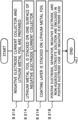
- Fig. 2 schematically shows an example of a manufacturing method for the storage battery 100.
- the step may be abbreviated as S
- the negative electrode current collector 142 of a sheet shape, and the lithium metal foil as the negative electrode active material layer 144 are prepared.
- the negative electrode current collector 142 and the lithium metal foil are stacked.
- the lithium metal foil is pressed and bonded to the front surface of at least one surface of the negative electrode current collector 142.
- the coating layer 146 having a thickness of 100 nm or less is stacked on at least a part of a front surface of a surface on an opposite side of a surface of the lithium metal foil in contact with the negative electrode current collector 142.
- the coating layer 146 is formed, for example, by the physical vapor deposition method (PVD method), the chemical vapor deposition method (CVD method), or the atomic layer deposition method (ALD method). At this time, the coating layer 146 is formed such that the coating layer 146 entirely covers the front surface of the lithium metal foil.
- the storage battery 100 is assembled. Specifically, first, the positive electrode 120, the separator 130, the negative electrode 140, the spacer 116, and the metal spring 118 are arranged in the positive electrode case 112 and the negative electrode case 114. In addition, the non-aqueous electrolyte solution 150 is injected into the positive electrode case 112 and the negative electrode case 114. Subsequently, the positive electrode case 112 and the negative electrode case 114 are sealed, and it is possible to obtain the storage battery 100.
- the lithium metal foil is pressed and bonded to the negative electrode current collector 142, and then the coating layer 146 is formed on the front surface of the lithium metal foil.
- a procedure for producing the negative electrode 140 is not limited to the present embodiment.
- the coating layer 146 is formed on the front surface of at least one surface of the lithium metal foil, and then the lithium metal foil in which the coating layer 146 is formed is pressed and bonded to the negative electrode current collector 142.
- a "symmetric cell" is used to evaluate the performance of the negative electrode.
- two equivalent electrodes having materials, masses and thicknesses which are equal to each other, are arranged symmetrically in the cell.
- various modifications or improvements may be made to the example embodiments below, and the storage battery 100 is not limited to the example embodiments below.
- the negative electrode was produced by the following procedure.
- Cu foil having a thickness of 10 ⁇ m was prepared as the negative electrode current collector 142.
- the lithium metal foil having a thickness of 20 ⁇ m was prepared as the negative electrode active material layer 144.
- the lithium metal foil was pressed and bonded to a front surface of one surface of the Cu foil.
- Al 2 O 3 was deposited on the front surface of the lithium metal foil by the PVD method to form an Al 2 O 3 layer as the coating layer 146.
- a thickness of the Al 2 O 3 layer was 10 nm. This made it possible to obtain the negative electrode in which a Cu current collector, a Li layer, and an Al 2 O 3 layer were stacked in this order.
- the positive electrode was produced by a procedure similar to that for the negative electrode. This made it possible to obtain the positive electrode in which the Cu current collector, the Li layer, and the Al 2 O 3 layer were stacked in this order.
- polyethylene having a thickness of 16 ⁇ m was prepared as the separator 130.
- the non-aqueous electrolyte solution containing a mixed solvent of ethyl methyl carbonate and fluorinated ethylene carbonate, and lithium hexafluorophosphate was prepared.
- Lithium hexafluorophosphate: fluorinated ethylene carbonate: ethyl methyl carbonate was 12.6: 18.0: 69.4 (% by volume).
- a mol % of the fluorinated ethylene carbonate to a whole of the mixed solvent was 20 mol % or more.
- a battery of a coin type was produced by using the positive electrode, the negative electrode, the separator, and the non-aqueous electrolyte solution that are mentioned above. This produced a symmetric cell for an evaluation.
- the battery of a coin type was produced by a procedure similar to that of example embodiment 1 other than lithium hexafluorophosphate: fluorinated ethylene carbonate: ethyl methyl carbonate in the non-aqueous electrolyte solution was 12.8: 22.1: 65.1 (% by volume). This produced a symmetric cell for an evaluation.
- the negative electrode was produced by the following procedure.
- the Cu foil having a thickness of 10 ⁇ m was prepared as the negative electrode current collector 142.
- the lithium metal foil having a thickness of 20 ⁇ m was prepared as the negative electrode active material layer 144. This made it possible to obtain the negative electrode in which the Cu current collector and the Li layer were stacked in this order.
- the positive electrode was produced by a procedure similar to that for the negative electrode. This made it possible to obtain the positive electrode in which the Cu current collector and the Li layer were stacked in this order.
- a separator and a non-electrolyte solution similar to those in example embodiment 1 were prepared.
- the battery of a coin type was produced in a manner similar to that of example embodiment 1. This produced a symmetric cell for an evaluation.
- the cycle characteristic of the symmetric cell was evaluated. Specifically, the charging and the discharging were repeated 250 cycles at a constant current, and voltage values during the charging and discharging were recorded. A charging time per cycle was one hour and a discharging time per cycle was one hour. Conditions for the charging were a temperature of 23 [°C], a current density of 1 [mA/cm 2 ], and a current value of 0.2 [mA]. Conditions for the discharging were a temperature of 23 [°C], a current density of 1 [mA/cm 2 ], and a current value of 0.2 [mA].
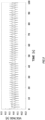
- Fig. 3 shows a result of test example 1
- example embodiment 1 two equivalent electrodes having materials, masses, and thicknesses which are equal to each other, are used as the positive electrode and the negative electrode. Therefore, an operating voltage is 0 V, and charging and discharging curves have substantially symmetric shapes in a range where the electrodes are normal. In test example 1, it can be seen that even after 500 hours have passed, the overvoltage is suppressed and the negative electrode is stable.
- the cycle characteristic of the symmetric cell was evaluated. Specifically, the charging and the discharging were repeated 250 cycles at a constant current, and the voltage values during the charging and discharging were recorded. The charging time per cycle was one hour and the discharging time per cycle was one hour. The condition during the charging and the condition during the discharging were similar to those of test example 1.
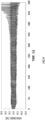
- Fig. 4 shows a result of test example 2.
- test example 2 it can be seen that the overvoltage occurred at a time point when 500 hours passed.
- the cycle characteristic of the symmetric cell was evaluated. Specifically, the charging and the discharging were repeated 50 cycles at a constant current, and voltage values during the charging and discharging were recorded. The charging time per cycle was one hour and the discharging time per cycle was one hour. The condition during the charging and the condition during the discharging were similar to those of test example 1.
- Fig. 5 shows a result of a cycle characteristic test.
- test example 3 it can be seen that even after 100 hours have passed, the overvoltage is suppressed and the negative electrode is stable.
- the stabilization of the negative electrode was realized by forming the Al 2 O 3 layer of 10 nm on the front surface of the lithium metal layer.
- the Al 2 O 3 layer of 10 nm on the front surface of the lithium metal layer.
- Mg, Ag, Si, and Sn also make it possible to suppress the generation and/or the growth of the lithium of a dendrite shape, similarly to Al.
- oxides, nitrides, fluorides, and phosphides of the metal make it possible to form the coating layer that is excellent in conductivity or ionic conductivity, similarly to the Al 2 O 3 layer.
- the negative electrode including the layer consisting of the compound represented by the general formula M x A y , the deterioration in the performance of the lithium secondary battery is suppressed, and the stability during the battery operation is enhanced.
- 100 storage battery
- 112 positive electrode case
- 114 negative electrode case
- 116 spacer
- 118 metal spring
- 120 positive electrode
- 122 positive electrode current collector
- 124 positive electrode active material layer
- 130 separator
- 140 negative electrode
- 142 negative electrode current collector
- 144 negative electrode active material layer
- 146 coating layer
- 150 non-aqueous electrolyte solution.
Landscapes
- Chemical & Material Sciences (AREA)
- Chemical Kinetics & Catalysis (AREA)
- Electrochemistry (AREA)
- General Chemical & Material Sciences (AREA)
- Engineering & Computer Science (AREA)
- Manufacturing & Machinery (AREA)
- Composite Materials (AREA)
- Materials Engineering (AREA)
- Inorganic Chemistry (AREA)
- General Physics & Mathematics (AREA)
- Condensed Matter Physics & Semiconductors (AREA)
- Physics & Mathematics (AREA)
- Secondary Cells (AREA)
- Battery Electrode And Active Subsutance (AREA)
Abstract
Description
- The present invention relates to a negative electrode material, a negative electrode, a lithium secondary battery, and a manufacturing method for a negative electrode material.
- Patent Document 1 discloses a negative electrode in which lithium phosphorus oxynitride is formed on a front surface of a lithium metal layer. Patent Document 2 discloses a negative electrode in which an ion conductive material having a thickness of at least 0.5 µm is formed on a front surface of a lithium metal layer. Patent Document 3 discloses a negative electrode in which a sulfide-based inorganic material is formed on a front surface of a lithium metal layer.
-
- Patent Document 1: Specification of
U.S. Patent 5314765 - Patent Document 2: Specification of
U.S. Patent No. 10461372 - Patent Document 3: Specification of
U.S. Patent 10833360 - A first aspect of the present invention provides a negative electrode material. The negative electrode material is, for example, used for a negative electrode of a lithium secondary battery containing a non-aqueous electrolyte solution. The negative electrode material includes, for example, a first layer that contains lithium metal as a negative electrode active material. The negative electrode material includes, for example, a second layer that is arranged on at least one surface of the first layer. In the negative electrode material, the second layer consists of, for example, a compound represented by a general formula MxAy (M is an element selected from a group consisting of Al, In, Mg, Ag, Si, and Sn, and A is an element selected from a group consisting of O, N, P, and F, and 0.3<x/y<3). In the negative electrode material, the second layer has, for example, a thickness of 100 nm or less.
- In the negative electrode material, the second layer may have a thickness less than 50 nm. In the negative electrode material, A may be an element selected from a group consisting of O and N.
- A second aspect of the present invention provides a negative electrode. The negative electrode includes, for example, the negative electrode material according to the first aspect. The negative electrode includes, for example, a negative electrode current collector that is configured to hold the negative electrode material.
- In the negative electrode, the second layer may be arranged to entirely cover the first layer arranged in contact with the negative electrode current collector. In the negative electrode, the second layer may be arranged such that a part of the second layer is in contact with the negative electrode current collector.
- A third aspect of the present invention provides a lithium secondary battery. The lithium secondary battery includes, for example, the negative electrode according to the second aspect. The lithium secondary battery includes, for example, a positive electrode. The lithium secondary battery includes, for example, a non-aqueous electrolyte solution.
- In the lithium secondary battery, the non-aqueous electrolyte solution may contain a cyclic carbonate having a fluorine atom. In the lithium secondary battery, a ratio of the cyclic carbonate having a fluorine atom to a whole of the non-aqueous electrolyte solution, may be 20 mol % or more and 80 mol % or less. In the lithium secondary battery, the cyclic carbonate having a fluorine atom may contain fluoroethylene carbonate (FEC) or difluoroethylene carbonate (DFEC).
- In the lithium secondary battery, the negative electrode may contain an alloy of lithium, and an element represented by M contained in the second layer, after the lithium secondary battery is charged and discharged at least once. In the lithium secondary battery, the second layer may contain nitrogen as an element represented by A. In the lithium secondary battery, the negative electrode may contain lithium nitride, after the lithium secondary battery is charged and discharged at least once.
- A fourth aspect of the present invention provides a method for manufacturing a negative electrode that is used for a lithium secondary battery containing a non-aqueous electrolyte solution. The method includes, for example, preparing a first layer that contains lithium metal as a negative electrode active material. The method includes, for example, forming a second layer on at least one surface of the first layer. In the method, the second layer consists of, for example, a compound represented by a general formula MxAy (M is an element selected from a group consisting of Al, In, Mg, Ag, Si, and Sn, and A is an element selected from a group consisting of O, N, P, and F, and 0.3<x/y<3). In the method, the second layer has, for example, a thickness of 100 nm or less.
- The summary of the invention described above does not necessarily describe all necessary features of the embodiments of the present invention. In addition, the present invention may also be a sub-combination of the features described above.
-
-
Fig. 1 schematically shows an example of an internal structure of astorage battery 100. -
Fig. 2 schematically shows an example of a manufacturing method for thestorage battery 100. -
Fig. 3 shows a result of a cycle characteristic test of a symmetric cell of example embodiment 1. -
Fig. 4 shows a result of a cycle characteristic test of a symmetric cell of comparison example 1. -
Fig. 5 shows a result of a cycle characteristic test of a symmetric cell of example embodiment 2. - The present embodiment describes details of a negative electrode material, a negative electrode, a lithium secondary battery, and a manufacturing method for a negative electrode material by taking, as an example, a case where the negative electrode material that is used for the negative electrode of the lithium secondary battery containing a non-aqueous electrolyte solution includes at least a first layer and a second layer. In the present embodiment, the first layer contains lithium metal as a negative electrode active material. The second layer is arranged on at least one surface of the first layer. The second layer consists of a compound represented by a general formula MxAy (M is an element selected from a group consisting of Al, In, Mg, Ag, Si, and Sn, and A is an element selected from a group consisting of O, N, P, and F, and 0.3<x/y<3). In addition, the second layer has a thickness of 100 nm or less.
- With the present embodiment, the second layer consists of an inorganic material having a specific composition and thickness, and thus it is possible to obtain the second layer that is excellent in electrical conductivity or ionic conductivity. This suppresses an overvoltage of a lithium secondary voltage during charging and discharging. In addition, with the present embodiment, the second layer is arranged on a front surface of the first layer, and thus a direct contact between the lithium metal of the first layer and the non-aqueous electrolyte solution is suppressed. This suppresses a reduction of the non-aqueous electrolyte solution by the lithium metal. As a result, a generation of lithium of a dendrite shape (may be referred to as a Li dendrite) during the charging and discharging of the lithium secondary battery is suppressed. In addition, by suppressing the generation of the Li dendrite, a cycle characteristic of the lithium secondary battery is enhanced. For example, a cycle life of the lithium secondary battery is increased.
- As described above, with the present embodiment, a deterioration in battery performance is suppressed, and stability during a battery operation is enhanced. In particular, when the non-aqueous electrolyte solution contains a cyclic carbonate having a fluorine atom, the deterioration in battery performance is greatly suppressed, and the stability during the battery operation is greatly enhanced.
- Hereinafter, the invention will be described through embodiments of the invention, but the following embodiments do not limit the invention according to claims. In addition, not all combinations of features described in the embodiments are essential to the solution of the invention.
- In the present specification, when a numerical range is expressed as "from A to B", the expression means A or more and B or less. In addition, "substituted or unsubstituted" means "substituted with any substituent, or not substituted with a substituent". A type of substituent described above is not particularly limited unless otherwise stated in the specification. In addition, the number of substituents described above is not particularly limited unless otherwise stated in the specification.
-
Fig. 1 schematically shows an example of an internal structure of astorage battery 100.Fig. 1 may be an example of a cross sectional view of thestorage battery 100. The present embodiment describes details of thestorage battery 100 by taking, as an example, a case where thestorage battery 100 is a non-aqueous secondary battery of a coin type. - In the present embodiment, the
storage battery 100 stores electrical energy. In addition, thestorage battery 100 supplies the stored electrical energy to an outside. It is possible to produce a power source by connecting a plurality ofstorage batteries 100 in series and/or in parallel. - In the present embodiment, the
storage battery 100 is the lithium secondary battery. Thestorage battery 100 contains the non-aqueous electrolyte solution as an electrolyte. In addition, thestorage battery 100 contains, as the negative electrode active material, at least one of the lithium metal (may be referred to as metallic lithium), an alloy of the lithium metal and other metal, or an intermetallic compound of the lithium metal and the other metal (these may collectively be referred to as the term "the lithium metal or the like"). - The lithium metal or the like has a very low potential and has a very great theoretical capacity, and thus using the lithium metal or the like, as the negative electrode active material, makes it possible to obtain an excellent secondary battery. In particular, using the lithium metal, as the negative electrode active material, makes it possible to obtain a very excellent secondary battery.
- However, for example, when the lithium metal is used as the negative electrode active material, the lithium of a dendrite shape may be generated during the charging and discharging. In a case where a dendrite grows, there is a possibility that a short circuit of a battery occurs. In addition, when an organic solvent that is used as an electrolyte solution is reduced, for example, by the lithium metal, there is a possibility that a reductive degradation product is deposited on the negative electrode. When the reductive degradation product is deposited on the negative electrode, an internal resistance of the battery increases.
- With one embodiment of the
storage battery 100, by a structure of the negative electrode of thestorage battery 100, the generation and/or the growth of the dendrite is suppressed. This realizes stabilization of the negative electrode. With another embodiment of thestorage battery 100, by a composition of the non-aqueous electrolyte solution, the stabilization of the negative electrode is realized. With still another embodiment of thestorage battery 100, by the structure of the negative electrode of thestorage battery 100 and the composition of the non-aqueous electrolyte solution, the stabilization of the negative electrode is realized. - In the present embodiment, the
storage battery 100 includes apositive electrode case 112, anegative electrode case 114, aspacer 116, and ametal spring 118. In addition, thestorage battery 100 includes apositive electrode 120, aseparator 130, anegative electrode 140, and anon-aqueous electrolyte solution 150. In the present embodiment, thepositive electrode 120 has a positive electrodecurrent collector 122 and a positive electrodeactive material layer 124. In the present embodiment, thenegative electrode 140 has a negative electrodecurrent collector 142, a negative electrodeactive material layer 144, and acoating layer 146. - In the present embodiment, the
positive electrode case 112 and thenegative electrode case 114 are constituted, for example, by a conductive material having a thin plate shape of a disk shape. In the present embodiment, by assembling thepositive electrode case 112 and thenegative electrode case 114, a space is formed in thepositive electrode case 112 and thenegative electrode case 114. In the space formed by thepositive electrode case 112 and thenegative electrode case 114, themetal spring 118, thepositive electrode 120, theseparator 130, thenegative electrode 140, and thenon-aqueous electrolyte solution 150 are housed. Thepositive electrode 120, theseparator 130, and thenegative electrode 140 are fixed, by a repulsive force of themetal spring 118, in thepositive electrode case 112 and thenegative electrode case 114. - In the present embodiment, the
spacer 116 holds, for example, a stacked body of thepositive electrode 120, theseparator 130, and thenegative electrode 140 in the space which is formed by thepositive electrode case 112 andnegative electrode case 114. Thespacer 116 may be used for positioning the stacked body of thepositive electrode 120, theseparator 130, and thenegative electrode 140. Thespacer 116 may seal a gap which is formed between thepositive electrode case 112 and thenegative electrode case 114. Thespacer 116 may contain an insulating material. In the present embodiment,spacer 116 insulates thepositive electrode case 112 and thenegative electrode case 114. - It should be noted that in
Fig. 1 , for a purpose of easily making a drawing and a description, a comparatively large space is formed between thespacer 116, and the stacked body of thepositive electrode 120, theseparator 130, and thenegative electrode 140. However, people skilled in this art who accessed the description in the specification of the present application can understand that it is possible to appropriately adjust a size of the space between thespacer 116, and the stacked body of thepositive electrode 120, theseparator 130, and thenegative electrode 140. In addition, thespacer 116 may fix the stacked body by thespacer 116, and the stacked body of thepositive electrode 120, theseparator 130, and thenegative electrode 140 being in contact with each other. - In the present embodiment, a material of the
metal spring 118 only needs to be a conductive substance, and a type thereof is not particularly limited. A shape and a size of themetal spring 118 are not particularly limited. Themetal spring 118 may be a washer. - In the present embodiment, the positive electrode
current collector 122 is configured to hold the positive electrodeactive material layer 124. A material of the positive electrodecurrent collector 122 only needs to be an electronic conductor that is chemically stable in thestorage battery 100, and a type thereof is not particularly limited. Examples of the material of the positive electrodecurrent collector 122 include aluminum, stainless steel, nickel, titanium, an alloy of these, or the like. Examples of a shape of the positive electrodecurrent collector 122 include foil, mesh, punched metal, expanded metal, or the like. A thickness of the positive electrodecurrent collector 122 is not particularly limited, but is preferably from 5 µm to 200 µm. The thickness of the positive electrodecurrent collector 122 may be from 6 µm to 20 µm. - In the present embodiment, the positive electrode
active material layer 124 is formed on at least one surface of the positive electrodecurrent collector 122. A thickness of the positive electrodeactive material layer 124 may be from 1 µm to 300 µm, or may be from 2 µm to 200 µm per side of the positive electrodecurrent collector 122. The positive electrodeactive material layer 124 contains, for example, a positive electrode active material and a binding agent (may be referred to as a binder). The positive electrodeactive material layer 124 may contain a conductive auxiliary agent. - In one embodiment, the positive electrode
active material layer 124 is formed by applying paste containing a material constituting the positive electrodeactive material layer 124, and the organic solvent, on at least one surface of the positive electrodecurrent collector 122, and drying the paste. A type of the organic solvent is not particularly limited, and examples of the organic solvent include N-methylpyrrolidone (NMP) or the like. In another embodiment, the positive electrodeactive material layer 124 is formed by mixing the materials that constitute the positive electrodeactive material layer 124 and molding the mixture into a sheet shape, to press and bond the mixture of the sheet shape to at least one surface of the positive electrodecurrent collector 122. - The positive electrode active material only needs to be a material that is capable of intercalation and deintercalation of a lithium ion and that has a potential higher than that of a metallic lithium negative electrode which is the negative electrode active material, and for example, transition metal oxides of an insertion type such as lithium layered oxides, olivines, and spinels are used. Examples of the positive electrode active material include: (i) layered oxides such as LiMnO2, LiNiO2, LiCoO2, Li(MnxNi1-x)O2, Li(MnxCo1-x)O2, Li(NiyCo1-y)O2, and Li(MnxNiyCo1-x-y)O2; (ii) solid solutions such as Li2MnO3-LiNiO2, Li2MnO3-LiCoO2, and Li2MnO3-Li(NiyCo1-y)O2; (iii) silicates such as Li2MnSiO4, Li2NiSiO4, Li2CoSiO4, Li2(MnxNi1-x)SiO4, Li2(MnxCo1-x)SiO4, Li2(NiyCo1-y)SiO4, and Li2(MnxNiyCo1-x-y)SiO4; (iv) borates such as LiMnBO3, LiNiBO3, LiCoBO3, Li(MnxNi1-x)BO3, Li(MnxCo1-x)BO3, Li(NiyCo1-y)BO3, and Li(MnxNiyCo1-x-y)BO3; (v) V2O5; (vi) LiV3Og; (vii) MnO; or the like. In the formulas described above, 0<x<1, 0<y<1, and 0<x+y<1. These positive electrode active materials may be used alone, or two or more positive electrode active materials may be combined to be used.
- As the positive electrode active material, a positive electrode active material of a conversion type with a high capacity may be used. Examples of the positive electrode active material of a conversion type with a high capacity include sulfur, a sulfur compound, ferrous fluoride, the transition metal oxide, or the like. The positive electrode active material of a conversion type does not contain lithium in an initial state. Therefore, by combining the positive electrode containing the positive electrode active material of a conversion type and the negative electrode containing the lithium metal as the negative electrode active material, an energy density of a non-aqueous electrolyte secondary battery is greatly enhanced.
- In the present embodiment, the binding agent binds the materials (for example, the positive electrode active material, conductive auxiliary agent, or the like) constituting the positive electrode
active material layer 124, and holds an electrode shape of thepositive electrode 120. The binding agent only needs to be chemically stable in thestorage battery 100, and a type thereof is not particularly limited. As the binding agent, a thermoplastic resin may be used, or a thermosetting resin may be used. Examples of the binding agent include polyethylene, polypropylene, polyvinylidene fluoride (PVDF), polytetrafluoroethylene (PTFE), polyacrylic acid, styrene-butadiene rubber, or the like. - In the present embodiment, the conductive auxiliary agent reduces a resistance of the
positive electrode 120. The conductive auxiliary agent only needs to be chemically stable in thestorage battery 100 and to have desired electronic conductivity, and a type thereof is not particularly limited. As the conductive auxiliary agent, an inorganic material may be used, or an organic material may be used. Examples of the conductive auxiliary agent include a carbon material. Examples of the carbon material include graphite, carbon black (for example, acetylene black, ketjen black, or the like), coke, amorphous carbon, carbon fibers, carbon nanotubes, graphene, or the like. The conductive auxiliary agent may be used alone, or two or more conductive auxiliary agents may be combined to be used. - In the present embodiment, the
separator 130 separates thepositive electrode 120 and thenegative electrode 140. Theseparator 130 secures the ionic conductivity between thepositive electrode 120 and thenegative electrode 140, for example, by holding the electrolyte solution. Examples of a material of theseparator 130 include polyethylene, polypropylene, ethylene-propylene copolymer, glass, or a composite body of these. - Examples of a shape of the
separator 130 include a microporous film, a nonwoven fabric, a filter, or the like. Theseparator 130 may be a stacked body of the films of these, or the like. A thickness of theseparator 130 is not particularly limited, but is preferably from 10 µm to 50 µm. An opening ratio of theseparator 130 is not particularly limited, but is preferably from 30% to 70%. - In the present embodiment, the negative electrode
current collector 142 is configured to hold the negative electrodeactive material layer 144. For the negative electrodecurrent collector 142, a material that does not react with lithium is used. Examples of the material of the negative electrodecurrent collector 142 include aluminum, stainless steel, nickel, titanium, an alloy of these, or the like. The negative electrodecurrent collector 142 may include a support layer of resin, and a metal layer arranged on a front surface of the support layer. Examples of the resin described above include polyethylene, polypropylene, polyethylene terephthalate, polyimide, or the like. The metal layer described above may be a layer consisting of copper, aluminum, stainless steel, nickel, titanium, or an alloy of these. The metal layer described above may include a layer consisting of copper, aluminum, stainless steel, nickel, titanium, or an alloy of these. The metal layer may be foil, or may be a plated layer. - Examples of a shape of the negative electrode
current collector 142 include foil, mesh, punched metal, expanded metal, or the like. A thickness of the negative electrodecurrent collector 142 is not particularly limited, but may be from 5 µm to 200 µm. The thickness of the negative electrodecurrent collector 142 is preferably from 6 µm to 20 µm. - In the present embodiment, the negative electrode
active material layer 144 is formed on at least one surface of the negative electrodecurrent collector 142. The negative electrodeactive material layer 144 may be formed on only one surface of the negative electrodecurrent collector 142 of a sheet shape, a film shape, or a foil shape, or may be formed on both surfaces of the negative electrodecurrent collector 142 described above. A thickness of the negative electrodeactive material layer 144 may be from 1 µm to 200 µm, or may be from 4 µm to 100 µm per side of the negative electrodecurrent collector 142. - In the present embodiment, the negative electrode
active material layer 144 contains, as the negative electrode active material, at least one of the lithium metal (may be referred to as metallic lithium), an alloy of the lithium metal and other metal, or an intermetallic compound of the lithium metal and the other metal. The negative electrodeactive material layer 144 may be a layer consisting of the lithium or the like described above. The negative electrodeactive material layer 144 may contain the lithium metal as the negative electrode active material. The negative electrodeactive material layer 144 may be a layer consisting of the lithium metal. - The negative electrode
active material layer 144 may be lithium metal foil. A thickness of the lithium metal foil may be from 1 µm to 200 µm, or may be from 2 µm to 100 µm, and is preferably from 4 µm to 50 µm. The thickness and/or a mass of the lithium metal foil may be determined according to a content of the positive electrode active material in the positive electrodeactive material layer 124. - In one embodiment, the negative electrode
active material layer 144 is formed by pressing and bonding, to a front surface of at least one surface of the negative electrodecurrent collector 142, a material which constitutes the negative electrodeactive material layer 144 and which has a sheet shape, a film shape, or a foil shape. In another embodiment, the negative electrodeactive material layer 144 is formed by depositing a material constituting the negative electrodeactive material layer 144 on a front surface of at least one surface of the negative electrodecurrent collector 142, by (i) a physical vapor deposition method (PVD method) such as sputtering, deposition, and ion plating, (ii) a chemical vapor deposition method (CVD method), (iii) an atomic layer deposition method (ALD method), or the like. - In the present embodiment, the
coating layer 146 is arranged on at least one surface of the negative electrodeactive material layer 144. In one embodiment, of two surfaces of the negative electrodeactive material layer 144 of a sheet shape, a film shape, or a foil shape, thecoating layer 146 is arranged on a surface on an opposite side of a surface in contact with the negative electrodecurrent collector 142. Of two surfaces of the negative electrodeactive material layer 144 of a sheet shape, a film shape, or a foil shape, in the surface in contact with the negative electrodecurrent collector 142, thecoating layer 146 may not be arranged. - In this case, the
coating layer 146 may be arranged to entirely cover the negative electrodeactive material layer 144 arranged in contact with the negative electrodecurrent collector 142. For example, as shown inFig. 1 , thecoating layer 146 is arranged such that a part of thecoating layer 146 is in contact with the negative electrodecurrent collector 142. A size of thecoating layer 146 may be greater than a size of the negative electrodeactive material layer 144. This makes it possible for thecoating layer 146 to entirely cover the negative electrodeactive material layer 144 arranged in contact with the negative electrodecurrent collector 142. - In another embodiment, the
coating layer 146 is arranged on both of two main surfaces of the negative electrodeactive material layer 144 of a sheet shape, a film shape, or a foil shape. In this case, thecoating layer 146 is interposed between the negative electrodecurrent collector 142 and the negative electrodeactive material layer 144. This makes it possible for thecoating layer 146 to entirely cover the negative electrodeactive material layer 144 arranged above the negative electrodecurrent collector 142. - In the present embodiment, the
coating layer 146 consists of a compound represented by a general formula MxAy (M is an element selected from a group consisting of Al, In, Mg, Ag, Si, and Sn, and A is an element selected from a group consisting of O, N, P, and F, and 0.3<x/y<3). By thecoating layer 146 consisting of the compound represented by the general formula MxAy, it is possible to obtain thecoating layer 146 that is excellent in electrical conductivity or ionic conductivity. - With the present embodiment, by the
coating layer 146 containing Al, In, Mg, Ag, Si, or Sn, the generation and/or the growth of the Li dendrite is suppressed. In addition, as will be described below, thenon-aqueous electrolyte solution 150 may contain an organic compound having a fluorine atom, as a liquid organic solvent. In this case, by an interaction between Al, In, Mg, Ag, Si, or Sn contained in the compound represented by the general formula MxAy described above, and the fluorine atom contained in the organic compound that is used as the organic solvent of thenon-aqueous electrolyte solution 150, the generation and/or the growth of the Li dendrites is more effectively suppressed. A mechanism thereof is not clear, but is presumed to be due to a favorable formation of a film that is effective in suppressing the generation and/or the growth of the Li dendrite, by the interaction between the compound represented by the general formula MxAy, and the organic compound having the fluorine atom. - The
coating layer 146 preferably contains Al and/or In. That is, M in the general formula is preferably an element selected from a group consisting of Al and In. By thecoating layer 146 containing Al and/or In, the generation and/or the growth of the lithium of a dendrite shape is effectively suppressed. - The
coating layer 146 preferably contains an oxide or a nitride. That is, A in the general formula is preferably an element selected from a group consisting of O and N. When the compound represented by the general formula MxAy is the oxide, it is possible to obtain thecoating layer 146 that is excellent in strength. As a result, it is possible to reduce a thickness of thecoating layer 146, and thus it is possible to obtain thecoating layer 146 that is excellent in electrical conductivity or ionic conductivity, and in addition, when the compound represented by the general formula MxAy is the nitride, it is possible to obtain thecoating layer 146 that is excellent in conductivity of the lithium ion. - The
coating layer 146 preferably contains at least one of Al2O3, In2O3, AIN, or InN. Thecoating layer 146 is preferably a layer consisting of Al2O3, In2O3, AIN, or InN. This makes it possible to obtain thecoating layer 146 that is excellent in electrical conductivity or ionic conductivity and that can effectively suppress the generation and/or the growth of the lithium of a dendrite shape. - In the present embodiment, the
coating layer 146 has a thickness of 100 nm or less. The thickness of thecoating layer 146 may be less than 50 nm, may be 30 nm or less, may be 20 nm or less, or may be 10 nm or less. This makes it possible to obtain thecoating layer 146 that is excellent in electrical conductivity or ionic conductivity. - For example, the
coating layer 146 is formed by depositing a material constituting thecoating layer 146 on a front surface of at least one surface of the negative electrodeactive material layer 144, by (i) the physical vapor deposition method (PVD method) such as sputtering, deposition, ion plating, (ii) the chemical vapor deposition method (CVD method), (iii) the atomic layer deposition method (ALD method), or the like. It should be noted that a producing method for thecoating layer 146 only needs to form thecoating layer 146 having the thickness mentioned above, and is not particularly limited. - when the electrical conductivity or the ionic conductivity of the
coating layer 146 is low, thecoating layer 146 itself acts as a resistive layer, and a great overvoltage occurs during the charging and discharging. As a result, the performance of thestorage battery 100 is degraded. With the present embodiment, thecoating layer 146 has a specific composition and thickness, and thecoating layer 146 has excellent electrical conductivity or ionic conductivity. As a result, an occurrence of a great overvoltage during the charging and discharging of thestorage battery 100 is prevented. - An element constituting the compound that is represented by the general formula MxAy and that is contained in the
coating layer 146 may react with the lithium contained in thestorage battery 100 during a charging and discharging process of thestorage battery 100. As a result, it is possible for thenegative electrode 140 to contain a reaction product between the lithium, and the element constituting the compound represented by the general formula MxAy. Thecoating layer 146 may contain the reaction product between the lithium, and the element constituting the compound represented by the general formula MxAy. The reaction product described above may form a film. The reaction product described above forms, for example, the film on a front surface of thecoating layer 146. - In one embodiment, during the charging and discharging process of the
storage battery 100, it is possible to generate an alloy of the lithium contained in thestorage battery 100, and the element constituting the compound represented by the general formula MxAy. It should be noted that the alloy may be a solid solution, or may be an intermetallic compound. The alloy described above may be an alloy of the lithium, and the element represented by M contained in the compound represented by the general formula MxAy. In this case, for example, it is possible for thenegative electrode 140 to contain the alloy of the lithium, and the element represented by M contained in the compound represented by the general formula MxAy, after thestorage battery 100 is charged and discharged at least once. Thecoating layer 146 may contain the alloy of the lithium, and the element represented by M contained in the compound represented by the general formula MxAy. The alloy described above may form a film. - In another embodiment, when the compound of the
coating layer 146 which is represented by the general formula MxAy contains nitrogen as an element represented by A, it is possible to generate lithium nitride during the charging and discharging process of thestorage battery 100. In this case, for example, it is possible for thenegative electrode 140 to contain the lithium nitride, after thestorage battery 100 is charged and discharged at least once. Thecoating layer 146 may contain the lithium nitride. The lithium nitride described above may form a film. - In the present embodiment, the
non-aqueous electrolyte solution 150 realizes ionic conduction between the positive electrode active material and the negative electrode active material, via the electrolyte that is contained in thenon-aqueous electrolyte solution 150. As thenon-aqueous electrolyte solution 150, it is possible to use a well known organic electrolyte solution. Thenon-aqueous electrolyte solution 150 includes, for example, a lithium salt or sodium salt as the electrolyte, and a polar solvent. The polar solvent may be the organic solvent. - The lithium salt described above only needs to dissociate in a solvent to form the lithium ion, and be less likely to cause a side reaction such as decomposition in a voltage range for a use for a battery, and a type thereof is not particularly limited. Examples of the lithium salt include: (i) inorganic lithium salts such as LiClO4, LiPF6, LiBF4, LiAsF6, and LiSbF6; ii) organic lithium salts such as LiCF3SO3, LiCF3CO2, Li2C2F4(SO3)2, LiN(FSO2)2, LiN(CF3SO2)2, LiC(CF3SO2)3, LiCnF2n+1SO3 (n is an integer of 2 or more), and LiN(RfOSO2)2 (Rf is a substituted or unsubstituted fluoroalkyl group); or the like. LiN(FSO2)2 may be referred to as LiFSI. LiN(CF3SO2)2 may be referred to as LiTFSI.
- The lithium salt described above may be used alone, or two or more lithium salts may be combined to be used. As the lithium salt, one or two or more of lithium hexafluorophosphate (LiPF6), lithium bisfluorosulfonylimide (LiFSI), lithium bistrifluoromethanesulfonylimide (LiTFSI), and LiBF4 (lithium borofluoride) are preferably used.
- The organic solvent described above only needs to dissolve the lithium salt mentioned above, and be less likely to cause the side reaction such as decomposition in a voltage range for a use for a battery, and a type thereof is not particularly limited. Examples of the organic solvent include (i) cyclic carbonates such as ethylene carbonate, propylene carbonate, and butylene carbonate; (ii) chain carbonates such as dimethyl carbonate, diethyl carbonate, and methyl ethyl carbonate; (iii) chain esters such as methyl propionate; (iv) cyclic esters such as γ-butyrolactone; (v) chain ethers such as dimethoxyethane, diethyl ether, 1,3-dioxolane, diglyme, triglyme and tetraglyme; (vi) cyclic ethers such as dioxane, tetrahydrofuran, and 2-methyltetrahydrofuran; (vii) nitriles such as acetonitrile, propionitrile, and methoxypropionitrile; (viii) sulfite esters such as ethylene glycol sulfite; or the like.
- The organic solvent described above may be used alone, or two or more lithium salts may be combined to be used. As the organic solvent, one or two or more of carbonate compounds and ether compounds are preferably used. Examples of the carbonate compound described above include propylene carbonate, ethylene carbonate (EC), dimethyl carbonate (DMC), ethyl methyl carbonate (EMC), diethyl carbonate (DEC), fluoroethylene carbonate (FEC), fluoroethylene methyl carbonate (FEMC), or the like. Examples of the above ether compound include 1,2-dimethoxyethane (DME) or the like.
- The carbonate compound and/or ether compound described above are more likely to be subjected to reductive degradation by the lithium metal of the negative electrode
active material layer 144 in comparison to another organic solvent. With thenegative electrode 140 according to the present embodiment, the lithium metal of the negative electrodeactive material layer 144 is covered with thecoating layer 146, and thus even when thenon-aqueous electrolyte solution 150 contains the carbonate compound and the ether compound, the reductive degradation of thenon-aqueous electrolyte solution 150 by the lithium metal is suppressed. - The organic solvent described above may contain the organic compound having a fluorine atom. The organic solvent described above preferably contains the cyclic carbonate having a fluorine atom. The organic solvent preferably contains one or two or more of the various organic solvents mentioned above, and the cyclic carbonate having a fluorine atom. Examples of the cyclic carbonate having a fluorine atom include fluorinated ethylene carbonate. Examples of the fluorinated ethylene carbonate include fluoroethylene carbonate (FEC), difluoroethylene carbonate (DFEC), fluoroethylene methyl carbonate (FEMC), and the like. Other examples of the organic compound having a fluorine atom include fluorinated ether, fluorinated glyme or the like. The organic solvent described above preferably contains one or two or more of the various organic solvents mentioned above, and the fluorinated ethylene carbonate.
- A ratio of the cyclic carbonate having a fluorine atom to a whole of the organic solvent contained in the
non-aqueous electrolyte solution 150 is preferably 20 mol % or more. The ratio of the cyclic carbonate having a fluorine atom to the whole of the organic solvent that is used in thenon-aqueous electrolyte solution 150 may be 20 mol% or more and 80% or less, may be 25 mol% or more and 70 mol% or less, or may be 30 mol % or more and 60 mol % or less. - A ratio of the cyclic carbonate having a fluorine atom to a whole of the
non-aqueous electrolyte solution 150 may be 20 mol % or more. For example, a ratio of a value of the number of moles of the cyclic carbonate having a fluorine atom, to a value of a total number of moles of the electrolyte and the organic solvent that is contained in thenon-aqueous electrolyte solution 150, is 20 mol % or more. The ratio described above may be 20 mol % or more and 80 mol % or less, may be 25 mol % or more and 70 mol % or less, or may be 30 mol % or more and 60 mol % or less. When thenon-aqueous electrolyte solution 150 contains the cyclic carbonate having a plurality of types of fluorine atoms, a ratio of a value of a total number of moles of the cyclic carbonate having the plurality of types of fluorine atom, to a value of a total number of moles of the electrolyte and the organic solvent that is used in thenon-aqueous electrolyte solution 150, may be 20 mol % or more. The ratio described above may be 20 mol % or more and 80 mol % or less, may be 25 mol % or more and 70 mol % or less, or may be 30 mol % or more and 60 mol % or less. - By the
non-aqueous electrolyte solution 150 containing the cyclic carbonate having a fluorine atom as at least a part of a main organic solvent, the reductive degradation of the carbonate compound and the ether compound described above that are contained in the organic solvent, is suppressed. In particular, the fluorinated ethylene carbonate contains highly electronegative fluorine atoms. Therefore, by the organic solvent containing the fluorinated ethylene carbonate, the reductive degradation of the carbonate compound and the ether compound that are contained in the organic solvent is greatly suppressed. - In one embodiment of the
non-aqueous electrolyte solution 150, LiPF6 is used as the electrolyte, and a mixed solvent of ethylene carbonate (EC) and diethyl carbonate (DEC) is used as the polar solvent. The cyclic carbonate having a fluorine atom may further be added to the mixed solvent described above. For example, the fluorinated ethylene carbonate is added to the mixed solvent described above. - In another embodiment of the
non-aqueous electrolyte solution 150, LiTFSI is used as the electrolyte, and the mixed solvent of ethylene carbonate (EC) and diethyl carbonate (DEC) is used as the polar solvent. The cyclic carbonate having a fluorine atom may further be added to the mixed solvent described above. For example, the fluorinated ethylene carbonate is added to the mixed solvent described above. - In still another embodiment of the
non-aqueous electrolyte solution 150, LiBF4 is used as the electrolyte, and a mixed solvent of propylene carbonate (PC) and ethyl methyl carbonate (EMC) is used as the polar solvent. The cyclic carbonate having a fluorine atom may further be added to the mixed solvent described above. For example, the fluorinated ethylene carbonate is added to the mixed solvent described above. - A concentration of the lithium salt in the
non-aqueous electrolyte solution 150 is not particularly limited, and may be in a range from 0.1 mol/L to 5.0 mol/L. The concentration of the lithium salt may be in a range from 0.5 mol/L to 4.0 mol/L, or may be in a range from 0.7 mol/L to 1.5 mol/L. - As mentioned above, with the present embodiment, the
negative electrode 140 includes the stacked body of the negative electrodeactive material layer 144 containing the lithium metal, and thecoating layer 146 consisting of the compound represented by the general formula MxAy. This suppresses a reduction of the non-aqueous electrolyte solution by the lithium metal. In addition, the generation of the lithium of a dendrite shape is suppressed during the charging and discharging of the lithium secondary battery. An effect of thenegative electrode 140 including the stacked body of the negative electrodeactive material layer 144 and thecoating layer 146 is remarkably exhibited, in particular, when thenon-aqueous electrolyte solution 150 contains propylene carbonate, ethylene carbonate (EC), dimethyl carbonate (DMC), ethyl methyl carbonate (EMC), diethyl carbonate (DEC), fluoroethylene carbonate (FEC), difluoroethylene carbonate (DFEC), fluoroethylene methyl carbonate (FEMC), or 1,2-dimethoxyethane (DME). - The reduction of the non-aqueous electrolyte solution by the lithium metal is effectively suppressed, when (a) the
negative electrode 140 includes the stacked body of the negative electrodeactive material layer 144 and thecoating layer 146; and (b) thenon-aqueous electrolyte solution 150 is a mixed solvent of (i) one or two or more compounds selected from a group consisting of propylene carbonate, ethylene carbonate (EC), dimethyl carbonate (DMC), ethyl methyl carbonate (EMC), diethyl carbonate (DEC), fluoroethylene carbonate (FEC), difluoroethylene carbonate (DFEC), fluoroethylene methyl carbonate (FEMC), and 1,2-dimethoxyethane (DME), and (ii) the cyclic carbonate having a fluorine atom. In addition, the generation of the lithium of a dendrite shape is effectively suppressed during the charging and discharging of the lithium secondary battery. - The
storage battery 100 may be an example of the lithium secondary battery. The negative electrodeactive material layer 144 may be an example of the first layer. Thecoating layer 146 may be an example of the second layer. The stacked body of the first layer and the second layer may be an example of the negative electrode material. - The present embodiment has described the details of the
storage battery 100 by taking, as an example, the case where thestorage battery 100 is the secondary battery of a coin type. However, a type, a structure, or the like of thestorage battery 100 is not limited to the present embodiment. In another embodiment, thestorage battery 100 may be a cylindrical battery including a wound electrode body in which the positive electrode, the separator and the negative electrode are wound in a spiral shape. In still another embodiment, thestorage battery 100 may be a laminated battery in which a stacked electrode body obtained by alternately stacking the positive electrode and the negative electrode across the separator, is sealed with a laminate. - The present embodiment has described the details of the
storage battery 100 by taking, as an example, the case where thenegative electrode 140 has the negative electrodecurrent collector 142 and the negative electrodeactive material layer 144. However, the negative electrode of thestorage battery 100 is not limited to the present embodiment. In another embodiment, for example, when the lithium metal foil is used as the negative electrodeactive material layer 144, thestorage battery 100 may not include the negative electrodecurrent collector 142. - The present embodiment has described an example of the
storage battery 100 by taking, as an example, the case where thenon-aqueous electrolyte solution 150 is used as the electrolyte of thestorage battery 100. however, the electrolyte of thestorage battery 100 is not limited to the present embodiment. In another embodiment, a gel electrolyte may be used as the electrolyte of thestorage battery 100. For example, it is possible for the gel electrolyte to be obtained by adding a well known gelling agent to thenon-aqueous electrolyte solution 150 mentioned above. In still another embodiment, a well known ionic liquid may be used as the electrolyte of thestorage battery 100. -
Fig. 2 schematically shows an example of a manufacturing method for thestorage battery 100. With the present embodiment, first, in step 212 (the step may be abbreviated as S), for example, the negative electrodecurrent collector 142 of a sheet shape, and the lithium metal foil as the negative electrodeactive material layer 144 are prepared. Then, in S214, the negative electrodecurrent collector 142 and the lithium metal foil are stacked. For example, the lithium metal foil is pressed and bonded to the front surface of at least one surface of the negative electrodecurrent collector 142. - Then, in S216, in the lithium metal foil that is pressed and bonded to the negative electrode
current collector 142, thecoating layer 146 having a thickness of 100 nm or less is stacked on at least a part of a front surface of a surface on an opposite side of a surface of the lithium metal foil in contact with the negative electrodecurrent collector 142. Thecoating layer 146 is formed, for example, by the physical vapor deposition method (PVD method), the chemical vapor deposition method (CVD method), or the atomic layer deposition method (ALD method). At this time, thecoating layer 146 is formed such that thecoating layer 146 entirely covers the front surface of the lithium metal foil. - Then, in S218, the
storage battery 100 is assembled. Specifically, first, thepositive electrode 120, theseparator 130, thenegative electrode 140, thespacer 116, and themetal spring 118 are arranged in thepositive electrode case 112 and thenegative electrode case 114. In addition, thenon-aqueous electrolyte solution 150 is injected into thepositive electrode case 112 and thenegative electrode case 114. Subsequently, thepositive electrode case 112 and thenegative electrode case 114 are sealed, and it is possible to obtain thestorage battery 100. - In the present embodiment, the lithium metal foil is pressed and bonded to the negative electrode
current collector 142, and then thecoating layer 146 is formed on the front surface of the lithium metal foil. However, a procedure for producing thenegative electrode 140 is not limited to the present embodiment. With another embodiment, thecoating layer 146 is formed on the front surface of at least one surface of the lithium metal foil, and then the lithium metal foil in which thecoating layer 146 is formed is pressed and bonded to the negative electrodecurrent collector 142. - For a purpose of more specifically describing the
storage battery 100, the details of thestorage battery 100 are described in the following example embodiments. In the example embodiments below, a "symmetric cell" is used to evaluate the performance of the negative electrode. In the symmetric cell, two equivalent electrodes having materials, masses and thicknesses which are equal to each other, are arranged symmetrically in the cell. However, various modifications or improvements may be made to the example embodiments below, and thestorage battery 100 is not limited to the example embodiments below. - First, the negative electrode was produced by the following procedure. Cu foil having a thickness of 10 µm was prepared as the negative electrode
current collector 142. In addition, the lithium metal foil having a thickness of 20 µm was prepared as the negative electrodeactive material layer 144. Then, the lithium metal foil was pressed and bonded to a front surface of one surface of the Cu foil. Subsequently, Al2O3 was deposited on the front surface of the lithium metal foil by the PVD method to form an Al2O3 layer as thecoating layer 146. A thickness of the Al2O3 layer was 10 nm. This made it possible to obtain the negative electrode in which a Cu current collector, a Li layer, and an Al2O3 layer were stacked in this order. - Then, the positive electrode was produced by a procedure similar to that for the negative electrode. This made it possible to obtain the positive electrode in which the Cu current collector, the Li layer, and the Al2O3 layer were stacked in this order.
- In addition, polyethylene having a thickness of 16 µm was prepared as the
separator 130. In addition, the non-aqueous electrolyte solution containing a mixed solvent of ethyl methyl carbonate and fluorinated ethylene carbonate, and lithium hexafluorophosphate was prepared. Lithium hexafluorophosphate: fluorinated ethylene carbonate: ethyl methyl carbonate was 12.6: 18.0: 69.4 (% by volume). A mol % of the fluorinated ethylene carbonate to a whole of the mixed solvent was 20 mol % or more. A battery of a coin type was produced by using the positive electrode, the negative electrode, the separator, and the non-aqueous electrolyte solution that are mentioned above. This produced a symmetric cell for an evaluation. - The battery of a coin type was produced by a procedure similar to that of example embodiment 1 other than lithium hexafluorophosphate: fluorinated ethylene carbonate: ethyl methyl carbonate in the non-aqueous electrolyte solution was 12.8: 22.1: 65.1 (% by volume). This produced a symmetric cell for an evaluation.
- First, the negative electrode was produced by the following procedure. The Cu foil having a thickness of 10 µm was prepared as the negative electrode
current collector 142. In addition, the lithium metal foil having a thickness of 20 µm was prepared as the negative electrodeactive material layer 144. This made it possible to obtain the negative electrode in which the Cu current collector and the Li layer were stacked in this order. - Then, the positive electrode was produced by a procedure similar to that for the negative electrode. This made it possible to obtain the positive electrode in which the Cu current collector and the Li layer were stacked in this order. In addition, a separator and a non-electrolyte solution similar to those in example embodiment 1 were prepared. The battery of a coin type was produced in a manner similar to that of example embodiment 1. This produced a symmetric cell for an evaluation.
- By using the symmetric cell for an evaluation produced in example embodiment 1, the cycle characteristic of the symmetric cell was evaluated. Specifically, the charging and the discharging were repeated 250 cycles at a constant current, and voltage values during the charging and discharging were recorded. A charging time per cycle was one hour and a discharging time per cycle was one hour. Conditions for the charging were a temperature of 23 [°C], a current density of 1 [mA/cm2], and a current value of 0.2 [mA]. Conditions for the discharging were a temperature of 23 [°C], a current density of 1 [mA/cm2], and a current value of 0.2 [mA].
- In example embodiment 1, two equivalent electrodes having materials, masses, and thicknesses which are equal to each other, are used as the positive electrode and the negative electrode. Therefore, an operating voltage is 0 V, and charging and discharging curves have substantially symmetric shapes in a range where the electrodes are normal. In test example 1, it can be seen that even after 500 hours have passed, the overvoltage is suppressed and the negative electrode is stable.
- By using the symmetric cell for an evaluation produced in comparison example 1, the cycle characteristic of the symmetric cell was evaluated. Specifically, the charging and the discharging were repeated 250 cycles at a constant current, and the voltage values during the charging and discharging were recorded. The charging time per cycle was one hour and the discharging time per cycle was one hour. The condition during the charging and the condition during the discharging were similar to those of test example 1.
-
Fig. 4 shows a result of test example 2. In test example 2, it can be seen that the overvoltage occurred at a time point when 500 hours passed. - By using the symmetric cell for an evaluation produced in example embodiment 2, the cycle characteristic of the symmetric cell was evaluated. Specifically, the charging and the discharging were repeated 50 cycles at a constant current, and voltage values during the charging and discharging were recorded. The charging time per cycle was one hour and the discharging time per cycle was one hour. The condition during the charging and the condition during the discharging were similar to those of test example 1.
-
Fig. 5 shows a result of a cycle characteristic test. In test example 3, it can be seen that even after 100 hours have passed, the overvoltage is suppressed and the negative electrode is stable. - As described above, the stabilization of the negative electrode was realized by forming the Al2O3 layer of 10 nm on the front surface of the lithium metal layer. As mentioned above, In, Mg, Ag, Si, and Sn, also make it possible to suppress the generation and/or the growth of the lithium of a dendrite shape, similarly to Al. In addition, oxides, nitrides, fluorides, and phosphides of the metal make it possible to form the coating layer that is excellent in conductivity or ionic conductivity, similarly to the Al2O3 layer. Accordingly, with the present disclosure, it is proven that by the negative electrode including the layer consisting of the compound represented by the general formula MxAy, the deterioration in the performance of the lithium secondary battery is suppressed, and the stability during the battery operation is enhanced.
- While the embodiments of the present invention have been described, the technical scope of the present invention is not limited to the above-described embodiments. It is apparent to persons skilled in the art that various alterations or improvements can be made to the above-described embodiments. It is also apparent from the scope of the claims that the embodiments added with such alterations or improvements can be included in the technical scope of the present invention.
- The operations, procedures, steps, stages etc. of every processing performed by an apparatus, system, program, and method shown in the claims, specification, or diagrams can be performed in any order as long as the order is not indicated by "prior to," "before," or the like and as long as the output from a previous processing is not used in a later processing. Even if the operation flow is described with phrases such as "first" or "next" in the claims, specification, or diagrams, they do not necessarily mean that the flow must be performed in this order.
- 100: storage battery, 112: positive electrode case, 114: negative electrode case, 116: spacer, 118: metal spring, 120: positive electrode, 122: positive electrode current collector, 124: positive electrode active material layer, 130: separator, 140: negative electrode, 142: negative electrode current collector, 144: negative electrode active material layer, 146: coating layer, 150: non-aqueous electrolyte solution.
Claims (13)
- A negative electrode material that is used for a negative electrode of a lithium secondary battery containing a non-aqueous electrolyte solution, the negative electrode material comprising:a first layer that contains lithium metal as a negative electrode active material; anda second layer that is arranged on at least one surface of the first layer, wherein the second layerconsists of a compound represented by a general formula MxAy (M is an element selected from a group consisting of Al, In, Mg, Ag, Si, and Sn, and A is an element selected from a group consisting of O, N, P, and F, and 0.3<x/y<3), andhas a thickness of 100 nm or less.
- The negative electrode material according to claim 1, wherein
the second layer has a thickness of 10 nm or less. - The negative electrode material according to claim 1 or 2, wherein
A is an element selected from a group consisting of O and N. - A negative electrode comprising:the negative electrode material according to any one of claims 1 to 3; anda negative electrode current collector that is configured to hold the negative electrode material.
- The negative electrode according to claim 4, wherein
the second layer is arranged to entirely cover the first layer arranged in contact with the negative electrode current collector. - The negative electrode according to claim 4 or 5, wherein
the second layer is arranged such that a part of the second layer is in contact with the negative electrode current collector. - A lithium secondary battery comprising:the negative electrode according to any one of claims 4 to 6;a positive electrode; anda non-aqueous electrolyte solution.
- The lithium secondary battery according to claim 7, wherein
the non-aqueous electrolyte solution contains a cyclic carbonate having a fluorine atom. - The lithium secondary battery according to claim 8, wherein
a ratio of the cyclic carbonate having a fluorine atom to a whole of the non-aqueous electrolyte solution is 20 mol % or more and 80 mol % or less. - The lithium secondary battery according to claim 8 or 9, wherein
the cyclic carbonate having a fluorine atom contains fluoroethylene carbonate (FEC) or difluoroethylene carbonate (DFEC). - The lithium secondary battery according to any one of claims 7 to 10, wherein the negative electrodecontains an alloy of lithium, and an element represented by M contained in the second layer,after the lithium secondary battery is charged and discharged at least once.
- The lithium secondary battery according to claim 11, whereinthe second layer contains nitrogen as an element represented by A, andthe negative electrode contains lithium nitride, after the lithium secondary battery is charged and discharged at least once.
- A method for manufacturing a negative electrode that is used for a lithium secondary battery containing a non-aqueous electrolyte solution, the method comprising:preparing a first layer that contains lithium metal as a negative electrode active material; andforming a second layer on at least one surface of the first layer, wherein the second layerconsists of a compound represented by a general formula MxAy (M is an element selected from a group consisting of Al, In, Mg, Ag, Si, and Sn, and A is an element selected from a group consisting of O, N, P, and F, and 0.3<x/y<3), andhas a thickness of 100 nm or less.
Applications Claiming Priority (2)
| Application Number | Priority Date | Filing Date | Title |
|---|---|---|---|
| JP2021040663A JP2022140029A (en) | 2021-03-12 | 2021-03-12 | Negative electrode material, negative electrode, lithium secondary battery, and manufacturing method of negative electrode material |
| PCT/JP2022/010722 WO2022191297A1 (en) | 2021-03-12 | 2022-03-10 | Material for negative electrodes, negative electrode, lithium secondary battery and method for producing material for negative electrodes |
Publications (2)
| Publication Number | Publication Date |
|---|---|
| EP4235852A1 true EP4235852A1 (en) | 2023-08-30 |
| EP4235852A4 EP4235852A4 (en) | 2024-11-20 |
Family
ID=83228119
Family Applications (1)
| Application Number | Title | Priority Date | Filing Date |
|---|---|---|---|
| EP22767251.6A Pending EP4235852A4 (en) | 2021-03-12 | 2022-03-10 | NEGATIVE ELECTRODE MATERIAL, NEGATIVE ELECTRODE, LITHIUM SECONDARY BATTERY, AND METHOD FOR MANUFACTURING NEGATIVE ELECTRODE MATERIAL |
Country Status (4)
| Country | Link |
|---|---|
| US (1) | US20230231117A1 (en) |
| EP (1) | EP4235852A4 (en) |
| JP (1) | JP2022140029A (en) |
| WO (1) | WO2022191297A1 (en) |
Families Citing this family (2)
| Publication number | Priority date | Publication date | Assignee | Title |
|---|---|---|---|---|
| US20230197928A1 (en) * | 2021-12-22 | 2023-06-22 | GM Global Technology Operations LLC | Battery electrode |
| JP2025067532A (en) * | 2023-10-13 | 2025-04-24 | トヨタ自動車株式会社 | All-solid battery |
Family Cites Families (27)
| Publication number | Priority date | Publication date | Assignee | Title |
|---|---|---|---|---|
| US5314765A (en) | 1993-10-14 | 1994-05-24 | Martin Marietta Energy Systems, Inc. | Protective lithium ion conducting ceramic coating for lithium metal anodes and associate method |
| JP2005063731A (en) * | 2003-08-08 | 2005-03-10 | Japan Storage Battery Co Ltd | Non-aqueous electrolyte secondary battery and manufacturing method thereof |
| FR2873854A1 (en) * | 2004-07-30 | 2006-02-03 | Commissariat Energie Atomique | PROCESS FOR PRODUCING A LITHIUM ELECTRODE, LITHIUM ELECTRODE THAT CAN BE OBTAINED BY THIS METHOD AND USES THEREOF |
| JP2009502011A (en) * | 2005-07-15 | 2009-01-22 | シンベット・コーポレイション | Thin film battery and method with soft and hard electrolyte layers |
| JP5515308B2 (en) * | 2009-02-03 | 2014-06-11 | ソニー株式会社 | Thin-film solid lithium ion secondary battery and manufacturing method thereof |
| US8563173B2 (en) * | 2009-05-08 | 2013-10-22 | Robert Bosch Gmbh | Li-ion battery with anode current collector coating |
| WO2016036121A1 (en) * | 2014-09-05 | 2016-03-10 | 주식회사 엘지화학 | Lithium electrode, lithium secondary battery comprising same, battery module comprising lithium secondary battery, and preparation method of lithium electrode |
| EP3203548B1 (en) * | 2014-09-29 | 2019-01-23 | LG Chem, Ltd. | Anode, lithium secondary battery comprising same, battery module comprising the lithium secondary battery |
| KR102745545B1 (en) * | 2014-10-28 | 2024-12-26 | 유니버시티 오브 메릴랜드, 컬리지 파크 | Interfacial layers for solid-state batteries and methods of making same |
| WO2016187510A1 (en) | 2015-05-20 | 2016-11-24 | Sion Power Corporation | Protective layers for electrodes |
| US10833360B2 (en) | 2016-03-11 | 2020-11-10 | Northwestern University | Protective anode coatings for high energy batteries |
| JP6696324B2 (en) * | 2016-06-29 | 2020-05-20 | 日本電気株式会社 | Inspection device, inspection method, and inspection program |
| KR102270864B1 (en) * | 2017-04-19 | 2021-07-01 | 주식회사 엘지에너지솔루션 | Negative electrode for lithium secondary battery, lithium secondary battery comprising the same, and preparing method thereof |
| WO2018226070A1 (en) * | 2017-06-08 | 2018-12-13 | 주식회사 엘지화학 | Negative electrode, secondary battery including same negative electrode, and method for manufacturing same negative electrode |
| KR102120278B1 (en) * | 2017-11-24 | 2020-06-08 | 주식회사 엘지화학 | Lithium electrode and lithium secondary battery including the same |
| KR102601605B1 (en) * | 2017-12-27 | 2023-11-14 | 삼성전자주식회사 | Anode, Lithium battery comprising anode, and Preparation method of anode |
| JP7067128B2 (en) * | 2018-03-06 | 2022-05-16 | 三洋電機株式会社 | Non-aqueous electrolyte secondary battery |
| JP2019175568A (en) * | 2018-03-27 | 2019-10-10 | 本田技研工業株式会社 | Lithium ion secondary battery |
| JP2019200977A (en) * | 2018-05-18 | 2019-11-21 | 株式会社豊田自動織機 | Electrolytic solution |
| JP2020030937A (en) * | 2018-08-22 | 2020-02-27 | 株式会社豊田自動織機 | Electrolyte solution |
| CN109378491A (en) * | 2018-09-27 | 2019-02-22 | 山东大学 | A kind of lithium-air battery and preparation method thereof |
| CN113056838A (en) * | 2018-10-02 | 2021-06-29 | 昆腾斯科普电池公司 | Method for producing and using electrochemical cells with an interlayer |
| CN113228340A (en) * | 2019-03-01 | 2021-08-06 | 积水化学工业株式会社 | Electrode for lithium ion secondary battery, and lithium ion secondary battery |
| JP2020191247A (en) * | 2019-05-22 | 2020-11-26 | パナソニックIpマネジメント株式会社 | Non-aqueous electrolyte secondary battery |
| JP2020198297A (en) * | 2019-05-30 | 2020-12-10 | パナソニックIpマネジメント株式会社 | Rechargeable battery |
| CN116093261A (en) * | 2019-06-20 | 2023-05-09 | 北京航空航天大学 | Lithium metal composite material, preparation method thereof, and application of negative electrode of lithium metal battery |
| CN112103512A (en) * | 2020-10-09 | 2020-12-18 | 中国科学院物理研究所 | Negative current collector, and preparation method and application thereof |
-
2021
- 2021-03-12 JP JP2021040663A patent/JP2022140029A/en active Pending
-
2022
- 2022-03-10 WO PCT/JP2022/010722 patent/WO2022191297A1/en not_active Ceased
- 2022-03-10 EP EP22767251.6A patent/EP4235852A4/en active Pending
-
2023
- 2023-03-29 US US18/191,888 patent/US20230231117A1/en active Pending
Also Published As
| Publication number | Publication date |
|---|---|
| JP2022140029A (en) | 2022-09-26 |
| US20230231117A1 (en) | 2023-07-20 |
| WO2022191297A1 (en) | 2022-09-15 |
| EP4235852A4 (en) | 2024-11-20 |
Similar Documents
| Publication | Publication Date | Title |
|---|---|---|
| EP3605710B1 (en) | Non-aqueous electrolyte for lithium secondary battery and lithium secondary battery comprising the same | |
| US9088036B2 (en) | Rechargeable lithium battery | |
| US20090017386A1 (en) | Non-Aqueous Electrolytic Solutions And Electrochemical Cells Comprising The Same | |
| JP4329806B2 (en) | Secondary battery | |
| US20120189920A1 (en) | Non-Aqueous Electrolytic Solutions And Electrochemical Cells Comprising The Same | |
| KR20090020487A (en) | Nonaqueous Electrolyte Secondary Battery | |
| CN114641883A (en) | Nonaqueous electrolyte for lithium secondary battery and lithium secondary battery comprising same | |
| US20080081261A1 (en) | Non-aqueous electrolyte secondary cell | |
| EP4131550B1 (en) | Electrolyte additives for secondary battery, non-aqueous electrolyte for secondary battery comprising same and secondary battery | |
| US20230231117A1 (en) | Negative electrode material, negative electrode, lithium secondary battery, and manufacturing method for negative electrode material | |
| KR102745355B1 (en) | Electrolyte additives for secondary battery, non-aqueous electrolyte for secondary battery comprising same and secondary battery | |
| US12315882B2 (en) | Electrolyte solution additive for secondary battery, and non-aqueous electrolyte solution for lithium secondary battery and lithium secondary battery which include the same | |
| EP4287339B1 (en) | Non-aqueous electrolyte solution for lithium secondary battery and lithium secondary battery including the same | |
| EP4723284A1 (en) | Electrolyte, secondary battery, and electric device | |
| JP5168593B2 (en) | Lithium ion secondary battery | |
| KR20220063743A (en) | Non-aqueous electrolyte for secondary battery and secondary battery comprising same | |
| US20220399573A1 (en) | Non-Aqueous Electrolyte Solution for Lithium Secondary Battery and Lithium Secondary Battery Including the Same | |
| KR102756133B1 (en) | Non-aqueous electrolyte and lithium secondary battery comprising the same | |
| EP4092800B1 (en) | ANTI-FREE ELECTROLYTE FOR LITHIUM SECONDARY BATTERY AND LITHIUM SECONDARY BATTERY WITH IT | |
| EP4354577A1 (en) | Electrolyte, secondary battery, battery module, battery pack, and electric apparatus | |
| JP2020077575A (en) | Lithium ion secondary battery | |
| JP2008147118A (en) | battery | |
| KR20250011579A (en) | Non-aqueous electrolyte and lithium secondary battery comprising the same | |
| US20250158124A1 (en) | Electrolyte Solution Additive for Lithium Secondary Battery and Non-Aqueous Electrolyte Solution for Lithium Secondary Battery Including the Same and Lithium Secondary Battery | |
| KR20260020895A (en) | Non-aqueous electrolyte and lithium secondary battery comprising the same |
Legal Events
| Date | Code | Title | Description |
|---|---|---|---|
| STAA | Information on the status of an ep patent application or granted ep patent |
Free format text: STATUS: THE INTERNATIONAL PUBLICATION HAS BEEN MADE |
|
| PUAI | Public reference made under article 153(3) epc to a published international application that has entered the european phase |
Free format text: ORIGINAL CODE: 0009012 |
|
| STAA | Information on the status of an ep patent application or granted ep patent |
Free format text: STATUS: REQUEST FOR EXAMINATION WAS MADE |
|
| 17P | Request for examination filed |
Effective date: 20230331 |
|
| AK | Designated contracting states |
Kind code of ref document: A1 Designated state(s): AL AT BE BG CH CY CZ DE DK EE ES FI FR GB GR HR HU IE IS IT LI LT LU LV MC MK MT NL NO PL PT RO RS SE SI SK SM TR |
|
| DAV | Request for validation of the european patent (deleted) | ||
| DAX | Request for extension of the european patent (deleted) | ||
| REG | Reference to a national code |
Ref country code: DE Ref legal event code: R079 Free format text: PREVIOUS MAIN CLASS: H01M0004134000 Ipc: H01M0004620000 |
|
| A4 | Supplementary search report drawn up and despatched |
Effective date: 20241022 |
|
| RIC1 | Information provided on ipc code assigned before grant |
Ipc: H01M 4/58 20100101ALN20241016BHEP Ipc: H01M 4/485 20100101ALN20241016BHEP Ipc: H01M 4/02 20060101ALI20241016BHEP Ipc: H01M 10/058 20100101ALI20241016BHEP Ipc: H01M 4/1395 20100101ALI20241016BHEP Ipc: H01M 10/0569 20100101ALI20241016BHEP Ipc: H01M 10/052 20100101ALI20241016BHEP Ipc: H01M 4/40 20060101ALI20241016BHEP Ipc: H01M 4/38 20060101ALI20241016BHEP Ipc: H01M 4/36 20060101ALI20241016BHEP Ipc: H01M 4/134 20100101ALI20241016BHEP Ipc: H01M 4/62 20060101AFI20241016BHEP |
|
| STAA | Information on the status of an ep patent application or granted ep patent |
Free format text: STATUS: EXAMINATION IS IN PROGRESS |
|
| 17Q | First examination report despatched |
Effective date: 20250708 |