EP4235593A2 - System und verfahren zur datensynthese auf der basis von mehreren attributen - Google Patents
System und verfahren zur datensynthese auf der basis von mehreren attributen Download PDFInfo
- Publication number
- EP4235593A2 EP4235593A2 EP23158749.4A EP23158749A EP4235593A2 EP 4235593 A2 EP4235593 A2 EP 4235593A2 EP 23158749 A EP23158749 A EP 23158749A EP 4235593 A2 EP4235593 A2 EP 4235593A2
- Authority
- EP
- European Patent Office
- Prior art keywords
- input image
- processors
- human
- background
- image
- Prior art date
- Legal status (The legal status is an assumption and is not a legal conclusion. Google has not performed a legal analysis and makes no representation as to the accuracy of the status listed.)
- Pending
Links
Images



Classifications
-
- G—PHYSICS
- G06—COMPUTING OR CALCULATING; COUNTING
- G06V—IMAGE OR VIDEO RECOGNITION OR UNDERSTANDING
- G06V20/00—Scenes; Scene-specific elements
- G06V20/70—Labelling scene content, e.g. deriving syntactic or semantic representations
-
- G—PHYSICS
- G06—COMPUTING OR CALCULATING; COUNTING
- G06F—ELECTRIC DIGITAL DATA PROCESSING
- G06F18/00—Pattern recognition
- G06F18/20—Analysing
- G06F18/21—Design or setup of recognition systems or techniques; Extraction of features in feature space; Blind source separation
- G06F18/214—Generating training patterns; Bootstrap methods, e.g. bagging or boosting
-
- G—PHYSICS
- G06—COMPUTING OR CALCULATING; COUNTING
- G06T—IMAGE DATA PROCESSING OR GENERATION, IN GENERAL
- G06T11/00—Two-dimensional [2D] image generation
- G06T11/60—Creating or editing images; Combining images with text
-
- G—PHYSICS
- G06—COMPUTING OR CALCULATING; COUNTING
- G06T—IMAGE DATA PROCESSING OR GENERATION, IN GENERAL
- G06T7/00—Image analysis
- G06T7/10—Segmentation; Edge detection
- G06T7/194—Segmentation; Edge detection involving foreground-background segmentation
-
- G—PHYSICS
- G06—COMPUTING OR CALCULATING; COUNTING
- G06T—IMAGE DATA PROCESSING OR GENERATION, IN GENERAL
- G06T7/00—Image analysis
- G06T7/60—Analysis of geometric attributes
-
- G—PHYSICS
- G06—COMPUTING OR CALCULATING; COUNTING
- G06T—IMAGE DATA PROCESSING OR GENERATION, IN GENERAL
- G06T7/00—Image analysis
- G06T7/70—Determining position or orientation of objects or cameras
-
- G—PHYSICS
- G06—COMPUTING OR CALCULATING; COUNTING
- G06V—IMAGE OR VIDEO RECOGNITION OR UNDERSTANDING
- G06V10/00—Arrangements for image or video recognition or understanding
- G06V10/20—Image preprocessing
- G06V10/26—Segmentation of patterns in the image field; Cutting or merging of image elements to establish the pattern region, e.g. clustering-based techniques; Detection of occlusion
-
- G—PHYSICS
- G06—COMPUTING OR CALCULATING; COUNTING
- G06V—IMAGE OR VIDEO RECOGNITION OR UNDERSTANDING
- G06V10/00—Arrangements for image or video recognition or understanding
- G06V10/20—Image preprocessing
- G06V10/26—Segmentation of patterns in the image field; Cutting or merging of image elements to establish the pattern region, e.g. clustering-based techniques; Detection of occlusion
- G06V10/267—Segmentation of patterns in the image field; Cutting or merging of image elements to establish the pattern region, e.g. clustering-based techniques; Detection of occlusion by performing operations on regions, e.g. growing, shrinking or watersheds
-
- G—PHYSICS
- G06—COMPUTING OR CALCULATING; COUNTING
- G06V—IMAGE OR VIDEO RECOGNITION OR UNDERSTANDING
- G06V10/00—Arrangements for image or video recognition or understanding
- G06V10/70—Arrangements for image or video recognition or understanding using pattern recognition or machine learning
- G06V10/764—Arrangements for image or video recognition or understanding using pattern recognition or machine learning using classification, e.g. of video objects
-
- G—PHYSICS
- G06—COMPUTING OR CALCULATING; COUNTING
- G06V—IMAGE OR VIDEO RECOGNITION OR UNDERSTANDING
- G06V20/00—Scenes; Scene-specific elements
- G06V20/20—Scenes; Scene-specific elements in augmented reality scenes
-
- G—PHYSICS
- G06—COMPUTING OR CALCULATING; COUNTING
- G06V—IMAGE OR VIDEO RECOGNITION OR UNDERSTANDING
- G06V40/00—Recognition of biometric, human-related or animal-related patterns in image or video data
- G06V40/10—Human or animal bodies, e.g. vehicle occupants or pedestrians; Body parts, e.g. hands
- G06V40/103—Static body considered as a whole, e.g. static pedestrian or occupant recognition
-
- G—PHYSICS
- G06—COMPUTING OR CALCULATING; COUNTING
- G06Q—INFORMATION AND COMMUNICATION TECHNOLOGY [ICT] SPECIALLY ADAPTED FOR ADMINISTRATIVE, COMMERCIAL, FINANCIAL, MANAGERIAL OR SUPERVISORY PURPOSES; SYSTEMS OR METHODS SPECIALLY ADAPTED FOR ADMINISTRATIVE, COMMERCIAL, FINANCIAL, MANAGERIAL OR SUPERVISORY PURPOSES, NOT OTHERWISE PROVIDED FOR
- G06Q30/00—Commerce
- G06Q30/06—Buying, selling or leasing transactions
- G06Q30/0601—Electronic shopping [e-shopping]
- G06Q30/0641—Electronic shopping [e-shopping] utilising user interfaces specially adapted for shopping
- G06Q30/0643—Electronic shopping [e-shopping] utilising user interfaces specially adapted for shopping graphically representing goods, e.g. 3D product representation
-
- G—PHYSICS
- G06—COMPUTING OR CALCULATING; COUNTING
- G06T—IMAGE DATA PROCESSING OR GENERATION, IN GENERAL
- G06T2207/00—Indexing scheme for image analysis or image enhancement
- G06T2207/20—Special algorithmic details
- G06T2207/20021—Dividing image into blocks, subimages or windows
-
- G—PHYSICS
- G06—COMPUTING OR CALCULATING; COUNTING
- G06T—IMAGE DATA PROCESSING OR GENERATION, IN GENERAL
- G06T2207/00—Indexing scheme for image analysis or image enhancement
- G06T2207/20—Special algorithmic details
- G06T2207/20081—Training; Learning
-
- G—PHYSICS
- G06—COMPUTING OR CALCULATING; COUNTING
- G06T—IMAGE DATA PROCESSING OR GENERATION, IN GENERAL
- G06T2207/00—Indexing scheme for image analysis or image enhancement
- G06T2207/30—Subject of image; Context of image processing
- G06T2207/30196—Human being; Person
-
- G—PHYSICS
- G06—COMPUTING OR CALCULATING; COUNTING
- G06T—IMAGE DATA PROCESSING OR GENERATION, IN GENERAL
- G06T2210/00—Indexing scheme for image generation or computer graphics
- G06T2210/16—Cloth
-
- G—PHYSICS
- G06—COMPUTING OR CALCULATING; COUNTING
- G06V—IMAGE OR VIDEO RECOGNITION OR UNDERSTANDING
- G06V40/00—Recognition of biometric, human-related or animal-related patterns in image or video data
- G06V40/10—Human or animal bodies, e.g. vehicle occupants or pedestrians; Body parts, e.g. hands
- G06V40/16—Human faces, e.g. facial parts, sketches or expressions
- G06V40/161—Detection; Localisation; Normalisation
Definitions
- the present disclosure relates to a method and a system for providing computer vision assisted fashion model synthesis, and more particularly, to method and system for providing computer vision assisted apparel model generating highquality, photorealistic, large-scale domain-specific cloth type synthetics.
- Creating synthetic data for fashion sub-field allows improving the search experience of users on e-commerce website to make more informed decisions about the choice of apparel they are buying thereby reducing return of items.
- Including cloth type tags improves the user-experience of the e-commerce website.
- a good user-experience is a fundamental guiding metric that decides user retention.
- Identification of type of cloth finds its application in multiple e-commerce use-cases, for example, shortlisting of tops or shirts based on style/pattem/fit.
- expert annotators manually add tags for each garment.
- these annotators create sparsely labelled error prone tags for a particular type of cloth.
- the type of tags change.
- Old garments need to be updated along with the new arrivals.
- the clothing is diverse with no official datasets readily available.
- the present disclosure relates to a system for creating a multi attribute based data synthesis.
- the system includes one or more processors and a memory operatively coupled to the one or more processors, where the memory includes processor-executable instructions, which on execution, cause the one or more processors to obtain an input image from a database, where the image includes a foreground and a background, perform a coarse segmentation of the input image to obtain a set of mask labels, annotate the set of mask labels to differentiate the foreground from the background, and create a plurality of images by varying the annotated set of mask labels.
- the input image obtained from the database includes a human wearing an apparel in the foreground and a scene in the background.
- the system may be configured to detect a face region of the human in the input image, determine a top and torso location of the human in the input image with respect to the scene in the background, and generate a set of priors for creating the plurality of images.
- the system may be configured to randomize one or more parameters of the apparel in the input image, vary one or more parameters associated with the human in the input image, and vary placement of the foreground with respect to the background.
- the image of the human with varying apparel is placed at different locations with respect to the scene in the background.
- the present disclosure relates to a method for creating a multi attribute based data synthesis.
- the method performed by one or more processors, includes obtaining an input image, where the input image includes a human wearing an apparel in a foreground and a scene in a background, detecting the human in the input image, detecting a face region of the human in the input image, generating a body-ratio-heuristics for the input image, where the body-ratio-heuristics includes predicting a position of torso, top, and bottom of the human in the input image with respect to the scene in the background, generating a set of mask labels associated with the input image, where the set of mask labels includes at least one of a sure foreground, a sure background, a probable foreground, and a probable background, and performing a domain randomization of the input image to generate a plurality of images to create the image database.
- the method includes randomizing one or more parameters of the apparel in the input image, varying one or more parameters associated with the human in the input image; and varying placement of the foreground with respect to the background.
- the present disclosure relates to a user equipment (UE) for creating a multi attribute based data synthesis.
- the UE includes one or more processors and a memory operatively coupled to the one or more processors, where the memory includes processor-executable instructions, which on execution, cause the one or more processors to capture a set of images and transmit the set of images to a centralized system to create an image database for a fashion house, where the captured set of images includes an image of a human wearing an apparel placed in a background.
- AI automatic cloth type identification artificial intelligence
- circuits, systems, networks, processes, and other components may be shown as components in block diagram form in order not to obscure the embodiments in unnecessary detail.
- well-known circuits, processes, algorithms, structures, and techniques may be shown without unnecessary detail in order to avoid obscuring the embodiments.
- individual embodiments may be described as a process which is depicted as a flowchart, a flow diagram, a data flow diagram, a structure diagram, or a block diagram. Although a flowchart may describe the operations as a sequential process, many of the operations can be performed in parallel or concurrently. In addition, the order of the operations may be re-arranged.
- a process is terminated when its operations are completed but could have additional steps not included in a figure.
- a process may correspond to a method, a function, a procedure, a subroutine, a subprogram, etc. When a process corresponds to a function, its termination can correspond to a return of the function to the calling function or the main function.
- exemplary and/or “demonstrative” is used herein to mean serving as an example, instance, or illustration.
- the subject matter disclosed herein is not limited by such examples.
- any aspect or design described herein as “exemplary” and/or “demonstrative” is not necessarily to be construed as preferred or advantageous over other aspects or designs, nor is it meant to preclude equivalent exemplary structures and techniques known to those of ordinary skill in the art.
- the terms “includes,” “has,” “contains,” and other similar words are used in either the detailed description or the claims, such terms are intended to be inclusive-in a manner similar to the term “comprising” as an open transition word-without precluding any additional or other elements.
- the present disclosure provides a robust and effective solution to an entity or an organization involved in the fashion filed, by enabling the entity to implement a system for creating a unique tag-type annotated image database from one or more labelled images. For example, without limitations, using only a handful of labelled samples, millions of realistic data samples are synthesized with cloth type annotations to boost the accuracy of automatic cloth type identification artificial intelligence (AI) models.
- the system can be configured to use one or more apparel images as an input and return a plurality of uniquely augmented variations of the images along with annotations based on the input.
- a novel synthetic data creation pipeline may be implemented to obtain the unique tag-type annotated image database.
- the pipeline includes a weakly supervised segmentation scheme for segmenting human and cloth from a given scenario, followed by a domain randomization process creating multiple variations of human, apparel and background scene for the prior segmented data.
- the data created by the proposed data creation framework helps improve the performance of the AI models by a significant margin.
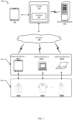
- FIG. 1 illustrates an exemplary network architecture (100) in which or with which a system (110) of the present disclosure may be implemented, in accordance with an embodiment of the present disclosure.
- the exemplary architecture (100) may include a plurality of computing devices (104-1, 104-2... 104-N). It may be appreciated that the plurality of computing devices (104-1, 104-2... 104-N) may be collectively referred as the computing devices (104) and individually referred as the computing device (104).
- the plurality of computing devices (104) may be scanners such as cameras, webcams, scanning units, and the like configured to scan a plurality of images from a plurality of objects (102-1, 102-2... 102-N) (also referred to as apparels herein).
- the plurality of computing devices (104) may also capture images of humans wearing an apparel and transmit the same to the system (110) via a network (106) for processing to create a unique tag-type annotated database.
- the system (110) may receive the plurality of images from a database associated with a centralised server (112) or any stand-alone database.
- the system (110) may extract a set of attributes from the plurality of images pertaining to, for example, facial and body features.
- the system (110) may be equipped with an artificial intelligence (AI) engine (214) that may train a fashion synthesis model based on the extracted set of attributes and data stored in the database to generate a plurality of priors for human body segmentation.
- AI artificial intelligence
- the AI engine (214) may be configured to employ one or more pre-trained fashion synthesis models to detect a person in each image as well as the face region of the person in any arbitrary pose in each image in the plurality of images received by the system (110).
- the one or more priors may pertain to a ratio of face versus the entire body.
- the system (110) may generate a body-ratio-heuristic to predict a torso, top, and bottom of the human in each image. For example, using the prior information of face location and entire body location obtained from images of the person, the location of torso and top of the human body in the image using but not limited to a custom trained regression classifier that takes the face and whole-body bounding boxes as input and returns the torso and bottom ratio of the person in the image.
- the system (110) may be configured to generate a mask based on the one or more priors detected. For example, using an approximate location of face, top, and torso, at least four regional priors convey the presence of human body by varying degree of certainty.
- the system (110) may be configured with a domain randomization module to create one or more apparels based on the mask generated.
- the apparel may be based on adding novel textures to input human body with the image of the apparel.
- the domain randomization module may further include, but not limited to, a skin-type randomization module that can segment a skin region using skin colour values and add different skin colours to the skinregion.
- the domain randomization module may further include, but not limited to, a scene randomization that can place the human body with apparel in different background scenes at various locations inside the scene.
- system (110) may be configured to provide flexibility to modify the preference parameters as per requirements at any stage of the project.
- the computing device (104) may communicate with the system (110) via set of executable instructions residing on any operating system.
- the computing device (104) may include, but not limited to, any electrical, electronic, electro-mechanical or an equipment or a combination of one or more of the above devices such as mobile phone, smartphone, virtual reality (VR) devices, augmented reality (AR) devices, laptop, a general-purpose computer, desktop, personal digital assistant, tablet computer, mainframe computer, or any other computing device, wherein the computing device may include one or more in-built or externally coupled accessories including, but not limited to, a visual aid device such as camera, audio aid, a microphone, a keyboard, input devices for receiving input from a user such as touch pad, touch enabled screen, electronic pen and the like. It may be appreciated that the computing device (104) may not be restricted to the mentioned devices and various other devices may be used.
- a smart computing device may be one of the appropriate systems for storing data and other private/sensitive information.
- the network (106) may include, by way of example but not limitation, at least a portion of one or more networks having one or more nodes that transmit, receive, forward, generate, buffer, store, route, switch, process, or a combination thereof, etc. one or more messages, packets, signals, waves, voltage or current levels, some combination thereof, or so forth.
- the network (106) may include, by way of example but not limitation, one or more of: a wireless network, a wired network, an internet, an intranet, a public network, a private network, a packet-switched network, a circuit-switched network, an ad hoc network, an infrastructure network, a public-switched telephone network (PSTN), a cable network, a cellular network, a satellite network, a fiber optic network, some combination thereof.
- PSTN public-switched telephone network
- the network (106) may be a network within a fashion house.
- the centralized server (112) may include or comprise, by way of example but not limitation, one or more of: a stand-alone server, a server blade, a server rack, a bank of servers, a server farm, hardware supporting a part of a cloud service or system, a home server, hardware running a virtualized server, one or more processors executing code to function as a server, one or more machines performing server-side functionality as described herein, at least a portion of any of the above, some combination thereof.
- a stand-alone server a server blade, a server rack, a bank of servers, a server farm, hardware supporting a part of a cloud service or system, a home server, hardware running a virtualized server, one or more processors executing code to function as a server, one or more machines performing server-side functionality as described herein, at least a portion of any of the above, some combination thereof.
- FIG. 2 illustrates an exemplary block diagram (200) of a system (110) for facilitating computer vision assisted workflow that enables scaling annotation of cloth apparels in a fast and efficient manner with minimal supervision based on an AI-based architecture, in accordance with an embodiment of the present disclosure.
- the system (110) may comprise one or more processor(s) (202).
- the one or more processor(s) (202) may be implemented as one or more microprocessors, microcomputers, microcontrollers, digital signal processors, central processing units, logic circuitries, and/or any devices that process data based on operational instructions.
- the one or more processor(s) (202) may be configured to fetch and execute computer-readable instructions stored in a memory (204) of the system (110).
- the memory (204) may be configured to store one or more computer-readable instructions or routines in a non-transitory computer readable storage medium, which may be fetched and executed to create or share data packets over a network service.
- the memory (204) may comprise any non-transitory storage device including, for example, volatile memory such as RAM, or non-volatile memory such as EPROM, flash memory, and the like.
- the system (110) may include an interface(s) (206).
- the interface(s) (206) may comprise a variety of interfaces, for example, interfaces for data input and output devices, referred to as I/O devices, storage devices, and the like.
- the interface(s) (206) may facilitate communication of the system (110).
- the interface(s) (206) may also provide a communication pathway for one or more components of the system (110). Examples of such components include, but are not limited to, processing engine(s) (208) and a database (210).
- the database (210) may store the data, i.e., a set of data parameters associated with plurality of images pertaining to facial and body features of a human model who is shown as wearing the apparels or garments.
- the processing engine(s) (208) may be implemented as a combination of hardware and programming (for example, programmable instructions) to implement one or more functionalities of the processing engine(s) (208).
- programming for the processing engine(s) (208) may be processor executable instructions stored on a non-transitory machine-readable storage medium and the hardware for the processing engine(s) (208) may comprise a processing resource (for example, one or more processors), to execute such instructions.
- the machine-readable storage medium may store instructions that, when executed by the processing resource, implement the processing engine(s) (208).
- system (110) may comprise the machine-readable storage medium storing the instructions and the processing resource to execute the instructions, or the machine-readable storage medium may be separate but accessible to the system (110) and the processing resource.
- processing engine(s) (208) may be implemented by electronic circuitry.
- the processing engine (208) may include one or more engines selected from any of a data acquisition engine (212), an AI engine (214), and other engines (216). It may be appreciated that the AI engine (214) of FIG. 2 may be similar to the AI engine (214) of FIG. 1 in its functionality.
- the one or more processor(s) (202) of the system (110) may cause the acquisition engine (212) to extract the set of data parameters from the database (210) for enabling prediction of data points by the AI engine (214) to generate multiple uniquely augmented variations of apparel images along with annotations based on a few sample input images provided by the database (210).
- the one or more processor(s) (202) may cause the AI engine (214) to pre-process the set of data parameters in one or more batches. As described with reference to FIG. 1 above, the AI engine (214) may utilise one or more machine learning models to pre-process the set of data parameters. In an embodiment, the AI engine (214) may perform pre-processing of the set of data parameters to form data in a proper time-series with equal intervals of time, for example, intervals of 1 minute. In an embodiment, results of the pre-processing or analysis may thereafter be transmitted back to the computing device (104), to other devices, to the server (112) providing a web page to a user (102) of the computing device (104), or to other non-device entities.
- the one or more processor(s) (202) may cause the AI engine (214) to generate multiple uniquely augmented variations of apparel images along with annotations.
- the exemplary representation (200) may be modular and flexible to accommodate any kind of changes in the system (110).
- the data may get collected meticulously and deposited in a cloud-based data lake to be processed to extract actionable insights. Therefore, the aspect of predictive maintenance can be accomplished.
- FIG. 3 illustrates an exemplary architecture (300) of key components associated with the proposed system (110), in accordance with embodiments of the present disclosure.
- a coarse segmentation module (302) a face detection sub-module (304), a body-ratio-heuristic generation sub-module (306), a mask generation sub-module (308), a weakly supervised fine-segmentation module (310), and a domain randomization module (312) are shown.
- the coarse segmentation module (302) may include one or more sub modules such as the face detection sub-module (304), the body-ratio-heuristic generation sub-module (306), and the mask generation sub-module (308) to generate a set of priors to be sent to the weakly supervised fine-segmentation module (310).
- the face detection sub-module (304) receives an input image of a human H posing in a scene wearing an apparel X and generates an output comprising a 2D bounding box of the face region of the human model H.
- the body-ratio-heuristic generation sub-module (306) receives as input the image of a human H and the face-region bounding box generated by the face detection sub-module (304) and returns bounding box of approximate top and torso locations inside the scene.
- the mask generation sub-module (308) creates at least four priors, based on the approximate location of face, top, and torso received from the face detection sub-module (304) and the body-ratio-heuristic generation sub-module (306), to be sent as input to the weakly supervised fine-segmentation module (310) namely:
- the weakly supervised fine-segmentation module (310) seeds a set of instructions such as, but not limited to, a graph cut algorithm with automated mask priors obtained from the coarse segmentation module (302) and applies it on the input image, to obtain an approximate segmentation mask for the human model standing in the scene as well as the apparel worn by the model.
- a set of segmentation labels (a set of data points) may be associated with the segmentation mask.
- An annotator corrects the segmentation labels by clicking and adding dots to the foreground region and clicking and adding crosses to the background regions. The dots and crosses are visual labels that the annotator provides to the graph cut algorithm to re-segment the image.
- the resegmented image is then provided as input to the domain randomization module (312).
- the domain randomization module (312) may be configured to apply a plurality of texture, lighting, and colour variations on the apparel region using apparel masks to create new apparel data worn by the same model and place the segmented human model in multiple background scenes at distinct locations inside the scene.
- alpha-blending technique may be used to realistically blend the human model into the scene.
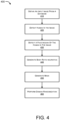
- FIG. 4 illustrates a flow chart for a method (400) of creating a unique tag-type annotated image database from a few labelled images, in accordance with some embodiments of the present disclosure.
- the method (400) at step 410 includes obtaining, by a processor such as the processor (202) of FIG. 2 , an input image from a database.
- the input image for example, may be an image of a human H wearing an apparel X with some background scene.
- the method (400) proceeds with detecting the human present in the image at step 420, followed by detecting a face region of the human in the image at step 430.
- the face region detection is performed by face detection sub-module (304) described in FIG. 3 .
- method (400) after the face detection of the human, body-ratio heuristics may be generated at step 440 followed by mask generation at step 450.
- the body-ratio-heuristic and the mask are generated by body-ratio-heuristic generation sub-module (306) and mask generation sub-module (308), as shown in FIG. 3 , respectively.
- the body-ratio-heuristic is based on the prior information of face location and entire body location obtained from step 430, for example, a custom trained regression classifier that takes as input the face and whole-body bounding boxes and approximates the location of the torso and the top of the human body in the background scene and returns the torso and bottom ratio of the person in an image.
- mask is generated based on the approximate location of face, top, and torso.
- the generated mask is associated with one or more regional priors that convey the presence of human body by varying degree of certainty. In an exemplary embodiment, four regional priors are used.
- a domain randomization is performed based on the mask generated at step 450, wherein the domain randomization includes at least one of an apparel level randomization, skin-type randomization, and scene randomization.
- apparel level randomization novel apparels are synthesized by adding novel textures to input human body with apparel images.
- skin-type randomization process the skin region is segmented using skin colour values and different skin colours are added to the skinregion.
- scene randomization process the human body with the synthesized apparel in shown placed in different background scenes at various locations inside the scene.
- FIG. 5 illustrates an exemplary computer system (500) in which or with which embodiments of the present invention can be utilized in accordance with embodiments of the present disclosure.
- the computer system (500) may include an external storage device (510), a bus (520), a main memory (530), a read only memory (540), a mass storage device (550), communication port(s) (560), and a processor (570).
- an external storage device 510
- a bus 520
- main memory 530
- a read only memory a read only memory
- 550 mass storage device
- 570 communication port(s)
- the processor (570) may include various modules associated with embodiments of the present disclosure.
- the communication port(s) (560) may be any of an RS-242 port for use with a modem based dialup connection, a 10/100 Ethernet port, a Gigabit or 10 Gigabit port using copper or fiber, a serial port, a parallel port, or other existing or future ports.
- the communication port(s) (560) may be chosen depending on a network, such a Local Area Network (LAN), Wide Area Network (WAN), or any network to which computer system connects.
- Memory 530 can be Random Access Memory (RAM), or any other dynamic storage device commonly known in the art.
- the read-only memory (530) may be any static storage device(s) e.g., but not limited to, a Programmable Read Only Memory (PROM) chips for storing static information e.g., start-up or BIOS instructions for the processor (570).
- the mass storage device (550) may be any current or future mass storage solution, which can be used to store information and/or instructions. Exemplary mass storage solutions include, but are not limited to, Parallel Advanced Technology Attachment (PATA) or Serial Advanced Technology Attachment (SATA) hard disk drives or solid-state drives (internal or external, e.g., having Universal Serial Bus (USB) and/or Firewire interfaces), one or more optical discs, Redundant Array of Independent Disks (RAID) storage.
- PATA Parallel Advanced Technology Attachment
- SATA Serial Advanced Technology Attachment
- USB Universal Serial Bus
- Firewire interfaces Universal Serial Bus
- RAID Redundant Array of Independent Disks
- the bus (520) communicatively couples the processor (570) with the other memory, storage, and communication blocks.
- the bus (520) may be, e.g. a Peripheral Component Interconnect (PCI) / PCI Extended (PCI-X) bus, Small Computer System Interface (SCSI), USB or the like, for connecting expansion cards, drives and other subsystems as well as other buses, such a front side bus (FSB), which connects the processor (570) to the computer system (500).
- PCI Peripheral Component Interconnect
- PCI-X PCI Extended
- SCSI Small Computer System Interface
- FFB front side bus
- operator and administrative interfaces e.g. a display, keyboard, and a cursor control device
- the bus (520) may also be coupled to the bus (520) to support direct operator interaction with a computer system.
- Other operator and administrative interfaces may be provided through network connections connected through the communication port(s) (560).
- Components described above are meant only to exemplify various possibilities. In no way should the aforementioned exemplary computer system limit the scope of the present disclosure.
- a portion of the disclosure of this patent document contains material which is subject to intellectual property rights such as, but are not limited to, copyright, design, trademark, integrated circuit (IC) layout design, and/or trade dress protection, belonging to Jio Platforms Limited (JPL) or its affiliates (herein after referred as owner).
- JPL Jio Platforms Limited
- owner has no objection to the facsimile reproduction by anyone of the patent document or the patent disclosure, as it appears in the Patent and Trademark Office patent files or records, but otherwise reserves all rights whatsoever. All rights to such intellectual property are fully reserved by the owner.
- the present disclosure provides a novel synthetic data creation pipeline to solve data scarcity problem.
- the present disclosure provides a system that uses only a handful of labelled samples to synthesize millions of realistic data samples with cloth type annotations.
- the present disclosure provides a system that boosts the accuracy of automatic cloth type identification artificial intelligence (AI) models.
- AI automatic cloth type identification artificial intelligence
- the present disclosure provides a system that segments human and cloth from a scene.
- the present disclosure provides a system that creates multiple variations of human, apparel, and background scene.
- the present disclosure provides a system that replaces the traditional error-prone and slow workflow of cloth-type annotation involving specialized manual labour with a computer vision assisted workflow.
- the present disclosure provides a system that scales the annotation of cloth apparels in a fast, efficient manner with minimal supervision.
- the present disclosure provides a system that improves the robustness of automatic cloth type annotation models.
Landscapes
- Engineering & Computer Science (AREA)
- Theoretical Computer Science (AREA)
- Physics & Mathematics (AREA)
- General Physics & Mathematics (AREA)
- Multimedia (AREA)
- Computer Vision & Pattern Recognition (AREA)
- Human Computer Interaction (AREA)
- General Health & Medical Sciences (AREA)
- Health & Medical Sciences (AREA)
- Data Mining & Analysis (AREA)
- Artificial Intelligence (AREA)
- Evolutionary Computation (AREA)
- Geometry (AREA)
- Oral & Maxillofacial Surgery (AREA)
- Computational Linguistics (AREA)
- General Engineering & Computer Science (AREA)
- Computing Systems (AREA)
- Databases & Information Systems (AREA)
- Life Sciences & Earth Sciences (AREA)
- Medical Informatics (AREA)
- Software Systems (AREA)
- Bioinformatics & Computational Biology (AREA)
- Evolutionary Biology (AREA)
- Bioinformatics & Cheminformatics (AREA)
- Image Processing (AREA)
- Processing Or Creating Images (AREA)
Applications Claiming Priority (1)
| Application Number | Priority Date | Filing Date | Title |
|---|---|---|---|
| IN202221010927 | 2022-02-28 |
Publications (2)
| Publication Number | Publication Date |
|---|---|
| EP4235593A2 true EP4235593A2 (de) | 2023-08-30 |
| EP4235593A3 EP4235593A3 (de) | 2023-10-11 |
Family
ID=85384293
Family Applications (1)
| Application Number | Title | Priority Date | Filing Date |
|---|---|---|---|
| EP23158749.4A Pending EP4235593A3 (de) | 2022-02-28 | 2023-02-27 | System und verfahren zur datensynthese auf der basis von mehreren attributen |
Country Status (3)
| Country | Link |
|---|---|
| US (1) | US20230274563A1 (de) |
| EP (1) | EP4235593A3 (de) |
| WO (1) | WO2023161865A1 (de) |
Family Cites Families (3)
| Publication number | Priority date | Publication date | Assignee | Title |
|---|---|---|---|---|
| CA2734143C (en) * | 2008-08-15 | 2021-08-31 | Brown University | Method and apparatus for estimating body shape |
| US9547908B1 (en) * | 2015-09-28 | 2017-01-17 | Google Inc. | Feature mask determination for images |
| EP3736741B1 (de) * | 2019-05-06 | 2025-02-12 | Dassault Systèmes | Erfahrungslernen in einer virtuellen welt |
-
2023
- 2023-02-23 US US18/173,296 patent/US20230274563A1/en active Pending
- 2023-02-24 WO PCT/IB2023/051719 patent/WO2023161865A1/en not_active Ceased
- 2023-02-27 EP EP23158749.4A patent/EP4235593A3/de active Pending
Also Published As
| Publication number | Publication date |
|---|---|
| WO2023161865A1 (en) | 2023-08-31 |
| US20230274563A1 (en) | 2023-08-31 |
| EP4235593A3 (de) | 2023-10-11 |
Similar Documents
| Publication | Publication Date | Title |
|---|---|---|
| Zhou et al. | Adaptive mixture of experts learning for generalizable face anti-spoofing | |
| Li et al. | Salient object detection with purificatory mechanism and structural similarity loss | |
| Liu et al. | Weakly-supervised salient object detection with saliency bounding boxes | |
| Zhang et al. | Cosaliency detection based on intrasaliency prior transfer and deep intersaliency mining | |
| US11321769B2 (en) | System and method for automatically generating three-dimensional virtual garment model using product description | |
| CN112330685B (zh) | 图像分割模型训练、图像分割方法、装置及电子设备 | |
| JP7475772B2 (ja) | 画像生成方法、画像生成装置、コンピュータ機器、及びコンピュータプログラム | |
| CN114339409B (zh) | 视频处理方法、装置、计算机设备及存储介质 | |
| CN112270686B (zh) | 图像分割模型训练、图像分割方法、装置及电子设备 | |
| TW202046158A (zh) | 語意融合 | |
| JP2016218999A (ja) | ターゲット環境の画像内に表現されたオブジェクトを検出するように分類器をトレーニングする方法およびシステム | |
| WO2021009062A1 (en) | Methods of estimating a bare body shape from a concealed scan of the body | |
| CN113111684B (zh) | 神经网络模型的训练方法、装置和图像处理系统 | |
| WO2021208601A1 (zh) | 基于人工智能的图像处理方法、装置、设备及存储介质 | |
| CN114445268A (zh) | 一种基于深度学习的服装风格迁移方法及系统 | |
| WO2020233427A1 (zh) | 目标的特征的确定方法和装置 | |
| WO2024149294A1 (zh) | 虚拟试衣及试衣模型训练的方法、装置和设备 | |
| Yang et al. | Fast grayscale-thermal foreground detection with collaborative low-rank decomposition | |
| CN113869371A (zh) | 模型训练方法、服装细粒度分割方法及相关装置 | |
| CN115908988A (zh) | 一种缺陷检测模型生成方法、装置、设备以及存储介质 | |
| Pantuwong et al. | A novel template‐based automatic rigging algorithm for articulated‐character animation | |
| Li et al. | Uncertainty-aware active domain adaptive salient object detection | |
| Musoni et al. | GIM3D plus: A labeled 3D dataset to design data-driven solutions for dressed humans | |
| WO2023105784A1 (ja) | 生成装置、生成方法及び生成プログラム | |
| CN117422851A (zh) | 虚拟换衣方法及其装置、电子设备 |
Legal Events
| Date | Code | Title | Description |
|---|---|---|---|
| PUAI | Public reference made under article 153(3) epc to a published international application that has entered the european phase |
Free format text: ORIGINAL CODE: 0009012 |
|
| STAA | Information on the status of an ep patent application or granted ep patent |
Free format text: STATUS: THE APPLICATION HAS BEEN PUBLISHED |
|
| AK | Designated contracting states |
Kind code of ref document: A2 Designated state(s): AL AT BE BG CH CY CZ DE DK EE ES FI FR GB GR HR HU IE IS IT LI LT LU LV MC ME MK MT NL NO PL PT RO RS SE SI SK SM TR |
|
| PUAL | Search report despatched |
Free format text: ORIGINAL CODE: 0009013 |
|
| AK | Designated contracting states |
Kind code of ref document: A3 Designated state(s): AL AT BE BG CH CY CZ DE DK EE ES FI FR GB GR HR HU IE IS IT LI LT LU LV MC ME MK MT NL NO PL PT RO RS SE SI SK SM TR |
|
| RIC1 | Information provided on ipc code assigned before grant |
Ipc: G06F 18/214 20230101ALI20230905BHEP Ipc: G06V 20/20 20220101ALI20230905BHEP Ipc: G06V 10/764 20220101AFI20230905BHEP |
|
| STAA | Information on the status of an ep patent application or granted ep patent |
Free format text: STATUS: REQUEST FOR EXAMINATION WAS MADE |
|
| 17P | Request for examination filed |
Effective date: 20240212 |
|
| RBV | Designated contracting states (corrected) |
Designated state(s): AL AT BE BG CH CY CZ DE DK EE ES FI FR GB GR HR HU IE IS IT LI LT LU LV MC ME MK MT NL NO PL PT RO RS SE SI SK SM TR |
|
| STAA | Information on the status of an ep patent application or granted ep patent |
Free format text: STATUS: EXAMINATION IS IN PROGRESS |
|
| 17Q | First examination report despatched |
Effective date: 20250627 |