EP4235331B1 - Erkennung von diagnoseereignissen in einem thermischen system - Google Patents
Erkennung von diagnoseereignissen in einem thermischen system Download PDFInfo
- Publication number
- EP4235331B1 EP4235331B1 EP23175478.9A EP23175478A EP4235331B1 EP 4235331 B1 EP4235331 B1 EP 4235331B1 EP 23175478 A EP23175478 A EP 23175478A EP 4235331 B1 EP4235331 B1 EP 4235331B1
- Authority
- EP
- European Patent Office
- Prior art keywords
- thermal
- zone
- adaptive
- adaptive filter
- heat transfer
- Prior art date
- Legal status (The legal status is an assumption and is not a legal conclusion. Google has not performed a legal analysis and makes no representation as to the accuracy of the status listed.)
- Active
Links
Images





Classifications
-
- G—PHYSICS
- G06—COMPUTING OR CALCULATING; COUNTING
- G06F—ELECTRIC DIGITAL DATA PROCESSING
- G06F30/00—Computer-aided design [CAD]
- G06F30/20—Design optimisation, verification or simulation
-
- G—PHYSICS
- G05—CONTROLLING; REGULATING
- G05D—SYSTEMS FOR CONTROLLING OR REGULATING NON-ELECTRIC VARIABLES
- G05D23/00—Control of temperature
- G05D23/19—Control of temperature characterised by the use of electric means
- G05D23/1917—Control of temperature characterised by the use of electric means using digital means
-
- F—MECHANICAL ENGINEERING; LIGHTING; HEATING; WEAPONS; BLASTING
- F24—HEATING; RANGES; VENTILATING
- F24F—AIR-CONDITIONING; AIR-HUMIDIFICATION; VENTILATION; USE OF AIR CURRENTS FOR SCREENING
- F24F11/00—Control or safety arrangements
- F24F11/30—Control or safety arrangements for purposes related to the operation of the system, e.g. for safety or monitoring
- F24F11/32—Responding to malfunctions or emergencies
- F24F11/38—Failure diagnosis
-
- F—MECHANICAL ENGINEERING; LIGHTING; HEATING; WEAPONS; BLASTING
- F24—HEATING; RANGES; VENTILATING
- F24F—AIR-CONDITIONING; AIR-HUMIDIFICATION; VENTILATION; USE OF AIR CURRENTS FOR SCREENING
- F24F11/00—Control or safety arrangements
- F24F11/30—Control or safety arrangements for purposes related to the operation of the system, e.g. for safety or monitoring
- F24F11/49—Control or safety arrangements for purposes related to the operation of the system, e.g. for safety or monitoring ensuring correct operation, e.g. by trial operation or configuration checks
-
- F—MECHANICAL ENGINEERING; LIGHTING; HEATING; WEAPONS; BLASTING
- F24—HEATING; RANGES; VENTILATING
- F24F—AIR-CONDITIONING; AIR-HUMIDIFICATION; VENTILATION; USE OF AIR CURRENTS FOR SCREENING
- F24F11/00—Control or safety arrangements
- F24F11/50—Control or safety arrangements characterised by user interfaces or communication
- F24F11/52—Indication arrangements, e.g. displays
-
- F—MECHANICAL ENGINEERING; LIGHTING; HEATING; WEAPONS; BLASTING
- F24—HEATING; RANGES; VENTILATING
- F24F—AIR-CONDITIONING; AIR-HUMIDIFICATION; VENTILATION; USE OF AIR CURRENTS FOR SCREENING
- F24F11/00—Control or safety arrangements
- F24F11/62—Control or safety arrangements characterised by the type of control or by internal processing, e.g. using fuzzy logic, adaptive control or estimation of values
-
- G—PHYSICS
- G05—CONTROLLING; REGULATING
- G05B—CONTROL OR REGULATING SYSTEMS IN GENERAL; FUNCTIONAL ELEMENTS OF SUCH SYSTEMS; MONITORING OR TESTING ARRANGEMENTS FOR SUCH SYSTEMS OR ELEMENTS
- G05B13/00—Adaptive control systems, i.e. systems automatically adjusting themselves to have a performance which is optimum according to some preassigned criterion
- G05B13/02—Adaptive control systems, i.e. systems automatically adjusting themselves to have a performance which is optimum according to some preassigned criterion electric
-
- G—PHYSICS
- G05—CONTROLLING; REGULATING
- G05B—CONTROL OR REGULATING SYSTEMS IN GENERAL; FUNCTIONAL ELEMENTS OF SUCH SYSTEMS; MONITORING OR TESTING ARRANGEMENTS FOR SUCH SYSTEMS OR ELEMENTS
- G05B23/00—Testing or monitoring of control systems or parts thereof
- G05B23/02—Electric testing or monitoring
- G05B23/0205—Electric testing or monitoring by means of a monitoring system capable of detecting and responding to faults
- G05B23/0218—Electric testing or monitoring by means of a monitoring system capable of detecting and responding to faults characterised by the fault detection method dealing with either existing or incipient faults
- G05B23/0243—Electric testing or monitoring by means of a monitoring system capable of detecting and responding to faults characterised by the fault detection method dealing with either existing or incipient faults model based detection method, e.g. first-principles knowledge model
- G05B23/0245—Electric testing or monitoring by means of a monitoring system capable of detecting and responding to faults characterised by the fault detection method dealing with either existing or incipient faults model based detection method, e.g. first-principles knowledge model based on a qualitative model, e.g. rule based; if-then decisions
-
- G—PHYSICS
- G06—COMPUTING OR CALCULATING; COUNTING
- G06F—ELECTRIC DIGITAL DATA PROCESSING
- G06F2111/00—Details relating to CAD techniques
- G06F2111/04—Constraint-based CAD
-
- G—PHYSICS
- G06—COMPUTING OR CALCULATING; COUNTING
- G06F—ELECTRIC DIGITAL DATA PROCESSING
- G06F2111/00—Details relating to CAD techniques
- G06F2111/10—Numerical modelling
-
- G—PHYSICS
- G06—COMPUTING OR CALCULATING; COUNTING
- G06F—ELECTRIC DIGITAL DATA PROCESSING
- G06F2119/00—Details relating to the type or aim of the analysis or the optimisation
- G06F2119/08—Thermal analysis or thermal optimisation
Definitions
- the disclosure relates to generally to thermal models, and more particularly, to detecting diagnostic events in a thermal system.
- Thermal models exploit observed physical relationships related to device properties and weather estimates to characterize heat transfer and predict temperature and power consumption, facilitating optimal temperature control, with improved thermal comfort and reduced power consumption.
- Related technology is known from US 2016/223214 A1 .
- a non-transitory computer-readable storage medium includes executable instructions that when executed, by a controller device, cause the controller device to: apply, by the controller device, or more filters to the thermal coefficients based on a sampling rate; responsive to applying the filters, generate one or more estimate thermal coefficient thresholds based on the sampling rate; determine whether at least one of the thermal coefficients that is filtered satisfies at least one of the estimated thermal coefficient thresholds; and provide alert information indicative of a diagnostic event associated with the thermal system based on the determining.
- generating the thermal coefficients further includes identifying a thermal model for application with the thermal system; determining, based on the thermal model, an estimation error for a reference signal with respect to a primary signal associated with the volume; and adapting, based on the adaptive filter, the thermal coefficients in view of the estimation error to satisfy a solution associated with the volume.
- the sampling rate is adapted based on a filter operation associated with at least one of the filters, where the filter operation includes at least one infinite impulse response filter.
- generating the estimate thermal coefficient thresholds further includes: determining whether a sequence of thermal coefficient vectors support a definition of the diagnostic event. Further, it is determined whether the at least one thermal coefficient exceeds an upper or lower boundary window associated with the at least one estimated thermal coefficient threshold. In that regard, the alert information indicates an anomalous operation of a device associated with the volume.
- a persistent diagnostic event detection includes slow boiler, pipe, or radiator water leaks, or sludge accumulation due to oxidization, in hydronic systems, or slow refrigerant leaks, damaged heat exchangers, or contaminated ducts and filters in air-based systems.
- the transient diagnostic event may demonstrate either cyclic or quasi-periodic or persistent behavior, which may be caused by conditions including a slow water leak in a hydronic system, as an occupant may either be aware of the defect and elect to occasionally replace water and restore normal operations or allow the defect to evolve into persistent and increasingly anomalous operation.
- a thermal model is constructed, initialized, and adapted (e.g., using the adaptive filter bank) on a per zone basis to produce a dynamic estimate of thermal coefficient data.
- This thermal coefficient data is used to describe and estimate the behavior of that thermal system.
- a filter is applied to the thermal coefficient data based on a sampling rate.
- a sampling rate may be adapted and electively combined with filter operations to reduce aliasing and implement rate adaptation, thereby converting the thermal coefficient data to an effective sample period.
- one or more estimate thermal coefficient thresholds are generated.
- a diagnostic event associated with the thermal system is detected based on whether the thermal coefficient data satisfies a corresponding estimated thermal coefficient threshold.
- an alert or warning message is generated indicated that some component of the thermal system may be malfunctioning or experiencing an anomalous operation due to abnormal conditions.
- FIG. 1 is a block diagram illustrating a system architecture 100 associated with a thermal system according to an embodiment of the disclosure.
- a thermal system (also referred to as a site 101) may be described as a collection of interdependent volumes whose thermal behavior is described by the transfer of mass, work, and heat across the volume boundaries. Each volume is defined as a zone 103 that includes a contiguous region of uniform thermal control.
- the system architecture 100 may implement a system for comfort-based management of the thermal system, including residential and commercial buildings with active cooling and / or heating is described, with an emphasis on practical applications.
- the comfort-based management associated with system architecture 100 adaptively and continuously learns the heat transfer characteristics of a thermal system, and the thermal comfort characteristics of the occupants, to facilitate optimal temperature control which minimizes power consumption while maintaining thermal comfort.
- an illustrative example of the system architecture 100 is implemented in a distributed cloud-computing environment 105.
- the distributed cloud-computing environment 105 supports scalable distributed computing and storage in which one or more remote computing nodes 107 and relatively simple distributed devices that may include, for example, one or more thermal control units 102 which interact with one or more Heating Ventilation Air Conditioning (HVAC) units 104.
- HVAC Heating Ventilation Air Conditioning
- the one or more remote computing nodes 107 may execute software and/or other processes.
- Each computing node 107 may refer to a virtual server, for example, of a physical machine, a memory partition, or any other type of computing environment and provide a full or partially isolated execution environment for the execution of an application.
- Server 109 manages computational and storage resource allocation and disposal, facilitates data transport and synchronization, and interacts with one or more weather services 110, one or more sites 101, and one or more computing nodes 107.
- Computing node 107 is a collection of entities which implement the analysis and control capabilities and interacts with server 100 to execute comfort based thermal management of the one or more sites 101.
- a site 101 contains one or more zones 103.
- Each zone 103 contains one or more thermal control units 102, which interact with a server 109 and one or more HVAC units 104.
- a computing node 107 includes a comfort agent 120, a comfort model 130 for each zone 103, a thermal model 140 for each zone 103, one or more thermal devices 150 for each zone 103, a weather model 160.
- Weather model 160 interacts with server 100 to exchange information with weather service 110.
- the weather model 140 is a representation of the weather service 110 that defines forecast estimations of properties of weather conditions. These weather conditions may be relevant in a specific region of interest that includes the surrounding environment of site 101.
- a weather estimation provided by the weather service 110 can indicate a cloud cover, humidity, solar irradiance, and/or temperature of one or more areas.
- the weather model 160 may estimate future conditions indirectly from the weather service 110, which provides properties at a default resolution (e.g., nominally one (1) hour) over a weather duration (e.g., nominally twenty-four (24) hours), and a finite geographical range of support that includes a site 101, location, city, region and/or the like.
- the weather model 160 can have a unique association with a specific region of interest and the weather service 110 properties can require spatial or temporal interpolation to achieve a specified effective resolution or improve accuracy.
- Thermal device 150 interacts with server 109 to exchange information with a thermal control unit 102 in a zone 103.
- a thermal device 150 may be represented as a specific thermal control unit which observes and controls the temperature of a volume (e.g., zone 103) of a thermal system (e.g., site 101).
- the thermal control unit 102 can support active cooling and/or heating associated with the volume.
- active cooling employs a cooling type HVAC unit 104, e.g., including an air conditioner, refrigerator, or freezer, to cool a zone 103
- active heating employs a heating type HVAC unit 104, e.g., including a furnace, heat pump, resistive heating, or electric or hydronic radiant heating, to heat a zone 103.
- An HVAC unit 104 can comprise any device capable of controlling temperature, by producing, consuming, or transferring heat, in a zone 103.
- active cooling and heating are mutually exclusive at a specific time.
- the thermal control unit 102 can support occupant interactions, which indicate a preference to lower or raise the temperature associated with the zones 103 of site 101.
- the thermal device 150 can provide an immediate and transient response to increase the thermal comfort of an occupant in response to occupant interactions, by lowering or raising the temperature by a temperature offset over a finite duration.
- the comfort agent 120 interacts with the comfort models 130 to establish temperature constraints which bound temperature control, and with thermal models 140 to define a collection of physically realizable states and associated energy or power transitions, to facilitate optimal temperature control in each zone 103 in site 101, which minimizes power consumption while maintaining thermal comfort.
- the comfort agent 120 defines a cost function in terms of energy, power, currency, resource availability, or time, associated with optimal paths 125 formed by constrained state transitions over a control duration.
- the comfort agent 120 uses the thermal models 140 in conjunction with the comfort models 130 to select the optimal path with represents a series of state transitions that minimize cost in the context of anticipated utility and environmental conditions. Specific methods employed by the comfort agent 120 to select an optimal path may be consistent with an application of reinforcement machine learning.
- substantially uniform thermal efficiency, ⁇ i,c,k relative to power consumption or transient environmental conditions, including the temperature difference between the surrounding environment and zone 103 i, may be employed as a simplifying assumption if the thermal efficiency of unit index k is relatively constant over the observed operating conditions.
- Multi-modal HVAC units, including heat pumps, may exhibit non-uniform thermal efficiency relative to power consumption, often demonstrating discontinuous or non-linear thermal efficiency over the observed operating conditions.
- the thermal model as described indirectly forms an aggregate estimate of thermal efficiency, extracted from specific observations.
- Heat transfer, d dt Q i , c , t , to zone 103 i, in cool state c, at time t, is generally not directly observable.
- a representative power filter is a Butterworth IIR filter, of order 2, with a -3 dB normalized frequency equal to 0.2250790799, which has a nominal group delay of 2.0 samples. It is often convenient to normalize an incident vector, x i,c,n , in zone i, in cool state c, at sample n, by scaling the constituents to ensure that a common range is approximated, abstracting various units of measure.
- a representative primary signal filter is a Butterworth IIR filter, of order 2, with a -3 dB normalized frequency equal to 0.2250790799, which has a nominal group delay of 2.0 samples.
- the latency of each filter must be accounted for through application of latency compensation, which effectively temporally aligns constituents of a difference equation by inserting filters or delays in appropriate signal paths, such that temporal alignment error related to asymmetric processing of specific signal paths will be minimized, and a difference equation will be faithfully implemented.
- Latency compensation may take many forms, either introducing delay to incident vector, x i,c,n , or primary signal, y i,c,n , associated with zone 103 i, in cool state c , at sample n , such that each path has equivalent aggregate delay.
- the thermal coefficient vector, w i,c,n may be extracted from, and independently expressed in various forms, with solutions including generalized linear inverse, or an adaptive filter bank.
- solutions including generalized linear inverse, or an adaptive filter bank.
- Generalized linear inverse in some situations, is a statistical solution that can be applied to extract an estimate of a thermal coefficient vector, w i,c,n , in zone i, in cool state c , at sample n, which minimizes the aggregate estimation error of a primary signal, y i,c,n , over a memory depth, N, corresponding to a set of independent observations.
- a generalized linear inverse solution may be periodic, and observations are not required to be sequentially ordered or contiguous. The solution is computationally intensive, relative to alternative methods, yet is typically performed less frequently. Storage requirements are proportional to a memory depth, N, and may be significant. Numerical accuracy is largely dependent upon the diversity of observations and a memory depth, N. Changes in a dynamic thermal system may not be discernable at a temporal resolution significantly less than a memory depth, N.
- a primary vector, y i,c,n , in zone 103 i, in cool state c, at sample n is equal to the product of an incident matrix, X i,c,n , and a thermal coefficient vector, w i,c,n .
- Each row of a primary vector, y i,c,n , and an incident matrix, X i,c,n is formed from independent incident vector, x i,c,m , in zone i, and primary signal, y i,c,m , observations, where sample m is in [ N - n, n ] , assuming synchronous and contiguous observation at a sample period, T S .
- Order of observation over a memory depth, N is independent, and need not be contiguous or sequential. It is advantageous to maximize the diversity of the observations, though the opportunity to do so may be constrained by a restriction to extract solutions in environments employing entirely passive observation.
- a solution may be formed with fewer observations, though a selection of memory depth, N, and diversity of observations largely determine the numerical accuracy of a solution.
- a practical and advantageous alternative method of rank reduction is defined, which dynamically tests and excludes specific columns from an incident matrix, X i,c,n , and corresponding thermal coefficient vector, w i,c,n , elements from a solution, ensuring sufficient diversity is present to form a solution with adequate numerical accuracy, when computation of a complete solution would otherwise not be possible, or useful.
- An adaptive filter bank solution is periodic, and observations are required to be sequentially ordered, though not contiguous.
- the solution is not computationally intensive, relative to alternative methods, yet is typically performed more frequently, on each observation.
- Storage requirements are minimal, and independent of the rate of convergence or the effective memory depth.
- Numerical accuracy is largely dependent upon the diversity of observations and the rate of adaptation, ⁇ j . Changes in a dynamic thermal system are typically discernable at a temporal resolution which is significantly less than alternative methods, including generalized linear inverse.
- the adaptive filter bank 145 is constructed as a collection of J filters, each consuming an incident signal, x i,c,j,n , in zone i j in cool state c, in filter index j, at sample n, and producing a reference signal, v i,c,j,n , where the effective transfer function of each filter is iteratively adapted as a function of a representation of estimation error.
- IIR Infinite Impulse Response
- FIR Finite Impulse Response
- Adaptive filters with dynamic coefficients are described, though it may be advantageous to initially define one or more filters in an adaptive filter bank 145 with static coefficient, based on a priori knowledge, or to transition to a static solution after achieving a specified performance.
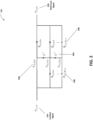
- FIG. 2 is an example of an adaptive IIR filter 200 according to an embodiment of the disclosure in Direct II form.
- the adaptive filter 200 implements a difference equation as a function of an incident signal 210, x i,c,j,n , in zone 103 i, in cool state c, in filter index j, at sample n, a recursive coefficient vector 230, a i,c,j,n , and a forward coefficient vector 240, b i,c,j,n , to produce a reference signal 220, v i,c,j,n .
- a state vector 250, s i,c,j,n is implemented to retain a recursive internal filter state, and is delimited by discrete-time unit delays 260, z -1 , and an filter order, M j .
- the recursive coefficient vector 230, a i,c,j,n , forward coefficient vector 240, b i,c,j,n , and state vector 250, s i,c,j,n ,, in zone 103 i, in cool state c, in filter index j, at sample n are of dimension ,[ M j , 1].
- an adaptive IIR filter 200 there are stability considerations in an adaptive IIR filter 200, as poles, or roots of the denominator of a discrete transfer function derived from a z-transform of a difference equation, are constrained to the interior of a unit circle to form a stable causal solution, and zeros, or roots of the numerator of the transfer function, may be similarly constrained only if a minimum phase solution is desired. Root calculation may be computationally prohibitive in many environments, though the process is dependent on filter order, M j .
- the adaptive IIR filter 200 is synchronously evaluated at a sample period, T s , by defining a reference signal 220, v i,c,j,n , in zone 103 i, in cool state c, in filter index j, at sample n, and modifying a state vector 250, s i,c,j,n .
- the adaptive filter 200 is electively adapted after each evaluation, by modifying a recursive coefficient vector 230, a i,c,j,n , and a forward coefficient vector 240, b i,c,j,n .
- LMS Least Mean Squares
- the estimation error, e i,c,n , in zone 103 i, in cool state c, at sample n, is the instantaneous measure of the numerical accuracy of a solution, which is a necessary if not sufficient condition to adapt a recursive coefficient vector 230, a i,c,j,n , and a forward coefficient vector 240, b i,c,j,n , in filter index j , in [0, J -1 ].
- an estimation error e i,c,n , as a contiguous differentiable surface in M j dimensions, as a function of a recursive coefficient vector 230 a i,c,j,n , and a forward coefficient vector 240, b i,c,j,n .
- the rate of adaptation, ⁇ j is exponentially related to the rate of convergence, and proportional to misadjustment, or noise injected by the adaptive process, and must be selected appropriately to ensure a stable system with adequate convergence and numerical accuracy, relative to the thermal system.
- a forward coefficient vector 240, b i,c,j,n+1 , in zone 130 i, in cool state c, in filter index j , at sample n+1 is defined as the difference of a forward coefficient vector 240, b i,c,j,n , at sample index n, and the product of a rate of adaptation, ⁇ j , and the gradient estimate of a recursive coefficient, ⁇ b i,c,j,n , the partial derivative of an L 1 or L 2 representation of estimation error, e 2 i,c,n , with respect to forward coefficients.
- a solar heat transfer coefficient, w s,i,,n is relatively stationary, as it is related to the geometry and material properties associated with a specific zone relative to incident solar energy.
- An unobserved heat transfer coefficient, w u,i,,n is relatively stationary, as it is typically aggregated over a sufficient duration of time to satisfy this simplifying assumption.
- continuous monitoring may opportunistically or periodically evaluate a solution for observation and control of a thermal system to ensure that installation, configuration, and operation are consistent with expected behavior.
- a diagnostic event may be defined if communications with one or more thermal devices or cloud-based resources, including a thread, worker role, remote computing node, virtual machine, cache, table, dictionary, database, data lake, hub, or service is inaccessible or demonstrates anomalous operation, including excess latency or data corruption.
- Continuous monitoring may be realized as a supervisory agent with sufficient visibility and access into components of a solution which are essential to ensure that observations and estimates are defined and retained with sufficient quality, quantity, and density to facilitate local and aggregate analysis.
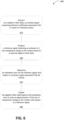
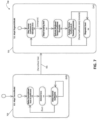
- method 700 begins in blocks 710 - 730 where for a specific site 101, a thermal model, such as thermal model 140, is constructed, initialized, and adapted (e.g., using adaptive filter bank 145 of FIG. 1 ) on a per zone (e.g., zone 103) basis.
- a representative thermal model appropriate for application in diagnostics include a physical thermal model described by a heat transfer difference equation as described herein.
- Each adaptive process per zone produces dynamic estimate of thermal coefficient vectors, w i,c,n , in zone 103 i, in cool state c, at sample n, which may be used to describe and estimate the behavior of the thermal system 101.
- the thermal model data that includes the thermal coefficient vectors is feed to the diagnostic model 701.
- the representative filter operations include a Butterworth IIR filter, of order 2, with a -3 dB normalized frequency, f c , less than or equal to Ts 24 ⁇ 3600 , which has a nominal group delay of f c ⁇ 1 samples, which may be efficiently integrated with a decimation filter to achieve an effective sample period.
- Thermal coefficient thresholds, ⁇ i,c,n are defined through application of linear or nonlinear operations on thermal coefficients constrained to a specific window, where each successive window shares [0, N - 1] samples with a previous window. This is conducted to determine if the thermal model 140 has demonstrated convergence to a solution with a minimal estimation error over a specific window, and at a minimum the boundary samples of a window, with sufficient confidence to justify estimation of thermal coefficient thresholds, ⁇ i,c,n , in zone 103 i, in cool state c, at sample n . If the thermal model 140 has not sufficiently converged over a window, it may not be plausible to identify a diagnostic event over the corresponding interval.
- the thermal coefficient data is evaluated to determine if any satisfies a corresponding estimated thermal coefficient threshold.
- the diagnostic model 710 is utilized to evaluate an active heat transfer coefficient,
- the efficiency threshold, ⁇ a,c significantly affects the sensitivity of detection of diagnostic events, and may be determined empirically, based at least in part on the geometry, geography, materials, construction, and HVAC unit types typical of sites in a region.
- , of thermal coefficient vector, w i,c,n can extract first and third quartile estimates of the associated probability distribution function, P a,i,c,n , for application as thermal coefficient thresholds, ⁇ i,c,n .
- , in zone 103 i, in cool state c , at sample n, of thermal coefficient vector, w i,c,n , bounding a specific window is done to determine if the active heat transfer coefficient,
- is also greater than or equal to max ( ⁇ i,c,n ), to increase confidence that an observed reduction in efficiency, ⁇ i,c,n , forms a pattern or trend consistent with contiguous loss.
- the rate of reduction in efficiency, ⁇ i,c,n is dependent upon the mode of operation which may cause transient or persistent diagnostic event detection, there is considerable utility in diagnostic model evaluation at various memory depths.
- An additional elective restrictions may be applied to the evaluation of a sequence of thermal coefficient vector, w i,c,n , with a memory depth, N, including determination that a passive heat transfer coefficient, w p,i,c,n , or a solar heat transfer coefficient, w s,i,c,n , are statistically proximate to expected values, or that an unobserved heat transfer coefficient, ,
- , may be considered to be insignificant relative to other means of heat transfer.
- alert information indicative of a diagnostic event associated with the thermal system may be generated based on the evaluation of the thresholds. For example, a diagnostic event may be identified if any of the thermal coefficients, w i,c,n , are found to satisfy defined constraints and demonstrate anomalous operation over a contiguous interval with a memory depth, N.
- the alert information may be indicative of, for example, a transient diagnostic event detection that may include pump, valve, or relay failures, in hydronic heating systems, or relay failure or rapid refrigerant leaks in air-based furnace, heat pump, or air conditioning systems, a persistent diagnostic event detection that may include slow boiler, pipe, or radiator water leaks, or sludge accumulation due to oxidization, in hydronic systems, or slow refrigerant leaks, damaged heat exchangers, or contaminated ducts and filters in air-based systems, or other types of detected diagnostic events.
- a transient diagnostic event detection may include pump, valve, or relay failures, in hydronic heating systems, or relay failure or rapid refrigerant leaks in air-based furnace, heat pump, or air conditioning systems
- a persistent diagnostic event detection may include slow boiler, pipe, or radiator water leaks, or sludge accumulation due to oxidization, in hydronic systems, or slow refrigerant leaks, damaged heat exchangers, or contaminated ducts and filters in air-based systems, or other
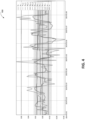
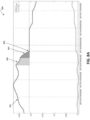
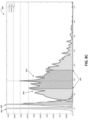
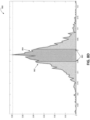
- FIGS. 8A-8D are example graphs 800, 820, 840 and 860 illustrating diagnostic event data according to an embodiment of the disclosure.
- graph 800 illiterates using plot points 802 an active heat transfer coefficient, w a,i,c,n , in zone i, in cool state c, at sample n, and a thermal model temperature estimation error, e i,n , for a site with one observable zone, at UTC, in the U.K., over 45 days of active heating in a hydronic system.
- a diagnostic event is detected using the techniques disclosed herein at 2017-03-26 plot point 808, with a transient local classification based on a memory depth, N, equal to 3 days, in dark shading 804.
- graph 820 illiterates using plot points 822 an active heat transfer coefficient, w a,i,c,n , in zone i, in cool state c, at sample n, and a thermal model temperature estimation error, e i,n , for a site with one observable zone, at UTC, in the U.K., over 45 days of active heating in a hydronic system.
- a sequence of diagnostic events is detected using the techniques disclosed herein at 2017-04-11 plot point 824, 2017-04-12 plot point 825, 2017-04-13 plot point 826, and 2017-04-14 plot point 828, with a persistent local classification based on a memory depth, N, equal to 14 days, in dark shading 829.
- the diagnostic events 824, 825, 826, 828 may be uniquely identified or validated with improved confidence through aggregate analysis.
- the aggregate analysis may consider trends or statistical metrics across a collection of sites and may select sites for inclusion based on factors including similar age, geometry, geography, construction, weather, HVAC unit type, energy consumption, population density or occupant demographics.
- the probability density functions may be estimated for properties of interest, including thermal coefficients, for a collection of sites, to and persistent aggregate diagnostic events may be independently identified in sites which demonstrate anomalous behavior relative to statistical norms.
- sites with zones in which associated thermal models have converged to solutions with a passive heat transfer coefficient, w p,i,n , or solar heat transfer coefficient, w s,i,n , in zone i, at sample n, above a threshold, nominally in the 90th percentile of a probability distribution may define persistent aggregate diagnostic events indicative of relatively poor insulation or materials which exceed a reporting threshold for anomalous operation.
- an active heat transfer coefficients, w a,i,c,n below a threshold, nominally the 10th percentile of a probability distribution may define persistent aggregate diagnostic events indicative of relatively poor HVAC unit efficiency, ⁇ i,c,n .
- FIG. 8C a series of probability density functions, P k, n , for condition k in ⁇ w p,n , w a,n , e n ⁇ , at sample n, are illustrated in graph 840 at plot points 842, 844, and 846 for a collection of 1872 sites, each with one observable zone, at UTC, in the U.K., over two consecutive months of active heating in independent hydronic systems.
- quartiles are delimited by vertical lines 845, which bound the middle 50th percentile of the respective probability distributions, in dark shading 843.
- an active heat transfer coefficient, w a,n has a probability distribution with a 25th percentile of 0.14, a 50th percentile of 0.19, and a 75th percentile of 0.275.
- aggregate analysis may also estimate the rate of change of a metric of interest and normalize an associated metric calculated in local analysis. This may improve the confidence of diagnostic event detection using the techniques of method 700 of FIG. 7 and account for errors that may not be directly observable in a single site. Rather, they may be readily detectable and statistically significant when formed over a collection of sites.
- graph 860 illustrates using plot points 862 a probability density function, P ⁇ Wa,, n , for a relative change in an active heat transfer coefficient, ⁇ w a,n , at sample n, for a collection of 1872 sites, each with one observable zone, at UTC, in the U.K., over two consecutive months of active heating in independent hydronic systems.
- quartiles are delimited by vertical lines 863, which bound the middle 50th percentile of the respective probability distributions, in dark shading 864.
- the relative change in an active heat transfer coefficient, ⁇ w a,n has a probability distribution with a 25th percentile of -0.05, a 50th percentile of -0.02, and a 75th percentile of 0.005.
- aggregate analysis may improve the confidence in a local diagnostic event detection, by estimating the expectation of relative change in an active heat transfer coefficient, ⁇ i,c,n , across a collection of sites, and normalizing the results obtained in the local analysis illustrated in graph 860 of FIG. 8D .
- the results may be normalized to account for potential sources of error, which may include forecast weather estimates, thermal device observations, or significant unobserved heat transfer potentially due to the presence of additional controlled and unobserved zones.
- a relative change in active heat transfer coefficient, ⁇ w a,n has an expected value equal to -0.02, for a typical or median site, over the two consecutive months of interest. Therefore, a normalized efficiency threshold, ⁇ a,c , equal to 0.025, may be adjusted to account for the aggregate anticipated loss of efficiency, equal to 0.0253 in this example.
- a thermal coefficient, w i,c,n or a relative change in a thermal coefficient, ⁇ w i,c,n , may be normalized to account for any observed aggregate change.
- FIG. 9 is a block diagram illustrating a machine 900 in the form of an interior volume thermal modeling and control device (hereinafter "IVTMC controller") 901 that can learn from a set of weather estimations and thermal properties to predict and control energy consumption, power consumption and/or temperatures associated to one or more volumes or enclosed environments of a thermal system.
- the machine 900 may represent a computer system within which a set of instructions 935, for causing the machine 900 to perform any one or more of the methodologies discussed herein, may be executed.
- the IVTMC controller 901 may correspond to a computing node 107 of the system 100 of FIG. 1 .
- the IVTMC controller 901 may include instructions implementing the adaptive filter bank 145 for modeling a thermal system, such as site 101 of FIG. 1 .
- the IVTMC controller 901 may be based on computer that may include, but are not limited to, components such as: a computer systemization 902 connected to memory 929.
- the IVTMC controller 901 may be connected to and/or communicate with entities such as, but not limited to: one or more users 933a from user input devices 911; peripheral devices 912; an optional cryptographic processor device 926; and/or a communications network 913, such as Local Area Networks (LANs), Pico networks, Wide Area Networks (WANs), Wireless Networks (WLANs), an intranet, an extranet, the Internet, etc.
- LANs Local Area Networks
- WANs Wide Area Networks
- WLANs Wireless Networks
- Computer systemization 902 may comprise a clock 930, central processing unit ("CPU(s)” and/or “processor(s)” (these terms are used interchangeable throughout the disclosure unless noted to the contrary)) 903, a memory 929 (e.g., a read only memory (ROM) 906, a random access memory (RAM) 905, etc.), and/or an interface bus 907, and most frequently, although not necessarily, are all interconnected and/or communicating through a system bus 904 on one or more (mother)board(s) having conductive and/or otherwise transportive circuit pathways through which instructions (e.g., binary encoded signals) may travel to effectuate communications, operations, storage, etc.
- the computer systemization may be connected to a power source 926; e.g., optionally the power source may be internal.
- a cryptographic processor 926 and/or transceivers e.g., ICs
- the cryptographic processor and/or transceivers may be connected as either internal and/or external peripheral devices 912 via the interface bus I/O.
- the transceivers may be connected to antenna(s) 975, thereby effectuating wireless transmission and reception of various communication and/or sensor protocols.
- the power source 926 may be of any standard form for powering small electronic circuit board devices such as the following power cells: alkaline, lithium hydride, lithium ion, lithium polymer, nickel cadmium, solar cells, and/or the like. Other types of AC or DC power sources may be used as well. In the case of solar cells, in one embodiment, the case provides an aperture through which the solar cell may capture photonic energy.
- the power source 926 is connected to at least one of the interconnected subsequent components of the IVTMC thereby providing an electric current to all subsequent components.
- an outside power source 926 is provided through a connection across the I/O 908 interface. For example, a USB and/or IEEE 1394 connection carries both data and power across the connection and is therefore a suitable source of power.
- Interface bus(es) 907 may accept, connect, and/or communicate to a number of interface adapters, conventionally although not necessarily in the form of adapter cards, such as but not limited to: input output interfaces (I/O) 908, storage interfaces 909, network interfaces 910, and/or the like.
- I/O input output interfaces
- cryptographic processor interfaces 927 similarly may be connected to the interface bus.
- the interface bus provides for the communications of interface adapters with one another as well as with other components of the computer systemization.
- Storage interfaces 909 may accept, communicate, and/or connect to a number of storage devices such as, but not limited to: storage devices 914, removable disc devices, and/or the like.
- Storage interfaces may employ connection protocols such as, but not limited to: (Ultra) (Serial) Advanced Technology Attachment (Packet Interface) (Ultra) (Serial) ATA(PI)), (Enhanced) Integrated Drive Electronics ((E)IDE), Institute of Electrical and Electronics Engineers (IEEE) 1394, fiber channel, Small Computer Systems Interface (SCSI), Universal Serial Bus (USB), and/or the like.
- Network interfaces 910 may accept, communicate, and/or connect to a communications network 913. Through a communications network 913, the IVTMC controller 901 is accessible through remote clients 933b (e.g., computers with web browsers) by users 933a a . Network interfaces may employ connection protocols such as, but not limited to: direct connect, Ethernet (thick, thin, twisted pair 10/100/1000 Base T, and/or the like), Token Ring, wireless connection such as IEEE 802.11 a-x, and/or the like. Should processing requirements dictate a greater amount speed and/or capacity, distributed network controllers (e.g., Distributed IVTMC), architectures may similarly be employed to pool, load balance, and/or otherwise increase the communicative bandwidth required by the IVTMC controller 901. Further, multiple network interfaces 910 may be used to engage with various communications network 913 types. For example, multiple network interfaces may be employed to allow for the communication over broadcast, multicast, and/or unicast networks.
- connection protocols such as, but not limited to:
- the Input/Output interfaces (I/O) 908 may accept, communicate, and/or connect to user input devices 911, peripheral devices 912, cryptographic processor devices 926, and/or the like. I/O may employ connection protocols such as, but not limited to: audio: analog, digital, monaural, RCA, stereo, and/or the like.
- User input devices 911 often are a type of peripheral device and may include: card readers, dongles, finger print readers, gloves, graphics tablets, joysticks, keyboards, microphones, mouse (mice), remote controls, retina readers, touch screens (e.g., capacitive, resistive, etc.), trackballs, trackpads, sensors (e.g., accelerometers, ambient light, GPS, gyroscopes, proximity, etc.), styluses, and/or the like.
- card readers dongles, finger print readers, gloves, graphics tablets, joysticks, keyboards, microphones, mouse (mice), remote controls, retina readers, touch screens (e.g., capacitive, resistive, etc.), trackballs, trackpads, sensors (e.g., accelerometers, ambient light, GPS, gyroscopes, proximity, etc.), styluses, and/or the like.
Landscapes
- Engineering & Computer Science (AREA)
- Physics & Mathematics (AREA)
- General Engineering & Computer Science (AREA)
- Mechanical Engineering (AREA)
- Combustion & Propulsion (AREA)
- Chemical & Material Sciences (AREA)
- General Physics & Mathematics (AREA)
- Automation & Control Theory (AREA)
- Health & Medical Sciences (AREA)
- Theoretical Computer Science (AREA)
- Evolutionary Computation (AREA)
- Biomedical Technology (AREA)
- Human Computer Interaction (AREA)
- Signal Processing (AREA)
- Mathematical Physics (AREA)
- Fuzzy Systems (AREA)
- Software Systems (AREA)
- Medical Informatics (AREA)
- Computer Vision & Pattern Recognition (AREA)
- Artificial Intelligence (AREA)
- Computer Hardware Design (AREA)
- Geometry (AREA)
- Air Conditioning Control Device (AREA)
- Feedback Control In General (AREA)
- Investigating Or Analyzing Materials Using Thermal Means (AREA)
- Business, Economics & Management (AREA)
- Emergency Management (AREA)
Claims (11)
- Verfahren, dadurch gekennzeichnet, dass es umfasst:Erzeugen, durch eine Steuerungsvorrichtung, von Wärmekoeffizienten an einer adaptiven Filterbank (145), um eine Wärmeübertragung eines Volumens zu charakterisieren, das einem Wärmesystem zugeordnet ist, wobei die adaptive Filterbank (145) eine Vielzahl von adaptiven Filtern umfasst, die einer Vielzahl von Übertragungsfunktionen entsprechen, und wobei mindestens ein erstes adaptives Filter der Vielzahl von adaptiven Filtern ein Filter mit unendlicher Impulsantwort, IIR-Filter, umfasst;Anpassen (750) einer Abtastrate basierend auf einer Filteroperation, die dem IIR-Filter der Vielzahl von adaptiven Filtern zugeordnet ist;Anwenden (740), durch die Steuerungsvorrichtung, eines oder mehrerer Filter auf die Wärmekoeffizienten basierend auf der angepassten Abtastrate;als Reaktion auf das Anwenden der Filter, Erzeugen (760), durch die Steuerungsvorrichtung, eines oder mehrerer geschätzter Wärmekoeffizientenschwellenwerte basierend auf der Abtastrate, umfassend ein Bestimmen, ob eine Sequenz von Wärmekoeffizientenvektoren eine Definition eines Diagnoseereignisses unterstützt;Bestimmen (770), durch die Steuerungsvorrichtung, ob mindestens einer der Wärmekoeffizienten mindestens einen der geschätzten Wärmekoeffizientenschwellenwerte erfüllt; undBereitstellen (780), durch die Steuerungsvorrichtung, von Warninformationen, die das Diagnoseereignis anzeigen, das dem Wärmesystem zugeordnet ist, basierend auf dem Bestimmen.
- Verfahren nach Anspruch 1, wobei das Erzeugen der Wärmekoeffizienten ferner umfasst:Identifizieren eines Wärmemodells zur Anwendung mit dem Wärmesystem; Bestimmen, basierend auf dem Wärmemodell, eines Schätzfehlers für ein Referenzsignal in Bezug auf ein primäres Signal, das dem Volumen zugeordnet ist; undAnpassen, basierend auf dem adaptiven Filter, der Wärmekoeffizienten im Hinblick auf den Schätzfehler.
- Verfahren nach Anspruch 1, ferner umfassend:
Bestimmen, ob der mindestens eine Wärmekoeffizient ein Fenster des oberen oder unteren Grenzwerts überschreitet, das dem mindestens einen geschätzten Wärmekoeffizientenschwellenwert zugeordnet ist. - Verfahren nach Anspruch 1, wobei die Warninformationen einen anomalen Betrieb einer Vorrichtung angeben, die dem Volumen zugeordnet ist.
- System, umfassend:einen Speicher, um eine Vielzahl von Wärmekoeffizientendaten zu speichern; undgekennzeichnet durcheine Steuerungsvorrichtung, die funktional mit dem Speicher gekoppelt ist, zum:Erzeugen von Wärmekoeffizienten an einer adaptiven Filterbank (145), um eine Wärmeübertragung eines Volumens zu charakterisieren, das einem Wärmesystem zugeordnet ist, wobei die adaptive Filterbank (145) eine Vielzahl von adaptiven Filtern umfasst, die einer Vielzahl von Übertragungsfunktionen entsprechen, und wobei mindestens ein erstes adaptives Filter der Vielzahl von adaptiven Filtern ein Filter mit unendlicher Impulsantwort, IIR-Filter, umfasst;Anpassen einer Abtastrate basierend auf einer Filteroperation, die dem IIR-Filter der Vielzahl von adaptiven Filtern zugeordnet ist;Anwenden eines oder mehrerer Filter auf die Wärmekoeffizienten basierend auf der angepassten Abtastrate;als Reaktion auf das Anwenden der Filter, Erzeugen eines oder mehrerer geschätzter Wärmekoeffizientenschwellenwerte basierend auf der Abtastrate, umfassend ein Bestimmen, ob eine Sequenz von Wärmekoeffizientenvektoren eine Definition eines Diagnoseereignisses unterstützt;Bestimmen, ob mindestens einer der Wärmekoeffizienten mindestens einen der geschätzten Wärmekoeffizientenschwellenwerte erfüllt; undBereitstellen von Warninformationen, die das Diagnoseereignis anzeigen, das dem Wärmesystem zugeordnet ist, basierend auf dem Bestimmen.
- System nach Anspruch 5, wobei zum Erzeugen der Wärmekoeffizienten die Steuerungsvorrichtung ferner dient zum:Identifizieren eines Wärmemodells zur Anwendung mit dem Wärmesystem; Bestimmen, basierend auf dem Wärmemodell, eines Schätzfehlers für ein Referenzsignal in Bezug auf ein primäres Signal, das dem Volumen zugeordnet ist; undAnpassen, basierend auf dem adaptiven Filter, der Wärmekoeffizienten im Hinblick auf den Schätzfehler.
- System nach Anspruch 5, wobei die Steuerungsvorrichtung ferner dient zum:
Bestimmen, ob der mindestens eine Wärmekoeffizient ein Fenster der oberen oder unteren Grenzwerts überschreitet, das dem mindestens einen geschätzten Wärmekoeffizientenschwellenwert zugeordnet ist. - System nach Anspruch 5, wobei die Warninformationen einen anomalen Betrieb einer Vorrichtung angeben, die dem Volumen zugeordnet ist.
- Nichtflüchtiges computerlesbares Speichermedium, das ausführbare Anweisungen umfasst, dadurch gekennzeichnet, dass sie bei Ausführung durch eine Steuerungsvorrichtung die Steuerungsvorrichtung veranlassen zum:Erzeugen, durch eine Steuerungsvorrichtung, von Wärmekoeffizienten an einer adaptiven Filterbank (145), um eine Wärmeübertragung eines Volumens zu charakterisieren, das einem Wärmesystem zugeordnet ist, wobei die adaptive Filterbank (145) eine Vielzahl von adaptiven Filtern umfasst, die einer Vielzahl von Übertragungsfunktionen entsprechen, und wobei mindestens ein erstes adaptives Filter der Vielzahl von adaptiven Filtern ein Filter mit unendlicher Impulsantwort, IIR-Filter, umfasst;Anpassen einer Abtastrate basierend auf einer Filteroperation, die dem IIR-Filter der Vielzahl von adaptiven Filtern zugeordnet ist;Anwenden, durch die Steuerungsvorrichtung, eines oder mehrerer Filter auf die Wärmekoeffizienten basierend auf der angepassten Abtastrate;als Reaktion auf das Anwenden der Filter, Erzeugen eines oder mehrerer geschätzter Wärmekoeffizientenschwellenwerte basierend auf der Abtastrate, umfassend ein Bestimmen, ob eine Sequenz von Wärmekoeffizientenvektoren eine Definition eines Diagnoseereignisses unterstützt;Bestimmen, ob mindestens einer der Wärmekoeffizienten, der gefiltert wird, mindestens einen der geschätzten Wärmekoeffizientenschwellenwerte erfüllt; undBereitstellen von Warninformationen, die das Diagnoseereignis anzeigen, das dem Wärmesystem zugeordnet ist, basierend auf dem Bestimmen.
- Nichtflüchtiges computerlesbares Speichermedium nach Anspruch 9, wobei zum Erzeugen der Wärmekoeffizienten die Steuerungsvorrichtung ferner dient zum:Identifizieren eines Wärmemodells zur Anwendung mit dem Wärmesystem;Bestimmen, basierend auf dem Wärmemodell, eines Schätzfehlers für ein Referenzsignal in Bezug auf ein primäres Signal, das dem Volumen zugeordnet ist; undAnpassen, basierend auf dem adaptiven Filter, der Wärmekoeffizienten im Hinblick auf den Schätzfehler.
- Nichtflüchtiges computerlesbares Speichermedium nach Anspruch 15, wobei die Steuerungsvorrichtung ferner dient zum:
Bestimmen, ob der mindestens eine Wärmekoeffizient ein Fenster des oberen oder unteren Grenzwerts überschreitet, das dem mindestens einen geschätzten Wärmekoeffizientenschwellenwert zugeordnet ist.
Applications Claiming Priority (3)
| Application Number | Priority Date | Filing Date | Title |
|---|---|---|---|
| US16/519,751 US11293812B2 (en) | 2019-07-23 | 2019-07-23 | Adaptive filter bank for modeling a thermal system |
| US16/519,916 US11592200B2 (en) | 2019-07-23 | 2019-07-23 | Detecting diagnostic events in a thermal system |
| EP20187176.1A EP3770715B1 (de) | 2019-07-23 | 2020-07-22 | Erkennung von diagnoseereignissen in einem thermischen system |
Related Parent Applications (2)
| Application Number | Title | Priority Date | Filing Date |
|---|---|---|---|
| EP20187176.1A Division EP3770715B1 (de) | 2019-07-23 | 2020-07-22 | Erkennung von diagnoseereignissen in einem thermischen system |
| EP20187176.1A Division-Into EP3770715B1 (de) | 2019-07-23 | 2020-07-22 | Erkennung von diagnoseereignissen in einem thermischen system |
Publications (4)
| Publication Number | Publication Date |
|---|---|
| EP4235331A2 EP4235331A2 (de) | 2023-08-30 |
| EP4235331A3 EP4235331A3 (de) | 2023-10-25 |
| EP4235331B1 true EP4235331B1 (de) | 2025-02-26 |
| EP4235331C0 EP4235331C0 (de) | 2025-02-26 |
Family
ID=71614778
Family Applications (2)
| Application Number | Title | Priority Date | Filing Date |
|---|---|---|---|
| EP20187176.1A Active EP3770715B1 (de) | 2019-07-23 | 2020-07-22 | Erkennung von diagnoseereignissen in einem thermischen system |
| EP23175478.9A Active EP4235331B1 (de) | 2019-07-23 | 2020-07-22 | Erkennung von diagnoseereignissen in einem thermischen system |
Family Applications Before (1)
| Application Number | Title | Priority Date | Filing Date |
|---|---|---|---|
| EP20187176.1A Active EP3770715B1 (de) | 2019-07-23 | 2020-07-22 | Erkennung von diagnoseereignissen in einem thermischen system |
Country Status (3)
| Country | Link |
|---|---|
| US (1) | US11592200B2 (de) |
| EP (2) | EP3770715B1 (de) |
| CN (1) | CN112307593A (de) |
Families Citing this family (8)
| Publication number | Priority date | Publication date | Assignee | Title |
|---|---|---|---|---|
| US11293812B2 (en) * | 2019-07-23 | 2022-04-05 | Schneider Electric USA, Inc. | Adaptive filter bank for modeling a thermal system |
| US11810041B2 (en) * | 2020-10-13 | 2023-11-07 | Inteligistics, Inc. | System, method, and computer program product for predicting perishable product temperatures and quality |
| US12189377B2 (en) * | 2021-02-17 | 2025-01-07 | International Business Machines Corporation | Continous monitoring, advance alerts, and control of key performance indicator variables |
| US12292206B2 (en) * | 2021-09-24 | 2025-05-06 | Alarm.Com Incorporated | Multi-dwelling temperature monitoring techniques |
| CN114152299B (zh) * | 2021-12-02 | 2026-02-03 | 廊坊新奥智能科技有限公司 | 一种超声波燃气表、流量计流量稳定滤波的方法及系统 |
| US20240271812A1 (en) * | 2022-07-06 | 2024-08-15 | Performance Systems Development Of New York, Llc | Detection of anomalies in heat pump operation based on energy simulation |
| CN116542541B (zh) * | 2023-02-17 | 2024-03-26 | 威海市天罡仪表股份有限公司 | 编码解码策略下一梯多户散热器的热动态估计方法及系统 |
| CN116228871B (zh) * | 2023-05-08 | 2023-07-14 | 山东齐芯智控科技有限公司 | 一种供热管网运行状态智能监测系统 |
Family Cites Families (17)
| Publication number | Priority date | Publication date | Assignee | Title |
|---|---|---|---|---|
| US4897798A (en) * | 1986-12-08 | 1990-01-30 | American Telephone And Telegraph Company | Adaptive environment control system |
| US5777914A (en) * | 1996-08-29 | 1998-07-07 | Lucent Technologies Inc. | Technique for reducing power consumption in digital filters |
| US20030005009A1 (en) * | 2001-04-17 | 2003-01-02 | Mohammad Usman | Least-mean square system with adaptive step size |
| US9577608B2 (en) * | 2009-08-14 | 2017-02-21 | Qualcomm Incorporated | Discrete time lowpass filter |
| CN102812303B (zh) | 2009-12-16 | 2016-03-30 | 国家科学和工业研究组织 | Hvac控制系统和方法 |
| US8301408B2 (en) * | 2010-03-09 | 2012-10-30 | Invensys Systems, Inc. | Temperature prediction transmitter |
| FR2959040B1 (fr) | 2010-04-16 | 2012-07-13 | Soletanche Freyssinet | Procede d'analyse du comportement thermique |
| US10491966B2 (en) * | 2011-08-04 | 2019-11-26 | Saturn Licensing Llc | Reception apparatus, method, computer program, and information providing apparatus for providing an alert service |
| NZ708197A (en) * | 2012-12-02 | 2018-08-31 | Agricam Ab | Systems and methods for predicting the outcome of a state of a subject |
| US20150300888A1 (en) * | 2014-04-21 | 2015-10-22 | National Taiwan University | Temperature prediction system and method thereof |
| US10254726B2 (en) | 2015-01-30 | 2019-04-09 | Schneider Electric USA, Inc. | Interior comfort HVAC user-feedback control system and apparatus |
| US10571142B2 (en) | 2015-01-30 | 2020-02-25 | Schneider Electric USA, Inc. | Interior user-comfort energy efficiency modeling and control systems and apparatuses using comfort maps |
| US11156572B2 (en) | 2015-01-30 | 2021-10-26 | Schneider Electric USA, Inc. | Apparatuses, methods and systems for comfort and energy efficiency conformance in an HVAC system |
| DE102017101497B4 (de) * | 2017-01-26 | 2020-08-27 | Infineon Technologies Ag | Mikro-Elektro-Mechanisches-System (MEMS) -Schaltkreis und Verfahren zum Rekonstruieren einer Störgröße |
| US11188818B2 (en) * | 2017-04-03 | 2021-11-30 | International Business Machines Corporation | Reservoir computing system |
| EP3740654B1 (de) * | 2018-01-18 | 2024-09-18 | In-Situ, Inc. | Schnell ansprechende temperatursensoren |
| US10948209B2 (en) * | 2018-02-01 | 2021-03-16 | The Board Of Regents Of The University Of Oklahoma | Monitoring system for residential HVAC systems |
-
2019
- 2019-07-23 US US16/519,916 patent/US11592200B2/en active Active
-
2020
- 2020-07-22 EP EP20187176.1A patent/EP3770715B1/de active Active
- 2020-07-22 EP EP23175478.9A patent/EP4235331B1/de active Active
- 2020-07-23 CN CN202010715366.2A patent/CN112307593A/zh active Pending
Also Published As
| Publication number | Publication date |
|---|---|
| EP3770715B1 (de) | 2023-07-12 |
| CN112307593A (zh) | 2021-02-02 |
| EP4235331A2 (de) | 2023-08-30 |
| US11592200B2 (en) | 2023-02-28 |
| US20210025611A1 (en) | 2021-01-28 |
| EP4235331C0 (de) | 2025-02-26 |
| EP4235331A3 (de) | 2023-10-25 |
| EP3770715A1 (de) | 2021-01-27 |
Similar Documents
| Publication | Publication Date | Title |
|---|---|---|
| EP4235331B1 (de) | Erkennung von diagnoseereignissen in einem thermischen system | |
| EP3770714B1 (de) | Adaptive filterbank zur modellierung eines thermischen systems | |
| US20220383334A1 (en) | Systems and methods for data analytics for virtual energy audits and value capture assessment of buildings | |
| CN114285728B (zh) | 一种预测模型训练方法、流量预测方法、装置及存储介质 | |
| US10495337B2 (en) | Smart thermostat with model predictive control | |
| US10896378B2 (en) | Fast detection of energy consumption anomalies in buildings | |
| Ye et al. | A Bayesian approach to condition monitoring with imperfect inspections | |
| US20210140664A1 (en) | Continuous Monitoring for Early Failure Detection in Climate Control Systems | |
| JP7161268B2 (ja) | 電力グリッド内の相互に依存する不確かな資源の組み合わされた影響の定量化 | |
| US9996092B2 (en) | Determining a time for corrective action in a data center | |
| US20190347577A1 (en) | Localizing energy consumption anomalies in buildings | |
| US11774295B2 (en) | Cognitive energy assessment by a non-intrusive sensor in a thermal energy fluid transfer system | |
| CN108700851A (zh) | 用于预测能量消耗的系统、方法和基于云的平台 | |
| WO2018112352A1 (en) | Techniques of automated fault detection and related systems and methods | |
| Touretzky et al. | Building-level power demand forecasting framework using building specific inputs: Development and applications | |
| CA3197840A1 (en) | Adaptive persistence forecasting for control of distributed energy resources | |
| JP2023059826A (ja) | ニューラルネットワーク基盤の負荷推定モデルを含む積算電力装置で負荷を推定する方法及びこれを利用した積算電力装置 | |
| CN115511185A (zh) | 冷量预测模型训练以及冷量预测方法、装置及存储介质 | |
| AU2017435881A1 (en) | Decoupled modeling methods and systems | |
| Kim | Hybrid modeling approach for better identification of building thermal network model and improved prediction | |
| KR20200084381A (ko) | 수용가의 쾌적도를 고려한 수요반응 응동 에어컨 제어 시스템 및 방법 | |
| Martins et al. | A prediction-based multisensor heuristic for the internet of things | |
| Doma | Investigating Thermal Performance of Residential Buildings in Cold Climates | |
| Su et al. | Local functional coefficient autoregressive model for multistep prediction of chaotic time series | |
| Stroia et al. | Short term estimation of environmental variables for improving the fault tolerance of distributed control networks |
Legal Events
| Date | Code | Title | Description |
|---|---|---|---|
| PUAI | Public reference made under article 153(3) epc to a published international application that has entered the european phase |
Free format text: ORIGINAL CODE: 0009012 |
|
| STAA | Information on the status of an ep patent application or granted ep patent |
Free format text: STATUS: THE APPLICATION HAS BEEN PUBLISHED |
|
| AC | Divisional application: reference to earlier application |
Ref document number: 3770715 Country of ref document: EP Kind code of ref document: P |
|
| AK | Designated contracting states |
Kind code of ref document: A2 Designated state(s): AL AT BE BG CH CY CZ DE DK EE ES FI FR GB GR HR HU IE IS IT LI LT LU LV MC MK MT NL NO PL PT RO RS SE SI SK SM TR |
|
| REG | Reference to a national code |
Ref country code: DE Ref legal event code: R079 Free format text: PREVIOUS MAIN CLASS: G05B0023020000 Ipc: G05D0023190000 Ref document number: 602020047057 Country of ref document: DE |
|
| PUAL | Search report despatched |
Free format text: ORIGINAL CODE: 0009013 |
|
| AK | Designated contracting states |
Kind code of ref document: A3 Designated state(s): AL AT BE BG CH CY CZ DE DK EE ES FI FR GB GR HR HU IE IS IT LI LT LU LV MC MK MT NL NO PL PT RO RS SE SI SK SM TR |
|
| RIC1 | Information provided on ipc code assigned before grant |
Ipc: G05B 13/02 20060101ALI20230919BHEP Ipc: G05B 23/02 20060101ALI20230919BHEP Ipc: G05D 23/19 20060101AFI20230919BHEP |
|
| STAA | Information on the status of an ep patent application or granted ep patent |
Free format text: STATUS: REQUEST FOR EXAMINATION WAS MADE |
|
| 17P | Request for examination filed |
Effective date: 20240328 |
|
| RBV | Designated contracting states (corrected) |
Designated state(s): AL AT BE BG CH CY CZ DE DK EE ES FI FR GB GR HR HU IE IS IT LI LT LU LV MC MK MT NL NO PL PT RO RS SE SI SK SM TR |
|
| GRAP | Despatch of communication of intention to grant a patent |
Free format text: ORIGINAL CODE: EPIDOSNIGR1 |
|
| STAA | Information on the status of an ep patent application or granted ep patent |
Free format text: STATUS: GRANT OF PATENT IS INTENDED |
|
| INTG | Intention to grant announced |
Effective date: 20240920 |
|
| GRAS | Grant fee paid |
Free format text: ORIGINAL CODE: EPIDOSNIGR3 |
|
| GRAA | (expected) grant |
Free format text: ORIGINAL CODE: 0009210 |
|
| STAA | Information on the status of an ep patent application or granted ep patent |
Free format text: STATUS: THE PATENT HAS BEEN GRANTED |
|
| AC | Divisional application: reference to earlier application |
Ref document number: 3770715 Country of ref document: EP Kind code of ref document: P |
|
| AK | Designated contracting states |
Kind code of ref document: B1 Designated state(s): AL AT BE BG CH CY CZ DE DK EE ES FI FR GB GR HR HU IE IS IT LI LT LU LV MC MK MT NL NO PL PT RO RS SE SI SK SM TR |
|
| REG | Reference to a national code |
Ref country code: GB Ref legal event code: FG4D |
|
| REG | Reference to a national code |
Ref country code: CH Ref legal event code: EP |
|
| REG | Reference to a national code |
Ref country code: DE Ref legal event code: R096 Ref document number: 602020047057 Country of ref document: DE |
|
| REG | Reference to a national code |
Ref country code: IE Ref legal event code: FG4D |
|
| U01 | Request for unitary effect filed |
Effective date: 20250227 |
|
| U07 | Unitary effect registered |
Designated state(s): AT BE BG DE DK EE FI FR IT LT LU LV MT NL PT RO SE SI Effective date: 20250307 |
|
| PG25 | Lapsed in a contracting state [announced via postgrant information from national office to epo] |
Ref country code: RS Free format text: LAPSE BECAUSE OF FAILURE TO SUBMIT A TRANSLATION OF THE DESCRIPTION OR TO PAY THE FEE WITHIN THE PRESCRIBED TIME-LIMIT Effective date: 20250526 |
|
| PG25 | Lapsed in a contracting state [announced via postgrant information from national office to epo] |
Ref country code: PL Free format text: LAPSE BECAUSE OF FAILURE TO SUBMIT A TRANSLATION OF THE DESCRIPTION OR TO PAY THE FEE WITHIN THE PRESCRIBED TIME-LIMIT Effective date: 20250226 |
|
| PG25 | Lapsed in a contracting state [announced via postgrant information from national office to epo] |
Ref country code: ES Free format text: LAPSE BECAUSE OF FAILURE TO SUBMIT A TRANSLATION OF THE DESCRIPTION OR TO PAY THE FEE WITHIN THE PRESCRIBED TIME-LIMIT Effective date: 20250226 |
|
| PG25 | Lapsed in a contracting state [announced via postgrant information from national office to epo] |
Ref country code: NO Free format text: LAPSE BECAUSE OF FAILURE TO SUBMIT A TRANSLATION OF THE DESCRIPTION OR TO PAY THE FEE WITHIN THE PRESCRIBED TIME-LIMIT Effective date: 20250526 Ref country code: IS Free format text: LAPSE BECAUSE OF FAILURE TO SUBMIT A TRANSLATION OF THE DESCRIPTION OR TO PAY THE FEE WITHIN THE PRESCRIBED TIME-LIMIT Effective date: 20250626 |
|
| PG25 | Lapsed in a contracting state [announced via postgrant information from national office to epo] |
Ref country code: HR Free format text: LAPSE BECAUSE OF FAILURE TO SUBMIT A TRANSLATION OF THE DESCRIPTION OR TO PAY THE FEE WITHIN THE PRESCRIBED TIME-LIMIT Effective date: 20250226 |
|
| PG25 | Lapsed in a contracting state [announced via postgrant information from national office to epo] |
Ref country code: GR Free format text: LAPSE BECAUSE OF FAILURE TO SUBMIT A TRANSLATION OF THE DESCRIPTION OR TO PAY THE FEE WITHIN THE PRESCRIBED TIME-LIMIT Effective date: 20250527 |
|
| U20 | Renewal fee for the european patent with unitary effect paid |
Year of fee payment: 6 Effective date: 20250725 |
|
| PG25 | Lapsed in a contracting state [announced via postgrant information from national office to epo] |
Ref country code: SM Free format text: LAPSE BECAUSE OF FAILURE TO SUBMIT A TRANSLATION OF THE DESCRIPTION OR TO PAY THE FEE WITHIN THE PRESCRIBED TIME-LIMIT Effective date: 20250226 |
|
| PGFP | Annual fee paid to national office [announced via postgrant information from national office to epo] |
Ref country code: GB Payment date: 20250722 Year of fee payment: 6 |
|
| PG25 | Lapsed in a contracting state [announced via postgrant information from national office to epo] |
Ref country code: CZ Free format text: LAPSE BECAUSE OF FAILURE TO SUBMIT A TRANSLATION OF THE DESCRIPTION OR TO PAY THE FEE WITHIN THE PRESCRIBED TIME-LIMIT Effective date: 20250226 |
|
| PG25 | Lapsed in a contracting state [announced via postgrant information from national office to epo] |
Ref country code: SK Free format text: LAPSE BECAUSE OF FAILURE TO SUBMIT A TRANSLATION OF THE DESCRIPTION OR TO PAY THE FEE WITHIN THE PRESCRIBED TIME-LIMIT Effective date: 20250226 |
|
| PLBE | No opposition filed within time limit |
Free format text: ORIGINAL CODE: 0009261 |
|
| STAA | Information on the status of an ep patent application or granted ep patent |
Free format text: STATUS: NO OPPOSITION FILED WITHIN TIME LIMIT |
|
| 26N | No opposition filed |
Effective date: 20251127 |