EP4234762A2 - Leitfähiges, korrosionsbeständiges magnesiumtitanoxidmaterial - Google Patents
Leitfähiges, korrosionsbeständiges magnesiumtitanoxidmaterial Download PDFInfo
- Publication number
- EP4234762A2 EP4234762A2 EP23158519.1A EP23158519A EP4234762A2 EP 4234762 A2 EP4234762 A2 EP 4234762A2 EP 23158519 A EP23158519 A EP 23158519A EP 4234762 A2 EP4234762 A2 EP 4234762A2
- Authority
- EP
- European Patent Office
- Prior art keywords
- oxide
- mgti
- catalyst
- tio
- formula
- Prior art date
- Legal status (The legal status is an assumption and is not a legal conclusion. Google has not performed a legal analysis and makes no representation as to the accuracy of the status listed.)
- Pending
Links
Images


Classifications
-
- H—ELECTRICITY
- H01—ELECTRIC ELEMENTS
- H01M—PROCESSES OR MEANS, e.g. BATTERIES, FOR THE DIRECT CONVERSION OF CHEMICAL ENERGY INTO ELECTRICAL ENERGY
- H01M8/00—Fuel cells; Manufacture thereof
- H01M8/06—Combination of fuel cells with means for production of reactants or for treatment of residues
- H01M8/0606—Combination of fuel cells with means for production of reactants or for treatment of residues with means for production of gaseous reactants
- H01M8/0656—Combination of fuel cells with means for production of reactants or for treatment of residues with means for production of gaseous reactants by electrochemical means
-
- C—CHEMISTRY; METALLURGY
- C25—ELECTROLYTIC OR ELECTROPHORETIC PROCESSES; APPARATUS THEREFOR
- C25B—ELECTROLYTIC OR ELECTROPHORETIC PROCESSES FOR THE PRODUCTION OF COMPOUNDS OR NON-METALS; APPARATUS THEREFOR
- C25B11/00—Electrodes; Manufacture thereof not otherwise provided for
- C25B11/04—Electrodes; Manufacture thereof not otherwise provided for characterised by the material
- C25B11/051—Electrodes formed of electrocatalysts on a substrate or carrier
- C25B11/055—Electrodes formed of electrocatalysts on a substrate or carrier characterised by the substrate or carrier material
- C25B11/057—Electrodes formed of electrocatalysts on a substrate or carrier characterised by the substrate or carrier material consisting of a single element or compound
- C25B11/067—Inorganic compound e.g. ITO, silica or titania
-
- B—PERFORMING OPERATIONS; TRANSPORTING
- B01—PHYSICAL OR CHEMICAL PROCESSES OR APPARATUS IN GENERAL
- B01J—CHEMICAL OR PHYSICAL PROCESSES, e.g. CATALYSIS OR COLLOID CHEMISTRY; THEIR RELEVANT APPARATUS
- B01J21/00—Catalysts comprising the elements, oxides, or hydroxides of magnesium, boron, aluminium, carbon, silicon, titanium, zirconium, or hafnium
- B01J21/10—Magnesium; Oxides or hydroxides thereof
-
- C—CHEMISTRY; METALLURGY
- C04—CEMENTS; CONCRETE; ARTIFICIAL STONE; CERAMICS; REFRACTORIES
- C04B—LIME, MAGNESIA; SLAG; CEMENTS; COMPOSITIONS THEREOF, e.g. MORTARS, CONCRETE OR LIKE BUILDING MATERIALS; ARTIFICIAL STONE; CERAMICS; REFRACTORIES; TREATMENT OF NATURAL STONE
- C04B35/00—Shaped ceramic products characterised by their composition; Ceramics compositions; Processing powders of inorganic compounds preparatory to the manufacturing of ceramic products
- C04B35/01—Shaped ceramic products characterised by their composition; Ceramics compositions; Processing powders of inorganic compounds preparatory to the manufacturing of ceramic products based on oxide ceramics
- C04B35/46—Shaped ceramic products characterised by their composition; Ceramics compositions; Processing powders of inorganic compounds preparatory to the manufacturing of ceramic products based on oxide ceramics based on titanium oxides or titanates
-
- C—CHEMISTRY; METALLURGY
- C04—CEMENTS; CONCRETE; ARTIFICIAL STONE; CERAMICS; REFRACTORIES
- C04B—LIME, MAGNESIA; SLAG; CEMENTS; COMPOSITIONS THEREOF, e.g. MORTARS, CONCRETE OR LIKE BUILDING MATERIALS; ARTIFICIAL STONE; CERAMICS; REFRACTORIES; TREATMENT OF NATURAL STONE
- C04B35/00—Shaped ceramic products characterised by their composition; Ceramics compositions; Processing powders of inorganic compounds preparatory to the manufacturing of ceramic products
- C04B35/01—Shaped ceramic products characterised by their composition; Ceramics compositions; Processing powders of inorganic compounds preparatory to the manufacturing of ceramic products based on oxide ceramics
- C04B35/46—Shaped ceramic products characterised by their composition; Ceramics compositions; Processing powders of inorganic compounds preparatory to the manufacturing of ceramic products based on oxide ceramics based on titanium oxides or titanates
- C04B35/462—Shaped ceramic products characterised by their composition; Ceramics compositions; Processing powders of inorganic compounds preparatory to the manufacturing of ceramic products based on oxide ceramics based on titanium oxides or titanates based on titanates
- C04B35/465—Shaped ceramic products characterised by their composition; Ceramics compositions; Processing powders of inorganic compounds preparatory to the manufacturing of ceramic products based on oxide ceramics based on titanium oxides or titanates based on titanates based on alkaline earth metal titanates
-
- C—CHEMISTRY; METALLURGY
- C04—CEMENTS; CONCRETE; ARTIFICIAL STONE; CERAMICS; REFRACTORIES
- C04B—LIME, MAGNESIA; SLAG; CEMENTS; COMPOSITIONS THEREOF, e.g. MORTARS, CONCRETE OR LIKE BUILDING MATERIALS; ARTIFICIAL STONE; CERAMICS; REFRACTORIES; TREATMENT OF NATURAL STONE
- C04B38/00—Porous mortars, concrete, artificial stone or ceramic ware; Preparation thereof
- C04B38/007—Porous mortars, concrete, artificial stone or ceramic ware; Preparation thereof characterised by the pore distribution, e.g. inhomogeneous distribution of pores
- C04B38/0074—Porous mortars, concrete, artificial stone or ceramic ware; Preparation thereof characterised by the pore distribution, e.g. inhomogeneous distribution of pores expressed as porosity percentage
-
- C—CHEMISTRY; METALLURGY
- C04—CEMENTS; CONCRETE; ARTIFICIAL STONE; CERAMICS; REFRACTORIES
- C04B—LIME, MAGNESIA; SLAG; CEMENTS; COMPOSITIONS THEREOF, e.g. MORTARS, CONCRETE OR LIKE BUILDING MATERIALS; ARTIFICIAL STONE; CERAMICS; REFRACTORIES; TREATMENT OF NATURAL STONE
- C04B41/00—After-treatment of mortars, concrete, artificial stone or ceramics; Treatment of natural stone
- C04B41/009—After-treatment of mortars, concrete, artificial stone or ceramics; Treatment of natural stone characterised by the material treated
-
- C—CHEMISTRY; METALLURGY
- C04—CEMENTS; CONCRETE; ARTIFICIAL STONE; CERAMICS; REFRACTORIES
- C04B—LIME, MAGNESIA; SLAG; CEMENTS; COMPOSITIONS THEREOF, e.g. MORTARS, CONCRETE OR LIKE BUILDING MATERIALS; ARTIFICIAL STONE; CERAMICS; REFRACTORIES; TREATMENT OF NATURAL STONE
- C04B41/00—After-treatment of mortars, concrete, artificial stone or ceramics; Treatment of natural stone
- C04B41/45—Coating or impregnating, e.g. injection in masonry, partial coating of green or fired ceramics, organic coating compositions for adhering together two concrete elements
- C04B41/50—Coating or impregnating, e.g. injection in masonry, partial coating of green or fired ceramics, organic coating compositions for adhering together two concrete elements with inorganic materials
- C04B41/51—Metallising, e.g. infiltration of sintered ceramic preforms with molten metal
- C04B41/5122—Pd or Pt
-
- C—CHEMISTRY; METALLURGY
- C04—CEMENTS; CONCRETE; ARTIFICIAL STONE; CERAMICS; REFRACTORIES
- C04B—LIME, MAGNESIA; SLAG; CEMENTS; COMPOSITIONS THEREOF, e.g. MORTARS, CONCRETE OR LIKE BUILDING MATERIALS; ARTIFICIAL STONE; CERAMICS; REFRACTORIES; TREATMENT OF NATURAL STONE
- C04B41/00—After-treatment of mortars, concrete, artificial stone or ceramics; Treatment of natural stone
- C04B41/80—After-treatment of mortars, concrete, artificial stone or ceramics; Treatment of natural stone of only ceramics
- C04B41/81—Coating or impregnation
- C04B41/85—Coating or impregnation with inorganic materials
- C04B41/88—Metals
-
- C—CHEMISTRY; METALLURGY
- C25—ELECTROLYTIC OR ELECTROPHORETIC PROCESSES; APPARATUS THEREFOR
- C25B—ELECTROLYTIC OR ELECTROPHORETIC PROCESSES FOR THE PRODUCTION OF COMPOUNDS OR NON-METALS; APPARATUS THEREFOR
- C25B1/00—Electrolytic production of inorganic compounds or non-metals
- C25B1/01—Products
- C25B1/02—Hydrogen or oxygen
- C25B1/04—Hydrogen or oxygen by electrolysis of water
-
- C—CHEMISTRY; METALLURGY
- C25—ELECTROLYTIC OR ELECTROPHORETIC PROCESSES; APPARATUS THEREFOR
- C25B—ELECTROLYTIC OR ELECTROPHORETIC PROCESSES FOR THE PRODUCTION OF COMPOUNDS OR NON-METALS; APPARATUS THEREFOR
- C25B11/00—Electrodes; Manufacture thereof not otherwise provided for
- C25B11/02—Electrodes; Manufacture thereof not otherwise provided for characterised by shape or form
- C25B11/03—Electrodes; Manufacture thereof not otherwise provided for characterised by shape or form perforated or foraminous
-
- C—CHEMISTRY; METALLURGY
- C25—ELECTROLYTIC OR ELECTROPHORETIC PROCESSES; APPARATUS THEREFOR
- C25B—ELECTROLYTIC OR ELECTROPHORETIC PROCESSES FOR THE PRODUCTION OF COMPOUNDS OR NON-METALS; APPARATUS THEREFOR
- C25B11/00—Electrodes; Manufacture thereof not otherwise provided for
- C25B11/04—Electrodes; Manufacture thereof not otherwise provided for characterised by the material
- C25B11/051—Electrodes formed of electrocatalysts on a substrate or carrier
- C25B11/055—Electrodes formed of electrocatalysts on a substrate or carrier characterised by the substrate or carrier material
- C25B11/056—Electrodes formed of electrocatalysts on a substrate or carrier characterised by the substrate or carrier material consisting of textile or non-woven fabric
-
- C—CHEMISTRY; METALLURGY
- C25—ELECTROLYTIC OR ELECTROPHORETIC PROCESSES; APPARATUS THEREFOR
- C25B—ELECTROLYTIC OR ELECTROPHORETIC PROCESSES FOR THE PRODUCTION OF COMPOUNDS OR NON-METALS; APPARATUS THEREFOR
- C25B11/00—Electrodes; Manufacture thereof not otherwise provided for
- C25B11/04—Electrodes; Manufacture thereof not otherwise provided for characterised by the material
- C25B11/051—Electrodes formed of electrocatalysts on a substrate or carrier
- C25B11/073—Electrodes formed of electrocatalysts on a substrate or carrier characterised by the electrocatalyst material
- C25B11/075—Electrodes formed of electrocatalysts on a substrate or carrier characterised by the electrocatalyst material consisting of a single catalytic element or catalytic compound
- C25B11/081—Electrodes formed of electrocatalysts on a substrate or carrier characterised by the electrocatalyst material consisting of a single catalytic element or catalytic compound the element being a noble metal
-
- C—CHEMISTRY; METALLURGY
- C25—ELECTROLYTIC OR ELECTROPHORETIC PROCESSES; APPARATUS THEREFOR
- C25B—ELECTROLYTIC OR ELECTROPHORETIC PROCESSES FOR THE PRODUCTION OF COMPOUNDS OR NON-METALS; APPARATUS THEREFOR
- C25B13/00—Diaphragms; Spacing elements
- C25B13/04—Diaphragms; Spacing elements characterised by the material
- C25B13/08—Diaphragms; Spacing elements characterised by the material based on organic materials
-
- C—CHEMISTRY; METALLURGY
- C25—ELECTROLYTIC OR ELECTROPHORETIC PROCESSES; APPARATUS THEREFOR
- C25B—ELECTROLYTIC OR ELECTROPHORETIC PROCESSES FOR THE PRODUCTION OF COMPOUNDS OR NON-METALS; APPARATUS THEREFOR
- C25B9/00—Cells or assemblies of cells; Constructional parts of cells; Assemblies of constructional parts, e.g. electrode-diaphragm assemblies; Process-related cell features
- C25B9/60—Constructional parts of cells
- C25B9/65—Means for supplying current; Electrode connections; Electric inter-cell connections
-
- H—ELECTRICITY
- H01—ELECTRIC ELEMENTS
- H01M—PROCESSES OR MEANS, e.g. BATTERIES, FOR THE DIRECT CONVERSION OF CHEMICAL ENERGY INTO ELECTRICAL ENERGY
- H01M4/00—Electrodes
- H01M4/86—Inert electrodes with catalytic activity, e.g. for fuel cells
- H01M4/90—Selection of catalytic material
- H01M4/9016—Oxides, hydroxides or oxygenated metallic salts
-
- H—ELECTRICITY
- H01—ELECTRIC ELEMENTS
- H01M—PROCESSES OR MEANS, e.g. BATTERIES, FOR THE DIRECT CONVERSION OF CHEMICAL ENERGY INTO ELECTRICAL ENERGY
- H01M4/00—Electrodes
- H01M4/86—Inert electrodes with catalytic activity, e.g. for fuel cells
- H01M4/90—Selection of catalytic material
- H01M4/92—Metals of platinum group
-
- H—ELECTRICITY
- H01—ELECTRIC ELEMENTS
- H01M—PROCESSES OR MEANS, e.g. BATTERIES, FOR THE DIRECT CONVERSION OF CHEMICAL ENERGY INTO ELECTRICAL ENERGY
- H01M8/00—Fuel cells; Manufacture thereof
- H01M8/02—Details
- H01M8/0202—Collectors; Separators, e.g. bipolar separators; Interconnectors
- H01M8/0204—Non-porous and characterised by the material
-
- H—ELECTRICITY
- H01—ELECTRIC ELEMENTS
- H01M—PROCESSES OR MEANS, e.g. BATTERIES, FOR THE DIRECT CONVERSION OF CHEMICAL ENERGY INTO ELECTRICAL ENERGY
- H01M8/00—Fuel cells; Manufacture thereof
- H01M8/02—Details
- H01M8/0202—Collectors; Separators, e.g. bipolar separators; Interconnectors
- H01M8/0204—Non-porous and characterised by the material
- H01M8/0206—Metals or alloys
-
- H—ELECTRICITY
- H01—ELECTRIC ELEMENTS
- H01M—PROCESSES OR MEANS, e.g. BATTERIES, FOR THE DIRECT CONVERSION OF CHEMICAL ENERGY INTO ELECTRICAL ENERGY
- H01M8/00—Fuel cells; Manufacture thereof
- H01M8/02—Details
- H01M8/0202—Collectors; Separators, e.g. bipolar separators; Interconnectors
- H01M8/0204—Non-porous and characterised by the material
- H01M8/0215—Glass; Ceramic materials
- H01M8/0217—Complex oxides, optionally doped, of the type AMO3, A being an alkaline earth metal or rare earth metal and M being a metal, e.g. perovskites
-
- H—ELECTRICITY
- H01—ELECTRIC ELEMENTS
- H01M—PROCESSES OR MEANS, e.g. BATTERIES, FOR THE DIRECT CONVERSION OF CHEMICAL ENERGY INTO ELECTRICAL ENERGY
- H01M8/00—Fuel cells; Manufacture thereof
- H01M8/02—Details
- H01M8/0202—Collectors; Separators, e.g. bipolar separators; Interconnectors
- H01M8/0204—Non-porous and characterised by the material
- H01M8/0223—Composites
- H01M8/0228—Composites in the form of layered or coated products
-
- H—ELECTRICITY
- H01—ELECTRIC ELEMENTS
- H01M—PROCESSES OR MEANS, e.g. BATTERIES, FOR THE DIRECT CONVERSION OF CHEMICAL ENERGY INTO ELECTRICAL ENERGY
- H01M8/00—Fuel cells; Manufacture thereof
- H01M8/02—Details
- H01M8/0202—Collectors; Separators, e.g. bipolar separators; Interconnectors
- H01M8/023—Porous and characterised by the material
-
- H—ELECTRICITY
- H01—ELECTRIC ELEMENTS
- H01M—PROCESSES OR MEANS, e.g. BATTERIES, FOR THE DIRECT CONVERSION OF CHEMICAL ENERGY INTO ELECTRICAL ENERGY
- H01M8/00—Fuel cells; Manufacture thereof
- H01M8/02—Details
- H01M8/0202—Collectors; Separators, e.g. bipolar separators; Interconnectors
- H01M8/023—Porous and characterised by the material
- H01M8/0241—Composites
- H01M8/0243—Composites in the form of mixtures
-
- H—ELECTRICITY
- H01—ELECTRIC ELEMENTS
- H01M—PROCESSES OR MEANS, e.g. BATTERIES, FOR THE DIRECT CONVERSION OF CHEMICAL ENERGY INTO ELECTRICAL ENERGY
- H01M8/00—Fuel cells; Manufacture thereof
- H01M8/10—Fuel cells with solid electrolytes
- H01M8/1004—Fuel cells with solid electrolytes characterised by membrane-electrode assemblies [MEA]
-
- C—CHEMISTRY; METALLURGY
- C04—CEMENTS; CONCRETE; ARTIFICIAL STONE; CERAMICS; REFRACTORIES
- C04B—LIME, MAGNESIA; SLAG; CEMENTS; COMPOSITIONS THEREOF, e.g. MORTARS, CONCRETE OR LIKE BUILDING MATERIALS; ARTIFICIAL STONE; CERAMICS; REFRACTORIES; TREATMENT OF NATURAL STONE
- C04B2111/00—Mortars, concrete or artificial stone or mixtures to prepare them, characterised by specific function, property or use
- C04B2111/00474—Uses not provided for elsewhere in C04B2111/00
- C04B2111/0081—Uses not provided for elsewhere in C04B2111/00 as catalysts or catalyst carriers
-
- C—CHEMISTRY; METALLURGY
- C04—CEMENTS; CONCRETE; ARTIFICIAL STONE; CERAMICS; REFRACTORIES
- C04B—LIME, MAGNESIA; SLAG; CEMENTS; COMPOSITIONS THEREOF, e.g. MORTARS, CONCRETE OR LIKE BUILDING MATERIALS; ARTIFICIAL STONE; CERAMICS; REFRACTORIES; TREATMENT OF NATURAL STONE
- C04B2111/00—Mortars, concrete or artificial stone or mixtures to prepare them, characterised by specific function, property or use
- C04B2111/00474—Uses not provided for elsewhere in C04B2111/00
- C04B2111/00853—Uses not provided for elsewhere in C04B2111/00 in electrochemical cells or batteries, e.g. fuel cells
-
- C—CHEMISTRY; METALLURGY
- C04—CEMENTS; CONCRETE; ARTIFICIAL STONE; CERAMICS; REFRACTORIES
- C04B—LIME, MAGNESIA; SLAG; CEMENTS; COMPOSITIONS THEREOF, e.g. MORTARS, CONCRETE OR LIKE BUILDING MATERIALS; ARTIFICIAL STONE; CERAMICS; REFRACTORIES; TREATMENT OF NATURAL STONE
- C04B2235/00—Aspects relating to ceramic starting mixtures or sintered ceramic products
- C04B2235/02—Composition of constituents of the starting material or of secondary phases of the final product
- C04B2235/30—Constituents and secondary phases not being of a fibrous nature
- C04B2235/32—Metal oxides, mixed metal oxides, or oxide-forming salts thereof, e.g. carbonates, nitrates, (oxy)hydroxides, chlorides
- C04B2235/3205—Alkaline earth oxides or oxide forming salts thereof, e.g. beryllium oxide
- C04B2235/3206—Magnesium oxides or oxide-forming salts thereof
-
- C—CHEMISTRY; METALLURGY
- C04—CEMENTS; CONCRETE; ARTIFICIAL STONE; CERAMICS; REFRACTORIES
- C04B—LIME, MAGNESIA; SLAG; CEMENTS; COMPOSITIONS THEREOF, e.g. MORTARS, CONCRETE OR LIKE BUILDING MATERIALS; ARTIFICIAL STONE; CERAMICS; REFRACTORIES; TREATMENT OF NATURAL STONE
- C04B2235/00—Aspects relating to ceramic starting mixtures or sintered ceramic products
- C04B2235/02—Composition of constituents of the starting material or of secondary phases of the final product
- C04B2235/30—Constituents and secondary phases not being of a fibrous nature
- C04B2235/32—Metal oxides, mixed metal oxides, or oxide-forming salts thereof, e.g. carbonates, nitrates, (oxy)hydroxides, chlorides
- C04B2235/3231—Refractory metal oxides, their mixed metal oxides, or oxide-forming salts thereof
- C04B2235/3232—Titanium oxides or titanates, e.g. rutile or anatase
-
- C—CHEMISTRY; METALLURGY
- C04—CEMENTS; CONCRETE; ARTIFICIAL STONE; CERAMICS; REFRACTORIES
- C04B—LIME, MAGNESIA; SLAG; CEMENTS; COMPOSITIONS THEREOF, e.g. MORTARS, CONCRETE OR LIKE BUILDING MATERIALS; ARTIFICIAL STONE; CERAMICS; REFRACTORIES; TREATMENT OF NATURAL STONE
- C04B2235/00—Aspects relating to ceramic starting mixtures or sintered ceramic products
- C04B2235/02—Composition of constituents of the starting material or of secondary phases of the final product
- C04B2235/30—Constituents and secondary phases not being of a fibrous nature
- C04B2235/32—Metal oxides, mixed metal oxides, or oxide-forming salts thereof, e.g. carbonates, nitrates, (oxy)hydroxides, chlorides
- C04B2235/3231—Refractory metal oxides, their mixed metal oxides, or oxide-forming salts thereof
- C04B2235/3232—Titanium oxides or titanates, e.g. rutile or anatase
- C04B2235/3234—Titanates, not containing zirconia
- C04B2235/3236—Alkaline earth titanates
-
- C—CHEMISTRY; METALLURGY
- C04—CEMENTS; CONCRETE; ARTIFICIAL STONE; CERAMICS; REFRACTORIES
- C04B—LIME, MAGNESIA; SLAG; CEMENTS; COMPOSITIONS THEREOF, e.g. MORTARS, CONCRETE OR LIKE BUILDING MATERIALS; ARTIFICIAL STONE; CERAMICS; REFRACTORIES; TREATMENT OF NATURAL STONE
- C04B2235/00—Aspects relating to ceramic starting mixtures or sintered ceramic products
- C04B2235/02—Composition of constituents of the starting material or of secondary phases of the final product
- C04B2235/50—Constituents or additives of the starting mixture chosen for their shape or used because of their shape or their physical appearance
- C04B2235/52—Constituents or additives characterised by their shapes
- C04B2235/5208—Fibers
- C04B2235/5216—Inorganic
- C04B2235/524—Non-oxidic, e.g. borides, carbides, silicides or nitrides
- C04B2235/5248—Carbon, e.g. graphite
-
- C—CHEMISTRY; METALLURGY
- C04—CEMENTS; CONCRETE; ARTIFICIAL STONE; CERAMICS; REFRACTORIES
- C04B—LIME, MAGNESIA; SLAG; CEMENTS; COMPOSITIONS THEREOF, e.g. MORTARS, CONCRETE OR LIKE BUILDING MATERIALS; ARTIFICIAL STONE; CERAMICS; REFRACTORIES; TREATMENT OF NATURAL STONE
- C04B2235/00—Aspects relating to ceramic starting mixtures or sintered ceramic products
- C04B2235/02—Composition of constituents of the starting material or of secondary phases of the final product
- C04B2235/50—Constituents or additives of the starting mixture chosen for their shape or used because of their shape or their physical appearance
- C04B2235/52—Constituents or additives characterised by their shapes
- C04B2235/5208—Fibers
- C04B2235/5264—Fibers characterised by the diameter of the fibers
-
- C—CHEMISTRY; METALLURGY
- C04—CEMENTS; CONCRETE; ARTIFICIAL STONE; CERAMICS; REFRACTORIES
- C04B—LIME, MAGNESIA; SLAG; CEMENTS; COMPOSITIONS THEREOF, e.g. MORTARS, CONCRETE OR LIKE BUILDING MATERIALS; ARTIFICIAL STONE; CERAMICS; REFRACTORIES; TREATMENT OF NATURAL STONE
- C04B2235/00—Aspects relating to ceramic starting mixtures or sintered ceramic products
- C04B2235/65—Aspects relating to heat treatments of ceramic bodies such as green ceramics or pre-sintered ceramics, e.g. burning, sintering or melting processes
- C04B2235/652—Reduction treatment
-
- C—CHEMISTRY; METALLURGY
- C04—CEMENTS; CONCRETE; ARTIFICIAL STONE; CERAMICS; REFRACTORIES
- C04B—LIME, MAGNESIA; SLAG; CEMENTS; COMPOSITIONS THEREOF, e.g. MORTARS, CONCRETE OR LIKE BUILDING MATERIALS; ARTIFICIAL STONE; CERAMICS; REFRACTORIES; TREATMENT OF NATURAL STONE
- C04B2235/00—Aspects relating to ceramic starting mixtures or sintered ceramic products
- C04B2235/65—Aspects relating to heat treatments of ceramic bodies such as green ceramics or pre-sintered ceramics, e.g. burning, sintering or melting processes
- C04B2235/656—Aspects relating to heat treatments of ceramic bodies such as green ceramics or pre-sintered ceramics, e.g. burning, sintering or melting processes characterised by specific heating conditions during heat treatment
- C04B2235/6567—Treatment time
-
- C—CHEMISTRY; METALLURGY
- C04—CEMENTS; CONCRETE; ARTIFICIAL STONE; CERAMICS; REFRACTORIES
- C04B—LIME, MAGNESIA; SLAG; CEMENTS; COMPOSITIONS THEREOF, e.g. MORTARS, CONCRETE OR LIKE BUILDING MATERIALS; ARTIFICIAL STONE; CERAMICS; REFRACTORIES; TREATMENT OF NATURAL STONE
- C04B2235/00—Aspects relating to ceramic starting mixtures or sintered ceramic products
- C04B2235/65—Aspects relating to heat treatments of ceramic bodies such as green ceramics or pre-sintered ceramics, e.g. burning, sintering or melting processes
- C04B2235/658—Atmosphere during thermal treatment
- C04B2235/6581—Total pressure below 1 atmosphere, e.g. vacuum
-
- C—CHEMISTRY; METALLURGY
- C04—CEMENTS; CONCRETE; ARTIFICIAL STONE; CERAMICS; REFRACTORIES
- C04B—LIME, MAGNESIA; SLAG; CEMENTS; COMPOSITIONS THEREOF, e.g. MORTARS, CONCRETE OR LIKE BUILDING MATERIALS; ARTIFICIAL STONE; CERAMICS; REFRACTORIES; TREATMENT OF NATURAL STONE
- C04B2235/00—Aspects relating to ceramic starting mixtures or sintered ceramic products
- C04B2235/70—Aspects relating to sintered or melt-casted ceramic products
- C04B2235/74—Physical characteristics
- C04B2235/78—Grain sizes and shapes, product microstructures, e.g. acicular grains, equiaxed grains, platelet-structures
- C04B2235/785—Submicron sized grains, i.e. from 0,1 to 1 micron
-
- C—CHEMISTRY; METALLURGY
- C04—CEMENTS; CONCRETE; ARTIFICIAL STONE; CERAMICS; REFRACTORIES
- C04B—LIME, MAGNESIA; SLAG; CEMENTS; COMPOSITIONS THEREOF, e.g. MORTARS, CONCRETE OR LIKE BUILDING MATERIALS; ARTIFICIAL STONE; CERAMICS; REFRACTORIES; TREATMENT OF NATURAL STONE
- C04B2235/00—Aspects relating to ceramic starting mixtures or sintered ceramic products
- C04B2235/70—Aspects relating to sintered or melt-casted ceramic products
- C04B2235/74—Physical characteristics
- C04B2235/78—Grain sizes and shapes, product microstructures, e.g. acicular grains, equiaxed grains, platelet-structures
- C04B2235/786—Micrometer sized grains, i.e. from 1 to 100 micron
-
- C—CHEMISTRY; METALLURGY
- C04—CEMENTS; CONCRETE; ARTIFICIAL STONE; CERAMICS; REFRACTORIES
- C04B—LIME, MAGNESIA; SLAG; CEMENTS; COMPOSITIONS THEREOF, e.g. MORTARS, CONCRETE OR LIKE BUILDING MATERIALS; ARTIFICIAL STONE; CERAMICS; REFRACTORIES; TREATMENT OF NATURAL STONE
- C04B2235/00—Aspects relating to ceramic starting mixtures or sintered ceramic products
- C04B2235/70—Aspects relating to sintered or melt-casted ceramic products
- C04B2235/80—Phases present in the sintered or melt-cast ceramic products other than the main phase
-
- H—ELECTRICITY
- H01—ELECTRIC ELEMENTS
- H01M—PROCESSES OR MEANS, e.g. BATTERIES, FOR THE DIRECT CONVERSION OF CHEMICAL ENERGY INTO ELECTRICAL ENERGY
- H01M8/00—Fuel cells; Manufacture thereof
- H01M8/10—Fuel cells with solid electrolytes
- H01M2008/1095—Fuel cells with polymeric electrolytes
-
- Y—GENERAL TAGGING OF NEW TECHNOLOGICAL DEVELOPMENTS; GENERAL TAGGING OF CROSS-SECTIONAL TECHNOLOGIES SPANNING OVER SEVERAL SECTIONS OF THE IPC; TECHNICAL SUBJECTS COVERED BY FORMER USPC CROSS-REFERENCE ART COLLECTIONS [XRACs] AND DIGESTS
- Y02—TECHNOLOGIES OR APPLICATIONS FOR MITIGATION OR ADAPTATION AGAINST CLIMATE CHANGE
- Y02E—REDUCTION OF GREENHOUSE GAS [GHG] EMISSIONS, RELATED TO ENERGY GENERATION, TRANSMISSION OR DISTRIBUTION
- Y02E60/00—Enabling technologies; Technologies with a potential or indirect contribution to GHG emissions mitigation
- Y02E60/30—Hydrogen technology
- Y02E60/50—Fuel cells
Definitions
- the present disclosure relates to an anti-corrosive, electrically conductive magnesium titanium oxide material with oxygen vacancies.
- Metals have been a widely used material for thousands of years. Various methods have been developed to preserve metals and prevent their corrosion or disintegration into oxides, hydroxides, sulfates, and other salts. Metals in some industrial applications are especially susceptible to corrosion due to aggressive operating environments. Non-limiting examples may be metal components of an electrochemical cell such as a fuel cell bipolar plate (BPP) or a fuel cell or electrolyzer catalyst support material. In addition, certain components such as the BPP are required to not only be sufficiency chemically inert to resist degradation in the highly corrosive environment of the fuel cell, but also be electrically conducting to facilitate electron transfer for the oxygen reduction reaction of the fuel cell. Finding a material that meets both the requirements has been a challenge.
- BPP fuel cell bipolar plate
- the BPP are required to not only be sufficiency chemically inert to resist degradation in the highly corrosive environment of the fuel cell, but also be electrically conducting to facilitate electron transfer for the oxygen reduction reaction of the fuel cell. Finding a material that meets both the
- an electrolyzer system includes an anticorrosive, conductive material including a first oxide having oxygen vacancies and a formula (Ia): MgTi 2 O 5- ⁇ (Ia),
- the first and second oxides may form a polycrystalline matrix.
- the material may be a porous microfiber.
- the matrix may include sintered fibers. The fractional part in a, b, or both may be included.
- the matrix may form a surface layer of a component in the electrochemical cell.
- the electrochemical cell may be an electrolyzer.
- the Mg/Ti ratio in the material of the formula (Ib) may be about 0.01 to about 0.8.
- the component may be a bipolar plate.
- the component may be a porous transport layer material.
- the electrochemical cell may be an electrolyzer.
- the component may be a catalyst support.
- substantially or “about” may be used herein to describe disclosed or claimed embodiments.
- the term “substantially” or “about” may modify a value or relative characteristic disclosed or claimed in the present disclosure. In such instances, “substantially” or “about” may signify that the value or relative characteristic it modifies is within ⁇ 0%, 0.1%, 0.5%, 1%, 2%, 3%, 4%, 5%, or 10% of the value or relative characteristic.
- Metals present a widely used group of materials in numerous industries including automotive, construction, home appliances, tools, pipes, railroad tracks, coinage, etc. Metals have been utilized for thousands of years and have remained a material of choice for certain applications due to their properties such as strength and resilience. Yet, corrosion of metals is a major source of fatigue and lifetime limitations for a number of applications using metals.
- Corrosion is a natural process which converts a refined metal to a more chemically-stable form such as the metal's oxide(s), hydroxide(s), sulfide(s), and/or other salts.
- the conversion presents a gradual destruction of the metal material caused by electrochemical oxidation of the metal in a reaction with an oxidant such as oxygen or sulfates.
- Corrosion may be invoked by exposure of the metal substrate to moisture in the air, to a solution with a relatively low pH, various chemical substances such as acids, microbes, elevated temperatures, and/or other factors.
- corrosion starts at the interface between a bulk metal material (e.g., steel) and a solution (e.g., ions dissolved in water or water surface layer which react to degrade the bulk material).
- Example coatings include applied coatings such as paint, plating, enamel; reactive coatings including corrosion inhibitors such as chromates, phosphates, conducting polymers, surfactant-like chemicals designed to suppress electrochemical reactions between the environment and the metal substrate, anodized surfaces, or biofilm coatings.
- Other methods of corrosion prevention include controlled permeability framework, cathodic protection, or anodic protection.
- PEMFC proton-exchange-membrane fuel cells
- the PEMFC represents an environmental-friendly alternative to internal combustion engines for a variety of vehicles such as cars and buses.
- the PEMFC typically features a relatively high efficiency and power density.
- a very attractive feature of the PEMFC engine are no carbon emissions, provided that the hydrogen fuel has been gained in an environmentally-friendly manner.
- the PEMFC may be used in other applications such as stationary and portable power sources.
- the PEMFC's own operating environment lends itself to corrosion for a variety of reasons. For example, low voltages exist between startups and shutdowns of the PEMFC, PEMFC has a strongly acidic environment, fluorine ions are released from the polymer membrane during operation of the PEMFC, both H 2 and O 2 exist at the anode during the startup and shutdown which causes high cathodic potential yielding cathodic corrosion, fuel crossover of hydrogen or oxygen from the anode to cathode or vice versa, etc.
- the PEMFC thus requires durable components capable of withstanding the above-mentioned conditions.
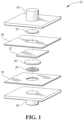
- FIG. 1A A non-limiting example of a PEMFC is depicted in Fig. 1A .
- a core component of the PEMFC 10 that helps produce the electrochemical reaction needed to separate electrons is the Membrane Electrode Assembly (MEA) 12.
- the MEA 12 includes subcomponents such as electrodes, catalysts, and polymer electrolyte membranes.
- the PEMFC 10 typically includes other components such as current collectors 14, gas diffusion layer(s) 16, gaskets 18, and bipolar plate(s) 20.
- the bipolar plates or BPP 20 are implemented in a PEMFC stack to distribute gas, collect current, and separate individual cells in the stack from each other.
- the BPP 20 also provides additional functions such as removal of reaction products and water as well as thermal management within the PEMFC 10.
- the BPP 20 is also a relatively expensive component and a frequent reason for degradation of the PEMFC system.
- BPPs may constitute about 60-80% of the stack weight, about 50% of the stack volume, and about 25-45% of the stack cost.
- the BPP 20 is typically made from metal, for example steel such as stainless steel. Alternative materials such as aluminum or titanium may be used. As the metal plates are susceptible to corrosion within the PEMFC system, efforts have been made to prevent the corrosion.
- the BPP 20 presents yet another material challenge as the BPP 20 is also required to be electrically conducting to facilitate electron transfer for the oxygen reduction reaction. Therefore, the BPP 20 material needs to be electrically conducting but chemically inert to reactions with ions present in the PEMFC 10 environment.
- the BPP metal surface contains a coating such as graphite-like coating or protective oxide or nitride coatings to increase corrosion resistance of the BPP 20.
- the BPP's 20 surface may thus include elements such as Fe, Cr, Ni, Mo, Mn, Si, P, C, S, F, or a combination thereof.
- Alternative coatings include Ti alloy, doped TiO x , Cr 2 O 3 , TiO 2 , TiN, CrN, or ZrN.
- electrolyzers present another type of an electrochemical cell. Electrolyzers use electrical energy to conduct chemical reactions. Electrolyzers undergo an electrolysis process to split water into hydrogen and oxygen, providing a promising method for hydrogen generation from renewable resources.
- An electrolyzer like a fuel cell, includes an anode and cathode catalyst layers separated by an electrolyte membrane.
- the electrolyte membrane may be a polymer, an alkaline solution, or a solid ceramic material.
- a catalyst material is included in the anode and cathode catalyst layers of the electrolyzer.
- Electrolyzers are being used for hydrogen production from water. However, widespread adoption of the electrolyzer cells requires further research into lifetime and cost reduction for components used in these electrochemical cells.
- the electrolyzer components include an electrolyte membrane and catalyst layers separated by the electrolyte membrane.
- a typical single electrolyzer is composed of an electrolyte membrane, an anode layer, and a cathode layer separated from the anode layer by the electrolyte membrane.
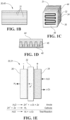
- a non-limiting schematic depiction of an electrolyzer 30 is shown in Figs. 1B-1D .
- the electrolyzer stack 40 includes individual electrolyzer cells 31, each of which includes the membrane 32, electrodes 34, 36, and bipolar plates 44.
- a cross-sectional view of the BPP 44 having a coating 46 on the current collectors 48 is shown in Fig. 1D .
- a catalyst material such as Pt-based catalysts, is included in the anode and cathode layers 34, 36 of the electrolyzer 30.
- H 2 O is hydrolyzed to O 2 and H + (2H 2 O ⁇ O 2 + 4H + + 4e - ).
- H + combines with electrons to form H 2 (4H + + 4e - ⁇ 2H 2 ).
- the electrolyzer 30 includes the PEM 32, anode 34, and cathode 36.
- Each electrode includes a porous transportation layer (PTL) and a catalyst layer.
- PTL porous transportation layer
- the PTL allows transport of electrons from catalyst layer to the bipolar plate. At the same time, PTL should allow the gas transport produced from the electrode, as well as water transport toward the electrode. Similar to other PEM electrolyzer components, the PTL needs to have good electrical conductivity and corrosion resistance at high voltage operation. Other design criteria include: porosity, mechanical stability, resistance against H embrittlement, low contact resistance (next to catalyst layer and BPP), etc.
- the bipolar plate accounts for significant cost among PEME components.
- a PEME BPP is typically more expensive than a PEMFC BPP due to usage of Ti metal (or other metals that are more stable against corrosion).
- the PEME BPP also needs to have a good chemical resistance on the anode side (against O 2 ) and the cathode side (against H embrittlement and oxidation).
- the anode side additionally requires a coating layer if the metal used is a different metal than Ti.
- Alternative bulk metal includes stainless steel, copper, or aluminum-based alloy systems.
- Au, Ti, TiN, TiN/C, TaN, and F-doped tin oxide (FTO) have been explored as chemically resistant BPP coating materials in a PEME BPP.
- the local environment is more corrosive and severe for the PTL on the anode side than on the cathode side. Therefore, more corrosion resistant materials and structures are typically incorporated for the anode PTL than for the cathode PTL.
- An example of the anode PTL layer material may be titanium (Ti) or Pt.
- Ti titanium
- Pt Pt
- the cathode PTL layer may include carbon-based materials such as carbon paper, carbon fleece, etc.
- the PEM 32, anode 34, and cathode 36 may be surrounded by the BPPs which may be made, for example, from Ti or gold- or platinum-coated Ti metals.
- the catalysts are typically used on the anode side 34 and the cathode side 36 to assist with the half-reaction processes.
- the typical catalyst material on the cathode 36 is platinum (Pt) while the typical catalyst used on the anode 34 is ruthenium (Ru), iridium (Ir), Ir-Ru, ruthenium oxide (RuO 2 ), iridium oxide (IrO 2 ), or iridium-ruthenium oxide (Ir-Ru-O) due to a combination of a relatively high activity and durability.
- Ru ruthenium
- Ir iridium
- IrO 2 ruthenium oxide
- IrO 2 iridium oxide
- Ir-Ru-O iridium-ruthenium oxide
- Ir typically catalyzes the EOR (H 2 O ⁇ 2H + + 1 ⁇ 2O2 + 2e - ); and, at the cathode 36, Pt typically catalyzes the HER (2H + + 2e - ⁇ H 2 ).
- the cell temperature typically ranges from about 50 to about 80°C.
- the cell voltage in the electrolyzer 30 is rather high compared to a fuel cell (greater than 1.23 V), typically ranging from 1.8 to 2.2 V vs. SHE at full load. Due to relatively high operating voltage, the electrolyzer 30 materials may undergo further catalyst degradation (e.g. , metal dissolution that may lead to the loss in electrochemically active surface area), which may affect the entire electrolyzer stack system 40 throughout its lifetime.
- Anode catalyst materials such as Ir/Ru/IrO x /RuO x , etc. may be dispersed on chemically stable supports in PEME. While carbon-based support is acceptable and widely used in PEMFC and PEME cathodes, PEME anodes typically need to operate at even higher voltage for carrying out OER reactions. In the highly oxidizing environment of PEME, corrosion of the support materials could potentially lead to a breakdown of catalyst layer porous structure. This could decrease the electrical conduction and decrease the water management efficiency in a PEME stack. Therefore, metal oxides may be used instead of carbon-based materials in PEME anodes.
- TiO x , NbO x , SnO x , and other doped metal oxides have been investigated as possible support materials for OER catalysts. While these materials help improve the mass activity of OER catalysts at initial conditions, their long-term durability has been a drawback due to a loss in conductivity.
- the material disclosed herein solves one or more problems described above and/or provides the benefits identified herein. It was surprisingly discovered that the disclosed material provides anticorrosive, conductive properties to a substrate.
- the substrate may include, but not be limited to an electrochemical cell substrate, a PEMF substrate, a PEME substrate, a PEMF catalyst support, a PEMF BPP substrate, a PEME BPP metal substrate, a PEME catalyst support, or a PEME PTL. Other types of substrates are contemplated and discussed below.
- the material encompasses a first oxide material including a variety or a series of Mg-Ti compounds with different contents of oxygen vacancies or, in other words, Mg-Ti compounds with a variety of oxygen-deficient stoichiometries, a second oxide material, or both.
- the BPP 20 may be a PEMFC BPP or a PEME BPP.
- the BPP 20 represents a non-limiting example of a substrate having a solid body or bulk portion 22 and a surface portion 24.
- the bulk portion 22 may be formed from a metal such as steel, stainless steel, aluminum, copper, an alloy of two or more metals, the like, or a combination thereof.
- the bulk portion 22 may be formed from a composite material such as carbon-carbon composite, or carbon-polymer composite.
- the bulk portion 22 may be made from graphite or another carbon allotrope.
- the bulk portion 22 may also include the disclosed material.
- the surface portion 24 may include the anticorrosive, chemically inert, electrically conductive, and thermodynamically stable material disclosed herein.
- the entire area of the surface portion 24 may include the material.
- the surface portion 24 may include one or more subportions which are free from the material.
- the entire surface portion 24 may include the material such that the entire BPP 20 is protected against corrosion.
- only a small portion of the surface portion 24 may include the material such as less than about 1 ⁇ 2, 1 ⁇ 4, 1/8, 1/16, 1/32, or the like of the surface portion may include the material.
- the surface portion 24, the bulk portion 22, or both may include one or more layers of the disclosed material.
- the material thickness on the surface portion 24 may be adjusted according to the needs of a specific application.
- a non-limiting example of the material layer thickness may be about 0.1 to 0.8 ⁇ m, 0.2 to 0.6 ⁇ m, or 0.3 to 0.5 ⁇ m.
- the material may be layered to form a relatively thick deposit with dimensions of more than 1 ⁇ m on the surface portion 24 such as about or at least about 1.25, 1.5, 1.75, 2.0, 2.25, 2.5, 2.75, 3.0, 3.25, 3.5, 3.75, 4.0, 4.25, 4.5, 4.75, 5.0, 10, 15, 20, 25, 30, 35, 40, 45, 50, 55, 60, 65, 70, 75, 80, 85, 90, 95, 100, 110, 120, 130 140, 150, 200, 250 ⁇ m or about 1.25, 1.5, 1.75, 2.0, 2.25, 2.5, 2.75, 3.0, 3.25, 3.5, 3.75, 4.0, 4.25, 4.5, 4.75, 5.0, 10, 15, 20, 25, 30, 35, 40, 45, 50, 55, 60, 65, 70, 75, 80, 85, 90, 95, 100, 110, 120, 130 140, 150, 200, 250, 300, 350, 400, 450, or 500 nm.
- the material may form one or more layers or a plurality of layers on the bulk portion 22.
- the material may form 1, 2, 3, 4, 5, 6, 7, 8, 9, 10, or more layers on the bulk portion 22.
- Each layer may have a thickness within the nanoscale or microscale recited herein with respect to the thickness of the surface portion 24.
- the disclosed material includes a first oxide Mg-Ti-O-based material.
- x may be0.01, 0.02, 0.03, 0.04, 0.05, 0.06, 0.07, 0.08, 0.09, 0.10, 0.11, 0.12, 0.13, 0.14, 0.15, 0.16, 0.17, 0.18, 0.19, 0.20, 0.21, 0.22, 0.23, 0.24, 0.25, 0.26, 0.27, 0.28, 0.29, 0.30, 0.31, 0.32, 0.33, 0.34, 0.35, 0.36, 0.37, 0.38, 0.39, 0.40, 0.41, 0.42, 0.43, 0.44, 0.45, 0.46, 0.47, 0.48, 0.49, 0.50, 0.51, 0.52, 0.53, 0.54, 0.55, 0.56, 0.57, 0.58, 0.59, 0.60, 0.61, 0.62, 0.63, 0.64, 0.65, 0.66, 0.67, 0.68, 0.69, 0.70, 0.71, 0.72, 0.73, 0.74, 0.75, 0.76, 0.77, 0.78, 0.79, 0.80, 0.81, 0.82, 0.83, 0.84
- ⁇ is any number between 0 and 3, optionally including a fractional part such as decimals and/or hundredths and denotes oxygen vacancies.
- ⁇ may be 0.1, 0.2, 0.3, 0.4, 0.5, 0.6, 0.7, 0.8, 0.9, 1.0, 1.1, 1.2, 1.3, 1.4, 1.5, 1.6, 1.7, 1.8, 1.9, 2.0, 2.1, 2.2, 2.3, 2.4, 2.5, 2.6, 2.7, 2.8, 2.9, or 3.0.
- ⁇ may be any number between 0 and 3 including tenths, hundredths, or both.
- ⁇ may be 0.01, 0.02, 0.03, 0.04, 0.05, 0.06, 0.07, 0.08, 0.09, 0.10, 0.11, 0.12, 0.13, 0.14, 0.15, 0.16, 0.17, 0.18, 0.19, 0.20, 0.21, 0.22, 0.23, 0.24, 0.25, 0.26, 0.27, 0.28, 0.29, 0.30, 0.31, 0.32, 0.33, 0.34, 0.35, 0.36, 0.37, 0.38, 0.39, 0.40, 0.41, 0.42, 0.43, 0.44, 0.45, 0.46, 0.47, 0.48, 0.49, 0.50, 0.51, 0.52, 0.53, 0.54, 0.55, 0.56, 0.57, 0.58, 0.59, 0.60, 0.61, 0.62, 0.63, 0.64, 0.65, 0.66, 0.67, 0.68, 0.69, 0.70, 0.71, 0.72, 0.73, 0.74, 0.75, 0.76, 0.77, 0.78, 0.79, 0.80, 0.81, 0.82, 0.83, 0.
- ⁇ may be a range including any number named above while excluding at least one number mentioned above.
- ⁇ may equal 0.1 to 3.0 with the exclusion of 1 and 2.
- ⁇ may include one or more ranges of 0.1 to 0.9, 1.1 to 1.9, or 2.1 to 2.9.
- ⁇ may include one or more ranges of 0.01 to 0.99, 1.01 to 1.99, or 2.01 to 2.99.
- the oxygen vacancies within the first oxide contribute to beneficial properties of the material.
- the oxygen vacancies are formed and preserved on purpose, and processes which would eliminate presence of oxygen vacancies may be avoided or excluded during the material synthesis and/or use.
- Oxygen vacancies in the first oxide may be characterized as a quantitatively smaller amount of oxygen atoms present in the material than expected in the parent material's crystal lattice.
- Oxygen vacancies are typically formed by removing an oxygen from a compound of oxygen, for example by annealing in a reducing atmosphere of N 2 , Ar, or the like. In another embodiment, annealing may be carried out in a vacuum furnace.
- the oxygen vacancies may render the material non-stoichiometric or deviating from stoichiometry such that the elemental composition of the material may not be represented by a ratio of well-defined natural numbers. The material; however, may be stoichiometric.
- oxygen vacancies may be perceived as undesirable defects influencing structural, electrical, optical, dissociative and reductive properties, or other properties in a manner which is not suitable for various applications.
- the materials disclosed herein have desirable properties due to oxygen vacancies being present. While a base or parent compound and a material with oxygen vacancies may have common morphology, structure, or lattice to a certain degree, their properties may significantly differ. Such is the case with the disclosed material having oxygen-deficient stoichiometry.
- the first oxide has crystalline structure alike the parental MgTi 2 O 5 phase. But even the crystalline structure differs due to the oxygen deficiencies. For example, the first oxide's lattice may include extra bonds or lack bonds in spaces where the paternal phase includes a bond.
- Fig. 5 An example of the structural differences of the parental MgTi 2 O 5 phase and the first oxide may be seen in Fig. 5 .
- dark gray large circles represent Ti atoms
- light gray large circles represent Mg
- small black circles represent O atoms
- small light gray circles represent H atoms.
- the lattice of the parental MgTizOs phase includes Ti atoms each having precisely four bonds to an oxygen atom and Mg atoms each having either three or five bonds to an oxygen atom.
- the structural lattice of Mg 1-x Ti 2+x O 5- ⁇ and/or MgTi 2 O 5- ⁇ includes at least one Ti atom having bonds to five oxygen atoms and/or at least one Mg having only four bonds to oxygen atoms.
- the disclosed first oxide has very different properties than the parental phase, for example electrical conductivity as the oxygen vacancy functions as the dominant charge carrier for electrical conduction in the material. An additional difference may be observed in its physical appearance. While the parental MgTi 2 O 5 phase is white in color, the disclosed first oxygen has a black to gray appearance with deep blue hue, indicative of the oxygen vacancies. An example of the synthesized first oxide can be seen in Fig. 3 and the color difference, indicative of oxygen vacancies, can be seen in Figs. 9A-9C .
- the disclosed material has good electrical conductivity.
- the first oxide and the second oxide contribute to the disclosed material's overall good electrical conductivity.
- the Mg 1-x Ti 2+x O 5- ⁇ and/or MgTi 2 O 5- ⁇ may have an electrical conductivity of about 0.01-15, 1.5-12, or 2-10 S/m at room temperature in ambient environments.
- the Mg 1-x Ti 2+x O 5- ⁇ and/or MgTi 2 O 5- ⁇ may have an electrical conductivity of about, at least about, or up to about 0.01, 0.02, 0.03, 0.04, 0.05, 0.06, 0.07, 0.08, 0.09, 0.10, 0.12, 0.15, 0.17, 0.20, 0.22, 0.25, 0.27, 0.30, 0.32, 0.35, 0.37, 0.40, 0.42, 0.45, 0.47, 0.50, 0.55, 0.60, 0.65, 0.70, 0.75, 0.80, 0.85, 0.90, 0.95, 1.0, 1.2, 1.5, 1.7, 2.0, 2.2, 2.5, 2.7, 3.0, 3.2, 3.5, 3.7, 4.0, 4.2, 4.5, 4.7, 5.0, 5.2, 5.5, 5.7, 6.0, 6.2, 6.5, 6.7, 7.0, 7.2, 7.5, 7.7,8.0, 8.2, 8.5, 8.7, 9.0, 9.2, 9.5, 9.7, 10, 10.2, 10.5, 10.7
- Electrical conductivity may be expressed via a bandgap (E g ), also called an energy gap.
- the band gap refers to the energy difference between the top of the valence band and the bottom of conduction band.
- Substances with large bandgaps are typically insulators, and those with smaller bandgaps are called semiconductors.
- Conductors either have no or zero bandgap ( i.e., metallic) or very small bandgaps such as ( ⁇ 1 eV) ( i.e., semi-metallic).
- the first-principles DFT calculations were carried out to examine conductive behavior of Mg 1-x Ti 2+x O 5- ⁇ and/or MgTi 2 O 5- ⁇ .
- the calculations were carried out within the Vienna Ab-initio Simulation Package (VASP) with projected augmented wave potentials and Perdew-Burke-Ernzerhof (PBE) formulation of the generalized gradient approximation (GGA).
- VASP Vienna Ab-initio Simulation Package
- PBE Perdew-Burke-Ernzerhof
- GGA generalized gradient approximation
- the presence of oxygen vacancy in the bulk MgTi 2 O 5 structure changes the electric conductivity of the material.
- the Fermi level (E F ) of an example specimen of the disclosed first oxide, MgTi 2 O 4.92 is shifted compared to the parental MgTi 2 O 5 phase.
- the E F is occupied ( i.e ., metallic), which indicates that Mg 1-x Ti 2+x O 5- ⁇ and/or MgTi 2 O 5- ⁇ is exhibiting its conducting behavior, which was further verified by experiments discussed below.
- the DFT calculations were also utilized to assess anti-corrosive behavior of the disclosed first oxide.
- DFT slab models were tested with hydrogen adsorption and dissociation reactions. Hydrogen dissociation reactions were tested on (110) MgTi 2 O 5 , (110) MgTi 2 O 5- ⁇ , (101) TiO 2 (anatase), (110) TiO 2 (rutile), and (001) TiO structures of which are shown in Fig. 5 .
- Each slab model was tested for maximum hydrogen coverage. Table 1 below shows the hydrogen adsorption energy ( ⁇ E ads,H ) and maximum hydrogen coverage ( ⁇ H,cov ) in each slab model.
- (110) MgTi 2 O 5- ⁇ has the largest hydrogen adsorption energy, compared to other tested chemical species. This finding directly correlates to the highest H resistivity for (110) MgTi 2 O 5- ⁇ among the group of the tested species.
- (110) MgTi 2 O 5- ⁇ shows a minimum hydrogen coverage (i.e ., least hydrogen dissociation).
- the disclosed first oxide may have a nominal chemical composition of about 25-40, 28-35, or 30-33 mol% MgO and 75-60, 72-65, or 70-66 mol% TiO + TiO 2 mixture.
- the Mg and Ti mol ratio Mg/Ti may be about 0.01-0.8, 0.1-0.60, or 0.25-0.5.
- the Mg and Ti mol ratio Mg/Ti may be about 0.01, 0.02, 0.03, 0.04, 0.05, 0.06, 0.07, 0.08, 0.09, 0.10, 0.11, 0.12, 0.13, 0.14, 0.15, 0.16, 0.17, 0.18, 0.19, 0.20, 0.21, 0.22, 0.23, 0.24, 0.25, 0.26, 0.27, 0.28, 0.29, 0.30, 0.31, 0.32, 0.33, 0.34, 0.35, 0.36, 0.37, 0.38, 0.39, 0.40, 0.41, 0.42, 0.43, 0.44, 0.45, 0.46, 0.47, 0.48, 0.49, 0.50, 0.51, 0.52, 0.53, 0.54, 0.55, 0.56, 0.57, 0.58, 0.59, 0.60, 0.61, 0.62, 0.63, 0.64, 0.65, 0.66, 0.67, 0.68, 0.69, 0.70, 0.71, 0.72, 0.73, 0.74, 0.75, 0.76, 0.77, 0.78, 0.79, 0.
- Non-limiting example Mg/Ti ratio values include the following Mg 0.4 Ti 2.6 O 5 with the Mg/Ti ratio of 0.15, Mg 0.5 Ti 2.5 O 5 with the Mg/Ti ratio of 0.2, Mg 0.6 Ti 2.4 O 5 with the Mg/Ti ratio of 0.25, Mg 0.7 Ti 2.3 O 5 with the Mg/Ti ratio of 0.30, Mg 0.8 Ti 2.2 O 5 with the Mg/Ti ratio of 0.36, or Mg 0.9 Ti 2.1 O 5 with the Mg/Ti ratio of 0.43.
- the method of preparing the first oxide is disclosed.
- the synthesis may include preparing dry powders of MgO, TiO, and/or TiO 2 .
- the method may include forming a mixture of the MgO, TiO, and/or TiO 2 .
- the method may include mixing a first powder of MgO and a second powder premixture of TiO/TiO 2 or TiO.
- the method may include drying the one or more compounds to be included in the mixture. Drying may be conducted in vacuum or ultra-high vacuum, N 2 , Ar, or Ar/H 2 environment.
- Ultra-high vacuum refers to a regime of pressures lower than about 10 -7 pascal or 100 nanopascals (10 -9 mbar, ⁇ 10 -9 torr).
- the mixture may be compressed into any shape or configuration, for example in a mold.
- a non-limiting example may be compressed pellets.
- the compressed mixture may be heated by sintering for an amount of time. Sintering is a process of compacting and forming a solid mass of a material by heat and/or pressure without melting it to the point of liquefication or the material's melting point.
- the amount of time may be an amount needed for the powder particles to fuse together and create a solid piece, and/or for the compressed material to change appearance from light gray to blue-black.
- the sintering may be carried out at a temperature which is below the powder mixture's melting point. The temperature may range from about 400 to 2000°C, 800 to 1800°C, or 1200 to 1500°C in vacuum, N 2 , Ar, or Ar/H 2 environment.
- the disclosed material may be formed as a foam or as a composite, for example including polymeric binders.
- the disclosed material may be prepared as nanomaterial or micromaterial.
- the nano- or micro-material may be in the form of fibers, rods, network, cloth, felt, etc.
- the nanofiber may have a diameter of about 10 to 250, 30 to 200, or 50 to 100 nm and axial length of about 50 to 950, 100 to 800, or 200 to 600 nm.
- the microfiber may have a diameter of about 50 nm to 5 ⁇ m, 250 nm to 2 ⁇ m, or 500 nm to 1 ⁇ m and axial length of about 500 nm to 500 ⁇ m, 250 nm to 250 ⁇ m, or 100 nm to 100 ⁇ m.
- the nano- and/or micro- material may show presence of increased facets, including, but not limited to facet (110), (023), (002), (020), (200), (023), and/or (021).
- the nano-sized material, micro-sized material, or both may be porous.
- the nano-sized material, micro-sized material, or both may be sintered.
- the nano-sized material, micro-sized material, or both may be beneficial in the PTL application in a PEM electrolyzer.
- the PTL may be a cathode PTL, anode PTL, or both.
- the amount of oxygen vacancies may be tailored depending on the needs of a specific application.
- the amount of oxygen vacancies may be introduced, controlled, or altered by controlling, adjusting, or controlling the sintering temperature.
- the amount of oxygen vacancies may be controlled by the TiO/TiO 2 ratio in the powder mixture.
- the TiO/TiO 2 ratio may be about 0:100, 1:99, 10:90, 20:80, 30:70, 40:80: 50:50, 60:40, 70:30, 80:20, 90:10, 99:1, or 100:0.
- annealing destroys oxygen vacancies in the disclosed material. Since the oxygen vacancies are desirable in the disclosed material, annealing, as a process of minimizing crystal defects through a heat treatment and involving heating a material above its recrystallization temperature, maintaining a suitable temperature for a certain amount of time, and then cooling in air, should be avoided.
- the first oxide was synthesized and tested according to the methods described below.
- the first oxide was synthesized by the following method using a dry MgO, TiO and TiO 2 powder mixture.
- MgO powder was dried at 120°C for 2 hours in Ar environment.
- Mg carbonate or another type of Mg-bearing precursor may be used.
- the dried powder was then mixed with TiO/TiO 2 powder to form a mixture.
- TiO 2 or other type of Ti-bearing precursors TiO x , Ti nitrate, chloride, etc. ) may be used.
- the mixture was pressed into pellets measuring about 12 mm in diameter and 2 mm in thickness under 3000 psi uniaxial load. The as-pressed pellets had a light grey color.
- the compacted pellets were then loaded in a Al 2 O 3 crucible and heated-up for reactive sintering (e.g . at 1450°C) in vacuum environment (10 -3 torr) for 10 hours.
- reactive sintering e.g . at 1450°C
- reducing gas agents such as N 2 , Ar, or H 2 , or a mixture thereof may be used.
- the pellets appeared to be black in color with a blue hue.
- the method was used to prepare five batches of pellets, each batch containing three to four pellets.
- Fig. 6 shows an Arrhenius plot of conductivities from 25°C to 80°C. Average conductivity and an error bar were calculated from seven different samples made from different batches.
- the disclosed crystalline Mg 1-x Ti 2+x O 5- ⁇ and/or MgTi 2 O 5- ⁇ showed an electrical conductivity of about 2-10 S/m at room temperature in ambient environments.
- the measured conductivity is higher than semiconductor such as Ge and Si while slightly lower than carbon, iron, and gold.
- the first oxide's activation energy was about 0.13 eV in the temperature ranges between 25°C to 80°C. Activation energy may be smaller than 130 meV with introduction of additional oxygen vacancies or making the material nonstoichiometric, i.e ., Ti excess.
- X-ray photoemission spectroscopy and optical microscopy was used to assess physical characteristics of the first oxide in several pellets from two different batches. For the purposes of the observation, some of the pellets were annealed. The pellets were compared to comparative pellets of TiO 2 .
- the XPS studies of the pellets were performed using a PHI XPS system equipped with an Al X-ray source (incident photon energy of 1486.7 eV). The aperture size was set to about 1.1 mm in diameter. The binding energy of the obtained XPS spectra was calibrated with respect to the C 1s peak of adventitious carbon at 284.8eV.
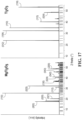
- Fig. 7 shows Ti 2p XPS spectra of the pellets containing the first oxide in its pristine state, pellets including the first oxide annealed in air, and TiO 2 reference pellets.
- the collected data suggests that Ti in the pellets containing the first oxide in its pristine state is dominantly Ti 4+ state, similar to Ti in the pellets including the first oxide annealed in air and in the TiOz reference pellets.
- the observation and the XRD analysis also suggest that the first oxide has a similar, but not identical, crystal structure to MgTi 2 O 5 , as can be seen in Fig. 8 .
- the sintered pellets were assessed optically.
- the surface of the sintered pellets can be seen in Fig. 9A , showing as synthesized pellets featuring black and blue hue on the pellet surface.
- Three of the sintered pellets were annealed in air at 600°C for 10 hours. Surface of the annealed pellets changed partially at the edges of the pellets and some of the surface regions of the pellets turned white while some of the surface remained black, as can be observed in Fig. 9B .
- the annealed pellets were further exposed to additional annealing in air at 1000°C for 10 hours.
- the entire surface of the pellets turned white after the secondary round of annealing as can be seen in Fig. 9C .
- Optical images of the pellets shown in Figs. 9A-C were collected using a Keyence VHX microscope at magnifications ranging from 100x to 1000x.
- Corrosion current density for the as-synthesized, pristine first oxide is shown on the bottom, carbon paper on top, and polished stainless steel (SS) 316 in the middle.
- the pristine Mg 1-x Ti 2+x O 5- ⁇ and/or MgTi 2 O 5- ⁇ material's corrosion current density was assessed to be about two orders of magnitude better/lower than the polished SS316 and carbon paper.
- corrosion current measured in Mg 1-x Ti 2+x O 5- ⁇ and/or MgTi 2 O 5- ⁇ showed that the Mg 1-x Ti 2+x O 5- ⁇ and/or MgTi 2 O 5- ⁇ produces x100 times smaller steady corrosion current when compared to SS316.
- the crystalline Mg 1-x Ti 2+x O 5- ⁇ and/or MgTi 2 O 5- ⁇ demonstrated good corrosion resistance in acidic environment.
- the Mg 1-x Ti 2+x O 5- ⁇ and/or MgTi 2 O 5- ⁇ may have corrosion resistance (static corrosion current density) of less than about 0.5-5, 1-3, or 1.5-2.5 ⁇ A cm -2 at pH of 2 at a temperature of about 0 to 80°C, 10 to 60°C, or 20 to 40°C.
- the Mg 1-x Ti 2+x O 5- ⁇ and/or MgTi 2 O 5- ⁇ may have corrosion resistance of less than about 5.0, 4.0, 3.0, 2.5, 2.0, 1.8, 1.6, 1.4, 1.2, 1.0, 0.9, 0.8, 0.7, 0.6, 0.5, 0.4, 0.3, 0.2, or 0.1 ⁇ A cm -2 at pH of 2 at a temperature of about 0 to 80°C, 10 to 60°C, or 20 to 40°C.
- the pellets were also tested for chemical resistivity or inertness.
- Chemical inertness relates to the first oxide's reactivity with compounds present in the acidic fuel cell environment such as H 3 O + , F - , and SO 4 - .
- One pristine pellet was crushed into powder, which was tested in Aqua Regia (concentrated HNO 3 and HCl mixture with 3:1 ratio) heated to 100-150°C. The powder did not dissolve, which indicated good chemical stability.
- the disclosed material including the first oxide of the formula (Ia), (Ib), or both, and/or the second oxide of formula (II), may be used as a catalyst support in an electrochemical cell, the PEMFC, or PEME.
- a PEMFC an anode and a cathode each may include a catalyst facilitating the reactions of oxygen and hydrogen.
- the anode catalyst oxidizes the fuel into the hydrogen protons and electrons at the anode while the cathode catalyst catalyzes oxygen reduction reaction which results in formation of water. Due to a more complicated chemistry at the cathode, a higher loading of a catalyst is usually needed at the cathode than at the anode to increase the reaction speed.
- a suitable catalyst must be stable enough to withstand the corrosive environment at the cathode as well as sufficiently chemically active to be able to reduce O 2 .
- the catalyst must be also selective enough to produce the desired product while minimizing production of undesirable intermediates.
- the catalyst layer should be also capable of facilitating release of product water from the catalyst surface to free up catalytic sites once the reaction is complete.
- Pt platinum
- PH ⁇ 2 acidic
- the catalyst materials are typically affixed to catalyst support materials, which are typically solid materials with a high surface area.
- the catalyst support itself needs to be inert to prevent affecting the catalytic reactions.
- the most common catalyst supports for PEMFC include graphite, carbon nanofibers, carbon nanotubes, nanospheres, nanoellipsoids, nanorods, the like, or a combination thereof. Yet, oxidation of these support materials under the fuel cell operating conditions may occur, especially during the start-up/shutdown processes, which may in turn lead to degradation of the catalyst which may be limiting the PEMFC lifetime.
- Any catalyst support material needs to meet certain criteria -- to be stable in the PEMFC and PEME operating conditions, which is usually acidic (i.e. , low pH, from pH 1 to 4), and to withstand different voltages which are being applied to the electrochemical cell: typically, 0 V up to ⁇ 1.2 V vs . SHE for PEMFC and above 1.6 V vs. SHE for PEME.
- TiO 2 and SnO 2 have been disclosed as leading candidates. This is due to their stability in the aqueous electrochemical system for TiO 2 and SnO 2 : forming a stable oxide where pH can vary from 1 to 4 (i.e., acidic) and voltages between 0 to 1.23 V can also affect the local environment during the PEMFC operation.
- Sn-doped TiO 2 was also tested as a catalyst support material for Pt catalyst and reported the following: 1) doping up to 10% Sn in TiO 2 resulted in an increase in the mass activity; 2) catalyst support with 23 to 40% Sn doping in TiO 2 required much less platinum; and, 3) Sn-doped TiO 2 was stable in the acidic conditions at 80 °C at ⁇ 28% doping of Sn in TiO 2 .
- the material disclosed herein including the first oxide of the formula (Ia), (Ib), or both, and/or the second oxide of formula (II) may be used as a support for a PEMFC catalyst in the fuel cell application, on a cathode, anode, or both, or as a cathode and/or anode catalyst support in PEME.
- the catalyst may be a noble metal or noble-metal free catalyst.
- a non-limiting example of a catalyst may be Pt, Pd, Au, Ir, Rh, Ru, or a combination thereof.
- the catalyst may be an oxidation reduction reaction (ORR) catalyst.
- the disclosed material may have porosity similar to high area surface carbon (with BET surface area of about 1 to 700 m 2 /g).
- the disclosed material may be less porous than carbon.
- the disclosed support material may have an average particle size less than about 200 nm.
- the particle size may be about 20 to 200 nm, 25 to 150 nm, or 30 to 100 nm. Alternatively, the particle size may be about 200 to 600 nm, 300 to 550 nm, or 400 to 500 nm.
- the particle size of the catalyst support including the disclosed material may be about 20, 30, 40, 50, 60, 70, 80, 90, 100, 110, 120, 130, 140, 150, 160, 170, 180, 190, 200, 210, 220, 230, 240, 250, 260, 270, 280, 290, 300, 310, 320, 330, 340, 350, 360, 370, 380, 390, 400, 410, 420, 430, 440, 450, 460, 470, 480, 490, 500, 510, 520, 530, 540, 550, 560, 570, 580, 590, 600 nm, or a range including any two numbers disclosed above.
- the catalyst may be deposited onto the support including the disclosed material either forming one or more island(s) of catalyst on the catalyst support, as is shown in Fig. 11A or in a core-shell-type configuration, the disclosed material forming the core and the catalyst forming the shell, as is depicted in Fig. 11B .
- 50 denotes the catalyst support
- 52 denotes the catalyst.
- a specific configuration may be tailored depending on the expected performance, cost, and lifetime of the electrochemical cell, PEMFC, or PEME device and/or stack system.
- Figs. 12A and 12B Scanning electron microscope (SEM) cross-section images of Mg 1-x Ti 2+x O 5- ⁇ and/or MgTi 2 O 5- ⁇ serving as a catalyst support material and Pt used as a catalyst are shown in Figs. 12A and 12B .
- the catalyst support material may have even or uneven surface.
- the catalyst support material may serve as a substrate for the catalyst material.
- the catalyst support material may physically and/or chemically bind the catalyst.
- the catalyst support material including Mg 1-x Ti 2+x O 5- ⁇ and/or MgTi 2 O 5- ⁇ is chemically stable in acidic environment and has high electrochemical stability against corrosion and oxidation environments during fuel cell operation conditions, as is demonstrated herein.
- DFT calculations were performed to construct the interface between a Pt metal catalyst and Mg 1-x Ti 2+x O 5- ⁇ and/or MgTi 2 O 5- ⁇ . DFT calculations were carried out within the Vienna Ab-initio Simulation Package (VASP) with projected augmented wave potentials and Perdew-Burke-Ernzerhof (PBE) formulation of the generalized gradient approximation (GGA). A plane-wave basis set cutoff energy of 520 eV was used.
- VASP Very Ab-initio Simulation Package
- PBE Perdew-Burke-Ernzerhof
- the DFT calculations were used to verify that Pt and Mg 1-x Ti 2+x O 5- ⁇ and/or MgTi 2 O 5- ⁇ may form a stable interface, which may enable utilization of Mg 1-x Ti 2+x O 5- ⁇ and/or MgTi 2 O 5- ⁇ as an oxide support material for a PEMFC or PEME catalyst.
- Table 2 below shows the DFT-calculated interfacial energy between a Pt catalyst and Mg 1-x Ti 2+x O 5- ⁇ and/or MgTi 2 O 5- ⁇ support. Specifically, energetically-stable Pt surface facets (111), (100), and (110) were examined on the (110) MgTi 2 O 5- ⁇ . Table 2 illustrates that the calculated DFT interfacial energies between (110) MgTi 2 O 5- ⁇ and Pt catalyst (regardless of the facets) are predicted to be a negative value. A negative DFT interfacial energy indicates that two chemical systems will form a stable interface. Table 2 further shows DFT interfacial energies of Pt on TiO 2 and SnO 2 for comparison.
- Figs. 13A-F show the constructed interfaces between various Pt surface facets and (110) MgTi 2 O 5- ⁇ before and after the DFT relaxation calculations. Specifically, Figs. 13A-C show the constructed interfaces before DFT relaxation, Figs. 13D-F show the interfaces after DFT relaxation. It is apparent from Figs. 13D-F that after the DFT relaxation, Pt(100) and Pt(111) on MgTi 2 O 5- ⁇ look very similar to each other.
- Table 1 further shows that (100) Pt may bind most strongly on (110) MgTi 2 O 5- ⁇ , while (110) Pt may bind less strongly on (110) MgTi 2 O 5- ⁇ . While the (111) facet seems to be the most energetically favored surface facet in Pt nanoparticles, (110) and (100) are also observed at the corner and edge of the Pt particles. Depending on the synthesis temperature, time, pH, precursor materials, and route, it is possible to control the size and shape of Pt nanoparticles, as shown in Fig. 14 . Table 2 indicates that all Pt facets bind on MgTi 2 O 5- ⁇ ; (100) and (111) facets may bind more strongly than (110). Thus, regardless of the size and shape of the Pt catalyst particles, DFT calculations suggest that a stable interface between the Pt catalyst and MgTi 2 O 5- ⁇ will form.
- Table 3 shows DFT binding energies ( ⁇ E b ) of H 2 O and H 3 O on Pt supported by various metal oxide supports. Relative binding energies ( ⁇ E rel ,b ) are also provided, where the binding energies on pure Pt (111) are used as the reference ( i.e., zero energy).
- the calculated binding energies of H 2 O and H 3 O of Pt supported on MgTi 2 O 5- ⁇ are between Pt supported on SnO 2 and TiO 2 . This indicates that Pt on MgTi 2 O 5- ⁇ may provide more stability than Pt supported on SnO 2 while it can provide more reactivity compared to Pt supported on TiO 2 .
- the relative binding energies of H 2 O for Pt on MgTi 2 O 5- ⁇ range between -0.063 and -0.157 eV.
- the binding energies vary from - 0.090 eV to -0.027 eV.
- the binding energies are lower than Pt supported on TiO 2 , while higher than Pt supported on SnO 2 .
- Pt on MgTi 2 O 5- ⁇ may have more "stability" against the reactant than Pt supported on SnO 2 and may have more "reactivity" than Pt on TiO 2 .
- the MgTi 2 O 5- ⁇ 's anti-corrosive behavior and enhanced electronic conductivity discussed above and referenced in Figs. 6 and 10 , respectively, provides an additional advantage for the MgTi 2 O 5- ⁇ to be used as a catalyst support over the current state-of-the-art TiO 2 and SnO 2 catalyst support systems.
- the disclosed catalyst support material may be prepared by a variety of methods including, but not limited to a solution-based process, a solid-state process, a heat-treatment, and/or electrochemical methods.
- the catalyst support material may be un-doped, and/or doped partially with nitrogen, carbon, fluorine, the like, or other elements to further enhance electronic conductivities.
- Non-limiting examples of other elements may include other d 0 metals such as Zr 4+ , Hf 4+ , V 5+ , and/or Cr 6+ , and/or d 10 metals such as Zn 2+ , Ga 3+ , and/or Pb 4+ , as well as Al 3+ (no d electrons), where d 0 and d 10 metals and Al 3+ are typically more difficult to be oxidized.
- d 0 metals such as Zr 4+ , Hf 4+ , V 5+ , and/or Cr 6+
- d 10 metals such as Zn 2+ , Ga 3+ , and/or Pb 4+
- Al 3+ no d electrons
- the solvent may be water or an organic solvent.
- the pH of the solution may be adjusted, maintained, or controlled by the presence of oxidizing or reducing chemicals.
- the initial mixture may be heat-treated between about 100 to 2000°C, 200 to 1500°C, or 300 to 1000°C with a various aging time of about 1, 2, 3, 4, 8, 12, 16, 24, 36, 48, 60, or 72 hours to form the catalyst support material.
- the gas environment may be controlled by N 2 , Ar, H 2 , O 2 , air, and/or vacuum.
- a catalyst material such as Pt may be deposited on the catalyst support material afterwards, either using solid-state, solution-based method, and/or various deposition techniques.
- oxide precursor materials such as MgO, TiO, TiO 2 , Mg(OH) 2 , or the like may be mixed and synthesized via a solid-state method such as a ball-milling process, coprecipitation process (e.g ., solution-based process), sol-gel process, hydrothermal process, or the like, followed by a secondary heat treatment.
- a solid-state method such as a ball-milling process, coprecipitation process (e.g ., solution-based process), sol-gel process, hydrothermal process, or the like, followed by a secondary heat treatment.
- the herein-disclosed catalyst supports may be prepared into high surface area particles by a hydrothermal method followed by a subsequent annealing process in an oxygen-free atmosphere.
- the non-limiting example BET of the herein-disclosed catalyst support may be about 100 to 1500, 150 to 850, or 200 to 550 m 2 /g.
- the non-limiting example BET of the herein-disclosed catalyst support may be about, at least about, or up to about 100, 150, 200, 250, 300, 350, 400, 450, 500, 550, 600, 650, 700, 750, 800, 850, 900, 950, 1000, 1050, 1100, 1150, 1200, 1250, 1300, 1350, 1400, 1450, or 1500 m 2 /g or any range in between.
- Vulcan XC-72 material typically has BET specific area of 250 m 2 /g; high surface area carbons may have the BET specific area of up to about 1,500 m 2 /g: e.g., Ketjen Black EC 600JD, Ultra High Surface Area Carbon (USAC), and so on.
- Another non-limiting example BET area of the herein-disclosed catalyst support may be below 100 m 2 /g such as 0.1 to 99, 1 to 50, or 5 to 25 m 2 /g.
- the BET area of the herein-disclosed catalyst support may be about, at least about, or up to about 0.1, 0.2, 0.3, 0.4, 0.5, 0.6, 0.7, 0.8, 0.9, 1.0, 1.2, 1.4, 1.6, 1.8, 2.0, 2.2, 2.4, 2.6, 2.8, 3.0, 3.2, 3.4, 3.6, 3.8, 4.0, 4.2, 4.4, 4.6, 4.8, 5.0, 5.5, 6.0, 6.5, 7.0, 7.5, 8.0, 8.5, 9.0, 9.5, 10, 11, 12, 13, 14, 15, 16, 17, 18, 19, 20, 22, 24, 26, 28, 30, 32, 34, 36, 38, 40,42, 44, 46, 48, 50, 55, 60, 65, 70, 75, 80, 85, 90, 95, or 99 m 2
- the herein-disclosed catalyst support material may be prepared by a chemical reaction under a relatively high temperature of about 400 to 2000°C, 800 to 1800°C, or 1200 to 1500°C in vacuum, N 2 , Ar, or Ar/H 2 environment followed by mechanical milling.
- the preparation atmosphere should be kept free of oxygen such that oxygen is not supplied during the reaction and is actively removed from the reaction environment.
- the herein-disclosed catalyst supports may be prepared by a colloidal synthesis route followed by subsequent annealing steps in varying atmosphere.
- the herein-disclosed catalyst support may be prepared by a combustion synthesis or flame synthesize method followed by subsequent annealing steps in an oxygen-free environment.
- the disclosed material including the first oxide and the second oxide may be used for catalysis in a variety of applications including PEMFC, anion exchange membrane fuel cell (AEMFC), either at the cathode or the anode, proton exchange membrane electrolyzer (PEME), chemical synthesis, air purification including purifying exhaust from an internal combustion engine, photo-catalysis for water splitting cells, or photo-catalysis of redox media for water cleaning.
- PEMFC anion exchange membrane fuel cell
- AEMFC anion exchange membrane fuel cell
- PEME proton exchange membrane electrolyzer
- chemical synthesis including purifying exhaust from an internal combustion engine, photo-catalysis for water splitting cells, or photo-catalysis of redox media for water cleaning.
- the herein-disclosed catalyst support material may be further mixed with carbon and/or another type of conductive polymer to increase conductivity.
- Carbon includes, but is not limited to, amorphous carbon, Denka black, Ketjen black, acetylene black, carbon nanotube, carbon fibers, graphene, graphite, graphyne, graphene oxide, reduced graphene oxide, etc.
- the ratio of the mixture may be about 1:1, 1:2, 1:3, 1:4, 1:5, 1:6, 1:7, 1:8, 1:9, 1:10, 10:1, 9:1, 8:1, 7:1, 6:1, 5:1, 4:1, 3:1, or 2:1.
- carbon and/or another type of additional support material may form one or more additional sublayers, serving as a support for the disclosed material.
- the herein-disclosed catalyst support material may be mixed with one or more types of catalyst support materials such as additional oxides, carbides, or intermetallic compounds.
- Example oxide materials may include SnO 2 , MoO 3 , Nb 2 O 5 , Ta 2 O 5 , TiO 2 , WO 3 , SnMo 4 O 6 , and/or TiNb 3 O 6 , GeO 2 , MoO 2 , NbO 2 , SnO, Ti 3 O 5 , SnWO 4 , WO 2 , Nb 2 SnO 6 , Sn 2 WO 5 , SnGeO 3 , Ta 2 SnO 6 , TiSn 2 O 4 , Ti 6 O, or mixtures thereof.
- Example carbides may include Nb 6 C 5 , MozC, Ta 2 C, Ti 8 C 5 , WC, TaC, Nb 2 SnC, Ti 2 GeC, Ti 3 SnC 2 , Ti 3 GeC 2 , MoC, or mixtures thereof.
- Non-limiting examples of binary or ternary intermetallic compounds may be MoW, NbSn 2 , Nb 3 Sn, Sn 2 Mo, TaSn 2 , Ta 3 Sn, TaW 3 , TiMo, TiMo 3 , Ti 2 Mo, Ti 3 Mo, TiNb, Ti 2 Sn, Ti 2 Sn 3 , Ti 3 Sn, Ti 6 Sn 5 , NbMo 2 W, TaMo 2 W, TiMo 2 W, Ti 2 NbSn, GeMo 3 , Ge 2 Mo, NbGe 2 , Nb 5 Ge 3 , SnGe, TaGe 2 , Ta 3 Ge, TasGe 3 , TiGe 2 , TisGe 3 , Ti 6 Ge 5 , or mixtures thereof.
- the amount of oxides (as well as their compositions) in the surface film and bulk region of the intermetallic component may be further controlled.
- Fig. 12A shows an example of one of the pellets including the sputtered catalyst before the annealing process.
- Fig. 12B shows one of the pellets after the annealing process.
- the dashed line indicates the interface between Pt and MgTi 2 O 5- ⁇ in both Figs. 12A and B.
- Figs. 12A and 12B are scanning electron microscope (SEM) cross-section images.
- the anticorrosive, conductive material disclosed herein may include the first oxide of the formula (Ia), (Ib), or both described above in a combination with a second oxide having a general formula (II): Ti a O b (II), where,
- the second oxide of formula (II) may form a part of the disclosed material or matrix including the first oxide of the formula (Ia), (Ib), or both.
- the second oxide may exist as a part of a polycrystalline structure, be a part of or exist within the MgTizOs matrix.
- the second oxide may exist as a segregated polycrystalline phase and/or be located at, on, or near grain boundaries, i.e. within 1 nm to 100 ⁇ m (100,000 nm), 10 nm to 10 ⁇ m (10,000 nm), or 100 nm to 1 ⁇ m (1,000 nm) from the grain boundaries.
- the second oxide may exist as a segregated polycrystalline phase within the distance of about 1, 5, 10, 50, 100, 500, 1000, 5000, 10,000, 50,000, or 100,000 nm from the grain boundaries.
- grain sizes can range from about 1 to 100, 5 to 80, or 10 to 60 ⁇ m.
- the grain size may range from 1, 2, 3, 4, 5, 6, 7, 8, 9, 10, 12, 14, 16, 18, 20, 22, 24, 26, 28, 30, 32, 34, 36, 38, 40, 42, 44, 46, 48, 50, 52, 54, 56, 58, 60, 62, 64, 66, 68, 70, 72, 74, 76, 78, 80, 82, 84, 86, 88, 90, 92, 94, 96, 98, or 100 ⁇ m.
- the size of dislocations may begin to approach the size of the grains. At a grain size of about 5 to 15, 7 to 12, or 8 to 10 nm, one or two dislocations may fit inside a grain. The grain size may be about 5, 6, 7, 8, 9, 10, 11, 12, 13, 14, or 15 nm.
- the second oxide of the formula (II) may form a grain, where the size may vary from about 10 to 50, 15 to 40, or 20 to 30 ⁇ m, next to the grain boundary of the first oxide of the formula (Ia), (Ib), or both.
- the grain size may be about 10, 12, 14, 16, 18, 20, 22, 24, 26, 28, 30, 32, 34, 36, 38, 40, 42, 44, 46, 48, or 50 ⁇ m.
- the amount of the second oxide within the disclosed material, matrix, or total composite may be about, at least about, or up to about 0.5 to 50, 2 to 30, or 3 to 15 wt. %, based on the total amount of material, matrix, or composite.
- the amount may be about, at least about, or up to about 0.5, 1, 1.5, 2, 2.5, 3, 3.5, 4, 4.5, 5, 5.5, 6, 6.5, 7, 7.5, 8, 8.5, 9, 9.5, 10, 10.5, 11, 11.5, 12, 12.5, 13, 13.5, 14, 14.5, 15, 15.5, 16, 16.5, 17, 17.5, 18, 18.5, 19, 19.5, 20, 20.5, 21, 21.5, 22, 22.5, 23, 23.5, 24, 24.5, 25, 25.5, 26, 26.5, 27, 27.5, 28, 28.5, 29, 29.5, 30, 30.5, 31, 31.5, 32, 32.5, 33, 33.5, 34, 34.5, 35, 35.5, 36, 36.5, 37, 37.5, 38, 38.5, 39, 39.5, 40, 40.5, 41, 41.5, 42, 42.5, 43, 43.5, 44
- the amount of the second oxide, which is detectable using X-ray diffraction technique may be above about 5 wt.%, based on the total amount of material, matrix, or composite.
- the amount of the second oxide, detectable with advanced techniques including synchrotron-based analysis, induction coupled plasma mass spectroscopy, x-ray photon spectroscopy, or high-resolution transmission electron microscope may be less than about 0.5, 1.5, or 2.5 wt.%.
- the oxide of formula (II) may be conductive and anti-corrosive at the same time, contributing to desirable properties of the matrix, material, or composition including the first oxide of the formula (Ia)(Ib), or both. DFT calculations were conducted to confirm conductive and anti-corrosive behavior of the second oxide.
- Figures 15A and 15B show chemical structure of Ti 2 O 3 , specifically chemical structure of Ti 2 O 3 (012), where a single hydrogen atom is adsorbed on surface oxygen atom.
- the large, middle, and small circles represent Ti, O, and H atom, respectively.
- Figure 15A shows the top view of (012) Ti 2 O 3 while Figure 15B shows the side view of (012) Ti 2 O 3 .
- the DFT calculations described above revealed that the (012) facet is the most dominant surface facet for R-3c Ti 2 O 3 with the calculated surface energy of 1.01 J/m 2 .
- the DFT calculations were also used to assess anti-corrosive behavior of the (012) Ti 2 O 3 facet.
- Table 3 shows a comparison of a single atom hydrogen adsorption energy on TiO x and MgTi 2 O 5- ⁇ , Table 4 - Calculated Hydrogen adsorption energy ( ⁇ E ads,H ) on Ti a O b and MgTi 2 O 5- ⁇ Ti 2 O 3 MgTi 2 O 5 - ⁇ TiO 2 (anatase) TiO 2 (rutile) TiO ⁇ E ads,H [eV/H] 1.047 1.377 0.039 -0.395 0.763
- a negative DFT-calculated adsorption energy indicates that adsorbate (e.g ., a single hydrogen atom) binds more strongly to the substrate.
- adsorbate e.g ., a single hydrogen atom
- Ti 2 O 3 has the highest adsorption energy among other Ti-O bearing compounds.
- the single hydrogen DFT-calculated adsorption energy for MgTi 2 O 5- ⁇ is the most positive among the calculated materials.
- FIGS 5A-5E show chemical structures of MgTizOs, MgTi 2 O 5- ⁇ , anatase TiO 2 , rutile TiO 2 , and TiO. Both side and top views are shown in Figure 5A-5E .
- Figures 15A and 15B show chemical structure of a non-limiting example of the second oxide, specifically Ti 2 O 3 . In the depicted chemical structures of Figures 5A-5E and 15A, 15B , each surface is fully passivated by hydrogen atoms ( i.e ., hydrogen dissociation).
- the first-principles DFT calculations were carried out to examine conductive behavior of Ti 2 O 3 .
- the calculations were carried out within the Vienna Ab-initio Simulation Package (VASP) with projected augmented wave potentials and Perdew-Burke-Ernzerhof (PBE) formulation of the generalized gradient approximation (GGA).
- VASP Vienna Ab-initio Simulation Package
- PBE Perdew-Burke-Ernzerhof
- GGA generalized gradient approximation
- Figure 17 shows XRD patterns for both orthorhombic MgTi 2 O 5 ( Cmcm ) and trigonal Ti 2 O 3 ( R-3c ) phases.
- the XRD pattern includes all the major peaks for MgTi 2 O 5 from the left panel in Figure 17 .
- the main peaks of Ti 2 O 3 including but not limited to (012), (104), (110), and others displayed in the right panel of Fig. 17 may show as impurity peaks at the given two theta locations.
- the resolution of XRD varies depending on the X-ray source, current (mA or A), voltage (kV), scan rate, etc.
- the XRD patterns provided in Fig. 17 are calculated on the most commonly used Cu-K ⁇ x-ray frequency, which corresponds to an X-ray wavelength of 1.5406 ⁇ .
- the material properties of Ti a O b may be tuned similarly as with the oxide of the formula (Ia), (Ib), for example by introducing oxygen vacancies, by cation doping, or anion doping. Alteration of material properties may be provided by a variety of methods, for example by using different chemical precursors or by controlling the heat treatment environment ( e.g. , use of oxidizing / reducing gas).
- a non-limiting example of a cation dopant may include but is not limited to Ge, Nb, Mo, Sn, Ta, W, or their combination.
- the oxide of formula (II) may be mixed with one or more conducting agents such as carbon and/or one or more conductive polymers.
- a method of producing the disclosed material including the first and second oxides is disclosed herein.
- the method may include producing the first oxide as was described above with respect to the preparation of the first oxide of formula (Ia), (Ib), or both.
- the method may include preparing the second oxide of formula (II).
- the second oxide may be prepared as nanoparticles.
- a preparation method may include, for example, a water hydrolysis and precipitation methods followed by annealing in vacuum or in a reducing environment such as N 2 , Ar, H 2 , H 2 /N 2 , H 2 /Ar, etc.
- the second oxide nanoparticles may be prepared by a hydro-thermal reaction followed by an annealing process in vacuum or reducing environments such as N 2 , Ar, H 2 , H 2 /N 2 , H 2 /Ar, etc.
- the method may include preparing the second oxide as a thin film coating from a few nm to 250 ⁇ m thick, which may be produced by physical vapor deposition followed by an annealing step in vacuum or reducing environments such as N 2 , Ar, H 2 , H 2 /N 2 , H 2 /Ar, etc.
- the film thickness may be about, up to about, or at least about 5 nm to 250 ⁇ m (250,000 nm), 50 nm to 25 ⁇ m (25,000 nm), or 500 to 2.5 ⁇ m (2,500 nm).
- the film thickness may be about, up to about, or at least about 5, 10, 25, 50, 100, 250, 500, 1000, 1200, 5000, 10,000, 25,000, 50,000, 100,000, or 250,000 nm.
- the method may include combining the first and second metal oxides, for example embedding the second oxide within a matrix of the first oxide.
- the method may include controlling the oxidizing/reducing environment to control the oxidation state of Ti. For example, to synthesize more Ti 2+ (similar to TiO), the method may include increasing the reducing conditions. The increasing may include controlling several factors including but not limited to gas flow, elevated temperature synthesis, choice of precursors, the like, or a combination thereof. To induce more Ti 4+ character, the method may include increasing the oxidizing conditions.
- the oxidation state of Ti 3+ similar to Ti 2 O 3 , may be also induced by controlling the annealing conditions, sintering conditions, gas environment, and choosing a different Ti-bearing precursors.
- the method may include using at least two different Ti precursors which may help induce different oxidation states within a single batch. For example, mixing various ratios of TiO and TiO 2 as a starting precursor may generate different oxidation states.
- Precursor materials may include, but are not limited to, metal chloride, metal nitrate, metal sulfate, metal carbonate, etc.
- the method may implement using a dopant ( p or n type) to change the local environment.
- the method may include adding a metal dopant with common oxidation state of 4+ or higher (e.g. , Sn 4+ , Mn 4+ , Ge 4+ , Si 4+ , Ru 5+ , V 5+ , Nb 5+ , etc. ), to reduce neighboring Ti next to the dopant to lower oxidation states.
- the method may include adding another dopant with a lower oxidation state (e.g ., 2+, 3+, etc.) to increase the Ti oxidation state toward 4+.
- the disclosed material may be used in applications requiring both corrosion resistance and good electrical conductivity.
- the disclosed material may be used as a BPP coating, in a BPP bulk portion, in a BPP surface portion, or a combination thereof.
- the disclosed material may be used as an anticorrosive coating in automotive parts, aerospace parts, oil and gas plants, or large-scale manufacturing.
- the disclosed material may be used as a catalyst support material, for example for PEMFC and PEME applications or other catalytic application, as was discussed above.
- the disclosed material may be also utilized as a porous transport layer (PTL) in a PEME, on the cathode side, anode side, or both.
- PTL porous transport layer
- the disclosed material coating on a metal BPP may be realized by different deposition techniques.
- a non-limiting example may involve spray coating the disclosed material containing solvents on the BPP, followed by a drying process.
- the oxide may be deposited on to designated support material (carbon, metal, ceramic, etc .) during the synthesis process or as a post-treatment step.
- the method may involve physical or chemical vapor deposition.
- an atomic layer deposition (ALD) or a solution-based approach on to the metal substrate may take place.
- the degree of oxygen vacancy in Mg 1-x Ti 2+x O 5- ⁇ and/or MgTi 2 O 5- ⁇ may vary, leading to different conductivity and anti-corrosion behavior.
- the heat treatment temperature may range from about 150 to about 1,500 °C to yield a desired ternary oxides or doped composition.
- the heat treatment time may vary from about 30 seconds to about 48 hrs.
- the processes, methods, or algorithms disclosed herein can be deliverable to/implemented by a processing device, controller, or computer, which can include any existing programmable electronic control unit or dedicated electronic control unit.
- the processes, methods, or algorithms can be stored as data and instructions executable by a controller or computer in many forms including, but not limited to, information permanently stored on non-writable storage media such as ROM devices and information alterably stored on writeable storage media such as floppy disks, magnetic tapes, CDs, RAM devices, and other magnetic and optical media.
- the processes, methods, or algorithms can also be implemented in a software executable object.
- the processes, methods, or algorithms can be embodied in whole or in part using suitable hardware components, such as Application Specific Integrated Circuits (ASICs), Field-Programmable Gate Arrays (FPGAs), state machines, controllers or other hardware components or devices, or a combination of hardware, software and firmware components.
- suitable hardware components such as Application Specific Integrated Circuits (ASICs), Field-Programmable Gate Arrays (FPGAs), state machines, controllers or other hardware components or devices, or a combination of hardware, software and firmware components.
Landscapes
- Chemical & Material Sciences (AREA)
- Engineering & Computer Science (AREA)
- Chemical Kinetics & Catalysis (AREA)
- Electrochemistry (AREA)
- Materials Engineering (AREA)
- Organic Chemistry (AREA)
- Ceramic Engineering (AREA)
- Manufacturing & Machinery (AREA)
- General Chemical & Material Sciences (AREA)
- Metallurgy (AREA)
- Sustainable Energy (AREA)
- Sustainable Development (AREA)
- Life Sciences & Earth Sciences (AREA)
- Structural Engineering (AREA)
- Inorganic Chemistry (AREA)
- Composite Materials (AREA)
- Electrolytic Production Of Non-Metals, Compounds, Apparatuses Therefor (AREA)
- Electrodes For Compound Or Non-Metal Manufacture (AREA)
- Inert Electrodes (AREA)
- Fuel Cell (AREA)
- Preventing Corrosion Or Incrustation Of Metals (AREA)
- Prevention Of Electric Corrosion (AREA)
- Electrolytic Production Of Metals (AREA)
- Catalysts (AREA)
Applications Claiming Priority (1)
| Application Number | Priority Date | Filing Date | Title |
|---|---|---|---|
| US17/679,480 US12503782B2 (en) | 2019-11-06 | 2022-02-24 | Conductive, anticorrosive magnesium titanium oxide material |
Publications (2)
| Publication Number | Publication Date |
|---|---|
| EP4234762A2 true EP4234762A2 (de) | 2023-08-30 |
| EP4234762A3 EP4234762A3 (de) | 2023-09-06 |
Family
ID=85382555
Family Applications (1)
| Application Number | Title | Priority Date | Filing Date |
|---|---|---|---|
| EP23158519.1A Pending EP4234762A3 (de) | 2022-02-24 | 2023-02-24 | Leitfähiges, korrosionsbeständiges magnesiumtitanoxidmaterial |
Country Status (4)
| Country | Link |
|---|---|
| EP (1) | EP4234762A3 (de) |
| JP (1) | JP2023123410A (de) |
| KR (1) | KR20230127936A (de) |
| CN (1) | CN116646571A (de) |
Cited By (1)
| Publication number | Priority date | Publication date | Assignee | Title |
|---|---|---|---|---|
| WO2024235933A1 (en) * | 2023-05-16 | 2024-11-21 | Alleima Emea Ab | An electrolysis cell and a process for manufacturing thereof |
Family Cites Families (3)
| Publication number | Priority date | Publication date | Assignee | Title |
|---|---|---|---|---|
| US11462749B2 (en) * | 2019-12-31 | 2022-10-04 | Robert Bosch Gmbh | Fuel cell device and systems enabling cell-level repair |
| US11894566B2 (en) * | 2020-05-12 | 2024-02-06 | Robert Bosch Gmbh | Catalyst materials for a fuel cell stack |
| US11705558B2 (en) * | 2020-06-19 | 2023-07-18 | Robert Bosch Gmbh | Patterned catalyst layers in fuel cells |
-
2023
- 2023-02-24 EP EP23158519.1A patent/EP4234762A3/de active Pending
- 2023-02-24 CN CN202310171445.5A patent/CN116646571A/zh active Pending
- 2023-02-24 JP JP2023027651A patent/JP2023123410A/ja active Pending
- 2023-02-24 KR KR1020230025409A patent/KR20230127936A/ko active Pending
Cited By (1)
| Publication number | Priority date | Publication date | Assignee | Title |
|---|---|---|---|---|
| WO2024235933A1 (en) * | 2023-05-16 | 2024-11-21 | Alleima Emea Ab | An electrolysis cell and a process for manufacturing thereof |
Also Published As
| Publication number | Publication date |
|---|---|
| JP2023123410A (ja) | 2023-09-05 |
| EP4234762A3 (de) | 2023-09-06 |
| CN116646571A (zh) | 2023-08-25 |
| KR20230127936A (ko) | 2023-09-01 |
Similar Documents
| Publication | Publication Date | Title |
|---|---|---|
| Liang et al. | Magnetron sputtering enabled sustainable synthesis of nanomaterials for energy electrocatalysis | |
| Li et al. | Recent progress in advanced electrocatalyst design for acidic oxygen evolution reaction | |
| Zaman et al. | Ni–Co codoping breaks the limitation of single-metal-doped IrO2 with higher oxygen evolution reaction performance and less iridium | |
| Lambert et al. | Electrodeposited Ni x Co 3− x O 4 nanostructured films as bifunctional oxygen electrocatalysts | |
| US9850140B2 (en) | Conducting metal oxide and metal nitride nanoparticles | |
| EP2755266B1 (de) | Graphitierter Kohlenstoff mit großer Oberfläche und Herstellungsverfahren dafür | |
| EP4306597A1 (de) | Hochkristalliner russ und herstellungsverfahren dafür | |
| Wang et al. | Recent advances of ruthenium-based materials for acidic oxygen evolution reaction: from catalyst design to proton exchange membrane water electrolysers | |
| Scofield et al. | Correlating the chemical composition and size of various metal oxide substrates with the catalytic activity and stability of as-deposited Pt nanoparticles for the methanol oxidation reaction | |
| US11420879B2 (en) | Conductive, anticorrosive magnesium titanium oxide material | |
| McGuire et al. | Yttrium-based double perovskite nanorods for electrocatalysis | |
| Zhao et al. | Materials engineering toward durable Ru-based electrocatalysts for acidic oxygen evolution reaction | |
| US11316171B2 (en) | Conductive, anti-corrosive magnesium titanium oxide material | |
| US11342566B2 (en) | Conductive, anti-corrosive magnesium titanium oxide material | |
| EP4234762A2 (de) | Leitfähiges, korrosionsbeständiges magnesiumtitanoxidmaterial | |
| US12503782B2 (en) | Conductive, anticorrosive magnesium titanium oxide material | |
| US11376565B2 (en) | Conductive, anti-corrosive magnesium titanium oxide catalyst support material | |
| Liang et al. | In-situ assembled cobalt-free PSFNRu nanocomposites as bi-functional electrodes for direct ammonia symmetric solid oxide fuel cells | |
| Al Zoubi et al. | Orbital modulation in high-entropy alloy catalysts: an effective strategy for enhancing catalytic performance | |
| CN120917183A (zh) | 用于在碱性介质中电解的钙钛矿电极 | |
| CN120344313A (zh) | 用氧化铂修饰的氧化钌和用于析氧反应的电极 | |
| CN112786903B (zh) | 导电抗腐蚀镁钛氧化物材料 | |
| CN113097515B (zh) | 导电抗腐蚀镁钛氧化物催化剂载体材料 | |
| KR102781808B1 (ko) | 고체 산화물 연료전지 전극용 나노입자 및 이를 포함하는 고체 산화물 연료전지용 전극 | |
| Sangsubun et al. | LaNi (1− x) FexO 3 perovskite catalysts prepared by high-energy ball milling for efficient air cathodes in alkaline fuel cells |
Legal Events
| Date | Code | Title | Description |
|---|---|---|---|
| PUAI | Public reference made under article 153(3) epc to a published international application that has entered the european phase |
Free format text: ORIGINAL CODE: 0009012 |
|
| STAA | Information on the status of an ep patent application or granted ep patent |
Free format text: STATUS: THE APPLICATION HAS BEEN PUBLISHED |
|
| PUAL | Search report despatched |
Free format text: ORIGINAL CODE: 0009013 |
|
| AK | Designated contracting states |
Kind code of ref document: A2 Designated state(s): AL AT BE BG CH CY CZ DE DK EE ES FI FR GB GR HR HU IE IS IT LI LT LU LV MC ME MK MT NL NO PL PT RO RS SE SI SK SM TR |
|
| AK | Designated contracting states |
Kind code of ref document: A3 Designated state(s): AL AT BE BG CH CY CZ DE DK EE ES FI FR GB GR HR HU IE IS IT LI LT LU LV MC ME MK MT NL NO PL PT RO RS SE SI SK SM TR |
|
| RIC1 | Information provided on ipc code assigned before grant |
Ipc: C01G 23/047 20060101ALI20230801BHEP Ipc: C01G 23/04 20060101ALI20230801BHEP Ipc: C01G 23/00 20060101ALI20230801BHEP Ipc: H01M 8/0243 20160101ALI20230801BHEP Ipc: C30B 29/32 20060101ALI20230801BHEP Ipc: C25B 11/067 20210101ALI20230801BHEP Ipc: C04B 35/465 20060101ALI20230801BHEP Ipc: C25B 9/65 20210101AFI20230801BHEP |
|
| STAA | Information on the status of an ep patent application or granted ep patent |
Free format text: STATUS: REQUEST FOR EXAMINATION WAS MADE |
|
| 17P | Request for examination filed |
Effective date: 20240306 |
|
| RBV | Designated contracting states (corrected) |
Designated state(s): AL AT BE BG CH CY CZ DE DK EE ES FI FR GB GR HR HU IE IS IT LI LT LU LV MC ME MK MT NL NO PL PT RO RS SE SI SK SM TR |
|
| STAA | Information on the status of an ep patent application or granted ep patent |
Free format text: STATUS: EXAMINATION IS IN PROGRESS |
|
| 17Q | First examination report despatched |
Effective date: 20250616 |