EP4234670A1 - Detergent composition - Google Patents
Detergent composition Download PDFInfo
- Publication number
- EP4234670A1 EP4234670A1 EP21883333.3A EP21883333A EP4234670A1 EP 4234670 A1 EP4234670 A1 EP 4234670A1 EP 21883333 A EP21883333 A EP 21883333A EP 4234670 A1 EP4234670 A1 EP 4234670A1
- Authority
- EP
- European Patent Office
- Prior art keywords
- detergent composition
- weight
- composition according
- virus
- corona virus
- Prior art date
- Legal status (The legal status is an assumption and is not a legal conclusion. Google has not performed a legal analysis and makes no representation as to the accuracy of the status listed.)
- Pending
Links
- 239000000203 mixture Substances 0.000 title claims abstract description 98
- 239000003599 detergent Substances 0.000 title claims abstract description 86
- 241000711573 Coronaviridae Species 0.000 claims abstract description 48
- XLYOFNOQVPJJNP-UHFFFAOYSA-N water Substances O XLYOFNOQVPJJNP-UHFFFAOYSA-N 0.000 claims abstract description 24
- 238000004140 cleaning Methods 0.000 claims abstract description 19
- JYCQQPHGFMYQCF-UHFFFAOYSA-N 4-tert-Octylphenol monoethoxylate Chemical compound CC(C)(C)CC(C)(C)C1=CC=C(OCCO)C=C1 JYCQQPHGFMYQCF-UHFFFAOYSA-N 0.000 claims abstract description 15
- 229920002113 octoxynol Polymers 0.000 claims abstract description 15
- 241000894006 Bacteria Species 0.000 claims abstract description 12
- YIWUKEYIRIRTPP-UHFFFAOYSA-N 2-ethylhexan-1-ol Chemical compound CCCCC(CC)CO YIWUKEYIRIRTPP-UHFFFAOYSA-N 0.000 claims abstract description 8
- 229920005682 EO-PO block copolymer Polymers 0.000 claims abstract description 6
- LFQSCWFLJHTTHZ-UHFFFAOYSA-N Ethanol Chemical compound CCO LFQSCWFLJHTTHZ-UHFFFAOYSA-N 0.000 claims description 22
- LQZZUXJYWNFBMV-UHFFFAOYSA-N dodecan-1-ol Chemical compound CCCCCCCCCCCCO LQZZUXJYWNFBMV-UHFFFAOYSA-N 0.000 claims description 4
- 206010059516 Skin toxicity Diseases 0.000 claims description 3
- 238000007865 diluting Methods 0.000 claims description 3
- 230000007935 neutral effect Effects 0.000 claims description 3
- 231100000438 skin toxicity Toxicity 0.000 claims description 3
- 241000700605 Viruses Species 0.000 abstract description 20
- 230000000694 effects Effects 0.000 abstract description 14
- 230000000774 hypoallergenic effect Effects 0.000 abstract description 3
- 210000004027 cell Anatomy 0.000 description 19
- 150000003904 phospholipids Chemical class 0.000 description 19
- 230000000052 comparative effect Effects 0.000 description 15
- 239000012528 membrane Substances 0.000 description 14
- OKKJLVBELUTLKV-UHFFFAOYSA-N Methanol Chemical compound OC OKKJLVBELUTLKV-UHFFFAOYSA-N 0.000 description 12
- 239000006143 cell culture medium Substances 0.000 description 11
- 235000015112 vegetable and seed oil Nutrition 0.000 description 11
- 239000008158 vegetable oil Substances 0.000 description 11
- IAYPIBMASNFSPL-UHFFFAOYSA-N Ethylene oxide Chemical class C1CO1 IAYPIBMASNFSPL-UHFFFAOYSA-N 0.000 description 9
- 239000003921 oil Substances 0.000 description 9
- 235000019198 oils Nutrition 0.000 description 9
- 239000000243 solution Substances 0.000 description 9
- 238000005406 washing Methods 0.000 description 6
- 241001678559 COVID-19 virus Species 0.000 description 5
- 230000003013 cytotoxicity Effects 0.000 description 5
- 231100000135 cytotoxicity Toxicity 0.000 description 5
- 201000010099 disease Diseases 0.000 description 5
- 208000037265 diseases, disorders, signs and symptoms Diseases 0.000 description 5
- 238000002474 experimental method Methods 0.000 description 5
- 208000015181 infectious disease Diseases 0.000 description 5
- 238000004659 sterilization and disinfection Methods 0.000 description 5
- 238000012360 testing method Methods 0.000 description 5
- OKTJSMMVPCPJKN-UHFFFAOYSA-N Carbon Chemical group [C] OKTJSMMVPCPJKN-UHFFFAOYSA-N 0.000 description 4
- 239000010775 animal oil Substances 0.000 description 4
- LOKCTEFSRHRXRJ-UHFFFAOYSA-I dipotassium trisodium dihydrogen phosphate hydrogen phosphate dichloride Chemical compound P(=O)(O)(O)[O-].[K+].P(=O)(O)([O-])[O-].[Na+].[Na+].[Cl-].[K+].[Cl-].[Na+] LOKCTEFSRHRXRJ-UHFFFAOYSA-I 0.000 description 4
- 239000002953 phosphate buffered saline Substances 0.000 description 4
- 238000002360 preparation method Methods 0.000 description 4
- 108090000623 proteins and genes Proteins 0.000 description 4
- 102000004169 proteins and genes Human genes 0.000 description 4
- 239000000523 sample Substances 0.000 description 4
- 230000001954 sterilising effect Effects 0.000 description 4
- 208000025721 COVID-19 Diseases 0.000 description 3
- 239000000427 antigen Substances 0.000 description 3
- 102000036639 antigens Human genes 0.000 description 3
- 108091007433 antigens Proteins 0.000 description 3
- 125000003118 aryl group Chemical group 0.000 description 3
- 244000052616 bacterial pathogen Species 0.000 description 3
- 239000013078 crystal Substances 0.000 description 3
- 229930195733 hydrocarbon Natural products 0.000 description 3
- 150000002430 hydrocarbons Chemical class 0.000 description 3
- 230000002779 inactivation Effects 0.000 description 3
- 206010022000 influenza Diseases 0.000 description 3
- 230000002401 inhibitory effect Effects 0.000 description 3
- 239000000463 material Substances 0.000 description 3
- 238000005259 measurement Methods 0.000 description 3
- 239000000693 micelle Substances 0.000 description 3
- 230000035515 penetration Effects 0.000 description 3
- 239000008213 purified water Substances 0.000 description 3
- RZVAJINKPMORJF-UHFFFAOYSA-N Acetaminophen Chemical compound CC(=O)NC1=CC=C(O)C=C1 RZVAJINKPMORJF-UHFFFAOYSA-N 0.000 description 2
- 239000004215 Carbon black (E152) Substances 0.000 description 2
- 241000282693 Cercopithecidae Species 0.000 description 2
- 208000001528 Coronaviridae Infections Diseases 0.000 description 2
- 241000282412 Homo Species 0.000 description 2
- 241001465754 Metazoa Species 0.000 description 2
- MQUQNUAYKLCRME-INIZCTEOSA-N N-tosyl-L-phenylalanyl chloromethyl ketone Chemical compound C1=CC(C)=CC=C1S(=O)(=O)N[C@H](C(=O)CCl)CC1=CC=CC=C1 MQUQNUAYKLCRME-INIZCTEOSA-N 0.000 description 2
- 229940096437 Protein S Drugs 0.000 description 2
- 201000003176 Severe Acute Respiratory Syndrome Diseases 0.000 description 2
- 101710198474 Spike protein Proteins 0.000 description 2
- 102000004142 Trypsin Human genes 0.000 description 2
- 108090000631 Trypsin Proteins 0.000 description 2
- 230000002730 additional effect Effects 0.000 description 2
- 230000008901 benefit Effects 0.000 description 2
- 230000010307 cell transformation Effects 0.000 description 2
- 239000000645 desinfectant Substances 0.000 description 2
- 239000012470 diluted sample Substances 0.000 description 2
- 239000003995 emulsifying agent Substances 0.000 description 2
- 238000011156 evaluation Methods 0.000 description 2
- 230000001747 exhibiting effect Effects 0.000 description 2
- 230000002209 hydrophobic effect Effects 0.000 description 2
- 230000007794 irritation Effects 0.000 description 2
- 210000001985 kidney epithelial cell Anatomy 0.000 description 2
- 210000005265 lung cell Anatomy 0.000 description 2
- 238000000034 method Methods 0.000 description 2
- 244000005700 microbiome Species 0.000 description 2
- 230000035772 mutation Effects 0.000 description 2
- 239000007764 o/w emulsion Substances 0.000 description 2
- 230000008569 process Effects 0.000 description 2
- 230000000241 respiratory effect Effects 0.000 description 2
- 239000012588 trypsin Substances 0.000 description 2
- 210000003501 vero cell Anatomy 0.000 description 2
- IIZPXYDJLKNOIY-JXPKJXOSSA-N 1-palmitoyl-2-arachidonoyl-sn-glycero-3-phosphocholine Chemical compound CCCCCCCCCCCCCCCC(=O)OC[C@H](COP([O-])(=O)OCC[N+](C)(C)C)OC(=O)CCC\C=C/C\C=C/C\C=C/C\C=C/CCCCC IIZPXYDJLKNOIY-JXPKJXOSSA-N 0.000 description 1
- CURLTUGMZLYLDI-UHFFFAOYSA-N Carbon dioxide Chemical compound O=C=O CURLTUGMZLYLDI-UHFFFAOYSA-N 0.000 description 1
- 208000035473 Communicable disease Diseases 0.000 description 1
- 208000010201 Exanthema Diseases 0.000 description 1
- 235000004347 Perilla Nutrition 0.000 description 1
- 244000124853 Perilla frutescens Species 0.000 description 1
- 229920001214 Polysorbate 60 Polymers 0.000 description 1
- GOOHAUXETOMSMM-UHFFFAOYSA-N Propylene oxide Chemical compound CC1CO1 GOOHAUXETOMSMM-UHFFFAOYSA-N 0.000 description 1
- 102000007327 Protamines Human genes 0.000 description 1
- 108010007568 Protamines Proteins 0.000 description 1
- 208000003251 Pruritus Diseases 0.000 description 1
- 206010057190 Respiratory tract infections Diseases 0.000 description 1
- 239000004147 Sorbitan trioleate Substances 0.000 description 1
- PRXRUNOAOLTIEF-ADSICKODSA-N Sorbitan trioleate Chemical compound CCCCCCCC\C=C/CCCCCCCC(=O)OC[C@@H](OC(=O)CCCCCCC\C=C/CCCCCCCC)[C@H]1OC[C@H](O)[C@H]1OC(=O)CCCCCCC\C=C/CCCCCCCC PRXRUNOAOLTIEF-ADSICKODSA-N 0.000 description 1
- 108010003533 Viral Envelope Proteins Proteins 0.000 description 1
- 208000036142 Viral infection Diseases 0.000 description 1
- 239000002671 adjuvant Substances 0.000 description 1
- 230000002776 aggregation Effects 0.000 description 1
- 238000004220 aggregation Methods 0.000 description 1
- 150000001298 alcohols Chemical class 0.000 description 1
- 230000000844 anti-bacterial effect Effects 0.000 description 1
- 230000004888 barrier function Effects 0.000 description 1
- 230000005540 biological transmission Effects 0.000 description 1
- 230000015572 biosynthetic process Effects 0.000 description 1
- 238000004061 bleaching Methods 0.000 description 1
- 229920001400 block copolymer Polymers 0.000 description 1
- 235000011089 carbon dioxide Nutrition 0.000 description 1
- 239000012459 cleaning agent Substances 0.000 description 1
- 150000001875 compounds Chemical class 0.000 description 1
- 239000000356 contaminant Substances 0.000 description 1
- 230000006378 damage Effects 0.000 description 1
- 230000006866 deterioration Effects 0.000 description 1
- 210000002249 digestive system Anatomy 0.000 description 1
- 208000019836 digestive system infectious disease Diseases 0.000 description 1
- 238000010790 dilution Methods 0.000 description 1
- 239000012895 dilution Substances 0.000 description 1
- 241001493065 dsRNA viruses Species 0.000 description 1
- 201000005884 exanthem Diseases 0.000 description 1
- 238000009472 formulation Methods 0.000 description 1
- 230000002068 genetic effect Effects 0.000 description 1
- 239000012535 impurity Substances 0.000 description 1
- 230000002458 infectious effect Effects 0.000 description 1
- 239000004615 ingredient Substances 0.000 description 1
- 150000002500 ions Chemical class 0.000 description 1
- 230000007803 itching Effects 0.000 description 1
- 235000010445 lecithin Nutrition 0.000 description 1
- 239000000787 lecithin Substances 0.000 description 1
- 229940067606 lecithin Drugs 0.000 description 1
- 231100000518 lethal Toxicity 0.000 description 1
- 230000001665 lethal effect Effects 0.000 description 1
- 150000002632 lipids Chemical class 0.000 description 1
- 210000004072 lung Anatomy 0.000 description 1
- 239000000155 melt Substances 0.000 description 1
- 230000000813 microbial effect Effects 0.000 description 1
- 230000003020 moisturizing effect Effects 0.000 description 1
- 102000039446 nucleic acids Human genes 0.000 description 1
- 108020004707 nucleic acids Proteins 0.000 description 1
- 150000007523 nucleic acids Chemical class 0.000 description 1
- 125000002347 octyl group Chemical group [H]C([*])([H])C([H])([H])C([H])([H])C([H])([H])C([H])([H])C([H])([H])C([H])([H])C([H])([H])[H] 0.000 description 1
- 210000000056 organ Anatomy 0.000 description 1
- 239000005416 organic matter Substances 0.000 description 1
- 238000012856 packing Methods 0.000 description 1
- 239000002245 particle Substances 0.000 description 1
- 230000000149 penetrating effect Effects 0.000 description 1
- ISWSIDIOOBJBQZ-UHFFFAOYSA-N phenol group Chemical group C1(=CC=CC=C1)O ISWSIDIOOBJBQZ-UHFFFAOYSA-N 0.000 description 1
- 239000000244 polyoxyethylene sorbitan monooleate Substances 0.000 description 1
- 235000010482 polyoxyethylene sorbitan monooleate Nutrition 0.000 description 1
- 229920000053 polysorbate 80 Polymers 0.000 description 1
- 235000015277 pork Nutrition 0.000 description 1
- 238000004321 preservation Methods 0.000 description 1
- 230000002265 prevention Effects 0.000 description 1
- 150000003138 primary alcohols Chemical class 0.000 description 1
- 230000035755 proliferation Effects 0.000 description 1
- 229940048914 protamine Drugs 0.000 description 1
- 210000004777 protein coat Anatomy 0.000 description 1
- 206010037844 rash Diseases 0.000 description 1
- 230000035484 reaction time Effects 0.000 description 1
- 230000001850 reproductive effect Effects 0.000 description 1
- 150000003839 salts Chemical class 0.000 description 1
- 239000007787 solid Substances 0.000 description 1
- 238000005063 solubilization Methods 0.000 description 1
- 230000007928 solubilization Effects 0.000 description 1
- 235000019337 sorbitan trioleate Nutrition 0.000 description 1
- 229960000391 sorbitan trioleate Drugs 0.000 description 1
- 238000005507 spraying Methods 0.000 description 1
- 239000000126 substance Substances 0.000 description 1
- 239000008399 tap water Substances 0.000 description 1
- 235000020679 tap water Nutrition 0.000 description 1
- 231100000419 toxicity Toxicity 0.000 description 1
- 230000001988 toxicity Effects 0.000 description 1
- 241001515965 unidentified phage Species 0.000 description 1
- 235000013311 vegetables Nutrition 0.000 description 1
- 230000009385 viral infection Effects 0.000 description 1
- 230000003612 virological effect Effects 0.000 description 1
- 230000005727 virus proliferation Effects 0.000 description 1
Images


Classifications
-
- C—CHEMISTRY; METALLURGY
- C11—ANIMAL OR VEGETABLE OILS, FATS, FATTY SUBSTANCES OR WAXES; FATTY ACIDS THEREFROM; DETERGENTS; CANDLES
- C11D—DETERGENT COMPOSITIONS; USE OF SINGLE SUBSTANCES AS DETERGENTS; SOAP OR SOAP-MAKING; RESIN SOAPS; RECOVERY OF GLYCEROL
- C11D3/00—Other compounding ingredients of detergent compositions covered in group C11D1/00
- C11D3/16—Organic compounds
- C11D3/20—Organic compounds containing oxygen
- C11D3/2068—Ethers
-
- C—CHEMISTRY; METALLURGY
- C11—ANIMAL OR VEGETABLE OILS, FATS, FATTY SUBSTANCES OR WAXES; FATTY ACIDS THEREFROM; DETERGENTS; CANDLES
- C11D—DETERGENT COMPOSITIONS; USE OF SINGLE SUBSTANCES AS DETERGENTS; SOAP OR SOAP-MAKING; RESIN SOAPS; RECOVERY OF GLYCEROL
- C11D1/00—Detergent compositions based essentially on surface-active compounds; Use of these compounds as a detergent
- C11D1/66—Non-ionic compounds
- C11D1/72—Ethers of polyoxyalkylene glycols
-
- C—CHEMISTRY; METALLURGY
- C11—ANIMAL OR VEGETABLE OILS, FATS, FATTY SUBSTANCES OR WAXES; FATTY ACIDS THEREFROM; DETERGENTS; CANDLES
- C11D—DETERGENT COMPOSITIONS; USE OF SINGLE SUBSTANCES AS DETERGENTS; SOAP OR SOAP-MAKING; RESIN SOAPS; RECOVERY OF GLYCEROL
- C11D1/00—Detergent compositions based essentially on surface-active compounds; Use of these compounds as a detergent
- C11D1/66—Non-ionic compounds
- C11D1/825—Mixtures of compounds all of which are non-ionic
- C11D1/8255—Mixtures of compounds all of which are non-ionic containing a combination of compounds differently alcoxylised or with differently alkylated chains
-
- A—HUMAN NECESSITIES
- A61—MEDICAL OR VETERINARY SCIENCE; HYGIENE
- A61K—PREPARATIONS FOR MEDICAL, DENTAL OR TOILETRY PURPOSES
- A61K8/00—Cosmetics or similar toiletry preparations
- A61K8/18—Cosmetics or similar toiletry preparations characterised by the composition
- A61K8/30—Cosmetics or similar toiletry preparations characterised by the composition containing organic compounds
- A61K8/33—Cosmetics or similar toiletry preparations characterised by the composition containing organic compounds containing oxygen
- A61K8/39—Derivatives containing from 2 to 10 oxyalkylene groups
-
- A—HUMAN NECESSITIES
- A61—MEDICAL OR VETERINARY SCIENCE; HYGIENE
- A61K—PREPARATIONS FOR MEDICAL, DENTAL OR TOILETRY PURPOSES
- A61K8/00—Cosmetics or similar toiletry preparations
- A61K8/18—Cosmetics or similar toiletry preparations characterised by the composition
- A61K8/72—Cosmetics or similar toiletry preparations characterised by the composition containing organic macromolecular compounds
- A61K8/90—Block copolymers
-
- A—HUMAN NECESSITIES
- A61—MEDICAL OR VETERINARY SCIENCE; HYGIENE
- A61Q—SPECIFIC USE OF COSMETICS OR SIMILAR TOILETRY PREPARATIONS
- A61Q17/00—Barrier preparations; Preparations brought into direct contact with the skin for affording protection against external influences, e.g. sunlight, X-rays or other harmful rays, corrosive materials, bacteria or insect stings
- A61Q17/005—Antimicrobial preparations
-
- A—HUMAN NECESSITIES
- A61—MEDICAL OR VETERINARY SCIENCE; HYGIENE
- A61Q—SPECIFIC USE OF COSMETICS OR SIMILAR TOILETRY PREPARATIONS
- A61Q19/00—Preparations for care of the skin
- A61Q19/10—Washing or bathing preparations
-
- C—CHEMISTRY; METALLURGY
- C11—ANIMAL OR VEGETABLE OILS, FATS, FATTY SUBSTANCES OR WAXES; FATTY ACIDS THEREFROM; DETERGENTS; CANDLES
- C11D—DETERGENT COMPOSITIONS; USE OF SINGLE SUBSTANCES AS DETERGENTS; SOAP OR SOAP-MAKING; RESIN SOAPS; RECOVERY OF GLYCEROL
- C11D3/00—Other compounding ingredients of detergent compositions covered in group C11D1/00
- C11D3/16—Organic compounds
- C11D3/20—Organic compounds containing oxygen
- C11D3/2003—Alcohols; Phenols
- C11D3/2006—Monohydric alcohols
-
- C—CHEMISTRY; METALLURGY
- C11—ANIMAL OR VEGETABLE OILS, FATS, FATTY SUBSTANCES OR WAXES; FATTY ACIDS THEREFROM; DETERGENTS; CANDLES
- C11D—DETERGENT COMPOSITIONS; USE OF SINGLE SUBSTANCES AS DETERGENTS; SOAP OR SOAP-MAKING; RESIN SOAPS; RECOVERY OF GLYCEROL
- C11D3/00—Other compounding ingredients of detergent compositions covered in group C11D1/00
- C11D3/16—Organic compounds
- C11D3/37—Polymers
- C11D3/3703—Macromolecular compounds obtained otherwise than by reactions only involving carbon-to-carbon unsaturated bonds
- C11D3/3707—Polyethers, e.g. polyalkyleneoxides
-
- C—CHEMISTRY; METALLURGY
- C11—ANIMAL OR VEGETABLE OILS, FATS, FATTY SUBSTANCES OR WAXES; FATTY ACIDS THEREFROM; DETERGENTS; CANDLES
- C11D—DETERGENT COMPOSITIONS; USE OF SINGLE SUBSTANCES AS DETERGENTS; SOAP OR SOAP-MAKING; RESIN SOAPS; RECOVERY OF GLYCEROL
- C11D3/00—Other compounding ingredients of detergent compositions covered in group C11D1/00
- C11D3/48—Medical, disinfecting agents, disinfecting, antibacterial, germicidal or antimicrobial compositions
Definitions
- the present invention relates to a detergent composition, and more particularly, to a detergent composition capable of effectively removing a corona virus
- Corona virus is an RNA virus that causes widespread respiratory and digestive system infections in animals, including humans. When observing this virus through a microscope, it has distinct crown shaped protrusions on the surface thereof, and thus is called 'corona (crown)'.
- COVID-19 is an epidemic disease that occurred in Wuhan City, Hubei Province, China in December 2019, which is also called "a new type corona viral infection” and broadly known as a viral disease caused by variants of corona virus.
- Viruses are individuals with both living and non-living characteristics, and are basically a simple structure containing nucleic acids (DNA or RNA), which are genetic materials, in an envelope composed of proteins. Viruses cannot perform life activities alone, but when entering a cell that becomes a host, they may parasitize in the life activity of the host cell and reproduce the genetic material and protein coat to multiply the population, thereby increasing the number of individuals.
- DNA or RNA nucleic acids
- the corona virus is a virus of the RNA family, and mutations occur frequently due to its low genetic stability compared to viruses of the DNA family. Further, in the process of mutation, some variants may be generated with strong infectivity and high fatality so as to propagate over an intermediate barrier such as between animals and humans.
- a corona virus has a double phospholipid membrane (i.e., phospholipid bilayer) derived from the host in the RNA family.
- the structure of the corona virus when observed with a transmission electron microscope (TEM), it may consist of a double phospholipid membrane, and the phospholipid membrane has a structure having a C 10 to C 18 long carbon chain.
- TEM transmission electron microscope
- alcohol-based detergents which are currently and widely used as cleansing agents for COVID-19 virus, contain ethanol as a main component to dissolve the virus envelope (phospholipid) thereby exhibiting disinfection effects, and are now widely used in Korea.
- COVID-19 virus has a lipid bimolecular membrane structure, and ethanol dissolves the envelope of the virus that has an envelope composed of a phospholipid layer and protein, and even if a virus without an envelope dies from the outside or enters the host by luck, it prevents the virus from penetrating into the cell and proliferation thereof.
- the novel corona virus causing COVID-19 infects human lung cells, which should get inside the lungs to cause the infection.
- the corona virus tries to stick to the receptor of the lung cell and then penetrate into the cell, wherein a site binding to the receptor is a spike protein in the envelope of the corona virus.
- ethanol dissolves and removes the outer skin (i.e., the envelope), the spike protein also disappears, and as a result, even if entering the body in this state, it would lose the ability to penetrate into the cell.
- the alcohol-based detergents such as ethanol contain additional chemical components for the purpose of moisturizing the skin or sterilizing and bleaching, it is difficult to secure stability if irritation persists or continues such as rash or itching during use. Further, it is true that the alcohol melts the envelope of the corona virus and kills the virus, but it takes a certain amount of time for the virus that has lost its envelope to die. For this reason, no matter how evenly hand sanitizer is applied, there is a possibility that the virus with the envelope not destroyed still remains. Therefore, in order to completely block such risk factors as described above, there is no choice but to wash hands.
- Japanese Patent Registration No. 6688929 B2 which is a prior art including alcohol, proposes a disinfectant composition including protamine and/or a salt thereof as well as ethanol in order to demonstrate high sterilization effects while sufficiently exhibiting virus inactivation, wherein pH is 8.0 to 14.0, and a ratio of ethanol in the disinfectant composition is 30% by mass or more.
- US Patent Laid-Open Publication No. 2011-0287054 proposes a multivalent influenza flu composition, including: a plurality of influenza antigens or antigen pre-preparation, wherein at least one antigen is selected from a strain associated with an outbreak; and an oil-in-water emulsion, wherein the oil-in-water emulsion additionally includes an emulsifier, and the emulsifier includes polyoxyethylene sorbitan monooleate, polyoxyethylene sorbitan trioleate, octylphenyl ethoxylate, lecithin, and a mixture thereof.
- a skin low-irritation i.e., hypoallergenic
- the detergent composition according to the present invention may include: 10 to 30% by weight of octylphenol ethoxylate; 0.1 to 5% by weight of 2-ethylhexyl alcohol ethoxylate; 0.1 to 5% by weight of ethylene oxide-propylene oxide block copolymer; and the balance of water, based on a total 100% by weight of the composition.
- the composition may further include lauryl alcohol ethoxylate in an amount of 0.1 to 5% by weight of the total composition.
- a corona virus removal rate in the diluted solution containing 0.1% by weight or less of the detergent composition according to the present invention may be 99.99% in 30 seconds.
- the detergent composition according to the present invention may be characterized in that bacteria are not removed when the corona virus is eliminated.
- the detergent composition of the present invention does not have skin toxicity.
- the detergent composition according to the present invention may be used for removing corona virus, removing oil stains, removing old kitchen stains, cleaning bathrooms, cleaning mechanical equipment and parts, and removing oil stains for clothes.
- the detergent composition according to the present invention preferably maintains a neutral pH of 6.5 to 7.
- the detergent composition by diluting the same in water to reach a content of 5% by weight or less.
- the balance of water included in the detergent composition may include ethanol in an amount of 20% by weight or less.
- a material having a complex structure, in which aromatic and branched structures are mixed rather than a linear structure is used, which in turn efficiently dissolves a phospholipid membrane contained in the corona virus, whereby excellent virus removal effects to eliminate more than 99.99% of corona virus in 30 seconds.
- it has a selective property that does not kill diverse bacteria, and may provide a safe detergent composition that satisfies skin hypoallergenic properties.
- This detergent composition has excellent cleaning ability as it is used for various purposes such as removal of corona virus as well as oil stain removal, kitchen dirt removal, bathroom cleaning, mechanical equipment and parts cleaning, and oil stain removal for clothes.
- the present invention relates to a detergent composition effective for removing viruses, particularly corona viruses.
- the detergent composition according to the present invention may include: 10 to 30% by weight ("wt.%") of octylphenol ethoxylate (the number (n) of ethylene oxides contained in the ethoxylate is 2 to 15); 0.1 to 5 wt.% of 2-ethylhexyl alcohol ethoxylate; 0.1 to 5 wt.% of ethylene oxide-propylene oxide block copolymer; and the balance of water, based on a total 100 wt.% of the composition.
- the octylphenol ethoxylate is included as a main component of the detergent composition of the present invention, and may serve to remove and inhibit the corona virus.
- the octylphenol group is a C8 alkyl group containing an aromatic phenol group, and has a branched structure rather than a linear structure, such that this can be well combined with a hydrophobic portion consisting of a long carbon chain included in the phospholipid membrane of corona virus. Further, it is expected to increase the hydrophobicity due to the branched complex structure, which increases the aggregation number, thereby improving the solubilization ability of the phospholipid membrane of the corona virus.
- ethylene oxide moiety may serve to impart hydrophilicity to hydrophobicity of the long carbon chain. Therefore, "n" representing the number of ethylene oxides may range from 2 to 15, preferably 5 to 10, and it is preferable to mix and use two or more materials having the different numbers of n so as to desirably adjust the hydrophilicity.
- n is less than 2 in the octylphenol ethoxylate, this component does not have hydrophilicity enough to dissolve the phospholipid membrane of the corona virus, and may cause a problem in that the component is trapped between the long carbon chains of the corona virus phospholipid membrane. Further, this is undesirable since it may be difficult to prepare a formulation.
- n exceeds 15, the hydrophilic property is too much due to an excess content of ethylene oxide, hence it is not preferable since the phospholipid membrane cannot be dissolved in the composition.
- Such octylphenol ethoxylate may be included in 10 to 30 wt.% of the total detergent composition, and if the content is less than 10 wt.%, it is insufficient to exhibit the effects of removing and inhibiting the corona virus. If the content exceeds 30 wt.%, it is not preferable because additional effects are not exhibited.
- the detergent composition according to the present invention contains 2-ethylhexyl alcohol ethoxylate to increase penetration when it enters between the phospholipid membranes of the corona virus. Since the 2-ethylhexyl alcohol ethoxylate also has a less regular structure in which a hydrocarbon is substituted in the side chain, it may be expected to increase the penetration by separating a gap when entering between the phospholipid bilayer.
- the 2-ethylhexyl alcohol ethoxylate in which a hydrocarbon is substituted in the side chain may be included in an amount of 0.1 to 5 wt. % of the total detergent composition. If it is less than 0.1 wt.%, desired effects cannot be obtained. Further, if it exceeds 5 wt.%, it is also not preferable because additional effects of increasing the penetration cannot be obtained.
- the ethylene oxide-propylene oxide block copolymer of the present invention is prepared by copolymerizing ethylene oxide and propylene oxide, and may be added to suppress the generation of bubbles during the preparation of the detergent composition. Further, the block copolymer may be included in an amount of 0.1 to 5 wt.% among the total detergent composition to effectively remove bubbles.
- the detergent composition of the present invention may include the balance of water other than the above configuration.
- the water is not particularly limited and may include, for example, general tap water, purified water from which all impurities such as dissolved ions, solid particles, microorganisms, and organic matter contained in general water are removed and the like.
- the purified water may include less than 20 wt.% of ethanol in order to reduce a viscosity of the final detergent composition, to remove bubbles generated during the preparation of the detergent composition, or to improve preservation property of the detergent composition at a low temperature such as in winter.
- the detergent composition according to the present invention may further include lauryl alcohol ethoxylate in an amount of 0.1 to 5 wt. % of the total composition, which is used as an adjuvant for octylphenol ethoxylate so as to effectively dissolve a phospholipid membrane.
- the detergent composition according to the present invention may be easily prepared by mixing individual components well at room temperature (r.t.), and the prepared detergent composition has a hydrophobicity and hydrophilicity balance (HLB) value in a range of 12 to 15.
- HLB hydrophobicity and hydrophilicity balance
- the detergent composition according to the present invention may be used for cleaning all contaminants regardless of aqueous or oily properties, such as removal of corona virus, removal of oil stains, removal of kitchen dirt, bathroom cleaning, cleaning of mechanical equipment and parts, and removal of oil stains for clothes.
- the detergent composition according to the present invention may demonstrate effects of removing 99.99% of the corona virus such as SARS (Severe Acute Respiratory Syndrome), MERS (Middle East respiratory syndrome), novel corona virus, etc. in 30 seconds.
- the corona virus such as SARS (Severe Acute Respiratory Syndrome), MERS (Middle East respiratory syndrome), novel corona virus, etc. in 30 seconds.
- the detergent composition according to the present invention has a feature that germs (bacteria) are not removed while eliminating the corona virus. In other words, it may have selectivity to eliminate only the virus we want to remove, while not killing other bacteria that can diversely exist regardless of harmfulness or harmlessness thereof.
- Viruses are far more lethal to the human body and always cause disease, whereas bacteria are independent microorganisms with unique complexity and reproductive functions. Further, bacteria may also be utilized in human organs, for example, the gut flora may manage and maintain the pH level of the digestive system. Of course, when there are too many bacteria in the body or infection occurs with pathogenic bacteria, it may lead to a disease. On the other hand, bacteriophages (a.k.a bactericidal bacteria) may also be used to treat diseases
- the detergent composition according to the present invention has a feature that does not have skin toxicity, it can be safely used without other side effects when sprayed on the human body for prevention and removal of corona virus or used for disinfection of hands.
- the detergent composition according to the present invention is characterized by having the neutral pH of about 6.5 to 7. Accordingly, there is an advantage of minimizing damage or deterioration of the material to be cleaned, while being characterized by excellent cleaning effects.
- detergent composition prepared according to the present invention is applicable to a variety of certain and desired uses such as for spraying, disinfection, cleaning, or the like, by diluting the same in water.
- each composition was put in purified water, mixed at 18 °C, and thoroughly stirred to prepare each detergent composition.
- Comparative Example 1 is an example in which the range of n in octylphenol ethoxylate, as the main component of the detergent composition of the present invention, is out of the scope of the present invention
- Comparative Examples 2 and 3 are examples in which the range of n in octylphenol ethoxylate as the main component of the detergent composition of the present invention belongs to the scope of the present invention but its content ratio is out of the scope of the present invention.
- Vero cells monkey kidney epithelial cells
- Vero cells monkey kidney epithelial cells
- the virus-cell culture medium Gibco DMEM-0% FBS
- the detergent has a concentration of 0.1%
- the cell culture medium was rapidly frozen using dry ice, and the sample was stored in a deep freezer at -80 °C.
- the prepared sample was diluted stepwise by 10-fold in a 96-well U-bottom plate using the cell culture medium.
- Cells cultured in the 96-well cell plate were washed once with 1x phosphate buffered saline (PBS), and the diluted sample was moved to the washed cells and reacted for 1 hour and 30 minutes.
- PBS 1x phosphate buffered saline
- the previously contained cell culture medium was removed and replaced with a fresh cell culture medium containing an appropriate concentration of TPCK trypsin.
- the inhibitory effect was shown about 100 times greater than that of the visually equivalent virus-infected group, and it could be seen that the inhibitory efficacy was approximately 100-fold greater than that of the visually equivalent virus-infected group in all sterilization time conditions such as 30 seconds, 1 min, 5 min, and 10 min, respectively.
- the corona virus inactivation efficacy of the detergent composition according to the present invention is 99% or more.
- the detergent composition sample name: Clean V
- Example 2 of the present invention has a corona virus (COVID-19) removal rate of 99.99% over 30 seconds to 10 minutes compared to the control, even when used in diluted state at a concentration of 0.1%. That is, it can be confirmed that an effective corona virus removal rate of 99.99% is achieved in a very short time of 30 seconds.
- Vero cells monkey kidney epithelial cells
- a detergent and a cell culture medium were mixed under the same conditions as in Experimental Example 1 above.
- the prepared sample was diluted stepwise by 2-fold in a 96-well U-bottom plate using the cell culture medium.
- Cells cultured in the 96-well cell plate were washed once with 1x phosphate buffered saline (PBS), and the serially diluted sample was moved to the washed cells and reacted for 1 hour and 30 minutes.
- PBS 1x phosphate buffered saline
- the previously contained cell culture medium was removed and replaced with a fresh cell culture medium containing an appropriate concentration of TPCK trypsin.
- the cell transformation was visually observed through a microscope for 2-3 days. On the 3rd day after treatment, surviving cells were stained using 10% Crystal violet dye, and results thereof are shown in FIG. 2 below.
Landscapes
- Chemical & Material Sciences (AREA)
- Life Sciences & Earth Sciences (AREA)
- Health & Medical Sciences (AREA)
- Engineering & Computer Science (AREA)
- Chemical Kinetics & Catalysis (AREA)
- Oil, Petroleum & Natural Gas (AREA)
- Wood Science & Technology (AREA)
- Organic Chemistry (AREA)
- Public Health (AREA)
- Animal Behavior & Ethology (AREA)
- General Health & Medical Sciences (AREA)
- Veterinary Medicine (AREA)
- Emergency Medicine (AREA)
- Dermatology (AREA)
- Birds (AREA)
- Epidemiology (AREA)
- Detergent Compositions (AREA)
- Agricultural Chemicals And Associated Chemicals (AREA)
Abstract
Description
- This application claims the benefit of
Korean Patent Application No. 10-2020-0137612 filed on October 22, 2020 - The present invention relates to a detergent composition, and more particularly, to a detergent composition capable of effectively removing a corona virus
- Corona virus (CoV) is an RNA virus that causes widespread respiratory and digestive system infections in animals, including humans. When observing this virus through a microscope, it has distinct crown shaped protrusions on the surface thereof, and thus is called 'corona (crown)'.
- COVID-19 is an epidemic disease that occurred in Wuhan City, Hubei Province, China in December 2019, which is also called "a new type corona viral infection" and broadly known as a viral disease caused by variants of corona virus.
- Although initially known only as a respiratory infectious disease of unknown cause, it has been found to be a novel corona virus, as like SARS (Severe Acute Respiratory Syndrome) that was prevalent in 2003 and MERS (Middle East Respiratory Syndrome) that was prevalent in 2012.
- Viruses are individuals with both living and non-living characteristics, and are basically a simple structure containing nucleic acids (DNA or RNA), which are genetic materials, in an envelope composed of proteins. Viruses cannot perform life activities alone, but when entering a cell that becomes a host, they may parasitize in the life activity of the host cell and reproduce the genetic material and protein coat to multiply the population, thereby increasing the number of individuals.
- The corona virus is a virus of the RNA family, and mutations occur frequently due to its low genetic stability compared to viruses of the DNA family. Further, in the process of mutation, some variants may be generated with strong infectivity and high fatality so as to propagate over an intermediate barrier such as between animals and humans. Such a corona virus has a double phospholipid membrane (i.e., phospholipid bilayer) derived from the host in the RNA family.
- Further, when the structure of the corona virus is observed with a transmission electron microscope (TEM), it may consist of a double phospholipid membrane, and the phospholipid membrane has a structure having a C10 to C18 long carbon chain.
- Meanwhile, alcohol-based detergents, which are currently and widely used as cleansing agents for COVID-19 virus, contain ethanol as a main component to dissolve the virus envelope (phospholipid) thereby exhibiting disinfection effects, and are now widely used in Korea.
- This is because COVID-19 virus has a lipid bimolecular membrane structure, and ethanol dissolves the envelope of the virus that has an envelope composed of a phospholipid layer and protein, and even if a virus without an envelope dies from the outside or enters the host by luck, it prevents the virus from penetrating into the cell and proliferation thereof.
- The novel corona virus causing COVID-19 infects human lung cells, which should get inside the lungs to cause the infection. To this end, the corona virus tries to stick to the receptor of the lung cell and then penetrate into the cell, wherein a site binding to the receptor is a spike protein in the envelope of the corona virus. When ethanol dissolves and removes the outer skin (i.e., the envelope), the spike protein also disappears, and as a result, even if entering the body in this state, it would lose the ability to penetrate into the cell.
- However, since the alcohol-based detergents such as ethanol contain additional chemical components for the purpose of moisturizing the skin or sterilizing and bleaching, it is difficult to secure stability if irritation persists or continues such as rash or itching during use. Further, it is true that the alcohol melts the envelope of the corona virus and kills the virus, but it takes a certain amount of time for the virus that has lost its envelope to die. For this reason, no matter how evenly hand sanitizer is applied, there is a possibility that the virus with the envelope not destroyed still remains. Therefore, in order to completely block such risk factors as described above, there is no choice but to wash hands.
- For example,
Japanese Patent Registration No. 6688929 B2 -
US Patent Laid-Open Publication No. 2011-0287054 proposes a multivalent influenza flu composition, including: a plurality of influenza antigens or antigen pre-preparation, wherein at least one antigen is selected from a strain associated with an outbreak; and an oil-in-water emulsion, wherein the oil-in-water emulsion additionally includes an emulsifier, and the emulsifier includes polyoxyethylene sorbitan monooleate, polyoxyethylene sorbitan trioleate, octylphenyl ethoxylate, lecithin, and a mixture thereof. - However, in order to effectively kill the corona virus, in spite of the current detergent, there is a need for a novel detergent that can effectively remove the phospholipid membrane contained in the corona virus, while not causing irritation when used in the human body.
-
- (Patent Document 1)
Japanese Patent Registration No. 6688929 B2 - (Patent Document 2)
US Patent Laid-Open Publication No. 2011-0287054 - It is an object of the present invention to provide a skin low-irritation (i.e., hypoallergenic) detergent composition that selects ingredients included in the detergent composition having a complex structure, whereby the composition may bind well to a phospholipid membrane contained in a corona virus, and remove the same so as to effectively eliminate the corona virus while maintaining various germs (bacteria).
- The detergent composition according to the present invention may include: 10 to 30% by weight of octylphenol ethoxylate; 0.1 to 5% by weight of 2-ethylhexyl alcohol ethoxylate; 0.1 to 5% by weight of ethylene oxide-propylene oxide block copolymer; and the balance of water, based on a total 100% by weight of the composition.
- The composition may further include lauryl alcohol ethoxylate in an amount of 0.1 to 5% by weight of the total composition.
- A corona virus removal rate in the diluted solution containing 0.1% by weight or less of the detergent composition according to the present invention may be 99.99% in 30 seconds.
- Further, the detergent composition according to the present invention may be characterized in that bacteria are not removed when the corona virus is eliminated.
- The detergent composition of the present invention does not have skin toxicity.
- The detergent composition according to the present invention may be used for removing corona virus, removing oil stains, removing old kitchen stains, cleaning bathrooms, cleaning mechanical equipment and parts, and removing oil stains for clothes.
- The detergent composition according to the present invention preferably maintains a neutral pH of 6.5 to 7.
- It is preferable to use the detergent composition by diluting the same in water to reach a content of 5% by weight or less.
- Further, the balance of water included in the detergent composition may include ethanol in an amount of 20% by weight or less.
- In the present invention, as the main component included in the detergent composition, a material having a complex structure, in which aromatic and branched structures are mixed rather than a linear structure, is used, which in turn efficiently dissolves a phospholipid membrane contained in the corona virus, whereby excellent virus removal effects to eliminate more than 99.99% of corona virus in 30 seconds. At the same time, it has a selective property that does not kill diverse bacteria, and may provide a safe detergent composition that satisfies skin hypoallergenic properties.
- This detergent composition has excellent cleaning ability as it is used for various purposes such as removal of corona virus as well as oil stain removal, kitchen dirt removal, bathroom cleaning, mechanical equipment and parts cleaning, and oil stain removal for clothes.
-
-
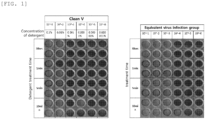
FIG. 1 illustrates results of measuring the corona virus removal rate in a diluted solution containing a detergent composition according to Example 2 of the present invention at a concentration of 0.1%. -
FIG. 2 illustrates basal cytotoxicity evaluation results of the detergent composition according to Example 2 of the present invention. -
FIGS. 3 to 6 are photographs of cleaning ability test results and turbidity measurement of the solutions when washing vegetable oil using each of the detergent compositions according to the examples and comparative examples of the present invention. -
FIG. 7 is a photograph of turbidity measurement of a solution showing test results of animal oil washing ability of each of the detergent compositions according to Example 2 and Comparative Example 1 of the present invention. - Hereinafter, the present invention will be described in more detail as follows.
- The terminology used herein is used to describe specific embodiments, not to limit the present invention.
- As used herein, the singular form may include the plural form unless the context clearly dictates otherwise. Further, as used herein, "comprise" and/or "comprising" refers to the specific existence of the recited shapes, numbers, steps, actions, members, elements and/or groups thereof, and does not exclude the presence or addition of one or more other shapes, numbers, movements, members, elements and/or groups.
- The present invention relates to a detergent composition effective for removing viruses, particularly corona viruses.
- The detergent composition according to the present invention may include: 10 to 30% by weight ("wt.%") of octylphenol ethoxylate (the number (n) of ethylene oxides contained in the ethoxylate is 2 to 15); 0.1 to 5 wt.% of 2-ethylhexyl alcohol ethoxylate; 0.1 to 5 wt.% of ethylene oxide-propylene oxide block copolymer; and the balance of water, based on a total 100 wt.% of the composition.
- The octylphenol ethoxylate is included as a main component of the detergent composition of the present invention, and may serve to remove and inhibit the corona virus.
- In the octylphenol ethoxylate of the present invention, the octylphenol group is a C8 alkyl group containing an aromatic phenol group, and has a branched structure rather than a linear structure, such that this can be well combined with a hydrophobic portion consisting of a long carbon chain included in the phospholipid membrane of corona virus. Further, it is expected to increase the hydrophobicity due to the branched complex structure, which increases the aggregation number, thereby improving the solubilization ability of the phospholipid membrane of the corona virus.
- Further, when having a branched structure compared to a linear structure, it is possible to form a structure that is much advantageous for dissolving the phospholipid bilayer because a packing density in micelles may decrease due to the repulsive force between hydrophobic hydrocarbons during the formation of the complex phospholipid bilayer structure and the micelles.
- Further, the ethylene oxide moiety may serve to impart hydrophilicity to hydrophobicity of the long carbon chain. Therefore, "n" representing the number of ethylene oxides may range from 2 to 15, preferably 5 to 10, and it is preferable to mix and use two or more materials having the different numbers of n so as to desirably adjust the hydrophilicity.
- If n is less than 2 in the octylphenol ethoxylate, this component does not have hydrophilicity enough to dissolve the phospholipid membrane of the corona virus, and may cause a problem in that the component is trapped between the long carbon chains of the corona virus phospholipid membrane. Further, this is undesirable since it may be difficult to prepare a formulation. On the other hand, if n exceeds 15, the hydrophilic property is too much due to an excess content of ethylene oxide, hence it is not preferable since the phospholipid membrane cannot be dissolved in the composition.
- Such octylphenol ethoxylate may be included in 10 to 30 wt.% of the total detergent composition, and if the content is less than 10 wt.%, it is insufficient to exhibit the effects of removing and inhibiting the corona virus. If the content exceeds 30 wt.%, it is not preferable because additional effects are not exhibited.
- Further, it is preferable that the detergent composition according to the present invention contains 2-ethylhexyl alcohol ethoxylate to increase penetration when it enters between the phospholipid membranes of the corona virus. Since the 2-ethylhexyl alcohol ethoxylate also has a less regular structure in which a hydrocarbon is substituted in the side chain, it may be expected to increase the penetration by separating a gap when entering between the phospholipid bilayer. The 2-ethylhexyl alcohol ethoxylate in which a hydrocarbon is substituted in the side chain may be included in an amount of 0.1 to 5 wt. % of the total detergent composition. If it is less than 0.1 wt.%, desired effects cannot be obtained. Further, if it exceeds 5 wt.%, it is also not preferable because additional effects of increasing the penetration cannot be obtained.
- The ethylene oxide-propylene oxide block copolymer of the present invention is prepared by copolymerizing ethylene oxide and propylene oxide, and may be added to suppress the generation of bubbles during the preparation of the detergent composition. Further, the block copolymer may be included in an amount of 0.1 to 5 wt.% among the total detergent composition to effectively remove bubbles.
- Further, the detergent composition of the present invention may include the balance of water other than the above configuration. The water is not particularly limited and may include, for example, general tap water, purified water from which all impurities such as dissolved ions, solid particles, microorganisms, and organic matter contained in general water are removed and the like.
- Further, if necessary, the purified water may include less than 20 wt.% of ethanol in order to reduce a viscosity of the final detergent composition, to remove bubbles generated during the preparation of the detergent composition, or to improve preservation property of the detergent composition at a low temperature such as in winter.
- In addition, the detergent composition according to the present invention may further include lauryl alcohol ethoxylate in an amount of 0.1 to 5 wt. % of the total composition, which is used as an adjuvant for octylphenol ethoxylate so as to effectively dissolve a phospholipid membrane.
- The detergent composition according to the present invention may be easily prepared by mixing individual components well at room temperature (r.t.), and the prepared detergent composition has a hydrophobicity and hydrophilicity balance (HLB) value in a range of 12 to 15. Thus, when used as a cleaning agent for various purposes, appropriate micelles are formed in water to enhance the cleaning effect.
- The detergent composition according to the present invention may be used for cleaning all contaminants regardless of aqueous or oily properties, such as removal of corona virus, removal of oil stains, removal of kitchen dirt, bathroom cleaning, cleaning of mechanical equipment and parts, and removal of oil stains for clothes.
- Among them, in particular, the detergent composition according to the present invention may demonstrate effects of removing 99.99% of the corona virus such as SARS (Severe Acute Respiratory Syndrome), MERS (Middle East respiratory syndrome), novel corona virus, etc. in 30 seconds.
- Further, the detergent composition according to the present invention has a feature that germs (bacteria) are not removed while eliminating the corona virus. In other words, it may have selectivity to eliminate only the virus we want to remove, while not killing other bacteria that can diversely exist regardless of harmfulness or harmlessness thereof.
- Viruses are far more lethal to the human body and always cause disease, whereas bacteria are independent microorganisms with unique complexity and reproductive functions. Further, bacteria may also be utilized in human organs, for example, the gut flora may manage and maintain the pH level of the digestive system. Of course, when there are too many bacteria in the body or infection occurs with pathogenic bacteria, it may lead to a disease. On the other hand, bacteriophages (a.k.a bactericidal bacteria) may also be used to treat diseases
- Therefore, from the point of view as above, when the detergent composition according to the present invention is used, it would be understood that the target corona virus is effectively removed and suppressed, while diverse bacteria present in a microbial system are not removed, simultaneously.
- Further, since the detergent composition according to the present invention has a feature that does not have skin toxicity, it can be safely used without other side effects when sprayed on the human body for prevention and removal of corona virus or used for disinfection of hands.
- Further, the detergent composition according to the present invention is characterized by having the neutral pH of about 6.5 to 7. Accordingly, there is an advantage of minimizing damage or deterioration of the material to be cleaned, while being characterized by excellent cleaning effects.
- Further, the detergent composition prepared according to the present invention is applicable to a variety of certain and desired uses such as for spraying, disinfection, cleaning, or the like, by diluting the same in water.
- Hereinafter, preferred embodiments of the present invention will be described in detail. The following examples are only for illustrating the present invention, and the scope of the present invention should not be construed as being limited by these examples. In addition, although specific compounds are used in the following examples, it is apparent to those skilled in the art that similar effects can be exerted even when equivalents thereof are used.
- According to the constitutional composition of Table 1 below, each composition was put in purified water, mixed at 18 °C, and thoroughly stirred to prepare each detergent composition. In the following Table 1, Comparative Example 1 is an example in which the range of n in octylphenol ethoxylate, as the main component of the detergent composition of the present invention, is out of the scope of the present invention; Comparative Examples 2 and 3 are examples in which the range of n in octylphenol ethoxylate as the main component of the detergent composition of the present invention belongs to the scope of the present invention but its content ratio is out of the scope of the present invention.
[TABLE 1] Content (weight %) Water Octylphenol ethoxylate 2-ethylhexyl alcohol ethoxylate Ethylene oxide-propylene oxide block copolymer Lauryl alcohol ethoxylate n (conten t) n (conten t) Example 1 82.7 3 (10) 13 (6) 0.3 1.0 - Example 2 72.0 7 (8) 10 (18) 0.5 0.5 1.0 Example 3 58.5 10 (15) 2 (15) 3.5 5.0 3.0 Comparative Example 1 88.0 1 (10) - 0.5 0.5 1.0 Comparative Example 2 58.5 - 16 (30) 3.5 5.0 3.0 Comparative Example 3 89.7 5 (5) 15 (4) 0.3 1.0 - Comparative Example 4 72.0 NEODOL ethoxylates (1) (26) 0.5 0.5 1.0 (1) NEODOL 91 (C9 to C11 alcohols) reacted with ethylene oxide to have a linear structure of primary alcohol (from Shell) - In order to evaluate the corona virus removal rate (corona virus inactivation efficacy) of the detergent composition (Clean V) according to Example 2 prepared above, an experiment was performed as follows.
- 1 × 10⁴ Vero cells (monkey kidney epithelial cells) were cultured per well in a 96-well cell plate. Then, after dispensing 1 × 10³ to 5 × 10³ infectious viruses into an EP tube, the virus-cell culture medium (Gibco DMEM-0% FBS) was mixed so that the detergent has a concentration of 0.1%, followed by conducting a reaction for a reaction time of 30 seconds, 1 minute, 5 minutes and 10 minutes, respectively.
- After the reaction was completed, the cell culture medium was rapidly frozen using dry ice, and the sample was stored in a deep freezer at -80 °C. The prepared sample was diluted stepwise by 10-fold in a 96-well U-bottom plate using the cell culture medium. Cells cultured in the 96-well cell plate were washed once with 1x phosphate buffered saline (PBS), and the diluted sample was moved to the washed cells and reacted for 1 hour and 30 minutes. After completing the reaction, the previously contained cell culture medium was removed and replaced with a fresh cell culture medium containing an appropriate concentration of TPCK trypsin.
- Cell transformation and SARS-CoV-2 virus proliferation were visually observed through a microscope for 2-3 days. Surviving cells were stained with 10% Crystal violet dye on the 3rd day after infection. Results thereof are shown in
FIG. 1 below. - Next, referring to the results of
FIG. 1 , cells killed by virus or cells killed by detergent toxicity were not stained and observed transparently, while surviving cells were stained with crystal violet and thus were observed to be dark purple. - As a result of sterilizing about 1000 SARS-CoV-2 viruses in a cell culture medium with 0.1% detergent concentration for 30 seconds, the inhibitory effect was shown about 100 times greater than that of the visually equivalent virus-infected group, and it could be seen that the inhibitory efficacy was approximately 100-fold greater than that of the visually equivalent virus-infected group in all sterilization time conditions such as 30 seconds, 1 min, 5 min, and 10 min, respectively.
- Except for the cytotoxicity caused by the detergent performed in Experimental Example 2 below, viruses were found to be inactivated under all dilution conditions including high concentrations in which about 1,000 to 5,000 SARS-CoV-2 viruses can grow. Therefore, it was confirmed that the corona virus inactivation efficacy of the detergent composition according to the present invention is 99% or more. In other words, it was determined that the detergent composition (sample name: Clean V) prepared according to Example 2 of the present invention has a corona virus (COVID-19) removal rate of 99.99% over 30 seconds to 10 minutes compared to the control, even when used in diluted state at a concentration of 0.1%. That is, it can be confirmed that an effective corona virus removal rate of 99.99% is achieved in a very short time of 30 seconds.
- In order to evaluate the cytotoxicity of the detergent composition (Clean V) according to Example 2, an experiment was performed as follows.
- 1 × 10⁴ Vero cells (monkey kidney epithelial cells) were cultured per well in a 96-well cell plate. A detergent and a cell culture medium were mixed under the same conditions as in Experimental Example 1 above. The prepared sample was diluted stepwise by 2-fold in a 96-well U-bottom plate using the cell culture medium. Cells cultured in the 96-well cell plate were washed once with 1x phosphate buffered saline (PBS), and the serially diluted sample was moved to the washed cells and reacted for 1 hour and 30 minutes. After completing the reaction, the previously contained cell culture medium was removed and replaced with a fresh cell culture medium containing an appropriate concentration of TPCK trypsin. Then, the cell transformation was visually observed through a microscope for 2-3 days. On the 3rd day after treatment, surviving cells were stained using 10% Crystal violet dye, and results thereof are shown in
FIG. 2 below. - Next, referring to
FIG. 2 , as a result of administering a mixed cell culture medium having a concentration of 0.1 to 0.006% detergent to uninfected cells, cytotoxicity was observed for the detergent concentration of up to 0.025%. - The vegetable oil washing ability of each of the detergent compositions according to the above examples and comparative examples was subjected to comparison experiments. Vegetable oil (perilla oil) was applied in the same amount and size to the surface of SUS having a predetermined size and then washed with water at 70 °C. Following this, the detergent composition was diluted in water to prepare each of solutions at a concentration of 4% and 20%, respectively. The above SUS was washed again with the diluted solution at 60 °C and dried. Then, 50 ml of methyl alcohol was added to the surface of SUS in order to dissolve the remaining vegetable oil, followed by collecting the same. Further, the same amount, that is, 50 ml of water was added, followed by visually observing the surface state and solution state used in each test, and the results were respectively shown in
FIGS. 3 to 4 (surface) andFIGS. 5 to 6 (solution) below. - Next, referring to
FIGS. 3 and4 , the reaction rates of the composition according to the example of the present invention and the composition according to the comparative example were similar to each other, however, it was observed that, when the surface treated with vegetable oil was washed using the composition according to the example, a content of the remaining vegetable of oil is lower. - Further, referring to
FIGS. 5 to 6 , when using Comparative Example 1 in which the number of ethylene oxides in octylphenol ethoxylate is out of the scope of the present invention, it was observed that the vegetable oil was not completely washed but separated from the mixture of methyl alcohol and water, and thus, lots of floats are floated thereon. - Further, in the case of Comparative Example 2 in which, even though the number of ethylene oxides in octylphenol ethoxylate is the same, its content is out of the scope of the present invention, the vegetable oil is not completely washed but remains, as compared to Example 3 having the same number of ethylene oxides. Therefore, it was observed to the vegetable oil still remains in a mixture of methyl alcohol and water.
- In Experiment Example 4, except for using animal oil (pork oil) instead of the vegetable oil, the washing ability was tested by the same process as in the above Experimental Example 3 using the vegetable oil, wherein each of the detergent compositions according to Example 2 and Comparative Example 4 was diluted in water to a concentration of 20%, and used in the experiment. Results thereof are shown in
FIG. 7 . - Next, referring to
FIG. 7 , the composition of Comparative Example 4 using a linear structure, instead of octylphenol ethoxylate having an aromatic structure and a branched structure in the present invention, showed that animal oil is not completely washed but separated from the mixture of methyl alcohol and water, as compared to the detergent composition according to Example 2 of the present invention. Therefore, it was observed that the solution was very turbid. - From these results, it was confirmed that the cleaning ability is significantly different depending on the structural characteristics of the components used in the detergent composition, and it could be understood that the cleaning ability is more excellent when the branched structure is also present along with the linear structure as in the present invention, compared to the case of having the linear structure alone.
Claims (9)
- A detergent composition, comprising:10 to 30% by weight of octylphenol ethoxylate;0.1 to 5% by weight of 2-ethylhexyl alcohol ethoxylate;0.1 to 5% by weight of ethylene oxide-propylene oxide block copolymer; andthe balance of water, based on a total 100% by weight of the composition.
- The detergent composition according to claim 1, further comprising lauryl alcohol ethoxylate in an amount of 0.1 to 5% by weight of the total composition.
- The detergent composition according to claim 1, wherein a corona virus removal rate in the diluted solution containing 0.1% by weight or less of the detergent composition is 99.99% in 30 seconds.
- The detergent composition according to claim 3, wherein bacteria are not removed when the corona virus is eliminated.
- The detergent composition according to claim 1, wherein the detergent composition does not have skin toxicity.
- The detergent composition according to claim 1, wherein the detergent composition is used for removing corona virus, removing oil stains, removing old kitchen stains, cleaning bathrooms, cleaning mechanical equipment and parts, and removing oil stains for clothes.
- The detergent composition according to claim 1, wherein the detergent composition maintains a neutral pH of 6.5 to 7.
- The detergent composition according to claim 1, wherein the detergent composition is used by diluting the same in water to reach a content of 5% by weight or less.
- The detergent composition according to claim 1, wherein the balance of water further includes ethanol in an amount of 20% by weight or less.
Applications Claiming Priority (2)
| Application Number | Priority Date | Filing Date | Title |
|---|---|---|---|
| KR1020200137612A KR102270165B1 (en) | 2020-10-22 | 2020-10-22 | Sanitizer composition |
| PCT/KR2021/014901 WO2022086266A1 (en) | 2020-10-22 | 2021-10-22 | Detergent composition |
Publications (2)
| Publication Number | Publication Date |
|---|---|
| EP4234670A1 true EP4234670A1 (en) | 2023-08-30 |
| EP4234670A4 EP4234670A4 (en) | 2024-07-24 |
Family
ID=76607623
Family Applications (1)
| Application Number | Title | Priority Date | Filing Date |
|---|---|---|---|
| EP21883333.3A Pending EP4234670A4 (en) | 2020-10-22 | 2021-10-22 | DETERGENT COMPOSITION |
Country Status (6)
| Country | Link |
|---|---|
| US (1) | US12454659B2 (en) |
| EP (1) | EP4234670A4 (en) |
| JP (1) | JP7655516B2 (en) |
| KR (1) | KR102270165B1 (en) |
| CN (1) | CN116685666A (en) |
| WO (1) | WO2022086266A1 (en) |
Families Citing this family (2)
| Publication number | Priority date | Publication date | Assignee | Title |
|---|---|---|---|---|
| KR102270165B1 (en) | 2020-10-22 | 2021-06-28 | 한국화학연구원 | Sanitizer composition |
| KR102420201B1 (en) * | 2022-01-17 | 2022-07-13 | 주식회사 유이케미칼 | Eco-friendly quarantine composition with virus killing function with phospholipid envelope |
Family Cites Families (15)
| Publication number | Priority date | Publication date | Assignee | Title |
|---|---|---|---|---|
| JPH0680992A (en) * | 1992-09-03 | 1994-03-22 | S N Ii Sogo Kenkyusho:Kk | Method for producing cleaning agent and mineral ionic liquid |
| US6425959B1 (en) * | 1999-06-24 | 2002-07-30 | Ecolab Inc. | Detergent compositions for the removal of complex organic or greasy soils |
| JP4198530B2 (en) | 2003-05-30 | 2008-12-17 | 花王株式会社 | Liquid detergent composition |
| JP3987028B2 (en) | 2003-12-12 | 2007-10-03 | 花王株式会社 | Liquid detergent composition |
| PE20061428A1 (en) | 2005-03-23 | 2007-01-16 | Glaxosmithkline Biolog Sa | VACCINE FORMULATION INCLUDING AN OIL EMULSION ADJUVANT IN WATER AND 3D-MPL |
| US7332463B2 (en) | 2005-04-22 | 2008-02-19 | On Legal Grounds, Inc. | Colloidal cleaning system comprising a saponified fatty acid and an anionic/nonionic surfactant mixture |
| US7838485B2 (en) * | 2007-03-08 | 2010-11-23 | American Sterilizer Company | Biodegradable alkaline disinfectant cleaner with analyzable surfactant |
| US20130053291A1 (en) | 2011-08-22 | 2013-02-28 | Atsushi Otake | Composition for cleaning substrates post-chemical mechanical polishing |
| AU2012377291A1 (en) * | 2012-04-19 | 2014-10-23 | General Electric Company | A method to stabilize liposome emulsions for biocidal delivery |
| RU2707951C1 (en) | 2013-11-15 | 2019-12-02 | Дженентек, Инк. | Methods of virus inactivation using environmental-friendly detergents |
| WO2015079451A1 (en) * | 2013-11-29 | 2015-06-04 | Reliance Industries Limited | Alkylphenol ethoxylates and a process for preparing the same |
| EP3532590B1 (en) * | 2016-10-31 | 2020-08-19 | SABIC Global Technologies B.V. | 2-ethylhexanol ethoxylate as a hydrotrope in liquid detergents |
| JP6688929B1 (en) | 2019-05-30 | 2020-04-28 | 株式会社ニイタカ | Disinfectant composition, sanitary material, food cleaning agent, and food preservative |
| KR20200137612A (en) | 2019-05-31 | 2020-12-09 | 현대자동차주식회사 | Hydrogen tank having mounting device and method for manufacturing the same |
| KR102270165B1 (en) * | 2020-10-22 | 2021-06-28 | 한국화학연구원 | Sanitizer composition |
-
2020
- 2020-10-22 KR KR1020200137612A patent/KR102270165B1/en active Active
-
2021
- 2021-10-22 US US18/032,938 patent/US12454659B2/en active Active
- 2021-10-22 WO PCT/KR2021/014901 patent/WO2022086266A1/en not_active Ceased
- 2021-10-22 CN CN202180085906.6A patent/CN116685666A/en active Pending
- 2021-10-22 JP JP2023549791A patent/JP7655516B2/en active Active
- 2021-10-22 EP EP21883333.3A patent/EP4234670A4/en active Pending
Also Published As
| Publication number | Publication date |
|---|---|
| US12454659B2 (en) | 2025-10-28 |
| US20230399581A1 (en) | 2023-12-14 |
| CN116685666A (en) | 2023-09-01 |
| WO2022086266A1 (en) | 2022-04-28 |
| JP2023547574A (en) | 2023-11-10 |
| EP4234670A4 (en) | 2024-07-24 |
| KR102270165B1 (en) | 2021-06-28 |
| JP7655516B2 (en) | 2025-04-02 |
Similar Documents
| Publication | Publication Date | Title |
|---|---|---|
| JP5932802B2 (en) | Antibacterial composition containing a cationic active ingredient and a surfactant derived from a quaternary sugar | |
| TW491713B (en) | Process and composition for cleaning medical instruments | |
| JP5476338B2 (en) | Hydrogen peroxide disinfectant containing cyclic carboxylic acid and / or aromatic alcohol | |
| AU2004273779A2 (en) | Compositions for inactivating pathogenic microorganisms, methods of making the compositions, and methods of use thereof | |
| JPWO2010047108A1 (en) | Calicivirus inactivation method | |
| KR20170005407A (en) | A liquid antimicrobial composition | |
| US12454659B2 (en) | Virucidal detergent composition comprising a ternary combination of nonionic surfactants | |
| JP2009173768A (en) | Sterilizing detergent composition for toilet seat, sterilizing cleaning material containing the same, and sterilizing cleaning method using them | |
| WO2011044916A1 (en) | Multipurpose eco-friendly disinfecting composition comprising nano size antibacterial agent | |
| EP4234669A1 (en) | Cleaning composition | |
| RU2308292C2 (en) | Disinfecting agent | |
| EP4466996A1 (en) | Eco-friendly quarantine composition having function of killing phospholipid enveloped virus | |
| US20060058213A1 (en) | Anti-viral and anti-bacterial cleaning composition | |
| JP2007513208A (en) | Antiviral and antibacterial cleaning compositions | |
| KR102202917B1 (en) | Compositions for sterilization and disinfection and the manufacturing method thereof | |
| FI129473B (en) | Method for preparing a cleaning solution and method for cleaning targets containing impurities | |
| RU2230574C1 (en) | Disinfecting agent | |
| WO2008122773A2 (en) | Biocidal composition | |
| Fahad et al. | Preparation and studying of the physiochemical properties and antimicrobial activity of new triple-action glass cleaners | |
| EP4140301A1 (en) | Compositions | |
| WO2005089820A1 (en) | Cleaning composition | |
| WO2021105956A1 (en) | Disinfectant composition | |
| JP2012524570A (en) | Method for killing mycobacteria or inhibiting its growth | |
| CA2297350A1 (en) | Wide range cleaning and disinfecting preparation | |
| AU2007200109A1 (en) | Process and composition for cleaning medical instruments |
Legal Events
| Date | Code | Title | Description |
|---|---|---|---|
| STAA | Information on the status of an ep patent application or granted ep patent |
Free format text: STATUS: THE INTERNATIONAL PUBLICATION HAS BEEN MADE |
|
| PUAI | Public reference made under article 153(3) epc to a published international application that has entered the european phase |
Free format text: ORIGINAL CODE: 0009012 |
|
| STAA | Information on the status of an ep patent application or granted ep patent |
Free format text: STATUS: REQUEST FOR EXAMINATION WAS MADE |
|
| 17P | Request for examination filed |
Effective date: 20230522 |
|
| AK | Designated contracting states |
Kind code of ref document: A1 Designated state(s): AL AT BE BG CH CY CZ DE DK EE ES FI FR GB GR HR HU IE IS IT LI LT LU LV MC MK MT NL NO PL PT RO RS SE SI SK SM TR |
|
| DAV | Request for validation of the european patent (deleted) | ||
| DAX | Request for extension of the european patent (deleted) | ||
| A4 | Supplementary search report drawn up and despatched |
Effective date: 20240621 |
|
| RIC1 | Information provided on ipc code assigned before grant |
Ipc: A61Q 17/00 20060101ALI20240617BHEP Ipc: A61K 8/86 20060101ALI20240617BHEP Ipc: A61K 8/39 20060101ALI20240617BHEP Ipc: C11D 3/37 20060101ALI20240617BHEP Ipc: C11D 3/20 20060101AFI20240617BHEP |