EP4234007B1 - System und vorrichtung zur behandlung und compliance-überwachung - Google Patents
System und vorrichtung zur behandlung und compliance-überwachung Download PDFInfo
- Publication number
- EP4234007B1 EP4234007B1 EP23177790.5A EP23177790A EP4234007B1 EP 4234007 B1 EP4234007 B1 EP 4234007B1 EP 23177790 A EP23177790 A EP 23177790A EP 4234007 B1 EP4234007 B1 EP 4234007B1
- Authority
- EP
- European Patent Office
- Prior art keywords
- tissue engineering
- compliance
- data
- treatment
- server
- Prior art date
- Legal status (The legal status is an assumption and is not a legal conclusion. Google has not performed a legal analysis and makes no representation as to the accuracy of the status listed.)
- Active
Links
Images





Classifications
-
- A—HUMAN NECESSITIES
- A61—MEDICAL OR VETERINARY SCIENCE; HYGIENE
- A61N—ELECTROTHERAPY; MAGNETOTHERAPY; RADIATION THERAPY; ULTRASOUND THERAPY
- A61N1/00—Electrotherapy; Circuits therefor
- A61N1/18—Applying electric currents by contact electrodes
- A61N1/32—Applying electric currents by contact electrodes alternating or intermittent currents
- A61N1/326—Applying electric currents by contact electrodes alternating or intermittent currents for promoting growth of cells, e.g. bone cells
-
- A—HUMAN NECESSITIES
- A61—MEDICAL OR VETERINARY SCIENCE; HYGIENE
- A61N—ELECTROTHERAPY; MAGNETOTHERAPY; RADIATION THERAPY; ULTRASOUND THERAPY
- A61N1/00—Electrotherapy; Circuits therefor
- A61N1/02—Details
- A61N1/08—Arrangements or circuits for monitoring, protecting, controlling or indicating
-
- A—HUMAN NECESSITIES
- A61—MEDICAL OR VETERINARY SCIENCE; HYGIENE
- A61N—ELECTROTHERAPY; MAGNETOTHERAPY; RADIATION THERAPY; ULTRASOUND THERAPY
- A61N1/00—Electrotherapy; Circuits therefor
- A61N1/18—Applying electric currents by contact electrodes
- A61N1/32—Applying electric currents by contact electrodes alternating or intermittent currents
- A61N1/36—Applying electric currents by contact electrodes alternating or intermittent currents for stimulation
- A61N1/36003—Applying electric currents by contact electrodes alternating or intermittent currents for stimulation of motor muscles, e.g. for walking assistance
-
- A—HUMAN NECESSITIES
- A61—MEDICAL OR VETERINARY SCIENCE; HYGIENE
- A61N—ELECTROTHERAPY; MAGNETOTHERAPY; RADIATION THERAPY; ULTRASOUND THERAPY
- A61N1/00—Electrotherapy; Circuits therefor
- A61N1/18—Applying electric currents by contact electrodes
- A61N1/32—Applying electric currents by contact electrodes alternating or intermittent currents
- A61N1/36—Applying electric currents by contact electrodes alternating or intermittent currents for stimulation
- A61N1/36014—External stimulators, e.g. with patch electrodes
- A61N1/36025—External stimulators, e.g. with patch electrodes for treating a mental or cerebral condition
-
- A—HUMAN NECESSITIES
- A61—MEDICAL OR VETERINARY SCIENCE; HYGIENE
- A61N—ELECTROTHERAPY; MAGNETOTHERAPY; RADIATION THERAPY; ULTRASOUND THERAPY
- A61N1/00—Electrotherapy; Circuits therefor
- A61N1/40—Applying electric fields by inductive or capacitive coupling ; Applying radio-frequency signals
-
- A—HUMAN NECESSITIES
- A61—MEDICAL OR VETERINARY SCIENCE; HYGIENE
- A61N—ELECTROTHERAPY; MAGNETOTHERAPY; RADIATION THERAPY; ULTRASOUND THERAPY
- A61N1/00—Electrotherapy; Circuits therefor
- A61N1/02—Details
- A61N1/025—Digital circuitry features of electrotherapy devices, e.g. memory, clocks, processors
-
- A—HUMAN NECESSITIES
- A61—MEDICAL OR VETERINARY SCIENCE; HYGIENE
- A61N—ELECTROTHERAPY; MAGNETOTHERAPY; RADIATION THERAPY; ULTRASOUND THERAPY
- A61N1/00—Electrotherapy; Circuits therefor
- A61N1/02—Details
- A61N1/04—Electrodes
- A61N1/0404—Electrodes for external use
- A61N1/0472—Structure-related aspects
- A61N1/0476—Array electrodes (including any electrode arrangement with more than one electrode for at least one of the polarities)
-
- A—HUMAN NECESSITIES
- A61—MEDICAL OR VETERINARY SCIENCE; HYGIENE
- A61N—ELECTROTHERAPY; MAGNETOTHERAPY; RADIATION THERAPY; ULTRASOUND THERAPY
- A61N1/00—Electrotherapy; Circuits therefor
- A61N1/18—Applying electric currents by contact electrodes
- A61N1/32—Applying electric currents by contact electrodes alternating or intermittent currents
- A61N1/36—Applying electric currents by contact electrodes alternating or intermittent currents for stimulation
- A61N1/372—Arrangements in connection with the implantation of stimulators
- A61N1/37211—Means for communicating with stimulators
-
- A—HUMAN NECESSITIES
- A61—MEDICAL OR VETERINARY SCIENCE; HYGIENE
- A61N—ELECTROTHERAPY; MAGNETOTHERAPY; RADIATION THERAPY; ULTRASOUND THERAPY
- A61N2/00—Magnetotherapy
- A61N2/02—Magnetotherapy using magnetic fields produced by coils, including single turn loops or electromagnets
-
- A—HUMAN NECESSITIES
- A61—MEDICAL OR VETERINARY SCIENCE; HYGIENE
- A61N—ELECTROTHERAPY; MAGNETOTHERAPY; RADIATION THERAPY; ULTRASOUND THERAPY
- A61N7/00—Ultrasound therapy
- A61N2007/0004—Applications of ultrasound therapy
Definitions
- PEMF pulsed electromagnetic fields
- An approach to treating various types of musculoskeletal issues involves applying pulsed electromagnetic fields (PEMF) to the general areas of the body where the musculoskeletal issues exist.
- PEMF involves low-energy, time-varying pulses of magnetic fields.
- PEMF is therapeutic to various issues including fractures, spinal fusion, ligament injuries, tendon injuries, and osteoporosis as just a few examples.
- PEMF has been clinically observed to benefit in stimulating tissue differentiation and/or tissue generation when performed according to prescribed measures (i.e., duration of treatment per use, intensity of treatment, number of uses over time, etc.).
- tissue engineering device that provides the PEMF treatment
- the physician tasked with treating the musculoskeletal issue can monitor whether the tissue engineering device (that provides the PEMF treatment) was activated in a given day or not. But this is not always tantamount to the patient actually complying with the treatment regimen.
- the tissue engineering device may be turned on but not actually applied to the tissue of the patient (e.g., activated and left on a chair, tabletop, etc.).
- the memory 204 may include a cache memory (e.g., a cache memory of the processor 302), random access memory (RAM), magnetoresistive RAM (MRAM), read-only memory (ROM), programmable read-only memory (PROM), erasable programmable read only memory (EPROM), electrically erasable programmable read only memory (EEPROM), flash memory, solid state memory device, hard disk drives, other forms of volatile and non-volatile memory, or a combination of different types of memory.
- the memory 204 may include a non-transitory computer-readable medium.
- the memory 204 may store instructions 206.
- the coil 208 provides PEMF pulses according to embodiments of the present disclosure.
- Control electronics for the coil 208 may be included as part of the processor 202 (e.g., in combination with instructions 206 in the memory 204) or alternatively be separate hardware.
- the coil 208 may be constructed with multiple windings of any suitable material for generating electromagnetic fields according to the treatment regimen as provided by the processor 202.
- the processor 202 may access the treatment regimen stored in the memory 204 that causes current to pass through the coil 208, including according to a set rise and/or fall time, duty cycle, amplitude, frequency, etc. for the current so as to generate electromagnetic frequency pulses of a desired duration, size, shape, and frequency.
- the treatment regimen may be modified via one or more updates received from the server 108, whether via the UE 104 or other network components/connections.
- the treatment regimen may include programmed pulse trains, where each pulse train includes a specified number of pulses with specified duration (and rise/fall times with specified amplitude), and repeated in a fixed pattern over time (i.e., duty cycle) over the course of a given treatment period.
- a given treatment period may be specified to last for several hours each day - the treatment period may refer to the two hour duration specified per day, which may be repeated for a longer duration such as over weeks or months.
- a heartbeat LED may indicate a treatment status for the periodic application of the PEMF over the long-term duration.
- sensor 210.a through 210.n represent any number of sensors that may monitor different aspects of operation of the tissue engineering device 102 according to embodiments of the present disclosure.
- sensor 210.a may be an accelerometer.
- the accelerometer may sense this motion and output, e.g. when polled, periodic status indicators identifying whether motion has been detected.
- the accelerometer may be polled by the processor 202 to determine whether motion is detected; if so, the data output may be a yes (e.g., a first binary value) and if not then a no (e.g., a second binary value). Over multiple such intervals, e.g. after 3 seconds, if motion is detected with any poll of the accelerometer, then this is identified as "yes" for the 3 second chunk of time. After multiple 3 second chunks of time, e.g. after 30 seconds, if more than half of the 3 second chunks of time are identified as "yes,” then the 30 second chunk of time is identified as "yes.” After multiple 30 second chunks of time, e.g.
- the 5 minute chunk is identified as “yes.” This may again occur with a longer chunk of time, e.g. 30 minutes.
- the thresholds e.g., half or a quarter
- sensor 210.n may be an infrared sensor.
- the infrared sensor may be used to detect whether something is within a threshold proximity of the sensor. Therefore, the infrared sensor may be placed (one or more) in a location of the tissue engineering device 102 intended to face the body of the patient receiving treatment.
- the tissue engineering device may include a capacitive sensor instead of or in addition to the infrared sensor.
- the infrared sensor may operate in cooperation with the accelerometer to assist in identifying whether the tissue engineering device 102 is being used in accordance with the treatment regimen.
- the processor 202 may periodically poll the infrared device to determine whether it is detecting proximity to another object (e.g., some part of the patient). If not, then it may be concluded that even if motion is detected by the accelerometer, the tissue engineering device 102 is not being used for treatment. In contrast, if the infrared sensor indicates close proximity to an object, but the accelerometer does not detect motion above a threshold amount, then it may be inferred that the tissue engineering device 102 is not being used for treatment. This may occur, for example, where the tissue engineering device 102 is placed on some vibrating object such as a laundry machine.
- the tissue engineering device 102 may include a global positioning system (GPS) device.
- GPS global positioning system
- the GPS device may detect the location of the tissue engineering device 102 and provide that to the processor 202 for further analysis. For example, the location of the patient's preferred place of treatment may be stored and compared against whenever the coil 208 is activated. If the GPS device detects a location outside a threshold radius of the preferred place, then it may be inferred that treatment is not occurring (unless the patient expressly inputs that treatment is occurring).
- the tissue engineering device 102 may include an impedance monitor sensor (also referred to as simply an impedance monitor).
- the impedance monitor may use impedance spectroscopy to identify different types of tissue of the patient and correlate that to the known types of tissues present in the different stages of healing. This data may be included to assist in monitoring the progress of healing, which may be correlated to the level of compliance that the patient has over time with the tissue engineering device 102.
- the impedance monitor may be an ultrasound or electromagnetic field.
- the impedance monitor sensor may be a type of sensor to monitor healing.
- This may include an impedance monitor sensor as noted above.
- it may include a sensor such as x-rays (e.g., low-energy x-rays), ultrasound, electrical impedance tomography, or other approaches to measure healing or density such as measuring electrical and/or electroacoustic properties of healing tissue, etc. (e.g., some combination of the above sensor types). All of these approaches may be referred to herein generically under “impedance monitoring” and “impedance monitoring sensors” for purposes of simplicity of discussion.
- sensors 210.a through 210.n that may be included with the tissue engineering device 102, and which may be used to output data (historical and/or current) that assists in determining an amount of progress for a current application period as well as multiple application periods over time. Any combination of the sensors may be included in a given tissue engineering device 102, or all of them in cooperation with each other.
- the transceiver 212 may include the modem subsystem 214 and the radio frequency (RF) unit 216.
- the transceiver 212 can be configured to communicate bidirectionally with other devices, such as UEs 104 and/or other network elements such as those in the wireless network 106.
- the modem subsystem 214 may be configured to modulate and/or encode data according to any of a variety of coding schemes.
- the RF unit 216 may be configured to process (e.g., perform analog to digital conversion or digital to analog conversion, etc.) modulated/encoded data from the modem subsystem 214 (on outbound transmissions) or of transmissions originating from another source such as a UE 104.
- the modem subsystem 214 and the RF unit 216 may be separate devices that are coupled together to enable the tissue engineering device 102 to communicate with other devices.
- the transceiver 212 may be a Bluetooth low energy (BLE) device.
- the transceiver 212 may be a USB port, an Ethernet port, a cell module (e.g., LTE, 5G, etc.), a WiFi module, a ZigBee module, or a near field communication (NFC) module.
- the tissue engineering device 102 may further include multiple transceivers 212, such as a BLE device as well as a cell module to provide multiple forms of communication. In embodiments where multiple forms of communication are possible, the tissue engineering device 102 may communicate with different devices concurrently.
- the tissue engineering device 102 may pair with a first UE 104 via a first connection, such as BLE, and also pair with a second UE 104 via a second connection such as NFC. Further or alternatively, the tissue engineering device 102 may communicate with the network 106 via a cell module (where included) concurrent to pairing with one or more UEs 104.
- a first connection such as BLE
- a second UE 104 via a second connection such as NFC.
- the tissue engineering device 102 may communicate with the network 106 via a cell module (where included) concurrent to pairing with one or more UEs 104.
- FIG. 3 an organizational diagram 300 of an exemplary user device (UE) 104 (e.g. as introduced in FIG. 1 ) is illustrated according to aspects of the present disclosure.
- the UE 104 may be any of a variety of devices as discussed above with respect to FIG. 1 .
- the UE 104 may include a processor 302, a memory 304, a compliance module 308, transceivers 310.a and 310.b, and antennae 316.a and 316.b. These elements may be in direct or indirect communication with each other, for example via one or more buses.
- the memory 304 may include a cache memory (e.g., a cache memory of the processor 302), RAM, MRAM, ROM, PROM, EPROM, EEPROM, flash memory, solid state memory device, hard disk drives, other forms of volatile and non-volatile memory, or a combination of different types of memory.
- the memory 304 may include a non-transitory computer-readable medium.
- the memory 304 may store instructions 306.
- the instructions 306 may include instructions that, when executed by the processor 302, cause the processor 302 to perform operations described herein with reference to a UE 104 in connection with embodiments of the present disclosure.
- the compliance module 308 may cause a transceiver 310 to transmit this information (all or some of it) to the paired tissue engineering device 102 at the next (or a timed) opportunity.
- the transceiver 310.a (including modem 312.a and RF unit 314.a, coupled to antenna 316.a) may be a Bluetooth (or Bluetooth LE) device configured to pair with other BLE devices, such as when the transceiver 212 associated with tissue engineering device 102 is another BLE device.
- the transceiver 310.a may alternatively be, or additionally include, a USB port, an Ethernet port, a cell module (e.g., LTE, 5G, etc.), a WiFi module, a ZigBee module, or a near field communication (NFC) module.
- the UE 104 may receive monitored data via the transceiver 310.a (and in embodiments data entered by the user via the UE 104) and forward the data, or some subset thereof (e.g., stripped of patient information and/or encrypted where the tissue engineering device 102 did not do so) to the server 108 for back-end storage, data analysis, and/or access by one or more subscribing access devices 114.
- the calendar may both maintain the treatment regimen prescribed by the treating physician, but also provide an interface to the patient using the tissue engineering device 102 that identifies various treatment details. For example, each day may be illustrated with an icon, showing for example a timeframe (e.g., a week, a month, etc.) with each day identifying whether treatment was compliant or not (e.g., a green dot for the day where compliant, red for non-compliant, and some shade scale of colors for partial compliance that is understandable with a legend).
- the calendar may also summarize treatment details, such as identifying a number of days compliant treatment has occurred, identifying how many days are left over the period of time for the course of the treatment, etc.
- the calendar may further be used to organize pain scale and other information.
- pain scale data in particular, this may refer to a quantifiable pain scale that scales the amount of pain a user (of the tissue engineering device 102 as well as of the associated account profile that is accessible by the UE 104) is then feeling, whether in that moment or aggregated since the last periodic check.
- the scale may range, for example, between two numeric ends, such as zero and ten (or some other numbers, since this is exemplary only), with one end, such as zero, corresponding to no pain felt, to 10, a worst possible pain, with values in between scaling between the two.
- the interface may provide discrete value selections, e.g.
- the interface may constitute a sliding scale that the user may manipulate via finger, mouse, or other input.
- the periodicity of the pain scale collection may be on a daily basis, or that otherwise coincides with the periodicity of the treatment itself (e.g., daily, every other day, etc.).
- the compliance module 308 may associate, and store, the collected pain scale information with the day on which the pain scale data was collected.
- the compliance module 308 may cause the UE 104 to collect images of the treatment of the patient (user). This may also be done on a periodic basis. This periodic basis may be the same as the periodic basis of the pain scale information prompts (that prompt the user to input the information). In such embodiments, after collecting the pain scale information the compliance module 308 may prompt (e.g., via an interface of the UE 104, or which may be sent to the tissue engineering device 102 as a prompt to an interface of that device to collect the response) to collect an image of the treatment site on the patient. In other embodiments, the compliance module 308 may prompt the user of the UE 104 to collect an image of the treatment site in response to the collected pain scale information exceeded a threshold.
- the compliance module 308 compares the pain scale information after it is collected to the threshold and determines whether to prompt the user to collect the image based on the result.
- the images may also be associated as the pain scale information with the calendar, and the compliance module 308 may store the collected image with the pain scale information under the day on which the pain scale data was collected.
- this may assume the form of a pre-set field of possible options (e.g., a list of pre-selected activities of interest to the physician or the manufacturer of the tissue engineering device 102, or a list that may dynamically grow based on the user's selection of activities), with each selection providing some numeric value to assist in quantifying the activity level of the patient.
- a pre-set field of possible options e.g., a list of pre-selected activities of interest to the physician or the manufacturer of the tissue engineering device 102, or a list that may dynamically grow based on the user's selection of activities
- activity above a threshold level may raise a flag that triggers notification of the physician that prescribed the treatment regimen. This may be, at least in part, because an increase in particular activity levels may be an indicator of future pain scale information increases.
- the physician may review the activity, seek further information from the patient, send a message to the patient regarding risks of the activity, flag for subsequent scrutiny (e.g., because pain may increase later due at least in part to the activity), or take no action.
- the compliance module 308 may collect information regarding compliance in taking one or more prescribed medications associated with the treatment regimen.
- the compliance module 308 may, during a particular periodic treatment, provide a status indicator that identifies how much time is remaining for the current treatment as the patient desires it.
- the compliance module 308 may further provide reminders to the patient via multiple alert approaches, including audible alerts, text alerts, email alerts, and visual alerts.
- the alerts may be an alarm set to a particular time of day that the patient selected as the desired time to start treatment for that day per the regimen.
- the alarm may be audible and/or visual, as well as include a text or other notification that draws attention.
- the compliance module 308 may dynamically modify the intensity of the alert (whether in terms of frequency of the alert, noticeability of the alert, or some combination thereof). This may be modified based on treatment data received from the tissue engineering device 102 over time. Thus, for example, where the patient is compliant with treatment over time, the reminders may be minimized to a system tray reminder without audible and/or other visual alerts. If, however, the compliance is below a threshold, the alerts may become more aggressive, with audible alerts, changing volume (e.g., higher volume as percent compliant goes down over time), intrusive visual displays (e.g., to disrupt text reading such as text reminders, interactive text-based messages, etc.), as well as potentially short audible reminders during phone use.
- changing volume e.g., higher volume as percent compliant goes down over time
- intrusive visual displays e.g., to disrupt text reading such as text reminders, interactive text-based messages, etc.
- the compliance module 308 may dynamically reduce the reminders in either frequency or intensity, or both. For example, where on a given day the patient completes the treatment prior to a time for which reminders are scheduled, the compliance module 308 may cancel the reminder for that day. If, however, the time of day that the treatment occurs is important, the compliance module 308 may allow the alert to be, instead of a typical alert to treatment, a reminder that the time of day of treatment is important (where applicable) to the treatment in addition to the periodicity and duration. Where treatment is partially completed for the day when the reminder is scheduled, the reminder may be modified in its content and/or intensity to account for the amount of treatment already determined to be completed (e.g., from data already received from a paired tissue engineering device 102).
- the compliance module 308 may further include an interface that the user of the UE 104 may use to trigger the UE 104 (via transceiver 310.a for example) to search for other tissue engineering devices 102 with which to pair. This may be applicable, for example, where a representative of either the manufacturer or the prescribing physician, etc. periodically seeks to visit the patient and obtain data from the tissue engineering device 102 during that visit (a so-called milk run).
- the compliance module 308 allows the UE 104 to pair with multiple tissue engineering devices 102, whether in sequence or in parallel.
- the compliance module 308 may further include, such as in a management mode, useful information for the patient including an identified time/time of day prescribed for the PEMF treatment, a difference between the current time and the next prescribed treatment time, contact information for the prescribing physician and/or representative for the provider of the tissue engineering device 102, etc. Further, one or more links to online access systems, repositories, etc. may be provided. For example, a link may be provided to an online account system hosted by the server 110 of the manufacturer (or by the server 108) where the patient can update certain profile information. The compliance module 308 may further provide links to other patient treatment services as offered by the manufacturer and/or prescribing physician.
- the compliance module 308 causes the transceiver 310.b to transmit (either periodically or as they are received) the data (or some subset) from the tissue engineering device 102 (and/or from the user interface of the UE 104, such as pain scale information and/or treatment site images) to the server 108 for back-end storage, data analysis, and/or access by one or more subscribing access devices 114.
- the compliance module 308 may cause the data to be transmitted without further processing or by stripping additional identifying data (e.g., the data may be transmitted only with the device serial number of the associated tissue engineering device 102) and/or encrypting.
- the compliance module 308 may generate the compliance report (or some portion thereof) before transmitting to the server 108 (in which case the results may be displayed on the UE 104, for example).
- the compliance report (or some portion thereof) may be generated by the tissue engineering device 102, transmitted to the UE 104 for display, and/or further transmitted to the server 108 (with stripping of relevant identifying data and/or encrypting as noted above) in similar manner.
- the compliance report may include such things as a number of days that the patient has been compliant in using a tissue engineering device 102 according to a prescribed treatment regimen over time (whether since the last data was received or since some previous time point, such as the start of treatment).
- the compliance report may further include a breakdown of the use of the tissue engineering device 102 on per-time frame basis (e.g., per day) to assist in identifying any trends of use (e.g., compliance dips during weekends, etc.).
- the compliance report may also include a percentage that identifies a total level of compliance to the prescribed treatment regimen - either a single percentage over the full duration, or on a more granular basis such as per week, per day, etc.
- compliance may be reported overall as well as for, or just for, each treatment day (e.g., depending on user or prescribing physician preference to name a few examples).
- the compliance report may include pain scale information collected from the user and stored per calendar collection times, and/or images of the treatment site.
- tissue engineering device 102 use compliance, pain scale information associated with the use, and treatment site images may all be collected and available for use by physicians and other authorized representatives, e.g. either daily or some other periodic (i.e., aggregated or snapshot) basis.
- the compliance module 308, as part of generating the compliance report, may further analyze and characterize the data aggregated over time to identify likely amounts and types of activity sustained by the tissue engineering device 102 during the treatment regimen, and include this information in the compliance report.
- the compliance report may further include information associated with patient recovery from compliance, including for example the pain scale data, activity levels according to a periodic metric, adherence to physical therapy protocols (e.g., including the tissue engineering device use, and/or other physical therapy protocols including exercises), and/or adherence to taking prescribed medications, to name just a few additional examples.
- the compliance module 308 may include in the compliance report (or transmitted as part of the monitoring data to the server 108 for inclusion in a report there) additional analysis done on the monitoring data, including a determination using one or more embedded algorithms whether the patient is sedentary or mobile during each treatment session (based on the data from the tissue engineering device 102). This may be aggregated over time and analyzed by the UE 104 to determine further whether the patient is generally more or less mobile over a period of time (such as days, weeks, or months).
- the UE 104 may strip the compliance report of patient information such as name, birthday, etc. prior to transmission to the server 108 so as to be compliant with any patient privacy laws in place (and/or by encrypting).
- a device identifier may still be included, which the server 108 may use to locate the patient assigned that device in a database.
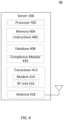
- the server 108 may include a processor 402, a memory 404, a database 408, a compliance module 410, transceiver 412, and antennae 418. These elements may be in direct or indirect communication with each other, for example via one or more buses.
- the processor 402 may have various features. For example, these may include a central processing unit (CPU), a digital signal processor (DSP), an application-specific integrated circuit (ASIC), a controller, a field programmable gate array (FPGA) device, another hardware device, a firmware device, or any combination thereof configured to perform the operations described herein with reference to the server 108 introduced in FIG. 1 above.
- the processor 402 may also be implemented as a combination of computing devices, e.g., a combination of a controller and a microprocessor, a plurality of microprocessors, one or more microprocessors in conjunction with a DSP core, or any other such configuration.
- the processor 402 may be implemented as a plurality of processing cores.
- the memory 404 may include a cache memory (e.g., a cache memory of the processor 302), RAM, MRAM, ROM, PROM, EPROM, EEPROM, flash memory, solid state memory device, hard disk drives, other forms of volatile and non-volatile memory, or a combination of different types of memory.
- the memory 404 may include a non-transitory computer-readable medium.
- the memory 404 may store instructions 406.
- the instructions 406 may include instructions that, when executed by the processor 402, cause the processor 402 to perform operations described herein with reference to a server 108 in connection with embodiments of the present disclosure.
- the server 108 includes the database 408 which stores data associated with a plurality of device profiles.
- Each device profile may be associated with a different tissue engineering device 102.
- each profile may be associated with a different physician, and therefore have multiple devices associated therewith, as just two examples.
- Each tissue engineering device 102 may be associated, in the database, with patients to which the devices have been prescribed. This association may be made by a representative, e.g. via the server 110, of either the manufacturer or the prescribing physician.
- the database 408 may further house treatment regimens, device profiles, patient profiles, physician profiles, manufacturer profiles, and/or sales representative profiles.
- the compliance module 410 may aggregate the data received from one or more reporting tissue engineering devices 102 (whether collected periodically according to a schedule, in real time, or on demand to name some examples) and use this aggregated data to generate compliance reports, similar to as discussed above with respect to the compliance module 308 when generating compliance reports.
- the data forming the basis of the compliance reports may be obtained from the database 408 and/or from data as it is received from UEs 104/tissue engineering devices 102. Further, where the UE 104 generates compliance reports itself (via compliance module 308), these UE-generated compliance reports may be stored in the database 408 as well, and these UE-generated compliance reports may form the basis of longer-term trend compliance reports by the compliance module 410 of the server 108.
- the compliance module 410 may further analyze the monitoring data it receives to compare the patient's results to the results of similar patients' data. That similar data may be made available through other sources, such as public registers and/or other patient recorded outcomes.
- the compliance module 410 may also generate the application that is downloaded by UEs 104 and becomes the compliance module 308 described above with respect to FIG. 3 when installed. Further, the compliance module 410 may cause the database 408 to store any messages received from a subscribing entity via an access device 114 (e.g., a representative of a physician) and the transceiver 412 to forward the message to the targeted tissue engineering device 102 (and/or paired UE 104).
- an access device 114 e.g., a representative of a physician
- the transceiver 412 may include the modem subsystem 414 and the radio frequency (RF) unit 416.
- the transceiver 212 can be configured to communicate bidirectionally with other devices, such as UEs 104 and/or other network elements such as those in the wireless network 106.
- the modem subsystem 414 may be configured to modulate and/or encode data according to any of a variety of coding schemes.
- the RF unit 416 may be configured to process (e.g., perform analog to digital conversion or digital to analog conversion, etc.) modulated/encoded data from the modem subsystem 414 (on outbound transmissions) or of transmissions originating from another source.
- the modem subsystem 414 and the RF unit 416 may be separate devices that are coupled together to enable the server 108 to communicate with other devices.
- FIG. 4 illustrates antenna 418 as a single antenna, antenna 418 may include multiple antennas of similar or different designs in order to sustain multiple transmission links.
- FIG. 5 is a protocol diagram 500 illustrating exemplary aspects between treatment and monitoring system elements according to aspects of the present disclosure. As illustrated, the protocol diagram 500 shows exemplary interactions between a tissue engineering device 102 (exemplary of potentially multiple such devices), a UE 104 (exemplary of potentially multiple), server 108 (exemplary of potentially multiple), server 110 (exemplary of potentially multiple), and an access device 114 (exemplary of potentially multiple).
- a tissue engineering device 102 exemplary of potentially multiple such devices
- UE 104 exemplary of potentially multiple
- server 108 exemplary of potentially multiple
- server 110 exemplary of potentially multiple
- an access device 114 exemplary of potentially multiple
- a UE 104 pairs with a tissue engineering device 102. This may occur, for example, via BLE or NFC connections as just some examples. This may occur periodically as the devices come within range of each other. Further, where the devices remain in range with each other outside of necessary times of communication (e.g., no treatment is scheduled at a particular time where the devices are in sufficient proximity to each other, etc.), the devices may only pair at action 502 as determined necessary so as to conserve energy (though the devices may alternatively remained paired so long as they are in proximity to each other).
- the tissue engineering device 102 detects treatment data. This may include sensor data from the one or more sensors (such as patient proximity data, accelerometer data, gyroscope data, etc.). This may also or alternatively include detecting when treatment is not occurring though it should according to a prescribed treatment regime. Although illustrated as occurring after the pairing at action 502, the data from action 504 may have been detected previously and stored until pairing occurred.
- sensor data from the one or more sensors (such as patient proximity data, accelerometer data, gyroscope data, etc.). This may also or alternatively include detecting when treatment is not occurring though it should according to a prescribed treatment regime. Although illustrated as occurring after the pairing at action 502, the data from action 504 may have been detected previously and stored until pairing occurred.
- the server 108 sends, or makes available, the compliance report to other entities. This may be in a periodic transmission, or rendering the compliance report available for access on demand by authorized parties. As illustrated, the server 108 sends the compliance report to the server 110 (e.g., that hosts an access portal for accessing parties such as a representative for the device manufacturer and the prescribing physician). The server 110 then may make the compliance report available to the appropriate parties.
- the server 110 e.g., that hosts an access portal for accessing parties such as a representative for the device manufacturer and the prescribing physician. The server 110 then may make the compliance report available to the appropriate parties.
- the compliance report (whatever portion allowed) is presented via the access device 114 and any updates are processed at that time.
- the pain treatment data may be accessed via the access device 114 (where presented/available) on a calendar basis, such as via a snapshot listing for multiple days in a row.
- the reviewing entity may select the day associated with that information and access one or more images of the treatment site associated with that same day (e.g., to look for redness or other signs of infection or other condition).
- the prescribing physician may desire to send a message to the patient (such as encouragement to increase compliance, to indicate a reminder for a follow-up appointment, to change the regimen, follow-up regarding pain information, etc.).
- the access device 114 sends the message/update back to the server 110 (e.g., by entry into a field via a portal provided by the server 110).
- the server 110 in turn, at action 520 forwards the message/update to the server 108.
- the server 108 may store the message/update into the database 408. For example, where the physician desires to change the treatment regimen, this may be stored in the appropriate database location associated with the patient and tissue engineering device 102, so that future compliance reports may accurately reflect the most recent treatment regimen information.
- the server 108 forwards the message/update to the UE 104 (where the UE 104 acts as a relay to the tissue engineering device 102 to which the message/update is intended).
- the message/update may be displayed by the UE 104.
- the UE 104 may still display to notify the patient, and messages intended for the UE 104 to display may similarly be displayed.
- any updates are forwarded from the UE 104 to the tissue engineering device 102 (or from the server 108 to the tissue engineering device 102 where a UE 104 is not required/used for relaying data).
- Action 530 may occur throughout the actions 504 through 528.
- feedback for the current periodic application of the treatment is provided. This may include the treatment data transmitted at action 506. Further, this may include providing treatment feedback dynamically to the user as treatment is occurring, either via a display on the tissue engineering device 102 and/or a display on the UE 104 paired or associated with the tissue engineering device 102.
- any reminders scheduled or provided by default may be modified based on the feedback received at action 530.
- a reminder for treatment may be modified (e.g., either in intensity such as sound or visual, or in content) to take into account a level of treatment already reached for the current periodic application according to the treatment regimen.
- the tissue engineering device 102 pairs with a UE 104.
- This may be a UE 104 of the patient with which the tissue engineering device 102 is also associated, and/or a UE 104 of another entity, such as a representative of the manufacturer or the prescribing physician, that is visiting the patient (or that the patient is visiting).
- the pairing may occur automatically, e.g. with the UE 104 being previously associated, or may be manually performed.
- the monitoring data (referred to generally here to include both the data collected by the tissue engineering device 102 and the pain/image data collected by the UE 104) may be relayed by one or more networks 106 to which the UE 106 is in communication and which can reach the server 108.
- the subscribing access device(s) 114 that received the compliance report from the server 108 may present the compliance report, or some portion thereof, to a user of the access device 114.
- the user may be a representative of the prescribing physician for the tissue engineering device 102, looking to monitor a level of compliance with the prescribed treatment regimen and/or pain management. With respect to pain management, this may include a prediction of future pain scale increases based on an amount of activity identified by the user (e.g., playing a sport during the treatment regimen, a physically demanding job, etc.) based on an increase of physical activity now.
- the user may be a party related to the patient, such as a spouse, parent, or child, etc.
- the access device 114 that received the input at block 618 relays the input to the patient of the tissue engineering device 102, for example by forwarding the input to the server 110 (where included), server 108, via network 106, and to the UE 104 for display there and/or forwarding on to the tissue engineering device 102.
- the method 700 proceeds to decision block 708.
- the method 700 may include multiple polling periods.
- a first polling period may be short, such as every 100 ms.
- a second polling period may be longer than the first polling period, such that multiple first polling periods may occur during a second polling period.
- the second polling period may have a duration of 3 seconds or 30 seconds.
- a third polling period may be longer than the first and second polling periods, such that multiple first and second polling periods may occur during a third polling period.
- the third polling period may have a duration of 30 seconds, multiple minutes, or multiple tens of minutes.
- the numbers given herein are exemplary only. Further, the number of polling periods is exemplary - more or fewer may be included according to embodiments of the present disclosure.
- a first polling period i.e. a polling period shorter than the other polling periods
- the method 700 returns to block 702 for further polling. Otherwise, the method 700 proceeds to block 718.
- the processor 202 records a "yes" for the first polling period. This indicates that motion has been detected by the second sensor during the first polling period. Otherwise, if no motion is detected during the first polling period then a "no" is recorded. The method 700 then proceeds back to block 702 as laid out above.
- the processor 202 determines whether motion has been detected more than 50% of the chunks of time (referring to each polling period as a "chunk of time"; in this example, more than 50% of the first polling periods that occur within a second polling period). Thus, the processor 202 may determine whether more than 50% of the first polling periods within the second polling period have a "yes" associated therewith.
- the value of 50% is exemplary in association with the second polling period. The percentage may be greater or less than this value, so long as it is greater than a percentage value associated with the third polling period as discussed further below. If more than 50% of the first polling periods have a "yes" recorded therewith, then the processor 202 records a "yes" for the second polling period. The method 700 then proceeds back to block 702 as laid out above.
- the "yes" values recorded for the third polling periods may be interpreted to mean that the tissue engineering device 102 has been used in proximity to the tissue of the patient during the course of the third polling period of time.
- the data provided to the UE 104 when paired with the tissue engineering device 102 may include the results from the third polling period only, or some or all of the polling periods for further refining where compliance reports are generated, for example as discussed with respect to FIG. 7B .
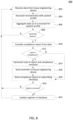
- FIG. 7B is a flowchart illustrating an exemplary method 750 for tissue treatment device compliance monitoring according to aspects of the present disclosure.
- the method 750 illustrates additional aspects of operation of the tissue engineering device 102 according to embodiments of the present disclosure. It is understood that additional steps can be provided before, during, and after the steps of method 750, and that some of the steps described can be replaced or eliminated from the method 750.
- tissue engineering device 102 detects a pairable UE 104 (e.g., via a BLE connection or other type of wired and/or wireless connection), then the method 750 proceeds to block 754.
- the tissue engineering device 102 pairs with the UE 104 detected at decision block 752. This pairing may occur according to the wired and/or wireless connection identified at decision block 752.
- the tissue engineering device 102 may receive a time of day from the UE 104 paired at block 754. This is illustrated with dashed lines to indicate the optionality of this feature. This may be useful where the tissue engineering device 102 is first being used and paired with a UE 104, so that the time at the tissue engineering device 102 may be set to correspond to the time zone and/or time of the paired UE 104 (for example, where the UE 104 obtains its time from a network 106). This may be further useful in situations where the tissue engineering device 102 is transported to a different time zone, so that reminders may be coordinated with the UE 104.
- the tissue engineering device 102 may include the measured repair status from block760 with the other monitoring data (e.g., the data provided from method 700) that is transmitted to the UE 104 for generation (at the UE 104 and/or the server 108) of compliance reports and otherwise banking in one or more databases.
- the other monitoring data e.g., the data provided from method 700
- the measured repair status data is transmitted to the server 108, whether relayed via the UE 104 or otherwise sent to the server 108. This may be transmitted with the other data, such as when included at block 762, or sent independently therefrom.
- the method 750 proceeds to block 764.
- the data may be transmitted at block 764 as noted above where a UE 104 is not required to relay. If, however, a relay is required, the method 750 may enter a delay pattern until a UE 104 is detected and pairing occurs and/or more data from the sensors are polled.
- the relay further (or alternatively) includes pairing with a transceiver in a coupled accessory (e.g., power supply or docking station), whether to communicate with UE 104 or network 106
- a delay pattern may be entered until the connection to the transceiver is made, and thereafter until a UE 104 is detected and pairing occurs.
- the tissue engineering device 102 transmits data that it collects without further analysis, while in other embodiments the tissue engineering device 102 may display an overall treatment compliance indication at the tissue engineering device 102 (in addition to the information passed on to the UE 104/server 108), such as a percentage compliant over time.
- the method 750 proceeds to decision block 766.
- decision block 766 if any update has been received from the server 108 (whether relayed by UE 104 or not), then the method 750 proceeds to block 768.
- the update may be, for example, a change in the prescribed treatment regime (e.g., based on the prescribing physician reviewing a compliance report that may include both compliance and impedance monitor data) made via an access device 114 and routed through the server 108 (and server 110, where applicable).
- the update is implemented by the tissue engineering device 102 (for example, storing the update in local memory to implement in terms of reminders of the schedule, treatment parameters when treatment occurs, etc.).
- the method 750 returns to block 700 to continue polling sensors.
- the server 108 receives data from a tissue engineering device 102.
- This data may include compliance information over a prior time period (e.g., the third polling period described in FIG. 7A and/or the other polling periods) and/or impedance monitoring data.
- the data may be received at block 802 from the tissue engineering device 102 via a relaying UE 104 paired with the tissue engineering device 102, or where the relaying UE 104 is not required from network 106 (or, under either approach, from a connected accessory (e.g., power supply or docking station as just some examples).
- pain scale information may be received from UE 104 and/or image data of the treatment site, as collected by the UE 104.
- the data the server 108 receives from block 802 may be from both the tissue engineering device 102 and the UE 104, or all from the UE 104 where the UE 104 serves as a relay for the tissue engineering device 102.
- the data may be received without any analysis having been performed yet, or with some analysis at the tissue engineering device 102 (e.g., overall compliance such as percentage compliant), the UE 104 (e.g., additional trend analysis to discover broader trends including a mobility level of the patient), or a combination of both.
- the data is received with any patient identifying information stripped (and/or with the data encrypted).
- the data may instead identify nothing more than the tissue engineering device 102 itself (e.g., serial number or other identifier).
- the server 108 associates the received data with an appropriate patient profile maintained in a database 408 of the server 108.
- the database 408 may store the device identifiers in association with the patients to which those tissue engineering devices 102 have been prescribed and provided.
- the server 108 may look up the identifier of the tissue engineering device 102 to identify the patient to which it has been provided.
- the server 108 decrypts the data (whether with the information stripped or not).
- the UE 104 relays the monitoring data received at block 920, as well as the pain scale information and/or image(s) of the treatment site received/collected at block 922 (and trend information, where determined/available) to the server 108 for storage in the server 108's database/compliance report generation.
- the UE 104 may relay the monitoring data when received, or according to a set schedule.
Landscapes
- Health & Medical Sciences (AREA)
- Life Sciences & Earth Sciences (AREA)
- Engineering & Computer Science (AREA)
- Biomedical Technology (AREA)
- Nuclear Medicine, Radiotherapy & Molecular Imaging (AREA)
- Radiology & Medical Imaging (AREA)
- Animal Behavior & Ethology (AREA)
- General Health & Medical Sciences (AREA)
- Public Health (AREA)
- Veterinary Medicine (AREA)
- Heart & Thoracic Surgery (AREA)
- Neurology (AREA)
- Orthopedic Medicine & Surgery (AREA)
- Cell Biology (AREA)
- Psychiatry (AREA)
- Developmental Disabilities (AREA)
- Hospice & Palliative Care (AREA)
- Child & Adolescent Psychology (AREA)
- Psychology (AREA)
- Social Psychology (AREA)
- Biophysics (AREA)
- Physical Education & Sports Medicine (AREA)
- Measuring And Recording Apparatus For Diagnosis (AREA)
- Percussion Or Vibration Massage (AREA)
Claims (14)
- Muskuloskelettales Gewebe-Engineering- und Compliance-Überwachungssystem (100), umfassend:eine Gewebe-Engineering-Vorrichtung (102), die einen Ultraschallwandler umfasst, der dazu ausgelegt ist, muskuloskelettales Gewebe mit Ultraschall zu versorgen, wobei die Gewebe-Engineering-Vorrichtung mit einem Schema ausgelegt ist, das eine periodische Anwendung des Ultraschalls über eine Langzeitdauer definiert, wobei die Gewebe-Engineering-Vorrichtung ferner einen Sensor (210) umfasst, der dazu ausgelegt ist, die Verwendung der Gewebe-Engineering-Vorrichtung an dem muskuloskelettalen Gewebe zu erkennen, und einen ersten Transceiver (212), der dazu ausgelegt ist, Daten von dem Sensor zu übertragen;eine Benutzergerät, UE, -Vorrichtung (104), die einen zweiten Transceiver (310) umfasst, der dazu ausgelegt ist, mit der Gewebe-Engineering-Vorrichtung zu assoziieren und die Daten von der Gewebe-Engineering-Vorrichtung zu empfangen, und einen UE-Prozessor (302), der dazu ausgelegt ist, die Daten auf Compliance mit der im Schema vorgegebenen periodischen Anwendung zu vergleichen, einen aktuellen Status der periodischen Anwendung zu erzeugen und eine Erinnerung basierend auf dem aktuellen Status der periodischen Anwendung zu modifizieren; undeinen Fernserver (108), der einen dritten Transceiver (412) umfasst, der dazu ausgelegt ist, die Daten einschließlich des aktuellen Status von der UE-Vorrichtung zu empfangen, und einen Server-Prozessor (402), der dazu ausgelegt ist, die Daten zu einem Compliance-Bericht zusammenzustellen, der die Verwendung der Gewebe-Engineering-Vorrichtung über die Langzeitdauer identifiziert, wobei der dritte Transceiver ferner dazu ausgelegt ist, den Compliance-Bericht an eine subskribierende Vorrichtung zu übertragen.
- Muskuloskelettales Gewebe-Engineering- und Compliance-Überwachungssystem nach Anspruch 1, wobei der UE-Prozessor (302) ferner dazu ausgelegt ist:eine Anzeige der UE-Vorrichtung zu veranlassen, die Erinnerung gemäß der in dem Schema definierten periodischen Anwendung bereitzustellen; undzu bestimmen, ob der Ultraschall für eine gegebene periodische Anwendung über die Langzeitdauer bereits versorgt wurde und in welchem Umfang die Versorgung für die gegebene periodische Anwendung bereits erfolgt ist,wobei die Modifikation ferner das Modifizieren der Erinnerung gemäß dem Ausmaß umfasst, das für die Versorgung bestimmt ist, die für die gegebene periodische Anwendung bereits stattgefunden hat.
- Muskuloskelettales Gewebe-Engineering- und Compliance-Überwachungssystem nach Anspruch 1, wobei:die Gewebe-Engineering-Vorrichtung (102) ferner einen Impedanzüberwachungssensor umfasst, der Impedanzüberwachungssensor dazu ausgelegt ist, eine Mehrzahl von Geweben einschließlich des muskuloskelettalen Gewebes zu erkennen, wobei die Daten einem Heilungsstadium des muskuloskelettalen Gewebes basierend auf der erkannten Mehrzahl von Geweben entsprechen,die Gewebe-Engineering-Vorrichtung (102) ferner dazu ausgelegt ist, einen Grad der Compliance in Bezug auf das Schema zu bestimmen und anzuzeigen, wobei die Daten den bestimmten Grad der Compliance beinhalten, undder erste Transceiver (212) ferner dazu ausgelegt ist, die Daten an den Fernserver (108) zur Aufnahme in den Compliance-Bericht zu übertragen.
- Muskuloskelettales Gewebe-Engineering- und Compliance-Überwachungssystem nach Anspruch 1, wobei der Server-Prozessor (402) ferner dazu ausgelegt ist:die über die UE-Vorrichtung (104) von der Gewebe-Engineering-Vorrichtung (102) empfangenen Daten während einer Periode gemäß einer periodischen Basis zusammenzufassen;den Compliance-Bericht am Ende der Periode zu erzeugen; undden Fernserver (108) zu veranlassen, basierend auf einem Ergebnis eines Vergleichs von Daten aus dem Compliance-Bericht mit dem Schema eine Erinnerung über das Schema bereitzustellen.
- Muskuloskelettales Gewebe-Engineering- und Compliance-Überwachungssystem nach Anspruch 1, wobei die subskribierende Vorrichtung eine Mehrzahl von Vorrichtungen umfasst, einschließlich der UE-Vorrichtung (104) und einer oder mehrerer Rechenvorrichtungen, die dazu ausgelegt sind, mit einem oder mehreren Ärzten assoziiert zu werden, wobei der dritte Transceiver ferner dazu ausgelegt ist, eine Benachrichtigung an mindestens eine der Mehrzahl von Vorrichtungen zu senden, die auf dem Compliance-Bericht basiert.
- Muskuloskelettales Gewebe-Engineering- und Compliance-Überwachungssystem nach Anspruch 1, wobei die periodische Anwendung auf Tagesbasis erfolgt und der Compliance-Bericht umfasst:eine Anzahl von Tagen, die die Gewebe-Engineering-Vorrichtung im Besitz war;eine Aufschlüsselung der Verwendung des Gewebe-Engineering-Vorrichtung pro Tag für die Anzahl der Tage; undeinen Prozentsatz der Compliance basierend auf den Daten und dem Schema.
- Muskuloskelettales Gewebe-Engineering- und Compliance-Überwachungssystem nach Anspruch 1, wobei der UE-Prozessor (302) ferner dazu ausgelegt ist:über eine Benutzerschnittstelle der UE-Vorrichtung (104) einen Schmerzskalenwert zu empfangen, der einem Schmerzgrad entspricht, der mit einer Stelle mit dem muskuloskelettalen Gewebe assoziiert ist;über die Benutzerschnittstelle ein Bild der Stelle zu empfangen; undden Wert des Schmerzgrades und das Bild an den Fernserver zur Aufnahme in den Compliance-Bericht zu übertragen.
- Muskuloskelettales Gewebe-Engineering- und Compliance-Überwachungssystem nach Anspruch 1, wobei:der Server-Prozessor (402) ferner dazu ausgelegt ist, als Reaktion auf das Identifizieren der Verwendung der Gewebe-Engineering-Vorrichtung über die Langzeitdauer als abweichend von dem Schema die UE-Vorrichtung (104) anzuweisen, eine oder mehrere von einer Häufigkeit von Erinnerungen, akustischen Tönen, verbalen Nachrichten, Texterinnerungen und interaktiven textbasierten Nachrichten anzupassen, bis das Abweichen unter einen Schwellenwert absinkt, undder UE-Prozessor (302) ferner dazu ausgelegt ist, basierend auf der Anweisung, die eine oder mehrere der Häufigkeit von Erinnerungen, akustischen Tönen, verbalen Nachrichten, Texterinnerungen und interaktiven textbasierten Nachrichten anzupassen.
- Gewebe-Engineering-Vorrichtung (102) für muskuloskelettales Gewebe-Engineering und Compliance-Überwachung, umfassend:einen Ultraschallwandler, der dazu ausgelegt ist, muskuloskelettales Gewebe mit Ultraschall zu versorgen, wobei die Gewebe-Engineering-Vorrichtung mit einem Schema ausgelegt ist, das eine periodische Anwendung des Ultraschalls über eine Langzeitdauer definiert;einen Sensor (210), der dazu ausgelegt ist, die Nähe der Gewebe-Engineering-Vorrichtung zum muskuloskelettalen Gewebe zu erkennen, die bestimmt wird, um der Anwendung der Gewebe-Engineering-Vorrichtung auf das muskuloskelettale Gewebe zu entsprechen;einen Prozessor (202), der dazu ausgelegt ist, den Sensor nach Daten abzufragen, die identifizieren, ob die Gewebe-Engineering-Vorrichtung in der Nähe ist und auf die Verwendung der Gewebe-Engineering-Vorrichtung mit dem muskuloskelettalen Gewebe zurückzuführen ist; undeinen Transceiver (212), der dazu ausgelegt ist, die Daten an einen Fernserver (108) zu übertragen, unabhängig davon, ob sie über eine Benutzergerätevorrichtung (104) oder anderweitig weitergeleitet werden, zur Compliance-Überwachung der in dem Schema definierten periodischen Anwendung, und um eine Aktualisierung des Schemas von dem Fernserver (108) zu empfangen, unabhängig davon, ob über die Benutzergerätevorrichtung (104) oder nicht.
- Gewebe-Engineering-Vorrichtung nach Anspruch 9, wobei:der Sensor (210) einen Beschleunigungsmesser umfasst,die Abfrage eine erste Abfrageperiode mit einer ersten Dauer umfasst, die kürzer ist als eine Dauer der periodischen Anwendung, wobei der Beschleunigungsmesser, der die Bewegung während der ersten Abfrageperiode erkennt, einen ersten bestätigenden Status der Compliance für die erste Abfrageperiode angibt, unddie von dem Transceiver (212) übertragenen Daten den ersten bestätigenden Status umfassen.
- Gewebe-Engineering-Vorrichtung nach Anspruch 10, wobei:die Abfrage ferner eine zweite Abfrageperiode mit einer zweiten Dauer umfasst, die größer als die erste Dauer ist und diese beinhaltet und die eine erste Mehrzahl von ersten Abfrageperioden beinhaltet,und eine dritte Abfrageperiode mit einer dritten Dauer, die größer als die zweite Dauer ist und diese beinhaltet, und die eine zweite Mehrzahl von ersten Abfrageperioden beinhaltet, die die erste Mehrzahl von ersten Abfrageperioden beinhaltet,wobei die zweite und die dritte Dauer kürzer als die Dauer der periodischen Anwendung sind,der Beschleunigungsmesser, der die Bewegung während der zweiten Abfrageperiode für mindestens die Hälfte der ersten der Mehrzahl von ersten Abfrageperioden, die die zweite Abfrageperiode umfasst, erkennt, einen zweiten bestätigenden Status der Compliance für die zweite Abfrageperiode angibt,der Beschleunigungsmesser, der die Bewegung während der dritten Abfrageperiode für mindestens ein Viertel der zweiten Mehrzahl von ersten Abfrageperioden, die in der dritten Abfrageperiode umfasst ist, erkennt, einen dritten bestätigenden Status der Compliance für die dritte Abfrageperiode angibt, unddie vom Transceiver übertragenen Daten den dritten bestätigten Status umfassen.
- Gewebe-Engineering-Vorrichtung nach Anspruch 9, , wobei der Transceiver (212) ferner dazu ausgelegt ist, eine aktuelle Tageszeit von der Benutzergerätevorrichtung (104) nach dem Paaren mit der Benutzergerätevorrichtung (104) zu empfangen.
- Gewebe-Engineering-Vorrichtung nach Anspruch 9, die ferner eine Anzeige umfasst, wobei der Prozessor (202) ferner dazu ausgelegt ist, basierend auf den Daten im Vergleich zum Schema eine Compliance-Angabe zu erzeugen und die Compliance-Angabe auf der Anzeige auszugeben.
- Gewebe-Engineering-Vorrichtung nach Anspruch 9, die ferner einen Heilungsüberwachungssensor umfasst, wobei:der Heilungsüberwachungssensor dazu ausgelegt ist, eine Mehrzahl von Geweben einschließlich des muskuloskelettalen Gewebes zu erkennen,der Prozessor (202) ferner dazu ausgelegt ist, den Heilungsüberwachungssensor nach erfassten Daten abzufragen, die der erkannten Mehrzahl von Geweben entsprechen, wobei die erfassten Daten einem Stadium der Heilung des muskuloskelettalen Gewebes entsprechen, undder Transceiver (212) ferner dazu ausgelegt ist, die erfassten Daten zur Aufnahme in einen Compliance-Bericht zu übertragen, der die erfassten Daten, einen Schmerzskalenwert, ein Bild einer Stelle mit dem muskuloskelettalen Gewebe und ein Aktivitätsgrad umfasst.
Applications Claiming Priority (4)
| Application Number | Priority Date | Filing Date | Title |
|---|---|---|---|
| US201662409014P | 2016-10-17 | 2016-10-17 | |
| US15/783,072 US10238867B2 (en) | 2016-10-17 | 2017-10-13 | Pulsed electromagnetic field tissue stimulation treatment and compliance monitoring |
| EP17861914.4A EP3525875B1 (de) | 2016-10-17 | 2017-10-16 | System und vorrichtung zur gewebestimulationsbehandlung mit gepulstem elektromagnetischem feld und compliance-überwachung |
| PCT/US2017/056765 WO2018075394A1 (en) | 2016-10-17 | 2017-10-16 | Pulsed electromagnetic field tissue stimulation treatment and compliance monitoring |
Related Parent Applications (1)
| Application Number | Title | Priority Date | Filing Date |
|---|---|---|---|
| EP17861914.4A Division EP3525875B1 (de) | 2016-10-17 | 2017-10-16 | System und vorrichtung zur gewebestimulationsbehandlung mit gepulstem elektromagnetischem feld und compliance-überwachung |
Publications (3)
| Publication Number | Publication Date |
|---|---|
| EP4234007A2 EP4234007A2 (de) | 2023-08-30 |
| EP4234007A3 EP4234007A3 (de) | 2023-10-04 |
| EP4234007B1 true EP4234007B1 (de) | 2025-07-02 |
Family
ID=61902157
Family Applications (2)
| Application Number | Title | Priority Date | Filing Date |
|---|---|---|---|
| EP17861914.4A Active EP3525875B1 (de) | 2016-10-17 | 2017-10-16 | System und vorrichtung zur gewebestimulationsbehandlung mit gepulstem elektromagnetischem feld und compliance-überwachung |
| EP23177790.5A Active EP4234007B1 (de) | 2016-10-17 | 2017-10-16 | System und vorrichtung zur behandlung und compliance-überwachung |
Family Applications Before (1)
| Application Number | Title | Priority Date | Filing Date |
|---|---|---|---|
| EP17861914.4A Active EP3525875B1 (de) | 2016-10-17 | 2017-10-16 | System und vorrichtung zur gewebestimulationsbehandlung mit gepulstem elektromagnetischem feld und compliance-überwachung |
Country Status (5)
| Country | Link |
|---|---|
| US (2) | US10238867B2 (de) |
| EP (2) | EP3525875B1 (de) |
| AU (2) | AU2017345244B2 (de) |
| CA (1) | CA3038345C (de) |
| WO (1) | WO2018075394A1 (de) |
Families Citing this family (26)
| Publication number | Priority date | Publication date | Assignee | Title |
|---|---|---|---|---|
| US20180001107A1 (en) | 2016-07-01 | 2018-01-04 | Btl Holdings Limited | Aesthetic method of biological structure treatment by magnetic field |
| US10695575B1 (en) | 2016-05-10 | 2020-06-30 | Btl Medical Technologies S.R.O. | Aesthetic method of biological structure treatment by magnetic field |
| US11464993B2 (en) | 2016-05-03 | 2022-10-11 | Btl Healthcare Technologies A.S. | Device including RF source of energy and vacuum system |
| US11534619B2 (en) | 2016-05-10 | 2022-12-27 | Btl Medical Solutions A.S. | Aesthetic method of biological structure treatment by magnetic field |
| US11141219B1 (en) | 2016-08-16 | 2021-10-12 | BTL Healthcare Technologies, a.s. | Self-operating belt |
| US11294530B2 (en) * | 2017-08-07 | 2022-04-05 | Microsoft Technology Licensing, Llc | Displaying a translucent version of a user interface element |
| KR102392270B1 (ko) * | 2017-09-18 | 2022-04-29 | 에스케이플래닛 주식회사 | 사용자단말 및 그 동작 방법, 그리고 아이오티장치 |
| US11207541B2 (en) | 2018-03-23 | 2021-12-28 | Regenesis Biomedical, Inc. | High-power pulsed electromagnetic field applicator systems |
| CN113677395A (zh) | 2019-02-13 | 2021-11-19 | 帕萨尔美德他克有限公司 | 用于骨科治疗的植入式电磁场产生器 |
| US12156689B2 (en) | 2019-04-11 | 2024-12-03 | Btl Medical Solutions A.S. | Methods and devices for aesthetic treatment of biological structures by radiofrequency and magnetic energy |
| US12558146B2 (en) | 2019-04-11 | 2026-02-24 | Btl Medical Solutions A.S. | Methods and devices for aesthetic treatment of biological structures by radiofrequency and magnetic energy |
| PL4417249T3 (pl) | 2019-04-11 | 2026-04-20 | Btl Medical Solutions A.S. | Urządzenia do zabiegów na strukturach biologicznych za pomocą częstotliwości radiowej |
| CN114502237A (zh) | 2019-05-06 | 2022-05-13 | 卡姆兰·安萨里 | 配置为生成脉冲电磁场并集成到衣物中的平面线圈治疗阵列 |
| US11020603B2 (en) | 2019-05-06 | 2021-06-01 | Kamran Ansari | Systems and methods of modulating electrical impulses in an animal brain using arrays of planar coils configured to generate pulsed electromagnetic fields and integrated into clothing |
| US11833363B2 (en) | 2019-10-25 | 2023-12-05 | Regenesis Biomedical, Inc. | Current-based RF driver for pulsed electromagnetic field applicator systems |
| AU2020479533A1 (en) | 2019-12-04 | 2022-07-07 | Kenneth Paulus | Magnetic nerve stimulator |
| US12611545B2 (en) | 2020-05-04 | 2026-04-28 | Btl Healthcare Technologies A.S. | Device and method for unattended treatment of a patient |
| ES2993637T3 (en) | 2020-05-04 | 2025-01-03 | Btl Healthcare Technologies As | Device for unattended treatment of a patient |
| US11878167B2 (en) | 2020-05-04 | 2024-01-23 | Btl Healthcare Technologies A.S. | Device and method for unattended treatment of a patient |
| WO2022256717A1 (en) * | 2021-06-03 | 2022-12-08 | Regenesis Biomedical, Inc. | Patient authentication and remote monitoring for pulsed electromagnetic field systems |
| US12465281B2 (en) | 2021-07-27 | 2025-11-11 | Orthofix Us Llc | Systems and methods for remote measurement of cervical range of motion |
| CA3260012A1 (en) | 2021-10-13 | 2023-04-20 | Btl Medical Solutions A.S. | AESTHETIC TREATMENT DEVICES FOR BIOLOGICAL STRUCTURES USING RADIOFREQUENCY AND MAGNETIC ENERGY |
| US20230158323A1 (en) * | 2021-11-01 | 2023-05-25 | Regenesis Biomedical, Inc. | Wearable pulsed electromagnetic field sensing device |
| US11896816B2 (en) | 2021-11-03 | 2024-02-13 | Btl Healthcare Technologies A.S. | Device and method for unattended treatment of a patient |
| KR102859879B1 (ko) * | 2022-08-31 | 2025-09-15 | 뉴로핏 주식회사 | 치료 효과 평가에 따른 치료 처방 재설계 장치 및 방법 |
| US20260097227A1 (en) | 2024-10-08 | 2026-04-09 | Btl Medical Solutions A.S. | Devices and methods for application of a magnetic field to the nervous system |
Family Cites Families (14)
| Publication number | Priority date | Publication date | Assignee | Title |
|---|---|---|---|---|
| US6261221B1 (en) | 1996-11-01 | 2001-07-17 | Amei Technologies Inc. | Flexible coil pulsed electromagnetic field (PEMF) stimulation therapy system |
| US6132362A (en) | 1996-11-01 | 2000-10-17 | Amei Technologies, Inc. | Pulsed electromagnetic field (PEMF) stimulation therapy system with bi-phasic coil |
| US5743844A (en) | 1996-11-01 | 1998-04-28 | Amei Technologies, Inc. | High efficiency pulsed electromagnetic field (PEMF) stimulation therapy method and system |
| US6024691A (en) | 1998-05-26 | 2000-02-15 | Amei Technologies Inc | Cervical collar with integrated electrical circuitry for electromagnetic field therapy |
| US20060122660A1 (en) * | 1998-10-26 | 2006-06-08 | Boveja Birinder R | Method and system for modulating sacral nerves and/or its branches in a patient to provide therapy for urological disorders and/or fecal incontinence, using rectangular and/or complex electrical pulses |
| US7024249B2 (en) * | 2002-02-21 | 2006-04-04 | Alfred E. Mann Foundation For Scientific Research | Pulsed magnetic control system for interlocking functions of battery powered living tissue stimulators |
| US9433797B2 (en) | 2003-12-05 | 2016-09-06 | Rio Grande Neurosciences, Inc. | Apparatus and method for electromagnetic treatment of neurodegenerative conditions |
| US20090216068A1 (en) | 2005-06-15 | 2009-08-27 | Thomas Alex W | Therapeutic low frequency pulsed magnetic fields and devices therefor |
| WO2009023432A2 (en) * | 2007-08-09 | 2009-02-19 | Juvent Inc. | Method and apparatus for ultrasound therapy |
| JP2014500538A (ja) * | 2010-10-12 | 2014-01-09 | タニス,ケヴィン ジェイ. | 医療機器 |
| JP2013541383A (ja) * | 2010-10-22 | 2013-11-14 | ジョン, ビー. シュナイダー, | 医療機器 |
| US9557836B2 (en) * | 2011-11-01 | 2017-01-31 | Microsoft Technology Licensing, Llc | Depth image compression |
| US10471268B2 (en) | 2014-10-16 | 2019-11-12 | Mainstay Medical Limited | Systems and methods for monitoring muscle rehabilitation |
| US20160250470A1 (en) * | 2015-02-26 | 2016-09-01 | Stryker Corporation | Rehabilitation Monitor And Pain Treatment Assembly |
-
2017
- 2017-10-13 US US15/783,072 patent/US10238867B2/en active Active
- 2017-10-16 EP EP17861914.4A patent/EP3525875B1/de active Active
- 2017-10-16 EP EP23177790.5A patent/EP4234007B1/de active Active
- 2017-10-16 CA CA3038345A patent/CA3038345C/en active Active
- 2017-10-16 WO PCT/US2017/056765 patent/WO2018075394A1/en not_active Ceased
- 2017-10-16 AU AU2017345244A patent/AU2017345244B2/en active Active
-
2019
- 2019-03-22 US US16/362,022 patent/US11045647B2/en active Active
-
2022
- 2022-03-15 AU AU2022201772A patent/AU2022201772B2/en active Active
Also Published As
| Publication number | Publication date |
|---|---|
| EP3525875A1 (de) | 2019-08-21 |
| WO2018075394A1 (en) | 2018-04-26 |
| CA3038345C (en) | 2023-01-24 |
| EP3525875A4 (de) | 2020-07-01 |
| EP4234007A2 (de) | 2023-08-30 |
| AU2017345244A1 (en) | 2019-04-04 |
| CA3038345A1 (en) | 2018-04-26 |
| AU2022201772B2 (en) | 2022-05-26 |
| US20180104484A1 (en) | 2018-04-19 |
| US20190217090A1 (en) | 2019-07-18 |
| AU2022201772A1 (en) | 2022-04-21 |
| EP3525875B1 (de) | 2023-06-07 |
| AU2017345244B2 (en) | 2021-12-16 |
| US10238867B2 (en) | 2019-03-26 |
| US11045647B2 (en) | 2021-06-29 |
| EP4234007A3 (de) | 2023-10-04 |
Similar Documents
| Publication | Publication Date | Title |
|---|---|---|
| AU2022201772B2 (en) | Pulsed electromagnetic field tissue stimulation treatment and compliance monitoring | |
| US20210151176A1 (en) | Medication Adherence Device And Coordinated Care Platform | |
| US8818522B2 (en) | Wireless patient communicator for use in a life critical network | |
| US11744481B2 (en) | System, apparatus and methods for data collection and assessing outcomes | |
| EP3520002A1 (de) | Prädiktive telerehabilitationstechnologie und benutzerschnittstelle | |
| EP2185065A2 (de) | Medizinisches datentransport-überlebenskritisches netz | |
| JP2011527802A (ja) | 摂取型事象マーカデータフレームワーク | |
| CN115153523A (zh) | 分析物测量的远程监测 | |
| US10347369B1 (en) | Patient tracking and dynamic updating of patient profile | |
| CN101091653A (zh) | 检测分析物的糖尿病护理系统和选择性数据传输的方法 | |
| US20130149683A1 (en) | System and method for symptom based reporting | |
| TW201929492A (zh) | 互動式生理資訊監測與分享系統 | |
| US12465281B2 (en) | Systems and methods for remote measurement of cervical range of motion | |
| KR20150000538A (ko) | 네트워크를 통한 건강 관리 시스템 및 방법 | |
| CN110211333A (zh) | 人体的监测方法及装置 | |
| More et al. | Advance IoT-based BSN healthcare system for emergency response of patient with continuous monitoring and motion detection |
Legal Events
| Date | Code | Title | Description |
|---|---|---|---|
| PUAI | Public reference made under article 153(3) epc to a published international application that has entered the european phase |
Free format text: ORIGINAL CODE: 0009012 |
|
| STAA | Information on the status of an ep patent application or granted ep patent |
Free format text: STATUS: THE APPLICATION HAS BEEN PUBLISHED |
|
| AC | Divisional application: reference to earlier application |
Ref document number: 3525875 Country of ref document: EP Kind code of ref document: P |
|
| AK | Designated contracting states |
Kind code of ref document: A2 Designated state(s): AL AT BE BG CH CY CZ DE DK EE ES FI FR GB GR HR HU IE IS IT LI LT LU LV MC MK MT NL NO PL PT RO RS SE SI SK SM TR |
|
| PUAL | Search report despatched |
Free format text: ORIGINAL CODE: 0009013 |
|
| AK | Designated contracting states |
Kind code of ref document: A3 Designated state(s): AL AT BE BG CH CY CZ DE DK EE ES FI FR GB GR HR HU IE IS IT LI LT LU LV MC MK MT NL NO PL PT RO RS SE SI SK SM TR |
|
| RIC1 | Information provided on ipc code assigned before grant |
Ipc: A61N 1/372 20060101ALI20230830BHEP Ipc: A61N 1/40 20060101ALI20230830BHEP Ipc: A61N 1/32 20060101ALI20230830BHEP Ipc: A61N 1/04 20060101ALI20230830BHEP Ipc: A61N 1/02 20060101ALI20230830BHEP Ipc: A61N 1/08 20060101ALI20230830BHEP Ipc: A61N 7/00 20060101ALI20230830BHEP Ipc: A61N 2/02 20060101AFI20230830BHEP |
|
| STAA | Information on the status of an ep patent application or granted ep patent |
Free format text: STATUS: REQUEST FOR EXAMINATION WAS MADE |
|
| 17P | Request for examination filed |
Effective date: 20240328 |
|
| RBV | Designated contracting states (corrected) |
Designated state(s): AL AT BE BG CH CY CZ DE DK EE ES FI FR GB GR HR HU IE IS IT LI LT LU LV MC MK MT NL NO PL PT RO RS SE SI SK SM TR |
|
| GRAP | Despatch of communication of intention to grant a patent |
Free format text: ORIGINAL CODE: EPIDOSNIGR1 |
|
| STAA | Information on the status of an ep patent application or granted ep patent |
Free format text: STATUS: GRANT OF PATENT IS INTENDED |
|
| INTG | Intention to grant announced |
Effective date: 20250127 |
|
| GRAS | Grant fee paid |
Free format text: ORIGINAL CODE: EPIDOSNIGR3 |
|
| GRAA | (expected) grant |
Free format text: ORIGINAL CODE: 0009210 |
|
| STAA | Information on the status of an ep patent application or granted ep patent |
Free format text: STATUS: THE PATENT HAS BEEN GRANTED |
|
| AC | Divisional application: reference to earlier application |
Ref document number: 3525875 Country of ref document: EP Kind code of ref document: P |
|
| AK | Designated contracting states |
Kind code of ref document: B1 Designated state(s): AL AT BE BG CH CY CZ DE DK EE ES FI FR GB GR HR HU IE IS IT LI LT LU LV MC MK MT NL NO PL PT RO RS SE SI SK SM TR |
|
| REG | Reference to a national code |
Ref country code: GB Ref legal event code: FG4D |
|
| REG | Reference to a national code |
Ref country code: CH Ref legal event code: EP |
|
| REG | Reference to a national code |
Ref country code: DE Ref legal event code: R096 Ref document number: 602017090408 Country of ref document: DE |
|
| REG | Reference to a national code |
Ref country code: IE Ref legal event code: FG4D |
|
| REG | Reference to a national code |
Ref country code: NL Ref legal event code: MP Effective date: 20250702 |
|
| PG25 | Lapsed in a contracting state [announced via postgrant information from national office to epo] |
Ref country code: PT Free format text: LAPSE BECAUSE OF FAILURE TO SUBMIT A TRANSLATION OF THE DESCRIPTION OR TO PAY THE FEE WITHIN THE PRESCRIBED TIME-LIMIT Effective date: 20251103 |
|
| PG25 | Lapsed in a contracting state [announced via postgrant information from national office to epo] |
Ref country code: NL Free format text: LAPSE BECAUSE OF FAILURE TO SUBMIT A TRANSLATION OF THE DESCRIPTION OR TO PAY THE FEE WITHIN THE PRESCRIBED TIME-LIMIT Effective date: 20250702 |
|
| REG | Reference to a national code |
Ref country code: AT Ref legal event code: MK05 Ref document number: 1808603 Country of ref document: AT Kind code of ref document: T Effective date: 20250702 |
|
| PG25 | Lapsed in a contracting state [announced via postgrant information from national office to epo] |
Ref country code: IS Free format text: LAPSE BECAUSE OF FAILURE TO SUBMIT A TRANSLATION OF THE DESCRIPTION OR TO PAY THE FEE WITHIN THE PRESCRIBED TIME-LIMIT Effective date: 20251102 |
|
| PGFP | Annual fee paid to national office [announced via postgrant information from national office to epo] |
Ref country code: GB Payment date: 20251027 Year of fee payment: 9 |
|
| PG25 | Lapsed in a contracting state [announced via postgrant information from national office to epo] |
Ref country code: NO Free format text: LAPSE BECAUSE OF FAILURE TO SUBMIT A TRANSLATION OF THE DESCRIPTION OR TO PAY THE FEE WITHIN THE PRESCRIBED TIME-LIMIT Effective date: 20251002 |
|
| REG | Reference to a national code |
Ref country code: LT Ref legal event code: MG9D |
|
| PG25 | Lapsed in a contracting state [announced via postgrant information from national office to epo] |
Ref country code: AT Free format text: LAPSE BECAUSE OF FAILURE TO SUBMIT A TRANSLATION OF THE DESCRIPTION OR TO PAY THE FEE WITHIN THE PRESCRIBED TIME-LIMIT Effective date: 20250702 |
|
| PG25 | Lapsed in a contracting state [announced via postgrant information from national office to epo] |
Ref country code: FI Free format text: LAPSE BECAUSE OF FAILURE TO SUBMIT A TRANSLATION OF THE DESCRIPTION OR TO PAY THE FEE WITHIN THE PRESCRIBED TIME-LIMIT Effective date: 20250702 |
|
| PG25 | Lapsed in a contracting state [announced via postgrant information from national office to epo] |
Ref country code: HR Free format text: LAPSE BECAUSE OF FAILURE TO SUBMIT A TRANSLATION OF THE DESCRIPTION OR TO PAY THE FEE WITHIN THE PRESCRIBED TIME-LIMIT Effective date: 20250702 |
|
| PG25 | Lapsed in a contracting state [announced via postgrant information from national office to epo] |
Ref country code: GR Free format text: LAPSE BECAUSE OF FAILURE TO SUBMIT A TRANSLATION OF THE DESCRIPTION OR TO PAY THE FEE WITHIN THE PRESCRIBED TIME-LIMIT Effective date: 20251003 |
|
| PG25 | Lapsed in a contracting state [announced via postgrant information from national office to epo] |
Ref country code: CZ Free format text: LAPSE BECAUSE OF FAILURE TO SUBMIT A TRANSLATION OF THE DESCRIPTION OR TO PAY THE FEE WITHIN THE PRESCRIBED TIME-LIMIT Effective date: 20250702 Ref country code: SE Free format text: LAPSE BECAUSE OF FAILURE TO SUBMIT A TRANSLATION OF THE DESCRIPTION OR TO PAY THE FEE WITHIN THE PRESCRIBED TIME-LIMIT Effective date: 20250702 |
|
| PG25 | Lapsed in a contracting state [announced via postgrant information from national office to epo] |
Ref country code: LV Free format text: LAPSE BECAUSE OF FAILURE TO SUBMIT A TRANSLATION OF THE DESCRIPTION OR TO PAY THE FEE WITHIN THE PRESCRIBED TIME-LIMIT Effective date: 20250702 |
|
| PG25 | Lapsed in a contracting state [announced via postgrant information from national office to epo] |
Ref country code: BG Free format text: LAPSE BECAUSE OF FAILURE TO SUBMIT A TRANSLATION OF THE DESCRIPTION OR TO PAY THE FEE WITHIN THE PRESCRIBED TIME-LIMIT Effective date: 20250702 Ref country code: PL Free format text: LAPSE BECAUSE OF FAILURE TO SUBMIT A TRANSLATION OF THE DESCRIPTION OR TO PAY THE FEE WITHIN THE PRESCRIBED TIME-LIMIT Effective date: 20250702 |
|
| PG25 | Lapsed in a contracting state [announced via postgrant information from national office to epo] |
Ref country code: RS Free format text: LAPSE BECAUSE OF FAILURE TO SUBMIT A TRANSLATION OF THE DESCRIPTION OR TO PAY THE FEE WITHIN THE PRESCRIBED TIME-LIMIT Effective date: 20251002 |
|
| PG25 | Lapsed in a contracting state [announced via postgrant information from national office to epo] |
Ref country code: ES Free format text: LAPSE BECAUSE OF FAILURE TO SUBMIT A TRANSLATION OF THE DESCRIPTION OR TO PAY THE FEE WITHIN THE PRESCRIBED TIME-LIMIT Effective date: 20250702 |
|
| PG25 | Lapsed in a contracting state [announced via postgrant information from national office to epo] |
Ref country code: RO Free format text: LAPSE BECAUSE OF FAILURE TO SUBMIT A TRANSLATION OF THE DESCRIPTION OR TO PAY THE FEE WITHIN THE PRESCRIBED TIME-LIMIT Effective date: 20250702 |
|
| PG25 | Lapsed in a contracting state [announced via postgrant information from national office to epo] |
Ref country code: SM Free format text: LAPSE BECAUSE OF FAILURE TO SUBMIT A TRANSLATION OF THE DESCRIPTION OR TO PAY THE FEE WITHIN THE PRESCRIBED TIME-LIMIT Effective date: 20250702 |
|
| PG25 | Lapsed in a contracting state [announced via postgrant information from national office to epo] |
Ref country code: DK Free format text: LAPSE BECAUSE OF FAILURE TO SUBMIT A TRANSLATION OF THE DESCRIPTION OR TO PAY THE FEE WITHIN THE PRESCRIBED TIME-LIMIT Effective date: 20250702 |
|
| PG25 | Lapsed in a contracting state [announced via postgrant information from national office to epo] |
Ref country code: IT Free format text: LAPSE BECAUSE OF FAILURE TO SUBMIT A TRANSLATION OF THE DESCRIPTION OR TO PAY THE FEE WITHIN THE PRESCRIBED TIME-LIMIT Effective date: 20250702 |
|
| PG25 | Lapsed in a contracting state [announced via postgrant information from national office to epo] |
Ref country code: SK Free format text: LAPSE BECAUSE OF FAILURE TO SUBMIT A TRANSLATION OF THE DESCRIPTION OR TO PAY THE FEE WITHIN THE PRESCRIBED TIME-LIMIT Effective date: 20250702 Ref country code: EE Free format text: LAPSE BECAUSE OF FAILURE TO SUBMIT A TRANSLATION OF THE DESCRIPTION OR TO PAY THE FEE WITHIN THE PRESCRIBED TIME-LIMIT Effective date: 20250702 |
|
| PLBE | No opposition filed within time limit |
Free format text: ORIGINAL CODE: 0009261 |
|
| STAA | Information on the status of an ep patent application or granted ep patent |
Free format text: STATUS: NO OPPOSITION FILED WITHIN TIME LIMIT |