EP4233316B1 - Konfiguration von periodischer ul-berechtigungsmeldung eines benutzergeräts über nrppa - Google Patents
Konfiguration von periodischer ul-berechtigungsmeldung eines benutzergeräts über nrppa Download PDFInfo
- Publication number
- EP4233316B1 EP4233316B1 EP21810425.5A EP21810425A EP4233316B1 EP 4233316 B1 EP4233316 B1 EP 4233316B1 EP 21810425 A EP21810425 A EP 21810425A EP 4233316 B1 EP4233316 B1 EP 4233316B1
- Authority
- EP
- European Patent Office
- Prior art keywords
- target
- positioning
- base station
- nrppa
- expected
- Prior art date
- Legal status (The legal status is an assumption and is not a legal conclusion. Google has not performed a legal analysis and makes no representation as to the accuracy of the status listed.)
- Active
Links
Images

Classifications
-
- H—ELECTRICITY
- H04—ELECTRIC COMMUNICATION TECHNIQUE
- H04L—TRANSMISSION OF DIGITAL INFORMATION, e.g. TELEGRAPHIC COMMUNICATION
- H04L5/00—Arrangements affording multiple use of the transmission path
- H04L5/0091—Signalling for the administration of the divided path, e.g. signalling of configuration information
-
- H—ELECTRICITY
- H04—ELECTRIC COMMUNICATION TECHNIQUE
- H04L—TRANSMISSION OF DIGITAL INFORMATION, e.g. TELEGRAPHIC COMMUNICATION
- H04L5/00—Arrangements affording multiple use of the transmission path
- H04L5/003—Arrangements for allocating sub-channels of the transmission path
- H04L5/0048—Allocation of pilot signals, i.e. of signals known to the receiver
- H04L5/0051—Allocation of pilot signals, i.e. of signals known to the receiver of dedicated pilots, i.e. pilots destined for a single user or terminal
-
- H—ELECTRICITY
- H04—ELECTRIC COMMUNICATION TECHNIQUE
- H04L—TRANSMISSION OF DIGITAL INFORMATION, e.g. TELEGRAPHIC COMMUNICATION
- H04L5/00—Arrangements affording multiple use of the transmission path
- H04L5/003—Arrangements for allocating sub-channels of the transmission path
- H04L5/0053—Allocation of signalling, i.e. of overhead other than pilot signals
-
- H—ELECTRICITY
- H04—ELECTRIC COMMUNICATION TECHNIQUE
- H04L—TRANSMISSION OF DIGITAL INFORMATION, e.g. TELEGRAPHIC COMMUNICATION
- H04L5/00—Arrangements affording multiple use of the transmission path
- H04L5/003—Arrangements for allocating sub-channels of the transmission path
- H04L5/0053—Allocation of signalling, i.e. of overhead other than pilot signals
- H04L5/0055—Physical resource allocation for ACK/NACK
-
- H—ELECTRICITY
- H04—ELECTRIC COMMUNICATION TECHNIQUE
- H04W—WIRELESS COMMUNICATION NETWORKS
- H04W4/00—Services specially adapted for wireless communication networks; Facilities therefor
- H04W4/02—Services making use of location information
-
- H—ELECTRICITY
- H04—ELECTRIC COMMUNICATION TECHNIQUE
- H04W—WIRELESS COMMUNICATION NETWORKS
- H04W64/00—Locating users or terminals or network equipment for network management purposes, e.g. mobility management
-
- H—ELECTRICITY
- H04—ELECTRIC COMMUNICATION TECHNIQUE
- H04W—WIRELESS COMMUNICATION NETWORKS
- H04W24/00—Supervisory, monitoring or testing arrangements
- H04W24/10—Scheduling measurement reports ; Arrangements for measurement reports
Definitions
- the present disclosure relates to User Equipment (UE) positioning for uplink (UL) grant resources.
- UE User Equipment
- LPF Long Term Evolution Positioning Protocol
- a new logical node LMF is the main server responsible for computing the UE position, based on the NR, Evolved Universal Terrestrial Radio Access (E-UTRA), or both RATs specific positioning methods.
- New Radio Positioning Protocol Annex (NRPPa) is a communication protocol between a Next Generation Radio Access Network (NG-RAN) and an LMF.
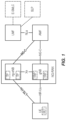
- Figure 1 is a reproduction of Figure 5.1-1 of Third Generation Partnership Project (3GPP) Technical Specification (TS) 38.305 V15.4.0, which shows the network architecture for positioning purposes.
- the Fifth Generation (5G) System (5GS) architecture for positioning purposes includes a NG-RAN including a next generation Node B (gNB) and a next generation enhanced or evolved Node B (ng-eNB), and a 5G Core (5GC) including an Access and Mobility Management Function (AMF) and a LMF.
- the LMF may have a signaling connection to an Evolved Serving Mobile Location Center (E-SMLC) and a Secure User Plane Location (SUPL) Location Platform (SLP).
- E-SMLC Evolved Serving Mobile Location Center
- SUPL Secure User Plane Location
- Section 5.1 of 3GPP TS 38.305 V15.4.0 states:
- Figure 5.1-1 shows the architecture in 5GS applicable to positioning of a UE with NG-RAN or E-UTRAN access.
- the AMF receives a request for some location service associated with a particular target UE from another entity (e.g., GMLC) or the AMF itself decides to initiate some location service on behalf of a particular target UE (e.g., for an IMS emergency call from the UE) as described in TS 23.502 [26].
- the AMF then sends a location services request to an LMF.
- the LMF processes the location services request which may include transferring assistance data to the target UE to assist with UE-based and/or UE-assisted positioning and/or may include positioning of the target UE.
- the LMF then returns the result of the location service back to the AMF (e.g., a position estimate for the UE.
- the AMF returns the location service result to this entity.
- An ng-eNB may control several TPs, such as remote radio heads, or PRS-only TPs for support of PRS-based TBS for E-UTRA.
- An LMF may have a signalling connection to an E-SMLC which may enable an LMF to access information from E-UTRAN (e.g. to support the OTDOA for E-UTRA positioning method using downlink measurements obtained by a target UE of signals from eNBs and/or PRS-only TPs in E-UTRAN). Details of the signalling interaction between an LMF and E-SMLC are outside the scope of this specification.
- An LMF may have a signalling connection to an SLP.
- the SLP is the SUPL entity responsible for positioning over the user plane. Further details of user-plane positioning are provided in [15][16].
- Figure 5.1-1 UE Positioning Architecture applicable to NG-RAN
- the gNB and ng-eNB may not always both be present.
- NOTE 2 When both the gNB and ng-eNB are present, the NG-C interface is only present for one of them (FFS).
- New and enhanced positioning methods have been defined in NR (TS 38.305) such as:
- the gNB can allocate uplink resources for the initial Hybrid Automatic Repeat Request (HARQ) transmissions and HARQ retransmissions to UEs.
- HARQ Hybrid Automatic Repeat Request
- Two types of configured uplink grants are defined:
- the UE reports its UL periodic positioning results via LPP Step 10 in Figure 2 , as per the periodicalReporting indication defined in TS 37.355 (see extract below), which has been sent from LMF in Step 8.
- This information element can indicate to UE the periodicity of the measurement reporting, provided the device supports such periodical reporting in its UE capabilities (informed in Step 0).
- periodicalReporting This IE indicates that periodical reporting is requested and comprises the following subfields: - reportingAmount indicates the number of periodic location information reports requested. Enumerated values correspond to 1, 2, 4, 8, 16, 32, 64, or infinite/indefinite number of reports. If the reportingAmount is 'infinite/indefinite', the target device should continue periodical reporting until an LPP Abort message is received.
- the value 'ra1' shall not be used by a sender.
- - reportingInterval indicates the interval between location information reports and the response time requirement for the first location information report.
- Enumerated values ri0-25, ri0-5, ri1, ri2, ri4, ri8, ri16, ri32, ri64 correspond to reporting intervals of 1, 2, 4, 8, 10, 16, 20, 32, and 64 seconds, respectively.
- Measurement reports containing no measurements or no location estimate are required when a reportingInterval expires before a target device is able to obtain new measurements or obtain a new location estimate.
- the value 'noPeriodicalReporting' shall not be used by a sender.
- the UE For the message sent from the LMF to the gNB via NRPPa, the UE is identified in the Next Generation Application Protocol (NG-AP) transport message by temporary ID: AMF UE NGAP ID and RAN UE NGAP ID as shown below from NGAP specification (TS 38.413).
- NG-AP Next Generation Application Protocol
- This message is sent by the AMF and is used for carrying NRPPa message over the NG interface.
- US 2014/080509 A1 discloses methods and apparatuses disclosed herein improve positioning based on UL signals in a wireless communication network, by sending UL transmission configuration from wireless devices, and by using that information in the network for performing UL-based positioning of the devices. Further aspects related to positioning of UEs are discussed in the following documents:
- the present disclosure provides methods, a location server, a base station and a cellular communication system as defined in the independent claims.
- Systems and methods are disclosed herein for signaling, over New Radio Positioning Protocol Annex (NRPPa), the periodicity of User Equipment (UE) periodical location information reporting to a next generation (NR) base station along with Quality of Service (QoS) information in terms of latency and/or accuracy.
- the base station can take the location information into account for prioritizing and configuring the UE's existing uplink (UL) grant(s) accordingly.
- the UE can then send its periodic Long-Term Evolution Positioning Protocol (LPP) Positioning report while avoiding clashes with other UL transmissions.
- LPF Location Management Function
- LMF Location Management Function
- Embodiments of a method performed by a location server (e.g. LMF) in UE positioning are disclosed.
- the method comprises sending one or more first NRPPa messages to a base station that serves a target UE and receiving a second NRPPa message from the base station.
- the one or more first NRPPa messages include an expected periodical reporting of the target UE, and provide priority indication associated with positioning requirements of the target UE so as to enable the base station to configure UL grant resources.
- the second NRPPa message acknowledges a success or failure of the configured UL grant resources.
- the one or more first NRPPa messages sent to the base station further include a request for UL Sounding Reference Signal (UL-SRS) configuration of the target UE from the serving base station.
- UL-SRS UL Sounding Reference Signal
- the request for the UL-SRS configuration of the target UE, the expected periodical reporting of the target UE, and the priority indication associated with the positioning requirements of the target UE are sent over a same first NRPPa message from the location server to the base station.
- the request for the UL-SRS configuration of the target UE, the expected periodical reporting of the target UE, and the priority indication associated with the positioning requirements of the target UE are sent over different first NRPPa messages from the location server to the base station.
- the second NRPPa message received from the base station further includes a response to provide the UL-SRS configuration of the target UE from the serving base station.
- the expected periodical reporting of the target UE and the priority indication associated with the positioning requirements of the target UE are sent over a same first NRPPa message from the location server to the base station.
- the expected periodical reporting of the target UE and the the priority indication associated with the positioning requirements of the target UE are sent over different first NRPPa messages from the location server to the base station.
- the one or more first NRPPa messages sent to the base station further include QoS information of the target UE, which provides the priority indication associated with the positioning requirements of the target UE.
- the QoS information of the target UE includes at least one of QoS latency, QoS accuracy, and QoS positioning.
- the method performed by the location server further comprises sending an abort indication message to the base station to indicate a stop or a release of configured grant resources.
- the location server is adapted to send one or more first NRPPa messages to a base station that serves a target UE and receive a second NRPPa message from the base station.
- the one or more first NRPPa messages include an expected periodical reporting of the target UE, and provide priority indication associated with positioning requirements of the target UE so as to enable the base station to configure UL grant resources.
- the second NRPPa message acknowledges a success or failure of the configured UL grant resources.
- a location server that performs in UE positioning includes an interface and processing circuitry associated with the interface.
- the processing circuitry is configured to cause the location server to send one or more first NRPPa messages to a base station that serves a target UE and receive a second NRPPa message from the base station.
- the one or more first NRPPa messages include an expected periodical reporting of the target UE, and provide priority indication associated with positioning requirements of the target UE so as to enable the base station to configure UL grant resources.
- the second NRPPa message acknowledges a success or failure of the configured UL grant resources.
- Embodiments of a method performed by a base station, which serves a target UE, in UE positioning are also disclosed.
- the method comprises receiving one or more first NRPPa messages from a location server and sending a second NRPPa message to the location server.
- the one or more first NRPPa messages include an expected periodical reporting of the target UE, and provide priority indication associated with positioning requirements of the target UE so as to enable the base station to configure UL grant resources.
- the second NRPPa message acknowledges a success or failure of the configured UL grant resources.
- the one or more first NRPPa messages received from the location server further includes a request for UL-SRS configuration of the target UE from the base station.
- the request for UL-SRS configuration of the target UE, the expected periodical reporting of the target UE, and the priority indication associated with the positioning requirements of the target UE are received over a same first NRPPa message from the location server to the base station.
- the request for UL-SRS configuration of the target UE, the expected periodical reporting of the target UE, and the priority indication associated with the positioning requirements of the target UE are received over different first NRPPa messages from the location server to the base station.
- the second NRPPa message sent to the location server further include a response to provide the UL-SRS configuration of the target UE to the location server.
- the expected periodical reporting of the target UE and the priority indication associated with the positioning requirements of the target UE are received over a same first NRPPa message from the location server to the base station.
- the expected periodical reporting of the target UE and priority indication associated with the positioning requirements of the target UE are received over different first NRPPa messages from the location server to the base station.
- the one or more first NRPPa messages received from the local server further include QoS information of the target UE, which provides the priority indication associated with the positioning requirements of the target UE.
- the QoS information for the target UE includes at least one of QoS latency, QoS accuracy, and QoS positioning.
- the base station includes a next generation Node B central unit (gNB-CU) and a gNB distributed-unit (gNB-DU).
- the gNB-CU considers the expected periodical reporting and the priority indication associated with the positioning requirements of the target UE to adapt preconfigured UL transmissions for the target UE with periodicity of the positioning reporting.
- the gNB-CU transmits the expected periodical reporting and the priority indication associated with the positioning requirements of the target UE to the gNB-DU.
- the method performed by the base station further comprises receiving an abort indication message from the location server.
- the abort indication message indicates a stop or a release of configured grant resources.
- the method performed by the base station further comprises prioritizing among different UEs in allocation of UL grant resources based upon the priority indication associated with the positioning requirements of the target UE received from the location server.
- the method performed by the base station further comprises configuring UL grant resources for the target UE by considering the expected UE periodical reporting and the priority indication associated with the positioning requirements of the target UE received from the location server.
- the method performed by the base station further comprises determining to release or abort configured UL grant resources based upon received abort indication message.
- the method performed by the base station further comprises releasing the configured UL grant resources to the target UE.
- a base station which serves a target UE, performing in UE positioning.
- the base station is adapted to receive one or more first NRPPa messages from a location server and send a second NRPPa message to the location server.
- the one or more first NRPPa messages include an expected periodical reporting of the target UE, and provide priority indication associated with the positioning requirements of the target UE so as to enable the base station to configure UL grant resources.
- the second NRPPa message acknowledges a success or failure of the configured UL grant resources.
- the processing circuitry is configured to cause the base station to receive one or more first NRPPa messages from a location server and send a second NRPPa message to the location server.
- the one or more first NRPPa messages include an expected periodical reporting of the target UE, and priority indication associated with the positioning requirements of the target UE so as to enable the base station to configure UL grant resources.
- the second NRPPa message acknowledges a success or failure of the configured UL grant resources.
- Embodiments of a method performed by a UE in UE positioning, which is served by a base station are also disclosed.
- the method comprises obtaining UL grant resources configured by the base station and providing measurements to a location server using the configured UL grant resources.
- the UL grant resources are configured by the base station based upon expected UE periodical reporting and priority indication associated with the positioning requirements of the UE received by the base station from the location server.
- a UE performing in UE positioning which is served by a base station
- the UE is adapted to obtain UL grant resources configured by the base station and provide measurements to a location server using the configured UL grant resources.
- the UL grant resources are configured by the base station based upon expected UE periodical reporting and priority indication associated with the positioning requirements of the UE received by the base station from the location server.
- a UE performing in UE positioning which is served by a base station, includes one or more transmitters, one or more receivers, and processing circuitry associated with the one or more transmitters and the one or more receivers.
- the processing circuitry is configured to cause the UE to obtain UL grant resources configured by the base station and provide measurements to a location server using the configured UL grant resources.
- the UL grant resources are configured by the base station based upon expected UE periodical reporting and priority indication associated with the positioning requirements of the UE received by the base station from the location server.
- inventions may provide one or more of the following technical advantage(s).
- embodiments of the present disclosure may provide any one or more of the following advantages:
- Radio Node As used herein, a "radio node” is either a radio access node or a wireless communication device.
- Radio Access Node As used herein, a “radio access node” or “radio network node” or “radio access network node” is any node in a Radio Access Network (RAN) of a cellular communications network that operates to wirelessly transmit and/or receive signals.
- RAN Radio Access Network
- a radio access node examples include, but are not limited to, a base station (e.g., a New Radio (NR) base station (gNB) in a Third Generation Partnership Project (3GPP) Fifth Generation (5G) NR network or an enhanced or evolved Node B (eNB) in a 3GPP Long Term Evolution (LTE) network), a high-power or macro base station, a low-power base station (e.g., a micro base station, a pico base station, a home eNB, or the like), a relay node, a network node that implements part of the functionality of a base station (e.g., a network node that implements a gNB Central Unit (gNB-CU) or a network node that implements a gNB Distributed Unit (gNB-DU)) or a network node that implements part of the functionality of some other type of radio access node.
- a base station e.g., a New Radio (NR) base station (gNB)
- a "core network node” is any type of node in a core network or any node that implements a core network function.
- Some examples of a core network node include, e.g., a Mobility Management Entity (MME), a Packet Data Network Gateway (P-GW), a Service Capability Exposure Function (SCEF), a Home Subscriber Server (HSS), or the like.
- MME Mobility Management Entity
- P-GW Packet Data Network Gateway
- SCEF Service Capability Exposure Function
- HSS Home Subscriber Server
- a core network node examples include a node implementing a Access and Mobility Management Function (AMF), a User Plane Function (UPF), a Session Management Function (SMF), an Authentication Server Function (AUSF), a Network Slice Selection Function (NSSF), a Network Exposure Function (NEF), a Network Function (NF) Repository Function (NRF), a Policy Control Function (PCF), a Unified Data Management (UDM), or the like.
- AMF Access and Mobility Management Function
- UPF User Plane Function
- SMF Session Management Function
- AUSF Authentication Server Function
- NSSF Network Slice Selection Function
- NEF Network Exposure Function
- NRF Network Exposure Function
- NRF Network Exposure Function
- PCF Policy Control Function
- UDM Unified Data Management
- a "communication device” is any type of device that has access to an access network.
- Some examples of a communication device include, but are not limited to: mobile phone, smart phone, sensor device, meter, vehicle, household appliance, medical appliance, media player, camera, or any type of consumer electronic, for instance, but not limited to, a television, radio, lighting arrangement, tablet computer, laptop, or Personal Computer (PC).
- the communication device may be a portable, hand-held, computer-comprised, or vehicle-mounted mobile device, enabled to communicate voice and/or data via a wireless or wireline connection.
- One type of communication device is a wireless communication device, which may be any type of wireless device that has access to (i.e., is served by) a wireless network (e.g., a cellular network).
- a wireless communication device include, but are not limited to: a User Equipment device (UE) in a 3GPP network, a Machine Type Communication (MTC) device, and an Internet of Things (IoT) device.
- UE User Equipment
- MTC Machine Type Communication
- IoT Internet of Things
- Such wireless communication devices may be, or may be integrated into, a mobile phone, smart phone, sensor device, meter, vehicle, household appliance, medical appliance, media player, camera, or any type of consumer electronic, for instance, but not limited to, a television, radio, lighting arrangement, tablet computer, laptop, or PC.
- the wireless communication device may be a portable, hand-held, computer-comprised, or vehicle-mounted mobile device, enabled to communicate voice and/or data via a wireless connection.
- Network Node As used herein, a "network node” is any node that is either part of the RAN or the core network of a cellular communications network/system.
- a TRP may be either a network node, a radio head, a spatial relation, or a Transmission Configuration Indicator (TCI) state.
- TCI Transmission Configuration Indicator
- a TRP may be represented by a spatial relation or a TCI state in some embodiments.
- a TRP may be using multiple TCI states.
- a Long Term Evolution Positioning Protocol configures the User Equipment (UE) measurement reporting periodicity for location information reporting, this is not known to a base station (e.g., gNB). Because of this, the gNB may not be able to configure the UL grant matching the UE reporting periodicity.
- LPP Long Term Evolution Positioning Protocol
- a valid UL grant must have been pre-allocated by the gNB to the UE.
- the gNB does not know what is the periodical LPP reporting in Steps 8 or 10 of Figure 2 , for which the UE may provide periodic location information to the LMF.
- the gNB knows instead whether the NRPPa measurements response in Step 11 above should be sent at once (on demand) or in many messages (Periodic NRPP reporting), but the gNB cannot know the UE's windows of reporting information to the LMF via LPP. This is particularly significant for positioning methods such as Downlink Time Difference of Arrival (DL-TDOA) that do not require such gNB/LMF information exchange.
- DL-TDOA Downlink Time Difference of Arrival
- the absence of such sync of UL information at gNB can prohibit in configuring UL grant properly and consequently delay signaling and impact the overall network's latency. Further, the positioning periodical reporting performed by the UE via LPP should not clash with other UL transmissions that have been configured by the gNB when the UE is in connected mode (e.g., in Range Rate Correction (RRC)).
- RRC Range Rate Correction
- the LMF provides the Downlink Positioning Reference Signal (DL-PRS) Assistance data (AD), it provides a prioritized list of cells/TRPs where the UE should perform the measurement and report to the LMF via LPP.
- DL-PRS Downlink Positioning Reference Signal
- AD Assistance data
- a list of 32 cells is provided.
- RSTDs 3 Reference Signal Time Differences
- LOS Line of Sight
- RTT multi-Round Trip Time
- the LMF as such provides several cells/TRPs list to the UE because the measurements obtained from only few cells/TRPs at times may not be enough to compute the position mainly if those are Non-Line of Sight (NLOS) and the UE has large uncertainty. It may take lots of UE power to compute the positioning, and to provide measurement results for several cells is time consuming, increases signaling load, and requires large radio resources.
- NLOS Non-Line of Sight
- positioning Quality of Service as such is defined in terms of positioning accuracy and latency.
- the positioning QoS provides priority indication associated with positioning requirements (more details are disclosed in tables below).
- Some of the applications require high positioning accuracy along with faster response time (non-delay tolerant positioning application such as for autonomous driving). While some of the applications can be delay tolerant and occasional tracking with low positioning accuracy can be enough (for example tracking goods/objects whether they are still located in factory or are on the move).
- different policies can be adopted in the gNB. Larger resources can be guaranteed for non-delay tolerant applications compared to delay tolerant applications as an example.
- the gNB is not aware of the QoS for positioning.
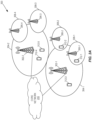
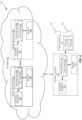
- FIG. 3A illustrates one example of a cellular communications system 300 in which embodiments of the present disclosure may be implemented.
- the cellular communications system 300 is a 5G system (5GS) including a Next Generation RAN (NG-RAN) and a 5G Core (5GC).
- the RAN includes base stations 302-1 and 302-2, which in the 5GS include NR base stations (gNBs) and optionally next generation eNBs (ng-eNBs) (e.g., LTE RAN nodes connected to the 5GC), controlling corresponding (macro) cells 304-1 and 304-2.
- the base stations 302-1 and 302-2 are generally referred to herein collectively as base stations 302 and individually as base station 302.
- the (macro) cells 304-1 and 304-2 are generally referred to herein collectively as (macro) cells 304 and individually as (macro) cell 304.
- the RAN may also include a number of low power nodes 306-1 through 306-4 controlling corresponding small cells 308-1 through 308-4.
- the low power nodes 306-1 through 306-4 can be small base stations (such as pico or femto base stations) or Remote Radio Heads (RRHs), or the like.
- RRHs Remote Radio Heads
- one or more of the small cells 308-1 through 308-4 may alternatively be provided by the base stations 302.
- the low power nodes 306-1 through 306-4 are generally referred to herein collectively as low power nodes 306 and individually as low power node 306.
- the small cells 308-1 through 308-4 are generally referred to herein collectively as small cells 308 and individually as small cell 308.
- the cellular communications system 300 also includes a core network 310, which in the 5G System (5GS) is referred to as the 5GC.
- the base stations 302 (and optionally the low power nodes 306) are connected to the core network 310.
- the base stations 302 and the low power nodes 306 provide service to wireless communication devices 312-1 through 312-5 in the corresponding cells 304 and 308.
- the wireless communication devices 312-1 through 312-5 are generally referred to herein collectively as wireless communication devices 312 and individually as wireless communication device 312. In the following description, the wireless communication devices 312 are oftentimes UEs, but the present disclosure is not limited thereto.
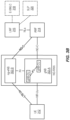
- the cellular communications system 300 has the network architecture described above with respect to Figure 1 . This is illustrated in Figure 3B . More specifically, as illustrated in Figure 3B , for location purposes, the core network 310 includes an AMF 314, a LMF 316, optionally an Evolved Serving Mobile Location Center (E-SMLC) 318, and optionally a Secure User Plane Location (SUPL) Location Platform (SLP) 320.
- E-SMLC Evolved Serving Mobile Location Center
- SLP Secure User Plane Location
- NFs network functions within the 5GC
- these NFs may be implemented as, e.g., a network element on a dedicated hardware, as a software instance running on a dedicated hardware, or as a virtualized function instantiated on an appropriate platform, e.g., a cloud infrastructure.
- the NG-RAN network includes gNB(s) 302-A and optionally ng-eNB(s) 302-B.
- the gNB(s) may have a split architecture including gNB-CU and gNB-DU, and these two are connected by an interface called F1 (refer to TS 38.473).
- the gNB In current existing RAN design, the gNB is not aware of QoS needed for positioning. However, since the LPP is carried over control plane, such control plane then has a higher priority than user plane. In some applications, the gNB needs to serve multiple UEs who require positioning solutions with different methods and QoS requirements. In such case, if the gNB is aware of QoS for positioning then the gNB can prioritize the control plane resources among these multiple UEs. Therefore, it is desired that the LMF provides QoS (e.g., priority indication associated with positioning requirements) for each UE to the gNB.
- QoS e.g., priority indication associated with positioning requirements
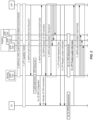
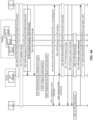
- Figure 4A illustrates an example of signaling exchange for positioning among various nodes when the LMF 316 is the entity that performs positioning estimation in accordance with one embodiment of the present disclosure.
- the steps of the procedure illustrated in Figure 4 are as follows:
- Step 400 performing NRPPa DL-PRS configuration information exchange between the LMF 316 and the gNBs, such as a serving gNB 302-1A and /or neighbor gNBs 302-2A, 302-3A, and 302-4A.
- the serving gNB 302-1A is a currently serving base station of a target UE 312.
- Step 401 performing LPP capability transfer between the LMF 316 and the target UE 312.
- Step 402 The LMF 316 sends one or more NRPPa messages to the serving gNB 302-1A for positioning information.
- the NRPPa message(s) includes a POSITIONING INFORMATION REQUEST to request uplink (UL) information (UL Sounding Reference Signal (UL-SRS) configuration information) of the target UE 312 from the serving gNB 302-1A.
- the POSITIONING INFORMATION REQUEST is an exemplary request for the UL-SRS configuration information of the target UE 312.
- the NRPPa message(s) may include different request(s) for the UL-SRS configuration information of the target UE 312.
- the NRPPa message(s) includes an expected periodical reporting of the UE 312 and QoS information for the UE 312.
- the QoS information at least provides priority indication associated with positioning requirements of the UE 312.
- the LMF 316 may send the POSITIONING INFORMATION REQUEST, the expected UE periodical reporting, and the QoS information over a same NRPPa message or different NRPPa messages. For instance, when the LMF 316 sends the POSITIONING INFORMATION REQUEST to the serving gNB 302-1A, the LMF 316, in the same NRPPa message, can also request the serving gNB 302-1A to consider the UE periodical reporting, with its subfields as defined in TS 37.355, and a desired level of QoS.
- the LMF 316 may send a first NRPPa message including the POSITIONING INFORMATION REQUEST to the serving gNB 302-1A; and the LMF 316 sends a second NRPPa message including the expected periodical reporting of the UE 312 and QoS information for the UE 312.
- the serving gNB 302-1A receives the UE periodical reporting and level of QoS, the serving gNB 302-1A will take them into account to configure the periodicity of UE's UL grant(s) accordingly.
- the gNB-CU in the serving gNB 302-1A will take into account the received UE periodical reporting and QoS information to adapt the UE preconfigured UL transmissions with the positioning reporting periodicity.
- the gNB-CU in the serving gNB 302-1A can also provide the expected periodical reporting and the QoS information to the gNB-DU the serving gNB 302-1A over the F1 interface in case some UE UL grants need to be configured via PHY/MAC layer.
- the LMF 316 may send an abort indication message to the serving gNB 302-1A to indicate the stop or the release of configured grant resources (Step 402a). If the serving gNB 302-1A has a split gNB architecture, the gNB-CU will also send the abort indication to the gNB-DU.
- Non-limiting examples for NRPPa signaling which is sent from the LMF 316 to the serving gNB 302-1A to request positioning information, are presented below.
- IE/Group Name Presence IE type and reference Semantics description Criticality Assigned Criticality Message Type M 9.2.3 YES reject NRPPa Transaction ID M 9.2.4 - Requested SRS Transmission Characteristics O 9.2.27 YES ignore UE reporting periodicity O OCTET STRING Or Enumerated ⁇ ri0-25, ri0-5, ri1, ri2, ri4, ri8, ri16, ri32, ri64 ⁇ As defined in TS 37.355 YES ignore QoS Latency O INTEGER (1..5) Value 1 indicates highest priority and value 5 means the lowest priority YES ignore QoS Accuracy O INTEGER (1..5) Value 1 indicates highest priority and value 5 means the lowest priority YES ignore QoS Positioning O INTEGER (1..5) Value 1 indicates highest priority and value 5 means the lowest
- F1 Application Protocol F1 Application Protocol
- F1AP F1 Application Protocol
- IE/Group Name Presence IE type and reference Semantics description Criticality Assigned Criticality Message Type M 9.3.1.1 YES reject gNB-CU UE F1AP ID M 9.3.1.4 YES reject gNB-DU UE F1AP ID M 9.3.1.5 YES reject Requested SRS Transmission Characteristics
- the above embodiments are valid for all positioning methods, provided that the UE supports periodical LPP reporting and has communicated its capability before-hand to the LMF.
- a new NRPPa signaling can be used to send the UE expected periodical reporting and QoS latency to the gNB.
- Step 403 the serving gNB 302-1A prioritizes among different UEs (including the target UE 312) in allocation of UL grants based upon the received QoS information. Also, the serving gNB 302-1A configures UL grant resources for the target UE 312 by considering the expected UE periodical reporting and the QoS information (Step 403a). Furthermore, if the serving gNB 302-1A receives the abort indication message from the LMF 316, the serving gNB 302-1A may release or abort configured UL grant resources based upon received abort indication message (Step 403b). At Step 403c, the serving gNB 302-1A may release the configured UL grant resources to the target UE 312.
- Step 404 The serving gNB 302-1A provides the UL-SRS configuration information of the UE 312 to the LMF 316 in a NRPPa POSITIONING INFORMATION RESPONSE message.
- the POSITIONING INFORMATION RESPONSE is an exemplary response to provide the UL-SRS configuration information of the UE 312 to the LMF316.
- the serving gNB 302-1A may also provide an acknowledgement of the configured UL grants (success or failure) to the LMF 316 via the NRPPa message. This acknowledgement can be encapsulated in the NRPPa message.
- Step 405a The LMF 316 may send a NRPPa SRS Activation Request message to the serving gNB 302-1A of the target UE 112 to request activation of UE SRS transmission.
- the message includes an indication of an UL-SRS resource set to be activated and may include information that indicates the spatial relation for the semi-persistent UL-SRS resource to be activated.
- the serving gNB 302-1A then activates the UE SRS transmission.
- the UE 312 begins the UL-SRS transmission according to the time domain behavior of UL-SRS resource configuration.
- Step 406 The LMF 316 sends a NRPPa MEASUREMENT REQUEST message to selected gNBs (one or more of the serving gNB 302-1A and the neighbor gNBs 302-2A, 302-3A, and 302-4A) to request Multi-RTT measurement information.
- This NRPPa message includes any information required for the selected gNBs to perform the measurements
- Step 407 The LMF 316 determines that assistance data needs to be provided to the UE 312 (e.g., as part of a positioning procedure) and sends an LPP Provide Assistance Data message to the UE 312. Such message includes any required assistance data for the UE 312 to perform the necessary DL-PRS measurements.
- Step 408 The LMF 316 sends a LPP Request Location Information message to the UE 312 to request Multi-RTT measurements.
- Step 409a The UE 312 performs the DL-PRS measurements from all gNBs (both serving and neighbor gNBs) provided in the assistance data at Step 407.
- each gNB configured at Step 406 measures the UE SRS transmissions from the UE 312.
- Step 410 The UE 312 reports the DL-PRS measurements for Multi-RTT to the LMF 316 in a LPP Provide Location Information message using the configured grant resources.
- Step 411 Each gNB (each of the serving gNB 302-1A and the neighbor gNBs 302-2A, 302-3A, and 302-4A) reports the UE SRS measurements to the LMF 316 in a NRPPa Measurement Response message.
- the LMF 316 determines the RTTs from the UE and gNB Rx-Tx time difference measurements for each gNB for which corresponding UL and DL measurements were provided at Steps 410 and 411 and calculates the position of the UE 312.
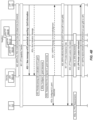
- Step 402 For positioning methods that do not call for gNB/LMF exchanges besides the Step 400 in Figure 4A (Steps 402, 404, 405a and 405b can be omitted), an individual new message from the LMF 316 to the serving gNB 302-1A is needed before-hand to transmit the expected periodical reporting of the UE 312 and QoS information for the UE 312 (Step 402-1), as illustrated in Figure 4B .
- This new message allows the serving gNB 302-1A to properly configure the UE 312 reporting and align them with UL configured grants.
- the serving gNB 302-1A may provide an acknowledgement of the configured UL grants (success or failure) to the LMF 312 via NRPPa. This acknowledgement can be provided in a new NRPPa message (Step 404-1).
- FIG. 5 is a flow chart that illustrates the operations of a location server (e.g., LMF 316) in accordance with some embodiments of the present disclosure. Note that while this process is described for the location server, this process is more generally applicable to any position estimation entity.
- the location server sends one or more NRPPa messages to a base station (e.g. serving gNB 302-1A) serving a target UE (e.g. the UE 312) (Step 500).
- the one or more NRPPa messages include an expected periodical reporting of the target UE and QoS information (e.g. QoS desired level) for the target UE.
- the one or more NRPPa messages may also include a POSITIONING INFORMATION REQUEST to request UL information (UL-SRS configuration) of the target UE from the serving base station.
- the location server may send the POSITIONING INFORMATION REQUEST, the expected UE periodical reporting, and the QoS information over a same NRPPa message or different NRPPa messages.
- the POSITIONING INFORMATION REQUEST is an exemplary request for the UL-SRS configuration information of the target UE.
- the one or more NRPPa messages may include different request(s) for the UL-SRS configuration information of the target UE.
- the location server may also send an abort indication message to the base station to indicate the stop or the release of configured grant resources for the target UE (Step 502).
- the location server then receives a NRPPa message from the serving base station (Step 504).
- This received NRPPa message includes an acknowledgement of configured UL grants (success or failure). If this received NRPPa message responds to the POSITIONING INFORMATION REQUEST sent by the location server, this received NRPPa message may be a POSITIONING INFORMATION RESPONSE message (as illustrated in Step 404 in Figure 4A ) and may provide the UL-SRS configuration information. In some applications, the location server does not need UL SRS configuration. The location server only sends the UE's expected periodical reporting and the QoS information to the base station, which will take them into account. No feedback from the base station to the location server is needed.
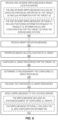
- FIG. 6 is a flow chart that illustrates the operations of a base station (e.g., serving gNB 302-1A) serving a target UE (e.g., the UE 312) in accordance with some embodiments of the present disclosure.
- the base station receives one or more NRPPa messages from a location server (Step 600).
- the one or more NRPPa messages include an expected periodical reporting of the target UE and QoS information (e.g. QoS desired level) for the target UE.
- the one or more NRPPa messages may also include a POSITIONING INFORMATION REQUEST to request UL information (UL-SRS configuration) of the target UE from the base station.
- UL-SRS configuration POSITIONING INFORMATION REQUEST
- the base station may receive the POSITIONING INFORMATION REQUEST, the expected UE periodical reporting, and the QoS information in a same NRPPa message or different NRPPa messages.
- the POSITIONING INFORMATION REQUEST is an exemplary request for the UL-SRS configuration information of the target UE.
- the one or more NRPPa messages may include different request(s) for the UL-SRS configuration information of the target UE.
- the base station may also receive an abort indication message from the location server to indicate the stop or the release of configured grant resources for the target UE (Step 602).
- the base station may prioritize among different UEs (including the target UE 312) in allocation of UL grants based upon the received QoS information (Step 604). Also, the base station configures UL grant resources for the target UE by considering the expected UE periodical reporting and the QoS information (Step 606). Furthermore, if the base station receives the abort indication message from the location server, the base station may determine to release or abort configured UL grant resources based upon received abort indication message (Step 608). At Step 610, the base station may release the configured UL grant resources to the target UE.
- the base station sends a NRPPa message to the location server (Step 612). If this NRPPa message sent by the base station responds to the received POSITIONING INFORMATION REQUEST from the location server, this NRPPa message may be a POSITIONING INFORMATION RESPONSE message (as illustrated in Step 404 in Figure 4A ) and may provide the UL-SRS configuration information. In some applications, the location server does not need UL SRS configuration. The location server only sends the UE's expected periodical reporting and the QoS information to the base station, which will take them into account. No feedback from the base station to the location server is needed.
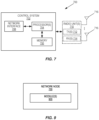
- FIG. 7 is a schematic block diagram of a network node 700 (e.g., a base station 302, a network node that implements some or all of the functionality of a base station described herein, or a network node on which a LMF 316 or location server is implemented) according to some embodiments of the present disclosure.
- the network node 700 includes a control system 702 that includes one or more processors 704 (e.g., Central Processing Units (CPUs), Application Specific Integrated Circuits (ASICs), Field Programmable Gate Arrays (FPGAs), and/or the like), memory 706, and a network interface 708.
- the one or more processors 704 are also referred to herein as processing circuitry.
- the network node 700 may include one or more radio units 710 that each includes one or more transmitters 712 and one or more receivers 714 coupled to one or more antennas 716.
- the radio units 710 may be referred to or be part of radio interface circuitry.
- the radio unit(s) 710 is external to the control system 702 and connected to the control system 702 via, e.g., a wired connection (e.g., an optical cable).
- the radio unit(s) 710 and potentially the antenna(s) 716 are integrated together with the control system 702.
- the one or more processors 704 operate to provide one or more functions of a network node 700 as described herein (e.g., one or more functions of a base station, LMF, or location server described herein).
- the function(s) are implemented in software that is stored, e.g., in the memory 706 and executed by the one or more processors 704.
- Figure 8 is a schematic block diagram that illustrates a virtualized embodiment of the network node 700 according to some embodiments of the present disclosure. This discussion is equally applicable to other types of network nodes. Further, other types of network nodes may have similar virtualized architectures.
- a "virtualized" network node is an implementation of the network node 700 in which at least a portion of the functionality of the network node 700 is implemented as a virtual component(s) (e.g., via a virtual machine(s) executing on a physical processing node(s) in a network(s)).
- the network node 700 may include the control system 702 and/or the one or more radio units 710, as described above.
- the control system 702 may be connected to the radio unit(s) 710 via, for example, an optical cable or the like.
- the network node 700 includes one or more processing nodes 800 coupled to or included as part of a network(s) 802.
- Each processing node 800 includes one or more processors 804 (e.g., CPUs, ASICs, FPGAs, and/or the like), memory 806, and a network interface 808.
- processors 804 e.g., CPUs, ASICs, FPGAs, and/or the like
- functions 810 of the network node 700 described herein are implemented at the one or more processing nodes 800 or distributed across the one or more processing nodes 800 and the control system 702 and/or the radio unit(s) 710 in any desired manner.
- some or all of the functions 810 of the network node 700 described herein are implemented as virtual components executed by one or more virtual machines implemented in a virtual environment(s) hosted by the processing node(s) 800.
- additional signaling or communication between the processing node(s) 800 and the control system 702 is used in order to carry out at least some of the desired functions 810.
- the control system 702 may not be included, in which case the radio unit(s) 710 communicates directly with the processing node(s) 800 via an appropriate network interface(s).
- a computer program including instructions which, when executed by at least one processor, causes the at least one processor to carry out the functionality of network node 700 or a node (e.g., a processing node 800) implementing one or more of the functions 810 of the network node 700 in a virtual environment according to any of the embodiments described herein is provided.
- a carrier comprising the aforementioned computer program product is provided.
- the carrier is one of an electronic signal, an optical signal, a radio signal, or a computer readable storage medium (e.g., a non-transitory computer readable medium such as memory).
- FIG 9 is a schematic block diagram of the network node 700 according to some other embodiments of the present disclosure.
- the network node 700 includes one or more modules 900, each of which is implemented in software.
- the module(s) 900 provide the functionality of the network node 700 described herein (e.g., one or more functions of a base station, LMF, or location server described herein). This discussion is equally applicable to the processing node 800 of Figure 8 where the modules 900 may be implemented at one of the processing nodes 800 or distributed across multiple processing nodes 800 and/or distributed across the processing node(s) 800 and the control system 702.
- FIG 10 is a schematic block diagram of a wireless communication device 1000 (e.g. the UE 312) according to some embodiments of the present disclosure.
- the wireless communication device 1000 includes one or more processors 1002 (e.g., CPUs, ASICs, FPGAs, and/or the like), memory 1004, and one or more transceivers 1006 each including one or more transmitters 1008 and one or more receivers 1010 coupled to one or more antennas 1012.
- the transceiver(s) 1006 includes radio-front end circuitry connected to the antenna(s) 1012 that is configured to condition signals communicated between the antenna(s) 1012 and the processor(s) 1002, as will be appreciated by on of ordinary skill in the art.
- the processors 1002 are also referred to herein as processing circuitry.
- the transceivers 1006 are also referred to herein as radio circuitry.
- the functionality of the wireless communication device 1000 described above e.g., one or more functions of the UE 312 described herein
- the wireless communication device 1000 may include additional components not illustrated in Figure 10 such as, e.g., one or more user interface components (e.g., an input/output interface including a display, buttons, a touch screen, a microphone, a speaker(s), and/or the like and/or any other components for allowing input of information into the wireless communication device 1000 and/or allowing output of information from the wireless communication device 1000), a power supply (e.g., a battery and associated power circuitry), etc.
- user interface components e.g., an input/output interface including a display, buttons, a touch screen, a microphone, a speaker(s), and/or the like and/or any other components for allowing input of information into the wireless communication device 1000 and/or allowing output of information from the wireless communication device 1000
- a power supply e.g., a battery and associated power circuitry
- a computer program including instructions which, when executed by at least one processor, causes the at least one processor to carry out the functionality of the wireless communication device 1000 according to any of the embodiments described herein (e.g., one or more functions of a UE described herein) is provided.
- a carrier comprising the aforementioned computer program product is provided.
- the carrier is one of an electronic signal, an optical signal, a radio signal, or a computer readable storage medium (e.g., a non-transitory computer readable medium such as memory).
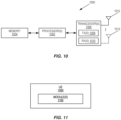
- FIG 11 is a schematic block diagram of the wireless communication device 1000 according to some other embodiments of the present disclosure.
- the wireless communication device 1000 includes one or more modules 1100, each of which is implemented in software.
- the module(s) 1100 provide the functionality of the wireless communication device 1000 described herein (e.g., one or more functions of the UE 312 described herein).
- any appropriate steps, methods, features, functions, or benefits disclosed herein may be performed through one or more functional units or modules of one or more virtual apparatuses.
- Each virtual apparatus may comprise a number of these functional units.
- These functional units may be implemented via processing circuitry, which may include one or more microprocessor or microcontrollers, as well as other digital hardware, which may include Digital Signal Processor (DSPs), special-purpose digital logic, and the like.
- the processing circuitry may be configured to execute program code stored in memory, which may include one or several types of memory such as Read Only Memory (ROM), Random Access Memory (RAM), cache memory, flash memory devices, optical storage devices, etc.
- Program code stored in memory includes program instructions for executing one or more telecommunications and/or data communications protocols as well as instructions for carrying out one or more of the techniques described herein.
- the processing circuitry may be used to cause the respective functional unit to perform corresponding functions according one or more embodiments of the present disclosure.
Landscapes
- Engineering & Computer Science (AREA)
- Signal Processing (AREA)
- Computer Networks & Wireless Communication (AREA)
- Mobile Radio Communication Systems (AREA)
Claims (15)
- Verfahren, das von einem Standortserver (316) durchgeführt wird, zur Positionsbestimmung einer Ziel-Benutzereinrichtung, UE, wobei das Verfahren Folgendes umfasst:- Senden (Schritt 402, 402-1, 500) einer oder mehrerer erster Nachrichten mit New-Radio-Positionsbestimmungsprotokollanhang, NRPPa, an eine Basisstation (302-1A), die eine Ziel-UE (312) bedient, wobei:- die eine oder die mehreren ersten NRPPa-Nachrichten eine erwartete periodische Meldung der Ziel-UE umfassen und eine mit den Positionsbestimmungsanforderungen der Ziel-UE assoziierte Prioritätsanzeige bereitstellen; und- die erwartete periodische Meldung der Ziel-UE zumindest eine Periodizität anzeigt, mit der die Ziel-UE Positionsbestimmungsergebnisse an den Standortserver meldet; und- Empfangen (Schritt 404, 404-1, 504) einer zweiten NRPPa-Nachricht von der Basisstation, wobei die zweite NRPPa-Nachricht einen Erfolg oder Fehlschlag von Uplink-Freigaberessourcen, UL-Freigaberessourcen, bestätigt, wobei die UL-Freigaberessourcen von der Basisstation basierend auf der erwarteten periodischen Meldung der Ziel-UE und der mit den Positionsbestimmungsanforderungen der Ziel-UE assoziierten Prioritätsanzeige konfiguriert wurden.
- Verfahren, das von einer Basisstation (302-1A) bei der Positionsbestimmung einer Ziel-Benutzereinrichtung, UE, durchgeführt wird, wobei die Basisstation eine Ziel-UE (312) bedient und das Verfahren Folgendes umfasst:- Empfangen (Schritt 402, 402-1, 600) einer oder mehrerer erster Nachrichten mit New-Radio-Positionsbestimmungsprotokollanhang, NRPPa, von einem Standortserver (316), wobei:- die eine oder die mehreren ersten NRPPa-Nachrichten eine erwartete periodische Meldung der Ziel-UE umfassen und eine mit den Positionsbestimmungsanforderungen der Ziel-UE assoziierte Prioritätsanzeige bereitstellen, sodass die Basisstation zum Konfigurieren von Uplink-Freigaberessourcen, UL-Freigaberessourcen, basierend auf der erwarteten periodischen Meldung der Ziel-UE und der Prioritätsanzeige in der Lage ist; und- die erwartete periodische Meldung der Ziel-UE zumindest eine Periodizität anzeigt, mit der die Ziel-UE Positionsbestimmungsergebnisse an den Standortserver meldet; und- Senden (Schritt 404, 404-1, 612) einer zweiten NRPPa-Nachricht an den Standortserver, um einen Erfolg oder einen Fehlschlag der konfigurierten UL-Freigaberessourcen zu melden.
- Verfahren nach Anspruch 1 oder 2, wobei die eine oder die mehreren ersten NRPPa-Nachrichten ferner eine Anforderung für eine UL-Sondierungsreferenzsignalkonfiguration, UL-SRS-Konfiguration, der Ziel-UE umfassen.
- Verfahren nach Anspruch 3, soweit abhängig von Anspruch 2, wobei{i} die Anforderung für die UL-SRS-Konfiguration der Ziel-UE, die erwartete periodische Meldung der Ziel-UE und die mit den Positionsbestimmungsanforderungen der Ziel-UE assoziierte Prioritätsanzeige über eine gleiche erste NRPPa-Nachricht empfangen werden; oder{ii} die Anforderung für die UL-SRS-Konfiguration der Ziel-UE, die erwartete periodische Meldung der Ziel-UE und die mit den Positionsbestimmungsanforderungen der Ziel-UE assoziierte Prioritätsanzeige über verschiedene erste NRPPa-Nachrichten empfangen werden.
- Verfahren nach Anspruch 1 oder 2, wobei die zweite NRPPa-Nachricht ferner eine Antwort zum Bereitstellen der UL-SRS-Konfiguration der Ziel-UE umfasst.
- Verfahren nach Anspruch 2, wobei{i} die erwartete periodische Meldung der Ziel-UE und die mit den Positionsbestimmungsanforderungen der Ziel-UE assoziierte Prioritätsanzeige über eine gleiche erste NRPPa-Nachricht empfangen werden; oder{ii} die erwartete periodische Meldung der Ziel-UE und die mit den Positionsbestimmungsanforderungen der Ziel-UE assoziierte Prioritätsanzeige über verschiedene erste NRPPa-Nachrichten empfangen werden.
- Verfahren nach Anspruch 1 oder 2, wobei die eine oder die mehreren NRPPa-Nachrichten ferner Dienstqualitätsinformationen, QoS-Informationen, der Ziel-UE umfassen, die die mit den Positionsbestimmungsanforderungen der Ziel-UE assoziierte Prioritätsanzeige bereitstellen, wobei optional die QoS-Informationen für die Ziel-UE mindestens eines von QoS-Latenz, QoS-Genauigkeit und QoS-Positionsbestimmung umfassen.
- Verfahren nach Anspruch 1 oder einem der Ansprüche 3, 5, 7, soweit abhängig von Anspruch 1, ferner umfassend:- Senden (Schritt 402a, 502) einer Abbruchanzeigenachricht an die Basisstation, um einen Stopp oder eine Freigabe von konfigurierten Freigaberessourcen anzuzeigen.
- Verfahren nach Anspruch 2 oder 4 oder 6 oder einem der Ansprüche 3, 5, 7, soweit abhängig von Anspruch 2, wobei die Basisstation eine zentrale Knoten-B-Einheit, gNB-CU, und eine verteilte gNB-Einheit, gNB-DU, der nächsten Generation umfasst, wobei:- die gNB-CU die erwartete periodische Meldung und die mit den Positionsbestimmungsanforderungen der Ziel-UE assoziierte Prioritätsanzeige berücksichtigt, um vorkonfigurierte UL-Übertragungen für die Ziel-UE mit der Periodizität der Positionsbestimmungsmeldung anzupassen.
- Verfahren nach Anspruch 2 oder 4 oder 6 oder 9 oder einem der Ansprüche 3, 5, 7, soweit abhängig von Anspruch 2, wobei die gNB-CU ferner die erwartete periodische Meldung und die mit den Positionsbestimmungsanforderungen der Ziel-UE assoziierte Prioritätsanzeige an die gNB-DU sendet.
- Verfahren nach Anspruch 2 oder 4 oder 6 oder 9 oder 10 oder einem der Ansprüche 3, 5, 7, soweit abhängig von Anspruch 2, ferner umfassend mindestens eines von Folgendem:- Empfangen (Schritt 402a, 602) einer Abbruchanzeigenachricht vom Standortserver, wobei die Abbruchanzeigenachricht einen Stopp oder eine Freigabe von konfigurierten Freigaberessourcen anzeigt;- Priorisieren (Schritt 403, 604) zwischen verschiedenen UEs, die die Ziel-UE (312) umfassen, bei der Zuweisung von UL-Freigaberessourcen basierend auf der mit den Positionsbestimmungsanforderungen der Ziel-UE assoziierten Prioritätsanzeige;- Konfigurieren (Schritt 403a, 606) von UL-Freigaberessourcen für die Ziel-UE durch Berücksichtigen der erwarteten periodischen UE-Meldung und der mit den Positionsbestimmungsanforderungen der Ziel-UE assoziierten Prioritätsanzeige;- Bestimmen (Schritt 403b, 608), die konfigurierten UL-Freigaberessourcen freizugeben oder abzubrechen, basierend auf der empfangenen Abbruchanzeigenachricht und optional Freigeben (Schritt 403c, 610) der konfigurierten UL-Freigaberessourcen für die Ziel-UE.
- Standortserver (316, 700), der bei einer Ziel-Benutzereinrichtung, UE, Positionsbestimmung durchführt und ausgelegt ist zum Durchführen des Verfahrens nach Anspruch 1 oder 8 oder einem der Ansprüche 3, 5, 7, soweit abhängig von Anspruch 1.
- Basisstation (302-1A, 700), die bei einer Ziel-Benutzereinrichtung, UE, Positionsbestimmung durchführt und ausgelegt ist zum Durchführen des Verfahrens nach Anspruch 2 oder 4 oder 6 oder 9 oder 10 oder 11 oder einem der Ansprüche 3, 5, 7, soweit abhängig von Anspruch 2.
- Verfahren nach Anspruch 2 oder 4 oder 6 oder 9 oder 10 oder einem der Ansprüche 3, 5, 7, soweit abhängig von Anspruch 2, wobei die Ziel-Benutzereinrichtung, UE, (312), die von der Basisstation (302-1A) bedient wird, bei der Ziel-UE-Positionsbestimmung die folgenden Schritte ausführt:- Erhalten (Schritt 403c) von UL-Freigaberessourcen, die von der Basisstation (302-1A) konfiguriert wurden; und- Bereitstellen (Schritt 410) von Messungen für den Standortserver (316) unter Verwendung der erhaltenen UL-Freigaberessourcen.
- Zellulares Kommunikationssystem (300), umfassend mindestens eine Basisstation (302-1A, 700) nach Anspruch 13 und eine Ziel-Benutzereinrichtung, UE, (312, 1000), die von der Basisstation (302-1A, 700) bedient wird, wobei die UE dazu ausgelegt ist, bei der Ziel-UE-Positionsbestimmung die zusätzlichen Schritte des Verfahrens nach Anspruch 14 auszuführen.
Applications Claiming Priority (2)
| Application Number | Priority Date | Filing Date | Title |
|---|---|---|---|
| US202063104219P | 2020-10-22 | 2020-10-22 | |
| PCT/IB2021/059769 WO2022084944A1 (en) | 2020-10-22 | 2021-10-22 | Configuration of periodic ue ul grant reporting over nrppa |
Publications (2)
| Publication Number | Publication Date |
|---|---|
| EP4233316A1 EP4233316A1 (de) | 2023-08-30 |
| EP4233316B1 true EP4233316B1 (de) | 2025-01-22 |
Family
ID=78676601
Family Applications (1)
| Application Number | Title | Priority Date | Filing Date |
|---|---|---|---|
| EP21810425.5A Active EP4233316B1 (de) | 2020-10-22 | 2021-10-22 | Konfiguration von periodischer ul-berechtigungsmeldung eines benutzergeräts über nrppa |
Country Status (5)
| Country | Link |
|---|---|
| US (1) | US20230388839A1 (de) |
| EP (1) | EP4233316B1 (de) |
| JP (1) | JP7567050B2 (de) |
| CO (1) | CO2023006573A2 (de) |
| WO (1) | WO2022084944A1 (de) |
Families Citing this family (8)
| Publication number | Priority date | Publication date | Assignee | Title |
|---|---|---|---|---|
| CN115088351B (zh) * | 2021-01-13 | 2025-07-15 | 北京小米移动软件有限公司 | 资源配置方法和装置、资源确定方法和装置 |
| US11800322B2 (en) * | 2021-04-15 | 2023-10-24 | Nokia Solutions And Networks Oy | Signalling for positioning latency control |
| US12041574B2 (en) * | 2021-09-26 | 2024-07-16 | Qualcomm Incorporated | Positioning in a wireless network using a repeater |
| CN117177261A (zh) * | 2022-05-27 | 2023-12-05 | 华为技术有限公司 | 资源配置方法及通信装置 |
| CN117320147A (zh) * | 2022-06-24 | 2023-12-29 | 中兴通讯股份有限公司 | 一种定位消息处理方法、装置、存储介质及电子装置 |
| WO2024000589A1 (zh) * | 2022-07-01 | 2024-01-04 | 北京小米移动软件有限公司 | 定位参考信号的优先级指示方法、装置、设备及存储介质 |
| CN115942239A (zh) * | 2022-08-30 | 2023-04-07 | 中兴通讯股份有限公司 | 定位方法、设备和存储介质 |
| WO2024187478A1 (zh) * | 2023-03-16 | 2024-09-19 | 北京小米移动软件有限公司 | 信息指示方法、装置、通信设备及存储介质 |
Family Cites Families (20)
| Publication number | Priority date | Publication date | Assignee | Title |
|---|---|---|---|---|
| CN103209433B (zh) * | 2009-06-22 | 2015-12-02 | 宏达国际电子股份有限公司 | 处理测量的方法 |
| EP2452524A4 (de) * | 2009-07-06 | 2014-08-13 | Ericsson Telefon Ab L M | Verbesserter steuerknoten |
| US9696406B2 (en) * | 2012-08-01 | 2017-07-04 | Telefonaktiebolaget Lm Ericsson (Publ) | Apparatus and method for enhanced UL positioning support via wireless device |
| US20180199226A1 (en) * | 2017-01-06 | 2018-07-12 | Asustek Computer Inc. | Method and apparatus for triggering a beam state information report in a wireless communication system |
| US11019487B2 (en) * | 2017-12-11 | 2021-05-25 | Qualcomm Incorporated | Systems and methods for uplink high efficiency location in a wireless network |
| US11218933B2 (en) * | 2018-09-14 | 2022-01-04 | Qualcomm Incorporated | Systems and methods for deferred 5G location of a mobile device using a combined AMF and LMF based location solution |
| US11451926B2 (en) * | 2018-10-31 | 2022-09-20 | Qualcomm Incorporated | Methods and systems for on-demand transmission of a positioning reference signal in a wireless network |
| US11902931B2 (en) * | 2018-11-09 | 2024-02-13 | Nokia Technologies Oy | Method and apparatus for transmitting positioning measurement report |
| US12278748B2 (en) * | 2019-10-15 | 2025-04-15 | Qualcomm Incorporated | Detailed warning and error reporting related to UL PRS transmission properties |
| US11496988B2 (en) * | 2019-12-16 | 2022-11-08 | Qualcomm Incorporated | Signaling details for PRS stitching for positioning in a wireless network |
| KR20220140517A (ko) * | 2020-02-11 | 2022-10-18 | 엘지전자 주식회사 | 무선 통신 시스템에서 신호를 송수신하는 방법 및 이를 지원하는 장치 |
| US12150084B2 (en) * | 2020-08-03 | 2024-11-19 | Qualcomm Incorporated | Methods and apparatus for low latency location via scheduling in advance |
| US11968148B2 (en) * | 2020-08-06 | 2024-04-23 | Lg Electronics Inc. | Method and apparatus for transmitting or receiving HARQ feedback for multicast/broadcast signal |
| US11849371B2 (en) * | 2020-08-24 | 2023-12-19 | Qualcomm Incorporated | System and methods for low latency positioning using fast uplink signaling |
| US11844146B2 (en) * | 2020-09-15 | 2023-12-12 | Apple Inc. | Technologies for positioning enhancement in unlicensed spectrum |
| US12538255B2 (en) * | 2020-09-30 | 2026-01-27 | Nokia Technologies Oy | Asset tracking joint sounding reference signal (SRS) transmission |
| US11910350B2 (en) * | 2020-10-08 | 2024-02-20 | Apple Inc. | Physical layer signaling by base stations for provisioning positioning-resources |
| US12392858B2 (en) * | 2020-10-15 | 2025-08-19 | Qualcomm Incorporated | Method and apparatus for location of a user equipment in an inactive state |
| KR20230132457A (ko) * | 2021-01-17 | 2023-09-15 | 퀄컴 인코포레이티드 | 포지셔닝을 위한 사용자 장비들 (ues) 및 기지국들에대한 시간-정렬된 측정들의 용이화 |
| CN117939391A (zh) * | 2022-10-26 | 2024-04-26 | 华为技术有限公司 | 相对定位方法及通信装置 |
-
2021
- 2021-10-22 EP EP21810425.5A patent/EP4233316B1/de active Active
- 2021-10-22 US US18/032,460 patent/US20230388839A1/en active Pending
- 2021-10-22 JP JP2023522559A patent/JP7567050B2/ja active Active
- 2021-10-22 WO PCT/IB2021/059769 patent/WO2022084944A1/en not_active Ceased
-
2023
- 2023-05-18 CO CONC2023/0006573A patent/CO2023006573A2/es unknown
Non-Patent Citations (2)
| Title |
|---|
| QUALCOMM INCORPORATED: "DL and UL NR Positioning Procedures", vol. RAN WG2, no. Prague, CZ; 20190826 - 20190830, 16 August 2019 (2019-08-16), pages 1 - 10, XP051767216, Retrieved from the Internet <URL:http://www.3gpp.org/ftp/tsg_ran/WG2_RL2/TSGR2_107/Docs/R2-1909416.zip> [retrieved on 20190816] * |
| VIVO: "Discussion on potential positioning enhancement", vol. RAN WG2, no. electronic; 20200817 - 20200828, 7 August 2020 (2020-08-07), XP051911510, Retrieved from the Internet <URL:https://ftp.3gpp.org/tsg_ran/WG2_RL2/TSGR2_111-e/Docs/R2-2006567.zip R2-2006567 Discussion on potential positioning enhancement.docx> [retrieved on 20200807] * |
Also Published As
| Publication number | Publication date |
|---|---|
| US20230388839A1 (en) | 2023-11-30 |
| JP7567050B2 (ja) | 2024-10-15 |
| JP2023547356A (ja) | 2023-11-10 |
| EP4233316A1 (de) | 2023-08-30 |
| WO2022084944A1 (en) | 2022-04-28 |
| CO2023006573A2 (es) | 2023-06-30 |
Similar Documents
| Publication | Publication Date | Title |
|---|---|---|
| EP4233316B1 (de) | Konfiguration von periodischer ul-berechtigungsmeldung eines benutzergeräts über nrppa | |
| CN116034285B (zh) | 基于侧链路角度和基于sl rrm的定位 | |
| EP4211950B1 (de) | Konfigurieren von positionierungsmessungen und -berichte | |
| US11432254B2 (en) | UE initiated propagation delay compensation mechanism | |
| CN104350779B (zh) | 管理不确定的测量时机 | |
| US20240098679A1 (en) | User device positioning using assistance data | |
| CN114270952A (zh) | 无线通信系统中通过终端控制探测参考信号(srs)的传输功率的方法及其装置 | |
| US20160157253A1 (en) | Prioritizing location request of a certain type in a congestion situation | |
| US12047893B2 (en) | Timing advance validation | |
| US20240129089A1 (en) | Positioning method and apparatus, and related device | |
| CN115699860A (zh) | 用于定位的条件测量报告模式 | |
| EP3419350B1 (de) | Synchronisationsverfahren und synchronisationsvorrichtung zwischen basisstationen | |
| US12376182B2 (en) | Method and device for controlling terminal connection state for providing ultra-low-latency location information service in wireless communication system | |
| US20250056470A1 (en) | Positioning measurement request including number of paths | |
| US20250088329A1 (en) | On-demand prs configuration parameters | |
| US20250234157A1 (en) | System and method for estimating a direction from one ue to another using sidelink | |
| US20250365698A1 (en) | Communication Method and Apparatus | |
| EP4485980A1 (de) | Kommunikationssteuerungsverfahren und kommunikationsvorrichtung | |
| US20250106710A1 (en) | Service continuity of bistatic ue-assisted sensing services | |
| US20240276421A1 (en) | Method, apparatus and computer program | |
| WO2023167615A1 (en) | Methods and systems for signaling location information |
Legal Events
| Date | Code | Title | Description |
|---|---|---|---|
| STAA | Information on the status of an ep patent application or granted ep patent |
Free format text: STATUS: UNKNOWN |
|
| STAA | Information on the status of an ep patent application or granted ep patent |
Free format text: STATUS: THE INTERNATIONAL PUBLICATION HAS BEEN MADE |
|
| PUAI | Public reference made under article 153(3) epc to a published international application that has entered the european phase |
Free format text: ORIGINAL CODE: 0009012 |
|
| STAA | Information on the status of an ep patent application or granted ep patent |
Free format text: STATUS: REQUEST FOR EXAMINATION WAS MADE |
|
| 17P | Request for examination filed |
Effective date: 20230517 |
|
| AK | Designated contracting states |
Kind code of ref document: A1 Designated state(s): AL AT BE BG CH CY CZ DE DK EE ES FI FR GB GR HR HU IE IS IT LI LT LU LV MC MK MT NL NO PL PT RO RS SE SI SK SM TR |
|
| DAV | Request for validation of the european patent (deleted) | ||
| DAX | Request for extension of the european patent (deleted) | ||
| STAA | Information on the status of an ep patent application or granted ep patent |
Free format text: STATUS: EXAMINATION IS IN PROGRESS |
|
| 17Q | First examination report despatched |
Effective date: 20240510 |
|
| REG | Reference to a national code |
Ref country code: DE Ref legal event code: R079 Free format text: PREVIOUS MAIN CLASS: H04W0004029000 Ipc: H04W0004020000 Ref country code: DE Ref legal event code: R079 Ref document number: 602021025185 Country of ref document: DE Free format text: PREVIOUS MAIN CLASS: H04W0004029000 Ipc: H04W0004020000 |
|
| GRAP | Despatch of communication of intention to grant a patent |
Free format text: ORIGINAL CODE: EPIDOSNIGR1 |
|
| STAA | Information on the status of an ep patent application or granted ep patent |
Free format text: STATUS: GRANT OF PATENT IS INTENDED |
|
| RIC1 | Information provided on ipc code assigned before grant |
Ipc: H04W 64/00 20090101ALI20240911BHEP Ipc: H04L 5/00 20060101ALI20240911BHEP Ipc: H04W 24/10 20090101ALI20240911BHEP Ipc: H04W 4/02 20180101AFI20240911BHEP |
|
| INTG | Intention to grant announced |
Effective date: 20241004 |
|
| GRAS | Grant fee paid |
Free format text: ORIGINAL CODE: EPIDOSNIGR3 |
|
| GRAA | (expected) grant |
Free format text: ORIGINAL CODE: 0009210 |
|
| STAA | Information on the status of an ep patent application or granted ep patent |
Free format text: STATUS: THE PATENT HAS BEEN GRANTED |
|
| AK | Designated contracting states |
Kind code of ref document: B1 Designated state(s): AL AT BE BG CH CY CZ DE DK EE ES FI FR GB GR HR HU IE IS IT LI LT LU LV MC MK MT NL NO PL PT RO RS SE SI SK SM TR |
|
| REG | Reference to a national code |
Ref country code: GB Ref legal event code: FG4D |
|
| REG | Reference to a national code |
Ref country code: CH Ref legal event code: EP |
|
| REG | Reference to a national code |
Ref country code: IE Ref legal event code: FG4D |
|
| REG | Reference to a national code |
Ref country code: DE Ref legal event code: R096 Ref document number: 602021025185 Country of ref document: DE |
|
| REG | Reference to a national code |
Ref country code: NL Ref legal event code: MP Effective date: 20250122 |
|
| PG25 | Lapsed in a contracting state [announced via postgrant information from national office to epo] |
Ref country code: NL Free format text: LAPSE BECAUSE OF FAILURE TO SUBMIT A TRANSLATION OF THE DESCRIPTION OR TO PAY THE FEE WITHIN THE PRESCRIBED TIME-LIMIT Effective date: 20250122 |
|
| PG25 | Lapsed in a contracting state [announced via postgrant information from national office to epo] |
Ref country code: RS Free format text: LAPSE BECAUSE OF FAILURE TO SUBMIT A TRANSLATION OF THE DESCRIPTION OR TO PAY THE FEE WITHIN THE PRESCRIBED TIME-LIMIT Effective date: 20250422 |
|
| PG25 | Lapsed in a contracting state [announced via postgrant information from national office to epo] |
Ref country code: FI Free format text: LAPSE BECAUSE OF FAILURE TO SUBMIT A TRANSLATION OF THE DESCRIPTION OR TO PAY THE FEE WITHIN THE PRESCRIBED TIME-LIMIT Effective date: 20250122 |
|
| PG25 | Lapsed in a contracting state [announced via postgrant information from national office to epo] |
Ref country code: PL Free format text: LAPSE BECAUSE OF FAILURE TO SUBMIT A TRANSLATION OF THE DESCRIPTION OR TO PAY THE FEE WITHIN THE PRESCRIBED TIME-LIMIT Effective date: 20250122 |
|
| PG25 | Lapsed in a contracting state [announced via postgrant information from national office to epo] |
Ref country code: ES Free format text: LAPSE BECAUSE OF FAILURE TO SUBMIT A TRANSLATION OF THE DESCRIPTION OR TO PAY THE FEE WITHIN THE PRESCRIBED TIME-LIMIT Effective date: 20250122 |
|
| REG | Reference to a national code |
Ref country code: LT Ref legal event code: MG9D |
|
| PG25 | Lapsed in a contracting state [announced via postgrant information from national office to epo] |
Ref country code: NO Free format text: LAPSE BECAUSE OF FAILURE TO SUBMIT A TRANSLATION OF THE DESCRIPTION OR TO PAY THE FEE WITHIN THE PRESCRIBED TIME-LIMIT Effective date: 20250422 Ref country code: IS Free format text: LAPSE BECAUSE OF FAILURE TO SUBMIT A TRANSLATION OF THE DESCRIPTION OR TO PAY THE FEE WITHIN THE PRESCRIBED TIME-LIMIT Effective date: 20250522 |
|
| REG | Reference to a national code |
Ref country code: AT Ref legal event code: MK05 Ref document number: 1762371 Country of ref document: AT Kind code of ref document: T Effective date: 20250122 |
|
| PG25 | Lapsed in a contracting state [announced via postgrant information from national office to epo] |
Ref country code: HR Free format text: LAPSE BECAUSE OF FAILURE TO SUBMIT A TRANSLATION OF THE DESCRIPTION OR TO PAY THE FEE WITHIN THE PRESCRIBED TIME-LIMIT Effective date: 20250122 |
|
| PG25 | Lapsed in a contracting state [announced via postgrant information from national office to epo] |
Ref country code: LV Free format text: LAPSE BECAUSE OF FAILURE TO SUBMIT A TRANSLATION OF THE DESCRIPTION OR TO PAY THE FEE WITHIN THE PRESCRIBED TIME-LIMIT Effective date: 20250122 Ref country code: PT Free format text: LAPSE BECAUSE OF FAILURE TO SUBMIT A TRANSLATION OF THE DESCRIPTION OR TO PAY THE FEE WITHIN THE PRESCRIBED TIME-LIMIT Effective date: 20250522 |
|
| PG25 | Lapsed in a contracting state [announced via postgrant information from national office to epo] |
Ref country code: BG Free format text: LAPSE BECAUSE OF FAILURE TO SUBMIT A TRANSLATION OF THE DESCRIPTION OR TO PAY THE FEE WITHIN THE PRESCRIBED TIME-LIMIT Effective date: 20250122 Ref country code: GR Free format text: LAPSE BECAUSE OF FAILURE TO SUBMIT A TRANSLATION OF THE DESCRIPTION OR TO PAY THE FEE WITHIN THE PRESCRIBED TIME-LIMIT Effective date: 20250423 |
|
| PG25 | Lapsed in a contracting state [announced via postgrant information from national office to epo] |
Ref country code: AT Free format text: LAPSE BECAUSE OF FAILURE TO SUBMIT A TRANSLATION OF THE DESCRIPTION OR TO PAY THE FEE WITHIN THE PRESCRIBED TIME-LIMIT Effective date: 20250122 |
|
| PG25 | Lapsed in a contracting state [announced via postgrant information from national office to epo] |
Ref country code: SE Free format text: LAPSE BECAUSE OF FAILURE TO SUBMIT A TRANSLATION OF THE DESCRIPTION OR TO PAY THE FEE WITHIN THE PRESCRIBED TIME-LIMIT Effective date: 20250122 |
|
| PG25 | Lapsed in a contracting state [announced via postgrant information from national office to epo] |
Ref country code: SM Free format text: LAPSE BECAUSE OF FAILURE TO SUBMIT A TRANSLATION OF THE DESCRIPTION OR TO PAY THE FEE WITHIN THE PRESCRIBED TIME-LIMIT Effective date: 20250122 |
|
| PG25 | Lapsed in a contracting state [announced via postgrant information from national office to epo] |
Ref country code: DK Free format text: LAPSE BECAUSE OF FAILURE TO SUBMIT A TRANSLATION OF THE DESCRIPTION OR TO PAY THE FEE WITHIN THE PRESCRIBED TIME-LIMIT Effective date: 20250122 |
|
| PG25 | Lapsed in a contracting state [announced via postgrant information from national office to epo] |
Ref country code: IT Free format text: LAPSE BECAUSE OF FAILURE TO SUBMIT A TRANSLATION OF THE DESCRIPTION OR TO PAY THE FEE WITHIN THE PRESCRIBED TIME-LIMIT Effective date: 20250122 |
|
| PG25 | Lapsed in a contracting state [announced via postgrant information from national office to epo] |
Ref country code: CZ Free format text: LAPSE BECAUSE OF FAILURE TO SUBMIT A TRANSLATION OF THE DESCRIPTION OR TO PAY THE FEE WITHIN THE PRESCRIBED TIME-LIMIT Effective date: 20250122 Ref country code: EE Free format text: LAPSE BECAUSE OF FAILURE TO SUBMIT A TRANSLATION OF THE DESCRIPTION OR TO PAY THE FEE WITHIN THE PRESCRIBED TIME-LIMIT Effective date: 20250122 |
|
| REG | Reference to a national code |
Ref country code: DE Ref legal event code: R097 Ref document number: 602021025185 Country of ref document: DE |
|
| PG25 | Lapsed in a contracting state [announced via postgrant information from national office to epo] |
Ref country code: RO Free format text: LAPSE BECAUSE OF FAILURE TO SUBMIT A TRANSLATION OF THE DESCRIPTION OR TO PAY THE FEE WITHIN THE PRESCRIBED TIME-LIMIT Effective date: 20250122 |
|
| PG25 | Lapsed in a contracting state [announced via postgrant information from national office to epo] |
Ref country code: SK Free format text: LAPSE BECAUSE OF FAILURE TO SUBMIT A TRANSLATION OF THE DESCRIPTION OR TO PAY THE FEE WITHIN THE PRESCRIBED TIME-LIMIT Effective date: 20250122 |
|
| PLBE | No opposition filed within time limit |
Free format text: ORIGINAL CODE: 0009261 |
|
| STAA | Information on the status of an ep patent application or granted ep patent |
Free format text: STATUS: NO OPPOSITION FILED WITHIN TIME LIMIT |
|
| 26N | No opposition filed |
Effective date: 20251023 |
|
| PGFP | Annual fee paid to national office [announced via postgrant information from national office to epo] |
Ref country code: DE Payment date: 20251029 Year of fee payment: 5 |
|
| PGFP | Annual fee paid to national office [announced via postgrant information from national office to epo] |
Ref country code: GB Payment date: 20251027 Year of fee payment: 5 |