EP4233214B1 - Ein system und verfahren zur selbstadaptiven und autonomen splittung von plattformen der verteilten ledger-technologie - Google Patents
Ein system und verfahren zur selbstadaptiven und autonomen splittung von plattformen der verteilten ledger-technologie Download PDFInfo
- Publication number
- EP4233214B1 EP4233214B1 EP20796794.4A EP20796794A EP4233214B1 EP 4233214 B1 EP4233214 B1 EP 4233214B1 EP 20796794 A EP20796794 A EP 20796794A EP 4233214 B1 EP4233214 B1 EP 4233214B1
- Authority
- EP
- European Patent Office
- Prior art keywords
- dlt
- module
- shards
- transactions
- shard
- Prior art date
- Legal status (The legal status is an assumption and is not a legal conclusion. Google has not performed a legal analysis and makes no representation as to the accuracy of the status listed.)
- Active
Links
Images



Classifications
-
- H—ELECTRICITY
- H04—ELECTRIC COMMUNICATION TECHNIQUE
- H04L—TRANSMISSION OF DIGITAL INFORMATION, e.g. TELEGRAPHIC COMMUNICATION
- H04L67/00—Network arrangements or protocols for supporting network services or applications
- H04L67/01—Protocols
- H04L67/10—Protocols in which an application is distributed across nodes in the network
- H04L67/104—Peer-to-peer [P2P] networks
-
- G—PHYSICS
- G06—COMPUTING OR CALCULATING; COUNTING
- G06F—ELECTRIC DIGITAL DATA PROCESSING
- G06F16/00—Information retrieval; Database structures therefor; File system structures therefor
- G06F16/10—File systems; File servers
- G06F16/18—File system types
- G06F16/1865—Transactional file systems
-
- G—PHYSICS
- G06—COMPUTING OR CALCULATING; COUNTING
- G06F—ELECTRIC DIGITAL DATA PROCESSING
- G06F16/00—Information retrieval; Database structures therefor; File system structures therefor
- G06F16/20—Information retrieval; Database structures therefor; File system structures therefor of structured data, e.g. relational data
- G06F16/21—Design, administration or maintenance of databases
- G06F16/217—Database tuning
-
- G—PHYSICS
- G06—COMPUTING OR CALCULATING; COUNTING
- G06F—ELECTRIC DIGITAL DATA PROCESSING
- G06F16/00—Information retrieval; Database structures therefor; File system structures therefor
- G06F16/20—Information retrieval; Database structures therefor; File system structures therefor of structured data, e.g. relational data
- G06F16/27—Replication, distribution or synchronisation of data between databases or within a distributed database system; Distributed database system architectures therefor
- G06F16/278—Data partitioning, e.g. horizontal or vertical partitioning
-
- H—ELECTRICITY
- H04—ELECTRIC COMMUNICATION TECHNIQUE
- H04L—TRANSMISSION OF DIGITAL INFORMATION, e.g. TELEGRAPHIC COMMUNICATION
- H04L67/00—Network arrangements or protocols for supporting network services or applications
- H04L67/01—Protocols
- H04L67/10—Protocols in which an application is distributed across nodes in the network
-
- H—ELECTRICITY
- H04—ELECTRIC COMMUNICATION TECHNIQUE
- H04L—TRANSMISSION OF DIGITAL INFORMATION, e.g. TELEGRAPHIC COMMUNICATION
- H04L67/00—Network arrangements or protocols for supporting network services or applications
- H04L67/01—Protocols
- H04L67/10—Protocols in which an application is distributed across nodes in the network
- H04L67/1001—Protocols in which an application is distributed across nodes in the network for accessing one among a plurality of replicated servers
- H04L67/1004—Server selection for load balancing
- H04L67/1008—Server selection for load balancing based on parameters of servers, e.g. available memory or workload
-
- H—ELECTRICITY
- H04—ELECTRIC COMMUNICATION TECHNIQUE
- H04L—TRANSMISSION OF DIGITAL INFORMATION, e.g. TELEGRAPHIC COMMUNICATION
- H04L67/00—Network arrangements or protocols for supporting network services or applications
- H04L67/01—Protocols
- H04L67/10—Protocols in which an application is distributed across nodes in the network
- H04L67/1097—Protocols in which an application is distributed across nodes in the network for distributed storage of data in networks, e.g. transport arrangements for network file system [NFS], storage area networks [SAN] or network attached storage [NAS]
-
- G—PHYSICS
- G06—COMPUTING OR CALCULATING; COUNTING
- G06Q—INFORMATION AND COMMUNICATION TECHNOLOGY [ICT] SPECIALLY ADAPTED FOR ADMINISTRATIVE, COMMERCIAL, FINANCIAL, MANAGERIAL OR SUPERVISORY PURPOSES; SYSTEMS OR METHODS SPECIALLY ADAPTED FOR ADMINISTRATIVE, COMMERCIAL, FINANCIAL, MANAGERIAL OR SUPERVISORY PURPOSES, NOT OTHERWISE PROVIDED FOR
- G06Q20/00—Payment architectures, schemes or protocols
Definitions
- the present invention relates to a distributed ledger technology (DLT) sharding engine that is configured to manage and optimise the operation of connected DLT platforms so that their corresponding performance metrics are maintained within a target performance value.
- DLT distributed ledger technology
- DLT Distributed ledger technology
- DLT platforms have revolutionized the way distributed transactions between multiple systems are recorded and verified.
- DLT platforms are widely known for their use in decentralised networks for recording transactions between multiple systems.
- the fundamental concept of a DLT platform can be used in a range of new system applications that go beyond the cryptocurrency domain, such as to secure, record and verify transactions between different systems in a centralised and/or decentralised distributed network..
- the ledger storage and processing requirements thereby significantly impacting the scalability of the platform, resulting in a system that is slower, more expensive and less sustainable over the long term.
- sharding refers to the process of partitioning the DLT platform ledger into smaller data blocks, referred herein as shards, which are distributed over a network of transaction processing nodes.
- shards are configured to receive a number of transactions, which are processed by a local network of transaction processing nodes.
- each shard may be viewed by an external system as an independent ledger within the DLT platform.
- Sharding enables transactions submitted to different shards to be executed in parallel, thereby significantly improving scalability.
- each shard is viewed by the connected systems and applications as an independent ledger rather as a segment of a much larger ledger. Therefore, communication between shards can be difficult to establish and would require a special communication mechanism to be built that would be applicable only to particular DLT platform architecture. However, even with such a communication mechanism, inter-shard communication can lead to an undesirable increase in the system resources overhead. Furthermore, over time the sharding configuration may need to be adapted based on the performance of the transaction processing nodes and the transaction workload, which would require a significant redevelopment effort of all communication mechanisms. Moreover, sharding may undermine the security and validity of transactions compared to a non-sharding DLT platform architecture.
- US2018300382 discloses a method and system for tuning blockchain Scalability for fast and low-cost payment and transaction processing and GB 2577118 discloses an apparatus and method of autonomous quality regulation for distributed ledger networks.
- the aim of the present disclosure is to provide a sharding engine for managing and optimising the sharding configuration of various types of DLT platforms.
- Another aim of the present disclosure is to provide a sharding engine which is DLT platform agnostic.
- a further aim of the present disclosure is to provide a sharding engine that is capable of managing and validating inter-shard transactions between a plurality of shards.
- the sharding engine of the present disclosure is configured to adjust the configuration of the DLT platform based on the monitoring of a set of performances metrics.
- the sharding engine may dynamically adapt the configuration of the DLT platform based on the operational performance of the connected DLT platform, thus operating in a self-adaptive and autonomous manner.
- a Decision and Optimisation (DO) module may be provided, which is configured to determine the performance metrics based on performance data obtained from the DLT platform using a sensor monitoring module.
- the sensor monitoring module may monitor a set of performance parameters of the DLT platform e.g. number of transactions handled by each DLT share, the performance of each transaction processing node in the local networks, and the like.
- the data associated with the performance metrics are communicated to the DO module, where the data is processed to determine the operational performance of the DLT platform based on the values of the performance metrics. For example, the DO module may compare the values of the performance metrics with corresponding target values to determine whether the operational performance of the DLT platform is within a target range. In the case, where one or more of the performance metrics are within a value range from the corresponding target values, the DO module may perform adjustments to the configuration of the connected DLT platform to ensure that performance metrics are brought to the required target levels. For example, if one or more of the performance metrics are close to a threshold value, then the DO module may determine a set of configuration adjustments to be performed on the connected DLT platform.
- the performance metrics may be associated with different aspects of the DLT platform such the volume of transactions processed, the time taken for the transaction processing nodes to reach consensus, the operation of each transaction processing node, the partition configuration of the DLT platform, and the like.
- the DO module may determine a set of configuration adjustments to be made to the DLT platform to ensure that the performance metrics are maintained within their corresponding target values. Therefore, the sharding engine of the present disclosure may be considered as a self-aware and context-aware platform, which collects data that reflect the operational performance of the DLT shards e.g. throughput of processed transactions, transaction execution latency, and the like, and overall operation of the DLT platform e.g.
- the sharding engine of the present disclosure may operate in a dynamic manner that monitors, reacts and adapts the target DLT platform architecture to changes occurring inside the DLT shards and in DLT platform operating environment e.g. performance, network metrics and their statistical expressions, number of transaction requests, status of the shards that are currently performing operations, and the like.
- the sharding engine of the present disclosure is configured to ensure ordering and consensus on events processed by each DLT shard at a global level.
- the ordering and consensus are achieved by enabling local transaction processing nodes of each DLT shard to participate in the global network of transaction processing nodes, thus enabling the consensus and ordering of inter-shard transactions processed in the overall SASE system. Enabling selected nodes from all shards to participate in the processing of inter-shard transactions ensures decentralization of the overall system level consensus.
- the sharding engine of the present disclosure is configured to abstract the data structure of the target DLT platforms to a common data structure. More specifically, the sharding engine is provided with an Intermediate Graph Representation (IGR) module that is configured to convert the data structure of a DLT platform to an IGR data structure, and a Higher Graph Representation (HGR) module that aggregates IGR and HGR data structures into a HGR data structure.
- IGR Intermediate Graph Representation
- HGR Higher Graph Representation
- the sharding engine of the present disclosure is DLT agnostic and may be applied to various types of DLT platforms.
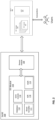
- FIG. 1 shows an example of a sharding engine 100, referred to hereinafter as a self-adaptive sharding engine (SASE), communicatively coupled with a plurality of DLT platforms 200 in accordance with embodiments of the present invention.
- SASE self-adaptive sharding engine
- the SASE 100 is configured to monitor and optimise the performance of one or more communicatively coupled distributed ledger technology, DLT, platforms 200 based on a set of performance metrics extracted from each DLT platform 200.
- the DLT platform 200 may comprise a DLT storage module 210, which may be partitioned into one or more shards 211 according to a DLT configuration.
- Each DLT shard 211 may be associated with a local network of transaction processing nodes, referred to as Local Committee Members (LCM), configured to process and verify submitted DLT transactions according to a local consensus protocol defined by a Global Conflict Resolver, GCR, module 220 in accordance with the DLT configuration.
- LCM Local Committee Members
- the GCR module 220 may be considered as a global consensus and ordering module that provides algorithms to reach consensus on the processed transactions.
- the GCR module 220 may comprise a set of consensus algorithms and libraries defined according to the target DLT e.g. Proof-of-Stake, traditional Byzantine-Fault-Tolerant protocols, and the like.
- consensus protocols refer to a set of predefined processes used by transaction processing nodes to keep the processing and history of processed DLT transactions consistent across the DLT platform.
- SASE system of the present disclosure it is assumed that access to the DLTs is controlled and that transaction processing nodes are invited to participate in the transaction processing.
- the participating transaction processing nodes or parties take part in the consensus protocol by processing and voting on the submitted DLT transactions based on the predefined consensus protocol processes.
- sharding refers to a partitioning operation performed in data processing and storage platforms into smaller units.
- the term self-adaptive refers to a closedloop system with a feedback loop that receives values from parameters extracted during operation, and accordingly adjust its configuration to reflect changes detected during operation. These changes may stem from the system's self-state e.g. internal causes of changes to the system such as failure, or context e.g. external events such as increasing requests from users.
- a self-adaptive system is configured to monitor itself and its context, detect significant changes, decide how to react, and act to execute such decisions.
- the self-adaptive sharding engine 100 of the present disclosure is configured to monitor connected DLT platforms 200 for changes in their operation and context and accordingly adjust their configuration, if required, based on the operational changes and context observed.
- context refers to parameters in the operating environment that affect the system's properties and its behaviour, e.g. as described in Salehie, Mazeiar & Tahvildari, Ladan. (2009). Self-adaptive software: Landscape and research challenges, Journal of Trans. Auton. Adapt. Syst (TAAS ). Therefore, a context-aware system may be considered a system that is configured to gather information about changes in its operating environment or the operating environment of connected systems.
- safety and liveness refer to the consensus protocol properties.
- the safety property requires that, during the consensus algorithm's execution, no malicious or unexpected transaction would be deemed valid by the transaction processing nodes, but instead would be rejected.
- the liveliness property requires the consensus algorithm to reach a defined and valid state in a finite or agreed bounded time.
- Figures 2 and 3 show an example of the architecture of the SASE 100.
- the SASE 100 comprises a sensor module 130 configured to monitor a set of configuration parameters associated with each of the connected DLT platforms 200, and a decision and optimisation, DO, module 110 configured to receive and process the values obtained from the set of configuration parameters to determine a set of corresponding performance metrics indicative of the operational performance of the target DLT platform 200.
- the sensor monitoring module 130 may comprise a plurality of sensors that monitor the Dotards 211 in the DLT storage module 210 and the shards operational environment e.g. the target DLT networks of transaction processing nodes.
- the sensor monitoring module 130 collects data that reflect the state of all shards, e.g. the. system's self-state, and overall SASE's operational environment.
- the sensor monitoring module 130 is configured to output data to the DO module 110.
- the sensor data transmitted to the DO module may comprise one or more of :
- the DO module 110 may be configured to compare the values of the performance metrics derived from the information obtained from the sensor monitoring module 130 with corresponding target values. Based, on the comparison, the DO module 110, is configured, when at least one of the performance metrics is within a value range from at least one corresponding target value, to adjust an aspect of the DLT configuration of the DLT platform to optimise its operational performance.
- the DO module 110 may be configured to adjust the DLT configuration based on at least one configuration protocol selected from a configuration protocol database 112, the at least one configuration protocol comprising instructions, which when executed trigger an optimisation of one or more aspects of the DLT platform configuration.
- the at least one configuration protocol may be selected, based on the operational performance determined for the DLT platform by the DO module 110, from a DLT optimisation matrix comprising a plurality of different DLT operational performance scenarios, each associated with one or more configuration protocols from the database.
- the DLT optimisation matrix may comprise a list of predefined operational performance scenarios, each associated with one or more configuration protocols.
- the DO module 110 may be configured to issue a notification to one or more users requesting input for adjusting the DLT configuration and/or selecting a configuration protocol.
- the user or a connected system may provide a response comprising instructions how the DLT configuration is to be adjusted based on the determined operational performance e.g. a new configuration protocol may be provided.
- the DO module 110 may be configured to update the DLT optimisation matrix with the detected operation performance, and accordingly associate it with associate the action taken and/or configuration protocol provided by the user and/or connected system.
- the DO module 110 may be configured to adjust, based on the at least one selected configuration protocol, the DLT storage architecture.
- the DO module 110 may adjust the DLT storage architecture by adjusting the partitioning configuration of the DLT storage architecture e.g. by adjusting the number and structure of DLT shards involved in the processing of DLT transactions.
- the DO module 110 may group DLT shards 211 having common shard characteristics such as DLT shards that are involved in inter-shard DLT transactions, DLT shards that process DLT transactions from common geographical region, DLT shards that are associated with a particular application logic, and other common characteristics and parameters.
- the DLT shards may be grouped according to user preferences.
- the DO module 110 may be configured, based on the selected at least one configuration protocol, , to adjust the DLT storage architecture by splitting the DLT storage architecture into a plurality of hierarchically connected storage layers.
- the DO module 110 based on the context and operation performance of the DLT shards 211, may reconfigure the DLT storage architecture by generating a local storage layer, which is configured to store in a plurality of local shards the DLT transactions submitted to each of the DLT shards, and a main storage layer comprising one main shard, which is configured to store references to all DLT transactions processed by shards belonging to lower storage layers.
- the DO module 110 may add one or more intermediate storage layers between the local storage layer and the main storage layer.
- Each intermediate storage layer being configured to store, in intermediate shards, inter-shard DLT transactions and references to transactions processed by a group of shards belonging to the local storage layer and/or one or more lower hierarchy intermediate storage layers.
- Each shard, in each of the hierarchical connected storage layers may be associated with a network of transaction processing nodes for ordering and verifying submitted DLT transactions.
- DO module 110 may comprise a Global Committee Selection, GCS, module 114 configured to select, based on a set of criterias associated with safety and liveness properties of the consensus algorihm defined in GCR module 220, a set of global transaction processing nodes from the local networks of the DLT shards to participate in the transaction processing networks associated with the shards in each hierarchically connected storage layer.
- the GCS module 114 may be configured to generate a global network of transaction processing nodes for processing and verifying transactions submitted to the main shard of the main storage layer, and intermediate shards of the intermediate storage layers.
- the GCS module 114 may be configured to select the global network of transaction processing nodes, also referred to as Global Committee Members (GCM), from the transaction processing nodes of the local network associated with each of the DLT shards 211.
- GCM Global Committee Members
- the GCS module 114 may perform LCM and GCM transaction node selection for shards in the different hierarchical levels of the DLT storage module 210, based on data received from the DO module 110 and GCR module 220.
- the data received may include but not limited to:
- the GCS module 114 may generate output data notifying the DO module 110 about the suitability of each transaction processing node in participating as a global committee member. For example, the GSM module 114 may perform the following steps: :
- the GCS module 114 may be provided with a set of libraries and algorithms, such as:
- the GCS 114 may perform the following tasks:
- the DO module 110 is configured to generate shards at each of the different hierarchically connected storage layers, based on the data obtained from the sensor monitoring module 130.
- the shards may be generated based on the DLT transactions submitted to the DLT shards and/or the grouping of the DLT shards.
- the DO module 110 as shown in figures 2 and 3 may comprise an Intermediate Graph Representation, IGR, module 115 configured to convert the data structure of the DLT transaction data processed by the transaction processing nodes in each of the local shards of the local storage layer into a common IGR data structure, which acts as a common data representation format for various types of DLT platforms 200.
- IGR Intermediate Graph Representation
- the IGR data structure comprises a graph data structure configured to abstract the data structure of a target DLT platform to the common IGR data structure; and an authenticated data structure comprising ordered references to transactions in the graph data structures, so that operations submitted to the DLT platform 200 by untrusted parties are verified by the corresponding networks of transaction processing nodes.
- the IGR module 115 abstracts target DLT's data structure e.g. blockchain, DAG, and the like, in an Intermediate Graph Representation structure as a common data representation form.
- the IGR module 115 operates on the input transactions sent by the shard's LCM and GCM nodes and provides the common data form IGR.
- the IGR data structure may comprise:
- the IGR module provides a way to guarantee abstraction of the target DLT's data structures and performance in terms of access, process, verification and ordering.
- the DO module 110 may be provided with a Higher Graph Representation, HGR, module 113 configured to receive as input the IGR data structures generated by the IGR module 115 and accordingly convert them into corresponding higher graph representations, HGR, data structures stored at corresponding intermediate shards at one or more intermediate storage layers and/or the main shard of the main storage layer of the DLT storage module 210.
- HGR Higher Graph Representation
- Each HGR data structure comprises references to inter-related DLT transactions referenced in a plurality of IGR and/or HGR data structures that are stored at a lower hierarchical storage layer of the DLT storage.
- the HGR module 113 comprises a graph data structure configured to aggregate multiple graph data structures into a single graph data structure, such that a DLT transaction stored in an HGR graph data structure consists of references to DLT transactions referenced in IGR and/or lower level HGR data structures; and an authenticated data structure comprising ordered references to transactions in the HGR graph data structures so as to ensure correct ordering of the referenced transactions and provide a mapping between HGR and IGR referenced DLT transactions.
- the HGR module 113 abstracts multiple IGR and HGR x data structure, in a Higher Graph Representation form with an associated abstraction level index "x".
- the abstraction level index specifies the abstraction level of the HGRx formed transaction data, where the plurality of HGR x-1 formed data can be abstracted to the HGR x formed data.
- the HGR x data form may be provided with:
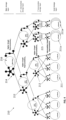
- FIG. 4 An example of a partitioned DLT storage architecture into different hierarchical storage layers is shown in figure 4 .
- the DO module 110 based on the data collected from the sensor monitoring module 130, adjusted the DLT storage architecture of the DLT storage module 210 so that it includes a local storage layer, two intermediate storage layers, and a main storage layer.
- the local storage layers comprising a number of m-shards 211, which represent the DLT shards 211 of the target DLT platform 200.
- the DO module 110 may also generate m-shard groups 211a, comprising a plurality of m-shards 211 having common characteristics, as previously disclosed.
- Each m-shard 211 or m-shard group 211a may be associated with a local network 212 comprising a set of local transaction processing nodes, which are configured to process and verify transaction submitted to each of the m-shards 211 or m-shard groups 211a.
- each m-Shard represent localized DLT shards 211 of a DLT platform that includes a plurality of transaction processing nodes, also referred to as Local Committee Members (LCM), that process and store transactions.
- LCM Local Committee Members
- m-Shards belong to the lowest hierarchy level in SASE's architecture.
- Each m-Shard is maintained by a set of LCM nodes 212 that run a consensus protocol defined by GCR 220 to process transactions.
- the DLT transactions processed by the LCM networks 212 of the m-shards are provided as input to the IGR module 115 where they are converted in an IGR data structure.
- the generated IGR data structures are provided as input to the HGR module 113 to generate the corresponding HGR data structures containing the references to the DLT transactions stored in the m-shards 211 of the local storage layer.
- the generated HGR data structures are stored in a number of SASE shards 215, defined by the DO module 110, of the first intermediate layer.
- the DO module 110 may decide that the HGR data structures of the first intermediate storage layer may be further abstracted to a higher-level HGR data structures that are to be stored in SASE shards of a second intermediate storage layer of higher hierarchy.
- the generated HGR data structures contain references to IGR and/or HGR data structures of lower hierarchy.
- the HGR data structures of the second intermediate storage layer may be aggregated and abstracted to a higher level HGR data structure, which is stored in the main shard 216 of the main storage layer.
- the addition of the one or more intermediate layers is not essential but rather is determined by the data collected by the sensor monitoring module 130.
- the main shard 216 is associated with a set of GCM nodes 214 configured to verify and process transactions referenced in the HGR data structured stored in the main shard 216.
- the main-shard 215 represents the shard in the highest hierarchical level, that includes a plurality of GCM nodes that run the consensus protocol defined in the GCR module 220.
- GCM nodes of the main shard are selected from LCM nodes of shards in the system by the GCS module 114.
- the main-shard 216 may also have additional nodes that are selected by GCS 114 in order to ensure safety and liveliness of the consensus protocol.
- the main shard's nodes submit processed transactions to HGR module and persists a HGR x formed data, which has the highest hierarchical level, that includes references to transactions in HGR x-1 or IGR data structures stored in shards of lower hierarchical levels.
- the main-shard 216 provides a global consensus and ordering of all transactions processed in the system, its data has the highest abstraction level (i.e. HGR x where x is the biggest abstraction index number in the overall system) and HGR modules ensures correct ordering of the transactions aggregated in the HGR x form.
- a SASE-shard 215 represents shard of a DLT that includes the plurality of the LCM and GCM nodes processing transactions according to the consensus protocol defined in the GCR module 220.
- SASE-shards 215 may be automatically generated by a shard formatting (SF) 111 module according to the decision of the DO module with regards to system requirements i.e. system's self-state and operational environment data collected by Sensors module, thus, SASE-shards represent autonomous shard generation property of SASE.
- SASE shards 215 can be generated in various hierarchical levels below the Main-shard that is decided by the DO module.
- HGR module submit processed transactions to HGR module and persists a HGR x formed data, that has references to transactions of shards that have lower hierarchy level (i.e. m-shards with IGR or SASE-shards in lower hierarchy HGR x-n where n is in range of 1 to x).
- the shard formatter module 111 may be configured to execute the instructions of the selected configuration protocols and perform required network and data layer operations associated with the DLT configuration changes made by the selected configuration protocol.
- the shard formatter module comprises a network layer module configured to set up an overlay network for assigning identities and keys to the transaction processing nodes and managing connections between transaction processing nodes based on a membership management protocol. It should be noted that the type of membership management protocol may vary depending on the target DLT.
- the shard formatter module 111 may further comprise a data layer module configured to migrate data and current states of shards in the DLT storage module to each transaction processing node participating in a corresponding transaction processing network.
- the SF module 111 may be provided with libraries and algorithms associated with the instantiation, generation, and restructuring of shards according to the shard configuration dictionary input by DO module. Operations performed by the SF module may involve:
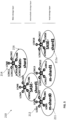
- FIG. 5 Another example of a partition of the DLT storage architecture is shown in figure 5 , where the DO module 110 generated a SASE shard in the local storage layer. Furthermore, it is shown the selection of GCM 214 from LCM nodes 212 assigned to shards, m-shards or SASE shards, in the local and intermediate storage layers.
- an LCM is a node that takes part in the consensus process of m-shards by validating transactions and performing state changes.
- an LCM belongs to one or more m-shards or SASE shards.
- LCM nodes that are selected by the GCS module 114 and the DO module 110 are assigned to a shard to process transactions submitted to that shard through the consensus protocol of the target DLT.
- the GCM node is an LCM node that is selected by the GCS module to take part in the consensus process of the Main Shard and SASE shards by validating transactions and performing state changes.
- GCM nodes run the consensus protocol of the target DLT defined in the GCR module.
- GCM nodes are evaluated by GCS module with regards to their operation, and GCS module periodically changes GCM nodes.
- the SASE 100 may be provided with a reward/penalty, RP, module 170 configured for assessing, based on the generated performance metrics, the performance of the local transaction processing nodes associated with each DLT shard of the DLT platform and accordingly assign to each transaction processing node a performance score indicative of their liveness and safety.
- the DO module may be configured to adjust and optimise the network of transaction processing nodes associated with each shard of the DLT storage based on their performance score.
- the RP module 170 may comprise libraries for instantiating rewards and penalties to LCMs and GCMs.
- the DO module 110 inputs a reward/penalty dictionary that consists of rewards and penalties for set of LCM and GCM nodes.
- the RP module assigns rewards and penalties to the LCM and GCM nodes according to their malicious and honest behaviour.
- the DO module may be configured to adjust and optimise the network of transaction processing nodes by removing or replacing underperforming transaction processing nodes, and/or assigning and/or redistributing transaction processing nodes according to the partition configuration of the DLT platform 200.
- the SASE 100 may be provided with a Cross-shard Collaboration, CC, module 160 configured to execute and validate inter-shard transactions involving a plurality of shards.
- the CC module 160 is configured to select a communication protocol for transmitting transactions, states, cryptographic signatures and state transfers between shards, and a validation protocol configured to validate inter-shard transactions according to the current state of the shards involved and the local and/or global consensus protocol.
- the CC module 160 is communicatively coupled to a Correct Data Provider, CDP, module 150 of the sharding engine to validate inter-shard transactions, wherein the CDP module 150 is configured to connect to the transaction processing nodes of the networks associated with each shard in the DLT storage module 210 to retrieve and validate, based on a set of validation procedures, the outputs and actions taken by the corresponding transaction processing nodes participating in the inter-shard transactions.
- CDP Correct Data Provider
- the validation procedures may comprise at least one of validating DLT states provided by the transaction processing nodes of the global network through succinct proofs generated by means of cryptographic tools of a Cryptographic module 180, and detecting inconsistencies in the states provided by the local and global transaction processingnodes generated based on an expected state evolution, verify state agreement between shards involved in inter-shard transactions.
- the CC module 160 provides functionalities to safely execute inter-shard transactions e.g. atomic swaps, asset transfers etc. on plurality of shards.
- the CC module 160 may be provided with a set of libraries such as:
- the CC module connects to all shards in SASE to transmit states and transactions across shards. It also co-operates with CDP module 150 in order to verify correctness of the inter-shard transactions, where CDP module 150 performs state validity checks, state evolution verification etc. CC module 160 transmits validated states and transactions to respective shards.
- the CDP module 150 validates outputs and actions of GCM and LCM nodes. Such actions and outputs may include transactions and states processed and transmitted by GCM and LCM nodes to other nodes and parties in SASE 100.
- the CDP module may be connected to the different modules in the SASE 100 as follows:
- the CDP module may comprise a suite of procedures, which include but not limited to :
- the cryptographic module 180 may be provided with a set of cryptographic procedures, schemes and protocols. Functionalities performed by the CM 180 may include but are not limited to:
- the DO module 110 enables the SASE 110 to be self-adaptive by enabling autonomous dynamic self- aware e.g. restructuring of shards and context-aware e.g. generation of new shards sharding adjustments.
- the DO module 110 may dynamically update the architecture of the target DLT by transferring dictionaries that instruct other modules to configure autonomous and self-adaptive sharding. It also may ensure the maintenance of target security and performance level of the shards.
- the DO module 110 may receive inputs from:
- the DO module 110 may output data to:
- the DO module 110 may be provided with a set of libraries, such as:
- the DO module 110 functionalities may be classified, but not limited to the following categories and related protocols:
- An exemplified process flow for dynamic sharding of a target DLT platform 200 may include the following steps:
- the SASE 100 presented herein is an autonomous, self-aware and context-aware self-adaptive system for performing automatic sharding on DLTs independently of platform-specific properties such as underlying data structures, security properties and consensus protocols.
- the SASE 100 presented herein enables a number of selected nodes from all or some shards to participate in the processing of inter-shard transactions processed by the DLT platform 200. This enables a global system level decentralized consensus protocol.
- the SASE 100 presented herein is modular with a 3-layer system abstraction: m-Shards, SASE-Shards, and Main Shard.
- Each system's layer may access system level algorithms grouped in modules.
- the composition of those algorithms enables parameter driven self-adaptive sharding and coordinates global inter-shard operations with global ordering via consensus of the operations (e.g. events, transactions).
- the SASE 100 presented herein enables for the reconfiguration of the DLT storage 210 by introducing two data structures:
- the IGR and HGR data structures enable abstraction of the data structures associated with target DLTs in a common representation format.
- the SASE 100 of the present disclosure is platform agnostic and may be used to dynamically reconfigure various DLT platforms irrespective of their underlying data structure.
- the SASE 100 presented herein enables the execution of the inter-shard transactions, while ensuring confidentiality and privacy of the transactions processed in the shards through the composition of advanced cryptographic techniques coded in a cryptographic toolbox, such as Zero Knowledge Proofs (ZKPs), Secure Multi-Party Computation (SMPC) protocols, and other advanced cryptographic algorithms.
- ZKPs Zero Knowledge Proofs
- SMPC Secure Multi-Party Computation
- the SASE 100 presented herein ensures self-aware e.g. restructuring of shards, and context-aware e.g. generation of new shards, sharding adjustments through the algorithms of a Decision and Optimization module. As such, the SASE 100 presented herein enables autonomous dynamic updates to the target DLT through sharding adjustments.
Landscapes
- Engineering & Computer Science (AREA)
- Databases & Information Systems (AREA)
- Theoretical Computer Science (AREA)
- General Engineering & Computer Science (AREA)
- Data Mining & Analysis (AREA)
- Physics & Mathematics (AREA)
- General Physics & Mathematics (AREA)
- Computer Networks & Wireless Communication (AREA)
- Signal Processing (AREA)
- Computing Systems (AREA)
- Computer Hardware Design (AREA)
- Information Retrieval, Db Structures And Fs Structures Therefor (AREA)
Claims (21)
- Eine Splittingengine, SE, die konfiguriert ist, um die Leistung einer kommunikativ gekoppelten Plattform mit Technologie für verteilte Ledger, DLT-Plattform, (200) zu überwachen und zu optimieren, wobei die DLT-Plattform (200) ein DLT-Speicherungsmodul beinhaltet, das konfiguriert ist, um DLT-Transaktionen zu speichern und zu verarbeiten, wobei das DLT-Speicherungsmodul (210) in eine oder mehrere DLT-Splittungen (211) gemäß einer DLT-Konfiguration partitioniert ist, wobei jede DLT-Splittung (211) mit einem lokalen Netzwerk transaktionsverarbeitender Knoten assoziiert ist, die konfiguriert sind, um abgesendete DLT-Transaktionen gemäß einem Local-Consensus-Protokoll, definiert durch ein Global-Conflict-Resolver-Modul, GCR-Modul, (220), in Übereinstimmung mit der DLT-Konfiguration zu verarbeiten und zu verifizieren, wobei die Splittingengine Folgendes beinhaltet:ein Sensormodul (130), das konfiguriert ist, um einen Satz Konfigurationsparameter zu überwachen, die mit der DLT-Plattform (200) assoziiert sind; undein Entscheidungs- und Optimierungsmodul, DO-Modul, (110), das konfiguriert ist, um die von dem Satz Konfigurationsparameter erhaltenen Werte zu empfangen und zu verarbeiten, um einen Satz entsprechender Leistungskennzahlen zu bestimmen, die indikativ für die Betriebsleistung der Ziel-DLT-Plattform (200) sind;wobei das DO-Modul (110) konfiguriert ist, um die Werte der Leistungskennzahlen mit entsprechenden Zielwerten zu vergleichen, und wobei, wenn mindestens eine der Leistungskennzahlen innerhalb eines Wertebereichs von mindestens einem entsprechenden Zielwert liegt, das DO-Modul (110) konfiguriert ist, um einen Aspekt der DLT-Konfiguration der DLT-Plattform (200) anzupassen, um ihre Betriebsleistung zu optimieren.
- Splittingengine gemäß Anspruch 1, wobei das DO-Modul (110) konfiguriert ist, um die DLT-Konfiguration basierend auf mindestens einem Konfigurationsprotokoll anzupassen, das aus einer Konfigurationsprotokolldatenbank (112) ausgewählt ist, wobei das mindestens eine Konfigurationsprotokoll Anweisungen beinhaltet, die, wenn sie ausgeführt werden, eine Optimierung von einem oder mehreren Aspekten der Konfiguration der DLT-Plattform (200) auslösen.
- Splittingengine gemäß Anspruch 2, wobei das mindestens eine Konfigurationsprotokoll basierend auf der Betriebsleistung, die für die DLT-Plattform (200) bestimmt wird, aus einer DLT-Optimierungsmatrix ausgewählt ist, die eine Vielzahl von unterschiedlichen DLT-Betriebsleistungsszenarien beinhaltet, von denen jedes mit einem oder mehreren Konfigurationsprotokollen aus der Datenbank (112) assoziiert ist, wobei, wenn die bestimmte DLT-Betriebsleistung der DLT-Optimierungsmatrix fehlt, das DO-Modul (110) konfiguriert ist, um eine Benachrichtigung an einen oder mehrere Benutzer auszustellen, die eine Eingabe zur Anpassung der DLT-Konfiguration und/oder Auswahl eines Konfigurationsprotokolls anfragt.
- Splittingengine gemäß einem der Ansprüche 2 oder 3, wobei das DO-Modul (110) basierend auf dem mindestens einen ausgewählten Konfigurationsprotokoll konfiguriert ist, um die DLT-Speicherarchitektur anzupassen, wobei das Anpassen der DLT-Speicherarchitektur das Anpassen der Partitionierungskonfiguration der DLT-Speicherarchitektur durch Anpassen der Anzahl und Struktur von DLT-Splittungen (211), die in der Verarbeitung der DLT-Transaktionen involviert sind, beinhaltet.
- Splittingengine gemäß Anspruch 4, wobei das Anpassen der DLT-Speicherarchitektur das Gruppieren von DLT-Splittungen (211) beinhaltet, die gemeinsame Splittungsmerkmale aufweisen, wobei die gemeinsamen Splittungsmerkmale das Identifizieren von mindestens einer der DLT-Splittungen (211) beinhalten, die in Zwischensplittungs-DLT-Transaktionen involviert sind.
- Splittingengine gemäß einem der Ansprüche 4 oder 5, wobei das DO-Modul (110) basierend auf dem ausgewählten mindestens einen Konfigurationsprotokoll konfiguriert ist, um die DLT-Speicherarchitektur durch Splittung der DLT-Speicherarchitektur in eine Vielzahl von hierarchisch verbundenen Speicherschichten anzupassen, und wobei die hierarchisch verbundenen Speicherschichten eine lokale Speicherschicht, die konfiguriert ist, um in einer Vielzahl von lokalen Splittungen die DLT-Transaktionen zu speichern, die an jede der DLT-Splittungen (211) abgesendet wurden, und eine Hauptspeicherschicht, die eine Hauptsplittung beinhaltet, die konfiguriert ist, um Verweise auf alle DLT-Transaktion zu speichern, die von Splittungen verarbeitet werden, die zu niedrigeren Speicherschichten gehören, beinhalten, und wobei die hierarchisch verbundenen Speicherschichten eine oder mehrere Zwischenspeicherschichten zwischen den lokalen Speicherschichten und der Hauptspeicherschicht beinhalten, wobei jede Zwischenspeicherschicht konfiguriert ist, um in Zwischensplittungen Zwischensplittungs-DLT-Transaktionen zwischen zwei oder mehr DLT-Splittungen (211) und/oder Verweise auf Transaktionen, die von einer Gruppe von Splittungen verarbeitet werden, die zu der lokalen Speicherschicht und/oder einer oder mehreren Zwischenspeicherschichten niedrigerer Hierarchie gehören, zu speichern.
- Splittingengine gemäß Anspruch 6, wobei jede Splittung (211) in jeder der hierarchisch verbundenen Speicherschichten mit einem Netzwerk von transaktionsverarbeitenden Knoten zum Ordnen und Verifizieren abgesendeter DLT-Transaktionen assoziiert ist.
- Splittingengine gemäß Anspruch 7, wobei das DO-Modul (110) ein Global-Committee-Selection-Modul, GCS-Modul, (114) beinhaltet, das konfiguriert ist, um basierend auf einem Satz Kriterien, die mit Sicherheit und Liveness assoziiert sind, einen Satz globaler transaktionsverarbeitender Knoten aus den lokalen Netzwerken der DLT-Splittungen (211) für die Teilnahme in den transaktionsverarbeitenden Netzwerken, die mit den Splittungen (211) in jeder hierarchisch verbundenen Speicherschicht assoziiert sind, auszuwählen.
- Splittingengine gemäß Anspruch 8, wobei das GCS-Modul (114) konfiguriert ist, um ein globales Netzwerk von transaktionsverarbeitenden Knoten zum Verarbeiten und Verifizieren von Transaktionen, die an die Hauptsplittung der Hauptspeicherschicht und Zwischensplittungen der Zwischenspeicherschichten abgesendet werden, zu erzeugen, wobei das globale Netzwerk von transaktionsverarbeitenden Knoten mindestens aus den transaktionsverarbeitenden Knoten des lokalen Netzwerks, die mit jeder der DLT-Splittungen (211) assoziiert sind, ausgewählt ist.
- Splittingengine gemäß einem der Ansprüche 6 bis 9, wobei das DO-Modul (110) konfiguriert ist, um Splittungen (211) in jeder der unterschiedlichen hierarchisch verbundenen Speicherschichten zu erzeugen, basierend auf den DLT-Transaktionen, die an die DLT-Splittungen (211) und/oder die Gruppierung der DLT-Splittungen (211) abgesendet werden.
- Splittingengine gemäß einem der Ansprüche 6 bis 10, wobei das DO-Modul (110) ein Intermediate-Graph-Representation-Modul, IGR-Modul, (115) beinhaltet, das konfiguriert ist, um die Datenstruktur der DLT-Transaktionsdaten, die von den transaktionsverarbeitenden Knoten in jeder der lokalen Splittungen (211) der lokalen Speicherschicht verarbeitet werden, in eine gemeinsame IGR-Datenstruktur umzuwandeln, die als ein gemeinsames Datendarstellungsformat für verschiedene Arten von DLT-Plattformen dient, wobei die IGR-Datenstruktur Folgendes beinhaltet:
eine Graphendatenstruktur, die konfiguriert ist, um die Datenstruktur einer Ziel-DLT-Plattform (200) in die gemeinsame IGR-Datenstruktur zu abstrahieren; und eine authentifizierte Datenstruktur, die geordnete Verweise auf Transaktionen in der Graphendatenstruktur beinhaltet, sodass Operationen, die von nicht vertrauenswürdigen Parteien an die DLT-Plattform (200) abgesendet werden, von den entsprechenden Netzwerken von transaktionsverarbeitenden Knoten verifiziert werden. - Splittingengine gemäß Anspruch 11, wobei das DLT-Konsensmodul (114) ein Higher-Graph-Representation-Modul, HGR-Modul, (113) beinhaltet, das konfiguriert ist, um die IGR-Datenstrukturen, die von dem IGR-Modul (115) erzeugt werden, als Eingabe zu empfangen und sie folglich in entsprechende Higher-Graph-Representation-Datenstrukturen, HGR-Datenstrukturen, umzuwandeln, die in entsprechenden Zwischensplittungen in einer oder mehreren Zwischenspeicherschichten und/oder der Hauptsplittung der Hauptspeicherschicht des DLT-Speicherungsmoduls (210) gespeichert sind, wobei jede HGR-Datenstruktur Verweise auf zusammenhängende DLT-Transaktionen, auf die in einer Vielzahl von IGR und/oder HGR-Datenstrukturen verwiesen wird, die in einer niedrigeren hierarchischen Speicherschicht des DLT-Speichermoduls (210) gespeichert sind, beinhaltet.
- Splittingengine gemäß Anspruch 12, wobei das HGR-Modul (113) Folgendes beinhaltet: eine Graphendatenstruktur, die konfiguriert ist, um mehrere Graphendatenstrukturen in eine einzelne Graphendatenstruktur zu aggregieren, sodass eine DLT-Transaktion, die in einer HGR-Graphendatenstruktur gespeichert ist, aus Verweisen auf DLT-Transaktionen, auf die in IGR- und/oder HGR-Datenstrukturen auf niedrigerer Ebene verwiesen wird, besteht; und
eine authentifizierte Datenstruktur, die geordnete Verweise auf Transaktionen in den HGR-Graphendatenstrukturen beinhaltet, um das korrekte Ordnen der verwiesenen Transaktionen sicherzustellen und eine Abbildung zwischen HGR- und IGRverwiesenen DLT-Transaktionen bereitzustellen. - Splittingengine gemäß einem der vorhergehenden Ansprüche, wobei die Splittingengine ein Belohnungs-/Strafe-Modul, RP-Modul, (170) beinhaltet, das konfiguriert ist, um basierend auf den erzeugten Leistungskennzahlen die Leistung der lokalen transaktionsverarbeitenden Knoten, die mit jeder DLT-Splittung (211) der DLT-Plattform (200) assoziiert sind, zu bewerten und folglich jedem transaktionsverarbeitenden Knoten eine Leistungswertung zuzuweisen, die indikativ für seine Liveness und Sicherheit ist.
- Splittingengine gemäß Anspruch 14, wobei das DO-Modul (110) konfiguriert ist, um das Netzwerk von transaktionsverarbeitenden Knoten, die mit jeder Splittung (211) des DLT-Speichers (210) assoziiert sind, basierend auf ihrer Leistungswertung anzupassen und zu optimieren, wobei das Anpassen und Optimieren des Netzwerks von transaktionsverarbeitenden Knoten mindestens eines von Entfernen oder Ersetzen von leistungsschwachen transaktionsverarbeitenden Knoten und/oder Zuweisen und/oder Umverteilen von transaktionsverarbeitenden Knoten gemäß der Partitionskonfiguration der DLT-Architektur beinhaltet.
- Splittingengine gemäß einem der Ansprüche 2 bis 15, wobei das DO-Modul (110) ein Splittingformatierermodul (111) beinhaltet, das konfiguriert ist, um die Anweisungen der ausgewählten Konfigurationsprotokolle auszuführen und benötigte Netzwerk- und Datenschichtoperationen durchzuführen, die mit den DLT-Konfigurationsänderungen assoziiert sind, die von dem ausgewählten Konfigurationsprotokoll gemacht werden, wobei das Splittingformatierermodul (111) ein Netzwerkschichtmodul beinhaltet, das konfiguriert ist, um ein Overlay-Netzwerk aufzusetzen, um den transaktionsverarbeitenden Knoten Identitäten und Schlüssel zuzuweisen und Verbindungen zwischen transaktionsverarbeitenden Knoten basierend auf einem Zugehörigkeitsverwaltungsprotokoll zu verwalten.
- Splittingengine gemäß Anspruch 16, wobei das Splittingformatierermodul (111) ein Datenschichtmodul beinhaltet, das konfiguriert ist, um Daten und gegenwärtige Zustände von Splittungen (211) in dem DLT-Speicherungsmodul (210) zu jedem transaktionsverarbeitenden Knoten, der in dem entsprechenden transaktionsverarbeitenden Netzwerk teilnimmt, zu migrieren.
- Splittingengine gemäß einem der vorhergehenden Ansprüche, wobei die Splittingengine Folgendes beinhaltet: ein Cross-shard-Collaboration-Modul, CC-Modul, (160), das konfiguriert ist, um Zwischensplittungstransaktionen auszuführen und zu validieren, die eine Vielzahl von Splittungen involvieren, wobei das CC-Modul (160) konfiguriert ist, um ein Kommunikationsprotokoll zum Übertragen von Transaktionen, Zuständen, kryptographischen Signaturen und Zustandsübergängen zwischen Splittungen (211) auszuwählen, und ein Validierungsprotokoll, das konfiguriert ist, um Zwischensplittungstransaktionen gemäß dem gegenwärtigen Zustand der involvierten Splittungen (211) und dem lokalen und/oder globalen Konsensprotokoll zu validieren.
- Splittingengine gemäß Anspruch 18, wobei das CC-Modul (160) mit einem Correct-Data-Provider-Modul, CDP-Modul, (150) der Splittingengine kommunikativ gekoppelt ist, um Zwischensplittungstransaktionen zu validieren, wobei das CDP-Modul (150) konfiguriert ist, um mit den transaktionsverarbeitenden Knoten der transaktionsverarbeitenden Netzwerke, die mit jeder Splittung in dem DLT-Speicherungsmodul (210) assoziiert sind, verbunden zu werden, um basierend auf einem Satz Validierungsverfahrensweisen die Ausgaben und Aktionen, die von den entsprechenden transaktionsverarbeitenden Knoten, die an den Zwischensplittungstransaktionen teilnehmen, vorgenommen werden, abzurufen und zu validieren.
- Splittingengine gemäß Anspruch 19, wobei der Satz Validierungsverfahrensweisen mindestens eines von Folgendem beinhaltet:Validieren von DLT-Zuständen, die von den transaktionsverarbeitenden Knoten des globalen Netzwerks bereitgestellt werden, durch kurze Beweise, die mittels kryptographischer Werkzeuge eines kryptographischen Moduls (180) erzeugt werden,Erkennen von Inkonsistenzen in den Zuständen, die von den transaktionsverarbeitenden Knoten bereitgestellt werden, durch Vergleichen der erzeugten Antworten mit einer erwarteten Zustandsentwicklung, undVerifizieren von Zustandsübereinstimmung zwischen Splittungen, die in Zwischensplittungstransaktionen involviert sind.
- Ein Verfahren zum Überwachen und Optimieren der Leistung einer kommunikativ gekoppelten Plattform mit Technologie für verteilte Ledger, DLT-Plattform, (200), wobei die DLT-Plattform (200) ein DLT-Speicherungsmodul (210) beinhaltet, das konfiguriert ist, um DLT-Transaktionen zu speichern und zu verarbeiten, wobei das DLT-Speicherungsmodul (210) in eine oder mehrere DLT-Splittungen (211) gemäß einer DLT-Konfiguration partitioniert ist, wobei jede DLT-Splittung (211) mit einem lokalen Netzwerk transaktionsverarbeitender Knoten assoziiert ist, die konfiguriert sind, um abgesendete DLT-Transaktionen gemäß einem Local-Consensus-Protokoll, definiert durch ein Global-Conflict-Resolver-Modul, GCR-Modul, (220) in Übereinstimmung mit der DLT-Konfiguration zu verarbeiten und zu verifizieren, wobei das Verfahren Folgendes beinhaltet:Überwachen eines Satzes Konfigurationsparameter, die mit der DLT-Konfiguration der DLT-Plattform (200) assoziiert sind;Empfangen und Verarbeiten der von dem Satz Konfigurationsparameter erhaltenen Werte, um einen Satz entsprechender Leistungskennzahlen zu bestimmen, die indikativ für die Betriebsleistung einer Ziel-DLT-Plattform (200) sind; undVergleichen der Werte der Leistungskennzahlen mit entsprechenden Zielwerten, und wobei, wenn mindestens eine der Leistungskennzahlen innerhalb eines Wertebereichs von mindestens einem entsprechenden Zielwert liegt, das DO-Modul (110) konfiguriert ist, um einen Aspekt der DLT-Konfiguration der DLT-Plattform (200) anzupassen, um ihre Betriebsleistung zu optimieren.
Applications Claiming Priority (1)
| Application Number | Priority Date | Filing Date | Title |
|---|---|---|---|
| PCT/EP2020/079794 WO2022083871A1 (en) | 2020-10-22 | 2020-10-22 | A system and method for self-adaptive and autonomous sharding of distributed ledger technology platforms |
Publications (3)
| Publication Number | Publication Date |
|---|---|
| EP4233214A1 EP4233214A1 (de) | 2023-08-30 |
| EP4233214C0 EP4233214C0 (de) | 2025-02-12 |
| EP4233214B1 true EP4233214B1 (de) | 2025-02-12 |
Family
ID=73013444
Family Applications (1)
| Application Number | Title | Priority Date | Filing Date |
|---|---|---|---|
| EP20796794.4A Active EP4233214B1 (de) | 2020-10-22 | 2020-10-22 | Ein system und verfahren zur selbstadaptiven und autonomen splittung von plattformen der verteilten ledger-technologie |
Country Status (3)
| Country | Link |
|---|---|
| US (1) | US12361024B2 (de) |
| EP (1) | EP4233214B1 (de) |
| WO (1) | WO2022083871A1 (de) |
Families Citing this family (3)
| Publication number | Priority date | Publication date | Assignee | Title |
|---|---|---|---|---|
| EP4625882A4 (de) * | 2023-01-09 | 2025-12-31 | Huawei Tech Co Ltd | Datenspeicherverfahren und zugehörige vorrichtung |
| CN117077150B (zh) * | 2023-10-13 | 2024-01-26 | 青岛酒店管理职业技术学院 | 分布式学校资源的信息安全调度预警系统及方法 |
| CN120597323B (zh) * | 2025-05-28 | 2026-03-27 | 江苏意源科技有限公司 | 一种区块链与隐私计算协同核验系统 |
Family Cites Families (8)
| Publication number | Priority date | Publication date | Assignee | Title |
|---|---|---|---|---|
| CN104205063B (zh) * | 2012-03-14 | 2017-05-24 | 日本电气株式会社 | 操作管理装置、操作管理方法和程序 |
| US20140100901A1 (en) * | 2012-10-05 | 2014-04-10 | Successfactors, Inc. | Natural language metric condition alerts user interfaces |
| US10756995B2 (en) * | 2015-07-27 | 2020-08-25 | Datagrid Systems, Inc. | Method, apparatus and system for real-time optimization of computer-implemented application operations using machine learning techniques |
| US10102265B1 (en) | 2017-04-12 | 2018-10-16 | Vijay K. Madisetti | Method and system for tuning blockchain scalability for fast and low-cost payment and transaction processing |
| US10740733B2 (en) * | 2017-05-25 | 2020-08-11 | Oracle International Corporaton | Sharded permissioned distributed ledgers |
| GB2577118B (en) | 2018-09-14 | 2022-08-31 | Arqit Ltd | Autonomous quality regulation for distributed ledger networks |
| US11811769B2 (en) * | 2019-01-31 | 2023-11-07 | Salesforce, Inc. | Systems, methods, and apparatuses for implementing a declarative, metadata driven, cryptographically verifiable multi-network (multi-tenant) shared ledger |
| US11531554B2 (en) * | 2019-12-10 | 2022-12-20 | Salesforce.Com, Inc. | Automated hierarchical tuning of configuration parameters for a multi-layer service |
-
2020
- 2020-10-22 EP EP20796794.4A patent/EP4233214B1/de active Active
- 2020-10-22 US US18/250,138 patent/US12361024B2/en active Active
- 2020-10-22 WO PCT/EP2020/079794 patent/WO2022083871A1/en not_active Ceased
Also Published As
| Publication number | Publication date |
|---|---|
| EP4233214C0 (de) | 2025-02-12 |
| EP4233214A1 (de) | 2023-08-30 |
| WO2022083871A1 (en) | 2022-04-28 |
| US20230401234A1 (en) | 2023-12-14 |
| US12361024B2 (en) | 2025-07-15 |
Similar Documents
| Publication | Publication Date | Title |
|---|---|---|
| Oloruntoba | Architecting resilient multi-cloud database systems: distributed ledger technology, fault tolerance, and cross-platform synchronization | |
| EP4233214B1 (de) | Ein system und verfahren zur selbstadaptiven und autonomen splittung von plattformen der verteilten ledger-technologie | |
| Jalili et al. | A new framework for reliable control placement in software-defined networks based on multi-criteria clustering approach: A. Jalili et al. | |
| CN118337786A (zh) | 云边协同下基于Kubernetes的服务容器调度方法及系统 | |
| CN111512332A (zh) | 一种联盟链共识下满足分区容忍性的拓扑构造方法及系统 | |
| CN118312626B (zh) | 一种基于机器学习的数据管理方法及系统 | |
| CN121050852A (zh) | 一种异构计算资源能力辐射调度方法及装置 | |
| Banitalebi Dehkordi | EDBLSD-IIoT: a comprehensive hybrid architecture for enhanced data security, reduced latency, and optimized energy in industrial IoT networks: AB Dehkordi | |
| CN120956528B (zh) | 基于增强型OAuth2的多租户多用户登录方法 | |
| Liu et al. | A secure and privacy‐preserved delegate‐based blockchain and federated learning for 6G networks | |
| Abirami et al. | Crypto-deep reinforcement learning based cloud security for trusted communication | |
| Chen et al. | Model Migration in Digital Twin-Empowered Vehicular Edge Computing with AoI-Aware Decentralized Bilevel Learning | |
| CHERIF et al. | CQRS and Blockchain with Zero-Knowledge Proofs for Secure Multi-Agent Decision-Making. | |
| Zhu et al. | A self evolving high performance sharded consortium blockchain designed for secure and trusted resource sharing for 6G networks | |
| Zhebka et al. | Method for Adaptive Allocation of Cryptographic Resources in Distributed Databases | |
| Kimiaei et al. | An Adaptive and Hierarchical Approach to Configure Sharding Committees in Blockchains | |
| CN117544422A (zh) | 防火墙虚拟化部署方法及系统 | |
| Xu et al. | A Fast and Practical Sector-Based BFT Consensus With Sublinear Communication Complexity | |
| She et al. | Bclb: Blockchain-based controller load balance for safe and reliable resource optimization | |
| Du et al. | Dynamic sharding mechanism for vehicle networking to ensure load balancing and data reliability | |
| Wang et al. | Congestion Control for Blockchain-enabled SDN in Web 4.0: A Reinforcement Learning Approach through Active Inference | |
| Bouchair et al. | Joint policy for virtual network embedding in distributed SDN-enabled cloud | |
| Yang et al. | Blockchian empowered reliable computation offloading and resource allocation for mobile edge computing networks | |
| CN120980078B (zh) | 面向云上实时机器学习的协同数据副本控制方法及系统 | |
| Zhao et al. | Research on Blockchain for Adapting to Node Dynamics in Internet of Things |
Legal Events
| Date | Code | Title | Description |
|---|---|---|---|
| STAA | Information on the status of an ep patent application or granted ep patent |
Free format text: STATUS: UNKNOWN |
|
| STAA | Information on the status of an ep patent application or granted ep patent |
Free format text: STATUS: THE INTERNATIONAL PUBLICATION HAS BEEN MADE |
|
| PUAI | Public reference made under article 153(3) epc to a published international application that has entered the european phase |
Free format text: ORIGINAL CODE: 0009012 |
|
| STAA | Information on the status of an ep patent application or granted ep patent |
Free format text: STATUS: REQUEST FOR EXAMINATION WAS MADE |
|
| 17P | Request for examination filed |
Effective date: 20230515 |
|
| AK | Designated contracting states |
Kind code of ref document: A1 Designated state(s): AL AT BE BG CH CY CZ DE DK EE ES FI FR GB GR HR HU IE IS IT LI LT LU LV MC MK MT NL NO PL PT RO RS SE SI SK SM TR |
|
| DAV | Request for validation of the european patent (deleted) | ||
| DAX | Request for extension of the european patent (deleted) | ||
| REG | Reference to a national code |
Ref country code: DE Ref legal event code: R079 Free format text: PREVIOUS MAIN CLASS: H99Z9999999999 Ipc: H04L0067104000 Ref document number: 602020045989 Country of ref document: DE |
|
| GRAP | Despatch of communication of intention to grant a patent |
Free format text: ORIGINAL CODE: EPIDOSNIGR1 |
|
| STAA | Information on the status of an ep patent application or granted ep patent |
Free format text: STATUS: GRANT OF PATENT IS INTENDED |
|
| RIC1 | Information provided on ipc code assigned before grant |
Ipc: G06F 16/27 20190101ALI20240424BHEP Ipc: H04L 67/10 20220101ALI20240424BHEP Ipc: H04L 67/1097 20220101ALI20240424BHEP Ipc: H04L 67/1008 20220101ALI20240424BHEP Ipc: H04L 67/104 20220101AFI20240424BHEP |
|
| INTG | Intention to grant announced |
Effective date: 20240508 |
|
| GRAJ | Information related to disapproval of communication of intention to grant by the applicant or resumption of examination proceedings by the epo deleted |
Free format text: ORIGINAL CODE: EPIDOSDIGR1 |
|
| STAA | Information on the status of an ep patent application or granted ep patent |
Free format text: STATUS: REQUEST FOR EXAMINATION WAS MADE |
|
| GRAP | Despatch of communication of intention to grant a patent |
Free format text: ORIGINAL CODE: EPIDOSNIGR1 |
|
| STAA | Information on the status of an ep patent application or granted ep patent |
Free format text: STATUS: GRANT OF PATENT IS INTENDED |
|
| INTC | Intention to grant announced (deleted) | ||
| INTG | Intention to grant announced |
Effective date: 20240912 |
|
| GRAS | Grant fee paid |
Free format text: ORIGINAL CODE: EPIDOSNIGR3 |
|
| GRAA | (expected) grant |
Free format text: ORIGINAL CODE: 0009210 |
|
| STAA | Information on the status of an ep patent application or granted ep patent |
Free format text: STATUS: THE PATENT HAS BEEN GRANTED |
|
| AK | Designated contracting states |
Kind code of ref document: B1 Designated state(s): AL AT BE BG CH CY CZ DE DK EE ES FI FR GB GR HR HU IE IS IT LI LT LU LV MC MK MT NL NO PL PT RO RS SE SI SK SM TR |
|
| REG | Reference to a national code |
Ref country code: GB Ref legal event code: FG4D |
|
| REG | Reference to a national code |
Ref country code: CH Ref legal event code: EP |
|
| REG | Reference to a national code |
Ref country code: DE Ref legal event code: R096 Ref document number: 602020045989 Country of ref document: DE |
|
| REG | Reference to a national code |
Ref country code: IE Ref legal event code: FG4D |
|
| U01 | Request for unitary effect filed |
Effective date: 20250303 |
|
| U07 | Unitary effect registered |
Designated state(s): AT BE BG DE DK EE FI FR IT LT LU LV MT NL PT RO SE SI Effective date: 20250313 |
|
| PG25 | Lapsed in a contracting state [announced via postgrant information from national office to epo] |
Ref country code: RS Free format text: LAPSE BECAUSE OF FAILURE TO SUBMIT A TRANSLATION OF THE DESCRIPTION OR TO PAY THE FEE WITHIN THE PRESCRIBED TIME-LIMIT Effective date: 20250512 |
|
| PG25 | Lapsed in a contracting state [announced via postgrant information from national office to epo] |
Ref country code: PL Free format text: LAPSE BECAUSE OF FAILURE TO SUBMIT A TRANSLATION OF THE DESCRIPTION OR TO PAY THE FEE WITHIN THE PRESCRIBED TIME-LIMIT Effective date: 20250212 |
|
| PG25 | Lapsed in a contracting state [announced via postgrant information from national office to epo] |
Ref country code: ES Free format text: LAPSE BECAUSE OF FAILURE TO SUBMIT A TRANSLATION OF THE DESCRIPTION OR TO PAY THE FEE WITHIN THE PRESCRIBED TIME-LIMIT Effective date: 20250212 |
|
| PG25 | Lapsed in a contracting state [announced via postgrant information from national office to epo] |
Ref country code: IS Free format text: LAPSE BECAUSE OF FAILURE TO SUBMIT A TRANSLATION OF THE DESCRIPTION OR TO PAY THE FEE WITHIN THE PRESCRIBED TIME-LIMIT Effective date: 20250612 Ref country code: NO Free format text: LAPSE BECAUSE OF FAILURE TO SUBMIT A TRANSLATION OF THE DESCRIPTION OR TO PAY THE FEE WITHIN THE PRESCRIBED TIME-LIMIT Effective date: 20250512 |
|
| PG25 | Lapsed in a contracting state [announced via postgrant information from national office to epo] |
Ref country code: HR Free format text: LAPSE BECAUSE OF FAILURE TO SUBMIT A TRANSLATION OF THE DESCRIPTION OR TO PAY THE FEE WITHIN THE PRESCRIBED TIME-LIMIT Effective date: 20250212 |
|
| PG25 | Lapsed in a contracting state [announced via postgrant information from national office to epo] |
Ref country code: GR Free format text: LAPSE BECAUSE OF FAILURE TO SUBMIT A TRANSLATION OF THE DESCRIPTION OR TO PAY THE FEE WITHIN THE PRESCRIBED TIME-LIMIT Effective date: 20250513 |
|
| PG25 | Lapsed in a contracting state [announced via postgrant information from national office to epo] |
Ref country code: SM Free format text: LAPSE BECAUSE OF FAILURE TO SUBMIT A TRANSLATION OF THE DESCRIPTION OR TO PAY THE FEE WITHIN THE PRESCRIBED TIME-LIMIT Effective date: 20250212 |
|
| PG25 | Lapsed in a contracting state [announced via postgrant information from national office to epo] |
Ref country code: CZ Free format text: LAPSE BECAUSE OF FAILURE TO SUBMIT A TRANSLATION OF THE DESCRIPTION OR TO PAY THE FEE WITHIN THE PRESCRIBED TIME-LIMIT Effective date: 20250212 |
|
| PG25 | Lapsed in a contracting state [announced via postgrant information from national office to epo] |
Ref country code: SK Free format text: LAPSE BECAUSE OF FAILURE TO SUBMIT A TRANSLATION OF THE DESCRIPTION OR TO PAY THE FEE WITHIN THE PRESCRIBED TIME-LIMIT Effective date: 20250212 |
|
| U20 | Renewal fee for the european patent with unitary effect paid |
Year of fee payment: 6 Effective date: 20251030 |
|
| PLBE | No opposition filed within time limit |
Free format text: ORIGINAL CODE: 0009261 |
|
| STAA | Information on the status of an ep patent application or granted ep patent |
Free format text: STATUS: NO OPPOSITION FILED WITHIN TIME LIMIT |
|
| U1H | Name or address of the proprietor changed after the registration of the unitary effect |
Owner name: QPQ LIMITED; IE |
|
| PGFP | Annual fee paid to national office [announced via postgrant information from national office to epo] |
Ref country code: GB Payment date: 20251031 Year of fee payment: 6 |
|
| PGFP | Annual fee paid to national office [announced via postgrant information from national office to epo] |
Ref country code: IE Payment date: 20251030 Year of fee payment: 6 |
|
| 26N | No opposition filed |
Effective date: 20251113 |
|
| REG | Reference to a national code |
Ref country code: GB Ref legal event code: S117 Free format text: REQUEST FILED; REQUEST FOR CORRECTION UNDER SECTION 117 FILED ON 9 JANUARY 2026 Ref country code: GB Ref legal event code: S117 Free format text: CORRECTIONS ALLOWED; REQUEST FOR CORRECTION UNDER SECTION 117 FILED ON 9 JANUARY 2026 WAS ALLOWED ON 24 FEBRUARY 2026 |