EP4231741B1 - Verfahren und vorrichtung zur koordination von drahtloserfassungsressourcen und speichermedium - Google Patents
Verfahren und vorrichtung zur koordination von drahtloserfassungsressourcen und speichermedium Download PDFInfo
- Publication number
- EP4231741B1 EP4231741B1 EP20957055.5A EP20957055A EP4231741B1 EP 4231741 B1 EP4231741 B1 EP 4231741B1 EP 20957055 A EP20957055 A EP 20957055A EP 4231741 B1 EP4231741 B1 EP 4231741B1
- Authority
- EP
- European Patent Office
- Prior art keywords
- wlan sensing
- capability
- wlan
- station
- sensing
- Prior art date
- Legal status (The legal status is an assumption and is not a legal conclusion. Google has not performed a legal analysis and makes no representation as to the accuracy of the status listed.)
- Active
Links
Images

Classifications
-
- H—ELECTRICITY
- H04—ELECTRIC COMMUNICATION TECHNIQUE
- H04W—WIRELESS COMMUNICATION NETWORKS
- H04W74/00—Wireless channel access
- H04W74/08—Non-scheduled access, e.g. ALOHA
- H04W74/0808—Non-scheduled access, e.g. ALOHA using carrier sensing, e.g. carrier sense multiple access [CSMA]
-
- H—ELECTRICITY
- H04—ELECTRIC COMMUNICATION TECHNIQUE
- H04W—WIRELESS COMMUNICATION NETWORKS
- H04W72/00—Local resource management
- H04W72/04—Wireless resource allocation
- H04W72/044—Wireless resource allocation based on the type of the allocated resource
- H04W72/0446—Resources in time domain, e.g. slots or frames
-
- H—ELECTRICITY
- H04—ELECTRIC COMMUNICATION TECHNIQUE
- H04W—WIRELESS COMMUNICATION NETWORKS
- H04W40/00—Communication routing or communication path finding
-
- H—ELECTRICITY
- H04—ELECTRIC COMMUNICATION TECHNIQUE
- H04W—WIRELESS COMMUNICATION NETWORKS
- H04W8/00—Network data management
- H04W8/005—Discovery of network devices, e.g. terminals
-
- H—ELECTRICITY
- H04—ELECTRIC COMMUNICATION TECHNIQUE
- H04W—WIRELESS COMMUNICATION NETWORKS
- H04W84/00—Network topologies
- H04W84/02—Hierarchically pre-organised networks, e.g. paging networks, cellular networks, WLAN [Wireless Local Area Network] or WLL [Wireless Local Loop]
- H04W84/10—Small scale networks; Flat hierarchical networks
- H04W84/12—WLAN [Wireless Local Area Networks]
Definitions
- the disclosure relates to a field of wireless communication technology, in particular to a method for coordinating Wireless Local Area Network (WLAN) sensing resources, an apparatus for coordinating WLAN sensing resources, and a storage medium.
- WLAN Wireless Local Area Network
- Wireless local area network sensing is generally used in location discovery under dense scenarios, for example proximity detection and/or presence detection or other application scenarios. And a process of WLAN sensing may be that an initiator initiates WLAN sensing, and multiple responders respond.
- a station acts as an initiator of WLAN sensing
- a wireless access point acts as a responder of WLAN sensing to communicate with the station.
- STA station
- AP wireless access point
- US 2018/288743 A1 discloses a method for a station (STA) not having an association identifier (AID) allocated thereto transmitting a signal in a wireless LAN system.
- the method includes the steps of: transmitting a first frame through at least one resource among resources indicated by a trigger frame; and receiving a multi-STA block Ack (M-BA) frame as a reply to the first frame, wherein, if in the M-BA frame a MAC address of the STA that is different from a first information is detected from at least a part of a first field reserved for the first information, an N-bit of a second field preceding the first field is set as a temporary AID of the STA.
- M-BA multi-STA block Ack
- US 2013/176897 A1 discloses a method for accelerated link setup.
- the method includes station (STA) acquiring information about an access point of an Institute of Electrical and Electronics Engineers (IEEE) 802.11 network in advance through a previously connected IEEE 802.11 interface and/or an interface other than the IEEE 802.11 network.
- the STA uses the acquired information during a link setup procedure between the STA and the access point.
- the information includes a suggestion for a specific procedure to complete the link setup procedure between the STA and the access point.
- IEEE Institute of Electrical and Electronics Engineers
- US 2018/213516 A1 discloses a method and apparatus for performing active scanning in a wireless communication system.
- the method for performing active scanning in a wireless communication system includes the steps of: receiving, from an access point (AP) by a station (STA), a trigger frame including information on a probing duration which allows transmission of a probe request; and transmitting a probe request frame to the AP during the probing duration by the STA.
- AP access point
- STA station
- US 2019/182674 A1 discloses a method for location measurement reporting in a wireless network, and an apparatus of a responder station (RSTA).
- the apparatus includes processing circuitry configured to decode a null data packet (NDP) announce (NDPA) frame from an initiator station (ISTA), the NDPA frame including an indication of a temporary key and an identification of the RSTA.
- the processing circuitry is further configured to decode a NDP from the ISTA, the NDP comprising long training fields (LTFs), the NDP received on a channel.
- the processing circuitry is further configured to determine whether the NDP from the ISTA is consistent with the NDP being generated using a temporary key shared between the ISTA and RSTA based on a comparison of the channel estimates.
- the processing circuitry is further configured to determine for authentication whether the indication of the temporary key was generated based on the temporary key.
- the present disclosure relates to a method for coordinating Wireless Local Area Network (WLAN) sensing resources performed by a wireless access point according to independent claim 1, a method for coordinating Wireless Local Area Network, WLAN, sensing resources performed by a station according to independent claim 10, and an apparatus for coordinating WLAN sensing resources according to independent claim 13. Further aspects are defined by dependent claims.
- WLAN Wireless Local Area Network
- the present disclosure provides a method for coordinating Wireless Local Area Network (WLAN) sensing resources, an apparatus for coordinating WLAN sensing resources, and a storage medium.
- WLAN Wireless Local Area Network
- a method for coordinating WLAN sensing resources is provided.
- the method is performed by a wireless AP and includes:
- the WLAN sensing resource frame includes WLAN sensing information, and the WLAN sensing information is configured for coordinating a station to send a WLAN sensing request frame; and sending the WLAN sensing resource frame.
- the WLAN sensing resource frame includes duration information and a first capability information element (IE), and the first capability IE has a one-to-one correspondence with the duration information.
- IE first capability information element
- sending the WLAN sensing resource frame includes:
- the method further includes: receiving WLAN sensing capability information sent by the station, in which the WLAN sensing capability information is configured to identify a second capability IE about the station supporting WLAN sensing; and in response to receiving a WLAN sensing message sent by the station, determining an AP for providing a WLAN sensing resource to the station among multiple APs, in which the first capability IE of the AP for providing the WLAN sensing resource to the station matches the second capability IE.
- determining the AP for providing the WLAN sensing resource to the station among the multiple APs includes: determining the duration information; and determining the first capability IE corresponding to the duration information among the multiple APs.
- the second capability IE is determined based on an initial association request frame sent by the station.
- the multiple APs responding to the WLAN sensing of the station are associated with each other.
- the multiple APs are not associated with each other and support a pre-association security negotiation (PASN) capability.
- PASN pre-association security negotiation
- a time of determining the first capability IE is determined based on a communication time of performing broadcast by the AP; or a time of determining the first capability IE is determined based on a time at which the AP reports the WLAN sensing resource frame.
- the initial association request frame includes any one or a combination of the following: an ID of a WLAN sensing capability IE, a duration, a location, a proximity detection or a presence detection.
- the WLAN sensing resource frame includes any one or a combination of the following an ID of a WLAN sensing capability IE, a duration, a location, a proximity detection or a presence detection.
- a method for coordinating Wireless Local Area Network (WLAN) sensing resources is provided.
- the method is performed by a station and includes: sending a second capability information element (IE).
- IE capability information element
- the second capability IE is sent based on an initial association request frame.
- the initial association request frame comprises any one or a combination of the following: an ID of a WLAN sensing capability IE, a duration, a location, a proximity detection or a presence detection.
- an apparatus for coordinating Wireless Local Area Network (WLAN) sensing resources is provided.
- the apparatus is applied to a wireless AP and includes:
- the WLAN sensing resource frame includes duration information and a first capability information element (IE), and the first capability IE has a one-to-one correspondence with the duration information.
- IE first capability information element
- the AP sending module is configured to:
- the apparatus further includes: receiving WLAN sensing capability information sent by the station, in which the WLAN sensing capability information is configured to identify a second capability IE about the station supporting WLAN sensing; and in response to receiving a WLAN sensing message sent by the station, determining an AP for providing a WLAN sensing resource to the station among multiple APs, in which the first capability IE of the AP for providing the WLAN sensing resource to the station matches the second capability IE.
- the AP determining module is configured to: determine the duration information; and determine the first capability IE corresponding to the duration information among the multiple APs.
- the second capability IE is determined based on an initial association request frame sent by the station.
- the multiple APs responding to the WLAN sensing of the station are associated with each other.
- the multiple APs are not associated with each other and support a pre-association security negotiation (PASN) capability.
- PASN pre-association security negotiation
- the AP determining module is configured to:
- the initial association request frame includes any one or a combination of the following: an ID of a WLAN sensing capability IE, a duration, a location, a proximity detection or a presence detection.
- the WLAN sensing resource frame includes any one or a combination of the following an ID of a WLAN sensing capability IE, a duration, a location, a proximity detection or a presence detection.
- an apparatus for coordinating Wireless Local Area Network (WLAN) sensing resources is provided.
- the apparatus is applied to a station and includes: a station sending module, configured to send a second capability information element (IE).
- IE capability information element
- the second capability IE is sent based on an initial association request frame.
- the initial association request frame includes any one or a combination of the following: an ID of a WLAN sensing capability IE, a duration, a location, a proximity detection or a presence detection.
- an apparatus for coordinating Wireless Local Area Network (WLAN) sensing resources includes: a processor; and a memory configured to store instructions executable by the processor; in which the processor is configured to perform the method for coordinating WLAN sensing resources according to the first aspect or any embodiment of the first aspect, or the processor is configured to perform the method for coordinating WLAN sensing resources according to the second aspect or any embodiment of the second aspect.
- WLAN Wireless Local Area Network
- a non-transitory computer-readable storage medium When instructions in the storage medium are executed by a processor of a mobile terminal, the mobile terminal is caused to perform the perform the method for coordinating WLAN sensing resources according to the first aspect or any embodiment of the first aspect, or the mobile terminal is caused to perform the method for coordinating WLAN sensing resources according to the second aspect or any embodiment of the second aspect.
- the technical solutions provided by the embodiments of the present disclosure may include the following beneficial effects: the AP sends capability information supported by the AP through the WLAN sensing resource frame in the present disclosure, the coordinating AP coordinates the APs according to the WLAN sensing resources supported by the APs, and further the station is coordinated to send the WLAN sensing request frame, to achieve an effect of reducing mutual interferences of other devices' communication.
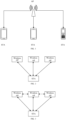
- Fig. 1 shows a schematic diagram of a WLAN sensing communication system to which embodiments of the disclosure are applicable. As shown in FIG. 1 , wireless communication is performed between the station and the AP. And a process of WLAN sensing may be that an initiator initiates wireless sensing, and multiple responders respond.
- the station involved in the disclosure can be understood as a user terminal in a wireless local area network, and the user terminal can be referred to as user equipment (UE), mobile station (MS), mobile terminal (MT), etc., which is a device that provides voice and/or data connectivity to a user.
- the terminal may be a handheld device or a vehicle-mounted device with a wireless connection function, or the like.
- some examples of terminals include: mobile phones, pocket personal computers (PPCs), palm-held computers, personal digital assistants (PDAs), notebook computers, tablet computers, wearable devices, Internet of Things (IoT) clients or vehicle-mounted devices, etc.
- the AP refers to a device or a router through which a WLAN user terminal accesses the network.
- FIG. 2 is a schematic diagram showing that APs are not associated with each other and communicate with a station according to an embodiment of the disclosure.
- a possible way is that respective APs are not associated, the station initiates WLAN sensing, and the APs respond.
- FIG. 3 shows a schematic diagram in which APs are associated with each other and communicate with a station according to an embodiment of the disclosure. As shown in FIG. 3 , the station initiates WLAN sensing and the APs respond. However, when there is a situation where multiple APs respond to the WLAN sensing initiated by the station at the same time, so that how to coordinate and control WLAN sensing resources of the multiple APs becomes a key problem to be solved at present.
- the disclosure provides a method for coordinating WLAN sensing resources to solve how to coordinate and control WLAN sensing resources of multiple APs in a case that the multiple APs respond to WLAN sensing initiated by a station at the same time.
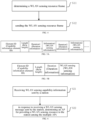
- FIG. 4 is flowchart of a method for coordinating WLAN sensing resources according to an embodiment. As illustrated in FIG. 4 , the method is applied to a wireless AP and includes the following.
- the WLAN sensing resource frame includes WLAN sensing information, and the WLAN sensing information is configured for coordinating a station to send a WLAN sensing request frame.
- the WLAN sensing resource frame is sent.
- each AP determines a WLAN sensing resource including a capability information element (IE).
- the WLAN sensing resource is in a contention-free period (CFP).
- the WLAN sensing resource is formed into a WLAN sensing resource frame, and the WLAN sensing resource frame is sent in a form of broadcast/multicast.
- the WLAN sensing resource frame includes duration information and first capability IE, and first capability IE has one-to-one correspondence with the duration information.
- the specific application of WLAN sensing initiated by the station corresponds to the duration information of a time period.
- the specific application of WLAN sensing initiated by the station is to identify a support of location discovery, then the WLAN sensing used to identify the support of location discovery corresponds to the duration information of a time period.
- the specific application of WLAN sensing initiated by the station is to identify a support of proximity detection or presence detection, then the WLAN sensing used to identify the support of proximity detection or presence detection corresponds to the duration information of a time period.
- the duration information included in the WLAN sensing resource frame may appear in the frame format shown in FIG. 5A in a form of an IE.
- the duration information included in the WLAN sensing resource frame may also appear in a frame format shown in FIG. 5B in the form of an IE.
- the WLAN sensing resource frame includes an ID of a capability IE, a byte length, duration information and WLAN sensing resource information.
- the station (device) with WLAN sensing identifying a support of this function can perform WLAN sensing. It can be understood that, the one-to-one correspondence between the first capability IE and the duration information may be specified through a protocol or pre-configured.
- each AP sending the WLAN sensing resource frame may be to send the WLAN sensing resource frame based on a beacon frame through broadcasting, or may be to send the WLAN sensing resource frame based on a WLAN sensing action frame through broadcasting.
- each AP sending the WLAN sensing resource frame through broadcasting is an exemplary illustration, and is not a specific limitation to the sending of the WLAN sensing resource frame in the disclosure.
- the AP needs to exchange capability information with the station during an initial association process between the AP and the station.
- the station sends WLAN sensing capability information to inform the AP of the capability information supported by the station.
- the AP determines the capability supported by the station according to the WLAN sensing capability information sent by the station, which can be used to subsequently coordinate the station to send the WLAN sensing request frame.
- the AP can carry its capability information value supporting WLAN sensing in a beacon frame or an association response frame to inform the station of the capability information value.
- the capability IE may be information on supporting WLAN sensing, or specifically, supporting motion detection in WLAN sensing, such as proximity detection or motion detection, etc.
- WLAN sensing capability information sent by a station is received.
- the WLAN sensing capability information is configured to identify a second capability IE about the station supporting WLAN sensing.
- the AP determines the second capability IE about the WLAN sensing of the station based on the WLAN sensing capability information sent by the station.
- an AP for providing a WLAN sensing resource to the station is determined among the multiple APs.
- the one-to-one correspondence between the first capability IE and the duration information included in the WLAN sensing resource included in each AP is determined based on the WLAN sensing resource frame sent by each AP.
- the duration information that is, the duration involved in the above embodiment, is determined, and the first capability IE corresponding to the duration information is determined among the multiple APs according to the one-to-one correspondence between the first capability IE and the duration information included in the WLAN sensing resource included in each AP. For example, if the station identifies its capability information of supporting WLAN sensing, the AP carries duration information 1 corresponding to the WLAN sensing capability information in the WLAN sensing resource frame. Alternatively, if the station carries specific capability information, for example, the station carries proximity detection capability information, the AP carries duration information 2 corresponding to the proximity detection capability information.
- each AP needs to exchange capability information with the station during an initial association between the AP and the station.
- the station may carry the second capability IE in an initial association request frame, or carry the second capability IE in a pre-association request frame.
- the AP determines the second capability IE of the station according to the received initial association request frame or the pre-association request frame.
- the AP may carry the first capability IE in an initial association response frame, or carry the first capability IE in a pre-association response frame.
- the station may determine the first capability IE supported by the AP according to the received initial association response frame or the pre-association response frame sent by the AP.
- FIG. 7A to 7C are schematic diagrams showing a format of a capability IE involved in a method for coordinating WLAN sensing resources according to an embodiment.
- the format of the first capability IE or the second capability IE may be the frame format shown in FIG. 7A or the frame format shown in FIG. 7B . If the format of the first capability IE or the second capability IE is the frame format shown in FIG. 7B , an information field included in the frame format shown in FIG. 7B includes the first capability IE or the second capability IE. Its format is shown in FIG. 7C , including a sub-element ID, a byte length, and a supported application (for example, information 1 identifies a support of location discovery, and information 2 identifies a support of proximity detection or presence detection).
- the method for coordinating WLAN sensing resources provided by the disclosure reduces interference to other stations (devices) by means of coordinating coordinated APs by the coordinating AP and further coordinating the station to send the WLAN sensing request frame.
- the coordinating AP may determine a time of determining the first capability IE of each AP based on a communication time of performing broadcast by the AP.
- the communication time of performing broadcast by the AP may be a communication time between stations (P2P), or a contention period (CP), or a CFP.
- a time of determining the first capability IE of each AP may be determined based on a time at which the AP reports the WLAN sensing resource frame.
- the initial association request frame includes any one or a combination of the following: an ID of a WLAN sensing capability IE, a duration, a location, a proximity detection or a presence detection.
- the WLAN sensing resource frame includes any one or a combination of the following an ID of a WLAN sensing capability IE, a duration, a location, a proximity detection or a presence detection.
- the first capability IE is the same as the second capability IE.
- the present disclosure refers to the capability IE supported by the AP as the first capability IE, and refers to the capability IE supported by the station as the second capability IE.
- the embodiments of the present disclosure also provide a method for coordinating WLAN sensing resources.
- FIG. 8 is a flowchart showing a method for coordinating WLAN sensing resources according to an embodiment. As illustrated in FIG. 8 , the method is applied in a station and includes the following.
- a second capability IE is sent.
- the AP before an AP sends a WLAN sensing resource frame to coordinate the station to send a WLAN sensing request frame, the AP needs to exchange capability information with the station during an initial association process between the AP and the station.
- the station sends WLAN sensing capability information to inform the AP of the capability information supported by the station.
- the AP determines the capability supported by the station according to the WLAN sensing capability information sent by the station, which can be used to subsequently coordinate the station to send the WLAN sensing request frame.
- the AP can carry its capability information value supporting WLAN sensing in a beacon frame or an association response frame to inform the station of the capability information value.
- the capability IE may be information on supporting WLAN sensing, or specifically, supporting motion detection in WLAN sensing, such as proximity detection or motion detection, etc.
- the station may carry the second capability IE in an initial association request frame or in a pre-association request frame.
- the initial association request frame includes any one or a combination of the following: an ID of a WLAN sensing capability IE, a duration, a location, a proximity detection or a presence detection.
- the apparatus for coordinating WLAN sensing resource provided by the embodiments of the disclosure includes corresponding hardware structures and/or software modules for executing respective functions.
- units and algorithm steps may be implemented by electronic hardware, computer software, or a combination thereof.
- the foregoing has generally described compositions and steps of each example according to functions. Whether the functions are performed by hardware or software depends on particular applications and design constraint conditions of the technical solutions. A person skilled in the art may use different methods to implement the described functions for each particular application, but it should not be considered that the implementation goes beyond the scope of the present invention.
- FIG. 9 is a block diagram of an apparatus 100 for coordinating WLAN sensing resource according to an embodiment. As illustrated in FIG. 9 , the apparatus is applied in a wireless AP and includes an AP determining module 101 and an AP sending module 102.
- the AP determining module 101 is configured to determine a WLAN sensing resource frame, in which the WLAN sensing resource frame comprises WLAN sensing information, and the WLAN sensing information is configured for coordinating a station to send a WLAN sensing request frame.
- the AP sending module 102 is configured to send the WLAN sensing resource frame.
- the WLAN sensing resource frame includes duration information and a first capability information element (IE), and the first capability IE has one-to-one correspondence with the duration information.
- IE first capability information element
- the AP sending module 102 is configured to: send the WLAN sensing resource frame based on a beacon frame; or send the WLAN sensing resource frame based on the WLAN sensing action frame.
- the apparatus is further configured to: receive WLAN sensing capability information sent by the station, in which the WLAN sensing capability information is configured to identify a second capability IE about the station supporting WLAN sensing; and in response to receiving a WLAN sensing message sent by the station, determine an AP for providing a WLAN sensing resource to the station among multiple APs, in which the first capability IE of the AP for providing the WLAN sensing resource to the station matches the second capability IE.
- the AP determining module 101 is configured to: determine the duration information; and determine the first capability IE corresponding to the duration information among the multiple APs.
- the second capability IE is determined based on an initial association request frame sent by the station.
- the multiple APs responding to the WLAN sensing of the station are associated with each other.
- the multiple APs are not associated with each other and support a pre-association security negotiation (PASN) capability.
- PASN pre-association security negotiation
- the AP determining module is configured to: determine a time of determining the first capability IE based on a communication time of performing broadcast by the AP; or determine a time of determining the first capability IE based on a time at which the AP reports the WLAN sensing resource frame.
- the initial association request frame includes any one or a combination of the following: an ID of a WLAN sensing capability IE, a duration, a location, a proximity detection or a presence detection.
- the WLAN sensing resource frame includes any one or a combination of the following an ID of a WLAN sensing capability IE, a duration, a location, a proximity detection or a presence detection.
- FIG. 10 is a block diagram of an apparatus 200 for coordinating WLAN sensing resource according to an embodiment. As illustrated in FIG. 10 , the apparatus is applied in a station and includes a station sending module 201.
- the station sending module 201 is configured to send a second capability information element (IE).
- IE capability information element
- the second capability IE is sent based on an initial association request frame.
- the initial association request frame includes any one or a combination of the following: an ID of a WLAN sensing capability IE, a duration, a location, a proximity detection or a presence detection.
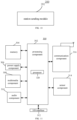
- FIG. 11 is a block diagram of an apparatus 300 for coordinating WLAN sensing resource according to an embodiment.
- the apparatus 300 may be a terminal such as a smart phone, a computer, a digital broadcast terminal, a messaging device, a game console, a tablet device, a medical device, a fitness device, a personal digital assistant, and the like.
- the apparatus 300 may include one or more components: a processing component 302, a memory 304, a power supply component 306, a multimedia component 308, an audio component 310, an input/output (I/O) interface 312, a sensor component 314, and a communication component 316.
- the processing component 302 generally controls the whole operation of the apparatus 300, such as the operations related to display, phone call, data communication, camera operation and recording operation.
- the processing component 302 may include one or more processors 320 to perform instructions, to complete all or part of steps of the above method.
- the processing component 302 may include one or more modules for the convenience of interaction between the processing component 302 and other components.
- the processing component 302 may include a multimedia module for the convenience of interaction between the multimedia component 308 and the processing component 302.
- the memory 304 is configured to store all types of data to support the operation of the apparatus 300. Examples of the data include the instructions of any applications or methods operated on the apparatus 300, contact data, phone book data, messages, pictures, videos, etc.
- the memory 304 may be implemented by any type of volatile or non-volatile storage devices or their combination, such as a static random access memory (SRAM), an electrically erasable programmable read-only memory (EEPROM), an erasable programmable read-only memory (EPROM), a programmable read-only memory (PROM), a read-only memory (ROM), a magnetic memory, a flash memory, a magnetic disk or an optical disk.
- SRAM static random access memory
- EEPROM electrically erasable programmable read-only memory
- EPROM erasable programmable read-only memory
- PROM programmable read-only memory
- ROM read-only memory
- the power supply component 306 may provide power for all components of the apparatus 300.
- the power supply component 306 may include power supply management system, one or more power supplies, and other units related to generating, managing and distributing power for the apparatus 300.
- the multimedia component 308 includes a display screen of an output interface provided between the apparatus 300 and the user.
- the screen may include a liquid crystal display (LCD) and a touch panel (TP). If the screen includes a touch panel, the screen may be implemented as a touch screen to receive input signals from a user.
- the touch panel includes one or more touch sensors to sense touch, swipe, and gestures on the touch panel. The touch sensor may not only sense the boundaries of a touch or swipe action, but also detect the duration and pressure associated with the touch or swipe action.
- the multimedia component 308 includes a front camera and/or a rear camera. When the apparatus 300 is in operation mode, such as shooting mode or video mode, the front camera or the rear camera may receive the external multimedia data.
- Each front camera and rear camera may be a fixed optical lens system or an optical lens system with a focal length and an optical zoom capacity.
- the audio component 310 is configured as output and/or input signal.
- the audio component 310 includes a microphone (MIC).
- the microphone is configured to receive the external audio signals.
- the audio signals received may be further stored in the memory 304 or sent via the communication component 316.
- the audio component 310 further includes a speaker configured to output an audio signal.
- the I/O interface 312 provides an interface for the processing component 302 and the peripheral interface module, and the peripheral interface module may be a keyboard, a click wheel, a button, etc.
- the buttons may include but not limited to a home button, a volume button, a start button and a lock button.
- the sensor component 314 includes one or more sensors, configured to provide various aspects of status assessment for the apparatus 300.
- the sensor component 314 may detect the on/off state of the apparatus 300 and the relative positioning of the component.
- the component is a display and a keypad of the apparatus 300.
- the sensor component 314 may further detect the location change of the apparatus 300 or one component of the apparatus 300, the presence or absence of contact between the user and the apparatus 300, the orientation or acceleration/deceleration of the apparatus 300, and the temperature change of the apparatus 300.
- the sensor component 314 may include a proximity sensor, which is configured to detect the existence of the objects nearby without any physical contact.
- the sensor component 314 may further include a light sensor such as CMOS or CCD image sensor, which is configured to use in imaging applications.
- the sensor component 314 may further include an acceleration transducer, a gyroscope sensor, a magnetic sensor, a pressure sensor or a temperature sensor.
- the communication component 316 is configured for the convenience of wire or wireless communication between the apparatus 300 and other devices.
- the apparatus 300 may access wireless networks based on a communication standard, such as Wi-Fi, 2G, or 3G, or their combination.
- the communication component 316 receives broadcast signals or broadcast-related information from an external broadcast management system via a broadcast channel.
- the communication component 316 further includes a near field communication (NFC) module to facilitate short-range communication.
- NFC near field communication
- an NFC module may be implemented based on a radio frequency identification (RFID) technology, an infrared data association (IRDA) technology, an ultra-wideband (UWB) technology, Bluetooth (BT) technology and other technologies.
- RFID radio frequency identification
- IRDA infrared data association
- UWB ultra-wideband
- Bluetooth Bluetooth
- the apparatus 300 may be implemented by one or more application specific integrated circuits(ASIC), digital signal processors (DSP), digital signal processing devices (DSPD), programmable logic devices (PLD), field programmable gate arrays (FPGA), controllers, microcontrollers, microprocessors or other electronics components, which is configured to perform the above.
- ASIC application specific integrated circuits
- DSP digital signal processors
- DSPD digital signal processing devices
- PLD programmable logic devices
- FPGA field programmable gate arrays
- controllers microcontrollers, microprocessors or other electronics components, which is configured to perform the above.
- a non-transitory computer-readable storage medium which includes instructions, such as the memory 304 including instructions, in which the instructions may be executed by the processor 320 of the apparatus 300 to complete the above method.
- the non-transitory computer-readable storage medium may be a ROM, a random access memory (RAM), a CD-ROM, a magnetic tape, a floppy disk, an optical data storage device, etc.
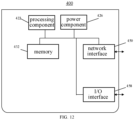
- FIG. 12 is a block diagram of an apparatus 400 for coordinating WLAN sensing resource according to an embodiment.
- the apparatus 400 may be provided as a server.
- the apparatus 400 includes a processing component 422, which includes one or more processors, and a memory resource represented by a memory 432 for storing instructions executable by the processing component 422, such as application programs.
- the application program stored in the memory 432 may include one or more modules, each module corresponds to a set of instructions.
- the processing component 422 is configured to execute instructions to perform the method described above and applied to the network side device.
- the apparatus 400 may also include a power component 426 configured to perform power management of the apparatus 400, a wired or wireless network interface 450 configured to connect the apparatus 400 to the network, and an I/O interface 458.
- the apparatus 400 may operate based on an operating system stored on the memory 432, such as Windows Server TM, Mac OS XTM, UnixTM, LinuxTM, FreeBSDTM or the like.
- the term "a plurality of” refers to two or more, and other quantifiers are similar.
- the term “and/or”, which describes the association relationship of the associated objects, means that there can be three kinds of relationships, for example, A and/or B, which can mean that A exists alone, A and B exist at the same time, and B exists alone.
- the character “/” generally indicates an “or” relationship between the associated objects.
- the singular forms “a,” “the,” and “the” are intended to include the plural forms as well, unless the context clearly dictates otherwise.
- first, and second may be used in this disclosure to describe various information, the information should not be limited to these terms. These terms are only used to distinguish the same type of information from each other and do not imply a particular order or level of importance. In fact, the expressions “first”, “second” etc. are used completely interchangeably.
- the first information may also be referred to as the second information, and similarly, the second information may also be referred to as the first information.
Landscapes
- Engineering & Computer Science (AREA)
- Computer Networks & Wireless Communication (AREA)
- Signal Processing (AREA)
- Mobile Radio Communication Systems (AREA)
Claims (13)
- Verfahren zum Koordinieren von Wireless Local Area Network, WLAN, -Erfassungsressourcen, durchgeführt von einem Wireless Access Point, AP, gekennzeichnet durch die folgenden Schritte:Bestimmen (S11) eines WLAN-Erfassungsressourcenframes, wobei der WLAN-Ressourcenerfassungsframe WLAN-Erfassungsinformationen aufweist, und die WLAN-Erfassungsinformationen dazu ausgebildet sind, eine Station für das Senden eines WLAN-Erfassungsanforderungsframes zu koordinieren, und wobei der WLAN-Erfassungsressourcenframe Dauerinformationen und ein erstes Fähigkeitsinformationselement, IE, aufweisen, und das erste Fähigkeits-IE eine Eins-zu-eins-Entsprechung mit den Dauerinformationen aufweist,Empfangen (S21) einer WLAN-Erfassungsnachricht, welche von der Station gesendete WLAN-Erfassungsfähigkeitsinformationen aufweist, wobei die WLAN-Erfassungsfähigkeitsinformationen dazu ausgebildet sind, ein zweites Fähigkeits-IE über die eine WLAN-Erfassung unterstützende Station zu identifizieren;Ermitteln (S22), in Reaktion auf den Empfang der von der Station gesendeten WLAN-Erfassungsnachricht, eines AP zum Bereitstellen einer WLAN-Erfassungsressource für die Station unter mehreren APs, wobei das erste Fähigkeits-IE des AP zur Bereitstellung der WLAN-Erfassungsressource für die Station dem zweiten Fähigkeits-IE entspricht; undSenden (S12) des WLAN-Erfassungsressourcenframes an die Station.
- Verfahren nach Anspruch 1, bei welchem das Senden (S12) des WLAN-Erfassungsressourcenframes den folgenden Schritt aufweist:Senden des WLAN-Erfassungsressourcenframes basierend auf einem Beacon-Frame;
oderSenden des WLAN-Erfassungsressourcenframes basierend auf dem WLAN-Erfassungsaktionsframe. - Verfahren nach Anspruch 1, bei welchem das Ermitteln (S22) des AP zum Bereitstellen der WLAN-Erfassungsressource für die Station unter den mehreren APs die folgenden Schritte aufweist:Ermitteln der Dauerinformationen; undErmitteln des ersten Fähigkeits-IE unter den mehreren APs, welches den Dauerinformationen entspricht.
- Verfahren nach Anspruch 3, bei welchem das zweite Fähigkeits-IE basierend auf einem von der Station gesendeten ursprünglichen Zuordnungsanfrageframe ermittelt wird.
- Verfahren nach Anspruch 1, bei welchem die mehreren APs, welche auf die WLAN-Erfassung der Station reagieren, einander zugeordnet werden.
- Verfahren nach Anspruch 1, bei welchem die mehreren APs einander nicht zugeordnet werden und eine Pre-Association Security Negotiation, PASN, -Fähigkeit unterstützen.
- Verfahren nach Anspruch 1, bei welchemeine Zeit des Bestimmens des ersten Fähigkeits-IE basierend auf einer Kommunikationszeit zur Durchführung der Übertragung durch die APs bestimmt wird,
odereine Zeit des Bestimmens des ersten Fähigkeits-IE basierend auf einem Zeitpunkt bestimmt wird, zu dem der AP den WLAN-Erfassungsressourcenframe meldet. - Verfahren nach Anspruch 4, bei welchem der ursprüngliche Zuordnungsanfrageframe eines oder eine Kombination der folgenden Elemente aufweist:
eine ID eines WLAN-Erfassungsfähigkeits-IE, eine Dauer, eine Position, eine Annäherungserkennung, oder eine Anwesenheitserkennung. - Verfahren nach einem der Ansprüche 1-8, bei welchem der WLAN-Erfassungsressourcenframe eines oder eine Kombination der folgenden Elemente aufweist:
eine ID eines WLAN-Erfassungsfähigkeits-IE, eine Dauer, eine Position, eine Annäherungserkennung, oder eine Anwesenheitserkennung. - Verfahren zum Koordinieren von Wireless Local Area Network, WLAN, -Erfassungsressourcen, durchgeführt von einer Station, dadurch gekennzeichnet, dass es die folgenden Schritte aufweist:Senden (S31) von WLAN-Erfassungsfähigkeitsinformationen, wobei die WLAN-Erfassungsfähigkeitsinformationen dazu ausgebildet sind, ein zweites Fähigkeits-IE über die eine WLAN-Erfassung unterstützende Station zu identifizieren;Senden einer WLAN-Erfassungsnachricht, wobei ein Wireless Access Point, AP, zum Bereitstellen einer WLAN-Erfassungsressource für die Station unter mehreren APs in Reaktion auf den Empfang der von der Station gesendeten Erfassungsnachricht ermittelt wird;Empfangen eines WLAN-Erfassungsressourcenframes von dem AP, wobei der WLAN-Erfassungsressourcenframe WLAN-Erfassungsinformationen aufweist, und die WLAN-Erfassungsinformationen dazu ausgebildet sind, die Station für das Senden eines WLAN-Erfassungsanforderungsframes zu koordinieren, wobei der WLAN-Erfassungsressourcenframe Dauerinformationen und ein erstes Fähigkeitsinformationselement, IE, aufweisen, wobei das erste Fähigkeits-IE eine Eins-zu-eins-Entsprechung mit den Dauerinformationen aufweist, und das erste Fähigkeits-IE des AP zur Bereitstellung der WLAN-Erfassungsressource für die Station dem zweiten Fähigkeits-IE entspricht; undSenden des WLAN-Erfassungsressourcenframes an den AP.
- Verfahren nach Anspruch 10, bei welchem das zweite Fähigkeits-IE basierend auf einem ursprünglichen Zuordnungsanfrageframe gesendet wird.
- Verfahren nach Anspruch 11, bei welchem der ursprüngliche Zuordnungsanfrageframe eines oder eine Kombination der folgenden Elemente aufweist:
eine ID eines WLAN-Erfassungsfähigkeits-IE, eine Dauer, eine Position, eine Annäherungserkennung, oder eine Anwesenheitserkennung. - Wireless Access Point, AP, -Vorrichtung zum Koordinieren von Wireless Local Area Network, WLAN, -Erfassungsressourcen, dadurch gekennzeichnet, dass sie aufweist:einen Prozessor;einen Speicher zum Speichern von durch den Prozessor ausführbaren Befehlen;wobei der Prozessor dazu ausgebildet ist, das Verfahren zum Koordinieren von WLAN-Erfassungsressourcen auszuführen, welches die folgenden Schritte aufweist:Bestimmen eines WLAN-Erfassungsressourcenframes, wobei der WLAN-Ressourcenerfassungsframe WLAN-Erfassungsinformationen aufweist, und die WLAN-Erfassungsinformationen dazu ausgebildet sind, eine Station für das Senden eines WLAN-Erfassungsanforderungsframes zu koordinieren, und wobei der WLAN-Erfassungsressourcenframe Dauerinformationen und ein erstes Fähigkeitsinformationselement, IE, aufweisen, und das erste Fähigkeits-IE eine Eins-zu-eins-Entsprechung mit den Dauerinformationen aufweist,Empfangen (S21) von der Station gesendeter WLAN-Erfassungsfähigkeitsinformationen, wobei die WLAN-Erfassungsfähigkeitsinformationen dazu ausgebildet sind, ein zweites Fähigkeits-IE über die eine WLAN-Erfassung unterstützende Station zu identifizieren;Ermitteln, in Reaktion auf den Empfang der von der Station gesendeten WLAN-Erfassungsnachricht, eines AP zum Bereitstellen einer WLAN-Erfassungsressource für die Station unter mehreren APs, wobei das erste Fähigkeits-IE des AP zur Bereitstellung der WLAN-Erfassungsressource für die Station dem zweiten Fähigkeits-IE entspricht; undSenden des WLAN-Erfassungsressourcenframes an die Station.
Priority Applications (1)
| Application Number | Priority Date | Filing Date | Title |
|---|---|---|---|
| EP25162125.6A EP4543118A1 (de) | 2020-10-14 | 2020-10-14 | Verfahren und vorrichtung zur koordination von drahtloserfassungsressourcen und speichermedium |
Applications Claiming Priority (1)
| Application Number | Priority Date | Filing Date | Title |
|---|---|---|---|
| PCT/CN2020/120914 WO2022077274A1 (zh) | 2020-10-14 | 2020-10-14 | 一种无线感知资源协调方法、装置及存储介质 |
Related Child Applications (2)
| Application Number | Title | Priority Date | Filing Date |
|---|---|---|---|
| EP25162125.6A Division-Into EP4543118A1 (de) | 2020-10-14 | 2020-10-14 | Verfahren und vorrichtung zur koordination von drahtloserfassungsressourcen und speichermedium |
| EP25162125.6A Division EP4543118A1 (de) | 2020-10-14 | 2020-10-14 | Verfahren und vorrichtung zur koordination von drahtloserfassungsressourcen und speichermedium |
Publications (3)
| Publication Number | Publication Date |
|---|---|
| EP4231741A1 EP4231741A1 (de) | 2023-08-23 |
| EP4231741A4 EP4231741A4 (de) | 2023-12-06 |
| EP4231741B1 true EP4231741B1 (de) | 2025-04-30 |
Family
ID=81207559
Family Applications (2)
| Application Number | Title | Priority Date | Filing Date |
|---|---|---|---|
| EP25162125.6A Pending EP4543118A1 (de) | 2020-10-14 | 2020-10-14 | Verfahren und vorrichtung zur koordination von drahtloserfassungsressourcen und speichermedium |
| EP20957055.5A Active EP4231741B1 (de) | 2020-10-14 | 2020-10-14 | Verfahren und vorrichtung zur koordination von drahtloserfassungsressourcen und speichermedium |
Family Applications Before (1)
| Application Number | Title | Priority Date | Filing Date |
|---|---|---|---|
| EP25162125.6A Pending EP4543118A1 (de) | 2020-10-14 | 2020-10-14 | Verfahren und vorrichtung zur koordination von drahtloserfassungsressourcen und speichermedium |
Country Status (5)
| Country | Link |
|---|---|
| US (1) | US12477526B2 (de) |
| EP (2) | EP4543118A1 (de) |
| CN (1) | CN114930937B (de) |
| ES (1) | ES3031897T3 (de) |
| WO (1) | WO2022077274A1 (de) |
Families Citing this family (4)
| Publication number | Priority date | Publication date | Assignee | Title |
|---|---|---|---|---|
| CN118785394A (zh) * | 2022-04-19 | 2024-10-15 | Oppo广东移动通信有限公司 | 通信方法和设备 |
| CN115004753A (zh) * | 2022-05-06 | 2022-09-02 | 北京小米移动软件有限公司 | 用于感知测量建立的通信方法和通信装置 |
| US20240049230A1 (en) * | 2022-08-08 | 2024-02-08 | Meta Platforms Technologies, Llc | Systems and methods of uwb configuration for application types |
| CN119729587A (zh) * | 2023-09-28 | 2025-03-28 | 华为技术有限公司 | 感知通信方法及装置 |
Family Cites Families (13)
| Publication number | Priority date | Publication date | Assignee | Title |
|---|---|---|---|---|
| RU2628207C2 (ru) * | 2012-01-11 | 2017-08-15 | Интердиджитал Пэйтент Холдингз, Инк. | Способ и устройство для ускоренного установления линии связи |
| US9467265B2 (en) * | 2012-07-03 | 2016-10-11 | Telefonaktiebolaget L M Ericsson | Method and access point for assigning sounding resources |
| CN103260168A (zh) * | 2013-04-22 | 2013-08-21 | 东南大学 | 一种适用于集中式无线局域网的空分干扰抑制方法 |
| US10356760B2 (en) | 2014-08-21 | 2019-07-16 | Lg Electronics Inc. | Method and apparatus for performing active scanning |
| US10356757B2 (en) * | 2015-04-15 | 2019-07-16 | Lg Electronics Inc. | Method for transmitting/receiving signal in wireless LAN system and device therefor |
| EP3295739B1 (de) * | 2015-06-05 | 2020-08-26 | Huawei Technologies Co., Ltd. | Verfahren und gerät zur konfiguration von tonreferenzsignale (srs) |
| WO2019088732A1 (ko) * | 2017-11-02 | 2019-05-09 | 엘지전자 주식회사 | 무선 랜에서 프레임을 송신 또는 수신하는 방법 및 이를 위한 장치 |
| US11102653B2 (en) * | 2017-12-11 | 2021-08-24 | Intel Corporation | Protection from counterfeit ranging |
| US11510283B2 (en) * | 2019-05-14 | 2022-11-22 | Intel Corporation | WLAN sensing using high-efficiency (HE) trigger- based (TB) PPDUs (HE TB PPDUs) |
| KR102737073B1 (ko) * | 2019-08-06 | 2024-12-03 | 삼성전자주식회사 | 전자장치 및 그 제어방법 |
| WO2021256828A1 (ko) * | 2020-06-15 | 2021-12-23 | 엘지전자 주식회사 | 무선랜 시스템에서 센싱을 수행하는 방법 및 장치 |
| KR20230051495A (ko) * | 2020-08-18 | 2023-04-18 | 파나소닉 인텔렉츄얼 프로퍼티 코포레이션 오브 아메리카 | 무선 로컬 에어리어 네트워크 센싱을 위한 통신 장치 및 통신 방법 |
| US20220070710A1 (en) * | 2020-09-03 | 2022-03-03 | Lg Electronics Inc. | Grouping of wireless apparatus performing sensing |
-
2020
- 2020-10-14 EP EP25162125.6A patent/EP4543118A1/de active Pending
- 2020-10-14 US US18/248,918 patent/US12477526B2/en active Active
- 2020-10-14 WO PCT/CN2020/120914 patent/WO2022077274A1/zh not_active Ceased
- 2020-10-14 CN CN202080002801.5A patent/CN114930937B/zh active Active
- 2020-10-14 EP EP20957055.5A patent/EP4231741B1/de active Active
- 2020-10-14 ES ES20957055T patent/ES3031897T3/es active Active
Also Published As
| Publication number | Publication date |
|---|---|
| US12477526B2 (en) | 2025-11-18 |
| WO2022077274A1 (zh) | 2022-04-21 |
| CN114930937B (zh) | 2024-05-14 |
| ES3031897T3 (en) | 2025-07-11 |
| US20230388981A1 (en) | 2023-11-30 |
| EP4231741A1 (de) | 2023-08-23 |
| CN114930937A (zh) | 2022-08-19 |
| EP4543118A1 (de) | 2025-04-23 |
| EP4231741A4 (de) | 2023-12-06 |
Similar Documents
| Publication | Publication Date | Title |
|---|---|---|
| EP4231741B1 (de) | Verfahren und vorrichtung zur koordination von drahtloserfassungsressourcen und speichermedium | |
| US20210336737A1 (en) | Measurement configuration method, apparatus, devices, system, and storage medium | |
| US12560699B2 (en) | Method and apparatus of positioning between UEs, communication device and storage medium | |
| US12436225B2 (en) | Positioning measurement method, positioning measurement apparatus and storage medium | |
| WO2021022453A1 (zh) | 天线面板选择方法、装置及存储介质 | |
| US20230403589A1 (en) | Method for wlan sensing, apparatus for wlan sensing and non-transitory computer-readable storage medium | |
| US20240236825A9 (en) | Network access method, network access apparatus, and storage medium | |
| EP4329402A1 (de) | Verfahren und vorrichtung zur meldung von endgerätekapazitätsinformationen sowie kommunikationsvorrichtung und speichermedium | |
| US20250150876A1 (en) | Measurement method, terminal, and network device and non-transitory computer-readable storage medium | |
| US20240357525A1 (en) | Information configuration method, information configuration apparatus, and storage medium | |
| US12563521B2 (en) | Parameter configuration method, parameter configuration apparatus, and storage medium | |
| US20230180321A1 (en) | Wireless communication method, communication device | |
| US20240323935A1 (en) | Message configuration method, message configuration apparatus, and storage medium | |
| US12348998B2 (en) | Transmission measurement method, transmission measurement device and storage medium | |
| CN113545133B (zh) | 初始接入方法、初始接入装置及存储介质 | |
| US12185343B2 (en) | Methods and apparatuses for determining network allocation vector, and storage media | |
| EP4535923A1 (de) | Verfahren und vorrichtung zur steuerung der kanalerkennung, vorrichtung, speichermedium und chip | |
| US12432741B2 (en) | Resource allocation method, resource allocation apparatus and storage medium | |
| CN112640559A (zh) | 无线传输的方法、装置、通信设备及存储介质 | |
| US20240057054A1 (en) | Signal transmitting/receiving method and apparatus, and signal receiving method and apparatus | |
| EP4572455A1 (de) | Verfahren und vorrichtung zur entfernungsmessung oder sidelink-positionierung, kommunikationsvorrichtung und speichermedium | |
| US12593367B2 (en) | Re-association indication method and apparatus, and communication device | |
| US20230370376A1 (en) | Data packet transmission methods and data packet transmission apparatus |
Legal Events
| Date | Code | Title | Description |
|---|---|---|---|
| STAA | Information on the status of an ep patent application or granted ep patent |
Free format text: STATUS: THE INTERNATIONAL PUBLICATION HAS BEEN MADE |
|
| PUAI | Public reference made under article 153(3) epc to a published international application that has entered the european phase |
Free format text: ORIGINAL CODE: 0009012 |
|
| STAA | Information on the status of an ep patent application or granted ep patent |
Free format text: STATUS: REQUEST FOR EXAMINATION WAS MADE |
|
| 17P | Request for examination filed |
Effective date: 20230511 |
|
| AK | Designated contracting states |
Kind code of ref document: A1 Designated state(s): AL AT BE BG CH CY CZ DE DK EE ES FI FR GB GR HR HU IE IS IT LI LT LU LV MC MK MT NL NO PL PT RO RS SE SI SK SM TR |
|
| A4 | Supplementary search report drawn up and despatched |
Effective date: 20231103 |
|
| RIC1 | Information provided on ipc code assigned before grant |
Ipc: H04W 74/08 20090101ALI20231027BHEP Ipc: H04W 72/04 20230101AFI20231027BHEP |
|
| DAV | Request for validation of the european patent (deleted) | ||
| DAX | Request for extension of the european patent (deleted) | ||
| GRAP | Despatch of communication of intention to grant a patent |
Free format text: ORIGINAL CODE: EPIDOSNIGR1 |
|
| STAA | Information on the status of an ep patent application or granted ep patent |
Free format text: STATUS: GRANT OF PATENT IS INTENDED |
|
| RIC1 | Information provided on ipc code assigned before grant |
Ipc: H04W 74/08 20090101ALI20241114BHEP Ipc: H04W 72/04 20230101AFI20241114BHEP |
|
| INTG | Intention to grant announced |
Effective date: 20241125 |
|
| GRAS | Grant fee paid |
Free format text: ORIGINAL CODE: EPIDOSNIGR3 |
|
| GRAA | (expected) grant |
Free format text: ORIGINAL CODE: 0009210 |
|
| STAA | Information on the status of an ep patent application or granted ep patent |
Free format text: STATUS: THE PATENT HAS BEEN GRANTED |
|
| P01 | Opt-out of the competence of the unified patent court (upc) registered |
Free format text: CASE NUMBER: APP_11626/2025 Effective date: 20250310 |
|
| AK | Designated contracting states |
Kind code of ref document: B1 Designated state(s): AL AT BE BG CH CY CZ DE DK EE ES FI FR GB GR HR HU IE IS IT LI LT LU LV MC MK MT NL NO PL PT RO RS SE SI SK SM TR |
|
| REG | Reference to a national code |
Ref country code: CH Ref legal event code: EP Ref country code: GB Ref legal event code: FG4D |
|
| REG | Reference to a national code |
Ref country code: IE Ref legal event code: FG4D |
|
| REG | Reference to a national code |
Ref country code: DE Ref legal event code: R096 Ref document number: 602020050668 Country of ref document: DE |
|
| REG | Reference to a national code |
Ref country code: ES Ref legal event code: FG2A Ref document number: 3031897 Country of ref document: ES Kind code of ref document: T3 Effective date: 20250711 |
|
| REG | Reference to a national code |
Ref country code: NL Ref legal event code: MP Effective date: 20250430 |
|
| REG | Reference to a national code |
Ref country code: AT Ref legal event code: MK05 Ref document number: 1791282 Country of ref document: AT Kind code of ref document: T Effective date: 20250430 |
|
| PG25 | Lapsed in a contracting state [announced via postgrant information from national office to epo] |
Ref country code: FI Free format text: LAPSE BECAUSE OF FAILURE TO SUBMIT A TRANSLATION OF THE DESCRIPTION OR TO PAY THE FEE WITHIN THE PRESCRIBED TIME-LIMIT Effective date: 20250430 Ref country code: PT Free format text: LAPSE BECAUSE OF FAILURE TO SUBMIT A TRANSLATION OF THE DESCRIPTION OR TO PAY THE FEE WITHIN THE PRESCRIBED TIME-LIMIT Effective date: 20250901 |
|
| REG | Reference to a national code |
Ref country code: LT Ref legal event code: MG9D |
|
| PG25 | Lapsed in a contracting state [announced via postgrant information from national office to epo] |
Ref country code: NO Free format text: LAPSE BECAUSE OF FAILURE TO SUBMIT A TRANSLATION OF THE DESCRIPTION OR TO PAY THE FEE WITHIN THE PRESCRIBED TIME-LIMIT Effective date: 20250730 Ref country code: GR Free format text: LAPSE BECAUSE OF FAILURE TO SUBMIT A TRANSLATION OF THE DESCRIPTION OR TO PAY THE FEE WITHIN THE PRESCRIBED TIME-LIMIT Effective date: 20250731 |
|
| PG25 | Lapsed in a contracting state [announced via postgrant information from national office to epo] |
Ref country code: PL Free format text: LAPSE BECAUSE OF FAILURE TO SUBMIT A TRANSLATION OF THE DESCRIPTION OR TO PAY THE FEE WITHIN THE PRESCRIBED TIME-LIMIT Effective date: 20250430 Ref country code: NL Free format text: LAPSE BECAUSE OF FAILURE TO SUBMIT A TRANSLATION OF THE DESCRIPTION OR TO PAY THE FEE WITHIN THE PRESCRIBED TIME-LIMIT Effective date: 20250430 |
|
| PG25 | Lapsed in a contracting state [announced via postgrant information from national office to epo] |
Ref country code: BG Free format text: LAPSE BECAUSE OF FAILURE TO SUBMIT A TRANSLATION OF THE DESCRIPTION OR TO PAY THE FEE WITHIN THE PRESCRIBED TIME-LIMIT Effective date: 20250430 |
|
| PG25 | Lapsed in a contracting state [announced via postgrant information from national office to epo] |
Ref country code: HR Free format text: LAPSE BECAUSE OF FAILURE TO SUBMIT A TRANSLATION OF THE DESCRIPTION OR TO PAY THE FEE WITHIN THE PRESCRIBED TIME-LIMIT Effective date: 20250430 |
|
| PG25 | Lapsed in a contracting state [announced via postgrant information from national office to epo] |
Ref country code: AT Free format text: LAPSE BECAUSE OF FAILURE TO SUBMIT A TRANSLATION OF THE DESCRIPTION OR TO PAY THE FEE WITHIN THE PRESCRIBED TIME-LIMIT Effective date: 20250430 |
|
| PG25 | Lapsed in a contracting state [announced via postgrant information from national office to epo] |
Ref country code: RS Free format text: LAPSE BECAUSE OF FAILURE TO SUBMIT A TRANSLATION OF THE DESCRIPTION OR TO PAY THE FEE WITHIN THE PRESCRIBED TIME-LIMIT Effective date: 20250731 |
|
| PG25 | Lapsed in a contracting state [announced via postgrant information from national office to epo] |
Ref country code: IS Free format text: LAPSE BECAUSE OF FAILURE TO SUBMIT A TRANSLATION OF THE DESCRIPTION OR TO PAY THE FEE WITHIN THE PRESCRIBED TIME-LIMIT Effective date: 20250830 |
|
| PG25 | Lapsed in a contracting state [announced via postgrant information from national office to epo] |
Ref country code: LV Free format text: LAPSE BECAUSE OF FAILURE TO SUBMIT A TRANSLATION OF THE DESCRIPTION OR TO PAY THE FEE WITHIN THE PRESCRIBED TIME-LIMIT Effective date: 20250430 |
|
| PGFP | Annual fee paid to national office [announced via postgrant information from national office to epo] |
Ref country code: GB Payment date: 20251022 Year of fee payment: 6 |
|
| PG25 | Lapsed in a contracting state [announced via postgrant information from national office to epo] |
Ref country code: SM Free format text: LAPSE BECAUSE OF FAILURE TO SUBMIT A TRANSLATION OF THE DESCRIPTION OR TO PAY THE FEE WITHIN THE PRESCRIBED TIME-LIMIT Effective date: 20250430 Ref country code: DK Free format text: LAPSE BECAUSE OF FAILURE TO SUBMIT A TRANSLATION OF THE DESCRIPTION OR TO PAY THE FEE WITHIN THE PRESCRIBED TIME-LIMIT Effective date: 20250430 |
|
| PGFP | Annual fee paid to national office [announced via postgrant information from national office to epo] |
Ref country code: FR Payment date: 20251030 Year of fee payment: 6 |
|
| PG25 | Lapsed in a contracting state [announced via postgrant information from national office to epo] |
Ref country code: CZ Free format text: LAPSE BECAUSE OF FAILURE TO SUBMIT A TRANSLATION OF THE DESCRIPTION OR TO PAY THE FEE WITHIN THE PRESCRIBED TIME-LIMIT Effective date: 20250430 |
|
| PG25 | Lapsed in a contracting state [announced via postgrant information from national office to epo] |
Ref country code: EE Free format text: LAPSE BECAUSE OF FAILURE TO SUBMIT A TRANSLATION OF THE DESCRIPTION OR TO PAY THE FEE WITHIN THE PRESCRIBED TIME-LIMIT Effective date: 20250430 |
|
| PG25 | Lapsed in a contracting state [announced via postgrant information from national office to epo] |
Ref country code: SK Free format text: LAPSE BECAUSE OF FAILURE TO SUBMIT A TRANSLATION OF THE DESCRIPTION OR TO PAY THE FEE WITHIN THE PRESCRIBED TIME-LIMIT Effective date: 20250430 |
|
| PG25 | Lapsed in a contracting state [announced via postgrant information from national office to epo] |
Ref country code: IT Free format text: LAPSE BECAUSE OF FAILURE TO SUBMIT A TRANSLATION OF THE DESCRIPTION OR TO PAY THE FEE WITHIN THE PRESCRIBED TIME-LIMIT Effective date: 20250430 |
|
| PGFP | Annual fee paid to national office [announced via postgrant information from national office to epo] |
Ref country code: ES Payment date: 20251216 Year of fee payment: 6 |
|
| REG | Reference to a national code |
Ref country code: DE Ref legal event code: R097 Ref document number: 602020050668 Country of ref document: DE |
|
| PG25 | Lapsed in a contracting state [announced via postgrant information from national office to epo] |
Ref country code: RO Free format text: LAPSE BECAUSE OF FAILURE TO SUBMIT A TRANSLATION OF THE DESCRIPTION OR TO PAY THE FEE WITHIN THE PRESCRIBED TIME-LIMIT Effective date: 20250430 |
|
| PLBE | No opposition filed within time limit |
Free format text: ORIGINAL CODE: 0009261 |
|
| STAA | Information on the status of an ep patent application or granted ep patent |
Free format text: STATUS: NO OPPOSITION FILED WITHIN TIME LIMIT |
|
| REG | Reference to a national code |
Ref country code: CH Ref legal event code: L10 Free format text: ST27 STATUS EVENT CODE: U-0-0-L10-L00 (AS PROVIDED BY THE NATIONAL OFFICE) Effective date: 20260311 |
|
| 26N | No opposition filed |
Effective date: 20260202 |