EP4231150A1 - Control device, control method, recording medium in which control program is recorded, and vehicle - Google Patents
Control device, control method, recording medium in which control program is recorded, and vehicle Download PDFInfo
- Publication number
- EP4231150A1 EP4231150A1 EP23155267.0A EP23155267A EP4231150A1 EP 4231150 A1 EP4231150 A1 EP 4231150A1 EP 23155267 A EP23155267 A EP 23155267A EP 4231150 A1 EP4231150 A1 EP 4231150A1
- Authority
- EP
- European Patent Office
- Prior art keywords
- vehicle
- data
- memory
- autonomous driving
- data output
- Prior art date
- Legal status (The legal status is an assumption and is not a legal conclusion. Google has not performed a legal analysis and makes no representation as to the accuracy of the status listed.)
- Pending
Links
Images




Classifications
-
- G—PHYSICS
- G06—COMPUTING OR CALCULATING; COUNTING
- G06F—ELECTRIC DIGITAL DATA PROCESSING
- G06F9/00—Arrangements for program control, e.g. control units
- G06F9/06—Arrangements for program control, e.g. control units using stored programs, i.e. using an internal store of processing equipment to receive or retain programs
- G06F9/30—Arrangements for executing machine instructions, e.g. instruction decode
- G06F9/30003—Arrangements for executing specific machine instructions
- G06F9/30072—Arrangements for executing specific machine instructions to perform conditional operations, e.g. using predicates or guards
-
- G—PHYSICS
- G06—COMPUTING OR CALCULATING; COUNTING
- G06F—ELECTRIC DIGITAL DATA PROCESSING
- G06F13/00—Interconnection of, or transfer of information or other signals between, memories, input/output devices or central processing units
- G06F13/14—Handling requests for interconnection or transfer
- G06F13/16—Handling requests for interconnection or transfer for access to memory bus
- G06F13/1668—Details of memory controller
-
- G—PHYSICS
- G06—COMPUTING OR CALCULATING; COUNTING
- G06F—ELECTRIC DIGITAL DATA PROCESSING
- G06F13/00—Interconnection of, or transfer of information or other signals between, memories, input/output devices or central processing units
- G06F13/14—Handling requests for interconnection or transfer
- G06F13/16—Handling requests for interconnection or transfer for access to memory bus
- G06F13/1605—Handling requests for interconnection or transfer for access to memory bus based on arbitration
-
- G—PHYSICS
- G06—COMPUTING OR CALCULATING; COUNTING
- G06F—ELECTRIC DIGITAL DATA PROCESSING
- G06F9/00—Arrangements for program control, e.g. control units
- G06F9/06—Arrangements for program control, e.g. control units using stored programs, i.e. using an internal store of processing equipment to receive or retain programs
- G06F9/46—Multiprogramming arrangements
- G06F9/52—Program synchronisation; Mutual exclusion, e.g. by means of semaphores
-
- B—PERFORMING OPERATIONS; TRANSPORTING
- B60—VEHICLES IN GENERAL
- B60R—VEHICLES, VEHICLE FITTINGS, OR VEHICLE PARTS, NOT OTHERWISE PROVIDED FOR
- B60R16/00—Electric or fluid circuits specially adapted for vehicles and not otherwise provided for; Arrangement of elements of electric or fluid circuits specially adapted for vehicles and not otherwise provided for
- B60R16/02—Electric or fluid circuits specially adapted for vehicles and not otherwise provided for; Arrangement of elements of electric or fluid circuits specially adapted for vehicles and not otherwise provided for electric constitutive elements
- B60R16/023—Electric or fluid circuits specially adapted for vehicles and not otherwise provided for; Arrangement of elements of electric or fluid circuits specially adapted for vehicles and not otherwise provided for electric constitutive elements for transmission of signals between vehicle parts or subsystems
- B60R16/0231—Circuits relating to the driving or the functioning of the vehicle
-
- B—PERFORMING OPERATIONS; TRANSPORTING
- B60—VEHICLES IN GENERAL
- B60W—CONJOINT CONTROL OF VEHICLE SUB-UNITS OF DIFFERENT TYPE OR DIFFERENT FUNCTION; CONTROL SYSTEMS SPECIALLY ADAPTED FOR HYBRID VEHICLES; ROAD VEHICLE DRIVE CONTROL SYSTEMS FOR PURPOSES NOT RELATED TO THE CONTROL OF A PARTICULAR SUB-UNIT
- B60W50/00—Details of control systems for road vehicle drive control not related to the control of a particular sub-unit, e.g. process diagnostic or vehicle driver interfaces
-
- G—PHYSICS
- G06—COMPUTING OR CALCULATING; COUNTING
- G06F—ELECTRIC DIGITAL DATA PROCESSING
- G06F13/00—Interconnection of, or transfer of information or other signals between, memories, input/output devices or central processing units
- G06F13/14—Handling requests for interconnection or transfer
- G06F13/16—Handling requests for interconnection or transfer for access to memory bus
- G06F13/18—Handling requests for interconnection or transfer for access to memory bus based on priority control
-
- G—PHYSICS
- G06—COMPUTING OR CALCULATING; COUNTING
- G06F—ELECTRIC DIGITAL DATA PROCESSING
- G06F21/00—Security arrangements for protecting computers, components thereof, programs or data against unauthorised activity
- G06F21/50—Monitoring users, programs or devices to maintain the integrity of platforms, e.g. of processors, firmware or operating systems
- G06F21/51—Monitoring users, programs or devices to maintain the integrity of platforms, e.g. of processors, firmware or operating systems at application loading time, e.g. accepting, rejecting, starting or inhibiting executable software based on integrity or source reliability
-
- G—PHYSICS
- G06—COMPUTING OR CALCULATING; COUNTING
- G06F—ELECTRIC DIGITAL DATA PROCESSING
- G06F21/00—Security arrangements for protecting computers, components thereof, programs or data against unauthorised activity
- G06F21/60—Protecting data
- G06F21/602—Providing cryptographic facilities or services
-
- G—PHYSICS
- G06—COMPUTING OR CALCULATING; COUNTING
- G06F—ELECTRIC DIGITAL DATA PROCESSING
- G06F21/00—Security arrangements for protecting computers, components thereof, programs or data against unauthorised activity
- G06F21/70—Protecting specific internal or peripheral components, in which the protection of a component leads to protection of the entire computer
- G06F21/71—Protecting specific internal or peripheral components, in which the protection of a component leads to protection of the entire computer to assure secure computing or processing of information
- G06F21/72—Protecting specific internal or peripheral components, in which the protection of a component leads to protection of the entire computer to assure secure computing or processing of information in cryptographic circuits
-
- G—PHYSICS
- G06—COMPUTING OR CALCULATING; COUNTING
- G06F—ELECTRIC DIGITAL DATA PROCESSING
- G06F3/00—Input arrangements for transferring data to be processed into a form capable of being handled by the computer; Output arrangements for transferring data from processing unit to output unit, e.g. interface arrangements
- G06F3/06—Digital input from, or digital output to, record carriers, e.g. RAID, emulated record carriers or networked record carriers
- G06F3/0601—Interfaces specially adapted for storage systems
- G06F3/0602—Interfaces specially adapted for storage systems specifically adapted to achieve a particular effect
- G06F3/0604—Improving or facilitating administration, e.g. storage management
-
- G—PHYSICS
- G06—COMPUTING OR CALCULATING; COUNTING
- G06F—ELECTRIC DIGITAL DATA PROCESSING
- G06F3/00—Input arrangements for transferring data to be processed into a form capable of being handled by the computer; Output arrangements for transferring data from processing unit to output unit, e.g. interface arrangements
- G06F3/06—Digital input from, or digital output to, record carriers, e.g. RAID, emulated record carriers or networked record carriers
- G06F3/0601—Interfaces specially adapted for storage systems
- G06F3/0628—Interfaces specially adapted for storage systems making use of a particular technique
- G06F3/0655—Vertical data movement, i.e. input-output transfer; data movement between one or more hosts and one or more storage devices
-
- G—PHYSICS
- G06—COMPUTING OR CALCULATING; COUNTING
- G06F—ELECTRIC DIGITAL DATA PROCESSING
- G06F3/00—Input arrangements for transferring data to be processed into a form capable of being handled by the computer; Output arrangements for transferring data from processing unit to output unit, e.g. interface arrangements
- G06F3/06—Digital input from, or digital output to, record carriers, e.g. RAID, emulated record carriers or networked record carriers
- G06F3/0601—Interfaces specially adapted for storage systems
- G06F3/0668—Interfaces specially adapted for storage systems adopting a particular infrastructure
- G06F3/0671—In-line storage system
- G06F3/0673—Single storage device
- G06F3/0679—Non-volatile semiconductor memory device, e.g. flash memory, one time programmable memory [OTP]
-
- G—PHYSICS
- G06—COMPUTING OR CALCULATING; COUNTING
- G06F—ELECTRIC DIGITAL DATA PROCESSING
- G06F8/00—Arrangements for software engineering
- G06F8/60—Software deployment
- G06F8/65—Updates
-
- G—PHYSICS
- G06—COMPUTING OR CALCULATING; COUNTING
- G06F—ELECTRIC DIGITAL DATA PROCESSING
- G06F9/00—Arrangements for program control, e.g. control units
- G06F9/06—Arrangements for program control, e.g. control units using stored programs, i.e. using an internal store of processing equipment to receive or retain programs
- G06F9/30—Arrangements for executing machine instructions, e.g. instruction decode
- G06F9/30003—Arrangements for executing specific machine instructions
- G06F9/3004—Arrangements for executing specific machine instructions to perform operations on memory
- G06F9/30043—LOAD or STORE instructions; Clear instruction
-
- G—PHYSICS
- G06—COMPUTING OR CALCULATING; COUNTING
- G06F—ELECTRIC DIGITAL DATA PROCESSING
- G06F9/00—Arrangements for program control, e.g. control units
- G06F9/06—Arrangements for program control, e.g. control units using stored programs, i.e. using an internal store of processing equipment to receive or retain programs
- G06F9/30—Arrangements for executing machine instructions, e.g. instruction decode
- G06F9/30181—Instruction operation extension or modification
- G06F9/30189—Instruction operation extension or modification according to execution mode, e.g. mode flag
-
- G—PHYSICS
- G06—COMPUTING OR CALCULATING; COUNTING
- G06F—ELECTRIC DIGITAL DATA PROCESSING
- G06F9/00—Arrangements for program control, e.g. control units
- G06F9/06—Arrangements for program control, e.g. control units using stored programs, i.e. using an internal store of processing equipment to receive or retain programs
- G06F9/46—Multiprogramming arrangements
- G06F9/48—Program initiating; Program switching, e.g. by interrupt
- G06F9/4806—Task transfer initiation or dispatching
- G06F9/4812—Task transfer initiation or dispatching by interrupt, e.g. masked
- G06F9/4831—Task transfer initiation or dispatching by interrupt, e.g. masked with variable priority
-
- B—PERFORMING OPERATIONS; TRANSPORTING
- B60—VEHICLES IN GENERAL
- B60W—CONJOINT CONTROL OF VEHICLE SUB-UNITS OF DIFFERENT TYPE OR DIFFERENT FUNCTION; CONTROL SYSTEMS SPECIALLY ADAPTED FOR HYBRID VEHICLES; ROAD VEHICLE DRIVE CONTROL SYSTEMS FOR PURPOSES NOT RELATED TO THE CONTROL OF A PARTICULAR SUB-UNIT
- B60W50/00—Details of control systems for road vehicle drive control not related to the control of a particular sub-unit, e.g. process diagnostic or vehicle driver interfaces
- B60W2050/0001—Details of the control system
- B60W2050/0002—Automatic control, details of type of controller or control system architecture
- B60W2050/0004—In digital systems, e.g. discrete-time systems involving sampling
- B60W2050/0005—Processor details or data handling, e.g. memory registers or chip architecture
Definitions
- the present disclosure relates to a control device, a control method, a recording medium in which a control program is recorded, and a vehicle.
- a virtualization support device which improves the efficiency with which a processor is utilized (e.g., Japanese Patent Application Laid-open ( JP-A) No. 2021-051420 ).
- the processor disclosed in JP-ANo. 2021-051420 executes arbitration of the order in which plural accelerators execute plural requests from first and second applications.
- the processor also controls settings of an input/output memory management unit using one of first and second information based on the arbitration and causes one or more corresponding accelerators of the plural accelerators to execute one of the plural requests based on the arbitration (e.g., see the abstract of JP-A No. 2021-051420 ).
- JP-ANo. 2021-051420 arbitrates the order in which the plural accelerators execute the plural requests but does not arbitrate the order in which sets of data of the plural applications are stored in a storage unit such as a storage.
- the related art has the problem that when plural devices related to plural applications access one storage unit at substantially the same time, sometimes competition ends up occurring between the plural devices. There are also cases where, due to plural devices accessing one storage unit at substantially the same time, integrity when updating data, for example, ends up being lost.
- the present disclosure has been made in consideration of the above circumstances, and it is an object thereof to inhibit, even in a case where plural devices related to plural applications access one storage unit, the occurrence of competition between the devices.
- a first aspect of the disclosure is a control device including: a reception unit that receives data output from plural applications; and an arbitration unit that arbitrates, based on predetermined conditions, an order in which plural sets of the data output from the plural applications are stored in a storage unit.
- the control device of the first aspect of the disclosure receives the data output from the plural applications.
- the control device arbitrates, based on the predetermined conditions, an order in which plural sets of the data output from the plural applications are stored in the storage unit. Because of this, even in a case where plural devices related to the plural applications access one storage unit, the occurrence of competition between the devices can be inhibited.
- the predetermined conditions of a second aspect of the disclosure are vehicle state conditions representing conditions that are preset in accordance with vehicle states
- the reception unit further receives a vehicle state
- the arbitration unit arbitrates, based on the vehicle state and the vehicle state conditions, the order in which the plural sets of data received by the reception unit are stored in the storage unit.
- the plural applications of a third aspect of the disclosure include an autonomous driving application that is an application relating to autonomous driving control and a control application that is an application relating to vehicle control that is different from the autonomous driving control, the vehicle states include an autonomous driving mode indicating that the vehicle is in an autonomous driving state, and the meditation unit arbitrates the order in which the plural sets of data are stored in the storage unit in such a way that, in a case in which the vehicle state received by the reception unit is the autonomous driving mode, the arbitration unit prioritizes, and stores in the storage unit, data output from the autonomous driving application over data output from the control application and, in a case in which the vehicle state received by the reception unit is not the autonomous driving mode, the arbitration unit prioritizes, and stores in the storage unit, the data output from the control application over the data output from the autonomous driving application.
- the control device can appropriately arbitrate the order in which the data are stored in the storage unit in accordance with whether or not the vehicle state is the autonomous driving state.
- the plural applications of a fourth aspect of the disclosure further include a multimedia application that is an application relating to multimedia utilized in the vehicle, and the arbitration unit arbitrates the order in which the plural sets of data are stored in the storage unit in such a way that, in a case in which the vehicle state received by the reception unit is the autonomous driving mode, the arbitration unit prioritizes, and stores in the storage unit, the data output from the autonomous driving application over the data output from the control application and the data output from the multimedia application and, in a case in which the vehicle state received by the reception unit is not the autonomous driving mode, the arbitration unit prioritizes, and stores in the storage unit, the data output from the control application and the data output from the autonomous driving application over the data output from the multimedia application.
- the control device can appropriately arbitrate the order in which the data are stored in the storage unit in accordance with whether or not the vehicle state is the autonomous driving mode and the type of the application.
- the vehicle states of a fifth aspect of the disclosure include a vehicle shop mode indicating that the vehicle is in a service or repair shop and that the vehicle is being serviced or being repaired, and the arbitration unit arbitrates the order in which the plural sets of data are stored in the storage unit in such a way that, in a case in which the vehicle state received by the reception unit is the vehicle shop mode, the arbitration unit prioritizes, and stores in the storage unit, the data output from the control application over the data output from the autonomous driving application.
- the control device can appropriately arbitrate the order in which the data are stored in the storage unit in accordance with whether or not the vehicle state is the vehicle shop mode.
- the arbitration unit of a sixth aspect of the disclosure further arbitrates the order in which the plural sets of data are stored in the storage unit and an order in which data are read from the storage unit in such a way that, in a case in which the vehicle state received by the reception unit is the vehicle shop mode, the arbitration unit prioritizes a process of storing the data output from the applications in the storage unit over a process of reading data from the storage unit and, in a case in which the vehicle state received by the reception unit is the autonomous driving mode, the arbitration unit prioritizes the process of reading data from the storage unit over the process of storing the data output from the applications in the storage unit.
- the control device can appropriately arbitrate between the process of storing data in the storage unit and the process of reading data from the storage unit in accordance with the type of process with respect to the data.
- the data output from the plural applications of a seventh aspect of the disclosure include key data for encrypting the data output from the applications and execution data utilized when executing the applications, and the arbitration unit arbitrates, based on the predetermined conditions, which of the key data and the execution data to prioritize and store in the storage unit.
- the control device can appropriately arbitrate the process of storing data in the storage unit in accordance with the type of data.
- the predetermined conditions of an eighth aspect of the disclosure are vehicle state conditions representing conditions that are preset in accordance with vehicle states
- the reception unit further receives a vehicle state
- the vehicle states include an autonomous driving mode indicating that the vehicle is in an autonomous driving state and a vehicle shop mode indicating that the vehicle is in a service or repair shop and that the vehicle is being serviced or being repaired
- the arbitration unit further arbitrates the order in which the plural sets of data are stored in the storage unit and an order in which data are read from the storage unit in such a way that, in a case in which the vehicle state received by the reception unit is the vehicle shop mode, the arbitration unit prioritizes a process of storing the key data in the storage unit over a process of storing the execution data in the storage unit and, in a case in which the vehicle state received by the reception unit is the autonomous driving mode, the arbitration unit prioritizes a process of reading the execution data from the storage unit over the process of storing the key data in the storage unit.
- the control device can appropriately arbitrate between the process of
- a ninth aspect of the disclosure is a vehicle including the above control device. According to the ninth aspect of the disclosure, as in the first aspect, even in a case where plural devices related to the plural applications access one storage unit, the occurrence of competition between the devices can be inhibited.
- a control method of a tenth aspect of the disclosure is a control method whereby a computer executes a process to receive data output from plural applications and arbitrate, based on predetermined conditions, an order in which plural sets of the data output from the plural applications are stored in a storage unit. According to the tenth aspect of the disclosure, as in the first aspect, even in a case where plural devices related to the plural applications access one storage unit, the occurrence of competition between the devices can be inhibited.
- a recording medium of an eleventh aspect of the disclosure is a recording medium in which is recorded a control program for causing a computer to execute a process to receive data output from plural applications and arbitrate, based on predetermined conditions, an order in which plural sets of the data output from the plural applications are stored in a storage unit.
- a control program for causing a computer to execute a process to receive data output from plural applications and arbitrate, based on predetermined conditions, an order in which plural sets of the data output from the plural applications are stored in a storage unit.
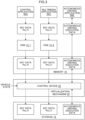
- FIG. 1 is a block diagram showing an example of the schematic configuration of a control system 10 pertaining to the embodiment.
- the control system 10 includes plural central processing units (CPUs) 12-1, 12-2, 12-3, 12-4, plural hardware security modules (HSMs) 14-1, 14-2, 14-3, a memory 16 serving as a temporary storage space, a storage 18 that is an example of a nonvolatile storage unit, and an Ethernet (registered trademark) switch (Eth/SW) 19 that is a communication interface.
- the control system 10 is installed in a vehicle (not shown in the drawings).
- the control system 10 is hardware in which various constituent elements described later are installed.
- the control system 10 is also a processor.
- the plural CPUs 12-1, 12-2, 12-3, 12-4, the plural HSMs 14-1, 14-2, 14-3, the memory 16, the storage 18, and the Eth/SW 19 are communicably connected to each other via a bus (not shown in the drawings). It will be noted that in the following description any one of the plural CPUs 12-1, 12-2, 12-3, 12-4 will also simply be called “the CPU 12". Furthermore, in the following description any one of the plural HSMs 14-1, 14-2, 14-3 will also simply be called "the HSM 14".
- the HSM 14 is hardware for managing key data used to encrypt or decrypt data.
- the HSM 14 has a security function and is tamper resistant.
- the HSM 14 retains key data, performs encryption or decryption operations using key data, generates key data, and generates random numbers.
- the memory 16 is a storage device that can be directly accessed by the CPU 12 that is a processor.
- the memory 16 also temporarily stores frequently utilized data, so it is also an example of a storage unit.
- the storage 18 is realized by a hard disk drive (HDD), a solid-state drive (SSD), or a flash memory, for example.
- the storage 18 is also an example of memory of the present disclosure.
- the plural CPUs 12-1, 12-2, 12-3, 12-4 configuring the control system 10 read the various programs from the storage 18, load them to the memory 16, and sequentially execute processes that the programs have.
- the plural CPUs 12-1, 12-2, 12-3, 12-4 of the control system 10 realize functions of a virtualization mechanism 20, plural virtual machines 30-1, 30-2, 30-3, 30-4, plural basic software (BSW) programs 40-1, 40-2, 40-3, a central gateway (G/W) 50, a control application 60A, an autonomous driving application 60B, and a multimedia application 60C, all shown in FIG. 1 .
- BSW basic software
- any one of the plural virtual machines 30-1, 30-2, 30-3, 30-4 will also simply be called “the virtual machine 30”.
- any one of the plural BSW programs 40-1, 40-2, 40-3 will also simply be called “the BSW 40”.
- any one of the control application 60A, the autonomous driving application 60B, and the multimedia application 60C will also simply be called “the application 60”.
- the virtualization mechanism 20 is realized by software operating on the control system 10.
- the virtualization mechanism 20 is realized by the plural CPUs 12-1, 12-2, 12-3, 12-4, which are physical configurations of the control system 10. Furthermore, the functions of the virtual machine 30 are realized on the virtualization mechanism 20.
- the virtual machine 30 runs on the virtualization mechanism 20.
- the virtual machine 30 runs as a virtualized computer.
- the virtual machine 30 can simulate the operation of a computer and act like the hardware of one computer.
- the BSW 40 runs on the virtual machine 30.
- the BSW 40 has basic functions such as an operating system function and a communication function. Specifically, the BSW 40-1 runs on the virtual machine 30-2, the BSW 40-2 runs on the virtual machine 30-3, and the BSW 40-3 runs on the virtual machine 30-4.
- the central G/W 50 runs on the virtual machine 30.
- the central G/W 50 relays data received from the outside.
- the application 60 runs on the BSW 40.
- the application 60 is software that executes certain specific processes.
- the control application 60A which is an application relating to vehicle control different from autonomous driving control
- the autonomous driving application 60B which is an application relating to autonomous driving control
- the multimedia application 60C which is an application relating to multimedia utilized in the vehicle.
- control application 60A runs on the BSW 40-1
- autonomous driving application 60B runs on the BSW 40-2
- multimedia application 60C runs on the BSW 40-3.
- data requiring a high level of security among data sent from the application 60 to the outside are encrypted by the HSM 14, and then the encrypted data are sent from the application 60 to the outside. Furthermore, encrypted data among data that the application 60 receives from the outside are decrypted by the HSM 14 and are then utilized in the application 60.
- data sent and received by the control application 60A are encrypted or decrypted by the HSM 14-1.
- data sent and received by the autonomous driving application 60B are encrypted or decrypted by the HSM 14-2.
- data sent and received by the multimedia application 60C are encrypted or decrypted by the HSM 14-3.
- competition can occur between the plural CPUs 12-1, 12-2, 12-3, 12-4 and the plural HSMs 14-1, 14-2, 14-3.
- the CPUs 12 that execute the applications 60 shown in FIG. 1 and the HSMs 14 that execute the encryption or decryption process with respect to data access the memory 16 or the storage 18 within a certain predetermined amount of time competition can occur between the plural CPUs 12-1, 12-2, 12-3, 12-4 and the plural HSMs 14-1, 14-2, 14-3.
- a measure can also be taken where a certain application is prioritized without exception over the other applications.
- a certain application is prioritized without exception over the other applications.
- the execution of the application with the low priority level ends up being interrupted, and there is also the potential to cause an unexpected operation in the control system 10.
- priority levels are set with respect to the applications, if a malfunction occurs in an application whose priority level is high, a situation can also occur where the application with the high priority level ends up continuing to occupy the storage 18.
- control system 10 of this embodiment arbitrates, based on the state of the vehicle (hereinafter simply called “the vehicle state”), the order in which data output from the plural applications 60 are stored in the storage 18.
- a control device 22 that runs on the virtualization mechanism 20 receives the vehicle state.
- the control device 22 also arbitrates, based on the vehicle state and a vehicle state condition representing a condition that is preset in accordance with the vehicle state, the order in which plural sets of data are stored in the storage 18.
- the data output from the plural applications 60 include key data for encrypting the data output from the applications 60 and execution data utilized when executing the applications 60.
- the control device 22 also arbitrates, based on the vehicle state and the vehicle state condition, which of the key data and the execution data to prioritize, and store in the storage 18,. It will be noted that in the following description the process of storing data in the storage 18 will also simply be called "writing".
- FIG. 2 and FIG. 3 are drawings for describing access to the storage 18 by devices.
- the HSM 14-1 acquires the key data Key_A and stores the key data Key_A in its own storage unit (not shown in the drawings). It will be noted that the key data Key_A are utilized to encrypt or decrypt data sent and received between the control application 60A and external devices. The HSM 14-1 first loads the key data Key_A to the memory 16 and then writes the key data Key_A to the storage 18.
- the HSM 14-2 acquires the key data Key_C and stores the key data Key_C in its own storage unit (not shown in the drawings). It will be noted that the key data Key_C are utilized to encrypt or decrypt data sent and received between the multimedia application 60C and external devices. The HSM 14-2 first loads the key data Key_C to the memory 16 and then writes the key data Key_C to the storage 18.
- the CPU 12 corresponding to the virtual machine 30 running the autonomous driving application 60B first loads the execution data relating to autonomous driving to the memory 16 and then writes the execution data relating to autonomous driving to the storage 18. Furthermore, the CPU 12 corresponding to the virtual machine 30 running the autonomous driving application 60B reads, and outputs to the autonomous driving application 60B, execution data relating to autonomous driving already stored in the storage 18.
- the control device 22 that runs on the virtualization mechanism 20 arbitrates, based on the vehicle state, the vehicle state condition, the type of data, and the type of process, the order in which data are stored in the storage 18 and the order in which data are read from the storage 18.
- control device 22 functionally incudes a reception unit 24, a condition storage unit 25, and an arbitration unit 26.
- the functions of the control device 22 are realized by software.
- the reception unit 24 receives the vehicle state of the vehicle in which the control system 10 is installed and the data output from the applications 60.
- the vehicle states include an autonomous driving mode indicating that the vehicle is in an autonomous driving mode and a vehicle shop mode indicating that the vehicle is in a service or repair shop and that the vehicle is being serviced or being repaired will be described as an example.
- the condition storage unit 25 stores vehicle state conditions representing conditions that are preset in accordance with the vehicle states.
- the vehicle state conditions are an example of predetermined conditions.
- data processes to be prioritized are preset in accordance with the vehicle states.
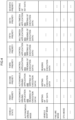
- FIG. 4 shows an example of the vehicle state conditions.
- the vehicle states and priority rankings of processes are associated with each other.
- the priority level of the process of reading the execution data of the autonomous driving application 60B from the storage 18 is the highest and the priority level of the process of writing key data to the storage 18 is the lowest.
- the priority level of the process of writing key data to the storage 18 is the highest and the priority level of the process of reading execution data from the storage 18 is the lowest.
- priority levels of processes can also be set in regard to a failure mode indicating a state in which the vehicle has broken down and an over-the-air (OTA) mode indicating a state in which automotive software is being updated.
- OTA over-the-air
- the arbitration unit 26 arbitrates, based on the vehicle state received by the reception unit 24 and the vehicle state condition stored in the condition storage unit 25, the order in which the plural sets of data output from the plural applications 60 are stored in the storage 18.
- the arbitration unit 26 performs control to prioritize, and store in the storage 18, the execution data output from the autonomous driving application 60B over the execution data output from the control application 60A and the execution data output from the multimedia application 60C. It will be noted that, in a case where the vehicle state received by the reception unit 24 is the autonomous driving mode, the arbitration unit 26 performs control to prioritize, and store in the storage 18, the execution data output from the control application 60A over the execution data output from the multimedia application 60C.
- the arbitration unit 26 performs control to prioritize, and store in the storage 18, the execution data output from the control application 60A over the execution data output from the autonomous driving application 60B and the execution data output from the multimedia application 60C. It will be noted that, in a case where the vehicle state received by the reception unit 24 is not the autonomous driving mode, the arbitration unit 26 performs control to prioritize, and store in the storage 18, the execution data output from the autonomous driving application 60B over the execution data output from the multimedia application 60C.
- the arbitration unit 26 performs control to prioritize, and store in the storage 18, the execution data output from the control application 60A over the execution data output from the autonomous driving application 60B and the execution data output from the multimedia application 60C. Furthermore, for example, in a case where the vehicle state received by the reception unit 24 is the vehicle shop mode, the arbitration unit 26 performs control to prioritize, and store in the storage 18, the execution data output from the autonomous driving application 60B over the execution data output from the multimedia application 60C.
- the data output from the plural applications 60 also include key data for encrypting the data output from the applications 60.
- the arbitration unit 26 also arbitrates, based on the vehicle state and the vehicle state condition, which of the key data and the execution data to prioritize, and store in the storage 18,.
- the arbitration unit 26 performs control to prioritize the process of storing the key data in the storage 18 over the process of storing the execution data in the storage 18. Furthermore, in a case where the vehicle state received by the reception unit 24 is the autonomous driving mode, the arbitration unit 26 performs control to prioritize the process of reading data from the storage 18 over the process of storing the key data in the storage 18.
- the arbitration unit 26 arbitrates the order in which the plural sets of data are stored in the storage 18 and the order in which data are read from the storage 18.
- FIG. 1 it will be noted that in the example shown in FIG. 1 , four virtual machines 30 are shown, three BSW programs 40 are shown, and three applications 60 are shown. Furthermore, in the example shown in FIG. 1 , four CPUs 12 and three HSMs 14 are shown. However, the numbers of these constituent elements are not limited to the examples shown in FIG. 1 .
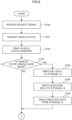
- the CPU 12 realizing the virtual machine 30 executes the control process routine shown in FIG. 5 .
- step S50 the CPU 12 receives the request signal output from the application 60.
- step S52 the CPU 12 determines whether or not the request signal received in step S50 includes a request to update the key data. In a case where the request signal includes a request to update the key data, the CPU 12 proceeds to step S54. In a case where the request signal does not include a request to update the key data, the CPU 12 proceeds to step S58.
- step S54 the CPU 12 requests the HSM 14 to update the key data.
- the HSM 14 When the HSM 14 receives the update request output from the CPU 12, the HSM 14 stores the key data in its own storage unit (not shown in the drawings).
- step S56 the CPU 12 requests the control device 22 to update the key data.
- step S58 the CPU 12 determines whether or not the request signal received in step S50 includes a request to access the storage 18. In a case where the request signal includes a request to access the storage 18, the CPU 12 proceeds to step S60. In a case where the request signal does not include a request to access the storage 18, the CPU 12 ends the process.
- step S60 the CPU 12 requests the control device 22 to read the execution data from the storage 18 or write the execution data to the storage 18.
- step S56 or step S60 the CPU 12 corresponding to the control device 22 executes the control process routine shown in FIG. 6 and FIG. 7 .
- step S100 of FIG. 6 the CPU 12, as the reception unit of the control device 22, receives the request signal output in step S56 or step S60.
- step S101 the CPU 12, as the reception unit 24 of the control device 22, receives the current vehicle state.
- step S102 the CPU 12, as the arbitration unit 26 of the control device 22, reads the vehicle state condition from the condition storage unit 25.
- step S103 the CPU 12, as the arbitration unit 26 of the control device 22, determines whether or not the vehicle state received in step S101 is the vehicle shop mode. In a case where the vehicle state is the vehicle shop mode, the CPU 12 proceeds to step S104. In a case where the vehicle state is not the vehicle shop mode, the CPU 12 proceeds to step S110 shown in FIG. 7 .
- the CPU 12 as the arbitration unit 26 of the control device 22, references the vehicle state condition read in step S102 and executes processes in the order of step S104 to step S108.
- step S104 the CPU 12, as the arbitration unit 26 of the control device 22, writes to the storage 18 the key data output from the application 60.
- step S106 the CPU 12, as the arbitration unit 26 of the control device 22, writes to the storage 18 the execution data output from the application 60.
- step S108 the CPU 12, as the arbitration unit 26 of the control device 22, reads the execution data from the storage 18 in accordance with the request from the application 60.
- the priority level of the process of writing various types of data to the storage 18 is set high.
- the priority level of the process of writing the key data to the storage 18 is set the highest. It will be noted that, as shown in the processes of step S104 to step S108, in a case where the vehicle is in the vehicle shop mode, the type of the application 60 is not considered.
- step S110 of FIG. 7 the CPU 12, as the arbitration unit 26 of the control device 22, determines whether or not the vehicle state received in step S101 is the autonomous driving mode. In a case where the vehicle state is the autonomous driving mode, the CPU 12 proceeds to step S112. In a case where the vehicle state is not the autonomous driving mode, the CPU 12 proceeds to step S120.
- step 112 the CPU 12, as the arbitration unit 26 of the control device 22, reads the execution data from the storage 18 in accordance with a request from the autonomous driving application 60B. Then, the CPU 12, as the arbitration unit 26 of the control device 22, hands over the execution data it has read to the autonomous driving application 60B.
- step S114 the CPU 12, as the arbitration unit 26 of the control device 22, writes to the storage 18 the execution data output from the autonomous driving application 60B.
- step S116 the CPU 12, as the arbitration unit 26 of the control device 22, reads the execution data from the storage 18 in accordance with a request from the control application 60A. Then, the CPU 12, as the arbitration unit 26 of the control device 22, hands over the execution data it has read to the control application 60A.
- step S 118 the CPU 12, as the arbitration unit 26 of the control device 22, writes to the storage 18 the execution data output from the control application 60A.
- step S120 the CPU 12, as the arbitration unit 26 of the control device 22, reads the execution data from the storage 18 in accordance with a request from the control application 60A. Then, the CPU 12, as the arbitration unit 26 of the control device 22, hands over the execution data it has read to the control application 60A.
- step S122 the CPU 12, as the arbitration unit 26 of the control device 22, writes to the storage 18 the execution data output from the control application 60A.
- step S124 the CPU 12, as the arbitration unit 26 of the control device 22, reads the execution data from the storage 18 in accordance with a request from the autonomous driving application 60B. Then, the CPU 12, as the arbitration unit 26 of the control device 22, hands over the execution data it has read to the autonomous driving application 60B.
- step S126 the CPU 12, as the arbitration unit 26 of the control device 22, writes to the storage 18 the execution data output from the autonomous driving application 60B.
- step S128 the CPU 12, as the arbitration unit 26 of the control device 22, reads the execution data from the storage 18 in accordance with a request from the multimedia application 60C. Then, the CPU 12, as the arbitration unit 26, hands over the execution data it has read to the multimedia application 60C.
- step S130 the CPU 12, as the arbitration unit 26 of the control device 22, writes to the storage 18 the execution data output from the multimedia application 60C.
- step S132 the CPU 12, as the arbitration unit 26 of the control device 22, writes to the storage 18 the key data output from the application 60.
- control device 22 omits any of the processes of step S 104 to step S108 are omitted depending on the request signal received in step S 100. Furthermore, there are also cases where the control device 22 omits any of the processes of step S 112 to step S132 depending on the request signal received in step S100.
- step S104 and step S132 are omitted.
- step S106 to step S108 and step S 112 to step S 130 are omitted.
- the request signal does not include a request to process data relating to a specific application 60
- processes relating to that application 60 are omitted.
- the processes of step S 116 to step S 118 and step S 120 to step S 122 are omitted.
- control device pertaining to the embodiment receives data output from plural applications and arbitrates, based on predetermined conditions, the order in which the plural sets of data output from the plural applications are stored in a storage. Because of this, even in a case where plural devices related to the plural applications access one storage unit, the occurrence of competition between the devices can be inhibited.
- the vehicle state conditions described above can be freely set, so the priority levels of the processes can be flexibly set. Furthermore, according to the control device pertaining to this embodiment, the priority levels of the processes can also be flexibly set in accordance with requested performance requirements.
- the vehicle states include the autonomous driving mode and the vehicle shop mode was described as an example, but the vehicle states are not limited to this.
- Priority levels of processes may also be set in regard to a manual driving mode indicating that the vehicle is in a manual driving state, a failure mode indicating a state in which the vehicle has broken down, and an over-the-air (OTA) mode indicating a state in which automotive software is being updated.
- OTA over-the-air
- the plural applications include the control application 60A, the autonomous driving application 60B, and the multimedia application 60C was described as an example, but the plural applications are not limited to this, and other applications may also be applied to this embodiment.
Landscapes
- Engineering & Computer Science (AREA)
- Theoretical Computer Science (AREA)
- Software Systems (AREA)
- General Engineering & Computer Science (AREA)
- Physics & Mathematics (AREA)
- General Physics & Mathematics (AREA)
- Human Computer Interaction (AREA)
- Computer Security & Cryptography (AREA)
- Computer Hardware Design (AREA)
- Mechanical Engineering (AREA)
- Automation & Control Theory (AREA)
- Transportation (AREA)
- Health & Medical Sciences (AREA)
- Bioethics (AREA)
- General Health & Medical Sciences (AREA)
- Mathematical Physics (AREA)
- Stored Programmes (AREA)
- Memory System (AREA)
Abstract
A control device receives data output from plural applications. The control device arbitrates, based on predetermined conditions, the order in which the plural sets of data output from the plural applications are stored in a storage.
Description
- The present disclosure relates to a control device, a control method, a recording medium in which a control program is recorded, and a vehicle.
- Conventionally, a virtualization support device is known which improves the efficiency with which a processor is utilized (e.g., Japanese Patent Application Laid-open (
JP-A) No. 2021-051420 JP-ANo. 2021-051420 JP-A No. 2021-051420 - In this connection, if plural devices (e.g., central processing units, or CPUs) that execute plural application software programs (hereinafter simply called "applications") try to access a storage unit such as a storage at substantially the same time to store data, sometimes the problem of arbitrating which device's data is to be prioritized and stored arises.
- The technology of
JP-ANo. 2021-051420 - For this reason, the related art has the problem that when plural devices related to plural applications access one storage unit at substantially the same time, sometimes competition ends up occurring between the plural devices. There are also cases where, due to plural devices accessing one storage unit at substantially the same time, integrity when updating data, for example, ends up being lost.
- The present disclosure has been made in consideration of the above circumstances, and it is an object thereof to inhibit, even in a case where plural devices related to plural applications access one storage unit, the occurrence of competition between the devices.
- A first aspect of the disclosure is a control device including: a reception unit that receives data output from plural applications; and an arbitration unit that arbitrates, based on predetermined conditions, an order in which plural sets of the data output from the plural applications are stored in a storage unit.
- The control device of the first aspect of the disclosure receives the data output from the plural applications. The control device arbitrates, based on the predetermined conditions, an order in which plural sets of the data output from the plural applications are stored in the storage unit. Because of this, even in a case where plural devices related to the plural applications access one storage unit, the occurrence of competition between the devices can be inhibited.
- The predetermined conditions of a second aspect of the disclosure are vehicle state conditions representing conditions that are preset in accordance with vehicle states, the reception unit further receives a vehicle state, and the arbitration unit arbitrates, based on the vehicle state and the vehicle state conditions, the order in which the plural sets of data received by the reception unit are stored in the storage unit. According to the second aspect of the disclosure, even in a case where plural devices related to the plural applications access one storage unit in accordance with the vehicle state of the vehicle in which the control device is installed, the occurrence of competition between the devices can be inhibited.
- The plural applications of a third aspect of the disclosure include an autonomous driving application that is an application relating to autonomous driving control and a control application that is an application relating to vehicle control that is different from the autonomous driving control, the vehicle states include an autonomous driving mode indicating that the vehicle is in an autonomous driving state, and the meditation unit arbitrates the order in which the plural sets of data are stored in the storage unit in such a way that, in a case in which the vehicle state received by the reception unit is the autonomous driving mode, the arbitration unit prioritizes, and stores in the storage unit, data output from the autonomous driving application over data output from the control application and, in a case in which the vehicle state received by the reception unit is not the autonomous driving mode, the arbitration unit prioritizes, and stores in the storage unit, the data output from the control application over the data output from the autonomous driving application. According to the third aspect of the disclosure, the control device can appropriately arbitrate the order in which the data are stored in the storage unit in accordance with whether or not the vehicle state is the autonomous driving state.
- The plural applications of a fourth aspect of the disclosure further include a multimedia application that is an application relating to multimedia utilized in the vehicle, and the arbitration unit arbitrates the order in which the plural sets of data are stored in the storage unit in such a way that, in a case in which the vehicle state received by the reception unit is the autonomous driving mode, the arbitration unit prioritizes, and stores in the storage unit, the data output from the autonomous driving application over the data output from the control application and the data output from the multimedia application and, in a case in which the vehicle state received by the reception unit is not the autonomous driving mode, the arbitration unit prioritizes, and stores in the storage unit, the data output from the control application and the data output from the autonomous driving application over the data output from the multimedia application. According to the fourth aspect of the disclosure, the control device can appropriately arbitrate the order in which the data are stored in the storage unit in accordance with whether or not the vehicle state is the autonomous driving mode and the type of the application.
- The vehicle states of a fifth aspect of the disclosure include a vehicle shop mode indicating that the vehicle is in a service or repair shop and that the vehicle is being serviced or being repaired, and the arbitration unit arbitrates the order in which the plural sets of data are stored in the storage unit in such a way that, in a case in which the vehicle state received by the reception unit is the vehicle shop mode, the arbitration unit prioritizes, and stores in the storage unit, the data output from the control application over the data output from the autonomous driving application. According to the fifth aspect of the disclosure, the control device can appropriately arbitrate the order in which the data are stored in the storage unit in accordance with whether or not the vehicle state is the vehicle shop mode.
- The arbitration unit of a sixth aspect of the disclosure further arbitrates the order in which the plural sets of data are stored in the storage unit and an order in which data are read from the storage unit in such a way that, in a case in which the vehicle state received by the reception unit is the vehicle shop mode, the arbitration unit prioritizes a process of storing the data output from the applications in the storage unit over a process of reading data from the storage unit and, in a case in which the vehicle state received by the reception unit is the autonomous driving mode, the arbitration unit prioritizes the process of reading data from the storage unit over the process of storing the data output from the applications in the storage unit. According to the sixth aspect of the disclosure, the control device can appropriately arbitrate between the process of storing data in the storage unit and the process of reading data from the storage unit in accordance with the type of process with respect to the data.
- The data output from the plural applications of a seventh aspect of the disclosure include key data for encrypting the data output from the applications and execution data utilized when executing the applications, and the arbitration unit arbitrates, based on the predetermined conditions, which of the key data and the execution data to prioritize and store in the storage unit. According to the seventh aspect of the disclosure, the control device can appropriately arbitrate the process of storing data in the storage unit in accordance with the type of data.
- The predetermined conditions of an eighth aspect of the disclosure are vehicle state conditions representing conditions that are preset in accordance with vehicle states, the reception unit further receives a vehicle state, the vehicle states include an autonomous driving mode indicating that the vehicle is in an autonomous driving state and a vehicle shop mode indicating that the vehicle is in a service or repair shop and that the vehicle is being serviced or being repaired, and the arbitration unit further arbitrates the order in which the plural sets of data are stored in the storage unit and an order in which data are read from the storage unit in such a way that, in a case in which the vehicle state received by the reception unit is the vehicle shop mode, the arbitration unit prioritizes a process of storing the key data in the storage unit over a process of storing the execution data in the storage unit and, in a case in which the vehicle state received by the reception unit is the autonomous driving mode, the arbitration unit prioritizes a process of reading the execution data from the storage unit over the process of storing the key data in the storage unit. According to the eighth aspect of the disclosure, the control device can appropriately arbitrate between the process of storing data in the storage unit and the process of reading data from the storage unit in accordance with the type of data and the type of process.
- A ninth aspect of the disclosure is a vehicle including the above control device. According to the ninth aspect of the disclosure, as in the first aspect, even in a case where plural devices related to the plural applications access one storage unit, the occurrence of competition between the devices can be inhibited.
- A control method of a tenth aspect of the disclosure is a control method whereby a computer executes a process to receive data output from plural applications and arbitrate, based on predetermined conditions, an order in which plural sets of the data output from the plural applications are stored in a storage unit. According to the tenth aspect of the disclosure, as in the first aspect, even in a case where plural devices related to the plural applications access one storage unit, the occurrence of competition between the devices can be inhibited.
- A recording medium of an eleventh aspect of the disclosure is a recording medium in which is recorded a control program for causing a computer to execute a process to receive data output from plural applications and arbitrate, based on predetermined conditions, an order in which plural sets of the data output from the plural applications are stored in a storage unit. According to the eleventh aspect of the disclosure, as in the first aspect, even in a case where plural devices related to the plural applications access one storage unit, the occurrence of competition between the devices can be inhibited.
- As described above, according to the present disclosure, there is obtained the advantageous effect that, even in a case where plural devices related to plural applications access one storage unit, the occurrence of competition between the devices can be inhibited.
-
-
FIG. 1 is a block diagram showing an example of the schematic configuration of a control system pertaining to an embodiment; -
FIG. 2 is a diagram for describing access of a storage by devices; -
FIG. 3 is a diagram for describing access of the storage by the devices; -
FIG. 4 is a diagram for describing an example of vehicle state conditions; -
FIG. 5 is a flowchart showing an example of a flow of processes performed by the control system pertaining to the embodiment; -
FIG. 6 is a flowchart showing an example of a flow of processes performed by the control system pertaining to the embodiment; and -
FIG. 7 is a flowchart showing an example of a flow of processes performed by the control system pertaining to the embodiment. - An embodiment of the disclosure will be described in detail below with reference to the drawings.
-
FIG. 1 is a block diagram showing an example of the schematic configuration of acontrol system 10 pertaining to the embodiment. Thecontrol system 10, as shown inFIG. 1 , includes plural central processing units (CPUs) 12-1, 12-2, 12-3, 12-4, plural hardware security modules (HSMs) 14-1, 14-2, 14-3, amemory 16 serving as a temporary storage space, astorage 18 that is an example of a nonvolatile storage unit, and an Ethernet (registered trademark) switch (Eth/SW) 19 that is a communication interface. Thecontrol system 10 is installed in a vehicle (not shown in the drawings). - The
control system 10 is hardware in which various constituent elements described later are installed. Thecontrol system 10 is also a processor. - The plural CPUs 12-1, 12-2, 12-3, 12-4, the plural HSMs 14-1, 14-2, 14-3, the
memory 16, thestorage 18, and the Eth/SW 19 are communicably connected to each other via a bus (not shown in the drawings). It will be noted that in the following description any one of the plural CPUs 12-1, 12-2, 12-3, 12-4 will also simply be called "the CPU 12". Furthermore, in the following description any one of the plural HSMs 14-1, 14-2, 14-3 will also simply be called "the HSM 14". - The HSM 14 is hardware for managing key data used to encrypt or decrypt data. The HSM 14 has a security function and is tamper resistant. The HSM 14 retains key data, performs encryption or decryption operations using key data, generates key data, and generates random numbers.
- The
memory 16 is a storage device that can be directly accessed by the CPU 12 that is a processor. Thememory 16 also temporarily stores frequently utilized data, so it is also an example of a storage unit. - The
storage 18 is realized by a hard disk drive (HDD), a solid-state drive (SSD), or a flash memory, for example. Thestorage 18 is also an example of memory of the present disclosure. Thestorage 18, which serves as a storage medium, stores programs for allowing thecontrol system 10 to function. The plural CPUs 12-1, 12-2, 12-3, 12-4 configuring thecontrol system 10 read the various programs from thestorage 18, load them to thememory 16, and sequentially execute processes that the programs have. - By sequentially executing the various programs, the plural CPUs 12-1, 12-2, 12-3, 12-4 of the
control system 10 realize functions of avirtualization mechanism 20, plural virtual machines 30-1, 30-2, 30-3, 30-4, plural basic software (BSW) programs 40-1, 40-2, 40-3, a central gateway (G/W) 50, acontrol application 60A, anautonomous driving application 60B, and amultimedia application 60C, all shown inFIG. 1 . - It will be noted that in the following description any one of the plural virtual machines 30-1, 30-2, 30-3, 30-4 will also simply be called "the
virtual machine 30". Furthermore, in the following description any one of the plural BSW programs 40-1, 40-2, 40-3 will also simply be called "theBSW 40". Furthermore, in the following description any one of thecontrol application 60A, theautonomous driving application 60B, and themultimedia application 60C will also simply be called "theapplication 60". - The
virtualization mechanism 20 is realized by software operating on thecontrol system 10. Thevirtualization mechanism 20 is realized by the plural CPUs 12-1, 12-2, 12-3, 12-4, which are physical configurations of thecontrol system 10. Furthermore, the functions of thevirtual machine 30 are realized on thevirtualization mechanism 20. - The
virtual machine 30 runs on thevirtualization mechanism 20. Thevirtual machine 30 runs as a virtualized computer. Thevirtual machine 30 can simulate the operation of a computer and act like the hardware of one computer. - The
BSW 40 runs on thevirtual machine 30. TheBSW 40 has basic functions such as an operating system function and a communication function. Specifically, the BSW 40-1 runs on the virtual machine 30-2, the BSW 40-2 runs on the virtual machine 30-3, and the BSW 40-3 runs on the virtual machine 30-4. - The central G/
W 50 runs on thevirtual machine 30. The central G/W 50 relays data received from the outside. - The
application 60 runs on theBSW 40. Theapplication 60 is software that executes certain specific processes. In this embodiment, as shown inFIG. 1 , there run thecontrol application 60A, which is an application relating to vehicle control different from autonomous driving control, theautonomous driving application 60B, which is an application relating to autonomous driving control, and themultimedia application 60C, which is an application relating to multimedia utilized in the vehicle. - Specifically, the control application 60Aruns on the BSW 40-1, the
autonomous driving application 60B runs on the BSW 40-2, and themultimedia application 60C runs on the BSW 40-3. - It will be noted that data requiring a high level of security among data sent from the
application 60 to the outside are encrypted by the HSM 14, and then the encrypted data are sent from theapplication 60 to the outside. Furthermore, encrypted data among data that theapplication 60 receives from the outside are decrypted by the HSM 14 and are then utilized in theapplication 60. - For example, data sent and received by the
control application 60A are encrypted or decrypted by the HSM 14-1. Furthermore, data sent and received by theautonomous driving application 60B are encrypted or decrypted by the HSM 14-2. Furthermore, data sent and received by themultimedia application 60C are encrypted or decrypted by the HSM 14-3. - If the
plural applications 60 shown inFIG. 1 access thestorage 18 within a certain predetermined amount of time, competition can occur between the plural CPUs 12-1, 12-2, 12-3, 12-4 and the plural HSMs 14-1, 14-2, 14-3. Specifically, if the CPUs 12 that execute theapplications 60 shown inFIG. 1 and the HSMs 14 that execute the encryption or decryption process with respect to data access thememory 16 or thestorage 18 within a certain predetermined amount of time, competition can occur between the plural CPUs 12-1, 12-2, 12-3, 12-4 and the plural HSMs 14-1, 14-2, 14-3. - In consideration of this point, for example, a measure can also be taken where a certain application is prioritized without exception over the other applications. However, in such a case, for example, if an application with a high priority level is executed while an application with a low priority level is being executed, the execution of the application with the low priority level ends up being interrupted, and there is also the potential to cause an unexpected operation in the
control system 10. Furthermore, in a case where priority levels are set with respect to the applications, if a malfunction occurs in an application whose priority level is high, a situation can also occur where the application with the high priority level ends up continuing to occupy thestorage 18. - Therefore, the
control system 10 of this embodiment arbitrates, based on the state of the vehicle (hereinafter simply called "the vehicle state"), the order in which data output from theplural applications 60 are stored in thestorage 18. - In this embodiment, a
control device 22 that runs on thevirtualization mechanism 20 receives the vehicle state. Thecontrol device 22 also arbitrates, based on the vehicle state and a vehicle state condition representing a condition that is preset in accordance with the vehicle state, the order in which plural sets of data are stored in thestorage 18. - It will be noted that the data output from the
plural applications 60 include key data for encrypting the data output from theapplications 60 and execution data utilized when executing theapplications 60. For this reason, thecontrol device 22 also arbitrates, based on the vehicle state and the vehicle state condition, which of the key data and the execution data to prioritize, and store in thestorage 18,. It will be noted that in the following description the process of storing data in thestorage 18 will also simply be called "writing". -
FIG. 2 andFIG. 3 are drawings for describing access to thestorage 18 by devices. - As shown in
FIG. 2 , in a case where key data Key_A are output from thecontrol application 60A, the HSM 14-1 acquires the key data Key_A and stores the key data Key_A in its own storage unit (not shown in the drawings). It will be noted that the key data Key_A are utilized to encrypt or decrypt data sent and received between thecontrol application 60A and external devices. The HSM 14-1 first loads the key data Key_A to thememory 16 and then writes the key data Key_A to thestorage 18. - Furthermore, as shown in
FIG. 2 , in a case where key data Key_C are output from themultimedia application 60C, the HSM 14-2 acquires the key data Key_C and stores the key data Key_C in its own storage unit (not shown in the drawings). It will be noted that the key data Key_C are utilized to encrypt or decrypt data sent and received between themultimedia application 60C and external devices. The HSM 14-2 first loads the key data Key_C to thememory 16 and then writes the key data Key_C to thestorage 18. - Moreover, as shown in
FIG. 2 , in a case where execution data relating to autonomous driving are output from theautonomous driving application 60B, the CPU 12 corresponding to thevirtual machine 30 running theautonomous driving application 60B first loads the execution data relating to autonomous driving to thememory 16 and then writes the execution data relating to autonomous driving to thestorage 18. Furthermore, the CPU 12 corresponding to thevirtual machine 30 running theautonomous driving application 60B reads, and outputs to theautonomous driving application 60B, execution data relating to autonomous driving already stored in thestorage 18. - When the devices (in the above example, the HSM 14-1, the HSM 14-2, and the CPU 12) related to the applications in their natural course access the
storage 18 as described above, competition can occur between the devices. As a result, this can also lead to a state in which various requested performance requirements cannot be met. - For example, in a case where the vehicle is in an autonomous driving mode, there can be cases where the reading of execution data from the
storage 18 or the writing of execution data to thestorage 18 within a predetermined amount of time is considered a requested performance requirement. Furthermore, for example, in a case where the vehicle is in a vehicle shop mode, there can also be cases where writing key data to thestorage 18 in a predetermined amount of time is considered a requested performance requirement. - Therefore, in this embodiment, as shown in
FIG. 3 , thecontrol device 22 that runs on thevirtualization mechanism 20 arbitrates, based on the vehicle state, the vehicle state condition, the type of data, and the type of process, the order in which data are stored in thestorage 18 and the order in which data are read from thestorage 18. - As shown in
FIG. 1 , thecontrol device 22 functionally incudes areception unit 24, acondition storage unit 25, and anarbitration unit 26. The functions of thecontrol device 22 are realized by software. - The
reception unit 24 receives the vehicle state of the vehicle in which thecontrol system 10 is installed and the data output from theapplications 60. - It will be noted that in this embodiment a case where the vehicle states include an autonomous driving mode indicating that the vehicle is in an autonomous driving mode and a vehicle shop mode indicating that the vehicle is in a service or repair shop and that the vehicle is being serviced or being repaired will be described as an example.
- The
condition storage unit 25 stores vehicle state conditions representing conditions that are preset in accordance with the vehicle states. The vehicle state conditions are an example of predetermined conditions. In the vehicle state conditions, data processes to be prioritized are preset in accordance with the vehicle states. -
FIG. 4 shows an example of the vehicle state conditions. As shown inFIG. 4 , in the vehicle state conditions, the vehicle states and priority rankings of processes are associated with each other. For example, as shown inFIG. 4 , in a case where the vehicle state is the autonomous driving mode, the priority level of the process of reading the execution data of theautonomous driving application 60B from thestorage 18 is the highest and the priority level of the process of writing key data to thestorage 18 is the lowest. Furthermore, as shown inFIG. 4 , in a case where the vehicle state is the vehicle shop mode, the priority level of the process of writing key data to thestorage 18 is the highest and the priority level of the process of reading execution data from thestorage 18 is the lowest. - It will be noted that, as shown in
FIG. 4 , priority levels of processes can also be set in regard to a failure mode indicating a state in which the vehicle has broken down and an over-the-air (OTA) mode indicating a state in which automotive software is being updated. - The
arbitration unit 26 arbitrates, based on the vehicle state received by thereception unit 24 and the vehicle state condition stored in thecondition storage unit 25, the order in which the plural sets of data output from theplural applications 60 are stored in thestorage 18. - Specifically, in a case where the vehicle state received by the
reception unit 24 is the autonomous driving mode, thearbitration unit 26 performs control to prioritize, and store in thestorage 18, the execution data output from theautonomous driving application 60B over the execution data output from thecontrol application 60A and the execution data output from themultimedia application 60C. It will be noted that, in a case where the vehicle state received by thereception unit 24 is the autonomous driving mode, thearbitration unit 26 performs control to prioritize, and store in thestorage 18, the execution data output from thecontrol application 60A over the execution data output from themultimedia application 60C. - Furthermore, in a case where the vehicle state received by the
reception unit 24 is not the autonomous driving mode, thearbitration unit 26 performs control to prioritize, and store in thestorage 18, the execution data output from thecontrol application 60A over the execution data output from theautonomous driving application 60B and the execution data output from themultimedia application 60C. It will be noted that, in a case where the vehicle state received by thereception unit 24 is not the autonomous driving mode, thearbitration unit 26 performs control to prioritize, and store in thestorage 18, the execution data output from theautonomous driving application 60B over the execution data output from themultimedia application 60C. - Furthermore, for example, in a case where the vehicle state received by the
reception unit 24 is the vehicle shop mode, thearbitration unit 26 performs control to prioritize, and store in thestorage 18, the execution data output from thecontrol application 60A over the execution data output from theautonomous driving application 60B and the execution data output from themultimedia application 60C. Furthermore, for example, in a case where the vehicle state received by thereception unit 24 is the vehicle shop mode, thearbitration unit 26 performs control to prioritize, and store in thestorage 18, the execution data output from theautonomous driving application 60B over the execution data output from themultimedia application 60C. - It will be noted that the data output from the
plural applications 60 also include key data for encrypting the data output from theapplications 60. For this reason, thearbitration unit 26 also arbitrates, based on the vehicle state and the vehicle state condition, which of the key data and the execution data to prioritize, and store in thestorage 18,. - In a case where the vehicle state received by the
reception unit 24 is the vehicle shop mode, thearbitration unit 26 performs control to prioritize the process of storing the key data in thestorage 18 over the process of storing the execution data in thestorage 18. Furthermore, in a case where the vehicle state received by thereception unit 24 is the autonomous driving mode, thearbitration unit 26 performs control to prioritize the process of reading data from thestorage 18 over the process of storing the key data in thestorage 18. - In this way, the
arbitration unit 26 arbitrates the order in which the plural sets of data are stored in thestorage 18 and the order in which data are read from thestorage 18. - It will be noted that in the example shown in
FIG. 1 , fourvirtual machines 30 are shown, threeBSW programs 40 are shown, and threeapplications 60 are shown. Furthermore, in the example shown inFIG. 1 , four CPUs 12 and three HSMs 14 are shown. However, the numbers of these constituent elements are not limited to the examples shown inFIG. 1 . - Next, the action of the
control system 10 of the embodiment will be described. - When the
virtual machine 30 realized by the CPU 12 of thecontrol system 10 receives a request signal output from theapplication 60, the CPU 12 realizing thevirtual machine 30 executes the control process routine shown inFIG. 5 . - In step S50 the CPU 12 receives the request signal output from the
application 60. - In step S52 the CPU 12 determines whether or not the request signal received in step S50 includes a request to update the key data. In a case where the request signal includes a request to update the key data, the CPU 12 proceeds to step S54. In a case where the request signal does not include a request to update the key data, the CPU 12 proceeds to step S58.
- In step S54 the CPU 12 requests the HSM 14 to update the key data.
- When the HSM 14 receives the update request output from the CPU 12, the HSM 14 stores the key data in its own storage unit (not shown in the drawings).
- In step S56 the CPU 12 requests the
control device 22 to update the key data. - In step S58 the CPU 12 determines whether or not the request signal received in step S50 includes a request to access the
storage 18. In a case where the request signal includes a request to access thestorage 18, the CPU 12 proceeds to step S60. In a case where the request signal does not include a request to access thestorage 18, the CPU 12 ends the process. - In step S60 the CPU 12 requests the
control device 22 to read the execution data from thestorage 18 or write the execution data to thestorage 18. - When a signal requesting the respective process is output to the
control device 22 in step S56 or step S60, the CPU 12 corresponding to thecontrol device 22 executes the control process routine shown inFIG. 6 andFIG. 7 . - In step S100 of
FIG. 6 the CPU 12, as the reception unit of thecontrol device 22, receives the request signal output in step S56 or step S60. - In step S101 the CPU 12, as the
reception unit 24 of thecontrol device 22, receives the current vehicle state. - In step S102 the CPU 12, as the
arbitration unit 26 of thecontrol device 22, reads the vehicle state condition from thecondition storage unit 25. - In step S103 the CPU 12, as the
arbitration unit 26 of thecontrol device 22, determines whether or not the vehicle state received in step S101 is the vehicle shop mode. In a case where the vehicle state is the vehicle shop mode, the CPU 12 proceeds to step S104. In a case where the vehicle state is not the vehicle shop mode, the CPU 12 proceeds to step S110 shown inFIG. 7 . - The CPU 12, as the
arbitration unit 26 of thecontrol device 22, references the vehicle state condition read in step S102 and executes processes in the order of step S104 to step S108. - In step S104 the CPU 12, as the
arbitration unit 26 of thecontrol device 22, writes to thestorage 18 the key data output from theapplication 60. - In step S106 the CPU 12, as the
arbitration unit 26 of thecontrol device 22, writes to thestorage 18 the execution data output from theapplication 60. - In step S108 the CPU 12, as the
arbitration unit 26 of thecontrol device 22, reads the execution data from thestorage 18 in accordance with the request from theapplication 60. - In this way, in a case where the vehicle is in the vehicle shop mode, the situation is one where upgrades or repairs are made to the vehicle, and it is necessary to make various settings with respect to the vehicle smooth. For this reason, in a case where the vehicle is in the vehicle shop mode, the priority level of the process of writing various types of data to the
storage 18 is set high. In particular, the priority level of the process of writing the key data to thestorage 18 is set the highest. It will be noted that, as shown in the processes of step S104 to step S108, in a case where the vehicle is in the vehicle shop mode, the type of theapplication 60 is not considered. - Next, in step S110 of
FIG. 7 the CPU 12, as thearbitration unit 26 of thecontrol device 22, determines whether or not the vehicle state received in step S101 is the autonomous driving mode. In a case where the vehicle state is the autonomous driving mode, the CPU 12 proceeds to step S112. In a case where the vehicle state is not the autonomous driving mode, the CPU 12 proceeds to step S120. - In
step 112 the CPU 12, as thearbitration unit 26 of thecontrol device 22, reads the execution data from thestorage 18 in accordance with a request from theautonomous driving application 60B. Then, the CPU 12, as thearbitration unit 26 of thecontrol device 22, hands over the execution data it has read to theautonomous driving application 60B. - In step S114 the CPU 12, as the
arbitration unit 26 of thecontrol device 22, writes to thestorage 18 the execution data output from theautonomous driving application 60B. - In step S116 the CPU 12, as the
arbitration unit 26 of thecontrol device 22, reads the execution data from thestorage 18 in accordance with a request from thecontrol application 60A. Then, the CPU 12, as thearbitration unit 26 of thecontrol device 22, hands over the execution data it has read to thecontrol application 60A. - In
step S 118 the CPU 12, as thearbitration unit 26 of thecontrol device 22, writes to thestorage 18 the execution data output from thecontrol application 60A. - In this way, in a case where the vehicle state is the autonomous driving mode, various processes with respect to data relating to the
autonomous driving application 60B are prioritized. - In step S120 the CPU 12, as the
arbitration unit 26 of thecontrol device 22, reads the execution data from thestorage 18 in accordance with a request from thecontrol application 60A. Then, the CPU 12, as thearbitration unit 26 of thecontrol device 22, hands over the execution data it has read to thecontrol application 60A. - In step S122 the CPU 12, as the
arbitration unit 26 of thecontrol device 22, writes to thestorage 18 the execution data output from thecontrol application 60A. - In step S124 the CPU 12, as the
arbitration unit 26 of thecontrol device 22, reads the execution data from thestorage 18 in accordance with a request from theautonomous driving application 60B. Then, the CPU 12, as thearbitration unit 26 of thecontrol device 22, hands over the execution data it has read to theautonomous driving application 60B. - In step S126 the CPU 12, as the
arbitration unit 26 of thecontrol device 22, writes to thestorage 18 the execution data output from theautonomous driving application 60B. - In this way, in a case where the vehicle is not in the autonomous driving mode, various processes with respect to data relating to the
control application 60A are prioritized over various processes with respect to data relating to theautonomous driving application 60B. - In step S128 the CPU 12, as the
arbitration unit 26 of thecontrol device 22, reads the execution data from thestorage 18 in accordance with a request from themultimedia application 60C. Then, the CPU 12, as thearbitration unit 26, hands over the execution data it has read to themultimedia application 60C. - In step S130 the CPU 12, as the
arbitration unit 26 of thecontrol device 22, writes to thestorage 18 the execution data output from themultimedia application 60C. - In this way, in both a case where the vehicle state is the autonomous driving mode and a case where the vehicle state is not the autonomous driving mode, various processes with respect to data relating to the
control application 60A and theautonomous driving application 60B are prioritized over various processes with respect to data relating to themultimedia application 60C. - In step S132 the CPU 12, as the
arbitration unit 26 of thecontrol device 22, writes to thestorage 18 the key data output from theapplication 60. - In this way, in a case where the vehicle state is not the vehicle shop mode, various processes with respect to data relating to the
application 60 are prioritized over the process of writing the key data to thestorage 18. - It will be noted that, in the control process routine shown in
FIG. 6 andFIG. 7 , there are also cases where thecontrol device 22 omits any of the processes of step S 104 to step S108 are omitted depending on the request signal received instep S 100. Furthermore, there are also cases where thecontrol device 22 omits any of the processes of step S 112 to step S132 depending on the request signal received in step S100. - For example, in a case where the request signal does not include a request to update the key data, the processes of step S104 and step S132 are omitted. Furthermore, for example, in a case where the request signal does not include a request to access the
storage 18, the processes of step S106 to step S108 and stepS 112 to stepS 130 are omitted. - Furthermore, in a case where the request signal does not include a request to process data relating to a
specific application 60, processes relating to thatapplication 60 are omitted. For example, in a case where the request signal does not include a request to process data relating to thecontrol application 60A, the processes of step S 116 to stepS 118 and stepS 120 to stepS 122 are omitted. - As described above, the control device pertaining to the embodiment receives data output from plural applications and arbitrates, based on predetermined conditions, the order in which the plural sets of data output from the plural applications are stored in a storage. Because of this, even in a case where plural devices related to the plural applications access one storage unit, the occurrence of competition between the devices can be inhibited.
- Furthermore, the vehicle state conditions described above can be freely set, so the priority levels of the processes can be flexibly set. Furthermore, according to the control device pertaining to this embodiment, the priority levels of the processes can also be flexibly set in accordance with requested performance requirements.
- It will be noted that although the processes performed by the devices in the above embodiment were described as software processes performed by executing programs, the processes may also be performed by hardware. Alternatively, the processes may also combine both software and hardware. Furthermore, the programs stored in the read only memory (ROM) may be stored in various types of storage media and circulated.
- Moreover, the disclosure is not limited to the above embodiment and, in addition to the above embodiment, can be modified in various ways and implemented in a range that does not depart from the spirit thereof.
- In this embodiment, a case where the vehicle states include the autonomous driving mode and the vehicle shop mode was described as an example, but the vehicle states are not limited to this. Priority levels of processes may also be set in regard to a manual driving mode indicating that the vehicle is in a manual driving state, a failure mode indicating a state in which the vehicle has broken down, and an over-the-air (OTA) mode indicating a state in which automotive software is being updated.
- Furthermore, in this embodiment, a case where the plural applications include the
control application 60A, theautonomous driving application 60B, and themultimedia application 60C was described as an example, but the plural applications are not limited to this, and other applications may also be applied to this embodiment. - All publications, patent applications, and technical standards mentioned in this specification are herein incorporated by reference to the same extent as if each individual publication, patent application, or technical standard was specifically and individually indicated to be incorporated by reference.
Claims (11)
- A control device (22) comprising a memory (18) and a processor (12) coupled to the memory (18), the processor (12) being configured to:receive data output from plural applications; andarbitrate, based on predetermined conditions, an order in which plural sets of the data output from the plural applications are stored in the memory (18).
- The control device (22) of claim 1, wherein:the predetermined conditions are vehicle state conditions representing conditions that are preset in accordance with vehicle states, andthe processor (12) is configured to further receive a vehicle state and arbitrate, based on the vehicle state and the vehicle state conditions, the order in which the plural sets of data that have been received are stored in the memory (18).
- The control device (22) of claim 2, wherein:the plural applications include an autonomous driving application that is an application relating to autonomous driving control and a control application that is an application relating to vehicle control that is different from the autonomous driving control,the vehicle states include an autonomous driving mode indicating that the vehicle is in an autonomous driving state, andthe processor (12) arbitrates the order in which the plural sets of data are stored in the memory (18) in such a way that, in a case in which the vehicle state that has been received is the autonomous driving mode, the processor (12) prioritizes, and stores in the memory (18), data output from the autonomous driving application over data output from the control application and, in a case in which the vehicle state that has been received is not the autonomous driving mode, the processor (12) prioritizes, and stores in the memory (18), the data output from the control application over the data output from the autonomous driving application.
- The control device (22) of claim 3, wherein:the plural applications further include a multimedia application that is an application relating to multimedia utilized in the vehicle, andthe processor (12) arbitrates the order in which the plural sets of data are stored in the memory (18) in such a way that, in a case in which the vehicle state that has been received is the autonomous driving mode, the processor (12) prioritizes, and stores in the memory (18), the data output from the autonomous driving application over the data output from the control application and data output from the multimedia application and, in a case in which the vehicle state that has been received is not the autonomous driving mode, the processor (12) prioritizes, and stores in the memory (18), the data output from the control application and the data output from the autonomous driving application over the data output from the multimedia application.
- The control device (22) of claim 3 or claim 4, wherein:the vehicle states include a vehicle shop mode indicating that the vehicle is in a service or repair shop and that the vehicle is being serviced or being repaired, andthe processor (12) arbitrates the order in which the plural sets of data are stored in the memory (18) in such a way that, in a case in which the vehicle state that has been received is the vehicle shop mode, the processor (12) prioritizes, and stores in the memory (18), the data output from the control application over the data output from the autonomous driving application.
- The control device (22) of claim 5, wherein the processor (12) further arbitrates the order in which the plural sets of data are stored in the memory (18) and an order in which data are read from the memory (18) in such a way that, in a case in which the vehicle state that has been received is the vehicle shop mode, the processor (12) prioritizes a process of storing the data output from the applications in the memory (18) over a process of reading data from the memory (18) and, in a case in which the vehicle state that has been received is the autonomous driving mode, the processor (12) prioritizes the process of reading data from the memory (18) over the process of storing the data output from the applications in the memory (18).
- The control device (22) of any one of claim 1 to claim 5, wherein:the data output from the plural applications include key data for encrypting the data output from the applications and execution data utilized when executing the applications, andthe processor (12) arbitrates, based on the predetermined conditions, which of the key data and the execution data to prioritize and store in the memory (18).
- The control device (22) according to claim 7, wherein:the predetermined conditions are vehicle state conditions representing conditions that are preset in accordance with vehicle states,the processor (12) further receives a vehicle state,the vehicle states include an autonomous driving mode indicating that the vehicle is in an autonomous driving state and a vehicle shop mode indicating that the vehicle is in a service or repair shop and that the vehicle is being serviced or being repaired, andthe processor (12) further arbitrates the order in which the plural sets of data are stored in the memory (18) and an order in which data are read from the memory (18) in such a way that, in a case in which the vehicle state that has been received is the vehicle shop mode, the processor (12) prioritizes a process of storing the key data in the memory (18) over a process of storing the execution data in the memory (18) and, in a case in which the vehicle state that has been received is the autonomous driving mode, the processor (12) prioritizes a process of reading the execution data from the memory (18) over the process of storing the key data in the memory (18).
- A vehicle including the control device (22) of any one of claim 1 to claim 8.
- A control method whereby a processor (12):receives data output from plural applications; andarbitrates, based on predetermined conditions, an order in which plural sets of the data output from the plural applications are stored in a storage unit.
- A non-transitory recording medium storing a control program executable by a processor (12) to:receive data output from plural applications; andarbitrate, based on predetermined conditions, an order in which plural sets of the data output from the plural applications are stored in a storage unit.
Applications Claiming Priority (1)
| Application Number | Priority Date | Filing Date | Title |
|---|---|---|---|
| JP2022022461A JP7655244B2 (en) | 2022-02-16 | 2022-02-16 | Control device, control method, control program, and vehicle |
Publications (1)
| Publication Number | Publication Date |
|---|---|
| EP4231150A1 true EP4231150A1 (en) | 2023-08-23 |
Family
ID=85199118
Family Applications (1)
| Application Number | Title | Priority Date | Filing Date |
|---|---|---|---|
| EP23155267.0A Pending EP4231150A1 (en) | 2022-02-16 | 2023-02-07 | Control device, control method, recording medium in which control program is recorded, and vehicle |
Country Status (5)
| Country | Link |
|---|---|
| US (1) | US12158847B2 (en) |
| EP (1) | EP4231150A1 (en) |
| JP (1) | JP7655244B2 (en) |
| KR (1) | KR102824973B1 (en) |
| CN (1) | CN116610603A (en) |
Citations (5)
| Publication number | Priority date | Publication date | Assignee | Title |
|---|---|---|---|---|
| US7209992B2 (en) * | 1998-11-09 | 2007-04-24 | Broadcom Corporation | Graphics display system with unified memory architecture |
| US20090216917A1 (en) * | 2005-06-30 | 2009-08-27 | Freescale Semiconductor, Inc | Device and method for arbitrating between direct memory access task requests |
| JP2019144910A (en) * | 2018-02-21 | 2019-08-29 | 学校法人関西学院 | Real-time processing apparatus and manufacturing method therefor |
| US20200133306A1 (en) * | 2018-10-31 | 2020-04-30 | Uber Technologies, Inc. | Autonomous Vehicle Fleet Management for Improved Computational Resource Usage |
| JP2021051420A (en) | 2019-09-24 | 2021-04-01 | 株式会社東芝 | Virtualization support device and control method of virtualization support device |
Family Cites Families (12)
| Publication number | Priority date | Publication date | Assignee | Title |
|---|---|---|---|---|
| JP2006281900A (en) * | 2005-03-31 | 2006-10-19 | Xanavi Informatics Corp | On-vehicle information system and application execution method |
| JP5187194B2 (en) * | 2006-11-21 | 2013-04-24 | 富士通株式会社 | Multiprocessor system |
| JP2013161242A (en) * | 2012-02-03 | 2013-08-19 | Toyota Motor Corp | Electronic controller |
| JP6171881B2 (en) * | 2013-11-19 | 2017-08-02 | 株式会社デンソー | Electronic control unit |
| US9928183B2 (en) * | 2014-09-26 | 2018-03-27 | Ampere Computing Llc | Priority framework for a computing device |
| JP6922417B2 (en) * | 2016-11-25 | 2021-08-18 | 株式会社デンソー | Concurrent processing device and parallel processing program |
| JP2019082856A (en) * | 2017-10-30 | 2019-05-30 | 日本精機株式会社 | Display device, display control method, and program |
| WO2021144860A1 (en) * | 2020-01-14 | 2021-07-22 | パナソニック インテレクチュアル プロパティ コーポレーション オブ アメリカ | Vehicle log storage device, vehicle log transmitting device, vehicle log collecting system, and vehicle log storage method |
| JP7547896B2 (en) * | 2020-09-24 | 2024-09-10 | 株式会社デンソー | Vehicle control device, vehicle control system, and access right management program |
| JP7613146B2 (en) | 2021-02-19 | 2025-01-15 | トヨタ自動車株式会社 | CONTROL DEVICE, METHOD, PROGRAM, AND VEHICLE |
| CN113485294A (en) * | 2021-07-05 | 2021-10-08 | 安徽江淮汽车集团股份有限公司 | Data recording method, device, equipment and storage medium for vehicle |
| US12158980B2 (en) * | 2021-08-27 | 2024-12-03 | Microsoft Technology Licensing, Llc | Distributed trusted platform module key management protection for roaming data |
-
2022
- 2022-02-16 JP JP2022022461A patent/JP7655244B2/en active Active
-
2023
- 2023-02-07 US US18/165,418 patent/US12158847B2/en active Active
- 2023-02-07 EP EP23155267.0A patent/EP4231150A1/en active Pending
- 2023-02-09 CN CN202310088247.2A patent/CN116610603A/en active Pending
- 2023-02-09 KR KR1020230017229A patent/KR102824973B1/en active Active
Patent Citations (5)
| Publication number | Priority date | Publication date | Assignee | Title |
|---|---|---|---|---|
| US7209992B2 (en) * | 1998-11-09 | 2007-04-24 | Broadcom Corporation | Graphics display system with unified memory architecture |
| US20090216917A1 (en) * | 2005-06-30 | 2009-08-27 | Freescale Semiconductor, Inc | Device and method for arbitrating between direct memory access task requests |
| JP2019144910A (en) * | 2018-02-21 | 2019-08-29 | 学校法人関西学院 | Real-time processing apparatus and manufacturing method therefor |
| US20200133306A1 (en) * | 2018-10-31 | 2020-04-30 | Uber Technologies, Inc. | Autonomous Vehicle Fleet Management for Improved Computational Resource Usage |
| JP2021051420A (en) | 2019-09-24 | 2021-04-01 | 株式会社東芝 | Virtualization support device and control method of virtualization support device |
Also Published As
| Publication number | Publication date |
|---|---|
| US20230259302A1 (en) | 2023-08-17 |
| JP7655244B2 (en) | 2025-04-02 |
| US12158847B2 (en) | 2024-12-03 |
| KR20230123437A (en) | 2023-08-23 |
| JP2023119512A (en) | 2023-08-28 |
| CN116610603A (en) | 2023-08-18 |
| KR102824973B1 (en) | 2025-06-26 |
Similar Documents
| Publication | Publication Date | Title |
|---|---|---|
| US12430073B2 (en) | Managed fetching and execution of commands from submission queues | |
| US8607003B2 (en) | Memory access to a dual in-line memory module form factor flash memory | |
| US10467150B2 (en) | Dynamic tier remapping of data stored in a hybrid storage system | |
| US10055361B2 (en) | Memory controller for providing a plurality of defined areas of a mass storage medium as independent mass memories to a master operating system core for exclusive provision to virtual machines | |
| US20070220361A1 (en) | Method and apparatus for guaranteeing memory bandwidth for trace data | |
| US10628234B2 (en) | Data processing apparatus, data processing method, and computer readable medium | |
| EP1639481B1 (en) | Readdressable virtual dma control and status registers | |
| US9448845B2 (en) | Extendible input/output data mechanism for accelerators | |
| US11269549B2 (en) | Storage device and command processing method | |
| US6457106B1 (en) | Shared memory control system and shared memory control method | |
| EP4231150A1 (en) | Control device, control method, recording medium in which control program is recorded, and vehicle | |
| US20130117533A1 (en) | Coprocessor having task sequence control | |
| US7934073B2 (en) | Method for performing jump and translation state change at the same time | |
| US12061804B2 (en) | Storage system and data processing method | |
| US9772961B2 (en) | Computer system, a system management module and method of bidirectionally interchanging data via module according to the IPMI standard | |
| US11556374B2 (en) | Compiler-optimized context switching with compiler-inserted data table for in-use register identification at a preferred preemption point | |
| US7895390B1 (en) | Ensuring buffer availability | |
| US20200133900A1 (en) | Mixing restartable and non-restartable requests with performance enhancements | |
| CN115794750B (en) | Method, device and equipment for controlling file opening/closing of asynchronous I/O system | |
| US20190163399A1 (en) | Information processing system and information processing method | |
| US20250284634A1 (en) | Method and system for data transmission, controller, and storage medium | |
| KR20250061631A (en) | Semiconductor device and writing method | |
| TWI720565B (en) | Memory controller and data storage device | |
| JP5146272B2 (en) | Information processing device | |
| JP2016099925A (en) | Information processing device, log storage method, and computer program |
Legal Events
| Date | Code | Title | Description |
|---|---|---|---|
| PUAI | Public reference made under article 153(3) epc to a published international application that has entered the european phase |
Free format text: ORIGINAL CODE: 0009012 |
|
| STAA | Information on the status of an ep patent application or granted ep patent |
Free format text: STATUS: REQUEST FOR EXAMINATION WAS MADE |
|
| 17P | Request for examination filed |
Effective date: 20230207 |
|
| AK | Designated contracting states |
Kind code of ref document: A1 Designated state(s): AL AT BE BG CH CY CZ DE DK EE ES FI FR GB GR HR HU IE IS IT LI LT LU LV MC ME MK MT NL NO PL PT RO RS SE SI SK SM TR |