EP4227629A1 - Conformal heat exchanger - Google Patents
Conformal heat exchanger Download PDFInfo
- Publication number
- EP4227629A1 EP4227629A1 EP23156171.3A EP23156171A EP4227629A1 EP 4227629 A1 EP4227629 A1 EP 4227629A1 EP 23156171 A EP23156171 A EP 23156171A EP 4227629 A1 EP4227629 A1 EP 4227629A1
- Authority
- EP
- European Patent Office
- Prior art keywords
- fin
- heat exchanger
- axis
- along
- parting sheets
- Prior art date
- Legal status (The legal status is an assumption and is not a legal conclusion. Google has not performed a legal analysis and makes no representation as to the accuracy of the status listed.)
- Pending
Links
Images


Classifications
-
- F—MECHANICAL ENGINEERING; LIGHTING; HEATING; WEAPONS; BLASTING
- F28—HEAT EXCHANGE IN GENERAL
- F28D—HEAT-EXCHANGE APPARATUS, NOT PROVIDED FOR IN ANOTHER SUBCLASS, IN WHICH THE HEAT-EXCHANGE MEDIA DO NOT COME INTO DIRECT CONTACT
- F28D9/00—Heat-exchange apparatus having stationary plate-like or laminated conduit assemblies for both heat-exchange media, the media being in contact with different sides of a conduit wall
- F28D9/0062—Heat-exchange apparatus having stationary plate-like or laminated conduit assemblies for both heat-exchange media, the media being in contact with different sides of a conduit wall the conduits for one heat-exchange medium being formed by spaced plates with inserted elements
-
- F—MECHANICAL ENGINEERING; LIGHTING; HEATING; WEAPONS; BLASTING
- F28—HEAT EXCHANGE IN GENERAL
- F28D—HEAT-EXCHANGE APPARATUS, NOT PROVIDED FOR IN ANOTHER SUBCLASS, IN WHICH THE HEAT-EXCHANGE MEDIA DO NOT COME INTO DIRECT CONTACT
- F28D1/00—Heat-exchange apparatus having stationary conduit assemblies for one heat-exchange medium only, the media being in contact with different sides of the conduit wall, in which the other heat-exchange medium is a large body of fluid, e.g. domestic or motor car radiators
- F28D1/02—Heat-exchange apparatus having stationary conduit assemblies for one heat-exchange medium only, the media being in contact with different sides of the conduit wall, in which the other heat-exchange medium is a large body of fluid, e.g. domestic or motor car radiators with heat-exchange conduits immersed in the body of fluid
- F28D1/03—Heat-exchange apparatus having stationary conduit assemblies for one heat-exchange medium only, the media being in contact with different sides of the conduit wall, in which the other heat-exchange medium is a large body of fluid, e.g. domestic or motor car radiators with heat-exchange conduits immersed in the body of fluid with plate-like or laminated conduits
- F28D1/0358—Heat-exchange apparatus having stationary conduit assemblies for one heat-exchange medium only, the media being in contact with different sides of the conduit wall, in which the other heat-exchange medium is a large body of fluid, e.g. domestic or motor car radiators with heat-exchange conduits immersed in the body of fluid with plate-like or laminated conduits the conduits being formed by bent plates
-
- B—PERFORMING OPERATIONS; TRANSPORTING
- B21—MECHANICAL METAL-WORKING WITHOUT ESSENTIALLY REMOVING MATERIAL; PUNCHING METAL
- B21D—WORKING OR PROCESSING OF SHEET METAL OR METAL TUBES, RODS OR PROFILES WITHOUT ESSENTIALLY REMOVING MATERIAL; PUNCHING METAL
- B21D53/00—Making other particular articles
- B21D53/02—Making other particular articles heat exchangers or parts thereof, e.g. radiators, condensers fins, headers
-
- B—PERFORMING OPERATIONS; TRANSPORTING
- B23—MACHINE TOOLS; METAL-WORKING NOT OTHERWISE PROVIDED FOR
- B23K—SOLDERING OR UNSOLDERING; WELDING; CLADDING OR PLATING BY SOLDERING OR WELDING; CUTTING BY APPLYING HEAT LOCALLY, e.g. FLAME CUTTING; WORKING BY LASER BEAM
- B23K20/00—Non-electric welding by applying impact or other pressure, with or without the application of heat, e.g. cladding or plating
- B23K20/02—Non-electric welding by applying impact or other pressure, with or without the application of heat, e.g. cladding or plating by means of a press ; Diffusion bonding
- B23K20/023—Thermo-compression bonding
-
- F—MECHANICAL ENGINEERING; LIGHTING; HEATING; WEAPONS; BLASTING
- F02—COMBUSTION ENGINES; HOT-GAS OR COMBUSTION-PRODUCT ENGINE PLANTS
- F02C—GAS-TURBINE PLANTS; AIR INTAKES FOR JET-PROPULSION PLANTS; CONTROLLING FUEL SUPPLY IN AIR-BREATHING JET-PROPULSION PLANTS
- F02C7/00—Features, components parts, details or accessories, not provided for in, or of interest apart form groups F02C1/00 - F02C6/00; Air intakes for jet-propulsion plants
- F02C7/12—Cooling of plants
-
- F—MECHANICAL ENGINEERING; LIGHTING; HEATING; WEAPONS; BLASTING
- F02—COMBUSTION ENGINES; HOT-GAS OR COMBUSTION-PRODUCT ENGINE PLANTS
- F02C—GAS-TURBINE PLANTS; AIR INTAKES FOR JET-PROPULSION PLANTS; CONTROLLING FUEL SUPPLY IN AIR-BREATHING JET-PROPULSION PLANTS
- F02C7/00—Features, components parts, details or accessories, not provided for in, or of interest apart form groups F02C1/00 - F02C6/00; Air intakes for jet-propulsion plants
- F02C7/12—Cooling of plants
- F02C7/16—Cooling of plants characterised by cooling medium
- F02C7/18—Cooling of plants characterised by cooling medium the medium being gaseous, e.g. air
-
- F—MECHANICAL ENGINEERING; LIGHTING; HEATING; WEAPONS; BLASTING
- F02—COMBUSTION ENGINES; HOT-GAS OR COMBUSTION-PRODUCT ENGINE PLANTS
- F02K—JET-PROPULSION PLANTS
- F02K3/00—Plants including a gas turbine driving a compressor or a ducted fan
- F02K3/02—Plants including a gas turbine driving a compressor or a ducted fan in which part of the working fluid by-passes the turbine and combustion chamber
- F02K3/04—Plants including a gas turbine driving a compressor or a ducted fan in which part of the working fluid by-passes the turbine and combustion chamber the plant including ducted fans, i.e. fans with high volume, low pressure outputs, for augmenting the jet thrust, e.g. of double-flow type
- F02K3/06—Plants including a gas turbine driving a compressor or a ducted fan in which part of the working fluid by-passes the turbine and combustion chamber the plant including ducted fans, i.e. fans with high volume, low pressure outputs, for augmenting the jet thrust, e.g. of double-flow type with front fan
-
- F—MECHANICAL ENGINEERING; LIGHTING; HEATING; WEAPONS; BLASTING
- F28—HEAT EXCHANGE IN GENERAL
- F28D—HEAT-EXCHANGE APPARATUS, NOT PROVIDED FOR IN ANOTHER SUBCLASS, IN WHICH THE HEAT-EXCHANGE MEDIA DO NOT COME INTO DIRECT CONTACT
- F28D9/00—Heat-exchange apparatus having stationary plate-like or laminated conduit assemblies for both heat-exchange media, the media being in contact with different sides of a conduit wall
- F28D9/0012—Heat-exchange apparatus having stationary plate-like or laminated conduit assemblies for both heat-exchange media, the media being in contact with different sides of a conduit wall the apparatus having an annular form
- F28D9/0018—Heat-exchange apparatus having stationary plate-like or laminated conduit assemblies for both heat-exchange media, the media being in contact with different sides of a conduit wall the apparatus having an annular form without any annular circulation of the heat exchange media
-
- F—MECHANICAL ENGINEERING; LIGHTING; HEATING; WEAPONS; BLASTING
- F28—HEAT EXCHANGE IN GENERAL
- F28F—DETAILS OF HEAT-EXCHANGE AND HEAT-TRANSFER APPARATUS, OF GENERAL APPLICATION
- F28F3/00—Plate-like or laminated elements; Assemblies of plate-like or laminated elements
- F28F3/02—Elements or assemblies thereof with means for increasing heat-transfer area, e.g. with fins, with recesses, with corrugations
- F28F3/025—Elements or assemblies thereof with means for increasing heat-transfer area, e.g. with fins, with recesses, with corrugations the means being corrugated, plate-like elements
-
- F—MECHANICAL ENGINEERING; LIGHTING; HEATING; WEAPONS; BLASTING
- F28—HEAT EXCHANGE IN GENERAL
- F28F—DETAILS OF HEAT-EXCHANGE AND HEAT-TRANSFER APPARATUS, OF GENERAL APPLICATION
- F28F3/00—Plate-like or laminated elements; Assemblies of plate-like or laminated elements
- F28F3/02—Elements or assemblies thereof with means for increasing heat-transfer area, e.g. with fins, with recesses, with corrugations
- F28F3/025—Elements or assemblies thereof with means for increasing heat-transfer area, e.g. with fins, with recesses, with corrugations the means being corrugated, plate-like elements
- F28F3/027—Elements or assemblies thereof with means for increasing heat-transfer area, e.g. with fins, with recesses, with corrugations the means being corrugated, plate-like elements with openings, e.g. louvered corrugated fins; Assemblies of corrugated strips
-
- B—PERFORMING OPERATIONS; TRANSPORTING
- B23—MACHINE TOOLS; METAL-WORKING NOT OTHERWISE PROVIDED FOR
- B23K—SOLDERING OR UNSOLDERING; WELDING; CLADDING OR PLATING BY SOLDERING OR WELDING; CUTTING BY APPLYING HEAT LOCALLY, e.g. FLAME CUTTING; WORKING BY LASER BEAM
- B23K2101/00—Articles made by soldering, welding or cutting
- B23K2101/04—Tubular or hollow articles
- B23K2101/14—Heat exchangers
-
- F—MECHANICAL ENGINEERING; LIGHTING; HEATING; WEAPONS; BLASTING
- F05—INDEXING SCHEMES RELATING TO ENGINES OR PUMPS IN VARIOUS SUBCLASSES OF CLASSES F01-F04
- F05D—INDEXING SCHEME FOR ASPECTS RELATING TO NON-POSITIVE-DISPLACEMENT MACHINES OR ENGINES, GAS-TURBINES OR JET-PROPULSION PLANTS
- F05D2260/00—Function
- F05D2260/20—Heat transfer, e.g. cooling
- F05D2260/213—Heat transfer, e.g. cooling by the provision of a heat exchanger within the cooling circuit
-
- F—MECHANICAL ENGINEERING; LIGHTING; HEATING; WEAPONS; BLASTING
- F28—HEAT EXCHANGE IN GENERAL
- F28D—HEAT-EXCHANGE APPARATUS, NOT PROVIDED FOR IN ANOTHER SUBCLASS, IN WHICH THE HEAT-EXCHANGE MEDIA DO NOT COME INTO DIRECT CONTACT
- F28D21/00—Heat-exchange apparatus not covered by any of the groups F28D1/00 - F28D20/00
- F28D2021/0019—Other heat exchangers for particular applications; Heat exchange systems not otherwise provided for
- F28D2021/0026—Other heat exchangers for particular applications; Heat exchange systems not otherwise provided for for combustion engines, e.g. for gas turbines or for Stirling engines
-
- F—MECHANICAL ENGINEERING; LIGHTING; HEATING; WEAPONS; BLASTING
- F28—HEAT EXCHANGE IN GENERAL
- F28F—DETAILS OF HEAT-EXCHANGE AND HEAT-TRANSFER APPARATUS, OF GENERAL APPLICATION
- F28F2215/00—Fins
- F28F2215/04—Assemblies of fins having different features, e.g. with different fin densities
-
- F—MECHANICAL ENGINEERING; LIGHTING; HEATING; WEAPONS; BLASTING
- F28—HEAT EXCHANGE IN GENERAL
- F28F—DETAILS OF HEAT-EXCHANGE AND HEAT-TRANSFER APPARATUS, OF GENERAL APPLICATION
- F28F2275/00—Fastening; Joining
- F28F2275/06—Fastening; Joining by welding
- F28F2275/061—Fastening; Joining by welding by diffusion bonding
Definitions
- the present disclosure relates to heat exchangers and, more particularly, to a conformal heat exchanger design formed by a method of creating curved, annular plates using folded fins.
- Heat exchanger (HX) performance in a system is often limited based on the number of layers contained within the HX.
- a packed, non-conformal HX typically includes multiple parting sheets that are disposed to separate interleaved fin layers and has a rectangular cross-section that does not fit perfectly into the curvature of the annular passage. This limits the number of layers that can be included in the HX and thus limits HX performance.
- annular conformal geometry allows additional layers to be fit into the HX as compared to a non-conformal HX. This fills the flow domain with active heat transfer elements instead of inert blockages. As such, for a given performance target, the annular conformal HX can achieve improved performance levels with potentially lighter weight and lower pressure drop characteristics than non-conformal HX designs.
- a heat exchanger includes parting sheets flat along a first axis and curved along a second axis perpendicular to the first axis, a fin sheet interposed between the parting sheets and corrugated along the first axis to form fins that are curved along the second axis and diffusion bonds formed along an entire length of a fin to diffusion bond the entire length of the fin to the parting sheets.
- the diffusion bonds are formed by field assisted sintering technology/spark plasma sintering (FAST/SPS) processing.
- FAST/SPS field assisted sintering technology/spark plasma sintering
- the diffusion bonds are formed along respective entire lengths of a substantial number of the fins to diffusion bond the respective entire lengths of the substantial number of the fins to the parting sheets.
- the diffusion bonds are formed along respective entire lengths of each fin to diffusion bond the respective entire lengths of each fins to the parting sheets.
- the heat exchanger further includes side bars on opposite sides of the fin sheet.
- the heat exchanger further includes an additional fin sheet abutting one of the parting sheets and being corrugated along the second axis to form fins that are curved along the first axis.
- the fin sheet and the additional fin sheet have different thicknesses.
- the parting sheets and the fin sheet form a layer and the heat exchanger includes multiple layers with neighboring layers being separated by an additional fin sheet.
- curvatures along the second axis of the multiple layers differ.
- a conformal heat exchanger for disposition within a curved passage and includes multiple layers.
- Each of the multiple layers includes first and second parting sheets, each flat along a first axis and curved along a second axis perpendicular to the first axis to conform to the curved passage, a fin sheet interposed between the first and second parting sheets and corrugated along the first axis to form fins that are curved along the second axis to conform to the curved passage, each fin including first and second sections for contacting the first and second parting sheets, respectively, and first and second diffusion bonds formed along respective entire lengths of the first and second sections, respectively, of a fin to diffusion bond the respective entire lengths of the first and second sections of the fin to the first and second parting sheets, respectively.
- the first and second diffusion bonds are formed by field assisted sintering technology/spark plasma sintering (FAST/SPS) processing.
- FAST/SPS field assisted sintering technology/spark plasma sintering
- the first and second diffusion bonds are formed along respective entire lengths of the first and second sections, respectively, of a substantial number of the fins to diffusion bond the respective entire lengths of the first and second sections of the substantial number of the fins to the first and second parting sheets, respectively.
- the first and second diffusion bonds are formed along respective entire lengths of the first and second sections, respectively, of each of the fins to diffusion bond the respective entire lengths of the first and second sections of each of the fins to the first and second parting sheets, respectively.
- the conformal heat exchanger further includes side bars on opposite sides of the fin sheet in each of the multiple layers.
- the conformal heat exchanger further includes an additional fin sheet interleaved between neighboring ones of the multiple layers and being corrugated along the second axis to form fins that are curved along the first axis.
- the fin sheets and the additional fin sheets each have different thicknesses.
- curvatures along the second axis of the multiple layers differ.
- a method of assembling a conformal heat exchanger includes forming a fin sheet flat and corrugated along a first axis to form fins extending along a second axis perpendicular to the first axis, interposing the fin sheet between parting sheets, executing field assisted sintering technology/spark plasma sintering (FAST/SPS) processing to form diffusion bonds along respective entire lengths of each fin to diffusion bond the respective entire lengths of each fin to the parting sheets and imparting a curvature to the parting sheets and the fin sheet along the second axis with the diffusion bonds surviving the imparting.
- FAST/SPS field assisted sintering technology/spark plasma sintering
- the fin sheet and the parting sheets form a layer of the conformal heat exchanger and the method further includes interleaving additional fin sheets between multiple layers to form an assembly and installing the assembly into a curved passage.
- the imparting of the curvature for each of the multiple layers includes varying the curvature for each of the multiple layers.
- a gas turbine engine 20 is provided and includes a fan section 21, a compressor section 22 aft of the fan section 21, a turbine section 23 aft of the compressor section 22 and a diffuser and/or afterburner section 24 aft of the turbine section 23.
- Inlet air enters the gas turbine engine 20 through the fan section 21 and is compressed in the compressor section 22.
- the compressed air is then mixed with fuel and combusted in a combustor 25 to produce high-temperature and high-pressure working fluid.
- the working fluid is then expanded in the turbine section 23 and optionally diffused or re-burned in the diffuser or afterburner section 24.
- the gas turbine engine 20 is at least partially encased in an outer wall 26, which surrounds at least the compressor section 22, to form a bypass duct 27.
- the bypass duct 27 is annular in shape.
- a heat exchanger 28 can be provided in the bypass duct 27.
- the gas turbine engine 20 can be provided as a turbofan engine or as any other similar type of engine.
- FAST Field assisted sintering technology
- SPS spark plasma sintering
- FAST Field assisted sintering technology
- SPS spark plasma sintering
- FAST forms bonds between materials but at temperatures ⁇ 200°C lower.
- FAST utilizes a high amperage, pulsed direct current (DC) electrical current to heat the subject materials to be bonded through a combination of Joule and plasma heating, while under uniaxial compression.
- the consolidation is a combination of solid-state transport mechanisms including primarily diffusion and creep. The result is a metallurgical bond between the materials to be joined. Consolidation or joining can be accomplished in a variety of conductive and non-conductive materials and forms.
- FAST/SPS has been gaining acceptance starting in the 1990s for solidification of powdered metals. Due to the lower processing temperatures of FAST/SPS over other consolidation methods, FAST/SPS mitigates significant grain growth common in other diffusional bonding methods. In some cases, bonding two solid metallic materials using the FAST process has been demonstrated. Material pairs included a same alloy (e.g., PWA 1429) and dissimilar alloys (e.g., PWA 1429 to CM247). Additionally, the ability to bond both single crystal (SX) and equiaxed (EQ) materials and the ability to retain fine features along bond surfaces or lines has been demonstrated.
- SX single crystal
- EQ equiaxed
- a heat exchanger with a compound fin-plate structure is provided for use as the heat exchanger 28 of FIGS. 1A and 1B and can be formed by bonding individual parting sheets to a conventional fin pack using FAST/SPS processing to create integral bonds in which metallic crystals mix.
- the resulting diffusion bond in inherently different from a brazed bond, for example, in that, when the compound fin-plate structure is run through a plate roller to impart curvature, the resulting diffusion bond is able to stretch and compress whereas a brazed structure would crack at the braze material.
- FAST/SPS processing is employed to join parting sheets and conventional fin packs to form a compound fin-plate structure that conforms to an annular passage, such as the bypass duct 27 of the gas turbine engine 20 of FIGS. 1A and 1B , or another system using annular passages.
- a conformal heat exchanger 201 is provided for disposition within a curved passage 202 of a heat exchanger system, such as the bypass duct 27 of the gas turbine engine 20 of FIGS. 1A and 1B .
- the conformal heat exchanger 201 includes multiple layers 210 with each layer 210 including a first parting sheet 220, a second parting sheet 230 and a fin sheet 240 with side bars 250.
- the first parting sheet 220 is flat along a first axis A1 and curved along a second axis A2, which is perpendicular to the first axis A1 to conform to a curvature of the curved passage 202.
- the second parting sheet 230 is similarly flat along the first axis A1 and curved along the second axis A2 to conform to the curvature of the curved passage 202.
- the fin sheet 240 is interposed between the first and second parting sheets 220 and 230 and is corrugated along the first axis A1.
- the side bars 250 are provided on opposite sides of the fin sheet 240 in each of the multiple layers 210.
- the conformal heat exchanger 201 can also include additional fin sheets 260 (see FIG. 2C ) that are respectively interleaved between neighboring ones of the multiple layers 210. These additional fin sheets 260 can be corrugated along the second axis A2 to form fins that are curved along the first axis A1.
- the fin sheets 240 of the multiple layers 210 and the additional fin sheets 260 can each have different thicknesses measured in the radial dimension DR.
- each of the multiple layers 210 of the conformal heat exchanger 201 has a curvature along the second axis A2 that conforms to the curvature of the curved passage 202.
- the curvatures along the second axis of the multiple layers 210 differ, and decrease with increased distance along the radial dimension DR.
- the corrugation of the fin sheet 240 forms fins 241 that are curved along the second axis A2 to conform to the curvature of the curved passage 202.
- Each fin 241 includes a first section 242 for contacting the first parting sheet 220, a second section 243 for contacting the second parting sheet 230 and a substantially-vertical section 244 that extends between the first and second sections 242 and 243.
- the conformal heat exchanger 201 further includes first diffusion bonds 301 and second diffusion bonds 302.
- the first diffusion bonds 301 and the second diffusion bonds 302 are formed along respective entire lengths L of the first and second sections 242 and 243, respectively, of a fin 241 to thereby diffusion bond the respective entire lengths L of the first and second sections 242 and 243 of the fin 241 to the first and second parting sheets 220 and 230, respectively.
- the first and second diffusion bonds 301 and 302 can be formed by FAST/SPS processing. As such, when a curvature is applied to the first and second parting sheets 220 and 230 and to the fin sheet 240 during an assembly of the conformal heat exchanger 201 (see below), the diffusion bonds will survive the process of imparting the curvature and remain present in the conformal heat exchanger 201.
- the first and second diffusion bonds 301 and 302 can be formed along the respective entire lengths L of the first and second sections 242 and 243, respectively, of a substantial number of the fins 241 to diffusion bond the respective entire lengths L of the first and second sections 242 and 243 of the substantial number of the fins 241 to the first and second parting sheets 220 and 230, respectively.
- the first and second diffusion bonds 301 and 302 can be formed along respective entire lengths L of the first and second sections 242 and 243, respectively, of each of the fins 241 to diffusion bond the respective entire lengths L of the first and second sections 242 and 243 of each of the fins 241 to the first and second parting sheets 220 and 230, respectively.
- a method of assembling a conformal heat exchanger such as the conformal heat exchanger 201 described above is provided.
- the method includes forming a fin sheet 401, which is flat and corrugated along a first axis to form fins 402 that extend along a second axis perpendicular to the first axis (block 301) and interposing the fin sheet 401 between parting sheets 403 and 404 (block 302) along with side bars 406 and 407.
- the method further includes executing FAST/SPS processing to form diffusion bonds along respective entire lengths of each fin 402 to diffusion bond the respective entire lengths of each fin 402 to the parting sheets 403 and 404 (block 303).
- the method includes imparting a curvature to the parting sheets 403 and 404 and to the fin sheet 401 along the second axis with the diffusion bonds surviving the imparting (block 304).
- the operations described above result in the fin sheet 401, the parting sheets 403 and 404 and the side bars 406 and 407 forming a layer of the conformal heat exchanger and the method can further include interleaving additional fin sheets 408 between multiple layers to form an assembly (block 305) and subsequently installing the assembly into a curved passage (block 306).
- the imparting of the curvature for each of the multiple layers of operation 404 can include varying the curvature for each of the multiple layers (block 3041).
Landscapes
- Engineering & Computer Science (AREA)
- Mechanical Engineering (AREA)
- General Engineering & Computer Science (AREA)
- Physics & Mathematics (AREA)
- Thermal Sciences (AREA)
- Chemical & Material Sciences (AREA)
- Combustion & Propulsion (AREA)
- Heat-Exchange Devices With Radiators And Conduit Assemblies (AREA)
Abstract
Description
- The present disclosure relates to heat exchangers and, more particularly, to a conformal heat exchanger design formed by a method of creating curved, annular plates using folded fins.
- Heat exchanger (HX) performance in a system is often limited based on the number of layers contained within the HX. For example, in annular passages of a turbine engine, a packed, non-conformal HX typically includes multiple parting sheets that are disposed to separate interleaved fin layers and has a rectangular cross-section that does not fit perfectly into the curvature of the annular passage. This limits the number of layers that can be included in the HX and thus limits HX performance.
- In an HX with an annular conformal geometry, the annular conformal geometry allows additional layers to be fit into the HX as compared to a non-conformal HX. This fills the flow domain with active heat transfer elements instead of inert blockages. As such, for a given performance target, the annular conformal HX can achieve improved performance levels with potentially lighter weight and lower pressure drop characteristics than non-conformal HX designs.
- It is often the case, however, that a HX with an annular conformal geometry cannot be reliably manufactured due to the tendency of the various layers of the HX separating from one another during the manufacturing processes that provide for the curvatures of the annular conformal geometry. Accordingly, a need exists for a production method that allows for the formation of a conformal or curved HX using conventional folded heat exchanger fin packs.
- According to an aspect of the disclosure, a heat exchanger is provided and includes parting sheets flat along a first axis and curved along a second axis perpendicular to the first axis, a fin sheet interposed between the parting sheets and corrugated along the first axis to form fins that are curved along the second axis and diffusion bonds formed along an entire length of a fin to diffusion bond the entire length of the fin to the parting sheets.
- In accordance with additional or alternative embodiments, the diffusion bonds are formed by field assisted sintering technology/spark plasma sintering (FAST/SPS) processing.
- In accordance with additional or alternative embodiments, the diffusion bonds are formed along respective entire lengths of a substantial number of the fins to diffusion bond the respective entire lengths of the substantial number of the fins to the parting sheets.
- In accordance with additional or alternative embodiments, the diffusion bonds are formed along respective entire lengths of each fin to diffusion bond the respective entire lengths of each fins to the parting sheets.
- In accordance with additional or alternative embodiments, the heat exchanger further includes side bars on opposite sides of the fin sheet.
- In accordance with additional or alternative embodiments, the heat exchanger further includes an additional fin sheet abutting one of the parting sheets and being corrugated along the second axis to form fins that are curved along the first axis.
- In accordance with additional or alternative embodiments, the fin sheet and the additional fin sheet have different thicknesses.
- In accordance with additional or alternative embodiments, the parting sheets and the fin sheet form a layer and the heat exchanger includes multiple layers with neighboring layers being separated by an additional fin sheet.
- In accordance with additional or alternative embodiments, curvatures along the second axis of the multiple layers differ.
- According to an aspect of the disclosure, a conformal heat exchanger is provided for disposition within a curved passage and includes multiple layers. Each of the multiple layers includes first and second parting sheets, each flat along a first axis and curved along a second axis perpendicular to the first axis to conform to the curved passage, a fin sheet interposed between the first and second parting sheets and corrugated along the first axis to form fins that are curved along the second axis to conform to the curved passage, each fin including first and second sections for contacting the first and second parting sheets, respectively, and first and second diffusion bonds formed along respective entire lengths of the first and second sections, respectively, of a fin to diffusion bond the respective entire lengths of the first and second sections of the fin to the first and second parting sheets, respectively.
- In accordance with additional or alternative embodiments, the first and second diffusion bonds are formed by field assisted sintering technology/spark plasma sintering (FAST/SPS) processing.
- In accordance with additional or alternative embodiments, the first and second diffusion bonds are formed along respective entire lengths of the first and second sections, respectively, of a substantial number of the fins to diffusion bond the respective entire lengths of the first and second sections of the substantial number of the fins to the first and second parting sheets, respectively.
- In accordance with additional or alternative embodiments, the first and second diffusion bonds are formed along respective entire lengths of the first and second sections, respectively, of each of the fins to diffusion bond the respective entire lengths of the first and second sections of each of the fins to the first and second parting sheets, respectively.
- In accordance with additional or alternative embodiments, the conformal heat exchanger further includes side bars on opposite sides of the fin sheet in each of the multiple layers.
- In accordance with additional or alternative embodiments, the conformal heat exchanger further includes an additional fin sheet interleaved between neighboring ones of the multiple layers and being corrugated along the second axis to form fins that are curved along the first axis.
- In accordance with additional or alternative embodiments, the fin sheets and the additional fin sheets each have different thicknesses.
- In accordance with additional or alternative embodiments, curvatures along the second axis of the multiple layers differ.
- According to an aspect of the disclosure, a method of assembling a conformal heat exchanger is provided and includes forming a fin sheet flat and corrugated along a first axis to form fins extending along a second axis perpendicular to the first axis, interposing the fin sheet between parting sheets, executing field assisted sintering technology/spark plasma sintering (FAST/SPS) processing to form diffusion bonds along respective entire lengths of each fin to diffusion bond the respective entire lengths of each fin to the parting sheets and imparting a curvature to the parting sheets and the fin sheet along the second axis with the diffusion bonds surviving the imparting.
- In accordance with additional or alternative embodiments, the fin sheet and the parting sheets form a layer of the conformal heat exchanger and the method further includes interleaving additional fin sheets between multiple layers to form an assembly and installing the assembly into a curved passage.
- In accordance with additional or alternative embodiments, the imparting of the curvature for each of the multiple layers includes varying the curvature for each of the multiple layers.
- Additional features and advantages are realized through the techniques of the present disclosure. Other embodiments and aspects of the disclosure are described in detail herein and are considered a part of the claimed technical concept. For a better understanding of the disclosure with the advantages and the features, refer to the description and to the drawings.
- For a more complete understanding of this disclosure, reference is now made to the following brief description, taken in connection with the accompanying drawings and detailed description, wherein like reference numerals represent like parts:
-
FIG. 1A is a side view of a gas turbine engine in accordance with embodiments; -
FIG. 1B is an axial view of the gas turbine engine ofFIG. 1A taken alongline 1B-1B in accordance with embodiments; -
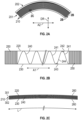
FIG. 2A is a schematic illustration of a conformal heat exchanger in accordance with embodiments; -
FIG. 2B is a cross sectional view of a layer of the conformal heat exchanger ofFIG. 2A taken alongline 2B-2B ofFIG. 2A in accordance with embodiments; -
FIG. 2C is an enlarged view of a portion of a layer of the conformal heat exchanger ofFIG. 2A encircled byline 2C in accordance with embodiments; -
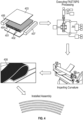
FIG. 3 is a flow diagram illustrating a method of assembling a conformal heat exchanger in accordance with embodiments; and -
FIG. 4 is an illustrative diagram illustrating the method ofFIG. 3 in accordance with embodiments. - With reference to
FIGS. 1A and 1B , agas turbine engine 20 is provided and includes afan section 21, acompressor section 22 aft of thefan section 21, aturbine section 23 aft of thecompressor section 22 and a diffuser and/orafterburner section 24 aft of theturbine section 23. Inlet air enters thegas turbine engine 20 through thefan section 21 and is compressed in thecompressor section 22. The compressed air is then mixed with fuel and combusted in acombustor 25 to produce high-temperature and high-pressure working fluid. The working fluid is then expanded in theturbine section 23 and optionally diffused or re-burned in the diffuser orafterburner section 24. Thegas turbine engine 20 is at least partially encased in anouter wall 26, which surrounds at least thecompressor section 22, to form abypass duct 27. Thebypass duct 27 is annular in shape. Aheat exchanger 28 can be provided in thebypass duct 27. Thegas turbine engine 20 can be provided as a turbofan engine or as any other similar type of engine. - Field assisted sintering technology (FAST) a.k.a. spark plasma sintering (SPS) are consolidation processes that are executed at temperatures lower than the melting point of the subject materials. Similar to hot pressing, FAST forms bonds between materials but at temperatures ~200°C lower. FAST utilizes a high amperage, pulsed direct current (DC) electrical current to heat the subject materials to be bonded through a combination of Joule and plasma heating, while under uniaxial compression. The consolidation is a combination of solid-state transport mechanisms including primarily diffusion and creep. The result is a metallurgical bond between the materials to be joined. Consolidation or joining can be accomplished in a variety of conductive and non-conductive materials and forms.
- Recently, FAST/SPS has been gaining acceptance starting in the 1990s for solidification of powdered metals. Due to the lower processing temperatures of FAST/SPS over other consolidation methods, FAST/SPS mitigates significant grain growth common in other diffusional bonding methods. In some cases, bonding two solid metallic materials using the FAST process has been demonstrated. Material pairs included a same alloy (e.g., PWA 1429) and dissimilar alloys (e.g., PWA 1429 to CM247). Additionally, the ability to bond both single crystal (SX) and equiaxed (EQ) materials and the ability to retain fine features along bond surfaces or lines has been demonstrated.
- As will be described below, a heat exchanger with a compound fin-plate structure is provided for use as the
heat exchanger 28 ofFIGS. 1A and 1B and can be formed by bonding individual parting sheets to a conventional fin pack using FAST/SPS processing to create integral bonds in which metallic crystals mix. The resulting diffusion bond in inherently different from a brazed bond, for example, in that, when the compound fin-plate structure is run through a plate roller to impart curvature, the resulting diffusion bond is able to stretch and compress whereas a brazed structure would crack at the braze material. Thus, FAST/SPS processing is employed to join parting sheets and conventional fin packs to form a compound fin-plate structure that conforms to an annular passage, such as thebypass duct 27 of thegas turbine engine 20 ofFIGS. 1A and 1B , or another system using annular passages. - With reference to
FIGS. 2A, 2B and 2C , aconformal heat exchanger 201 is provided for disposition within acurved passage 202 of a heat exchanger system, such as thebypass duct 27 of thegas turbine engine 20 ofFIGS. 1A and 1B . Theconformal heat exchanger 201 includesmultiple layers 210 with eachlayer 210 including afirst parting sheet 220, asecond parting sheet 230 and afin sheet 240 with side bars 250. Thefirst parting sheet 220 is flat along a first axis A1 and curved along a second axis A2, which is perpendicular to the first axis A1 to conform to a curvature of thecurved passage 202. Thesecond parting sheet 230 is similarly flat along the first axis A1 and curved along the second axis A2 to conform to the curvature of thecurved passage 202. Thefin sheet 240 is interposed between the first andsecond parting sheets fin sheet 240 in each of themultiple layers 210. - In accordance with embodiments, the
conformal heat exchanger 201 can also include additional fin sheets 260 (seeFIG. 2C ) that are respectively interleaved between neighboring ones of themultiple layers 210. Theseadditional fin sheets 260 can be corrugated along the second axis A2 to form fins that are curved along the first axis A1. Thefin sheets 240 of themultiple layers 210 and theadditional fin sheets 260 can each have different thicknesses measured in the radial dimension DR. - With the construction described above, each of the
multiple layers 210 of theconformal heat exchanger 201 has a curvature along the second axis A2 that conforms to the curvature of thecurved passage 202. In this way, the curvatures along the second axis of themultiple layers 210 differ, and decrease with increased distance along the radial dimension DR. - The corrugation of the
fin sheet 240forms fins 241 that are curved along the second axis A2 to conform to the curvature of thecurved passage 202. Eachfin 241 includes afirst section 242 for contacting thefirst parting sheet 220, asecond section 243 for contacting thesecond parting sheet 230 and a substantially-vertical section 244 that extends between the first andsecond sections - The
conformal heat exchanger 201 further includesfirst diffusion bonds 301 and second diffusion bonds 302. Thefirst diffusion bonds 301 and thesecond diffusion bonds 302 are formed along respective entire lengths L of the first andsecond sections fin 241 to thereby diffusion bond the respective entire lengths L of the first andsecond sections fin 241 to the first andsecond parting sheets - The first and
second diffusion bonds second parting sheets fin sheet 240 during an assembly of the conformal heat exchanger 201 (see below), the diffusion bonds will survive the process of imparting the curvature and remain present in theconformal heat exchanger 201. - In accordance with embodiments, the first and
second diffusion bonds second sections fins 241 to diffusion bond the respective entire lengths L of the first andsecond sections fins 241 to the first andsecond parting sheets second diffusion bonds second sections fins 241 to diffusion bond the respective entire lengths L of the first andsecond sections fins 241 to the first andsecond parting sheets - With reference to
FIGS. 3 and4 , a method of assembling a conformal heat exchanger, such as theconformal heat exchanger 201 described above is provided. The method includes forming afin sheet 401, which is flat and corrugated along a first axis to formfins 402 that extend along a second axis perpendicular to the first axis (block 301) and interposing thefin sheet 401 betweenparting sheets 403 and 404 (block 302) along withside bars fin 402 to diffusion bond the respective entire lengths of eachfin 402 to theparting sheets 403 and 404 (block 303). Next, the method includes imparting a curvature to theparting sheets fin sheet 401 along the second axis with the diffusion bonds surviving the imparting (block 304). - The operations described above result in the
fin sheet 401, theparting sheets additional fin sheets 408 between multiple layers to form an assembly (block 305) and subsequently installing the assembly into a curved passage (block 306). - In accordance with embodiments, the imparting of the curvature for each of the multiple layers of
operation 404 can include varying the curvature for each of the multiple layers (block 3041). - Technical effects and benefits of the present disclosure are the use of FAST/SPS processing to join parting sheets and conventional fin packs to form a compound fin-plate structure that conforms to an annular passage in a gas turbine engine, such as the
gas turbine engine 20 ofFIGS. 1A and 1B , or another system using annular passages. - The corresponding structures, materials, acts, and equivalents of all means or step plus function elements in the claims below are intended to include any structure, material, or act for performing the function in combination with other claimed elements as specifically claimed. The description of the present disclosure has been presented for purposes of illustration and description, but is not intended to be exhaustive or limited to the technical concepts in the form disclosed. Many modifications and variations will be apparent to those of ordinary skill in the art without departing from the scope and spirit of the disclosure. The embodiments were chosen and described in order to best explain the principles of the disclosure and the practical application, and to enable others of ordinary skill in the art to understand the disclosure for various embodiments with various modifications as are suited to the particular use contemplated.
- While the preferred embodiments to the disclosure have been described, it will be understood that those skilled in the art, both now and in the future, may make various improvements and enhancements which fall within the scope of the claims which follow. These claims should be construed to maintain the proper protection for the disclosure first described.
Claims (15)
- A heat exchanger (201), comprising:parting sheets (220, 230) flat along a first axis (A1) and curved along a second axis (A2) perpendicular to the first axis (A1);a fin sheet (240) interposed between the parting sheets (220, 230) and corrugated along the first axis (A1) to form fins (241) that are curved along the second axis (A2); anddiffusion bonds (301, 302) formed along an entire length of a fin (241) to diffusion bond the entire length of the fin (241) to the parting sheets (220, 230).
- The heat exchanger (201) according to claim 1, wherein the diffusion bonds (301, 302) are formed by field assisted sintering technology/spark plasma sintering (FAST/SPS) processing.
- The heat exchanger (201) according to claim 1 or 2, wherein the diffusion bonds (301, 302) are formed along respective entire lengths (L) of a substantial number of the fins (241) to diffusion bond the respective entire lengths (L) of the substantial number of the fins (241) to the parting sheets (220, 230).
- The heat exchanger (201) according to claim 1 or 2, wherein the diffusion bonds (301, 302) are formed along respective entire lengths (L) of each fin (241) to diffusion bond the respective entire lengths (L) of each fins (241) to the parting sheets (220, 230).
- The heat exchanger (201) according to any preceding claim, further comprising side bars (250) on opposite sides of the fin sheet (240).
- The heat exchanger (201) according to any preceding claim, further comprising an additional fin sheet (260) abutting one of the parting sheets (220, 230) and being corrugated along the second axis (A2) to form fins that are curved along the first axis (A1).
- The heat exchanger (201) according to claim 6, wherein the fin sheet (240) and the additional fin sheet (260) have different thicknesses.
- The heat exchanger (201) according to claim 6 or 7, wherein:the parting sheets (220, 230) and the fin sheet (240) form a layer (210), andthe heat exchanger (28) comprises multiple layers (210) with neighboring layers (210) being separated by an additional fin sheet (260), optionally wherein curvatures along the second axis (A2) of the multiple layers (210) differ.
- The heat exchanger according to any preceding claim, wherein the heat exchanger is a conformal heat exchanger (201) for disposition within a curved passage (202) and comprising multiple layers (210), wherein the parting sheets comprise first and second parting sheets (220, 230), each curved along the second axis (A2) to conform to the curved passage (202), each fin (241) comprising first and second sections (242, 243) for contacting the first and second parting sheets (220, 230), respectively, and the diffusion bonds comprise first and second diffusion bonds (301, 302) formed along respective entire lengths of the first and second sections (242, 243), respectively, of a fin (241) to diffusion bond the respective entire lengths of the first and second sections (242, 243) of the fin (241) to the first and second parting sheets (220, 230), respectively.
- The conformal heat exchanger (201) according to claim 9, wherein:the first and second diffusion bonds (301, 302) are formed along respective entire lengths (L) of the first and second sections (242, 243), respectively, of a substantial number of the fins (241) to diffusion bond the respective entire lengths (L) of the first and second sections (242, 243) of the substantial number of the fins (241) to the first and second parting sheets (220, 230), respectively; orthe first and second diffusion bonds (301, 302) are formed along respective entire lengths (L) of the first and second sections (242, 243), respectively, of each of the fins (241) to diffusion bond the respective entire lengths (L) of the first and second sections (242, 243) of each of the fins (241) to the first and second parting sheets (220, 230), respectively.
- The conformal heat exchanger (201) according to claim 9 or 10, further comprising side bars (250) on opposite sides of the fin sheet (240) in each of the multiple layers (210).
- The conformal heat exchanger (201) according to any of claims 9 to 11, further comprising an additional fin sheet (260) interleaved between neighboring ones of the multiple layers (210) and being corrugated along the second axis (A2) to form fins that are curved along the first axis (A1), optionally wherein the fin sheets (240) and the additional fin sheets (260) each have different thicknesses.
- The conformal heat exchanger (201) according to any of claims 9 to 12, wherein curvatures along the second axis (A2) of the multiple layers (210) differ.
- A method of assembling a conformal heat exchanger (201), the method comprising:forming a fin sheet (240) flat and corrugated along a first axis (A1) to form fins (241) extending along a second axis (A2) perpendicular to the first axis (A1);interposing the fin sheet (240) between parting sheets (220, 230);executing field assisted sintering technology/spark plasma sintering (FAST/SPS) processing to form diffusion bonds (301, 302) along respective entire lengths (L) of each fin (241) to diffusion bond the respective entire lengths (L) of each fin (241) to the parting sheets (220, 230); andimparting a curvature to the parting sheets (220, 230) and the fin sheet (240) along the second axis (A2) with the diffusion bonds (301, 302) surviving the imparting.
- The method according to claim 14, wherein:the fin sheet (240) and the parting sheets (220, 230) form a layer (210) of the conformal heat exchanger (201); andthe method further comprises interleaving additional fin sheets (260) between multiple layers (210) to form an assembly and installing the assembly into a curved passage (202), optionally wherein the imparting of the curvature for each of the multiple layers (210) comprises varying the curvature for each of the multiple layers (210).
Applications Claiming Priority (1)
| Application Number | Priority Date | Filing Date | Title |
|---|---|---|---|
| US202263308635P | 2022-02-10 | 2022-02-10 |
Publications (1)
| Publication Number | Publication Date |
|---|---|
| EP4227629A1 true EP4227629A1 (en) | 2023-08-16 |
Family
ID=85225345
Family Applications (1)
| Application Number | Title | Priority Date | Filing Date |
|---|---|---|---|
| EP23156171.3A Pending EP4227629A1 (en) | 2022-02-10 | 2023-02-10 | Conformal heat exchanger |
Country Status (2)
| Country | Link |
|---|---|
| US (2) | US12298080B2 (en) |
| EP (1) | EP4227629A1 (en) |
Families Citing this family (1)
| Publication number | Priority date | Publication date | Assignee | Title |
|---|---|---|---|---|
| US12209819B2 (en) * | 2022-06-03 | 2025-01-28 | Rtx Corporation | Conformal heat exchanger |
Citations (2)
| Publication number | Priority date | Publication date | Assignee | Title |
|---|---|---|---|---|
| JPS6213993A (en) * | 1985-07-11 | 1987-01-22 | Sumitomo Precision Prod Co Ltd | Heat exchanger |
| US20190301816A1 (en) * | 2018-03-27 | 2019-10-03 | Hamilton Sundstrand Corporation | Additively manufactured heat exchangers and methods for making the same |
Family Cites Families (15)
| Publication number | Priority date | Publication date | Assignee | Title |
|---|---|---|---|---|
| US3818984A (en) * | 1972-01-31 | 1974-06-25 | Nippon Denso Co | Heat exchanger |
| JPS54254A (en) * | 1977-06-03 | 1979-01-05 | Hitachi Ltd | Heater core |
| DE3049168C2 (en) * | 1980-12-24 | 1987-03-19 | Dieter Christian Steinegg-Appenzell Steeb | Method for producing a heat exchanger with bent flat tubes |
| GB2372559B (en) | 2001-02-21 | 2005-01-05 | Rolls Royce Plc | A heat exchanger |
| JP2005249330A (en) * | 2004-03-05 | 2005-09-15 | Calsonic Kansei Corp | Heat exchanger |
| WO2014201311A1 (en) | 2013-06-14 | 2014-12-18 | United Technologies Corporation | Curved plate/fin heat exchanger |
| JP5442916B1 (en) * | 2013-06-26 | 2014-03-19 | 住友精密工業株式会社 | Aircraft engine heat exchanger |
| JP6225042B2 (en) * | 2014-02-14 | 2017-11-01 | 住友精密工業株式会社 | Plate fin heat exchanger and method of manufacturing corrugated fin for heat exchanger |
| GB2524059B (en) * | 2014-03-13 | 2019-10-16 | Hs Marston Aerospace Ltd | Curved cross-flow heat exchanger |
| WO2016063312A1 (en) | 2014-10-21 | 2016-04-28 | 住友精密工業株式会社 | Heat exchanger for aircraft engine |
| US10907500B2 (en) | 2015-02-06 | 2021-02-02 | Raytheon Technologies Corporation | Heat exchanger system with spatially varied additively manufactured heat transfer surfaces |
| US11346608B2 (en) * | 2016-01-29 | 2022-05-31 | Deere & Company | Heat exchanger with improved plugging resistance |
| US12209819B2 (en) * | 2022-06-03 | 2025-01-28 | Rtx Corporation | Conformal heat exchanger |
| US20240263884A1 (en) * | 2023-02-06 | 2024-08-08 | Raytheon Technologies Corporation | Conformal heat exchanger with triangular offset strip fins |
| JP2025000254A (en) * | 2023-06-19 | 2025-01-07 | カシオ計算機株式会社 | Ear thermometer |
-
2023
- 2023-02-06 US US18/165,256 patent/US12298080B2/en active Active
- 2023-02-10 EP EP23156171.3A patent/EP4227629A1/en active Pending
-
2025
- 2025-05-12 US US19/205,220 patent/US20250271217A1/en active Pending
Patent Citations (3)
| Publication number | Priority date | Publication date | Assignee | Title |
|---|---|---|---|---|
| JPS6213993A (en) * | 1985-07-11 | 1987-01-22 | Sumitomo Precision Prod Co Ltd | Heat exchanger |
| US20190301816A1 (en) * | 2018-03-27 | 2019-10-03 | Hamilton Sundstrand Corporation | Additively manufactured heat exchangers and methods for making the same |
| US11333447B2 (en) * | 2018-03-27 | 2022-05-17 | Hamilton Sundstrand Corporation | Additively manufactured heat exchangers and methods for making the same |
Also Published As
| Publication number | Publication date |
|---|---|
| US12298080B2 (en) | 2025-05-13 |
| US20250271217A1 (en) | 2025-08-28 |
| US20230251040A1 (en) | 2023-08-10 |
Similar Documents
| Publication | Publication Date | Title |
|---|---|---|
| JP6298808B2 (en) | Method for forming a metal reinforcement with an insert for protecting a composite leading edge | |
| US8671693B2 (en) | Thermally conductive structure | |
| US20250271217A1 (en) | Conformal heat exchanger | |
| US20230280101A1 (en) | Plate fin heat exchanger flexible manifold | |
| US6585034B2 (en) | Heat exchanger | |
| US20090314479A1 (en) | Heat exchanger and a method of manufacturing a heat exchanger | |
| CA2627867A1 (en) | Method of superplastic forming of titanium assemblies and aircraft structure manufactured thereby | |
| JP2009150382A (en) | Insulated flange bolt | |
| GB2053764A (en) | Porous laminate bonding method | |
| CN107989658A (en) | Cooling circuit for multi-walled blades | |
| EP1445569B1 (en) | Heat exchanger | |
| EP1281921A2 (en) | Counterflow plate-fin heat exchanger with extended header fin | |
| CN111279144B (en) | Heat exchanger comprising a set of elementary bodies | |
| JP2012215085A (en) | Honeycomb unit for exhaust emission control | |
| CN104781033A (en) | Diffusion welding method | |
| GB2228217A (en) | A method for connecting turbine wheel discs | |
| EP4286780A1 (en) | Conformal heat exchanger | |
| US20030116311A1 (en) | High temperature primary surface recuperator air cell | |
| US6715993B2 (en) | Methods and apparatus for manufacturing rotor shafts | |
| EP3633307B1 (en) | Plate fin heat exchanger flexible manifold | |
| US20180045217A1 (en) | Superplastic forming | |
| JPH0727335A (en) | Method of manufacturing combustion chamber liner for gas turbine | |
| EP2559920B1 (en) | Leaf seal | |
| US10280769B2 (en) | Nonmetallic airfoil with a compliant attachment | |
| JPS6316858A (en) | Manufacture of honeycomb structural body made of metal |
Legal Events
| Date | Code | Title | Description |
|---|---|---|---|
| PUAI | Public reference made under article 153(3) epc to a published international application that has entered the european phase |
Free format text: ORIGINAL CODE: 0009012 |
|
| STAA | Information on the status of an ep patent application or granted ep patent |
Free format text: STATUS: THE APPLICATION HAS BEEN PUBLISHED |
|
| AK | Designated contracting states |
Kind code of ref document: A1 Designated state(s): AL AT BE BG CH CY CZ DE DK EE ES FI FR GB GR HR HU IE IS IT LI LT LU LV MC ME MK MT NL NO PL PT RO RS SE SI SK SM TR |
|
| RAP3 | Party data changed (applicant data changed or rights of an application transferred) |
Owner name: RTX CORPORATION |
|
| STAA | Information on the status of an ep patent application or granted ep patent |
Free format text: STATUS: REQUEST FOR EXAMINATION WAS MADE |
|
| 17P | Request for examination filed |
Effective date: 20240216 |
|
| RBV | Designated contracting states (corrected) |
Designated state(s): AL AT BE BG CH CY CZ DE DK EE ES FI FR GB GR HR HU IE IS IT LI LT LU LV MC ME MK MT NL NO PL PT RO RS SE SI SK SM TR |
|
| STAA | Information on the status of an ep patent application or granted ep patent |
Free format text: STATUS: EXAMINATION IS IN PROGRESS |
|
| 17Q | First examination report despatched |
Effective date: 20250519 |