EP4223147B1 - Verfahren und vorrichtung zum mischen eines nahrungsmittelprodukts für nutztiere - Google Patents
Verfahren und vorrichtung zum mischen eines nahrungsmittelprodukts für nutztiere Download PDFInfo
- Publication number
- EP4223147B1 EP4223147B1 EP22155569.1A EP22155569A EP4223147B1 EP 4223147 B1 EP4223147 B1 EP 4223147B1 EP 22155569 A EP22155569 A EP 22155569A EP 4223147 B1 EP4223147 B1 EP 4223147B1
- Authority
- EP
- European Patent Office
- Prior art keywords
- principal component
- food product
- mixing
- pc1n
- component values
- Prior art date
- Legal status (The legal status is an assumption and is not a legal conclusion. Google has not performed a legal analysis and makes no representation as to the accuracy of the status listed.)
- Active
Links
Images








Classifications
-
- A—HUMAN NECESSITIES
- A23—FOODS OR FOODSTUFFS; TREATMENT THEREOF, NOT COVERED BY OTHER CLASSES
- A23N—MACHINES OR APPARATUS FOR TREATING HARVESTED FRUIT, VEGETABLES OR FLOWER BULBS IN BULK, NOT OTHERWISE PROVIDED FOR; PEELING VEGETABLES OR FRUIT IN BULK; APPARATUS FOR PREPARING ANIMAL FEEDING- STUFFS
- A23N17/00—Apparatus specially adapted for preparing animal feeding-stuffs
- A23N17/007—Apparatus specially adapted for preparing animal feeding-stuffs for mixing feeding-stuff components
-
- G—PHYSICS
- G01—MEASURING; TESTING
- G01N—INVESTIGATING OR ANALYSING MATERIALS BY DETERMINING THEIR CHEMICAL OR PHYSICAL PROPERTIES
- G01N22/00—Investigating or analysing materials by the use of microwaves or radio waves, i.e. electromagnetic waves with a wavelength of one millimetre or more
-
- G—PHYSICS
- G01—MEASURING; TESTING
- G01N—INVESTIGATING OR ANALYSING MATERIALS BY DETERMINING THEIR CHEMICAL OR PHYSICAL PROPERTIES
- G01N33/00—Investigating or analysing materials by specific methods not covered by groups G01N1/00 - G01N31/00
- G01N33/02—Food
Definitions
- the present invention refers to a process and to an apparatus for mixing a food product for farm animals.
- the present process and apparatus are inserted in the field of zootechnics and are advantageously intended to be employed, e.g. by diet specialists, formula specialists or stall veterinarians, in intensive farming of animals such as cattle, pigs, goats, sheep, buffalo, etcetera.
- the process and the apparatus, object of the present invention are adapted to automatically mix a mixture of nutrient elements which constitute the food product distributed to animals up to attaining uniformity.
- Intensive (or industrial) animal farming is generally placed in stalls normally provided with one or more corridors, along the sides of which the animal food troughs are placed.
- a food product (termed in the jargon of the field unifeed or TMR (Total Mixed Ratio)) constituted by a mixture of nutrient elements, such as hay, forage (like corn, sorghum, etc.) and concentrated foods (come soy grains, corn grains, etc.).
- Feeding the animals by means of the aforesaid mixture allows the simultaneous administration of all the nutrient elements, which allows maximizing the productive efficiency, reducing to the minimum the risk of onset of dysmetabolic diseases.
- the nutrient elements are uniformly distributed within the mixture of the food product, in a manner such that all the animals take in the provided quantity of each nutrient element.
- the aforesaid non-uniformities can be due for example to an incorrect operation of the mixer-wagon, to food product loading errors, or to the change in moisture content of the food product itself, which alters the quantity of dry substance brought by the food product ration.
- the variability of the raw materials which constitute the nutrient elements and the modes of preparation of the food product ration, as well as the use of dedicated machinery such as the aforesaid mixer-wagons, can cause strong differences in the distribution of nutrient elements of the food product, facilitating the separation of the fibrous fractions from those concentrated, preventing a correct simultaneous administration of the nutrient elements to the animals.
- analysis processes are known which allow calculating parameters of chemical and physical type, indicative of the concentrations of the nutrient elements of the food product.
- analysis processes are known for obtaining parameters of chemical type, in particular described by normative texts (CE No. 152/2009 regulation of 27 January 2009; UNI-ISO), by guidelines (IPRA, AOAC method books), by Universities, etc.
- analysis processes are known for obtaining parameters of physical type, such as for example the standard process ASAE S424 defined by the American Society of Agricultural Engineers (ASAE), or the process described in the publication of Lammers B.P., Buckmaster D.R., Heinrichs A.J. "A simple method for the analysis of particle size of forage and total mixed rations" Journal of Dairy Science, Number 79, pages 922-928, (1996 ).
- the main drawback of known type lies in the fact that in order to obtain the aforesaid chemical and physical parameters by means of spectroscopy, it is necessary to implement a complex calibration algorithm.
- different electromagnetic spectra are initially acquired of the components of the food product whose chemical and physical properties are known, and on the basis thereof the aforesaid calibration algorithm is subsequently implemented so as to correlate the electromagnetic spectra with such properties. Consequently, the calibration becomes a very, very long and complex step.
- a further drawback lies in the fact that the calculation of the chemical and physical parameters and of the level of uniformity of the mixture requires a high computing cost and consequently requires complex and costly calculation apparatuses.
- a further drawback deriving from the requirement of a complex calibration and of a high computation cost lies in the fact that the determination of the uniformity index is a very slow process. Therefore, the level of uniformity at which mixing is to be stopped can be indicated by the calculation apparatus even a long time after the uniformity has been reached, with a consequent loss of efficiency.
- the main object of the present invention is therefore that of overcoming the drawbacks manifested by the solutions of known type, by providing a process and an apparatus for mixing a food product for farm animals which allow establishing when to stop the mixing of a food product, in a simple and efficient manner.
- Another object of the present invention is to provide a process and an apparatus for mixing a food product for farm animals, which allow establishing when to stop the mixing of a food product with a low computing cost.
- Another object of the present invention is to provide a process and an apparatus for mixing a food product for farm animals, which allow establishing when to stop the mixing of a food product without having to determine chemical or physical parameters of the latter.
- Another object of the present invention is to provide a process for mixing a food product for farm animals, which is quick to implement.
- Another object of the present invention is to provide an apparatus for mixing a food product for farm animals that is entirely functional and reliable in operation, in all use conditions.
- Another object of the present invention is to provide an apparatus for mixing a food product for farm animals that is structurally simple and inexpensive to attain.
- the present process and apparatus are advantageously intended to be employed in intensive animal farming in order to execute an analysis of uniformity of a food product, preferably before distributing it to farm animals, such as beef or milk cattle, pigs, goats, sheep, buffalo, etcetera.
- Such intensive (or industrial) animal farming is generally placed in stalls normally provided with one or more corridors, along the sides of which the animal food troughs are placed.
- the food product intended to be distributed to the animals normally comprises a mixture of solid bodies (in the form for example of ground vegetables and/or grains) of multiple nutrient elements.
- the mixture of the food product comprises forage (such as corn, sorghum, etc.) and concentrated foods which for example contain protein components (such as soy grains) and/or energy components (such as corn grains).
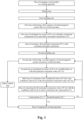
- the process comprises a step of arranging a food product to be mixed within an apparatus for mixing.
- step advantageously provides for the arrangement of an apparatus for mixing and, subsequently, the loading of one or more doses of solid bodies aimed to be mixed in order to constitute the food product.
- the apparatus for mixing comprises a mixing tank in which the food product to be mixed is intended to be placed and mixing means, for example one or more screws, placed within the mixing tank and actuatable in order to mix the food product.
- mixing means for example one or more screws
- the solid bodies are preferably loaded within the mixing tank.
- the apparatus for mixing comprises a load arm intended to load the solid bodies in the mixing tank.
- the apparatus for mixing might not comprise a load arm and the loading of the food product can also be executed manually or by means of a separate loading apparatus.
- the present process also comprises a mixing step, in which the apparatus for mixing is actuated in order to mix the food product.
- the mixing step the mixing means of the apparatus for mixing are actuated.
- the present process comprises a step of distribution of the food product in the trough along a front of the trough itself.
- trough front it is intended the physical space in which the food product is distributed and is in particular constituted by a corridor, placed in front of the trough positions, which covers a depth equal to that actually occupied by the distributed food product, e.g. about a meter.
- the food product can be manually distributed or distributed by means of the use of the same apparatus for mixing, which can for example be integrated in a mixer-wagon.
- the latter is actuated to advance in the corridor of the stall in order to distribute the food product along the front of the trough.
- the present method also comprises a first step of detecting a first sequence of electromagnetic spectra reflected by the food product.
- the first detection step leads to the acquisition of a first set of detected data characteristic of the electromagnetic spectra of the first sequence.
- Such first set of detected data comprises different variables, such as for example wavelengths and/or wavenumbers and/or reflectance of the measured electromagnetic spectra.
- the aforesaid reflection electromagnetic spectra are electromagnetic spectra in the near infrared (NIR) wavelengths.
- the aforesaid electromagnetic spectra are obtained by means of a spectrometer, preferably by means of a NIR spectrometer operating in the near infrared spectrum, suitably adjusted and calibrated.
- the employed spectrometer is the device termed poliSPEC NIR (by IT Photonics with registered office in Brerison (VI) Italy), self-power supplied with battery, with cooled InGaAs PDA sensor, spectral band 900-1700 nm, optical resolution 2 nm, with integrating sphere.
- the electromagnetic spectra of the first sequence are detected in consecutive and preferably equidistant time instants.
- the electromagnetic spectra of the first sequence are detected on corresponding first samples of the food product and in particular the process comprises a first step of sampling the food product, in which multiple first samples corresponding to food product portions are identified.
- the first samples of the food product are identified within the mixing apparatus, more particularly in the mixing tank, preferably during the mixing of the food product.
- the first samples of food product are identified during and/or after the distribution step, in particular along the trough front.
- such first samples can be identified in the mixing apparatus at the same point at different time intervals.
- the spectrometer is pointed towards a defined area of the mixing tank and measures the electromagnetic spectra of a detection window through which the food product flows during the mixing.
- such first samples can be in the mixing apparatus at different points of the mixing tank.
- the spectrometer in the first detection step the spectrometer is pointed towards different areas of the mixing tank, or multiple spectrometers are present that are pointed towards the aforesaid different areas. In this manner, the detection of the electromagnetic spectra can also occur in the event in which the food product is not yet mixed and hence is not moved.
- such first samples can be distributed in corresponding different positions that are spaced from each other along the front of the trough.
- the sampling step can be advantageously executed on the food product ration already deposited in the trough or on the ration of the food product before it is distributed, for example on the food product batch exiting from the mixer-wagon.
- the spectrometer is pointed towards different areas of the trough, or it is pointed towards a defined area of an unloading section of the mixing tank and measures the electromagnetic spectra of a detection window through the exiting food product flows.
- the process comprises a first calculation step, in which the first set of detected data is subjected to Principal Component Analysis (PCA) in order to obtain a plurality of principal components PCi.
- PCA Principal Component Analysis
- each principal component PCi has, associated therewith, a corresponding descriptive parameter Vi of the variability percentage of the first set of detected data.
- the Principal Component Analysis (abbreviated PCA) is also known with the name Karhunen-Loève transform and is a technique of known type for simplifying the data used in the scope of the multivariate statistics.
- PCA Principal Component Analysis
- a first part of the Principal Component Analysis is applied which provides for transforming the variables of the first set of detected data into principal components PCi.
- the first calculation step comprises a first standardization stage for obtaining a first standardized data set.
- all the variables are advantageously transformed into standardized variables which vary in the same interval. In this manner, one prevents that, due to great differences between the intervals of the variables, the variables with larger intervals dominate over those with smaller intervals (for example, a variable comprised between 0 and 100 would tend to dominate over a variable comprised between 0 and 1, if not suitably standardized).
- the mean of the values is advantageously subtracted from each value of each variable, and it is divided by their standard deviation.
- the first calculation step also comprises advantageously a correlation stage, in which it is determined if the variables (in particular the standardized variables) are correlated with each other.
- the correlation stage the covariance matrix of the first set of detected data and preferably of the first standardized data set is calculated.
- covariance matrix it will be intended a symmetrical matrix that has as entries the covariances associated with all the possible pairs of the variables (in particular of the standardized variables). More in detail, if the sign of the covariance of a pair of variables is positive, then the two variables increase or decrease together (correlated), if negative then one increases when the other decreases (inversely correlated).
- the first calculation step comprises a stage of calculation of the eigenvalues and of the corresponding eigenvectors of the aforesaid covariance matrix.
- the eigenvalues and the eigenvectors are of a number equal to the variables of the first set of detected data (and standardized). More in detail, the eigenvectors of the covariance matrix are algebraically the directions of the axes where there is more variance (i.e. more information) and are named principal components PCi. In particular, the principal components PCi are less interpretable and do not have any actual significance since they are constructed as linear combinations of the initial variables.
- the eigenvalues are the coefficients corresponding to the eigenvectors and represent the total variance corresponding to each principal component PCi.
- the calculation step comprises a step of ordering the eigenvectors with corresponding eigenvalues, in particular from the highest to the lowest, in order to obtain the principal components in order of significance.
- the first calculation step provides for a stage of determination of the descriptive parameter Vi of the variability percentage of the first set of detected data, i.e. the variance percentage (information) represented by each principal component PCi.
- the aforesaid descriptive parameter Vi is calculated by dividing the eigenvalue of each principal component PCi by the sum of the eigenvalues.
- the process also comprises a selection step, in which from among the plurality of principal components PCi, at least one first principal component PC1 is selected that is associated with the descriptive parameter Vi with maximum value.
- the principal components PCi are selected with a descriptive parameter Vi greater than 5%, preferably greater than 10%.
- a second principal component PC2 and/or a third principal component PC3 can also be selected, up to the i-th principal component PCi, respectively associated with second, third, ..., i-th descriptive parameter Vi in decreasing order.
- the present process also comprises a second step of detecting a second sequence of electromagnetic spectra reflected by the food product.
- the second detection step leads to the acquisition of a second set of detected data characteristic of the electromagnetic spectra of the aforesaid second sequence.
- Such second set of detected data comprises variables, such as for example wavelengths and/or wavenumbers and/or reflectance of the measured electromagnetic spectra.
- the variables of the second sequence of electromagnetic spectra are equivalent to the variables of the first sequence of electromagnetic spectra.
- the aforesaid reflection electromagnetic spectra are electromagnetic spectra in the near infrared (NIR) wavelengths.
- the aforesaid electromagnetic spectra are obtained by means of a spectrometer, preferably by means of a NIR spectrometer operating in the near infrared spectrum, suitably adjusted and calibrated.
- the spectrometer employed is the same that is involved in the detection in the first detection step.
- the electromagnetic spectra of the second sequence are detected in consecutive and preferably equidistant time instants.
- the second detection step is executed continuously during the mixing of the food product.
- the electromagnetic spectra of the second sequence are detected on corresponding second samples of the food product and in particular the process comprises a second step of sampling the food product, in which multiple second samples corresponding to food product portions are identified.
- the second samples of the food product are identified within the mixing apparatus, more particularly in the mixing tank, preferably during the mixing of the food product.
- the second samples of food product are identified during and/or after the distribution step, in particular along the trough front.
- the second detection step and/or the second sampling step are executed analogously to that described for the first detection step and the first sampling step and therefore will not be further described in detail hereinbelow.
- the second detection step is executed after the first detection step.
- the electromagnetic spectra of the first sequence are used for calibration, while the electromagnetic spectra of the second sequence are used for the testing that will be described hereinbelow.
- the first and the second sequence will therefore be advantageously different from each other.
- the second sequence of electromagnetic spectra can entirely or partly coincide with the first sequence of electromagnetic spectra.
- the second detection step will be intended as simultaneous and/or coinciding with the first detection step.
- the process according to the invention also comprises a second calculation step, in which the second set of detected data is at least partially transformed into a second modified data set by means of Principal Component Analysis (PCA) on the basis of the selected first principal component PC1.
- PCA Principal Component Analysis
- a second modified data set is defined, comprising a plurality of first principal component values PC1n each associated with a corresponding electromagnetic spectrum of the second sequence.
- the second calculation step comprises a stage of generation of a transformation matrix formed at least with the first principal component PC1 and preferably with all the principal components PCi selected in the selection step.
- the transformation matrix is a matrix that has as columns the eigenvectors of the selected principal components PCi.
- the second calculation step comprises a second standardization stage in which the second set of detected data is standardized, in a manner analogous to that described above in the first standardization stage.
- the second calculation step comprises a stage of transformation of the second set of detected data (preferably of the second standardized data set) into a modified data set by means of multiplication of the transposed transformation matrix (i.e. of the transposed matrix of the transformation matrix) with the second transposed detected data set (i.e. the transposed matrix of the second set of detected data).
- the modified data set in the transformation stage can be obtained by executing the transposition of the product between the second set of detected data and the transformation matrix.
- the process can provide for further steps or stages of data processing in order to carry out, in a known manner, noise reductions, corrections, selections or cleaning of the sets of detected data.
- the process also comprises a third calculation step, in which the standard deviation PC1dev is calculated of at least one set of first principal component values PC1n of the plurality of first principal component values PC1n and, on the basis of the standard deviation PC1dev, a confidence interval I is calculated.
- the expression "confidence interval" it will be intended an interval whose ends are obtained by summing and subtracting a margin of error E from the mean of the first principal component values PC1n.
- the mean of the set of first principal component values PC1n is initially calculated, which is advantageously also used for the calculation of the standard deviation PC1dev.
- the confidence percentage ⁇ is greater than or equal to 80%, preferably greater than or equal to 90%.
- Z ⁇ /2 advantageously represents the critical value of the normal standard distribution of the data and is calculated by means of suitable table of known type.
- the second sequence of electromagnetic spectra is divided into a plurality of sub-sequences, each corresponding to a different set of first principal component values PC1n. Therefore, the standard deviation PC1dev is calculated for the first principal component values PC1n of each set of first principal component values PC1n.
- the confidence interval I is advantageously established on the basis of each standard deviation PC1dev associated with the corresponding set of first principal component values PC1n.
- the process also comprises a step of comparing the set of first principal component values PC1n with the confidence interval I in order to determine the count number C of the first principal component values PC1n falling within the confidence interval I.
- the count number C is determined for each corresponding confidence interval I of each set of first principal component values PC1n.
- the process also comprises a step of stopping the mixing of the apparatus for mixing following at least the attainment, preferably the exceeding, of a pre-established threshold number S by the aforesaid count number C.
- the mixing is stopped upon attainment of a minimum limit of sets of first principal component values PC1n, preferably one after the other, having the count number C greater than or equal to the pre-established threshold number S.
- the number of pre-established threshold S is equal to the number of electromagnetic spectra of the corresponding sub-sequence and is preferably comprised between 11 and 61, still more preferably between 21 and 51.
- the process also comprises a step of safety control, at least partially executed simultaneously with the second detection step, in which the number of electromagnetic spectra of the second sequence is counted, in which the apparatus for mixing is stopped if the number of electromagnetic spectra exceeds a preset maximum safety value.
- the maximum safety value is comprised between 800 and 1400 measurements, preferably between 900 and 1300, still more preferably between 1000 and 1200.
- a value of physically effective neutral detergent fiber (peNDF) of the food product is measured and the apparatus for mixing is stopped if such value of physically effective neutral detergent fiber (peNDF) falls within an ideal fiber interval, in a manner such that the mixing does not bring the quantity of physically effective neutral detergent fiber (peNDF) to an overly high or overly low value.
- peNDF physically effective neutral detergent fiber
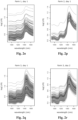
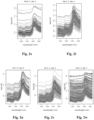
- the first and second detection step were executed by using a mixing apparatus integrated on a mixer-wagon, and on different control days an overall data set was collected (comprising the detected first data set and the detected second data set described hereinbelow) composed of about 128,478 electromagnetic spectra, and comprises NIR electromagnetic spectra detected during the loading, the mixing and the distribution of the food product.
- the electromagnetic spectra were detected by means of the spectrometer named poliSPEC NIR, described above.
- the arranging step, the mixing step and the first and second detection step of the process have therefore been executed in this case substantially together, while all the other steps (in particular the calculation and selection steps) were subsequently executed.
- the overall data set was divided into a first set of detected data, also termed “training dataset”, comprising 7,411 electromagnetic spectra, and a second set of detected data, also termed “testing dataset”, comprising 5,140 electromagnetic spectra, seeking to maintain the same representativeness of the farms.
- the first calculation step was executed in which the first set of detected data has been subjected to the standardization stage by means of a method known as "Standard Normal Variate” and subsequently subjected to a detrending correction stage with first derivative by means of Savitzky-Golay method, using second-degree polynomials applied with window size equal to 11 (i.e. considering a set of 11 points at a time), obtaining a first standardized (and correct) data set.
- the above-described stages were also executed in order to apply the Principal Component Analysis (PCA) to the first standardized data set and the first ten principal components PCi were obtained as well as the corresponding descriptive parameters Vi, reported in Table 1.
- PCA Principal Component Analysis
- a first principal component PC1 and a second principal component PC2 were selected which have the descriptive parameters Vi with the higher values.
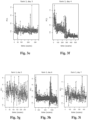
- the second calculation step was then executed in which the Principal Component Analysis (PCA) has been applied to the second set of detected data on the basis of the first and of the second principal components PC1, PC2 in order to obtain a modified data set comprising first principal component values PC1n and second principal component values PC2n for each electromagnetic spectrum.
- PCA Principal Component Analysis
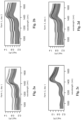
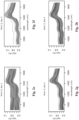
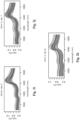
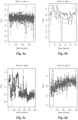
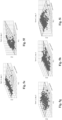
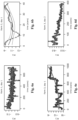
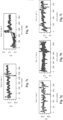
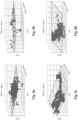
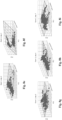
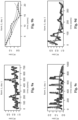
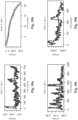
- the graphs of the first principal component and second principal component values PC1n, PC2n vs. time are illustrated in figures 3a-i and 4a-i , which also illustrates a polynomial trendline and the 95% confidence interval I and in figures 5a-i , which also illustrates a fitting plane 6rt.
- the third calculation step has been executed in which the standard deviation PC1dev, PC2dev was calculated for sets of first and second principal component values PC1n, PC2n, each comprising 21 electromagnetic spectra detected in sequence.
- the graphs of the standard deviations PC1dev, PC2dev thus obtained are illustrated in figures 9a-i and 10a-i , which also illustrates polynomial trendline and the confidence interval I of the 95% standard deviations.
- the duration of the mixture is very different between and within farms, hence not very uniform.
- the mixtures of farm 1 vary from a minimum of 250 to a maximum of 1000 scans (detections of electromagnetic spectra). Where discontinuities are visible in the graphs (in particular in the graphs relative to the spectra acquired on days 1 and 4 of Farm 3), it is possible to assume that there have been interruptions of the mixing.
- the aforesaid scan value can be considered as an indication of the minimum threshold of mixing for obtaining the uniformity of the mixture.
- Also constituting the object of the present invention is an apparatus for mixing a food product for farm animals, and such apparatus in particular is employable for executing the above-described process in an automated manner.
- the apparatus, object of the present invention comprises a mixing tank in which a food product to be mixed is intended to be placed and mixing means placed within said mixing tank and actuatable in order to mix said food product.
- the apparatus also comprises a load arm intended to load the solid bodies which constitute the food product in the mixing tank.
- the apparatus for mixing also might not comprise a load arm and the loading of the food product can also be executed manually or by means of a separate loading apparatus.
- the apparatus also comprises a detection device arranged for detecting at least one first and a second sequence of electromagnetic spectra reflected by the food product and acquiring a first and a second set of detected data characteristic of the electromagnetic spectra respectively of the first and second sequence.
- the detection device comprises a NIR spectrometer operating in the near infrared spectrum.
- the spectrometer is constituted by the device named poliSPEC NIR (by IT Photonics with registered office at Brerison (VI) Italy), self-power supplied with battery, with cooled InGaAs PDA sensor, spectral band of 900-1700 nm, optical resolution 2 nm, with integrating sphere.
- the spectrometer comprises, in a manner per se known to the man skilled in the art, at least one transmitter arranged for emitting at least one beam of radiations, in particular with spectral band 900-1700 nm, intended to hit the analyzed sample of food product, and an optical receiver arranged for detecting the spectrum of a reflected radiation beam coming from the sample of food product hit by the aforesaid radiation beam.
- the spectrometer also comprises advantageously an operational unit, preferably provided with an electronic processor, arranged for receiving the measurements of the spectrum of the reflected beam detected by optical receiver and processing the detected data sets.
- the apparatus also comprises an electronic processing unit connected to the detection device and adapted to receive the first and the second set of detected data.
- the electronic processing unit comprises a first calculation module programmed for subjecting the first set of detected data to Principal Component Analysis (PCA).
- PCA Principal Component Analysis
- the first calculation module is thus advantageously programmed to obtain a plurality of principal components PCi, in which each principal component PCi has, associated therewith, a corresponding descriptive parameter Vi of the variability percentage of the first set of detected data.
- the electronic processing unit also comprises a selection module programmed for selecting, from among the plurality of principal components Pci, at least one first principal component PC1 associated with the descriptive parameter Vi with maximum value.
- the electronic processing unit comprises a second calculation module programmed for at least partially transforming the second set of detected data into a second modified data set by means of Principal Component Analysis (PCA) on the basis of the first principal component PC1. Therefore, the second calculation module is advantageously programmed in order to determine a second modified data set comprising a plurality of first principal component values PC1n, each associated with a corresponding electromagnetic spectrum of the second sequence.
- PCA Principal Component Analysis
- the electronic processing unit also comprises a third calculation module programmed for calculating the standard deviation PC1dev of at least one set of first principal component values PC1n of the plurality of first principal component values PC1n and for calculating, on the basis of the standard deviation PC1dev, a confidence interval I.
- the third calculation module is programmed for dividing the second sequence of electromagnetic spectra into sequencies, obtaining different sets of first principal component values PC1n and advantageously calculating standard deviation PC1dev and confidence interval I for each of these.
- the electronic processing unit also comprises a comparison module programmed for comparing the set of first principal component values PC1n with the confidence interval I in order to determine the count number C of the first principal component values PC1n falling within the confidence interval I.
- the comparison module is programmed for executing the aforesaid comparison for each set of first principal component values PC1n.
- the electronic processing unit also comprises a stopping module programmed for commanding the stop of the apparatus for mixing following at least the attainment, preferably the exceeding, of a pre-established threshold number S by the count number C.
- the stop module is programmed for commanding the stop of the apparatus upon attainment of a minimum limit of sets of first principal component values PC1n, preferably one after the other, having the count number C greater than or equal to the pre-established threshold number S.
- the electronic processing unit also comprises a safety control module programmed for counting the number of electromagnetic spectra of the second sequence and stopping the apparatus for mixing if the number of electromagnetic spectra exceeds preset maximum safety value.
- a safety control module programmed for counting the number of electromagnetic spectra of the second sequence and stopping the apparatus for mixing if the number of electromagnetic spectra exceeds preset maximum safety value.
- the electronic processing unit can comprise further modules configured for executing other steps and stages of the above-described process.
- the electronic processing unit comprises a circuit board, preferably provided with microprocessor.
- the processing unit of the apparatus and the operational unit of the detection device are made in a same circuit board or, otherwise, in separate circuit boards.
- the apparatus, object of the present invention is intended to be mounted on a mixer-wagon and preferably to detect the parameters relative to the different samples of food product in the mixer-wagon or along the front of the trough during the advancement of the mixer-wagon in the corridor of the stall, along which the trough itself is placed.
- the apparatus in this manner, is capable of evaluating, in an automated manner, the quality of the mixing and quickly and autonomously deciding whether to continue mixing the food product or stop the mixing.
- the invention thus described therefore attains the pre-established objects.
Landscapes
- Life Sciences & Earth Sciences (AREA)
- Chemical & Material Sciences (AREA)
- Health & Medical Sciences (AREA)
- Physics & Mathematics (AREA)
- Food Science & Technology (AREA)
- Engineering & Computer Science (AREA)
- Analytical Chemistry (AREA)
- Biochemistry (AREA)
- General Health & Medical Sciences (AREA)
- General Physics & Mathematics (AREA)
- Immunology (AREA)
- Pathology (AREA)
- Electromagnetism (AREA)
- Animal Husbandry (AREA)
- Polymers & Plastics (AREA)
- Medicinal Chemistry (AREA)
- Investigating Or Analysing Materials By Optical Means (AREA)
- Apparatuses For Bulk Treatment Of Fruits And Vegetables And Apparatuses For Preparing Feeds (AREA)
Claims (15)
- Verfahren zum Mischen eines Nahrungsmittelprodukts für Nutztiere, wobei das genannte Verfahren dadurch gekennzeichnet ist, dass es Folgendes umfasst:- einen Schritt der Vorbereitung eines im Inneren einer Vorrichtung zum Mischen zu mischenden Nahrungsmittelprodukts;- einen Mischschritt, bei dem die genannte Vorrichtung zum Mischen in Gang gesetzt wird, um das genannte Nahrungsmittelprodukt zu mischen;- einen ersten Schritt des Messens einer ersten Folge von elektromagnetischen Spektren, die von dem genannten Nahrungsmittelprodukt reflektiert werden, der zur Erfassung einer ersten Menge von gemessenen Daten führt, die für die elektromagnetischen Spektren der genannten ersten Folge charakteristisch sind;- einen ersten Berechnungsschritt, bei dem die genannte erste Menge gemessener Daten einer Hauptkomponentenanalyse (PCA) unterzogen wird, um eine Vielzahl von Hauptkomponenten (PCi) zu erhalten, bei dem jede Hauptkomponente (PCi) mit einem entsprechenden beschreibenden Parameter (Vi) des Prozentsatzes der Variabilität der genannten ersten Menge gemessener Daten verknüpft ist;- einen Auswahlschritt, bei dem unter der genannten Vielzahl von Hauptkomponenten (PCi) mindestens eine mit dem beschreibenden Parameter (Vi) mit höchstem Wert verknüpfte erste Hauptkomponente (PC1) gewählt wird;- einen zweiten Schritt des Messens einer zweiten Folge von elektromagnetischen Spektren, die von dem genannten Nahrungsmittelprodukt reflektiert werden, der zur Erfassung einer zweiten Menge gemessener Daten führt, die für die elektromagnetischen Spektren der genannten zweite Folge charakteristisch sind;- einen zweiten Berechnungsschritt, bei dem die genannte zweite Menge gemessener Daten mindestens teilweise in eine zweite Datenmenge verwandelt wird, die mittels Hauptkomponentenanalyse (PCA) auf Grundlage der genannten gewählten ersten Hauptkomponente (PC1) verändert wird; wobei die genannte veränderte zweite Datenmenge eine Vielzahl von Werten (PC1n) der ersten Hauptkomponente umfasst, von denen jeder mit einem entsprechenden elektromagnetischen Spektrum der genannten zweiten Folge verknüpft ist;- einen dritten Berechnungsschritt, bei dem die Standardabweichung (PC1dev) mindestens eines Satzes von Werten (PC1n) der ersten Hauptkomponente der genannten Vielzahl von Werten (PC1n) der ersten Hauptkomponente berechnet wird und auf Grundlage der genannten Standardabweichung (PC1dev) ein Vertrauensintervall (I) berechnet wird;- einen Schritt des Vergleichs des genannten Satzes von Werten (PC1n) der ersten Hauptkomponente mit dem genannten Vertrauensintervall (I), um die Zählungsanzahl (C) der Werte (PC1n) der ersten Hauptkomponente zu bestimmen, die in das genannte Vertrauensintervall (I) fallen;- einen Stoppschritt des Mischens der genannten Vorrichtung zum Mischen mindestens im Anschluss an das Erreichen einer zuvor durch die genannte Zählungsanzahl (C) festgelegten Schwellenanzahl (S).
- Verfahren nach Anspruch Nr. 1, dadurch gekennzeichnet, dass die genannten elektromagnetischen Reflexionsspektren elektromagnetische Spektren in den Wellenlängen des Nahinfrarots (NIR) sind.
- Verfahren nach Anspruch Nr. 1 oder 2, dadurch gekennzeichnet, dass die elektromagnetischen Spektren der genannten ersten und zweiten Folge zu aufeinanderfolgenden Zeitpunkten im gleichen Abstand gemessen werden.
- Verfahren nach einem beliebigen der vorangegangenen Ansprüche, dadurch gekennzeichnet, dass der genannte zweite Messschritt im Anschluss an den genannten ersten Messschritt ausgeführt wird.
- Verfahren nach einem beliebigen der vorangegangenen Ansprüche, dadurch gekennzeichnet, dass bei dem genannten dritten Berechnungsschritt:- die genannte zweite Folge von elektromagnetischen Spektren in eine Vielzahl von Subfolgen unterteilt wird, die jeweils einem unterschiedlichen genannten Satz von Werten (PC1n) der ersten Hauptkomponente entsprechen;- wobei die genannte Standardabweichung (PC1dev) für die Werte (PC1n) der ersten Hauptkomponente jedes genannten Satzes von Werten (PC1n) der ersten Hauptkomponente berechnet wird;- wobei das genannte Vertrauensintervall (I) auf Grundlage der genannten Standardabweichung (PC1dev) festgelegt wird, die mit dem entsprechenden genannten Satz von Werten (PC1n) der ersten Hauptkomponente verknüpft ist;wobei bei dem genannten Vergleichsschritt die genannte Zählungsanzahl (C) für jedes entsprechende genannte Vertrauensintervall (I) jedes Satzes von Werten (PC1n) der ersten Hauptkomponente bestimmt wird.
- Verfahren nach Anspruch Nr. 5, dadurch gekennzeichnet, dass bei dem genannten Stoppschritt das Mischen beim Erreichen eines Mindestgrenzwerts des Satzes von Werten (PC1n) der ersten Hauptkomponente gestoppt wird, deren Zählungsanzahl (C) mindestens der zuvor festgelegten Schwellenanzahl (S) entspricht.
- Verfahren nach Anspruch Nr. 5 oder 6, dadurch gekennzeichnet, dass bei dem genannten Entscheidungsschritt die genannte zuvor festgelegte Schwellenanzahl (S) der Anzahl der elektromagnetischen Spektren der genannten Subfolge entspricht.
- Verfahren nach einem beliebigen der vorangegangenen Ansprüche, dadurch gekennzeichnet, dass mindestens der genannte zweite Messschritt während des Mischens des genannten Nahrungsmittelprodukts kontinuierlich ausgeführt wird;
wobei das genannte Verfahren einen Sicherheitskontrollschritt umfasst, der mindestens teilweise zeitgleich mit dem genannten zweiten Messschritt ausgeführt wird, bei dem die Anzahl der elektromagnetischen Spektren der genannten zweiten Folge gezählt wird und bei dem die genannte Vorrichtung zum Mischen gestoppt wird, wenn die genannte Anzahl elektromagnetischer Spektren einen voreingestellten maximalen Sicherheitswert überschreitet. - Verfahren nach einem beliebigen der vorangegangenen Ansprüche, dadurch gekennzeichnet, dass die Daten des genannten Vertrauensintervalls (I) durch Addieren und Subtrahieren einer Fehlermarge (E) zum oder vom Durchschnitt der Werte (PC1n) der ersten Hauptkomponente erhalten werden;wobei bei dem genannten dritten Berechnungsschritt anfänglich der Durchschnitt des Satzes von Werten (PC1n) der ersten Hauptkomponente berechnet und anschließend die genannte Fehlermarge (E) mit der folgenden Formel berechnet wird:
 wobei Z α/2 ein Vertrauenskoeffizient ist, der von einem Vertrauensprozentsatz (α) abhängt, PC1dev die Standardabweichung und n die Anzahl der Werte (PC1n) der ersten Hauptkomponente im Satz der Werte (PC1n) der ersten Hauptkomponente ist.
 - Verfahren nach Anspruch Nr. 9, dadurch gekennzeichnet, dass der genannte Vertrauensprozentsatz (α) mehr als 80 %, vorzugsweise mehr als 90 % beträgt.
- Verfahren nach einem beliebigen der vorangegangenen Ansprüche, dadurch gekennzeichnet, dass das Verfahren einen ersten und einen zweiten Schritt der Stichprobennahme des Nahrungsmittelprodukts umfasst, bei denen mehrere erste und zweite Stichproben identifiziert werden, die Portionen des Nahrungsmittelprodukts entsprechen;wobei die ersten und zweiten Stichproben des genannten Nahrungsmittelprodukts im Inneren der genannten Vorrichtung zum Mischen während des Mischens des genannten Nahrungsmittelprodukts identifiziert werden;wobei die elektromagnetischen Spektren der genannten ersten und zweiten Folge anhand von entsprechenden ersten und zweiten Stichproben des genannten Nahrungsmittelprodukts gemessen werden.
- Vorrichtung zum Mischen eines Nahrungsmittelprodukts für Nutztiere, wobei die genannte Vorrichtung Folgendes umfasst:- eine Mischwanne, in der ein zu mischendes Nahrungsmittelprodukt bestimmt ist, vorbereitet zu werden;- im Inneren der genannten Mischwanne angeordnete Mischelemente, die in Gang gesetzt werden können, um das genannte Nahrungsmittelprodukt zu mischen;- eine Messvorrichtung, die darauf ausgelegt ist, mindestens eine erste und eine zweite Folge von elektromagnetischen Spektren zu messen, die von dem genannten Nahrungsmittelprodukt reflektiert werden, und eine erste und eine zweite Menge gemessener Daten zu erfassen, die für die elektromagnetischen Spektren jeweils der genannten ersten und zweiten Folge charakteristisch sind;- ein elektronisches Verarbeitungsgerät, das an die genannte Messvorrichtung angeschlossen und geeignet ist, die genannte erste und zweite Menge gemessener Daten zu empfangen;wobei die genannte Vorrichtung dadurch gekennzeichnet ist, dass das genannte elektronische Verarbeitungsgerät Folgendes umfasst:- ein erstes Berechnungsmodul, das dazu programmiert ist die genannte erste Menge gemessener Daten einer Hauptkomponentenanalyse (PCA) zu unterziehen und eine Vielzahl von Hauptkomponenten (PCi) zu erhalten, wobei jede Hauptkomponente (PCi) mit einem entsprechenden beschreibenden Parameter (Vi) des Prozentsatzes der Variabilität der genannten ersten Menge gemessener Daten verknüpft ist;- ein Auswahlmodul, das dazu programmiert ist, unter der genannten Vielzahl von Hauptkomponenten (PCi) mindestens eine mit dem beschreibenden Parameter (Vi) mit höchstem Wert verknüpfte erste Hauptkomponente (PC1) zu wählen;- ein zweites Berechnungsmodul, das dazu programmiert ist, die genannte zweite Menge gemessener Daten mindestens teilweise in eine zweite Datenmenge zu verwandeln, die mittels Hauptkomponentenanalyse (PCA) auf Grundlage der genannten ersten Hauptkomponente (PC1) geändert wird; wobei die genannte geänderte zweite Datenmenge eine Vielzahl von Werten (PC1n) der ersten Hauptkomponente umfasst, von denen jeder mit einem entsprechenden elektromagnetischen Spektrum der genannten zweiten Folge verknüpft ist;- ein drittes Berechnungsmodul, das dazu programmiert ist, die Standardabweichung (PC1dev) mindestens eines Satzes von Werten (PC1n) der ersten Hauptkomponente der genannten Vielzahl von Werten (PC1n) der ersten Hauptkomponente zu berechnen und auf Grundlage der genannten Standardabweichung (PC1dev) ein Vertrauensintervall (I) zu berechnen;- ein Vergleichsmodul, das dazu programmiert ist, den genannten Satz von Werten der ersten Hauptkomponente (PC1n) mit dem genannten Vertrauensintervall (I) zu vergleichen, um die Zählungsanzahl (C) der Werte (PC1n) der ersten Hauptkomponente zu bestimmen, die in das genannte Vertrauensintervall (I) fallen;- ein Stoppmodul, das dazu programmiert ist, das Stoppen der genannten Vorrichtung zum Mischen im Anschluss an das Erreichen einer zuvor durch die genannte Zählungsanzahl (C) festgelegten Schwellenanzahl (S) zu steuern.
- Vorrichtung nach Anspruch Nr. 12, dadurch gekennzeichnet, dass die genannte Messvorrichtung ein NIR-Spektrometer umfasst, das im Spektrum des Nahinfrarots arbeitet.
- Vorrichtung nach Anspruch Nr. 12 oder 13, dadurch gekennzeichnet, dass das genannte elektronische Verarbeitungsgerät ein Sicherheitskontrollmodul umfasst, das dazu programmiert ist, die Anzahl der elektromagnetischen Spektren der genannten zweiten Folge zu zählen und die genannte Vorrichtung zum Mischen zu stoppen, wenn die genannte Anzahl elektromagnetischer Spektren einen voreingestellten maximalen Sicherheitswert überschreitet.
- Vorrichtung nach einem beliebigen der Ansprüche 12 bis 14, dadurch gekennzeichnet, dass sie dazu bestimmt ist, auf einem Mischwagen montiert zu werden.
Priority Applications (3)
| Application Number | Priority Date | Filing Date | Title |
|---|---|---|---|
| EP22155569.1A EP4223147B1 (de) | 2022-02-08 | 2022-02-08 | Verfahren und vorrichtung zum mischen eines nahrungsmittelprodukts für nutztiere |
| AU2023200559A AU2023200559A1 (en) | 2022-02-08 | 2023-02-03 | Process and Apparatus for Mixing a Food Product for Farm Animals |
| CA3189646A CA3189646A1 (en) | 2022-02-08 | 2023-02-07 | Process and apparatus for mixing a food product for farm animals |
Applications Claiming Priority (1)
| Application Number | Priority Date | Filing Date | Title |
|---|---|---|---|
| EP22155569.1A EP4223147B1 (de) | 2022-02-08 | 2022-02-08 | Verfahren und vorrichtung zum mischen eines nahrungsmittelprodukts für nutztiere |
Publications (2)
| Publication Number | Publication Date |
|---|---|
| EP4223147A1 EP4223147A1 (de) | 2023-08-09 |
| EP4223147B1 true EP4223147B1 (de) | 2024-10-30 |
Family
ID=81324886
Family Applications (1)
| Application Number | Title | Priority Date | Filing Date |
|---|---|---|---|
| EP22155569.1A Active EP4223147B1 (de) | 2022-02-08 | 2022-02-08 | Verfahren und vorrichtung zum mischen eines nahrungsmittelprodukts für nutztiere |
Country Status (3)
| Country | Link |
|---|---|
| EP (1) | EP4223147B1 (de) |
| AU (1) | AU2023200559A1 (de) |
| CA (1) | CA3189646A1 (de) |
Families Citing this family (2)
| Publication number | Priority date | Publication date | Assignee | Title |
|---|---|---|---|---|
| WO2025099617A2 (en) | 2023-11-10 | 2025-05-15 | Dinamica Generale S.P.A. | Method for monitoring the homogeneity of a mixture of ingredients for animal feed in a mixer wagon and controlling the distribution of the mixture along a trough |
| EP4552485A1 (de) | 2023-11-10 | 2025-05-14 | DINAMICA GENERALE S.p.A | Verfahren zur optimierung der beladung von inhaltsstoffen eines tierfutterrezepts in einen mischwagen |
Family Cites Families (5)
| Publication number | Priority date | Publication date | Assignee | Title |
|---|---|---|---|---|
| DE102006052672A1 (de) * | 2006-11-07 | 2008-05-08 | Thomas Schneider | Verfahren und Vorrichtung zur Bestimmung der Homogenität eines Gemischs |
| WO2008063661A2 (en) * | 2006-11-20 | 2008-05-29 | Malvern Instruments, Inc. | Spectrometry characterization of pharmaceutical heterogeneity |
| DE102010033886B4 (de) | 2010-08-10 | 2014-12-31 | B. Strautmann & Söhne GmbH u. Co. KG | Verfahren und Vorrichtung zur Ermittlung der Homogenität einer Futtermischung |
| US8967851B1 (en) * | 2011-01-19 | 2015-03-03 | Kemeny Associates | Spectral monitoring of ingredient blending |
| WO2017051424A1 (en) * | 2015-09-25 | 2017-03-30 | Verifood Ltd. | Spectral blender |
-
2022
- 2022-02-08 EP EP22155569.1A patent/EP4223147B1/de active Active
-
2023
- 2023-02-03 AU AU2023200559A patent/AU2023200559A1/en active Pending
- 2023-02-07 CA CA3189646A patent/CA3189646A1/en active Pending
Also Published As
| Publication number | Publication date |
|---|---|
| AU2023200559A1 (en) | 2023-08-24 |
| EP4223147A1 (de) | 2023-08-09 |
| CA3189646A1 (en) | 2023-08-08 |
Similar Documents
| Publication | Publication Date | Title |
|---|---|---|
| EP4223147B1 (de) | Verfahren und vorrichtung zum mischen eines nahrungsmittelprodukts für nutztiere | |
| Deaville et al. | Near-infrared (NIR) spectroscopy: an alternative approach for the estimation of forage quality and voluntary intake. | |
| Polesello et al. | Application of near infrared spectrophotometry to the nondestructive analysis of foods: a review of experimental results | |
| Samadi et al. | Rapid and simultaneous determination of feed nutritive values by means of near infrared spectroscopy | |
| Ferrand et al. | Determination of fatty acid profile in cow's milk using mid-infrared spectrometry: Interest of applying a variable selection by genetic algorithms before a PLS regression | |
| DE69533238T2 (de) | Verfahren und vorrichtung zum automatischen bewerten von getreidekörnern | |
| Ferragina et al. | The use of Fourier-transform infrared spectroscopy to predict cheese yield and nutrient recovery or whey loss traits from unprocessed bovine milk samples | |
| Brogna et al. | The use of near-infrared reflectance spectroscopy (NIRS) in the prediction of chemical composition and in vitro neutral detergent fiber (NDF) digestibility of Italian alfalfa hay | |
| Andueza et al. | NIRS prediction of the feed value of temperate forages: efficacy of four calibration strategies | |
| Berzaghi et al. | Near infrared spectroscopy in animal science production: principles and applications | |
| Tsenkova et al. | Near-infrared spectroscopy for biomonitoring: influence of somatic cell count on cow's milk composition analysis | |
| Iweka et al. | Non-destructive online real-time milk quality determination in a milking robot using near-infrared spectroscopic sensing system | |
| Luginbühl | Evaluation of designed calibration samples for casein calibration in Fourier transform infrared analysis of milk | |
| Sørensen et al. | Accuracy of Fourier transform infrared spectrometry in determination of casein in dairy cows' milk | |
| DK3025776T3 (en) | Analysis system for optimizing mixer power consumption according to the unified feed's objective physical properties | |
| Rukundo et al. | Performance of two handheld NIR spectrometers to quantify crude protein of composite animal forage and feedstuff | |
| Lovett et al. | Near infrared reflectance spectroscopy (NIRS) to predict biological parameters of maize silage: effects of particle comminution, oven drying temperature and the presence of residual moisture | |
| Fassio et al. | Predicting the nutritive value of high moisture grain corn by near infrared reflectance spectroscopy | |
| González-Martín et al. | Near-infrared spectroscopy (NIRS) with a fibre-optic probe for the prediction of the amino acid composition in animal feeds | |
| Debnath et al. | NIR validation and calibration of Van Soest cell wall constituents (ADF, NDF, and ADL) of available corn silage in Bangladesh | |
| Park et al. | The development of near infrared reflectance spectroscopy calibrations for undried grass silage and their transfer to another instrument using multiple and single sample standardisation | |
| Fernández-Ahumada et al. | Near infrared spectroscopy for control of the compound-feed manufacturing process: mixing stage | |
| Valdes et al. | Application of near infrared reflectance spectroscopy to analyses of poultry feeds | |
| González-Martín et al. | Use of NIRS technology with a remote reflectance fibre-optic probe for predicting major components in bee pollen | |
| Wheeler et al. | Animal response prediction |
Legal Events
| Date | Code | Title | Description |
|---|---|---|---|
| PUAI | Public reference made under article 153(3) epc to a published international application that has entered the european phase |
Free format text: ORIGINAL CODE: 0009012 |
|
| STAA | Information on the status of an ep patent application or granted ep patent |
Free format text: STATUS: THE APPLICATION HAS BEEN PUBLISHED |
|
| AK | Designated contracting states |
Kind code of ref document: A1 Designated state(s): AL AT BE BG CH CY CZ DE DK EE ES FI FR GB GR HR HU IE IS IT LI LT LU LV MC MK MT NL NO PL PT RO RS SE SI SK SM TR |
|
| P01 | Opt-out of the competence of the unified patent court (upc) registered |
Effective date: 20230809 |
|
| STAA | Information on the status of an ep patent application or granted ep patent |
Free format text: STATUS: REQUEST FOR EXAMINATION WAS MADE |
|
| 17P | Request for examination filed |
Effective date: 20240206 |
|
| RBV | Designated contracting states (corrected) |
Designated state(s): AL AT BE BG CH CY CZ DE DK EE ES FI FR GB GR HR HU IE IS IT LI LT LU LV MC MK MT NL NO PL PT RO RS SE SI SK SM TR |
|
| GRAP | Despatch of communication of intention to grant a patent |
Free format text: ORIGINAL CODE: EPIDOSNIGR1 |
|
| STAA | Information on the status of an ep patent application or granted ep patent |
Free format text: STATUS: GRANT OF PATENT IS INTENDED |
|
| INTG | Intention to grant announced |
Effective date: 20240702 |
|
| GRAS | Grant fee paid |
Free format text: ORIGINAL CODE: EPIDOSNIGR3 |
|
| GRAA | (expected) grant |
Free format text: ORIGINAL CODE: 0009210 |
|
| STAA | Information on the status of an ep patent application or granted ep patent |
Free format text: STATUS: THE PATENT HAS BEEN GRANTED |
|
| AK | Designated contracting states |
Kind code of ref document: B1 Designated state(s): AL AT BE BG CH CY CZ DE DK EE ES FI FR GB GR HR HU IE IS IT LI LT LU LV MC MK MT NL NO PL PT RO RS SE SI SK SM TR |
|
| REG | Reference to a national code |
Ref country code: GB Ref legal event code: FG4D |
|
| REG | Reference to a national code |
Ref country code: CH Ref legal event code: EP |
|
| REG | Reference to a national code |
Ref country code: IE Ref legal event code: FG4D |
|
| REG | Reference to a national code |
Ref country code: DE Ref legal event code: R096 Ref document number: 602022007125 Country of ref document: DE |
|
| REG | Reference to a national code |
Ref country code: LT Ref legal event code: MG9D |
|
| REG | Reference to a national code |
Ref country code: NL Ref legal event code: MP Effective date: 20241030 |
|
| PG25 | Lapsed in a contracting state [announced via postgrant information from national office to epo] |
Ref country code: HR Free format text: LAPSE BECAUSE OF FAILURE TO SUBMIT A TRANSLATION OF THE DESCRIPTION OR TO PAY THE FEE WITHIN THE PRESCRIBED TIME-LIMIT Effective date: 20241030 Ref country code: PT Free format text: LAPSE BECAUSE OF FAILURE TO SUBMIT A TRANSLATION OF THE DESCRIPTION OR TO PAY THE FEE WITHIN THE PRESCRIBED TIME-LIMIT Effective date: 20250228 Ref country code: IS Free format text: LAPSE BECAUSE OF FAILURE TO SUBMIT A TRANSLATION OF THE DESCRIPTION OR TO PAY THE FEE WITHIN THE PRESCRIBED TIME-LIMIT Effective date: 20250228 |
|
| PGFP | Annual fee paid to national office [announced via postgrant information from national office to epo] |
Ref country code: DE Payment date: 20250218 Year of fee payment: 4 |
|
| PG25 | Lapsed in a contracting state [announced via postgrant information from national office to epo] |
Ref country code: NL Free format text: LAPSE BECAUSE OF FAILURE TO SUBMIT A TRANSLATION OF THE DESCRIPTION OR TO PAY THE FEE WITHIN THE PRESCRIBED TIME-LIMIT Effective date: 20241030 Ref country code: FI Free format text: LAPSE BECAUSE OF FAILURE TO SUBMIT A TRANSLATION OF THE DESCRIPTION OR TO PAY THE FEE WITHIN THE PRESCRIBED TIME-LIMIT Effective date: 20241030 |
|
| REG | Reference to a national code |
Ref country code: AT Ref legal event code: MK05 Ref document number: 1736003 Country of ref document: AT Kind code of ref document: T Effective date: 20241030 |
|
| PG25 | Lapsed in a contracting state [announced via postgrant information from national office to epo] |
Ref country code: BG Free format text: LAPSE BECAUSE OF FAILURE TO SUBMIT A TRANSLATION OF THE DESCRIPTION OR TO PAY THE FEE WITHIN THE PRESCRIBED TIME-LIMIT Effective date: 20241030 |
|
| PG25 | Lapsed in a contracting state [announced via postgrant information from national office to epo] |
Ref country code: ES Free format text: LAPSE BECAUSE OF FAILURE TO SUBMIT A TRANSLATION OF THE DESCRIPTION OR TO PAY THE FEE WITHIN THE PRESCRIBED TIME-LIMIT Effective date: 20241030 |
|
| PG25 | Lapsed in a contracting state [announced via postgrant information from national office to epo] |
Ref country code: NO Free format text: LAPSE BECAUSE OF FAILURE TO SUBMIT A TRANSLATION OF THE DESCRIPTION OR TO PAY THE FEE WITHIN THE PRESCRIBED TIME-LIMIT Effective date: 20250130 |
|
| PG25 | Lapsed in a contracting state [announced via postgrant information from national office to epo] |
Ref country code: LV Free format text: LAPSE BECAUSE OF FAILURE TO SUBMIT A TRANSLATION OF THE DESCRIPTION OR TO PAY THE FEE WITHIN THE PRESCRIBED TIME-LIMIT Effective date: 20241030 Ref country code: GR Free format text: LAPSE BECAUSE OF FAILURE TO SUBMIT A TRANSLATION OF THE DESCRIPTION OR TO PAY THE FEE WITHIN THE PRESCRIBED TIME-LIMIT Effective date: 20250131 Ref country code: AT Free format text: LAPSE BECAUSE OF FAILURE TO SUBMIT A TRANSLATION OF THE DESCRIPTION OR TO PAY THE FEE WITHIN THE PRESCRIBED TIME-LIMIT Effective date: 20241030 |
|
| PG25 | Lapsed in a contracting state [announced via postgrant information from national office to epo] |
Ref country code: PL Free format text: LAPSE BECAUSE OF FAILURE TO SUBMIT A TRANSLATION OF THE DESCRIPTION OR TO PAY THE FEE WITHIN THE PRESCRIBED TIME-LIMIT Effective date: 20241030 |
|
| PGFP | Annual fee paid to national office [announced via postgrant information from national office to epo] |
Ref country code: FR Payment date: 20250224 Year of fee payment: 4 |
|
| PGFP | Annual fee paid to national office [announced via postgrant information from national office to epo] |
Ref country code: IT Payment date: 20250228 Year of fee payment: 4 |
|
| PG25 | Lapsed in a contracting state [announced via postgrant information from national office to epo] |
Ref country code: RS Free format text: LAPSE BECAUSE OF FAILURE TO SUBMIT A TRANSLATION OF THE DESCRIPTION OR TO PAY THE FEE WITHIN THE PRESCRIBED TIME-LIMIT Effective date: 20250130 |
|
| PG25 | Lapsed in a contracting state [announced via postgrant information from national office to epo] |
Ref country code: SM Free format text: LAPSE BECAUSE OF FAILURE TO SUBMIT A TRANSLATION OF THE DESCRIPTION OR TO PAY THE FEE WITHIN THE PRESCRIBED TIME-LIMIT Effective date: 20241030 |
|
| PG25 | Lapsed in a contracting state [announced via postgrant information from national office to epo] |
Ref country code: DK Free format text: LAPSE BECAUSE OF FAILURE TO SUBMIT A TRANSLATION OF THE DESCRIPTION OR TO PAY THE FEE WITHIN THE PRESCRIBED TIME-LIMIT Effective date: 20241030 |
|
| PG25 | Lapsed in a contracting state [announced via postgrant information from national office to epo] |
Ref country code: EE Free format text: LAPSE BECAUSE OF FAILURE TO SUBMIT A TRANSLATION OF THE DESCRIPTION OR TO PAY THE FEE WITHIN THE PRESCRIBED TIME-LIMIT Effective date: 20241030 |
|
| PG25 | Lapsed in a contracting state [announced via postgrant information from national office to epo] |
Ref country code: RO Free format text: LAPSE BECAUSE OF FAILURE TO SUBMIT A TRANSLATION OF THE DESCRIPTION OR TO PAY THE FEE WITHIN THE PRESCRIBED TIME-LIMIT Effective date: 20241030 |
|
| PG25 | Lapsed in a contracting state [announced via postgrant information from national office to epo] |
Ref country code: SK Free format text: LAPSE BECAUSE OF FAILURE TO SUBMIT A TRANSLATION OF THE DESCRIPTION OR TO PAY THE FEE WITHIN THE PRESCRIBED TIME-LIMIT Effective date: 20241030 |
|
| PG25 | Lapsed in a contracting state [announced via postgrant information from national office to epo] |
Ref country code: CZ Free format text: LAPSE BECAUSE OF FAILURE TO SUBMIT A TRANSLATION OF THE DESCRIPTION OR TO PAY THE FEE WITHIN THE PRESCRIBED TIME-LIMIT Effective date: 20241030 |
|
| REG | Reference to a national code |
Ref country code: DE Ref legal event code: R097 Ref document number: 602022007125 Country of ref document: DE |
|
| PLBE | No opposition filed within time limit |
Free format text: ORIGINAL CODE: 0009261 |
|
| STAA | Information on the status of an ep patent application or granted ep patent |
Free format text: STATUS: NO OPPOSITION FILED WITHIN TIME LIMIT |
|
| PG25 | Lapsed in a contracting state [announced via postgrant information from national office to epo] |
Ref country code: SE Free format text: LAPSE BECAUSE OF FAILURE TO SUBMIT A TRANSLATION OF THE DESCRIPTION OR TO PAY THE FEE WITHIN THE PRESCRIBED TIME-LIMIT Effective date: 20241030 |
|
| PG25 | Lapsed in a contracting state [announced via postgrant information from national office to epo] |
Ref country code: MC Free format text: LAPSE BECAUSE OF FAILURE TO SUBMIT A TRANSLATION OF THE DESCRIPTION OR TO PAY THE FEE WITHIN THE PRESCRIBED TIME-LIMIT Effective date: 20241030 |
|
| REG | Reference to a national code |
Ref country code: CH Ref legal event code: PL |
|
| 26N | No opposition filed |
Effective date: 20250731 |
|
| PG25 | Lapsed in a contracting state [announced via postgrant information from national office to epo] |
Ref country code: LU Free format text: LAPSE BECAUSE OF NON-PAYMENT OF DUE FEES Effective date: 20250208 |
|
| PG25 | Lapsed in a contracting state [announced via postgrant information from national office to epo] |
Ref country code: CH Free format text: LAPSE BECAUSE OF NON-PAYMENT OF DUE FEES Effective date: 20250228 |
|
| REG | Reference to a national code |
Ref country code: BE Ref legal event code: MM Effective date: 20250228 |
|
| PG25 | Lapsed in a contracting state [announced via postgrant information from national office to epo] |
Ref country code: BE Free format text: LAPSE BECAUSE OF NON-PAYMENT OF DUE FEES Effective date: 20250228 |
|
| PG25 | Lapsed in a contracting state [announced via postgrant information from national office to epo] |
Ref country code: IE Free format text: LAPSE BECAUSE OF NON-PAYMENT OF DUE FEES Effective date: 20250208 |