EP4221267A1 - Semi-persistent scheduling method and apparatus for multicast/broadcast service, and storage medium - Google Patents
Semi-persistent scheduling method and apparatus for multicast/broadcast service, and storage medium Download PDFInfo
- Publication number
- EP4221267A1 EP4221267A1 EP21871561.3A EP21871561A EP4221267A1 EP 4221267 A1 EP4221267 A1 EP 4221267A1 EP 21871561 A EP21871561 A EP 21871561A EP 4221267 A1 EP4221267 A1 EP 4221267A1
- Authority
- EP
- European Patent Office
- Prior art keywords
- information
- identifier
- type identifier
- semi
- pdsch
- Prior art date
- Legal status (The legal status is an assumption and is not a legal conclusion. Google has not performed a legal analysis and makes no representation as to the accuracy of the status listed.)
- Granted
Links
Images


Classifications
-
- H—ELECTRICITY
- H04—ELECTRIC COMMUNICATION TECHNIQUE
- H04W—WIRELESS COMMUNICATION NETWORKS
- H04W72/00—Local resource management
- H04W72/04—Wireless resource allocation
- H04W72/11—Semi-persistent scheduling
-
- H—ELECTRICITY
- H04—ELECTRIC COMMUNICATION TECHNIQUE
- H04W—WIRELESS COMMUNICATION NETWORKS
- H04W4/00—Services specially adapted for wireless communication networks; Facilities therefor
- H04W4/06—Selective distribution of broadcast services, e.g. multimedia broadcast multicast service [MBMS]; Services to user groups; One-way selective calling services
-
- H—ELECTRICITY
- H04—ELECTRIC COMMUNICATION TECHNIQUE
- H04W—WIRELESS COMMUNICATION NETWORKS
- H04W72/00—Local resource management
- H04W72/30—Resource management for broadcast services
-
- H—ELECTRICITY
- H04—ELECTRIC COMMUNICATION TECHNIQUE
- H04W—WIRELESS COMMUNICATION NETWORKS
- H04W72/00—Local resource management
- H04W72/20—Control channels or signalling for resource management
- H04W72/23—Control channels or signalling for resource management in the downlink direction of a wireless link, i.e. towards a terminal
Definitions
- the present application relates to the field of communication technologies and, in particular, to a semi-persistent scheduling method for multicast/broadcast services, an apparatus and a storage medium.
- MBS Multicast and Broadcast Services
- MBS data is targeted to a group of user equipments (User Equipments, UEs), and data transmission is carried out at a lower data rate, which is conducive to saving air interface resources.
- service types of MBS which includes a streaming media type of services, such as Internet protocol television (Internet Protocol Television, IPTV) multicast with Internet protocol version 4 (Internet Protocol version 4, IPv4)/IPv6; and which, in addition, also includes data services, such as public safety alarm, software update, vehicle to X (vehicle to X, V2X) application, group communication, etc.
- a transmission process of MBS includes: for each UE in a group of UEs, a base station sends downlink control information (Downlink Control Information, DCI) about the UE separately, and the DCI indicates a physical downlink shared channel (Physical Downlink Shared Channel, PDSCH) resource and a corresponding physical uplink control channel (Physical Uplink Control Channel, PUCCH) resource of MBS, where different DCI indicates the same PDSCH resource, and different DCI indicates different PUCCH resources.
- DCI Downlink Control Information
- PDSCH Physical Downlink Shared Channel
- PUCCH Physical Uplink Control Channel
- different UEs receive the MBS data in the same PDSCH resource, and feed hybrid automatic repeat request (Hybrid Automatic Repeat reQuest, HARQ) acknowledge (Acknowledge, ACK) back to the base station in different PUCCH resources respectively.
- Hybrid Automatic Repeat reQuest, HARQ Hybrid Automatic Repeat reQuest, HARQ acknowledge
- the present application provides a semi-persistent scheduling method for a multicast/broadcast service, an apparatus and a storage medium, which are used for saving air interface resources when scheduling the multicast/broadcast service.
- the present application provides a semi-persistent scheduling method for a multicast/broadcast service, and the method includes:
- a scrambling sequence of the PDSCH is obtained according to the second-type identifier, or, the semi-persistent configuration information further includes a third-type identifier, where the third-type identifier is used to generate a scrambling sequence of the PDSCH, and the scrambling sequence of the PDSCH is obtained according to the third-type identifier, or the third-type identifier defaults to 0 or other default values.
- the method before receiving, by the terminal device, the PDSCH from the network device, the method further includes: activating, by the terminal device, the semi-persistent configuration information according to the activation information.
- the method further includes: sending, by the terminal device, first reception confirmation information to the network device, where the first reception confirmation information is used to indicate whether the PDSCH is received successfully.
- the first identifier is the first-type identifier
- the activation information includes PUCCH resource indication information and timing information
- sending, by the terminal device, the first reception confirmation information to the network device includes:
- the first identifier is the second-type identifier
- the activation information is further used to indicate that downlink control information obtained by scrambling using the second-type identifier is not required to be detected within a preset time period.
- the semi-persistent configuration information includes a second identifier, and the second identifier is used to scramble deactivation information; and the method further includes
- the method further includes:
- the deactivation information further indicates switching a terminal device receiving the deactivation information from a point to multi-point communication mode to a point to point communication mode; if the second identifier is the second-type identifier, the deactivation information further indicates switching terminal devices belonging to the terminal device group from a point to multi-point communication mode to a point to point communication mode.
- the deactivation information is downlink control information in a preset format.
- the deactivation information is further used to indicate that second reception confirmation information is not required to be fed back, where the second reception confirmation information is used to indicate whether the deactivation information is received successfully.
- the related information of the PDSCH includes PUCCH resource information corresponding to the PDSCH, the first identifier is the first-type identifier, and the activation information includes timing information; after receiving, by the terminal device, the deactivation information from the network device according to the second-type identifier, the method further includes:
- the first identifier is obtained by scrambling the first-type identifier, and the activation information includes PUCCH resource indication information and timing information; after receiving, by the terminal device, the deactivation information from the network device according to the second-type identifier, the method further includes:
- a reception end time of the PDSCH is used as a reception end time of the deactivation information to determine the PUCCH resource information of the second reception confirmation information.
- the first identifier is used to scramble the activation information.
- the second identifier is used to scramble the deactivation information.
- the present application provides a semi-persistent scheduling method for a multicast/broadcast service, and the method includes:
- a scrambling sequence of the PDSCH is obtained according to the second-type identifier, or, the semi-persistent configuration information further includes a third-type identifier, where the third-type identifier is used to generate a scrambling sequence of the PDSCH, and the scrambling sequence of the PDSCH is obtained according to the third-type identifier.
- the method further includes: receiving, by the network device, first reception confirmation information from the N terminal devices respectively, where the first reception confirmation information is used to indicate whether the PDSCH is received successfully.
- the first identifier is the first-type identifier
- the activation information includes PUCCH resource indication information and timing information
- receiving, by the network device, the first reception confirmation information from the terminal devices includes:
- the first identifier is the second-type identifier
- the activation information is further used to indicate that downlink control information obtained by scrambling using the second-type identifier is not required to be detected within a preset time period.
- the semi-persistent configuration information includes a second identifier, and the second identifier is used to scramble deactivation information; and the method further includes:
- the deactivation information is further used to indicate switching a multicast/broadcast communication mode of a terminal device from a point to multi-point communication mode to a point to point communication mode.
- the deactivation information further indicates switching terminal devices belonging to the terminal device group from a point to multi-point communication mode to a point to point communication mode;
- the deactivation information is downlink control information in a preset format.
- the second identifier is a second-type identifier
- the deactivation information is further used to indicate that second reception confirmation information is not required to be fed back, where the second reception confirmation information is used to indicate whether the deactivation information is received successfully.
- the related information of the PDSCH includes PUCCH resource information corresponding to the PDSCH, the first identifier is the first-type identifier, and the activation information includes timing information; after sending, by the network device, the deactivation information to the N terminal devices according to the second-type identifier, the method further includes:
- the first identifier is the first-type identifier
- the activation information includes PUCCH resource indication information and timing information
- a reception end time of the PDSCH is used as a reception end time of the deactivation information to determine the PUCCH resource information of the second reception confirmation information.
- the first identifier is used to scramble the activation information.
- the second identifier is used to scramble the deactivation information.
- the present application provides a semi-persistent scheduling apparatus for a multicast/broadcast service, including a memory, a transceiver and a processor;
- a scrambling sequence of the PDSCH is obtained according to the second-type identifier, or, the semi-persistent configuration information further includes a third-type identifier, where the third-type identifier is used to generate a scrambling sequence of the PDSCH, and the scrambling sequence of the PDSCH is obtained according to the third-type identifier.
- the processor further executes the following operations: before receiving the PDSCH from the network device, activating the semi-persistent configuration information according to the activation information.
- the processor further executes the following operations: after receiving the PDSCH from the network device according to the semi-persistent configuration information, sending first reception confirmation information to the network device, where the first reception confirmation information is used to indicate whether the PDSCH is received successfully.
- the first identifier is the first-type identifier
- the activation information includes PUCCH resource indication information and timing information
- sending the first reception confirmation information to the network device includes:
- the first identifier is the second-type identifier
- the activation information is further used to indicate that downlink control information obtained by scrambling using the second-type identifier is not required to be detected within a preset time period.
- the semi-persistent configuration information includes a second identifier, and the second identifier is used to scramble deactivation information; the processor further executes the following operations:
- the processor further executes the following operations:
- the deactivation information further indicates switching a terminal device receiving the deactivation information from a point to multi-point communication mode to a point to point communication mode; if the second identifier is the second-type identifier, the deactivation information further indicates switching terminal devices belonging to the terminal device group from a point to multi-point communication mode to a point to point communication mode.
- the deactivation information is downlink control information in a preset format.
- the deactivation information is further used to indicate that second reception confirmation information is not required to be fed back, where the second reception confirmation information is used to indicate whether the deactivation information is received successfully.
- the related information of the PDSCH includes PUCCH resource information corresponding to the PDSCH, the first identifier is the first-type identifier, and the activation information includes timing information; the processor further executes the following operations:
- the first identifier is obtained by scrambling the first-type identifier, and the activation information includes PUCCH resource indication information and timing information; the processor further executes the following operations:
- a reception end time of the PDSCH is used as a reception end time of the deactivation information to determine the PUCCH resource information of the second reception confirmation information.
- the first identifier is used to scramble the activation information.
- the second identifier is used to scramble the deactivation information.
- the present application provides a semi-persistent scheduling apparatus for a multicast/broadcast service, including a memory, a transceiver and a processor;
- a scrambling sequence of the PDSCH is obtained according to the second-type identifier, or, the semi-persistent configuration information further includes a third-type identifier, where the third-type identifier is used to generate a scrambling sequence of the PDSCH, and the scrambling sequence of the PDSCH is obtained according to the third-type identifier.
- the processor further executes the following operations: after sending the PDSCH to the N terminal devices by multicast/broadcast according to the semi-persistent configuration information, receiving first reception confirmation information from the N terminal devices respectively, where the first reception confirmation information is used to indicate whether the PDSCH is received successfully.
- the first identifier is the first-type identifier
- the activation information includes PUCCH resource indication information and timing information
- receiving the first reception confirmation information from the terminal devices includes:
- the first identifier is the second-type identifier
- the activation information is further used to indicate that downlink control information obtained by scrambling using the second-type identifier is not required to be detected within a preset time period.
- the semi-persistent configuration information includes a second identifier, and the second identifier is used to scramble deactivation information; the processor further executes the following operations:
- the deactivation information is further used to indicate switching a multicast/broadcast communication mode of a terminal device from a point to multi-point communication mode to a point to point communication mode.
- the deactivation information further indicates switching terminal devices belonging to the terminal device group from a point to multi-point communication mode to a point to point communication mode;
- the deactivation information is downlink control information in a preset format.
- the second identifier is the second-type identifier
- the deactivation information is further used to indicate that second reception confirmation information is not required to be fed back, where the second reception confirmation information is used to indicate whether the deactivation information is received successfully.
- the related information of the PDSCH includes PUCCH resource information corresponding to the PDSCH, the first identifier is the first-type identifier, and the activation information includes timing information; the processor further executes the following operations:
- the first identifier is the first-type identifier
- the activation information includes PUCCH resource indication information and timing information
- the processor further executes the following operations:
- a reception end time of the PDSCH is used as a reception end time of the deactivation information to determine the PUCCH resource information of the second reception confirmation information.
- the first identifier is used to scramble the activation information.
- the second identifier is used to scramble the deactivation information.
- the present application provides a semi-persistent scheduling apparatus for a multicast/broadcast service, including: a receiving unit, configured to: receive semi-persistent configuration information for a multicast/broadcast service from a network device, where the semi-persistent configuration information includes a first identifier and related information of a PDSCH for multicast/broadcast service transmission; receive activation information from the network device according to the first identifier, where the activation information is used to indicate activating the semi-persistent configuration information, and the first identifier is a first-type identifier or a second-type identifier, where the first-type identifier is used to identify a terminal device, and the second-type identifier is used to identify a terminal device group of a multicast/broadcast service which a terminal device belongs to; receive the PDSCH from the network device according to the activation information and the semi-persistent configuration information, where the PDSCH carries multicast/broadcast service data.
- a receiving unit configured
- a scrambling sequence of the PDSCH is obtained according to the second-type identifier, or, the semi-persistent configuration information further includes a third-type identifier, where the third-type identifier is used to generate a scrambling sequence of the PDSCH, and the scrambling sequence of the PDSCH is obtained according to the third-type identifier.
- the apparatus further includes: a processing unit, configured to activate the semi-persistent configuration information according to the activation information before a transceiving unit receives the PDSCH from the network device.
- a processing unit configured to activate the semi-persistent configuration information according to the activation information before a transceiving unit receives the PDSCH from the network device.
- the apparatus further includes: a sending unit, configured to send first reception confirmation information to the network device after the receiving unit receives the PDSCH from the network device according to the semi-persistent configuration information, where the first reception confirmation information is used to indicate whether the PDSCH is received successfully.
- a sending unit configured to send first reception confirmation information to the network device after the receiving unit receives the PDSCH from the network device according to the semi-persistent configuration information, where the first reception confirmation information is used to indicate whether the PDSCH is received successfully.
- the first identifier is the first-type identifier
- the activation information includes PUCCH resource indication information and timing information
- sending the first reception confirmation information to the network device includes:
- the first identifier is the second-type identifier
- the activation information is further used to indicate that downlink control information obtained by scrambling using the second-type identifier is not required to be detected within a preset time period.
- the semi-persistent configuration information includes a second identifier, and the second identifier is used to scramble deactivation information;
- the apparatus further includes: a processing unit, configured to: deactivate the semi-persistent configuration information according to the deactivation information; and/or, determine, according to the deactivation information, that a multicast/broadcast communication mode of the terminal device is switched from a point to multi-point communication mode to a point to point communication mode.
- a processing unit configured to: deactivate the semi-persistent configuration information according to the deactivation information; and/or, determine, according to the deactivation information, that a multicast/broadcast communication mode of the terminal device is switched from a point to multi-point communication mode to a point to point communication mode.
- the deactivation information further indicates switching a terminal device receiving the deactivation information from a point to multi-point communication mode to a point to point communication mode; if the second identifier is the second-type identifier, the deactivation information further indicates switching terminal devices belonging to the terminal device group from a point to multi-point communication mode to a point to point communication mode.
- the deactivation information is downlink control information in a preset format.
- the deactivation information is further used to indicate that second reception confirmation information is not required to be fed back, where the second reception confirmation information is used to indicate whether the deactivation information is received successfully.
- the related information of the PDSCH includes PUCCH resource information corresponding to the PDSCH, the first identifier is the first-type identifier, and the activation information includes timing information; the sending unit is further configured to: after the deactivation information is received from the network device according to the second-type identifier, determine PUCCH resource information of second reception confirmation information according to the PUCCH resource information corresponding to the PDSCH; determine timing information of the second reception confirmation information according to the timing information of the activation information; send the second reception confirmation information to the network device according to the PUCCH resource information and the timing information of the second reception confirmation information, where the second reception confirmation information is used to indicate whether the deactivation information is received successfully.
- the first identifier is obtained by scrambling the first-type identifier, and the activation information includes PUCCH resource indication information and timing information; the sending unit is further configured to: after the deactivation information is received from the network device according to the second-type identifier, determine PUCCH resource information of second reception confirmation information according to the PUCCH resource indication information of the activation information; determine timing information of the second reception confirmation information according to the timing information of the activation information; send the second reception confirmation information to the network device according to the PUCCH resource information and the timing information of the second reception confirmation information, where the second reception confirmation information is used to indicate whether the deactivation information is received successfully.
- a reception end time of the PDSCH is used as a reception end time of the deactivation information to determine the PUCCH resource information of the second reception confirmation information.
- the first identifier is used to scramble the activation information.
- the second identifier is used to scramble the deactivation information.
- the present application provides a semi-persistent scheduling apparatus for a multicast/broadcast service, including: a sending unit, configured to: send semi-persistent configuration information for a multicast/broadcast service to N terminal devices, where the N terminal devices belong to a same terminal device group for the multicast/broadcast service, and N is an integer greater than or equal to 1, and where semi-persistent configuration information of each terminal device includes a first identifier and related information of a PDSCH for multicast/broadcast service transmission; send activation information to the N terminals according to the first identifier, where the first identifier is a first-type identifier or a second-type identifier, the first-type identifier is used to identify a terminal device, and the second-type identifier is used to identify a terminal device group of a multicast/broadcast service which a terminal device belongs to, and where the activation information is used to indicate activating the semi-persistent configuration information; send the PDSCH
- a scrambling sequence of the PDSCH is obtained according to the second-type identifier, or, the semi-persistent configuration information further includes a third-type identifier, where the third-type identifier is used to generate a scrambling sequence of the PDSCH, and the scrambling sequence of the PDSCH is obtained according to the third-type identifier.
- the apparatus further includes: a receiving unit, configured to receive first reception confirmation information from the N terminal devices respectively after the sending unit sends the PDSCH to the N terminal devices by multicast/broadcast according to the semi-persistent configuration information, where the first reception confirmation information is used to indicate whether the PDSCH is received successfully.
- a receiving unit configured to receive first reception confirmation information from the N terminal devices respectively after the sending unit sends the PDSCH to the N terminal devices by multicast/broadcast according to the semi-persistent configuration information, where the first reception confirmation information is used to indicate whether the PDSCH is received successfully.
- the first identifier is the first-type identifier
- the activation information includes PUCCH resource indication information and timing information
- receiving the first reception confirmation information from the terminal devices includes:
- the first identifier is the second-type identifier
- the activation information is further used to indicate that downlink control information obtained by scrambling using the second-type identifier is not required to be detected within a preset time period.
- the semi-persistent configuration information includes a second identifier, and the second identifier is used to scramble deactivation information;
- the deactivation information is further used to indicate switching a multicast/broadcast communication mode of a terminal device from a point to multi-point communication mode to a point to point communication mode.
- the deactivation information further indicates switching terminal devices belonging to the terminal device group from a point to multi-point communication mode to a point to point communication mode;
- the deactivation information is downlink control information in a preset format.
- the second identifier is the second-type identifier
- the deactivation information is further used to indicate that second reception confirmation information is not required to be fed back, where the second reception confirmation information is used to indicate whether the deactivation information is received successfully.
- the related information of the PDSCH includes PUCCH resource information corresponding to the PDSCH, the first identifier is the first-type identifier, and the activation information includes timing information;
- the apparatus further includes: a receiving unit, configured to: after the sending unit sends the deactivation information to the N terminal devices according to the second-type identifier, determine PUCCH resource information of second reception confirmation information according to the PUCCH resource information corresponding to the PDSCH; determine timing information of the second reception confirmation information according to the timing information of the activation information; receive the second reception confirmation information from the terminal devices according to the PUCCH resource information and the timing information of the second reception confirmation information, where the second reception confirmation information is used to indicate whether the deactivation information is received successfully.
- the first identifier is the first-type identifier
- the activation information includes PUCCH resource indication information and timing information
- the apparatus further includes: a receiving unit, configured to: after the sending unit sends the deactivation information to the N terminal devices according to the second-type identifier, determine PUCCH resource information of second reception confirmation information according to the PUCCH resource indication information of the activation information; determine timing information of the second reception confirmation information according to the timing information of the activation information; receive the second reception confirmation information sent from the terminal devices according to the PUCCH resource information and the timing information of the second reception confirmation information, where the second reception confirmation information is used to indicate whether the deactivation information is received successfully.
- a reception end time of the PDSCH is used as a reception end time of the deactivation information to determine the PUCCH resource information of the second reception confirmation information.
- the first identifier is used to scramble the activation information.
- the second identifier is used to scramble the deactivation information.
- the present application provides a processor-readable storage medium, where the processor-readable storage medium stores a computer program, and the computer program is used to cause a processor to execute the method according to the first aspect or the second aspect.
- the present application provides a computer program product including instructions, where the instructions, when run on a computer, cause the computer to execute the method according to the first aspect or the second aspect.
- the present application provides a semi-persistent scheduling system for a multicast/broadcast service, which includes a network device as described in any of the above and at least one terminal device as described in any of the above.
- the present application provides a semi-persistent scheduling method for a multicast/broadcast service, an apparatus and a storage medium.
- the network device configures the semi-persistent configuration information to the terminals in advance, and the semi-persistent configuration information includes the first identifier for scrambling the activation information and the related information of the PDSCH for multicast/broadcast service transmission.
- the network device sends the activation information to the terminal devices according to the first identifier to indicate activating the semi-persistent configuration information, and then sends the PDSCH to the terminal devices by multicast/broadcast according to the semi-persistent configuration information, thereby realizing that multicast/broadcast service data is transmitted from the network device to the N terminal devices by multicast/broadcast.
- the semi-persistent configuration information is received by the terminal devices from the network device in advance and saved locally, and is activated by the activation information scrambled by the first identifier, there is no need to receive the semi-persistent configuration information from the network device every time the multicast/broadcast service data is transmitted, thereby saving the air interface resources.
- the term "and/or” describes an association relationship of associated objects, and means that there may be three relationships.
- a and/or B may represent three situations, namely, A exists alone, A and B exist at the same time, and B exists alone.
- the character "/” generally means that the associated objects before and after the character is of an "or" relationship.
- multiple in embodiments of the present application refers to two or more than two, and other quantifiers are similar to it.
- the embodiments of the present application provide a semi-persistent scheduling (Semi -Persistent Scheduling, SPS) method for a multicast/broadcast service, an apparatus and a storage medium.
- a network device configures semi-persistent configuration information for terminal devices in advance, and the semi-persistent configuration information includes a first identifier (a first-type identifier or a second-type identifier) and related information of a PDSCH for sending a multicast/broadcast service.
- the network device then sends activation information to the terminal devices to indicate activating the semi-persistent configuration information.
- the network device and the terminal devices conduct multicast/broadcast service communication according to the semi-persistent configuration information. Since some configuration information is received by the terminal devices from the network device in advance and saved locally, there is no need to receive it again from the network device every time the multicast/broadcast service data is transmitted, thereby saving air interface resources.
- the methods and the apparatuses are based on a same application concept. Since the methods and the apparatuses solve the problem with similar principles, the implementation of the apparatuses and the methods can be referred to for each other, and the repetition is not repeated here.
- an applicable system may be a global system of mobile communication (global system of mobile communication, GSM) system, a code division multiple access (code division multiple access, CDMA) system, a wideband code division multiple access (Wideband Code Division Multiple Access, WCDMA), a general packet radio service (general packet radio service, GPRS) system, a long term evolution (long term evolution, LTE) system, an LTE frequency division duplex (frequency division duplex, FDD) system, an LTE time division duplex (time division duplex, TDD) system, a long term evolution advanced (long term evolution advanced, LTE-A) system, a universal mobile telecommunication system (universal mobile telecommunication system, UMTS), a worldwide interoperability for microwave access (worldwide interoperability for microwave access, WiMAX) system, a 5G new radio (New Radio, NR) system, etc.
- the various systems include a terminal device and
- the terminal device involved in the embodiments of the present application may refer to a device that provides voice and/or data connectivity to a user, a handheld device with a wireless connection function, or other processing devices connected to a wireless modem, etc.
- the name of the terminal device may be different in different systems.
- the terminal device may be called a user equipment (User Equipment, UE).
- a wireless terminal device may communicate with one or more core networks (Core Networks, CNs) via a radio access network (Radio Access Network, RAN).
- the wireless terminal device may be a mobile terminal device, such as a mobile phone (or "cellular" phone) and a computer with a mobile terminal device.
- the mobile terminal device may be a portable, pocket-sized, handheld, computer-built or vehicle-mounted mobile apparatus, which exchange language and/or data with a radio access network, such as a personal communication service (Personal Communication Service, PCS) phone, a cordless phone, a session initiated protocol (Session Initiated Protocol, SIP) phone, a wireless local loop (Wireless Local Loop, WLL) station, a personal digital assistant (Personal Digital Assistant, PDA) and other devices.
- a radio access network such as a personal communication service (Personal Communication Service, PCS) phone, a cordless phone, a session initiated protocol (Session Initiated Protocol, SIP) phone, a wireless local loop (Wireless Local Loop, WLL) station, a personal digital assistant (Personal Digital Assistant, PDA) and other devices.
- PCS Personal Communication Service
- SIP Session Initiated Protocol
- WLL Wireless Local Loop
- PDA Personal Digital Assistant
- the wireless terminal device may also be called a system, a subscriber unit (subscriber unit), a subscriber station (subscriber station), a mobile station (mobile station), a mobile (mobile), a remote station (remote station), an access point (access point), a remote terminal (remote terminal), an access terminal (access terminal), a user terminal (user terminal) device, a user agent (user agent), a user device (user device), which is not limited in the embodiments of the present application.
- the network device involved in the embodiments of the present application may be a base station, and the base station may include multiple cells providing services for a terminal.
- the base station may also be called an access point, or a device in an access network that communicates with a wireless terminal device through one or more sectors on an air interface, or other names.
- the network may be configured to exchange a received over-the-air frame with an Internet protocol (Internet Protocol, IP) packet, and act as a router between the wireless terminal device and the rest of the access network, where the rest of the access network may include an Internet protocol (IP) communication network.
- IP Internet protocol
- the network device may also coordinate a property management of the air interface.
- the network device involved in the embodiments of the present application may be a network device (Base Transceiver Station, BTS) in a global system for mobile communications (Global System for Mobile Communications, GSM) or code division multiple access (Code Division Multiple Access, CDMA); may also be a network device (NodeB) in wide-band code division multiple access (Wide-band Code Division Multiple Access, WCDMA); may also be an evolutional network device (evolutional Node B, eNB or e-NodeB) in a long term evolution (long term evolution, LTE) system, a 5G base station (gNB) in a 5G network architecture (next generation system); and may also be a home evolved base station (Home evolved Node B, HeNB), a relay node (relay node), a home base station (femto), a pico base station (pico), etc., which is not limited in the embodiments of the present application.
- the network device may include a centralized unit (centralized unit, CU)
- One or more antennas may be used by the network device and the terminal device respectively for multi input multi output (Multi Input Multi Output, MIMO) transmission therebetween, and the MIMO transmission may be single user MIMO (Single User MIMO, SU-MIMO) or multiple user MIMO (Multiple User MIMO, MU-MIMO).
- MIMO transmission may be 2D-MIMO, 3D-MIMO, FD-MIMO or massive-MIMO, and may also be diversity transmission or precoding transmission or beamforming transmission, etc.
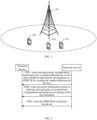
- FIG. 1 is a schematic diagram of an application scenario provided by an embodiment of the present application.
- this embodiment provides a communication system 100, and the communication system 100 includes a network device 110 and multiple terminal devices 120.
- This embodiment takes three terminal devices 120 as an example. These terminal devices 120 belong to a same terminal device group for a multicast/broadcast service.
- the network device 110 can send service data to these terminal devices 120 simultaneously by multicast/broadcast, where the service data is carried in a PDSCH.
- the following embodiments are adopted to describe how to schedule the PDSCH to transmit the service data.
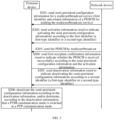
- FIG. 2 is a flowchart of a semi-persistent scheduling method for a multicast/broadcast service provided by an embodiment of the present application. As shown in FIG. 2 , the method of this embodiment can include the following steps.
- S201 a network device sends semi-persistent configuration information for a multicast/broadcast service to each terminal device of N terminal devices. Accordingly, each terminal device of the N terminal devices receives the semi-persistent configuration information for the multicast/broadcast service from the network device.
- FIG. 2 is shown by taking one of the N terminal devices as an example, and other terminal devices are similar.
- the N terminal devices belong to a same terminal device group for the multicast/broadcast service, where N is an integer greater than or equal to 1, and semi-persistent configuration information of each terminal device includes a first identifier and related information of a PDSCH for multicast/broadcast service transmission.
- the first identifier is used to scramble activation information.
- the first identifier may be a first-type identifier or a second-type identifier.
- the first-type identifier is used to identify a corresponding terminal device, and the first-type identifier is, for example, a configured scheduling radio network temporary identifier (Configured Scheduling Radio Network Temporary Identifier, CS-RNTI).
- First-type identifiers of different terminal devices are different.
- the second-type identifier is used to identify a terminal device group of a multicast/broadcast service which a terminal device belongs to, and the second-type identifier is, for example, a group configured scheduling radio network temporary identifier (Group Configured Scheduling Radio Network Temporary Identifier, GCS-RNTI).
- Second-type identifiers of terminal devices belonging to the same terminal device group for the multicast/broadcast service are the same. That is, the second-type identifiers of the semi-persistent configuration information of the N terminal devices are the same identifier.
- the network device sends, to each terminal device, semi-persistent configuration information of the terminal device in advance. Accordingly, each terminal device receives the semi-persistent configuration information from the network device.
- the network device may send the semi-persistent configuration information to the terminal device through a higher-layer signaling. For example, the network device sends the semi-persistent configuration information to the terminal device through a radio resource control (Radio Resource Control, RRC) message. The network device may send the semi-persistent configuration information to the terminal device through one or more RRC messages.
- RRC Radio Resource Control
- S202 the network device sends activation information to the N terminal devices according to the first identifier. Accordingly, each terminal device receives the activation information from the network device.
- each terminal device receives the semi-persistent configuration information from the network device and saves it locally, and the network device indicates when the semi-persistent configuration information needs to be used. Every time when the network device needs to schedule the PDSCH to transmit multicast/broadcast service data, the network device sends the activation information to each terminal device according to the first identifier in the semi-persistent configuration information.
- the activation information is used to indicate activating the semi-persistent configuration information, that is, the activation information indicates that scheduling of the semi-persistent configuration information takes effect in a physical layer, i.e., the terminal device can receive the PDSCH according to the semi-persistent configuration information and the activation information. Accordingly, after receiving the activation information, each terminal device determines that the semi-persistent configuration information can be used for communication with the network device for the multicast/broadcast service.
- the first identifier is the first-type identifier
- the first-type identifier is a UE-specific identifier (for example, a CS-RNTI).
- the network device sends the activation information to respective terminal devices according to the first-type identifiers of the terminal devices, respectively. Accordingly, each terminal device receives the activation information from the network device according to the first-type identifier of the terminal device.
- the activation information received by the terminal device is obtained by scrambling using the first-type identifier of the terminal device (such as the CS-RNTI of the terminal device).
- Indication information for indicating scrambling the activation information using the first-type identifier is further included in the above semi-static configuration.
- the network device sends the activation information to each terminal device respectively, so that related information about the terminal device can be added to the activation information, which can increase an amount of information carried in the activation information, increase the flexibility of scheduling of air interface resource, and improve the user experience.
- the first identifier is the second-type identifier
- the second-type identifier is a common identifier of the terminal device group, such as a GCS-RNTI.
- the network sends one piece of activation information to the terminal device group according to the second-type identifier.
- each terminal device in the terminal device group receives the activation information from the network device according to the second-type identifier.
- the activation information received by each terminal device is obtained by scrambling using the second-type identifier (such as the GCS-RNTI) in the semi-static configuration information.
- Indication information for indicating scrambling the activation information using the second-type identifier is further included in the above semi-static configuration.
- the network device can indicate, to multiple terminal devices, activating the semi-persistent configuration information by sending the same activation information, which reduces scheduling signaling resources and saves the air interface resources.
- the network device sends the PDSCH to the N terminal devices by multicast/broadcast according to the semi-persistent configuration information and the activation information. Accordingly, each terminal device of the N terminal devices receives the PDSCH for the multicast/broadcast service from the network device.
- the network device after sending the activation information to the N terminal devices, the network device sends the PDSCH to the N terminal devices by multicast/broadcast according to the semi-persistent configuration information. Accordingly, after receiving the activation information, each terminal device receives the PDSCH from the network device according to the semi-persistent configuration information and the activation information.
- the PDSCH carries multicast/broadcast service data, and each terminal device acquires the multicast/broadcast service data from the network device through the PDSCH.
- the activation information may include frequency domain resource indication information and time domain resource indication information of the PDSCH.
- the terminal device After receiving the activation information, the terminal device determines frequency domain resource information of the PDSCH according to the frequency domain resource indication information of the PDSCH in the activation information; determines time domain resource information of the PDSCH according to the time domain resource indication information of the PDSCH in the activation information; and then receives the PDSCH from the network device according to the frequency domain resource information and the time domain resource information.
- the frequency domain resource indication information of the PDSCH in each piece of activation information indicates a same frequency domain resource
- the time domain resource indication information of the PDSCH in each piece of activation information indicates a same time domain resource.
- a scrambling sequence of the PDSCH can be obtained according to the second-type identifier.
- the network device obtains the scrambling sequence of the PDSCH according to the second-type identifier (such as the GCS-RNTI), scrambles the PDSCH according to the scrambling sequence, and then sends a scrambled PDSCH to the N terminal devices by multicast/broadcast.
- each terminal device obtains a descrambling sequence of the PDSCH according to the second-type identifier, and descrambles a received PDSCH according to the descrambling sequence.
- multicast/broadcast service data is transmitted by multicast/broadcast from the network device to the N terminal devices.
- the semi-persistent configuration information of the terminal device further includes indication information for indicating obtaining the scrambling sequence of the PDSCH by the second-type identifier (such as the GCS-RNTI).
- persistent configuration information further includes a third-type identifier.
- the third-type identifier is, for example, a group radio network temporary identifier (Group Radio Network Temporary Identifier, G-RNTI), and the third-type identifier is used to generate the scrambling sequence of the PDSCH, or the third-type identifier defaults to 0 or other default values. Accordingly, the scrambling sequence of the PDSCH can be obtained according to the third-type identifier.
- G-RNTI Group Radio Network Temporary Identifier
- the network device obtains the scrambling sequence of the PDSCH according to the third-type identifier (e.g., the G-RNTI), scrambles the PDSCH according to the scrambling sequence, and then sends a scrambled PDSCH to the N terminal devices by multicast/broadcast.
- the third-type identifier e.g., the G-RNTI
- each terminal device obtains a descrambling sequence of the PDSCH according to the third-type identifier, and descrambles a received PDSCH according to the descrambling sequence.
- multicast/broadcast service data is transmitted by multicast/broadcast from the network device to the N terminal devices.
- c ( q ) ( i ) is obtained according to an initialization parameter C init , and description in the related art can be referred to for how to obtain c ( q ) ( i ) according to C init , which will not be repeated here.
- a scrambling code of the relevant PDSCH data uses the GCS-RNTI as a parameter of a scrambling code sequence, it is similar to the above case of using the G-RNTI as the parameter of the scrambling code sequence, which can be referred to and will not be repeated here.
- the network device configures the semi-persistent configuration information to the terminals in advance, and the semi-persistent configuration information includes the first identifier (the first-type identifier or the second-type identifier) for scrambling the activation information and the related information of the PDSCH for multicast/broadcast service transmission.
- the network device Every time multicast/broadcast service data transmission is required, the network device then sends the activation information to the terminal devices according to the first identifier to indicate activating the semi-persistent configuration information, and then the network device sends the PDSCH to the terminal devices by multicast/broadcast according to the semi-persistent configuration information, thereby realizing that multicast/broadcast service data is transmitted from the network device to the N terminal devices by multicast/broadcast.
- the semi-persistent configuration information is received by the terminals from the network device in advance and saved locally, and is activated by the activation information scrambled by the first identifier, there is no need to receive the semi-persistent configuration information again from the network device every time the multicast/broadcast service data is transmitted, thereby saving the air interface resources.
- each terminal device after receiving the activation information from the network device and before receiving the PDSCH from the network device, each terminal device activates the semi-persistent configuration information of the terminal device according to the received activation information. After the semi-persistent configuration information is activated, each terminal device receives the PDSCH from the network device according to the semi-persistent configuration information.
- a flag bit is used to indicate whether the semi-persistent configuration information is activated. After receiving the activation information, the terminal device changes the flag bit to a value indicating that the semi-persistent configuration information is activated.
- FIG. 3 is a flowchart of a semi-persistent scheduling method for a multicast/broadcast service provided by another embodiment of the present application. As shown in FIG. 3 , on the basis of any of the above embodiments, this embodiment further includes the following steps after executing S203 shown in FIG. 2 .
- the terminal devices send first reception confirmation information to the network device according to the semi-persistent configuration information and the activation information. Accordingly, the network device receives the first reception confirmation information from the terminal devices according to the semi-persistent configuration information of each terminal device.
- the first reception confirmation information is used to indicate whether the PDSCH is received successfully. Being received successfully here represents whether the terminal device decodes the received PDSCH correctly. If the first reception confirmation information of the terminal device indicates that the PDSCH is received successfully, the network device does not retransmit the PDSCH. If the first reception confirmation information of the terminal device indicates that the PDSCH is not received successfully, the network device retransmits the PDSCH.
- the first reception confirmation information is, for example, hybrid automatic repeat request (Hybrid Automatic Repeat reQuest, HARQ) feedback information. If data carried in the received PDSCH and decoded by the terminal device is correct, the HARQ feedback information is HARQ-ACK. If the data carried in the received PDSCH and decoded by the terminal device is wrong, the HARQ feedback information is negative acknowledge (Negative Acknowledge, NACK).
- Hybrid Automatic Repeat reQuest Hybrid Automatic Repeat reQuest
- the reliability of multicast/broadcast service data can be improved through the first reception confirmation information, so as to meet different transmission quality requirements of different services.
- the sending of the first reception confirmation information by the terminal device to the network device includes the following possible implementations.
- the activation information received by the terminal device includes PUCCH resource indication information and timing information.
- the terminal device determines PUCCH resource information of the first reception confirmation information according to the PUCCH resource indication information of the activation information.
- the semi-persistent configuration information includes total PUCCH resource information related to the terminal device.
- the terminal device determines a PUCCH resource indicated by the PUCCH resource indication information from the total PUCCH resource information, and takes the determined PUCCH resource as the PUCCH resource information for the first reception confirmation information.
- the terminal device further determines timing information of the first reception confirmation information according to the timing information of the activation information, such as taking the timing information of the activation information as the timing information of the first reception confirmation information.
- the terminal device sends the first reception confirmation information to the network device according to the determined PUCCH resource and the timing information of the first reception confirmation information.
- the network device determines the PUCCH resource information of the first reception confirmation information according to the PUCCH resource indication information of the activation information; determines the timing information of the first reception confirmation information according to the timing information of the activation information; and then receives the first reception confirmation information from the terminal device according to the PUCCH resource information and the timing information of the first reception confirmation information.
- the related information of the PDSCH in the semi-persistent configuration information of the terminal device includes: PUCCH resource information corresponding to the PDSCH, and the activation information includes timing information.
- the terminal device determines PUCCH resource information of the first reception confirmation information according to the PUCCH resource information corresponding to the PDSCH in the semi-persistent configuration information.
- the PUCCH resource information corresponding to the PDSCH in the semi-persistent configuration information is determined as the PUCCH resource information of the first reception confirmation information.
- the terminal device further determines timing information of the first reception confirmation information according to the timing information of the activation information, such as taking the timing information of the activation information as the timing information of the first reception confirmation information. Then the terminal device sends the first reception confirmation information to the network device according to the determined PUCCH resource and the timing information of the first reception confirmation information.
- the network device determines the PUCCH resource information of the first reception confirmation information and the PUCCH resource information of the first reception confirmation information according to the PUCCH resource information corresponding to the PDSCH in the semi-persistent configuration information; determines the timing information of the first reception confirmation information according to the timing information of the activation information; and then receives the first reception confirmation information from the terminal device according to the PUCCH resource information and the timing information of the first reception confirmation information.
- the network device also sends the PDSCH once at the same time when sending the activation information to the terminal devices. Therefore, when the terminal devices feed the first reception confirmation information of this PDSCH back to the network device, the first reception confirmation information is further used to indicate whether the activation information is received successfully.
- how to feed the first reception confirmation information of the PDSCH back to the network device is determined by means of the activation information without special control signaling, thus saving air interface resources.
- the feedback of the first reception confirmation information by the terminal device to the network device includes the following implementations.
- the terminal device does not send the first reception confirmation information to the network device.
- the terminal device does not send reception confirmation information indicating whether the activation information is received successfully to the network device, either.
- the network device may send the activation information to the terminal devices for multiple consecutive times according to the second-type identifier to ensure that the terminal devices can receive the activation information.
- the network device pre-configures a feedback resource of the reception confirmation information for each terminal device
- the first reception confirmation information can be fed back according to the pre-configured feedback resource and the PUCCH resource indication information and timing information of the activation information.
- the network device also sends the PDSCH once at the same time when sending the activation information to the terminal devices. Therefore, when the terminal devices feed the first reception confirmation information of this PDSCH back to the network device, the first reception confirmation information is further used to indicate whether the activation information is received successfully.
- the network device configures multiple PUCCH resources, such as N PUCCH resources, for each terminal device through a higher-layer message, and the PUCCH resources mainly include the following contents:
- the PUCCH format represent a channel format used, which can be divided into format 0, format 1, format 2, format 3, etc. Different formats have different application scenarios (different loads and/or coverages). For example, format 0 supports feedback of a small amount of bits (1-2), which is suitable for the terminal device close to the network device. Format 1 indicates feedback of a small amount of bits (1-2), which is suitable for the terminal device far away from the network device.
- the number of initial cyclic shift (initial cyclic shift) L represent the number of supported users from a channel initial cyclic shift dimension. If not defined, L is equal to 1, for example.
- the number of orthogonal sequences (Orthogonal sequences) M represent the number of supported users from a channel orthogonal sequence dimension. If not defined, M is considered equal to 1, for example.
- the above format defines N*L*M channel resources that can be used to feed back HARQ-ACK (1 bit) information (a calculation order may be: firstly the orthogonal sequence number, then the initial cyclic bit, and finally the PUCCH channel number).
- the calculation order of the channel resources may also be: firstly the initial cyclic bit, then the orthogonal sequence number, and finally the PUCCH channel number.
- the time-frequency resource of the first reception confirmation information is determined.
- the first identifier is the second-type identifier, that is, the activation information received by the terminal device is obtained by scrambling using the second-type identifier (such as the GCS-RNTI), then the activation information is further used to indicate that downlink control information and/or deactivation information obtained by scrambling using the second-type identifier is not required to be detected within a preset time period.
- the deactivation information is used to indicate deactivating the semi-persistent configuration information, that is, to indicate that scheduling of the semi-persistent configuration information is invalid in the physical layer, i.e., the terminal device no longer receives the PDSCH according to the semi-persistent configuration information and the activation information.
- the network device After sending the activation information obtained by scrambling using the second-type identifier, the network device no longer sends the downlink control information obtained by scrambling using the second-type identifier within the preset time period. After receiving the activation information obtained by scrambling using the second-type identifier, the terminal device stops detecting the downlink control information obtained by scrambling using the second-type identifier within the preset time period.
- the activation information includes indication information with a length of 6 bits to indicate: the downlink control information obtained by scrambling using the second-type identifier is not required to be detected within the preset time period.
- First bit indicate a time unit for counting when the downlink control information obtained by scrambling using the second-type identifier is not detected. For example, 0 indicates a preset detection time unit, and 1 indicates that the time unit is a radio frame (10ms).
- Last five bits indicate a time period when the downlink control information obtained by scrambling using the second-type identifier is not detected. For example, 11111 indicates 64 time units. 00000 indicates 0 time units.
- the terminal device when the first bit is 0 and the last five bits are 11111, it is indicated that after receiving the activation information, the terminal device does not need to detect the downlink control information, such as the deactivation information, obtained by scrambling using the second-type identifier within a time period of subsequent 64 radio frames (i.e., 64ms).
- the downlink control information such as the deactivation information
- First bit indicate a time unit for counting when the downlink control information obtained by scrambling using the second-type identifier is not detected. For example, 0 indicates that the time unit is a radio frame (10ms), and 1 indicates that the time unit is a radio superframe (1024 radio frames).
- Last five bits indicate a time period when the downlink control information obtained by scrambling using the second-type identifier is not detected. For example, 11111 indicates 64 time units. 00000 indicates 0 time units.
- the downlink control information such as the deactivation information
- the network device sends the activation information to the terminal devices
- the following step may be further included: S205: the network device sends deactivation information to the terminal devices according to the second identifier, where the deactivation information is further used to indicate deactivating the semi-persistent configuration information for the multicast/broadcast service. Accordingly, the terminal device receives the deactivation information from the network device according to the second identifier.
- the network device After sending the deactivation information according to the second identifier, the network device pauses sending the PDSCH to the terminal device by multicast/broadcast according to the semi-persistent configuration information. Accordingly, after receiving the deactivation information from the network device, the terminal devices pauses receiving the PDSCH from the network device according to the semi-persistent configuration information.
- the second identifier is the first-type identifier or the second-type identifier.
- multicast/broadcast service data can be scheduled flexibly through the activation information and the deactivation information, and air interface signaling can be reduced at the same time.
- the method of this embodiment further includes: S206: the terminal devices deactivate the semi-persistent configuration information according to the deactivation information, and/or determine, according to the deactivation information, that a multicast/broadcast communication mode of the terminal devices is switched from a point to multi-point (point to multi-point, PTM) communication mode to a point to point (point to point, PTP) communication mode.
- PTM point to multi-point
- PTP point to point
- the terminal devices After receiving the deactivation information from the network device, the terminal devices deactivate the semi-persistent configuration information according to the deactivation information. For example, whether the semi-persistent configuration information is deactivated is indicated by a flag bit. After receiving the deactivation information, the terminal device changes the flag bit to a value indicating the semi-persistent configuration information is deactivated. And/or, after receiving the deactivation information from the network device, the terminal devices determine, according to the deactivation information, that the multicast/broadcast communication mode of the terminal devices is switched from the PTM communication mode to the PTP communication mode.
- the network device may send multicast/broadcast service data to the terminal device through the PTP communication mode. Accordingly, after receiving the deactivation information, the terminal device may receive the multicast/broadcast service data from the network device through the PTP communication mode.
- indication of switching of the multicast/broadcast communication mode can be supported through the deactivation information.
- the deactivation information includes field information for indicating deactivating the semi-persistent configuration information.
- the deactivation information is downlink control information in a preset format.
- the deactivation information indicates whether to deactivate the semi-persistent configuration information through a field of format indication of the downlink control information.
- the field of format indication is "0" or "1" to indicate that the downlink control information is the deactivation information.
- the second identifier is the second-type identifier
- the network device sends deactivation information to the terminal device group according to the second-type identifier.
- each terminal device in the terminal device group receives the deactivation information from the network device according to the second-type identifier.
- the deactivation information received by each terminal device is obtained by scrambling using the second-type identifier (such as the GCS-RNTI) in the semi-static configuration information.
- Indication information for indicating scrambling the deactivation information using the second-type identifier is further included in the above semi-static configuration.
- the deactivation information in this implementation further indicates switching all the terminal devices belonging to the terminal device group from the point to multi-point communication mode to the point to point communication mode.
- the network device can indicate, to multiple terminal devices, activating the semi-persistent configuration information by sending the same deactivation information, which reduces scheduling signaling resources and saves air interface resources.
- the terminal device feeds second reception confirmation information back to the network device, which includes the following optional examples.
- the second reception confirmation information is used to indicate whether the deactivation information is received successfully. If the second reception confirmation information indicates that the deactivation information is not received successfully, the network device may retransmit the deactivation information to ensure that the terminal device receives the deactivation information.
- the activation information is scrambled using the first-type identifier (such as the CS-RNTI), the following two possible implementations are included.
- the activation information received by the terminal device includes PUCCH resource indication information and timing information.
- the terminal device determines PUCCH resource information of the second reception confirmation information according to the PUCCH resource indication information of the activation information.
- the semi-persistent configuration information includes total PUCCH resource information related to the terminal device.
- the terminal device determines a PUCCH resource indicated by the PUCCH resource indication information from the total PUCCH resource information, and takes the determined PUCCH resource as the PUCCH resource information of the second reception confirmation information.
- the terminal device further determines timing information of the second reception confirmation information according to the timing information of the activation information, such as taking the timing information of the activation information as the timing information of the second reception confirmation information. Then the terminal device sends the second reception confirmation information to the network device according to the determined PUCCH resource and timing information of the second reception confirmation information.
- the network device determines the PUCCH resource information of the second reception confirmation information according to the PUCCH resource indication information of the activation information; determines the timing information of the second reception confirmation information according to the timing information of the activation information; and then receives the second reception confirmation information from the terminal device according to the PUCCH resource information and the timing information of the second reception confirmation information.
- the related information of the PDSCH in the semi-persistent configuration information of the terminal device includes: PUCCH resource information corresponding to the PDSCH, and the activation information includes timing information.
- the terminal device determines PUCCH resource information of the second reception confirmation information according to the PUCCH resource information corresponding to the PDSCH in the semi-persistent configuration information.
- the PUCCH resource information corresponding to the PDSCH in the semi-persistent configuration information is determined as the PUCCH resource information of the second reception confirmation information.
- the terminal device further determines timing information of the second reception confirmation information according to the timing information of the activation information, such as taking the timing information of the activation information as the timing information of the second reception confirmation information. Then the terminal device sends the second reception confirmation information to the network device according to the determined PUCCH resource and timing information of the second reception confirmation information.
- the network device determines the PUCCH resource information of the second reception confirmation information and the PUCCH resource information of the second reception confirmation information according to the PUCCH resource information corresponding to the PDSCH in the semi-persistent configuration information; determines the timing information of the second reception confirmation information according to the timing information of the activation information; and then receives the second reception confirmation information from the terminal device according to the PUCCH resource information and the timing information of the second reception confirmation information.
- the deactivation information obtained by scrambling using the second-type identifier is further used to indicate that reception confirmation information indicating whether the deactivation information is received successfully is not required to be fed back. Accordingly, the terminal device does not send the reception confirmation information indicating whether the deactivation information is received successfully to the network device.
- the network device may send the deactivation information to the terminal devices for multiple consecutive times according to the second-type identifier to ensure that the terminal devices can receive the deactivation information.
- the terminal device may feed the reception confirmation information indicating whether the deactivation information (scrambled using the second-type identifier) is received successfully back according to the pre-configured feedback resource and the PUCCH resource indication information and timing information of the activation information.
- the implementation process of feeding the first reception confirmation information back according to the pre-configured feedback resource and the PUCCH resource indication information and timing information of the activation information when the activation information is obtained by scrambling using the second-type identifier in the above embodiments can be referred to and will not be repeated here.
- the second identifier is the first-type identifier, such as the CS-RNTI.
- the network device sends the deactivation information to the terminal devices according to the first-type identifiers of the terminal devices, respectively. Accordingly, each terminal device receives the deactivation information from the network device according to the first-type identifier of the terminal device.
- the deactivation information received by the terminal device is obtained by scrambling using the first-type identifier of the terminal device (such as the CS-RNTI of the terminal device).
- Indication information for indicating scrambling the deactivation information using the first-type identifier is further included in the above semi-static configuration.
- the deactivation information in this implementation further indicates switching a terminal device receiving the deactivation information from the point to multi-point communication mode to the point to point communication mode.
- the network device sends the deactivation information to each terminal device respectively, so that related information about the terminal device can be added to the deactivation information, which can increase information carried in the deactivation information, increase the flexibility of scheduling of air interface resource, and improve the user experience.
- the terminal device sends the second reception confirmation information to the network device, which includes the following possible implementations.
- the second reception confirmation information is used to indicate whether the deactivation information is received successfully.
- the deactivation information received by the terminal device includes PUCCH resource indication information and timing information.
- the terminal device determines PUCCH resource information of the second reception confirmation information according to the PUCCH resource indication information of the deactivation information.
- the semi-persistent configuration information includes total PUCCH resource information related to the terminal device. The terminal device determines a PUCCH resource indicated by the PUCCH resource indication information from the total PUCCH resource information, and takes the determined PUCCH resource as the PUCCH resource information of the second reception confirmation information.
- the terminal device further determines timing information of the second reception confirmation information according to the timing information of the deactivation information, such as taking the timing information of the deactivation information as the timing information of the second reception confirmation information. Then the terminal device sends the second reception confirmation information to the network device according to the determined PUCCH resource and timing information of the second reception confirmation information.
- the network device determines the PUCCH resource information of the second reception confirmation information according to the PUCCH resource indication information of the deactivation information; determines the timing information of the second reception confirmation information according to the timing information of the deactivation information; and then receives the second reception confirmation information from the terminal device according to the PUCCH resource information and the timing information of the second reception confirmation information.
- the related information of the PDSCH in the semi-persistent configuration information of the terminal device includes: PUCCH resource information corresponding to the PDSCH, and the deactivation information includes timing information.
- the terminal device determines PUCCH resource information of the second reception confirmation information according to the PUCCH resource information corresponding to the PDSCH in the semi-persistent configuration information. For example, the PUCCH resource information corresponding to the PDSCH in the semi-persistent configuration information is determined as the PUCCH resource information of the second reception confirmation information.
- the terminal device further determines timing information of the second reception confirmation information according to the timing information of the deactivation information, such as taking the timing information of the deactivation information as the timing information of the second reception confirmation information. Then the terminal device sends the second reception confirmation information to the network device according to the determined PUCCH resource and timing information of the second reception confirmation information.
- the network device determines the PUCCH resource information of the second reception confirmation information and the PUCCH resource information of the second reception confirmation information according to the PUCCH resource information corresponding to the PDSCH in the semi-persistent configuration information; determines the timing information of the second reception confirmation information according to the timing information of the deactivation information; and then receives the second reception confirmation information from the terminal device according to the PUCCH resource information and the timing information of the second reception confirmation information.
- how to feed the second reception confirmation information of the deactivation information back to the network device is determined by means of the activation information, thereby reducing signaling consumption, saving air interface resources and ensuring that each terminal device receives the deactivation information.
- the network device is a base station
- the terminal device is a UE
- the first-type identifier is a CS-RNTI
- the second-type identifier is a GCS-RNTI, as an example.
- the base station uses the CS-RNTI to scramble activation information and uses the GCS-RNTI to scramble deactivation information. Specifically, the following steps are included.
- Step 1.1 the base station configures, for UEs belonging to a UE group for a multicast/broadcast service, parameters of semi-persistent scheduling for sending the MBS, which includes the following four items:
- the CS-RNTI is an RNTI based on the UE (ue specific), that is, different UEs have different CS-RNTI values, and the base station distinguishes the UEs by scheduling different CS-RNTIs.
- a use of the CS-RNTI includes at least one of the following:
- the G-RNTI is an RNTI for the MBS, and each service may correspond to one G-RNTI or multiple G-RNTIs.
- a value of the G-RNTI is used for a scrambling parameter of the service data PDSCH, and multiple UEs within the same UE group use the same configured value.
- the GCS-RNTI here is an RNTI for the MBS, and each service may correspond to one GCS-RNTI or multiple GCS-RNTIs.
- a use of the GCS-RNTI includes at least one of the following:
- the SPS PDSCH association index value (SPS-ID) here is used to indicate a configuration number of a corresponding MBS (multicast/broadcast service) SPS PDSCH, and is to distinguish SPS PDSCHs when the base station configures multiple SPS PDSCHs (including unicast and broadcast multicast).
- Step 1.2 the base station configures SPS PDSCH information for the MBS to the UEs.
- a transmission period of SPS parameter p, a period unit may be millisecond (ms) or time slot.
- PUCCH ID a number of a HARQ-ACK feedback channel resource
- the related information of the PDSCH involved in the above embodiments may include the SPS-ID, the transmission period of the SPS, the total resources of the HARQ-ACK feedback channel, and the number of the HARQ-ACK feedback channel resource.
- Step 1.3 for each UE, the base station scrambles a physical downlink control channel (Physical Downlink Control Channel, PDCCH) using the CS-RNTI of the UE and sends it to the corresponding UE, where the PDCCH carries the activation information.
- PDCCH Physical Downlink Control Channel
- Step 1.4 the UE receives the PDCCH scrambled by the CS-RNTI and activate the MBS SPS PDSCH.
- the DCI When the following two fields (Redundancy version number and New transmission data indication) of the DCI received by the UE meet set values (as shown in Table 2), the DCI is considered as the activation information, and it is considered to activate SPS PDSCH transmission of the SPS-ID configured as follows.
- Table 2 Field in DCI Set value Redundancy version number (Redundancy version) All 0 New transmission data indication (new data indication, NDI) 0 HARQ process number (HARQ process ID) Configured SPS-ID
- the UE When receiving the above activation information, the UE receives the PDSCH scheduled by the activation information at the same time, and a scrambling code of the relevant PDSCH uses the G-RNTI as a scrambling code sequence.
- a scrambling code of the relevant PDSCH uses the G-RNTI as a scrambling code sequence.
- an indication mode of a HARQ-ACK feedback channel PUCCH corresponding to the SPS PDSCH may include the following two modes.
- a value of a PUCCH resource indicator (PUCCH resource indicator) of HARQ-ACK feedback for the SPS PDSCH without control signaling adopts a PUCCH resource indicator (PUCCH resource indicator) of HARQ-ACK feedback included in the activation information scrambled by the CS-RNTI.
- a value of timing information of HARQ-ACK feedback for the SPS PDSCH (PDSCH-to-HARQ_feedback timing indicator) without control signaling adopts a HARQ-ACK feedback timing indicator (PDSCH-to-HARQ_feedback timing indicator) included in the activation information scrambled by the CS-RNTI.
- a value of a PUCCH resource indicator (PUCCH resource indicator) of HARQ-ACK feedback for the SPS PDSCH without control signaling adopts a PUCCH resource formulated when the base station pre-configures SPS PDSCH parameters for the UE.
- a value of timing information of HARQ-ACK feedback for the SPS PDSCH (PDSCH-to-HARQ_feedback timing indicator) without control signaling adopts a HARQ-ACK feedback timing indicator (PDSCH-to-HARQ_feedback timing indicator) included in the activation information scrambled by the CS-RNTI.
- Step 1.5 the base station scrambles a PDCCH using the GCS-RNTI and sends it to the UE, where the PDCCH carries the deactivation information.
- Step 1.6 the UE deactivates the MBS SPS PDSCH after receiving the above PDCCH scrambled by the GCS-RNTI.
- the DCI is considered as the deactivation information, and it is considered to deactivate the SPS PDSCH transmission of the SPS-ID configured as follows, and/or it is considered to switch the transmission mode of the SPS PDSCH of the SPS-ID configured as follows from PTM to PTP (and all UEs within the UE group corresponding to the GCS-RNTI are switched from PTM to PTP).
- the UE When determining whether the DCI is the deactivation information, the UE adds determining of the frequency domain resource assignment indicator and the modulation and coding scheme on the basis of determining the redundant version number and the new transmission data indication.
- values of the modulation and coding scheme are all 1, and the frequency domain resource assignment indicator is all 0, to represent the deactivation information.
- the "DCI formats indicator (DCI formats)" field may also be used to indicate whether the DCI is the deactivation information. For example, setting a value of the "DCI formats indicator (DCI formats)" field to "0" or "1" can indicate that the DCI is the deactivation information.
- the UE may not feed HARQ-ACK of the deactivation information back to the base station after receiving the deactivation information scrambled by the GCS-RNTI.
- the PUCCH resource indication field and HARQ feedback timing indication field included in the deactivation information scrambled by the GCS-RNTI are invalid.
- the PUCCH resource indication field and the HARQ feedback timing indication field included in the deactivation information scrambled by the GCS-RNTI do not carry any information.
- the UE may feed the HARQ-ACK of the deactivation information back to the base station after receiving the deactivation information scrambled by the GCS-RNTI, and the PUCCH resource (PUCCH resource indicator) and the timing information (PDSCH-to-HARQ_feedback timing indicator) of the HARQ-ACK include the following two implementations.
- a value of a PUCCH resource indicator (PUCCH resource indicator) of HARQ-ACK feedback for the deactivation information adopts a PUCCH resource indicator (PUCCH resource indicator) of HARQ-ACK feedback included in the activation information (obtained by scrambling using the CS-RNTI).
- a value of a timing indicator of HARQ-ACK feedback (PDSCH-to-HARQ_feedback timing indicator) for the deactivation information adopts a HARQ-ACK feedback timing indicator (PDSCH-to-HARQ_feedback timing indicator) included in the activation information.
- a value of a PUCCH resource indicator (PUCCH resource indicator) of HARQ-ACK feedback for the deactivation information adopts a PUCCH resource formulated when the base station pre-configures SPS PDSCH parameters for the UE.
- a value of timing information of HARQ-ACK feedback (PDSCH-to-HARQ_feedback timing indicator) for the deactivation information adopts a HARQ-ACK feedback timing indicator (PDSCH-to-HARQ_feedback timing indicator) included in the activation information (obtained by scrambling using the CS-RNTI).
- the CS-RNTI is used to scramble the activation information
- the GCS-RNTI is used to scramble the deactivation information
- the deactivation information scrambled using the GCS-RNTI can support switching of all UEs in the UE group from PTM to PTP.
- the activation information can be based on information indicating a HARQ feedback channel PUCCH of the SPS PDSCH, which can solve a problem of indication of the HARQ-ACK feedback channel for multicast/broadcast by using the prior art, reduce a modification amount of a protocol, and reduce complexity of the UE and base station device.
- the deactivation information is the DCI scrambled using the G-RNTI, which can be implemented by a single signaling, thus reducing consumption of scheduling signaling and saving air interface resources.
- the base station uses the CS-RNTI to scramble the activation information and uses the CS-RNTI to scramble the deactivation information. Specifically, the following steps are included.
- Step 2.1 the base station configures, for UEs belonging to a UE group for MBS, parameters of semi-persistent scheduling for the MBS, which includes the following three items:
- the CS-RNTI is an RNTI based on the UE (ue specific), that is, different UEs have different CS-RNTI values, and the base station distinguishes the UEs by scheduling different CS-RNTIs.
- a use of the CS-RNTI includes at least one of the following:
- the G-RNTI is an RNTI for the MBS, and each service may correspond to one G-RNTI or multiple G-RNTIs.
- a value of the G-RNTI is used for dynamic scheduling of the MBS, and used for a scrambling parameter of the service data PDSCH. Multiple UEs within the same UE group use the same configured value.
- the SPS PDSCH association index value (SPS-ID) here is used to indicate a configuration number of a corresponding MBS SPS PDSCH, and is to distinguish SPS PDSCHs when the base station configures multiple SPS PDSCHs.
- Step 2.2 the base station configures SPS PDSCH information for the MBS to the UEs.
- a transmission period of SPS parameter p, a period unit may be millisecond (ms) or time slot.
- PUCCH ID a number of a HARQ-ACK feedback channel resource
- Step 2.3 for each UE, the base station scrambles a PDCCH using the CS-RNTI of the UE and sends it to the corresponding UE, where the PDCCH carries the activation information.
- Step 2.4 the UE receives a PDCCH scrambled by the CS-RNTI and activate the MBS SPS PDSCH.
- steps 1.3 and 1.4 in the first implementation can be referred to for relevant description of steps 2.3 and 2.4, which will not be repeated here.
- Step 2.5 the base station scrambles a PDCCH using the CS-RNTI of each UE, and sends it to the corresponding UE, where the PDCCH carries the deactivation information.
- Step 2.6 the UE deactivates the MBS SPS PDSCH after receiving the PDCCH scrambled by the CS-RNTI of the UE.
- step 1.6 in the first implementation can be referred to for how the UE determines that the received DCI is the deactivation information, which will not be repeated here.
- the deactivation information is obtained by scrambling using the CS-RNTI, and the PUCCH resource indication field and the HARQ feedback timing indication field in the deactivation information are valid fields.
- the UE may feed HARQ-ACK for the deactivation information back to the base station, and the PUCCH resource (PUCCH resource indicator) and the timing information (PDSCH-to-HARQ_feedback timing indicator) of the HARQ-ACK include the following two implementations.
- a value of a PUCCH resource indicator (PUCCH resource indicator) of HARQ-ACK feedback for the deactivation information adopts a PUCCH resource indicator (PUCCH resource indicator) of HARQ-ACK feedback included in the deactivation information.
- a value of a timing indicator of HARQ-ACK feedback (PDSCH-to-HARQ_feedback timing indicator) for the deactivation information adopts a HARQ-ACK feedback timing indicator (PDSCH-to-HARQ_feedback timing indicator) included in the activation information.
- a value of a PUCCH resource indicator (PUCCH resource indicator) of HARQ-ACK feedback for the deactivation information adopts a PUCCH resource formulated when the base station pre-configures SPS PDSCH parameter for the UE.
- a value of timing information of HARQ-ACK feedback (PDSCH-to-HARQ_feedback timing indicator) for the deactivation information adopts a HARQ-ACK feedback timing indicator (PDSCH-to-HARQ_feedback timing indicator) included in the deactivation information.
- the CS-RNTI is used to scramble the activation information and the CS-RNTI is used to scramble the deactivation information.
- the activation information and deactivation information reference is made to an existing process, which reduces a modification amount of a protocol, and reduces complexity of the UE and base station device.
- the base station uses the GCS-RNTI to scramble the activation information and uses the GCS-RNTI to scramble the deactivation information. Specifically, the following steps are included.
- Step 3.1 the base station configures, for UEs belonging to a UE group for MBS, parameters of semi-persistent scheduling for the MBS, which includes the following three items:
- the CS-RNTI is an RNTI based on the UE (ue specific), that is, different UEs have different CS-RNTI values, and the base station distinguishes the UEs by scheduling different CS-RNTIs.
- a use of the CS-RNTI includes at least one of the following:
- the G-RNTI is an RNTI for the MBS, and each service may correspond to one G-RNTI or multiple G-RNTIs.
- a value of the G-RNTI is used for dynamic scheduling of the MBS, and used for a scrambling parameter of the service data PDSCH. Multiple UEs within the same UE group use the same configured value.
- the GCS-RNTI here is an RNTI of the UE group for the MBS.
- the UEs in the same UE group or receiving the same MBS have the same GCS-RNTI value.
- a use of the GCS-RNTI includes at least one of the following:
- the SPS PDSCH association index value (SPS-ID) here is used to indicate a configuration number of a corresponding MBS SPS PDSCH, and is to distinguish SPS PDSCHs when the base station configures multiple SPS PDSCHs.
- Step 3.2 the base station configures SPS PDSCH information for the MBS to the UEs.
- a transmission period of SPS parameter p, a period unit may be millisecond (ms) or time slot.
- PUCCH ID a number of a HARQ-ACK feedback channel resource
- Step 3.3 the base station scrambles a PDCCH using the GCS-RNTI and send it to the UEs, where the PDCCH carries the activation information.
- Step 3.4 the UEs receive the PDCCH scrambled by the GCS-RNTI and activate the MBS SPS PDSCH.
- step 1.4 in the first implementation can be referred to for how the UE determines that the received DCI is the activation information, which will not be repeated here.
- information indication may be added to the DCI which is the deactivation information to indicate that the UE does not need to detect the deactivation information within a certain time, or to indicate that the UE detects the deactivation information at a specific PDCCH detection opportunity.
- the HARQ feedback for the MBS SPS PDSCH may be divided into the following cases.
- Case 1 if RRC does not configure the HARQ-ACK feedback resource for the UE or the HARQ feedback configured by RRC is "off", the UE does not need to feed HARQ-ACK information back, and indication bit information (including PUCCH resource indication, HARQ feedback timing indication) of HARQ-ACK in the DCI may be used to indicate that DCI detection is not required.
- indication bit information including PUCCH resource indication, HARQ feedback timing indication
- Case 2 if RRC configures the HARQ-ACK feedback resource, the UE may feed HARQ-ACK information back according to bit information (including PUCCH resource indication, HARQ feedback timing indication) in RRC configuration and in the DCI.
- bit information including PUCCH resource indication, HARQ feedback timing indication
- the base station configures the following N PUCCH resources to the UE through a higher-layer message, which mainly include the following: a PUCCH format, a starting RB position, a starting symbol and a symbol length, the number of initial cyclic shift, the number of orthogonal sequences, a UE feedback index.
- Step 3.5 the base station scrambles a PDCCH using the GCS-RNTI and send it to the UEs, where the PDCCH carries the deactivation information.
- Step 3.6 the UEs deactivate the MBS SPS PDSCH after receiving the PDCCH scrambled by the GCS-RNTI.
- steps 1.5 and 1.6 can be referred to for steps 3.5 and 3.6, which will not be repeated here.
- the GCS-RNTI is used to scramble the activation information
- the GCS-RNTI is used to scramble the deactivation information
- the detection-free indication is supported.
- the activation information and the deactivation information are the DCI scrambled using the GCS-RNTI, which can be implemented by a single signaling, thereby reducing consumption of scheduling signaling and saving air interface resources.
- an embodiment of the present application provides a semi-persistent scheduling apparatus for a multicast/broadcast service.
- the semi-persistent scheduling apparatus for a multicast/broadcast service in this embodiment may be a terminal device, and the semi-persistent scheduling apparatus for a multicast/broadcast service may include a transceiver 401, a processor 402 and a memory 403.
- the transceiver 401 is configured to receive and send data under control of the processor 402.
- a bus architecture may include any number of interconnected buses and bridges, and specifically, various circuits of one or more processors represented by the processor 402 and a memory represented by the memory 403 are linked together.
- the bus architecture may also link various other circuits, such as a peripheral device, a voltage regulator, a power management circuit and the like, which are well known in the art, and thus not be further described here.
- a bus interface provides an interface.
- the transceiver 401 may be multiple elements, including a transmitter and a receiver, and provide a unit for communication with various other apparatuses on transmission media. These transmission media include, these transmission media include a wireless channel, a wired channel, an optical cable and other transmission media.
- the semi-persistent scheduling apparatus for a multicast/broadcast service may further include a user interface 404.
- the user interface 404 may also be an interface that can externally and internally connect required devices, and the connected devices include, but are not limited to, a small keypad, a display, a speaker, a microphone, a joystick, etc.
- the processor 402 is responsible for managing the bus architecture and general processing, and the memory 403 can store data used by the processor 402 when executing operations.
- the processor 402 may be a central processing unit (central processing unit, CPU), an application specific integrated circuit (Application Specific Integrated Circuit, ASIC), a field-programmable gate array (Field-Programmable Gate Array, FPGA), or a complex programmable logic device (Complex Programmable Logic Device, CPLD), and the processor may also adopt a multi-core architecture.
- CPU central processing unit
- ASIC Application Specific Integrated Circuit
- FPGA Field-Programmable Gate Array
- CPLD Complex Programmable Logic Device
- the processor 402 is configured to execute any of the methods related to the terminal device provided by the embodiments of the present application in accordance with obtained executable instructions.
- the processor and the memory may also be physically separated.
- the processor 402 is configured to execute the following operations:
- a scrambling sequence of the PDSCH is obtained according to the second-type identifier, or, the semi-persistent configuration information further includes a third-type identifier, where the third-type identifier is used to generate a scrambling sequence of the PDSCH, and the scrambling sequence of the PDSCH is obtained according to the third-type identifier.
- the processor 402 further executes the following operations: before receiving the PDSCH from the network device, activating the semi-persistent configuration information according to the activation information.
- the processor 402 further executes the following operations: after receiving the PDSCH from the network device according to the semi-persistent configuration information, sending first reception confirmation information to the network device, where the first reception confirmation information is used to indicate whether the PDSCH is received successfully.
- the first identifier is the first-type identifier
- the activation information includes PUCCH resource indication information and timing information
- sending the first reception confirmation information to the network device includes:
- the first identifier is the second-type identifier
- the activation information is further used to indicate that downlink control information obtained by scrambling using the second-type identifier is not required to be detected within a preset time period.
- the semi-persistent configuration information includes a second identifier, and the second identifier is used to scramble deactivation information; the processor 402 further executes the following operations:
- processor 402 further executes the following operations:
- the deactivation information further indicates switching a terminal device receiving the deactivation information from a point to multi-point communication mode to a point to point communication mode; if the second identifier is the second-type identifier, the deactivation information further indicates switching terminal devices belonging to the terminal device group from a point to multi-point communication mode to a point to point communication mode.
- the deactivation information is downlink control information in a preset format.
- the deactivation information is further used to indicate that second reception confirmation information is not required to be fed back, where the second reception confirmation information is used to indicate whether the deactivation information is received successfully.
- the related information of the PDSCH includes PUCCH resource information corresponding to the PDSCH, the first identifier is the first-type identifier, and the activation information includes timing information; the processor 402 further executes the following operations:
- the first identifier is obtained by scrambling the first-type identifier, and the activation information includes PUCCH resource indication information and timing information; the processor 402 further executes the following operations:
- a reception end time of the PDSCH is used as a reception end time of the deactivation information to determine the PUCCH resource information of the second reception confirmation information.
- the first identifier is used to scramble the activation information.
- the second identifier is used to scramble the deactivation information.
- an embodiment of the present application provides a semi-persistent scheduling apparatus for a multicast/broadcast service.
- the semi-persistent scheduling apparatus for a multicast/broadcast service in this embodiment may be a network device, and the semi-persistent scheduling apparatus for a multicast/broadcast service may include a transceiver 501, a processor 502 and a memory 503.
- the transceiver 501 is configured to receive and send data under control of the processor 502.
- a bus architecture may include any number of interconnected buses and bridges, and specifically, various circuits of one or more processors represented by the processor 502 and a memory represented by the memory 503 are linked together.
- the bus architecture may also link various other circuits, such as a peripheral device, a voltage regulator, a power management circuit and the like, which are well known in the art, and thus not be further described here.
- a bus interface provides an interface.
- the transceiver 501 may be multiple elements, including a transmitter and a receiver, and provide a unit for communication with various other apparatuses on transmission media. These transmission media include a wireless channel, a wired channel, an optical cable and other transmission media.
- the processor 502 is responsible for managing the bus architecture and general processing, and the memory 503 can store data used by the processor 502 when executing operations.
- the processor 502 may be a CPU, an ASIC, a FPGA or a CPLD, and the processor may also adopt a multi-core architecture.
- the processor 502 is configured to execute any of the methods related to the network device provided by the embodiments of the present application in accordance with obtained executable instructions.
- the processor and the memory may also be physically separated.
- processor 502 is configured to execute the following operations:
- a scrambling sequence of the PDSCH is obtained according to the second-type identifier, or, the semi-persistent configuration information further includes a third-type identifier, where the third-type identifier is used to generate a scrambling sequence of the PDSCH, and the scrambling sequence of the PDSCH is obtained according to the third-type identifier.
- the processor 502 further executes the following operations: after sending the PDSCH to the N terminal devices by multicast/broadcast, receiving first reception confirmation information from the N terminal devices respectively, where the first reception confirmation information is used to indicate whether the PDSCH is received successfully.
- the first identifier is the first-type identifier
- the activation information includes PUCCH resource indication information and timing information
- receiving the first reception confirmation information from the terminal devices includes:
- the first identifier is the second-type identifier
- the activation information is further used to indicate that downlink control information obtained by scrambling using the second-type identifier is not required to be detected within a preset time period.
- the semi-persistent configuration information includes a second identifier, and the second identifier is used to scramble deactivation information; the processor 502 further executes the following operations:
- the deactivation information is further used to indicate switching a multicast/broadcast communication mode of a terminal device from a point to multi-point communication mode to a point to point communication mode.
- the deactivation information further indicates switching terminal devices belonging to the terminal device group from a point to multi-point communication mode to a point to point communication mode;
- the deactivation information is downlink control information in a preset format.
- the second identifier is the second-type identifier
- the deactivation information is further used to indicate that second reception confirmation information is not required to be fed back, where the second reception confirmation information is used to indicate whether the deactivation information is received successfully.
- the related information of the PDSCH includes PUCCH resource information corresponding to the PDSCH, the first identifier is the first-type identifier, and the activation information includes timing information; the processor 502 further executes the following operations:
- the first identifier is the first-type identifier
- the activation information includes PUCCH resource indication information and timing information; the processor 502 further executes the following operations:
- a reception end time of the PDSCH is used as a reception end time of the deactivation information to determine the PUCCH resource information of the second reception confirmation information.
- the first identifier is used to scramble the activation information.
- the second identifier is used to scramble the deactivation information.
- an embodiment of the present application further provides a semi-persistent scheduling apparatus for a multicast/broadcast service.
- the semi-persistent scheduling apparatus for a multicast/broadcast service in this embodiment may be a terminal device, and the semi-persistent scheduling apparatus for a multicast/broadcast service includes a receiving unit 601.
- the semi-persistent scheduling apparatus for a multicast/broadcast service further includes a processing unit 602.
- the semi-persistent scheduling apparatus for a multicast/broadcast service further includes a sending unit 603.
- the receiving unit 601 is configured to: receive semi-persistent configuration information for a multicast/broadcast service from a network device, where the semi-persistent configuration information includes a first identifier and related information of a PDSCH for multicast/broadcast service transmission; receive activation information from the network device according to the first identifier, where the activation information is used to indicate activating the semi-persistent configuration information, and the first identifier is a first-type identifier or a second-type identifier, where the first-type identifier is used to identify a terminal device, and the second-type identifier is used to identify a terminal device group of a multicast/broadcast service which a terminal device belongs to; receive the PDSCH from the network device according to the activation information and the semi-persistent configuration information, where the PDSCH carries multicast/broadcast service data.
- a scrambling sequence of the PDSCH is obtained according to the second-type identifier, or, the semi-persistent configuration information further includes a third-type identifier, where the third-type identifier is used to generate a scrambling sequence of the PDSCH, and the scrambling sequence of the PDSCH is obtained according to the third-type identifier.
- the processing unit 602 is configured to activate the semi-persistent configuration information according to the activation information before a transceiving unit receives the PDSCH from the network device.
- the sending unit 603 is configured to send first reception confirmation information to the network device after the receiving unit 601 receives the PDSCH from the network device according to the semi-persistent configuration information, where the first reception confirmation information is used to indicate whether the PDSCH is received successfully.
- the first identifier is the first-type identifier
- the activation information includes PUCCH resource indication information and timing information
- sending the first reception confirmation information to the network device includes:
- the first identifier is the second-type identifier
- the activation information is further used to indicate that downlink control information obtained by scrambling using the second-type identifier is not required to be detected within a preset time period.
- the semi-persistent configuration information includes a second identifier, and the second identifier is used to scramble deactivation information;
- the processing unit 602 is configured to deactivate the semi-persistent configuration information according to the deactivation information; and/or, determine, according to the deactivation information, that a multicast/broadcast communication mode of the terminal device is switched from a point to multi-point communication mode to a point to point communication mode.
- the deactivation information further indicates switching a terminal device receiving the deactivation information from a point to multi-point communication mode to a point to point communication mode; if the second identifier is the second-type identifier, the deactivation information further indicates switching terminal devices belonging to the terminal device group from a point to multi-point communication mode to a point to point communication mode.
- the deactivation information is downlink control information in a preset format.
- the deactivation information is further used to indicate that second reception confirmation information is not required to be fed back, where the second reception confirmation information is used to indicate whether the deactivation information is received successfully.
- the related information of the PDSCH includes PUCCH resource information corresponding to the PDSCH, the first identifier is the first-type identifier, and the activation information includes timing information;
- the sending unit 603 is further configured to: after the deactivation information is received from the network device according to the second-type identifier, determine PUCCH resource information of second reception confirmation information according to the PUCCH resource information corresponding to the PDSCH; determine timing information of the second reception confirmation information according to the timing information of the activation information; send the second reception confirmation information to the network device according to the PUCCH resource information and the timing information of the second reception confirmation information, where the second reception confirmation information is used to indicate whether the deactivation information is received successfully.
- the first identifier is obtained by scrambling the first-type identifier, and the activation information includes PUCCH resource indication information and timing information; the sending unit 603 is further configured to: after the deactivation information is received from the network device according to the second-type identifier, determine PUCCH resource information of second reception confirmation information according to the PUCCH resource indication information of the activation information; determine timing information of the second reception confirmation information according to the timing information of the activation information; send the second reception confirmation information to the network device according to the PUCCH resource information and the timing information of the second reception confirmation information, where the second reception confirmation information is used to indicate whether the deactivation information is received successfully.
- a reception end time of the PDSCH is used as a reception end time of the deactivation information to determine the PUCCH resource information of the second reception confirmation information.
- the first identifier is used to scramble the activation information.
- the second identifier is used to scramble the deactivation information.
- an embodiment of the present application further provides a semi-persistent scheduling apparatus for a multicast/broadcast service.
- the semi-persistent scheduling apparatus for a multicast/broadcast service in this embodiment may be a network device, and the semi-persistent scheduling apparatus for a multicast/broadcast service includes a sending unit 701.
- the semi-persistent scheduling apparatus for a multicast/broadcast service further includes a receiving unit 702.
- the sending unit 701 is configured to: send semi-persistent configuration information for a multicast/broadcast service to N terminal devices, where the N terminal devices belong to a same terminal device group for the multicast/broadcast service, and N is an integer greater than or equal to 1, and where semi-persistent configuration information of each terminal device includes a first identifier and related information of a PDSCH for multicast/broadcast service transmission; send activation information to the N terminals according to the first identifier, where the first identifier is a first-type identifier or a second-type identifier, the first-type identifier is used to identify a terminal device, and the second-type identifier is used to identify a terminal device group of a multicast/broadcast service which a terminal device belongs to, and where the activation information is used to indicate activating the semi-persistent configuration information; send the PDSCH to the N terminal devices by multicast/broadcast according to the semi-persistent configuration information, where the PDSCH carries
- a scrambling sequence of the PDSCH is obtained according to the second-type identifier, or, the semi-persistent configuration information further includes a third-type identifier, where the third-type identifier is used to generate a scrambling sequence of the PDSCH, and the scrambling sequence of the PDSCH is obtained according to the third-type identifier.
- the receiving unit 702 is further configured to receive first reception confirmation information from the N terminal devices respectively after the sending unit 701 sends the PDSCH to the N terminal devices by multicast/broadcast according to the semi-persistent configuration information, where the first reception confirmation information is used to indicate whether the PDSCH is received successfully.
- the first identifier is the first-type identifier
- the activation information includes PUCCH resource indication information and timing information
- receiving the first reception confirmation information from the terminal devices includes:
- the first identifier is the second-type identifier
- the activation information is further used to indicate that downlink control information obtained by scrambling using the second-type identifier is not required to be detected within a preset time period.
- the semi-persistent configuration information includes a second identifier, and the second identifier is used to scramble deactivation information;
- the deactivation information is further used to indicate switching a multicast/broadcast communication mode of a terminal device from a point to multi-point communication mode to a point to point communication mode.
- the deactivation information further indicates switching terminal devices belonging to the terminal device group from a point to multi-point communication mode to a point to point communication mode;
- the deactivation information is downlink control information in a preset format.
- the second identifier is the second-type identifier
- the deactivation information is further used to indicate that second reception confirmation information is not required to be fed back, where the second reception confirmation information is used to indicate whether the deactivation information is received successfully.
- the related information of the PDSCH includes PUCCH resource information corresponding to the PDSCH, the first identifier is the first-type identifier, and the activation information includes timing information;
- the receiving unit 702 is configured to: after the sending unit 701 sends the deactivation information to the N terminal devices according to the second-type identifier, determine PUCCH resource information of the second reception confirmation information according to the PUCCH resource information corresponding to the PDSCH; determine timing information of the second reception confirmation information according to the timing information of the activation information; receive the second reception confirmation information from the terminal devices according to the PUCCH resource information and the timing information of the second reception confirmation information, where the second reception confirmation information is used to indicate whether the deactivation information is received successfully.
- the first identifier is the first-type identifier
- the activation information includes PUCCH resource indication information and timing information
- the receiving unit 702 is configured to: after the sending unit 701 sends the deactivation information to the N terminal devices according to the second-type identifier, determine PUCCH resource information of second reception confirmation information according to the PUCCH resource indication information of the activation information; determine timing information of the second reception confirmation information according to the timing information of the activation information; receive the second reception confirmation information sent from the terminal devices according to the PUCCH resource information and the timing information of the second reception confirmation information, where the second reception confirmation information is used to indicate whether the deactivation information is received successfully.
- a reception end time of the PDSCH is used as a reception end time of the deactivation information to determine the PUCCH resource information of the second reception confirmation information.
- the first identifier is used to scramble the activation information.
- the second identifier is used to scramble the deactivation information.
- a division of units in the embodiments of the present application is schematic and is only a logical function division, and there may be other division manners in actual implementation.
- the functional units in the embodiments of the present application may be integrated in one processing unit, or each unit may exist physically alone, or two or more units may be integrated in one unit.
- the above-mentioned integrated unit may be implemented in a form of hardware or a software functional unit.
- the integrated unit may be stored in a processor-readable storage medium.
- a technical solution of the present application essentially or a part thereof that contributes to the prior art or all or part of the technical solution can be embodied in a form of a software product.
- the computer software product is stored in a storage medium and includes several instructions for making a computer device (which may be a personal computer, a server, or a network device, etc.) or a processor (processor) execute all or part of steps of the methods described in the embodiments of the present application.
- the aforementioned storage medium includes: a U disk, a mobile hard disk, a read-only memory (Read-Only Memory, ROM), a random access memory (Random Access Memory, RAM), a magnetic disk, an optical disk or other media that can store program codes.
- ROM Read-Only Memory
- RAM Random Access Memory
- an embodiment of the present application provides a processor-readable storage medium.
- the processor-readable storage medium stores a computer program, and the computer program is used to cause a processor to execute any of the methods related to the terminal device provided by the embodiments of the present application.
- the processor can implement all the method steps implemented by the terminal device in the above method embodiments, and can achieve the same technical effects. The part of this embodiment which is same as the method embodiments and the beneficial effects will not be described in detail here.
- an embodiment of the present application provides a processor-readable storage medium.
- the processor-readable storage medium stores a computer program, and the computer program is used to cause a processor to execute any of the methods related to the network device provided by the embodiments of the present application.
- the processor can implement all the method steps implemented by the network device in the above method embodiments, and can achieve the same technical effects. The part of this embodiment which is same as the method embodiments and the beneficial effects will not be described in detail here.
- the processor-readable storage medium may be any available medium or data storage device that the processor can access, including but not limited to, a magnetic memory (such as a floppy disk, a hard disk, a magnetic tape, a magneto-optical disk (MO)), an optical memory (such as a CD, a DVD, a BD, a HVD, etc.), and a semiconductor memory (such as a ROM, an EPROM, an EEPROM, a non-volatile memory (NAND FLASH), a solid state disk (SSD)), etc.
- a magnetic memory such as a floppy disk, a hard disk, a magnetic tape, a magneto-optical disk (MO)
- an optical memory such as a CD, a DVD, a BD, a HVD, etc.
- semiconductor memory such as a ROM, an EPROM, an EEPROM, a non-volatile memory (NAND FLASH), a solid state disk (SSD)
- the embodiments of the present application can be provided as methods, systems or computer program products. Therefore, the present application may take forms of entirely hardware embodiments, entirely software embodiments, or embodiments combining software and hardware aspects. Furthermore, the present application may take a form of a computer program product implemented on one or more computer-usable storage medium (including but not limited to a disk storage, an optical storage, etc.) in which computer-usable program codes are included.
- a computer-usable storage medium including but not limited to a disk storage, an optical storage, etc.
- These computer-executable instructions may be provided to a processor of a general-purpose computer, a special-purpose computer, an embedded processor or other programmable data processing devices to produce a machine, so that an apparatus for implementing functions specified in one or more flows of the flowcharts and/or one or more blocks of the block diagrams is produced by instructions executed by the processor of the computer or other programmable data processing devices.
- processor-executable instructions may also be stored in a processor-readable memory that can guide a computer or other programmable data processing devices to work in a specific way, so that the instructions stored in the processor-readable memory produce a manufactured product including an instruction apparatus, and the instruction apparatus implements functions specified in one or more flows of the flowcharts and/or one or more blocks of the block diagrams.
- processor-executable instructions may also be loaded on a computer or other programmable data processing devices, so that a series of operation steps are executed on the computer or other programmable devices to produce computer-implemented processing, whereby the instructions executed on the computer or other programmable devices provide steps for implementing functions specified in one or more flows of the flowcharts and/or one or more blocks of the block diagrams.
Landscapes
- Engineering & Computer Science (AREA)
- Computer Networks & Wireless Communication (AREA)
- Signal Processing (AREA)
- Multimedia (AREA)
- Mobile Radio Communication Systems (AREA)
- Data Exchanges In Wide-Area Networks (AREA)
Abstract
Description
- The present application claims priority to
Chinese patent application No. 202011043548.6, filed to China National Intellectual Property Administration on September 28, 2020 - The present application relates to the field of communication technologies and, in particular, to a semi-persistent scheduling method for multicast/broadcast services, an apparatus and a storage medium.
- In technical evolution of new radio (New Radio, NR), multicast and broadcast services (Multicast and Broadcast Services, MBS) are involved. MBS data is targeted to a group of user equipments (User Equipments, UEs), and data transmission is carried out at a lower data rate, which is conducive to saving air interface resources. There are a wide range of service types of MBS, which includes a streaming media type of services, such as Internet protocol television (Internet Protocol Television, IPTV) multicast with Internet protocol version 4 (Internet Protocol version 4, IPv4)/IPv6; and which, in addition, also includes data services, such as public safety alarm, software update, vehicle to X (vehicle to X, V2X) application, group communication, etc.
- A transmission process of MBS includes: for each UE in a group of UEs, a base station sends downlink control information (Downlink Control Information, DCI) about the UE separately, and the DCI indicates a physical downlink shared channel (Physical Downlink Shared Channel, PDSCH) resource and a corresponding physical uplink control channel (Physical Uplink Control Channel, PUCCH) resource of MBS, where different DCI indicates the same PDSCH resource, and different DCI indicates different PUCCH resources. The base station sends MBS data by multicast/broadcast in the same PDSCH resource. Correspondingly, different UEs receive the MBS data in the same PDSCH resource, and feed hybrid automatic repeat request (Hybrid Automatic Repeat reQuest, HARQ) acknowledge (Acknowledge, ACK) back to the base station in different PUCCH resources respectively.
- Since the base station needs to send the above-mentioned different DCI to multiple UEs respectively each time when scheduling the same PDSCH of MBS, a waste of air interface resources is resulted in.
- The present application provides a semi-persistent scheduling method for a multicast/broadcast service, an apparatus and a storage medium, which are used for saving air interface resources when scheduling the multicast/broadcast service.
- In a first aspect, the present application provides a semi-persistent scheduling method for a multicast/broadcast service, and the method includes:
- receiving, by a terminal device, semi-persistent configuration information for a multicast/broadcast service from a network device, where the semi-persistent configuration information includes a first identifier and related information of a PDSCH for multicast/broadcast service transmission;
- receiving, by the terminal device, activation information from the network device according to the first identifier, where the activation information is used to indicate activating the semi-persistent configuration information, and the first identifier is a first-type identifier or a second-type identifier, where the first-type identifier is used to identify a terminal device, and the second-type identifier is used to identify a terminal device group of a multicast/broadcast service which a terminal device belongs to;
- receiving, by the terminal device, the PDSCH from the network device according to the activation information and the semi-persistent configuration information, where the PDSCH carries multicast/broadcast service data.
- Optionally, a scrambling sequence of the PDSCH is obtained according to the second-type identifier, or,
the semi-persistent configuration information further includes a third-type identifier, where the third-type identifier is used to generate a scrambling sequence of the PDSCH, and the scrambling sequence of the PDSCH is obtained according to the third-type identifier, or the third-type identifier defaults to 0 or other default values. - Optionally, before receiving, by the terminal device, the PDSCH from the network device, the method further includes:
activating, by the terminal device, the semi-persistent configuration information according to the activation information. - Optionally, after receiving, by the terminal device, the PDSCH from the network device according to the semi-persistent configuration information, the method further includes:
sending, by the terminal device, first reception confirmation information to the network device, where the first reception confirmation information is used to indicate whether the PDSCH is received successfully. - Optionally, the first identifier is the first-type identifier, and the activation information includes PUCCH resource indication information and timing information;
sending, by the terminal device, the first reception confirmation information to the network device includes: - determining, by the terminal device, PUCCH resource information of the first reception confirmation information according to the PUCCH resource indication information of the activation information;
- determining, by the terminal device, timing information of the first reception confirmation information according to the timing information of the activation information;
- sending, by the terminal device, the first reception confirmation information to the network device according to the PUCCH resource information and the timing information of the first reception confirmation information.
- Optionally, the first identifier is the second-type identifier, and the activation information is further used to indicate that downlink control information obtained by scrambling using the second-type identifier is not required to be detected within a preset time period.
- Optionally, the semi-persistent configuration information includes a second identifier, and the second identifier is used to scramble deactivation information; and the method further includes
- receiving, by the terminal device, the deactivation information from the network device according to the second identifier, where the deactivation information is used to indicate deactivating the semi-persistent configuration information;
- where the second identifier is the first-type identifier or the second-type identifier.
- Optionally, the method further includes:
- deactivating, by the terminal device, the semi-persistent configuration information according to the deactivation information; and/or,
- determining, by the terminal device according to the deactivation information, that a multicast/broadcast communication mode of the terminal device is switched from a point to multi-point communication mode to a point to point communication mode.
- Optionally, if the second identifier is the first-type identifier, the deactivation information further indicates switching a terminal device receiving the deactivation information from a point to multi-point communication mode to a point to point communication mode;
if the second identifier is the second-type identifier, the deactivation information further indicates switching terminal devices belonging to the terminal device group from a point to multi-point communication mode to a point to point communication mode. - Optionally, the deactivation information is downlink control information in a preset format.
- Optionally, if the second identifier is the second-type identifier, the deactivation information is further used to indicate that second reception confirmation information is not required to be fed back, where the second reception confirmation information is used to indicate whether the deactivation information is received successfully.
- Optionally, the related information of the PDSCH includes PUCCH resource information corresponding to the PDSCH, the first identifier is the first-type identifier, and the activation information includes timing information;
after receiving, by the terminal device, the deactivation information from the network device according to the second-type identifier, the method further includes: - determining, by the terminal device, PUCCH resource information of second reception confirmation information according to the PUCCH resource information corresponding to the PDSCH;
- determining, by the terminal device, timing information of the second reception confirmation information according to the timing information of the activation information;
- sending, by the terminal device, the second reception confirmation information to the network device according to the PUCCH resource information and the timing information of the second reception confirmation information, where the second reception confirmation information is used to indicate whether the deactivation information is received successfully.
- Optionally, the first identifier is obtained by scrambling the first-type identifier, and the activation information includes PUCCH resource indication information and timing information;
after receiving, by the terminal device, the deactivation information from the network device according to the second-type identifier, the method further includes: - determining, by the terminal device, PUCCH resource information of second reception confirmation information according to the PUCCH resource indication information of the activation information;
- determining, by the terminal device, timing information of the second reception confirmation information according to the timing information of the activation information;
- sending, by the terminal device, the second reception confirmation information to the network device according to the PUCCH resource information and the timing information of the second reception confirmation information, where the second reception confirmation information is used to indicate whether the deactivation information is received successfully.
- Optionally, a reception end time of the PDSCH is used as a reception end time of the deactivation information to determine the PUCCH resource information of the second reception confirmation information.
- Optionally, the first identifier is used to scramble the activation information.
- Optionally, the second identifier is used to scramble the deactivation information.
- In a second aspect, the present application provides a semi-persistent scheduling method for a multicast/broadcast service, and the method includes:
- sending, by a network device, semi-persistent configuration information for a multicast/broadcast service to N terminal devices, where the N terminal devices belong to a same terminal device group for the multicast/broadcast service, and N is an integer greater than or equal to 1, and where semi-persistent configuration information of each terminal device includes a first identifier and related information of a PDSCH for multicast/broadcast service transmission;
- sending, by the network device, activation information to the N terminals according to the first identifier, where the first identifier is a first-type identifier or a second-type identifier, the first-type identifier is used to identify a terminal device, and the second-type identifier is used to identify a terminal device group of a multicast/broadcast service which a terminal device belongs to, and where the activation information is used to indicate activating the semi-persistent configuration information;
- sending, by the network device, the PDSCH to the N terminal devices by multicast/broadcast according to the semi-persistent configuration information, where the PDSCH carries multicast/broadcast service data.
- Optionally, a scrambling sequence of the PDSCH is obtained according to the second-type identifier, or,
the semi-persistent configuration information further includes a third-type identifier, where the third-type identifier is used to generate a scrambling sequence of the PDSCH, and the scrambling sequence of the PDSCH is obtained according to the third-type identifier. - Optionally, after sending, by the network device, the PDSCH to the N terminal devices by multicast/broadcast according to the semi-persistent configuration information, the method further includes:
receiving, by the network device, first reception confirmation information from the N terminal devices respectively, where the first reception confirmation information is used to indicate whether the PDSCH is received successfully. - Optionally, the first identifier is the first-type identifier, and the activation information includes PUCCH resource indication information and timing information;
receiving, by the network device, the first reception confirmation information from the terminal devices includes: - determining, by the network device, PUCCH resource information of the first reception confirmation information according to the PUCCH resource indication information of the activation information;
- determining, by the network device, timing information of the first reception confirmation information according to the timing information of the activation information;
- receiving, by the network device, the first reception confirmation information from the terminal devices according to the PUCCH resource information and the timing information of the first reception confirmation information.
- Optionally, the first identifier is the second-type identifier, and the activation information is further used to indicate that downlink control information obtained by scrambling using the second-type identifier is not required to be detected within a preset time period.
- Optionally, the semi-persistent configuration information includes a second identifier, and the second identifier is used to scramble deactivation information; and the method further includes:
- sending, by the network device, the deactivation information to the N terminal devices according to the second identifier, where the deactivation information is used to indicate activating the semi-persistent configuration information;
- where the second identifier is the first-type identifier or the second-type identifier.
- Optionally, the deactivation information is further used to indicate switching a multicast/broadcast communication mode of a terminal device from a point to multi-point communication mode to a point to point communication mode.
- Optionally, if the deactivation information is obtained by scrambling according to the second-type identifier, the deactivation information further indicates switching terminal devices belonging to the terminal device group from a point to multi-point communication mode to a point to point communication mode;
- if the second identifier is the first-type identifier, the deactivation information further indicates switching a terminal device receiving the deactivation information from a point to multi-point communication mode to a point to point communication mode;
- if the second identifier is the second-type identifier, the deactivation information further indicates switching terminal devices belonging to the terminal device group from a point to multi-point communication mode to a point to point communication mode.
- Optionally, the deactivation information is downlink control information in a preset format.
- Optionally, the second identifier is a second-type identifier, and the deactivation information is further used to indicate that second reception confirmation information is not required to be fed back, where the second reception confirmation information is used to indicate whether the deactivation information is received successfully.
- Optionally, the related information of the PDSCH includes PUCCH resource information corresponding to the PDSCH, the first identifier is the first-type identifier, and the activation information includes timing information;
after sending, by the network device, the deactivation information to the N terminal devices according to the second-type identifier, the method further includes: - determining, by the network device, PUCCH resource information of second reception confirmation information according to the PUCCH resource information corresponding to the PDSCH;
- determining, by the network device, timing information of the second reception confirmation information according to the timing information of the activation information;
- receiving, by the network device, the second reception confirmation information from the terminal device according to the PUCCH resource information and the timing information of the second reception confirmation information, where the second reception confirmation information is used to indicate whether the deactivation information is received successfully.
- Optionally, the first identifier is the first-type identifier, and the activation information includes PUCCH resource indication information and timing information;
after sending, by the network device, the deactivation information to the N terminal devices according to the second-type identifier, the method further includes: - determining, by the network device, PUCCH resource information of second reception confirmation information according to the PUCCH resource indication information of the activation information;
- determining, by the network device, timing information of the second reception confirmation information according to the timing information of the activation information;
- receiving, by the network device, the second reception confirmation information sent from the terminal devices according to the PUCCH resource information and the timing information of the second reception confirmation information, where the second reception confirmation information is used to indicate whether the deactivation information is received successfully.
- Optionally, a reception end time of the PDSCH is used as a reception end time of the deactivation information to determine the PUCCH resource information of the second reception confirmation information.
- Optionally, the first identifier is used to scramble the activation information.
- Optionally, the second identifier is used to scramble the deactivation information.
- In a third aspect, the present application provides a semi-persistent scheduling apparatus for a multicast/broadcast service, including a memory, a transceiver and a processor;
- the memory is configured to store a computer program;
- the transceiver is configured to transceive data under control of the processor;
- the processor is configured to read the computer program in the memory and execute the following operations:
- receiving semi-persistent configuration information for a multicast/broadcast service from a network device, where the semi-persistent configuration information includes a first identifier and related information of a PDSCH for multicast/broadcast service transmission;
- receiving activation information from the network device according to the first identifier, where the activation information is used to indicate activating the semi-persistent configuration information, and the first identifier is a first-type identifier or a second-type identifier, where the first-type identifier is used to identify a terminal device, and the second-type identifier is used to identify a terminal device group of a multicast/broadcast service which a terminal device belongs to;
- receiving the PDSCH from the network device according to the activation information and the semi-persistent configuration information, where the PDSCH carries multicast/broadcast service data.
- Optionally, a scrambling sequence of the PDSCH is obtained according to the second-type identifier, or,
the semi-persistent configuration information further includes a third-type identifier, where the third-type identifier is used to generate a scrambling sequence of the PDSCH, and the scrambling sequence of the PDSCH is obtained according to the third-type identifier. - Optionally, the processor further executes the following operations:
before receiving the PDSCH from the network device, activating the semi-persistent configuration information according to the activation information. - Optionally, the processor further executes the following operations:
after receiving the PDSCH from the network device according to the semi-persistent configuration information, sending first reception confirmation information to the network device, where the first reception confirmation information is used to indicate whether the PDSCH is received successfully. - Optionally, the first identifier is the first-type identifier, and the activation information includes PUCCH resource indication information and timing information;
sending the first reception confirmation information to the network device includes: - determining PUCCH resource information of the first reception confirmation information according to the PUCCH resource indication information of the activation information;
- determining timing information of the first reception confirmation information according to the timing information of the activation information;
- sending the first reception confirmation information to the network device according to the PUCCH resource information and the timing information of the first reception confirmation information.
- Optionally, the first identifier is the second-type identifier, and the activation information is further used to indicate that downlink control information obtained by scrambling using the second-type identifier is not required to be detected within a preset time period.
- Optionally, the semi-persistent configuration information includes a second identifier, and the second identifier is used to scramble deactivation information;
the processor further executes the following operations: - receiving the deactivation information from the network device according to the second identifier, where the deactivation information is used to indicate deactivating the semi-persistent configuration information;
- where the second identifier is the first-type identifier or the second-type identifier.
- Optionally, the processor further executes the following operations:
- deactivating the semi-persistent configuration information according to the deactivation information; and/or,
- determining, according to the deactivation information, that a multicast/broadcast communication mode of the terminal device is switched from a point to multi-point communication mode to a point to point communication mode.
- Optionally, if the second identifier is the first-type identifier, the deactivation information further indicates switching a terminal device receiving the deactivation information from a point to multi-point communication mode to a point to point communication mode;
if the second identifier is the second-type identifier, the deactivation information further indicates switching terminal devices belonging to the terminal device group from a point to multi-point communication mode to a point to point communication mode. - Optionally, the deactivation information is downlink control information in a preset format.
- Optionally, if the second identifier is the second-type identifier, the deactivation information is further used to indicate that second reception confirmation information is not required to be fed back, where the second reception confirmation information is used to indicate whether the deactivation information is received successfully.
- Optionally, the related information of the PDSCH includes PUCCH resource information corresponding to the PDSCH, the first identifier is the first-type identifier, and the activation information includes timing information;
the processor further executes the following operations: - after receiving the deactivation information from the network device according to the second-type identifier, determining PUCCH resource information of second reception confirmation information according to the PUCCH resource information corresponding to the PDSCH;
- determining timing information of the second reception confirmation information according to the timing information of the activation information;
- sending the second reception confirmation information to the network device according to the PUCCH resource information and the timing information of the second reception confirmation information, where the second reception confirmation information is used to indicate whether the deactivation information is received successfully.
- Optionally, the first identifier is obtained by scrambling the first-type identifier, and the activation information includes PUCCH resource indication information and timing information;
the processor further executes the following operations: - after receiving the deactivation information from the network device according to the second-type identifier, determining PUCCH resource information of second reception confirmation information according to the PUCCH resource indication information of the activation information;
- determining timing information of the second reception confirmation information according to the timing information of the activation information;
- sending the second reception confirmation information to the network device according to the PUCCH resource information and the timing information of the second reception confirmation information, where the second reception confirmation information is used to indicate whether the deactivation information is received successfully.
- Optionally, a reception end time of the PDSCH is used as a reception end time of the deactivation information to determine the PUCCH resource information of the second reception confirmation information.
- Optionally, the first identifier is used to scramble the activation information.
- Optionally, the second identifier is used to scramble the deactivation information.
- In a fourth aspect, the present application provides a semi-persistent scheduling apparatus for a multicast/broadcast service, including a memory, a transceiver and a processor;
- the memory is configured to store a computer program;
- the transceiver is configured to transceive data under control of the processor;
- the processor is configured to read the computer program in the memory and execute the following operations:
- sending semi-persistent configuration information for a multicast/broadcast service to N terminal devices, where the N terminal devices belong to a same terminal device group for the multicast/broadcast service, and N is an integer greater than or equal to 1, and where semi-persistent configuration information of each terminal device includes a first identifier and related information of a PDSCH for multicast/broadcast service transmission;
- sending activation information to the N terminals according to the first identifier, where the first identifier is a first-type identifier or a second-type identifier, the first-type identifier is used to identify a terminal device, and the second-type identifier is used to identify a terminal device group of a multicast/broadcast service which a terminal device belongs to, and where the activation information is used to indicate activating the semi-persistent configuration information;
- sending the PDSCH to the N terminal devices by multicast/broadcast according to the semi-persistent configuration information, where the PDSCH carries multicast/broadcast service data.
- Optionally, a scrambling sequence of the PDSCH is obtained according to the second-type identifier, or,
the semi-persistent configuration information further includes a third-type identifier, where the third-type identifier is used to generate a scrambling sequence of the PDSCH, and the scrambling sequence of the PDSCH is obtained according to the third-type identifier. - Optionally, the processor further executes the following operations:
after sending the PDSCH to the N terminal devices by multicast/broadcast according to the semi-persistent configuration information, receiving first reception confirmation information from the N terminal devices respectively, where the first reception confirmation information is used to indicate whether the PDSCH is received successfully. - Optionally, the first identifier is the first-type identifier, and the activation information includes PUCCH resource indication information and timing information;
receiving the first reception confirmation information from the terminal devices includes: - determining PUCCH resource information of the first reception confirmation information according to the PUCCH resource indication information of the activation information;
- determining timing information of the first reception confirmation information according to the timing information of the activation information;
- receiving the first reception confirmation information from the terminal devices according to the PUCCH resource information and the timing information of the first reception confirmation information.
- Optionally, the first identifier is the second-type identifier, and the activation information is further used to indicate that downlink control information obtained by scrambling using the second-type identifier is not required to be detected within a preset time period.
- Optionally, the semi-persistent configuration information includes a second identifier, and the second identifier is used to scramble deactivation information;
the processor further executes the following operations: - sending the deactivation information to the N terminal devices according to the second identifier, where the deactivation information is used to indicate activating the semi-persistent configuration information;
- where the second identifier is the first-type identifier or the second-type identifier.
- Optionally, the deactivation information is further used to indicate switching a multicast/broadcast communication mode of a terminal device from a point to multi-point communication mode to a point to point communication mode.
- Optionally, if the deactivation information is obtained by scrambling according to the second-type identifier, the deactivation information further indicates switching terminal devices belonging to the terminal device group from a point to multi-point communication mode to a point to point communication mode;
- if the second identifier is the first-type identifier, the deactivation information further indicates switching a terminal device receiving the deactivation information from a point to multi-point communication mode to a point to point communication mode;
- if the second identifier is the second-type identifier, the deactivation information further indicates switching terminal devices belonging to the terminal device group from a point to multi-point communication mode to a point to point communication mode.
- Optionally, the deactivation information is downlink control information in a preset format.
- Optionally, the second identifier is the second-type identifier, and the deactivation information is further used to indicate that second reception confirmation information is not required to be fed back, where the second reception confirmation information is used to indicate whether the deactivation information is received successfully.
- Optionally, the related information of the PDSCH includes PUCCH resource information corresponding to the PDSCH, the first identifier is the first-type identifier, and the activation information includes timing information;
the processor further executes the following operations: - after sending the deactivation information to the N terminal devices according to the second-type identifier, determining PUCCH resource information of second reception confirmation information according to the PUCCH resource information corresponding to the PDSCH;
- determining timing information of the second reception confirmation information according to the timing information of the activation information;
- receiving the second reception confirmation information from the terminal devices according to the PUCCH resource information and the timing information of the second reception confirmation information, where the second reception confirmation information is used to indicate whether the deactivation information is received successfully.
- Optionally, the first identifier is the first-type identifier, and the activation information includes PUCCH resource indication information and timing information;
the processor further executes the following operations: - after sending the deactivation information to the N terminal devices according to the second-type identifier, determining PUCCH resource information of second reception confirmation information according to the PUCCH resource indication information of the activation information;
- determining timing information of the second reception confirmation information according to the timing information of the activation information;
- receiving the second reception confirmation information sent from the terminal devices according to the PUCCH resource information and the timing information of the second reception confirmation information, where the second reception confirmation information is used to indicate whether the deactivation information is received successfully.
- Optionally, a reception end time of the PDSCH is used as a reception end time of the deactivation information to determine the PUCCH resource information of the second reception confirmation information.
- Optionally, the first identifier is used to scramble the activation information.
- Optionally, the second identifier is used to scramble the deactivation information.
- In a fifth aspect, the present application provides a semi-persistent scheduling apparatus for a multicast/broadcast service, including:
a receiving unit, configured to: receive semi-persistent configuration information for a multicast/broadcast service from a network device, where the semi-persistent configuration information includes a first identifier and related information of a PDSCH for multicast/broadcast service transmission; receive activation information from the network device according to the first identifier, where the activation information is used to indicate activating the semi-persistent configuration information, and the first identifier is a first-type identifier or a second-type identifier, where the first-type identifier is used to identify a terminal device, and the second-type identifier is used to identify a terminal device group of a multicast/broadcast service which a terminal device belongs to; receive the PDSCH from the network device according to the activation information and the semi-persistent configuration information, where the PDSCH carries multicast/broadcast service data. - Optionally, a scrambling sequence of the PDSCH is obtained according to the second-type identifier, or,
the semi-persistent configuration information further includes a third-type identifier, where the third-type identifier is used to generate a scrambling sequence of the PDSCH, and the scrambling sequence of the PDSCH is obtained according to the third-type identifier. - Optionally, the apparatus further includes:
a processing unit, configured to activate the semi-persistent configuration information according to the activation information before a transceiving unit receives the PDSCH from the network device. - Optionally, the apparatus further includes:
a sending unit, configured to send first reception confirmation information to the network device after the receiving unit receives the PDSCH from the network device according to the semi-persistent configuration information, where the first reception confirmation information is used to indicate whether the PDSCH is received successfully. - Optionally, the first identifier is the first-type identifier, and the activation information includes PUCCH resource indication information and timing information;
sending the first reception confirmation information to the network device includes: - determining PUCCH resource information of the first reception confirmation information according to the PUCCH resource indication information of the activation information;
- determining timing information of the first reception confirmation information according to the timing information of the activation information;
- sending the first reception confirmation information to the network device according to the PUCCH resource information and the timing information of the first reception confirmation information.
- Optionally, the first identifier is the second-type identifier, and the activation information is further used to indicate that downlink control information obtained by scrambling using the second-type identifier is not required to be detected within a preset time period.
- Optionally, the semi-persistent configuration information includes a second identifier, and the second identifier is used to scramble deactivation information;
- the receiving unit is further configured to receive the deactivation information from the network device according to the second identifier, where the deactivation information is used to indicate deactivating the semi-persistent configuration information;
- where the second identifier is the first-type identifier or the second-type identifier.
- Optionally, the apparatus further includes:
a processing unit, configured to: deactivate the semi-persistent configuration information according to the deactivation information; and/or, determine, according to the deactivation information, that a multicast/broadcast communication mode of the terminal device is switched from a point to multi-point communication mode to a point to point communication mode. - Optionally, if the second identifier is the first-type identifier, the deactivation information further indicates switching a terminal device receiving the deactivation information from a point to multi-point communication mode to a point to point communication mode;
if the second identifier is the second-type identifier, the deactivation information further indicates switching terminal devices belonging to the terminal device group from a point to multi-point communication mode to a point to point communication mode. - Optionally, the deactivation information is downlink control information in a preset format.
- Optionally, if the second identifier is the second-type identifier, the deactivation information is further used to indicate that second reception confirmation information is not required to be fed back, where the second reception confirmation information is used to indicate whether the deactivation information is received successfully.
- Optionally, the related information of the PDSCH includes PUCCH resource information corresponding to the PDSCH, the first identifier is the first-type identifier, and the activation information includes timing information;
the sending unit is further configured to: after the deactivation information is received from the network device according to the second-type identifier, determine PUCCH resource information of second reception confirmation information according to the PUCCH resource information corresponding to the PDSCH; determine timing information of the second reception confirmation information according to the timing information of the activation information; send the second reception confirmation information to the network device according to the PUCCH resource information and the timing information of the second reception confirmation information, where the second reception confirmation information is used to indicate whether the deactivation information is received successfully. - Optionally, the first identifier is obtained by scrambling the first-type identifier, and the activation information includes PUCCH resource indication information and timing information;
the sending unit is further configured to: after the deactivation information is received from the network device according to the second-type identifier, determine PUCCH resource information of second reception confirmation information according to the PUCCH resource indication information of the activation information; determine timing information of the second reception confirmation information according to the timing information of the activation information; send the second reception confirmation information to the network device according to the PUCCH resource information and the timing information of the second reception confirmation information, where the second reception confirmation information is used to indicate whether the deactivation information is received successfully. - Optionally, a reception end time of the PDSCH is used as a reception end time of the deactivation information to determine the PUCCH resource information of the second reception confirmation information.
- Optionally, the first identifier is used to scramble the activation information.
- Optionally, the second identifier is used to scramble the deactivation information.
- In a sixth aspect, the present application provides a semi-persistent scheduling apparatus for a multicast/broadcast service, including:
a sending unit, configured to: send semi-persistent configuration information for a multicast/broadcast service to N terminal devices, where the N terminal devices belong to a same terminal device group for the multicast/broadcast service, and N is an integer greater than or equal to 1, and where semi-persistent configuration information of each terminal device includes a first identifier and related information of a PDSCH for multicast/broadcast service transmission; send activation information to the N terminals according to the first identifier, where the first identifier is a first-type identifier or a second-type identifier, the first-type identifier is used to identify a terminal device, and the second-type identifier is used to identify a terminal device group of a multicast/broadcast service which a terminal device belongs to, and where the activation information is used to indicate activating the semi-persistent configuration information; send the PDSCH to the N terminal devices by multicast/broadcast according to the semi-persistent configuration information, where the PDSCH carries multicast/broadcast service data. - Optionally, a scrambling sequence of the PDSCH is obtained according to the second-type identifier, or,
the semi-persistent configuration information further includes a third-type identifier, where the third-type identifier is used to generate a scrambling sequence of the PDSCH, and the scrambling sequence of the PDSCH is obtained according to the third-type identifier. - Optionally, the apparatus further includes:
a receiving unit, configured to receive first reception confirmation information from the N terminal devices respectively after the sending unit sends the PDSCH to the N terminal devices by multicast/broadcast according to the semi-persistent configuration information, where the first reception confirmation information is used to indicate whether the PDSCH is received successfully. - Optionally, the first identifier is the first-type identifier, and the activation information includes PUCCH resource indication information and timing information;
receiving the first reception confirmation information from the terminal devices includes: - determining PUCCH resource information of the first reception confirmation information according to the PUCCH resource indication information of the activation information;
- determining timing information of the first reception confirmation information according to the timing information of the activation information;
- receiving the first reception confirmation information from the terminal devices according to the PUCCH resource information and the timing information of the first reception confirmation information.
- Optionally, the first identifier is the second-type identifier, and the activation information is further used to indicate that downlink control information obtained by scrambling using the second-type identifier is not required to be detected within a preset time period.
- Optionally, the semi-persistent configuration information includes a second identifier, and the second identifier is used to scramble deactivation information;
- the sending unit is further configured to send the deactivation information to the N terminal devices according to the second identifier, where the deactivation information is used to indicate activating the semi-persistent configuration information;
- where the second identifier is the first-type identifier or the second-type identifier.
- Optionally, the deactivation information is further used to indicate switching a multicast/broadcast communication mode of a terminal device from a point to multi-point communication mode to a point to point communication mode.
- Optionally, if the deactivation information is obtained by scrambling according to the second-type identifier, the deactivation information further indicates switching terminal devices belonging to the terminal device group from a point to multi-point communication mode to a point to point communication mode;
- if the second identifier is the first-type identifier, the deactivation information further indicates switching a terminal device receiving the deactivation information from a point to multi-point communication mode to a point to point communication mode;
- if the second identifier is the second-type identifier, the deactivation information further indicates switching terminal devices belonging to the terminal device group from a point to multi-point communication mode to a point to point communication mode.
- Optionally, the deactivation information is downlink control information in a preset format.
- Optionally, the second identifier is the second-type identifier, and the deactivation information is further used to indicate that second reception confirmation information is not required to be fed back, where the second reception confirmation information is used to indicate whether the deactivation information is received successfully.
- Optionally, the related information of the PDSCH includes PUCCH resource information corresponding to the PDSCH, the first identifier is the first-type identifier, and the activation information includes timing information;
the apparatus further includes:
a receiving unit, configured to: after the sending unit sends the deactivation information to the N terminal devices according to the second-type identifier, determine PUCCH resource information of second reception confirmation information according to the PUCCH resource information corresponding to the PDSCH; determine timing information of the second reception confirmation information according to the timing information of the activation information; receive the second reception confirmation information from the terminal devices according to the PUCCH resource information and the timing information of the second reception confirmation information, where the second reception confirmation information is used to indicate whether the deactivation information is received successfully. - Optionally, the first identifier is the first-type identifier, and the activation information includes PUCCH resource indication information and timing information;
the apparatus further includes:
a receiving unit, configured to: after the sending unit sends the deactivation information to the N terminal devices according to the second-type identifier, determine PUCCH resource information of second reception confirmation information according to the PUCCH resource indication information of the activation information; determine timing information of the second reception confirmation information according to the timing information of the activation information; receive the second reception confirmation information sent from the terminal devices according to the PUCCH resource information and the timing information of the second reception confirmation information, where the second reception confirmation information is used to indicate whether the deactivation information is received successfully. - Optionally, a reception end time of the PDSCH is used as a reception end time of the deactivation information to determine the PUCCH resource information of the second reception confirmation information.
- Optionally, the first identifier is used to scramble the activation information.
- Optionally, the second identifier is used to scramble the deactivation information.
- In a seventh aspect, the present application provides a processor-readable storage medium, where the processor-readable storage medium stores a computer program, and the computer program is used to cause a processor to execute the method according to the first aspect or the second aspect.
- In an eighth aspect, the present application provides a computer program product including instructions, where the instructions, when run on a computer, cause the computer to execute the method according to the first aspect or the second aspect.
- In a ninth aspect, the present application provides a semi-persistent scheduling system for a multicast/broadcast service, which includes a network device as described in any of the above and at least one terminal device as described in any of the above.
- The present application provides a semi-persistent scheduling method for a multicast/broadcast service, an apparatus and a storage medium. The network device configures the semi-persistent configuration information to the terminals in advance, and the semi-persistent configuration information includes the first identifier for scrambling the activation information and the related information of the PDSCH for multicast/broadcast service transmission. Every time multicast/broadcast service data transmission is required, the network device sends the activation information to the terminal devices according to the first identifier to indicate activating the semi-persistent configuration information, and then sends the PDSCH to the terminal devices by multicast/broadcast according to the semi-persistent configuration information, thereby realizing that multicast/broadcast service data is transmitted from the network device to the N terminal devices by multicast/broadcast. Since the semi-persistent configuration information is received by the terminal devices from the network device in advance and saved locally, and is activated by the activation information scrambled by the first identifier, there is no need to receive the semi-persistent configuration information from the network device every time the multicast/broadcast service data is transmitted, thereby saving the air interface resources.
- It should be understood that the content described in the SUMMARY section is not intended to limit essential or important features of the embodiments of the present invention, nor is it intended to limit the scope of the present invention. Other features of the present invention will be readily understood from the following description.
- In order to explain technical solutions in the present application or in the prior art more clearly, drawings required to be used in the description of embodiments or the prior art will be introduced briefly in the following. It is obvious that the drawings in the following description are some embodiments of the present invention. For those skilled in the art, other drawings may also be obtained based on these drawings without creative effort.
-
FIG. 1 is a schematic diagram of an application scenario provided by an embodiment of the present application. -
FIG. 2 is a flowchart of a semi-persistent scheduling method for a multicast/broadcast service provided by an embodiment of the present application. -
FIG. 3 is a flowchart of a semi-persistent scheduling method for a multicast/broadcast service provided by another embodiment of the present application. -
FIG. 4 is a schematic structural diagram of a semi-persistent scheduling apparatus for a multicast/broadcast service provided by an embodiment of the present application. -
FIG. 5 is a schematic structural diagram of a semi-persistent scheduling apparatus for a multicast/broadcast service provided by another embodiment of the present application. -
FIG. 6 is a schematic structural diagram of a semi-persistent scheduling apparatus for a multicast/broadcast service provided by another embodiment of the present application. -
FIG. 7 is a schematic structural diagram of a semi-persistent scheduling apparatus for a multicast/broadcast service provided by another embodiment of the present application. - In the present application, the term "and/or" describes an association relationship of associated objects, and means that there may be three relationships. For example, "A and/or B" may represent three situations, namely, A exists alone, A and B exist at the same time, and B exists alone. The character "/" generally means that the associated objects before and after the character is of an "or" relationship.
- The term "multiple" in embodiments of the present application refers to two or more than two, and other quantifiers are similar to it.
- The technical solutions in embodiments of the present application will be described clearly and comprehensively in combination with accompanying drawings in the embodiments of the present application. Obviously, the described embodiments are only part of the embodiments of the present application, not all of them. Based on the embodiments of the present application, all other embodiments obtained by those skilled in the art without creative effort belong to the protection scope of the present application.
- The embodiments of the present application provide a semi-persistent scheduling (Semi -Persistent Scheduling, SPS) method for a multicast/broadcast service, an apparatus and a storage medium. A network device configures semi-persistent configuration information for terminal devices in advance, and the semi-persistent configuration information includes a first identifier (a first-type identifier or a second-type identifier) and related information of a PDSCH for sending a multicast/broadcast service. When multicast/broadcast service data transmission is required, the network device then sends activation information to the terminal devices to indicate activating the semi-persistent configuration information. Then the network device and the terminal devices conduct multicast/broadcast service communication according to the semi-persistent configuration information. Since some configuration information is received by the terminal devices from the network device in advance and saved locally, there is no need to receive it again from the network device every time the multicast/broadcast service data is transmitted, thereby saving air interface resources.
- It should be noted that the "semi-persistent" involved in the present application may also be called "semi-static".
- The methods and the apparatuses are based on a same application concept. Since the methods and the apparatuses solve the problem with similar principles, the implementation of the apparatuses and the methods can be referred to for each other, and the repetition is not repeated here.
- The technical solutions provided by the embodiments of the present application can be applied to various systems, especially a 5G system. For example, an applicable system may be a global system of mobile communication (global system of mobile communication, GSM) system, a code division multiple access (code division multiple access, CDMA) system, a wideband code division multiple access (Wideband Code Division Multiple Access, WCDMA), a general packet radio service (general packet radio service, GPRS) system, a long term evolution (long term evolution, LTE) system, an LTE frequency division duplex (frequency division duplex, FDD) system, an LTE time division duplex (time division duplex, TDD) system, a long term evolution advanced (long term evolution advanced, LTE-A) system, a universal mobile telecommunication system (universal mobile telecommunication system, UMTS), a worldwide interoperability for microwave access (worldwide interoperability for microwave access, WiMAX) system, a 5G new radio (New Radio, NR) system, etc. The various systems include a terminal device and a network device. The system may also include a core network part, such as an evolved packet system (Evloved Packet System, EPS), a 5G system (5GS), etc.
- The terminal device involved in the embodiments of the present application may refer to a device that provides voice and/or data connectivity to a user, a handheld device with a wireless connection function, or other processing devices connected to a wireless modem, etc. The name of the terminal device may be different in different systems. For example, in the 5G system, the terminal device may be called a user equipment (User Equipment, UE). A wireless terminal device may communicate with one or more core networks (Core Networks, CNs) via a radio access network (Radio Access Network, RAN). The wireless terminal device may be a mobile terminal device, such as a mobile phone (or "cellular" phone) and a computer with a mobile terminal device. For example, the mobile terminal device may be a portable, pocket-sized, handheld, computer-built or vehicle-mounted mobile apparatus, which exchange language and/or data with a radio access network, such as a personal communication service (Personal Communication Service, PCS) phone, a cordless phone, a session initiated protocol (Session Initiated Protocol, SIP) phone, a wireless local loop (Wireless Local Loop, WLL) station, a personal digital assistant (Personal Digital Assistant, PDA) and other devices. The wireless terminal device may also be called a system, a subscriber unit (subscriber unit), a subscriber station (subscriber station), a mobile station (mobile station), a mobile (mobile), a remote station (remote station), an access point (access point), a remote terminal (remote terminal), an access terminal (access terminal), a user terminal (user terminal) device, a user agent (user agent), a user device (user device), which is not limited in the embodiments of the present application.
- The network device involved in the embodiments of the present application may be a base station, and the base station may include multiple cells providing services for a terminal. Depending on a specific application, the base station may also be called an access point, or a device in an access network that communicates with a wireless terminal device through one or more sectors on an air interface, or other names. The network may be configured to exchange a received over-the-air frame with an Internet protocol (Internet Protocol, IP) packet, and act as a router between the wireless terminal device and the rest of the access network, where the rest of the access network may include an Internet protocol (IP) communication network. The network device may also coordinate a property management of the air interface. For example, the network device involved in the embodiments of the present application may be a network device (Base Transceiver Station, BTS) in a global system for mobile communications (Global System for Mobile Communications, GSM) or code division multiple access (Code Division Multiple Access, CDMA); may also be a network device (NodeB) in wide-band code division multiple access (Wide-band Code Division Multiple Access, WCDMA); may also be an evolutional network device (evolutional Node B, eNB or e-NodeB) in a long term evolution (long term evolution, LTE) system, a 5G base station (gNB) in a 5G network architecture (next generation system); and may also be a home evolved base station (Home evolved Node B, HeNB), a relay node (relay node), a home base station (femto), a pico base station (pico), etc., which is not limited in the embodiments of the present application. In some network structures, the network device may include a centralized unit (centralized unit, CU) node and a distributed unit (distributed unit, DU) node, and the centralized unit and distributed unit may also be geographically separated.
- One or more antennas may be used by the network device and the terminal device respectively for multi input multi output (Multi Input Multi Output, MIMO) transmission therebetween, and the MIMO transmission may be single user MIMO (Single User MIMO, SU-MIMO) or multiple user MIMO (Multiple User MIMO, MU-MIMO). Depending on the morphology and number of root antenna combinations, the MIMO transmission may be 2D-MIMO, 3D-MIMO, FD-MIMO or massive-MIMO, and may also be diversity transmission or precoding transmission or beamforming transmission, etc.
-
FIG. 1 is a schematic diagram of an application scenario provided by an embodiment of the present application. As shown inFIG. 1 , this embodiment provides a communication system 100, and the communication system 100 includes anetwork device 110 and multipleterminal devices 120. This embodiment takes threeterminal devices 120 as an example. Theseterminal devices 120 belong to a same terminal device group for a multicast/broadcast service. Thenetwork device 110 can send service data to theseterminal devices 120 simultaneously by multicast/broadcast, where the service data is carried in a PDSCH. - The following embodiments are adopted to describe how to schedule the PDSCH to transmit the service data.
-
FIG. 2 is a flowchart of a semi-persistent scheduling method for a multicast/broadcast service provided by an embodiment of the present application. As shown inFIG. 2 , the method of this embodiment can include the following steps. - S201: a network device sends semi-persistent configuration information for a multicast/broadcast service to each terminal device of N terminal devices. Accordingly, each terminal device of the N terminal devices receives the semi-persistent configuration information for the multicast/broadcast service from the network device.
- In this embodiment,
FIG. 2 is shown by taking one of the N terminal devices as an example, and other terminal devices are similar. - In this embodiment, the N terminal devices belong to a same terminal device group for the multicast/broadcast service, where N is an integer greater than or equal to 1, and semi-persistent configuration information of each terminal device includes a first identifier and related information of a PDSCH for multicast/broadcast service transmission. The first identifier is used to scramble activation information.
- The first identifier may be a first-type identifier or a second-type identifier.
- The first-type identifier is used to identify a corresponding terminal device, and the first-type identifier is, for example, a configured scheduling radio network temporary identifier (Configured Scheduling Radio Network Temporary Identifier, CS-RNTI). First-type identifiers of different terminal devices are different. The second-type identifier is used to identify a terminal device group of a multicast/broadcast service which a terminal device belongs to, and the second-type identifier is, for example, a group configured scheduling radio network temporary identifier (Group Configured Scheduling Radio Network Temporary Identifier, GCS-RNTI).
- Second-type identifiers of terminal devices belonging to the same terminal device group for the multicast/broadcast service are the same. That is, the second-type identifiers of the semi-persistent configuration information of the N terminal devices are the same identifier.
- The network device sends, to each terminal device, semi-persistent configuration information of the terminal device in advance. Accordingly, each terminal device receives the semi-persistent configuration information from the network device.
- The network device may send the semi-persistent configuration information to the terminal device through a higher-layer signaling. For example, the network device sends the semi-persistent configuration information to the terminal device through a radio resource control (Radio Resource Control, RRC) message. The network device may send the semi-persistent configuration information to the terminal device through one or more RRC messages.
- S202: the network device sends activation information to the N terminal devices according to the first identifier. Accordingly, each terminal device receives the activation information from the network device.
- In this embodiment, each terminal device receives the semi-persistent configuration information from the network device and saves it locally, and the network device indicates when the semi-persistent configuration information needs to be used. Every time when the network device needs to schedule the PDSCH to transmit multicast/broadcast service data, the network device sends the activation information to each terminal device according to the first identifier in the semi-persistent configuration information. The activation information is used to indicate activating the semi-persistent configuration information, that is, the activation information indicates that scheduling of the semi-persistent configuration information takes effect in a physical layer, i.e., the terminal device can receive the PDSCH according to the semi-persistent configuration information and the activation information. Accordingly, after receiving the activation information, each terminal device determines that the semi-persistent configuration information can be used for communication with the network device for the multicast/broadcast service.
- In a possible implementation of the above S202, the first identifier is the first-type identifier, and the first-type identifier is a UE-specific identifier (for example, a CS-RNTI). The network device sends the activation information to respective terminal devices according to the first-type identifiers of the terminal devices, respectively. Accordingly, each terminal device receives the activation information from the network device according to the first-type identifier of the terminal device. In this implementation, the activation information received by the terminal device is obtained by scrambling using the first-type identifier of the terminal device (such as the CS-RNTI of the terminal device). Indication information for indicating scrambling the activation information using the first-type identifier is further included in the above semi-static configuration.
- In this embodiment, the network device sends the activation information to each terminal device respectively, so that related information about the terminal device can be added to the activation information, which can increase an amount of information carried in the activation information, increase the flexibility of scheduling of air interface resource, and improve the user experience.
- In another possible implementation of the above S202, the first identifier is the second-type identifier, and the second-type identifier is a common identifier of the terminal device group, such as a GCS-RNTI. The network sends one piece of activation information to the terminal device group according to the second-type identifier. Accordingly, each terminal device in the terminal device group receives the activation information from the network device according to the second-type identifier. In this implementation, the activation information received by each terminal device is obtained by scrambling using the second-type identifier (such as the GCS-RNTI) in the semi-static configuration information. Indication information for indicating scrambling the activation information using the second-type identifier is further included in the above semi-static configuration.
- Therefore, the network device can indicate, to multiple terminal devices, activating the semi-persistent configuration information by sending the same activation information, which reduces scheduling signaling resources and saves the air interface resources.
- S203: the network device sends the PDSCH to the N terminal devices by multicast/broadcast according to the semi-persistent configuration information and the activation information. Accordingly, each terminal device of the N terminal devices receives the PDSCH for the multicast/broadcast service from the network device.
- In this embodiment, after sending the activation information to the N terminal devices, the network device sends the PDSCH to the N terminal devices by multicast/broadcast according to the semi-persistent configuration information. Accordingly, after receiving the activation information, each terminal device receives the PDSCH from the network device according to the semi-persistent configuration information and the activation information. The PDSCH carries multicast/broadcast service data, and each terminal device acquires the multicast/broadcast service data from the network device through the PDSCH.
- The activation information may include frequency domain resource indication information and time domain resource indication information of the PDSCH. After receiving the activation information, the terminal device determines frequency domain resource information of the PDSCH according to the frequency domain resource indication information of the PDSCH in the activation information; determines time domain resource information of the PDSCH according to the time domain resource indication information of the PDSCH in the activation information; and then receives the PDSCH from the network device according to the frequency domain resource information and the time domain resource information. The frequency domain resource indication information of the PDSCH in each piece of activation information indicates a same frequency domain resource, and the time domain resource indication information of the PDSCH in each piece of activation information indicates a same time domain resource.
- In a possible implementation, a scrambling sequence of the PDSCH can be obtained according to the second-type identifier. Specifically, the network device obtains the scrambling sequence of the PDSCH according to the second-type identifier (such as the GCS-RNTI), scrambles the PDSCH according to the scrambling sequence, and then sends a scrambled PDSCH to the N terminal devices by multicast/broadcast. Accordingly, each terminal device obtains a descrambling sequence of the PDSCH according to the second-type identifier, and descrambles a received PDSCH according to the descrambling sequence. Thus, it is realized that multicast/broadcast service data is transmitted by multicast/broadcast from the network device to the N terminal devices.
- The semi-persistent configuration information of the terminal device further includes indication information for indicating obtaining the scrambling sequence of the PDSCH by the second-type identifier (such as the GCS-RNTI).
- In another possible implementation, persistent configuration information further includes a third-type identifier. The third-type identifier is, for example, a group radio network temporary identifier (Group Radio Network Temporary Identifier, G-RNTI), and the third-type identifier is used to generate the scrambling sequence of the PDSCH, or the third-type identifier defaults to 0 or other default values. Accordingly, the scrambling sequence of the PDSCH can be obtained according to the third-type identifier. Specifically, the network device obtains the scrambling sequence of the PDSCH according to the third-type identifier (e.g., the G-RNTI), scrambles the PDSCH according to the scrambling sequence, and then sends a scrambled PDSCH to the N terminal devices by multicast/broadcast. Accordingly, each terminal device obtains a descrambling sequence of the PDSCH according to the third-type identifier, and descrambles a received PDSCH according to the descrambling sequence. Thus, it is realized that multicast/broadcast service data is transmitted by multicast/broadcast from the network device to the N terminal devices.
- A scrambling code of relevant PDSCH data uses the G-RNTI as a parameter of a scrambling code sequence, for example, as shown in the following Formula 1:

- Cinit is generated using the following Formula 2:

- For a case that a scrambling code of the relevant PDSCH data uses the GCS-RNTI as a parameter of a scrambling code sequence, it is similar to the above case of using the G-RNTI as the parameter of the scrambling code sequence, which can be referred to and will not be repeated here.
- In the semi-persistent scheduling method for a multicast/broadcast service provided by this embodiment, the network device configures the semi-persistent configuration information to the terminals in advance, and the semi-persistent configuration information includes the first identifier (the first-type identifier or the second-type identifier) for scrambling the activation information and the related information of the PDSCH for multicast/broadcast service transmission. Every time multicast/broadcast service data transmission is required, the network device then sends the activation information to the terminal devices according to the first identifier to indicate activating the semi-persistent configuration information, and then the network device sends the PDSCH to the terminal devices by multicast/broadcast according to the semi-persistent configuration information, thereby realizing that multicast/broadcast service data is transmitted from the network device to the N terminal devices by multicast/broadcast. Since the semi-persistent configuration information is received by the terminals from the network device in advance and saved locally, and is activated by the activation information scrambled by the first identifier, there is no need to receive the semi-persistent configuration information again from the network device every time the multicast/broadcast service data is transmitted, thereby saving the air interface resources.
- On the basis of any of the above embodiments, after receiving the activation information from the network device and before receiving the PDSCH from the network device, each terminal device activates the semi-persistent configuration information of the terminal device according to the received activation information. After the semi-persistent configuration information is activated, each terminal device receives the PDSCH from the network device according to the semi-persistent configuration information.
- For example, a flag bit is used to indicate whether the semi-persistent configuration information is activated. After receiving the activation information, the terminal device changes the flag bit to a value indicating that the semi-persistent configuration information is activated.
-
FIG. 3 is a flowchart of a semi-persistent scheduling method for a multicast/broadcast service provided by another embodiment of the present application. As shown inFIG. 3 , on the basis of any of the above embodiments, this embodiment further includes the following steps after executing S203 shown inFIG. 2 . - S204: the terminal devices send first reception confirmation information to the network device according to the semi-persistent configuration information and the activation information. Accordingly, the network device receives the first reception confirmation information from the terminal devices according to the semi-persistent configuration information of each terminal device.
- The first reception confirmation information is used to indicate whether the PDSCH is received successfully. Being received successfully here represents whether the terminal device decodes the received PDSCH correctly. If the first reception confirmation information of the terminal device indicates that the PDSCH is received successfully, the network device does not retransmit the PDSCH. If the first reception confirmation information of the terminal device indicates that the PDSCH is not received successfully, the network device retransmits the PDSCH.
- The first reception confirmation information is, for example, hybrid automatic repeat request (Hybrid Automatic Repeat reQuest, HARQ) feedback information. If data carried in the received PDSCH and decoded by the terminal device is correct, the HARQ feedback information is HARQ-ACK. If the data carried in the received PDSCH and decoded by the terminal device is wrong, the HARQ feedback information is negative acknowledge (Negative Acknowledge, NACK).
- Therefore, in this embodiment, the reliability of multicast/broadcast service data can be improved through the first reception confirmation information, so as to meet different transmission quality requirements of different services.
- In an optional example, if the first-type identifier is the first-type identifier, that is, the activation information received by the terminal device is obtained by scrambling using the first-type identifier (such as the CS-RNTI) of the terminal device, then the sending of the first reception confirmation information by the terminal device to the network device includes the following possible implementations.
- In a possible implementation, the activation information received by the terminal device includes PUCCH resource indication information and timing information. Correspondingly, after receiving the activation information, the terminal device determines PUCCH resource information of the first reception confirmation information according to the PUCCH resource indication information of the activation information. For example, the semi-persistent configuration information includes total PUCCH resource information related to the terminal device. The terminal device determines a PUCCH resource indicated by the PUCCH resource indication information from the total PUCCH resource information, and takes the determined PUCCH resource as the PUCCH resource information for the first reception confirmation information. The terminal device further determines timing information of the first reception confirmation information according to the timing information of the activation information, such as taking the timing information of the activation information as the timing information of the first reception confirmation information. Then the terminal device sends the first reception confirmation information to the network device according to the determined PUCCH resource and the timing information of the first reception confirmation information.
- Accordingly, for each terminal device, the network device determines the PUCCH resource information of the first reception confirmation information according to the PUCCH resource indication information of the activation information; determines the timing information of the first reception confirmation information according to the timing information of the activation information; and then receives the first reception confirmation information from the terminal device according to the PUCCH resource information and the timing information of the first reception confirmation information.
- In another possible implementation, the related information of the PDSCH in the semi-persistent configuration information of the terminal device includes: PUCCH resource information corresponding to the PDSCH, and the activation information includes timing information. Correspondingly, after receiving the activation information, the terminal device determines PUCCH resource information of the first reception confirmation information according to the PUCCH resource information corresponding to the PDSCH in the semi-persistent configuration information. For example, the PUCCH resource information corresponding to the PDSCH in the semi-persistent configuration information is determined as the PUCCH resource information of the first reception confirmation information. The terminal device further determines timing information of the first reception confirmation information according to the timing information of the activation information, such as taking the timing information of the activation information as the timing information of the first reception confirmation information. Then the terminal device sends the first reception confirmation information to the network device according to the determined PUCCH resource and the timing information of the first reception confirmation information.
- Accordingly, for each terminal device, the network device determines the PUCCH resource information of the first reception confirmation information and the PUCCH resource information of the first reception confirmation information according to the PUCCH resource information corresponding to the PDSCH in the semi-persistent configuration information; determines the timing information of the first reception confirmation information according to the timing information of the activation information; and then receives the first reception confirmation information from the terminal device according to the PUCCH resource information and the timing information of the first reception confirmation information.
- In this embodiment, the network device also sends the PDSCH once at the same time when sending the activation information to the terminal devices. Therefore, when the terminal devices feed the first reception confirmation information of this PDSCH back to the network device, the first reception confirmation information is further used to indicate whether the activation information is received successfully.
- Therefore, in this embodiment, how to feed the first reception confirmation information of the PDSCH back to the network device is determined by means of the activation information without special control signaling, thus saving air interface resources.
- In another optional example, if the first identifier is the second-type identification, that is, the activation information received by the terminal device is obtained by scrambling using the second-type identification (such as the GCS-RNTI), then the feedback of the first reception confirmation information by the terminal device to the network device includes the following implementations.
- In a possible implementation, the terminal device does not send the first reception confirmation information to the network device. The terminal device does not send reception confirmation information indicating whether the activation information is received successfully to the network device, either. Optionally, the network device may send the activation information to the terminal devices for multiple consecutive times according to the second-type identifier to ensure that the terminal devices can receive the activation information.
- In another possible implementation mode, if the network device pre-configures a feedback resource of the reception confirmation information for each terminal device, the first reception confirmation information can be fed back according to the pre-configured feedback resource and the PUCCH resource indication information and timing information of the activation information.
- In this embodiment, the network device also sends the PDSCH once at the same time when sending the activation information to the terminal devices. Therefore, when the terminal devices feed the first reception confirmation information of this PDSCH back to the network device, the first reception confirmation information is further used to indicate whether the activation information is received successfully.
- For example, the network device configures multiple PUCCH resources, such as N PUCCH resources, for each terminal device through a higher-layer message, and the PUCCH resources mainly include the following contents:
- a PUCCH format;
- a starting resource block (Resource Block, RB) position: represent a position of the PUCCH resource in a frequency domain when being allocated;
- a starting symbol and a symbol length: time domain information of PUCCH channel;
- the number of initial cyclic shift (initial cyclic shift) is L;
- the number of orthogonal sequences (Orthogonal sequences) is M;
- a terminal device feedback index (Index): the terminal device calculates a resource position of its own feedback for PUCCH.
- The PUCCH format: represent a channel format used, which can be divided into format 0, format 1, format 2, format 3, etc. Different formats have different application scenarios (different loads and/or coverages). For example, format 0 supports feedback of a small amount of bits (1-2), which is suitable for the terminal device close to the network device. Format 1 indicates feedback of a small amount of bits (1-2), which is suitable for the terminal device far away from the network device.
- The number of initial cyclic shift (initial cyclic shift) L: represent the number of supported users from a channel initial cyclic shift dimension. If not defined, L is equal to 1, for example.
- The number of orthogonal sequences (Orthogonal sequences) M: represent the number of supported users from a channel orthogonal sequence dimension. If not defined, M is considered equal to 1, for example.
- The terminal device feedback index (Index): used for the terminal device to calculate a channel resource position where feedback HARQ-ACK is located.
- For example, the above format defines N*L*M channel resources that can be used to feed back HARQ-ACK (1 bit) information (a calculation order may be: firstly the orthogonal sequence number, then the initial cyclic bit, and finally the PUCCH channel number).
- The terminal device with the index number "index" corresponds to an information resource in N *L* M, a calculation process of which can be expressed as follows:


- Optionally, the calculation order of the channel resources may also be: firstly the initial cyclic bit, then the orthogonal sequence number, and finally the PUCCH channel number.
- In this way, the time-frequency resource of the first reception confirmation information is determined.
- On the basis of any of the above embodiments, the first identifier is the second-type identifier, that is, the activation information received by the terminal device is obtained by scrambling using the second-type identifier (such as the GCS-RNTI), then the activation information is further used to indicate that downlink control information and/or deactivation information obtained by scrambling using the second-type identifier is not required to be detected within a preset time period. The deactivation information is used to indicate deactivating the semi-persistent configuration information, that is, to indicate that scheduling of the semi-persistent configuration information is invalid in the physical layer, i.e., the terminal device no longer receives the PDSCH according to the semi-persistent configuration information and the activation information.
- After sending the activation information obtained by scrambling using the second-type identifier, the network device no longer sends the downlink control information obtained by scrambling using the second-type identifier within the preset time period. After receiving the activation information obtained by scrambling using the second-type identifier, the terminal device stops detecting the downlink control information obtained by scrambling using the second-type identifier within the preset time period.
- Therefore, power consumption caused by blind detection of a control channel of the terminal device can be reduced, and a power saving effect of the terminal device can be achieved.
- The following describes an example in which the activation information includes indication information with a length of 6 bits to indicate: the downlink control information obtained by scrambling using the second-type identifier is not required to be detected within the preset time period.
- First bit: indicate a time unit for counting when the downlink control information obtained by scrambling using the second-type identifier is not detected. For example, 0 indicates a preset detection time unit, and 1 indicates that the time unit is a radio frame (10ms).
- Last five bits: indicate a time period when the downlink control information obtained by scrambling using the second-type identifier is not detected. For example, 11111 indicates 64 time units. 00000 indicates 0 time units.
- For example, when the first bit is 0 and the last five bits are 11111, it is indicated that after receiving the activation information, the terminal device does not need to detect the downlink control information, such as the deactivation information, obtained by scrambling using the second-type identifier within a time period of subsequent 64 radio frames (i.e., 64ms).
- First bit: indicate a time unit for counting when the downlink control information obtained by scrambling using the second-type identifier is not detected. For example, 0 indicates that the time unit is a radio frame (10ms), and 1 indicates that the time unit is a radio superframe (1024 radio frames).
- Last five bits: indicate a time period when the downlink control information obtained by scrambling using the second-type identifier is not detected. For example, 11111 indicates 64 time units. 00000 indicates 0 time units.
- For example, when the first bit is 1 and the last five bits are 11111, it is indicated that after receiving the activation information, the terminal device does not need to detect the downlink control information, such as the deactivation information, obtained by scrambling using the second-type identifier within a time period of subsequent 64 radio superframes (i.e., 7* 1024*=71680ms).
- On the basis of the above embodiments and referring to
FIG. 3 , after the network device sends the activation information to the terminal devices, the following step may be further included:
S205: the network device sends deactivation information to the terminal devices according to the second identifier, where the deactivation information is further used to indicate deactivating the semi-persistent configuration information for the multicast/broadcast service. Accordingly, the terminal device receives the deactivation information from the network device according to the second identifier. - After sending the deactivation information according to the second identifier, the network device pauses sending the PDSCH to the terminal device by multicast/broadcast according to the semi-persistent configuration information. Accordingly, after receiving the deactivation information from the network device, the terminal devices pauses receiving the PDSCH from the network device according to the semi-persistent configuration information. The second identifier is the first-type identifier or the second-type identifier.
- Therefore, in this embodiment, multicast/broadcast service data can be scheduled flexibly through the activation information and the deactivation information, and air interface signaling can be reduced at the same time.
- Optionally, the method of this embodiment further includes:
S206: the terminal devices deactivate the semi-persistent configuration information according to the deactivation information, and/or determine, according to the deactivation information, that a multicast/broadcast communication mode of the terminal devices is switched from a point to multi-point (point to multi-point, PTM) communication mode to a point to point (point to point, PTP) communication mode. - After receiving the deactivation information from the network device, the terminal devices deactivate the semi-persistent configuration information according to the deactivation information. For example, whether the semi-persistent configuration information is deactivated is indicated by a flag bit. After receiving the deactivation information, the terminal device changes the flag bit to a value indicating the semi-persistent configuration information is deactivated. And/or,
after receiving the deactivation information from the network device, the terminal devices determine, according to the deactivation information, that the multicast/broadcast communication mode of the terminal devices is switched from the PTM communication mode to the PTP communication mode. - Optionally, after sending the deactivation information, the network device may send multicast/broadcast service data to the terminal device through the PTP communication mode. Accordingly, after receiving the deactivation information, the terminal device may receive the multicast/broadcast service data from the network device through the PTP communication mode.
- Therefore, in this embodiment, indication of switching of the multicast/broadcast communication mode can be supported through the deactivation information.
- In an optional example, the deactivation information includes field information for indicating deactivating the semi-persistent configuration information.
- In an optional example, the deactivation information is downlink control information in a preset format. For example, the deactivation information indicates whether to deactivate the semi-persistent configuration information through a field of format indication of the downlink control information. For example, the field of format indication is "0" or "1" to indicate that the downlink control information is the deactivation information.
- On the basis of the embodiment shown in
FIG. 3 , in a possible implementation of the above S205, the second identifier is the second-type identifier, and the network device sends deactivation information to the terminal device group according to the second-type identifier. Accordingly, each terminal device in the terminal device group receives the deactivation information from the network device according to the second-type identifier. In this implementation, the deactivation information received by each terminal device is obtained by scrambling using the second-type identifier (such as the GCS-RNTI) in the semi-static configuration information. Indication information for indicating scrambling the deactivation information using the second-type identifier is further included in the above semi-static configuration. - Optionally, the deactivation information in this implementation further indicates switching all the terminal devices belonging to the terminal device group from the point to multi-point communication mode to the point to point communication mode.
- Therefore, the network device can indicate, to multiple terminal devices, activating the semi-persistent configuration information by sending the same deactivation information, which reduces scheduling signaling resources and saves air interface resources.
- In the implementation where the deactivation information is obtained by scrambling using the second-type identifier (such as the GCS-RNTI), the terminal device feeds second reception confirmation information back to the network device, which includes the following optional examples. The second reception confirmation information is used to indicate whether the deactivation information is received successfully. If the second reception confirmation information indicates that the deactivation information is not received successfully, the network device may retransmit the deactivation information to ensure that the terminal device receives the deactivation information.
- In a possible example, if the activation information is scrambled using the first-type identifier (such as the CS-RNTI), the following two possible implementations are included.
- In a possible implementation, the activation information received by the terminal device includes PUCCH resource indication information and timing information. Correspondingly, after receiving the activation information, the terminal device determines PUCCH resource information of the second reception confirmation information according to the PUCCH resource indication information of the activation information. For example, the semi-persistent configuration information includes total PUCCH resource information related to the terminal device. The terminal device determines a PUCCH resource indicated by the PUCCH resource indication information from the total PUCCH resource information, and takes the determined PUCCH resource as the PUCCH resource information of the second reception confirmation information. The terminal device further determines timing information of the second reception confirmation information according to the timing information of the activation information, such as taking the timing information of the activation information as the timing information of the second reception confirmation information. Then the terminal device sends the second reception confirmation information to the network device according to the determined PUCCH resource and timing information of the second reception confirmation information.
- Accordingly, for each terminal device, the network device determines the PUCCH resource information of the second reception confirmation information according to the PUCCH resource indication information of the activation information; determines the timing information of the second reception confirmation information according to the timing information of the activation information; and then receives the second reception confirmation information from the terminal device according to the PUCCH resource information and the timing information of the second reception confirmation information.
- In another possible implementation, the related information of the PDSCH in the semi-persistent configuration information of the terminal device includes: PUCCH resource information corresponding to the PDSCH, and the activation information includes timing information. Correspondingly, after receiving the activation information, the terminal device determines PUCCH resource information of the second reception confirmation information according to the PUCCH resource information corresponding to the PDSCH in the semi-persistent configuration information. For example, the PUCCH resource information corresponding to the PDSCH in the semi-persistent configuration information is determined as the PUCCH resource information of the second reception confirmation information. The terminal device further determines timing information of the second reception confirmation information according to the timing information of the activation information, such as taking the timing information of the activation information as the timing information of the second reception confirmation information. Then the terminal device sends the second reception confirmation information to the network device according to the determined PUCCH resource and timing information of the second reception confirmation information.
- Accordingly, for each terminal device, the network device determines the PUCCH resource information of the second reception confirmation information and the PUCCH resource information of the second reception confirmation information according to the PUCCH resource information corresponding to the PDSCH in the semi-persistent configuration information; determines the timing information of the second reception confirmation information according to the timing information of the activation information; and then receives the second reception confirmation information from the terminal device according to the PUCCH resource information and the timing information of the second reception confirmation information.
- In a possible example, the deactivation information obtained by scrambling using the second-type identifier is further used to indicate that reception confirmation information indicating whether the deactivation information is received successfully is not required to be fed back. Accordingly, the terminal device does not send the reception confirmation information indicating whether the deactivation information is received successfully to the network device. Optionally, the network device may send the deactivation information to the terminal devices for multiple consecutive times according to the second-type identifier to ensure that the terminal devices can receive the deactivation information.
- In a possible example, if the network device pre-configures a feedback resource of the reception confirmation information for each terminal device, the terminal device may feed the reception confirmation information indicating whether the deactivation information (scrambled using the second-type identifier) is received successfully back according to the pre-configured feedback resource and the PUCCH resource indication information and timing information of the activation information. For the specific implementation process, the implementation process of feeding the first reception confirmation information back according to the pre-configured feedback resource and the PUCCH resource indication information and timing information of the activation information when the activation information is obtained by scrambling using the second-type identifier in the above embodiments can be referred to and will not be repeated here.
- On the basis of the embodiment shown in
FIG. 3 , in another possible implementation of the above S205, the second identifier is the first-type identifier, such as the CS-RNTI. The network device sends the deactivation information to the terminal devices according to the first-type identifiers of the terminal devices, respectively. Accordingly, each terminal device receives the deactivation information from the network device according to the first-type identifier of the terminal device. In this implementation, the deactivation information received by the terminal device is obtained by scrambling using the first-type identifier of the terminal device (such as the CS-RNTI of the terminal device). Indication information for indicating scrambling the deactivation information using the first-type identifier is further included in the above semi-static configuration. - Optionally, the deactivation information in this implementation further indicates switching a terminal device receiving the deactivation information from the point to multi-point communication mode to the point to point communication mode.
- In this embodiment, the network device sends the deactivation information to each terminal device respectively, so that related information about the terminal device can be added to the deactivation information, which can increase information carried in the deactivation information, increase the flexibility of scheduling of air interface resource, and improve the user experience.
- In the implementation where the deactivation information is obtained by scrambling using the first-type identifier (such as the CS-RNTI) of the terminal device, the terminal device sends the second reception confirmation information to the network device, which includes the following possible implementations. The second reception confirmation information is used to indicate whether the deactivation information is received successfully.
- In a possible implementation, the deactivation information received by the terminal device includes PUCCH resource indication information and timing information. Correspondingly, after receiving the deactivation information, the terminal device determines PUCCH resource information of the second reception confirmation information according to the PUCCH resource indication information of the deactivation information. For example, the semi-persistent configuration information includes total PUCCH resource information related to the terminal device. The terminal device determines a PUCCH resource indicated by the PUCCH resource indication information from the total PUCCH resource information, and takes the determined PUCCH resource as the PUCCH resource information of the second reception confirmation information. The terminal device further determines timing information of the second reception confirmation information according to the timing information of the deactivation information, such as taking the timing information of the deactivation information as the timing information of the second reception confirmation information. Then the terminal device sends the second reception confirmation information to the network device according to the determined PUCCH resource and timing information of the second reception confirmation information.
- Accordingly, for each terminal device, the network device determines the PUCCH resource information of the second reception confirmation information according to the PUCCH resource indication information of the deactivation information; determines the timing information of the second reception confirmation information according to the timing information of the deactivation information; and then receives the second reception confirmation information from the terminal device according to the PUCCH resource information and the timing information of the second reception confirmation information.
- In another possible implementation, the related information of the PDSCH in the semi-persistent configuration information of the terminal device includes: PUCCH resource information corresponding to the PDSCH, and the deactivation information includes timing information. Correspondingly, after receiving the deactivation information, the terminal device determines PUCCH resource information of the second reception confirmation information according to the PUCCH resource information corresponding to the PDSCH in the semi-persistent configuration information. For example, the PUCCH resource information corresponding to the PDSCH in the semi-persistent configuration information is determined as the PUCCH resource information of the second reception confirmation information. The terminal device further determines timing information of the second reception confirmation information according to the timing information of the deactivation information, such as taking the timing information of the deactivation information as the timing information of the second reception confirmation information. Then the terminal device sends the second reception confirmation information to the network device according to the determined PUCCH resource and timing information of the second reception confirmation information.
- Accordingly, for each terminal device, the network device determines the PUCCH resource information of the second reception confirmation information and the PUCCH resource information of the second reception confirmation information according to the PUCCH resource information corresponding to the PDSCH in the semi-persistent configuration information; determines the timing information of the second reception confirmation information according to the timing information of the deactivation information; and then receives the second reception confirmation information from the terminal device according to the PUCCH resource information and the timing information of the second reception confirmation information.
- Therefore, in this embodiment, how to feed the second reception confirmation information of the deactivation information back to the network device is determined by means of the activation information, thereby reducing signaling consumption, saving air interface resources and ensuring that each terminal device receives the deactivation information.
- The present application is described below in several specific embodiments, where the network device is a base station, the terminal device is a UE, the first-type identifier is a CS-RNTI, and the second-type identifier is a GCS-RNTI, as an example.
- In a first implementation, the base station uses the CS-RNTI to scramble activation information and uses the GCS-RNTI to scramble deactivation information. Specifically, the following steps are included.
- Step 1.1: the base station configures, for UEs belonging to a UE group for a multicast/broadcast service, parameters of semi-persistent scheduling for sending the MBS, which includes the following four items:
- configure an RNTI used to activate an SPS PDSCH for the MBS as a CS-RNTI;
- configure an RNTI used to deactivate the SPS PDSCH as a GCS-RNTI;
- configure an RNTI for SPS PDSCH scrambling as a G-RNTI;
- configure an SPS PDSCH association index value as an SPS-ID.
- The CS-RNTI is an RNTI based on the UE (ue specific), that is, different UEs have different CS-RNTI values, and the base station distinguishes the UEs by scheduling different CS-RNTIs. A use of the CS-RNTI includes at least one of the following:
- a use for activating the SPS PDSCH for the MBS;
- a use for switching from the PTM communication mode to the PTP communication mode based on the UE;
- a use for retransmitting the SPS PDSCH for the MBS.
- The G-RNTI is an RNTI for the MBS, and each service may correspond to one G-RNTI or multiple G-RNTIs. A value of the G-RNTI is used for a scrambling parameter of the service data PDSCH, and multiple UEs within the same UE group use the same configured value.
- The GCS-RNTI here is an RNTI for the MBS, and each service may correspond to one GCS-RNTI or multiple GCS-RNTIs. A use of the GCS-RNTI includes at least one of the following:
- a use for deactivation indication of SPS PDSCH for MBS, or
- a use for switching from PTM communication mode to PTP communication mode for all UEs belonging to a same UE group.
- The SPS PDSCH association index value (SPS-ID) here is used to indicate a configuration number of a corresponding MBS (multicast/broadcast service) SPS PDSCH, and is to distinguish SPS PDSCHs when the base station configures multiple SPS PDSCHs (including unicast and broadcast multicast).
- Step 1.2: the base station configures SPS PDSCH information for the MBS to the UEs.
- Configure a transmission period of SPS: parameter p, a period unit may be millisecond (ms) or time slot.
- Configure total resources of a HARQ-ACK feedback channel.
- Configure a number of a HARQ-ACK feedback channel resource (PUCCH ID).
- The related information of the PDSCH involved in the above embodiments may include the SPS-ID, the transmission period of the SPS, the total resources of the HARQ-ACK feedback channel, and the number of the HARQ-ACK feedback channel resource.
- Step 1.3: for each UE, the base station scrambles a physical downlink control channel (Physical Downlink Control Channel, PDCCH) using the CS-RNTI of the UE and sends it to the corresponding UE, where the PDCCH carries the activation information.
- Step 1.4: the UE receives the PDCCH scrambled by the CS-RNTI and activate the MBS SPS PDSCH.
- Meanings of fields in DCI carried by the PDCCH is shown in Table 1.
Table 1 Information field serial number Name Number of Bits Meaning 1 DCI formats indicator (DCI formats) 1 Indicate downlink 2 Frequency domain resource assignment indicator (Frequency domain resource assignment) Nb Used to indicate a bandwidth and a position of a scheduled PDSCH in a frequency domain, and an occupied bit width is related to a total schedulable maximum bandwidth 3 Time domain resource assignment indicator (Time domain resource assignment) 4 An indicator used to indicate a time domain of PDSCH scheduling 4 Physical resource mapping mode (VRB-to-PRB mapping) 1 Interleaving or non-interleaving indicator 5 Modulation coding scheme (Modulation and coding scheme) 5 Used to indicate a modulation order and a channel coding rate adopted for the PDSCH 6 Redundancy coding version (Redundancy version) 2 A redundancy version number of data transmission, used for channel decoding and demodulation 7 New data indication (NDI, new data indication) 1 Represent activating or deactivating the SPS PDSCH 8 Downlink assignment index (Downlink assignment index) 2 Downlink scheduling counter 9 PUCCH power control parameter (TPC command for scheduled PUCCH) 2 Represent a power control parameter for the UE to send an uplink channel PUCCH 10 HARQ process number (HARQ process number 4 Used to identify a HARQ process 11 PUCCH resource indicator (PUCCH resource indicator) 3 Indicate a PUCCH resource for feeding HARQ-ACK back for this DCI command 12 HARQ feedback timing indicator (PDSCH-to-HARQ_feedback timing indicator) 3 Indicate information for indicating HARQ feedback timing of feedback HARQ-ACK for this DCI command and a candidate SPS PDSCH - When the following two fields (Redundancy version number and New transmission data indication) of the DCI received by the UE meet set values (as shown in Table 2), the DCI is considered as the activation information, and it is considered to activate SPS PDSCH transmission of the SPS-ID configured as follows.
Table 2 Field in DCI Set value Redundancy version number (Redundancy version) All 0 New transmission data indication (new data indication, NDI) 0 HARQ process number (HARQ process ID) Configured SPS-ID - When receiving the above activation information, the UE receives the PDSCH scheduled by the activation information at the same time, and a scrambling code of the relevant PDSCH uses the G-RNTI as a scrambling code sequence. The relevant description in the above Formula 1 and Formula 2 can be referred to for details, which will not be repeated here.
- There is no corresponding control channel for sending and receiving the SPS PDSCH after activation, and an indication mode of a HARQ-ACK feedback channel PUCCH corresponding to the SPS PDSCH may include the following two modes.
- A value of a PUCCH resource indicator (PUCCH resource indicator) of HARQ-ACK feedback for the SPS PDSCH without control signaling adopts a PUCCH resource indicator (PUCCH resource indicator) of HARQ-ACK feedback included in the activation information scrambled by the CS-RNTI.
- A value of timing information of HARQ-ACK feedback for the SPS PDSCH (PDSCH-to-HARQ_feedback timing indicator) without control signaling adopts a HARQ-ACK feedback timing indicator (PDSCH-to-HARQ_feedback timing indicator) included in the activation information scrambled by the CS-RNTI.
- A value of a PUCCH resource indicator (PUCCH resource indicator) of HARQ-ACK feedback for the SPS PDSCH without control signaling adopts a PUCCH resource formulated when the base station pre-configures SPS PDSCH parameters for the UE.
- A value of timing information of HARQ-ACK feedback for the SPS PDSCH (PDSCH-to-HARQ_feedback timing indicator) without control signaling adopts a HARQ-ACK feedback timing indicator (PDSCH-to-HARQ_feedback timing indicator) included in the activation information scrambled by the CS-RNTI.
- Step 1.5: the base station scrambles a PDCCH using the GCS-RNTI and sends it to the UE, where the PDCCH carries the deactivation information.
- Step 1.6: the UE deactivates the MBS SPS PDSCH after receiving the above PDCCH scrambled by the GCS-RNTI.
- Fields in DCI carried by the PDCCH are as shown in Table 1.
- When the following four fields (redundancy version number, new transmission data indication, frequency domain resource assignment indicator, modulation and coding scheme) of the DCI received by the UE meet set values (as shown in Table 3), the DCI is considered as the deactivation information, and it is considered to deactivate the SPS PDSCH transmission of the SPS-ID configured as follows, and/or it is considered to switch the transmission mode of the SPS PDSCH of the SPS-ID configured as follows from PTM to PTP (and all UEs within the UE group corresponding to the GCS-RNTI are switched from PTM to PTP).
- When determining whether the DCI is the deactivation information, the UE adds determining of the frequency domain resource assignment indicator and the modulation and coding scheme on the basis of determining the redundant version number and the new transmission data indication. As an alternative, values of the modulation and coding scheme are all 1, and the frequency domain resource assignment indicator is all 0, to represent the deactivation information.
Table 3 Field in DCI Set value Redundancy version number (Redundancy version) All 0 New transmission data indication (NDI, new data indication) 0 HARQ process number (HARQ process ID) Configured SPS-ID Frequency domain resource assignment indicator (Frequency domain resource assignment) All 1 Modulation coding scheme (Modulation and coding scheme) All 1 - Optionally, considering that the GCS-RNTI scrambles the DCI, the "DCI formats indicator (DCI formats)" field may also be used to indicate whether the DCI is the deactivation information. For example, setting a value of the "DCI formats indicator (DCI formats)" field to "0" or "1" can indicate that the DCI is the deactivation information.
- Optionally, in a possible implementation, the UE may not feed HARQ-ACK of the deactivation information back to the base station after receiving the deactivation information scrambled by the GCS-RNTI. Optionally, the PUCCH resource indication field and HARQ feedback timing indication field included in the deactivation information scrambled by the GCS-RNTI are invalid. Or, the PUCCH resource indication field and the HARQ feedback timing indication field included in the deactivation information scrambled by the GCS-RNTI do not carry any information.
- In another possible implementation, the UE may feed the HARQ-ACK of the deactivation information back to the base station after receiving the deactivation information scrambled by the GCS-RNTI, and the PUCCH resource (PUCCH resource indicator) and the timing information (PDSCH-to-HARQ_feedback timing indicator) of the HARQ-ACK include the following two implementations.
- A value of a PUCCH resource indicator (PUCCH resource indicator) of HARQ-ACK feedback for the deactivation information adopts a PUCCH resource indicator (PUCCH resource indicator) of HARQ-ACK feedback included in the activation information (obtained by scrambling using the CS-RNTI).
- A value of a timing indicator of HARQ-ACK feedback (PDSCH-to-HARQ_feedback timing indicator) for the deactivation information adopts a HARQ-ACK feedback timing indicator (PDSCH-to-HARQ_feedback timing indicator) included in the activation information.
- A value of a PUCCH resource indicator (PUCCH resource indicator) of HARQ-ACK feedback for the deactivation information adopts a PUCCH resource formulated when the base station pre-configures SPS PDSCH parameters for the UE.
- A value of timing information of HARQ-ACK feedback (PDSCH-to-HARQ_feedback timing indicator) for the deactivation information adopts a HARQ-ACK feedback timing indicator (PDSCH-to-HARQ_feedback timing indicator) included in the activation information (obtained by scrambling using the CS-RNTI).
- It should be noted that a sequence of steps 1.1 to 1.6 in this implementation may not be limited to the sequence shown above.
- In this implementation, the CS-RNTI is used to scramble the activation information, the GCS-RNTI is used to scramble the deactivation information, and the deactivation information scrambled using the GCS-RNTI can support switching of all UEs in the UE group from PTM to PTP. The activation information can be based on information indicating a HARQ feedback channel PUCCH of the SPS PDSCH, which can solve a problem of indication of the HARQ-ACK feedback channel for multicast/broadcast by using the prior art, reduce a modification amount of a protocol, and reduce complexity of the UE and base station device. Furthermore, the deactivation information is the DCI scrambled using the G-RNTI, which can be implemented by a single signaling, thus reducing consumption of scheduling signaling and saving air interface resources.
- In a second implementation, the base station uses the CS-RNTI to scramble the activation information and uses the CS-RNTI to scramble the deactivation information. Specifically, the following steps are included.
- Step 2.1: the base station configures, for UEs belonging to a UE group for MBS, parameters of semi-persistent scheduling for the MBS, which includes the following three items:
- configure an RNTI used to activate and deactivate an SPS PDSCH for the MBS as a CS-RNTI;
- configure an RNTI for SPS PDSCH scrambling as a G-RNTI.
- configure an SPS PDSCH association index value as an SPS-ID.
- The CS-RNTI is an RNTI based on the UE (ue specific), that is, different UEs have different CS-RNTI values, and the base station distinguishes the UEs by scheduling different CS-RNTIs. A use of the CS-RNTI includes at least one of the following:
- a use for activating the SPS PDSCH for the MBS;
- a use for deactivating the SPS PDSCH for the MBS;
- a use for retransmitting the SPS PDSCH for the MBS.
- The G-RNTI is an RNTI for the MBS, and each service may correspond to one G-RNTI or multiple G-RNTIs. A value of the G-RNTI is used for dynamic scheduling of the MBS, and used for a scrambling parameter of the service data PDSCH. Multiple UEs within the same UE group use the same configured value.
- The SPS PDSCH association index value (SPS-ID) here is used to indicate a configuration number of a corresponding MBS SPS PDSCH, and is to distinguish SPS PDSCHs when the base station configures multiple SPS PDSCHs.
- Step 2.2: the base station configures SPS PDSCH information for the MBS to the UEs.
- Configure a transmission period of SPS: parameter p, a period unit may be millisecond (ms) or time slot.
- Configure total resources of a HARQ-ACK feedback channel.
- Configure a number of a HARQ-ACK feedback channel resource (PUCCH ID).
- Step 2.3: for each UE, the base station scrambles a PDCCH using the CS-RNTI of the UE and sends it to the corresponding UE, where the PDCCH carries the activation information.
- Step 2.4: the UE receives a PDCCH scrambled by the CS-RNTI and activate the MBS SPS PDSCH.
- Relevant description of steps 1.3 and 1.4 in the first implementation can be referred to for relevant description of steps 2.3 and 2.4, which will not be repeated here.
- Step 2.5: the base station scrambles a PDCCH using the CS-RNTI of each UE, and sends it to the corresponding UE, where the PDCCH carries the deactivation information.
- Step 2.6: the UE deactivates the MBS SPS PDSCH after receiving the PDCCH scrambled by the CS-RNTI of the UE.
- Relevant description of step 1.6 in the first implementation can be referred to for how the UE determines that the received DCI is the deactivation information, which will not be repeated here.
- In this implementation, the deactivation information is obtained by scrambling using the CS-RNTI, and the PUCCH resource indication field and the HARQ feedback timing indication field in the deactivation information are valid fields. After receiving the deactivation information scrambled using the GCS-RNTI, the UE may feed HARQ-ACK for the deactivation information back to the base station, and the PUCCH resource (PUCCH resource indicator) and the timing information (PDSCH-to-HARQ_feedback timing indicator) of the HARQ-ACK include the following two implementations.
- A value of a PUCCH resource indicator (PUCCH resource indicator) of HARQ-ACK feedback for the deactivation information adopts a PUCCH resource indicator (PUCCH resource indicator) of HARQ-ACK feedback included in the deactivation information.
- A value of a timing indicator of HARQ-ACK feedback (PDSCH-to-HARQ_feedback timing indicator) for the deactivation information adopts a HARQ-ACK feedback timing indicator (PDSCH-to-HARQ_feedback timing indicator) included in the activation information.
- A value of a PUCCH resource indicator (PUCCH resource indicator) of HARQ-ACK feedback for the deactivation information adopts a PUCCH resource formulated when the base station pre-configures SPS PDSCH parameter for the UE.
- A value of timing information of HARQ-ACK feedback (PDSCH-to-HARQ_feedback timing indicator) for the deactivation information adopts a HARQ-ACK feedback timing indicator (PDSCH-to-HARQ_feedback timing indicator) included in the deactivation information.
- It should be noted that a sequence of steps 2.1 to 2.6 in this implementation may not be limited to the sequence shown above.
- In this implementation, the CS-RNTI is used to scramble the activation information and the CS-RNTI is used to scramble the deactivation information. For the activation information and deactivation information, reference is made to an existing process, which reduces a modification amount of a protocol, and reduces complexity of the UE and base station device.
- In a third implementation, the base station uses the GCS-RNTI to scramble the activation information and uses the GCS-RNTI to scramble the deactivation information. Specifically, the following steps are included.
- Step 3.1: the base station configures, for UEs belonging to a UE group for MBS, parameters of semi-persistent scheduling for the MBS, which includes the following three items:
- configure an RNTI used to activate and deactivate an SPS PDSCH for the MBS as a CS-RNTI;
- configure an RNTI for SPS PDSCH scrambling as a G-RNTI;
- configure an SPS PDSCH association index value as an SPS-ID.
- The CS-RNTI is an RNTI based on the UE (ue specific), that is, different UEs have different CS-RNTI values, and the base station distinguishes the UEs by scheduling different CS-RNTIs. A use of the CS-RNTI includes at least one of the following:
- a use for activating the SPS PDSCH for the MBS;
- a use for switching from the PTM communication mode to the PTP communication mode based on the UE;
- a use for retransmitting the SPS PDSCH for the MBS.
- The G-RNTI is an RNTI for the MBS, and each service may correspond to one G-RNTI or multiple G-RNTIs. A value of the G-RNTI is used for dynamic scheduling of the MBS, and used for a scrambling parameter of the service data PDSCH. Multiple UEs within the same UE group use the same configured value.
- The GCS-RNTI here is an RNTI of the UE group for the MBS. The UEs in the same UE group or receiving the same MBS have the same GCS-RNTI value. A use of the GCS-RNTI includes at least one of the following:
- a use for activating the SPS PDSCH for the MBS;
- a use for deactivating the SPS PDSCH for the MBS;
- a use for retransmitting the SPS PDSCH for the MBS.
- The SPS PDSCH association index value (SPS-ID) here is used to indicate a configuration number of a corresponding MBS SPS PDSCH, and is to distinguish SPS PDSCHs when the base station configures multiple SPS PDSCHs.
- Step 3.2: the base station configures SPS PDSCH information for the MBS to the UEs.
- Configure a transmission period of SPS: parameter p, a period unit may be millisecond (ms) or time slot.
- Configure total resources of a HARQ-ACK feedback channel.
- Configure a number of a HARQ-ACK feedback channel resource (PUCCH ID).
- Step 3.3: the base station scrambles a PDCCH using the GCS-RNTI and send it to the UEs, where the PDCCH carries the activation information.
- Step 3.4: the UEs receive the PDCCH scrambled by the GCS-RNTI and activate the MBS SPS PDSCH.
- Relevant description of step 1.4 in the first implementation can be referred to for how the UE determines that the received DCI is the activation information, which will not be repeated here.
- Optionally, in order to reduce the power consumption caused by blind detection of the control channel by the UE, information indication may be added to the DCI which is the deactivation information to indicate that the UE does not need to detect the deactivation information within a certain time, or to indicate that the UE detects the deactivation information at a specific PDCCH detection opportunity. Thereby an effect of power saving of the UE is achieved.
- Optionally, the HARQ feedback for the MBS SPS PDSCH may be divided into the following cases.
- Case 1: if RRC does not configure the HARQ-ACK feedback resource for the UE or the HARQ feedback configured by RRC is "off", the UE does not need to feed HARQ-ACK information back, and indication bit information (including PUCCH resource indication, HARQ feedback timing indication) of HARQ-ACK in the DCI may be used to indicate that DCI detection is not required.
- Case 2: if RRC configures the HARQ-ACK feedback resource, the UE may feed HARQ-ACK information back according to bit information (including PUCCH resource indication, HARQ feedback timing indication) in RRC configuration and in the DCI.
- In case 2, the base station configures the following N PUCCH resources to the UE through a higher-layer message, which mainly include the following:
a PUCCH format, a starting RB position, a starting symbol and a symbol length, the number of initial cyclic shift, the number of orthogonal sequences, a UE feedback index. - The description in the above related embodiments can be referred to for how to calculate and obtain the PUCCH channel number based on the above, which will not be repeated here.
- Step 3.5: the base station scrambles a PDCCH using the GCS-RNTI and send it to the UEs, where the PDCCH carries the deactivation information.
- Step 3.6: the UEs deactivate the MBS SPS PDSCH after receiving the PDCCH scrambled by the GCS-RNTI.
- Relevant description of steps 1.5 and 1.6 can be referred to for steps 3.5 and 3.6, which will not be repeated here.
- It should be noted that a sequence of steps 3.1 to 3.6 in this implementation may not be limited to the sequence shown above.
- In this implementation, the GCS-RNTI is used to scramble the activation information, the GCS-RNTI is used to scramble the deactivation information, and the detection-free indication is supported. The activation information and the deactivation information are the DCI scrambled using the GCS-RNTI, which can be implemented by a single signaling, thereby reducing consumption of scheduling signaling and saving air interface resources.
- On the terminal side, an embodiment of the present application provides a semi-persistent scheduling apparatus for a multicast/broadcast service. As shown in
FIG. 4 , the semi-persistent scheduling apparatus for a multicast/broadcast service in this embodiment may be a terminal device, and the semi-persistent scheduling apparatus for a multicast/broadcast service may include atransceiver 401, a processor 402 and a memory 403. - The
transceiver 401 is configured to receive and send data under control of the processor 402. - In
FIG. 4 , a bus architecture may include any number of interconnected buses and bridges, and specifically, various circuits of one or more processors represented by the processor 402 and a memory represented by the memory 403 are linked together. The bus architecture may also link various other circuits, such as a peripheral device, a voltage regulator, a power management circuit and the like, which are well known in the art, and thus not be further described here. A bus interface provides an interface. Thetransceiver 401 may be multiple elements, including a transmitter and a receiver, and provide a unit for communication with various other apparatuses on transmission media. These transmission media include, these transmission media include a wireless channel, a wired channel, an optical cable and other transmission media. Optionally, the semi-persistent scheduling apparatus for a multicast/broadcast service may further include auser interface 404. For different user equipments, theuser interface 404 may also be an interface that can externally and internally connect required devices, and the connected devices include, but are not limited to, a small keypad, a display, a speaker, a microphone, a joystick, etc. - The processor 402 is responsible for managing the bus architecture and general processing, and the memory 403 can store data used by the processor 402 when executing operations.
- Optionally, the processor 402 may be a central processing unit (central processing unit, CPU), an application specific integrated circuit (Application Specific Integrated Circuit, ASIC), a field-programmable gate array (Field-Programmable Gate Array, FPGA), or a complex programmable logic device (Complex Programmable Logic Device, CPLD), and the processor may also adopt a multi-core architecture.
- By calling a computer program stored in the memory 403, the processor 402 is configured to execute any of the methods related to the terminal device provided by the embodiments of the present application in accordance with obtained executable instructions. The processor and the memory may also be physically separated.
- Specifically, the processor 402 is configured to execute the following operations:
- receiving semi-persistent configuration information for a multicast/broadcast service from a network device, where the semi-persistent configuration information includes a first identifier and related information of a PDSCH for multicast/broadcast service transmission;
- receiving activation information from the network device according to the first identifier, where the activation information is used to indicate activating the semi-persistent configuration information, and the first identifier is a first-type identifier or a second-type identifier, where the first-type identifier is used to identify a terminal device, and the second-type identifier is used to identify a terminal device group of a multicast/broadcast service which a terminal device belongs to;
- receiving the PDSCH from the network device according to the activation information and the semi-persistent configuration information, where the PDSCH carries multicast/broadcast service data.
- Optionally, a scrambling sequence of the PDSCH is obtained according to the second-type identifier, or,
the semi-persistent configuration information further includes a third-type identifier, where the third-type identifier is used to generate a scrambling sequence of the PDSCH, and the scrambling sequence of the PDSCH is obtained according to the third-type identifier. - Optionally, the processor 402 further executes the following operations:
before receiving the PDSCH from the network device, activating the semi-persistent configuration information according to the activation information. - Optionally, the processor 402 further executes the following operations:
after receiving the PDSCH from the network device according to the semi-persistent configuration information, sending first reception confirmation information to the network device, where the first reception confirmation information is used to indicate whether the PDSCH is received successfully. - Optionally, the first identifier is the first-type identifier, and the activation information includes PUCCH resource indication information and timing information;
sending the first reception confirmation information to the network device includes: - determining PUCCH resource information of the first reception confirmation information according to the PUCCH resource indication information of the activation information;
- determining timing information of the first reception confirmation information according to the timing information of the activation information;
- sending the first reception confirmation information to the network device according to the PUCCH resource information and the timing information of the first reception confirmation information.
- Optionally, the first identifier is the second-type identifier, and the activation information is further used to indicate that downlink control information obtained by scrambling using the second-type identifier is not required to be detected within a preset time period.
- Optionally, the semi-persistent configuration information includes a second identifier, and the second identifier is used to scramble deactivation information;
the processor 402 further executes the following operations: - receiving the deactivation information from the network device according to the second identifier, where the deactivation information is used to indicate deactivating the semi-persistent configuration information;
- where the second identifier is the first-type identifier or the second-type identifier.
- Optionally, the processor 402 further executes the following operations:
- deactivating the semi-persistent configuration information according to the deactivation information; and/or,
- determining, according to the deactivation information, that a multicast/broadcast communication mode of the terminal device is switched from a point to multi-point communication mode to a point to point communication mode.
- Optionally, if the second identifier is the first-type identifier, the deactivation information further indicates switching a terminal device receiving the deactivation information from a point to multi-point communication mode to a point to point communication mode;
if the second identifier is the second-type identifier, the deactivation information further indicates switching terminal devices belonging to the terminal device group from a point to multi-point communication mode to a point to point communication mode. - Optionally, the deactivation information is downlink control information in a preset format.
- Optionally, if the second identifier is the second-type identifier, the deactivation information is further used to indicate that second reception confirmation information is not required to be fed back, where the second reception confirmation information is used to indicate whether the deactivation information is received successfully.
- Optionally, the related information of the PDSCH includes PUCCH resource information corresponding to the PDSCH, the first identifier is the first-type identifier, and the activation information includes timing information;
the processor 402 further executes the following operations: - after receiving the deactivation information from the network device according to the second-type identifier, determining PUCCH resource information of second reception confirmation information according to the PUCCH resource information corresponding to the PDSCH;
- determining timing information of the second reception confirmation information according to the timing information of the activation information;
- sending the second reception confirmation information to the network device according to the PUCCH resource information and the timing information of the second reception confirmation information, where the second reception confirmation information is used to indicate whether the deactivation information is received successfully.
- Optionally, the first identifier is obtained by scrambling the first-type identifier, and the activation information includes PUCCH resource indication information and timing information;
the processor 402 further executes the following operations: - after receiving the deactivation information from the network device according to the second-type identifier, determining PUCCH resource information of second reception confirmation information according to the PUCCH resource indication information of the activation information;
- determining timing information of the second reception confirmation information according to the timing information of the activation information;
- sending the second reception confirmation information to the network device according to the PUCCH resource information and the timing information of the second reception confirmation information, where the second reception confirmation information is used to indicate whether the deactivation information is received successfully.
- Optionally, a reception end time of the PDSCH is used as a reception end time of the deactivation information to determine the PUCCH resource information of the second reception confirmation information.
- Optionally, the first identifier is used to scramble the activation information.
- Optionally, the second identifier is used to scramble the deactivation information.
- It should be noted here that the above apparatus provided by the present application can implement all the method steps implemented by the terminal device in the above method embodiments, and can achieve the same technical effects. The part of this embodiment which is same as the method embodiments and the beneficial effects will not be described in detail here.
- On the network side, an embodiment of the present application provides a semi-persistent scheduling apparatus for a multicast/broadcast service. As shown in
FIG. 5 , the semi-persistent scheduling apparatus for a multicast/broadcast service in this embodiment may be a network device, and the semi-persistent scheduling apparatus for a multicast/broadcast service may include atransceiver 501, aprocessor 502 and amemory 503. - The
transceiver 501 is configured to receive and send data under control of theprocessor 502. - In
FIG. 5 , a bus architecture may include any number of interconnected buses and bridges, and specifically, various circuits of one or more processors represented by theprocessor 502 and a memory represented by thememory 503 are linked together. The bus architecture may also link various other circuits, such as a peripheral device, a voltage regulator, a power management circuit and the like, which are well known in the art, and thus not be further described here. A bus interface provides an interface. Thetransceiver 501 may be multiple elements, including a transmitter and a receiver, and provide a unit for communication with various other apparatuses on transmission media. These transmission media include a wireless channel, a wired channel, an optical cable and other transmission media. Theprocessor 502 is responsible for managing the bus architecture and general processing, and thememory 503 can store data used by theprocessor 502 when executing operations. - The
processor 502 may be a CPU, an ASIC, a FPGA or a CPLD, and the processor may also adopt a multi-core architecture. - By calling a computer program stored in the
memory 503, theprocessor 502 is configured to execute any of the methods related to the network device provided by the embodiments of the present application in accordance with obtained executable instructions. The processor and the memory may also be physically separated. - Specifically, the
processor 502 is configured to execute the following operations: - sending semi-persistent configuration information for a multicast/broadcast service to N terminal devices, where the N terminal devices belong to a same terminal device group for the multicast/broadcast service, and N is an integer greater than or equal to 1, and where semi-persistent configuration information of each terminal device includes a first identifier and related information of a PDSCH for multicast/broadcast service transmission;
- sending activation information to the N terminals according to the first identifier, where the first identifier is a first-type identifier or a second-type identifier, the first-type identifier is used to identify a terminal device, and the second-type identifier is used to identify a terminal device group of a multicast/broadcast service which a terminal device belongs to, and where the activation information is used to indicate activating the semi-persistent configuration information;
- sending the PDSCH to the N terminal devices by multicast/broadcast according to the semi-persistent configuration information, where the PDSCH carries multicast/broadcast service data.
- Optionally, a scrambling sequence of the PDSCH is obtained according to the second-type identifier, or,
the semi-persistent configuration information further includes a third-type identifier, where the third-type identifier is used to generate a scrambling sequence of the PDSCH, and the scrambling sequence of the PDSCH is obtained according to the third-type identifier. - Optionally, the
processor 502 further executes the following operations:
after sending the PDSCH to the N terminal devices by multicast/broadcast, receiving first reception confirmation information from the N terminal devices respectively, where the first reception confirmation information is used to indicate whether the PDSCH is received successfully. - Optionally, the first identifier is the first-type identifier, and the activation information includes PUCCH resource indication information and timing information;
receiving the first reception confirmation information from the terminal devices includes: - determining PUCCH resource information of the first reception confirmation information according to the PUCCH resource indication information of the activation information;
- determining timing information of the first reception confirmation information according to the timing information of the activation information;
- receiving the first reception confirmation information from the terminal devices according to the PUCCH resource information and the timing information of the first reception confirmation information.
- Optionally, the first identifier is the second-type identifier, and the activation information is further used to indicate that downlink control information obtained by scrambling using the second-type identifier is not required to be detected within a preset time period.
- Optionally, the semi-persistent configuration information includes a second identifier, and the second identifier is used to scramble deactivation information;
theprocessor 502 further executes the following operations: - sending the deactivation information to the N terminal devices according to the second identifier, where the deactivation information is used to indicate activating the semi-persistent configuration information;
- where the second identifier is the first-type identifier or the second-type identifier.
- Optionally, the deactivation information is further used to indicate switching a multicast/broadcast communication mode of a terminal device from a point to multi-point communication mode to a point to point communication mode.
- Optionally, if the deactivation information is obtained by scrambling according to the second-type identifier, the deactivation information further indicates switching terminal devices belonging to the terminal device group from a point to multi-point communication mode to a point to point communication mode;
- if the second identifier is the first-type identifier, the deactivation information further indicates switching a terminal device receiving the deactivation information from a point to multi-point communication mode to a point to point communication mode;
- if the second identifier is the second-type identifier, the deactivation information further indicates switching terminal devices belonging to the terminal device group from a point to multi-point communication mode to a point to point communication mode.
- Optionally, the deactivation information is downlink control information in a preset format.
- Optionally, the second identifier is the second-type identifier, the deactivation information is further used to indicate that second reception confirmation information is not required to be fed back, where the second reception confirmation information is used to indicate whether the deactivation information is received successfully.
- Optionally, the related information of the PDSCH includes PUCCH resource information corresponding to the PDSCH, the first identifier is the first-type identifier, and the activation information includes timing information;
theprocessor 502 further executes the following operations: - after sending the deactivation information to the N terminal devices according to the second-type identifier, determining PUCCH resource information of second reception confirmation information according to the PUCCH resource information corresponding to the PDSCH;
- determining timing information of the second reception confirmation information according to the timing information of the activation information;
- receiving the second reception confirmation information from the terminal devices according to the PUCCH resource information and the timing information of the second reception confirmation information, where the second reception confirmation information is used to indicate whether the deactivation information is received successfully.
- Optionally, the first identifier is the first-type identifier, and the activation information includes PUCCH resource indication information and timing information;
theprocessor 502 further executes the following operations: - after sending the deactivation information to the N terminal devices according to the second-type identifier, determining PUCCH resource information of second reception confirmation information according to the PUCCH resource indication information of the activation information;
- determining timing information of the second reception confirmation information according to the timing information of the activation information;
- receiving the second reception confirmation information sent from the terminal devices according to the PUCCH resource information and the timing information of the second reception confirmation information, where the second reception confirmation information is used to indicate whether the deactivation information is received successfully.
- Optionally, a reception end time of the PDSCH is used as a reception end time of the deactivation information to determine the PUCCH resource information of the second reception confirmation information.
- Optionally, the first identifier is used to scramble the activation information.
- Optionally, the second identifier is used to scramble the deactivation information.
- It should be noted here that the above apparatus provided by the present application can implement all the method steps implemented by the network device in the above method embodiments, and can achieve the same technical effects. The part of this embodiment which is same as the method embodiments and the beneficial effects will not be described in detail here.
- On the terminal side, an embodiment of the present application further provides a semi-persistent scheduling apparatus for a multicast/broadcast service. As shown in
FIG. 6 , the semi-persistent scheduling apparatus for a multicast/broadcast service in this embodiment may be a terminal device, and the semi-persistent scheduling apparatus for a multicast/broadcast service includes a receivingunit 601. Optionally, the semi-persistent scheduling apparatus for a multicast/broadcast service further includes aprocessing unit 602. Optionally, the semi-persistent scheduling apparatus for a multicast/broadcast service further includes a sendingunit 603. - The receiving
unit 601 is configured to: receive semi-persistent configuration information for a multicast/broadcast service from a network device, where the semi-persistent configuration information includes a first identifier and related information of a PDSCH for multicast/broadcast service transmission; receive activation information from the network device according to the first identifier, where the activation information is used to indicate activating the semi-persistent configuration information, and the first identifier is a first-type identifier or a second-type identifier, where the first-type identifier is used to identify a terminal device, and the second-type identifier is used to identify a terminal device group of a multicast/broadcast service which a terminal device belongs to; receive the PDSCH from the network device according to the activation information and the semi-persistent configuration information, where the PDSCH carries multicast/broadcast service data. - Optionally, a scrambling sequence of the PDSCH is obtained according to the second-type identifier, or,
the semi-persistent configuration information further includes a third-type identifier, where the third-type identifier is used to generate a scrambling sequence of the PDSCH, and the scrambling sequence of the PDSCH is obtained according to the third-type identifier. - Optionally, the
processing unit 602 is configured to activate the semi-persistent configuration information according to the activation information before a transceiving unit receives the PDSCH from the network device. - Optionally, the sending
unit 603 is configured to send first reception confirmation information to the network device after the receivingunit 601 receives the PDSCH from the network device according to the semi-persistent configuration information, where the first reception confirmation information is used to indicate whether the PDSCH is received successfully. - Optionally, the first identifier is the first-type identifier, and the activation information includes PUCCH resource indication information and timing information;
sending the first reception confirmation information to the network device includes: - determining PUCCH resource information of the first reception confirmation information according to the PUCCH resource indication information of the activation information;
- determining timing information of the first reception confirmation information according to the timing information of the activation information;
- sending the first reception confirmation information to the network device according to the PUCCH resource information and the timing information of the first reception confirmation information.
- Optionally, the first identifier is the second-type identifier, and the activation information is further used to indicate that downlink control information obtained by scrambling using the second-type identifier is not required to be detected within a preset time period.
- Optionally, the semi-persistent configuration information includes a second identifier, and the second identifier is used to scramble deactivation information;
- the receiving
unit 601 is further configured to receive the deactivation information from the network device according to the second identifier, where the deactivation information is used to indicate deactivating the semi-persistent configuration information; - where the second identifier is the first-type identifier or the second-type identifier.
- Optionally, the
processing unit 602 is configured to deactivate the semi-persistent configuration information according to the deactivation information; and/or, determine, according to the deactivation information, that a multicast/broadcast communication mode of the terminal device is switched from a point to multi-point communication mode to a point to point communication mode. - Optionally, if the second identifier is the first-type identifier, the deactivation information further indicates switching a terminal device receiving the deactivation information from a point to multi-point communication mode to a point to point communication mode;
if the second identifier is the second-type identifier, the deactivation information further indicates switching terminal devices belonging to the terminal device group from a point to multi-point communication mode to a point to point communication mode. - Optionally, the deactivation information is downlink control information in a preset format.
- Optionally, if the second identifier is the second-type identifier, the deactivation information is further used to indicate that second reception confirmation information is not required to be fed back, where the second reception confirmation information is used to indicate whether the deactivation information is received successfully.
- Optionally, the related information of the PDSCH includes PUCCH resource information corresponding to the PDSCH, the first identifier is the first-type identifier, and the activation information includes timing information;
the sendingunit 603 is further configured to: after the deactivation information is received from the network device according to the second-type identifier, determine PUCCH resource information of second reception confirmation information according to the PUCCH resource information corresponding to the PDSCH; determine timing information of the second reception confirmation information according to the timing information of the activation information; send the second reception confirmation information to the network device according to the PUCCH resource information and the timing information of the second reception confirmation information, where the second reception confirmation information is used to indicate whether the deactivation information is received successfully. - Optionally, the first identifier is obtained by scrambling the first-type identifier, and the activation information includes PUCCH resource indication information and timing information;
the sendingunit 603 is further configured to: after the deactivation information is received from the network device according to the second-type identifier, determine PUCCH resource information of second reception confirmation information according to the PUCCH resource indication information of the activation information; determine timing information of the second reception confirmation information according to the timing information of the activation information; send the second reception confirmation information to the network device according to the PUCCH resource information and the timing information of the second reception confirmation information, where the second reception confirmation information is used to indicate whether the deactivation information is received successfully. - Optionally, a reception end time of the PDSCH is used as a reception end time of the deactivation information to determine the PUCCH resource information of the second reception confirmation information.
- Optionally, the first identifier is used to scramble the activation information.
- Optionally, the second identifier is used to scramble the deactivation information.
- It should be noted here that the above apparatus provided by the present application can implement all the method steps implemented by the terminal device in the above method embodiments, and can achieve the same technical effects. The part of this embodiment which is same as the method embodiments and the beneficial effects will not be described in detail here.
- On the network side, an embodiment of the present application further provides a semi-persistent scheduling apparatus for a multicast/broadcast service. As shown in
FIG. 7 , the semi-persistent scheduling apparatus for a multicast/broadcast service in this embodiment may be a network device, and the semi-persistent scheduling apparatus for a multicast/broadcast service includes a sendingunit 701. Optionally, the semi-persistent scheduling apparatus for a multicast/broadcast service further includes a receivingunit 702. - The sending
unit 701 is configured to: send semi-persistent configuration information for a multicast/broadcast service to N terminal devices, where the N terminal devices belong to a same terminal device group for the multicast/broadcast service, and N is an integer greater than or equal to 1, and where semi-persistent configuration information of each terminal device includes a first identifier and related information of a PDSCH for multicast/broadcast service transmission; send activation information to the N terminals according to the first identifier, where the first identifier is a first-type identifier or a second-type identifier, the first-type identifier is used to identify a terminal device, and the second-type identifier is used to identify a terminal device group of a multicast/broadcast service which a terminal device belongs to, and where the activation information is used to indicate activating the semi-persistent configuration information; send the PDSCH to the N terminal devices by multicast/broadcast according to the semi-persistent configuration information, where the PDSCH carries multicast/broadcast service data. - Optionally, a scrambling sequence of the PDSCH is obtained according to the second-type identifier, or,
the semi-persistent configuration information further includes a third-type identifier, where the third-type identifier is used to generate a scrambling sequence of the PDSCH, and the scrambling sequence of the PDSCH is obtained according to the third-type identifier. - Optionally, the receiving
unit 702 is further configured to receive first reception confirmation information from the N terminal devices respectively after the sendingunit 701 sends the PDSCH to the N terminal devices by multicast/broadcast according to the semi-persistent configuration information, where the first reception confirmation information is used to indicate whether the PDSCH is received successfully. - Optionally, the first identifier is the first-type identifier, and the activation information includes PUCCH resource indication information and timing information;
receiving the first reception confirmation information from the terminal devices includes: - determining PUCCH resource information of the first reception confirmation information according to the PUCCH resource indication information of the activation information;
- determining timing information of the first reception confirmation information according to the timing information of the activation information;
- receiving the first reception confirmation information from the terminal devices according to the PUCCH resource information and the timing information of the first reception confirmation information.
- Optionally, the first identifier is the second-type identifier, and the activation information is further used to indicate that downlink control information obtained by scrambling using the second-type identifier is not required to be detected within a preset time period.
- Optionally, the semi-persistent configuration information includes a second identifier, and the second identifier is used to scramble deactivation information;
- the sending
unit 701 is further configured to send the deactivation information to the N terminal devices according to the second identifier, where the deactivation information is used to indicate activating the semi-persistent configuration information; - where the second identifier is the first-type identifier or the second-type identifier.
- Optionally, the deactivation information is further used to indicate switching a multicast/broadcast communication mode of a terminal device from a point to multi-point communication mode to a point to point communication mode.
- Optionally, if the deactivation information is obtained by scrambling according to the second-type identifier, the deactivation information further indicates switching terminal devices belonging to the terminal device group from a point to multi-point communication mode to a point to point communication mode;
- if the second identifier is the first-type identifier, the deactivation information further indicates switching a terminal device receiving the deactivation information from a point to multi-point communication mode to a point to point communication mode;
- if the second identifier is the second-type identifier, the deactivation information further indicates switching terminal devices belonging to the terminal device group from a point to multi-point communication mode to a point to point communication mode.
- Optionally, the deactivation information is downlink control information in a preset format.
- Optionally, the second identifier is the second-type identifier, and the deactivation information is further used to indicate that second reception confirmation information is not required to be fed back, where the second reception confirmation information is used to indicate whether the deactivation information is received successfully.
- Optionally, the related information of the PDSCH includes PUCCH resource information corresponding to the PDSCH, the first identifier is the first-type identifier, and the activation information includes timing information;
the receivingunit 702 is configured to: after the sendingunit 701 sends the deactivation information to the N terminal devices according to the second-type identifier, determine PUCCH resource information of the second reception confirmation information according to the PUCCH resource information corresponding to the PDSCH; determine timing information of the second reception confirmation information according to the timing information of the activation information; receive the second reception confirmation information from the terminal devices according to the PUCCH resource information and the timing information of the second reception confirmation information, where the second reception confirmation information is used to indicate whether the deactivation information is received successfully. - Optionally, the first identifier is the first-type identifier, and the activation information includes PUCCH resource indication information and timing information;
the receivingunit 702 is configured to: after the sendingunit 701 sends the deactivation information to the N terminal devices according to the second-type identifier, determine PUCCH resource information of second reception confirmation information according to the PUCCH resource indication information of the activation information; determine timing information of the second reception confirmation information according to the timing information of the activation information; receive the second reception confirmation information sent from the terminal devices according to the PUCCH resource information and the timing information of the second reception confirmation information, where the second reception confirmation information is used to indicate whether the deactivation information is received successfully. - Optionally, a reception end time of the PDSCH is used as a reception end time of the deactivation information to determine the PUCCH resource information of the second reception confirmation information.
- Optionally, the first identifier is used to scramble the activation information.
- Optionally, the second identifier is used to scramble the deactivation information.
- It should be noted here that the above apparatus provided by the present application can implement all the method steps implemented by the network device in the above method embodiments, and can achieve the same technical effects. The part of this embodiment which is same as the method embodiments and the beneficial effects will not be described in detail here.
- It should be noted that a division of units in the embodiments of the present application is schematic and is only a logical function division, and there may be other division manners in actual implementation. In addition, the functional units in the embodiments of the present application may be integrated in one processing unit, or each unit may exist physically alone, or two or more units may be integrated in one unit. The above-mentioned integrated unit may be implemented in a form of hardware or a software functional unit.
- If implemented in the form of the software functional unit and sold or used as an independent product, the integrated unit may be stored in a processor-readable storage medium. Based on this understanding, a technical solution of the present application essentially or a part thereof that contributes to the prior art or all or part of the technical solution can be embodied in a form of a software product. The computer software product is stored in a storage medium and includes several instructions for making a computer device (which may be a personal computer, a server, or a network device, etc.) or a processor (processor) execute all or part of steps of the methods described in the embodiments of the present application. The aforementioned storage medium includes: a U disk, a mobile hard disk, a read-only memory (Read-Only Memory, ROM), a random access memory (Random Access Memory, RAM), a magnetic disk, an optical disk or other media that can store program codes.
- On the terminal side, an embodiment of the present application provides a processor-readable storage medium. The processor-readable storage medium stores a computer program, and the computer program is used to cause a processor to execute any of the methods related to the terminal device provided by the embodiments of the present application. The processor can implement all the method steps implemented by the terminal device in the above method embodiments, and can achieve the same technical effects. The part of this embodiment which is same as the method embodiments and the beneficial effects will not be described in detail here.
- On the network side, an embodiment of the present application provides a processor-readable storage medium. The processor-readable storage medium stores a computer program, and the computer program is used to cause a processor to execute any of the methods related to the network device provided by the embodiments of the present application. The processor can implement all the method steps implemented by the network device in the above method embodiments, and can achieve the same technical effects. The part of this embodiment which is same as the method embodiments and the beneficial effects will not be described in detail here.
- The processor-readable storage medium may be any available medium or data storage device that the processor can access, including but not limited to, a magnetic memory (such as a floppy disk, a hard disk, a magnetic tape, a magneto-optical disk (MO)), an optical memory (such as a CD, a DVD, a BD, a HVD, etc.), and a semiconductor memory (such as a ROM, an EPROM, an EEPROM, a non-volatile memory (NAND FLASH), a solid state disk (SSD)), etc.
- It should be understood by those skilled in the art that the embodiments of the present application can be provided as methods, systems or computer program products. Therefore, the present application may take forms of entirely hardware embodiments, entirely software embodiments, or embodiments combining software and hardware aspects. Furthermore, the present application may take a form of a computer program product implemented on one or more computer-usable storage medium (including but not limited to a disk storage, an optical storage, etc.) in which computer-usable program codes are included.
- The present application is described with reference to flowcharts and/or block diagrams of methods, apparatuses and computer program products according to the embodiments of the present application. It should be understood that each flow and/or block in the flowcharts and/or block diagrams, and a combination of flow and/or block in the flowcharts and/or block diagrams may be implemented by computer-executable instructions. These computer-executable instructions may be provided to a processor of a general-purpose computer, a special-purpose computer, an embedded processor or other programmable data processing devices to produce a machine, so that an apparatus for implementing functions specified in one or more flows of the flowcharts and/or one or more blocks of the block diagrams is produced by instructions executed by the processor of the computer or other programmable data processing devices.
- These processor-executable instructions may also be stored in a processor-readable memory that can guide a computer or other programmable data processing devices to work in a specific way, so that the instructions stored in the processor-readable memory produce a manufactured product including an instruction apparatus, and the instruction apparatus implements functions specified in one or more flows of the flowcharts and/or one or more blocks of the block diagrams.
- These processor-executable instructions may also be loaded on a computer or other programmable data processing devices, so that a series of operation steps are executed on the computer or other programmable devices to produce computer-implemented processing, whereby the instructions executed on the computer or other programmable devices provide steps for implementing functions specified in one or more flows of the flowcharts and/or one or more blocks of the block diagrams.
- Obviously, those skilled in the art can make various modifications and variations to the present application without departing from the spirit and scope of the present application. Thus, if these modifications and variations of the present application are within the scope of claims of the present application and their equivalent technology, the present application is also intended to include these modifications and variations.
Claims (77)
- A semi-persistent scheduling method for a multicast/broadcast service, comprising:receiving, by a terminal device, semi-persistent configuration information for a multicast/broadcast service from a network device, wherein the semi-persistent configuration information comprises a first identifier and related information of a physical downlink shared channel PDSCH for multicast/broadcast service transmission;receiving, by the terminal device, activation information from the network device according to the first identifier, wherein the activation information is used to indicate activating the semi-persistent configuration information, and the first identifier is a first-type identifier or a second-type identifier, wherein the first-type identifier is used to identify a terminal device, and the second-type identifier is used to identify a terminal device group of a multicast/broadcast service which a terminal device belongs to;receiving, by the terminal device, the PDSCH from the network device according to the activation information and the semi-persistent configuration information, wherein the PDSCH carries multicast/broadcast service data.
- The method according to claim 1, wherein the first-type identifier is a configured scheduling radio network temporary identifier CS-RNTI.
- The method according to claim 1, wherein the second-type identifier is a group configured scheduling radio network temporary identifier GCS-RNTI.
- The method according to claim 1, wherein a scrambling sequence of the PDSCH is obtained according to the second-type identifier, or,
the semi-persistent configuration information further comprises a third-type identifier, wherein the third-type identifier is used to generate a scrambling sequence of a PDSCH, and the scrambling sequence of the PDSCH is obtained according to the third-type identifier. - The method according to claim 4, wherein the third-type identifier is a group radio network temporary identifier G-RNTI or a GCS-RNTI.
- The method according to any one of claims 1-5, wherein before receiving, by the terminal device, the PDSCH from the network device, the method further comprises:
activating, by the terminal device, the semi-persistent configuration information according to the activation information. - The method according to claim 6, wherein receiving, by the terminal device, the activation information from the network device comprises:
receiving, by the terminal device, the activation information which is sent by the network device to the terminal device multiple times according to the second-type identifier. - The method according to any one of claims 1-7, wherein after receiving, by the terminal device, the PDSCH from the network device according to the semi-persistent configuration information, the method further comprises:
sending, by the terminal device, first reception confirmation information to the network device, wherein the first reception confirmation information is used to indicate whether the PDSCH is received successfully. - The method according to claim 8, wherein the first identifier is the first-type identifier, and the activation information comprises physical uplink control channel PUCCH resource indication information and timing information;
sending, by the terminal device, the first reception confirmation information to the network device comprises:determining, by the terminal device, PUCCH resource information of the first reception confirmation information according to the PUCCH resource indication information of the activation information;determining, by the terminal device, timing information of the first reception confirmation information according to the timing information of the activation information;sending, by the terminal device, the first reception confirmation information to the network device according to the PUCCH resource information and the timing information of the first reception confirmation information. - The method according to any one of claims 1-7, wherein the first identifier is the second-type identifier, and the activation information is further used to indicate that downlink control information obtained by scrambling using the second-type identifier is not required to be detected within a preset time period.
- The method according to any one of claims 1-7, wherein the first identifier is used to scramble the activation information.
- The method according to any one of claims 1-11, wherein the semi-persistent configuration information comprises a second identifier, and the method further comprises:receiving, by the terminal device, deactivation information from the network device according to the second identifier, wherein the deactivation information is used to indicate deactivating the semi-persistent configuration information;wherein the second identifier is the first-type identifier or the second-type identifier.
- The method according to claim 12, wherein receiving, by the terminal device, the deactivation information from the network device according to the second identifier comprises:
receiving, by the terminal device, the deactivation information which is sent by the network device to the terminal device multiple times according to the second-type identifier. - The method according to claim 12 or 13, wherein the second identifier is used to scramble the deactivation information.
- The method according to claim 12 or 13, wherein the method further comprises:deactivating, by the terminal device, the semi-persistent configuration information according to the deactivation information; and/or,determining, by the terminal device according to the deactivation information, that a multicast/broadcast communication mode of the terminal device is switched from a point to multi-point communication mode to a point to point communication mode.
- The method according to claim 15, wherein,if the second identifier is the first-type identifier, the deactivation information further indicates switching a terminal device receiving the deactivation information from a point to multi-point communication mode to a point to point communication mode;if the second identifier is the second-type identifier, the deactivation information further indicates switching terminal devices belonging to the terminal device group from a point to multi-point communication mode to a point to point communication mode.
- The method according to any one of claims 12-16, wherein the deactivation information is downlink control information in a preset format.
- The method according to claim 12 or 13, wherein if the second identifier is the second-type identifier, the deactivation information is further used to indicate that second reception confirmation information is not required to be fed back, wherein the second reception confirmation information is used to indicate whether the deactivation information is received successfully.
- The method according to claim 12 or 13, wherein the related information of the PDSCH comprises PUCCH resource information corresponding to the PDSCH, the first identifier is the first-type identifier, and the activation information comprises timing information;
after receiving, by the terminal device, the deactivation information from the network device according to the second-type identifier, the method further comprises:determining, by the terminal device, PUCCH resource information of second reception confirmation information according to the PUCCH resource information corresponding to the PDSCH;determining, by the terminal device, timing information of the second reception confirmation information according to the timing information of the activation information;sending, by the terminal device, the second reception confirmation information to the network device according to the PUCCH resource information and the timing information of the second reception confirmation information, wherein the second reception confirmation information is used to indicate whether the deactivation information is received successfully. - The method according to claim 12 or 13, wherein the first identifier is obtained by scrambling the first-type identifier, and the activation information comprises PUCCH resource indication information and timing information;
after receiving, by the terminal device, the deactivation information from the network device according to the second-type identifier, the method further comprises:determining, by the terminal device, PUCCH resource information of second reception confirmation information according to the PUCCH resource indication information of the activation information;determining, by the terminal device, timing information of the second reception confirmation information according to the timing information of the activation information;sending, by the terminal device, the second reception confirmation information to the network device according to the PUCCH resource information and the timing information of the second reception confirmation information, wherein the second reception confirmation information is used to indicate whether the deactivation information is received successfully. - The method according to claim 19 or 20, wherein a reception end time of the PDSCH is used as a reception end time of the deactivation information to determine the PUCCH resource information of the second reception confirmation information.
- A semi-persistent scheduling method for a multicast/broadcast service, comprising:sending, by a network device, semi-persistent configuration information for a multicast/broadcast service to N terminal devices, wherein the N terminal devices belong to a same terminal device group for the multicast/broadcast service, and N is an integer greater than or equal to 1, and wherein semi-persistent configuration information of each terminal device comprises a first identifier and related information of a physical downlink shared channel PDSCH for multicast/broadcast service transmission;sending, by the network device, activation information to the N terminals according to the first identifier, wherein the first identifier is a first-type identifier or a second-type identifier, the first-type identifier is used to identify a terminal device, and the second-type identifier is used to identify a terminal device group of a multicast/broadcast service which a terminal device belongs to, and wherein the activation information is used to indicate activating the semi-persistent configuration information;sending, by the network device, the PDSCH to the N terminal devices by multicast/broadcast according to the semi-persistent configuration information, wherein the PDSCH carries multicast/broadcast service data.
- The method according to claim 22, wherein the first-type identifier is a configured scheduling radio network temporary identifier CS-RNTI.
- The method according to claim 22, wherein the second-type identifier is a group configured scheduling radio network temporary identifier GCS-RNTI.
- The method according to any one of claims 22-24, wherein a scrambling sequence of the PDSCH is obtained according to the second-type identifier, or,
the semi-persistent configuration information further comprises a third-type identifier, wherein the third-type identifier is used to generate a scrambling sequence of a PDSCH, and the scrambling sequence of the PDSCH is obtained according to the third-type identifier. - The method according to claim 25, wherein the third-type identifier is a group radio network temporary identifier G-RNTI or a GCS-RNTI.
- The method according to any one of claims 22-26, wherein sending, by the network device, the activation information to the N terminals according to the first identifier comprises:
sending, by the network device, the activation information to the terminal devices multiple times according to the second-type identifier. - The method according to any one of claims 22-27, wherein after sending, by the network device, the PDSCH to the N terminal devices by multicast/broadcast according to the semi-persistent configuration information, the method further comprises:
receiving, by the network device, first reception confirmation information from the N terminal devices respectively, wherein the first reception confirmation information is used to indicate whether the PDSCH is received successfully. - The method according to claim 28, wherein the first identifier is the first-type identifier, and the activation information comprises physical uplink control channel PUCCH resource indication information and timing information;
receiving, by the network device, the first reception confirmation information from the terminal devices comprises:determining, by the network device, PUCCH resource information of the first reception confirmation information according to the PUCCH resource indication information of the activation information;determining, by the network device, timing information of the first reception confirmation information according to the timing information of the activation information;receiving, by the network device, the first reception confirmation information from the terminal devices according to the PUCCH resource information and the timing information of the first reception confirmation information. - The method according to any one of claims 22-27, wherein the first identifier is the second-type identifier, and the activation information is further used to indicate that downlink control information obtained by scrambling using the second-type identifier is not required to be detected within a preset time period.
- The method according to any one of claims 22-27, wherein the first identifier is used to scramble the activation information.
- The method according to any one of claims 22-31, wherein the semi-persistent configuration information comprises a second identifier, and the second identifier is used to scramble deactivation information; wherein the method further comprises:sending, by the network device, deactivation information to the N terminal devices according to the second identifier, wherein the deactivation information is used to indicate activating the semi-persistent configuration information;wherein the second identifier is the first-type identifier or the second-type identifier.
- The method according to claim 32, wherein sending, by the network device, the deactivation information to the N terminal devices according to the second identifier comprises:
sending, by the network device, the deactivation information to the terminal devices multiple times according to the second-type identifier. - The method according to claim 32 or 33, wherein the second identifier is used to scramble the deactivation information.
- The method according to claim 32 or 33, wherein the deactivation information is further used to indicate switching a multicast/broadcast communication mode of a terminal device from a point to multi-point communication mode to a point to point communication mode.
- The method according to claim 35, wherein if the deactivation information is obtained by scrambling according to the second-type identifier, the deactivation information further indicates switching terminal devices belonging to the terminal device group from a point to multi-point communication mode to a point to point communication mode;if the second identifier is the first-type identifier, the deactivation information further indicates switching a terminal device receiving the deactivation information from a point to multi-point communication mode to a point to point communication mode;if the second identifier is the second-type identifier, the deactivation information further indicates switching terminal devices belonging to the terminal device group from a point to multi-point communication mode to a point to point communication mode.
- The method according to any one of claims 32-36, wherein the deactivation information is downlink control information in a preset format.
- The method according to claim 32 or 33, wherein the second identifier is the second-type identifier, and the deactivation information is further used to indicate that second reception confirmation information is not required to be fed back, wherein the second reception confirmation information is used to indicate whether the deactivation information is received successfully.
- The method according to claim 32 or 33, wherein the related information of the PDSCH comprises PUCCH resource information corresponding to the PDSCH, the first identifier is the first-type identifier, and the activation information comprises timing information;
after sending, by the network device, the deactivation information to the N terminal devices according to the second-type identifier, the method further comprises:determining, by the network device, PUCCH resource information of second reception confirmation information according to the PUCCH resource information corresponding to the PDSCH;determining, by the network device, timing information of the second reception confirmation information according to the timing information of the activation information;receiving, by the network device, the second reception confirmation information from the terminal devices according to the PUCCH resource information and the timing information of the second reception confirmation information, wherein the second reception confirmation information is used to indicate whether the deactivation information is received successfully. - The method according to claim 32 or 33, wherein the first identifier is the first-type identifier, and the activation information comprises PUCCH resource indication information and timing information;
after sending, by the network device, the deactivation information to the N terminal devices according to the second-type identifier, the method further comprises:determining, by the network device, PUCCH resource information of second reception confirmation information according to the PUCCH resource indication information of the activation information;determining, by the network device, timing information of the second reception confirmation information according to the timing information of the activation information;receiving, by the network device, the second reception confirmation information sent from the terminal devices according to the PUCCH resource information and the timing information of the second reception confirmation information, wherein the second reception confirmation information is used to indicate whether the deactivation information is received successfully. - The method according to claim 39 or 40, wherein a reception end time of the PDSCH is used as a reception end time of the deactivation information to determine the PUCCH resource information of the second reception confirmation information.
- A semi-persistent scheduling apparatus for a multicast/broadcast service, comprising a memory, a transceiver and a processor;the memory is configured to store a computer program;the transceiver is configured to transceive data under control of the processor;the processor is configured to read the computer program in the memory and execute the following operations:receiving semi-persistent configuration information for a multicast/broadcast service from a network device, wherein the semi-persistent configuration information comprises a first identifier and related information of a physical downlink shared channel PDSCH for multicast/broadcast service transmission;receiving activation information from the network device according to the first identifier, wherein the activation information is used to indicate activating the semi-persistent configuration information, and the first identifier is a first-type identifier or a second-type identifier, wherein the first-type identifier is used to identify a terminal device, and the second-type identifier is used to identify a terminal device group of a multicast/broadcast service which a terminal device belongs to;receiving the PDSCH from the network device according to the activation information and the semi-persistent configuration information, wherein the PDSCH carries multicast/broadcast service data.
- The apparatus according to claim 42, wherein the first-type identifier is a configured scheduling radio network temporary identifier CS-RNTI.
- The apparatus according to claim 42, wherein the second-type identifier is a group configured scheduling radio network temporary identifier GCS-RNTI.
- The apparatus according to claim 42, wherein a scrambling sequence of the PDSCH is obtained according to the second-type identifier, or,
the semi-persistent configuration information further comprises a third-type identifier, wherein the third-type identifier is used to generate a scrambling sequence of a PDSCH, and the scrambling sequence of the PDSCH is obtained according to the third-type identifier. - The apparatus according to claim 45, wherein the third-type identifier is a group radio network temporary identifier G-RNTI or a GCS-RNTI.
- The apparatus according to any one of claims 42-46, wherein before receiving the PDSCH from the network device, the processor further executes the following operations:
activating the semi-persistent configuration information according to the activation information. - The apparatus according to claim 47, wherein when receiving the activation information from the network device, the processor executes the following operations:
receiving the activation information which is sent by the network device to the terminal device multiple times according to the second-type identifier. - The apparatus according to any one of claims 42-48, wherein the first identifier is the second-type identifier, and the activation information is further used to indicate that downlink control information obtained by scrambling using the second-type identifier is not required to be detected within a preset time period.
- The apparatus according to any one of claims 42-49, wherein the semi-persistent configuration information comprises a second identifier, and the second identifier is used to scramble deactivation information;
the processor further executes the following operations:receiving deactivation information from the network device according to the second identifier, wherein the deactivation information is used to indicate deactivating the semi-persistent configuration information;wherein the second identifier is the first-type identifier or the second-type identifier. - The apparatus according to claim 50, wherein when receiving the deactivation information from the network device according to the second identifier, the processor executes the following operations:
receiving the deactivation information which is sent by the network device to the terminal device multiple times according to the second-type identifier. - A semi-persistent scheduling apparatus for a multicast/broadcast service, comprising a memory, a transceiver and a processor;the memory is configured to store a computer program;the transceiver is configured to transceive data under control of the processor;the processor is configured to read the computer program in the memory and execute the following operations:sending semi-persistent configuration information for a multicast/broadcast service to N terminal devices, wherein the N terminal devices belong to a same terminal device group for the multicast/broadcast service, and N is an integer greater than or equal to 1, and wherein semi-persistent configuration information of each terminal device comprises a first identifier and related information of a physical downlink shared channel PDSCH for multicast/broadcast service transmission;sending activation information to the N terminals according to the first identifier, wherein the first identifier is a first-type identifier or a second-type identifier, the first-type identifier is used to identify a terminal device, and the second-type identifier is used to identify a terminal device group of a multicast/broadcast service which a terminal device belongs to, and wherein the activation information is used to indicate activating the semi-persistent configuration information;sending the PDSCH to the N terminal devices by multicast/broadcast according to the semi-persistent configuration information, wherein the PDSCH carries multicast/broadcast service data.
- The apparatus according to claim 52, wherein the first-type identifier is a configured scheduling radio network temporary identifier CS-RNTI.
- The apparatus according to claim 52, wherein the second-type identifier is a group configured scheduling radio network temporary identifier GCS-RNTI.
- The apparatus according to any one of claims 52-54, wherein a scrambling sequence of the PDSCH is obtained according to the second-type identifier, or,
the semi-persistent configuration information further comprises a third-type identifier, wherein the third-type identifier is used to generate a scrambling sequence of a PDSCH, and the scrambling sequence of the PDSCH is obtained according to the third-type identifier. - The apparatus according to claim 55, wherein the third-type identifier is a group radio network temporary identifier G-RNTI or a GCS-RNTI.
- The apparatus according to any one of claims 52-56, wherein when sending the activation information to the N terminal according to the first identifier, the processor executes the following operations:
sending the activation information to the terminal devices multiple times according to the second-type identifier. - The apparatus according to any one of claims 52-57, wherein the semi-persistent configuration information comprises a second identifier, and the second identifier is used to scramble deactivation information;
the processor further executes the following operations:sending deactivation information to the N terminal devices according to the second identifier, wherein the deactivation information is used to indicate activating the semi-persistent configuration information;wherein the second identifier is the first-type identifier or the second-type identifier. - The apparatus according to claim 58, wherein when sending the deactivation information to the N terminal devices according to the second identifier, the processor executes the following operations:
sending the deactivation information to the terminal devices multiple times according to the second-type identifier. - A semi-persistent scheduling apparatus for a multicast/broadcast service, comprising:
a receiving unit, configured to: receive semi-persistent configuration information for a multicast/broadcast service from a network device, wherein the semi-persistent configuration information comprises a first identifier and related information of a physical downlink shared channel PDSCH for multicast/broadcast service transmission; receive activation information from the network device according to the first identifier, wherein the activation information is used to indicate activating the semi-persistent configuration information, and the first identifier is a first-type identifier or a second-type identifier, wherein the first-type identifier is used to identify a terminal device, and the second-type identifier is used to identify a terminal device group of a multicast/broadcast service which a terminal device belongs to; receive the PDSCH from the network device according to the activation information and the semi-persistent configuration information, wherein the PDSCH carries multicast/broadcast service data. - The apparatus according to claim 60, wherein the first-type identifier is a configured scheduling radio network temporary identifier CS-RNTI.
- The apparatus according to claim 60, wherein the second-type identifier is a group configured scheduling radio network temporary identifier GCS-RNTI.
- The apparatus according to claim 60, wherein a scrambling sequence of the PDSCH is obtained according to the second-type identifier, or,
the semi-persistent configuration information further comprises a third-type identifier, wherein the third-type identifier is used to generate a scrambling sequence of a PDSCH, and the scrambling sequence of the PDSCH is obtained according to the third-type identifier. - The apparatus according to claim 63, wherein the third-type identifier is a group radio network temporary identifier G-RNTI or a GCS-RNTI.
- The apparatus according to any one of claims 60-64, wherein the processing unit is configured to activate the semi-persistent configuration information according to the activation information before the PDSCH is received from the network device.
- The apparatus according to claim 65, wherein when receiving the activation information from the network device, the receiving unit is configured to:
receive the activation information which is sent by the network device to the terminal device multiple times according to the second-type identifier. - The apparatus according to any one of claims 60-66, wherein the semi-persistent configuration information comprises a second identifier, and the receiving unit is further configured to:receive deactivation information from the network device according to the second identifier, wherein the deactivation information is used to indicate deactivating the semi-persistent configuration information;wherein the second identifier is the first-type identifier or the second-type identifier.
- The apparatus according to claim 67, wherein when receiving the deactivation information from the network device according to the second identifier, the receiving unit is configured to:
receive the deactivation information which is sent by the network device to the terminal device multiple times according to the second-type identifier. - A semi-persistent scheduling apparatus for a multicast/broadcast service, comprising:
a sending unit, configured to: send semi-persistent configuration information for a multicast/broadcast service to N terminal devices, wherein the N terminal devices belong to a same terminal device group for the multicast/broadcast service, and N is an integer greater than or equal to 1, and wherein semi-persistent configuration information of each terminal device comprises a first identifier and related information of a physical downlink shared channel PDSCH for multicast/broadcast service transmission; send activation information to the N terminals according to the first identifier, wherein the first identifier is a first-type identifier or a second-type identifier, the first-type identifier is used to identify a terminal device, and the second-type identifier is used to identify a terminal device group of a multicast/broadcast service which a terminal device belongs to, and wherein the activation information is used to indicate activating the semi-persistent configuration information; send the PDSCH to the N terminal devices by multicast/broadcast according to the semi-persistent configuration information, wherein the PDSCH carries multicast/broadcast service data. - The apparatus according to claim 69, wherein the first-type identifier is a configured scheduling radio network temporary identifier CS-RNTI.
- The apparatus according to claim 69, wherein the second-type identifier is a group configured scheduling radio network temporary identifier GCS-RNTI.
- The apparatus according to any one of claims 69-71, wherein a scrambling sequence of the PDSCH is obtained according to the second-type identifier, or,
the semi-persistent configuration information further comprises a third-type identifier, wherein the third-type identifier is used to generate a scrambling sequence of a PDSCH, and the scrambling sequence of the PDSCH is obtained according to the third-type identifier. - The apparatus according to claim 72, wherein the third-type identifier is a group radio network temporary identifier G-RNTI or a GCS-RNTI.
- The apparatus according to any one of claims 69-73, wherein when sending the activation information to the N terminals according to the first identifier, the sending unit is configured to:
sending the activation information to the terminal devices multiple times according to the second-type identifier. - The apparatus according to any one of claims 69-74, wherein the semi-persistent configuration information comprises a second identifier, and the second identifier is used to scramble deactivation information; wherein the sending unit is further configured to:send deactivation information to the N terminal devices according to the second identifier, wherein the deactivation information is used to indicate activating the semi-persistent configuration information;wherein the second identifier is the first-type identifier or the second-type identifier.
- The apparatus according to claim 75, wherein when sending the deactivation information to the N terminal devices according to the second identifier, the sending unit is configured to:
send the deactivation information to the terminal devices multiple times according to the second-type identifier. - A processor-readable storage medium, wherein the processor-readable storage medium stores a computer program, and the computer program is used to cause the processor to execute the method according to any one of claims 1-21 or the method according to any one of claims 22-41.
Applications Claiming Priority (2)
| Application Number | Priority Date | Filing Date | Title |
|---|---|---|---|
| CN202011043548.6A CN114339613B (en) | 2020-09-28 | 2020-09-28 | Semi-persistent scheduling method, device and storage medium for multicast/broadcast services |
| PCT/CN2021/119998 WO2022063192A1 (en) | 2020-09-28 | 2021-09-23 | Semi-persistent scheduling method and apparatus for multicast/broadcast service, and storage medium |
Publications (4)
| Publication Number | Publication Date |
|---|---|
| EP4221267A1 true EP4221267A1 (en) | 2023-08-02 |
| EP4221267A4 EP4221267A4 (en) | 2024-10-16 |
| EP4221267B1 EP4221267B1 (en) | 2025-06-18 |
| EP4221267C0 EP4221267C0 (en) | 2025-06-18 |
Family
ID=80844929
Family Applications (1)
| Application Number | Title | Priority Date | Filing Date |
|---|---|---|---|
| EP21871561.3A Active EP4221267B1 (en) | 2020-09-28 | 2021-09-23 | Semi-persistent scheduling method and apparatus for multicast/broadcast service, and storage medium |
Country Status (5)
| Country | Link |
|---|---|
| US (1) | US12513680B2 (en) |
| EP (1) | EP4221267B1 (en) |
| CN (2) | CN114339613B (en) |
| MX (1) | MX2023003578A (en) |
| WO (1) | WO2022063192A1 (en) |
Families Citing this family (6)
| Publication number | Priority date | Publication date | Assignee | Title |
|---|---|---|---|---|
| EP4209042B1 (en) | 2020-11-19 | 2024-04-17 | Ofinno, LLC | Semi-persistent scheduling of multicast and broadcast services |
| WO2022151162A1 (en) * | 2021-01-14 | 2022-07-21 | Oppo广东移动通信有限公司 | Feedback information sending method and apparatus, and device and storage medium |
| WO2022154624A1 (en) * | 2021-01-15 | 2022-07-21 | 엘지전자 주식회사 | Method by which terminal transmits feedback signal in wireless communication system, and apparatus therefor |
| EP4274130B1 (en) * | 2021-03-16 | 2026-02-11 | Guangdong Oppo Mobile Telecommunications Corp., Ltd. | Information transmission method and apparatus, device, and storage medium |
| CN115884400A (en) * | 2021-08-04 | 2023-03-31 | 中国移动通信有限公司研究院 | Scheduling method, scheduling device, related equipment and storage medium |
| WO2024031381A1 (en) * | 2022-08-09 | 2024-02-15 | 北京小米移动软件有限公司 | Sps pdsch sending method, sps pdsch receiving method, and apparatuses for same |
Family Cites Families (29)
| Publication number | Priority date | Publication date | Assignee | Title |
|---|---|---|---|---|
| CN102158971B (en) * | 2010-02-11 | 2014-11-05 | 华为技术有限公司 | Method and equipment for realizing semi-persistent scheduling service or similar semi-persistent scheduling service |
| CN102546195B (en) * | 2010-12-23 | 2015-07-22 | 中兴通讯股份有限公司 | Transmission method of multicast preview services |
| CN102573096B (en) * | 2011-01-04 | 2015-08-19 | 中国移动通信集团公司 | Method for semi-persistently dispatching on return link, method of reseptance, system and device |
| CN102595600B (en) * | 2011-01-17 | 2014-12-31 | 华为技术有限公司 | Semi-static scheduling method, user equipment and network device |
| CN103166737B (en) * | 2011-12-16 | 2016-03-16 | 鼎桥通信技术有限公司 | Group service method for scrambling, de-scrambling method, base station and subscriber equipment |
| US9277533B2 (en) * | 2012-05-17 | 2016-03-01 | Vid Scale, Inc. | Scalable video coding over simultaneous unicast/multicast LTE DL shared channel |
| ES2656160T3 (en) * | 2012-12-18 | 2018-02-23 | Lg Electronics Inc. | Method and apparatus for transmitting ACK / NACK in a wireless communication system |
| US20140286221A1 (en) * | 2013-03-20 | 2014-09-25 | Nokia Siemens Networks Oy | Activation of multicast service |
| CN104519466B (en) * | 2013-09-29 | 2018-02-23 | 普天信息技术有限公司 | The Semi-static scheduling method of point-to-multipoint group service |
| US10476694B2 (en) * | 2015-01-30 | 2019-11-12 | Kyocera Corporation | Base station and user terminal, for transmitting and receiving multicast data using semi-persistent scheduling |
| WO2016119209A1 (en) * | 2015-01-30 | 2016-08-04 | Qualcomm Incorporated | Ue feedback for point-to-multipoint transmissions |
| CN105992158B (en) * | 2015-02-13 | 2020-09-08 | 中兴通讯股份有限公司 | Scheduling method and device for single-cell Multimedia Broadcast Multicast Service (MBMS) |
| WO2016163548A1 (en) * | 2015-04-10 | 2016-10-13 | 京セラ株式会社 | Base station and user terminal |
| US10477527B2 (en) * | 2015-07-14 | 2019-11-12 | Qualcomm Incorporated | Semi-persistent scheduling mechanisms for vehicle-to-vehicle communication |
| CN106470496B (en) * | 2015-08-14 | 2019-09-06 | 普天信息技术有限公司 | Method and system for semi-persistent scheduling reactivation based on cell switching |
| US20180309544A1 (en) * | 2015-11-05 | 2018-10-25 | Lg Electronics Inc. | Communication method using narrow band, and mtc device |
| CN109155904B (en) | 2016-03-31 | 2022-06-07 | 诺基亚通信公司 | Apparatus and method for supporting local Multimedia Broadcast Multicast Service (MBMS) distribution |
| CN106358317B (en) * | 2016-09-21 | 2019-07-09 | 深圳震有科技股份有限公司 | A kind of method and system for realizing LTE air interface multicast |
| WO2018058637A1 (en) * | 2016-09-30 | 2018-04-05 | 华为技术有限公司 | Multicast data scheduling method, terminal device, and access network device |
| WO2018126359A1 (en) * | 2017-01-04 | 2018-07-12 | Huizhou Tcl Mobile Communication Co.,Ltd | Method, base station, and user equipment for semi-persistent scheduling |
| EP3565343B1 (en) * | 2017-01-23 | 2021-05-05 | Huawei Technologies Co., Ltd. | Method for transmitting downlink control information (dci), network device, and user equipment |
| CN109802763B (en) * | 2017-11-16 | 2020-07-07 | 展讯通信(上海)有限公司 | A feedback method and device |
| MX2020007413A (en) | 2018-01-12 | 2020-09-14 | Ericsson Telefon Ab L M | SIGNALING IN RRC AND MAC FOR THE ALLOCATION OF PDSCH RESOURCES FOR CASES OF PERIODIC AND SEMI-PERSISTENT REFERENCE SIGNAL. |
| CN110830151B (en) * | 2018-08-07 | 2021-06-15 | 华为技术有限公司 | Method and device for transmitting feedback information |
| CN111263317B (en) * | 2018-11-30 | 2021-08-03 | 华为技术有限公司 | Broadcast data transmission method and device |
| WO2020172764A1 (en) * | 2019-02-25 | 2020-09-03 | Qualcomm Incorporated | Group activation and deactivation for semi-persistent scheduling |
| WO2022197113A1 (en) * | 2021-03-19 | 2022-09-22 | Samsung Electronics Co., Ltd. | Method and device for receiving physical downlink shared channel |
| KR20230106039A (en) * | 2022-01-05 | 2023-07-12 | 삼성전자주식회사 | Method and apparatus for repetitive transmission and reception considering beam application time in wireless communication systems |
| EP4444011A1 (en) * | 2023-04-03 | 2024-10-09 | Nokia Technologies Oy | Sps activation request for mbs multicast in rrc_inactive |
-
2020
- 2020-09-28 CN CN202011043548.6A patent/CN114339613B/en active Active
- 2020-09-28 CN CN202310477731.4A patent/CN116321019A/en active Pending
-
2021
- 2021-09-23 US US18/028,510 patent/US12513680B2/en active Active
- 2021-09-23 EP EP21871561.3A patent/EP4221267B1/en active Active
- 2021-09-23 WO PCT/CN2021/119998 patent/WO2022063192A1/en not_active Ceased
- 2021-09-23 MX MX2023003578A patent/MX2023003578A/en unknown
Also Published As
| Publication number | Publication date |
|---|---|
| EP4221267B1 (en) | 2025-06-18 |
| US20240032012A1 (en) | 2024-01-25 |
| EP4221267C0 (en) | 2025-06-18 |
| CN114339613A (en) | 2022-04-12 |
| EP4221267A4 (en) | 2024-10-16 |
| MX2023003578A (en) | 2023-04-04 |
| CN116321019A (en) | 2023-06-23 |
| CN114339613B (en) | 2023-06-06 |
| WO2022063192A1 (en) | 2022-03-31 |
| US12513680B2 (en) | 2025-12-30 |
Similar Documents
| Publication | Publication Date | Title |
|---|---|---|
| EP4221267B1 (en) | Semi-persistent scheduling method and apparatus for multicast/broadcast service, and storage medium | |
| US11128416B2 (en) | Feedback information transmission method and apparatus | |
| US11025316B2 (en) | Method and apparatus used for data transmission | |
| US12452000B2 (en) | Method for determining PUCCH repetition factor, and UE and base station | |
| EP2583516B9 (en) | Uplink control information (oci) mapping indicator for long term evolution (lte) carrier aggregation | |
| EP3965493A1 (en) | Csi reporting method and terminal device | |
| CN114070510B (en) | Information transmission method, device, terminal, base station and storage medium | |
| US20240195534A1 (en) | Method for sending and method for receiving harq codebook, apparatus, and storage medium | |
| CN115189821B (en) | Method and device for determining transmission configuration indication TCI state and terminal equipment | |
| CN114501624B (en) | Information transmission processing method, device and terminal | |
| EP4322659A1 (en) | Reference signal transmission position indication determining method and apparatus | |
| CN115884406A (en) | Method, device, terminal and network equipment for determining effective time of wave beam | |
| EP4637240A1 (en) | Information transmission method and apparatus, terminal device, and network device | |
| US20250393075A1 (en) | Preamble sequence sending and receiving methods, apparatuses and storage medium | |
| CN115706636B (en) | A data packet activation method, device, network equipment and terminal | |
| CN115333682B (en) | Feedback processing method, transmission method, feedback method, apparatus, and storage medium | |
| CN107113814A (en) | Method, the network equipment and the terminal device of radio communication | |
| CN114765488B (en) | HARQ-ACK (hybrid automatic repeat request-acknowledgement) enabling control method, device, equipment and storage medium | |
| CN114124315B (en) | Information feedback method, information receiving method, terminal and network equipment | |
| CN115250531B (en) | Resource allocation method and device | |
| EP4597897A1 (en) | Coherent joint transmission method and apparatus | |
| CN116981111A (en) | Multicast service transmission method, device, apparatus and storage medium | |
| CN117479183A (en) | DRX configuration determining method, device and storage medium | |
| CN117459195A (en) | HARQ codebook generation method, scheduling method, terminal and network side equipment | |
| CN118524527A (en) | Indication method, device and terminal for SL-PRS resource conflict |
Legal Events
| Date | Code | Title | Description |
|---|---|---|---|
| STAA | Information on the status of an ep patent application or granted ep patent |
Free format text: STATUS: THE INTERNATIONAL PUBLICATION HAS BEEN MADE |
|
| PUAI | Public reference made under article 153(3) epc to a published international application that has entered the european phase |
Free format text: ORIGINAL CODE: 0009012 |
|
| STAA | Information on the status of an ep patent application or granted ep patent |
Free format text: STATUS: REQUEST FOR EXAMINATION WAS MADE |
|
| 17P | Request for examination filed |
Effective date: 20230331 |
|
| AK | Designated contracting states |
Kind code of ref document: A1 Designated state(s): AL AT BE BG CH CY CZ DE DK EE ES FI FR GB GR HR HU IE IS IT LI LT LU LV MC MK MT NL NO PL PT RO RS SE SI SK SM TR |
|
| DAV | Request for validation of the european patent (deleted) | ||
| DAX | Request for extension of the european patent (deleted) | ||
| A4 | Supplementary search report drawn up and despatched |
Effective date: 20240918 |
|
| RIC1 | Information provided on ipc code assigned before grant |
Ipc: H04W 72/30 20230101ALI20240912BHEP Ipc: H04W 4/06 20090101AFI20240912BHEP |
|
| GRAP | Despatch of communication of intention to grant a patent |
Free format text: ORIGINAL CODE: EPIDOSNIGR1 |
|
| STAA | Information on the status of an ep patent application or granted ep patent |
Free format text: STATUS: GRANT OF PATENT IS INTENDED |
|
| RIC1 | Information provided on ipc code assigned before grant |
Ipc: H04W 72/30 20230101ALI20250321BHEP Ipc: H04W 4/06 20090101AFI20250321BHEP |
|
| INTG | Intention to grant announced |
Effective date: 20250402 |
|
| GRAS | Grant fee paid |
Free format text: ORIGINAL CODE: EPIDOSNIGR3 |
|
| GRAA | (expected) grant |
Free format text: ORIGINAL CODE: 0009210 |
|
| STAA | Information on the status of an ep patent application or granted ep patent |
Free format text: STATUS: THE PATENT HAS BEEN GRANTED |
|
| AK | Designated contracting states |
Kind code of ref document: B1 Designated state(s): AL AT BE BG CH CY CZ DE DK EE ES FI FR GB GR HR HU IE IS IT LI LT LU LV MC MK MT NL NO PL PT RO RS SE SI SK SM TR |
|
| REG | Reference to a national code |
Ref country code: GB Ref legal event code: FG4D |
|
| REG | Reference to a national code |
Ref country code: CH Ref legal event code: EP |
|
| REG | Reference to a national code |
Ref country code: DE Ref legal event code: R096 Ref document number: 602021032601 Country of ref document: DE |
|
| REG | Reference to a national code |
Ref country code: CH Ref legal event code: EP |
|
| REG | Reference to a national code |
Ref country code: IE Ref legal event code: FG4D |
|
| U01 | Request for unitary effect filed |
Effective date: 20250711 |
|
| U07 | Unitary effect registered |
Designated state(s): AT BE BG DE DK EE FI FR IT LT LU LV MT NL PT RO SE SI Effective date: 20250716 |
|
| PG25 | Lapsed in a contracting state [announced via postgrant information from national office to epo] |
Ref country code: GR Free format text: LAPSE BECAUSE OF FAILURE TO SUBMIT A TRANSLATION OF THE DESCRIPTION OR TO PAY THE FEE WITHIN THE PRESCRIBED TIME-LIMIT Effective date: 20250919 Ref country code: NO Free format text: LAPSE BECAUSE OF FAILURE TO SUBMIT A TRANSLATION OF THE DESCRIPTION OR TO PAY THE FEE WITHIN THE PRESCRIBED TIME-LIMIT Effective date: 20250918 |
|
| PGFP | Annual fee paid to national office [announced via postgrant information from national office to epo] |
Ref country code: GB Payment date: 20250919 Year of fee payment: 5 |
|
| PG25 | Lapsed in a contracting state [announced via postgrant information from national office to epo] |
Ref country code: HR Free format text: LAPSE BECAUSE OF FAILURE TO SUBMIT A TRANSLATION OF THE DESCRIPTION OR TO PAY THE FEE WITHIN THE PRESCRIBED TIME-LIMIT Effective date: 20250618 |
|
| PG25 | Lapsed in a contracting state [announced via postgrant information from national office to epo] |
Ref country code: RS Free format text: LAPSE BECAUSE OF FAILURE TO SUBMIT A TRANSLATION OF THE DESCRIPTION OR TO PAY THE FEE WITHIN THE PRESCRIBED TIME-LIMIT Effective date: 20250918 |
|
| U20 | Renewal fee for the european patent with unitary effect paid |
Year of fee payment: 5 Effective date: 20250924 |
|
| PG25 | Lapsed in a contracting state [announced via postgrant information from national office to epo] |
Ref country code: IS Free format text: LAPSE BECAUSE OF FAILURE TO SUBMIT A TRANSLATION OF THE DESCRIPTION OR TO PAY THE FEE WITHIN THE PRESCRIBED TIME-LIMIT Effective date: 20251018 |
|
| PG25 | Lapsed in a contracting state [announced via postgrant information from national office to epo] |
Ref country code: SM Free format text: LAPSE BECAUSE OF FAILURE TO SUBMIT A TRANSLATION OF THE DESCRIPTION OR TO PAY THE FEE WITHIN THE PRESCRIBED TIME-LIMIT Effective date: 20250618 |
|
| PG25 | Lapsed in a contracting state [announced via postgrant information from national office to epo] |
Ref country code: CZ Free format text: LAPSE BECAUSE OF FAILURE TO SUBMIT A TRANSLATION OF THE DESCRIPTION OR TO PAY THE FEE WITHIN THE PRESCRIBED TIME-LIMIT Effective date: 20250618 |
|
| PG25 | Lapsed in a contracting state [announced via postgrant information from national office to epo] |
Ref country code: PL Free format text: LAPSE BECAUSE OF FAILURE TO SUBMIT A TRANSLATION OF THE DESCRIPTION OR TO PAY THE FEE WITHIN THE PRESCRIBED TIME-LIMIT Effective date: 20250618 |
|
| PG25 | Lapsed in a contracting state [announced via postgrant information from national office to epo] |
Ref country code: SK Free format text: LAPSE BECAUSE OF FAILURE TO SUBMIT A TRANSLATION OF THE DESCRIPTION OR TO PAY THE FEE WITHIN THE PRESCRIBED TIME-LIMIT Effective date: 20250618 |
|
| PG25 | Lapsed in a contracting state [announced via postgrant information from national office to epo] |
Ref country code: ES Free format text: LAPSE BECAUSE OF FAILURE TO SUBMIT A TRANSLATION OF THE DESCRIPTION OR TO PAY THE FEE WITHIN THE PRESCRIBED TIME-LIMIT Effective date: 20250618 |
|
| PLBE | No opposition filed within time limit |
Free format text: ORIGINAL CODE: 0009261 |
|
| STAA | Information on the status of an ep patent application or granted ep patent |
Free format text: STATUS: NO OPPOSITION FILED WITHIN TIME LIMIT |
|
| REG | Reference to a national code |
Ref country code: CH Ref legal event code: L10 Free format text: ST27 STATUS EVENT CODE: U-0-0-L10-L00 (AS PROVIDED BY THE NATIONAL OFFICE) Effective date: 20260430 |
|
| REG | Reference to a national code |
Ref country code: CH Ref legal event code: H13 Free format text: ST27 STATUS EVENT CODE: U-0-0-H10-H13 (AS PROVIDED BY THE NATIONAL OFFICE) Effective date: 20260504 |