EP4219509A1 - Preparation of maytansinol - Google Patents
Preparation of maytansinol Download PDFInfo
- Publication number
- EP4219509A1 EP4219509A1 EP23165128.2A EP23165128A EP4219509A1 EP 4219509 A1 EP4219509 A1 EP 4219509A1 EP 23165128 A EP23165128 A EP 23165128A EP 4219509 A1 EP4219509 A1 EP 4219509A1
- Authority
- EP
- European Patent Office
- Prior art keywords
- formula
- compound
- maytansinol
- alkyl
- ester
- Prior art date
- Legal status (The legal status is an assumption and is not a legal conclusion. Google has not performed a legal analysis and makes no representation as to the accuracy of the status listed.)
- Withdrawn
Links
Images

Classifications
-
- C—CHEMISTRY; METALLURGY
- C07—ORGANIC CHEMISTRY
- C07D—HETEROCYCLIC COMPOUNDS
- C07D498/00—Heterocyclic compounds containing in the condensed system at least one hetero ring having nitrogen and oxygen atoms as the only ring hetero atoms
- C07D498/12—Heterocyclic compounds containing in the condensed system at least one hetero ring having nitrogen and oxygen atoms as the only ring hetero atoms in which the condensed system contains three hetero rings
- C07D498/18—Bridged systems
Definitions
- a scaled process for the preparation of maytansinol from maytansinoids employs an organometallic reagent.
- Maytansine derivatives are highly toxic chemotherapeutic agents employed as payloads integral to Antibody Drug Conjugates (ADCs). 30% of ADCs in development employ maytansine derivatives. Chemical and Engineering News, 93:3,13 (2014 ). Maytansine derivatives are generally attached to a linker via an alcohol to yield a linker-payload entity which is then attached to an antibody. Maytansinol is a necessary intermediate for the formation of maytansine derivatives and hence the construction of maytansine-derivative-ADCs. Maytansinoids, Ansamitocins, e.g., Ansamitocin P-3 (AP-3), are natural source of a mixture of esters of maytansinol. AP-3, for example, is a polyketide antibiotic isolated from the microorganism Actinosynnema pretiosum. Each maytansinoid ester moiety can be removed to yield the alcohol, maytansinol.
- ADCs Antibody Drug
- Maytansinol 1 has previously been prepared by the reduction of AP-3 generally using 4-9 equivalents of lithium aluminum hydride (LAH; LiAlH 4 ), or a variant thereof such as lithium trimethoxyaluminum hydride (LiAlH(OMe) 3 ), which itself is prepared from LAH. J. Med. Chem. 49, 4392 (2006 ).
- LAH lithium aluminum hydride
- LiAlH 4 lithium trimethoxyaluminum hydride
- the current state of the art higher yielding procedures utilize LiAlH(OMe) 3 formed prior to the reaction by the addition of Methanol to LiAlH 4 .
- the current high yield reaction generates multiple equivalents of hydrogen gas, which in turn requires specific safety equipment to minimize fire hazard.
- the current state of the art procedure requires the direct addition of methanol to LiAlH 4 to form LiAlH(OMe) 3 .
- US Patent 6,333,410 The reagents cause difficulty in increasing scale of the exothermic reaction due to dangerous release of hydrogen.
- Current state of the art reactions also call for direct quench with a protic solvent, such as water or water/ formic acid directly to the reaction mixture. This direct quench results in release of hydrogen gas which becomes more difficult to control as the reaction increases in scale.
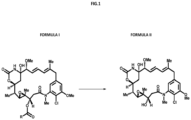
- the invention is directed to a scalable process of preparing maytansinol, FORMULA II, and related analogs, comprising reacting a compound of FORMULA I and related analogs, wherein R is selected from the group consisting essentially of alkyl, branched alkyl, aryl, alkenyl, alkynyl, as well as substituted variations thereof, with at least one organometallic reagent to produce the compound of Formula II, for example; and, isolating the compound of Formula II, for example.
- the compound of Formula I is provided from ansamitocins. In further embodiments, the compound of Formula I is provided as Ansamitocin P-3 (AP-3).
- the organometallic reagent is an organomagnesium reagent.
- the organometallic reagent is selected from the group consisting essentially of methyl magnesium halide, ethyl magnesium halide, propyl magnesium halide, butyl magnesium halide, and hexyl magnesium halide, where the halide is chloride, bromide, or iodide.
- the organometallic reagent comprises magnesium bromide.
- the organometallic reagent is methyl magnesium bromide.
- the organometallic reagent is a nucleophilic organometallic reagent.
- the nucleophilic organometallic reagent is selected from the group consisting essentially of methyl- lithium, ethyl- lithium, n-butyl- lithium, hexyl- lithium and alkylaluminum reagents including but not limited to trimethylaluminum, and organocuprates.
- a compound of Formula II prepared by reacting a compound of Formula I, wherein R is selected from the group consisting essentially of alkyl, branched alkyl, aryl, alkenyl, alkynyl, as well as carbon and heteroatom substituted variations thereof, with at least one organometallic reagent to produce the compound of Formula II; and, isolating the compound of Formula II.
- a scaled process method for converting a mixture of esters of maytansinol, e.g., AP-3 to yield a substantial quantity of maytansinol for subsequent production of ADCs or other toxin-conjugated compounds employ an organometallic reagent.
- Prior methods for cleavage of Ansamitocin P-3 maytansinoids employ aluminum hydride reduction of the ester carbonyls.
- the method described herein employs the use of an organometallic reagent to attack the carbonyl of the esters resulting in the liberation of maytansinol upon aqueous workup.
- the new method is a key step in the conversion of naturally occurring Ansamitocin P-3 sources to an Antibody Drug Conjugate with a maytansine, for example, payload. See Examples I- III, infra.
- Scaled process refers to commercial production scale of maytansinol. Production can range from about 100mg to 1kg or more per batch of maytansinol.
- inert atmosphere e.g, inert gas such as nitrogen or argon, substantially free of water and oxygen
- inert gas such as nitrogen or argon
- Reaction time can be, for example, from about a minute or so to about four or more hours.
- starting material e.g., AP-3
- FORMULA I for example
- R for example, can be alkyl, branched alkyl, aryl, alkenyl, alkynyl, each containing from about 1 to about 20 carbon atoms, as well as variations and substituted variations thereof.
- organometallic reagent including but not limited to, methyl magnesium bromide.
- Organomagesium reagents similar in function to methyl magnesium bromide, such as but not limited to ethyl-, propyl-, butyl-, or hexyl-magnesium bromide can be employed.
- Alternative alkyl magnesium halides may also be employed, where the halogens include chloride and iodide in addition to bromide.
- nucleophilic organometallic reagents including but not limited to methyl-, n-butyl-, or hexyllithium; alkylaluminum reagents, such as trimethylaluminum, and alkyl cuprates, can also be employed.
- Tetrahydrofuran (THF) (oxolane) as well as other polar aprotic ethereal solvents including but not limited to 1,4 dioxane, diethyl ether, cyclopropylmethyl ether, cyclopentylmethyl ether, dimethoxyethane, methyl tert -butyl ether, diglyme, tetrahydropyran, or 2-methyltetrahydrofuran can also be employed as solvents in the process.
- solvents including but not limited to 1,4 dioxane, diethyl ether, cyclopropylmethyl ether, cyclopentylmethyl ether, dimethoxyethane, methyl tert -butyl ether, diglyme, tetrahydropyran, or 2-methyltetrahydrofuran can also be employed as solvents in the process.
- Various carbonyls including but not limited to acetone, methyl ethyl ketone or ethyl acetate can be employed to quench the excess organometallic reagent, e.g., methyl magnesium bromide.
- a proton source for example, including but not limited to methanol, ethanol, propanol, butanol, or tert -butanol can also be employed.
- the resulting precipitant can be dissolved by the addition of water, or a mixture of water with an organic solvent such as tetrahydrofuran, dioxane, acetone, or 2-methyltetrahydrofuran, for example.
- an organic solvent such as tetrahydrofuran, dioxane, acetone, or 2-methyltetrahydrofuran, for example.
- the precipitant can be removed by filtration.
- Water immiscible solvents known to those of ordinary skill can be used to extract the maytasinol including but not limited to ethyl acetate, isopropyl acetate, butyl acetate, methylene chloride, chloroform, 2-methyl tetrahydrofuran, or toluene.
- aqueous workup is performed.
- the resulting product-containing organic layer can be washed with water to reduce the inorganic content, particularly magnesium salts for example.
- the product containing organic layer can be washed with water followed by water saturated with sodium chloride, for example.
- the combined organic layer is then washed with water, followed by brine.
- Suitable alternative aqueous workups are known in the art.
- the residual water in the product containing organic layer can be reduced by suie of a dehydrating agent.
- Na 2 SO 4 , 3A or 4A molecular sieves, or magnesium sulfate, are preferred drying agents.
- Suitable alternative drying agents are also known in the art. Nevertheless, although preferred, employment of a drying agent is optional.
- water can be removed by azeotropic distillation.
- Purification is preferred by normal phase column chromatography by eluting with a gradient of 1-10% v/v methanol in DCM.
- Other chromatography systems e.g. reverse phase HPLC and SFC (Super Critical Fluid Chromatography) can be used.
- Different eluents known in the art for normal phase chromatography can also be used to purify the product, maytansinol. Crystallization can also be employed.
- Maytansinol is often converted to 3-(S-(N-Methylalaninyl)maytansinol ester, or a derivative of 3-(S-(N-Methylalaninyl)maytansinol ester.
- An ester is reported to be important for activity. See FIG.3 . Kupchan, S.M. et al., Journal of Medicinal Chemistry, Vol 21, No. 1, pg 31-37 (1978 ). This is then further conjugated to a linker for eventual conjugation with the monoclonal antibody (mAb) of the ADC.
- mAb monoclonal antibody
- AP-3 used in the following studies was determined (by LC-MS) to have a composition of ca. 75-80% isobutyl, ca. 10% tert-butyl, and ca. 5% ethyl esters.
- Grignard reagents have been used extensively by synthetic organic chemists especially for modifying carboxyl functionality of esters, ketones, and aldehydes.
- Typical conditions for an ester hydrolysis are aqueous bases.
- Aqueous bases fail to effect the result described herein, i.e:
Landscapes
- Chemical & Material Sciences (AREA)
- Organic Chemistry (AREA)
- Nitrogen And Oxygen Or Sulfur-Condensed Heterocyclic Ring Systems (AREA)
- Pharmaceuticals Containing Other Organic And Inorganic Compounds (AREA)
- Preparation Of Compounds By Using Micro-Organisms (AREA)
Abstract
Description
- A scaled process for the preparation of maytansinol from maytansinoids is provided which employs an organometallic reagent.
- This application is entitled to priority under 35 U.S.C. § 119(e) to
U.S. Provisional Application No. 62/812,379 - Maytansine derivatives are highly toxic chemotherapeutic agents employed as payloads integral to Antibody Drug Conjugates (ADCs). 30% of ADCs in development employ maytansine derivatives. Chemical and Engineering News, 93:3,13 (2014). Maytansine derivatives are generally attached to a linker via an alcohol to yield a linker-payload entity which is then attached to an antibody. Maytansinol is a necessary intermediate for the formation of maytansine derivatives and hence the construction of maytansine-derivative-ADCs. Maytansinoids, Ansamitocins, e.g., Ansamitocin P-3 (AP-3), are natural source of a mixture of esters of maytansinol. AP-3, for example, is a polyketide antibiotic isolated from the microorganism Actinosynnema pretiosum. Each maytansinoid ester moiety can be removed to yield the alcohol, maytansinol.
- The discovery of maytansine was originally reported by Kupchan, SM, J Am Chem Soc, 1354 (1972). Maytansinol was similarly reported several years later. Kupchan, SM, J Am Chem Soc, 5294 (1975); Kupchan, SM, J Med Chem, 31 (1978). Isolation of maytansinoids and the conversion of maytansinoids to maytansinol using lithium aluminum hydride is well known in the art.
US Patents 4308269 and4362663 ; Asai, M, Tetrahedron, 1079 (1979). Conversion of maytansinoids to maytansinol using lithium/sodium aluminum alkoxide hydrides and workup. See, e.g.,US Patents 6333410 and7411063 ; J Med Chem 4392 (2006). - Previous descriptions of removing various ester moieties to expose maytansinol employ aluminum hydride. Maytansinol 1 has previously been prepared by the reduction of AP-3 generally using 4-9 equivalents of lithium aluminum hydride (LAH; LiAlH4), or a variant thereof such as lithium trimethoxyaluminum hydride (LiAlH(OMe)3), which itself is prepared from LAH. J. Med. Chem. 49, 4392 (2006). Major drawbacks of this methodology however include (a) formation of overreduced by-product, and (b) formation of des-chloro-maytansinol. The current state of the art higher yielding procedures utilize LiAlH(OMe)3 formed prior to the reaction by the addition of Methanol to LiAlH4. The current high yield reaction generates multiple equivalents of hydrogen gas, which in turn requires specific safety equipment to minimize fire hazard. The current state of the art procedure requires the direct addition of methanol to LiAlH4 to form LiAlH(OMe)3.
US Patent 6,333,410 . The reagents cause difficulty in increasing scale of the exothermic reaction due to dangerous release of hydrogen. Current state of the art reactions also call for direct quench with a protic solvent, such as water or water/ formic acid directly to the reaction mixture. This direct quench results in release of hydrogen gas which becomes more difficult to control as the reaction increases in scale. - The invention is directed to a scalable process of preparing maytansinol, FORMULA II,

- In some embodiments, the compound of Formula I is provided from ansamitocins. In further embodiments, the compound of Formula I is provided as Ansamitocin P-3 (AP-3).
- In some embodiments, the organometallic reagent is an organomagnesium reagent.
- In some embodiments, the organometallic reagent is selected from the group consisting essentially of methyl magnesium halide, ethyl magnesium halide, propyl magnesium halide, butyl magnesium halide, and hexyl magnesium halide, where the halide is chloride, bromide, or iodide. In further embodiments, the organometallic reagent comprises magnesium bromide. In yet further embodiments, the organometallic reagent is methyl magnesium bromide.
- In some embodiments, the organometallic reagent is a nucleophilic organometallic reagent. In further embodimetns, the nucleophilic organometallic reagent is selected from the group consisting essentially of methyl- lithium, ethyl- lithium, n-butyl- lithium, hexyl- lithium and alkylaluminum reagents including but not limited to trimethylaluminum, and organocuprates.
- Provided is a compound of Formula II prepared by reacting a compound of Formula I, wherein R is selected from the group consisting essentially of alkyl, branched alkyl, aryl, alkenyl, alkynyl, as well as carbon and heteroatom substituted variations thereof, with at least one organometallic reagent to produce the compound of Formula II; and, isolating the compound of Formula II.
-
-
Figure 1 illustrates the conversion of esters of maytansinol to maytansinol according to the process of the invention. -
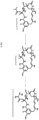
Figure 2 illustrates the conversion of AP-3 to maytansinol in the presence of R-M wherein R= alkyl or branched alkyl; and, M = metal, e.g., Mg, Li, Al, Cu. -
Figure 3 shows Maytansinol, efficiently produced as described herein, can then be converted to 3-(S-(N-Methylalaninyl)maytansinol ester, or a derivative of 3-(S-(N-Methylalaninyl)maytansinol ester. - Unless defined otherwise, all technical and scientific terms used herein have the same meaning as is commonly understood by one of skill in the art to which this invention belongs. All publications and patents referred to herein are incorporated by reference.
- Provided is a scaled process method for converting a mixture of esters of maytansinol, e.g., AP-3 to yield a substantial quantity of maytansinol for subsequent production of ADCs or other toxin-conjugated compounds. The conversion of Ansamitocins, e.g., AP-3, to maytansinol described herein employ an organometallic reagent. Prior methods for cleavage of Ansamitocin P-3 maytansinoids employ aluminum hydride reduction of the ester carbonyls. The method described herein, in contrast, employs the use of an organometallic reagent to attack the carbonyl of the esters resulting in the liberation of maytansinol upon aqueous workup. The new method is a key step in the conversion of naturally occurring Ansamitocin P-3 sources to an Antibody Drug Conjugate with a maytansine, for example, payload. See Examples I- III, infra.
- Scaled process, as used herein, refers to commercial production scale of maytansinol. Production can range from about 100mg to 1kg or more per batch of maytansinol.
- An inert atmosphere, e.g, inert gas such as nitrogen or argon, substantially free of water and oxygen, is a preferred environment to conduct the reaction described herein. A wide range of temperatures apparent to those of ordinary skill can be used in the reaction steps. A range of about -80°C to about 20°C is contemplated. A range of about -40°C to about -15°C is preferred. Reaction time can be, for example, from about a minute or so to about four or more hours.
- With reference to starting material, e.g., AP-3, (FORMULA I, for example) a wide variety of R groups on the starting esters are amenable to the reaction described herein.

- R, for example, can be alkyl, branched alkyl, aryl, alkenyl, alkynyl, each containing from about 1 to about 20 carbon atoms, as well as variations and substituted variations thereof. The corresponding R groups in naturally occurring maytansinoids, e.g., AP-3 population, usually contain about 1-5 carbons.
- The process described herein particularly employs an organometallic reagent, including but not limited to, methyl magnesium bromide. Organomagesium reagents, similar in function to methyl magnesium bromide, such as but not limited to ethyl-, propyl-, butyl-, or hexyl-magnesium bromide can be employed. Alternative alkyl magnesium halides may also be employed, where the halogens include chloride and iodide in addition to bromide. Also, nucleophilic organometallic reagents, including but not limited to methyl-, n-butyl-, or hexyllithium; alkylaluminum reagents, such as trimethylaluminum, and alkyl cuprates, can also be employed.
- Tetrahydrofuran (THF) (oxolane) as well as other polar aprotic ethereal solvents including but not limited to 1,4 dioxane, diethyl ether, cyclopropylmethyl ether, cyclopentylmethyl ether, dimethoxyethane, methyl tert-butyl ether, diglyme, tetrahydropyran, or 2-methyltetrahydrofuran can also be employed as solvents in the process.
- Various carbonyls including but not limited to acetone, methyl ethyl ketone or ethyl acetate can be employed to quench the excess organometallic reagent, e.g., methyl magnesium bromide. A proton source, for example, including but not limited to methanol, ethanol, propanol, butanol, or tert-butanol can also be employed.
- The resulting precipitant can be dissolved by the addition of water, or a mixture of water with an organic solvent such as tetrahydrofuran, dioxane, acetone, or 2-methyltetrahydrofuran, for example. Alternatively the precipitant can be removed by filtration.
- Water immiscible solvents known to those of ordinary skill can be used to extract the maytasinol including but not limited to ethyl acetate, isopropyl acetate, butyl acetate, methylene chloride, chloroform, 2-methyl tetrahydrofuran, or toluene.
- An aqueous workup is performed. The resulting product-containing organic layer can be washed with water to reduce the inorganic content, particularly magnesium salts for example. The product containing organic layer can be washed with water followed by water saturated with sodium chloride, for example. The combined organic layer is then washed with water, followed by brine. Suitable alternative aqueous workups are known in the art. The residual water in the product containing organic layer can be reduced by suie of a dehydrating agent. Na2SO4, 3A or 4A molecular sieves, or magnesium sulfate, are preferred drying agents. Suitable alternative drying agents are also known in the art. Nevertheless, although preferred, employment of a drying agent is optional. Alternatively, for example, water can be removed by azeotropic distillation.
- Purification is preferred by normal phase column chromatography by eluting with a gradient of 1-10% v/v methanol in DCM. Other chromatography systems, e.g. reverse phase HPLC and SFC (Super Critical Fluid Chromatography) can be used. Different eluents known in the art for normal phase chromatography can also be used to purify the product, maytansinol. Crystallization can also be employed.
- Maytansinol is often converted to 3-(S-(N-Methylalaninyl)maytansinol ester, or a derivative of 3-(S-(N-Methylalaninyl)maytansinol ester. An ester is reported to be important for activity. See
FIG.3 . Kupchan, S.M. et al., Journal of Medicinal Chemistry, Vol 21, No. 1, pg 31-37 (1978). This is then further conjugated to a linker for eventual conjugation with the monoclonal antibody (mAb) of the ADC. - AP-3 used in the following studies was determined (by LC-MS) to have a composition of ca. 75-80% isobutyl, ca. 10% tert-butyl, and ca. 5% ethyl esters.
- Grignard reagents have been used extensively by synthetic organic chemists especially for modifying carboxyl functionality of esters, ketones, and aldehydes. An attempt was made in which AP-3 was treated with 3 eq. of methyl magnesium bromide (MeMgBr) at -30°C and then warmed to 0°C. The reaction was monitored periodically by LC-MS and was observed to result in ca. 50% conversion to maytansinol 1 (+50% AP-3) after stirring for 3 h, but resulted in the formation of previously unknown impurities when stirred longer. Owing to this initial success, the reaction was repeated with 10-12 eq. of MeMgBr and found to result in ca. 90% conversion to
maytansinol 1. Initially the reaction was quenched at 0°C using aq. HCL solution. However, it was later determined that quenching the reaction with excess of either tert-butanol or acetone resulted in the formation of other impurities during quenching. When acetone was used for quenching, a precipitate was obtained, which was then dissolved by the addition of water followed by extraction of the product with ethyl acetate. Whereas when t-butanol was used, a homogeneous solution was obtained. Since the use of acetone as the quenching agent would result in tert-butanol as the by-product after addition of water, acetone was used in all subsequent reactions. The use of acetone also minimizes the release of methane gas upon quenching. Thus, the reaction was scaled-up using 250 mg of AP-3 and isolated ca. 160 mg (ca. 70% yield) ofmaytansinol 1 after purification by normal-phase column chromatography eluting with a gradient of 1-10% v/v methanol in methylene chloride (DCM). - The reaction using MeMgBr was attempted in DCM as the solvent, but was observed to be sluggish in that ca. 30% of AP-3 still remained even after stirring at room temperature (rt) overnight (16 h). An attempt was also made to improve the reaction using 13 eq. "Turbo Grignard" (mixture of iPr-MgCl+LiCl; 1.3 M solution in THF), but was observed to be sluggish and resulted in dehydrated maytansinol as the main product.
- To a clean, dry 25 mL round bottomed flask equipped with a magnetic stirrer, was charged AP-3 (250 mg, 0.39 mmol) followed by THF (2.0 mL). The mixture was stirred under argon at rt for 15-20 min to give a clear homogeneous solution. The resultant solution was cooled to -30 °C and then MeMgBr (1.94 M; 2.4 mL; 4.72 mmol; 12 eq.) was added dropwise at -30°C via syringe under argon. After the completion of addition, the reaction mixture was warmed to 0°C, at which point LC-MS analysis indicated mainly (≥ 90%) the desired product. At this point, acetone (10-15 mL) was added to the reaction mixture at 0°C initially gradually and then in one portion later. A white precipitate formed, which was transferred to a breaker and then dissolved by the addition of water (15-20 mL). The resultant solution was extracted using ethyl acetate (5 x 25-30 mL). The combined organic layer was then washed with water, brine, dried (Na2SO4), and then concentrated to give a crude product, which was purified by normal phase column chromatography by eluting with a gradient of 1-10% v/v methanol in DCM. The fractions containing the desired product were pooled and concentrated to give 0.158 g (71%) of
maytansinol 1 as a white solid. - Typical conditions for an ester hydrolysis are aqueous bases. Aqueous bases fail to effect the result described herein, i.e:

- Aqueous bases do not work in this reaction. A summary of conditions previously attempted by experts throughout the years to effect the result described herein are set forth as follows:
Maytansine (1a) was first reported in 1972 by Kupchan et al. J. Am. Chem Soc., 1354 (1972). An isolation of ansamitocins (maytaninoids) by Asai et al. from the broth of Nocardia assigned the nomenclature inFigure 1 for the different esters atCarbon 3. Tetrahedron, 1079 (1979).
- la: R = N-acetyl-N-Me alanine: Maytansine
- 1b: R = acetate: Ansamitocin P-1
- 1c: R = proprionate: Ansamitocin P-2
- 1d: R = iso-butyl: Ansamitocin P-3
- le: R = see-butyl: Ansamitocin P-3'
- 1f: R = iso-amyl: Ansamitocin P-4
- Removal of the ester at C-3 yields secondary alcohol Maytansinol (2).

- The revealed secondary alcohol is used to link maytansines to linkers used in Antibody Drug Conjugates. See Pillow, T. et al. J. Med. Chem. 7890 (2014). The first reported removal of the esters to form 2 was reported by Kupchan, et al. J. Am. Chem Soc., 1354 (1972). LiAlH4 in tetrahydrofuran was reported to convert Maytansine (1a) to Maytasinol (2) in 40% yield. Further details were provided by Kupchan et al. in 1978. J Med Chem, 31. The material from this procedure required three purifications, two preparative thin layer chromatographies, followed by an alumina column.
- While multiple reported methods exist for the removal of an ester to an alcohol, it is well known in the art that the removal of the ester moiety from 1 to 2 is non-trivial. Greene, T.W., Wuts, P.G.M. Protecting Groups in Organic Synthesis, Third Edition, pg 149 to 178 (1999). Widdeson, et al., reported that common ester removal strategies degrade the compound. J. Med. Chem., 4392 (2006). For example, basic hydrolysis results in elimination of the ester to form a new olefin. Several alternative reductive reagents to LiAlH4, such as DIBAL, NaBH4, and Red-Al led to low yields and multiple side products. A wide panel of esterases was also unsuccessful.
- Indeed, according to Widdeson, et al.
--"Because the C3 ester group in maytansinoids is susceptible to elimination under mild basic conditions (pH >9) to give the α,β-unsaturated maytansinoid maysine, ester hydrolysis was achieved through a reductive cleavage process. The previously described method (Kupchan, SM, et al., J. Med. Chem. 21:31 (1978)) for the reductive cleavage of the C3 ester used lithium aluminum hydride and gave low yields of maytansinol with several side products. Several other reducing agents, including DIBAL, NaBH4, Red-Al, or Red-Al + 1 eq methanol, gave poor yields and multiple side products. Attempted enzymatic cleavage of the ester using a wide panel of commercially available esterases and lipases was also unsuccessful, with no detectable hydrolysis. However, the ester group in the ansamitocins was efficiently cleaved using the mild reducing agent lithium trimethoxyaluminum hydride, under controlled temperature (-30 to -40 °C), to give maytansinol in good yields. Higher reaction temperatures led to epoxide opening, whereas colder reaction temperatures resulted in a high proportion of unreacted starting material."-- - J. Med. Chem., 49:4392 (2006).
In 2001 Chari reported the use of lithium or sodium alkoxy hydrides as an alternative to LiAlH4.US 6,333,410 . Chari and Widdison later reported that specific work up conditions are required to selectively break a bridged acetal intermediate to afford product 2 in high yields.WO 2007/05650 - All publications and patents referred to herein are incorporated by reference. Various modifications and variations of the described subject matter will be apparent to those skilled in the art without departing from the scope and spirit of the invention. Although the invention has been described in connection with specific embodiments, it should be understood that the invention as claimed should not be unduly limited to these embodiments. Indeed, various modifications for carrying out the invention are obvious to those skilled in the art and are intended to be within the scope of the following claims.
- The invention is further described by the following numbered items:
- 1. A scaled process of preparing a compound of Formula II

- 2. The method according to item1 wherein the compound of Formula I is provided from ansamitocins.
- 3. The method according to item2 wherein the compound of Formula I is provided as Ansamitocin P-3 (AP-3).
- 4. The method according to item1 wherein the organometallic reagent is an organomagesium reagent.
- 5. The method according to item4 wherein the organometallic reagent is selected from the group consisting essentially of methyl magnesium halide, ethyl magnesium halide, propyl magnesium halide, butyl magnesium halide, and hexyl magnesium halide, where the halide is chloride, bromide, or iodide.
- 6. The method according to item5 wherein the organometallic reagent comprises magnesium bromide.
- 7. The method according toitem6 wherein the organometallic reagent is methyl magnesium bromide.
- 8. The method according to item1 wherein the organometallic reagent is a nucleophilic organometallic reagent .
- 9. The method according to item8 wherein the nucleophilic organometallic reagent is selected from the group consisting essentially of methyl- lithium, ethyl- lithium, n-butyllithium, hexyl- lithium and alkylaluminum reagents including but not limited to trimethylaluminum, and organocuprates.
- 10. A compound of Formula II prepared by reacting a compound of Formula I, wherein R is selected from the group consisting essentially of alkyl, branched alkyl, aryl, alkenyl, alkynyl, as well as carbon and heteroatom substituted variations thereof, with at least one organometallic reagent to produce the compound of Formula II; and, isolating the compound of Formula II.
Claims (7)
- A method of preparing a compound of Formula II

- The method according to claim 1 wherein the compound of Formula I is provided from ansamitocins.
- The method according to claim 2 wherein the compound of Formula I is provided as Ansamitocin P-3 (AP-3).
- The method according to claim 1, wherein the organocuprate is an alkyl cuprate.
- The method according to claim 4, wherein the alkyl cuprate is a branched alkyl cuprate.
- The method according to any one of the preceding claims, wherein the polar aprotic ethereal solvent is selected from the group consisting of 1,4-dioxane, diethyl ether, cyclopropylmethyl ether, cyclopentylmethyl ether, dimethoxyethane, methyl tert-butyl ether, diglyme, tetrahydropyran and 2-methyltetrahydrofuran.
- A method for producing a 3-(S)-(N-Methylalaninyl)maytansinol ester, the method comprising the steps of(i) preparing a compound of Formula II according to the method of any one of claims 1 to 6; and(ii) esterifying the compound of Formula II to produce the 3-(S)-(N-Methylalaninyl)maytansinol ester.
Applications Claiming Priority (3)
| Application Number | Priority Date | Filing Date | Title |
|---|---|---|---|
| US201962812379P | 2019-03-01 | 2019-03-01 | |
| EP20715583.9A EP3931198B1 (en) | 2019-03-01 | 2020-02-28 | Preparation of maytansinol |
| PCT/US2020/020452 WO2020180709A1 (en) | 2019-03-01 | 2020-02-28 | Preparation of maytansinol |
Related Parent Applications (1)
| Application Number | Title | Priority Date | Filing Date |
|---|---|---|---|
| EP20715583.9A Division EP3931198B1 (en) | 2019-03-01 | 2020-02-28 | Preparation of maytansinol |
Publications (1)
| Publication Number | Publication Date |
|---|---|
| EP4219509A1 true EP4219509A1 (en) | 2023-08-02 |
Family
ID=70057290
Family Applications (2)
| Application Number | Title | Priority Date | Filing Date |
|---|---|---|---|
| EP20715583.9A Active EP3931198B1 (en) | 2019-03-01 | 2020-02-28 | Preparation of maytansinol |
| EP23165128.2A Withdrawn EP4219509A1 (en) | 2019-03-01 | 2020-02-28 | Preparation of maytansinol |
Family Applications Before (1)
| Application Number | Title | Priority Date | Filing Date |
|---|---|---|---|
| EP20715583.9A Active EP3931198B1 (en) | 2019-03-01 | 2020-02-28 | Preparation of maytansinol |
Country Status (7)
| Country | Link |
|---|---|
| US (1) | US12227519B2 (en) |
| EP (2) | EP3931198B1 (en) |
| JP (1) | JP7343604B2 (en) |
| KR (1) | KR102667230B1 (en) |
| CN (1) | CN113825759B (en) |
| ES (1) | ES2949511T3 (en) |
| WO (1) | WO2020180709A1 (en) |
Families Citing this family (1)
| Publication number | Priority date | Publication date | Assignee | Title |
|---|---|---|---|---|
| CN113461708A (en) * | 2021-07-22 | 2021-10-01 | 深圳市泰尔康生物医药科技有限公司 | Ansamitocin P-3 derivative and application thereof in preparation of drugs for treating gastric cancer |
Citations (6)
| Publication number | Priority date | Publication date | Assignee | Title |
|---|---|---|---|---|
| US4308269A (en) | 1979-06-11 | 1981-12-29 | Takeda Chemical Industries, Ltd. | Maytansinoids, pharmaceutical compositions thereof and method of use thereof |
| US4362663A (en) | 1979-09-21 | 1982-12-07 | Takeda Chemical Industries, Ltd. | Maytansinoid compound |
| US6333410B1 (en) | 2000-08-18 | 2001-12-25 | Immunogen, Inc. | Process for the preparation and purification of thiol-containing maytansinoids |
| WO2007005650A2 (en) | 2005-06-30 | 2007-01-11 | Jeld-Wen, Inc. | Molded polymeric structural members and compositions and methods for making them |
| US7411063B2 (en) | 2005-11-08 | 2008-08-12 | Immunogen, Inc. | Process for preparation of maytansinol |
| WO2016061718A1 (en) * | 2014-10-24 | 2016-04-28 | 南京联宁生物制药有限公司 | Compound and preparation method therefor, and method for preparing maytansine dm1 |
Family Cites Families (3)
| Publication number | Priority date | Publication date | Assignee | Title |
|---|---|---|---|---|
| US20020156274A1 (en) * | 2001-03-16 | 2002-10-24 | Terfloth Gerald J. | Process for preparing maytansinol |
| AU2003228998A1 (en) * | 2002-05-13 | 2003-12-02 | Smithkline Beecham Corporation | Process for preparing maytansinol |
| WO2021056274A1 (en) * | 2019-09-25 | 2021-04-01 | Huawei Technologies Co., Ltd. | Full surface visual inspection system for an object having a sheet shape |
-
2020
- 2020-02-28 CN CN202080017842.1A patent/CN113825759B/en active Active
- 2020-02-28 WO PCT/US2020/020452 patent/WO2020180709A1/en not_active Ceased
- 2020-02-28 JP JP2021551848A patent/JP7343604B2/en active Active
- 2020-02-28 KR KR1020217031541A patent/KR102667230B1/en active Active
- 2020-02-28 ES ES20715583T patent/ES2949511T3/en active Active
- 2020-02-28 EP EP20715583.9A patent/EP3931198B1/en active Active
- 2020-02-28 US US17/310,941 patent/US12227519B2/en active Active
- 2020-02-28 EP EP23165128.2A patent/EP4219509A1/en not_active Withdrawn
Patent Citations (7)
| Publication number | Priority date | Publication date | Assignee | Title |
|---|---|---|---|---|
| US4308269A (en) | 1979-06-11 | 1981-12-29 | Takeda Chemical Industries, Ltd. | Maytansinoids, pharmaceutical compositions thereof and method of use thereof |
| US4362663A (en) | 1979-09-21 | 1982-12-07 | Takeda Chemical Industries, Ltd. | Maytansinoid compound |
| US6333410B1 (en) | 2000-08-18 | 2001-12-25 | Immunogen, Inc. | Process for the preparation and purification of thiol-containing maytansinoids |
| WO2002016368A1 (en) * | 2000-08-18 | 2002-02-28 | Immunogen, Inc. | Process for the preparation and purification of thiol-containing maytansinoids |
| WO2007005650A2 (en) | 2005-06-30 | 2007-01-11 | Jeld-Wen, Inc. | Molded polymeric structural members and compositions and methods for making them |
| US7411063B2 (en) | 2005-11-08 | 2008-08-12 | Immunogen, Inc. | Process for preparation of maytansinol |
| WO2016061718A1 (en) * | 2014-10-24 | 2016-04-28 | 南京联宁生物制药有限公司 | Compound and preparation method therefor, and method for preparing maytansine dm1 |
Non-Patent Citations (16)
| Title |
|---|
| ASAI ET AL., TETRAHEDRON, 1979, pages 1079 |
| ASAI M ET AL: "Isolation, chemical characterization and structure of ansamitocin, a new antitumor ansamycin antibiotic", TETRAHEDRON, ELSEVIER SCIENCE PUBLISHERS, AMSTERDAM, NL, vol. 35, no. 9, 1 January 1979 (1979-01-01), pages 1079 - 1085, XP026614855, ISSN: 0040-4020, [retrieved on 19790101], DOI: 10.1016/S0040-4020(01)93726-3 * |
| CHEMICAL AND ENGINEERING NEWS, vol. 93, no. 3, 2014, pages 13 |
| GREENE, T.W.WUTS, P.G.M.: "Protecting Groups in Organic Synthesis", 1999, pages: 149,178 |
| J MED CHEM, 2006, pages 4392 |
| KUPCHAN ET AL., J MED CHEM, 1978, pages 31 |
| KUPCHAN ET AL., J. AM. CHEM SOC., 1972, pages 1354 |
| KUPCHAN S M ET AL: "Structural Reqirements for Antileukemic Activity among the Naturally Occurring and Semisynthetic Maytansinoids", JOURNAL OF MEDICINAL CHEMISTRY, AMERICAN CHEMICAL SOCIETY, US, vol. 21, no. 1, 1 January 1978 (1978-01-01), pages 31 - 37, XP002278688, ISSN: 0022-2623, DOI: 10.1021/JM00199A006 * |
| KUPCHAN, S.M. ET AL., JOURNAL OF MEDICINAL CHEMISTRY, vol. 21, no. 1, 1978, pages 31 - 37 |
| KUPCHAN, SM ET AL., J. MED. CHEM., vol. 21, 1978, pages 31 |
| KUPCHAN, SM, J AM CHEM SOC, 1972, pages 1354 |
| KUPCHAN, SM: "Maytansinol was similarly reported several years later", J AM CHEM SOC, 1975, pages 5294 |
| LAH. J. MED. CHEM., vol. 49, 2006, pages 4392 |
| PILLOW, T. ET AL., J. MED. CHEM., 2014, pages 7890 |
| WAYNE C. WIDDISON ET AL: "Semisynthetic Maytansine Analogues for the Targeted Treatment of Cancer", JOURNAL OF MEDICINAL CHEMISTRY, vol. 49, no. 14, 1 July 2006 (2006-07-01), US, pages 4392 - 4408, XP055572900, ISSN: 0022-2623, DOI: 10.1021/jm060319f * |
| WIDDESON ET AL., J. MED. CHEM., vol. 49, 2006, pages 4392 |
Also Published As
| Publication number | Publication date |
|---|---|
| US20220162230A1 (en) | 2022-05-26 |
| JP7343604B2 (en) | 2023-09-12 |
| JP2022532822A (en) | 2022-07-20 |
| ES2949511T3 (en) | 2023-09-29 |
| EP3931198A1 (en) | 2022-01-05 |
| KR20210135545A (en) | 2021-11-15 |
| CN113825759A (en) | 2021-12-21 |
| CN113825759B (en) | 2024-06-04 |
| WO2020180709A1 (en) | 2020-09-10 |
| KR102667230B1 (en) | 2024-05-21 |
| US12227519B2 (en) | 2025-02-18 |
| EP3931198B1 (en) | 2023-04-19 |
Similar Documents
| Publication | Publication Date | Title |
|---|---|---|
| Koot et al. | (R)-1-Acetyl-5-isopropoxy-3-pyrrolin-2-one: a versatile chiral dienophile from (S)-malic acid | |
| EP3931198B1 (en) | Preparation of maytansinol | |
| EP4289818A1 (en) | Total synthesis method for vitamin a, derivative and deuterated compound thereof | |
| Stuk et al. | Site-selective hydroxylation of steroids via oxometalloporphinates covalently linked to ring D: introduction of hydroxyl groups into the C (9) and C (12) position of 5. alpha.-androstanes | |
| WO2023118045A1 (en) | Process for the controlled synthesis of voclosporin | |
| CN113105319A (en) | Preparation method of biparidic acid | |
| HK40067144A (en) | Preparation of maytansinol | |
| HK40067144B (en) | Preparation of maytansinol | |
| EP1507781A2 (en) | Process for preparing maytansinol | |
| WO2006014872A2 (en) | Novel processes for stereoselective synthesis of trans isatx 247 | |
| de Queiroz et al. | Bio-oxidation of progesterone by Penicillium oxalicum CBMAI 1185 and evaluation of the cytotoxic activity | |
| EP1618110A2 (en) | A process for the stereoselective synthesis of lactones | |
| Ito et al. | Formation of a functionalized cyclobutane ring through the reaction of γ, γ-dialkoxyallylic zirconium species with acrylamide | |
| JPH0639468B2 (en) | Hydroquinone derivative | |
| Hanzawa et al. | New “Cp2Zr”-mediated ring transformations of 2-vinylheterocycles to carbocycles | |
| Gössinger et al. | Approach towards an EPC synthesis of nodusmicin—III. Preparation of the oxygen bridged decalin part of nodusmicin | |
| CA2503899A1 (en) | Stereospecific reduction of sapogen-3-ones | |
| CN119431279B (en) | Method for synthesizing chiral cyclic ether by using hydroxyketone, chiral cyclic ether and application thereof | |
| Rao et al. | Stereoselective synthesis of [2S, 3R]-β-hydroxy ornithine | |
| CA1095032A (en) | Mono-deuterated, 15-hydroxyprostaglandins | |
| ITMI941846A1 (en) | PROCESS FOR THE PREPARATION OF GESTODENE | |
| CN115181055A (en) | Preparation method of intermediate racemic mixture | |
| CN122010958A (en) | Synthesis method of natural product Pyrroloazocine indole alkaloid skeleton | |
| JPH05320168A (en) | Production of optically active lactone compound | |
| CN119306558A (en) | A method for preparing high-performance fuel caged hydrocarbon compound |
Legal Events
| Date | Code | Title | Description |
|---|---|---|---|
| PUAI | Public reference made under article 153(3) epc to a published international application that has entered the european phase |
Free format text: ORIGINAL CODE: 0009012 |
|
| STAA | Information on the status of an ep patent application or granted ep patent |
Free format text: STATUS: REQUEST FOR EXAMINATION WAS MADE |
|
| 17P | Request for examination filed |
Effective date: 20230329 |
|
| AC | Divisional application: reference to earlier application |
Ref document number: 3931198 Country of ref document: EP Kind code of ref document: P |
|
| AK | Designated contracting states |
Kind code of ref document: A1 Designated state(s): AL AT BE BG CH CY CZ DE DK EE ES FI FR GB GR HR HU IE IS IT LI LT LU LV MC MK MT NL NO PL PT RO RS SE SI SK SM TR |
|
| RAP3 | Party data changed (applicant data changed or rights of an application transferred) |
Owner name: CELGENE CORPORATION |
|
| STAA | Information on the status of an ep patent application or granted ep patent |
Free format text: STATUS: EXAMINATION IS IN PROGRESS |
|
| 17Q | First examination report despatched |
Effective date: 20250217 |
|
| STAA | Information on the status of an ep patent application or granted ep patent |
Free format text: STATUS: THE APPLICATION IS DEEMED TO BE WITHDRAWN |
|
| 18D | Application deemed to be withdrawn |
Effective date: 20250618 |