EP4219443A1 - Method for preparing intermediate for synthesis of sphingosine-1-phosphate receptor agonist - Google Patents
Method for preparing intermediate for synthesis of sphingosine-1-phosphate receptor agonist Download PDFInfo
- Publication number
- EP4219443A1 EP4219443A1 EP21880460.7A EP21880460A EP4219443A1 EP 4219443 A1 EP4219443 A1 EP 4219443A1 EP 21880460 A EP21880460 A EP 21880460A EP 4219443 A1 EP4219443 A1 EP 4219443A1
- Authority
- EP
- European Patent Office
- Prior art keywords
- compound
- formula
- reaction
- alkyl
- preparing
- Prior art date
- Legal status (The legal status is an assumption and is not a legal conclusion. Google has not performed a legal analysis and makes no representation as to the accuracy of the status listed.)
- Pending
Links
Classifications
-
- C—CHEMISTRY; METALLURGY
- C07—ORGANIC CHEMISTRY
- C07C—ACYCLIC OR CARBOCYCLIC COMPOUNDS
- C07C67/00—Preparation of carboxylic acid esters
- C07C67/08—Preparation of carboxylic acid esters by reacting carboxylic acids or symmetrical anhydrides with the hydroxy or O-metal group of organic compounds
-
- C—CHEMISTRY; METALLURGY
- C07—ORGANIC CHEMISTRY
- C07C—ACYCLIC OR CARBOCYCLIC COMPOUNDS
- C07C45/00—Preparation of compounds having >C = O groups bound only to carbon or hydrogen atoms; Preparation of chelates of such compounds
- C07C45/61—Preparation of compounds having >C = O groups bound only to carbon or hydrogen atoms; Preparation of chelates of such compounds by reactions not involving the formation of >C = O groups
- C07C45/67—Preparation of compounds having >C = O groups bound only to carbon or hydrogen atoms; Preparation of chelates of such compounds by reactions not involving the formation of >C = O groups by isomerisation; by change of size of the carbon skeleton
- C07C45/673—Preparation of compounds having >C = O groups bound only to carbon or hydrogen atoms; Preparation of chelates of such compounds by reactions not involving the formation of >C = O groups by isomerisation; by change of size of the carbon skeleton by change of size of the carbon skeleton
- C07C45/676—Preparation of compounds having >C = O groups bound only to carbon or hydrogen atoms; Preparation of chelates of such compounds by reactions not involving the formation of >C = O groups by isomerisation; by change of size of the carbon skeleton by change of size of the carbon skeleton by elimination of carboxyl groups
-
- C—CHEMISTRY; METALLURGY
- C07—ORGANIC CHEMISTRY
- C07C—ACYCLIC OR CARBOCYCLIC COMPOUNDS
- C07C67/00—Preparation of carboxylic acid esters
- C07C67/30—Preparation of carboxylic acid esters by modifying the acid moiety of the ester, such modification not being an introduction of an ester group
- C07C67/307—Preparation of carboxylic acid esters by modifying the acid moiety of the ester, such modification not being an introduction of an ester group by introduction of halogen; by substitution of halogen atoms by other halogen atoms
-
- C—CHEMISTRY; METALLURGY
- C07—ORGANIC CHEMISTRY
- C07C—ACYCLIC OR CARBOCYCLIC COMPOUNDS
- C07C45/00—Preparation of compounds having >C = O groups bound only to carbon or hydrogen atoms; Preparation of chelates of such compounds
- C07C45/61—Preparation of compounds having >C = O groups bound only to carbon or hydrogen atoms; Preparation of chelates of such compounds by reactions not involving the formation of >C = O groups
- C07C45/64—Preparation of compounds having >C = O groups bound only to carbon or hydrogen atoms; Preparation of chelates of such compounds by reactions not involving the formation of >C = O groups by introduction of functional groups containing oxygen only in singly bound form
-
- C—CHEMISTRY; METALLURGY
- C07—ORGANIC CHEMISTRY
- C07C—ACYCLIC OR CARBOCYCLIC COMPOUNDS
- C07C45/00—Preparation of compounds having >C = O groups bound only to carbon or hydrogen atoms; Preparation of chelates of such compounds
- C07C45/61—Preparation of compounds having >C = O groups bound only to carbon or hydrogen atoms; Preparation of chelates of such compounds by reactions not involving the formation of >C = O groups
- C07C45/65—Preparation of compounds having >C = O groups bound only to carbon or hydrogen atoms; Preparation of chelates of such compounds by reactions not involving the formation of >C = O groups by splitting-off hydrogen atoms or functional groups; by hydrogenolysis of functional groups
-
- C—CHEMISTRY; METALLURGY
- C07—ORGANIC CHEMISTRY
- C07C—ACYCLIC OR CARBOCYCLIC COMPOUNDS
- C07C45/00—Preparation of compounds having >C = O groups bound only to carbon or hydrogen atoms; Preparation of chelates of such compounds
- C07C45/78—Separation; Purification; Stabilisation; Use of additives
-
- C—CHEMISTRY; METALLURGY
- C07—ORGANIC CHEMISTRY
- C07C—ACYCLIC OR CARBOCYCLIC COMPOUNDS
- C07C49/00—Ketones; Ketenes; Dimeric ketenes; Ketonic chelates
- C07C49/29—Saturated compounds containing keto groups bound to rings
- C07C49/303—Saturated compounds containing keto groups bound to rings to a six-membered ring
-
- C—CHEMISTRY; METALLURGY
- C07—ORGANIC CHEMISTRY
- C07C—ACYCLIC OR CARBOCYCLIC COMPOUNDS
- C07C49/00—Ketones; Ketenes; Dimeric ketenes; Ketonic chelates
- C07C49/29—Saturated compounds containing keto groups bound to rings
- C07C49/337—Saturated compounds containing keto groups bound to rings containing hydroxy groups
- C07C49/345—Saturated compounds containing keto groups bound to rings containing hydroxy groups polycyclic
-
- C—CHEMISTRY; METALLURGY
- C07—ORGANIC CHEMISTRY
- C07C—ACYCLIC OR CARBOCYCLIC COMPOUNDS
- C07C67/00—Preparation of carboxylic acid esters
- C07C67/28—Preparation of carboxylic acid esters by modifying the hydroxylic moiety of the ester, such modification not being an introduction of an ester group
- C07C67/29—Preparation of carboxylic acid esters by modifying the hydroxylic moiety of the ester, such modification not being an introduction of an ester group by introduction of oxygen-containing functional groups
-
- C—CHEMISTRY; METALLURGY
- C07—ORGANIC CHEMISTRY
- C07C—ACYCLIC OR CARBOCYCLIC COMPOUNDS
- C07C67/00—Preparation of carboxylic acid esters
- C07C67/48—Separation; Purification; Stabilisation; Use of additives
- C07C67/62—Use of additives, e.g. for stabilisation
-
- C—CHEMISTRY; METALLURGY
- C07—ORGANIC CHEMISTRY
- C07C—ACYCLIC OR CARBOCYCLIC COMPOUNDS
- C07C69/00—Esters of carboxylic acids; Esters of carbonic or haloformic acids
- C07C69/76—Esters of carboxylic acids having a carboxyl group bound to a carbon atom of a six-membered aromatic ring
- C07C69/94—Esters of carboxylic acids having a carboxyl group bound to a carbon atom of a six-membered aromatic ring of polycyclic hydroxy carboxylic acids, the hydroxy groups and the carboxyl groups of which are bound to carbon atoms of six-membered aromatic rings
-
- C—CHEMISTRY; METALLURGY
- C07—ORGANIC CHEMISTRY
- C07B—GENERAL METHODS OF ORGANIC CHEMISTRY; APPARATUS THEREFOR
- C07B2200/00—Indexing scheme relating to specific properties of organic compounds
- C07B2200/13—Crystalline forms, e.g. polymorphs
-
- C—CHEMISTRY; METALLURGY
- C07—ORGANIC CHEMISTRY
- C07C—ACYCLIC OR CARBOCYCLIC COMPOUNDS
- C07C2602/00—Systems containing two condensed rings
- C07C2602/02—Systems containing two condensed rings the rings having only two atoms in common
- C07C2602/14—All rings being cycloaliphatic
- C07C2602/26—All rings being cycloaliphatic the ring system containing ten carbon atoms
- C07C2602/28—Hydrogenated naphthalenes
Definitions
- the present invention relates to a method of preparing a major intermediate for synthesizing sphigosine-1-phosphate receptor agonists. More specifically, the present invention relates to a novel preparation method capable of large-scale production of an intermediate compound of the following Formula 5 in a high yield with a simple process under mild conditions: wherein, R1 and R2 are each independently hydrogen, alkyl, halogen, haloalkyl or alkoxyalkyl.
- Sphingosine-1-phosphate is produced via an intracellular ceramide pathway, in which ceramide is the starting material. Ceramide is produced via two pathways, the first of which is a de novo biosynthetic pathway. Ceramide is also produced by the degradation of sphingomyelin, a cell membrane constituent, in a cell.
- the S1P level in each tissue is controlled by two biosynthetic sphingosine kinases (SphKs) and two biodegradable S1P phosphatases (S1P lyase and lysophospholipid phosphatases).
- S1P- which is produced via phosphorylation of sphingosine by sphingosine kinase-is known to mediate various cellular responses, such as cell proliferation, cytoskeletal organization and migration, adherence- and tight junction assembly, and morphogenesis.
- S1P exists as a combined form with plasma protein including albumin at high level (100 - 1,000 nM) in plasma, while it is at a low level in tissues.
- S1P binds with S1P receptor, a G-protein coupled receptor, to show various biological functions.
- S1P receptor sub-types S1P1 to S1P5 are known up to now and are named endothelial differentiation gene (EDG) receptors 1, 5, 3, 6 and 8, respectively.
- EDG endothelial differentiation gene
- the S1P receptors are known to be involved in various biological functions such as leukocyte recirculation, neural cell proliferation, morphological changes, migration, endothelial function, vasoregulation and cardiovascular development.
- S1P signaling process via these receptors plays an important role in a series of responses related to multiple sclerosis including inflammation response and the repair process, and a non-selective S1P1 agonist was actually approved as a therapeutic agent for multiple sclerosis.
- S1P receptors are extensively expressed in many cells related to the induction of multiple sclerosis. Especially, S1P1 receptor plays a major role in the immune system. S1P1 receptor is mainly expressed on the surface of lymphocytes such as T cell and B cell, and responds to S1P resulting in involvement in recirculation of lymphocytes.
- the S1P concentration is higher in body fluid than in lymphoid tissue, and therefore lymphocytes leave lymphoid tissue by the difference of S1P concentration to circulate after efferent lymph circulates.
- S1P1 receptor in lymphocytes is down-regulated by S1P1 agonist, the egress of lymphocytes from lymphoid tissue does not occur, resulting in reduced infiltration of autoaggressive lymphocytes which cause inflammation and tissue damage in the central nervous system (CNS).
- CNS central nervous system
- Fingolimod- which is a non-selective S1P1 agonist-has been approved as an oral medication for the treatment of multiple sclerosis. When it binds at S1P1 receptor to be activated, the receptor becomes degraded or internalized from the surface of lymphocytes ironically, and thus it acts as a functional S1P1 antagonism.
- Korean Patent Application Publication No. 10-2014-0104376 discloses novel compounds of the following Formula 1 which are effective as an S 1P receptor agonist: wherein,
- the technical problem of the present invention is the provision of a method suitable for large-scale production of a compound of Formula 5-which is a key intermediate in the synthesis of an excellent sphingosine-1-phosphate receptor agonist in a high yield through a simpler process.
- the present invention provides a method for preparing an intermediate compound of the following Formula 5 comprising the following steps of:
- R1 and R2 are each independently hydrogen, C 1 -C 6 alkyl, halogen, halo-C 1 -C 6 alkyl or C 1 -C 6 alkoxy-C 1 -C 6 alkyl.
- R1 and R2 are each independently hydrogen or C 1 -C 4 alkyl.
- step (i) the compound of Formula 3 is prepared by reacting the compound of Formula 2 with an acetylating agent and a base in an organic solvent.
- the organic solvent of step (i) may be one or more selected from-for example-dichloromethane (DCM), dichloroethane (DCE), toluene, acetonitrile (ACN) and a mixture thereof.
- DCM dichloromethane
- DCE dichloroethane
- ACN acetonitrile
- the acetylating agent of step (i) may be acetyl chloride or acetic anhydride.
- the base of step (i) may be one or more selected from triethylamine (TEA), N,N-diisopropylethylamine (DIPEA), 1,8-diazabicyclo(5.4.0)undec-7-ene (DBU), sodium hydroxide (NaOH), potassium carbonate (K 2 CO 3 ), sodium carbonate (Na 2 CO 3 ) and a mixture thereof.
- TAA triethylamine
- DIPEA N,N-diisopropylethylamine
- DBU 1,8-diazabicyclo(5.4.0)undec-7-ene
- NaOH sodium hydroxide
- K 2 CO 3 potassium carbonate
- Na 2 CO 3 sodium carbonate
- Na 2 CO 3 sodium carbonate
- step (ii) the compound of Formula 4 is prepared by Vilsmeier-Haack reaction of the compound of Formula 3.
- the Vilsmeier-Haack reaction in step (ii) may be carried out at a temperature of 30°C or below, more preferably at a temperature 20 to 25°C.
- step (iii) the compound of Formula 5 is prepared by deprotecting in which an acetyl group is removed from the compound of Formula 4.
- the removal of the acetyl group may be carried out with-for example, K 2 CO 3 .
- the deprotecting reaction for removing the acetyl group may be carried out at room temperature.
- the compound of Formula 5 prepared in step (iii) may be directly crystallized-for example-by dropwise addition of hydrochloric acid (HCl) without processes such as drying or filtration.
- HCl hydrochloric acid
- the preparation method of the present invention does not use dangerous reagents that can contaminate a reactor such as AlCl 3 , and there is no problem of batch fail due to reaction stop or progress of side reactions.
- the preparation method of the present invention can provide large-scale production of the intermediate of Formula 5 in a high yield under mild conditions by carrying out Vilsmeier-Haack reaction and deprotecting reaction at room temperature while securing safety and stability.
- Example 1-1 Synthesis of acetic acid 5-oxo-5,6,7,8-tetrahydro-naphthalen-2-yl ester
- 6-Hydroxy-3,4-dihydro-2H-naphthalen-1-one (3.9 kg, 24.07 mol) and dichloromethane (DCM, 25.88 kg) were added to a reactor, and the internal temperature was cooled to 0°C.
- Acetyl chloride (AcCl, 2.08 kg, 26.47 mol) was slowly added dropwise at 10°C or below, and when the addition was completed, triethylamine (TEA, 2.92 kg, 28.88 mol) was added dropwise at 10°C or below to proceed with the reaction.
- the internal temperature was raised to room temperature, and the reaction was carried out for 1 hour.
- IPC Ion-pair chromatography
- Phosphoryl chloride (POCl 3 , 10.5 kg, 68.45 mol) was added to a reactor, and the internal temperature was cooled to 0°C.
- Dimethylformamide (DMF, 8.34 kg, 114.09 mol) was slowly added dropwise at 10°C or below, followed by stirring for 30 minutes.
- 4.66 Kg of 5-oxo-5,6,7,8-tetrahydro-naphthalen-2-yl ester was slowly added dropwise to the reactor at 30°C or below, and when the addition was completed, the reaction was carried out for 3 hours.
- IPC was carried out by HPLC, and the reaction was completed (acetic acid 5-oxo-5,6,7,8-tetrahydro-naphthalen-2-yl ester ⁇ 2%).
- 46.60 Kg of purified water and 29.42 kg of ethyl acetate (EtOAc) were added to another reactor, and the internal temperature was cooled to 0°C.
- EtOAc ethyl acetate
- the above solution was slowly added dropwise to carry out quenching by decomposing the remaining POCl 3 .
- the organic layer was collected in another reactor, and the aqueous layer was further extracted with 12.61 kg of EtOAc. The aqueous layer was removed, and the organic layer in another reactor was added.
Landscapes
- Chemical & Material Sciences (AREA)
- Organic Chemistry (AREA)
- Chemical Kinetics & Catalysis (AREA)
- Organic Low-Molecular-Weight Compounds And Preparation Thereof (AREA)
Abstract
Description
- The present invention relates to a method of preparing a major intermediate for synthesizing sphigosine-1-phosphate receptor agonists. More specifically, the present invention relates to a novel preparation method capable of large-scale production of an intermediate compound of the following Formula 5 in a high yield with a simple process under mild conditions:

R1 and R2 are each independently hydrogen, alkyl, halogen, haloalkyl or alkoxyalkyl. - Sphingosine-1-phosphate (S1P) is produced via an intracellular ceramide pathway, in which ceramide is the starting material. Ceramide is produced via two pathways, the first of which is a de novo biosynthetic pathway. Ceramide is also produced by the degradation of sphingomyelin, a cell membrane constituent, in a cell. The S1P level in each tissue is controlled by two biosynthetic sphingosine kinases (SphKs) and two biodegradable S1P phosphatases (S1P lyase and lysophospholipid phosphatases). S1P-which is produced via phosphorylation of sphingosine by sphingosine kinase-is known to mediate various cellular responses, such as cell proliferation, cytoskeletal organization and migration, adherence- and tight junction assembly, and morphogenesis. S1P exists as a combined form with plasma protein including albumin at high level (100 - 1,000 nM) in plasma, while it is at a low level in tissues.
- S1P binds with S1P receptor, a G-protein coupled receptor, to show various biological functions. As S1P receptor sub-types, S1P1 to S1P5 are known up to now and are named endothelial differentiation gene (EDG) receptors 1, 5, 3, 6 and 8, respectively. The S1P receptors are known to be involved in various biological functions such as leukocyte recirculation, neural cell proliferation, morphological changes, migration, endothelial function, vasoregulation and cardiovascular development.
- In recent years, many studies have found that the S1P signaling process via these receptors plays an important role in a series of responses related to multiple sclerosis including inflammation response and the repair process, and a non-selective S1P1 agonist was actually approved as a therapeutic agent for multiple sclerosis. S1P receptors are extensively expressed in many cells related to the induction of multiple sclerosis. Especially, S1P1 receptor plays a major role in the immune system. S1P1 receptor is mainly expressed on the surface of lymphocytes such as T cell and B cell, and responds to S1P resulting in involvement in recirculation of lymphocytes. In normal condition, the S1P concentration is higher in body fluid than in lymphoid tissue, and therefore lymphocytes leave lymphoid tissue by the difference of S1P concentration to circulate after efferent lymph circulates. However, if S1P1 receptor in lymphocytes is down-regulated by S1P1 agonist, the egress of lymphocytes from lymphoid tissue does not occur, resulting in reduced infiltration of autoaggressive lymphocytes which cause inflammation and tissue damage in the central nervous system (CNS). As a result, a therapeutic effect on multiple sclerosis is obtained. Fingolimod-which is a non-selective S1P1 agonist-has been approved as an oral medication for the treatment of multiple sclerosis. When it binds at S1P1 receptor to be activated, the receptor becomes degraded or internalized from the surface of lymphocytes ironically, and thus it acts as a functional S1P1 antagonism.
- With respect to such S1P receptor,
Korean Patent Application Publication No. 10-2014-0104376 
- X represents C or N,
- R1 represents H or optionally substituted alkyl,
- R2 represents H, optionally substituted alkyl, halogen, CN, CF3 or COCF3,
- W represents C, N, C-alkoxy, C-halogen or C-CN,
- Q represents CH2O or

- S is selected from the following residues:
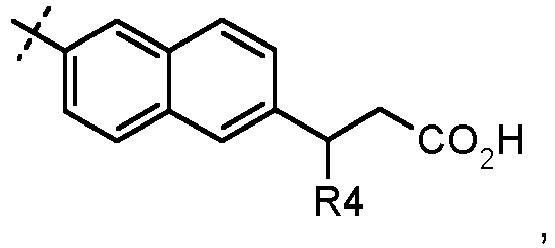


- wherein
- m and n represent independently 0, 1, 2 or 3,
- R3~R10 represent independently H, alkyl, halogen, halogenoalkyl or alkoxyalkyl,
- R11 represents H,

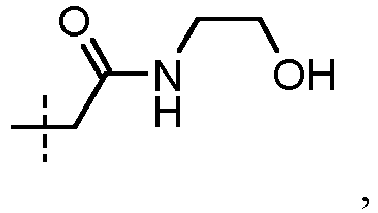
- R12 represents OH, NH2,


- In a specific example of the above document, the preparation of 1-[1-chloro-6-(3-chloro-1-isopropyl-1H-indazol-5-ylmethoxy)-3,4-dihydro-naphthalen-2-ylmethyl]-piperidine-4-carboxylic acid according to the following Reaction Scheme 1 is disclosed ("SG35" in Reaction Scheme 1 refers to "1-chloro-6-hydroxy-3,4-dihydro-naphthalene-2-carbaldehyde").

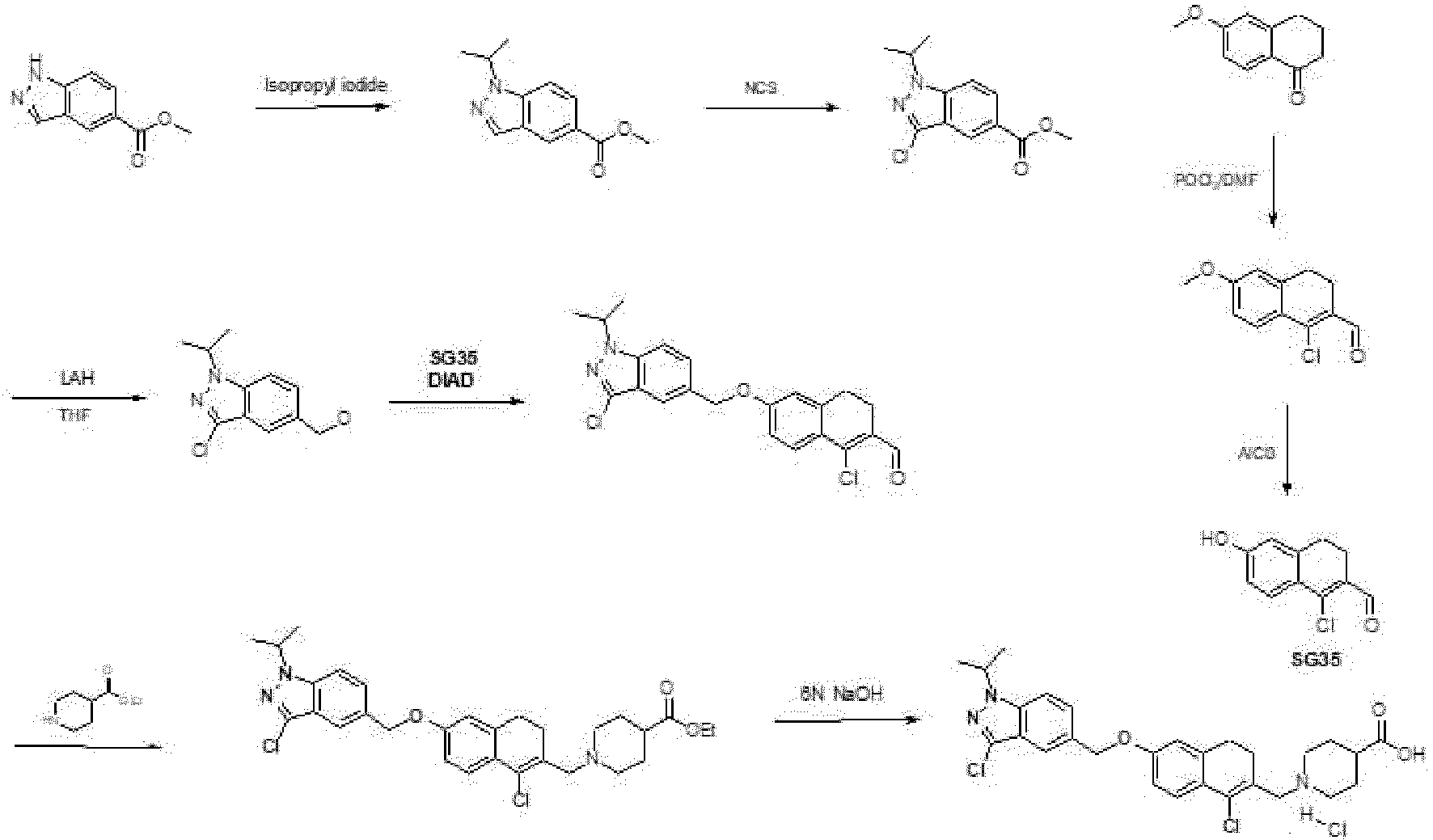
- In the above Reaction Scheme 1, the steps of preparing 1-chloro-6-hydroxy-3,4-dihydro-naphthalene-2-carbaldehyde can be described in detail as the following Reaction Scheme 2.

- First, to a solution in which 6-methoxy-3,4-dihydronaphthalen-1(2H)-one was dissolved in toluene, N,N-dimethylformamide (DMF) and phosphorous oxychloride (POCl3) were added dropwise at 0°C, followed by stirring at 70°C for 6 hours. The reaction mixture was poured into ice and extracted with ethyl acetate. The organic layer was washed with brine, dried and concentrated, and the resulting residue was purified by silica gel column chromatography (hexane:ethyl acetate = 20:1 to 10:1) to obtain 1-chloro-6-methoxy-3,4-dihydro-2-naphthalenecarbaldehyde.
- Next, aluminum chloride (AlCl3) was added to a solution of 1-chloro-6-methoxy-3,4-dihydro-2-naphthalenecarbaldehyde in dichloromethane at 0°C and then stirred at 50°C for 6 hours. The reaction mixture was poured into ice and extracted with ethyl acetate. The organic layer was dried and concentrated, and the resulting residue was purified by silica gel column chromatography (hexane:tetrahydrofuran = 5:1 to 3:1) to obtain 1-chloro-6-hydroxy-3,4-dihydro-2-naphthalenecarbaldehyde.
- However, at the time of Vilsmeier-Haack reaction to obtain 1-chloro-6-methoxy-3,4-dihydro-2-naphthalenecarbaldehyde, there may be an exothermic problem since it reacts at a high temperature of 70°C, and there is a need to improve the yield since the total yield is 80%. In addition, in the reaction to obtain 1-chloro-6-hydroxy-3,4-dihydro-2-naphthalenecarbaldehyde, there may be a reactor contamination problem due to the use of AlCl3 or a safety problem due to the use of hazardous reagents. At the time of using AlCl3 there may be a stability problem due to the occurrence of batch fail according to reaction stop or side reaction progress, and there is a need to improve the yield since the total yield is 70%.
- Accordingly, the technical problem of the present invention is the provision of a method suitable for large-scale production of a compound of Formula 5-which is a key intermediate in the synthesis of an excellent sphingosine-1-phosphate receptor agonist in a high yield through a simpler process.
- To solve the above technical problem, the present invention provides a method for preparing an intermediate compound of the following Formula 5 comprising the following steps of:
- i) a step of preparing a compound of Formula 3 by reacting a compound of Formula 2 with an acetylating agent and a base in an organic solvent,
- ii) a step of preparing a compound of Formula 4 by Vilsmeier-Haack reaction of the compound of Formula 3, and
- iii) a step of preparing a compound of Formula 5 by removing an acetyl group from the compound of Formula 4:


R1 and R2 are each independently hydrogen, alkyl, halogen, haloalkyl or alkoxyalkyl. - The present invention is described in detail hereinafter.
- According to one embodiment of the present invention, in the above Formulas, R1 and R2 are each independently hydrogen, C1-C6 alkyl, halogen, halo-C1-C6 alkyl or C1-C6 alkoxy-C1-C6 alkyl.
- According to another embodiment of the present invention, in the above Formulas, R1 and R2 are each independently hydrogen or C1-C4 alkyl.
- In the preparation method of the present invention, in step (i), the compound of Formula 3 is prepared by reacting the compound of Formula 2 with an acetylating agent and a base in an organic solvent.
- In another embodiment according to the present invention, the organic solvent of step (i) may be one or more selected from-for example-dichloromethane (DCM), dichloroethane (DCE), toluene, acetonitrile (ACN) and a mixture thereof.
- In another embodiment according to the present invention, the acetylating agent of step (i) may be acetyl chloride or acetic anhydride.
- In another embodiment according to the present invention, the base of step (i) may be one or more selected from triethylamine (TEA), N,N-diisopropylethylamine (DIPEA), 1,8-diazabicyclo(5.4.0)undec-7-ene (DBU), sodium hydroxide (NaOH), potassium carbonate (K2CO3), sodium carbonate (Na2CO3) and a mixture thereof.
- In the preparation method of the present invention, in step (ii), the compound of Formula 4 is prepared by Vilsmeier-Haack reaction of the compound of Formula 3.
- In another embodiment according to the present invention, the Vilsmeier-Haack reaction in step (ii) may be carried out at a temperature of 30°C or below, more preferably at a temperature 20 to 25°C.
- In the preparation method of the present invention, in step (iii), the compound of Formula 5 is prepared by deprotecting in which an acetyl group is removed from the compound of Formula 4.
- In another embodiment according to the present invention, the removal of the acetyl group may be carried out with-for example, K2CO3.
- In another embodiment according to the present invention, the deprotecting reaction for removing the acetyl group may be carried out at room temperature.
- In another embodiment according to the present invention, the compound of Formula 5 prepared in step (iii) may be directly crystallized-for example-by dropwise addition of hydrochloric acid (HCl) without processes such as drying or filtration.
- The preparation method of the present invention does not use dangerous reagents that can contaminate a reactor such as AlCl3, and there is no problem of batch fail due to reaction stop or progress of side reactions. As a result, the preparation method of the present invention can provide large-scale production of the intermediate of Formula 5 in a high yield under mild conditions by carrying out Vilsmeier-Haack reaction and deprotecting reaction at room temperature while securing safety and stability.
- Hereinafter, the present invention is explained in more detail with the following examples. However, it must be understood that the protection scope of the present invention is not limited to the examples.
- 6-Hydroxy-3,4-dihydro-2H-naphthalen-1-one (3.9 kg, 24.07 mol) and dichloromethane (DCM, 25.88 kg) were added to a reactor, and the internal temperature was cooled to 0°C. Acetyl chloride (AcCl, 2.08 kg, 26.47 mol) was slowly added dropwise at 10°C or below, and when the addition was completed, triethylamine (TEA, 2.92 kg, 28.88 mol) was added dropwise at 10°C or below to proceed with the reaction. The internal temperature was raised to room temperature, and the reaction was carried out for 1 hour. Ion-pair chromatography (IPC) was carried out by HPLC, and the reaction was completed (6-hydroxy-3,4-dihydro-2H-naphthalen-1-one < 1%). The reaction was terminated by adding 19.5 kg of purified water to the reaction product. Layer separation was carried out to remove water from the upper layer, and the organic layer was additionally washed with 19.5 kg of purified water and distilled under reduced pressure to obtain the title compound (4.66 kg, net yield: 95%).
1H NMR (400MHz, CDCl3): 2.10 (m, 2H), 2.30 (s, 3H), 2.60 (t, 2H), 2.95 (t, 2H), 7.00 (s, 1H), 7.05 (d, 1H), 8.05 (d, 1H) - Phosphoryl chloride (POCl3, 10.5 kg, 68.45 mol) was added to a reactor, and the internal temperature was cooled to 0°C. Dimethylformamide (DMF, 8.34 kg, 114.09 mol) was slowly added dropwise at 10°C or below, followed by stirring for 30 minutes. 4.66 Kg of 5-oxo-5,6,7,8-tetrahydro-naphthalen-2-yl ester was slowly added dropwise to the reactor at 30°C or below, and when the addition was completed, the reaction was carried out for 3 hours. IPC was carried out by HPLC, and the reaction was completed (acetic acid 5-oxo-5,6,7,8-tetrahydro-naphthalen-2-yl ester <2%). 46.60 Kg of purified water and 29.42 kg of ethyl acetate (EtOAc) were added to another reactor, and the internal temperature was cooled to 0°C. The above solution was slowly added dropwise to carry out quenching by decomposing the remaining POCl3. After layer separation, the organic layer was collected in another reactor, and the aqueous layer was further extracted with 12.61 kg of EtOAc. The aqueous layer was removed, and the organic layer in another reactor was added. The collected organic layers were washed with 23.30 kg of purified water and then distilled under reduced pressure to remove the solvent. Methanol (MeOH, 22.95 kg) and K2CO3 (2.68 kg, 19.39 mol) were added to the residue, and the reaction was carried out at room temperature for about 2 hours. IPC was carried out by HPLC, and when the reaction was completed (5-chloro-6-formyl-7,8-dihydronaphthalen-2-yl acetate < 1%), 19.39 kg of 3 N HCl was added dropwise to proceed with crystallization. When crystals were formed, the crystals were kept for 30 minutes, filtered, washed with 24.31 kg of purified water and dried with nitrogen to obtain the title compound (4.31 kg, net yield: 90.5 %).
1H NMR (500MHz, CDCl3): 2.30 (s, 3H), 2.65 (t, 2H), 2.85 (t, 2H), 7.00 (s, 1H), 7.05 (m, 1H), 7.90 (d, 1H), 10.40 (s, 1H)
Claims (11)
- A method for preparing an intermediate compound of the following Formula 5 comprising the following steps of:i) a step of preparing a compound of Formula 3 by reacting a compound of Formula 2 with an acetylating agent and a base in an organic solvent,ii) a step of preparing a compound of Formula 4 by Vilsmeier-Haack reaction of the compound of Formula 3, andiii) a step of preparing a compound of Formula 5 by removing an acetyl group from the compound of Formula 4:


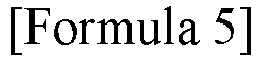

R1 and R2 are each independently hydrogen, alkyl, halogen, haloalkyl or alkoxyalkyl. - The method according to Claim 1, wherein R1 and R2 are each independently hydrogen, C1-C6 alkyl, halogen, halo-C1-C6 alkyl or C1-C6 alkoxy-C1-C6 alkyl.
- The method according to Claim 2, wherein R1 and R2 are each independently hydrogen or C1-C4 alkyl.
- The method according to Claim 1, wherein the organic solvent of step (i) is selected from dichloromethane, dichloroethane, toluene, acetonitrile and a mixture thereof.
- The method according to Claim 1, wherein the acetylating agent of step (i) is acetyl chloride or acetic anhydride.
- The method according to Claim 1, wherein the base of step (i) is selected from N,N-diisopropylethylamine, 1,8-diazabicyclo(5.4.0)undec-7-ene, sodium hydroxide, potassium carbonate, sodium carbonate and a mixture thereof.
- The method according to Claim 1, wherein the Vilsmeier-Haack reaction of step (ii) is carried out at a temperature of 30°C or below.
- The method according to Claim 7, wherein the Vilsmeier-Haack reaction is carried out at a temperature of 20 to 25°C.
- The method according to Claim 1, wherein the removal of acetyl group in step (iii) is carried out with K2CO3.
- The method according to Claim 1, wherein the reaction of step (iii) is carried out at room temperature.
- The method according to Claim 1, wherein the compound of Formula 5 prepared in step (iii) is directly crystallized.
Applications Claiming Priority (2)
| Application Number | Priority Date | Filing Date | Title |
|---|---|---|---|
| KR20200131824 | 2020-10-13 | ||
| PCT/KR2021/014009 WO2022080813A1 (en) | 2020-10-13 | 2021-10-12 | Method for preparing intermediate for synthesis of sphingosine-1-phosphate receptor agonist |
Publications (2)
| Publication Number | Publication Date |
|---|---|
| EP4219443A1 true EP4219443A1 (en) | 2023-08-02 |
| EP4219443A4 EP4219443A4 (en) | 2024-04-17 |
Family
ID=81208482
Family Applications (1)
| Application Number | Title | Priority Date | Filing Date |
|---|---|---|---|
| EP21880460.7A Pending EP4219443A4 (en) | 2020-10-13 | 2021-10-12 | METHOD FOR PREPARING AN INTERMEDIATE FOR THE SYNTHESIS OF A SPHINGOSINE-1-PHOSPHATE RECEPTOR AGONIST |
Country Status (6)
| Country | Link |
|---|---|
| US (1) | US12522554B2 (en) |
| EP (1) | EP4219443A4 (en) |
| KR (1) | KR102647663B1 (en) |
| CN (1) | CN116490490A (en) |
| TW (1) | TWI810675B (en) |
| WO (1) | WO2022080813A1 (en) |
Family Cites Families (7)
| Publication number | Priority date | Publication date | Assignee | Title |
|---|---|---|---|---|
| CA2492922A1 (en) | 2002-07-19 | 2004-01-29 | Pharmacia Corporation | Substituted thiophene carboxamide compounds for the treatment of inflammation |
| JP5315611B2 (en) * | 2004-06-23 | 2013-10-16 | 小野薬品工業株式会社 | Compound having S1P receptor binding ability and use thereof |
| SI2958913T1 (en) | 2013-02-20 | 2018-12-31 | Lg Chem, Ltd. | Sphingosine-1-phosphate receptor agonists, methods of preparing the same, and pharmaceutical compositions containing the same as an active agent |
| KR101651226B1 (en) * | 2014-09-18 | 2016-08-25 | 한림대학교 산학협력단 | A process for the preparation puerariafuran |
| WO2019182191A1 (en) | 2018-03-21 | 2019-09-26 | 경북대학교 산학협력단 | Pharmaceutical composition for prevention or treatment of neurodegenerative disease and comprising cox2-acetylating agent as active ingredient |
| TW202114983A (en) | 2019-08-20 | 2021-04-16 | 日商小野藥品工業股份有限公司 | Preventive and / or therapeutic agents for sip-mediated diseases |
| US20240217935A1 (en) | 2021-04-14 | 2024-07-04 | Lg Chem, Ltd. | Method for preparing intermediate for synthesis of sphingosine-1-phosphate receptor agonist |
-
2021
- 2021-10-12 CN CN202180069551.1A patent/CN116490490A/en active Pending
- 2021-10-12 EP EP21880460.7A patent/EP4219443A4/en active Pending
- 2021-10-12 KR KR1020210134775A patent/KR102647663B1/en active Active
- 2021-10-12 WO PCT/KR2021/014009 patent/WO2022080813A1/en not_active Ceased
- 2021-10-12 US US18/248,721 patent/US12522554B2/en active Active
- 2021-10-13 TW TW110138010A patent/TWI810675B/en active
Also Published As
| Publication number | Publication date |
|---|---|
| US12522554B2 (en) | 2026-01-13 |
| TW202222761A (en) | 2022-06-16 |
| KR102647663B1 (en) | 2024-03-14 |
| WO2022080813A1 (en) | 2022-04-21 |
| US20240002322A1 (en) | 2024-01-04 |
| TWI810675B (en) | 2023-08-01 |
| KR20220048951A (en) | 2022-04-20 |
| CN116490490A (en) | 2023-07-25 |
| EP4219443A4 (en) | 2024-04-17 |
Similar Documents
| Publication | Publication Date | Title |
|---|---|---|
| KR20170102887A (en) | Synthesis of a bruton's tyrosine kinase inhibitor | |
| EP3481200B1 (en) | Processes for the preparation of 4-alkoxy-3-(acyl or alkyl)oxypicolinamides | |
| MX2012011821A (en) | Methods for producing viloxazine salts and novel polymorphs thereof. | |
| EP2066623B1 (en) | Process for producing 1-(3,4-dichlorobenzyl)-5-octylbiguanide or a salt thereof | |
| EP1334082A2 (en) | Crystalline venlafaxine base and novel polymorphs of venlafaxine hydrochloride, processes for preparing thereof | |
| EP1474379A2 (en) | Crystalline venlafaxine base and novel polymorphs of venlafaxine hydrochloride, processes for preparing thereof | |
| EP3144295B1 (en) | Process for the preparation of lacosamide | |
| US12522554B2 (en) | Method for preparing intermediate for synthesis of sphingosine-1-phosphate receptor agonist | |
| KR102658762B1 (en) | Method of preparing intermediate for synthesizing sphinosine-1-phosphate receptor agonist | |
| CN115417816B (en) | A kind of preparation method of 3,6-dibromo-1-chloro-isoquinoline | |
| CN117136181A (en) | Preparation method for intermediates used in the synthesis of sphingosine-1-phosphate receptor agonists | |
| KR102658761B1 (en) | Method of preparing intermediate for synthesizing sphinosine-1-phosphate receptor agonist | |
| KR20220048950A (en) | Method of preparing intermediate for synthesizing sphingosine-1-phosphate receptor agonist | |
| JP2007277238A (en) | Manufacturing method of voglibose | |
| JP3511788B2 (en) | 7-Amino-2,3-dihydro-2-oxo-pyrido [2,3-d] pyrimidine and method for producing the same | |
| TR2023003965T2 (en) | METHOD FOR PREPARING INTERMEDIATE FOR THE SYNTHESIS OF SPHINGOSINE-1-PHOSPHATE RECEPTOR AGONIST | |
| JP4829418B2 (en) | Optically active halohydrin derivative and method of using the same | |
| WO2010068049A2 (en) | Process for preparing (r)-(+)-lansoprazole and intermediate used therein | |
| JP4596804B2 (en) | Method for producing cilazapril | |
| CN120112512A (en) | Method for preparing (Z)-3-(2-(5-bromo-1H-indol-3-yl)-2-cyanovinyl)-4-methoxybenzonitrile | |
| WO2010064212A1 (en) | Method for obtaining an optically pure 1,2,3,4 tetrahydro-isoquinoline derivative | |
| HK1233618B (en) | Process for the preparation of lacosamide | |
| JP2007106722A5 (en) | A method for producing a precursor of amino acid O- (2- [18F] fluoroethyl) -L-Tyrosine labeled with 18F. |
Legal Events
| Date | Code | Title | Description |
|---|---|---|---|
| STAA | Information on the status of an ep patent application or granted ep patent |
Free format text: STATUS: THE INTERNATIONAL PUBLICATION HAS BEEN MADE |
|
| PUAI | Public reference made under article 153(3) epc to a published international application that has entered the european phase |
Free format text: ORIGINAL CODE: 0009012 |
|
| STAA | Information on the status of an ep patent application or granted ep patent |
Free format text: STATUS: REQUEST FOR EXAMINATION WAS MADE |
|
| 17P | Request for examination filed |
Effective date: 20230427 |
|
| AK | Designated contracting states |
Kind code of ref document: A1 Designated state(s): AL AT BE BG CH CY CZ DE DK EE ES FI FR GB GR HR HU IE IS IT LI LT LU LV MC MK MT NL NO PL PT RO RS SE SI SK SM TR |
|
| DAV | Request for validation of the european patent (deleted) | ||
| DAX | Request for extension of the european patent (deleted) | ||
| A4 | Supplementary search report drawn up and despatched |
Effective date: 20240315 |
|
| RIC1 | Information provided on ipc code assigned before grant |
Ipc: C07C 45/65 20060101ALI20240311BHEP Ipc: C07C 69/94 20060101ALI20240311BHEP Ipc: C07C 67/62 20060101ALI20240311BHEP Ipc: C07C 67/307 20060101AFI20240311BHEP Ipc: C07C 45/64 20060101ALI20240311BHEP Ipc: C07C 69/157 20060101ALI20240311BHEP Ipc: C07C 67/29 20060101ALI20240311BHEP Ipc: C07C 67/08 20060101ALI20240311BHEP Ipc: C07C 49/345 20060101ALI20240311BHEP Ipc: C07C 49/303 20060101ALI20240311BHEP Ipc: C07C 45/78 20060101ALI20240311BHEP |