EP4218909B1 - Gleichgewichtsprothesevorrichtung und -system, und computerprogramm - Google Patents
Gleichgewichtsprothesevorrichtung und -system, und computerprogramm Download PDFInfo
- Publication number
- EP4218909B1 EP4218909B1 EP23150181.8A EP23150181A EP4218909B1 EP 4218909 B1 EP4218909 B1 EP 4218909B1 EP 23150181 A EP23150181 A EP 23150181A EP 4218909 B1 EP4218909 B1 EP 4218909B1
- Authority
- EP
- European Patent Office
- Prior art keywords
- balance
- individual
- sensor
- signal
- neurostimulation
- Prior art date
- Legal status (The legal status is an assumption and is not a legal conclusion. Google has not performed a legal analysis and makes no representation as to the accuracy of the status listed.)
- Active
Links
Images


Classifications
-
- A—HUMAN NECESSITIES
- A61—MEDICAL OR VETERINARY SCIENCE; HYGIENE
- A61B—DIAGNOSIS; SURGERY; IDENTIFICATION
- A61B5/00—Measuring for diagnostic purposes; Identification of persons
- A61B5/40—Detecting, measuring or recording for evaluating the nervous system
- A61B5/4005—Detecting, measuring or recording for evaluating the nervous system for evaluating the sensory system
- A61B5/4023—Evaluating sense of balance
-
- A—HUMAN NECESSITIES
- A61—MEDICAL OR VETERINARY SCIENCE; HYGIENE
- A61N—ELECTROTHERAPY; MAGNETOTHERAPY; RADIATION THERAPY; ULTRASOUND THERAPY
- A61N1/00—Electrotherapy; Circuits therefor
- A61N1/02—Details
- A61N1/04—Electrodes
- A61N1/05—Electrodes for implantation or insertion into the body, e.g. heart electrode
- A61N1/0526—Head electrodes
- A61N1/0529—Electrodes for brain stimulation
-
- A—HUMAN NECESSITIES
- A61—MEDICAL OR VETERINARY SCIENCE; HYGIENE
- A61B—DIAGNOSIS; SURGERY; IDENTIFICATION
- A61B5/00—Measuring for diagnostic purposes; Identification of persons
- A61B5/0002—Remote monitoring of patients using telemetry, e.g. transmission of vital signals via a communication network
- A61B5/0004—Remote monitoring of patients using telemetry, e.g. transmission of vital signals via a communication network characterised by the type of physiological signal transmitted
-
- A—HUMAN NECESSITIES
- A61—MEDICAL OR VETERINARY SCIENCE; HYGIENE
- A61B—DIAGNOSIS; SURGERY; IDENTIFICATION
- A61B5/00—Measuring for diagnostic purposes; Identification of persons
- A61B5/103—Measuring devices for testing the shape, pattern, colour, size or movement of the body or parts thereof, for diagnostic purposes
- A61B5/11—Measuring movement of the entire body or parts thereof, e.g. head or hand tremor or mobility of a limb
- A61B5/1112—Global tracking of patients, e.g. by using GPS
-
- A—HUMAN NECESSITIES
- A61—MEDICAL OR VETERINARY SCIENCE; HYGIENE
- A61B—DIAGNOSIS; SURGERY; IDENTIFICATION
- A61B5/00—Measuring for diagnostic purposes; Identification of persons
- A61B5/103—Measuring devices for testing the shape, pattern, colour, size or movement of the body or parts thereof, for diagnostic purposes
- A61B5/11—Measuring movement of the entire body or parts thereof, e.g. head or hand tremor or mobility of a limb
- A61B5/1116—Determining posture transitions
- A61B5/1117—Fall detection
-
- A—HUMAN NECESSITIES
- A61—MEDICAL OR VETERINARY SCIENCE; HYGIENE
- A61B—DIAGNOSIS; SURGERY; IDENTIFICATION
- A61B5/00—Measuring for diagnostic purposes; Identification of persons
- A61B5/40—Detecting, measuring or recording for evaluating the nervous system
- A61B5/4058—Detecting, measuring or recording for evaluating the nervous system for evaluating the central nervous system
-
- A—HUMAN NECESSITIES
- A61—MEDICAL OR VETERINARY SCIENCE; HYGIENE
- A61B—DIAGNOSIS; SURGERY; IDENTIFICATION
- A61B5/00—Measuring for diagnostic purposes; Identification of persons
- A61B5/68—Arrangements of detecting, measuring or recording means, e.g. sensors, in relation to patient
- A61B5/6801—Arrangements of detecting, measuring or recording means, e.g. sensors, in relation to patient specially adapted to be attached to or worn on the body surface
-
- A—HUMAN NECESSITIES
- A61—MEDICAL OR VETERINARY SCIENCE; HYGIENE
- A61B—DIAGNOSIS; SURGERY; IDENTIFICATION
- A61B5/00—Measuring for diagnostic purposes; Identification of persons
- A61B5/68—Arrangements of detecting, measuring or recording means, e.g. sensors, in relation to patient
- A61B5/6846—Arrangements of detecting, measuring or recording means, e.g. sensors, in relation to patient specially adapted to be brought in contact with an internal body part, i.e. invasive
-
- A—HUMAN NECESSITIES
- A61—MEDICAL OR VETERINARY SCIENCE; HYGIENE
- A61B—DIAGNOSIS; SURGERY; IDENTIFICATION
- A61B5/00—Measuring for diagnostic purposes; Identification of persons
- A61B5/72—Signal processing specially adapted for physiological signals or for diagnostic purposes
- A61B5/7235—Details of waveform analysis
- A61B5/7246—Details of waveform analysis using correlation, e.g. template matching or determination of similarity
-
- A—HUMAN NECESSITIES
- A61—MEDICAL OR VETERINARY SCIENCE; HYGIENE
- A61B—DIAGNOSIS; SURGERY; IDENTIFICATION
- A61B5/00—Measuring for diagnostic purposes; Identification of persons
- A61B5/72—Signal processing specially adapted for physiological signals or for diagnostic purposes
- A61B5/7235—Details of waveform analysis
- A61B5/7264—Classification of physiological signals or data, e.g. using neural networks, statistical classifiers, expert systems or fuzzy systems
-
- A—HUMAN NECESSITIES
- A61—MEDICAL OR VETERINARY SCIENCE; HYGIENE
- A61B—DIAGNOSIS; SURGERY; IDENTIFICATION
- A61B5/00—Measuring for diagnostic purposes; Identification of persons
- A61B5/74—Details of notification to user or communication with user or patient; User input means
- A61B5/746—Alarms related to a physiological condition, e.g. details of setting alarm thresholds or avoiding false alarms
-
- A—HUMAN NECESSITIES
- A61—MEDICAL OR VETERINARY SCIENCE; HYGIENE
- A61N—ELECTROTHERAPY; MAGNETOTHERAPY; RADIATION THERAPY; ULTRASOUND THERAPY
- A61N1/00—Electrotherapy; Circuits therefor
- A61N1/02—Details
- A61N1/04—Electrodes
- A61N1/05—Electrodes for implantation or insertion into the body, e.g. heart electrode
- A61N1/0551—Spinal or peripheral nerve electrodes
-
- A—HUMAN NECESSITIES
- A61—MEDICAL OR VETERINARY SCIENCE; HYGIENE
- A61N—ELECTROTHERAPY; MAGNETOTHERAPY; RADIATION THERAPY; ULTRASOUND THERAPY
- A61N1/00—Electrotherapy; Circuits therefor
- A61N1/18—Applying electric currents by contact electrodes
- A61N1/32—Applying electric currents by contact electrodes alternating or intermittent currents
- A61N1/36—Applying electric currents by contact electrodes alternating or intermittent currents for stimulation
- A61N1/36003—Applying electric currents by contact electrodes alternating or intermittent currents for stimulation of motor muscles, e.g. for walking assistance
-
- A—HUMAN NECESSITIES
- A61—MEDICAL OR VETERINARY SCIENCE; HYGIENE
- A61N—ELECTROTHERAPY; MAGNETOTHERAPY; RADIATION THERAPY; ULTRASOUND THERAPY
- A61N1/00—Electrotherapy; Circuits therefor
- A61N1/18—Applying electric currents by contact electrodes
- A61N1/32—Applying electric currents by contact electrodes alternating or intermittent currents
- A61N1/36—Applying electric currents by contact electrodes alternating or intermittent currents for stimulation
- A61N1/3605—Implantable neurostimulators for stimulating central or peripheral nerve system
- A61N1/36057—Implantable neurostimulators for stimulating central or peripheral nerve system adapted for stimulating afferent nerves
-
- A—HUMAN NECESSITIES
- A61—MEDICAL OR VETERINARY SCIENCE; HYGIENE
- A61N—ELECTROTHERAPY; MAGNETOTHERAPY; RADIATION THERAPY; ULTRASOUND THERAPY
- A61N1/00—Electrotherapy; Circuits therefor
- A61N1/18—Applying electric currents by contact electrodes
- A61N1/32—Applying electric currents by contact electrodes alternating or intermittent currents
- A61N1/36—Applying electric currents by contact electrodes alternating or intermittent currents for stimulation
- A61N1/372—Arrangements in connection with the implantation of stimulators
- A61N1/37211—Means for communicating with stimulators
- A61N1/37252—Details of algorithms or data aspects of communication system, e.g. handshaking, transmitting specific data or segmenting data
- A61N1/37288—Communication to several implantable medical devices within one patient
-
- A—HUMAN NECESSITIES
- A61—MEDICAL OR VETERINARY SCIENCE; HYGIENE
- A61B—DIAGNOSIS; SURGERY; IDENTIFICATION
- A61B2562/00—Details of sensors; Constructional details of sensor housings or probes; Accessories for sensors
- A61B2562/02—Details of sensors specially adapted for in-vivo measurements
- A61B2562/0219—Inertial sensors, e.g. accelerometers, gyroscopes, tilt switches
-
- A—HUMAN NECESSITIES
- A61—MEDICAL OR VETERINARY SCIENCE; HYGIENE
- A61B—DIAGNOSIS; SURGERY; IDENTIFICATION
- A61B2562/00—Details of sensors; Constructional details of sensor housings or probes; Accessories for sensors
- A61B2562/02—Details of sensors specially adapted for in-vivo measurements
- A61B2562/0247—Pressure sensors
Definitions
- the present invention relates to computer brain interface devices, systems and computer programs that may be used to substitute, mimic, support or enhance a person's natural sense of balance in a homologous or non-homologous manner.
- the vestibular system plays a major role in maintaining body equilibrium and balance by providing information on the motion and spatial orientation of the head in space. This is possible through existence of vestibular periphery organs in the inner ear structure on each side of the head.
- the balance information together with information from other senses such as vision and proprioception is relayed to higher integrative neural centers within the central nervous system via afferent sensory nerve fibers. These information enable the central nervous system to generate motor reflexes to keep body's center of gravity over its base of support e.g., an area bounded to foot soles while in standing position.
- a range of neuropathologies can impact body's normal balance function via affecting peripheral or central components of the vestibular or balance-related pathways.
- Several acute and chronic neuropathies such as brain tumor, traumatic brain injury, neurodegenerative disease (e.g. Parkinson's Disease, Alzheimer's disease), neuromuscular abnormalities, or psychiatric disorders (e.g. anxiety) exhibit balance dysfunction and dizziness which are major factors in heightened risk of falls and gait abnormalities.
- a wearable balance prosthesis that provides information indicative of a wearer's spatial orientation.
- the balance prosthesis includes a wearable motion sensing system and a signal processor in communication with the motion sensing system.
- the signal processor provides an orientation signal to an encoder.
- the encoder generates a feedback signal based on an estimate of the spatial orientation of the body and provides that signal to a stimulator coupled to the wearer's nervous system.
- the stimulator may stimulate peripheral sensory organs such as the eye, the ear or the skin.
- the nervous system is directly stimulated via a stimulation electrode stimulating one of the nerves used by a properly functioning vestibular system.
- EP2974770A1 relates to an implantable vestibular prosthesis comprising an implantable nerve stimulation device that has a sensor system, a data processor in communication with the sensor system, and a nerve stimulation system in communication with the data processor and constructed to provide electrical stimulation to at least one branch of at least one vestibulocochlear nerve.
- US 2008/0140137 relates to a sensory data integration system for integrating sensory data generated by a first sensory substitution device and sensory data generated by a second sensory substitution device.
- the system includes a processor configured to generate an orientation signal indicative of a difference between a subject's orientation and an acceptable orientation.
- the orientation signal is based on the sensory data generated by the first sensory substitution device and the sensory data generated by the second sensory substitution device.
- a stimulator may provide electrical, tactile, auditory, or visual orientation cues. Electrical stimulation may be provided, for example, by stimulating the subject with a low ampere electrical current.
- US 2020/0060602 relates to a motion analysis system that includes an image capture device, at least one accelerometer, and CPU configured to receive a first set of motion data from the image capture device related to at least one joint of a subject while the subject is performing a task and receive a second set of motion data from the accelerometer related to the at least one joint of the subject while the subject is performing the task.
- the CPU also calculates kinematic and/or kinetic information about the at least one joint of a subject from a combination of the first and second sets of motion data, and outputs the kinematic and/or kinetic information for purposes of assessing a movement disorder.
- US 8,702,629 B2 discloses a closed-loop deep brain stimulation system.
- a movement measuring device worn by a subject, and comprising a sensor module and transceiver unit continually measures the subjects movement data.
- the transceiver unit correlates with a database and uses a trained algorithm to optimize a custom deep brain stimulation treatment protocol for the subject.
- US 9,974, 478 relates to systems for helping subjects improve safety and efficiency of their movements via monitoring a subject's movement to detect or predict unsafe, undesirable, or impaired movements, or symptoms of movement disorders, and also a system for providing possible treatment methods for such conditions such as providing cues or stimuli to the subject when such unsafe or undesirable movements, instabilities or symptoms are detected or predicted.
- US 2009/0082831 relates to a wearable vestibular stimulation system placed inside the ear canal. Further prior art that may be relevant for understanding the technical background of the present invention is provided by US 7,647,120 , US 10,376,739 , US 9,149,222 , US 9,339,649 , WO 2018/059431 , WO 2012/162658 and US 7,313,440 .
- US 2020/398046 A1 relates to a system for stimulating the sensory cortex of an individual, comprising: means for obtaining a neuronal stimulation signal adapted to provide a movement cue for the individual and means for transmitting the neuronal stimulation signal to an electric contact of a neuronal stimulation electrode that is already implanted into the brain of the individual.
- WO 2020/174051 A1 relates to various systems and methods for communicating conceptual information such as movement cues or device status information to the cortex of an individual.
- One system comprises means for selecting at least one neuronal stimulation signal to be applied to at least one afferent axon targeting at least one sensory neuron in the cortex of the individual, wherein the at least one neuronal stimulation signal corresponds to the conceptual information to be communicated and means for transmitting the at least one neuronal stimulation signal to at least one neuronal stimulation means of the individual.
- the balance support systems known from the prior art have various deficiencies. For instance, if wearable tactile transducers are employed (e.g. see US 6,546,291 ) for assisting a patient with deteriorated sense of balance the number of transducers that are required scales with the specificity of the sensory feedback. Thus, such wearable transducer systems are bulky and expensive and have a large power consumption in particular when precise balance feedback is desired. Moreover, such tactile transducers and any other kind of balance feedback that is administered via the natural sensory organs of a patient only work if the sensory organs are healthy. In addition, if multisensory balance feedback is desired different types of transducers (tactile, visual, auditory etc.) have to be integrated into a single balance support system, which further increases complexity, cost and power consumption.
- direct sensory substitution via electro-stimulation of the vestibular system only works if the vestibular system is only partially impaired, e.g. if only the receptor cells of the vestibular sensory organ within the inner ear are impaired but the remaining part of the vestibular nervous system is intact. Such an approach may thus fail if the impairment is located upstream in the vestibular sensory pathway, e.g. in the brainstem. Thus, for many patients direct sensory substitution of the vestibular system is not a preferred treatment option. In addition, in most cases, patient will not have suitable neurostimulation equipment already implanted that can be used to stimulate the vestibular system. Accordingly, for such a treatment implantation of dedicated stimulation electrodes or similar interface devices may be required.
- the present invention allows to implement a novel closed-loop approach to restore or enhance a person's sense of balance.
- This approach is based on direct neurostimulation of afferent sensory axons (e.g. thalamocortical axons, afferent sensory axons of the brain stem or spinal cord and / or afferent sensory axons of the peripheral nervous system) targeting directly or indirectly (i.e. via multi-synaptic afferent pathways) sensory neurons in a specific sensory cortex area to with highly specific, finegrained and multi-dimensional balance feedback information.
- afferent sensory axons e.g. thalamocortical axons, afferent sensory axons of the brain stem or spinal cord and / or afferent sensory axons of the peripheral nervous system
- afferent sensory axons e.g. thalamocortical axons, afferent
- the present invention provides a balance prosthesis device for an individual, comprising: a sensor module configured to obtain at least one sensor signal indicative of a balance or equilibrium state of the individual; a processing module operably connected to the receiver module and configured to determine at least one neurostimulation signal based at least in part on the obtained sensor signal; and a transmitter module operably connected to the processing module and configured to transmit the determined neurostimulation signal to a neurostimulation device of the individual; or a neurostimulation module operably connected to the processing module, wherein the neurostimulation signal is configured to elicit an artificial sensation / sensory perception in a specific sensory cortex area of the individual via directly stimulating afferent sensory axons of the central or peripheral nervous system of the individual targeting sensory neurons of the sensory cortex area not directly associated with vestibulocortical pathways of the individual; and wherein the elicited artificial sensation provides a balance indication to the individual that is derived at least in part from the obtained sensor signal in order to support, mimic, substitute or enhance the natural sense of balance of
- the various modules of the devices and systems disclosed herein can for instance be implemented in hardware, software or a combination thereof.
- the various modules of the devices and systems disclosed herein may be implemented via application specific hardware components such as application specific integrated circuits, ASICs, and / or field programmable gate arrays, FPGAs, and / or similar components and / or application specific software modules being executed on multi-purpose data and signal processing equipment such as CPUs, DSPs and / or systems on a chip (SOCs) or similar components or any combination thereof.
- application specific hardware components such as application specific integrated circuits, ASICs, and / or field programmable gate arrays, FPGAs, and / or similar components and / or application specific software modules being executed on multi-purpose data and signal processing equipment such as CPUs, DSPs and / or systems on a chip (SOCs) or similar components or any combination thereof.
- the various modules of the balance prosthesis device discussed above may be implemented on a multi-purpose data and signal processing device configured for executing application specific software modules and for communicating with various sensor devices and / or neurostimulation devices or systems via conventional wireless communication interfaces such as a NFC, a WIFI and / or a Bluetooth interface.
- the various modules of the balance prosthesis device discussed above may also be part of an integrated neurostimulation apparatus, further comprising specialized electronic circuitry (e.g. neurostimulation signal generators, amplifiers etc.) for generating and applying the determined neurostimulation signals to a neurostimulation interface of the individual (e.g. a multi-contact spinal cord stimulation electrode, a deep brain stimulation (DBS) electrode, a peripheral sensory nerve stimulation electrode etc.).
- specialized electronic circuitry e.g. neurostimulation signal generators, amplifiers etc.
- DBS deep brain stimulation
- the neurostimulation signals generated by the balance prosthesis device described above may for instance also be transmitted to a neuronal stimulation device comprising a signal amplifier driving a multi-contact DBS electrode, spinal cord electrode, etc. that may already be implanted into a patient's nervous system for a purpose different than providing a balance indication.
- a neuronal stimulation device comprising a signal amplifier driving a multi-contact DBS electrode, spinal cord electrode, etc. that may already be implanted into a patient's nervous system for a purpose different than providing a balance indication.
- dedicated DBS-like electrodes or spinal cord stimulation electrodes may be implanted for the purpose of applying the neurostimulation signals generated by the balance prosthesis device via established and approved surgical procedures that were developed for implantation of conventional DBS electrodes or spinal cord stimulation electrodes etc.
- the balance prosthesis device may also be integrated together with a neuronal stimulation device into a single device.
- the balance indication that is communicated by the artificial sensory perception elicited by the neurostimulation signal differs from mere sensory substitution.
- any kind of abstract information that can be used to substitute, mimic, support or enhance a person's natural sense of balance can be transmitted to the individual with a balance prosthesis device according to the present invention.
- different neurostimulation signals may be configured to elicit different specific artificial sensory perceptions (e.g. a tough sensation in the left hand, the lower back, etc.) having different characteristics (e.g. different intensities, frequencies or secondary sensory qualities such as a texture pitch, timbre, color etc.).
- the balance prosthesis device provided by the present invention may then be calibrated such that the different characteristics of the elicited artificial sensory perceptions indicate different balance indications such as a degree and /or a direction of a body tilt, an inclination angle of a walking surface, a predictive falling warning, etc.
- the present disclosure provides an exemplary method for providing a balance indication to an individual, comprising the following steps: obtaining at least one motion sensor signal indicative of a balance or equilibrium state of the individual; determining at least one neurostimulation signal based at least in part on the obtained sensor signal; and transmitting the determined neurostimulation signal to a neurostimulation device or module of the individual, wherein the neurostimulation signal is configured to elicit an artificial sensation in a specific sensory cortex area of the individual via directly stimulating afferent sensory axons of the central or peripheral nervous system of the individual targeting sensory neurons of the sensory cortex area not associated with the natural sense of balance of the individual and wherein the elicited artificial sensation provides a balance indication to the individual that is derived at least in part from the obtained motion sensor signal in order to support, mimic, substitute or enhance the natural sense of balance of the individual.
- the present invention also provides a computer program, comprising instructions for carrying out the exemplary method described above, when being executed by the signal processing and transceiver modules of a signal and data processing device, a neuronal stimulation device or system.
- the sensor module may be configured to obtain at least one motion sensor signal via a wired or wireless interface, such as an accelerometer or a gyroscope signal; Additionally or alternatively, the sensor module may also comprise a motion sensor such as an accelerometer or a gyroscope (see Fig. 8 below). Further, the sensor module may be configured to obtain, via a wired or wireless interface, an auxiliary sensor signal originating from an auxiliary sensor device such as a camera, a LIDAR sensor, a GPS system, a pressure sensor or an elevation sensor, etc.
- an auxiliary sensor signal originating from an auxiliary sensor device such as a camera, a LIDAR sensor, a GPS system, a pressure sensor or an elevation sensor, etc.
- the processing module may be configure to determine, based at least in part on the obtained sensor signal, an estimate of the current body position of the individual with respect to a reference body position and / or an estimate of a future body position with respect to the reference body position.
- the body position of the individual may be characterized by one or more of the following parameters: a body tilt of the individual in the coronal and / or the sagittal plane; a rate of change of the body tilt of the individual in the coronal and / or the sagittal plane, a deviation of the center of gravity of the body of the individual from a reference position or range for the center of gravity and a rate of change of the deviation of the center of gravity from the reference position or range.
- the balance prosthesis device provided by the present invention is enabled to determine and transmit highly specific balance indications directly to the brain of the individual.
- the neurostimulation signal may be determined based on processed input data from multiple sensors such as acceleration sensors, gyroscopes video cameras, pressures sensors and LIDAR sensors etc. The processed information may then be utilized to trigger neurostimulation by activating appropriate perceptual / sensory communication channels.
- the present invention allows the use accurately timed message blocks that provide effective and automatic sensory feedback cues to the individual to substitute, mimic, support or enhance the natural sense of balance of an individual.
- the balance prosthesis device described above may be further configured to access a data storage device storing a plurality of relations, specific for the individual, associating a plurality of neurostimulation signals with a plurality of corresponding homologous or non-homologous balance indications or auxiliary balance support information.
- the balance prosthesis device may also include the data storage device storing the plurality of relations.
- the data storage device may contain a personalized communication library for the individual, the library storing the relations between a plurality of different balance indications or auxiliary balance support information and a plurality of corresponding neurostimulation signals.
- a stimulation signal library can be calibrated for each individual through neuroimaging and / or individualized testing of the individual.
- Neuroimaging may first be used to identify theoretically possible ranges of activation for an individual stimulation electrode while individualized testing determines which points in the parameter space of neurostimulation signal parameters can be perceived and decoded by the cortex of the individual.
- conscious individualized testing of an individual is merely one specific example of how to generate the individualized relations stored in the memory. In other embodiments such relations may also be obtained from unconscious patients, e.g. through the non-invasive observation of corresponding functional MRI responses on the somatosensory cortex or EEG recordings.
- a specific training procedure can be executed that links a specific artificial sensory perception to the corresponding homologous or non- homologous balance indication.
- pair learning can be executed.
- such a pair consists of a given artificial sensory perception corresponding to a given neurostimulation signal and the corresponding balance indication or auxiliary balance support information to be associated with said given artificial sensory perception and the corresponding neurostimulation signal.
- the type of information to be conveyed via the balance prosthesis device described above whether it is a balance indication or similar information can be chosen more or less freely. Any information or message which can be broken down into message blocks (i.e. pieces of conceptual information that can be decoded by the cortex of an individual) can be transmitted.
- This includes (quasi-) continuous balance indications such as a (quasi-) continuous indication of a desired compensatory body movement or other information that may be relevant for maintaining once balance (e.g. a contact pressure difference across a foot of the individual, an inclination angle of a walking surface etc.).
- the specific relations may be based at least in part on one or more of the following: conceptual or perceptual learning data for the individual, neuro-imaging data for the individual, electrophysiological measurement data for the individual, neuronal connectivity information for the individual, electric field simulation data for the employed neurostimulation interface and neuronal excitability model data for the individual.
- the neurostimulation signal may also be configured to stimulate afferent sensory axons of the spinal cord, the brain or the peripheral nervous system projecting directly (i.e. via a monosynaptic pathway) or indirectly (i.e. via a multi-synaptic pathway) to the thalamus or the cortex.
- the neurostimulation signal is to be applied via a conventional spinal cord stimulation electrode the signal parameters of the neurostimulation signal may be adjusted such that action potentials are elicited in specific sub-populations of afferent sensory nerve fibers of the spinal cord, e.g. in a set of axons projecting via multiple synapses to somatosensory neurons in a specific sensory cortex area.
- the sensational modality, location, type, and intensity of the artificial sensory perception that is elicited in the cortex in response to these afferent action potentials can be controlled via precise electrode location and selection of neurostimulation parameters.
- the present invention uses such artificial sensations to transmit information directly to the brain in form of discrete or continuous message blocks by forming the desired perceptual channel.
- the perceptual channels may be established via a single or via multiple electrical contacts of a spinal cord stimulation electrode, a peripheral stimulation electrode and / or a DBS electrode which are electrically activated with calibrated neurostimulation parameters to deliver specific sensory messages to the individual.
- the sensation modality of the respective perceptual channel may include tactile, proprioceptive, visual, or auditory sensations based on the application or location and orientation of the implanted stimulation electrode.
- perceived laterality or location of the elicited artificial sensation may indicate (e.g. in a homologous manner) a direction of a body tilt of the individual or a direction of a compensatory movement to decrease the body tilt and / or a perceived intensity of the elicited artificial sensation may encodes an angle or a degree of a body tilt of the individual relative to a reference position or range or an angle or degree of a compensatory movement to decrease the body tilt.
- the perceived repetition rate of the elicited artificial sensation may encode a terrain characteristic such as an inclination angle of a walking surface the patient is walking on or a remaining distance to an obstacle.
- Such secondary balance indications may for example be derived from video camera or LIDAR sensor signals and /or from pressure sensors measuring the contact pressure of the feet of the individual with the walking surface.
- a secondary sensory quality of the elicited artificial sensation such as the texture of a somatosensation, the color of a visual sensation or the tone, pitch or timbre of an auditory sensation may encode body balance support information / secondary balance indications such as an inclination of a walking surface or a remaining distance to an obstacle.
- the processing module of some embodiments may be configured to detect, based at least in part on the obtained motion sensor signal and / or the auxiliary sensor signal, preferably by using a trained machine learning system, whether the body of the individual is at risk to fall and in response to said detection: to generate a neurostimulation warning signal that is configured to elicit an artificial sensation in a specific sensory cortex area providing a falling warning to the individual.
- the neurostimulation signal may be synchronized with a walking pace of the individual to provide a continuous body tilt correction indication improving the gait stability of the individual while walking.
- the present invention provides a balance prosthesis system, comprising one of the balance prosthesis devices discussed above; and one or more implanted or wearable motion sensors providing input signals to the sensor module of the balance prosthesis device.
- a system may for example include one or more of the following sensor devices providing further input signals to the sensor module of the balance prosthesis device: a camera device, a LIDAR sensor device, a GPS system / receiver, a pressure sensor measuring the contact pressure between a foot of the individual and a walking surface and / or at least two pressure sensors measuring the difference in contact pressure between two points on a walking surface to determine an inclination of the walking surface.
- the balance prosthesis system may comprise a spinal cord stimulation device comprising a set of implanted spinal cord leads targeting somatosensory ganglions or afferent sensory nerve fibers within or adjacent to the spinal cord.
- the present invention can also be used to enhance or reinforce the natural sense of balance of an individual.
- artificial sensory perceptions encoding a reinforcing balance indication may help to resolve perceptual conflicts between the natural sense of balance and visual perception and thereby help to overcome motion sickness (see Fig. 9 below).
- the present invention also provides a remote balance sensing device for an individual, comprising: a sensor module configured to obtain at least one sensor signal indicative of a balance or equilibrium state of a remote moving object; a processing module operably connected to the receiver module and configured to determine at least one neurostimulation signal based at least in part on the obtained sensor signal; and a transmitter module operably connected to the processing module and configured to transmit the determined neurostimulation signal to a neurostimulation device of the individual; or a neurostimulation module operably connected to the processing module, wherein the neurostimulation signal is configured to elicit an artificial sensation in a specific sensory cortex area of the individual via directly stimulating afferent sensory axons of the central or peripheral nervous system of the individual targeting sensory neurons of the sensory cortex area not directly associated with vestibulocortical pathways of the individual; and wherein the elicited artificial sensation provides a balance indication for the remote moving object to the individual that is derived at least in part from the obtained sensor signal.
- Such a remote balance sensing device may provide an individual, e.g. pilot remotely controlling, e.g. via a brain-computer interface, a drone, car, ship robot etc. with an artificial balance perception for the remote object thereby substantially improve the individual's performance in controlling the movement of the remote moving object.
- a balance prosthesis device that can be interfaced with neuronal stimulation electrodes such as spinal cord stimulation electrodes, DBS electrodes and / or peripheral axonal stimulation electrodes , e.g. via an intermediate neuronal stimulation device.
- neuronal stimulation electrodes such as spinal cord stimulation electrodes, DBS electrodes and / or peripheral axonal stimulation electrodes , e.g. via an intermediate neuronal stimulation device.
- the present invention can also be used with any other neuronal stimulation interface that is capable of stimulating afferent sensory axons of the central or peripheral nervous system targeting a sensory cortex area of an individual.
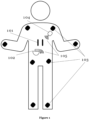
- Figure 1 depicts an individual 100, e.g. patient with impaired natural sense of balance that is equipped with a balance prosthesis system according to an embodiment of the present invention.
- the individual 100 has already been implanted (e.g. for pain management) with a pair of spinal cord stimulation electrodes 101 that may have multiple independently controllable electric contacts.
- a neuronal stimulation electrode may also be implanted into the brain of the individual 100 for the purpose of providing a neuromodulation therapy, e.g. for treating PD symptoms.
- a neurostimulation electrode may also be implanted for other purposes such as for the purpose of neuronal communication and /or treatment of other movement impairments and neurological diseases such as Alzheimer's disease, epilepsy, depression, etc.
- the electrode 101 may also be implanted as a dedicated neurostimulation interface for the balance prosthesis device and system provided by the present invention.
- the balance prosthesis system shown in Fig. 1 includes an array of motion sensors 103 such as acceleration sensors or gyroscopes distributed on the body of the individual 100 e.g. through a wearable enclosure. Alternatively or additionally, similar motion sensors can also be integrated within an implanted neurostimulation device 102 such as an implantable pulse generator (IPG) that drives the spinal cord stimulation electrodes 101.
- the motion sensors 103 may continuously relay positional information to a balance prothesis device 104 according to some embodiments of the present invention. In other embodiments, the balance prothesis device 104 or its functions may also be integrated with the implanted neurostimulation device 102.
- the processing circuitry of the balance prosthesis device 104 calculates various parameters including the level of body orientation with regard to a reference set of parameters based on the body's upright position.
- the balance prosthesis device 104 is wirelessly linked 105 to an implanted stimulator 102.
- the balance prosthesis device 104 can therefore functionally trigger the stimulator and adjust the stimulation parameters in terms of amplitude, frequency, pulse-width, burst duration and other parameters determined through a calibration process.
- the neurostimulator 102 is linked to a pair of implanted spinal cord leads 101 targeting somatosensory ganglions or afferent sensory nerve fibers within or adjacent to the spinal cord.
- the balance prosthesis device 104 receives as input a set of motion sensor signals and after processing, determines which contacts on the implanted spinal cord leads shall become active.
- the processor also determines a set of most suitable parameters which are most relevant to determine the location while encoding the desired type, locality and /or intensity of the artificial sensory perception that is to be elicited as discussed in detail in section 3 above.
- Figure 2 illustrates exemplary scenarios in which the system is expected to activate / elicit artificial sensory perception on different body locations (e.g. left and right hand) to encode the deviations from the body's upright equilibrium position 201 within the mediolateral plane.
- body locations e.g. left and right hand
- the ipsilateral perceptual channels 203 become active.
- the activation patterns of the perceptual channels provide a remedy for a totally lost or a compromised vestibular function.
- Patients can learn to associate the sensory cues into useful sensory input substituting, mimicking, supporting or even enhancing natural sense of balance and in response perform functionally relevant actions such as maintaining body equilibrium even when walking, running, cycling etc.
- the activation pattern of the perceptual channels could be adjusted in a reverse manner that is contralateral to the tilt side. This mode would provide necessary cues resembling compensatory muscle reflexes which are naturally situated contralateral to direction of the tilt e.g. muscle contractions on the left side when body is leaning towards the righthand side etc.
- Figure 3 illustrates an embodiment where the intensity of the perceptual channel is used to encode the degree of body tilt.
- both perceptual channels are silent and the subject does not feel anything.
- a moderate tilt position 302 of, e.g. 10 degrees to the left side
- the ipsilateral perceptual channel 305 is activated with calibrated neurostimulation parameters eliciting a weak artificial sensation.
- the same perceptual channel is activated but stimulation parameters are adjusted so that they cause an intense somatosensations 306 thereby alerting the subject of an eminent fall prompting the user for an immediate corrective action.
- Typical balance systems must contain a minimum set of two independent orthogonal motion detection axes (i.e. back-front & left-right) to achieve a simple, upright balance feedback.
- the balance information in these additional planes could be achieved via a positional feedback system rendering information from both the coronal plane (as described in Fig.2 and Fig.3 ) as well as sagittal plane (as illustrated in Fig. 4 .
- reference sign 401 corresponds to an upright body position, 402 to a leaned back body position and 403 to a leaned forward body position.
- Reference sign 404 indicates non-activated perceptual channels of the balance prosthesis system and 405 the activated perceptual channels providing a balance indication to the individual to substitute, mimic, support or enhance the natural sense of balance of the individual in a homologous manner.
- further sensor information can be converted and integrated into the system including but not limited to a LIDAR sensor signal obtained from a LIDAR sensor such as a neck-worn personal phone, GPS- and map-position information, elevation sensor information from a wrist-worn smartwatch and others.
- a LIDAR sensor signal obtained from a LIDAR sensor such as a neck-worn personal phone, GPS- and map-position information, elevation sensor information from a wrist-worn smartwatch and others.
- This additional information is either utilized to optimize the position/balancecorrective cues in an intelligent manner (i.e. optimizing the resulting balance-gain outcome) or alternatively, is presented as additional one- or multi-dimensional balance-correcting axes. Consequently, a set of separate perceptual channels corresponding to artificial sensory perceptions felt in separate parts of body (or even within the same body region but with a separate quality of sensation) could be reserved to communicate specific balance support / auxiliary information to the individual.
- the present invention is based on a general sensory computer brain interface based on a patient specific communication library and is thus capable of relaying abstract information to the patient. Consequently, the patient can learn to relate sensory messages with virtually any kind of abstract balance-related information.
- the relayed messages or the communicated data are independent from body template, side, area, or type of sensation and thus constitute non-homologous embodiments of the present invention.
- new relationships and correlations can be is achieved in a way that, for instance, artificial sensations relating to road inclination are translated as graded sensations emergent between left index finger and left thumb as depicted in Fig. 5 .
- Figure 5 depicts an exemplary embodiment where crucial information required to maintain balance on a non-even surface could be transferred in a non-homologous manner via activating sensory messages on the index finger and thumb.
- Abstract information such as an upward inclination 503 of a walking surface could be associated by the subject, after training, to sensations on the thumb 505.
- a down-ward inclination 502 can be communicated via artificial sensations on index finger and a flat surface 501, can be encoded via absence of artificial sensations.
- the illustrated embodiment in Fig. 5 can also be realized such that artificial sensations are graded in relation to a quantitative aspect of terrain characteristics. This can be achieved, for instance, by varying the intensity or repetition rate of the artificial sensations with respect to the angle of upward or downward inclination.
- the anatomical layout of target points of electrode-to-nervous-system interface locations can be optimized by a submodule of the system to achieve an optimal level of communication across multiple independently-varied input channels.
- Homologous input left-right tilt - left-right hand sensations
- abstract sensations in thumb indicating upcoming incline on walking path 503.
- FIGS. 6 - 8 illustrate various possible embodiments of balance prosthesis devices provided by the present invention.
- FIG. 6 illustrates an exemplary balance prosthesis device according to an embodiment of the present invention.
- the balance prosthesis devices comprises an integrated neurostimulation module 610 (e.g. comprising a neuronal signal generator and an output amplifier) that is connected to a plurality of output signal leads that may be interfaced with a neurostimulation interface of the individual (e.g. a set of spinal cord stimulation electrodes or a DBS electrode).
- the balance prosthesis devices further comprises a communication antenna operably connected to a transceiver / sensor module 630, configured for wireless communication (e.g. via NFC, WIFI, Bluetooth or a similar wireless communication technology).
- the transceiver / sensor module 630 is configured, for example, to receive one or more sensor signals from one or more sensors (as discussed above), indicative of a balance or equilibrium state of the individual.
- the transceiver / sensor module 630 is operably connected to a data / signal processing module 640 configured to generate one or more neurostimulation signals and /or signal parameters (e.g. waveform, pulse shape, amplitude, frequency, burst count, burst duration etc.) for generating the one or more neurostimulation signals.
- signal parameters e.g. waveform, pulse shape, amplitude, frequency, burst count, burst duration etc.
- the processing module 640 may access a data storage module 650 configured to store a plurality of relations, specific for the individual, associating a plurality of neurostimulation signals (or parameters used for generating a plurality of neurostimulation signals) with a plurality of corresponding balance indications, such as a medium intensity tingling sensation in the right hand associated with a medium degree of body tilt in the left direction.
- a data storage module 650 configured to store a plurality of relations, specific for the individual, associating a plurality of neurostimulation signals (or parameters used for generating a plurality of neurostimulation signals) with a plurality of corresponding balance indications, such as a medium intensity tingling sensation in the right hand associated with a medium degree of body tilt in the left direction.
- the generated neurostimulation signal and / or the signal parameters are input into the integrated neurostimulation module 610 that may be configured to process (e.g. modulate, switch, amplify, covert, rectify, multiplex, phase shift, etc.) the one or more neurostimulation signals generated by the processing module 640 or to generate the one or more neurostimulation signals based on the signal parameters provided by the processing module 640.
- process e.g. modulate, switch, amplify, covert, rectify, multiplex, phase shift, etc.
- the generated and processed neurostimulation signals are then output by the neurostimulation module 610 and can be applied to one or more electric contacts of a neurostimulation electrode (e.g. a DBS electrode or spinal cord stimulation electrode; not shown) via the output leads.
- a neurostimulation electrode e.g. a DBS electrode or spinal cord stimulation electrode; not shown
- the balance prosthesis device may also comprise a rechargeable power source 660 that, for instance may be wirelessly charged via a wireless charging interface.
- FIG. 7 illustrates a further exemplary balance prosthesis device according to an embodiment of the present invention.
- the balance prosthesis device does not comprise an integrated neurostimulation module (see Fig. 6 above).
- the data / signal processing module 740 is connected to a wireless transmitter module 710 that is connected to a wireless transmit antenna 770.
- the processing module 740 may be configured for generating one or more neurostimulation signals and /or signal parameters (e.g. waveform, pulse shape, amplitude, frequency, burst count, burst duration etc.) for generating the one or more neurostimulation signals.
- signal parameters e.g. waveform, pulse shape, amplitude, frequency, burst count, burst duration etc.
- the processing module 740 may access a data storage module 750 configured to store a plurality of relations, specific for the individual, associating a plurality of neurostimulation signals (or parameters used for generating a plurality of neurostimulation signals) with a plurality of corresponding balance indications.
- a data storage module 750 configured to store a plurality of relations, specific for the individual, associating a plurality of neurostimulation signals (or parameters used for generating a plurality of neurostimulation signals) with a plurality of corresponding balance indications.
- the transmitter module 710 is configured for wireless communication (e.g. via NFC, Bluetooth, WIFI or a similar wireless communication technology) with a neurostimulation device of the individual (not shown; see Fig 1 ).
- the transmitter module 710 may be configured to transmit the generated neurostimulation signal and / or the generated signal parameters to the neurostimulation device of the individual such as an IPG (see Fig. 1 ) that may be configured to process (e.g. modulate, switch, amplify, covert, rectify, multiplex, phase shift, etc.) the one or more neurostimulation signals received from the transmitter module 710 or to generate the one or more neurostimulation signals based on the signal parameters received from the transmitter module 710.
- the balance prosthesis device may further comprise a wired receiver / sensor module 730 that is configured to receive / obtain one or more sensor signals from one or more sensors (as discussed above), indicative of equilibrium or balance state of the individual (e.g. gyroscope and accelerometer signals allowing the proce3ssing module to estimate the current or future body position of the individual with respect to a reference position).
- a wired receiver / sensor module 730 that is configured to receive / obtain one or more sensor signals from one or more sensors (as discussed above), indicative of equilibrium or balance state of the individual (e.g. gyroscope and accelerometer signals allowing the proce3ssing module to estimate the current or future body position of the individual with respect to a reference position).
- the sensor signals are not received wirelessly but are obtained via sensor signal leads 720. Naturally, wireless reception is also possible.
- the neurostimulation device of the individual is configured to output and apply the generated and processed neurostimulation signals to one or more electric contacts of a neurostimulation electrode (e.g. a spinal cord stimulation electrode; not shown) to elicit the desired artificial sensory perception in the desired sensory cortex area.
- a neurostimulation electrode e.g. a spinal cord stimulation electrode; not shown
- the balance prosthesis device 710 may also comprise a power source 760 that, for instance may be a removable battery.
- FIG. 8 illustrates a further exemplary balance prosthesis device according to an embodiment of the present invention.
- the balance prosthesis device comprises an integrated motions sensor, such as a 3-axis acceleration sensor 862 and a 3-axis gyroscope 864.
- balance indications can be determined and communicated to the individual (e.g. via two spinal cord stimulation leads) even without obtaining information from external sensor devices such as the wearable sensors discussed for Fig. 1 .
- Figure 9 illustrates a scenario where a balance prosthesis device according to an embodiment of the present invention can be used to mitigate the effects of motion sickness (e.g. terrestrial motion sickness, space motion sickness and / or virtual reality motion sickness) by reinforcing the natural sense of balance of an individual 900 via an additional balance indication encoded via artificial sensory perceptions provided by the balance prosthesis.
- motion sickness e.g. terrestrial motion sickness, space motion sickness and / or virtual reality motion sickness
- a person 900 on-board a ship 910 may experience a perceptual conflict between its visual and vestibular system, e.g. if the person 900 cannot see the horizon / waterline 920 and the ship 910 performs a combined roll, pitch and yaw movement.
- the balance prosthesis device may transmit a balance indication 930 that helps to reinforce the correct balance perception 940 of the individual.
- Fig. 10 illustrates the reciprocal situation where the person 1000 is not on-board the ship 1010 but controls the movement of the ship 1010 via a remote control terminal 1050 in this situation
- sensor equipment on-board the ship transmit sensor signals indicative of the movement / balance state 1030 of the ship 1010 to a remote balance sensing device of the individual.
- the remote balance sensing device then provides a remote balance indication for the moving ship to the individual that is derived at least in part from the obtained sensor signals.
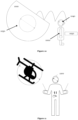
- Fig. 11 illustrates another application scenario where a spinal cord stimulation (see Fig. 1 above) based remote balance sensing device supports a pilot 1100 in remotely piloting an unmanned aerial vehicle, e.g. via a conventional remote control or a brain computer interface remote control device.
- a spinal cord stimulation (see Fig. 1 above) based remote balance sensing device supports a pilot 1100 in remotely piloting an unmanned aerial vehicle, e.g. via a conventional remote control or a brain computer interface remote control device.
Landscapes
- Health & Medical Sciences (AREA)
- Life Sciences & Earth Sciences (AREA)
- Engineering & Computer Science (AREA)
- Animal Behavior & Ethology (AREA)
- Veterinary Medicine (AREA)
- Biomedical Technology (AREA)
- Public Health (AREA)
- General Health & Medical Sciences (AREA)
- Heart & Thoracic Surgery (AREA)
- Physics & Mathematics (AREA)
- Biophysics (AREA)
- Pathology (AREA)
- Medical Informatics (AREA)
- Molecular Biology (AREA)
- Surgery (AREA)
- Physiology (AREA)
- Neurology (AREA)
- Neurosurgery (AREA)
- Radiology & Medical Imaging (AREA)
- Nuclear Medicine, Radiotherapy & Molecular Imaging (AREA)
- Artificial Intelligence (AREA)
- Computer Vision & Pattern Recognition (AREA)
- Psychiatry (AREA)
- Signal Processing (AREA)
- Dentistry (AREA)
- Oral & Maxillofacial Surgery (AREA)
- Cardiology (AREA)
- Fuzzy Systems (AREA)
- Computer Networks & Wireless Communication (AREA)
- Radar, Positioning & Navigation (AREA)
- Mathematical Physics (AREA)
- Evolutionary Computation (AREA)
- Physical Education & Sports Medicine (AREA)
- Orthopedic Medicine & Surgery (AREA)
- Psychology (AREA)
- Prostheses (AREA)
Claims (14)
- Balanceprothesenvorrichtung (104), umfassend:ein Sensormodul (610, 710, 810), das konfiguriert ist, um mindestens ein Sensorsignal zu erhalten,
das einen Balance- oder Gleichgewichtszustand eines Individuums indiziert;ein Verarbeitungsmodul (620, 720, 820), das betriebsfähig mit dem Sensormodul (610, 710, 810) verbunden ist und konfiguriert ist, um mindestens ein Neurostimulationssignal basierend mindestens teilweise auf dem erhaltenen mindestens einen Sensorsignal zu bestimmen; undein Sendermodul (730), das betriebsfähig mit dem Verarbeitungsmodul (620, 720, 810) verbunden ist und konfiguriert ist, um das mindestens eine bestimmte Neurostimulationssignal an eine Neurostimulationsvorrichtung (102) des Individuums zu übertragen; oderein Neurostimulationsmodul (630), das betriebsfähig mit dem Verarbeitungsmodul (620, 720, 820) verbunden ist;wobei das mindestens eine bestimmte Neurostimulationssignal konfiguriert ist, um eine künstliche Empfindung in einem sensorischen Kortexbereich des Individuums über direktes Stimulieren afferenter sensorischer Axone des zentralen oder des peripheren Nervensystems hervorzurufen, um dem Individuum eine Balance-Indikation bereitzustellen. - Balanceprothesenvorrichtung nach Anspruch 1,wobei das Sensormodul ferner konfiguriert ist, um mindestens ein Bewegungssensorsignal über eine drahtgebundene oder drahtlose Schnittstelle zu erhalten, wie etwa ein Beschleunigungsmesser- oder ein Gyroskopsignal; und/oderwobei das Sensormodul einen Bewegungssensor umfasst, wie etwa einen Beschleunigungsmesser oder ein Gyroskop; und/oderwobei das Sensormodul ferner konfiguriert ist, um über die drahtgebundene oder drahtlose Schnittstelle ein Hilfssensorsignal zu erhalten, das von einer Hilfssensorvorrichtung stammt, wie etwa einer Kamera, einem LIDAR-Sensor, einem GPS-System, einem Drucksensor oder einem Höhensensor.
- Balanceprothesenvorrichtung nach Anspruch 1 oder 2, wobei das Verarbeitungsmodul ferner konfiguriert ist, um basierend mindestens teilweise auf dem erhaltenen Sensorsignal eine Schätzung der aktuellen Körperposition des Individuums in Bezug auf eine Referenzkörperposition und/oder eine Schätzung einer zukünftigen Körperposition in Bezug auf die Referenzkörperposition zu bestimmen.
- Balanceprothesenvorrichtung nach Anspruch 3, wobei die Körperposition des Individuums durch einen oder mehrere der folgenden Parameter gekennzeichnet ist:- eine Körperneigung des Individuums in der koronalen und/oder sagittalen Ebene;- eine Änderungsrate der Körperneigung des Individuums in der koronalen und/oder sagittalen Ebene;- eine Abweichung des Schwerpunkts des Körpers des Individuums von einer Referenzposition oder einem Referenzbereich für den Schwerpunkt; und- eine Änderungsrate der Abweichung des Schwerpunkts von der Referenzposition oder dem Referenzbereich.
- Balanceprothesenvorrichtung nach einem der vorhergehenden Ansprüche,wobei eine wahrgenommene Lateralität oder Position der hervorgerufenen künstlichen Empfindung eine Richtung einer Körperneigung des Individuums oder eine Richtung einer Kompensationsbewegung anzeigt, um die Körperneigung zu verringern, und/oderwobei eine wahrgenommene Intensität der hervorgerufenen künstlichen Empfindung einen Winkel oder einen Grad einer Körperneigung des Individuums relativ zu einer Referenzposition oder einem Referenzbereich oder einem Winkel oder Grad einer Kompensationsbewegung codiert, um die Körperneigung zu verringern.
- Balanceprothesenvorrichtung nach einem der vorhergehenden Ansprüche, wobei eine wahrgenommene Wiederholungsrate der hervorgerufenen künstlichen Empfindung eine Geländeeigenschaft codiert, wie etwa einen Neigungswinkel einer Gehfläche oder einen verbleibenden Abstand zu einem Hindernis.
- Balanceprothesenvorrichtung nach einem der vorhergehenden Ansprüche, wobei eine sekundäre sensorische Qualität der hervorgerufenen künstlichen Empfindung, wie etwa die Textur einer Somatoempfindung, die Farbe einer visuellen Empfindung oder der Ton und die Klangfarbe einer auditiven Empfindung, eine Körperbalanceunterstützungsinformation codiert, wie etwa eine Neigung einer Gehfläche oder einen verbleibenden Abstand zu einem Hindernis.
- Balanceprothesenvorrichtung nach einem der vorhergehenden Ansprüche, wobei das Verarbeitungsmodul konfiguriert ist:
um basierend mindestens teilweise auf dem erhaltenen Bewegungssensorsignal und/oder dem Hilfssensorsignal, vorzugsweise unter Verwendung eines trainierten maschinellen Lernsystems, zu erkennen, ob der Körper des Individuums gefährdet ist zu fallen; und als Reaktion auf die Erkennung:
um ein Neurostimulationswarnsignal zu erzeugen, das konfiguriert ist, um eine künstliche Empfindung in einem spezifischen sensorischen Kortexbereich hervorzurufen, die dem Individuum eine Sturzwarnung bereitstellt. - Balanceprothesenvorrichtung nach einem der vorhergehenden Ansprüche, wobei das Neurostimulationssignal mit einem Gehtempo des Individuums synchronisiert ist, um eine kontinuierliche Körperneigungskorrekturindikation bereitzustellen, die die Gangstabilität des Individuums während des Gehens verbessert.
- Balanceprothesensystem, umfassenddie Balanceprothesenvorrichtung nach einem der vorhergehenden Ansprüche 1 - 9; undeinen oder mehrere implantierte oder tragbare Bewegungssensoren, die Eingangssignale an
das Sensormodul der Balanceprothesenvorrichtung bereitstellen. - Balanceprothesensystem nach Anspruch 10, ferner umfassend eine oder mehrere der folgenden Sensorvorrichtungen, die weitere Eingangssignale an
das Sensormodul der Balanceprothesenvorrichtung bereitstellen:- eine Kameravorrichtung- eine LIDAR-Sensorvorrichtung- ein GPS-System;- einen Drucksensor, der den Kontaktdruck zwischen einem Fuß des Individuums und einer Gehfläche misst;- mindestens zwei Drucksensoren, die die Differenz im Kontaktdruck zwischen zwei Punkten auf einer Gehfläche messen, um eine Neigung der Gehfläche zu bestimmen. - Balanceprothesensystem nach Anspruch 10 oder 11, ferner umfassend eine Rückenmarksstimulationsvorrichtung, die einen Satz implantierter Rückenmarksleitungen umfasst, die auf somatosensorische Ganglien oder afferente sensorische Nervenfasern innerhalb oder neben dem Rückenmark abzielen.
- Computerprogramm, umfassend Anweisungen zum Ausführen der folgenden Schritte, wenn das Computerprogramm durch Signalverarbeitungs- und Transceiver-Module einer neuronalen Stimulationsvorrichtung oder eines neuronalen Stimulationssystems ausgeführt wird:Erhalten mindestens eines Sensorsignals, das einen Balance- oder Gleichgewichtszustand eines Individuums indiziert;Bestimmen mindestens eines Neurostimulationssignals basierend mindestens teilweise auf dem erhaltenen mindestens einen Sensorsignal; undÜbertragen des bestimmten mindestens einen Neurostimulationssignals an eine Neurostimulationsvorrichtung (102) des Moduls des Individuums;wobei das Neurostimulationssignal konfiguriert ist, um eine künstliche Empfindung in einem sensorischen Kortexbereich des Individuums über direktes Stimulieren afferenter sensorischer Axone des zentralen oder des peripheren Nervensystems dem Individuum eine Balance-Indikation bereitzustellen.
- Computerprogramm nach Anspruch 13, umfassend weitere Anweisungen zum Implementieren des Betriebs der Balanceprothesenvorrichtung (104) nach einem der vorhergehenden Ansprüche 2-9, wenn das Computerprogramm durch Signalverarbeitungs- und Transceiver-Module der neuronalen Stimulationsvorrichtung oder des neuronalen Stimulationssystems ausgeführt wird.
Priority Applications (3)
| Application Number | Priority Date | Filing Date | Title |
|---|---|---|---|
| ES23150181T ES3007032T3 (en) | 2021-04-01 | 2021-04-01 | Balance prosthesis device and system, and computer program |
| EP24212152.3A EP4480530A3 (de) | 2021-04-01 | 2021-04-01 | Balanceprothesenvorrichtung und -system sowie computerprogramm |
| EP23150181.8A EP4218909B1 (de) | 2021-04-01 | 2021-04-01 | Gleichgewichtsprothesevorrichtung und -system, und computerprogramm |
Applications Claiming Priority (2)
| Application Number | Priority Date | Filing Date | Title |
|---|---|---|---|
| EP23150181.8A EP4218909B1 (de) | 2021-04-01 | 2021-04-01 | Gleichgewichtsprothesevorrichtung und -system, und computerprogramm |
| EP21166577.3A EP4066882B1 (de) | 2021-04-01 | 2021-04-01 | Gleichgewichtsprothesenvorrichtung |
Related Parent Applications (1)
| Application Number | Title | Priority Date | Filing Date |
|---|---|---|---|
| EP21166577.3A Division EP4066882B1 (de) | 2021-04-01 | 2021-04-01 | Gleichgewichtsprothesenvorrichtung |
Related Child Applications (1)
| Application Number | Title | Priority Date | Filing Date |
|---|---|---|---|
| EP24212152.3A Division EP4480530A3 (de) | 2021-04-01 | 2021-04-01 | Balanceprothesenvorrichtung und -system sowie computerprogramm |
Publications (2)
| Publication Number | Publication Date |
|---|---|
| EP4218909A1 EP4218909A1 (de) | 2023-08-02 |
| EP4218909B1 true EP4218909B1 (de) | 2024-11-13 |
Family
ID=75362423
Family Applications (3)
| Application Number | Title | Priority Date | Filing Date |
|---|---|---|---|
| EP23150181.8A Active EP4218909B1 (de) | 2021-04-01 | 2021-04-01 | Gleichgewichtsprothesevorrichtung und -system, und computerprogramm |
| EP24212152.3A Pending EP4480530A3 (de) | 2021-04-01 | 2021-04-01 | Balanceprothesenvorrichtung und -system sowie computerprogramm |
| EP21166577.3A Active EP4066882B1 (de) | 2021-04-01 | 2021-04-01 | Gleichgewichtsprothesenvorrichtung |
Family Applications After (2)
| Application Number | Title | Priority Date | Filing Date |
|---|---|---|---|
| EP24212152.3A Pending EP4480530A3 (de) | 2021-04-01 | 2021-04-01 | Balanceprothesenvorrichtung und -system sowie computerprogramm |
| EP21166577.3A Active EP4066882B1 (de) | 2021-04-01 | 2021-04-01 | Gleichgewichtsprothesenvorrichtung |
Country Status (3)
| Country | Link |
|---|---|
| US (1) | US20220313141A1 (de) |
| EP (3) | EP4218909B1 (de) |
| ES (2) | ES2942167T3 (de) |
Families Citing this family (1)
| Publication number | Priority date | Publication date | Assignee | Title |
|---|---|---|---|---|
| AU2022331481A1 (en) * | 2021-08-18 | 2024-01-18 | Advanced Neuromodulation Systems, Inc. | Systems and methods for providing digital health services |
Family Cites Families (35)
| Publication number | Priority date | Publication date | Assignee | Title |
|---|---|---|---|---|
| EP0799597B1 (de) * | 1996-03-19 | 2000-11-22 | Balance International Inc. | Verfahren und Vorrichtung für Gleichgewicht-Prothese |
| WO2001060282A2 (en) | 2000-02-16 | 2001-08-23 | Massachusetts Eye & Ear Infirmary | Balance prosthesis |
| US7313440B2 (en) | 2004-04-14 | 2007-12-25 | Medtronic, Inc. | Collecting posture and activity information to evaluate therapy |
| US7647120B2 (en) | 2004-05-28 | 2010-01-12 | John Hopkins School Of Medicine | Dual cochlear/vestibular stimulator with control signals derived from motion and speech signals |
| US9205261B2 (en) * | 2004-09-08 | 2015-12-08 | The Board Of Trustees Of The Leland Stanford Junior University | Neurostimulation methods and systems |
| US8702629B2 (en) | 2005-03-17 | 2014-04-22 | Great Lakes Neuro Technologies Inc. | Movement disorder recovery system and method for continuous monitoring |
| US20080014013A1 (en) | 2006-06-28 | 2008-01-17 | Carleton Lenore A | Diary/planner for breast surgery preparation and method |
| US20090306741A1 (en) * | 2006-10-26 | 2009-12-10 | Wicab, Inc. | Systems and methods for altering brain and body functions and for treating conditions and diseases of the same |
| US8235918B2 (en) | 2006-12-11 | 2012-08-07 | Massachusetts Eye & Ear Infirmary | Control and integration of sensory data |
| US9149222B1 (en) | 2008-08-29 | 2015-10-06 | Engineering Acoustics, Inc | Enhanced system and method for assessment of disequilibrium, balance and motion disorders |
| US10076655B2 (en) | 2007-09-21 | 2018-09-18 | Koninklijke Philips N.V. | Vestibular stimulation system |
| WO2011088130A2 (en) | 2010-01-12 | 2011-07-21 | The Johns Hopkins University | Implantable vestibular prosthesis |
| US9311593B2 (en) | 2010-03-26 | 2016-04-12 | Brain Corporation | Apparatus and methods for polychronous encoding and multiplexing in neuronal prosthetic devices |
| CN103561811A (zh) * | 2011-02-02 | 2014-02-05 | 脊髓调制公司 | 靶向治疗运动障碍的装置、系统和方法 |
| ES2906620T3 (es) | 2012-03-12 | 2022-04-19 | Hospital For Sick Children | Sistemas y métodos para la estabilización del equilibrio |
| US9492290B2 (en) * | 2012-03-30 | 2016-11-15 | Zimmer, Inc. | Tibial prosthesis systems, kits, and methods |
| US9427581B2 (en) * | 2013-04-28 | 2016-08-30 | ElectroCore, LLC | Devices and methods for treating medical disorders with evoked potentials and vagus nerve stimulation |
| EP3068301A4 (de) | 2013-11-12 | 2017-07-12 | Highland Instruments, Inc. | Analysesuite |
| WO2015187247A2 (en) * | 2014-04-14 | 2015-12-10 | Research Foundation For The State University Of New York | Biomimetic multichannel neurostimulation |
| US9974478B1 (en) | 2014-12-19 | 2018-05-22 | Great Lakes Neurotechnologies Inc. | Discreet movement measurement and cueing system for improvement of safety and efficacy of movement |
| US20170225033A1 (en) * | 2015-06-23 | 2017-08-10 | Ipcomm Llc | Method and Apparatus for Analysis of Gait and to Provide Haptic and Visual Corrective Feedback |
| US10695574B2 (en) * | 2015-10-21 | 2020-06-30 | University Of Washington | Sensory input through non-invasive brain stimulation |
| US10981004B2 (en) * | 2015-12-22 | 2021-04-20 | Ecole Polytechnique Federale De Lausanne (Epfl) | System for selective spatiotemporal stimulation of the spinal cord |
| JP2019508191A (ja) | 2016-01-08 | 2019-03-28 | バランス4グッド・リミテッド | バランス試験及び訓練システム並びに方法 |
| CN106510719B (zh) | 2016-09-30 | 2023-11-28 | 歌尔股份有限公司 | 一种用户姿态监测方法和可穿戴设备 |
| WO2018109715A1 (en) * | 2016-12-14 | 2018-06-21 | Inner Cosmos Llc | Brain computer interface systems and methods of use thereof |
| DE17163191T1 (de) * | 2017-03-28 | 2019-05-16 | Ecole Polytechnique Federale De Lausanne (Epfl) Epfl-Tto | Neurostimulationssystem zur stimulierung des zentralnervensystems (zns) und zur stimulierung des peripheren nervensystems (pns) |
| WO2019110400A1 (en) * | 2017-12-05 | 2019-06-13 | Ecole Polytechnique Federale De Lausanne (Epfl) | A system for planning and/or providing neuromodulation |
| WO2019143790A1 (en) * | 2018-01-17 | 2019-07-25 | Cala Health, Inc. | Systems and methods for treating inflammatory bowel disease through peripheral nerve stimulation |
| KR102141728B1 (ko) * | 2018-05-28 | 2020-08-05 | 한국산업기술대학교산학협력단 | 보행 노면 판별 방법 및 장치 |
| EP3653258A1 (de) * | 2018-11-13 | 2020-05-20 | GTX medical B.V. | Steuerungssystem zur neuromodulation mit geschlossenem regelkreis |
| WO2020150737A1 (en) * | 2019-01-18 | 2020-07-23 | Ist, Llc | Methods and devices for modulation of integrated neural networks to influence composite sensory processes |
| DE102019209096B4 (de) * | 2019-06-24 | 2022-12-15 | CereGate GmbH | Neuronales signalsystem zur verhaltensmodifikation |
| WO2020174051A1 (en) * | 2019-02-27 | 2020-09-03 | CereGate GmbH | Neuronal communication system |
| US11331491B2 (en) * | 2019-06-03 | 2022-05-17 | Boston Scientific Neuromodulation Corporation | Targeted electrostimulation fields based on focal dermatomal coverage |
-
2021
- 2021-04-01 EP EP23150181.8A patent/EP4218909B1/de active Active
- 2021-04-01 EP EP24212152.3A patent/EP4480530A3/de active Pending
- 2021-04-01 EP EP21166577.3A patent/EP4066882B1/de active Active
- 2021-04-01 ES ES21166577T patent/ES2942167T3/es active Active
- 2021-04-01 ES ES23150181T patent/ES3007032T3/es active Active
- 2021-04-19 US US17/234,300 patent/US20220313141A1/en active Pending
Also Published As
| Publication number | Publication date |
|---|---|
| EP4218909A1 (de) | 2023-08-02 |
| ES3007032T3 (en) | 2025-03-19 |
| EP4480530A3 (de) | 2025-03-12 |
| US20220313141A1 (en) | 2022-10-06 |
| EP4480530A2 (de) | 2024-12-25 |
| EP4066882B1 (de) | 2023-01-04 |
| EP4066882A1 (de) | 2022-10-05 |
| ES2942167T3 (es) | 2023-05-30 |
Similar Documents
| Publication | Publication Date | Title |
|---|---|---|
| US12390636B2 (en) | Neuronal signal system for behavior modification | |
| JP7334257B2 (ja) | 神経伝達システム | |
| US11738194B2 (en) | Closed loop computer-brain interface device | |
| US11260232B2 (en) | System, method, and device for providing feedback to a patient during electrical stimulation | |
| US11672982B2 (en) | Control system for movement reconstruction and/or restoration for a patient | |
| EP3463550B1 (de) | Vorrichtung und verfahren zur nervenstimulation | |
| CN107106837B (zh) | 用于提供病人无创神经康复的系统和方法 | |
| EP2825142B1 (de) | Systeme und verfahren zur balancestabilisierung | |
| US8855774B2 (en) | Vestibular prosthesis | |
| WO2022038112A1 (en) | Closed loop computer-brain interface device, physiologic signal transmitter and receiver device | |
| JP2005508225A (ja) | 運動タイミング刺激器 | |
| EP3403688A1 (de) | System zur durchführung einer langzeitpulsweitenstimulation ohne unangenehme rippenstimulation | |
| EP4218909B1 (de) | Gleichgewichtsprothesevorrichtung und -system, und computerprogramm | |
| CN117085248A (zh) | 一种治疗神经源性体位性低血压的经皮脊髓电刺激设备 | |
| Lim et al. | Early feasibility of an embedded bi-directional brain-computer interface for ambulation | |
| WO2022207910A1 (en) | Balance prosthesis and auditory interface device and computer program | |
| US20220126099A1 (en) | Physiologic signal transmitter and receiver device | |
| WO2024093757A1 (en) | Neurostimulation device and system for transcutaneous auricular branch vagus nerve stimulation | |
| WO2024084303A1 (en) | Sensory medical device with expanded features | |
| HUMAN | A thesis submitted to attain the degree of of (Dr. sc. ETH Zurich) |
Legal Events
| Date | Code | Title | Description |
|---|---|---|---|
| PUAI | Public reference made under article 153(3) epc to a published international application that has entered the european phase |
Free format text: ORIGINAL CODE: 0009012 |
|
| STAA | Information on the status of an ep patent application or granted ep patent |
Free format text: STATUS: THE APPLICATION HAS BEEN PUBLISHED |
|
| AC | Divisional application: reference to earlier application |
Ref document number: 4066882 Country of ref document: EP Kind code of ref document: P |
|
| AK | Designated contracting states |
Kind code of ref document: A1 Designated state(s): AL AT BE BG CH CY CZ DE DK EE ES FI FR GB GR HR HU IE IS IT LI LT LU LV MC MK MT NL NO PL PT RO RS SE SI SK SM TR |
|
| STAA | Information on the status of an ep patent application or granted ep patent |
Free format text: STATUS: REQUEST FOR EXAMINATION WAS MADE |
|
| 17P | Request for examination filed |
Effective date: 20240202 |
|
| RBV | Designated contracting states (corrected) |
Designated state(s): AL AT BE BG CH CY CZ DE DK EE ES FI FR GB GR HR HU IE IS IT LI LT LU LV MC MK MT NL NO PL PT RO RS SE SI SK SM TR |
|
| GRAP | Despatch of communication of intention to grant a patent |
Free format text: ORIGINAL CODE: EPIDOSNIGR1 |
|
| STAA | Information on the status of an ep patent application or granted ep patent |
Free format text: STATUS: GRANT OF PATENT IS INTENDED |
|
| INTG | Intention to grant announced |
Effective date: 20240625 |
|
| GRAS | Grant fee paid |
Free format text: ORIGINAL CODE: EPIDOSNIGR3 |
|
| GRAA | (expected) grant |
Free format text: ORIGINAL CODE: 0009210 |
|
| STAA | Information on the status of an ep patent application or granted ep patent |
Free format text: STATUS: THE PATENT HAS BEEN GRANTED |
|
| AC | Divisional application: reference to earlier application |
Ref document number: 4066882 Country of ref document: EP Kind code of ref document: P |
|
| AK | Designated contracting states |
Kind code of ref document: B1 Designated state(s): AL AT BE BG CH CY CZ DE DK EE ES FI FR GB GR HR HU IE IS IT LI LT LU LV MC MK MT NL NO PL PT RO RS SE SI SK SM TR |
|
| REG | Reference to a national code |
Ref country code: GB Ref legal event code: FG4D |
|
| REG | Reference to a national code |
Ref country code: CH Ref legal event code: EP |
|
| REG | Reference to a national code |
Ref country code: IE Ref legal event code: FG4D |
|
| REG | Reference to a national code |
Ref country code: DE Ref legal event code: R096 Ref document number: 602021021936 Country of ref document: DE |
|
| P01 | Opt-out of the competence of the unified patent court (upc) registered |
Free format text: CASE NUMBER: APP_60897/2024 Effective date: 20241113 |
|
| REG | Reference to a national code |
Ref country code: LT Ref legal event code: MG9D |
|
| REG | Reference to a national code |
Ref country code: NL Ref legal event code: MP Effective date: 20241113 Ref country code: ES Ref legal event code: FG2A Ref document number: 3007032 Country of ref document: ES Kind code of ref document: T3 Effective date: 20250319 |
|
| PG25 | Lapsed in a contracting state [announced via postgrant information from national office to epo] |
Ref country code: PT Free format text: LAPSE BECAUSE OF FAILURE TO SUBMIT A TRANSLATION OF THE DESCRIPTION OR TO PAY THE FEE WITHIN THE PRESCRIBED TIME-LIMIT Effective date: 20250313 Ref country code: HR Free format text: LAPSE BECAUSE OF FAILURE TO SUBMIT A TRANSLATION OF THE DESCRIPTION OR TO PAY THE FEE WITHIN THE PRESCRIBED TIME-LIMIT Effective date: 20241113 Ref country code: IS Free format text: LAPSE BECAUSE OF FAILURE TO SUBMIT A TRANSLATION OF THE DESCRIPTION OR TO PAY THE FEE WITHIN THE PRESCRIBED TIME-LIMIT Effective date: 20250313 |
|
| PG25 | Lapsed in a contracting state [announced via postgrant information from national office to epo] |
Ref country code: FI Free format text: LAPSE BECAUSE OF FAILURE TO SUBMIT A TRANSLATION OF THE DESCRIPTION OR TO PAY THE FEE WITHIN THE PRESCRIBED TIME-LIMIT Effective date: 20241113 Ref country code: NL Free format text: LAPSE BECAUSE OF FAILURE TO SUBMIT A TRANSLATION OF THE DESCRIPTION OR TO PAY THE FEE WITHIN THE PRESCRIBED TIME-LIMIT Effective date: 20241113 |
|
| REG | Reference to a national code |
Ref country code: AT Ref legal event code: MK05 Ref document number: 1741218 Country of ref document: AT Kind code of ref document: T Effective date: 20241113 |
|
| PG25 | Lapsed in a contracting state [announced via postgrant information from national office to epo] |
Ref country code: BG Free format text: LAPSE BECAUSE OF FAILURE TO SUBMIT A TRANSLATION OF THE DESCRIPTION OR TO PAY THE FEE WITHIN THE PRESCRIBED TIME-LIMIT Effective date: 20241113 |
|
| PG25 | Lapsed in a contracting state [announced via postgrant information from national office to epo] |
Ref country code: NO Free format text: LAPSE BECAUSE OF FAILURE TO SUBMIT A TRANSLATION OF THE DESCRIPTION OR TO PAY THE FEE WITHIN THE PRESCRIBED TIME-LIMIT Effective date: 20250213 |
|
| PG25 | Lapsed in a contracting state [announced via postgrant information from national office to epo] |
Ref country code: AT Free format text: LAPSE BECAUSE OF FAILURE TO SUBMIT A TRANSLATION OF THE DESCRIPTION OR TO PAY THE FEE WITHIN THE PRESCRIBED TIME-LIMIT Effective date: 20241113 Ref country code: GR Free format text: LAPSE BECAUSE OF FAILURE TO SUBMIT A TRANSLATION OF THE DESCRIPTION OR TO PAY THE FEE WITHIN THE PRESCRIBED TIME-LIMIT Effective date: 20250214 Ref country code: LV Free format text: LAPSE BECAUSE OF FAILURE TO SUBMIT A TRANSLATION OF THE DESCRIPTION OR TO PAY THE FEE WITHIN THE PRESCRIBED TIME-LIMIT Effective date: 20241113 |
|
| PG25 | Lapsed in a contracting state [announced via postgrant information from national office to epo] |
Ref country code: PL Free format text: LAPSE BECAUSE OF FAILURE TO SUBMIT A TRANSLATION OF THE DESCRIPTION OR TO PAY THE FEE WITHIN THE PRESCRIBED TIME-LIMIT Effective date: 20241113 |
|
| PG25 | Lapsed in a contracting state [announced via postgrant information from national office to epo] |
Ref country code: RS Free format text: LAPSE BECAUSE OF FAILURE TO SUBMIT A TRANSLATION OF THE DESCRIPTION OR TO PAY THE FEE WITHIN THE PRESCRIBED TIME-LIMIT Effective date: 20250213 |
|
| PG25 | Lapsed in a contracting state [announced via postgrant information from national office to epo] |
Ref country code: SM Free format text: LAPSE BECAUSE OF FAILURE TO SUBMIT A TRANSLATION OF THE DESCRIPTION OR TO PAY THE FEE WITHIN THE PRESCRIBED TIME-LIMIT Effective date: 20241113 |
|
| PGFP | Annual fee paid to national office [announced via postgrant information from national office to epo] |
Ref country code: DE Payment date: 20250424 Year of fee payment: 5 |
|
| PG25 | Lapsed in a contracting state [announced via postgrant information from national office to epo] |
Ref country code: DK Free format text: LAPSE BECAUSE OF FAILURE TO SUBMIT A TRANSLATION OF THE DESCRIPTION OR TO PAY THE FEE WITHIN THE PRESCRIBED TIME-LIMIT Effective date: 20241113 |
|
| PGFP | Annual fee paid to national office [announced via postgrant information from national office to epo] |
Ref country code: GB Payment date: 20250423 Year of fee payment: 5 Ref country code: ES Payment date: 20250519 Year of fee payment: 5 |
|
| PGFP | Annual fee paid to national office [announced via postgrant information from national office to epo] |
Ref country code: IT Payment date: 20250430 Year of fee payment: 5 |
|
| PG25 | Lapsed in a contracting state [announced via postgrant information from national office to epo] |
Ref country code: EE Free format text: LAPSE BECAUSE OF FAILURE TO SUBMIT A TRANSLATION OF THE DESCRIPTION OR TO PAY THE FEE WITHIN THE PRESCRIBED TIME-LIMIT Effective date: 20241113 |
|
| PGFP | Annual fee paid to national office [announced via postgrant information from national office to epo] |
Ref country code: FR Payment date: 20250422 Year of fee payment: 5 |
|
| PGFP | Annual fee paid to national office [announced via postgrant information from national office to epo] |
Ref country code: CH Payment date: 20250501 Year of fee payment: 5 |
|
| PG25 | Lapsed in a contracting state [announced via postgrant information from national office to epo] |
Ref country code: RO Free format text: LAPSE BECAUSE OF FAILURE TO SUBMIT A TRANSLATION OF THE DESCRIPTION OR TO PAY THE FEE WITHIN THE PRESCRIBED TIME-LIMIT Effective date: 20241113 |
|
| PG25 | Lapsed in a contracting state [announced via postgrant information from national office to epo] |
Ref country code: SK Free format text: LAPSE BECAUSE OF FAILURE TO SUBMIT A TRANSLATION OF THE DESCRIPTION OR TO PAY THE FEE WITHIN THE PRESCRIBED TIME-LIMIT Effective date: 20241113 |
|
| PG25 | Lapsed in a contracting state [announced via postgrant information from national office to epo] |
Ref country code: CZ Free format text: LAPSE BECAUSE OF FAILURE TO SUBMIT A TRANSLATION OF THE DESCRIPTION OR TO PAY THE FEE WITHIN THE PRESCRIBED TIME-LIMIT Effective date: 20241113 |
|
| PGFP | Annual fee paid to national office [announced via postgrant information from national office to epo] |
Ref country code: IE Payment date: 20250428 Year of fee payment: 5 |
|
| REG | Reference to a national code |
Ref country code: DE Ref legal event code: R097 Ref document number: 602021021936 Country of ref document: DE |
|
| PG25 | Lapsed in a contracting state [announced via postgrant information from national office to epo] |
Ref country code: SE Free format text: LAPSE BECAUSE OF FAILURE TO SUBMIT A TRANSLATION OF THE DESCRIPTION OR TO PAY THE FEE WITHIN THE PRESCRIBED TIME-LIMIT Effective date: 20241113 |
|
| PLBE | No opposition filed within time limit |
Free format text: ORIGINAL CODE: 0009261 |
|
| STAA | Information on the status of an ep patent application or granted ep patent |
Free format text: STATUS: NO OPPOSITION FILED WITHIN TIME LIMIT |
|
| 26N | No opposition filed |
Effective date: 20250814 |
|
| PG25 | Lapsed in a contracting state [announced via postgrant information from national office to epo] |
Ref country code: LU Free format text: LAPSE BECAUSE OF NON-PAYMENT OF DUE FEES Effective date: 20250401 |