EP4216128B1 - Plateforme centralisee pour la conduite de transactions commerciales grace a un reseau de communication en champ proche - Google Patents
Plateforme centralisee pour la conduite de transactions commerciales grace a un reseau de communication en champ proche Download PDFInfo
- Publication number
- EP4216128B1 EP4216128B1 EP23155028.6A EP23155028A EP4216128B1 EP 4216128 B1 EP4216128 B1 EP 4216128B1 EP 23155028 A EP23155028 A EP 23155028A EP 4216128 B1 EP4216128 B1 EP 4216128B1
- Authority
- EP
- European Patent Office
- Prior art keywords
- badge
- field communication
- identifier
- customer
- radio
- Prior art date
- Legal status (The legal status is an assumption and is not a legal conclusion. Google has not performed a legal analysis and makes no representation as to the accuracy of the status listed.)
- Active
Links
Images
Classifications
-
- G—PHYSICS
- G06—COMPUTING OR CALCULATING; COUNTING
- G06K—GRAPHICAL DATA READING; PRESENTATION OF DATA; RECORD CARRIERS; HANDLING RECORD CARRIERS
- G06K7/00—Methods or arrangements for sensing record carriers, e.g. for reading patterns
- G06K7/10—Methods or arrangements for sensing record carriers, e.g. for reading patterns by electromagnetic radiation, e.g. optical sensing; by corpuscular radiation
- G06K7/10009—Methods or arrangements for sensing record carriers, e.g. for reading patterns by electromagnetic radiation, e.g. optical sensing; by corpuscular radiation sensing by radiation using wavelengths larger than 0.1 mm, e.g. radio-waves or microwaves
- G06K7/10297—Methods or arrangements for sensing record carriers, e.g. for reading patterns by electromagnetic radiation, e.g. optical sensing; by corpuscular radiation sensing by radiation using wavelengths larger than 0.1 mm, e.g. radio-waves or microwaves arrangements for handling protocols designed for non-contact record carriers such as RFIDs NFCs, e.g. ISO/IEC 14443 and 18092
-
- G—PHYSICS
- G06—COMPUTING OR CALCULATING; COUNTING
- G06Q—INFORMATION AND COMMUNICATION TECHNOLOGY [ICT] SPECIALLY ADAPTED FOR ADMINISTRATIVE, COMMERCIAL, FINANCIAL, MANAGERIAL OR SUPERVISORY PURPOSES; SYSTEMS OR METHODS SPECIALLY ADAPTED FOR ADMINISTRATIVE, COMMERCIAL, FINANCIAL, MANAGERIAL OR SUPERVISORY PURPOSES, NOT OTHERWISE PROVIDED FOR
- G06Q10/00—Administration; Management
- G06Q10/08—Logistics, e.g. warehousing, loading or distribution; Inventory or stock management
- G06Q10/087—Inventory or stock management, e.g. order filling, procurement or balancing against orders
-
- G—PHYSICS
- G06—COMPUTING OR CALCULATING; COUNTING
- G06Q—INFORMATION AND COMMUNICATION TECHNOLOGY [ICT] SPECIALLY ADAPTED FOR ADMINISTRATIVE, COMMERCIAL, FINANCIAL, MANAGERIAL OR SUPERVISORY PURPOSES; SYSTEMS OR METHODS SPECIALLY ADAPTED FOR ADMINISTRATIVE, COMMERCIAL, FINANCIAL, MANAGERIAL OR SUPERVISORY PURPOSES, NOT OTHERWISE PROVIDED FOR
- G06Q10/00—Administration; Management
- G06Q10/08—Logistics, e.g. warehousing, loading or distribution; Inventory or stock management
- G06Q10/087—Inventory or stock management, e.g. order filling, procurement or balancing against orders
- G06Q10/0877—Inventory or stock management, e.g. order filling, procurement or balancing against orders by inventory control or reporting using inventory tracking or counting
-
- G—PHYSICS
- G06—COMPUTING OR CALCULATING; COUNTING
- G06Q—INFORMATION AND COMMUNICATION TECHNOLOGY [ICT] SPECIALLY ADAPTED FOR ADMINISTRATIVE, COMMERCIAL, FINANCIAL, MANAGERIAL OR SUPERVISORY PURPOSES; SYSTEMS OR METHODS SPECIALLY ADAPTED FOR ADMINISTRATIVE, COMMERCIAL, FINANCIAL, MANAGERIAL OR SUPERVISORY PURPOSES, NOT OTHERWISE PROVIDED FOR
- G06Q20/00—Payment architectures, schemes or protocols
- G06Q20/08—Payment architectures
- G06Q20/12—Payment architectures specially adapted for electronic shopping systems
-
- G—PHYSICS
- G06—COMPUTING OR CALCULATING; COUNTING
- G06Q—INFORMATION AND COMMUNICATION TECHNOLOGY [ICT] SPECIALLY ADAPTED FOR ADMINISTRATIVE, COMMERCIAL, FINANCIAL, MANAGERIAL OR SUPERVISORY PURPOSES; SYSTEMS OR METHODS SPECIALLY ADAPTED FOR ADMINISTRATIVE, COMMERCIAL, FINANCIAL, MANAGERIAL OR SUPERVISORY PURPOSES, NOT OTHERWISE PROVIDED FOR
- G06Q20/00—Payment architectures, schemes or protocols
- G06Q20/08—Payment architectures
- G06Q20/20—Point-of-sale [POS] network systems
-
- G—PHYSICS
- G06—COMPUTING OR CALCULATING; COUNTING
- G06Q—INFORMATION AND COMMUNICATION TECHNOLOGY [ICT] SPECIALLY ADAPTED FOR ADMINISTRATIVE, COMMERCIAL, FINANCIAL, MANAGERIAL OR SUPERVISORY PURPOSES; SYSTEMS OR METHODS SPECIALLY ADAPTED FOR ADMINISTRATIVE, COMMERCIAL, FINANCIAL, MANAGERIAL OR SUPERVISORY PURPOSES, NOT OTHERWISE PROVIDED FOR
- G06Q20/00—Payment architectures, schemes or protocols
- G06Q20/08—Payment architectures
- G06Q20/20—Point-of-sale [POS] network systems
- G06Q20/208—Input by product or record sensing, e.g. weighing or scanner processing
-
- G—PHYSICS
- G06—COMPUTING OR CALCULATING; COUNTING
- G06Q—INFORMATION AND COMMUNICATION TECHNOLOGY [ICT] SPECIALLY ADAPTED FOR ADMINISTRATIVE, COMMERCIAL, FINANCIAL, MANAGERIAL OR SUPERVISORY PURPOSES; SYSTEMS OR METHODS SPECIALLY ADAPTED FOR ADMINISTRATIVE, COMMERCIAL, FINANCIAL, MANAGERIAL OR SUPERVISORY PURPOSES, NOT OTHERWISE PROVIDED FOR
- G06Q20/00—Payment architectures, schemes or protocols
- G06Q20/30—Payment architectures, schemes or protocols characterised by the use of specific devices or networks
- G06Q20/32—Payment architectures, schemes or protocols characterised by the use of specific devices or networks using wireless devices
-
- G—PHYSICS
- G06—COMPUTING OR CALCULATING; COUNTING
- G06Q—INFORMATION AND COMMUNICATION TECHNOLOGY [ICT] SPECIALLY ADAPTED FOR ADMINISTRATIVE, COMMERCIAL, FINANCIAL, MANAGERIAL OR SUPERVISORY PURPOSES; SYSTEMS OR METHODS SPECIALLY ADAPTED FOR ADMINISTRATIVE, COMMERCIAL, FINANCIAL, MANAGERIAL OR SUPERVISORY PURPOSES, NOT OTHERWISE PROVIDED FOR
- G06Q20/00—Payment architectures, schemes or protocols
- G06Q20/30—Payment architectures, schemes or protocols characterised by the use of specific devices or networks
- G06Q20/32—Payment architectures, schemes or protocols characterised by the use of specific devices or networks using wireless devices
- G06Q20/327—Short range or proximity payments by means of M-devices
- G06Q20/3278—RFID or NFC payments by means of M-devices
-
- G—PHYSICS
- G06—COMPUTING OR CALCULATING; COUNTING
- G06Q—INFORMATION AND COMMUNICATION TECHNOLOGY [ICT] SPECIALLY ADAPTED FOR ADMINISTRATIVE, COMMERCIAL, FINANCIAL, MANAGERIAL OR SUPERVISORY PURPOSES; SYSTEMS OR METHODS SPECIALLY ADAPTED FOR ADMINISTRATIVE, COMMERCIAL, FINANCIAL, MANAGERIAL OR SUPERVISORY PURPOSES, NOT OTHERWISE PROVIDED FOR
- G06Q30/00—Commerce
- G06Q30/02—Marketing; Price estimation or determination; Fundraising
- G06Q30/0201—Market modelling; Market analysis; Collecting market data
-
- G—PHYSICS
- G06—COMPUTING OR CALCULATING; COUNTING
- G06Q—INFORMATION AND COMMUNICATION TECHNOLOGY [ICT] SPECIALLY ADAPTED FOR ADMINISTRATIVE, COMMERCIAL, FINANCIAL, MANAGERIAL OR SUPERVISORY PURPOSES; SYSTEMS OR METHODS SPECIALLY ADAPTED FOR ADMINISTRATIVE, COMMERCIAL, FINANCIAL, MANAGERIAL OR SUPERVISORY PURPOSES, NOT OTHERWISE PROVIDED FOR
- G06Q30/00—Commerce
- G06Q30/06—Buying, selling or leasing transactions
- G06Q30/0601—Electronic shopping [e-shopping]
- G06Q30/0633—Managing shopping lists, e.g. compiling or processing purchase lists
-
- G—PHYSICS
- G07—CHECKING-DEVICES
- G07F—COIN-FREED OR LIKE APPARATUS
- G07F7/00—Mechanisms actuated by objects other than coins to free or to actuate vending, hiring, coin or paper currency dispensing or refunding apparatus
- G07F7/02—Mechanisms actuated by objects other than coins to free or to actuate vending, hiring, coin or paper currency dispensing or refunding apparatus by keys or other credit registering devices
- G07F7/025—Mechanisms actuated by objects other than coins to free or to actuate vending, hiring, coin or paper currency dispensing or refunding apparatus by keys or other credit registering devices by means, e.g. cards, providing billing information at the time of purchase, e.g. identification of seller or purchaser, quantity of goods delivered or to be delivered
-
- G—PHYSICS
- G07—CHECKING-DEVICES
- G07F—COIN-FREED OR LIKE APPARATUS
- G07F7/00—Mechanisms actuated by objects other than coins to free or to actuate vending, hiring, coin or paper currency dispensing or refunding apparatus
- G07F7/08—Mechanisms actuated by objects other than coins to free or to actuate vending, hiring, coin or paper currency dispensing or refunding apparatus by coded identity card or credit card or other personal identification means
- G07F7/0873—Details of the card reader
- G07F7/0893—Details of the card reader the card reader reading the card in a contactless manner
-
- G—PHYSICS
- G07—CHECKING-DEVICES
- G07G—REGISTERING THE RECEIPT OF CASH, VALUABLES, OR TOKENS
- G07G1/00—Cash registers
- G07G1/0036—Checkout procedures
-
- G—PHYSICS
- G07—CHECKING-DEVICES
- G07G—REGISTERING THE RECEIPT OF CASH, VALUABLES, OR TOKENS
- G07G3/00—Alarm indicators, e.g. bells
- G07G3/006—False operation
Definitions
- the invention relates to the field of conducting commercial transactions consisting of selecting products from shelves before proceeding to payment for the selected products.
- the invention is particularly applicable to purchases in commercial areas such as supermarkets.
- a first, very common solution is to place labels on the products themselves.
- the customer goes to a dedicated terminal, or checkout, so that the labels can be read.
- the terminal can create a virtual basket for the customer containing all the products whose labels have been read.
- the customer can proceed to payment, generally using a payment terminal (or "PoS" for " Point of Sale” in English) associated with the terminal.
- Labels are typically visual tags that include a barcode, QR code, or other optical system that can encode information in a way that can be automatically read by a computer.
- other types of labels are also possible, including RFID-type radio labels (or badges) in particular (for “Radio Frequency Identification”).
- the reading phase of each label by the terminal can be very long when the number of products to be purchased is large, and prone to errors. It requires in particular handling the product to find the optical label and place it in front of the reader.
- NFC Near Field Communication
- the customer has a near-field communication (NFC) reader that allows them to read the content of the tags by placing it near them.
- NFC near-field communication
- This reader can be embedded in a specific mobile device or a mobile telecommunications terminal ("smartphone", tablet, etc.)
- the badges contain product identifiers, so that by reading all the labels associated with the products to be purchased, the mobile terminal can create the virtual basket made up of all the products whose identifier has been read and which are therefore to be purchased. It can then proceed to payment, for example directly from its communication terminal using existing payment mechanisms, or at the checkout.
- the aim of the present invention is to provide a solution which at least partially overcomes the aforementioned drawbacks.
- the present invention provides the method according to claim 1.
- Another object of the invention relates to a system according to claim 2.
- the invention thus saves time for customers, by providing a simple, fast and autonomous system (without the need for interaction with cashier staff). In addition, it does not require additional objects for the customer (card, badge, etc.), if the customer already has an NFC card or badge allowing them to be identified.
- the invention allows for a complete digitalization of the customer journey, which minimizes management costs and increases customer knowledge. It also does not require the installation of expensive or unusual equipment, only standard equipment.
- the invention is particularly applicable to the context of a delimited geographical area such as a self-service point of sale. This may be an area the size of a supermarket, a convenience store, or even a hypermarket.
- products are typically arranged on shelves and categorized by type.
- a product corresponds to each of the catalog references or standard commercial proposals marketed by a company.
- a product can potentially be a tangible product, but also a package, a service, a subscription, an application, etc.
- a customer buys one (or more) copy(ies) of a product. For example, he can buy a set of three "cookies", or 1 copy of a "water bottle” product, the "cookie” and “water bottle” products being further distinguished by a type, a price, a brand, etc.
- a plurality of radio readers are also provided, each associated with a particular product (i.e., therefore, a reference from the store catalog).
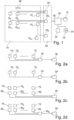
- FIG. 1 illustrates a schematic and high-level embodiment of the invention.
- the radio readers 10 1 , 10 2 ...10 i , 10 i+1 , 10 i+2 ...10 j ...10 N are organized into groups which can correspond to departments of the commercial area.
- the invention can however be applied whatever the number of groups, including in the case of a single group. As will be seen later, this notion of group only has an impact on the hardware architectures allowing the invention to be implemented, but has no impact on the higher level functional level.
- Each reader can be associated with a product, next to which it is physically placed. Specifically, it can be located next to, or behind, a physical label associated with the product so that it is easily located and visible to customers.
- radio badge 40 or “radio tag”
- the customer wishing to acquire (buy, for example) a product brings a radio badge 40 (or “radio tag”) close to the reader corresponding to the product in question, in order to enable communication between the reader and the badge.
- Radio reader is an NFC reader or an antenna of an NFC reader.
- NFC Near Field Communication
- RFID radio frequency identification
- NFC technology is known in its use for commercial transactions in a retail area
- the invention proposes, in particular, to reverse the uses of the reader and the badge.
- the customer has an NFC badge while the readers are associated with the products, unlike the prior art.
- the radio badge can be personal, i.e. assigned and corresponding to a particular customer. It can be, for example, a credit card with such a radio tag (a "contactless" credit card), but also a loyalty card or any other card or device given by the retail outlet to its customers and capable of identifying them. Other types of cards can be used, including cards independent of the retail outlet: public transport cards, library cards, etc., as long as they can uniquely identify a customer.
- This identification can be valid for the duration of a session, that is to say for the duration that the customer is in the commercial area, so that at a given moment, there may only be one customer corresponding to a given radio card identifier.
- this identification can also be valid for a longer period (for example with a credit card or a loyalty card, etc.), allowing the retail area and the customer to establish a persistent customer profile from one visit to the next in the retail area. (or in another commercial area of the same brand, in the case of a commercial chain).
- the badge 40 When the badge 40 is located in sufficient proximity to a radio reader (10 2 in the example of the Figure 1 ), this can on the one hand detect its presence and on the other hand proceed to read its contents, by receiving and analyzing the radio wave modified by the passive circuit of the badge, or radio tag.
- this content contains an identifier associated with the badge.
- This identifier typically identifies the customer wearing the badge, but other arrangements are also possible (collective identifier for several customers, etc.)
- Means 20 are provided for, upon reading a badge, triggering the transmission of a message 50 intended for a centralized platform 30 which is associated with the commercial area.
- These means can include several modules. These modules can implement distinct functions (message formatting, establishment/control of the link between readers and the platform, etc.), and can also each be associated with groups of readers.
- modules 20 1 , 20 2 ...20 k are associated respectively with k groups of readers, corresponding to k shelves in the store, 10 1 , 10 2 ...10 i (for module 20 1 ), 10 i+1 , 10 i+2 ...10 j for module 10 2 ),...10 N (for module 10 k ).
- the means 20 may be provided for carrying out a control of the NFC readers and processing of the information received from these NFC readers. For example, it may be provided to filter double readings: in fact, the customer can manipulate his radio badge so that it is read twice. (or more) by the reader. A double reading due to incorrect handling must be ruled out and a single 50 message must be transmitted to the centralized platform.
- the means 20 can also distinguish this situation from that where the customer actually wishes to validate the same product twice (for example, if he wishes to purchase two copies of the same product).
- the distinction between these two situations can be made on the basis of a delay between two readings of the same badge by the same reader.
- the means 20 may be provided to transmit an acknowledgment to the customer, when the reading has been correctly carried out.
- This acknowledgment may be visual and/or audio, at the label level.
- the badge presented is not compatible or cannot be read for any reason, the absence of acknowledgment allows the customer to understand that their purchase (or rental, etc.) has not been validated and to react. It is also possible to transmit a visual and/or audio signal different from that of the acknowledgment.
- the means 20 are also provided for formatting a message 50 suitable for transmission to the centralized platform 30. They therefore allow interfacing with the communication network allowing the connection with this platform, and also the constitution of the message from the information read by the NFC readers, and any information determined locally, according to the protocol implemented.
- the message 50 can be transmitted to the centralized platform 30 via various means.
- a wired network can be set up (Ethernet, etc.), as well as a wireless network (WiFi, etc.).
- WiFi wireless network
- the choice of a technology can be dictated in particular by the size and layout of the commercial area.
- the means 20 are then adapted to establish and maintain a network link between them and the centralized platform.
- the message 50 can be transmitted in accordance with the MQTT protocol (for “ MQ Telemetry Transport ”) .
- MQTT protocol for “ MQ Telemetry Transport ”
- MQ Telemetry Transport MQ Telemetry Transport
- This message 50 contains at least one identifier of the badge 40, which has been read by a reader 10 1 ... 10 N , as well as an identifier of the reader who carried out this reading.
- the message contains an association between two identifiers which represent a reader/badge pair formed by a temporary communication, when a customer presents his badge to the reader associated with a desired product.
- the message 50 may also transmit a timestamp.
- the message 50 may also contain a store identifier. It is then possible to manage several stores via the same centralized platform.
- Message 50 is then received by the centralized platform 30.
- the platform can even cover several physically distinct stores (and therefore located in different geographical locations).
- the implementation may not be "centralized”, but rather distributed across a set of servers, particularly for load balancing and/or redundancy purposes.
- this platform can be implemented to manage a set of commercial areas, for example in the case of a chain of stores, so that the same customer can be recognized in all the stores.
- the centralized platform 30 can then store a virtual basket containing this association between identifiers of a product (i.e. a radio reader) and a customer (i.e. a radio badge).
- a product i.e. a radio reader
- a customer i.e. a radio badge
- this virtual basket is stored in a database 31, but other implementations are possible. In particular, it can be stored within a cloud platform.
- new messages 50 will be transmitted from radio readers of other products but associated with the same customer.
- the virtual basket is then updated, so that a single badge or customer identifier is associated with a plurality of product identifiers, or radio readers.
- Platform 30 also makes it possible to present this virtual basket to the customer, by means of a human-machine interface.
- This human-machine interface can be implemented by a mobile telecommunications terminal 33.
- the customer can, using his own telecommunications terminal (mobile phone, smartphone, tablet, connected object, etc.) view his virtual basket in order, in particular, to check its contents and, if necessary, modify it. (delete a product, modify a quantity or number of copies of a product, etc.).
- This human-machine interface can also be implemented by the terminal 32 associated with the geographical area (convenience store, supermarket, hypermarket, etc.).
- This terminal, or checkout has a screen on which the basket can be displayed, after the customer has identified himself to the terminal. Identification can be carried out by any means, including by means of his radio badge which he presents to a radio reader associated with the terminal.
- this can give rise to a financial transaction (purchase, rental, etc.), which can also be materialized by this human-machine interface.
- the financial transaction and in particular the payment for the products identified in the virtual basket, can also be implemented by the mobile telecommunications terminal 33 and/or by a terminal 32.
- payment can be made by the customer via the mobile communication terminal 33, after he has viewed the virtual basket.
- the customer can carry out all the operations of viewing the basket (to validate its contents) and payment with his mobile communication terminal, without using a terminal, or even a payment terminal (POS for “Point of Sale”).
- the customer views his virtual basket on a terminal 32, and uses his mobile communication terminal as a means of payment.
- Payment can be made by entering a secret PIN code, but other mechanisms are also possible (bank debit, etc.).
- the terminal 32 comprises a payment terminal 34, adapted to make the payment for the products identified in the virtual basket.
- the customer can view the contents of the virtual basket on the human-machine interface implemented by the terminal in order to validate it, as in the previous embodiment, then proceed to payment via the payment terminal 34 integrated within the terminal, using for example a credit card, a prepaid card or cash.
- a subscription mechanism can be cited: the customer subscribes to the store for certain products (for example, a meal deal including a sandwich and a drink). In accordance with this subscription, the customer is debited whether or not they take the products.
- the store could only equip radio players with products that can be included in these subscription packages.
- Another example is to enable the provision of proof of purchase: after finalizing the purchase of the products, the customer receives a proof of purchase, for example in the form of a QR code, which can be digital or in printed form). This proof of purchase can then be used to show it to a security guard, or to be scanned with a reader (for automatic door opening, etc.)
- the radio readers 10 1 , 10 2 ...10 i are implemented by near field communication readers, NFC. They are connected to an information processing device 20, which can for example be a nano-computer of the “Raspberry Pi” type or equivalent.
- the device 20 can power the NFC readers, and communicate with them via a wired network. It also has an interface allowing it to communicate with the centralized platform 30, either via a wired communication network or via a wireless communication network, WiFi or other.
- the radio readers 10 1 , 10 2 ...10 i are antennas of the same NFC reader, which can be incorporated in the means 20. These means 20 can also comprise an interface to the centralized platform 30. This solution has the advantage of only multiplying the antenna by the number i of products presented. The circuits of the NFC reader are shared for the whole.
- the NFC reader is single-antenna, and between this reader and the antennas there is an antenna switch controlled by a signal from proximity sensors arranged opposite the labels.
- the corresponding proximity sensor controls the antenna switch so that the NFC reader reads the radio signal on the corresponding antenna.
- This second embodiment has the advantage of requiring only standard devices (single-antenna NFC reader). In addition, it limits energy consumption since the antennas can only be powered at the time of reading (via switching), and the consumption of an antenna is much higher than that of a proximity sensor.
- the radio readers are implemented by near field communication readers, NFC. Each of them is connected to a module, respectively 20 1 , 20 2 ...20 i of the means 20. Each of these modules is autonomous and can communicate with the centralized platform 30 via a wired or wireless communication network.
- the radio readers are implemented by near field communication readers, NFC. As previously, each of them is connected to a module, respectively 20 1 , 20 2 ...20 i of the means 20. These modules are provided to control the NFC readers. They are connected to a “master” module, 20 M which implements the interface with the centralized platform 30.
- One of the advantages of the invention is that the entire process of purchasing (or renting, borrowing, etc.) the customer is managed by the centralized platform. This allows the acquisition of information on the one hand about the customer himself, but also on his behavior within the geographical area.
- Another advantage of the invention is that, according to certain embodiments, it can be deployed using the same reader infrastructure to add a product to the virtual basket and to consult this basket on a terminal. Similarly, in the event of an inspection or door opening, this same infrastructure can still be used.
Landscapes
- Business, Economics & Management (AREA)
- Engineering & Computer Science (AREA)
- Accounting & Taxation (AREA)
- Physics & Mathematics (AREA)
- General Physics & Mathematics (AREA)
- Strategic Management (AREA)
- Theoretical Computer Science (AREA)
- Finance (AREA)
- General Business, Economics & Management (AREA)
- Development Economics (AREA)
- Economics (AREA)
- Entrepreneurship & Innovation (AREA)
- Computer Networks & Wireless Communication (AREA)
- Marketing (AREA)
- Human Resources & Organizations (AREA)
- Quality & Reliability (AREA)
- Operations Research (AREA)
- Tourism & Hospitality (AREA)
- Health & Medical Sciences (AREA)
- Toxicology (AREA)
- Data Mining & Analysis (AREA)
- Game Theory and Decision Science (AREA)
- Computer Security & Cryptography (AREA)
- Electromagnetism (AREA)
- General Health & Medical Sciences (AREA)
- Artificial Intelligence (AREA)
- Computer Vision & Pattern Recognition (AREA)
- Management, Administration, Business Operations System, And Electronic Commerce (AREA)
- Cash Registers Or Receiving Machines (AREA)
- Mobile Radio Communication Systems (AREA)
Description
- L'invention concerne le domaine de la conduite de transactions commerciales consistant à sélectionner des produits dans des rayonnages avant de procéder au paiement des produits sélectionnées. L'invention s'applique particulièrement aux achats dans des surfaces commerciales telles que des supermarchés.
- De nombreuses solutions ont été élaborées pour faciliter les transactions, notamment les achats, dans des surfaces commerciales telles que des supermarchés.
- Une première solution, très répandue, consiste à disposer sur les produits eux-mêmes des étiquettes. Pour effectuer l'acte d'achat, le client se présente face à une borne, ou caisse, dédiée, afin que les étiquettes soient lues. En déterminant les informations contenues dans les étiquettes, la borne peut élaborer un panier virtuel pour le client contenant l'ensemble des produits dont les étiquettes ont été lues. Une fois l'ensemble des étiquettes lues, le client peut procéder au paiement, en général au moyen d'un terminal de paiement (ou « PoS » pour « Point of Sale » en anglais) associé à la borne.
- Les étiquettes sont typiquement des étiquettes visuelles comportant un code barre, un QR code, ou autres systèmes optiques permettant d'encoder de l'information de façon lisible automatiquement par un ordinateur. Toutefois d'autres types d'étiquettes sont également possibles, notamment des étiquettes (ou badges) radios de type RFID notamment (pour « Radio Frequency Identification »).
- Une telle solution souffre toutefois de nombreux inconvénients. Ainsi, elle nécessite de placer des étiquettes sur chacun des produits mis en vente, ce qui représente un coût du fait d'une part du coût propre de l'étiquette, notamment dans le cas d'une étiquette, ou badge, radio, et d'autre part de la manutention nécessaire pour accoler les étiquettes sur chaque produit.
- En outre, dans le cas d'étiquettes optiques, la phase de lecture de chaque étiquette par la borne peut être très longue dès lors que le nombre de produits à acheter est important, et sujette à erreurs. Elle nécessite notamment de manipuler le produit pour trouver l'étiquette optique et la placer devant le lecteur.
- Une autre solution proposée récemment consiste à disposer des badges (ou étiquettes) de communication en champs proche sur les emplacements des rayonnages pour chaque type de produit mis en vente. Ces badges peuvent par exemple être des badges (ou « tag ») NFC (pour « Near Field Communication »).
- Le client dispose d'un lecteur de communication en champ proche (NFC...) qui lui permet de lire le contenu des étiquettes en le disposant à proximité de celles-ci. Ce lecteur peut être embarqué sur un dispositif mobile spécifique ou un terminal mobile de télécommunication (« smartphone », tablette, etc.)
- Les badges contiennent des identifiants des produits, de sorte qu'en lisant l'ensemble des étiquettes associées aux produits à acheter, le terminal mobile peut créer le panier virtuel constitué de l'ensemble des produits dont l'identifiant a été lu et qui sont donc à acheter. Il peut alors procéder au paiement, par exemple directement depuis son terminal de communication en utilisant des mécanismes de paiement existants, ou en caisse.
- Une telle solution nécessite donc l'utilisation d'un terminal de communication équipé d'un lecteur NFC.
- Il nécessite en outre que le client ait constamment son terminal personnel dans la main, ce qui peut engendrer des risques de vol, de chute, ou de perte, ou en tout cas un frein à l'utilisation de la solution. Une alternative consiste à mettre à disposition des « scannettes » aux clients, ce qui engendre un surcoût important pour le magasin.
- Une autre approche a été proposée dans le brevet
US9473747 EP 1 942 474 A1 , XP000944944,FR 2 736 177 A1 FR 2 783 988 A1 US 6 105 004 A , etGB 2 344 671 A - Le but de la présente invention est de fournir une solution palliant au moins partiellement les inconvénients précités.
- A cette fin, la présente invention propose le procédé selon la revendication 1.
- Un autre objet de l'invention concerne un système selon la revendication 2.
- Suivant des modes de réalisation préférés, l'invention comprend une ou plusieurs des caractéristiques suivantes qui peuvent être utilisées séparément ou en combinaison partielle entre elles ou en combinaison totale entre elles :
- le système comporte en outre une borne associé à ladite surface géographique mettant en œuvre ladite interface homme-machine, et un lecteur radio pour, lors d'une lecture dudit badge, déclencher la présentation dudit panier virtuel. :
- la borne comporte un terminal de paiement adapté pour effectuer le paiement des produits identifiés dans ledit panier virtuel ;
- les messages sont transmis via un réseau de radiocommunication ;
- lesdits lecteurs et ledit badge sont conformes aux normes de communication en champs proche, NFC ;
- ledit message est conforme au protocole MQTT ;
- la plateforme est prévue pour constituer des statistiques à partir des informations obtenues par lesdits messages, représentatives du comportement desdits clients.
- L'invention permet ainsi un gain de temps pour les clients, par la mise à disposition d'un système simple, rapide et autonome (sans nécessité d'interaction avec un personnel de caisse). En outre, elle ne nécessite pas d'objets supplémentaires pour le client (carte, badge...), si celui-ci dispose déjà d'une carte ou badge NFC permettant de l'identifier.
- Pour le commerçant, l'invention permet une numérisation totale du parcours client, ce qui permet de minimiser les frais de gestion et d'accroître la connaissance de ses clients. Elle ne nécessite pas non plus d'installation d'équipements coûteux ou atypiques, mais uniquement des équipements standards.
- D'autres caractéristiques et avantages de l'invention apparaîtront à la lecture de la description qui suit d'un mode de réalisation préféré de l'invention, donnée à titre d'exemple et en référence aux dessins annexés.
-
- La
figure 1 illustre un mode de réalisation schématique et haut-niveau de l'invention. - Les
figures 2a, 2b, 2c, 2d représentent 4 mises en œuvres concrètes de certains aspects de l'invention. - L'invention s'applique particulièrement au contexte d'une surface géographique délimitée comme un point de vente en libre-service. Il peut s'agir de surface de la taille d'un supermarché, ou d'une supérette, ou même d'un hypermarché.
- Dans une telle surface commerciale, les produits sont typiquement disposés sur des rayonnages et classés par types. En regard de chaque produit, on dispose une étiquette affichant des informations sur le produit vendu : dénomination, prix, numéros de référence, éventuellement un prix au kilo, etc.
- Selon la définition classique du domaine, un produit correspond à chacune des références catalogue ou des propositions commerciales standard commercialisées par une entreprise. De la sorte, un produit peut éventuellement être un produit tangible, mais aussi un forfait, une prestation de service, un abonnement, une application, etc.
- Il est également à noter que selon cette définition, un client achète un (ou plusieurs) exemplaire(s) d'un produit. Par exemple, il peut acheter un lot de trois « cookies », ou 1 exemplaire d'un produit « bouteille d'eau », les produits « cookie » et « bouteille d'eau » étant en outre particularisés par un type, un prix, une marque, etc.
- Selon un abus de langage permettant de simplifier l'exposé, on comprendra que l'expression « achat d'un produit » doit donc être comprise comme équivalente à l'achat d'un exemplaire d'un produit.
- En outre, la description se focalise sur l'acte d'achat, mais l'invention, dans sa généralité, peut couvrir d'autres types de transaction : location, éventuellement emprunt dans une bibliothèque, etc.
- Selon l'invention, on dispose en outre une pluralité de lecteurs radio, chacun associé à un produit particulier (c'est-à-dire, donc, une référence du catalogue du magasin).
- La
figure 1 illustre un mode de réalisation schématique et haut-niveau de l'invention. - Les lecteurs radio 101, 102...10i, 10i+1, 10i+2...10j...10N sont organisés en groupes qui peuvent correspondre à des rayons de la surface commerciale. L'invention peut s'appliquer toutefois quelque soit le nombre de groupes, y compris dans le cas d'un groupe unique. Comme on le verra ultérieurement, cette notion de groupe n'a d'impact que sur les architectures matérielles permettant de mettre en œuvre l'invention, mais n'a pas d'impact sur le niveau fonctionnel de plus haut niveau.
- Chaque lecteur peut être associé à un produit, à côté duquel il est physiquement disposé. Concrètement, il peut être situé à côté, ou derrière une étiquette physique associée au produit afin d'être facilement localisable et visible par les clients.
- Le client souhaitant acquérir (acheter, par exemple) un produit approche un badge radio 40 (ou « radio-étiquette ») du lecteur correspondant au produit en question, afin de permettre la mise en communication du lecteur et du badge.
- Typiquement, une technologie de type « Communication en champ proche » peut être mise en œuvre, selon laquelle le lecteur radio est un lecteur NFC ou une antenne d'un lecteur NFC.
- La communication en champ proche (CCP) ou NFC, pour « Near Field Communication », une technologie de communication sans fil à courte portée et à haute fréquence, permettant l'échange d'informations entre des périphériques jusqu'à une distance d'environ 10 cm dans le cas général. Cette technologie est une extension de la norme ISO/CEI 14443 standardisant les cartes de proximité utilisant la radio-identification (RFID).
- Il est à noter que si la technologie NFC est connue dans son utilisation pour des transactions commerciales dans une surface commerciale, l'invention propose, notamment, de renverser les utilisations du lecteur et du badge. En effet, selon l'invention, le client dispose d'un badge NFC alors que les lecteurs sont associés aux produits, contrairement à l'état de la technique.
- Le badge radio peut être personnel, c'est-à-dire attribuée et correspondre à un client particulier. Il peut s'agir par exemple d'une carte de crédit disposant d'une telle radio-étiquette (carte de crédit « sans contact »), mais également d'une carte de fidélité ou de toute autre carte ou dispositif remis par la surface commerciale à ses clients et pouvant permettre de les identifier. D'autres types de cartes peuvent être utilisés, notamment des cartes indépendantes de la surface commerciale : cartes de transports en commun, cartes de bibliothèque, etc., du moment qu'elles puissent identifier un client de façon unique.
- Cette identification peut être valable le temps d'une session, c'est-à-dire pendant la durée que le client est dans la surface commerciale, de sorte qu'à un moment donné, il peut n'exister qu'un unique client correspondant à un identificateur de carte radio donné.
- Mais cette identification peut également être valable sur une plus longue durée (comme par exemple avec une carte de crédit ou une carte de fidélité...), pouvant permettre à la surface commerciale et au client d'établir un profil client rémanent d'une visite à l'autre dans la surface commerciale (ou dans une autre surface commerciale de la même enseigne, dans le cas d'une chaîne commerciale).
- Lorsque le badge 40 est située à proximité suffisante d'un lecteur radio (102 dans l'exemple de la
figure 1 ), celui-ci peut d'une part détecter sa présence et d'autre part procéder à la lecture de son contenu, en recevant et analysant l'onde radio modifiée par le circuit passif du badge, ou radio-étiquette. - Selon l'invention, ce contenu contient un identifiant associé au badge. Cet identifiant, typiquement, identifie le client porteur du badge, mais d'autres arrangements sont également possibles (identifiant collectif pour plusieurs clients, etc.)
- Des moyens 20 sont prévus pour, à la lecture d'un badge, déclencher la transmission d'un message 50 destiné à une plateforme centralisée 30 qui est associée à la surface commerciale.
- Ces moyens peuvent comporter plusieurs modules. Ces modules peuvent mettre en œuvre des fonctions distinctes (mise en forme du message, établissement/contrôle de la liaison entre les lecteurs et la plateforme, etc.), et peuvent aussi être associés chacun à des groupes de lecteurs.
- Dans l'exemple de la
figure 1 , des modules 201, 202...20k sont associés respectivement à k groupes de lecteurs, correspondant à k rayons dans le magasin, 101, 102...10i (pour le module 201), 10i+1, 10i+2...10j pour le module 102),...10N (pour le module 10k). - Bien évidemment, d'autres arrangements sont possibles dans le cadre de l'invention.
- Les moyens 20 peuvent être prévus pour effectuer un contrôle des lecteurs NFC et un traitement des informations reçues de ces lecteurs NFC. Par exemple, il peut être prévu de filtrer les doubles lectures : en effet, le client peut manipuler son badge radio de sorte que celui-ci soit lu deux fois (ou plus) par le lecteur. Une double lecture due à une mauvaise manipulation doit être écartée et un seul message 50 doit être transmis à la plateforme centralisée.
- Les moyens 20 peuvent aussi distinguer cette situation de celle où le client souhaite effectivement valider deux fois le même produit (par exemple, s'il souhaite acheter deux exemplaires d'un même produit). La distinction entre ces deux situations peut être effectuée sur la base d'un délai entre deux lectures du même badge par un même lecteur.
- Les moyens 20 peuvent être prévus pour transmettre un acquittement au client, lorsque la lecture a été correctement effectuée. Cet acquittement peut être visuel et/ou audio, au niveau de l'étiquette.
- Si le badge présenté n'est pas compatible ou ne peut pas être lu pour une raison quelconque, l'absence d'acquittement permet au client de comprendre que son achat (ou location...) n'a pas été validé et de réagir. Il est également possible de transmettre un signal visuel et/ou audio différent de celui de l'acquittement.
- Les moyens 20 sont également prévus pour mettre en forme un message 50 adapté à la transmission vers la plateforme centralisée 30. Ils permettent donc l'interfaçage avec le réseau de communication permettant la liaison avec cette plateforme, et également la constitution du message à partir des informations lues par les lecteurs NFC, et d'éventuelles informations déterminées localement, selon le protocole mis en place.
- Le message 50 peut être transmis à la plateforme centralisée 30 via différents moyens. Un réseau filaire peut être mis en place (Ethernet...), de même qu'un réseau sans fil (WiFi...). Le choix d'une technologie peut notamment être dicté par la taille et l'agencement de la surface commerciale. Les moyens 20 sont alors adaptés pour établir et maintenir une liaison réseau entre eux et la plateforme centralisée.
- Selon un mode de réalisation de l'invention, le message 50 peut être transmis conformément au protocole MQTT (pour « MQ Telemetry Transport »). Ce protocole est intéressant car optimisé pour minimiser la taille des messages et échanges. Il est en outre bidirectionnel et simple à implémenter.
- Toutefois, d'autres protocoles sont également possibles pour mettre en œuvre l'invention et transmettre le message 50 : HTTP, HTTPS, des sockets IP ou web, etc.
- Ce message 50 contient au moins un identifiant du badge 40, qui a été lu par un lecteur 101... 10N, ainsi qu'un identifiant du lecteur qui a effectué cette lecture. Autrement dit, le message contient une association entre deux identifiants qui représentent un couple lecteur/ badge formé par une mise en communication temporaire, lorsqu'un client présente son badge au lecteur associé à un produit désiré.
- Selon un mode de réalisation de l'invention, le message 50 peut également transmettre un horodatage.
- Selon un mode de réalisation de l'invention, le message 50 peut également contenir un identifiant du magasin. Il est alors possible de pouvoir gérer plusieurs magasins via une même plateforme centralisée.
- Le message 50 est reçu alors par la plateforme centralisée 30.
- On entend ici par « centralisée » le fait qu'elle couvre fonctionnellement l'ensemble de la surface géographique concernée par le mécanisme mis en place selon l'invention. Elle peut notamment couvrir l'ensemble d'une supérette, d'un supermarché, d'un hypermarché, etc., de sorte qu'un client soit traité par la même plateforme tout au long de son parcours dans la surface.
- Selon un mode de réalisation, la plateforme peut même couvrir plusieurs magasins physiquement distincts (et donc localisés à des emplacements géographiques différents).
- Toutefois, l'implémentation peut ne pas être « centralisée », mais au contraire réparti sur un ensemble de serveurs, notamment dans des buts de répartition de charge et/ou de redondance.
- Egalement, cette plateforme peut être mise en œuvre de sorte à gérer un ensemble de surfaces commerciales, par exemple dans le cas d'une chaîne de magasins, de sorte qu'un même client puisse être reconnu dans l'ensemble des magasins.
- La plateforme centralisée 30 peut alors mémoriser un panier virtuel contenant cette association entre identifiants d'un produit (c'est-à-dire d'un lecteur radio) et d'un client (c'est-à-dire d'un badge radio).
- Dans l'exemple illustré, ce panier virtuel est mémorisé dans une base de données 31, mais d'autres mises en œuvre sont possibles. Notamment, il peut être mémorisé au sein d'une plateforme en nuage (ou « cloud »).
- Au fur et à mesure du parcours du client dans la surface, des nouveaux messages 50 seront transmis à partir de lecteurs radios d'autres produits mais associés à ce même client. Le panier virtuel est alors mis à jour, de sorte qu'à un même identifiant de badge ou de client est associée une pluralité d'identifiants de produits, ou de lecteurs radio.
- La plateforme 30 permet également de présenter ce panier virtuel au client, au moyen d'une interface homme machine.
- Cette interface homme machine peut être mise en œuvre par un terminal mobile de télécommunication 33. Le client peut, au moyen de son propre terminal de télécommunication (téléphone mobile, smartphone, tablette, objet connecté...) visualiser son panier virtuel afin, notamment, de vérifier son contenu et le cas échéant, éventuellement, le modifier (supprimer un produit, modifier une quantité ou nombre d'exemplaires d'un produit, etc.).
- Cette interface homme machine peut également être mise en œuvre par la borne 32 associée à la surface géographique (superette, supermarché, hypermarché...). Cette borne, ou caisse, dispose d'un écran sur lequel le panier peut être affiché, après que le client se soit identifié auprès de la borne. L'identification peut s'effectuer par tout moyen, y compris au moyen de son badge radio qu'il présente à un lecteur radio associé à la borne.
- Ces deux interfaces peuvent être complémentaires : au sein d'une même surface, les clients peuvent choisir entre l'accès à leur panier virtuel via une borne 32, ou via leur terminal mobile de télécommunication 33.
- Dans le cadre d'une transaction commerciale, celle-ci peut donner lieu à une transaction financière (achat, location...), qui peut se matérialiser également par cette interface homme machine.
- La transaction financière, et en particulier le paiement des produits identifiés dans le panier virtuel, peut également être mis en œuvre par le terminal mobile de télécommunication 33 et/ou par une borne 32.
- Selon un premier mode de réalisation, le paiement peut se faire par le client via le terminal mobile de communication 33, après qu'il a visualisé le panier virtuel. Le client peut effectuer l'ensemble des opérations de visualisation du panier (pour en valider le contenu) et de paiement avec son terminal mobile de communication, sans utilisation d'une borne, ou même d'un terminal de paiement (POS pour « Point of Sale »).
- Selon un deuxième mode de réalisation, le client visualise son panier virtuel sur une borne 32, et utilise son terminal mobile de communication comme moyen de paiement.
- Dans ces deux modes de réalisation, différents mécanismes ont été proposés et sont donc disponibles pour permettre le paiement par téléphone mobile. On peut notamment citer le service « mobile Wallet » ou le « wallet marchand » de Wordline, ou, « Google Wallet ».
- Le paiement peut se faire avec saisie d'un code secret « PIN », mais d'autres mécanismes sont également envisageables (prélèvement bancaire...).
- Selon un troisième mode de réalisation, la borne 32 comporte un terminal de paiement 34, adapté pour effectuer le paiement des produits identifiés dans le panier virtuel. Le client peut visualiser le contenu du panier virtuel sur l'interface homme machine mise en œuvre par la borne afin de la valider, comme dans le mode de réalisation précédent, puis procéder au paiement par le terminal de paiement 34 intégré au sein de la borne, en utilisant par exemple une carte de crédit, une carte prépayée ou de l'argent liquide.
- D'autres types de transactions et cas d'usage des principes de l'invention sont également possibles.
- A titre d'exemple, on peut citer un mécanisme d'abonnement : le client s'abonne auprès de la surface pour certains produits (par exemple, une formule repas comportant un sandwich, et une boisson). Conformément à cet abonnement, le client est débité qu'il prenne ou pas les produits.
- Lors du passage dans le magasin, il s'agit donc de vérifier qu'il se conforme à son abonnement.
- Dans cet exemple d'application, le magasin pourrait n'équiper de lecteurs radios que les produits pouvant entrer dans ces formules d'abonnements.
- D'autres mécanismes sont encore possible, tel une autre forme d'abonnement selon lequel le client autorise un débit maximum par période (mois...) ou par passage en caisse, et/ou un nombre maximum de passages en caisse. Tant que ces limites ne sont pas atteinte, le client n'a pas besoin de valider ou confirmer ses achats auprès d'un quelconque terminal, après la validation des produis en magasin via la lecture par NFC.
- Un autre exemple est de permettre la fourniture d'une preuve d'achat : après avoir finalisé l'achat des produits, le client reçoit une preuve d'achat, par exemple sous la forme d'un QR code, qui peut être numérique ou sous une forme imprimée). Cette preuve d'achat peut alors être utilisée pour le montrer à un vigile, ou pour être scannée avec un lecteur (pour ouverture automatique de porte, etc.)
- Les
figures 2a, 2b, 2c, 2d représentent 4 mises en œuvres concrètes de certains aspects de l'invention. - Sur la
figure 2a , les lecteurs radios 101, 102...10i sont mis en œuvre par des lecteurs de communication en champs proche, NFC. Ils sont connectés à un dispositif de traitement d' information 20, qui peut par exemple être un nano-ordinateur de type « Raspberry Pi » ou équivalent. - Le dispositif 20 peut alimenter les lecteurs NFC, et communiquer avec eux via un réseau filaire. Il dispose également d'une interface lui permettant de communiquer avec la plateforme centralisée 30, soit via un réseau de communication filaire, soit via un réseau de communication sans fil, WiFi ou autre.
- Sur la
figure 2b , les lecteurs radios 101, 102...10i sont des antennes d'un même lecteur NFC, qui peut être incorporé dans les moyens 20. Ces moyens 20 peuvent en outre comprendre une interface vers la plateforme centralisée 30. Cette solution présente l'avantage de ne multiplier que l'antenne par le nombre i de produits présentés. Les circuits du lecteur NFC sont mutualisés pour l'ensemble. - Selon un mode de réalisation, il est possible de disposer d'un lecteur NFC multi-antennes.
- Selon un autre mode de réalisation, le lecteur NFC est mono-antenne, et l'on dispose entre ce lecteur et les antennes un commutateur d'antennes commandé par un signal issue de capteurs de proximité disposés en regard des étiquettes. Ainsi, lorsque le client dispose le produit en face de l'étiquette, le capteur de proximité correspondant commande le commutateur d'antennes afin que le lecteur NFC lise le signal radio sur l'antenne correspondante.
- Ce second mode de réalisation présente l'avantage de ne nécessiter que des dispositifs standards (lecteur NFC mono-antenne). En outre, il permet de limiter la consommation énergétique puisque les antennes peuvent n'être alimentées qu'au moment de la lecture (via la commutation), et que la consommation d'une antenne est bien plus importante que celle d'un capteur de proximité.
- Enfin, il permet d'éviter qu'un badge soit lu par un lecteur qui serait très proche du lecteur visé par le client : en effet, dans ce mode de réalisation, une unique antenne est activée, la plus proche du produit présenté par le client, ce qui évite ces effets de bord.
- Dans l'exemple de la
figure 2c , les lecteurs radio sont mis en œuvre par des lecteurs de communication en champs proche, NFC. Chacun d'entre eux est connecté à un module, respectivement 201, 202...20i des moyens 20. Chacun de ces modules est autonome et peut communiquer avec la plateforme centralisée 30 via un réseau de communication filaire ou sans-fil. - Dans l'exemple de la
figure 2d , les lecteurs radio sont mis en œuvre par des lecteurs de communication en champs proche, NFC. Comme précédemment, chacun d'entre eux est connecté à un module, respectivement 201, 202...20i des moyens 20. Ces modules sont prévus pour contrôler les lecteurs NFC. Ils sont connectés à un module « maître », 20M qui met en œuvre l'interface avec la plateforme centralisée 30. Par rapport à la mise en œuvre de lafigure 2a , la communication entre les lecteurs NFC et le module 20/20M est grandement facilitée par la présence des modules « locaux » 201, 202...20i: en effet, dans la solution de lafigure 2a , 5 ou 6 fils de pilotage sont nécessaires, tandis qu'un unique fil peut être déployé dans le cas de la solution de lafigure 2d , ce qui facilite évidemment le déploiement et la maintenance dans une surface commerciale. - Un des avantages de l'invention est que l'ensemble du processus d'achat (ou location, emprunt..) du client est géré par la plateforme centralisée. Celle-ci permet ainsi d'acquérir des informations d'une part sur le client lui-même, mais aussi sur leur comportement au sein de la zone géographique.
- Ainsi, elle permet de créer des profils pour les clients, ce qui permet d'améliorer les relations commerciales entre le gérant de la surface et ses clients (opérations de fidélisation, etc.).
- Elle permet également de créer des statistiques sur le comportement des clients, constitués à partir des informations obtenues par les messages reçus : temps moyen entre la première sélection d'un produit et le paiement, etc.
- Elle permet également la synchronisation en temps-réel de tous les clients, de tous les paniers virtuels pour tous les terminaux (bornes ou terminaux mobiles des clients).
- En outre, elle permet aux clients de pouvoir constituer leur panier virtuel d'une façon très simple et ergonomique. Ils peuvent utiliser une simple carte, fournie par la surface commerciale, qui comporte un identifiant unique. Cette carte pouvant ne pas avoir de valeur particulière, son utilisation n'est pas gênée par un quelconque frein psychologique.
- Un autre avantage de l'invention est que, selon certains modes de réalisation, elle peut être déployée en utilisant la même infrastructure de lecteur pour ajouter un produit au panier virtuel et pour consulter ce panier sur une borne. De même, en cas de contrôle ou d'ouverture de porte, cette même infrastructure peut encore être utilisée.
Claims (7)
- Procédé pour conduire une transaction sur un ensemble de produits disponibles dans une surface géographique équipée d'une pluralité de lecteurs de communication en champ proche chacun associé à un produit, lesdits lecteurs de communication en champ proche étant connectés à un dispositif de traitement d' information (20) adapté pour mettre en œuvre l'interface avec une plateforme centralisée associée à ladite surface géographique, ledit procédé comportant :- la lecture d'un badge radio par un desdits lecteurs de communication en champ proche afin de déterminer un identifiant contenu dans ledit badge et identifiant un client associé audit badge sur une durée supérieure à ladite transaction;- le traitement, par le dispositif de traitement d' information (20), des informations reçues par ledit lecteur de communication en champ proche pour filtrer, afin de les écarter, les doubles lectures dues à une mauvaise manipulation du badge radio, sur la base d'un délai entre deux lectures du même badge par un même lecteur de communication en champ proche ;- la transmission par ledit dispositif de traitement d'information (20) d'un message (50) contenant au moins un identifiant du produit associé audit lecteur de communication en champ proche et ledit identifiant dudit badge à ladite plateforme centralisée,- la mémorisation d'un panier virtuel associant audit identifiant dudit badge, le ou les identifiants de produits contenus dans un ou plusieurs messages reçus dudit dispositif de traitement d'information (20), et- la présentation du panier virtuel au moyen d'une interface homme-machine d'un terminal mobile de télécommunication (33)- le paiement des produits identifiés dans ledit panier virtuel au moyen dudit terminal de télécommunication.
- Système pour la conduite d'une transaction sur un ensemble de produits disponibles dans une surface géographique, comportant une pluralité de lecteurs de communication en champ proche (101, 102...10i, 10i+1, 10i+2...10j...10N), connectés à un dispositif de traitement d 'information (20) adapté pour mettre en œuvre une interface avec ladite plateforme centralisée, dans lequel- chacun desdits lecteurs de communication en champ proche est associé à un produit et adapté pour lire un badge radio (40) afin de déterminer un identifiant contenu dans ledit badge et identifiant un client associé audit badge sur une durée supérieure à ladite transaction,- ledit dispositif de traitement d 'information (20) est adapté pour filtrer, afin de les écarter, les doubles lectures dues à une mauvaise manipulation du badge radio, sur la base d'un délai entre deux lectures du même badge par un même lecteur de communication en champ proche, et transmettre à ladite plateforme centralisée un message (50) contenant au moins un identifiant du produit associé audit lecteur de communication en champ proche et l'identifiant dudit badge;- et ladite plateforme est associée à ladite surface géographique et adaptée pour recevoir ledit message et mémoriser un panier virtuel associant audit identifiant dudit badge un ou plusieurs identifiants de produits contenus dans un ou plusieurs messages reçus dudit dispositif de traitement d'information (20), et pour présenter ledit panier virtuel au moyen d'une interface homme-machine (32,33),comportant en outre un terminal mobile de télécommunication (33) mettant en œuvre ladite interface homme-machine et des moyens adaptés pour effectuer le paiement des produits identifiés dans ledit panier virtuel.
- Système selon la revendication 2, comportant en outre une borne (32) associée à ladite surface géographique mettant en œuvre ladite interface homme-machine, et un lecteur de communication en champ proche pour, lors d'une lecture dudit badge, déclencher la présentation dudit panier virtuel.
- Système selon la revendication 3, dans lequel ladite borne comporte un terminal de paiement (34) adapté pour effectuer le paiement des produits identifiés dans ledit panier virtuel.
- Système selon l'une des revendications 3 ou 4, dans lequel lesdits messages sont transmis via un réseau de radiocommunication.
- Système selon l'une des revendications 3 à 5, dans lequel lesdits messages sont conformes au protocole MQTT.
- Système selon l'une des revendications 3 à 5, dans lequel ladite plateforme est prévue pour constituer des statistiques à partir des informations obtenues par lesdits messages, représentatives du comportement dudit client.
Applications Claiming Priority (2)
| Application Number | Priority Date | Filing Date | Title |
|---|---|---|---|
| FR1762738A FR3076035B1 (fr) | 2017-12-21 | 2017-12-21 | Plateforme centralisee pour la conduite de transactions commerciales grace a un reseau de communication en champ proche |
| EP18212630.0A EP3502992A1 (fr) | 2017-12-21 | 2018-12-14 | Plateforme centralisee pour la conduite de transactions commerciales grace a un reseau de communication en champ proche |
Related Parent Applications (1)
| Application Number | Title | Priority Date | Filing Date |
|---|---|---|---|
| EP18212630.0A Division EP3502992A1 (fr) | 2017-12-21 | 2018-12-14 | Plateforme centralisee pour la conduite de transactions commerciales grace a un reseau de communication en champ proche |
Publications (3)
| Publication Number | Publication Date |
|---|---|
| EP4216128A1 EP4216128A1 (fr) | 2023-07-26 |
| EP4216128B1 true EP4216128B1 (fr) | 2025-06-11 |
| EP4216128C0 EP4216128C0 (fr) | 2025-06-11 |
Family
ID=61521676
Family Applications (2)
| Application Number | Title | Priority Date | Filing Date |
|---|---|---|---|
| EP23155028.6A Active EP4216128B1 (fr) | 2017-12-21 | 2018-12-14 | Plateforme centralisee pour la conduite de transactions commerciales grace a un reseau de communication en champ proche |
| EP18212630.0A Ceased EP3502992A1 (fr) | 2017-12-21 | 2018-12-14 | Plateforme centralisee pour la conduite de transactions commerciales grace a un reseau de communication en champ proche |
Family Applications After (1)
| Application Number | Title | Priority Date | Filing Date |
|---|---|---|---|
| EP18212630.0A Ceased EP3502992A1 (fr) | 2017-12-21 | 2018-12-14 | Plateforme centralisee pour la conduite de transactions commerciales grace a un reseau de communication en champ proche |
Country Status (4)
| Country | Link |
|---|---|
| US (1) | US20190197519A1 (fr) |
| EP (2) | EP4216128B1 (fr) |
| CN (1) | CN110046880A (fr) |
| FR (1) | FR3076035B1 (fr) |
Family Cites Families (9)
| Publication number | Priority date | Publication date | Assignee | Title |
|---|---|---|---|---|
| FR2736177B1 (fr) * | 1995-06-27 | 1997-09-19 | Perseil Claude Michel | Installation pour la commercialisation de biens a commande d'achat instrumentalisee |
| IL117952A0 (en) * | 1996-04-18 | 1996-08-04 | Eldat Communication Ltd | Product identification and counting system |
| GB2344025B (en) * | 1998-09-21 | 2003-07-02 | Symbol Technologies Inc | Electronic shelf label and shopping system |
| US6179206B1 (en) * | 1998-12-07 | 2001-01-30 | Fujitsu Limited | Electronic shopping system having self-scanning price check and purchasing terminal |
| JP4881604B2 (ja) * | 2005-10-28 | 2012-02-22 | 東芝テック株式会社 | 商品登録処理システム |
| US7997486B2 (en) * | 2007-08-24 | 2011-08-16 | Wal-Mart Stores, Inc. | System, method, and apparatus of RFID point of sale |
| US9473747B2 (en) | 2013-07-25 | 2016-10-18 | Ncr Corporation | Whole store scanner |
| CN104680677B (zh) * | 2013-11-26 | 2017-09-29 | 中国银联股份有限公司 | 用于实现电子自助购物的装置和方法 |
| CN105354736A (zh) * | 2015-11-24 | 2016-02-24 | 北京云镜元谱信息科技有限公司 | 基于rfid技术和选品算法的智能虚拟商店系统 |
-
2017
- 2017-12-21 FR FR1762738A patent/FR3076035B1/fr active Active
-
2018
- 2018-12-14 EP EP23155028.6A patent/EP4216128B1/fr active Active
- 2018-12-14 EP EP18212630.0A patent/EP3502992A1/fr not_active Ceased
- 2018-12-21 US US16/231,230 patent/US20190197519A1/en not_active Abandoned
- 2018-12-21 CN CN201811572679.6A patent/CN110046880A/zh active Pending
Also Published As
| Publication number | Publication date |
|---|---|
| FR3076035A1 (fr) | 2019-06-28 |
| EP3502992A1 (fr) | 2019-06-26 |
| FR3076035B1 (fr) | 2021-11-05 |
| EP4216128A1 (fr) | 2023-07-26 |
| EP4216128C0 (fr) | 2025-06-11 |
| US20190197519A1 (en) | 2019-06-27 |
| CN110046880A (zh) | 2019-07-23 |
Similar Documents
| Publication | Publication Date | Title |
|---|---|---|
| EP2856398B1 (fr) | Dispositif de protection contre le vol d'un article commercial | |
| CN105308522B (zh) | 信用卡规格的安全移动计算机及其方法 | |
| EP3704623B1 (fr) | Terminal de paiement | |
| EP3883277B1 (fr) | Procede de communication d'une information spatialement localisee a un terminal mobile | |
| US20160379297A1 (en) | Mobile device based digital wallet for retail shopping, related system and method | |
| EP2449508B1 (fr) | Procede et systeme de gestion automatisee d'objets munis d'etiquettes rfid. | |
| CN104700299A (zh) | 一种购物系统及使用购物系统的购物流程 | |
| EP3940614A1 (fr) | Magasin autonome de vente au détail en libre-service | |
| US20200211318A1 (en) | Multi-gaming vending machine and methods of manufacturing and use thereof | |
| CA2552257A1 (fr) | Dispositif transactionnel a pre-traitement anticipe | |
| FR2711001A1 (fr) | Procédé et dispositif d'identification et de localisation de mobiles se déplaçant dans un lieu donné en vue d'analyse statistique. | |
| FR2783988A1 (fr) | Systeme d'achat et d'etiquettes electroniques de rayon | |
| FR2693643A1 (fr) | Dispositif permettant l'automatisation de la distribution de masse principalement dans une grande surface commerciale. | |
| FR3042933A1 (fr) | Procede de traitement de donnees sur borne multimedia de paiement, dispositifs et programmes d'ordinateur correspondants | |
| EP3349160A1 (fr) | Procédé de transmission de données, dispositif et programme correspondant | |
| EP3502992A1 (fr) | Plateforme centralisee pour la conduite de transactions commerciales grace a un reseau de communication en champ proche | |
| EP3142054A1 (fr) | Procédé de transmission de données, dispositifs et programmes d'ordinateur correspondants | |
| KR20160146054A (ko) | 클럽 내 락커를 활용한 광고 시스템 | |
| EP1673742B1 (fr) | Systeme de carte a puces securise utilisable comme porte-monnaie electronique | |
| FR3112467A1 (fr) | Magasin autonome de vente au détail en libre-service | |
| CN108279946B (zh) | 一种调取销售者应用的方法和装置 | |
| FR3042060A1 (fr) | Terminal de paiement electronique, systeme et procede associes | |
| WO1999031630A1 (fr) | Procede de realisation de transactions financieres, systeme a cet effet et porte-monnaie electronique | |
| WO2020115378A1 (fr) | Système de personnalisation utilisant une communication en champ proche | |
| EP1942452A1 (fr) | Plateforme de livraison comprenant des emplacements de livraison avec bornes d'identification |
Legal Events
| Date | Code | Title | Description |
|---|---|---|---|
| PUAI | Public reference made under article 153(3) epc to a published international application that has entered the european phase |
Free format text: ORIGINAL CODE: 0009012 |
|
| STAA | Information on the status of an ep patent application or granted ep patent |
Free format text: STATUS: THE APPLICATION HAS BEEN PUBLISHED |
|
| AC | Divisional application: reference to earlier application |
Ref document number: 3502992 Country of ref document: EP Kind code of ref document: P |
|
| AK | Designated contracting states |
Kind code of ref document: A1 Designated state(s): AL AT BE BG CH CY CZ DE DK EE ES FI FR GB GR HR HU IE IS IT LI LT LU LV MC MK MT NL NO PL PT RO RS SE SI SK SM TR |
|
| P01 | Opt-out of the competence of the unified patent court (upc) registered |
Effective date: 20230915 |
|
| STAA | Information on the status of an ep patent application or granted ep patent |
Free format text: STATUS: REQUEST FOR EXAMINATION WAS MADE |
|
| 17P | Request for examination filed |
Effective date: 20240119 |
|
| RBV | Designated contracting states (corrected) |
Designated state(s): AL AT BE BG CH CY CZ DE DK EE ES FI FR GB GR HR HU IE IS IT LI LT LU LV MC MK MT NL NO PL PT RO RS SE SI SK SM TR |
|
| GRAP | Despatch of communication of intention to grant a patent |
Free format text: ORIGINAL CODE: EPIDOSNIGR1 |
|
| STAA | Information on the status of an ep patent application or granted ep patent |
Free format text: STATUS: GRANT OF PATENT IS INTENDED |
|
| INTG | Intention to grant announced |
Effective date: 20250313 |
|
| GRAS | Grant fee paid |
Free format text: ORIGINAL CODE: EPIDOSNIGR3 |
|
| GRAA | (expected) grant |
Free format text: ORIGINAL CODE: 0009210 |
|
| STAA | Information on the status of an ep patent application or granted ep patent |
Free format text: STATUS: THE PATENT HAS BEEN GRANTED |
|
| AC | Divisional application: reference to earlier application |
Ref document number: 3502992 Country of ref document: EP Kind code of ref document: P |
|
| AK | Designated contracting states |
Kind code of ref document: B1 Designated state(s): AL AT BE BG CH CY CZ DE DK EE ES FI FR GB GR HR HU IE IS IT LI LT LU LV MC MK MT NL NO PL PT RO RS SE SI SK SM TR |
|
| REG | Reference to a national code |
Ref country code: GB Ref legal event code: FG4D Free format text: NOT ENGLISH |
|
| REG | Reference to a national code |
Ref country code: CH Ref legal event code: EP |
|
| REG | Reference to a national code |
Ref country code: DE Ref legal event code: R096 Ref document number: 602018082609 Country of ref document: DE |
|
| REG | Reference to a national code |
Ref country code: IE Ref legal event code: FG4D Free format text: LANGUAGE OF EP DOCUMENT: FRENCH |
|
| U01 | Request for unitary effect filed |
Effective date: 20250701 |
|
| U07 | Unitary effect registered |
Designated state(s): AT BE BG DE DK EE FI FR IT LT LU LV MT NL PT RO SE SI Effective date: 20250707 |
|
| P04 | Withdrawal of opt-out of the competence of the unified patent court (upc) registered |
Free format text: CASE NUMBER: APP_32177/2025 Effective date: 20250702 |
|
| PG25 | Lapsed in a contracting state [announced via postgrant information from national office to epo] |
Ref country code: ES Free format text: LAPSE BECAUSE OF FAILURE TO SUBMIT A TRANSLATION OF THE DESCRIPTION OR TO PAY THE FEE WITHIN THE PRESCRIBED TIME-LIMIT Effective date: 20250611 |
|
| PG25 | Lapsed in a contracting state [announced via postgrant information from national office to epo] |
Ref country code: NO Free format text: LAPSE BECAUSE OF FAILURE TO SUBMIT A TRANSLATION OF THE DESCRIPTION OR TO PAY THE FEE WITHIN THE PRESCRIBED TIME-LIMIT Effective date: 20250911 Ref country code: GR Free format text: LAPSE BECAUSE OF FAILURE TO SUBMIT A TRANSLATION OF THE DESCRIPTION OR TO PAY THE FEE WITHIN THE PRESCRIBED TIME-LIMIT Effective date: 20250912 |
|
| PG25 | Lapsed in a contracting state [announced via postgrant information from national office to epo] |
Ref country code: HR Free format text: LAPSE BECAUSE OF FAILURE TO SUBMIT A TRANSLATION OF THE DESCRIPTION OR TO PAY THE FEE WITHIN THE PRESCRIBED TIME-LIMIT Effective date: 20250611 |
|
| PG25 | Lapsed in a contracting state [announced via postgrant information from national office to epo] |
Ref country code: RS Free format text: LAPSE BECAUSE OF FAILURE TO SUBMIT A TRANSLATION OF THE DESCRIPTION OR TO PAY THE FEE WITHIN THE PRESCRIBED TIME-LIMIT Effective date: 20250911 |
|
| PG25 | Lapsed in a contracting state [announced via postgrant information from national office to epo] |
Ref country code: IS Free format text: LAPSE BECAUSE OF FAILURE TO SUBMIT A TRANSLATION OF THE DESCRIPTION OR TO PAY THE FEE WITHIN THE PRESCRIBED TIME-LIMIT Effective date: 20251011 |
|
| PGFP | Annual fee paid to national office [announced via postgrant information from national office to epo] |
Ref country code: GB Payment date: 20251223 Year of fee payment: 8 |
|
| PG25 | Lapsed in a contracting state [announced via postgrant information from national office to epo] |
Ref country code: SM Free format text: LAPSE BECAUSE OF FAILURE TO SUBMIT A TRANSLATION OF THE DESCRIPTION OR TO PAY THE FEE WITHIN THE PRESCRIBED TIME-LIMIT Effective date: 20250611 |
|
| PG25 | Lapsed in a contracting state [announced via postgrant information from national office to epo] |
Ref country code: CZ Free format text: LAPSE BECAUSE OF FAILURE TO SUBMIT A TRANSLATION OF THE DESCRIPTION OR TO PAY THE FEE WITHIN THE PRESCRIBED TIME-LIMIT Effective date: 20250611 |
|
| PG25 | Lapsed in a contracting state [announced via postgrant information from national office to epo] |
Ref country code: PL Free format text: LAPSE BECAUSE OF FAILURE TO SUBMIT A TRANSLATION OF THE DESCRIPTION OR TO PAY THE FEE WITHIN THE PRESCRIBED TIME-LIMIT Effective date: 20250611 |
|
| PG25 | Lapsed in a contracting state [announced via postgrant information from national office to epo] |
Ref country code: SK Free format text: LAPSE BECAUSE OF FAILURE TO SUBMIT A TRANSLATION OF THE DESCRIPTION OR TO PAY THE FEE WITHIN THE PRESCRIBED TIME-LIMIT Effective date: 20250611 |
|
| U20 | Renewal fee for the european patent with unitary effect paid |
Year of fee payment: 8 Effective date: 20251223 |
|
| U1N | Appointed representative for the unitary patent procedure changed after the registration of the unitary effect |
Representative=s name: NOVAGRAAF TECHNOLOGIES; FR |
|
| PLBE | No opposition filed within time limit |
Free format text: ORIGINAL CODE: 0009261 |
|
| STAA | Information on the status of an ep patent application or granted ep patent |
Free format text: STATUS: NO OPPOSITION FILED WITHIN TIME LIMIT |
|
| REG | Reference to a national code |
Ref country code: CH Ref legal event code: L10 Free format text: ST27 STATUS EVENT CODE: U-0-0-L10-L00 (AS PROVIDED BY THE NATIONAL OFFICE) Effective date: 20260423 |