EP4214970B1 - Stiller intervallabschluss - Google Patents
Stiller intervallabschluss Download PDFInfo
- Publication number
- EP4214970B1 EP4214970B1 EP22777862.8A EP22777862A EP4214970B1 EP 4214970 B1 EP4214970 B1 EP 4214970B1 EP 22777862 A EP22777862 A EP 22777862A EP 4214970 B1 EP4214970 B1 EP 4214970B1
- Authority
- EP
- European Patent Office
- Prior art keywords
- twt
- frame
- quiet
- sta
- interval
- Prior art date
- Legal status (The legal status is an assumption and is not a legal conclusion. Google has not performed a legal analysis and makes no representation as to the accuracy of the status listed.)
- Active
Links
Images









Classifications
-
- H—ELECTRICITY
- H04—ELECTRIC COMMUNICATION TECHNIQUE
- H04W—WIRELESS COMMUNICATION NETWORKS
- H04W52/00—Power management, e.g. Transmission Power Control [TPC] or power classes
- H04W52/02—Power saving arrangements
- H04W52/0209—Power saving arrangements in terminal devices
- H04W52/0261—Power saving arrangements in terminal devices managing power supply demand, e.g. depending on battery level
- H04W52/0274—Power saving arrangements in terminal devices managing power supply demand, e.g. depending on battery level by switching on or off the equipment or parts thereof
- H04W52/028—Power saving arrangements in terminal devices managing power supply demand, e.g. depending on battery level by switching on or off the equipment or parts thereof switching on or off only a part of the equipment circuit blocks
-
- H—ELECTRICITY
- H04—ELECTRIC COMMUNICATION TECHNIQUE
- H04W—WIRELESS COMMUNICATION NETWORKS
- H04W52/00—Power management, e.g. Transmission Power Control [TPC] or power classes
- H04W52/02—Power saving arrangements
- H04W52/0209—Power saving arrangements in terminal devices
- H04W52/0212—Power saving arrangements in terminal devices managed by the network, e.g. network or access point is leader and terminal is follower
- H04W52/0216—Power saving arrangements in terminal devices managed by the network, e.g. network or access point is leader and terminal is follower using a pre-established activity schedule, e.g. traffic indication frame
-
- H—ELECTRICITY
- H04—ELECTRIC COMMUNICATION TECHNIQUE
- H04W—WIRELESS COMMUNICATION NETWORKS
- H04W52/00—Power management, e.g. Transmission Power Control [TPC] or power classes
- H04W52/02—Power saving arrangements
- H04W52/0209—Power saving arrangements in terminal devices
- H04W52/0225—Power saving arrangements in terminal devices using monitoring of external events, e.g. the presence of a signal
- H04W52/0229—Power saving arrangements in terminal devices using monitoring of external events, e.g. the presence of a signal where the received signal is a wanted signal
-
- H—ELECTRICITY
- H04—ELECTRIC COMMUNICATION TECHNIQUE
- H04W—WIRELESS COMMUNICATION NETWORKS
- H04W52/00—Power management, e.g. Transmission Power Control [TPC] or power classes
- H04W52/02—Power saving arrangements
- H04W52/0209—Power saving arrangements in terminal devices
- H04W52/0225—Power saving arrangements in terminal devices using monitoring of external events, e.g. the presence of a signal
- H04W52/0248—Power saving arrangements in terminal devices using monitoring of external events, e.g. the presence of a signal dependent on the time of the day, e.g. according to expected transmission activity
-
- H—ELECTRICITY
- H04—ELECTRIC COMMUNICATION TECHNIQUE
- H04W—WIRELESS COMMUNICATION NETWORKS
- H04W52/00—Power management, e.g. Transmission Power Control [TPC] or power classes
- H04W52/04—Transmission power control [TPC]
- H04W52/54—Signalisation aspects of the TPC commands, e.g. frame structure
-
- Y—GENERAL TAGGING OF NEW TECHNOLOGICAL DEVELOPMENTS; GENERAL TAGGING OF CROSS-SECTIONAL TECHNOLOGIES SPANNING OVER SEVERAL SECTIONS OF THE IPC; TECHNICAL SUBJECTS COVERED BY FORMER USPC CROSS-REFERENCE ART COLLECTIONS [XRACs] AND DIGESTS
- Y02—TECHNOLOGIES OR APPLICATIONS FOR MITIGATION OR ADAPTATION AGAINST CLIMATE CHANGE
- Y02D—CLIMATE CHANGE MITIGATION TECHNOLOGIES IN INFORMATION AND COMMUNICATION TECHNOLOGIES [ICT], I.E. INFORMATION AND COMMUNICATION TECHNOLOGIES AIMING AT THE REDUCTION OF THEIR OWN ENERGY USE
- Y02D30/00—Reducing energy consumption in communication networks
- Y02D30/70—Reducing energy consumption in communication networks in wireless communication networks
Definitions
- This application relates to the field of wireless communication systems such as Wireless Local Area Network (WLAN) infrastructure networks.
- WLAN Wireless Local Area Network
- the method includes, transmitting - by the access point (AP) - a first frame comprising a target wake time (TWT) element indicating a restricted target wake time (r-TWT) service period (SP) of an r-TWT setup for one or more first stations (STAs) and further comprising a quiet element indicating a quiet interval, overlapping with a portion of the r-TWT SP, for one or more second STAs, wherein the one or more second STAs set a network allocation vector, NAV, based on a length of the quiet interval.
- TWT target wake time
- r-TWT restricted target wake time
- SP service period
- NAV network allocation vector
- the method includes transmitting - to the one or more second STAs - during the quiet interval, a contention free-end (CF-end) frame indicating termination of the quiet interval.
- CF-end contention free-end
- Embodiments may be configured to operate as needed.
- the disclosed mechanism may be performed when certain criteria are met, for example, in a station, an access point, a radio environment, a network, a combination of the above, and/or the like.
- Example criteria may be based, at least in part, on for example, wireless device or network node configurations, traffic load, initial system set up, packet sizes, traffic characteristics, a combination of the above, and/or the like. When the one or more criteria are met, various example embodiments may be applied. Therefore, it may be possible to implement example embodiments that selectively implement disclosed protocols.
- a and B are sets and every element of A is an element of B, A is called a subset of B.
- B ⁇ STA1, STA2 ⁇ are: ⁇ STA1 ⁇ , ⁇ STA2 ⁇ , and ⁇ STA1, STA2 ⁇ .
- the phrase "based on” is indicative that the phrase following the term "based on” is an example of one of a multitude of suitable possibilities that may, or may not, be employed to one or more of the various embodiments.
- the phrase "in response to” is indicative that the phrase following the phrase “in response to” is an example of one of a multitude of suitable possibilities that may, or may not, be employed to one or more of the various embodiments.
- the phrase “depending on” is indicative that the phrase following the phrase “depending on” is an example of one of a multitude of suitable possibilities that may, or may not, be employed to one or more of the various embodiments.
- the phrase “employing/using” (or equally “employing/using at least”) is indicative that the phrase following the phrase “employing/using” is an example of one of a multitude of suitable possibilities that may, or may not, be employed to one or more of the various embodiments.
- the term configured may relate to the capacity of a device whether the device is in an operational or non-operational state.
- Configured may refer to specific settings in a device that effect the operational characteristics of the device whether the device is in an operational or non-operational state.
- the hardware, software, firmware, registers, memory values, and/or the like may be "configured” within a device, whether the device is in an operational or nonoperational state, to provide the device with specific characteristics.
- Terms such as "a control message to cause in a device” may mean that a control message has parameters that may be used to configure specific characteristics or may be used to implement certain actions in the device, whether the device is in an operational or non-operational state.
- parameters may comprise one or more information objects, and an information object may comprise one or more other objects.
- an information object may comprise one or more other objects.
- parameter (IE) N comprises parameter (IE) M
- parameter (IE) M comprises parameter (IE) K
- parameter (IE) K comprises parameter (information element) J.
- N comprises K
- N comprises J.
- a parameter in the plurality of parameters is in at least one of the one or more messages/frames but does not have to be in each of the one or more messages/frames.
- modules may be implemented as modules.
- a module is defined here as an element that performs a defined function and has a defined interface to other elements.
- the modules described in this disclosure may be implemented in hardware, software in combination with hardware, firmware, wetware (e.g. hardware with a biological element) or a combination thereof, which may be behaviorally equivalent.
- modules may be implemented as a software routine written in a computer language configured to be executed by a hardware machine (such as C, C++, Fortran, Java, Basic, Matlab or the like) or a modeling/simulation program such as Simulink, Stateflow, GNU Script, or LabVIEWMathScript.
- modules may be possible to implement modules using physical hardware that incorporates discrete or programmable analog, digital and/or quantum hardware.
- programmable hardware comprise: computers, microcontrollers, microprocessors, application-specific integrated circuits (ASICs); field programmable gate arrays (FPGAs); and complex programmable logic devices (CPLDs).
- Computers, microcontrollers and microprocessors are programmed using languages such as assembly, C, C++ or the like.
- FPGAs, ASICs and CPLDs are often programmed using hardware description languages (HDL) such as VHSIC hardware description language (VHDL) or Verilog that configure connections between internal hardware modules with lesser functionality on a programmable device.
- HDL hardware description languages
- VHDL VHSIC hardware description language
- Verilog Verilog
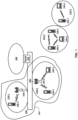
- FIG. 1 illustrates example wireless communication networks in which embodiments of the present disclosure may be implemented.
- the example wireless communication networks may include an Institute of Electrical and Electronic Engineers (IEEE) 802.11 (WLAN) infra-structure network 102.
- WLAN infrastructure network 102 may include one or more basic service sets (BSSs) 110 and 120 and a distribution system (DS) 130.
- BSSs basic service sets
- DS distribution system
- BSS 110-1 and 110-2 each includes a set of an access point (AP or AP STA) and at least one station (STA or non-AP STA).
- BSS 110-1 includes an AP 104-1 and a STA 106-1
- BSS 110-2 includes an AP 104-2 and STAs 106-2 and 106-3.
- the AP and the at least one STA in a BSS perform an association procedure to communicate with each other.
- DS 130 may be configured to connect BSS 110-1 and BSS 110-2. As such, DS 130 may enable an extended service set (ESS) 150. Within ESS 150, APs 104-1 and 104-2 are connected via DS 130 and may have the same service set identification (SSID).
- ESS extended service set
- APs 104-1 and 104-2 are connected via DS 130 and may have the same service set identification (SSID).
- SSID service set identification
- WLAN infra-structure network 102 may be coupled to one or more external networks.
- WLAN infra-structure network 102 may be connected to another network 108 (e.g., 802.X) via a portal 140.
- Portal 140 may function as a bridge connecting DS 130 of WLAN infra-structure network 102 with the other network 108.
- the example wireless communication networks illustrated in FIG. 1 may further include one or more ad-hoc networks or independent BSSs (IBSSs).
- IBSSs independent BSSs
- An ad-hoc network or IBSS is a network that includes a plurality of STAs that are within communication range of each other. The plurality of STAs are configured so that they may communicate with each other using direct peer-to-peer communication (i.e., not via an AP).
- STAs 106-4, 106-5, and 106-6 may be configured to form a first IBSS 112-1.
- STAs 106-7 and 106-8 may be configured to form a second IBSS 112-2. Since an IBSS does not include an AP, it does not include a centralized management entity. Rather, STAs within an IBSS are managed in a distributed manner. STAs forming an IBSS may be fixed or mobile.
- a STA as a predetermined functional medium may include a medium access control (MAC) layer that complies with an IEEE 802.11 standard.
- a physical layer interface for a radio medium may be used among the APs and the non-AP stations (STAs).
- the STA may also be referred to using various other terms, including mobile terminal, wireless device, wireless transmit/receive unit (WTRU), user equipment (UE), mobile station (MS), mobile subscriber unit, or user.
- WTRU wireless transmit/receive unit
- UE user equipment
- MS mobile station
- the term "user” may be used to denote a STA participating in uplink Multi-user Multiple Input, Multiple Output (MU MIMO) and/or uplink Orthogonal Frequency Division Multiple Access (OFDMA) transmission.
- MU MIMO Uplink Multi-user Multiple Input, Multiple Output
- OFDMA Orthogonal Frequency Division Multiple Access
- a physical layer (PHY) protocol data unit may be a composite structure that includes a PHY preamble and a payload in the form of a PHY service data unit (PSDU).
- PSDU may include a PHY preamble and header and/or one or more MAC protocol data units (MPDUs).
- MPDUs MAC protocol data units
- the information provided in the PHY preamble may be used by a receiving device to decode the subsequent data in the PSDU.
- the preamble fields may be duplicated and transmitted in each of the multiple component channels.
- the PHY preamble may include both a legacy portion (or “legacy preamble") and a non-legacy portion (or “non-legacy preamble”).
- the legacy preamble may be used for packet detection, automatic gain control and channel estimation, among other uses.
- the legacy preamble also may generally be used to maintain compatibility with legacy devices.
- the format of, coding of, and information provided in the non-legacy portion of the preamble is based on the particular IEEE 802.11 protocol to be used to transmit the payload.
- a frequency band may include one or more sub-bands or frequency channels.
- PPDUs conforming to the IEEE 802.11n, 802.11ac, 802.11ax and/or 802.11be standard amendments may be transmitted over the 2.4 GHz, 5 GHz, and/or 6 GHz bands, each of which may be divided into multiple 20 MHz channels.
- the PPDUs may be transmitted over a physical channel having a minimum bandwidth of 20 MHz. Larger channels may be formed through channel bonding.
- PPDUs may be transmitted over physical channels having bandwidths of 40 MHz, 80 MHz, 160 MHz, or 320 MHz by bonding together multiple 20 MHz channels.
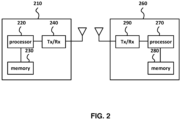
- STA 210 may include at least one processor 220, a memory 230, and at least one transceiver 240.
- AP 260 may include at least one processor 270, memory 280, and at least one transceiver 290.
- Processor 220/270 may be operatively connected to transceiver 240/290.
- Transceiver 240/290 may be configured to transmit/receive radio signals.
- transceiver 240/290 may implement a PHY layer of the corresponding device (STA 210 or AP 260).
- STA 210 and/or AP 260 may be a multi-link device (MLD), that is a device capable of operating over multiple links as defined by the IEEE 802.11be standard amendment.
- MLD multi-link device
- STA 210 and/or AP 260 may each have multiple PHY layers.
- the multiple PHY layers may be implemented using one or more of transceivers 240/290.
- Processor 220/270 may implement functions of the PHY layer, the MAC layer, and/or the logical link control (LLC) layer of the corresponding device (STA 210 or AP 260).
- LLC logical link control
- Processor 220/270 and/or transceiver 240/290 may include application specific integrated circuit (ASIC), other chipset, logic circuit and/or data processor.
- Memory 230/280 may include read-only memory (ROM), random access memory (RAM), flash memory, memory card, storage medium and/or other storage unit.
- modules e.g., processes, functions, and so on
- the modules can be stored in memory 230/280 and executed by processor 220/270.
- Memory 230/280 may be implemented (or positioned) within processor 220/270 or external to processor 220/270.
- Memory 230/280 may be operatively connected to processor 220/270 via various means known in the art.
- Target wake time a feature introduced in the IEEE 802.11ah standard, allows STAs to manage activity in the BSS by scheduling STAs to operate at different times to reduce contention.
- TWTs may allow STAs to reduce the required amount of time that a STA utilizing a power management mode may be awake.
- TWTs may be individual TWTs or broadcast TWTs. Individual TWTs follow a negotiated TWT agreement between STAs. Broadcast TWTs are based on a schedule set and provided to STAs by an AP.
- a STA that requests a TWT agreement is called a TWT requesting STA.
- the TWT requesting STA may be a non-AP STA for example.
- the STA that responds to the request is called a TWT responding STA.
- the TWT responding STA may be an AP for example.
- the TWT requesting STA is assigned specific times to wake up and exchange frames with the TWT responding STA.
- the TWT requesting STA may communicate wake scheduling information to the TWT responding STA.
- the TWT responding STA may transmit TWT values to the TWT requesting STA when a TWT agreement is established between them.
- the TWT requesting STA may wake up and perform a frame exchange.
- the TWT requesting STA may receive a next TWT information in a response from the TWT responding STA.
- the TWT requesting STA may calculate a next TWT by adding a fixed value to the current TWT value.
- the TWT values for implicit TWT may be periodic.
- the TWT requesting STA operating with an implicit TWT agreement may determine a next TWT service period (TWT SP) start time by adding a value of a TWT wake interval associated with the TWT agreement to the value of the start time of the current TWT SP.
- the TWT responding STA may include the start time for a series of TWT SPs corresponding to a single TWT flow identifier of an implicit TWT agreement in a target wake time field of a TWT element.
- the TWT element may contain a value of 'accept TWT' in a TWT setup command field.
- the start time of the TWT SP series may indicate the start time of a first TWT SP in the series. Start times of subsequent TWT SPs may be determined by adding the value of the TWT wake interval to the start time of the current TWT SP.
- the TWT requesting STA awake for an implicit TWT SP, may enter a doze state after the TWT SP has elapsed or after receiving an end of service period (EOSP) field equal to 1 from the TWT responding STA, whichever occurs first.
- EOSP end of service period
- a TWT session may be negotiated between an AP and a STA.
- the TWT session may configure a TWT SP of DL and UL traffic between the AP and the STA. Expected traffic may be limited within the negotiated SP.
- the TWT SP may start at a specific time.
- the TWT SP may run for a SP duration.
- the TWT SP may repeat every SP interval.
- FIG. 3 illustrates an example 300 of TWT operation.
- example 300 includes an AP 311, a STA 312, and a STA 313.
- AP 311 and STA 312 may establish a TWT SP 320.
- AP 311 and STA 313 may establish a TWT SP 321.
- TWT SP 320 and TWT SP 321 may repeat as shown in FIG. 3 , such that TWT SP 320 may include a first TWT SP 320-1 and a second TWT SP 320-2, and such that TWT SP 321 may include a first TWT SP 321-1 and a second TWT SP 321-2.
- AP 311 and STA 312 may exchange frames during first TWT SP 320-1.
- STA 312 may enter a doze state at the end of TWT SP 320-1 and may remain in the doze state until the start of second TWT SP 320-2.
- the start of second TWT SP 320-2 may be indicated by a TWT wake interval 330 associated with TWT SP 320.
- AP 311 and STA 312 may again exchange frames during second TWT SP 320-2.
- AP 311 and STA 313 may exchange frames during first TWT SP 321-1.
- STA 313 may enter a doze state at the end of first TWT SP 321-1 and may remain in the doze state until the start of second TWT SP 321-2.
- the start of second TWT SP 321-2 may be indicated by a TWT wake interval 331 associated with TWT SP 321.
- AP 311 and STA 313 may again exchange frames during second TWT SP 31-2.
- a STA In an awake state, a STA may be fully powered. The STA may transmit and/or receive a frame to/from an AP or another STA. In a doze state, a STA may not transmit and may not receive a frame to/from an AP or another STA.
- An MLD is an entity capable of managing communication over multiple links.
- the MLD may be a logical entity and may have more than one affiliated station (STA).
- the MLD may have a single MAC service access point (MAC-SAP) to the LLC layer, which includes a MAC data service.
- An MLD may be an access point MLD (AP MLD) when a STA affiliated with the MLD is an AP STA (or an AP).
- An MLD may be a non-access point MLD (non-AP MLD) or STA MLD when a STA affiliated with the MLD is a non-AP STA (or a STA).
- a TWT requesting STA affiliated with a STA MLD and a TWT responding STA affiliated with an AP MLD may communicate multiple TWT elements.
- the TWT elements may comprise link ID bitmap subfields indicating different link(s) in a TWT setup frame.
- the TWT parameters provided by a TWT element may be applied to the respective link that is indicated in the TWT element.
- STA 421, STA 422, and STA 423 may operate respectively on the 2.4 GHz band, the 5 GHz band, and the 6 GHz band.
- AP 411, AP2 412, and AP3 413 may be communicatively coupled via a first link (link 1), a second link (link 2), and a third link (link 3) respectively with STA 421, STA 422, and STA 423, respectively.
- STA 421 may transmit a TWT request to AP 411.
- the TWT request may include three TWT elements.
- Each TWT element may indicate a respective link of links 1-3 and may request the setup of a TWT agreement for the indicated link.
- the three TWT elements may have different TWT parameters, such as target wake time (TWT).
- AP 411 may transmit a TWT response to STA 421.
- the TWT response may include three TWT elements.
- Each TWT element may indicate a respective link of links 1-3 and may include a value of 'accept TWT' in a TWT setup command field.
- Successful TWT agreement setup on links 1-3 establishes three TWT SPs with same or different TWT parameters on links 1-3 respectively.
- the target wake time field of the TWT element indicating a given link indicates the start time of the TWP SP for that link.
- the starting time may be indicated in reference to a time synchronization function (TSF) time of the link.
- TSF time synchronization function
- initial TWT SPs 430-1, 430-2, and 430-3 of links 1-3 respectively may be aligned.
- TWT wake intervals associated with the TWT agreements of links 1-3 respectively may be set differently.
- second TWT SPs 431-1, 431-2, and 431-3 of links 1-3 respectively may not be aligned.
- STA 421, STA 422, and STA 423 may enter a doze state between the end of initial TWT SPs 430-1, 430-2, and 430-3, respectively, and the start of second TWT SPs 431-1, 431-2, 431-3, respectively.
- FIG. 5 illustrates an example target wake time (TWT) element 500 which may be used to support individual TWT operation.
- TWT target wake time
- an AP and a STA may use TWT element 500 to negotiate a TWT agreement.
- the AP and/or the STA may transmit TWT element 500 in an individually addressed management frame.
- the management frame may be of the type action, action no ack, (re)association request/response, and probe request response, for example.
- the TWT schedule and parameters may be provided during a TWT setup phase. Renegotiation/changes of TWT schedules may be signaled via individually addressed frames that contain the updated TWT schedule/parameters.
- the frames may be management frames as described above or control or data frames that carry a field containing the updated TWT schedule/parameters.
- TWT element 500 includes an element ID field, a length field, a control field, and a TWT parameter information field.
- the element ID field (e.g., 1 octet in length) may indicate that information element 500 is a TWT element.
- the length field (e.g., 1 octet) may indicate the length of TWT element 500 starting from the control field until an end of TWT element 500.
- the end of TWT element 500 may be the end of a TWT Channel field or the end of a Link ID bitmap field of the TWT parameter information field.
- FIG. 7 illustrates an example 700 of individual TWT operation.
- example 700 includes an AP 710, a STA 711, and a STA 712.
- AP 710 may be a TWT responding STA and STA 711 and STA 712 may be TWT requesting STAs.
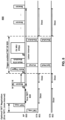
- STA 811 may return to the doze state until the next wake TBTT unless a traffic indication map (TIM) element in a beacon frame includes a positive indication for STA 811.
- TIM traffic indication map
- the STA 811 may return to the doze state after a nominal minimum TBTT wake duration time has elapsed from the TBTT start time.
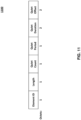
- quiet element 1100 may comprise an element ID field, a length field, a quiet count field (e.g., 1 octet), a quiet period field (e.g., 1 octet), a quiet duration field (e.g., 2 octet), and a quiet offset field (e.g., 2 octet).
- a STA and/or AP may determine a starting time of a quiet interval indicated in quiet element 1100 based on one or more parameters in quiet element 1100.
- the STA and/or AP may determine a time offset between receiving the frame indicating quiet element 1100 and a start time of the quiet interval based on one or more parameters in quiet element 1100.
- the quiet count field may be set to the number of TBTTs until a beacon interval during which the quiet interval starts.
- the value of 0 may be reserved.
- the quiet offset field may indicate an offset of the start of the quiet interval scheduled by quiet element 1100 from a TBTT specified by the quiet count field.
- the offset may be expressed in TUs.
- a value of the quiet offset field may be less than one beacon interval.
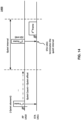
- FIG. 12 illustrates an example 1200 of quiet interval operation.
- example 1200 includes an AP 1210 and a STA 1211.
- AP 1210 may transmit a beacon frame including a quiet element to indicate a quiet interval.
- the quiet element may include a quiet count field, a quiet offset field, a quiet duration field, and/or a quiet period field.
- the quiet count field may be set to 1, indicating that the quiet interval starts in a beacon interval that is 1 TBTT away.
- the quiet offset field indicates an offset of the start of the quiet interval from the TBTT indicated in the quiet count field (e.g., from the start of a beacon frame on the TBTT).
- STA 1211 may receive the beacon frame including the quiet element. Upon receiving the beacon frame, STA 1211 may obtain and/or store the information of the quiet interval indicated by the quiet element. STA 1211 may determine the start time of the quiet interval using the quiet count field and the quiet offset field of the quiet element. STA 1211 may determine the length of the quiet interval using the quiet duration field of the quiet element.
- STA 1211 may use the information of the quiet interval to adjust its communication behavior over the wireless medium.
- STA 1211 may transmit a data frame to AP 1210 before the start of the quiet interval.
- STA 1211 may stop transmitting the data frame before the start of the quiet interval.
- STA 1211 may set its network allocation vector (NAV) based on the length of the quiet interval at the start of the quiet interval. As such, STA 1211 may have no transmission or communication with AP 1210 during the quiet interval.
- STA 1211 may start a timer with a value of the NAV set based on the length of the quiet interval. As the timer runs, STA 1211 may stop uplink frame transmission and/or downlink frame reception. STA 1211 may resume uplink frame transmission and/or downlink frame reception when the timer expires.
- STA 1211 may transmit uplink frames based on data in an uplink buffer.
- FIG. 13 illustrates an example 1300 of rescheduling quiet intervals or of stopping scheduling quiet intervals.
- an AP 1310 may transmit a beacon frame including a quiet element indicating a first quiet interval (QI 1) and a second quiet interval (QI 2).
- QI 1 may be scheduled after QI 1.
- AP 1310 may stop scheduling quiet intervals or may transmit quiet elements with changes in a quiet period, a quiet duration, and/or quiet offset of scheduled quiet intervals.
- the most recently transmitted/received beacon frame or probe response frame may be used to determine subsequent quiet intervals.
- schedules for quiet intervals based on older beacon frames or probe response frames may be discarded.
- AP 1310 may transmit a probe response frame including a quiet element indicating a third quiet interval (QI 3) after the first quiet interval (QI 1) and before the start of the second quiet interval (QI 2).
- the second quiet interval (QI 2) may be discarded and the quiet interval (QI 3) may be scheduled.
- no transmission or communication may occur between the AP 1310 and a STA configured with the quiet intervals during the first quiet interval (QI 1) and/or the third quiet interval (QI 3).
- an AP may transmit a beacon frame or a probe response frame indicating an r-TWT SP.
- the AP may also transmit a beacon frame indicating a quiet interval.
- the quiet interval may overlap with the r-TWT SP.
- the AP may transmit a frame indicating termination of the r-TWT SP during the quiet interval.
- a first STA that supports r-TWT operation and that receives the frame indicating r-TWT SP termination may terminate the r-TWT SP.
- the first STA may thus access the channel (e.g., using EDCA) after receiving the frame indicating r-TWT SP termination.
- a second STA that does not support r-TWT operation and that receives the frame indicating r-TWT SP termination may not terminate the r-TWT SP.
- the second STA may thus continue to defer channel access based on the quiet interval.
- the first STA which supports r-TWT operation may access the channel earlier than the second STA which does not support r-TWT operation. This results in an access fairness issue among STAs.
- Embodiments address this problem by providing a mechanism for a STA configured with a quiet interval to terminate the quiet interval before its end time.
- an AP transmits a first frame indicating one or more quiet intervals for one or more STAs.
- the AP transmits, during a quiet interval of the one or more quiet intervals, a second frame indicating termination of the quiet interval.
- the quiet interval is terminated before the configured time duration of the quiet interval. This improves packet transmission, QoS, and throughput for STAs configured with quiet intervals.
- Channel access fairness between STAs supporting r-TWT operation and STAs not supporting r-TWT operation is also improved.
- the AP may transmit a beacon frame or probe response frame indicating an r-TWT SP for a second STA.
- the transmitting of the second frame (indicating termination of the quiet interval) may be in response to determining that a wireless medium is not used by the second STA configured with the r-TWT SP and that the quiet interval overlaps with the r-TWT SP.
- the transmitting of the second frame may be in response to determining that the quiet interval overlaps with the r-TWT SP and that the r-TWT SP is terminated.
- an AP may transmit a first frame indicating one or more quiet intervals to one or more STAs.
- the AP may transmit a second frame indicating termination of a quiet interval of the one or more quiet intervals to the one or more STAs. The transmission of the second frame occurs during the quiet interval.
- a STA may receive a first frame indicating one or more quiet intervals.
- the STA may receive a second frame indicating termination of a quiet interval of the one or more quiet intervals, during the quiet interval.
- the STA may terminate the quiet interval in response to the second frame received during the quiet interval.
- the first frame may be a beacon frame or a probe response frame. In an example, the first frame may be a broadcast frame.
- the first frame may comprise one or more quiet elements for one or more quiet intervals.
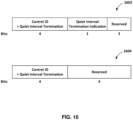
- a quiet element may comprise the following fields:
- a quiet interval is an interval during which no transmission and/or communication may occur over a wireless medium between an AP and one or more STAs configured with the quiet interval.
- a STA may determine quiet interval configuration parameters based on one or more fields of the quiet element.
- an AP may further transmit to a second STA configured with an r-TWT SP a fourth frame during a quiet interval overlapping with the r-TWT SP.
- the fourth frame may indicate termination of the r-TWT SP.
- the AP may transmit a frame indicating termination of the r-TWT SP.
- the frame may be transmitted during the quiet interval.
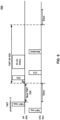
- STA 1512 may not have a buffered uplink data frame with a TID indicated as latency sensitive traffic in the first frame to transmit to AP 1510 and may not have a buffered downlink data frame with a TID indicated as latency sensitive traffic in the first frame to receive from AP 1510 during the r-TWT SP.
- AP 1510 may determine that the r-TWT SP may be terminated in at least one of the following conditions:
- STA 1512 may be a STA that supports r-TWT operation. In an example, STA 1512 may be scheduled during the r-TWT SP. In an example, STA 1512 may not have data with any of TIDs indicated in the TWT element of the first frame. In an embodiment, upon receiving the first frame indicating the r-TWT SP, STA 1512 may configure the r-TWT SP based on the TWT element indicating the r-TWT SP in the first frame. Upon receiving the fourth frame indicating termination of the r-TWT SP during the r-TWT SP, STA 1512 may terminate the r-TWT SP.
- STA 1513 may configure a quiet interval based on fields indicated in the quiet element contained in the first frame. In an embodiment, STA 1513 may determine that STA 1513 does not communicate with AP 1510 every configured quiet interval. In an embodiment, STA 1513 may set its NAV to the length of the quiet interval indicated in the quiet element. In an example, the NAV may be an intra-BSS NAV. In example 1500, STA 1513 may receive the second frame indicating termination of the quiet interval during the quiet interval. Based on receiving the second frame, STA 1513 may terminate the quiet interval. In an embodiment, STA 1513 may reset its NAV based on receiving the second frame indicating termination of the quiet interval. In an embodiment, STA 1513 may transmit a third frame using EDCA channel access to AP 1510 after terminating the quiet interval. The third frame may be one of a data frame, a control frame, or a management frame.
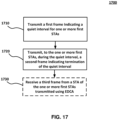
- process 1700 may begin in step 1710, which includes transmitting a first frame indicating a quiet interval for one or more first STAs.
- the first frame may include a quiet element indicating the quiet interval.
- the first frame may be a broadcast frame.
- the first frame may be a beacon frame or a probe response frame.
- transmitting the second frame comprises transmitting the second frame in response to determining that: a wireless medium is not used during the r-TWT SP by the one or more second STAs; and the quiet interval overlaps with the r-TWT SP.
- transmitting the second frame comprises transmitting the second frame in response to determining that: the quiet interval overlaps with the r-TWT SP; and the r-TWT SP is terminated.
- process 1700 may further comprise transmitting a third frame, during the quiet interval, indicating termination of the r-TWT SP.
- transmitting the second frame comprises transmitting the second frame aggregated with the third frame.
- transmitting the second frame comprises transmitting the second frame an xIFS time interval after transmitting the third frame.
- the third frame may be a QoS null frame with an end of service period (EOSP) field set to 1; a QoS data frame with an EOSP field set to 1; or a CF-end frame
Landscapes
- Engineering & Computer Science (AREA)
- Computer Networks & Wireless Communication (AREA)
- Signal Processing (AREA)
- Mobile Radio Communication Systems (AREA)
Claims (14)
- Verfahren, Folgendes umfassend:
Übertragen, durch einen Zugriffspunkt (access point - AP) (1210, 1310, 1410), eines ersten Rahmens, Folgendes umfassend:ein Ziel-Aufwachzeit(target wake time - TWT)-Element, das eine eingeschränkte Ziel-Aufwachzeit(restricted target wake time - r-TWT)-Dienstperiode (service period - SP) eines r-TWT-Setups für eine oder mehrere erste Stationen (STAs) (1211, 1411) angibt; undein stilles Element, das ein stilles Intervall angibt, das sich mit einem Teil der r-TWT-SP für eine oder mehrere zweite STAs überlappt, wobei das stille Element derart konfiguriert ist, dass es die eine oder mehreren zweiten STAs veranlasst, einen Netzwerkzuweisungsvektor (network allocation vector - NAV) basierend auf einer Länge des stillen Intervalls einzustellen; und während des stillen Intervalls an die eine oder mehreren zweiten STAs einen Konfliktfreies-Ende (contention free-end - CF-end)-Rahmen überträgt, der den Abschluss des stillen Intervalls angibt. - Verfahren nach Anspruch 1, wobei das stille Element Folgendes umfasst:ein Feld für die stille Dauer, das die Dauer des stillen Intervalls angibt;ein Feld für die stille Periode, das eine Anzahl von Beacon-Intervallen zwischen den Startzeiten geplanter stiller Intervalle angibt, die durch das stille Element definiert sind;ein Feld für die stille Zählung, das eine Anzahl von Ziel-Beacon-Übertragungszeiten (target beacon transmission times - TBTTs) bis zu einem Beacon-Intervall angibt, während dessen ein nächstes stilles Intervall beginnt; undein Feld für den stillen Versatz, das einen Versatz einer Startzeit des stillen Intervalls von einer Ziel-Beacon-Übertragungszeit (TBTT) angibt, die durch das Feld für die stille Zählung spezifiziert ist.
- Verfahren nach einem der Ansprüche 1-2, wobei der erste Rahmen einen Beacon-Rahmen oder einen Test-Rückmeldungs-Rahmen umfasst.
- Verfahren nach Anspruch 1, ferner das Übertragen, während des stillen Intervalls, eines dritten Rahmens umfassend, der den Abschluss der r-TWT-SP angibt, wobei der dritte Rahmen einen Dienstgüte(quality of service - QoS)-Daten- oder Null-Rahmen mit einem auf 1 gesetzten Feld für das Ende der Dienstperiode (end of service period - EOSP) umfasst.
- Verfahren, Folgendes umfassend:
Empfangen, durch eine Station (STA) (1211, 1411) von einem Zugriffspunkt (AP) (1210, 1310, 1410), eines ersten Rahmens, Folgendes umfassend:ein Ziel-Aufwachzeit(TWT)-Element, das eine eingeschränkte Ziel-Aufwachzeit(r-TWT)-Dienstperiode (SP) eines r-TWT-Setups für eine oder mehrere erste Stationen (STAs) angibt; undein stilles Element, das ein stilles Intervall angibt, das sich mit einem Teil der r-TWT-SP überlappt;Einstellen eines Netzwerkzuweisungsvektors (NAV) durch die STA basierend auf der Länge des stillen Intervalls;Empfangen, durch die STA von dem AP während des stillen Intervalls, eines Konfliktfreies-Ende(CF-end)-Rahmens, der den Abschluss des stillen Intervalls angibt; undAbschließen des stillen Intervalls als Reaktion auf den CF-end-Rahmen. - Verfahren nach Anspruch 5, wobei das stille Element Folgendes umfasst:ein Feld für die stille Dauer, das die Dauer des stillen Intervalls angibt;ein Feld für die stille Periode, das eine Anzahl von Beacon-Intervallen zwischen den Startzeiten geplanter stiller Intervalle angibt, die durch das stille Element definiert sind;ein Feld für die stille Zählung, das eine Anzahl von Ziel-Beacon-Übertragungszeiten (TBTTs) bis zu einem Beacon-Intervall angibt, während dessen ein nächstes stilles Intervall beginnt; undein Feld für den stillen Versatz, das einen Versatz einer Startzeit des stillen Intervalls von einer Ziel-Beacon-Übertragungszeit (TBTT) angibt, die durch das Feld für die stille Zählung spezifiziert ist.
- Verfahren nach Anspruch 5 oder 6, ferner das Neueinstellen des NAV durch die STA basierend auf dem Empfangen des CF-end-Rahmens von dem AP umfassend.
- Verfahren nach einem der Ansprüche 5 bis 7, wobei der erste Rahmen einen Beacon-Rahmen oder einen Test-Rückmeldungs-Rahmen umfasst.
- Verfahren nach einem der Ansprüche 5-8, ferner das Übertragen eines zweiten Rahmens an den AP nach dem Empfangen des CF-end-Rahmens umfassend.
- Verfahren nach Anspruch 9, wobei das Übertragen des zweiten Rahmens das Übertragen des zweiten Rahmens unter Verwendung von Enhanced Distributed Channel Access (EDCA) umfasst.
- Verfahren nach Anspruch 5, ferner das Empfangen, während des stillen Intervalls von dem AP, eines dritten Rahmens umfassend, der den Abschluss der r-TWT-SP angibt, wobei der dritte Rahmen einen Dienstgüte(QoS)-Daten- oder Null-Rahmen mit einem auf 1 gesetzten Feld für das Ende der Dienstperiode (EOSP) umfasst.
- Verfahren nach einem der Ansprüche 5, 7, 9 oder 10, wobei die STA eine STA umfasst, die den r-TWT-Betrieb unterstützt, jedoch kein Mitglied der Setup-r-TWT ist.
- Vorrichtung (210, 260), Folgendes umfassend:einen Prozessor (220, 270); undeinen Speicher (230, 280), der Anweisungen speichert, die, wenn sie durch den Prozessor ausgeführt werden, die Vorrichtung veranlassen, ein Verfahren nach einem der Ansprüche 1-12 durchzuführen.
- Computerlesbares Medium, umfassend Anweisungen, die, wenn sie durch einen Prozessor einer Vorrichtung ausgeführt werden die Vorrichtung veranlassen, ein Verfahren nach einem der Ansprüche 1-12 durchzuführen.
Priority Applications (1)
| Application Number | Priority Date | Filing Date | Title |
|---|---|---|---|
| EP25186449.2A EP4633251A3 (de) | 2021-09-07 | 2022-09-06 | Stiller intervallabschluss |
Applications Claiming Priority (2)
| Application Number | Priority Date | Filing Date | Title |
|---|---|---|---|
| US202163241299P | 2021-09-07 | 2021-09-07 | |
| PCT/US2022/042603 WO2023038878A1 (en) | 2021-09-07 | 2022-09-06 | Quiet interval termination |
Related Child Applications (1)
| Application Number | Title | Priority Date | Filing Date |
|---|---|---|---|
| EP25186449.2A Division EP4633251A3 (de) | 2021-09-07 | 2022-09-06 | Stiller intervallabschluss |
Publications (2)
| Publication Number | Publication Date |
|---|---|
| EP4214970A1 EP4214970A1 (de) | 2023-07-26 |
| EP4214970B1 true EP4214970B1 (de) | 2025-07-02 |
Family
ID=83457175
Family Applications (2)
| Application Number | Title | Priority Date | Filing Date |
|---|---|---|---|
| EP22777862.8A Active EP4214970B1 (de) | 2021-09-07 | 2022-09-06 | Stiller intervallabschluss |
| EP25186449.2A Pending EP4633251A3 (de) | 2021-09-07 | 2022-09-06 | Stiller intervallabschluss |
Family Applications After (1)
| Application Number | Title | Priority Date | Filing Date |
|---|---|---|---|
| EP25186449.2A Pending EP4633251A3 (de) | 2021-09-07 | 2022-09-06 | Stiller intervallabschluss |
Country Status (4)
| Country | Link |
|---|---|
| US (3) | US12041543B2 (de) |
| EP (2) | EP4214970B1 (de) |
| CN (2) | CN120692639A (de) |
| WO (1) | WO2023038878A1 (de) |
Families Citing this family (8)
| Publication number | Priority date | Publication date | Assignee | Title |
|---|---|---|---|---|
| US12309695B2 (en) * | 2022-05-09 | 2025-05-20 | Qualcomm Incorporated | End of service period indication |
| WO2024006048A1 (en) * | 2022-06-30 | 2024-01-04 | Sony Group Corporation | Prioritization of r-twt tids in r-twt sps |
| US20240276370A1 (en) * | 2023-02-15 | 2024-08-15 | Meta Platforms Technologies, Llc | Systems and method for early termination indication of target wake time (twt) service period (sp) |
| US20240373242A1 (en) * | 2023-05-05 | 2024-11-07 | Samsung Electronics Co., Ltd. | Coexistence management for wi-fi networks |
| US20250247773A1 (en) * | 2024-01-31 | 2025-07-31 | Hewlett Packard Enterprise Development Lp | Enhanced scan for access point |
| CN117729570B (zh) * | 2024-02-08 | 2024-06-14 | 荣耀终端有限公司 | Twt的调整方法、设备、系统及存储介质 |
| WO2025193776A1 (en) * | 2024-03-13 | 2025-09-18 | Ofinno, Llc | Channel access control in restricted target wake time operations |
| CN119273830B (zh) * | 2024-08-29 | 2026-04-07 | 杭州远眺科技有限公司 | 一种面向数字孪生的多引擎自适应渲染系统及方法 |
Citations (1)
| Publication number | Priority date | Publication date | Assignee | Title |
|---|---|---|---|---|
| US20150065155A1 (en) * | 2013-08-29 | 2015-03-05 | Qualcomm Incorporated | Systems and methods for improved communication efficiency in high efficiency wireless networks |
Family Cites Families (9)
| Publication number | Priority date | Publication date | Assignee | Title |
|---|---|---|---|---|
| WO2013022293A2 (en) * | 2011-08-11 | 2013-02-14 | Lg Electronics Inc. | Method and apparatus for dynamic frequency selection in wireless local area network system |
| WO2014042437A2 (ko) * | 2012-09-11 | 2014-03-20 | 엘지전자 주식회사 | 무선랜에서 초기 채널 액세스 방법 및 장치 |
| KR20150070122A (ko) * | 2012-10-18 | 2015-06-24 | 엘지전자 주식회사 | 무선랜 시스템에서 채널 액세스 방법 및 장치 |
| US20140269628A1 (en) * | 2013-03-13 | 2014-09-18 | Nokia Corporation | Method, apparatus, and computer program product for overlapping bss coordination of macro/pico wi-fi networks |
| US10405265B1 (en) * | 2015-12-11 | 2019-09-03 | Marvell International Ltd. | Controlling access to a shared communication medium in a wireless communication network |
| CN110768756A (zh) * | 2018-07-25 | 2020-02-07 | 华为技术有限公司 | 控制信标帧发送的方法及相关装置 |
| TW202224470A (zh) * | 2020-12-07 | 2022-06-16 | 美商菲絲博克科技有限公司 | 用於在針對無線通信的目標喚醒時間(twt)中的靜默元素之系統和方法 |
| ES3062382T3 (en) * | 2021-03-17 | 2026-04-10 | Wilus Inst Standards & Tech Inc | Multi-link device operating in multiple links and method for operating multi-link device |
| WO2022251117A1 (en) * | 2021-05-25 | 2022-12-01 | Sony Group Corporation | Restricted target wait time (r-twt) operations and parameters |
-
2022
- 2022-09-06 CN CN202510880613.7A patent/CN120692639A/zh active Pending
- 2022-09-06 CN CN202280060792.4A patent/CN118077256B/zh active Active
- 2022-09-06 EP EP22777862.8A patent/EP4214970B1/de active Active
- 2022-09-06 EP EP25186449.2A patent/EP4633251A3/de active Pending
- 2022-09-06 WO PCT/US2022/042603 patent/WO2023038878A1/en not_active Ceased
-
2023
- 2023-03-31 US US18/129,125 patent/US12041543B2/en active Active
-
2024
- 2024-07-09 US US18/766,720 patent/US12425965B2/en active Active
-
2025
- 2025-09-22 US US19/335,261 patent/US20260019946A1/en active Pending
Patent Citations (1)
| Publication number | Priority date | Publication date | Assignee | Title |
|---|---|---|---|---|
| US20150065155A1 (en) * | 2013-08-29 | 2015-03-05 | Qualcomm Incorporated | Systems and methods for improved communication efficiency in high efficiency wireless networks |
Non-Patent Citations (1)
| Title |
|---|
| CHUNYU HU (FACEBOOK): "Restricted-TWT-Quiet-Interval-TBD-CR", vol. 802.11 EHT; 802.11be, no. 2, 2 May 2021 (2021-05-02), pages 1 - 5, XP068180016, Retrieved from the Internet <URL:https://mentor.ieee.org/802.11/dcn/21/11-21-0683-02-00be-restricted-twt-quiet-interval-tbd-cr.docx> [retrieved on 20210502] * |
Also Published As
| Publication number | Publication date |
|---|---|
| EP4633251A3 (de) | 2026-01-07 |
| US20240365228A1 (en) | 2024-10-31 |
| US20230239788A1 (en) | 2023-07-27 |
| CN118077256A (zh) | 2024-05-24 |
| WO2023038878A1 (en) | 2023-03-16 |
| US12425965B2 (en) | 2025-09-23 |
| CN118077256B (zh) | 2025-07-01 |
| CN120692639A (zh) | 2025-09-23 |
| US20260019946A1 (en) | 2026-01-15 |
| EP4633251A2 (de) | 2025-10-15 |
| EP4214970A1 (de) | 2023-07-26 |
| US12041543B2 (en) | 2024-07-16 |
Similar Documents
| Publication | Publication Date | Title |
|---|---|---|
| US20240422674A1 (en) | Enhanced Multi-Link Power Save Mode | |
| EP4214970B1 (de) | Stiller intervallabschluss | |
| US12568530B2 (en) | Triggered TXOP sharing (TXS) time termination | |
| US20240163916A1 (en) | Termination of Target Wake Time Service Period | |
| US20240397551A1 (en) | Triggered TXOP Sharing (TXS) Procedure for Multiple Users | |
| US20240349345A1 (en) | Triggered TXOP Sharing (TXS) Power Save | |
| US20250071813A1 (en) | Restricted Target Wake Time Service Period Extension | |
| US20240049285A1 (en) | Channel Access Control in Restricted Target Wake Time Operation | |
| US20240276382A1 (en) | Enhanced Power Save Mode and Fallback Operation Thereof | |
| US20250031242A1 (en) | Rescheduling of Restricted Target Wake Time Service Period | |
| US20230413328A1 (en) | Multi-link Flexible Target Wake Time with account for Cross-link Switching Delay | |
| US20230413343A1 (en) | Random Access Control in Restricted Target Wake Time | |
| US20260075521A1 (en) | Multi-access point target wake time information request | |
| US20260075529A1 (en) | Multi-Access Point Channel Access Control | |
| WO2025193776A1 (en) | Channel access control in restricted target wake time operations | |
| WO2025054216A9 (en) | Triggered transmission opportunity (txop) sharing power save mode operation | |
| WO2026025020A1 (en) | Secondary channel access in restricted target wake time operations | |
| WO2025165682A1 (en) | Indicating station unavailability after transmission opportunity sharing |
Legal Events
| Date | Code | Title | Description |
|---|---|---|---|
| STAA | Information on the status of an ep patent application or granted ep patent |
Free format text: STATUS: UNKNOWN |
|
| STAA | Information on the status of an ep patent application or granted ep patent |
Free format text: STATUS: THE INTERNATIONAL PUBLICATION HAS BEEN MADE |
|
| PUAI | Public reference made under article 153(3) epc to a published international application that has entered the european phase |
Free format text: ORIGINAL CODE: 0009012 |
|
| STAA | Information on the status of an ep patent application or granted ep patent |
Free format text: STATUS: REQUEST FOR EXAMINATION WAS MADE |
|
| 17P | Request for examination filed |
Effective date: 20230418 |
|
| AK | Designated contracting states |
Kind code of ref document: A1 Designated state(s): AL AT BE BG CH CY CZ DE DK EE ES FI FR GB GR HR HU IE IS IT LI LT LU LV MC MK MT NL NO PL PT RO RS SE SI SK SM TR |
|
| STAA | Information on the status of an ep patent application or granted ep patent |
Free format text: STATUS: EXAMINATION IS IN PROGRESS |
|
| 17Q | First examination report despatched |
Effective date: 20230919 |
|
| DAV | Request for validation of the european patent (deleted) | ||
| DAX | Request for extension of the european patent (deleted) | ||
| GRAP | Despatch of communication of intention to grant a patent |
Free format text: ORIGINAL CODE: EPIDOSNIGR1 |
|
| STAA | Information on the status of an ep patent application or granted ep patent |
Free format text: STATUS: GRANT OF PATENT IS INTENDED |
|
| RAP3 | Party data changed (applicant data changed or rights of an application transferred) |
Owner name: OFINNO, LLC |
|
| INTG | Intention to grant announced |
Effective date: 20240326 |
|
| GRAJ | Information related to disapproval of communication of intention to grant by the applicant or resumption of examination proceedings by the epo deleted |
Free format text: ORIGINAL CODE: EPIDOSDIGR1 |
|
| STAA | Information on the status of an ep patent application or granted ep patent |
Free format text: STATUS: EXAMINATION IS IN PROGRESS |
|
| GRAS | Grant fee paid |
Free format text: ORIGINAL CODE: EPIDOSNIGR3 |
|
| STAA | Information on the status of an ep patent application or granted ep patent |
Free format text: STATUS: GRANT OF PATENT IS INTENDED |
|
| GRAP | Despatch of communication of intention to grant a patent |
Free format text: ORIGINAL CODE: EPIDOSNIGR1 |
|
| INTC | Intention to grant announced (deleted) | ||
| INTG | Intention to grant announced |
Effective date: 20240827 |
|
| GRAJ | Information related to disapproval of communication of intention to grant by the applicant or resumption of examination proceedings by the epo deleted |
Free format text: ORIGINAL CODE: EPIDOSDIGR1 |
|
| GRAL | Information related to payment of fee for publishing/printing deleted |
Free format text: ORIGINAL CODE: EPIDOSDIGR3 |
|
| STAA | Information on the status of an ep patent application or granted ep patent |
Free format text: STATUS: EXAMINATION IS IN PROGRESS |
|
| INTC | Intention to grant announced (deleted) | ||
| GRAP | Despatch of communication of intention to grant a patent |
Free format text: ORIGINAL CODE: EPIDOSNIGR1 |
|
| STAA | Information on the status of an ep patent application or granted ep patent |
Free format text: STATUS: GRANT OF PATENT IS INTENDED |
|
| INTG | Intention to grant announced |
Effective date: 20250124 |
|
| GRAA | (expected) grant |
Free format text: ORIGINAL CODE: 0009210 |
|
| STAA | Information on the status of an ep patent application or granted ep patent |
Free format text: STATUS: THE PATENT HAS BEEN GRANTED |
|
| AK | Designated contracting states |
Kind code of ref document: B1 Designated state(s): AL AT BE BG CH CY CZ DE DK EE ES FI FR GB GR HR HU IE IS IT LI LT LU LV MC MK MT NL NO PL PT RO RS SE SI SK SM TR |
|
| REG | Reference to a national code |
Ref country code: GB Ref legal event code: FG4D |
|
| REG | Reference to a national code |
Ref country code: CH Ref legal event code: EP |
|
| REG | Reference to a national code |
Ref country code: DE Ref legal event code: R096 Ref document number: 602022017030 Country of ref document: DE |
|
| REG | Reference to a national code |
Ref country code: IE Ref legal event code: FG4D |
|
| REG | Reference to a national code |
Ref country code: NL Ref legal event code: FP |
|
| PGFP | Annual fee paid to national office [announced via postgrant information from national office to epo] |
Ref country code: NL Payment date: 20250924 Year of fee payment: 4 |
|
| PGFP | Annual fee paid to national office [announced via postgrant information from national office to epo] |
Ref country code: AT Payment date: 20251020 Year of fee payment: 4 Ref country code: FR Payment date: 20250929 Year of fee payment: 4 |
|
| PG25 | Lapsed in a contracting state [announced via postgrant information from national office to epo] |
Ref country code: PT Free format text: LAPSE BECAUSE OF FAILURE TO SUBMIT A TRANSLATION OF THE DESCRIPTION OR TO PAY THE FEE WITHIN THE PRESCRIBED TIME-LIMIT Effective date: 20251103 |
|
| REG | Reference to a national code |
Ref country code: AT Ref legal event code: MK05 Ref document number: 1810747 Country of ref document: AT Kind code of ref document: T Effective date: 20250702 |
|
| PG25 | Lapsed in a contracting state [announced via postgrant information from national office to epo] |
Ref country code: IS Free format text: LAPSE BECAUSE OF FAILURE TO SUBMIT A TRANSLATION OF THE DESCRIPTION OR TO PAY THE FEE WITHIN THE PRESCRIBED TIME-LIMIT Effective date: 20251102 |
|
| PGFP | Annual fee paid to national office [announced via postgrant information from national office to epo] |
Ref country code: DE Payment date: 20250929 Year of fee payment: 4 |
|
| PG25 | Lapsed in a contracting state [announced via postgrant information from national office to epo] |
Ref country code: NO Free format text: LAPSE BECAUSE OF FAILURE TO SUBMIT A TRANSLATION OF THE DESCRIPTION OR TO PAY THE FEE WITHIN THE PRESCRIBED TIME-LIMIT Effective date: 20251002 |
|
| REG | Reference to a national code |
Ref country code: LT Ref legal event code: MG9D |
|
| PG25 | Lapsed in a contracting state [announced via postgrant information from national office to epo] |
Ref country code: AT Free format text: LAPSE BECAUSE OF FAILURE TO SUBMIT A TRANSLATION OF THE DESCRIPTION OR TO PAY THE FEE WITHIN THE PRESCRIBED TIME-LIMIT Effective date: 20250702 |
|
| PG25 | Lapsed in a contracting state [announced via postgrant information from national office to epo] |
Ref country code: FI Free format text: LAPSE BECAUSE OF FAILURE TO SUBMIT A TRANSLATION OF THE DESCRIPTION OR TO PAY THE FEE WITHIN THE PRESCRIBED TIME-LIMIT Effective date: 20250702 |
|
| PG25 | Lapsed in a contracting state [announced via postgrant information from national office to epo] |
Ref country code: HR Free format text: LAPSE BECAUSE OF FAILURE TO SUBMIT A TRANSLATION OF THE DESCRIPTION OR TO PAY THE FEE WITHIN THE PRESCRIBED TIME-LIMIT Effective date: 20250702 |
|
| PG25 | Lapsed in a contracting state [announced via postgrant information from national office to epo] |
Ref country code: GR Free format text: LAPSE BECAUSE OF FAILURE TO SUBMIT A TRANSLATION OF THE DESCRIPTION OR TO PAY THE FEE WITHIN THE PRESCRIBED TIME-LIMIT Effective date: 20251003 |
|
| PG25 | Lapsed in a contracting state [announced via postgrant information from national office to epo] |
Ref country code: SE Free format text: LAPSE BECAUSE OF FAILURE TO SUBMIT A TRANSLATION OF THE DESCRIPTION OR TO PAY THE FEE WITHIN THE PRESCRIBED TIME-LIMIT Effective date: 20250702 Ref country code: CZ Free format text: LAPSE BECAUSE OF FAILURE TO SUBMIT A TRANSLATION OF THE DESCRIPTION OR TO PAY THE FEE WITHIN THE PRESCRIBED TIME-LIMIT Effective date: 20250702 |
|
| PG25 | Lapsed in a contracting state [announced via postgrant information from national office to epo] |
Ref country code: LV Free format text: LAPSE BECAUSE OF FAILURE TO SUBMIT A TRANSLATION OF THE DESCRIPTION OR TO PAY THE FEE WITHIN THE PRESCRIBED TIME-LIMIT Effective date: 20250702 |
|
| PG25 | Lapsed in a contracting state [announced via postgrant information from national office to epo] |
Ref country code: PL Free format text: LAPSE BECAUSE OF FAILURE TO SUBMIT A TRANSLATION OF THE DESCRIPTION OR TO PAY THE FEE WITHIN THE PRESCRIBED TIME-LIMIT Effective date: 20250702 Ref country code: BG Free format text: LAPSE BECAUSE OF FAILURE TO SUBMIT A TRANSLATION OF THE DESCRIPTION OR TO PAY THE FEE WITHIN THE PRESCRIBED TIME-LIMIT Effective date: 20250702 |
|
| PG25 | Lapsed in a contracting state [announced via postgrant information from national office to epo] |
Ref country code: RS Free format text: LAPSE BECAUSE OF FAILURE TO SUBMIT A TRANSLATION OF THE DESCRIPTION OR TO PAY THE FEE WITHIN THE PRESCRIBED TIME-LIMIT Effective date: 20251002 |
|
| PG25 | Lapsed in a contracting state [announced via postgrant information from national office to epo] |
Ref country code: ES Free format text: LAPSE BECAUSE OF FAILURE TO SUBMIT A TRANSLATION OF THE DESCRIPTION OR TO PAY THE FEE WITHIN THE PRESCRIBED TIME-LIMIT Effective date: 20250702 |
|
| PG25 | Lapsed in a contracting state [announced via postgrant information from national office to epo] |
Ref country code: RO Free format text: LAPSE BECAUSE OF FAILURE TO SUBMIT A TRANSLATION OF THE DESCRIPTION OR TO PAY THE FEE WITHIN THE PRESCRIBED TIME-LIMIT Effective date: 20250702 |
|
| PG25 | Lapsed in a contracting state [announced via postgrant information from national office to epo] |
Ref country code: SM Free format text: LAPSE BECAUSE OF FAILURE TO SUBMIT A TRANSLATION OF THE DESCRIPTION OR TO PAY THE FEE WITHIN THE PRESCRIBED TIME-LIMIT Effective date: 20250702 |
|
| PG25 | Lapsed in a contracting state [announced via postgrant information from national office to epo] |
Ref country code: DK Free format text: LAPSE BECAUSE OF FAILURE TO SUBMIT A TRANSLATION OF THE DESCRIPTION OR TO PAY THE FEE WITHIN THE PRESCRIBED TIME-LIMIT Effective date: 20250702 |
|
| PG25 | Lapsed in a contracting state [announced via postgrant information from national office to epo] |
Ref country code: IT Free format text: LAPSE BECAUSE OF FAILURE TO SUBMIT A TRANSLATION OF THE DESCRIPTION OR TO PAY THE FEE WITHIN THE PRESCRIBED TIME-LIMIT Effective date: 20250702 |