EP4208796B1 - Memory-request priority up-leveling - Google Patents
Memory-request priority up-leveling Download PDFInfo
- Publication number
- EP4208796B1 EP4208796B1 EP20816746.0A EP20816746A EP4208796B1 EP 4208796 B1 EP4208796 B1 EP 4208796B1 EP 20816746 A EP20816746 A EP 20816746A EP 4208796 B1 EP4208796 B1 EP 4208796B1
- Authority
- EP
- European Patent Office
- Prior art keywords
- memory
- request
- requests
- level
- priority
- Prior art date
- Legal status (The legal status is an assumption and is not a legal conclusion. Google has not performed a legal analysis and makes no representation as to the accuracy of the status listed.)
- Active
Links
Images



Classifications
-
- G—PHYSICS
- G06—COMPUTING OR CALCULATING; COUNTING
- G06F—ELECTRIC DIGITAL DATA PROCESSING
- G06F13/00—Interconnection of, or transfer of information or other signals between, memories, input/output devices or central processing units
- G06F13/14—Handling requests for interconnection or transfer
- G06F13/16—Handling requests for interconnection or transfer for access to memory bus
- G06F13/1605—Handling requests for interconnection or transfer for access to memory bus based on arbitration
- G06F13/161—Handling requests for interconnection or transfer for access to memory bus based on arbitration with latency improvement
- G06F13/1626—Handling requests for interconnection or transfer for access to memory bus based on arbitration with latency improvement by reordering requests
-
- G—PHYSICS
- G06—COMPUTING OR CALCULATING; COUNTING
- G06F—ELECTRIC DIGITAL DATA PROCESSING
- G06F13/00—Interconnection of, or transfer of information or other signals between, memories, input/output devices or central processing units
- G06F13/14—Handling requests for interconnection or transfer
- G06F13/16—Handling requests for interconnection or transfer for access to memory bus
- G06F13/1605—Handling requests for interconnection or transfer for access to memory bus based on arbitration
- G06F13/1642—Handling requests for interconnection or transfer for access to memory bus based on arbitration with request queuing
-
- G—PHYSICS
- G06—COMPUTING OR CALCULATING; COUNTING
- G06F—ELECTRIC DIGITAL DATA PROCESSING
- G06F13/00—Interconnection of, or transfer of information or other signals between, memories, input/output devices or central processing units
- G06F13/14—Handling requests for interconnection or transfer
- G06F13/16—Handling requests for interconnection or transfer for access to memory bus
- G06F13/1668—Details of memory controller
- G06F13/1673—Details of memory controller using buffers
Definitions
- Priority levels which affect quality of service for requesting clients, are often used for memory-request arbitration. Clients may have various requirements that dictate respective priorities of the memory requests they generate. By utilizing priority levels, the arbiter can prioritize memory requests within the memory-request buffer for granting.
- priority levels may be fixed for each memory request in the memory-request buffer. While this approach can effectively indicate that memory requests have different priorities, it cannot adapt when clients' requirements change. For example, a video card may determine that a display buffer is about to underrun and may have no means to expedite associated memory requests.
- the method includes receiving a memory request from a client over a VC and adding the memory request to a memory-request buffer along with an indication of a VCID of the VC and an original priority-level for the memory request.
- the method also includes indicating the VCID for related memory requests within the memory-request buffer.
- the method further includes determining that an up-level indication corresponding to the VCID is being asserted and, based on the up-level indication being asserted, increasing original priority-levels with the VCID indicated (e.g., the memory request and the related memory requests) to respective up-leveled priority levels.
- This document describes techniques and apparatuses that enable memory-request priority up-leveling. These techniques and apparatuses enable a client to dynamically adjust priority levels of memory requests within a memory-request buffer via a side channel to a memory controller. By asserting an up-level indication corresponding to a VCID over the side channel, the client can increase original priority-levels for memory requests within the memory-request buffer that have the VCID indicated. In some cases, the up-leveling may occur in as little as a single clock cycle. Furthermore, because the VCID is indicated for related memory requests, priority up-leveling may be achieved while accounting for memory request dependency. Although the following discussion describes acceleration of memory requests through priority up-leveling, the techniques can easily be applied to deceleration of memory requests though priority down-leveling.
- Fig. 1 illustrates a process flow 100 for adding memory requests to a memory buffer and indicating VCIDs for related memory requests.
- the process flow 100 is generally implemented in an electronic device (not shown) that is discussed below in regard to Fig. 3 .
- the process flow 100 includes a client 102 that sends a memory request 104 (e.g., read and/or write memory request) to a memory controller 106.
- the client 102 may be a component or aspect of an application, operating system, processor, core of a processor, piece of hardware, or any other entity that can generate memory requests requesting to read from or write to a memory 108.
- the memory request 104 has a VCID 110 associated with the memory request 104, an original priority-level 112, a memory address 114, and an optional transaction identification (ID) 116.
- the memory address 114 indicates a physical or virtual memory address associated with the memory request 104. Although discussed in terms of a memory address 114, the memory request 104 may include a request for a plurality of memory addresses.
- the transaction ID 116 may be included in the memory request 104 and may be used for memory request dependency, as discussed below.
- the memory request 104 is received by the memory controller 106 over a VC 118, and the VCID 110 corresponds to the VC 118.
- the VCID 110 of the memory request 104 may be inherent to the memory controller 106 based on the VC 118.
- the VC 118 may also be associated with the client.
- the VC 118 (and thus the VCID 110) may be determined based on information about the client 102 (e.g., ID, type, or location).
- the memory request 104 may explicitly contain the VCID 110 corresponding to the VC 118.
- the memory controller 106 adds the memory request 104 to a memory-request buffer 122 along with an indication of the VCID 110.
- the other memory-requests 124 have respective VCID indications 126 that were indicated upon entering the memory-request buffer 122 (similar to the memory request 104). If a related memory request exists in the memory-request buffer 122, the dependency module 120 determines if the VCID 110 is indicated for the related memory request.
- the VCID indications 126 of the other memory-requests 124 may be for the VCID 110 or other VCIDs supported by the system. For example, if the related request was received over the VC 118, then the VCID 110 may already be indicated for the related request.
- the dependency module 120 may indicate the VCID 110 for the related memory request.
- the indication of the VCID 110 for the related memory request is additive and not a replacement indication.
- the related memory request will be associated with the VCID 110 as well as a VCID for a VC over which the related memory request was received (if different than the VC 118).
- Fig. 2 illustrates an example process flow 200 for memory-request priority up-leveling.
- the process flow 200 is generally a continuation of the process flow 100 and, thus, may also be implemented in the electronic device (not shown) that is discussed below in regard to Fig. 3 .
- the process flow 200 generally occurs after the process flow 100.
- the process flow 200 occurs after the dependency module 120 has placed the memory request 104 within the memory-request buffer 122 and indicated the VCID 110 for any related requests.
- memory requests 202 include memory request 104 and the other memory-requests 124 along with their corresponding VCID indications 204 and priority levels 206.
- the up-level module 212 may consider the up-level indication 208 as being asserted until it is changed or deasserted by the client 102. Furthermore, although the same client (e.g., the client 102) as in Fig. 1 is shown, noted that the up-level indication 208 may be asserted and the up-level amount 210 set by another client. For example, the other client may have one or more memory requests 202 that were received over VC 118.
- the VCID 110 associated with the up-level indication 208 and the up-level amount 210 may, similar to the memory request 104, be inherent to the memory controller 106 based on a VC over which the up-level indication 208 is received ( e.g., a VC of the side channel 214). In such a situation, the VCID 110 may be inherent to the up-level module 212. Alternatively, the up-level indication 208 and the up-level amount 210 may be received along with an explicit indication of the VCID 110.
- Respective priority levels 206 of the memory requests 202 having the indication of the VCID 110 are increased from respective original priority-levels (e.g., original priority-level 112) to respective up-leveled priority levels based on the up-level amount 210.
- the up-level amount 210 may be a fixed amount, e.g., the priority levels 206 of the memory requests 202 having the indication of the VCID 110 are set to a specific level.
- the up-level amount 210 may be a multiplier, e.g., the priority levels 206 of the memory requests 202 having the indication of the VCID 110 are multiplied by the multiplier.
- the up-level indication 208 is a dynamic indication that can be easily asserted or deasserted by the client 102. As such, when the client 102 asserts the up-level indication 208, e.g., by setting a bit of the side channel 214, priority levels of associated requests are increased. The priority levels of the associated requests may stay increased until the up-level indication is deasserted by the client, e.g., by returning the bit. Accordingly, responsive to determining that the up-level indication 208 for the VCID 110 has been deasserted by the client 102, the up-level module 212 returns the priority levels 206 of the memory requests 202 having the indication of the VCID 110 to the respective original priority-levels.
- the up-level amount 210 can be changed dynamically by the client 102 (or another requesting client) irrespective of whether the up-level indication 208 is currently asserted and/or being received. Noted that the changes in priority levels, and thus acceleration/deceleration, may occur in as little as a single clock cycle.
- the priority levels 206 are sent to and/or viewed by an arbiter 216 that grants the memory request 104 based on the priority level of the memory request 104 (or, because priority level is only one factor for use in memory-request arbitration, the arbiter 216 may decline or defer the memory request 104).
- the arbiter 216 may grant the memory request 104 while the up-level indication 208 is asserted or deasserted. Generally, the arbiter 216 is more likely to grant the memory request 104 while the priority level of the memory request 104 is up-leveled. The memory request 104, however, may be granted after the up-level indication 208 is deasserted.
- the priority level for the memory request 104 at grant may be the original priority-level 112 or an up-leveled priority level.
- the arbiter sends a memory-request grant 218 that corresponds to the memory request 104 to the client 102.
- Other memory-requests of the memory requests 202 (including the related memory requests that are generally granted prior to the memory request 104) also have associated memory grants sent to their respective clients.
- performance of the memory controller 106 may not be affected by increasing a depth of the memory request buffer 122 (e.g., a number of memory requests able to be stored/tracked in the buffer). For example, a number of the operations discussed above may be irrespective of the depth. Furthermore, increasing the depth of the memory request buffer 122 may merely require a linear growth in area (as opposed to exponential or some other non-linear growth). Also, there may be no need to maintain additional pointers for the parent memory transactions.
- a depth of the memory request buffer 122 e.g., a number of memory requests able to be stored/tracked in the buffer. For example, a number of the operations discussed above may be irrespective of the depth.
- increasing the depth of the memory request buffer 122 may merely require a linear growth in area (as opposed to exponential or some other non-linear growth). Also, there may be no need to maintain additional pointers for the parent memory transactions.
- Fig. 3 illustrates an example electronic device 300 in which memory-request priority up-leveling can be implemented.
- the electronic device 300 is illustrated with various non-limiting examples of the electronic device 300: a smartphone 300-1, a laptop 300-2, a television 300-3, a desktop 300-4, a tablet 300-5, and a wearable device 300-6.
- the electronic device 300 includes at least one processor 302, computer-readable media 304, and the memory controller 106.
- the processor 302 executes code stored within the computer-readable media 304 to implement an operating system 306 and optionally one or more applications 308 that are stored within a storage media 310 (e.g., one or more non-transitory storage devices such as a hard drive, SSD, flash memory, read-only memory (ROM), EPROM, or EEPROM) of the computer-readable media 304.
- a storage media 310 e.g., one or more non-transitory storage devices such as a hard drive, SSD, flash memory, read-only memory (ROM), EPROM, or EEPROM
- the operating system 306 or the applications 308 generally act as the client 102, as described below, other components can also generate the memory request 104.
- the computer-readable media 304 which may be transitory or non-transitory, also includes the memory 108 (e.g., one or more non-transitory computer-readable storage devices such as a random access memory (RAM, DRAM, or SRAM)) that is requested to be accessed (e.g., read from or written to) by the client 102 through the memory request 104.
- the memory 108 e.g., one or more non-transitory computer-readable storage devices such as a random access memory (RAM, DRAM, or SRAM)
- RAM random access memory
- DRAM dynamic random access memory
- SRAM random access memory
- the memory controller 106 contains a memory-controller processor 312 and a memory controller computer-readable media 314.
- the memory-controller processor 312 e.g., an application processor, microprocessor, digital-signal processor (DSP), or controller
- DSP digital-signal processor
- the memory controller computer-readable media 314 e.g., one or more non-transitory storage devices
- the memory controller 106 also contains the arbiter 216.
- aspects of the memory controller 106 may be implemented in conjunction with the processor 302 or by the processor 302. Similarly, the memory controller 106 (or processor 302) may perform functions described herein by executing instructions that are stored within the storage media 310.
- the memory 108 and aspects of the memory controller 106 may also be combined ( e.g., implemented as part of an SoC).
- the memory controller 106 is described in terms of memory requests to access the memory 108, the techniques described herein can easily be applied for memory requests to access storage media 310.
- the memory controller 106 may be a hard drive controller, SSD controller, or the like.
- the memory controller 106 may be implemented by the processor 302 to access storage media 310.
- the electronic device 300 can include one or more communication systems (not shown) that enable wired and/or wireless communication of device data, such as received data, transmitted data, or other information as described above.
- Example communication systems include NFC transceivers, WPAN radios compliant with various IEEE 802.15 (Bluetooth TM ) standards, WLAN radios compliant with any of the various IEEE 802.11 (WiFi TM ) standards, WWAN (3GPP-compliant) radios for cellular telephony, wireless metropolitan area network (WMAN) radios compliant with various IEEE 802.16 (WiMAX TM ) standards, infrared (IR) transceivers compliant with an Infrared Data Association (IrDA) protocol, and wired local area network (LAN) Ethernet transceivers.
- aspects of the communication system may act as the client 102 by generating memory requests based on received data or data to be transmitted (e.g., a communication buffer).
- the electronic device 300 may also include one or more data input ports (not shown) by which any type of data, media content, and/or other inputs can be received (e.g., user-selectable inputs, messages, applications, music, television content, recorded video content, and any other type of audio, video, and/or image data received from any content and/or data source).
- the data input ports may include USB ports, coaxial cable ports, fiber optic ports for optical fiber interconnects or cabling, and other serial or parallel connectors (including internal connectors) for flash memory, DVDs, CDs, and the like.
- the electronic device 300 also includes an audio and/or video-processing system (not shown) that processes audio data and/or passes through the audio and video data to an audio system (not shown) and/or to a display system (not shown) (e.g., a video buffer or a screen of a smart phone or camera).
- the audio system and/or the display system may include any components that process, display, and/or otherwise render audio, video, display, and/or image data and may act as the client 102.
- Display data and audio signals can be communicated to an audio component and/or to a display component via an RF (radio frequency) link, S-video link, HDMI (high-definition multimedia interface), composite video link, component video link, DVI (digital video interface), analog audio connection, or another similar communication link, such as the media data port.
- the audio system and/or the display system are external or separate components of the electronic device 300.
- the display system can be an integrated component of the example electronic device 300, such as part of an integrated touch interface.
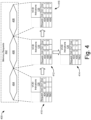
- Fig. 4 is an example illustration 400 of VCIDs being indicated for memory requests.
- the example illustration 400 shows VCID indications 126 for three memory requests 402 (memory request 404, memory request 406, and memory request 408) that are received chronologically (e.g., memory request 404 is received first, memory request 406 is received second, and memory request 408 is received third).
- the memory requests 402 are generally similar to the memory request 104 when first received and then similar to the other memory-requests 124 after the memory requests are placed in the memory-request buffer 122.
- the VCID indications 126 are shown as 0x0, 0x1, and 0x2 merely for display purposes. As discussed above, any number of VCID indications 126 in any fashion (e.g., table, vector, field, etc.) may be utilized.
- the memory request 404 is received over a VC with a VCID of 0x2.
- VCID 0x2 is indicated for the memory request 404, as shown in an example representation 410 of the memory-request buffer 122.
- the memory request 406 is received over a VC with a VCID of 0x1.
- VCID Ox1 is indicated for the memory request 406, as shown in an example representation 412 of the memory-request buffer 122.
- the memory request 406 is related to the memory request 404 (based on transaction IDs and/or memory addresses).
- the memory request 406 is determined to be dependent upon memory request 404 (e.g., memory request 406 is a child of memory request 404). Accordingly, the dependency module 120 from Fig. 1 indicates VCID 0x1 for the memory request 404, as shown in an example representation 414 of the memory-request buffer 122. As noted above, the change in VCID indications 126 for the memory request 404 may be performed prior to, concurrently with, or after the memory request 406 is added to the buffer. The change from example representation 412 to example representation 414 is merely illustrative of the change due to memory request dependency.
- the memory request 408 is received over the VC with the VCID of 0x2.
- the memory request 408 is not related to memory request 404 or 406.
- VCID 0x2 is indicated for the memory request 408, as shown in an example representation 416 of the memory-request buffer 122.
- an up-level indication for VCID 0x0 does not up-level any of the memory requests 404, 406, or 408.
- an up-level indication for VCID Ox1 up-levels the memory request 404 and the memory request 406.
- an up-level indication for VCID 0x2 up-levels the memory request 404 and the memory request 408.
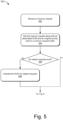
- Figs. 5 and 6 illustrate an example method 500 for memory-request priority up-leveling.
- a memory request is received.
- the memory controller 106 may receive the memory request 104 from the client 102 over a VC with the VCID 110 and may contain the original priority-level 112, the memory address 114, and optionally the transaction ID 116.
- the memory request, the VCID and the original priority-level are added to a memory-request buffer.
- the memory controller 106 may add the memory request 104 to the memory-request buffer 122 with the original priority-level 112 and the VCID 110 indicated.
- a determination that the up-level indication is being asserted for the VCID is made.
- the up-level module 212 may determine that the up-level indication 208 is being asserted for the VCID 110.
- the up-level indication may be asserted by the client that created the memory request (e.g., client 102) or another client.
- priority up-leveling can increase chances of grant
- conditions may change between when the up-level indication is asserted and a time of grant.
- a client may decide that the up-leveled priority level may be returned to the original priority-level before the memory request is granted.
- the memory request may be granted with the original priority-level.
- the process may send the priority levels to another entity that grants (or arbitrates on) the request and the other memory-requests within the memory-request buffer 122.
Landscapes
- Engineering & Computer Science (AREA)
- Theoretical Computer Science (AREA)
- Physics & Mathematics (AREA)
- General Engineering & Computer Science (AREA)
- General Physics & Mathematics (AREA)
- Bus Control (AREA)
- Communication Control (AREA)
- Information Transfer Systems (AREA)
- Memory System Of A Hierarchy Structure (AREA)
- Memory System (AREA)
Description
- Modern computing devices process large numbers of read and write memory requests from requesting clients (e.g., operating systems, applications, or components). Because the memory requests cannot all be served on a next cycle of a computing device, the memory requests are often placed in a memory-request buffer, and an arbiter grants (or declines) the memory requests based on an arbitration scheme.
- Priority levels, which affect quality of service for requesting clients, are often used for memory-request arbitration. Clients may have various requirements that dictate respective priorities of the memory requests they generate. By utilizing priority levels, the arbiter can prioritize memory requests within the memory-request buffer for granting.
- Traditionally, priority levels may be fixed for each memory request in the memory-request buffer. While this approach can effectively indicate that memory requests have different priorities, it cannot adapt when clients' requirements change. For example, a video card may determine that a display buffer is about to underrun and may have no means to expedite associated memory requests.
-
US 2018/0210847 A1 relates to a memory protocol with command priority. An apparatus can execute a command that includes a read identification number based on a priority assigned to the read identification number in a register. -
US 2012/0311277 A1 relates to a programmable integrated circuit memory controller that interfaces between master modules and system memory. The memory controller may receive memory access requests from the masters via ports that have associated priority values and fulfill the memory access requests by configuring system memory to respond to the memory access requests. -
US 2020/0301859 A1 relates to memory systems for receiving communication information from external devices via virtual channels and the control methods of these memory systems. - Techniques and apparatuses are described that enable memory-request priority up-leveling. These techniques and apparatuses enable a client to dynamically adjust priority levels of memory requests within a memory-request buffer (e.g., read and/or write memory requests) via a side channel to a memory controller. By asserting an up-level indication corresponding to a virtual channel identification (VCID) over the side channel, the client can increase original priority-levels for memory requests within the memory-request buffer for which the VCID is indicated. Furthermore, because the VCID is indicated for related memory requests, priority up-leveling may be achieved while accounting for memory request dependency.
- Aspects described below include a memory controller configured to perform a method that receives a memory request from a client over a virtual channel (VC) and adds the memory request to a memory-request buffer, along with an indication of a VCID of the VC and an original priority-level for the memory request. The method then indicates the VCID for related memory requests within the memory-request buffer. The method also determines that an up-level indication corresponding to the VCID is being asserted and, based on the up-level indication being asserted, increases original priority-levels of memory requests with the VCID indicated (e.g., the memory request and the related memory requests) to respective up-leveled priority levels. The memory controller may implement the method in hardware (e.g. using digital logic circuitry configured to perform the method) or in a combination of hardware and software (e.g., by a processor and a computer-readable medium, where the medium includes instructions that cause the processor to perform the method).
- Aspects described below also include a method performed by a memory controller. The method includes receiving a memory request from a client over a VC and adding the memory request to a memory-request buffer along with an indication of a VCID of the VC and an original priority-level for the memory request. The method also includes indicating the VCID for related memory requests within the memory-request buffer. The method further includes determining that an up-level indication corresponding to the VCID is being asserted and, based on the up-level indication being asserted, increasing original priority-levels with the VCID indicated (e.g., the memory request and the related memory requests) to respective up-leveled priority levels.
- Apparatuses and techniques enabling memory-request priority up-leveling are described with reference to the following drawings. The same numbers are used throughout the drawings to reference like features and components:
-
Fig. 1 illustrates an example process flow for adding memory requests to a memory-request buffer and indicating VCIDs for related memory requests; -
Fig. 2 illustrates an example process flow for memory-request priority up-leveling; -
Fig. 3 illustrates an example electronic device in which memory-request priority up-leveling can be implemented; -
Fig. 4 is an example illustration of VCIDs being indicated for memory requests; and -
Figs. 5 and6 illustrate an example method for memory-request priority up-leveling. - Memory requests may have associated priority levels that affect quality of service for clients. Although the clients may be able to set priority levels when the memory requests are generated, the priority levels are generally static and unable to be manipulated by the clients after the memory requests are received by a memory controller. Some memory controllers can accelerate memory requests; they often do so, however, irrespective of the clients. Many times, the clients are aware of conditions that the memory controller is not (e.g., a local buffer that is about to underrun). Such conditions can lead to poor quality-of-service for the clients, even with memory-controller-based acceleration. Furthermore, traditional acceleration techniques may fail to account for related memory requests within the memory-request buffer (e.g., memory-request dependency). Failing to account for such dependency can also lead to poor quality of service for the clients due to parent memory requests holding up child memory requests even when the child memory requests are accelerated by the memory controller.
- This document describes techniques and apparatuses that enable memory-request priority up-leveling. These techniques and apparatuses enable a client to dynamically adjust priority levels of memory requests within a memory-request buffer via a side channel to a memory controller. By asserting an up-level indication corresponding to a VCID over the side channel, the client can increase original priority-levels for memory requests within the memory-request buffer that have the VCID indicated. In some cases, the up-leveling may occur in as little as a single clock cycle. Furthermore, because the VCID is indicated for related memory requests, priority up-leveling may be achieved while accounting for memory request dependency. Although the following discussion describes acceleration of memory requests through priority up-leveling, the techniques can easily be applied to deceleration of memory requests though priority down-leveling.
-
Fig. 1 illustrates aprocess flow 100 for adding memory requests to a memory buffer and indicating VCIDs for related memory requests. Theprocess flow 100 is generally implemented in an electronic device (not shown) that is discussed below in regard toFig. 3 . As shown inFig. 1 , theprocess flow 100 includes aclient 102 that sends a memory request 104 (e.g., read and/or write memory request) to amemory controller 106. Theclient 102 may be a component or aspect of an application, operating system, processor, core of a processor, piece of hardware, or any other entity that can generate memory requests requesting to read from or write to amemory 108. - The
memory request 104 has aVCID 110 associated with thememory request 104, an original priority-level 112, amemory address 114, and an optional transaction identification (ID) 116. Thememory address 114 indicates a physical or virtual memory address associated with thememory request 104. Although discussed in terms of amemory address 114, thememory request 104 may include a request for a plurality of memory addresses. Thetransaction ID 116 may be included in thememory request 104 and may be used for memory request dependency, as discussed below. - The original priority-
level 112 may indicate a priority of thememory request 104 that is dictated by the client and used for memory request arbitration. Some clients, (e.g., a real-time client) may generate high-priority memory requests compared to other clients (e.g., a non-real-time client). The original priority-level 112 may, for example, be a value in a range from 1 to 10. - The
memory request 104 is received by thememory controller 106 over aVC 118, and theVCID 110 corresponds to the VC 118. Thus, theVCID 110 of thememory request 104 may be inherent to thememory controller 106 based on theVC 118. The VC 118 may also be associated with the client. For example, the VC 118 (and thus the VCID 110) may be determined based on information about the client 102 (e.g., ID, type, or location). Alternatively, thememory request 104 may explicitly contain theVCID 110 corresponding to theVC 118. Regardless of how theVCID 110 is determined, thememory controller 106 adds thememory request 104 to a memory-request buffer 122 along with an indication of theVCID 110. - Noted that the system may have a fixed number of VCs and, thus, a fixed number of VCIDs over which memory requests may be received. Because of the multiple VCs, the
memory controller 106 may utilize multiplexing of incoming memory requests. As the VCs are virtual, two or more of the VCs (including all of the VCs) may share a common physical channel. Furthermore, multiple clients can share a VC (and thus send memory requests over a same VCID). Conversely, a client may utilize multiple VCs (and thus send memory requests with different VCIDs). - A
dependency module 120 of thememory controller 106 analyses other memory-requests 124 within the memory-request buffer 122 that were previously added with correspondingVCID indications 126 and determine if any related memory requests exist. In order to find related memory requests (e.g., parent memory requests), thedependency module 120 may search for memory addresses or transaction IDs of the other memory-requests 124 that match those of thememory request 104. - The other memory-
requests 124 haverespective VCID indications 126 that were indicated upon entering the memory-request buffer 122 (similar to the memory request 104). If a related memory request exists in the memory-request buffer 122, thedependency module 120 determines if theVCID 110 is indicated for the related memory request. TheVCID indications 126 of the other memory-requests 124 may be for theVCID 110 or other VCIDs supported by the system. For example, if the related request was received over theVC 118, then theVCID 110 may already be indicated for the related request. If, however, theVCID 110 is not already indicated for the related memory request (e.g., the related memory request was received over a different VC and thus has a different VCID indicated), then thedependency module 120 may indicate theVCID 110 for the related memory request. The indication of theVCID 110 for the related memory request is additive and not a replacement indication. As such, the related memory request will be associated with theVCID 110 as well as a VCID for a VC over which the related memory request was received (if different than the VC 118). - The
dependency module 120 may assign/indicate theVCID indications 126 of the other memory-requests 124 (including thememory request 104 after being added to the memory-request buffer 122) via a field for each memory request. The field may have a width equal to a number of VCs supported by the system. In some implementations, a vector may be used to represent the field (e.g., a VCID vector). The field may be part of a lookup table that contains the memory requests, or the field may be attached or appended to each of the memory requests. By using the field, each memory request in the memory-request buffer 122 may have indications of each of the VCIDs of the system. Although thememory request 104 has been described as being added to the memory-request buffer 122 prior to actions of thedependency module 120, thememory request 104 may be added to the memory-request buffer 122 concurrently with or after the actions of thedependency module 120. - By performing such actions, each memory request within the memory-
request buffer 122 includes an indication of at least one VCID corresponding to the VC over which the respective memory request was received along with indications of VCIDs of any related memory requests (e.g., children of the respective memory request). By indicating VCIDs of children memory requests for parent memory requests (e.g., by the dependency module 120), a VCID is used to priority up-level not only memory requests that were received over the corresponding VC, but also related memory requests (e.g., parents of the memory requests that were received over the corresponding VC). Priority up-leveling is discussed further below in regard toFig. 2 . -
Fig. 2 illustrates anexample process flow 200 for memory-request priority up-leveling. Theprocess flow 200 is generally a continuation of theprocess flow 100 and, thus, may also be implemented in the electronic device (not shown) that is discussed below in regard toFig. 3 . The process flow 200 generally occurs after theprocess flow 100. As such, theprocess flow 200 occurs after thedependency module 120 has placed thememory request 104 within the memory-request buffer 122 and indicated theVCID 110 for any related requests. Thus, memory requests 202 includememory request 104 and the other memory-requests 124 along with theircorresponding VCID indications 204 andpriority levels 206. - As shown, the
process flow 200 includes theclient 102 asserting an up-level indication 208 with a corresponding up-level amount 210 for theVCID 110 for receipt by an up-level module 212 of thememory controller 106. The up-level indication 208 and the up-level amount 210 are received over aside channel 214 to thememory controller 106. Theside channel 214 may be a different channel than that over which the memory requests 202 were received. In this way, the up-leveling is asynchronous with the memory requests 202. Other side channels may exist for the other VCIDs. Similar to the VCs for which they pertain, the respective side channels may share a common physical channel. - As will be discussed further below, the up-
level module 212 may consider the up-level indication 208 as being asserted until it is changed or deasserted by theclient 102. Furthermore, although the same client (e.g., the client 102) as inFig. 1 is shown, noted that the up-level indication 208 may be asserted and the up-level amount 210 set by another client. For example, the other client may have one ormore memory requests 202 that were received overVC 118. - The
VCID 110 associated with the up-level indication 208 and the up-level amount 210 may, similar to thememory request 104, be inherent to thememory controller 106 based on a VC over which the up-level indication 208 is received (e.g., a VC of the side channel 214). In such a situation, theVCID 110 may be inherent to the up-level module 212. Alternatively, the up-level indication 208 and the up-level amount 210 may be received along with an explicit indication of theVCID 110. - The up-
level module 212 searches the memory requests 202 within the memory-request buffer 122 for indications of theVCID 110. As mentioned above, in addition to thememory request 104, at least some of the memory requests 202 that were received over the same VC as thememory request 104, along with at least some of the memory requests 202 that are related to thememory request 104, may include an indication of theVCID 110. -
Respective priority levels 206 of the memory requests 202 having the indication of theVCID 110 are increased from respective original priority-levels (e.g., original priority-level 112) to respective up-leveled priority levels based on the up-level amount 210. The up-level amount 210 may be a fixed amount, e.g., thepriority levels 206 of the memory requests 202 having the indication of theVCID 110 are set to a specific level. Alternatively, the up-level amount 210 may be a multiplier, e.g., thepriority levels 206 of the memory requests 202 having the indication of theVCID 110 are multiplied by the multiplier. - The up-
level indication 208 is a dynamic indication that can be easily asserted or deasserted by theclient 102. As such, when theclient 102 asserts the up-level indication 208, e.g., by setting a bit of theside channel 214, priority levels of associated requests are increased. The priority levels of the associated requests may stay increased until the up-level indication is deasserted by the client, e.g., by returning the bit. Accordingly, responsive to determining that the up-level indication 208 for theVCID 110 has been deasserted by theclient 102, the up-level module 212 returns thepriority levels 206 of the memory requests 202 having the indication of theVCID 110 to the respective original priority-levels. Furthermore, the up-level amount 210 can be changed dynamically by the client 102 (or another requesting client) irrespective of whether the up-level indication 208 is currently asserted and/or being received. Noted that the changes in priority levels, and thus acceleration/deceleration, may occur in as little as a single clock cycle. - The
priority levels 206 are sent to and/or viewed by anarbiter 216 that grants thememory request 104 based on the priority level of the memory request 104 (or, because priority level is only one factor for use in memory-request arbitration, thearbiter 216 may decline or defer the memory request 104). Thearbiter 216 may grant thememory request 104 while the up-level indication 208 is asserted or deasserted. Generally, thearbiter 216 is more likely to grant thememory request 104 while the priority level of thememory request 104 is up-leveled. Thememory request 104, however, may be granted after the up-level indication 208 is deasserted. Thus, the priority level for thememory request 104 at grant may be the original priority-level 112 or an up-leveled priority level. Regardless of the priority level when thememory request 104 is granted, the arbiter sends a memory-request grant 218 that corresponds to thememory request 104 to theclient 102. Other memory-requests of the memory requests 202 (including the related memory requests that are generally granted prior to the memory request 104) also have associated memory grants sent to their respective clients. - In order to accommodate the multiple VCs of the system, the
memory controller 106 may utilize multiplexing for one or more operations. For example, up-level indications asserted overVC 214 may be multiplexed with up-level indications asserted over other VCs. As such, the up-level module 212 may multiplex up-leveling of memory requests over multiple VCs. Similarly, thepriority levels 206 may be multiplexed when viewed/analyzed by thearbiter 216. - By utilizing the above techniques, performance of the
memory controller 106 may not be affected by increasing a depth of the memory request buffer 122 (e.g., a number of memory requests able to be stored/tracked in the buffer). For example, a number of the operations discussed above may be irrespective of the depth. Furthermore, increasing the depth of thememory request buffer 122 may merely require a linear growth in area (as opposed to exponential or some other non-linear growth). Also, there may be no need to maintain additional pointers for the parent memory transactions. -
Fig. 3 illustrates an exampleelectronic device 300 in which memory-request priority up-leveling can be implemented. Theelectronic device 300 is illustrated with various non-limiting examples of the electronic device 300: a smartphone 300-1, a laptop 300-2, a television 300-3, a desktop 300-4, a tablet 300-5, and a wearable device 300-6. As shown on the right, theelectronic device 300 includes at least oneprocessor 302, computer-readable media 304, and thememory controller 106. - The processor 302 (e.g., an application processor, microprocessor, digital-signal processor (DSP), or controller) executes code stored within the computer-
readable media 304 to implement anoperating system 306 and optionally one ormore applications 308 that are stored within a storage media 310 (e.g., one or more non-transitory storage devices such as a hard drive, SSD, flash memory, read-only memory (ROM), EPROM, or EEPROM) of the computer-readable media 304. Although theoperating system 306 or theapplications 308 generally act as theclient 102, as described below, other components can also generate thememory request 104. - The computer-
readable media 304, which may be transitory or non-transitory, also includes the memory 108 (e.g., one or more non-transitory computer-readable storage devices such as a random access memory (RAM, DRAM, or SRAM)) that is requested to be accessed (e.g., read from or written to) by theclient 102 through thememory request 104. - The
memory controller 106 contains a memory-controller processor 312 and a memory controller computer-readable media 314. The memory-controller processor 312 (e.g., an application processor, microprocessor, digital-signal processor (DSP), or controller) executes code stored within the memory controller computer-readable media 314 to implement thedependency module 120 and the up-level module 212 that are implemented at least partially in hardware of thememory controller 106. The memory controller computer-readable media 314 (e.g., one or more non-transitory storage devices) also includes the memory-request buffer 122. Thememory controller 106 also contains thearbiter 216. - Although described in terms of a separate processing system (e.g., with a separate processor and separate computer-readable media), aspects of the
memory controller 106 may be implemented in conjunction with theprocessor 302 or by theprocessor 302. Similarly, the memory controller 106 (or processor 302) may perform functions described herein by executing instructions that are stored within thestorage media 310. Thememory 108 and aspects of thememory controller 106 may also be combined (e.g., implemented as part of an SoC). - Although the
memory controller 106 is described in terms of memory requests to access thememory 108, the techniques described herein can easily be applied for memory requests to accessstorage media 310. For example, thememory controller 106 may be a hard drive controller, SSD controller, or the like. Alternatively, thememory controller 106 may be implemented by theprocessor 302 to accessstorage media 310. - The
electronic device 300 can include one or more communication systems (not shown) that enable wired and/or wireless communication of device data, such as received data, transmitted data, or other information as described above. Example communication systems include NFC transceivers, WPAN radios compliant with various IEEE 802.15 (Bluetooth™) standards, WLAN radios compliant with any of the various IEEE 802.11 (WiFi™) standards, WWAN (3GPP-compliant) radios for cellular telephony, wireless metropolitan area network (WMAN) radios compliant with various IEEE 802.16 (WiMAX™) standards, infrared (IR) transceivers compliant with an Infrared Data Association (IrDA) protocol, and wired local area network (LAN) Ethernet transceivers. In some cases, aspects of the communication system may act as theclient 102 by generating memory requests based on received data or data to be transmitted (e.g., a communication buffer). - The
electronic device 300 may also include one or more data input ports (not shown) by which any type of data, media content, and/or other inputs can be received (e.g., user-selectable inputs, messages, applications, music, television content, recorded video content, and any other type of audio, video, and/or image data received from any content and/or data source). The data input ports may include USB ports, coaxial cable ports, fiber optic ports for optical fiber interconnects or cabling, and other serial or parallel connectors (including internal connectors) for flash memory, DVDs, CDs, and the like. These data input ports may be used to couple the electronic device to components, peripherals, or accessories such as keyboards, microphones, or cameras, and may also act as theclient 102 by which thememory request 104 is received (e.g., the memory request is generated by a remote device). - Although not shown, the
electronic device 300 can also include a system bus, interconnect, crossbar, or data transfer system that couples the various components within the device. A system bus or interconnect can include any one or combination of different bus structures, such as a memory bus or memory controller, a peripheral bus, a universal serial bus, and/or a processor or local bus that utilizes any of a variety of bus architectures. - In some implementations, the
electronic device 300 also includes an audio and/or video-processing system (not shown) that processes audio data and/or passes through the audio and video data to an audio system (not shown) and/or to a display system (not shown) (e.g., a video buffer or a screen of a smart phone or camera). The audio system and/or the display system may include any components that process, display, and/or otherwise render audio, video, display, and/or image data and may act as theclient 102. Display data and audio signals can be communicated to an audio component and/or to a display component via an RF (radio frequency) link, S-video link, HDMI (high-definition multimedia interface), composite video link, component video link, DVI (digital video interface), analog audio connection, or another similar communication link, such as the media data port. In some implementations, the audio system and/or the display system are external or separate components of theelectronic device 300. Alternatively, the display system can be an integrated component of the exampleelectronic device 300, such as part of an integrated touch interface. -
Fig. 4 is anexample illustration 400 of VCIDs being indicated for memory requests. Theexample illustration 400 showsVCID indications 126 for three memory requests 402 (memory request 404,memory request 406, and memory request 408) that are received chronologically (e.g.,memory request 404 is received first,memory request 406 is received second, andmemory request 408 is received third). The memory requests 402 are generally similar to thememory request 104 when first received and then similar to the other memory-requests 124 after the memory requests are placed in the memory-request buffer 122. TheVCID indications 126 are shown as 0x0, 0x1, and 0x2 merely for display purposes. As discussed above, any number ofVCID indications 126 in any fashion (e.g., table, vector, field, etc.) may be utilized. - The
memory request 404 is received over a VC with a VCID of 0x2. As such, when added to the memory-request buffer 122, VCID 0x2 is indicated for thememory request 404, as shown in anexample representation 410 of the memory-request buffer 122. Next, thememory request 406 is received over a VC with a VCID of 0x1. As such, when added to the memory-request buffer 122, VCID Ox1 is indicated for thememory request 406, as shown in anexample representation 412 of the memory-request buffer 122. Thememory request 406 is related to the memory request 404 (based on transaction IDs and/or memory addresses). More specifically, thememory request 406 is determined to be dependent upon memory request 404 (e.g.,memory request 406 is a child of memory request 404). Accordingly, thedependency module 120 fromFig. 1 indicates VCID 0x1 for thememory request 404, as shown in anexample representation 414 of the memory-request buffer 122. As noted above, the change inVCID indications 126 for thememory request 404 may be performed prior to, concurrently with, or after thememory request 406 is added to the buffer. The change fromexample representation 412 toexample representation 414 is merely illustrative of the change due to memory request dependency. - Subsequently, the
memory request 408 is received over the VC with the VCID of 0x2. Thememory request 408 is not related tomemory request request buffer 122, VCID 0x2 is indicated for thememory request 408, as shown in anexample representation 416 of the memory-request buffer 122. Accordingly, after thememory request 408 has been placed in the memory-request buffer 122, an up-level indication for VCID 0x0 does not up-level any of the memory requests 404, 406, or 408. Similarly, an up-level indication for VCID Ox1 up-levels thememory request 404 and thememory request 406. Also, an up-level indication for VCID 0x2 up-levels thememory request 404 and thememory request 408. - Because of the indication of VCID 0x1 for the memory request 404 (which was received over a different VC than that of VCID 0x1), the priority level of the
memory request 404 is up-leveled responsive to an up-level indication for VCID 0x1 (e.g., to up-level a priority level of the memory request 406). Without accounting for memory request dependency, the priority level of thememory request 404 may not be up-leveled responsive to the up-level indication for VCID 0x1, resulting in thememory request 406 waiting until thememory request 404 is granted and potentially nullifying the up-leveled priority of thememory request 406. - The following discussion describes a method for memory-request priority up-leveling. This method can be implemented utilizing the previously described examples, such as the
process flow 100, theprocess flow 200, theelectronic device 300, and theillustration 400 shown inFig. 4 . Aspects of themethod 500 are illustrated inFigs. 5 and6 , which are shown asoperations 502 through 518 performed by one or more entities (e.g., memory controller 106). The order in which operations of this method are shown and/or described is not intended to be construed as a limitation, and any number or combination of the described method operations can be combined in any order to implement a method or an alternate method. -
Figs. 5 and6 illustrate anexample method 500 for memory-request priority up-leveling. At 502, a memory request is received. For example, thememory controller 106 may receive thememory request 104 from theclient 102 over a VC with theVCID 110 and may contain the original priority-level 112, thememory address 114, and optionally thetransaction ID 116. - At 504, the memory request, the VCID and the original priority-level are added to a memory-request buffer. For example, the
memory controller 106 may add thememory request 104 to the memory-request buffer 122 with the original priority-level 112 and theVCID 110 indicated. - At 506, contents of the memory-request buffer are analyzed to determine if one or more related memory requests exist. For example, the
dependency module 120 may compare transaction IDs or memory addresses of the other memory-requests 124 within the memory-request buffer 122 to those of thememory request 104. If thedependency module 120 identifies a related request ("YES" at 506), then at 508, thedependency module 120 indicates theVCID 110 for the related memory requests. For example, thedependency module 120 may indicate theVCID 110 within theVCID indications 126 of the other memory-requests 124 that are related to thememory request 104. In some implementations, this may involve marking theVCID 110 of thememory request 104 within a corresponding VCID vector of the related/dependent memory requests (e.g., by setting a vector component within the VCID vector). - If the
dependency module 120 does not identify related memory requests ("NO" at 506), then the process continues to step 510. Although illustrated as subsequent to step 504,steps - At 510, a determination that the up-level indication is being asserted for the VCID is made. For example, the up-
level module 212 may determine that the up-level indication 208 is being asserted for theVCID 110. The up-level indication may be asserted by the client that created the memory request (e.g., client 102) or another client. - At 512, original priority-levels of the requests with the VCID are increased to up-leveled priority levels. For example, the up-
level module 212 may increase thepriority levels 206 of the memory requests 202 having the indication of theVCID 110 from respective original priority-levels to respective up-leveled priority levels. The increase may be based on the up-level amount 210. The memory requests that have theirpriority levels 206 increased may include memory requests that were received over the VC corresponding to theVCID 110 along with memory requests related to thememory request 104. Furthermore, thedependency module 120 generally acts on each of the memory requests 202 within the memory-request buffer 122. As such, memory requests that are related to the memory requests 202 that are received over the VC corresponding to theVCID 110 may also have theirpriority levels 206 up-leveled. - At 514, a determination is made as to whether the up-level indication is still being asserted. For example, the up-
level module 212 may determine if the up-level indication 208 is still being asserted by theclient 102. If the up-level indication 208 is no longer being asserted ("NO" at 514), then at 516, the up-leveled priority levels are returned to the original priority-levels. For example, the up-level module 212 may decrease thepriority levels 206 of the memory requests 202 having the indication of theVCID 110 from the up-leveled priority levels to the respective original priority-levels (including the related memory requests that have the VCID indicated). If the up-level indication is still being asserted ("YES" at 514), then the up-leveled priority levels persist, and the method proceeds to 518. - Irrespective of the priority level (e.g., whether
step 516 is performed or not), at 518, the memory request is granted. For example, thememory controller 106 may write data to, or read data from, thememory 108 in accordance with thememory request 104. As discussed above, because priority level is one factor for use in memory-request arbitration, other factors may be utilized for memory grants, which can lead to the memory request being granted while the priority level is up-leveled or at its original value. Generally, however, the up-leveled priority levels may cause an arbiter to grant the corresponding memory requests sooner than if the priority levels are not up-leveled. In other words, while priority up-leveling can increase chances of grant, conditions may change between when the up-level indication is asserted and a time of grant. In such cases, a client may decide that the up-leveled priority level may be returned to the original priority-level before the memory request is granted. As such, the memory request may be granted with the original priority-level. Noted that the process may send the priority levels to another entity that grants (or arbitrates on) the request and the other memory-requests within the memory-request buffer 122. - The preceding discussion describes a method relating to memory-request priority up-leveling. Aspects of these methods may be implemented in hardware (e.g., fixed logic circuitry), firmware, software, or any combination thereof. These techniques may be realized using one or more of the entities or components shown in
Figs. 1-3 , which may be further divided, combined, and so on. Thus, these figures illustrate some of the many possible systems or apparatuses capable of employing the described techniques. The entities and components of these figures generally represent software, firmware, hardware, whole devices or networks, or a combination thereof. Furthermore, although the preceding discussion describes acceleration of memory requests through priority up-leveling, the techniques described above can easily be applied to deceleration of memory requests through priority down-leveling. In such cases, the up-level indication 208 may be a level indication, the up-level amount 210 may be a level amount (plus or minus), and the up-level module 212 may be a level module. In such implementations, thepriority levels 206 may be increased or decreased depending on whether the level amount is positive or negative.
Claims (14)
- A method for memory-request priority adjustment performed by a memory controller (106), the method comprising:receiving (502) a memory request (202) from a client (102) over a virtual channel, VC (118), the memory request having an original priority-level (112);adding (504) the memory request (202) to a memory-request buffer (122) along with:an indication of a virtual channel identification, VCID (204), of the VC (118); andthe original priority-level (112) for the memory request (104);determining (510) that an adjustment indication (208) corresponding to the VCID (204) is asserted;increasing (512) or decreasing the original priority-level (112) of the memory request (202) to an adjusted priority level (206) based on the asserted adjustment indication (208);determining that one or more other memory-requests (124) within the memory-request buffer (122) have an indication of the VCID (110); andincreasing (512) or decreasing, based on the adjustment indication, respective original priority-levels (112) of the other memory requests (124) to respective priority levels (206).
- The method of claim 1, wherein the adjustment indication (208) is asserted via a side channel (214) to the memory controller (106).
- The method of claim 1 or claim 2, wherein the adjustment indication (208) is asserted from the client (102) or another client using the VC (118).
- The method of any preceding claim, further comprising determining an adjustment amount (210) comprising:an amount by which to increase or decrease the original priority-level (112); ora value for the adjusted priority level (206).
- The method of any preceding claim, further comprising:determining (514) that the adjustment indication (208) is no longer asserted; andresponsive to the determining that the adjustment indication (208) is no longer asserted, returning (516) the adjusted priority level (206) of the memory request (104) to the original priority-level (112).
- The method of any preceding claim, further comprising granting (518) the memory request (104) based on the adjusted priority level (206).
- The method of any preceding claim, wherein the original priority-level (112) is assigned by the client (102).
- The method of any preceding claim, wherein the VC (118) is based on the client (102).
- The method of any preceding claim, further comprising determining if another memory request (122) in the memory-request buffer (122) is related to the memory request (104).
- The method of claim 9, wherein determining if another memory request (124) is related to the memory request (104) comprises comparing a transaction identification (116) of the memory request (104) to respective transaction identifications for other memory-requests (124) within the memory-request buffer (122).
- The method of claim 9, wherein determining if another memory request (124) is related to the memory request (104) comprises comparing one or more memory addresses (114) of the memory request (104) to respective memory addresses (114) for other memory-requests (124) within the memory-request buffer (122).
- The method of claim 10 or 11, wherein the other memory-requests (124) were received over one or more VCs (118) that are different than the VC.
- The method of any one of claims 10 to 12, further comprising, responsive to determining (506) that one of the other memory-requests (124) is a related memory request (104) that is related to the memory request, assigning the VCID (110) to the related memory request.
- A memory controller (106) configured to perform the method of any preceding claim.
Applications Claiming Priority (1)
| Application Number | Priority Date | Filing Date | Title |
|---|---|---|---|
| PCT/US2020/059061 WO2022098356A1 (en) | 2020-11-05 | 2020-11-05 | Memory-request priority up-leveling |
Publications (2)
| Publication Number | Publication Date |
|---|---|
| EP4208796A1 EP4208796A1 (en) | 2023-07-12 |
| EP4208796B1 true EP4208796B1 (en) | 2025-06-25 |
Family
ID=73646499
Family Applications (1)
| Application Number | Title | Priority Date | Filing Date |
|---|---|---|---|
| EP20816746.0A Active EP4208796B1 (en) | 2020-11-05 | 2020-11-05 | Memory-request priority up-leveling |
Country Status (5)
| Country | Link |
|---|---|
| US (2) | US12277075B2 (en) |
| EP (1) | EP4208796B1 (en) |
| CN (1) | CN116324743A (en) |
| TW (2) | TWI787741B (en) |
| WO (1) | WO2022098356A1 (en) |
Families Citing this family (3)
| Publication number | Priority date | Publication date | Assignee | Title |
|---|---|---|---|---|
| CN116324743A (en) | 2020-11-05 | 2023-06-23 | 谷歌有限责任公司 | Memory request priority escalation |
| US20240272905A1 (en) * | 2023-02-10 | 2024-08-15 | Akeana, Inc. | Access request dynamic multilevel arbitration |
| WO2025174614A1 (en) * | 2024-02-12 | 2025-08-21 | Texas Instruments Incorporated | Hardware queue manager serving multiple processor cores |
Family Cites Families (20)
| Publication number | Priority date | Publication date | Assignee | Title |
|---|---|---|---|---|
| US20050058130A1 (en) * | 2003-08-04 | 2005-03-17 | Christ Chris B. | Method and apparatus for assigning data traffic classes to virtual channels in communications networks |
| US8690475B2 (en) * | 2010-10-05 | 2014-04-08 | Caterpillar Inc. | Compaction apparatus and associated compactor vehicle |
| US9208109B2 (en) * | 2011-06-01 | 2015-12-08 | Altera Corporation | Memory controllers with dynamic port priority assignment capabilities |
| CN103914412B (en) * | 2013-01-09 | 2017-11-24 | 国际商业机器公司 | For the method for the traffic prioritization in storage device, storage device and storage system |
| US9535860B2 (en) | 2013-01-17 | 2017-01-03 | Intel Corporation | Arbitrating memory accesses via a shared memory fabric |
| US9405688B2 (en) | 2013-03-05 | 2016-08-02 | Intel Corporation | Method, apparatus, system for handling address conflicts in a distributed memory fabric architecture |
| US9535778B2 (en) | 2013-03-15 | 2017-01-03 | International Business Machines Corporation | Reestablishing synchronization in a memory system |
| US10250510B2 (en) * | 2013-09-20 | 2019-04-02 | Oracle International Corporation | Intelligent network resource manager |
| US9501442B2 (en) * | 2014-04-30 | 2016-11-22 | Freescale Semiconductor, Inc. | Configurable peripheral componenent interconnect express (PCIe) controller |
| US9658963B2 (en) | 2014-12-23 | 2017-05-23 | Intel Corporation | Speculative reads in buffered memory |
| US9720838B2 (en) | 2015-03-27 | 2017-08-01 | Intel Corporation | Shared buffered memory routing |
| US10198294B2 (en) | 2015-04-17 | 2019-02-05 | Microsoft Licensing Technology, LLC | Handling tenant requests in a system that uses hardware acceleration components |
| CN106445628A (en) | 2015-08-11 | 2017-02-22 | 华为技术有限公司 | Virtualization method, apparatus and system |
| US10223298B2 (en) | 2016-12-12 | 2019-03-05 | Intel Corporation | Urgency based reordering for priority order servicing of memory requests |
| US11003602B2 (en) | 2017-01-24 | 2021-05-11 | Micron Technology, Inc. | Memory protocol with command priority |
| JP2019016063A (en) | 2017-07-04 | 2019-01-31 | 株式会社リコー | Data transfer apparatus and data transfer method |
| US10838884B1 (en) * | 2018-09-12 | 2020-11-17 | Apple Inc. | Memory access quality-of-service reallocation |
| JP2020154697A (en) * | 2019-03-20 | 2020-09-24 | キオクシア株式会社 | Memory system and memory system control method |
| US11983437B2 (en) * | 2020-05-26 | 2024-05-14 | Intel Corporation | System, apparatus and method for persistently handling memory requests in a system |
| CN116324743A (en) | 2020-11-05 | 2023-06-23 | 谷歌有限责任公司 | Memory request priority escalation |
-
2020
- 2020-11-05 CN CN202080106238.6A patent/CN116324743A/en active Pending
- 2020-11-05 EP EP20816746.0A patent/EP4208796B1/en active Active
- 2020-11-05 US US18/251,672 patent/US12277075B2/en active Active
- 2020-11-05 WO PCT/US2020/059061 patent/WO2022098356A1/en not_active Ceased
-
2021
- 2021-02-24 TW TW110106525A patent/TWI787741B/en active
- 2021-02-24 TW TW111144217A patent/TWI819900B/en active
-
2025
- 2025-04-14 US US19/177,996 patent/US20250335375A1/en active Pending
Also Published As
| Publication number | Publication date |
|---|---|
| TWI787741B (en) | 2022-12-21 |
| TW202321933A (en) | 2023-06-01 |
| US20250335375A1 (en) | 2025-10-30 |
| WO2022098356A1 (en) | 2022-05-12 |
| TW202219777A (en) | 2022-05-16 |
| EP4208796A1 (en) | 2023-07-12 |
| CN116324743A (en) | 2023-06-23 |
| TWI819900B (en) | 2023-10-21 |
| US20240012771A1 (en) | 2024-01-11 |
| US12277075B2 (en) | 2025-04-15 |
Similar Documents
| Publication | Publication Date | Title |
|---|---|---|
| US20250335375A1 (en) | Memory-Request Priority Up-Leveling | |
| JP4778199B2 (en) | Data transfer apparatus and data transfer method | |
| US9053058B2 (en) | QoS inband upgrade | |
| US9367499B2 (en) | System on chip for enhancing quality of service and method of controlling the same | |
| US8745335B2 (en) | Memory arbiter with latency guarantees for multiple ports | |
| JP2009134766A (en) | Resource request arbitration device, resource request arbitration method, and computer program | |
| US10545898B2 (en) | Shared resource access arbitration method, and shared resource access arbitration device and shared resource access arbitration system for performing same | |
| KR100480605B1 (en) | Method of controlling transmitting buffer and receiving buffer of network controller, and the network controller | |
| JP2019113917A (en) | Data processing device, and control method of data processing device | |
| CN108241477B (en) | Data transmission device and data transmission method | |
| US11036659B2 (en) | Memory system for receiving communication information from external device via virtual channels and control method of memory system | |
| US20050160188A1 (en) | Method and apparatus to manage memory access requests | |
| US20060271715A1 (en) | Interconnect logic for a data processing apparatus | |
| CN119003134B (en) | Access memory instruction out-of-order scheduling method and device, electronic equipment and readable storage medium | |
| KR101537034B1 (en) | Arbitrating stream transactions based on information related to the stream transaction(s) | |
| US11907603B2 (en) | Screen projection control method and electronic device | |
| US20150081934A1 (en) | System and method for data synchronization across digital device interfaces | |
| US6094696A (en) | Virtual serial data transfer mechanism | |
| EP1591907B1 (en) | Resource management | |
| CN117520252B (en) | Communication control method, system-level chip, electronic device and storage medium | |
| US20180018296A1 (en) | Flow control protocol for an audio bus | |
| US10002099B2 (en) | Arbitrated access to resources among multiple devices | |
| US20230342314A1 (en) | Memory Request Timeouts Using a Common Counter | |
| US10701001B2 (en) | Wireless communication circuit with scheduling circuit in MAC layer | |
| JP4344163B2 (en) | Resource request arbitration device, resource request arbitration method, and computer program |
Legal Events
| Date | Code | Title | Description |
|---|---|---|---|
| STAA | Information on the status of an ep patent application or granted ep patent |
Free format text: STATUS: UNKNOWN |
|
| STAA | Information on the status of an ep patent application or granted ep patent |
Free format text: STATUS: THE INTERNATIONAL PUBLICATION HAS BEEN MADE |
|
| PUAI | Public reference made under article 153(3) epc to a published international application that has entered the european phase |
Free format text: ORIGINAL CODE: 0009012 |
|
| STAA | Information on the status of an ep patent application or granted ep patent |
Free format text: STATUS: REQUEST FOR EXAMINATION WAS MADE |
|
| 17P | Request for examination filed |
Effective date: 20230405 |
|
| AK | Designated contracting states |
Kind code of ref document: A1 Designated state(s): AL AT BE BG CH CY CZ DE DK EE ES FI FR GB GR HR HU IE IS IT LI LT LU LV MC MK MT NL NO PL PT RO RS SE SI SK SM TR |
|
| DAV | Request for validation of the european patent (deleted) | ||
| DAX | Request for extension of the european patent (deleted) | ||
| GRAP | Despatch of communication of intention to grant a patent |
Free format text: ORIGINAL CODE: EPIDOSNIGR1 |
|
| STAA | Information on the status of an ep patent application or granted ep patent |
Free format text: STATUS: GRANT OF PATENT IS INTENDED |
|
| INTG | Intention to grant announced |
Effective date: 20250120 |
|
| GRAS | Grant fee paid |
Free format text: ORIGINAL CODE: EPIDOSNIGR3 |
|
| GRAA | (expected) grant |
Free format text: ORIGINAL CODE: 0009210 |
|
| STAA | Information on the status of an ep patent application or granted ep patent |
Free format text: STATUS: THE PATENT HAS BEEN GRANTED |
|
| P01 | Opt-out of the competence of the unified patent court (upc) registered |
Free format text: CASE NUMBER: APP_22476/2025 Effective date: 20250513 |
|
| AK | Designated contracting states |
Kind code of ref document: B1 Designated state(s): AL AT BE BG CH CY CZ DE DK EE ES FI FR GB GR HR HU IE IS IT LI LT LU LV MC MK MT NL NO PL PT RO RS SE SI SK SM TR |
|
| REG | Reference to a national code |
Ref country code: GB Ref legal event code: FG4D |
|
| REG | Reference to a national code |
Ref country code: CH Ref legal event code: EP |
|
| REG | Reference to a national code |
Ref country code: CH Ref legal event code: EP |
|
| REG | Reference to a national code |
Ref country code: IE Ref legal event code: FG4D |
|
| REG | Reference to a national code |
Ref country code: DE Ref legal event code: R096 Ref document number: 602020053416 Country of ref document: DE |
|
| PG25 | Lapsed in a contracting state [announced via postgrant information from national office to epo] |
Ref country code: FI Free format text: LAPSE BECAUSE OF FAILURE TO SUBMIT A TRANSLATION OF THE DESCRIPTION OR TO PAY THE FEE WITHIN THE PRESCRIBED TIME-LIMIT Effective date: 20250625 |
|
| REG | Reference to a national code |
Ref country code: LT Ref legal event code: MG9D |
|
| PG25 | Lapsed in a contracting state [announced via postgrant information from national office to epo] |
Ref country code: NO Free format text: LAPSE BECAUSE OF FAILURE TO SUBMIT A TRANSLATION OF THE DESCRIPTION OR TO PAY THE FEE WITHIN THE PRESCRIBED TIME-LIMIT Effective date: 20250925 Ref country code: GR Free format text: LAPSE BECAUSE OF FAILURE TO SUBMIT A TRANSLATION OF THE DESCRIPTION OR TO PAY THE FEE WITHIN THE PRESCRIBED TIME-LIMIT Effective date: 20250926 |
|
| PG25 | Lapsed in a contracting state [announced via postgrant information from national office to epo] |
Ref country code: BG Free format text: LAPSE BECAUSE OF FAILURE TO SUBMIT A TRANSLATION OF THE DESCRIPTION OR TO PAY THE FEE WITHIN THE PRESCRIBED TIME-LIMIT Effective date: 20250625 |
|
| PG25 | Lapsed in a contracting state [announced via postgrant information from national office to epo] |
Ref country code: HR Free format text: LAPSE BECAUSE OF FAILURE TO SUBMIT A TRANSLATION OF THE DESCRIPTION OR TO PAY THE FEE WITHIN THE PRESCRIBED TIME-LIMIT Effective date: 20250625 |
|
| PG25 | Lapsed in a contracting state [announced via postgrant information from national office to epo] |
Ref country code: RS Free format text: LAPSE BECAUSE OF FAILURE TO SUBMIT A TRANSLATION OF THE DESCRIPTION OR TO PAY THE FEE WITHIN THE PRESCRIBED TIME-LIMIT Effective date: 20250925 |
|
| PG25 | Lapsed in a contracting state [announced via postgrant information from national office to epo] |
Ref country code: LV Free format text: LAPSE BECAUSE OF FAILURE TO SUBMIT A TRANSLATION OF THE DESCRIPTION OR TO PAY THE FEE WITHIN THE PRESCRIBED TIME-LIMIT Effective date: 20250625 |
|
| REG | Reference to a national code |
Ref country code: NL Ref legal event code: MP Effective date: 20250625 |
|
| PG25 | Lapsed in a contracting state [announced via postgrant information from national office to epo] |
Ref country code: NL Free format text: LAPSE BECAUSE OF FAILURE TO SUBMIT A TRANSLATION OF THE DESCRIPTION OR TO PAY THE FEE WITHIN THE PRESCRIBED TIME-LIMIT Effective date: 20250625 |
|
| PG25 | Lapsed in a contracting state [announced via postgrant information from national office to epo] |
Ref country code: PT Free format text: LAPSE BECAUSE OF FAILURE TO SUBMIT A TRANSLATION OF THE DESCRIPTION OR TO PAY THE FEE WITHIN THE PRESCRIBED TIME-LIMIT Effective date: 20251027 |
|
| REG | Reference to a national code |
Ref country code: AT Ref legal event code: MK05 Ref document number: 1807210 Country of ref document: AT Kind code of ref document: T Effective date: 20250625 |
|
| PG25 | Lapsed in a contracting state [announced via postgrant information from national office to epo] |
Ref country code: IS Free format text: LAPSE BECAUSE OF FAILURE TO SUBMIT A TRANSLATION OF THE DESCRIPTION OR TO PAY THE FEE WITHIN THE PRESCRIBED TIME-LIMIT Effective date: 20251025 |
|
| PGFP | Annual fee paid to national office [announced via postgrant information from national office to epo] |
Ref country code: DE Payment date: 20251128 Year of fee payment: 6 |
|
| PG25 | Lapsed in a contracting state [announced via postgrant information from national office to epo] |
Ref country code: AT Free format text: LAPSE BECAUSE OF FAILURE TO SUBMIT A TRANSLATION OF THE DESCRIPTION OR TO PAY THE FEE WITHIN THE PRESCRIBED TIME-LIMIT Effective date: 20250625 Ref country code: SM Free format text: LAPSE BECAUSE OF FAILURE TO SUBMIT A TRANSLATION OF THE DESCRIPTION OR TO PAY THE FEE WITHIN THE PRESCRIBED TIME-LIMIT Effective date: 20250625 |
|
| PG25 | Lapsed in a contracting state [announced via postgrant information from national office to epo] |
Ref country code: CZ Free format text: LAPSE BECAUSE OF FAILURE TO SUBMIT A TRANSLATION OF THE DESCRIPTION OR TO PAY THE FEE WITHIN THE PRESCRIBED TIME-LIMIT Effective date: 20250625 |
|
| PG25 | Lapsed in a contracting state [announced via postgrant information from national office to epo] |
Ref country code: PL Free format text: LAPSE BECAUSE OF FAILURE TO SUBMIT A TRANSLATION OF THE DESCRIPTION OR TO PAY THE FEE WITHIN THE PRESCRIBED TIME-LIMIT Effective date: 20250625 |
|
| PG25 | Lapsed in a contracting state [announced via postgrant information from national office to epo] |
Ref country code: EE Free format text: LAPSE BECAUSE OF FAILURE TO SUBMIT A TRANSLATION OF THE DESCRIPTION OR TO PAY THE FEE WITHIN THE PRESCRIBED TIME-LIMIT Effective date: 20250625 |
|
| PG25 | Lapsed in a contracting state [announced via postgrant information from national office to epo] |
Ref country code: SK Free format text: LAPSE BECAUSE OF FAILURE TO SUBMIT A TRANSLATION OF THE DESCRIPTION OR TO PAY THE FEE WITHIN THE PRESCRIBED TIME-LIMIT Effective date: 20250625 |
|
| PG25 | Lapsed in a contracting state [announced via postgrant information from national office to epo] |
Ref country code: ES Free format text: LAPSE BECAUSE OF FAILURE TO SUBMIT A TRANSLATION OF THE DESCRIPTION OR TO PAY THE FEE WITHIN THE PRESCRIBED TIME-LIMIT Effective date: 20250625 |
|
| PG25 | Lapsed in a contracting state [announced via postgrant information from national office to epo] |
Ref country code: RO Free format text: LAPSE BECAUSE OF FAILURE TO SUBMIT A TRANSLATION OF THE DESCRIPTION OR TO PAY THE FEE WITHIN THE PRESCRIBED TIME-LIMIT Effective date: 20250625 |
|
| PG25 | Lapsed in a contracting state [announced via postgrant information from national office to epo] |
Ref country code: DK Free format text: LAPSE BECAUSE OF FAILURE TO SUBMIT A TRANSLATION OF THE DESCRIPTION OR TO PAY THE FEE WITHIN THE PRESCRIBED TIME-LIMIT Effective date: 20250625 |
|
| PG25 | Lapsed in a contracting state [announced via postgrant information from national office to epo] |
Ref country code: IT Free format text: LAPSE BECAUSE OF FAILURE TO SUBMIT A TRANSLATION OF THE DESCRIPTION OR TO PAY THE FEE WITHIN THE PRESCRIBED TIME-LIMIT Effective date: 20250625 |
|
| PLBE | No opposition filed within time limit |
Free format text: ORIGINAL CODE: 0009261 |
|
| STAA | Information on the status of an ep patent application or granted ep patent |
Free format text: STATUS: NO OPPOSITION FILED WITHIN TIME LIMIT |
|
| REG | Reference to a national code |
Ref country code: CH Ref legal event code: L10 Free format text: ST27 STATUS EVENT CODE: U-0-0-L10-L00 (AS PROVIDED BY THE NATIONAL OFFICE) Effective date: 20260507 |