EP4208283B1 - Coupling device and combination and assembly thereof with a tube - Google Patents
Coupling device and combination and assembly thereof with a tube Download PDFInfo
- Publication number
- EP4208283B1 EP4208283B1 EP21802446.1A EP21802446A EP4208283B1 EP 4208283 B1 EP4208283 B1 EP 4208283B1 EP 21802446 A EP21802446 A EP 21802446A EP 4208283 B1 EP4208283 B1 EP 4208283B1
- Authority
- EP
- European Patent Office
- Prior art keywords
- stack
- sealing rings
- nut
- tube
- coupling device
- Prior art date
- Legal status (The legal status is an assumption and is not a legal conclusion. Google has not performed a legal analysis and makes no representation as to the accuracy of the status listed.)
- Active
Links
Images


Classifications
-
- B—PERFORMING OPERATIONS; TRANSPORTING
- B01—PHYSICAL OR CHEMICAL PROCESSES OR APPARATUS IN GENERAL
- B01D—SEPARATION
- B01D53/00—Separation of gases or vapours; Recovering vapours of volatile solvents from gases; Chemical or biological purification of waste gases, e.g. engine exhaust gases, smoke, fumes, flue gases, aerosols
- B01D53/22—Separation of gases or vapours; Recovering vapours of volatile solvents from gases; Chemical or biological purification of waste gases, e.g. engine exhaust gases, smoke, fumes, flue gases, aerosols by diffusion
- B01D53/228—Separation of gases or vapours; Recovering vapours of volatile solvents from gases; Chemical or biological purification of waste gases, e.g. engine exhaust gases, smoke, fumes, flue gases, aerosols by diffusion characterised by specific membranes
-
- B—PERFORMING OPERATIONS; TRANSPORTING
- B01—PHYSICAL OR CHEMICAL PROCESSES OR APPARATUS IN GENERAL
- B01D—SEPARATION
- B01D71/00—Semi-permeable membranes for separation processes or apparatus characterised by the material; Manufacturing processes specially adapted therefor
- B01D71/02—Inorganic material
- B01D71/022—Metals
- B01D71/0223—Group 8, 9 or 10 metals
- B01D71/02231—Palladium
-
- F—MECHANICAL ENGINEERING; LIGHTING; HEATING; WEAPONS; BLASTING
- F16—ENGINEERING ELEMENTS AND UNITS; GENERAL MEASURES FOR PRODUCING AND MAINTAINING EFFECTIVE FUNCTIONING OF MACHINES OR INSTALLATIONS; THERMAL INSULATION IN GENERAL
- F16L—PIPES; JOINTS OR FITTINGS FOR PIPES; SUPPORTS FOR PIPES, CABLES OR PROTECTIVE TUBING; MEANS FOR THERMAL INSULATION IN GENERAL
- F16L19/00—Joints in which sealing surfaces are pressed together by means of a member, e.g. a swivel nut, screwed on, or into, one of the joint parts
- F16L19/08—Joints in which sealing surfaces are pressed together by means of a member, e.g. a swivel nut, screwed on, or into, one of the joint parts with metal rings which bite into the wall of the pipe
- F16L19/10—Joints in which sealing surfaces are pressed together by means of a member, e.g. a swivel nut, screwed on, or into, one of the joint parts with metal rings which bite into the wall of the pipe the profile of the ring being altered
- F16L19/103—Joints in which sealing surfaces are pressed together by means of a member, e.g. a swivel nut, screwed on, or into, one of the joint parts with metal rings which bite into the wall of the pipe the profile of the ring being altered with more than one ring per pipe end being used
-
- H—ELECTRICITY
- H01—ELECTRIC ELEMENTS
- H01M—PROCESSES OR MEANS, e.g. BATTERIES, FOR THE DIRECT CONVERSION OF CHEMICAL ENERGY INTO ELECTRICAL ENERGY
- H01M8/00—Fuel cells; Manufacture thereof
- H01M8/06—Combination of fuel cells with means for production of reactants or for treatment of residues
- H01M8/0662—Treatment of gaseous reactants or gaseous residues, e.g. cleaning
- H01M8/0687—Reactant purification by the use of membranes or filters
-
- B—PERFORMING OPERATIONS; TRANSPORTING
- B01—PHYSICAL OR CHEMICAL PROCESSES OR APPARATUS IN GENERAL
- B01D—SEPARATION
- B01D2256/00—Main component in the product gas stream after treatment
- B01D2256/16—Hydrogen
-
- Y—GENERAL TAGGING OF NEW TECHNOLOGICAL DEVELOPMENTS; GENERAL TAGGING OF CROSS-SECTIONAL TECHNOLOGIES SPANNING OVER SEVERAL SECTIONS OF THE IPC; TECHNICAL SUBJECTS COVERED BY FORMER USPC CROSS-REFERENCE ART COLLECTIONS [XRACs] AND DIGESTS
- Y02—TECHNOLOGIES OR APPLICATIONS FOR MITIGATION OR ADAPTATION AGAINST CLIMATE CHANGE
- Y02E—REDUCTION OF GREENHOUSE GAS [GHG] EMISSIONS, RELATED TO ENERGY GENERATION, TRANSMISSION OR DISTRIBUTION
- Y02E60/00—Enabling technologies; Technologies with a potential or indirect contribution to GHG emissions mitigation
- Y02E60/30—Hydrogen technology
- Y02E60/50—Fuel cells
Definitions
- the present invention relates to a coupling device for a tube having a Palladium-based membrane deposited thereon, the tube for use in separation and purification of hydrogen in a hydrogen separator or reactor.
- the invention further relates to a combination and to an assembly of such a coupling device and such a tube.
- Ferrules were opened from inside with a rotating cutter with sharp edges to in-crease the inner diameter of the ferrules in order to make them fit to the membranes (with an O.D. between 10 and10.4 mm).Before sealing the membrane with the opened ferrules, the ferrules were first conditioned in the Swagelok ® fitting with a dummy Stainless steel (316L) rod to form the ferrules to the right shape. The diameter of the dummy is equal to the diameter of the membrane to be sealed. The connectors were tightened with about 20-30 Nm (torque wrench) to form them with the right shape and to get a smooth inner surface.
- Figure 6a shows a Pd membrane (E80 e PdeAg membrane, thickness 4.5 micron) before connecting to the Swagelok ® connectors
- figure 6b shows the same membrane after connecting to the Swagelok ® connectors.
- JP 2012 007727 relates to a gas sealing composite of a hydrogen production apparatus, including a first pair of ring members, a second ring member interposed between the first members, wherein the first members are heat resistent gaskets made from expanded graphite.
- the first members are compressed by the pressing pressure of a pressing bracket in a space and retained as such, wherein the second member is a glass ring.
- Such glass ring softens at the operating temperature of the hydrogen production apparatus and provides a gas sealing between the outer surface of a hydrogen separation cylinder and the inner surface of a bracket with the first members.
- US 3 437 357 relates to a hydrogen diffusion apparatus having a tube of palladium or palladium alloy extending through a wall thereof, the tube being secured to the wall by means of a gas tight fitting comprising a body portion wherein the body portion is connected, at one end, to the wall, and having, at the other end, a frusto-conical inner surface.
- CN 2109 54013U relates to a detachable sample chamber device for a hydrogen storage material PCT tester including a sample chamber and a quick connection device, wherein the sample chamber includes a reactor, a reaction tube, a first connecting tube and second connecting tube, wherein the quick-connect device includes a casing and a sealing ring installed in the casing.
- the reactor is detachably connected to an end of the first connecting pipe through a first nut assembly and another end of the first connecting pipe is detachably connected through a second nut assembly.
- a coupling device is provided as defined in claim 1.
- Embodiments of the coupling device are defined in the dependent claims.
- the invention also relates to a combination as defined in claim 9 and an assembly as defined in claim 11.
- Embodiments of the coupling device as defined below are also applicable to the combination and the assembly.
- the invention provides a coupling device for a tube having a Palladium-based membrane deposited thereon, the tube for use in separation and purification of hydrogen in a hydrogen separator or reactor.
- the coupling device has an inlet for a gas and configured to couple said tube to the inlet so that the gas can be supplied via the inlet into the tube.
- the coupling device comprises a body part with a cylindrical opening for receiving the tube, the opening being arranged to receive gas flow to the inlet.
- the coupling device also comprises a nut, wherein the body part and the nut being configured such that the nut can be screwed onto the body part at the opening.
- the coupling device further has a stack of at least two sealing rings provided between an end portion of the body part surrounding the opening and an axial end portion of the nut.
- the nut preferably radially encloses the stack of sealing rings on an outer side, i.e. outer circumference, thereof.
- the body part, the nut and the stack of sealing rings are configured such that the tube extends through the axial end portion of the nut, through the stack of sealing rings and into the opening such that, in use, the stack of sealing rings is compressed in an axial direction of the stack as a result of screwing the nut onto the body part so that the sealing rings sealingly engage a circumferential surface of the tube.
- the invention provides a sealing, i.e. a coupling device, for membranes that allows more area of contact between membrane and the sealing rings, such as graphite gaskets, and can use standard graphite rings. It allows operation with lower possibility of leakages and can be reused.
- graphite ferrules are not good enough for ultra high hydrogen purity. The reason is the relatively small contact area between the membrane and the ferrule, as well as the small thickness of the ferrule.
- a new sealing has been developed that instead of using graphite ferrules uses a stack of sealing rings, such as a number of graphite rings, such that the area of contact with the membrane is increased. Additionally the pressure on the membrane is generated via an axial compression of the sealing rings which leads to a radial inward expansion of the sealing rings, thereby sealingly engaging the tube. So a higher torque can be applied and a better sealing can be achieved.
- the stack of sealing rings is a stack of two to eight sealing rings, preferably three to five sealing rings, preferably four sealing rings.
- a total axial length of the stack of sealing rings is preferably in the range of 1 to 2 times the outer diameter of the tube.
- the material of construction may be stainless steel, which is effective in particular for temperatures below 500 degrees C.
- the material of the body part and nut may be a low carbon alloy, which is effective in particular for higher temperatures.
- treads on the body part and on the nut may be coated with silver or ceramic to be able to open easily and reuse the sealing.
- the graphite rings may be replaced by mica rings with the same shapes.
- the sealing rings are copper rings.
- sealing rings of the stack are square or rectangular shaped O-rings.
- the last sealing ring preferably a graphite ring
- the ridge and the tapered portion are dimensioned such that the ridge exerts a force having a radial component on the tapered portion as a result of axial compression of the sealing ring.
- a metal ring may be added at the bottom so that, optionally together with one or more, such as three, small holes in the sealing body, one can easily remove the sealing rings and re-use much easily the sealing.
- threads on the nut and/or on the body part have a coating made of silver or graphite, the threads arranged to screw the nut on the body part.
- the invention also relates to a combination, as defined in claim 9, of a coupling device according to the present invention, and a tube having a Palladium-based membrane deposited thereon, for use in separation and purification of hydrogen in a hydrogen separator or reactor.
- the tube is porous, preferably made of a ceramic material.
- the invention also relates to an assembly comprising a coupling device according to the present invention, and a tube having a Palladium-based membrane deposited thereon, for use in separation and purification of hydrogen in a hydrogen reactor, wherein the tube extends through the axial end portion of the nut, through the stack of sealing rings and into the opening, wherein the stack of sealing rings is compressed in an axial direction of the stack as a result the nut being screwed onto the body part so that the sealing rings sealingly engage a circumferential surface of the tube.
- the tube is porous, preferably made of a ceramic material.
- Embodiments of the coupling device according to the invention are also applicable to the combination and to the assembly according to the invention. Effects of the coupling device and embodiments thereof are applicable to the combination and assembly in an analogous manner.
- FIGS. 1a - 3b show an example of a coupling device 10 according to the invention, for 14 mm membranes. The same shape can be used from membranes of different size starting from 6 mm diameter.
- the coupling device is for use with tubes having an outer diameter in the range of 5 to 50 mm.
- Figures 1a - 3b show a coupling device 10 for a tube 12 having a Palladium-based membrane deposited thereon.
- the tube 12 is for use in separation and purification of hydrogen in a hydrogen separator or reactor.
- the tube 12 is porous and preferably made of a ceramic material.
- the coupling device 10 has an inlet 14 for a gas and configured to couple said tube 12 to the inlet 14 so that the gas can be supplied via the inlet 14 into the tube 14.
- the supply of gas towards the inlet 14 may take place via an external tube 13 which is connected to the inlet 14 of the coupling device 10, as figure 4 shows.
- the coupling device 10 comprises a body part 5 with a cylindrical opening 6 for receiving the tube 12.
- the opening 6 is arranged to receive gas flow to the inlet 14.
- the coupling device 10 also comprises a nut 1, wherein the body part 5 and the nut 1 are configured such that the nut 1 can be screwed onto the body part 5 at the opening 6.
- the body part 5 and the nut 1 are made of a stainless steel or a low carbon alloy.
- the coupling device 10 further has a stack 16 of at least two sealing rings 3, 4, in the example shown in the figures a number of three sealing rings 3 and one sealing ring 4, the stack 16 being provided between an end portion 20 of the body part 5 surrounding the opening 6 and an axial end portion 18 of the nut 1.
- the stack may have two to eight sealing rings, preferably three to five sealing rings, preferably four sealing rings as is the case in the example shown in the figures.
- the sealing rings 3, 4 are made of graphite but may also be made of mica or copper.
- the sealing rings 3, 4 of the stack 16 are rectangular, about square shaped, O-rings.
- the body part 5, the nut 1 and the stack 16 of sealing rings 3, 4 are configured such that the tube extends through the axial end portion 18 of the nut, through the stack 16 of sealing rings and into the opening 6 such that, in use, the stack 16 of sealing rings 3, 4 is compressed in an axial direction 8 of the stack 16 as a result of screwing the nut 1 onto the body part 5 so that the sealing rings 3, 4 sealingly engage a circumferential surface 11 of the tube 12.
- the coupling device 10 further comprises an optional metal ring 2 on top of the stack 16 of sealing rings 3, 4.
- the material of the ring 2 may be stainless steel.
- the ring 2 is arranged between the axial end portion 18 of the nut 1 and the stack 16, so that a compressive force is exerted from the axial end portion 18 of the nut 1 to the stack 16 of sealing rings 3, 4 via the metal ring 2.
- the sealing ring 4 of the stack 16 of sealing rings 3, 4, which sealing ring 4 in use contacts the end portion 20 of the body part 5 surrounding the opening 6, is a rectangular shaped O-ring having an axially protruding tapered ridge 22, which is a circumferential ridge as in particular figure 3b shows, facing the end portion 20 of the body part 5.
- the end portion 20 of the body part 5 has a correspondingly tapered or chamfered portion 24 for receiving therein the ridge 22. See figure 2d .
- the ridge 22 and the tapered portion 24 are dimensioned such that the ridge exerts a force having a radial component on the tapered portion as a result of axial compression of the sealing ring 4.
- the following dimensions may be chosen for use of the coupling device with a tube having an outer diameter of 14 mm, that means with a membrane of 14 mm.
- the specific dimensions are merely provided as an example. Other dimensions may be suitably chosen dependent on the size of the membrane and/or intended application.
- L1 may be a size 34 hex nut (L2 may in that case be 39.26 mm); L3 may be 3 mm; L4 may be 7 mm; L5 may be 13 mm; L6 may be 83 mm; L7 may be 55 mm; L8 may be 7.5 mm (or between 7.3 and 7.7 mm).; L9 may be 5 mm (or between 4.8 and 5.2 mm); T1 may be a 28 x 1.5 thread (outer thread on the body part and corresponding inner thread on the nut); D1 may be 34 mm; D2, being the inner diameter of ring 4, may be 14.5 mm (or between 14.5 and 14.7 mm); D3, being the outer diameter of ring 4, may be 24 mm (or between 23.8 and 24 mm); diameter D4 may be 21 mm (or between 20.8 and 21 mm); angle a1 may be 43 degrees; angle a2 may be 40 degrees (or between 39.5 and 40.5 degrees). Each of the rings 3 may have an inner diameter of 14.5
- Figure 4 shows an assembly 100 comprising the coupling device 10 and the tube 12 having a Palladium-based membrane deposited thereon, for use in separation and purification of hydrogen in a hydrogen reactor.
- the tube extends through the axial end portion of the nut, through the stack of sealing rings and into the opening, wherein the stack of sealing rings is compressed in an axial direction of the stack as a result the nut being screwed onto the body part so that the sealing rings sealingly engage a circumferential surface of the tube.
- the top part of the sealing i.e. the coupling device (at the inlet) may be welded to an external tube 13 of any dimension for easy installation inside the reactor.
- a potential commercial use of the invention is membrane sealing for membrane separation and membrane reactors.
Landscapes
- Chemical & Material Sciences (AREA)
- Engineering & Computer Science (AREA)
- Chemical Kinetics & Catalysis (AREA)
- General Engineering & Computer Science (AREA)
- General Chemical & Material Sciences (AREA)
- Oil, Petroleum & Natural Gas (AREA)
- Analytical Chemistry (AREA)
- Mechanical Engineering (AREA)
- Inorganic Chemistry (AREA)
- Life Sciences & Earth Sciences (AREA)
- Manufacturing & Machinery (AREA)
- Sustainable Development (AREA)
- Sustainable Energy (AREA)
- Electrochemistry (AREA)
- Separation Using Semi-Permeable Membranes (AREA)
Description
- The present invention relates to a coupling device for a tube having a Palladium-based membrane deposited thereon, the tube for use in separation and purification of hydrogen in a hydrogen separator or reactor. The invention further relates to a combination and to an assembly of such a coupling device and such a tube.
- Sealing of Pd-based (Palladium-based) membrane layers deposited on ceramic tubular supports represents a challenging task: preliminary tests showed gas leak problems after some thermal cycles, due to the detachment of the Pd membrane layer that is deposited on the glass used to connect the ceramic dense and porous parts. This leakage would decrease the separation efficiency of the membranes and thus the quality of the hydrogen produced. Solving this problem will make the membranes closer to industrial applications.
- Chen et al. (Chen W, Hu X, Wang R, Huang Y. On the assembling of Pd/ceramic composite membranes for hydrogen separation. Sep Purif Technol Mar 2010;72(1):92e7) described a method using graphite ferrules instead of using standard metal ferrules. The authors have shown that these graphite ferrules could successfully seal the membrane with Swagelok® connectors. Even at very high pressures up to 50 bar, the nitrogen leakage rate over the connectors was only about 0.35 ml/min. To seal the membranes with Swagelok® fittings of 10 mml.D. (code: SS-10M0-6), graphite ferrules of 10 mm I.D. (purchased from CHROMalytic TECH(nology) Pty Ltd) were used instead of the standard metal ones. Ferrules were opened from inside with a rotating cutter with sharp edges to in-crease the inner diameter of the ferrules in order to make them fit to the membranes (with an O.D. between 10 and10.4 mm).Before sealing the membrane with the opened ferrules, the ferrules were first conditioned in the Swagelok® fitting with a dummy Stainless steel (316L) rod to form the ferrules to the right shape. The diameter of the dummy is equal to the diameter of the membrane to be sealed. The connectors were tightened with about 20-30 Nm (torque wrench) to form them with the right shape and to get a smooth inner surface. Reference is made in this regard to Fernandez et al. (Ekain Fernandez, Arash Helmi, Kai Coenen, Jon Melendez, Jose Luis Viviente, David Alfredo Pacheco Tanaka, Martin van Sint Annaland, Fausto Gallucci, Development of thin Pd-Ag supported membranes for fluidized bed membrane reactors including WGS related gases, International Journal of Hydrogen Energy, Volume 40, ). See
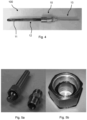
figures 5a and 5b , in whichfigure 5a shows a 316L dummy rod with graphite ferrule andfigure 5b shows a connector with pre-treated ferrule (shiny inner surface), also with reference to Fernandez et al.. -
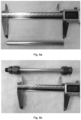
Figure 6a shows a Pd membrane (E80 e PdeAg membrane, thickness 4.5 micron) before connecting to the Swagelok® connectors, whilefigure 6b shows the same membrane after connecting to the Swagelok® connectors. Again reference is made to Fernandez et al. - Although the sealing is effective in making the membrane more gas tight compared to previous cases, it is still a point of attention as most of the leakages are still coming from that zone. An extensive study on the stability of the membrane and sealing has been carried out showing that the membrane with 2 sealings has double the leakages than the one with 1 sealing. And the membrane where the sealing can be applied with higher torque, has less leakages that the one where the torque applied is less (see
figure 7 , showing relative nitrogen permeance of themembranes 1a to 3 in the long-term membrane test. Reference is made to De Nooijer et al. (de Nooijer, N., Plazaola, A.A., Rey, J.M., Fernandez, E., Tanaka, D.A.P., Annaland, M.S., Gallucci, F.Long-term stability of thin-film Pd-based supported membranes (2019) Processes, 7 (2), art. no. 106). -
JP 2012 007727 -
US 3 437 357 relates to a hydrogen diffusion apparatus having a tube of palladium or palladium alloy extending through a wall thereof, the tube being secured to the wall by means of a gas tight fitting comprising a body portion wherein the body portion is connected, at one end, to the wall, and having, at the other end, a frusto-conical inner surface. -
CN 2109 54013U relates to a detachable sample chamber device for a hydrogen storage material PCT tester including a sample chamber and a quick connection device, wherein the sample chamber includes a reactor, a reaction tube, a first connecting tube and second connecting tube, wherein the quick-connect device includes a casing and a sealing ring installed in the casing. One end of the reactor is detachably connected to an end of the first connecting pipe through a first nut assembly and another end of the first connecting pipe is detachably connected through a second nut assembly. - It is an object to develop a sealing method that decreases the leakages and is more stable and possibly reusable. It is an object to provide an improved coupling device and an improved combination and assembly of such a coupling device and a tube having a Palladium-based membrane deposited thereon. It is an object to provide a coupling device, combination and assembly of such a coupling device and a tube having a Palladium-based membrane deposited thereon, having an improved sealing.
- According to the present invention, a coupling device is provided as defined in
claim 1. Embodiments of the coupling device are defined in the dependent claims. - The invention also relates to a combination as defined in claim 9 and an assembly as defined in
claim 11. Embodiments of the coupling device as defined below are also applicable to the combination and the assembly. - As defined in
claim 1, the invention provides a coupling device for a tube having a Palladium-based membrane deposited thereon, the tube for use in separation and purification of hydrogen in a hydrogen separator or reactor. The coupling device has an inlet for a gas and configured to couple said tube to the inlet so that the gas can be supplied via the inlet into the tube. - The coupling device comprises a body part with a cylindrical opening for receiving the tube, the opening being arranged to receive gas flow to the inlet. The coupling device also comprises a nut, wherein the body part and the nut being configured such that the nut can be screwed onto the body part at the opening. The coupling device further has a stack of at least two sealing rings provided between an end portion of the body part surrounding the opening and an axial end portion of the nut. The nut preferably radially encloses the stack of sealing rings on an outer side, i.e. outer circumference, thereof.
- The body part, the nut and the stack of sealing rings are configured such that the tube extends through the axial end portion of the nut, through the stack of sealing rings and into the opening such that, in use, the stack of sealing rings is compressed in an axial direction of the stack as a result of screwing the nut onto the body part so that the sealing rings sealingly engage a circumferential surface of the tube.
- The invention provides a sealing, i.e. a coupling device, for membranes that allows more area of contact between membrane and the sealing rings, such as graphite gaskets, and can use standard graphite rings. It allows operation with lower possibility of leakages and can be reused.
- The inventors have found out that graphite ferrules are not good enough for ultra high hydrogen purity. The reason is the relatively small contact area between the membrane and the ferrule, as well as the small thickness of the ferrule. A new sealing has been developed that instead of using graphite ferrules uses a stack of sealing rings, such as a number of graphite rings, such that the area of contact with the membrane is increased. Additionally the pressure on the membrane is generated via an axial compression of the sealing rings which leads to a radial inward expansion of the sealing rings, thereby sealingly engaging the tube. So a higher torque can be applied and a better sealing can be achieved.
- Preferably, the stack of sealing rings is a stack of two to eight sealing rings, preferably three to five sealing rings, preferably four sealing rings. A total axial length of the stack of sealing rings is preferably in the range of 1 to 2 times the outer diameter of the tube.
- The material of construction (body part and nut) may be stainless steel, which is effective in particular for temperatures below 500 degrees C. The material of the body part and nut may be a low carbon alloy, which is effective in particular for higher temperatures. In an embodiment, treads on the body part and on the nut) may be coated with silver or ceramic to be able to open easily and reuse the sealing. For temperatures above 550 degrees C the graphite rings may be replaced by mica rings with the same shapes. In another embodiment, the sealing rings are copper rings.
- In an embodiment, sealing rings of the stack are square or rectangular shaped O-rings.
- According to the invention, the last sealing ring, preferably a graphite ring, has a shape such that possible leaking is minimized, which is achieved wherein a sealing ring of the stack of sealing rings, which sealing ring in use contacts the end portion of the body part surrounding the opening, is a square or rectangular shaped O-ring having an axially protruding tapered ridge, preferably a circumferential ridge, facing the end portion of the body part, wherein the end portion of the body part has a correspondingly tapered or chamfered portion for receiving therein the ridge. In an embodiment, the ridge and the tapered portion are dimensioned such that the ridge exerts a force having a radial component on the tapered portion as a result of axial compression of the sealing ring.
- A metal ring may be added at the bottom so that, optionally together with one or more, such as three, small holes in the sealing body, one can easily remove the sealing rings and re-use much easily the sealing. These effects may be achieved by an embodiment further comprising a metal ring on top of the stack of sealing rings, the ring being arranged between the axial end portion of the nut and the stack, so that a compressive force is exerted from the axial end portion of the nut to the stack of sealing rings via the metal ring.
- In an embodiment, threads on the nut and/or on the body part have a coating made of silver or graphite, the threads arranged to screw the nut on the body part.
- The invention also relates to a combination, as defined in claim 9, of a coupling device according to the present invention, and a tube having a Palladium-based membrane deposited thereon, for use in separation and purification of hydrogen in a hydrogen separator or reactor. In an embodiment, the tube is porous, preferably made of a ceramic material.
- The invention also relates to an assembly comprising a coupling device according to the present invention, and a tube having a Palladium-based membrane deposited thereon, for use in separation and purification of hydrogen in a hydrogen reactor,
wherein the tube extends through the axial end portion of the nut, through the stack of sealing rings and into the opening, wherein the stack of sealing rings is compressed in an axial direction of the stack as a result the nut being screwed onto the body part so that the sealing rings sealingly engage a circumferential surface of the tube. - In an embodiment of the assembly, the tube is porous, preferably made of a ceramic material.
- Embodiments of the coupling device according to the invention are also applicable to the combination and to the assembly according to the invention. Effects of the coupling device and embodiments thereof are applicable to the combination and assembly in an analogous manner.
- The present invention is described hereinafter with reference to the accompanying schematic drawings in which an embodiment of the present invention are shown and in which like reference numbers indicate the same or similar elements.
-
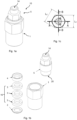
Figure 1a shows, in 3-dimensional view, an example of a coupling device according to the present invention; -
Figure 1b shows, in 3-dimensional exploded view, individual components of the coupling device offigure 1a ; -
Figure 1c shows a bottom view of the coupling device offigure 1a ; -
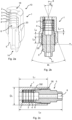
Figure 2a shows section A-A offigure 1c , in 3-dimensional view; -
Figure 2b shows cross-section A-A offigure 1c ; -
Figure 2c shows cross-section B-B offigure 1c ; -
Figure 2d shows detail IId offigure 2c ; -
Figure 3a shows, in plan view, a top ring of the coupling device offigure 1a ; -
Figure 3b shows section Illb-Illb offigure 3a ; -
Figure 4 shows, in front view, an example of an assembly according to the present invention, connected to an external tube; -
Figures 5a and 5b show components of a prior art coupling; -
Figures 6a and 6b show components of a prior art coupling and membrane; and -
Figure 7 shows a graph of tests of a prior art coupling and membranes. - The dimensions of the sealing, that means of the coupling device, depend on the membrane, that means of the tube having the membrane deposited thereon.
Figures 1a - 3b show an example of acoupling device 10 according to the invention, for 14 mm membranes. The same shape can be used from membranes of different size starting from 6 mm diameter. In embodiments, the coupling device is for use with tubes having an outer diameter in the range of 5 to 50 mm. -
Figures 1a - 3b show acoupling device 10 for atube 12 having a Palladium-based membrane deposited thereon. Thetube 12 is for use in separation and purification of hydrogen in a hydrogen separator or reactor. Thetube 12 is porous and preferably made of a ceramic material. Thecoupling device 10 has aninlet 14 for a gas and configured to couple saidtube 12 to theinlet 14 so that the gas can be supplied via theinlet 14 into thetube 14. The supply of gas towards theinlet 14 may take place via anexternal tube 13 which is connected to theinlet 14 of thecoupling device 10, asfigure 4 shows. - The
coupling device 10 comprises abody part 5 with acylindrical opening 6 for receiving thetube 12. Theopening 6 is arranged to receive gas flow to theinlet 14. Thecoupling device 10 also comprises anut 1, wherein thebody part 5 and thenut 1 are configured such that thenut 1 can be screwed onto thebody part 5 at theopening 6. Thebody part 5 and thenut 1 are made of a stainless steel or a low carbon alloy. The material of thenut 1 and of thebody part 5 may be Inconel 625.Threads 26 on thenut 1 and on thebody part 5 may have a coating made of silver or graphite, thethreads 26 arranged to screw the nut on the body part. - The
coupling device 10 further has astack 16 of at least two sealingrings rings 3 and onesealing ring 4, thestack 16 being provided between anend portion 20 of thebody part 5 surrounding theopening 6 and anaxial end portion 18 of thenut 1. The stack may have two to eight sealing rings, preferably three to five sealing rings, preferably four sealing rings as is the case in the example shown in the figures. The sealing rings 3, 4 are made of graphite but may also be made of mica or copper. The sealing rings 3, 4 of thestack 16 are rectangular, about square shaped, O-rings. - The
body part 5, thenut 1 and thestack 16 of sealingrings axial end portion 18 of the nut, through thestack 16 of sealing rings and into theopening 6 such that, in use, thestack 16 of sealingrings axial direction 8 of thestack 16 as a result of screwing thenut 1 onto thebody part 5 so that the sealing rings 3, 4 sealingly engage acircumferential surface 11 of thetube 12. - At least in the example shown, the
coupling device 10 further comprises anoptional metal ring 2 on top of thestack 16 of sealingrings ring 2 may be stainless steel. Thering 2 is arranged between theaxial end portion 18 of thenut 1 and thestack 16, so that a compressive force is exerted from theaxial end portion 18 of thenut 1 to thestack 16 of sealingrings metal ring 2. Also, the sealingring 4 of thestack 16 of sealingrings ring 4 in use contacts theend portion 20 of thebody part 5 surrounding theopening 6, is a rectangular shaped O-ring having an axially protruding taperedridge 22, which is a circumferential ridge as in particularfigure 3b shows, facing theend portion 20 of thebody part 5. Theend portion 20 of thebody part 5 has a correspondingly tapered or chamferedportion 24 for receiving therein theridge 22. Seefigure 2d . Theridge 22 and the taperedportion 24 are dimensioned such that the ridge exerts a force having a radial component on the tapered portion as a result of axial compression of the sealingring 4. - In the example shown in the figures, the following dimensions may be chosen for use of the coupling device with a tube having an outer diameter of 14 mm, that means with a membrane of 14 mm. The specific dimensions are merely provided as an example. Other dimensions may be suitably chosen dependent on the size of the membrane and/or intended application. L1 may be a size 34 hex nut (L2 may in that case be 39.26 mm); L3 may be 3 mm; L4 may be 7 mm; L5 may be 13 mm; L6 may be 83 mm; L7 may be 55 mm; L8 may be 7.5 mm (or between 7.3 and 7.7 mm).; L9 may be 5 mm (or between 4.8 and 5.2 mm); T1 may be a 28 x 1.5 thread (outer thread on the body part and corresponding inner thread on the nut); D1 may be 34 mm; D2, being the inner diameter of
ring 4, may be 14.5 mm (or between 14.5 and 14.7 mm); D3, being the outer diameter ofring 4, may be 24 mm (or between 23.8 and 24 mm); diameter D4 may be 21 mm (or between 20.8 and 21 mm); angle a1 may be 43 degrees; angle a2 may be 40 degrees (or between 39.5 and 40.5 degrees). Each of therings 3 may have an inner diameter of 14.5 mm (or between 14.5 and 14.7 mm), an outer diameter of 24 mm (or between 23.8 and 24 mm) and a thickness of 5 mm (or between 4.8 and 5.2 mm). -
Figure 4 shows anassembly 100 comprising thecoupling device 10 and thetube 12 having a Palladium-based membrane deposited thereon, for use in separation and purification of hydrogen in a hydrogen reactor. The tube extends through the axial end portion of the nut, through the stack of sealing rings and into the opening, wherein the stack of sealing rings is compressed in an axial direction of the stack as a result the nut being screwed onto the body part so that the sealing rings sealingly engage a circumferential surface of the tube. The top part of the sealing, i.e. the coupling device (at the inlet) may be welded to anexternal tube 13 of any dimension for easy installation inside the reactor. A potential commercial use of the invention is membrane sealing for membrane separation and membrane reactors. - Other variations to the disclosed embodiments can be understood and effected by those skilled in the art in practicing the claimed invention, from a study of the drawings, the disclosure, and the appended claims. The foregoing description provides embodiments of the invention by way of example only. The scope of the present invention is defined by the appended claims. One or more of the objects of the invention are achieved by the appended claims.
Claims (12)
- A coupling device (10) for a tube (12) having a Palladium-based membrane deposited thereon, the tube for use in separation and purification of hydrogen in a hydrogen separator or reactor, the coupling device having an inlet (14) for a gas and configured to couple said tube to the inlet so that the gas can be supplied via the inlet into the tube, the coupling device comprising:a body part (5) with a cylindrical opening (6) for receiving the tube, the opening being arranged to receive gas flow to the inlet; anda nut (1), wherein the body part and the nut being configured such that the nut can be screwed onto the body part at the opening;the coupling device further having a stack (16) of at least two sealing rings (3, 4) provided between an end portion (20) of the body part surrounding the opening and an axial end portion (18) of the nut,wherein the body part, the nut and the stack of sealing rings are configured such that the tube extends through the axial end portion of the nut, through the stack of sealing rings and into the opening such that, in use, the stack of sealing rings is compressed in an axial direction (8) of the stack as a result of screwing the nut onto the body part so that the sealing rings sealingly engage a circumferential surface (11) of the tube, wherein a sealing ring (4) of the stack (16) of sealing rings (3, 4), which sealing ring (4) in use contacts the end portion (20) of the body part (5) surrounding the opening (6), is a square or rectangular shaped O-ringcharacterised in that the square or rectangular shaped O-ring has an axially protruding tapered ridge (22), preferably a circumferential ridge, facing the end portion (20) of the body part, wherein the end portion of the body part has a correspondingly tapered or chamfered portion (24) for receiving therein the ridge (22).
- Coupling device according to claim 1, wherein the stack (16) of sealing rings (3, 4) is a stack of two to eight sealing rings, preferably three to five sealing rings, preferably four sealing rings.
- Coupling device according to claims 1 or 2, wherein the sealing rings (3, 4) are made of graphite, mica or copper.
- Coupling device according to any one of the preceding claims, wherein sealing rings (3, 4) of the stack (16) are square or rectangular shaped O-rings.
- Coupling device according to any one of the preceding claims, further comprising a metal ring (2) on top of the stack of sealing rings (3, 4), the ring (2) being arranged between the axial end portion (18) of the nut and the stack (16), so that a compressive force is exerted from the axial end portion of the nut to the stack of sealing rings via the metal ring.
- Coupling device according to any one of the preceding claims, wherein the ridge and the tapered portion are dimensioned such that the ridge exerts a force having a radial component on the tapered portion as a result of axial compression of the sealing ring (4).
- Coupling device according to any one of the preceding claims, wherein the body part (5) and/or the nut (1) are made of a stainless steel or a low carbon alloy.
- Coupling device according to any one of the preceding claims, wherein threads (26) on the nut (1) and/or on the body part (5) have a coating made of silver or graphite, the threads arranged to screw the nut on the body part.
- Combination of a coupling device (10) according to any one of the preceding claims, and a tube (12) having a Palladium-based membrane deposited thereon, for use in separation and purification of hydrogen in a hydrogen separator or reactor.
- The combination of claim 9, wherein the tube (12) is porous, preferably made of a ceramic material.
- An assembly (100) comprising a coupling device (10) according to any one of the preceding claims 1-8, and a tube (12) having a Palladium-based membrane deposited thereon, for use in separation and purification of hydrogen in a hydrogen reactor,
wherein the tube extends through the axial end portion of the nut, through the stack of sealing rings and into the opening, wherein the stack of sealing rings is compressed in an axial direction of the stack as a result the nut being screwed onto the body part so that the sealing rings sealingly engage a circumferential surface of the tube. - The assembly (100) of claim 11, wherein the tube (12) is porous, preferably made of a ceramic material.
Applications Claiming Priority (2)
| Application Number | Priority Date | Filing Date | Title |
|---|---|---|---|
| NL2026391 | 2020-09-01 | ||
| PCT/NL2021/050529 WO2022050837A1 (en) | 2020-09-01 | 2021-08-31 | Coupling device and combination and assembly thereof with a tube. |
Publications (3)
| Publication Number | Publication Date |
|---|---|
| EP4208283A1 EP4208283A1 (en) | 2023-07-12 |
| EP4208283C0 EP4208283C0 (en) | 2025-01-29 |
| EP4208283B1 true EP4208283B1 (en) | 2025-01-29 |
Family
ID=78516887
Family Applications (1)
| Application Number | Title | Priority Date | Filing Date |
|---|---|---|---|
| EP21802446.1A Active EP4208283B1 (en) | 2020-09-01 | 2021-08-31 | Coupling device and combination and assembly thereof with a tube |
Country Status (4)
| Country | Link |
|---|---|
| US (1) | US20230321593A1 (en) |
| EP (1) | EP4208283B1 (en) |
| ES (1) | ES3023566T3 (en) |
| WO (1) | WO2022050837A1 (en) |
Families Citing this family (1)
| Publication number | Priority date | Publication date | Assignee | Title |
|---|---|---|---|---|
| EP4670821A1 (en) * | 2024-06-27 | 2025-12-31 | Hydrogen Onsite, S.L | MEMBRAN REACTOR ARRANGEMENT |
Family Cites Families (16)
| Publication number | Priority date | Publication date | Assignee | Title |
|---|---|---|---|---|
| US2456819A (en) * | 1945-03-05 | 1948-12-21 | Richard H Dobbs | Posthole auger |
| US3250550A (en) * | 1964-02-13 | 1966-05-10 | Gilbert T Lyon | Self-flaring tube coupling |
| US3437357A (en) * | 1967-02-01 | 1969-04-08 | Engelhard Ind Inc | Seal for thin tubing |
| US3695647A (en) * | 1970-07-16 | 1972-10-03 | Hoke Inc | Pipe coupling |
| US6835232B2 (en) * | 1998-11-10 | 2004-12-28 | Frost Chester B | Fluid separation assembly and fluid separation module |
| FR2820988B1 (en) * | 2001-02-19 | 2003-04-25 | Cie D Etudes Des Technologies | COMPOSITE STRUCTURES OF SELECTIVELY HYDROGEN PERMEABLE MEMBRANES AND COMBUSTIBLE GAS PROCESSORS USING THE SAME |
| US7169213B2 (en) * | 2004-10-29 | 2007-01-30 | Corning Incorporated | Multi-channel cross-flow porous device |
| US7806443B1 (en) * | 2007-03-16 | 2010-10-05 | Plattner Wesley M | Method and apparatus for connecting air conditioning coolant lines |
| JP5554747B2 (en) * | 2010-05-21 | 2014-07-23 | 日本特殊陶業株式会社 | Gas seal composite and apparatus comprising the gas seal composite |
| US10640955B2 (en) * | 2016-09-01 | 2020-05-05 | Kennedy Valve Company | Capture nozzle housing for fire hydrant nozzle |
| US9938699B2 (en) * | 2016-09-01 | 2018-04-10 | Kennedy Valve Company | Breaker strap for fire hydrant breaker assembly |
| GB201711882D0 (en) * | 2017-07-24 | 2017-09-06 | Fujifilm Mfg Europe Bv | Gas separation elements |
| GB201811436D0 (en) * | 2018-07-12 | 2018-08-29 | Hydrogen Mem Tech As | Gas separation device |
| NO346131B1 (en) * | 2018-09-24 | 2022-03-07 | Roxar Flow Measurement As | Sealing cable connector |
| CN210954013U (en) * | 2019-11-08 | 2020-07-07 | 微山钢研稀土材料有限公司 | Sample chamber device capable of being rapidly disassembled for hydrogen storage material PCT tester |
| US20230158459A1 (en) * | 2020-04-24 | 2023-05-25 | The University Of British Columbia | Hydrogen permeable membranes, reactors and related methods |
-
2021
- 2021-08-31 ES ES21802446T patent/ES3023566T3/en active Active
- 2021-08-31 EP EP21802446.1A patent/EP4208283B1/en active Active
- 2021-08-31 US US18/022,919 patent/US20230321593A1/en active Pending
- 2021-08-31 WO PCT/NL2021/050529 patent/WO2022050837A1/en not_active Ceased
Also Published As
| Publication number | Publication date |
|---|---|
| EP4208283C0 (en) | 2025-01-29 |
| WO2022050837A1 (en) | 2022-03-10 |
| ES3023566T3 (en) | 2025-06-02 |
| EP4208283A1 (en) | 2023-07-12 |
| US20230321593A1 (en) | 2023-10-12 |
Similar Documents
| Publication | Publication Date | Title |
|---|---|---|
| US5545242A (en) | In-line filter for tubing | |
| AU2006235989B2 (en) | Seal assembly for materials with different coefficients of thermal expansion | |
| KR100370447B1 (en) | Seal element, seal assembly, sealing method | |
| US5405176A (en) | High pressure mechanical seal | |
| EP2361341B1 (en) | Bi-directional wellhead seal | |
| JP5148293B2 (en) | Apparatus and method for fluid tight connection | |
| US5916440A (en) | Rigid membrane fluid treatment module | |
| EP4208283B1 (en) | Coupling device and combination and assembly thereof with a tube | |
| JP2008532015A5 (en) | ||
| WO2013084804A1 (en) | Support structure for cylindrical tube, and sealing method for cylindrical tube | |
| JP3904267B2 (en) | Connecting device for transporting cryogenic fluid | |
| US6547286B1 (en) | Joint for connecting ceramic element to a tubesheet | |
| JP7119334B2 (en) | Separation membrane module | |
| CN105650370A (en) | Sealing sleeve for pipe fittings and sealing method for tubular gas separation material | |
| CN210661753U (en) | Improved pipe joint structure and filter press | |
| CN205549983U (en) | Tubulose membrane hydrogen gas separator | |
| US20070001451A1 (en) | Spring-loaded stay-tight retaining nut assembly for a tubing fitting | |
| JP3076812B2 (en) | Manufacturing method of metal filter for microfiltration | |
| RU2126290C1 (en) | Membrane unit for separation of gases | |
| CN105709570B (en) | A hydrogen separator with an expansion joint | |
| CN115106145B (en) | Double-layer heating pipe with metal protection armor and damping breathing pad for tubular furnace | |
| CN212868894U (en) | High-temperature flue connecting structure | |
| Weyburne et al. | High vacuum end cap design for use with quartz tubes | |
| JP3157490B2 (en) | Apparatus for isolating and containing reactive media | |
| JP2025042419A (en) | Heat exchanger piping structure and manufacturing method thereof |
Legal Events
| Date | Code | Title | Description |
|---|---|---|---|
| STAA | Information on the status of an ep patent application or granted ep patent |
Free format text: STATUS: UNKNOWN |
|
| STAA | Information on the status of an ep patent application or granted ep patent |
Free format text: STATUS: THE INTERNATIONAL PUBLICATION HAS BEEN MADE |
|
| PUAI | Public reference made under article 153(3) epc to a published international application that has entered the european phase |
Free format text: ORIGINAL CODE: 0009012 |
|
| STAA | Information on the status of an ep patent application or granted ep patent |
Free format text: STATUS: REQUEST FOR EXAMINATION WAS MADE |
|
| 17P | Request for examination filed |
Effective date: 20230327 |
|
| AK | Designated contracting states |
Kind code of ref document: A1 Designated state(s): AL AT BE BG CH CY CZ DE DK EE ES FI FR GB GR HR HU IE IS IT LI LT LU LV MC MK MT NL NO PL PT RO RS SE SI SK SM TR |
|
| DAV | Request for validation of the european patent (deleted) | ||
| DAX | Request for extension of the european patent (deleted) | ||
| REG | Reference to a national code |
Ref country code: DE Ref legal event code: R079 Free format text: PREVIOUS MAIN CLASS: B01D0063060000 Ipc: F16L0019100000 Ref country code: DE Ref legal event code: R079 Ref document number: 602021025531 Country of ref document: DE Free format text: PREVIOUS MAIN CLASS: B01D0063060000 Ipc: F16L0019100000 |
|
| GRAP | Despatch of communication of intention to grant a patent |
Free format text: ORIGINAL CODE: EPIDOSNIGR1 |
|
| STAA | Information on the status of an ep patent application or granted ep patent |
Free format text: STATUS: GRANT OF PATENT IS INTENDED |
|
| RIC1 | Information provided on ipc code assigned before grant |
Ipc: H01M 8/0662 20160101ALI20240731BHEP Ipc: B01D 71/02 20060101ALI20240731BHEP Ipc: B01D 53/22 20060101ALI20240731BHEP Ipc: B01D 69/04 20060101ALI20240731BHEP Ipc: B01D 63/06 20060101ALI20240731BHEP Ipc: F16L 19/10 20060101AFI20240731BHEP |
|
| INTG | Intention to grant announced |
Effective date: 20240822 |
|
| GRAS | Grant fee paid |
Free format text: ORIGINAL CODE: EPIDOSNIGR3 |
|
| GRAA | (expected) grant |
Free format text: ORIGINAL CODE: 0009210 |
|
| STAA | Information on the status of an ep patent application or granted ep patent |
Free format text: STATUS: THE PATENT HAS BEEN GRANTED |
|
| AK | Designated contracting states |
Kind code of ref document: B1 Designated state(s): AL AT BE BG CH CY CZ DE DK EE ES FI FR GB GR HR HU IE IS IT LI LT LU LV MC MK MT NL NO PL PT RO RS SE SI SK SM TR |
|
| REG | Reference to a national code |
Ref country code: GB Ref legal event code: FG4D |
|
| REG | Reference to a national code |
Ref country code: CH Ref legal event code: EP |
|
| REG | Reference to a national code |
Ref country code: DE Ref legal event code: R096 Ref document number: 602021025531 Country of ref document: DE |
|
| REG | Reference to a national code |
Ref country code: IE Ref legal event code: FG4D |
|
| U01 | Request for unitary effect filed |
Effective date: 20250225 |
|
| U07 | Unitary effect registered |
Designated state(s): AT BE BG DE DK EE FI FR IT LT LU LV MT NL PT RO SE SI Effective date: 20250303 |
|
| REG | Reference to a national code |
Ref country code: ES Ref legal event code: FG2A Ref document number: 3023566 Country of ref document: ES Kind code of ref document: T3 Effective date: 20250602 |
|
| PG25 | Lapsed in a contracting state [announced via postgrant information from national office to epo] |
Ref country code: RS Free format text: LAPSE BECAUSE OF FAILURE TO SUBMIT A TRANSLATION OF THE DESCRIPTION OR TO PAY THE FEE WITHIN THE PRESCRIBED TIME-LIMIT Effective date: 20250429 |
|
| PG25 | Lapsed in a contracting state [announced via postgrant information from national office to epo] |
Ref country code: PL Free format text: LAPSE BECAUSE OF FAILURE TO SUBMIT A TRANSLATION OF THE DESCRIPTION OR TO PAY THE FEE WITHIN THE PRESCRIBED TIME-LIMIT Effective date: 20250129 |
|
| PG25 | Lapsed in a contracting state [announced via postgrant information from national office to epo] |
Ref country code: NO Free format text: LAPSE BECAUSE OF FAILURE TO SUBMIT A TRANSLATION OF THE DESCRIPTION OR TO PAY THE FEE WITHIN THE PRESCRIBED TIME-LIMIT Effective date: 20250429 Ref country code: IS Free format text: LAPSE BECAUSE OF FAILURE TO SUBMIT A TRANSLATION OF THE DESCRIPTION OR TO PAY THE FEE WITHIN THE PRESCRIBED TIME-LIMIT Effective date: 20250529 |
|
| PG25 | Lapsed in a contracting state [announced via postgrant information from national office to epo] |
Ref country code: HR Free format text: LAPSE BECAUSE OF FAILURE TO SUBMIT A TRANSLATION OF THE DESCRIPTION OR TO PAY THE FEE WITHIN THE PRESCRIBED TIME-LIMIT Effective date: 20250129 |
|
| PG25 | Lapsed in a contracting state [announced via postgrant information from national office to epo] |
Ref country code: GR Free format text: LAPSE BECAUSE OF FAILURE TO SUBMIT A TRANSLATION OF THE DESCRIPTION OR TO PAY THE FEE WITHIN THE PRESCRIBED TIME-LIMIT Effective date: 20250430 |
|
| U20 | Renewal fee for the european patent with unitary effect paid |
Year of fee payment: 5 Effective date: 20250827 |
|
| PG25 | Lapsed in a contracting state [announced via postgrant information from national office to epo] |
Ref country code: SM Free format text: LAPSE BECAUSE OF FAILURE TO SUBMIT A TRANSLATION OF THE DESCRIPTION OR TO PAY THE FEE WITHIN THE PRESCRIBED TIME-LIMIT Effective date: 20250129 |
|
| PGFP | Annual fee paid to national office [announced via postgrant information from national office to epo] |
Ref country code: ES Payment date: 20250926 Year of fee payment: 5 |
|
| PG25 | Lapsed in a contracting state [announced via postgrant information from national office to epo] |
Ref country code: CZ Free format text: LAPSE BECAUSE OF FAILURE TO SUBMIT A TRANSLATION OF THE DESCRIPTION OR TO PAY THE FEE WITHIN THE PRESCRIBED TIME-LIMIT Effective date: 20250129 |
|
| PG25 | Lapsed in a contracting state [announced via postgrant information from national office to epo] |
Ref country code: SK Free format text: LAPSE BECAUSE OF FAILURE TO SUBMIT A TRANSLATION OF THE DESCRIPTION OR TO PAY THE FEE WITHIN THE PRESCRIBED TIME-LIMIT Effective date: 20250129 |
|
| PLBE | No opposition filed within time limit |
Free format text: ORIGINAL CODE: 0009261 |
|
| STAA | Information on the status of an ep patent application or granted ep patent |
Free format text: STATUS: NO OPPOSITION FILED WITHIN TIME LIMIT |
|
| REG | Reference to a national code |
Ref country code: CH Ref legal event code: L10 Free format text: ST27 STATUS EVENT CODE: U-0-0-L10-L00 (AS PROVIDED BY THE NATIONAL OFFICE) Effective date: 20251210 |
|
| 26N | No opposition filed |
Effective date: 20251030 |
|
| REG | Reference to a national code |
Ref country code: CH Ref legal event code: H13 Free format text: ST27 STATUS EVENT CODE: U-0-0-H10-H13 (AS PROVIDED BY THE NATIONAL OFFICE) Effective date: 20260324 |
|
| PG25 | Lapsed in a contracting state [announced via postgrant information from national office to epo] |
Ref country code: MC Free format text: LAPSE BECAUSE OF FAILURE TO SUBMIT A TRANSLATION OF THE DESCRIPTION OR TO PAY THE FEE WITHIN THE PRESCRIBED TIME-LIMIT Effective date: 20250129 |
|
| PG25 | Lapsed in a contracting state [announced via postgrant information from national office to epo] |
Ref country code: CH Free format text: LAPSE BECAUSE OF NON-PAYMENT OF DUE FEES Effective date: 20250831 |