EP4207648B1 - Verbindungsverarbeitungsverfahren und -vorrichtung, elektronische vorrichtung und computerlesbares speichermedium - Google Patents
Verbindungsverarbeitungsverfahren und -vorrichtung, elektronische vorrichtung und computerlesbares speichermedium Download PDFInfo
- Publication number
- EP4207648B1 EP4207648B1 EP21881798.9A EP21881798A EP4207648B1 EP 4207648 B1 EP4207648 B1 EP 4207648B1 EP 21881798 A EP21881798 A EP 21881798A EP 4207648 B1 EP4207648 B1 EP 4207648B1
- Authority
- EP
- European Patent Office
- Prior art keywords
- server
- connection
- source device
- target device
- abnormality processing
- Prior art date
- Legal status (The legal status is an assumption and is not a legal conclusion. Google has not performed a legal analysis and makes no representation as to the accuracy of the status listed.)
- Active
Links
Images




Classifications
-
- H—ELECTRICITY
- H04—ELECTRIC COMMUNICATION TECHNIQUE
- H04L—TRANSMISSION OF DIGITAL INFORMATION, e.g. TELEGRAPHIC COMMUNICATION
- H04L67/00—Network arrangements or protocols for supporting network services or applications
- H04L67/50—Network services
- H04L67/60—Scheduling or organising the servicing of application requests, e.g. requests for application data transmissions using the analysis and optimisation of the required network resources
-
- H—ELECTRICITY
- H04—ELECTRIC COMMUNICATION TECHNIQUE
- H04L—TRANSMISSION OF DIGITAL INFORMATION, e.g. TELEGRAPHIC COMMUNICATION
- H04L67/00—Network arrangements or protocols for supporting network services or applications
- H04L67/01—Protocols
- H04L67/131—Protocols for games, networked simulations or virtual reality
-
- H—ELECTRICITY
- H04—ELECTRIC COMMUNICATION TECHNIQUE
- H04L—TRANSMISSION OF DIGITAL INFORMATION, e.g. TELEGRAPHIC COMMUNICATION
- H04L67/00—Network arrangements or protocols for supporting network services or applications
- H04L67/14—Session management
-
- H—ELECTRICITY
- H04—ELECTRIC COMMUNICATION TECHNIQUE
- H04L—TRANSMISSION OF DIGITAL INFORMATION, e.g. TELEGRAPHIC COMMUNICATION
- H04L67/00—Network arrangements or protocols for supporting network services or applications
- H04L67/14—Session management
- H04L67/141—Setup of application sessions
-
- H—ELECTRICITY
- H04—ELECTRIC COMMUNICATION TECHNIQUE
- H04L—TRANSMISSION OF DIGITAL INFORMATION, e.g. TELEGRAPHIC COMMUNICATION
- H04L69/00—Network arrangements, protocols or services independent of the application payload and not provided for in the other groups of this subclass
- H04L69/40—Network arrangements, protocols or services independent of the application payload and not provided for in the other groups of this subclass for recovering from a failure of a protocol instance or entity, e.g. service redundancy protocols, protocol state redundancy or protocol service redirection
-
- H—ELECTRICITY
- H04—ELECTRIC COMMUNICATION TECHNIQUE
- H04L—TRANSMISSION OF DIGITAL INFORMATION, e.g. TELEGRAPHIC COMMUNICATION
- H04L41/00—Arrangements for maintenance, administration or management of data switching networks, e.g. of packet switching networks
- H04L41/08—Configuration management of networks or network elements
- H04L41/0894—Policy-based network configuration management
-
- H—ELECTRICITY
- H04—ELECTRIC COMMUNICATION TECHNIQUE
- H04L—TRANSMISSION OF DIGITAL INFORMATION, e.g. TELEGRAPHIC COMMUNICATION
- H04L67/00—Network arrangements or protocols for supporting network services or applications
- H04L67/14—Session management
- H04L67/143—Termination or inactivation of sessions, e.g. event-controlled end of session
Definitions
- the present disclosure relates to the field of connection processing, and more particularly, to a connection processing method and apparatus, an electronic device, and a computer-readable storage medium.
- the number of people in one live broadcast room may be from several people to tens of thousands of people, with extremely high interaction frequency of audiences.
- people's connection interaction is based on that the interacting persons are in one room.
- the interaction between an anchor and audiences is based on that the audiences are in an anchor room.
- the connection interaction between anchors is based on that the anchors are in one Real-Time Communication (RTC) room.
- RTC Real-Time Communication
- Battle game of an anchor and the audiences as a group and a non-connected screen play killing (PK) between the anchor and the audiences are based on that the interacting persons are in one virtual room.
- WO2015/061374A1 discloses techniques for service policies for communication sessions, a service policy specifies various rules and/or procedures for handling communication sessions.
- US2013/166703A1 discloses a method including: receiving a first request sent from a first customer for a first service provided by a first service provider, the first request being of a first type; determining a first set of configuration parameters from a first policy associated with the first service provider in response to receiving the first request; and causing a node associated with the first service provider to provide the first service in response to receiving the first request using the first set of configuration parameters.
- CN111372092A discloses a method including: the server side forwards the session invitation initiated by the first client side to the second client side of the target version, generates channel tokens after receiving a response of accepting the session invitation returned by the second client side of the target version, and respectively sends the channel tokens to the first client side and the second client side of the target version, wherein the first client side and the second client side of the target version can simultaneously initiate requests for entering channels, and obtains audio and video data of an opposite end through communication with the sound network equipment.
- An objective of the present disclosure is to at least solve complex technical problems of connection establishment and abnormality processing of various services.
- the embodiments of the present disclosure provide a connection processing method implemented by a second server.
- the method includes: initializing, in response to receiving a first connection request from a source device, an abnormality processing policy, wherein the abnormality processing policy represents a corresponding processing when an abnormality occurs; transmitting first connection information to a target device of the first connection request; transmitting, in response to receiving a first connection information confirmation message transmitted by the target device, a first connection confirmation message to the source device; generating the abnormality processing policy based on information of the source device and/or information of the target device; transmitting, in response to receiving a second connection confirmation message indicating that the source device is connected to a first server, a first notification to the target device, the first notification including the abnormality processing policy related to the source device; and transmitting, in response to receiving a third connection confirmation message indicating that the target device is connected to a first server, a second notification to the source device, the second notification including the abnormality processing policy related to the target device.
- the second server is a connection server
- the embodiments of the present disclosure provide a connection processing method implemented by a source device.
- the method includes: transmitting a first connection request to a second server, the first connection request being used to request a target device to connect to a first server; receiving a first connection confirmation message transmitted by the second server; receiving a second notification transmitted by the second server, the second notification being used to indicate that the target device is connected to the first server, wherein the second notification includes an abnormality processing policy, the abnormality processing policy represents a corresponding processing when an abnormality occurs; starting a second timer based on the abnormality processing policy; in response to receiving a target device connection message transmitted by the first server prior to expiration of the second timer, stopping the second timer; and in response to failing to receive the target device connection message transmitted by the first server prior to expiration of the second timer, performing a processing action based on the abnormality processing policy.
- the second server is a connection server
- the first server is a server configured to provide service data services to the source device and the target device, the source device
- the embodiments of the present disclosure provide a connection processing method implemented by a target device.
- the method includes: receiving first connection information transmitted by a second server, the first connection information indicating a request from a source device for connecting the target device to a first server; transmitting a first connection confirmation message to the second server; receiving a first notification transmitted by the second server, the first notification indicating that the source device is connected to the first server, wherein the first notification includes an abnormality processing policy, the abnormality processing policy represents a corresponding processing when an abnormality occurs; starting a third timer based on the abnormality processing policy; in response to receiving a source device connection message transmitted by the first server prior to expiration of the third timer, stopping the third timer; and in response to failing to receive the source device connection message transmitted by the first server prior to expiration of the third timer, performing a processing action based on the abnormality processing policy.
- the second server is a connection server
- the first server is a server configured to provide service data services to the source device and the target device, the source
- the embodiments of the present disclosure provide a connection processing apparatus.
- the apparatus includes: a processing policy initialization module configured to initialize, in response to receiving a first connection request from a source device, an abnormality processing policy, wherein the abnormality processing policy represents a corresponding processing when an abnormality occurs; a first connection information transmission module configured to transmit first connection information to a target device of the first connection request; a first connection confirmation message transmission module configured to transmit, in response to receiving a first connection information confirmation message transmitted by the target device, a first connection confirmation message to the source device; an abnormality processing policy generation module configured to generate the abnormality processing policy based on information of the source device and/or information of the target device; a first notification transmission module configured to transmit, in response to receiving a second connection confirmation message indicating that the source device is connected to a first server, a first notification to the target device, the first notification comprising the abnormality processing policy; and a second notification transmission module configured to transmit, in response to receiving a third connection confirmation message indicating that the target device is connected
- the embodiments of the present disclosure provide an electronic device.
- the electronic device includes at least one processor and a memory communicatively connected to the at least one processor.
- the memory has instructions stored thereon and executable by the at least one processor. The instructions, when executed by the at least one processor, cause the at least one processor to implement any one of the above-mentioned methods according to the first aspect.
- the embodiments of the present disclosure provide a non-transitory computer-readable storage medium.
- the non-transitory computer-readable storage medium stores computer instructions.
- the computer instructions are configured to cause the computer to implement any one of the above-mentioned methods according to the first aspect.
- the embodiments of the present disclosure disclose a connection processing method and apparatus, an electronic device, and a computer-readable storage medium.
- the connection processing method includes: initializing, in response to receiving a first connection request from a source device, an abnormality processing policy; transmitting first connection information to a target device of the first connection request; transmitting, in response to receiving a first connection information confirmation message transmitted by the target device, a first connection confirmation message to the source device; generating the abnormality processing policy; transmitting a first notification to the target device, the first notification including the abnormality processing policy; and transmitting a second notification to the source device, the second notification including the abnormality processing policy.
- the above-mentioned method can solve complex problems of connection establishment and abnormality processing of various services by generating the abnormality processing policy during the connection establishment.
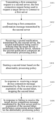
- FIG. 1 is a flowchart of a connection processing method according to an embodiment of the present disclosure.
- the connection processing method provided in this embodiment may be implemented by one connection processing apparatus.
- the connection processing apparatus may be implemented as software or a combination of software and hardware.
- the connection processing apparatus may be integrated in a certain device of a connection processing system, such as in a connection processing server or in a connection processing terminal device.
- the connection processing method is implemented by a second server as an example for illustration.
- the second server is a connection server composed of one or more servers.
- the second server is typically composed of a service server and a platform server.
- a series of connection interaction actions may be performed in the second server.
- the second server may be regarded as a server, which is not described in detail herein.
- the method includes the following actions in blocks S101 to S106.
- an abnormality processing policy is initialized.
- the second server has a detection interface for detecting a request, a message, and the like of a client device.
- the source device is a service initiating device.
- an anchor A initiates a microphone connection request to an anchor B.
- a client device A of the anchor A is the source device, and the microphone connection request is the first connection request.
- the first connection request is received by the second server.
- the second server receives the first connection request, the second server first initializes the abnormality processing policy.
- block S 101 includes actions in blocks S201 to S202.
- a type of a service is determined based on the first connection request.
- a corresponding abnormality processing policy structure is generated based on the type of the service.
- the abnormality processing policy structure includes at least a connection identification and a device identification graph.
- the device identification graph is used to store a device identification and an abnormality processing action.
- the corresponding abnormality processing policy structure is generated based on the type of the service.
- information required by the different types of service may be different. Therefore, an abnormality processing policy structure needs to be generated based on a form of the type of the service.
- the structure includes an information item required by the abnormality processing policy. For example, in a microphone connection scenario, a room number of a microphone connection virtual room and an identification of a client device in the virtual room, i.e., the connection identification and the device identification graph in block S202, are required.
- the connection identification and the device identification may not exist, such that only the abnormality processing policy structure is generated in this block. In this way, the structure can be filled after corresponding information is subsequently received, to generate a usable abnormality processing policy.
- first connection information is transmitted to a target device of the connection request.
- the second server Since the source device is not in a direct communication with the target device, the second server needs to generate the first connection information and transmit the first connection information to the target device (for example, a client device B of the anchor B in the above example) of the first connection request, to notify the target device that the source device requests the target device to join a connection.
- the client device A transmits a microphone connection invitation to the second server; the second server transmits invitation information to the client device B; the client device B, after receiving the invitation information, displays a prompt interface in a display apparatus to remind the anchor B to accept the microphone connection request.
- the anchor B accepts the microphone connection request, a subsequent connection operation continues.
- a first connection confirmation message is transmitted to the source device.
- the target device When the target device accepts the first connection information, i.e., agreeing with the first connection request, the first connection information confirmation message is transmitted to the second server, to indicate that the first connection request is accepted by the target device.
- the second server transmits the first connection confirmation message to the source device to inform the source device that a processing of the first connection request is completed.
- the actions in blocks S102 and S103 are merely a request and a confirmation for the request from a perspective of the client device.
- the first connection request may be processed by using a universal connection establishment process regardless of requests of the type of the service.
- the universal connection establishment process is implemented in the second server.
- the second server further includes a service server and a platform server.
- the service server is at an upper layer of logic and is configured to receive the request, the message, and the like of the client device, to understand a service scenario, which is requested by the client device or in which the client device is located, thereby processing a request or message, etc. related to the service scenario.
- the platform server is at a bottom layer of the logic and is configured to implement a function of the service server at the bottom layer.
- the service server for receiving the first connection request can understand a service scenario of the first connection request. Then, the service server and the platform server implement the actions in blocks S102 and S103 through a connection process.
- the service server after the first connection request is received by the service server, the service server generates a connection creation message linker_create and transmits the connection creation message linker_create to the platform server. After the linker_create is received by the platform server, the platform server transmits a confirmation to the service server. The service server then transmits a connection invitation message to the platform server. The platform server generates and transmits the first connection information to the target device, and then transmits the confirmation to the service server. In this case, the service server may further transmit receipt confirmation information of the first connection request to the source device. After the first connection information is received by the target device, the target device transmits feedback information reply to the service server.
- the service server transmits feedback information linker_reply to the platform server, indicating that the first connection request has been accepted by the target device.
- the platform server transmits the first connection confirmation message to the source device to notify the source device that the first connection request has been accepted by the target device. Therefore, the first connection request is processed through the universal connection establishment process.
- a request or message, etc. transmitted by the source device and the target device generates a bottom signaling through an analysis of the service server to perform an interaction with the platform server to implement the process of connection establishment. Therefore, any service may be converted into the universal connection establishment process through the service server and the platform server.
- the abnormality processing policy is generated based on information of the source device and/or information of the target device.
- the information of the source device and/or the information of the target device are obtained through a connection request and a message, etc. of the source device and/or the target device.
- the information of the source device may be obtained through the first connection request
- the information of the target device may be obtained through the first connection information confirmation message. It may be understood that any request and message from the source device and/or the target device to the second server may carry the information of the source device and/or the target device, enabling the second server to generate the abnormality processing policy based on the information.
- block S104 includes actions in blocks S301 to S304.
- a first processing action when the source device is abnormal is determined based on a role of the source device in the service
- the device identification of the source device and the first processing action are saved in the corresponding abnormality processing policy structure;
- a second processing action when the target device is abnormal is determined based on a role of the target device in the service
- the device identification of the target device and the second processing action are saved in the corresponding abnormality processing policy structure.
- a request or message from the source device to the second server may carry service information, such as a type of a service requested by the source device, a role of the source device in the service, an identification of the source device, and the like.
- service information such as a type of a service requested by the source device, a role of the source device in the service, an identification of the source device, and the like.
- an abnormality processing action of each service is predetermined, i.e., how to process when a certain role is abnormal. Therefore, when the source device is abnormal, the second server can determine the first processing action to be performed based on the role of the source device in the service. The first processing action is used for eliminating an influence caused by an abnormality of the source device.
- the identification of the source device and the first processing action are stored in the abnormality processing policy structure.
- each piece of data may be a KV data pair, where K is the identification of the device, and V is a processing action performed when the device is abnormal.
- K is the identification of the device
- V is a processing action performed when the device is abnormal.
- the similar operations mentioned above are also performed on the target device.
- the device identification of the target device and the second processing action are saved in the corresponding abnormality processing policy structure. Therefore, whenever a new device is added to the service, the new device can be added to the abnormality processing policy structure through the method as described in the above blocks, to generate the abnormality processing policy.
- the source device and/or the target device may have a plurality of abnormalities.
- a plurality of abnormality types may be set for an identification of each device.
- a corresponding abnormality processing action is provided for each abnormality type, which will not be repeated herein.
- a first notification is transmitted to the target device.
- the first notification includes the abnormality processing policy.
- the first server is a server configured to provide service data services to the source device and the target device, for example, an RTC server required in live broadcast and microphone connection scenarios.
- the RTC server is configured to provide real-time video and audio services for the live broadcast and microphone connection scenarios.
- a virtual room in the live broadcast and microphone connection scenarios is also established at the RTC server.
- the first server has various and complex service interfaces, and the first server and the second server cannot be directly connected.
- the second server cannot directly determine whether the source device and/or the target device enter the service scenario thereof. Therefore, it is required that the source device and/or the target device shall determine on their own whether the other party enters the service scenario thereof.
- the client device A invites the client device B to join the microphone connection, after the client device B agrees, the client device B needs to determine whether the client device A enters the virtual room and to know which processing should be performed when the client device A does not enter the virtual room; the client device A needs to determine whether the client device B enters the virtual room and to know which processing should be performed when the client device B does not enter the virtual room.
- the second connection confirmation message is a message transmitted by the source device to the second server.
- the second connection confirmation message does not indicate that the source device has been actually connected to the first server.
- the second connection confirmation message merely enables the second server to notify the target device that the source device has been connected to the first server. Therefore, the second server transmits the first notification to the target device and transmits the abnormality processing policy to the target device through the first notification.
- the abnormality processing policy may be an abnormality processing policy only related to the source device.
- the target device after receiving the abnormality processing policy, starts to detect a state of the source device through the first server, to determine whether the source device is indeed connected to the first server. When the source device is not actually connected to the first server, a processing action in the abnormality processing policy is performed.
- a second notification is transmitted to the source device.
- the second notification includes the abnormality processing policy.
- the third connection confirmation message is a message transmitted by the target device to the second server.
- the third connection confirmation message does not indicate that the target device has been actually connected to the first server.
- the third connection confirmation message merely enables the second server to notify the source device that the target device has been connected to the first server. Therefore, the second server transmits the second notification to the source device and transmits the abnormality processing policy to the source device through the second notification.
- the abnormality processing policy may be an abnormality processing policy only related to the target device. After the abnormality processing policy is received, the source device starts to detect a state of the target device through the first server to determine whether the target device is indeed connected to the first server. When the target device is not actually connected to the first server, the processing action in the abnormality processing policy is performed.
- the above blocks S105 to S106 are further described with an example of a microphone connection application scenario.
- the client device A and the client device B need to be respectively connected to the RTC server to enter a virtual room for the microphone connection.
- the RTC server and the second server cannot be directly connected. Therefore, the client device is required to detect the connection with the RTC server on its own.
- the client device A transmits the second connection confirmation message to the second server to indicate that the client device A has entered a microphone connection room.
- the second server transmits the first notification to the client device B to notify the client device B that the client device A has entered the room.
- the first notification includes an abnormality processing policy of the client device A.
- the client device B transmits the second connection confirmation message to the second server to indicate that the client device B has entered the microphone connection room.
- the second server Based on the second connection confirmation message, the second server transmits the first notification to the client device A to notify the client device A that the client device B has entered the room.
- the first notification includes an abnormality processing policy of the client device B.
- the transmission of the second connection confirmation message by source device and the connection of the source device to the first server have no timing relationship.
- the transmission of the third connection confirmation message by the target device and connection of the target device to the first server also have no timing relationship.
- information of a device, which has been connected to the first server before this device may be obtained, and this device may also transmit the information of this device to the device that has been previously connected to the first server. Therefore, no matter when the device is connected to the first server, it can be determined whether a device detected by the device is connected to the first server.
- the abnormality processing policy is generated, and the abnormality processing policy is transmitted to a corresponding device. Therefore, the corresponding device can detect abnormalities of other devices and perform corresponding processing.
- the second server may further detect the state of the source device and/or the state of the target device to determine whether to perform abnormality processing on the source device and/or the target device.
- the connection processing method further includes: periodically checking a state of the source device and/or a state of the target device; and processing, when the state of the source device and/or the state of the target device are abnormal, a device in an abnormal state based on the abnormality processing policy.
- the steps of said periodical checking may be implemented through an independent script, i.e., running an independent script on the second server, to detect a running state of the source device and/the target device in the service scenario.
- said periodically checking the state of the source device and/or the state of the target device includes: starting a first timer; in response to receiving state information of the source device and/or the target device prior to expiration of the first timer, resetting the first timer; and in response to failing to receive the state information of the source device and/or the target device prior to expiration of the first timer, determining that the state of the source device and/or the state of the target device are abnormal.
- the source device and the target device when the source device and the target device operate in the microphone connection scenario, the source device and the target device periodically transmit the state information to the second server, to notify the second server that the states of their own are normal.
- the state information is a heartbeat. Therefore, the second server starts the first timer.
- a time-out period of the first timer is equal to a period of transmitting the state information of the source device and the target device.
- a processing action of the device in the abnormal state is determined from the abnormality processing policy based on the identification of the source device and/or the identification of the target device, to process the device in the abnormal state. For example, when a heartbeat of the target device is not received before the first timer expires, it is considered that the target device is abnormal, thereby performing a departure processing on the target device.
- connection processing method further incudes: deleting the device in the abnormal state from the abnormality processing policy.
- the device in the abnormal state has left the service scenario, then the state of the device no longer needs to be detected subsequently.
- the device identification of the device in the abnormal state and a corresponding processing action are deleted from the abnormality processing policy, to reduce a volume of the abnormality processing policy.
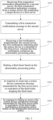
- FIG. 4 is a flowchart of a connection processing method according to another embodiment of the present disclosure.
- the connection processing method provided in this embodiment may be implemented by one connection processing apparatus.
- the connection processing apparatus may be implemented as the software or the combination of software and hardware.
- the connection processing apparatus may be integrated in the certain device of the connection processing system, such as in the connection processing server or in the connection processing terminal device.
- the connection processing method is implemented by the source device as an example for illustration.
- the method includes the following actions in blocks S401 to S406.
- a first connection request is transmitted to a second server.
- the first connection request is used to request a target device to connect to a first server.
- a second notification transmitted by the second server is received.
- the second notification is used to indicate that the target device is connected to the first server.
- the second notification includes an abnormality processing policy.
- a second timer is started based on the abnormality processing policy.
- a processing action is performed based on the abnormality processing policy.
- Blocks S401 to S403 correspond to block S101, block S103, and block S106 in the above embodiments. That is, the source device transmits the first connection request to the second server, to request the target device to connect to the first server, enabling the target device to perform service interaction with the source device. Then, after the target device agrees to connect, the first connection confirmation message from the second server is received. When receiving the second notification, it is known that the target device has been connected to the first server and an abnormality processing policy of the target device is obtained.
- the source device detects whether the target device is indeed connected to the first server.
- the abnormality processing policy includes the time-out period.
- the second timer is started based on a predetermined time-out period in the abnormality processing policy.
- a predetermined time-out period is provided for each service role. The second timer is started based on a time-out period of a role of the target device recorded in the abnormality processing policy.
- the target device connection message transmitted by the first server is received before the second timer expires, it indicates that the target device is indeed connected to the first server, then the second timer is stopped. If the target device connection message transmitted by the first server is not received before the second timer expires, it indicates that the target device is actually not connected to the first server within a specified time, then the abnormality processing is required to be performed on the target device, and a corresponding processing action is performed based on the abnormality processing policy, for example, performing the departure processing on the target device. In this way, the second server can be informed that the target device is actually not connected. Further, the second server deletes the connection of the target device and deletes the target device from the abnormality processing policy.
- connection processing further includes: transmitting a second connection confirmation message to the second server, and transmitting a second connection request to the first server.
- the source device may transmit the first connection confirmation message to the second server to indicate that the source device has been connected to the first server, and the source device transmits the second connection request to the first server.
- the client device A transmits the connection request to the RTC server, in order to enter the virtual room.
- connection processing further includes: periodically transmitting the state information of the source device to the second server.
- the source device periodically transmits heartbeat information to the second server to report its own state.
- the second server confirms that the state of the source device is abnormal.
- FIG. 5 is a flowchart of a connection processing method according to yet another embodiment of the present disclosure.
- the connection processing method provided in this embodiment may be implemented by one connection processing apparatus.
- the connection processing apparatus may be implemented as the software or the combination of software and hardware.
- the connection processing apparatus may be integrated in the certain device of the connection processing system, such as in the connection processing server or in the connection processing terminal device.
- the connection processing method is implemented by the source device as an example for illustration.
- the method includes the following actions in blocks S501 to S506.
- first connection information transmitted by a second server is received.
- the first connection information indicates a request from a source device for connecting a target device to a first server.
- a first connection confirmation message is transmitted to the second server.
- a first notification transmitted by the second server is received.
- the first notification indicates that the source device is connected to the first server.
- the first notification includes an abnormality processing policy.
- a third timer is started based on the abnormality processing policy.
- a processing action is performed based on the abnormality processing policy.
- Actions in blocks S501 to S503 correspond to actions in block S102, block S103, and block S105 in the above embodiments. That is, the target device receives the first connection information transmitted by the second server, and transmits the first connection confirmation information to the second server after the connection is permitted. Then, the first notification is received to indicate that the source device has been connected to the first server, and an abnormality processing policy of the source device is obtained.
- the target device detects whether the source device is indeed connected to the first server.
- the abnormality processing policy includes the time-out period.
- the third timer is started based on the predetermined time-out period in the abnormality processing policy.
- a predetermined time-out period is provided for each service role. The third timer is started based on the time-out period of the role of the target device recorded in the abnormality processing policy.
- the third timer is stopped. If the source device connection message transmitted by the first server is not received before the third timer expires, it indicates that the source device is actually not connected to the first server within the specified time, then the abnormality processing is required to be performed on the source device, and the corresponding processing action is performed based on the abnormality processing policy, for example, performing the departure processing on the source device. In this way, the second server can be informed that the source device is actually not connected. Further, the second server deletes the connection of the source device and deletes the source device from the abnormality processing policy.
- the source device plays a role that must exist in the service, such as a host.
- the entire service needs to be deleted.
- the abnormality processing policy in addition to deleting the device, the abnormality processing policy and the connection related to this service also need to be deleted, which is not described in detail herein.
- connection processing further includes: transmitting a third connection confirmation message to the second server, and transmitting a third connection request to the first server.
- the target device may transmit the third connection confirmation message to the second server to indicate that the target device has been connected to the first server, and the target device transmits the third connection request to the first server.
- the client device B transmits the connection request to the RTC server, in order to enter the virtual room.
- connection processing further includes: periodically transmitting the state information of the target device to the second server.
- the target device periodically transmits the heartbeat information to the second server to report its own state.
- the second server confirms that the state of the target device is abnormal.
- the server may establish connection requests of various services in the process through a universal connection and process an abnormal situation in the connection process.
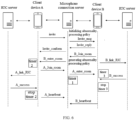
- FIG. 6 is a schematic diagram of an application scenario of a connection processing method according to an embodiment of the present disclosure.
- the client device A is the source device; the client device B is the target device; a microphone connection server is the second server; and the RTC server is the first server.
- the client device A transmits a microphone connection request Invite to invite the client device B to perform a microphone connection interaction.
- the microphone connection server after receiving the Invite, initializes the abnormality processing policy and transmits the Invite_msg to the client device B.
- the client device B accepts the microphone connection request and generates a feedback message Invite_reply of the microphone connection request for the microphone connection server.
- the microphone connection server transmits a confirmation message Invite_conform of the microphone connection request to the client device A.
- the client device B after transmitting the Invite_reply, directly transmits B_Join_room to the microphone connection server and transmits B_link_RTC to connect the RTC server.
- the microphone connection server after receiving the B_Join_room, generates the abnormality processing policy, and transmits B_enter_room to the client device A to inform the client device A that the client device B has entered the microphone connection room.
- the B_enter_room carries the abnormality processing policy of the client device B.
- the client device A after receiving the B_enter_room, starts the timer 2, transmits A_Join_room to the microphone connection server, and transmits A_link_RTC to connect the RTC server.
- the microphone connection server after receiving the A_Join_room, transmits A_enter_room to the client device B to inform the client device B that the client device A has entered the microphone connection room.
- the A_enter_room carries the abnormality processing policy of the client device A.
- the client device A after receiving the A_enter_room, starts the timer 3.
- the client device B is first successfully connected to the RTC server, and then the client device A is successfully connected to the RTC service.
- the client device B is capable of knowing that the client device A is successfully connected, and then the client device B stops the timer 3.
- the client device B has been successfully connected, such that the client device A can obtain the client device that has been successfully connected and can find that the client device B is included in the client device that has been successfully connected. Then, the client device A stops the timer 2.
- the client device A periodically transmits A_heartbeat to the microphone connection server, and the client device B periodically transmits B_heartbeat to the microphone connection server.
- the microphone connection server operates independently.
- the timer 1 is started to regularly detect whether A_heartbeat and B_heartbeat are received.
- a processing action corresponding to the abnormality processing policy is performed.
- Embodiments of the present disclosure disclose a connection processing method and apparatus, an electronic device, and a computer-readable storage medium.
- the connection processing method includes: initializing, in response to receiving a first connection request from a source device, an abnormality processing policy; transmitting first connection information to a target device of the first connection request; transmitting, in response to receiving a first connection information confirmation message transmitted by the target device, a first connection confirmation message to the source device; generating the abnormality processing policy based on information of the source device and/or information of the target device; transmitting, in response to receiving a second connection confirmation message indicating that the source device is connected to a first server, a first notification to the target device, the first notification comprising the abnormality processing policy; and transmitting, in response to receiving a third connection confirmation message indicating that the target device is connected to a first server, a second notification to the source device, the second notification comprising the abnormality processing policy.
- the above-mentioned method can solve the complex problems of connection establishment and abnormality processing of various services by
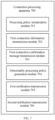
- FIG. 7 is a schematic structural diagram of a connection processing apparatus according to an embodiment of the present disclosure.
- the apparatus 700 includes a processing policy initialization module 701, a first connection information transmission module 702, a first connection confirmation message transmission module 703, an abnormality processing policy generation module 704, a first notification transmission module 705, and a second notification transmission module 706.
- the processing policy initialization module 701 is configured to initialize, in response to receiving a first connection request from a source device, an abnormality processing policy.
- the first connection information transmission module 702 is configured to transmit first connection information to a target device of the first connection request.
- the first connection confirmation message transmission module 703 is configured to transmit, in response to receiving a first connection information confirmation message transmitted by the target device, a first connection confirmation message to the source device.
- the abnormality processing policy generation module 704 is configured to generate the abnormality processing policy based on information of the source device and/or information of the target device.
- the first notification transmission module 705 is configured to transmit, in response to receiving a second connection confirmation message indicating that the source device is connected to a first server, a first notification to the target device.
- the first notification includes the abnormality processing policy.
- the second notification transmission module 706 is configured to transmit, in response to receiving a third connection confirmation message indicating that the target device is connected to a first server, a second notification to the source device.
- the second notification includes the abnormality processing policy.
- connection processing apparatus 700 is further configured to: periodically check a state of the source device and/or a state of the target device; and process, when the state of the source device and/or the state of the target device are abnormal, a device in an abnormal state based on the abnormality processing policy.
- connection processing apparatus 700 is further configured to delete the device in the abnormal state from the abnormality processing policy.
- the processing policy initialization module 701 is further configured to: determine a type of a service based on the first connection request; and generate a corresponding abnormality processing policy structure based on the type of the service.
- the abnormality processing policy structure includes at least a connection identification and a device identification graph.
- the device identification graph is used to store a device identification and an abnormality processing action.
- the abnormality processing policy generation module 704 is further configured to: determine, based on a role of the source device in the service, a first processing action when the source device is abnormal, and save the device identification of the source device and the first processing action in the corresponding abnormality processing policy structure; and/or determine, based on a role of the target device in the service, a second processing action when the target device is abnormal, and save the device identification of the target device and the second processing action in the corresponding abnormality processing policy structure.
- connection processing apparatus 70 is further configured to: start a first timer; in response to receiving state information of the source device and/or the target device prior to expiration of the first timer, reset the first timer; and in response to failing to receive the state information of the source device and/or the target device prior to expiration of the first timer, determine that the state of the source device and/or the state of the target device are abnormal.
- the apparatus shown in FIG. 7 can implement the method according to the embodiments illustrated in FIG. 1 to FIG. 3 .
- the parts of the present embodiment, which are not described in detail, may refer to the related description of the embodiments illustrated in FIG. 1 to FIG. 3 .
- the implementing process and technical effects of the technical solutions can refer to the description of the embodiments illustrated in FIG. 1 to FIG. 3 , which are not described in detail again.
- FIG. 8 is a schematic structural diagram of a connection processing apparatus according to another embodiment of the present disclosure.
- the apparatus 800 includes a first connection request transmission module 801, a first connection confirmation message receiving module 802, a second notification receiving module 803, a second timer starting module 804, a second timer stopping module 805, and a second abnormality processing module 806.
- the first connection request transmission module 801 is configured to transmit a first connection request to a second server.
- the first connection request is used to request a target device to connect to a first server.
- the first connection confirmation message receiving module 802 is configured to receive a first connection confirmation message transmitted by the second server.
- the second notification receiving module 803 is configured to receive a second notification transmitted by the second server.
- the second notification is used to indicate that the target device is connected to the first server.
- the second notification includes an abnormality processing policy.
- the second timer starting module 804 is configured to start a second timer based on the abnormality processing policy.
- the second timer stopping module 805 is configured to, in response to receiving a target device connection message transmitted by the first server prior to expiration of the second timer, stop the second timer.
- the second abnormality processing module 806 is configured to, in response to failing to receive the target device connection message transmitted by the first server prior to expiration of the second timer, perform a processing action based on the abnormality processing policy.
- connection processing apparatus 800 is further configured to: transmit a second connection confirmation message to the second server; and transmit a second connection request to the first server.
- connection processing apparatus 800 is further configured to periodically transmit state information of a source device to the second server.
- the apparatus shown in FIG. 8 may implement the method according to the embodiment illustrated in FIG. 4 .
- the parts of this embodiment, which are not described in detail, may refer to the related description of the embodiment illustrated in FIG. 4 .
- the implementing process and technical effects of the technical solutions can refer to the description of the embodiment illustrated in FIG. 4 , which are not described in detail again.
- FIG. 9 is a schematic structural diagram of a connection processing apparatus according to yet another embodiment of the present disclosure.
- the apparatus 900 includes a first connection information receiving module 901, a first connection confirmation message transmission module 902, a first notification receiving module 903, a third timer starting module 904, a third timer stopping module 905, and a third abnormality processing module 906.
- the first connection information receiving module 901 is configured to receive first connection information transmitted by a second server.
- the first connection information indicates a request from a source device for connecting a target device to a first server.
- the first connection confirmation message transmission module 902 is configured to transmit a first connection confirmation message to the second server.
- the first notification receiving module 903 is configured to receive a first notification transmitted by the second server.
- the first notification indicates that the source device is connected to the first server.
- the first notification includes an abnormality processing policy.
- the third timer starting module 904 is configured to start a third timer based on the abnormality processing policy.
- the third timer stopping module 905 is configured to, in response to receiving a source device connection message transmitted by the first server prior to expiration of the third timer, stop the third timer.
- the third abnormality processing module 906 is configured to, in response to failing to receive the source device connection message transmitted by the first server prior to expiration of the third timer, perform a processing action based on the abnormality processing policy.
- connection processing apparatus 900 is further configured to: transmit a third connection confirmation message to the second server; and transmit a third connection request to the first server.
- connection processing apparatus 900 is further configured to periodically transmit state information of the target device to the second server.
- the apparatus shown in FIG. 9 may implement the method of the embodiment illustrated in FIG. 5 .
- the parts of this embodiment, which are not described in detail, may refer to the related description of the embodiment illustrated in FIG. 5 .
- the implementing process and technical effects of the technical solutions can refer to the description in the embodiment illustrated in FIG. 5 , which are not described in detail again.
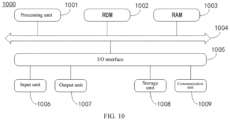
- FIG. 10 is a schematic structural diagram of an electronic device 1000 adapted to implement the embodiments of the present disclosure.
- the terminal device may include, but are not limited to, a mobile terminal such as a mobile phone, a laptop computer, a digital broadcast receiver, a Personal Digital Assistant (PDA), a tablet computer or PAD, a Portable Multimedia Player (PMP), an on-vehicle terminal (e.g., an on-vehicle navigation terminal), etc., and a fixed terminal such as a digital television (TV), a desktop computer, etc.
- PDA Personal Digital Assistant
- PMP Portable Multimedia Player
- TV digital television
- FIG. 10 is merely illustrative, and should not be construed as limiting the functions and applications of the embodiments of the present disclosure.
- the electronic device 1000 may include a processing unit 1001, such as a central processing unit, a graphics processing unit, etc., which may perform various appropriate actions and processing in accordance with programs stored in the Read-Only Memory (ROM) 1002 or loaded from a storage unit 1008 into the Random-Access Memory (RAM) 1003. Various programs and data required for operation of the electronic device 1000 may also be stored in the RAM 1003.
- the processing unit 1001, the ROM 1002, and the RAM 1003 are connected to each other through a bus 1004.
- An Input/Output (I/O) interface 1005 is also connected to the bus 1004.
- the following units may be connected to the I/O interface 1005: an input unit 1006 including, for example, a touch screen, a touch pad, a keyboard, a mouse, a camera, a microphone, an accelerometer, a gyroscope, etc.; an output unit 1007 including, for example, a Liquid Crystal Display (LCD), a speaker, an oscillator, etc.; the storage unit 1008 including, for example, a magnetic tape or a hard disk; and a communication unit 1009.
- the communication unit 409 may allow the electronic device 1000 to perform wireless or wired communication with other devices for data exchange.
- FIG. 10 illustrates the electronic device 1000 having various units, it should be appreciated that it is not necessary to implement or provide all the illustrated units. Alternatively, more or fewer units may be implemented or provided.
- embodiments of the present disclosure include a computer program product, which includes a computer program carried on a non-transitory computer-readable medium.
- the computer program includes program codes for implementing the method illustrated in the flowcharts.
- the computer program may be downloaded and installed from a network through the communication unit 1009, or installed from the storage unit 1008, or installed from the ROM 1002.
- the processing unit 1001 the above-mentioned functions defined in the methods according to the embodiments of the present disclosure are performed.
- the above computer-readable medium in the present disclosure may be a computer-readable signal medium, a computer-readable storage medium, or any combination thereof.
- the computer-readable storage medium may be, but not limited to, an electrical, magnetic, optical, electromagnetic, infrared, or semiconductor system, apparatus, device, or any combination thereof.
- the computer-readable storage medium may include, but are not limited to: an electrical connection having one or more wires, a portable computer disk, a hard disk, a Random-Access Memory (RAM), a Read-Only Memory (ROM), an Erasable Programmable Read Only Memory (EPROM) or a flash memory, an optical fiber, a Compact Disc Read-Only Memory (CD-ROM), an optical memory device, a magnetic memory device, or any suitable combination thereof.
- the computer-readable storage medium may be any tangible medium including or storing programs, which may be used by or used in combination with an instruction execution system, apparatus, or device.
- the computer-readable signal medium may include a data signal propagated in a baseband or as a part of a carrier and carrying computer-readable program codes. Such propagated data signal may be in various forms, including but not limited to an electromagnetic signal, an optical signal, or any suitable combination thereof.
- the computer-readable signal medium may be any computer-readable medium other than the computer-readable storage medium.
- the computer-readable signal medium may send, transmit, or transfer programs used by or used in combination with an instruction execution system, apparatus, or device.
- the program codes included in the computer-readable medium may be transferred via any appropriate medium, including but not limited to, an electric cable, an optical cable, Radio Frequency (RF), or any suitable combination thereof.
- RF Radio Frequency
- the client and the server may communicate by using any currently known or to-be-developed network protocol, such as HyperText Transfer Protocol (HTTP), and they may be communicated and interconnected with any form or medium of digital data (such as, a communication network).
- HTTP HyperText Transfer Protocol
- the communication network include a Local Area Network (LAN), a Wide Area Network (WAN), an internet work (such as, Internet), and an end-to-end network (such as, an ad hoc end-to-end network), as well as any currently known or future developed networks.
- the above computer-readable medium may be included in the above electronic device or present independently without being assembled into the electronic device.
- the above computer-readable medium may carry one or more programs which, when executed by the electronic device, allow the electronic device to: obtain an input image and a first text; extract features of the input image to obtain a feature vector of the input image; encode the first text to obtain a feature vector of the first text; obtain a joint feature vector based on the feature vector of the input image and the feature vector of the first text; and decode the joint feature vector to generate a second text.
- the computer program codes for implementing the operations according to the present disclosure may be written in one or more programming languages or any combination thereof.
- the programming languages may include, but not limited to, object-oriented programming languages, such as Java, Smalltalk, or C++, as well as conventional procedural programming languages, such as "C" language or similar programming languages.
- the program codes may be executed completely on a user computer, partly on the user computer, as a standalone software package, partly on the user computer and partly on a remote computer, or completely on a remote computer or a server.
- the remote computer may be connected to the user computer through any types of networks, including a Local Area Network (LAN) or a Wide Area Network (WAN), or to an external computer (e.g., over the Internet by using an Internet service provider).
- LAN Local Area Network
- WAN Wide Area Network
- an external computer e.g., over the Internet by using an Internet service provider.
- each block in the flowcharts or block diagrams may represent a module, a program segment, or a part of codes.
- the module, program segment, or part of codes may contain one or more executable instructions for implementing a specified logical function.
- functions showed in blocks may occur in an order other the order illustrated in the accompanying drawings. For example, actions in two successive blocks may actually be performed substantially in parallel with each other, or sometimes even in a reverse order, depending on functions involved.
- each block in the block diagrams and/or flowcharts, or any combination of the blocks in the block diagrams and/or flowcharts may be implemented by using a dedicated hardware-based system, which is configured to perform specified functions or operations or by using a combination of dedicated hardware and computer instructions.
- Modules or units involved and described in the embodiments of the present disclosure can be implemented in software or hardware.
- a name of a module or a unit does not constitute a limitation on the module or the unit itself under certain circumstances.
- exemplary types of hardware logic components include a Field Programmable Gate Array (FPGA), an Application Specific Integrated Circuit (ASIC), an Application Specific Standard Product (ASSP), a System on Chip (SOC), a Complex Programmable Logic Device (CPLD), and the like.
- FPGA Field Programmable Gate Array
- ASIC Application Specific Integrated Circuit
- ASSP Application Specific Standard Product
- SOC System on Chip
- CPLD Complex Programmable Logic Device
- the machine-readable medium may be a tangible medium, which may contain or store a program for use by or in connection with an instruction execution system, apparatus, or device.
- the machine-readable medium may be a machine-readable signal medium or a machine-readable storage medium.
- the machine-readable medium may include, but is not limited to, an electronic, magnetic, optical, electromagnetic, infrared, or semiconductor system, apparatus, or device, or any suitable combination thereof.
- a machine-readable storage medium include an electrical connection having one or more wires, a portable computer disk, a hard disk, a Random Access Memory (RAM), a Read Only Memory (ROM), an Erasable Programmable Read Only Memory (EPROM) or a flash memory, an optical fiber, a Compact Disc Read Only Memory (CD-ROM), an optical memory device, a magnetic memory device, or any suitable combination thereof.
- RAM Random Access Memory
- ROM Read Only Memory
- EPROM Erasable Programmable Read Only Memory
- flash memory an optical fiber
- CD-ROM Compact Disc Read Only Memory
- CD-ROM Compact Disc Read Only Memory
- CD-ROM Compact Disc Read Only Memory
- magnetic memory device or any suitable combination thereof.
- a connection processing method includes: initializing, in response to receiving a first connection request from a source device, an abnormality processing policy; transmitting first connection information to a target device of the first connection request; transmitting, in response to receiving a first connection information confirmation message transmitted by the target device, a first connection confirmation message to the source device; generating the abnormality processing policy based on information of the source device and/or information of the target device; transmitting, in response to receiving a second connection confirmation message indicating that the source device is connected to a first server, a first notification to the target device, the first notification including the abnormality processing policy; and transmitting, in response to receiving a third connection confirmation message indicating that the target device is connected to a first server, a second notification to the source device, the second notification including the abnormality processing policy.
- the method further includes: periodically checking a state of the source device and/or a state of the target device; and processing, when the state of the source device and/or the state of the target device are abnormal, a device in an abnormal state based on the abnormality processing policy.
- connection processing method further includes: deleting the device in the abnormal state from the abnormality processing policy.
- said initializing, in response to receiving the first connection request from the source device, the abnormality processing policy includes: determining a type of a service based on the first connection request; and generating a corresponding abnormality processing policy structure based on the type of the service.
- the abnormality processing policy structure includes at least a connection identification and a device identification graph.
- the device identification graph is used to store a device identification and an abnormality processing action.
- said generating the abnormality processing policy based on the information of the source device and/or the information of the target device includes: determining, based on a role of the source device in the service, a first processing action when the source device is abnormal, and saving the device identification of the source device and the first processing action in the corresponding abnormality processing policy structure; and/or determining, based on a role of the target device in the service, a second processing action when the target device is abnormal, and saving the device identification of the target device and the second processing action in the corresponding abnormality processing policy structure.
- said periodically checking the state of the source device and/or the state of the target device includes: starting a first timer; in response to receiving state information of the source device and/or the target device prior to expiration of the first timer, resetting the first timer; and in response to failing to receive the state information of the source device and/or the target device prior to expiration of the first timer, determining that the state of the source device and/or the state of the target device are abnormal.
- a connection processing method includes: transmitting a first connection request to a second server, the first connection request being used to request a target device to connect to a first server; receiving a first connection confirmation message transmitted by the second server; receiving a second notification transmitted by the second server, the second notification being used to indicate that the target device is connected to the first server, the second notification including an abnormality processing policy; starting a second timer based on the abnormality processing policy; in response to receiving a target device connection message transmitted by the first server prior to expiration of the second timer, stopping the second timer; and in response to failing to receive the target device connection message transmitted by the first server prior to expiration of the second timer, performing a processing action based on the abnormality processing policy.
- the method further includes: transmitting a second connection confirmation message to the second server; and transmitting a second connection request to the first server.
- the method further includes: periodically transmitting state information of a source device to the second server.
- a connection processing method includes: receiving first connection information transmitted by a second server, the first connection information indicating a request from a source device for connecting a target device to a first server; transmitting a first connection confirmation message to the second server; receiving a first notification transmitted by the second server, the first notification indicating that the source device is connected to the first server, the first notification including an abnormality processing policy; starting a third timer based on the abnormality processing policy; in response to receiving a source device connection message transmitted by the first server prior to expiration of the third timer, stopping the third timer; and in response to failing to receive the source device connection message transmitted by the first server prior to expiration of the third timer, performing a processing action based on the abnormality processing policy.
- the method further includes: transmitting a third connection confirmation message to the second server; and transmitting a third connection request to the first server.
- the method further includes: periodically transmitting state information of the target device to the second server.
- a connection processing apparatus includes: a processing policy initialization module configured to initialize, in response to receiving a first connection request from a source device, an abnormality processing policy; a first connection information transmission module configured to transmit first connection information to a target device of the first connection request; a first connection confirmation message transmission module configured to transmit, in response to receiving a first connection information confirmation message transmitted by the target device, a first connection confirmation message to the source device; an abnormality processing policy generation module configured to generate the abnormality processing policy based on information of the source device and/or information of the target device; a first notification transmission module configured to transmit, in response to receiving a second connection confirmation message indicating that the source device is connected to a first server, a first notification to the target device, the first notification including the abnormality processing policy; and a second notification transmission module configured to transmit, in response to receiving a third connection confirmation message indicating that the target device is connected to a first server, a second notification to the source device, the second notification
- connection processing apparatus is further configured to: periodically check a state of the source device and/or a state of the target device; and process, when the state of the source device and/or the state of the target device are abnormal, a device in an abnormal state based on the abnormality processing policy.
- connection processing apparatus is further configured to delete the device in the abnormal state from the abnormality processing policy.
- the processing policy initialization module is further configured to: determine a type of a service based on the first connection request; and generate a corresponding abnormality processing policy structure based on the type of the service.
- the abnormality processing policy structure includes at least a connection identification and a device identification graph.
- the device identification graph is used to store a device identification and an abnormality processing action.
- the abnormality processing policy generation module is further configured to: determine, based on a role of the source device in the service, a first processing action when the source device is abnormal, and save the device identification of the source device and the first processing action in the corresponding abnormality processing policy structure; and/or determine, based on a role of the target device in the service, a second processing action when the target device is abnormal, and save the device identification of the target device and the second processing action in the corresponding abnormality processing policy structure.
- connection processing apparatus is further configured to: start a first timer; in response to receiving state information of the source device and/or the target device prior to expiration of the first timer, reset the first timer; and in response to failing to receive the state information of the source device and/or the target device prior to expiration of the first timer, determine that the state of the source device and/or the state of the target device are abnormal.
- a connection processing apparatus includes: a first connection request transmission module configured to transmit a first connection request to a second server, the first connection request being used to request a target device to connect to a first server; a first connection confirmation message receiving module configured to receive a first connection confirmation message transmitted by the second server; a second notification receiving module configured to receive a second notification transmitted by the second server, the second notification being used to indicate that the target device is connected to the first server, the second notification including an abnormality processing policy; a second timer starting module configured to start a second timer based on the abnormality processing policy; a second timer stopping module configured to, in response to receiving a target device connection message transmitted by the first server prior to expiration of the second timer, stop the second timer; and a second abnormality processing module configured to, in response to failing to receive the target device connection message transmitted by the first server prior to expiration of the second timer, perform a processing action based on the abnormality processing policy.
- connection processing apparatus is further configured to: transmit a second connection confirmation message to the second server; and transmit a second connection request to the first server.
- connection processing apparatus is further configured to periodically transmit state information of a source device to the second server.
- a connection processing apparatus includes: a first connection information receiving module configured to receive first connection information transmitted by a second server, the first connection information indicating a request from a source device for connecting a target device to a first server; a first connection confirmation message transmission module configured to transmit a first connection confirmation message to the second server; a first notification receiving module configured to receive a first notification transmitted by the second server, the first notification indicating that the source device is connected to the first server, the first notification including an abnormality processing policy; a third timer starting module configured to start a third timer based on the abnormality processing policy; a third timer stopping module configured to, in response to receiving a source device connection message transmitted by the first server prior to expiration of the third timer, stop the third timer; and a third abnormality processing module configured to, in response to failing to receive the source device connection message transmitted by the first server prior to expiration of the third timer, perform a processing action based on the abnormality processing policy.
- connection processing apparatus is further configured to: transmit a third connection confirmation message to the second server; and transmit a third connection request to the first server.
- connection processing apparatus is further configured to periodically transmit state information of the target device to the second server.
- an electronic device includes at least one processor, and a memory communicatively connected to the at least one processor.
- the memory has instructions stored thereon and executable by the at least one processor. The instructions, when executed by the at least one processor, cause the at least one processor to implement any one of the connection processing methods as described above.
- a non-transitory computer-readable storage medium stores computer instructions.
- the computer instructions are configured to cause the computer to implement any one of the connection processing methods as described above.
Landscapes
- Engineering & Computer Science (AREA)
- Computer Networks & Wireless Communication (AREA)
- Signal Processing (AREA)
- Computer Security & Cryptography (AREA)
- Telephonic Communication Services (AREA)
- Computer And Data Communications (AREA)
- Debugging And Monitoring (AREA)
Claims (15)
- Von einem zweiten Server implementiertes Verbindungsverarbeitungsverfahren, umfassend:Initialisieren (S101) einer Anomalieverarbeitungsrichtlinie als Reaktion auf Empfangen einer ersten Verbindungsanforderung von einer Quellvorrichtung, wobei die Anomalieverarbeitungsrichtlinie eine entsprechende Verarbeitung darstellt, wenn eine Anomalie auftritt;Übertragen (S102) erster Verbindungsinformationen an eine Zielvorrichtung der ersten Verbindungsanforderung;Übertragen (S103) einer ersten Verbindungsinformationsbestätigungsnachricht an die Quellvorrichtung als Reaktion auf Empfangen einer ersten Verbindungsinformationsbestätigungsnachricht, die von der Zielvorrichtung übertragen wurde;Generieren (S104) der Anomalieverarbeitungsrichtlinie basierend auf Informationen der Quellvorrichtung und/oder Informationen der Zielvorrichtung;Übertragen (S105) als Reaktion auf Empfangen einer zweiten Verbindungsbestätigungsnachricht, die angibt, dass die Quellvorrichtung mit einem ersten Server verbunden ist, einer ersten Benachrichtigung an die Zielvorrichtung, wobei die erste Benachrichtigung die Anomalieverarbeitungsrichtlinie in Bezug auf die Quellvorrichtung umfasst; undÜbertragen (S106) als Reaktion auf Empfangen einer dritten Verbindungsbestätigungsnachricht, die angibt, dass die Zielvorrichtung mit einem ersten Server verbunden ist, einer zweiten Benachrichtigung an die Quellvorrichtung, wobei die zweite Benachrichtigung die Anomalieverarbeitungsrichtlinie in Bezug auf die Zielvorrichtung umfasst,wobei der zweite Server ein Verbindungsserver ist, der erste Server ein Server ist, der dazu konfiguriert ist, der Quellvorrichtung und der Zielvorrichtung Dienstdatendienste bereitzustellen, die Quellvorrichtung eine Quell-Clientvorrichtung ist und die Zielvorrichtung eine Ziel-Clientvorrichtung ist.
- Verbindungsverarbeitungsverfahren nach Anspruch 1, weiter umfassend:regelmäßiges Überprüfen eines Zustands der Quellvorrichtung und/oder eines Zustands der Zielvorrichtung; undVerarbeiten, wenn der Zustand der Quellvorrichtung und/oder der Zustand der Zielvorrichtung anormal ist, einer Vorrichtung in einem anormalen Zustand basierend auf der Anomalieverarbeitungsrichtlinie.
- Verbindungsverarbeitungsverfahren nach Anspruch 2, das nach Verarbeiten der Vorrichtung in einem anormalen Zustand basierend auf der Anomalieverarbeitungsrichtlinie weiter Folgendes umfasst:
Löschen der Vorrichtung im abnormalen Zustand aus der Anomalieverarbeitungsrichtlinie. - Verbindungsverarbeitungsverfahren nach Anspruch 1, wobei die Anomalieverarbeitungsrichtlinie bei Initialisieren (S101) als Reaktion auf Empfangen der ersten Verbindungsanforderung von der Quellvorrichtung Folgendes umfasst:Bestimmen (S201) eines Diensttyps basierend auf der ersten Verbindungsanforderung; undGenerieren (S202) einer entsprechenden Anomalieverarbeitungsrichtlinienstruktur basierend auf dem Diensttyp, wobei die Anomalieverarbeitungsrichtlinienstruktur mindestens eine Verbindungsidentifikation und einen Vorrichtungsidentifikationsgraphen umfasst, und wobei der Vorrichtungsidentifikationsgraph zum Speichern einer Vorrichtungsidentifikation und einer Anomalieverarbeitungsaktion verwendet wird.
- Verbindungsverarbeitungsverfahren nach Anspruch 4, wobei das Generieren (S104) der Anomalieverarbeitungsrichtlinie basierend auf den Informationen der Quellvorrichtung und/oder den Informationen der Zielvorrichtung Folgendes umfasst:Bestimmen (S301) einer ersten Verarbeitungsaktion, wenn die Quellvorrichtung anormal ist, basierend auf einer Rolle der Quellvorrichtung im Dienst, und Speichern (S302) der Vorrichtungsidentifikation der Quellvorrichtung und der ersten Verarbeitungsaktion in der entsprechenden Anomalieverarbeitungsrichtlinienstruktur; und/oderBestimmen (S303) einer zweiten Verarbeitungsaktion, wenn die Zielvorrichtung anormal ist, basierend auf einer Rolle der Zielvorrichtung im Dienst, und Speichern (S304) der Vorrichtungsidentifikation der Zielvorrichtung und der zweiten Verarbeitungsaktion in der entsprechenden Anomalieverarbeitungsrichtlinienstruktur.
- Verbindungsverarbeitungsverfahren nach Anspruch 2, wobei die regelmäßige Überprüfung des Zustands der Quellvorrichtung und/oder des Zustands der Zielvorrichtung Folgendes umfasst:Starten eines ersten Timers;als Reaktion auf Empfangen von Statusinformationen der Quellvorrichtung und/oder der Zielvorrichtung vor Ablauf des ersten Timers, Zurücksetzen des ersten Timers; undals Reaktion auf Fehlschlagen des Empfangens der Statusinformationen der Quellvorrichtung und/oder der Zielvorrichtung vor Ablauf des ersten Timers, Bestimmen dass der Zustand der Quellvorrichtung und/oder der Zustand der Zielvorrichtung anormal ist.
- Von einer Quellvorrichtung implementiertes Verbindungsverarbeitungsverfahren, das Folgendes umfasst:Übertragen (S401) einer ersten Verbindungsanforderung an einen zweiten Server, wobei die erste Verbindungsanforderung verwendet wird, um eine Zielvorrichtung aufzufordern, eine Verbindung mit einem ersten Server herzustellen;Empfangen (S402) einer ersten Verbindungsbestätigungsnachricht, die vom zweiten Server übertragen wird;Empfangen (S403) einer zweiten Benachrichtigung, die vom zweiten Server übertragen wird, wobei die zweite Benachrichtigung verwendet wird, um anzugeben, dass die Zielvorrichtung mit dem ersten Server verbunden ist, wobei die zweite Benachrichtigung eine Anomalieverarbeitungsrichtlinie umfasst, wobei die Anomalieverarbeitungsrichtlinie eine entsprechende Verarbeitung darstellt, wenn eine Anomalie auftritt;Starten (S404) eines zweiten Timers basierend auf der Anomalieverarbeitungsrichtlinie;als Reaktion auf Empfangen einer vom ersten Server vor Ablauf des zweiten Timers übertragenen Zielvorrichtungsverbindungsnachricht, Stoppen (S405) des zweiten Timers; undals Reaktion auf Fehlschlagen des Empfangens der vom ersten Server übertragenen Zielvorrichtungsverbindungsnachricht vor Ablauf des zweiten Timers, Durchführen (S406) einer Verarbeitungsaktion basierend auf der Anomalieverarbeitungsrichtlinie,wobei der zweite Server ein Verbindungsserver ist, der erste Server ein Server ist, der dazu konfiguriert ist, der Quellvorrichtung und der Zielvorrichtung Dienstdatendienste bereitzustellen, die Quellvorrichtung eine Quell-Clientvorrichtung ist und die Zielvorrichtung eine Ziel-Clientvorrichtung ist.
- Verbindungsverarbeitungsverfahren nach Anspruch nach Anspruch 7, weiter umfassend:Übertragen einer zweiten Verbindungsbestätigungsnachricht an den zweiten Server; undÜbertragen einer zweiten Verbindungsanforderung an den ersten Server.
- Verbindungsverarbeitungsverfahren nach Anspruch nach Anspruch 7, weiter umfassend:
regelmäßiges Übertragen von Statusinformationen der Quellvorrichtung an den zweiten Server. - Von einer Zielvorrichtung implementiertes Verbindungsverarbeitungsverfahren, umfassend:Empfangen (S501) erster Verbindungsinformationen, die von einem zweiten Server übertragen werden, wobei die ersten Verbindungsinformationen eine Anforderung von einer Quellvorrichtung zum Verbinden der Zielvorrichtung mit einem ersten Server angeben;Übertragen (S502) einer ersten Verbindungsbestätigungsnachricht an den zweiten Server;Empfangen (S503) einer ersten Benachrichtigung, die vom zweiten Server übertragen wird, wobei die erste Benachrichtigung angibt, dass die Quellvorrichtung mit dem ersten Server verbunden ist, wobei die erste Benachrichtigung eine Anomalieverarbeitungsrichtlinie umfasst, wobei die Anomalieverarbeitungsrichtlinie eine entsprechende Verarbeitung darstellt, wenn eine Anomalie auftritt;Starten (S504) eines dritten Timers basierend auf der Anomalieverarbeitungsrichtlinie;als Reaktion auf Empfangen einer vom ersten Server vor Ablauf des dritten Timers übertragenen Quellvorrichtungsverbindungsnachricht, Stoppen (S505) des dritten Timers; undals Reaktion auf das Fehlschlagen des Empfangens der vom ersten Server übertragenen Quellvorrichtungsverbindungsnachricht vor Ablauf des dritten Timers, Durchführen (S506) einer Verarbeitungsaktion basierend auf der Anomalieverarbeitungsrichtlinie,wobei der zweite Server ein Verbindungsserver ist, der erste Server ein Server ist, der dazu konfiguriert ist, der Quellvorrichtung und der Zielvorrichtung Dienstdatendienste bereitzustellen, die Quellvorrichtung eine Quell-Clientvorrichtung ist und die Zielvorrichtung eine Ziel-Clientvorrichtung ist.
- Verbindungsverarbeitungsverfahren nach Anspruch 10, weiter umfassend:Übertragen einer dritten Verbindungsbestätigungsnachricht an den zweiten Server; undÜbertragen einer dritten Verbindungsanforderung an den ersten Server.
- Verbindungsverarbeitungsverfahren nach Anspruch 10, weiter umfassend:
regelmäßiges Übertragen von Statusinformationen der Zielvorrichtung an den zweiten Server. - Verbindungsverarbeitungseinrichtung (700) eines zweiten Servers, umfassend:ein Verarbeitungsrichtlinien-Initialisierungsmodul (701), das dazu konfiguriert ist, als Reaktion auf Empfangen einer ersten Verbindungsanforderung von einer Quellvorrichtung eine Anomalieverarbeitungsrichtlinie zu initialisieren, wobei die Anomalieverarbeitungsrichtlinie eine entsprechende Verarbeitung darstellt, wenn eine Anomalie auftritt;ein erstes Verbindungsinformationsübertragungsmodul (702), das dazu konfiguriert ist, erste Verbindungsinformationen an eine Zielvorrichtung der ersten Verbindungsanforderung zu übertragen;ein Übertragungsmodul (703) einer ersten Verbindungsbestätigungsnachricht, das dazu konfiguriert ist, als Reaktion auf Empfangen einer ersten Verbindungsinformationsbestätigungsnachricht, die von der Zielvorrichtung übertragen wurde, eine erste Verbindungsbestätigungsnachricht an die Quellvorrichtung zu übertragen;ein Generierungsmodul (704) einer Anomalieverarbeitungsrichtlinie, das dazu konfiguriert ist, die Anomalieverarbeitungsrichtlinie basierend auf Informationen der Quellvorrichtung und/oder Informationen der Zielvorrichtung zu generieren;ein erstes Benachrichtigungsübertragungsmodul (705), das dazu konfiguriert ist, als Reaktion auf Empfangen einer zweiten Verbindungsbestätigungsnachricht, die angibt, dass die Quellvorrichtung mit einem ersten Server verbunden ist, eine erste Benachrichtigung an die Zielvorrichtung zu übertragen, wobei die erste Benachrichtigung die Anomalieverarbeitungsrichtlinie in Bezug auf die Quellvorrichtung umfasst; undein zweites Benachrichtigungsübertragungsmodul (706), das dazu konfiguriert ist, als Reaktion auf Empfangen einer dritten Verbindungsbestätigungsnachricht, die angibt, dass die Zielvorrichtung mit einem ersten Server verbunden ist, eine zweite Benachrichtigung an die Quellvorrichtung zu übertragen, wobei die zweite Benachrichtigung die Anomalieverarbeitungsrichtlinie in Bezug auf die Zielvorrichtung umfasst,wobei der zweite Server ein Verbindungsserver ist, der erste Server ein Server ist, der dazu konfiguriert ist, der Quellvorrichtung und der Zielvorrichtung Dienstdatendienste bereitzustellen, die Quellvorrichtung eine Quell-Clientvorrichtung ist und die Zielvorrichtung eine Ziel-Clientvorrichtung ist.
- Elektronische Vorrichtung (1000), umfassend:einen Speicher (1008), der dazu konfiguriert ist, eine computerlesbare Anweisung zu speichern; undeinen Prozessor (1001), der dazu konfiguriert ist, die computerlesbare Anweisung auszuführen, um zu bewirken, dass der Prozessor (1001), wenn er die computerlesbare Anweisung ausführt, das Verfahren nach einem der Ansprüche 1 bis 12 implementiert.
- Nichtflüchtiges computerlesbares Speichermedium, das dazu konfiguriert ist, eine computerlesbare Anweisung zu speichern, wobei die computerlesbare Anweisung, wenn sie von einer Verarbeitungseinheit eines Computers (1001) ausgeführt wird, bewirkt, dass der Computer (1001) das Verfahren nach einem der Ansprüche 1 bis 12 implementiert.
Applications Claiming Priority (2)
| Application Number | Priority Date | Filing Date | Title |
|---|---|---|---|
| CN202011116817.7A CN112291316B (zh) | 2020-10-19 | 2020-10-19 | 连接处理方法、装置、电子设备及计算机可读存储介质 |
| PCT/CN2021/119442 WO2022083379A1 (zh) | 2020-10-19 | 2021-09-18 | 连接处理方法、装置、电子设备及计算机可读存储介质 |
Publications (4)
| Publication Number | Publication Date |
|---|---|
| EP4207648A1 EP4207648A1 (de) | 2023-07-05 |
| EP4207648A4 EP4207648A4 (de) | 2024-02-28 |
| EP4207648C0 EP4207648C0 (de) | 2025-04-30 |
| EP4207648B1 true EP4207648B1 (de) | 2025-04-30 |
Family
ID=74496431
Family Applications (1)
| Application Number | Title | Priority Date | Filing Date |
|---|---|---|---|
| EP21881798.9A Active EP4207648B1 (de) | 2020-10-19 | 2021-09-18 | Verbindungsverarbeitungsverfahren und -vorrichtung, elektronische vorrichtung und computerlesbares speichermedium |
Country Status (4)
| Country | Link |
|---|---|
| US (1) | US12095869B2 (de) |
| EP (1) | EP4207648B1 (de) |
| CN (1) | CN112291316B (de) |
| WO (1) | WO2022083379A1 (de) |
Families Citing this family (6)
| Publication number | Priority date | Publication date | Assignee | Title |
|---|---|---|---|---|
| CN112291316B (zh) | 2020-10-19 | 2022-03-15 | 北京字节跳动网络技术有限公司 | 连接处理方法、装置、电子设备及计算机可读存储介质 |
| CN113068060A (zh) * | 2021-03-24 | 2021-07-02 | 北京达佳互联信息技术有限公司 | 视频账号匹配方法和装置、及电子设备 |
| CN115484469B (zh) * | 2021-06-15 | 2024-01-09 | 北京字节跳动网络技术有限公司 | 一种连麦系统、方法、装置、设备及存储介质 |
| CN115484468B (zh) * | 2021-06-15 | 2024-01-09 | 北京字节跳动网络技术有限公司 | 一种连麦系统、方法、装置、设备及存储介质 |
| US12498967B2 (en) * | 2022-09-20 | 2025-12-16 | Dell Products L.P. | Channel switching mechanism among wireless peripheral devices |
| CN115988054B (zh) * | 2022-12-02 | 2025-06-27 | 珠海格力电器股份有限公司 | 物联网的通信控制方法、装置、处理器以及物联网架构 |
Family Cites Families (23)
| Publication number | Priority date | Publication date | Assignee | Title |
|---|---|---|---|---|
| US7181492B2 (en) * | 2000-10-17 | 2007-02-20 | Concerto Software, Inc. | Transfer of an internet chat session between servers |
| US7962790B2 (en) * | 2006-12-04 | 2011-06-14 | Electronics And Telecommunications Research Institute | Inference-based home network error handling system and method |
| US8307219B2 (en) * | 2009-07-13 | 2012-11-06 | Satyam Computer Services Limited | Enterprise black box system and method for data centers |
| KR101582695B1 (ko) * | 2010-01-18 | 2016-01-06 | 엘에스산전 주식회사 | 이더넷 기반 전력기기의 통신오류 감시 시스템 및 그 방법 |
| CN103107905B (zh) * | 2011-11-14 | 2017-08-04 | 华为技术有限公司 | 异常处理方法、装置和客户端 |
| CN104247333B (zh) * | 2011-12-27 | 2017-08-11 | 思科技术公司 | 用于基于网络的服务的管理的系统和方法 |
| EP2688249B1 (de) * | 2012-07-20 | 2016-04-27 | Siemens Aktiengesellschaft | Verfahren zur Nachrichtenübermittlung in einem redundant betreibbaren industriellen Kommunikationsnetz und Kommunikationsgerät für ein redundant betreibbares industrielles Kommunikationsnetz |
| US9515938B2 (en) * | 2013-10-24 | 2016-12-06 | Microsoft Technology Licensing, Llc | Service policies for communication sessions |
| CA2934425A1 (en) * | 2013-12-19 | 2015-06-25 | Bae Systems Plc | Method and apparatus for detecting fault conditions in a network |
| CN107342978B (zh) * | 2017-05-27 | 2020-12-22 | 广州市百果园信息技术有限公司 | 直播间连麦控制方法、装置及相应的终端设备 |
| JP6996178B2 (ja) * | 2017-09-12 | 2022-01-17 | 株式会社リコー | 機器管理システム、機器管理方法およびプログラム |
| CN107743250B (zh) * | 2017-10-10 | 2019-07-09 | 武汉斗鱼网络科技有限公司 | Pc上实现主播连麦pk的方法、存储介质、设备及系统 |
| CN109818994A (zh) * | 2017-11-20 | 2019-05-28 | 北京京东尚科信息技术有限公司 | 用于代理端的信息处理方法和装置 |
| JP7176296B2 (ja) * | 2018-08-23 | 2022-11-22 | 株式会社リコー | 通信端末、通信システム、ログデータ送信方法、プログラム |
| CN110971922B (zh) * | 2018-09-30 | 2021-11-09 | 武汉斗鱼网络科技有限公司 | 直播连麦状态监控方法、客户端、服务器、介质及系统 |
| CN111200799B (zh) * | 2018-11-20 | 2021-06-15 | 华为技术有限公司 | 一种车联网的异常行为检测方法、装置和系统 |
| CN109815052A (zh) * | 2019-01-04 | 2019-05-28 | 深圳壹账通智能科技有限公司 | 异常服务处理的方法、装置、计算机设备和存储介质 |
| WO2020164633A1 (en) * | 2019-02-15 | 2020-08-20 | Beijing Bytedance Network Technology Co., Ltd. | Transform parameter derivation based on block partition |
| CN110324655B (zh) * | 2019-08-05 | 2021-07-06 | 北京字节跳动网络技术有限公司 | 一种直播间客户端的连线方法、装置、设备及存储介质 |
| CN110830460B (zh) * | 2019-10-25 | 2022-09-20 | 卓米私人有限公司 | 一种连接建立方法、装置、电子设备及存储介质 |
| CN111372092B (zh) * | 2020-03-04 | 2022-03-04 | 北京字节跳动网络技术有限公司 | 通信链路建立方法、装置、设备及存储介质 |
| CN111584059B (zh) * | 2020-04-21 | 2024-01-23 | 武汉联影医疗科技有限公司 | 系统监测方法、装置和计算机设备 |
| CN112291316B (zh) * | 2020-10-19 | 2022-03-15 | 北京字节跳动网络技术有限公司 | 连接处理方法、装置、电子设备及计算机可读存储介质 |
-
2020
- 2020-10-19 CN CN202011116817.7A patent/CN112291316B/zh active Active
-
2021
- 2021-09-18 US US18/249,684 patent/US12095869B2/en active Active
- 2021-09-18 WO PCT/CN2021/119442 patent/WO2022083379A1/zh not_active Ceased
- 2021-09-18 EP EP21881798.9A patent/EP4207648B1/de active Active
Also Published As
| Publication number | Publication date |
|---|---|
| CN112291316A (zh) | 2021-01-29 |
| EP4207648C0 (de) | 2025-04-30 |
| EP4207648A4 (de) | 2024-02-28 |
| WO2022083379A1 (zh) | 2022-04-28 |
| CN112291316B (zh) | 2022-03-15 |
| US20230388385A1 (en) | 2023-11-30 |
| US12095869B2 (en) | 2024-09-17 |
| EP4207648A1 (de) | 2023-07-05 |
Similar Documents
| Publication | Publication Date | Title |
|---|---|---|
| US12095869B2 (en) | Connection processing method and apparatus, electronic device, and computer-readable storage medium | |
| CN110417915B (zh) | 一种推送消息传输方法、装置、存储介质及电子设备 | |
| CN115004752B (zh) | 感知代理sbp终止方法及装置、电子设备及存储介质 | |
| EP4181505B1 (de) | Verfahren und vorrichtung zur gemeinsamen bildschirmnutzung und elektronische vorrichtung | |
| CN116636305B (zh) | 代理wlan感知终止方法及装置、电子设备及存储介质 | |
| CN114281373B (zh) | 设备状态更新方法、装置、计算机设备和存储介质 | |
| WO2019071829A1 (zh) | Pc上实现主播连麦pk的方法、存储介质、设备及系统 | |
| US20230124149A1 (en) | Method and apparatus for establishing multimedia call, and electronic device | |
| CN110099461A (zh) | 终端之间的通信方法、装置、系统、电子设备及存储介质 | |
| CN113765930B9 (zh) | 多方通话的控制方法及客户端、服务器 | |
| US10044777B2 (en) | Method and device for communicating between at least a first terminal and a second terminal | |
| CN110290139B (zh) | 消息传输方法及装置 | |
| CN113347234B (zh) | 网络信息获取方法、装置、系统、计算机设备和存储介质 | |
| JP7627778B2 (ja) | 通話確立方法、装置、電子機器及び可読記憶媒体 | |
| CN118646684A (zh) | 数据传输方法和装置、存储介质及电子设备 | |
| CN117640594A (zh) | 数据传输方法、装置、设备、存储介质和计算机程序产品 | |
| CN114172946A (zh) | 请求结果发送方法、装置、电子设备和计算机可读介质 | |
| CN116131912B (zh) | 通信方法、装置、系统、存储介质及电子装置 | |
| CN114697864A (zh) | 基于智能可穿戴设备的救援方法、装置、介质和服务器 | |
| US20250184545A1 (en) | Interactive live streaming method, apparatus, electronic device, and storage medium | |
| US20250330506A1 (en) | Live interaction establishment method and apparatus, and device, storage medium and program product | |
| CN117678262A (zh) | 通信方法、装置、设备以及存储介质 | |
| WO2025005915A1 (en) | Call continuity for tethered computing devices | |
| CN118449778A (zh) | 一种绑定方法、装置、电子设备及存储介质 | |
| CN121262178A (zh) | 基于小程序的实时通信方法 |
Legal Events
| Date | Code | Title | Description |
|---|---|---|---|
| STAA | Information on the status of an ep patent application or granted ep patent |
Free format text: STATUS: THE INTERNATIONAL PUBLICATION HAS BEEN MADE |
|
| PUAI | Public reference made under article 153(3) epc to a published international application that has entered the european phase |
Free format text: ORIGINAL CODE: 0009012 |
|
| STAA | Information on the status of an ep patent application or granted ep patent |
Free format text: STATUS: REQUEST FOR EXAMINATION WAS MADE |
|
| 17P | Request for examination filed |
Effective date: 20230327 |
|
| AK | Designated contracting states |
Kind code of ref document: A1 Designated state(s): AL AT BE BG CH CY CZ DE DK EE ES FI FR GB GR HR HU IE IS IT LI LT LU LV MC MK MT NL NO PL PT RO RS SE SI SK SM TR |
|
| DAV | Request for validation of the european patent (deleted) | ||
| DAX | Request for extension of the european patent (deleted) | ||
| REG | Reference to a national code |
Ref country code: DE Ref country code: DE Ref legal event code: R079 Ref document number: 602021030166 Country of ref document: DE Free format text: PREVIOUS MAIN CLASS: H99Z9999999999 Ipc: H04L0067141000 |
|
| A4 | Supplementary search report drawn up and despatched |
Effective date: 20240130 |
|
| RIC1 | Information provided on ipc code assigned before grant |
Ipc: H04L 41/0894 20220101ALI20240124BHEP Ipc: H04L 69/40 20220101ALI20240124BHEP Ipc: H04L 67/141 20220101AFI20240124BHEP |
|
| GRAP | Despatch of communication of intention to grant a patent |
Free format text: ORIGINAL CODE: EPIDOSNIGR1 |
|
| STAA | Information on the status of an ep patent application or granted ep patent |
Free format text: STATUS: GRANT OF PATENT IS INTENDED |
|
| INTG | Intention to grant announced |
Effective date: 20241121 |
|
| GRAS | Grant fee paid |
Free format text: ORIGINAL CODE: EPIDOSNIGR3 |
|
| GRAA | (expected) grant |
Free format text: ORIGINAL CODE: 0009210 |
|
| STAA | Information on the status of an ep patent application or granted ep patent |
Free format text: STATUS: THE PATENT HAS BEEN GRANTED |
|
| AK | Designated contracting states |
Kind code of ref document: B1 Designated state(s): AL AT BE BG CH CY CZ DE DK EE ES FI FR GB GR HR HU IE IS IT LI LT LU LV MC MK MT NL NO PL PT RO RS SE SI SK SM TR |
|
| REG | Reference to a national code |
Ref country code: CH Ref legal event code: EP Ref country code: GB Ref legal event code: FG4D |
|
| REG | Reference to a national code |
Ref country code: IE Ref legal event code: FG4D |
|
| REG | Reference to a national code |
Ref country code: DE Ref legal event code: R096 Ref document number: 602021030166 Country of ref document: DE |
|
| U01 | Request for unitary effect filed |
Effective date: 20250529 |
|
| U07 | Unitary effect registered |
Designated state(s): AT BE BG DE DK EE FI FR IT LT LU LV MT NL PT RO SE SI Effective date: 20250624 |
|
| U1N | Appointed representative for the unitary patent procedure changed after the registration of the unitary effect |
Representative=s name: MARKS & CLERK LLP; GB |
|
| U20 | Renewal fee for the european patent with unitary effect paid |
Year of fee payment: 5 Effective date: 20250826 |
|
| PG25 | Lapsed in a contracting state [announced via postgrant information from national office to epo] |
Ref country code: ES Free format text: LAPSE BECAUSE OF FAILURE TO SUBMIT A TRANSLATION OF THE DESCRIPTION OR TO PAY THE FEE WITHIN THE PRESCRIBED TIME-LIMIT Effective date: 20250430 |
|
| PG25 | Lapsed in a contracting state [announced via postgrant information from national office to epo] |
Ref country code: GR Free format text: LAPSE BECAUSE OF FAILURE TO SUBMIT A TRANSLATION OF THE DESCRIPTION OR TO PAY THE FEE WITHIN THE PRESCRIBED TIME-LIMIT Effective date: 20250731 Ref country code: NO Free format text: LAPSE BECAUSE OF FAILURE TO SUBMIT A TRANSLATION OF THE DESCRIPTION OR TO PAY THE FEE WITHIN THE PRESCRIBED TIME-LIMIT Effective date: 20250730 |
|
| PG25 | Lapsed in a contracting state [announced via postgrant information from national office to epo] |
Ref country code: PL Free format text: LAPSE BECAUSE OF FAILURE TO SUBMIT A TRANSLATION OF THE DESCRIPTION OR TO PAY THE FEE WITHIN THE PRESCRIBED TIME-LIMIT Effective date: 20250430 |
|
| PGFP | Annual fee paid to national office [announced via postgrant information from national office to epo] |
Ref country code: GB Payment date: 20250716 Year of fee payment: 5 |
|
| PG25 | Lapsed in a contracting state [announced via postgrant information from national office to epo] |
Ref country code: HR Free format text: LAPSE BECAUSE OF FAILURE TO SUBMIT A TRANSLATION OF THE DESCRIPTION OR TO PAY THE FEE WITHIN THE PRESCRIBED TIME-LIMIT Effective date: 20250430 |
|
| PG25 | Lapsed in a contracting state [announced via postgrant information from national office to epo] |
Ref country code: RS Free format text: LAPSE BECAUSE OF FAILURE TO SUBMIT A TRANSLATION OF THE DESCRIPTION OR TO PAY THE FEE WITHIN THE PRESCRIBED TIME-LIMIT Effective date: 20250731 |
|
| PG25 | Lapsed in a contracting state [announced via postgrant information from national office to epo] |
Ref country code: IS Free format text: LAPSE BECAUSE OF FAILURE TO SUBMIT A TRANSLATION OF THE DESCRIPTION OR TO PAY THE FEE WITHIN THE PRESCRIBED TIME-LIMIT Effective date: 20250830 |
|
| PG25 | Lapsed in a contracting state [announced via postgrant information from national office to epo] |
Ref country code: SM Free format text: LAPSE BECAUSE OF FAILURE TO SUBMIT A TRANSLATION OF THE DESCRIPTION OR TO PAY THE FEE WITHIN THE PRESCRIBED TIME-LIMIT Effective date: 20250430 |
|
| PG25 | Lapsed in a contracting state [announced via postgrant information from national office to epo] |
Ref country code: CZ Free format text: LAPSE BECAUSE OF FAILURE TO SUBMIT A TRANSLATION OF THE DESCRIPTION OR TO PAY THE FEE WITHIN THE PRESCRIBED TIME-LIMIT Effective date: 20250430 |
|
| PG25 | Lapsed in a contracting state [announced via postgrant information from national office to epo] |
Ref country code: SK Free format text: LAPSE BECAUSE OF FAILURE TO SUBMIT A TRANSLATION OF THE DESCRIPTION OR TO PAY THE FEE WITHIN THE PRESCRIBED TIME-LIMIT Effective date: 20250430 |
|
| PLBE | No opposition filed within time limit |
Free format text: ORIGINAL CODE: 0009261 |
|
| STAA | Information on the status of an ep patent application or granted ep patent |
Free format text: STATUS: NO OPPOSITION FILED WITHIN TIME LIMIT |
|
| REG | Reference to a national code |
Ref country code: CH Ref legal event code: L10 Free format text: ST27 STATUS EVENT CODE: U-0-0-L10-L00 (AS PROVIDED BY THE NATIONAL OFFICE) Effective date: 20260311 |
|
| 26N | No opposition filed |
Effective date: 20260202 |
|
| REG | Reference to a national code |
Ref country code: CH Ref legal event code: H13 Free format text: ST27 STATUS EVENT CODE: U-0-0-H10-H13 (AS PROVIDED BY THE NATIONAL OFFICE) Effective date: 20260425 |