EP4204957B1 - Native emulation compatible application binary interface for supporting emulation of foreign code - Google Patents
Native emulation compatible application binary interface for supporting emulation of foreign code Download PDFInfo
- Publication number
- EP4204957B1 EP4204957B1 EP21727326.7A EP21727326A EP4204957B1 EP 4204957 B1 EP4204957 B1 EP 4204957B1 EP 21727326 A EP21727326 A EP 21727326A EP 4204957 B1 EP4204957 B1 EP 4204957B1
- Authority
- EP
- European Patent Office
- Prior art keywords
- abi
- function
- isa
- native
- code
- Prior art date
- Legal status (The legal status is an assumption and is not a legal conclusion. Google has not performed a legal analysis and makes no representation as to the accuracy of the status listed.)
- Active
Links
Images


Classifications
-
- G—PHYSICS
- G06—COMPUTING OR CALCULATING; COUNTING
- G06F—ELECTRIC DIGITAL DATA PROCESSING
- G06F8/00—Arrangements for software engineering
- G06F8/40—Transformation of program code
- G06F8/41—Compilation
- G06F8/47—Retargetable compilers
-
- G—PHYSICS
- G06—COMPUTING OR CALCULATING; COUNTING
- G06F—ELECTRIC DIGITAL DATA PROCESSING
- G06F8/00—Arrangements for software engineering
- G06F8/40—Transformation of program code
- G06F8/41—Compilation
- G06F8/44—Encoding
- G06F8/447—Target code generation
-
- G—PHYSICS
- G06—COMPUTING OR CALCULATING; COUNTING
- G06F—ELECTRIC DIGITAL DATA PROCESSING
- G06F9/00—Arrangements for program control, e.g. control units
- G06F9/06—Arrangements for program control, e.g. control units using stored programs, i.e. using an internal store of processing equipment to receive or retain programs
- G06F9/44—Arrangements for executing specific programs
- G06F9/445—Program loading or initiating
- G06F9/44536—Selecting among different versions
- G06F9/44542—Retargetable
- G06F9/44547—Fat binaries
-
- G—PHYSICS
- G06—COMPUTING OR CALCULATING; COUNTING
- G06F—ELECTRIC DIGITAL DATA PROCESSING
- G06F8/00—Arrangements for software engineering
- G06F8/40—Transformation of program code
- G06F8/41—Compilation
Definitions
- This invention relates to code interoperability and compatibility of native code with emulated foreign code.
- each processor or central processing unit (CPU) implements an instruction set architecture (ISA) that describes syntax and rules to which machine code instructions must adhere in order for those instructions to be natively executable on that processor.
- ISA instruction set architecture
- Examples of contemporary ISAs are the IA-32 ISA designed by INTEL CORPORATION, the x86-64 ISA designed by ADVANCED MICRO DEVICES, INC., the AArch64 ISA designed by ARM LIMITED, the POWER ISA designed by INTERNATIONAL BUSINESS MACHINES CORPORATION, and the RISC-V ISA designed by UNIVERSITY OF CALIFORNIA, BERKELEY, though many additional ISAs exist.
- an application binary interface is an interface between two binary program components that comprise machine code instructions targeting the same ISA.
- ABIs are often defined by an operating system (OS) and enable third-party software components to target, and therefore interface with, other libraries/components targeting the same ABI.
- OS operating system
- MICROSOFT WINDOWS provides a "Windows-X64" ABI that enables software to target WINDOWS devices comprising processor(s) implementing the x86-64 ISA, and provides an "ARM64" ABI that enables software to target WINDOWS devices comprising processor(s) implementing the Aarch64 ISA.
- a software component is "native" to a device that provides (e.g., via an OS) an ABI to which the component is compiled, and which also comprises a processor having an ISA matching the machine code instructions defining that component.
- any software component that does not match an ABI provided by a given computing device can be considered to be “foreign” to that device.
- an application targeting a Linux ABI for x86-64 cannot natively execute on a computing device having a processor targeting the x86-64 ISA but providing only the Windows-X64 ABI.
- an application targeting the Windows-X64 ABI cannot natively execute on a computing device having a processor targeting the x86-64 ISA but providing only a Linux ABI for x86-64.
- any software component that does not match an ISA of the device's processor(s), can be considered to be "foreign" to that device.
- an application targeting the x86_64 ISA (regardless of the ABI targeted) cannot natively execute on any computing device having an AArch64 processor.
- an application targeting the AArch64 ISA (regardless of the ABI targeted) cannot natively execute on any computing device having an x86-64 processor.
- Some environments such as WINDOWS, do make it possible to execute foreign software via software-based ISA emulation, with often significant performance penalties.
- an application targeting the ARM64 ABI may be emulated on a device having an x86-64 processor via an AArch64 emulator, and/or it may be possible for an application targeting the Windows-X64 ABI to be emulated on a device having an AArch64 processor via an x86-64 emulator.
- a software vendor may generate and distribute a single fat binary for an application, which includes an AArch64 code stream that is used when the binary is loaded on an AArch64-based device, and an x86-64 code stream that is used when the binary is loaded on an x86-64-based device.
- fat binaries largely hide the complexities of different processor ISAs from end-users, this is accomplished by essentially doubling the amount of code that is included in a binary (i.e., a 100% code size increase), half of which is not actually used by a given device.
- fat binaries can quickly consume precious storage resources and lead to software faults and user dissatisfaction.
- a call to a hybrid binary is received, wherein the call is in a format for the guest architecture.
- the hybrid binary includes a native function compiled into a native architecture binary code using guest architecture source code, an interoperability thunk to handle an incompatibility between the guest architecture and the native architecture, and native host remapping metadata that is usable by an emulator to redirect native host callable targets to the interoperability thunk.
- the method of US 2019/265993 A1 further includes invoking the interoperability thunk to allow the native function in the hybrid binary to be executed natively on the native architecture system.
- the embodiments described herein facilitate generating and/or consuming native binaries (e.g., applications, modules, libraries, etc.) comprising "emulation compatible" (EC) code that is configured for close interoperation with emulated foreign code, and that provides a high level of interoperability and compatibility to the foreign code.
- EC emulator compatible
- the embodiments herein enable an application developer to target an application to an operating system (OS) provided native EC application binary interface (ABI) to produce and distribute applications that execute natively at a computing device.
- OS operating system
- ABSI native EC application binary interface
- the function could be entered by its 'real' address, if it is being called by another EC ABI function.
- the function could be entered via an "entry thunk,” if it is being called by the foreign ABI.
- the function could be entered via a "fast-forward sequence,” if the function has been modified at runtime by code executing under the foreign ABI. Regardless of the actual entry point taken to a function, when code compiled against the EC ABI and code compiled against the foreign ABI interact, embodiments permit functions to have consistent memory address references when crossing ABI boundaries, improving compatibility.
- the computer system For a function defined in the source code, the computer system generates a first compiled version of the function that targets the first ABI, including generating a first set of instructions in the first ISA, and generates a second compiled version of the function that targets the second ABI, including generating a second set of instructions in the first ISA.
- the computer system determines whether the first compiled version of the function and the second compiled version of the function are foldable within the binary file, based at least on determining whether the first set of instructions and the second set of instructions match.
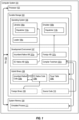
- the development environment 107 supports creation of binaries that target at least the EC ABI 107b, but frequently also target the incumbent ABI 107a (i.e., as a dual-architecture or "hybrid" binary image). In embodiments, the development environment 107 even supports creation of binaries that further target the foreign ABI 107c (and are therefore directly executable on a computer system for which the foreign ABI 107c is native).
- the incumbent ABI 107a is a "legacy" ABI that targets the native ISA of the processor 102
- the foreign ABI 107c is an ABI that targets some foreign ISA.
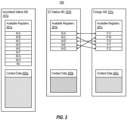
- the foreign ABI 107c defines a set of five available registers 201c comprising registers F:V to F:Z, which are assumed in example, 200 to be all available registers in the foreign ISA.
- the AArch64 ISA e.g., the "native” ISA
- the x86-64 ISA e.g., the "foreign” ISA
- the EC ABI 107b bridges the incumbent ABI 107a and the foreign ABI 107c by defining a set of five available registers 201b comprising registers N:A, N:C, N:D, N:E, and N:G.
- the EC ABI 107b is restricted to only use five of these registers-which is a number corresponding to the number of registers available in the foreign ISA.
- native code targeting the EC ABI 107b may not use all registers defined by the native ISA, that native code is still executable on the native ISA.
- the EC ABI 107b can define use of available registers 201b in a manner that is compatible with the incumbent ABI 107a, such that native code targeting the EC ABI 107b is also executable under a system supporting only the incumbent ABI 107a.
- the set of available registers 201b is chosen to use registers most commonly used by code compiled against the incumbent ABI 107a.
- the set of available registers 201b uses less than all of the set of available registers 201a, code compiled while targeting the set of available registers 201a may frequently only actually uses registers that are selected from the set of available registers 201b. In these situations, code compiled against each of the incumbent ABI 107a and the EC ABI 107b is identical, and can be folded withing a resulting binary.
- the set of available registers 201b of the EC ABI 107b comprises less that all of the set of available registers 201a of the incumbent ABI 107a
- alternate examples may define the set of available registers 201b to use all of the set of available registers 201a (for example, if the foreign ISA has a number of registers matching the native ISA).
- arrows within Figure 2 show that a mapping has been defined between the available registers 201b of the EC ABI 107b and the available registers 201c of the foreign ABI 107c.
- the EC ABI 107b uses register N:A in a manner that mirrors the foreign ABI 107c's use of register F:V
- the EC ABI 107b uses register N:C in a manner that mirrors the foreign ABI 107c's use of register F:W
- the EC ABI 107b defines use of available registers 201b in manner that mirrors CCs used by the foreign ABI 107c.
- the EC ABI 107b may limit a number of registers that are available (i.e., as compared to the incumbent ABI 107a) for passing parameters to a function in order to achieve behaviors of the foreign ABI 107c.
- the X64 ABI only uses four registers to pass parameters, so the EC ABI 107b may only permit four registers to be used for passing parameters, even though the incumbent ARM64 ABI is defined to use additional registers for parameter passing purposes.
- the EC ABI 107b may mirror stack use by the foreign ABI 107c (e.g., for saving a return address, for returning values from a function, etc.) rather than using registers for that purpose (as may be the case for the incumbent ABI 107a).
- the mappings between registers includes a mapping of volatility between registers.
- a register in the native ISA that is considered non-volatile under the incumbent ABI 107a might be considered volatile by the EC ABI 107b if it is mapped to a register considered volatile by the foreign ABI 107c.
- Figure 2 also shows that the incumbent ABI 107a defines context data 202a, the EC ABI 107b defines context data 202b, and the foreign ABI 107c defines context data 202c.
- context data is a format defined by an ABI for storing a snapshot of processor context, such as registers and flags. This context data usable for a variety of purposes, such as for an application to observe its own state (e.g., as part of copy protection schemes, as part of virus or malware detection, etc.), for an exception unwinding routine to unwind a stack after an exception, or to facilitate thread suspension/resumption.
- context data 202b is defined to have a format that is a blend of context data 202a and context data 202c.
- a format of context data 202a is visually represented with forward diagonal lines
- a format of context data 202c is visually represented with backward diagonal lines.
- a format of context data 202b is visually represented with both forward and backward diagonal lines, representing at least a partial blending of formats.
- context data 202b defines an arrangement of registers of the native ISA, it may arrange those registers in a manner that is expected by the foreign ISA (e.g., based on the mappings shown between available registers 201b and available registers 201c).
- the EC ABI 107b (including one or more of the available registers 201b, the context data 202b, or mappings between available registers 201b and available registers 201c), there can be tradeoffs between defining the EC ABI 107b as more closely resembling the incumbent ABI 107a versus defining the EC ABI 107b as more closely resembling the foreign ABI 107c.
- the development environment 107 supports creation of "dual architecture" hybrid binaries that target two or more ABIs.
- Figure 1 shows that a compiler toolchain 107d consumes source code 110 in order to generate a hybrid binary 108 that includes code targeting both the incumbent ABI 107a (i.e., incumbent native code 108a) and the EC ABI 107b (i.e., EC native code 108b).
- the hybrid binary 108 can be viewed as targeting both incumbent native behavior (i.e., incumbent native code 108a) and as targeting foreign behavior (i.e., EC native code 108b).
- hybrid binaries also include code targeting one or more additional ABIs, such as the foreign ABI 107c.
- FIG. 1 there is a broad arrow between incumbent native code 108a and EC native code 108b, indicating that the incumbent native code 108a and the EC native code 108b are at least partially "folded" together (i.e., such that a single set of instructions are used by both the incumbent native code 108a and the EC native code 108b).
- the EC ABI 107b targets at least some foreign behaviors, it has enough in common with the incumbent ABI 107a to result in compilation of a least a portion of source functions to each of the incumbent ABI 107a and the EC ABI 107b to result in identical compiled function bodies.
- the compiler toolchain 107d when compilation of a function to each of the incumbent ABI 107a and the EC ABI 107b results in the same compiled code, the compiler toolchain 107d "folds" this function within the hybrid binary 108-emitting only a single compiled version of this function for use by both the incumbent native code 108a and the EC native code 108b. For example, even though the compiler toolchain 107d generates both an incumbent native "version" of compiled code and an EC native "version” of compiled code for the function, compiler toolchain 107d emits only one of these versions into the hybrid binary 108 when those "versions" match (i.e., have identical native code).
- the compiler toolchain 107d when compiling source code 110 to target the EC ABI 107b, the compiler toolchain 107d follows source code definitions-such as preprocessor directives-as if the compiler toolchain 107d were targeting the ISA of the foreign ABI 107c (even though the compiler toolchain 107d is generating native code). This is because the EC ABI 107b exhibits behaviors of the foreign ABI 107c. For example, the following function follows different logic paths depending on the target ABI: In particular, preprocessor directives define that the value of 10 should be added to 'x' when targeting the ARM64 ISA, and that the value of 2 should be subtracted from 'x' when not targeting the ARM64 ISA.
- the compiler toolchain 107d when compiling this function to target an incumbent ABI 107a using the ARM64 ISA, the compiler toolchain 107d generates instructions that add the value of 10 to 'x' (i.e., the ARM64 logic path); conversely, when compiling this function to target EC ABI 107b the compiler toolchain 107d generates instructions that subtract the value of 2 from 'x' (i.e., the non-ARM64 logic path).
- the hybrid binary 108 is configured by the compiler toolchain 107d to be natively parsed and utilized by a legacy loader (i.e., that is aware of the incumbent ABI 107a but not the EC ABI 107b), but to be usable by an enlightened loader (i.e., that is aware of the EC ABI 107b).
- the hybrid binary 108 uses a layout/format that is expected by a legacy loader and thus "defaults" to executing under the incumbent ABI 107a.
- the hybrid binary 108 also includes additional information, such as a fixup table 108c that enables the hybrid binary 108 to also be consumed by the EC ABI 107b.
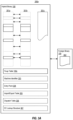
- Figure 3A illustrates an example 300a of a "dual architecture" hybrid binary. More particularly, Figure 3A illustrates a more detailed representation of hybrid binary 108 from Figure 1 , showing two interrelated code streams-code stream 301a and code stream 301b.
- code stream 301a corresponds to incumbent native code 108a
- code stream 301b corresponds to EC native code 108b.
- hybrid binary 108 targets two different native ABIs (i.e., incumbent ABI 107a and EC ABI 107b), together with their differing behaviors (i.e., full native behaviors and foreign behaviors).
- there is a folding of functions between some functions As indicated by arrows between code stream 301a and code stream 301b, there is a folding of functions between some functions.
- each of code stream 301a and code stream 301b includes "non-folded" functions delineated as boxes having solid lines, indicating that a different compiled version of these functions exists in each of code stream 301a and code stream 301b.
- each of code stream 301a and code stream 301b also include "folded" functions delineated as boxes having broken lines and connected by arrows, indicating that only one version of each function exists for use by both code stream 301a and code stream 301b (e.g., via aliasing).
- Figure 3A shows that the hybrid binary 108 might include an additional code stream 301c, such as a foreign code stream. More typically, however, in embodiments the hybrid binary 108 interacts with a foreign binary 109 (e.g., corresponding to a legacy plug-in/library) that includes a foreign code stream 302.
- the hybrid binary 108 is configured for native execution by the incumbent ABI 107a.
- a machine identifier 303 field in the hybrid binary 108 identifies a machine type expected by the incumbent ABI 107a
- an entry point 304 specifies an entry point to code stream 301a
- any import and/or export tables provide a "native" view exposing functions (and their locations) that are relevant to the incumbent ABI 107a.
- any "folded" functions that call a non-folded function are configured to call the "incumbent" version of the function in code stream 301a, rather than the "EC" version in code stream 301b.
- a legacy loader need only load the hybrid binary 108 as it would any other compatible binary, in order to execute code stream 301a.
- Figures 1 and 3A illustrate that the hybrid binary 108 includes a fixup table 108c.
- the fixup table 108c specifies one or more memory transformations to be applied by the loader 106c to memory loaded from the hybrid binary 108 when the hybrid binary 108 is loaded into an emulated process 111 (e.g., a compatibility process which can execute EC native code 108b natively at the processor 102, as well as execute foreign code-such as foreign binary 109-via the emulator 106b).
- an emulated process 111 e.g., a compatibility process which can execute EC native code 108b natively at the processor 102, as well as execute foreign code-such as foreign binary 109-via the emulator 106b.
- the loader 106c locates the fixup table 108c upon recognizing a that the machine identifier 303 in the hybrid binary 108 is improper for the EC ABI 107b. Then, the loader 106c applies one or more transformations specified in the fixup table 108c to portion(s) of system memory 104 containing memory page(s) loaded from the hybrid binary 108, in order to execute code stream 301b rather than code stream 301a.
- each transformation specified in the fixup table 108c identifies a memory location (e.g., by relative address, by absolute address, etc.), together with a transformation to be applied at that memory location (e.g., to replace one or more bytes at the memory location, to apply an arithmetic operation at the memory location, etc.).
- the fixup table 108c comprises one or more fixups to adjust the machine identifier 303 to match an ISA of a process (e.g., emulated process 111) into which the hybrid binary 108 is loaded. In embodiments, this is a foreign ISA corresponding to the foreign ABI 107c.
- the fixup table 108c comprises one or more fixups to adjust the entry point 304 to specify an entry point to code stream 301b.
- the fixup table 108c comprises one or more fixups to cause folded functions to call the EC version of a non-folded function in code stream 301b rather than the incumbent version of the function in code stream 301a.
- the fixup table 108c comprises one or more fixups that cause an import/export table 305 to provide a "compatibility" view exposing functions (and their locations) that are relevant to the EC ABI 107b.
- causing folded functions to call the EC version of a non-folded function in code stream 301b rather than the incumbent version of the function in code stream 301a comprises patching the call in the folded function, itself.
- folded functions are configured to call non-folded functions indirectly via a dispatch table 306.
- the fixup table 108c comprises one or more fixups to this dispatch table 306, which replace an address or offset to the incumbent version of the function in code stream 301a with an address or offset to the EC version of the function in code stream 301b.
- use of a dispatch table 306 can provide efficiency by limiting the number of memory pages to which memory fixups need to be applied in order to execute code stream 301b rather than code stream 301a.
- causing the import/export table 305 to provide a "compatibility" view exposing functions (and their locations) that are relevant to the EC ABI 107b comprises patching a reference to the import/export table 305 to expose a different portion (window) of the import/export table 305.
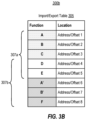
- Figure 3B illustrates an example 300b of a windowed view of an import/export table.
- Figure 3B illustrates an import/export table 305 that maps a plurality of functions with their corresponding memory location (e.g., address or offset).
- import/export table 305 includes a first shaded portion/zone comprising functions (i.e., A, B, and C) that are appliable to only code stream 301a (e.g., as non-folded functions), a non-shaded portion/zone comprising functions (i.e., D and E) that are appliable to both code stream 301a and code stream 301b (e.g., as folded functions), and a second shaded portion/zone comprising functions (i.e., A', B', and F) that are appliable to only code stream 301b (e.g., as non-folded functions).
- functions i.e., A, B, and C
- D and E functions
- second shaded portion/zone comprising functions (i.e., A', B', and F) that are appliable to only code stream 301b (e.g., as non-folded functions).
- Brackets delineate a native view 307a of import/export table 305 and a compatibility view 307b of import/export table 305.
- the native view is specified as a base reference to the first entry of the import/export table 305 and a size/count (e.g., of 5), which includes functions A, B, and C (applicable to only code stream 301a) as well as functions D and E (applicable to both code streams).
- the compatibility view is specified as a base reference to the fourth entry of the import/export table 305 and a size/count (e.g., of 5), which includes functions D and E (applicable to both code streams) as well as functions A', B', and F (applicable to only code stream 301b).
- patching the base reference to the import/export table 305 to expose a different window of the import/export table 305 comprises patching one, or both, of the base reference or the size/count.
- This behavior can introduce compatibly concerns if program logic in the native code relies on addresses comparisons (e.g., comparing a first pointer to a foreign function that was obtained by a first native function with a second pointer to the foreign function that was obtained by a second native function), if a pointer is passed from native code to foreign code (where it is invalid/unusable for the foreign code), or if a pointer is passed from foreign code to native code (where it is invalid/unusable for the native code).
- addresses comparisons e.g., comparing a first pointer to a foreign function that was obtained by a first native function with a second pointer to the foreign function that was obtained by a second native function
- consistent memory address references are enabled by an EC lookup structure 307 within the hybrid binary 108 (e.g., which is emitted into the hybrid binary 108 by the compiler toolchain 107d), together with a dispatcher 112 (i.e., dispatcher 112a in libraries 106a and dispatcher 112b in emulator 106b).
- the EC lookup structure 307 is any type of structure that is usable to determine which range(s) of memory addresses of a memory image defined by the hybrid binary 108 contain EC native code 108b.
- the dispatcher 112a When the hybrid binary 108 is loaded under the EC ABI 107b, on the other hand, the dispatcher 112a also utilizes the new reference address to the exit thunk for interacting with foreign code.
- the compiler toolchain 107d facilitates foldability by including both the original reference memory address and the new reference address within compiled code, regardless of whether a function is being targeted to the incumbent ABI 107a or the EC ABI 107b.
- Figure 5 illustrates a flow chart of an example method 500 for compiling source code to a binary file targeting a native first ISA while being operable with code compiled to a foreign second ISA.
- method 500 comprises an act 501 of identifying a first and second ABI for a first ISA, and a third ABI for a second ISA, the second ABI defining context data that does not exceed a context data size of the third ABI, and defining use of a subset of registers that map to the third ABI.
- act 501 comprises identifying (i) a first ABI corresponding to the first ISA, (ii) a second ABI corresponding to the first ISA, and (iii) a third ABI corresponding to the second ISA.
- the compiler toolchain 107d identifies each of the incumbent ABI 107a (i.e., first ABI), the EC ABI 107b (i.e., second ABI), and the foreign ABI (i.e., third ABI).
- the second ABI also defines use of a subset of registers from among a plurality of registers of the first ISA, and that are used by the first ABI.
- the subset of registers comprises less than all of the plurality of registers of the first ISA (e.g., as in example 200), though in other embodiments subset of registers comprises all of the plurality of registers of the first ISA.
- this subset of registers is mapped to a set of registers of the second ISA that are used by the third ABI.
- the second ABI only permits use of the subset of registers, to the exclusion of one or more other registers permitted by the first ABI.
- the EC ABI 107b defines a set of available registers 201b, which are a subset of the available registers 201a used by the incumbent ABI 107a (i.e., and which omit one or more of available registers 201a used by the incumbent ABI 107a).
- the available registers 201b are mapped by the EC ABI 107b to the set of available registers 201c used by the foreign ABI 107c.
- act 503 comprises generating a second compiled version of the function that targets the second ABI, including generating a second set of instructions in the first ISA
- act 504 comprises generating a first compiled version of the function that targets the first ABI, including generating a first set of instructions in the first ISA.
- the compiler toolchain 107d compiles a source code function twice-once while targeting the first ABI, and once while targeting the second ABI-resulting in two compiled versions of the function.
- the compiler toolchain 107d takes a "native ISA" logic path when targeting the incumbent ABI 107a, and takes a "foreign ISA" logic path when targeting the EC ABI 107b.
- generating the first compiled version of the function that targets the first ABI in act 502 comprises using source code definitions of the first ISA
- generating the second compiled version of the function that targets the second ABI in act 503 comprises using source code definitions of the second ISA.
- act 502 comprises either an act 506 (when the compiled functions are not foldable) of emitting both compiled version into the binary, or an act 507 (when the compiled functions are foldable) of emitting only one compiled version into the binary.
- act 506 comprises, based at least on determining whether the first compiled version of the function and the second compiled version of the function are foldable within the binary file, and when the first compiled version of the function and the second compiled version of the function are determined to not be foldable within the binary file, emitting both the first compiled version of the function and the second compiled version of the function into the binary file.
- the compiler toolchain 107d emits both an incumbent version of the function (e.g., such as incumbent native function 403) and an EC version of the function (e.g., such as EC native function 404) into hybrid binary 108 when the compiled functions are not foldable.
- act 507 comprises, based at least on determining whether the first compiled version of the function and the second compiled version of the function are foldable within the binary file, and when the first compiled version of the function and the second compiled version of the function are determined to be foldable within the binary file, emitting only one of the first compiled version of the function or the second compiled version of the function into the binary file.
- the compiler toolchain 107d emits a single EC version of the function (e.g., such as EC native function 406) into hybrid binary 108 when the compiled functions are foldable.
- the second ABI enables the binary file to be natively executed on both of (i) a first computer system implementing the first ABI but not the second ABI, and (ii) a second computer system implementing the second ABI.
- a hybrid binary 108 generated using method 500 is executable on a "legacy" computer system implementing only the incumbent ABI 107a, or on a modern computer system also implementing the EC ABI 107b.
- method 500 also comprises emitting an entry thunk into the binary file, the entry thunk comprising code in the first ISA that adapts the third ABI to the second ABI.
- the compiler toolchain 107d when act 506 is performed, the compiler toolchain 107d emits an entry thunk for the emitted EC version of the function (e.g., EC native function 404), enabling foreign code to call the function.
- the compiler toolchain 107d emits an entry thunk for the single emitted function, which can be considered EC function (e.g., EC native function 406), enabling foreign code to call the function.
- method 500 also comprises emitting one or more exit thunks into the binary file, each exit thunk comprising code in the first ISA that adapts the second ABI to the third ABI.
- the compiler toolchain 107d when act 506 is performed, the compiler toolchain 107d emits one or more exit thunks for the emitted EC version of the function (e.g., EC native function 404), enabling the function to call foreign code.
- act 507 when act 507 is performed, the compiler toolchain 107d emits one or more exit thunks for the single emitted function, enabling the function to call foreign code.
- method 500 generates a different exit thunk for each different call by the function, but in other embodiments method 500 could generate a single exit thunk for each callee.
- a hybrid binary may comprise additional foreign code streams, such as code stream 301c comprising foreign code.
- method 500 could further comprise generating a third compiled version of the function that targets the third ABI, including generating a third set of instructions in the second ISA, and emitting the third compiled version of the function into the binary file.
- method 500 may omit the "incumbent" code stream, such that the emitted binary targets the EC ABI 107b, but not the incumbent ABI 107a.
- the resulting binary provides compatibility with code targeting the foreign ABI 107c, but would lack backwards compatibility with programs implementing the incumbent ABI 107a but not the EC ABI 107b.
- omitting the "incumbent" code stream may be useful for binaries that are only intended to be used in an application that does not use the incumbent ABI 107a.
- a binary implementing functionality e.g., codec support for an obsolete video format
- a hybrid binary 108 may comprise additional features that enable backward compatibility with legacy systems (e.g., having only the incumbent ABI 107a), while enabling modern system (e.g., having the EC ABI 107b) to take advantage of additional features for interacting with foreign code.
- Figure 6 illustrates a flow chart of an example method 600 for generating a hybrid binary image, the hybrid binary image being executable under both a native ABI and a compatibility ABI.
- Figure 7 illustrates a flow chart of an example method 700 for consuming a hybrid binary image by a process executing under a compatibility ABI, the hybrid binary image being executable under both a native ABI and the compatibility ABI.
- Method 600 comprises a plurality of acts (i.e., acts 601-604) that, as indicated in the flow chart, can be performed in any order with respect to each other.
- method 600 comprises an act 601 of identifying and emitting a machine type of a native ABI into a machine type field that is read by the native ABI.
- act 601 comprises, based at least on identifying a first machine type corresponding to the native ABI, emitting the first machine type into a machine type field of the hybrid binary image, the machine type field being structured to be utilized when the hybrid binary image is loaded by a native process executing under the native ABI.
- the compiler toolchain 107d emits, into hybrid binary 108, a machine identifier 303 that matches an identifier expected by the incumbent ABI 107a when loading binaries targeting the incumbent ABI 107a. By emitting an identifier expected by the incumbent ABI 107a, the incumbent ABI 107a sees what is expected when it loads the hybrid binary 108, even if the hybrid binary 108 is also compatible with the EC ABI 107b.
- Method 600 also comprises an act 602 of identifying and emitting a non-foldable function.
- act 602 comprises both of (i) an act 602a of emitting a first compiled version of the non-foldable function that is executed under the native ABI, and (ii) an act 602b of emitting a second compiled version of the non-foldable function that is executed under a compatibility ABI.
- act 602a and 602b no particular ordering is shown between acts 602a and 602b, and it will be appreciated that these acts could be performed in parallel or serially (in either order).
- act 602a comprises, based at least on identifying a non-foldable first function, emitting, into the hybrid binary image, a first compiled version of the first function that is executable under the native ABI
- act 602b comprises, based at least on identifying a non-foldable first function, emitting, into the hybrid binary image, a second compiled version of the first function that is executable under the compatibility ABI.
- the compiler toolchain 107d emits both of those compiled versions into hybrid binary 108 in act 602a and act 602b (e.g., as part of act 506 of method 500).
- Method 600 also comprises an act 603 of identifying and emitting a foldable function that is executed under both the native ABI and the compatibility ABI, including emitting a compiled version of the foldable function with a call to the first compiled version of the non-foldable function.
- act 603 comprises, based at least on identifying a foldable second function, emitting into the hybrid binary image a compiled version of the second function that is executable under both of the native ABI and the compatibility ABI.
- the compiler toolchain 107d emits only one of those compiled versions into hybrid binary 108 in act 603 (e.g., as part of act 507 of method 500).
- the compiled version of the second function is structured to call the first compiled version of the first function when the hybrid binary image is loaded by the native process.
- the compiler toolchain 107d configures the hybrid binary 108 such that the code emitted in act 603 calls the code emitted in act 602a "by default," so that the code emitted in act 602a (rather than the code emitted in act 602b) is executed when the hybrid binary 108 is loaded under the incumbent ABI 107a.
- Method 600 also comprises an act 604 of emitting a fixup table utilized by the compatibility ABI.
- act 604 comprises emitting, into the hybrid binary image, a fixup table that is structured to be utilized when the hybrid binary image is loaded by a compatibility process (e.g., emulated process 111) executing under the compatibility ABI, the fixup table defining a plurality of transformations to memory loaded from the hybrid binary image.
- the compiler toolchain 107d emits, into hybrid binary 108, a fixup table 108c that includes transformations, applied when the hybrid binary 108 is loaded under the EC ABI 107b, that cause EC features of the hybrid binary 108 to be utilized.
- the plurality of transformations in the fixup table 108c include a transformation that adjusts the machine type field to comprise a second machine type corresponding to the compatibility ABI.
- the compiler toolchain 107d emits, into the fixup table 108c, a memory transformation that replaces (in system memory 104) a machine identifier loaded from the machine identifier 303 into system memory 104 with a machine identifier matching a foreign ISA corresponding to the foreign ABI 107c.
- the plurality of transformations in the fixup table 108c include a transformation that configures the compiled version of the (foldable) second function to call the second compiled version of the (non-foldable) first function instead of the first compiled version of the (non-foldable) first function.
- the compiler toolchain 107d emits, into the fixup table 108c, a memory transformation that replaces a first memory address referencing the first compiled version of the (non-foldable) first function with a second memory address referencing the second compiled version of the (non-foldable) first function.
- the compiled version of the (foldable) second function is structured to call the first compiled version of the (non-foldable) first function via a dispatch table 306 that references the first compiled version of the (non-foldable) first function.
- a dispatch table 306 that references the first compiled version of the (non-foldable) first function.
- itself-this transformation modifies the dispatch table 306 to reference the second compiled version of the (non-foldable) first function instead of the first compiled version of the (non-foldable) first function.
- method 600 also comprises emitting the dispatch table into the hybrid binary image.
- method 600 also comprises emitting, into the hybrid binary image, an entry point 304 referencing the first compiled version of the (foldable) first function.
- this entry point 304 is structured to be utilized when the hybrid binary image is loaded by the native process (e.g., using the incumbent ABI 107a).
- the plurality of transformations in the fixup table 108c include a transformation that adjusts the entry point to reference the second compiled version of the (foldable) first function instead. This adjusted entry point is thus utilized when the hybrid binary image is loaded by the compatibility process (e.g., using the EC ABI 107b).
- the reference to the one or more tables provides the native view of the one or more tables by specifying an offset and a size
- a transformation in the fixup table 108c adjusts the reference to provide the compatibility view of these table(s) by modifying one or more of the offset or the size.
- the call site is structured to call the first compiled version of the non-folded function via a dispatch table 306 that references the first compiled version of the non-folded function.
- itself-this transformation modifies the dispatch table 306 to reference the second compiled version of the non-folded function instead of the first compiled version of the non-folded function.
- the hybrid binary image includes an entry point referencing the first compiled version of the non-folded function.
- the plurality of transformations obtained from the fixup table 108c (and applied in act 704) include a transformation that adjusts the entry point to reference the second compiled version of the non-folded function.
- Figure 8 illustrates a flow chart of an example method 800 for using a common reference memory address when processing calls within a process that supports execution of both (i) native code targeting a native ABI that corresponds to the native ISA and that has a first CC, and (ii) foreign code targeting a foreign ABI that corresponds to a foreign ISA and that has a second CC.
- method 800 comprises an act 801 of identifying a call to a callee function using a reference address.
- the dispatcher 112a identifies a call from a native function in EC native code 108b to a reference memory address.
- dispatcher 112b identifies a call from a foreign function in foreign binary 109 (and which is being emulated by emulator 106b) to a reference memory address.
- Method 800 also comprises an act 802 of, using a lookup structure and the reference address, determining whether the callee function corresponds to a native ABI or to a foreign ABI.
- act 802 comprises, based at least on identifying a call that targets a reference memory address for a callee function, determining whether the callee function corresponds to the native ABI or to the foreign ABI.
- the callee function is determined to correspond to the native ABI based a lookup structure indicating that the reference memory address is contained within a first memory range storing native code
- the callee function is determined to correspond to the foreign ABI based at least on the lookup structure indicating that the reference memory address is contained within a second memory range not storing native code.
- the dispatcher 112 (which could be either dispatcher 112a when the caller is native, or dispatcher 112b when the caller is foreign) consults EC lookup structure 307 to determine whether the reference memory address for the callee function is within a memory region corresponding to EC native code 108b (in which case the callee is determined to correspond to the EC ABI 107b), or whether the reference memory address for the callee function is not within a memory region corresponding to EC native code 108b (in which case the callee is determined to correspond to foreign ABI 107c).
- the EC lookup structure 307 is a bitmap, which uses one bit value to indicate whether or not a corresponding range of memory (e.g., a memory page) compromises EC native code 108b.
- the EC lookup structure 307 could comprise an alternate data structure type, such as a hash table or a binary tree.
- the lookup structure comprises at least one of a bitmap, a hash table, or a binary tree.
- the callee function is determined to correspond to the native ABI-that is, when the dispatcher 112b determines that the callee function contains a signature of a fast-forward sequence.
- the callee function is determined to correspond to the native ABI based on one of (i) a lookup structure indicating that the reference memory address is contained within a first memory range storing native code, or (ii) a fast-forward sequence being identified at the reference memory address.
- act 802 comprises determining whether the fast-forward sequence is identifiable at the reference memory address.
- act 803a comprises, when a caller function corresponds to the foreign ABI, and when the callee function is determined to correspond to the foreign ABI, directly calling the callee function using the reference memory address within an emulator.
- the dispatcher 112b determines that the callee is also a foreign function. Thus, the caller is calling the true memory address of the callee function, and no thunk is needed, so the dispatcher 112b directly invokes the callee function using the reference memory address within the emulator 106b.
- the dispatcher 112a locates a new reference address to the exit thunk and invokes the exit thunk using the new reference memory address.
- the exit thunk adapts a CC of the EC ABI 107b to a CC of the foreign ABI 107c, and invokes the emulator 106b.
- the emulator 106b directly calls the callee function using the original reference memory address.
- the new reference address to the exit thunk is contained within the callee function, itself.
- a location of the exit thunk is contained within the caller function.
- Embodiments of the present invention may comprise or utilize a special-purpose or general-purpose computer system (e.g., computer system 101) that includes computer hardware, such as, for example, one or more processors (e.g., processor 102) and system memory (e.g., system memory 104), as discussed in greater detail below.
- Embodiments within the scope of the present invention also include physical and other computer-readable media for carrying or storing computer-executable instructions and/or data structures.
- Such computer-readable media can be any available media that can be accessed by a general-purpose or special-purpose computer system.
- Computer-readable media that store computer-executable instructions and/or data structures are computer storage media (e.g., durable storage 103, system memory 104).
- Computer-readable media that carry computer-executable instructions and/or data structures are transmission media.
- embodiments of the invention can comprise at least two distinctly different kinds of computer-readable media: computer storage media and transmission media.
- Computer storage media are physical storage media that store computer-executable instructions and/or data structures.
- Physical storage media include computer hardware, such as RAM, ROM, EEPROM, solid state drives (“SSDs”), flash memory, phase-change memory (“PCM”), optical disk storage, magnetic disk storage or other magnetic storage devices, or any other hardware storage device(s) which can be used to store program code in the form of computer-executable instructions or data structures, which can be accessed and executed by a general-purpose or special-purpose computer system to implement the disclosed functionality of the invention.
- Computer-executable instructions comprise, for example, instructions and data which, when executed at one or more processors, cause a general-purpose computer system, special-purpose computer system, or special-purpose processing device to perform a certain function or group of functions.
- Computer-executable instructions may be, for example, binaries, intermediate format instructions such as assembly language, or even source code.
- the invention may be practiced in network computing environments with many types of computer system configurations, including, personal computers, desktop computers, laptop computers, message processors, hand-held devices, multi-processor systems, microprocessor-based or programmable consumer electronics, network PCs, minicomputers, mainframe computers, mobile telephones, PDAs, tablets, pagers, routers, switches, and the like.
- the invention may also be practiced in distributed system environments where local and remote computer systems, which are linked (either by hardwired data links, wireless data links, or by a combination of hardwired and wireless data links) through a network, both perform tasks.
- a computer system may include a plurality of constituent computer systems.
- program modules may be located in both local and remote memory storage devices.
- Cloud computing environments may be distributed, although this is not required. When distributed, cloud computing environments may be distributed internationally within an organization and/or have components possessed across multiple organizations.
- cloud computing is defined as a model for enabling on-demand network access to a shared pool of configurable computing resources (e.g., networks, servers, storage, applications, and services). The definition of “cloud computing” is not limited to any of the other numerous advantages that can be obtained from such a model when properly deployed.
- a cloud computing model can be composed of various characteristics, such as on-demand self-service, broad network access, resource pooling, rapid elasticity, measured service, and so forth.
- a cloud computing model may also come in the form of various service models such as, for example, Software as a Service (“SaaS”), Platform as a Service (“PaaS”), and Infrastructure as a Service (“IaaS”).
- SaaS Software as a Service
- PaaS Platform as a Service
- IaaS Infrastructure as a Service
- the cloud computing model may also be deployed using different deployment models such as private cloud, community cloud, public cloud, hybrid cloud, and so forth.
- Some embodiments may comprise a system that includes one or more hosts that are each capable of running one or more virtual machines.
- virtual machines emulate an operational computing system, supporting an OS and perhaps one or more other applications as well.
- each host includes a hypervisor that emulates virtual resources for the virtual machines using physical resources that are abstracted from view of the virtual machines.
- the hypervisor also provides proper isolation between the virtual machines.
- the hypervisor provides the illusion that the virtual machine is interfacing with a physical resource, even though the virtual machine only interfaces with the appearance (e.g., a virtual resource) of a physical resource. Examples of physical resources including processing capacity, memory, disk space, network bandwidth, media drives, and so forth.
Landscapes
- Engineering & Computer Science (AREA)
- Theoretical Computer Science (AREA)
- General Engineering & Computer Science (AREA)
- Software Systems (AREA)
- Physics & Mathematics (AREA)
- General Physics & Mathematics (AREA)
- Devices For Executing Special Programs (AREA)
- Executing Machine-Instructions (AREA)
- Stored Programmes (AREA)
Priority Applications (1)
| Application Number | Priority Date | Filing Date | Title |
|---|---|---|---|
| EP25164460.5A EP4550121A3 (en) | 2020-08-31 | 2021-05-03 | Native emulation compatible application binary interface for supporting emulation of foreign code |
Applications Claiming Priority (2)
| Application Number | Priority Date | Filing Date | Title |
|---|---|---|---|
| US17/008,270 US11231918B1 (en) | 2020-08-31 | 2020-08-31 | Native emulation compatible application binary interface for supporting emulation of foreign code |
| PCT/US2021/030388 WO2022046192A1 (en) | 2020-08-31 | 2021-05-03 | Native emulation compatible application binary interface for supporting emulation of foreign code |
Related Child Applications (2)
| Application Number | Title | Priority Date | Filing Date |
|---|---|---|---|
| EP25164460.5A Division EP4550121A3 (en) | 2020-08-31 | 2021-05-03 | Native emulation compatible application binary interface for supporting emulation of foreign code |
| EP25164460.5A Division-Into EP4550121A3 (en) | 2020-08-31 | 2021-05-03 | Native emulation compatible application binary interface for supporting emulation of foreign code |
Publications (2)
| Publication Number | Publication Date |
|---|---|
| EP4204957A1 EP4204957A1 (en) | 2023-07-05 |
| EP4204957B1 true EP4204957B1 (en) | 2025-06-25 |
Family
ID=76060003
Family Applications (2)
| Application Number | Title | Priority Date | Filing Date |
|---|---|---|---|
| EP21727326.7A Active EP4204957B1 (en) | 2020-08-31 | 2021-05-03 | Native emulation compatible application binary interface for supporting emulation of foreign code |
| EP25164460.5A Pending EP4550121A3 (en) | 2020-08-31 | 2021-05-03 | Native emulation compatible application binary interface for supporting emulation of foreign code |
Family Applications After (1)
| Application Number | Title | Priority Date | Filing Date |
|---|---|---|---|
| EP25164460.5A Pending EP4550121A3 (en) | 2020-08-31 | 2021-05-03 | Native emulation compatible application binary interface for supporting emulation of foreign code |
Country Status (6)
| Country | Link |
|---|---|
| US (4) | US11231918B1 (enExample) |
| EP (2) | EP4204957B1 (enExample) |
| JP (1) | JP2023538811A (enExample) |
| KR (1) | KR20230058608A (enExample) |
| CN (1) | CN115989479A (enExample) |
| WO (1) | WO2022046192A1 (enExample) |
Families Citing this family (4)
| Publication number | Priority date | Publication date | Assignee | Title |
|---|---|---|---|---|
| US11403100B2 (en) | 2020-08-31 | 2022-08-02 | Microsoft Technology Licensing, Llc | Dual architecture function pointers having consistent reference addresses |
| GB2632091A (en) * | 2023-06-21 | 2025-01-29 | Ibm | Eye-catcher injection into library transformation |
| DE102023119583A1 (de) * | 2023-07-25 | 2025-01-30 | Cariad Se | Verfahren zur Ausführung eines Funktionsaufrufs, System und Computerprogrammprodukt |
| CN117827286B (zh) * | 2024-03-05 | 2024-04-26 | 先进计算与关键软件(信创)海河实验室 | Risc-v架构二进制转译文件复用方法、装置及存储介质 |
Family Cites Families (111)
| Publication number | Priority date | Publication date | Assignee | Title |
|---|---|---|---|---|
| US5122873A (en) | 1987-10-05 | 1992-06-16 | Intel Corporation | Method and apparatus for selectively encoding and decoding a digital motion video signal at multiple resolution levels |
| US4969204A (en) | 1989-11-29 | 1990-11-06 | Eastman Kodak Company | Hybrid residual-based hierarchical storage and display method for high resolution digital images in a multiuse environment |
| US5050230A (en) | 1989-11-29 | 1991-09-17 | Eastman Kodak Company | Hybrid residual-based hierarchical storage and display method for high resolution digital images in a multiuse environment |
| US5223701A (en) | 1990-10-30 | 1993-06-29 | Ommiplanar Inc. | System method and apparatus using multiple resolution machine readable symbols |
| US5502576A (en) | 1992-08-24 | 1996-03-26 | Ramsay International Corporation | Method and apparatus for the transmission, storage, and retrieval of documents in an electronic domain |
| US5301037A (en) | 1992-11-25 | 1994-04-05 | Xerox Corporation | Resolution conversion with simulated multi-bit gray |
| US5452456A (en) | 1992-12-18 | 1995-09-19 | Apple Computer, Inc. | Apparatus for executing a plurality of program segments having different object code types in a single program or processor environment |
| US5628016A (en) | 1994-06-15 | 1997-05-06 | Borland International, Inc. | Systems and methods and implementing exception handling using exception registration records stored in stack memory |
| US5638525A (en) | 1995-02-10 | 1997-06-10 | Intel Corporation | Processor capable of executing programs that contain RISC and CISC instructions |
| US5619665A (en) | 1995-04-13 | 1997-04-08 | Intrnational Business Machines Corporation | Method and apparatus for the transparent emulation of an existing instruction-set architecture by an arbitrary underlying instruction-set architecture |
| US5933642A (en) * | 1995-04-17 | 1999-08-03 | Ricoh Corporation | Compiling system and method for reconfigurable computing |
| US5926642A (en) | 1995-10-06 | 1999-07-20 | Advanced Micro Devices, Inc. | RISC86 instruction set |
| US6091897A (en) | 1996-01-29 | 2000-07-18 | Digital Equipment Corporation | Fast translation and execution of a computer program on a non-native architecture by use of background translator |
| US6226789B1 (en) | 1996-01-29 | 2001-05-01 | Compaq Computer Corporation | Method and apparatus for data flow analysis |
| US6055649A (en) | 1997-11-19 | 2000-04-25 | Texas Instruments Incorporated | Processor test port with scan chains and data streaming |
| US6553429B1 (en) | 1998-06-05 | 2003-04-22 | Microsoft Corporation | Fast conditional thunk utility |
| JP4420415B2 (ja) | 1998-07-03 | 2010-02-24 | キヤノン株式会社 | 符号化方法及び符号化装置 |
| JP3883028B2 (ja) | 1998-12-14 | 2007-02-21 | 株式会社リコー | 画像符号化装置及び方法 |
| US8127121B2 (en) | 1999-01-28 | 2012-02-28 | Ati Technologies Ulc | Apparatus for executing programs for a first computer architechture on a computer of a second architechture |
| US6848111B1 (en) | 1999-02-02 | 2005-01-25 | Sun Microsystems, Inc. | Zero overhead exception handling |
| US6920610B1 (en) | 1999-03-02 | 2005-07-19 | Microsoft Corporation | Method and system for browsing a low-resolution image |
| US6880122B1 (en) | 1999-05-13 | 2005-04-12 | Hewlett-Packard Development Company, L.P. | Segmenting a document into regions associated with a data type, and assigning pipelines to process such regions |
| US6870545B1 (en) | 1999-07-26 | 2005-03-22 | Microsoft Corporation | Mixed but indistinguishable raster and vector image data types |
| US6442752B1 (en) | 1999-08-26 | 2002-08-27 | Unisys Corporation | Method, apparatus, and computer program product for replacing a dynamic link library (dll) of a first computing environment with a dll of a second computing environment that can be invoked from the first computing environment in a transparent manner |
| US6641051B1 (en) | 1999-09-24 | 2003-11-04 | Xerox Corporation | System for embedded digital data that allows embedding of data around known obstructions |
| DE19958553A1 (de) | 1999-12-04 | 2001-06-07 | Luratech Ges Fuer Luft Und Rau | Verfahren zur Kompression von gescannten Farb- und/oder Graustufendokumenten |
| US7219335B1 (en) | 1999-12-08 | 2007-05-15 | Intel Corporation | Method and apparatus for stack emulation during binary translation |
| US6353483B1 (en) | 2000-01-10 | 2002-03-05 | Imagex, Inc. | Postscript to bitmap conversion of graphic image files |
| US6470094B1 (en) | 2000-03-14 | 2002-10-22 | Intel Corporation | Generalized text localization in images |
| US7062087B1 (en) | 2000-05-16 | 2006-06-13 | International Busniness Machines Corporation | System and method for optimizing color compression using transparency control bits |
| JP4189506B2 (ja) | 2000-06-09 | 2008-12-03 | コニカミノルタビジネステクノロジーズ株式会社 | 画像処理のための装置、方法及び記録媒体 |
| JP4612782B2 (ja) | 2000-09-27 | 2011-01-12 | キヤノン株式会社 | 画像処理装置、及びその方法、並びにプログラム、記憶媒体 |
| US6725779B2 (en) | 2000-10-17 | 2004-04-27 | Agfa-Gevaert | Multi-level printing process reducing aliasing in graphics |
| EP1354292B1 (en) | 2000-12-01 | 2012-04-04 | Imax Corporation | Method and apparatus FOR DEVELOPING HIGH-RESOLUTION IMAGERY |
| US20020089549A1 (en) | 2001-01-09 | 2002-07-11 | Munro James A. | Image having a hierarchical structure |
| US20020097418A1 (en) | 2001-01-19 | 2002-07-25 | Chang William Ho | Raster image processor and processing method for universal data output |
| JP2004533641A (ja) | 2001-05-02 | 2004-11-04 | ビットストリーム インコーポレーティッド | 非線形カラー・バランスを使用して副画素最適化フォント・ビットマップを生成及び表示するための方法、システム、及びプログラム |
| JP3790683B2 (ja) | 2001-07-05 | 2006-06-28 | インターナショナル・ビジネス・マシーンズ・コーポレーション | コンピュータ装置、その例外処理プログラム及びコンパイル方法 |
| US7007198B2 (en) | 2001-07-18 | 2006-02-28 | Borland Software Corporation | Method for handling exceptions of applications |
| US6941024B2 (en) | 2002-01-14 | 2005-09-06 | Hewlett-Packard Development Company, L.P. | Coder matched layer separation and interpolation for compression of compound documents |
| CA2376327C (en) | 2002-03-12 | 2009-04-28 | Ibm Canada Limited-Ibm Canada Limitee | Executing native code in place of non-native code |
| US7006699B2 (en) | 2002-03-27 | 2006-02-28 | Microsoft Corporation | System and method for progressively transforming and coding digital data |
| US7120297B2 (en) | 2002-04-25 | 2006-10-10 | Microsoft Corporation | Segmented layered image system |
| US7110596B2 (en) | 2002-04-25 | 2006-09-19 | Microsoft Corporation | System and method facilitating document image compression utilizing a mask |
| US7024039B2 (en) | 2002-04-25 | 2006-04-04 | Microsoft Corporation | Block retouching |
| US6983456B2 (en) | 2002-10-31 | 2006-01-03 | Src Computers, Inc. | Process for converting programs in high-level programming languages to a unified executable for hybrid computing platforms |
| US20040096102A1 (en) | 2002-11-18 | 2004-05-20 | Xerox Corporation | Methodology for scanned color document segmentation |
| US20040151376A1 (en) | 2003-02-05 | 2004-08-05 | Konica Minolta Holdings, Inc. | Image processing method, image processing apparatus and image processing program |
| US7319543B2 (en) | 2003-03-17 | 2008-01-15 | Kabushiki Kaisha Toshiba | Image forming system |
| GB0316531D0 (en) | 2003-07-15 | 2003-08-20 | Transitive Ltd | Method and apparatus for performing native binding |
| US7281271B1 (en) | 2003-09-25 | 2007-10-09 | Symantec Corporation | Exception handling validation system and method |
| DE10357490A1 (de) | 2003-12-09 | 2005-07-21 | OCé PRINTING SYSTEMS GMBH | Verfahren und System zum Verarbeiten von Druckdaten mindestens einer Druckseite |
| US7376272B2 (en) | 2004-06-14 | 2008-05-20 | Xerox Corporation | Method for image segmentation to identify regions with constant foreground color |
| US7283674B2 (en) | 2004-06-25 | 2007-10-16 | Xerox Corporation | Using graphic objects in MFD scan-to-export function |
| JP2006012027A (ja) | 2004-06-29 | 2006-01-12 | Seiko Epson Corp | 光学読取装置、認識処理装置、文字読取方法及びプログラム、並びに磁気インク文字読取装置、及びpos端末装置 |
| US7450268B2 (en) | 2004-07-02 | 2008-11-11 | Hewlett-Packard Development Company, L.P. | Image reproduction |
| US7596265B2 (en) | 2004-09-23 | 2009-09-29 | Hewlett-Packard Development Company, L.P. | Segmenting pixels in an image based on orientation-dependent adaptive thresholds |
| US7490320B2 (en) | 2005-02-18 | 2009-02-10 | International Business Machines Corporation | Method and apparatus for transforming Java Native Interface function calls into simpler operations during just-in-time compilation |
| US7530059B2 (en) | 2005-02-18 | 2009-05-05 | International Business Machines Corporation | Method for inlining native functions into compiled java code |
| US20070006178A1 (en) * | 2005-05-12 | 2007-01-04 | Microsoft Corporation | Function-level just-in-time translation engine with multiple pass optimization |
| GB2426840A (en) | 2005-06-04 | 2006-12-06 | Transitive Ltd | Method of executing program code where a portion of the target code calls a native code portion which then calls a second target code portion. |
| US7613363B2 (en) | 2005-06-23 | 2009-11-03 | Microsoft Corp. | Image superresolution through edge extraction and contrast enhancement |
| US20070094075A1 (en) | 2005-08-11 | 2007-04-26 | Gary Graham | Coupon Book and Methods of Design and Use Thereof |
| US7580569B2 (en) | 2005-11-07 | 2009-08-25 | Xerox Corporation | Method and system for generating contone encoded binary print data streams |
| US7885455B2 (en) | 2006-04-14 | 2011-02-08 | UTC Fire & Security Americas Corporation, Inc | Method of combining images of multiple resolutions to produce an enhanced active appearance model |
| GB2442495B (en) | 2006-10-02 | 2009-04-01 | Transitive Ltd | Method and apparatus for handling dynamically linked function cells with respect to program code conversion |
| KR100928679B1 (ko) | 2007-01-02 | 2009-11-27 | 삼성전자주식회사 | 광대역 무선통신시스템에서 레인징 장치 및 방법 |
| US8024710B2 (en) | 2007-04-27 | 2011-09-20 | Microsoft Corporation | Unwinding unwindable code |
| US8014560B2 (en) | 2007-05-25 | 2011-09-06 | Xerox Corporation | Preserving scanner signature using MRC technology |
| US8146106B2 (en) | 2007-12-31 | 2012-03-27 | Intel Corporation | On-demand emulation via user-level exception handling |
| US8391638B2 (en) | 2008-06-04 | 2013-03-05 | Microsoft Corporation | Hybrid image format |
| US9250938B2 (en) | 2008-10-15 | 2016-02-02 | Microsoft Technology Licensing, Llc | Caching runtime generated code |
| US8122366B2 (en) | 2009-09-16 | 2012-02-21 | Georgia Tech Research Corporation | Systems and methods for visualization of exception handling constructs |
| US9129062B1 (en) * | 2010-05-20 | 2015-09-08 | Vmware, Inc. | Intercepting subroutine return in unmodified binaries |
| US8924922B2 (en) * | 2010-06-14 | 2014-12-30 | Microsoft Corporation | Pre-compiling hosted managed code |
| US8661410B2 (en) | 2011-03-11 | 2014-02-25 | Oracle International Corporation | Managed enterprise software components as dynamic services |
| US9495183B2 (en) * | 2011-05-16 | 2016-11-15 | Microsoft Technology Licensing, Llc | Instruction set emulation for guest operating systems |
| US9098309B2 (en) * | 2011-09-23 | 2015-08-04 | Qualcomm Incorporated | Power consumption optimized translation of object code partitioned for hardware component based on identified operations |
| US9063760B2 (en) | 2011-10-13 | 2015-06-23 | International Business Machines Corporation | Employing native routines instead of emulated routines in an application being emulated |
| KR101665219B1 (ko) | 2012-03-22 | 2016-10-11 | 인텔 코포레이션 | 네스티드 에뮬레이션 및 동적 링킹 환경 |
| WO2013139015A1 (en) * | 2012-03-22 | 2013-09-26 | Intel Corporation | Hybrid emulation and kernel function processing systems and methods |
| US11003464B2 (en) | 2012-04-19 | 2021-05-11 | Microsoft Technology Licensing, Llc | Control flow integrity enforcement at scale |
| US20130326489A1 (en) | 2012-05-30 | 2013-12-05 | Vector Fabrics B.V. | Method and system for translating non-native instructions |
| CN103443763B (zh) * | 2012-08-08 | 2016-10-05 | 英特尔公司 | 包含对重写虚拟函数的调用的支持的isa桥接 |
| GB2508433A (en) | 2012-12-03 | 2014-06-04 | Ibm | Migration of processes in heterogeneous computing environments using emulating and compiling source code on target system |
| US9116712B2 (en) * | 2013-02-28 | 2015-08-25 | Microsoft Technology Licensing, Llc | Compile based obfuscation |
| US9405937B2 (en) | 2013-06-28 | 2016-08-02 | Intel Corporation | Method and apparatus for securing a dynamic binary translation system |
| US9065819B1 (en) | 2013-12-23 | 2015-06-23 | Cellco Partnership | Single sign on (SSO) authorization and authentication for mobile communication devices |
| US9448788B1 (en) | 2014-01-22 | 2016-09-20 | SecondWrite LLC | Binary rewriting system |
| US10120663B2 (en) | 2014-03-28 | 2018-11-06 | Intel Corporation | Inter-architecture compatability module to allow code module of one architecture to use library module of another architecture |
| US9329875B2 (en) * | 2014-04-28 | 2016-05-03 | International Business Machines Corporation | Global entry point and local entry point for callee function |
| US10430169B2 (en) | 2014-05-30 | 2019-10-01 | Apple Inc. | Language, function library, and compiler for graphical and non-graphical computation on a graphical processor unit |
| US20150379169A1 (en) | 2014-06-27 | 2015-12-31 | Yong Wu | Efficient emulation for pseudo-wrapped callback handling in binary translation software |
| US9354947B2 (en) * | 2014-10-28 | 2016-05-31 | International Business Machines Corporation | Linking a function with dual entry points |
| US9395964B2 (en) * | 2014-10-30 | 2016-07-19 | International Business Machines Corporation | Rewriting symbol address initialization sequences |
| US9864518B2 (en) * | 2014-11-10 | 2018-01-09 | International Business Machines Corporation | Assigning home memory addresses to function call parameters |
| US9557917B2 (en) * | 2014-11-10 | 2017-01-31 | International Business Machines Corporation | Conditional stack frame allocation |
| CN107077337B (zh) * | 2014-12-09 | 2021-01-15 | 英特尔公司 | 用于执行根据两个指令集架构编译的应用编码的系统和方法 |
| US9798559B2 (en) * | 2014-12-27 | 2017-10-24 | Mcafee, Inc. | Trusted binary translation |
| US10303498B2 (en) | 2015-10-01 | 2019-05-28 | Microsoft Technology Licensing, Llc | Performance optimizations for emulators |
| US10452409B2 (en) | 2015-10-23 | 2019-10-22 | Oracle International Corporation | Universal adapter for native calling |
| WO2018006072A1 (en) | 2016-06-30 | 2018-01-04 | Clause, Inc. | Systems and method for forming, storing, managing,and executing contracts |
| US10552207B2 (en) * | 2016-12-21 | 2020-02-04 | Intel Corporation | Systems and methods for multi-architecture computing including program stack translation |
| US10713213B2 (en) * | 2016-12-21 | 2020-07-14 | Intel Corporation | Systems and methods for multi-architecture computing |
| US10657698B2 (en) * | 2017-06-22 | 2020-05-19 | Microsoft Technology Licensing, Llc | Texture value patch used in GPU-executed program sequence cross-compilation |
| US10241766B2 (en) * | 2017-06-22 | 2019-03-26 | Microsoft Technology Licensing, Llc | Application binary interface cross compilation |
| US10445216B2 (en) * | 2017-08-25 | 2019-10-15 | Microsoft Technology Licensing, Llc | Debugging program code at instruction level through emulation |
| US10705973B2 (en) * | 2017-09-19 | 2020-07-07 | International Business Machines Corporation | Initializing a data structure for use in predicting table of contents pointer values |
| US10705850B2 (en) | 2017-10-11 | 2020-07-07 | Microsoft Technology Licensing, Llc | Stack frame unwinding for exception handling |
| US10152313B1 (en) * | 2017-12-19 | 2018-12-11 | International Business Machines Corporation | Shared library transformation on the same architecture |
| US11403100B2 (en) | 2020-08-31 | 2022-08-02 | Microsoft Technology Licensing, Llc | Dual architecture function pointers having consistent reference addresses |
-
2020
- 2020-08-31 US US17/008,270 patent/US11231918B1/en not_active Expired - Fee Related
-
2021
- 2021-05-03 CN CN202180053343.2A patent/CN115989479A/zh active Pending
- 2021-05-03 WO PCT/US2021/030388 patent/WO2022046192A1/en not_active Ceased
- 2021-05-03 EP EP21727326.7A patent/EP4204957B1/en active Active
- 2021-05-03 KR KR1020237003107A patent/KR20230058608A/ko not_active Abandoned
- 2021-05-03 JP JP2023503140A patent/JP2023538811A/ja not_active Withdrawn
- 2021-05-03 EP EP25164460.5A patent/EP4550121A3/en active Pending
- 2021-12-14 US US17/550,452 patent/US11720335B2/en active Active
-
2023
- 2023-06-13 US US18/333,709 patent/US12229541B2/en active Active
-
2025
- 2025-02-06 US US19/047,011 patent/US20250251922A1/en active Pending
Also Published As
| Publication number | Publication date |
|---|---|
| US11231918B1 (en) | 2022-01-25 |
| JP2023538811A (ja) | 2023-09-12 |
| CN115989479A (zh) | 2023-04-18 |
| US20230418581A1 (en) | 2023-12-28 |
| EP4550121A2 (en) | 2025-05-07 |
| US11720335B2 (en) | 2023-08-08 |
| WO2022046192A1 (en) | 2022-03-03 |
| US20250251922A1 (en) | 2025-08-07 |
| KR20230058608A (ko) | 2023-05-03 |
| US20220137942A1 (en) | 2022-05-05 |
| US12229541B2 (en) | 2025-02-18 |
| EP4204957A1 (en) | 2023-07-05 |
| EP4550121A3 (en) | 2025-07-30 |
Similar Documents
| Publication | Publication Date | Title |
|---|---|---|
| US12229541B2 (en) | Dual architecture function pointers having consistent reference addresses | |
| US10146522B1 (en) | Live code updates | |
| US9329887B2 (en) | System and method for controlling multiple computer peripheral devices using a generic driver | |
| US20250199785A1 (en) | Compilation methods, compilers, and wasm virtual machines | |
| EP3035191B1 (en) | Identifying source code used to build executable files | |
| US20050108690A1 (en) | System and method of generating applications for mobile devices | |
| EP4204952B1 (en) | Hybrid binaries supporting code stream folding | |
| US10481902B2 (en) | Initialization status of a register employed as a pointer | |
| CN108139921B (zh) | 仿真器的性能优化方法及系统 | |
| US11188361B1 (en) | Cross-architecture software distribution using a virtual instruction set architecture | |
| WO2022110775A1 (zh) | 一种无服务容器启动方法及相关设备 | |
| CN107133055A (zh) | 一种基于ClassLoader实现定制开发的方法 | |
| CN102193804B (zh) | 一种单板驱动的加载方法和通信设备 | |
| EP4204958B1 (en) | Dual architecture function pointers having consistent reference addresses | |
| WO2025020395A1 (zh) | 一种优化wasm字节码的方法及执行方法、计算机设备及存储介质 | |
| JP5506936B2 (ja) | 意味論的値を利用するオブジェクト・レベルの互換性及びクラスのサイズ変更 | |
| US11726786B2 (en) | Lazy copying of runtime-managed stack frames | |
| US20220261238A1 (en) | Method and system for deploying third-party application to microcontroller by means of edge assistance | |
| US20230259371A1 (en) | Dynamically overriding a function based on a capability set | |
| CN121219677A (zh) | 到库变换的眼标注入 | |
| CN117724775A (zh) | 应用程序启动方法、装置、设备及存储介质 | |
| CN102073529A (zh) | 超级内核组件的升级方法和计算机系统 |
Legal Events
| Date | Code | Title | Description |
|---|---|---|---|
| STAA | Information on the status of an ep patent application or granted ep patent |
Free format text: STATUS: UNKNOWN |
|
| STAA | Information on the status of an ep patent application or granted ep patent |
Free format text: STATUS: THE INTERNATIONAL PUBLICATION HAS BEEN MADE |
|
| PUAI | Public reference made under article 153(3) epc to a published international application that has entered the european phase |
Free format text: ORIGINAL CODE: 0009012 |
|
| STAA | Information on the status of an ep patent application or granted ep patent |
Free format text: STATUS: REQUEST FOR EXAMINATION WAS MADE |
|
| 17P | Request for examination filed |
Effective date: 20230111 |
|
| AK | Designated contracting states |
Kind code of ref document: A1 Designated state(s): AL AT BE BG CH CY CZ DE DK EE ES FI FR GB GR HR HU IE IS IT LI LT LU LV MC MK MT NL NO PL PT RO RS SE SI SK SM TR |
|
| DAV | Request for validation of the european patent (deleted) | ||
| DAX | Request for extension of the european patent (deleted) | ||
| GRAP | Despatch of communication of intention to grant a patent |
Free format text: ORIGINAL CODE: EPIDOSNIGR1 |
|
| STAA | Information on the status of an ep patent application or granted ep patent |
Free format text: STATUS: GRANT OF PATENT IS INTENDED |
|
| INTG | Intention to grant announced |
Effective date: 20241205 |
|
| P01 | Opt-out of the competence of the unified patent court (upc) registered |
Free format text: CASE NUMBER: APP_1809/2025 Effective date: 20250110 |
|
| GRAS | Grant fee paid |
Free format text: ORIGINAL CODE: EPIDOSNIGR3 |
|
| GRAA | (expected) grant |
Free format text: ORIGINAL CODE: 0009210 |
|
| STAA | Information on the status of an ep patent application or granted ep patent |
Free format text: STATUS: THE PATENT HAS BEEN GRANTED |
|
| AK | Designated contracting states |
Kind code of ref document: B1 Designated state(s): AL AT BE BG CH CY CZ DE DK EE ES FI FR GB GR HR HU IE IS IT LI LT LU LV MC MK MT NL NO PL PT RO RS SE SI SK SM TR |
|
| REG | Reference to a national code |
Ref country code: GB Ref legal event code: FG4D |
|
| REG | Reference to a national code |
Ref country code: CH Ref legal event code: EP |
|
| REG | Reference to a national code |
Ref country code: DE Ref legal event code: R096 Ref document number: 602021032852 Country of ref document: DE |
|
| REG | Reference to a national code |
Ref country code: CH Ref legal event code: EP |
|
| REG | Reference to a national code |
Ref country code: IE Ref legal event code: FG4D |
|
| PG25 | Lapsed in a contracting state [announced via postgrant information from national office to epo] |
Ref country code: FI Free format text: LAPSE BECAUSE OF FAILURE TO SUBMIT A TRANSLATION OF THE DESCRIPTION OR TO PAY THE FEE WITHIN THE PRESCRIBED TIME-LIMIT Effective date: 20250625 |
|
| REG | Reference to a national code |
Ref country code: LT Ref legal event code: MG9D |
|
| PG25 | Lapsed in a contracting state [announced via postgrant information from national office to epo] |
Ref country code: NO Free format text: LAPSE BECAUSE OF FAILURE TO SUBMIT A TRANSLATION OF THE DESCRIPTION OR TO PAY THE FEE WITHIN THE PRESCRIBED TIME-LIMIT Effective date: 20250925 Ref country code: GR Free format text: LAPSE BECAUSE OF FAILURE TO SUBMIT A TRANSLATION OF THE DESCRIPTION OR TO PAY THE FEE WITHIN THE PRESCRIBED TIME-LIMIT Effective date: 20250926 |
|
| PG25 | Lapsed in a contracting state [announced via postgrant information from national office to epo] |
Ref country code: BG Free format text: LAPSE BECAUSE OF FAILURE TO SUBMIT A TRANSLATION OF THE DESCRIPTION OR TO PAY THE FEE WITHIN THE PRESCRIBED TIME-LIMIT Effective date: 20250625 |
|
| PG25 | Lapsed in a contracting state [announced via postgrant information from national office to epo] |
Ref country code: HR Free format text: LAPSE BECAUSE OF FAILURE TO SUBMIT A TRANSLATION OF THE DESCRIPTION OR TO PAY THE FEE WITHIN THE PRESCRIBED TIME-LIMIT Effective date: 20250625 |
|
| PG25 | Lapsed in a contracting state [announced via postgrant information from national office to epo] |
Ref country code: RS Free format text: LAPSE BECAUSE OF FAILURE TO SUBMIT A TRANSLATION OF THE DESCRIPTION OR TO PAY THE FEE WITHIN THE PRESCRIBED TIME-LIMIT Effective date: 20250925 |
|
| PG25 | Lapsed in a contracting state [announced via postgrant information from national office to epo] |
Ref country code: LV Free format text: LAPSE BECAUSE OF FAILURE TO SUBMIT A TRANSLATION OF THE DESCRIPTION OR TO PAY THE FEE WITHIN THE PRESCRIBED TIME-LIMIT Effective date: 20250625 |
|
| REG | Reference to a national code |
Ref country code: NL Ref legal event code: MP Effective date: 20250625 |
|
| PG25 | Lapsed in a contracting state [announced via postgrant information from national office to epo] |
Ref country code: NL Free format text: LAPSE BECAUSE OF FAILURE TO SUBMIT A TRANSLATION OF THE DESCRIPTION OR TO PAY THE FEE WITHIN THE PRESCRIBED TIME-LIMIT Effective date: 20250625 |
|
| PG25 | Lapsed in a contracting state [announced via postgrant information from national office to epo] |
Ref country code: PT Free format text: LAPSE BECAUSE OF FAILURE TO SUBMIT A TRANSLATION OF THE DESCRIPTION OR TO PAY THE FEE WITHIN THE PRESCRIBED TIME-LIMIT Effective date: 20251027 |
|
| REG | Reference to a national code |
Ref country code: AT Ref legal event code: MK05 Ref document number: 1807180 Country of ref document: AT Kind code of ref document: T Effective date: 20250625 |
|
| PG25 | Lapsed in a contracting state [announced via postgrant information from national office to epo] |
Ref country code: IS Free format text: LAPSE BECAUSE OF FAILURE TO SUBMIT A TRANSLATION OF THE DESCRIPTION OR TO PAY THE FEE WITHIN THE PRESCRIBED TIME-LIMIT Effective date: 20251025 |
|
| PG25 | Lapsed in a contracting state [announced via postgrant information from national office to epo] |
Ref country code: AT Free format text: LAPSE BECAUSE OF FAILURE TO SUBMIT A TRANSLATION OF THE DESCRIPTION OR TO PAY THE FEE WITHIN THE PRESCRIBED TIME-LIMIT Effective date: 20250625 Ref country code: SM Free format text: LAPSE BECAUSE OF FAILURE TO SUBMIT A TRANSLATION OF THE DESCRIPTION OR TO PAY THE FEE WITHIN THE PRESCRIBED TIME-LIMIT Effective date: 20250625 |
|
| PG25 | Lapsed in a contracting state [announced via postgrant information from national office to epo] |
Ref country code: CZ Free format text: LAPSE BECAUSE OF FAILURE TO SUBMIT A TRANSLATION OF THE DESCRIPTION OR TO PAY THE FEE WITHIN THE PRESCRIBED TIME-LIMIT Effective date: 20250625 |
|
| PG25 | Lapsed in a contracting state [announced via postgrant information from national office to epo] |
Ref country code: PL Free format text: LAPSE BECAUSE OF FAILURE TO SUBMIT A TRANSLATION OF THE DESCRIPTION OR TO PAY THE FEE WITHIN THE PRESCRIBED TIME-LIMIT Effective date: 20250625 |
|
| PG25 | Lapsed in a contracting state [announced via postgrant information from national office to epo] |
Ref country code: EE Free format text: LAPSE BECAUSE OF FAILURE TO SUBMIT A TRANSLATION OF THE DESCRIPTION OR TO PAY THE FEE WITHIN THE PRESCRIBED TIME-LIMIT Effective date: 20250625 |
|
| PG25 | Lapsed in a contracting state [announced via postgrant information from national office to epo] |
Ref country code: SK Free format text: LAPSE BECAUSE OF FAILURE TO SUBMIT A TRANSLATION OF THE DESCRIPTION OR TO PAY THE FEE WITHIN THE PRESCRIBED TIME-LIMIT Effective date: 20250625 |
|
| PG25 | Lapsed in a contracting state [announced via postgrant information from national office to epo] |
Ref country code: ES Free format text: LAPSE BECAUSE OF FAILURE TO SUBMIT A TRANSLATION OF THE DESCRIPTION OR TO PAY THE FEE WITHIN THE PRESCRIBED TIME-LIMIT Effective date: 20250625 |
|
| PG25 | Lapsed in a contracting state [announced via postgrant information from national office to epo] |
Ref country code: DK Free format text: LAPSE BECAUSE OF FAILURE TO SUBMIT A TRANSLATION OF THE DESCRIPTION OR TO PAY THE FEE WITHIN THE PRESCRIBED TIME-LIMIT Effective date: 20250625 |
|
| PG25 | Lapsed in a contracting state [announced via postgrant information from national office to epo] |
Ref country code: IT Free format text: LAPSE BECAUSE OF FAILURE TO SUBMIT A TRANSLATION OF THE DESCRIPTION OR TO PAY THE FEE WITHIN THE PRESCRIBED TIME-LIMIT Effective date: 20250625 |
|
| PLBE | No opposition filed within time limit |
Free format text: ORIGINAL CODE: 0009261 |
|
| STAA | Information on the status of an ep patent application or granted ep patent |
Free format text: STATUS: NO OPPOSITION FILED WITHIN TIME LIMIT |
|
| REG | Reference to a national code |
Ref country code: CH Ref legal event code: L10 Free format text: ST27 STATUS EVENT CODE: U-0-0-L10-L00 (AS PROVIDED BY THE NATIONAL OFFICE) Effective date: 20260507 |