EP4201940A1 - Synthesis of metal organic framework (mof) materials with high adsorption capacity of organic compounds and co2 capture - Google Patents
Synthesis of metal organic framework (mof) materials with high adsorption capacity of organic compounds and co2 capture Download PDFInfo
- Publication number
- EP4201940A1 EP4201940A1 EP21306902.4A EP21306902A EP4201940A1 EP 4201940 A1 EP4201940 A1 EP 4201940A1 EP 21306902 A EP21306902 A EP 21306902A EP 4201940 A1 EP4201940 A1 EP 4201940A1
- Authority
- EP
- European Patent Office
- Prior art keywords
- mof
- organic compound
- adsorption
- groups
- metal
- Prior art date
- Legal status (The legal status is an assumption and is not a legal conclusion. Google has not performed a legal analysis and makes no representation as to the accuracy of the status listed.)
- Withdrawn
Links
Images






Classifications
-
- C—CHEMISTRY; METALLURGY
- C07—ORGANIC CHEMISTRY
- C07F—ACYCLIC, CARBOCYCLIC OR HETEROCYCLIC COMPOUNDS CONTAINING ELEMENTS OTHER THAN CARBON, HYDROGEN, HALOGEN, OXYGEN, NITROGEN, SULFUR, SELENIUM OR TELLURIUM
- C07F1/00—Compounds containing elements of Groups 1 or 11 of the Periodic Table
- C07F1/005—Compounds containing elements of Groups 1 or 11 of the Periodic Table without C-Metal linkages
-
- C—CHEMISTRY; METALLURGY
- C07—ORGANIC CHEMISTRY
- C07F—ACYCLIC, CARBOCYCLIC OR HETEROCYCLIC COMPOUNDS CONTAINING ELEMENTS OTHER THAN CARBON, HYDROGEN, HALOGEN, OXYGEN, NITROGEN, SULFUR, SELENIUM OR TELLURIUM
- C07F1/00—Compounds containing elements of Groups 1 or 11 of the Periodic Table
- C07F1/08—Copper compounds
-
- C—CHEMISTRY; METALLURGY
- C07—ORGANIC CHEMISTRY
- C07C—ACYCLIC OR CARBOCYCLIC COMPOUNDS
- C07C41/00—Preparation of ethers; Preparation of compounds having groups, groups or groups
- C07C41/01—Preparation of ethers
- C07C41/16—Preparation of ethers by reaction of esters of mineral or organic acids with hydroxy or O-metal groups
-
- C—CHEMISTRY; METALLURGY
- C07—ORGANIC CHEMISTRY
- C07C—ACYCLIC OR CARBOCYCLIC COMPOUNDS
- C07C51/00—Preparation of carboxylic acids or their salts, halides or anhydrides
- C07C51/09—Preparation of carboxylic acids or their salts, halides or anhydrides from carboxylic acid esters or lactones
-
- C—CHEMISTRY; METALLURGY
- C07—ORGANIC CHEMISTRY
- C07C—ACYCLIC OR CARBOCYCLIC COMPOUNDS
- C07C67/00—Preparation of carboxylic acid esters
- C07C67/30—Preparation of carboxylic acid esters by modifying the acid moiety of the ester, such modification not being an introduction of an ester group
- C07C67/333—Preparation of carboxylic acid esters by modifying the acid moiety of the ester, such modification not being an introduction of an ester group by isomerisation; by change of size of the carbon skeleton
- C07C67/343—Preparation of carboxylic acid esters by modifying the acid moiety of the ester, such modification not being an introduction of an ester group by isomerisation; by change of size of the carbon skeleton by increase in the number of carbon atoms
-
- C—CHEMISTRY; METALLURGY
- C07—ORGANIC CHEMISTRY
- C07F—ACYCLIC, CARBOCYCLIC OR HETEROCYCLIC COMPOUNDS CONTAINING ELEMENTS OTHER THAN CARBON, HYDROGEN, HALOGEN, OXYGEN, NITROGEN, SULFUR, SELENIUM OR TELLURIUM
- C07F3/00—Compounds containing elements of Groups 2 or 12 of the Periodic Table
- C07F3/003—Compounds containing elements of Groups 2 or 12 of the Periodic Table without C-Metal linkages
-
- C—CHEMISTRY; METALLURGY
- C07—ORGANIC CHEMISTRY
- C07F—ACYCLIC, CARBOCYCLIC OR HETEROCYCLIC COMPOUNDS CONTAINING ELEMENTS OTHER THAN CARBON, HYDROGEN, HALOGEN, OXYGEN, NITROGEN, SULFUR, SELENIUM OR TELLURIUM
- C07F3/00—Compounds containing elements of Groups 2 or 12 of the Periodic Table
- C07F3/02—Magnesium compounds
-
- C—CHEMISTRY; METALLURGY
- C07—ORGANIC CHEMISTRY
- C07F—ACYCLIC, CARBOCYCLIC OR HETEROCYCLIC COMPOUNDS CONTAINING ELEMENTS OTHER THAN CARBON, HYDROGEN, HALOGEN, OXYGEN, NITROGEN, SULFUR, SELENIUM OR TELLURIUM
- C07F3/00—Compounds containing elements of Groups 2 or 12 of the Periodic Table
- C07F3/06—Zinc compounds
-
- C—CHEMISTRY; METALLURGY
- C07—ORGANIC CHEMISTRY
- C07F—ACYCLIC, CARBOCYCLIC OR HETEROCYCLIC COMPOUNDS CONTAINING ELEMENTS OTHER THAN CARBON, HYDROGEN, HALOGEN, OXYGEN, NITROGEN, SULFUR, SELENIUM OR TELLURIUM
- C07F7/00—Compounds containing elements of Groups 4 or 14 of the Periodic Table
-
- B—PERFORMING OPERATIONS; TRANSPORTING
- B82—NANOTECHNOLOGY
- B82Y—SPECIFIC USES OR APPLICATIONS OF NANOSTRUCTURES; MEASUREMENT OR ANALYSIS OF NANOSTRUCTURES; MANUFACTURE OR TREATMENT OF NANOSTRUCTURES
- B82Y40/00—Manufacture or treatment of nanostructures
Definitions
- the present invention relates to aryl compounds comprising carboxylate groups and functionalized with ether groups, and to their association with metals in order to obtain crystalline solid materials, and more particularly to obtain metal organic frameworks or MOFs.
- brackets ( [ ] ) refer to the List of References provided at the end of the document.
- MOFs metal organic frameworks
- PCPs porous coordination polymers
- MOFs are crystalline materials that can be easily self-assembled from metal ions or metal clusters with organic ligands.
- PCPs porous coordination polymers
- MOFs are already extensively used in industry for the preparation of a large scale of materials, and they are particularly convenient for the preparation of new materials as MOFs can be processed and functionalized to impart new physical and chemical properties, charge conduction, and adjustable porosity.
- MOF materials are solid adsorbents that are neither corrosive nor toxic and can be easily regenerated by known pressure swing adsorption techniques, or temperature swing adsorption techniques.
- MOFs are porous coordination polymers, having an inorganic-organic hybrid framework that comprises metal ions and organic ligands coordinated to the metal ions. These materials are organized into one-, two- or three-dimensional lattices, in which the metallic species are joined together periodically by spacer ligands.
- the framework of these solids has both inorganic parts and organic parts, the cavities of which may be occupied by water molecules or by organic molecules that are easy to extract without deterioration of the backbone.
- the present invention relates to an organic compound for the preparation of a MOF, said organic compound being selected among the compounds according to formula (I):
- MOF comprising ligands consisting of those organic compounds provides hight stability in water, with great thermostability as they are stable up to 300°C and even under water steam, and that CO 2 absorption or dye molecules such as methylene blue was better compared to the MOFs described in the previous art.
- n is 2, the organic compound being selected among the compounds according to formula (II): and preferably, m is less than 4.
- the present invention relates also to a metal-organic framework material (MOF), comprising at least one metal center and at least one organic compound as previously described in the context of the present invention.
- MOF metal-organic framework material
- the metal center of the hydrophobic core is selected from Li, Na, Rb, Mg, Ca, Sr, Ba, Sc, Ti, Zr, Ta, Cr, Mo, W, Mn, Fe, Ru, Os, Co, Ni, Pd, Pt, Cu, Au, Zn, Al, Ga, In, Si, Ge, Sn, Bi, Cd, Mn, Tb, Gd, Ce, La, or Cr, and preferably Cu, Zn, Zr, Ca or Mg.
- the organic compound of the MOF is : and the metal center is selected from Cu, Zn, Mg, Ni and Ca.
- the organic compound of the MOF is selected among : and and the metal center is selected from Cu, Zn, Mg, Ni and Ca.
- the organic compound is : and the metal center is selected from Cu, Zr, Zn, Fe and Ca.
- the present invention relates also to the use of a MOF as previously described in the context of the present invention, for the adsorption of volatile organic compounds (VOCs), and preferably for the adsorption of acetic acid or aldehydes.
- VOCs volatile organic compounds
- the present invention relates to the use of a MOF as previously described in the context of the present invention, for the decontamination of aqueous solutions containing organic pollutants such as dyes and pharmaceutical compounds, and preferably for the adsorption of a dye, preferably selected among a cationic and an anionic dye, and most preferably selected among at least methylene blue and alizarin yellow R.
- a dye preferably selected among a cationic and an anionic dye, and most preferably selected among at least methylene blue and alizarin yellow R.
- the present invention relates to the use of a MOF as previously described in the context of the present invention, for the adsorption of a gas, preferably selected among methane, hydrogen, acetylene, nitrogen, and CO 2 , most preferably CO 2 .
- a gas preferably selected among methane, hydrogen, acetylene, nitrogen, and CO 2 , most preferably CO 2 .
- Said MOF can advantageously be used for:
- the present invention relates also to a preparation method for the synthesis of a MOF as previously described in the context of the present invention, wherein the metal center is Cu and the MOF is prepared by the dissolution of the organic compound previously described in the context of the present invention, in a DMF/water mixture, followed by an addition plus dissolution of Cu(NO 3 ) 2 .3H 2 O into the reaction mixture, the reaction mixture is left at 70-90°C during several hours in acidic conditions.
- the synthesis of the organic compound comprises the steps of:
- aliphatic includes both saturated and unsaturated, straight chain (i.e., unbranched) or branched aliphatic hydrocarbons, which are optionally substituted with one or more functional groups.
- aliphatic is intended herein to include, but is not limited to, alkyl, alkenyl, alkynyl moieties.
- alkyl refers to straight and branched alkyl groups. An analogous convention applies to other generic terms such as “alkenyl”, “alkynyl” and the like. As used herein, “lower alkyl” is used to indicate those alkyl groups (substituted, unsubstituted, branched or unbranched) having about 1-6 carbon atoms.
- Illustrative alkyl groups include, but are not limited to, for example, methyl, ethyl, n-propyl, isopropyl, allyl, n-butyl, sec-butyl, isobutyl, tert-butyl, n-pentyl, sec-pentyl, isopentyl, tert-pentyl, n-hexyl, sec-hexyl, moieties and the like, which again, may bear one or more substituents.
- Alkenyl groups include, but are not limited to, for example, ethenyl, propenyl, butenyl, 1-methyl-2-buten-I-yl, and the like.
- Representative alkynyl groups include, but are not limited to, ethynyl, 2-propynyl (propargyl), 1-propynyl and the like.
- aromatic refers to stable substituted or unsubstituted unsaturated mono- or polycyclic hydrocarbon moieties having preferably 3-14 carbon atoms, comprising at least one ring satisfying Hückle's rule for aromaticity.
- aromatic moieties include, but are not limited to, phenyl, indanyl, indenyl, naphthyl, phenanthryl and anthracyl.
- heteroaryl refers to unsaturated mono-heterocyclic or polyheterocyclic moieties having preferably 3-14 carbon atoms and at least one ring atom selected from S, O and N, comprising at least one ring satisfying the Hückel rule for aromaticity.
- heteroaryl refers to a cyclic unsaturated radical having from about five to about ten ring atoms of which one ring atom is selected from S, O and N; zero, one or two ring atoms are additional heteroatoms independently selected from S, O and N; and the remaining ring atoms are carbon, the radical being joined to the rest of the molecule via any of the ring atoms, such as, for example, pyridyl, pyrazinyl, pyrimidinyl, pyrrolyl, pyrazolyl, imidazolyl, thiazolyl, oxazolyl, isooxazolyl, thiadiazolyl, oxadiazolyl, thiophenyl, furanyl, quinolinyl, isoquinolinyl, and the like.
- heteroaryl moieties include, but are not limited to, pyridyl, quinolinyl, dihydroquinolinyl, isoquinolinyl, quinazolinyl, dihydroquinazolyl, and tetrahydroquinazolyl.
- C x -C y preferably C x1 -C y1 , alkylaryl, aralkyl or aryl
- x, y, x1 and y1 represent integers denoting the number of carbon atoms in the chemical moiety to which it refers (e.g., "alkylaryl”, “aralkyl”, “aryl”)
- C x -C y alkylaryl, aralkyl or aryl means "C x -C y alkylaryl, C x -C y aralkyl or C x -C y aryl”.
- MS Mass spectrometry was performed at the "Service de Spectrométrie de Masse” of the University of France. Low (LRMS) (positive and negative mode ESI: Electro Spray Ionization) were recorded on Thermoquest AQA Navigator ® with time flight detector.
- UV-Vis spectrometry measurements were performed on a Perkin-Elmer Lambda 900 spectrophotometer in 1mm quartz cuvettes. Wavelength ( ⁇ ) are given in nm. All solvents used were purchased as spectrometric grades.
- TGA Thermo gravimetric analysis
- XRPD Diffraction patterns Powder X-ray diffraction (XRPD) data were recorded using a Bruker ® D8 AV diffractometer with Cu-K ⁇ radiation at room temperature. The radiation wavelength ⁇ of the incident X-rays was 1,54 ⁇ and a 2 ⁇ range is from 4° to 40° was investigated.
- SUM-103 and SUM-102 In a 10 ml dram vial, 0.018 mmol ligand (compound 5 or 6 ) are tared and dissolved in a mixture of 4 ml DMF and 1,3 ml water. Then, 0,072 mmol (17,5 mg) of Cu(NO 3 ) 2 .3H 2 O was added to the solution and dissolved in the solution. Finally, 33 ⁇ l of concentrated HCI was added, the vial is closed and put into dry bath at 80°C. After 24h, the obtained microcrystalline powder is filtered and washed with DMF to get 14 mg (48% yield) of the MOF SUM-103 and 12.5 mg (45% yield) of the MOF SUM-102.
- TGA analysis up to 450°C under nitrogen of SUM-102 and SUM-103 are characterized by nearly the same pattern.
- First phase occurs in two waves of solvents evaporation, one below 50°C for most volatile solvents and a second one between 70 and 200°C for less volatile ones.
- Decomposition of MOFs started at 280°C and 289°C respectively.
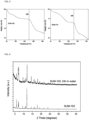
- Stability in water of the two MOFs SUM-102 and SUM-103 ( figure 6 ): The presence of ethylenoxy units confers to the SUM-102, and more particularly to SUM-103 with two ethylenoxy units, an excellent resistance to water. This after treatment for 8 hours at 160°C and re-exposure to ambient air, whereas in the case of SUM-102 a loss of crystallinity was observed, SUM-103 appeared to be stable.
- SUM-102 and SUM-103 The nitrogen adsorption of SUM-102 and SUM-103 is displayed on figure 7 .
- SUM-103 demonstrates higher surface area. It can therefore be seen that the material with the longest side chains carrying two ethylenoxy units has a greater asorption capacity than the material with only one ethylenoxy unit in the side chains.
- the BET surface area measured for SUM-102 are 869 m 2 /g (N 2 ) versus 846 m 2 /g (Ar) and for SUM-103 are 1058 m 2 /g (N 2 ) versus 1016 m 2 /g (Ar) and shows type I isotherm characteristic for microporous materials.
- the adsorption capacity of Methylene Blue was calculated based on Equation (1) [4]-[6].
- the equilibrium adsorption capacity of adsorbent was calculated using Equation (2) [6].
- Qt Co ⁇ Ct . V/m
- Qe Co ⁇ Ce . V/m
- Qt and Ct define the adsorption capacity of the adsorbent (mg/g) and the adsorbate concentration (mg/L), respectively.
- V represents the volume of adsorbate solution and m the mass of MOF adsorbent.
- Qe and Ce define the adsorption capacity of adsorbent and adsorbate concentration (mg/L), respectively, at the equilibrium conditions.
- Ce is the equilibrium concentration
- Qe is equilibrium uptake capacity
- KL and Qm are obtained from the slope and the intercept of Ce/Qe vs Qe plot.
- R2 of the linear plot is 0.9992 which shows applicability of this model.
- Cm is maximal initial concentration of methylene blue.
- the RL shows favorability of adsorption.
- the value between 0 and 1 shows good adsorption.
- Qe and Qt are the amounts of methylene blue adsorbed (mg/g) on MOFs at equilibrium and at the time t.
- k 1 (min -1 ) and k 2 (g/mg ⁇ min) are the rate constants of PFO and PSO, respectively.
- Kinetic model Constants Pseudo First Order K 1 (L/min) 0,0042 Q e (mg/g) 2,29 R 2 0,9959
- Figure 8 Crystals of SUM-102 and SUM-103 are observed under Scanning Electron Microscope. Photographs in figure 8 show for SUM-103 size around 10-20 ⁇ m, as also observed for SUM-102.
- Dyes methylene blue and alizarin yellow R
- SUM-103 both isothermal adsorption and kinetic studies were performed. The adsorption parameters have been determined in water (neutral pH) at 30°C (for isotherm). Both SUM-102 and SUM-103 have been compared under identical conditions. The values of dyes adsorption percentage of dye solutions (10 ml ; 10 mg/l) over 3 mg MOF after 48 h and at 30°C are given in table 2.
- Table 2 adsorption of dyes versus MOFs sample (by wt% of dyes adsorbed over MOFs) SUM-102 (%) SUM-103 (%) Alizarin Yellow R 64 77 Methylene blue 83 94
- the isothermal adsorption capacities were modeled according to the models of Langmuir and Freundlich. It is observed that the quantity of methylene blue which binds to the material is 194 mg / g (Langmuir) for SUM-103.
Landscapes
- Chemical & Material Sciences (AREA)
- Organic Chemistry (AREA)
- Engineering & Computer Science (AREA)
- Oil, Petroleum & Natural Gas (AREA)
- Chemical Kinetics & Catalysis (AREA)
- Organic Low-Molecular-Weight Compounds And Preparation Thereof (AREA)
Abstract
Metal-organic framework material (MOF), comprising at least one metal center and at least one organic compound selected among the compounds according to formula (I):- wherein n is from 1 to 2,- R is -(CH<sub>2</sub>-CH<sub>2</sub>-O)<sub>m</sub>-CH<sub>3</sub> with m from 1 to 7;preferably when n=1, the two -COOH groups are located in the para position relatively to the aryl substituted by the two RO groups; andpreferably when n=2, the four -COOH groups are located in the meta position relatively to the aryl substituted by the two RO groups.
Description
- The present invention relates to aryl compounds comprising carboxylate groups and functionalized with ether groups, and to their association with metals in order to obtain crystalline solid materials, and more particularly to obtain metal organic frameworks or MOFs.
- In what follows, the numbers between brackets ([ ]) refer to the List of References provided at the end of the document.
- The use of amine-based liquids for carbon dioxide (CO2) capture and storage is well known. Nevertheless, these liquids are toxic, corrosive and require a lot of energy to release the adsorbed CO2 for regeneration, the search for an alternative has attracted much interest.
- The use of metal organic frameworks (MOFs) compounds has been widely investigated for the capture of small molecules such as CO2. Metal-organic frameworks (MOFs), also known as porous coordination polymers (PCPs) or coordination networks, are crystalline materials that can be easily self-assembled from metal ions or metal clusters with organic ligands. These MOFs are already extensively used in industry for the preparation of a large scale of materials, and they are particularly convenient for the preparation of new materials as MOFs can be processed and functionalized to impart new physical and chemical properties, charge conduction, and adjustable porosity.
- MOF materials are solid adsorbents that are neither corrosive nor toxic and can be easily regenerated by known pressure swing adsorption techniques, or temperature swing adsorption techniques. Besides MOFs are porous coordination polymers, having an inorganic-organic hybrid framework that comprises metal ions and organic ligands coordinated to the metal ions. These materials are organized into one-, two- or three-dimensional lattices, in which the metallic species are joined together periodically by spacer ligands. The framework of these solids has both inorganic parts and organic parts, the cavities of which may be occupied by water molecules or by organic molecules that are easy to extract without deterioration of the backbone.
- The use of aryl ligands incorporated into the MOF as the main component of its organic part has been investigated for the absorption of small molecules such as H2 or CO2. Reference [1] describes terphenyl-tetracarboxylate ligands with alkoxy functions containing alkyl side chains for the synthesis of MOFs for H2 adsorption. Besides, in [2] other terphenyl-tetracarboxylate ligands with alkoxy functions containing alkyl side chains for the synthesis of MOFs are reported for the adsorption of CO2, H2, N2 and methane.
- There remains a need for the development of new synthetic processes which allow the preparation of MOF exhibiting enhanced properties of CO2 adsorption or other organic and/or inorganic molecules such as dye, and with properties that outperform those of all the reported MOFs so far in this respect.
- The present invention relates to an organic compound for the preparation of a MOF, said organic compound being selected among the compounds according to formula (I):

- wherein n is from 1 to 2,
- R is -(CH2-CH2-O)m-CH3 with m from 1 to 7;
- The inventors have demonstrated unexpectidly that MOF comprising ligands consisting of those organic compounds provides hight stability in water, with great thermostability as they are stable up to 300°C and even under water steam, and that CO2 absorption or dye molecules such as methylene blue was better compared to the MOFs described in the previous art.
- Advantageously, n is 2, the organic compound being selected among the compounds according to formula (II):

- The present invention relates also to a metal-organic framework material (MOF), comprising at least one metal center and at least one organic compound as previously described in the context of the present invention.
- Advantageously, the metal center of the hydrophobic core is selected from Li, Na, Rb, Mg, Ca, Sr, Ba, Sc, Ti, Zr, Ta, Cr, Mo, W, Mn, Fe, Ru, Os, Co, Ni, Pd, Pt, Cu, Au, Zn, Al, Ga, In, Si, Ge, Sn, Bi, Cd, Mn, Tb, Gd, Ce, La, or Cr, and preferably Cu, Zn, Zr, Ca or Mg.
- Advantageously, the organic compound of the MOF is :

- Advantageously, the organic compound of the MOF is selected among :


- Advantageously, the organic compound is :

- The present invention relates also to the use of a MOF as previously described in the context of the present invention, for the adsorption of volatile organic compounds (VOCs), and preferably for the adsorption of acetic acid or aldehydes.
- Besides, the present invention relates to the use of a MOF as previously described in the context of the present invention, for the decontamination of aqueous solutions containing organic pollutants such as dyes and pharmaceutical compounds, and preferably for the adsorption of a dye, preferably selected among a cationic and an anionic dye, and most preferably selected among at least methylene blue and alizarin yellow R.
- In addition, the present invention relates to the use of a MOF as previously described in the context of the present invention, for the adsorption of a gas, preferably selected among methane, hydrogen, acetylene, nitrogen, and CO2, most preferably CO2. Said MOF can advantageously be used for:
- the separation of gases, for example for treating a gaz mixture containing methane and CO2;
- realizing a gas phase catalysis, such as the preparation of methanol starting to CO. The concentration of adsorbed gas by the MOF used in the context of the invention for the adsorption of CO2 is preferably greater than 17 mmol/g at 10 bars, and 0°C, and most preferably greater than 35 mmol/g at 10 bars, and 0°C.
- The present invention relates also to a preparation method for the synthesis of a MOF as previously described in the context of the present invention, wherein the metal center is Cu and the MOF is prepared by the dissolution of the organic compound previously described in the context of the present invention, in a DMF/water mixture, followed by an addition plus dissolution of Cu(NO3)2.3H2O into the reaction mixture, the reaction mixture is left at 70-90°C during several hours in acidic conditions.
- Advantageously, the synthesis of the organic compound comprises the steps of:
- a- activating phenol groups of a hydroquinone bearing two halogen or two -OTf groups ;
- b- performing a Suzuki-Miyaura reaction to replace halogen and/or -OTf by aryl groups bearing protected acid acetic substituents ; and
- c- deprotecting the acid acetic substituents;
- To facilitate an understanding of the present invention, a number of terms and phrases are defined below:
The term "aliphatic", as used herein, includes both saturated and unsaturated, straight chain (i.e., unbranched) or branched aliphatic hydrocarbons, which are optionally substituted with one or more functional groups. As will be appreciated by one of ordinary skill in the art, "aliphatic" is intended herein to include, but is not limited to, alkyl, alkenyl, alkynyl moieties. - As used herein, the term "alkyl", refers to straight and branched alkyl groups. An analogous convention applies to other generic terms such as "alkenyl", "alkynyl" and the like. As used herein, "lower alkyl" is used to indicate those alkyl groups (substituted, unsubstituted, branched or unbranched) having about 1-6 carbon atoms. Illustrative alkyl groups include, but are not limited to, for example, methyl, ethyl, n-propyl, isopropyl, allyl, n-butyl, sec-butyl, isobutyl, tert-butyl, n-pentyl, sec-pentyl, isopentyl, tert-pentyl, n-hexyl, sec-hexyl, moieties and the like, which again, may bear one or more substituents. Alkenyl groups include, but are not limited to, for example, ethenyl, propenyl, butenyl, 1-methyl-2-buten-I-yl, and the like. Representative alkynyl groups include, but are not limited to, ethynyl, 2-propynyl (propargyl), 1-propynyl and the like.
- In general, the term "aromatic" or "aryl", as used herein, refers to stable substituted or unsubstituted unsaturated mono- or polycyclic hydrocarbon moieties having preferably 3-14 carbon atoms, comprising at least one ring satisfying Hückle's rule for aromaticity. Examples of aromatic moieties include, but are not limited to, phenyl, indanyl, indenyl, naphthyl, phenanthryl and anthracyl.
- As used herein, the term "heteroaryl" refers to unsaturated mono-heterocyclic or polyheterocyclic moieties having preferably 3-14 carbon atoms and at least one ring atom selected from S, O and N, comprising at least one ring satisfying the Hückel rule for aromaticity. The term "heteroaryl" refers to a cyclic unsaturated radical having from about five to about ten ring atoms of which one ring atom is selected from S, O and N; zero, one or two ring atoms are additional heteroatoms independently selected from S, O and N; and the remaining ring atoms are carbon, the radical being joined to the rest of the molecule via any of the ring atoms, such as, for example, pyridyl, pyrazinyl, pyrimidinyl, pyrrolyl, pyrazolyl, imidazolyl, thiazolyl, oxazolyl, isooxazolyl, thiadiazolyl, oxadiazolyl, thiophenyl, furanyl, quinolinyl, isoquinolinyl, and the like. Examples of heteroaryl moieties include, but are not limited to, pyridyl, quinolinyl, dihydroquinolinyl, isoquinolinyl, quinazolinyl, dihydroquinazolyl, and tetrahydroquinazolyl.
- As used herein, the expression "Cx-Cy, preferably Cx1-Cy1, alkylaryl, aralkyl or aryl", where x, y, x1 and y1 represent integers denoting the number of carbon atoms in the chemical moiety to which it refers (e.g., "alkylaryl", "aralkyl", "aryl")), means "Cx-Cyalkylaryl, Cx-Cyaralkyl or Cx-Cyaryl, preferably Cx1-Cy1alkylaryl, Cx1-Cy1 aralkyl or Cx1-Cy1aryl". Likewise, the expression "Cx-Cy alkylaryl, aralkyl or aryl", means "Cx-Cyalkylaryl, Cx-Cyaralkyl or Cx-Cyaryl".
- As used herein, the term "independently" refers to the fact that the substituents, atoms or moieties to which these terms refer, are selected from the list of variables independently from each other (i.e., they may be identical or the same).
- One skilled in the art will also readily recognize that where members are grouped together in a common manner, such as in a Markush group, the invention encompasses not only the entire group listed as a whole, but each member of the group individually and all possible subgroups of the main group. Additionally, for all purposes, the invention encompasses not only the main group, but also the main group absent one or more of the group members. The invention therefore envisages the explicit exclusion of any one or more of members of a recited group. Accordingly, provisos may apply to any of the disclosed categories or embodiments whereby any one or more of the recited elements, species, or embodiments, may be excluded from such categories or embodiments, for example, as used in an explicit negative limitation.
- 1H-NMR and 13C-NMR spectra were recorded at 25 °C on Brucker® AV300 (300 MHz) Bruker AV400 (400 MHz) or Bruker® AV500 (500 MHz) spectrometers in deuterated solvents with the residual solvent peak used as the internal reference (CDCl3: 7.26 ppm for 1H, 77.2 ppm for 13C; DMSO-d6: 2.50 ppm for 1H, 49.9 ppm for 13C). The abbreviations for specifying the multiplicity of 1H-NMR signals are defined as follows: s = singlet, d= doublet, dd = doublet of doublet, ddd = doublet of doublet of doublets, t = triplet, q = quadruplet, m= multiplet, br = broad. Coupling constants are given in Hertz and chemical shifts in ppm.
- MS (Mass spectrometry) was performed at the "Service de Spectrométrie de Masse" of the University of Strasbourg. Low (LRMS) (positive and negative mode ESI: Electro Spray Ionization) were recorded on Thermoquest AQA Navigator® with time flight detector.
- Elemental analyses were performed on a
Thermo Scientific Flash 2000 by the "Service Commun de Microanalyse" of the University of Strasbourg. - UV-Vis spectrometry measurements were performed on a Perkin-Elmer Lambda 900 spectrophotometer in 1mm quartz cuvettes. Wavelength (λ) are given in nm. All solvents used were purchased as spectrometric grades.
- Thermo gravimetric analysis (TGA) were performed on a
Pyris 6 TGA Lab System apparatus (Perkin-Elmer®), using a N2 flow of 20 mL/min and a heat rate of 5°/min. - X-Ray diffraction: Single-crystal data were collected on a Bruker® SMART CCD diffractometer with Mo- Kα radiation at 173 K. The structures were solved using SHELXS-97 and refined by full matrix least- squares on F2 using SHELXL-2014 with anisotropic thermal parameters for all non-hydrogen atoms.
The hydrogen atoms were introduced at calculated positions and not refined (riding model). The SQUEEZE command has been employed when disordered solvent molecules were present in structures, to account for the corresponding electron density. - XRPD Diffraction patterns: Powder X-ray diffraction (XRPD) data were recorded using a Bruker® D8 AV diffractometer with Cu-Kα radiation at room temperature. The radiation wavelength λ of the incident X-rays was 1,54 Å and a 2θ range is from 4° to 40° was investigated.
- BET measurements: Nitrogen adsorption-desorption isotherms were measured at 77K up to 1 bar using the ASAP 2020 Micromeritics® analyzer. Carbon dioxide adsorption-desorption isotherms up to 10 bars at 273K were performed by using ASAP 2050 Micromeritics® analyzer.
- The preparation of
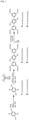
compounds - The preparation of the different organic compounds according to formula (II) was performed according to the scheme reported on
figure 1 . - Preparation of
compounds 1 or 2: TsO(CH2-CH2-O)-CH3 or TsO(CH2-CH2-O)2-CH3 (11.22 mmol), dibromohydroquinone (4.48 mmol), and potassium carbonate (26.88 mmol) were placed in a double necked bottom flask under inert atmosphere (Ar), and DMF solvent was added. The mixture was stirred overnight (18 h) at 80°C, then the reaction mixture was quenched with 120 ml water to obtain a white precipitate. Small amount of benzoquinone gives brownish color. The product was recrystallized to eliminate this color. Yield forcompound 1=53,6%.Compound 2=71%. - Preparation of
compounds 3 or 4: The dimethyl 5-(4,4,5,5-tetramethyl-1,3,2-dioxaborolan-2-yl)isophthalate (6.25 mmol) andcompound 1 or 2 (2.08 mmol) were placed in a double necked bottom flask, then 40 ml DMF was added under Argon atmosphere. After 20 min mixing under argon, cesium carbonate (6.25 mmol) and tetrakis(triphenylphosphine)palladium (0) (0.054 mmol) were added, and the mixture was heated under stirring. Reaction continued overnight. Reaction mixture was then dried under reduced pressue, extracted with chloroform, and purified with column. A white solid was obtained. - Compound 3: Yield=79%;
- 1H NMR (500 MHz, CDCl3) δ 8.67 (d, J = 1.7 Hz, 2H), 8.49 (d, J = 1.7 Hz, 4H), 7.07 (s, 2H), 4.13 (t, J = 4.7 Hz, 4H), 3.98 (s, 12H), 3.66 (t, J = 4.7 Hz, 4H), 3.34 (s, 6H);
- 13C NMR (126 MHz, CDCl3) δ 166.38, 150.39, 138.61, 134.90, 130.47, 129.71, 129.44, 116.28, 71.01, 69.32, 59.23, 52.47;
- LRMS (ESI+) calculated: C32H34O12, 610.21 found: C32H34O12Na, 633.19;
- elemental analysis (%) for C32H34O12 calculated: C 62.95, H 5.61; found: C 60.52, H 5.54.
- Compound 4 : Yield=90%;
- 1H NMR (500 MHz, CDCl3) δ 8.64 (t, J = 1.7 Hz, 2H), 8.44 (d, J = 1.7 Hz, 4H), 7.02 (s, 2H), 4.12 (t, J = 4.9 Hz, 4H), 3.96 (s, 13H), 3.74 (t, J = 4.9 Hz, 4H), 3.58-3.53 (m, 4H), 3.46 - 3.41 (m, 4H), 3.29 (s, 6H).
- 13C NMR (126 MHz, CDCl3) δ 166.32, 150.28, 138.69, 134.88, 130.45, 129.65, 129.40, 116.06, 71.88, 70.79, 69.68, 69.42, 59.02, 52.47.
- LRMS (ESI+) calculated: C36H42O14, 698.26, found C36H42O14Na, 721.25;
- elemental analysis (%) for calculated: C 61.88, H 6.06; found C 58.95, H 5.82. - Preparation of
compounds 5 or 6:compound 3 or 4 (1.64 mmol) was dissolved in the mixture of 100 ml THF and 100 ml aq. KOH (2M). The mixture was heated to 90°C overnight. The heating was stopped, and once reaction mixture reached RT, THF was evaporated under reduced pressure. The aqueous solution was treated with 6M HCI to pH1. The obtained precipitate was filtered and washed with water, plus dried under vacuum overnight. - Compound 5 : Yield=89%;
- 1H NMR (300 MHz, DMSO) δ : 13.29 (s, 4H), 8.46 (t, J = 1.6 Hz, 2H), 8.42 (d, J = 1.6 Hz, 4H), 7.25 (s, 2H), 4.24 - 4.15 (m, 4H), 3.63 - 3.54 (m, 4H), 3.22 (s, 6H);
- 13C NMR (126 MHz, DMSO) δ : 167.12, 150.23, 138.70, 134.67, 131.67, 129.22, 129.08, 116.25, 70.93, 69.07, 58.68;
- LRMS (ESI+) calculated: C28H26O12, 554.14 found: C28H26O12, 553.14;
- elemental analysis (%) for C28H26O12 calculated: C 60.65, H 4.46; found: C 52.46, H 4.73.
- Compound 6 : Yield=95%;
- 1H NMR (500 MHz, DMSO) δ 13.31 (s, 4H), 8.45 (t, J = 1.7 Hz, 2H), 8.38 (d, J = 1.6 Hz, 4H), 7.23 (s, 2H), 4.20-4.15 (m, 4H), 3.67-3.62 (m, 4H), 3.46 (dd, J = 5.8, 3.8 Hz, 4H), 3.33 (d, J = 2.1 Hz, 4H), 3.14 (s, 6H);
- 13C NMR (126 MHz, DMSO) δ 167.13, 150.24, 138.75, 134.66, 131.62, 129.33, 129.07, 116.33, 71.60, 70.18, 69.48, 69.46, 58.37;
- LRMS (ESI+) calculated: C32H34O14 642.19 found: C32H34O14K 681.16 (one K atom plus)
- elemental analysis (%) for C32H34O14 calculated: C 59.81, H 5.33; found: C 58.13, H 5.18.
- The preparation of the different MOFs starting from the organic compounds according to formula (II) was performed according to the scheme reported on
figure 2 . - SUM-103 and SUM-102: In a 10 ml dram vial, 0.018 mmol ligand (
compound 5 or 6) are tared and dissolved in a mixture of 4 ml DMF and 1,3 ml water. Then, 0,072 mmol (17,5 mg) of Cu(NO3)2.3H2O was added to the solution and dissolved in the solution. Finally, 33 µl of concentrated HCI was added, the vial is closed and put into dry bath at 80°C. After 24h, the obtained microcrystalline powder is filtered and washed with DMF to get 14 mg (48% yield) of the MOF SUM-103 and 12.5 mg (45% yield) of the MOF SUM-102. - SUM-150 : In a 10 ml dram vial, 0.009 mmol ligand (compound 6) are tared and dissolved in a 2 ml DMF. Then, 0.054 mmol (13.8 mg) of Mg(NO3)2x6H2O was added to the solution and dissolved in the solution. Finally, 2 drops 10 times diluted HCI was added, the vial is closed and put into dry bath at 120°C. After 24 to 48h, the obtained microcrystalline powder is filtered and washed with.
- FT/IR spectra of MOFs with their corresponding ligands are shown in
figure 3 and4 . (H4L(glyme): is forcompound 5; H4L(glyme): is for compound 6). - Since the side chains could not be located by XRD, their presence was established by FT-IR analysis (see ESI). Indeed, C-H stretching vibrations (2890 cm-1) and the skeletal vibrations of aromatic rings or C-C-O chains (1200 and 1505 cm-1) demonstrated the presence of backbone and side chains.
- The formation of MOFs can also be deduced from the C=O stretching band shifted to low energies due to the coordination of the carboxylate groups to Cu (1630 cm-1). Also, Cu-O bond elongation band could be observed at 730 cm-1.
- TGA analysis up to 450°C under nitrogen of SUM-102 and SUM-103 are characterized by nearly the same pattern. First phase occurs in two waves of solvents evaporation, one below 50°C for most volatile solvents and a second one between 70 and 200°C for less volatile ones. Decomposition of MOFs started at 280°C and 289°C respectively.
- Therefore, addition of oxygen rich side chains does not influence the thermal stability of MOF's.
- Stability in water of the two MOFs: SUM-102 and SUM-103 (
figure 6 ):
The presence of ethylenoxy units confers to the SUM-102, and more particularly to SUM-103 with two ethylenoxy units, an excellent resistance to water. This after treatment for 8 hours at 160°C and re-exposure to ambient air, whereas in the case of SUM-102 a loss of crystallinity was observed, SUM-103 appeared to be stable. - The nitrogen adsorption of SUM-102 and SUM-103 is displayed on
figure 7 . Despite larger side chains of H4L(diglyme)2 ligand, SUM-103 demonstrates higher surface area. It can therefore be seen that the material with the longest side chains carrying two ethylenoxy units has a greater asorption capacity than the material with only one ethylenoxy unit in the side chains. - The BET surface area measured for SUM-102 are 869 m2/g (N2) versus 846 m2/g (Ar) and for SUM-103 are 1058 m2/g (N2) versus 1016 m2/g (Ar) and shows type I isotherm characteristic for microporous materials.
-
-
Figure 12 shows the CO2 adsorption by the MOF SUM-103 : 38,5 mmol/g adsorbed; 7 mmol/g stays (10 bars, 0°C). -
Figure 13 shows the CO2 adsorption by the MOF SUM-102 : 17 mmol/g adsorbed (10 bars, 0°C). -
Figure 14 shows the CO2 adsorption by the MOF SUM-150 : 27 mmol/g adsorbed (10 bars, 0°C). - The adsorption capacity of Methylene Blue was calculated based on Equation (1) [4]-[6]. The equilibrium adsorption capacity of adsorbent was calculated using Equation (2) [6].


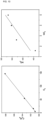
- The MB isotherms were fitted with Langmuir and Freundlich models in order to calculate the maximal adsorption capacity and get insights about the nature of the adsorption. Linear form of Langmuir equation is expressed as indicated below:

- Ce is the equilibrium concentration, Qe is equilibrium uptake capacity. KL and Qm are obtained from the slope and the intercept of Ce/Qe vs Qe plot. R2 of the linear plot is 0.9992 which shows applicability of this model.
- Besides, the separation factor-RL is calculated with Eq (4).

- Cm is maximal initial concentration of methylene blue. The RL shows favorability of adsorption. The value between 0 and 1 shows good adsorption.
- To fit the data to Freundlich model the Eq (5) was used:

- To find KF and 1/n (adsorption constants), the plot of InQe vs InCe were drawn. R2 is 0.7507 which doesn't show a good agreement of this model. The values of adsorption constants for both isotherms are summarized in Table 1.
Table 1: parameters of isotherm modelling for SUM-103 Isotherm model Constants Langmuir Qm (mg/g) 194 KL (L/mg) 0,0777 R L0,0605 R 20,9992 Freundlich KF (mg/g) 39,1629 1/ n 0,3429 R 20,7507 - In order to properly describe the adsorption process, two popular methods for studying the adsorption kinetics were applied: Pseudo-first order (PFO) and pseudo second order (PSO). Linear equation of PFO (6) and PSO (7) could be expressed as below:


- Qe and Qt are the amounts of methylene blue adsorbed (mg/g) on MOFs at equilibrium and at the time t. k1(min-1) and k2 (g/mg·min) are the rate constants of PFO and PSO, respectively.
Kinetic model Constants Pseudo First Order K1 (L/min) 0,0042 Qe (mg/g) 2,29 R 20,9959 Pseudo Second Order K2 (g/mg·min) 0,0041 Qe (mg/g) 15,21 R 20,9997 -
Figure 8 : Crystals of SUM-102 and SUM-103 are observed under Scanning Electron Microscope. Photographs infigure 8 show for SUM-103 size around 10-20 µm, as also observed for SUM-102. - Dyes (methylene blue and alizarin yellow R) adsorption capacity of both MOFs have been evaluated. In case of SUM-103, both isothermal adsorption and kinetic studies were performed. The adsorption parameters have been determined in water (neutral pH) at 30°C (for isotherm). Both SUM-102 and SUM-103 have been compared under identical conditions. The values of dyes adsorption percentage of dye solutions (10 ml ; 10 mg/l) over 3 mg MOF after 48 h and at 30°C are given in table 2.
Table 2: adsorption of dyes versus MOFs sample (by wt% of dyes adsorbed over MOFs) SUM-102 (%) SUM-103 (%) Alizarin Yellow R 64 77 Methylene blue 83 94 - Those values show that methylene blue is more efficiently adsorbed than alizarin yellow R. Also, we observe significant increase in adsorbance with increasing side chains length. The study of the adsorption of methylene blue (MB) on SUM-103 was extended by measurements of isothermal adsorption capacity and a kinetic study, details of these measurements are available in SI. The adsorption protocol was carried out using the batch method by adding 20, 50, 100 and 200 ppm methylene blue solutions over 3 mg MOF in different vials (10 mL) and then placed in the oven at 30°C. After adsorption of methylene blue, the colour of the MOF's changed from blue to deep-blue. Adsorption of methylene blue on MOFs was also assessed by the presence of characteristic strong bands of methylene blue in FT-IR spectrum of final materials (
figure 9 : from left to the right, SUM-103; adsorption kinetics, 2,5 ml, 15 mg/l MB solution after 24h at room temperature, FT-IR comparison before and after adsorption). After 24h, the supernatant of methylene blue solution was analysed using a UV-VIS spectrophotometer at 664 nm.Figure 10 gives Langmuir and Freundlich modelling of MB adsorption of SUM-103.Figure 11 gives PFO and PSO modelling of MB adsorption of SUM-103 at room temperature. - The isothermal adsorption capacities were modeled according to the models of Langmuir and Freundlich. It is observed that the quantity of methylene blue which binds to the material is 194 mg / g (Langmuir) for SUM-103.
-
- [1] Makal T. A. & al., Tuning the Moisture and Thermal Stability of Metal-Organic Frameworks through Incorporation of Pendant Hydrophobic Groups Crystal growth & Design 2013 13(11), 4760-4768.
- [2] Pasad T. K. & al., Metal-Organic Frameworks Incorporating Various Alkoxy Pendant Groups: Hollow Tubular Morphologies, X-ray Single-Crystal Structures, and Selective Carbon Dioxide Adsorption Properties Chem. Asian J. 2015, 10, 2257-2263.
- [3] Vazquez-Molina D. A. & al., Chemical Communications, 2018, 54, 6947-6950.
- [4] Feng Y. & al., RSC Adv., 2016, 6, 109608-109612.
- [5] Santoso E. & al., Microporous and Mesoporous Materials, 2021, 310, 110620.
- [6] Peres E. C. & al., J. Environ. Chem. Eng., 2018, 6, 649-659.
preferably when n=2, the four -COOH groups are located in the meta position relatively to the aryl substituted by the two RO groups.


Claims (15)
- Organic compound for the preparation of a MOF, said organic compound being selected among the compounds according to formula (I):
 - wherein n is from 1 to 2,- R is -(CH2-CH2-O)m-CH3 with m from 1 to 7;preferably when n=1, the two -COOH groups are located in the para position relatively to the aryl substituted by the two RO groups; and
preferably when n=2, the four -COOH groups are located in the meta position relatively to the aryl substituted by the two RO groups. - Organic compound according to claim 1, wherein n is 2 ; the organic compound being selected among the compounds according to formula (II):

- Organic compound according to claim 2, wherein m is less than 4.
- Metal-organic framework material (MOF), comprising at least one metal center and at least one organic compound according to any of claim 1 to 3.
- Metal-organic framework material according to claim 4, wherein the metal center of the hydrophobic core is selected from Li, Na, Rb, Mg, Ca, Sr, Ba, Sc, Ti, Zr, Ta, Cr, Mo, W, Mn, Fe, Ru, Os, Co, Ni, Pd, Pt, Cu, Au, Zn, Al, Ga, In, Si, Ge, Sn, Bi, Cd, Mn, Tb, Gd, Ce, La, or Cr, and preferably Cu, Zn, Zr, Ca or Mg.
- Metal-organic framework material according to claim 5, wherein the organic compound is :

- Metal-organic framework material according to claim 5, wherein the organic compound is selected among :


- Metal-organic framework material according to claim 4 or 5, wherein the organic compound is :

- Use of a MOF according to any of claims 4 to 8, for the adsorption of volatile organic compounds (VOCs), and preferably for the adsorption of acetic acid or aldehydes.
- Use of a MOF according to any of claims 4 to 8, for the decontamination of aqueous solutions containing organic pollutants such as dyes and pharmaceutical compounds, and preferably for the adsorption of a dye, preferably selected among a cationic and an anionic dye, and most preferably selected among at least methylene blue and alizarin yellow R.
- Use of a MOF according to any of claims 4 to 8, for the adsorption of a gas, preferably selected among methane, hydrogen, acetylene, nitrogen, and CO2, most preferably CO2.
- Use of a MOF according to claim 11, for the adsorption of CO2 wherein the concentration of adsorbed gas is greater than 17 mmol/g at 10 bars, and 0°C.
- Preparation method for the synthesis of a MOF according to any of claims 4 to 8, wherein the metal center is Cu, and the MOF is prepared by the dissolution of the organic compound according to any of claims 1 to 3, in a DMF/water mixture, followed by an addition plus dissolution of Cu(NO3)2.3H2O into the reaction mixture, the reaction mixture is left at 70-90°C during several hours.
- Preparation method for the synthesis of the organic compound according to any of claims 1 to 3, comprising the steps of :a- activating phenol groups of a hydroquinone bearing two halogen or two -OTf groups ;b- performing a Suzuki-Miyaura reaction to replace halogen and/or -OTf by aryl groups bearing protected acid acetic substituents ; andc- deprotecting the acid acetic substituents;preferably according to the following synthetic pathway:

- Preparation method according to claim 14, wherein X=Br; G=Ts and the first step of the synthetic pathway is realized in DMF at 80°C, and the Suzuki-Miyaura coupling reaction step is performed according to:

Priority Applications (5)
| Application Number | Priority Date | Filing Date | Title |
|---|---|---|---|
| EP21306902.4A EP4201940A1 (en) | 2021-12-22 | 2021-12-22 | Synthesis of metal organic framework (mof) materials with high adsorption capacity of organic compounds and co2 capture |
| PCT/EP2022/087509 WO2023118454A1 (en) | 2021-12-22 | 2022-12-22 | Synthesis of metal organic framework (mof) materials with high adsorption capacity of organic compounds and co2 capture |
| CA3240753A CA3240753A1 (en) | 2021-12-22 | 2022-12-22 | Synthesis of metal organic framework (mof) materials with high adsorption capacity of organic compounds and co2 capture |
| EP22844473.3A EP4452987A1 (en) | 2021-12-22 | 2022-12-22 | Synthesis of metal organic framework (mof) materials with high adsorption capacity of organic compounds and co2 capture |
| US18/721,638 US20250059210A1 (en) | 2021-12-22 | 2022-12-22 | Synthesis of metal organic framework (mof) materials with high adsorption capacity of organic compounds and co2 capture |
Applications Claiming Priority (1)
| Application Number | Priority Date | Filing Date | Title |
|---|---|---|---|
| EP21306902.4A EP4201940A1 (en) | 2021-12-22 | 2021-12-22 | Synthesis of metal organic framework (mof) materials with high adsorption capacity of organic compounds and co2 capture |
Publications (1)
| Publication Number | Publication Date |
|---|---|
| EP4201940A1 true EP4201940A1 (en) | 2023-06-28 |
Family
ID=79316707
Family Applications (2)
| Application Number | Title | Priority Date | Filing Date |
|---|---|---|---|
| EP21306902.4A Withdrawn EP4201940A1 (en) | 2021-12-22 | 2021-12-22 | Synthesis of metal organic framework (mof) materials with high adsorption capacity of organic compounds and co2 capture |
| EP22844473.3A Pending EP4452987A1 (en) | 2021-12-22 | 2022-12-22 | Synthesis of metal organic framework (mof) materials with high adsorption capacity of organic compounds and co2 capture |
Family Applications After (1)
| Application Number | Title | Priority Date | Filing Date |
|---|---|---|---|
| EP22844473.3A Pending EP4452987A1 (en) | 2021-12-22 | 2022-12-22 | Synthesis of metal organic framework (mof) materials with high adsorption capacity of organic compounds and co2 capture |
Country Status (4)
| Country | Link |
|---|---|
| US (1) | US20250059210A1 (en) |
| EP (2) | EP4201940A1 (en) |
| CA (1) | CA3240753A1 (en) |
| WO (1) | WO2023118454A1 (en) |
Citations (1)
| Publication number | Priority date | Publication date | Assignee | Title |
|---|---|---|---|---|
| US20130122297A1 (en) * | 2011-10-24 | 2013-05-16 | Northwestern University | Molecular gauge blocks for building on the nanoscale |
-
2021
- 2021-12-22 EP EP21306902.4A patent/EP4201940A1/en not_active Withdrawn
-
2022
- 2022-12-22 WO PCT/EP2022/087509 patent/WO2023118454A1/en not_active Ceased
- 2022-12-22 EP EP22844473.3A patent/EP4452987A1/en active Pending
- 2022-12-22 CA CA3240753A patent/CA3240753A1/en active Pending
- 2022-12-22 US US18/721,638 patent/US20250059210A1/en active Pending
Patent Citations (1)
| Publication number | Priority date | Publication date | Assignee | Title |
|---|---|---|---|---|
| US20130122297A1 (en) * | 2011-10-24 | 2013-05-16 | Northwestern University | Molecular gauge blocks for building on the nanoscale |
Non-Patent Citations (6)
| Title |
|---|
| FENG Y., RSCADV, vol. 6, 2016, pages 109608 - 109612 |
| MAKAL T. A.: "Tuning the Moisture and Thermal Stability of Metal-Organic Frameworks through Incorporation of Pendant Hydrophobic Groups", CRYSTAL GROWTH & DESIGN, vol. 13, no. 11, 2013, pages 4760 - 4768 |
| PASAD T. K.: "Metal-Organic Frameworks Incorporating Various Alkoxy Pendant Groups: Hollow Tubular Morphologies, X-ray Single-Crystal Structures, and Selective Carbon Dioxide Adsorption Properties", CHEM. ASIAN J., vol. 10, 2015, pages 2257 - 2263 |
| PERES E. C., J. ENVIRON. CHEM. ENG., vol. 6, 2018, pages 649 - 659 |
| SANTOSO E, MICROPOROUS AND MESOPOROUS MATERIALS, vol. 310, 2021, pages 110620 |
| VAZQUEZ-MOLINA D. A., CHEMICAL COMMUNICATIONS, vol. 54, 2018, pages 6947 - 6950 |
Also Published As
| Publication number | Publication date |
|---|---|
| CA3240753A1 (en) | 2023-06-29 |
| WO2023118454A1 (en) | 2023-06-29 |
| EP4452987A1 (en) | 2024-10-30 |
| US20250059210A1 (en) | 2025-02-20 |
Similar Documents
| Publication | Publication Date | Title |
|---|---|---|
| Wade et al. | Investigation of the synthesis, activation, and isosteric heats of CO 2 adsorption of the isostructural series of metal–organic frameworks M 3 (BTC) 2 (M= Cr, Fe, Ni, Cu, Mo, Ru) | |
| Sanz et al. | Synthesis of a honeycomb-like Cu-based metal–organic framework and its carbon dioxide adsorption behaviour | |
| Pérez-Miana et al. | Solventless synthesis of ZIF-L and ZIF-8 with hydraulic press and high temperature | |
| Zheng et al. | A highly porous acylamide decorated MOF-505 analogue exhibiting high and selective CO 2 gas uptake capability | |
| Kim et al. | Selective carbon dioxide sorption by a new breathing three-dimensional Zn-MOF with Lewis basic nitrogen-rich channels | |
| Sapianik et al. | Rational synthesis and dimensionality tuning of MOFs from preorganized heterometallic molecular complexes | |
| EP2540708A1 (en) | Metal complex, and adsorbent, occlusion material and separator material made from same | |
| CN109384665A (en) | One kind containing bimetallic metal-organic framework materials and preparation method thereof | |
| Chen et al. | A comparative study of the effect of functional groups on C 2 H 2 adsorption in NbO-type metal–organic frameworks | |
| US8915989B2 (en) | Porous coordination polymer, process for producing same, gas storage method, and gas separation method | |
| Arici et al. | A porous Zn (II)-coordination polymer based on a tetracarboxylic acid exhibiting selective CO 2 adsorption and iodine uptake | |
| Chen et al. | Ethylenediamine grafting on a zeolite-like metal organic framework (ZMOF) for CO2 capture | |
| Liu et al. | A new Co (ii) metal–organic framework with enhanced CO 2 adsorption and separation performance | |
| CN116917296A (en) | Synthesis method of zinc metal organic framework materials | |
| He et al. | A lactam-functionalized copper bent diisophthalate framework displaying significantly enhanced adsorption of CO 2 and C 2 H 2 over CH 4 | |
| Radi et al. | C, N-bipyrazole receptor grafted onto a porous silica surface as a novel adsorbent based polymer hybrid | |
| EP2347821B1 (en) | Gas adsorbing material, precursor of the gas adsorbing material, and process for producing gas adsorbing material | |
| CN111349246B (en) | Metal organic framework for nitrogen adsorption and/or storage and application thereof | |
| WO2009098001A1 (en) | Organometallic skeleton compounds on the basis of triptycene | |
| Gupta et al. | From Zn (II) to Cu (II) framework via single-crystal to single-crystal metathesis with superior gas uptake and heterogeneous catalytic properties | |
| EP4201940A1 (en) | Synthesis of metal organic framework (mof) materials with high adsorption capacity of organic compounds and co2 capture | |
| Hahm et al. | Synthesis of secondary and tertiary amine-containing MOFs: C–N bond cleavage during MOF synthesis | |
| US4830999A (en) | Zeolite containing entrapped anionic material | |
| WO2021043492A1 (en) | Gas storage material and gas storage system | |
| Škrjanc et al. | Facile Functionalization of ZIF-8 via Mechanochemical Post-Synthetic Linker Exchange for Improved CO2 Capture Performance |
Legal Events
| Date | Code | Title | Description |
|---|---|---|---|
| PUAI | Public reference made under article 153(3) epc to a published international application that has entered the european phase |
Free format text: ORIGINAL CODE: 0009012 |
|
| STAA | Information on the status of an ep patent application or granted ep patent |
Free format text: STATUS: THE APPLICATION HAS BEEN PUBLISHED |
|
| AK | Designated contracting states |
Kind code of ref document: A1 Designated state(s): AL AT BE BG CH CY CZ DE DK EE ES FI FR GB GR HR HU IE IS IT LI LT LU LV MC MK MT NL NO PL PT RO RS SE SI SK SM TR |
|
| STAA | Information on the status of an ep patent application or granted ep patent |
Free format text: STATUS: THE APPLICATION IS DEEMED TO BE WITHDRAWN |
|
| 18D | Application deemed to be withdrawn |
Effective date: 20240103 |