EP4200845B1 - Audioinhaltidentifizierung - Google Patents
Audioinhaltidentifizierung Download PDFInfo
- Publication number
- EP4200845B1 EP4200845B1 EP21765803.8A EP21765803A EP4200845B1 EP 4200845 B1 EP4200845 B1 EP 4200845B1 EP 21765803 A EP21765803 A EP 21765803A EP 4200845 B1 EP4200845 B1 EP 4200845B1
- Authority
- EP
- European Patent Office
- Prior art keywords
- audio
- confidence score
- confidence
- sub
- music
- Prior art date
- Legal status (The legal status is an assumption and is not a legal conclusion. Google has not performed a legal analysis and makes no representation as to the accuracy of the status listed.)
- Active
Links
Images

Classifications
-
- G—PHYSICS
- G10—MUSICAL INSTRUMENTS; ACOUSTICS
- G10L—SPEECH ANALYSIS TECHNIQUES OR SPEECH SYNTHESIS; SPEECH RECOGNITION; SPEECH OR VOICE PROCESSING TECHNIQUES; SPEECH OR AUDIO CODING OR DECODING
- G10L25/00—Speech or voice analysis techniques not restricted to a single one of groups G10L15/00 - G10L21/00
- G10L25/78—Detection of presence or absence of voice signals
- G10L25/81—Detection of presence or absence of voice signals for discriminating voice from music
-
- G—PHYSICS
- G10—MUSICAL INSTRUMENTS; ACOUSTICS
- G10L—SPEECH ANALYSIS TECHNIQUES OR SPEECH SYNTHESIS; SPEECH RECOGNITION; SPEECH OR VOICE PROCESSING TECHNIQUES; SPEECH OR AUDIO CODING OR DECODING
- G10L15/00—Speech recognition
- G10L15/02—Feature extraction for speech recognition; Selection of recognition unit
-
- G—PHYSICS
- G10—MUSICAL INSTRUMENTS; ACOUSTICS
- G10L—SPEECH ANALYSIS TECHNIQUES OR SPEECH SYNTHESIS; SPEECH RECOGNITION; SPEECH OR VOICE PROCESSING TECHNIQUES; SPEECH OR AUDIO CODING OR DECODING
- G10L15/00—Speech recognition
- G10L15/08—Speech classification or search
-
- H—ELECTRICITY
- H04—ELECTRIC COMMUNICATION TECHNIQUE
- H04S—STEREOPHONIC SYSTEMS
- H04S7/00—Indicating arrangements; Control arrangements, e.g. balance control
- H04S7/30—Control circuits for electronic adaptation of the sound field
- H04S7/307—Frequency adjustment, e.g. tone control
Definitions
- the present disclosure relates to audio processing, and in particular, to audio content identification.
- Audio playback has become popular with the rise of consumer entertainment devices, e.g., smart phones, tablets, PCs etc.
- audio application scenarios such as high-fidelity playback, streaming, gaming, podcast, short video and live broadcast of users, etc.
- audio processing algorithms include dialogue enhancement and intelligent equalization.
- Dialogue enhancement generally enhances speech signals. Dialogue is an important component in a movie to understand the story. Dialogue enhancement implements methods to enhance the dialogue in order to increase their clarity and their intelligibility, especially for elders with decreased hearing capability.
- Intelligent equalization generally performs dynamic adjustment of the audio tone. Intelligent equalization is often applied in a music content in order to provide consistency of spectral balance, as known as "tone” or “timbre”. It achieves this consistency by continuously monitoring the spectral balance of the audio, comparing it to a desired tone, and dynamically adjusting an equalization filter to transform the audio's original tone into the desired tone.
- an audio processing algorithm has its own application scenario/context. That is, an audio processing algorithm may be suitable for only a certain set of content but not for all the possible audio signals, since different content may need to be processed in different ways.
- a dialogue enhancement method is usually applied on movie content. If it is applied on music in which there is no dialogue, it may falsely boost some frequency sub-bands and introduce heavy timbre change and perceptual inconsistency.
- an intelligent equalization method is applied on movie contents, timbre artifacts will be audible.
- its input could be any of the possible types of audio signals. Thus, identifying or differentiating the content being processed becomes important, in order to apply the most appropriate algorithms (or the most appropriate parameters of each algorithm) on the corresponding content.
- a general content-adaptive audio processing system (see e.g. WO 2014/160548 A1 ) includes three functions: audio content identification, steering, and audio processing.
- Audio content identification automatically identifies the audio types of the content on playback.
- Audio classification technologies through signal processing, machine learning, and pattern recognition, can be applied to identify audio content.
- Confidence scores which represent the probabilities of the audio content regarding a set of pre-defined target audio types, are estimated.
- Steering generally steers the behavior of audio processing algorithms. It estimates the most suitable parameters of the corresponding audio processing algorithm based on the results obtained from audio content identification.
- Audio processing generally applies audio processing using the estimated parameters to an input audio signal to generate an output audio signal.
- rap music mainly consists of (rhythmic-) talking, which is hard to distinguish from common dialogue speaking.
- the original music classifier is usually not capable of providing enough accuracy on the rap music or a cappella music classification.
- some segments/frames of rap music would be falsely identified as speech and then boosted by the dialogue enhancer, triggering audible artifacts.
- the audio processing system may need to provide new functionalities, which further requires the audio classifier identify certain audio content types. Both of the above scenarios need a new classifier. While the new audio classifier provides more classification results, it is also hoped that the classification results on originally supported content types (such as dialogue or music) could be still similar to those from the old classifier so that other audio processing algorithms, such as dialogue enhancement and intelligent equalization, do not need to be heavily tuned after the new classifier is used.
- originally supported content types such as dialogue or music
- Described herein are techniques related to audio content identification.
- numerous examples and specific details are set forth in order to provide a thorough understanding of the present disclosure.
- FIG. 1 is a block diagram of an audio classifier 100.
- the audio classifier 100 generally receives an input audio signal 102, performs classification of the input audio signal 102 using various models, and outputs a confidence score 128.
- the audio classifier 100 includes a feature extractor 110, a first set of classifiers 112 (also referred to as the original classifiers), a second set of classifiers 114 (also referred to as the new classifiers), a context detector 116, and a confidence decider 118.
- the audio classifier 100 may also be generally referred to as a two-stage audio classifier or a two-stage music classifier.
- the classifiers 112 and 114, the context detector 116 and the confidence decider 118 may collectively be referred to as a two-stage audio classifier or a two-stage music classifier.
- the feature extractor 110 receives the audio signal 102, performs feature extraction on the audio signal 102, and generates extracted features 120.
- the particular features extracted generally are selected according to the particular features that are relevant to the models implemented by the classifiers 112 and 114.
- the extracted features 120 may correspond to the spectral energy in various frequency bands of the audio signal 102.
- the classifiers 112 generally comprise one stage of the audio classifier 100.
- the classifiers 112 receive the extracted features 120, perform classification of the extracted features 120 using one or more models, and generate a set of confidence scores 122 (also referred to as the original confidence score).
- the set of confidence scores 122 may include one or more confidence scores, e.g. corresponding to the one or more models.
- the classifiers 112 generally correspond to an existing set of classifiers.
- the existing set of classifiers have been developed to classify existing genres of audio, but may be less able to accurately classify new genres of audio.
- the classifiers 112 may include one or more classifiers, including a speech classifier, a music classifier, a sound effect classifier, a noise classifier, etc.
- the classifiers 112 may include one or more different types of each classifier, for example two or more types of music classifiers, each developed to classify a specific genre of music (e.g., a jazz classifier, a rock classifier, etc.).
- the speech classifier generally assesses whether the audio signal 102 corresponds to speech (e.g., dialogue) as opposed to music, sound effects, etc.
- the sound effect classifier generally assesses whether the audio signal 102 corresponds to sound effects (e.g., movie sound effects such as car crashes, explosions, etc.) as opposed to speech (e.g., dialogue) or music (e.g., background music, mood music, etc.).
- the noise classifier generally assesses whether the audio signal 102 contains noise (e.g., a constant or repetitive sound such as a hum, buzz, whine, jackhammer, siren, waterfall, rainfall, etc.).
- the classifiers 112 may be implemented by a machine learning system that uses various models of the various types of audio to perform the various classifications.
- the classifiers 112 may implement an adaptive boosting (AdaBoost) or a deep neural network machine learning process.
- AdaBoost adaptive boosting
- the AdaBoost process may be implemented in devices that use a small model size or have limited capability to perform complex computations.
- the deep neural network process may be implemented in devices that allow a greater model size and have greater ability to execute complex computations.
- the models of the classifiers 112 are developed offline by performing machine learning on a set of training data.
- the classifiers 114 generally comprise a second stage of the audio classifier 100.
- the classifiers 114 receive the extracted features 120, perform classification of the extracted features 120 using one or more models, and generate a set of confidence scores 124 (also referred to as the new confidence score).
- the confidence score 124 may include one or more confidence scores, e.g. corresponding to the one or more models.
- the classifiers 114 generally correspond to a new set of classifiers.
- the new classifiers have been developed to classify new genres of audio.
- the training data used to develop the models for the original classifiers 112 may not have included audio data for new genres of music, making the original classifiers 112 not perform well in identifying the new genres.
- the new classifiers 114 include a rap classifier.
- the classifiers 114 may be implemented by a machine learning system that uses various models of the various types of audio to perform the various classifications.
- the classifiers 114 may implement an adaptive boosting (AdaBoost) or a deep neural network machine learning process.
- AdaBoost adaptive boosting
- the models of the classifiers 114 are developed offline by performing machine learning on a set of training data.
- the classifiers 114 may also receive information from the classifiers 112, such as the set of confidence scores 122. For example, the classifiers 114 may receive an indication from the classifiers 112 that the audio signal 102 corresponds to speech or music (as opposed to sound effects or noise).
- the context detector 116 receives the set of confidence scores 122 and generates a steering signal 126.
- the context detector 116 may receive information from the classifiers 112 that indicates that the audio signal 102 contains neither speech nor music.
- the context detector 116 evaluates the components of the set of confidence scores 122 over various time frames, and uses the smoothed confidence scores to reduce the impact of misclassifications over the short term.
- the context detector 116 generates the steering signal 126 to weight the impact of the sets of confidence scores 122 and 124 by subsequent components. Further details of the context detector 116 and the steering signal 126 are provided below.
- the confidence decider 118 receives the sets of confidence scores 122 and 124 and the steering signal 126, and generates a final confidence score 128.
- the confidence detector 118 smoothly transitions the audio classifier 100 from using only the classifiers 112 to also using the classifiers 114, when appropriate according to the confidence score 124. Further details of the confidence decider 118 are provided below.
- rap music classification for the classifiers 114.
- rap music has similarities to both dialogue and music.
- Using existing classifiers thus risks classifying rap music as either dialogue and applying one set of audio processing algorithms, or music and applying another set of audio processing algorithms, neither of which may be appropriate for rap music.
- existing classifiers may rapidly switch between the classifications of dialogue and music, resulting in rapidly switching between the two processing algorithms, resulting in an inconsistent listening experience.
- Adding a rap classifier, and integrating the rap classifier with existing classifiers to form a two-stage classifier results in an improved listening experience without disrupting the existing classifiers.
- the new features extracted by the feature extractor 110 are developed based on spectral energy, which shows the energy fluctuation characteristics of different contents in frequency domain.
- spectral energy which shows the energy fluctuation characteristics of different contents in frequency domain.
- time frequency conversion tool e.g., quadrature mirror filter (QMF), fast Fourier transform (FFT), etc.
- the energy spectrum is calculated by above spectral coefficients, here the whole energy spectrum is further divided into four sub-bands in this disclosure.
- the first sub-band energy representing the energy distribution of low frequency below 300 Hz
- the second sub-band energy representing the energy distribution between 300 Hz and 1 kHz
- the third sub-band energy representing the energy distribution between 1 kHz and 3 kHz
- the fourth sub-band energy representing the energy distribution between 3 kHz and 6 kHz, is used to detect the fluctuation of unvoiced signal or snare drum.
- All the sub-band spectral energies are calculated in short-term frames, e.g. 20 ms, and then stored in a memory buffer until it meets the expected window length, e.g. 5 s. Finally the high-level features could be derived based on above window-length spectral energy.
- the number of sub-bands, the frequency range of each sub-band, the frame length, and the window length may be adjusted as desired. For example, to classify a different new genre, the sub-bands appropriate for that new genre may be used to generate a model for another new classifier 114.
- the typical rap music has a few prominent differences, including the vocal tempo, the rhythmic lyrics, the regularity of musical bars, etc.
- a first feature is the statistical characteristics of sub-band spectral energy distribution. Over a fixed period, the spectral energy parameters are divided into several musical bars; in each bar, the peak / valley spectral energy may be calculated and the number of peak / valley are also counted.
- the features indicating the statistical characteristics of the above spectral energy e.g., mean, standard deviation, etc. may be used for distinguishing rap music from general speech content.
- a second feature is the peak / valley location intervals of sub-band spectral energy.
- the vocals or syllables consist of voiced sound and unvoiced sound, to some extent which are related to the peak and valley of spectral energy so that the locations of peak / valley are at regular intervals for general rap music.
- the locations of peak / valley represented by the index in the window-length spectral energy, is recorded in a continuous manner and then each interval of adjacent peak locations is calculated. Finally, the even distributions of these intervals are used as the key features of rap music.
- a third feature is the contrast of peak and valley spectral energy. Compared to general speech or dialogue in movies or shows, the contrast of peak vocal energy and valley vocal energy in rap music is not much different, which also may be used as an important cue to indicate if the audio content is dialogue content or not.
- a fourth feature is the rhyme features. Most of the lyrics of rap music are written in certain meters and rhyme schemes. Unfortunately, it may be computationally infeasible to segment the lyrics correctly based on syllable unit without semantic recognition. In addition, sometimes the rhyme is incomplete in rap music, especially when lacking one or more syllables in the final metrical foot.
- a fifth feature is the rhythmic features.
- Rhythmic features representing the frequency and strength of musical onset and the rhythmic regularity and contrast, are calculated on the sub-band energy of various spectral range mentioned above. One measurement may be based on the 1st / 4th sub-band, and the other may be based on the 2nd / 3rd sub-band spectral energy, respectively.
- the training database consists of various content types such as speech, rap music, non-rap music, sound effects, noise, etc., which are collected from various applications and hand-labelled to represent their corresponding audio types over time. These labels represent the ground truth of the audio content.
- the feature set may be selected jointly or separately between old features and new features.
- the new model may also be trained independently or jointly with multiple models by using different learning algorithms.
- FIG. 2 is a block diagram showing an arrangement of the classifiers 112 and 114 (see FIG. 1 ) into a two-stage classifier 200.
- the classifiers 112 form a first stage, and include a speech classifier 202, a music classifier 204, a sound effect classifier 206, and a noise classifier 208.
- the classifiers 112 receive the extracted features 120 and respectively generate a speech confidence score 212, a music confidence score 214, a sound effect confidence score 216, and a noise confidence score 218, which collectively comprise the set of confidence scores 122.
- the classifiers 114 form a second stage and include a rap classifier 230.
- the second stage also includes a decision stage 232.
- the decision stage 232 receives the set of confidence scores 122.
- the two-stage classifier 200 outputs the set of confidence scores 122.
- the decision stage indicates this information to the rap classifier 230.
- the rap classifier 230 receives the extracted features 120 and the indication of speech or music from the decision stage 232. To effectively reduce the computational complexity, it is not necessary to run the rap classifier 230 all the time for all the contents. Instead, the classifiers 112 and the classifiers 114 are arranged as a two-stage cascaded classifier. Firstly, the confidence scores for each audio type are calculated in the first stage, which determines the corresponding audio type with the maximal confidence score. If the audio type is speech or music type, then the condition is met and the indication is provided to the rap classifier 230 to perform further identification. The two-stage classifier 200 then outputs the confidence score 124 resulting from the operation of the rap classifier 230. If the output type of first-stage classifiers is sound effect or noise, the rap classifier 230 may be bypassed.
- the context detector 116 (see FIG. 1 ) generally monitors the changes in the confidence values over time. Both the original classifiers (e.g., the classifier 112) and new classifiers (e.g., the classifier 114) may make mistakes in a short period. Thus, the context detector 116 assesses the continuous context information in a longer term. For example, listening to music over a period of several minutes results in the context information tending to have high confidence score of the music type at the end of this period, which could help correct sudden false alarm by misclassification over a short time period. The context detector 116 takes both long-term context and short-term context into consideration. The long-term context information is the music confidence score (e.g., the music confidence score 214) that is slowly smoothed.
- the long-term context information is the music confidence score (e.g., the music confidence score 214) that is slowly smoothed.
- the slow smoothing may be determined over 8 to 12 seconds, e.g., 10 seconds.
- the short-term context information is the non-music confidence score (e.g., the greater of the sound effect confidence score 216 and the noise confidence score 218) that is quickly smoothed.
- the quick smoothing may be determined over 4 to 6 seconds, e.g., 5 seconds.
- a steering signal s ( t ) can be determined by a non-linear function h ().
- the output of the context detector 116 is the steering signal 126, which is used as a weighting factor for subsequent processing by the confidence decider 118.
- the range of the steering signal 126 is a soft value from 0.0 to 1.0, where the value 0 indicates a non-music context while the value 1.0 indicates a music context. Between 0 and 1, the larger the value is, the more likely the audio signal 102 is in music context.
- the confidence decider 118 (see FIG. 1 ) generates the final music confidence score 128 by jointly considering the steering signal 126, the set of confidence scores 122 and the confidence score 124. To achieve a smooth transition between rap music classification on/off, a mixing procedure will be taken if w ( t ) ⁇ (0,1). That is, the final output will be a mixed confidence score of the old music classifier (e.g., only the confidence score 122) and the new music classifier (e.g., a combination of both the confidence scores 122 and 124).
- the threshold may be determined via a summary of statistics of the training data; according to an embodiment, a threshold of 0.9 works well.
- the rap classifier is detailed as an example use case of building a two-stage music classifier, which not only keeps the original behavior on the existing audio content, such as speech, non-rap music, sound effect and noise, but also improves the overall listening experience of rap music by greatly improving the classification accuracy on rap songs.
- the proposed method could be easily extended or directly applied to audio systems for various use cases of music content classification, such as building a new classifier for a capella music, certain background music in game and reverbed speech in podcast. More broadly, the proposed method could be also extended to general audio systems for general content classification. The following paragraphs discuss show several specific use cases, scenarios, and applications where an old content identifier needs to be extended by a new one.
- reverb detection For example, there is a need to specifically process the reverberation speech and then encode to bit stream such as podcast or user-generated audio content. While supporting new types of data, the new detector may need to generate similar results on the old types of data to keep backward compatibility. In this case, a reverb speech classifier may be added to the classifiers 114 (see FIG. 1 ).
- the sound effect detector may be updated with additional types of sound effects, for example gunshot sounds.
- a gunshot classifier may be added to the classifiers 114.
- noise detection Another example use case is noise detection.
- the audio processing system may need to provide more functionalities (e.g., noise compensation for mobile devices), which further requires the noise classifier identify more audio content types (e.g., stationary noise in mobile).
- the new noise classifier provides more classification results, it is hoped that the classification results on originally supported content types (such as noise or sound effects) could be still similar to those from the old classifier so that other audio processing algorithms, such as noise suppression and volume leveler, do not need to be heavily tuned after the new classifier is used.
- a new noise classifier may be added to the classifiers 114.
- the first consideration is the relationship of old and new use case. This consideration makes clear the relationship of old and new classifiers, which decides the structure of the model combination.
- the new use case is a type subset of old use case
- the new classifier may be combined with old classifier as a cascaded multi-staged structure. If the new use case is an independent requirement, the new classifier may be in parallel with the old classifier.
- this consideration helps to decide when the new classifier is triggered or activated and how the outcome of new classifier is combined with the confidence scores of old classifiers in the original system.
- the second consideration is the new characteristics of new use case. This consideration aims to find the typical features, representing the essential characteristics of new pattern, which is used to discriminate the targeted type from other content type.
- This consideration prepares for the training data and labelling data as the target audio type according to the new requirements, then extracts the features and trains the model of new classifier by corresponding machine learning techniques in an offline manner.
- the fourth consideration is the integration of the new classifier. This consideration aims to integrate the new features and classifiers into the original system and tune the appropriate parameters to minimize the behavior differences of old use cases.
- a profile usually encodes a set of audio processing algorithms and/or their best parameters that will be applied, such as a 'File-based' profile and a 'Portable' profile which is specifically designed for high performance application or resource-limited use case, e.g. mobile.
- a major difference between file-based profile and portable profile is on the computational complexity by feature selection and model selection, which extended functionalities are enabled in file-based profile and disabled in portable profile.
- the first recommendation concerns the feature / model selection of the old use case.
- the general goal is to keep the original features and classifiers unchanged if possible and add or train the separated classifier for new request, which is the essential guarantee for avoiding the big impact on the existing use case.
- the second recommendation concerns the determination to use the new classifier.
- the determination condition to use the new classifier should be fine-tuned, which indicates that for the old use case the original classifier is used to calculate the confidence score and output the outcome and only for the new use will the new classifier be used for identifying the audio content type.
- the third recommendation concerns the confidence decider between old and new classifiers.
- Different smoothing schemes may be used for the determination of final output between the old confidence score and the new outcome.
- confidence score can be further smoothed in order to avoid abrupt changes and to make more smooth estimation of the parameters in audio processing algorithms.
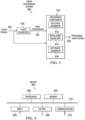
- FIG. 3 is a block diagram of an audio processing system 300.
- the audio processing system 300 includes the audio classifier 100 (see FIG. 1 ) and processing components 310, including a dialogue enhancer 312, an intelligent equalizer 314, and a rap music enhancer 316.
- the audio classifier 100 receives the audio signal 102 and operates as discussed above to generate the final confidence score 128.
- the processing components 310 receive the final confidence score and process the audio signal 102 using the appropriate components based on the final confidence score 128. For example, when the final confidence score 128 indicates the audio signal 102 is dialogue, the dialogue enhancer 312 may be used to process the audio signal 102. When the final confidence score 128 indicates the audio signal 102 has an unbalanced spectral balance, the intelligent equalizer 314 may be used to process the audio signal 102. When the final confidence score 128 indicates the audio signal 102 is rap music, the rap music enhancer 316 may be used to process the audio signal 102.
- the processing components 310 generate the processed audio signal 320 corresponding to the audio signal 102 having been processed by the selected components.
- FIG. 4 is a block diagram of a device 400 that may be used to implement the audio classifier 100 (see FIG. 1 ), the two-stage classifier 200 (see FIG. 2 ), the audio processing system 300 (see FIG. 3 ), etc.
- the device 400 may be a computer (a desktop computer, a laptop computer, etc.), a gaming console, a portable device (e.g., a mobile telephone, a media player, etc.), etc.
- the device 400 includes a processor 402, a memory 404, one or more input components 406, one or more output components 408, and one or more communication components 410, connected by a bus 412.
- the processor 402 generally controls the operation of the device 400, for example according to the execution of one or more computer programs.
- the processor 402 may implement one or more of the functions described herein, such as those of the features extractor 110 (see FIG. 1 ), the classifiers 112 and 114, the context detector 116, the confidence decider 118, the audio processing components 310 (see FIG. 3 ), the equations (1) through (10), the method 500 (see FIG. 5 ), etc.
- the processor 402 may interact with the memory 404 to store data, computer programs, etc.
- the memory 404 generally stores data operated on by the device 400.
- the memory 404 may store the input signal 102 (see FIG. 1 ; e.g., as data frames of a streaming signal, as a stored data file, etc.), the extracted features 120, the models used by the classifiers 112 and 114, the confidence scores 122 and 124, the steering signal 126, the final confidence score 128, the results of Equation (1) through Equation (10), etc.
- the memory 404 may also store the computer programs executed by the processor 402.
- the input components 406 generally enable input into the device 400.
- the specifics of the input components 406 may vary based on the particular form factor of the device 400.
- the input components 406 of a mobile telephone may include a touchscreen, a microphone, motion sensors, a camera, control buttons, etc.
- the input components 406 of a gaming console may include control buttons, kinetic motion sensors, a microphone, gaming controllers, etc.
- the output components 408 generally enable output from the device 400.
- the specifics of the output components 408 may vary based on the particular form factor of the device 400.
- the output components 408 of a mobile telephone may include a screen, a speaker, haptic mechanisms, light emitting diodes, etc.
- the output components 408 of a gaming console may include a screen, a speaker, etc.
- the communication components 410 generally enable wired or wireless communication between the device 400 and other devices.
- the communication components 410 include additional input and output components similar to the input components 406 and the output components 408.
- Wireless components include radios, such as cellular radios, IEEE 802.15.1 radios (e.g., Bluetooth TM radios), IEEE 802.11 radios (e.g., Wi-Fi TM radios), etc.
- Wired components include keyboards, mice, gaming controllers, sensors, etc.
- the specifics of the input components 406 and the output components 408 may vary based on the particular form factor of the device 400.
- a mobile telephone may include a cellular radio to receive the input signal 102 as a streaming signal, and an IEEE 802.15.1 radio to transmit the processed audio signal 320 to a pair of wireless earbuds for output as sound.
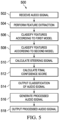
- FIG. 5 is a flow diagram of a method 500 of audio processing.
- the method 500 may be implemented by a device (e.g., the device 400 of FIG. 4 ), as controlled by the execution of one or more computer programs.
- an audio signal is received.
- the audio signal 102 (see FIG. 1 ) may be received by the communication components 410 (see FIG. 4 ) of the device 400.
- the audio signal 102 may be received from the memory 404, having been stored there previously.
- feature extraction is performed on the audio signal to extract a plurality of features.
- the feature extractor 110 may perform feature extraction on the audio signal 102, to generate the extracted features 120.
- the specifics of the feature extraction performed, and the resulting extracted features may vary based on the relevance of those particular features to the models used for classification. For example, the sub-band energies of the input signal 102 may be relevant to the rap classification model.
- the plurality of features is classified according to a first audio classification model to generate a first set of confidence scores.
- the classifiers 112 may classify the extracted features 120 according to a music classification model, a speech classification model, a noise classification model, a sound effect classification model, etc., generating respective confidence scores 122.
- the plurality of features is classified according to a second audio classification model to generate a second confidence score.
- the classifiers 114 may classify the extracted features 120 according to a rap classification model to generate a rap confidence score 124.
- a steering signal is calculated by combining a first component of the first set of confidence scores smoothed over a first time period and a second component of the first set of confidence scores smoothed over a second time period, where the second time period is shorter than the first time period.
- the context detector 116 may generate the steering signal 126 according to Equation (3), using long-term context information according to Equation (1) and short-term context information according to Equation (2).
- a final confidence score is calculated according to the steering signal, the first set of confidence scores, and the second confidence score.
- the confidence decider 118 may generate the final confidence score 128 according to the steering signal 126, the confidence scores 122 and the confidence scores 124.
- the final confidence score may correspond to a weighted combination of the confidence scores 122 and 124, e.g., computed according to Equation (6).
- a classification of the audio signal is output according to the final confidence score.
- the confidence decider 118 may output the final confidence score 128 for use by other components of the device 400.
- one of a first process and a second process selectively performing on the audio signal, based on the classification, to generate a processed audio signal, where the first process is performed when the classification is a first classification and the second process is performed when the classification is a second classification.
- the audio signal 102 corresponds to speech
- the dialogue enhancer 312 may be used to generate the processed audio signal 320.
- the rap music enhancer 316 may be used to generate the processed audio signal 320.
- the processed audio signal is output as sound.
- a speaker of the device 400 may output the processed audio signal 320 as audible sound.
- An embodiment may be implemented in hardware, executable modules stored on a computer readable medium, or a combination of both (e.g., programmable logic arrays). Unless otherwise specified, the steps executed by embodiments need not inherently be related to any particular computer or other apparatus, although they may be in certain embodiments. In particular, various general-purpose machines may be used with programs written in accordance with the teachings herein, or it may be more convenient to construct more specialized apparatus (e.g., integrated circuits) to perform the required method steps.
- embodiments may be implemented in one or more computer programs executing on one or more programmable computer systems each comprising at least one processor, at least one data storage system (including volatile and non-volatile memory and/or storage elements), at least one input device or port, and at least one output device or port.
- Program code is applied to input data to perform the functions described herein and generate output information.
- the output information is applied to one or more output devices, in known fashion.
- Each such computer program is preferably stored on or downloaded to a storage media or device (e.g., solid state memory or media, or magnetic or optical media) readable by a general or special purpose programmable computer, for configuring and operating the computer when the storage media or device is read by the computer system to perform the procedures described herein.
- a storage media or device e.g., solid state memory or media, or magnetic or optical media
- the inventive system may also be considered to be implemented as a computer-readable storage medium, configured with a computer program, where the storage medium so configured causes a computer system to operate in a specific and predefined manner to perform the functions described herein. (Software per se and intangible or transitory signals are excluded to the extent that they are unpatentable subject matter.)
Landscapes
- Engineering & Computer Science (AREA)
- Computational Linguistics (AREA)
- Health & Medical Sciences (AREA)
- Audiology, Speech & Language Pathology (AREA)
- Human Computer Interaction (AREA)
- Physics & Mathematics (AREA)
- Acoustics & Sound (AREA)
- Multimedia (AREA)
- Signal Processing (AREA)
- Computer Vision & Pattern Recognition (AREA)
- Information Retrieval, Db Structures And Fs Structures Therefor (AREA)
Claims (15)
- Verfahren zur Audioverarbeitung, wobei das Verfahren Folgendes umfasst:Empfangen eines Audiosignals;Durchführen von Merkmalsextraktion am Audiosignal, um eine Vielzahl von Merkmalen zu extrahieren;Klassifizieren der Vielzahl von Merkmalen gemäß einem ersten Audioklassifizierungsmodell, um einen ersten Satz von Zuverlässigkeitswerten zu erzeugen;Klassifizieren der Vielzahl von Merkmalen gemäß einem zweiten Audioklassifizierungsmodell, um einen zweiten Zuverlässigkeitswert zu erzeugen;Berechnen eines Lenksignals durch Kombinieren eines ersten Zuverlässigkeitswerts aus dem ersten Satz von Zuverlässigkeitswerten und eines weiteren Zuverlässigkeitswerts aus dem ersten Satz von Zuverlässigkeitswerten;Berechnen eines endgültigen Zuverlässigkeitswerts gemäß dem Lenksignal, dem ersten Satz von Zuverlässigkeitswerten und dem zweiten Zuverlässigkeitswert; undAusgeben einer Klassifizierung des Audiosignals gemäß dem endgültigen Zuverlässigkeitswert.
- Verfahren nach Anspruch 1, wobei eine Vielzahl von Modellen einen ersten Satz von Modellen und das zweite Audioklassifizierungsmodell einschließt, wobei der erste Satz von Modellen das erste Audioklassifizierungsmodell einschließt, wobei Klassifizieren der Vielzahl von Merkmalen gemäß dem ersten Audioklassifizierungsmodell zum Erzeugen des ersten Satzes von Zuverlässigkeitswerten Folgendes umfasst:
Klassifizieren der Vielzahl von Merkmalen gemäß dem ersten Satz von Modellen, um den ersten Satz von Zuverlässigkeitswerten zu erzeugen. - Verfahren nach Anspruch 2, wobei der erste Satz von Modellen ein Sprachklassifizierungsmodell und ein Musikklassifizierungsmodell einschließt.
- Verfahren nach einem der Ansprüche 1-3, wobei das zweite Audioklassifizierungsmodell ein Rap-Klassifizierungsmodell ist.
- Verfahren nach einem der Ansprüche 1-4, wobei das Durchführen von Merkmalsextraktion das Bestimmen einer Vielzahl von Unterbandenergien für eine Vielzahl von Unterbändern des Audiosignals einschließt.
- Verfahren nach Anspruch 5, wobei die Vielzahl von Unterbändern ein erstes Unterband unter 300 Hz, ein zweites Unterband zwischen 300 Hz und 1000 Hz, ein drittes Unterband zwischen 1 kHz und 3 kHz und ein viertes Unterband zwischen 3 kHz und 6 kHz einschließt.
- Verfahren nach einem der Ansprüche 1-6, wobei das Klassifizieren der Vielzahl von Merkmalen gemäß dem ersten Audioklassifizierungsmodell Folgendes einschließt:
Klassifizieren der Vielzahl von Merkmalen gemäß dem ersten Audioklassifizierungsmodell unter Verwendung von mindestens einem von einem maschinellen Lernprozess mit adaptivem Boosting und einem maschinellen Lernprozess eines tiefen neuronalen Netzwerks. - Verfahren nach einem der Ansprüche 1-7, wobei Berechnen des Lenksignals Folgendes umfasst:
Berechnen des Lenksignals durch Kombinieren des ersten Zuverlässigkeitswerts des ersten Satzes von Zuverlässigkeitswerten, geglättet über einen ersten Zeitraum, und des weiteren Zuverlässigkeitswerts des ersten Satzes von Zuverlässigkeitswerten, geglättet über einen zweiten Zeitraum, wobei der zweite Zeitraum kürzer ist als der erste Zeitraum. - Verfahren nach Anspruch 8, wobei der erste Zeitraum mindestens doppelt so lang ist wie der zweite Zeitraum.
- Verfahren nach Anspruch 8 oder Anspruch 9, wobei der erste Zuverlässigkeitswert des ersten Satzes von Zuverlässigkeitswerten, geglättet über den ersten Zeitraum, basierend auf einem ersten Glättungskoeffizienten, einem aktuellen Musikzuverlässigkeitswert eines aktuellen Frames des Audiosignals und einem vorherigen geglätteten Musikzuverlässigkeitswert eines vorherigen Frames des Audiosignals berechnet wird; und
wobei der weitere Zuverlässigkeitswert des ersten Satzes von Zuverlässigkeitswerten, geglättet über den zweiten Zeitraum, basierend auf einem zweiten Glättungskoeffizienten, einem aktuellen Zuverlässigkeitswert für Klangeffekte und Rauschen des aktuellen Frames des Audiosignals und einem vorherigen geglätteten Zuverlässigkeitswert für Klangeffekte und Rauschen des vorherigen Frames des Audiosignals berechnet wird. - Verfahren nach einem der Ansprüche 1-10, wobei das Berechnen des Lenksignals Folgendes einschließ:Anwenden einer ersten Sigmoidfunktion auf den ersten Zuverlässigkeitswert des ersten Satzes von Zuverlässigkeitswerten, geglättet über den ersten Zeitraum; undAnwenden einer zweiten Sigmoidfunktion auf den weiteren Zuverlässigkeitswert des ersten Satzes von Zuverlässigkeitswerten, geglättet über den zweiten Zeitraum.
- Verfahren nach einem der Ansprüche 1-11, weiter umfassend:
selektives Durchführen eines ersten Prozesses und eines zweiten Prozesses an dem Audiosignal, basierend auf der Klassifizierung, um ein verarbeitetes Audiosignal zu erzeugen, wobei der erste Prozess durchgeführt wird, wenn die Klassifizierung eine erste Klassifizierung ist, und der zweite Prozess durchgeführt wird, wenn die Klassifizierung eine zweite Klassifizierung ist. - Nichtflüchtiges computerlesbares Medium, das ein Computerprogramm speichert, das, wenn es von einem Prozessor ausgeführt wird, eine Einrichtung steuert, um eine Verarbeitung auszuführen, die das Verfahren nach einem der Ansprüche 1-12 einschließt.
- Einrichtung zur Audioverarbeitung, wobei die Einrichtung Folgendes umfasst:einen Prozessor; undeinen Speicher,wobei der Prozessor so konfiguriert ist, dass er die Einrichtung zum Empfangen eines Audiosignals steuert,wobei der Prozessor so konfiguriert ist, dass er die Einrichtung steuert, um Merkmalsextraktion an dem Audiosignal durchzuführen, um eine Vielzahl von Merkmalen zu extrahieren,wobei der Prozessor so konfiguriert ist, dass er die Einrichtung steuert, um die Vielzahl von Merkmalen gemäß einem ersten Audioklassifizierungsmodell zu klassifizieren und einen ersten Satz von Zuverlässigkeitswerten zu erzeugen,wobei der Prozessor so konfiguriert ist, dass er die Einrichtung steuert, um die Vielzahl von Merkmalen gemäß einem zweiten Audioklassifizierungsmodell zu klassifizieren, um einen
zweiten Zuverlässigkeitswert zu erzeugen,wobei der Prozessor so konfiguriert ist, dass er die Einrichtung steuert, um ein Lenksignal durch Kombinieren eines ersten Zuverlässigkeitswerts aus dem ersten Satz von Zuverlässigkeitswerten und eines weiteren Zuverlässigkeitswerts aus dem ersten Satz von Zuverlässigkeitswerten zu berechnen,wobei der Prozessor so konfiguriert ist, dass er die Einrichtung steuert, um einen endgültigen Zuverlässigkeitswert gemäß dem Lenksignal, dem ersten Satz von Zuverlässigkeitswerten und dem zweiten Zuverlässigkeitswert zu berechnen, undwobei der Prozessor so konfiguriert ist, dass er die Einrichtung steuert, um eine Klassifizierung des Audiosignals gemäß dem endgültigen Zuverlässigkeitswert auszugeben. - Einrichtung nach Anspruch 14, wobei das zweite Audioklassifizierungsmodell ein Rap-Klassifizierungsmodell ist,wobei das Durchführen der Merkmalsextraktion das Bestimmen einer Vielzahl von Unterbandenergien für eine Vielzahl von Unterbändern des Audiosignals einschließt,wobei die Vielzahl der Unterbänder ein erstes Unterband unter 300 Hz, ein zweites Unterband zwischen 300 Hz und 1000 Hz, ein drittes Unterband zwischen 1 kHz und 3 kHz und ein viertes Unterband zwischen 3 kHz und 6 kHz einschließt, undwobei das Berechnen des Lenksignals optional Folgendes umfasst:
Berechnen des Lenksignals durch Kombinieren des ersten Zuverlässigkeitswerts des ersten Satzes von Zuverlässigkeitswerten, geglättet über einen ersten Zeitraum, und des weiteren Zuverlässigkeitswerts des ersten Satzes von Zuverlässigkeitswerten, geglättet über einen zweiten Zeitraum, wobei der zweite Zeitraum kürzer ist als der erste Zeitraum.
Applications Claiming Priority (4)
| Application Number | Priority Date | Filing Date | Title |
|---|---|---|---|
| CN2020109744 | 2020-08-18 | ||
| US202063074621P | 2020-09-04 | 2020-09-04 | |
| EP20200318 | 2020-10-06 | ||
| PCT/US2021/046454 WO2022040282A1 (en) | 2020-08-18 | 2021-08-18 | Audio content identification |
Publications (2)
| Publication Number | Publication Date |
|---|---|
| EP4200845A1 EP4200845A1 (de) | 2023-06-28 |
| EP4200845B1 true EP4200845B1 (de) | 2025-05-07 |
Family
ID=77627557
Family Applications (1)
| Application Number | Title | Priority Date | Filing Date |
|---|---|---|---|
| EP21765803.8A Active EP4200845B1 (de) | 2020-08-18 | 2021-08-18 | Audioinhaltidentifizierung |
Country Status (4)
| Country | Link |
|---|---|
| US (1) | US12340822B2 (de) |
| EP (1) | EP4200845B1 (de) |
| JP (1) | JP2023539121A (de) |
| WO (1) | WO2022040282A1 (de) |
Families Citing this family (4)
| Publication number | Priority date | Publication date | Assignee | Title |
|---|---|---|---|---|
| US12300259B2 (en) * | 2022-03-10 | 2025-05-13 | Roku, Inc. | Automatic classification of audio content as either primarily speech or primarily non-speech, to facilitate dynamic application of dialogue enhancement |
| DE102024204902A1 (de) * | 2024-05-27 | 2025-06-26 | Sivantos Pte. Ltd. | Verfahren zur Signalverarbeitung eines externen Audiosignals in einem Hörinstrument |
| DE102024204901A1 (de) * | 2024-05-27 | 2025-06-26 | Sivantos Pte. Ltd. | Verfahren zur Klassifizierung einer akustischen Umgebungssituation für ein Hörinstrument |
| CN120808768B (zh) * | 2025-09-12 | 2025-11-14 | 绵阳四〇四医院 | 一种用于老年人护理的辅助翻身设备及其语音控制方法 |
Family Cites Families (34)
| Publication number | Priority date | Publication date | Assignee | Title |
|---|---|---|---|---|
| US5616876A (en) * | 1995-04-19 | 1997-04-01 | Microsoft Corporation | System and methods for selecting music on the basis of subjective content |
| US6785645B2 (en) * | 2001-11-29 | 2004-08-31 | Microsoft Corporation | Real-time speech and music classifier |
| AUPS270902A0 (en) | 2002-05-31 | 2002-06-20 | Canon Kabushiki Kaisha | Robust detection and classification of objects in audio using limited training data |
| US7383260B2 (en) | 2004-08-03 | 2008-06-03 | International Business Machines Corporation | Method and apparatus for ontology-based classification of media content |
| KR100832360B1 (ko) * | 2006-09-25 | 2008-05-26 | 삼성전자주식회사 | 음원 재생기에서의 이퀄라이저 조정 방법 및 그 시스템 |
| US7696427B2 (en) * | 2006-12-01 | 2010-04-13 | Oracle America, Inc. | Method and system for recommending music |
| US9020816B2 (en) | 2008-08-14 | 2015-04-28 | 21Ct, Inc. | Hidden markov model for speech processing with training method |
| WO2010021966A1 (en) | 2008-08-21 | 2010-02-25 | Dolby Laboratories Licensing Corporation | Feature optimization and reliability estimation for audio and video signature generation and detection |
| US20110029108A1 (en) | 2009-08-03 | 2011-02-03 | Jeehyong Lee | Music genre classification method and apparatus |
| US10204625B2 (en) * | 2010-06-07 | 2019-02-12 | Affectiva, Inc. | Audio analysis learning using video data |
| CN102982804B (zh) * | 2011-09-02 | 2017-05-03 | 杜比实验室特许公司 | 音频分类方法和系统 |
| CN103186527B (zh) | 2011-12-27 | 2017-04-26 | 北京百度网讯科技有限公司 | 建立音乐分类模型的系统、推荐音乐的系统及相应方法 |
| US9183849B2 (en) * | 2012-12-21 | 2015-11-10 | The Nielsen Company (Us), Llc | Audio matching with semantic audio recognition and report generation |
| US10424321B1 (en) | 2013-02-12 | 2019-09-24 | Google Llc | Audio data classification |
| CN104080024B (zh) * | 2013-03-26 | 2019-02-19 | 杜比实验室特许公司 | 音量校平器控制器和控制方法以及音频分类器 |
| CN104078050A (zh) * | 2013-03-26 | 2014-10-01 | 杜比实验室特许公司 | 用于音频分类和音频处理的设备和方法 |
| CN104079247B (zh) * | 2013-03-26 | 2018-02-09 | 杜比实验室特许公司 | 均衡器控制器和控制方法以及音频再现设备 |
| CN104347067B (zh) * | 2013-08-06 | 2017-04-12 | 华为技术有限公司 | 一种音频信号分类方法和装置 |
| CN106256001B (zh) * | 2014-02-24 | 2020-01-21 | 三星电子株式会社 | 信号分类方法和装置以及使用其的音频编码方法和装置 |
| US9620105B2 (en) * | 2014-05-15 | 2017-04-11 | Apple Inc. | Analyzing audio input for efficient speech and music recognition |
| US20150347388A1 (en) * | 2014-06-03 | 2015-12-03 | Google Inc. | Digital Content Genre Representation |
| CN106203460A (zh) | 2015-05-05 | 2016-12-07 | 杜比实验室特许公司 | 训练信号处理模型以用于信号处理系统中的部件替换 |
| US10129314B2 (en) | 2015-08-18 | 2018-11-13 | Pandora Media, Inc. | Media feature determination for internet-based media streaming |
| US9997161B2 (en) * | 2015-09-11 | 2018-06-12 | Microsoft Technology Licensing, Llc | Automatic speech recognition confidence classifier |
| US10631101B2 (en) * | 2016-06-09 | 2020-04-21 | Cochlear Limited | Advanced scene classification for prosthesis |
| US20190028766A1 (en) * | 2017-07-18 | 2019-01-24 | Audible Magic Corporation | Media classification for media identification and licensing |
| KR102767444B1 (ko) | 2017-07-24 | 2025-02-12 | 메드리듬스, 아이엔씨. | 반복적 모션 활동을 위한 음악 향상 |
| US10522186B2 (en) | 2017-07-28 | 2019-12-31 | Adobe Inc. | Apparatus, systems, and methods for integrating digital media content |
| US20200075019A1 (en) | 2017-08-02 | 2020-03-05 | Veritone, Inc. | System and method for neural network orchestration |
| US10832672B2 (en) * | 2018-07-13 | 2020-11-10 | International Business Machines Corporation | Smart speaker system with cognitive sound analysis and response |
| US11416518B2 (en) | 2018-10-30 | 2022-08-16 | Optum, Inc. | Machine learning for machine-assisted data classification |
| RU2768224C1 (ru) * | 2018-12-13 | 2022-03-23 | Долби Лабораторис Лайсэнзин Корпорейшн | Двусторонняя медийная аналитика |
| US11282509B1 (en) * | 2019-08-22 | 2022-03-22 | Facebook, Inc. | Classifiers for media content |
| CN111177454B (zh) | 2019-12-11 | 2023-05-30 | 广州荔支网络技术有限公司 | 一种音频节目分类的修正方法 |
-
2021
- 2021-08-18 WO PCT/US2021/046454 patent/WO2022040282A1/en not_active Ceased
- 2021-08-18 US US18/022,125 patent/US12340822B2/en active Active
- 2021-08-18 JP JP2023512124A patent/JP2023539121A/ja active Pending
- 2021-08-18 EP EP21765803.8A patent/EP4200845B1/de active Active
Also Published As
| Publication number | Publication date |
|---|---|
| EP4200845A1 (de) | 2023-06-28 |
| US12340822B2 (en) | 2025-06-24 |
| JP2023539121A (ja) | 2023-09-13 |
| US20240038258A1 (en) | 2024-02-01 |
| WO2022040282A1 (en) | 2022-02-24 |
Similar Documents
| Publication | Publication Date | Title |
|---|---|---|
| EP4200845B1 (de) | Audioinhaltidentifizierung | |
| US8688251B2 (en) | System and method for automatically producing haptic events from a digital audio signal | |
| EP2979359B1 (de) | Entzerrersteuerung und steuerungsverfahren | |
| US8805697B2 (en) | Decomposition of music signals using basis functions with time-evolution information | |
| US9313593B2 (en) | Ranking representative segments in media data | |
| US8378964B2 (en) | System and method for automatically producing haptic events from a digital audio signal | |
| US8761915B2 (en) | System and method for automatically producing haptic events from a digital audio file | |
| EP3598448B1 (de) | Vorrichtungen und verfahren zur audioklassifizierung und -verarbeitung | |
| EP2979358B1 (de) | Volumenausgleichssteuerung und steuerungsverfahren | |
| Kons et al. | Audio event classification using deep neural networks. | |
| US8865993B2 (en) | Musical composition processing system for processing musical composition for energy level and related methods | |
| WO2015114216A2 (en) | Audio signal analysis | |
| GB2533654A (en) | Analysing audio data | |
| CN105741835A (zh) | 一种音频信息处理方法及终端 | |
| WO2016102738A1 (en) | Similarity determination and selection of music | |
| US20180173400A1 (en) | Media Content Selection | |
| CN115206345B (zh) | 基于时频结合的音乐人声分离方法、装置、设备及介质 | |
| CN116803105A (zh) | 音频内容识别 | |
| JP2011013383A (ja) | オーディオ信号補正装置及びオーディオ信号補正方法 | |
| Wang et al. | The analysis and comparison of vital acoustic features in content-based classification of music genre | |
| Ananthabhotla et al. | Using a neural network codec approximation loss to improve source separation performance in limited capacity networks | |
| CN116757175A (zh) | 音频文本的对齐方法、计算机设备及计算机可读存储介质 | |
| JP4807261B2 (ja) | 音声処理装置およびプログラム | |
| Pikrakis et al. | An overview of speech/music discrimination techniques in the context of audio recordings | |
| Chen | Automatic classification of electronic music and speech/music audio content |
Legal Events
| Date | Code | Title | Description |
|---|---|---|---|
| STAA | Information on the status of an ep patent application or granted ep patent |
Free format text: STATUS: UNKNOWN |
|
| STAA | Information on the status of an ep patent application or granted ep patent |
Free format text: STATUS: THE INTERNATIONAL PUBLICATION HAS BEEN MADE |
|
| PUAI | Public reference made under article 153(3) epc to a published international application that has entered the european phase |
Free format text: ORIGINAL CODE: 0009012 |
|
| STAA | Information on the status of an ep patent application or granted ep patent |
Free format text: STATUS: REQUEST FOR EXAMINATION WAS MADE |
|
| 17P | Request for examination filed |
Effective date: 20230313 |
|
| AK | Designated contracting states |
Kind code of ref document: A1 Designated state(s): AL AT BE BG CH CY CZ DE DK EE ES FI FR GB GR HR HU IE IS IT LI LT LU LV MC MK MT NL NO PL PT RO RS SE SI SK SM TR |
|
| P01 | Opt-out of the competence of the unified patent court (upc) registered |
Effective date: 20230808 |
|
| DAV | Request for validation of the european patent (deleted) | ||
| DAX | Request for extension of the european patent (deleted) | ||
| GRAP | Despatch of communication of intention to grant a patent |
Free format text: ORIGINAL CODE: EPIDOSNIGR1 |
|
| STAA | Information on the status of an ep patent application or granted ep patent |
Free format text: STATUS: GRANT OF PATENT IS INTENDED |
|
| INTG | Intention to grant announced |
Effective date: 20241219 |
|
| GRAS | Grant fee paid |
Free format text: ORIGINAL CODE: EPIDOSNIGR3 |
|
| GRAA | (expected) grant |
Free format text: ORIGINAL CODE: 0009210 |
|
| STAA | Information on the status of an ep patent application or granted ep patent |
Free format text: STATUS: THE PATENT HAS BEEN GRANTED |
|
| AK | Designated contracting states |
Kind code of ref document: B1 Designated state(s): AL AT BE BG CH CY CZ DE DK EE ES FI FR GB GR HR HU IE IS IT LI LT LU LV MC MK MT NL NO PL PT RO RS SE SI SK SM TR |
|
| REG | Reference to a national code |
Ref country code: GB Ref legal event code: FG4D |
|
| REG | Reference to a national code |
Ref country code: CH Ref legal event code: EP |
|
| REG | Reference to a national code |
Ref country code: DE Ref legal event code: R096 Ref document number: 602021030483 Country of ref document: DE |
|
| REG | Reference to a national code |
Ref country code: IE Ref legal event code: FG4D |
|
| REG | Reference to a national code |
Ref country code: NL Ref legal event code: MP Effective date: 20250507 |
|
| PG25 | Lapsed in a contracting state [announced via postgrant information from national office to epo] |
Ref country code: PT Free format text: LAPSE BECAUSE OF FAILURE TO SUBMIT A TRANSLATION OF THE DESCRIPTION OR TO PAY THE FEE WITHIN THE PRESCRIBED TIME-LIMIT Effective date: 20250908 Ref country code: ES Free format text: LAPSE BECAUSE OF FAILURE TO SUBMIT A TRANSLATION OF THE DESCRIPTION OR TO PAY THE FEE WITHIN THE PRESCRIBED TIME-LIMIT Effective date: 20250507 Ref country code: FI Free format text: LAPSE BECAUSE OF FAILURE TO SUBMIT A TRANSLATION OF THE DESCRIPTION OR TO PAY THE FEE WITHIN THE PRESCRIBED TIME-LIMIT Effective date: 20250507 |
|
| PGFP | Annual fee paid to national office [announced via postgrant information from national office to epo] |
Ref country code: DE Payment date: 20250724 Year of fee payment: 5 |
|
| REG | Reference to a national code |
Ref country code: LT Ref legal event code: MG9D |
|
| PG25 | Lapsed in a contracting state [announced via postgrant information from national office to epo] |
Ref country code: GR Free format text: LAPSE BECAUSE OF FAILURE TO SUBMIT A TRANSLATION OF THE DESCRIPTION OR TO PAY THE FEE WITHIN THE PRESCRIBED TIME-LIMIT Effective date: 20250808 Ref country code: NO Free format text: LAPSE BECAUSE OF FAILURE TO SUBMIT A TRANSLATION OF THE DESCRIPTION OR TO PAY THE FEE WITHIN THE PRESCRIBED TIME-LIMIT Effective date: 20250807 |
|
| PG25 | Lapsed in a contracting state [announced via postgrant information from national office to epo] |
Ref country code: NL Free format text: LAPSE BECAUSE OF FAILURE TO SUBMIT A TRANSLATION OF THE DESCRIPTION OR TO PAY THE FEE WITHIN THE PRESCRIBED TIME-LIMIT Effective date: 20250507 Ref country code: PL Free format text: LAPSE BECAUSE OF FAILURE TO SUBMIT A TRANSLATION OF THE DESCRIPTION OR TO PAY THE FEE WITHIN THE PRESCRIBED TIME-LIMIT Effective date: 20250507 |
|
| REG | Reference to a national code |
Ref country code: AT Ref legal event code: MK05 Ref document number: 1793408 Country of ref document: AT Kind code of ref document: T Effective date: 20250507 |
|
| PG25 | Lapsed in a contracting state [announced via postgrant information from national office to epo] |
Ref country code: BG Free format text: LAPSE BECAUSE OF FAILURE TO SUBMIT A TRANSLATION OF THE DESCRIPTION OR TO PAY THE FEE WITHIN THE PRESCRIBED TIME-LIMIT Effective date: 20250507 |
|
| PGFP | Annual fee paid to national office [announced via postgrant information from national office to epo] |
Ref country code: GB Payment date: 20250724 Year of fee payment: 5 |
|
| PG25 | Lapsed in a contracting state [announced via postgrant information from national office to epo] |
Ref country code: HR Free format text: LAPSE BECAUSE OF FAILURE TO SUBMIT A TRANSLATION OF THE DESCRIPTION OR TO PAY THE FEE WITHIN THE PRESCRIBED TIME-LIMIT Effective date: 20250507 |
|
| PG25 | Lapsed in a contracting state [announced via postgrant information from national office to epo] |
Ref country code: AT Free format text: LAPSE BECAUSE OF FAILURE TO SUBMIT A TRANSLATION OF THE DESCRIPTION OR TO PAY THE FEE WITHIN THE PRESCRIBED TIME-LIMIT Effective date: 20250507 |
|
| PGFP | Annual fee paid to national office [announced via postgrant information from national office to epo] |
Ref country code: FR Payment date: 20250723 Year of fee payment: 5 |
|
| PG25 | Lapsed in a contracting state [announced via postgrant information from national office to epo] |
Ref country code: RS Free format text: LAPSE BECAUSE OF FAILURE TO SUBMIT A TRANSLATION OF THE DESCRIPTION OR TO PAY THE FEE WITHIN THE PRESCRIBED TIME-LIMIT Effective date: 20250807 |
|
| PG25 | Lapsed in a contracting state [announced via postgrant information from national office to epo] |
Ref country code: IS Free format text: LAPSE BECAUSE OF FAILURE TO SUBMIT A TRANSLATION OF THE DESCRIPTION OR TO PAY THE FEE WITHIN THE PRESCRIBED TIME-LIMIT Effective date: 20250907 |
|
| PG25 | Lapsed in a contracting state [announced via postgrant information from national office to epo] |
Ref country code: LV Free format text: LAPSE BECAUSE OF FAILURE TO SUBMIT A TRANSLATION OF THE DESCRIPTION OR TO PAY THE FEE WITHIN THE PRESCRIBED TIME-LIMIT Effective date: 20250507 |
|
| PG25 | Lapsed in a contracting state [announced via postgrant information from national office to epo] |
Ref country code: DK Free format text: LAPSE BECAUSE OF FAILURE TO SUBMIT A TRANSLATION OF THE DESCRIPTION OR TO PAY THE FEE WITHIN THE PRESCRIBED TIME-LIMIT Effective date: 20250507 Ref country code: SM Free format text: LAPSE BECAUSE OF FAILURE TO SUBMIT A TRANSLATION OF THE DESCRIPTION OR TO PAY THE FEE WITHIN THE PRESCRIBED TIME-LIMIT Effective date: 20250507 |
|
| PG25 | Lapsed in a contracting state [announced via postgrant information from national office to epo] |
Ref country code: CZ Free format text: LAPSE BECAUSE OF FAILURE TO SUBMIT A TRANSLATION OF THE DESCRIPTION OR TO PAY THE FEE WITHIN THE PRESCRIBED TIME-LIMIT Effective date: 20250507 |
|
| PG25 | Lapsed in a contracting state [announced via postgrant information from national office to epo] |
Ref country code: EE Free format text: LAPSE BECAUSE OF FAILURE TO SUBMIT A TRANSLATION OF THE DESCRIPTION OR TO PAY THE FEE WITHIN THE PRESCRIBED TIME-LIMIT Effective date: 20250507 |
|
| PG25 | Lapsed in a contracting state [announced via postgrant information from national office to epo] |
Ref country code: SK Free format text: LAPSE BECAUSE OF FAILURE TO SUBMIT A TRANSLATION OF THE DESCRIPTION OR TO PAY THE FEE WITHIN THE PRESCRIBED TIME-LIMIT Effective date: 20250507 |
|
| PG25 | Lapsed in a contracting state [announced via postgrant information from national office to epo] |
Ref country code: IT Free format text: LAPSE BECAUSE OF FAILURE TO SUBMIT A TRANSLATION OF THE DESCRIPTION OR TO PAY THE FEE WITHIN THE PRESCRIBED TIME-LIMIT Effective date: 20250507 |
|
| PG25 | Lapsed in a contracting state [announced via postgrant information from national office to epo] |
Ref country code: RO Free format text: LAPSE BECAUSE OF FAILURE TO SUBMIT A TRANSLATION OF THE DESCRIPTION OR TO PAY THE FEE WITHIN THE PRESCRIBED TIME-LIMIT Effective date: 20250507 |
|
| PLBE | No opposition filed within time limit |
Free format text: ORIGINAL CODE: 0009261 |
|
| STAA | Information on the status of an ep patent application or granted ep patent |
Free format text: STATUS: NO OPPOSITION FILED WITHIN TIME LIMIT |
|
| REG | Reference to a national code |
Ref country code: CH Ref legal event code: L10 Free format text: ST27 STATUS EVENT CODE: U-0-0-L10-L00 (AS PROVIDED BY THE NATIONAL OFFICE) Effective date: 20260318 |