EP4199145A1 - Silicon-carbon composite negative electrode material and preparation method therefor, and lithium ion battery - Google Patents
Silicon-carbon composite negative electrode material and preparation method therefor, and lithium ion battery Download PDFInfo
- Publication number
- EP4199145A1 EP4199145A1 EP21926312.6A EP21926312A EP4199145A1 EP 4199145 A1 EP4199145 A1 EP 4199145A1 EP 21926312 A EP21926312 A EP 21926312A EP 4199145 A1 EP4199145 A1 EP 4199145A1
- Authority
- EP
- European Patent Office
- Prior art keywords
- silicon
- anode material
- based active
- composite anode
- active particle
- Prior art date
- Legal status (The legal status is an assumption and is not a legal conclusion. Google has not performed a legal analysis and makes no representation as to the accuracy of the status listed.)
- Pending
Links
- 238000002360 preparation method Methods 0.000 title claims abstract description 35
- HBBGRARXTFLTSG-UHFFFAOYSA-N Lithium ion Chemical compound [Li+] HBBGRARXTFLTSG-UHFFFAOYSA-N 0.000 title claims abstract description 20
- 229910001416 lithium ion Inorganic materials 0.000 title claims abstract description 20
- 239000011868 silicon-carbon composite negative electrode material Substances 0.000 title 1
- XUIMIQQOPSSXEZ-UHFFFAOYSA-N Silicon Chemical compound [Si] XUIMIQQOPSSXEZ-UHFFFAOYSA-N 0.000 claims abstract description 330
- 229910052710 silicon Inorganic materials 0.000 claims abstract description 277
- 239000010703 silicon Substances 0.000 claims abstract description 277
- 239000002245 particle Substances 0.000 claims abstract description 243
- OKTJSMMVPCPJKN-UHFFFAOYSA-N Carbon Chemical compound [C] OKTJSMMVPCPJKN-UHFFFAOYSA-N 0.000 claims abstract description 140
- 239000010405 anode material Substances 0.000 claims abstract description 109
- 229910052799 carbon Inorganic materials 0.000 claims abstract description 106
- 239000011870 silicon-carbon composite anode material Substances 0.000 claims abstract description 71
- 238000002441 X-ray diffraction Methods 0.000 claims abstract description 57
- 239000011247 coating layer Substances 0.000 claims abstract description 57
- 239000004020 conductor Substances 0.000 claims abstract description 56
- 239000013078 crystal Substances 0.000 claims abstract description 47
- 239000002243 precursor Substances 0.000 claims description 78
- 239000002131 composite material Substances 0.000 claims description 60
- 238000000034 method Methods 0.000 claims description 29
- LYCAIKOWRPUZTN-UHFFFAOYSA-N Ethylene glycol Chemical compound OCCO LYCAIKOWRPUZTN-UHFFFAOYSA-N 0.000 claims description 24
- 238000010438 heat treatment Methods 0.000 claims description 18
- 239000010426 asphalt Substances 0.000 claims description 15
- 239000003960 organic solvent Substances 0.000 claims description 15
- 239000004094 surface-active agent Substances 0.000 claims description 14
- 229920000049 Carbon (fiber) Polymers 0.000 claims description 12
- VYPSYNLAJGMNEJ-UHFFFAOYSA-N Silicium dioxide Chemical compound O=[Si]=O VYPSYNLAJGMNEJ-UHFFFAOYSA-N 0.000 claims description 12
- 239000004917 carbon fiber Substances 0.000 claims description 12
- 229910002804 graphite Inorganic materials 0.000 claims description 12
- 239000010439 graphite Substances 0.000 claims description 12
- VNWKTOKETHGBQD-UHFFFAOYSA-N methane Chemical compound C VNWKTOKETHGBQD-UHFFFAOYSA-N 0.000 claims description 12
- 229910052814 silicon oxide Inorganic materials 0.000 claims description 10
- LFQSCWFLJHTTHZ-UHFFFAOYSA-N Ethanol Chemical compound CCO LFQSCWFLJHTTHZ-UHFFFAOYSA-N 0.000 claims description 9
- OKKJLVBELUTLKV-UHFFFAOYSA-N Methanol Chemical compound OC OKKJLVBELUTLKV-UHFFFAOYSA-N 0.000 claims description 9
- KFZMGEQAYNKOFK-UHFFFAOYSA-N Isopropanol Chemical compound CC(C)O KFZMGEQAYNKOFK-UHFFFAOYSA-N 0.000 claims description 8
- LRHPLDYGYMQRHN-UHFFFAOYSA-N N-Butanol Chemical compound CCCCO LRHPLDYGYMQRHN-UHFFFAOYSA-N 0.000 claims description 8
- 229910021389 graphene Inorganic materials 0.000 claims description 8
- 239000004800 polyvinyl chloride Substances 0.000 claims description 8
- 229920000036 polyvinylpyrrolidone Polymers 0.000 claims description 8
- 239000001267 polyvinylpyrrolidone Substances 0.000 claims description 8
- 235000013855 polyvinylpyrrolidone Nutrition 0.000 claims description 8
- 239000000843 powder Substances 0.000 claims description 8
- WQZGKKKJIJFFOK-GASJEMHNSA-N Glucose Natural products OC[C@H]1OC(O)[C@H](O)[C@@H](O)[C@@H]1O WQZGKKKJIJFFOK-GASJEMHNSA-N 0.000 claims description 7
- 239000002202 Polyethylene glycol Substances 0.000 claims description 7
- CZMRCDWAGMRECN-UGDNZRGBSA-N Sucrose Chemical compound O[C@H]1[C@H](O)[C@@H](CO)O[C@@]1(CO)O[C@@H]1[C@H](O)[C@@H](O)[C@H](O)[C@@H](CO)O1 CZMRCDWAGMRECN-UGDNZRGBSA-N 0.000 claims description 7
- 229930006000 Sucrose Natural products 0.000 claims description 7
- 239000011258 core-shell material Substances 0.000 claims description 7
- 239000008103 glucose Substances 0.000 claims description 7
- 229920001223 polyethylene glycol Polymers 0.000 claims description 7
- 229920000915 polyvinyl chloride Polymers 0.000 claims description 7
- 239000005720 sucrose Substances 0.000 claims description 7
- AMQJEAYHLZJPGS-UHFFFAOYSA-N N-Pentanol Chemical compound CCCCCO AMQJEAYHLZJPGS-UHFFFAOYSA-N 0.000 claims description 6
- 239000004372 Polyvinyl alcohol Substances 0.000 claims description 6
- 229910000676 Si alloy Inorganic materials 0.000 claims description 6
- WQZGKKKJIJFFOK-VFUOTHLCSA-N beta-D-glucose Chemical compound OC[C@H]1O[C@@H](O)[C@H](O)[C@@H](O)[C@@H]1O WQZGKKKJIJFFOK-VFUOTHLCSA-N 0.000 claims description 6
- 239000002041 carbon nanotube Substances 0.000 claims description 6
- 229910021393 carbon nanotube Inorganic materials 0.000 claims description 6
- POULHZVOKOAJMA-UHFFFAOYSA-N dodecanoic acid Chemical compound CCCCCCCCCCCC(O)=O POULHZVOKOAJMA-UHFFFAOYSA-N 0.000 claims description 6
- VKOBVWXKNCXXDE-UHFFFAOYSA-N icosanoic acid Chemical compound CCCCCCCCCCCCCCCCCCCC(O)=O VKOBVWXKNCXXDE-UHFFFAOYSA-N 0.000 claims description 6
- ZXEKIIBDNHEJCQ-UHFFFAOYSA-N isobutanol Chemical compound CC(C)CO ZXEKIIBDNHEJCQ-UHFFFAOYSA-N 0.000 claims description 6
- 229920002451 polyvinyl alcohol Polymers 0.000 claims description 6
- KXGFMDJXCMQABM-UHFFFAOYSA-N 2-methoxy-6-methylphenol Chemical compound [CH]OC1=CC=CC([CH])=C1O KXGFMDJXCMQABM-UHFFFAOYSA-N 0.000 claims description 5
- 239000004698 Polyethylene Substances 0.000 claims description 5
- 229920001568 phenolic resin Polymers 0.000 claims description 5
- 239000005011 phenolic resin Substances 0.000 claims description 5
- 229920000767 polyaniline Polymers 0.000 claims description 5
- -1 polyethylene Polymers 0.000 claims description 5
- 229920000573 polyethylene Polymers 0.000 claims description 5
- GVGUFUZHNYFZLC-UHFFFAOYSA-N dodecyl benzenesulfonate;sodium Chemical compound [Na].CCCCCCCCCCCCOS(=O)(=O)C1=CC=CC=C1 GVGUFUZHNYFZLC-UHFFFAOYSA-N 0.000 claims description 4
- 229940080264 sodium dodecylbenzenesulfonate Drugs 0.000 claims description 4
- PEDCQBHIVMGVHV-UHFFFAOYSA-N Glycerine Chemical compound OCC(O)CO PEDCQBHIVMGVHV-UHFFFAOYSA-N 0.000 claims description 3
- 239000005639 Lauric acid Substances 0.000 claims description 3
- 229920002125 Sokalan® Polymers 0.000 claims description 3
- 235000011187 glycerol Nutrition 0.000 claims description 3
- QIQXTHQIDYTFRH-UHFFFAOYSA-N octadecanoic acid Chemical compound CCCCCCCCCCCCCCCCCC(O)=O QIQXTHQIDYTFRH-UHFFFAOYSA-N 0.000 claims description 3
- OQCDKBAXFALNLD-UHFFFAOYSA-N octadecanoic acid Natural products CCCCCCCC(C)CCCCCCCCC(O)=O OQCDKBAXFALNLD-UHFFFAOYSA-N 0.000 claims description 3
- BDERNNFJNOPAEC-UHFFFAOYSA-N propan-1-ol Chemical compound CCCO BDERNNFJNOPAEC-UHFFFAOYSA-N 0.000 claims description 3
- 238000005056 compaction Methods 0.000 claims description 2
- 239000004584 polyacrylic acid Substances 0.000 claims description 2
- 239000011863 silicon-based powder Substances 0.000 description 53
- 239000006185 dispersion Substances 0.000 description 35
- 239000011856 silicon-based particle Substances 0.000 description 31
- 238000000227 grinding Methods 0.000 description 19
- 239000000463 material Substances 0.000 description 17
- IJGRMHOSHXDMSA-UHFFFAOYSA-N Atomic nitrogen Chemical compound N#N IJGRMHOSHXDMSA-UHFFFAOYSA-N 0.000 description 16
- 238000007599 discharging Methods 0.000 description 15
- 230000008569 process Effects 0.000 description 15
- 238000009830 intercalation Methods 0.000 description 14
- 239000003792 electrolyte Substances 0.000 description 11
- 239000002153 silicon-carbon composite material Substances 0.000 description 9
- WHXSMMKQMYFTQS-UHFFFAOYSA-N Lithium Chemical compound [Li] WHXSMMKQMYFTQS-UHFFFAOYSA-N 0.000 description 8
- 230000002687 intercalation Effects 0.000 description 8
- 229910052744 lithium Inorganic materials 0.000 description 8
- 239000005543 nano-size silicon particle Substances 0.000 description 8
- 229910052757 nitrogen Inorganic materials 0.000 description 8
- 239000002109 single walled nanotube Substances 0.000 description 8
- 230000002441 reversible effect Effects 0.000 description 7
- 238000002604 ultrasonography Methods 0.000 description 7
- 238000005054 agglomeration Methods 0.000 description 6
- 230000002776 aggregation Effects 0.000 description 6
- 238000002161 passivation Methods 0.000 description 6
- 239000002904 solvent Substances 0.000 description 6
- 230000000052 comparative effect Effects 0.000 description 5
- 238000001035 drying Methods 0.000 description 5
- 230000004048 modification Effects 0.000 description 5
- 238000012986 modification Methods 0.000 description 5
- 238000012360 testing method Methods 0.000 description 5
- 239000011248 coating agent Substances 0.000 description 4
- 238000000576 coating method Methods 0.000 description 4
- 239000002210 silicon-based material Substances 0.000 description 4
- 230000008901 benefit Effects 0.000 description 3
- 230000001351 cycling effect Effects 0.000 description 3
- 238000000926 separation method Methods 0.000 description 3
- 238000005245 sintering Methods 0.000 description 3
- XKRFYHLGVUSROY-UHFFFAOYSA-N Argon Chemical compound [Ar] XKRFYHLGVUSROY-UHFFFAOYSA-N 0.000 description 2
- 239000011149 active material Substances 0.000 description 2
- 239000006183 anode active material Substances 0.000 description 2
- 230000004888 barrier function Effects 0.000 description 2
- 230000009286 beneficial effect Effects 0.000 description 2
- 239000006229 carbon black Substances 0.000 description 2
- 239000011203 carbon fibre reinforced carbon Substances 0.000 description 2
- 239000000571 coke Substances 0.000 description 2
- 229910021419 crystalline silicon Inorganic materials 0.000 description 2
- 230000003247 decreasing effect Effects 0.000 description 2
- IEJIGPNLZYLLBP-UHFFFAOYSA-N dimethyl carbonate Chemical compound COC(=O)OC IEJIGPNLZYLLBP-UHFFFAOYSA-N 0.000 description 2
- 238000003912 environmental pollution Methods 0.000 description 2
- 238000001914 filtration Methods 0.000 description 2
- 239000010419 fine particle Substances 0.000 description 2
- 239000007789 gas Substances 0.000 description 2
- 230000014759 maintenance of location Effects 0.000 description 2
- 238000004519 manufacturing process Methods 0.000 description 2
- 239000004005 microsphere Substances 0.000 description 2
- 230000002787 reinforcement Effects 0.000 description 2
- 238000012827 research and development Methods 0.000 description 2
- 230000000087 stabilizing effect Effects 0.000 description 2
- 239000000126 substance Substances 0.000 description 2
- 238000001291 vacuum drying Methods 0.000 description 2
- BIIBYWQGRFWQKM-JVVROLKMSA-N (2S)-N-[4-(cyclopropylamino)-3,4-dioxo-1-[(3S)-2-oxopyrrolidin-3-yl]butan-2-yl]-2-[[(E)-3-(2,4-dichlorophenyl)prop-2-enoyl]amino]-4,4-dimethylpentanamide Chemical compound CC(C)(C)C[C@@H](C(NC(C[C@H](CCN1)C1=O)C(C(NC1CC1)=O)=O)=O)NC(/C=C/C(C=CC(Cl)=C1)=C1Cl)=O BIIBYWQGRFWQKM-JVVROLKMSA-N 0.000 description 1
- QIVUCLWGARAQIO-OLIXTKCUSA-N (3s)-n-[(3s,5s,6r)-6-methyl-2-oxo-1-(2,2,2-trifluoroethyl)-5-(2,3,6-trifluorophenyl)piperidin-3-yl]-2-oxospiro[1h-pyrrolo[2,3-b]pyridine-3,6'-5,7-dihydrocyclopenta[b]pyridine]-3'-carboxamide Chemical compound C1([C@H]2[C@H](N(C(=O)[C@@H](NC(=O)C=3C=C4C[C@]5(CC4=NC=3)C3=CC=CN=C3NC5=O)C2)CC(F)(F)F)C)=C(F)C=CC(F)=C1F QIVUCLWGARAQIO-OLIXTKCUSA-N 0.000 description 1
- HFGHRUCCKVYFKL-UHFFFAOYSA-N 4-ethoxy-2-piperazin-1-yl-7-pyridin-4-yl-5h-pyrimido[5,4-b]indole Chemical compound C1=C2NC=3C(OCC)=NC(N4CCNCC4)=NC=3C2=CC=C1C1=CC=NC=C1 HFGHRUCCKVYFKL-UHFFFAOYSA-N 0.000 description 1
- 229920000178 Acrylic resin Polymers 0.000 description 1
- 239000004925 Acrylic resin Substances 0.000 description 1
- RYGMFSIKBFXOCR-UHFFFAOYSA-N Copper Chemical compound [Cu] RYGMFSIKBFXOCR-UHFFFAOYSA-N 0.000 description 1
- KMTRUDSVKNLOMY-UHFFFAOYSA-N Ethylene carbonate Chemical compound O=C1OCCO1 KMTRUDSVKNLOMY-UHFFFAOYSA-N 0.000 description 1
- 229910000733 Li alloy Inorganic materials 0.000 description 1
- 229910001290 LiPF6 Inorganic materials 0.000 description 1
- 229910000861 Mg alloy Inorganic materials 0.000 description 1
- 239000002033 PVDF binder Substances 0.000 description 1
- 229920003171 Poly (ethylene oxide) Polymers 0.000 description 1
- ZVLDJSZFKQJMKD-UHFFFAOYSA-N [Li].[Si] Chemical compound [Li].[Si] ZVLDJSZFKQJMKD-UHFFFAOYSA-N 0.000 description 1
- 229910052786 argon Inorganic materials 0.000 description 1
- 239000011230 binding agent Substances 0.000 description 1
- 230000015572 biosynthetic process Effects 0.000 description 1
- 230000008859 change Effects 0.000 description 1
- 229910052681 coesite Inorganic materials 0.000 description 1
- 239000006258 conductive agent Substances 0.000 description 1
- 239000011889 copper foil Substances 0.000 description 1
- 229910052906 cristobalite Inorganic materials 0.000 description 1
- 230000000694 effects Effects 0.000 description 1
- 239000003822 epoxy resin Substances 0.000 description 1
- JBTWLSYIZRCDFO-UHFFFAOYSA-N ethyl methyl carbonate Chemical compound CCOC(=O)OC JBTWLSYIZRCDFO-UHFFFAOYSA-N 0.000 description 1
- 238000004108 freeze drying Methods 0.000 description 1
- 229920005546 furfural resin Polymers 0.000 description 1
- 239000001307 helium Substances 0.000 description 1
- 229910052734 helium Inorganic materials 0.000 description 1
- SWQJXJOGLNCZEY-UHFFFAOYSA-N helium atom Chemical compound [He] SWQJXJOGLNCZEY-UHFFFAOYSA-N 0.000 description 1
- 238000007373 indentation Methods 0.000 description 1
- 238000007541 indentation hardness test Methods 0.000 description 1
- 230000002427 irreversible effect Effects 0.000 description 1
- 229910052743 krypton Inorganic materials 0.000 description 1
- DNNSSWSSYDEUBZ-UHFFFAOYSA-N krypton atom Chemical compound [Kr] DNNSSWSSYDEUBZ-UHFFFAOYSA-N 0.000 description 1
- 239000001989 lithium alloy Substances 0.000 description 1
- 229910003002 lithium salt Inorganic materials 0.000 description 1
- 159000000002 lithium salts Chemical class 0.000 description 1
- 238000003760 magnetic stirring Methods 0.000 description 1
- 238000010907 mechanical stirring Methods 0.000 description 1
- 238000002156 mixing Methods 0.000 description 1
- AYOOGWWGECJQPI-NSHDSACASA-N n-[(1s)-1-(5-fluoropyrimidin-2-yl)ethyl]-3-(3-propan-2-yloxy-1h-pyrazol-5-yl)imidazo[4,5-b]pyridin-5-amine Chemical compound N1C(OC(C)C)=CC(N2C3=NC(N[C@@H](C)C=4N=CC(F)=CN=4)=CC=C3N=C2)=N1 AYOOGWWGECJQPI-NSHDSACASA-N 0.000 description 1
- VOVZXURTCKPRDQ-CQSZACIVSA-N n-[4-[chloro(difluoro)methoxy]phenyl]-6-[(3r)-3-hydroxypyrrolidin-1-yl]-5-(1h-pyrazol-5-yl)pyridine-3-carboxamide Chemical compound C1[C@H](O)CCN1C1=NC=C(C(=O)NC=2C=CC(OC(F)(F)Cl)=CC=2)C=C1C1=CC=NN1 VOVZXURTCKPRDQ-CQSZACIVSA-N 0.000 description 1
- 229910052754 neon Inorganic materials 0.000 description 1
- GKAOGPIIYCISHV-UHFFFAOYSA-N neon atom Chemical compound [Ne] GKAOGPIIYCISHV-UHFFFAOYSA-N 0.000 description 1
- 239000011255 nonaqueous electrolyte Substances 0.000 description 1
- XULSCZPZVQIMFM-IPZQJPLYSA-N odevixibat Chemical compound C12=CC(SC)=C(OCC(=O)N[C@@H](C(=O)N[C@@H](CC)C(O)=O)C=3C=CC(O)=CC=3)C=C2S(=O)(=O)NC(CCCC)(CCCC)CN1C1=CC=CC=C1 XULSCZPZVQIMFM-IPZQJPLYSA-N 0.000 description 1
- 238000011056 performance test Methods 0.000 description 1
- 229920002239 polyacrylonitrile Polymers 0.000 description 1
- 229910021420 polycrystalline silicon Inorganic materials 0.000 description 1
- 229920000647 polyepoxide Polymers 0.000 description 1
- 229920001296 polysiloxane Polymers 0.000 description 1
- 229920002981 polyvinylidene fluoride Polymers 0.000 description 1
- 238000003825 pressing Methods 0.000 description 1
- 238000011085 pressure filtration Methods 0.000 description 1
- 238000011160 research Methods 0.000 description 1
- 239000004065 semiconductor Substances 0.000 description 1
- 239000000377 silicon dioxide Substances 0.000 description 1
- LIVNPJMFVYWSIS-UHFFFAOYSA-N silicon monoxide Chemical compound [Si-]#[O+] LIVNPJMFVYWSIS-UHFFFAOYSA-N 0.000 description 1
- 239000002409 silicon-based active material Substances 0.000 description 1
- 239000007787 solid Substances 0.000 description 1
- 239000011343 solid material Substances 0.000 description 1
- 238000001228 spectrum Methods 0.000 description 1
- 238000001694 spray drying Methods 0.000 description 1
- 238000003756 stirring Methods 0.000 description 1
- 229910052682 stishovite Inorganic materials 0.000 description 1
- 238000010998 test method Methods 0.000 description 1
- 229910052905 tridymite Inorganic materials 0.000 description 1
- 238000001132 ultrasonic dispersion Methods 0.000 description 1
- KMIOJWCYOHBUJS-HAKPAVFJSA-N vorolanib Chemical compound C1N(C(=O)N(C)C)CC[C@@H]1NC(=O)C1=C(C)NC(\C=C/2C3=CC(F)=CC=C3NC\2=O)=C1C KMIOJWCYOHBUJS-HAKPAVFJSA-N 0.000 description 1
Images

Classifications
-
- H—ELECTRICITY
- H01—ELECTRIC ELEMENTS
- H01M—PROCESSES OR MEANS, e.g. BATTERIES, FOR THE DIRECT CONVERSION OF CHEMICAL ENERGY INTO ELECTRICAL ENERGY
- H01M4/00—Electrodes
- H01M4/02—Electrodes composed of, or comprising, active material
- H01M4/36—Selection of substances as active materials, active masses, active liquids
- H01M4/362—Composites
- H01M4/364—Composites as mixtures
-
- H—ELECTRICITY
- H01—ELECTRIC ELEMENTS
- H01M—PROCESSES OR MEANS, e.g. BATTERIES, FOR THE DIRECT CONVERSION OF CHEMICAL ENERGY INTO ELECTRICAL ENERGY
- H01M4/00—Electrodes
- H01M4/02—Electrodes composed of, or comprising, active material
- H01M4/36—Selection of substances as active materials, active masses, active liquids
- H01M4/48—Selection of substances as active materials, active masses, active liquids of inorganic oxides or hydroxides
- H01M4/483—Selection of substances as active materials, active masses, active liquids of inorganic oxides or hydroxides for non-aqueous cells
-
- H—ELECTRICITY
- H01—ELECTRIC ELEMENTS
- H01M—PROCESSES OR MEANS, e.g. BATTERIES, FOR THE DIRECT CONVERSION OF CHEMICAL ENERGY INTO ELECTRICAL ENERGY
- H01M10/00—Secondary cells; Manufacture thereof
- H01M10/05—Accumulators with non-aqueous electrolyte
- H01M10/052—Li-accumulators
- H01M10/0525—Rocking-chair batteries, i.e. batteries with lithium insertion or intercalation in both electrodes; Lithium-ion batteries
-
- H—ELECTRICITY
- H01—ELECTRIC ELEMENTS
- H01M—PROCESSES OR MEANS, e.g. BATTERIES, FOR THE DIRECT CONVERSION OF CHEMICAL ENERGY INTO ELECTRICAL ENERGY
- H01M4/00—Electrodes
- H01M4/02—Electrodes composed of, or comprising, active material
- H01M4/04—Processes of manufacture in general
- H01M4/0471—Processes of manufacture in general involving thermal treatment, e.g. firing, sintering, backing particulate active material, thermal decomposition, pyrolysis
-
- H—ELECTRICITY
- H01—ELECTRIC ELEMENTS
- H01M—PROCESSES OR MEANS, e.g. BATTERIES, FOR THE DIRECT CONVERSION OF CHEMICAL ENERGY INTO ELECTRICAL ENERGY
- H01M4/00—Electrodes
- H01M4/02—Electrodes composed of, or comprising, active material
- H01M4/13—Electrodes for accumulators with non-aqueous electrolyte, e.g. for lithium-accumulators; Processes of manufacture thereof
- H01M4/133—Electrodes based on carbonaceous material, e.g. graphite-intercalation compounds or CFx
-
- H—ELECTRICITY
- H01—ELECTRIC ELEMENTS
- H01M—PROCESSES OR MEANS, e.g. BATTERIES, FOR THE DIRECT CONVERSION OF CHEMICAL ENERGY INTO ELECTRICAL ENERGY
- H01M4/00—Electrodes
- H01M4/02—Electrodes composed of, or comprising, active material
- H01M4/13—Electrodes for accumulators with non-aqueous electrolyte, e.g. for lithium-accumulators; Processes of manufacture thereof
- H01M4/134—Electrodes based on metals, Si or alloys
-
- H—ELECTRICITY
- H01—ELECTRIC ELEMENTS
- H01M—PROCESSES OR MEANS, e.g. BATTERIES, FOR THE DIRECT CONVERSION OF CHEMICAL ENERGY INTO ELECTRICAL ENERGY
- H01M4/00—Electrodes
- H01M4/02—Electrodes composed of, or comprising, active material
- H01M4/13—Electrodes for accumulators with non-aqueous electrolyte, e.g. for lithium-accumulators; Processes of manufacture thereof
- H01M4/139—Processes of manufacture
- H01M4/1395—Processes of manufacture of electrodes based on metals, Si or alloys
-
- H—ELECTRICITY
- H01—ELECTRIC ELEMENTS
- H01M—PROCESSES OR MEANS, e.g. BATTERIES, FOR THE DIRECT CONVERSION OF CHEMICAL ENERGY INTO ELECTRICAL ENERGY
- H01M4/00—Electrodes
- H01M4/02—Electrodes composed of, or comprising, active material
- H01M4/36—Selection of substances as active materials, active masses, active liquids
- H01M4/362—Composites
- H01M4/366—Composites as layered products
-
- H—ELECTRICITY
- H01—ELECTRIC ELEMENTS
- H01M—PROCESSES OR MEANS, e.g. BATTERIES, FOR THE DIRECT CONVERSION OF CHEMICAL ENERGY INTO ELECTRICAL ENERGY
- H01M4/00—Electrodes
- H01M4/02—Electrodes composed of, or comprising, active material
- H01M4/36—Selection of substances as active materials, active masses, active liquids
- H01M4/38—Selection of substances as active materials, active masses, active liquids of elements or alloys
- H01M4/386—Silicon or alloys based on silicon
-
- H—ELECTRICITY
- H01—ELECTRIC ELEMENTS
- H01M—PROCESSES OR MEANS, e.g. BATTERIES, FOR THE DIRECT CONVERSION OF CHEMICAL ENERGY INTO ELECTRICAL ENERGY
- H01M4/00—Electrodes
- H01M4/02—Electrodes composed of, or comprising, active material
- H01M4/36—Selection of substances as active materials, active masses, active liquids
- H01M4/58—Selection of substances as active materials, active masses, active liquids of inorganic compounds other than oxides or hydroxides, e.g. sulfides, selenides, tellurides, halogenides or LiCoFy; of polyanionic structures, e.g. phosphates, silicates or borates
- H01M4/583—Carbonaceous material, e.g. graphite-intercalation compounds or CFx
-
- H—ELECTRICITY
- H01—ELECTRIC ELEMENTS
- H01M—PROCESSES OR MEANS, e.g. BATTERIES, FOR THE DIRECT CONVERSION OF CHEMICAL ENERGY INTO ELECTRICAL ENERGY
- H01M4/00—Electrodes
- H01M4/02—Electrodes composed of, or comprising, active material
- H01M4/62—Selection of inactive substances as ingredients for active masses, e.g. binders, fillers
- H01M4/624—Electric conductive fillers
- H01M4/625—Carbon or graphite
-
- H—ELECTRICITY
- H01—ELECTRIC ELEMENTS
- H01M—PROCESSES OR MEANS, e.g. BATTERIES, FOR THE DIRECT CONVERSION OF CHEMICAL ENERGY INTO ELECTRICAL ENERGY
- H01M4/00—Electrodes
- H01M4/02—Electrodes composed of, or comprising, active material
- H01M2004/021—Physical characteristics, e.g. porosity, surface area
-
- H—ELECTRICITY
- H01—ELECTRIC ELEMENTS
- H01M—PROCESSES OR MEANS, e.g. BATTERIES, FOR THE DIRECT CONVERSION OF CHEMICAL ENERGY INTO ELECTRICAL ENERGY
- H01M4/00—Electrodes
- H01M4/02—Electrodes composed of, or comprising, active material
- H01M2004/026—Electrodes composed of, or comprising, active material characterised by the polarity
- H01M2004/027—Negative electrodes
-
- Y—GENERAL TAGGING OF NEW TECHNOLOGICAL DEVELOPMENTS; GENERAL TAGGING OF CROSS-SECTIONAL TECHNOLOGIES SPANNING OVER SEVERAL SECTIONS OF THE IPC; TECHNICAL SUBJECTS COVERED BY FORMER USPC CROSS-REFERENCE ART COLLECTIONS [XRACs] AND DIGESTS
- Y02—TECHNOLOGIES OR APPLICATIONS FOR MITIGATION OR ADAPTATION AGAINST CLIMATE CHANGE
- Y02E—REDUCTION OF GREENHOUSE GAS [GHG] EMISSIONS, RELATED TO ENERGY GENERATION, TRANSMISSION OR DISTRIBUTION
- Y02E60/00—Enabling technologies; Technologies with a potential or indirect contribution to GHG emissions mitigation
- Y02E60/10—Energy storage using batteries
Definitions
- the present application relates to a technical field of anode material and, in particular, to a silicon carbon composite anode material, a preparation method thereof, and a lithium ion battery.
- Lithium ion battery is widely used in electric vehicles and consumer electronics due to advantages of large energy density, high output power, long cycle life, and less environmental pollution.
- the silicon anode materials are advancing day after day.
- the silicon anode material has a large volume expansion rate (>300%) in the process of lithium intercalation and de-intercalation, and the silicon anode material may pulverize to fell off from a current collector during charging and discharging process, so that electrical contact between the active material and the current collector is lost, resulting poor electrochemical property, reduced capacity, and decreased cycle stability. Therefore, it is difficult to be applied commercially.
- nano-structuring, porousization, or carbon-coating have been applied. Among them, modification on the silicon material itself is one of important directions.
- the present application provides a silicon carbon composite anode material and a preparation method thereof, and a lithium ion battery, which can effectively inhibit volume expansion of anode material and improve cycle performance of battery.
- the preparation method can reduce preparation cost.
- the present application provides a silicon carbon composite anode material.
- the silicon carbon composite anode material includes a silicon-based active particle, a conductive material, and a carbon coating layer, where the carbon coating layer is present on surface of the silicon-based active particle and/or the conductive material; and a semi-width of an X-ray diffraction angle (2 ⁇ ) of the silicon-based active particle on a crystal face (111) is greater than or equal to 0.5 degree when X-ray diffraction of the silicon-based active particle is tested with CuK ⁇ ray.
- a semi-width of an X-ray diffraction angle (2 ⁇ ) of the silicon-based active particle on a crystal face (111) is greater than or equal to 0.5 degree, which facilitate to inhibit volume expansion of silicon, reduce expansion rate of the anode, improve charging and discharging efficiency of the anode, and increase cycle performance of battery.
- the present application further provides a silicon carbon composite anode material.
- the silicon carbon composite anode material has a core-shell structure, and includes a silicon-based active particle and a carbon coating layer coated on at least part of surface of the silicon-based active particle; and a semi-width of an X-ray diffraction angle (2 ⁇ ) of the silicon carbon composite anode material on a crystal face (111) is greater than or equal to 0.5 degree when X-ray diffraction of the silicon carbon composite anode material is tested with CuK ⁇ ray.
- the silicon carbon composite anode material has a core-shell structure.
- the core includes the silicon-based active particle and the conductive material embedded among the silicon-based active particles.
- the shell includes the carbon coating layer.
- the silicon carbon composite anode material satisfies at least one of following conditions a to f:
- the silicon carbon composite anode material satisfies at least one of following conditions a to f:
- the present application provides a preparation method of a silicon carbon composite anode material.
- the method includes following steps:
- a semi-width of an X-ray diffraction angle (2 ⁇ ) of the silicon-based active particle on a crystal face (111) is greater than or equal to 0.5 degree.
- the silicon-based active particle, the conductive material, and the carbon source precursor are mixed in a solvent, and then heat-treated to obtain the anode material.
- the anode material prepared facilitate to inhibit volume expansion of silicon, reduce expansion rate of the anode, improve charging and discharging efficiency of the anode, and increase cycle performance of battery.
- the present application provides a preparation method of a silicon carbon composite anode material.
- the method includes following steps:
- a semi-width of an X-ray diffraction angle (2 ⁇ ) of the silicon-based active particle on a crystal face (111) is greater than or equal to 0.5 degree.
- the silicon-based active particle and the carbon source precursor are mixed in a solvent, and then heat-treated to obtain the anode material.
- the anode material prepared facilitate to inhibit volume expansion of silicon, reduce expansion rate of the anode, improve charging and discharging efficiency of the anode, and increase cycle performance of battery.
- the silicon-based composite anode material satisfies at least one of following conditions a to d:
- the silicon-based composite anode material satisfies at least one of following conditions a to e:
- a mass content of the conductive material in the silicon-based composite anode material is 5% to 70%.
- the method satisfies at least one of following conditions a to c:
- the method satisfies at least one of following conditions a to b:
- the method further includes: adding a surfactant into the organic solvent, where the surfactant includes at least one of polyvinyl alcohol, n-octadecanoic acid, polyethylene glycol, lauric acid, polyacrylic acid, sodium dodecylbenzene sulfonate, n-eicosanoic acid, polyvinyl chloride, and polyvinylpyrrolidone; and/or, the organic solvent includes at least one of methanol, ethanol, ethylene glycol, propanol, isopropanol, propanetriol, n-butanol, isobutanol, and pentanol.
- the surfactant includes at least one of polyvinyl alcohol, n-octadecanoic acid, polyethylene glycol, lauric acid, polyacrylic acid, sodium dodecylbenzene sulfonate, n-eicosanoic acid, polyvinyl chloride, and polyvinylpyrroli
- the method satisfies at least one of following conditions a to c:
- the present application provides a lithium ion battery.
- the lithium ion battery includes the silicon carbon composite anode material or the anode material prepared by the above preparation method of the silicon carbon composite anode material.
- the technical solution of the present application has at least following beneficial effects:
- a semi-width of an X-ray diffraction angle (2 ⁇ ) of the silicon-based active particle on a crystal face (111) is greater than or equal to 0.5 degree.
- the silicon-based active particle has a smaller grain size, which can effectively reduce volume expansion rate of silicon and improve cycle performance.
- Other beneficial effects will be explained in the description of embodiments.
- the existing lithium ion battery is widely used in electric vehicles and consumer electronics due to advantages of large energy density, high output power, long cycle life, and less environmental pollution.
- the silicon anode materials are advancing day after day.
- the silicon anode material has a large volume expansion rate (>300%) in the process of lithium intercalation and de-intercalation, and the silicon anode material may pulverize to fell off from a current collector during charging and discharging process, so that electrical contact between the active material and the current collector is lost, resulting poor electrochemical property, reduced capacity, and decreased cycle stability. Therefore, it is difficult to be applied commercially.
- the silicon material itself can be modified to improve conductivity and cycle stability of silicon anode material.
- the silicon carbon composite anode material includes a silicon-based active particle, a conductive material, and a carbon coating layer.
- the carbon coating layer is present on surface of the silicon-based active particle.
- the carbon coating layer is present on surface of the conductive material.
- the carbon coating layer is present on surfaces of both the silicon-based active particle and the conductive material.
- a semi-width of an X-ray diffraction angle (2 ⁇ ) of the silicon-based active particle on a crystal face (111) is greater than or equal to 0.5 degree.
- the silicon-based active particle in the anode material of the present application is a silicon-based active particle with smaller grain size, which can effectively reduce volume expansion rate of silicon and improve cycle performance.
- the semi-width of the X-ray diffraction angle (2 ⁇ ) of the silicon-based active particle on the crystal face (111) is lower than 0.5, the grain size of the silicon-based active particle is excessively large, and volume expansion rate of the silicon active particle is larger, which does not facilitate to improve performances of the anode material.
- the semi-width of the X-ray diffraction angle (2 ⁇ ) of the silicon-based active particle on the crystal face (111) is greater than or equal to 0.6 degree.
- the present application further provides a silicon carbon composite anode material.
- the silicon carbon composite anode material has a core-shell structure, and includes a silicon-based active particle and a carbon coating layer coated on at least part of surface of the silicon-based active particle.
- a semi-width of an X-ray diffraction angle (2 ⁇ ) of the silicon carbon composite anode material on a crystal face (111) is greater than or equal to 0.5 degree.
- the silicon-based active particle includes at least one of Si, SiOx and silicon alloy, where 0 ⁇ x ⁇ 2, but is not limited to the listed above, and other conventional silicon-based active material in the art, e.g., carbon-coating silicon oxide, silicon-doping semiconductor, or other silicon-containing compound, is also applicable.
- the silicon-based active particle can be Si, SiO, SiO 2 silicon lithium alloy, silicone magnesium alloy, etc.
- there is a SiOx silicon oxide on surface of the silicon-based active particle which can effectively inhibit volume expansion of silicon, and improve efficiency and cycle life of the anode including the anode active material.
- a mass content of Si 4+ in the silicon-based active particle is 0.05% to 5%. Specifically, it can be 0.05%, 0.1%, 0.2%, 0.3%, 0.4%, 0.5%, 1%, 1.5%, 2%, 2.5%, 3%, 3.5%, 4%, 4.5%, 5%, etc. It should be noted that due to the presence of Si 4+ in the silicon-based active particle, it can be a second non-active phase in the process of lithium intercalation and de-intercalation of silicon. When the second non-active phase containing Si 4+ uniformly disperses in the silicon-based active particle in a diffused fine particle form, it will bring a significant reinforcement.
- the second non-active phase plays a role of stabilizing structure during volume expansion of silicon, which can effectively inhibit volume expansion of silicon, reduce expansion rate, and improve cycle stability of battery. It is found in the research that when the mass content of Si 4+ in the silicon-based active particle exceeds 5%, capacity and initial coulombic efficiency of the anode material is reduced.
- a median particle size of the silicon-based active particles is 5 nm to 120 nm. Specifically, it can be 5 nm, 10 nm, 20 nm, 25 nm, 30 nm, 35 nm, 40 nm, 50 nm, 60 nm, 70 nm, 80 nm, 90 nm, 100 nm, 110 nm or 120 nm, etc., but is not limited to the above.
- the median particle size of the silicon-based active particles is 5 nm to 80 nm. It is understood that the smaller the particle size of the silicon-based active particle, the better the performance of the material. Comprehensively considering process costs of the silicon-based active particle with smaller particle size, the median particle size of the silicon-based active particles is more preferably 5 nm to 40 nm.
- nanoscale silicon-based active particle has a high surface energy, and has randomly arranged atoms on its surface, thereby having good extensibility and stability. Moreover, the particle has strong structure, so that the volume expansion of silicon can be inhibited. However, since the nanoscale silicon-based active particle has a high surface energy, they tend to be agglomerated during charging and discharging process. Therefore, in the composite anode material provided by the present application, there is a conductive material among the silicon-based active particles, and the silicon-based active particle and the conductive material are coated by the carbon coating layer, which can inhibit the occurrence of agglomeration and reduce direct contact between the silicon-based active particle and electrolyte.
- the silicon-based active particle has a large specific surface area, thus tend to generate passivation film on the surface during charging and discharging process, which consumes a large amount of lithium ions and reduces concentration of lithium ions in electrolyte, lowering reversible capacity of battery. Therefore, by coating the carbon coating layer, it is able to reduce the direct contact between the silicon-based active particle and electrolyte, reduce the generation of passivation film, and improve the reversible capacity of battery.
- the silicon-based active particle can be a single-crystalline silicon nanoparticle consisting of only one grain, and/or, a polycrystalline silicon nanoparticle consisting of multiple grains.
- a nanoindentation is applied, a hardness of the silicon-based active particle tested by the nanoindentation is 3 GPa to 20 GPa. Specifically, it can be 3 GPa, 5 GPa, 8 GPa, 12 GPA, 15 GPa, 18 GPa or 20 GPa, etc., but is not limited to the above. It can be found through numerous examinations that when the hardness of the silicon-based active particle is within the above range, due to having strong rigidity, the particle has a strong structure stability, which can resist a certain volume expansion stress, thereby reducing expansion and improving cycle stability of battery.
- the conductive material includes at least one of graphite flake, carbon nanotube, carbon fiber, and graphene, but is not limited to the listed above, and other conventional conductive material in the art, e.g., coke, carbon black, and carbon micro-sphere, is also applicable.
- the graphite flake can be natural flake graphite
- the carbon fiber can be natural carbon fiber or synthetic carbon fiber.
- a thickness of the carbon coating layer is 50 nm to 2500 nm. Specifically, it can be 50 nm, 100 nm, 200 nm, 300 nm, 400 nm, 500 nm, 600 nm, 700 nm, 800 nm, 1000 nm, 1200 nm, 2000 nm or 2500 nm, etc., but is not limited to the above.
- the carbon coating layer coated on the silicon-based active particle and the conductive material can reduce contact between the silicon-based active particle and electrolyte, reduce generation of passivation film, and improve capacity of battery. The thicker the thickness of the carbon coating layer, the better the protection effect, thereby ensuring a more stable structure. However, if the carbon coating layer is excessively thick, proportion of carbon is excessively large, resulting an excessively low capacity of the silicon carbon composite material.
- the thickness of the carbon coating layer can be controlled to be 100 nm to 1500 nm.
- the silicon-based composite anode material has a core-shell structure.
- the core includes the silicon-based active particle and the conductive material.
- the shell includes the carbon coating layer.
- the particle of the silicon-based composite anode material can also be spherical or spherical-like in shape.
- the conductive material is embedded among the silicon-based active particles.
- a median particle size of the silicon-based composite anode material is 5 ⁇ m to 30 ⁇ m. Specifically, it can be 5 ⁇ m, 8 ⁇ m, 10 ⁇ m, 12 ⁇ m, 15 ⁇ m, 18 ⁇ m, 20 ⁇ m, 23 ⁇ m, 25 ⁇ m, 28 ⁇ m or 30 ⁇ m, etc, but is not limited to the above.
- the median particle size of the silicon-based composite anode material is 8 ⁇ m to 20 ⁇ m.
- a specific surface area of the silicon-based composite anode material is 0.5 m 2 /g to 10 m 2 /g. Specifically, it can be 0.5 m 2 /g, 1 m 2 /g, 2 m 2 /g, 3 m 2 /g, 4 m 2 /g, 5 m 2 /g, 6 m 2 /g, 7 m 2 /g, 8 m 2 /g, 9 m 2 /g, or 10 m 2 /g, etc., but is not limited to the above.
- the specific surface area of the silicon-based composite anode material is 1 m 2 /g to 6 m 2 /g.
- the specific surface area is controlled to be 1 m 2 /g to 6 m 2 /g.
- a powder compacted density of the silicon-based composite anode material is 0.4 g/cm 3 to 1.2 g/cm 3 .
- it can be 0.4 g/cm 3 , 0.5 g/cm 3 , 0.6 g/cm 3 , 0.7 g/cm 3 , 0.8 g/cm 3 , 0.9 g/cm 3 , 1.0 g/cm 3 , 1.1 g/cm 3 , or 1.2 g/cm 3 , etc., but is not limited to the above.
- the powder compacted density of the silicon-based composite anode material is 0.5 g/cm 3 to 0.9 g/cm 3 .
- a mass content of carbon element is 15% to 65%
- a mass content of the silicon-based active particle is 15% to 70%
- a mass content of the conductive material is 5% to 70%.
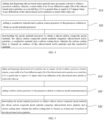
- the present application also provides a preparation method of a silicon carbon composite anode material. As shown in FIG. 4 , the method includes following steps:
- a semi-width of an X-ray diffraction angle (2 ⁇ ) of the silicon-based active particle on a crystal face (111) is greater than or equal to 0.5 degree.
- the silicon-based active particle, the conductive material, and the carbon source precursor are mixed in a solvent, and then heat-treated, so that surfaces of the silicon-based active particle and the conductive material are coated with a carbon coating layer, which can inhibit the occurrence of agglomeration and reduce direct contact between the silicon-based active particle and electrolyte.
- the anode material prepared facilitate to inhibit volume expansion of silicon, reduce expansion rate of the anode, improve charging and discharging efficiency of the anode, and increase cycle performance of battery.
- the semi-width of an X-ray diffraction angle (2 ⁇ ) of the silicon-based active particle selected on a crystal face (111) is greater than or equal to 0.5 degree.
- the silicon-based active particle has a small grain size, which can effectively reduce volume expansion rate of silicon and improve cycle performance.
- the semi-width of the X-ray diffraction angle (2 ⁇ ) of the silicon-based active particle on the crystal face (111) is lower than 0.5, the grain size of the silicon active particle is excessively large, and volume expansion rate of the silicon active particle is large, which does not facilitate to improve performances of the anode material.
- Step S10 adding a silicon-based active particle into an organic solvent and dispersing to obtain a precursor solution.
- the silicon-based active particle includes at least one of Si, SiOx and silicon alloy, where 0 ⁇ x ⁇ 2.
- the median particle size of the silicon-based active particle is 5 nm to 120 nm. Specifically, it can be 5 nm, 10 nm, 20 nm, 25 nm, 30 nm, 35 nm, 40 nm, 50 nm, 60 nm, 70 nm, 80 nm, 90 nm, 100 nm, 110 nm or 120 nm, etc., but is not limited to the above.
- the median particle size of the silicon-based active particle is 5 nm to 80 nm.
- nanoscale silicon-based active particle has a high surface energy, and has randomly arranged atoms on its surface, thereby having good extensibility and stability. Moreover, the particle has strong structure, so that the volume expansion of silicon can be inhibited. More preferably, the median particle size of the silicon-based active particle is 5 nm to 40 nm.
- the semi-width of an X-ray diffraction angle (2 ⁇ ) of the silicon-based active particle on a crystal face (111) can specifically be 0.52, 0.65, 0.71, 0.75, 0.81, 0.86, 0.98, etc., but is not limited to the above. It should be noted that when X-ray irradiates to a small crystal, the diffraction lines thereof will be diffused and thus widened. The smaller the grain size of the crystal, the greater the degree of widening of the X-ray diffraction band.
- the silicon-based active particle has a small grain size, which can effectively reduce volume expansion rate of silicon, and improve cycle performance.
- the semi-width of the X-ray diffraction angle (2 ⁇ ) of the silicon-based active particle on the crystal face (111) is greater than or equal to 0.6 degree.
- a mass content of Si 4+ in the silicon-based active particle can be 0.05%, 0.1%, 0.2%, 0.3%, 0.4%, 0.5%, 1%, 1.5%, 2%, 2.5%, 3%, 3.5%, 4%, 4.5%, 5%, etc.
- Si 4+ in the silicon-based active particle due to the presence of Si 4+ in the silicon-based active particle, it can be a second non-active phase in the process of lithium intercalation and de-intercalation of silicon.
- the second non-active phase plays a role of stabilizing structure during volume expansion of silicon, which can effectively inhibit volume expansion of silicon, reduce expansion rate, and improve cycle stability of battery.
- a hardness of the silicon-based active particle tested at a pressure of 6 mN is 3 GPa to 20 GPa. Specifically, it can be 3 GPa, 5 GPa, 8 GPa, 12 GPA, 15 GPa, 18 GPa or 20 GPa, etc., but is not limited to the above.
- the hardness of the silicon-based active particle is within the above range, due to having strong rigidity, the particle has a strong structure stability, which can resist a certain volume expansion stress, thereby reducing expansion and improving cycle stability of battery.
- the organic solvent includes at least one of methanol, ethanol, ethylene glycol, propanol, isopropanol, propanetriol, n-butanol, isobutanol, and pentanol.
- the surfactant includes at least one of polyvinyl alcohol (PVA), n-octadecanoic acid, polyethylene glycol (PEG), lauric acid, polyacrylic acid (PAA), sodium dodecylbenzene sulfonate (SDBS), n-eicosanoic acid, polyvinyl chloride (PVC) and polyvinylpyrrolidone (PVP).
- PVA polyvinyl alcohol
- PEG polyethylene glycol
- PAA polyacrylic acid
- SDBS sodium dodecylbenzene sulfonate
- PVC polyvinyl chloride
- PVP polyvinylpyrrolidone
- magnetic stirring, mechanical stirring, etc. can be used, or ultrasonic dispersion, grinding dispersion, etc.
- the grinding dispersion is preferably used, so that the silicon-based active particles can be dispersed to avoid agglomeration of the silicon-based active particle, and can make the silicon-based active particles be dispersed into small single-crystalline silicon nanoparticles.
- the mass content of Si 4+ can be increased by controlling grinding time of silicon particles. Generally, the longer the grinding time, the higher the mass content of Si 4+ .
- Step S20 adding a conductive material and a carbon source precursor to the precursor solution to obtain an anode material precursor.
- a mass ratio of the silicon-based active particle, the conductive material, and the carbon source precursor is (10-70):(5-30):(15-40).
- the mass ratio of the silicon-based active particle, the conductive material, and the carbon source precursor can be 40: 10:40, 60: 10:30, 50:20:25, 70:5:25, 55: 10:30, etc., but is not limited to the above.
- the conductive material includes at least one of graphite flake, carbon nanotube, carbon fiber, and graphene, but is not limited to the listed above, and other conventional conductive material in the art, e.g., coke, carbon black, and carbon micro-sphere, is also applicable.
- the graphite flake can be natural flake graphite
- the carbon fiber can be natural carbon fiber or synthetic carbon fiber.
- the carbon source precursor includes at least one of sucrose, glucose, polyethylene, polyvinyl alcohol, polyethylene glycol, polyaniline, epoxy resin, phenolic resin, furfural resin, acrylic resin, polyethylene oxide, polyvinylidene fluoride, polyacrylonitrile, polyvinyl chloride, and asphalt.
- a median particle size of the carbon source precursor is 1 ⁇ m to 50 ⁇ m. Specifically, it can be 1 ⁇ m, 5 ⁇ m, 8 ⁇ m, 10 ⁇ m, 12 ⁇ m, 15 ⁇ m, 18 ⁇ m, 20 ⁇ m, 25 ⁇ m, 30 ⁇ m, 35 ⁇ m, 40 ⁇ m, 45 ⁇ m or 50 ⁇ m, etc., but is not limited to the above.
- the median particle size of the carbon source precursor is 1 ⁇ m to 20 ⁇ m.
- a separation can be performed after adding a conductive material and a carbon source precursor to the precursor solution and stirring evenly. Specifically, a manner of the separation can be filtration at atmospheric pressure, reduced pressure filtration, centrifugal filtration, etc. The solid material obtained from separation is dried to obtain the anode material precursor.
- a temperature of the drying is 25°C to 200°C. Specifically, it can be 25°C, 50°C, 75°C, 100°C, 125°C, 150°C, 175°C or 200°C, etc., but is not limited to the above.
- a time of the drying is 1 h to 15 h. Specifically, it can be 1 h, 2 h, 3 h, 4 h, 5 h, 7 h, 9 h, 10 h, 12 h, or 15 h, etc., but is not limited to the above.
- a manner of the drying can be drying in furnace, spray drying, vacuum drying, freeze drying, etc.
- the drying in this embodiment can remove the solvent in the precursor solution as much as possible.
- the dried anode material precursor is silicon-based active particle and conductive material that are coated by the carbon source precursor.
- the dried anode material precursor can be sent into a high-temperature box-type furnace for heat treatment, so that the carbon source precursor is carbonized to form a carbon coating layer.
- Step S30 heat-treating the anode material precursor to obtain a silicon-based composite anode material.
- the heat treatment can be sintering treatment, hot-pressed sintering, and vacuum sintering.
- a temperature of the heat treatment is 500°C to 1200°C. Specifically, it can be 500°C, 600°C, 700°C, 800°C, 900°C, 1000°C, 1200°C, 1200°C, etc. Preferably, the temperature of the heat treatment is 800°C to 1200°C.
- a time of the heat treatment is 1 h to 9 h. Specifically, it can be 1 h, 2 h, 3 h, 4 h, 5 h, 6 h, 7 h, 8 h, 9 h, etc.
- a heating rate of the heat treatment is 1°C/min to 15°C/min. Specifically, it can be 1°C/min, 3°C/min, 5°C/min, 6°C/min, 7°C/min, 8°C/min, 9°C/min, 10°C/min, 12°C/min, or 15°C/min.
- the heating rate of the heat treatment can be 5°C/min to 10°C/min.
- a protection gas is introduced during the heat treatment.
- the protection gas is at least one of nitrogen, helium, neon, argon or krypton.
- the prepared silicon-based composite anode material has a core-shell structure, where the core is the silicon-based active particle and the conductive material, and the shell is the carbon coating layer.
- the particle of the silicon-based composite anode material can also be spherical or spherical-like in shape.
- the median particle size of the silicon-based composite anode material is 5 ⁇ m to 30 ⁇ m. Specifically, it can be 5 ⁇ m, 8 ⁇ m, 10 ⁇ m, 12 ⁇ m, 15 ⁇ m, 18 ⁇ m, 20 ⁇ m, 23 ⁇ m, 25 ⁇ m, 28 ⁇ m, or 30 ⁇ m, etc., but is not limited to the above.
- the nanoscale silicon-based active particle Since the nanoscale silicon-based active particle has a high surface energy, they tend to be agglomerated during charging and discharging process. Therefore, in the composite anode material provided by the present application, there is a conductive material among the silicon-based active particles, and surfaces of the silicon-based active particle and the conductive material are coated with a carbon coating layer, which can inhibit the occurrence of agglomeration and reduce direct contact between the silicon-based active particle and electrolyte.
- the silicon-based active particle has a large specific surface area, thus tend to generate passivation film on the surface during charging and discharging process, which consumes a large amount of lithium ions and reduces concentration of lithium ions in electrolyte, lowering reversible capacity of battery. Therefore, by coating the carbon coating layer, it is able to reduce the direct contact between the silicon-based active particle and electrolyte, reduce the generation of passivation film, and improve the reversible capacity of battery.
- a median particle size of the silicon-based composite anode material is 8 ⁇ m to 20 ⁇ m.
- the carbon coating layer coated on the silicon-based active particle and the conductive material can reduce contact between the silicon-based active particle and electrolyte, reduce generation of passivation film, and improve capacity of battery.
- a specific surface area of the silicon-based composite anode material is 0.5 m 2 /g to 10 m 2 /g. Specifically, it can be 0.5 m 2 /g, 1 m 2 /g, 2 m 2 /g, 3 m 2 /g, 4 m 2 /g, 5 m 2 /g, 6 m 2 /g, 7 m 2 /g, 8 m 2 /g, 9 m 2 /g, or 10 m 2 /g, etc., but is not limited to the above.
- the specific surface area of the silicon-based composite anode material is 1 m 2 /g to 6 m 2 /g.
- a powder compacted density of the silicon-based composite anode material is 0.4 g/cm 3 to 1.2 g/cm 3 .
- it can be 0.4 g/cm 3 , 0.5 g/cm 3 , 0.6 g/cm 3 , 0.7 g/cm 3 , 0.8 g/cm 3 , 0.9 g/cm 3 , 1.0 g/cm 3 , 1.1 g/cm 3 , or 1.2 g/cm 3 , etc., but is not limited to the above.
- the powder compacted density of the silicon-based composite anode material is 0.5 g/cm 3 to 0.9 g/cm 3 .
- a mass content of carbon element is 15% to 65%
- a mass content of the silicon-based active particle is 15% to 70%
- a mass content of the conductive material is 5% to 70%.
- the silicon carbon composite anode material prepared by the above preparation method surfaces of the silicon-based active particle and the conductive material are coated with a carbon-coating layer, which can inhibit expansion of the material during cycle process.
- the semi-width of the X-ray diffraction angle (2 ⁇ ) of the silicon-based active particle in the core structure on the crystal face (111) is greater than or equal to 0.5 degree, thus the grain is small, which can effectively reduce volume expansion of silicon and improve cycle performance.
- there may be SiOx oxide on surface of the silicon-based active particle which can effectively inhibit volume expansion of silicon and improve efficiency and cycle life of the anode including the anode active material.
- the mass content of Si 4+ in the silicon-based active particle is 0.05% to 5%, which can effectively inhibit volume expansion of silicon, reduce expansion rate, and increase cycle.
- the silicon-based active particle has a large hardness and a strong rigidity, which can effectively resist a certain volume expansion stress, facilitating to maintain structure stability of the anode material, thereby reducing expansion rate and improving cycle performance of battery.
- the present application provides a preparation method of a silicon carbon composite anode material. As shown in FIG. 5 , the method includes following steps:
- a semi-width of an X-ray diffraction angle (2 ⁇ ) of the silicon-based active particle on a crystal face (111) is greater than or equal to 0.5 degree.
- the silicon-based active particle and the carbon source precursor are mixed in a solvent, and then heat-treated, so that surface of the silicon-based active particle is coated with a carbon coating layer, which can inhibit the occurrence of agglomeration and reduce direct contact between the silicon-based active particle and electrolyte.
- the anode material prepared facilitate to inhibit volume expansion of silicon, reduce expansion rate of the anode, improve charging and discharging efficiency of the anode, and increase cycle performance of battery.
- a mass ratio of the silicon-based active particle and the carbon source precursor is (10-70):(15-40).
- the mass ratio of the silicon-based active particle and the carbon source precursor can be 40:40, 60:30, 50:25, 70:25, 55:30, etc., but is not limited to the above.
- the present application also provides a lithium ion battery.
- the lithium ion battery includes an anode plate, a cathode plate, a separator and non-aqueous electrolyte.
- the anode plate includes a current collector, and the silicon carbon composite anode material mentioned above or the anode material prepared by the preparation method mentioned above coated on the current collector.
- a semi-width of an X-ray diffraction angle (2 ⁇ ) of silicon particle in the silicon powder on a crystal face (111) was greater than or equal to 0.98 degree, a mass content of Si 4+ in the silicon powder was 1.5%, and a hardness of silicon particle in the silicon powder was 18 GPa.
- the silicon carbon composite anode material obtained had a median particle size of about 6.2 ⁇ m, a specific surface area of 10 m 2 /g, and a mass content of carbon of 20%.
- the carbon coating layer had a thickness of 300 nm.
- a semi-width of an X-ray diffraction angle (2 ⁇ ) of silicon particle in the silicon powder on a crystal face (111) was greater than or equal to 0.81 degree, a mass content of Si 4+ in the silicon powder was 0.5%, and a hardness of silicon particle in the silicon powder was 15 GPa.
- the silicon carbon composite anode material obtained had a median particle size of about 10 ⁇ m, a specific surface area of 9 m 2 /g, and a mass content of carbon of 30%.
- the carbon coating layer had a thickness of 100 nm.
- a semi-width of an X-ray diffraction angle (2 ⁇ ) of silicon particle in the silicon powder on a crystal face (111) was greater than or equal to 0.71 degree
- a mass content of Si 4+ in the silicon powder was 1.1%
- a hardness of silicon particle in the silicon powder was 10 GPa.
- the silicon carbon composite anode material obtained had a median particle size of about 24 ⁇ m, a specific surface area of 6 m 2 /g, and a mass content of carbon of 22%.
- the carbon coating layer had a thickness of 200 nm.
- a semi-width of an X-ray diffraction angle (2 ⁇ ) of silicon particle in the silicon powder on a crystal face (111) was greater than or equal to 0.62 degree, a mass content of Si 4+ in the silicon powder was 0.2%, and a hardness of silicon particle in the silicon powder was 8 GPa.
- the silicon carbon composite anode material obtained had a median particle size of about 18 ⁇ m, a specific surface area of 6 m 2 /g, and a mass content of carbon of 18%.
- the carbon coating layer had a thickness of 800 nm.
- a semi-width of an X-ray diffraction angle (2 ⁇ ) of silicon particle in the silicon powder on a crystal face (111) was greater than or equal to 0.98 degree, a mass content of Si 4+ in the silicon powder was 0.01%, and a hardness of silicon particle in the silicon powder was 18 GPa.
- the silicon carbon composite anode material obtained had a median particle size of about 6.6 ⁇ m, a specific surface area of 9.8 m 2 /g, and a mass content of carbon of 21%.
- the carbon coating layer had a thickness of 300 nm.
- a semi-width of an X-ray diffraction angle (2 ⁇ ) of silicon particle in the silicon powder on a crystal face (111) was greater than or equal to 0.98 degree, a mass content of Si 4+ in the silicon powder was 1.5%, and a hardness of silicon particle in the silicon powder was 2 GPa.
- the silicon carbon composite anode material obtained had a median particle size of about 6.6 ⁇ m, a specific surface area of 9.8 m 2 /g, and a mass content of carbon of 21%.
- the carbon coating layer had a thickness of 300 nm.
- a nano silicon-based composite anode material was prepared in the basically same way as Example 1, expect that the grinding dispersion in a ball mill was performed for 8 h.
- a semi-width of an X-ray diffraction angle (2 ⁇ ) of silicon particle in the silicon powder on a crystal face (111) was greater than or equal to 0.98 degree, a mass content of Si 4+ in the silicon powder was 8.5%, and a hardness of silicon particle in the silicon powder was 14 GPa.
- the silicon carbon composite anode material obtained had a median particle size of about 6.6 ⁇ m, a specific surface area of 7.9 m 2 /g, and a mass content of carbon of 21%.
- the carbon coating layer had a thickness of 300 nm.
- a nano silicon-based composite anode material was prepared in the basically same way as Example 1, expect that the grinding dispersion in a ball mill was performed for 8 h.
- a semi-width of an X-ray diffraction angle (2 ⁇ ) of silicon particle in the silicon powder on a crystal face (111) was greater than or equal to 0.98 degree, a mass content of Si 4+ in the silicon powder was 3.5%, and a hardness of silicon particle in the silicon powder was 28 GPa.
- the silicon carbon composite anode material obtained had a median particle size of about 6.5 ⁇ m, a specific surface area of 8.8 m 2 /g, and a mass content of carbon of 20%.
- the carbon coating layer had a thickness of 300 nm.
- a nano silicon-based composite anode material was prepared in the basically same way as Example 1, expect that the grinding dispersion in a ball mill was performed for 2 h.
- a semi-width of an X-ray diffraction angle (2 ⁇ ) of silicon particle in the silicon powder on a crystal face (111) was greater than or equal to 0.98 degree, a mass content of Si 4+ in the silicon powder was 0.8%, and a hardness of silicon particle in the silicon powder was 18 GPa.
- the silicon carbon composite anode material obtained had a median particle size of about 5.8 ⁇ m, a specific surface area of 10 m 2 /g, and a mass content of carbon of 20%.
- the carbon coating layer had a thickness of 300 nm.
- a semi-width of an X-ray diffraction angle (2 ⁇ ) of silicon particle in the silicon powder on a crystal face (111) was greater than or equal to 0.80 degree, a mass content of Si 4+ in the silicon powder was 0.8%, and a hardness of silicon particle in the silicon powder was 18 GPa.
- the silicon carbon composite anode material obtained had a median particle size of about 6.3 ⁇ m, a specific surface area of 12 m 2 /g, and a mass content of carbon of 25%.
- the carbon coating layer had a thickness of 350 nm.
- a nano silicon-based composite anode material was prepared in the basically same way as Example 1, expect that silicon powder with 180 nm was used to prepare a silicon carbon composite material.
- a semi-width of an X-ray diffraction angle (2 ⁇ ) of silicon particle in the silicon powder on a crystal face (111) was greater than or equal to 0.32 degree, a mass content of Si 4+ in the silicon powder was 0.01%, and a hardness of silicon particle in the silicon powder was 2.5 GPa.
- the silicon carbon composite anode material obtained had a median particle size of about 15 ⁇ m, a specific surface area of 6 m 2 /g, and a mass content of carbon of 18%.
- the carbon coating layer had a thickness of 300 nm.
- a nano silicon-based composite anode material was prepared in the basically same way as Example 1, expect that: In this Comparative Example, a semi-width of an X-ray diffraction angle (2 ⁇ ) of silicon particle in the silicon powder on a crystal face (111) was greater than or equal to 0.35 degree, a mass content of Si 4+ in the silicon powder was 4.5%, and a hardness of silicon particle in the silicon powder was 2.5 GPa.
- the silicon carbon composite anode material obtained had a median particle size of about 22 ⁇ m, a specific surface area of 9 m 2 /g, and a mass content of carbon of 36%.
- the carbon coating layer had a thickness of 800 nm.
- the charge and discharge testing of the cylindrical battery was performed by a LAND cell test system produced by Wuhan Jinnuo Electronics Co., Ltd, under room temperature conditions, charging and discharging at 0.2C constant current, and the charge and discharge voltage was controlled to 2.75 V to 4.2 V
- the test of charging and discharging was performed to obtain the initial reversible capacity, the initial charging capacity and the initial discharge capacity.
- the initial Coulombic efficiency the initial discharge capacity / the initial charge capacity.
- the cycling was repeated for 50 times.
- the cycling was repeated for 100 times.
- a semi-width of an X-ray diffraction angle (2 ⁇ ) of silicon particle in the silicon powder on a crystal face (111) was tested by an X-ray diffraction method.
- Hardness test the indentation hardness test was tested by a nanoindentation with a load of 0.6 N and a controlled indentation depth of 0.5 um.
- Si 4+ content test the Si 4+ content in the silicon powder was tested by an X-ray electronic energy spectrum analyzer.
- Example 5 differs from Example 1 in that the mass content of Si 4+ in the silicon-based active particle used is 0.01%. During the charging and discharging, the expansion rate, the cycle life and initial Coulombic efficiency of the plate prepared by the anode material of Example 5 are all lower than that of Example 1.
- Example 6 differs from Example 1 in that the hardness of the silicon-based active particle used is only 2 GPa, which is smaller than the hardness of the silicon particle in Example 1, thus the structure stability of the silicon particle is poor, and it is difficult to resist the volume expansion stress during charging and discharging, resulting a reduced cycle stability of battery.
- Example 7 differs from Example 1 in that the mass content of Si 4+ in the silicon-based active particle used is 8.5%. The mass content of Si 4+ is excessively high, so that the capacity and initial Coulombic efficiency of the anode material are reduced.
- Example 8 differs from Example 1 in that the hardness of the silicon-based active particle used is 28 GPa.
- the hardness is excessively large, chemical bond energy between surfaces of the particles is very large, a higher energy barrier for opening bonding is required for lithium intercalation and de-intercalation, resulting difficult for lithium intercalation, which does not facilitate to improve performance of the anode material.
- Example 9 differs from Example 1 in that in step (1) the dispersed solution was placed in the ball mill for grinding dispersion for 2 hours.
- the grinding time is excessively short relative to the grinding time of 6 h of the silicon particle in Example 1. It can be found that, controlling the grinding time of the silicon particle can increase the mass content of Si 4+ . Generally, the longer the grinding time, the higher the mass content of Si 4+ .
- Example 10 differs from the Example 1 in that the conductive material was not added in the preparation, so that the initial Coulombic efficiency and the initial reversible capacity of the battery of Example 10 are lowered than that of Example 1.
- the silicon-based active particles used in Comparative Examples 1 and 2 have a semi-width on a crystal face (111) smaller than 0.5, and a hardness smaller than 3 GPa.
- the expansion rate, the cycle life and initial Coulombic efficiency of the anode plates prepared by the silicon-based active particles are lower than that of Examples 1 to 6.
- a semi-width of an X-ray diffraction angle (2 ⁇ ) of the silicon-based active particle on a crystal face (111) is greater than or equal to 0.5 degree
- the mass content of Si 4+ is 0.05% to 5%
- the hardness of the silicon-based active particle is controlled to be 3 GPa to 20 GPa, which facilitate to inhibit volume expansion of silicon, improve efficiency and cycle life of the anode, and can effectively resist a certain volume expansion stress, thereby reducing expansion rate and improving cycle performance of battery.
Landscapes
- Chemical & Material Sciences (AREA)
- Chemical Kinetics & Catalysis (AREA)
- Electrochemistry (AREA)
- General Chemical & Material Sciences (AREA)
- Engineering & Computer Science (AREA)
- Composite Materials (AREA)
- Materials Engineering (AREA)
- Manufacturing & Machinery (AREA)
- Inorganic Chemistry (AREA)
- Battery Electrode And Active Subsutance (AREA)
Abstract
Description
- The present application claims the benefit of priority of
Chinese Patent Application No. 202110193665.9 filed with China Patent Office on February 20, 2021 - The present application relates to a technical field of anode material and, in particular, to a silicon carbon composite anode material, a preparation method thereof, and a lithium ion battery.
- Lithium ion battery is widely used in electric vehicles and consumer electronics due to advantages of large energy density, high output power, long cycle life, and less environmental pollution. In order to increase the energy density of battery, the research and development on silicon anode materials are advancing day after day. However, the silicon anode material has a large volume expansion rate (>300%) in the process of lithium intercalation and de-intercalation, and the silicon anode material may pulverize to fell off from a current collector during charging and discharging process, so that electrical contact between the active material and the current collector is lost, resulting poor electrochemical property, reduced capacity, and decreased cycle stability. Therefore, it is difficult to be applied commercially. In order to improve conductivity and cycle stability of the silicon anode material, nano-structuring, porousization, or carbon-coating have been applied. Among them, modification on the silicon material itself is one of important directions.
- Based on this, there is a pressing need on develop a silicon carbon composite anode material to inhibit the volume expansion of anode material and improve the cycle stability of the material.
- In view of this, the present application provides a silicon carbon composite anode material and a preparation method thereof, and a lithium ion battery, which can effectively inhibit volume expansion of anode material and improve cycle performance of battery. The preparation method can reduce preparation cost.
- In a first aspect, the present application provides a silicon carbon composite anode material. The silicon carbon composite anode material includes a silicon-based active particle, a conductive material, and a carbon coating layer, where the carbon coating layer is present on surface of the silicon-based active particle and/or the conductive material; and
a semi-width of an X-ray diffraction angle (2θ) of the silicon-based active particle on a crystal face (111) is greater than or equal to 0.5 degree when X-ray diffraction of the silicon-based active particle is tested with CuKα ray. - In the above solution, by controlling the performance parameters of the silicon-based active particle itself, a semi-width of an X-ray diffraction angle (2θ) of the silicon-based active particle on a crystal face (111) is greater than or equal to 0.5 degree, which facilitate to inhibit volume expansion of silicon, reduce expansion rate of the anode, improve charging and discharging efficiency of the anode, and increase cycle performance of battery.
- In a second aspect, the present application further provides a silicon carbon composite anode material. The silicon carbon composite anode material has a core-shell structure, and includes a silicon-based active particle and a carbon coating layer coated on at least part of surface of the silicon-based active particle; and
a semi-width of an X-ray diffraction angle (2θ) of the silicon carbon composite anode material on a crystal face (111) is greater than or equal to 0.5 degree when X-ray diffraction of the silicon carbon composite anode material is tested with CuKα ray. - In a feasible embodiment, the silicon carbon composite anode material has a core-shell structure. The core includes the silicon-based active particle and the conductive material embedded among the silicon-based active particles. The shell includes the carbon coating layer.
- In a feasible embodiment, the silicon carbon composite anode material satisfies at least one of following conditions a to f:
- a. the silicon-based active particle includes at least one of Si, SiOx and silicon alloy, where 0<x≤2;
- b. a median particle size of the silicon-based active particles is 5 nm to 120 nm;
- c. a hardness of the silicon-based active particle tested by a nanoindentation is 3 GPa to 20 GPa;
- d. a mass content of Si4+ in the silicon-based active particle is 0.05% to 5%;
- e. the conductive material includes at least one of graphite flake, carbon nanotube, carbon fiber, and graphene; and
- f. a thickness of the carbon coating layer is 50 nm to 2500 nm.
- In a feasible embodiment, the silicon carbon composite anode material satisfies at least one of following conditions a to f:
- a. a median particle size of the silicon-based composite anode material is 5 µm to 30 µm;
- b. a specific surface area of the silicon-based composite anode material is 0.5 m2/g to 10 m2/g;
- c. a powder compaction density of the silicon-based composite anode material is 0.4 g/cm3 to 1.2 g/cm3;
- d. a mass content of carbon element in the silicon-based composite anode material is 15% to 65%;
- e. a mass content of the silicon-based active particle in the silicon-based composite anode material is 15% to 70%; and
- f. a mass content of the conductive material in the silicon-based composite anode material is 5% to 70%.
- In a third aspect, the present application provides a preparation method of a silicon carbon composite anode material. The method includes following steps:
- adding a silicon-based active particle into an organic solvent and dispersing to obtain a precursor solution, where a semi-width of an X-ray diffraction angle (2θ) of the silicon-based active particle on a crystal face (111) is greater than or equal to 0.5 degree when X-ray diffraction of the silicon-based active particle is tested with CuKα ray;
- adding a conductive material and a carbon source precursor to the precursor solution to obtain an anode material precursor; and
- heat-treating the anode material precursor to obtain a silicon-based composite anode material, where the silicon carbon composite anode material includes a silicon-based active particle, a conductive material, and a carbon coating layer, and the carbon coating layer is formed on surface of the silicon-based active particle and/or the conductive material.
- In the above solution, by controlling the performance parameters of the silicon-based active particle itself, a semi-width of an X-ray diffraction angle (2θ) of the silicon-based active particle on a crystal face (111) is greater than or equal to 0.5 degree. In the preparation, the silicon-based active particle, the conductive material, and the carbon source precursor are mixed in a solvent, and then heat-treated to obtain the anode material. The anode material prepared facilitate to inhibit volume expansion of silicon, reduce expansion rate of the anode, improve charging and discharging efficiency of the anode, and increase cycle performance of battery.
- In a fourth aspect, the present application provides a preparation method of a silicon carbon composite anode material. The method includes following steps:
- adding a silicon-based active particle into an organic solvent and dispersing to obtain a precursor solution, where a semi-width of an X-ray diffraction angle (2θ) of the silicon-based active particle on a crystal face (111) is greater than or equal to 0.5 degree when X-ray diffraction of the silicon-based active particle is tested with CuKα ray;
- adding a carbon source precursor to the precursor solution to obtain an anode material precursor; and
- heat-treating the anode material precursor to obtain a silicon-based composite anode material, where the silicon carbon composite anode material includes a silicon-based active particle and a carbon coating layer, and the carbon coating layer is formed on at least part of surface of the silicon-based active particle.
- In the above solution, by controlling the performance parameters of the silicon-based active particle itself, a semi-width of an X-ray diffraction angle (2θ) of the silicon-based active particle on a crystal face (111) is greater than or equal to 0.5 degree. In the preparation, the silicon-based active particle and the carbon source precursor are mixed in a solvent, and then heat-treated to obtain the anode material. The anode material prepared facilitate to inhibit volume expansion of silicon, reduce expansion rate of the anode, improve charging and discharging efficiency of the anode, and increase cycle performance of battery.
- In a feasible embodiment, the silicon-based composite anode material satisfies at least one of following conditions a to d:
- a. a mass content of Si4+ in the silicon-based active particle is 0.05% to 5%;
- b. a median particle size of the silicon-based active particles is 5 nm to 120 nm;
- c. a hardness of the silicon-based active particle tested by a nanoindentation is 3 GPa to 20 GPa; and
- d. the silicon-based active particle includes at least one of Si, SiOx and silicon alloy, where 0<x≤2.
- In a feasible embodiment, the silicon-based composite anode material satisfies at least one of following conditions a to e:
- a. a median particle size of the silicon-based composite anode material is 5 µm to 30 µm;
- b. a specific surface area of the silicon-based composite anode material is 0.5 m2/g to 10 m2/g;
- c. a powder compacted density of the silicon-based composite anode material is 0.4 g/cm3 to 1.2 g/cm3;
- d. a mass content of carbon element in the silicon-based composite anode material is 15% to 65%; and
- e. a mass content of the silicon-based active particle in the silicon-based composite anode material is 15% to 70%.
- In a feasible embodiment, a mass content of the conductive material in the silicon-based composite anode material is 5% to 70%.
- In a feasible embodiment, the method satisfies at least one of following conditions a to c:
- a. a mass ratio of the silicon-based active particle, the conductive material, and the carbon source precursor is (10-70):(5-30):(15-40);
- b. the conductive material includes at least one of graphite flake, carbon nanotube, carbon fiber, and graphene; and
- c. the carbon source precursor includes at least one of sucrose, glucose, polyethylene, polyaniline, phenolic resin, polyvinyl chloride, and asphalt.
- In a feasible embodiment, the method satisfies at least one of following conditions a to b:
- a. a mass ratio of the silicon-based active particle and the carbon source precursor is (10-70):(15-40); and
- b. the carbon source precursor includes at least one of sucrose, glucose, polyethylene, polyaniline, phenolic resin, polyvinyl chloride, and asphalt.
- In a feasible embodiment, after dispersing the silicon-based active particle in the organic solvent, the method further includes:
adding a surfactant into the organic solvent, where the surfactant includes at least one of polyvinyl alcohol, n-octadecanoic acid, polyethylene glycol, lauric acid, polyacrylic acid, sodium dodecylbenzene sulfonate, n-eicosanoic acid, polyvinyl chloride, and polyvinylpyrrolidone; and/or, the organic solvent includes at least one of methanol, ethanol, ethylene glycol, propanol, isopropanol, propanetriol, n-butanol, isobutanol, and pentanol. - In a feasible embodiment, the method satisfies at least one of following conditions a to c:
- a. a temperature of the heat treatment is 500°C to 1200°C;
- b. a time of the heat treatment is 1 h to 9 h; and
- c. a heating rate of the heat treatment is 1°C/min to 15°C/min.
- In a fifth aspect, the present application provides a lithium ion battery. The lithium ion battery includes the silicon carbon composite anode material or the anode material prepared by the above preparation method of the silicon carbon composite anode material.
- The technical solution of the present application has at least following beneficial effects:
In the silicon carbon composite anode materials provided by the present application, a semi-width of an X-ray diffraction angle (2θ) of the silicon-based active particle on a crystal face (111) is greater than or equal to 0.5 degree. The silicon-based active particle has a smaller grain size, which can effectively reduce volume expansion rate of silicon and improve cycle performance. Other beneficial effects will be explained in the description of embodiments. -
-
FIG. 1 is a SEM photograph of the silicon carbon composite anode material provided by an embodiment of the present application; -
FIG. 2 is another SEM photograph of the silicon carbon composite anode material provided by an embodiment of the present application; -
FIG. 3 is a TEM high-resolution photograph of the silicon-based active particle in the silicon carbon composite anode material provided by an embodiment of the present application; -
FIG. 4 is a flowchart of the preparation method of the silicon carbon composite anode material provided by an embodiment of the present application; and -
FIG. 5 is another flowchart of the preparation method of the silicon carbon composite anode material provided by an embodiment of the present application. - Preferred embodiments of the present application will be described below. It should be noted that for an ordinary person skilled in the art, some improvements and modifications can be made without departing from the principle of the present application, which are deemed to be in the protection scope of the present application.
- The existing lithium ion battery is widely used in electric vehicles and consumer electronics due to advantages of large energy density, high output power, long cycle life, and less environmental pollution. In order to increase the energy density of battery, the research and development on silicon anode materials are advancing day after day. However, the silicon anode material has a large volume expansion rate (>300%) in the process of lithium intercalation and de-intercalation, and the silicon anode material may pulverize to fell off from a current collector during charging and discharging process, so that electrical contact between the active material and the current collector is lost, resulting poor electrochemical property, reduced capacity, and decreased cycle stability. Therefore, it is difficult to be applied commercially. In order to improve conductivity and cycle stability of the silicon anode material, the silicon material itself can be modified to improve conductivity and cycle stability of silicon anode material.
- In a first aspect, following the direction of modification on the silicon material itself, the present application provides a silicon carbon composite anode material. The silicon carbon composite anode material includes a silicon-based active particle, a conductive material, and a carbon coating layer.
- In some embodiments, the carbon coating layer is present on surface of the silicon-based active particle.
- In some embodiments, the carbon coating layer is present on surface of the conductive material.
- In some embodiments, the carbon coating layer is present on surfaces of both the silicon-based active particle and the conductive material.
- When X-ray diffraction of the silicon-based active particle is tested with CuKα ray, a semi-width of an X-ray diffraction angle (2θ) of the silicon-based active particle on a crystal face (111) is greater than or equal to 0.5 degree.
- It is understood that when X-ray irradiates to a small crystal, the diffraction lines thereof will be diffused and thus widened. The smaller the grain size of the crystal, the greater the degree of widening of the X-ray diffraction band. Therefore, the silicon-based active particle in the anode material of the present application is a silicon-based active particle with smaller grain size, which can effectively reduce volume expansion rate of silicon and improve cycle performance. When the semi-width of the X-ray diffraction angle (2θ) of the silicon-based active particle on the crystal face (111) is lower than 0.5, the grain size of the silicon-based active particle is excessively large, and volume expansion rate of the silicon active particle is larger, which does not facilitate to improve performances of the anode material. Preferably, the semi-width of the X-ray diffraction angle (2θ) of the silicon-based active particle on the crystal face (111) is greater than or equal to 0.6 degree.
- In a second aspect, the present application further provides a silicon carbon composite anode material. The silicon carbon composite anode material has a core-shell structure, and includes a silicon-based active particle and a carbon coating layer coated on at least part of surface of the silicon-based active particle.
- When X-ray diffraction of the silicon carbon composite anode material is tested with CuKα ray, a semi-width of an X-ray diffraction angle (2θ) of the silicon carbon composite anode material on a crystal face (111) is greater than or equal to 0.5 degree.
- In some embodiments, the silicon-based active particle includes at least one of Si, SiOx and silicon alloy, where 0<x≤2, but is not limited to the listed above, and other conventional silicon-based active material in the art, e.g., carbon-coating silicon oxide, silicon-doping semiconductor, or other silicon-containing compound, is also applicable. For example, the silicon-based active particle can be Si, SiO, SiO2 silicon lithium alloy, silicone magnesium alloy, etc. In some preferred embodiments, there is a SiOx silicon oxide on surface of the silicon-based active particle, which can effectively inhibit volume expansion of silicon, and improve efficiency and cycle life of the anode including the anode active material.
- In some embodiments, a mass content of Si4+ in the silicon-based active particle is 0.05% to 5%. Specifically, it can be 0.05%, 0.1%, 0.2%, 0.3%, 0.4%, 0.5%, 1%, 1.5%, 2%, 2.5%, 3%, 3.5%, 4%, 4.5%, 5%, etc. It should be noted that due to the presence of Si4+ in the silicon-based active particle, it can be a second non-active phase in the process of lithium intercalation and de-intercalation of silicon. When the second non-active phase containing Si4+ uniformly disperses in the silicon-based active particle in a diffused fine particle form, it will bring a significant reinforcement. The second non-active phase plays a role of stabilizing structure during volume expansion of silicon, which can effectively inhibit volume expansion of silicon, reduce expansion rate, and improve cycle stability of battery. It is found in the research that when the mass content of Si4+ in the silicon-based active particle exceeds 5%, capacity and initial coulombic efficiency of the anode material is reduced.
- In some embodiments, as shown in
FIG. 1 and FIG. 2 , a median particle size of the silicon-based active particles is 5 nm to 120 nm. Specifically, it can be 5 nm, 10 nm, 20 nm, 25 nm, 30 nm, 35 nm, 40 nm, 50 nm, 60 nm, 70 nm, 80 nm, 90 nm, 100 nm, 110 nm or 120 nm, etc., but is not limited to the above. Preferably, the median particle size of the silicon-based active particles is 5 nm to 80 nm. It is understood that the smaller the particle size of the silicon-based active particle, the better the performance of the material. Comprehensively considering process costs of the silicon-based active particle with smaller particle size, the median particle size of the silicon-based active particles is more preferably 5 nm to 40 nm. - It can be found through numerous examinations that nanoscale silicon-based active particle has a high surface energy, and has randomly arranged atoms on its surface, thereby having good extensibility and stability. Moreover, the particle has strong structure, so that the volume expansion of silicon can be inhibited. However, since the nanoscale silicon-based active particle has a high surface energy, they tend to be agglomerated during charging and discharging process. Therefore, in the composite anode material provided by the present application, there is a conductive material among the silicon-based active particles, and the silicon-based active particle and the conductive material are coated by the carbon coating layer, which can inhibit the occurrence of agglomeration and reduce direct contact between the silicon-based active particle and electrolyte. The silicon-based active particle has a large specific surface area, thus tend to generate passivation film on the surface during charging and discharging process, which consumes a large amount of lithium ions and reduces concentration of lithium ions in electrolyte, lowering reversible capacity of battery. Therefore, by coating the carbon coating layer, it is able to reduce the direct contact between the silicon-based active particle and electrolyte, reduce the generation of passivation film, and improve the reversible capacity of battery. As shown in
FIG. 3 , the silicon-based active particle can be a single-crystalline silicon nanoparticle consisting of only one grain, and/or, a polycrystalline silicon nanoparticle consisting of multiple grains. - In some embodiments, a nanoindentation is applied, a hardness of the silicon-based active particle tested by the nanoindentation is 3 GPa to 20 GPa. Specifically, it can be 3 GPa, 5 GPa, 8 GPa, 12 GPA, 15 GPa, 18 GPa or 20 GPa, etc., but is not limited to the above. It can be found through numerous examinations that when the hardness of the silicon-based active particle is within the above range, due to having strong rigidity, the particle has a strong structure stability, which can resist a certain volume expansion stress, thereby reducing expansion and improving cycle stability of battery. When the hardness is higher than 20 GPa, chemical bond energy between surfaces of the particles is very large, a higher energy barrier for opening bonding is required for lithium intercalation and de-intercalation, resulting difficult for lithium intercalation, which does not facilitate to improve performance of the anode material.
- In some embodiments, the conductive material includes at least one of graphite flake, carbon nanotube, carbon fiber, and graphene, but is not limited to the listed above, and other conventional conductive material in the art, e.g., coke, carbon black, and carbon micro-sphere, is also applicable. Specifically, the graphite flake can be natural flake graphite, and the carbon fiber can be natural carbon fiber or synthetic carbon fiber.
- In some embodiments, a thickness of the carbon coating layer is 50 nm to 2500 nm. Specifically, it can be 50 nm, 100 nm, 200 nm, 300 nm, 400 nm, 500 nm, 600 nm, 700 nm, 800 nm, 1000 nm, 1200 nm, 2000 nm or 2500 nm, etc., but is not limited to the above. The carbon coating layer coated on the silicon-based active particle and the conductive material can reduce contact between the silicon-based active particle and electrolyte, reduce generation of passivation film, and improve capacity of battery. The thicker the thickness of the carbon coating layer, the better the protection effect, thereby ensuring a more stable structure. However, if the carbon coating layer is excessively thick, proportion of carbon is excessively large, resulting an excessively low capacity of the silicon carbon composite material. Preferably, the thickness of the carbon coating layer can be controlled to be 100 nm to 1500 nm.
- In some embodiments, the silicon-based composite anode material has a core-shell structure. The core includes the silicon-based active particle and the conductive material. The shell includes the carbon coating layer. The particle of the silicon-based composite anode material can also be spherical or spherical-like in shape. The conductive material is embedded among the silicon-based active particles.
- In some embodiments, a median particle size of the silicon-based composite anode material is 5 µm to 30 µm. Specifically, it can be 5 µm, 8 µm, 10µm, 12 µm, 15 µm, 18 µm, 20 µm, 23 µm, 25 µm, 28 µm or 30 µm, etc, but is not limited to the above. Preferably, the median particle size of the silicon-based composite anode material is 8 µm to 20 µm.
- In some embodiments, a specific surface area of the silicon-based composite anode material is 0.5 m2/g to 10 m2/g. Specifically, it can be 0.5 m2/g, 1 m2/g, 2 m2/g, 3 m2/g, 4 m2/g, 5 m2/g, 6 m2/g, 7 m2/g, 8 m2/g, 9 m2/g, or 10 m2/g, etc., but is not limited to the above. Preferably, the specific surface area of the silicon-based composite anode material is 1 m2/g to 6 m2/g. It is understood that the smaller the specific surface area, the better. The excessively large specific surface area can easily lead to formation of SEI film, consuming excessive amount of irreversible lithium salt, and reducing initial coulombic efficiency of battery. Comprehensively considering costs of preparation process, the specific surface area is controlled to be 1 m2/g to 6 m2/g.
- In some embodiments, a powder compacted density of the silicon-based composite anode material is 0.4 g/cm3 to 1.2 g/cm3. Specifically, it can be 0.4 g/cm3, 0.5 g/cm3, 0.6 g/cm3, 0.7 g/cm3, 0.8 g/cm3, 0.9 g/cm3, 1.0 g/cm3, 1.1 g/cm3, or 1.2 g/cm3, etc., but is not limited to the above. Preferably, the powder compacted density of the silicon-based composite anode material is 0.5 g/cm3 to 0.9 g/cm3.
- In some embodiments, in the silicon-based composite anode material, a mass content of carbon element is 15% to 65%, a mass content of the silicon-based active particle is 15% to 70%, and a mass content of the conductive material is 5% to 70%.
- In the third aspect, the present application also provides a preparation method of a silicon carbon composite anode material. As shown in
FIG. 4 , the method includes following steps: - S10, adding a silicon-based active particle into an organic solvent and dispersing to obtain a precursor solution, where a semi-width of an X-ray diffraction angle (2θ) of the silicon-based active particle on a crystal face (111) is greater than or equal to 0.5 degree when X-ray diffraction of the silicon-based active particle is tested with CuKα ray;
- S20, adding a conductive material and a carbon source precursor to the precursor solution to obtain an anode material precursor; and
- S30, heat-treating the anode material precursor to obtain a silicon-based composite anode material, where the silicon carbon composite anode material includes a silicon-based active particle, a conductive material, and a carbon coating layer, and the carbon coating layer is formed on surface of the silicon-based active particle and/or the conductive material.
- In the above solution, by controlling the performance parameters of the silicon-based active particle itself, a semi-width of an X-ray diffraction angle (2θ) of the silicon-based active particle on a crystal face (111) is greater than or equal to 0.5 degree. In the preparation process, the silicon-based active particle, the conductive material, and the carbon source precursor are mixed in a solvent, and then heat-treated, so that surfaces of the silicon-based active particle and the conductive material are coated with a carbon coating layer, which can inhibit the occurrence of agglomeration and reduce direct contact between the silicon-based active particle and electrolyte. The anode material prepared facilitate to inhibit volume expansion of silicon, reduce expansion rate of the anode, improve charging and discharging efficiency of the anode, and increase cycle performance of battery.
- The semi-width of an X-ray diffraction angle (2θ) of the silicon-based active particle selected on a crystal face (111) is greater than or equal to 0.5 degree. The silicon-based active particle has a small grain size, which can effectively reduce volume expansion rate of silicon and improve cycle performance. When the semi-width of the X-ray diffraction angle (2θ) of the silicon-based active particle on the crystal face (111) is lower than 0.5, the grain size of the silicon active particle is excessively large, and volume expansion rate of the silicon active particle is large, which does not facilitate to improve performances of the anode material.
- The solution will be described in detail with following embodiments.
- Step S10, adding a silicon-based active particle into an organic solvent and dispersing to obtain a precursor solution.
- In some embodiments, the silicon-based active particle includes at least one of Si, SiOx and silicon alloy, where 0<x≤2. The median particle size of the silicon-based active particle is 5 nm to 120 nm. Specifically, it can be 5 nm, 10 nm, 20 nm, 25 nm, 30 nm, 35 nm, 40 nm, 50 nm, 60 nm, 70 nm, 80 nm, 90 nm, 100 nm, 110 nm or 120 nm, etc., but is not limited to the above. Preferably, the median particle size of the silicon-based active particle is 5 nm to 80 nm. It can be found through numerous examinations that nanoscale silicon-based active particle has a high surface energy, and has randomly arranged atoms on its surface, thereby having good extensibility and stability. Moreover, the particle has strong structure, so that the volume expansion of silicon can be inhibited. More preferably, the median particle size of the silicon-based active particle is 5 nm to 40 nm.
- In some embodiments, the semi-width of an X-ray diffraction angle (2θ) of the silicon-based active particle on a crystal face (111) can specifically be 0.52, 0.65, 0.71, 0.75, 0.81, 0.86, 0.98, etc., but is not limited to the above. It should be noted that when X-ray irradiates to a small crystal, the diffraction lines thereof will be diffused and thus widened. The smaller the grain size of the crystal, the greater the degree of widening of the X-ray diffraction band. Therefore, when the semi-width of the X-ray diffraction angle (2θ) of the silicon-based active particles on the crystal face (111) is greater than or equal to 0.5, the silicon-based active particle has a small grain size, which can effectively reduce volume expansion rate of silicon, and improve cycle performance. Preferably, the semi-width of the X-ray diffraction angle (2θ) of the silicon-based active particle on the crystal face (111) is greater than or equal to 0.6 degree.
- In some embodiments, a mass content of Si4+ in the silicon-based active particle can be 0.05%, 0.1%, 0.2%, 0.3%, 0.4%, 0.5%, 1%, 1.5%, 2%, 2.5%, 3%, 3.5%, 4%, 4.5%, 5%, etc. It should be noted that due to the presence of Si4+ in the silicon-based active particle, it can be a second non-active phase in the process of lithium intercalation and de-intercalation of silicon. When the second non-active phase containing Si4+ uniformly disperses in the silicon-based active particle in a diffused fine particle form, it will bring a significant reinforcement. The second non-active phase plays a role of stabilizing structure during volume expansion of silicon, which can effectively inhibit volume expansion of silicon, reduce expansion rate, and improve cycle stability of battery.
- In some embodiments, a nanoindentation is applied, a hardness of the silicon-based active particle tested at a pressure of 6 mN is 3 GPa to 20 GPa. Specifically, it can be 3 GPa, 5 GPa, 8 GPa, 12 GPA, 15 GPa, 18 GPa or 20 GPa, etc., but is not limited to the above. When the hardness of the silicon-based active particle is within the above range, due to having strong rigidity, the particle has a strong structure stability, which can resist a certain volume expansion stress, thereby reducing expansion and improving cycle stability of battery.
- In some embodiments, the organic solvent includes at least one of methanol, ethanol, ethylene glycol, propanol, isopropanol, propanetriol, n-butanol, isobutanol, and pentanol.
- In some embodiments, in the step S10, it also needs to add a surfactant to the organic solvent. The surfactant includes at least one of polyvinyl alcohol (PVA), n-octadecanoic acid, polyethylene glycol (PEG), lauric acid, polyacrylic acid (PAA), sodium dodecylbenzene sulfonate (SDBS), n-eicosanoic acid, polyvinyl chloride (PVC) and polyvinylpyrrolidone (PVP). It is understood that the addition of the surfactant can accelerate dispersion of the silicon-based active particle ot avoid agglomeration of the silicon-based active particle.
- In some embodiments, in the process of dispersing to obtain the precursor solution, magnetic stirring, mechanical stirring, etc. can be used, or ultrasonic dispersion, grinding dispersion, etc. The grinding dispersion is preferably used, so that the silicon-based active particles can be dispersed to avoid agglomeration of the silicon-based active particle, and can make the silicon-based active particles be dispersed into small single-crystalline silicon nanoparticles. It should be noted that in the process of preparing the silicon-based active particle, the mass content of Si4+ can be increased by controlling grinding time of silicon particles. Generally, the longer the grinding time, the higher the mass content of Si4+.
- Step S20, adding a conductive material and a carbon source precursor to the precursor solution to obtain an anode material precursor.
- In some embodiments, a mass ratio of the silicon-based active particle, the conductive material, and the carbon source precursor is (10-70):(5-30):(15-40). Specifically, the mass ratio of the silicon-based active particle, the conductive material, and the carbon source precursor can be 40: 10:40, 60: 10:30, 50:20:25, 70:5:25, 55: 10:30, etc., but is not limited to the above.
- In some embodiments, the conductive material includes at least one of graphite flake, carbon nanotube, carbon fiber, and graphene, but is not limited to the listed above, and other conventional conductive material in the art, e.g., coke, carbon black, and carbon micro-sphere, is also applicable. Specifically, the graphite flake can be natural flake graphite, and the carbon fiber can be natural carbon fiber or synthetic carbon fiber.
- In some embodiments, the carbon source precursor includes at least one of sucrose, glucose, polyethylene, polyvinyl alcohol, polyethylene glycol, polyaniline, epoxy resin, phenolic resin, furfural resin, acrylic resin, polyethylene oxide, polyvinylidene fluoride, polyacrylonitrile, polyvinyl chloride, and asphalt.
- In some embodiments, a median particle size of the carbon source precursor is 1 µm to 50 µm. Specifically, it can be 1 µm, 5µm, 8 µm, 10 µm, 12 µm, 15 µm, 18 µm, 20 µm, 25 µm, 30 µm, 35 µm, 40 µm, 45 µm or 50 µm, etc., but is not limited to the above. Preferably, the median particle size of the carbon source precursor is 1 µm to 20 µm.
- In some embodiments, after adding a conductive material and a carbon source precursor to the precursor solution and stirring evenly, a separation can be performed. Specifically, a manner of the separation can be filtration at atmospheric pressure, reduced pressure filtration, centrifugal filtration, etc. The solid material obtained from separation is dried to obtain the anode material precursor.
- In some embodiments, a temperature of the drying is 25°C to 200°C. Specifically, it can be 25°C, 50°C, 75°C, 100°C, 125°C, 150°C, 175°C or 200°C, etc., but is not limited to the above.
- In some embodiments, a time of the drying is 1 h to 15 h. Specifically, it can be 1 h, 2 h, 3 h, 4 h, 5 h, 7 h, 9 h, 10 h, 12 h, or 15 h, etc., but is not limited to the above.
- In some embodiments, a manner of the drying can be drying in furnace, spray drying, vacuum drying, freeze drying, etc. The drying in this embodiment can remove the solvent in the precursor solution as much as possible. The dried anode material precursor is silicon-based active particle and conductive material that are coated by the carbon source precursor. The dried anode material precursor can be sent into a high-temperature box-type furnace for heat treatment, so that the carbon source precursor is carbonized to form a carbon coating layer.
- Step S30, heat-treating the anode material precursor to obtain a silicon-based composite anode material.
- In some embodiments, specifically, the heat treatment can be sintering treatment, hot-pressed sintering, and vacuum sintering. A temperature of the heat treatment is 500°C to 1200°C. Specifically, it can be 500°C, 600°C, 700°C, 800°C, 900°C, 1000°C, 1200°C, 1200°C, etc. Preferably, the temperature of the heat treatment is 800°C to 1200°C.
- In some embodiments, a time of the heat treatment is 1 h to 9 h. Specifically, it can be 1 h, 2 h, 3 h, 4 h, 5 h, 6 h, 7 h, 8 h, 9 h, etc.
- In some embodiments, a heating rate of the heat treatment is 1°C/min to 15°C/min. Specifically, it can be 1°C/min, 3°C/min, 5°C/min, 6°C/min, 7°C/min, 8°C/min, 9°C/min, 10°C/min, 12°C/min, or 15°C/min. Preferably, the heating rate of the heat treatment can be 5°C/min to 10°C/min.
- In some embodiments, a protection gas is introduced during the heat treatment. The protection gas is at least one of nitrogen, helium, neon, argon or krypton.
- In some embodiments, the prepared silicon-based composite anode material has a core-shell structure, where the core is the silicon-based active particle and the conductive material, and the shell is the carbon coating layer. The particle of the silicon-based composite anode material can also be spherical or spherical-like in shape. The median particle size of the silicon-based composite anode material is 5 µm to 30 µm. Specifically, it can be 5 µm, 8 µm, 10 µm, 12 µm, 15 µm, 18 µm, 20 µm, 23 µm, 25 µm, 28 µm, or 30 µm, etc., but is not limited to the above.
- Since the nanoscale silicon-based active particle has a high surface energy, they tend to be agglomerated during charging and discharging process. Therefore, in the composite anode material provided by the present application, there is a conductive material among the silicon-based active particles, and surfaces of the silicon-based active particle and the conductive material are coated with a carbon coating layer, which can inhibit the occurrence of agglomeration and reduce direct contact between the silicon-based active particle and electrolyte. The silicon-based active particle has a large specific surface area, thus tend to generate passivation film on the surface during charging and discharging process, which consumes a large amount of lithium ions and reduces concentration of lithium ions in electrolyte, lowering reversible capacity of battery. Therefore, by coating the carbon coating layer, it is able to reduce the direct contact between the silicon-based active particle and electrolyte, reduce the generation of passivation film, and improve the reversible capacity of battery.
- In some embodiments, a median particle size of the silicon-based composite anode material is 8 µm to 20 µm. The carbon coating layer coated on the silicon-based active particle and the conductive material can reduce contact between the silicon-based active particle and electrolyte, reduce generation of passivation film, and improve capacity of battery.
- In some embodiments, a specific surface area of the silicon-based composite anode material is 0.5 m2/g to 10 m2/g. Specifically, it can be 0.5 m2/g, 1 m2/g, 2 m2/g, 3 m2/g, 4 m2/g, 5 m2/g, 6 m2/g, 7 m2/g, 8 m2/g, 9 m2/g, or 10 m2/g, etc., but is not limited to the above. Preferably, the specific surface area of the silicon-based composite anode material is 1 m2/g to 6 m2/g.
- In some embodiments, a powder compacted density of the silicon-based composite anode material is 0.4 g/cm3 to 1.2 g/cm3. Specifically, it can be 0.4 g/cm3, 0.5 g/cm3, 0.6 g/cm3, 0.7 g/cm3, 0.8 g/cm3, 0.9 g/cm3, 1.0 g/cm3, 1.1 g/cm3, or 1.2 g/cm3, etc., but is not limited to the above. Preferably, the powder compacted density of the silicon-based composite anode material is 0.5 g/cm3 to 0.9 g/cm3.
- In some embodiments, in the silicon-based composite anode material, a mass content of carbon element is 15% to 65%, a mass content of the silicon-based active particle is 15% to 70%, and a mass content of the conductive material is 5% to 70%.
- In this solution, in the silicon carbon composite anode material prepared by the above preparation method, surfaces of the silicon-based active particle and the conductive material are coated with a carbon-coating layer, which can inhibit expansion of the material during cycle process. The semi-width of the X-ray diffraction angle (2θ) of the silicon-based active particle in the core structure on the crystal face (111) is greater than or equal to 0.5 degree, thus the grain is small, which can effectively reduce volume expansion of silicon and improve cycle performance. Secondly, in the nanoscale silicon-based active particle, there may be SiOx oxide on surface of the silicon-based active particle, which can effectively inhibit volume expansion of silicon and improve efficiency and cycle life of the anode including the anode active material. Further, the mass content of Si4+ in the silicon-based active particle is 0.05% to 5%, which can effectively inhibit volume expansion of silicon, reduce expansion rate, and increase cycle. Finally, the silicon-based active particle has a large hardness and a strong rigidity, which can effectively resist a certain volume expansion stress, facilitating to maintain structure stability of the anode material, thereby reducing expansion rate and improving cycle performance of battery.
- In the fourth aspect, the present application provides a preparation method of a silicon carbon composite anode material. As shown in
FIG. 5 , the method includes following steps: - S 10', adding a silicon-based active particle into an organic solvent and dispersing to obtain a precursor solution, where a semi-width of an X-ray diffraction angle (2θ) of the silicon-based active particle on a crystal face (111) is greater than or equal to 0.5 degree when X-ray diffraction of the silicon-based active particle is tested with CuKα ray;
- S20', adding a carbon source precursor to the precursor solution to obtain an anode material precursor; and
- S30', heat-treating the anode material precursor to obtain a silicon-based composite anode material, where the silicon carbon composite anode material includes a silicon-based active particle and a carbon coating layer, and the carbon coating layer is formed on at least part of surface of the silicon-based active particle.
- In the above solution, by controlling the performance parameters of the silicon-based active particle itself, a semi-width of an X-ray diffraction angle (2θ) of the silicon-based active particle on a crystal face (111) is greater than or equal to 0.5 degree. In the preparation process, the silicon-based active particle and the carbon source precursor are mixed in a solvent, and then heat-treated, so that surface of the silicon-based active particle is coated with a carbon coating layer, which can inhibit the occurrence of agglomeration and reduce direct contact between the silicon-based active particle and electrolyte. The anode material prepared facilitate to inhibit volume expansion of silicon, reduce expansion rate of the anode, improve charging and discharging efficiency of the anode, and increase cycle performance of battery.
- This embodiment differs from the preparation method described in the third aspect in that, the precursor solution does not need to add a conductive material, while other processes are the same as in the method described in the second aspect, which will not be repeated here. In some embodiments, in the step S20', a mass ratio of the silicon-based active particle and the carbon source precursor is (10-70):(15-40). Specifically, the mass ratio of the silicon-based active particle and the carbon source precursor can be 40:40, 60:30, 50:25, 70:25, 55:30, etc., but is not limited to the above.
- In the fifth aspect, the present application also provides a lithium ion battery. The lithium ion battery includes an anode plate, a cathode plate, a separator and non-aqueous electrolyte. The anode plate includes a current collector, and the silicon carbon composite anode material mentioned above or the anode material prepared by the preparation method mentioned above coated on the current collector.
- The embodiments of the present application will be further described by following several Examples. The embodiments of the present application are not limited to the specific Examples below, which can be implemented by proper modifications without changing the scope of main claims.
-
- (1) silicon powder with a medium particle size of 20 nm was dispersed in ethylene glycol solution by ultrasound dispersion for 10 minutes, and then 1.5 wt% PVP surfactant was added and ultrasonic dispersed for 20 min to obtain a dispersion solution. The dispersion solution was placed in a ball mill for grinding dispersion for 4 h to obtain a precursor solution;
- (2) a single-wall carbon nanotube with an aspect ratio of 500 and asphalt were added to the precursor solution in a mass ratio of the silicon powder, the single-wall carbon nanotube and the asphalt of 60: 10:30, stirred, dispersed uniformly and then dried to obtain a dry material; and
- (3) the dry material was placed into a high-temperature box-type furnace, fed with nitrogen, heat-treated at 1000°C, then crushed and sieved through a 500-mesh sieve to prepare a silicon carbon composite material.
- In this Example, a semi-width of an X-ray diffraction angle (2θ) of silicon particle in the silicon powder on a crystal face (111) was greater than or equal to 0.98 degree, a mass content of Si4+ in the silicon powder was 1.5%, and a hardness of silicon particle in the silicon powder was 18 GPa. The silicon carbon composite anode material obtained had a median particle size of about 6.2 µm, a specific surface area of 10 m2/g, and a mass content of carbon of 20%. The carbon coating layer had a thickness of 300 nm.
-
- (1) silicon powder with a medium particle size of 30 nm was dispersed in n-butanol solution by ultrasound dispersion for 10 minutes, and then 2.0 wt% PEG surfactant was added and ultrasonic dispersed for 30 min to obtain a dispersion solution. The dispersion solution was placed in a ball mill for grinding dispersion for 8 h to obtain a precursor solution;
- (2) a single-wall carbon nanotube with an aspect ratio of 100 and asphalt were added to the precursor solution in a mass ratio of the silicon powder, the single-wall carbon nanotube and the asphalt of 60: 10:30, stirred, dispersed uniformly and then dried to obtain a dry material; and
- (3) the dry material was placed into a high-temperature box-type furnace, fed with nitrogen, heat-treated at 800°C, then crushed and sieved through a 500-mesh sieve to prepare a silicon carbon composite material.
- In this Example, a semi-width of an X-ray diffraction angle (2θ) of silicon particle in the silicon powder on a crystal face (111) was greater than or equal to 0.81 degree, a mass content of Si4+ in the silicon powder was 0.5%, and a hardness of silicon particle in the silicon powder was 15 GPa. The silicon carbon composite anode material obtained had a median particle size of about 10 µm, a specific surface area of 9 m2/g, and a mass content of carbon of 30%. The carbon coating layer had a thickness of 100 nm.
-
- (1) silicon powder with a medium particle size of 40 nm was dispersed in isopropanol solution by ultrasound dispersion for 10 minutes, and then 3.0 wt% PVA surfactant was added and ultrasonic dispersed for 30 min to obtain a dispersion solution. The dispersion solution was placed in a ball mill for grinding dispersion for 8 h to obtain a precursor solution;
- (2) graphene and glucose were added to the precursor solution in a mass ratio of the silicon powder, the graphene and the glucose of 70:5:25, stirred, dispersed uniformly and then dried to obtain a dry material; and
- (3) the dry material was placed into a high-temperature box-type furnace, fed with nitrogen, heat-treated at 900°C, then crushed and sieved through a 500-mesh sieve to prepare a silicon carbon composite material.
- In this Example, a semi-width of an X-ray diffraction angle (2θ) of silicon particle in the silicon powder on a crystal face (111) was greater than or equal to 0.71 degree, a mass content of Si4+ in the silicon powder was 1.1%, and a hardness of silicon particle in the silicon powder was 10 GPa. The silicon carbon composite anode material obtained had a median particle size of about 24 µm, a specific surface area of 6 m2/g, and a mass content of carbon of 22%. The carbon coating layer had a thickness of 200 nm.
-
- (1) silicon powder with a medium particle size of 80 nm was dispersed in ethylene glycol solution by ultrasound dispersion for 10 minutes, and then 2.5 wt% PEG surfactant was added and ultrasonic dispersed for 30 min to obtain a dispersion solution. The dispersion solution was placed in a ball mill for grinding dispersion for 8 h to obtain a precursor solution;
- (2) graphite flake with a medium particle size of 9 nm and sucrose were added to the precursor solution in a mass ratio of the silicon powder, the graphite flake and the sucrose of 50:20:25, stirred, dispersed uniformly and then dried to obtain a dry material; and
- (3) the dry material was placed into a high-temperature box-type furnace, fed with nitrogen, heat-treated at 900°C, then crushed and sieved through a 500-mesh sieve to prepare a silicon carbon composite material.
- In this Example, a semi-width of an X-ray diffraction angle (2θ) of silicon particle in the silicon powder on a crystal face (111) was greater than or equal to 0.62 degree, a mass content of Si4+ in the silicon powder was 0.2%, and a hardness of silicon particle in the silicon powder was 8 GPa. The silicon carbon composite anode material obtained had a median particle size of about 18 µm, a specific surface area of 6 m2/g, and a mass content of carbon of 18%. The carbon coating layer had a thickness of 800 nm.
-
- (1) silicon powder with a medium particle size of 20 nm was dispersed in ethylene glycol solution by ultrasound dispersion for 10 minutes, and then 1.5 wt% PVP surfactant was added and ultrasonic dispersed for 20 min to obtain a dispersion solution. The dispersion solution was placed in a ball mill for grinding dispersion for 4 h to obtain a precursor solution;
- (2) a single-wall carbon nanotube with an aspect ratio of 500 and asphalt were added to the precursor solution in a mass ratio of the silicon powder, the single-wall carbon nanotube and the asphalt of 60: 10:30, stirred, dispersed uniformly and then dried to obtain a dry material; and
- (3) the dry material was placed into a high-temperature box-type furnace, fed with nitrogen, heat-treated at 1000°C, then crushed and sieved through a 500-mesh sieve to prepare a silicon carbon composite material.
- In this Example, a semi-width of an X-ray diffraction angle (2θ) of silicon particle in the silicon powder on a crystal face (111) was greater than or equal to 0.98 degree, a mass content of Si4+ in the silicon powder was 0.01%, and a hardness of silicon particle in the silicon powder was 18 GPa. The silicon carbon composite anode material obtained had a median particle size of about 6.6 µm, a specific surface area of 9.8 m2/g, and a mass content of carbon of 21%. The carbon coating layer had a thickness of 300 nm.
-
- (1) silicon powder with a medium particle size of 20 nm was dispersed in ethylene glycol solution by ultrasound dispersion for 10 minutes, and then 1.5 wt% PVP surfactant was added and ultrasonic dispersed for 20 min to obtain a dispersion solution. The dispersion solution was placed in a ball mill for grinding dispersion for 4 h to obtain a precursor solution;
- (2) a single-wall carbon nanotube with an aspect ratio of 500 and asphalt were added to the precursor solution in a mass ratio of the silicon powder, the single-wall carbon nanotube and the asphalt of 60: 10:30, stirred, dispersed uniformly and then dried to obtain a dry material; and
- (3) the dry material was placed into a high-temperature box-type furnace, fed with nitrogen, heat-treated at 1000°C, then crushed and sieved through a 500-mesh sieve to prepare a silicon carbon composite material.
- In this Example, a semi-width of an X-ray diffraction angle (2θ) of silicon particle in the silicon powder on a crystal face (111) was greater than or equal to 0.98 degree, a mass content of Si4+ in the silicon powder was 1.5%, and a hardness of silicon particle in the silicon powder was 2 GPa. The silicon carbon composite anode material obtained had a median particle size of about 6.6 µm, a specific surface area of 9.8 m2/g, and a mass content of carbon of 21%. The carbon coating layer had a thickness of 300 nm.
- A nano silicon-based composite anode material was prepared in the basically same way as Example 1, expect that the grinding dispersion in a ball mill was performed for 8 h.
- In this Example, a semi-width of an X-ray diffraction angle (2θ) of silicon particle in the silicon powder on a crystal face (111) was greater than or equal to 0.98 degree, a mass content of Si4+ in the silicon powder was 8.5%, and a hardness of silicon particle in the silicon powder was 14 GPa. The silicon carbon composite anode material obtained had a median particle size of about 6.6 µm, a specific surface area of 7.9 m2/g, and a mass content of carbon of 21%. The carbon coating layer had a thickness of 300 nm.
- A nano silicon-based composite anode material was prepared in the basically same way as Example 1, expect that the grinding dispersion in a ball mill was performed for 8 h.
- In this Example, a semi-width of an X-ray diffraction angle (2θ) of silicon particle in the silicon powder on a crystal face (111) was greater than or equal to 0.98 degree, a mass content of Si4+ in the silicon powder was 3.5%, and a hardness of silicon particle in the silicon powder was 28 GPa. The silicon carbon composite anode material obtained had a median particle size of about 6.5 µm, a specific surface area of 8.8 m2/g, and a mass content of carbon of 20%. The carbon coating layer had a thickness of 300 nm.
- A nano silicon-based composite anode material was prepared in the basically same way as Example 1, expect that the grinding dispersion in a ball mill was performed for 2 h.
- In this Example, a semi-width of an X-ray diffraction angle (2θ) of silicon particle in the silicon powder on a crystal face (111) was greater than or equal to 0.98 degree, a mass content of Si4+ in the silicon powder was 0.8%, and a hardness of silicon particle in the silicon powder was 18 GPa. The silicon carbon composite anode material obtained had a median particle size of about 5.8 µm, a specific surface area of 10 m2/g, and a mass content of carbon of 20%. The carbon coating layer had a thickness of 300 nm.
-
- (1) silicon powder with a medium particle size of 20 nm was dispersed in ethylene glycol solution by ultrasound dispersion for 10 minutes, and then 1.5 wt% PVP surfactant was added and ultrasonic dispersed for 20 min to obtain a dispersion solution. The dispersion solution was placed in a ball mill for grinding dispersion for 4 h to obtain a precursor solution;
- (2) an asphalt was added to the precursor solution in a mass ratio of the silicon powder and the asphalt of 60:30, stirred, dispersed uniformly and then dried to obtain a dry material; and
- (3) the dry material was placed into a high-temperature box-type furnace, fed with nitrogen, heat-treated at 1000°C, then crushed and sieved through a 500-mesh sieve to prepare a silicon carbon composite material.
- In this Example, a semi-width of an X-ray diffraction angle (2θ) of silicon particle in the silicon powder on a crystal face (111) was greater than or equal to 0.80 degree, a mass content of Si4+ in the silicon powder was 0.8%, and a hardness of silicon particle in the silicon powder was 18 GPa. The silicon carbon composite anode material obtained had a median particle size of about 6.3 µm, a specific surface area of 12 m2/g, and a mass content of carbon of 25%. The carbon coating layer had a thickness of 350 nm.
- A nano silicon-based composite anode material was prepared in the basically same way as Example 1, expect that silicon powder with 180 nm was used to prepare a silicon carbon composite material.
- In this Comparative Example, a semi-width of an X-ray diffraction angle (2θ) of silicon particle in the silicon powder on a crystal face (111) was greater than or equal to 0.32 degree, a mass content of Si4+ in the silicon powder was 0.01%, and a hardness of silicon particle in the silicon powder was 2.5 GPa. The silicon carbon composite anode material obtained had a median particle size of about 15 µm, a specific surface area of 6 m2/g, and a mass content of carbon of 18%. The carbon coating layer had a thickness of 300 nm.
- A nano silicon-based composite anode material was prepared in the basically same way as Example 1, expect that:
In this Comparative Example, a semi-width of an X-ray diffraction angle (2θ) of silicon particle in the silicon powder on a crystal face (111) was greater than or equal to 0.35 degree, a mass content of Si4+ in the silicon powder was 4.5%, and a hardness of silicon particle in the silicon powder was 2.5 GPa. The silicon carbon composite anode material obtained had a median particle size of about 22 µm, a specific surface area of 9 m2/g, and a mass content of carbon of 36%. The carbon coating layer had a thickness of 800 nm. - Electrochemical cycling performance was tested as following: dissolving the prepared silicon carbon composite anode material, a conductive agent, and a binders in a mass percent of 94:1:5 in a solvent for mixing, controlling solid content to be 50%, then applying to a copper foil current collector, vacuum drying, to prepare an anode pole piece; and then assembling a 18650 cylindrical single cell by conventional production process by further using a ternary cathode pole piece prepared by a conventional production process, 1mol/L of electrolyte including LiPF6/(ethylene carbonate) EC + (dimethyl carbonate) DMC + (methyl ethyl carbonate) EMC (v/v=1:1:1), Celgard 2400 separator, and shell. The charge and discharge testing of the cylindrical battery was performed by a LAND cell test system produced by Wuhan Jinnuo Electronics Co., Ltd, under room temperature conditions, charging and discharging at 0.2C constant current, and the charge and discharge voltage was controlled to 2.75 V to 4.2 V The test of charging and discharging was performed to obtain the initial reversible capacity, the initial charging capacity and the initial discharge capacity. The initial Coulombic efficiency = the initial discharge capacity / the initial charge capacity.
- The cycling was repeated for 50 times. The lithium ion battery was measured the thickness H1 of the pole piece at this time using a micrometer, the expansion ratio after 50 cycles = (H1-H0)/H0×100%.
- The cycling was repeated for 100 times. The discharge capacity was recorded as the remaining capacity of lithium ion battery; the capacity retention rate = the remaining capacity / the initial capacity ∗ 100%.
- A semi-width of an X-ray diffraction angle (2θ) of silicon particle in the silicon powder on a crystal face (111) was tested by an X-ray diffraction method.
- Hardness test: the indentation hardness test was tested by a nanoindentation with a load of 0.6 N and a controlled indentation depth of 0.5 um.
- Si4+ content test: the Si4+ content in the silicon powder was tested by an X-ray electronic energy spectrum analyzer.
- The results of the above performance test are as follows:
Table 1. Table of performance comparison results Semi-width on a crystal face (111) Si4+ conte nt (% ) Hardness of silicon particles (Gpa) Initial reversible capacity (mAh/g ) Initial Coulombi c efficiency (%) Capacity Retention Ratio after 100 cycles (%) Expansio n Rate of plate after 50 cycles (%) Example 1 0.98 1.5 18 1422 88.1 93.5 32.3 Example2 0.81 0.5 15 1325 88.9 93.0 35.6 Example3 0.71 1.1 10 1391 88.2 93.2 35.7 Example4 0.62 0.2 8 1451 88.0 92.9 36.1 Example5 0.98 0.01 18 1416 86.3 91.7 39.5 Example6 0.98 1.5 2 1438 88.6 89.2 37.6 Example7 0.98 8.5 14 1233 82.1 96.3 31.8 Example8 0.98 3.5 28 1422 88.5 90.3 37.4 Example9 0.80 0.8 18 1420 87.3 92.5 33.6 Example10 0.98 1.5 18 1395 85.0 92.4 33.2 Comparati ve Example 1 0.32 0.01 2.5 1339 84.1 84.1 47 Comparati ve Example 2 0.35 4.5 2.5 1105 80.2 91.1 43 - As shown in Table 1, Example 5 differs from Example 1 in that the mass content of Si4+ in the silicon-based active particle used is 0.01%. During the charging and discharging, the expansion rate, the cycle life and initial Coulombic efficiency of the plate prepared by the anode material of Example 5 are all lower than that of Example 1.
- Example 6 differs from Example 1 in that the hardness of the silicon-based active particle used is only 2 GPa, which is smaller than the hardness of the silicon particle in Example 1, thus the structure stability of the silicon particle is poor, and it is difficult to resist the volume expansion stress during charging and discharging, resulting a reduced cycle stability of battery.
- Example 7 differs from Example 1 in that the mass content of Si4+ in the silicon-based active particle used is 8.5%. The mass content of Si4+ is excessively high, so that the capacity and initial Coulombic efficiency of the anode material are reduced.
- Example 8 differs from Example 1 in that the hardness of the silicon-based active particle used is 28 GPa. The hardness is excessively large, chemical bond energy between surfaces of the particles is very large, a higher energy barrier for opening bonding is required for lithium intercalation and de-intercalation, resulting difficult for lithium intercalation, which does not facilitate to improve performance of the anode material.
- Example 9 differs from Example 1 in that in step (1) the dispersed solution was placed in the ball mill for grinding dispersion for 2 hours. The grinding time is excessively short relative to the grinding time of 6 h of the silicon particle in Example 1. It can be found that, controlling the grinding time of the silicon particle can increase the mass content of Si4+. Generally, the longer the grinding time, the higher the mass content of Si4+.
- Example 10 differs from the Example 1 in that the conductive material was not added in the preparation, so that the initial Coulombic efficiency and the initial reversible capacity of the battery of Example 10 are lowered than that of Example 1.
- The silicon-based active particles used in Comparative Examples 1 and 2 have a semi-width on a crystal face (111) smaller than 0.5, and a hardness smaller than 3 GPa. The expansion rate, the cycle life and initial Coulombic efficiency of the anode plates prepared by the silicon-based active particles are lower than that of Examples 1 to 6.
- In sum, by controlling the performance parameters of the silicon-based active particle itself, a semi-width of an X-ray diffraction angle (2θ) of the silicon-based active particle on a crystal face (111) is greater than or equal to 0.5 degree, the mass content of Si4+ is 0.05% to 5%, and the hardness of the silicon-based active particle is controlled to be 3 GPa to 20 GPa, which facilitate to inhibit volume expansion of silicon, improve efficiency and cycle life of the anode, and can effectively resist a certain volume expansion stress, thereby reducing expansion rate and improving cycle performance of battery.
- The above are merely some preferred embodiments disclosed by the present application, but are not intended to limit the present application. Without beyond the concepts of the present application, those skilled in the art can make any possible change and modification, therefore, the protection scope of the present application shall be determined by the claims of the present application.
Claims (14)
- A silicon carbon composite anode material, characterized in that the silicon carbon composite anode material comprises a silicon-based active particle, a conductive material, and a carbon coating layer, wherein the carbon coating layer is present on surface of the silicon-based active particle and/or the conductive material; and
a semi-width of an X-ray diffraction angle (2θ) of the silicon-based active particle on a crystal face (111) is greater than or equal to 0.5 degree when X-ray diffraction of the silicon-based active particle is tested with CuKα ray. - A silicon carbon composite anode material, characterized in that the silicon carbon composite anode material has a core-shell structure, and comprises a silicon-based active particle and a carbon coating layer coated on at least part of surface of the silicon-based active particle; and
a semi-width of an X-ray diffraction angle (2θ) of the silicon carbon composite anode material on a crystal face (111) is greater than or equal to 0.5 degree when X-ray diffraction of the silicon carbon composite anode material is tested with CuKα ray. - The silicon carbon composite anode material according to claim 1, characterized in that the silicon carbon composite anode material has a core-shell structure, wherein the core comprises the silicon-based active particle and the conductive material embedded among the silicon-based active particles, and the shell comprises the carbon coating layer.
- The silicon carbon composite anode material according to any one of claims 1 to 3, characterized in that the silicon carbon composite anode material satisfies at least one of following conditions a to f:a. the silicon-based active particle comprises at least one of Si, SiOx and silicon alloy, wherein 0<x≤2;b. a median particle size of the silicon-based active particles is 5 nm to 120 nm;c. a hardness of the silicon-based active particle tested by a nanoindentation is 3 GPa to 20 GPa;d. a mass content of Si4+ in the silicon-based active particle is 0.05% to 5%;e. the conductive material comprises at least one of graphite flake, carbon nanotube, carbon fiber, and graphene; andf. a thickness of the carbon coating layer is 50 nm to 2500 nm.
- The silicon carbon composite anode material according to claim 1 or 2, characterized in that the silicon carbon composite anode material satisfies at least one of following conditions a to f:a. a median particle size of the silicon-based composite anode material is 5 µm to 30 µm;b. a specific surface area of the silicon-based composite anode material is 0.5 m2/g to 10 m2/g;c. a powder compaction density of the silicon-based composite anode material is 0.4 g/cm3 to 1.2 g/cm3;d. a mass content of carbon element in the silicon-based composite anode material is 15% to 65%;e. a mass content of the silicon-based active particle in the silicon-based composite anode material is 15% to 70%; andf. a mass content of the conductive material in the silicon-based composite anode material is 5% to 70%.
- A preparation method of a silicon carbon composite anode material, characterized in that the preparation method comprises following:adding a silicon-based active particle into an organic solvent and dispersing to obtain a precursor solution, wherein a semi-width of an X-ray diffraction angle (2θ) of the silicon-based active particle on a crystal face (111) is greater than or equal to 0.5 degree when X-ray diffraction of the silicon-based active particle is tested with CuKα ray;adding a conductive material and a carbon source precursor to the precursor solution to obtain an anode material precursor; andheat-treating the anode material precursor to obtain a silicon-based composite anode material, wherein the silicon carbon composite anode material comprises a silicon-based active particle, a conductive material, and a carbon coating layer, and the carbon coating layer is formed on surface of the silicon-based active particle and/or the conductive material.
- A preparation method of a silicon carbon composite anode material, characterized in that the preparation method comprises following:adding a silicon-based active particle into an organic solvent and dispersing to obtain a precursor solution, wherein a semi-width of an X-ray diffraction angle (2θ) of the silicon-based active particle on a crystal face (111) is greater than or equal to 0.5 degree when X-ray diffraction of the silicon-based active particle is tested with CuKα ray;adding a carbon source precursor to the precursor solution to obtain an anode material precursor; andheat-treating the anode material precursor to obtain a silicon-based composite anode material, wherein the silicon carbon composite anode material comprises a silicon-based active particle and a carbon coating layer, and the carbon coating layer is formed on at least part of surface of the silicon-based active particle.
- The preparation method according to claim 6 or 7, characterized in that the silicon-based composite anode material satisfies at least one of following conditions a to d:a. a mass content of Si4+ in the silicon-based active particle is 0.05% to 5%;b. a median particle size of the silicon-based active particles is 5 nm to 120 nm;c. a hardness of the silicon-based active particle tested by a nanoindentation is 3 GPa to 20 GPa; andd. the silicon-based active particle comprises at least one of Si, SiOx and silicon alloy, wherein 0<x≤2.
- The preparation method according to claim 6 or 7, characterized in that the silicon-based composite anode material satisfies at least one of following conditions a to e:a. a median particle size of the silicon-based composite anode material is 5 µm to 30 µm;b. a specific surface area of the silicon-based composite anode material is 0.5 m2/g to 10 m2/g;c. a powder compacted density of the silicon-based composite anode material is 0.4 g/cm3 to 1.2 g/cm3;d. a mass content of carbon element in the silicon-based composite anode material is 15% to 65%; ande. a mass content of the silicon-based active particle in the silicon-based composite anode material is 15% to 70%.
- The preparation method according to any one of claims 6, 8 or 9, characterized in that the method satisfies at least one of following conditions a to d:a. a mass ratio of the silicon-based active particle, the conductive material, and the carbon source precursor is (10-70):(5-30):(15-40);b. the conductive material comprises at least one of graphite flake, carbon nanotube, carbon fiber, and graphene;c. the carbon source precursor comprises at least one of sucrose, glucose, polyethylene, polyaniline, phenolic resin, polyvinyl chloride, and asphalt; andd. a mass content of the conductive material in the silicon-based composite anode material is 5% to 70%.
- The preparation methods according to any one of claims 7, 8 or 9, characterized in that the method satisfies at least one of following conditions a to b:a. a mass ratio of the silicon-based active particle and the carbon source precursor is (10-70):(15-40); andb. the carbon source precursor comprises at least one of sucrose, glucose, polyethylene, polyaniline, phenolic resin, polyvinyl chloride, and asphalt.
- The preparation method according to claim 6 or 7, characterized in that after dispersing the silicon-based active particle in the organic solvent, the method further comprising:
adding a surfactant into the organic solvent, wherein the surfactant comprises at least one of polyvinyl alcohol, n-octadecanoic acid, polyethylene glycol, lauric acid, polyacrylic acid, sodium dodecylbenzene sulfonate, n-eicosanoic acid, polyvinyl chloride, and polyvinylpyrrolidone; and/or, the organic solvent comprises at least one of methanol, ethanol, ethylene glycol, propanol, isopropanol, propanetriol, n-butanol, isobutanol, and pentanol. - The preparation method according to claim 6 or 7, characterized in that the method satisfies at least one of following conditions a to c:a. a temperature of the heat treatment is 500°C to 1200°C;b. a time of the heat treatment is 1 h to 9 h; andc. a heating rate of the heat treatment is 1°C/min to 15°C/min.
- A lithium ion battery, characterized in that the lithium ion battery comprises a silicon carbon composite anode material according to any one of claims 1 to 5, or an anode material prepared by the preparation method of a silicon carbon composite anode material according to any one of claims 6 to 13.
Applications Claiming Priority (2)
| Application Number | Priority Date | Filing Date | Title |
|---|---|---|---|
| CN202110193665.9A CN114068891B (en) | 2021-02-20 | 2021-02-20 | Silicon-carbon composite negative electrode material, preparation method thereof and lithium ion battery |
| PCT/CN2021/123543 WO2022174598A1 (en) | 2021-02-20 | 2021-10-13 | Silicon-carbon composite negative electrode material and preparation method therefor, and lithium ion battery |
Publications (2)
| Publication Number | Publication Date |
|---|---|
| EP4199145A1 true EP4199145A1 (en) | 2023-06-21 |
| EP4199145A4 EP4199145A4 (en) | 2025-01-15 |
Family
ID=80233266
Family Applications (1)
| Application Number | Title | Priority Date | Filing Date |
|---|---|---|---|
| EP21926312.6A Pending EP4199145A4 (en) | 2021-02-20 | 2021-10-13 | SILICON-CARBON COMPOSITE NEGATIVE ELECTRODE MATERIAL AND PREPARATION METHOD THEREOF, AND LITHIUM ION BATTERY |
Country Status (5)
| Country | Link |
|---|---|
| US (1) | US20230378444A1 (en) |
| EP (1) | EP4199145A4 (en) |
| JP (1) | JP7592851B2 (en) |
| CN (1) | CN114068891B (en) |
| WO (1) | WO2022174598A1 (en) |
Families Citing this family (7)
| Publication number | Priority date | Publication date | Assignee | Title |
|---|---|---|---|---|
| CN115050932B (en) * | 2022-05-25 | 2024-08-09 | 贝特瑞新材料集团股份有限公司 | Composite negative electrode material, preparation method thereof and lithium ion battery |
| CN115084467B (en) * | 2022-06-27 | 2025-09-02 | 贝特瑞新材料集团股份有限公司 | Composite negative electrode material and preparation method thereof, and lithium ion battery |
| CN116190592A (en) * | 2022-12-14 | 2023-05-30 | 贝特瑞新材料集团股份有限公司 | Negative electrode materials and lithium-ion batteries |
| CN117088379B (en) * | 2023-02-16 | 2026-03-20 | 北京车和家汽车科技有限公司 | Modified SiOx silicon-based materials and their preparation methods, negative electrode sheets and lithium-ion batteries |
| CN116014113B (en) * | 2023-03-23 | 2023-09-19 | 宁德新能源科技有限公司 | Negative electrode materials, secondary batteries and electronic devices |
| CN117334862B (en) * | 2023-09-28 | 2026-02-24 | 贝特瑞新材料集团股份有限公司 | Negative electrode material, preparation method thereof and lithium ion secondary battery |
| CN117199327B (en) * | 2023-11-07 | 2024-05-03 | 南通大学 | Quick-charging silicon-based negative electrode material for lithium battery and preparation method thereof |
Family Cites Families (23)
| Publication number | Priority date | Publication date | Assignee | Title |
|---|---|---|---|---|
| JP5245559B2 (en) * | 2008-06-16 | 2013-07-24 | 信越化学工業株式会社 | Anode material for non-aqueous electrolyte secondary battery, method for producing the same, lithium ion secondary battery, and electrochemical capacitor |
| JP5842985B2 (en) * | 2009-12-24 | 2016-01-13 | ソニー株式会社 | Lithium ion secondary battery, negative electrode for lithium ion secondary battery, electric tool, electric vehicle and power storage system |
| JP5659696B2 (en) * | 2009-12-24 | 2015-01-28 | ソニー株式会社 | Lithium ion secondary battery, negative electrode for lithium ion secondary battery, electric tool, electric vehicle and power storage system |
| KR101741666B1 (en) * | 2010-09-14 | 2017-05-30 | 히다치 막셀 가부시키가이샤 | Non-aqueous secondary battery |
| KR101702980B1 (en) * | 2011-11-11 | 2017-02-07 | 삼성에스디아이 주식회사 | Negative active material for rechargeable lithium battery and rechargeable lithium battery including same |
| JP6508870B2 (en) * | 2013-08-14 | 2019-05-08 | 東ソー株式会社 | Composite active material for lithium secondary battery and method of manufacturing the same |
| CN103647056B (en) * | 2013-11-29 | 2017-02-08 | 深圳市贝特瑞新能源材料股份有限公司 | SiOx based composite negative electrode material, preparation method and battery |
| JP6391237B2 (en) * | 2013-12-10 | 2018-09-19 | 三星電子株式会社Samsung Electronics Co.,Ltd. | Method for producing negative electrode active material for lithium ion secondary battery, negative electrode active material for lithium ion secondary battery, and lithium ion secondary battery |
| JP6511726B2 (en) * | 2014-04-25 | 2019-05-15 | 日立化成株式会社 | Negative electrode material for lithium ion secondary battery, negative electrode for lithium ion secondary battery and lithium ion secondary battery |
| CN104577066B (en) * | 2014-12-29 | 2017-02-22 | 南开大学 | Silicon oxide composite negative pole material for lithium ion secondary battery and preparation method thereof |
| JP6453203B2 (en) * | 2015-11-20 | 2019-01-16 | 信越化学工業株式会社 | Negative electrode active material, negative electrode, lithium ion secondary battery, method for producing negative electrode material for nonaqueous electrolyte secondary battery, and method for producing lithium ion secondary battery |
| CN105576185A (en) * | 2016-03-18 | 2016-05-11 | 天津力神电池股份有限公司 | Silicon-carbon composite cathode pole piece of lithium ion battery and preparation method of silicon-carbon composite cathode pole piece |
| JP6686652B2 (en) * | 2016-04-13 | 2020-04-22 | 株式会社豊田自動織機 | Method for producing carbon-coated Si-containing negative electrode active material |
| CN106299277B (en) * | 2016-08-30 | 2019-04-26 | 浙江超威创元实业有限公司 | A kind of lithium ion battery silicon carbon composite negative electrode material and preparation method thereof |
| JP6922373B2 (en) * | 2017-04-18 | 2021-08-18 | 株式会社Gsユアサ | Negative electrode active material for non-aqueous electrolyte storage element, negative electrode for non-aqueous electrolyte storage element, and non-aqueous electrolyte storage element |
| CN109524626A (en) * | 2017-09-18 | 2019-03-26 | 浙江工业大学 | A kind of Silicon Based Anode Materials for Lithium-Ion Batteries and preparation method thereof |
| CN109671942A (en) * | 2018-12-24 | 2019-04-23 | 成都硅宝科技股份有限公司 | A kind of lithium-ion battery silicon-carbon anode material and preparation method thereof |
| KR102211237B1 (en) * | 2019-02-28 | 2021-02-02 | 삼성에스디아이 주식회사 | Negative active material composite for rechargeable lithium battery, method of preparing the same, negative electrode including the same and rechargeable lithium battery including the same |
| CN110504430A (en) * | 2019-08-28 | 2019-11-26 | 陕西煤业化工技术研究院有限责任公司 | A kind of lithium ion battery silicon carbon negative electrode material and preparation method thereof |
| CN115472816A (en) * | 2019-10-22 | 2022-12-13 | 安普瑞斯(南京)有限公司 | A kind of silicon oxide particle and its preparation method and application |
| CN111342027A (en) * | 2020-03-18 | 2020-06-26 | 深圳索理德新材料科技有限公司 | Hydroxyl modified amorphous SiOx shell layer coated nano-silicon negative electrode material, preparation method and preparation method of negative electrode piece |
| CN111755683A (en) * | 2020-07-06 | 2020-10-09 | 马鞍山科达普锐能源科技有限公司 | Silicon-containing negative electrode material for lithium ion battery and preparation method thereof |
| CN111755680B (en) * | 2020-07-06 | 2022-09-20 | 马鞍山科达普锐能源科技有限公司 | Silicon-carbon negative electrode material for lithium ion battery and preparation method thereof |
-
2021
- 2021-02-20 CN CN202110193665.9A patent/CN114068891B/en active Active
- 2021-10-13 JP JP2023516632A patent/JP7592851B2/en active Active
- 2021-10-13 WO PCT/CN2021/123543 patent/WO2022174598A1/en not_active Ceased
- 2021-10-13 EP EP21926312.6A patent/EP4199145A4/en active Pending
- 2021-10-13 US US18/247,929 patent/US20230378444A1/en active Pending
Also Published As
| Publication number | Publication date |
|---|---|
| WO2022174598A1 (en) | 2022-08-25 |
| US20230378444A1 (en) | 2023-11-23 |
| KR20230051241A (en) | 2023-04-17 |
| JP2023541439A (en) | 2023-10-02 |
| JP7592851B2 (en) | 2024-12-02 |
| CN114068891A (en) | 2022-02-18 |
| EP4199145A4 (en) | 2025-01-15 |
| CN114068891B (en) | 2022-11-15 |
Similar Documents
| Publication | Publication Date | Title |
|---|---|---|
| EP4199145A1 (en) | Silicon-carbon composite negative electrode material and preparation method therefor, and lithium ion battery | |
| US20260018673A1 (en) | Electrolyte compositions for batteries | |
| EP3496189B1 (en) | Compound, preparation method therefore, and use in lithium ion secondary battery | |
| EP4170752A1 (en) | Negative electrode material, preparation method therefor, and lithium ion battery | |
| US7722848B2 (en) | Lithium iron phosphate cathode material | |
| CN100414747C (en) | Composite carbon negative electrode material of lithium ion power battery and its preparation method | |
| EP4164000A1 (en) | Hard carbon composite material, preparation method therefor, and use thereof | |
| US10847789B2 (en) | Negative electrode material for secondary battery, method for preparing the same, and battery containing the same | |
| CN109817904B (en) | High-voltage long-cycle high-nickel single crystal positive electrode material and preparation method and application thereof | |
| EP4207375A1 (en) | Negative electrode material, preparation method therefor and lithium-ion battery | |
| CN114709383B (en) | Modified lithium ion battery positive electrode material and preparation method and application thereof | |
| CN115207288B (en) | A black phosphorene/MXene composite film electrode with piezoelectric properties and its preparation method and application | |
| CN115224241B (en) | A negative electrode sheet for lithium battery and its preparation method and application | |
| KR102277243B1 (en) | Manufacturing method of Anode Active Material including Silicon Composite | |
| EP4293745A1 (en) | Silicon-carbon pre-lithium composite anode material and method for making the same and battery | |
| CN115159527B (en) | Hard carbon coated silicon nanoparticle composite microsphere negative electrode material and preparation method and application thereof | |
| CN112678793B (en) | High-capacity high-pressure dense lithium battery positive electrode material and preparation method thereof | |
| EP4607608A1 (en) | Negative electrode material, preparation method therefor and lithium-ion battery | |
| EP4507033A1 (en) | Negative electrode material and preparation method therefor, and lithium ion battery | |
| KR102960237B1 (en) | Silicon carbon composite cathode material and method for manufacturing the same, lithium-ion battery | |
| CN114132966A (en) | Surface-modified lithium manganate material and preparation method thereof | |
| EP4601025A1 (en) | Positive material, preparation method thereof, and secondary battery | |
| KR102850062B1 (en) | Anode material having high capacity for lithium ion cell | |
| US20240154173A1 (en) | Electrolyte compositions for batteries | |
| EP4376109A2 (en) | Anode active material, method of preparing the same, and lithium secondary battery including the same |
Legal Events
| Date | Code | Title | Description |
|---|---|---|---|
| STAA | Information on the status of an ep patent application or granted ep patent |
Free format text: STATUS: THE INTERNATIONAL PUBLICATION HAS BEEN MADE |
|
| PUAI | Public reference made under article 153(3) epc to a published international application that has entered the european phase |
Free format text: ORIGINAL CODE: 0009012 |
|
| STAA | Information on the status of an ep patent application or granted ep patent |
Free format text: STATUS: REQUEST FOR EXAMINATION WAS MADE |
|
| 17P | Request for examination filed |
Effective date: 20230317 |
|
| AK | Designated contracting states |
Kind code of ref document: A1 Designated state(s): AL AT BE BG CH CY CZ DE DK EE ES FI FR GB GR HR HU IE IS IT LI LT LU LV MC MK MT NL NO PL PT RO RS SE SI SK SM TR |
|
| DAV | Request for validation of the european patent (deleted) | ||
| DAX | Request for extension of the european patent (deleted) | ||
| A4 | Supplementary search report drawn up and despatched |
Effective date: 20241212 |
|
| RIC1 | Information provided on ipc code assigned before grant |
Ipc: H01M 4/04 20060101ALI20241206BHEP Ipc: H01M 4/02 20060101ALI20241206BHEP Ipc: H01M 10/0525 20100101ALI20241206BHEP Ipc: H01M 4/62 20060101ALI20241206BHEP Ipc: H01M 4/1395 20100101ALI20241206BHEP Ipc: H01M 4/134 20100101ALI20241206BHEP Ipc: H01M 4/133 20100101ALI20241206BHEP Ipc: H01M 4/38 20060101ALI20241206BHEP Ipc: H01M 4/36 20060101AFI20241206BHEP |