EP4198453A1 - Electric vehicle dial-a-ride system - Google Patents
Electric vehicle dial-a-ride system Download PDFInfo
- Publication number
- EP4198453A1 EP4198453A1 EP21215372.0A EP21215372A EP4198453A1 EP 4198453 A1 EP4198453 A1 EP 4198453A1 EP 21215372 A EP21215372 A EP 21215372A EP 4198453 A1 EP4198453 A1 EP 4198453A1
- Authority
- EP
- European Patent Office
- Prior art keywords
- charging
- routes
- csc
- pick
- ride
- Prior art date
- Legal status (The legal status is an assumption and is not a legal conclusion. Google has not performed a legal analysis and makes no representation as to the accuracy of the status listed.)
- Granted
Links
Images



Classifications
-
- G—PHYSICS
- G01—MEASURING; TESTING
- G01C—MEASURING DISTANCES, LEVELS OR BEARINGS; SURVEYING; NAVIGATION; GYROSCOPIC INSTRUMENTS; PHOTOGRAMMETRY OR VIDEOGRAMMETRY
- G01C21/00—Navigation; Navigational instruments not provided for in groups G01C1/00 - G01C19/00
- G01C21/26—Navigation; Navigational instruments not provided for in groups G01C1/00 - G01C19/00 specially adapted for navigation in a road network
- G01C21/34—Route searching; Route guidance
- G01C21/3453—Special cost functions, i.e. other than distance or default speed limit of road segments
- G01C21/3469—Fuel consumption; Energy use; Emission aspects
-
- B—PERFORMING OPERATIONS; TRANSPORTING
- B60—VEHICLES IN GENERAL
- B60L—PROPULSION OF ELECTRICALLY-PROPELLED VEHICLES; SUPPLYING ELECTRIC POWER FOR AUXILIARY EQUIPMENT OF ELECTRICALLY-PROPELLED VEHICLES; ELECTRODYNAMIC BRAKE SYSTEMS FOR VEHICLES IN GENERAL; MAGNETIC SUSPENSION OR LEVITATION FOR VEHICLES; MONITORING OPERATING VARIABLES OF ELECTRICALLY-PROPELLED VEHICLES; ELECTRIC SAFETY DEVICES FOR ELECTRICALLY-PROPELLED VEHICLES
- B60L53/00—Methods of charging batteries, specially adapted for electric vehicles; Charging stations or on-board charging equipment therefor; Exchange of energy storage elements in electric vehicles
- B60L53/60—Monitoring or controlling charging stations
- B60L53/62—Monitoring or controlling charging stations in response to charging parameters, e.g. current, voltage or electrical charge
-
- B—PERFORMING OPERATIONS; TRANSPORTING
- B60—VEHICLES IN GENERAL
- B60L—PROPULSION OF ELECTRICALLY-PROPELLED VEHICLES; SUPPLYING ELECTRIC POWER FOR AUXILIARY EQUIPMENT OF ELECTRICALLY-PROPELLED VEHICLES; ELECTRODYNAMIC BRAKE SYSTEMS FOR VEHICLES IN GENERAL; MAGNETIC SUSPENSION OR LEVITATION FOR VEHICLES; MONITORING OPERATING VARIABLES OF ELECTRICALLY-PROPELLED VEHICLES; ELECTRIC SAFETY DEVICES FOR ELECTRICALLY-PROPELLED VEHICLES
- B60L53/00—Methods of charging batteries, specially adapted for electric vehicles; Charging stations or on-board charging equipment therefor; Exchange of energy storage elements in electric vehicles
- B60L53/60—Monitoring or controlling charging stations
- B60L53/63—Monitoring or controlling charging stations in response to network capacity
-
- B—PERFORMING OPERATIONS; TRANSPORTING
- B60—VEHICLES IN GENERAL
- B60L—PROPULSION OF ELECTRICALLY-PROPELLED VEHICLES; SUPPLYING ELECTRIC POWER FOR AUXILIARY EQUIPMENT OF ELECTRICALLY-PROPELLED VEHICLES; ELECTRODYNAMIC BRAKE SYSTEMS FOR VEHICLES IN GENERAL; MAGNETIC SUSPENSION OR LEVITATION FOR VEHICLES; MONITORING OPERATING VARIABLES OF ELECTRICALLY-PROPELLED VEHICLES; ELECTRIC SAFETY DEVICES FOR ELECTRICALLY-PROPELLED VEHICLES
- B60L53/00—Methods of charging batteries, specially adapted for electric vehicles; Charging stations or on-board charging equipment therefor; Exchange of energy storage elements in electric vehicles
- B60L53/60—Monitoring or controlling charging stations
- B60L53/67—Controlling two or more charging stations
-
- B—PERFORMING OPERATIONS; TRANSPORTING
- B60—VEHICLES IN GENERAL
- B60L—PROPULSION OF ELECTRICALLY-PROPELLED VEHICLES; SUPPLYING ELECTRIC POWER FOR AUXILIARY EQUIPMENT OF ELECTRICALLY-PROPELLED VEHICLES; ELECTRODYNAMIC BRAKE SYSTEMS FOR VEHICLES IN GENERAL; MAGNETIC SUSPENSION OR LEVITATION FOR VEHICLES; MONITORING OPERATING VARIABLES OF ELECTRICALLY-PROPELLED VEHICLES; ELECTRIC SAFETY DEVICES FOR ELECTRICALLY-PROPELLED VEHICLES
- B60L58/00—Methods or circuit arrangements for monitoring or controlling batteries or fuel cells, specially adapted for electric vehicles
- B60L58/10—Methods or circuit arrangements for monitoring or controlling batteries or fuel cells, specially adapted for electric vehicles for monitoring or controlling batteries
- B60L58/12—Methods or circuit arrangements for monitoring or controlling batteries or fuel cells, specially adapted for electric vehicles for monitoring or controlling batteries responding to state of charge [SoC]
-
- G—PHYSICS
- G01—MEASURING; TESTING
- G01C—MEASURING DISTANCES, LEVELS OR BEARINGS; SURVEYING; NAVIGATION; GYROSCOPIC INSTRUMENTS; PHOTOGRAMMETRY OR VIDEOGRAMMETRY
- G01C21/00—Navigation; Navigational instruments not provided for in groups G01C1/00 - G01C19/00
- G01C21/26—Navigation; Navigational instruments not provided for in groups G01C1/00 - G01C19/00 specially adapted for navigation in a road network
- G01C21/34—Route searching; Route guidance
- G01C21/3407—Route searching; Route guidance specially adapted for specific applications
- G01C21/343—Calculating itineraries
-
- G—PHYSICS
- G06—COMPUTING OR CALCULATING; COUNTING
- G06Q—INFORMATION AND COMMUNICATION TECHNOLOGY [ICT] SPECIALLY ADAPTED FOR ADMINISTRATIVE, COMMERCIAL, FINANCIAL, MANAGERIAL OR SUPERVISORY PURPOSES; SYSTEMS OR METHODS SPECIALLY ADAPTED FOR ADMINISTRATIVE, COMMERCIAL, FINANCIAL, MANAGERIAL OR SUPERVISORY PURPOSES, NOT OTHERWISE PROVIDED FOR
- G06Q10/00—Administration; Management
- G06Q10/02—Reservations, e.g. for tickets, services or events
- G06Q10/025—Coordination of plural reservations, e.g. plural trip segments, transportation combined with accommodation
-
- G—PHYSICS
- G06—COMPUTING OR CALCULATING; COUNTING
- G06Q—INFORMATION AND COMMUNICATION TECHNOLOGY [ICT] SPECIALLY ADAPTED FOR ADMINISTRATIVE, COMMERCIAL, FINANCIAL, MANAGERIAL OR SUPERVISORY PURPOSES; SYSTEMS OR METHODS SPECIALLY ADAPTED FOR ADMINISTRATIVE, COMMERCIAL, FINANCIAL, MANAGERIAL OR SUPERVISORY PURPOSES, NOT OTHERWISE PROVIDED FOR
- G06Q10/00—Administration; Management
- G06Q10/02—Reservations, e.g. for tickets, services or events
- G06Q10/027—Changing the assignment of an existing reservation
-
- G—PHYSICS
- G06—COMPUTING OR CALCULATING; COUNTING
- G06Q—INFORMATION AND COMMUNICATION TECHNOLOGY [ICT] SPECIALLY ADAPTED FOR ADMINISTRATIVE, COMMERCIAL, FINANCIAL, MANAGERIAL OR SUPERVISORY PURPOSES; SYSTEMS OR METHODS SPECIALLY ADAPTED FOR ADMINISTRATIVE, COMMERCIAL, FINANCIAL, MANAGERIAL OR SUPERVISORY PURPOSES, NOT OTHERWISE PROVIDED FOR
- G06Q10/00—Administration; Management
- G06Q10/04—Forecasting or optimisation specially adapted for administrative or management purposes, e.g. linear programming or "cutting stock problem"
- G06Q10/047—Optimisation of routes or paths, e.g. travelling salesman problem
-
- G—PHYSICS
- G06—COMPUTING OR CALCULATING; COUNTING
- G06Q—INFORMATION AND COMMUNICATION TECHNOLOGY [ICT] SPECIALLY ADAPTED FOR ADMINISTRATIVE, COMMERCIAL, FINANCIAL, MANAGERIAL OR SUPERVISORY PURPOSES; SYSTEMS OR METHODS SPECIALLY ADAPTED FOR ADMINISTRATIVE, COMMERCIAL, FINANCIAL, MANAGERIAL OR SUPERVISORY PURPOSES, NOT OTHERWISE PROVIDED FOR
- G06Q10/00—Administration; Management
- G06Q10/06—Resources, workflows, human or project management; Enterprise or organisation planning; Enterprise or organisation modelling
- G06Q10/063—Operations research, analysis or management
-
- G—PHYSICS
- G06—COMPUTING OR CALCULATING; COUNTING
- G06Q—INFORMATION AND COMMUNICATION TECHNOLOGY [ICT] SPECIALLY ADAPTED FOR ADMINISTRATIVE, COMMERCIAL, FINANCIAL, MANAGERIAL OR SUPERVISORY PURPOSES; SYSTEMS OR METHODS SPECIALLY ADAPTED FOR ADMINISTRATIVE, COMMERCIAL, FINANCIAL, MANAGERIAL OR SUPERVISORY PURPOSES, NOT OTHERWISE PROVIDED FOR
- G06Q50/00—Information and communication technology [ICT] specially adapted for implementation of business processes of specific business sectors, e.g. utilities or tourism
- G06Q50/06—Energy or water supply
-
- G—PHYSICS
- G06—COMPUTING OR CALCULATING; COUNTING
- G06Q—INFORMATION AND COMMUNICATION TECHNOLOGY [ICT] SPECIALLY ADAPTED FOR ADMINISTRATIVE, COMMERCIAL, FINANCIAL, MANAGERIAL OR SUPERVISORY PURPOSES; SYSTEMS OR METHODS SPECIALLY ADAPTED FOR ADMINISTRATIVE, COMMERCIAL, FINANCIAL, MANAGERIAL OR SUPERVISORY PURPOSES, NOT OTHERWISE PROVIDED FOR
- G06Q50/00—Information and communication technology [ICT] specially adapted for implementation of business processes of specific business sectors, e.g. utilities or tourism
- G06Q50/40—Business processes related to the transportation industry
-
- G—PHYSICS
- G08—SIGNALLING
- G08G—TRAFFIC CONTROL SYSTEMS
- G08G1/00—Traffic control systems for road vehicles
- G08G1/20—Monitoring the location of vehicles belonging to a group, e.g. fleet of vehicles, countable or determined number of vehicles
- G08G1/202—Dispatching vehicles on the basis of a location, e.g. taxi dispatching
-
- B—PERFORMING OPERATIONS; TRANSPORTING
- B60—VEHICLES IN GENERAL
- B60L—PROPULSION OF ELECTRICALLY-PROPELLED VEHICLES; SUPPLYING ELECTRIC POWER FOR AUXILIARY EQUIPMENT OF ELECTRICALLY-PROPELLED VEHICLES; ELECTRODYNAMIC BRAKE SYSTEMS FOR VEHICLES IN GENERAL; MAGNETIC SUSPENSION OR LEVITATION FOR VEHICLES; MONITORING OPERATING VARIABLES OF ELECTRICALLY-PROPELLED VEHICLES; ELECTRIC SAFETY DEVICES FOR ELECTRICALLY-PROPELLED VEHICLES
- B60L2240/00—Control parameters of input or output; Target parameters
- B60L2240/60—Navigation input
- B60L2240/62—Vehicle position
- B60L2240/622—Vehicle position by satellite navigation
-
- G—PHYSICS
- G01—MEASURING; TESTING
- G01C—MEASURING DISTANCES, LEVELS OR BEARINGS; SURVEYING; NAVIGATION; GYROSCOPIC INSTRUMENTS; PHOTOGRAMMETRY OR VIDEOGRAMMETRY
- G01C21/00—Navigation; Navigational instruments not provided for in groups G01C1/00 - G01C19/00
- G01C21/26—Navigation; Navigational instruments not provided for in groups G01C1/00 - G01C19/00 specially adapted for navigation in a road network
- G01C21/34—Route searching; Route guidance
- G01C21/3407—Route searching; Route guidance specially adapted for specific applications
- G01C21/3438—Rendezvous; Ride sharing
-
- Y—GENERAL TAGGING OF NEW TECHNOLOGICAL DEVELOPMENTS; GENERAL TAGGING OF CROSS-SECTIONAL TECHNOLOGIES SPANNING OVER SEVERAL SECTIONS OF THE IPC; TECHNICAL SUBJECTS COVERED BY FORMER USPC CROSS-REFERENCE ART COLLECTIONS [XRACs] AND DIGESTS
- Y02—TECHNOLOGIES OR APPLICATIONS FOR MITIGATION OR ADAPTATION AGAINST CLIMATE CHANGE
- Y02T—CLIMATE CHANGE MITIGATION TECHNOLOGIES RELATED TO TRANSPORTATION
- Y02T10/00—Road transport of goods or passengers
- Y02T10/60—Other road transportation technologies with climate change mitigation effect
- Y02T10/70—Energy storage systems for electromobility, e.g. batteries
-
- Y—GENERAL TAGGING OF NEW TECHNOLOGICAL DEVELOPMENTS; GENERAL TAGGING OF CROSS-SECTIONAL TECHNOLOGIES SPANNING OVER SEVERAL SECTIONS OF THE IPC; TECHNICAL SUBJECTS COVERED BY FORMER USPC CROSS-REFERENCE ART COLLECTIONS [XRACs] AND DIGESTS
- Y02—TECHNOLOGIES OR APPLICATIONS FOR MITIGATION OR ADAPTATION AGAINST CLIMATE CHANGE
- Y02T—CLIMATE CHANGE MITIGATION TECHNOLOGIES RELATED TO TRANSPORTATION
- Y02T10/00—Road transport of goods or passengers
- Y02T10/60—Other road transportation technologies with climate change mitigation effect
- Y02T10/7072—Electromobility specific charging systems or methods for batteries, ultracapacitors, supercapacitors or double-layer capacitors
Definitions
- the invention is in the field of a dial-a-ride service.
- the invention relates to a computer-implemented method, a computer program product, an apparatus and a dial-a-ride system with which a driving schedule for electric vehicles is generated.
- a dial-a-ride system is a transport system comprising vehicles (e.g. cars, minivans and/or trucks) used to transport persons or other objects and a control apparatus assigning trips to the vehicles, wherein users request transportation services by submitting a request specifying a pick-up and drop-off location and the apparatus determines optimal tours/routes of a number of vehicles through the different pick-up and drop-off locations in order to serve the transportation requests.
- vehicles e.g. cars, minivans and/or trucks
- WO 2011/154613 A1 disclose a dynamic dial-a-ride system, in which the routes are changed/adapted in real-time (or at least near real-time) to new requests.
- the problem of finding optimal tours is the dial-a-ride problem, wherein different variants of the dial-a-ride problem consider different constraints and objectives.
- Most typical constraints are that the routes have to start/stop at certain start/end locations (depots), that the pick-up and drop-off locations have to be served within specific time windows, and that a vehicle can transport only a limited number of passengers (objects) at the same time.
- the objective function usually relates to minimizing the operating costs and/or maximizing the user satisfaction.
- dial-a-ride service fleets of the future consist of electric vehicles, which are operated over long time periods without breaks.
- batteries of such vehicles have to be recharged. Since the recharging takes a considerable time, it must be taken into account during the planning of the vehicles' driving schedules.
- a practically relevant extension of the dial-a-ride problem is the integration of electric vehicle charging, leading to the electric vehicle dial-a-ride problem.
- an object of the present invention is to provide an apparatus and a method, which reduce the above problems.
- an object of the present invention is to provide a computer-implemented method, a computer program product, an apparatus and a dial-a-ride system with which a driving schedule for electric vehicles is generated and that allow to determine the routes of electric vehicles (driving schedule for electric vehicles) with low efforts and costs.
- a computer-implemented method for determining routes of electric vehicles by a dial-a-ride system is performed by a processor and comprises the steps of:
- each request can be preset, i.e., all electric vehicles have the same drop-off location (e.g. an end depot), or each request can specify an individual drop-off location, wherein in the determining step, the routes through the pick-up locations, the charging stations and the drop-off location(s) are determined, taking into account the charging schedule.
- the charging sessions instead of inserting requests and then filling up the route with charging sessions (stations), the charging sessions (stations) are first inserted, and then the route is filled up with requests. In this way, the routes can be determined without a compute-intensive operator for the insertion of charging sessions.
- At least one charging station for charging the battery of the electric vehicle can be inserted in at least one route that starts at a certain start location and stops at a certain end location, wherein no pickup location is inserted in the route.
- the charging station to be inserted can be randomly selected from a plurality of charging stations located in different places.
- the routes and/or the charging stations, the order and the charging duration can be determined by a large neighborhood search algorithm, tabu search, genetic algorithm or hybrid heuristics.
- the setting step and the determining step can be executed alternately iteratively until the routes serve all or a certain part of the ride requests and/or meet a certain objective with respect to a total driving time of the electric vehicles and/or travel times allocated to the requests, wherein at least one of the charging stations, the order and the charging duration is changed.
- This can be done in the form of a bilevel large neighborhood search algorithm, where the outer level is responsible for setting the visits to charging stations and the inner level is responsible for filling up the routes with requests. This algorithm does not employ a compute-intensive operator for the insertion of charging sessions, which can be expected to be beneficial for the scalability.
- the electric vehicles computer implemented method can comprise a step of generating, for each electric vehicle, a signal for controlling the electric vehicle to drive the route determined in the determining step.
- New routes can be determined based on new requests and/or the current states of the electric vehicles (current position and/or current state-of-charge). For this, the method comprises the steps of
- the certain start location of each electric vehicle can be (re)set to its current position when computing new routes (driving schedule), whereas for an electric vehicle that currently has a job (e.g., transporting passengers), the pick-ups (locations and/or times) and time windows of the current passengers have to be adapted.
- the method comprises the steps of:
- the first threshold value and/or the second threshold value can be preset by the provider of the dial-a-ride service and/or can be adapted/set based on the remaining driving time/distance of the respective electric vehicle to the next charging station, the next pick-up location, the next drop-off location and/or the end of the route.
- the program according to the present invention causes, when running on a computer or loaded onto a computer, the computer to execute the steps of:
- an apparatus for determining routes of electric vehicles of a dial-a-ride system comprising a processor configured to obtain ride requests, each of which indicates at least a pick-up location, to set a charging schedule indicating, for each electric vehicle, charging stations to visit on a route, an order in which the charging stations are visited, and a charging duration for each visited charging station, and to determine the routes through the pick-up locations and the charging stations taking into account the charging schedule.
- the apparatus can comprise a means for receiving a ride request from a user and transmitting a response to the user, wherein the processor is configured to determine whether or not the routes serve the ride request and to generate the response to inform the user whether the request is accepted or not.
- the processor can be configured to estimate a pick-up time for the pick-up location indicated by the ride request and to generate the response including information on the estimated pick-up time, when the request is accepted.
- a dial-a-ride system comprises a plurality of electric vehicles, a plurality of charging stations for charging the electric vehicles and the described apparatus.
- the dial-a-ride system can be dynamic or non-dynamic and determine the routes before the vehicles start driving or while the vehicles are driving.
- system and/or any of the functions described herein may be implemented using individual hardware circuitry, using software functioning in conjunction with at least one of a programmed microprocessor, a general purpose computer, using an application specific integrated circuit (ASIC) and using one or more digital signal processors (DSPs)
- ASIC application specific integrated circuit
- DSPs digital signal processors
- Fig. 1 shows a block diagram of a dial-a-ride system according to an embodiment of the present invention.
- the dial-a-ride system provides a person transport service and comprises a plurality of electric vehicles EV 1 , EV 2 , ... , EV K , , a plurality of charging stations CS 1 , ... , CSc for charging batteries of the electric vehicles EV 1 , EV 2 , ... , EV K and a scheduling apparatus 1 for determining routes (driving schedule) inclusive of charging sessions (charging schedule) for the electric vehicles EV 1 , EV 2 , ... , EV K to serve transportation requests received from users.
- the electric vehicles EV 1 , EV 2 , ... , EV K could be, for example, public charging stations/private vehicles or charging stations/vehicles of the provider of the dial-a-ride service.
- the electric vehicles EV 1 , EV 2 , ... , EV K could be autonomous driving vehicles.
- the user makes and sends his transport request using, for example, a mobile input device UD 1 , UD 2 , ... , UD N (e.g. smartphone).
- the scheduling apparatus 1 comprises a user interface 2 configured to receive the transportation requests including pick-up and drop-off locations from the mobile input devices UD 1 , UD 2 , ... , UD N and to transmit a response, which informs user whether the request is accepted or not and what the estimated pick-up time is, to the respective mobile input device UD 1 , UD 2 , ... , UD N .
- the user interface 2 can provide a graphic user interface for entering the request.
- the scheduling apparatus 1 further comprises a vehicle interface 3 for receiving information on current states of the electric vehicles EV 1 , EV 2 , ... , EV K (e.g., position, number of passengers, battery capacity and/or state-of-charge of each electric vehicle EV 1 , EV 2 , ... , EV K ) and transmitting the determined routes (driving schedule) to the electric vehicles EV 1 , EV 2 , ... , EV K , and a processor 4 for determining the routes based on the received requests, information of the charging stations CS 1 , ... , CSc (e.g. location and charging speed) and the information of current states of the electric vehicles EV 1 , EV2, ... , EV K .
- a vehicle interface 3 for receiving information on current states of the electric vehicles EV 1 , EV 2 , ... , EV K (e.g., position, number of passengers, battery capacity and/or state-of-charge of each electric vehicle EV 1 ,
- the information of the charging stations CS 1 , ... , CSc can be stored in a memory (not shown) of the scheduling apparatus 1 and/or can be received from the charging stations CS 1 , ... , CSc.
- start and end positions of the electric vehicles EV 1 , EV 2 , ... , EV K e.g. locations of start and end depots, which correspond to the start and end of a route, can be stored in the memory so that, in a non-dynamic dial-a-ride system, it is not necessary to determine the current position of the electric vehicle EV 1 , EV 2 , ... , EV K .
- Each electric vehicle EV 1 , EV 2 , ... , EV K receives an individual route or extracts the route assigned to it from the routes (driving schedule) and drives the route to transport at least one person (passenger) in at least a section of the route.
- the route indicates a pick-up location and a drop-off location of at least one person, the order of all pick-up and drop-off locations, or also the pick-up and drop-off times, and the charging sessions necessary for the route, i.e. which of the charging stations CS 1 , ... , CSc to visit on the route and in what order, and the charging duration for each visited charging station CS 1 , ... , CSc.
- the information on the route can be displayed to the driver, output acoustically or can be input in a navigation system of the electric vehicle EV 1 , EV 2 , ... , EV K .
- the scheduling apparatus 1 can be configured to generate the navigation information based on the respective route and the current position of the electric vehicle EV 1 , EV 2 , ... , EV K and to transmit the navigation information to the electric vehicle EV 1 , EV 2 , ... , EV K .
- the charging sessions for a route are first planned, and then the route is filled up with the requests (user trips).
- Fig. 2 shows the steps carried out by the processor 4 to determine the routes.
- step S1 ride requests and other information on road maps, the charging stations CS 1 , ... , CSc and current states of the electric vehicles EV 1 , EV 2 , ... , EV K are obtained.
- step S2 a charging schedule indicating, for each electric vehicle EV 1 , EV 2 , ... , EV K , charging stations CS 1 , ... , CSc to visit on a route, an order in which the charging stations CS 1 , ...
- the processor 4 monitors the current position of each electric vehicle EV 1 , EV 2 , ... , EV K and/or the current charging status of each battery and repeats the steps S1 and S3 when the current position and/or the charging status deviates too much from planned position and/or the planned charging status.
- the charging stations CS 1 and CSc may be set for the route of the electric vehicle EV 1 : [CS 1 , CSc] and the charging station CS 1 may be set for the route of the electric vehicle EV 2 : [CS 1 ] and, in step S 3 , the pick-up and drop-off locations of RE 3 and RE 2 may be inserted in the route of the electric vehicle EV 1 : [PU 3 , DO 3 , CS 1 , PU 2 , DO 2 , CSc] and the pick-up and drop-off location of RE
- the setting step S2 and the determining step S3 can be executed alternately iteratively until the routes serve all or a certain part of the ride requests RE 1 , RE 2 , RE 3 and/or meet a certain objective with respect to a total driving time of the electric vehicles EV 1 , EV 2 and/or travel times allocated to the requests RE 1 , RE 2 , RE 3 , wherein at least one of the charging stations CS 1 , CSc, the order of the charging stations CS 1 , CSc in the routes EV 1 : [CS 1 , CSc] and EV 2 : [CS 1 ] and the charging duration is changed when step S2 is executed repeatedly.
- a bi-level large neighborhood search can be used to calculate the routes in steps S2 and S 3 , wherein in the outer level (steps S2), charging sessions are inserted in the routes of vehicles and in the inner level (steps S 3 ), the pick-up and drop-off locations of the requests are inserted.
- V P + ⁇ P - ⁇ D + ⁇ D - ⁇ C denote the set of all locations of the problem. The ride from a location i to a location j , takes t i;j time units and consumes e i;j energy units.
- Each vehicle has a maximum battery capacity of B energy units and a maximum load capacity L, where the latter represents the maximum number of passengers a vehicle can transport at the same time. It is assumed that at the beginning of the planning horizon, the vehicles are empty and have fully charged batteries.
- a time window w i ⁇ w i + is defined.
- Each charging station i ⁇ C has a certain charging speed of ⁇ i energy units per time unit.
- the battery level of a vehicle at the end of the planning horizon must not be lower than a ratio r ⁇ [0, 1] of its maximum battery capacity and that the time a passenger spends in a vehicle is limited by a maximum ride time S.
- a solution to the problem consists of routes of the vehicles, i.e., a sequence of locations for each vehicle, together with service times S i for each visited location i ⁇ V.
- An objective function and constraints can be assumed as described below.
- the excess ride time is the time passengers spend in a vehicle longer than necessary and the total objective is to reduce (a weighted sum of) the total driving time of the vehicles and the excess ride time of passengers.
- L i 0 ⁇ i ⁇ D +
- the vehicles start their tours with full batteries.
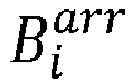
- the battery level B i arr at arrival at a location cannot fall below zero and the final minimum battery level ratio has to be satisfied. It is assumed that at a charging station i ⁇ C , the time between arrival and service is used for charging and thus, the battery level B i dep at departure from the charging station is up to ( S i - A i ) ⁇ ⁇ i energy units higher than at arrival.
- LNS Large neighborhood search
- the outer level sets and modifies charging sessions of vehicles and removes requests from rejected routes.
- the inner level inserts requests with help of a greedy insertion operator under consideration of the charging sessions set by the outer level.
- the outer-level LNS is responsible for setting the visits to charging stations in the routes.
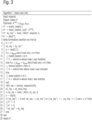
- Algorithm 1 shown in Fig. 3 outlines how the outer-level works. It starts with empty routes, in which all vehicles directly drive from their start depot to their end depot. It then inserts in each vehicle's route a prespecified number X init of randomly generated charging sessions. Each charging session c has the following parameters:
- the physical charging station c.i is uniformly sampled from the set C of available charging stations.
- the lower bound c.l of the time window is set to zero and the upper bound c .
- u is uniformly random chosen from the interval [ t 2 N + k,c.i , T - t c.i, 2 N + K +k ], where k is the vehicle in whose route the charging session is inserted. In each route, the charging sessions are inserted between the start and end depot in increasing order of their time window upper bound c . u.
- the inner-level LNS is then run for a prespecified number I of iterations in order to insert the requests (i.e., the corresponding pick-up and drop-off locations) in the routes.
- the resulting routes are stored as currently best routes rt ⁇ . They might be infeasible because the inner-level LNS was possibly not able to insert all requests without violating time, load or battery constraints.
- the requests, which could not be inserted are stored as the currently best set of rejected requests rej_req ⁇ and the objective value of rt ⁇ is stored as the currently best objective value o ⁇ .
- the mod operator randomly selects a charging session from rt and removes it together with all pick-up and drop-off locations from the corresponding route. Then, it inserts a new random charging session in the route at a position which ensures that the charging sessions in the route are still sorted in increasing order of their upper time window bounds.
- the ins operator randomly selects a route, removes the pick-up and drop-off locations from it and inserts a new random charging session in the route (preserving the correct order of the charging sessions).
- the rem operator works like the mod operator without insertion of a new charging session. If rt does not contain any charging session, the ins operator is selected as variation operator.
- the used operator is randomly selected with different probabilities p mod , p ins , p rem , respectively, for the different operators.
- the requests, which were removed from rt by the variation operator, are added to the set of rejected requests rej_req.
- I iterations of the inner-level LNS are then executed on rt in order to try to insert the requests rej_req. If the resulting routes rt serve at least as many requests as rt ⁇ and one of the following conditions holds:
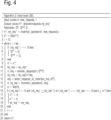
- the inner-level LNS works as outlined in Algorithm 2 shown in Fig. 4 . It takes existing routes and a set of requests to insert as input and first tries to insert the requests with help of an insertion operator. Then it tries to improve the resulting routes rt ⁇ by iteratively (re-)inserting requests. In each iteration, it removes Q out randomly selected requests from the currently best routes and tries to insert Q in randomly selected unserved requests with help of the insertion operator.
- the resulting routes are at least as good as the currently best routes in terms of the number of served requests and/or the objective value, they are accepted as new currently best routes and otherwise they are rejected.
- Q in is set to a larger value than Q out in order to try to increase the number of served requests.
- Q in and Q out are both set to the same value Q.
- a greedy operator For the actual insertion of requests, a greedy operator can be used. It takes as input existing routes and a series of requests to insert and tries to insert each of these requests in the given order. For each request, it traverses the current routes and determines all combinations of positions where the corresponding pick-up and drop-off locations can be inserted without violating constraints. If at least one such combination exists, the pick-up and drop-off locations are inserted at the positions of the combination which results in the lowest increase of the objective function value and otherwise, the request is not inserted. In order to reduce the risk of getting stuck in a local optimum, random noise can be added to the increases of the objective function values associated to the different position combinations.
- charging sessions are taken into account as follows: For each charging session c in the route, it is assumed that the charging takes place at position c. i with a charging speed of a c.i . It is checked that the time window c. w is satisfied and that the station is not visited with a passenger on board. It is assumed that the vehicle charges for c. d time units after arriving at the station and thus, the service time of the charging session is the arrival time plus c. d.
- the initialization of the routes with charging sessions (insert_random_cs in line 2 of Algorithm 1) is done as outlined in Algorithm 3 shown in Fig. 5 . It ensures that no physical charging station is visited more than once.
- the mod variation operator inserts a new charging session with the same physical charging station i ⁇ C as the previously removed charging session. The ins operator takes care that the physical charging station of the inserted charging session is not already in the routes. If all physical charging stations are used in the routes, the mod operator is used instead of the ins operator.
Landscapes
- Engineering & Computer Science (AREA)
- Business, Economics & Management (AREA)
- Human Resources & Organizations (AREA)
- Physics & Mathematics (AREA)
- Tourism & Hospitality (AREA)
- Economics (AREA)
- General Physics & Mathematics (AREA)
- Strategic Management (AREA)
- Theoretical Computer Science (AREA)
- Remote Sensing (AREA)
- Radar, Positioning & Navigation (AREA)
- General Business, Economics & Management (AREA)
- Marketing (AREA)
- Entrepreneurship & Innovation (AREA)
- Development Economics (AREA)
- Mechanical Engineering (AREA)
- Power Engineering (AREA)
- Quality & Reliability (AREA)
- Operations Research (AREA)
- Transportation (AREA)
- Health & Medical Sciences (AREA)
- Automation & Control Theory (AREA)
- Game Theory and Decision Science (AREA)
- General Health & Medical Sciences (AREA)
- Primary Health Care (AREA)
- Sustainable Energy (AREA)
- Sustainable Development (AREA)
- Life Sciences & Earth Sciences (AREA)
- Public Health (AREA)
- Water Supply & Treatment (AREA)
- Educational Administration (AREA)
- Electric Propulsion And Braking For Vehicles (AREA)
Abstract
Description
- The invention is in the field of a dial-a-ride service. In particular, the invention relates to a computer-implemented method, a computer program product, an apparatus and a dial-a-ride system with which a driving schedule for electric vehicles is generated.
- A dial-a-ride system is a transport system comprising vehicles (e.g. cars, minivans and/or trucks) used to transport persons or other objects and a control apparatus assigning trips to the vehicles, wherein users request transportation services by submitting a request specifying a pick-up and drop-off location and the apparatus determines optimal tours/routes of a number of vehicles through the different pick-up and drop-off locations in order to serve the transportation requests.
-
WO 2011/154613 A1 disclose a dynamic dial-a-ride system, in which the routes are changed/adapted in real-time (or at least near real-time) to new requests. - The problem of finding optimal tours is the dial-a-ride problem, wherein different variants of the dial-a-ride problem consider different constraints and objectives. Most typical constraints are that the routes have to start/stop at certain start/end locations (depots), that the pick-up and drop-off locations have to be served within specific time windows, and that a vehicle can transport only a limited number of passengers (objects) at the same time.
- The objective function usually relates to minimizing the operating costs and/or maximizing the user satisfaction.
- Today, the number of electric vehicles is increasing due to economical and especially environmental reasons. At the same time, progress in autonomous driving is made. Hence, it can be assumed that dial-a-ride service fleets of the future consist of electric vehicles, which are operated over long time periods without breaks. In order to be able to provide a continuous service, batteries of such vehicles have to be recharged. Since the recharging takes a considerable time, it must be taken into account during the planning of the vehicles' driving schedules. Thus, a practically relevant extension of the dial-a-ride problem is the integration of electric vehicle charging, leading to the electric vehicle dial-a-ride problem. In the electric vehicle dial-a-ride problem, it is considered that the vehicles consume energy by driving from one location to another and that it has to be ensured that the vehicles' batteries never get fully discharged. In order to increase the quality of the planned routes, visits at charging stations have to be included into them - it has to be planned, when, where and for how long vehicles charge.
- However, exact approaches for the stated problem extension do not scale to a practically relevant number of requests/users. Heuristic approaches, which employ a compute-intensive operator for the insertion of charging sessions, suffer also from scalability issues.
- It is an object of the present invention to provide an apparatus and a method, which reduce the above problems. In particular, an object of the present invention is to provide a computer-implemented method, a computer program product, an apparatus and a dial-a-ride system with which a driving schedule for electric vehicles is generated and that allow to determine the routes of electric vehicles (driving schedule for electric vehicles) with low efforts and costs.
- This object is achieved by a computer program product, an apparatus and a dial-a-ride system according to the enclosed independent claims. Advantageous features of the present invention are defined in the corresponding dependent claims.
- According to the present invention, a computer-implemented method for determining routes of electric vehicles by a dial-a-ride system is performed by a processor and comprises the steps of:
- obtaining ride requests, each of which indicates at least a pick-up location;
- setting a charging schedule indicating, for each electric vehicle having a battery, charging stations to visit on a route, an order in which the charging stations are visited, and a charging duration for each visited charging station; and
- determining the routes through the pick-up locations and the charging stations taking into account the charging schedule.
- The drop-off location of each request can be preset, i.e., all electric vehicles have the same drop-off location (e.g. an end depot), or each request can specify an individual drop-off location, wherein in the determining step, the routes through the pick-up locations, the charging stations and the drop-off location(s) are determined, taking into account the charging schedule.
- With the present invention, instead of inserting requests and then filling up the route with charging sessions (stations), the charging sessions (stations) are first inserted, and then the route is filled up with requests. In this way, the routes can be determined without a compute-intensive operator for the insertion of charging sessions.
- In the setting step, at least one charging station for charging the battery of the electric vehicle can be inserted in at least one route that starts at a certain start location and stops at a certain end location, wherein no pickup location is inserted in the route. The charging station to be inserted can be randomly selected from a plurality of charging stations located in different places.
- The routes and/or the charging stations, the order and the charging duration can be determined by a large neighborhood search algorithm, tabu search, genetic algorithm or hybrid heuristics.
- Alternatively or in addition, the setting step and the determining step can be executed alternately iteratively until the routes serve all or a certain part of the ride requests and/or meet a certain objective with respect to a total driving time of the electric vehicles and/or travel times allocated to the requests, wherein at least one of the charging stations, the order and the charging duration is changed. This can be done in the form of a bilevel large neighborhood search algorithm, where the outer level is responsible for setting the visits to charging stations and the inner level is responsible for filling up the routes with requests. This algorithm does not employ a compute-intensive operator for the insertion of charging sessions, which can be expected to be beneficial for the scalability.
- The electric vehicles computer implemented method can comprise a step of generating, for each electric vehicle, a signal for controlling the electric vehicle to drive the route determined in the determining step.
- New routes (driving schedule) can be determined based on new requests and/or the current states of the electric vehicles (current position and/or current state-of-charge). For this, the method comprises the steps of
- obtaining, for at least one of the electric vehicles, information on a current position of the electric vehicle at a predetermined time;
- calculating a position of the electric vehicle at the predetermined time on the determined route, i.e., according to the current driving schedule; and
- re-determining the routes when a difference/distance between the current position and the calculated position exceeds a first threshold value (offset).
- The certain start location of each electric vehicle can be (re)set to its current position when computing new routes (driving schedule), whereas for an electric vehicle that currently has a job (e.g., transporting passengers), the pick-ups (locations and/or times) and time windows of the current passengers have to be adapted.
- Alternatively or in addition, the method comprises the steps of:
- obtaining, for at least one of the electric vehicles, information on a current charge state of the electric vehicle at a predetermined time;
- calculating a charge state of the electric vehicle at the predetermined time on the determined route based on the charging schedule; and
- re-determining the routes when a difference between the current charge state and the calculated charge state exceeds a second threshold value (tolerance range).
- The first threshold value and/or the second threshold value can be preset by the provider of the dial-a-ride service and/or can be adapted/set based on the remaining driving time/distance of the respective electric vehicle to the next charging station, the next pick-up location, the next drop-off location and/or the end of the route.
- The program according to the present invention causes, when running on a computer or loaded onto a computer, the computer to execute the steps of:
- obtaining ride requests, each of which indicates at least a pick-up location and, if not preset, a drop-off location;
- setting a charging schedule indicating, for each electric vehicle having a battery, charging stations to visit on a route, an order in which the charging stations are visited, and a charging duration for each visited charging station; and
- determining the routes through the pick-up locations and the charging stations taking into account the charging schedule.
- According to the present invention, an apparatus for determining routes of electric vehicles of a dial-a-ride system, comprising a processor configured to obtain ride requests, each of which indicates at least a pick-up location, to set a charging schedule indicating, for each electric vehicle, charging stations to visit on a route, an order in which the charging stations are visited, and a charging duration for each visited charging station, and to determine the routes through the pick-up locations and the charging stations taking into account the charging schedule.
- Alternatively or in addition, the apparatus can comprise a means for receiving a ride request from a user and transmitting a response to the user, wherein the processor is configured to determine whether or not the routes serve the ride request and to generate the response to inform the user whether the request is accepted or not.
- In addition, the processor can be configured to estimate a pick-up time for the pick-up location indicated by the ride request and to generate the response including information on the estimated pick-up time, when the request is accepted.
- According to the present invention, a dial-a-ride system comprises a plurality of electric vehicles, a plurality of charging stations for charging the electric vehicles and the described apparatus. The dial-a-ride system can be dynamic or non-dynamic and determine the routes before the vehicles start driving or while the vehicles are driving.
- The system and/or any of the functions described herein may be implemented using individual hardware circuitry, using software functioning in conjunction with at least one of a programmed microprocessor, a general purpose computer, using an application specific integrated circuit (ASIC) and using one or more digital signal processors (DSPs)
- Embodiments of the invention are discussed in detail with reference to the enclosed figures, in which
-
Fig. 1 shows a schematic of a dial-a-ride system according to an embodiment of the present invention, -
Fig. 2 shows a flowchart for a method performed by the processor of the dial-a-ride system shown inFig. 1 , -
Fig. 3 shows a first embodiment of an algorithm used in step S2 of the flowchart shown inFig. 2 , -
FIG. 4 shows an embodiment of an algorithm used in step S3 of the flowchart shown inFig. 2 , and -
FIG. 5 shows a second embodiment of an algorithm used in step S2 of the flowchart shown inFig. 2 . - In the figures, same reference numbers denote same or equivalent structures. The explanation of structures with same reference numbers in different figures is avoided where deemed possible for sake of conciseness.
-
Fig. 1 shows a block diagram of a dial-a-ride system according to an embodiment of the present invention. The dial-a-ride system provides a person transport service and comprises a plurality of electric vehicles EV1, EV2, ... , EVK, , a plurality of charging stations CS1, ... , CSc for charging batteries of the electric vehicles EV1, EV2, ... , EVK and ascheduling apparatus 1 for determining routes (driving schedule) inclusive of charging sessions (charging schedule) for the electric vehicles EV1, EV2, ... , EVK to serve transportation requests received from users. The charging stations CS1, ... , CSc and/or the electric vehicles EV1, EV2, ... , EVK could be, for example, public charging stations/private vehicles or charging stations/vehicles of the provider of the dial-a-ride service. The electric vehicles EV1, EV2, ... , EVK could be autonomous driving vehicles. - The user makes and sends his transport request using, for example, a mobile input device UD1, UD2, ... , UDN (e.g. smartphone). The
scheduling apparatus 1 comprises auser interface 2 configured to receive the transportation requests including pick-up and drop-off locations from the mobile input devices UD1, UD2, ... , UDN and to transmit a response, which informs user whether the request is accepted or not and what the estimated pick-up time is, to the respective mobile input device UD1, UD2, ... , UDN. In addition, theuser interface 2 can provide a graphic user interface for entering the request. - The
scheduling apparatus 1 further comprises avehicle interface 3 for receiving information on current states of the electric vehicles EV1, EV2, ... , EVK (e.g., position, number of passengers, battery capacity and/or state-of-charge of each electric vehicle EV1, EV2, ... , EVK) and transmitting the determined routes (driving schedule) to the electric vehicles EV1, EV2, ... , EVK, and aprocessor 4 for determining the routes based on the received requests, information of the charging stations CS1, ... , CSc (e.g. location and charging speed) and the information of current states of the electric vehicles EV1, EV2, ... , EVK. The information of the charging stations CS1, ... , CSc can be stored in a memory (not shown) of thescheduling apparatus 1 and/or can be received from the charging stations CS1, ... , CSc. Alternatively or in addition, start and end positions of the electric vehicles EV1, EV2, ... , EVK (e.g. locations of start and end depots), which correspond to the start and end of a route, can be stored in the memory so that, in a non-dynamic dial-a-ride system, it is not necessary to determine the current position of the electric vehicle EV1, EV2, ... , EVK. - Each electric vehicle EV1, EV2, ... , EVK receives an individual route or extracts the route assigned to it from the routes (driving schedule) and drives the route to transport at least one person (passenger) in at least a section of the route. The route indicates a pick-up location and a drop-off location of at least one person, the order of all pick-up and drop-off locations, or also the pick-up and drop-off times, and the charging sessions necessary for the route, i.e. which of the charging stations CS1, ... , CSc to visit on the route and in what order, and the charging duration for each visited charging station CS1, ... , CSc.
- The information on the route can be displayed to the driver, output acoustically or can be input in a navigation system of the electric vehicle EV1, EV2, ... , EVK. Alternatively, the
scheduling apparatus 1 can be configured to generate the navigation information based on the respective route and the current position of the electric vehicle EV1, EV2, ... , EVK and to transmit the navigation information to the electric vehicle EV1, EV2, ... , EVK. - According to the present invention, the charging sessions for a route are first planned, and then the route is filled up with the requests (user trips).
Fig. 2 shows the steps carried out by theprocessor 4 to determine the routes. In step S1, ride requests and other information on road maps, the charging stations CS1, ... , CSc and current states of the electric vehicles EV1, EV2, ... , EVK are obtained. In step S2, a charging schedule indicating, for each electric vehicle EV1, EV2, ... , EVK, charging stations CS1, ... , CSc to visit on a route, an order in which the charging stations CS1, ... , CSc are visited, and a charging duration for each visited charging station CS1, ... , CSc is set and instep 3, the routes through the pick-up locations and the charging stations CS1, ... , CSc are determined taking into account the charging schedule. In a dynamic system, theprocessor 4 monitors the current position of each electric vehicle EV1, EV2, ... , EVK and/or the current charging status of each battery and repeats the steps S1 and S3 when the current position and/or the charging status deviates too much from planned position and/or the planned charging status. - Assume there are three requests RE1: [PU1, DO1], RE2: [PU2, DO2] and RE3: [PU3, DO3], where PU1 and DO1 are the pick-up and drop-off locations of RE1; PU2 and DO2 are the pick-up and drop-off locations of RE2; and PU3 and DO3 are the pick-up and drop-off locations of RE3, in step S2, the charging stations CS1 and CSc may be set for the route of the electric vehicle EV1: [CS1, CSc] and the charging station CS1 may be set for the route of the electric vehicle EV2: [CS1] and, in step S3, the pick-up and drop-off locations of RE3 and RE2 may be inserted in the route of the electric vehicle EV1: [PU3, DO3, CS1, PU2, DO2, CSc] and the pick-up and drop-off location of RE1 may be inserted in the route of the electric vehicle EV2: [PU1, DO1, CS1] based on the charging stations CS1, CSc (charging sessions) set in step S2 and the pick-up and drop-off locations of the requests RE1, RE2, RE3 by a heuristic decision. In particular, the routes can be determined by a large neighborhood search algorithm.
- In addition, as indicated by the dotted line in
Fig. 2 , the setting step S2 and the determining step S3 can be executed alternately iteratively until the routes serve all or a certain part of the ride requests RE1, RE2, RE3 and/or meet a certain objective with respect to a total driving time of the electric vehicles EV1, EV2 and/or travel times allocated to the requests RE1, RE2, RE3, wherein at least one of the charging stations CS1, CSc, the order of the charging stations CS1, CSc in the routes EV1: [CS1, CSc] and EV2: [CS1] and the charging duration is changed when step S2 is executed repeatedly. - According to the present invention, a bi-level large neighborhood search can be used to calculate the routes in steps S2 and S3, wherein in the outer level (steps S2), charging sessions are inserted in the routes of vehicles and in the inner level (steps S3), the pick-up and drop-off locations of the requests are inserted.
- The bi-level large neighborhood search is described below by means of specific constraints or objectives. However, this is just an example of the electric vehicle dial-a-ride problem, and other constraints or objectives could be considered in practice.
- Nomenclature:
- Parameters
- αi
- Charging speed at charging station i
- B
- Battery capacity of vehicles
- X
- Number of charging stations
- di
- Duration of service at location i
- ei;j
- Energy it takes to drive from location i to location j
- Y
- Number of vehicles
- L
- Load capacity of vehicles
- li
- Load of location i
- N
- Number of requests
- r
- Minimum final battery capacity ratio
- S
- Upper bound for a passenger's ride time
- T
- Length of planning horizon
- ti;j
- Time it takes to drive from location i to location j
- wi+
- Upper bound of time window of location i
- wi-
- Lower bound of time window of location i
- Sets
- C
- Set of charging stations
- D+
- Set of start depots
- D-
- Set of end depots
- K
- Set of vehicles
- P+
- Set of pick-up locations
- P-
- Set of drop-off locations
- V
- Set of all locations
- Variables
Ai Time of arrival at location i

Li Vehicle's load after serving location i
Ri Excess ride time for request associated with pick-up location i
Si Time of service for location i

xi,j Flag indicating whether any vehicle drives from location i to location j - It is assumed that a set K = {1, ... , Y} of Y electric vehicles is available to serve N requests. For each request, there is a pick-up and a drop-off location. Let P + = {1, ... , N} denote the set of pick-up locations and P - = {N + ... , 2N} denote the set of drop-off locations. Each vehicle is associated with a start and an end depot (position). Let D + = {2N + ... , 2N + Y} be the set of start depots and let D - = {2N + Y + 1, ... , 2N + 2Y} be the set of end depots. Furthermore, there is a set C = {2N + 2Y + 1, ... , 2N + 2Y + X} of X charging stations. Optionally, if it is permitted to visit a physical charging station more than once, the set C might contain a sufficient number of "virtual charging stations" or "charging sessions", which are replications of the physical charging station locations. Let V = P + ∪ P- ∪ D + ∪ D- ∪ C denote the set of all locations of the problem. The ride from a location i to a location j, takes ti;j time units and consumes ei;j energy units. Each vehicle has a maximum battery capacity of B energy units and a maximum load capacity L, where the latter represents the maximum number of passengers a vehicle can transport at the same time. It is assumed that at the beginning of the planning horizon, the vehicles are empty and have fully charged batteries. Each location i ∈ V is associated with a load (number of passengers) li with li = o for all locations i ∈ V \ (P + ∪ P- ) and li > o for all pick-up locations i ∈ P +, and li = -li-N for all drop-off locations i ∈ P-. For each location ∈ V , a time window


- A solution to the problem consists of routes of the vehicles, i.e., a sequence of locations for each vehicle, together with service times Si for each visited location i ∈ V. Let the binary variable

- It is searching for feasible routes, which are optimal with respect to the following objective:


- Thus, the excess ride time is the time passengers spend in a vehicle longer than necessary and the total objective is to reduce (a weighted sum of) the total driving time of the vehicles and the excess ride time of passengers.
- The routes have to fulfill the following constraints in order to be feasible. Each location can be visited at most once. A vehicle has to start its route at its corresponding start depot and cannot approach any start depot or an end depot of another vehicle. Furthermore, each vehicle's route has to end at its corresponding end depot and if a vehicle enters a location other than an end depot, it also has to leave the location:


- Note that this means that a solution, in which not all requests are served, is infeasible.
- In the following, the binary flag xi,j is used to indicate whether any of the vehicles drives from location i to location j:

- The service time Si of a location i ∈ V must not be earlier than the corresponding arrival time Ai (set in (11) and (12)) and has to adhere to the time window constraint. Furthermore, a drop-off location cannot be visited/served earlier than the corresponding pick-up location, and the maximum ride time constraint has to be satisfied:


- The load Li after visiting location i (set in (17) and (18)) cannot be larger than the maximum load capacity L and charging stations can only be visited by empty vehicles:


- The vehicles start their tours with full batteries. The battery level





- A bi-level large neighborhood search approach is used for solving the stated problem. Large neighborhood search (LNS) is an established heuristic for solving the dial-a-ride problem and iteratively destroys and repairs solutions. In the context of the dial-a-ride problem, this means that requests are iteratively removed and reinserted from/into routes. In order to be able to schedule the visits to charging stations in the electric vehicle-dial-a-ride problem, the large neighborhood search is extend to a bi-level approach. The outer level sets and modifies charging sessions of vehicles and removes requests from rejected routes. The inner level inserts requests with help of a greedy insertion operator under consideration of the charging sessions set by the outer level. In the following, the main components of the approach are described in detail. In the explanation, it is assumed that in contrast to the previous problem formulation, the charging stations can be visited arbitrarily often. Later, it is explained, how the approach can be adapted if each charging station can be visited only once.
- The outer-level LNS is responsible for setting the visits to charging stations in the routes.
Algorithm 1 shown inFig. 3 outlines how the outer-level works. It starts with empty routes, in which all vehicles directly drive from their start depot to their end depot. It then inserts in each vehicle's route a prespecified number Xinit of randomly generated charging sessions. Each charging session c has the following parameters: - a location c. i ∈ C of the physical charging station to charge at,
- a charging duration c. d, and
- a time window c. w = [c.l, c.u] for the service time.
- The physical charging station c.i is uniformly sampled from the set C of available charging stations. The charging duration c.d is uniformly random chosen between zero and the time dmax = B/ac.i it takes to fully charge a vehicle's battery at the selected charging station. The lower bound c.l of the time window is set to zero and the upper bound c.u is uniformly random chosen from the interval [t 2N+ k,c.i, T - t c.i,2N+K+k], where k is the vehicle in whose route the charging session is inserted. In each route, the charging sessions are inserted between the start and end depot in increasing order of their time window upper bound c.u.
- After initializing the routes, the inner-level LNS is then run for a prespecified number I of iterations in order to insert the requests (i.e., the corresponding pick-up and drop-off locations) in the routes. The resulting routes are stored as currently best routes rt ∗. They might be infeasible because the inner-level LNS was possibly not able to insert all requests without violating time, load or battery constraints. The requests, which could not be inserted are stored as the currently best set of rejected requests rej_req ∗ and the objective value of rt ∗ is stored as the currently best objective value o ∗.
- In order to improve the currently best routes (i.e., increase the number of served requests and/or improve the objective function value), the following procedure is repeated until a termination condition is met: A copy rt of the currently best routes rt ∗ and a copy rej_req of the currently best set of rejected requests rej_req ∗is made and the charging sessions in rt are varied by one of the following variation operators:
- Charging session modification mod,
- Charging session insertion ins, or
- Charging session removal rem.
- The mod operator randomly selects a charging session from rt and removes it together with all pick-up and drop-off locations from the corresponding route. Then, it inserts a new random charging session in the route at a position which ensures that the charging sessions in the route are still sorted in increasing order of their upper time window bounds. The ins operator randomly selects a route, removes the pick-up and drop-off locations from it and inserts a new random charging session in the route (preserving the correct order of the charging sessions). The rem operator works like the mod operator without insertion of a new charging session. If rt does not contain any charging session, the ins operator is selected as variation operator. Otherwise, the used operator is randomly selected with different probabilities pmod, pins, prem, respectively, for the different operators. The requests, which were removed from rt by the variation operator, are added to the set of rejected requests rej_req.
- I iterations of the inner-level LNS are then executed on rt in order to try to insert the requests rej_req. If the resulting routes rt serve at least as many requests as rt ∗ and one of the following conditions holds:
- rt ∗ does not serve all requests, or
- rt ∗ serves all requests and the objective value o of rt is less or equal the objective value o∗ of rt ∗ , then rt is stored as new currently best routes rt ∗ and otherwise it is rejected.
- The inner-level LNS works as outlined in
Algorithm 2 shown inFig. 4 . It takes existing routes and a set of requests to insert as input and first tries to insert the requests with help of an insertion operator. Then it tries to improve the resulting routes rt ∗ by iteratively (re-)inserting requests. In each iteration, it removes Qout randomly selected requests from the currently best routes and tries to insert Qin randomly selected unserved requests with help of the insertion operator. - Similar to the outer-level LNS, if the resulting routes are at least as good as the currently best routes in terms of the number of served requests and/or the objective value, they are accepted as new currently best routes and otherwise they are rejected. As long as not all requests are served in the currently best routes rt ∗ , Qin is set to a larger value than Qout in order to try to increase the number of served requests. After a solution, which serves all requests, is found, Qin and Qout are both set to the same value Q.
- For the actual insertion of requests, a greedy operator can be used. It takes as input existing routes and a series of requests to insert and tries to insert each of these requests in the given order. For each request, it traverses the current routes and determines all combinations of positions where the corresponding pick-up and drop-off locations can be inserted without violating constraints. If at least one such combination exists, the pick-up and drop-off locations are inserted at the positions of the combination which results in the lowest increase of the objective function value and otherwise, the request is not inserted. In order to reduce the risk of getting stuck in a local optimum, random noise can be added to the increases of the objective function values associated to the different position combinations.
- When checking the feasibility of a route, charging sessions are taken into account as follows: For each charging session c in the route, it is assumed that the charging takes place at position c. i with a charging speed of ac.i. It is checked that the time window c. w is satisfied and that the station is not visited with a passenger on board. It is assumed that the vehicle charges for c. d time units after arriving at the station and thus, the service time of the charging session is the arrival time plus c. d.
- Without the maximum ride time constraint and the excess ride time in the objective function, it would be sufficient to set the service times of all other locations to their corresponding arrival times. However, with the given problem formulation it might be beneficial to reduce the passenger ride times by delaying the services at pick-up locations. In order to check whether a given route, which satisfies the time window constraint, also satisfies the ride time constraint, the 8-step approach based on forward time slacks as described by J.-F. Cordeau, G. Laporte, "A tabu search heuristic for the static multi-vehicle dial-a-ride problem", Transportation Research Part B: Methodological 37 (6) (2003) 579-594 can be used. It shifts the services at the pick-up locations to the latest possible points in time without violation of the time window constraint and without an increase in the violation of the ride time constraint. Then it checks whether the ride time constraint is satisfied with the given service times. The same approach can be used to delay the service times before computing the objective function value. It has to be noted that while this approach typically reduces the excess ride time compared to setting the service times at pick-ups to the earliest possible points in time, it cannot guarantee an optimal excess ride time.
- If a charging station i ∈ C can be visited only once, the outer-level LNS described above has to be adapted. The following approach can be used to deal with the constraint of limited CS visits: The initialization of the routes with charging sessions (insert_random_cs in
line 2 of Algorithm 1) is done as outlined inAlgorithm 3 shown inFig. 5 . It ensures that no physical charging station is visited more than once. The mod variation operator inserts a new charging session with the same physical charging station i ∈ C as the previously removed charging session. The ins operator takes care that the physical charging station of the inserted charging session is not already in the routes. If all physical charging stations are used in the routes, the mod operator is used instead of the ins operator.
Claims (13)
- A computer implemented method for determining routes of electric vehicles (EV1, EV2, ... , EVK) by a dial-a-ride system, the method performed by a processor comprising the steps of:obtaining (S1) ride requests, each of which indicates at least a pick-up location;setting (S2) a charging schedule indicating, for each electric vehicle (EV1, EV2, ... , EVK), charging stations (CS1, ... , CSc) to visit on a route, an order in which the charging stations (CS1, ... , CSc) are visited, and a charging duration for each visited charging station (CS1, ... , CSc); anddetermining (S3) the routes through the pick-up locations and the charging stations (CS1, ... , CSc) taking into account the charging schedule.
- The computer implemented method according to claim wherein
in the setting step (S2), at least one charging station (CS1, ... , CSc) is inserted in at least one route that starts at a certain start location and stops at a certain end location, with no pickup location inserted. - The computer implemented method according to claim 1 or 2, wherein
in the setting step (S2), the charging stations (CS1, ... , CSc), the order and the charging duration are determined by a large neighborhood search algorithm. - The computer implemented method according to any one of the preceding claims, wherein
in the determining step (S3), the routes are determined by a large neighborhood search algorithm. - The computer implemented method according to any one of the preceding claims, wherein
the setting step (S2) and the determining step (S3) are executed alternately iteratively until the routes serve all or a certain part of the ride requests and/or meet a certain objective with respect to a total driving time of the electric vehicles (EV1, EV2, ... , EVK) and/or travel times allocated to the requests, wherein at least one of the charging stations (CS1, ... , CSc), the order and the charging duration is changed. - The computer implemented method according to any one of the preceding claims, further comprising the step of:
generating, for each electric vehicle (EV1, EV2, ... , EVK), a signal for controlling the electric vehicle (EV1, EV2, ... , EVK) to drive the route determined in the determining step. - The computer implemented method according to any one of the preceding claims, further comprising the steps of:obtaining, for at least one of the electric vehicles (EV1, EV2, ... , EVK), information on a current position of the electric vehicle (EV1, EV2, ... , EVK) at a predetermined time;calculating a position of the electric vehicle (EV1, EV2, ... , EVK) at the predetermined time on the determined route; andre-determining the routes when a difference between the current position and the calculated position exceeds a first predefined threshold value.
- The computer implemented method according to any one of the preceding claims, further comprising the steps of:obtaining, for at least one of the electric vehicles (EV1, EV2, ... , EVK), information on a current charge state of the electric vehicle (EV1, EV2, ... , EVK) at a predetermined time; andcalculating a charge state of the electric vehicle (EV1, EV2, ... , EVK) at the predetermined time on the determined route based on the charging schedule; andre-determining the routes when a difference between the current charge state and the calculated charge state exceeds a second predefined threshold value.
- A program that, when running on a computer or loaded onto a computer, causes the computer to execute the steps of the computer implemented method according to any one of claims 1 to 8.
- An apparatus for determining routes of electric vehicles of a dial-a-ride system, comprising a processor (4) configured toobtain ride requests, each of which indicates at least a pick-up location;set a charging schedule indicating, for each electric vehicle (EV1, EV2, ... , EVK), charging stations (CS1, ... , CSc) to visit on a route, an order in which the charging stations (CS1, ... , CSc) are visited, and a charging duration for each visited charging station (CS1, ... , CSc); anddetermine the routes through the pick-up locations and the charging stations (CS1, ... , CSc) taking into account the charging schedule.
- The apparatus according to claim 10, further comprisingmeans (2, 3) for receiving a ride request from a user and transmitting a response to the user, whereinthe processor (4) is configured to determine whether or not the routes serve the ride request and to generate the response to inform the user whether the request is accepted or not.
- The apparatus according to claim 11, wherein
the processor (4) is configured to estimate a pick-up time for the pick-up location indicated by the ride request and to generate the response including information on the estimated pick-up time, when the request is accepted. - A dial-a-ride system comprising a plurality of electric vehicles (EV1, EV2, ... , EVK), a plurality of charging stations (CS1, ... , CSc) for charging the electric vehicles (EV1, EV2, ... , EVK) and the apparatus according to any one of claims 10 to 12.
Priority Applications (1)
| Application Number | Priority Date | Filing Date | Title |
|---|---|---|---|
| EP21215372.0A EP4198453B1 (en) | 2021-12-17 | 2021-12-17 | Electric vehicle dial-a-ride system |
Applications Claiming Priority (1)
| Application Number | Priority Date | Filing Date | Title |
|---|---|---|---|
| EP21215372.0A EP4198453B1 (en) | 2021-12-17 | 2021-12-17 | Electric vehicle dial-a-ride system |
Publications (2)
| Publication Number | Publication Date |
|---|---|
| EP4198453A1 true EP4198453A1 (en) | 2023-06-21 |
| EP4198453B1 EP4198453B1 (en) | 2024-05-29 |
Family
ID=79730367
Family Applications (1)
| Application Number | Title | Priority Date | Filing Date |
|---|---|---|---|
| EP21215372.0A Active EP4198453B1 (en) | 2021-12-17 | 2021-12-17 | Electric vehicle dial-a-ride system |
Country Status (1)
| Country | Link |
|---|---|
| EP (1) | EP4198453B1 (en) |
-
2021
- 2021-12-17 EP EP21215372.0A patent/EP4198453B1/en active Active
Non-Patent Citations (5)
| Title |
|---|
| BONGIOVANNI CLAUDIA ET AL: "The electric autonomous dial-a-ride problem", TRANSPORTATION RESEARCH PART B. METHODOLOGICAL, vol. 122, 16 March 2019 (2019-03-16), pages 436 - 456, XP085647083, ISSN: 0191-2615, DOI: 10.1016/J.TRB.2019.03.004 * |
| J.-F. CORDEAUG. LAPORTE: "A tabu search heuristic for the static multi-vehicle dial-a-ride problem", TRANSPORTATION RESEARCH PART B: METHODOLOGICAL, vol. 37, no. 6, 2003, pages 579 - 594 |
| JAIN SIDDHARTHA ET AL: "Large Neighborhood Search for Dial-a-Ride Problems", 12 September 2011, ADVANCES IN BIOMETRICS : INTERNATIONAL CONFERENCE, ICB 2007, SEOUL, KOREA, AUGUST 27 - 29, 2007 ; PROCEEDINGS; [LECTURE NOTES IN COMPUTER SCIENCE; LECT.NOTES COMPUTER], SPRINGER, BERLIN, HEIDELBERG, PAGE(S) 400 - 413, ISBN: 978-3-540-74549-5, XP047436477 * |
| SAYARSHAD HAMID R ET AL: "Non-myopic dynamic routing of electric taxis with battery swapping stations", SUSTAINABLE CITIES AND SOCIETY, ELSEVIER, AMSTERDAM, NL, vol. 57, 28 February 2020 (2020-02-28), XP086146370, ISSN: 2210-6707, [retrieved on 20200228], DOI: 10.1016/J.SCS.2020.102113 * |
| TAI-YU MA: "Two-stage battery recharge scheduling and vehicle-charger assignment policy for dynamic electric dial-a-ride services", ARXIV.ORG, CORNELL UNIVERSITY LIBRARY, 201 OLIN LIBRARY CORNELL UNIVERSITY ITHACA, NY 14853, 4 October 2020 (2020-10-04), XP081925469 * |
Also Published As
| Publication number | Publication date |
|---|---|
| EP4198453B1 (en) | 2024-05-29 |
Similar Documents
| Publication | Publication Date | Title |
|---|---|---|
| EP3702202B1 (en) | Method and system to optimize distributed charging station efficiency and user experience | |
| JP7008802B2 (en) | Vehicle allocation management device and vehicle allocation management method | |
| CN103562001B (en) | Battery electric vehicle recharging on smart electric grid system | |
| CN111397626A (en) | Path planning method, path planning device and electronic equipment | |
| JP7380539B2 (en) | Operation planning system and operation planning method | |
| CN108921762B (en) | Vehicle hybrid scheduling method, device and equipment | |
| CN115641704B (en) | Intelligent bus scheduling method and system | |
| JP2017136943A (en) | Vehicle energy management system | |
| JP2021002215A (en) | Charging management method and charging management device | |
| US12565117B2 (en) | Electric vehicle charging recommendation systems and methods | |
| GB2621739A (en) | System for charging electric vehicles (EVS) and related methods | |
| CN112447054B (en) | Method and apparatus for controlling vehicle travel | |
| EP4198453B1 (en) | Electric vehicle dial-a-ride system | |
| CN110763248A (en) | Travel route reservation and customization method, system, medium and equipment | |
| Chow et al. | Real-time Bidding based Vehicle Sharing. | |
| CN114282800A (en) | Seamless combined travel method based on MaaS | |
| JP2023009576A (en) | Operation management method, operation management device, and operation management system | |
| CN119338096A (en) | Vehicle endurance control method, device, equipment and computer readable storage medium | |
| CN117405136A (en) | Energy replenishment point planning methods, devices, equipment and media | |
| CN114004546A (en) | Network appointment vehicle distribution method and device, electronic equipment and storage medium | |
| CN109447316B (en) | Vehicle using method | |
| JP2022113620A (en) | Method and server for managing mobile rechargeable battery pool for each plurality of stations | |
| JP7861560B2 (en) | Selection device, selection method, and program | |
| JP7771819B2 (en) | Vehicle allocation planning system | |
| CN111325593A (en) | Vehicle using method and system |
Legal Events
| Date | Code | Title | Description |
|---|---|---|---|
| PUAI | Public reference made under article 153(3) epc to a published international application that has entered the european phase |
Free format text: ORIGINAL CODE: 0009012 |
|
| STAA | Information on the status of an ep patent application or granted ep patent |
Free format text: STATUS: THE APPLICATION HAS BEEN PUBLISHED |
|
| STAA | Information on the status of an ep patent application or granted ep patent |
Free format text: STATUS: REQUEST FOR EXAMINATION WAS MADE |
|
| AK | Designated contracting states |
Kind code of ref document: A1 Designated state(s): AL AT BE BG CH CY CZ DE DK EE ES FI FR GB GR HR HU IE IS IT LI LT LU LV MC MK MT NL NO PL PT RO RS SE SI SK SM TR |
|
| 17P | Request for examination filed |
Effective date: 20230615 |
|
| RBV | Designated contracting states (corrected) |
Designated state(s): AL AT BE BG CH CY CZ DE DK EE ES FI FR GB GR HR HU IE IS IT LI LT LU LV MC MK MT NL NO PL PT RO RS SE SI SK SM TR |
|
| RIC1 | Information provided on ipc code assigned before grant |
Ipc: B60L 53/62 20190101ALI20231206BHEP Ipc: G06Q 50/06 20120101ALI20231206BHEP Ipc: G06Q 10/063 20230101ALI20231206BHEP Ipc: B60L 58/12 20190101ALI20231206BHEP Ipc: B60L 53/67 20190101ALI20231206BHEP Ipc: B60L 53/63 20190101ALI20231206BHEP Ipc: G06Q 10/047 20230101ALI20231206BHEP Ipc: G08G 1/00 20060101ALI20231206BHEP Ipc: G06Q 50/30 20120101ALI20231206BHEP Ipc: G06Q 10/04 20230101ALI20231206BHEP Ipc: G06Q 10/02 20120101ALI20231206BHEP Ipc: G01C 21/34 20060101AFI20231206BHEP |
|
| GRAP | Despatch of communication of intention to grant a patent |
Free format text: ORIGINAL CODE: EPIDOSNIGR1 |
|
| STAA | Information on the status of an ep patent application or granted ep patent |
Free format text: STATUS: GRANT OF PATENT IS INTENDED |
|
| INTG | Intention to grant announced |
Effective date: 20240202 |
|
| RIC1 | Information provided on ipc code assigned before grant |
Ipc: G06Q 50/40 20240101ALI20240122BHEP Ipc: G06Q 10/02 20120101ALI20240122BHEP Ipc: G06Q 10/04 20230101ALI20240122BHEP Ipc: G08G 1/00 20060101ALI20240122BHEP Ipc: G06Q 10/047 20230101ALI20240122BHEP Ipc: B60L 53/63 20190101ALI20240122BHEP Ipc: B60L 53/67 20190101ALI20240122BHEP Ipc: B60L 58/12 20190101ALI20240122BHEP Ipc: G06Q 10/063 20230101ALI20240122BHEP Ipc: G06Q 50/06 20120101ALI20240122BHEP Ipc: B60L 53/62 20190101ALI20240122BHEP Ipc: G01C 21/34 20060101AFI20240122BHEP |
|
| GRAS | Grant fee paid |
Free format text: ORIGINAL CODE: EPIDOSNIGR3 |
|
| GRAA | (expected) grant |
Free format text: ORIGINAL CODE: 0009210 |
|
| STAA | Information on the status of an ep patent application or granted ep patent |
Free format text: STATUS: THE PATENT HAS BEEN GRANTED |
|
| REG | Reference to a national code |
Ref country code: DE Ref legal event code: R084 Ref document number: 602021013796 Country of ref document: DE |
|
| AK | Designated contracting states |
Kind code of ref document: B1 Designated state(s): AL AT BE BG CH CY CZ DE DK EE ES FI FR GB GR HR HU IE IS IT LI LT LU LV MC MK MT NL NO PL PT RO RS SE SI SK SM TR |
|
| REG | Reference to a national code |
Ref country code: CH Ref legal event code: EP |
|
| REG | Reference to a national code |
Ref country code: IE Ref legal event code: FG4D |
|
| REG | Reference to a national code |
Ref country code: DE Ref legal event code: R096 Ref document number: 602021013796 Country of ref document: DE |
|
| REG | Reference to a national code |
Ref country code: GB Ref legal event code: 746 Effective date: 20240724 |
|
| REG | Reference to a national code |
Ref country code: LT Ref legal event code: MG9D |
|
| REG | Reference to a national code |
Ref country code: NL Ref legal event code: MP Effective date: 20240529 |
|
| PG25 | Lapsed in a contracting state [announced via postgrant information from national office to epo] |
Ref country code: IS Free format text: LAPSE BECAUSE OF FAILURE TO SUBMIT A TRANSLATION OF THE DESCRIPTION OR TO PAY THE FEE WITHIN THE PRESCRIBED TIME-LIMIT Effective date: 20240929 |
|
| PG25 | Lapsed in a contracting state [announced via postgrant information from national office to epo] |
Ref country code: BG Free format text: LAPSE BECAUSE OF FAILURE TO SUBMIT A TRANSLATION OF THE DESCRIPTION OR TO PAY THE FEE WITHIN THE PRESCRIBED TIME-LIMIT Effective date: 20240529 |
|
| PG25 | Lapsed in a contracting state [announced via postgrant information from national office to epo] |
Ref country code: FI Free format text: LAPSE BECAUSE OF FAILURE TO SUBMIT A TRANSLATION OF THE DESCRIPTION OR TO PAY THE FEE WITHIN THE PRESCRIBED TIME-LIMIT Effective date: 20240529 Ref country code: HR Free format text: LAPSE BECAUSE OF FAILURE TO SUBMIT A TRANSLATION OF THE DESCRIPTION OR TO PAY THE FEE WITHIN THE PRESCRIBED TIME-LIMIT Effective date: 20240529 |
|
| PG25 | Lapsed in a contracting state [announced via postgrant information from national office to epo] |
Ref country code: GR Free format text: LAPSE BECAUSE OF FAILURE TO SUBMIT A TRANSLATION OF THE DESCRIPTION OR TO PAY THE FEE WITHIN THE PRESCRIBED TIME-LIMIT Effective date: 20240830 |
|
| REG | Reference to a national code |
Ref country code: AT Ref legal event code: MK05 Ref document number: 1690997 Country of ref document: AT Kind code of ref document: T Effective date: 20240529 |
|
| PG25 | Lapsed in a contracting state [announced via postgrant information from national office to epo] |
Ref country code: ES Free format text: LAPSE BECAUSE OF FAILURE TO SUBMIT A TRANSLATION OF THE DESCRIPTION OR TO PAY THE FEE WITHIN THE PRESCRIBED TIME-LIMIT Effective date: 20240529 |
|
| PG25 | Lapsed in a contracting state [announced via postgrant information from national office to epo] |
Ref country code: AT Free format text: LAPSE BECAUSE OF FAILURE TO SUBMIT A TRANSLATION OF THE DESCRIPTION OR TO PAY THE FEE WITHIN THE PRESCRIBED TIME-LIMIT Effective date: 20240529 |
|
| PG25 | Lapsed in a contracting state [announced via postgrant information from national office to epo] |
Ref country code: PL Free format text: LAPSE BECAUSE OF FAILURE TO SUBMIT A TRANSLATION OF THE DESCRIPTION OR TO PAY THE FEE WITHIN THE PRESCRIBED TIME-LIMIT Effective date: 20240529 |
|
| PG25 | Lapsed in a contracting state [announced via postgrant information from national office to epo] |
Ref country code: LV Free format text: LAPSE BECAUSE OF FAILURE TO SUBMIT A TRANSLATION OF THE DESCRIPTION OR TO PAY THE FEE WITHIN THE PRESCRIBED TIME-LIMIT Effective date: 20240529 |
|
| PG25 | Lapsed in a contracting state [announced via postgrant information from national office to epo] |
Ref country code: PL Free format text: LAPSE BECAUSE OF FAILURE TO SUBMIT A TRANSLATION OF THE DESCRIPTION OR TO PAY THE FEE WITHIN THE PRESCRIBED TIME-LIMIT Effective date: 20240529 Ref country code: NO Free format text: LAPSE BECAUSE OF FAILURE TO SUBMIT A TRANSLATION OF THE DESCRIPTION OR TO PAY THE FEE WITHIN THE PRESCRIBED TIME-LIMIT Effective date: 20240829 Ref country code: LV Free format text: LAPSE BECAUSE OF FAILURE TO SUBMIT A TRANSLATION OF THE DESCRIPTION OR TO PAY THE FEE WITHIN THE PRESCRIBED TIME-LIMIT Effective date: 20240529 Ref country code: IS Free format text: LAPSE BECAUSE OF FAILURE TO SUBMIT A TRANSLATION OF THE DESCRIPTION OR TO PAY THE FEE WITHIN THE PRESCRIBED TIME-LIMIT Effective date: 20240929 Ref country code: HR Free format text: LAPSE BECAUSE OF FAILURE TO SUBMIT A TRANSLATION OF THE DESCRIPTION OR TO PAY THE FEE WITHIN THE PRESCRIBED TIME-LIMIT Effective date: 20240529 Ref country code: GR Free format text: LAPSE BECAUSE OF FAILURE TO SUBMIT A TRANSLATION OF THE DESCRIPTION OR TO PAY THE FEE WITHIN THE PRESCRIBED TIME-LIMIT Effective date: 20240830 Ref country code: FI Free format text: LAPSE BECAUSE OF FAILURE TO SUBMIT A TRANSLATION OF THE DESCRIPTION OR TO PAY THE FEE WITHIN THE PRESCRIBED TIME-LIMIT Effective date: 20240529 Ref country code: ES Free format text: LAPSE BECAUSE OF FAILURE TO SUBMIT A TRANSLATION OF THE DESCRIPTION OR TO PAY THE FEE WITHIN THE PRESCRIBED TIME-LIMIT Effective date: 20240529 Ref country code: BG Free format text: LAPSE BECAUSE OF FAILURE TO SUBMIT A TRANSLATION OF THE DESCRIPTION OR TO PAY THE FEE WITHIN THE PRESCRIBED TIME-LIMIT Effective date: 20240529 Ref country code: AT Free format text: LAPSE BECAUSE OF FAILURE TO SUBMIT A TRANSLATION OF THE DESCRIPTION OR TO PAY THE FEE WITHIN THE PRESCRIBED TIME-LIMIT Effective date: 20240529 Ref country code: RS Free format text: LAPSE BECAUSE OF FAILURE TO SUBMIT A TRANSLATION OF THE DESCRIPTION OR TO PAY THE FEE WITHIN THE PRESCRIBED TIME-LIMIT Effective date: 20240829 |
|
| PG25 | Lapsed in a contracting state [announced via postgrant information from national office to epo] |
Ref country code: NL Free format text: LAPSE BECAUSE OF FAILURE TO SUBMIT A TRANSLATION OF THE DESCRIPTION OR TO PAY THE FEE WITHIN THE PRESCRIBED TIME-LIMIT Effective date: 20240529 |
|
| PG25 | Lapsed in a contracting state [announced via postgrant information from national office to epo] |
Ref country code: NL Free format text: LAPSE BECAUSE OF FAILURE TO SUBMIT A TRANSLATION OF THE DESCRIPTION OR TO PAY THE FEE WITHIN THE PRESCRIBED TIME-LIMIT Effective date: 20240529 |
|
| PG25 | Lapsed in a contracting state [announced via postgrant information from national office to epo] |
Ref country code: DK Free format text: LAPSE BECAUSE OF FAILURE TO SUBMIT A TRANSLATION OF THE DESCRIPTION OR TO PAY THE FEE WITHIN THE PRESCRIBED TIME-LIMIT Effective date: 20240529 |
|
| PG25 | Lapsed in a contracting state [announced via postgrant information from national office to epo] |
Ref country code: EE Free format text: LAPSE BECAUSE OF FAILURE TO SUBMIT A TRANSLATION OF THE DESCRIPTION OR TO PAY THE FEE WITHIN THE PRESCRIBED TIME-LIMIT Effective date: 20240529 |
|
| PG25 | Lapsed in a contracting state [announced via postgrant information from national office to epo] |
Ref country code: CZ Free format text: LAPSE BECAUSE OF FAILURE TO SUBMIT A TRANSLATION OF THE DESCRIPTION OR TO PAY THE FEE WITHIN THE PRESCRIBED TIME-LIMIT Effective date: 20240529 |
|
| PG25 | Lapsed in a contracting state [announced via postgrant information from national office to epo] |
Ref country code: RO Free format text: LAPSE BECAUSE OF FAILURE TO SUBMIT A TRANSLATION OF THE DESCRIPTION OR TO PAY THE FEE WITHIN THE PRESCRIBED TIME-LIMIT Effective date: 20240529 Ref country code: SK Free format text: LAPSE BECAUSE OF FAILURE TO SUBMIT A TRANSLATION OF THE DESCRIPTION OR TO PAY THE FEE WITHIN THE PRESCRIBED TIME-LIMIT Effective date: 20240529 |
|
| PG25 | Lapsed in a contracting state [announced via postgrant information from national office to epo] |
Ref country code: SM Free format text: LAPSE BECAUSE OF FAILURE TO SUBMIT A TRANSLATION OF THE DESCRIPTION OR TO PAY THE FEE WITHIN THE PRESCRIBED TIME-LIMIT Effective date: 20240529 |
|
| PG25 | Lapsed in a contracting state [announced via postgrant information from national office to epo] |
Ref country code: SM Free format text: LAPSE BECAUSE OF FAILURE TO SUBMIT A TRANSLATION OF THE DESCRIPTION OR TO PAY THE FEE WITHIN THE PRESCRIBED TIME-LIMIT Effective date: 20240529 Ref country code: SK Free format text: LAPSE BECAUSE OF FAILURE TO SUBMIT A TRANSLATION OF THE DESCRIPTION OR TO PAY THE FEE WITHIN THE PRESCRIBED TIME-LIMIT Effective date: 20240529 Ref country code: RO Free format text: LAPSE BECAUSE OF FAILURE TO SUBMIT A TRANSLATION OF THE DESCRIPTION OR TO PAY THE FEE WITHIN THE PRESCRIBED TIME-LIMIT Effective date: 20240529 Ref country code: EE Free format text: LAPSE BECAUSE OF FAILURE TO SUBMIT A TRANSLATION OF THE DESCRIPTION OR TO PAY THE FEE WITHIN THE PRESCRIBED TIME-LIMIT Effective date: 20240529 Ref country code: DK Free format text: LAPSE BECAUSE OF FAILURE TO SUBMIT A TRANSLATION OF THE DESCRIPTION OR TO PAY THE FEE WITHIN THE PRESCRIBED TIME-LIMIT Effective date: 20240529 Ref country code: CZ Free format text: LAPSE BECAUSE OF FAILURE TO SUBMIT A TRANSLATION OF THE DESCRIPTION OR TO PAY THE FEE WITHIN THE PRESCRIBED TIME-LIMIT Effective date: 20240529 |
|
| PG25 | Lapsed in a contracting state [announced via postgrant information from national office to epo] |
Ref country code: IT Free format text: LAPSE BECAUSE OF FAILURE TO SUBMIT A TRANSLATION OF THE DESCRIPTION OR TO PAY THE FEE WITHIN THE PRESCRIBED TIME-LIMIT Effective date: 20240529 |
|
| REG | Reference to a national code |
Ref country code: DE Ref legal event code: R097 Ref document number: 602021013796 Country of ref document: DE |
|
| REG | Reference to a national code |
Ref country code: DE Ref legal event code: R081 Ref document number: 602021013796 Country of ref document: DE Owner name: HONDA MOTOR CO., LTD., JP Free format text: FORMER OWNER: HONDA RESEARCH INSTITUTE EUROPE GMBH, 63073 OFFENBACH, DE |
|
| PLBE | No opposition filed within time limit |
Free format text: ORIGINAL CODE: 0009261 |
|
| STAA | Information on the status of an ep patent application or granted ep patent |
Free format text: STATUS: NO OPPOSITION FILED WITHIN TIME LIMIT |
|
| PG25 | Lapsed in a contracting state [announced via postgrant information from national office to epo] |
Ref country code: SI Free format text: LAPSE BECAUSE OF FAILURE TO SUBMIT A TRANSLATION OF THE DESCRIPTION OR TO PAY THE FEE WITHIN THE PRESCRIBED TIME-LIMIT Effective date: 20240529 |
|
| 26N | No opposition filed |
Effective date: 20250303 |
|
| REG | Reference to a national code |
Ref country code: GB Ref legal event code: 732E Free format text: REGISTERED BETWEEN 20250410 AND 20250416 |
|
| PG25 | Lapsed in a contracting state [announced via postgrant information from national office to epo] |
Ref country code: MC Free format text: LAPSE BECAUSE OF FAILURE TO SUBMIT A TRANSLATION OF THE DESCRIPTION OR TO PAY THE FEE WITHIN THE PRESCRIBED TIME-LIMIT Effective date: 20240529 |
|
| REG | Reference to a national code |
Ref country code: CH Ref legal event code: PL |
|
| PG25 | Lapsed in a contracting state [announced via postgrant information from national office to epo] |
Ref country code: LU Free format text: LAPSE BECAUSE OF NON-PAYMENT OF DUE FEES Effective date: 20241217 |
|
| PG25 | Lapsed in a contracting state [announced via postgrant information from national office to epo] |
Ref country code: SE Free format text: LAPSE BECAUSE OF FAILURE TO SUBMIT A TRANSLATION OF THE DESCRIPTION OR TO PAY THE FEE WITHIN THE PRESCRIBED TIME-LIMIT Effective date: 20240529 |
|
| REG | Reference to a national code |
Ref country code: BE Ref legal event code: MM Effective date: 20241231 |
|
| PG25 | Lapsed in a contracting state [announced via postgrant information from national office to epo] |
Ref country code: BE Free format text: LAPSE BECAUSE OF NON-PAYMENT OF DUE FEES Effective date: 20241231 |
|
| PG25 | Lapsed in a contracting state [announced via postgrant information from national office to epo] |
Ref country code: CH Free format text: LAPSE BECAUSE OF NON-PAYMENT OF DUE FEES Effective date: 20241231 |
|
| PG25 | Lapsed in a contracting state [announced via postgrant information from national office to epo] |
Ref country code: IE Free format text: LAPSE BECAUSE OF NON-PAYMENT OF DUE FEES Effective date: 20241217 |
|
| PGFP | Annual fee paid to national office [announced via postgrant information from national office to epo] |
Ref country code: DE Payment date: 20251215 Year of fee payment: 5 |
|
| PGFP | Annual fee paid to national office [announced via postgrant information from national office to epo] |
Ref country code: GB Payment date: 20251218 Year of fee payment: 5 |
|
| PGFP | Annual fee paid to national office [announced via postgrant information from national office to epo] |
Ref country code: FR Payment date: 20251218 Year of fee payment: 5 |
|
| PG25 | Lapsed in a contracting state [announced via postgrant information from national office to epo] |
Ref country code: CY Free format text: LAPSE BECAUSE OF FAILURE TO SUBMIT A TRANSLATION OF THE DESCRIPTION OR TO PAY THE FEE WITHIN THE PRESCRIBED TIME-LIMIT Effective date: 20240529 |
|
| PG25 | Lapsed in a contracting state [announced via postgrant information from national office to epo] |
Ref country code: TR Free format text: LAPSE BECAUSE OF FAILURE TO SUBMIT A TRANSLATION OF THE DESCRIPTION OR TO PAY THE FEE WITHIN THE PRESCRIBED TIME-LIMIT Effective date: 20240529 |
|
| PG25 | Lapsed in a contracting state [announced via postgrant information from national office to epo] |
Ref country code: HU Free format text: LAPSE BECAUSE OF FAILURE TO SUBMIT A TRANSLATION OF THE DESCRIPTION OR TO PAY THE FEE WITHIN THE PRESCRIBED TIME-LIMIT; INVALID AB INITIO Effective date: 20211217 |
|
| PG25 | Lapsed in a contracting state [announced via postgrant information from national office to epo] |
Ref country code: LT Free format text: LAPSE BECAUSE OF FAILURE TO SUBMIT A TRANSLATION OF THE DESCRIPTION OR TO PAY THE FEE WITHIN THE PRESCRIBED TIME-LIMIT Effective date: 20240529 |
|
| PG25 | Lapsed in a contracting state [announced via postgrant information from national office to epo] |
Ref country code: PT Free format text: LAPSE BECAUSE OF NON-PAYMENT OF DUE FEES Effective date: 20240529 |