EP4198098A1 - Active energy ray curing composition, active energy ray curing ink composition, active energy ray curing inkjet ink composition, composition container, apparatus for forming two-dimensional or three-dimensional image, method of forming two-dimensional or three-dimensional image, cured matter, decorative object, member for flexible device, and flexible device - Google Patents
Active energy ray curing composition, active energy ray curing ink composition, active energy ray curing inkjet ink composition, composition container, apparatus for forming two-dimensional or three-dimensional image, method of forming two-dimensional or three-dimensional image, cured matter, decorative object, member for flexible device, and flexible device Download PDFInfo
- Publication number
- EP4198098A1 EP4198098A1 EP22211523.0A EP22211523A EP4198098A1 EP 4198098 A1 EP4198098 A1 EP 4198098A1 EP 22211523 A EP22211523 A EP 22211523A EP 4198098 A1 EP4198098 A1 EP 4198098A1
- Authority
- EP
- European Patent Office
- Prior art keywords
- active energy
- energy ray
- ray curing
- composition
- ink composition
- Prior art date
- Legal status (The legal status is an assumption and is not a legal conclusion. Google has not performed a legal analysis and makes no representation as to the accuracy of the status listed.)
- Pending
Links
Images
Classifications
-
- C—CHEMISTRY; METALLURGY
- C08—ORGANIC MACROMOLECULAR COMPOUNDS; THEIR PREPARATION OR CHEMICAL WORKING-UP; COMPOSITIONS BASED THEREON
- C08F—MACROMOLECULAR COMPOUNDS OBTAINED BY REACTIONS ONLY INVOLVING CARBON-TO-CARBON UNSATURATED BONDS
- C08F283/00—Macromolecular compounds obtained by polymerising monomers on to polymers provided for in subclass C08G
- C08F283/01—Macromolecular compounds obtained by polymerising monomers on to polymers provided for in subclass C08G on to unsaturated polyesters
-
- C—CHEMISTRY; METALLURGY
- C09—DYES; PAINTS; POLISHES; NATURAL RESINS; ADHESIVES; COMPOSITIONS NOT OTHERWISE PROVIDED FOR; APPLICATIONS OF MATERIALS NOT OTHERWISE PROVIDED FOR
- C09D—COATING COMPOSITIONS, e.g. PAINTS, VARNISHES OR LACQUERS; FILLING PASTES; CHEMICAL PAINT OR INK REMOVERS; INKS; CORRECTING FLUIDS; WOODSTAINS; PASTES OR SOLIDS FOR COLOURING OR PRINTING; USE OF MATERIALS THEREFOR
- C09D11/00—Inks
- C09D11/30—Inkjet printing inks
- C09D11/38—Inkjet printing inks characterised by non-macromolecular additives other than solvents, pigments or dyes
-
- C—CHEMISTRY; METALLURGY
- C09—DYES; PAINTS; POLISHES; NATURAL RESINS; ADHESIVES; COMPOSITIONS NOT OTHERWISE PROVIDED FOR; APPLICATIONS OF MATERIALS NOT OTHERWISE PROVIDED FOR
- C09D—COATING COMPOSITIONS, e.g. PAINTS, VARNISHES OR LACQUERS; FILLING PASTES; CHEMICAL PAINT OR INK REMOVERS; INKS; CORRECTING FLUIDS; WOODSTAINS; PASTES OR SOLIDS FOR COLOURING OR PRINTING; USE OF MATERIALS THEREFOR
- C09D11/00—Inks
- C09D11/02—Printing inks
- C09D11/10—Printing inks based on artificial resins
- C09D11/101—Inks specially adapted for printing processes involving curing by wave energy or particle radiation, e.g. with UV-curing following the printing
-
- B—PERFORMING OPERATIONS; TRANSPORTING
- B29—WORKING OF PLASTICS; WORKING OF SUBSTANCES IN A PLASTIC STATE IN GENERAL
- B29C—SHAPING OR JOINING OF PLASTICS; SHAPING OF MATERIAL IN A PLASTIC STATE, NOT OTHERWISE PROVIDED FOR; AFTER-TREATMENT OF THE SHAPED PRODUCTS, e.g. REPAIRING
- B29C64/00—Additive manufacturing, i.e. manufacturing of three-dimensional [3D] objects by additive deposition, additive agglomeration or additive layering, e.g. by 3D printing, stereolithography or selective laser sintering
- B29C64/10—Processes of additive manufacturing
- B29C64/106—Processes of additive manufacturing using only liquids or viscous materials, e.g. depositing a continuous bead of viscous material
- B29C64/112—Processes of additive manufacturing using only liquids or viscous materials, e.g. depositing a continuous bead of viscous material using individual droplets, e.g. from jetting heads
-
- B—PERFORMING OPERATIONS; TRANSPORTING
- B29—WORKING OF PLASTICS; WORKING OF SUBSTANCES IN A PLASTIC STATE IN GENERAL
- B29C—SHAPING OR JOINING OF PLASTICS; SHAPING OF MATERIAL IN A PLASTIC STATE, NOT OTHERWISE PROVIDED FOR; AFTER-TREATMENT OF THE SHAPED PRODUCTS, e.g. REPAIRING
- B29C64/00—Additive manufacturing, i.e. manufacturing of three-dimensional [3D] objects by additive deposition, additive agglomeration or additive layering, e.g. by 3D printing, stereolithography or selective laser sintering
- B29C64/20—Apparatus for additive manufacturing; Details thereof or accessories therefor
- B29C64/264—Arrangements for irradiation
-
- B—PERFORMING OPERATIONS; TRANSPORTING
- B32—LAYERED PRODUCTS
- B32B—LAYERED PRODUCTS, i.e. PRODUCTS BUILT-UP OF STRATA OF FLAT OR NON-FLAT, e.g. CELLULAR OR HONEYCOMB, FORM
- B32B17/00—Layered products essentially comprising sheet glass, or glass, slag, or like fibres
- B32B17/06—Layered products essentially comprising sheet glass, or glass, slag, or like fibres comprising glass as the main or only constituent of a layer, next to another layer of a specific material
- B32B17/10—Layered products essentially comprising sheet glass, or glass, slag, or like fibres comprising glass as the main or only constituent of a layer, next to another layer of a specific material of synthetic resin
-
- B—PERFORMING OPERATIONS; TRANSPORTING
- B32—LAYERED PRODUCTS
- B32B—LAYERED PRODUCTS, i.e. PRODUCTS BUILT-UP OF STRATA OF FLAT OR NON-FLAT, e.g. CELLULAR OR HONEYCOMB, FORM
- B32B27/00—Layered products comprising a layer of synthetic resin
-
- B—PERFORMING OPERATIONS; TRANSPORTING
- B32—LAYERED PRODUCTS
- B32B—LAYERED PRODUCTS, i.e. PRODUCTS BUILT-UP OF STRATA OF FLAT OR NON-FLAT, e.g. CELLULAR OR HONEYCOMB, FORM
- B32B27/00—Layered products comprising a layer of synthetic resin
- B32B27/06—Layered products comprising a layer of synthetic resin as the main or only constituent of a layer, which is next to another layer of the same or of a different material
- B32B27/08—Layered products comprising a layer of synthetic resin as the main or only constituent of a layer, which is next to another layer of the same or of a different material of synthetic resin
-
- B—PERFORMING OPERATIONS; TRANSPORTING
- B32—LAYERED PRODUCTS
- B32B—LAYERED PRODUCTS, i.e. PRODUCTS BUILT-UP OF STRATA OF FLAT OR NON-FLAT, e.g. CELLULAR OR HONEYCOMB, FORM
- B32B27/00—Layered products comprising a layer of synthetic resin
- B32B27/36—Layered products comprising a layer of synthetic resin comprising polyesters
-
- B—PERFORMING OPERATIONS; TRANSPORTING
- B32—LAYERED PRODUCTS
- B32B—LAYERED PRODUCTS, i.e. PRODUCTS BUILT-UP OF STRATA OF FLAT OR NON-FLAT, e.g. CELLULAR OR HONEYCOMB, FORM
- B32B33/00—Layered products characterised by particular properties or particular surface features, e.g. particular surface coatings; Layered products designed for particular purposes not covered by another single class
-
- B—PERFORMING OPERATIONS; TRANSPORTING
- B33—ADDITIVE MANUFACTURING TECHNOLOGY
- B33Y—ADDITIVE MANUFACTURING, i.e. MANUFACTURING OF THREE-DIMENSIONAL [3D] OBJECTS BY ADDITIVE DEPOSITION, ADDITIVE AGGLOMERATION OR ADDITIVE LAYERING, e.g. BY 3D PRINTING, STEREOLITHOGRAPHY OR SELECTIVE LASER SINTERING
- B33Y10/00—Processes of additive manufacturing
-
- B—PERFORMING OPERATIONS; TRANSPORTING
- B33—ADDITIVE MANUFACTURING TECHNOLOGY
- B33Y—ADDITIVE MANUFACTURING, i.e. MANUFACTURING OF THREE-DIMENSIONAL [3D] OBJECTS BY ADDITIVE DEPOSITION, ADDITIVE AGGLOMERATION OR ADDITIVE LAYERING, e.g. BY 3D PRINTING, STEREOLITHOGRAPHY OR SELECTIVE LASER SINTERING
- B33Y30/00—Apparatus for additive manufacturing; Details thereof or accessories therefor
-
- B—PERFORMING OPERATIONS; TRANSPORTING
- B33—ADDITIVE MANUFACTURING TECHNOLOGY
- B33Y—ADDITIVE MANUFACTURING, i.e. MANUFACTURING OF THREE-DIMENSIONAL [3D] OBJECTS BY ADDITIVE DEPOSITION, ADDITIVE AGGLOMERATION OR ADDITIVE LAYERING, e.g. BY 3D PRINTING, STEREOLITHOGRAPHY OR SELECTIVE LASER SINTERING
- B33Y70/00—Materials specially adapted for additive manufacturing
-
- B—PERFORMING OPERATIONS; TRANSPORTING
- B41—PRINTING; LINING MACHINES; TYPEWRITERS; STAMPS
- B41M—PRINTING, DUPLICATING, MARKING, OR COPYING PROCESSES; COLOUR PRINTING
- B41M7/00—After-treatment of prints, e.g. heating, irradiating, setting of the ink, protection of the printed stock
- B41M7/0081—After-treatment of prints, e.g. heating, irradiating, setting of the ink, protection of the printed stock using electromagnetic radiation or waves, e.g. ultraviolet radiation, electron beams
-
- C—CHEMISTRY; METALLURGY
- C08—ORGANIC MACROMOLECULAR COMPOUNDS; THEIR PREPARATION OR CHEMICAL WORKING-UP; COMPOSITIONS BASED THEREON
- C08F—MACROMOLECULAR COMPOUNDS OBTAINED BY REACTIONS ONLY INVOLVING CARBON-TO-CARBON UNSATURATED BONDS
- C08F2/00—Processes of polymerisation
- C08F2/46—Polymerisation initiated by wave energy or particle radiation
-
- C—CHEMISTRY; METALLURGY
- C09—DYES; PAINTS; POLISHES; NATURAL RESINS; ADHESIVES; COMPOSITIONS NOT OTHERWISE PROVIDED FOR; APPLICATIONS OF MATERIALS NOT OTHERWISE PROVIDED FOR
- C09D—COATING COMPOSITIONS, e.g. PAINTS, VARNISHES OR LACQUERS; FILLING PASTES; CHEMICAL PAINT OR INK REMOVERS; INKS; CORRECTING FLUIDS; WOODSTAINS; PASTES OR SOLIDS FOR COLOURING OR PRINTING; USE OF MATERIALS THEREFOR
- C09D11/00—Inks
- C09D11/02—Printing inks
- C09D11/10—Printing inks based on artificial resins
- C09D11/102—Printing inks based on artificial resins containing macromolecular compounds obtained by reactions other than those only involving unsaturated carbon-to-carbon bonds
- C09D11/104—Polyesters
-
- C—CHEMISTRY; METALLURGY
- C09—DYES; PAINTS; POLISHES; NATURAL RESINS; ADHESIVES; COMPOSITIONS NOT OTHERWISE PROVIDED FOR; APPLICATIONS OF MATERIALS NOT OTHERWISE PROVIDED FOR
- C09D—COATING COMPOSITIONS, e.g. PAINTS, VARNISHES OR LACQUERS; FILLING PASTES; CHEMICAL PAINT OR INK REMOVERS; INKS; CORRECTING FLUIDS; WOODSTAINS; PASTES OR SOLIDS FOR COLOURING OR PRINTING; USE OF MATERIALS THEREFOR
- C09D11/00—Inks
- C09D11/30—Inkjet printing inks
-
- C—CHEMISTRY; METALLURGY
- C09—DYES; PAINTS; POLISHES; NATURAL RESINS; ADHESIVES; COMPOSITIONS NOT OTHERWISE PROVIDED FOR; APPLICATIONS OF MATERIALS NOT OTHERWISE PROVIDED FOR
- C09D—COATING COMPOSITIONS, e.g. PAINTS, VARNISHES OR LACQUERS; FILLING PASTES; CHEMICAL PAINT OR INK REMOVERS; INKS; CORRECTING FLUIDS; WOODSTAINS; PASTES OR SOLIDS FOR COLOURING OR PRINTING; USE OF MATERIALS THEREFOR
- C09D11/00—Inks
- C09D11/30—Inkjet printing inks
- C09D11/32—Inkjet printing inks characterised by colouring agents
- C09D11/322—Pigment inks
Definitions
- the present disclosure is related to an active energy ray curing composition, active energy ray curing ink composition, active energy ray curing inkjet ink composition, a composition container, an apparatus for forming a two-dimensional or three-dimensional image, a method of forming a two-dimensional or three-dimensional image, cured matter, a decorative object, a member for flexible device, and a flexible device.
- Inkjet printers are now applied in many industrial fields including printing text and images on a large-sized commercial advertisement, wall paper, packages, and beverage containers.
- Inkjet printers use ink compositions such as aqueous inkjet ink compositions, oil inkjet ink compositions, and active energy ray curing inkjet ink compositions.
- the active energy ray curing composition cures upon exposure to radiation of active energy rays and dries quickly on a non-permeating substrate.
- Cured matter obtained by curing a printed active energy ray curing composition is required to be durable to a treatment under an extremely severe condition.
- the container is often treated with hot water or an alkali solution for sterilization.
- Cured matter obtained by curing a printed active energy ray curing composition is required to endure a treatment under an extremely severe condition.
- a curable composition having an excellent adhesion, thermal resistance, and moisture resistance has been proposed in Japanese Unexamined Patent Application Publication No. 2015-034240 , which contains isosorbide di(meth)acrylate (A), monovalent organic acid (B), a radical initiator (C), an acid generator (D).
- Another composition proposed therein contains (A), (B), (C), (D), and a radical polymerizable substance (E) other than (A).
- the composition contains a polymerizable monomer polymerizable upon irradiation of active energy rays and a photopolymerization initiator and it has a viscosity of from 3 to 50 mPa ⁇ s at 25 degrees C.
- the polymerizable monomer contains a polymerizable phosphoric acid ester compound having a phosphoric acid ester group and an ethylenic double bond in its molecule in an amount of from 0.5 to 13 percent by mass and a monofunctional monomer having a single ethylenic double bond without a phosphoric acid ester group in its molecule in an amount of from 10 to 75 percent by mass in the entire monomers.
- the photopolymerization initiator contains acylphosphine oxide-based initiator and ⁇ -hydroxy ketone-based initiator having one or less phenyl group in its backbone.
- an energy curable ink or coating composition for printing has been proposed as an energy curable ink and coating composition having improved adhesion to a flexible substrate such as flexible film in Japanese Translation of PCT International Application Publication No. JP-T- 2015-513601 .
- the ink or coating composition contains, for example, a monomer having an acrylate group, an oligomer having an acrylate group, or a combination thereof and it has an acrylate group relative concentration surpassing 4.0.
- an active energy ray curing composition which contains a polymerizable monomer having a phosphoric acid ester group and a polyester resin having an unsaturated bond and a number average molecular weight of 3,000 or less.
- an active energy ray curing ink composition which contains the active energy ray curing composition mentioned above.
- an active energy ray curing inkjet ink composition which contains the active energy ray curing ink composition mentioned above.
- a composition container which includes a container containing at least one of the active energy ray curing composition mentioned above, an active energy ray curing ink composition containing the active energy ray curing composition, and an active energy ray curing inkjet ink composition containing the active energy ray curing ink composition.
- an apparatus for forming a two-dimensional or three-dimensional image which includes the composition container mentioned above and an irradiator for emitting active energy rays.
- a method of forming a two-dimensional or three-dimensional image includes exposing at least one of the active energy ray curing composition mentioned above, an active energy ray curing ink composition comprising the active energy ray curing composition, and an active energy ray curing inkjet ink composition comprising the active energy ray curing ink composition to active energy ray.
- cured matter is provided which is produced by a method of curing at least one of the active energy ray curing composition mentioned above, an active energy ray curing ink composition comprising the active energy ray curing composition, and an active energy ray curing inkjet ink composition comprising the active energy ray curing ink composition to active energy rays.
- a decorative object which includes a substrate and a surface decoration of the cured matter mentioned above on the substrate.
- a laminate which includes a glass substrate, cured matter of at least one of the active energy ray curing composition mentioned above, an active energy ray curing ink composition containing the active energy ray curing composition, and an active energy ray curing inkjet ink composition containing the active energy ray curing ink composition laminated on the glass substrate, and a resin film laminated on the cured matter.
- a member for flexible device which includes the laminate mentioned above.
- a flexible device which includes the laminate mentioned above.
- an active energy ray curing composition which can form cured matter having a strong adhesion even after the cured matter is placed under an extremely sever condition such as immersing in hot water or an alkali solution.
- the active energy ray curing composition of the present disclosure contains a polymerizable monomer having a phosphoric acid ester group, a polyester resin, and other optional components.
- the curable composition of Japanese Unexamined Patent Application Publication No. 2015-034240 mentioned above has been discussed about the thermal resistance and moisture resistance but not about the hot water resistance. Moreover, whether cured matter obtained from the curing composition is still adhesive even after the composition is exposed to an extremely severe condition such as immersing in hot water and an alkali solution is not discussed.
- the inkjet ink composition of Japanese Unexamined Patent Application Publication No. 2012-162615 mentioned above has been discussed about the adhesion but not about whether the adhesion deteriorates after being immersed in hot water or an alkali solution.
- substances such as acidic acrylate oligomers, acrylic acid, ⁇ -carboxy ethylacrylate alone are specified as acidic modified adhesion promoters.
- the adhesion of the composition is discussed but whether cured matter obtained from the composition is still adhesive even after the composition is exposed to an extremely severe condition such as immersing in hot water and an alkali solution is not discussed.
- an active energy ray curing composition containing a polymerizable monomer having a phosphoric acid ester group and a polyester resin maintains excellent adhesion even after the composition is subjected to a treatment under an extremely severe condition such as hot water and an alkali solution.
- an active energy ray curing composition When an active energy ray curing composition is applied to a non-permeating substrate such as glass, the composition does not permeate a substrate so that cured matter of the composition does not adhere to a substrate well.
- the polyester resin enhances the adhesion between them and is considered to have a good affinity with the polymerizable monomer having a phosphoric acid ester group having a structure similar to that of a polyester. Therefore, cured matter formed on a substrate is inferentially solid, which prevents aggregation break of the cured matter.
- the hot water or the alkali solution permeates the interface between the substrate and the cured matter or the inside of the cured matter. After the immersion, the adhesion between the substrate and the cured matter may extremely weaken.
- a composition containing a polymerizable monomer having a phosphoric acid ester group and a polyester resin extremely enhances the interaction between a substrate and cured matter or the strength of the cured matter.
- the composition can therefore prevent hot water or an alkali solution from penetrating the interface between the substrate and the cured matter or the inside of the cured matter, so that the cured matter sticks firmly to the substrate even after the substrate and the cured matter are dipped in hot water or an alkali solution.
- hot water refers to water heated to 80 degrees C or higher under normal pressure, meaning that hot water from 80 to 100 degrees C at normal pressure.
- the active energy ray curing composition of the present disclosure contains a polymerizable monomer having a phosphoric acid ester group.
- the phosphoric acid group of the polymerizable monomer having a phosphoric acid ester group dissolves a substrate such as glass, thereby enhancing the interaction between the substrate and the composition. Therefore, the cured matter sticks firmly to the substrate.
- the polymerizable functional group in the polymerizable monomer having a phosphoric acid ester group is not particularly limited and can be suitably selected to suit to a particular application.
- One of the functional groups is (meth)acrylate.
- the polymerizable monomer having a phosphoric acid ester group is preferably a polyfunctional monomer having two or more polymerizable functional groups and more preferably three polymerizable functional groups in a molecule.
- a polymerizable monomer having a phosphoric acid ester group having two or more polymerizable functional groups in a molecule enables cured matter to stick firmly to a substrate even after both are dipped in hot water or an alkali solution.
- polymerizable monomer having a phosphoric acid ester group examples include, but are not limited to, 2-acryloyloxy ethyl acid phosphate (number of polymerizable functional groups: 1), 2-meth(acryloyloxy ethyldihydrogen phosphate (number of polymerizable functional groups: 1), and dipentaerythritol penta(meth)acryloyloxy dihydrogenphosphate (number of polymerizable functional groups: 5). These can be used alone or in combination.
- the polymerizable monomer having an acidic group can be procured.
- Specific examples of the products include, but are not limited to, SR9050NS (number of polymerizable functional groups: 1, manufactured by Sartomer Company), SR9051NS (number of polymerizable functional groups: 3, manufactured by Sartomer Company), and Light Acrylate P-1A (N), (number of polymerizable functional groups: 1, manufactured by Kyoeisha Chemical Co., Ltd.).
- the proportion of the polymerizable monomer having a phosphoric acid ester group is preferably from 3 to 10 percent by mass to the entire of a composition.
- a proportion of the polymerizable monomer having a phosphoric acid ester group of from 3 to 10 percent by mass to the entire of a polymerizable monomer having a phosphoric acid ester group demonstrates an excellent adhesion between cured matter and a substrate even after both are immersed in hot water or an alkali solution.
- a proportion of the polymerizable monomer having a phosphoric acid ester group of from 3 to 10 percent by mass to the entire of a polymerizable monomer having a phosphoric acid ester group makes it possible to obtain an active energy ray curing composition having excellent durability to liquid in contact and discharging stability.
- Liquid in contact means a contact between an active energy ray curing composition and a member like a jig such as an inkjet head for inkjet printing that is used for imparting the active energy ray curing composition.
- a metal part in contact with liquid is subject to deterioration when the proportion of the polymerizable monomer having a phosphoric acid ester group surpasses 10 percent by mass. Therefore, the proportion is preferably 10 percent by mass or less.
- the polyester resin mentioned above is not particularly limited and can be suitably selected to suit to a particular application.
- polyester resin Since the polyester resin has a chemical structure similar to that of the phosphoric acid ester group in a polymerizable monomer having a phosphoric acid ester group, each molecule has a high affinity. A combinational use of the polyester resin mentioned above and the monomer having a phosphoric acid ester group hardens obtained cured matter more, furthermore reducing the aggregation break of the cured matter.
- the polyester resin is preferably dissolved in the monomer or organic solvent. These can be used alone or in combination.
- the polyester resin can be procured.
- UVAD-081 number average molecular weight of 1,400, manufactured by OSAKA SODA CO., LTD.
- UVAD-085 number average molecular weight of 2,000, manufactured by OSAKA SODA CO., LTD.
- VYLON GK-810 number average molecular weight of 6,000, manufactured by TOYOBO CO., LTD.
- VYLON 200 number average molecular weight of 17,000, manufactured by TOYOBO CO., LTD.
- VYLON GK-360 number average molecular weight of 16,000, manufactured by TOYOBO CO., LTD.
- VYLON 600 number average molecular weight of 16,000, manufactured by TOYOBO CO., LTD.
- the polyester resin preferably has an unsaturated bond.
- a polyester resin having an unsaturated bond enables cured matter and a substrate to firmly adhere to each other even after both are immersed in hot water or an alkali solution.
- polyester resin having an unsaturated bond examples include, but are not limited to, UVAD-081 (number average molecular weight of 1,400, manufactured by OSAKA SODA CO., LTD.) and UVAD-085 (number average molecular weight of 2,000, manufactured by OSAKA SODA CO., LTD.).
- the polyester resin mentioned preferably has a number average molecular weight of 3,000 or less, more preferably 2,000 or less, and furthermore preferably from 500 to 2,000.
- the polyester resin having a number average molecular weight of 3,000 or less enhances the adhesion between cured matter and a substrate.
- the polyester resin having a number average molecular weight of 3,000 or less enhances the discharging stability of a composition.
- the proportion of the polyester resin to the entire of a composition is preferably from 3 to 15 percent by mass, more preferably from 3 to 10 percent by mass, and furthermore preferably from 5 to 10 percent by mass.
- a proportion of the polyester resin of from 3 to 15 percent by mass enables cured matter and a substrate to firmly adhere to each other even after both are immersed in hot water or an alkali solution.
- a proportion of the polyester resin of from 3 to 15 percent by mass enhances the discharging stability of a composition.
- the other components mentioned above include, but are not limited to, a polymerizable compound other than the polymerizable monomer having a phosphoric acid ester group, a polymerization initiator, a polymerization promoter, a coloring material, and an organic solvent.
- the polymerizable compounds other than the polymerizable monomer having a phosphoric acid ester group is not particularly limited and can be known compounds.
- the other polymerizable compounds include, but are not limited to, polymerizable monomers and polymerizable oligomers.
- Such compounds include, but are not limited to, monofunctional polymerizable compounds such as tetrahydro furfuryl acrylate, phenoxy ethylacrylate, 2-hydroxy ethylacrylate, ethylacrylate, 2-hydroxy propylacrylate, isobutylacrylate, t-butylacrylate, cyclic trimethylol propane formal monoacrylate, imideacrylate, 2,2,2-trifuluoro ethylacrylate, N-vinylformamide, cyclohexyl acrylate, benzylacrylate, 4-t-butylcyclohexyl acrylate, caprolactone-modified tetrahydro furfuryl acrylate, ethoxylated tribromophenyl acrylate, phenoxy diethylene glycol acrylate, vinyl pyrrolidone, 2-hydroxy-3-phenoxy propyl acrylate, 1,4-cyclohexaen dimethanol monoacrylate, stearyl
- an adduct of (meth)acrylic acid ester means an adduct of acrylic acid or an adduct of methacrylic acid
- (meth)acrylate means an acrylate or a methacrylate
- the polymerizable compound other than the polymerizable monomer having a phosphoric acid ester group is preferably a polyfunctional monomer having two or more polymerizable functional groups in a molecule.
- the proportion of the polyfunctional monomer having two or more polymerizable functional groups to the entire of a composition is preferably 25 percent by mass or less, more preferably 15 percent by mass or less, and furthermore preferably 10 percent by mass or less.
- a proportion of a polyfunctional monomer having two or more polymerizable functional groups in a molecule of 25 percent by mass or less enables cured matter to stick firmly to a substrate even after both are dipped in hot water or an alkali solution.
- the active energy ray curing composition of the present disclosure may contain a polymerization initiator.
- the polymerization initiator is not particularly limited as long as it produces active species such as a radical or a cation upon an application of energy of active energy radiation, which initiates polymerization of a polymerizable compound (monomer or oligomer).
- the polymerization initiator can be a known radical polymerization initiator, a cation polymerization initiator, a base producing agent, or a combination thereof. Of these, radical polymerization initiators are preferable.
- the polymerization initiator preferably accounts for 5 to 20 percent by mass of the entire (100 percent by mass) of a composition to achieve a sufficient curing speed.
- radical polymerization initiators include, but are not limited to, aromatic ketones, acylphosphineoxide compounds, aromatic oniumchlorides, organic peroxides, thio compounds such as thioxanthone compounds, compounds including thiophenyl groups, hexaarylbiimidazole compounds, ketoxime-esterified compounds, borate compounds, azinium compounds, metallocene compounds, active ester compounds, compounds having a carbon halogen bond, and alkylamine compounds.
- aromatic ketones such as thioxanthone compounds, compounds including thiophenyl groups, hexaarylbiimidazole compounds, ketoxime-esterified compounds, borate compounds, azinium compounds, metallocene compounds, active ester compounds, compounds having a carbon halogen bond, and alkylamine compounds.
- a polymerization accelerator or sensitizer can be optionally used together with the polymerization initiator.
- the polymerization accelerator is not particularly limited. Preferred examples thereof include, but are not limited to, amine compounds such as trimethylamine, methyldimethanolamine, triethanolamine, p-diethylaminoacetophenone, p-dimethylaminoethylbenzoate, p-dimethyl aminobenzoate-2-ethylhexyl, N,N-dimthylbenzylamine, and 4,4'-bis(diethylamino)benzophenone.
- the content can be suitably determined to suit to the identification and the content of the polymerization initiator used in combination with the polymerization accelerator.
- the active energy ray curing composition of the present disclosure may contain a coloring material.
- Pigments and dyes can be added as a coloring material in accordance with the objectives and requisites of the composition of the present disclosure. These demonstrate black, white, magenta, cyan, yellow, green, orange, and gloss color such as gold and silver.
- the proportion of the coloring agent is not particularly limited and determined considering the desired color density and dispersibility of the coloring agent in the curing composition. Preferably, the proportion of the coloring agent accounts for 0.1 to 20 percent by mass of the entire (100 percent by mass) of the composition.
- the active energy ray curing composition of the present disclosure can be clear and colorless without containing a coloring agent. If no coloring agent is present in a curing composition, the composition is suitable as an overcoat layer for protecting an image.
- An inorganic or organic pigment can be used alone or in combination as the pigment.
- the inorganic pigment include, but are not limited to, carbon blacks (C.I. PIGMENT BLACK 7) such as furnace black, lamp black, acetylene black, and channel black, iron oxides, and titanium oxides.
- carbon blacks such as furnace black, lamp black, acetylene black, and channel black
- iron oxides such as iron oxides, and titanium oxides.
- organic pigment examples include, but are not limited to, azo pigments such as insoluble azo pigments, condensed azo pigments, azo lakes, chelate azo pigments, polycyclic pigments such as phthalocyanine pigments, perylene pigments, perinone pigments, anthraquinone pigments, quinacridone pigments, dioxazine pigments, thioindigo pigments, isoindolinone pigments, and quinofuranone pigments, dye chelates such as basic dye type chelates, acid dye type chelates, dye lakes such as basic dye type lake and acid dye type lake, nitro pigments, nitroso pigments, aniline black, and daylight fluorescent pigments.
- azo pigments such as insoluble azo pigments, condensed azo pigments, azo lakes, chelate azo pigments, polycyclic pigments such as phthalocyanine pigments, perylene pigments, perinone pigments, anthraquinone pigments, quinacrid
- a dispersant is optionally added to enhance dispersibility of a pigment.
- the dispersant has no particular limit.
- it is suitable to use a polymer dispersant conventionally used to prepare a pigment dispersion.
- the dye includes, for example, an acidic dye, direct dye, reactive dye, and basic dye. These can be used alone or in combination.
- the active energy ray curing composition of the present disclosure optionally contains an organic solvent, although it is preferable to spare it.
- a composition free of an organic solvent in particular a volatile organic compound (VOC) is preferable because it enhances safeness at places where the composition is handled, thereby preventing the environment contamination.
- Organic solvent represents a non-reactive organic solvent such as ether, ketone, xylene, ethylacetate, cyclohexanone, or toluene, which is clearly distinguished from a reactive monomer.
- free of' an organic solvent means that no organic solvent is substantially contained. The proportion thereof is preferably less than 0.1 percent by mass.
- the active energy ray curing composition of the present disclosure may optionally contain other known components.
- the other known components are not particularly limited. Examples are known additives such as surfactants, polymerization inhibitors, leveling agents, defoaming agents, fluorescent brighteners, penetration-enhancing agents, wetting agents (humectants), fixing agents, viscosity stabilizers, fungicide, preservatives, antioxidants, ultraviolet absorbents, chelate agents, pH regulators, and thickeners.
- the active energy ray curing composition of the present disclosure can be prepared by using the components described above.
- the preparation devices and conditions are not particularly limited.
- the curing composition can be prepared by charging substances such as a polymerizable monomer, a pigment, and a dispersant into a dispersing machine such as a ball mill, kitty mill, a disk mill, a pin mill, and a DYNO-MILL to prepare a pigment liquid dispersion followed by mixing with a polymerizable monomer, an initiator, a polymerization inhibitor, and a surfactant.
- the viscosity of the active energy ray curing composition of the present disclosure is not particularly limited and can be suitably adjusted to suit to a particular application. It is preferably 40 mPa ⁇ s or less and more preferably 30 mPa ⁇ s or less at 25 degrees C to enhance the interaction and adhesion between a substrate and an active energy ray curing composition. Viscosity can be measured by a cone plate rotary viscometer (VISCOMETER TVE-25L, manufactured by TOKI SANGYO CO., LTD.) using a cone rotor (1°34' ⁇ R24) at 50 rotations per minute (rpm) at 25 degrees C kept by hemathermal circulating water. The temperature of the circulating water can be controlled with a VISCOMATE VM-150III.
- the active energy rays for use in curing the active energy ray curing composition of the present disclosure is not particularly limited as long as it can apply energy required to allow the polymerization reaction of the polymerizable composition in the active energy ray curing composition.
- Specific examples include, but are not limited to, electron beams, ⁇ rays, ⁇ rays, ⁇ rays, and X rays, in addition to ultraviolet radiation.
- a particularly high energy light source polymerization occurs without a polymerization initiator.
- mercury-free is strongly preferable to protect the environment when ultraviolet is used.
- Using a GaN-based semiconductor ultraviolet light-emitting device is excellent from industrial and environmental points of view.
- ultraviolet light-emitting diodes (UV-LED) and ultraviolet laser diodes (UV-LD) are preferable as an ultraviolet light source because they have small sizes, long working life, and high efficiency, and enjoy high cost performance.
- the application field of the active energy ray curing composition of the present disclosure is not particularly limited. It can be applied to any field where the active energy ray curing composition is used.
- the composition is selected to suit to a particular application. Examples include, but are not limited to, a resin for use in molding, a paint, an adhesive, an insulant, a releasing agent, a coating material, a sealing material, resists, and optical materials.
- the active energy ray curing composition of the present disclosure can be used as an ink to form two-dimensional text, images, and designed coating film on various substrates and in addition as a solid object forming material for forming a three-dimensional object.
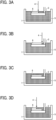
- This material for a solid freeform fabrication can be used as a binder for powder particles for use in powder additive manufacturing to conduct solid freeform fabrication by repeating curing and laminating powder layers. Also, it can be used as a solid constituting material (modeling material) or supporting member (supporting material) for use in stereolithography as illustrated in FIG. 2 and FIGS. 3A to 3D .
- FIG. 2 is a diagram illustrating a method of discharging the active energy ray curing composition of the present disclosure to a particular area followed by curing upon irradiation of active energy to form a layer and laminating the layers (detail of which is described later).
- FIGS. 3A to 3D are diagrams illustrating a method of irradiating a pool (accommodating unit) 1 of the active energy ray curing composition 5 of the present disclosure with active energy ray 4 to form a cured layer 6 having a particular form on a movable stage 3 and sequentially laminating the cured layer 6 so that a solid freeform fabrication object is obtained.
- FIG. 3A the pool 1 of the active energy ray curing composition 5 of the present disclosure is exposed to the active energy ray 4.
- the cured layer 6 having a particular shape is formed on the movable stage 3 owing to the exposure to the active energy ray 4.
- FIG. 3C the movable stage 3 is lowered.
- FIG. 3D another cured layer 6 is formed on the formed cured layer 6 owing to the exposure to the active energy ray 4.
- Solid freeform fabrication objects can be fabricated with the active energy ray curing composition of the present disclosure using a known device without any particular limitation.
- the device can be suitably selected to suit to a particular application.
- Such a device includes an accommodating unit, a supplying device, and a discharging device of the curing composition and an active energy ray irradiator.
- the present disclosure includes cured matter obtained by curing the active energy ray curing composition and a mold product obtained by processing a structure formed of a substrate and the cured matter on the substrate.
- the mold-processed product is manufactured from cured matter or a structure having a sheet-like form and film-like form by, for example, heating drawing or punching.
- the mold-processed product is suitably used to produce items surface-decorated after molding such as gauges or operation panels of vehicles, office machines, electric and electronic devices, and cameras.
- the substrate mentioned above is not particularly limited and can be suitably selected to suit to a particular application.
- the substrate includes paper, string, fiber, fabric, leather, metal, plastics, glass, wood, ceramics, and their composites.
- the active energy ray curing composition of the present disclosure can form good cured matter particularly on a non-permeating substrate such as metal, plastics, glass, and ceramics.
- the substrate may take a form such as a planar substrate or a non-planar form such as a bottle.
- the active energy ray curing composition of the present disclosure can be used alone or in combination with other compositions.
- One way of combining with another composition is to apply a composition such as a pigment-containing composition onto the active energy ray curing composition of the present disclosure applied to a substrate to obtain a primer of the active energy ray curing composition of the present disclosure.
- the active energy ray curing ink composition of the present disclosure contains the active energy ray curing composition mentioned above and other optional components.
- the active energy ray curing inkjet ink composition of the present disclosure contains the active energy ray curing ink composition of the present disclosure and other optional components.
- the composition container of the present disclosure contains at least one of the active energy ray curing composition of the present disclosure, the active energy ray curing ink composition of the present disclosure, and the active energy ray curing inkjet ink composition of the present disclosure.
- the container is suitably used in the application field mentioned above. If the active energy ray curing composition of the present disclosure is used as ink, the container containing the ink can be used as an ink cartridge or an ink bottle. Therefore, users can avoid direct contact with the ink during operations such as transfer or replacement of the ink, so that the users can keep the fingers and clothes clean. In addition, the ink is prevented from mixing with foreign matter such as dust.
- the container can be of any size, any form, and any material.
- the container can be designed to suit to a particular application.
- the container is preferably made of a light blocking material or covered with materials such as a light blocking sheet.
- the apparatus for forming a two-dimensional or three-dimensional image of the present disclosure includes the composition container of the present disclosure and an irradiator for emitting active energy rays.
- the apparatus may include a discharging device for discharging an active energy ray curing composition and other optional devices.
- the method of forming a two-dimensional or three-dimensional image of the present disclosure exposes at least one of the active energy ray curing composition of the present disclosure, the active energy ray curing ink composition of the present disclosure, and the active energy ray curing inkjet ink composition of the present disclosure to active energy rays and other optional processes.
- the apparatus for forming a two-dimensional or three-dimensional image of the present disclosure is also referred to as an image forming apparatus.
- the method of forming a two-dimensional or three-dimensional image of the present disclosure is also referred to as an image forming method.
- the image forming method of the present disclosure includes at least exposing the active energy ray curing composition of the present disclosure to active energy rays to cure the active energy ray curing composition.
- the image forming apparatus of the present disclosure includes an irradiator for exposing the active energy ray curing composition of the present disclosure to active energy rays and an accommodating unit for containing the active energy ray curing composition of the present disclosure.
- the accommodating unit may include the composition container mentioned above.
- the method and the apparatus may respectively include a discharging step and a discharging device for discharging the active energy ray curing composition.
- the method of discharging the curing composition is not particularly limited, including a continuous spraying method and an on-demand method.
- the on-demand method includes methods such as a piezo method, a thermal method, and an electrostatic method.
- the active energy ray is preferably light and particularly preferably ultraviolet having a wavelength of from 220 to 400 nm.
- Active energy is not particularly limited so long as it is able to impart energy necessary for allowing polymerization reaction of polymerizable components in the composition.
- the active energy include, but are not limited to, electron beams, ⁇ -rays, ⁇ -rays, ⁇ -rays, and X-rays, in addition to ultraviolet radiation.
- a particularly high energy light source polymerization occurs without a polymerization initiator.
- mercury-free is strongly preferable to protect the environment when ultraviolet is used.
- Using a GaN-based semiconductor ultraviolet light-emitting device is excellent from industrial and environmental points of view.
- ultraviolet light-emitting diodes (UV-LED) and ultraviolet laser diodes (UV-LD) are preferable as ultraviolet light source because they have small sizes, long working life, and high efficiency, and enjoy high cost performance.
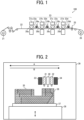
- FIG. 1 is a diagram illustrating an image forming apparatus 100 including the discharging device mentioned above.
- Printing units 23a, 23b, 23c, and 23d respectively have ink cartridges 27a, 27b, 27c, and 27d as composition containers and discharging heads 28a, 28b, 28c, and 28d for yellow, magenta, cyan, and black active energy ray curing ink compositions.
- the units discharge the active energy ray curing ink compositions onto a substrate (or printing medium) 22 fed from a supplying roll 21.
- irradiators (or light sources) 24a, 24b, 24c, and 24d emit active energy rays to the inks to cure them, thereby forming a color image.
- the recording medium 22 is conveyed to a processing unit 25 and a printed matter reeling roll 26.
- Each of the printing units 23a, 23b, 23c, and 23d may include a heating assembly for liquidizing the ink at the ink discharging unit.
- a mechanism may be optionally disposed which cools down a printing medium to an ambient temperature in a contact or non-contact manner.
- the inkjet printing method includes a serial method including discharging an ink onto a printing medium that continually moves in accordance with the width of a discharging head while moving the head and a line method including discharging an ink onto a printing medium that continuously moves from a discharging head fixed at a particular position.
- the printing medium 22 is not particularly limited. Specific examples thereof include, but are not limited to, paper, film, metal, or complex materials thereof.
- the printing medium 22 takes a sheet-like form but is not limited thereto.
- the apparatus for forming an image may have a simplex printing configuration capable of printing an image on one side of a substrate or a duplex printing configuration capable of printing an image on both sides thereof.
- the light source 24d may expose the image to active energy rays after an image of multiple colors is printed with no or faint active energy rays from the light sources 24a, 24b, and 24c. This configuration saves energy and cost.
- the print matter printed with the ink of the present disclosure includes items having printed text or images on a plain surface of a medium including conventional paper and resin film, items having printed text or images on a rough surface, and items having printed text or images on a surface made of various materials such as metal or ceramic.
- a partially stereoscopic image formed of a two dimensional part and a three-dimensional part
- a three dimensional object can be fabricated.
- FIG. 2 is a schematic diagram illustrating another example of the image forming apparatus (apparatus for fabricating a three-dimensional image) related to the present disclosure.
- An image forming device 39 illustrated in FIG. 2 stacks layers by: discharging the first active energy ray curing composition from a discharging head unit 30 for fabrication and a second active energy ray curing composition composed of different ingredients from that of the first active energy ray curing composition from discharging head units 31 and 32 for a support by using a head unit having inkjet heads disposed movable in the directions indicated by the arrows A and B; curing each composition with ultraviolet irradiators 33 and 34 disposed adjacent to the discharging head units 31 and 32 respectively; and repeating the discharging and the curing.
- the discharging head units 31 and 32 for a support discharge the second active energy curing composition onto a substrate 37 for fabrication.
- the second active energy curing composition is solidified at exposure to active energy radiation, thereby forming a first support layer having a hollow space (pool) for fabrication.
- the discharging head unit 30 for fabrication discharges the first active energy curing composition onto the hollow space followed by exposure to active energy radiation for solidification, which forms a first fabrication layer. This step is repeated multiple times in accordance with the required number of lamination while moving the stage 38 up and down in the vertical direction to laminate the support layer and the fabrication layer. A solid freeform fabrication object 35 is thus created. Thereafter, a laminated support 36 is removed, if desired.
- the device may have two or more discharging head units 30.
- the cured matter of the present disclosure is formed by exposing at least one of the active energy ray curing composition of the present disclosure, the active energy ray curing ink composition of the present disclosure, and the active energy ray curing composition for inkejtting of the present disclosure to active energy rays.
- the active energy ray curing composition can be the same as the active energy ray curing composition mentioned above, the active energy ray curing ink composition can be the same as the active energy ray curing ink composition mentioned above, and the active energy ray curing inkjet ink composition can be the same as the active energy ray curing inkjet ink composition mentioned above.
- the decorative object of the present disclosure includes a substrate and the cured matter of the present disclosure. It has a surface decoration of the cured matter on the substrate and other optional members.
- the substrate is not particularly limited. It can suitably be selected to suit to a particular application. Specific examples include, but are not limited to, paper, string, fiber, fabrics, leather, metal, plastic, glass, wood, ceramics, or composite materials thereof.
- the form of the substrate can be a planar form or a non-planar form such as a cylindrical form.
- the laminate of the present disclosure contains glass plate, cured matter of at least one of the active energy ray curing composition of the present disclosure, the active energy ray curing ink composition of the present disclosure, and the active energy ray curing inkjet ink composition of the present disclosure laminated on the glass plate, a resin film laminated on the cured matter, and other optional members.
- the cured matter preferably has an average thickness of from 5 to 20 ⁇ m.
- An average thickness of the layer of the cured matter of from 5 to 20 ⁇ m enhances the adhesion between the glass plate and the resin film and the flexibility of an obtained laminate.
- the member for a flexible device of the present disclosure includes the laminate of the present disclosure and other optional members.
- the flexible device of the present disclosure includes the laminate of the present disclosure and other optional members.
- recording media, media, and print substrates in the present disclosure have the same meaning unless otherwise specified.
- each monomer, polyester resin, and polymerization inhibitor were mixed and stirred to dissolve the polyester resin and the polymerization inhibitor.
- the polymerization initiator was added and dissolved by mixing and stirring to obtain an active energy ray curing composition.
- a total of 15 parts of black pigment (MOGUL-E, carbon black, manufactured by Orion Engineered Carbons), 5 parts of a dispersant (BYK167, manufactured by BYK-Chemie GmbH), and 80 parts of tetrahydrofurfuryl acrylate (manufactured by OSAKA ORGANIC CHEMICAL INDUSTRY LTD.) were placed in a 300 mL ball mill filled with zirconia beads having a diameter of 2 mm with a filling ratio of 43 volume percent, followed by dispersing at a dispersion temperature of 25 degrees C at 70 rotations per minute (rpm) for 180 hours to prepare a black pigment dispersion.
- black pigment MOGUL-E, carbon black, manufactured by Orion Engineered Carbons
- BYK167 manufactured by BYK-Chemie GmbH
- tetrahydrofurfuryl acrylate manufactured by OSAKA ORGANIC CHEMICAL INDUSTRY LTD.
- each monomer and polymerization inhibitor were mixed and stirred to dissolve the polymerization inhibitor.
- the polymerization initiator was added and dissolved by mixing and stirring.
- black pigment dispersion was added and stirred to obtain an active energy ray curing black pigment ink composition.
- the active energy ray curing composition obtained in Preparation Example 1 was loaded in an inkjet printer including an inkjet head, MH5420 manufactured by Ricoh Co., Ltd., and a metal halide lamp (3,000 mj/cm 2 ).
- a 4 cm square solid image was printed on a glass substrate (S9213, manufactured by Matsunami Glass Ind., Ltd.) with a gap of 1 mm between the head and the substrate surface to achieve an amount of adhered to the substrate of 1.5 mg/cm 2 .
- Printed matter 1 was thus obtained.
- Printed matters 2 to 20 and 24 to 30 were obtained in the same manner as in Example 1 except that the active energy ray curing composition of Preparation Example 1 was changed to the active energy ray curing compositions of Preparation Examples 2 to 27.
- the active energy ray curing composition of Preparation Example 1 was loaded in an inkjet printer including an inkjet head, MH5420 manufactured by Ricoh Co., Ltd., and a metal halide lamp (3,000 mj/cm 2 , manufactured by USHIO INC.).
- a 4 cm square solid image was printed on a glass substrate (S9213, manufactured by Matsunami Glass Ind., Ltd.) with a gap of 1 mm between the head and the substrate surface to achieve an amount adhered to the substrate of 1.5 mg/cm 2 .
- the active energy ray curing black pigment ink composition 1 obtained in Preparation Example 24 was printed on the printed active energy ray curing black pigment ink composition of Preparation Example 1 to obtain printed matter 21.
- the active energy ray curing black pigment ink composition 1 obtained was loaded in an inkjet printer including an inkjet head, MH5420 manufactured by Ricoh Co., Ltd., and a metal halide lamp (3,000 mj/cm 2 , manufactured by USHIO INC.).
- a 4 cm square solid image was printed with a gap of 1 mm between the head and the substrate surface to achieve an amount adhered to the substrate of 1.5 mg/cm 2 .
- Printed matters 22 and 23 were obtained in the same manner as in Example 21 except that the active energy ray curing black pigment ink composition 1 was changed to the active energy ray black pigment ink composition 2 or 3.
- the entire of the obtained printed matter including the image portion and the substrate was dipped in hot water heated to 90 degrees C for 20 minutes.
- the entire of the obtained printed matter including the image portion and the substrate was dipped in an aqueous solution of sodium hydroxide at 3 percent by mass heated to 80 degrees C for 20 minutes.
- the active energy ray curing compositions of Preparation Examples 1 to 27 each were loaded in an extensive applicator EV2500 (manufactured by Ricoh Co., Ltd.) equipped with an inkjet head MH5420 (manufactured by Ricoh Co., Ltd.).
- the head continuously discharged the active energy ray curing composition for 30 minutes with the composition inside the head heated and the state of discharging was observed with a camera to evaluate the adhesion according to the following evaluation criteria.
- Adhesion of laminate was evaluated for the active energy ray curing compositions of Preparation Examples 1, 3, 8, 9, 13, 14, 18, and 21 in the following manner. The results are shown in Table 10.
- the prepared active energy ray curing composition was applied onto the entire region of a polyester film (A4360, thickness of 75 ⁇ m, manufactured by TOYOBO CO., LTD.) along the width direction of the substrate, perpendicular to the application direction, to obtain an average thickness of 10 ⁇ m after curing.
- a glass plate (G-leaf, manufactured by Nippon Electric Glass Co., Ltd.) was laminated onto the active energy ray curing composition applied, followed by irradiation of ultraviolet radiation with a light emitting diode (LED) irradiator (365 nm, 3,000 mL/cm 2 , manufactured by Heraeus Holding) irradiating to create a laminate.
- LED light emitting diode
- a cut was made to the end part of the polyester film of the laminate created.
- the polyester film was pulled and peeled off with a hand from the cut to evaluate the adhesion according to the following evaluation criteria.
Landscapes
- Chemical & Material Sciences (AREA)
- Engineering & Computer Science (AREA)
- Materials Engineering (AREA)
- Organic Chemistry (AREA)
- Wood Science & Technology (AREA)
- Life Sciences & Earth Sciences (AREA)
- Manufacturing & Machinery (AREA)
- Health & Medical Sciences (AREA)
- Physics & Mathematics (AREA)
- Chemical Kinetics & Catalysis (AREA)
- Toxicology (AREA)
- Medicinal Chemistry (AREA)
- Polymers & Plastics (AREA)
- Mechanical Engineering (AREA)
- Optics & Photonics (AREA)
- General Health & Medical Sciences (AREA)
- Electromagnetism (AREA)
- Inks, Pencil-Leads, Or Crayons (AREA)
- Macromonomer-Based Addition Polymer (AREA)
- Ink Jet Recording Methods And Recording Media Thereof (AREA)
- Ink Jet (AREA)
- Laminated Bodies (AREA)
- Polymerisation Methods In General (AREA)
- Graft Or Block Polymers (AREA)
- Compositions Of Macromolecular Compounds (AREA)
- Addition Polymer Or Copolymer, Post-Treatments, Or Chemical Modifications (AREA)
Abstract
An active energy ray curing composition contains a polymerizable monomer having a phosphoric acid ester group and a polyester resin having an unsaturated bond and a number average molecular weight of 3,000 or less.
Description
- The present disclosure is related to an active energy ray curing composition, active energy ray curing ink composition, active energy ray curing inkjet ink composition, a composition container, an apparatus for forming a two-dimensional or three-dimensional image, a method of forming a two-dimensional or three-dimensional image, cured matter, a decorative object, a member for flexible device, and a flexible device.
- Inkjet printers are now applied in many industrial fields including printing text and images on a large-sized commercial advertisement, wall paper, packages, and beverage containers. Inkjet printers use ink compositions such as aqueous inkjet ink compositions, oil inkjet ink compositions, and active energy ray curing inkjet ink compositions.
- The active energy ray curing composition cures upon exposure to radiation of active energy rays and dries quickly on a non-permeating substrate.
- Cured matter obtained by curing a printed active energy ray curing composition is required to be durable to a treatment under an extremely severe condition. For an application of the cured matter to a field of eating and drinking including beverage containers, the container is often treated with hot water or an alkali solution for sterilization. Cured matter obtained by curing a printed active energy ray curing composition is required to endure a treatment under an extremely severe condition.
- A curable composition having an excellent adhesion, thermal resistance, and moisture resistance has been proposed in
Japanese Unexamined Patent Application Publication No. 2015-034240 - An inkjet ink composition that can produce a resin-covered metal plate including a resin film having a high strength and strong adhesion to metal has been proposed in
Japanese Unexamined Patent Application Publication No. 2012-162615 - Moreover, an energy curable ink or coating composition for printing has been proposed as an energy curable ink and coating composition having improved adhesion to a flexible substrate such as flexible film in Japanese Translation of
PCT International Application Publication No. JP-T- 2015-513601 - According to embodiments of the present disclosure, an active energy ray curing composition is provided which contains a polymerizable monomer having a phosphoric acid ester group and a polyester resin having an unsaturated bond and a number average molecular weight of 3,000 or less.
- As another aspect of embodiments of the present disclosure, an active energy ray curing ink composition is provided which contains the active energy ray curing composition mentioned above.
- As another aspect of embodiments of the present disclosure, an active energy ray curing inkjet ink composition is provided which contains the active energy ray curing ink composition mentioned above.
- As another aspect of embodiments of the present disclosure, a composition container is provided which includes a container containing at least one of the active energy ray curing composition mentioned above, an active energy ray curing ink composition containing the active energy ray curing composition, and an active energy ray curing inkjet ink composition containing the active energy ray curing ink composition.
- As another aspect of embodiments of the present disclosure, an apparatus for forming a two-dimensional or three-dimensional image is provided which includes the composition container mentioned above and an irradiator for emitting active energy rays.
- As another aspect of embodiments of the present disclosure, a method of forming a two-dimensional or three-dimensional image is provided which includes exposing at least one of the active energy ray curing composition mentioned above, an active energy ray curing ink composition comprising the active energy ray curing composition, and an active energy ray curing inkjet ink composition comprising the active energy ray curing ink composition to active energy ray.
- As another aspect of embodiments of the present disclosure, cured matter is provided which is produced by a method of curing at least one of the active energy ray curing composition mentioned above, an active energy ray curing ink composition comprising the active energy ray curing composition, and an active energy ray curing inkjet ink composition comprising the active energy ray curing ink composition to active energy rays.
- As another aspect of embodiments of the present disclosure, a decorative object is provided which includes a substrate and a surface decoration of the cured matter mentioned above on the substrate.
- As another aspect of embodiments of the present disclosure, a laminate is provided which includes a glass substrate, cured matter of at least one of the active energy ray curing composition mentioned above, an active energy ray curing ink composition containing the active energy ray curing composition, and an active energy ray curing inkjet ink composition containing the active energy ray curing ink composition laminated on the glass substrate, and a resin film laminated on the cured matter.
- As another aspect of embodiments of the present disclosure, a member for flexible device is provided which includes the laminate mentioned above.
- As another aspect of embodiments of the present disclosure, a flexible device is provided which includes the laminate mentioned above.
- A more complete appreciation of the disclosure and many of the attendant advantages and features thereof can be readily obtained and understood from the following detailed description with reference to the accompanying drawings, wherein:
-
FIG. 1 is a schematic diagram illustrating an apparatus for forming a two-dimensional or three-dimensional image according to an embodiment of the present invention; -
FIG. 2 is a schematic diagram illustrating an apparatus for forming a two-dimensional or three-dimensional image according to another embodiment of the present invention; -
FIG. 3A is a schematic diagram illustrating an apparatus for forming a two-dimensional or three-dimensional image according to another embodiment of the present invention; -
FIG. 3B is a schematic diagram illustrating the apparatus for forming a two-dimensional or three-dimensional image according to another embodiment of the present invention; -
FIG. 3C is a schematic diagram illustrating the apparatus for forming a two-dimensional or three-dimensional image according to another embodiment of the present invention; and -
FIG. 3D is a schematic diagram illustrating the apparatus for forming a two-dimensional or three-dimensional image according to another embodiment of the present invention. - The accompanying drawings are intended to depict example embodiments of the present invention and should not be interpreted to limit the scope thereof. The accompanying drawings are not to be considered as drawn to scale unless explicitly noted. Also, identical or similar reference numerals designate identical or similar components throughout the several views.
- The terminology used herein is for the purpose of describing particular embodiments only and is not intended to be limiting of the present invention. As used herein, the singular forms "a," "an," and "the" are intended to include the plural forms as well, unless the context clearly indicates otherwise. It will be further understood that the terms "includes" and/or "including", when used in this specification, specify the presence of stated features, integers, steps, operations, elements, and/or components, but do not preclude the presence or addition of one or more other features, integers, steps, operations, elements, components, and/or groups thereof.
- Embodiments of the present invention are described in detail below with reference to accompanying drawings. In describing embodiments illustrated in the drawings, specific terminology is employed for the sake of clarity. However, the disclosure of this patent specification is not intended to be limited to the specific terminology so selected, and it is to be understood that each specific element includes all technical equivalents that have a similar function, operate in a similar manner, and achieve a similar result.
- For the sake of simplicity, the same reference number will be given to identical constituent elements such as parts and materials having the same functions and redundant descriptions thereof omitted unless otherwise stated.
- According to the present disclosure, an active energy ray curing composition is provided which can form cured matter having a strong adhesion even after the cured matter is placed under an extremely sever condition such as immersing in hot water or an alkali solution.
- The active energy ray curing composition of the present disclosure contains a polymerizable monomer having a phosphoric acid ester group, a polyester resin, and other optional components.
- The curable composition of
Japanese Unexamined Patent Application Publication No. 2015-034240 - The inkjet ink composition of
Japanese Unexamined Patent Application Publication No. 2012-162615 PCT International Application Publication No. JP-T- 2015-513601 - As a result of an investigation, the inventors of the present invention have found that an active energy ray curing composition containing a polymerizable monomer having a phosphoric acid ester group and a polyester resin maintains excellent adhesion even after the composition is subjected to a treatment under an extremely severe condition such as hot water and an alkali solution.
- This mechanism is not clear but can be inferred as follows.
- When an active energy ray curing composition is applied to a non-permeating substrate such as glass, the composition does not permeate a substrate so that cured matter of the composition does not adhere to a substrate well.
- However, by using a polymerizable monomer having a phosphoric acid ester group, the fundamental part of the phosphoric acid ester group dissolves a substrate and allows the mutual action between the substrate and the compound, resulting in an extremely high adhesion between both.
- In addition, the polyester resin enhances the adhesion between them and is considered to have a good affinity with the polymerizable monomer having a phosphoric acid ester group having a structure similar to that of a polyester. Therefore, cured matter formed on a substrate is inferentially solid, which prevents aggregation break of the cured matter.
- When a substrate and cured matter formed on the substrate are immersed in hot water or an alkali solution, the hot water or the alkali solution permeates the interface between the substrate and the cured matter or the inside of the cured matter. After the immersion, the adhesion between the substrate and the cured matter may extremely weaken.
- However, a composition containing a polymerizable monomer having a phosphoric acid ester group and a polyester resin extremely enhances the interaction between a substrate and cured matter or the strength of the cured matter. The composition can therefore prevent hot water or an alkali solution from penetrating the interface between the substrate and the cured matter or the inside of the cured matter, so that the cured matter sticks firmly to the substrate even after the substrate and the cured matter are dipped in hot water or an alkali solution.
- In the specification of the present disclosure, hot water refers to water heated to 80 degrees C or higher under normal pressure, meaning that hot water from 80 to 100 degrees C at normal pressure.
- The active energy ray curing composition of the present disclosure contains a polymerizable monomer having a phosphoric acid ester group. In the present disclosure, the phosphoric acid group of the polymerizable monomer having a phosphoric acid ester group dissolves a substrate such as glass, thereby enhancing the interaction between the substrate and the composition. Therefore, the cured matter sticks firmly to the substrate.
- The polymerizable functional group in the polymerizable monomer having a phosphoric acid ester group is not particularly limited and can be suitably selected to suit to a particular application. One of the functional groups is (meth)acrylate.
- The polymerizable monomer having a phosphoric acid ester group is preferably a polyfunctional monomer having two or more polymerizable functional groups and more preferably three polymerizable functional groups in a molecule.
- A polymerizable monomer having a phosphoric acid ester group having two or more polymerizable functional groups in a molecule enables cured matter to stick firmly to a substrate even after both are dipped in hot water or an alkali solution.
- Specific examples of the polymerizable monomer having a phosphoric acid ester group include, but are not limited to, 2-acryloyloxy ethyl acid phosphate (number of polymerizable functional groups: 1), 2-meth(acryloyloxy ethyldihydrogen phosphate (number of polymerizable functional groups: 1), and dipentaerythritol penta(meth)acryloyloxy dihydrogenphosphate (number of polymerizable functional groups: 5). These can be used alone or in combination.
- The polymerizable monomer having an acidic group can be procured.
- Specific examples of the products include, but are not limited to, SR9050NS (number of polymerizable functional groups: 1, manufactured by Sartomer Company), SR9051NS (number of polymerizable functional groups: 3, manufactured by Sartomer Company), and Light Acrylate P-1A (N), (number of polymerizable functional groups: 1, manufactured by Kyoeisha Chemical Co., Ltd.).
- The proportion of the polymerizable monomer having a phosphoric acid ester group is preferably from 3 to 10 percent by mass to the entire of a composition.
- A proportion of the polymerizable monomer having a phosphoric acid ester group of from 3 to 10 percent by mass to the entire of a polymerizable monomer having a phosphoric acid ester group demonstrates an excellent adhesion between cured matter and a substrate even after both are immersed in hot water or an alkali solution. Moreover, a proportion of the polymerizable monomer having a phosphoric acid ester group of from 3 to 10 percent by mass to the entire of a polymerizable monomer having a phosphoric acid ester group makes it possible to obtain an active energy ray curing composition having excellent durability to liquid in contact and discharging stability.
- Liquid in contact means a contact between an active energy ray curing composition and a member like a jig such as an inkjet head for inkjet printing that is used for imparting the active energy ray curing composition.
- A metal part in contact with liquid is subject to deterioration when the proportion of the polymerizable monomer having a phosphoric acid ester group surpasses 10 percent by mass. Therefore, the proportion is preferably 10 percent by mass or less.
- The polyester resin mentioned above is not particularly limited and can be suitably selected to suit to a particular application.
- Since the polyester resin has a chemical structure similar to that of the phosphoric acid ester group in a polymerizable monomer having a phosphoric acid ester group, each molecule has a high affinity. A combinational use of the polyester resin mentioned above and the monomer having a phosphoric acid ester group hardens obtained cured matter more, furthermore reducing the aggregation break of the cured matter.
- In terms of the compatibility of the polymer resin with monomers such as an organic solvent, the polyester resin is preferably dissolved in the monomer or organic solvent. These can be used alone or in combination.
- The polyester resin can be procured.
- Specific examples of marketed products include, but are not limited to, UVAD-081 (number average molecular weight of 1,400, manufactured by OSAKA SODA CO., LTD.), UVAD-085 (number average molecular weight of 2,000, manufactured by OSAKA SODA CO., LTD.), VYLON GK-810 (number average molecular weight of 6,000, manufactured by TOYOBO CO., LTD.), VYLON 200 (number average molecular weight of 17,000, manufactured by TOYOBO CO., LTD.), and VYLON GK-360 (number average molecular weight of 16,000, manufactured by TOYOBO CO., LTD.), and VYLON 600 (number average molecular weight of 16,000, manufactured by TOYOBO CO., LTD.).
- The polyester resin preferably has an unsaturated bond. A polyester resin having an unsaturated bond enables cured matter and a substrate to firmly adhere to each other even after both are immersed in hot water or an alkali solution.
- Specific examples of the polyester resin having an unsaturated bond include, but are not limited to, UVAD-081 (number average molecular weight of 1,400, manufactured by OSAKA SODA CO., LTD.) and UVAD-085 (number average molecular weight of 2,000, manufactured by OSAKA SODA CO., LTD.).
- The polyester resin mentioned preferably has a number average molecular weight of 3,000 or less, more preferably 2,000 or less, and furthermore preferably from 500 to 2,000. The polyester resin having a number average molecular weight of 3,000 or less enhances the adhesion between cured matter and a substrate. The polyester resin having a number average molecular weight of 3,000 or less enhances the discharging stability of a composition.
- The proportion of the polyester resin to the entire of a composition is preferably from 3 to 15 percent by mass, more preferably from 3 to 10 percent by mass, and furthermore preferably from 5 to 10 percent by mass. A proportion of the polyester resin of from 3 to 15 percent by mass enables cured matter and a substrate to firmly adhere to each other even after both are immersed in hot water or an alkali solution. A proportion of the polyester resin of from 3 to 15 percent by mass enhances the discharging stability of a composition.
- The other components mentioned above include, but are not limited to, a polymerizable compound other than the polymerizable monomer having a phosphoric acid ester group, a polymerization initiator, a polymerization promoter, a coloring material, and an organic solvent.
- The polymerizable compounds other than the polymerizable monomer having a phosphoric acid ester group is not particularly limited and can be known compounds.
- The other polymerizable compounds include, but are not limited to, polymerizable monomers and polymerizable oligomers.
- Specific examples of such compounds include, but are not limited to, monofunctional polymerizable compounds such as tetrahydro furfuryl acrylate, phenoxy ethylacrylate, 2-hydroxy ethylacrylate, ethylacrylate, 2-hydroxy propylacrylate, isobutylacrylate, t-butylacrylate, cyclic trimethylol propane formal monoacrylate, imideacrylate, 2,2,2-trifuluoro ethylacrylate, N-vinylformamide, cyclohexyl acrylate, benzylacrylate, 4-t-butylcyclohexyl acrylate, caprolactone-modified tetrahydro furfuryl acrylate, ethoxylated tribromophenyl acrylate, phenoxy diethylene glycol acrylate, vinyl pyrrolidone, 2-hydroxy-3-phenoxy propyl acrylate, 1,4-cyclohexaen dimethanol monoacrylate, stearyl acrylate, lauryl acrylate, 3,3,5-trimethyl cyclohexyl acrylate, ethoxylated nonylphenyl acrylate, alkoxylated 2-phenoxy ethyl acrylate, phenoxy polyethylene glycol acrylate, dimethylacryl amide, hydroxyethyl acrylamide, itopropyl acrylamide, diethyl acrylamide, and dimethylamino propyl acrylamide, and polyfunctional polymerizable compounds such as pentaerythritol tri(meth)acrylate, dipropylene glycol diacrylate, tripropylene glycol diacrylate, trimethylol propane triacrylate, pentaerythritol tetra(meth)acrylate, dipentaerythritol (meth)hexaacrylate, trimethylol propane tri(meth)acrylate, tetramethylol methane tetra(meth)acrylate, trimethylol ethane tri(meth)acrylate, tetramethylol methane tetra(meth)acrylate, trimethylol ethane tri(meth)acrylate, trimethylol propane tri(meth)acrylate, 3-methyl-1,5-pentane diol di(meth)acrylate, 1,6-hexane diol di(meth)acrylate, 1,9-nonane diol di(meth)acrylate, 1,3-butylene glycol di(meth)acrylate, 1,10-decane diol di(meth)acrylate, hydroxy pivalic acid neopentyl glycol di(meth)acrylate, tetramethylol methane tri(meth)acrylate, dimethylol tricyclodecane di(meth)acrylate, modified glycerin tri(meth)acrylate, an adduct of bisphenol A with diglycidyl ether(meth)acrylic acid, modified bisphenol A di(meth)acrylate, dipentaerythritol hexa(meth)acrylate, an adduct of hydroxy pivalic acid with neopentyl glycol(meth)acrylate, 2-hydroxy-3-acryloyloxy propyl methacryalte, urehane acrylate oligomer, pentaerythritol tri(meth)acrylate hexamethylene diisocyanate urethane prepolymer, ditrimethylol propane tetra(meth)acrylate, and pentaerythritol tri(meth)acrylate hexamethylene diisocyanate urethane polymer.
- These can be used alone or in combination.
- Note that, an adduct of (meth)acrylic acid ester means an adduct of acrylic acid or an adduct of methacrylic acid, and (meth)acrylate means an acrylate or a methacrylate.
- The polymerizable compound other than the polymerizable monomer having a phosphoric acid ester group is preferably a polyfunctional monomer having two or more polymerizable functional groups in a molecule.
- The proportion of the polyfunctional monomer having two or more polymerizable functional groups to the entire of a composition is preferably 25 percent by mass or less, more preferably 15 percent by mass or less, and furthermore preferably 10 percent by mass or less. A proportion of a polyfunctional monomer having two or more polymerizable functional groups in a molecule of 25 percent by mass or less enables cured matter to stick firmly to a substrate even after both are dipped in hot water or an alkali solution.
- The active energy ray curing composition of the present disclosure may contain a polymerization initiator. The polymerization initiator is not particularly limited as long as it produces active species such as a radical or a cation upon an application of energy of active energy radiation, which initiates polymerization of a polymerizable compound (monomer or oligomer). The polymerization initiator can be a known radical polymerization initiator, a cation polymerization initiator, a base producing agent, or a combination thereof. Of these, radical polymerization initiators are preferable. Moreover, the polymerization initiator preferably accounts for 5 to 20 percent by mass of the entire (100 percent by mass) of a composition to achieve a sufficient curing speed.
- Specific examples of the radical polymerization initiators include, but are not limited to, aromatic ketones, acylphosphineoxide compounds, aromatic oniumchlorides, organic peroxides, thio compounds such as thioxanthone compounds, compounds including thiophenyl groups, hexaarylbiimidazole compounds, ketoxime-esterified compounds, borate compounds, azinium compounds, metallocene compounds, active ester compounds, compounds having a carbon halogen bond, and alkylamine compounds.
- In addition, a polymerization accelerator or sensitizer can be optionally used together with the polymerization initiator. The polymerization accelerator is not particularly limited. Preferred examples thereof include, but are not limited to, amine compounds such as trimethylamine, methyldimethanolamine, triethanolamine, p-diethylaminoacetophenone, p-dimethylaminoethylbenzoate, p-dimethyl aminobenzoate-2-ethylhexyl, N,N-dimthylbenzylamine, and 4,4'-bis(diethylamino)benzophenone. The content can be suitably determined to suit to the identification and the content of the polymerization initiator used in combination with the polymerization accelerator.
- The active energy ray curing composition of the present disclosure may contain a coloring material. Pigments and dyes can be added as a coloring material in accordance with the objectives and requisites of the composition of the present disclosure. These demonstrate black, white, magenta, cyan, yellow, green, orange, and gloss color such as gold and silver. The proportion of the coloring agent is not particularly limited and determined considering the desired color density and dispersibility of the coloring agent in the curing composition. Preferably, the proportion of the coloring agent accounts for 0.1 to 20 percent by mass of the entire (100 percent by mass) of the composition. The active energy ray curing composition of the present disclosure can be clear and colorless without containing a coloring agent. If no coloring agent is present in a curing composition, the composition is suitable as an overcoat layer for protecting an image.
- An inorganic or organic pigment can be used alone or in combination as the pigment.
- Specific examples of the inorganic pigment include, but are not limited to, carbon blacks (C.I. PIGMENT BLACK 7) such as furnace black, lamp black, acetylene black, and channel black, iron oxides, and titanium oxides.
- Specific examples of the organic pigment include, but are not limited to, azo pigments such as insoluble azo pigments, condensed azo pigments, azo lakes, chelate azo pigments, polycyclic pigments such as phthalocyanine pigments, perylene pigments, perinone pigments, anthraquinone pigments, quinacridone pigments, dioxazine pigments, thioindigo pigments, isoindolinone pigments, and quinofuranone pigments, dye chelates such as basic dye type chelates, acid dye type chelates, dye lakes such as basic dye type lake and acid dye type lake, nitro pigments, nitroso pigments, aniline black, and daylight fluorescent pigments.
- In addition, a dispersant is optionally added to enhance dispersibility of a pigment. The dispersant has no particular limit. For example, it is suitable to use a polymer dispersant conventionally used to prepare a pigment dispersion.
- The dye includes, for example, an acidic dye, direct dye, reactive dye, and basic dye. These can be used alone or in combination.
- The active energy ray curing composition of the present disclosure optionally contains an organic solvent, although it is preferable to spare it. A composition free of an organic solvent, in particular a volatile organic compound (VOC), is preferable because it enhances safeness at places where the composition is handled, thereby preventing the environment contamination. "Organic solvent" represents a non-reactive organic solvent such as ether, ketone, xylene, ethylacetate, cyclohexanone, or toluene, which is clearly distinguished from a reactive monomer. Furthermore, "free of' an organic solvent means that no organic solvent is substantially contained. The proportion thereof is preferably less than 0.1 percent by mass.
- The active energy ray curing composition of the present disclosure may optionally contain other known components. The other known components are not particularly limited. Examples are known additives such as surfactants, polymerization inhibitors, leveling agents, defoaming agents, fluorescent brighteners, penetration-enhancing agents, wetting agents (humectants), fixing agents, viscosity stabilizers, fungicide, preservatives, antioxidants, ultraviolet absorbents, chelate agents, pH regulators, and thickeners.
- The active energy ray curing composition of the present disclosure can be prepared by using the components described above. The preparation devices and conditions are not particularly limited. For example, the curing composition can be prepared by charging substances such as a polymerizable monomer, a pigment, and a dispersant into a dispersing machine such as a ball mill, kitty mill, a disk mill, a pin mill, and a DYNO-MILL to prepare a pigment liquid dispersion followed by mixing with a polymerizable monomer, an initiator, a polymerization inhibitor, and a surfactant.
- The viscosity of the active energy ray curing composition of the present disclosure is not particularly limited and can be suitably adjusted to suit to a particular application. It is preferably 40 mPa· s or less and more preferably 30 mPa·s or less at 25 degrees C to enhance the interaction and adhesion between a substrate and an active energy ray curing composition. Viscosity can be measured by a cone plate rotary viscometer (VISCOMETER TVE-25L, manufactured by TOKI SANGYO CO., LTD.) using a cone rotor (1°34' × R24) at 50 rotations per minute (rpm) at 25 degrees C kept by hemathermal circulating water. The temperature of the circulating water can be controlled with a VISCOMATE VM-150III.
- The active energy rays for use in curing the active energy ray curing composition of the present disclosure is not particularly limited as long as it can apply energy required to allow the polymerization reaction of the polymerizable composition in the active energy ray curing composition. Specific examples include, but are not limited to, electron beams, α rays, β rays, γ rays, and X rays, in addition to ultraviolet radiation. In an embodiment in which a particularly high energy light source is used, polymerization occurs without a polymerization initiator. In addition, mercury-free is strongly preferable to protect the environment when ultraviolet is used. Using a GaN-based semiconductor ultraviolet light-emitting device is excellent from industrial and environmental points of view. Furthermore, ultraviolet light-emitting diodes (UV-LED) and ultraviolet laser diodes (UV-LD) are preferable as an ultraviolet light source because they have small sizes, long working life, and high efficiency, and enjoy high cost performance.
- The application field of the active energy ray curing composition of the present disclosure is not particularly limited. It can be applied to any field where the active energy ray curing composition is used. The composition is selected to suit to a particular application. Examples include, but are not limited to, a resin for use in molding, a paint, an adhesive, an insulant, a releasing agent, a coating material, a sealing material, resists, and optical materials. The active energy ray curing composition of the present disclosure can be used as an ink to form two-dimensional text, images, and designed coating film on various substrates and in addition as a solid object forming material for forming a three-dimensional object. This material for a solid freeform fabrication can be used as a binder for powder particles for use in powder additive manufacturing to conduct solid freeform fabrication by repeating curing and laminating powder layers. Also, it can be used as a solid constituting material (modeling material) or supporting member (supporting material) for use in stereolithography as illustrated in
FIG. 2 andFIGS. 3A to 3D . -
FIG. 2 is a diagram illustrating a method of discharging the active energy ray curing composition of the present disclosure to a particular area followed by curing upon irradiation of active energy to form a layer and laminating the layers (detail of which is described later).FIGS. 3A to 3D are diagrams illustrating a method of irradiating a pool (accommodating unit) 1 of the active energyray curing composition 5 of the present disclosure withactive energy ray 4 to form a curedlayer 6 having a particular form on amovable stage 3 and sequentially laminating the curedlayer 6 so that a solid freeform fabrication object is obtained. - In
FIG. 3A , thepool 1 of the active energyray curing composition 5 of the present disclosure is exposed to theactive energy ray 4. InFIG. 3B , the curedlayer 6 having a particular shape is formed on themovable stage 3 owing to the exposure to theactive energy ray 4. InFIG. 3C , themovable stage 3 is lowered. InFIG. 3D , another curedlayer 6 is formed on the formed curedlayer 6 owing to the exposure to theactive energy ray 4. - Solid freeform fabrication objects can be fabricated with the active energy ray curing composition of the present disclosure using a known device without any particular limitation. The device can be suitably selected to suit to a particular application. Such a device includes an accommodating unit, a supplying device, and a discharging device of the curing composition and an active energy ray irradiator.
- In addition, the present disclosure includes cured matter obtained by curing the active energy ray curing composition and a mold product obtained by processing a structure formed of a substrate and the cured matter on the substrate. The mold-processed product is manufactured from cured matter or a structure having a sheet-like form and film-like form by, for example, heating drawing or punching. The mold-processed product is suitably used to produce items surface-decorated after molding such as gauges or operation panels of vehicles, office machines, electric and electronic devices, and cameras.
- The substrate mentioned above is not particularly limited and can be suitably selected to suit to a particular application. The substrate includes paper, string, fiber, fabric, leather, metal, plastics, glass, wood, ceramics, and their composites. The active energy ray curing composition of the present disclosure can form good cured matter particularly on a non-permeating substrate such as metal, plastics, glass, and ceramics.
- The substrate may take a form such as a planar substrate or a non-planar form such as a bottle.
- The active energy ray curing composition of the present disclosure can be used alone or in combination with other compositions.
- One way of combining with another composition is to apply a composition such as a pigment-containing composition onto the active energy ray curing composition of the present disclosure applied to a substrate to obtain a primer of the active energy ray curing composition of the present disclosure.
- The active energy ray curing ink composition of the present disclosure contains the active energy ray curing composition mentioned above and other optional components.
- The active energy ray curing inkjet ink composition of the present disclosure contains the active energy ray curing ink composition of the present disclosure and other optional components.
- The composition container of the present disclosure contains at least one of the active energy ray curing composition of the present disclosure, the active energy ray curing ink composition of the present disclosure, and the active energy ray curing inkjet ink composition of the present disclosure. The container is suitably used in the application field mentioned above. If the active energy ray curing composition of the present disclosure is used as ink, the container containing the ink can be used as an ink cartridge or an ink bottle. Therefore, users can avoid direct contact with the ink during operations such as transfer or replacement of the ink, so that the users can keep the fingers and clothes clean. In addition, the ink is prevented from mixing with foreign matter such as dust. The container can be of any size, any form, and any material. For example, the container can be designed to suit to a particular application. The container is preferably made of a light blocking material or covered with materials such as a light blocking sheet.
- The apparatus for forming a two-dimensional or three-dimensional image of the present disclosure includes the composition container of the present disclosure and an irradiator for emitting active energy rays. The apparatus may include a discharging device for discharging an active energy ray curing composition and other optional devices.
- The method of forming a two-dimensional or three-dimensional image of the present disclosure exposes at least one of the active energy ray curing composition of the present disclosure, the active energy ray curing ink composition of the present disclosure, and the active energy ray curing inkjet ink composition of the present disclosure to active energy rays and other optional processes.
- The apparatus for forming a two-dimensional or three-dimensional image of the present disclosure is also referred to as an image forming apparatus.
- The method of forming a two-dimensional or three-dimensional image of the present disclosure is also referred to as an image forming method.
- The image forming method of the present disclosure includes at least exposing the active energy ray curing composition of the present disclosure to active energy rays to cure the active energy ray curing composition.
- The image forming apparatus of the present disclosure includes an irradiator for exposing the active energy ray curing composition of the present disclosure to active energy rays and an accommodating unit for containing the active energy ray curing composition of the present disclosure. The accommodating unit may include the composition container mentioned above. Furthermore, the method and the apparatus may respectively include a discharging step and a discharging device for discharging the active energy ray curing composition. The method of discharging the curing composition is not particularly limited, including a continuous spraying method and an on-demand method. The on-demand method includes methods such as a piezo method, a thermal method, and an electrostatic method.
- The active energy ray is preferably light and particularly preferably ultraviolet having a wavelength of from 220 to 400 nm. Active energy is not particularly limited so long as it is able to impart energy necessary for allowing polymerization reaction of polymerizable components in the composition. Examples of the active energy include, but are not limited to, electron beams, α-rays, β-rays, γ-rays, and X-rays, in addition to ultraviolet radiation. In an embodiment in which a particularly high energy light source is used, polymerization occurs without a polymerization initiator. In addition, mercury-free is strongly preferable to protect the environment when ultraviolet is used. Using a GaN-based semiconductor ultraviolet light-emitting device is excellent from industrial and environmental points of view. Furthermore, ultraviolet light-emitting diodes (UV-LED) and ultraviolet laser diodes (UV-LD) are preferable as ultraviolet light source because they have small sizes, long working life, and high efficiency, and enjoy high cost performance.
-
FIG. 1 is a diagram illustrating animage forming apparatus 100 including the discharging device mentioned above.Printing units ink cartridges heads roll 21. Thereafter, irradiators (or light sources) 24a, 24b, 24c, and 24d emit active energy rays to the inks to cure them, thereby forming a color image. Thereafter, therecording medium 22 is conveyed to aprocessing unit 25 and a printedmatter reeling roll 26. Each of theprinting units - The
printing medium 22 is not particularly limited. Specific examples thereof include, but are not limited to, paper, film, metal, or complex materials thereof. Theprinting medium 22 takes a sheet-like form but is not limited thereto. The apparatus for forming an image may have a simplex printing configuration capable of printing an image on one side of a substrate or a duplex printing configuration capable of printing an image on both sides thereof. In addition, thelight source 24d may expose the image to active energy rays after an image of multiple colors is printed with no or faint active energy rays from thelight sources - The print matter printed with the ink of the present disclosure includes items having printed text or images on a plain surface of a medium including conventional paper and resin film, items having printed text or images on a rough surface, and items having printed text or images on a surface made of various materials such as metal or ceramic. In addition, by laminating layers of two-dimensional images on a printing medium, a partially stereoscopic image (formed of a two dimensional part and a three-dimensional part) or a three dimensional object can be fabricated.
-
FIG. 2 is a schematic diagram illustrating another example of the image forming apparatus (apparatus for fabricating a three-dimensional image) related to the present disclosure. Animage forming device 39 illustrated inFIG. 2 stacks layers by: discharging the first active energy ray curing composition from a discharginghead unit 30 for fabrication and a second active energy ray curing composition composed of different ingredients from that of the first active energy ray curing composition from discharginghead units ultraviolet irradiators head units head units substrate 37 for fabrication. The second active energy curing composition is solidified at exposure to active energy radiation, thereby forming a first support layer having a hollow space (pool) for fabrication. The discharginghead unit 30 for fabrication discharges the first active energy curing composition onto the hollow space followed by exposure to active energy radiation for solidification, which forms a first fabrication layer. This step is repeated multiple times in accordance with the required number of lamination while moving thestage 38 up and down in the vertical direction to laminate the support layer and the fabrication layer. A solidfreeform fabrication object 35 is thus created. Thereafter, alaminated support 36 is removed, if desired. Although there is only one discharginghead unit 30 for fabrication inFIG. 2 , the device may have two or more discharginghead units 30. - The cured matter of the present disclosure is formed by exposing at least one of the active energy ray curing composition of the present disclosure, the active energy ray curing ink composition of the present disclosure, and the active energy ray curing composition for inkejtting of the present disclosure to active energy rays.
- The active energy ray curing composition can be the same as the active energy ray curing composition mentioned above, the active energy ray curing ink composition can be the same as the active energy ray curing ink composition mentioned above, and the active energy ray curing inkjet ink composition can be the same as the active energy ray curing inkjet ink composition mentioned above.
- The decorative object of the present disclosure includes a substrate and the cured matter of the present disclosure. It has a surface decoration of the cured matter on the substrate and other optional members.
- The substrate is not particularly limited. It can suitably be selected to suit to a particular application. Specific examples include, but are not limited to, paper, string, fiber, fabrics, leather, metal, plastic, glass, wood, ceramics, or composite materials thereof.
- The form of the substrate can be a planar form or a non-planar form such as a cylindrical form.
- The laminate of the present disclosure contains glass plate, cured matter of at least one of the active energy ray curing composition of the present disclosure, the active energy ray curing ink composition of the present disclosure, and the active energy ray curing inkjet ink composition of the present disclosure laminated on the glass plate, a resin film laminated on the cured matter, and other optional members.
- The cured matter preferably has an average thickness of from 5 to 20 µm. An average thickness of the layer of the cured matter of from 5 to 20 µm enhances the adhesion between the glass plate and the resin film and the flexibility of an obtained laminate.
- The member for a flexible device of the present disclosure includes the laminate of the present disclosure and other optional members.
- The flexible device of the present disclosure includes the laminate of the present disclosure and other optional members.
- The terms of image forming, recording, and printing in the present disclosure represent the same meaning.
- Also, recording media, media, and print substrates in the present disclosure have the same meaning unless otherwise specified.
- Having generally described preferred embodiments of this disclosure, further understanding can be obtained by reference to certain specific examples which are provided herein for the purpose of illustration only and are not intended to be limiting. In the descriptions in the following examples, the numbers represent weight ratios in parts, unless otherwise specified.
- Next, the present disclosure is described in detail with reference to Examples but is not limited thereto.
- The recipes shown in Tables 1 to 7 were mixed and stirred by a typical method to prepare active energy
ray curing compositions 1 to 27. - Firstly, each monomer, polyester resin, and polymerization inhibitor were mixed and stirred to dissolve the polyester resin and the polymerization inhibitor. Next, the polymerization initiator was added and dissolved by mixing and stirring to obtain an active energy ray curing composition.
- A stirrer, three-one motor (manufactured by SHINTO Scientific Co., Ltd.), was used at room temperature during the stirring.
Table 1 Preparation Example 1 2 3 4 Polymerizable monomer having a phosphoric acid ester group SR9050NS, monofunctional monomer 5.0 5.0 5.0 SR9051NS, trifunctional monomer Light Acrylate P-1A (N), monofunctional monomer 5.0 Polyester resin UVAD-081, number average molecular weight of 1,400, with an unsaturated bond 9.0 9.0 9.0 9.0 UVAD-085, number average molecular weight of 2,000, with an unsaturated bond VYLON GK-810, number average molecular weight of 6,000 VYLON 802, number average molecular weight of 3,000 Other monofunctional monomer Cyclic trimethyhlol propane formal monoacrylate 36.3 36.3 33.3 28.3 Tetrahydro furfuryl acrylate 40.0 40.0 33.0 33.0 Other polyfunctional monomer Dipropylene glycol diacrylate 10.0 15.0 Trimethylol propane triacrylate Polymerization initiator Omnirad TPO 6.7 6.7 6.7 6.7 Omnirad 819 2.9 2.9 2.9 2.9 Polymerization inhibitor BHT 0.1 0.1 0.1 0.1 Total 100 100 100 100 Table 2 Preparation Example 5 6 7 8 Polymerizable monomer having a phosphoric acid ester group SR9050NS, monofunctional monomer 5.0 5.0 SR9051NS, trifunctional monomer 1.0 3.0 Light Acrylate P-1A (N), monofunctional monomer Polyester resin UVAD-081, number average molecular weight of 1,400, with an unsaturated bond 9.0 9.0 9.0 9.0 UVAD-085, number average molecular weight of 2,000, with an unsaturated bond VYLON GK-810, number average molecular weight of 6,000 VYLON 802, number average molecular weight of 3,000 Other monofunctional monomer Cyclic trimethyhlol propane formal monoacrylate 20.3 33.3 36.3 34.3 Tetrahydro furfuryl acrylate 28.0 35.0 36.0 36.0 Other polyfunctional monomer Dipropylene glycol diacrylate 28.0 Trimethylol propane triacrylate 8.0 8.0 8.0 Polymerization initiator Omnirad TPO 6.7 6.7 6.7 6.7 Omnirad 819 2.9 2.9 2.9 2.9 Polymerization inhibitor BHT 0.1 0.1 0.1 0.1 Total 100 100 100 100 Table 3 Preparation Example 9 10 11 12 Polymerizable monomer having a phosphoric acid ester group SR9050NS, monofunctional monomer 10.0 15.0 SR9051NS, trifunctional monomer 10.0 15.0 Light Acrylate P-1A (N), monofunctional monomer Polyester resin UVAD-081, number average molecular weight of 1,400, with an unsaturated bond 9.0 9.0 9.0 9.0 UVAD-085, number average molecular weight of 2,000, with an unsaturated bond VYLON GK-810, number average molecular weight of 6,000 VYLON 802, number average molecular weight of 3,000 Other monofunctional monomer Cyclic trimethyhlol propane formal monoacrylate 32.3 31.3 33.3 31.3 Tetrahydro furfuryl acrylate 31.0 35 38.0 35 Other polyfunctional monomer Dipropylene glycol diacrylate Trimethylol propane triacrylate 8.0 Polymerization initiator Omnirad TPO 6.7 6.7 6.7 6.7 Omnirad 819 2.9 2.9 2.9 2.9 Polymerization inhibitor BHT 0.1 0.1 0.1 0.1 Total 100 100 100 100 Table 4 Preparation Example 13 14 15 16 Polymerizable monomer having a phosphoric acid ester group SR9050NS, monofunctional monomer 5.0 SR9051NS, trifunctional monomer 5.0 5.0 5.0 Light Acrylate P-1A (N), monofunctional monomer Polyester resin UVAD-081, number average molecular weight of 1,400, with an unsaturated bond 9.0 3.0 1.0 17.0 UVAD-085, number average molecular weight of 2,000, with an unsaturated bond VYLON GK-810, number average molecular weight of 6,000 VYLON 802, number average molecular weight of 3,000 Other monofunctional monomer Cyclic trimethyhlol propane formal monoacrylate 34.3 35.3 37.3 35.3 Tetrahydro furfuryl acrylate 34.0 39.0 39.0 33.0 Other polyfunctional monomer Dipropylene glycol diacrylate Trimethylol propane triacrylate 8.0 8.0 8.0 Polymerization initiator Omnirad TPO 6.7 6.7 6.7 6.7 Omnirad 819 2.9 2.9 2.9 2.9 Polymerization inhibitor BHT 0.1 0.1 0.1 0.1 Total 100 100 100 100 Table 5 Preparation Example 17 18 19 20 Polymerizable monomer having a phosphoric acid ester group SR9050NS, monofunctional monomer 5.0 5.0 5.0 5.0 SR9051NS, trifunctional monomer Light Acrylate P-1A (N), monofunctional monomer Polyester resin UVAD-081, number average molecular weight of 1,400, with an unsaturated bond 12.0 UVAD-085, number average molecular weight of 2,000, with an unsaturated bond 9.0 VYLON GK-810, number average molecular weight of 6,000 9.0 VYLON 802, number average molecular weight of 3,000 9.0 Other monofunctional monomer Cyclic trimethyhlol propane formal monoacrylate 37.3 36.3 36.3 36.3 Tetrahydro furfuryl acrylate 36.0 40.0 40 40 Other polyfunctional monomer Dipropylene glycol diacrylate Trimethylol propane triacrylate Polymerization initiator Omnirad TPO 6.7 6.7 6.7 6.7 Omnirad 819 2.9 2.9 2.9 2.9 Polymerization inhibitor BHT 0.1 0.1 0.1 0.1 Total 100 100 100 100 Table 6 Preparation Example 21 22 23 24 Polymerizable monomer having a phosphoric acid ester group SR9050NS, monofunctional monomer 5.0 SR9051NS, trifunctional monomer Light Acrylate P-1A (N), monofunctional monomer Polyester resin UVAD-081, number average molecular weight of 1,400, with an unsaturated bond 9.0 20.0 UVAD-085, number average molecular weight of 2,000, with an unsaturated bond VYLON GK-810, number average molecular weight of 6,000 VYLON 802, number average molecular weight of 3,000 Other monofunctional monomer Cyclic trimethyhlol propane formal monoacrylate 47.3 45.3 41.3 35.3 Tetrahydro furfuryl acrylate 43.0 40.0 40.0 35.0 Other polyfunctional monomer Dipropylene glycol diacrylate Trimethylol propane triacrylate Polymerization initiator Omnirad TPO 6.7 6.7 6.7 6.7 Omnirad 819 2.9 2.9 2.9 2.9 Polymerization inhibitor BHT 0.1 0.1 0.1 0.1 Total 100 100 100 100 Table 7 Preparation Example 25 26 27 Polymerizable monomer having a phosphoric acid ester group SR9050NS, monofunctional monomer SR9051NS, trifunctional monomer 5.0 Light Acrylate P-1A (N), monofunctional monomer 5.0 Polyester resin UVAD-081, number average molecular weight of 1,400, with an unsaturated bond UVAD-085, number average molecular weight of 2,000, with an unsaturated bond 9.0 VYLON GK-810, number average molecular weight of 6,000 VYLON 802, number average molecular weight of 3,000 Other monofunctional monomer Cyclic trimethyhlol propane formal monoacrylate 45.3 45.3 41.3 Tetrahydro furfuryl acrylate 40.0 40.0 40.0 Other polyfunctional monomer Dipropylene glycol diacrylate Trimethylol propane triacrylate Polymerization initiator Omnirad TPO 6.7 6.7 6.7 Omnirad 819 2.9 2.9 2.9 Polymerization inhibitor BHT 0.1 0.1 0.1 Total 100 100 100 - Details of the materials used are as follows.
-
- · SR9050NS: one functional group, manufactured by Sartomer Company
- · SR9051NS: three functional groups, manufactured by Sartomer Company
- · Light Acrylate P-1A (N): 2-acryloyloxy ethylacid phosphate, one functional group, manufactured by Kyoeisha Chemical Co., Ltd.
-
- · UVAD-081: polyester resin having an unsaturated bond, number average molecular weight of 1,400, manufactured by OSAKA SODA CO., LTD.
- · UVAD-085: polyester resin having an unsaturated bond, number average molecular weight of 2,000, manufactured by OSAKA SODA CO., LTD.
- · VYLON GK-810: number average molecular weight of 6,000, manufactured by TOYOBO CO., LTD.
- · VYLON 802: number average molecular weight of 3,000, manufactured by TOYOBO CO., LTD.
-
- · Cyclic trimethyhlol propane formal acrylate: manufactured by OSAKA ORGANIC CHEMICAL INDUSTRY LTD.
- · Tetrahydrofurfuryl acrylate, manufactured by OSAKA ORGANIC CHEMICAL INDUSTRY LTD.
- · Dipropylene diglycol diacrylate, manufactured by Tokyo Chemical Industry Co., Ltd.
- · Trimethylol propane triacrylate: manufactured by OSAKA ORGANIC CHEMICAL INDUSTRY LTD.
-
- · OMNIRAD TPO: manufactured by IGM Resins B.V
- · OMNIRAD 819: manufactured by IGM Resins B.V
-
- · BHT: manufactured by Tokyo Chemical Industry Co. Ltd.
- A total of 15 parts of black pigment (MOGUL-E, carbon black, manufactured by Orion Engineered Carbons), 5 parts of a dispersant (BYK167, manufactured by BYK-Chemie GmbH), and 80 parts of tetrahydrofurfuryl acrylate (manufactured by OSAKA ORGANIC CHEMICAL INDUSTRY LTD.) were placed in a 300 mL ball mill filled with zirconia beads having a diameter of 2 mm with a filling ratio of 43 volume percent, followed by dispersing at a dispersion temperature of 25 degrees C at 70 rotations per minute (rpm) for 180 hours to prepare a black pigment dispersion.
- The recipes shown in Table 8 were mixed to prepare active energy ray curing black
pigment ink compositions 1 to 3. - Firstly, each monomer and polymerization inhibitor were mixed and stirred to dissolve the polymerization inhibitor. Next, the polymerization initiator was added and dissolved by mixing and stirring. Then black pigment dispersion was added and stirred to obtain an active energy ray curing black pigment ink composition.
- A stirrer, three-one motor (manufactured by SHINTO Scientific Co., Ltd.), was used at room temperature during the stirring.
Table 8 Active energy ray curing black pigment ink composition 1 2 3 Monofunctional monomer Tetrahydro furfuryl acrylate 34.4 27.4 20.4 Cyclic trimethyhlol propane formal monoacrylate 43.0 30.0 27.0 Polyfunctional monomer Dipropylene glycol diacrylate 15.0 20.0 Trimethylol propane triacrylate 5.0 10.0 Polymerization initiator Omnirad TPO 7.0 7.0 7.0 Omnirad 819 2.5 2.5 2.5 Polymerization inhibitor BHT 0.1 0.1 0.1 Black pigment dispersion 13 13 13 Total 100 100 100 - The active energy ray curing composition obtained in Preparation Example 1 was loaded in an inkjet printer including an inkjet head, MH5420 manufactured by Ricoh Co., Ltd., and a metal halide lamp (3,000 mj/cm2). A 4 cm square solid image was printed on a glass substrate (S9213, manufactured by Matsunami Glass Ind., Ltd.) with a gap of 1 mm between the head and the substrate surface to achieve an amount of adhered to the substrate of 1.5 mg/cm2. Printed
matter 1 was thus obtained. - Printed matters 2 to 20 and 24 to 30 were obtained in the same manner as in Example 1 except that the active energy ray curing composition of Preparation Example 1 was changed to the active energy ray curing compositions of Preparation Examples 2 to 27.
- The active energy ray curing composition of Preparation Example 1 was loaded in an inkjet printer including an inkjet head, MH5420 manufactured by Ricoh Co., Ltd., and a metal halide lamp (3,000 mj/cm2, manufactured by USHIO INC.). A 4 cm square solid image was printed on a glass substrate (S9213, manufactured by Matsunami Glass Ind., Ltd.) with a gap of 1 mm between the head and the substrate surface to achieve an amount adhered to the substrate of 1.5 mg/cm2.
- Sequentially, the active energy ray curing black
pigment ink composition 1 obtained in Preparation Example 24 was printed on the printed active energy ray curing black pigment ink composition of Preparation Example 1 to obtain printedmatter 21. Specifically, the active energy ray curing blackpigment ink composition 1 obtained was loaded in an inkjet printer including an inkjet head, MH5420 manufactured by Ricoh Co., Ltd., and a metal halide lamp (3,000 mj/cm2, manufactured by USHIO INC.). A 4 cm square solid image was printed with a gap of 1 mm between the head and the substrate surface to achieve an amount adhered to the substrate of 1.5 mg/cm2. - Printed matters 22 and 23 were obtained in the same manner as in Example 21 except that the active energy ray curing black
pigment ink composition 1 was changed to the active energy ray blackpigment ink composition 2 or 3. - Adhesion after immersion in hot water and adhesion after immersion in an alkali solution of the printed
matters 1 to 30 obtained in Examples 1 to 23 and Comparative Examples 1 to 7 were evaluated in the following manner using the active energy ray curing compositions of Preparation Examples 1 to 27. The results are shown in Table 9. - The entire of the obtained printed matter including the image portion and the substrate was dipped in hot water heated to 90 degrees C for 20 minutes.
- Immediately after the printed matter was taken out, the surface of the image was cleared of the droplets of hot water and subjected to a tape peeling-off test.
- In the test, a tape (CT-24, manufactured by Nichiban Co., Ltd.) was attached and pressed firmly to the image portion. Then the tape was peeled from the image surface at once to the direction of 90 degrees to the image surface. Thereafter, the image surface was visually checked to evaluate the adhesion according to the following evaluation criteria. Peeling-off of image in the evaluation criteria means that cured matter of the active energy ray curing composition was peeled off.
-
- S: Image was not peeled after tape peeling
- A: Image was slightly peeled after tape peeling
- C: Image was peeled over entire surface after tape peeling or peeled during immersion in hot water
- The entire of the obtained printed matter including the image portion and the substrate was dipped in an aqueous solution of sodium hydroxide at 3 percent by mass heated to 80 degrees C for 20 minutes.
- Immediately after the printed matter was taken out, the surface of the image was cleared of the droplets of hot water and subjected to a tape peeling-off test.
- In the test, a tape (CT-24, manufactured by Nichiban Co., Ltd.) was attached and pressed firmly to the image portion. Then the tape was peeled from the image surface at once to the direction of 90 degrees to the image surface. Thereafter, the image surface was visually checked to evaluate the adhesion according to the following evaluation criteria. Peeling-off of image in the evaluation criteria means that cured matter of the active energy ray curing composition was peeled off.
-
- S: Image was not peeled after tape peeling
- A: Image was slightly peeled after tape peeling
- C: image was peeled over entire surface after tape peeling or peeled during immersion in aqueous solution of sodium hydroxide at 3 percent by mass
- The active energy ray curing compositions of Preparation Examples 1 to 27 each were loaded in an extensive applicator EV2500 (manufactured by Ricoh Co., Ltd.) equipped with an inkjet head MH5420 (manufactured by Ricoh Co., Ltd.). The head continuously discharged the active energy ray curing composition for 30 minutes with the composition inside the head heated and the state of discharging was observed with a camera to evaluate the adhesion according to the following evaluation criteria.
- One discharging array of the four was subjected to the observation of the state of discharging.
-
- S: Discharged from all nozzles
- A: Not discharged from 1 to 14 nozzles
- B: Not discharged from 15 to 29 nozzles
- C: Not discharged from 30 or more nozzles


- Adhesion of laminate was evaluated for the active energy ray curing compositions of Preparation Examples 1, 3, 8, 9, 13, 14, 18, and 21 in the following manner. The results are shown in Table 10.
- The prepared active energy ray curing composition was applied onto the entire region of a polyester film (A4360, thickness of 75 µm, manufactured by TOYOBO CO., LTD.) along the width direction of the substrate, perpendicular to the application direction, to obtain an average thickness of 10 µm after curing. A glass plate (G-leaf, manufactured by Nippon Electric Glass Co., Ltd.) was laminated onto the active energy ray curing composition applied, followed by irradiation of ultraviolet radiation with a light emitting diode (LED) irradiator (365 nm, 3,000 mL/cm2, manufactured by Heraeus Holding) irradiating to create a laminate.
- A cut was made to the end part of the polyester film of the laminate created. The polyester film was pulled and peeled off with a hand from the cut to evaluate the adhesion according to the following evaluation criteria.
- A: Not easily peeled
C: Easily peeledTable 10 Active energy ray curing composition Adhesion of laminate Example 24 Preparation Example 1 A 25 Preparation Example 3 A 26 Preparation Example 8 A 27 Preparation Example 9 A 28 Preparation Example 13 A 29 Preparation Example 14 A 30 Preparation Example 18 A Comparative Example 8 Preparation Example 21 C - Aspects of the present disclosure are, for example, as follows.
- 1. An active energy ray curing composition contains a polymerizable monomer having a phosphoric acid ester group and a polyester resin having an unsaturated bond and a number average molecular weight of 3,000 or less.
- 2. The active energy ray curing composition according to 1 mentioned above further contains a polyfunctional monomer having two or more polymerizable functional groups in a molecule.
- 3. The active energy ray curing composition according to 2 mentioned above, wherein the polyfunctional monomer accounts for 25 percent by mass of the entire of the active energy ray curing composition.
- 4. The active energy ray curing composition according to any one of 1 to 3 mentioned above, wherein the polyester resin accounts for 3 to 15 percent by mass of an entire of the active energy ray curing composition.
- 5. The active energy ray curing composition according to any one of 1 to 4 mentioned above, wherein the polyester resin has a number average molecular weight of 2,000 or less.
- 6. The active energy ray curing composition according to any one of 1 to 5 mentioned above, wherein the polymerizable monomer accounts for 3 to 10 percent by mass of an entire of the active energy ray curing composition.
- 7. The active energy ray curing composition according to any one of
claims 1 to 6, wherein the polymerizable monomer comprises a polyfunctional monomer having two or more polymerizable functional groups in a molecule. - 8. The active energy ray curing composition according to 7 mentioned above, wherein the polymerizable monomer contains a polyfunctional monomer having three polymerizable functional groups in the molecule.
- 9. The active energy ray curing composition according to any one of 1 to 8 mentioned above for a glass substrate.
- 10. An active energy ray curing ink composition contains the active energy ray curing composition according to any one of 1 to 9 mentioned above.
- 11. An active energy ray curing inkjet ink composition contains the active energy ray curing ink composition according to 10 mentioned above.
- 12. A composition container includes a container containing at least one of the active energy ray curing composition of any one of 1 to 9 mentioned above, an active energy ray curing ink composition containing the active energy ray curing composition, and an active energy ray curing inkjet ink composition containing the active energy ray curing ink composition.
- 13. An apparatus for forming a two-dimensional or three-dimensional image includes the composition container of 12 mentioned above and an irradiator for emitting active energy rays.
- 14. A method of forming a two-dimensional or three-dimensional image, comprising:
exposing at least one of the active energy ray curing composition of any one ofclaims 1 to 9, an active energy ray curing ink composition containing the active energy ray curing composition, and an active energy ray curing inkjet ink composition containing the active energy ray curing ink composition to active energy ray. - 15. Cured matter produced by a method of curing at least one of the active energy ray curing composition of any one of 1 to 9 mentioned above, an active energy ray curing ink composition containing the active energy ray curing composition, and an active energy ray curing inkjet ink composition containing the active energy ray curing ink composition to active energy rays.
- 16. A decorative object includes a substrate and a surface decoration of the cured matter of 15 mentioned above on the substrate.
- 17. The decorative object according to 16 mentioned above, wherein the substrate has a cylindrical form.
- 18. A laminate includes a glass substrate, cured matter of at least one of the active energy ray curing composition of any one of 1 to 9 mentioned above, an active energy ray curing ink composition containing the active energy ray curing composition, and an active energy ray curing inkjet ink composition containing the active energy ray curing ink composition laminated on the glass substrate, and a resin film laminated on the cured matter.
- 19. A member for flexible device includes the laminate of 18 mentioned above.
- 20. A flexible device includes the laminate of 18 mentioned above.
- 21. An active energy ray curing composition contains a polymerizable monomer having a phosphoric acid ester group and a polyester resin having an unsaturated bond, wherein the polyester resin accounts for 3 to 15 percent by mass of the active energy ray curing composition.
- The above-described embodiments are illustrative and do not limit the present invention. Thus, numerous additional modifications and variations are possible in light of the above teachings. For example, elements and/or features of different illustrative embodiments may be combined with each other and/or substituted for each other within the scope of the present invention.
Claims (20)
- An active energy ray curing composition comprising:a polymerizable monomer having a phosphoric acid ester group; anda polyester resin having an unsaturated bond and a number average molecular weight of 3,000 or less.
- The active energy ray curing composition according to claim 1, further comprising a polyfunctional monomer having two or more polymerizable functional groups in a molecule.
- The active energy ray curing composition according to claim 2, wherein the polyfunctional monomer accounts for 25 percent by mass of an entire of the active energy ray curing composition.
- The active energy ray curing composition according to any one of claims 1 to 3, wherein the polyester resin accounts for 3 to 15 percent by mass of an entire of the active energy ray curing composition,
- The active energy ray curing composition according to any one of claims 1 to 4, wherein the polyester resin has a number average molecular weight of 2,000 or less.
- The active energy ray curing composition according to any one of claims 1 to 5, wherein the polymerizable monomer accounts for 3 to 10 percent by mass of an entire of the active energy ray curing composition.
- The active energy ray curing composition according to any one of claims 1 to 6, wherein the polymerizable monomer comprises a polyfunctional monomer having two or more polymerizable functional groups in a molecule.
- The active energy ray curing composition according to claim 7, wherein the polymerizable monomer comprises a polyfunctional monomer having three polymerizable functional groups in the molecule.
- The active energy ray curing composition according to any one of claims 1 to 8 for a glass substrate.
- An active energy ray curing ink composition comprising: the active energy ray curing composition according to any one of claims 1 to 9.
- An active energy ray curing inkjet ink composition comprising: the active energy ray curing ink composition according to claim 10.
- A composition container (27a, 27b, 27c, and 27d) comprising:
at least one of a container containing the active energy ray curing composition of any one of claims 1 to 9, an active energy ray curing ink composition comprising the active energy ray curing composition, and an active energy ray curing inkjet ink composition comprising the active energy ray curing ink composition. - An apparatus (100; 39) for forming a two-dimensional or three-dimensional image, comprising:the composition container (27a, 27b, 27c, and 27d) of claim 12; andan irradiator (24a, 24b, 24c, 24d) configured to emit active energy rays.
- A method of forming a two-dimensional or three-dimensional image, comprising:
exposing at least one of the active energy ray curing composition of any one of claims 1 to 9, an active energy ray curing ink composition comprising the active energy ray curing composition, and an active energy ray curing inkjet ink composition comprising the active energy ray curing ink composition to active energy ray. - Cured matter produced by a method of curing at least one of the active energy ray curing composition of any one of claims 1 to 9, an active energy ray curing ink composition comprising the active energy ray curing composition, and an active energy ray curing inkjet ink composition comprising the active energy ray curing ink composition to active energy rays.
- A decorative object comprising:a substrate; anda surface decoration of the cured matter of claim 15 on the substrate.
- The decorative object according to claim 16, wherein the substrate has a cylindrical form.
- A laminate comprising:a glass substrate;at least one of the active energy ray curing composition of any one of claims 1 to 9, an active energy ray curing ink composition comprising the active energy ray curing composition, and an active energy ray curing inkjet ink composition comprising the active energy ray curing ink composition laminated on the glass substrate; and a resin film laminated on the glass substrate.
- A member for flexible device comprising;
the laminate of claim 18. - A flexible device comprising;
the laminate of claim 18.
Applications Claiming Priority (1)
| Application Number | Priority Date | Filing Date | Title |
|---|---|---|---|
| JP2021203711A JP7124948B1 (en) | 2021-12-15 | 2021-12-15 | Active energy ray-curable composition, active energy ray-curable ink composition, inkjet ink composition, composition container, two-dimensional or three-dimensional image forming apparatus, two-dimensional or three-dimensional image forming method, cured product , decorative body, laminated body, flexible device member, and flexible device |
Publications (1)
| Publication Number | Publication Date |
|---|---|
| EP4198098A1 true EP4198098A1 (en) | 2023-06-21 |
Family
ID=83004344
Family Applications (1)
| Application Number | Title | Priority Date | Filing Date |
|---|---|---|---|
| EP22211523.0A Pending EP4198098A1 (en) | 2021-12-15 | 2022-12-05 | Active energy ray curing composition, active energy ray curing ink composition, active energy ray curing inkjet ink composition, composition container, apparatus for forming two-dimensional or three-dimensional image, method of forming two-dimensional or three-dimensional image, cured matter, decorative object, member for flexible device, and flexible device |
Country Status (4)
| Country | Link |
|---|---|
| US (2) | US12486418B2 (en) |
| EP (1) | EP4198098A1 (en) |
| JP (3) | JP7124948B1 (en) |
| CN (1) | CN116262805A (en) |
Families Citing this family (1)
| Publication number | Priority date | Publication date | Assignee | Title |
|---|---|---|---|---|
| JP7206989B2 (en) * | 2019-02-14 | 2023-01-18 | 大日本印刷株式会社 | Combination of thermal transfer sheet and intermediate transfer medium, and print produced using this |
Citations (8)
| Publication number | Priority date | Publication date | Assignee | Title |
|---|---|---|---|---|
| EP2055757A1 (en) * | 2006-08-22 | 2009-05-06 | Hitachi Chemical Company, Ltd. | Circuit connecting material, connection structure of circuit member, and method for manufacturing connection structure of circuit member |
| JP2012162615A (en) | 2011-02-04 | 2012-08-30 | Nisshin Steel Co Ltd | Active energy ray-curable inkjet ink composition, and resin-coated metal plate |
| KR20140076483A (en) * | 2012-12-11 | 2014-06-20 | 다이요 잉키 세이조 가부시키가이샤 | Photocurable resin composition, solder resist and printed wiring board |
| JP2015034240A (en) | 2013-08-09 | 2015-02-19 | 三洋化成工業株式会社 | Curable composition and cured product |
| JP2015513601A (en) | 2012-03-06 | 2015-05-14 | サン ケミカル コーポレーション | Energy curable ink having improved adhesion and method of blending the same |
| JP2017155240A (en) * | 2012-12-11 | 2017-09-07 | 太陽インキ製造株式会社 | Photocurable resin composition, solder resist, and printed wiring board |
| EP3321335A1 (en) * | 2015-07-08 | 2018-05-16 | Mimaki Engineering Co., Ltd. | Ink composition and process for producing printed object |
| JP2020186372A (en) * | 2019-05-08 | 2020-11-19 | 三洋化成工業株式会社 | Active energy ray-curable composition and cured product thereof |
Family Cites Families (35)
| Publication number | Priority date | Publication date | Assignee | Title |
|---|---|---|---|---|
| JPS57170963A (en) * | 1981-04-16 | 1982-10-21 | Mitsubishi Petrochem Co Ltd | Photosetting coating composition |
| JPS5917548A (en) * | 1982-07-20 | 1984-01-28 | Nippon Synthetic Chem Ind Co Ltd:The | Image forming composition |
| JPS5920305A (en) * | 1982-07-27 | 1984-02-02 | Toyobo Co Ltd | Ultraviolet ray-curable conductive resin composition |
| JPH05124053A (en) * | 1991-10-31 | 1993-05-21 | Sekisui Chem Co Ltd | Thermosetting resin composition for in-mold coating molding and coated molding |
| JPH09176373A (en) * | 1995-12-27 | 1997-07-08 | Ajinomoto Co Inc | Fiber-reinforced resin composition |
| JPH1180661A (en) * | 1997-09-16 | 1999-03-26 | Dainippon Ink & Chem Inc | Paint finishing method and painted articles |
| US6399672B1 (en) | 1999-06-02 | 2002-06-04 | Sartomer Technologies Co., Inc. | Oil soluble metal-containing compounds, compositions and methods |
| JP4606011B2 (en) | 2003-10-23 | 2011-01-05 | ユニオンケミカー株式会社 | UV curable inkjet ink composition |
| JP4724427B2 (en) * | 2005-01-27 | 2011-07-13 | 富士フイルム株式会社 | Coating composition, optical film, antireflection film, polarizing plate, and display device using them |
| JP2006328227A (en) | 2005-05-26 | 2006-12-07 | Fujifilm Holdings Corp | Ink composition, image-forming method and recorded article |
| US7915319B2 (en) * | 2005-12-19 | 2011-03-29 | Henkel Corporation | Visible light curing systems, methods for reducing health risks to individuals exposed to systems designed to cure curable compositions by exposure to radiation, methods for bonding substrates and visible light curing compositions |
| JP4865484B2 (en) | 2006-09-29 | 2012-02-01 | 富士フイルム株式会社 | Method for producing molded printed matter and molded printed matter |
| JP6060215B2 (en) | 2010-11-01 | 2017-01-11 | 株式会社キーエンス | 3D modeling method using inkjet stereolithography equipment |
| JP5890990B2 (en) * | 2010-11-01 | 2016-03-22 | 株式会社キーエンス | Model material for optical modeling product formation, support material for shape support during optical modeling of optical modeling product, and manufacturing method of optical modeling product in inkjet optical modeling method |
| DK2770017T3 (en) * | 2013-02-22 | 2015-12-14 | Omya Int Ag | New coating of white mineral materials for use in plastic |
| JP6265559B2 (en) * | 2013-07-10 | 2018-01-24 | 富士フイルム株式会社 | Optical film, polarizing plate and liquid crystal display device using the same |
| US9594317B2 (en) | 2014-01-09 | 2017-03-14 | Samsung Electronics Co., Ltd. | Organic photoreceptor, and electrophotographic cartridge and electrophotographic imaging apparatus including the same |
| JP6285186B2 (en) | 2014-01-09 | 2018-02-28 | 三星電子株式会社Samsung Electronics Co.,Ltd. | Organic photoreceptor, electrophotographic apparatus, and process cartridge |
| US10513619B2 (en) | 2015-11-11 | 2019-12-24 | Ricoh Company, Ltd. | Ink, ink container, inkjet recording method, inkjet recording device, and recorded matter |
| KR101819306B1 (en) | 2015-12-23 | 2018-01-17 | 주식회사 포스코 | Ink composition for print steel plate having superior adhesion, method for producing print steel plate using the same, and print steel plate prepared thereby |
| JP7338154B2 (en) * | 2016-12-08 | 2023-09-05 | Dic株式会社 | Active energy ray-curable resin composition and laminate |
| JP6656427B2 (en) * | 2017-01-17 | 2020-03-04 | 関西ペイント株式会社 | Aqueous coating composition and method for forming multilayer coating film |
| JP6466977B2 (en) * | 2017-02-15 | 2019-02-06 | トヨタ自動車株式会社 | Multi-layer coating formation method |
| JP6956549B2 (en) | 2017-07-14 | 2021-11-02 | サカタインクス株式会社 | Photocurable inkjet printing ink composition |
| JP6976802B2 (en) | 2017-10-05 | 2021-12-08 | リンテック株式会社 | Laminated film and labels for labels |
| JP7318534B2 (en) * | 2018-01-23 | 2023-08-01 | 三菱瓦斯化学株式会社 | molding |
| JP7205172B2 (en) | 2018-03-16 | 2023-01-17 | 株式会社リコー | Wiping member, wiping method, and image forming apparatus |
| CN111320895A (en) * | 2018-12-17 | 2020-06-23 | 乐凯华光印刷科技有限公司 | UV-LED curing inkjet ink and preparation method thereof |
| CN113574130A (en) | 2019-03-13 | 2021-10-29 | 昭和电工材料株式会社 | Adhesive film for circuit connection, manufacturing method of circuit connection structure, and adhesive film storage kit |
| JP7445393B2 (en) | 2019-05-23 | 2024-03-07 | 中国塗料株式会社 | paint composition |
| CA3108370A1 (en) * | 2019-05-30 | 2020-12-03 | Nippon Paint Automotive Coatings Co., Ltd. | Method for forming multilayer coating film |
| JP2021000790A (en) | 2019-06-24 | 2021-01-07 | 株式会社リコー | Surface treatment liquid composition, printing method and printing apparatus |
| JP7400351B2 (en) | 2019-10-30 | 2023-12-19 | 株式会社リコー | Active energy ray curable composition, active energy ray curable ink composition, active energy ray curable inkjet ink composition, composition storage container, image forming device, image forming method, cured product, decorated body |
| JP7494503B2 (en) | 2020-03-17 | 2024-06-04 | 株式会社リコー | Ink, ink container, printing device, and printing method |
| US12234363B2 (en) * | 2020-03-19 | 2025-02-25 | Canon Kabushiki Kaisha | Aqueous ink, ink cartridge and ink jet recording method |
-
2021
- 2021-12-15 JP JP2021203711A patent/JP7124948B1/en active Active
-
2022
- 2022-08-08 JP JP2022126189A patent/JP7452587B2/en active Active
- 2022-12-05 EP EP22211523.0A patent/EP4198098A1/en active Pending
- 2022-12-07 CN CN202211568008.9A patent/CN116262805A/en active Pending
- 2022-12-13 US US18/065,520 patent/US12486418B2/en active Active
-
2024
- 2024-03-07 JP JP2024034957A patent/JP2024056057A/en active Pending
-
2025
- 2025-11-03 US US19/377,122 patent/US20260062579A1/en active Pending
Patent Citations (8)
| Publication number | Priority date | Publication date | Assignee | Title |
|---|---|---|---|---|
| EP2055757A1 (en) * | 2006-08-22 | 2009-05-06 | Hitachi Chemical Company, Ltd. | Circuit connecting material, connection structure of circuit member, and method for manufacturing connection structure of circuit member |
| JP2012162615A (en) | 2011-02-04 | 2012-08-30 | Nisshin Steel Co Ltd | Active energy ray-curable inkjet ink composition, and resin-coated metal plate |
| JP2015513601A (en) | 2012-03-06 | 2015-05-14 | サン ケミカル コーポレーション | Energy curable ink having improved adhesion and method of blending the same |
| KR20140076483A (en) * | 2012-12-11 | 2014-06-20 | 다이요 잉키 세이조 가부시키가이샤 | Photocurable resin composition, solder resist and printed wiring board |
| JP2017155240A (en) * | 2012-12-11 | 2017-09-07 | 太陽インキ製造株式会社 | Photocurable resin composition, solder resist, and printed wiring board |
| JP2015034240A (en) | 2013-08-09 | 2015-02-19 | 三洋化成工業株式会社 | Curable composition and cured product |
| EP3321335A1 (en) * | 2015-07-08 | 2018-05-16 | Mimaki Engineering Co., Ltd. | Ink composition and process for producing printed object |
| JP2020186372A (en) * | 2019-05-08 | 2020-11-19 | 三洋化成工業株式会社 | Active energy ray-curable composition and cured product thereof |
Also Published As
| Publication number | Publication date |
|---|---|
| JP7124948B1 (en) | 2022-08-24 |
| US20230183508A1 (en) | 2023-06-15 |
| JP2023088774A (en) | 2023-06-27 |
| JP7452587B2 (en) | 2024-03-19 |
| US20260062579A1 (en) | 2026-03-05 |
| JP2024056057A (en) | 2024-04-19 |
| US12486418B2 (en) | 2025-12-02 |
| CN116262805A (en) | 2023-06-16 |
| JP2023088831A (en) | 2023-06-27 |
Similar Documents
| Publication | Publication Date | Title |
|---|---|---|
| EP3404071B1 (en) | Method of manufacturing laminar object and active energy ray curable ink | |
| JP2021146557A (en) | Manufacturing method of laminate, ink set, inkjet printer, and inkjet printing method | |
| JP2003145745A (en) | Method of inkjet recording and recorder | |
| US20260062579A1 (en) | An active energy ray curing composition, comprising a polymerizable monomer and a polyester resin | |
| JP2018192784A (en) | Production method of laminate body with inkjet method and active energy ray curable | |
| EP3822089A1 (en) | Laminated body and method for producing the same, curable liquid composition set, inkjet printing apparatus, and inkjet printing method | |
| JP7283527B1 (en) | Active energy ray-curable inkjet ink composition, composition container, two-dimensional or three-dimensional image forming apparatus, two-dimensional or three-dimensional image forming method, cured product, and decoration | |
| JP2021074992A (en) | Laminate and manufacturing method thereof, and ink set | |
| JP7131116B2 (en) | Active energy ray-curable composition, container, imaging apparatus, and imaging method | |
| JP7470286B2 (en) | Ink, ink set, ink container, recording method, and recording apparatus | |
| JP2023038690A (en) | Active energy ray-curable composition, active energy ray-curable ink composition, inkjet ink composition and image forming apparatus | |
| CN116262397B (en) | Imaging method, imaging device and active energy ray curable composition combination | |
| JP2021075043A (en) | Laminate and manufacturing method thereof, curable liquid composition set, inkjet printing apparatus and inkjet printing method | |
| US8927094B2 (en) | Printed article and method of manufacturing printed article | |
| JP2021146640A (en) | Laminate, manufacturing method of laminates and laminate manufacturing apparatus | |
| JPWO2018066472A1 (en) | Image forming method and image forming system | |
| JP7501298B2 (en) | Curable liquid composition, curable liquid composition set, laminate manufacturing method, and laminate manufacturing device | |
| EP4051739B1 (en) | Active-energy-ray-curable composition, active-energy-ray-curable ink composition, active-energy-ray-curable inkjet ink composition, and two-dimensional or three-dimensional image forming method | |
| US20120237735A1 (en) | Printed article and method of manufacturing printed article | |
| US20210189157A1 (en) | Active energy ray curable composition, active energy ray curable ink composition, active energy ray curable inkjet ink composition, composition container, image forming device, image forming method, cured matter, and decorated matter | |
| JP2023059023A (en) | Inkjet recording method | |
| JP2023034741A (en) | Active energy ray-curable composition, active energy ray-curable ink composition, active energy ray-curable ink jet ink composition, composition storage container, and two or three dimentional image forming device | |
| US12435233B2 (en) | Active energy ray curing composition, active energy ray curing ink composition, active energy ray curing inkjet ink composition, container, image forming device, image forming method, and cured matter | |
| JP2022057729A (en) | Manufacturing method of ink set and laminate |
Legal Events
| Date | Code | Title | Description |
|---|---|---|---|
| PUAI | Public reference made under article 153(3) epc to a published international application that has entered the european phase |
Free format text: ORIGINAL CODE: 0009012 |
|
| STAA | Information on the status of an ep patent application or granted ep patent |
Free format text: STATUS: REQUEST FOR EXAMINATION WAS MADE |
|
| 17P | Request for examination filed |
Effective date: 20221205 |
|
| AK | Designated contracting states |
Kind code of ref document: A1 Designated state(s): AL AT BE BG CH CY CZ DE DK EE ES FI FR GB GR HR HU IE IS IT LI LT LU LV MC ME MK MT NL NO PL PT RO RS SE SI SK SM TR |
|
| STAA | Information on the status of an ep patent application or granted ep patent |
Free format text: STATUS: EXAMINATION IS IN PROGRESS |
|
| 17Q | First examination report despatched |
Effective date: 20260324 |