EP4197218B1 - Kommunikationssystem für metadaten von maschinellem lernen - Google Patents
Kommunikationssystem für metadaten von maschinellem lernen Download PDFInfo
- Publication number
- EP4197218B1 EP4197218B1 EP20949472.3A EP20949472A EP4197218B1 EP 4197218 B1 EP4197218 B1 EP 4197218B1 EP 20949472 A EP20949472 A EP 20949472A EP 4197218 B1 EP4197218 B1 EP 4197218B1
- Authority
- EP
- European Patent Office
- Prior art keywords
- metadata
- network apparatus
- terminal
- model
- signalling
- Prior art date
- Legal status (The legal status is an assumption and is not a legal conclusion. Google has not performed a legal analysis and makes no representation as to the accuracy of the status listed.)
- Active
Links
Images



Classifications
-
- H—ELECTRICITY
- H04—ELECTRIC COMMUNICATION TECHNIQUE
- H04W—WIRELESS COMMUNICATION NETWORKS
- H04W36/00—Hand-off or reselection arrangements
- H04W36/0005—Control or signalling for completing the hand-off
- H04W36/0011—Control or signalling for completing the hand-off for data sessions of end-to-end connection
- H04W36/0033—Control or signalling for completing the hand-off for data sessions of end-to-end connection with transfer of context information
-
- G—PHYSICS
- G06—COMPUTING OR CALCULATING; COUNTING
- G06N—COMPUTING ARRANGEMENTS BASED ON SPECIFIC COMPUTATIONAL MODELS
- G06N20/00—Machine learning
-
- H—ELECTRICITY
- H04—ELECTRIC COMMUNICATION TECHNIQUE
- H04W—WIRELESS COMMUNICATION NETWORKS
- H04W24/00—Supervisory, monitoring or testing arrangements
- H04W24/02—Arrangements for optimising operational condition
-
- H—ELECTRICITY
- H04—ELECTRIC COMMUNICATION TECHNIQUE
- H04W—WIRELESS COMMUNICATION NETWORKS
- H04W36/00—Hand-off or reselection arrangements
- H04W36/0005—Control or signalling for completing the hand-off
-
- H—ELECTRICITY
- H04—ELECTRIC COMMUNICATION TECHNIQUE
- H04W—WIRELESS COMMUNICATION NETWORKS
- H04W36/00—Hand-off or reselection arrangements
- H04W36/0005—Control or signalling for completing the hand-off
- H04W36/0083—Determination of parameters used for hand-off, e.g. generation or modification of neighbour cell lists
Definitions
- the present application relates to apparatuses in a communication system.
- a communication system can be seen as a facility that enables communication sessions between two or more entities such as user terminals, base stations/access points and/or other nodes by providing carriers between the various entities involved in the communications path.
- a communication system can be provided, for example, by means of a communication network and one or more compatible communication devices.
- the communication sessions may comprise, for example, communication of data for carrying communications such as voice, electronic mail (email), text message, multimedia and/or content data and so on.
- Non-limiting examples of services provided comprise two-way or multi-way calls, data communication or multimedia services and access to a data network system, such as the Internet.
- WO2019/172813 A1 describes a mechanism to improve management of communication in a wireless communications network.
- a method performed by a wireless communication device for managing communication in a wireless communications network is described.
- the wireless communication device obtains an indicator, such as an index, indicating a model, e.g. a function, and one or more trained model parameters for the model.
- the model is related to an event, for example, a handover procedure.
- the wireless communication device selects the model based on the obtained indicator, e.g. from a table of indexed models.
- the wireless communication device executes the selected model using the obtained one or more trained model parameters, and triggers a process, associated with the event e.g. a handover procedure, based on an output of the executed model.
- the following disclosure relates to machine learning (ML) models.
- the following relates to ML models that are configured to be trained and/or executed at a terminal accessing a communication network via at least one access point, (such as a gNB) and procedures related to handling ML models when such a terminal is handed over from a source access point to a target access point.
- ML machine learning
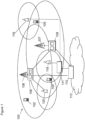
- a wireless communication system 100 such as that shown in Figure 1
- mobile communication devices, user apparatus, or terminal 102, 104, 105 are provided wireless access via at least one radio access network node or similar wireless transmitting and/or receiving node or point.
- a user can access the communication system by means of an appropriate communication device or terminal.
- a communication device (or "terminal") of a user is often referred to as user equipment (UE) or as a user apparatus. Throughout the following, these terms will be used interchangeably. It is understood that the term "terminal" is used to cover communication devices that may access a network through an access point, and which may or may not have a user. Examples of such terminals without a user include devices that make machine-to-machine transmissions in a factory.
- a communication device is provided with an appropriate signal receiving and transmitting apparatus for enabling communications, for example enabling access to a communication network or communications directly with other users.
- the communication device may access a carrier provided by a station or access point, and transmit and/or receive communications on the carrier.
- the communication system and associated devices typically operate in accordance with a given standard or specification which sets out what the various entities associated with the system are permitted to do and how that should be achieved. Communication protocols and/or parameters which shall be used for the connection are also typically defined.
- UTRAN 3G radio
- 3GPP 3rd Generation Partnership Project
- An example of attempts to solve the problems associated with the increased demands for capacity is an architecture that is known as the long-term evolution (LTE) of the Universal Mobile Telecommunications System (UMTS) radio-access technology.
- LTE (4G) standard. was first released in 2008 (known as LTE Release 8), and new enhancements (in form of releases) has been introduced since then.
- LTE Release 13 and onwards is also known as LTE Advanced Pro.
- 5G radio systems also known as New Radio (NR) technologies have been developed in phases, from Non-Stand-Alone (NSA) to Stand-Alone (SA) system. Initial delivery of NSA NR radio system specifications for 5G took place in 2017 (known as Release 15), while standardization of further enhancements to 5G system continues.
- NR New Radio
- 5G systems may be viewed as comprising a terminal, a 5G radio access network (5GRAN), a 5G core network (5GCN), one or more application functions (AF) and one or more data networks (DN).
- 5GRAN 5G radio access network
- 5GCN 5G core network
- AF application functions
- DN data networks
- the 5GRAN may comprise one or more gNodeB (GNB) distributed unit functions connected to one or more gNodeB (GNB) centralized unit functions.
- the RAN may comprise one or more access nodes.
- the 5GCN may comprise one or more access management functions (AMF), one or more session management functions (SMF), an authentication server function (AUSF), a unified data management (UDM), one or more user plane functions (UPF), a unified data repository (UDR), and/or a network exposure function (NEF). At least some of these 5GCN functions may work together to provide at least one service to the terminal.
- AMF access management functions
- SMF session management functions
- AUSF authentication server function
- UDM unified data management
- UPF user plane functions
- UDR unified data repository
- NEF network exposure function
- a radio access network node is referred to as an eNodeB (eNB) in LTE, a gNodeB (gNB) in 5G, and may be referred to more generally as simply a network apparatus or a network access point.
- Radio access network nodes are typically controlled by at least one appropriate controller apparatus, so as to enable operation thereof and management of mobile communication devices in communication with the radio access network nodes.
- the controller apparatus may be located in a radio access network (e.g. wireless communication system 100) or in a core network (CN) (not shown) and may be implemented as one central apparatus or its functionality may be distributed over several apparatus.
- the controller apparatus may be part of the radio access network node and/or provided by a separate entity such as a Radio Network Controller.
- control apparatus 108 and 109 are shown to control the respective macro level radio access network nodes106 and 107. In some systems, the control apparatus may additionally or alternatively be provided in a radio network controller.
- LTE and 5G systems may however be considered to have a so-called "flat" architecture, without the provision of RNCs; rather the (e)NB is in communication with a system architecture evolution gateway (SAE-GW) and a mobility management entity (MME), which entities may also be pooled meaning that a plurality of these nodes may serve a plurality (set) of (e)NBs.
- SAE-GW is a "high-level" user plane core network element, which may comprise the S-GW and the P-GW (serving gateway and packet data network gateway, respectively). The functionalities of the S-GW and P-GW are separated and they are not required to be co-located.
- radio resource control is defined to be a sublayer of radio interface Layer 3 that exists in the control plane only, and which provides information transfer service to the non-access stratum.
- RRC is a protocol layer between a user apparatus and a gNB, and is in charge of, for example, paging the user apparatus when traffic comes, establishing/maintaining or release of radio bearers (establishing an RRC connection between user apparatus and gNB), user apparatus mobility, user apparatus measurement configuration and user apparatus reporting configuration, etc.
- RRC is responsible for controlling the configuration of radio interface Layers 1 and 2.
- radio access network nodes 106 and 107 are shown as connected to a wider communications network 113 via gateway 112.
- a further gateway function may be provided to connect to another network.
- the smaller radio access network nodes 116, 118 and 120 may also be connected to the network 113, for example by a separate gateway function and/or via the controllers of the macro level stations.
- the radio access network nodes 116, 118 and 120 may be pico or femto level radio access network nodes or the like.
- radio access network nodes 116 and 118 are connected via a gateway 111 whilst station 120 connects via the controller apparatus 108.
- the smaller nodes may not be provided.
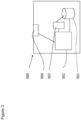
- a possible communication device that comprises a browser will now be described in more detail with reference to Figure 2 showing a schematic, partially sectioned view of a communication device 200.
- a communication device is often referred to as user apparatus (UE) or terminal.
- An appropriate communication device may be provided by any device capable of sending and receiving radio signals.
- Non-limiting examples comprise a mobile station (MS) or mobile device such as a mobile phone or what is known as a 'smart phone', a computer provided with a wireless interface card or other wireless interface facility (e.g., USB dongle), personal data assistant (PDA) or a tablet provided with wireless communication capabilities, or any combinations of these or the like.
- MS mobile station
- PDA personal data assistant
- a communication device may provide, for example, communication of data for carrying communications such as voice, electronic mail (email), text message, multimedia and so on. Users may thus be offered and provided numerous services via their communication devices. Non-limiting examples of these services comprise two-way or multi-way calls, data communication or multimedia services or simply an access to a data communications network system, such as the Internet. Users may also be provided broadcast or multicast data. Non-limiting examples of the content comprise downloads, television and radio programs, videos, advertisements, various alerts and other information.
- the communication device 200 may receive signals over an air or radio interface 207 via appropriate apparatus for receiving and may transmit signals via appropriate apparatus for transmitting radio signals.
- transceiver apparatus is designated schematically by block 206.
- the transceiver apparatus 206 may be provided for example by means of a radio part and associated antenna arrangement.
- the antenna arrangement may be arranged internally or externally to the mobile device.
- a communication device is typically provided with at least one data processing entity 201, at least one memory 202 and other possible components 203 for use in software and hardware aided execution of tasks it is designed to perform, including control of access to and communications with access systems and other communication devices.
- the data processing, storage and other relevant control apparatus can be provided on an appropriate circuit board and/or in chipsets. This feature is denoted by reference 204.
- the user may control the operation of the mobile device by means of a suitable user interface such as key pad 205, voice commands, touch sensitive screen or pad, combinations thereof or the like.
- a display 208, a speaker and a microphone can be also provided.
- a mobile communication device may comprise appropriate connectors (either wired or wireless) to other devices and/or for connecting external accessories, for example hands-free equipment, thereto.
- the communication devices 102, 104, 105 may access the communication system based on various radio access techniques.
- radio access systems are those architectures standardized by the 3rd Generation Partnership Project (3GPP).
- 3GPP 3rd Generation Partnership Project
- 5G 5th Generation
- NR 5th Generation New Radio
- other examples of radio access systems comprise those provided by radio access network nodes of systems that are based on technologies such as wireless local area network (WLAN) and/or WiMax (Worldwide Interoperability for Microwave Access).
- WLAN wireless local area network
- WiMax Worldwide Interoperability for Microwave Access
- FIG. 3 shows an example of a control apparatus 300 for a communication system, for example to be coupled to and/or for controlling a station of an access system, such as a radio access network node, e.g. a base station or (g)node B, or a node of a core network such as an MME or Access and Mobility Management Function (AMF).
- a radio access network node e.g. a base station or (g)node B
- AMF Access and Mobility Management Function
- the method may be implanted in a single control apparatus or across more than one control apparatus.
- the control apparatus may be integrated with or external to a node or module of a core network or RAN.
- radio access network nodes comprise a separate control apparatus unit or module.
- control apparatus 300 can be another network element such as a radio network controller or a spectrum controller.
- each radio access network node may have such a control apparatus as well as a control apparatus being provided in a radio network controller.
- the control apparatus 300 can be arranged to provide control on communications in the service area of the system.
- the control apparatus 300 comprises at least one memory 301, at least one data processing unit 302, 303 and an input/output interface 304. Via the interface the control apparatus can be coupled to a receiver and a transmitter of the radio access network node.
- the receiver and/or the transmitter may be implemented as a radio front end or a remote radio head.
- the control apparatus 300 can be configured to execute an appropriate software code to provide the control functions.
- Control apparatus 300 may be included in a chipset or modem apparatus.
- a chipset or modem apparatus which includes apparatus 300 may be included in a control node such as a radio access network node.
- 5G New Radio is designed to accommodate a wide range of services on top of the traditional mobile broadband (MBB) communication.
- MBB mobile broadband
- 5G evolution drives a need to study use cases and to propose potential service usages for 5G system support of Artificial Intelligence (AI) and Machine Learning (ML) techniques.
- AI Artificial Intelligence
- ML Machine Learning
- Training of AI/ML algorithms may use a large amount of data. This may have a significant impact on network performance and/or spectral efficiency if training of a ML model is performed at a network side.
- the amount of data being transmitted across network interfaces may be reduced by performing the ML model training at a user terminal instead of at a network apparatus.
- a user terminal may be provided/have local access to multiple ML models. These ML models may be used, either individually or in combination, to solve one or more optimisation questions for the network.
- a user terminal may use at least one of these ML models to determine at least one solution to a particular problem (i.e. multiple solutions may be determined).
- a user terminal may have a non-ML algorithm native in the user terminal, and/or the user terminal may have one or more different ML algorithms of different complexity and performance.
- 3GPP Release 16 defined 5G features under RAN-centric Data Collection mechanisms that enabled operators to monitor and optimise their 5G deployments.
- self-organising networks and MDT-defined in LTE- became the baseline for the newly 5G method of data collection.
- MDT Minimization of Drive Test
- 3GPP LTE feature which involves commercial UEs for collecting and reporting own measurements to the network (see, for example, 3GPP Technical Specification TS 37.320).
- the fundamental concept aims at replacing dedicated and costly drive testing performed for network optimization.
- MDT involves regular users of cellular network and makes usage of their data that are collected anyway (e.g. for mobility purposes).
- An example of a ML model being trained at a user equipment is a model trained using Minimisation of Drive Testing (MDT) measurements.
- MDT Minimisation of Drive Testing
- a network may instruct a UE through an MDT Configuration to locally and autonomously train an ML. This may be enabled by the network triggering the UE to monitor, through measurements or pre-configured "functions of measurements", the process of learning of the provided ML model, and to directly use those measurements to train the ML model.
- the target output by the UE is the trained ML model.
- MDT involves regular users of a cellular network and utilises data that may have been collected anyway (e.g. measurements made for mobility-related reasons) and reports them to the network.
- Immediate MDT a user terminal generates and transmits a real time report of radio measurements immediately after performing them.
- Logged MDT a user terminal is configured, while in a connected mode, to collect data/measurements when the user terminal enters an idle mode or an inactive mode. The idle/inactive mode data/measurements are subsequently transmitted to the network when the user terminal re-enters the connected mode.
- a user terminal may indicate measurement availability to a network through a radio resource control (RRC) message, and a network may obtain the logged reports through a defined procedure, such as the UEInformationRequest/Response procedure.
- RRC radio resource control
- a network may instruct the user terminal through an MDT configuration to locally and autonomously train an ML model.
- a network may trigger a user terminal to monitor measurements or pre-configured "functions of measurements" that correspond to a certain network model/behaviour/ or property.
- the network may also provide the user terminal with a process for learning of a ML model and how to use those measurements for training the ML model.
- the target output by the user terminal may be the trained ML model.
- the trained ML model may be executed at the network side.
- the trained ML model may be executed by the user terminal.
- This ML model executed by a user terminal may be also trained at the user terminal.
- this ML model executed by a user terminal may correspond to an ML model trained by a network apparatus but downloaded to the user terminal for execution.
- an ML model may be executed at only a user terminal side, at only a network side, or some combination of the two sides.
- a model may be in training (e.g. where a ML model is being trained using user terminal-made measurements), in execution (e.g. when a trained ML model is being executed by a user terminal, or in an idle state (e.g. when a trained ML model is waiting to be executed by a user terminal).
- the following discusses potential signalling that may be performed between a source network apparatus, a target network apparatus and/or a terminal being handed over between the source network apparatus and the target network apparatus when the terminal has at least one ML model available.
- the at least one ML model available may be in training, in execution, or in an idle mode.
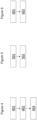
- Figure 4 is a flow chart showing potential operations that may be performed by a target network apparatus.
- a target network apparatus may be thought of as a network entity to which a terminal is being handed over to from a source network apparatus.
- the target network apparatus receives, as part of a handover procedure for handover of a terminal to the target network apparatus, metadata about at least one machine learning model available, or otherwise accessible, to the terminal for training and/or execution.
- the at least one machine learning model may be in an idle state/mode (e.g. awaiting execution of training), a training state/mode and//or in an execution state/mode.
- the metadata may be received from the terminal either directly or indirectly. When the metadata is received indirectly, the metadata may be provided directly by the source network apparatus.
- the target network apparatus determines whether or not the terminal should keep the at least one machine learning model that it has available after the terminal is handed over to the network apparatus. This determination may be made in dependence on the received metadata. Optionally, this determination may be made in dependence on the received metadata and additional information obtained about the at least one machine learning model. The additional information may be as discussed further below.
- the available at least one machine learning model may be in a in training mode, an execution mode or an idle mode.
- the target network apparatus signals the result of the determining to the terminal. This signalling may be performed directly to the terminal either during or post-handover. This signalling may be performed indirectly through the source network apparatus during handover.
- the target network apparatus may optionally obtain additional information about the at least one machine learning model.
- This additional information may be obtained in response to the target network apparatus signalling at least one of the terminal and a source network apparatus during the handover procedure for more information about the at least one machine learning model.
- a response to this signalling that comprises the additional information may be received from the signalled entity.
- the signalling for more information may comprises signalling a request to provide at least one of the at least one machine learning models.
- the metadata may be received in a Handover Request message.
- the Handover Request message may be transmitted by the source network apparatus.
- the contents of the Handover Request message may originate from the terminal.
- Receiving the metadata may comprise receiving metadata about at least one machine learning models accessible by the terminal.
- the determining may comprise determining for each of said at least one machine learning models whether or not the terminal should keep that machine learning model that it has available in training, execution or idle state after the terminal is handed over to the network apparatus. Therefore, if a terminal has a set of machine learning models available to it to train and/or execute, the target network apparatus may be able to select any number of this set of machine learning models to continue with after handover. For example, the target network apparatus may select less than the full set of machine learning models to continue with after handover. The target network apparatus may select the full set of machine learning models to continue with after handover. The target network apparatus may select none of the machine learning models in the set to continue with after handover. The results of this selection may be signalled to the terminal as discussed above.
- the terminal signals, to a network apparatus, metadata about at least one machine learning model accessible for execution and/or training by the terminal.
- the metadata may be signalled to a target network apparatus either directly or indirectly.
- the metadata may accompany measurement data that was made by the terminal during a connected mode.
- the measurement data may represent a state of the network that is measurable by the terminal, such as Reference Signal Received Power (RSRP), Reference Signal Received Quality (RSRQ) and available Signal to Interference and Noise Ratio (SINR) measurements.
- RSRP Reference Signal Received Power
- RSRQ Reference Signal Received Quality
- SINR Signal to Interference and Noise Ratio
- the terminal receives signalling indicating whether or not the terminal should keep the at least one machine learning model that it has available in a training, execution or idle state/mode after the terminal is handed over to the network apparatus.
- the signalling may be received directly from the target network apparatus.
- the signalling may be received indirectly from the target network apparatus (e.g. via the source network apparatus).
- the signalling may comprise signalling metadata about at least one machine learning models accessible for execution and/or training by the terminal.
- the receiving may comprise receiving for each of said at least one machine learning algorithms an indication whether or not the terminal should keep that machine learning model that it has available in training, execution or idle state after the terminal is handed over to the network apparatus. This may be as discussed above in relation to Figure 4 . Consequently, where less than the full set of machine models is selected for keeping by the terminal, the terminal may abandon at least one of the at least one machine learning models in response to said receiving signalling.
- the terminal may receive a request to provide at least one of the machine learning models to a network apparatus. This request may be received from a source network apparatus. This request may be received from the target network apparatus. The terminal may respond to the request with at least one of the requested machine learning models. The terminal may respond to the request with only the requested at least one of the machine learning models. This may mean that less than all of the machine learning models available at the terminal for training and/or execution are indicated in the request (and therefore provided in response to the request).
- Figure 6 is a flowchart illustrating potential operations by a source network apparatus.
- the source network apparatus receives, from a terminal, metadata about at least one machine learning model accessible for execution and/or training by the terminal.
- the metadata may be received with measurement data, as discussed above.
- the source network apparatus signals, to a target network apparatus, the metadata as part of a handover procedure.
- the metadata may be signalled as part of a Handover Request message.
- the source network apparatus may signal to the terminal a request for further information on at least one of the at least one machine learning models.
- the signalled request may be made in response to receipt by the source network apparatus of a request for that information from the target network apparatus.
- the request for further information may be a request for at least one of the at least one machine learning models.
- the request for further information may be a request for MDT information associated with the at least one machine learning models.
- the source network apparatus has at least one of the at least one machine learning models
- the at least one machine learning model may be sent to the target network apparatus in response to a received request for the at least one machine learning model from the target network apparatus.
- the decision of whether or not to send the at least one machine learning model and/or MDT configuration information to the target network apparatus may be made in dependence on the received metadata.
- a terminal provides source network apparatus/access point (such as a gNB) with metadata information on the ML models that the terminal has locally available. Metadata availability information at a source network apparatus may trigger a set of possible decisions by the source network apparatus. For example, the source network apparatus receiving metadata information may decide to retrieve all or some of the available ML models at the terminal described by the available metadata. Alternatively, the source network apparatus receiving metadata information may take a decision to forward metadata information to the target network apparatus.
- source network apparatus/access point such as a gNB
- Metadata availability information at a source network apparatus may trigger a set of possible decisions by the source network apparatus. For example, the source network apparatus receiving metadata information may decide to retrieve all or some of the available ML models at the terminal described by the available metadata. Alternatively, the source network apparatus receiving metadata information may take a decision to forward metadata information to the target network apparatus.
- Metadata information reception by the target network apparatus may further trigger target network apparatus to retrieve all or some of the ML models described by the metadata information.
- Those models can be transferred to the target network apparatus in at least two ways: directly from the terminal or through an XnAP message exchange between source and target network apparatuses.
- a target network apparatus can request additional information on the ML models from the source network apparatus and/or from the terminal during post-handover operations.
- the terminal may be enabled to continue with an ML Model or to abandon the ML Model upon network instruction.
- the terminal may receive signalling from the network (e.g. the target network apparatus and/or the source network apparatus) that triggers the terminal to carry some or all of its ML models to the target network apparatus.
- signalling from the network can trigger a terminal to abandon at least one of its ML models (and, in some cases, to abandon all of its ML models).
- the "ML models” refers to those ML models locally available to the terminal in training, and/or execution, and/or in an idle state. If an abandoned ML model is a model in execution at the terminal, this may cause the terminal to start executing a corresponding non-ML algorithm.
- Metadata information about ML models locally available at a terminal the metadata information being transmitted between the terminal and a source network apparatus and/or between the source network apparatus and a target network apparatus.
- the metadata may be used by source and target network apparatuses when making handover decisions. Terminal behaviour during handover with respect to the ML models that terminal has internally available is also defined.
- a source network apparatus that receives metadata information from the terminal about ML models locally available at a terminal in training, execution and/or in an idle state, may use the metadata to decide:
- the target network apparatus may utilize the metadata information to determine whether or not it wants to receive ML models.
- Signalling is introduced that allow transferring of an ML model to the target network apparatus in at least two alternatives, namely ML models are sent to target network apparatus through the terminal or through an Xn interface communication between source and target network apparatuses.
- a target network apparatus may request additional information on the ML models (e.g. from the source network apparatus) post-handover.
- Figure 7 is a signalling diagram representing potential signals that may pass between a terminal 701, a source network apparatus 702, and a target network apparatus 703.
- the terminal 701 may sent a measurement report to the source network apparatus 702.
- the measurement report may comprise measurements, such as those made during a connected mode.
- the measurement report may also comprise metadata for ML models that the terminal has locally available.
- metadata means information about the ML models that the terminal has available locally. Specific non-limiting examples of types of metadata are discussed further above.
- the metadata may relate to all of the ML models that the terminal has available locally.
- the metadata may relate to only a subset (i.e. less than all) of the ML models that the terminal has available locally. It is understood that the models may be in respective states, and do not have to be in the same state. For example, some ML models may be in training, some ML models may be in execution, and some ML models may be in an idle state and waiting for an execution instruction. As another example, some ML models may be in training and the remaining ML models may be in Idle.
- Metadata may not be sent in every Measurement Report message to the network apparatus.
- ML model metadata may be sent only in the first Measurement report made to a particular network apparatus. This means that the metadata may be re-sent if the measurement report is transmitted to another entity.
- the metadata may be sent with a periodicity larger than the periodicity of the measurement reporting (e.g., every certain x number of measurements).
- certain actions at the terminal may trigger a transmission of the metadata in the measurement report. For example, if the metadata includes information relating to a state of a particular model (i.e. in training, in execution or in idle state), if the state of this model changes at the terminal, metadata representing this change may be transmitted with the next measurement report.
- the source network apparatus 702 may make a handover Decision 7002 to hand the terminal 701 over to target network apparatus 703.
- This handover decision may be made in dependence on the received measurements.
- the handover decision at the source network apparatus 702 may trigger the source network apparatus to retrieve all or some of the models described through the Metadata information provided by the terminal 701. This decision may to retrieve at least one ML model may depend on information provided in the metadata, such as the description, performance of the ML model, as well as on its validity area.
- the source network apparatus 702 transmits a request to the terminal 701 for at least one ML model.
- the requested ML model(s) may be identified within the request.
- the terminal 701 may respond with at least one of the requested ML models at 7004.
- Figure 8 is a signalling diagram representing potential signals that may pass between a terminal 801, a source network apparatus 802, and a target network apparatus 803.
- the terminal 801 sends a measurement report to the source network apparatus 802. This may be as described above in relation to 7001.
- the source network apparatus 802 makes a handover decision. This may be as described above in relation to 7002.
- the source network apparatus transmits the received metadata to the target network apparatus 803.
- This metadata transmission is part of a Handover Request transmitted by the source network apparatus to the target network apparatus as a result of the handover decision made in 8002.
- the target network apparatus 804 may perform admission control to determine whether or not it will accept the handover of the terminal 801. As part of this admission control, the target network apparatus may decide it wishes one or more of the ML models available at the terminal 801 to be provided to the target network apparatus 803 during the handover. The target network apparatus 803 may take this decision in dependence on the metadata received from the source network apparatus 802, and the related performance of each ML model.
- At least one of the following factors may be considered when the target network apparatus 803 decides that at least one ML model is to be provided to the target network apparatus 803: the indicated ML model is trained beyond a predetermined maturity level; the ML Model performs more than a threshold amount better than a baseline non-ML algorithm; the Model type indicates a ML Model used for location-independent terminal behavior (as opposed to location-dependent behavior); and the inactivity time of ML model at the terminal is less than a predetermined value (this allows for ML models that have been trained a relatively long time ago to be abandoned rather than executed).
- This decision/wish to receive at least one ML model may be indicated to the source network apparatus 802 as part of a Handover Request acknowledgement 8005.
- nw-based transfer 0 and therefore, at 8006, the target network apparatus 803 informs the terminal 801 which ML models the target network apparatus 803 wishes to receive. This information may be transmitted to the terminal 801 in a Radio resource control Connection Reconfiguration message. This information is transmitted to the terminal 801 as part of a handover command transmitted to the terminal by the target network apparatus 803.
- the terminal may handle its ML models based on information received in the handover Command. Several options are possible.
- the terminal 801 may abandon current model in execution and continue with non-ML behavior
- the terminal may transfer the indicated ML models to the target network apparatus.
- a terminal has more models available than those in execution e.g., in Training mode or idle mode.
- a terminal 801 may start a timer after which it plans to delete the ML model and sends the indication to the network. The terminal may then erase the ML model when the timer expires unless it receives an instruction to the contrary from the target network apparatus.
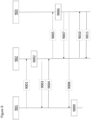
- Figure 9 is a signalling diagram representing potential signals that may pass between various of a terminal 901, a source network apparatus 902, and a target network apparatus 903.
- the terminal 901 transmits ML model metadata to the source network apparatus 902. This may be as described in 7001.
- the source network apparatus 902 makes a handover decision. This may be as described in 7002.
- the source network apparatus requests models from the terminal 901. This may be as described in 7003.
- the terminal sends to the source network apparatus 902 a response to the request received in 9003. This response may be as described in 7004.
- the source network apparatus 902 sends a Handover Request to target network apparatus 903. This may be as described in 8003.
- the target network apparatus 903 performs admission control. This may be as described in 8004.
- the target network apparatus transmits a Handover Request acknowledgement to the source network apparatus.
- the acknowledgment indicates that the source network apparatus 902 is to provide the target network apparatus 903 with at least one of the ML models.
- the ML model(s) to be transferred to the network apparatus may be identified in the Handover Request acknowledgement.
- the target network apparatus 903 sends a handover command to the terminal 901.
- the terminal 901 may be enabled to start communicating with the communication network via the target network apparatus 903.
- the terminal may abandon any of its ML models being executed (if such exists), and the terminal 901 may be handed over to the target network apparatus 903 following a switch to non-ML behaviour.
- the terminal 901 makes an internal decision on ML model control, and keeps the requested ML models for subsequent transfer to the target network apparatus after the terminal 901 is handed over. ML models that have not been requested may be abandoned.
- the terminal may also carry the MDT configuration that it has used to train each requested ML model over to the target network apparatus for use in a cell provided by the target network apparatus.
- the terminal may handle its ML models based on information received in the handover Command. Several options are possible.
- the terminal 901 may abandon current model in execution and continue with non-ML behavior
- the terminal may transfer the indicated ML models to the target network apparatus.
- a terminal has more models available than those in execution e.g., in Training mode or idle mode.
- a terminal 901 may start a timer after which it plans to delete the ML model and sends the indication to the network. The terminal may then erase the ML model when the timer expires unless it receives an instruction to the contrary from the target network apparatus.
- the source network apparatus 902 may send the ML Model Set and/or the corresponding MDT Configurations used to train the Models in the ML Model Set to the target network apparatus 903.
- the ML model set may be the ML model(s) identified in the acknowledgment message.
- the ML model Set and/or the corresponding MDT configurations may be sent through the Xn interface.
- the target network apparatus 903 sends a message to the source network apparatus acknowledging receipt of the ML model set. This acknowledgement may be optional.
- the target network apparatus may request further/additional ML model information than that already received.
- the further/additional ML model information may be requested from the source network apparatus.
- the further/additional information may be requested from the terminal.
- the additional/further information may be requested via existing signalling, such as via a Handover Request Ack and/or UE Context Release Request, or via in new procedure (e.g., through the Xn ML model Transfer message).
- the above described system and method(s) has various advantages. For example, it introduces signalling for handover operations when a terminal has ML models available in Training, Execution or Idle. This means that network resources may be used more efficiently as only desired ML models are kept when handover is completed. Moreover, as the results of the desired ML models may be equally useful post-handover, the continuance of at least one ML model at the terminal saves terminal resources (both processing and power resources).
- apparatuses may comprise or be coupled to other units or modules etc., such as radio parts or radio heads, used in or for transmission and/or reception.
- apparatuses have been described as one entity, different modules and memory may be implemented in one or more physical or logical entities.
- the various examples may be implemented in hardware or special purpose circuits, software, logic or any combination thereof. Some aspects of the described may be implemented in hardware, while other aspects may be implemented in firmware or software which may be executed by a controller, microprocessor or other computing device, although the claimed is not limited thereto. While various aspects of the claimed may be illustrated and described as block diagrams, flow charts, or using some other pictorial representation, it is well understood that these blocks, apparatus, systems, techniques or methods described herein may be implemented in, as non-limiting examples, hardware, software, firmware, special purpose circuits or logic, general purpose hardware or controller or other computing devices, or some combination thereof.
- the examples of this disclosure may be implemented by computer software executable by a data processor of the mobile device, such as in the processor entity, or by hardware, or by a combination of software and hardware.
- Computer software or program also called program product, including software routines, applets and/or macros, may be stored in any apparatus-readable data storage medium and they comprise program instructions to perform particular tasks.
- a computer program product may comprise one or more computer-executable components which, when the program is run, are configured to carry out examples.
- the one or more computer-executable components may be at least one software code or portions of it.
- any blocks of the logic flow as in the Figures may represent program steps, or interconnected logic circuits, blocks and functions, or a combination of program steps and logic circuits, blocks and functions.
- the software may be stored on such physical media as memory chips, or memory blocks implemented within the processor, magnetic media such as hard disk or floppy disks, and optical media such as for example DVD and the data variants thereof, CD.
- the physical media is a non-transitory media.
- the memory may be of any type suitable to the local technical environment and may be implemented using any suitable data storage technology, such as semiconductor based memory devices, magnetic memory devices and systems, optical memory devices and systems, fixed memory and removable memory.
- the data processors may be of any type suitable to the local technical environment, and may comprise one or more of general purpose computers, special purpose computers, microprocessors, digital signal processors (DSPs), application specific integrated circuits (ASIC), FPGA, gate level circuits and processors based on multi core processor architecture, as non-limiting examples.
- Examples of the above disclosures may be practiced in various components such as integrated circuit modules.
- the design of integrated circuits is by and large a highly automated process. Complex and powerful software tools are available for converting a logic level design into a semiconductor circuit design ready to be etched and formed on a semiconductor substrate.
Landscapes
- Engineering & Computer Science (AREA)
- Computer Networks & Wireless Communication (AREA)
- Signal Processing (AREA)
- Software Systems (AREA)
- Theoretical Computer Science (AREA)
- Computer Vision & Pattern Recognition (AREA)
- Evolutionary Computation (AREA)
- Medical Informatics (AREA)
- Data Mining & Analysis (AREA)
- Physics & Mathematics (AREA)
- Computing Systems (AREA)
- General Engineering & Computer Science (AREA)
- General Physics & Mathematics (AREA)
- Mathematical Physics (AREA)
- Artificial Intelligence (AREA)
- Mobile Radio Communication Systems (AREA)
Claims (13)
- Zielnetzwerkvorrichtung (803; 903), die Folgendes umfasst:Mittel zum Empfangen von Metadaten über mindestens ein Maschinenlernmodell, das für eine Ausführung und/oder ein Training durch ein Endgerät zugänglich ist, als Teil einer Übergabeprozedur für eine Übergabe des Endgeräts (801; 901) an die Zielnetzwerkvorrichtung;Mittel zum Bestimmen, ob das Endgerät das mindestens eine Maschinenlernmodell ausführen und/oder trainieren sollte oder nicht, nachdem das Endgerät an die Zielnetzwerkvorrichtung übergeben wurde; undMittel zum Signalisieren des Ergebnisses des Bestimmens an das Endgerät in einer Übergabebefehlsnachricht (8006; 9008); wobei die Mittel zum Empfangen Mittel zum Empfangen der Metadaten in einer Übergabeanforderungsnachricht (8003; 9005) von einer Quellnetzwerkvorrichtung (802; 902) in der Übergabeprozedur umfassen, und wobei die Metadaten Folgendes umfassen: Metadateninformationen, die Folgendes umfassen: Modellbeschreibungsmetadaten oder Modellstatusmetadaten oder Modellleistungsmetadaten oder Modellruhezustandsinformationsmetadaten oder Modellbereichsgültigkeitsmetadaten.
- Zielnetzwerkvorrichtung nach einem der vorhergehenden Ansprüche, die ferner Folgendes umfasst:Mittel zur Signalisierung an mindestens eines des Endgeräts und einer Quellnetzwerkvorrichtung in der Übergabeprozedur für weitere Informationen über das mindestens eine Maschinenlernmodell; undMittel zum Empfangen einer Antwort von der Entität, an die signalisiert wurde.
- Zielnetzwerkvorrichtung nach Anspruch 2, wobei die Mittel zum Signalisieren für weitere Informationen Mittel zum Signalisieren einer Anforderung zum Bereitstellen von mindestens einem der mindestens einen Maschinenlernmodelle umfassen.
- Zielnetzwerkvorrichtung nach Anspruch 2 oder Anspruch 3, wobei die Mittel zum Signalisieren das Signalisieren für weitere Informationen über das mindestens eine Maschinenlernmodell durchführen, nachdem das Endgerät angewiesen wurde, zur Netzwerkvorrichtung übergeben zu werden, und/oder wobei die Mittel zum Signalisieren das Signalisieren als Teil einer Übergabesignalisierung durchführen.
- Endgerätevorrichtung (801; 901), wobei die Vorrichtung Folgendes umfasst:Mittel zum Signalisieren von Metadaten über mindestens ein Maschinenlernmodell, das für eine Ausführung und/oder ein Training durch das Endgerät zugänglich ist, an eine Quellnetzwerkvorrichtung (802; 902) zum Signalisieren an eine Zielnetzwerkvorrichtung (803; 903); undMittel zum Empfangen einer Signalisierung in einer Übergabebefehlsnachricht (8006; 9008) von der Zielnetzwerkvorrichtung, die anzeigt, ob das Endgerät das mindestens eine Maschinenlernmodell ausführen und/oder trainieren sollte oder nicht, nachdem das Endgerät an die Netzwerkvorrichtung übergeben wurde, und wobei die Metadaten Folgendes umfassen: Metadateninformationen, die Folgendes umfassen: Modellbeschreibungsmetadaten oder Modellstatusmetadaten oder Modellleistungsmetadaten oder Modellruhezustandsinformationsmetadaten oder Modellbereichsgültigkeitsmetadaten.
- Vorrichtung nach Anspruch 5, wobei die Mittel zum Signalisieren Mittel zum Signalisieren der Metadaten als Teil eines Messberichts (8001; 9001) an die Quellnetzwerkvorrichtung umfassen.
- Vorrichtung nach einem der Ansprüche 5 bis 6, das Mittel zum Verwerfen von mindestens einem des mindestens einen Maschinenlernmodelle in Reaktion auf das Empfangen einer Signalisierung umfasst.
- Vorrichtung nach einem der Ansprüche 5 bis 7, die Mittel zum Empfangen einer Anforderung (9003) zum Bereitstellen von mindestens einem der Maschinenlernalgorithmen für die Quell- oder Zielnetzwerkvorrichtung; und Mittel zum Antworten (9004) auf die Anforderung mit mindestens einem der angeforderten Maschinenlernmodelle umfasst.
- Quellnetzwerkvorrichtung (802; 902), die Folgendes umfasst:Mittel zum Empfangen von Metadaten über mindestens ein Maschinenlernmodell, das für eine Ausführung und/oder ein Training durch ein Endgerät zugänglich ist, vom Endgerät (801; 901); undMittel zum Signalisieren der Metadaten als Teil einer Übergabeprozedur in einer Übergabeanforderungsnachricht (8003; 9005) an eine Zielnetzwerkvorrichtung (803; 903), und wobei die Metadaten Folgendes umfassen: Metadateninformationen, die Folgendes umfassen: Modellbeschreibungsmetadaten oder Modellstatusmetadaten oder Modellleistungsmetadaten oder Modellruhezustandsinformationsmetadaten oder Modellbereichsgültigkeitsmetadaten.
- Quellnetzwerkvorrichtung nach Anspruch 9, die ferner Mittel zum Signalisieren einer Anforderung (9003) von weiteren Informationen über mindestens ein der mindestens einen Maschinenlernmodelle in Abhängigkeit von den empfangenen Metadaten an das Endgerät umfasst.
- Quellnetzwerkvorrichtung nach Anspruch 10, die Mittel zum Bestimmen in Abhängigkeit von den Metadaten, ob die weiteren Informationen an die Zielnetzwerkvorrichtung zu signalisieren sind oder nicht, umfassen, und wobei die Mittel zum Signalisieren das Signalisieren der weiteren Informationen umfassen, wenn bestimmt wird, die weiteren Informationen zu signalisieren.
- Quellnetzwerkvorrichtung nach einem der Ansprüche 9 bis 11, wobei Mittel zum Empfangen der Metadaten Mittel zum Empfangen der Metadaten mit Messdaten umfassen.
- Quellnetzwerkvorrichtung nach einem der Ansprüche 9 bis 12, die ferner Mittel zum Senden des mindestens einen Maschinenlernmodells an die Zielnetzwerkvorrichtung in Reaktion auf eine empfangene Anforderung des mindestens einen Maschinenlernmodells von der Zielnetzwerkvorrichtung umfasst.
Applications Claiming Priority (1)
| Application Number | Priority Date | Filing Date | Title |
|---|---|---|---|
| PCT/FI2020/050524 WO2022034259A1 (en) | 2020-08-11 | 2020-08-11 | Communication system for machine learning metadata |
Publications (3)
| Publication Number | Publication Date |
|---|---|
| EP4197218A1 EP4197218A1 (de) | 2023-06-21 |
| EP4197218A4 EP4197218A4 (de) | 2024-05-15 |
| EP4197218B1 true EP4197218B1 (de) | 2025-04-30 |
Family
ID=80247756
Family Applications (1)
| Application Number | Title | Priority Date | Filing Date |
|---|---|---|---|
| EP20949472.3A Active EP4197218B1 (de) | 2020-08-11 | 2020-08-11 | Kommunikationssystem für metadaten von maschinellem lernen |
Country Status (3)
| Country | Link |
|---|---|
| US (1) | US12452740B2 (de) |
| EP (1) | EP4197218B1 (de) |
| WO (1) | WO2022034259A1 (de) |
Families Citing this family (20)
| Publication number | Priority date | Publication date | Assignee | Title |
|---|---|---|---|---|
| US20220237505A1 (en) * | 2021-01-27 | 2022-07-28 | Salesforce.Com, Inc. | Using container information to select containers for executing models |
| US20220237506A1 (en) * | 2021-01-27 | 2022-07-28 | Salesforce.Com, Inc. | Using container and model information to select containers for executing models |
| WO2022261834A1 (zh) * | 2021-06-15 | 2022-12-22 | Oppo广东移动通信有限公司 | 小区切换方法、装置、设备及存储介质 |
| CN116827497A (zh) * | 2022-03-15 | 2023-09-29 | 中国移动通信有限公司研究院 | 模型传输方法、终端及网络侧设备 |
| CN118985143A (zh) * | 2022-03-31 | 2024-11-19 | 高通股份有限公司 | 集中式机器学习模型配置 |
| WO2023204211A1 (ja) * | 2022-04-19 | 2023-10-26 | 京セラ株式会社 | 通信装置及び通信方法 |
| CN119404534A (zh) * | 2022-06-17 | 2025-02-07 | 上海诺基亚贝尔股份有限公司 | 设备、方法和计算机程序 |
| CN117440449A (zh) * | 2022-07-12 | 2024-01-23 | 维沃移动通信有限公司 | Ai模型信息传输方法、装置及设备 |
| CN119631469A (zh) * | 2022-08-05 | 2025-03-14 | 诺基亚技术有限公司 | Ai/ml操作期间存续的ue上下文配置 |
| CN119836808A (zh) * | 2022-08-08 | 2025-04-15 | 交互数字专利控股公司 | 人工智能各种模式测量过程 |
| GB2624844A (en) * | 2022-08-10 | 2024-06-05 | Samsung Electronics Co Ltd | UE measurement capability indication for AI/ML dataset construction |
| CN119744555A (zh) * | 2022-08-19 | 2025-04-01 | 哈方知识产权投资公司 | 用于在无线网络中实施ai-ml的方法和装置 |
| US20240107597A1 (en) * | 2022-09-22 | 2024-03-28 | Mediatek Inc. | Enhancing wireless communications efficiency in 5g/6g networks through ai/ml model management and deployment |
| JPWO2024080247A1 (de) * | 2022-10-11 | 2024-04-18 | ||
| EP4659481A2 (de) * | 2023-02-03 | 2025-12-10 | AUMOVIO Germany GmbH | Verfahren für gnb-ue-verhalten für modellbasierte mobilität |
| WO2024174070A1 (en) * | 2023-02-20 | 2024-08-29 | Nec Corporation | Methods, devices, and computer readable medium for communication |
| GB2627519A (en) * | 2023-02-24 | 2024-08-28 | Nec Corp | Communication system |
| WO2025027055A1 (en) | 2023-08-02 | 2025-02-06 | Continental Automotive Technologies GmbH | Method for a handover operation for a two-sided ai/ml model |
| WO2025035479A1 (zh) * | 2023-08-17 | 2025-02-20 | Oppo广东移动通信有限公司 | 无线通信的方法及通信设备 |
| WO2025222941A1 (en) * | 2024-12-31 | 2025-10-30 | Lenovo (Beijing) Limited | Data collection during mobility events |
Family Cites Families (9)
| Publication number | Priority date | Publication date | Assignee | Title |
|---|---|---|---|---|
| WO2010040417A1 (en) * | 2008-10-10 | 2010-04-15 | Nokia Siemens Networks Oy | Apparatus, method and program providing a confidence estimation of coverage hole detection |
| US10524179B2 (en) * | 2015-04-10 | 2019-12-31 | Qualcomm Incorporated | Rate adaptation during handoffs |
| US11501201B2 (en) * | 2017-07-17 | 2022-11-15 | MetiStream, Inc. | Systems, methods, and apparatuses for training, storage, and interaction with machine learning models |
| US11488054B2 (en) * | 2017-12-06 | 2022-11-01 | Google Llc | Systems and methods for distributed on-device learning with data-correlated availability |
| US11490313B2 (en) | 2018-03-08 | 2022-11-01 | Telefonaktiebolaget Lm Ericsson (Publ) | Managing communication in a wireless communications network |
| EP3791321A1 (de) * | 2018-05-21 | 2021-03-17 | Neurala, Inc. | Systeme und verfahren für tiefe neuronale netze auf lernender (online und offline) vorrichtung mit und ohne überwachung |
| CN115486117B (zh) | 2020-04-28 | 2024-08-30 | 诺基亚技术有限公司 | 机器学习辅助操作控制 |
| US12069532B2 (en) * | 2021-10-06 | 2024-08-20 | Rakuten Mobile, Inc. | Roaming coverage evaluation |
| GB2611805B (en) * | 2021-10-15 | 2024-05-08 | Samsung Electronics Co Ltd | UE location information |
-
2020
- 2020-08-11 EP EP20949472.3A patent/EP4197218B1/de active Active
- 2020-08-11 WO PCT/FI2020/050524 patent/WO2022034259A1/en not_active Ceased
- 2020-08-11 US US18/020,542 patent/US12452740B2/en active Active
Also Published As
| Publication number | Publication date |
|---|---|
| US20230300686A1 (en) | 2023-09-21 |
| EP4197218A4 (de) | 2024-05-15 |
| US12452740B2 (en) | 2025-10-21 |
| WO2022034259A1 (en) | 2022-02-17 |
| EP4197218A1 (de) | 2023-06-21 |
Similar Documents
| Publication | Publication Date | Title |
|---|---|---|
| EP4197218B1 (de) | Kommunikationssystem für metadaten von maschinellem lernen | |
| EP4203542B1 (de) | Datenübertragungsverfahren und -vorrichtung | |
| EP4422279A1 (de) | Zellenneuauswahlverfahren und -vorrichtung sowie zugehörige vorrichtung | |
| WO2014094309A1 (zh) | 最小化路测测量方法、用户设备和网络设备 | |
| US20230362678A1 (en) | Method for evaluating action impact over mobile network performance | |
| US12507141B2 (en) | Cell reselection-related information associated with network slice or closed access group for wireless networks | |
| WO2022209234A1 (ja) | Ranノード、ue及び方法 | |
| CN116208964B (zh) | 一种业务传输及其控制方法、设备 | |
| WO2024169522A1 (zh) | 通信方法和装置 | |
| WO2015176613A1 (zh) | 用于无线网络中的测量装置和方法以及控制装置和方法 | |
| EP3178260B1 (de) | Verfahren zur steuerung der benutzergerätekommunikation mit einem netzwerk sowie zugehörige vorrichtungen und computerprogrammprodukt | |
| EP3833107B1 (de) | Informationsübertragungsverfahren und -vorrichtung | |
| WO2023151781A1 (en) | Slice specific cell re-selection frequency priority for wireless networks | |
| GB2630845A (en) | System,method and apparatus for enhanced mdt measurement for ue assisted ai analytics | |
| CN117955538A (zh) | 基于用户上下文感知ml的csi测量放宽 | |
| EP4399909A1 (de) | Effizientes handover für punkt-zu-mehrpunkt-kommunikation | |
| WO2026031182A1 (zh) | 无线通信的方法、终端设备和网络设备 | |
| WO2025209149A1 (zh) | 通信方法及相关装置 | |
| WO2025094111A1 (en) | Buffer mechanism in data collection and further enhancement of the mdt | |
| WO2025156123A1 (zh) | 报告记录方法、装置和通信系统 | |
| WO2025255854A1 (zh) | 通信方法和装置、设备、通信系统、存储介质及程序产品 | |
| WO2025071581A1 (en) | Configuring ue for collecting and reporting data associated with roaming network | |
| WO2025152854A1 (zh) | 信息传输方法、装置及通信设备 | |
| WO2024208436A1 (en) | Apparatus, method and computer program | |
| WO2025145388A1 (zh) | 数据收集方法和装置 |
Legal Events
| Date | Code | Title | Description |
|---|---|---|---|
| STAA | Information on the status of an ep patent application or granted ep patent |
Free format text: STATUS: THE INTERNATIONAL PUBLICATION HAS BEEN MADE |
|
| PUAI | Public reference made under article 153(3) epc to a published international application that has entered the european phase |
Free format text: ORIGINAL CODE: 0009012 |
|
| STAA | Information on the status of an ep patent application or granted ep patent |
Free format text: STATUS: REQUEST FOR EXAMINATION WAS MADE |
|
| 17P | Request for examination filed |
Effective date: 20230310 |
|
| AK | Designated contracting states |
Kind code of ref document: A1 Designated state(s): AL AT BE BG CH CY CZ DE DK EE ES FI FR GB GR HR HU IE IS IT LI LT LU LV MC MK MT NL NO PL PT RO RS SE SI SK SM TR |
|
| DAV | Request for validation of the european patent (deleted) | ||
| DAX | Request for extension of the european patent (deleted) | ||
| A4 | Supplementary search report drawn up and despatched |
Effective date: 20240415 |
|
| RIC1 | Information provided on ipc code assigned before grant |
Ipc: G06N 20/00 20190101ALI20240410BHEP Ipc: H04L 41/00 20220101ALI20240410BHEP Ipc: H04W 36/00 20090101ALI20240410BHEP Ipc: H04W 72/04 20090101ALI20240410BHEP Ipc: H04W 8/22 20090101ALI20240410BHEP Ipc: H04W 24/02 20090101AFI20240410BHEP |
|
| GRAP | Despatch of communication of intention to grant a patent |
Free format text: ORIGINAL CODE: EPIDOSNIGR1 |
|
| STAA | Information on the status of an ep patent application or granted ep patent |
Free format text: STATUS: GRANT OF PATENT IS INTENDED |
|
| INTG | Intention to grant announced |
Effective date: 20250206 |
|
| GRAS | Grant fee paid |
Free format text: ORIGINAL CODE: EPIDOSNIGR3 |
|
| GRAA | (expected) grant |
Free format text: ORIGINAL CODE: 0009210 |
|
| STAA | Information on the status of an ep patent application or granted ep patent |
Free format text: STATUS: THE PATENT HAS BEEN GRANTED |
|
| AK | Designated contracting states |
Kind code of ref document: B1 Designated state(s): AL AT BE BG CH CY CZ DE DK EE ES FI FR GB GR HR HU IE IS IT LI LT LU LV MC MK MT NL NO PL PT RO RS SE SI SK SM TR |
|
| REG | Reference to a national code |
Ref country code: CH Ref legal event code: EP Ref country code: GB Ref legal event code: FG4D |
|
| REG | Reference to a national code |
Ref country code: DE Ref legal event code: R096 Ref document number: 602020050665 Country of ref document: DE |
|
| REG | Reference to a national code |
Ref country code: IE Ref legal event code: FG4D |
|
| P01 | Opt-out of the competence of the unified patent court (upc) registered |
Free format text: CASE NUMBER: APP_30242/2025 Effective date: 20250624 |
|
| REG | Reference to a national code |
Ref country code: NL Ref legal event code: MP Effective date: 20250430 |
|
| REG | Reference to a national code |
Ref country code: AT Ref legal event code: MK05 Ref document number: 1791239 Country of ref document: AT Kind code of ref document: T Effective date: 20250430 |
|
| PG25 | Lapsed in a contracting state [announced via postgrant information from national office to epo] |
Ref country code: FI Free format text: LAPSE BECAUSE OF FAILURE TO SUBMIT A TRANSLATION OF THE DESCRIPTION OR TO PAY THE FEE WITHIN THE PRESCRIBED TIME-LIMIT Effective date: 20250430 Ref country code: PT Free format text: LAPSE BECAUSE OF FAILURE TO SUBMIT A TRANSLATION OF THE DESCRIPTION OR TO PAY THE FEE WITHIN THE PRESCRIBED TIME-LIMIT Effective date: 20250901 Ref country code: ES Free format text: LAPSE BECAUSE OF FAILURE TO SUBMIT A TRANSLATION OF THE DESCRIPTION OR TO PAY THE FEE WITHIN THE PRESCRIBED TIME-LIMIT Effective date: 20250430 |
|
| REG | Reference to a national code |
Ref country code: LT Ref legal event code: MG9D |
|
| PG25 | Lapsed in a contracting state [announced via postgrant information from national office to epo] |
Ref country code: GR Free format text: LAPSE BECAUSE OF FAILURE TO SUBMIT A TRANSLATION OF THE DESCRIPTION OR TO PAY THE FEE WITHIN THE PRESCRIBED TIME-LIMIT Effective date: 20250731 Ref country code: NO Free format text: LAPSE BECAUSE OF FAILURE TO SUBMIT A TRANSLATION OF THE DESCRIPTION OR TO PAY THE FEE WITHIN THE PRESCRIBED TIME-LIMIT Effective date: 20250730 |
|
| PG25 | Lapsed in a contracting state [announced via postgrant information from national office to epo] |
Ref country code: PL Free format text: LAPSE BECAUSE OF FAILURE TO SUBMIT A TRANSLATION OF THE DESCRIPTION OR TO PAY THE FEE WITHIN THE PRESCRIBED TIME-LIMIT Effective date: 20250430 Ref country code: NL Free format text: LAPSE BECAUSE OF FAILURE TO SUBMIT A TRANSLATION OF THE DESCRIPTION OR TO PAY THE FEE WITHIN THE PRESCRIBED TIME-LIMIT Effective date: 20250430 |
|
| PGFP | Annual fee paid to national office [announced via postgrant information from national office to epo] |
Ref country code: TR Payment date: 20250730 Year of fee payment: 6 Ref country code: IT Payment date: 20250722 Year of fee payment: 6 |
|
| PG25 | Lapsed in a contracting state [announced via postgrant information from national office to epo] |
Ref country code: BG Free format text: LAPSE BECAUSE OF FAILURE TO SUBMIT A TRANSLATION OF THE DESCRIPTION OR TO PAY THE FEE WITHIN THE PRESCRIBED TIME-LIMIT Effective date: 20250430 |
|
| PG25 | Lapsed in a contracting state [announced via postgrant information from national office to epo] |
Ref country code: HR Free format text: LAPSE BECAUSE OF FAILURE TO SUBMIT A TRANSLATION OF THE DESCRIPTION OR TO PAY THE FEE WITHIN THE PRESCRIBED TIME-LIMIT Effective date: 20250430 |
|
| PG25 | Lapsed in a contracting state [announced via postgrant information from national office to epo] |
Ref country code: AT Free format text: LAPSE BECAUSE OF FAILURE TO SUBMIT A TRANSLATION OF THE DESCRIPTION OR TO PAY THE FEE WITHIN THE PRESCRIBED TIME-LIMIT Effective date: 20250430 |
|
| PGFP | Annual fee paid to national office [announced via postgrant information from national office to epo] |
Ref country code: FR Payment date: 20250703 Year of fee payment: 6 |
|
| PG25 | Lapsed in a contracting state [announced via postgrant information from national office to epo] |
Ref country code: RS Free format text: LAPSE BECAUSE OF FAILURE TO SUBMIT A TRANSLATION OF THE DESCRIPTION OR TO PAY THE FEE WITHIN THE PRESCRIBED TIME-LIMIT Effective date: 20250731 |
|
| PG25 | Lapsed in a contracting state [announced via postgrant information from national office to epo] |
Ref country code: IS Free format text: LAPSE BECAUSE OF FAILURE TO SUBMIT A TRANSLATION OF THE DESCRIPTION OR TO PAY THE FEE WITHIN THE PRESCRIBED TIME-LIMIT Effective date: 20250830 |
|
| PG25 | Lapsed in a contracting state [announced via postgrant information from national office to epo] |
Ref country code: LV Free format text: LAPSE BECAUSE OF FAILURE TO SUBMIT A TRANSLATION OF THE DESCRIPTION OR TO PAY THE FEE WITHIN THE PRESCRIBED TIME-LIMIT Effective date: 20250430 |
|
| PG25 | Lapsed in a contracting state [announced via postgrant information from national office to epo] |
Ref country code: SM Free format text: LAPSE BECAUSE OF FAILURE TO SUBMIT A TRANSLATION OF THE DESCRIPTION OR TO PAY THE FEE WITHIN THE PRESCRIBED TIME-LIMIT Effective date: 20250430 Ref country code: DK Free format text: LAPSE BECAUSE OF FAILURE TO SUBMIT A TRANSLATION OF THE DESCRIPTION OR TO PAY THE FEE WITHIN THE PRESCRIBED TIME-LIMIT Effective date: 20250430 |
|
| PG25 | Lapsed in a contracting state [announced via postgrant information from national office to epo] |
Ref country code: CZ Free format text: LAPSE BECAUSE OF FAILURE TO SUBMIT A TRANSLATION OF THE DESCRIPTION OR TO PAY THE FEE WITHIN THE PRESCRIBED TIME-LIMIT Effective date: 20250430 |
|
| PG25 | Lapsed in a contracting state [announced via postgrant information from national office to epo] |
Ref country code: EE Free format text: LAPSE BECAUSE OF FAILURE TO SUBMIT A TRANSLATION OF THE DESCRIPTION OR TO PAY THE FEE WITHIN THE PRESCRIBED TIME-LIMIT Effective date: 20250430 |
|
| PG25 | Lapsed in a contracting state [announced via postgrant information from national office to epo] |
Ref country code: SK Free format text: LAPSE BECAUSE OF FAILURE TO SUBMIT A TRANSLATION OF THE DESCRIPTION OR TO PAY THE FEE WITHIN THE PRESCRIBED TIME-LIMIT Effective date: 20250430 |