EP4194646A1 - Rooftop tent - Google Patents
Rooftop tent Download PDFInfo
- Publication number
- EP4194646A1 EP4194646A1 EP22809306.8A EP22809306A EP4194646A1 EP 4194646 A1 EP4194646 A1 EP 4194646A1 EP 22809306 A EP22809306 A EP 22809306A EP 4194646 A1 EP4194646 A1 EP 4194646A1
- Authority
- EP
- European Patent Office
- Prior art keywords
- tent
- canopy
- rotary
- rooftop
- fastening means
- Prior art date
- Legal status (The legal status is an assumption and is not a legal conclusion. Google has not performed a legal analysis and makes no representation as to the accuracy of the status listed.)
- Pending
Links
Images



Classifications
-
- E—FIXED CONSTRUCTIONS
- E04—BUILDING
- E04H—BUILDINGS OR LIKE STRUCTURES FOR PARTICULAR PURPOSES; SWIMMING OR SPLASH BATHS OR POOLS; MASTS; FENCING; TENTS OR CANOPIES, IN GENERAL
- E04H15/00—Tents or canopies, in general
- E04H15/02—Tents combined or specially associated with other devices
- E04H15/06—Tents at least partially supported by vehicles
-
- B—PERFORMING OPERATIONS; TRANSPORTING
- B60—VEHICLES IN GENERAL
- B60P—VEHICLES ADAPTED FOR LOAD TRANSPORTATION OR TO TRANSPORT, TO CARRY, OR TO COMPRISE SPECIAL LOADS OR OBJECTS
- B60P3/00—Vehicles adapted to transport, to carry or to comprise special loads or objects
- B60P3/32—Vehicles adapted to transport, to carry or to comprise special loads or objects comprising living accommodation for people, e.g. caravans, camping, or like vehicles
- B60P3/34—Vehicles adapted to transport, to carry or to comprise special loads or objects comprising living accommodation for people, e.g. caravans, camping, or like vehicles the living accommodation being expansible, collapsible or capable of rearrangement
-
- E—FIXED CONSTRUCTIONS
- E04—BUILDING
- E04H—BUILDINGS OR LIKE STRUCTURES FOR PARTICULAR PURPOSES; SWIMMING OR SPLASH BATHS OR POOLS; MASTS; FENCING; TENTS OR CANOPIES, IN GENERAL
- E04H15/00—Tents or canopies, in general
- E04H15/32—Parts, components, construction details, accessories, interior equipment, specially adapted for tents, e.g. guy-line equipment, skirts, thresholds
-
- E—FIXED CONSTRUCTIONS
- E04—BUILDING
- E04H—BUILDINGS OR LIKE STRUCTURES FOR PARTICULAR PURPOSES; SWIMMING OR SPLASH BATHS OR POOLS; MASTS; FENCING; TENTS OR CANOPIES, IN GENERAL
- E04H15/00—Tents or canopies, in general
- E04H15/32—Parts, components, construction details, accessories, interior equipment, specially adapted for tents, e.g. guy-line equipment, skirts, thresholds
- E04H15/34—Supporting means, e.g. frames
- E04H15/44—Supporting means, e.g. frames collapsible, e.g. breakdown type
-
- E—FIXED CONSTRUCTIONS
- E04—BUILDING
- E04H—BUILDINGS OR LIKE STRUCTURES FOR PARTICULAR PURPOSES; SWIMMING OR SPLASH BATHS OR POOLS; MASTS; FENCING; TENTS OR CANOPIES, IN GENERAL
- E04H15/00—Tents or canopies, in general
- E04H15/32—Parts, components, construction details, accessories, interior equipment, specially adapted for tents, e.g. guy-line equipment, skirts, thresholds
- E04H15/58—Closures; Awnings; Sunshades
-
- E—FIXED CONSTRUCTIONS
- E04—BUILDING
- E04H—BUILDINGS OR LIKE STRUCTURES FOR PARTICULAR PURPOSES; SWIMMING OR SPLASH BATHS OR POOLS; MASTS; FENCING; TENTS OR CANOPIES, IN GENERAL
- E04H15/00—Tents or canopies, in general
- E04H15/32—Parts, components, construction details, accessories, interior equipment, specially adapted for tents, e.g. guy-line equipment, skirts, thresholds
- E04H15/64—Tent or canopy cover fastenings
Definitions
- the present disclosure relates to a rooftop tent.
- the tent has various sizes but generally has a large volume, there is a problem in that the tent is difficult to carry, install, and dismantle.
- the user needs to load the tent into the vehicle and move the tent outdoors by using the vehicle.
- the user needs to take the tent out of the vehicle and then install the tent outdoors, there is a problem in that the manpower and time are required to install the tent.
- Korean Patent Application Laid-Open No. 10-2021-0108220 discloses an expandable rooftop tent.
- the expandable rooftop tent disclosed in Korean Patent Application Laid-Open No. 10-2021-0108220 is loaded, in a folded state, at an upper end of a roof carrier installed on a roof of a vehicle and configured to stand when being unfolded toward a lateral side of the vehicle.
- the expandable rooftop tent in the related art may have a window that may selectively block an internal space of the tent from the outside.
- a canopy may be provided above the window and rotate upward or downward.
- the canopy may rotate upward to serve to form a shade.
- the canopy, which has formed a shade by rotating upward, may rotate downward and return to an original position to serve as a curtain for the window.
- the canopy which serves as the curtain of the window, needs to be folded upward.
- the expandable rooftop tent in the related art does not separately have a control means capable of folding the canopy upward. For this reason, the user needs to directly hold the canopy and fold the canopy upward.
- an object of the present disclosure is to provide a rooftop tent capable of allowing a user to fold a canopy upward with a simple manipulation, thereby reducing the amount of manpower and time required to fold the canopy upward and improving the convenience of use.
- a rooftop tent including: a rooftop tent main body including a tent member configured to be folded on a roof of a vehicle and stand when being unfolded toward a lateral side of the vehicle; a rotary canopy rotatably connected to the tent member; and a controller connected to the tent member and the rotary canopy and configured to fold the rotary canopy upward so that portions of the rotary canopy overlap one another.
- the rooftop tent may further include: a fastener configured to selectively fasten the rotary canopy to the tent member, in which the fastener includes: a first fastening means provided on any one of an outer surface of the tent member and an inner surface of the rotary canopy and extending in one direction; and a second fastening means provided on the other of the outer surface of the tent member and the inner surface of the rotary canopy and extending in one direction, and the second fastening means being configured to selectively engage with the first fastening means.
- the fastener includes: a first fastening means provided on any one of an outer surface of the tent member and an inner surface of the rotary canopy and extending in one direction; and a second fastening means provided on the other of the outer surface of the tent member and the inner surface of the rotary canopy and extending in one direction, and the second fastening means being configured to selectively engage with the first fastening means.
- the controller may include: a control rope extending in one direction and having at least a part disposed at one side of any one of the first fastening means and the second fastening means; and a connection member disposed in a direction perpendicular to one direction and configured to connect at least a part of the control rope to any one of the first fastening means and the second fastening means, and the remaining part of the control rope may be exposed in the tent member.
- connection member may include: a movement insertion portion into which the control rope is movably inserted; a first fixing portion connected to one side of the movement insertion portion and fixed to an inner surface of the rotary canopy; and a second fixing portion connected to the other side of the movement insertion portion and fixed to the inner surface of the rotary canopy, and an end of any one of the first fixing portion and the second fixing portion may be connected to any one of the first fastening means and the second fastening means.
- controller may further include a stopper movably connected to the remaining part of the control rope exposed in the tent member.
- the rotary canopy may have at least one rotary canopy side passageway extending in an upward/downward direction, and at least a part of the control rope may be movably disposed in the rotary canopy side passageway.
- the tent member may have a through-hole through which the remaining part of the control rope passes.
- connection member may be provided as a plurality of connection members, and a width of the rotary canopy, which is disposed between two adjacent connection members among the plurality of connection members, may be changed by an external force applied to the control rope exposed in the tent member.
- the stopper may include: an insertion body having an elastic member therein and having a first insertion hole into which the control rope is penetratively inserted; and a movement body movably coupled to the insertion body and having a second insertion hole configured to selectively communicate with the first insertion hole, the movement body being configured to selectively press the elastic member.
- the rooftop tent may further include a fixed canopy connected to the tent member.
- the rooftop tent may further include a reinforcing support part provided on the fixed canopy.
- the reinforcing support part may include: a first fixing means provided on an inner surface of the fixed canopy; and a first reinforcing support member having one end fixed to at least one of the tent member and the fixed canopy, and the other end selectively inserted and accommodated in the first fixing means.
- the reinforcing support part may further include: a second fixing means provided along at least a part of a periphery of the fixed canopy; a second reinforcing support member selectively inserted and fixed into the second fixing means; and a third fixing means provided on at least one of the tent member and the fixed canopy and configured such that an end of the second reinforcing support member is fixedly inserted into the third fixing mean.
- the rooftop tent according to the embodiments of the present disclosure may allow the user to fold the canopy upward with a simple manipulation, thereby reducing the amount of manpower and time required to fold the canopy upward and improving the convenience of use.
- a rooftop tent 1 may include a rooftop tent main body 10, a rotary canopy 20, a controller 30, and a fastener 40.
- the rooftop tent main body 10 may be configured to be folded on a roof of a vehicle 2 and stand when being unfolded toward a lateral side of the vehicle 2.
- the rooftop tent main body 10 may include a hard casing 11, an expansion plate 12, a ladder 13, and a tent member 14.
- the hard casing 11 may have an accommodation space that may accommodate the expansion plate 12, the ladder 13, and the tent member 14.
- the hard casing 11 may include a base plate 111 detachably fixed to the roof 3 of the vehicle 2, and a cover 112 rotatably connected to the base plate 111 and configured to open or close an upper side of the base plate 111.
- the base plate 111 may be manufactured to at least have a length larger than an average height of an adult to ensure a sufficient space in which a user may lie in the tent member 14.
- the length of the base plate 111 means a length in a forward/rearward direction of the vehicle 2.
- a length of a rim of the base plate 111 is smaller than a length of a rim of the roof 3 of the vehicle 2. Therefore, the entire base plate 111 may be stably supported on the roof 3 of the vehicle 2.
- the base plate 111 may define the accommodation space before the rooftop tent 1 is installed.
- the base plate 111 may serve as a bottom surface of the tent member 14 in the state in which the rooftop tent 1 is installed.
- the cover 112, together with the base plate 111 may selectively define the accommodation space.
- the cover 112, together with the base plate 111 may define the accommodation space before the rooftop tent 1 is installed.
- the cover 112 may define a sidewall or ceiling of the tent member 14 in the state in which the rooftop tent 1 is installed.
- the cover 112 may be shaped to minimize air resistance when the vehicle 2 travels.
- a side of the cover 112, which is directed toward a front side of the vehicle 2 may be formed in a streamlined shape.
- a separate device (not illustrated) may be additionally provided to reduce air resistance against the cover 112.
- the cover 112 may be made of a metallic material such as plastic or aluminum.
- the cover 112 may be made of a hard, lightweight material such as plastic in consideration of the reduction in fuel consumption and the convenience of use.
- a sealing member such as a rubber packing may be provided on rim portions of the base plate 111 and the cover 112 that come into contact with each other when the cover 112 is closed. Therefore, outside substances such as rainwater do not penetrate between the base plate 111 and the cover 112, such that storage states of the ladder 13 and the tent member 14 accommodated in the base plate 111 and the cover 112 may be maintained.
- a locking device (not illustrated) may be additionally provided on each of the base plate 111 and the cover 112.
- the expansion plate 12 may be connected to the base plate 111 and be rotatable so that the expansion plate 12 may overlap the base plate 111 or be unfolded from the base plate 111. Therefore, the expansion plate 12 may be accommodated in the accommodation space defined by the base plate 111 and the cover 112 before the rooftop tent 1 is installed.
- the expansion plate 12, together with the base plate 111, may serve as an expanded bottom surface that may be used by the user in the state in which the rooftop tent 1 is installed.
- the expansion plate 12 may be supported on the ground surface by the ladder 13.
- the ladder 13 allows the expansion plate 12 to overlap the base plate 111 or be unfolded from the base plate 111. To this end, an end of the ladder 13 may be rotatably connected to the expansion plate 12.
- the ladder 13 may be accommodated in the accommodation space defined by the base plate 111 and the cover 112 before the rooftop tent 1 is installed.
- the ladder 13 may support the expansion plate 12 on the ground surface and serve as a movement means that the user may use when moving between the ground surface and an internal space of the tent member 14.
- the ladder 13 may be an extendable sliding ladder, a collapsible ladder, or a ladder having detachable upper and lower parts.
- the tent member 14 may be connected to the base plate 111. When the upper side of the base plate 111 is opened as the cover 112 rotates from the base plate 111, the tent member 14 may be unfolded.
- the tent member 14 may be made of a material such as a fabric having a waterproof function.
- the tent member 14 may include an upper surface 141, a lower surface 142, and a lateral surface 143 that connects the upper surface 141 and the lower surface 142.
- the lateral surface 143 may be disposed to be perpendicular to the ground surface.
- a window 145 and an insect screen 146 may be openably and closably connected to at least one of the upper surface 141, the lower surface 142, and the lateral surface 143 of the tent member 14.
- the window 145 and the insect screen 146 may be provided to open or close an opening side 144 of the tent member 14.
- the window 145 and the insect screen 146 may be rolled or folded by the user and then fixed by a separate fixing means 147.
- the window 145 is provided on the lateral surface 143 of the tent member 14.
- a first fastening means 41 of the fastener 40 to be described below or a second fastening means 42 of the fastener 40 to be described below may be provided on at least one side of the window 145.
- the first fastening means 41 or the second fastening means 42 may extend in an upward/downward direction.
- the first fastening means 41 or the second fastening means 42 may be fastened to a second fastening means 42 or a first fastening means 41 provided on the rotary canopy 20 to be described below, such that the window 145 may be selectively covered by the rotary canopy 20.
- the tent member 14 may have through-holes 148 through which control ropes 31 of the controller 30 to be described below may pass.
- the through-holes 148 may be disposed at an upper end of the lateral surface 143 of the tent member 14 and provided at positions corresponding to rotary canopy side passageways 23 provided in the rotary canopy 20 to be described below.
- the control rope 31 having passed through the through-hole 148 may be disposed substantially in parallel with the lateral surface 143 of the tent member 14.
- the rotary canopy 20 may serve as a sun shelter for forming a shade outside the window 145 provided on the tent member 14 or serve as a curtain for the window 145. To this end, the rotary canopy 20 may be rotatably connected to at least one of the upper surface 141, the lower surface 142, and the lateral surface 143 of the tent member 14.
- the rotary canopy 20 may be rotated upward relative to the lateral surface 143 of the tent member 14 and then fixed by a rotary canopy fixing means 21.
- the rotary canopy 20, which is rotated upward relative to the tent member 14 may be fixed by means of a separate tension bar (not illustrated).
- one end of the tension bar is inserted into an insertion port (not illustrated) provided in the tent member 14, and the other end of the tension bar is inserted into an insertion port 22 of the rotary canopy 20, such that the state in which the rotary canopy 20 is rotated upward relative to the tent member 14 may be maintained.
- the rotary canopy 20 may form a shade by being disposed to define a predetermined inclination with respect to the lateral surface 143 of the tent member 14.
- the configuration in which the rotary canopy 20 serves as a curtain will be described.
- the tension bar is separated from the rotary canopy 20 rotated upward relative to the lateral surface 143 of the tent member 14, the rotary canopy 20, which is rotated upward relative to the lateral surface 143 of the tent member 14, is unfolded downward.
- the rotary canopy 20 may be folded upward and stored by the controller 30.
- the controller 30 may fold the rotary canopy 20 upward so that portions of the rotary canopy 20 overlap one another.
- the controller 30 may include the control ropes 31, connection members 32, and stoppers 33.
- the control rope 31 may receive an external force applied by the user to fold the rotary canopy 20 upward and transmit the external force to the rotary canopy 20. To this end, the control rope 31 may extend in one direction, and at least a part of the control rope 31 may be disposed at one side of any one of the first fastening means 41 of the fastener 40 to be described below and the second fastening means 42 of the fastener 40 to be described below.
- At least a part of the control rope 31 may be movably inserted into the rotary canopy side passageway 23 provided in the rotary canopy 20, and the remaining part of the control rope 31 may pass through the through-hole 148 provided in the tent member 14 may be exposed in the tent member 14.
- one end of the control rope 31 is fixed to the rotary canopy 20 while being disposed in the rotary canopy side passageway 23 provided in the rotary canopy 20, such that one end of the control rope 31 may serve as a fixing point.
- the other end of the control rope 31 is exposed in the tent member 14 through the through-hole 148 provided in the tent member 14, such that the other end of the control rope 31 may be held by the user.
- connection member 32 may be configured to come into contact with the rotary canopy 20 that moves in a direction of an external force when the external force is applied to the control rope 31.
- the rotary canopy 20 When the rotary canopy 20 is moved upward and comes into contact with the connection member 32 by the external force applied to the control rope 31, the rotary canopy 20 does not move upward any further, but the portions of the rotary canopy 20 may overlap one another between the connection members 32.
- a width of the rotary canopy 20 disposed between the two adjacent connection members 32 may vary depending on the external force applied to the control rope 31 exposed in the tent member 14. Therefore, a degree to which the portions of the rotary canopy 20 overlap one another may be determined depending on the number of connection members 32 provided in the rotary canopy side passageway 23.
- connection member 32 may be provided in the rotary canopy side passageway 23 provided in the rotary canopy 20.
- the connection member 32 may be disposed in a direction perpendicular to one direction and connect at least a part of the control rope 31 to any one of the first fastening means 41 of the fastener 40 to be described below and the second fastening means 42 of the fastener 40 to be described below.
- connection member 32 may include: a movement insertion portion 321 into which the control rope 31 is movably inserted; a first fixing portion 322 connected to one side of the movement insertion portion 321 and fixed to an inner surface of the rotary canopy 20; and a second fixing portion 323 connected to the other side of the movement insertion portion 321 and fixed to the inner surface of the rotary canopy 20.
- any one of the first fixing portion 322 and the second fixing portion 323 may be fixed to the first fastening means 41 or the second fastening means 42 of the fastener 40 to be described below.
- the stopper 33 may maintain the folded state in which the portions of the rotary canopy 20 overlap one another. To this end, the stopper 33 may be movably connected to the other end of the control rope 31 exposed in the tent member 14.
- the stopper 33 may include: an insertion body 331 having therein an elastic member (not illustrated) and having a first insertion hole 3311 into which the control rope 31 is penetratively inserted; and a movement body 332 movably coupled to the insertion body 331 and having a second insertion hole 3321 configured to selectively communicate with the first insertion hole 3311, the movement body 332 being configured to selectively press the elastic member.
- the movement body 332 when the movement body 332 is pressed by an external force applied from the outside, the movement body 332 is inserted into the insertion body 331, and the second insertion hole 3321 of the movement body 332 communicates with the first insertion hole 3311 of the insertion body 331.
- the insertion body 331 may move along the control rope 31 penetratively inserted into the first insertion hole 3311.
- the external force applied to the movement body 332 is eliminated.
- the movement body 332 is withdrawn from the insertion body 331 by an elastic restoring force of the elastic member.
- the first insertion hole 3311 and the second insertion hole 3321 are not aligned with each other, and the control rope 31 interferes with an inner peripheral surface of the second insertion hole 3321, such that the insertion body 331 cannot move along the control rope 31 any further.
- the fastener 40 may selectively fasten the rotary canopy 20 to the tent member 14.
- the fastener 40 may include: the first fastening means 41 provided on any one of an outer surface of the tent member 14 and an inner surface of the rotary canopy 20 and extending in one direction; and the second fastening means 42 provided on the other of the outer surface of the tent member 14 and the inner surface of the rotary canopy 20 and extending in one direction, the second fastening means 42 being configured to selectively engage with the first fastening means 41.
- first fastening means 41 may be provided as a pair of first fastening means 41
- second fastening means 42 may be provided as a pair of second fastening means 42
- the pair of first fastening means 41 and the pair of second fastening means 42 may be disposed to face one another.
- first fastening means 41 may be configured as a female zipper
- second fastening means 42 may be configured as a male zipper.
- FIGS. 7 to 11 a rooftop tent according to another embodiment of the present disclosure will be described with reference to FIGS. 7 to 11 .
- a rooftop tent 1' may include a rooftop tent main body 10', a rotary canopy 20, a controller 30, a fastener 40, a fixed canopy 50, and a reinforcing support part 60.
- the rooftop tent 1' illustrated in FIGS. 7 to 11 is substantially identical to the rooftop tent 1 described with reference to FIGS. 1 to 6 , except for the rooftop tent main body 10', the fixed canopy 50, and the reinforcing support part 60. Therefore, the description will be focused on the rooftop tent main body 10', the fixed canopy 50, and the reinforcing support part 60 that are the differences, and the above-mentioned description of the embodiment and the reference numerals will be applied to the same constituent elements.
- the rooftop tent main body 10' may be configured to be folded on the roof of the vehicle 2 and stand when being unfolded toward the lateral side of the vehicle 2.
- the rooftop tent main body 10' may include a hard casing 11, an expansion plate 12, a ladder 13, and a tent member 14'.
- the hard casing 11, the expansion plate 12, and the ladder 13 have been described with reference to FIGS. 1 to 6 , the description will be focused on the tent member 14' that is the difference.
- the tent member 14' may be connected to the base plate 111. When the upper side of the base plate 111 is opened as the cover 112 rotates from the base plate 111, the tent member 14' may be unfolded.
- the tent member 14' may be made of a material such as a fabric having a waterproof function.
- the tent member 14' may include an upper surface 141, a lower surface 142, and a lateral surface 143' that connects the upper surface 141 and the lower surface 142.
- the lateral surface 143' may be disposed to be inclined with respect to the ground surface.
- the tent member 14' may have through-holes 148' through which control ropes 31 of the controller 30 to be described below may pass.
- the tent member 14' may have a tent member side passageway 149' corresponding to the rotary canopy side passageway 23 of the rotary canopy 20.
- the tent member side passageway 149' may extend in the upward/downward direction.
- the through-hole 148' may communicate with the tent member side passageway 149'.
- the through-hole 148' may communicate with the tent member side passageway 149' corresponding to a lower end of the lateral surface 143' of the tent member 14'.
- the control rope 31 having passed through the through-hole 148' may be disposed to be substantially in parallel with the lateral surface 143' of the tent member 14' even though the lateral surface 143' of the tent member 14' is disposed to be inclined at a predetermined angle with respect to the ground surface.
- the fixed canopy 50 may be connected to a boundary between the upper surface 141 and the lateral surface 143' of the tent member 14' and form a shade.
- the fixed canopy 50 may form the shade by being selectively unfolded from the boundary between the upper surface 141 and the lateral surface 143' of the tent member 14'.
- the state in which the fixed canopy 50 is unfolded may be maintained by the separate reinforcing support part 60 provided on the fixed canopy 50.
- the reinforcing support part 60 may include: a first fixing means 61 provided on an inner surface of the fixed canopy 50; and a first reinforcing support member 62 having one end fixed to at least one of the tent member 14 and the fixed canopy 50, and the other end selectively inserted and accommodated in the first fixing means 61.
- the first fixing means 61 may be a pocket having an opening opened at one side.
- An inner surface of the first fixing means 61 may have a shape corresponding to a shape of the other end of the first reinforcing support member 62.
- the first reinforcing support member 62 may have a length substantially equal to a distance between a periphery of the fixed canopy 50 and the boundary between the upper surface 141 and the lateral surface 143' of the tent member 14'.
- the first reinforcing support member 62 may be made of a flexible material so as to be easily inserted into the first fixing means 61 and easily separated from the first fixing means 61.
- the first reinforcing support member 62 may be made of a material having predetermined tension to maintain the state in which the fixed canopy 50 is unfolded.
- the reinforcing support part 60 may further include: a second fixing means 63 provided along at least a part of the periphery of the fixed canopy 50; a second reinforcing support member 64 selectively fixedly inserted into the second fixing means 63; and a third fixing means 65 provided on at least one of the tent member 14 and the fixed canopy 50 and configured such that an end of the second reinforcing support member 64 is fixedly inserted into the third fixing means 65.
- the second fixing means 63 is a portion provided on at least a part of the periphery of the fixed canopy 50 to insert the second reinforcing support member 64.
- the second fixing means 63 may be provided in a cylindrical shape that may surround the second reinforcing support member 64. In this case, two opposite ends of the second fixing means 63 may be opened.
- the second reinforcing support member 64 for example, a pole having predetermined tension may be inserted or separated through the opened end of the second fixing means 63.
- a length of the second fixing means 63 is shorter than a length of the second reinforcing support member 64, such that two opposite ends of the second reinforcing support member 64 inserted into the second fixing means 63 may be exposed from the second fixing means 63.
- the two opposite ends of the second reinforcing support member 64 exposed from the second fixing means 63 are inserted into the third fixing means 65 provided on at least one of the tent member 14' and the fixed canopy 50, and the second reinforcing support member 64 defines an arcuate shape, such that the state in which the fixed canopy 50 is unfolded may be maintained.
Landscapes
- Engineering & Computer Science (AREA)
- Architecture (AREA)
- Civil Engineering (AREA)
- Structural Engineering (AREA)
- Health & Medical Sciences (AREA)
- Public Health (AREA)
- Transportation (AREA)
- Mechanical Engineering (AREA)
- Tents Or Canopies (AREA)
- Manufacture Of Tobacco Products (AREA)
- Saccharide Compounds (AREA)
- Physical Deposition Of Substances That Are Components Of Semiconductor Devices (AREA)
Abstract
Description
- The present application claims priority of
Korean Patent Application No. 10-2021-0141468 filed on October 22, 2021 - The present disclosure relates to a rooftop tent.
- With the increase in income and the improvement of living conditions, there is an increasing number of people who intend to enjoy leisure activities such as travel, fishing, and camping. Because the leisure activities such as travel, fishing, and camping are mainly outdoor activities performed outdoors, there is a growing interest in tents that are outdoor products for rest and accommodation during outdoor activities.
- Because the tent has various sizes but generally has a large volume, there is a problem in that the tent is difficult to carry, install, and dismantle. In particular, in case that a user intends to use the tent during outdoor activities such as travel, fishing, or camping, the user needs to load the tent into the vehicle and move the tent outdoors by using the vehicle. Furthermore, the user needs to take the tent out of the vehicle and then install the tent outdoors, there is a problem in that the manpower and time are required to install the tent.
- In addition, because of a large volume of the tent, there is a problem in that it is difficult to load various preparations required for outdoor activities into the vehicle together with the tent. In addition, because a minimum flat ground surface needs to be ensured to stably install the tent, there is a problem in that there is a constraint in selecting a position for installing the tent.
- Meanwhile, to solve the problems with the tent in the related art,
Korean Patent Application Laid-Open No. 10-2021-0108220 Korean Patent Application Laid-Open No. 10-2021-0108220 - In this case, the expandable rooftop tent in the related art may have a window that may selectively block an internal space of the tent from the outside. A canopy may be provided above the window and rotate upward or downward. The canopy may rotate upward to serve to form a shade. The canopy, which has formed a shade by rotating upward, may rotate downward and return to an original position to serve as a curtain for the window.
- Meanwhile, to improve the openness of the window, the canopy, which serves as the curtain of the window, needs to be folded upward. However, the expandable rooftop tent in the related art does not separately have a control means capable of folding the canopy upward. For this reason, the user needs to directly hold the canopy and fold the canopy upward.
- Accordingly, there is a need for research on a rooftop tent capable of allowing the user to fold the canopy upward with a simple manipulation, thereby reducing the amount of manpower and time required to fold the canopy upward and improving the convenience of use.
- The embodiments of the present disclosure have been made in an effort to solve the above-mentioned problems in the related art, and an object of the present disclosure is to provide a rooftop tent capable of allowing a user to fold a canopy upward with a simple manipulation, thereby reducing the amount of manpower and time required to fold the canopy upward and improving the convenience of use.
- One aspect of the present disclosure provides a rooftop tent including: a rooftop tent main body including a tent member configured to be folded on a roof of a vehicle and stand when being unfolded toward a lateral side of the vehicle; a rotary canopy rotatably connected to the tent member; and a controller connected to the tent member and the rotary canopy and configured to fold the rotary canopy upward so that portions of the rotary canopy overlap one another.
- In addition, the rooftop tent may further include: a fastener configured to selectively fasten the rotary canopy to the tent member, in which the fastener includes: a first fastening means provided on any one of an outer surface of the tent member and an inner surface of the rotary canopy and extending in one direction; and a second fastening means provided on the other of the outer surface of the tent member and the inner surface of the rotary canopy and extending in one direction, and the second fastening means being configured to selectively engage with the first fastening means.
- In addition, the controller may include: a control rope extending in one direction and having at least a part disposed at one side of any one of the first fastening means and the second fastening means; and a connection member disposed in a direction perpendicular to one direction and configured to connect at least a part of the control rope to any one of the first fastening means and the second fastening means, and the remaining part of the control rope may be exposed in the tent member.
- In addition, the connection member may include: a movement insertion portion into which the control rope is movably inserted; a first fixing portion connected to one side of the movement insertion portion and fixed to an inner surface of the rotary canopy; and a second fixing portion connected to the other side of the movement insertion portion and fixed to the inner surface of the rotary canopy, and an end of any one of the first fixing portion and the second fixing portion may be connected to any one of the first fastening means and the second fastening means.
- In addition, the controller may further include a stopper movably connected to the remaining part of the control rope exposed in the tent member.
- In addition, the rotary canopy may have at least one rotary canopy side passageway extending in an upward/downward direction, and at least a part of the control rope may be movably disposed in the rotary canopy side passageway.
- In addition, the tent member may have a through-hole through which the remaining part of the control rope passes.
- In addition, the connection member may be provided as a plurality of connection members, and a width of the rotary canopy, which is disposed between two adjacent connection members among the plurality of connection members, may be changed by an external force applied to the control rope exposed in the tent member.
- In addition, the stopper may include: an insertion body having an elastic member therein and having a first insertion hole into which the control rope is penetratively inserted; and a movement body movably coupled to the insertion body and having a second insertion hole configured to selectively communicate with the first insertion hole, the movement body being configured to selectively press the elastic member.
- The rooftop tent may further include a fixed canopy connected to the tent member.
- In addition, the rooftop tent may further include a reinforcing support part provided on the fixed canopy.
- In addition, the reinforcing support part may include: a first fixing means provided on an inner surface of the fixed canopy; and a first reinforcing support member having one end fixed to at least one of the tent member and the fixed canopy, and the other end selectively inserted and accommodated in the first fixing means.
- In addition, the reinforcing support part may further include: a second fixing means provided along at least a part of a periphery of the fixed canopy; a second reinforcing support member selectively inserted and fixed into the second fixing means; and a third fixing means provided on at least one of the tent member and the fixed canopy and configured such that an end of the second reinforcing support member is fixedly inserted into the third fixing mean.
- The rooftop tent according to the embodiments of the present disclosure may allow the user to fold the canopy upward with a simple manipulation, thereby reducing the amount of manpower and time required to fold the canopy upward and improving the convenience of use.
-
-
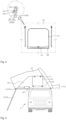
FIG. 1 is a perspective view illustrating a rooftop tent according to an embodiment of the present disclosure. -
FIG. 2 is a side view ofFIG. 1 . -
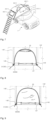
FIG. 3 is a view illustrating an inner surface of a tent member of the rooftop tent inFIG. 2 . -
FIG. 4 is a view illustrating a state in which a rotary canopy of the rooftop tent inFIG. 2 is unfolded downward. -
FIG. 5 is a view illustrating the inner surface of the tent member of the rooftop tent inFIG. 4 . -
FIG. 6 is a view illustrating a controller in a state in which the rotary canopy of the rooftop tent inFIG. 1 is rotated upward relative to the tent member. -
FIG. 7 is a perspective view illustrating a rooftop tent according to another embodiment of the present disclosure. -
FIG. 8 is a view illustrating an inner surface of a tent member in a state in which a rotary canopy of the rooftop tent inFIG. 7 is unfolded downward. -
FIG. 9 is a view illustrating the inner surface of the tent member in a state in which the rotary canopy of the rooftop tent inFIG. 7 is folded upward. -
FIG. 10 is a perspective view illustrating a reinforcing support part of the rooftop tent inFIG. 7 . -
FIG. 11 is an enlarged view of part A inFIG. 10 . - Hereinafter, specific embodiments for implementing the spirit of the present disclosure will be described in detail with reference to the drawings.
- In addition, in the description of the present disclosure, the specific descriptions of publicly known related configurations or functions will be omitted when it is determined that the specific descriptions may obscure the subject matter of the present disclosure.
- In addition, when one constituent element is described as being "coupled to," or "connected to" another constituent element, it should be understood that one constituent element can be coupled or connected directly to another constituent element, and an intervening constituent element can also be present between the constituent elements.
- The terms used in the present specification are used only for the purpose of describing particular embodiments and are not intended to limit the present disclosure. Singular expressions include plural expressions unless clearly described as different meanings in the context.
- In addition, it is noted in advance that in the present specification, the terms "one side," "the other side," "upper side," "lower side," and the like are explained based on the illustration in the drawings and may be differently expressed when the directions of the corresponding objects are changed. For the same reason, some constituent elements in the accompanying drawings are illustrated in an exaggerated or schematic form or are omitted, and a size of each constituent element does not entirely reflect an actual size.
- In addition, the terms including ordinal numbers such as "first," "second," and the like may be used to describe various constituent elements, but the constituent elements are not limited by the terms. These terms are used only to distinguish one constituent element from another constituent element.
- The terms "comprises" and/or "comprising" used in the specification specify particular features, regions, integers, steps, operations, elements, and/or components, but do not exclude the presence or addition of other particular features, regions integers, steps, operations, elements, components, and/or groups thereof.
- Hereinafter, a rooftop tent according to an embodiment of the present disclosure will be described with reference to the drawings.
- Referring to
FIGS. 1 to 6 , arooftop tent 1 according to an embodiment of the present disclosure may include a rooftop tentmain body 10, arotary canopy 20, acontroller 30, and afastener 40. - The rooftop tent
main body 10 may be configured to be folded on a roof of avehicle 2 and stand when being unfolded toward a lateral side of thevehicle 2. The rooftop tentmain body 10 may include ahard casing 11, anexpansion plate 12, aladder 13, and atent member 14. - The
hard casing 11 may have an accommodation space that may accommodate theexpansion plate 12, theladder 13, and thetent member 14. To this end, thehard casing 11 may include abase plate 111 detachably fixed to the roof 3 of thevehicle 2, and acover 112 rotatably connected to thebase plate 111 and configured to open or close an upper side of thebase plate 111. - The
base plate 111 may be manufactured to at least have a length larger than an average height of an adult to ensure a sufficient space in which a user may lie in thetent member 14. In this case, the length of thebase plate 111 means a length in a forward/rearward direction of thevehicle 2. In addition, a length of a rim of thebase plate 111 is smaller than a length of a rim of the roof 3 of thevehicle 2. Therefore, theentire base plate 111 may be stably supported on the roof 3 of thevehicle 2. - In this case, the
base plate 111, together with thecover 112, may define the accommodation space before therooftop tent 1 is installed. Thebase plate 111 may serve as a bottom surface of thetent member 14 in the state in which therooftop tent 1 is installed. - The
cover 112, together with thebase plate 111, may selectively define the accommodation space. In other words, thecover 112, together with thebase plate 111, may define the accommodation space before therooftop tent 1 is installed. Thecover 112 may define a sidewall or ceiling of thetent member 14 in the state in which therooftop tent 1 is installed. - The
cover 112 may be shaped to minimize air resistance when thevehicle 2 travels. For example, a side of thecover 112, which is directed toward a front side of thevehicle 2, may be formed in a streamlined shape. However, this is only an example. A separate device (not illustrated) may be additionally provided to reduce air resistance against thecover 112. For example, thecover 112 may be made of a metallic material such as plastic or aluminum. However, thecover 112 may be made of a hard, lightweight material such as plastic in consideration of the reduction in fuel consumption and the convenience of use. - Meanwhile, a sealing member (not illustrated) such as a rubber packing may be provided on rim portions of the
base plate 111 and thecover 112 that come into contact with each other when thecover 112 is closed. Therefore, outside substances such as rainwater do not penetrate between thebase plate 111 and thecover 112, such that storage states of theladder 13 and thetent member 14 accommodated in thebase plate 111 and thecover 112 may be maintained. In addition, a locking device (not illustrated) may be additionally provided on each of thebase plate 111 and thecover 112. - The
expansion plate 12 may be connected to thebase plate 111 and be rotatable so that theexpansion plate 12 may overlap thebase plate 111 or be unfolded from thebase plate 111. Therefore, theexpansion plate 12 may be accommodated in the accommodation space defined by thebase plate 111 and thecover 112 before therooftop tent 1 is installed. Theexpansion plate 12, together with thebase plate 111, may serve as an expanded bottom surface that may be used by the user in the state in which therooftop tent 1 is installed. Theexpansion plate 12 may be supported on the ground surface by theladder 13. - The
ladder 13 allows theexpansion plate 12 to overlap thebase plate 111 or be unfolded from thebase plate 111. To this end, an end of theladder 13 may be rotatably connected to theexpansion plate 12. Theladder 13 may be accommodated in the accommodation space defined by thebase plate 111 and thecover 112 before therooftop tent 1 is installed. In contrast, in the state in which therooftop tent 1 is installed, theladder 13 may support theexpansion plate 12 on the ground surface and serve as a movement means that the user may use when moving between the ground surface and an internal space of thetent member 14. For example, theladder 13 may be an extendable sliding ladder, a collapsible ladder, or a ladder having detachable upper and lower parts. - The
tent member 14 may be connected to thebase plate 111. When the upper side of thebase plate 111 is opened as thecover 112 rotates from thebase plate 111, thetent member 14 may be unfolded. For example, thetent member 14 may be made of a material such as a fabric having a waterproof function. - The
tent member 14 may include anupper surface 141, alower surface 142, and alateral surface 143 that connects theupper surface 141 and thelower surface 142. In this case, thelateral surface 143 may be disposed to be perpendicular to the ground surface. In this case, awindow 145 and aninsect screen 146 may be openably and closably connected to at least one of theupper surface 141, thelower surface 142, and thelateral surface 143 of thetent member 14. Thewindow 145 and theinsect screen 146 may be provided to open or close anopening side 144 of thetent member 14. When the rooftop tent is not used, thewindow 145 and theinsect screen 146 may be rolled or folded by the user and then fixed by a separate fixing means 147. Hereinafter, for convenience of description, an example will be described in which thewindow 145 is provided on thelateral surface 143 of thetent member 14. - A first fastening means 41 of the
fastener 40 to be described below or a second fastening means 42 of thefastener 40 to be described below may be provided on at least one side of thewindow 145. In this case, the first fastening means 41 or the second fastening means 42 may extend in an upward/downward direction. The first fastening means 41 or the second fastening means 42 may be fastened to a second fastening means 42 or a first fastening means 41 provided on therotary canopy 20 to be described below, such that thewindow 145 may be selectively covered by therotary canopy 20. - Meanwhile, the
tent member 14 may have through-holes 148 through whichcontrol ropes 31 of thecontroller 30 to be described below may pass. The through-holes 148 may be disposed at an upper end of thelateral surface 143 of thetent member 14 and provided at positions corresponding to rotary canopy side passageways 23 provided in therotary canopy 20 to be described below. In this case, because thelateral surface 143 of thetent member 14 may be disposed to be perpendicular to the ground surface, thecontrol rope 31 having passed through the through-hole 148 may be disposed substantially in parallel with thelateral surface 143 of thetent member 14. - The
rotary canopy 20 may serve as a sun shelter for forming a shade outside thewindow 145 provided on thetent member 14 or serve as a curtain for thewindow 145. To this end, therotary canopy 20 may be rotatably connected to at least one of theupper surface 141, thelower surface 142, and thelateral surface 143 of thetent member 14. - First, the configuration in which the
rotary canopy 20 serves as a sun shelter will be described. Therotary canopy 20 may be rotated upward relative to thelateral surface 143 of thetent member 14 and then fixed by a rotary canopy fixing means 21. In this case, therotary canopy 20, which is rotated upward relative to thetent member 14, may be fixed by means of a separate tension bar (not illustrated). For example, one end of the tension bar is inserted into an insertion port (not illustrated) provided in thetent member 14, and the other end of the tension bar is inserted into aninsertion port 22 of therotary canopy 20, such that the state in which therotary canopy 20 is rotated upward relative to thetent member 14 may be maintained. In this case, therotary canopy 20 may form a shade by being disposed to define a predetermined inclination with respect to thelateral surface 143 of thetent member 14. - Next, the configuration in which the
rotary canopy 20 serves as a curtain will be described. When the tension bar is separated from therotary canopy 20 rotated upward relative to thelateral surface 143 of thetent member 14, therotary canopy 20, which is rotated upward relative to thelateral surface 143 of thetent member 14, is unfolded downward. Therotary canopy 20, which is rotated downward and unfolded, covers thewindow 145 from the outside of thewindow 145, such that therotary canopy 20 may serve as a curtain for thewindow 145. - Meanwhile, when either of the sun shelter function and the curtain function of the
rotary canopy 20 is not required, therotary canopy 20 may be folded upward and stored by thecontroller 30. - The
controller 30 may fold therotary canopy 20 upward so that portions of therotary canopy 20 overlap one another. To this end, thecontroller 30 may include thecontrol ropes 31,connection members 32, andstoppers 33. - The
control rope 31 may receive an external force applied by the user to fold therotary canopy 20 upward and transmit the external force to therotary canopy 20. To this end, thecontrol rope 31 may extend in one direction, and at least a part of thecontrol rope 31 may be disposed at one side of any one of the first fastening means 41 of thefastener 40 to be described below and the second fastening means 42 of thefastener 40 to be described below. - In this case, at least a part of the
control rope 31 may be movably inserted into the rotary canopy side passageway 23 provided in therotary canopy 20, and the remaining part of thecontrol rope 31 may pass through the through-hole 148 provided in thetent member 14 may be exposed in thetent member 14. In other words, one end of thecontrol rope 31 is fixed to therotary canopy 20 while being disposed in the rotary canopy side passageway 23 provided in therotary canopy 20, such that one end of thecontrol rope 31 may serve as a fixing point. In addition, the other end of thecontrol rope 31 is exposed in thetent member 14 through the through-hole 148 provided in thetent member 14, such that the other end of thecontrol rope 31 may be held by the user. - The
connection member 32 may be configured to come into contact with therotary canopy 20 that moves in a direction of an external force when the external force is applied to thecontrol rope 31. When therotary canopy 20 is moved upward and comes into contact with theconnection member 32 by the external force applied to thecontrol rope 31, therotary canopy 20 does not move upward any further, but the portions of therotary canopy 20 may overlap one another between theconnection members 32. In other words, a width of therotary canopy 20 disposed between the twoadjacent connection members 32 may vary depending on the external force applied to thecontrol rope 31 exposed in thetent member 14. Therefore, a degree to which the portions of therotary canopy 20 overlap one another may be determined depending on the number ofconnection members 32 provided in the rotary canopy side passageway 23. - In this case, the
connection member 32 may be provided in the rotary canopy side passageway 23 provided in therotary canopy 20. Theconnection member 32 may be disposed in a direction perpendicular to one direction and connect at least a part of thecontrol rope 31 to any one of the first fastening means 41 of thefastener 40 to be described below and the second fastening means 42 of thefastener 40 to be described below. - Meanwhile, the
connection member 32 may include: amovement insertion portion 321 into which thecontrol rope 31 is movably inserted; a first fixing portion 322 connected to one side of themovement insertion portion 321 and fixed to an inner surface of therotary canopy 20; and asecond fixing portion 323 connected to the other side of themovement insertion portion 321 and fixed to the inner surface of therotary canopy 20. In this case, any one of the first fixing portion 322 and thesecond fixing portion 323 may be fixed to the first fastening means 41 or the second fastening means 42 of thefastener 40 to be described below. - The
stopper 33 may maintain the folded state in which the portions of therotary canopy 20 overlap one another. To this end, thestopper 33 may be movably connected to the other end of thecontrol rope 31 exposed in thetent member 14. - The
stopper 33 may include: aninsertion body 331 having therein an elastic member (not illustrated) and having afirst insertion hole 3311 into which thecontrol rope 31 is penetratively inserted; and amovement body 332 movably coupled to theinsertion body 331 and having asecond insertion hole 3321 configured to selectively communicate with thefirst insertion hole 3311, themovement body 332 being configured to selectively press the elastic member. - In this case, when the
movement body 332 is pressed by an external force applied from the outside, themovement body 332 is inserted into theinsertion body 331, and thesecond insertion hole 3321 of themovement body 332 communicates with thefirst insertion hole 3311 of theinsertion body 331. When thefirst insertion hole 3311 and thesecond insertion hole 3321 communicate with each other, theinsertion body 331 may move along thecontrol rope 31 penetratively inserted into thefirst insertion hole 3311. When the position of theinsertion body 331 with respect to thecontrol rope 31 is completely selected, the external force applied to themovement body 332 is eliminated. When the external force applied to themovement body 332 is eliminated, themovement body 332 is withdrawn from theinsertion body 331 by an elastic restoring force of the elastic member. In this process, thefirst insertion hole 3311 and thesecond insertion hole 3321 are not aligned with each other, and thecontrol rope 31 interferes with an inner peripheral surface of thesecond insertion hole 3321, such that theinsertion body 331 cannot move along thecontrol rope 31 any further. - The
fastener 40 may selectively fasten therotary canopy 20 to thetent member 14. To this end, thefastener 40 may include: the first fastening means 41 provided on any one of an outer surface of thetent member 14 and an inner surface of therotary canopy 20 and extending in one direction; and the second fastening means 42 provided on the other of the outer surface of thetent member 14 and the inner surface of therotary canopy 20 and extending in one direction, the second fastening means 42 being configured to selectively engage with the first fastening means 41. - In this case, the first fastening means 41 may be provided as a pair of first fastening means 41, the second fastening means 42 may be provided as a pair of second fastening means 42, and the pair of first fastening means 41 and the pair of second fastening means 42 may be disposed to face one another. For example, the first fastening means 41 may be configured as a female zipper, and the second fastening means 42 may be configured as a male zipper.
- Hereinafter, a rooftop tent according to another embodiment of the present disclosure will be described with reference to
FIGS. 7 to 11 . - Referring to
FIGS. 7 to 11 , a rooftop tent 1' according to another embodiment of the present disclosure may include a rooftop tent main body 10', arotary canopy 20, acontroller 30, afastener 40, a fixedcanopy 50, and a reinforcingsupport part 60. In this case, the rooftop tent 1' illustrated inFIGS. 7 to 11 is substantially identical to therooftop tent 1 described with reference toFIGS. 1 to 6 , except for the rooftop tent main body 10', the fixedcanopy 50, and the reinforcingsupport part 60. Therefore, the description will be focused on the rooftop tent main body 10', the fixedcanopy 50, and the reinforcingsupport part 60 that are the differences, and the above-mentioned description of the embodiment and the reference numerals will be applied to the same constituent elements. - The rooftop tent main body 10' may be configured to be folded on the roof of the
vehicle 2 and stand when being unfolded toward the lateral side of thevehicle 2. The rooftop tent main body 10' may include ahard casing 11, anexpansion plate 12, aladder 13, and a tent member 14'. However, because thehard casing 11, theexpansion plate 12, and theladder 13 have been described with reference toFIGS. 1 to 6 , the description will be focused on the tent member 14' that is the difference. - The tent member 14' may be connected to the
base plate 111. When the upper side of thebase plate 111 is opened as thecover 112 rotates from thebase plate 111, the tent member 14' may be unfolded. For example, the tent member 14' may be made of a material such as a fabric having a waterproof function. - The tent member 14' may include an
upper surface 141, alower surface 142, and a lateral surface 143' that connects theupper surface 141 and thelower surface 142. In this case, the lateral surface 143' may be disposed to be inclined with respect to the ground surface. - Meanwhile, the tent member 14' may have through-holes 148' through which
control ropes 31 of thecontroller 30 to be described below may pass. In addition, the tent member 14' may have a tent member side passageway 149' corresponding to the rotary canopy side passageway 23 of therotary canopy 20. In this case, the tent member side passageway 149' may extend in the upward/downward direction. The through-hole 148' may communicate with the tent member side passageway 149'. - The through-hole 148' may communicate with the tent member side passageway 149' corresponding to a lower end of the lateral surface 143' of the tent member 14'. In this case, because the lower end of the lateral surface 143' of the tent member 14' is disposed to be further substantially perpendicular to the ground surface than an upper end of the lateral surface 143' of the tent member 14', the
control rope 31 having passed through the through-hole 148' may be disposed to be substantially in parallel with the lateral surface 143' of the tent member 14' even though the lateral surface 143' of the tent member 14' is disposed to be inclined at a predetermined angle with respect to the ground surface. - The fixed
canopy 50 may be connected to a boundary between theupper surface 141 and the lateral surface 143' of the tent member 14' and form a shade. The fixedcanopy 50 may form the shade by being selectively unfolded from the boundary between theupper surface 141 and the lateral surface 143' of the tent member 14'. The state in which the fixedcanopy 50 is unfolded may be maintained by the separate reinforcingsupport part 60 provided on the fixedcanopy 50. - The reinforcing
support part 60 may include: a first fixing means 61 provided on an inner surface of the fixedcanopy 50; and a first reinforcingsupport member 62 having one end fixed to at least one of thetent member 14 and the fixedcanopy 50, and the other end selectively inserted and accommodated in the first fixing means 61. - In this case, the first fixing means 61 may be a pocket having an opening opened at one side. An inner surface of the first fixing means 61 may have a shape corresponding to a shape of the other end of the first reinforcing
support member 62. - The first reinforcing
support member 62 may have a length substantially equal to a distance between a periphery of the fixedcanopy 50 and the boundary between theupper surface 141 and the lateral surface 143' of the tent member 14'. For example, the first reinforcingsupport member 62 may be made of a flexible material so as to be easily inserted into the first fixing means 61 and easily separated from the first fixing means 61. The first reinforcingsupport member 62 may be made of a material having predetermined tension to maintain the state in which the fixedcanopy 50 is unfolded. - In addition, the reinforcing
support part 60 may further include: a second fixing means 63 provided along at least a part of the periphery of the fixedcanopy 50; a second reinforcingsupport member 64 selectively fixedly inserted into the second fixing means 63; and a third fixing means 65 provided on at least one of thetent member 14 and the fixedcanopy 50 and configured such that an end of the second reinforcingsupport member 64 is fixedly inserted into the third fixing means 65. - The second fixing means 63 is a portion provided on at least a part of the periphery of the fixed
canopy 50 to insert the second reinforcingsupport member 64. The second fixing means 63 may be provided in a cylindrical shape that may surround the second reinforcingsupport member 64. In this case, two opposite ends of the second fixing means 63 may be opened. The second reinforcingsupport member 64, for example, a pole having predetermined tension may be inserted or separated through the opened end of the second fixing means 63. - In this case, a length of the second fixing means 63 is shorter than a length of the second reinforcing
support member 64, such that two opposite ends of the second reinforcingsupport member 64 inserted into the second fixing means 63 may be exposed from the second fixing means 63. The two opposite ends of the second reinforcingsupport member 64 exposed from the second fixing means 63 are inserted into the third fixing means 65 provided on at least one of the tent member 14' and the fixedcanopy 50, and the second reinforcingsupport member 64 defines an arcuate shape, such that the state in which the fixedcanopy 50 is unfolded may be maintained. - While the embodiments of the present disclosure have been described above as specific embodiments, the embodiments of the present disclosure are for illustrative purposes only, and the present disclosure is not limited thereto. The present disclosure should be interpreted as having the widest scope defined by the basic spirit disclosed in the present specification. Those skilled in the art may combine/substitute the disclosed embodiments to perform patterns with unspecified shapes, but this does not depart from the scope of the present disclosure. In addition, it is apparent that those skilled in the art may easily change or modify the embodiment disclosed based on the present specification, and such changes or modifications also belong to the protection scope of the present disclosure.
Claims (13)
- A rooftop tent comprising:a rooftop tent main body comprising a tent member configured to be folded on a roof of a vehicle and stand when being unfolded toward a lateral side of the vehicle;a rotary canopy rotatably connected to the tent member; anda controller connected to the tent member and the rotary canopy and configured to fold the rotary canopy upward so that portions of the rotary canopy overlap one another.
- The rooftop tent of claim 1, further comprising:a fastener configured to selectively fasten the rotary canopy to the tent member,wherein the fastener comprises:a first fastening means provided on any one of an outer surface of the tent member and an inner surface of the rotary canopy and extending in one direction; anda second fastening means provided on the other of the outer surface of the tent member and the inner surface of the rotary canopy and extending in one direction, and the second fastening means being configured to selectively engage with the first fastening means.
- The rooftop tent of claim 2, wherein the controller comprises:a control rope extending in one direction and having at least a part disposed at one side of any one of the first fastening means and the second fastening means; anda connection member disposed in a direction perpendicular to one direction and configured to connect at least a part of the control rope to any one of the first fastening means and the second fastening means, andwherein the remaining part of the control rope is exposed in the tent member.
- The rooftop tent of claim 3, wherein the connection member comprises:a movement insertion portion into which the control rope is movably inserted;a first fixing portion connected to one side of the movement insertion portion and fixed to an inner surface of the rotary canopy; anda second fixing portion connected to the other side of the movement insertion portion and fixed to the inner surface of the rotary canopy, andwherein an end of any one of the first fixing portion and the second fixing portion is connected to any one of the first fastening means and the second fastening means.
- The rooftop tent of claim 3, wherein the controller further comprises a stopper movably connected to the remaining part of the control rope exposed in the tent member.
- The rooftop tent of claim 3, wherein the rotary canopy has at least one rotary canopy side passageway extending in an upward/downward direction, and at least a part of the control rope is movably disposed in the rotary canopy side passageway.
- The rooftop tent of claim 6, wherein the tent member has a through-hole through which the remaining part of the control rope passes.
- The rooftop tent of claim 3, wherein the connection member is provided as a plurality of connection members, and a width of the rotary canopy, which is disposed between two adjacent connection members among the plurality of the connection member, is changed by an external force applied to the control rope exposed in the tent member.
- The rooftop tent of claim 5, wherein the stopper comprises:an insertion body having an elastic member therein and having a first insertion hole into which the control rope is penetratively inserted; anda movement body movably coupled to the insertion body and having a second insertion hole configured to selectively communicate with the first insertion hole, and the movement body being configured to selectively press the elastic member.
- The rooftop tent of any one of claims 1 to 9, further comprising:
a fixed canopy provided on the tent member. - The rooftop tent of claim 10, further comprising:
a reinforcing support part provided on the fixed canopy. - The rooftop tent of claim 11, wherein the reinforcing support part comprises:a first fixing means provided on an inner surface of the fixed canopy; anda first reinforcing support member having one end fixed to at least one of the tent member and the fixed canopy, and the other end selectively inserted and accommodated in the first fixing means.
- The rooftop tent of claim 11 or 12, wherein the reinforcing support part further comprises:a second fixing means provided along at least a part of a periphery of the fixed canopy;a second reinforcing support member selectively inserted and fixed into the second fixing means; anda third fixing means provided on at least one of the tent member and the fixed canopy and configured such that an end of the second reinforcing support member is fixedly inserted into the third fixing mean.
Applications Claiming Priority (2)
| Application Number | Priority Date | Filing Date | Title |
|---|---|---|---|
| KR1020210141468A KR102704698B1 (en) | 2021-10-22 | 2021-10-22 | Roof-top tent |
| PCT/KR2022/015868 WO2023068761A1 (en) | 2021-10-22 | 2022-10-18 | Rooftop tent |
Publications (2)
| Publication Number | Publication Date |
|---|---|
| EP4194646A1 true EP4194646A1 (en) | 2023-06-14 |
| EP4194646A4 EP4194646A4 (en) | 2024-08-07 |
Family
ID=85480585
Family Applications (1)
| Application Number | Title | Priority Date | Filing Date |
|---|---|---|---|
| EP22809306.8A Pending EP4194646A4 (en) | 2021-10-22 | 2022-10-18 | Rooftop tent |
Country Status (8)
| Country | Link |
|---|---|
| US (1) | US12607034B2 (en) |
| EP (1) | EP4194646A4 (en) |
| JP (1) | JP2023550670A (en) |
| CN (1) | CN220100872U (en) |
| AU (1) | AU2022268300B2 (en) |
| CA (1) | CA3180042A1 (en) |
| DE (1) | DE212022000058U1 (en) |
| ZA (1) | ZA202212850B (en) |
Families Citing this family (7)
| Publication number | Priority date | Publication date | Assignee | Title |
|---|---|---|---|---|
| CA3136548A1 (en) * | 2021-07-13 | 2023-01-13 | Ikamper Co., Ltd. | Rooftop tent fixing device and rooftop tent including same |
| DE212022000324U1 (en) * | 2021-11-04 | 2024-07-31 | Thule Sweden Ab | Customizable roof tent system |
| EP4453354A1 (en) * | 2021-12-24 | 2024-10-30 | Goodwin, Rebecca | A rooftop tent |
| US20240076897A1 (en) * | 2022-09-01 | 2024-03-07 | Wheel Pros, Llc | Truck rooftop tent. |
| DE102023122939A1 (en) * | 2023-08-25 | 2025-02-27 | Bürstner GmbH & Co. KG | recreational vehicle and pop-up roof |
| DE102024117411B3 (en) * | 2024-06-20 | 2025-12-24 | Patrick Scharf | Roof rack mounting |
| USD1103886S1 (en) * | 2024-08-08 | 2025-12-02 | Guangdong Geertop Outdoor Gear Co., Ltd. | Car awning |
Family Cites Families (43)
| Publication number | Priority date | Publication date | Assignee | Title |
|---|---|---|---|---|
| US742246A (en) * | 1903-01-15 | 1903-10-27 | Julius Oluf Sorensen | Awning. |
| US1560114A (en) * | 1923-09-22 | 1925-11-03 | August W Skog | Tent |
| US1546613A (en) * | 1924-10-09 | 1925-07-21 | Lynn W Beman | Tent |
| US1583832A (en) * | 1926-01-22 | 1926-05-11 | Conrad J Hoigaard | Tent-window structure |
| US1888014A (en) * | 1932-04-18 | 1932-11-15 | Powers & Company | Tent window |
| US2516869A (en) * | 1946-06-17 | 1950-08-01 | Philip W Harris | Collapsible tent |
| US2666441A (en) * | 1952-09-24 | 1954-01-19 | Powers & Company | Tent window |
| US2857924A (en) * | 1955-05-25 | 1958-10-28 | Gibbons | Sleeping and traveling equipment for automobiles |
| US3073326A (en) * | 1959-10-26 | 1963-01-15 | Paul A Lefebvre | Collapsible tent |
| US3746386A (en) * | 1972-07-17 | 1973-07-17 | Thornber D | Tent for rear doored vehicle |
| US4058133A (en) * | 1976-02-04 | 1977-11-15 | Barr Dwight L | Self-contained tent assembly |
| US4066089A (en) * | 1976-05-17 | 1978-01-03 | Rainwater Orman M | Collapsible shelter structure |
| JPS55172065U (en) * | 1979-05-29 | 1980-12-10 | ||
| KR860001221Y1 (en) | 1984-05-09 | 1986-06-17 | 최한수 | Tent screen cover switch |
| JPS60182456U (en) * | 1984-05-11 | 1985-12-04 | 丸満産業株式会社 | Shielding device for the opening of the curtain structure |
| JPH0658021A (en) * | 1991-04-15 | 1994-03-01 | Yasuaki Kohama | Car loaded tent |
| US5111866A (en) * | 1991-06-05 | 1992-05-12 | Prostko Robert N | Movable shade system |
| US5193602A (en) * | 1991-12-12 | 1993-03-16 | Morales Teresa J | Canvas cover for window frames |
| KR200246490Y1 (en) | 2001-06-02 | 2001-10-29 | 최경재 | vent cover open and shut adjustment eqipment of tent |
| US7789098B2 (en) * | 2006-07-10 | 2010-09-07 | Eurio, Inc. | Hunting ground blind for rapid concealment |
| US7455069B2 (en) * | 2003-08-27 | 2008-11-25 | Wingroup North America, Inc. | Tent with pass-through port |
| US20050045284A1 (en) * | 2003-09-02 | 2005-03-03 | Ullyett Gordon Jeffrey | Retractable cover with biasing mechanism for covering structures |
| US7128077B2 (en) * | 2003-12-03 | 2006-10-31 | North Pole, Limited | Tent ventilation structure |
| US7191788B2 (en) * | 2004-03-05 | 2007-03-20 | The Coleman Company, Inc. | Tent with window having an internal shelf |
| TWM254983U (en) * | 2004-03-12 | 2005-01-11 | Nien Made Entpr Co Ltd | Curtain with easily adjustable length |
| KR200382870Y1 (en) | 2005-02-16 | 2005-04-25 | 홍기수 | Tent type mosquito net |
| US8776814B1 (en) * | 2011-08-10 | 2014-07-15 | Primos, Inc. | Window adjustment system for blinds |
| CN203113900U (en) * | 2013-01-18 | 2013-08-07 | 客贝利(厦门)休闲用品有限公司 | Ram on top of tent |
| US9719296B1 (en) * | 2014-10-06 | 2017-08-01 | Safe-T-Shade | Apparatuses and systems for selectively locking lift cords used to lift architectural opening coverings |
| US9567767B2 (en) * | 2015-03-31 | 2017-02-14 | Treeline Outdoors | Vehicle roof-top tent |
| US10077574B1 (en) * | 2015-09-02 | 2018-09-18 | Tepui Outdoors, Inc. | Hard shell rooftop tent with utility rails |
| US10094140B2 (en) * | 2016-10-19 | 2018-10-09 | Apex Billion Int'l Inv. Ltd. | Door opening and closing structure |
| US20180195310A1 (en) * | 2017-01-08 | 2018-07-12 | Kenneth Rathbun | Variable Viewing Window Shade/Awning System |
| NL2019017B1 (en) * | 2017-06-02 | 2018-12-11 | Rico Sport & Vastgoed B V | Covering for selective covering of a surface |
| KR102334479B1 (en) | 2020-02-25 | 2021-12-03 | 주식회사 아이캠퍼 | Extendable roof-top tent |
| KR102555945B1 (en) * | 2020-07-24 | 2023-07-14 | (주)보라니 | Roman shade blind with view part |
| US12091874B2 (en) * | 2020-09-03 | 2024-09-17 | Circa Square | Portable and versatile tent with bed |
| US11352808B2 (en) * | 2020-09-27 | 2022-06-07 | Beijing Playdo Outdoor Products Co., Ltd. | Rooftop tent and receiving apparatus thereof |
| US11753844B2 (en) * | 2021-06-09 | 2023-09-12 | Timothy Dunn | Rooftop tent assembly for vehicles |
| US12312827B2 (en) * | 2021-07-01 | 2025-05-27 | Shelterlogic Corp. | Door assembly for a shelter and a shelter including same |
| FR3128240B1 (en) * | 2021-10-15 | 2023-10-20 | Decathlon Sa | Tent equipped with a deployable cap |
| US12378763B2 (en) * | 2022-02-07 | 2025-08-05 | Umbra Llc | Adjustable blind |
| ZA202405692B (en) * | 2023-07-24 | 2025-02-26 | May Sam | An improved rooftop tent assembly for vehicles |
-
2022
- 2022-10-18 JP JP2022572620A patent/JP2023550670A/en active Pending
- 2022-10-18 CN CN202290000131.8U patent/CN220100872U/en active Active
- 2022-10-18 DE DE212022000058.7U patent/DE212022000058U1/en active Active
- 2022-10-18 US US17/999,595 patent/US12607034B2/en active Active
- 2022-10-18 CA CA3180042A patent/CA3180042A1/en active Pending
- 2022-10-18 EP EP22809306.8A patent/EP4194646A4/en active Pending
- 2022-10-18 AU AU2022268300A patent/AU2022268300B2/en active Active
- 2022-11-25 ZA ZA2022/12850A patent/ZA202212850B/en unknown
Also Published As
| Publication number | Publication date |
|---|---|
| AU2022268300B2 (en) | 2025-01-02 |
| AU2022268300A1 (en) | 2023-05-11 |
| JP2023550670A (en) | 2023-12-05 |
| DE212022000058U1 (en) | 2023-03-30 |
| CN220100872U (en) | 2023-11-28 |
| US12607034B2 (en) | 2026-04-21 |
| EP4194646A4 (en) | 2024-08-07 |
| ZA202212850B (en) | 2024-04-24 |
| CA3180042A1 (en) | 2023-04-22 |
| US20240287829A1 (en) | 2024-08-29 |
Similar Documents
| Publication | Publication Date | Title |
|---|---|---|
| EP4194646A1 (en) | Rooftop tent | |
| EP3684991B1 (en) | Roof-top tent for vehicle | |
| EP3686377A1 (en) | Rooftop tent for vehicle | |
| KR102704698B1 (en) | Roof-top tent | |
| US10953734B2 (en) | Method of enhancing rain and sun protection using a rain and sun shield for golf carts | |
| US20110079260A1 (en) | Tent with hinged door or window | |
| US11584208B2 (en) | Method of enhancing rain and sun protection using a rain and sun shield for golf carts | |
| US20050055893A1 (en) | Collapsible structure with door mechanism | |
| KR20150092023A (en) | Tent mounted on a roof of vehicle | |
| US5931176A (en) | Hinged tonneau cover truck tent | |
| US20250034899A1 (en) | Rooftop tent assembly for vehicles | |
| US6106051A (en) | Truck bed cover | |
| US20250034900A1 (en) | Rooftop tent assembly for vehicles | |
| CN220080997U (en) | Connecting awning convenient for opening and closing trunk | |
| KR20250041595A (en) | Rooftop tent | |
| US20170335594A1 (en) | Vent control system for tent | |
| US12024004B2 (en) | Pop-up shelter system and method for vehicles | |
| EP4353925A1 (en) | Rooftop tent for vehicle | |
| KR20200000596U (en) | Car Tent | |
| CA2628307A1 (en) | Tent with hinged door or window | |
| CN220909305U (en) | Inflatable tail tent | |
| WO2006084324A1 (en) | A door assembly | |
| KR20240167729A (en) | Tent structure for vehicle camping |
Legal Events
| Date | Code | Title | Description |
|---|---|---|---|
| STAA | Information on the status of an ep patent application or granted ep patent |
Free format text: STATUS: UNKNOWN |
|
| STAA | Information on the status of an ep patent application or granted ep patent |
Free format text: STATUS: THE INTERNATIONAL PUBLICATION HAS BEEN MADE |
|
| PUAI | Public reference made under article 153(3) epc to a published international application that has entered the european phase |
Free format text: ORIGINAL CODE: 0009012 |
|
| STAA | Information on the status of an ep patent application or granted ep patent |
Free format text: STATUS: REQUEST FOR EXAMINATION WAS MADE |
|
| 17P | Request for examination filed |
Effective date: 20221201 |
|
| AK | Designated contracting states |
Kind code of ref document: A1 Designated state(s): AL AT BE BG CH CY CZ DE DK EE ES FI FR GB GR HR HU IE IS IT LI LT LU LV MC ME MK MT NL NO PL PT RO RS SE SI SK SM TR |
|
| A4 | Supplementary search report drawn up and despatched |
Effective date: 20240709 |
|
| RIC1 | Information provided on ipc code assigned before grant |
Ipc: B60P 3/34 20060101ALI20240703BHEP Ipc: E04H 15/32 20060101ALI20240703BHEP Ipc: E04H 15/06 20060101AFI20240703BHEP |
|
| DAV | Request for validation of the european patent (deleted) | ||
| DAX | Request for extension of the european patent (deleted) | ||
| STAA | Information on the status of an ep patent application or granted ep patent |
Free format text: STATUS: EXAMINATION IS IN PROGRESS |
|
| 17Q | First examination report despatched |
Effective date: 20260116 |