EP4194015A1 - Composition de tissu pour son utilisation pour une activité bactéricide, virucide, fongicide ainsi que pour la régénération tissulaire organique au niveau d'une lésion - Google Patents
Composition de tissu pour son utilisation pour une activité bactéricide, virucide, fongicide ainsi que pour la régénération tissulaire organique au niveau d'une lésion Download PDFInfo
- Publication number
- EP4194015A1 EP4194015A1 EP22212332.5A EP22212332A EP4194015A1 EP 4194015 A1 EP4194015 A1 EP 4194015A1 EP 22212332 A EP22212332 A EP 22212332A EP 4194015 A1 EP4194015 A1 EP 4194015A1
- Authority
- EP
- European Patent Office
- Prior art keywords
- fabric
- composition according
- composition
- yarn
- fabric composition
- Prior art date
- Legal status (The legal status is an assumption and is not a legal conclusion. Google has not performed a legal analysis and makes no representation as to the accuracy of the status listed.)
- Granted
Links
Images
Classifications
-
- A—HUMAN NECESSITIES
- A61—MEDICAL OR VETERINARY SCIENCE; HYGIENE
- A61L—METHODS OR APPARATUS FOR STERILISING MATERIALS OR OBJECTS IN GENERAL; DISINFECTION, STERILISATION OR DEODORISATION OF AIR; CHEMICAL ASPECTS OF BANDAGES, DRESSINGS, ABSORBENT PADS OR SURGICAL ARTICLES; MATERIALS FOR BANDAGES, DRESSINGS, ABSORBENT PADS OR SURGICAL ARTICLES
- A61L15/00—Chemical aspects of, or use of materials for, bandages, dressings or absorbent pads
- A61L15/16—Bandages, dressings or absorbent pads for physiological fluids such as urine or blood, e.g. sanitary towels, tampons
- A61L15/18—Bandages, dressings or absorbent pads for physiological fluids such as urine or blood, e.g. sanitary towels, tampons containing inorganic materials
-
- A—HUMAN NECESSITIES
- A61—MEDICAL OR VETERINARY SCIENCE; HYGIENE
- A61L—METHODS OR APPARATUS FOR STERILISING MATERIALS OR OBJECTS IN GENERAL; DISINFECTION, STERILISATION OR DEODORISATION OF AIR; CHEMICAL ASPECTS OF BANDAGES, DRESSINGS, ABSORBENT PADS OR SURGICAL ARTICLES; MATERIALS FOR BANDAGES, DRESSINGS, ABSORBENT PADS OR SURGICAL ARTICLES
- A61L15/00—Chemical aspects of, or use of materials for, bandages, dressings or absorbent pads
- A61L15/16—Bandages, dressings or absorbent pads for physiological fluids such as urine or blood, e.g. sanitary towels, tampons
- A61L15/22—Bandages, dressings or absorbent pads for physiological fluids such as urine or blood, e.g. sanitary towels, tampons containing macromolecular materials
-
- A—HUMAN NECESSITIES
- A61—MEDICAL OR VETERINARY SCIENCE; HYGIENE
- A61L—METHODS OR APPARATUS FOR STERILISING MATERIALS OR OBJECTS IN GENERAL; DISINFECTION, STERILISATION OR DEODORISATION OF AIR; CHEMICAL ASPECTS OF BANDAGES, DRESSINGS, ABSORBENT PADS OR SURGICAL ARTICLES; MATERIALS FOR BANDAGES, DRESSINGS, ABSORBENT PADS OR SURGICAL ARTICLES
- A61L15/00—Chemical aspects of, or use of materials for, bandages, dressings or absorbent pads
- A61L15/16—Bandages, dressings or absorbent pads for physiological fluids such as urine or blood, e.g. sanitary towels, tampons
- A61L15/42—Use of materials characterised by their function or physical properties
-
- A—HUMAN NECESSITIES
- A61—MEDICAL OR VETERINARY SCIENCE; HYGIENE
- A61L—METHODS OR APPARATUS FOR STERILISING MATERIALS OR OBJECTS IN GENERAL; DISINFECTION, STERILISATION OR DEODORISATION OF AIR; CHEMICAL ASPECTS OF BANDAGES, DRESSINGS, ABSORBENT PADS OR SURGICAL ARTICLES; MATERIALS FOR BANDAGES, DRESSINGS, ABSORBENT PADS OR SURGICAL ARTICLES
- A61L15/00—Chemical aspects of, or use of materials for, bandages, dressings or absorbent pads
- A61L15/16—Bandages, dressings or absorbent pads for physiological fluids such as urine or blood, e.g. sanitary towels, tampons
- A61L15/42—Use of materials characterised by their function or physical properties
- A61L15/44—Medicaments
-
- A—HUMAN NECESSITIES
- A61—MEDICAL OR VETERINARY SCIENCE; HYGIENE
- A61L—METHODS OR APPARATUS FOR STERILISING MATERIALS OR OBJECTS IN GENERAL; DISINFECTION, STERILISATION OR DEODORISATION OF AIR; CHEMICAL ASPECTS OF BANDAGES, DRESSINGS, ABSORBENT PADS OR SURGICAL ARTICLES; MATERIALS FOR BANDAGES, DRESSINGS, ABSORBENT PADS OR SURGICAL ARTICLES
- A61L15/00—Chemical aspects of, or use of materials for, bandages, dressings or absorbent pads
- A61L15/16—Bandages, dressings or absorbent pads for physiological fluids such as urine or blood, e.g. sanitary towels, tampons
- A61L15/42—Use of materials characterised by their function or physical properties
- A61L15/46—Deodorants or malodour counteractants, e.g. to inhibit the formation of ammonia or bacteria
-
- A—HUMAN NECESSITIES
- A61—MEDICAL OR VETERINARY SCIENCE; HYGIENE
- A61L—METHODS OR APPARATUS FOR STERILISING MATERIALS OR OBJECTS IN GENERAL; DISINFECTION, STERILISATION OR DEODORISATION OF AIR; CHEMICAL ASPECTS OF BANDAGES, DRESSINGS, ABSORBENT PADS OR SURGICAL ARTICLES; MATERIALS FOR BANDAGES, DRESSINGS, ABSORBENT PADS OR SURGICAL ARTICLES
- A61L2300/00—Biologically active materials used in bandages, wound dressings, absorbent pads or medical devices
- A61L2300/10—Biologically active materials used in bandages, wound dressings, absorbent pads or medical devices containing or releasing inorganic materials
-
- A—HUMAN NECESSITIES
- A61—MEDICAL OR VETERINARY SCIENCE; HYGIENE
- A61L—METHODS OR APPARATUS FOR STERILISING MATERIALS OR OBJECTS IN GENERAL; DISINFECTION, STERILISATION OR DEODORISATION OF AIR; CHEMICAL ASPECTS OF BANDAGES, DRESSINGS, ABSORBENT PADS OR SURGICAL ARTICLES; MATERIALS FOR BANDAGES, DRESSINGS, ABSORBENT PADS OR SURGICAL ARTICLES
- A61L2300/00—Biologically active materials used in bandages, wound dressings, absorbent pads or medical devices
- A61L2300/10—Biologically active materials used in bandages, wound dressings, absorbent pads or medical devices containing or releasing inorganic materials
- A61L2300/102—Metals or metal compounds, e.g. salts such as bicarbonates, carbonates, oxides, zeolites, silicates
- A61L2300/104—Silver, e.g. silver sulfadiazine
-
- A—HUMAN NECESSITIES
- A61—MEDICAL OR VETERINARY SCIENCE; HYGIENE
- A61L—METHODS OR APPARATUS FOR STERILISING MATERIALS OR OBJECTS IN GENERAL; DISINFECTION, STERILISATION OR DEODORISATION OF AIR; CHEMICAL ASPECTS OF BANDAGES, DRESSINGS, ABSORBENT PADS OR SURGICAL ARTICLES; MATERIALS FOR BANDAGES, DRESSINGS, ABSORBENT PADS OR SURGICAL ARTICLES
- A61L2300/00—Biologically active materials used in bandages, wound dressings, absorbent pads or medical devices
- A61L2300/40—Biologically active materials used in bandages, wound dressings, absorbent pads or medical devices characterised by a specific therapeutic activity or mode of action
- A61L2300/404—Biocides, antimicrobial agents, antiseptic agents
- A61L2300/406—Antibiotics
-
- A—HUMAN NECESSITIES
- A61—MEDICAL OR VETERINARY SCIENCE; HYGIENE
- A61L—METHODS OR APPARATUS FOR STERILISING MATERIALS OR OBJECTS IN GENERAL; DISINFECTION, STERILISATION OR DEODORISATION OF AIR; CHEMICAL ASPECTS OF BANDAGES, DRESSINGS, ABSORBENT PADS OR SURGICAL ARTICLES; MATERIALS FOR BANDAGES, DRESSINGS, ABSORBENT PADS OR SURGICAL ARTICLES
- A61L2300/00—Biologically active materials used in bandages, wound dressings, absorbent pads or medical devices
- A61L2300/40—Biologically active materials used in bandages, wound dressings, absorbent pads or medical devices characterised by a specific therapeutic activity or mode of action
- A61L2300/404—Biocides, antimicrobial agents, antiseptic agents
- A61L2300/408—Virucides, spermicides
-
- A—HUMAN NECESSITIES
- A61—MEDICAL OR VETERINARY SCIENCE; HYGIENE
- A61L—METHODS OR APPARATUS FOR STERILISING MATERIALS OR OBJECTS IN GENERAL; DISINFECTION, STERILISATION OR DEODORISATION OF AIR; CHEMICAL ASPECTS OF BANDAGES, DRESSINGS, ABSORBENT PADS OR SURGICAL ARTICLES; MATERIALS FOR BANDAGES, DRESSINGS, ABSORBENT PADS OR SURGICAL ARTICLES
- A61L2300/00—Biologically active materials used in bandages, wound dressings, absorbent pads or medical devices
- A61L2300/60—Biologically active materials used in bandages, wound dressings, absorbent pads or medical devices characterised by a special physical form
-
- A—HUMAN NECESSITIES
- A61—MEDICAL OR VETERINARY SCIENCE; HYGIENE
- A61L—METHODS OR APPARATUS FOR STERILISING MATERIALS OR OBJECTS IN GENERAL; DISINFECTION, STERILISATION OR DEODORISATION OF AIR; CHEMICAL ASPECTS OF BANDAGES, DRESSINGS, ABSORBENT PADS OR SURGICAL ARTICLES; MATERIALS FOR BANDAGES, DRESSINGS, ABSORBENT PADS OR SURGICAL ARTICLES
- A61L2400/00—Materials characterised by their function or physical properties
- A61L2400/12—Nanosized materials, e.g. nanofibres, nanoparticles, nanowires, nanotubes; Nanostructured surfaces
Definitions
- the invention relates to tissues with bactericidal, virucidal and fungicidal properties but also with the regenerative property of organic tissues in particular at the level of a lesion. It falls within the field of clothing or material compositions comprising a fabric, and relates more particularly to a fabric composition and its use for bactericidal, virucidal, fungicidal activity, a garment comprising such a fabric, the use of tissue composition for the regeneration of damaged organic tissues.
- a fabric usually comprises at least one warp yarn and one weft yarn, which makes it possible to say of the arrangement of these yarns that it is woven and therefore forms a fabric, unlike arrangements of yarns elaborated in different ways such as by knitting thus forming a stitch.
- the name warp yarn is often attributed to the vertical yarn, and the name weft yarn to the horizontal yarn.
- anti-projection fabrics which prevent the viral inoculum or bacterial projections from attaching to the fabric.
- This property is given to the fabric thanks to a water-repellent finish with splashes and aerosols. This finish is also fragile over time and crumbles after about 80 washes or less in some cases.
- a fabric having this composition combining polymer yarn in the mass of which at least 100 ppm of silver ions are integrated with polymer yarn in the mass of which is integrated at least 1% of ceramic nanoparticles, has bactericidal, virucidal and fungicidal properties increased compared to those of the fabrics of the prior art and its properties are retained by the fabric for a duration greater than the shelf life of these properties in the fabric compositions of the prior art.
- the ceramic nanoparticles are integrated into the polymer of the yarn, which makes it possible to keep said properties for a very long time, in particular beyond 200 washes, the fabric being washable.
- the fabric composition that is the subject of the present invention makes it possible in particular to dispense with a water-repellent finish for the fabric, such a finish often comprising solvents with allergenic effects.
- the present invention relates to a garment or accessory comprising the fabric composition which is the subject of the present invention, preferably consisting mainly of the fabric composition which is the subject of the present invention.
- the garment or accessory comprises the fabric composition that is the subject of the present invention in an amount greater than 50% relative to its total composition.
- Such garments comprising the fabric composition object of the present invention are particularly advantageous for the prevention of nosocomial infections.
- Accessories are understood to mean, in particular, gloves, hats, shoes, overshoes, protective masks, seat covers (in particular car seats), table covers, sheets, mattress pads, etc.
- the present invention relates to personal protective equipment comprising the fabric composition which is the subject of the present invention.
- Personal protective equipment PPE
- PPE Personal protective equipment
- the PPE comprising the fabric composition which is the subject of the present invention have the advantage of having a bactericidal, virucidal and fungicidal effect, and moreover, they resist and retain these latter properties after more than 200 washes. They therefore have a clear economic advantage and reduce the risk of nosocomial infections.
- the present invention relates to a dressing or bandage comprising the fabric composition which is the subject of the present invention.
- the present invention also relates to the fabric composition, the garment, the accessory, the personal protective equipment, the dressing or the bandage which is the subject of the present invention, for its use as a bactericide and/or virucide and/or fungicide. .
- the present invention also relates to the fabric composition, the garment, the accessory, the personal protective equipment, the dressing or the bandage which is the subject of the present invention, for its use in the prevention of nosocomial infection in mammals.
- composition which is the subject of the present invention has properties which advantageously make it possible to improve the regeneration of damaged organic tissues.
- This composition of tissue makes it possible in particular and advantageously to promote the recruitment of macrophages at the level of a lesion of organic tissues, to facilitate the regeneration of chondrocytes and nerve regeneration (sensory and motor nerves) in particular at the level of the sympathetic and parasympathetic nervous system.
- the present invention also relates to the fabric composition, the dressing or the bandage which is the subject of the present invention for its use in the treatment of a lesion of an organic tissue, in particular in mammals.
- the inventors have noticed that, surprisingly and advantageously, the composition that is the subject of the present invention leads to a significant increase of at least 25% in the regeneration of organic tissues having suffered a lesion compared to the regeneration of damaged organic tissues not treated with the composition object of the present invention.
- composition object of the present invention advantageously improves the recruitment of macrophages at the level of damaged organic tissues compared to the recruitment of macrophages at the level of such organic tissues in the absence of the composition object of the present invention. invention.
- the present invention also relates to the fabric composition, the dressing or the bandage which is the subject of the present invention for its use in the recruitment of macrophages at the level of an organic tissue lesion in mammals. .
- the composition which is the subject of the present invention advantageously improves the regeneration of chondrocytes with respect to their regeneration in the absence of the composition which is the subject of the present invention.
- the same is true for the nerve regeneration of the sensory and motor nerves (sympathetic and parasympathetic nervous system) with respect to their regeneration in the absence of the composition which is the subject of the present invention.
- the present invention also relates to the fabric composition, the dressing or the subject bandage of the present invention for its use in the regeneration of chondrocytes.
- the present invention also relates to the fabric composition, the dressing or the bandage which is the subject of the present invention for its use in nerve regeneration.
- the invention also responds to the following characteristics, implemented separately or in each of their technically effective combinations.
- the polymer yarn comprising the ceramic nanoparticles comprises between 1% and 3%, preferably at least 3%, preferably 3%, of ceramic nanoparticles.
- a quantity of 1% of ceramic nanoparticles in the total mass of the polymer yarn comprising said particles gives the fabric comprising these two types of yarn the property advantageous to contain and limit the growth of contaminants such as viruses, bacteria and parasitic fungi with which it comes into contact.
- this tissue with such quantities of silver ions and ceramic nanoparticles allows significant recruitment of macrophages at the level of a lesion of organic tissues with which it is in contact, and thus has the advantage of promoting and accelerating the regeneration of damaged organic tissues.
- the polymer yarn comprising the ceramic nanoparticles comprises between 1% and 3% of ceramic nanoparticles, associated with the polymer yarn in which at least 100 ppm of silver ions are integrated, these quantities have the advantage of making it possible to contain and further limit the greater the growth of contaminants with which the fabric is in contact. These quantities also allow an even greater recruitment of macrophages at the level of an organic tissue lesion and a greater improvement in the regeneration of the injured organic tissues.
- the ceramic of the nanoparticles is chosen from manganese dioxide (MnO 2 ), Alumina (Al 2 O 3 ), Cobalt III oxide (Co 2 O 3 ), iron III oxide (Fe 2 O 3 ) and titanium dioxide (TiO 2 ).
- the ceramic nanoparticles are preferably chosen from nanoparticles of manganese dioxide, alumina, cobalt III oxide, iron III oxide and titanium dioxide or a mixture of at least two of these. this.
- the polymer yarn comprising the silver ions comprises 100 ppm of silver ions.
- the fabric composition comprises at least 50%, preferably at least 55%, preferably at least 60% of polymer yarn comprising the ceramic nanoparticles and the remaining yarn being polymer comprising silver ions. It is in such proportions that the composition obtains the most effective bactericidal, virucidal, fungicidal and regenerative properties of organic tissues.
- the fabric composition comprises between 50% and 70%, preferably between 55% and 65%, preferably between 60% and 65% of polymer yarn comprising the ceramic nanoparticles.
- the fabric composition comprises between 30% and 50%, preferably between 35% and 45%, preferably between 35% and 40% of polymer yarn comprising silver ions.
- the fabric composition comprises 63% polymer yarn comprising the ceramic nanoparticles and 37% polymer yarn comprising silver ions.
- the composition according to the invention with these proportions makes it possible to obtain one of the best results concerning its bactericidal, virucidal, fungicidal and regenerative properties for organic tissues.
- the polymer yarn comprising the ceramic nanoparticles constitutes the warp of the fabric and the polymer yarn comprising the silver ions constitutes the weft of the fabric, or conversely, the polymer yarn comprising the nanoparticles of ceramic constitutes the weft of the fabric and the polymer yarn comprising the silver ions constitutes the warp of the fabric.
- the polymer of the yarn comprising ceramic nanoparticles and/or of the yarn comprising the silver ions are chosen from polyester and polyamide.
- the polyester polymer can come from recycling plastics and therefore has an advantageous ecological interest.
- the CNI-03b fabric is manufactured in the same way with the only difference that during spinning, the latter is carried out so that the polymer yarn comprises 1% of ceramic nanoparticles with respect to the total weight of the yarn.
- each fabric is sterilized by dry autoclave.
- the tissue may have been ground before sterilization so as to obtain a tissue powder.
- TSB tryptic soy broth
- NSA735-GFP colonizing and virulent Staphylococcus aureus strain
- a control is also carried out with inoculation and culture without tissue in a test tube. Incubation at 37° C. with shaking is carried out.
- the TSB culture medium is a nutrient medium which allows the growth of a large number of microorganisms, in particular bacteria.
- the optical density (660 nm) of the contents of the contents of each tube is measured every hour for four hours. It is thus possible to know the growth of Staphylococcus aureus over time. The results are presented in figure 1 .
- the aim of this study is to identify the acute or lethal toxicity of the composition which is the subject of the present invention on zebrafish (Danio rerio) at the embryonic stage.
- the protocol follows the guideline of the Organization for Economic Co-operation and Development (OECD) 236.
- Zebrafish eggs at 6 hours post-fertilization (hpf) are exposed to CNI-04 tissue for a period of 120 hours in a 10cm Petri dish.
- the treated group, exposed to the CNI-04 fabric, is made up of 78 individuals and the unexposed control group is made up of 78 individuals.
- Table 1 Details of survival and hatching after exposure or not to CNI-04 tissue.
- the fabric composition object of the present invention therefore does not exhibit any ecotoxicity.
- the purpose of this study is to evaluate the survival of zebrafish ( Danio rerio ) larvae and the nature of the toxic effects following exposure to the fabric composition that is the subject of the present invention.
- Larvae at 1 day post fertilization (dpf) are exposed to CNI-04 tissue for a period of 4 days in a 10cm Petri dish.
- the treated group, exposed to the fabric, is made up of 50 individuals and the unexposed control group is made up of 50 individuals.
- the aim of this study is to identify the impact of the fabric composition which is the subject of the present invention on the regeneration of organic tissues in Danio rerio larvae.
- the larvae are treated with PTU (1-phenyl 2-thiourea) from one day post-fertilization (1 dpf).
- PTU 1-phenyl 2-thiourea
- This melanogenesis inhibiting substance facilitates the observation of caudal fin regeneration.
- part of the caudal fin of the larvae is amputated and the larvae are placed in 96-well plates comprising water, one larva per well, in order to observe the regeneration.
- 37 larvae were treated with CNI-04 tissue threads diluted in well water.
- the control group consisting of 34 larvae was not treated with fabric threads.
- the wells are then incubated at 28°C for 24 or 48 hours.
- the wells are then rinsed several times so as to eliminate the threads and allow visualization of the results under a binocular magnifying glass.
- the results show a significant increase of 25% in the regeneration of the caudal fin of the larvae at 48 h after amputation and exposure with threads of the fabric composition object of the present invention compared to the untreated larvae.
- the tissue composition which is the subject of the present invention therefore has the advantageous effect of promoting the regeneration of organic tissues at the level of a lesion.
- the aim of this study is to identify the impact of the composition of the fabric which is the subject of the present invention on the recruitment of macrophages following the amputation of the caudal fin in Danio rerio larvae.
- Danio rerio larvae come from a transgenic line in which the macrophages express the green fluorescent protein known as GFP for “green fluorescent protein” in Anglo-Saxon terminology.
- the larvae are treated with PTU (1-phenyl 2-thiourea) from 1 dpf.
- part of the caudal fin of the larvae is amputated and the larvae are placed in 96-well plates, one larva per well.
- the larvae are treated with threads of the CNI-04 fabric in the solution containing the PTU.
- the wells are then rinsed several times so as to eliminate the threads and allow visualization of the results under a fluorescence microscope.
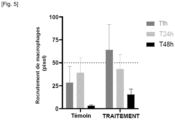
- FIG. 5 The results are illustrated in figure 5 as a graph showing the recruitment of macrophages at the level of the injury region (pixel) over time (at 1 hour, 24 hours and 48 hours post-amputation).
- the treatment with the tissue composition that is the subject of the present invention therefore promotes the recruitment of macrophages at the level of the lesion caused by the amputation from the first hours of regeneration.
Landscapes
- Health & Medical Sciences (AREA)
- Chemical & Material Sciences (AREA)
- Life Sciences & Earth Sciences (AREA)
- Engineering & Computer Science (AREA)
- Materials Engineering (AREA)
- Epidemiology (AREA)
- Hematology (AREA)
- Animal Behavior & Ethology (AREA)
- General Health & Medical Sciences (AREA)
- Public Health (AREA)
- Veterinary Medicine (AREA)
- Inorganic Chemistry (AREA)
- Materials For Medical Uses (AREA)
- Agricultural Chemicals And Associated Chemicals (AREA)
Abstract
Description
- L'invention relève des tissus aux propriétés bactéricides, virucides et fongicides mais aussi à la propriété régénératrice de tissus organiques notamment au niveau d'une lésion. Elle s'inscrit dans le domaine des compositions de vêtements ou de matériel comprenant un tissu, et concerne plus particulièrement une composition de tissu et son utilisation pour une activité bactéricide, virucide, fongicide, un vêtement comportant un tel tissu, l'utilisation de la composition de tissu pour la régénération de tissus organiques lésés.
- La crise sanitaire du COVID avec la production de masques en tissu catégorie 1 a permis une véritable réflexion au niveau de la recherche et du développement sur les tissus bactéricides, virucides et fongicides.
- Un tissu comprend habituellement au moins un fil de chaîne et un fil de trame, ce qui permet de dire de l'agencement de ces fils qu'il est tissé et forme donc un tissu, contrairement à des agencements de fils élaborés de manière différente comme par tricotage formant ainsi une maille. Le nom de fil de chaîne est souvent attribué au fil vertical, et le nom de fil de trame au fil horizontal.
- Aujourd'hui, on peut trouver dans le secteur de la santé des tissus lavables recouverts d'un film biocide et/ou virucide, notamment dans la fabrication des masques de protection du nez et de la bouche. Cette solution, bien qu'efficace, ne l'est pas que pour une durée limitée car le film biocide se délite après quelques lavages. De plus, les solvants utilisés pour la fabrication du film appliqué sur le tissu ont souvent l'inconvénient d'être allergisants.
- Il existe également des tissus dits antiprojections qui permettent d'éviter que l'inoculum viral ou des projections bactériennes se fixent au tissu. Cette propriété est conférée au tissu grâce à une finition déperlante aux projections et aérosols. Cette finition est également fragile dans le temps et se délite après environ 80 lavages ou moins dans certains cas.
- Il est également connu de l'art antérieur des tissus comprenant des ions argent (Ag+) dans le polymère du fil. Les ions argent sont connus pour leur effet bactéricide. Ces tissus ont un effet bactéricide pérenne. De tels tissus sont notamment utilisés en surface de certains pansements.
- Il existe encore aujourd'hui des besoins d'amélioration des tissus bactéricides, virucides et fongicides existants.
- La présente invention a pour objectif de palier les inconvénients précités en proposant une composition de tissu caractérisée en ce qu'elle comprend :
- au moins 50%, de préférence au moins 55%, de préférence au moins 60% de fil en polymère comprenant au moins 1% de nanoparticules de céramique ;
- du fil en polymère dans lequel au moins 100 ppm d'ions argent sont intégrées.
- Les inventeurs ont découvert qu'un tissu ayant cette composition associant du fil en polymère dans la masse duquel au moins 100 ppm d'ions argent sont intégrées avec du fil polymère dans la masse duquel est intégré au moins 1% de nanoparticules de céramique, a des propriétés bactéricides, virucides et fongicides accrues par rapport à celles des tissus de l'art antérieur et ses propriétés sont conservées par le tissu pendant une durée supérieure à la durée de conservation de ces propriétés chez les compositions de tissu de l'art antérieur. Les nanoparticules de céramiques sont intégrées dans le polymère du fil ce qui permet de garder lesdites propriétés très longtemps, notamment au-delà de 200 lavages, le tissu étant lavable. La composition de tissu objet de la présente invention permet notamment de se passer de finition déperlante pour le tissu, une telle finition comprenant souvent des solvants aux effets allergènes.
- Selon un autre aspect, la présente invention vise un vêtement ou accessoire comprenant la composition de tissu objet de la présente invention, de préférence constitué majoritairement de la composition de tissu objet de la présente invention. On entend par majoritairement que le vêtement ou accessoire comprend la composition de tissu objet de la présente invention à hauteur d'une quantité supérieure à 50% par rapport à sa composition totale. De tels vêtements comprenant la composition de tissu objet de la présente invention sont particulièrement avantageux pour la prévention des infection nosocomiales. On entend par accessoires, notamment les gants, les bonnets, les chaussures, les sur-chaussures, les masques de protection, housse de siège (notamment sièges de voitures), housse de table, draps, alèses, etc.
- Selon un autre aspect, la présente invention vise un équipement de protection individuelle comprenant la composition de tissu objet de la présente invention. Les équipements de protection individuelle (EPI) sont très utilisés dans les établissements de santé et comprennent notamment les blouses, les blouses de bloc opératoire, les masques de protection, les gants, les bonnets, etc... La quasi-totalité des EPI des établissements de santé sont aujourd'hui en polyester/coton qui ne vont pas au-delà de 80 lavages et sans effet bactéricide, virucide et fongicide. Les EPI comprenant la composition de tissu objet de la présente invention ont pour avantage d'avoir un effet bactéricide, virucide et fongicide, et de plus, ils résistent et conservent ces dernières propriétés après plus de 200 lavages. Ils présentent donc un net avantage économique et réduisent les risques d'infections nosocomiales.
- Selon un autre aspect, la présente invention vise un pansement ou un bandage comprenant la composition de tissu objet de la présente invention.
- La présente invention vise également la composition de tissu, le vêtement, l'accessoire, l'équipement de protection individuelle, le pansement ou le bandage objet de la présente invention, pour son utilisation en tant que bactéricide et/ou virucide et/ou fongicide.
- La présente invention vise également la composition de tissu, le vêtement, l'accessoire, l'équipement de protection individuelle, le pansement ou le bandage objet de la présente invention, pour son utilisation dans la prévention d'infection nosocomiale chez le mammifère.
- De plus, les inventeurs ont découvert que la composition objet de la présente invention a des propriétés permettant avantageusement d'améliorer la régénération de tissus organiques lésés. Cette composition de tissu permet notamment et avantageusement de favoriser le recrutement des macrophages au niveau d'une lésion de tissus organiques, de faciliter la régénération des chondrocytes et la régénération nerveuse (nerfs sensoriels et moteurs) notamment au niveau du système nerveux sympathique et parasympathique.
- A cet effet, la présente invention vise également la composition de tissu, le pansement ou le bandage objet de la présente invention pour son utilisation dans le traitement d'une lésion d'un tissu organique, notamment chez le mammifère. Les inventeurs ont remarqué que de façon surprenante et avantageuse, la composition objet de la présente invention entraine une augmentation significative d'au moins 25% de la régénération de tissus organiques ayant subi une lésion par rapport à la régénération de tissu organiques lésés non traité avec la composition objet de la présente invention.
- Les inventeurs ont également relevé que de manière avantageuse, la composition objet de la présente invention améliore avantageusement le recrutement de macrophages au niveau de tissus organiques lésés par rapport au recrutement de de macrophages au niveau tels tissus organiques en absence de la composition objet de la présente invention.
- A cet effet, dans des modes de réalisation particulier, la présente invention vise également la composition de tissu, le pansement ou le bandage objet de la présente invention pour son utilisation dans recrutement de macrophages au niveau d'une lésion de tissus organiques chez le mammifère.
- Les inventeurs ont aussi constaté que de manière avantageuse, la composition objet de la présente invention améliore avantageusement la régénération des chondrocytes par rapport à leur régénération en absence de la composition objet de la présente invention. Il en est de même pour la régénération nerveuse des nerfs sensoriels et moteurs (système nerveux sympathique et parasympathique) par rapport à leur régénération en absence de la composition objet de la présente invention.
- A cet effet, dans des modes de réalisation particulier, la présente invention vise également la composition de tissu, le pansement ou le bandage objet de la présente invention pour son utilisation dans la régénération des chondrocytes.
- Dans des modes de réalisation particulier, la présente invention vise également la composition de tissu, le pansement ou le bandage objet de la présente invention pour son utilisation dans la régénération nerveuse.
- Dans des modes particuliers de réalisation, l'invention répond en outre aux caractéristiques suivantes, mises en œuvre séparément ou en chacune de leurs combinaisons techniquement opérantes.
- Dans des modes de réalisation particuliers, le fil en polymère comprenant les nanoparticules céramiques comprend entre 1% et 3%, de préférence au moins 3%, préférentiellement 3%, de nanoparticules céramiques. En combinaison avec du fil en polymère dans lequel au moins 100 ppm d'ions argent sont intégrées, une quantité de 1% de nanoparticules de céramique dans la masse totale du fil polymère comprenant lesdites particules confère au tissu comprenant ces deux types de fils la propriété avantageuse de contenir et limiter la croissance de contaminants tels que des virus, des bactéries et des champignons parasites avec lesquels il est en contact. De plus, ce tissu avec de telles quantités d'ions argent et de nanoparticules de céramique, permet un recrutement de macrophages important au niveau d'une lésion de tissus organiques avec lesquels il est en contact, et ainsi a pour avantage de favoriser et accélérer la régénération des tissus organiques lésés. Lorsque le fil en polymère comprenant les nanoparticules céramiques comprend entre 1% et 3% de nanoparticules céramiques, associées au fil en polymère dans lequel au moins 100 ppm d'ions argent sont intégrées, ces quantités ont pour avantage de permettre de contenir et limiter encore plus la croissance de contaminants avec lesquels le tissu est en contact. Ces quantités permettent également un recrutement de macrophages encore plus important au niveau d'une lésion de tissus organique et une amélioration plus importante de la régénération des tissus organiques lésés. Au-delà de 3% de nanoparticules céramiques dans le fil polymère comprenant lesdites particules, ledit fil étant associé au fil polymère comprenant au moins 100 ppm d'ions argent, le gain pour le tissu sur la limitation de croissance des contaminants n'évolue que très peu et le recrutement de macrophages n'est pas aussi important qu'avec des quantités de nanoparticules entre 1% et 3%, ce qui n'améliore pas la régénération des tissus lésés par rapport à la régénération tissulaire obtenue avec de telles quantités. En-dessous de 1% de nanoparticules céramiques dans le fil polymère comprenant lesdites particules, ledit fil étant associé au fil polymère comprenant au moins 100 ppm d'ions argent, la limitation de croissance des contaminants et le recrutement de macrophages sont beaucoup moins importants (régénération tissulaire au niveau d'une lésion moins efficace) qu'avec des quantités de nanoparticules entre 1% et 3%.
- Dans des modes de réalisation préférés de la présente invention, la céramique des nanoparticules est choisie parmi le dioxyde de manganèse (MnO2), l'Alumine (Al2O3), l'oxyde de Cobalt III (Co2O3), l'oxyde de fer III (Fe2O3) et le dioxyde de titane (TiO2). Ainsi, les nanoparticules céramiques sont de préférence choisies parmi des nanoparticules de dioxyde de manganèse, l'alumine, l'oxyde de cobalt III, l'oxyde de fer III et le dioxyde de titane ou un mélange d'au moins deux de celles-ci.
- Dans des modes de réalisation particuliers de la présente invention, le fil en polymère comprenant les ions argent, comprend 100 ppm d'ions argent.
- Dans des modes préférés de réalisation de l'invention, la composition de tissu comporte au moins 50 %, de préférence au moins 55%, préférentiellement au moins 60% de fil de polymère comprenant les nanoparticules de céramique et le fil restant étant du fil de polymère comprenant les ions argent. C'est dans de telles proportions que la composition obtient des propriétés bactéricides, virucides, fongicides et régénératrice de tissus organiques les plus efficaces.
- Dans des modes particuliers de réalisation de l'invention, la composition de tissu comporte entre 50% et 70%, de préférence entre 55% et 65%, préférentiellement entre 60% et 65% de fil de polymère comprenant les nanoparticules de céramique.
- Dans des modes particuliers de réalisation de l'invention, la composition de tissu comporte entre 30% et 50%, de préférence entre 35% et 45%, préférentiellement entre 35% et 40% de fil de polymère comprenant les ions argent.
- Dans des modes préférés de réalisation de l'invention, la composition de tissu comporte 63% de fil de polymère comprenant les nanoparticules de céramique et 37% de fil de polymère comprenant des ions argent. La composition selon l'invention avec ces proportions permet d'obtenir un des meilleurs résultats concernant ses propriétés bactéricides, virucides, fongicides et régénératrice de tissus organiques.
- Dans des modes particuliers de réalisation de l'invention, le fil de polymère comprenant les nanoparticules de céramique constitue la chaîne du tissu et le fil polymère comprenant les ions argent constitue la trame du tissu, ou inversement, le fil de polymère comprenant les nanoparticules de céramique constitue la trame du tissu et le fil polymère comprenant les ions argent constitue la chaîne du tissu. Cette répartition des différents fils permet d'obtenir les effets avantageux de la composition de tissu de manière homogène sur toute la surface du tissu.
- Dans des modes de réalisation particulier, le polymère du fil comprenant des nanoparticules de céramique et/ou du fil comprenant les ions argent sont choisis parmi du polyester et du polyamide. Le polymère de polyester peut provenir de recyclage de plastiques et a donc un intérêt écologique avantageux.
- L'invention sera mieux comprise à la lecture de la description suivante, donnée à titre d'exemple nullement limitatif, et faite en se référant aux figures qui représentent :
- [
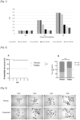
Fig. 1 ] lafigure 1 est un graphe exposant la croissance de Staphylocoque aureus (staphylococcus aureus) en milieu de culture bouillon de soja tryptique (TSB pour « Tryptic Soy Broth » en terminologie anglo-saxonne) notamment au contact de compositions de tissu objet de la présente invention (CNI-03b, CNI-04), en fonction du temps, obtenue par analyse de la densité optique du milieu de culture dans le temps ; - [
Fig. 2 ] lafigure 2 illustre la survie et l'éclosion d'embryons de poissons zèbre au contact de la composition de tissu objet de la présente invention, avec en A une courbe représentant l'analyse (selon le test statistique Mantel-Cox) de la survie des larves traitées et témoins, et en B un histogramme représentant l'analyse (selon le test statistique Mann-Whitney) de l'éclosion des œuf traités et témoins ; - [
Fig. 3 ] lafigure 3 illustre des images de larves de poissons zèbre témoins et traitées avec la composition de tissu objet de la présente invention, observées au microscope en lumière transmise à 2, 3, 4 et 5 jours post-fécondation, pour déterminer le potentiel toxicité aigüe de ladite composition de tissu ; - [
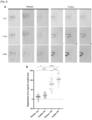
Fig. 4 ] lafigure 4 illustre en A des images de la régénération dans le temps de la nageoire caudale de larves de poissons zèbre traitées ou non avec la composition de tissu objet de la présente invention, observée à la loupe binoculaire, et en B un graphe résultant d'une analyse statistique (test statistique one-way ANOVA) de la régénération en µm dans le temps de la nageoire caudale de larves de poissons zèbre traitées ou non avec ladite composition de tissu. - [
Fig. 5 ] lafigure 5 illustre un graphe montrant le recrutement de macrophages (pixel) au niveau de la région d'une blessure causée par amputation, à 1 heure (T1h), 24 heures (T24h) et 48 heures (T48h) post-amputation, chez les larves de poissons zèbre traitées ou non avec la composition de tissu objet de la présente invention. - Pour des raisons de clarté, les dessins ne sont pas à l'échelle, sauf mention contraire.
- Les expériences suivantes apportent des informations démontrant l'efficacité de compositions de tissu objet de la présente invention lors de leur utilisation en tant que bactéricide, ainsi que lors de leur utilisation dans la régénération de tissus organiques lésés.
- Les compositions de tissu objet de la présente invention sont identifiées dans le reste de la description ci-dessous sous la dénomination « tissu CNI-03b » et « tissu CNI-04 ».
- Selon un mode de mise en œuvre, le tissu CNI-04 est fabriqué selon un procédé comprenant les étapes suivantes de :
- polymérisation et création de filaments de polymère de polyester à partir par exemple de pétrole brut après raffinage ou à partir de matière plastique recyclée avec intégration dans la masse du polymère de nanoparticules de céramique de sorte que le polymère emprisonne lesdites nanoparticules de céramique les empêchant ainsi par la suite de migrer hors du polymère ;
- assemblage de plusieurs filaments de polymère de polyester comprenant les nanoparticules de céramique intégrées de sorte à former un fil en polymère (filage) comprenant 3% de nanoparticules de céramique par rapport à la masse totale du fil ;
- tissage du tissu CNI-04 avec au moins 50% de fil en polymère comprenant 3% de nanoparticules de céramique et du fil en polymère de polyester dans la masse duquel 100 ppm d'ions argent Ag+ sont intégrées, le fil en polymère comprenant les nanoparticules de céramique constituant la chaîne du tissu et le fil polymère comprenant les ions argent constituant la trame du tissu, ou inversement, le fil de polymère comprenant les nanoparticules de céramique constituant la trame du tissu et le fil polymère comprenant les ions argent constituant la chaîne du tissu.
- Le tissu CNI-03b est fabriqué de la même manière à la seule différence que lors du filage, ce dernier est effectué de sorte que le fil en polymère comprend 1% de nanoparticules de céramique par rapport à la masse totale du fil.
- Les inventeurs ont réalisé une étude comparée de croissance de souche bactérienne Staphylococcus aureus (GFP) dans le temps en présence de quatre tissus de compositions différentes :
- un tissu CNI-01 dont la composition comprend seulement du fil de polymère polyester dans lequel 100 ppm d'ions argent sont intégrées, et une finition déperlante en résine téflon.
- un tissu CNI-02 dont la composition est la même que CNI-01 sans la finition déperlante.
- un tissu CNI-03 dont la composition comprend seulement du fil de polymère polyester dans lequel sont intégrées 1% de nanoparticules de céramique de dioxyde de titane, dioxyde de manganèse, alumine et oxyde de fer III.
- un tissu CNI-03B dont la composition comprend en chaîne du fil de polymère polyester dans lequel sont intégrées 1% de nanoparticules de céramique de dioxyde de titane, dioxyde de manganèse, alumine et oxyde de fer III, par rapport à la masse totale du fil, et en trame du fil de polymère polyester dans lequel 100 ppm d'ions argent sont intégrées.
- un tissu CNI-04 dont la composition comprend en chaîne du fil de polymère polyester dans lequel sont intégrées 3% de nanoparticules de céramique de dioxyde de titane, dioxyde de manganèse, alumine et oxyde de fer III, par rapport à la masse totale du fil et en trame du fil de polymère polyester dans lequel 100 ppm d'ions argent sont intégrées.
- Chaque tissu est stérilisé par autoclave à sec. Pour faciliter les expériences, le tissu peut avoir été broyé en amont de la stérilisation de sorte à obtenir une poudre de tissu.
- Pour chaque tissu, il est réalisé un ensemencement de 2 mL de milieu de culture bouillon de soja tryptique (TSB) en tube à essai avec une souche staphylococcus aureus (NSA735-GFP) colonisante et virulente (pied du diabétique surinfecté) avec des concentrations très élevées (de l'ordre de 108/ml) puis une mise en culture en présence du tissu. Un contrôle est également réalisé avec un ensemencement et mise en culture sans tissu dans tube à essai. Une incubation à 37°C avec agitation est réalisée. Le milieu de culture TSB est un milieu nutritif qui permet la croissance d'un grand nombre de microorganismes, en particulier les bactéries. La densité optique (660 nm) du contenu du contenu de chaque tube est mesurée toutes les heures pendant quatre heures. Il est ainsi possible de connaitre la croissance de Staphylococcus aureus au cours du temps. Les résultats sont présentés en
figure 1 . - Les résultats montrent que la croissance de la souche de Staphylococcus aureus est ralentie au contact du tissu CNI-03 et encore plus ralentie au contact des tissus CNI-03b et CNI-04, ces derniers étant de compositions de tissu objet de la présente invention.
- Cette étude a pour objectif d'identifier la toxicité aigüe ou létale de la composition objet de la présente invention sur le poisson-zèbre (Danio rerio) au stade embryonnaire. Le protocole suit la ligne directrice de l'Organisation de coopération et de développement économiques (OCDE) 236.
- Des œufs de poisson-zèbre à 6 heures post-fécondation (hpf) sont exposés au tissu CNI-04 durant une période de 120 heures dans une boite de Petri de 10cm.
- Le groupe traité, exposé au tissu CNI-04 est constitué de 78 individus et le groupe témoin non exposé, est composé de 78 individus.
- Toutes les 24 heures, quatre observations sont effectuées comme indicateurs de létalité : (a) la coagulation des œufs fécondés, (b) l'absence de formation de somites, (c) le non-détachement du bourgeon caudal dans le sac vitellin, (d) l'absence de battements du cœur.
- Les résultats sont indiqués en
figure 2 (A : Analyse de la survie des larves traitées et témoin avec test statistique Mantel-Cox, B : Analyse de l'éclosion des œufs traités et témoins avec test statistique mann-Whitney) et dans le tableau 1 ci-dessous :
- Tableau 1 : Détails de la survie et de l'éclosion après exposition ou non au tissu CNI-04.
- Les résultats apportent les conclusions suivantes :
- mortalité : aucune différence significative sur le taux de survie n'est observée entre les deux conditions (traités et témoins) ;
- taux d'éclosion : le tissu CNI-04 induit un taux d'éclosion plus élevé à 2jpf (60%) par rapport au groupe témoins (34,6%). A 3 dpf, 100% des œufs ont éclos dans les deux conditions (traités et témoin) ;
- défauts de développement : aucun défaut de développement n'a été observé dans les conditions testées (traités et témoin).
- La composition de tissu objet de la présente invention ne présente donc pas d'écotoxicité.
- Cette étude a pour objectif d'évaluer la survie de larves de poisson-zèbre (Danio rerio) et la nature des effets toxiques à la suite d'une exposition à la composition de tissu objet de la présente invention.
- Les larves à 1 jour post fécondation (jpf) sont exposées au tissu CNI-04 durant une période de 4 jours dans une boite de Petri de 10cm.
- Le groupe traité, exposés au tissu est constitué de 50 individus et le groupe témoin non exposé, est composé de 50 individus.
- Toutes les 24 heures, plusieurs observations des larves au microscope en lumière transmise sont réalisées et différents indicateurs d'anomalies sont surveillés (œdèmes, hémorragies, défauts de la circulation sanguin, nécrose...). Les résultats sont illustrés en
figure 3 qui représente des images observées au microscope en lumière transmise chez les larves témoins et les larves traitées dans le temps (2, 3, 4 et 5 jours post-fécondation). - Les résultats montrent qu'aucun défaut de développement n'est observé dans aucun groupe (témoins et traités). La composition de tissu objet de la présente invention ne présente donc pas de toxicité aigüe.
- Un modèle de blessure ouverte après une amputation partielle de la nageoire à l'aide d'un scalpel, affectant notamment le derme et le chondrocyte, reproduit les effets régénératifs observés sur une plaies ouvertes chez l'homme, en condition normale et en condition d'infection bactérienne. Ce modèle est utilisé pour la suite de l'étude.
- Cette étude a pour objectif d'identifier l'impact de la composition de tissu objet de la présente invention sur la régénération de tissus organiques chez les larves de Danio rerio.
- Les larves sont traitées avec du PTU (1-phenyl 2-thiourea) à partir de un jour post-fécondation (1 jpf). Cette substance inhibitrice de la mélanogenèse facilite l'observation de la régénération de la nageoire caudale.
- A trois jours post-fécondation (3 jpf), une partie de la nageoire caudale des larves est amputée et les larves sont placées dans des plaques 96 puits comprenant de l'eau, une larve par puit, afin d'observer la régénération. 37 larves ont été traitées avec des fils de tissu CNI-04 dilués dans l'eau des puits. Le groupe témoin composé de 34 larves n'a pas été traité avec des fils de tissu. Les puits sont ensuite incubés à 28°C pendant 24 ou 48 heures.
- Les puits sont ensuite rincés plusieurs fois de sorte à éliminer les fils et permettre une visualisation des résultats sous loupe binoculaire.
- Les résultats sont illustrés en
figure 4 qui montre : - en A des images de la régénération de la nageoire caudale à 1 heure post-amputation (T1h), 24 heures post-amputation (T24h) et 48 heures post-amputation (T48h) ;
- en B un graphe de la régénération de la nageoire caudale des larves (µm) en fonction du temps (heures) suie à un test statistique one-way ANOVA.
- Les résultats montrent une augmentation significative de 25% de la régénération de la nageoire caudale des larves à 48h après amputation et exposition avec des fils de la composition de tissu objet de la présente invention par rapport aux larves non traitées.
- La composition de tissu objet de la présente invention a donc pour effet avantageux de favoriser la régénération de tissus organiques au niveau d'une lésion.
- Cette étude a pour objectif d'identifier l'impact de la composition de tissu objet de la présente invention sur le recrutement des macrophages suite à l'amputation de la nageoire caudale chez des larves de Danio rerio. Ces larves de Danio rerio sont issues d'une lignée transgénique dans laquelle les macrophages expriment la protéine fluorescente verte connue sous le nom GFP pour « green fluorescent protein » en terminologie anglo-saxonne.
- Les larves sont traitées avec du PTU (1-phenyl 2-thiourea) à partir de 1 jpf.
- A 3 jpf, une partie de nageoire caudale des larves est amputée et les larves sont placées dans des plaques 96 puits, une larve par puit. Les larves sont traitées avec des fils du tissu CNI-04 dans la solution contenant le PTU.
- Les puits sont ensuite rincés plusieurs fois de sorte à éliminer les fils et permettre une visualisation des résultats sous microscope à fluorescence.
- Les résultats sont illustrés en
figure 5 sous forme de graphe montrant le recrutement de macrophages au niveau de la région de la blessure (pixel) dans le temps (à 1 heure, 24 heures et 48 heures post-amputation). - Les résultats montrent qu'après exposition à la composition de tissu objet de la présente invention (CNI-04), on observe une augmentation du nombre de macrophages dans la région de la blessure dû à l'amputation dès 1 heure post-amputation par rapport au groupe témoin. Cette augmentation est maintenue à 24 heures et 48 heures post-amputation.
- Le traitement avec la composition de tissu objet de la présente invention favorise donc le recrutement de macrophages au niveau de la lésion causée par l'amputation dès les premières heures de régénération.
Claims (15)
- Composition de tissu caractérisée en ce qu'elle comprend :- au moins 50%, de préférence au moins 55%, de préférence au moins 60% de fil en polymère comprenant au moins 1 % de nanoparticules de céramique par rapport à la masse totale du fil ;- du fil en polymère dans lequel au moins 100 ppm d'ions argent sont intégrées.
- Composition de tissu selon la revendication 1, la composition de tissu comportant au moins 50 %, de préférence au moins 55%, préférentiellement au moins 60% de fil de polymère comprenant les nanoparticules de céramique et le fil restant étant du fil de polymère comprenant des ions argent.
- Composition de tissu Composition de tissu selon la revendication 1, comportant entre 30% et 50%, de préférence entre 35% et 45%, préférentiellement entre 35% et 40% de fil de polymère comprenant les ions argent.
- Composition de tissu selon l'une quelconque des revendications 1 à 3, comportant entre 50% et 70%, de préférence entre 55% et 65%, préférentiellement entre 60% et 65% de fil de polymère comprenant les nanoparticules de céramique.
- Composition de tissu selon l'une quelconque des revendications 1 à 4, comportant 63% de fil de polymère comprenant les nanoparticules de céramique et 37% de fil de polymère comprenant des ions argent.
- Composition de tissu selon l'une quelconque des revendications 1 à 5, dans laquelle le fil de polymère comprenant les nanoparticules de céramique constitue la chaîne du tissu et le fil polymère comprenant les ions argent constitue la trame du tissu, ou inversement, le fil de polymère comprenant les nanoparticules de céramique constitue la trame du tissu et le fil polymère comprenant les ions argent constitue la chaîne du tissu.
- Vêtement ou accessoire comprenant la composition de tissu selon l'une quelconque des revendications 1 à 6, de préférence constitué majoritairement de la composition de tissu selon l'une quelconque des revendications 1 à 6.
- Equipement de protection individuelle comprenant la composition de tissu selon l'une quelconque des revendications 1 à 6.
- Pansement ou un bandage comprenant la composition de tissu selon l'une quelconque des revendications 1 à 6.
- Composition de tissu selon l'une quelconque des revendications 1 à 6, ou vêtement ou accessoire selon la revendication 7, ou équipement de protection individuelle selon la revendication 8, ou pansement ou bandage selon la revendication 9, pour son utilisation en tant que bactéricide et/ou virucide et/ou fongicide.
- Composition de tissu selon l'une quelconque des revendications 1 à 6, ou vêtement ou accessoire selon la revendication 7, ou équipement de protection individuelle selon la revendication 8, ou pansement ou bandage selon la revendication 9, pour son utilisation dans la prévention d'infection nosocomiale chez le mammifère.
- Composition de tissu selon l'une quelconque des revendications 1 à 6 ou pansement ou bandage selon la revendication 9, pour son utilisation dans le traitement d'une lésion d'un tissu organique chez le mammifère.
- Composition de tissu selon l'une quelconque des revendications 1 à 6 ou pansement ou bandage selon la revendication 9, pour son utilisation dans le recrutement de macrophages au niveau d'une lésion de tissus organiques chez le mammifère.
- Composition de tissu selon l'une quelconque des revendications 1 à 6 ou pansement ou bandage selon la revendication 9, pour son utilisation dans la régénération des chondrocytes.
- Composition de tissu selon l'une quelconque des revendications 1 à 6 ou pansement ou bandage selon la revendication 9, pour son utilisation dans la régénération nerveuse.
Applications Claiming Priority (1)
| Application Number | Priority Date | Filing Date | Title |
|---|---|---|---|
| FR2113196A FR3130164A1 (fr) | 2021-12-09 | 2021-12-09 | Composition de tissu pour son utilisation pour une activité bactéricide, virucide, fongicide ainsi que pour la régénération tissulaire organique au niveau d’une lésion |
Publications (3)
| Publication Number | Publication Date |
|---|---|
| EP4194015A1 true EP4194015A1 (fr) | 2023-06-14 |
| EP4194015C0 EP4194015C0 (fr) | 2024-06-26 |
| EP4194015B1 EP4194015B1 (fr) | 2024-06-26 |
Family
ID=80225407
Family Applications (1)
| Application Number | Title | Priority Date | Filing Date |
|---|---|---|---|
| EP22212332.5A Active EP4194015B1 (fr) | 2021-12-09 | 2022-12-08 | Composition de tissu pour son utilisation pour une activité bactéricide, virucide, fongicide ainsi que pour la régénération tissulaire organique au niveau d'une lésion |
Country Status (2)
| Country | Link |
|---|---|
| EP (1) | EP4194015B1 (fr) |
| FR (1) | FR3130164A1 (fr) |
-
2021
- 2021-12-09 FR FR2113196A patent/FR3130164A1/fr active Pending
-
2022
- 2022-12-08 EP EP22212332.5A patent/EP4194015B1/fr active Active
Non-Patent Citations (2)
| Title |
|---|
| ABDULLAH AL-ENIZI ET AL: "Polymer-Based Electrospun Nanofibers for Biomedical Applications", NANOMATERIALS, VOL. 8, N.4, vol. 8, no. 4, 20 April 2018 (2018-04-20), pages 1 - 22, XP055686219, DOI: 10.3390/nano8040259 * |
| ALVEN SIBUSISO ET AL: "Electrospun Nanofibers/Nanofibrous Scaffolds Loaded with Silver Nanoparticles as Effective Antibacterial Wound Dressing Materials", PHARMACEUTICS, vol. 13, no. 7, 26 June 2021 (2021-06-26), pages 964, XP055945829, DOI: 10.3390/pharmaceutics13070964 * |
Also Published As
| Publication number | Publication date |
|---|---|
| EP4194015C0 (fr) | 2024-06-26 |
| EP4194015B1 (fr) | 2024-06-26 |
| FR3130164A1 (fr) | 2023-06-16 |
Similar Documents
| Publication | Publication Date | Title |
|---|---|---|
| Hand | Human disturbance in western gull Larus occidentalis livens colonies and possible amplification by intraspecific predation | |
| Akoll et al. | Infection dynamics of Cichlidogyrus tilapiae and C. sclerosus (Monogenea, Ancyrocephalinae) in Nile tilapia (Oreochromis niloticus L.) from Uganda | |
| Corner et al. | Toxicity of oil-spill removers (‘detergents’) to marine life: an assessment using the intertidal barnacle Elminius modestus | |
| Desquesnes et al. | A review and illustrated description of Musca crassirostris, one of the most neglected haematophagous livestock flies | |
| Frischer et al. | Pathology, effects, and transmission of black gill in commercial penaeid shrimp from the South Atlantic Bight | |
| Salem | Structure and function of the retinal pigment epithelium, photoreceptors and cornea in the eye of Sardinella aurita (Clupeidae, Teleostei) | |
| EP4194015B1 (fr) | Composition de tissu pour son utilisation pour une activité bactéricide, virucide, fongicide ainsi que pour la régénération tissulaire organique au niveau d'une lésion | |
| Raman et al. | Introductions of exotic fish species into Indian waters: An overview of benefits, impacts | |
| DE69725610T2 (de) | Verwendung von bronopol zur behandlung von krankheiten beim fisch | |
| CA3243606A1 (fr) | Procédé pour détacher des ectoparasites du poisson | |
| Ravi et al. | Effect of isopod parasite, Cymothoa indica on gobiid fish, Oxyurichthys microlepis from Parangipettai coastal waters (South-east coast of India) | |
| Abdelftah et al. | Microstructure characteristics of cornea of some birds: a comparative study | |
| Cobo et al. | The Corneal Structure of the Yellow‐Legged Gull, Larus michahellis (Naumann, 1840) | |
| Langdon | The sense‐organs of nereis virens, sars | |
| Friend | Evolving changes in diseases of waterbirds | |
| KR101159634B1 (ko) | 계란 표면 멸균 코팅제 조성물 | |
| Johnsen et al. | Gyrodactylus salaris in Norwegian rivers | |
| Ramli et al. | An evaluation of toxicity assessment in zebrafish (Danio rerio) embryo induced by Mitragyna speciosa | |
| Giorgio et al. | Histological analysis after arm tip amputation in the brittle star Ophioplocus januarii (Echinodermata: Ophiuroidea) | |
| Šípek et al. | First record of myrmecophily in buprestid beetles: immature stages of Habroloma myrmecophila sp. nov.(Coleoptera: Buprestidae) associated with Oecophylla ants (Hymenoptera: Formicidae) | |
| Jameson | Report on the Diseases of Silkworms in India | |
| Mehraj et al. | Exposure of copper nano-particles (CuNPs) impairs developmental stages and hatchability in the fresh water snail Indoplanorbis exustus (Planorbidae: Pulmonate) | |
| Viksne et al. | Factors influencing the number of breeding water birds in Lake Engure, Latvia | |
| Barry Collin et al. | Morphology of the cornea and iris in the Australian lungfish Neoceratodus forsteri (Krefft 1870)(Dipnoi): Functional and evolutionary perspectives of transitioning from an aquatic to a terrestrial environment | |
| Bowles et al. | A Review of the Exotic Species Inhabiting the Upper San Marcos River, Texas, USA |
Legal Events
| Date | Code | Title | Description |
|---|---|---|---|
| PUAI | Public reference made under article 153(3) epc to a published international application that has entered the european phase |
Free format text: ORIGINAL CODE: 0009012 |
|
| STAA | Information on the status of an ep patent application or granted ep patent |
Free format text: STATUS: THE APPLICATION HAS BEEN PUBLISHED |
|
| AK | Designated contracting states |
Kind code of ref document: A1 Designated state(s): AL AT BE BG CH CY CZ DE DK EE ES FI FR GB GR HR HU IE IS IT LI LT LU LV MC ME MK MT NL NO PL PT RO RS SE SI SK SM TR |
|
| STAA | Information on the status of an ep patent application or granted ep patent |
Free format text: STATUS: REQUEST FOR EXAMINATION WAS MADE |
|
| 17P | Request for examination filed |
Effective date: 20231207 |
|
| RBV | Designated contracting states (corrected) |
Designated state(s): AL AT BE BG CH CY CZ DE DK EE ES FI FR GB GR HR HU IE IS IT LI LT LU LV MC ME MK MT NL NO PL PT RO RS SE SI SK SM TR |
|
| GRAP | Despatch of communication of intention to grant a patent |
Free format text: ORIGINAL CODE: EPIDOSNIGR1 |
|
| STAA | Information on the status of an ep patent application or granted ep patent |
Free format text: STATUS: GRANT OF PATENT IS INTENDED |
|
| RIC1 | Information provided on ipc code assigned before grant |
Ipc: A61L 15/46 20060101ALI20240306BHEP Ipc: A61L 15/44 20060101ALI20240306BHEP Ipc: A61L 15/42 20060101ALI20240306BHEP Ipc: A61L 15/22 20060101ALI20240306BHEP Ipc: A61L 15/18 20060101AFI20240306BHEP |
|
| INTG | Intention to grant announced |
Effective date: 20240320 |
|
| GRAS | Grant fee paid |
Free format text: ORIGINAL CODE: EPIDOSNIGR3 |
|
| GRAA | (expected) grant |
Free format text: ORIGINAL CODE: 0009210 |
|
| STAA | Information on the status of an ep patent application or granted ep patent |
Free format text: STATUS: THE PATENT HAS BEEN GRANTED |
|
| AK | Designated contracting states |
Kind code of ref document: B1 Designated state(s): AL AT BE BG CH CY CZ DE DK EE ES FI FR GB GR HR HU IE IS IT LI LT LU LV MC ME MK MT NL NO PL PT RO RS SE SI SK SM TR |
|
| REG | Reference to a national code |
Ref country code: GB Ref legal event code: FG4D Free format text: NOT ENGLISH |
|
| REG | Reference to a national code |
Ref country code: CH Ref legal event code: EP |
|
| REG | Reference to a national code |
Ref country code: DE Ref legal event code: R096 Ref document number: 602022004173 Country of ref document: DE |
|
| U01 | Request for unitary effect filed |
Effective date: 20240723 |
|
| U07 | Unitary effect registered |
Designated state(s): AT BE BG DE DK EE FI FR IT LT LU LV MT NL PT RO SE SI Effective date: 20240902 |
|
| PG25 | Lapsed in a contracting state [announced via postgrant information from national office to epo] |
Ref country code: HR Free format text: LAPSE BECAUSE OF FAILURE TO SUBMIT A TRANSLATION OF THE DESCRIPTION OR TO PAY THE FEE WITHIN THE PRESCRIBED TIME-LIMIT Effective date: 20240626 |
|
| PG25 | Lapsed in a contracting state [announced via postgrant information from national office to epo] |
Ref country code: GR Free format text: LAPSE BECAUSE OF FAILURE TO SUBMIT A TRANSLATION OF THE DESCRIPTION OR TO PAY THE FEE WITHIN THE PRESCRIBED TIME-LIMIT Effective date: 20240927 |
|
| PG25 | Lapsed in a contracting state [announced via postgrant information from national office to epo] |
Ref country code: NO Free format text: LAPSE BECAUSE OF FAILURE TO SUBMIT A TRANSLATION OF THE DESCRIPTION OR TO PAY THE FEE WITHIN THE PRESCRIBED TIME-LIMIT Effective date: 20240926 Ref country code: HR Free format text: LAPSE BECAUSE OF FAILURE TO SUBMIT A TRANSLATION OF THE DESCRIPTION OR TO PAY THE FEE WITHIN THE PRESCRIBED TIME-LIMIT Effective date: 20240626 Ref country code: GR Free format text: LAPSE BECAUSE OF FAILURE TO SUBMIT A TRANSLATION OF THE DESCRIPTION OR TO PAY THE FEE WITHIN THE PRESCRIBED TIME-LIMIT Effective date: 20240927 Ref country code: RS Free format text: LAPSE BECAUSE OF FAILURE TO SUBMIT A TRANSLATION OF THE DESCRIPTION OR TO PAY THE FEE WITHIN THE PRESCRIBED TIME-LIMIT Effective date: 20240926 |
|
| PG25 | Lapsed in a contracting state [announced via postgrant information from national office to epo] |
Ref country code: PL Free format text: LAPSE BECAUSE OF FAILURE TO SUBMIT A TRANSLATION OF THE DESCRIPTION OR TO PAY THE FEE WITHIN THE PRESCRIBED TIME-LIMIT Effective date: 20240626 |
|
| PG25 | Lapsed in a contracting state [announced via postgrant information from national office to epo] |
Ref country code: IS Free format text: LAPSE BECAUSE OF FAILURE TO SUBMIT A TRANSLATION OF THE DESCRIPTION OR TO PAY THE FEE WITHIN THE PRESCRIBED TIME-LIMIT Effective date: 20241026 |
|
| PG25 | Lapsed in a contracting state [announced via postgrant information from national office to epo] |
Ref country code: CZ Free format text: LAPSE BECAUSE OF FAILURE TO SUBMIT A TRANSLATION OF THE DESCRIPTION OR TO PAY THE FEE WITHIN THE PRESCRIBED TIME-LIMIT Effective date: 20240626 |
|
| PG25 | Lapsed in a contracting state [announced via postgrant information from national office to epo] |
Ref country code: SK Free format text: LAPSE BECAUSE OF FAILURE TO SUBMIT A TRANSLATION OF THE DESCRIPTION OR TO PAY THE FEE WITHIN THE PRESCRIBED TIME-LIMIT Effective date: 20240626 |
|
| PG25 | Lapsed in a contracting state [announced via postgrant information from national office to epo] |
Ref country code: ES Free format text: LAPSE BECAUSE OF FAILURE TO SUBMIT A TRANSLATION OF THE DESCRIPTION OR TO PAY THE FEE WITHIN THE PRESCRIBED TIME-LIMIT Effective date: 20240626 Ref country code: SM Free format text: LAPSE BECAUSE OF FAILURE TO SUBMIT A TRANSLATION OF THE DESCRIPTION OR TO PAY THE FEE WITHIN THE PRESCRIBED TIME-LIMIT Effective date: 20240626 |
|
| PG25 | Lapsed in a contracting state [announced via postgrant information from national office to epo] |
Ref country code: SM Free format text: LAPSE BECAUSE OF FAILURE TO SUBMIT A TRANSLATION OF THE DESCRIPTION OR TO PAY THE FEE WITHIN THE PRESCRIBED TIME-LIMIT Effective date: 20240626 Ref country code: SK Free format text: LAPSE BECAUSE OF FAILURE TO SUBMIT A TRANSLATION OF THE DESCRIPTION OR TO PAY THE FEE WITHIN THE PRESCRIBED TIME-LIMIT Effective date: 20240626 Ref country code: PL Free format text: LAPSE BECAUSE OF FAILURE TO SUBMIT A TRANSLATION OF THE DESCRIPTION OR TO PAY THE FEE WITHIN THE PRESCRIBED TIME-LIMIT Effective date: 20240626 Ref country code: IS Free format text: LAPSE BECAUSE OF FAILURE TO SUBMIT A TRANSLATION OF THE DESCRIPTION OR TO PAY THE FEE WITHIN THE PRESCRIBED TIME-LIMIT Effective date: 20241026 Ref country code: ES Free format text: LAPSE BECAUSE OF FAILURE TO SUBMIT A TRANSLATION OF THE DESCRIPTION OR TO PAY THE FEE WITHIN THE PRESCRIBED TIME-LIMIT Effective date: 20240626 Ref country code: CZ Free format text: LAPSE BECAUSE OF FAILURE TO SUBMIT A TRANSLATION OF THE DESCRIPTION OR TO PAY THE FEE WITHIN THE PRESCRIBED TIME-LIMIT Effective date: 20240626 |
|
| U20 | Renewal fee for the european patent with unitary effect paid |
Year of fee payment: 3 Effective date: 20241230 |
|
| PLBE | No opposition filed within time limit |
Free format text: ORIGINAL CODE: 0009261 |
|
| STAA | Information on the status of an ep patent application or granted ep patent |
Free format text: STATUS: NO OPPOSITION FILED WITHIN TIME LIMIT |
|
| 26N | No opposition filed |
Effective date: 20250327 |
|
| PG25 | Lapsed in a contracting state [announced via postgrant information from national office to epo] |
Ref country code: MC Free format text: LAPSE BECAUSE OF FAILURE TO SUBMIT A TRANSLATION OF THE DESCRIPTION OR TO PAY THE FEE WITHIN THE PRESCRIBED TIME-LIMIT Effective date: 20240626 |
|
| PG25 | Lapsed in a contracting state [announced via postgrant information from national office to epo] |
Ref country code: IE Free format text: LAPSE BECAUSE OF NON-PAYMENT OF DUE FEES Effective date: 20241208 |
|
| U1N | Appointed representative for the unitary patent procedure changed after the registration of the unitary effect |
Representative=s name: SANTARELLI; FR |
|
| U20 | Renewal fee for the european patent with unitary effect paid |
Year of fee payment: 4 Effective date: 20251223 |
|
| PG25 | Lapsed in a contracting state [announced via postgrant information from national office to epo] |
Ref country code: CY Free format text: LAPSE BECAUSE OF FAILURE TO SUBMIT A TRANSLATION OF THE DESCRIPTION OR TO PAY THE FEE WITHIN THE PRESCRIBED TIME-LIMIT Effective date: 20240626 |