EP4191559B1 - Replay system and method of ship collision accidents using free running model test - Google Patents
Replay system and method of ship collision accidents using free running model test Download PDFInfo
- Publication number
- EP4191559B1 EP4191559B1 EP22210994.4A EP22210994A EP4191559B1 EP 4191559 B1 EP4191559 B1 EP 4191559B1 EP 22210994 A EP22210994 A EP 22210994A EP 4191559 B1 EP4191559 B1 EP 4191559B1
- Authority
- EP
- European Patent Office
- Prior art keywords
- ship
- free running
- replay
- collision
- running model
- Prior art date
- Legal status (The legal status is an assumption and is not a legal conclusion. Google has not performed a legal analysis and makes no representation as to the accuracy of the status listed.)
- Active
Links
Images




Classifications
-
- G—PHYSICS
- G08—SIGNALLING
- G08G—TRAFFIC CONTROL SYSTEMS
- G08G3/00—Traffic control systems for marine craft
- G08G3/02—Anti-collision systems
-
- G—PHYSICS
- G06—COMPUTING OR CALCULATING; COUNTING
- G06F—ELECTRIC DIGITAL DATA PROCESSING
- G06F30/00—Computer-aided design [CAD]
- G06F30/20—Design optimisation, verification or simulation
Definitions
- the present disclosure relates to replay system and method of ship collision accidents using a free running model test, and more particularly, to replay system and method of ship collision accidents using a free running model test capable of verifying a ship collision accident replay simulation in real time while replaying ship collision accidents in real time by replaying the ship collision accidents using a free running model test at the time of the ship collision accidents to perform avoidance evaluation through physical collision replay and physical avoidance maneuvers of the accident ship.
- the ship collision accidents may develop into large-scale marine pollution accidents, as can be seen from the Hebei Spirit accident, and it is difficult to maintain the collision site, so that there is a need for a replay system of ship collision accidents to analyze the mechanism and cause of the collision.
- a replay system of ship collision accidents developed in the related art is a method of examining the causes of collision accidents by mainly inputting navigation information of ships, such as AIS, or accident ships stored in VTS, and plotting the navigation information on an electronic navigation chart to examine the trajectories, and there is a limitation in that it is difficult to accurately determine the physical behavior of a ship.
- a method of applying marine environmental conditions using a simulation and performing avoidance evaluation such as avoidance maneuvers is also applied by assuming the same type of ship navigation model based on specification information of the accident ship, and there is a limitation in that it is impossible to accurately simulate the physical avoidance behavior according to the avoidance control of the ship during avoidance evaluation.
- Document CN 103065503 A relates to a reappearing method and a system for controlling river reach ship traveling dynamic and signal revealing process.
- the reappearing method comprises the following steps: collecting real-time information of dynamic and static information (automatic identification system (AIS) data and radar data) and videos of a traveling ship, very high frequency (VHF) call voice, signal tower command information and the like; compressing and storing the collected real-time information; and receiving reappearing orders, starting playback reappearing procedures, selecting a ship or a time quantum for playback reappearing, loading historical information, synchronously displaying information of ship positions corresponding to audios and videos, ship dynamic historical route, signal revealing time point, and the like.
- AIS automatic identification system
- VHF very high frequency
- Document CN 105282685 A relates to a marine AIS data wireless recording system and a recording method thereof.
- the system comprises a mobile terminal, a playback module, and a power supply module, a time module, an AIS data storage module, an AIS data analysis module which are respectively connected with the mobile terminal.
- AIS data is transmitted to the mobile terminal successively through an external pilot serial port and a wireless communication module.
- the time module transmits a time signal in the AIS data receiving process to the mobile terminal.
- the mobile terminal transmits both the AIS data and the time signal to the AIS data storage module for storage and to the AIS data analysis module for analysis, and the data after the analysis is displayed in an electronic sea chart in real time.
- the data stored by the AIS data storage module is transmitted to the playback module for playback.
- the marine AIS data wireless recording system and the recording method have the advantages that the AIS data can be obtained, stored, analyzed and played back, so that data support is provided to a ship or nearby ships for accident investigation, ship control, collision prevention behavior analysis and the like.
- Document CN 202373151 U relates to category-B AIS collision prevention pan alarm, relates in particular to a kind of AIS collision prevention pan alarm with data recording and playback function.
- the AIS collision prevention pan alarm of band data recording and playback function comprises main computer unit and display unit, and it is characterized in that: also comprise storage unit, storage unit is connected with main computer unit with display unit in parallel.
- the beneficial effect that the utility model produced is: when boats and ships ride the sea process; Adopt the utility model; Can make category-B AIS intelligence collision prevention pan alarm with the information stores that receives, the analysis of causes and the responsibility investigation that can be after the accidents such as boats and ships bump provide reference.
- checking information can be with checking in the data importing computer, also can be in the enterprising line data playback of category-B AIS collision avoidance aids.
- Document CN 101281661 A relates to a collision case playback system of the cars and two-wheeler in the computer application technical field, wherein an accident site reconstitution module collects the accident field data and picture, reconstitutes and reverts the site; a two-wheeler driver modularization dummy customizing module builds a dummy model matching with the body shape of the driver, extracts the damaged sensitive parts of the dummy model, sets up a finite element model, becomes a new combination dummy model combined with the multi-rigid body dummy main body model; a collision process emulating module performs the scaling of model matching with the sufferer bodily form characteristics, meanwhile builds the integral accident site three-dimensional model before the accident, and simulates and computes the primary collision result; an optimization recurrence module builds the optimization flow, optimizes the collision simulation; an accident recurrence result post-processing module displays the optimized simulation result in the collision process animation and the collision parameters.
- the invention can realizes the site information collection, fast simulation and
- Document KR 2020 0100935 A relates to a scale model test apparatus and a test method for an autonomous ship, said autonomous ship test apparatus comprising a water tank in which a test space is provided, a driving unit, a control module controlling said driving unit, a model ship equipped with a battery, a positioning sensor mounted on said model ship, a camera for photographing the movement of said model ship, and a user interface connected to said control module, a user interface for remotely controlling the movement of said model ship, connected to said camera, and outputting movement and position information of said model ship based on the image taken by said camera.
- the present invention has a remarkable effect of helping the commercialization of autonomous operation of real ships by providing a ship model and testing the proper movement of said ship model in a water tank according to a motion control signal transmitted through an external wireless communication.
- the vessel model Is considered as the vessel (i.e., own vessel) that makes collision avoidance decisions/actions and the second vessel (i.e., target vessel) that does not take any collision avoidance actions is simulated.
- successful experimental results on several collision avoidance situations with two vessels are also presented in this study.
- Document CN 111 913 406 A relates to a ship-shore collaborative simulation system for intelligent navigation and safety of a ship, and the system comprises a model ship body, a shore-based server, and an online data scene driving module, and the model ship body is provided with a self-state sensing module, a navigation environment sensing module, a hydrological information sensing module, and a motion control module.
- the line data scene driving module comprises a scene server and a display screen; a real ship body is simulated to sail in a coastal water area through a model ship body to obtain state information, sailing environment information and hydrological information of the ship, so that the information is fed back to a shore-based server of a shore base, and the shore-based server collects a large amount of navigation environment and traffic environment data, on the basis of the basic data, an environment model of a water area navigation environment and a traffic environment is established through a scene server; the environment model is displayed on the electronic chart image through the display screen, coastal water area information can be obtained in advance through the model ship, and safety guarantee is provided for ship navigation.
- the present disclosure is derived to solve the problems in the related art as described above, and an object of the present disclosure is to provide replay system and method of ship collision accidents using a free running model test capable of verifying a ship collision accident replay simulation in real time while replaying ship collision accidents in real time by replaying the ship collision accidents using a free running model test at the time of the ship collision accidents to perform avoidance evaluation through physical collision replay and physical avoidance maneuvers of the accident ship.
- the system may comprise that a propulsion and steering command of a full ship scale of the accident ship for path tracking is generated in order to replay the accident along a collision trajectory on the ship collision replay simulation system.
- the propulsion and steering command scaled with the full ship scale of the accident ship may be converted into the propulsion and steering command scaled with the model ship scale through the free running control system to be applied to the free running model system.
- the free running model ship may physically move at an outdoor test site or an indoor marine engineering tank test facility and acquire navigation information.
- a free running test in the tank may be performed, and an outdoor free running test may be performed out of the tank area.
- Real-time navigation information (position, speed, bearing, and attitude information) of the free running model ship may be acquired through a GPS, a positioning sensor, and a gyro sensor installed on the free running model ship.
- the acquired navigation information of the free running model ship may be transmitted as information scaled with the model ship scale of the free running control system remotely through wireless communication.
- the navigation information transmitted as the information scaled with the model ship scale of the free running control system may be converted to information scaled with the full ship scale to be expressed as the navigation trajectory of the collision ship on the ship collision replay simulation system, so as to show and real-time verify the simulation trajectory results of the ship collision replay simulation system.
- the information scaled with the model ship scale may be converted to the information scaled with the full ship scale by applying the Froude similarity transformation law according to a scale ratio defined as the length of the full ship scale to the length of the model ship scale.
- the replay system of the ship collision accidents using the free running model test may implement a replay mode that replays ship collision accidents, and an avoidance mode that avoids collisions at the time of a collision accident.
- a user may perform the avoidance evaluation by applying the propulsion and steering command for avoidance.
- two free running model ships applied to the free running model system may be operable.
- the free running model ship applied to the free running model system may be set as an own ship, and a counterpart ship as a virtual simulation ship may be set and operated in the ship collision replay simulation system.
- the free running model ship may perform a free running model test, and test information of the free running model ship of the own ship may be updated in the ship collision replay simulation system.
- steering and propulsion command values for collision avoidance of the free running model ship of the own ship may be calculated manually or automatically, so that an avoidance test of the own ship is performed during the physical free running model test.
- the own ship may be replayed as a free running test as it is in the accident situation, and the avoidance evaluation may be performed with a virtual simulation of the counterpart ship.
- a replay method of ship collision accidents using a free running model test as a replay method of replaying ship collision accidents using the replay system of the ship collision accidents using the free running model test according to claim 16
- the present disclosure has the following effects.
- this component when it is described that a component is "present inside or connected into” the other component, this component may be directly connected or in contact with the other component, and may be spaced apart from the other component at a predetermined distance.
- a third component or means may exist to fix and connect the corresponding component to the other component and the description of the third component or means may also be omitted.
- unit means a unit capable of processing one or more functions or operations when used, and it should be noted that the unit may be implemented in hardware or software, or a combination of hardware and software.
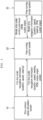
- FIG. 1 is a diagram schematically illustrating a configuration of a replay system of ship collision accidents using a free running model test according to the present disclosure
- FIG. 2 is a diagram for describing real-time interworking of a ship collision replay simulation system 10, a free running control system 20, and a free running model system 30 in the replay system of the ship collision accidents using the free running model test according to the present disclosure.
- the replay system of the ship collision accidents using the free running model test is configured by a ship collision replay simulation system 10, a free running control system 20, and a free running model system 30 as illustrated in FIGS. 1 and 2 , and the replay of the ship collision accidents is performed by simultaneously performing a simulation in the ship collision replay simulation system 10 and a free running model test in the free running model system 30.
- the ship collision replay simulation system 10 replays the ship collision accidents by receiving a navigation trajectory of the ship collision accidents.
- a propulsion and steering command of a full ship scale of the accident ship for path tracking is generated to be transmitted to the free running control system 20 to be described below.
- the free running control system 20 is to remotely perform the free running model test.
- the propulsion and steering command scaled with the full ship scale of the accident ship generated in the ship collision replay simulation system 10 is converted into a propulsion and steering command scaled with the model ship scale through the free running control system 20 and applied to the free running model system 30 to be described below.
- the free running model system 30 is to test the free running model of the collision accident ship using the free running model ship.
- the free running model ship may physically move at an outdoor test site or an indoor marine engineering tank test facility and acquire navigation information.
- Real-time navigation information (position, speed, bearing, and attitude information) of the free running model ship is acquired through a GPS, a positioning sensor, and a gyro sensor installed on the free running model ship.
- the acquired navigation information of the free running model ship is transmitted as information scaled with the model ship scale of the free running control system 20 remotely through wireless communication.
- the navigation information transmitted as the information scaled with the model ship scale of the free running control system 20 is converted to information scaled with the full ship scale to be expressed as the navigation trajectory of the collision ship on the ship collision replay simulation system 10, thereby showing and real-time verifying the simulation trajectory results of the ship collision replay simulation system 10.
- the information scaled with the model ship scale is converted to the information scaled with the full ship scale by applying the Froude similarity transformation law according to a scale ratio defined as the length of the full ship scale to the length of the model ship scale (see Equation 1).
- Equation 1 ⁇ means a scale ratio, ts and tm mean times between a full-scale ship and a model ship, respectively, and Ls and Lm mean lengths of the full-scale ship and the model ship, respectively.
- ⁇ s , ⁇ m mean roll angles of the full-scale ship and the model ship, and ⁇ s , ⁇ m mean pitch angles of the full-scale ship and the model ship.
- ⁇ s , ⁇ m mean yaw angles of the full-scale ship and the model ship, and ⁇ s , ⁇ m mean rudder angles of the full-scale ship and the model ship.
- Us and Um mean speeds of the full-scale ship and the model ship, and u s , u m mean forward speeds of the full-scale ship and the model ship.
- ⁇ s , ⁇ m mean roll angular rates of the full-scale ship and the model ship, and mean pitch angular rates of the full-scale ship and the model ship. mean yaw angular rates of the full-scale ship and the model ship, and mean rudder angular rates of the full-scale ship and the model ship.
- the replay system of the ship collision accidents using the free running model test may implement a replay mode that replays ship collision accidents, and an avoidance mode that avoids collisions at the time of a collision accident.
- the free running model ship applied to the free running model system 30 may be set as an own ship, and a counterpart ship as a virtual simulation ship may be set and operated in the ship collision replay simulation system 10.
- the free running model ship performs a free running model test, and test information of the free running model ship of the own ship is updated in the ship collision replay simulation system 10.
- steering and propulsion command values for collision avoidance of the free running model ship of the own ship are calculated manually or automatically, so that an avoidance test of the own ship is performed during the physical free running model test.
- the own ship is replayed as a free running test as it is in the accident situation, and the avoidance evaluation is performed with a virtual simulation of the counterpart ship.
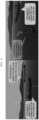
- FIG. 3 is a drawing illustrating a tank and a towing carriage applied to the free running model system in the replay system of the ship collision accidents using the free running model test according to the present disclosure.
- the free running model test performed by the free running model system is a certified test method, and a free running test method according to the International Towing carriage Conference (ITTC), an accredited organization, is applied.
- ITTC International Towing carriage Conference
- test is conducted in the presence of experts when conducting the free running model test.
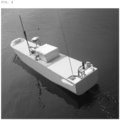
- FIG. 4 is a drawing illustrating an example of a free running model ship applied to the free running model system in the replay system of the ship collision accidents using the free running model test according to the present disclosure
- FIG. 5 is a drawing illustrating a configuration of the free running model system in the replay system of the ship collision accidents using the free running model test according to the present disclosure.
- the free running model system is configured as follows. (1) Free running test support facility for KRISO marine engineering tank/outdoor free running
- FIG. 6 is a conceptual diagram for evaluation of collision risk and avoidability in the replay system of the ship collision accidents using the free running model test according to the present disclosure
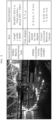
- FIG. 7 is a diagram illustrating an example in which a collision risk evaluation function is implemented by the replay system of the ship collision accidents using the free running model test according to the present disclosure
- FIG. 8 is a diagram illustrating an example in which an avoidability evaluation function is implemented by the replay system of the ship collision accidents using the free running model test according to the present disclosure.
- a physical free running model test is performed at the same time, and the model test information of the own ship is updated in the ship collision replay simulation system.
- the steering/propulsion command value for collision avoidance of the own ship is calculated manually or automatically, and the avoidance test of the own ship is performed during the physical free running model test using the steering/propulsion command value.
- the own ship is replayed by the free navigation test as it is in the accident situation, and the avoidance evaluation is performed on the counterpart ship by a virtual simulation.
- the real-time collision risk is evaluated based on the navigation (avoidance) trajectory updated as a result of the free running model test of the own ship and the navigation information with the virtual counterpart ship.
- the replay performance (avoidability) of the collision replay system is experimentally verified by comparing the collision accident replay data of the own ship and the navigation trajectory (avoidance trajectory) on the physical free running model test.
Landscapes
- Engineering & Computer Science (AREA)
- Physics & Mathematics (AREA)
- Theoretical Computer Science (AREA)
- General Physics & Mathematics (AREA)
- General Engineering & Computer Science (AREA)
- Computer Hardware Design (AREA)
- Evolutionary Computation (AREA)
- Geometry (AREA)
- Ocean & Marine Engineering (AREA)
- Remote Sensing (AREA)
- Radar, Positioning & Navigation (AREA)
- Traffic Control Systems (AREA)
- Aviation & Aerospace Engineering (AREA)
- Business, Economics & Management (AREA)
- Educational Administration (AREA)
- Educational Technology (AREA)
- Fluid Mechanics (AREA)
- Chemical & Material Sciences (AREA)
- Combustion & Propulsion (AREA)
- Mechanical Engineering (AREA)
Description
- The present disclosure relates to replay system and method of ship collision accidents using a free running model test, and more particularly, to replay system and method of ship collision accidents using a free running model test capable of verifying a ship collision accident replay simulation in real time while replaying ship collision accidents in real time by replaying the ship collision accidents using a free running model test at the time of the ship collision accidents to perform avoidance evaluation through physical collision replay and physical avoidance maneuvers of the accident ship.
- Conventionally, when a ship is operating, a navigator performs a lookout task in preparation for collision accidents, and is supported through radar and electronic navigational chart equipment.
- However, it takes a lot of time to identify a collision situation at an early stage, manually check lots of navigational equipment one by one until performing an avoidance maneuver, and quickly respond to a dangerous situation.
- In addition, in a situation where 30% of marine accidents are ship collision accidents, and human error accounts for 80% or more of the ship collision accidents, in order to prevent collision accidents in advance, there is a need of a system capable of supporting a collision situation with dozens of ships around an own ship to be effectively identified in a short time.
- Conventionally, there is a function to receive a collision risk between two specific ships manually set as an alarm by using a distance of closest point approach (DCPA) in ARPA radar, and the like, but through a combination of dozens of ships, the risk of collision is not considered at the same time.
- For this reason, there was a limit in determining which group was the most dangerous among dozens of ships and which group had a high risk of collision.
- Like the ship, there is no system that provides the risk of collision between combinations of many ships even in the case of a controller who performs a control task of ship traffic at a maritime traffic control center.
- Recently, ship navigation support systems have been developed and distributed, but ship accidents have not been reduced, and as of 2017, 10% or more of 2600 accidents, 280 collision accidents have occurred, and based on reconciliation accidents, over the past five years, 60% or more of collision accidents have occurred and 80% or more of these accidents have occurred by navigational negligence.
- The ship collision accidents may develop into large-scale marine pollution accidents, as can be seen from the Hebei Spirit accident, and it is difficult to maintain the collision site, so that there is a need for a replay system of ship collision accidents to analyze the mechanism and cause of the collision.
- A replay system of ship collision accidents developed in the related art is a method of examining the causes of collision accidents by mainly inputting navigation information of ships, such as AIS, or accident ships stored in VTS, and plotting the navigation information on an electronic navigation chart to examine the trajectories, and there is a limitation in that it is difficult to accurately determine the physical behavior of a ship.
- A method of applying marine environmental conditions using a simulation and performing avoidance evaluation such as avoidance maneuvers is also applied by assuming the same type of ship navigation model based on specification information of the accident ship, and there is a limitation in that it is impossible to accurately simulate the physical avoidance behavior according to the avoidance control of the ship during avoidance evaluation.
- Document
CN 103065503 A relates to a reappearing method and a system for controlling river reach ship traveling dynamic and signal revealing process. The reappearing method comprises the following steps: collecting real-time information of dynamic and static information (automatic identification system (AIS) data and radar data) and videos of a traveling ship, very high frequency (VHF) call voice, signal tower command information and the like; compressing and storing the collected real-time information; and receiving reappearing orders, starting playback reappearing procedures, selecting a ship or a time quantum for playback reappearing, loading historical information, synchronously displaying information of ship positions corresponding to audios and videos, ship dynamic historical route, signal revealing time point, and the like. According to the reappearing method and the system, historical information of arbitrary come-and-go ships or within a time quantum can be found and used for synchronous playback, original record information of the audios and videos, ship dynamic tracks, signal revealing orders, and the like can be synchronously displayed in the whole course, and thus dynamic relevant evidence of the ship traveling dynamic and the signal revealing process is formed and can be used as a basis of accident analysis after an accident and signalman command effect evaluation. - Document
CN 105282685 A relates to a marine AIS data wireless recording system and a recording method thereof. The system comprises a mobile terminal, a playback module, and a power supply module, a time module, an AIS data storage module, an AIS data analysis module which are respectively connected with the mobile terminal. AIS data is transmitted to the mobile terminal successively through an external pilot serial port and a wireless communication module. The time module transmits a time signal in the AIS data receiving process to the mobile terminal. The mobile terminal transmits both the AIS data and the time signal to the AIS data storage module for storage and to the AIS data analysis module for analysis, and the data after the analysis is displayed in an electronic sea chart in real time. After the analysis, the data stored by the AIS data storage module is transmitted to the playback module for playback. The marine AIS data wireless recording system and the recording method have the advantages that the AIS data can be obtained, stored, analyzed and played back, so that data support is provided to a ship or nearby ships for accident investigation, ship control, collision prevention behavior analysis and the like. - Document
CN 202373151 U relates to category-B AIS collision prevention pan alarm, relates in particular to a kind of AIS collision prevention pan alarm with data recording and playback function. The AIS collision prevention pan alarm of band data recording and playback function comprises main computer unit and display unit, and it is characterized in that: also comprise storage unit, storage unit is connected with main computer unit with display unit in parallel. The beneficial effect that the utility model produced is: when boats and ships ride the sea process; Adopt the utility model; Can make category-B AIS intelligence collision prevention pan alarm with the information stores that receives, the analysis of causes and the responsibility investigation that can be after the accidents such as boats and ships bump provide reference. When checking information, can be with checking in the data importing computer, also can be in the enterprising line data playback of category-B AIS collision avoidance aids. - Document
CN 101281661 A relates to a collision case playback system of the cars and two-wheeler in the computer application technical field, wherein an accident site reconstitution module collects the accident field data and picture, reconstitutes and reverts the site; a two-wheeler driver modularization dummy customizing module builds a dummy model matching with the body shape of the driver, extracts the damaged sensitive parts of the dummy model, sets up a finite element model, becomes a new combination dummy model combined with the multi-rigid body dummy main body model; a collision process emulating module performs the scaling of model matching with the sufferer bodily form characteristics, meanwhile builds the integral accident site three-dimensional model before the accident, and simulates and computes the primary collision result; an optimization recurrence module builds the optimization flow, optimizes the collision simulation; an accident recurrence result post-processing module displays the optimized simulation result in the collision process animation and the collision parameters. The invention can realizes the site information collection, fast simulation and modulization, short treating period, high precision and high reliability. - Document
KR 2020 0100935 A - Document "XP011578218 Perera _Experimental Evaluations on Ship Autonomous Navigation and Collision Avoidan" states that experimental evaluation on autonomous navigation and collision avoidance of ship maneuvers by intelligent guidance are presented in this paper. These ship maneuvers are conducted on an experimental setup that consists of a navigation and control platform and a vessel model, in which the mathematical formulation presented is actually implemented. The mathematical formulation of the experimental setup is presented under three main sections: vessel traffic monitoring and information system, collision avoidance system, and vessel control system. The physical system of the experimental setup is presented under two main sections: vessel model and navigation and control platform. The vessel model consists of a scaled ship that has been used in this study. The navigation and control platform has been used to control the vessel model and that has been further divided under two sections: hardware structure and software architecture. Therefore, the physical system has been used to conduct ship maneuvers in autonomous navigation and collision avoidance experiments. Finally, several collision avoidance situations with two vessels are considered in this study. The vessel model Is considered as the vessel (i.e., own vessel) that makes collision avoidance decisions/actions and the second vessel (i.e., target vessel) that does not take any collision avoidance actions is simulated. Finally, successful experimental results on several collision avoidance situations with two vessels are also presented in this study.
- Document
CN 111 913 406 A relates to a ship-shore collaborative simulation system for intelligent navigation and safety of a ship, and the system comprises a model ship body, a shore-based server, and an online data scene driving module, and the model ship body is provided with a self-state sensing module, a navigation environment sensing module, a hydrological information sensing module, and a motion control module. The line data scene driving module comprises a scene server and a display screen; a real ship body is simulated to sail in a coastal water area through a model ship body to obtain state information, sailing environment information and hydrological information of the ship, so that the information is fed back to a shore-based server of a shore base, and the shore-based server collects a large amount of navigation environment and traffic environment data, on the basis of the basic data, an environment model of a water area navigation environment and a traffic environment is established through a scene server; the environment model is displayed on the electronic chart image through the display screen, coastal water area information can be obtained in advance through the model ship, and safety guarantee is provided for ship navigation. - The present disclosure is derived to solve the problems in the related art as described above, and an object of the present disclosure is to provide replay system and method of ship collision accidents using a free running model test capable of verifying a ship collision accident replay simulation in real time while replaying ship collision accidents in real time by replaying the ship collision accidents using a free running model test at the time of the ship collision accidents to perform avoidance evaluation through physical collision replay and physical avoidance maneuvers of the accident ship.
- According to an aspect of the present disclosure, there is provided a replay system of ship collision accidents using a free running model test according to
claim 1. - The system may comprise that a propulsion and steering command of a full ship scale of the accident ship for path tracking is generated in order to replay the accident along a collision trajectory on the ship collision replay simulation system.
- The propulsion and steering command scaled with the full ship scale of the accident ship may be converted into the propulsion and steering command scaled with the model ship scale through the free running control system to be applied to the free running model system.
- According to the propulsion and steering command applied by the free running model system, the free running model ship may physically move at an outdoor test site or an indoor marine engineering tank test facility and acquire navigation information.
- When the area in a marine engineering tank is 50 m × 30 m and the test is enabled in the area in the marine engineering tank, a free running test in the tank may be performed, and an outdoor free running test may be performed out of the tank area.
- Real-time navigation information (position, speed, bearing, and attitude information) of the free running model ship may be acquired through a GPS, a positioning sensor, and a gyro sensor installed on the free running model ship.
- The acquired navigation information of the free running model ship may be transmitted as information scaled with the model ship scale of the free running control system remotely through wireless communication.
- The navigation information transmitted as the information scaled with the model ship scale of the free running control system may be converted to information scaled with the full ship scale to be expressed as the navigation trajectory of the collision ship on the ship collision replay simulation system, so as to show and real-time verify the simulation trajectory results of the ship collision replay simulation system.
- The information scaled with the model ship scale may be converted to the information scaled with the full ship scale by applying the Froude similarity transformation law according to a scale ratio defined as the length of the full ship scale to the length of the model ship scale.
- In addition, the replay system of the ship collision accidents using the free running model test may implement a replay mode that replays ship collision accidents, and an avoidance mode that avoids collisions at the time of a collision accident.
- In the avoidance mode, while following the trajectory of the ship collision accident, when a ship collision risk occurs before the time of the accident, a user may perform the avoidance evaluation by applying the propulsion and steering command for avoidance.
- At this time, two free running model ships applied to the free running model system may be operable.
- As another method, the free running model ship applied to the free running model system may be set as an own ship, and a counterpart ship as a virtual simulation ship may be set and operated in the ship collision replay simulation system.
- In addition, according to navigation information of a virtual ship collision accident situation given by the ship collision replay simulation system, the free running model ship may perform a free running model test, and test information of the free running model ship of the own ship may be updated in the ship collision replay simulation system.
- In addition, steering and propulsion command values for collision avoidance of the free running model ship of the own ship may be calculated manually or automatically, so that an avoidance test of the own ship is performed during the physical free running model test. When evaluating the avoidance of the counterpart ship, the own ship may be replayed as a free running test as it is in the accident situation, and the avoidance evaluation may be performed with a virtual simulation of the counterpart ship.
- According to another aspect of the present disclosure, there is provided a replay method of ship collision accidents using a free running model test as a replay method of replaying ship collision accidents using the replay system of the ship collision accidents using the free running model test according to claim 16
- The specific details of other embodiments are included in the "the detailed description of the invention" and the accompanying "drawings".
- Advantages and/or features of the present disclosure, and methods for achieving the advantages and/or features will be apparent with reference to embodiments to be described below in detail together with the accompanying drawings.
- However, the present disclosure is not limited to the following exemplary embodiments but may be implemented in various different forms. The exemplary embodiments are provided only to complete disclosure of the present disclosure and to fully provide a person having ordinary skill in the art to which the present disclosure pertains with the category of the invention, and the present disclosure will be defined only by the appended claims.
- According to the solution for solving the problems, the present disclosure has the following effects.
- According to the present disclosure, it is possible to acquire and replay not only the physical navigation trajectory but also the attitude and steering/propulsion control information, and to verify a conventional ship collision replay simulation in real time.
- In addition, it is possible to separately evaluate whether avoidance is enabled through avoidance maneuvers at the time of the accident while replaying the collision accident as it is, and to acquire physical avoidance trajectory information capable of verifying the avoidance simulation when replaying the ship accidents.
- It should be understood that the effects of the present disclosure are not limited to the effects, but include all effects that can be deduced from the detailed description of the present disclosure or configurations of the present disclosure described in appended claims.
-
-
FIG. 1 is a diagram schematically illustrating a configuration of a replay system of ship collision accidents using a free running model test according to the present disclosure. -
FIG. 2 is a diagram for describing real-time interworking of a ship collision replay simulation system, a free running control system, and a free running model system in the replay system of the ship collision accidents using the free running model test according to the present disclosure. -
FIG. 3 is a drawing illustrating a tank and a towing carriage applied to the free running model system in the replay system of the ship collision accidents using the free running model test according to the present disclosure. -
FIG. 4 is a drawing illustrating an example of a free running model ship applied to the free running model system in the replay system of the ship collision accidents using the free running model test according to the present disclosure. -
FIG. 5 is a drawing illustrating a configuration of the free running model system in the replay system of the ship collision accidents using the free running model test according to the present disclosure. -
FIG. 6 is a conceptual diagram for evaluation of collision risk and avoidability in the replay system of the ship collision accidents using the free running model test according to the present disclosure. -
FIG. 7 is a diagram illustrating an example in which a collision risk evaluation function is implemented by the replay system of the ship collision accidents using the free running model test according to the present disclosure. -
FIG. 8 is a diagram illustrating an example in which an avoidability evaluation function is implemented by the replay system of the ship collision accidents using the free running model test according to the present disclosure. - Hereinafter, preferred embodiments of the present disclosure will be described below in detail with reference to the accompanying drawings.
- Before describing the present disclosure in detail, terms or words used in this specification should not be construed as unconditionally limited to a conventional or dictionary meaning, and the inventors of the present disclosure can appropriately define and use the concept of various terms in order to describe their invention in the best method. Furthermore, it should be understood that these terms or words should be interpreted as meanings and concepts consistent with the technical idea of the present disclosure.
- That is, the terms used in the present disclosure are only used to describe a preferred embodiment of the present disclosure, and are not intended to specifically limit the contents of the present disclosure, and it should be noted that these terms are terms defined in consideration with various possibilities of the present disclosure.
- In addition, in this specification, it should be understood that the singular expression may include a plural expression unless clearly indicated in another meaning in the context, and even if similarly expressed in the plural, the singular expression may include the meaning of the singular number.
- Throughout the present disclosure, when a component is described as "including" the other component, the component does not exclude any other component, but may further include any other component unless otherwise indicated in contrary.
- Furthermore, when it is described that a component is "present inside or connected into" the other component, this component may be directly connected or in contact with the other component, and may be spaced apart from the other component at a predetermined distance. In addition, when a component is spaced apart from the other component at a predetermined distance, a third component or means may exist to fix and connect the corresponding component to the other component and the description of the third component or means may also be omitted.
- On the contrary, when it is described that a component is "directly connected to" or "directly accesses" the other component, it should be understood that a third component or means does not exist.
- Similarly, other expressions describing a relationship between components, that is, expressions such as "between" and "directly between" or "adjacent to" and "directly adjacent to" should be similarly interpreted.
- In addition, in the specification, the terms such as "one surface", "the other surface", "one side", "the other side", "first", "second", etc., are used to clearly distinguish one component from the other component with respect to one component.
- In addition, in this specification, it should be understood that terms related to positions such as "upper", "lower", "left", and "right" are used to indicate relative positions with respect to the corresponding component in the drawing, and unless an absolute position is specified with respect to their positions, these position-related terms should not be construed as referring to an absolute position.
- Moreover, in the specification of the present disclosure, terms such as "unit", "er/or", "module", "device", etc., mean a unit capable of processing one or more functions or operations when used, and it should be noted that the unit may be implemented in hardware or software, or a combination of hardware and software.
- In addition, in this specification, in specifying the reference numerals for each component in each drawing, like reference numerals indicate like components throughout the specification, so that the same components have the same reference number even if it is shown in different drawings.
- In the drawings appended to this specification, a size, a position, a coupling relationship, etc. of each component constituting the present disclosure may be described while being partially exaggerated, reduced, or omitted for sufficiently clearly delivering the spirit of the present disclosure or for the convenience of description, and thus, the proportion or scale thereof may not be exact.
- Further, hereinafter, in the following description of the present disclosure, a detailed description of a configuration determined to unnecessarily obscure the subject matter of the present disclosure, for example, a known technology including the related art may also be omitted.
-
FIG. 1 is a diagram schematically illustrating a configuration of a replay system of ship collision accidents using a free running model test according to the present disclosure andFIG. 2 is a diagram for describing real-time interworking of a ship collisionreplay simulation system 10, a freerunning control system 20, and a freerunning model system 30 in the replay system of the ship collision accidents using the free running model test according to the present disclosure. - The replay system of the ship collision accidents using the free running model test according to the present disclosure is configured by a ship collision
replay simulation system 10, a freerunning control system 20, and a freerunning model system 30 as illustrated inFIGS. 1 and2 , and the replay of the ship collision accidents is performed by simultaneously performing a simulation in the ship collisionreplay simulation system 10 and a free running model test in the freerunning model system 30. - The ship collision
replay simulation system 10 replays the ship collision accidents by receiving a navigation trajectory of the ship collision accidents. - In order to replay the accident along a collision trajectory on the ship collision
replay simulation system 10, a propulsion and steering command of a full ship scale of the accident ship for path tracking is generated to be transmitted to the freerunning control system 20 to be described below. - The free
running control system 20 is to remotely perform the free running model test. - The propulsion and steering command scaled with the full ship scale of the accident ship generated in the ship collision
replay simulation system 10 is converted into a propulsion and steering command scaled with the model ship scale through the freerunning control system 20 and applied to the freerunning model system 30 to be described below. - The free
running model system 30 is to test the free running model of the collision accident ship using the free running model ship. - According to the propulsion and steering command applied by the free
running model system 30, the free running model ship may physically move at an outdoor test site or an indoor marine engineering tank test facility and acquire navigation information. - Real-time navigation information (position, speed, bearing, and attitude information) of the free running model ship is acquired through a GPS, a positioning sensor, and a gyro sensor installed on the free running model ship.
- In addition, the acquired navigation information of the free running model ship is transmitted as information scaled with the model ship scale of the free
running control system 20 remotely through wireless communication. - As such, the navigation information transmitted as the information scaled with the model ship scale of the free
running control system 20 is converted to information scaled with the full ship scale to be expressed as the navigation trajectory of the collision ship on the ship collisionreplay simulation system 10, thereby showing and real-time verifying the simulation trajectory results of the ship collisionreplay simulation system 10. - At this time, the information scaled with the model ship scale is converted to the information scaled with the full ship scale by applying the Froude similarity transformation law according to a scale ratio defined as the length of the full ship scale to the length of the model ship scale (see Equation 1).
Full-scale ship-model ship transformation rule for navigation information and control information of free running model test Time : 
Length : L 3 = λ Lm Position : xs = λ xm , ys = λ ym Angle : φs = φm , θs = θm , ψs = ψm, δs = δm Speed : 
Angular rate: 
- In
Equation 1, λ means a scale ratio, ts and tm mean times between a full-scale ship and a model ship, respectively, and Ls and Lm mean lengths of the full-scale ship and the model ship, respectively. - φs , φm mean roll angles of the full-scale ship and the model ship, and θs , θm mean pitch angles of the full-scale ship and the model ship.
- ψs , ψm mean yaw angles of the full-scale ship and the model ship, and δs , δm mean rudder angles of the full-scale ship and the model ship.
- Us and Um mean speeds of the full-scale ship and the model ship, and us , um mean forward speeds of the full-scale ship and the model ship.
- φs , φm mean roll angular rates of the full-scale ship and the model ship, and


- In addition, the replay system of the ship collision accidents using the free running model test may implement a replay mode that replays ship collision accidents, and an avoidance mode that avoids collisions at the time of a collision accident.
- In the avoidance mode, while following the trajectory of ship collision accident, when a ship collision risk occurs before the time of the accident, a user performs the avoidance evaluation by applying the propulsion and steering command for avoidance.
- At this time, two free running model ships applied to the free
running model system 30 can be operated. - As another method, the free running model ship applied to the free
running model system 30 may be set as an own ship, and a counterpart ship as a virtual simulation ship may be set and operated in the ship collisionreplay simulation system 10. - In addition, according to navigation information of a virtual ship collision accident situation given by the ship collision
replay simulation system 10, the free running model ship performs a free running model test, and test information of the free running model ship of the own ship is updated in the ship collisionreplay simulation system 10. - In addition, steering and propulsion command values for collision avoidance of the free running model ship of the own ship are calculated manually or automatically, so that an avoidance test of the own ship is performed during the physical free running model test. When evaluating the avoidance of the counterpart ship, the own ship is replayed as a free running test as it is in the accident situation, and the avoidance evaluation is performed with a virtual simulation of the counterpart ship.
-
FIG. 3 is a drawing illustrating a tank and a towing carriage applied to the free running model system in the replay system of the ship collision accidents using the free running model test according to the present disclosure. - The free running model test performed by the free running model system is a certified test method, and a free running test method according to the International Towing carriage Conference (ITTC), an accredited organization, is applied.
- In addition, the test is conducted in the presence of experts when conducting the free running model test.
- As a test method according to an accident sea area according to the scale ratio conversion of two collision ships, when the area in the marine engineering tank is 50 m × 30 m and the test is enabled in the area in the marine engineering tank, a free running test in the tank is performed, and an outdoor free running test is performed out of the tank area.
- However, it is preferred to consider the influence of external force according to a method recommended by the International Maritime Organization (IMO).
-
FIG. 4 is a drawing illustrating an example of a free running model ship applied to the free running model system in the replay system of the ship collision accidents using the free running model test according to the present disclosure andFIG. 5 is a drawing illustrating a configuration of the free running model system in the replay system of the ship collision accidents using the free running model test according to the present disclosure. - The free running model system according to the present disclosure is configured as follows.
(1) Free running test support facility for KRISO marine engineering tank/outdoor free running - - CPMC-based free running test system/outdoor free running control system
-
FIG. 6 is a conceptual diagram for evaluation of collision risk and avoidability in the replay system of the ship collision accidents using the free running model test according to the present disclosure,FIG. 7 is a diagram illustrating an example in which a collision risk evaluation function is implemented by the replay system of the ship collision accidents using the free running model test according to the present disclosure, andFIG. 8 is a diagram illustrating an example in which an avoidability evaluation function is implemented by the replay system of the ship collision accidents using the free running model test according to the present disclosure. - An own ship physically means a free running model ship, and also exists virtually at the same time.
- According to the navigation information of ship collision accidents given on the virtual ship collision replay simulation system, a physical free running model test is performed at the same time, and the model test information of the own ship is updated in the ship collision replay simulation system.
- The steering/propulsion command value for collision avoidance of the own ship is calculated manually or automatically, and the avoidance test of the own ship is performed during the physical free running model test using the steering/propulsion command value.
- However, during the avoidance evaluation of the counterpart ship, the own ship is replayed by the free navigation test as it is in the accident situation, and the avoidance evaluation is performed on the counterpart ship by a virtual simulation.
- The real-time collision risk (avoidability) is evaluated based on the navigation (avoidance) trajectory updated as a result of the free running model test of the own ship and the navigation information with the virtual counterpart ship.
- Therefore, the replay performance (avoidability) of the collision replay system is experimentally verified by comparing the collision accident replay data of the own ship and the navigation trajectory (avoidance trajectory) on the physical free running model test.
- As described above, although several preferred embodiments of the present disclosure have been described with some examples, the descriptions of various exemplary embodiments described in the "detailed description for implementing the Invention" item are merely exemplary, and it will be appreciated by those skilled in the art that the present disclosure can be variously modified and carried out or equivalent executions to the present disclosure can be performed from the above description.
- In addition, since the present disclosure can be implemented in various other forms, the present disclosure is not limited by the above description, and the above description is for the purpose of completing the disclosure of the present disclosure, and the above description is just provided to completely inform those skilled in the art of the scope of the present disclosure, and it should be known that the present disclosure is only defined by each of the claims.
(2) Free running test measurement device for KRISO marine engineering tank/outdoor free running
- CPMC-based model ship positioning system/precise positioning system for outdoor free running
| Classification | Item | Measured value or component (accuracy) |
| Common | Fiber Optic Gyro (FOG) | Measurement of entrance angle (accuracy: 0.1 ° or less, drift 1 °/hr or less) |
| Inclinometer | Heel angle, trim angle (resolution: 0.05 °, degree: 0.1 °) | |
| Pressure Sensor, Pitot Tube | Fluid Velocimeter | |
| Force transducer | Measurement of rudder force, torque, and impellent force | |
| Main processing device | Control communication computer, data acquisition device, communication | |
| device | ||
| Indoor | CPMC automatic tracking device | Position (X, Y), bearing (ψ), speed (V) |
(3) Free running model ship: Ship collision accident ship including rudder and propulsion device (propeller)
(4) Free running model system sensor: Positioning sensor for measuring position, speed, and bearing of free running model ship
(5) Free running model system controller: Motor controller for propulsion/steering of free running model ship
Claims (16)
- A replay system of ship collision accidents using a free running model test comprising:a ship collision replay simulation system (10) configured to replay ship collision accidents by receiving a navigation trajectory of the ship collision accidents;a free running model system (30) configured to perform a free running model test of the collision accident ship using a free running model ship; anda free running control system (20) configured to remotely perform the free running model test,wherein real-time navigation information of the free running model ship is transmitted as information scaled with the model ship scale of the free running control system (20) and the transmitted information scaled with the model ship scale is converted to information scaled with the full ship scale to be expressed as the navigation trajectory of the collision ship on the ship collision replay simulation system (10), andwherein the replay of the ship collision accidents is performed by simultaneously performing a simulation in the ship collision replay simulation system (10) and a free running model test in the free running model system (30).
- The replay system of ship collision accidents using a free running model test of claim 1,
wherein a propulsion and steering command of a full ship scale of the accident ship for path tracking is generated in order to replay the accident along a collision trajectory on the ship collision replay simulation system (10). - The replay system of the ship collision accidents using the free running model test of claim 2, wherein the propulsion and steering command scaled with the full ship scale of the accident ship is converted into a propulsion and steering command scaled with the model ship scale through the free running control system (20) to be applied to the free running model system (30).
- The replay system of the ship collision accidents using the free running model test of claim 3, wherein according to the propulsion and steering command applied by the free running model system (30), the free running model ship physically moves at an outdoor test site or an indoor marine engineering tank test facility and acquires navigation information.
- The replay system of the ship collision accidents using the free running model test of claim 4, wherein when the area in a marine engineering tank is 50 m × 30 m and the test is enabled in the area in the marine engineering tank, a free running test in the tank is performed, and an outdoor free running test is performed out of the tank area.
- The replay system of the ship collision accidents using the free running model test of claim 4, wherein real-time navigation information (position, speed, bearing, and attitude information) of the free running model ship is acquired through a GPS, a positioning sensor, and a gyro sensor installed on the free running model ship.
- The replay system of the ship collision accidents using the free running model test of claim 6, wherein the acquired navigation information of the free running model ship is transmitted as information scaled with the model ship scale of the free running control system (20) remotely through wireless communication.
- The replay system of the ship collision accidents using the free running model test of claim 7, wherein the navigation information transmitted as the information scaled with the model ship scale of the free running control system (20) is converted to information scaled with the full ship scale to be expressed as the navigation trajectory of the collision ship on the ship collision replay simulation system (10), so as to show and real-time verify the simulation trajectory results of the ship collision replay simulation system (10).
- The replay system of the ship collision accidents using the free running model test of claim 8, wherein the information scaled with the model ship scale is converted to the information scaled with the full ship scale by applying the Froude similarity transformation law according to a scale ratio defined as the length of the full ship scale to the length of the model ship scale.
- The replay system of the ship collision accidents using the free running model test of claim 2, wherein the replay system of the ship collision accidents using the free running model test implements a replay mode that replays ship collision accidents, and an avoidance mode that avoids collisions at the time of a collision accident.
- The replay system of the ship collision accidents using the free running model test of claim 10, wherein in the avoidance mode, while following the trajectory of the ship collision accident, when a ship collision risk occurs before the time of the accident, a user performs the avoidance evaluation by applying the propulsion and steering command for avoidance.
- The replay system of the ship collision accidents using the free running model test of claim 2, wherein two free running model ships applied to the free running model system (30) are operable.
- The replay system of the ship collision accidents using the free running model test of claim 2, wherein the free running model ship applied to the free running model system (30) is set as an own ship, and a counterpart ship as a virtual simulation ship is set and operated in the ship collision replay simulation system (10).
- The replay system of the ship collision accidents using the free running model test of claim 13, wherein according to navigation information of a virtual ship collision accident situation given by the ship collision replay simulation system (10), the free running model ship performs the free running model test, and test information of the free running model ship of the own ship is updated in the ship collision replay simulation system.
- The replay system of the ship collision accidents using the free running model test of claim 14, wherein steering and propulsion command values for collision avoidance of the free running model ship of the own ship are calculated manually or automatically, so that an avoidance test of the own ship is performed during the physical free running model test,when evaluating the avoidance of the counterpart ship, the own ship is replayed as a free running test as it is in the accident situation, andthe avoidance evaluation is performed with a virtual simulation of the counterpart ship.
- A replay method of ship collision accidents using a free running model test as a replay method of replaying ship collision accidents using the replay system of the ship collision accidents using the free running model test according to any one of claims 1 to 15, the replay method comprising:
Real-time verification of ship collision replay simulations by comparing the simulated trajectory results of the ship collision replay simulation system with the navigation trajectory of the collision ship from the simultaneously performed free running model test
Applications Claiming Priority (1)
| Application Number | Priority Date | Filing Date | Title |
|---|---|---|---|
| KR1020210171316A KR102399267B1 (en) | 2021-12-02 | 2021-12-02 | Replay system and method of ship collision accidents using free running model test |
Publications (2)
| Publication Number | Publication Date |
|---|---|
| EP4191559A1 EP4191559A1 (en) | 2023-06-07 |
| EP4191559B1 true EP4191559B1 (en) | 2025-01-29 |
Family
ID=81801017
Family Applications (1)
| Application Number | Title | Priority Date | Filing Date |
|---|---|---|---|
| EP22210994.4A Active EP4191559B1 (en) | 2021-12-02 | 2022-12-02 | Replay system and method of ship collision accidents using free running model test |
Country Status (4)
| Country | Link |
|---|---|
| US (1) | US11699007B2 (en) |
| EP (1) | EP4191559B1 (en) |
| JP (1) | JP7301207B2 (en) |
| KR (1) | KR102399267B1 (en) |
Families Citing this family (4)
| Publication number | Priority date | Publication date | Assignee | Title |
|---|---|---|---|---|
| EP4520646A4 (en) | 2022-12-30 | 2025-07-30 | Avikus Co Ltd | Method and device for acquiring information of object by using plurality of sensors |
| WO2024151105A1 (en) | 2023-01-11 | 2024-07-18 | 주식회사 아비커스 | Method and device for creating integrated electronic navigation chart, and route setting method using integrated electronic navigation chart |
| KR102793594B1 (en) * | 2023-10-27 | 2025-04-11 | 국립한국해양대학교산학협력단 | Equipment for testing hull behavior characteristics |
| CN121411192A (en) * | 2025-11-19 | 2026-01-27 | 中国船级社 | A method, apparatus and equipment for ship navigation simulation testing |
Family Cites Families (18)
| Publication number | Priority date | Publication date | Assignee | Title |
|---|---|---|---|---|
| JP4578795B2 (en) * | 2003-03-26 | 2010-11-10 | 富士通テン株式会社 | Vehicle control device, vehicle control method, and vehicle control program |
| KR20080107757A (en) * | 2007-06-08 | 2008-12-11 | 재단법인 중소조선연구원 | Real resolution model test method |
| CN100585640C (en) * | 2008-05-29 | 2010-01-27 | 上海交通大学 | Collision accident reconstruction system between automobile and two-wheel vehicle |
| KR101155603B1 (en) * | 2010-04-12 | 2012-06-19 | 현대중공업 주식회사 | Autopilot simulator for vessel |
| KR101187182B1 (en) | 2010-12-28 | 2012-09-28 | 한국해양연구원 | Collision Avoidance Support System by Using Variable Action Space Searching Method |
| CN202373151U (en) * | 2011-12-14 | 2012-08-08 | 天津七一二通信广播有限公司 | Automatic identification system (AIS) collision avoiding alarm equipment with functions of data recording and data playback |
| KR101298925B1 (en) | 2011-12-21 | 2013-08-22 | 한국해양과학기술원 | Collision Risk Recognition Support System on Multiple Ships by using the Directional Collision Risk |
| CN103065503B (en) * | 2012-12-27 | 2015-05-20 | 重庆大学 | Reappearing method and system controlling river reach ship traveling dynamic and signal revealing process |
| KR101693981B1 (en) * | 2015-04-29 | 2017-01-10 | 현대중공업 주식회사 | Apparatus and method for vessel collision avoidance |
| KR101647743B1 (en) * | 2015-07-07 | 2016-08-11 | 한국해양과학기술원 | Navigation system of ships for avoiding collision using time series graphic interface |
| CN105282685A (en) * | 2015-08-31 | 2016-01-27 | 上海迈利船舶科技有限公司 | Marine AIS data wireless recording system and recording method thereof |
| US20170286575A1 (en) * | 2016-03-31 | 2017-10-05 | Cae Inc. | Method and systems for anticipatorily updating a remote repository |
| KR101729464B1 (en) | 2017-01-23 | 2017-04-25 | (주) 지씨에스씨 | Ship marine accidents prediction system |
| CN107607282A (en) | 2017-08-18 | 2018-01-19 | 浙江海洋大学 | Tanker oceangoing ship collision experiment device and its experimental method |
| KR101987846B1 (en) | 2018-07-26 | 2019-06-11 | 한국해양과학기술원 | Apparatus and method for avoiding ship collision by image analysis of monitor of radar device |
| KR20200100935A (en) * | 2019-02-19 | 2020-08-27 | 목포해양대학교 산학협력단 | Test bed for Autonomous ship and its test method |
| JP7397472B2 (en) | 2019-12-27 | 2023-12-13 | 国立研究開発法人 海上・港湾・航空技術研究所 | Ship performance evaluation and provision system |
| CN111913406B (en) * | 2020-08-11 | 2022-04-15 | 闽江学院 | Ship-shore collaborative simulation system for intelligent navigation and safety of ship |
-
2021
- 2021-12-02 KR KR1020210171316A patent/KR102399267B1/en active Active
-
2022
- 2022-12-01 JP JP2022192737A patent/JP7301207B2/en active Active
- 2022-12-01 US US18/060,959 patent/US11699007B2/en active Active
- 2022-12-02 EP EP22210994.4A patent/EP4191559B1/en active Active
Also Published As
| Publication number | Publication date |
|---|---|
| JP7301207B2 (en) | 2023-06-30 |
| US20230177237A1 (en) | 2023-06-08 |
| KR102399267B1 (en) | 2022-05-18 |
| US11699007B2 (en) | 2023-07-11 |
| JP2023082694A (en) | 2023-06-14 |
| EP4191559A1 (en) | 2023-06-07 |
Similar Documents
| Publication | Publication Date | Title |
|---|---|---|
| CN204473093U (en) | Automation auxiliary device handled by a kind of ships and light boats | |
| JP6293960B1 (en) | Collision avoidance support system | |
| EP4191559A1 (en) | Replay system and method of ship collision accidents using free running model test | |
| CN108873799A (en) | Boat-carrying intelligent driving assists terminal | |
| CN114820997B (en) | A method for enhancing the intelligent perception of unmanned ships by integrating virtual and real fusion with multiple twins | |
| US20090276105A1 (en) | Robotic vehicle remote control system having a virtual operator environment | |
| NO320692B1 (en) | Process and system for testing computer-based control and monitoring systems in a vessel via a communication channel | |
| CN110133659A (en) | A kind of Novel surface naval vessel is assisted from berthing pilotage device and method | |
| KR101155603B1 (en) | Autopilot simulator for vessel | |
| KR101728603B1 (en) | Three dimension ship maneuvering simulator available on the pc using google map and enc | |
| WO2004019302A1 (en) | System for assisting navigation of vessel | |
| Benedict et al. | 1 Manoeuvring simulation on the bridge for predicting motion of real ships and as training tool in ship handling simulators | |
| CN213069195U (en) | A ship berthing assistance system based on Beidou positioning system | |
| CN110136486B (en) | Method and system for judging navigation capacity of port area | |
| CN116203942A (en) | Yacht autonomous berthing system and method with multi-sensor information fusion | |
| CN222337502U (en) | Automatic ship avoiding system | |
| KR100520820B1 (en) | A control performance deduction model examination device of the vessel | |
| JP3760159B2 (en) | Navigation safety evaluation method, navigation safety evaluation system, and navigation safety evaluation program | |
| CN118882647A (en) | A method and system for enhancing ship situational awareness | |
| KR101220338B1 (en) | Test System For Controlling Boat | |
| CN114089750A (en) | Semi-physical unmanned ship berthing system based on artificial potential field method and evaluation method | |
| RU2735694C1 (en) | Unmanned vessels full-scale tests | |
| JP3769269B2 (en) | Navigation safety evaluation method, navigation safety evaluation system, and navigation safety evaluation program | |
| CN115757176A (en) | A test and service system architecture and test method for ship-shore-sea collaboration | |
| Clark | Validation of a sailing simulator using full scale experimental data |
Legal Events
| Date | Code | Title | Description |
|---|---|---|---|
| PUAI | Public reference made under article 153(3) epc to a published international application that has entered the european phase |
Free format text: ORIGINAL CODE: 0009012 |
|
| STAA | Information on the status of an ep patent application or granted ep patent |
Free format text: STATUS: REQUEST FOR EXAMINATION WAS MADE |
|
| 17P | Request for examination filed |
Effective date: 20221202 |
|
| AK | Designated contracting states |
Kind code of ref document: A1 Designated state(s): AL AT BE BG CH CY CZ DE DK EE ES FI FR GB GR HR HU IE IS IT LI LT LU LV MC ME MK MT NL NO PL PT RO RS SE SI SK SM TR |
|
| GRAP | Despatch of communication of intention to grant a patent |
Free format text: ORIGINAL CODE: EPIDOSNIGR1 |
|
| STAA | Information on the status of an ep patent application or granted ep patent |
Free format text: STATUS: GRANT OF PATENT IS INTENDED |
|
| INTG | Intention to grant announced |
Effective date: 20240731 |
|
| GRAS | Grant fee paid |
Free format text: ORIGINAL CODE: EPIDOSNIGR3 |
|
| GRAA | (expected) grant |
Free format text: ORIGINAL CODE: 0009210 |
|
| STAA | Information on the status of an ep patent application or granted ep patent |
Free format text: STATUS: THE PATENT HAS BEEN GRANTED |
|
| AK | Designated contracting states |
Kind code of ref document: B1 Designated state(s): AL AT BE BG CH CY CZ DE DK EE ES FI FR GB GR HR HU IE IS IT LI LT LU LV MC ME MK MT NL NO PL PT RO RS SE SI SK SM TR |
|
| REG | Reference to a national code |
Ref country code: GB Ref legal event code: FG4D |
|
| REG | Reference to a national code |
Ref country code: CH Ref legal event code: EP |
|
| REG | Reference to a national code |
Ref country code: DE Ref legal event code: R096 Ref document number: 602022010083 Country of ref document: DE |
|
| REG | Reference to a national code |
Ref country code: IE Ref legal event code: FG4D |
|
| REG | Reference to a national code |
Ref country code: NL Ref legal event code: MP Effective date: 20250129 |
|
| PG25 | Lapsed in a contracting state [announced via postgrant information from national office to epo] |
Ref country code: NL Free format text: LAPSE BECAUSE OF FAILURE TO SUBMIT A TRANSLATION OF THE DESCRIPTION OR TO PAY THE FEE WITHIN THE PRESCRIBED TIME-LIMIT Effective date: 20250129 |
|
| PG25 | Lapsed in a contracting state [announced via postgrant information from national office to epo] |
Ref country code: RS Free format text: LAPSE BECAUSE OF FAILURE TO SUBMIT A TRANSLATION OF THE DESCRIPTION OR TO PAY THE FEE WITHIN THE PRESCRIBED TIME-LIMIT Effective date: 20250429 |
|
| PG25 | Lapsed in a contracting state [announced via postgrant information from national office to epo] |
Ref country code: FI Free format text: LAPSE BECAUSE OF FAILURE TO SUBMIT A TRANSLATION OF THE DESCRIPTION OR TO PAY THE FEE WITHIN THE PRESCRIBED TIME-LIMIT Effective date: 20250129 |
|
| PG25 | Lapsed in a contracting state [announced via postgrant information from national office to epo] |
Ref country code: PL Free format text: LAPSE BECAUSE OF FAILURE TO SUBMIT A TRANSLATION OF THE DESCRIPTION OR TO PAY THE FEE WITHIN THE PRESCRIBED TIME-LIMIT Effective date: 20250129 |
|
| PG25 | Lapsed in a contracting state [announced via postgrant information from national office to epo] |
Ref country code: ES Free format text: LAPSE BECAUSE OF FAILURE TO SUBMIT A TRANSLATION OF THE DESCRIPTION OR TO PAY THE FEE WITHIN THE PRESCRIBED TIME-LIMIT Effective date: 20250129 |
|
| REG | Reference to a national code |
Ref country code: LT Ref legal event code: MG9D |
|
| PG25 | Lapsed in a contracting state [announced via postgrant information from national office to epo] |
Ref country code: NO Free format text: LAPSE BECAUSE OF FAILURE TO SUBMIT A TRANSLATION OF THE DESCRIPTION OR TO PAY THE FEE WITHIN THE PRESCRIBED TIME-LIMIT Effective date: 20250429 Ref country code: IS Free format text: LAPSE BECAUSE OF FAILURE TO SUBMIT A TRANSLATION OF THE DESCRIPTION OR TO PAY THE FEE WITHIN THE PRESCRIBED TIME-LIMIT Effective date: 20250529 |
|
| REG | Reference to a national code |
Ref country code: AT Ref legal event code: MK05 Ref document number: 1764256 Country of ref document: AT Kind code of ref document: T Effective date: 20250129 |
|
| PG25 | Lapsed in a contracting state [announced via postgrant information from national office to epo] |
Ref country code: HR Free format text: LAPSE BECAUSE OF FAILURE TO SUBMIT A TRANSLATION OF THE DESCRIPTION OR TO PAY THE FEE WITHIN THE PRESCRIBED TIME-LIMIT Effective date: 20250129 |
|
| PG25 | Lapsed in a contracting state [announced via postgrant information from national office to epo] |
Ref country code: PT Free format text: LAPSE BECAUSE OF FAILURE TO SUBMIT A TRANSLATION OF THE DESCRIPTION OR TO PAY THE FEE WITHIN THE PRESCRIBED TIME-LIMIT Effective date: 20250529 Ref country code: LV Free format text: LAPSE BECAUSE OF FAILURE TO SUBMIT A TRANSLATION OF THE DESCRIPTION OR TO PAY THE FEE WITHIN THE PRESCRIBED TIME-LIMIT Effective date: 20250129 |
|
| PG25 | Lapsed in a contracting state [announced via postgrant information from national office to epo] |
Ref country code: GR Free format text: LAPSE BECAUSE OF FAILURE TO SUBMIT A TRANSLATION OF THE DESCRIPTION OR TO PAY THE FEE WITHIN THE PRESCRIBED TIME-LIMIT Effective date: 20250430 Ref country code: BG Free format text: LAPSE BECAUSE OF FAILURE TO SUBMIT A TRANSLATION OF THE DESCRIPTION OR TO PAY THE FEE WITHIN THE PRESCRIBED TIME-LIMIT Effective date: 20250129 |
|
| PG25 | Lapsed in a contracting state [announced via postgrant information from national office to epo] |
Ref country code: AT Free format text: LAPSE BECAUSE OF FAILURE TO SUBMIT A TRANSLATION OF THE DESCRIPTION OR TO PAY THE FEE WITHIN THE PRESCRIBED TIME-LIMIT Effective date: 20250129 |
|
| PG25 | Lapsed in a contracting state [announced via postgrant information from national office to epo] |
Ref country code: SE Free format text: LAPSE BECAUSE OF FAILURE TO SUBMIT A TRANSLATION OF THE DESCRIPTION OR TO PAY THE FEE WITHIN THE PRESCRIBED TIME-LIMIT Effective date: 20250129 |
|
| PG25 | Lapsed in a contracting state [announced via postgrant information from national office to epo] |
Ref country code: SM Free format text: LAPSE BECAUSE OF FAILURE TO SUBMIT A TRANSLATION OF THE DESCRIPTION OR TO PAY THE FEE WITHIN THE PRESCRIBED TIME-LIMIT Effective date: 20250129 |
|
| PG25 | Lapsed in a contracting state [announced via postgrant information from national office to epo] |
Ref country code: DK Free format text: LAPSE BECAUSE OF FAILURE TO SUBMIT A TRANSLATION OF THE DESCRIPTION OR TO PAY THE FEE WITHIN THE PRESCRIBED TIME-LIMIT Effective date: 20250129 |
|
| PG25 | Lapsed in a contracting state [announced via postgrant information from national office to epo] |
Ref country code: IT Free format text: LAPSE BECAUSE OF FAILURE TO SUBMIT A TRANSLATION OF THE DESCRIPTION OR TO PAY THE FEE WITHIN THE PRESCRIBED TIME-LIMIT Effective date: 20250129 |
|
| PGFP | Annual fee paid to national office [announced via postgrant information from national office to epo] |
Ref country code: FR Payment date: 20250925 Year of fee payment: 4 |
|
| PG25 | Lapsed in a contracting state [announced via postgrant information from national office to epo] |
Ref country code: CZ Free format text: LAPSE BECAUSE OF FAILURE TO SUBMIT A TRANSLATION OF THE DESCRIPTION OR TO PAY THE FEE WITHIN THE PRESCRIBED TIME-LIMIT Effective date: 20250129 Ref country code: EE Free format text: LAPSE BECAUSE OF FAILURE TO SUBMIT A TRANSLATION OF THE DESCRIPTION OR TO PAY THE FEE WITHIN THE PRESCRIBED TIME-LIMIT Effective date: 20250129 |
|
| PG25 | Lapsed in a contracting state [announced via postgrant information from national office to epo] |
Ref country code: RO Free format text: LAPSE BECAUSE OF FAILURE TO SUBMIT A TRANSLATION OF THE DESCRIPTION OR TO PAY THE FEE WITHIN THE PRESCRIBED TIME-LIMIT Effective date: 20250129 |
|
| PG25 | Lapsed in a contracting state [announced via postgrant information from national office to epo] |
Ref country code: SK Free format text: LAPSE BECAUSE OF FAILURE TO SUBMIT A TRANSLATION OF THE DESCRIPTION OR TO PAY THE FEE WITHIN THE PRESCRIBED TIME-LIMIT Effective date: 20250129 |
|
| REG | Reference to a national code |
Ref country code: DE Ref legal event code: R097 Ref document number: 602022010083 Country of ref document: DE |
|
| PLBE | No opposition filed within time limit |
Free format text: ORIGINAL CODE: 0009261 |
|
| STAA | Information on the status of an ep patent application or granted ep patent |
Free format text: STATUS: NO OPPOSITION FILED WITHIN TIME LIMIT |
|
| 26N | No opposition filed |
Effective date: 20251030 |
|
| PGFP | Annual fee paid to national office [announced via postgrant information from national office to epo] |
Ref country code: DE Payment date: 20250922 Year of fee payment: 4 |