EP4190481B1 - Secondary battery with a weld region - Google Patents
Secondary battery with a weld region Download PDFInfo
- Publication number
- EP4190481B1 EP4190481B1 EP22206752.2A EP22206752A EP4190481B1 EP 4190481 B1 EP4190481 B1 EP 4190481B1 EP 22206752 A EP22206752 A EP 22206752A EP 4190481 B1 EP4190481 B1 EP 4190481B1
- Authority
- EP
- European Patent Office
- Prior art keywords
- welding
- secondary battery
- region
- current collector
- plate
- Prior art date
- Legal status (The legal status is an assumption and is not a legal conclusion. Google has not performed a legal analysis and makes no representation as to the accuracy of the status listed.)
- Active
Links
Images


Classifications
-
- H—ELECTRICITY
- H01—ELECTRIC ELEMENTS
- H01M—PROCESSES OR MEANS, e.g. BATTERIES, FOR THE DIRECT CONVERSION OF CHEMICAL ENERGY INTO ELECTRICAL ENERGY
- H01M50/00—Constructional details or processes of manufacture of the non-active parts of electrochemical cells other than fuel cells, e.g. hybrid cells
- H01M50/10—Primary casings; Jackets or wrappings
- H01M50/183—Sealing members
- H01M50/186—Sealing members characterised by the disposition of the sealing members
-
- H—ELECTRICITY
- H01—ELECTRIC ELEMENTS
- H01M—PROCESSES OR MEANS, e.g. BATTERIES, FOR THE DIRECT CONVERSION OF CHEMICAL ENERGY INTO ELECTRICAL ENERGY
- H01M50/00—Constructional details or processes of manufacture of the non-active parts of electrochemical cells other than fuel cells, e.g. hybrid cells
- H01M50/50—Current conducting connections for cells or batteries
- H01M50/543—Terminals
- H01M50/564—Terminals characterised by their manufacturing process
- H01M50/566—Terminals characterised by their manufacturing process by welding, soldering or brazing
-
- H—ELECTRICITY
- H01—ELECTRIC ELEMENTS
- H01M—PROCESSES OR MEANS, e.g. BATTERIES, FOR THE DIRECT CONVERSION OF CHEMICAL ENERGY INTO ELECTRICAL ENERGY
- H01M50/00—Constructional details or processes of manufacture of the non-active parts of electrochemical cells other than fuel cells, e.g. hybrid cells
- H01M50/50—Current conducting connections for cells or batteries
- H01M50/531—Electrode connections inside a battery casing
-
- B—PERFORMING OPERATIONS; TRANSPORTING
- B23—MACHINE TOOLS; METAL-WORKING NOT OTHERWISE PROVIDED FOR
- B23K—SOLDERING OR UNSOLDERING; WELDING; CLADDING OR PLATING BY SOLDERING OR WELDING; CUTTING BY APPLYING HEAT LOCALLY, e.g. FLAME CUTTING; WORKING BY LASER BEAM
- B23K26/00—Working by laser beam, e.g. welding, cutting or boring
- B23K26/20—Bonding
- B23K26/21—Bonding by welding
-
- B—PERFORMING OPERATIONS; TRANSPORTING
- B23—MACHINE TOOLS; METAL-WORKING NOT OTHERWISE PROVIDED FOR
- B23K—SOLDERING OR UNSOLDERING; WELDING; CLADDING OR PLATING BY SOLDERING OR WELDING; CUTTING BY APPLYING HEAT LOCALLY, e.g. FLAME CUTTING; WORKING BY LASER BEAM
- B23K26/00—Working by laser beam, e.g. welding, cutting or boring
- B23K26/20—Bonding
- B23K26/21—Bonding by welding
- B23K26/22—Spot welding
-
- B—PERFORMING OPERATIONS; TRANSPORTING
- B23—MACHINE TOOLS; METAL-WORKING NOT OTHERWISE PROVIDED FOR
- B23K—SOLDERING OR UNSOLDERING; WELDING; CLADDING OR PLATING BY SOLDERING OR WELDING; CUTTING BY APPLYING HEAT LOCALLY, e.g. FLAME CUTTING; WORKING BY LASER BEAM
- B23K26/00—Working by laser beam, e.g. welding, cutting or boring
- B23K26/20—Bonding
- B23K26/21—Bonding by welding
- B23K26/24—Seam welding
- B23K26/28—Seam welding of curved planar seams
-
- B—PERFORMING OPERATIONS; TRANSPORTING
- B23—MACHINE TOOLS; METAL-WORKING NOT OTHERWISE PROVIDED FOR
- B23K—SOLDERING OR UNSOLDERING; WELDING; CLADDING OR PLATING BY SOLDERING OR WELDING; CUTTING BY APPLYING HEAT LOCALLY, e.g. FLAME CUTTING; WORKING BY LASER BEAM
- B23K26/00—Working by laser beam, e.g. welding, cutting or boring
- B23K26/20—Bonding
- B23K26/32—Bonding taking account of the properties of the material involved
-
- B—PERFORMING OPERATIONS; TRANSPORTING
- B23—MACHINE TOOLS; METAL-WORKING NOT OTHERWISE PROVIDED FOR
- B23K—SOLDERING OR UNSOLDERING; WELDING; CLADDING OR PLATING BY SOLDERING OR WELDING; CUTTING BY APPLYING HEAT LOCALLY, e.g. FLAME CUTTING; WORKING BY LASER BEAM
- B23K26/00—Working by laser beam, e.g. welding, cutting or boring
- B23K26/70—Auxiliary operations or equipment
- B23K26/702—Auxiliary equipment
-
- H—ELECTRICITY
- H01—ELECTRIC ELEMENTS
- H01M—PROCESSES OR MEANS, e.g. BATTERIES, FOR THE DIRECT CONVERSION OF CHEMICAL ENERGY INTO ELECTRICAL ENERGY
- H01M10/00—Secondary cells; Manufacture thereof
- H01M10/04—Construction or manufacture in general
-
- H—ELECTRICITY
- H01—ELECTRIC ELEMENTS
- H01M—PROCESSES OR MEANS, e.g. BATTERIES, FOR THE DIRECT CONVERSION OF CHEMICAL ENERGY INTO ELECTRICAL ENERGY
- H01M10/00—Secondary cells; Manufacture thereof
- H01M10/05—Accumulators with non-aqueous electrolyte
- H01M10/052—Li-accumulators
-
- H—ELECTRICITY
- H01—ELECTRIC ELEMENTS
- H01M—PROCESSES OR MEANS, e.g. BATTERIES, FOR THE DIRECT CONVERSION OF CHEMICAL ENERGY INTO ELECTRICAL ENERGY
- H01M4/00—Electrodes
- H01M4/02—Electrodes composed of, or comprising, active material
- H01M4/04—Processes of manufacture in general
- H01M4/0402—Methods of deposition of the material
- H01M4/0404—Methods of deposition of the material by coating on electrode collectors
-
- H—ELECTRICITY
- H01—ELECTRIC ELEMENTS
- H01M—PROCESSES OR MEANS, e.g. BATTERIES, FOR THE DIRECT CONVERSION OF CHEMICAL ENERGY INTO ELECTRICAL ENERGY
- H01M4/00—Electrodes
- H01M4/02—Electrodes composed of, or comprising, active material
- H01M4/64—Carriers or collectors
- H01M4/66—Selection of materials
- H01M4/661—Metal or alloys, e.g. alloy coatings
-
- H—ELECTRICITY
- H01—ELECTRIC ELEMENTS
- H01M—PROCESSES OR MEANS, e.g. BATTERIES, FOR THE DIRECT CONVERSION OF CHEMICAL ENERGY INTO ELECTRICAL ENERGY
- H01M50/00—Constructional details or processes of manufacture of the non-active parts of electrochemical cells other than fuel cells, e.g. hybrid cells
- H01M50/10—Primary casings; Jackets or wrappings
- H01M50/172—Arrangements of electric connectors penetrating the casing
-
- H—ELECTRICITY
- H01—ELECTRIC ELEMENTS
- H01M—PROCESSES OR MEANS, e.g. BATTERIES, FOR THE DIRECT CONVERSION OF CHEMICAL ENERGY INTO ELECTRICAL ENERGY
- H01M50/00—Constructional details or processes of manufacture of the non-active parts of electrochemical cells other than fuel cells, e.g. hybrid cells
- H01M50/10—Primary casings; Jackets or wrappings
- H01M50/172—Arrangements of electric connectors penetrating the casing
- H01M50/174—Arrangements of electric connectors penetrating the casing adapted for the shape of the cells
- H01M50/176—Arrangements of electric connectors penetrating the casing adapted for the shape of the cells for prismatic or rectangular cells
-
- H—ELECTRICITY
- H01—ELECTRIC ELEMENTS
- H01M—PROCESSES OR MEANS, e.g. BATTERIES, FOR THE DIRECT CONVERSION OF CHEMICAL ENERGY INTO ELECTRICAL ENERGY
- H01M50/00—Constructional details or processes of manufacture of the non-active parts of electrochemical cells other than fuel cells, e.g. hybrid cells
- H01M50/50—Current conducting connections for cells or batteries
- H01M50/528—Fixed electrical connections, i.e. not intended for disconnection
-
- H—ELECTRICITY
- H01—ELECTRIC ELEMENTS
- H01M—PROCESSES OR MEANS, e.g. BATTERIES, FOR THE DIRECT CONVERSION OF CHEMICAL ENERGY INTO ELECTRICAL ENERGY
- H01M50/00—Constructional details or processes of manufacture of the non-active parts of electrochemical cells other than fuel cells, e.g. hybrid cells
- H01M50/50—Current conducting connections for cells or batteries
- H01M50/531—Electrode connections inside a battery casing
- H01M50/534—Electrode connections inside a battery casing characterised by the material of the leads or tabs
-
- H—ELECTRICITY
- H01—ELECTRIC ELEMENTS
- H01M—PROCESSES OR MEANS, e.g. BATTERIES, FOR THE DIRECT CONVERSION OF CHEMICAL ENERGY INTO ELECTRICAL ENERGY
- H01M50/00—Constructional details or processes of manufacture of the non-active parts of electrochemical cells other than fuel cells, e.g. hybrid cells
- H01M50/50—Current conducting connections for cells or batteries
- H01M50/531—Electrode connections inside a battery casing
- H01M50/536—Electrode connections inside a battery casing characterised by the method of fixing the leads to the electrodes, e.g. by welding
-
- H—ELECTRICITY
- H01—ELECTRIC ELEMENTS
- H01M—PROCESSES OR MEANS, e.g. BATTERIES, FOR THE DIRECT CONVERSION OF CHEMICAL ENERGY INTO ELECTRICAL ENERGY
- H01M50/00—Constructional details or processes of manufacture of the non-active parts of electrochemical cells other than fuel cells, e.g. hybrid cells
- H01M50/50—Current conducting connections for cells or batteries
- H01M50/531—Electrode connections inside a battery casing
- H01M50/54—Connection of several leads or tabs of plate-like electrode stacks, e.g. electrode pole straps or bridges
-
- H—ELECTRICITY
- H01—ELECTRIC ELEMENTS
- H01M—PROCESSES OR MEANS, e.g. BATTERIES, FOR THE DIRECT CONVERSION OF CHEMICAL ENERGY INTO ELECTRICAL ENERGY
- H01M50/00—Constructional details or processes of manufacture of the non-active parts of electrochemical cells other than fuel cells, e.g. hybrid cells
- H01M50/50—Current conducting connections for cells or batteries
- H01M50/543—Terminals
-
- H—ELECTRICITY
- H01—ELECTRIC ELEMENTS
- H01M—PROCESSES OR MEANS, e.g. BATTERIES, FOR THE DIRECT CONVERSION OF CHEMICAL ENERGY INTO ELECTRICAL ENERGY
- H01M50/00—Constructional details or processes of manufacture of the non-active parts of electrochemical cells other than fuel cells, e.g. hybrid cells
- H01M50/50—Current conducting connections for cells or batteries
- H01M50/543—Terminals
- H01M50/552—Terminals characterised by their shape
- H01M50/553—Terminals adapted for prismatic, pouch or rectangular cells
-
- H—ELECTRICITY
- H01—ELECTRIC ELEMENTS
- H01M—PROCESSES OR MEANS, e.g. BATTERIES, FOR THE DIRECT CONVERSION OF CHEMICAL ENERGY INTO ELECTRICAL ENERGY
- H01M50/00—Constructional details or processes of manufacture of the non-active parts of electrochemical cells other than fuel cells, e.g. hybrid cells
- H01M50/50—Current conducting connections for cells or batteries
- H01M50/543—Terminals
- H01M50/562—Terminals characterised by the material
-
- B—PERFORMING OPERATIONS; TRANSPORTING
- B23—MACHINE TOOLS; METAL-WORKING NOT OTHERWISE PROVIDED FOR
- B23K—SOLDERING OR UNSOLDERING; WELDING; CLADDING OR PLATING BY SOLDERING OR WELDING; CUTTING BY APPLYING HEAT LOCALLY, e.g. FLAME CUTTING; WORKING BY LASER BEAM
- B23K2101/00—Articles made by soldering, welding or cutting
- B23K2101/04—Tubular or hollow articles
- B23K2101/12—Vessels
-
- B—PERFORMING OPERATIONS; TRANSPORTING
- B23—MACHINE TOOLS; METAL-WORKING NOT OTHERWISE PROVIDED FOR
- B23K—SOLDERING OR UNSOLDERING; WELDING; CLADDING OR PLATING BY SOLDERING OR WELDING; CUTTING BY APPLYING HEAT LOCALLY, e.g. FLAME CUTTING; WORKING BY LASER BEAM
- B23K2101/00—Articles made by soldering, welding or cutting
- B23K2101/36—Electric or electronic devices
-
- Y—GENERAL TAGGING OF NEW TECHNOLOGICAL DEVELOPMENTS; GENERAL TAGGING OF CROSS-SECTIONAL TECHNOLOGIES SPANNING OVER SEVERAL SECTIONS OF THE IPC; TECHNICAL SUBJECTS COVERED BY FORMER USPC CROSS-REFERENCE ART COLLECTIONS [XRACs] AND DIGESTS
- Y02—TECHNOLOGIES OR APPLICATIONS FOR MITIGATION OR ADAPTATION AGAINST CLIMATE CHANGE
- Y02E—REDUCTION OF GREENHOUSE GAS [GHG] EMISSIONS, RELATED TO ENERGY GENERATION, TRANSMISSION OR DISTRIBUTION
- Y02E60/00—Enabling technologies; Technologies with a potential or indirect contribution to GHG emissions mitigation
- Y02E60/10—Energy storage using batteries
Definitions
- the present disclosure relates to a secondary battery capable of increasing welding quality.
- a secondary battery is a power storage system that converts electric energy into chemical energy and stores the converted energy to provide high energy density. Unlike primary batteries that cannot be recharged, a secondary battery is rechargeable and is being widely used in IT devices, such as a smart phone, a cellular phone, a notebook computer, or a tablet PC. In recent years, electric vehicles are drawing attention for prevention of environmental contamination, and a trend toward the use of high-capacity secondary batteries for electric vehicles is growing. The secondary battery needs to have high density, high output and stability characteristics.
- Prior art document 1 US 2021175567 A1 ) discloses secondary battery having a cathode terminal-integrated cap plate, which prevents the occurrence of weld defects during welding of a bus bar.
- the secondary battery comprises a case, an electrode assembly received in the case, and a cap plate coupled to the case so as to protect the electrode assembly, wherein the cap plate includes a terminal part to which the electrode assembly is electrically connected and which is formed integrally with the cap plate, and the terminal part is thicker than the cap plate.
- the present invention provides a secondary battery capable of increasing welding quality.
- a secondary battery according to the present invention is defined in claim 1, comprising: an electrode assembly; a current collector coupled to the electrode assembly; a case in which the electrode assembly is accommodated; a cap plate coupled to the case to seal the electrode assembly and the current collector; and a terminal plate connected to the current collector and exposed through the cap plate, wherein dual beam and wobble welding may be performed on at least one of between the electrode assembly and the current collector and between the current collector and the terminal plate.
- a welding region may be between the electrode assembly and the current collector and/or between the current collector and the terminal plate, wherein the welding region is formed by dual beam and wobble welding.
- the electrode assembly and the current collector and/or the current collector and the terminal plate may be welded to each other by a process involving dual beam and wobble welding.
- the dual beam used for welding includes a first region formed at the center and a second region formed around the first region.
- first region of the dual beam may have a circular shape
- second region may have a ring shape
- first region of the welding region may have a circular shape and the second region may have a ring shape.
- the wobble welding may be performed along the second region.
- the wobble welding may be performed along the edge of the dual beam while forming repeated arcs.
- the wobble welding may include wave beads having a repeated sawtooth shape.
- the second region may include wave beads having a repeated sawtooth shape at its edge (e.g. outer edge).
- a diameter difference between the outer sawtooth portion (A) and the inner sawtooth portion (B) may be greater than or equal to 5 ⁇ m.
- dual beam and wobble welding may be further performed on the coupling between the case and the cap plate.
- At least one of the electrode assembly and the current collector and the current collector and the terminal plate may be made of a dissimilar metal to perform welding.
- FIG. 1 is a perspective view showing a secondary battery according to an embodiment of the present disclosure.
- the secondary battery 100 includes an electrode assembly 110, a first terminal 120, a second terminal 130, a case 140, and a cap assembly 150.
- first and second terminals 120 and 130 may penetrate through the cap assembly 150 and be exposed upwardly.
- first terminal 120 may include or be referred to as a negative electrode terminal
- second terminal 130 may include or be referred to as a positive electrode terminal.
- an upper insulating member 162 may be interposed between the first terminal 120 and the cap assembly 150, and a connecting member 180 may be interposed between the second terminal 130 and the cap assembly 150. Therefore, the first terminal 120 and the cap assembly 150 may be electrically insulated (that is, separated) from each other.
- the connecting member 180 is made of a conductive material, the second terminal 130 and the cap assembly 150 may be electrically connected (that is, coupled) to each other, and thus the case 140 can, for example, be charged with a positive polarity (or a negative polarity).
- the case 140 may be formed by a deep drawing process using a metal plate or a bending and welding process using a metal plate.
- the case 140 has a space in which the electrode assembly 110 and the cap assembly 150 to be seated are accommodated and may be in the form of a hexahedron.
- the case 140 may include a rectangular bottom portion 141 having long sides and short sides, long side portions 142 and 143 bent and extending from the long sides of the bottom portion 141 toward the cap assembly 150, and short side portions 144 and 145 extending from the short sides of the bottom portion 141 toward the cap assembly 150.
- the case 140 may include or be referred to as a case, a housing, or an exterior material.
- the cap assembly 150 may include a cap plate 151, a plug 152, and a safety vent 153. This will be explained again below.
- FIG. 2 is a cross-sectional view showing a secondary battery according to an embodiment of the present disclosure.
- the secondary battery 100 may include an electrode assembly 110 having a winding axis in the horizontal direction (that is, a direction substantially parallel to the longitudinal direction of the cap assembly 150).
- the electrode assembly may include a stack type as well as a winding type.
- the electrode assembly 110 may be formed by winding or overlapping a stack of the first electrode plate 111, the separator 113, and the second electrode plate 112, which are formed in a thin plate shape or a film shape.
- the first electrode plate 111 can act as a negative electrode
- the second electrode plate 112 can act as a positive electrode.
- the first electrode plate 111 is formed by coating a first electrode active material, such as graphite or carbon, on a first electrode current collector formed of a metal foil, such as copper, copper alloy, nickel or nickel alloy, and may include a first electrode uncoated portion 111a that is a region to which the first electrode active material is not applied.
- the second electrode plate 112 is formed by coating a second electrode active material, such as a transition metal oxide, on a second electrode current collector formed of a metal foil, such as aluminium or an aluminium alloy, and may include a second electrode uncoated portion 112a that is a region to which the second electrode active material is not applied.
- the separator 113 is positioned between the first electrode plate 111 and the second electrode plate 112 to prevent short circuit and enable the movement of lithium ions, and may include polyethylene, polypropylene, or a composite film of polyethylene and polypropylene.
- the separator 113 may include a functional film in which an inorganic material layer is coated on a porous polymer film.
- the separator 113 may be replaced with an inorganic solid electrolyte, such as a sulfide-based, oxide-based or phosphate-based electrolyte that does not require an electrolyte in a liquid or gel state.
- a first terminal 120 and a second terminal 130 electrically connected respectively to the first electrode plate 111 and the second electrode plate 112 may be positioned at both ends of the electrode assembly 110.
- the electrode assembly 110 may be accommodated in the case 140 together with an electrolyte.
- the electrolyte may include a lithium salt, such as LiPF 6 , in an organic solvent, such as ethylene carbonate (EC), dimethyl carbonate (DMC), diethyl carbonate (DEC), or ethyl-methyl carbonate (EMC).
- EC ethylene carbonate
- DMC dimethyl carbonate
- DEC diethyl carbonate
- EMC ethyl-methyl carbonate
- the electrolyte may be in liquid or gel form. In some examples, when an inorganic solid electrolyte is used, the electrolyte may be omitted.
- the first terminal 120 may be made of a metal, and may be electrically connected to the first electrode plate 111.
- the first terminal 120 may include a first current collector plate 121, a first terminal pillar 122, and a first terminal plate 123.
- the first current collector plate 121 may be in contact with the first electrode uncoated portion 111a protruding from one end of the electrode assembly 110. Substantially, the first current collector plate 121 may be welded to the first electrode uncoated portion 111a. In some examples, the first current collector plate 121 may be formed in an approximately "L" shape. In some examples, the first terminal pillar 122 may be integrally formed on the first current collector plate 121, or the first terminal pillar 122 may be separately provided to be riveted and/or welded to the first current collector plate 121. In some examples, the first current collector plate 121 may be made of copper or a copper alloy. In addition, as a method for welding the first current collector plate 121 to the first electrode uncoated portion 111a, laser welding having a dual beam and wobble structure may be used, which will be described later.
- the first terminal pillar 122 may protrude and extend upward a predetermined length through the cap plate 151 to be described later, and may be electrically connected to the first current collector plate 121 from the lower portion of the cap plate 151.
- the first terminal pillar 122 may include a flange 122a extending along the length direction of the cap plate 151 to prevent the first terminal pillar 122 from falling out.
- the first terminal pillar 122 may be integrally formed with the first current collector plate 121, or may be riveted and/or welded after being inserted into the first current collector plate 121.
- the first terminal pillar 122 may be electrically insulated from the cap plate 151.
- the first terminal pillar 122 may be made of copper, a copper alloy, aluminium, or an aluminium alloy.
- the first terminal plate 123 may include a hole 123a, to which the first terminal pillar 122 may be coupled and riveted and/or welded.
- an interface between the first terminal pillar 122 exposed upward and the first terminal plate 123 may be welded to each other.
- the method for welding the first terminal pillar 122 to the first terminal plate 123 is laser welding having a dual beam and a wobble structure, which will be described later.
- a bus bar (not shown) made of aluminium or an aluminium alloy is welded to the first terminal plate 123, and thus a plurality of secondary batteries may be connected to one another in series or in parallel.
- the second terminal 130 may also be made of a metal, and may be electrically connected to the second electrode plate 112.
- the second terminal 130 may include a second current collector plate 131, a second terminal pillar 132, and a second terminal plate 133.
- the second current collector plate 131 may be in contact with the second electrode uncoated portion 112a that protrudes from one end of the electrode assembly 110.
- laser welding having a dual beam and a wobble structure is used, which will be described later.
- the second terminal pillar 132 may be integrally formed on the second current collector plate 131, or the second terminal pillar 132 is separately provided to be inserted into the second current collector plate 131 and coupled thereto.
- the second current collector plate 131 may be made of, for example, but not limited to, aluminium or an aluminium alloy.
- the second terminal pillar 132 may pass through the cap plate 151 to be described later to protrude and extend upward a predetermined length, and may be electrically connected to the second current collector plate 131 from the lower portion of the cap plate 151.
- the second terminal pillar 132 may protrude and extend a predetermined length to the upper portion of the cap plate 151, and, at the same time, may include a flange 132a that prevents the second terminal pillar 132 from falling out of the lower portion of the cap plate 151.
- a region positioned below the flange 132a may be inserted into the second current collector plate 131 and then riveted and/or welded.
- the second terminal pillar 132 may be made of aluminium or an aluminium alloy.
- the second terminal plate 133 may include a hole 133a, and the second terminal pillar 132 may be coupled to the hole 133a.
- the second terminal pillar 132 and the second terminal plate 133 may be riveted and/or welded to each other.
- a method for welding the second terminal pillar 123 to the second terminal plate 133 may be laser welding having a dual beam and a wobble structure, which will be described later.
- a bus bar (not shown) made of aluminium or an aluminium alloy to the second terminal plate 133
- a plurality of secondary batteries may be connected to one another in series or in parallel.
- the second terminal plate 133 may be electrically connected to the cap plate 151, and thus the cap plate 151 and the case 140 to be described below have the same polarity as the second terminal 130 (for example, a positive electrode).
- the cap assembly 150 may be coupled to the case 140.
- the cap assembly 150 may include or be referred to as a cap plate 151.
- the cap plate 151 seals the space of the case 140, and may be formed of the same material as the case 140.
- the cap plate 151 may be coupled to the case 140 by laser welding.
- the cap plate 151 since the cap plate 151 may have the same polarity as the second terminal 130, as described above, the cap plate 151 and the case 140 may have the same polarity.
- the cap plate 151 may include a through-hole through which the first terminal pillar 122 and the second terminal pillar 132 respectively pass.
- the cap plate 151 may further include an injection hole 151c into which the electrolyte is injected, and a vent hole 151d in which a safety vent is installed.
- the plug 152 may block the injection hole 151c so that the electrolyte contained inside the case 140 may not leak.
- the plug 152 may be laser-welded to the cap plate 151 after being coupled to the injection hole 151c.
- the safety vent 153 blocks the vent hole 151d, and when the internal pressure of the case 140 is higher than a set pressure, the internal high-pressure gas may be discharged to the outside.
- the safety vent 153 may be laser-welded to the cap plate 151 after being coupled to the vent hole 151d.
- an insulating seal gasket 161 may be interposed between the first terminal pillar 122 and the through-hole of the cap plate 151. That is, the seal gasket 161 may be formed inside the through-hole of the cap plate 151, and the first terminal pillar 122 may protrude upward through the through-hole of the seal gasket 161.
- a lower insulating member 162 may be interposed between the first current collector plate 121 and the cap plate 151.
- an upper insulating member 162 may be interposed between the first terminal plate 123 and the cap plate 151. Accordingly, the first terminal 120 may be electrically insulated (separated) from the cap plate 151.
- an insulating seal gasket 171 may be interposed between the second terminal pillar 132 and the through hole of the cap plate 151. That is, the seal gasket 171 may be formed inside the through-hole of the cap plate 151, and the second terminal pillar 132 may protrude upward through the through-hole 171a of the seal gasket 171.
- a connecting member 180 may be interposed between the second terminal plate 133 and the cap plate 151. Accordingly, the second terminal 130 may be electrically connected to the cap plate 151.
- FIGS. 3A and 3B show a laser beam used in a secondary battery according to an embodiment of the present disclosure.
- the dual beam of FIG. 3A is primarily applied to a welding structure of a secondary battery, for example, the above-described welding between the first current collector plate 121 and the first electrode uncoated portion 111a, between the first terminal pillar 122 and the first terminal plate 123, between the second current collector plate 131 and the second electrode uncoated portion 112a, and between the second terminal pillar 123 and the second terminal plate 133.
- a welding structure may also be used in welding used for coupling other components required for manufacturing a secondary battery according to an embodiment of the present disclosure in addition to welding between the present components.
- the welding structure of the present disclosure may also be applied to welding between the case 140 and the cap plate 151 among the components of the secondary battery.
- the dual beam structure of FIG. 3A includes a first region having a central circular shape and a second region surrounding the first region in an annular shape. As shown, in the first region, the laser beam is concentrated to have a relatively high energy density, and in the second region, the laser beam is formed along an annular shape to have a lower energy density than in the first region. The dual beam moves along the interface of the components to be welded or the welding surface in an overlapping state, thereby welding the components.
- welding using a wobble technique is w secondly performed along the second region.
- welding is performed while drawing a substantially circular arc, and additional welding may be performed along the second region.
- the wobble welding may be performed along the edge of the dual beam while forming repeated arcs.
- the wobble technique is a method for performing welding while rotating a laser spot at a high speed, and has the advantage of reducing spatters formed by minute keyholes. More specifically, the wobble technique can provide a desired welding effect while varying conditions, such as the size of laser spot, wobble diameter according to circular speeds, and the speed of linear welding along the second region. In addition, in the wobble technique, the smaller the laser spot, the higher the power density can be obtained. Accordingly, the wobble technique can be used for welding various metals and can stably create keyholes, thereby reducing formation of spatters and reducing a heat affected zone (HAZ).
- HAZ heat affected zone
- the welding reliability is increased for the components to be welded, and in particular, the generation of metal foreign substances such as spatters can be reduced. Accordingly, the reliability and lifespan of the secondary battery manufactured by using the present welding can be improved.
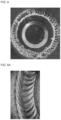
- FIG. 4 is a photograph showing a welding area used in a secondary battery according to an embodiment of the present disclosure.
- FIGS. 5A and 5B are enlarged photographs showing a welding area used in a secondary battery according to an embodiment of the present disclosure.
- FIGS. 5A and 5B portions of the welding region to which the dual beam and the wobble technique are applied are enlarged, which are illustrated as FIGS. 5A and 5B .
- the sawtooth shape generated by the wobble technique is shown as an enlarged view.
- a wave bead having a sawtooth shape may be formed along the radius of rotation.
- a diameter difference between the outer sawtooth portion (A) and the inner sawtooth portion (B) may be greater than or equal to 5 ⁇ m.
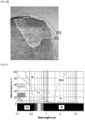
- FIG. 6 is a graph showing the absorption rate of the laser beam according to materials used.
- the relationship between the absorption rate of each metal material and the wavelength band of the laser beam can be confirmed, and the material of the object to be welded and the wavelength of the laser beam to be used can be determined in consideration of the absorption rate.
- the absorption rate is high at a short wavelength, but the absorption rate tends to decrease gradually as the wavelength becomes longer, and the absorption rate drops to about 5% in the infrared (IR) region.
- the absorption rate gradually decreases as the wavelength increases from infrared to visible light, and the absorption rate is 35% in the wavelength band of about 1 ⁇ m.
- welding between dissimilar metals may be applied, and it is possible to select a laser beam of an appropriate wavelength band according to a material of each component.
- dissimilar metals such as copper (Cu) and aluminum (Al), which are often used for negative electrodes and positive electrodes respectively, it is possible to perform welding using laser beams in the red visible light and surrounding wavelengths, which have similar absorption rates.
- the dual beam and the wobble technique are applied together, thereby increasing welding quality by reducing generation of foreign substances while increasing the coupling force during welding of various components.
- the secondary battery according to the present disclosure increases the welding quality by reducing the generation of foreign substances while increasing the coupling force during welding of each configuration by applying dual beam and wobble technique together.
Landscapes
- Chemical & Material Sciences (AREA)
- Chemical Kinetics & Catalysis (AREA)
- Electrochemistry (AREA)
- General Chemical & Material Sciences (AREA)
- Engineering & Computer Science (AREA)
- Optics & Photonics (AREA)
- Physics & Mathematics (AREA)
- Plasma & Fusion (AREA)
- Mechanical Engineering (AREA)
- Manufacturing & Machinery (AREA)
- Materials Engineering (AREA)
- Connection Of Batteries Or Terminals (AREA)
- Sealing Battery Cases Or Jackets (AREA)
Description
- The present disclosure relates to a secondary battery capable of increasing welding quality.
- A secondary battery is a power storage system that converts electric energy into chemical energy and stores the converted energy to provide high energy density. Unlike primary batteries that cannot be recharged, a secondary battery is rechargeable and is being widely used in IT devices, such as a smart phone, a cellular phone, a notebook computer, or a tablet PC. In recent years, electric vehicles are drawing attention for prevention of environmental contamination, and a trend toward the use of high-capacity secondary batteries for electric vehicles is growing. The secondary battery needs to have high density, high output and stability characteristics. Prior art document 1 (
US 2021175567 A1 ) discloses secondary battery having a cathode terminal-integrated cap plate, which prevents the occurrence of weld defects during welding of a bus bar. The secondary battery comprises a case, an electrode assembly received in the case, and a cap plate coupled to the case so as to protect the electrode assembly, wherein the cap plate includes a terminal part to which the electrode assembly is electrically connected and which is formed integrally with the cap plate, and the terminal part is thicker than the cap plate. - The above information disclosed in this Background section is only for enhancement of understanding of the background of the invention and therefore it may contain information that does not constitute prior art.
- The present invention provides a secondary battery capable of increasing welding quality.
- A secondary battery according to the present invention is defined in claim 1, comprising: an electrode assembly; a current collector coupled to the electrode assembly; a case in which the electrode assembly is accommodated; a cap plate coupled to the case to seal the electrode assembly and the current collector; and a terminal plate connected to the current collector and exposed through the cap plate, wherein dual beam and wobble welding may be performed on at least one of between the electrode assembly and the current collector and between the current collector and the terminal plate. In other words, a welding region may be between the electrode assembly and the current collector and/or between the current collector and the terminal plate, wherein the welding region is formed by dual beam and wobble welding. The electrode assembly and the current collector and/or the current collector and the terminal plate may be welded to each other by a process involving dual beam and wobble welding.
- According to the present invention, the dual beam used for welding includes a first region formed at the center and a second region formed around the first region.
- In addition, the first region of the dual beam may have a circular shape, and the second region may have a ring shape. For example, the first region of the welding region may have a circular shape and the second region may have a ring shape.
- In addition, the wobble welding may be performed along the second region.
- In addition, the wobble welding may be performed along the edge of the dual beam while forming repeated arcs.
- In addition, the wobble welding may include wave beads having a repeated sawtooth shape. For example, the second region may include wave beads having a repeated sawtooth shape at its edge (e.g. outer edge).
- In addition, in the sawtooth shape, a diameter difference between the outer sawtooth portion (A) and the inner sawtooth portion (B) may be greater than or equal to 5 µm.
- In addition, dual beam and wobble welding may be further performed on the coupling between the case and the cap plate.
- In addition, at least one of the electrode assembly and the current collector and the current collector and the terminal plate may be made of a dissimilar metal to perform welding.
-
-
FIG. 1 is a perspective view showing a secondary battery according to an embodiment of the present disclosure. -
FIG. 2 is a cross-sectional view showing a secondary battery according to an embodiment of the present disclosure. -
FIGS. 3A and 3B show a laser beam used in a secondary battery according to an embodiment of the present disclosure. -
FIG. 4 is a photograph showing a welding area used in a secondary battery according to an embodiment of the present disclosure. -
FIGS. 5A and5B are enlarged photographs showing a welding area used in a secondary battery according to an embodiment of the present disclosure. -
FIG. 6 is a graph showing the absorption rate of the laser beam according to materials used. - Hereinafter, a preferred embodiment of the present invention will be described in detail with reference to the accompanying drawings.
- Examples of the present disclosure are provided to more completely explain the present disclosure to those skilled in the art, and the following examples may be modified in various other forms.
- In addition, in the accompanying drawings, sizes or thicknesses of various components are exaggerated for brevity and clarity. Like numbers refer to like elements throughout. As used herein, the term "and/or" includes any and all combinations of one or more of the associated listed items. In addition, it will be understood that when an element A is referred to as being "connected to" an element B, the element A can be directly connected to the element B or an intervening element C may be present therebetween such that the element A and the element B are indirectly connected to each other.
-
FIG. 1 is a perspective view showing a secondary battery according to an embodiment of the present disclosure. - In the example shown in
FIG. 1 , thesecondary battery 100 includes anelectrode assembly 110, afirst terminal 120, asecond terminal 130, acase 140, and acap assembly 150. - In some examples, the first and
second terminals cap assembly 150 and be exposed upwardly. In some examples, thefirst terminal 120 may include or be referred to as a negative electrode terminal, and thesecond terminal 130 may include or be referred to as a positive electrode terminal. - In some examples, an upper
insulating member 162 may be interposed between thefirst terminal 120 and thecap assembly 150, and a connectingmember 180 may be interposed between thesecond terminal 130 and thecap assembly 150. Therefore, thefirst terminal 120 and thecap assembly 150 may be electrically insulated (that is, separated) from each other. In addition, when the connectingmember 180 is made of a conductive material, thesecond terminal 130 and thecap assembly 150 may be electrically connected (that is, coupled) to each other, and thus thecase 140 can, for example, be charged with a positive polarity (or a negative polarity). - In some examples, the
case 140 may be formed by a deep drawing process using a metal plate or a bending and welding process using a metal plate. In addition, thecase 140 has a space in which theelectrode assembly 110 and thecap assembly 150 to be seated are accommodated and may be in the form of a hexahedron. In some examples, thecase 140 may include arectangular bottom portion 141 having long sides and short sides,long side portions bottom portion 141 toward thecap assembly 150, andshort side portions bottom portion 141 toward thecap assembly 150. In some examples, thecase 140 may include or be referred to as a case, a housing, or an exterior material. - In some examples, the
cap assembly 150 may include acap plate 151, aplug 152, and asafety vent 153. This will be explained again below. -
FIG. 2 is a cross-sectional view showing a secondary battery according to an embodiment of the present disclosure. - As shown in
FIG. 2 , thesecondary battery 100 may include anelectrode assembly 110 having a winding axis in the horizontal direction (that is, a direction substantially parallel to the longitudinal direction of the cap assembly 150). In some examples, the electrode assembly may include a stack type as well as a winding type. - The
electrode assembly 110 may be formed by winding or overlapping a stack of thefirst electrode plate 111, theseparator 113, and thesecond electrode plate 112, which are formed in a thin plate shape or a film shape. In some examples, thefirst electrode plate 111 can act as a negative electrode, and thesecond electrode plate 112 can act as a positive electrode. Of course, the reverse is also possible. In some examples, thefirst electrode plate 111 is formed by coating a first electrode active material, such as graphite or carbon, on a first electrode current collector formed of a metal foil, such as copper, copper alloy, nickel or nickel alloy, and may include a first electrode uncoatedportion 111a that is a region to which the first electrode active material is not applied. In some examples, thesecond electrode plate 112 is formed by coating a second electrode active material, such as a transition metal oxide, on a second electrode current collector formed of a metal foil, such as aluminium or an aluminium alloy, and may include a second electrode uncoatedportion 112a that is a region to which the second electrode active material is not applied. In some examples, theseparator 113 is positioned between thefirst electrode plate 111 and thesecond electrode plate 112 to prevent short circuit and enable the movement of lithium ions, and may include polyethylene, polypropylene, or a composite film of polyethylene and polypropylene. In addition, theseparator 113 may include a functional film in which an inorganic material layer is coated on a porous polymer film. In addition, theseparator 113 may be replaced with an inorganic solid electrolyte, such as a sulfide-based, oxide-based or phosphate-based electrolyte that does not require an electrolyte in a liquid or gel state. Afirst terminal 120 and asecond terminal 130 electrically connected respectively to thefirst electrode plate 111 and thesecond electrode plate 112 may be positioned at both ends of theelectrode assembly 110. In some examples, theelectrode assembly 110 may be accommodated in thecase 140 together with an electrolyte. In some examples, the electrolyte may include a lithium salt, such as LiPF6, in an organic solvent, such as ethylene carbonate (EC), dimethyl carbonate (DMC), diethyl carbonate (DEC), or ethyl-methyl carbonate (EMC). In addition, the electrolyte may be in liquid or gel form. In some examples, when an inorganic solid electrolyte is used, the electrolyte may be omitted. - The
first terminal 120 may be made of a metal, and may be electrically connected to thefirst electrode plate 111. In some examples, thefirst terminal 120 may include a firstcurrent collector plate 121, a firstterminal pillar 122, and a firstterminal plate 123. - In some examples, the first
current collector plate 121 may be in contact with the first electrodeuncoated portion 111a protruding from one end of theelectrode assembly 110. Substantially, the firstcurrent collector plate 121 may be welded to the first electrodeuncoated portion 111a. In some examples, the firstcurrent collector plate 121 may be formed in an approximately "L" shape. In some examples, the firstterminal pillar 122 may be integrally formed on the firstcurrent collector plate 121, or the firstterminal pillar 122 may be separately provided to be riveted and/or welded to the firstcurrent collector plate 121. In some examples, the firstcurrent collector plate 121 may be made of copper or a copper alloy. In addition, as a method for welding the firstcurrent collector plate 121 to the first electrodeuncoated portion 111a, laser welding having a dual beam and wobble structure may be used, which will be described later. - In some examples, the first
terminal pillar 122 may protrude and extend upward a predetermined length through thecap plate 151 to be described later, and may be electrically connected to the firstcurrent collector plate 121 from the lower portion of thecap plate 151. In addition, in some examples, the firstterminal pillar 122 may include aflange 122a extending along the length direction of thecap plate 151 to prevent the firstterminal pillar 122 from falling out. The firstterminal pillar 122 may be integrally formed with the firstcurrent collector plate 121, or may be riveted and/or welded after being inserted into the firstcurrent collector plate 121. In some examples, the firstterminal pillar 122 may be electrically insulated from thecap plate 151. In some examples, the firstterminal pillar 122 may be made of copper, a copper alloy, aluminium, or an aluminium alloy. The firstterminal plate 123 may include ahole 123a, to which the firstterminal pillar 122 may be coupled and riveted and/or welded. In some examples, an interface between the firstterminal pillar 122 exposed upward and the firstterminal plate 123 may be welded to each other. The method for welding the firstterminal pillar 122 to the firstterminal plate 123 is laser welding having a dual beam and a wobble structure, which will be described later. - In addition, in some examples, a bus bar (not shown) made of aluminium or an aluminium alloy is welded to the first
terminal plate 123, and thus a plurality of secondary batteries may be connected to one another in series or in parallel. - The
second terminal 130 may also be made of a metal, and may be electrically connected to thesecond electrode plate 112. In some examples, thesecond terminal 130 may include a secondcurrent collector plate 131, a secondterminal pillar 132, and a secondterminal plate 133. The secondcurrent collector plate 131 may be in contact with the second electrodeuncoated portion 112a that protrudes from one end of theelectrode assembly 110. As a method for welding the secondcurrent collector plate 131 to the second electrodeuncoated portion 112a, laser welding having a dual beam and a wobble structure is used, which will be described later. - In some examples, the second
terminal pillar 132 may be integrally formed on the secondcurrent collector plate 131, or the secondterminal pillar 132 is separately provided to be inserted into the secondcurrent collector plate 131 and coupled thereto. The secondcurrent collector plate 131 may be made of, for example, but not limited to, aluminium or an aluminium alloy. - The second
terminal pillar 132 may pass through thecap plate 151 to be described later to protrude and extend upward a predetermined length, and may be electrically connected to the secondcurrent collector plate 131 from the lower portion of thecap plate 151. The secondterminal pillar 132 may protrude and extend a predetermined length to the upper portion of thecap plate 151, and, at the same time, may include aflange 132a that prevents the secondterminal pillar 132 from falling out of the lower portion of thecap plate 151. In the secondterminal pillar 132, a region positioned below theflange 132a may be inserted into the secondcurrent collector plate 131 and then riveted and/or welded. In some examples, the secondterminal pillar 132 may be made of aluminium or an aluminium alloy. - The second
terminal plate 133 may include ahole 133a, and the secondterminal pillar 132 may be coupled to thehole 133a. In addition, the secondterminal pillar 132 and the secondterminal plate 133 may be riveted and/or welded to each other. In addition, a method for welding the secondterminal pillar 123 to the secondterminal plate 133 may be laser welding having a dual beam and a wobble structure, which will be described later. - In addition, by welding a bus bar (not shown) made of aluminium or an aluminium alloy to the second
terminal plate 133, a plurality of secondary batteries may be connected to one another in series or in parallel. In some examples, the secondterminal plate 133 may be electrically connected to thecap plate 151, and thus thecap plate 151 and thecase 140 to be described below have the same polarity as the second terminal 130 (for example, a positive electrode). - The
cap assembly 150 may be coupled to thecase 140. In some examples, thecap assembly 150 may include or be referred to as acap plate 151. Thecap plate 151 seals the space of thecase 140, and may be formed of the same material as thecase 140. In some examples, thecap plate 151 may be coupled to thecase 140 by laser welding. In some examples, since thecap plate 151 may have the same polarity as thesecond terminal 130, as described above, thecap plate 151 and thecase 140 may have the same polarity. In some examples, thecap plate 151 may include a through-hole through which the firstterminal pillar 122 and the secondterminal pillar 132 respectively pass. In some examples, thecap plate 151 may further include aninjection hole 151c into which the electrolyte is injected, and avent hole 151d in which a safety vent is installed. In some examples, theplug 152 may block theinjection hole 151c so that the electrolyte contained inside thecase 140 may not leak. In some examples, theplug 152 may be laser-welded to thecap plate 151 after being coupled to theinjection hole 151c. In some examples, thesafety vent 153 blocks thevent hole 151d, and when the internal pressure of thecase 140 is higher than a set pressure, the internal high-pressure gas may be discharged to the outside. In some examples, thesafety vent 153 may be laser-welded to thecap plate 151 after being coupled to thevent hole 151d. - In some examples, an insulating
seal gasket 161 may be interposed between the firstterminal pillar 122 and the through-hole of thecap plate 151. That is, theseal gasket 161 may be formed inside the through-hole of thecap plate 151, and the firstterminal pillar 122 may protrude upward through the through-hole of theseal gasket 161. - In some examples, a lower insulating
member 162 may be interposed between the firstcurrent collector plate 121 and thecap plate 151. In addition, in some examples, an upper insulatingmember 162 may be interposed between the firstterminal plate 123 and thecap plate 151. Accordingly, thefirst terminal 120 may be electrically insulated (separated) from thecap plate 151. - In some examples, an insulating
seal gasket 171 may be interposed between the secondterminal pillar 132 and the through hole of thecap plate 151. That is, theseal gasket 171 may be formed inside the through-hole of thecap plate 151, and the secondterminal pillar 132 may protrude upward through the through-hole 171a of theseal gasket 171. In addition, in some examples, a connectingmember 180 may be interposed between the secondterminal plate 133 and thecap plate 151. Accordingly, thesecond terminal 130 may be electrically connected to thecap plate 151. - Hereinafter, a welding method used in a secondary battery according to an embodiment of the present disclosure will be described in more detail.
-
FIGS. 3A and 3B show a laser beam used in a secondary battery according to an embodiment of the present disclosure. - First, the dual beam of
FIG. 3A is primarily applied to a welding structure of a secondary battery, for example, the above-described welding between the firstcurrent collector plate 121 and the first electrodeuncoated portion 111a, between the firstterminal pillar 122 and the firstterminal plate 123, between the secondcurrent collector plate 131 and the second electrodeuncoated portion 112a, and between the secondterminal pillar 123 and the secondterminal plate 133. However, such a welding structure may also be used in welding used for coupling other components required for manufacturing a secondary battery according to an embodiment of the present disclosure in addition to welding between the present components. For example, the welding structure of the present disclosure may also be applied to welding between thecase 140 and thecap plate 151 among the components of the secondary battery. - Meanwhile, the dual beam structure of
FIG. 3A includes a first region having a central circular shape and a second region surrounding the first region in an annular shape. As shown, in the first region, the laser beam is concentrated to have a relatively high energy density, and in the second region, the laser beam is formed along an annular shape to have a lower energy density than in the first region. The dual beam moves along the interface of the components to be welded or the welding surface in an overlapping state, thereby welding the components. - Meanwhile, as shown in
FIG. 3B , after welding through the dual beam, welding using a wobble technique is w secondly performed along the second region. In the wobble technique, welding is performed while drawing a substantially circular arc, and additional welding may be performed along the second region. For example, the wobble welding may be performed along the edge of the dual beam while forming repeated arcs. - The wobble technique is a method for performing welding while rotating a laser spot at a high speed, and has the advantage of reducing spatters formed by minute keyholes. More specifically, the wobble technique can provide a desired welding effect while varying conditions, such as the size of laser spot, wobble diameter according to circular speeds, and the speed of linear welding along the second region. In addition, in the wobble technique, the smaller the laser spot, the higher the power density can be obtained. Accordingly, the wobble technique can be used for welding various metals and can stably create keyholes, thereby reducing formation of spatters and reducing a heat affected zone (HAZ).
- As such, when the dual beam as the first welding and the wobble as the second welding are applied, the welding reliability is increased for the components to be welded, and in particular, the generation of metal foreign substances such as spatters can be reduced. Accordingly, the reliability and lifespan of the secondary battery manufactured by using the present welding can be improved.
- Hereinafter, a welding region in a secondary battery according to an embodiment of the present disclosure will be described in more detail.
-
FIG. 4 is a photograph showing a welding area used in a secondary battery according to an embodiment of the present disclosure.FIGS. 5A and5B are enlarged photographs showing a welding area used in a secondary battery according to an embodiment of the present disclosure. - As shown, portions of the welding region to which the dual beam and the wobble technique are applied are enlarged, which are illustrated as
FIGS. 5A and5B . - Specifically, referring to
FIG. 5B , the sawtooth shape generated by the wobble technique is shown as an enlarged view. Here, in the wobble technique, since the focus of the laser beam is rotated, a wave bead having a sawtooth shape may be formed along the radius of rotation. In addition, in the sawtooth shape, a diameter difference between the outer sawtooth portion (A) and the inner sawtooth portion (B) may be greater than or equal to 5 µm. When the diameter difference is greater than or equal to 5 µm, there is an advantage in that the coupling strength is increased in the welding region formed according to the wobble technique. - Hereinafter, a material that can be used for a secondary battery according to an embodiment of the present disclosure will be described in more detail.
-
FIG. 6 is a graph showing the absorption rate of the laser beam according to materials used. - Referring to
FIG. 4 andFIG. 6 , the relationship between the absorption rate of each metal material and the wavelength band of the laser beam can be confirmed, and the material of the object to be welded and the wavelength of the laser beam to be used can be determined in consideration of the absorption rate. For example, in the case of copper (Cu), the absorption rate is high at a short wavelength, but the absorption rate tends to decrease gradually as the wavelength becomes longer, and the absorption rate drops to about 5% in the infrared (IR) region. - In addition, in the case of aluminium (Al), there is little change in the short wavelength band, but the absorption rate gradually increases in the visible ray region, and the absorption rate in the red visible ray tends to decrease again after showing the maximum absorption rate. In addition, it can be seen that the absorption rate drops to about 5% in the infrared (IR) region.
- As another example, in the case of iron (Fe), it can be seen that the absorption rate gradually decreases as the wavelength increases from infrared to visible light, and the absorption rate is 35% in the wavelength band of about 1 µm.
- Therefore, in the secondary battery according to the embodiment of the present disclosure, welding between dissimilar metals may be applied, and it is possible to select a laser beam of an appropriate wavelength band according to a material of each component. For example, in the case of welding dissimilar metals, such as copper (Cu) and aluminum (Al), which are often used for negative electrodes and positive electrodes respectively, it is possible to perform welding using laser beams in the red visible light and surrounding wavelengths, which have similar absorption rates.
- In addition, in the secondary battery according to the embodiment of the present disclosure, along with the wavelength band of the optimal absorption, the dual beam and the wobble technique are applied together, thereby increasing welding quality by reducing generation of foreign substances while increasing the coupling force during welding of various components.
- As described above, the secondary battery according to the present disclosure increases the welding quality by reducing the generation of foreign substances while increasing the coupling force during welding of each configuration by applying dual beam and wobble technique together.
- While the foregoing embodiment is only one embodiment for carrying out the secondary battery according to the present invention, which is not limited to the embodiment, it will be understood by a person skilled in the art that various changes in form and details may be made therein without departing from the scope of the present invention as defined by the following claims.
Claims (8)
- A secondary battery (100) comprising:an electrode assembly (110);a current collector (121, 131) coupled to the electrode assembly (110);a case (140) in which the electrode assembly (110) is accommodated;a cap plate (151) coupled to the case (140) to seal the electrode assembly (110) and the current collector (121); anda terminal plate (123, 133) connected to the current collector (121, 131) and exposed through the cap plate (151),characterised by:a welding region between the electrode assembly (110) and the current collector (121, 131) and/or between the current collector (121, 131) and the terminal plate (123, 133),the welding region being formed by laser welding using dual beamand by a circular arc region formed by wobble welding,wherein the dual beam used for welding includes a first region formed at a center and a second region formed around the first region, andwherein the wobble welding comprises performing welding while rotating a laser spot at a high speed, and drawin the circular arc.
- The secondary battery (100) of claim 1, wherein the first region of the dual beam has a circular shape, and the second region has a ring shape.
- The secondary battery (100) of claim 1 or claim 2, wherein the circular arc region made by wobble welding is located along the second region.
- The secondary battery (100) of any one of claims 1 to 3, wherein the circular arc region made by wobble welding is located along the edge of the dual beam while forming repeated arcs.
- The secondary battery (100) of any one of claims 1 to 4, wherein the circular arc region made by wobble welding includes wave beads having a repeated sawtooth shape.
- The secondary battery (100) of claim 5, wherein in the sawtooth shape, a diameter difference between the outer sawtooth portion (A) and the inner sawtooth portion (B) is greater than or equal to 5 µm.
- The secondary battery (100) of any one of claims 1 to 6, wherein a welding coupling between the case (141) and the cap plate (151) is achieved by beam and wobble welding.
- The secondary battery (100) of any one of claims 1 to 7, wherein at least one of the electrode assembly (110) and the current collector (121, 131) and the current collector (121, 131) and the terminal plate (123, 133) is made of a dissimilar metal to perform welding.
Applications Claiming Priority (1)
| Application Number | Priority Date | Filing Date | Title |
|---|---|---|---|
| KR1020210157780A KR20230071511A (en) | 2021-11-16 | 2021-11-16 | Secondary battery And Fabricating Method The Same |
Publications (2)
| Publication Number | Publication Date |
|---|---|
| EP4190481A1 EP4190481A1 (en) | 2023-06-07 |
| EP4190481B1 true EP4190481B1 (en) | 2024-08-28 |
Family
ID=84331445
Family Applications (1)
| Application Number | Title | Priority Date | Filing Date |
|---|---|---|---|
| EP22206752.2A Active EP4190481B1 (en) | 2021-11-16 | 2022-11-10 | Secondary battery with a weld region |
Country Status (8)
| Country | Link |
|---|---|
| US (1) | US12614794B2 (en) |
| EP (1) | EP4190481B1 (en) |
| JP (1) | JP7422846B2 (en) |
| KR (1) | KR20230071511A (en) |
| CN (1) | CN116137371B (en) |
| HU (1) | HUE069457T2 (en) |
| PL (1) | PL4190481T3 (en) |
| TW (1) | TWI830497B (en) |
Families Citing this family (1)
| Publication number | Priority date | Publication date | Assignee | Title |
|---|---|---|---|---|
| KR20240144974A (en) * | 2022-02-03 | 2024-10-04 | 쥐.디 에스.피.에이. | Method for manufacturing a battery for energy storage |
Family Cites Families (22)
| Publication number | Priority date | Publication date | Assignee | Title |
|---|---|---|---|---|
| JP5118287B2 (en) | 2004-03-29 | 2013-01-16 | 株式会社Gsユアサ | battery |
| US7754378B2 (en) * | 2004-06-25 | 2010-07-13 | Samsung Sdi Co., Ltd. | Secondary battery with a sealing plate used to seal an electrolyte injection hole in a cap plate |
| US8198565B2 (en) | 2007-04-11 | 2012-06-12 | Chrysler Group Llc | Laser-welding apparatus and method |
| JP5578763B2 (en) | 2007-11-21 | 2014-08-27 | 株式会社神戸製鋼所 | Aluminum alloy material and battery case for pulse laser welding |
| CN102969478B (en) | 2011-08-31 | 2016-06-29 | 株式会社杰士汤浅国际 | Storage element |
| JP6476941B2 (en) | 2015-02-05 | 2019-03-06 | 株式会社Gsユアサ | Power storage device, power storage device including power storage device, method for manufacturing power storage device, and method for manufacturing power storage device |
| WO2016206756A1 (en) | 2015-06-26 | 2016-12-29 | Toyota Motor Europe Nv/Sa | Systems and methods for laser welding |
| CN105772939B (en) * | 2016-03-24 | 2018-02-27 | 中国商用飞机有限责任公司 | Double laser beams welding equipment and method |
| WO2018021372A1 (en) | 2016-07-29 | 2018-02-01 | 三洋電機株式会社 | Secondary battery |
| US11088410B2 (en) | 2016-12-23 | 2021-08-10 | Sk Innovation Co., Ltd. | Battery module |
| KR102473803B1 (en) * | 2017-01-31 | 2022-12-02 | 누부루 인크. | Methods and systems for welding copper using blue laser |
| DE102017202552A1 (en) | 2017-02-16 | 2018-08-16 | Reinz-Dichtungs-Gmbh | Radiator plate and method for its production |
| US20200072266A1 (en) | 2017-05-22 | 2020-03-05 | Eagle Industry Co., Ltd. | Metal joining structure and metal welding method |
| KR102397762B1 (en) * | 2017-06-01 | 2022-05-13 | 삼성에스디아이 주식회사 | Secondary battery having positive electrode terminal-integrated cap plate |
| KR102454791B1 (en) * | 2017-06-13 | 2022-10-14 | 삼성에스디아이 주식회사 | Secondary battery having positive electrode terminal and membrane-integrated cap plate |
| KR102271383B1 (en) | 2017-08-09 | 2021-06-29 | 에스케이이노베이션 주식회사 | Cell module and its manufacturing method |
| CN107649784B (en) * | 2017-10-25 | 2019-06-14 | 大族激光科技产业集团股份有限公司 | Double beam laser welding equipment and method for power battery welding |
| JP2019206013A (en) | 2018-05-28 | 2019-12-05 | 株式会社豊田自動織機 | Laser welding method for tab group |
| JP7169521B2 (en) | 2019-02-28 | 2022-11-11 | トヨタ自動車株式会社 | Sealed batteries and assembled batteries |
| US11446764B2 (en) * | 2020-03-24 | 2022-09-20 | Corelase Oy | Laser welding stacked foils |
| KR20210125674A (en) * | 2020-04-09 | 2021-10-19 | 에스케이이노베이션 주식회사 | Battery Modules Housing Welding Methods For Preventing Heat Damage and Battery Module Thereof |
| CN113070573A (en) * | 2021-04-20 | 2021-07-06 | 武汉锐科光纤激光技术股份有限公司 | Laser welding method and device |
-
2021
- 2021-11-16 KR KR1020210157780A patent/KR20230071511A/en active Pending
-
2022
- 2022-11-09 CN CN202211399568.6A patent/CN116137371B/en active Active
- 2022-11-10 PL PL22206752.2T patent/PL4190481T3/en unknown
- 2022-11-10 HU HUE22206752A patent/HUE069457T2/en unknown
- 2022-11-10 EP EP22206752.2A patent/EP4190481B1/en active Active
- 2022-11-15 JP JP2022182728A patent/JP7422846B2/en active Active
- 2022-11-15 TW TW111143567A patent/TWI830497B/en active
- 2022-11-15 US US17/986,967 patent/US12614794B2/en active Active
Also Published As
| Publication number | Publication date |
|---|---|
| TW202322442A (en) | 2023-06-01 |
| PL4190481T3 (en) | 2024-10-28 |
| US20230155224A1 (en) | 2023-05-18 |
| CN116137371B (en) | 2026-03-31 |
| US12614794B2 (en) | 2026-04-28 |
| JP7422846B2 (en) | 2024-01-26 |
| JP2023074003A (en) | 2023-05-26 |
| KR20230071511A (en) | 2023-05-23 |
| TWI830497B (en) | 2024-01-21 |
| CN116137371A (en) | 2023-05-19 |
| EP4190481A1 (en) | 2023-06-07 |
| HUE069457T2 (en) | 2025-03-28 |
Similar Documents
| Publication | Publication Date | Title |
|---|---|---|
| JP7645388B2 (en) | Cylindrical secondary battery including improved current collector, battery pack including same, and automobile | |
| JP7599149B2 (en) | Battery and manufacturing method thereof | |
| EP1724858B1 (en) | Rechargeable battery | |
| KR101726909B1 (en) | Rechargeable secondary battery having light absorption member | |
| EP3790077B1 (en) | Secondary battery | |
| WO2019194055A1 (en) | Cell | |
| US12308446B2 (en) | Battery | |
| CA3237671A1 (en) | Cylindrical secondary battery, and battery pack and vehicle comprising same | |
| JP5985992B2 (en) | Rectangular secondary battery, method for manufacturing the same, and method for joining bus bars to external terminals of the prismatic secondary battery | |
| EP4190481B1 (en) | Secondary battery with a weld region | |
| KR20230112167A (en) | Secondary Battery | |
| JP2024011964A (en) | secondary battery | |
| EP4109641B1 (en) | Cylindrical battery | |
| KR20180119375A (en) | Secondary Battery | |
| US20250192287A1 (en) | Cylindrical secondary battery | |
| EP4661195A1 (en) | Power storage device | |
| EP4625596A2 (en) | Secondary battery | |
| US12620653B2 (en) | Battery and method for producing same | |
| EP4170782A1 (en) | Secondary battery | |
| KR20240137784A (en) | Cylindrical secondary battery | |
| KR20260052739A (en) | Subassembly, and battery, battery pack and vehicle including the same | |
| KR20240101017A (en) | Secondary battery | |
| JP2024002692A (en) | secondary battery | |
| KR20220112034A (en) | Secondary Battery |
Legal Events
| Date | Code | Title | Description |
|---|---|---|---|
| PUAI | Public reference made under article 153(3) epc to a published international application that has entered the european phase |
Free format text: ORIGINAL CODE: 0009012 |
|
| STAA | Information on the status of an ep patent application or granted ep patent |
Free format text: STATUS: REQUEST FOR EXAMINATION WAS MADE |
|
| 17P | Request for examination filed |
Effective date: 20221110 |
|
| AK | Designated contracting states |
Kind code of ref document: A1 Designated state(s): AL AT BE BG CH CY CZ DE DK EE ES FI FR GB GR HR HU IE IS IT LI LT LU LV MC ME MK MT NL NO PL PT RO RS SE SI SK SM TR |
|
| RIC1 | Information provided on ipc code assigned before grant |
Ipc: B23K 101/36 20060101ALN20240117BHEP Ipc: B23K 101/12 20060101ALN20240117BHEP Ipc: H01M 50/536 20210101ALI20240117BHEP Ipc: H01M 50/562 20210101ALI20240117BHEP Ipc: H01M 50/543 20210101ALI20240117BHEP Ipc: H01M 50/534 20210101ALI20240117BHEP Ipc: H01M 50/528 20210101ALI20240117BHEP Ipc: H01M 50/172 20210101ALI20240117BHEP Ipc: B23K 26/32 20140101ALI20240117BHEP Ipc: B23K 26/28 20140101ALI20240117BHEP Ipc: B23K 26/22 20060101AFI20240117BHEP |
|
| RIC1 | Information provided on ipc code assigned before grant |
Ipc: B23K 101/36 20060101ALN20240215BHEP Ipc: B23K 101/12 20060101ALN20240215BHEP Ipc: H01M 50/536 20210101ALI20240215BHEP Ipc: H01M 50/562 20210101ALI20240215BHEP Ipc: H01M 50/543 20210101ALI20240215BHEP Ipc: H01M 50/534 20210101ALI20240215BHEP Ipc: H01M 50/528 20210101ALI20240215BHEP Ipc: H01M 50/172 20210101ALI20240215BHEP Ipc: B23K 26/32 20140101ALI20240215BHEP Ipc: B23K 26/28 20140101ALI20240215BHEP Ipc: B23K 26/22 20060101AFI20240215BHEP |
|
| GRAP | Despatch of communication of intention to grant a patent |
Free format text: ORIGINAL CODE: EPIDOSNIGR1 |
|
| STAA | Information on the status of an ep patent application or granted ep patent |
Free format text: STATUS: GRANT OF PATENT IS INTENDED |
|
| RIC1 | Information provided on ipc code assigned before grant |
Ipc: B23K 101/36 20060101ALN20240314BHEP Ipc: B23K 101/12 20060101ALN20240314BHEP Ipc: H01M 50/536 20210101ALI20240314BHEP Ipc: H01M 50/562 20210101ALI20240314BHEP Ipc: H01M 50/543 20210101ALI20240314BHEP Ipc: H01M 50/534 20210101ALI20240314BHEP Ipc: H01M 50/528 20210101ALI20240314BHEP Ipc: H01M 50/172 20210101ALI20240314BHEP Ipc: B23K 26/32 20140101ALI20240314BHEP Ipc: B23K 26/28 20140101ALI20240314BHEP Ipc: B23K 26/22 20060101AFI20240314BHEP |
|
| INTG | Intention to grant announced |
Effective date: 20240325 |
|
| RIN1 | Information on inventor provided before grant (corrected) |
Inventor name: KIM, YOUNG TAE Inventor name: CHO, YU SEONG Inventor name: HWANG, MIN HYEONG Inventor name: LEE, JONG HOON Inventor name: KIM, JIN NAM Inventor name: KANG, HOON Inventor name: CHO, HYANG MI Inventor name: YOU, HEE CHUL |
|
| GRAS | Grant fee paid |
Free format text: ORIGINAL CODE: EPIDOSNIGR3 |
|
| GRAA | (expected) grant |
Free format text: ORIGINAL CODE: 0009210 |
|
| STAA | Information on the status of an ep patent application or granted ep patent |
Free format text: STATUS: THE PATENT HAS BEEN GRANTED |
|
| AK | Designated contracting states |
Kind code of ref document: B1 Designated state(s): AL AT BE BG CH CY CZ DE DK EE ES FI FR GB GR HR HU IE IS IT LI LT LU LV MC ME MK MT NL NO PL PT RO RS SE SI SK SM TR |
|
| REG | Reference to a national code |
Ref country code: CH Ref legal event code: EP |
|
| REG | Reference to a national code |
Ref country code: DE Ref legal event code: R096 Ref document number: 602022005682 Country of ref document: DE |
|
| REG | Reference to a national code |
Ref country code: IE Ref legal event code: FG4D |
|
| REG | Reference to a national code |
Ref country code: SE Ref legal event code: TRGR |
|
| REG | Reference to a national code |
Ref country code: LT Ref legal event code: MG9D |
|
| PG25 | Lapsed in a contracting state [announced via postgrant information from national office to epo] |
Ref country code: NO Free format text: LAPSE BECAUSE OF FAILURE TO SUBMIT A TRANSLATION OF THE DESCRIPTION OR TO PAY THE FEE WITHIN THE PRESCRIBED TIME-LIMIT Effective date: 20241128 |
|
| PG25 | Lapsed in a contracting state [announced via postgrant information from national office to epo] |
Ref country code: NL Free format text: LAPSE BECAUSE OF FAILURE TO SUBMIT A TRANSLATION OF THE DESCRIPTION OR TO PAY THE FEE WITHIN THE PRESCRIBED TIME-LIMIT Effective date: 20240828 Ref country code: GR Free format text: LAPSE BECAUSE OF FAILURE TO SUBMIT A TRANSLATION OF THE DESCRIPTION OR TO PAY THE FEE WITHIN THE PRESCRIBED TIME-LIMIT Effective date: 20241129 Ref country code: FI Free format text: LAPSE BECAUSE OF FAILURE TO SUBMIT A TRANSLATION OF THE DESCRIPTION OR TO PAY THE FEE WITHIN THE PRESCRIBED TIME-LIMIT Effective date: 20240828 Ref country code: PT Free format text: LAPSE BECAUSE OF FAILURE TO SUBMIT A TRANSLATION OF THE DESCRIPTION OR TO PAY THE FEE WITHIN THE PRESCRIBED TIME-LIMIT Effective date: 20241230 |
|
| PG25 | Lapsed in a contracting state [announced via postgrant information from national office to epo] |
Ref country code: BG Free format text: LAPSE BECAUSE OF FAILURE TO SUBMIT A TRANSLATION OF THE DESCRIPTION OR TO PAY THE FEE WITHIN THE PRESCRIBED TIME-LIMIT Effective date: 20240828 |
|
| PG25 | Lapsed in a contracting state [announced via postgrant information from national office to epo] |
Ref country code: LV Free format text: LAPSE BECAUSE OF FAILURE TO SUBMIT A TRANSLATION OF THE DESCRIPTION OR TO PAY THE FEE WITHIN THE PRESCRIBED TIME-LIMIT Effective date: 20240828 |
|
| REG | Reference to a national code |
Ref country code: NL Ref legal event code: MP Effective date: 20240828 |
|
| PG25 | Lapsed in a contracting state [announced via postgrant information from national office to epo] |
Ref country code: IS Free format text: LAPSE BECAUSE OF FAILURE TO SUBMIT A TRANSLATION OF THE DESCRIPTION OR TO PAY THE FEE WITHIN THE PRESCRIBED TIME-LIMIT Effective date: 20241228 |
|
| PG25 | Lapsed in a contracting state [announced via postgrant information from national office to epo] |
Ref country code: HR Free format text: LAPSE BECAUSE OF FAILURE TO SUBMIT A TRANSLATION OF THE DESCRIPTION OR TO PAY THE FEE WITHIN THE PRESCRIBED TIME-LIMIT Effective date: 20240828 |
|
| PG25 | Lapsed in a contracting state [announced via postgrant information from national office to epo] |
Ref country code: RS Free format text: LAPSE BECAUSE OF FAILURE TO SUBMIT A TRANSLATION OF THE DESCRIPTION OR TO PAY THE FEE WITHIN THE PRESCRIBED TIME-LIMIT Effective date: 20241128 Ref country code: ES Free format text: LAPSE BECAUSE OF FAILURE TO SUBMIT A TRANSLATION OF THE DESCRIPTION OR TO PAY THE FEE WITHIN THE PRESCRIBED TIME-LIMIT Effective date: 20240828 |
|
| PG25 | Lapsed in a contracting state [announced via postgrant information from national office to epo] |
Ref country code: RS Free format text: LAPSE BECAUSE OF FAILURE TO SUBMIT A TRANSLATION OF THE DESCRIPTION OR TO PAY THE FEE WITHIN THE PRESCRIBED TIME-LIMIT Effective date: 20241128 Ref country code: PT Free format text: LAPSE BECAUSE OF FAILURE TO SUBMIT A TRANSLATION OF THE DESCRIPTION OR TO PAY THE FEE WITHIN THE PRESCRIBED TIME-LIMIT Effective date: 20241230 Ref country code: NO Free format text: LAPSE BECAUSE OF FAILURE TO SUBMIT A TRANSLATION OF THE DESCRIPTION OR TO PAY THE FEE WITHIN THE PRESCRIBED TIME-LIMIT Effective date: 20241128 Ref country code: NL Free format text: LAPSE BECAUSE OF FAILURE TO SUBMIT A TRANSLATION OF THE DESCRIPTION OR TO PAY THE FEE WITHIN THE PRESCRIBED TIME-LIMIT Effective date: 20240828 Ref country code: LV Free format text: LAPSE BECAUSE OF FAILURE TO SUBMIT A TRANSLATION OF THE DESCRIPTION OR TO PAY THE FEE WITHIN THE PRESCRIBED TIME-LIMIT Effective date: 20240828 Ref country code: IS Free format text: LAPSE BECAUSE OF FAILURE TO SUBMIT A TRANSLATION OF THE DESCRIPTION OR TO PAY THE FEE WITHIN THE PRESCRIBED TIME-LIMIT Effective date: 20241228 Ref country code: HR Free format text: LAPSE BECAUSE OF FAILURE TO SUBMIT A TRANSLATION OF THE DESCRIPTION OR TO PAY THE FEE WITHIN THE PRESCRIBED TIME-LIMIT Effective date: 20240828 Ref country code: GR Free format text: LAPSE BECAUSE OF FAILURE TO SUBMIT A TRANSLATION OF THE DESCRIPTION OR TO PAY THE FEE WITHIN THE PRESCRIBED TIME-LIMIT Effective date: 20241129 Ref country code: FI Free format text: LAPSE BECAUSE OF FAILURE TO SUBMIT A TRANSLATION OF THE DESCRIPTION OR TO PAY THE FEE WITHIN THE PRESCRIBED TIME-LIMIT Effective date: 20240828 Ref country code: ES Free format text: LAPSE BECAUSE OF FAILURE TO SUBMIT A TRANSLATION OF THE DESCRIPTION OR TO PAY THE FEE WITHIN THE PRESCRIBED TIME-LIMIT Effective date: 20240828 Ref country code: BG Free format text: LAPSE BECAUSE OF FAILURE TO SUBMIT A TRANSLATION OF THE DESCRIPTION OR TO PAY THE FEE WITHIN THE PRESCRIBED TIME-LIMIT Effective date: 20240828 |
|
| REG | Reference to a national code |
Ref country code: HU Ref legal event code: AG4A Ref document number: E069457 Country of ref document: HU |
|
| PG25 | Lapsed in a contracting state [announced via postgrant information from national office to epo] |
Ref country code: DK Free format text: LAPSE BECAUSE OF FAILURE TO SUBMIT A TRANSLATION OF THE DESCRIPTION OR TO PAY THE FEE WITHIN THE PRESCRIBED TIME-LIMIT Effective date: 20240828 Ref country code: SM Free format text: LAPSE BECAUSE OF FAILURE TO SUBMIT A TRANSLATION OF THE DESCRIPTION OR TO PAY THE FEE WITHIN THE PRESCRIBED TIME-LIMIT Effective date: 20240828 Ref country code: RO Free format text: LAPSE BECAUSE OF FAILURE TO SUBMIT A TRANSLATION OF THE DESCRIPTION OR TO PAY THE FEE WITHIN THE PRESCRIBED TIME-LIMIT Effective date: 20240828 |
|
| PG25 | Lapsed in a contracting state [announced via postgrant information from national office to epo] |
Ref country code: EE Free format text: LAPSE BECAUSE OF FAILURE TO SUBMIT A TRANSLATION OF THE DESCRIPTION OR TO PAY THE FEE WITHIN THE PRESCRIBED TIME-LIMIT Effective date: 20240828 |
|
| PG25 | Lapsed in a contracting state [announced via postgrant information from national office to epo] |
Ref country code: CZ Free format text: LAPSE BECAUSE OF FAILURE TO SUBMIT A TRANSLATION OF THE DESCRIPTION OR TO PAY THE FEE WITHIN THE PRESCRIBED TIME-LIMIT Effective date: 20240828 |
|
| PG25 | Lapsed in a contracting state [announced via postgrant information from national office to epo] |
Ref country code: SK Free format text: LAPSE BECAUSE OF FAILURE TO SUBMIT A TRANSLATION OF THE DESCRIPTION OR TO PAY THE FEE WITHIN THE PRESCRIBED TIME-LIMIT Effective date: 20240828 Ref country code: IT Free format text: LAPSE BECAUSE OF FAILURE TO SUBMIT A TRANSLATION OF THE DESCRIPTION OR TO PAY THE FEE WITHIN THE PRESCRIBED TIME-LIMIT Effective date: 20240828 |
|
| REG | Reference to a national code |
Ref country code: DE Ref legal event code: R097 Ref document number: 602022005682 Country of ref document: DE |
|
| PLBE | No opposition filed within time limit |
Free format text: ORIGINAL CODE: 0009261 |
|
| STAA | Information on the status of an ep patent application or granted ep patent |
Free format text: STATUS: NO OPPOSITION FILED WITHIN TIME LIMIT |
|
| PG25 | Lapsed in a contracting state [announced via postgrant information from national office to epo] |
Ref country code: MC Free format text: LAPSE BECAUSE OF FAILURE TO SUBMIT A TRANSLATION OF THE DESCRIPTION OR TO PAY THE FEE WITHIN THE PRESCRIBED TIME-LIMIT Effective date: 20240828 |
|
| PG25 | Lapsed in a contracting state [announced via postgrant information from national office to epo] |
Ref country code: LU Free format text: LAPSE BECAUSE OF NON-PAYMENT OF DUE FEES Effective date: 20241110 |
|
| 26N | No opposition filed |
Effective date: 20250530 |
|
| REG | Reference to a national code |
Ref country code: BE Ref legal event code: MM Effective date: 20241130 |
|
| PG25 | Lapsed in a contracting state [announced via postgrant information from national office to epo] |
Ref country code: BE Free format text: LAPSE BECAUSE OF NON-PAYMENT OF DUE FEES Effective date: 20241130 |
|
| PG25 | Lapsed in a contracting state [announced via postgrant information from national office to epo] |
Ref country code: IE Free format text: LAPSE BECAUSE OF NON-PAYMENT OF DUE FEES Effective date: 20241110 |
|
| REG | Reference to a national code |
Ref country code: AT Ref legal event code: UEP Ref document number: 1717429 Country of ref document: AT Kind code of ref document: T Effective date: 20240828 |
|
| PGFP | Annual fee paid to national office [announced via postgrant information from national office to epo] |
Ref country code: HU Payment date: 20251127 Year of fee payment: 4 |
|
| PGFP | Annual fee paid to national office [announced via postgrant information from national office to epo] |
Ref country code: DE Payment date: 20251104 Year of fee payment: 4 |
|
| PGFP | Annual fee paid to national office [announced via postgrant information from national office to epo] |
Ref country code: AT Payment date: 20260113 Year of fee payment: 4 |
|
| PGFP | Annual fee paid to national office [announced via postgrant information from national office to epo] |
Ref country code: FR Payment date: 20251117 Year of fee payment: 4 |
|
| PGFP | Annual fee paid to national office [announced via postgrant information from national office to epo] |
Ref country code: SE Payment date: 20251112 Year of fee payment: 4 |
|
| PGFP | Annual fee paid to national office [announced via postgrant information from national office to epo] |
Ref country code: PL Payment date: 20251105 Year of fee payment: 4 |
|
| PG25 | Lapsed in a contracting state [announced via postgrant information from national office to epo] |
Ref country code: CY Free format text: LAPSE BECAUSE OF FAILURE TO SUBMIT A TRANSLATION OF THE DESCRIPTION OR TO PAY THE FEE WITHIN THE PRESCRIBED TIME-LIMIT; INVALID AB INITIO Effective date: 20221110 |