EP4190296A1 - Wearable dummy for testing body liquid absorbent article, and test method for using same - Google Patents
Wearable dummy for testing body liquid absorbent article, and test method for using same Download PDFInfo
- Publication number
- EP4190296A1 EP4190296A1 EP21866498.5A EP21866498A EP4190296A1 EP 4190296 A1 EP4190296 A1 EP 4190296A1 EP 21866498 A EP21866498 A EP 21866498A EP 4190296 A1 EP4190296 A1 EP 4190296A1
- Authority
- EP
- European Patent Office
- Prior art keywords
- dummy
- fluid
- absorbent article
- testing
- fitting
- Prior art date
- Legal status (The legal status is an assumption and is not a legal conclusion. Google has not performed a legal analysis and makes no representation as to the accuracy of the status listed.)
- Withdrawn
Links
- 239000002250 absorbent Substances 0.000 title claims abstract description 32
- 238000012360 testing method Methods 0.000 title claims abstract description 20
- 230000002745 absorbent Effects 0.000 title abstract description 9
- 239000007788 liquid Substances 0.000 title 1
- 238000010998 test method Methods 0.000 title 1
- 239000010839 body fluid Substances 0.000 claims abstract description 22
- 210000001124 body fluid Anatomy 0.000 claims abstract description 22
- 210000000689 upper leg Anatomy 0.000 claims abstract description 13
- 238000010521 absorption reaction Methods 0.000 claims abstract description 12
- 238000009792 diffusion process Methods 0.000 claims abstract description 12
- 239000011347 resin Substances 0.000 claims abstract description 12
- 229920005989 resin Polymers 0.000 claims abstract description 12
- 239000012890 simulated body fluid Substances 0.000 claims description 9
- 238000000034 method Methods 0.000 claims description 2
- 239000000178 monomer Substances 0.000 description 11
- NIXOWILDQLNWCW-UHFFFAOYSA-M Acrylate Chemical compound [O-]C(=O)C=C NIXOWILDQLNWCW-UHFFFAOYSA-M 0.000 description 5
- 239000003999 initiator Substances 0.000 description 5
- 238000006116 polymerization reaction Methods 0.000 description 4
- 239000004593 Epoxy Substances 0.000 description 3
- 238000010526 radical polymerization reaction Methods 0.000 description 3
- 206010012735 Diarrhoea Diseases 0.000 description 2
- 125000003647 acryloyl group Chemical group O=C([*])C([H])=C([H])[H] 0.000 description 2
- 239000000654 additive Substances 0.000 description 2
- 239000008280 blood Substances 0.000 description 2
- 210000004369 blood Anatomy 0.000 description 2
- 238000010538 cationic polymerization reaction Methods 0.000 description 2
- 238000006243 chemical reaction Methods 0.000 description 2
- 150000004292 cyclic ethers Chemical class 0.000 description 2
- 239000000945 filler Substances 0.000 description 2
- 230000000977 initiatory effect Effects 0.000 description 2
- 230000002175 menstrual effect Effects 0.000 description 2
- 230000003287 optical effect Effects 0.000 description 2
- 239000000049 pigment Substances 0.000 description 2
- 229920002379 silicone rubber Polymers 0.000 description 2
- 239000007787 solid Substances 0.000 description 2
- 241000894007 species Species 0.000 description 2
- 125000000391 vinyl group Chemical group [H]C([*])=C([H])[H] 0.000 description 2
- 229920002554 vinyl polymer Polymers 0.000 description 2
- 230000000007 visual effect Effects 0.000 description 2
- KWOLFJPFCHCOCG-UHFFFAOYSA-N Acetophenone Chemical compound CC(=O)C1=CC=CC=C1 KWOLFJPFCHCOCG-UHFFFAOYSA-N 0.000 description 1
- 239000004925 Acrylic resin Substances 0.000 description 1
- 244000028419 Styrax benzoin Species 0.000 description 1
- 235000000126 Styrax benzoin Nutrition 0.000 description 1
- 235000008411 Sumatra benzointree Nutrition 0.000 description 1
- XSQUKJJJFZCRTK-UHFFFAOYSA-N Urea Chemical compound NC(N)=O XSQUKJJJFZCRTK-UHFFFAOYSA-N 0.000 description 1
- QYKIQEUNHZKYBP-UHFFFAOYSA-N Vinyl ether Chemical compound C=COC=C QYKIQEUNHZKYBP-UHFFFAOYSA-N 0.000 description 1
- 239000002253 acid Substances 0.000 description 1
- 230000000996 additive effect Effects 0.000 description 1
- 125000002723 alicyclic group Chemical group 0.000 description 1
- 239000002518 antifoaming agent Substances 0.000 description 1
- 229960002130 benzoin Drugs 0.000 description 1
- RWCCWEUUXYIKHB-UHFFFAOYSA-N benzophenone Chemical compound C=1C=CC=CC=1C(=O)C1=CC=CC=C1 RWCCWEUUXYIKHB-UHFFFAOYSA-N 0.000 description 1
- 239000004202 carbamide Substances 0.000 description 1
- 238000005266 casting Methods 0.000 description 1
- 150000001768 cations Chemical class 0.000 description 1
- ISAOCJYIOMOJEB-UHFFFAOYSA-N desyl alcohol Natural products C=1C=CC=CC=1C(O)C(=O)C1=CC=CC=C1 ISAOCJYIOMOJEB-UHFFFAOYSA-N 0.000 description 1
- 239000003085 diluting agent Substances 0.000 description 1
- 239000000975 dye Substances 0.000 description 1
- 230000000694 effects Effects 0.000 description 1
- UHESRSKEBRADOO-UHFFFAOYSA-N ethyl carbamate;prop-2-enoic acid Chemical compound OC(=O)C=C.CCOC(N)=O UHESRSKEBRADOO-UHFFFAOYSA-N 0.000 description 1
- 210000004392 genitalia Anatomy 0.000 description 1
- 235000019382 gum benzoic Nutrition 0.000 description 1
- XMBWDFGMSWQBCA-UHFFFAOYSA-N hydrogen iodide Chemical class I XMBWDFGMSWQBCA-UHFFFAOYSA-N 0.000 description 1
- 238000003384 imaging method Methods 0.000 description 1
- 239000003112 inhibitor Substances 0.000 description 1
- 210000003141 lower extremity Anatomy 0.000 description 1
- 238000012544 monitoring process Methods 0.000 description 1
- 238000000465 moulding Methods 0.000 description 1
- 150000002921 oxetanes Chemical class 0.000 description 1
- 230000000704 physical effect Effects 0.000 description 1
- 229920000728 polyester Polymers 0.000 description 1
- ARJOQCYCJMAIFR-UHFFFAOYSA-N prop-2-enoyl prop-2-enoate Chemical compound C=CC(=O)OC(=O)C=C ARJOQCYCJMAIFR-UHFFFAOYSA-N 0.000 description 1
- KCTAWXVAICEBSD-UHFFFAOYSA-N prop-2-enoyloxy prop-2-eneperoxoate Chemical compound C=CC(=O)OOOC(=O)C=C KCTAWXVAICEBSD-UHFFFAOYSA-N 0.000 description 1
- RWSOTUBLDIXVET-UHFFFAOYSA-O sulfonium Chemical class [SH3+] RWSOTUBLDIXVET-UHFFFAOYSA-O 0.000 description 1
- YRHRIQCWCFGUEQ-UHFFFAOYSA-N thioxanthen-9-one Chemical compound C1=CC=C2C(=O)C3=CC=CC=C3SC2=C1 YRHRIQCWCFGUEQ-UHFFFAOYSA-N 0.000 description 1
- 210000002700 urine Anatomy 0.000 description 1
- 239000004034 viscosity adjusting agent Substances 0.000 description 1
Images


Classifications
-
- G—PHYSICS
- G09—EDUCATION; CRYPTOGRAPHY; DISPLAY; ADVERTISING; SEALS
- G09B—EDUCATIONAL OR DEMONSTRATION APPLIANCES; APPLIANCES FOR TEACHING, OR COMMUNICATING WITH, THE BLIND, DEAF OR MUTE; MODELS; PLANETARIA; GLOBES; MAPS; DIAGRAMS
- G09B23/00—Models for scientific, medical, or mathematical purposes, e.g. full-sized devices for demonstration purposes
- G09B23/28—Models for scientific, medical, or mathematical purposes, e.g. full-sized devices for demonstration purposes for medicine
- G09B23/30—Anatomical models
- G09B23/303—Anatomical models specially adapted to simulate circulation of bodily fluids
-
- A—HUMAN NECESSITIES
- A61—MEDICAL OR VETERINARY SCIENCE; HYGIENE
- A61F—FILTERS IMPLANTABLE INTO BLOOD VESSELS; PROSTHESES; DEVICES PROVIDING PATENCY TO, OR PREVENTING COLLAPSING OF, TUBULAR STRUCTURES OF THE BODY, e.g. STENTS; ORTHOPAEDIC, NURSING OR CONTRACEPTIVE DEVICES; FOMENTATION; TREATMENT OR PROTECTION OF EYES OR EARS; BANDAGES, DRESSINGS OR ABSORBENT PADS; FIRST-AID KITS
- A61F13/00—Bandages or dressings; Absorbent pads
- A61F13/15—Absorbent pads, e.g. sanitary towels, swabs or tampons for external or internal application to the body; Supporting or fastening means therefor; Tampon applicators
- A61F13/84—Accessories, not otherwise provided for, for absorbent pads
-
- A—HUMAN NECESSITIES
- A61—MEDICAL OR VETERINARY SCIENCE; HYGIENE
- A61F—FILTERS IMPLANTABLE INTO BLOOD VESSELS; PROSTHESES; DEVICES PROVIDING PATENCY TO, OR PREVENTING COLLAPSING OF, TUBULAR STRUCTURES OF THE BODY, e.g. STENTS; ORTHOPAEDIC, NURSING OR CONTRACEPTIVE DEVICES; FOMENTATION; TREATMENT OR PROTECTION OF EYES OR EARS; BANDAGES, DRESSINGS OR ABSORBENT PADS; FIRST-AID KITS
- A61F13/00—Bandages or dressings; Absorbent pads
- A61F13/15—Absorbent pads, e.g. sanitary towels, swabs or tampons for external or internal application to the body; Supporting or fastening means therefor; Tampon applicators
- A61F13/84—Accessories, not otherwise provided for, for absorbent pads
- A61F2013/8488—Accessories, not otherwise provided for, for absorbent pads including testing apparatus
Definitions
- the present invention relates to fitting dummies for body fluid absorption tests on body-fluid-absorbent articles, such as disposable diapers, sanitary napkins, and absorbent pads.
- Body-fluid-absorbent articles such as disposable diapers, sanitary napkins, and absorbent pads, are often subjected to tests for the purpose of deciding their specifications, researching their performance, or the like, by fitting an article on a so-called dummy composed of a torso and a pair of thighs, supplying simulated body fluid through the dummy, and visually observing the absorption, diffusion, or the like, of the body fluid in the body-fluid-absorbent articles.
- such a dummy is known to be produced by casting the overall torso and thighs with silicon rubber. That is, the overall torso and thighs of the dummy are solid inside.
- Patent Publication 1 discloses a proposal for reproduction of the state of an absorbent article fit on a human body. This, however, does not allow monitoring observation of actual absorption and diffusion of body fluid.
- Patent Publication 1 JP 2018-183491 A
- the present invention resides in providing a fitting dummy for testing on a body-fluid-absorbent article which, with an absorbent article fit thereon, allows clear capture of absorption, diffusion, or the like of body fluid.
- the fitting dummy for testing on a body-fluid-absorbent article according to the present invention solving the above-mentioned problem is a dummy having an external shape representing an external shape of a human body including at least a torso and a pair of thighs,
- a testing method using the fitting dummy for testing on a body-fluid-absorbent article including:
- a dummy according to an embodiment of the invention is transparent and thus its appearance is hard to be indicated.
- colored molded-body dummies are produced and photographed to show the appearance of the dummies in Figs. 2 to 5 .
- a dummy 10 has an external shape representing the external shape of a human body including at least the torso and a pair of thighs.
- the dummy may include the chest or the lower extremity, which are not essentially necessary, though, as an absorbent article is fit on the torso and the thighs.
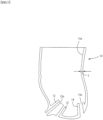
- the dummy 10 is hollow in the torso and the thighs. That is, the dummy 10 has a hollow 11 communicating with the torso end and the thighs.
- the wall thickness t between the exterior surface and the corresponding interior surface 10a of the dummy 10 is 3 to 15 mm, except for body fluid discharge areas.
- the dummy With a wall thickness of less than 3 mm, the dummy is vulnerable to damage, whereas with a wall thickness of over 15 mm, the dummy may be too heavy, and may cause optical refraction at the wall of the molded body to impair viewability therethrough.
- the wall thickness t is more preferably 3 to 8 mm.
- the body fluid discharge areas i.e., a urea discharge area 12 and a loose stool discharge area 14, are provided with through holes 12a, 14a, respectively, communicating with the hollow 11 and the outside.
- the reference numeral 13 refers to a menstrual blood discharge area for a female model, which is not provided with a through hole in an embodiment. This discharge area may be bored to form a through hole as necessary.
- Fig. 1 illustrates the state where the through hole is provided.
- the dummy is a transparent resin molded body.
- the resin molded body may preferably be a molded body of an ultraviolet curable resin for ready molding.
- the ultraviolet curable resin is a resin which forms a cross-linked structure through reaction of polymerizable oligomers or monomers having vinyl, acryloyl, epoxy, or the like groups, with radicals or cations generated by light (ultraviolet ray) irradiation being the initiating species.
- Ultraviolet curable resins are categorized into a radical polymerization type and a cationic polymerization type, depending on the reaction mechanism (initiating species).
- Acrylate-based monomers or oligomers which are of the radical polymerization type, may preferably be used.
- Ultraviolet absorption causes the initiator to generate radicals, which causes acrylate resin or acrylate monomers having acryloyl groups in the molecules thereof to undergo radical polymerization.
- Photocationic polymerization may alternatively be employed, wherein ultraviolet absorption causes the initiator to generate acid, which causes vinyl monomers or cyclic ethers to initiate cationic polymerization.
- Components for producing the ultraviolet curable resin are mainly polymerizable oligomers (prepolymers), polyfunctional monomers for controlling curability or physical properties, monofunctional monomers as a reactive diluent, and a photopolymerization initiator, and other additive components may optionally be used.
- the photopolymerizable oligomers may be urethane acrylate, epoxy acrylate, acryl acrylate, or polyester acrylate.
- the photopolymerizable monomers may be polyfunctional acrylate monomers or monofunctional acrylate monomers.
- the photopolymerization initiator may be benzophenone-, acetophenone-, benzoin ether-, or thioxanthone-based.
- the photopolymerizable oligomers may be alicyclic epoxy, glycidyl-type epoxy, or oxetane compounds (cyclic ethers).
- the photopolymerizable monomers may be vinyl ether monomers.
- the photopolymerization initiator may be sulfonium salt- or iodonium salt-based.
- the additives may include, in either case, polymerization inhibitors, fillers, pigments, dyes, antifoaming agents, or viscosity modifiers, but preferably fillers and pigments are not used.
- the body fluid discharge areas may preferably be provided with protrusions 12, 13, 14 protruding into the hollow 11, and through the protrusions 12, 13, 14 are preferably formed through holes 12a, (13a), 14a, respectively.
- a body fluid discharge port need to be formed, but if a discharge port is formed through a wall portion with the wall thickness t without the protrusions 12, 13, 14 formed, cracks may be likely to occur, starting from the opening edges of the discharge port.
- the risk of cracks may be higher with the wall thickness t of 3 to 8 mm.
- protrusions 12, 13, 14 protruding into the hollow 11, so to speak reinforced areas are formed around the through holes 12a, (13a), 14a, which eliminate the risk of cracks.
- the length of the protrusions is preferably 5 to 30 mm. Excessive protrusion length impairs the viewability.
- the protrusions may have external protrusions on the other side of the wall but, most suitably, without such external protrusions, which could be an obstacle to body fluid diffusion.
- the length of the external protrusions, if any, is preferably short.
- the length of the external protrusion is preferably 8 to 20 mm for child dummies for conformity with the actual human body.
- a body-fluid-absorbent article 30 under test is fit on the dummy 10 as shown in Fig. 6 , simulated body fluid 21, such as artificial urine, simulated loose stool, or artificial menstrual blood, is supplied through the dummy 10, and the body fluid absorption and diffusion in the body-fluid-absorbent article is determined.
- simulated body fluid 21 such as artificial urine, simulated loose stool, or artificial menstrual blood
- a transparent tube 20 may be inserted into the through hole 12a to supply the simulated body fluid 21.
- imaging with video or the like may be performed, and diffusion of body fluid over time may be monitored.
- distribution in amount of the body fluid in diffusion may be analyzed with images taken with a thermocamera or video.
- the present invention is applicable to tests on body-fluid-absorbent articles, such as disposable diapers, sanitary napkins, and absorbent pads.
Landscapes
- Health & Medical Sciences (AREA)
- Engineering & Computer Science (AREA)
- General Health & Medical Sciences (AREA)
- General Physics & Mathematics (AREA)
- Physics & Mathematics (AREA)
- Animal Behavior & Ethology (AREA)
- Biomedical Technology (AREA)
- Vascular Medicine (AREA)
- Heart & Thoracic Surgery (AREA)
- Public Health (AREA)
- Veterinary Medicine (AREA)
- Epidemiology (AREA)
- Life Sciences & Earth Sciences (AREA)
- Computational Mathematics (AREA)
- Mathematical Physics (AREA)
- Algebra (AREA)
- Medical Informatics (AREA)
- Chemical & Material Sciences (AREA)
- Mathematical Analysis (AREA)
- Mathematical Optimization (AREA)
- Medicinal Chemistry (AREA)
- Pure & Applied Mathematics (AREA)
- Business, Economics & Management (AREA)
- Educational Administration (AREA)
- Educational Technology (AREA)
- Theoretical Computer Science (AREA)
- Absorbent Articles And Supports Therefor (AREA)
- Orthopedics, Nursing, And Contraception (AREA)
Abstract
Description
- The present invention relates to fitting dummies for body fluid absorption tests on body-fluid-absorbent articles, such as disposable diapers, sanitary napkins, and absorbent pads.
- Body-fluid-absorbent articles, such as disposable diapers, sanitary napkins, and absorbent pads, are often subjected to tests for the purpose of deciding their specifications, researching their performance, or the like, by fitting an article on a so-called dummy composed of a torso and a pair of thighs, supplying simulated body fluid through the dummy, and visually observing the absorption, diffusion, or the like, of the body fluid in the body-fluid-absorbent articles.
- Conventionally, such a dummy is known to be produced by casting the overall torso and thighs with silicon rubber. That is, the overall torso and thighs of the dummy are solid inside.
- Combination of the facts that the conventional dummy is solid inside and thus heavy, is made of silicon rubber, and has a higher optical refraction due to its internal solidity, has been posing difficulties to visual observation of absorption and diffusion of body fluid through the dummy.
- Patent Publication 1 discloses a proposal for reproduction of the state of an absorbent article fit on a human body. This, however, does not allow monitoring observation of actual absorption and diffusion of body fluid.
- Patent Publication 1:
JP 2018-183491 A - Therefore, the present invention resides in providing a fitting dummy for testing on a body-fluid-absorbent article which, with an absorbent article fit thereon, allows clear capture of absorption, diffusion, or the like of body fluid.
- The fitting dummy for testing on a body-fluid-absorbent article according to the present invention solving the above-mentioned problem is a dummy having an external shape representing an external shape of a human body including at least a torso and a pair of thighs,
- wherein the dummy is hollow in at least the torso and the thighs,
- wherein a wall thickness between an exterior surface and a corresponding interior surface of the dummy is 3 to 15 mm except for a body fluid discharge area,
- wherein the body fluid discharge area is provided with a through hole communicating with the hollow and outside, and
- wherein the dummy is a transparent resin molded body.
- Also proposed is a testing method using the fitting dummy for testing on a body-fluid-absorbent article, the method including:
- fitting a body-fluid-absorbent article on the dummy,
- supplying a simulated body fluid from inside of the hollow, and
- capturing at least one phenomenon of absorption and diffusion, in the body-fluid-absorbent article, of the simulated body fluid transferred through the through hole into the body-fluid-absorbent article.
- According to the present invention, with an absorbent article fit on the dummy, clear capturing of absorption, diffusion, or the like of body fluid may be conducted.
-
-
Fig. 1 is a schematic vertical sectional view of a dummy. -
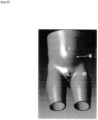
Fig. 2 is a perspective view (photograph) of a dummy in an upright position, seen from the torso end side. -
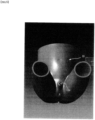
Fig. 3 is a front view (photograph) of the dummy in the upright position. -
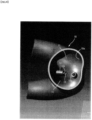
Fig. 4 is a plan view (photograph) of a dummy in a sitting position, seen from the torso end side. -
Fig. 5 is a front view (photograph) of the dummy in the sitting position. -
Fig. 6 is a schematic vertical sectional view of a dummy illustrating the state of testing. - The present invention will now be explained further with reference to the embodiments of the invention.
- A dummy according to an embodiment of the invention is transparent and thus its appearance is hard to be indicated. In this regard, colored molded-body dummies are produced and photographed to show the appearance of the dummies in
Figs. 2 to 5 . - A
dummy 10 according to an embodiment of the invention has an external shape representing the external shape of a human body including at least the torso and a pair of thighs. - The dummy may include the chest or the lower extremity, which are not essentially necessary, though, as an absorbent article is fit on the torso and the thighs.
- The
dummy 10 is hollow in the torso and the thighs. That is, thedummy 10 has a hollow 11 communicating with the torso end and the thighs. - The wall thickness t between the exterior surface and the corresponding
interior surface 10a of thedummy 10 is 3 to 15 mm, except for body fluid discharge areas. - With a wall thickness of less than 3 mm, the dummy is vulnerable to damage, whereas with a wall thickness of over 15 mm, the dummy may be too heavy, and may cause optical refraction at the wall of the molded body to impair viewability therethrough.
- The wall thickness t is more preferably 3 to 8 mm.
- The body fluid discharge areas, i.e., a
urea discharge area 12 and a loosestool discharge area 14, are provided with throughholes - The
reference numeral 13 refers to a menstrual blood discharge area for a female model, which is not provided with a through hole in an embodiment. This discharge area may be bored to form a through hole as necessary.Fig. 1 illustrates the state where the through hole is provided. - A higher viewability through the dummy is more preferred and, accordingly, the dummy is a transparent resin molded body.
- The resin molded body may preferably be a molded body of an ultraviolet curable resin for ready molding.
- The ultraviolet curable resin is a resin which forms a cross-linked structure through reaction of polymerizable oligomers or monomers having vinyl, acryloyl, epoxy, or the like groups, with radicals or cations generated by light (ultraviolet ray) irradiation being the initiating species.
- Ultraviolet curable resins are categorized into a radical polymerization type and a cationic polymerization type, depending on the reaction mechanism (initiating species). Acrylate-based monomers or oligomers, which are of the radical polymerization type, may preferably be used. Ultraviolet absorption causes the initiator to generate radicals, which causes acrylate resin or acrylate monomers having acryloyl groups in the molecules thereof to undergo radical polymerization.
- Photocationic polymerization may alternatively be employed, wherein ultraviolet absorption causes the initiator to generate acid, which causes vinyl monomers or cyclic ethers to initiate cationic polymerization.
- Components for producing the ultraviolet curable resin are mainly polymerizable oligomers (prepolymers), polyfunctional monomers for controlling curability or physical properties, monofunctional monomers as a reactive diluent, and a photopolymerization initiator, and other additive components may optionally be used.
- Examples of these components are as follows. For photoradical polymerization, the photopolymerizable oligomers may be urethane acrylate, epoxy acrylate, acryl acrylate, or polyester acrylate.
- The photopolymerizable monomers may be polyfunctional acrylate monomers or monofunctional acrylate monomers.
- The photopolymerization initiator may be benzophenone-, acetophenone-, benzoin ether-, or thioxanthone-based.
- On the other hand, for photocationic polymerization, the photopolymerizable oligomers may be alicyclic epoxy, glycidyl-type epoxy, or oxetane compounds (cyclic ethers).
- The photopolymerizable monomers may be vinyl ether monomers.
- The photopolymerization initiator may be sulfonium salt- or iodonium salt-based.
- The additives may include, in either case, polymerization inhibitors, fillers, pigments, dyes, antifoaming agents, or viscosity modifiers, but preferably fillers and pigments are not used.
- In an embodiment, the body fluid discharge areas may preferably be provided with
protrusions protrusions holes 12a, (13a), 14a, respectively. - For testing, a body fluid discharge port need to be formed, but if a discharge port is formed through a wall portion with the wall thickness t without the
protrusions - In contrast, with the
protrusions holes 12a, (13a), 14a, which eliminate the risk of cracks. The length of the protrusions is preferably 5 to 30 mm. Excessive protrusion length impairs the viewability. - Note that the protrusions may have external protrusions on the other side of the wall but, most suitably, without such external protrusions, which could be an obstacle to body fluid diffusion. The length of the external protrusions, if any, is preferably short.
- For representing a protruding male genital, the length of the external protrusion is preferably 8 to 20 mm for child dummies for conformity with the actual human body.
- In testing, a body-fluid-
absorbent article 30 under test is fit on thedummy 10 as shown inFig. 6 ,simulated body fluid 21, such as artificial urine, simulated loose stool, or artificial menstrual blood, is supplied through thedummy 10, and the body fluid absorption and diffusion in the body-fluid-absorbent article is determined. - For example, as shown in
Fig. 6 , atransparent tube 20 may be inserted into the throughhole 12a to supply thesimulated body fluid 21. - In this case, in addition to visual observation by the tester, imaging with video or the like may be performed, and diffusion of body fluid over time may be monitored.
- Further, distribution in amount of the body fluid in diffusion may be analyzed with images taken with a thermocamera or video.
- The present invention is applicable to tests on body-fluid-absorbent articles, such as disposable diapers, sanitary napkins, and absorbent pads.
-
- 10: dummy
- 11: hollow
- 12, 13, 14: protrusion (discharge area)
- 12a, 14a: through hole
- 20: tube
- 21: simulated body fluid
- 30: body-fluid-absorbent article
Claims (6)
- A fitting dummy for testing on a body-fluid-absorbent article, the dummy having an external shape representing an external shape of a human body including at least a torso and a pair of thighs,wherein the dummy is hollow in at least the torso and the thighs,wherein a wall thickness between an exterior surface and a corresponding interior surface of the dummy is 3 to 15 mm except for a body fluid discharge area,wherein the body fluid discharge area is provided with a through hole communicating with the hollow and outside, andwherein the dummy is a transparent resin molded body.
- The fitting dummy for testing on a body-fluid-absorbent article according to claim 1, wherein the resin molded body is a molded body of an ultraviolet curable resin.
- The fitting dummy for testing on a body-fluid-absorbent article according to claim 1, wherein the body fluid discharge area is provided with a protrusion protruding into the hollow, and through the protrusion a through hole is formed.
- The fitting dummy for testing on a body-fluid-absorbent article according to claim 1, wherein the wall thickness is 3 to 8 mm.
- The fitting dummy for testing on a body-fluid-absorbent article according to claim 1, wherein the through hole is configured to receive a transparent tube therein for supply of a simulated body fluid.
- A testing method using the fitting dummy for testing on a body-fluid-absorbent article according to any one of claims 1 to 5, the method comprising:fitting a body-fluid-absorbent article on the dummy,supplying a simulated body fluid from inside of the hollow, andcapturing at least one phenomenon of absorption and diffusion, in the body-fluid-absorbent article, of the simulated body fluid transferred through the through hole into the body-fluid-absorbent article.
Applications Claiming Priority (2)
| Application Number | Priority Date | Filing Date | Title |
|---|---|---|---|
| JP2020151575A JP2022045796A (en) | 2020-09-09 | 2020-09-09 | Fitting dummy for body fluid absorbent article test, and test method using the same |
| PCT/JP2021/030567 WO2022054538A1 (en) | 2020-09-09 | 2021-08-20 | Wearable dummy for testing body liquid absorbent article, and test method for using same |
Publications (1)
| Publication Number | Publication Date |
|---|---|
| EP4190296A1 true EP4190296A1 (en) | 2023-06-07 |
Family
ID=80631526
Family Applications (1)
| Application Number | Title | Priority Date | Filing Date |
|---|---|---|---|
| EP21866498.5A Withdrawn EP4190296A1 (en) | 2020-09-09 | 2021-08-20 | Wearable dummy for testing body liquid absorbent article, and test method for using same |
Country Status (6)
| Country | Link |
|---|---|
| US (1) | US20230410689A1 (en) |
| EP (1) | EP4190296A1 (en) |
| JP (1) | JP2022045796A (en) |
| CN (1) | CN116113390A (en) |
| TW (1) | TW202218645A (en) |
| WO (1) | WO2022054538A1 (en) |
Families Citing this family (1)
| Publication number | Priority date | Publication date | Assignee | Title |
|---|---|---|---|---|
| CN119985939B (en) * | 2025-04-14 | 2025-07-15 | 宁波大禾仪器有限公司 | Concealed sweat steaming dummy detection module |
Family Cites Families (11)
| Publication number | Priority date | Publication date | Assignee | Title |
|---|---|---|---|---|
| JP3950784B2 (en) * | 2002-11-11 | 2007-08-01 | 大王製紙株式会社 | Dummy doll for performance inspection of paper diapers and performance testing device for paper diapers using the dummy doll |
| JP4632649B2 (en) * | 2003-10-03 | 2011-02-16 | ユニ・チャーム株式会社 | How to display display and sanitary products |
| JP4689160B2 (en) * | 2003-12-09 | 2011-05-25 | ユニ・チャーム株式会社 | Model and explanatory tool using this model |
| JP5058526B2 (en) * | 2006-07-20 | 2012-10-24 | ユニ・チャーム株式会社 | Absorbent article evaluation apparatus and absorbent article evaluation method |
| JP2012133177A (en) * | 2010-12-22 | 2012-07-12 | Daiei Kk | Article for display |
| JP5791188B2 (en) * | 2011-09-27 | 2015-10-07 | ユニ・チャーム株式会社 | Void amount measuring apparatus and void amount measuring method |
| JP2013164277A (en) * | 2012-02-09 | 2013-08-22 | Gunze Ltd | Torso and evaluation method using torso |
| JP2013188445A (en) * | 2012-03-15 | 2013-09-26 | Kami Shoji Kk | Absorbent article, and diaper |
| JP5822908B2 (en) * | 2013-12-27 | 2015-11-25 | 国立大学法人鳥取大学 | Method for displaying and analyzing body fluid absorption form of absorbent articles |
| JP2018183491A (en) | 2017-04-27 | 2018-11-22 | 日本製紙クレシア株式会社 | Test instrument for measuring leakage of absorptive article and test method |
| JP7126199B2 (en) * | 2018-09-27 | 2022-08-26 | 大王製紙株式会社 | Absorbent article displacement detection method and evaluation method |
-
2020
- 2020-09-09 JP JP2020151575A patent/JP2022045796A/en active Pending
-
2021
- 2021-08-04 TW TW110128682A patent/TW202218645A/en unknown
- 2021-08-20 CN CN202180057915.4A patent/CN116113390A/en not_active Withdrawn
- 2021-08-20 WO PCT/JP2021/030567 patent/WO2022054538A1/en not_active Ceased
- 2021-08-20 US US18/040,240 patent/US20230410689A1/en not_active Abandoned
- 2021-08-20 EP EP21866498.5A patent/EP4190296A1/en not_active Withdrawn
Also Published As
| Publication number | Publication date |
|---|---|
| TW202218645A (en) | 2022-05-16 |
| WO2022054538A1 (en) | 2022-03-17 |
| JP2022045796A (en) | 2022-03-22 |
| US20230410689A1 (en) | 2023-12-21 |
| CN116113390A (en) | 2023-05-12 |
Similar Documents
| Publication | Publication Date | Title |
|---|---|---|
| CN102680267B (en) | Testing equipment for mechanical property of intravascular stents | |
| DE60023930T2 (en) | ULTRA-SMALL FIBER OPTIC PROBES AND PICTURE OPTICS | |
| EP2573746B1 (en) | Vascular stenosis model | |
| WO2007109147A3 (en) | System and method for creating a stable optical interface | |
| WO1998019184A2 (en) | Optical fiber imaging system | |
| DE102012207049A1 (en) | INTRAVASAL ROTATION BLOOD PUMP | |
| BR0210729A (en) | System and process for assessing urinary function | |
| US20230410689A1 (en) | Fitting dummy for testing on body-fluid-absorbent articles and test method using the same | |
| KR20220129040A (en) | Microneedle, microcone, and method for manufacturing the same using photolithography | |
| Pishchalnikov et al. | Effect of firing rate on the performance of shock wave lithotriptors | |
| Cozzi et al. | Velocity measurements in nasal cavities by means of stereoscopic piv-preliminary tests | |
| Lee et al. | 3D-printing-assisted extraluminal anti-reflux diodes for preventing vesicoureteral reflux through double-J stents | |
| CN115531752A (en) | Focused ultrasound treatment head and focused ultrasound treatment method | |
| JP2022045796A5 (en) | ||
| US20150250483A1 (en) | Uv-curing resin injection device for aneurism treatment | |
| CN105854160A (en) | Visual urethra expansion bougic with epitheca capable of being torn open | |
| WO2013038309A1 (en) | Intraocular lens | |
| DE102008017106A1 (en) | Process and formulation for the generative production of biocompatible, radiation-curing medical products, in particular ear molds, with reduced discoloration | |
| CN101371773A (en) | Endoscope with device for monitoring inserting force | |
| CN205450363U (en) | Measure and regulate examination structure is examined in laser beam coupling | |
| Watt et al. | Concurrent optical ultrasound and CT imaging | |
| DE102011013191A1 (en) | Method for creating a surgical template for an implant surgery | |
| CN215348863U (en) | Novel flexible ureteroscope channel sheath | |
| JPH055530Y2 (en) | ||
| CN206080485U (en) | Prevent dead angle flexible ureteroscope |
Legal Events
| Date | Code | Title | Description |
|---|---|---|---|
| STAA | Information on the status of an ep patent application or granted ep patent |
Free format text: STATUS: THE INTERNATIONAL PUBLICATION HAS BEEN MADE |
|
| PUAI | Public reference made under article 153(3) epc to a published international application that has entered the european phase |
Free format text: ORIGINAL CODE: 0009012 |
|
| STAA | Information on the status of an ep patent application or granted ep patent |
Free format text: STATUS: REQUEST FOR EXAMINATION WAS MADE |
|
| 17P | Request for examination filed |
Effective date: 20230227 |
|
| AK | Designated contracting states |
Kind code of ref document: A1 Designated state(s): AL AT BE BG CH CY CZ DE DK EE ES FI FR GB GR HR HU IE IS IT LI LT LU LV MC MK MT NL NO PL PT RO RS SE SI SK SM TR |
|
| DAV | Request for validation of the european patent (deleted) | ||
| DAX | Request for extension of the european patent (deleted) | ||
| STAA | Information on the status of an ep patent application or granted ep patent |
Free format text: STATUS: THE APPLICATION IS DEEMED TO BE WITHDRAWN |
|
| 18D | Application deemed to be withdrawn |
Effective date: 20240301 |