EP4188024A1 - System und verfahren zur auflösung verborgener knoten über kollisionsvermeidung in netzwerken mit automatischer 4g-verknüpfung (ale) - Google Patents
System und verfahren zur auflösung verborgener knoten über kollisionsvermeidung in netzwerken mit automatischer 4g-verknüpfung (ale) Download PDFInfo
- Publication number
- EP4188024A1 EP4188024A1 EP22209991.3A EP22209991A EP4188024A1 EP 4188024 A1 EP4188024 A1 EP 4188024A1 EP 22209991 A EP22209991 A EP 22209991A EP 4188024 A1 EP4188024 A1 EP 4188024A1
- Authority
- EP
- European Patent Office
- Prior art keywords
- node
- ale
- network
- channel
- collision avoidance
- Prior art date
- Legal status (The legal status is an assumption and is not a legal conclusion. Google has not performed a legal analysis and makes no representation as to the accuracy of the status listed.)
- Withdrawn
Links
- 238000000034 method Methods 0.000 title claims abstract description 27
- 230000005540 biological transmission Effects 0.000 claims abstract description 69
- 239000013598 vector Substances 0.000 claims abstract description 36
- 230000003247 decreasing effect Effects 0.000 claims 1
- 230000004044 response Effects 0.000 abstract description 4
- 230000000977 initiatory effect Effects 0.000 description 6
- 238000004891 communication Methods 0.000 description 4
- 101100172132 Mus musculus Eif3a gene Proteins 0.000 description 3
- 238000013459 approach Methods 0.000 description 3
- 230000007423 decrease Effects 0.000 description 3
- 238000010586 diagram Methods 0.000 description 3
- 230000002411 adverse Effects 0.000 description 2
- 238000001514 detection method Methods 0.000 description 2
- 230000006870 function Effects 0.000 description 2
- 238000012790 confirmation Methods 0.000 description 1
- 238000010276 construction Methods 0.000 description 1
- 230000001419 dependent effect Effects 0.000 description 1
- 230000002265 prevention Effects 0.000 description 1
- 238000006467 substitution reaction Methods 0.000 description 1
Images



Classifications
-
- H—ELECTRICITY
- H04—ELECTRIC COMMUNICATION TECHNIQUE
- H04W—WIRELESS COMMUNICATION NETWORKS
- H04W74/00—Wireless channel access
- H04W74/002—Transmission of channel access control information
-
- H—ELECTRICITY
- H04—ELECTRIC COMMUNICATION TECHNIQUE
- H04W—WIRELESS COMMUNICATION NETWORKS
- H04W74/00—Wireless channel access
- H04W74/08—Non-scheduled access, e.g. ALOHA
- H04W74/0808—Non-scheduled access, e.g. ALOHA using carrier sensing, e.g. carrier sense multiple access [CSMA]
- H04W74/0816—Non-scheduled access, e.g. ALOHA using carrier sensing, e.g. carrier sense multiple access [CSMA] with collision avoidance
-
- H—ELECTRICITY
- H04—ELECTRIC COMMUNICATION TECHNIQUE
- H04W—WIRELESS COMMUNICATION NETWORKS
- H04W52/00—Power management, e.g. Transmission Power Control [TPC] or power classes
- H04W52/04—Transmission power control [TPC]
- H04W52/18—TPC being performed according to specific parameters
- H04W52/24—TPC being performed according to specific parameters using SIR [Signal to Interference Ratio] or other wireless path parameters
- H04W52/243—TPC being performed according to specific parameters using SIR [Signal to Interference Ratio] or other wireless path parameters taking into account interferences
-
- H—ELECTRICITY
- H04—ELECTRIC COMMUNICATION TECHNIQUE
- H04W—WIRELESS COMMUNICATION NETWORKS
- H04W76/00—Connection management
- H04W76/10—Connection setup
Definitions
- the subject matter disclosed herein is directed generally to tactical radio communications and more particularly to prevention of interference with linked calls over Automatic Link Establishment (ALE) networks.
- ALE Automatic Link Establishment
- Performance standards and parameters outlined in MIL-STD-188-141D for long-haul and tactical radio systems communicating in the medium frequency (MF; e.g., between 0.3 MHz and 3 MHz) and high frequency (HF; e.g., between 3 MHz and 30 MHz) bands provide protocols and performance requirements for Automatic Link Establishment (ALE) systems and networks, the most current version of which is fourth generation (4G) ALE, or Wideband ALE (WALE).
- MF medium frequency
- HF high frequency
- ALE Automatic Link Establishment
- 4G fourth generation
- WALE Wideband ALE
- caller and called nodes of the ALE network establishing a new linked call must first perform channel sensing before initiating a linked call (or responding to a linked call) to ensure that the assigned calling channel is not occupied by ongoing traffic.
- Caller nodes perform listen-before-transmit (LBT) operations, and called nodes perform listen-before-responding (LBR) approaches.
- LBT listen-before-transmit
- LBR listen-before-responding
- a participating node participating unit, PU, calling PU
- the PU includes an ALE radio system capable of receiving an assigned frequency band (e.g., ALE channel) for initiating a linked call to a partner node (e.g., receiving node, called PU) of the network.
- the calling and called PUs mutually determine a transmission channel and a reception channel within the assigned frequency band, the transmission and reception channels including a subset of sub-channel vectors within the assigned frequency band.
- each CA PDU identifies the calling node and includes a priority level and maximum duration of the linked call.
- Each CA PDU identifies the agreed-upon transmission and reception channels to be used for the linked call, such that proximate nodes that may not have been aware of the linked call may avoid causing interference with the linked call during its likely duration.
- the ALE network is not perfectly time-synchronized, and the transmitting PU ensures all scanning nodes can receive the CA PDU by transmitting at least D (N + 2) CA PDUs, where D is a minimum dwell time duration and N is the number of channels on the scanlist for the ALE network.
- the transmitting PU may append one or more text messages to the CA PDU.
- the transmitting PU increases or decreases its transmission power when transmitting the CA PDU in order to increase or decrease the collision avoidance range, e.g., based on an interference tolerance of the linked call.
- the transmitting PU is the calling PU, and transmits the CA PDU via the established transmission channel.
- the transmitting PU is the called (receiving) PU, and transmits the CA PDU via the established reception channel (e.g., the channel used by the receiving PU for transmissions associated with the linked call).
- the established reception channel e.g., the channel used by the receiving PU for transmissions associated with the linked call.
- a method for collision avoidance between a calling PU and other PUs of an ALE network includes receiving an assigned frequency band (ALE channel) for a linked call between the calling PU and a called PU (e.g., receiving PU) of the ALE network.
- the method includes establishing a secure link from the calling PU to the called PU via the assigned ALE channel.
- the method includes determining, via the calling PU in collaboration with the called PU, a transmission channel and reception channel within the ALE channel for use associated with the linked call, the transmission and reception channels each comprising a band of sub-channel vectors within the assigned ALE channel.
- the method includes, during a dwell time between the completion of an ALE handshake between the calling and called PUs and the commencement of data transmission associated with the linked call, transmitting via the assigned ALE channel a collision avoidance (CA) PDU including: a unique identifier of the transmitting PU; a priority level and maximum duration associated with the linked call, and identifiers for the transmission and reception channels (e.g., which sub-channel vectors of the assigned ALE channel will be used for transmission and reception by the transmitting node).
- CA collision avoidance
- the method includes transmission (via the calling PU) of the CA PDU via the determined transmission channel.
- the method includes adjusting (via the calling PU) of transmission power when transmitting the CA PDU, e.g., based on a desired collision avoidance range or based on the interference tolerance of the linked call.
- the method includes appending at least one text message to the CA PDU.
- the method includes transmitting (via the calling PU) at least D (N + 2) CA PDUs, where D is a minimum dwell time and N is the number of channels in the ALE network's scanlist.
- a letter following a reference numeral is intended to reference an embodiment of the feature or element that may be similar, but not necessarily identical, to a previously described element or feature bearing the same reference numeral (e.g., 1, 1a, 1b).
- reference numeral e.g. 1, 1a, 1b
- Such shorthand notations are used for purposes of convenience only and should not be construed to limit the disclosure in any way unless expressly stated to the contrary.
- any reference to “one embodiment” or “some embodiments” means that a particular element, feature, structure, or characteristic described in connection with the embodiment is included in at least one embodiment disclosed herein.
- the appearances of the phrase “in some embodiments” in various places in the specification are not necessarily all referring to the same embodiment, and embodiments may include one or more of the features expressly described or inherently present herein, or any combination or sub-combination of two or more such features, along with any other features which may not necessarily be expressly described or inherently present in the instant disclosure.
- Participating nodes initiating a linked call transmit collision avoidance information before initiating a transmission, providing information about the linked call to other nodes within the network so that the other nodes can avoid creating interference with the linked call.
- FIG. 1- NETWORK GENERALLY
- the ALE network may include participating units (PU; e.g., nodes) 102, 104, 106, 108.
- PU participating units
- PU e.g., nodes
- the ALE network 100 may be a 4G ALE (e.g., WALE) network.
- each PU 102, 104, 106, 108 may comprise a 4G ALE radio system configured for scanning through a series of ALE channels (e.g., adjacent frequency bands generally up to 48 kHz in width, each frequency band comprising a series of adjacent 3 kHz sub-channels) as provided for by MIL-STD-188-141D.
- ALE channels e.g., adjacent frequency bands generally up to 48 kHz in width, each frequency band comprising a series of adjacent 3 kHz sub-channels
- Each PU 102, 104, 106, 108 may include control processors 110, transceiver equipment 112 (e.g., signal filters, signal amplifiers), and antenna elements 114 for transmitting and receiving data along MF, HF, Wideband HF (WBHF), ALE, and/or WALE channels.
- transceiver equipment 112 e.g., signal filters, signal amplifiers
- antenna elements 114 for transmitting and receiving data along MF, HF, Wideband HF (WBHF), ALE, and/or WALE channels.
- a caller PU 102 may initiate a linked call 116 to a called PU 104 (e.g., callee node, receiving PU (RxPU)) over a 4G ALE channel 118 (e.g., WALE channel) assigned by an automatic channel selection (ACS) function.
- the ALE channel 118 may be a simplex wideband channel comprising a frequency band centered on an assigned frequency 120 and incorporating multiple sub-channel vectors 122 (e.g., 1.5 kHz, 3 kHz) within the frequency band, either higher or lower than the assigned frequency.
- a 16-vector WALE channel 118 e.g., incorporating 16 sub-channel vectors 122 of 3 kHz each
- the calling PU 102 may first listen before transmitting (LBT; e.g., to ensure the absence of other traffic and/or evaluate interference characteristics on the specified ALE channel 118) and, if the channel is unoccupied, transmit a link setup (LSU) request (LSU_REQ) protocol data unit (PDU) to the called PU 104 including sub-channel vectors 122 available to the calling PU.
- LBT link setup
- LSU_REQ link setup protocol data unit
- the called PU 104 upon receipt of the link setup LSU_REQ PDU, may listen before responding (LBR) to evaluate interference characteristics and confirm the ALE channel 118 is unoccupied, and (if unoccupied) respond to the LSU_REQ PDU with a link setup confirmation (LSU_CONF) PDU including, e.g., signal to noise ratio (SNR) measured on the transmission of the link setup request.
- LBR link setup confirmation
- SNR signal to noise ratio
- the calling PU 102 and called PU 104 may mutually negotiate the transmission (Tx) channel 116a and the reception (Rx) channel 116b, the Tx and Rx channels each comprising a set of specific sub-channel vectors 122 to be used for transmissions from the calling PU to the called PU and the specific sub-channel vectors to be used for transmissions from the called PU to the calling PU.
- the Tx and Rx channels 116a, 116b with respect to (e.g., from the perspective of) the calling PU 102 may respectively be the Rx and Tx channels with respect to the called PU 104, as explained below.
- negotiations for usable traffic may include a negotiated bit error rate (BER).
- the ALE network 100 may operate synchronously or asynchronously, depending upon whether or not the network has perfect time synchronization among its PUs 102, 104, 106, 108. For example, when operating synchronously, all PUs 102, 104, 106, 108 may dwell on, or synchronously scan, a particular ALE channel 118 for a specific dwell time; when the dwell time for the Mth ALE channel ends (where M is an integer), the dwell time for the (M+1)th ALE channel begins.
- the transmission of the LSU_REQ PDU may be timed to occur T TxOffsetTLC after the beginning of a dwell time (e.g., where T TxoffsetTLc is a time delay generally expressed in milliseconds and dependent on various network performance factors).
- the ALE network 100 may not provide for complete connectivity between all PUs 102, 104, 106, 108.
- each PU may be configured for communication only with its one-hop neighbors but not with other PUs of the network: the PU 102 may communicate with its one-hop neighbor PU 104; the PU 104 with its one-hop neighbor PUs 102, 106; the PU 106 with its one-hop neighbor PUs 104, 108; and the PU 108 with its one-hop neighbor PU 106.
- the ALE network 100 is shown.
- the ALE network 100 may be associated with a scanlist 200 comprising 4 ALE channels 118a-d.
- a "hidden node” e.g., which may be a one-hop neighbor with respect to the called node, but not with respect to the calling node
- this hidden node may fail to detect interference associated with transmissions by the calling node.
- this hidden node unaware of the ongoing linked call, then initiates a linked call to another participating node, this new linked call may create interference at the called node, adversely affecting the bit error rate (BER) performance of the original linked call.
- BER bit error rate
- the calling PU 102 is directed to initiate a linked call 116 with its one-hop neighbor, the called PU 104, on the first ALE channel 118a.
- the calling PU 102 may initiate a handshake by transmitting an LSU_REQ PDU 202 to the called PU 104 on the first ALE channel 118a.
- the PU 106 may not detect any undue interference while scanning the first ALE channel 118a, and therefore may not be aware of the LSU_REQ PDU 202 transmitted by the PU 102 on the first ALE channel.
- the PUs 106, 108 may dwell on (e.g., scan) the second and third ALE channels 118b-c. Simultaneously at time t 2 the called PU 104 may transmit a LSU_CONF PDU 204 to the calling PU 102 (e.g., in response to the LSU_REQ PDU 202), and at time t 3 the linked call 116 from the calling PU 102 to the called PU 104 may be finalized by the determination of usable sub-channel vectors and negotiation of a BER/data rate (206) over the first ALE channel 118a.
- the calling PU 102 may initiate user data transmission (208) to the called PU 104 via the linked call 116, but the PU 106 may still be unaware of the linked call.
- the PU 106 may initiate a subsequent linked call 210 to the PU 108 on the first ALE channel 118a
- the transmission of the LSU_REQ PDU 202a by the PU 106 may cause potential interference (212) at the called PU 104 (a one-hop neighbor of the PU 106).
- the potential interference 212 caused by the subsequent linked call 210 may endanger the negotiated BER performance for the original linked call 116, resulting in bit errors and/or poor network utilization.
- LSU_CA PDU 300 link setup (LSU) collision avoidance (CA) PDU 300 (LSU_CA PDU) is shown.
- the PUs (102, 104, 106, 108; FIG. 1 ) of the ALE network (100, FIG. 1 ) may prevent the hidden node problem illustrated by FIG. 2 by transmitting one or more LSU_CA PDU 300.
- both the calling PU and called PU may transmit (via their respective Tx channels (116a, 116b; FIG. 1 )) one or more instances of the LSU_CA PDU 300 to provide information about the linked call 116 to other PUs 106, 108 of the ALE network 100, such that the other PUs may take steps to avoid creating potential interference (212, FIG. 2 ) with the linked call.
- the LSU_CA PDU 300 may include a self-address field 302 indicating an address (e.g., binary address) or other identifier uniquely identifying the PU transmitting the LSU_CA PDU (e.g., either the calling PU 102 or the called PU 104).
- an address e.g., binary address
- other identifier uniquely identifying the PU transmitting the LSU_CA PDU (e.g., either the calling PU 102 or the called PU 104).
- the LSU_CA PDU 300 may include fields similar to those of other PDUs described by MIL-STD-188-141D, except that the LSU_CA PDU 300 may include a link duration field 304 indicative of the maximum duration of the linked call 116. Similarly, in embodiments the LSU_CA PDU 300 may include a link priority field 306 indicative of a priority level of the linked call 116.
- the LSU_CA PDU 300 may include a linked transmission (Tx) sub-channel field 308 and a linked reception (Rx) sub-channel field 310.
- the linked Tx sub-channel field 308 may indicate which sub-channel vectors 122 of the ALE channel 118 assigned to the linked call 116 comprise the negotiated transmission channel, or the sub-channel vectors the PU transmitting the LSU_CA PDU 300 will use for transmission during the linked call.
- the linked Tx sub-channel field 308 may indicate the transmission channel 116a of the calling PU, e.g., which sub-channel vectors 122 of the assigned ALE channel 118 will be used for user data transmission.
- the linked Rx sub-channel field 310 may indicate the sub-channel vectors 122 of the assigned ALE channel 118 comprising the negotiated reception channel 116b of the calling PU, e.g., the sub-channel vectors to be used by the calling PU for reception of responses transmitted by the called PU 104 during the linked call 116.
- the linked Tx sub-channel field 308 may indicate the transmission channel 116b of the called PU, e.g., the sub-channel vectors 122 of the assigned ALE channel 118 used by the called PU to transmit responses to the calling PU 102.
- the linked Rx sub-channel field 310 may indicate the sub-channel vectors 122 of the assigned ALE channel 118 comprising the reception channel 116a of the called PU, e.g., the sub-channel vectors to be used by the called PU for reception of user data transmitted by the called PU 104 during the linked call on its Tx channel.
- the sub-channel vectors indicated by the linked Tx sub-channel field 308 and the linked Rx sub-channel field 310 may overlap.
- the linked Tx sub-channel field 308 or the linked Rx sub-channel field 310 if, for example, the assigned ALE channel 118 is a 48 kHz WALE channel comprising 16 sub-channels 122 of 3 kHz each, the linked Tx sub-channel field and linked Rx sub-channel field may each indicate usable sub-channel vectors by setting a corresponding element (e.g., component bit) to 1, and an unused sub-channel vector by setting the element to 0.
- the calling PU 102 and called PU 104 may both use the full 48kHz band for transmission and reception, and each element of the linked Tx sub-channel field 308 and the linked Rx sub-channel field 310 (corresponding to the sub-channel vectors 122 of the assigned ALE channel) may be set to 1.
- any PU 106, 108 of the ALE network 100 receiving a LSU_CA PDU 300 may stop scanning (e.g., upon detecting a transmitted preamble of the LSU_CA PDU) and parse the LSU_CA PDU, logging the node, link, and sub-channel information received therefrom and refraining from initiating subsequent link setups and/or linked calls (210, FIG. 2 ) over any overlapping reception band indicated by the linked Rx sub-channel field 310 unless otherwise excepted from avoiding potential interference 212.
- the PU may initiate a subsequent linked call 210 without regard to any potential interference 212 that may result with respect to other proximate PUs or linked calls.
- the PUs 106, 108 may disregard any node, link, and sub-channel information provided by the LSU_CA PDU 300, and clear said node, link, and sub-channel information from memory, if the maximum duration indicated by the link duration field 304 has expired.
- the PUs 106, 108 may disregard node and sub-channel information provided by the LSU_CA PDU 300 and initiate a link setup or subsequent linked call 210 without regard to potential interference 212 that may result.
- the PUs 106, 108 may be free to continue scanning operations.
- the PU 106 may decode the LSU_CA PDU 300 to derive link quality analysis (LQA) information, e.g., as provided by commonly owned U.S. Patent Application Serial No. 17/220,506 , which is herein incorporated by reference in its entirety.
- LQA link quality analysis
- ACS automatic channel selection
- operations at the PU 106 may consider LQA information and/or Tx sub-channel information provided by the linked Tx sub-channel field 308 in selecting an ALE channel (118a-d, FIG. 2 ) best suited for a subsequent linked call 210 to the PU 108.
- the calling PU 102 and called PU 104 may each transmit one or more LSU_CA PDU 300 for a linked call 116 after the handshake is completed, but before transmission of user data (208, FIG. 2 ) by either the calling PU or the called PU is initiated.
- the calling PU 102 and called PU 104 may each transmit a LSU_CA PDU 300 when other PUs 106, 108 of the ALE network 100 are dwelling on the assigned ALE channel 118, e.g., after a delay of T TxOffsetTLC following the beginning of the first dwell time corresponding to the assigned ALE channel after the handshake is completed.
- the calling PU 102 and called PU 104 may guarantee that the PUs 106, 108 will scan the assigned ALE channel 118 (detecting and parsing at least one LSU_CA PDU 300) even under worst case time of day offset conditions by each transmitting at least D (N + 2) LSU_CA PDUs over the assigned ALE channel, e.g., where N is the number of ALE channels 118a-d in the scanlist 200, and D ( d min ) is the asynchronous mode minimum dwell time (e.g., in milliseconds).
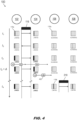
- ALE network 100 is shown.
- the ALE network 100 may be implemented and may function similarly to the ALE network 100 shown by FIG. 2 , except that as shown by FIG. 4 , at a time t 3 + ⁇ subsequent to completion of link setup operations at time t 3 but prior to the initiation of user data transmission at time t 4 , the calling PU 102 and called PU 104 may both transmit the LSU_CA PDU 300 for the benefit of proximate PUs 106, 108 within the ALE network 100.
- the PU 106 which is a one-hop neighbor of, and in the coverage area of, the called PU 104, may stop scanning the assigned ALE channel 118a upon detection of the preamble of the LSU_CA PDU 300.
- the PU 106 may parse the LSU_CA PDU 300, logging Rx sub-channel information indicated by the linked Rx sub-channel field (310, FIG. 3 ).
- the PU 106 when the PU 106 initiates a subsequent linked call 210 to the PU 108, if the maximum duration indicated by the link duration field (304, FIG. 3 ) has not expired and the PU 106 is not otherwise excepted from collision avoidance as discussed above, the PU 106 may avoid link setup or user data transmissions over the sub-channel vectors (122, FIG. 1 ) negotiated for reception by the called PU 104, preventing any undue potential interference (212, FIG. 2 ) with the linked call 116. For example, the PU 106 may instead initiate link setup and the subsequent linked call 210 with the PU 108 over the ALE channel 118b.
- a PU of the ALE network 100 may adjust its transmission power when transmitting the LSU_CA PDU 300 in order to adjust the area of collision avoidance with respect to an initiated linked call 116.
- the calling PU 102 may have only one one-hop neighbor within its coverage area, e.g., the called PU 104.
- the calling PU 102 may increase its transmission power when transmitting the LSU_CA PDU (300a) in order to reach a larger coverage area (e.g., the PU 106, which lies outside the coverage area of the calling PU) or, e.g., if the linked call 116 is associated with a particularly low tolerance for interference.
- either the calling PU 102 or the called PU 104 may append text messages or other like PDUs (402) to a transmitted LSU_CA PDU 300.
- FIG. 5-4G ALE CHANNEL SPLITTING
- the ALE network 100 is shown.
- CSMA/CA carrier-sense multiple access with collision avoidance
- RTS request-to-send
- CTS clear-to-send
- any neighboring node detecting an RTS-CTS exchange may cease transmission entirely to prevent interference.
- RTS-CTS exchanges may create additional challenges such as exposed-node scenarios, e.g., in asynchronous networks whereby a neighboring node may detect an RTS message but not the corresponding CTS message and may therefore cease transmitting whether or not there is an actual potential for interference.
- CSMA/CA may preclude any use of an assigned channel by more than one node, whether or not such use would present potential interference.
- the PU 106 may detect and parse the LSU_CA PDU 300 transmitted by the called PU 104 while scanning (e.g., dwelling on) the assigned ALE channel 118 (e.g., a 48 kHz, 16-element 4G ALE/WALE channel). For example, the PU 106 may determine (e.g., from the linked Rx sub-channel field (310, FIG.
- ACS automatic channel selection
- the PU 106 may perform link setup operations, and transmit user data pursuant to the subsequent linked call 210, over an 18 kHz transmission channel (502) comprising 6 adjacent sub-channel vectors 122 at the opposite end of the assigned ALE channel, e.g., in a range from 6 kHz to 24 kHz above the assigned frequency 120 that does not create potential interference (212, FIG. 2 ) with the linked call 116.
- the ALE network 100 does not prevent the called PU 104 and the PU 106 from using the same assigned ALE channel 118 for two linked calls 116, 210, while preventing the subsequent linked call 210 from creating potential interference 212 with the prior linked call 116.
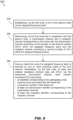
- the method 600 may be implemented by the ALE network 100 and may include the following steps.
- the calling PU receives an assigned frequency band (e.g., ALE channel) for a linked call between the calling PU and a called PU of the ALE network (e.g., by automatic channel selection (ACS) at the calling PU).
- an assigned frequency band e.g., ALE channel
- ACS automatic channel selection
- the calling PU and called PU perform link setup operations to establish a secure link for the linked call on the assigned frequency band.
- the calling PU and called PU mutually negotiate transmission and reception channels (e.g., frequency bands of sub-channel vectors dedicated for calling PU-to-called PU and called PU-to-calling PU communications respectively) and bit error rate (BER) performance for the linked call over the assigned ALE channel.
- transmission and reception channels e.g., frequency bands of sub-channel vectors dedicated for calling PU-to-called PU and called PU-to-calling PU communications respectively
- BER bit error rate
- the calling PU after the link setup handshake has been completed for the linked call over the assigned ALE channel and before user data transmission commences, transmits link setup collision avoidance (LSU_CA) protocol data units (LSU_CA PDU) for detection and decoding by proximate PUs of the ALE network.
- LSU_CA link setup collision avoidance protocol data units
- Each LSU_CA PDU includes an address identifying the transmitting PU (e.g., the calling PU or the called PU); the priority level of the linked call; the maximum duration of the linked call; and linked Tx/Rx sub-channel vector fields identifying the sub-channel vectors of the assigned ALE channel dedicated for transmission and for reception (e.g., from the perspective of the transmitting node; if the LSU_CA PDU is transmitted by the calling PU, the linked Tx sub-channel vector field identifies sub-channel vectors for calling PU-to-called PU transmissions and the linked Rx sub-channel vector field identifies sub-channel vectors for called PU-to-calling PU transmissions).
- the transmitting PU e.g., the calling PU or the called PU
- the priority level of the linked call e.g., the maximum duration of the linked call
- linked Tx/Rx sub-channel vector fields identifying the sub-channel vectors of the assigned ALE channel dedicated for transmission and for reception (e
- the transmitting PU may increase or decrease its transmission power before transmitting the LSU_CA PDU to expand or contract an area of potential collision avoidance.
- the transmitting PU may append text messages or other PDUs to the LSU_CA PDU.
- the ALE network may not be a time-synchronous network, and the asynchronous calling PU and called PU may each transmit at least D (N + 2) LSU_CA PDUs (e.g., where D is a minimum dwell time ( d min ) and N is the number of ALE channels on the ALE network scanlist) to ensure all other scanning PUs of the ALE network will scan the ALE channel even under worst-case time of day conditions.
- the transmitting PU is the called PU, and the LSU_CA PDU is transmitted via its transmission channel (e.g., the reception channel of the calling PU).
- embodiments of the methods disclosed herein may include one or more of the steps described herein. Further, such steps may be carried out in any desired order and two or more of the steps may be carried out simultaneously with one another. Two or more of the steps disclosed herein may be combined in a single step, and in some embodiments, one or more of the steps may be carried out as two or more sub-steps. Further, other steps or sub-steps may be carried in addition to, or as substitutes to one or more of the steps disclosed herein.
Landscapes
- Engineering & Computer Science (AREA)
- Computer Networks & Wireless Communication (AREA)
- Signal Processing (AREA)
- Mobile Radio Communication Systems (AREA)
Applications Claiming Priority (1)
| Application Number | Priority Date | Filing Date | Title |
|---|---|---|---|
| US17/537,210 US11678372B1 (en) | 2021-11-29 | 2021-11-29 | System and method for hidden node resolution via collision avoidance in 4G automatic link establishment (ALE) stations |
Publications (1)
| Publication Number | Publication Date |
|---|---|
| EP4188024A1 true EP4188024A1 (de) | 2023-05-31 |
Family
ID=84365303
Family Applications (1)
| Application Number | Title | Priority Date | Filing Date |
|---|---|---|---|
| EP22209991.3A Withdrawn EP4188024A1 (de) | 2021-11-29 | 2022-11-28 | System und verfahren zur auflösung verborgener knoten über kollisionsvermeidung in netzwerken mit automatischer 4g-verknüpfung (ale) |
Country Status (2)
| Country | Link |
|---|---|
| US (1) | US11678372B1 (de) |
| EP (1) | EP4188024A1 (de) |
Citations (2)
| Publication number | Priority date | Publication date | Assignee | Title |
|---|---|---|---|---|
| EP2111000A1 (de) * | 2008-04-17 | 2009-10-21 | Koninklijke Philips Electronics N.V. | Flexible Werbung in maschenartigen Netzwerken |
| US20210235514A1 (en) * | 2020-01-23 | 2021-07-29 | Rockwell Collins, Inc. | System and Method for 4G Automatic Link Establishment Protocol Enhancement |
Family Cites Families (5)
| Publication number | Priority date | Publication date | Assignee | Title |
|---|---|---|---|---|
| US10014979B2 (en) | 2012-11-13 | 2018-07-03 | Qualcomm Incorporated | Methods and apparatus for avoiding collisions due to hidden wireless nodes |
| US20160330759A1 (en) | 2015-05-07 | 2016-11-10 | Qualcomm Incorporated | Modified cts or block acknowledgement for coexistence |
| WO2017052602A1 (en) | 2015-09-25 | 2017-03-30 | Nokia Solutions And Networks Oy | Proximity services layer-2 id collision detection |
| EP3252977B1 (de) | 2016-06-01 | 2021-02-03 | Huawei Technologies Co., Ltd. | Systeme und verfahren zur anpassung einer drahtlosübertragungsrate |
| US10492165B2 (en) | 2017-11-09 | 2019-11-26 | Intel IP Corporation | Enhanced collaborating timing measurements for wireless communications |
-
2021
- 2021-11-29 US US17/537,210 patent/US11678372B1/en active Active
-
2022
- 2022-11-28 EP EP22209991.3A patent/EP4188024A1/de not_active Withdrawn
Patent Citations (2)
| Publication number | Priority date | Publication date | Assignee | Title |
|---|---|---|---|---|
| EP2111000A1 (de) * | 2008-04-17 | 2009-10-21 | Koninklijke Philips Electronics N.V. | Flexible Werbung in maschenartigen Netzwerken |
| US20210235514A1 (en) * | 2020-01-23 | 2021-07-29 | Rockwell Collins, Inc. | System and Method for 4G Automatic Link Establishment Protocol Enhancement |
Also Published As
| Publication number | Publication date |
|---|---|
| US11678372B1 (en) | 2023-06-13 |
| US20230171805A1 (en) | 2023-06-01 |
Similar Documents
| Publication | Publication Date | Title |
|---|---|---|
| EP3107340B1 (de) | Verfahren und vorrichtung zur übertragung eines rahmens in einem drahtlosen lokalen netzwerk | |
| US9100887B2 (en) | Methods and apparatus for switching between a base channel and a 60 GHz channel | |
| EP3214889B1 (de) | Verfahren und vorrichtung zur kommunikation mit einem unlizenzierten band in einem mobilkommunikationssystem | |
| EP2084862B1 (de) | Serielles cts2self-nachrichtenübermittlungsverfahren | |
| IL216378A (en) | High speed media access control and direct link protocol | |
| IL174944A (en) | High speed media access control with legacy system interoperability | |
| MXPA04007545A (es) | Minimizacion de interferencia a traves de multiplexion de division de tiempo de transmisiones ieee 802.11 y cdma. | |
| JP7197839B2 (ja) | ミリメートル波wlanネットワークにおける割り当て及び方向情報配信 | |
| US20060251017A1 (en) | Self synchronized beacon | |
| KR102353136B1 (ko) | 지향성 비컨 전송 및 수신 활동 표시 | |
| US20090147798A1 (en) | Method and apparatus for disassociation of wireless station in a wireless network | |
| US8588101B2 (en) | Method and arrangement for reducing the average time needed for a communication unit to connect to a communication network | |
| JP7244807B2 (ja) | 指向性送信知識を用いる分散スケジューリングプロトコル | |
| US20160353484A1 (en) | Efficient random scheduled channel access | |
| EP4188024A1 (de) | System und verfahren zur auflösung verborgener knoten über kollisionsvermeidung in netzwerken mit automatischer 4g-verknüpfung (ale) | |
| KR101203499B1 (ko) | Mboa 광대역 시스템에서 비컨 주기 병합의 자동적 해제 | |
| KR20100068589A (ko) | 지그비 네트워크에서의 다중 pan 중첩 회피 방법 | |
| KR20020038933A (ko) | 통신 네트워크에 장치를 연결하는 방법 | |
| CN1871793B (zh) | 以天线分集模式操作无线通信网络的发射/接收站的方法 | |
| US20260129670A1 (en) | Wireless communication device and method for intra-bss interference mitigation via non-primary channel access | |
| EP3837798A1 (de) | Ankündigung einer räumlichen belastung in mmw-wlan-netzen | |
| HK1137581B (en) | A serial clear to send to self messaging procedure |
Legal Events
| Date | Code | Title | Description |
|---|---|---|---|
| PUAI | Public reference made under article 153(3) epc to a published international application that has entered the european phase |
Free format text: ORIGINAL CODE: 0009012 |
|
| STAA | Information on the status of an ep patent application or granted ep patent |
Free format text: STATUS: THE APPLICATION HAS BEEN PUBLISHED |
|
| AK | Designated contracting states |
Kind code of ref document: A1 Designated state(s): AL AT BE BG CH CY CZ DE DK EE ES FI FR GB GR HR HU IE IS IT LI LT LU LV MC ME MK MT NL NO PL PT RO RS SE SI SK SM TR |
|
| STAA | Information on the status of an ep patent application or granted ep patent |
Free format text: STATUS: REQUEST FOR EXAMINATION WAS MADE |
|
| 17P | Request for examination filed |
Effective date: 20231130 |
|
| RBV | Designated contracting states (corrected) |
Designated state(s): AL AT BE BG CH CY CZ DE DK EE ES FI FR GB GR HR HU IE IS IT LI LT LU LV MC ME MK MT NL NO PL PT RO RS SE SI SK SM TR |
|
| GRAP | Despatch of communication of intention to grant a patent |
Free format text: ORIGINAL CODE: EPIDOSNIGR1 |
|
| STAA | Information on the status of an ep patent application or granted ep patent |
Free format text: STATUS: GRANT OF PATENT IS INTENDED |
|
| RIC1 | Information provided on ipc code assigned before grant |
Ipc: H04W 74/0816 20240101ALN20240318BHEP Ipc: H04W 74/00 20090101AFI20240318BHEP |
|
| INTG | Intention to grant announced |
Effective date: 20240409 |
|
| STAA | Information on the status of an ep patent application or granted ep patent |
Free format text: STATUS: THE APPLICATION IS DEEMED TO BE WITHDRAWN |
|
| 18D | Application deemed to be withdrawn |
Effective date: 20240810 |