EP4187859B1 - Device and method for decoding data from wireless signals - Google Patents
Device and method for decoding data from wireless signals Download PDFInfo
- Publication number
- EP4187859B1 EP4187859B1 EP22208732.2A EP22208732A EP4187859B1 EP 4187859 B1 EP4187859 B1 EP 4187859B1 EP 22208732 A EP22208732 A EP 22208732A EP 4187859 B1 EP4187859 B1 EP 4187859B1
- Authority
- EP
- European Patent Office
- Prior art keywords
- electronic device
- signal
- data
- carrier signal
- amplitude
- Prior art date
- Legal status (The legal status is an assumption and is not a legal conclusion. Google has not performed a legal analysis and makes no representation as to the accuracy of the status listed.)
- Active
Links
Images



Classifications
-
- H—ELECTRICITY
- H04—ELECTRIC COMMUNICATION TECHNIQUE
- H04L—TRANSMISSION OF DIGITAL INFORMATION, e.g. TELEGRAPHIC COMMUNICATION
- H04L27/00—Modulated-carrier systems
- H04L27/02—Amplitude-modulated carrier systems, e.g. using on-off keying; Single sideband or vestigial sideband modulation
-
- H—ELECTRICITY
- H02—GENERATION; CONVERSION OR DISTRIBUTION OF ELECTRIC POWER
- H02J—ELECTRIC POWER NETWORKS; CIRCUIT ARRANGEMENTS OR SYSTEMS FOR SUPPLYING OR DISTRIBUTING ELECTRIC POWER; SYSTEMS FOR STORING ELECTRIC ENERGY
- H02J50/00—Circuit arrangements or systems for wireless supply or distribution of electric power
- H02J50/10—Circuit arrangements or systems for wireless supply or distribution of electric power using inductive coupling
- H02J50/12—Circuit arrangements or systems for wireless supply or distribution of electric power using inductive coupling of the resonant type
-
- H—ELECTRICITY
- H02—GENERATION; CONVERSION OR DISTRIBUTION OF ELECTRIC POWER
- H02J—ELECTRIC POWER NETWORKS; CIRCUIT ARRANGEMENTS OR SYSTEMS FOR SUPPLYING OR DISTRIBUTING ELECTRIC POWER; SYSTEMS FOR STORING ELECTRIC ENERGY
- H02J50/00—Circuit arrangements or systems for wireless supply or distribution of electric power
- H02J50/80—Circuit arrangements or systems for wireless supply or distribution of electric power involving the exchange of data, concerning supply or distribution of electric power, between transmitting devices and receiving devices
-
- H—ELECTRICITY
- H04—ELECTRIC COMMUNICATION TECHNIQUE
- H04L—TRANSMISSION OF DIGITAL INFORMATION, e.g. TELEGRAPHIC COMMUNICATION
- H04L25/00—Baseband systems
- H04L25/38—Synchronous or start-stop systems, e.g. for Baudot code
- H04L25/40—Transmitting circuits; Receiving circuits
- H04L25/49—Transmitting circuits; Receiving circuits using code conversion at the transmitter; using predistortion; using insertion of idle bits for obtaining a desired frequency spectrum; using three or more amplitude levels ; Baseband coding techniques specific to data transmission systems
- H04L25/4904—Transmitting circuits; Receiving circuits using code conversion at the transmitter; using predistortion; using insertion of idle bits for obtaining a desired frequency spectrum; using three or more amplitude levels ; Baseband coding techniques specific to data transmission systems using self-synchronising codes, e.g. split-phase codes
-
- H—ELECTRICITY
- H04—ELECTRIC COMMUNICATION TECHNIQUE
- H04L—TRANSMISSION OF DIGITAL INFORMATION, e.g. TELEGRAPHIC COMMUNICATION
- H04L27/00—Modulated-carrier systems
- H04L27/02—Amplitude-modulated carrier systems, e.g. using on-off keying; Single sideband or vestigial sideband modulation
- H04L27/06—Demodulator circuits; Receiver circuits
Definitions
- the present disclosure relates to the field of wireless communication.
- the present disclosure relates more particularly to wireless communication between two nearby devices.
- Wireless communication signals are transmitted from a transmitting device to a receiving device.
- the transmitting device transmits a carrier signal.
- One broad category of modulation schemes is amplitude-shift keying (ASK).
- ASK amplitude-shift keying
- information is transmitted by modulating the amplitude of the carrier signal.
- a low amplitude may signify a binary value of 0.
- a high amplitude may signify a binary value of 1.
- ASK modulation schemes there are various subcategories.
- information is transmitted not by the amplitude level but by transitions in the amplitude of the carrier signal (Manchester encoding).
- transitions support the recovery of the clock, and for this reason these schemes are also called self-clocking.
- a binary 0 may be encoded as binary 01, which corresponds to a low to high transition.
- a binary 1 may be encoded as binary 10, which corresponds to a high to low transition. Transitions happen in the middle of the bit interval to support clock recovery. There can also be transitions at the bit boundary to set the carrier amplitude at the right level.
- information is encoded based on the presence or absence of a transition in the middle of the bit interval (Differential Manchester Encoding). For example, a binary 0 may be encoded as binary 00 or 11 (no transition in the middle of the bit interval). A binary 1 may be encoded as binary 01 or 10 (transition is present in the middle of the bit interval).
- the encoding pattern is chosen to guarantee a transition at the bit boundary to support clock recovery.
- the modulated carrier may have a larger bandwidth depending on the type of data.
- a stream of binary 1s may be encoded as 10101010...
- a stream of binary 0s may be encoded as 01010101...
- alternating 1s and 0s may be encoded as 01100110011.
- the latter stream has half the bandwidth with respect to the former two streams.
- a stream of binary 1s is encoded as 10101010... and a stream of binary 0s is encoded as 00110011 .... Again, the latter stream has half the bandwidth with respect to the former..
- filters with larger bandwidth are utilized and a higher sampling frequency can be called for to decode streams of one type of binary value (e.g. all 0s or all 1s) versus streams of the other type of binary value. This can reduce the performance and increase the cost and complexity of the receiving device.
- the ASK demodulation device may comprise a low-pass filter connected to a previous or following stage of a data extraction section to remove a high frequency component included in an input signal.
- the low-pass filter may be an integration filter for integrating the input signal for a predetermined time period.
- Embodiments of the present disclosure provide a receiving electronic device of a wireless communication system that decodes data utilizing a receiving bandwidth corresponding to the lower of two frequencies present in a modulated carrier signal received by the receiving device.
- the receiving device utilizes a low-pass filter that filters out signal features corresponding to the larger bandwidth. The electronic device accomplishes this without losing the data corresponding to the larger bandwidth.
- the receiving electronic device can receive a self-clocked ASK modulated signal and convert the self-clocked ASK modulated signal to an on-off keyed (OOK) signal by passing the ASK signal through the low-pass filter.
- OSK on-off keyed
- the higher frequencies are totally rejected by the low-pass filter, resulting in a zero amplitude for bits having the larger modulated bandwidth and a nonzero amplitude for bits having the smaller modulated bandwidth.
- the bits having the larger modulated bandwidth can be recovered based on the duration of time between nonzero amplitude events.
- a lower frequency clock can be used in the receiving device without losing the bits associated with the larger bandwidth in the received signal. Out of band noise is more effectively rejected due to the narrower passband of the filters on the receiver side. For the same reason, very near interferents can also be rejected.
- a receiving device in accordance with principles of the present disclosure is more power efficient and more tolerant to noise.
- the bitrate and the corresponding bandwidth can be too large for a communication channel, or the bandwidth offered by the communication channel can be too narrow to allow the bits having the larger modulated bandwidth pass without distortion.
- a receiving device in accordance with principles of the present disclosure would still be able to receive and decode the data stream without errors.
- FIG. 1 is a block diagram of a wireless communication system 100, according to one embodiment.
- the wireless communication system 100 includes a receiving electronic device 102 and a transmitting electronic device 104.
- the transmitting electronic device 104 and the receiving electronic device 102 communicate with each other utilizing wireless communication technology.
- the receiving electronic device 102 includes receiving circuitry 106.
- the receiving circuitry 106 receives wireless signals from the transmitting electronic device.
- the receiving circuitry 106 may include one or more antenna coils, one or more receiving clocks, one or more controllers, and one or more memories.
- the receiving circuitry 106 enables the receiving electronic device 102 to receive the wireless signal from the transmitting electronic device 104 and to read data encoded into the wireless signal.
- the receiving circuitry 106 of the receiving electronic device 102 includes a filter 108.
- the filter 108 enables the receiving circuitry 106 to receive a wireless signal from the transmitting electronic device 104 including both large bandwidth data values and small bandwidth data values and to filter out features of the large bandwidth data values without losing the data associated with the large bandwidth data values.
- Figure 2 includes a graph 204 illustrating a carrier signal.
- the graph 204 corresponds to the carrier signal output from the transmitting electronic device 104.
- the carrier signal is a radiofrequency signal that facilitates wireless communication.
- the carrier signal may include a substantially sinusoidal waveform, a square waveform, or other types of waveforms.
- Data may be encoded into the carrier signal by the transmitting electronic device 104.
- the data may be encoded into the carrier signal by modulating the carrier signal.
- Various modulation schemes may be utilized to encode data into the carrier signal.
- the graph 206 in Figure 2 illustrates a basic ASK modulation scheme.
- data is encoded into the carrier signal by modulating the amplitude of the carrier signal.
- the graph 202 of Figure 2 illustrates a series of data values.
- the graph 206 illustrates the amplitude of the carrier signal during each of these data values.
- a binary 0 is encoded into the carrier signal by reducing the amplitude of the carrier signal.
- a binary 1 is encoded to the carrier signal by either increasing the amplitude of the carrier signal or by maintaining the carrier signal at the standard amplitude.
- the encoded value is binary zero, the carrier signal in the graph 206 has a low amplitude.
- the carrier signal of the graph 206 has a high amplitude, or an amplitude substantially equal to the unmodulated carrier signal.
- binary 1s can be encoded with low amplitudes and binary 0s can be encoded with high amplitudes.
- FIG. 208 in Figure 2 illustrates the basic concepts of an OOK modulation scheme.
- data is encoded into the carrier signal by turning the carrier signal on and off.
- a data value of 0 may be encoded into the carrier signal by entirely turning off the carrier signal or reducing the amplitude of the carrier signal to substantially zero.
- a data value of 1 may be encoded into the carrier signal by turning on the carrier signal. Accordingly, the amplitude of the carrier signal is reduced to zero when encoding a 0 into the carrier signal. The amplitude of the carrier signal is maintained at the standard level when a 1 is encoded into the carrier signal.
- a 1 may be encoded by turning off the carrier signal and the 0 may be encoded by turning on the carrier signal.
- the level of the carrier signal is not enough to enable the receiving electronic device 102 to decode the data encoded into the carrier signal. Knowing the sampling clock, i.e., the bit boundaries and interval by which data is encoded into the carrier signal, enables the receiving electronic device 102 to sample and decode the data from the carrier signal.
- the clock signal could be sent separately from the carrier signal in order to keep synchronization and avoid bit slips.
- the clock signal can also be sent together with the data by using certain types of encoding.
- Manchester encoding information is transmitted by transitions in the amplitude of the signal carrier. In particular, the direction of the transition determines the bit. For example, 0 is encoded as 01 which corresponds to a low-to-high transition, 1 is encoded as "10" which corresponds to a high-to-low transition. There is always a transition in the middle of the bit interval. The clock signal can be extracted from the transitions. Transitions may also happen at the bit boundary to set the carrier at the right level.
- differential Manchester encoding Another example of a self-clocking ASK encoding scheme is differential Manchester encoding.
- differential Manchester encoding information is again transmitted by transitions in the amplitude of the carrier signal, but in this case, the presence or absence of a transition in the middle of the bit interval determines the bit. For example, 0 is encoded as 00 or 11 without a transition in the middle. 1 is encoded as 01 or 1 with a transition in the middle.
- the encoding pattern is chosen to guarantee the transition at the bit boundary. For this reason the clock signal can be extracted from the presence of a transition at the bit boundary.
- a sequence of all 1s utilizes twice the bandwidth as a sequence of all 0s in differential Manchester encoding.
- the pulse width of a 1 is half the pulse width of a 0. Accordingly, the frequency associated with binary 1s in differential Manchester encoding is effectively double the frequency associated with binary 0s in differential Manchester encoding.
- the receiving electronic device 102 overcomes these drawbacks by utilizing the filter 108.
- the receiving electronic device 102 utilizes the filter 108 to filter out all frequencies higher than the frequency associated with the binary 0s in the differential Manchester encoding scheme.
- the low-pass filter 108 is, thus, a low-pass filter with a cutoff frequency between the lower frequency associated with the binary 0s and a higher frequency associated with the binary 1s.
- the electronic device 102 effectively converts the ASK modulated wireless signal received from the transmitting electronic device 104 to an OOK modulated signal.
- the signal becomes an OOK signal in which 1s have zero amplitude and 0s have nonzero amplitude.
- the 0s have nonzero amplitude because they have a frequency that is less than a cutoff frequency of the low-pass filter 108.
- the receiving electronic device 102 converts the ASK modulated signal to an OOK modulated signal in which only the 0s have amplitude, the receiving electronic device 102 does not need a sampling rate associated with the higher frequency of the 1s in the differential Manchester ASK signal received from the transmitting electronic device 104.
- the receiving electronic device 102 can extract the 1s from the OOK signal in substantially the same manner as extracting 0s in traditional OOK signals.
- a gap between nonzero amplitude features, or the gap between a falling edge and a rising edge of the OOK signal indicates the presence of one or more binary 1s.
- the time duration or length of the gap between nonzero amplitudes or high amplitudes indicates the number of 1s present.
- Figures 4A includes graphs of a plurality of wireless signals received by the receiving electronic device 102 from the transmitting electronic device 104 and initially demodulated, according to one embodiment. Before demodulation, the signals of Figure 4A were received in a differential Manchester ASK encoding scheme.
- the graph 402 represents a stream of all 1s.
- the graph 404 represents a mixed stream of 1s and 0s, with more 1s than 0s.
- the graph 406 represents a mixed stream of 1s and 0s with substantially equal numbers of 1s and 0s.
- the graph 408 represents a mixed stream of 1s and 0s, with more 0s than 1s.
- the graph 410 represents a stream of all 0s.
- the graphs 402-410 illustrate the frequency differences associated with 0s and 1s in the differential Manchester encoding scheme. In particular, the frequency associated with 1s is substantially double the frequency associated with 0s.
- Figure 4C includes graphs corresponding to the signals of Figure 4B after being passed through the low-pass filter 108 of the receiving electronic device 102 of Figure 1 , according to one embodiment.
- the graph 422 corresponds to the graph 412 after being passed through the low-pass filter 108.
- the graph 424 corresponds to the graph 414 after being passed through the low-pass filter 108.
- the graph 426 corresponds to the graph 416 after being passed through the low-pass filter 108.
- the graph 428 corresponds to the graph 418 after being passed through the low-pass filter 108.
- the graph 430 corresponds to the graph 420 after being passed through the low-pass filter 108.
- Figure 4C illustrates that the higher frequency features associated with the numeral 1s are entirely absent after being passed to the low-pass filter 108.
- the graph 422 illustrates that a stream of all 1s results in a signal having no amplitude.
- the graph 430 illustrates that a stream of all 0s results in a signal having a frequency associated with the lower frequency of the 0s of the differential Manchester encoding scheme. In each of the signals 422-430, the higher frequency features associated with 1s in the differential Manchester encoding scheme are gone.
- the graphs of Figure 4C correspond to an OOK modulated signal.
- 1s are represented by durations of substantially no amplitude.
- 0s are represented by durations of nonzero amplitude.
- 1s can be extracted from the OOK signal by determining the duration of substantially zero amplitude periods between nonzero amplitude periods.
- signal processing or conditioning may be performed on the signals of Figure 4C prior to the decoding or retrieving the data from the OOK signal.
- signal processing or conditioning may convert the sharp features of the graphs 422-430 to substantially square wave like features.
- Various other types of signal processing or conditioning may be performed without departing from the scope of the present disclosure.
- differential Manchester encoded signals are converted to an OOK signal in which 1s have no amplitude and 0s have nonzero amplitude
- other types of encoding schemes can be utilized without departing from the scope of the present disclosure.
- other types of ASK encoding signals can be converted to other types of OOK signals.
- Figures 5A-5C are graphs illustrating signals associated with Figures 4A-4C , with interferents added into the signals, according to one embodiment. More particularly, graphs 502-510 of Figure 5A correspond to graphs 402-410 of Figure 4A , but with interferents included in the signals. The interferents distort the signals in the graphs 502-510.
- the graphs 512-520 correspond to the graphs 412-420 of Figure 4B , but with interferents added into the signals.
- the graphs 522-530 corresponds to the graphs 422-430, after interferents have been added into the signals of Figure 5A .
- the graphs 522-530 illustrate that the low-pass filter significantly reduces the effects of interferents, as the graphs 522-530 strongly match the graphs 422-430 but with small amounts of noise. So small amounts of noise will not prevent accurately the coating the data from the signals.
- the transmitting electronic device 104 is a wireless charging device.
- the carrier signal is configured to provide energy to the receiving electronic device 102.
- the transmitting electronic device 104 outputs the carrier signal.
- the receiving electronic device 102 includes energy harvesting circuitry that harvests energy from the carrier signal.
- the carrier signal may also be termed a wireless charging signal in this case.
- the receiving electronic device 102 may generate a charging current from the carrier signal.
- the wireless charging circuitry operates in accordance with a Qi wireless charging standard.
- the Qi wireless charging circuitry outputs a charging field in a range between 100 kHz and 500 kHz, though other frequencies may be used as standards are adjusted or as differing applications call for other frequencies outside this range.
- Data can be encoded into the charging field with a lower frequency than the frequency of the charging field.
- the low-pass filter will effectively filter out effects of the higher frequency charging field when the coding data from the charging field.
- Other wireless charging standards can be utilized without departing from the scope of the present disclosure.
- the transmitting electronic device 104 and the receiving electronic device 102 are near field communication (NFC) devices.
- the transmitting electronic device 104 outputs an NFC carrier signal with interrogation data encoded into the carrier signal.
- the receiving electronic device 102 receives the carrier signal and decodes a carrier signal utilizing the low-pass filter as described previously.
- the receiving electronic device and the transmitting electronic device 104 can communicate with each other the NFC protocols.
- the NFC carrier signal has a frequency of 13.56 MHz. However, other frequencies for the carrier signal can be utilized without departing from the scope of the present disclosure.
- Data is encoded into the carrier signal at a lower frequency than the frequency of the carrier signal. Accordingly, the low-pass filter can effectively reject effects of the higher frequency NFC carrier signal when the coding data from the NFC carrier signal.
- the receiving electronic device 102 may include an active NFC device or a passive NFC device.
- the transmitting electronic device 104 includes a transceiver 121, a control system 123, a power source 125, and a charging bay 126.
- the control system 123 includes control logic 127. The components of the transmitting electronic device 104 to cooperate together to provide wireless communication and separate wireless charging.
- the control system 123 includes control circuitry for controlling the function of the wireless charging device 124.
- the control system 123 controls the operation of the transceiver 121.
- the control system 123 controls the transmission of signals with the transceiver 121.
- the control system 123 also controls the reception of signals with the transceiver 121.
- the control system 123 can include processing resources, memory resources, and data transmission resources.
- the power source 125 provides power to the wireless charging device 124.
- the power source 125 can include one or more of an internal battery, a wired power connection to an external power source, and a wireless power connection to an external power source.
- the transceiver 121 selectively provides a wireless charging field to the electronic device 122.
- the transceiver 121 includes one or more antennas.
- the transceiver 121 operates in accordance with a Qi wireless charging standard.
- the Qi wireless charging circuitry outputs a charging field in a range between 87 kHz and 205 kHz.
- the transceiver 121 may also operate in accordance with charging protocols or standards other than Qi without departing from the scope of the present disclosure.
- the transceiver 121 of the wireless charging device 124 can be controlled by the control logic 127 of the control system 123.
- the RF transceiver selectively outputs the wireless charging field based on the types of NFC devices present as detected by the control system 123.
- the charging bay 126 includes a physical area on which an electronic device 122 can be positioned in order to receive wireless charging signals from the wireless charging device 124.
- the wireless charging device 124 detects the electronic device 122 and causes the transceiver 121 to begin outputting the wireless charging field.
- the electronic device 122 includes an antenna coil 130, a controller 132, energy harvesting circuitry 136, and a memory 134.
- the antenna coil 130 includes one or more antennas and other circuitry for receiving signals from the wireless charging device 124 and for providing signals to the wireless charging device 124. Accordingly, antenna coil 130 may be part of a transceiver of the electronic device 122.
- the controller 132 controls the operation of the antenna coil 130.
- the controller 132 controls the modulation signals output from the antenna coil 130 responsive to interrogation signals received from the wireless charging device 124.
- the controller 132 may control modulation of an impedance of the antenna coil 130.
- the memory 134 stores identification data related to the electronic device 122.
- the wireless charging signal is passed to both the energy harvesting circuitry 136 and to the low-pass filter 108 in parallel to each other.
- the low-pass filter 108 filters out higher frequency signals associated with higher bit rate or bandwidth data values encoding into the wireless charging signal, such as binary 1s in the case of differential Manchester encoding. Accordingly, the low-pass filter 108 effectively transforms the ASK modulated wireless charging signal to an OOK modulated wireless charging signal.
- the controller or other receiving circuitry can then decode the data from the OOK signal, as described previously.
- the electronic device 122 may include other circuitry without departing from the scope of the present disclosure.
Landscapes
- Engineering & Computer Science (AREA)
- Computer Networks & Wireless Communication (AREA)
- Signal Processing (AREA)
- Power Engineering (AREA)
- Physics & Mathematics (AREA)
- Spectroscopy & Molecular Physics (AREA)
- Digital Transmission Methods That Use Modulated Carrier Waves (AREA)
Description
- The present disclosure relates to the field of wireless communication. The present disclosure relates more particularly to wireless communication between two nearby devices.
- Wireless communication signals are transmitted from a transmitting device to a receiving device. In many cases, the transmitting device transmits a carrier signal. One broad category of modulation schemes is amplitude-shift keying (ASK). In an ASK modulation scheme, information is transmitted by modulating the amplitude of the carrier signal. A low amplitude may signify a binary value of 0. A high amplitude may signify a binary value of 1.
- Among the category of ASK modulation schemes, there are various subcategories. In some schemes, information is transmitted not by the amplitude level but by transitions in the amplitude of the carrier signal (Manchester encoding). The advantage is that transitions support the recovery of the clock, and for this reason these schemes are also called self-clocking. For example, a
binary 0 may be encoded as binary 01, which corresponds to a low to high transition. Abinary 1 may be encoded as binary 10, which corresponds to a high to low transition. Transitions happen in the middle of the bit interval to support clock recovery. There can also be transitions at the bit boundary to set the carrier amplitude at the right level. In another case, information is encoded based on the presence or absence of a transition in the middle of the bit interval (Differential Manchester Encoding). For example, abinary 0 may be encoded as binary 00 or 11 (no transition in the middle of the bit interval). Abinary 1 may be encoded as binary 01 or 10 (transition is present in the middle of the bit interval). The encoding pattern is chosen to guarantee a transition at the bit boundary to support clock recovery. - One issue that arises in some ASK modulation schemes, is that the modulated carrier may have a larger bandwidth depending on the type of data. For example, in some ASK modulation schemes a stream of binary 1s may be encoded as 10101010..., a stream of binary 0s may be encoded as 01010101..., and alternating 1s and 0s may be encoded as 01100110011.... The latter stream has half the bandwidth with respect to the former two streams.
- In some ASK modulation schemes, a stream of binary 1s is encoded as 10101010... and a stream of binary 0s is encoded as 00110011 .... Again, the latter stream has half the bandwidth with respect to the former.. The effect of this is that at the receiving end, filters with larger bandwidth are utilized and a higher sampling frequency can be called for to decode streams of one type of binary value (e.g. all 0s or all 1s) versus streams of the other type of binary value. This can reduce the performance and increase the cost and complexity of the receiving device.
- Document
US 7 450 666 B2 (PANASONIC CORP [JP]) 11 November 2008 (2008-11-11) provides an ASK demodulation device, which demodulates a modulated signal, which is ASK-modulated with a Manchester-encoded data sequence. The ASK demodulation device may comprise a low-pass filter connected to a previous or following stage of a data extraction section to remove a high frequency component included in an input signal. Preferably, the low-pass filter may be an integration filter for integrating the input signal for a predetermined time period. - The invention is defined in the appended claims.
- Embodiments of the present disclosure provide a receiving electronic device of a wireless communication system that decodes data utilizing a receiving bandwidth corresponding to the lower of two frequencies present in a modulated carrier signal received by the receiving device. In particular, the receiving device utilizes a low-pass filter that filters out signal features corresponding to the larger bandwidth. The electronic device accomplishes this without losing the data corresponding to the larger bandwidth.
- The receiving electronic device can receive a self-clocked ASK modulated signal and convert the self-clocked ASK modulated signal to an on-off keyed (OOK) signal by passing the ASK signal through the low-pass filter. The higher frequencies are totally rejected by the low-pass filter, resulting in a zero amplitude for bits having the larger modulated bandwidth and a nonzero amplitude for bits having the smaller modulated bandwidth. The bits having the larger modulated bandwidth can be recovered based on the duration of time between nonzero amplitude events.
- This provides several benefits. A lower frequency clock can be used in the receiving device without losing the bits associated with the larger bandwidth in the received signal. Out of band noise is more effectively rejected due to the narrower passband of the filters on the receiver side. For the same reason, very near interferents can also be rejected. Thus, a receiving device in accordance with principles of the present disclosure is more power efficient and more tolerant to noise.
- The bitrate and the corresponding bandwidth can be too large for a communication channel, or the bandwidth offered by the communication channel can be too narrow to allow the bits having the larger modulated bandwidth pass without distortion. A receiving device in accordance with principles of the present disclosure would still be able to receive and decode the data stream without errors.
-
-
Figure 1 is a block diagram of a wireless communication system, according to one embodiment. -
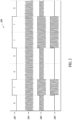
Figure 2 is a plurality of graphs illustrating a carrier signal and ASK and OOK transmission modulation schemes. -
Figure 3 includes a plurality of graphs illustrating various data patterns with differential Manchester encoding, according to one embodiment. -
Figure 4A is a plurality of graphs illustrating various signals modulated in accordance with a differential Manchester ASK modulation scheme. -
Figure 4B is a plurality of graphs illustrating the signals ofFigure 4A passed through an ASK of a receiving device, according to one embodiment. -
Figure 4C is a plurality of graphs illustrating the signals ofFigure 4A process by a receiving device, according to one embodiment. -
Figures 5A-5C are a plurality of graphs illustrating the signals ofFigures 4A-4C after noise has been introduced into the signals, according to one embodiment. -
Figure 6 is a block diagram of awireless communication system 600, according to one embodiment. -
Figure 7 is a flow diagram of a method for operating a wireless communication system, according to one embodiment. -
Figure 1 is a block diagram of awireless communication system 100, according to one embodiment. Thewireless communication system 100 includes a receivingelectronic device 102 and a transmittingelectronic device 104. The transmittingelectronic device 104 and the receivingelectronic device 102 communicate with each other utilizing wireless communication technology. - The receiving
electronic device 102 includes receivingcircuitry 106. Thereceiving circuitry 106 receives wireless signals from the transmitting electronic device. Thereceiving circuitry 106 may include one or more antenna coils, one or more receiving clocks, one or more controllers, and one or more memories. Thereceiving circuitry 106 enables the receivingelectronic device 102 to receive the wireless signal from the transmittingelectronic device 104 and to read data encoded into the wireless signal. - The
receiving circuitry 106 of the receivingelectronic device 102 includes afilter 108. As will be set forth in more detail below, thefilter 108 enables the receivingcircuitry 106 to receive a wireless signal from the transmittingelectronic device 104 including both large bandwidth data values and small bandwidth data values and to filter out features of the large bandwidth data values without losing the data associated with the large bandwidth data values. -
Figure 2 includes agraph 204 illustrating a carrier signal. With reference to bothFigure 1 andFigure 2 , thegraph 204 corresponds to the carrier signal output from the transmittingelectronic device 104. The carrier signal is a radiofrequency signal that facilitates wireless communication. The carrier signal may include a substantially sinusoidal waveform, a square waveform, or other types of waveforms. - Data may be encoded into the carrier signal by the transmitting
electronic device 104. The data may be encoded into the carrier signal by modulating the carrier signal. Various modulation schemes may be utilized to encode data into the carrier signal. - One type of modulation scheme is an ASK modulation scheme. The
graph 206 inFigure 2 illustrates a basic ASK modulation scheme. In the ASK modulation scheme, data is encoded into the carrier signal by modulating the amplitude of the carrier signal. Thegraph 202 ofFigure 2 illustrates a series of data values. Thegraph 206 illustrates the amplitude of the carrier signal during each of these data values. A binary 0 is encoded into the carrier signal by reducing the amplitude of the carrier signal. A binary 1 is encoded to the carrier signal by either increasing the amplitude of the carrier signal or by maintaining the carrier signal at the standard amplitude. As can be seen from thegraph graph 206 has a low amplitude. When the encoded value is a binary 1, the carrier signal of thegraph 206 has a high amplitude, or an amplitude substantially equal to the unmodulated carrier signal. Alternatively, binary 1s can be encoded with low amplitudes and binary 0s can be encoded with high amplitudes. As will be set forth in more detail below, there are various types of modulation schemes that fit in the category of ASK modulation schemes. - Another type of modulation scheme is an OOK modulation scheme. The
graph 208 inFigure 2 illustrates the basic concepts of an OOK modulation scheme. In the OOK modulation scheme, data is encoded into the carrier signal by turning the carrier signal on and off. A data value of 0 may be encoded into the carrier signal by entirely turning off the carrier signal or reducing the amplitude of the carrier signal to substantially zero. A data value of 1 may be encoded into the carrier signal by turning on the carrier signal. Accordingly, the amplitude of the carrier signal is reduced to zero when encoding a 0 into the carrier signal. The amplitude of the carrier signal is maintained at the standard level when a 1 is encoded into the carrier signal. Alternatively, a 1 may be encoded by turning off the carrier signal and the 0 may be encoded by turning on the carrier signal. - In some cases, the level of the carrier signal is not enough to enable the receiving
electronic device 102 to decode the data encoded into the carrier signal. Knowing the sampling clock, i.e., the bit boundaries and interval by which data is encoded into the carrier signal, enables the receivingelectronic device 102 to sample and decode the data from the carrier signal. The clock signal could be sent separately from the carrier signal in order to keep synchronization and avoid bit slips. The clock signal can also be sent together with the data by using certain types of encoding. - One example of a self-clocking ASK scheme is Manchester encoding. In Manchester encoding, information is transmitted by transitions in the amplitude of the signal carrier. In particular, the direction of the transition determines the bit. For example, 0 is encoded as 01 which corresponds to a low-to-high transition, 1 is encoded as "10" which corresponds to a high-to-low transition. There is always a transition in the middle of the bit interval. The clock signal can be extracted from the transitions. Transitions may also happen at the bit boundary to set the carrier at the right level.
- Another example of a self-clocking ASK encoding scheme is differential Manchester encoding. In differential Manchester encoding, information is again transmitted by transitions in the amplitude of the carrier signal, but in this case, the presence or absence of a transition in the middle of the bit interval determines the bit. For example, 0 is encoded as 00 or 11 without a transition in the middle. 1 is encoded as 01 or 1 with a transition in the middle. The encoding pattern is chosen to guarantee the transition at the bit boundary. For this reason the clock signal can be extracted from the presence of a transition at the bit boundary.
-
Figure 3 includes a plurality of graphs illustrating various data patterns with differential Manchester encoding, according to one embodiment.Graph 302 illustrates a series of all 0s encoded into the carrier signal with differential Manchester encoding.Graph 304 illustrates a series of all 1s encoded into the carrier signal with differential Manchester encoding.Graph 306 includes a mix of 0s and 1s. - As can be seen from
graphs - With reference to
Figures 1 and3 , if the transmittingelectronic device 104 transmits data by encoding the carrier signal with a differential Manchester encoding scheme, then the receivingelectronic device 102 could be expected to utilize a receiving clock or sampling rate associated with the higher frequency of the binary 1s. However, in some cases it may not be possible, or may be too power intensive, for a receiving electronic device to utilize the higher frequency or sampling. Also in some case the transmission channel may not offer the large bandwidth that would typically be utilized by the high frequency in the modulated carrier, therefore the received waveform is heavily distorted. - The receiving
electronic device 102 overcomes these drawbacks by utilizing thefilter 108. In particular, the receivingelectronic device 102 utilizes thefilter 108 to filter out all frequencies higher than the frequency associated with the binary 0s in the differential Manchester encoding scheme. The low-pass filter 108 is, thus, a low-pass filter with a cutoff frequency between the lower frequency associated with the binary 0s and a higher frequency associated with the binary 1s. - The
electronic device 102 effectively converts the ASK modulated wireless signal received from the transmittingelectronic device 104 to an OOK modulated signal. In particular, because signal features associated with 1s are filtered out by thefilter 108, the signal becomes an OOK signal in which 1s have zero amplitude and 0s have nonzero amplitude. The 0s have nonzero amplitude because they have a frequency that is less than a cutoff frequency of the low-pass filter 108. - Because the
electronic device 102 converts the ASK modulated signal to an OOK modulated signal in which only the 0s have amplitude, the receivingelectronic device 102 does not need a sampling rate associated with the higher frequency of the 1s in the differential Manchester ASK signal received from the transmittingelectronic device 104. The receivingelectronic device 102 can extract the 1s from the OOK signal in substantially the same manner as extracting 0s in traditional OOK signals. In particular, a gap between nonzero amplitude features, or the gap between a falling edge and a rising edge of the OOK signal indicates the presence of one or more binary 1s. The time duration or length of the gap between nonzero amplitudes or high amplitudes indicates the number of 1s present. -
Figures 4A includes graphs of a plurality of wireless signals received by the receivingelectronic device 102 from the transmittingelectronic device 104 and initially demodulated, according to one embodiment. Before demodulation, the signals ofFigure 4A were received in a differential Manchester ASK encoding scheme. Thegraph 402 represents a stream of all 1s. Thegraph 404 represents a mixed stream of 1s and 0s, with more 1s than 0s. Thegraph 406 represents a mixed stream of 1s and 0s with substantially equal numbers of 1s and 0s. The graph 408 represents a mixed stream of 1s and 0s, with more 0s than 1s. Thegraph 410 represents a stream of all 0s. The graphs 402-410 illustrate the frequency differences associated with 0s and 1s in the differential Manchester encoding scheme. In particular, the frequency associated with 1s is substantially double the frequency associated with 0s. -
Figure 4B includes graphs corresponding to the signals ofFigure 4A after being passed through an edge detector, according to one embodiment. Thegraph 412 corresponds to thegraph 402 after being passed through the edge detector. Thegraph 414 corresponds to thegraph 404 after being passed through the edge detector. Thegraph 416 corresponds to thegraph 406 after being passed through the edge detector. Thegraph 418 corresponds to the graph 408 after being passed through the edge detector. Thegraph 420 corresponds to thegraph 410 after being passed through the edge detector. The edge detector may be part of the receivingcircuitry 104 of the receivingelectronic device 102 ofFigure 1 . -
Figure 4C includes graphs corresponding to the signals ofFigure 4B after being passed through the low-pass filter 108 of the receivingelectronic device 102 ofFigure 1 , according to one embodiment. Thegraph 422 corresponds to thegraph 412 after being passed through the low-pass filter 108. Thegraph 424 corresponds to thegraph 414 after being passed through the low-pass filter 108. Thegraph 426 corresponds to thegraph 416 after being passed through the low-pass filter 108. Thegraph 428 corresponds to thegraph 418 after being passed through the low-pass filter 108. Thegraph 430 corresponds to thegraph 420 after being passed through the low-pass filter 108. -
Figure 4C illustrates that the higher frequency features associated with the numeral 1s are entirely absent after being passed to the low-pass filter 108. Thegraph 422 illustrates that a stream of all 1s results in a signal having no amplitude. Thegraph 430 illustrates that a stream of all 0s results in a signal having a frequency associated with the lower frequency of the 0s of the differential Manchester encoding scheme. In each of the signals 422-430, the higher frequency features associated with 1s in the differential Manchester encoding scheme are gone. - The graphs of
Figure 4C correspond to an OOK modulated signal. In the OOK signals ofFigure 4C , 1s are represented by durations of substantially no amplitude. In the OOK signals ofFigure 4C , 0s are represented by durations of nonzero amplitude. As described previously, 1s can be extracted from the OOK signal by determining the duration of substantially zero amplitude periods between nonzero amplitude periods. In practice, other signal processing or conditioning may be performed on the signals ofFigure 4C prior to the decoding or retrieving the data from the OOK signal. For example, signal processing or conditioning may convert the sharp features of the graphs 422-430 to substantially square wave like features. Various other types of signal processing or conditioning may be performed without departing from the scope of the present disclosure. - While embodiments have been described in which differential Manchester encoded signals are converted to an OOK signal in which 1s have no amplitude and 0s have nonzero amplitude, other types of encoding schemes can be utilized without departing from the scope of the present disclosure. For example, other types of ASK encoding signals can be converted to other types of OOK signals.
- One benefit of the narrower bandwidth associated with the
filter 108 is that more out-of-band noise is rejected. Another benefit is that very near interferents can be rejected. An interferent at the bit rate frequency can also be rejected. These interferents may be created by non-linearities in a transmission channel or in analog receiving and demodulation circuits (mixers and filters). Interferents created by non-linearities are very difficult to remove by means of linear processing techniques, such as adaptive equalization filters. Adaptive filters may fail to converge to the correct solution and even when they converge, the linear compensation of non-linearities may be insufficient. Application of thefilter 108 the receivingelectronic device 102 more tolerant to noise, and robust against near interferents and especially interferents created by non-linearities. This implementation is non-adaptive and eliminates the probabilistic behavior of adaptive filters which may fail at run time. This result in a smaller circuit area, lower power consumption, lower bit error rate. - Another benefit is that the receiver in accordance with the disclosure becomes insensitive to distortions associated to larger frequencies when the communication channel has a bandwidth smaller than what would be required to pass the larger frequencies. If everything else is kept equal, the receiver in accordance with the disclosure would support successful decoding of a higher communication bitrate (twice the rate allowed by classic ASK receivers).
- In one example, the received signal is sampled and demodulated to have 24 samples per bit interval. Differential Manchester encoding is utilized. The low-
pass filter 108 is configured with a cutoff frequency = Fbit (moving average over 12 samples) and with cutoff frequency = Fbit/2 (moving average over 24 samples). The edge detector is a correlator with a step function with 24 samples per bit interval (12 low, 12 high). - Following the Differential Manchester encoding, a transition is always guaranteed at the bit boundary. When a 0 is transmitted there is no other transition and the output of the edge detector will have two local maxima or minima separated by a full bit interval. When a 1 is transmitted there is also a transition in the middle of the bit interval and the output of the edge detector will have three local maxima or minima separated by half bit interval. When the signal is transformed into OOK the 1 will cause the output to be flat and the 0 will cause the output to have just one local maximum or minimum. To avoid bit slips and ensure synchronization, long sequences of 1s could be avoided. This can be obtained by bit stuffing techniques or by suitable encoding, such as adding an even parity bit every N bits, where N is an even number.
-
Figures 5A-5C are graphs illustrating signals associated withFigures 4A-4C , with interferents added into the signals, according to one embodiment. More particularly, graphs 502-510 ofFigure 5A correspond to graphs 402-410 ofFigure 4A , but with interferents included in the signals. The interferents distort the signals in the graphs 502-510. The graphs 512-520 correspond to the graphs 412-420 ofFigure 4B , but with interferents added into the signals. The graphs 522-530 corresponds to the graphs 422-430, after interferents have been added into the signals ofFigure 5A . Notably, the graphs 522-530 illustrate that the low-pass filter significantly reduces the effects of interferents, as the graphs 522-530 strongly match the graphs 422-430 but with small amounts of noise. So small amounts of noise will not prevent accurately the coating the data from the signals. - Returning to
Figure 1 , in one embodiment, the transmittingelectronic device 104 is a wireless charging device. In this case, the carrier signal is configured to provide energy to the receivingelectronic device 102. For example, when the receivingelectronic device 102 is placed adjacent to the transmittingelectronic device 104, the transmittingelectronic device 104 outputs the carrier signal. The receivingelectronic device 102 includes energy harvesting circuitry that harvests energy from the carrier signal. The carrier signal may also be termed a wireless charging signal in this case. The receivingelectronic device 102 may generate a charging current from the carrier signal. - In one embodiment, the wireless charging circuitry operates in accordance with a Qi wireless charging standard. The Qi wireless charging circuitry outputs a charging field in a range between 100 kHz and 500 kHz, though other frequencies may be used as standards are adjusted or as differing applications call for other frequencies outside this range. Data can be encoded into the charging field with a lower frequency than the frequency of the charging field. The low-pass filter will effectively filter out effects of the higher frequency charging field when the coding data from the charging field. Other wireless charging standards can be utilized without departing from the scope of the present disclosure.
- In one embodiment, the transmitting
electronic device 104 and the receivingelectronic device 102 are near field communication (NFC) devices. In particular, the transmittingelectronic device 104 outputs an NFC carrier signal with interrogation data encoded into the carrier signal. The receivingelectronic device 102 receives the carrier signal and decodes a carrier signal utilizing the low-pass filter as described previously. The receiving electronic device and the transmittingelectronic device 104 can communicate with each other the NFC protocols. In one example, the NFC carrier signal has a frequency of 13.56 MHz. However, other frequencies for the carrier signal can be utilized without departing from the scope of the present disclosure. Data is encoded into the carrier signal at a lower frequency than the frequency of the carrier signal. Accordingly, the low-pass filter can effectively reject effects of the higher frequency NFC carrier signal when the coding data from the NFC carrier signal. The receivingelectronic device 102 may include an active NFC device or a passive NFC device. - While
Figure 1 as illustrated a transmittingelectronic device 104 and the receivingelectronic device 102, in practice, the receiving electronic device may also transmit data to the transmittingelectronic device 104. Accordingly, the transmittingelectronic device 104 and the receiving electronic device may each both transmit and receive data from the other. Accordingly, the transmittingelectronic device 104 and the receivingelectronic device 102 may be termed first and second electronic devices. -
Figure 6 is a block diagram of awireless communication system 600, according to one embodiment. Thewireless communication system 100 includes anelectronic device 122 and awireless charging device 124. The wireless charging device is one example of a transmittingelectronic device 104 ofFigure 1 . Theelectronic device 122 is one example of a receivingelectronic device 102 ofFigure 1 . - The transmitting
electronic device 104 includes atransceiver 121, acontrol system 123, apower source 125, and a chargingbay 126. Thecontrol system 123 includescontrol logic 127. The components of the transmittingelectronic device 104 to cooperate together to provide wireless communication and separate wireless charging. - The
transceiver 121 enables thewireless charging device 124 to transmit signals and to receive signals. Thetransceiver 121 can include one or more antennas for transmitting NFC signals and for receiving NFC signals. Thetransceiver 121 can include additional circuitry for enabling thetransceiver 121 to transmit signals including interrogation signals, carrier signals, and other types of signals. Thetransceiver 121 can include additional circuitry for enabling thetransceiver 121 to receive and process signals including interrogation signals and other types of signals from theelectronic device 122. - The
control system 123 includes control circuitry for controlling the function of thewireless charging device 124. Thecontrol system 123 controls the operation of thetransceiver 121. Thecontrol system 123 controls the transmission of signals with thetransceiver 121. Thecontrol system 123 also controls the reception of signals with thetransceiver 121. Thecontrol system 123 can include processing resources, memory resources, and data transmission resources. - The
control system 123 includes thecontrol logic 127. Thecontrol logic 127 can include instructions for operation of thecontrol system 123. Thecontrol logic 127 can include instructions protocols for performing the operations, processes, and methods executed by thewireless charging device 124, including those described herein. Thecontrol logic 127 can correspond to software instructions stored in a memory of thewireless charging device 124. - The
power source 125 provides power to thewireless charging device 124. Thepower source 125 can include one or more of an internal battery, a wired power connection to an external power source, and a wireless power connection to an external power source. - The
transceiver 121 selectively provides a wireless charging field to theelectronic device 122. Thetransceiver 121 includes one or more antennas. In one embodiment, thetransceiver 121 operates in accordance with a Qi wireless charging standard. The Qi wireless charging circuitry outputs a charging field in a range between 87 kHz and 205 kHz. Thetransceiver 121 may also operate in accordance with charging protocols or standards other than Qi without departing from the scope of the present disclosure. - The
transceiver 121 of thewireless charging device 124 can be controlled by thecontrol logic 127 of thecontrol system 123. The RF transceiver selectively outputs the wireless charging field based on the types of NFC devices present as detected by thecontrol system 123. - The charging
bay 126 includes a physical area on which anelectronic device 122 can be positioned in order to receive wireless charging signals from thewireless charging device 124. When anelectronic device 122 is positioned on the chargingbay 126, thewireless charging device 124 detects theelectronic device 122 and causes thetransceiver 121 to begin outputting the wireless charging field. - The
electronic device 122 includes anantenna coil 130, acontroller 132,energy harvesting circuitry 136, and amemory 134. Theantenna coil 130 includes one or more antennas and other circuitry for receiving signals from thewireless charging device 124 and for providing signals to thewireless charging device 124. Accordingly,antenna coil 130 may be part of a transceiver of theelectronic device 122. - The
controller 132 controls the operation of theantenna coil 130. Thecontroller 132 controls the modulation signals output from theantenna coil 130 responsive to interrogation signals received from thewireless charging device 124. Thecontroller 132 may control modulation of an impedance of theantenna coil 130. Thememory 134 stores identification data related to theelectronic device 122. - When the
antenna coil 130 receives signals from thewireless charging device 124, theenergy harvesting circuitry 136 harvests energy from the signals. If theelectronic device 122 is an active electronic device, then theelectronic device 122 may utilize the energy harvested from the wireless charging signal to provide a charging current to a battery of theelectronic device 122. If theelectronic device 122 is a passive electronic device, the energy harvested from the wireless charging signal may be utilized to power the other components of theelectronic device 122. - In one embodiment, when the
antenna coil 130 receives the wireless charging signal, the wireless charging signal is passed to both theenergy harvesting circuitry 136 and to the low-pass filter 108 in parallel to each other. The low-pass filter 108 filters out higher frequency signals associated with higher bit rate or bandwidth data values encoding into the wireless charging signal, such as binary 1s in the case of differential Manchester encoding. Accordingly, the low-pass filter 108 effectively transforms the ASK modulated wireless charging signal to an OOK modulated wireless charging signal. The controller or other receiving circuitry can then decode the data from the OOK signal, as described previously. Theelectronic device 122 may include other circuitry without departing from the scope of the present disclosure. -
Figure 7 is a flow diagram of amethod 700 for operating an electronic device, according to one embodiment. Themethod 700 can utilize components, systems, and processes described in relation toFigures 1-6 . At 702, themethod 700 includes receiving, with a first electronic device, a carrier signal transmitted from a second electronic device and including data encoded with an amplitude-shift keying scheme. At 704, themethod 700 includes generating, from the carrier signal with the first electronic device, an on-off keying signal by passing the carrier signal through a low-pass filter. At 706, themethod 700 includes decoding, with the first electronic device, the data from the on-off keying signal. - In one embodiment, a method includes receiving, with an electronic device, a carrier signal encoded with data and harvesting energy from the carrier signal with the first electronic device. The method includes passing the carrier signal through a low-pass filter having a cutoff frequency between a first frequency associated with data values of a first type and a second frequency associated with data values of a second type and decoding the data from the carrier signal after passing the carrier signal through the low-pass filter.
- In one embodiment, a method includes receiving, with a first electronic device, a carrier signal transmitted from a second electronic device and including data encoded with an amplitude-shift keying scheme. The method includes generating, from the carrier signal with the first electronic device, an on-off keying signal by passing the carrier signal through a low-pass filter and decoding, with the first electronic device, the data from the on-off keying signal.
- In one embodiment, an electronic device includes an antenna configured to receive, from a transmitting electronic device, a carrier signal including data encoded with an amplitude-shift keying scheme. The electronic device includes a low-pass filter configured to receive the carrier signal and to generate an on-off keying signal from the carrier signal. The electronic device includes a controller configured to decode the data from the on-off keying signal.
- The various embodiments described above can be combined to provide further embodiments. These and other changes can be made to the embodiments in light of the abovedetailed description. The invention is defined by the appended claims.
Claims (12)
- A method, comprising:receiving, with a first electronic device, an ASK modulated carrier signal transmitted from a second electronic device and including data encoded with an amplitude-shift keying scheme;demodulating said ASK modulated carrier signal, resulting in a demodulated signal in which data having a first binary state have a lower frequency than data having a second binary state;applying an edge detector to said demodulated signal;applying a low-pass filter to the signal provided by said edge detector, resulting in an on-off keying signal in which:data having said first binary state are represented by durations of nonzero amplitude; and;data having said second binary state are represented by durations of substantially zero amplitude.
- An electronic device (102), comprising:an antenna configured to receive, from a transmitting electronic device (104), an ASK modulated carrier signal including data encoded with an amplitude-shift keying scheme;a demodulator configured to receive said ASK modulated carrier signal and to deliver a demodulated signal in which data having a first binary state have a lower frequency than data having a second binary state;an edge detector configured to receive said demodulated signal;a low-pass filter (108) configured to receive the signal provided by said edge detector, resulting in an on-off keying signal in which:data having said first binary state are represented by durations of nonzero amplitude; anddata having said second binary state are represented by durations of substantially zero amplitude.
- The method of claim 1 or the device of claim 2, wherein binary 0s correspond to said first binary state and binary 1s correspond to said second binary state.
- The method of claim 1 or 3, or the device of claim 2 or 3, wherein the amplitude-shift keying scheme is a differential Manchester scheme.
- The method or device of claim 4, wherein in the amplitude-shift keying scheme binary 1s have shorter feature lengths than binary 0s.
- The method of any of claims 1, 3 to 5, or the device of any of claims 2 to 5, further comprising harvesting energy from the carrier signal with the electronic device.
- The method or device of claim 6, further comprising:generating a charging current by harvesting energy from the carrier signal; andcharging a battery of the electronic device with the charging current.
- The method of any of claims 1, 3 to 7, or the device of any of claims 2 to 7, wherein the carrier field is a Qi protocol carrier field.
- The method of any of claims 1, 3 to 8, or the device of any of claims 2 to 8, wherein the carrier field is a near field communication field.
- The method of any of claims 1, 3 to 9, or the device of any of claims 2 to 9, wherein the low-pass filter has a cutoff frequency greater than a first frequency associated with data values of said first binary state and lower than a second frequency associated with data values of said second binary state.
- The electronic device of any of claims 2 to 10, further comprising energy harvesting circuitry coupled to the antenna and configured to harvest energy from the carrier signal.
- The electronic device of claim 11, further comprising a battery coupled to the energy harvesting circuitry, wherein the energy harvesting circuitry generates a charging current from the carrier signal and supplies the charging current to the battery.
Applications Claiming Priority (1)
| Application Number | Priority Date | Filing Date | Title |
|---|---|---|---|
| US17/538,803 US12009954B2 (en) | 2021-11-30 | 2021-11-30 | Device and method for decoding data from wireless signals |
Publications (2)
| Publication Number | Publication Date |
|---|---|
| EP4187859A1 EP4187859A1 (en) | 2023-05-31 |
| EP4187859B1 true EP4187859B1 (en) | 2025-01-01 |
Family
ID=84361008
Family Applications (1)
| Application Number | Title | Priority Date | Filing Date |
|---|---|---|---|
| EP22208732.2A Active EP4187859B1 (en) | 2021-11-30 | 2022-11-22 | Device and method for decoding data from wireless signals |
Country Status (3)
| Country | Link |
|---|---|
| US (1) | US12009954B2 (en) |
| EP (1) | EP4187859B1 (en) |
| CN (1) | CN116208454B (en) |
Families Citing this family (1)
| Publication number | Priority date | Publication date | Assignee | Title |
|---|---|---|---|---|
| WO2025171555A1 (en) * | 2024-02-15 | 2025-08-21 | Qualcomm Incorporated | Nested waveform |
Family Cites Families (11)
| Publication number | Priority date | Publication date | Assignee | Title |
|---|---|---|---|---|
| JP2000151728A (en) | 1998-11-17 | 2000-05-30 | Oki Electric Ind Co Ltd | Demodulating method, its device and clock reproducing method |
| ATE476042T1 (en) | 2003-10-30 | 2010-08-15 | Panasonic Corp | ASK DEMODULATION DEVICE AND WIRELESS DEVICE EQUIPPED THEREFROM |
| US20080252367A1 (en) | 2007-04-10 | 2008-10-16 | Micrel, Inc. | Demodulator with Multiple Operating Modes for Amplitude Shift Keyed Signals |
| US8027408B2 (en) | 2007-12-21 | 2011-09-27 | Oki Semiconductor Co., Ltd. | ASK modulator |
| CN106300576B (en) | 2015-05-11 | 2021-04-20 | 恩智浦美国有限公司 | Two-way communication demodulation method for wireless charging system |
| EP3107208B1 (en) * | 2015-06-15 | 2018-08-15 | STMicroelectronics International N.V. | Demodulator circuit and method for demodulation |
| US11171678B2 (en) | 2016-03-29 | 2021-11-09 | University Of Washington | Two-port mixers and systems, receivers, and methods using same |
| KR102196897B1 (en) | 2016-04-04 | 2020-12-31 | 애플 인크. | Inductive power transmitter |
| CN106506419B (en) | 2016-09-26 | 2019-11-05 | 深圳市中科先见医疗科技有限公司 | A kind of ASK demodulator |
| EP3704839A1 (en) * | 2017-11-03 | 2020-09-09 | Telefonaktiebolaget LM Ericsson (PUBL) | Receiver, communication apparatus, method and computer program for receiving binary information |
| US11140010B2 (en) | 2019-10-30 | 2021-10-05 | Stmicroelectronics Asia Pacific Pte Ltd. | Amplitude-shift keying demodulation for wireless chargers |
-
2021
- 2021-11-30 US US17/538,803 patent/US12009954B2/en active Active
-
2022
- 2022-11-22 EP EP22208732.2A patent/EP4187859B1/en active Active
- 2022-11-29 CN CN202211517773.8A patent/CN116208454B/en active Active
Also Published As
| Publication number | Publication date |
|---|---|
| US20230179457A1 (en) | 2023-06-08 |
| CN116208454A (en) | 2023-06-02 |
| US12009954B2 (en) | 2024-06-11 |
| EP4187859A1 (en) | 2023-05-31 |
| CN116208454B (en) | 2026-02-06 |
Similar Documents
| Publication | Publication Date | Title |
|---|---|---|
| US10601576B2 (en) | Communication devices, method for detecting an edge in a received signal and method for receiving data | |
| JP5377488B2 (en) | Pulse width adaptation for inductive links | |
| EP0715438A2 (en) | Automatic generation of a decision threshold in an FSK receiver | |
| US10374848B2 (en) | Amplitude demodulators and related methods | |
| CN107301360B (en) | Radio frequency identification transponder and method for sending radio frequency identification messages | |
| EP2695307B1 (en) | Receiver | |
| EP1330083B1 (en) | Digital data transmitter | |
| CN105049069A (en) | Symbol clock recovery circuit | |
| EP4187859B1 (en) | Device and method for decoding data from wireless signals | |
| US9520987B2 (en) | Systems and methods for timing recovery in near-field communication | |
| EP2108225B1 (en) | Communication method and device | |
| JP5312886B2 (en) | Encoding / decoding system, encoding circuit, decoding circuit, and tag communication apparatus | |
| US9742443B2 (en) | Pulse shaping for radio frequency transmitters | |
| EP1280310B1 (en) | Signal structure and scrambling for multicarrier transmission | |
| GB2509222A (en) | Amplitude limiter for receiver circuitry in an RFID tag reader | |
| KR20110049161A (en) | Signal Encoding Device and Method of RGB Reader | |
| EP3704838B1 (en) | Transmitter, network node, method and computer program for transmitting binary information | |
| EP3145143B1 (en) | Differential detector | |
| JP2000013451A (en) | Optical data receiving device | |
| CN111884966B (en) | Modulation-demodulation circuit based on GMSK technology | |
| TW201635727A (en) | Near-field communication tag and operation method thereof | |
| JP2010283796A (en) | Digital communication system and wireless unit | |
| US6498818B1 (en) | Method and system for transmitting information by means of phase modulation | |
| WO2001093463A2 (en) | A method for synchronizing a radio receiver to a received data bit stream |
Legal Events
| Date | Code | Title | Description |
|---|---|---|---|
| PUAI | Public reference made under article 153(3) epc to a published international application that has entered the european phase |
Free format text: ORIGINAL CODE: 0009012 |
|
| STAA | Information on the status of an ep patent application or granted ep patent |
Free format text: STATUS: REQUEST FOR EXAMINATION WAS MADE |
|
| 17P | Request for examination filed |
Effective date: 20221122 |
|
| AK | Designated contracting states |
Kind code of ref document: A1 Designated state(s): AL AT BE BG CH CY CZ DE DK EE ES FI FR GB GR HR HU IE IS IT LI LT LU LV MC ME MK MT NL NO PL PT RO RS SE SI SK SM TR |
|
| RIC1 | Information provided on ipc code assigned before grant |
Ipc: H04L 25/49 20060101ALI20240312BHEP Ipc: H02J 50/80 20160101ALI20240312BHEP Ipc: H02J 50/12 20160101ALI20240312BHEP Ipc: H04L 27/06 20060101AFI20240312BHEP |
|
| GRAP | Despatch of communication of intention to grant a patent |
Free format text: ORIGINAL CODE: EPIDOSNIGR1 |
|
| STAA | Information on the status of an ep patent application or granted ep patent |
Free format text: STATUS: GRANT OF PATENT IS INTENDED |
|
| INTG | Intention to grant announced |
Effective date: 20240513 |
|
| GRAJ | Information related to disapproval of communication of intention to grant by the applicant or resumption of examination proceedings by the epo deleted |
Free format text: ORIGINAL CODE: EPIDOSDIGR1 |
|
| STAA | Information on the status of an ep patent application or granted ep patent |
Free format text: STATUS: REQUEST FOR EXAMINATION WAS MADE |
|
| GRAP | Despatch of communication of intention to grant a patent |
Free format text: ORIGINAL CODE: EPIDOSNIGR1 |
|
| STAA | Information on the status of an ep patent application or granted ep patent |
Free format text: STATUS: GRANT OF PATENT IS INTENDED |
|
| GRAJ | Information related to disapproval of communication of intention to grant by the applicant or resumption of examination proceedings by the epo deleted |
Free format text: ORIGINAL CODE: EPIDOSDIGR1 |
|
| STAA | Information on the status of an ep patent application or granted ep patent |
Free format text: STATUS: REQUEST FOR EXAMINATION WAS MADE |
|
| GRAP | Despatch of communication of intention to grant a patent |
Free format text: ORIGINAL CODE: EPIDOSNIGR1 |
|
| STAA | Information on the status of an ep patent application or granted ep patent |
Free format text: STATUS: GRANT OF PATENT IS INTENDED |
|
| GRAJ | Information related to disapproval of communication of intention to grant by the applicant or resumption of examination proceedings by the epo deleted |
Free format text: ORIGINAL CODE: EPIDOSDIGR1 |
|
| STAA | Information on the status of an ep patent application or granted ep patent |
Free format text: STATUS: REQUEST FOR EXAMINATION WAS MADE |
|
| INTC | Intention to grant announced (deleted) | ||
| INTG | Intention to grant announced |
Effective date: 20240730 |
|
| GRAP | Despatch of communication of intention to grant a patent |
Free format text: ORIGINAL CODE: EPIDOSNIGR1 |
|
| INTG | Intention to grant announced |
Effective date: 20240806 |
|
| STAA | Information on the status of an ep patent application or granted ep patent |
Free format text: STATUS: GRANT OF PATENT IS INTENDED |
|
| INTC | Intention to grant announced (deleted) | ||
| INTG | Intention to grant announced |
Effective date: 20240905 |
|
| GRAS | Grant fee paid |
Free format text: ORIGINAL CODE: EPIDOSNIGR3 |
|
| GRAA | (expected) grant |
Free format text: ORIGINAL CODE: 0009210 |
|
| STAA | Information on the status of an ep patent application or granted ep patent |
Free format text: STATUS: THE PATENT HAS BEEN GRANTED |
|
| AK | Designated contracting states |
Kind code of ref document: B1 Designated state(s): AL AT BE BG CH CY CZ DE DK EE ES FI FR GB GR HR HU IE IS IT LI LT LU LV MC ME MK MT NL NO PL PT RO RS SE SI SK SM TR |
|
| REG | Reference to a national code |
Ref country code: GB Ref legal event code: FG4D |
|
| REG | Reference to a national code |
Ref country code: DE Ref legal event code: R096 Ref document number: 602022009320 Country of ref document: DE |
|
| REG | Reference to a national code |
Ref country code: CH Ref legal event code: EP |
|
| REG | Reference to a national code |
Ref country code: IE Ref legal event code: FG4D |
|
| REG | Reference to a national code |
Ref country code: LT Ref legal event code: MG9D |
|
| REG | Reference to a national code |
Ref country code: NL Ref legal event code: MP Effective date: 20250101 |
|
| REG | Reference to a national code |
Ref country code: AT Ref legal event code: MK05 Ref document number: 1757443 Country of ref document: AT Kind code of ref document: T Effective date: 20250101 |
|
| PG25 | Lapsed in a contracting state [announced via postgrant information from national office to epo] |
Ref country code: NL Free format text: LAPSE BECAUSE OF FAILURE TO SUBMIT A TRANSLATION OF THE DESCRIPTION OR TO PAY THE FEE WITHIN THE PRESCRIBED TIME-LIMIT Effective date: 20250101 |
|
| PG25 | Lapsed in a contracting state [announced via postgrant information from national office to epo] |
Ref country code: FI Free format text: LAPSE BECAUSE OF FAILURE TO SUBMIT A TRANSLATION OF THE DESCRIPTION OR TO PAY THE FEE WITHIN THE PRESCRIBED TIME-LIMIT Effective date: 20250101 |
|
| PG25 | Lapsed in a contracting state [announced via postgrant information from national office to epo] |
Ref country code: PL Free format text: LAPSE BECAUSE OF FAILURE TO SUBMIT A TRANSLATION OF THE DESCRIPTION OR TO PAY THE FEE WITHIN THE PRESCRIBED TIME-LIMIT Effective date: 20250101 |
|
| PG25 | Lapsed in a contracting state [announced via postgrant information from national office to epo] |
Ref country code: ES Free format text: LAPSE BECAUSE OF FAILURE TO SUBMIT A TRANSLATION OF THE DESCRIPTION OR TO PAY THE FEE WITHIN THE PRESCRIBED TIME-LIMIT Effective date: 20250101 |
|
| PG25 | Lapsed in a contracting state [announced via postgrant information from national office to epo] |
Ref country code: IS Free format text: LAPSE BECAUSE OF FAILURE TO SUBMIT A TRANSLATION OF THE DESCRIPTION OR TO PAY THE FEE WITHIN THE PRESCRIBED TIME-LIMIT Effective date: 20250501 Ref country code: NO Free format text: LAPSE BECAUSE OF FAILURE TO SUBMIT A TRANSLATION OF THE DESCRIPTION OR TO PAY THE FEE WITHIN THE PRESCRIBED TIME-LIMIT Effective date: 20250401 |
|
| PG25 | Lapsed in a contracting state [announced via postgrant information from national office to epo] |
Ref country code: HR Free format text: LAPSE BECAUSE OF FAILURE TO SUBMIT A TRANSLATION OF THE DESCRIPTION OR TO PAY THE FEE WITHIN THE PRESCRIBED TIME-LIMIT Effective date: 20250101 |
|
| PG25 | Lapsed in a contracting state [announced via postgrant information from national office to epo] |
Ref country code: LV Free format text: LAPSE BECAUSE OF FAILURE TO SUBMIT A TRANSLATION OF THE DESCRIPTION OR TO PAY THE FEE WITHIN THE PRESCRIBED TIME-LIMIT Effective date: 20250101 Ref country code: PT Free format text: LAPSE BECAUSE OF FAILURE TO SUBMIT A TRANSLATION OF THE DESCRIPTION OR TO PAY THE FEE WITHIN THE PRESCRIBED TIME-LIMIT Effective date: 20250502 |
|
| PG25 | Lapsed in a contracting state [announced via postgrant information from national office to epo] |
Ref country code: BG Free format text: LAPSE BECAUSE OF FAILURE TO SUBMIT A TRANSLATION OF THE DESCRIPTION OR TO PAY THE FEE WITHIN THE PRESCRIBED TIME-LIMIT Effective date: 20250101 Ref country code: GR Free format text: LAPSE BECAUSE OF FAILURE TO SUBMIT A TRANSLATION OF THE DESCRIPTION OR TO PAY THE FEE WITHIN THE PRESCRIBED TIME-LIMIT Effective date: 20250402 |
|
| PG25 | Lapsed in a contracting state [announced via postgrant information from national office to epo] |
Ref country code: AT Free format text: LAPSE BECAUSE OF FAILURE TO SUBMIT A TRANSLATION OF THE DESCRIPTION OR TO PAY THE FEE WITHIN THE PRESCRIBED TIME-LIMIT Effective date: 20250101 |
|
| PG25 | Lapsed in a contracting state [announced via postgrant information from national office to epo] |
Ref country code: CZ Free format text: LAPSE BECAUSE OF FAILURE TO SUBMIT A TRANSLATION OF THE DESCRIPTION OR TO PAY THE FEE WITHIN THE PRESCRIBED TIME-LIMIT Effective date: 20250101 |
|
| PG25 | Lapsed in a contracting state [announced via postgrant information from national office to epo] |
Ref country code: SE Free format text: LAPSE BECAUSE OF FAILURE TO SUBMIT A TRANSLATION OF THE DESCRIPTION OR TO PAY THE FEE WITHIN THE PRESCRIBED TIME-LIMIT Effective date: 20250101 |
|
| REG | Reference to a national code |
Ref country code: DE Ref legal event code: R097 Ref document number: 602022009320 Country of ref document: DE |
|
| PG25 | Lapsed in a contracting state [announced via postgrant information from national office to epo] |
Ref country code: SM Free format text: LAPSE BECAUSE OF FAILURE TO SUBMIT A TRANSLATION OF THE DESCRIPTION OR TO PAY THE FEE WITHIN THE PRESCRIBED TIME-LIMIT Effective date: 20250101 |
|
| PG25 | Lapsed in a contracting state [announced via postgrant information from national office to epo] |
Ref country code: DK Free format text: LAPSE BECAUSE OF FAILURE TO SUBMIT A TRANSLATION OF THE DESCRIPTION OR TO PAY THE FEE WITHIN THE PRESCRIBED TIME-LIMIT Effective date: 20250101 |
|
| PG25 | Lapsed in a contracting state [announced via postgrant information from national office to epo] |
Ref country code: IT Free format text: LAPSE BECAUSE OF FAILURE TO SUBMIT A TRANSLATION OF THE DESCRIPTION OR TO PAY THE FEE WITHIN THE PRESCRIBED TIME-LIMIT Effective date: 20250101 |
|
| PG25 | Lapsed in a contracting state [announced via postgrant information from national office to epo] |
Ref country code: EE Free format text: LAPSE BECAUSE OF FAILURE TO SUBMIT A TRANSLATION OF THE DESCRIPTION OR TO PAY THE FEE WITHIN THE PRESCRIBED TIME-LIMIT Effective date: 20250101 |
|
| PG25 | Lapsed in a contracting state [announced via postgrant information from national office to epo] |
Ref country code: RO Free format text: LAPSE BECAUSE OF FAILURE TO SUBMIT A TRANSLATION OF THE DESCRIPTION OR TO PAY THE FEE WITHIN THE PRESCRIBED TIME-LIMIT Effective date: 20250101 |
|
| PG25 | Lapsed in a contracting state [announced via postgrant information from national office to epo] |
Ref country code: SK Free format text: LAPSE BECAUSE OF FAILURE TO SUBMIT A TRANSLATION OF THE DESCRIPTION OR TO PAY THE FEE WITHIN THE PRESCRIBED TIME-LIMIT Effective date: 20250101 |
|
| PLBE | No opposition filed within time limit |
Free format text: ORIGINAL CODE: 0009261 |
|
| STAA | Information on the status of an ep patent application or granted ep patent |
Free format text: STATUS: NO OPPOSITION FILED WITHIN TIME LIMIT |
|
| 26N | No opposition filed |
Effective date: 20251002 |
|
| PGFP | Annual fee paid to national office [announced via postgrant information from national office to epo] |
Ref country code: DE Payment date: 20251022 Year of fee payment: 4 |