EP4181464B1 - Identifizierung einer netzwerkvorrichtung - Google Patents
Identifizierung einer netzwerkvorrichtung Download PDFInfo
- Publication number
- EP4181464B1 EP4181464B1 EP22193903.6A EP22193903A EP4181464B1 EP 4181464 B1 EP4181464 B1 EP 4181464B1 EP 22193903 A EP22193903 A EP 22193903A EP 4181464 B1 EP4181464 B1 EP 4181464B1
- Authority
- EP
- European Patent Office
- Prior art keywords
- unknown
- application usage
- network
- computing device
- computing
- Prior art date
- Legal status (The legal status is an assumption and is not a legal conclusion. Google has not performed a legal analysis and makes no representation as to the accuracy of the status listed.)
- Active
Links
Images


Classifications
-
- H—ELECTRICITY
- H04—ELECTRIC COMMUNICATION TECHNIQUE
- H04L—TRANSMISSION OF DIGITAL INFORMATION, e.g. TELEGRAPHIC COMMUNICATION
- H04L63/00—Network architectures or network communication protocols for network security
- H04L63/08—Network architectures or network communication protocols for network security for authentication of entities
- H04L63/0876—Network architectures or network communication protocols for network security for authentication of entities based on the identity of the terminal or configuration, e.g. MAC address, hardware or software configuration or device fingerprint
-
- H—ELECTRICITY
- H04—ELECTRIC COMMUNICATION TECHNIQUE
- H04L—TRANSMISSION OF DIGITAL INFORMATION, e.g. TELEGRAPHIC COMMUNICATION
- H04L43/00—Arrangements for monitoring or testing data switching networks
- H04L43/06—Generation of reports
- H04L43/065—Generation of reports related to network devices
-
- H—ELECTRICITY
- H04—ELECTRIC COMMUNICATION TECHNIQUE
- H04L—TRANSMISSION OF DIGITAL INFORMATION, e.g. TELEGRAPHIC COMMUNICATION
- H04L41/00—Arrangements for maintenance, administration or management of data switching networks, e.g. of packet switching networks
- H04L41/16—Arrangements for maintenance, administration or management of data switching networks, e.g. of packet switching networks using machine learning or artificial intelligence
-
- H—ELECTRICITY
- H04—ELECTRIC COMMUNICATION TECHNIQUE
- H04L—TRANSMISSION OF DIGITAL INFORMATION, e.g. TELEGRAPHIC COMMUNICATION
- H04L43/00—Arrangements for monitoring or testing data switching networks
- H04L43/04—Processing captured monitoring data, e.g. for logfile generation
-
- H—ELECTRICITY
- H04—ELECTRIC COMMUNICATION TECHNIQUE
- H04L—TRANSMISSION OF DIGITAL INFORMATION, e.g. TELEGRAPHIC COMMUNICATION
- H04L43/00—Arrangements for monitoring or testing data switching networks
- H04L43/08—Monitoring or testing based on specific metrics, e.g. QoS, energy consumption or environmental parameters
- H04L43/0876—Network utilisation, e.g. volume of load or congestion level
-
- H—ELECTRICITY
- H04—ELECTRIC COMMUNICATION TECHNIQUE
- H04L—TRANSMISSION OF DIGITAL INFORMATION, e.g. TELEGRAPHIC COMMUNICATION
- H04L63/00—Network architectures or network communication protocols for network security
- H04L63/10—Network architectures or network communication protocols for network security for controlling access to devices or network resources
- H04L63/102—Entity profiles
-
- H—ELECTRICITY
- H04—ELECTRIC COMMUNICATION TECHNIQUE
- H04L—TRANSMISSION OF DIGITAL INFORMATION, e.g. TELEGRAPHIC COMMUNICATION
- H04L63/00—Network architectures or network communication protocols for network security
- H04L63/14—Network architectures or network communication protocols for network security for detecting or protecting against malicious traffic
- H04L63/1408—Network architectures or network communication protocols for network security for detecting or protecting against malicious traffic by monitoring network traffic
- H04L63/1425—Traffic logging, e.g. anomaly detection
-
- H—ELECTRICITY
- H04—ELECTRIC COMMUNICATION TECHNIQUE
- H04L—TRANSMISSION OF DIGITAL INFORMATION, e.g. TELEGRAPHIC COMMUNICATION
- H04L63/00—Network architectures or network communication protocols for network security
- H04L63/14—Network architectures or network communication protocols for network security for detecting or protecting against malicious traffic
- H04L63/1441—Countermeasures against malicious traffic
- H04L63/1466—Active attacks involving interception, injection, modification, spoofing of data unit addresses, e.g. hijacking, packet injection or TCP sequence number attacks
-
- H—ELECTRICITY
- H04—ELECTRIC COMMUNICATION TECHNIQUE
- H04L—TRANSMISSION OF DIGITAL INFORMATION, e.g. TELEGRAPHIC COMMUNICATION
- H04L67/00—Network arrangements or protocols for supporting network services or applications
- H04L67/2866—Architectures; Arrangements
- H04L67/30—Profiles
- H04L67/303—Terminal profiles
Definitions
- the present application relates generally to network security, and specifically to identifying devices in a computer network.
- Reliable active application usage time determination is needed for enabling different security protection features, such as blocking specific applications, enforcing time limits to applications or application categories.
- the determination/estimation processes are complicated by frequent application updates changing the networking behavior of the applications and thus, forcing updates on the detection process.
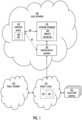
- FIG. 1 illustrates schematically an example of a system environment for a network apparatus 120.
- the system environment illustrated in FIG. 1 includes a computer network 100, such as a local network, that may include one or more computing devices 110, the network apparatus 120, a local router/switch 150, and an analysis engine and a database 160.
- the computing devices 110 may also comprise any number of client applications 180.
- the example system also includes a service cloud 130, such as a network operator's cloud and the Internet 140.
- the analysis engine/database 160 may reside in the computer network, in the service cloud 130 or elsewhere in the network. There may also be more than one analysis engines 160 thus enabling at least part of the analysis being processed in more than one analysis engines.
- Alternative embodiments may include more, fewer, or different components from those illustrated in FIG. 1 , and the functionality of each component may be divided between the components differently from the description below. Additionally, each component may perform their respective functionalities in response to a request from a human, or automatically without human intervention.
- the device 110 may communicate (A) via the network apparatus 120 residing in the computer network 100. In another embodiment, the device 110 may communicate (B) directly via a network gateway or a modem 150, for example when the device is not in the computer network 100. In an embodiment, the network operators may deploy a service platform on their broadband gateways 150 provided to customers and in their own cloud environments 130. The user device(s) 110 may also be configured to use the services provided by the service cloud 130 by one or more applications/operating systems 180 installed on the device(s) 110.
- the device 110 may be any computer/computing device, such a user device, a smart device, a smart appliance, a smart phone, a laptop, or a tablet having a network interface and an ability to connect to the network apparatus 120 and/or the local network router 150 with it.
- the network apparatus 120 collects information, e.g., about the computer network 100, including data about the network traffic through the computer network 100 and data identifying devices in the computer network 100, such as any smart appliances and user devices 110.
- the network apparatus 120 is configured to receive traffic control instructions from the analysis engine 160 and to process network traffic based on the traffic control instructions.
- Processing the network traffic through the computer network 100 can include enforcing network or communication policies on devices, restricting where network traffic can travel, blocking network traffic from entering the computer network 100, redirecting a copy of network traffic packet or features of those packets to the analysis engine 160 for analysis (e.g., for malicious behavior), or quarantining the network traffic to be reviewed by a user (e.g., via the user device 110) or network administrator.
- the functionality of the network apparatus 120 is performed by a device that is a part of the computer network 100, while in other embodiments, the functionality of the network apparatus 120 is performed by a device outside of the computer network 100.
- the network apparatus 120 may be configured to monitor traffic that travels through the computer network 100.
- the network apparatus 120 can be a device that is a part of the computer network 100.
- the network apparatus 120 can be connected to the computer network 100 using a wired connection (e.g., via an Ethernet cable connected to a router) or using a wireless connection (e.g., via a Wi-Fi connection).
- the network apparatus 120 can comprise multiple devices.
- the network apparatus 120 can also perform the functions of the local network router 150 for the computer network 100.
- the network apparatus 120 may intercept traffic in the computer network 100 by signaling to the user device 110 that the network apparatus 120 is a router 150. In some embodiments, the network apparatus 120 replaces the default gateway or gateway address of the computer network 100 with its own Internet protocol address. In some embodiments, the computer network 100 can be structured such that all network traffic passes through the network apparatus 120, allowing the network apparatus 120 to physically intercept the network traffic. For example, the network apparatus 120 can serve as a bridge through which all network traffic must travel to reach the router 150 of the computer network 100.
- the analysis engine 160 may receive and analyze network traffic data (e.g., forwarded by the network apparatus 120) associated with devices on the computer network.
- the analysis engine 160 may be implemented within a remote system (e.g., a cloud server) or within the computer network 100.
- the analysis engine 160 may perform operations that are computationally expensive for the network apparatus 120 to perform.
- the analysis engine 160 replaces the network apparatus 120 by performing the functionalities of the network apparatus 120.
- the computer network router 150 may be configured to forward network traffic to the analysis engine 160.
- the analysis engine 160 communicates with other devices on the computer network.
- the analysis engine 160 is integrated into the network apparatus 120.
- the computer network 100 may be a local area network (LAN) that comprises the one or more devices 110, network apparatus 120, and local network router 150.
- the computer network 100 may be used for a number of purposes, including a home network or a network used by a business.
- the computer network 100 is connected to the Internet or other Inter-autonomous network infrastructure 140, allowing devices within the computer network 100, including the user device 110, to communicate with devices outside of the computer network 100.
- the computer network 100 may be a private network that may require devices to present credentials to join the network, or it may be a public network allowing any device to join. In some embodiments, other devices, like personal computers, smartphones, or tablets, may join computer network 100.
- the network traffic data used to generate the first and the second device application usage profiles comprises one or more of: background traffic data generated by one or more applications installed on the one or more first and second computing devices, data generated by active usage of the one or more applications, and/or data generated from running the one or more applications in various application scenarios on the one or more first and second computing devices for one or more predetermined time periods.
- the process of identifying the unknown second computing device as a known first computing device further comprises: in response to detecting any one of the one or more known first computing devices transferring network traffic data by using a same unique identifier address with the unknown second computing device based on comparing, identifying the unknown second computing device as the known first computing device.
- the machine learning model is retrained continuously and/or regularly based on further network traffic data captured from the one or more computing devices running further applications in various application scenarios.
- the network traffic data collected from the one or more computing devices is forwarded to a service cloud for generating the device application usage profile for the one or more known computing devices and/or the unknown computing device.
- the predetermined threshold that is used in the identification of the unknown device as a known computing device may be calculated based on one or more values or conditions related to the device application usage profiles. Common thresholds may include different values and conditions.
- the predetermined threshold here may be a numeric value defining the number of same applications included in the device application usage profiles of the device application usage profiles that are being compared. In an embodiment, the predetermined threshold may be calculated based on more than one value or conditions related to the device application usage profile data.
- the data that can be used for calculating the predetermined threshold comprise one or more of: number of different or missing applications in the device applications usage profiles being compared, data generated by active usage of one or more applications of the device application usage profiles, and data generated from running the one or more applications in various application scenarios.
- the threshold conditions may usually include any of: “greater than”, “same", “below or equal”.
- the term "satisfying the predetermined threshold” used herein refers to defining the instant when a value is below or equal to a predefined value.
- the unknown device may be identified as a known computing device only if a representative amount of same/similar values or conditions are detected based on comparing the device application usage profile of the unknown computing device and the device application usage profile of the one or more known computing devices.
- any number of suitable techniques for defining the similarity and/or dissimilarity between the device application usage profile data such as similarity or distance based metrics, can also be used.
- further action is taken on the basis of identifying the unknown computing device as a known computing device of the local network, wherein the further action comprises one or more of: reporting a deduplication incident, controlling or blocking usage of the one or more applications, enforcing time limits on the one or more applications or on application categories, preventing computing with the one or more applications, and applying other security measures to protect a local network and/or the one or more computing devices.
- the device application usage profiles may define which applications are used in the one or more computing devices and/or usage patterns of the applications.
- the device application usage profiles may also be based on identified set of actions or steps that are executed in the application in an ordered manner in predefined time intervals, for example.
- the device application usage profile may also be generated based on data resembling a natural user interaction with an application such as starting a media application, browsing media streams for 2 minutes, selecting a media stream, playing the media stream for 5 minutes, stopping playback, closing the application and any combination thereof.
- Various application scenarios may also be used to mimic user behaviour and for generating actions performed by the application about "typical" network traffic. This may then be used by the machine learning model to generate the device application usage profile. For example, the network traffic that is generated by a (real or simulated) user interaction with an application differs from the network traffic that the application would generate just by running in the background. These are the differences that the machine learning model can be trained to learn.
- the network traffic data generated by the one or more application is forwarded to a security service cloud for analysis and device application usage profiling.
- FIG. 3 is a block diagram that illustrates schematically another example of a system environment.
- the system environment illustrated in FIG. 3 includes a computer network 300, such as a local network, that may include any number of computing devices 320-330, and any number of local routers 310.
- the computing devices 320-330 may comprise any number of client applications 380-391.
- the example system also includes a service cloud/backend 350 and an analysis/research engine 352 that may each comprise any number of application/device detection services/machine learning models 353.
- the service cloud 350 and/or the local network 300 may comprise one or more databases/data storages for storing device application profile related data, network traffic data and any other data required for the device identification process such as labelling and training data for a machine learning module 353, for example.
- the different entities are illustrated as separate entities in this example, one or more of the entities can be combined into one entity and/or further entities may be added to any of the entities.
- the local network 300 may also run a dedicated software application, such as an agent of a local or an internet service provider (ISP) network, for collecting and recording application network traffic metadata relating to applications and software running on the computing devices 320-330 and using the computer network.
- a dedicated software agent may be deployed in the one or more computing devices.
- one of the computing devices is a new unknown device 330 to the local network 300, such as a smart phone, a tablet, or a computer.
- the client application In response to the interaction with the client application, the client application generates network traffic which is routed via a customer-premises equipment (CPE), such as the router 310.
- CPE customer-premises equipment
- the router 310 forwards the network traffic description information (netflow) to the service cloud 350.
- Network traffic data (netflow) label may later be used as a network traffic data (netflow) label.
- the mobile devices 320-322 of the computer network 300 generate network traffic data by casual application usage which is routed via the router 310.
- the network traffic description information (netflow) related to the generated network traffic data is then forwarded to the backend 350 and to the analysis engine 352 by the router 310.
- Labels may be assigned to the netflow data at the analysis engine 352, and after labelling, the network data is sent to a machine learning module to train the machine learning model 353.
- the machine learning module infrastructure is configured to train the machine learning model 353.
- the trained machine learning model 353 may be propagated to the service cloud and used in device identity determination.
- the collected application network traffic metadata may be transmitted via the local router 310 but also sending directly via a network gateway is possible, for example when the device is not in the computer network.
- the collected application network traffic metadata may comprise following data but is not limited to it: an application name, an identification of the application, a version of the application, a network traffic protocol type (e.g., Transmission Control Protocol (TCP), Hypertext Transfer Protocol (HTTP), Hypertext Transfer Protocol Secure (HTTPS), User Datagram Protocol (UDP), Domain Name System (DNS), Multicast DNS (MDNS)), a timestamp of a connection, a connection target, a connection direction, number of transferred bytes to upstream and/or downstream, and a computer device identification running the dedicated software application.
- TCP Transmission Control Protocol
- HTTP Hypertext Transfer Protocol
- HTTPS Hypertext Transfer Protocol Secure
- UDP User Datagram Protocol
- DNS Domain Name System
- MDNS Multicast DNS
- Each local router 310 of a plurality of local networks may collect network traffic data from the local networks. Data feeds from the local routers and the one or more computer devices may be combined by matching metadata attributes and labeling the data based on application information received.
- the collected data may be automatically labeled and classified based on metadata.
- each computer device that is used to collect the metadata may be selected based on different rules.
- the collected and processed data is used to generate a device application usage profile for each mobile device 320-322 based on the network traffic that is collected.
- Identity information of the known mobile devices 320-322 is associated with the generated device application usage profiles respectively. Every user in a family, for example, has a distinctive pattern of application usage and the embodiments of the invention enable using the generated device application usage profiles to identify those devices whose identity information is unknown to the local network. Even only the background data generated by a device can be helpful to identify same devices having different MAC addresses, for example. As the number of devices per household with MAC randomization is relatively tiny, this application usage -based device tracking can be a practical additional data point.
- the input for the machine learning algorithm is the past application usage profile for the devices for that specific agent and the new application usage profiles of the unknown devices.
- Output may be the decision that this specific application usage best matches a specific known device in the household.
- the invention aims thus to identify unknown devices rather than tracking users or their interactions with applications or how users interact with their devices.
- network traffic data is collected for a predetermined minimum amount of time.
- the data collection phase can be one day or even less, but also longer time periods can be used to improve the accuracy of the device application usage profiles.
- Any relevant data can be used to generate the device application usage profiles such as device identification, application identification and a time window when the application was used.
- the time window data can help when the application is actively used by a user as different people tend to use different applications and usually at different time windows.
- updating the device application usage profiles for maximum efficiency can be done regularly or continuously.
- a differential update is an optimal way achieving this instead of an entirely new model generation, for example.
- information on hardware usage of the devices may be used in addition when generating the device application usage profiles.
- a smart watch may use a connected smart phone for network connection when in close proximity since Bluetooth connection uses less battery than a WLAN connection. This means that at network level it is possible to detect that the smart watch transfers network packets from the same MAC address as the unknown device and this information can be used as an additional data point when generating the profiles and identifying the unknown devices.
- the new unknown device 330 to the local network 300 is detected.
- An agent on the router 310 may be used to detect the unknown device 330. Based on current MAC randomization implementations, for example, this may happen once per day per device.
- the agent on the router collects network traffic data related to the unknown device 330.
- the new device 330 is under an identification phase.
- the collected network traffic data is analyzed to generate a device application usage profile for the unknown device 330.
- the device application usage profile for the unknown device 330 is compared with the profiles of the known devices in the same local network. In response to finding a difference between two profiles satisfying a predetermined threshold, the unknown device 330 is identified as a known one. An exact match may not be needed for making the identification.
- the top three most used applications of the unknown device 330 are apps 1-3.
- one of the known devices, device Y (321) is detected to have the same top three most used applications.
- This information may be used at least as one data point by the machine learning model to determine whether the two devices 330 and 321 are in fact same devices.
- the model determines whether similar application usage or behaviour has been seen before and makes a determination of whether the new device is probably the previously known device Y (321) based on application usage statistics.
- FIG. 4 is a block diagram illustrating an example of a network apparatus that can implement the method according to an embodiment.
- a processor device 404 is provided that is configured to generate and maintain a device application usage profile for one or more known computing devices of a local network based on network traffic data, detect an unknown computing device in the local network, collect network traffic data related to the unknown computing device, generate a device application usage profile for the unknown computing device based on the network traffic data related to the unknown computing device, compare the device application usage profile of the unknown computing device with the device application usage profile of the one or more known computing devices of the local network, and in response to detecting a difference between the device application usage profile of the unknown computing device and the application usage profile of the one or more known computing devices of the local network satisfying a predetermined threshold, identify the unknown device as a known computing device of the local network.
- the processor device 404 is configured to store data such as any network-based identification data, metadata, attributes, values, addresses, hostnames as well as other data related to received network traffic data, any metadata, state information and/or domain data to the database 406.
- the database 406 is shown in this example as being located at the apparatus 400, but it will be appreciated that the apparatus 400 may alternatively access a remote database.
- the database 406 may comprise necessary data collected from user devices and/or plurality of local networks.
- the apparatus 400 is provided with a receiver 401 that receives the collected network traffic metadata.
- a transmitter 402 is also provided for communication with a computer network, a router, a computer device and/or an outside server.
- the apparatus 400 is described as having a separate transmitter and receiver. It will be appreciated that these may be disposed in any suitable manner, for example in a single transmitter and receiver, a transceiver and so on. Similarly, a single processor 404 is described but it will be appreciated that the function of the processor may be performed by a single physical processor or by more than one processor.
- the apparatus 400 is also provided with a non-transitory computer readable medium in the form of a memory 405.
- the memory may be used to store a computer program 407 which, when executed by the processor 404, causes the processor 404 to perform the functions described above.
- the computer program 407 may be provided from an external source.
- at least some or even all the functions of the method can be implemented in any apparatus, for example any computer device or a server.
- Network traffic metadata generated by the one or more applications may comprise application specific network usage metadata, such as data on which application was used in which of the one or more mobile devices.
- the network traffic metadata may be sent to a testing/analysis entity, for example, via using Wi-Fi and home network router connection of each mobile device.
- the network traffic metadata is collected and sent to a service cloud entity.
- There may be one or more analysis entities and/or other local/ISP network systems that collect network traffic metadata related to the one or more applications for the service cloud entity.
- the network traffic metadata may comprise data from casual application usage on one or more mobile devices that is also sent to the service cloud entity from any local/ISP network.
- All the network traffic metadata received from any local/ISP network systems received by the service cloud entity is processed and combined by matching metadata attributes.
- the received data is labelled based on the metadata attributes, such as an identity of the application and the related device and the application scenario. Any other data, such as application screen time reports sent from the one or more mobile devices, may also be used in the labelling phase.
- the labelling data and raw combined network activity data may be used to create machine learning datasets suitable for machine learning training, and a machine learning model for generating the device application usage profiles and identifying unknown devices is trained by using the datasets created.
- the trained machine learning model may be used for identifying unknown user devices and based on the results from the machine learning model, further action can be taken to protect one or more local networks and/or the one or more user devices.
- the further action may comprise one or more of: blocking the client application, enforcing time limits to client application or application categories, preventing communication with the client application, applying other security measures.
- the steps, signaling messages and related functions described above in relation to the figures are in no absolute chronological order, and some of the steps may be performed simultaneously or in a different order. Other functions may also be executed between the steps and other signaling may be sent between the illustrated ones. Some of the steps can also be left out or replaced by a corresponding step.
- the system functions illustrate a procedure that may be implemented in one or more physical or logical entities.
- An apparatus or system that implements one or more of the described functions may comprise not only existing means but also means for implementing one or more functions of a corresponding apparatus that is described with an embodiment.
- An apparatus or a system may also comprise separate means for each separate function.
- the embodiments may be implemented in one or more modules of hardware or combinations thereof.
- implementation can be through modules, for example such procedures and functions that perform the functions described.
- the software code may be stored in any suitable data storage medium that is readable by processors, computers, memory units or articles of manufacture, and may be executed by one or more processors or computers.
- the data storage medium or memory unit or database may be implemented within the processor or computer apparatus, or as an external part of the processor or computer apparatus.
- the programming such as executable code or instructions, electronic data, databases, or other digital information may be stored into memories and can include a processor-usable medium embodied in any computer program product which can contain, store, or maintain programming, data, or digital information for use by or in connection with an instruction execution system, such as the processor.
- An embodiment provides a non-transitory computer-readable medium comprising stored program code comprised of computer-executable instructions.
- the computer program code comprises a code for generating and maintaining a device application usage profile for one or more known computing devices of a local network based on network traffic data, a code for detecting an unknown computing device in the local network, a code for collecting network traffic data related to the unknown computing device; a code for generating a device application usage profile for the unknown computing device based on the network traffic data related to the unknown computing device, a code for comparing the device application usage profile of the unknown computing device with the device application usage profile of the one or more known computing devices of the local network, and a code for identifying the unknown device as a known computing device of the local network in response to detecting a difference between the device application usage profile of the unknown computing device and the application usage profiles of the one or more known computing devices of the local network satisfying a predetermined threshold.
Landscapes
- Engineering & Computer Science (AREA)
- Computer Networks & Wireless Communication (AREA)
- Signal Processing (AREA)
- Computer Security & Cryptography (AREA)
- General Engineering & Computer Science (AREA)
- Computing Systems (AREA)
- Computer Hardware Design (AREA)
- Data Mining & Analysis (AREA)
- Evolutionary Computation (AREA)
- Medical Informatics (AREA)
- Software Systems (AREA)
- Databases & Information Systems (AREA)
- Computer Vision & Pattern Recognition (AREA)
- Artificial Intelligence (AREA)
- Environmental & Geological Engineering (AREA)
- Power Engineering (AREA)
- Data Exchanges In Wide-Area Networks (AREA)
Claims (15)
- Verfahren einer Vorrichtung (400), wobei das Verfahren aufweist:ein Erzeugen und Halten (200) eines Erstes-Gerät-Anwendungsverwendungsprofils für jedes aus einem oder mehreren bekannten ersten Rechengeräten (320, 321, 322) eines Lokalnetzwerks basierend auf ersten Netzwerkverkehrsdaten,ein Erfassen (201) eines unbekannten zweiten Rechengeräts (330) in dem Lokalnetzwerk,ein Sammeln (202) von zweiten Netzwerkverkehrsdaten bezüglich dem unbekannten zweiten Rechengerät,ein Erzeugen (203) eines Zweites-Gerät-Anwendungsverwendungsprofils für das unbekannte zweite Rechengerät basierend auf den zweiten Netzwerkverkehrsdaten bezüglich dem unbekannten zweiten Rechengerät,ein Vergleichen (204) des Zweites-Gerät-Anwendungsverwendungsprofils des unbekannten zweiten Rechengeräts mit dem Erstes-Gerät-Anwendungsverwendungsprofil des einen oder der mehreren bekannten ersten Rechengeräte des Lokalnetzwerks, undein Identifizieren (205), als Reaktion auf eine Erfassung, dass eine Differenz zwischen dem Zweites-Gerät-Anwendungsverwendungsprofil des unbekannten zweiten Rechengeräts und dem Erstes-Gerät-Anwendungsverwendungsprofil des einen oder der mehreren bekannten ersten Rechengeräte des Lokalnetzwerks eine vorbestimmte Schwelle erfüllt, des unbekannten zweiten Rechengeräts als eines aus dem einen oder den mehreren bekannten ersten Rechengeräten des Lokalnetzwerks.
- Verfahren nach Anspruch 1, wobei die ersten und zweiten Netzwerkverkehrsdaten eines oder mehreres umfassen aus: durch bei den ersten und zweiten Rechengeräten (320, 321, 322, 330) installierten eine oder mehrere Anwendungen (380, 381, 382, 383, 384, 385, 386, 387, 388, 389, 390, 391) erzeugte Hintergrundverkehrsdaten, durch aktive Verwendung der einen oder mehreren Anwendungen erzeugte Daten, und von Betrieb der einen oder mehreren Anwendungen in verschiedenen Anwendungsszenarien bei den ersten und zweiten Rechengeräten für eine oder mehrere vorbestimmte Zeitperioden erzeugte Daten.
- Verfahren nach Anspruch 1, wobei die ersten und zweiten Netzwerkverkehrsdaten durch ein Netzwerkverkehrsknotenpunkt (150, 310) des Lokalnetzwerks gesammelt sind.
- Verfahren nach Anspruch 1, ferner mit einem Sammeln der ersten und zweiten Netzwerkverkehrsdaten für eine Erzeugung der Erstes- und Zweites-Gerät-Anwendungsverwendungsprofile während einer oder mehrerer vorbestimmter Zeitperioden.
- Verfahren nach Anspruch 1, wobei die Erstes- und Zweites-Gerät-Anwendungsverwendungsprofile für die ersten und zweiten Rechengeräte (320, 321, 322, 330) erzeugt sind basierend auf einem oder mehreren aus: Gerätidentifizierungsdaten, Anwendungsidentifizierungsdaten, und einem Zeitfenster, wenn eine Anwendung verwendet wurde.
- Verfahren nach Anspruch 5, ferner mit einem Bestimmen einer Aktivanwendungsverwendungszeit bezüglich einem Anwendungsszenario während dem Zeitfenster basierend auf den ersten und zweiten Netzwerkverkehrsdaten, und einem Verwenden der Aktivanwendungsverwendungszeit für eine Erzeugung der Erstes- und Zweites-Gerät-Anwendungsverwendungsprofile.
- Verfahren nach Anspruch 1, ferner mit einem Aktualisieren der Erstes-Gerät-Anwendungsverwendungsprofile regelmäßig durch eines oder mehreres aus: einer Differenzaktualisierung, und einer Erzeugung eines oder mehrerer neuer Gerätanwendungsverwendungsprofile.
- Verfahren nach Anspruch 1, ferner mit einem Sammeln von Daten bezüglich Hardwareverwendung der ersten und zweiten Rechengeräte (320, 321, 322, 330) und einem Verwenden der Daten bezüglich der Hardwareverwendung für eine Erzeugung der Erstes- und Zweites-Gerät-Anwendungsverwendungsprofile.
- Verfahren nach Anspruch 8, wobei der Schritt eines Identifizierens (205) des unbekannten zweiten Rechengeräts (330) als ein bekanntes erstes Rechengerät (320, 321, 322) ferner aufweist: ein Identifizieren, als Reaktion auf eine Erfassung, dass irgendeines aus dem einen oder den mehreren bekannten ersten Rechengeräten Netzwerkverkehrsdaten unter Verwendung einer mit dem unbekannten zweiten Rechengerät gleichen eindeutigen Identifizierungsadresse übermittelt, basieren auf einem Vergleich, des unbekannten zweiten Rechengeräts als ein bekanntes erstes Rechengerät.
- Verfahren nach Anspruch 1, ferner mit:einem Trainieren eines Maschinenlernmodells, um die Erstes- und Zweites-Gerät-Anwendungsverwendungsprofile zu erzeugen, undeinem Verwenden des Maschinenlernmodells, um das unbekannte zweite Rechengerät (330) als ein bekanntes Rechengerät des Lokalnetzwerks zu identifizieren.
- Verfahren nach Anspruch 10, ferner mit einem Re-Trainieren des Maschinenlernmodells kontinuierlich und/oder regelmäßig basierend auf weiteren Netzwerkverkehrsdaten, die von den ersten und zweiten Rechengeräten (320, 321, 322, 330) eingefangen sind, die weitere Anwendungen (380, 381, 382, 383, 384, 385, 386, 387, 388, 389, 390, 391) in verschiedenen Anwendungsszenarien betreiben.
- Verfahren nach Anspruch 1, ferner mit einem Weiterleiten der von den ersten und zweiten Rechengeräten (320, 321, 322, 330) gesammelten ersten und zweiten Netzwerkverkehrsdaten zu einer Dienst-Cloud (130, 350) für eine Erzeugung der Erstes- und Zweites-Gerät-Anwendungsverwendungsprofile für das eine oder die mehreren bekannten ersten Rechengeräte (320, 321, 322) und/oder das unbekannte zweite Rechengerät (330).
- Verfahren nach Anspruch 1, ferner mit einem Ergreifen einer weiteren Maßnahme basierend auf einer Identifizierung des unbekannten zweiten Rechengeräts (330) als ein bekanntes Rechengerät des Lokalnetzwerks, wobei die weitere Maßnahme eines oder mehreres umfasst aus: einem Berichten eines Deduplizierungsvorfalls, einem Steuern oder Blockieren einer Verwendung einer oder mehrerer Anwendungen, einem Durchsetzen von Zeitbegrenzungen bezüglich der einen oder mehreren Anwendungen oder bezüglich Anwendungskategorien, einem Verhindern eines Rechnens mit der einen oder den mehreren Anwendungen, und einem Anwenden anderer Sicherheitsmaßnahmen, um das Lokalnetzwerk und/oder die ersten und zweiten Rechengeräte zu schützen.
- Vorrichtung (400) in einem Computernetzwerksystem, mit:
einem oder mehreren Prozessorgeräten (404), dazu eingerichtet, um:ein Erstes-Gerät-Anwendungsverwendungsprofil für jedes aus einem oder mehreren bekannten ersten Rechengeräten (320, 321, 322) eines Lokalnetzwerks basierend auf ersten Netzwerkverkehrsdaten zu erzeugen und zu halten (200),ein unbekanntes zweites Rechengerät (330) in dem Lokalnetzwerk zu erfassen (201),zweite Netzwerkverkehrsdaten bezüglich dem unbekannten zweiten Rechengerät zu sammeln (202),ein Zweites-Gerät-Anwendungsverwendungsprofil für das unbekannte zweite Rechengerät basierend auf den zweiten Netzwerkverkehrsdaten bezüglich dem unbekannten zweiten Rechengerät zu erzeugen (203),das Zweites-Gerät-Anwendungsverwendungsprofil des unbekannten zweiten Rechengeräts mit dem Erstes-Gerät-Anwendungsverwendungsprofil des einen oder der mehreren bekannten ersten Rechengeräte des Lokalnetzwerks zu vergleichen (204), undals Reaktion auf eine Erfassung, dass eine Differenz zwischen dem Zweites-Gerät-Anwendungsverwendungsprofil des unbekannten zweiten Rechengeräts und dem Erstes-Gerät-Anwendungsverwendungsprofil des einen oder der mehreren bekannten ersten Rechengeräte des Lokalnetzwerks eine vorbestimmte Schwelle erfüllt, das unbekannte zweite Rechengerät als eines aus dem einen oder den mehreren bekannten ersten Rechengeräten des Lokalnetzwerks zu identifizieren (205). - Nichttransitorisches computerlesbares Medium (405) mit gespeichertem Programmcode (407), wobei der Programmcode computerausführbare Anweisungen aufweist, die, wenn durch einen Prozessor (404) ausgeführt, den Prozessor dazu bringen:ein Erstes-Gerät-Anwendungsverwendungsprofil für jedes aus einem oder mehreren bekannten ersten Rechengeräten (320, 321, 322) eines Lokalnetzwerks basierend auf ersten Netzwerkverkehrsdaten zu erzeugen und zu halten (200),ein unbekanntes zweites Rechengerät (330) in dem Lokalnetzwerk zu erfassen (201),zweite Netzwerkverkehrsdaten bezüglich dem unbekannten zweiten Rechengerät zu sammeln (202),ein Zweites-Gerät-Anwendungsverwendungsprofil für das unbekannte zweite Rechengerät basierend auf den zweiten Netzwerkverkehrsdaten bezüglich dem unbekannten zweiten Rechengerät zu erzeugen (203),das Zweites-Gerät-Anwendungsverwendungsprofil des unbekannten zweiten Rechengeräts mit dem Erstes-Gerät-Anwendungsverwendungsprofil des einen oder der mehreren bekannten ersten Rechengeräte des Lokalnetzwerks zu vergleichen (204), undals Reaktion auf eine Erfassung, dass eine Differenz zwischen dem Zweites-Gerät-Anwendungsverwendungsprofil des unbekannten zweiten Rechengeräts und dem Erstes-Gerät-Anwendungsverwendungsprofil des einen oder der mehreren bekannten ersten Rechengeräte des Lokalnetzwerks eine vorbestimmte Schwelle erfüllt, das unbekannte zweite Rechengerät als eines aus dem einen oder den mehreren bekannten ersten Rechengeräten des Lokalnetzwerks zu identifizieren (205).
Applications Claiming Priority (1)
| Application Number | Priority Date | Filing Date | Title |
|---|---|---|---|
| US17/523,519 US11677647B2 (en) | 2021-11-10 | 2021-11-10 | Network device identification |
Publications (3)
| Publication Number | Publication Date |
|---|---|
| EP4181464A1 EP4181464A1 (de) | 2023-05-17 |
| EP4181464B1 true EP4181464B1 (de) | 2025-07-02 |
| EP4181464C0 EP4181464C0 (de) | 2025-07-02 |
Family
ID=83271502
Family Applications (1)
| Application Number | Title | Priority Date | Filing Date |
|---|---|---|---|
| EP22193903.6A Active EP4181464B1 (de) | 2021-11-10 | 2022-09-05 | Identifizierung einer netzwerkvorrichtung |
Country Status (3)
| Country | Link |
|---|---|
| US (1) | US11677647B2 (de) |
| EP (1) | EP4181464B1 (de) |
| CA (1) | CA3176964A1 (de) |
Families Citing this family (5)
| Publication number | Priority date | Publication date | Assignee | Title |
|---|---|---|---|---|
| US11770393B2 (en) * | 2020-08-19 | 2023-09-26 | Jpmorgan Chase Bank, N.A. | System and method for target behavior discovery and detection |
| US12126640B2 (en) * | 2021-12-13 | 2024-10-22 | Centurylink Intellectual Property Llc | Varifocal threat analysis system and method |
| US12423881B2 (en) * | 2022-11-23 | 2025-09-23 | International Business Machines Corporation | Precise alignment of augmented reality objects with physical objects |
| US20240349119A1 (en) * | 2023-04-14 | 2024-10-17 | Cisco Technology, Inc. | Service chain integration with a wireless local area network (wlan) |
| US12407590B1 (en) * | 2023-11-28 | 2025-09-02 | Progress Software Corporation | Abandoned machines |
Family Cites Families (13)
| Publication number | Priority date | Publication date | Assignee | Title |
|---|---|---|---|---|
| US7340768B2 (en) | 2002-09-23 | 2008-03-04 | Wimetrics Corporation | System and method for wireless local area network monitoring and intrusion detection |
| US7853250B2 (en) * | 2003-04-03 | 2010-12-14 | Network Security Technologies, Inc. | Wireless intrusion detection system and method |
| US9572125B1 (en) * | 2014-09-03 | 2017-02-14 | Symantec Corporation | Systems and methods for locating unrecognized computing devices |
| US9984365B2 (en) | 2014-12-02 | 2018-05-29 | Ca, Inc. | Device identification based on deep fingerprint inspection |
| US9743272B1 (en) * | 2016-03-28 | 2017-08-22 | Bank Of America Corporation | Security implementation for resource distribution |
| US20180131705A1 (en) * | 2016-11-10 | 2018-05-10 | Qualcomm Incorporated | Visibility of Non-Benign Network Traffic |
| CN110121876B (zh) * | 2016-12-29 | 2022-03-08 | 爱维士软件有限责任公司 | 用于通过使用行为分析检测恶意设备的系统和方法 |
| US10972461B2 (en) * | 2018-08-28 | 2021-04-06 | International Business Machines Corporation | Device aware network communication management |
| US10924567B2 (en) | 2018-08-28 | 2021-02-16 | Cujo LLC | Determining active application usage through a network traffic hub |
| US11388199B2 (en) * | 2018-10-10 | 2022-07-12 | Citrix Systems, Inc. | Processing policy variance requests in an enterprise computing environment |
| US11971962B2 (en) * | 2020-04-28 | 2024-04-30 | Cisco Technology, Inc. | Learning and assessing device classification rules |
| US11212681B1 (en) * | 2020-06-29 | 2021-12-28 | Fortinet, Inc. | Intrusion detection in a wireless network using location information of wireless devices |
| US11605009B2 (en) * | 2020-08-17 | 2023-03-14 | Cujo LLC | Network device identification |
-
2021
- 2021-11-10 US US17/523,519 patent/US11677647B2/en active Active
-
2022
- 2022-09-05 EP EP22193903.6A patent/EP4181464B1/de active Active
- 2022-09-26 CA CA3176964A patent/CA3176964A1/en active Pending
Also Published As
| Publication number | Publication date |
|---|---|
| US11677647B2 (en) | 2023-06-13 |
| EP4181464C0 (de) | 2025-07-02 |
| CA3176964A1 (en) | 2023-05-10 |
| US20230143232A1 (en) | 2023-05-11 |
| EP4181464A1 (de) | 2023-05-17 |
Similar Documents
| Publication | Publication Date | Title |
|---|---|---|
| EP4181464B1 (de) | Identifizierung einer netzwerkvorrichtung | |
| Perdisci et al. | Iotfinder: Efficient large-scale identification of iot devices via passive dns traffic analysis | |
| US11856013B2 (en) | Method and system for detecting lateral movement in enterprise computer networks | |
| US9516039B1 (en) | Behavioral detection of suspicious host activities in an enterprise | |
| US9635049B1 (en) | Detection of suspicious domains through graph inference algorithm processing of host-domain contacts | |
| US20240031380A1 (en) | Unifying of the network device entity and the user entity for better cyber security modeling along with ingesting firewall rules to determine pathways through a network | |
| US20200403991A1 (en) | Security for network environment using trust scoring based on power consumption of devices within network | |
| US20200076799A1 (en) | Device aware network communication management | |
| AU2024204413A1 (en) | Systems and methods for controlling data exposure using artificial-intelligence-based modeling | |
| CN112640381A (zh) | Iot安全中基于模式匹配的检测 | |
| US11843946B2 (en) | Device-specific wireless access point password authentication | |
| EP3972315A1 (de) | Identifizierung von netzwerkgeräten | |
| EP3979558A1 (de) | Anwendungserkennung | |
| EP4033717B1 (de) | Unterscheiden von netzwerkverbindungsanfragen | |
| Aluthge | Iot device fingerprinting with sequence-based features | |
| EP4087217B1 (de) | Anwendungsnutzungszeitschätzung | |
| US11394687B2 (en) | Fully qualified domain name (FQDN) determination | |
| US20230019306A1 (en) | Network device identification | |
| US20230315991A1 (en) | Text classification based device profiling | |
| Gu et al. | Fingerprinting Network Entities Based on Traffic Analysis in High‐Speed Network Environment | |
| Andrews et al. | IoT Firmware Version Identification Using Transfer Learning with Twin Neural Networks | |
| US12368730B2 (en) | Automatic threat actor attribution based on multiple evidence | |
| EP4331179B1 (de) | Durch ähnlichkeitsbasiertes semantisches clustering unterstützte fingerabdrucknahme | |
| Zachos et al. | An Anomaly-Based Intrusion Detection System for Internet of Medical Things Networks. Electronics 2021, 10, 2562 | |
| Danso | Transferability of machine learning model for IoT device identification and vulnerability assessment |
Legal Events
| Date | Code | Title | Description |
|---|---|---|---|
| PUAI | Public reference made under article 153(3) epc to a published international application that has entered the european phase |
Free format text: ORIGINAL CODE: 0009012 |
|
| STAA | Information on the status of an ep patent application or granted ep patent |
Free format text: STATUS: THE APPLICATION HAS BEEN PUBLISHED |
|
| AK | Designated contracting states |
Kind code of ref document: A1 Designated state(s): AL AT BE BG CH CY CZ DE DK EE ES FI FR GB GR HR HU IE IS IT LI LT LU LV MC MK MT NL NO PL PT RO RS SE SI SK SM TR |
|
| STAA | Information on the status of an ep patent application or granted ep patent |
Free format text: STATUS: REQUEST FOR EXAMINATION WAS MADE |
|
| 17P | Request for examination filed |
Effective date: 20231117 |
|
| RAP3 | Party data changed (applicant data changed or rights of an application transferred) |
Owner name: CUJO LLC |
|
| RBV | Designated contracting states (corrected) |
Designated state(s): AL AT BE BG CH CY CZ DE DK EE ES FI FR GB GR HR HU IE IS IT LI LT LU LV MC MK MT NL NO PL PT RO RS SE SI SK SM TR |
|
| GRAP | Despatch of communication of intention to grant a patent |
Free format text: ORIGINAL CODE: EPIDOSNIGR1 |
|
| STAA | Information on the status of an ep patent application or granted ep patent |
Free format text: STATUS: GRANT OF PATENT IS INTENDED |
|
| INTG | Intention to grant announced |
Effective date: 20250313 |
|
| GRAS | Grant fee paid |
Free format text: ORIGINAL CODE: EPIDOSNIGR3 |
|
| GRAA | (expected) grant |
Free format text: ORIGINAL CODE: 0009210 |
|
| STAA | Information on the status of an ep patent application or granted ep patent |
Free format text: STATUS: THE PATENT HAS BEEN GRANTED |
|
| AK | Designated contracting states |
Kind code of ref document: B1 Designated state(s): AL AT BE BG CH CY CZ DE DK EE ES FI FR GB GR HR HU IE IS IT LI LT LU LV MC MK MT NL NO PL PT RO RS SE SI SK SM TR |
|
| REG | Reference to a national code |
Ref country code: GB Ref legal event code: FG4D |
|
| REG | Reference to a national code |
Ref country code: CH Ref legal event code: EP |
|
| REG | Reference to a national code |
Ref country code: DE Ref legal event code: R096 Ref document number: 602022016763 Country of ref document: DE |
|
| REG | Reference to a national code |
Ref country code: IE Ref legal event code: FG4D |
|
| U01 | Request for unitary effect filed |
Effective date: 20250723 |
|
| U07 | Unitary effect registered |
Designated state(s): AT BE BG DE DK EE FI FR IT LT LU LV MT NL PT RO SE SI Effective date: 20250729 |
|
| U20 | Renewal fee for the european patent with unitary effect paid |
Year of fee payment: 4 Effective date: 20250820 |