EP4181231A1 - Sintered body electrode, battery member, sintered body electrode and battery member manufacturing methods, solid electrolyte precursor solution, solid electrolyte precursor, and solid electrolyte - Google Patents
Sintered body electrode, battery member, sintered body electrode and battery member manufacturing methods, solid electrolyte precursor solution, solid electrolyte precursor, and solid electrolyte Download PDFInfo
- Publication number
- EP4181231A1 EP4181231A1 EP21837989.9A EP21837989A EP4181231A1 EP 4181231 A1 EP4181231 A1 EP 4181231A1 EP 21837989 A EP21837989 A EP 21837989A EP 4181231 A1 EP4181231 A1 EP 4181231A1
- Authority
- EP
- European Patent Office
- Prior art keywords
- solid electrolyte
- alkali
- ion conductive
- conductive solid
- sintered body
- Prior art date
- Legal status (The legal status is an assumption and is not a legal conclusion. Google has not performed a legal analysis and makes no representation as to the accuracy of the status listed.)
- Pending
Links
Images





Classifications
-
- H—ELECTRICITY
- H01—ELECTRIC ELEMENTS
- H01M—PROCESSES OR MEANS, e.g. BATTERIES, FOR THE DIRECT CONVERSION OF CHEMICAL ENERGY INTO ELECTRICAL ENERGY
- H01M4/00—Electrodes
- H01M4/02—Electrodes composed of, or comprising, active material
- H01M4/04—Processes of manufacture in general
- H01M4/0471—Processes of manufacture in general involving thermal treatment, e.g. firing, sintering, backing particulate active material, thermal decomposition, pyrolysis
-
- H—ELECTRICITY
- H01—ELECTRIC ELEMENTS
- H01B—CABLES; CONDUCTORS; INSULATORS; SELECTION OF MATERIALS FOR THEIR CONDUCTIVE, INSULATING OR DIELECTRIC PROPERTIES
- H01B1/00—Conductors or conductive bodies characterised by the conductive materials; Selection of materials as conductors
- H01B1/04—Conductors or conductive bodies characterised by the conductive materials; Selection of materials as conductors mainly consisting of carbon-silicon compounds, carbon or silicon
-
- C—CHEMISTRY; METALLURGY
- C01—INORGANIC CHEMISTRY
- C01B—NON-METALLIC ELEMENTS; COMPOUNDS THEREOF; METALLOIDS OR COMPOUNDS THEREOF NOT COVERED BY SUBCLASS C01C
- C01B25/00—Phosphorus; Compounds thereof
- C01B25/16—Oxyacids of phosphorus; Salts thereof
- C01B25/26—Phosphates
- C01B25/30—Alkali metal phosphates
-
- C—CHEMISTRY; METALLURGY
- C01—INORGANIC CHEMISTRY
- C01B—NON-METALLIC ELEMENTS; COMPOUNDS THEREOF; METALLOIDS OR COMPOUNDS THEREOF NOT COVERED BY SUBCLASS C01C
- C01B25/00—Phosphorus; Compounds thereof
- C01B25/16—Oxyacids of phosphorus; Salts thereof
- C01B25/26—Phosphates
- C01B25/45—Phosphates containing plural metal, or metal and ammonium
-
- C—CHEMISTRY; METALLURGY
- C04—CEMENTS; CONCRETE; ARTIFICIAL STONE; CERAMICS; REFRACTORIES
- C04B—LIME, MAGNESIA; SLAG; CEMENTS; COMPOSITIONS THEREOF, e.g. MORTARS, CONCRETE OR LIKE BUILDING MATERIALS; ARTIFICIAL STONE; CERAMICS; REFRACTORIES; TREATMENT OF NATURAL STONE
- C04B35/00—Shaped ceramic products characterised by their composition; Ceramics compositions; Processing powders of inorganic compounds preparatory to the manufacturing of ceramic products
- C04B35/515—Shaped ceramic products characterised by their composition; Ceramics compositions; Processing powders of inorganic compounds preparatory to the manufacturing of ceramic products based on non-oxide ceramics
- C04B35/52—Shaped ceramic products characterised by their composition; Ceramics compositions; Processing powders of inorganic compounds preparatory to the manufacturing of ceramic products based on non-oxide ceramics based on carbon, e.g. graphite
- C04B35/522—Graphite
-
- C—CHEMISTRY; METALLURGY
- C04—CEMENTS; CONCRETE; ARTIFICIAL STONE; CERAMICS; REFRACTORIES
- C04B—LIME, MAGNESIA; SLAG; CEMENTS; COMPOSITIONS THEREOF, e.g. MORTARS, CONCRETE OR LIKE BUILDING MATERIALS; ARTIFICIAL STONE; CERAMICS; REFRACTORIES; TREATMENT OF NATURAL STONE
- C04B35/00—Shaped ceramic products characterised by their composition; Ceramics compositions; Processing powders of inorganic compounds preparatory to the manufacturing of ceramic products
- C04B35/515—Shaped ceramic products characterised by their composition; Ceramics compositions; Processing powders of inorganic compounds preparatory to the manufacturing of ceramic products based on non-oxide ceramics
- C04B35/52—Shaped ceramic products characterised by their composition; Ceramics compositions; Processing powders of inorganic compounds preparatory to the manufacturing of ceramic products based on non-oxide ceramics based on carbon, e.g. graphite
- C04B35/528—Shaped ceramic products characterised by their composition; Ceramics compositions; Processing powders of inorganic compounds preparatory to the manufacturing of ceramic products based on non-oxide ceramics based on carbon, e.g. graphite obtained from carbonaceous particles with or without other non-organic components
-
- C—CHEMISTRY; METALLURGY
- C04—CEMENTS; CONCRETE; ARTIFICIAL STONE; CERAMICS; REFRACTORIES
- C04B—LIME, MAGNESIA; SLAG; CEMENTS; COMPOSITIONS THEREOF, e.g. MORTARS, CONCRETE OR LIKE BUILDING MATERIALS; ARTIFICIAL STONE; CERAMICS; REFRACTORIES; TREATMENT OF NATURAL STONE
- C04B35/00—Shaped ceramic products characterised by their composition; Ceramics compositions; Processing powders of inorganic compounds preparatory to the manufacturing of ceramic products
- C04B35/622—Forming processes; Processing powders of inorganic compounds preparatory to the manufacturing of ceramic products
- C04B35/626—Preparing or treating the powders individually or as batches ; preparing or treating macroscopic reinforcing agents for ceramic products, e.g. fibres; mechanical aspects section B
- C04B35/628—Coating the powders or the macroscopic reinforcing agents
- C04B35/62802—Powder coating materials
- C04B35/62805—Oxide ceramics
-
- C—CHEMISTRY; METALLURGY
- C04—CEMENTS; CONCRETE; ARTIFICIAL STONE; CERAMICS; REFRACTORIES
- C04B—LIME, MAGNESIA; SLAG; CEMENTS; COMPOSITIONS THEREOF, e.g. MORTARS, CONCRETE OR LIKE BUILDING MATERIALS; ARTIFICIAL STONE; CERAMICS; REFRACTORIES; TREATMENT OF NATURAL STONE
- C04B35/00—Shaped ceramic products characterised by their composition; Ceramics compositions; Processing powders of inorganic compounds preparatory to the manufacturing of ceramic products
- C04B35/622—Forming processes; Processing powders of inorganic compounds preparatory to the manufacturing of ceramic products
- C04B35/626—Preparing or treating the powders individually or as batches ; preparing or treating macroscopic reinforcing agents for ceramic products, e.g. fibres; mechanical aspects section B
- C04B35/628—Coating the powders or the macroscopic reinforcing agents
- C04B35/62802—Powder coating materials
- C04B35/62805—Oxide ceramics
- C04B35/62807—Silica or silicates
-
- C—CHEMISTRY; METALLURGY
- C04—CEMENTS; CONCRETE; ARTIFICIAL STONE; CERAMICS; REFRACTORIES
- C04B—LIME, MAGNESIA; SLAG; CEMENTS; COMPOSITIONS THEREOF, e.g. MORTARS, CONCRETE OR LIKE BUILDING MATERIALS; ARTIFICIAL STONE; CERAMICS; REFRACTORIES; TREATMENT OF NATURAL STONE
- C04B35/00—Shaped ceramic products characterised by their composition; Ceramics compositions; Processing powders of inorganic compounds preparatory to the manufacturing of ceramic products
- C04B35/622—Forming processes; Processing powders of inorganic compounds preparatory to the manufacturing of ceramic products
- C04B35/626—Preparing or treating the powders individually or as batches ; preparing or treating macroscopic reinforcing agents for ceramic products, e.g. fibres; mechanical aspects section B
- C04B35/628—Coating the powders or the macroscopic reinforcing agents
- C04B35/62802—Powder coating materials
- C04B35/62805—Oxide ceramics
- C04B35/62818—Refractory metal oxides
- C04B35/62823—Zirconium or hafnium oxide
-
- C—CHEMISTRY; METALLURGY
- C04—CEMENTS; CONCRETE; ARTIFICIAL STONE; CERAMICS; REFRACTORIES
- C04B—LIME, MAGNESIA; SLAG; CEMENTS; COMPOSITIONS THEREOF, e.g. MORTARS, CONCRETE OR LIKE BUILDING MATERIALS; ARTIFICIAL STONE; CERAMICS; REFRACTORIES; TREATMENT OF NATURAL STONE
- C04B35/00—Shaped ceramic products characterised by their composition; Ceramics compositions; Processing powders of inorganic compounds preparatory to the manufacturing of ceramic products
- C04B35/622—Forming processes; Processing powders of inorganic compounds preparatory to the manufacturing of ceramic products
- C04B35/626—Preparing or treating the powders individually or as batches ; preparing or treating macroscopic reinforcing agents for ceramic products, e.g. fibres; mechanical aspects section B
- C04B35/63—Preparing or treating the powders individually or as batches ; preparing or treating macroscopic reinforcing agents for ceramic products, e.g. fibres; mechanical aspects section B using additives specially adapted for forming the products, e.g.. binder binders
- C04B35/6303—Inorganic additives
- C04B35/6306—Binders based on phosphoric acids or phosphates
- C04B35/6313—Alkali metal or alkaline earth metal phosphates
-
- H—ELECTRICITY
- H01—ELECTRIC ELEMENTS
- H01B—CABLES; CONDUCTORS; INSULATORS; SELECTION OF MATERIALS FOR THEIR CONDUCTIVE, INSULATING OR DIELECTRIC PROPERTIES
- H01B1/00—Conductors or conductive bodies characterised by the conductive materials; Selection of materials as conductors
- H01B1/06—Conductors or conductive bodies characterised by the conductive materials; Selection of materials as conductors mainly consisting of other non-metallic substances
- H01B1/08—Conductors or conductive bodies characterised by the conductive materials; Selection of materials as conductors mainly consisting of other non-metallic substances oxides
-
- H—ELECTRICITY
- H01—ELECTRIC ELEMENTS
- H01M—PROCESSES OR MEANS, e.g. BATTERIES, FOR THE DIRECT CONVERSION OF CHEMICAL ENERGY INTO ELECTRICAL ENERGY
- H01M10/00—Secondary cells; Manufacture thereof
- H01M10/05—Accumulators with non-aqueous electrolyte
- H01M10/052—Li-accumulators
- H01M10/0525—Rocking-chair batteries, i.e. batteries with lithium insertion or intercalation in both electrodes; Lithium-ion batteries
-
- H—ELECTRICITY
- H01—ELECTRIC ELEMENTS
- H01M—PROCESSES OR MEANS, e.g. BATTERIES, FOR THE DIRECT CONVERSION OF CHEMICAL ENERGY INTO ELECTRICAL ENERGY
- H01M10/00—Secondary cells; Manufacture thereof
- H01M10/05—Accumulators with non-aqueous electrolyte
- H01M10/054—Accumulators with insertion or intercalation of metals other than lithium, e.g. with magnesium or aluminium
-
- H—ELECTRICITY
- H01—ELECTRIC ELEMENTS
- H01M—PROCESSES OR MEANS, e.g. BATTERIES, FOR THE DIRECT CONVERSION OF CHEMICAL ENERGY INTO ELECTRICAL ENERGY
- H01M10/00—Secondary cells; Manufacture thereof
- H01M10/05—Accumulators with non-aqueous electrolyte
- H01M10/056—Accumulators with non-aqueous electrolyte characterised by the materials used as electrolytes, e.g. mixed inorganic/organic electrolytes
- H01M10/0561—Accumulators with non-aqueous electrolyte characterised by the materials used as electrolytes, e.g. mixed inorganic/organic electrolytes the electrolyte being constituted of inorganic materials only
- H01M10/0562—Solid materials
-
- H—ELECTRICITY
- H01—ELECTRIC ELEMENTS
- H01M—PROCESSES OR MEANS, e.g. BATTERIES, FOR THE DIRECT CONVERSION OF CHEMICAL ENERGY INTO ELECTRICAL ENERGY
- H01M10/00—Secondary cells; Manufacture thereof
- H01M10/05—Accumulators with non-aqueous electrolyte
- H01M10/058—Construction or manufacture
- H01M10/0585—Construction or manufacture of accumulators having only flat construction elements, i.e. flat positive electrodes, flat negative electrodes and flat separators
-
- H—ELECTRICITY
- H01—ELECTRIC ELEMENTS
- H01M—PROCESSES OR MEANS, e.g. BATTERIES, FOR THE DIRECT CONVERSION OF CHEMICAL ENERGY INTO ELECTRICAL ENERGY
- H01M4/00—Electrodes
- H01M4/02—Electrodes composed of, or comprising, active material
- H01M4/13—Electrodes for accumulators with non-aqueous electrolyte, e.g. for lithium-accumulators; Processes of manufacture thereof
- H01M4/133—Electrodes based on carbonaceous material, e.g. graphite-intercalation compounds or CFx
-
- H—ELECTRICITY
- H01—ELECTRIC ELEMENTS
- H01M—PROCESSES OR MEANS, e.g. BATTERIES, FOR THE DIRECT CONVERSION OF CHEMICAL ENERGY INTO ELECTRICAL ENERGY
- H01M4/00—Electrodes
- H01M4/02—Electrodes composed of, or comprising, active material
- H01M4/36—Selection of substances as active materials, active masses, active liquids
- H01M4/362—Composites
- H01M4/366—Composites as layered products
-
- H—ELECTRICITY
- H01—ELECTRIC ELEMENTS
- H01M—PROCESSES OR MEANS, e.g. BATTERIES, FOR THE DIRECT CONVERSION OF CHEMICAL ENERGY INTO ELECTRICAL ENERGY
- H01M4/00—Electrodes
- H01M4/02—Electrodes composed of, or comprising, active material
- H01M4/36—Selection of substances as active materials, active masses, active liquids
- H01M4/58—Selection of substances as active materials, active masses, active liquids of inorganic compounds other than oxides or hydroxides, e.g. sulfides, selenides, tellurides, halogenides or LiCoFy; of polyanionic structures, e.g. phosphates, silicates or borates
- H01M4/583—Carbonaceous material, e.g. graphite-intercalation compounds or CFx
- H01M4/587—Carbonaceous material, e.g. graphite-intercalation compounds or CFx for inserting or intercalating light metals
-
- H—ELECTRICITY
- H01—ELECTRIC ELEMENTS
- H01M—PROCESSES OR MEANS, e.g. BATTERIES, FOR THE DIRECT CONVERSION OF CHEMICAL ENERGY INTO ELECTRICAL ENERGY
- H01M4/00—Electrodes
- H01M4/02—Electrodes composed of, or comprising, active material
- H01M4/62—Selection of inactive substances as ingredients for active masses, e.g. binders, fillers
-
- H—ELECTRICITY
- H01—ELECTRIC ELEMENTS
- H01M—PROCESSES OR MEANS, e.g. BATTERIES, FOR THE DIRECT CONVERSION OF CHEMICAL ENERGY INTO ELECTRICAL ENERGY
- H01M4/00—Electrodes
- H01M4/02—Electrodes composed of, or comprising, active material
- H01M4/62—Selection of inactive substances as ingredients for active masses, e.g. binders, fillers
- H01M4/624—Electric conductive fillers
- H01M4/625—Carbon or graphite
-
- C—CHEMISTRY; METALLURGY
- C04—CEMENTS; CONCRETE; ARTIFICIAL STONE; CERAMICS; REFRACTORIES
- C04B—LIME, MAGNESIA; SLAG; CEMENTS; COMPOSITIONS THEREOF, e.g. MORTARS, CONCRETE OR LIKE BUILDING MATERIALS; ARTIFICIAL STONE; CERAMICS; REFRACTORIES; TREATMENT OF NATURAL STONE
- C04B2235/00—Aspects relating to ceramic starting mixtures or sintered ceramic products
- C04B2235/02—Composition of constituents of the starting material or of secondary phases of the final product
- C04B2235/30—Constituents and secondary phases not being of a fibrous nature
- C04B2235/32—Metal oxides, mixed metal oxides, or oxide-forming salts thereof, e.g. carbonates, nitrates, (oxy)hydroxides, chlorides
- C04B2235/3201—Alkali metal oxides or oxide-forming salts thereof
-
- C—CHEMISTRY; METALLURGY
- C04—CEMENTS; CONCRETE; ARTIFICIAL STONE; CERAMICS; REFRACTORIES
- C04B—LIME, MAGNESIA; SLAG; CEMENTS; COMPOSITIONS THEREOF, e.g. MORTARS, CONCRETE OR LIKE BUILDING MATERIALS; ARTIFICIAL STONE; CERAMICS; REFRACTORIES; TREATMENT OF NATURAL STONE
- C04B2235/00—Aspects relating to ceramic starting mixtures or sintered ceramic products
- C04B2235/02—Composition of constituents of the starting material or of secondary phases of the final product
- C04B2235/30—Constituents and secondary phases not being of a fibrous nature
- C04B2235/32—Metal oxides, mixed metal oxides, or oxide-forming salts thereof, e.g. carbonates, nitrates, (oxy)hydroxides, chlorides
- C04B2235/3201—Alkali metal oxides or oxide-forming salts thereof
- C04B2235/3203—Lithium oxide or oxide-forming salts thereof
-
- C—CHEMISTRY; METALLURGY
- C04—CEMENTS; CONCRETE; ARTIFICIAL STONE; CERAMICS; REFRACTORIES
- C04B—LIME, MAGNESIA; SLAG; CEMENTS; COMPOSITIONS THEREOF, e.g. MORTARS, CONCRETE OR LIKE BUILDING MATERIALS; ARTIFICIAL STONE; CERAMICS; REFRACTORIES; TREATMENT OF NATURAL STONE
- C04B2235/00—Aspects relating to ceramic starting mixtures or sintered ceramic products
- C04B2235/02—Composition of constituents of the starting material or of secondary phases of the final product
- C04B2235/30—Constituents and secondary phases not being of a fibrous nature
- C04B2235/32—Metal oxides, mixed metal oxides, or oxide-forming salts thereof, e.g. carbonates, nitrates, (oxy)hydroxides, chlorides
- C04B2235/3217—Aluminum oxide or oxide forming salts thereof, e.g. bauxite, alpha-alumina
-
- C—CHEMISTRY; METALLURGY
- C04—CEMENTS; CONCRETE; ARTIFICIAL STONE; CERAMICS; REFRACTORIES
- C04B—LIME, MAGNESIA; SLAG; CEMENTS; COMPOSITIONS THEREOF, e.g. MORTARS, CONCRETE OR LIKE BUILDING MATERIALS; ARTIFICIAL STONE; CERAMICS; REFRACTORIES; TREATMENT OF NATURAL STONE
- C04B2235/00—Aspects relating to ceramic starting mixtures or sintered ceramic products
- C04B2235/02—Composition of constituents of the starting material or of secondary phases of the final product
- C04B2235/30—Constituents and secondary phases not being of a fibrous nature
- C04B2235/32—Metal oxides, mixed metal oxides, or oxide-forming salts thereof, e.g. carbonates, nitrates, (oxy)hydroxides, chlorides
- C04B2235/3224—Rare earth oxide or oxide forming salts thereof, e.g. scandium oxide
- C04B2235/3225—Yttrium oxide or oxide-forming salts thereof
-
- C—CHEMISTRY; METALLURGY
- C04—CEMENTS; CONCRETE; ARTIFICIAL STONE; CERAMICS; REFRACTORIES
- C04B—LIME, MAGNESIA; SLAG; CEMENTS; COMPOSITIONS THEREOF, e.g. MORTARS, CONCRETE OR LIKE BUILDING MATERIALS; ARTIFICIAL STONE; CERAMICS; REFRACTORIES; TREATMENT OF NATURAL STONE
- C04B2235/00—Aspects relating to ceramic starting mixtures or sintered ceramic products
- C04B2235/02—Composition of constituents of the starting material or of secondary phases of the final product
- C04B2235/30—Constituents and secondary phases not being of a fibrous nature
- C04B2235/32—Metal oxides, mixed metal oxides, or oxide-forming salts thereof, e.g. carbonates, nitrates, (oxy)hydroxides, chlorides
- C04B2235/3224—Rare earth oxide or oxide forming salts thereof, e.g. scandium oxide
- C04B2235/3227—Lanthanum oxide or oxide-forming salts thereof
-
- C—CHEMISTRY; METALLURGY
- C04—CEMENTS; CONCRETE; ARTIFICIAL STONE; CERAMICS; REFRACTORIES
- C04B—LIME, MAGNESIA; SLAG; CEMENTS; COMPOSITIONS THEREOF, e.g. MORTARS, CONCRETE OR LIKE BUILDING MATERIALS; ARTIFICIAL STONE; CERAMICS; REFRACTORIES; TREATMENT OF NATURAL STONE
- C04B2235/00—Aspects relating to ceramic starting mixtures or sintered ceramic products
- C04B2235/02—Composition of constituents of the starting material or of secondary phases of the final product
- C04B2235/30—Constituents and secondary phases not being of a fibrous nature
- C04B2235/32—Metal oxides, mixed metal oxides, or oxide-forming salts thereof, e.g. carbonates, nitrates, (oxy)hydroxides, chlorides
- C04B2235/3231—Refractory metal oxides, their mixed metal oxides, or oxide-forming salts thereof
- C04B2235/3244—Zirconium oxides, zirconates, hafnium oxides, hafnates, or oxide-forming salts thereof
-
- C—CHEMISTRY; METALLURGY
- C04—CEMENTS; CONCRETE; ARTIFICIAL STONE; CERAMICS; REFRACTORIES
- C04B—LIME, MAGNESIA; SLAG; CEMENTS; COMPOSITIONS THEREOF, e.g. MORTARS, CONCRETE OR LIKE BUILDING MATERIALS; ARTIFICIAL STONE; CERAMICS; REFRACTORIES; TREATMENT OF NATURAL STONE
- C04B2235/00—Aspects relating to ceramic starting mixtures or sintered ceramic products
- C04B2235/02—Composition of constituents of the starting material or of secondary phases of the final product
- C04B2235/30—Constituents and secondary phases not being of a fibrous nature
- C04B2235/32—Metal oxides, mixed metal oxides, or oxide-forming salts thereof, e.g. carbonates, nitrates, (oxy)hydroxides, chlorides
- C04B2235/3231—Refractory metal oxides, their mixed metal oxides, or oxide-forming salts thereof
- C04B2235/3244—Zirconium oxides, zirconates, hafnium oxides, hafnates, or oxide-forming salts thereof
- C04B2235/3248—Zirconates or hafnates, e.g. zircon
-
- C—CHEMISTRY; METALLURGY
- C04—CEMENTS; CONCRETE; ARTIFICIAL STONE; CERAMICS; REFRACTORIES
- C04B—LIME, MAGNESIA; SLAG; CEMENTS; COMPOSITIONS THEREOF, e.g. MORTARS, CONCRETE OR LIKE BUILDING MATERIALS; ARTIFICIAL STONE; CERAMICS; REFRACTORIES; TREATMENT OF NATURAL STONE
- C04B2235/00—Aspects relating to ceramic starting mixtures or sintered ceramic products
- C04B2235/02—Composition of constituents of the starting material or of secondary phases of the final product
- C04B2235/30—Constituents and secondary phases not being of a fibrous nature
- C04B2235/34—Non-metal oxides, non-metal mixed oxides, or salts thereof that form the non-metal oxides upon heating, e.g. carbonates, nitrates, (oxy)hydroxides, chlorides
- C04B2235/3418—Silicon oxide, silicic acids or oxide forming salts thereof, e.g. silica sol, fused silica, silica fume, cristobalite, quartz or flint
-
- C—CHEMISTRY; METALLURGY
- C04—CEMENTS; CONCRETE; ARTIFICIAL STONE; CERAMICS; REFRACTORIES
- C04B—LIME, MAGNESIA; SLAG; CEMENTS; COMPOSITIONS THEREOF, e.g. MORTARS, CONCRETE OR LIKE BUILDING MATERIALS; ARTIFICIAL STONE; CERAMICS; REFRACTORIES; TREATMENT OF NATURAL STONE
- C04B2235/00—Aspects relating to ceramic starting mixtures or sintered ceramic products
- C04B2235/02—Composition of constituents of the starting material or of secondary phases of the final product
- C04B2235/30—Constituents and secondary phases not being of a fibrous nature
- C04B2235/42—Non metallic elements added as constituents or additives, e.g. sulfur, phosphor, selenium or tellurium
- C04B2235/422—Carbon
-
- C—CHEMISTRY; METALLURGY
- C04—CEMENTS; CONCRETE; ARTIFICIAL STONE; CERAMICS; REFRACTORIES
- C04B—LIME, MAGNESIA; SLAG; CEMENTS; COMPOSITIONS THEREOF, e.g. MORTARS, CONCRETE OR LIKE BUILDING MATERIALS; ARTIFICIAL STONE; CERAMICS; REFRACTORIES; TREATMENT OF NATURAL STONE
- C04B2235/00—Aspects relating to ceramic starting mixtures or sintered ceramic products
- C04B2235/02—Composition of constituents of the starting material or of secondary phases of the final product
- C04B2235/30—Constituents and secondary phases not being of a fibrous nature
- C04B2235/42—Non metallic elements added as constituents or additives, e.g. sulfur, phosphor, selenium or tellurium
- C04B2235/422—Carbon
- C04B2235/424—Carbon black
-
- C—CHEMISTRY; METALLURGY
- C04—CEMENTS; CONCRETE; ARTIFICIAL STONE; CERAMICS; REFRACTORIES
- C04B—LIME, MAGNESIA; SLAG; CEMENTS; COMPOSITIONS THEREOF, e.g. MORTARS, CONCRETE OR LIKE BUILDING MATERIALS; ARTIFICIAL STONE; CERAMICS; REFRACTORIES; TREATMENT OF NATURAL STONE
- C04B2235/00—Aspects relating to ceramic starting mixtures or sintered ceramic products
- C04B2235/02—Composition of constituents of the starting material or of secondary phases of the final product
- C04B2235/30—Constituents and secondary phases not being of a fibrous nature
- C04B2235/42—Non metallic elements added as constituents or additives, e.g. sulfur, phosphor, selenium or tellurium
- C04B2235/422—Carbon
- C04B2235/425—Graphite
-
- C—CHEMISTRY; METALLURGY
- C04—CEMENTS; CONCRETE; ARTIFICIAL STONE; CERAMICS; REFRACTORIES
- C04B—LIME, MAGNESIA; SLAG; CEMENTS; COMPOSITIONS THEREOF, e.g. MORTARS, CONCRETE OR LIKE BUILDING MATERIALS; ARTIFICIAL STONE; CERAMICS; REFRACTORIES; TREATMENT OF NATURAL STONE
- C04B2235/00—Aspects relating to ceramic starting mixtures or sintered ceramic products
- C04B2235/02—Composition of constituents of the starting material or of secondary phases of the final product
- C04B2235/30—Constituents and secondary phases not being of a fibrous nature
- C04B2235/44—Metal salt constituents or additives chosen for the nature of the anions, e.g. hydrides or acetylacetonate
- C04B2235/447—Phosphates or phosphites, e.g. orthophosphate or hypophosphite
-
- C—CHEMISTRY; METALLURGY
- C04—CEMENTS; CONCRETE; ARTIFICIAL STONE; CERAMICS; REFRACTORIES
- C04B—LIME, MAGNESIA; SLAG; CEMENTS; COMPOSITIONS THEREOF, e.g. MORTARS, CONCRETE OR LIKE BUILDING MATERIALS; ARTIFICIAL STONE; CERAMICS; REFRACTORIES; TREATMENT OF NATURAL STONE
- C04B2235/00—Aspects relating to ceramic starting mixtures or sintered ceramic products
- C04B2235/02—Composition of constituents of the starting material or of secondary phases of the final product
- C04B2235/50—Constituents or additives of the starting mixture chosen for their shape or used because of their shape or their physical appearance
- C04B2235/52—Constituents or additives characterised by their shapes
- C04B2235/5284—Hollow fibers, e.g. nanotubes
- C04B2235/5288—Carbon nanotubes
-
- C—CHEMISTRY; METALLURGY
- C04—CEMENTS; CONCRETE; ARTIFICIAL STONE; CERAMICS; REFRACTORIES
- C04B—LIME, MAGNESIA; SLAG; CEMENTS; COMPOSITIONS THEREOF, e.g. MORTARS, CONCRETE OR LIKE BUILDING MATERIALS; ARTIFICIAL STONE; CERAMICS; REFRACTORIES; TREATMENT OF NATURAL STONE
- C04B2235/00—Aspects relating to ceramic starting mixtures or sintered ceramic products
- C04B2235/02—Composition of constituents of the starting material or of secondary phases of the final product
- C04B2235/50—Constituents or additives of the starting mixture chosen for their shape or used because of their shape or their physical appearance
- C04B2235/54—Particle size related information
- C04B2235/5418—Particle size related information expressed by the size of the particles or aggregates thereof
- C04B2235/5436—Particle size related information expressed by the size of the particles or aggregates thereof micrometer sized, i.e. from 1 to 100 micron
-
- H—ELECTRICITY
- H01—ELECTRIC ELEMENTS
- H01M—PROCESSES OR MEANS, e.g. BATTERIES, FOR THE DIRECT CONVERSION OF CHEMICAL ENERGY INTO ELECTRICAL ENERGY
- H01M4/00—Electrodes
- H01M4/02—Electrodes composed of, or comprising, active material
- H01M2004/026—Electrodes composed of, or comprising, active material characterised by the polarity
- H01M2004/027—Negative electrodes
-
- H—ELECTRICITY
- H01—ELECTRIC ELEMENTS
- H01M—PROCESSES OR MEANS, e.g. BATTERIES, FOR THE DIRECT CONVERSION OF CHEMICAL ENERGY INTO ELECTRICAL ENERGY
- H01M2300/00—Electrolytes
- H01M2300/0017—Non-aqueous electrolytes
- H01M2300/0065—Solid electrolytes
-
- H—ELECTRICITY
- H01—ELECTRIC ELEMENTS
- H01M—PROCESSES OR MEANS, e.g. BATTERIES, FOR THE DIRECT CONVERSION OF CHEMICAL ENERGY INTO ELECTRICAL ENERGY
- H01M2300/00—Electrolytes
- H01M2300/0017—Non-aqueous electrolytes
- H01M2300/0065—Solid electrolytes
- H01M2300/0068—Solid electrolytes inorganic
-
- H—ELECTRICITY
- H01—ELECTRIC ELEMENTS
- H01M—PROCESSES OR MEANS, e.g. BATTERIES, FOR THE DIRECT CONVERSION OF CHEMICAL ENERGY INTO ELECTRICAL ENERGY
- H01M2300/00—Electrolytes
- H01M2300/0017—Non-aqueous electrolytes
- H01M2300/0065—Solid electrolytes
- H01M2300/0068—Solid electrolytes inorganic
- H01M2300/0071—Oxides
-
- H—ELECTRICITY
- H01—ELECTRIC ELEMENTS
- H01M—PROCESSES OR MEANS, e.g. BATTERIES, FOR THE DIRECT CONVERSION OF CHEMICAL ENERGY INTO ELECTRICAL ENERGY
- H01M2300/00—Electrolytes
- H01M2300/0017—Non-aqueous electrolytes
- H01M2300/0065—Solid electrolytes
- H01M2300/0068—Solid electrolytes inorganic
- H01M2300/0071—Oxides
- H01M2300/0074—Ion conductive at high temperature
- H01M2300/0077—Ion conductive at high temperature based on zirconium oxide
-
- H—ELECTRICITY
- H01—ELECTRIC ELEMENTS
- H01M—PROCESSES OR MEANS, e.g. BATTERIES, FOR THE DIRECT CONVERSION OF CHEMICAL ENERGY INTO ELECTRICAL ENERGY
- H01M4/00—Electrodes
- H01M4/02—Electrodes composed of, or comprising, active material
- H01M4/13—Electrodes for accumulators with non-aqueous electrolyte, e.g. for lithium-accumulators; Processes of manufacture thereof
- H01M4/139—Processes of manufacture
- H01M4/1393—Processes of manufacture of electrodes based on carbonaceous material, e.g. graphite-intercalation compounds or CFx
-
- Y—GENERAL TAGGING OF NEW TECHNOLOGICAL DEVELOPMENTS; GENERAL TAGGING OF CROSS-SECTIONAL TECHNOLOGIES SPANNING OVER SEVERAL SECTIONS OF THE IPC; TECHNICAL SUBJECTS COVERED BY FORMER USPC CROSS-REFERENCE ART COLLECTIONS [XRACs] AND DIGESTS
- Y02—TECHNOLOGIES OR APPLICATIONS FOR MITIGATION OR ADAPTATION AGAINST CLIMATE CHANGE
- Y02E—REDUCTION OF GREENHOUSE GAS [GHG] EMISSIONS, RELATED TO ENERGY GENERATION, TRANSMISSION OR DISTRIBUTION
- Y02E60/00—Enabling technologies; Technologies with a potential or indirect contribution to GHG emissions mitigation
- Y02E60/10—Energy storage using batteries
-
- Y—GENERAL TAGGING OF NEW TECHNOLOGICAL DEVELOPMENTS; GENERAL TAGGING OF CROSS-SECTIONAL TECHNOLOGIES SPANNING OVER SEVERAL SECTIONS OF THE IPC; TECHNICAL SUBJECTS COVERED BY FORMER USPC CROSS-REFERENCE ART COLLECTIONS [XRACs] AND DIGESTS
- Y02—TECHNOLOGIES OR APPLICATIONS FOR MITIGATION OR ADAPTATION AGAINST CLIMATE CHANGE
- Y02P—CLIMATE CHANGE MITIGATION TECHNOLOGIES IN THE PRODUCTION OR PROCESSING OF GOODS
- Y02P70/00—Climate change mitigation technologies in the production process for final industrial or consumer products
- Y02P70/50—Manufacturing or production processes characterised by the final manufactured product
Definitions
- the present invention relates to sintered body electrodes, battery members using the same, sintered body electrode and battery member manufacturing methods, alkali-ion conductive solid electrolyte precursor solutions, alkali-ion conductive solid electrolyte precursors, and alkali-ion conductive solid electrolytes.
- Lithium-ion secondary batteries have secured their place as high-capacity and light-weight power sources essential for mobile devices, electric vehicles, and so on.
- current lithium-ion secondary batteries employ as their electrolytes, mainly, combustible organic electrolytic solutions, which raises concerns about the risk of burning or explosion.
- developments of lithium-ion all-solid-state batteries using a solid electrolyte instead of an organic electrolytic solution have been promoted.
- sodium-ion all-solid-state batteries as alternatives to lithium-ion all-solid-state batteries.
- Patent Literature 1 discloses an example of a sodium battery.
- This sodium battery includes a positive electrode, a negative electrode, and a sulfide-based solid electrolyte.
- Metal sulfide or sodium metal oxide is used as the positive electrode.
- Sodium metal or sodium alloy is used as the negative electrode.
- Patent Literature 1 has difficulty in sufficiently increasing the safety because the sodium metal used as the negative electrode easily reacts with water.
- An object of the present invention is to provide a sintered body electrode, a battery member, sintered body electrode and battery member manufacturing methods, a solid electrolyte precursor solution, a solid electrolyte precursor, and a solid electrolyte all of which can increase the safety and operate a battery at low temperatures.
- a sintered body electrode according to the present invention contains: a carbon electrode material made of graphite or hard carbon; and an alkali-ion conductive solid electrolyte.
- the alkali-ion conductive solid electrolyte preferably has a sodium-ion conductivity.
- the alkali-ion conductive solid electrolyte is preferably made of an oxide.
- the sintered body electrode according to the present invention contains a mixture phase of the carbon electrode material and the alkali-ion conductive solid electrolyte and the mixture phase is formed of particles having an average particle diameter of 10 ⁇ m or less.
- the carbon electrode material is a particulate carbon electrode material and the particulate carbon electrode material is coated with a coating layer made of the alkali-ion conductive solid electrolyte.
- the carbon electrode material is a particulate carbon electrode material and the particulate carbon electrode material is coated with a coating layer made of: a carbon electrode material different from the particulate carbon electrode material; and the alkali-ion conductive solid electrolyte.
- the alkali-ion conductive solid electrolyte is NASICON crystals and contains at least one of: a first compound represented by a general formula Na 1+x Zr 2 P 3-x Si x O 12 (0 ⁇ x ⁇ 3); and a second compound in which a part of the Zr in the first compound is substituted with at least one element selected from the group consisting of Ca, Mg, Ba, Sr, Al, Nb, Ta, In, Ga, and group III elements.
- the alkali-ion conductive solid electrolyte preferably contains at least one type of crystals of ⁇ -alumina crystals and ⁇ "-alumina crystals.
- the alkali-ion conductive solid electrolyte preferably contains a crystalline phase represented by a general formula Li 7 La 3 Zr 2 O 12 , Li 7 La 3 Zr 2-x M x O 12 (where M represents at least one selected from Nb, Ga, and Ta and 0 ⁇ x ⁇ 2) or Li 7-3x Al x La 3 Zr 2 O 12 (0 ⁇ x ⁇ 2.3).
- the sintered body electrode according to the present invention preferably contains at least one carbon-based conductive agent in an amount of 0% by weight to 20% by weight selected from carbon black, acetylene black, Ketjenblack, carbon nanotube, and a vapor-grown carbon fiber (VGCF) conductive agent.
- carbon-based conductive agent in an amount of 0% by weight to 20% by weight selected from carbon black, acetylene black, Ketjenblack, carbon nanotube, and a vapor-grown carbon fiber (VGCF) conductive agent.
- the sintered body electrode according to the present invention is preferably a negative electrode.
- the sintered body electrode according to the present invention is preferably capable of absorbing and releasing alkali ions at 30°C after being thermally treated in an inert atmosphere at 500°C.
- the sintered body electrode according to the present invention is preferably capable of being reversibly charged and discharged with a charge/discharge efficiency of 90% or more during charge and discharge at a cut-off voltage of 9 V to 0.001 V
- a battery member according to the present invention includes: a solid electrolyte layer; and the above-described sintered body electrode layered on the solid electrolyte layer.
- the solid electrolyte layer preferably has a thickness of 5 nm to 1 mm.
- a battery according to the present invention includes the above-described battery member.
- a method for manufacturing a sintered body electrode according to the present invention includes: a mixing step of mixing an alkali-ion conductive solid electrolyte precursor and a carbon electrode material precursor to obtain a mixture of the alkali-ion conductive solid electrolyte precursor and the carbon electrode material precursor, the carbon electrode material precursor being a precursor of a carbon electrode material made of graphite or hard carbon; the step of, after the mixing step, forming an electrode forming material layer containing the mixture; and the step of firing the electrode forming material layer.
- the electrode forming material layer is made of a paste or a powder compact each containing the alkali-ion conductive solid electrolyte precursor and the carbon electrode material precursor and, in the step of firing the electrode forming material layer, an alkali-ion conductive solid electrolyte and the carbon electrode material are concurrently obtained.
- a first firing step of firing the mixture to obtain a carbon electrode material is performed and the electrode forming material layer made of a paste or a powder compact each containing the alkali-ion conductive solid electrolyte precursor and the carbon electrode material is then formed, and, in the step of firing the electrode forming material layer, an alkali-ion conductive solid electrolyte is obtained from the alkali-ion conductive solid electrolyte precursor.
- the method further includes a third firing step of, after the mixing step, firing the mixture to concurrently obtain an alkali-ion conductive solid electrolyte and a carbon electrode material, and, in the step of forming an electrode forming material layer, the electrode forming material layer made of a paste or a powder compact each containing the alkali-ion conductive solid electrolyte and the carbon electrode material is formed.
- a method for manufacturing a sintered body electrode includes: a mixing step of mixing an alkali-ion conductive solid electrolyte precursor and a particulate carbon electrode material made of graphite or hard carbon to obtain a mixture of the alkali-ion conductive solid electrolyte precursor and the particulate carbon electrode material; the step of, after the mixing step, forming an electrode forming material layer made of a paste or a powder compact each containing the alkali-ion conductive solid electrolyte precursor and the particulate carbon electrode material; and the step of firing the electrode forming material layer to obtain an alkali-ion conductive solid electrolyte from the alkali-ion conductive solid electrolyte precursor and thus obtain the particulate carbon electrode material coated with a coating layer made of the alkali-ion conductive solid electrolyte.
- a method for manufacturing a sintered body electrode includes: a mixing step of mixing an alkali-ion conductive solid electrolyte precursor, a carbon electrode material precursor, and a particulate carbon electrode material made of graphite or hard carbon to obtain a mixture of the alkali-ion conductive solid electrolyte precursor, the carbon electrode material precursor, and the particulate carbon electrode material, the carbon electrode material precursor being a precursor of a carbon electrode material made of graphite or hard carbon; the step of, after the mixing step, forming an electrode forming material layer made of a paste or a powder compact each containing the mixture; and the step of firing the electrode forming material layer to obtain an alkali-ion conductive solid electrolyte and a carbon electrode material from the alkali-ion conductive solid electrolyte precursor and the carbon electrode material precursor, respectively, and thus obtain the particulate carbon electrode material coated with a coating layer made of the alkali-ion conductive solid electrolyte and the carbon electrode
- a method for manufacturing a battery member according to the present invention is a method for manufacturing a battery member including a laminate of a sintered body electrode and a solid electrolyte layer and includes: a mixing step of mixing an alkali-ion conductive solid electrolyte precursor and a carbon electrode material precursor to obtain a mixture of the alkali-ion conductive solid electrolyte precursor and the carbon electrode material precursor, the carbon electrode material precursor being a precursor of a carbon electrode material made of graphite or hard carbon; the step of, after the mixing step, forming an electrode forming material layer containing the mixture; the step of obtaining a sintered body electrode by firing the electrode forming material layer; and the step of obtaining a laminate of the sintered body electrode and a solid electrolyte layer.
- the electrode forming material layer is made of a paste or a powder compact each containing the alkali-ion conductive solid electrolyte precursor and the carbon electrode material precursor and the electrode forming material layer is fired to concurrently obtain an alkali-ion conductive solid electrolyte and a carbon electrode material.
- a first firing step of firing the mixture to obtain a carbon electrode material is performed and the electrode forming material layer made of a paste or a powder compact each containing the alkali-ion conductive solid electrolyte precursor and the carbon electrode material is formed, and the step of obtaining a sintered body electrode is a second firing step of firing the electrode forming material layer to obtain an alkali-ion conductive solid electrolyte.
- the method further includes, after the mixing step, a third firing step of firing the mixture to concurrently obtain an alkali-ion conductive solid electrolyte and a carbon electrode material; in the step of forming an electrode forming material layer, the electrode forming material layer made of a paste or a powder compact each containing the alkali-ion conductive solid electrolyte and the carbon electrode material is formed; and the step of obtaining a sintered body electrode is a fourth firing step of firing the electrode forming material layer.
- a method for manufacturing a battery member is a method for manufacturing a battery member including a laminate of a sintered body electrode and a solid electrolyte layer and includes: a mixing step of mixing an alkali-ion conductive solid electrolyte precursor and a particulate carbon electrode material made of graphite or hard carbon to obtain a mixture of the alkali-ion conductive solid electrolyte precursor and the particulate carbon electrode material; the step of, after the mixing step, forming an electrode forming material layer made of a paste or a powder compact each containing the alkali-ion conductive solid electrolyte precursor and the particulate carbon electrode material; the step of obtaining a sintered body electrode by firing the electrode forming material layer to obtain an alkali-ion conductive solid electrolyte from the alkali-ion conductive solid electrolyte precursor and obtain the particulate carbon electrode material coated with a coating layer made of the alkali-ion conductive solid electrolyte; and
- the method further includes a layering step of layering the solid electrolyte layer and the electrode forming material layer and the step of obtaining a sintered body electrode is performed after the layering step.
- the method further includes a layering step of layering a solid electrolyte forming material layer made of a paste or a powder compact each containing a solid electrolyte precursor and the electrode forming material layer, and, after the layering step, the electrode forming material layer and the solid electrolyte forming material layer are fired to concurrently obtain the sintered body electrode and the solid electrolyte layer.
- An alkali-ion conductive solid electrolyte precursor solution according to the present invention contains an alkali metal element, a transition metal element, and carbonate ions.
- the carbonate ions are preferably coordinated to the transition metal element.
- the transition metal element is preferably at least one selected from the group consisting of group III elements and group IV elements.
- the alkali-ion conductive solid electrolyte precursor solution according to the present invention preferably has a pH of 7 or more.
- the alkali-ion conductive solid electrolyte precursor solution preferably contains NR 4 + (where Rs are each independently a substituent of at least one selected from the group consisting of H, CH 3 , C 2 H 5 , and CHzCHzOH) as counterions to the carbonate ions.
- the alkali-ion conductive solid electrolyte precursor solution according to the present invention is preferably a precursor solution of a solid electrolyte made of NASICON crystals.
- the alkali-ion conductive solid electrolyte precursor solution according to the present invention is preferably a precursor solution of a sodium-ion conductive solid electrolyte.
- An alkali-ion conductive solid electrolyte precursor according to the present invention is made of a gelled product or dried product of the above-described alkali-ion conductive solid electrolyte precursor solution.
- An alkali-ion conductive solid electrolyte according to the present invention is made of a sintered body of the above-described alkali-ion conductive solid electrolyte precursor.
- the present invention enables provision of a sintered body electrode, a battery member, sintered body electrode and battery member manufacturing methods, a solid electrolyte precursor solution, a solid electrolyte precursor, and a solid electrolyte all of which can increase the safety and operate a battery at low temperatures.
- Fig. 1 is a schematic cross-sectional view showing a battery member according to a first embodiment of the present invention.
- Fig. 1 is a schematic cross-sectional view of the member when viewed from a side surface thereof. The same applies to the below-described schematic cross-sectional views other than Fig. 1 .
- a battery member 1 includes a solid electrolyte layer 2, a sintered body electrode 3 according to one embodiment of the present invention, and a current collector 4.
- the solid electrolyte layer 2 has an alkali-ion conductivity. More specifically, the solid electrolyte layer 2 has a sodium-ion conductivity in this embodiment. Alternatively, the solid electrolyte layer 2 may have a lithium-ion conductivity.
- the solid electrolyte layer 2 is preferably as thin as possible for the purpose of increasing the energy density and its specific thickness is preferably 1 mm or less, more preferably 500 ⁇ m or less, and still more preferably 100 ⁇ m or less. The lower limit of the thickness is not particularly limited, but is, actually, preferably not less than 5 nm in order to ensure its mechanical strength and separator function.
- the solid electrolyte layer 2 has a first principal surface 2a and a second principal surface 2b.
- the first principal surface 2a and the second principal surface 2b are opposed to each other.
- the sintered body electrode 3 is layered on the first principal surface 2a of the solid electrolyte layer 2.
- the current collector 4 is layered over the sintered body electrode 3.
- the current collector 4 is made of an appropriate thin metal film.
- the battery member 1 need not necessarily include the current collector 4. In the embodiments described hereinafter, the current collector 4 may not be shown in the figures.
- the sintered body electrode 3 is a negative electrode.
- a positive electrode is layered on the second principal surface 2b of the solid electrolyte layer 2, an all-solid-state battery can be obtained.
- the sintered body electrode 3 contains a carbon electrode material and an alkali-ion conductive solid electrolyte.
- the carbon electrode material is made of graphite or hard carbon.
- the alkali-ion conductive solid electrolyte has a sodium-ion conductivity in this embodiment.
- the alkali-ion conductive solid electrolyte may have a lithium-ion conductivity.
- the sintered body electrode 3 contains a mixture phase 5 of the carbon electrode material and the alkali-ion conductive solid electrolyte.
- the mixture phase 5 is in particulate form.
- the particles in the mixture phase 5 are bound together by sintering.
- Fig. 2 is a SEM photograph showing a sintered body electrode according to one embodiment of the present invention. From Fig. 2 , it can be seen that particles are bound together. These particles form the mixture phase 5. It can be seen from the figure that in the mixture phase 5 the boundaries between the carbon electrode material and the alkali-ion conductive solid electrolyte cannot be recognized. As seen from this, in the mixture phase 5, the carbon electrode material and the alkali-ion conductive solid electrolyte are homogeneously mixed.
- the average particle diameter of the particles forming the mixture phase 5 is preferably 10 ⁇ m or less, more preferably 3 ⁇ m or less, still more preferably 500 nm or less, and particularly preferably 300 nm or less. Thus, the denseness of the sintered body electrode 3 can be increased.
- the sintered body electrode 3 preferably contains a conductive agent 6.
- the sintered body electrode 3 contains the conductive agent 6, conductive paths are formed inside, which enables reduction of the internal resistance of the sintered body electrode 3. If the amount of the conductive agent 6 added is too large, contraction during drying of a paste and sintering becomes large and, thus, the electrode is difficult to form. Therefore, the amount thereof added is preferably 0% by weight to 20% by weight and more preferably 0.1% by weight to 10% by weight. However, the sintered body electrode 3 need not necessary contain the conductive agent 6.
- the sintered body electrode 3 contains no binder (organic binder).
- the battery member 1 includes the sintered body electrode 3 according to the present invention containing: a carbon electrode material made of graphite or hard carbon; and an alkali-ion conductive solid electrolyte.
- the sintered body electrode 3 has a small reactivity to water, unlike an electrode made of a sodium metal.
- the sintered body electrode 3 can be used in an all-solid-state battery, need not any organic electrolyte, and, therefore, has a smaller risk of firing. Hence, the safety can be increased.
- the battery can be operated at low temperatures.
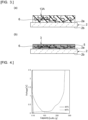
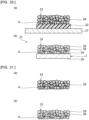
- Figs. 3(a) and 3(b) are schematic cross-sectional views for illustrating a method for manufacturing a battery member according to a first embodiment.
- an electrode paste 13A and a solid electrolyte layer 2 each shown in Fig. 3(a) are prepared.
- the paste 13A is an electrode forming material layer defined in the present invention.
- the electrode forming material layer herein refers to a material layer for use in obtaining (forming) a sintered body electrode by firing.
- the electrode forming material layer may be, for example, made of a paste as in this embodiment or made of a powder compact.
- an alkali-ion conductive solid electrolyte precursor is prepared.
- an alkali-ion conductive solid electrolyte precursor solution is preferably prepared. Specific examples of the alkali-ion conductive solid electrolyte precursor and its solution will be described later.
- a carbon electrode material precursor (a precursor of a carbon electrode material made of graphite or hard carbon) is also prepared.
- the carbon electrode material precursor an appropriate sugar, biomass, polymer or the like can be used.
- the alkali-ion conductive solid electrolyte precursor solution and the carbon electrode material precursor are mixed and the mixture is then dried.
- a mixture of an alkali-ion conductive solid electrolyte precursor and the carbon electrode material precursor is obtained.
- a powder obtained by grinding the mixture is mixed with a conductive agent 6 and a binder in an organic solvent.
- the organic solvent for example, N-methylpyrrolidone can be used.
- a paste 13A is obtained.
- the solid electrolyte layer 2 can be obtained by mixing raw material powders, forming the mixed raw material powders into a shape, and then firing them.
- the solid electrolyte layer 2 can be obtained by making the raw material powders into a slurry, forming the slurry into a green sheet, and then firing the green sheet.
- the solid electrolyte layer 2 may be obtained by the sol-gel method.
- the paste 13A is applied on the first principal surface 2a of the solid electrolyte layer 2.
- a layering step of layering the solid electrolyte layer 2 and the paste 13A as the electrode forming material layer is performed.
- the laminate of the solid electrolyte layer 2 and the paste 13A is fired, in an N 2 atmosphere, at over 500°C and not higher than 1300°C (preferably, over 800°C and not higher than 1150°C).
- the firing can be performed in an inert atmosphere.
- the firing may be performed in an Ar, Ne or He atmosphere or may be performed in vacuum. The same applies to the firing steps in the other embodiments.
- an alkali-ion conductive solid electrolyte and a carbon electrode material are concurrently obtained and, as a result, a mixture phase 5 of the alkali-ion conductive solid electrolyte and the carbon electrode material is obtained.
- a sintered body electrode 3 is obtained and a laminate of the sintered body electrode 3 and the solid electrolyte layer 2 is obtained. If the firing temperature is too low, the reaction is insufficient, which makes it difficult to obtain a desired sintered body electrode 3. As a result, the sintered body electrode 3 tends to have a large internal resistance and thus decrease the charge/discharge efficiency.
- the firing temperature is too high, the alkaline component evaporates from the alkali-ion conductive solid electrolyte precursor, which may make it difficult to obtain an alkali-ion conductive solid electrolyte having a desired composition.
- the sintered body electrode 3 tends to have a large internal resistance and thus decrease the charge/discharge efficiency.
- a current collector 4 is formed on the sintered body electrode 3.
- the method for forming the current collector 4 is not particularly limited and examples include physical vapor deposition methods, such as evaporation coating and sputtering, and chemical vapor deposition methods, such as thermal CVD, MOCVD, and plasma CVD.
- the current collector 4 need not necessarily be formed.
- a battery member 1 can be obtained.
- the binder is decomposed by the firing. Therefore, the sintered body electrode 3 in the battery member 1 contains no binder.
- specific examples of materials for the components of the battery member 1 will be described.
- examples thereof include sucrose, cellulose, D-glucose, and sucrose.
- biomass examples thereof include cornstalk, sorghum stalk, pine cone, mangosteen, argan nut shell, chaff, dandelion, corn straw core, ramie fiber, cotton, kelp, and coconut meat skin.
- examples thereof include PAN (polyacrylonitrile), pitch, PVC (polyvinyl chloride) nanofiber, polyaniline, sodium polyacrylate, tire (polymer for tire), and phosphorous-doped PAN.
- the alkali-ion conductive solid electrolyte is preferably made of an oxide.
- An alkali-ion conductive solid electrolyte made of an oxide is stable to the atmosphere and, therefore, can increase the safety of the battery.
- an alkali-ion conductive solid electrolyte made of an oxide is a hard material having a high Young's modulus, is difficult to soften and flow by thermal treatment, and is therefore difficult to densify by cold pressing or firing.
- the manufacturing method according to this embodiment enables provision of a dense sintered body.
- alkali-ion conductive solid electrolyte examples include beta-alumina crystals and NASICON crystals both of which have excellent sodium ion conductivity.
- Beta-alumina includes two types of crystals: ⁇ -alumina (theoretical composition formula: Na 2 O ⁇ 11Al 2 O 3 ) and ⁇ "-alumina (theoretical composition formula: Na 2 O ⁇ 5.3Al 2 O 3 ).
- ⁇ "-alumina is a metastable material and is therefore generally used in a state in which LizO or MgO is added as a stabilizing agent thereto.
- ⁇ "-alumina has a higher sodium-ion conductivity than ⁇ -alumina.
- ⁇ "-alumina alone or a mixture of ⁇ "-alumina and ⁇ -alumina is preferably used and Li 2 O-stabilized ⁇ "-alumina (Na 1.7 Li 0.3 Al 10.7 O 17 ) or MgO-stabilized ⁇ "-alumina ((Al 10.32 Mg 0.68 O 16 )(Na 1.68 O)) is more preferably used.
- the NASICON crystals include compounds represented by a general formula Na 1+x X 2 P 3-x Si x O 12 (where X represents at least one transition metal element selected from group IV elements and 0 ⁇ x ⁇ 3).
- the NASICON crystals preferably contain at least one of a first compound and a second compound both described below.
- the first compound is a compound represented by a general formula Na 1+x Zr 2 P 3-x Si x O 12 (where 0 ⁇ x ⁇ 3).
- the second compound is a compound in which a part of Zr in the first compound is substituted with at least one element selected from the group consisting of Ca, Mg, Ba, Sr, Al, Nb, Ta, In, Ga, and group III elements.
- An example of the group III element is at least one selected from the group consisting of Sc, Y, and La.
- Examples of the first compound and the second compound include Na 3 Zr 2 Si 2 PO 12 , Na 3 Zr 1.6 Ti 0.4 Si 2 PO 12 , and Na 3 Zr 1.88 Y 0.12 Si 2 PO 12 .
- Other examples of the NASICON crystal include Na 3.2 Zr 1.3 Si 2.2 P 0.7 O 10.5 , Na 3 Hf 2 Si 2 PO 12 , Na 3.4 Zr 0.9 Hf 1.4 Al 0.6 Si 1.2 P 1.8 O 12 , Na 3 Zr 1.7 Nb 0.24 Si 2 PO 12 , Na 3.6 Ti 0.2 Y 0.7 Si 2.8 O 9 , Na 3.12 Zr 1.88 Y 0.12 Si 2 PO 12 , Na 3.6 Zr 0.13 Yb 1.67 Si 0.11 P 2.9 O 12 , and Na 3.12 Zr 1.88 Y 0.12 Si 2 PO 12 .
- examples of the alkali-ion conductive solid electrolyte include crystalline phases represented by a general formula Na 5 XSi 4 O 12 .
- X is at least one selected from group III transition metal elements, more specifically, rare earth elements.
- Rare earth elements include, in addition to Dy, Gd, Y, and Sm, Sc, La, Ce, Pr, Nd, Pm, Eu, Tb, Ho, Er, Tm, Yb, and Lu. Pr, Nd, Sm, Gd, Dy or Y is preferably used and Y, Sm, Dy or Gd is more preferably used.
- a part of Si may be substituted with P.
- the alkali-ion conductive solid electrolyte may be a crystalline phase represented by a general formula Li 7 La 3 Zr 2 O 12 , Li 7 La 3 Zr 2-x M x O 12 (where M represents at least one selected from Nb, Ga, and Ta and 0 ⁇ x ⁇ 2) or Li 7-3x Al x La 3 Zr 2 O 12 (0 ⁇ x ⁇ 2.3).
- an alkali-ion conductive solid electrolyte precursor can be obtained, for example, by mixing aluminum nitrate, sodium nitrate, and lithium nitrate. In doing so, the ratio among these materials is adjusted to give a desired composition ratio of the alkali-ion conductive solid electrolyte.
- an example of an alkali-ion conductive solid electrolyte precursor solution is a solution containing an alkali metal element and a transition metal element both forming the alkali-ion conductive solid electrolyte, and carbonate ions.
- the alkali metal element is contained in the form of alkali ions and the transition metal element is contained in the form of transition metal ions.
- the alkali-ion conductive solid electrolyte precursor is made of, for example, a gelled product or dried product of the alkali-ion conductive solid electrolyte precursor solution.
- the alkali-ion conductive solid electrolyte is made of a sintered body of the alkali-ion conductive solid electrolyte precursor.
- the alkali metal element in the alkali-ion conductive solid electrolyte precursor or the solution of the alkali-ion conductive solid electrolyte precursor is, for example, at least one selected from the group consisting of Li, Na, and K.
- the transition metal element is, for example, at least one selected from the group consisting of group III elements and group IV elements.
- the transition metal element is preferably Ti, Zr, Hf, Sc, Y, La, Sm, Dy or Gd, more preferably Zr, Hf, Sc, Y, La, Sm, Dy or Gd, still more preferably Zr, Hf, Sc, Y, La or Sm, and particularly preferably Zr, Hf, Y, La or Sm.
- the alkali-ion conductive solid electrolyte precursor or the solution thereof may include at least one selected from the group consisting of Ca, Mg, Ba, Sr, Al, Nb, Ta, In, and Ga.
- carbonate ions may be contained as a carbonate (a carbonate of a transition metal) or a mixture of carbonate ions and a carbonate.
- the alkali-ion conductive solid electrolyte precursor solution is suitable, for example, as a precursor solution of a sodium-ion conductive solid electrolyte.
- the alkali-ion conductive solid electrolyte precursor solution a solution containing nitrate ions instead of carbonate ions may be used.
- the alkali-ion conductive solid electrolyte precursor solution is preferably a solution containing carbonate ions for the following reasons.
- the alkali-ion conductive solid electrolyte precursor solution When a solution containing nitrate ions is used as the alkali-ion conductive solid electrolyte precursor solution, there is a tendency that components in the solution heterogeneously precipitate during mixing or drying of the solution and, thus, a heterogeneous phase causing a decrease in ionic conductivity after firing is formed. Furthermore, the weight reduction due to decomposition of nitrate ions in the firing process is significant, which makes it difficult to form a homogeneous thin film layer. In addition, the production cost of facilities and so on for processing corrosive gas, such as NO x , generating in the firing process may increase. Furthermore, the solution containing nitrate ions is highly acidic and, therefore, requires high-level chemical durability of production facilities. Also in this respect, the production cost may increase.
- a transition metal element in a transition metal oxide such as ZrOz or Y 2 O 3 , normally dissolvable in an acidic region only is dissolved in the solution by being coordinated by carbonate ions to form a complex, which enables preparation of a metallic salt solution having neutrality to weak basicity (pH 7 or more, preferably 7.5 or more, more preferably 8 or more, still more preferably 8.5 or more, and particularly preferably 9 or more).
- an alkali metal component forming part of the alkali-ion conductive solid electrolyte can be dissolved as a carbonate or a hydroxide in the solution, but also a Si component forming another part of the alkali-ion conductive solid electrolyte can be added as liquid glass (sodium silicate: Na 2 O ⁇ nSiO 2 ). Therefore, an alkali-ion conductive solid electrolyte precursor solution can be easily prepared.
- carbonate ions are preferably coordinated bidentately to the transition metal element.
- the transition metal element can be stably present in the solution.
- the alkali-ion conductive solid electrolyte precursor solution preferably contains NR 4 + (where Rs are each independently a substituent of at least one selected from the group consisting of H, CH 3 , C 2 H 5 , and CHzCHzOH) as counterions to the carbonate ions.
- NR 4 + where Rs are each independently a substituent of at least one selected from the group consisting of H, CH 3 , C 2 H 5 , and CHzCHzOH
- the alkali-ion conductive solid electrolyte precursor solution can be obtained, for example, by mixing liquid glass (sodium silicate), tripolyphosphoric acid, and zirconium ammonium carbonate aqueous solution.
- a conductive carbon can be used as the conductive agent 6, for example.
- the conductive carbon include acetylene black, carbon black, Ketjenblack, carbon nanotube, and a vapor-grown carbon fiber (VGCF) conductive agent.
- the conductive agent 6 is preferably a carbon-based conductive agent made of any of the materials as just described.
- the binder is a material for binding raw materials (raw material powders) together.
- the binder include: cellulose derivatives, such as carboxymethyl cellulose, hydroxypropylmethyl cellulose, hydroxypropyl cellulose, ethyl cellulose, hydroxyethyl cellulose, and hydroxymethyl cellulose, or water-soluble polymers, such as polyvinyl alcohol; thermosetting resins, such as thermosetting polyimide, phenolic resin, epoxy resin, urea resin, melamine resin, unsaturated polyester resin, and polyurethane; polycarbonate-based resins, such as polypropylene carbonate; polyvinylidene fluoride; polyacrylic acid; sodium polyacrylate; polyacrylonitrile; polyethylene oxide; and butyral resin.
- cellulose derivatives such as carboxymethyl cellulose, hydroxypropylmethyl cellulose, hydroxypropyl cellulose, ethyl cellulose, hydroxyethyl cellulose, and hydroxymethyl cellulose
- water-soluble polymers such as
- a solid electrolyte of the same type as the alkali-ion conductive solid electrolyte in the sintered body electrode 3 can be used.
- the material for the current collector 4 is not particularly limited, but metallic materials, such as aluminum, nickel, titanium, silver, copper, stainless steel, tungsten or an alloy of any of them, can be used. These metallic materials may be used singly or in combination of two or more of them.
- the alloy of any of them means an alloy containing at least one of the above metals.
- Liquid glass sodium silicate: Na 2 O ⁇ nSiO 2
- zirconium ammonium carbonate aqueous solution (NH 4 ) 2 Zr(OH) 2 (CO 3 ) 2
- sodium tripolyphosphate Na 5 P 3 O 10
- These materials were added to 150 g of pure water, followed by stirring with a hot stirrer at 50°C for 24 hours.
- this solution was allowed to stand overnight in a thermostat bath at approximately 5°C, thus turning it into a gel. In this manner, an alkali-ion conductive solid electrolyte precursor was prepared.
- Sucrose being a carbon electrode material precursor and serving as a source of hard carbon and the alkali-ion conductive solid electrolyte precursor were mixed for an hour in a stirrer to give a weight ratio of 4:1, thus obtaining a mixture.
- the mixture was dried for 12 hours in a thermostat bath at 60°C, then vacuum dried at 100°C for six hours, and then ground into powdered form in an agate mortar.
- a powder of the mixture of the alkali-ion conductive solid electrolyte precursor and the carbon electrode material precursor and a conductive agent (acetylene black) were weighed to give a weight ratio of 19: 1.
- a PPC (polypropylene carbonate) binder was added to these materials to have an external ratio of 15% by weight and all components were mixed in a N-methylpyrrolidone solvent with a planetary centrifugal mixer, thus obtaining an electrode paste.
- a solid electrolyte layer of Na 3 Zr 2 Si 2 PO 12 having a thickness of 500 ⁇ m was separately prepared.
- the electrode paste was applied to a thickness of 70 ⁇ m on the first principal surface of the solid electrolyte layer and dried in a drier at 50°C, thus forming an electrode forming material layer.
- the electrode forming material layer on the solid electrolyte layer was fired at 1000°C for two hours in a nitrogen atmosphere (N 2 : 99.9999%) to precipitate a mixture phase of an alkali-ion conductive solid electrolyte having a composition of Na 3 Zr 2 Si 2 PO 12 and a carbon electrode material made of hard carbon, thus obtaining a sintered body electrode.
- a current collector was formed on the sintered body electrode by sputtering.
- the current collector was formed of an aluminum thin film. In the manner as thus far described, a battery member was obtained.
- the sintered body electrode in this example is a negative electrode.
- Metal sodium was attached as a counterelectrode to the second principal surface of the solid electrolyte layer in a glove box, thus producing a test battery.
- a test battery was produced in the same manner as in Example 1 except that the negative electrode was made of a mixture of hard carbon and a PEO- (polyethylene oxide)-based polymer solid electrolyte (a mixture of PEO and NaPF 6 at a weight ratio of 9:1).
- the negative electrode was made of a mixture of hard carbon and a PEO- (polyethylene oxide)-based polymer solid electrolyte (a mixture of PEO and NaPF 6 at a weight ratio of 9:1).
- test batteries underwent a charge and discharge test in a thermostat bath at 30°C.
- the charge capacity and the discharge capacity of the test battery were measured by subjecting it to charging (insertion of sodium ions) at a cut-off voltage of 0.001 V and subjecting it to discharging (extraction of sodium ions) at a cut-off voltage of 2.5 V
- charging and discharging were conducted by assuming (the weight of the produced negative electrode, i.e., the above-described sintered body electrode) ⁇ 300 mAh/g as an actual capacity and setting a current value to give a C-rate of 0.1.
- the charge capacity and discharge capacity were measured in the same manner as described above.
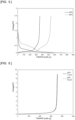
- Fig. 4 is a graph showing the results of the charge and discharge test for the comparative example.
- Fig. 5 is a graph showing the results of the charge and discharge test for Example 1.
- the charge capacity and the discharge capacity at 60°C were both about 250 mAh/g to about 280 mAh/g. However, at 30°C, the charge capacity and the discharge capacity were both less than 10 mAh/g, which showed the battery did not sufficiently operate. The reason for the occurrence of this difference is that a polymer-based electrode significantly changes its ionic conductivity with changing temperature.
- Example 1 the charge capacity and the discharge capacity both exceeded 350 mAh/g not only at 60°C but also at 30°C.
- a battery in which the battery member according to the present invention is used sufficiently operates even at a temperature as low as 30°C.
- the battery need not any organic electrolyte, it has a small risk of firing and can increase the safety.
- An alkali-ion conductive solid electrolyte precursor solution was obtained in the same manner as in Example 1. This solution was allowed to stand overnight in a thermostat bath at approximately 5°C to turn it into a gel, thus obtaining an alkali-ion conductive solid electrolyte precursor.
- the obtained alkali-ion conductive solid electrolyte precursor was dried for 12 hours in a thermostat bath at 60°C and then vacuum dried at 100°C for six hours.
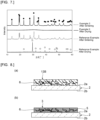
- the alkali-ion conductive solid electrolyte precursor after the drying was analyzed by XRD, it was found that, as shown in the relevant XRD chart in Fig. 7 , the alkali-ion conductive solid electrolyte precursor was amorphous and its components were homogeneously dispersed.
- the alkali-ion conductive solid electrolyte precursor after the drying was fired at 1000°C for three hours, thus obtaining an alkali-ion conductive solid electrolyte.
- the obtained alkali-ion conductive solid electrolyte was analyzed by XRD, it was confirmed that, as shown in Fig. 7 , desired NASICON crystals (Na 3 Zr 2 Si 2 PO 12 ) precipitated (the plots (solid circles) in the XRD chart relevant to "Example 2: After
- a gold electrode was formed as an ion blocking electrode on a surface of the alkali-ion conductive solid electrolyte, the alkali-ion conductive solid electrolyte was then measured in a frequency range of 1 to 10 7 Hz by the AC impedance method to obtain a Cole-Cole plot, and resistance values were determined from the Cole-Cole plot. The ionic conductivity was calculated from the obtained resistance values.
- the measurement by the AC impedance method was conducted at 20°C.
- An alkali-ion conductive solid electrolyte precursor was obtained in the same manner as in Example 2 except that a zirconium nitrate aqueous solution (ZrO(NO 3 ) 2 ) was used instead of the zirconium ammonium carbonate aqueous solution.
- a zirconium nitrate aqueous solution ZrO(NO 3 ) 2
- the alkali-ion conductive solid electrolyte precursor after the drying was fired at 1000°C for three hours, thus obtaining an alkali-ion conductive solid electrolyte.
- the obtained alkali-ion conductive solid electrolyte was analyzed by XRD, it was confirmed that, as shown in Fig. 7 , not only NASICON crystals (Na 3 Zr 2 Si 2 PO 12 ) precipitated, but also a heterogeneous phase partially precipitated.
- the ionic conductivity of the alkali-ion conductive solid electrolyte was measured in the same manner as in Example 2, it was as low as 6.0 ⁇ 10 -7 S. This can be attributed to a low ionic conductivity of the precipitated heterogeneous phase.
- the above-described method for manufacturing a battery member 1 according to the first embodiment includes a heating step at approximately 1000°C. Therefore, the sintered body electrode 3 is difficult to decompose even if it is thermally treated again. For example, after being thermally treated in an inert atmosphere at 500°C, the sintered body electrode 3 can absorb and release alkali ions at 30°C. Thus, the thermal resistance can be effectively increased. In contrast, if a general electrode containing a binder as a solid electrolyte is thermally treated in an inert atmosphere at 500°C, the binder is decomposed to lose the function of the solid electrolyte, which makes it impossible for the battery to absorb and release alkali ions at 30°C.
- Fig. 6 is a graph showing the results of a charge and discharge test for the test battery produced in Example 1 described above when charged and discharged at a cut-off voltage of 9 V to 0.001 V As shown in Fig. 6 , even when a high voltage of 9 V was applied to the test battery, no plateau due to decomposition appeared and the test battery could be reversibly charged and discharged with a charge/discharge efficiency of 90% or more. As just described, the voltage resistance can also be increased.
- the carbon electrode material precursor for use in producing the sintered body electrode 3 may be sugar, such as sucrose, or biomass, and these materials are easily available. Therefore, the productivity can be effectively increased.
- water was used as a solvent in mixing the alkali-ion conductive solid electrolyte precursor and the carbon electrode material precursor.
- sugar such as sucrose
- the homogeneity of the mixture can be effectively increased.
- the contact area between them can be effectively large, which enables high output and rapid charge and discharge.
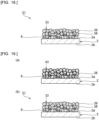
- Figs. 8(a) and 8(b) are schematic cross-sectional views for illustrating a method for manufacturing a battery member according to the second embodiment.
- an electrode paste 13B and a solid electrolyte layer 2 each shown in Fig. 8(a) are prepared.
- the paste 13B is an electrode forming material layer defined in the present invention.
- a mixture powder of an alkali-ion conductive solid electrolyte precursor and a carbon electrode material precursor is obtained in the same manner as in the manufacturing method according to the first embodiment.
- the mixture powder is fired in an N 2 atmosphere at not lower than 200°C and not higher than 800°C.
- the upper limit of the temperature may not be higher than 500°C in consideration of the firing temperature during a second firing step to be described hereinafter.
- a carbon electrode material is obtained from the carbon electrode material precursor.
- This step is a first firing step.
- a mixture powder of the alkali-ion conductive solid electrolyte precursor and the carbon electrode material is obtained.
- the firing temperature is too low, the carbon electrode material precursor is less likely to change into a carbon electrode material.
- the firing temperature is too high, the alkali-ion conductive solid electrolyte precursor tends to change into an alkali-ion conductive solid electrolyte.
- the mixture powder is ground and mixed with a conductive agent 6 and a binder in an organic solvent, thus obtaining a paste 13B.
- the paste 13B is applied on the first principal surface 2a of the solid electrolyte layer 2.
- a layering step of layering the solid electrolyte layer 2 and the paste 13B as the electrode forming material layer is performed.
- the laminate of the solid electrolyte layer 2 and the paste 13B is fired, in an N 2 atmosphere, at over 500°C and not higher than 1300°C (preferably, over 800°C and not higher than 1150°C).
- an alkali-ion conductive solid electrolyte is obtained from the alkali-ion conductive solid electrolyte precursor and, as a result, a mixture phase 5 of the alkali-ion conductive solid electrolyte and the carbon electrode material is obtained.
- This step is a second firing step. In the second firing step, firing is performed at a higher temperature than in the first firing step. By the second firing step, a sintered body electrode 3 is obtained as shown in Fig. 8(b) . In this manner, a laminate of the sintered body electrode 3 and the solid electrolyte layer 2 is obtained. If the firing temperature is too low, the reaction is insufficient, which makes it difficult to obtain a desired sintered body electrode 3.
- the sintered body electrode 3 tends to have a large internal resistance and thus decrease the charge/discharge efficiency.
- the firing temperature is too high, the alkaline component evaporates from the alkali-ion conductive solid electrolyte precursor, which may make it difficult to obtain an alkali-ion conductive solid electrolyte having a desired composition.
- the sintered body electrode 3 tends to have a large internal resistance and thus decrease the charge/discharge efficiency.
- a current collector 4 is formed on the sintered body electrode 3. In the manner as thus far described, a battery member 1 can be obtained.
- both a reaction of changing from the alkali-ion conductive solid electrolyte precursor to the alkali-ion conductive solid electrolyte and a reaction of changing from the carbon electrode material precursor to the carbon electrode material occur. Therefore, the amount of decomposing components in the firing step is large, which invites a large difference in thickness between the paste 13A and the sintered body electrode 3. Specifically, the thickness of the sintered body electrode 3 is likely to be smaller than the thickness of the paste 13A.
- the first firing step is performed before the step of forming an electrode forming material layer, i.e., the step of forming a paste 13B.
- the reaction for obtaining a carbon electrode material from a carbon electrode material precursor is performed before the formation of the paste 13B. Therefore, the amount of decomposing components in the second firing step after the formation of the paste 13B is small. As a result, the difference in thickness between the paste 13B and the sintered body electrode 3 is small. Hence, the thickness of the sintered body electrode 3 can be easily controlled.
- the sintered body electrode 3 obtained after the firing is less likely to cause inconveniences, such as cracks. As a result, the thickness of the sintered body electrode 3 can be easily increased and, therefore, the capacity can be easily increased.
- the number of times of firing step for obtaining a sintered body electrode 3 is only one, which simplifies the process.
- Figs. 9(a) and 9(b) are schematic cross-sectional views for illustrating a method for manufacturing a battery member according to the third embodiment.
- an electrode paste 13C and a solid electrolyte layer 2 each shown in Fig. 9(a) are prepared.
- the paste 13C is an electrode forming material layer defined in the present invention.
- a mixture powder of an alkali-ion conductive solid electrolyte precursor and a carbon electrode material precursor is obtained in the same manner as in the manufacturing method according to the first embodiment.
- the mixture powder is fired, in an N 2 atmosphere, at over 500°C and not higher than 1150°C (preferably, over 800°C and not higher than 1100°C).
- This step is a third firing step.
- a mixture powder of the alkali-ion conductive solid electrolyte and the carbon electrode material is obtained.
- the firing temperature is too low, the mixture powder of the alkali-ion conductive solid electrolyte and the carbon electrode material is difficult to obtain.
- the firing temperature is too high, the alkaline component evaporates from the alkali-ion conductive solid electrolyte precursor, which may make it difficult to obtain an alkali-ion conductive solid electrolyte having a desired composition.
- the mixture powder is ground and mixed with a conductive agent 6 and a binder in an organic solvent, thus obtaining a paste 13C.
- the paste 13C is applied on the first principal surface 2a of the solid electrolyte layer 2.
- a layering step of layering the solid electrolyte layer 2 and the paste 13C as the electrode forming material layer is performed.
- the laminate of the solid electrolyte layer 2 and the paste 13C is fired, in an N 2 atmosphere, at not lower than 600°C and not higher than 1300°C (preferably, not lower than 900°C and not higher than 1250°C). This step is a fourth firing step.
- the fourth firing step firing is performed at a higher temperature than in the third firing step.
- a sintered body electrode 3 is obtained as shown in Fig. 9(b) .
- the firing temperature is too low, the sinterability of the sintered body electrode 3 and the bondability between the sintered body electrode 3 and the solid electrolyte layer 2 may be insufficient. As a result, the sintered body electrode 3 tends to have a large internal resistance and thus decrease the charge/discharge efficiency.
- the firing temperature is too high, the alkaline component evaporates from the alkali-ion conductive solid electrolyte precursor, which may make it difficult to obtain an alkali-ion conductive solid electrolyte having a desired composition.
- the sintered body electrode 3 tends to have a large internal resistance and thus decrease the charge/discharge efficiency.
- a current collector 4 is formed on the sintered body electrode 3. In the manner as thus far described, a battery member 1 can be obtained.
- the third firing step is performed before the step of forming a paste 13C.
- both a reaction of changing from the alkali-ion conductive solid electrolyte precursor to the alkali-ion conductive solid electrolyte and a reaction of changing from the carbon electrode material precursor to the carbon electrode material occur. Therefore, the amount of decomposing components in the fourth firing step after the formation of the paste 13C is smaller. As a result, the difference in thickness between the paste 13C and the sintered body electrode 3 is smaller. Hence, the thickness of the sintered body electrode 3 can be more easily controlled. In addition, the thickness of the sintered body electrode 3 can be more easily increased and, therefore, the capacity can be more easily increased.
- the battery member 1 can be manufactured at a lower temperature than in the third embodiment.
- Figs. 10(a) and 10(b) are schematic cross-sectional views for illustrating a method for manufacturing a battery member according to the fourth embodiment.
- a powder compact 23A and a paste 22 containing a solid electrolyte precursor are prepared.
- the powder compact 23A is an electrode forming material layer defined in the present invention.
- the paste 22 is a solid electrolyte forming material layer defined in the present invention.
- the solid electrolyte forming material layer herein refers to a material layer for use in obtaining (forming) a solid electrolyte layer by firing.
- the solid electrolyte forming material layer may be, for example, made of a paste as in this embodiment or made of a powder compact.
- a mixture powder of an alkali-ion conductive solid electrolyte precursor and a carbon electrode material precursor is obtained in the same manner as in the manufacturing method according to the first embodiment.
- the mixture powder and the conductive agent 6 are mixed and the mixture is then pressed into a shape, thus obtaining a powder compact 23A of the alkali-ion conductive solid electrolyte precursor, the carbon electrode material precursor, and the conductive agent 6.
- a uniaxial pressing may be used.
- the conductive agent 6 need not necessarily be added.
- the paste 22 can be obtained by adding mixed raw material powders into an organic solvent.
- the paste 22 is applied on an appropriate base material 27.
- the base material 27 a sheet made of an appropriate metal, ceramic or others can be used.
- the powder compact 23A is layered on the paste 22.
- the laminate of the paste 22 and the powder compact 23A is fired, in an N 2 atmosphere, at over 500°C and not higher than 1300°C (preferably, over 800°C and not higher than 1150°C).
- a solid electrolyte layer 2 and a sintered body electrode 3 are concurrently obtained.
- the firing temperature is too high, the alkaline component evaporates from the alkali-ion conductive solid electrolyte precursor, which may make it difficult to obtain an alkali-ion conductive solid electrolyte having a desired composition.
- the sintered body electrode 3 tends to have a large internal resistance and thus decrease the charge/discharge efficiency.
- the laminate of the solid electrolyte layer 2 and the sintered body electrode 3 is peeled off from the base material 27 as shown in Fig. 10(b) and a current collector 4 is formed on the sintered body electrode 3.
- the laminate of the solid electrolyte layer 2 and the sintered body electrode 3 may be peeled off from the base material 27. In the manner as thus far described, a battery member 1 can be obtained.
- the productivity can be increased.
- the paste 22 is used for the production of the solid electrolyte layer 2
- the solid electrolyte layer 2 can be easily reduced in thickness. Modifications of this embodiment will be described below.
- Figs. 11(a) to 11(c) are schematic cross-sectional views for illustrating a method for manufacturing a battery member according to Modification 1 of the fourth embodiment.
- the paste 22 is applied on the powder compact 23A.
- the laminate of the paste 22 and the powder compact 23A is fired, in an N 2 atmosphere, at over 500°C and not higher than 1300°C (preferably, over 800°C and not higher than 1150°C).
- a solid electrolyte layer 2 and a sintered body electrode 3 are concurrently obtained.
- the firing temperature is too low, the reaction is insufficient, which makes it difficult to obtain a desired sintered body electrode 3. Furthermore, a desired solid electrolyte layer 2 is difficult to obtain. In addition, the bondability between the sintered body electrode 3 and the solid electrolyte layer 2 may be insufficient. As a result, the sintered body electrode 3 tends to have a large internal resistance and thus decrease the charge/discharge efficiency.
- the firing temperature is too high, the alkaline component evaporates from the alkali-ion conductive solid electrolyte precursor, which may make it difficult to obtain an alkali-ion conductive solid electrolyte having a desired composition.
- the sintered body electrode 3 tends to have a large internal resistance and thus decrease the charge/discharge efficiency.
- a current collector 4 is formed on the sintered body electrode 3. In the manner as thus far described, a battery member 21 can be obtained.
- the outer peripheral edge of the solid electrolyte layer 2 is located laterally to the outer peripheral edge of the sintered body electrode 3 in plan view.
- the plan view herein refers to the direction of view from above in Fig. 1 .
- the paste 22 is applied on the powder compact 23A. Therefore, in the battery member 21 shown in Fig. 11(c) , the outer peripheral edge of the solid electrolyte layer 2 is coincident with the outer peripheral edge of the sintered body electrode 3 in plan view.
- Figs. 12(a) to 12(c) are schematic cross-sectional views for illustrating a method for manufacturing a battery member according to Modification 2 of the fourth embodiment.
- a powder compact 22A shown in Fig. 12(a) is prepared instead of the paste 22 shown in Fig. 10(a) .
- the powder compact 22A is a solid electrolyte forming material layer defined in the present invention.
- the powder compact 22A can be obtained by pressing mixed raw material powders into a shape.
- a powder compact 23A serving as an electrode forming material layer is layered on the powder compact 22A serving as the solid electrolyte forming material layer.
- the laminate of the powder compact 22A and the powder compact 23A is fired, in an N 2 atmosphere, at over 500°C and not higher than 1300°C (preferably, over 800°C and not higher than 1150°C).
- a solid electrolyte layer 2 and a sintered body electrode 3 are concurrently obtained. If the firing temperature is too low, the reaction is insufficient, which makes it difficult to obtain a desired sintered body electrode 3. Furthermore, a desired solid electrolyte layer 2 is difficult to obtain. In addition, the bondability between the sintered body electrode 3 and the solid electrolyte layer 2 may be insufficient.
- the sintered body electrode 3 tends to have a large internal resistance and thus decrease the charge/discharge efficiency.
- the firing temperature is too high, the alkaline component evaporates from the alkali-ion conductive solid electrolyte precursor, which may make it difficult to obtain an alkali-ion conductive solid electrolyte having a desired composition.
- the sintered body electrode 3 tends to have a large internal resistance and thus decrease the charge/discharge efficiency.
- a current collector 4 is formed on the sintered body electrode 3. In the manner as thus far described, a battery member 21 can be obtained.
- Figs. 13(a) and 13(b) are schematic cross-sectional views for illustrating a method for manufacturing a battery member according to the fifth embodiment.
- a powder compact 23B and a paste 22 both shown in Fig. 13(a) are prepared.
- the powder compact 23B is an electrode forming material layer defined in the present invention.
- a mixture powder of an alkali-ion conductive solid electrolyte precursor and a carbon electrode material precursor is obtained in the same manner as in the manufacturing method according to the first embodiment.
- the mixture powder is fired in an N 2 atmosphere at not lower than 200°C and not higher than 800°C.
- the upper limit of the temperature may not be higher than 500°C in consideration of the firing temperature during a second firing step to be described hereinafter.
- This step is the same first firing step as in the second embodiment.
- a mixture powder of the alkali-ion conductive solid electrolyte precursor and a carbon electrode material is obtained. If the firing temperature is too low, the carbon electrode material precursor is less likely to change into a carbon electrode material.
- the alkali-ion conductive solid electrolyte precursor tends to change into an alkali-ion conductive solid electrolyte.
- the mixture powder and the conductive agent 6 are mixed and the mixture is then pressed into a shape, thus obtaining a powder compact 23B.
- the paste 22 serving as a solid electrolyte forming material layer is applied on an appropriate base material 27.
- the powder compact 23B is layered on the paste 22.
- the laminate of the paste 22 and the powder compact 23B is fired, in an N 2 atmosphere, at over 500°C and not higher than 1300°C (preferably, over 800°C and not higher than 1150°C).
- This step is the same second firing step as in the second embodiment.
- a solid electrolyte layer 2 and a sintered body electrode 3 are concurrently obtained. In this manner, a laminate of the solid electrolyte layer 2 and the sintered body electrode 3 is obtained.
- the firing temperature is too low, the reaction is insufficient, which makes it difficult to obtain a desired sintered body electrode 3. Furthermore, a desired solid electrolyte layer 2 is difficult to obtain. In addition, the bondability between the sintered body electrode 3 and the solid electrolyte layer 2 may be insufficient. As a result, the sintered body electrode 3 tends to have a large internal resistance and thus decrease the charge/discharge efficiency.
- the firing temperature is too high, the alkaline component evaporates from the alkali-ion conductive solid electrolyte precursor, which may make it difficult to obtain an alkali-ion conductive solid electrolyte having a desired composition.
- the sintered body electrode 3 tends to have a large internal resistance and thus decrease the charge/discharge efficiency.
- the laminate of the solid electrolyte layer 2 and the sintered body electrode 3 is peeled off from the base material 27 and a current collector 4 is then formed on the sintered body electrode 3.
- a battery member 1 can be obtained.
- the productivity can be increased.
- the thickness of the sintered body electrode 3 can be easily controlled. Furthermore, the thickness of the sintered body electrode 3 can be easily increased and, therefore, the capacity can be easily increased.
- Figs. 14(a) and 14(b) are schematic cross-sectional views for illustrating a method for manufacturing a battery member according to the sixth embodiment.
- a powder compact 23C and a paste 22 of a solid electrolyte are prepared.
- the powder compact 23C is an electrode forming material layer defined in the present invention.
- a mixture powder of an alkali-ion conductive solid electrolyte precursor and a carbon electrode material precursor is obtained in the same manner as in the manufacturing method according to the first embodiment.
- the mixture powder is fired, in an N 2 atmosphere, at over 500°C and not higher than 1150°C (preferably, over 800°C and not higher than 1100°C).
- an alkali-ion conductive solid electrolyte and a carbon electrode material are concurrently obtained.
- This step is the same third firing step as in the third embodiment.
- a mixture powder of the alkali-ion conductive solid electrolyte and the carbon electrode material is obtained.
- the firing temperature is too low, the mixture powder of the alkali-ion conductive solid electrolyte and the carbon electrode material is difficult to obtain.
- the firing temperature is too high, the alkaline component evaporates from the alkali-ion conductive solid electrolyte precursor, which may make it difficult to obtain an alkali-ion conductive solid electrolyte having a desired composition.
- the mixture powder and the conductive agent 6 are mixed and the mixture is then pressed into a shape, thus obtaining a powder compact 23C.
- the paste 22 serving as a solid electrolyte forming material layer is applied on an appropriate base material 27.
- the powder compact 23C is layered on the paste 22.
- the laminate of the paste 22 and the powder compact 23C is fired, in an N 2 atmosphere, at not lower than 600°C and not higher than 1300°C (preferably, over 800°C and not higher than 1250°C).
- This step is the same fourth firing step as in the third embodiment.
- a solid electrolyte layer 2 and a sintered body electrode 3 are concurrently obtained. In this manner, a laminate of the solid electrolyte layer 2 and the sintered body electrode 3 is obtained.
- the firing temperature is too low, the sinterability of the sintered body electrode 3 and the bondability between the sintered body electrode 3 and the solid electrolyte layer 2 may be insufficient. As a result, the sintered body electrode 3 tends to have a large internal resistance and thus decrease the charge/discharge efficiency.
- the firing temperature is too high, the alkaline component evaporates from the alkali-ion conductive solid electrolyte precursor, which may make it difficult to obtain an alkali-ion conductive solid electrolyte having a desired composition. As a result, the sintered body electrode 3 tends to have a large internal resistance and thus decrease the charge/discharge efficiency.
- the laminate of the solid electrolyte layer 2 and the sintered body electrode 3 is peeled off from the base material 27 and a current collector 4 is then formed on the sintered body electrode 3. In the manner as thus far described, a battery member 1 can be obtained.
- the productivity can be increased.
- the thickness of the sintered body electrode 3 can be more easily controlled.
- the thickness of the sintered body electrode 3 can be more easily increased and, therefore, the capacity can be more easily increased.
- the sintered body electrode 3 according to the one embodiment of the present invention can be used independently. Examples of a method for manufacturing the sintered body electrode 3 will be described below.
- Figs. 15(a) and 15(b) are schematic cross-sectional views for illustrating a method for manufacturing a sintered body electrode according to the seventh embodiment.
- a powder compact 23A is prepared in the same manner as in the fourth embodiment.
- the powder compact 23A is an electrode forming material layer containing an alkali-ion conductive solid electrolyte precursor, a carbon electrode material precursor, and a conductive agent 6.
- the electrode forming material layer need not necessarily contain the conductive agent 6.
- the powder compact 23A is fired, in an N 2 atmosphere, at over 500°C and not higher than 1300°C (preferably, over 800°C and not higher than 1150°C).
- an alkali-ion conductive solid electrolyte and a carbon electrode material are concurrently obtained and, as a result, a mixture phase 5 of the alkali-ion conductive solid electrolyte and the carbon electrode material is obtained.
- a sintered body electrode 3 can be obtained as shown in Fig. 15(b) . If the firing temperature is too low, the reaction is insufficient, which makes it difficult to obtain a desired sintered body electrode 3. As a result, the sintered body electrode 3 tends to have a large internal resistance and thus decrease the charge/discharge efficiency.
- the firing temperature is too high, the alkaline component evaporates from the alkali-ion conductive solid electrolyte precursor, which may make it difficult to obtain an alkali-ion conductive solid electrolyte having a desired composition.
- the sintered body electrode 3 tends to have a large internal resistance and thus decrease the charge/discharge efficiency.
- Figs. 16(a) and 16(b) are schematic cross-sectional views for illustrating a method for manufacturing a sintered body electrode according to the eighth embodiment.
- a powder compact 23B is prepared in the same manner as in the fifth embodiment. Specifically, a mixture powder of an alkali-ion conductive solid electrolyte precursor and a carbon electrode material precursor is fired in an N 2 atmosphere at not lower than 200°C and not higher than 800°C. Alternatively, the upper limit of the temperature may not be higher than 500°C in consideration of the firing temperature during a second firing step to be described hereinafter. Thus, a carbon electrode material is obtained from the carbon electrode material precursor. This step is the same first firing step as in the fifth embodiment.
- a mixture powder of the alkali-ion conductive solid electrolyte precursor and the carbon electrode material is obtained. If the firing temperature is too low, the carbon electrode material precursor is less likely to change into a carbon electrode material. On the other hand, if the firing temperature is too high, the alkali-ion conductive solid electrolyte precursor tends to change into an alkali-ion conductive solid electrolyte.
- the mixture powder and a conductive agent 6 are mixed and the mixture is then pressed into a shape, thus obtaining a powder compact 23B.
- the powder compact 23B is fired, in an N 2 atmosphere, at over 500°C and not higher than 1300°C (preferably, over 800°C and not higher than 1150°C).
- an alkali-ion conductive solid electrolyte is obtained from the alkali-ion conductive solid electrolyte precursor and, as a result, a mixture phase 5 of the alkali-ion conductive solid electrolyte and the carbon electrode material is obtained.
- This step is the same second firing step as in the fifth embodiment. In the second firing step, firing is performed at a higher temperature than in the first firing step. In this manner, a sintered body electrode 3 is obtained as shown in Fig. 16(b) .
- the firing temperature is too low, the reaction is insufficient, which makes it difficult to obtain a desired sintered body electrode 3. As a result, the sintered body electrode 3 tends to have a large internal resistance and thus decrease the charge/discharge efficiency.
- the firing temperature is too high, the alkaline component evaporates from the alkali-ion conductive solid electrolyte precursor, which may make it difficult to obtain an alkali-ion conductive solid electrolyte having a desired composition. As a result, the sintered body electrode 3 tends to have a large internal resistance and thus decrease the charge/discharge efficiency.
- Figs. 17(a) and 17(b) are schematic cross-sectional views for illustrating a method for manufacturing a sintered body electrode according to the ninth embodiment.
- a powder compact 23C is prepared in the same manner as in the sixth embodiment. Specifically, a mixture powder of an alkali-ion conductive solid electrolyte precursor and a carbon electrode material precursor is fired in an N 2 atmosphere at over 500°C and not higher than 1150°C (preferably, over 800°C and not higher than 1100°C). Thus, an alkali-ion conductive solid electrolyte and a carbon electrode material are concurrently obtained.
- This step is the same third firing step as in the sixth embodiment.
- a mixture powder of the alkali-ion conductive solid electrolyte and the carbon electrode material is obtained. If the firing temperature is too low, the mixture powder of the alkali-ion conductive solid electrolyte and the carbon electrode material is difficult to obtain. On the other hand, if the firing temperature is too high, the alkaline component evaporates from the alkali-ion conductive solid electrolyte precursor, which may make it difficult to obtain an alkali-ion conductive solid electrolyte having a desired composition. Next, the mixture powder and a conductive agent 6 are mixed and the mixture is then pressed into a shape, thus obtaining a powder compact 23C.
- the powder compact 23C is fired, in an N 2 atmosphere, at not lower than 600°C and not higher than 1300°C (preferably, not lower than 900°C and not higher than 1250°C).
- This step is the same fourth firing step as in the sixth embodiment.
- firing is performed at a higher temperature than in the third firing step.
- a sintered body electrode 3 is obtained as shown in Fig. 17(b) . If the firing temperature is too low, the sinterability of the sintered body electrode 3 may be insufficient. As a result, the sintered body electrode 3 tends to have a large internal resistance and thus decrease the charge/discharge efficiency.
- the firing temperature is too high, the alkaline component evaporates from the alkali-ion conductive solid electrolyte precursor, which may make it difficult to obtain an alkali-ion conductive solid electrolyte having a desired composition.
- the sintered body electrode 3 tends to have a large internal resistance and thus decrease the charge/discharge efficiency.
- Fig. 18 is a schematic cross-sectional view showing a battery member according to a second embodiment.
- This embodiment is different from the first embodiment in terms of the structure of a sintered body electrode 33 and the absence of a current collector.
- a battery member 31 according to this embodiment has the same structure as the battery member 1 according to the first embodiment.
- the battery member 31 may include a current collector.
- the sintered body electrode 33 includes a particulate carbon electrode material 38 and a coating layer 39.
- the D50 of the particulate carbon electrode material 38 is 1 ⁇ m.
- the particulate carbon electrode material 38 is made of graphite or hard carbon.
- the D50 is preferably 50 ⁇ m or less and more preferably 10 ⁇ m or less.
- the lower limit of the D50 of the particular carbon electrode material 38 is not particularly limited, but is, for example, 10 nm, 0.1 ⁇ m, 0.3 ⁇ m, 0.5 ⁇ m or 0.6 ⁇ m.
- the particulate carbon electrode material 38 is coated with a coating layer 39.
- the coating layer 39 is made of an alkali-ion conductive solid electrolyte.
- the alkali-ion conductive solid electrolyte has a sodium-ion conductivity in this embodiment.
- the alkali-ion conductive solid electrolyte may have a lithium-ion conductivity.
- the particles of the particulate carbon electrode material 38 are bonded together through the coating layer 39.
- the sintered body electrode 33 is bonded to the solid electrolyte layer 2 by the coating layer 39.
- the sintered body electrode 33 preferably contains a conductive agent 6.
- conductive paths are formed inside, which enables reduction of the internal resistance of the sintered body electrode 33.
- the sintered body electrode 33 need not necessary contain the conductive agent 6.
- the sintered body electrode 33 contains no binder.
- the battery member 31 according to this embodiment can increase the safety and also can increase the thermal resistance and voltage resistance.
- the sintered body electrode 33 can be easily increased in thickness (increased in the amount thereof supported) by appropriately controlling the amount of the particulate carbon electrode material 38.
- the performance can be easily controlled by selecting the type of the particulate carbon electrode material 38 used.
- the sintered body electrode 33 according to the one embodiment of the present invention may be used independently.
- Figs. 19(a) and 19(b) are schematic cross-sectional views for illustrating a method for manufacturing a battery member according to the tenth embodiment.
- a paste 43 and a solid electrolyte layer 2 both shown in Fig. 19(a) are prepared.
- the paste 43 is an electrode forming material layer defined in the present invention.
- an alkali-ion conductive solid electrolyte precursor of the same type as in the manufacturing method according to the first embodiment is prepared.
- a particulate carbon electrode material 38 is prepared.
- the alkali-ion conductive solid electrolyte precursor and the particulate carbon electrode material 38 are mixed and the mixture is then dried.
- a mixture powder of the alkali-ion conductive solid electrolyte precursor and the particulate carbon electrode material 38 is obtained.
- the mixture powder is added into an organic solvent and the mixture is further mixed with a conductive agent 6 and a binder.
- the organic solvent for example, N-methylpyrrolidone can be used.
- the organic solvent for example, N-methylpyrrolidone can be used.
- the organic solvent for example, N-methylpyrrolidone can be used.
- the conductive agent 6 need not necessarily be added.
- the paste 43 is applied on the first principal surface 2a of the solid electrolyte layer 2.
- a layering step of layering the solid electrolyte layer 2 and the paste 43 as the electrode forming material layer is performed.
- the laminate of the solid electrolyte layer 2 and the paste 43 is fired, in an N 2 atmosphere, at over 500°C and not higher than 1300°C (preferably, over 800°C and not higher than 1150°C).
- an alkali-ion conductive solid electrolyte is obtained from the alkali-ion conductive solid electrolyte precursor and, as a result, a coating layer 39 made of the alkali-ion conductive solid electrolyte is obtained.
- the particles of the particulate carbon electrode material 38 are bonded together through the coating layer 39, thus obtaining a sintered body electrode 33.
- a laminate of the sintered body electrode 33 and the solid electrolyte layer 2 is obtained.
- the sintered body electrode 33 is bonded to the solid electrolyte layer 2 by the coating layer 39. In the manner as thus far described, a battery member 31 is obtained.
- the firing temperature is too low, the reaction is insufficient, which makes it difficult to obtain a desired sintered body electrode 33.
- the sintered body electrode 33 tends to have a large internal resistance and thus decrease the charge/discharge efficiency.
- the bondability between the sintered body electrode 33 and the solid electrolyte layer 2 may be insufficient.
- the firing temperature is too high, the alkaline component evaporates from the alkali-ion conductive solid electrolyte precursor, which may make it difficult to obtain a coating layer 39 made of an alkali-ion conductive solid electrolyte having a desired composition.
- the sintered body electrode 33 tends to have a large internal resistance and thus decrease the charge/discharge efficiency.
- Figs. 20(a) and 20(b) are schematic cross-sectional views for illustrating a method for manufacturing a battery member according to the eleventh embodiment.
- a powder compact 53 and a paste 22 both shown in Fig. 20(a) are prepared.
- the powder compact 53 is an electrode forming material layer defined in the present invention.
- the paste 22 is a solid electrolyte forming material layer defined in the present invention.
- a mixture powder of an alkali-ion conductive solid electrolyte precursor and a particulate carbon electrode material 38 is obtained in the same manner as in the manufacturing method according to the tenth embodiment.
- the mixture powder and a conductive agent 6 are mixed and the mixture is then pressed into a shape, thus obtaining a powder compact 53.
- the paste 22 can be obtained by adding mixed raw material powders into an organic solvent.
- the paste 22 is applied on an appropriate base material 27.
- a layering step of layering the powder compact 53 serving as the electrode forming material layer on the paste 22 serving as the solid electrolyte forming material layer is performed.
- the laminate of the paste 22 and the powder compact 53 is fired, in an N 2 atmosphere, at over 500°C and not higher than 1300°C (preferably, over 800°C and not higher than 1150°C).
- a solid electrolyte layer 2 and a sintered body electrode 33 are concurrently obtained.
- the alkaline component evaporates from the alkali-ion conductive solid electrolyte precursor, which may make it difficult to obtain a coating layer 39 made of an alkali-ion conductive solid electrolyte having a desired composition and the solid electrolyte layer 2.
- the sintered body electrode 33 tends to have a large internal resistance and thus decrease the charge/discharge efficiency.
- the paste 22 may be applied to the powder compact 53, like the example shown in Fig. 11(a) .
- a powder compact 22A of the same type as in the example shown in Fig. 12(a) may be prepared instead of the paste 22.
- firing can be performed after the powder compact 53 serving as the electrode forming material layer and the powder compact 22A serving as the solid electrolyte forming material layer are layered.
- Figs. 21(a) and 21(b) are schematic cross-sectional views for illustrating a method for manufacturing a sintered body electrode according to the twelfth embodiment.
- a powder compact 53 is prepared in the same manner as in the eleventh embodiment.
- the powder compact 53 is an electrode forming material layer defined in the present invention.
- the powder compact 53 is fired, in an N 2 atmosphere, at over 500°C and not higher than 1300°C (preferably, over 800°C and not higher than 1150°C). In this manner, a sintered body electrode 33 is obtained as shown in Fig. 21(b) . If the firing temperature is too low, the reaction is insufficient, which makes it difficult to obtain a desired sintered body electrode 33.
- the sintered body electrode 33 tends to have a large internal resistance and thus decrease the charge/discharge efficiency.
- the firing temperature is too high, the alkaline component evaporates from the alkali-ion conductive solid electrolyte precursor, which may make it difficult to obtain a coating layer 39 made of an alkali-ion conductive solid electrolyte having a desired composition.
- the sintered body electrode 33 tends to have a large internal resistance and thus decrease the charge/discharge efficiency.
- a sintered body electrode 33 may be obtained by applying a paste 43 serving as an electrode forming material layer and being of the same type as in the tenth embodiment shown in Fig. 19(a) on an appropriate base material and then firing them.
- Fig. 22 is a schematic cross-sectional view showing a battery member according to a third embodiment. This embodiment is different from the second embodiment in terms of the structure of a coating layer 49 in a sintered body electrode 73. For the rest, a battery member 41 according to this embodiment has the same structure as the battery member 31 according to the second embodiment.
- the coating layer 49 contains a carbon electrode material and an alkali-ion conductive solid electrolyte.
- the carbon electrode material is a material, separate from the particulate carbon electrode material 38, contained in the sintered body electrode 73 and is made of graphite or hard carbon.
- the alkali-ion conductive solid electrolyte has a sodium-ion conductivity in this embodiment. Alternatively, the alkali-ion conductive solid electrolyte may have a lithium-ion conductivity.
- the coating layer 49 contains a mixture phase of the carbon electrode material and the alkali-ion conductive solid electrolyte.
- the mixture phase is in particulate form.
- the particles in the mixture phase are bound together by sintering.
- the particles of the particulate carbon electrode material 38 are bonded together through the coating layer 49.
- the sintered body electrode 73 is bonded to the solid electrolyte layer 2 by the coating layer 49.
- the battery member 41 according to this embodiment can increase the safety and also can increase the thermal resistance and voltage resistance.
- the sintered body electrode 73 can be easily increased in thickness (increased in the amount thereof supported) by appropriately controlling the amount of the particulate carbon electrode material 38.
- the battery member 41 according to this embodiment has a feature of an excellent first charge/discharge efficiency (irreversible capacity).
- Figs. 23(a) and 23(b) are schematic cross-sectional views for illustrating a method for manufacturing a battery member according to the thirteenth embodiment.
- a paste 83 and a solid electrolyte layer 2 are prepared.
- the paste 83 is an electrode forming material defined in the present invention.
- an alkali-ion conductive solid electrolyte precursor and a carbon electrode material precursor both of which are of the same type as in the manufacturing method according to the first embodiment, are prepared.
- a particulate carbon electrode material 38 is prepared.
- the alkali-ion conductive solid electrolyte precursor, the carbon electrode material precursor, and the particulate carbon electrode material 38 are mixed and the mixture is then dried.
- a mixture powder of the alkali-ion conductive solid electrolyte precursor, the carbon electrode material precursor, and the particulate carbon electrode material 38 is obtained.
- the mixture powder is added into an organic solvent and the mixture is further mixed with a conductive agent 6 and a binder.
- the organic solvent for example, N-methylpyrrolidone can be used.
- the conductive agent 6 need not necessarily be added.
- the paste 83 is applied on the first principal surface 2a of the solid electrolyte layer 2.
- a layering step of layering the solid electrolyte layer 2 and the paste 83 as the electrode forming material layer is performed.
- the laminate of the solid electrolyte layer 2 and the paste 83 is fired, in an N 2 atmosphere, at over 500°C and not higher than 1300°C (preferably, over 800°C and not higher than 1150°C).
- the alkali-ion conductive solid electrolyte precursor and the carbon electrode material precursor form a mixture phase of a carbon electrode material and an alkali-ion conductive solid electrolyte and, concurrently, as shown in Fig.
- a coating layer 49 made of the mixture phase is formed on the surface of the particulate carbon electrode material 38.
- the particles of the particulate carbon electrode material 38 are bonded together through the coating layer 49, thus obtaining a sintered body electrode 73.
- a laminate of the sintered body electrode 73 and the solid electrolyte layer 2 is obtained.
- the sintered body electrode 73 is bonded to the solid electrolyte layer 2 by the coating layer 49. In the manner as thus far described, a battery member 41 is obtained. If the firing temperature is too low, the reaction is insufficient, which makes it difficult to obtain a desired sintered body electrode 73.
- the sintered body electrode 73 tends to have a large internal resistance and thus decrease the charge/discharge efficiency.
- the bondability between the sintered body electrode 73 and the solid electrolyte layer 2 may be insufficient.
- the firing temperature is too high, the alkaline component evaporates from the alkali-ion conductive solid electrolyte precursor, which may make it difficult to obtain a coating layer 49 containing an alkali-ion conductive solid electrolyte having a desired composition.
- the sintered body electrode 73 tends to have a large internal resistance and thus decrease the charge/discharge efficiency.
- a battery member may be obtained by applying a paste serving as a solid electrolyte forming material layer on an appropriate base material, layering a powder compact serving as an electrode forming material layer on the top of the paste, and firing them.
- the powder compact can be obtained by mixing a conductive agent with the mixture powder of the alkali-ion conductive solid electrolyte precursor, the carbon electrode material precursor, and the particulate carbon electrode material and then pressing the mixture into a shape.
- the powder compact may be fired to thus obtain a sintered body electrode.
- Liquid glass (sodium silicate), zirconium ammonium carbonate aqueous solution, and sodium tripolyphosphate were weighed 25 g in total to provide NASICON crystals having a composition ratio of Na 3 Zr 2 Si 2 PO 12 . These materials were added to 150 g of pure water, followed by stirring with a hot stirrer at 50°C for 24 hours. Thus, an alkali-ion conductive solid electrolyte precursor solution was obtained. Next, this solution was allowed to stand overnight in a thermostat bath at approximately 5°C, thus turning it into a gel. In this manner, an alkali-ion conductive solid electrolyte precursor was prepared.
- Sucrose being a carbon electrode material precursor and serving as a source of hard carbon and the alkali-ion conductive solid electrolyte precursor were mixed for an hour in a stirrer to give a weight ratio of 4:1, thus obtaining a mixture.
- the mixture was dried for 12 hours in a thermostat bath at 60°C, then vacuum dried at 100°C for six hours, and then ground into powdered form in an agate mortar.
- a PPC (polypropylene carbonate) binder was added to these materials to have an external ratio of 15% by weight and all components were mixed in a N-methylpyrrolidone solvent with a planetary centrifugal mixer, thus obtaining an electrode paste.
- a solid electrolyte layer of Na 3 Zr 2 Si 2 PO 12 having a thickness of 500 ⁇ m was separately prepared.
- the electrode paste was applied to a thickness of 70 ⁇ m on the first principal surface of the solid electrolyte layer and dried in a drier at 50°C. After the drying, the electrode paste on the solid electrolyte layer was fired at 1000°C for two hours in a nitrogen atmosphere (N 2 : 99.9999%), thus obtaining a sintered body electrode in which the hard carbon powder was coated with a coating layer.
- the coating layer was formed by precipitating a mixture phase of an alkali-ion conductive solid electrolyte having a composition of Na 3 Zr 2 Si 2 PO 12 and a carbon electrode material made of hard carbon.
- a current collector was formed on the sintered body electrode by sputtering. The current collector was formed of an aluminum thin film. In the manner as thus far described, a battery member was obtained.
- the sintered body electrode in this example is a negative electrode.
- Metal sodium was attached as a counterelectrode to the second principal surface of the solid electrolyte layer in a glove box, thus producing a test battery.
- the test battery underwent a charge and discharge test in a thermostat bath at 60°C. Specifically, the charge capacity and the discharge capacity of the test battery were measured by subjecting it to charging (insertion of sodium ions) at a cut-off voltage of 0.001 V and subjecting it to discharging (extraction of sodium ions) at a cut-off voltage of 2.5 V In doing so, in Example 3, charging and discharging were conducted by assuming (the weight of the produced negative electrode, i.e., the above-described sintered body electrode) ⁇ 300 mAh/g as an actual capacity and setting a current value to give a C-rate of 0.1. The results of the charge and discharge test are shown in Fig. 24 .
- Example 3 for the battery member according to the third embodiment has a more excellent first charge/discharge efficiency.
- a carbon electrode material made of graphite or hard carbon is used as an active material.
- the carbon electrode material made of graphite or hard carbon is a material used mainly as a negative-electrode active material
- the present invention can also be applied to the case where a positive-electrode active material is used instead of the carbon electrode material.
- a positive-electrode active material can be used instead of the particulate carbon electrode material 38.
- a sintered body electrode containing a positive-electrode active material and an alkali-ion conductive solid electrolyte can be obtained.
- a battery member including a solid electrolyte layer and the above sintered body electrode layered on the solid electrolyte layer can be obtained.
- the type of the positive-electrode active material is not particularly limited, but examples include crystals and crystallized glasses represented by a general formula Na x M y P 2 O z (where M represents at least one transition metal element selected from Fe, Cr, Mn, Co and Ni, 1.20 ⁇ x ⁇ 2.10, and 0.95 ⁇ y ⁇ 1.60).
- Lithium acetate dihydrate CH 3 COOLi ⁇ 2H 2 O, lanthanum acetate 1.5-hydrate La(CH 3 COO) 3 ⁇ 1.5H 2 O, and a zirconium (IV) propoxide solution Zr(OCH 2 CH 2 CH 3 ) 4 were weighed 25 g in total to provide crystals having a composition ratio of Li 7 La 3 Zr 2 O 12 .
- These materials were added to 150 g of pure water, followed by stirring with a hot stirrer at 50°C for 24 hours. Thus, an alkali-ion conductive solid electrolyte precursor solution was obtained. Next, this solution was allowed to stand overnight in a thermostat bath at approximately 5°C, thus turning it into a gel. In this manner, an alkali-ion conductive solid electrolyte precursor was prepared.
- sucrose being a carbon electrode material precursor and serving as a source of hard carbon and the alkali-ion conductive solid electrolyte precursor obtained in the above manner
- a mixture powder of the alkali-ion conductive solid electrolyte precursor and the carbon electrode material precursor was obtained in the same manner as in Example 1.
- an electrode paste was obtained in the same manner as in Example 1.
- a solid electrolyte layer of Li 7 La 3 Zr 2 O 12 having a thickness of 500 ⁇ m was separately prepared.
- the electrode paste was applied to a thickness of 70 ⁇ m on the first principal surface of the solid electrolyte layer and dried in a drier at 50°C, thus forming an electrode forming material layer.
- the electrode forming material layer on the solid electrolyte layer was fired at 1000°C for two hours in a nitrogen atmosphere (N 2 : 99.9999%) to precipitate a mixture phase of an alkali-ion conductive solid electrolyte having a composition of Li 7 La 3 Zr 2 O 12 and a carbon electrode material made of hard carbon, thus obtaining a sintered body electrode.
- a current collector was formed on the sintered body electrode by sputtering.
- the current collector was formed of a copper thin film. In the manner as thus far described, a battery member was obtained.
- the sintered body electrode in this example is a negative electrode.
- Metal lithium was attached as a counterelectrode to the second principal surface of the solid electrolyte layer in a glove box, thus producing a test battery.
- the test battery underwent a charge and discharge test in a thermostat bath at 60°C. Specifically, the charge capacity and the discharge capacity of the test battery were measured by subjecting it to charging (insertion of lithium ions) at a cut-off voltage of 0.001 V and subjecting it to discharging (extraction of lithium ions) at a cut-off voltage of 1.5 V In doing so, charging and discharging were conducted by assuming (the weight of the produced negative electrode, i.e., the above-described sintered body electrode) ⁇ 400 mAh/g as an actual capacity and setting a current value to give a C-rate of 0.1. As a result, the charge capacity was 419 mAh/g, the discharge capacity was 314 mAh/g, and the first charge/discharge efficiency was 74.9%.
Landscapes
- Chemical & Material Sciences (AREA)
- Engineering & Computer Science (AREA)
- Manufacturing & Machinery (AREA)
- Chemical Kinetics & Catalysis (AREA)
- Electrochemistry (AREA)
- General Chemical & Material Sciences (AREA)
- Materials Engineering (AREA)
- Ceramic Engineering (AREA)
- Inorganic Chemistry (AREA)
- Organic Chemistry (AREA)
- Structural Engineering (AREA)
- General Physics & Mathematics (AREA)
- Condensed Matter Physics & Semiconductors (AREA)
- Physics & Mathematics (AREA)
- Composite Materials (AREA)
- Secondary Cells (AREA)
- Battery Electrode And Active Subsutance (AREA)
- Conductive Materials (AREA)
Abstract
Description
- The present invention relates to sintered body electrodes, battery members using the same, sintered body electrode and battery member manufacturing methods, alkali-ion conductive solid electrolyte precursor solutions, alkali-ion conductive solid electrolyte precursors, and alkali-ion conductive solid electrolytes.
- Lithium-ion secondary batteries have secured their place as high-capacity and light-weight power sources essential for mobile devices, electric vehicles, and so on. However, current lithium-ion secondary batteries employ as their electrolytes, mainly, combustible organic electrolytic solutions, which raises concerns about the risk of burning or explosion. As a solution to this problem, developments of lithium-ion all-solid-state batteries using a solid electrolyte instead of an organic electrolytic solution have been promoted. However, because, as for lithium, there are concerns about such issues as global rise in raw and processed material costs, studies have recently been conducted on sodium-ion all-solid-state batteries as alternatives to lithium-ion all-solid-state batteries.
-
Patent Literature 1 below discloses an example of a sodium battery. This sodium battery includes a positive electrode, a negative electrode, and a sulfide-based solid electrolyte. Metal sulfide or sodium metal oxide is used as the positive electrode. Sodium metal or sodium alloy is used as the negative electrode. - [PTL 1]
JP-A-2017-208324 - However, the sodium battery as described in
Patent Literature 1 has difficulty in sufficiently increasing the safety because the sodium metal used as the negative electrode easily reacts with water. - In addition, many of conventional all-solid-state sodium batteries operate at a relatively high temperature, for example, 60°C or higher and, therefore, have a problem of difficulty in sufficiently operating at low temperatures.
- An object of the present invention is to provide a sintered body electrode, a battery member, sintered body electrode and battery member manufacturing methods, a solid electrolyte precursor solution, a solid electrolyte precursor, and a solid electrolyte all of which can increase the safety and operate a battery at low temperatures.
- A sintered body electrode according to the present invention contains: a carbon electrode material made of graphite or hard carbon; and an alkali-ion conductive solid electrolyte.
- The alkali-ion conductive solid electrolyte preferably has a sodium-ion conductivity.
- The alkali-ion conductive solid electrolyte is preferably made of an oxide.
- Preferably, the sintered body electrode according to the present invention contains a mixture phase of the carbon electrode material and the alkali-ion conductive solid electrolyte and the mixture phase is formed of particles having an average particle diameter of 10 µm or less.
- Preferably, the carbon electrode material is a particulate carbon electrode material and the particulate carbon electrode material is coated with a coating layer made of the alkali-ion conductive solid electrolyte.
- Preferably, the carbon electrode material is a particulate carbon electrode material and the particulate carbon electrode material is coated with a coating layer made of: a carbon electrode material different from the particulate carbon electrode material; and the alkali-ion conductive solid electrolyte.
- Preferably, the alkali-ion conductive solid electrolyte is NASICON crystals and contains at least one of: a first compound represented by a general formula Na1+xZr2P3-xSixO12 (0 ≤ x ≤ 3); and a second compound in which a part of the Zr in the first compound is substituted with at least one element selected from the group consisting of Ca, Mg, Ba, Sr, Al, Nb, Ta, In, Ga, and group III elements.
- The alkali-ion conductive solid electrolyte preferably contains at least one type of crystals of β-alumina crystals and β"-alumina crystals.
- The alkali-ion conductive solid electrolyte preferably contains a crystalline phase represented by a general formula Li7La3Zr2O12, Li7La3Zr2-xMxO12 (where M represents at least one selected from Nb, Ga, and Ta and 0 < x < 2) or Li7-3xAlxLa3Zr2O12 (0 < x < 2.3).
- The sintered body electrode according to the present invention preferably contains at least one carbon-based conductive agent in an amount of 0% by weight to 20% by weight selected from carbon black, acetylene black, Ketjenblack, carbon nanotube, and a vapor-grown carbon fiber (VGCF) conductive agent.
- The sintered body electrode according to the present invention is preferably a negative electrode.
- The sintered body electrode according to the present invention is preferably capable of absorbing and releasing alkali ions at 30°C after being thermally treated in an inert atmosphere at 500°C.
- The sintered body electrode according to the present invention is preferably capable of being reversibly charged and discharged with a charge/discharge efficiency of 90% or more during charge and discharge at a cut-off voltage of 9 V to 0.001 V
- A battery member according to the present invention includes: a solid electrolyte layer; and the above-described sintered body electrode layered on the solid electrolyte layer.
- The solid electrolyte layer preferably has a thickness of 5 nm to 1 mm.
- A battery according to the present invention includes the above-described battery member.
- A method for manufacturing a sintered body electrode according to the present invention includes: a mixing step of mixing an alkali-ion conductive solid electrolyte precursor and a carbon electrode material precursor to obtain a mixture of the alkali-ion conductive solid electrolyte precursor and the carbon electrode material precursor, the carbon electrode material precursor being a precursor of a carbon electrode material made of graphite or hard carbon; the step of, after the mixing step, forming an electrode forming material layer containing the mixture; and the step of firing the electrode forming material layer.
- Preferably, the electrode forming material layer is made of a paste or a powder compact each containing the alkali-ion conductive solid electrolyte precursor and the carbon electrode material precursor and, in the step of firing the electrode forming material layer, an alkali-ion conductive solid electrolyte and the carbon electrode material are concurrently obtained.
- It is preferred that, in the step of forming an electrode forming material layer, a first firing step of firing the mixture to obtain a carbon electrode material is performed and the electrode forming material layer made of a paste or a powder compact each containing the alkali-ion conductive solid electrolyte precursor and the carbon electrode material is then formed, and, in the step of firing the electrode forming material layer, an alkali-ion conductive solid electrolyte is obtained from the alkali-ion conductive solid electrolyte precursor.
- Preferably, the method further includes a third firing step of, after the mixing step, firing the mixture to concurrently obtain an alkali-ion conductive solid electrolyte and a carbon electrode material, and, in the step of forming an electrode forming material layer, the electrode forming material layer made of a paste or a powder compact each containing the alkali-ion conductive solid electrolyte and the carbon electrode material is formed.
- A method for manufacturing a sintered body electrode according to another aspect of the present invention includes: a mixing step of mixing an alkali-ion conductive solid electrolyte precursor and a particulate carbon electrode material made of graphite or hard carbon to obtain a mixture of the alkali-ion conductive solid electrolyte precursor and the particulate carbon electrode material; the step of, after the mixing step, forming an electrode forming material layer made of a paste or a powder compact each containing the alkali-ion conductive solid electrolyte precursor and the particulate carbon electrode material; and the step of firing the electrode forming material layer to obtain an alkali-ion conductive solid electrolyte from the alkali-ion conductive solid electrolyte precursor and thus obtain the particulate carbon electrode material coated with a coating layer made of the alkali-ion conductive solid electrolyte.
- A method for manufacturing a sintered body electrode according to still another aspect of the present invention includes: a mixing step of mixing an alkali-ion conductive solid electrolyte precursor, a carbon electrode material precursor, and a particulate carbon electrode material made of graphite or hard carbon to obtain a mixture of the alkali-ion conductive solid electrolyte precursor, the carbon electrode material precursor, and the particulate carbon electrode material, the carbon electrode material precursor being a precursor of a carbon electrode material made of graphite or hard carbon; the step of, after the mixing step, forming an electrode forming material layer made of a paste or a powder compact each containing the mixture; and the step of firing the electrode forming material layer to obtain an alkali-ion conductive solid electrolyte and a carbon electrode material from the alkali-ion conductive solid electrolyte precursor and the carbon electrode material precursor, respectively, and thus obtain the particulate carbon electrode material coated with a coating layer made of the alkali-ion conductive solid electrolyte and the carbon electrode material.
- A method for manufacturing a battery member according to the present invention is a method for manufacturing a battery member including a laminate of a sintered body electrode and a solid electrolyte layer and includes: a mixing step of mixing an alkali-ion conductive solid electrolyte precursor and a carbon electrode material precursor to obtain a mixture of the alkali-ion conductive solid electrolyte precursor and the carbon electrode material precursor, the carbon electrode material precursor being a precursor of a carbon electrode material made of graphite or hard carbon; the step of, after the mixing step, forming an electrode forming material layer containing the mixture; the step of obtaining a sintered body electrode by firing the electrode forming material layer; and the step of obtaining a laminate of the sintered body electrode and a solid electrolyte layer.
- Preferably, the electrode forming material layer is made of a paste or a powder compact each containing the alkali-ion conductive solid electrolyte precursor and the carbon electrode material precursor and the electrode forming material layer is fired to concurrently obtain an alkali-ion conductive solid electrolyte and a carbon electrode material.
- It is preferred that, in the step of forming an electrode forming material layer, a first firing step of firing the mixture to obtain a carbon electrode material is performed and the electrode forming material layer made of a paste or a powder compact each containing the alkali-ion conductive solid electrolyte precursor and the carbon electrode material is formed, and the step of obtaining a sintered body electrode is a second firing step of firing the electrode forming material layer to obtain an alkali-ion conductive solid electrolyte.
- It is preferred that: the method further includes, after the mixing step, a third firing step of firing the mixture to concurrently obtain an alkali-ion conductive solid electrolyte and a carbon electrode material; in the step of forming an electrode forming material layer, the electrode forming material layer made of a paste or a powder compact each containing the alkali-ion conductive solid electrolyte and the carbon electrode material is formed; and the step of obtaining a sintered body electrode is a fourth firing step of firing the electrode forming material layer.
- A method for manufacturing a battery member according to another aspect of the present invention is a method for manufacturing a battery member including a laminate of a sintered body electrode and a solid electrolyte layer and includes: a mixing step of mixing an alkali-ion conductive solid electrolyte precursor and a particulate carbon electrode material made of graphite or hard carbon to obtain a mixture of the alkali-ion conductive solid electrolyte precursor and the particulate carbon electrode material; the step of, after the mixing step, forming an electrode forming material layer made of a paste or a powder compact each containing the alkali-ion conductive solid electrolyte precursor and the particulate carbon electrode material; the step of obtaining a sintered body electrode by firing the electrode forming material layer to obtain an alkali-ion conductive solid electrolyte from the alkali-ion conductive solid electrolyte precursor and obtain the particulate carbon electrode material coated with a coating layer made of the alkali-ion conductive solid electrolyte; and the step of obtaining a laminate of the sintered body electrode and a solid electrolyte layer.
- Preferably, the method further includes a layering step of layering the solid electrolyte layer and the electrode forming material layer and the step of obtaining a sintered body electrode is performed after the layering step.
- Preferably, the method further includes a layering step of layering a solid electrolyte forming material layer made of a paste or a powder compact each containing a solid electrolyte precursor and the electrode forming material layer, and, after the layering step, the electrode forming material layer and the solid electrolyte forming material layer are fired to concurrently obtain the sintered body electrode and the solid electrolyte layer.
- An alkali-ion conductive solid electrolyte precursor solution according to the present invention contains an alkali metal element, a transition metal element, and carbonate ions.
- The carbonate ions are preferably coordinated to the transition metal element.
- The transition metal element is preferably at least one selected from the group consisting of group III elements and group IV elements.
- The alkali-ion conductive solid electrolyte precursor solution according to the present invention preferably has a pH of 7 or more.
- The alkali-ion conductive solid electrolyte precursor solution preferably contains NR4 + (where Rs are each independently a substituent of at least one selected from the group consisting of H, CH3, C2H5, and CHzCHzOH) as counterions to the carbonate ions.
- The alkali-ion conductive solid electrolyte precursor solution according to the present invention is preferably a precursor solution of a solid electrolyte made of NASICON crystals.
- The alkali-ion conductive solid electrolyte precursor solution according to the present invention is preferably a precursor solution of a sodium-ion conductive solid electrolyte.
- An alkali-ion conductive solid electrolyte precursor according to the present invention is made of a gelled product or dried product of the above-described alkali-ion conductive solid electrolyte precursor solution.
- An alkali-ion conductive solid electrolyte according to the present invention is made of a sintered body of the above-described alkali-ion conductive solid electrolyte precursor.
- The present invention enables provision of a sintered body electrode, a battery member, sintered body electrode and battery member manufacturing methods, a solid electrolyte precursor solution, a solid electrolyte precursor, and a solid electrolyte all of which can increase the safety and operate a battery at low temperatures.
-
- [
Fig. 1 ]
Fig. 1 is a schematic cross-sectional view showing a battery member according to a first embodiment of the present invention. - [
Fig. 2 ]
Fig. 2 is a SEM photograph showing a sintered body electrode according to one embodiment of the present invention. - [
Fig. 3 ]
Figs. 3(a) and 3(b) are schematic cross-sectional views for illustrating a method for manufacturing a battery member according to a first embodiment of the present invention. - [
Fig. 4 ]
Fig. 4 is a graph showing results of a charge and discharge test for a comparative example. - [
Fig. 5 ]
Fig. 5 is a graph showing results of a charge and discharge test for Example 1 of the present invention. - [
Fig. 6 ]
Fig. 6 is a graph showing results of a charge and discharge test for a test battery produced in Example 1 of the present invention when charged and discharged at a cut-off voltage of 9 V to 0.001 V - [
Fig. 7 ]
Fig. 7 is a graph showing XRD (X-ray diffraction) charts after alkali-ion conductive solid electrolyte precursors produced in Example 2 of the present invention and a reference example are dried and after the alkali-ion conductive solid electrolyte precursors are fired. - [
Fig. 8 ]
Figs. 8(a) and 8(b) are schematic cross-sectional views for illustrating a method for manufacturing a battery member according to a second embodiment of the present invention. - [
Fig. 9 ]
Figs. 9(a) and 9(b) are schematic cross-sectional views for illustrating a method for manufacturing a battery member according to a third embodiment of the present invention. - [
Fig. 10 ]
Figs. 10(a) and 10(b) are schematic cross-sectional views for illustrating a method for manufacturing a battery member according to a fourth embodiment of the present invention. - [
Fig. 11 ]
Figs. 11(a) to 11(c) are schematic cross-sectional views for illustrating a method for manufacturing a battery member according toModification 1 of the fourth embodiment of the present invention. - [
Fig. 12 ]
Figs. 12(a) to 12(c) are schematic cross-sectional views for illustrating a method for manufacturing a battery member according toModification 2 of the fourth embodiment of the present invention. - [
Fig. 13 ]
Figs. 13(a) and 13(b) are schematic cross-sectional views for illustrating a method for manufacturing a battery member according to a fifth embodiment of the present invention. - [
Fig. 14 ]
Figs. 14(a) and 14(b) are schematic cross-sectional views for illustrating a method for manufacturing a battery member according to a sixth embodiment of the present invention. - [
Fig. 15 ]
Figs. 15(a) and 15(b) are schematic cross-sectional views for illustrating a method for manufacturing a sintered body electrode according to a seventh embodiment of the present invention. - [
Fig. 16 ]
Figs. 16(a) and 16(b) are schematic cross-sectional views for illustrating a method for manufacturing a sintered body electrode according to an eighth embodiment of the present invention. - [
Fig. 17 ]
Figs. 17(a) and 17(b) are schematic cross-sectional views for illustrating a method for manufacturing a sintered body electrode according to a ninth embodiment of the present invention. - [
Fig. 18 ]
Fig. 18 is a schematic cross-sectional view showing a battery member according to a second embodiment of the present invention. - [
Fig. 19 ]
Figs. 19(a) and 19(b) are schematic cross-sectional views for illustrating a method for manufacturing a battery member according to a tenth embodiment of the present invention. - [
Fig. 20 ]
Figs. 20(a) and 20(b) are schematic cross-sectional views for illustrating a method for manufacturing a battery member according to an eleventh embodiment of the present invention. - [
Fig. 21 ]
Figs. 21(a) and 21(b) are schematic cross-sectional views for illustrating a method for manufacturing a sintered body electrode according to a twelfth embodiment of the present invention. - [
Fig. 22 ]
Fig. 22 is a schematic cross-sectional view showing a battery member according to a third embodiment of the present invention. - [
Fig. 23 ]
Figs. 23(a) and 23(b) are schematic cross-sectional views for illustrating a method for manufacturing a battery member according to a thirteenth embodiment of the present invention. - [
Fig. 24 ]
Fig. 24 is a graph showing results of a charge and discharge test for Example 3 of the present invention. - Hereinafter, a description will be given of preferred embodiments. However, the following embodiments are merely illustrative and the present invention is not intended to be limited to the following embodiments. Throughout the drawings, members having substantially the same functions may be referred to by the same reference characters.
-
Fig. 1 is a schematic cross-sectional view showing a battery member according to a first embodiment of the present invention.Fig. 1 is a schematic cross-sectional view of the member when viewed from a side surface thereof. The same applies to the below-described schematic cross-sectional views other thanFig. 1 . - A
battery member 1 includes asolid electrolyte layer 2, asintered body electrode 3 according to one embodiment of the present invention, and acurrent collector 4. Thesolid electrolyte layer 2 has an alkali-ion conductivity. More specifically, thesolid electrolyte layer 2 has a sodium-ion conductivity in this embodiment. Alternatively, thesolid electrolyte layer 2 may have a lithium-ion conductivity. Thesolid electrolyte layer 2 is preferably as thin as possible for the purpose of increasing the energy density and its specific thickness is preferably 1 mm or less, more preferably 500 µm or less, and still more preferably 100 µm or less. The lower limit of the thickness is not particularly limited, but is, actually, preferably not less than 5 nm in order to ensure its mechanical strength and separator function. - The
solid electrolyte layer 2 has a firstprincipal surface 2a and a secondprincipal surface 2b. The firstprincipal surface 2a and the secondprincipal surface 2b are opposed to each other. Thesintered body electrode 3 is layered on the firstprincipal surface 2a of thesolid electrolyte layer 2. Thecurrent collector 4 is layered over thesintered body electrode 3. Thecurrent collector 4 is made of an appropriate thin metal film. Thebattery member 1 need not necessarily include thecurrent collector 4. In the embodiments described hereinafter, thecurrent collector 4 may not be shown in the figures. - In this embodiment, the
sintered body electrode 3 is a negative electrode. When a positive electrode is layered on the secondprincipal surface 2b of thesolid electrolyte layer 2, an all-solid-state battery can be obtained. - The
sintered body electrode 3 contains a carbon electrode material and an alkali-ion conductive solid electrolyte. The carbon electrode material is made of graphite or hard carbon. The alkali-ion conductive solid electrolyte has a sodium-ion conductivity in this embodiment. Alternatively, the alkali-ion conductive solid electrolyte may have a lithium-ion conductivity. - The
sintered body electrode 3 contains amixture phase 5 of the carbon electrode material and the alkali-ion conductive solid electrolyte. Themixture phase 5 is in particulate form. The particles in themixture phase 5 are bound together by sintering. -
Fig. 2 is a SEM photograph showing a sintered body electrode according to one embodiment of the present invention. FromFig. 2 , it can be seen that particles are bound together. These particles form themixture phase 5. It can be seen from the figure that in themixture phase 5 the boundaries between the carbon electrode material and the alkali-ion conductive solid electrolyte cannot be recognized. As seen from this, in themixture phase 5, the carbon electrode material and the alkali-ion conductive solid electrolyte are homogeneously mixed. The average particle diameter of the particles forming themixture phase 5 is preferably 10 µm or less, more preferably 3 µm or less, still more preferably 500 nm or less, and particularly preferably 300 nm or less. Thus, the denseness of thesintered body electrode 3 can be increased. - Referring back to
Fig. 1 , thesintered body electrode 3 preferably contains aconductive agent 6. When thesintered body electrode 3 contains theconductive agent 6, conductive paths are formed inside, which enables reduction of the internal resistance of thesintered body electrode 3. If the amount of theconductive agent 6 added is too large, contraction during drying of a paste and sintering becomes large and, thus, the electrode is difficult to form. Therefore, the amount thereof added is preferably 0% by weight to 20% by weight and more preferably 0.1% by weight to 10% by weight. However, thesintered body electrode 3 need not necessary contain theconductive agent 6. Thesintered body electrode 3 contains no binder (organic binder). - The
battery member 1 includes thesintered body electrode 3 according to the present invention containing: a carbon electrode material made of graphite or hard carbon; and an alkali-ion conductive solid electrolyte. Thesintered body electrode 3 has a small reactivity to water, unlike an electrode made of a sodium metal. In addition, thesintered body electrode 3 can be used in an all-solid-state battery, need not any organic electrolyte, and, therefore, has a smaller risk of firing. Hence, the safety can be increased. Furthermore, with the use of thebattery member 1, the battery can be operated at low temperatures. The details of these effects will be described hereinafter with reference to a manufacturing method according to a first embodiment of the present invention and examples using this method. Herein, the embodiments of the present invention will be described by giving the battery members and manufacturing methods their respective sequential numbers. Specifically, a description will be given below of respective battery members according to first to third embodiments of the present invention and respective - battery member manufacturing methods or sintered body electrode manufacturing methods according to first to thirteenth embodiments of the present invention.
-
Figs. 3(a) and 3(b) are schematic cross-sectional views for illustrating a method for manufacturing a battery member according to a first embodiment. First, anelectrode paste 13A and asolid electrolyte layer 2 each shown inFig. 3(a) are prepared. Thepaste 13A is an electrode forming material layer defined in the present invention. The electrode forming material layer herein refers to a material layer for use in obtaining (forming) a sintered body electrode by firing. The electrode forming material layer may be, for example, made of a paste as in this embodiment or made of a powder compact. - In obtaining the
paste 13A, an alkali-ion conductive solid electrolyte precursor is prepared. However, in this stage, an alkali-ion conductive solid electrolyte precursor solution is preferably prepared. Specific examples of the alkali-ion conductive solid electrolyte precursor and its solution will be described later. A carbon electrode material precursor (a precursor of a carbon electrode material made of graphite or hard carbon) is also prepared. As the carbon electrode material precursor, an appropriate sugar, biomass, polymer or the like can be used. - Next, the alkali-ion conductive solid electrolyte precursor solution and the carbon electrode material precursor are mixed and the mixture is then dried. Thus, a mixture of an alkali-ion conductive solid electrolyte precursor and the carbon electrode material precursor is obtained. Next, a powder obtained by grinding the mixture is mixed with a
conductive agent 6 and a binder in an organic solvent. As the organic solvent, for example, N-methylpyrrolidone can be used. Thus, apaste 13A is obtained. - On the other hand, the
solid electrolyte layer 2 can be obtained by mixing raw material powders, forming the mixed raw material powders into a shape, and then firing them. For example, thesolid electrolyte layer 2 can be obtained by making the raw material powders into a slurry, forming the slurry into a green sheet, and then firing the green sheet. Alternatively, thesolid electrolyte layer 2 may be obtained by the sol-gel method. - Next, as shown in
Fig. 3(a) , thepaste 13A is applied on the firstprincipal surface 2a of thesolid electrolyte layer 2. In this manner, a layering step of layering thesolid electrolyte layer 2 and thepaste 13A as the electrode forming material layer is performed. Next, the laminate of thesolid electrolyte layer 2 and thepaste 13A is fired, in an N2 atmosphere, at over 500°C and not higher than 1300°C (preferably, over 800°C and not higher than 1150°C). The firing can be performed in an inert atmosphere. For example, the firing may be performed in an Ar, Ne or He atmosphere or may be performed in vacuum. The same applies to the firing steps in the other embodiments. - Thus, an alkali-ion conductive solid electrolyte and a carbon electrode material are concurrently obtained and, as a result, a
mixture phase 5 of the alkali-ion conductive solid electrolyte and the carbon electrode material is obtained. In this manner, as shown inFig. 3(b) , asintered body electrode 3 is obtained and a laminate of thesintered body electrode 3 and thesolid electrolyte layer 2 is obtained. If the firing temperature is too low, the reaction is insufficient, which makes it difficult to obtain a desiredsintered body electrode 3. As a result, thesintered body electrode 3 tends to have a large internal resistance and thus decrease the charge/discharge efficiency. On the other hand, if the firing temperature is too high, the alkaline component evaporates from the alkali-ion conductive solid electrolyte precursor, which may make it difficult to obtain an alkali-ion conductive solid electrolyte having a desired composition. As a result, thesintered body electrode 3 tends to have a large internal resistance and thus decrease the charge/discharge efficiency. - Next, a
current collector 4 is formed on thesintered body electrode 3. The method for forming thecurrent collector 4 is not particularly limited and examples include physical vapor deposition methods, such as evaporation coating and sputtering, and chemical vapor deposition methods, such as thermal CVD, MOCVD, and plasma CVD. However, thecurrent collector 4 need not necessarily be formed. - In the manner as thus far described, a
battery member 1 can be obtained. The binder is decomposed by the firing. Therefore, thesintered body electrode 3 in thebattery member 1 contains no binder. Here, specific examples of materials for the components of thebattery member 1 will be described. - In using a sugar as the carbon electrode material precursor, examples thereof include sucrose, cellulose, D-glucose, and sucrose. In using biomass as the carbon electrode material precursor, examples thereof include cornstalk, sorghum stalk, pine cone, mangosteen, argan nut shell, chaff, dandelion, corn straw core, ramie fiber, cotton, kelp, and coconut meat skin. In using a polymer as the carbon electrode material precursor, examples thereof include PAN (polyacrylonitrile), pitch, PVC (polyvinyl chloride) nanofiber, polyaniline, sodium polyacrylate, tire (polymer for tire), and phosphorous-doped PAN.
- The alkali-ion conductive solid electrolyte is preferably made of an oxide. An alkali-ion conductive solid electrolyte made of an oxide is stable to the atmosphere and, therefore, can increase the safety of the battery. Generally, an alkali-ion conductive solid electrolyte made of an oxide is a hard material having a high Young's modulus, is difficult to soften and flow by thermal treatment, and is therefore difficult to densify by cold pressing or firing. However, the manufacturing method according to this embodiment enables provision of a dense sintered body.
- Examples of the alkali-ion conductive solid electrolyte include beta-alumina crystals and NASICON crystals both of which have excellent sodium ion conductivity. Beta-alumina includes two types of crystals: β-alumina (theoretical composition formula: Na2O·11Al2O3) and β"-alumina (theoretical composition formula: Na2O·5.3Al2O3). β"-alumina is a metastable material and is therefore generally used in a state in which LizO or MgO is added as a stabilizing agent thereto. β"-alumina has a higher sodium-ion conductivity than β-alumina. Therefore, β"-alumina alone or a mixture of β"-alumina and β-alumina is preferably used and Li2O-stabilized β"-alumina (Na1.7Li0.3Al10.7O17) or MgO-stabilized β"-alumina ((Al10.32Mg0.68O16)(Na1.68O)) is more preferably used.
- Examples of the NASICON crystals include compounds represented by a general formula Na1+xX2P3-xSixO12 (where X represents at least one transition metal element selected from group IV elements and 0 ≤ x ≤ 3). Particularly, the NASICON crystals preferably contain at least one of a first compound and a second compound both described below. The first compound is a compound represented by a general formula Na1+xZr2P3-xSixO12 (where 0 ≤ x ≤ 3). The second compound is a compound in which a part of Zr in the first compound is substituted with at least one element selected from the group consisting of Ca, Mg, Ba, Sr, Al, Nb, Ta, In, Ga, and group III elements. An example of the group III element is at least one selected from the group consisting of Sc, Y, and La.
- Examples of the first compound and the second compound include Na3Zr2Si2PO12, Na3Zr1.6Ti0.4Si2PO12, and Na3Zr1.88Y0.12Si2PO12. Other examples of the NASICON crystal include Na3.2Zr1.3Si2.2P0.7O10.5, Na3Hf2Si2PO12, Na3.4Zr0.9Hf1.4Al0.6Si1.2P1.8O12, Na3Zr1.7Nb0.24Si2PO12, Na3.6Ti0.2Y0.7Si2.8O9, Na3.12Zr1.88Y0.12Si2PO12, Na3.6Zr0.13Yb1.67Si0.11P2.9O12, and Na3.12Zr1.88Y0.12Si2PO12.
- Other than those above, examples of the alkali-ion conductive solid electrolyte include crystalline phases represented by a general formula Na5XSi4O12. X is at least one selected from group III transition metal elements, more specifically, rare earth elements. Rare earth elements include, in addition to Dy, Gd, Y, and Sm, Sc, La, Ce, Pr, Nd, Pm, Eu, Tb, Ho, Er, Tm, Yb, and Lu. Pr, Nd, Sm, Gd, Dy or Y is preferably used and Y, Sm, Dy or Gd is more preferably used. Alternatively, a part of Si may be substituted with P.
- The alkali-ion conductive solid electrolyte may be a crystalline phase represented by a general formula Li7La3Zr2O12, Li7La3Zr2-xMxO12 (where M represents at least one selected from Nb, Ga, and Ta and 0 < x < 2) or Li7-3xAlxLa3Zr2O12 (0 < x < 2.3).
- When the alkali-ion conductive solid electrolyte is beta-alumina, an alkali-ion conductive solid electrolyte precursor can be obtained, for example, by mixing aluminum nitrate, sodium nitrate, and lithium nitrate. In doing so, the ratio among these materials is adjusted to give a desired composition ratio of the alkali-ion conductive solid electrolyte.
- When the alkali-ion conductive solid electrolyte is NASICON crystals or Na5XSi4O12 crystals, an example of an alkali-ion conductive solid electrolyte precursor solution is a solution containing an alkali metal element and a transition metal element both forming the alkali-ion conductive solid electrolyte, and carbonate ions. In the solution, the alkali metal element is contained in the form of alkali ions and the transition metal element is contained in the form of transition metal ions. The alkali-ion conductive solid electrolyte precursor is made of, for example, a gelled product or dried product of the alkali-ion conductive solid electrolyte precursor solution. Furthermore, the alkali-ion conductive solid electrolyte is made of a sintered body of the alkali-ion conductive solid electrolyte precursor.
- The alkali metal element in the alkali-ion conductive solid electrolyte precursor or the solution of the alkali-ion conductive solid electrolyte precursor is, for example, at least one selected from the group consisting of Li, Na, and K. The transition metal element is, for example, at least one selected from the group consisting of group III elements and group IV elements. The transition metal element is preferably Ti, Zr, Hf, Sc, Y, La, Sm, Dy or Gd, more preferably Zr, Hf, Sc, Y, La, Sm, Dy or Gd, still more preferably Zr, Hf, Sc, Y, La or Sm, and particularly preferably Zr, Hf, Y, La or Sm. Other than these transition metal elements, the alkali-ion conductive solid electrolyte precursor or the solution thereof may include at least one selected from the group consisting of Ca, Mg, Ba, Sr, Al, Nb, Ta, In, and Ga. In the alkali-ion conductive solid electrolyte precursor solution, carbonate ions may be contained as a carbonate (a carbonate of a transition metal) or a mixture of carbonate ions and a carbonate. In these cases, the alkali-ion conductive solid electrolyte precursor solution is suitable, for example, as a precursor solution of a sodium-ion conductive solid electrolyte.
- As the alkali-ion conductive solid electrolyte precursor solution, a solution containing nitrate ions instead of carbonate ions may be used. However, the alkali-ion conductive solid electrolyte precursor solution is preferably a solution containing carbonate ions for the following reasons.
- When a solution containing nitrate ions is used as the alkali-ion conductive solid electrolyte precursor solution, there is a tendency that components in the solution heterogeneously precipitate during mixing or drying of the solution and, thus, a heterogeneous phase causing a decrease in ionic conductivity after firing is formed. Furthermore, the weight reduction due to decomposition of nitrate ions in the firing process is significant, which makes it difficult to form a homogeneous thin film layer. In addition, the production cost of facilities and so on for processing corrosive gas, such as NOx, generating in the firing process may increase. Furthermore, the solution containing nitrate ions is highly acidic and, therefore, requires high-level chemical durability of production facilities. Also in this respect, the production cost may increase.
- On the other hand, when a solution containing carbonate ions is used as the alkali-ion conductive solid electrolyte precursor solution, a transition metal element in a transition metal oxide, such as ZrOz or Y2O3, normally dissolvable in an acidic region only is dissolved in the solution by being coordinated by carbonate ions to form a complex, which enables preparation of a metallic salt solution having neutrality to weak basicity (pH 7 or more, preferably 7.5 or more, more preferably 8 or more, still more preferably 8.5 or more, and particularly preferably 9 or more). In this case, not only an alkali metal component forming part of the alkali-ion conductive solid electrolyte can be dissolved as a carbonate or a hydroxide in the solution, but also a Si component forming another part of the alkali-ion conductive solid electrolyte can be added as liquid glass (sodium silicate: Na2O·nSiO2). Therefore, an alkali-ion conductive solid electrolyte precursor solution can be easily prepared.
- In the alkali-ion conductive solid electrolyte precursor solution, carbonate ions are preferably coordinated bidentately to the transition metal element. In this case, the transition metal element can be stably present in the solution.
- The alkali-ion conductive solid electrolyte precursor solution preferably contains NR4 + (where Rs are each independently a substituent of at least one selected from the group consisting of H, CH3, C2H5, and CHzCHzOH) as counterions to the carbonate ions. By doing so, the transition metal element can be stably present in the solution.
- The alkali-ion conductive solid electrolyte precursor solution can be obtained, for example, by mixing liquid glass (sodium silicate), tripolyphosphoric acid, and zirconium ammonium carbonate aqueous solution.
- As the
conductive agent 6, for example, a conductive carbon can be used. Examples of the conductive carbon include acetylene black, carbon black, Ketjenblack, carbon nanotube, and a vapor-grown carbon fiber (VGCF) conductive agent. Theconductive agent 6 is preferably a carbon-based conductive agent made of any of the materials as just described. - The binder is a material for binding raw materials (raw material powders) together. Examples of the binder include: cellulose derivatives, such as carboxymethyl cellulose, hydroxypropylmethyl cellulose, hydroxypropyl cellulose, ethyl cellulose, hydroxyethyl cellulose, and hydroxymethyl cellulose, or water-soluble polymers, such as polyvinyl alcohol; thermosetting resins, such as thermosetting polyimide, phenolic resin, epoxy resin, urea resin, melamine resin, unsaturated polyester resin, and polyurethane; polycarbonate-based resins, such as polypropylene carbonate; polyvinylidene fluoride; polyacrylic acid; sodium polyacrylate; polyacrylonitrile; polyethylene oxide; and butyral resin.
- A solid electrolyte of the same type as the alkali-ion conductive solid electrolyte in the
sintered body electrode 3 can be used. - The material for the
current collector 4 is not particularly limited, but metallic materials, such as aluminum, nickel, titanium, silver, copper, stainless steel, tungsten or an alloy of any of them, can be used. These metallic materials may be used singly or in combination of two or more of them. The alloy of any of them means an alloy containing at least one of the above metals. - Hereinafter, the details of the effects of the present invention will be described by comparison between a working example and a comparative example.
- Liquid glass (sodium silicate: Na2O·nSiO2), zirconium ammonium carbonate aqueous solution ((NH4)2Zr(OH)2(CO3)2), and sodium tripolyphosphate (Na5P3O10) were weighed 25 g in total to provide NASICON crystals having a composition ratio of Na3Zr2Si2PO12. These materials were added to 150 g of pure water, followed by stirring with a hot stirrer at 50°C for 24 hours. Thus, an alkali-ion conductive solid electrolyte precursor solution (pH = 9.7) was obtained. Next, this solution was allowed to stand overnight in a thermostat bath at approximately 5°C, thus turning it into a gel. In this manner, an alkali-ion conductive solid electrolyte precursor was prepared.
- Sucrose being a carbon electrode material precursor and serving as a source of hard carbon and the alkali-ion conductive solid electrolyte precursor were mixed for an hour in a stirrer to give a weight ratio of 4:1, thus obtaining a mixture. Next, the mixture was dried for 12 hours in a thermostat bath at 60°C, then vacuum dried at 100°C for six hours, and then ground into powdered form in an agate mortar.
- A powder of the mixture of the alkali-ion conductive solid electrolyte precursor and the carbon electrode material precursor and a conductive agent (acetylene black) were weighed to give a weight ratio of 19: 1. A PPC (polypropylene carbonate) binder was added to these materials to have an external ratio of 15% by weight and all components were mixed in a N-methylpyrrolidone solvent with a planetary centrifugal mixer, thus obtaining an electrode paste.
- A solid electrolyte layer of Na3Zr2Si2PO12 having a thickness of 500 µm was separately prepared. The electrode paste was applied to a thickness of 70 µm on the first principal surface of the solid electrolyte layer and dried in a drier at 50°C, thus forming an electrode forming material layer. After the drying, the electrode forming material layer on the solid electrolyte layer was fired at 1000°C for two hours in a nitrogen atmosphere (N2: 99.9999%) to precipitate a mixture phase of an alkali-ion conductive solid electrolyte having a composition of Na3Zr2Si2PO12 and a carbon electrode material made of hard carbon, thus obtaining a sintered body electrode. Next, a current collector was formed on the sintered body electrode by sputtering. The current collector was formed of an aluminum thin film. In the manner as thus far described, a battery member was obtained. The sintered body electrode in this example is a negative electrode.
- Metal sodium was attached as a counterelectrode to the second principal surface of the solid electrolyte layer in a glove box, thus producing a test battery.
- A test battery was produced in the same manner as in Example 1 except that the negative electrode was made of a mixture of hard carbon and a PEO- (polyethylene oxide)-based polymer solid electrolyte (a mixture of PEO and NaPF6 at a weight ratio of 9:1).
- Each of the test batteries underwent a charge and discharge test in a thermostat bath at 30°C. Specifically, the charge capacity and the discharge capacity of the test battery were measured by subjecting it to charging (insertion of sodium ions) at a cut-off voltage of 0.001 V and subjecting it to discharging (extraction of sodium ions) at a cut-off voltage of 2.5 V In doing so, in Example 1, charging and discharging were conducted by assuming (the weight of the produced negative electrode, i.e., the above-described sintered body electrode) × 300 mAh/g as an actual capacity and setting a current value to give a C-rate of 0.1. Also at 60°C, the charge capacity and discharge capacity were measured in the same manner as described above.
-
Fig. 4 is a graph showing the results of the charge and discharge test for the comparative example.Fig. 5 is a graph showing the results of the charge and discharge test for Example 1. - As shown in
Fig. 4 , in Comparative Example, the charge capacity and the discharge capacity at 60°C were both about 250 mAh/g to about 280 mAh/g. However, at 30°C, the charge capacity and the discharge capacity were both less than 10 mAh/g, which showed the battery did not sufficiently operate. The reason for the occurrence of this difference is that a polymer-based electrode significantly changes its ionic conductivity with changing temperature. - Unlike the above, as shown in
Fig. 5 , it can be seen that, in Example 1, the charge capacity and the discharge capacity both exceeded 350 mAh/g not only at 60°C but also at 30°C. As seen from this, a battery in which the battery member according to the present invention is used sufficiently operates even at a temperature as low as 30°C. In addition, since the battery need not any organic electrolyte, it has a small risk of firing and can increase the safety. - Next, a description will be given of the details of the effects of the present invention in relation to the alkali-ion conductive solid electrolyte precursor solution with reference to a working example and a reference example.
- An alkali-ion conductive solid electrolyte precursor solution was obtained in the same manner as in Example 1. This solution was allowed to stand overnight in a thermostat bath at approximately 5°C to turn it into a gel, thus obtaining an alkali-ion conductive solid electrolyte precursor.
- The obtained alkali-ion conductive solid electrolyte precursor was dried for 12 hours in a thermostat bath at 60°C and then vacuum dried at 100°C for six hours. When the alkali-ion conductive solid electrolyte precursor after the drying was analyzed by XRD, it was found that, as shown in the relevant XRD chart in
Fig. 7 , the alkali-ion conductive solid electrolyte precursor was amorphous and its components were homogeneously dispersed. - The alkali-ion conductive solid electrolyte precursor after the drying was fired at 1000°C for three hours, thus obtaining an alkali-ion conductive solid electrolyte. When the obtained alkali-ion conductive solid electrolyte was analyzed by XRD, it was confirmed that, as shown in
Fig. 7 , desired NASICON crystals (Na3Zr2Si2PO12) precipitated (the plots (solid circles) in the XRD chart relevant to "Example 2: After - Drying" in
Fig. 7 show peak positions of Na3Zr2Si2PO12 crystals). When the ionic conductivity of the alkali-ion conductive solid electrolyte was measured, it was 1.5 × 10⁻⁴ S. - For the measurement of the ionic conductivity, a gold electrode was formed as an ion blocking electrode on a surface of the alkali-ion conductive solid electrolyte, the alkali-ion conductive solid electrolyte was then measured in a frequency range of 1 to 107 Hz by the AC impedance method to obtain a Cole-Cole plot, and resistance values were determined from the Cole-Cole plot. The ionic conductivity was calculated from the obtained resistance values. The measurement by the AC impedance method was conducted at 20°C.
- An alkali-ion conductive solid electrolyte precursor was obtained in the same manner as in Example 2 except that a zirconium nitrate aqueous solution (ZrO(NO3)2) was used instead of the zirconium ammonium carbonate aqueous solution.
- When the obtained alkali-ion conductive solid electrolyte precursor was dried in the same manner as in Example 2 and the alkali-ion conductive solid electrolyte precursor after the drying was analyzed by XRD (X-ray diffraction), it was found that, as shown in
Fig. 7 , sodium nitrate precipitated and the components were thus heterogeneous (the plots (open circles) in the XRD chart relevant to "Reference Example: After Drying" inFig. 7 show peak positions of sodium nitrate crystals). - The alkali-ion conductive solid electrolyte precursor after the drying was fired at 1000°C for three hours, thus obtaining an alkali-ion conductive solid electrolyte. When the obtained alkali-ion conductive solid electrolyte was analyzed by XRD, it was confirmed that, as shown in
Fig. 7 , not only NASICON crystals (Na3Zr2Si2PO12) precipitated, but also a heterogeneous phase partially precipitated. When the ionic conductivity of the alkali-ion conductive solid electrolyte was measured in the same manner as in Example 2, it was as low as 6.0 × 10⁻⁷ S. This can be attributed to a low ionic conductivity of the precipitated heterogeneous phase. - The above-described method for manufacturing a
battery member 1 according to the first embodiment includes a heating step at approximately 1000°C. Therefore, thesintered body electrode 3 is difficult to decompose even if it is thermally treated again. For example, after being thermally treated in an inert atmosphere at 500°C, thesintered body electrode 3 can absorb and release alkali ions at 30°C. Thus, the thermal resistance can be effectively increased. In contrast, if a general electrode containing a binder as a solid electrolyte is thermally treated in an inert atmosphere at 500°C, the binder is decomposed to lose the function of the solid electrolyte, which makes it impossible for the battery to absorb and release alkali ions at 30°C. It is also found that thesintered body electrode 3 according to the present invention is difficult to decompose even if a voltage of about 8 V to 9 V is applied thereto. For example,Fig. 6 is a graph showing the results of a charge and discharge test for the test battery produced in Example 1 described above when charged and discharged at a cut-off voltage of 9 V to 0.001 V As shown inFig. 6 , even when a high voltage of 9 V was applied to the test battery, no plateau due to decomposition appeared and the test battery could be reversibly charged and discharged with a charge/discharge efficiency of 90% or more. As just described, the voltage resistance can also be increased. In addition, the carbon electrode material precursor for use in producing thesintered body electrode 3 may be sugar, such as sucrose, or biomass, and these materials are easily available. Therefore, the productivity can be effectively increased. - Here, in the example described above, water was used as a solvent in mixing the alkali-ion conductive solid electrolyte precursor and the carbon electrode material precursor. Particularly, sugar, such as sucrose, has a high solubility in water. Therefore, in mixing the alkali-ion conductive solid electrolyte precursor and the carbon electrode material precursor, the homogeneity of the mixture can be effectively increased. In the battery member according to this embodiment, before the alkali-ion conductive solid electrolyte and the carbon electrode material are obtained, their precursors are homogeneously mixed. Therefore, the contact area between them can be effectively large, which enables high output and rapid charge and discharge.
- Hereinafter, other examples of a method for manufacturing a battery member will be described.
- A description will be given below of respective battery member manufacturing methods or sintered body electrode manufacturing methods according to second to ninth embodiments of the present invention.
-
Figs. 8(a) and 8(b) are schematic cross-sectional views for illustrating a method for manufacturing a battery member according to the second embodiment. First, anelectrode paste 13B and asolid electrolyte layer 2 each shown inFig. 8(a) are prepared. Thepaste 13B is an electrode forming material layer defined in the present invention. - In obtaining the
paste 13B, a mixture powder of an alkali-ion conductive solid electrolyte precursor and a carbon electrode material precursor is obtained in the same manner as in the manufacturing method according to the first embodiment. Next, the mixture powder is fired in an N2 atmosphere at not lower than 200°C and not higher than 800°C. Alternatively, the upper limit of the temperature may not be higher than 500°C in consideration of the firing temperature during a second firing step to be described hereinafter. Thus, a carbon electrode material is obtained from the carbon electrode material precursor. This step is a first firing step. By the first firing step, a mixture powder of the alkali-ion conductive solid electrolyte precursor and the carbon electrode material is obtained. If the firing temperature is too low, the carbon electrode material precursor is less likely to change into a carbon electrode material. On the other hand, if the firing temperature is too high, the alkali-ion conductive solid electrolyte precursor tends to change into an alkali-ion conductive solid electrolyte. - Next, the mixture powder is ground and mixed with a
conductive agent 6 and a binder in an organic solvent, thus obtaining apaste 13B. Next, as shown inFig. 8(a) , thepaste 13B is applied on the firstprincipal surface 2a of thesolid electrolyte layer 2. In this manner, a layering step of layering thesolid electrolyte layer 2 and thepaste 13B as the electrode forming material layer is performed. Next, the laminate of thesolid electrolyte layer 2 and thepaste 13B is fired, in an N2 atmosphere, at over 500°C and not higher than 1300°C (preferably, over 800°C and not higher than 1150°C). Thus, an alkali-ion conductive solid electrolyte is obtained from the alkali-ion conductive solid electrolyte precursor and, as a result, amixture phase 5 of the alkali-ion conductive solid electrolyte and the carbon electrode material is obtained. This step is a second firing step. In the second firing step, firing is performed at a higher temperature than in the first firing step. By the second firing step, asintered body electrode 3 is obtained as shown inFig. 8(b) . In this manner, a laminate of thesintered body electrode 3 and thesolid electrolyte layer 2 is obtained. If the firing temperature is too low, the reaction is insufficient, which makes it difficult to obtain a desiredsintered body electrode 3. As a result, thesintered body electrode 3 tends to have a large internal resistance and thus decrease the charge/discharge efficiency. On the other hand, if the firing temperature is too high, the alkaline component evaporates from the alkali-ion conductive solid electrolyte precursor, which may make it difficult to obtain an alkali-ion conductive solid electrolyte having a desired composition. As a result, thesintered body electrode 3 tends to have a large internal resistance and thus decrease the charge/discharge efficiency. Next, acurrent collector 4 is formed on thesintered body electrode 3. In the manner as thus far described, abattery member 1 can be obtained. - In the first embodiment shown in
Figs. 3(a) and 3(b) , during the firing step, both a reaction of changing from the alkali-ion conductive solid electrolyte precursor to the alkali-ion conductive solid electrolyte and a reaction of changing from the carbon electrode material precursor to the carbon electrode material occur. Therefore, the amount of decomposing components in the firing step is large, which invites a large difference in thickness between thepaste 13A and thesintered body electrode 3. Specifically, the thickness of thesintered body electrode 3 is likely to be smaller than the thickness of thepaste 13A. - Unlike the above, in this embodiment, the first firing step is performed before the step of forming an electrode forming material layer, i.e., the step of forming a
paste 13B. Thus, before the formation of thepaste 13B, the reaction for obtaining a carbon electrode material from a carbon electrode material precursor is performed. Therefore, the amount of decomposing components in the second firing step after the formation of thepaste 13B is small. As a result, the difference in thickness between thepaste 13B and thesintered body electrode 3 is small. Hence, the thickness of thesintered body electrode 3 can be easily controlled. In addition, even when the thickness of thepaste 13B is large, thesintered body electrode 3 obtained after the firing is less likely to cause inconveniences, such as cracks. As a result, the thickness of thesintered body electrode 3 can be easily increased and, therefore, the capacity can be easily increased. However, in the first embodiment, the number of times of firing step for obtaining asintered body electrode 3 is only one, which simplifies the process. -
Figs. 9(a) and 9(b) are schematic cross-sectional views for illustrating a method for manufacturing a battery member according to the third embodiment. First, anelectrode paste 13C and asolid electrolyte layer 2 each shown inFig. 9(a) are prepared. Thepaste 13C is an electrode forming material layer defined in the present invention. - In obtaining the
paste 13C, a mixture powder of an alkali-ion conductive solid electrolyte precursor and a carbon electrode material precursor is obtained in the same manner as in the manufacturing method according to the first embodiment. Next, the mixture powder is fired, in an N2 atmosphere, at over 500°C and not higher than 1150°C (preferably, over 800°C and not higher than 1100°C). Thus, an alkali-ion conductive solid electrolyte and a carbon electrode material are concurrently obtained. This step is a third firing step. By the third firing step, a mixture powder of the alkali-ion conductive solid electrolyte and the carbon electrode material is obtained. If the firing temperature is too low, the mixture powder of the alkali-ion conductive solid electrolyte and the carbon electrode material is difficult to obtain. On the other hand, if the firing temperature is too high, the alkaline component evaporates from the alkali-ion conductive solid electrolyte precursor, which may make it difficult to obtain an alkali-ion conductive solid electrolyte having a desired composition. - Next, the mixture powder is ground and mixed with a
conductive agent 6 and a binder in an organic solvent, thus obtaining apaste 13C. Next, as shown inFig. 9(a) , thepaste 13C is applied on the firstprincipal surface 2a of thesolid electrolyte layer 2. In this manner, a layering step of layering thesolid electrolyte layer 2 and thepaste 13C as the electrode forming material layer is performed. Next, the laminate of thesolid electrolyte layer 2 and thepaste 13C is fired, in an N2 atmosphere, at not lower than 600°C and not higher than 1300°C (preferably, not lower than 900°C and not higher than 1250°C). This step is a fourth firing step. In the fourth firing step, firing is performed at a higher temperature than in the third firing step. By the fourth firing step, asintered body electrode 3 is obtained as shown inFig. 9(b) . If the firing temperature is too low, the sinterability of thesintered body electrode 3 and the bondability between thesintered body electrode 3 and thesolid electrolyte layer 2 may be insufficient. As a result, thesintered body electrode 3 tends to have a large internal resistance and thus decrease the charge/discharge efficiency. On the other hand, if the firing temperature is too high, the alkaline component evaporates from the alkali-ion conductive solid electrolyte precursor, which may make it difficult to obtain an alkali-ion conductive solid electrolyte having a desired composition. As a result, thesintered body electrode 3 tends to have a large internal resistance and thus decrease the charge/discharge efficiency. Next, acurrent collector 4 is formed on thesintered body electrode 3. In the manner as thus far described, abattery member 1 can be obtained. - In this embodiment, the third firing step is performed before the step of forming a
paste 13C. Thus, before the formation of thepaste 13C, both a reaction of changing from the alkali-ion conductive solid electrolyte precursor to the alkali-ion conductive solid electrolyte and a reaction of changing from the carbon electrode material precursor to the carbon electrode material occur. Therefore, the amount of decomposing components in the fourth firing step after the formation of thepaste 13C is smaller. As a result, the difference in thickness between thepaste 13C and thesintered body electrode 3 is smaller. Hence, the thickness of thesintered body electrode 3 can be more easily controlled. In addition, the thickness of thesintered body electrode 3 can be more easily increased and, therefore, the capacity can be more easily increased. However, in the second embodiment, thebattery member 1 can be manufactured at a lower temperature than in the third embodiment. -
Figs. 10(a) and 10(b) are schematic cross-sectional views for illustrating a method for manufacturing a battery member according to the fourth embodiment. First, a powder compact 23A and apaste 22 containing a solid electrolyte precursor, each shown inFig. 10(a) , are prepared. The powder compact 23A is an electrode forming material layer defined in the present invention. Thepaste 22 is a solid electrolyte forming material layer defined in the present invention. The solid electrolyte forming material layer herein refers to a material layer for use in obtaining (forming) a solid electrolyte layer by firing. The solid electrolyte forming material layer may be, for example, made of a paste as in this embodiment or made of a powder compact. - In obtaining the powder compact 23A, a mixture powder of an alkali-ion conductive solid electrolyte precursor and a carbon electrode material precursor is obtained in the same manner as in the manufacturing method according to the first embodiment. Next, the mixture powder and the
conductive agent 6 are mixed and the mixture is then pressed into a shape, thus obtaining a powder compact 23A of the alkali-ion conductive solid electrolyte precursor, the carbon electrode material precursor, and theconductive agent 6. In the pressing, for example, a uniaxial pressing may be used. Theconductive agent 6 need not necessarily be added. - On the other hand, the
paste 22 can be obtained by adding mixed raw material powders into an organic solvent. Next, as shown inFig. 10(a) , thepaste 22 is applied on anappropriate base material 27. As thebase material 27, a sheet made of an appropriate metal, ceramic or others can be used. Next, the powder compact 23A is layered on thepaste 22. Next, the laminate of thepaste 22 and the powder compact 23A is fired, in an N2 atmosphere, at over 500°C and not higher than 1300°C (preferably, over 800°C and not higher than 1150°C). Thus, as shown inFig. 10(b) , asolid electrolyte layer 2 and asintered body electrode 3 are concurrently obtained. In this manner, a laminate of thesolid electrolyte layer 2 and thesintered body electrode 3 is obtained. If the firing temperature is too low, the reaction is insufficient, which makes it difficult to obtain a desiredsintered body electrode 3. Furthermore, a desiredsolid electrolyte layer 2 is difficult to obtain. In addition, the bondability between thesintered body electrode 3 and thesolid electrolyte layer 2 may be insufficient. As a result, thesintered body electrode 3 tends to have a large internal resistance and thus decrease the charge/discharge efficiency. On the other hand, if the firing temperature is too high, the alkaline component evaporates from the alkali-ion conductive solid electrolyte precursor, which may make it difficult to obtain an alkali-ion conductive solid electrolyte having a desired composition. As a result, thesintered body electrode 3 tends to have a large internal resistance and thus decrease the charge/discharge efficiency. Next, the laminate of thesolid electrolyte layer 2 and thesintered body electrode 3 is peeled off from thebase material 27 as shown inFig. 10(b) and acurrent collector 4 is formed on thesintered body electrode 3. Alternatively, after thecurrent collector 4 is formed on thesintered body electrode 3, the laminate of thesolid electrolyte layer 2 and thesintered body electrode 3 may be peeled off from thebase material 27. In the manner as thus far described, abattery member 1 can be obtained. - In this embodiment, since the
solid electrolyte layer 2 and thesintered body electrode 3 are concurrently obtained, the productivity can be increased. In addition, since thepaste 22 is used for the production of thesolid electrolyte layer 2, thesolid electrolyte layer 2 can be easily reduced in thickness. Modifications of this embodiment will be described below. -
Figs. 11(a) to 11(c) are schematic cross-sectional views for illustrating a method for manufacturing a battery member according toModification 1 of the fourth embodiment. In this modification, as shown inFig. 11(a) , thepaste 22 is applied on the powder compact 23A. Next, in the same manner as in the fourth embodiment, the laminate of thepaste 22 and the powder compact 23A is fired, in an N2 atmosphere, at over 500°C and not higher than 1300°C (preferably, over 800°C and not higher than 1150°C). Thus, as shown inFig. 11(b) , asolid electrolyte layer 2 and asintered body electrode 3 are concurrently obtained. If the firing temperature is too low, the reaction is insufficient, which makes it difficult to obtain a desiredsintered body electrode 3. Furthermore, a desiredsolid electrolyte layer 2 is difficult to obtain. In addition, the bondability between thesintered body electrode 3 and thesolid electrolyte layer 2 may be insufficient. As a result, thesintered body electrode 3 tends to have a large internal resistance and thus decrease the charge/discharge efficiency. On the other hand, if the firing temperature is too high, the alkaline component evaporates from the alkali-ion conductive solid electrolyte precursor, which may make it difficult to obtain an alkali-ion conductive solid electrolyte having a desired composition. As a result, thesintered body electrode 3 tends to have a large internal resistance and thus decrease the charge/discharge efficiency. Next, as shown inFig. 11(c) , acurrent collector 4 is formed on thesintered body electrode 3. In the manner as thus far described, abattery member 21 can be obtained. - In the
battery member 1 produced in the fourth embodiment, as shown inFig. 1 , the outer peripheral edge of thesolid electrolyte layer 2 is located laterally to the outer peripheral edge of thesintered body electrode 3 in plan view. The plan view herein refers to the direction of view from above inFig. 1 . On the other hand, in this modification, as shown inFig. 11(a) , thepaste 22 is applied on the powder compact 23A. Therefore, in thebattery member 21 shown inFig. 11(c) , the outer peripheral edge of thesolid electrolyte layer 2 is coincident with the outer peripheral edge of thesintered body electrode 3 in plan view. -
Figs. 12(a) to 12(c) are schematic cross-sectional views for illustrating a method for manufacturing a battery member according toModification 2 of the fourth embodiment. In this modification, a powder compact 22A shown inFig. 12(a) is prepared instead of thepaste 22 shown inFig. 10(a) . The powder compact 22A is a solid electrolyte forming material layer defined in the present invention. Thepowder compact 22A can be obtained by pressing mixed raw material powders into a shape. Next, a powder compact 23A serving as an electrode forming material layer is layered on the powder compact 22A serving as the solid electrolyte forming material layer. Next, in the same manner as in the fourth embodiment, the laminate of the powder compact 22A and the powder compact 23A is fired, in an N2 atmosphere, at over 500°C and not higher than 1300°C (preferably, over 800°C and not higher than 1150°C). Thus, as shown inFig. 12(b) , asolid electrolyte layer 2 and asintered body electrode 3 are concurrently obtained. If the firing temperature is too low, the reaction is insufficient, which makes it difficult to obtain a desiredsintered body electrode 3. Furthermore, a desiredsolid electrolyte layer 2 is difficult to obtain. In addition, the bondability between thesintered body electrode 3 and thesolid electrolyte layer 2 may be insufficient. As a result, thesintered body electrode 3 tends to have a large internal resistance and thus decrease the charge/discharge efficiency. On the other hand, if the firing temperature is too high, the alkaline component evaporates from the alkali-ion conductive solid electrolyte precursor, which may make it difficult to obtain an alkali-ion conductive solid electrolyte having a desired composition. As a result, thesintered body electrode 3 tends to have a large internal resistance and thus decrease the charge/discharge efficiency. Next, as shown inFig. 12(c) , acurrent collector 4 is formed on thesintered body electrode 3. In the manner as thus far described, abattery member 21 can be obtained. -
Figs. 13(a) and 13(b) are schematic cross-sectional views for illustrating a method for manufacturing a battery member according to the fifth embodiment. First, a powder compact 23B and apaste 22 both shown inFig. 13(a) are prepared. The powder compact 23B is an electrode forming material layer defined in the present invention. - In obtaining the powder compact 23B, a mixture powder of an alkali-ion conductive solid electrolyte precursor and a carbon electrode material precursor is obtained in the same manner as in the manufacturing method according to the first embodiment. Next, the mixture powder is fired in an N2 atmosphere at not lower than 200°C and not higher than 800°C. Alternatively, the upper limit of the temperature may not be higher than 500°C in consideration of the firing temperature during a second firing step to be described hereinafter. This step is the same first firing step as in the second embodiment. Specifically, in this step, a mixture powder of the alkali-ion conductive solid electrolyte precursor and a carbon electrode material is obtained. If the firing temperature is too low, the carbon electrode material precursor is less likely to change into a carbon electrode material. On the other hand, if the firing temperature is too high, the alkali-ion conductive solid electrolyte precursor tends to change into an alkali-ion conductive solid electrolyte. Next, the mixture powder and the
conductive agent 6 are mixed and the mixture is then pressed into a shape, thus obtaining a powder compact 23B. - On the other hand, as shown in
Fig. 13(a) , thepaste 22 serving as a solid electrolyte forming material layer is applied on anappropriate base material 27. Next, the powder compact 23B is layered on thepaste 22. Next, the laminate of thepaste 22 and the powder compact 23B is fired, in an N2 atmosphere, at over 500°C and not higher than 1300°C (preferably, over 800°C and not higher than 1150°C). This step is the same second firing step as in the second embodiment. Thus, as shown inFig. 13(b) , asolid electrolyte layer 2 and asintered body electrode 3 are concurrently obtained. In this manner, a laminate of thesolid electrolyte layer 2 and thesintered body electrode 3 is obtained. If the firing temperature is too low, the reaction is insufficient, which makes it difficult to obtain a desiredsintered body electrode 3. Furthermore, a desiredsolid electrolyte layer 2 is difficult to obtain. In addition, the bondability between thesintered body electrode 3 and thesolid electrolyte layer 2 may be insufficient. As a result, thesintered body electrode 3 tends to have a large internal resistance and thus decrease the charge/discharge efficiency. On the other hand, if the firing temperature is too high, the alkaline component evaporates from the alkali-ion conductive solid electrolyte precursor, which may make it difficult to obtain an alkali-ion conductive solid electrolyte having a desired composition. As a result, thesintered body electrode 3 tends to have a large internal resistance and thus decrease the charge/discharge efficiency. Next, the laminate of thesolid electrolyte layer 2 and thesintered body electrode 3 is peeled off from thebase material 27 and acurrent collector 4 is then formed on thesintered body electrode 3. In the manner as thus far described, abattery member 1 can be obtained. In this embodiment, since thesolid electrolyte layer 2 is obtained concurrently with thesintered body electrode 3, the productivity can be increased. In addition, like the second embodiment, the thickness of thesintered body electrode 3 can be easily controlled. Furthermore, the thickness of thesintered body electrode 3 can be easily increased and, therefore, the capacity can be easily increased. -
Figs. 14(a) and 14(b) are schematic cross-sectional views for illustrating a method for manufacturing a battery member according to the sixth embodiment. First, a powder compact 23C and apaste 22 of a solid electrolyte, both shown inFig. 14(a) , are prepared. The powder compact 23C is an electrode forming material layer defined in the present invention. - In obtaining the powder compact 23C, a mixture powder of an alkali-ion conductive solid electrolyte precursor and a carbon electrode material precursor is obtained in the same manner as in the manufacturing method according to the first embodiment. Next, the mixture powder is fired, in an N2 atmosphere, at over 500°C and not higher than 1150°C (preferably, over 800°C and not higher than 1100°C). Thus, an alkali-ion conductive solid electrolyte and a carbon electrode material are concurrently obtained. This step is the same third firing step as in the third embodiment. By the third firing step, a mixture powder of the alkali-ion conductive solid electrolyte and the carbon electrode material is obtained. If the firing temperature is too low, the mixture powder of the alkali-ion conductive solid electrolyte and the carbon electrode material is difficult to obtain. On the other hand, if the firing temperature is too high, the alkaline component evaporates from the alkali-ion conductive solid electrolyte precursor, which may make it difficult to obtain an alkali-ion conductive solid electrolyte having a desired composition. Next, the mixture powder and the
conductive agent 6 are mixed and the mixture is then pressed into a shape, thus obtaining a powder compact 23C. - On the other hand, as shown in
Fig. 14(a) , thepaste 22 serving as a solid electrolyte forming material layer is applied on anappropriate base material 27. Next, the powder compact 23C is layered on thepaste 22. Next, the laminate of thepaste 22 and the powder compact 23C is fired, in an N2 atmosphere, at not lower than 600°C and not higher than 1300°C (preferably, over 800°C and not higher than 1250°C). This step is the same fourth firing step as in the third embodiment. By the fourth firing step, as shown inFig. 14(b) , asolid electrolyte layer 2 and asintered body electrode 3 are concurrently obtained. In this manner, a laminate of thesolid electrolyte layer 2 and thesintered body electrode 3 is obtained. If the firing temperature is too low, the sinterability of thesintered body electrode 3 and the bondability between thesintered body electrode 3 and thesolid electrolyte layer 2 may be insufficient. As a result, thesintered body electrode 3 tends to have a large internal resistance and thus decrease the charge/discharge efficiency. On the other hand, if the firing temperature is too high, the alkaline component evaporates from the alkali-ion conductive solid electrolyte precursor, which may make it difficult to obtain an alkali-ion conductive solid electrolyte having a desired composition. As a result, thesintered body electrode 3 tends to have a large internal resistance and thus decrease the charge/discharge efficiency. Next, the laminate of thesolid electrolyte layer 2 and thesintered body electrode 3 is peeled off from thebase material 27 and acurrent collector 4 is then formed on thesintered body electrode 3. In the manner as thus far described, abattery member 1 can be obtained. - In this embodiment, since the
solid electrolyte layer 2 and thesintered body electrode 3 are concurrently obtained, the productivity can be increased. In addition, like the third embodiment, the thickness of thesintered body electrode 3 can be more easily controlled. Furthermore, the thickness of thesintered body electrode 3 can be more easily increased and, therefore, the capacity can be more easily increased. - Meanwhile, the
sintered body electrode 3 according to the one embodiment of the present invention can be used independently. Examples of a method for manufacturing thesintered body electrode 3 will be described below. -
Figs. 15(a) and 15(b) are schematic cross-sectional views for illustrating a method for manufacturing a sintered body electrode according to the seventh embodiment. First, as shown inFig. 15(a) , a powder compact 23A is prepared in the same manner as in the fourth embodiment. The powder compact 23A is an electrode forming material layer containing an alkali-ion conductive solid electrolyte precursor, a carbon electrode material precursor, and aconductive agent 6. However, the electrode forming material layer need not necessarily contain theconductive agent 6. Next, the powder compact 23A is fired, in an N2 atmosphere, at over 500°C and not higher than 1300°C (preferably, over 800°C and not higher than 1150°C). Thus, an alkali-ion conductive solid electrolyte and a carbon electrode material are concurrently obtained and, as a result, amixture phase 5 of the alkali-ion conductive solid electrolyte and the carbon electrode material is obtained. In this manner, asintered body electrode 3 can be obtained as shown inFig. 15(b) . If the firing temperature is too low, the reaction is insufficient, which makes it difficult to obtain a desiredsintered body electrode 3. As a result, thesintered body electrode 3 tends to have a large internal resistance and thus decrease the charge/discharge efficiency. On the other hand, if the firing temperature is too high, the alkaline component evaporates from the alkali-ion conductive solid electrolyte precursor, which may make it difficult to obtain an alkali-ion conductive solid electrolyte having a desired composition. As a result, thesintered body electrode 3 tends to have a large internal resistance and thus decrease the charge/discharge efficiency. -
Figs. 16(a) and 16(b) are schematic cross-sectional views for illustrating a method for manufacturing a sintered body electrode according to the eighth embodiment. First, as shown inFig. 16(a) , a powder compact 23B is prepared in the same manner as in the fifth embodiment. Specifically, a mixture powder of an alkali-ion conductive solid electrolyte precursor and a carbon electrode material precursor is fired in an N2 atmosphere at not lower than 200°C and not higher than 800°C. Alternatively, the upper limit of the temperature may not be higher than 500°C in consideration of the firing temperature during a second firing step to be described hereinafter. Thus, a carbon electrode material is obtained from the carbon electrode material precursor. This step is the same first firing step as in the fifth embodiment. By the first firing step, a mixture powder of the alkali-ion conductive solid electrolyte precursor and the carbon electrode material is obtained. If the firing temperature is too low, the carbon electrode material precursor is less likely to change into a carbon electrode material. On the other hand, if the firing temperature is too high, the alkali-ion conductive solid electrolyte precursor tends to change into an alkali-ion conductive solid electrolyte. Next, the mixture powder and aconductive agent 6 are mixed and the mixture is then pressed into a shape, thus obtaining a powder compact 23B. - Next, the powder compact 23B is fired, in an N2 atmosphere, at over 500°C and not higher than 1300°C (preferably, over 800°C and not higher than 1150°C). Thus, an alkali-ion conductive solid electrolyte is obtained from the alkali-ion conductive solid electrolyte precursor and, as a result, a
mixture phase 5 of the alkali-ion conductive solid electrolyte and the carbon electrode material is obtained. This step is the same second firing step as in the fifth embodiment. In the second firing step, firing is performed at a higher temperature than in the first firing step. In this manner, asintered body electrode 3 is obtained as shown inFig. 16(b) . If the firing temperature is too low, the reaction is insufficient, which makes it difficult to obtain a desiredsintered body electrode 3. As a result, thesintered body electrode 3 tends to have a large internal resistance and thus decrease the charge/discharge efficiency. On the other hand, if the firing temperature is too high, the alkaline component evaporates from the alkali-ion conductive solid electrolyte precursor, which may make it difficult to obtain an alkali-ion conductive solid electrolyte having a desired composition. As a result, thesintered body electrode 3 tends to have a large internal resistance and thus decrease the charge/discharge efficiency. -
Figs. 17(a) and 17(b) are schematic cross-sectional views for illustrating a method for manufacturing a sintered body electrode according to the ninth embodiment. First, as shown inFig. 17(a) , a powder compact 23C is prepared in the same manner as in the sixth embodiment. Specifically, a mixture powder of an alkali-ion conductive solid electrolyte precursor and a carbon electrode material precursor is fired in an N2 atmosphere at over 500°C and not higher than 1150°C (preferably, over 800°C and not higher than 1100°C). Thus, an alkali-ion conductive solid electrolyte and a carbon electrode material are concurrently obtained. This step is the same third firing step as in the sixth embodiment. By the third firing step, a mixture powder of the alkali-ion conductive solid electrolyte and the carbon electrode material is obtained. If the firing temperature is too low, the mixture powder of the alkali-ion conductive solid electrolyte and the carbon electrode material is difficult to obtain. On the other hand, if the firing temperature is too high, the alkaline component evaporates from the alkali-ion conductive solid electrolyte precursor, which may make it difficult to obtain an alkali-ion conductive solid electrolyte having a desired composition. Next, the mixture powder and aconductive agent 6 are mixed and the mixture is then pressed into a shape, thus obtaining a powder compact 23C. - Next, the powder compact 23C is fired, in an N2 atmosphere, at not lower than 600°C and not higher than 1300°C (preferably, not lower than 900°C and not higher than 1250°C). This step is the same fourth firing step as in the sixth embodiment. In the fourth firing step, firing is performed at a higher temperature than in the third firing step. In this manner, a
sintered body electrode 3 is obtained as shown inFig. 17(b) . If the firing temperature is too low, the sinterability of thesintered body electrode 3 may be insufficient. As a result, thesintered body electrode 3 tends to have a large internal resistance and thus decrease the charge/discharge efficiency. On the other hand, if the firing temperature is too high, the alkaline component evaporates from the alkali-ion conductive solid electrolyte precursor, which may make it difficult to obtain an alkali-ion conductive solid electrolyte having a desired composition. As a result, thesintered body electrode 3 tends to have a large internal resistance and thus decrease the charge/discharge efficiency. -
Fig. 18 is a schematic cross-sectional view showing a battery member according to a second embodiment. This embodiment is different from the first embodiment in terms of the structure of asintered body electrode 33 and the absence of a current collector. For the rest, abattery member 31 according to this embodiment has the same structure as thebattery member 1 according to the first embodiment. However, thebattery member 31 may include a current collector. - The
sintered body electrode 33 includes a particulatecarbon electrode material 38 and acoating layer 39. The D50 of the particulatecarbon electrode material 38 is 1 µm. The particulatecarbon electrode material 38 is made of graphite or hard carbon. In the particulatecarbon electrode material 38, the D50 is preferably 50 µm or less and more preferably 10 µm or less. Thus, the denseness of thesintered body electrode 33 can be increased. The lower limit of the D50 of the particularcarbon electrode material 38 is not particularly limited, but is, for example, 10 nm, 0.1 µm, 0.3 µm, 0.5 µm or 0.6 µm. - As shown in
Fig. 18 , the particulatecarbon electrode material 38 is coated with acoating layer 39. Thecoating layer 39 is made of an alkali-ion conductive solid electrolyte. The alkali-ion conductive solid electrolyte has a sodium-ion conductivity in this embodiment. Alternatively, the alkali-ion conductive solid electrolyte may have a lithium-ion conductivity. The particles of the particulatecarbon electrode material 38 are bonded together through thecoating layer 39. Furthermore, thesintered body electrode 33 is bonded to thesolid electrolyte layer 2 by thecoating layer 39. - The
sintered body electrode 33 preferably contains aconductive agent 6. When thesintered body electrode 33 contains theconductive agent 6, conductive paths are formed inside, which enables reduction of the internal resistance of thesintered body electrode 33. However, thesintered body electrode 33 need not necessary contain theconductive agent 6. Thesintered body electrode 33 contains no binder. - The
battery member 31 according to this embodiment, like thebattery member 1 according to the first embodiment, can increase the safety and also can increase the thermal resistance and voltage resistance. In addition, in thebattery member 31 according to this embodiment, thesintered body electrode 33 can be easily increased in thickness (increased in the amount thereof supported) by appropriately controlling the amount of the particulatecarbon electrode material 38. Furthermore, the performance can be easily controlled by selecting the type of the particulatecarbon electrode material 38 used. Thesintered body electrode 33 according to the one embodiment of the present invention may be used independently. - Hereinafter, a description will be given of examples of a method for manufacturing the
battery member 31 according to this embodiment and an example of a method for manufacturing thesintered body electrode 33. - A description will be given below of respective battery member manufacturing methods or sintered body electrode manufacturing method according to tenth to twelfth embodiments of the present invention.
-
Figs. 19(a) and 19(b) are schematic cross-sectional views for illustrating a method for manufacturing a battery member according to the tenth embodiment. First, apaste 43 and asolid electrolyte layer 2 both shown inFig. 19(a) are prepared. Thepaste 43 is an electrode forming material layer defined in the present invention. - In obtaining the
paste 43, an alkali-ion conductive solid electrolyte precursor of the same type as in the manufacturing method according to the first embodiment is prepared. In addition, a particulatecarbon electrode material 38 is prepared. Next, the alkali-ion conductive solid electrolyte precursor and the particulatecarbon electrode material 38 are mixed and the mixture is then dried. Thus, a mixture powder of the alkali-ion conductive solid electrolyte precursor and the particulatecarbon electrode material 38 is obtained. Next, the mixture powder is added into an organic solvent and the mixture is further mixed with aconductive agent 6 and a binder. As the organic solvent, for example, N-methylpyrrolidone can be used. Thus, apaste 43 is obtained. However, theconductive agent 6 need not necessarily be added. - Next, as shown in
Fig. 19(a) , thepaste 43 is applied on the firstprincipal surface 2a of thesolid electrolyte layer 2. In this manner, a layering step of layering thesolid electrolyte layer 2 and thepaste 43 as the electrode forming material layer is performed. Next, the laminate of thesolid electrolyte layer 2 and thepaste 43 is fired, in an N2 atmosphere, at over 500°C and not higher than 1300°C (preferably, over 800°C and not higher than 1150°C). Thus, as shown inFig. 19(b) , an alkali-ion conductive solid electrolyte is obtained from the alkali-ion conductive solid electrolyte precursor and, as a result, acoating layer 39 made of the alkali-ion conductive solid electrolyte is obtained. During the time, the particles of the particulatecarbon electrode material 38 are bonded together through thecoating layer 39, thus obtaining asintered body electrode 33. In addition, a laminate of thesintered body electrode 33 and thesolid electrolyte layer 2 is obtained. Concurrently, thesintered body electrode 33 is bonded to thesolid electrolyte layer 2 by thecoating layer 39. In the manner as thus far described, abattery member 31 is obtained. If the firing temperature is too low, the reaction is insufficient, which makes it difficult to obtain a desiredsintered body electrode 33. As a result, thesintered body electrode 33 tends to have a large internal resistance and thus decrease the charge/discharge efficiency. In addition, the bondability between thesintered body electrode 33 and thesolid electrolyte layer 2 may be insufficient. On the other hand, if the firing temperature is too high, the alkaline component evaporates from the alkali-ion conductive solid electrolyte precursor, which may make it difficult to obtain acoating layer 39 made of an alkali-ion conductive solid electrolyte having a desired composition. As a result, thesintered body electrode 33 tends to have a large internal resistance and thus decrease the charge/discharge efficiency. -
Figs. 20(a) and 20(b) are schematic cross-sectional views for illustrating a method for manufacturing a battery member according to the eleventh embodiment. First, apowder compact 53 and apaste 22 both shown inFig. 20(a) are prepared. Thepowder compact 53 is an electrode forming material layer defined in the present invention. Thepaste 22 is a solid electrolyte forming material layer defined in the present invention. - In obtaining the
powder compact 53, a mixture powder of an alkali-ion conductive solid electrolyte precursor and a particulatecarbon electrode material 38 is obtained in the same manner as in the manufacturing method according to the tenth embodiment. Next, the mixture powder and aconductive agent 6 are mixed and the mixture is then pressed into a shape, thus obtaining apowder compact 53. - On the other hand, the
paste 22 can be obtained by adding mixed raw material powders into an organic solvent. Next, as shown inFig. 20(a) , thepaste 22 is applied on anappropriate base material 27. Next, a layering step of layering the powder compact 53 serving as the electrode forming material layer on thepaste 22 serving as the solid electrolyte forming material layer is performed. Next, the laminate of thepaste 22 and thepowder compact 53 is fired, in an N2 atmosphere, at over 500°C and not higher than 1300°C (preferably, over 800°C and not higher than 1150°C). Thus, as shown inFig. 20(b) , asolid electrolyte layer 2 and asintered body electrode 33 are concurrently obtained. In this manner, a laminate of thesintered body electrode 33 and thesolid electrolyte layer 2 is obtained. If the firing temperature is too low, the reaction is insufficient, which makes it difficult to obtain a desiredsintered body electrode 33. As a result, thesintered body electrode 33 tends to have a large internal resistance and thus decrease the charge/discharge efficiency. Furthermore, a desiredsolid electrolyte layer 2 is difficult to obtain. In addition, the bondability between thesintered body electrode 33 and thesolid electrolyte layer 2 may be insufficient. On the other hand, if the firing temperature is too high, the alkaline component evaporates from the alkali-ion conductive solid electrolyte precursor, which may make it difficult to obtain acoating layer 39 made of an alkali-ion conductive solid electrolyte having a desired composition and thesolid electrolyte layer 2. As a result, thesintered body electrode 33 tends to have a large internal resistance and thus decrease the charge/discharge efficiency. - Alternatively, the
paste 22 may be applied to thepowder compact 53, like the example shown inFig. 11(a) . Still alternatively, a powder compact 22A of the same type as in the example shown inFig. 12(a) may be prepared instead of thepaste 22. In this case, firing can be performed after the powder compact 53 serving as the electrode forming material layer and the powder compact 22A serving as the solid electrolyte forming material layer are layered. -
Figs. 21(a) and 21(b) are schematic cross-sectional views for illustrating a method for manufacturing a sintered body electrode according to the twelfth embodiment. First, as shown inFig. 21(a) , apowder compact 53 is prepared in the same manner as in the eleventh embodiment. Thepowder compact 53 is an electrode forming material layer defined in the present invention. Next, thepowder compact 53 is fired, in an N2 atmosphere, at over 500°C and not higher than 1300°C (preferably, over 800°C and not higher than 1150°C). In this manner, asintered body electrode 33 is obtained as shown inFig. 21(b) . If the firing temperature is too low, the reaction is insufficient, which makes it difficult to obtain a desiredsintered body electrode 33. As a result, thesintered body electrode 33 tends to have a large internal resistance and thus decrease the charge/discharge efficiency. On the other hand, if the firing temperature is too high, the alkaline component evaporates from the alkali-ion conductive solid electrolyte precursor, which may make it difficult to obtain acoating layer 39 made of an alkali-ion conductive solid electrolyte having a desired composition. As a result, thesintered body electrode 33 tends to have a large internal resistance and thus decrease the charge/discharge efficiency. - Alternatively, a
sintered body electrode 33 may be obtained by applying apaste 43 serving as an electrode forming material layer and being of the same type as in the tenth embodiment shown inFig. 19(a) on an appropriate base material and then firing them. -
Fig. 22 is a schematic cross-sectional view showing a battery member according to a third embodiment. This embodiment is different from the second embodiment in terms of the structure of acoating layer 49 in asintered body electrode 73. For the rest, abattery member 41 according to this embodiment has the same structure as thebattery member 31 according to the second embodiment. - The
coating layer 49 contains a carbon electrode material and an alkali-ion conductive solid electrolyte. The carbon electrode material is a material, separate from the particulatecarbon electrode material 38, contained in thesintered body electrode 73 and is made of graphite or hard carbon. The alkali-ion conductive solid electrolyte has a sodium-ion conductivity in this embodiment. Alternatively, the alkali-ion conductive solid electrolyte may have a lithium-ion conductivity. Thecoating layer 49 contains a mixture phase of the carbon electrode material and the alkali-ion conductive solid electrolyte. The mixture phase is in particulate form. The particles in the mixture phase are bound together by sintering. The particles of the particulatecarbon electrode material 38 are bonded together through thecoating layer 49. Furthermore, thesintered body electrode 73 is bonded to thesolid electrolyte layer 2 by thecoating layer 49. - The
battery member 41 according to this embodiment, like thebattery member 1 according to the first embodiment, can increase the safety and also can increase the thermal resistance and voltage resistance. In addition, in thebattery member 41 according to this embodiment, thesintered body electrode 73 can be easily increased in thickness (increased in the amount thereof supported) by appropriately controlling the amount of the particulatecarbon electrode material 38. Furthermore, as shown in Example 3 to be described hereinafter, thebattery member 41 according to this embodiment has a feature of an excellent first charge/discharge efficiency (irreversible capacity). - A description will be given below of a method for manufacturing a battery member according to a thirteenth embodiment of the present invention.
-
Figs. 23(a) and 23(b) are schematic cross-sectional views for illustrating a method for manufacturing a battery member according to the thirteenth embodiment. First, apaste 83 and asolid electrolyte layer 2 are prepared. Thepaste 83 is an electrode forming material defined in the present invention. - In obtaining the
paste 83, an alkali-ion conductive solid electrolyte precursor and a carbon electrode material precursor, both of which are of the same type as in the manufacturing method according to the first embodiment, are prepared. In addition, a particulatecarbon electrode material 38 is prepared. Next, the alkali-ion conductive solid electrolyte precursor, the carbon electrode material precursor, and the particulatecarbon electrode material 38 are mixed and the mixture is then dried. Thus, a mixture powder of the alkali-ion conductive solid electrolyte precursor, the carbon electrode material precursor, and the particulatecarbon electrode material 38 is obtained. Next, the mixture powder is added into an organic solvent and the mixture is further mixed with aconductive agent 6 and a binder. As the organic solvent, for example, N-methylpyrrolidone can be used. Thus, apaste 83 is obtained. However, theconductive agent 6 need not necessarily be added. - Next, as shown in
Fig. 23(a) , thepaste 83 is applied on the firstprincipal surface 2a of thesolid electrolyte layer 2. In this manner, a layering step of layering thesolid electrolyte layer 2 and thepaste 83 as the electrode forming material layer is performed. Next, the laminate of thesolid electrolyte layer 2 and thepaste 83 is fired, in an N2 atmosphere, at over 500°C and not higher than 1300°C (preferably, over 800°C and not higher than 1150°C). Thus, the alkali-ion conductive solid electrolyte precursor and the carbon electrode material precursor form a mixture phase of a carbon electrode material and an alkali-ion conductive solid electrolyte and, concurrently, as shown inFig. 23(b) , acoating layer 49 made of the mixture phase is formed on the surface of the particulatecarbon electrode material 38. During the time, the particles of the particulatecarbon electrode material 38 are bonded together through thecoating layer 49, thus obtaining asintered body electrode 73. In addition, a laminate of thesintered body electrode 73 and thesolid electrolyte layer 2 is obtained. Concurrently, thesintered body electrode 73 is bonded to thesolid electrolyte layer 2 by thecoating layer 49. In the manner as thus far described, abattery member 41 is obtained. If the firing temperature is too low, the reaction is insufficient, which makes it difficult to obtain a desiredsintered body electrode 73. As a result, thesintered body electrode 73 tends to have a large internal resistance and thus decrease the charge/discharge efficiency. In addition, the bondability between thesintered body electrode 73 and thesolid electrolyte layer 2 may be insufficient. On the other hand, if the firing temperature is too high, the alkaline component evaporates from the alkali-ion conductive solid electrolyte precursor, which may make it difficult to obtain acoating layer 49 containing an alkali-ion conductive solid electrolyte having a desired composition. As a result, thesintered body electrode 73 tends to have a large internal resistance and thus decrease the charge/discharge efficiency. - Alternatively, like the eleventh embodiment shown in
Fig. 20 , a battery member may be obtained by applying a paste serving as a solid electrolyte forming material layer on an appropriate base material, layering a powder compact serving as an electrode forming material layer on the top of the paste, and firing them. In this case, the powder compact can be obtained by mixing a conductive agent with the mixture powder of the alkali-ion conductive solid electrolyte precursor, the carbon electrode material precursor, and the particulate carbon electrode material and then pressing the mixture into a shape. Furthermore, like the twelfth embodiment shown inFig. 21 , the powder compact may be fired to thus obtain a sintered body electrode. - Working examples of the battery member according to the third embodiment will be described below.
- Liquid glass (sodium silicate), zirconium ammonium carbonate aqueous solution, and sodium tripolyphosphate were weighed 25 g in total to provide NASICON crystals having a composition ratio of Na3Zr2Si2PO12. These materials were added to 150 g of pure water, followed by stirring with a hot stirrer at 50°C for 24 hours. Thus, an alkali-ion conductive solid electrolyte precursor solution was obtained. Next, this solution was allowed to stand overnight in a thermostat bath at approximately 5°C, thus turning it into a gel. In this manner, an alkali-ion conductive solid electrolyte precursor was prepared.
- Sucrose being a carbon electrode material precursor and serving as a source of hard carbon and the alkali-ion conductive solid electrolyte precursor were mixed for an hour in a stirrer to give a weight ratio of 4:1, thus obtaining a mixture. Next, the mixture was dried for 12 hours in a thermostat bath at 60°C, then vacuum dried at 100°C for six hours, and then ground into powdered form in an agate mortar.
- A powder of the mixture of the alkali-ion conductive solid electrolyte precursor and the carbon electrode material precursor, hard carbon powder (average particle diameter D50 = 1 µm), and a conductive agent (acetylene black) were weighed to give a weight ratio of 57:40:3. A PPC (polypropylene carbonate) binder was added to these materials to have an external ratio of 15% by weight and all components were mixed in a N-methylpyrrolidone solvent with a planetary centrifugal mixer, thus obtaining an electrode paste.
- A solid electrolyte layer of Na3Zr2Si2PO12 having a thickness of 500 µm was separately prepared. The electrode paste was applied to a thickness of 70 µm on the first principal surface of the solid electrolyte layer and dried in a drier at 50°C. After the drying, the electrode paste on the solid electrolyte layer was fired at 1000°C for two hours in a nitrogen atmosphere (N2: 99.9999%), thus obtaining a sintered body electrode in which the hard carbon powder was coated with a coating layer. The coating layer was formed by precipitating a mixture phase of an alkali-ion conductive solid electrolyte having a composition of Na3Zr2Si2PO12 and a carbon electrode material made of hard carbon. Next, a current collector was formed on the sintered body electrode by sputtering. The current collector was formed of an aluminum thin film. In the manner as thus far described, a battery member was obtained. The sintered body electrode in this example is a negative electrode.
- Metal sodium was attached as a counterelectrode to the second principal surface of the solid electrolyte layer in a glove box, thus producing a test battery.
- The test battery underwent a charge and discharge test in a thermostat bath at 60°C. Specifically, the charge capacity and the discharge capacity of the test battery were measured by subjecting it to charging (insertion of sodium ions) at a cut-off voltage of 0.001 V and subjecting it to discharging (extraction of sodium ions) at a cut-off voltage of 2.5 V In doing so, in Example 3, charging and discharging were conducted by assuming (the weight of the produced negative electrode, i.e., the above-described sintered body electrode) × 300 mAh/g as an actual capacity and setting a current value to give a C-rate of 0.1. The results of the charge and discharge test are shown in
Fig. 24 . - As shown in
Fig. 24 , the charge capacity was 379 mAh/g, the discharge capacity was 293 mAh/g, and the first charge/discharge efficiency was 77.3%. Since the first charge/discharge efficiency at 60°C in Example 1 for the previously described battery member according to the first embodiment of the present invention was 68%, this shows that Example 3 for the battery member according to the third embodiment has a more excellent first charge/discharge efficiency. - The foregoing description has dealt with embodiments in which a carbon electrode material made of graphite or hard carbon is used as an active material. Although the carbon electrode material made of graphite or hard carbon is a material used mainly as a negative-electrode active material, the present invention can also be applied to the case where a positive-electrode active material is used instead of the carbon electrode material. For example, in the battery member according to the second embodiment of the present invention shown in
Fig. 18 and the battery member manufacturing methods according to the tenth to twelfth embodiments of the present invention shown inFigs. 19 to 21 , a positive-electrode active material can be used instead of the particulatecarbon electrode material 38. By doing so, a sintered body electrode containing a positive-electrode active material and an alkali-ion conductive solid electrolyte can be obtained. Alternatively, a battery member including a solid electrolyte layer and the above sintered body electrode layered on the solid electrolyte layer can be obtained. The type of the positive-electrode active material is not particularly limited, but examples include crystals and crystallized glasses represented by a general formula NaxMyP2Oz (where M represents at least one transition metal element selected from Fe, Cr, Mn, Co and Ni, 1.20 ≤ x ≤ 2.10, and 0.95 ≤ y ≤ 1.60). - Lithium acetate dihydrate CH3COOLi·2H2O, lanthanum acetate 1.5-hydrate La(CH3COO)3·1.5H2O, and a zirconium (IV) propoxide solution Zr(OCH2CH2CH3)4 were weighed 25 g in total to provide crystals having a composition ratio of Li7La3Zr2O12. These materials were added to 150 g of pure water, followed by stirring with a hot stirrer at 50°C for 24 hours. Thus, an alkali-ion conductive solid electrolyte precursor solution was obtained. Next, this solution was allowed to stand overnight in a thermostat bath at approximately 5°C, thus turning it into a gel. In this manner, an alkali-ion conductive solid electrolyte precursor was prepared.
- Using sucrose being a carbon electrode material precursor and serving as a source of hard carbon and the alkali-ion conductive solid electrolyte precursor obtained in the above manner, a mixture powder of the alkali-ion conductive solid electrolyte precursor and the carbon electrode material precursor was obtained in the same manner as in Example 1.
- Using the obtained mixture powder of the alkali-ion conductive solid electrolyte precursor and the carbon electrode material precursor, an electrode paste was obtained in the same manner as in Example 1.
- A solid electrolyte layer of Li7La3Zr2O12 having a thickness of 500 µm was separately prepared. The electrode paste was applied to a thickness of 70 µm on the first principal surface of the solid electrolyte layer and dried in a drier at 50°C, thus forming an electrode forming material layer. After the drying, the electrode forming material layer on the solid electrolyte layer was fired at 1000°C for two hours in a nitrogen atmosphere (N2: 99.9999%) to precipitate a mixture phase of an alkali-ion conductive solid electrolyte having a composition of Li7La3Zr2O12 and a carbon electrode material made of hard carbon, thus obtaining a sintered body electrode. Next, a current collector was formed on the sintered body electrode by sputtering. The current collector was formed of a copper thin film. In the manner as thus far described, a battery member was obtained. The sintered body electrode in this example is a negative electrode.
- Metal lithium was attached as a counterelectrode to the second principal surface of the solid electrolyte layer in a glove box, thus producing a test battery.
- The test battery underwent a charge and discharge test in a thermostat bath at 60°C. Specifically, the charge capacity and the discharge capacity of the test battery were measured by subjecting it to charging (insertion of lithium ions) at a cut-off voltage of 0.001 V and subjecting it to discharging (extraction of lithium ions) at a cut-off voltage of 1.5 V In doing so, charging and discharging were conducted by assuming (the weight of the produced negative electrode, i.e., the above-described sintered body electrode) × 400 mAh/g as an actual capacity and setting a current value to give a C-rate of 0.1. As a result, the charge capacity was 419 mAh/g, the discharge capacity was 314 mAh/g, and the first charge/discharge efficiency was 74.9%.
-
- 1
- battery member
- 2
- solid electrolyte layer
- 2a, 2b
- first, second principal surface
- 3
- sintered body electrode
- 4
- current collector
- 5
- mixture phase
- 6
- conductive agent
-
13Ato 13C - paste
- 21
- battery member
- 22
- paste
- 22A
- powder compact
- 23A to 23C
- powder compact
- 27
- base material
- 31
- battery member
- 33
- sintered body electrode
- 38
- particulate carbon electrode material
- 39
- coating layer
- 41
- battery member
- 43
- paste
- 49
- coating layer
- 53
- powder compact
- 73
- sintered body electrode
- 83
- paste
Claims (38)
- A sintered body electrode containing:a carbon electrode material made of graphite or hard carbon; andan alkali-ion conductive solid electrolyte.
- The sintered body electrode according to claim 1, wherein the alkali-ion conductive solid electrolyte has a sodium-ion conductivity.
- The sintered body electrode according to claim 1 or 2, wherein the alkali-ion conductive solid electrolyte is made of an oxide.
- The sintered body electrode according to any one of claims 1 to 3,containing a mixture phase of the carbon electrode material and the alkali-ion conductive solid electrolyte,wherein the mixture phase is formed of particles having an average particle diameter of 10 µm or less.
- The sintered body electrode according to any one of claims 1 to 3, whereinthe carbon electrode material is a particulate carbon electrode material, andthe particulate carbon electrode material is coated with a coating layer made of the alkali-ion conductive solid electrolyte.
- The sintered body electrode according to any one of claims 1 to 3, whereinthe carbon electrode material is a particulate carbon electrode material, andthe particulate carbon electrode material is coated with a coating layer made of: a carbon electrode material different from the particulate carbon electrode material; and the alkali-ion conductive solid electrolyte.
- The sintered body electrode according to any one of claims 1 to 6, wherein the alkali-ion conductive solid electrolyte is NASICON crystals and contains at least one of: a first compound represented by a general formula Na1+xZr2P3-xSixO12 (0 ≤ x ≤ 3); and a second compound in which a part of the Zr in the first compound is substituted with at least one element selected from the group consisting of Ca, Mg, Ba, Sr, Al, Nb, Ta, In, Ga, and group III elements.
- The sintered body electrode according to any one of claims 1 to 6, wherein the alkali-ion conductive solid electrolyte contains at least one type of crystals of β-alumina crystals and β"-alumina crystals.
- The sintered body electrode according to any one of claims 1 to 6, wherein the alkali-ion conductive solid electrolyte contains a crystalline phase represented by a general formula Li7La3Zr2O12, Li7La3Zr2-xMxO12 (where M represents at least one selected from Nb, Ga, and Ta and 0 < x < 2) or Li7-3xAlxLa3Zr2O12 (0 < x < 2.3).
- The sintered body electrode according to any one of claims 1 to 9, containing at least one carbon-based conductive agent in an amount of 0% by weight to 20% by weight selected from carbon black, acetylene black, Ketjenblack, carbon nanotube, and a vapor-grown carbon fiber (VGCF) conductive agent.
- The sintered body electrode according to any one of claims 1 to 10, being a negative electrode.
- The sintered body electrode according to any one of claims 1 to 11, being capable of absorbing and releasing alkali ions at 30°C after being thermally treated in an inert atmosphere at 500°C.
- The sintered body electrode according to any one of claims 1 to 12, being capable of being reversibly charged and discharged with a charge/discharge efficiency of 90% or more during charge and discharge at a cut-off voltage of 9 V to 0.001 V
- A battery member comprising:a solid electrolyte layer; andthe sintered body electrode according to any one of claims 1 to 13 layered on the solid electrolyte layer.
- The battery member according to claim 14, wherein the solid electrolyte layer has a thickness of 5 nm to 1 mm.
- A battery comprising the battery member according to claim 14 or 15.
- A method for manufacturing a sintered body electrode, comprising:a mixing step of mixing an alkali-ion conductive solid electrolyte precursor and a carbon electrode material precursor to obtain a mixture of the alkali-ion conductive solid electrolyte precursor and the carbon electrode material precursor, the carbon electrode material precursor being a precursor of a carbon electrode material made of graphite or hard carbon;the step of, after the mixing step, forming an electrode forming material layer containing the mixture; andthe step of firing the electrode forming material layer.
- The method for manufacturing a sintered body electrode according to claim 17, whereinthe electrode forming material layer is made of a paste or a powder compact each containing the alkali-ion conductive solid electrolyte precursor and the carbon electrode material precursor, andin the step of firing the electrode forming material layer, an alkali-ion conductive solid electrolyte and the carbon electrode material are concurrently obtained.
- The method for manufacturing a sintered body electrode according to claim 17, whereinin the step of forming an electrode forming material layer, a first firing step of firing the mixture to obtain a carbon electrode material is performed and the electrode forming material layer made of a paste or a powder compact each containing the alkali-ion conductive solid electrolyte precursor and the carbon electrode material is then formed, andin the step of firing the electrode forming material layer, an alkali-ion conductive solid electrolyte is obtained from the alkali-ion conductive solid electrolyte precursor.
- The method for manufacturing a sintered body electrode according to claim 17,further comprising a third firing step of, after the mixing step, firing the mixture to concurrently obtain an alkali-ion conductive solid electrolyte and a carbon electrode material,wherein, in the step of forming an electrode forming material layer, the electrode forming material layer made of a paste or a powder compact each containing the alkali-ion conductive solid electrolyte and the carbon electrode material is formed.
- A method for manufacturing a sintered body electrode comprising:a mixing step of mixing an alkali-ion conductive solid electrolyte precursor and a particulate carbon electrode material made of graphite or hard carbon to obtain a mixture of the alkali-ion conductive solid electrolyte precursor and the particulate carbon electrode material;the step of, after the mixing step, forming an electrode forming material layer made of a paste or a powder compact each containing the alkali-ion conductive solid electrolyte precursor and the particulate carbon electrode material; andthe step of firing the electrode forming material layer to obtain an alkali-ion conductive solid electrolyte from the alkali-ion conductive solid electrolyte precursor and thus obtain the particulate carbon electrode material coated with a coating layer made of the alkali-ion conductive solid electrolyte.
- A method for manufacturing a sintered body electrode comprising:a mixing step of mixing an alkali-ion conductive solid electrolyte precursor, a carbon electrode material precursor, and a particulate carbon electrode material made of graphite or hard carbon to obtain a mixture of the alkali-ion conductive solid electrolyte precursor, the carbon electrode material precursor, and the particulate carbon electrode material, the carbon electrode material precursor being a precursor of a carbon electrode material made of graphite or hard carbon;the step of, after the mixing step, forming an electrode forming material layer made of a paste or a powder compact each containing the mixture; andthe step of firing the electrode forming material layer to obtain an alkali-ion conductive solid electrolyte and a carbon electrode material from the alkali-ion conductive solid electrolyte precursor and the carbon electrode material precursor, respectively, and thus obtain the particulate carbon electrode material coated with a coating layer made of the alkali-ion conductive solid electrolyte and the carbon electrode material.
- A method for manufacturing a battery member including a laminate of a sintered body electrode and a solid electrolyte layer, the method comprising:a mixing step of mixing an alkali-ion conductive solid electrolyte precursor and a carbon electrode material precursor to obtain a mixture of the alkali-ion conductive solid electrolyte precursor and the carbon electrode material precursor, the carbon electrode material precursor being a precursor of a carbon electrode material made of graphite or hard carbon;the step of, after the mixing step, forming an electrode forming material layer containing the mixture;the step of obtaining a sintered body electrode by firing the electrode forming material layer; andthe step of obtaining a laminate of the sintered body electrode and a solid electrolyte layer.
- The method for manufacturing a battery member according to claim 23, whereinthe electrode forming material layer is made of a paste or a powder compact each containing the alkali-ion conductive solid electrolyte precursor and the carbon electrode material precursor, andthe electrode forming material layer is fired to concurrently obtain an alkali-ion conductive solid electrolyte and a carbon electrode material.
- The method for manufacturing a battery member according to claim 23, whereinin the step of forming an electrode forming material layer, a first firing step of firing the mixture to obtain a carbon electrode material is performed and the electrode forming material layer made of a paste or a powder compact each containing the alkali-ion conductive solid electrolyte precursor and the carbon electrode material is formed, andthe step of obtaining a sintered body electrode is a second firing step of firing the electrode forming material layer to obtain an alkali-ion conductive solid electrolyte.
- The method for manufacturing a battery member according to claim 23, further comprising, after the mixing step, a third firing step of firing the mixture to concurrently obtain an alkali-ion conductive solid electrolyte and a carbon electrode material,wherein, in the step of forming an electrode forming material layer, the electrode forming material layer made of a paste or a powder compact each containing the alkali-ion conductive solid electrolyte and the carbon electrode material is formed, andthe step of obtaining a sintered body electrode is a fourth firing step of firing the electrode forming material layer.
- A method for manufacturing a battery member including a laminate of a sintered body electrode and a solid electrolyte layer, the method comprising:a mixing step of mixing an alkali-ion conductive solid electrolyte precursor and a particulate carbon electrode material made of graphite or hard carbon to obtain a mixture of the alkali-ion conductive solid electrolyte precursor and the particulate carbon electrode material;the step of, after the mixing step, forming an electrode forming material layer made of a paste or a powder compact each containing the alkali-ion conductive solid electrolyte precursor and the particulate carbon electrode material;the step of obtaining a sintered body electrode by firing the electrode forming material layer to obtain an alkali-ion conductive solid electrolyte from the alkali-ion conductive solid electrolyte precursor and obtain the particulate carbon electrode material coated with a coating layer made of the alkali-ion conductive solid electrolyte; andthe step of obtaining a laminate of the sintered body electrode and a solid electrolyte layer.
- The method for manufacturing a battery member according to any one of claims 23 to 27,further comprising a layering step of layering the solid electrolyte layer and the electrode forming material layer,wherein the step of obtaining a sintered body electrode is performed after the layering step.
- The method for manufacturing a battery member according to any one of claims 23 to 27,further comprising a layering step of layering a solid electrolyte forming material layer made of a paste or a powder compact each containing a solid electrolyte precursor and the electrode forming material layer,wherein, after the layering step, the electrode forming material layer and the solid electrolyte forming material layer are fired to concurrently obtain the sintered body electrode and the solid electrolyte layer.
- An alkali-ion conductive solid electrolyte precursor solution containing an alkali metal element, a transition metal element, and carbonate ions.
- The alkali-ion conductive solid electrolyte precursor solution according to claim 30, wherein the carbonate ions are coordinated to the transition metal element.
- The alkali-ion conductive solid electrolyte precursor solution according to claim 30 or 31, wherein the transition metal element is at least one selected from the group consisting of group III elements and group IV elements.
- The alkali-ion conductive solid electrolyte precursor solution according to any one of claims 30 to 32, having a pH of 7 or more.
- The alkali-ion conductive solid electrolyte precursor solution according to any one of claims 30 to 33, containing NR4 + (where Rs are each independently a substituent of at least one selected from the group consisting of H, CH3, C2H5, and CHzCHzOH) as counterions to the carbonate ions.
- The alkali-ion conductive solid electrolyte precursor solution according to any one of claims 30 to 34, being a precursor solution of a solid electrolyte made of NASICON crystals.
- The alkali-ion conductive solid electrolyte precursor solution according to any one of claims 30 to 35, being a precursor solution of a sodium-ion conductive solid electrolyte.
- An alkali-ion conductive solid electrolyte precursor being made of a gelled product or dried product of the alkali-ion conductive solid electrolyte precursor solution according to any one of claims 30 to 36.
- An alkali-ion conductive solid electrolyte being made of a sintered body of the alkali-ion conductive solid electrolyte precursor according to claim 37.
Applications Claiming Priority (4)
| Application Number | Priority Date | Filing Date | Title |
|---|---|---|---|
| JP2020118624 | 2020-07-09 | ||
| JP2020168411 | 2020-10-05 | ||
| JP2020183728 | 2020-11-02 | ||
| PCT/JP2021/025210 WO2022009811A1 (en) | 2020-07-09 | 2021-07-02 | Sintered body electrode, battery member, sintered body electrode and battery member manufacturing methods, solid electrolyte precursor solution, solid electrolyte precursor, and solid electrolyte |
Publications (2)
| Publication Number | Publication Date |
|---|---|
| EP4181231A1 true EP4181231A1 (en) | 2023-05-17 |
| EP4181231A4 EP4181231A4 (en) | 2025-06-11 |
Family
ID=79552542
Family Applications (1)
| Application Number | Title | Priority Date | Filing Date |
|---|---|---|---|
| EP21837989.9A Pending EP4181231A4 (en) | 2020-07-09 | 2021-07-02 | Sintered body electrode, battery element, sintered body electrode and method for producing solid electrolyte precursor solution, solid electrolyte precursor and solid electrolyte |
Country Status (6)
| Country | Link |
|---|---|
| US (1) | US20230216021A1 (en) |
| EP (1) | EP4181231A4 (en) |
| JP (2) | JP7743834B2 (en) |
| KR (1) | KR20230037480A (en) |
| CN (2) | CN121377091A (en) |
| WO (1) | WO2022009811A1 (en) |
Cited By (1)
| Publication number | Priority date | Publication date | Assignee | Title |
|---|---|---|---|---|
| WO2025127619A1 (en) * | 2023-12-13 | 2025-06-19 | 주식회사 포스코 | Electrode material for self-baking electrode and manufacturing method thereof |
Families Citing this family (5)
| Publication number | Priority date | Publication date | Assignee | Title |
|---|---|---|---|---|
| JP2024085737A (en) * | 2022-12-15 | 2024-06-27 | 日本電気硝子株式会社 | Negative electrode for sodium ion secondary battery and sodium ion secondary battery |
| JP2024085964A (en) * | 2022-12-16 | 2024-06-27 | 日本電気硝子株式会社 | Solid electrolyte for secondary battery, electrode for secondary battery, all-solid-state secondary battery, and method for manufacturing all-solid-state secondary battery |
| KR102624435B1 (en) * | 2023-04-21 | 2024-01-16 | 주식회사 하이리온 | Method of Manufacturing Electrode of Battery and Battery Electrode Manufacturing Device |
| CN116553520A (en) * | 2023-06-07 | 2023-08-08 | 苏州科技大学 | Preparation method and application of a high-performance room temperature sodium-sulfur battery cathode material |
| CN116632211A (en) * | 2023-06-29 | 2023-08-22 | 力神(青岛)新能源有限公司 | Sodium ion modified hard carbon material and sodium ion battery and preparation method thereof |
Family Cites Families (14)
| Publication number | Priority date | Publication date | Assignee | Title |
|---|---|---|---|---|
| JP5594367B2 (en) * | 2010-10-14 | 2014-09-24 | 東亞合成株式会社 | Antiallergen |
| JP6021099B2 (en) | 2012-04-02 | 2016-11-02 | 国立研究開発法人産業技術総合研究所 | Carbon-solid electrolyte composite and method for producing the same |
| JP2014053181A (en) * | 2012-09-07 | 2014-03-20 | Ngk Insulators Ltd | All-solid battery |
| CN105765778B (en) * | 2013-10-03 | 2019-07-16 | 国立研究开发法人科学技术振兴机构 | Solution, coating active material particle, electrode, all solid state alkali metal secondary battery and preparation method thereof are formed containing solid electrolyte layer |
| JP2015156356A (en) | 2014-01-14 | 2015-08-27 | 住友電気工業株式会社 | Aqueous solution electrolyte sodium ion secondary battery, and charge/discharge system including the same |
| CN105762414B (en) * | 2014-12-16 | 2018-04-03 | 中国科学院大连化学物理研究所 | A kind of preparation method of the phosphoric acid germanium lithium based solid electrolyte of ion doping |
| JP6695287B2 (en) * | 2015-02-12 | 2020-05-20 | 国立大学法人九州大学 | Aqueous sodium ion secondary battery |
| JP6762861B2 (en) | 2016-05-13 | 2020-09-30 | 国立大学法人東京工業大学 | Sulfide-based solid electrolyte and sodium battery |
| JP2018018578A (en) | 2016-07-25 | 2018-02-01 | 日本電気硝子株式会社 | Solid electrolytic powder, electrode mixture material arranged by use thereof, and all-solid type sodium ion secondary battery |
| EP3551688B1 (en) * | 2016-12-07 | 2023-07-26 | Sepion Technologies, Inc. | Microstructured ion-conducting composites and uses thereof |
| JPWO2018131627A1 (en) | 2017-01-16 | 2019-11-07 | 日本電気硝子株式会社 | Electrode mixture for sodium ion secondary battery and method for producing the same |
| US11552329B2 (en) * | 2017-09-20 | 2023-01-10 | Nippon Electric Glass Co., Ltd. | Solid electrolyte sheet, method for producing same and all-solid-state secondary battery |
| PL3787074T3 (en) * | 2018-05-25 | 2025-08-04 | Lg Energy Solution, Ltd. | Complex particles for negative electrode active material and negative electrode for all-solid type battery comprising the same |
| CN108987687B (en) * | 2018-06-22 | 2021-04-27 | 中南大学 | Low-temperature lithium ion battery graphite negative electrode material and preparation method thereof |
-
2021
- 2021-07-02 WO PCT/JP2021/025210 patent/WO2022009811A1/en not_active Ceased
- 2021-07-02 US US17/928,300 patent/US20230216021A1/en active Pending
- 2021-07-02 CN CN202511432154.2A patent/CN121377091A/en active Pending
- 2021-07-02 KR KR1020227021635A patent/KR20230037480A/en active Pending
- 2021-07-02 JP JP2022535305A patent/JP7743834B2/en active Active
- 2021-07-02 EP EP21837989.9A patent/EP4181231A4/en active Pending
- 2021-07-02 CN CN202180027803.4A patent/CN115461890B/en active Active
-
2025
- 2025-07-17 JP JP2025120511A patent/JP2025137659A/en active Pending
Cited By (1)
| Publication number | Priority date | Publication date | Assignee | Title |
|---|---|---|---|---|
| WO2025127619A1 (en) * | 2023-12-13 | 2025-06-19 | 주식회사 포스코 | Electrode material for self-baking electrode and manufacturing method thereof |
Also Published As
| Publication number | Publication date |
|---|---|
| CN115461890A (en) | 2022-12-09 |
| CN115461890B (en) | 2025-10-28 |
| CN121377091A (en) | 2026-01-23 |
| JPWO2022009811A1 (en) | 2022-01-13 |
| EP4181231A4 (en) | 2025-06-11 |
| KR20230037480A (en) | 2023-03-16 |
| JP7743834B2 (en) | 2025-09-25 |
| WO2022009811A1 (en) | 2022-01-13 |
| US20230216021A1 (en) | 2023-07-06 |
| JP2025137659A (en) | 2025-09-19 |
Similar Documents
| Publication | Publication Date | Title |
|---|---|---|
| EP4181231A1 (en) | Sintered body electrode, battery member, sintered body electrode and battery member manufacturing methods, solid electrolyte precursor solution, solid electrolyte precursor, and solid electrolyte | |
| Liu et al. | Enhanced electrochemical performance of bulk type oxide ceramic lithium batteries enabled by interface modification | |
| KR102410194B1 (en) | Electrode mixture for sodium ion batteries, production method therefor, and all-solid-state sodium battery | |
| EP1518284B1 (en) | Carbon-coated li-containing powders and process for production thereof | |
| JP7810291B2 (en) | solid state battery | |
| EP4366020A1 (en) | Solid-state electrolyte, lithium battery comprising solid-state electrolyte, and preparation method of solid-state electrolyte | |
| CN120690796A (en) | Component for electricity storage device, all-solid-state battery, and method for manufacturing component for electricity storage device | |
| JP2019125547A (en) | Solid electrolyte powder, electrode mixture using the same, and all-solid sodium ion secondary battery | |
| EP4438579A1 (en) | Solid-state electrolyte, preparation method of solid-state electrolyte, and lithium battery comprising solid-state electrolyte | |
| JP2020024780A (en) | All-solid battery and manufacturing method thereof | |
| EP4654286A1 (en) | Materials for use in batteries and methods of manufacturing the same, and batteries | |
| US20250210697A1 (en) | Composite solid-state electrolyte, method of preparing the same, and lithium battery comprising the solid-state electrolyte | |
| EP4641657A1 (en) | Negative electrode for sodium-ion secondary batteries, and sodium-ion secondary battery | |
| EP4641732A1 (en) | All-solid-state sodium-ion secondary battery | |
| CN105051955B (en) | High-energy material for storage battery and its preparation method and application | |
| EP4456233A1 (en) | All-solid-state sodium-ion secondary battery | |
| JP2022122296A (en) | Lithium metal composite oxide, positive electrode active material for lithium secondary battery, positive electrode for lithium secondary battery, and lithium secondary battery | |
| EP4588902A1 (en) | Solid electrolyte, method of manufacturing the same, and lithium battery including the solid electrolyte | |
| EP4601045A1 (en) | Negative electrode material, negative electrode, and battery | |
| US20230216048A1 (en) | Production method of lithium cobalt pyrophosphate, and production method of solid-state battery | |
| WO2024128034A1 (en) | Sodium ion secondary battery negative electrode and sodium ion secondary battery | |
| TW202431676A (en) | Storage components and all-solid secondary batteries | |
| TW202435474A (en) | Storage components and all-solid secondary batteries | |
| CN118693335A (en) | Solid electrolyte, method for preparing solid electrolyte, and lithium battery including solid electrolyte | |
| KR20220045901A (en) | Anode active material, method for producing anode active material and lithium ion battery |
Legal Events
| Date | Code | Title | Description |
|---|---|---|---|
| STAA | Information on the status of an ep patent application or granted ep patent |
Free format text: STATUS: THE INTERNATIONAL PUBLICATION HAS BEEN MADE |
|
| PUAI | Public reference made under article 153(3) epc to a published international application that has entered the european phase |
Free format text: ORIGINAL CODE: 0009012 |
|
| STAA | Information on the status of an ep patent application or granted ep patent |
Free format text: STATUS: REQUEST FOR EXAMINATION WAS MADE |
|
| 17P | Request for examination filed |
Effective date: 20221116 |
|
| AK | Designated contracting states |
Kind code of ref document: A1 Designated state(s): AL AT BE BG CH CY CZ DE DK EE ES FI FR GB GR HR HU IE IS IT LI LT LU LV MC MK MT NL NO PL PT RO RS SE SI SK SM TR |
|
| DAV | Request for validation of the european patent (deleted) | ||
| DAX | Request for extension of the european patent (deleted) | ||
| REG | Reference to a national code |
Ref country code: DE Ref legal event code: R079 Free format text: PREVIOUS MAIN CLASS: H01M0004133000 Ipc: H01M0004040000 |
|
| RIC1 | Information provided on ipc code assigned before grant |
Ipc: H01B 1/08 20060101ALI20240910BHEP Ipc: H01B 1/04 20060101ALI20240910BHEP Ipc: H01M 10/0585 20100101ALI20240910BHEP Ipc: H01M 10/0562 20100101ALI20240910BHEP Ipc: H01M 10/054 20100101ALI20240910BHEP Ipc: H01M 10/0525 20100101ALI20240910BHEP Ipc: H01M 4/62 20060101ALI20240910BHEP Ipc: H01M 4/587 20100101ALI20240910BHEP Ipc: H01M 4/36 20060101ALI20240910BHEP Ipc: H01M 4/1393 20100101ALI20240910BHEP Ipc: H01M 4/133 20100101ALI20240910BHEP Ipc: H01M 4/04 20060101AFI20240910BHEP |
|
| A4 | Supplementary search report drawn up and despatched |
Effective date: 20250514 |
|
| RIC1 | Information provided on ipc code assigned before grant |
Ipc: C04B 38/00 20060101ALI20250508BHEP Ipc: C01B 25/45 20060101ALI20250508BHEP Ipc: C01B 25/30 20060101ALI20250508BHEP Ipc: H01B 1/08 20060101ALI20250508BHEP Ipc: H01B 1/04 20060101ALI20250508BHEP Ipc: H01M 10/0585 20100101ALI20250508BHEP Ipc: H01M 10/0562 20100101ALI20250508BHEP Ipc: H01M 10/054 20100101ALI20250508BHEP Ipc: H01M 10/0525 20100101ALI20250508BHEP Ipc: H01M 4/62 20060101ALI20250508BHEP Ipc: H01M 4/587 20100101ALI20250508BHEP Ipc: H01M 4/36 20060101ALI20250508BHEP Ipc: H01M 4/1393 20100101ALI20250508BHEP Ipc: H01M 4/133 20100101ALI20250508BHEP Ipc: H01M 4/04 20060101AFI20250508BHEP |