EP4180930B1 - Verfahren zur auswahl von inhalt und elektronische vorrichtung dafür - Google Patents
Verfahren zur auswahl von inhalt und elektronische vorrichtung dafür Download PDFInfo
- Publication number
- EP4180930B1 EP4180930B1 EP22216729.8A EP22216729A EP4180930B1 EP 4180930 B1 EP4180930 B1 EP 4180930B1 EP 22216729 A EP22216729 A EP 22216729A EP 4180930 B1 EP4180930 B1 EP 4180930B1
- Authority
- EP
- European Patent Office
- Prior art keywords
- selection region
- electronic device
- processor
- contents
- display
- Prior art date
- Legal status (The legal status is an assumption and is not a legal conclusion. Google has not performed a legal analysis and makes no representation as to the accuracy of the status listed.)
- Active
Links
Images







Classifications
-
- G—PHYSICS
- G06—COMPUTING OR CALCULATING; COUNTING
- G06F—ELECTRIC DIGITAL DATA PROCESSING
- G06F3/00—Input arrangements for transferring data to be processed into a form capable of being handled by the computer; Output arrangements for transferring data from processing unit to output unit, e.g. interface arrangements
- G06F3/01—Input arrangements or combined input and output arrangements for interaction between user and computer
- G06F3/048—Interaction techniques based on graphical user interfaces [GUI]
- G06F3/0484—Interaction techniques based on graphical user interfaces [GUI] for the control of specific functions or operations, e.g. selecting or manipulating an object, an image or a displayed text element, setting a parameter value or selecting a range
- G06F3/04842—Selection of displayed objects or displayed text elements
-
- G—PHYSICS
- G06—COMPUTING OR CALCULATING; COUNTING
- G06F—ELECTRIC DIGITAL DATA PROCESSING
- G06F3/00—Input arrangements for transferring data to be processed into a form capable of being handled by the computer; Output arrangements for transferring data from processing unit to output unit, e.g. interface arrangements
- G06F3/01—Input arrangements or combined input and output arrangements for interaction between user and computer
- G06F3/048—Interaction techniques based on graphical user interfaces [GUI]
- G06F3/0481—Interaction techniques based on graphical user interfaces [GUI] based on specific properties of the displayed interaction object or a metaphor-based environment, e.g. interaction with desktop elements like windows or icons, or assisted by a cursor's changing behaviour or appearance
- G06F3/0482—Interaction with lists of selectable items, e.g. menus
-
- G—PHYSICS
- G06—COMPUTING OR CALCULATING; COUNTING
- G06F—ELECTRIC DIGITAL DATA PROCESSING
- G06F3/00—Input arrangements for transferring data to be processed into a form capable of being handled by the computer; Output arrangements for transferring data from processing unit to output unit, e.g. interface arrangements
- G06F3/01—Input arrangements or combined input and output arrangements for interaction between user and computer
- G06F3/048—Interaction techniques based on graphical user interfaces [GUI]
- G06F3/0484—Interaction techniques based on graphical user interfaces [GUI] for the control of specific functions or operations, e.g. selecting or manipulating an object, an image or a displayed text element, setting a parameter value or selecting a range
-
- G—PHYSICS
- G06—COMPUTING OR CALCULATING; COUNTING
- G06F—ELECTRIC DIGITAL DATA PROCESSING
- G06F3/00—Input arrangements for transferring data to be processed into a form capable of being handled by the computer; Output arrangements for transferring data from processing unit to output unit, e.g. interface arrangements
- G06F3/01—Input arrangements or combined input and output arrangements for interaction between user and computer
- G06F3/048—Interaction techniques based on graphical user interfaces [GUI]
- G06F3/0484—Interaction techniques based on graphical user interfaces [GUI] for the control of specific functions or operations, e.g. selecting or manipulating an object, an image or a displayed text element, setting a parameter value or selecting a range
- G06F3/0485—Scrolling or panning
-
- G—PHYSICS
- G06—COMPUTING OR CALCULATING; COUNTING
- G06F—ELECTRIC DIGITAL DATA PROCESSING
- G06F3/00—Input arrangements for transferring data to be processed into a form capable of being handled by the computer; Output arrangements for transferring data from processing unit to output unit, e.g. interface arrangements
- G06F3/01—Input arrangements or combined input and output arrangements for interaction between user and computer
- G06F3/048—Interaction techniques based on graphical user interfaces [GUI]
- G06F3/0487—Interaction techniques based on graphical user interfaces [GUI] using specific features provided by the input device, e.g. functions controlled by the rotation of a mouse with dual sensing arrangements, or of the nature of the input device, e.g. tap gestures based on pressure sensed by a digitiser
- G06F3/0488—Interaction techniques based on graphical user interfaces [GUI] using specific features provided by the input device, e.g. functions controlled by the rotation of a mouse with dual sensing arrangements, or of the nature of the input device, e.g. tap gestures based on pressure sensed by a digitiser using a touch-screen or digitiser, e.g. input of commands through traced gestures
-
- G—PHYSICS
- G06—COMPUTING OR CALCULATING; COUNTING
- G06F—ELECTRIC DIGITAL DATA PROCESSING
- G06F3/00—Input arrangements for transferring data to be processed into a form capable of being handled by the computer; Output arrangements for transferring data from processing unit to output unit, e.g. interface arrangements
- G06F3/01—Input arrangements or combined input and output arrangements for interaction between user and computer
- G06F3/048—Interaction techniques based on graphical user interfaces [GUI]
- G06F3/0487—Interaction techniques based on graphical user interfaces [GUI] using specific features provided by the input device, e.g. functions controlled by the rotation of a mouse with dual sensing arrangements, or of the nature of the input device, e.g. tap gestures based on pressure sensed by a digitiser
- G06F3/0488—Interaction techniques based on graphical user interfaces [GUI] using specific features provided by the input device, e.g. functions controlled by the rotation of a mouse with dual sensing arrangements, or of the nature of the input device, e.g. tap gestures based on pressure sensed by a digitiser using a touch-screen or digitiser, e.g. input of commands through traced gestures
- G06F3/04883—Interaction techniques based on graphical user interfaces [GUI] using specific features provided by the input device, e.g. functions controlled by the rotation of a mouse with dual sensing arrangements, or of the nature of the input device, e.g. tap gestures based on pressure sensed by a digitiser using a touch-screen or digitiser, e.g. input of commands through traced gestures for inputting data by handwriting, e.g. gesture or text
-
- G—PHYSICS
- G06—COMPUTING OR CALCULATING; COUNTING
- G06F—ELECTRIC DIGITAL DATA PROCESSING
- G06F3/00—Input arrangements for transferring data to be processed into a form capable of being handled by the computer; Output arrangements for transferring data from processing unit to output unit, e.g. interface arrangements
- G06F3/01—Input arrangements or combined input and output arrangements for interaction between user and computer
- G06F3/03—Arrangements for converting the position or the displacement of a member into a coded form
- G06F3/033—Pointing devices displaced or positioned by the user, e.g. mice, trackballs, pens or joysticks; Accessories therefor
- G06F3/0354—Pointing devices displaced or positioned by the user, e.g. mice, trackballs, pens or joysticks; Accessories therefor with detection of two-dimensional [2D] relative movements between the device, or an operating part thereof, and a plane or surface, e.g. 2D mice, trackballs, pens or pucks
- G06F3/03543—Mice or pucks
Definitions
- Various embodiments of the present disclosure relate to a method and an apparatus for changing a selection region for a content in an electronic device.
- an electronic device With the advancement of information communication technology and semiconductor technology, an electronic device is gradually evolving into a multimedia device having complex functions. For example, through applications, an electronic device can provide a user with functions, including a web search, schedule management, taking a photograph, and the like. According to the provision of such various functions, the number of contents output from an electronic device is gradually increasing. However, since an electronic device includes a display having a limited size, the electronic device may display, on the display, at least some of contents to be provided to a user, and may additionally display, on the display, the remaining contents through a scroll function.
- WO 2014/105278 A1 discloses an electronic device having a display/ a touch-sensitive surface and one or more intensity sensors, which displays content. While a focus selector is over the content, the device detects a gesture on the touch-sensitive surface, the gesture including a first contact on the touch-sensitive surface and movement of the first contact across the touch-sensitive surface that corresponds to movement of the focus selector on the display. T
- US 2014/109004 A1 discloses a method for providing a flexible content selection capability for selecting a specific portion of content displayed on a touch-screen display of a user's computing device.
- a relative location of each detected touch point is determined with respect to the content display area.
- Various embodiments of the present disclosure may provide a method and an apparatus for changing a selection region for a content in an electronic device.
- an operating method of an electronic device may include: displaying at least one content; setting a selection region on the basis of an input for the at least one content; determining whether an automatic scroll is performed, on the basis of an attribute of the selection region; and when the automatic scroll is performed, changing a size of the selection region on the basis of the automatic scroll.
- the electronic device and the method can perform, for example, when a region for selecting a content is set, an automatic scroll function on the basis of an attribute of the selection region, so as to enable a user to easily set a selection region for selecting a content.
- the expression “have”, “may have”, “include”, or “may include” refers to the existence of a corresponding feature (e.g., numeral, function, operation, or constituent element such as component), and does not exclude one or more additional features.
- the expression “A or B”, “at least one of A or/and B”, or “one or more of A or/and B” may include all possible combinations of the items listed.
- the expression “A or B”, “at least one of A and B”, or “at least one of A or B” refers to all of (1) including at least one A, (2) including at least one B, or (3) including all of at least one A and at least one B.
- first element when an element (e.g., first element) is referred to as being (operatively or communicatively) "connected,” or “coupled,” to another element (e.g., second element), it may be directly connected or coupled directly to the other element or any other element (e.g., third element) may be interposer between them.
- first element when an element (e.g., first element) is referred to as being “directly connected,” or “directly coupled” to another element (second element), there are no element (e.g., third element) interposed between them.
- the expression “configured to” used in the present disclosure may be exchanged with, for example, “suitable for”, “having the capacity to”, “designed to”, “adapted to”, “made to”, or “capable of” according to the situation.
- the term “configured to” may not necessarily imply “specifically designed to” in hardware.
- the expression “device configured to” may mean that the device, together with other devices or components, “is able to”.
- the phrase “processor adapted (or configured) to perform A, B, and C” may mean a dedicated processor (e.g. embedded processor) only for performing the corresponding operations or a generic-purpose processor (e.g., central processing unit (CPU) or application processor (AP)) that can perform the corresponding operations by executing one or more software programs stored in a memory device.
- a dedicated processor e.g. embedded processor
- a generic-purpose processor e.g., central processing unit (CPU) or application processor (AP)
- An electronic device may include at least one of, for example, a smart phone, a tablet Personal Computer (PC), a mobile phone, a video phone, an electronic book reader (e-book reader), a desktop PC, a laptop PC, a netbook computer, a workstation, a server, a Personal Digital Assistant (PDA), a Portable Multimedia Player (PMP), a MPEG-1 audio layer-3 (MP3) player, a mobile medical device, a camera, and a wearable device.
- a smart phone a tablet Personal Computer (PC), a mobile phone, a video phone, an electronic book reader (e-book reader), a desktop PC, a laptop PC, a netbook computer, a workstation, a server, a Personal Digital Assistant (PDA), a Portable Multimedia Player (PMP), a MPEG-1 audio layer-3 (MP3) player, a mobile medical device, a camera, and a wearable device.
- PC Personal Computer
- PMP Portable Multimedia Player
- MP3 MPEG-1 audio layer-3
- the electronic device may be a home appliance.
- the home appliance may include at least one of, for example, a television, a Digital Video Disk (DVD) player, an audio, a refrigerator, an air conditioner, a vacuum cleaner, an oven, a microwave oven, a washing machine, an air cleaner, a set-top box, a home automation control panel, a security control panel, a TV box (e.g., Samsung HomeSyncTM, Apple TVTM, or Google TVTM), a game console (e.g., XboxTM and PlayStationTM), an electronic dictionary, an electronic key, a camcorder, and an electronic photo frame.
- DVD Digital Video Disk
- the electronic device may include at least one of various medical devices (e.g., various portable medical measuring devices (a blood glucose monitoring device, a heart rate monitoring device, a blood pressure measuring device, a body temperature measuring device, etc.), a Magnetic Resonance Angiography (MRA), a Magnetic Resonance Imaging (MRI), a Computed Tomography (CT) machine, and an ultrasonic machine), a navigation device, a Global Positioning System (GPS) receiver, an Event Data Recorder (EDR) , a Flight Data Recorder (FDR) , a Vehicle Infotainment Devices, an electronic devices for a ship (e.g., a navigation device for a ship, and a gyro-compass), avionics, security devices, an automotive head unit, a robot for home or industry, an automatic teller's machine (ATM) in banks, point of sales (POS) in a shop, or internet device of things (e.g., a light bulb, various sensors, electric or gas
- the electronic device may include at least one of a part of furniture or a building/structure, an electronic board, an electronic signature receiving device, a projector, and various kinds of measuring instruments (e.g., a water meter, an electric meter, a gas meter, and a radio wave meter).
- the electronic device according to various embodiments of the present disclosure may be a combination of one or more of the aforementioned various devices.
- the electronic device according to some embodiments of the present disclosure may be a flexible device. Further, the electronic device according to an embodiment of the present disclosure is not limited to the aforementioned devices, and may include a new electronic device according to the development of technology.
- the term "user” may indicate a person who uses an electronic device or a device (e.g., an artificial intelligence electronic device) that uses an electronic device.
- FIG. 1 is a view illustrating a network environment including an electronic device according to various embodiments of the present disclosure.
- the electronic device 101 may include a bus 110, a processor 120, a memory 130, an input/output interface 150, a display 160, and a communication interface 170.
- a bus 110 may be included in the electronic device 101, or the electronic device 101 may additionally include other elements.
- the bus 110 may include, for example, a circuit that interconnects the elements 120 to 170 and delivers a communication (e.g., a control message and/or data) between the elements.
- a communication e.g., a control message and/or data
- the processor 120 may include one or more of a Central Processing Unit (CPU), an Application Processor (AP), and a Communication Processor (CP).
- the processor 120 may perform, for example, calculations or data processing related to control over and/or communication by at least one of the other elements of the electronic device 101.
- the processor 120 may set a selection region corresponding to an input detected through the input/output interface 150. For example, when detecting a region selection event, the processor 120 may set, as a selection region for selecting at least one content, a region from a touch input point detected through a touch panel to a touch input point moved by a drag. As another example, when detecting a region selection event, the processor 120 may set, as a selection region for selecting at least one content, a region from a point, at which an input made by an electronic pen has been detected, to an input point moved by a drag.
- the processor 120 may set, as a selection region for selecting at least one content, a region from a point, in which a mouse button has been input, to a point moved by a drag.
- the processor 120 may detect a region selection event on the basis of a time for which an input for a content is maintained, selection of a region selection icon, a region selection event, a gesture input that a region selection event matches, and the like.
- the processor 120 may control the display 160 such that a selection region corresponding to an input detected through the input/output interface 150 is distinguished from another region, so as to renew a graphic element (e.g., a color, a transparency, a shade, etc.) of the selection region.
- the contents may include a character, an image, a video, and the like which are displayed on the display 160.
- the processor 120 may perform an automatic scroll on the basis of an attribute of a selection region. For example, when the number of contents included in a selection region satisfies a reference condition, the processor 120 may perform an automatic scroll. As another example, when the size (e.g., an area) of a selection region satisfies a reference condition, the processor 120 may perform an automatic scroll. As still another example, when the size (e.g., capacity) of a content included in a selection region satisfies a reference condition, the processor 120 may perform an automatic scroll. For example, when an input for setting a selection region is canceled during execution of an automatic scroll, the processor 120 may terminate the automatic scroll.
- the processor 120 may perform an automatic scroll on the basis of an attribute of a selection region. For example, when the number of contents included in a selection region satisfies a reference condition, the processor 120 may perform an automatic scroll. As another example, when the size (e.g., an area) of a selection region satisfies a reference condition
- a reference condition is a value corresponding to an attribute of a content included in a selection region, and examples of the reference condition may include the reference number of contents, a reference area, a reference size, and the like.
- Examples of an attribute of a content may include the type of content, the type of application for displaying a content, and the like.
- Examples of an attribute of a selection region may include the number of contents included in the selection region, the sizes (e.g., capacities) of the contents, the size (e.g., the area) of the selection region, and the like.
- the processor 120 may identify an extensible range of a selection region so as to perform an automatic scroll up to the extensible range and change the selection region. For example, the processor 120 may identify an extensible range of a selection region on the basis of whether contents displayed on the display 160 are grouped. For example, when contents are not grouped, the processor 120 may identify a point where the last content among the contents, which are output on the display 160, is located. For example, when the contents are grouped, the processor may identify an extensible range of a selection region on the basis of the type, generation information, or the like of a content included in the selection region. In the present example, the contents may be grouped based on the types of contents, generation information thereof, or the like.
- the processor 120 may perform an automatic scroll on the basis of the image included in the selection region. For example, when at least a part of an image is included in a selection region, the processor 120 may perform an automatic scroll and may change the selection region so as to include the entire image. As another example, the processor 120 may determine whether an automatic scroll is performed, on the basis of the size of an image included in a selection region. When the size of an image included in a selection region satisfies a reference condition, the processor 120 may perform an automatic scroll and extend the selection region so as to include the entire image therein. When the size of the image included in the selection region does not satisfy the reference condition, so as not to include the image therein, the processor 120 may perform an automatic scroll and reduce the selection region.
- the memory 130 may include a volatile memory and/or a non-volatile memory.
- the memory 130 may store, for example, commands or data related to at least one of the other elements of the electronic device 101.
- the memory 130 may store software and/or a program 140.
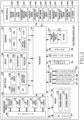
- the program 140 may include, for example, a kernel 141, middleware 143, an Application Programming Interface (API) 145, and/or an application (or an application program) 147. At least some of the kernel 141, the middleware 143, and the API 145 may be referred to as an "Operating System (OS)".
- OS Operating System
- the input/output interface 150 may serve as an interface capable of delivering a command or data, which is input from a user or another external device, to the element(s) other than the input/output interface 150 within the electronic device 101. Also, the input/output interface 150 may output, to the user or another external device, commands or data received from the element(s) other than the input/output interface 150 within the electronic device 101.
- the input/output interface 150 may include a touch panel that detects a touch input or a hovering input using an electronic pen or a part of the user's body. According to an embodiment, the input/output interface 150 may receive a gesture or a hovering input using an electronic pen or a part of the user's body.
- Examples of the display 160 may include a Liquid Crystal Display (LCD), a Light-Emitting Diode (LED) display, an Organic Light-Emitting Diode (OLED) display, a MicroElectroMechanical Systems (MEMS) display, and an electronic paper display.
- the display 160 may display various pieces of content (e.g., text, images, videos, icons, symbols, etc.) to the user.
- the display 160 may be coupled to a touch panel of the input/output interface 150 so as to implement a touch screen.
- the communication interface 170 may establish, for example, communication between the electronic device 101 and an external device (e.g., a first external electronic device 102, a second external electronic device 104, or a server 106).
- the communication interface 170 may be connected to a network 162 through wireless or wired communication and may communicate with the external device (e.g., the second external electronic device 104 or the server 106) .
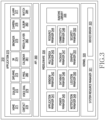
- the processor 210 may control multiple hardware or software elements connected to the processor 210 by running, for example, an OS or an application program, and may perform the processing of and arithmetic operations on various data.
- the processor 210 may be implemented by, for example, a System on Chip (SoC).
- SoC System on Chip
- the processor 210 may further include a Graphic Processing Unit (GPU) and/or an image signal processor.
- the processor 210 may include at least some (e.g., a cellular module 221) of the elements illustrated in FIG. 2 .
- the processor 210 may load, into a volatile memory, instructions or data received from at least one (e.g., a non-volatile memory) of the other elements and may process the loaded instructions or data, and may store various data in a non-volatile memory.
- a selection region corresponds to an input detected through the input apparatus 250
- the processor 210 may change the selection region on the basis of an attribute of the selection region.
- the processor 210 may set a selection region, which corresponds to an input detected through the input apparatus 250, on the basis of at least one of the number of contents included in the selection region, the sizes (e.g., capacities) of the contents, and the size (e.g., the area) of the selection region.
- the subscriber identification module 224 may include, for example, a card including a subscriber identity module and/or an embedded SIM, and may contain unique identification information (e.g., an Integrated Circuit Card Identifier (ICCID)) or subscriber information (e.g., an International Mobile Subscriber Identity (IMSI)).
- ICCID Integrated Circuit Card Identifier
- IMSI International Mobile Subscriber Identity
- the memory (e.g., the memory 130) 230 may include, for example, an internal memory 232 or an external memory 234.
- the internal memory 232 may include at least one of, for example, a volatile memory (e.g., a Dynamic Random Access Memory (DRAM), a Static R_AM (SR_AM), a Synchronous DRAM (SDRAM), etc.); and a non-volatile memory (e.g., a One Time Programmable Read-Only Memory (OTPROM), a Programmable ROM (PROM), an Erasable and Programmable ROM (EPROM), an Electrically Erasable and Programmable ROM (EEPROM), a mask ROM, a flash ROM, a flash memory (e.g., a Not AND (NAND) flash memory, a Not OR (NOR) flash memory, etc.), a hard drive, and a Solid State Drive (SSD)).
- a volatile memory e.g., a Dynamic Random Access Memory (DRAM), a St
- the sensor module 240 may include, for example, an E-nose sensor, an electromyography (EMG) sensor, an electroencephalogram (EEG) sensor, an electrocardiogram (ECG) sensor, an Infrared (IR) sensor, an iris sensor, and/or a fingerprint sensor.
- the sensor module 240 may further include a control circuit for controlling one or more sensors included therein.
- the electronic device 201 may further include a processor configured to control the sensor module 240 as a part of or separately from the processor 210, and may control the sensor module 240 while the processor 210 is in a sleep state.
- the (digital) pen sensor 254 may include, for example, a recognition sheet which is a part of the touch panel or is separated from the touch panel.
- the key 256 may be, for example, a physical button, an optical key, and a keypad.
- the ultrasonic input unit 258 may recognize an ultrasonic wave generated by an input means through a microphone (e.g., a microphone 288), and may identify data corresponding to the recognized ultrasonic wave.
- the display (e.g., the display 160) 260 may include a panel 262, a hologram unit 264, or a projector 266.
- the panel 262 may include a configuration identical or similar to that of the display 160 illustrated in FIG. 1 .
- the panel 262 may be implemented to be, for example, flexible, transparent, or wearable.
- the panel 262, together with the touch panel 252, may be implemented as one module.
- the hologram unit 264 may display a three-dimensional image in the air by using interference of light.
- the projector 266 may display an image by projecting light onto a screen.
- the screen may be located, for example, inside or outside the electronic device 201.
- the display 260 may further include a control circuit for controlling the panel 262, the hologram unit 264, or the projector 266.
- the interface 270 may include, for example, a High-Definition Multimedia Interface (HDMI) 272, a Universal Serial Bus (USB) 274, an optical interface 276, or a D-subminiature (D-sub) 278.
- the interface 270 may be included in, for example, the communication interface 170 illustrated in FIG. 1 .
- the interface 270 may include, for example, a Mobile High-definition Link (MHL) interface, a Secure Digital (SD) card/Multi-Media Card (MMC) interface, or an Infrared Data Association (IrDA) standard interface.
- MHL Mobile High-definition Link
- SD Secure Digital
- MMC Multi-Media Card
- IrDA Infrared Data Association
- the middleware 330 may provide a function required in common by the applications 370, or may provide various functions to the applications 370 through the API 360 so as to enable the applications 370 to efficiently use the limited system resources in the electronic device.
- the middleware 330 e.g., the middleware 143 may include at least one of a run time library 335, an application manager 341, a window manager 342, a multimedia manager 343, a resource manager 344, a power manager 345, a database manager 346, a package manager 347, a connectivity manager 348, a notification manager 349, a location manager 350, a graphic manager 351, and a security manager 352.
- the power manager 345 may operate together with, for example, a Basic Input/Output System (BIOS) or the like to manage a battery or power source and may provide power information or the like required for the operations of the electronic device.
- the database manager 346 may generate, search for, and/or change a database to be used by at least one of the applications 370.
- the package manager 347 may manage installation or an update of an application distributed in a form of a package file.
- the applications 370 may include an application (hereinafter, referred to as an "information exchange application" for convenience of description) that supports exchanging information between the electronic device (e.g., the electronic device 101) and an external electronic device (e.g., the electronic device 102 or 104).
- the information exchange application may include, for example, a notification relay application for transferring specific information to an external electronic device or a device management application for managing an external electronic device.
- At least a part of the programming module 310 may be implemented in software, firmware, hardware, or a combination of two or more thereof. At least some of the program module 310 may be implemented (e.g., executed) by, for example, the processor (e.g., the processor 1410). At least some of the program module 310 may include, for example, a module, a program, a routine, a set of instructions, and/or a process for performing one or more functions.
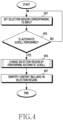
- FIG. 4 is a flowchart illustrating a change of a selection region for a content output by an electronic device according to various embodiments of the present disclosure.
- the electronic device may set a selection region corresponding to an input.
- the processor 120 may set a selection region for selecting at least one content on the basis of a start point of an input detected through the input/output interface 150 and an input point moved by a drag.
- the processor 120 may renew a graphic element of the selection region by controlling the display 160 such that the selection region is distinguished from another region.
- the contents may include a character, an image, a video, and the like which are displayed on the display 160.
- the input may include inputs made by a touch panel, an electronic pen, a mouse, and the like.
- the graphic element may include a color, a transparency, a shade, an outline, and the like.
- the electronic device may determine whether an automatic scroll is performed, on the basis of an attribute of the selection region.
- the processor 120 may determine whether an automatic scroll is performed, on the basis of at least one of the number of contents included in the selection region, the sizes of the contents, and the size of the selection region.
- the processor 120 may identify a reference condition corresponding to characters.
- the processor 120 may determine that an automatic scroll condition is satisfied.
- the processor 120 may identify a reference condition corresponding to the capacity of an image.
- the processor 120 may determine that an automatic scroll condition is satisfied. For example, the processor 120 may identify the size of the selection region. When the size of the selection region satisfies a reference condition corresponding to the size of a selection region, the processor 120 may determine that an automatic scroll condition is satisfied.
- the electronic device may additionally set a selection region corresponding to an input. For example, when the number of the characters included in the selection region does not satisfy the reference condition corresponding to characters, the processor 120 may additionally set a selection region by considering an input moved by execution of a drag. As another example, when the size (e.g., capacity) of the image included in the selection region does not satisfy the reference condition corresponding to the size (e.g., capacity) of a content, the processor 120 may additionally set a selection region by considering an input moved by execution of a drag.
- the size e.g., capacity
- the electronic device may change the selection region on the basis of the automatic scroll. For example, when the number of the characters included in the selection region satisfies the reference condition corresponding to characters, the processor 120 may identify an extensible range of the selection region. While an input for determining a selection region is maintained, the processor 120 may extend the selection region by performing an automatic scroll up to the extensible range of the selection region. When the input for determining a selection region is terminated during the execution of the automatic scroll, the processor 120 may terminate the automatic scroll. For example, when contents displayed on the display 160 are grouped, the processor 120 may identify an extensible range of the selection region on the basis of the type, generation information, and the like of a content included in the selection region. For example, when the contents displayed on the display 160 are not grouped, the processor 120 may identify the display position of the last content among the contents displayed on the display 160.
- the electronic device may identify a content included in the selection region.
- the processor 120 may identify a character, an image, a video, or the like included in a selection region changed by the execution of the automatic scroll.
- the processor 120 may set a direction of an automatic scroll on the basis of direction information of an input for setting a selection region. For example, when an input dragged from the left to the right in order to set a selection region is detected, the processor 120 may set a direction of an automatic scroll as the right direction.
- the electronic device may reduce a selection region by performing an automatic scroll.
- the processor 120 may determine whether an automatic scroll for reducing a selection region is performed, on the basis of an attribute of a selection region. When the attribute of the selection region satisfies a reference condition for reducing a selection region, the processor 120 may reduce the selection region by performing the automatic scroll. According to the reduction of the selection region, the processor 120 may cancel selection of a content which is not included in the reduced selection area.
- examples of the attribute of the selection region may include the number of contents included in the selection region, the sizes (e.g., capacities) of the contents, and the size (e.g., the area) of the selection region.
- FIG. 5 is a flowchart illustrating extension of a selection region by an electronic device according to various embodiments of the present disclosure.
- FIG. 5 a description will be made of an operation of extending a selection region by performing an automatic scroll in operation 405 of FIG. 4 .
- the electronic device when determining an automatic scroll (e.g., operation 403 of FIG. 4 ), the electronic device (e.g., the electronic device 101 or 201) may identify an extensible range for a change of a selection region. For example, when determining execution of an automatic scroll in operation 403 of FIG 4 , the processor 120 may identify an extensible range for a change of a selection region on the basis of whether contents displayed on the display 160 are grouped. For example, when the contents displayed on the display 160 are grouped, the processor 120 may identify an end point of a group including a content included in the selection region.
- the processor 120 may identify the display position of the last content among the contents displayed on the display 160.
- the contents may be grouped based on the type, generation time, and a generation zone of each thereof.
- the electronic device may extend the selection region by performing an automatic scroll.
- the processor 120 may extend the selection region up to an extensible range by performing an automatic scroll in the extension direction of the selection region.
- the electronic device may identify whether the automatic scroll is performed up to the extensible range for extension of the selection region. For example, when the contents displayed on the display 160 are not grouped, the processor 120 may identify whether the automatic scroll is performed such that the selection region extends to the position of the last content among the contents displayed on the display 160. As another example, when contents displayed on the display 160 are grouped into at least one group, the processor 120 may identify whether the automatic scroll is performed such that the current selection region extends to an end point of a particular group.
- the electronic device may determine whether an input is canceled. For example, when the selection region does not extend to the extensible range, the processor 120 may determine whether a touch input to the touch panel is canceled. As another example, when the selection region does not extend to the extensible range, the processor 120 may determine whether a mouse button input is canceled.
- the electronic device may extend the selection region by performing an automatic scroll. For example, when a touch input made by an electronic pen is maintained, the processor 120 may continuously perform the automatic scroll.
- FIG. 6 is a flowchart illustrating a change of a selection region for an image by an electronic device according to various embodiments of the present disclosure.
- FIG. 6 together with FIG. 7 , a description will be made.
- the electronic device may determine whether an image is partly selected. For example, when a function of partly selecting an image is activated, the processor 120 may determine that it is possible to partly select an image. As another example, when the function of partly selecting an image is not activated, the processor 120 may determine that it is impossible to partly select an image.
- the function of partly selecting an image may include a function of selecting at least a part of an image.
- the electronic device may identify a content included in the selection region. For example, as illustrated in FIG. 7A , the processor 120 may identify characters and a part of an image included in the selection region 701 among the characters and the image which are output on the display 160.
- the electronic device may determine whether an attribute of the selection region satisfies a reference condition. For example, when it is impossible to partly select an image, the processor 120 may determine whether the size of an image included in the selection region satisfied a reference condition.
- the reference condition may be changed based on the size of an image. For example, the reference condition may become a greater value as the size of an image becomes larger.
- the electronic device may extend the selection region by performing an automatic scroll. For example, when the size of an image included in the selection region satisfies a reference condition, as illustrated in FIG. 7B , the processor 120 may extend the selection region 721 by performing an automatic scroll such that the remaining part of the image which is not included in the selection region 721 is included therein.
- the electronic device may reduce the selection region by performing an automatic scroll. For example, as illustrated in FIG. 7C , when the size of the image included in the selection region does not satisfy the reference condition, the processor 120 may reduce the selection region (as indicated by reference numeral 741) by performing an automatic scroll such that selection of the image included in the selection region is canceled.
- FIG. 8 is a flowchart illustrating a change of a selection region by an electronic device according to various embodiments of the present disclosure.
- the electronic device may detect a region selection event. For example, when a touch input for selecting a menu icon for selection of a region is detected through the touch panel, the processor 120 may determine that a region selection event is detected. In the present example, the menu icon for selection of a region may be output on at least a partial region of the display 160. As another example, when a touch input for a content output on the display 160 is maintained for a predefined time, the processor 120 may determine that a region selection event is detected.
- the electronic device may additionally set a selection region corresponding to a touch input. For example, when the number of the characters included in the selection region does not satisfy the reference condition for characters, the processor 120 may additionally set a selection region on the basis of a touch input point moved by a drag input.
- the electronic device may identify an extensible range of the selection region. For example, when the number of the characters included in the selection region satisfies the reference condition for characters, the processor 120 may determine whether contents displayed on the display 160 are grouped. When the contents displayed on the display 160 are grouped, the processor 120 may identify an end point of a group including a content included in the selection region. When the contents displayed on the display 160 are not grouped, the processor 120 may identify a point where the last content among the contents displayed on the display 160 is located. In the present example, the contents may be grouped based on the types thereof, generation information (e.g., generation time and generation zones) thereof, and the like.
- generation information e.g., generation time and generation zones
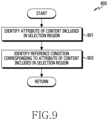
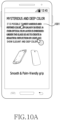
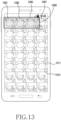
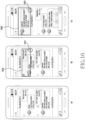
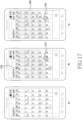
- the electronic device may identify a reference condition on the basis of an attribute of a content included in the selection region. For example, when the characters are included in the selection region 1001 as illustrated in FIG. 10A , the processor 120 may identify a predetermined reference condition corresponding to the number of characters. As another example, when a part of the image 1033 is included in the selection region 1031 as illustrated in FIG. 10B , the processor 120 may identify a reference condition corresponding to the entire size of the relevant image 1033. For example, when the entire size of the image 1033 is larger than or equal to one-half of the size of the display 160, the processor 120 may identify a reference condition corresponding to 10% of the size of the relevant image 1033. As still another example, when the multiple images 1063 to 1067 are included in the selection region 1061 as illustrated in FIG. 10C , the processor 120 may identify a predetermined reference condition corresponding to the number of images.
- FIG. 15 is a flowchart illustrating a change of a selection region by an electronic device according to various embodiments of the present disclosure.
- the electronic device may determine whether an attribute of the selection region satisfies the reference condition. For example, the processor 120 may determine whether the number of characters included in the selection region satisfies a reference condition corresponding to characters. As another example, the processor 120 may determine whether the size of the selection region satisfies a reference condition for the size of a selection region. As still another example, the processor 120 may determine whether the number of images included in the selection region satisfies a reference condition for an image.
- the electronic device may extend the selection region by performing an automatic scroll.
- the processor 120 may perform an automatic scroll in a direction corresponding to the direction of the touch input.
- module used in various exemplary embodiments of the present disclosure refers to a unit including one of hardware, software, and firmware, or a combination of two or more of them, for example.
- the “module” may be used interchangeably with terms “unit,” “logic,” “logical block,” “component” or “circuit.”
- the “module” may be a minimum unit of an integrally configured component or a part of it.
- the “module” may be a minimum unit that performs one or more functions or a part of it.
- the “module” may be implemented mechanically or electronically.
- Examples of the computer-readable recording media include hard disks, floppy disks and magnetic media (for example, magnetic tapes), optical media (for example, a Compact Disc Read Only Memory (CD-ROM) and a Digital Versatile Disc (DVD), magneto-optical media (for example, floptical disks)), and hardware devices (for example, a Read Only Memory (ROM), a Random Access Memory (RAM) and a flash memory).
- Examples of the program commands include machine language codes created by a compiler, and high-level language codes that can be executed by a computer by using an interpreter.
- the above-described hardware devices may be configured to operate as one or more software modules for performing operations of various exemplary embodiments, and vice versa.
- a module or program module according to various exemplary embodiments of the present disclosure may include one or more of the above-described elements, may omit some elements, or may further include additional elements.
- the operations performed by the module, the program module, or the other elements according to various exemplary embodiments of the present disclosure may be performed serially, in parallel, repeatedly, or heuristically. In addition, some operations may be performed in different order or may be omitted, and an additional operation may be added.
- the various exemplary embodiments disclosed in the present specification and drawings are merely suggested to easily explain the technical features and assist easy understanding, and are not intended to limit the technical scope disclosed in the various exemplary embodiments of the present disclosure. Therefore, the scope of the various exemplary embodiments of the present disclosure should be interpreted as including all changes or various other embodiments derived based on the technical idea of the various exemplary embodiments of the present disclosure.
Landscapes
- Engineering & Computer Science (AREA)
- General Engineering & Computer Science (AREA)
- Theoretical Computer Science (AREA)
- Human Computer Interaction (AREA)
- Physics & Mathematics (AREA)
- General Physics & Mathematics (AREA)
- User Interface Of Digital Computer (AREA)
Claims (15)
- Elektronische Vorrichtung (101), die Folgendes umfasst:ein Display (160); undeinen Prozessor (120), der konfiguriert ist zum:Anzeigen einer Vielzahl von Inhalten auf dem Display (160);Festlegen eines Auswahlbereichs basierend auf einer Eingabe für einen Teil der Vielzahl von auf dem Display (160) angezeigten Inhalten;Identifizieren von ersten Inhalten aus der Vielzahl von Inhalten basierend auf dem Auswahlbereich;Identifizieren einer Referenzbedingung basierend auf einem Attribut der ersten Inhalte;Bestimmen, ob das Attribut der ersten Inhalte, die dem Auswahlbereich entsprechen, die Referenzbedingung erfüllt;als Reaktion auf das Bestimmen, dass das Attribut der ersten Inhalte, die dem Auswahlbereich entsprechen, die Referenzbedingung erfüllt, Bestimmen, ob die Vielzahl von auf dem Display angezeigten Inhalten gruppiert sind;als Reaktion auf das Bestimmen, dass die Vielzahl von auf dem Display angezeigten Inhalten gruppiert sind, Identifizieren eines Bereichs einer Gruppe einschließlich der ersten Inhalte, die dem Auswahlbereich aus der Vielzahl von Inhalten entsprechen; undErweitern des Auswahlbereichs durch Ausführen eines automatischen Bildlaufs, um den Bereich der Gruppe einzuschließen.
- Elektronische Vorrichtung nach Anspruch 1, wobei der Prozessor konfiguriert ist zum:Bestimmen, ob der automatische Bildlauf ausgeführt wird, auf der Grundlage eines Attributs des Auswahlbereichs, undwenn der automatische Bildlauf ausgeführt wird, Ändern einer Größe des Auswahlbereichs auf der Grundlage des automatischen Bildlaufs.
- Elektronische Vorrichtung nach Anspruch 2, wobei das Attribut des Auswahlbereichs mindestens eines von Folgendem umfassteinen Bereich des Auswahlbereichs,die Anzahl von Inhalten, die in dem Auswahlbereich enthalten sind, und/oder Kapazitäten der Inhalte, die in dem Auswahlbereich enthalten sind.
- Elektronische Vorrichtung nach Anspruch 1, wobei das Attribut der ersten Inhalte mindestens eines von Folgendem umfassteine Art des Inhalts, und/odereine Art einer Anwendung zum Anzeigen des Inhalts.
- Elektronische Vorrichtung nach Anspruch 1, wobei der Prozessor konfiguriert ist zum:Identifizieren eines erweiterbaren Bereichs des Auswahlbereichs, undwenn die Größe des Auswahlbereichs durch den automatischen Bildlauf auf den erweiterbaren Bereich geändert wird, Beenden des automatischen Bildlaufs.
- Elektronische Vorrichtung nach Anspruch 5, wobei der Prozessor konfiguriert ist zum,wenn die Vielzahl von auf dem Display angezeigten Inhalten nicht gruppiert sind,Identifizieren des erweiterbaren Bereichs des Auswahlbereichs, der einer Anzeigeposition eines letzten Inhalts aus der Vielzahl von auf dem Display angezeigten Inhalten entspricht.
- Elektronische Vorrichtung nach Anspruch 1, wobei der Prozessor konfiguriert ist zum,wenn, während der automatische Bildlauf ausgeführt wird, eine Eingabe zum Festlegen des Auswahlbereichs abgebrochen wird,Beenden des automatischen Bildlaufs.
- Elektronische Vorrichtung nach Anspruch 1, wobei der Prozessor konfiguriert ist zum,wenn ein Teil eines Bildes in dem festgelegten Auswahlbereich enthalten ist,Ausführen des automatischen Bildlaufs und Ändern der Größe des Auswahlbereichs, so dass das Bild in dem Auswahlbereich enthalten ist.
- Betriebsverfahren einer elektronischen Vorrichtung, wobei das Betriebsverfahren Folgendes umfasst:Anzeigen einer Vielzahl von Inhalten auf einem Display;Festlegen eines Auswahlbereichs basierend auf einer Eingabe für einen Teil der Vielzahl von auf dem Display angezeigten Inhalten;Identifizieren von ersten Inhalten aus der Vielzahl von Inhalten basierend auf dem Auswahlbereich;Identifizieren einer Referenzbedingung basierend auf einem Attribut der ersten Inhalte;Bestimmen, ob das Attribut der ersten Inhalte, die dem Auswahlbereich entsprechen, die Referenzbedingung erfüllt;als Reaktion auf das Bestimmen, dass das Attribut der ersten Inhalte, die dem Auswahlbereich entsprechen, die Referenzbedingung erfüllt, Bestimmen, ob die Vielzahl von auf dem Display angezeigten Inhalten gruppiert sind;als Reaktion auf das Bestimmen, dass die Vielzahl von auf dem Display angezeigten Inhalten gruppiert sind,Identifizieren eines Bereichs einer Gruppe einschließlich der ersten Inhalte, die dem Auswahlbereich aus der Vielzahl von Inhalten entsprechen; und
Erweitern des Auswahlbereichs durch Ausführen eines automatischen Bildlaufs, um den Bereich der Gruppe einzuschließen. - Betriebsverfahren nach Anspruch 9, das ferner Folgendes umfasst:Bestimmen, ob der automatische Bildlauf ausgeführt wird, auf der Grundlage eines Attributs des Auswahlbereichs, undwenn der automatische Bildlauf ausgeführt wird, Ändern einer Größe des Auswahlbereichs auf der Grundlage des automatischen Bildlaufs.
- Betriebsverfahren nach Anspruch 10, wobei das Ändern der Größe des Auswahlbereichs Folgendes umfasst:Identifizieren eines erweiterbaren Bereichs des Auswahlbereichs; undwenn die Größe des Auswahlbereichs durch den automatischen Bildlauf auf den erweiterbaren Bereich geändert wird,Beenden des automatischen Bildlaufs.
- Betriebsverfahren nach Anspruch 11, das ferner Folgendes umfasst:wenn die Vielzahl von auf dem Display angezeigten Inhalten nicht gruppiert sind,Identifizieren des erweiterbaren Bereichs des Auswahlbereichs, der einer Anzeigeposition eines letzten Inhalts aus der Vielzahl von auf dem Display angezeigten Inhalten entspricht.
- Betriebsverfahren nach Anspruch 9, das ferner Folgendes umfasst:wenn, während der automatische Bildlauf ausgeführt wird, eine Eingabe zum Festlegen des Auswahlbereichs abgebrochen wird,Beenden des automatischen Bildlaufs.
- Betriebsverfahren nach Anspruch 9, das ferner Folgendes umfasst:wenn ein Teil eines Bildes in dem festgelegten Auswahlbereich enthalten ist,Ausführen des automatischen Bildlaufs und Ändern der Größe des Auswahlbereichs, so dass das Bild in dem Auswahlbereich enthalten ist.
- Betriebsverfahren nach Anspruch 9, wobei das Attribut des ersten Inhalts mindestens eines von Folgendem umfassteine Art des Inhalts, und/odereine Art einer Anwendung zum Anzeigen des Inhalts.
Priority Applications (2)
| Application Number | Priority Date | Filing Date | Title |
|---|---|---|---|
| EP23212740.7A EP4307097B1 (de) | 2016-01-28 | 2017-01-19 | Verfahren zur auswahl von inhalt und elektronische vorrichtung dafür |
| EP25161360.0A EP4538848A3 (de) | 2016-01-28 | 2017-01-19 | Verfahren zur auswahl von inhalt und elektronische vorrichtung dafür |
Applications Claiming Priority (3)
| Application Number | Priority Date | Filing Date | Title |
|---|---|---|---|
| KR1020160010820A KR102648551B1 (ko) | 2016-01-28 | 2016-01-28 | 콘텐트를 선택하기 위한 방법 및 그 전자 장치 |
| PCT/KR2017/000664 WO2017131388A1 (ko) | 2016-01-28 | 2017-01-19 | 콘텐트를 선택하기 위한 방법 및 그 전자 장치 |
| EP17744510.3A EP3410283B1 (de) | 2016-01-28 | 2017-01-19 | Verfahren zur auswahl von inhalt und elektronische vorrichtung dafür |
Related Parent Applications (1)
| Application Number | Title | Priority Date | Filing Date |
|---|---|---|---|
| EP17744510.3A Division EP3410283B1 (de) | 2016-01-28 | 2017-01-19 | Verfahren zur auswahl von inhalt und elektronische vorrichtung dafür |
Related Child Applications (2)
| Application Number | Title | Priority Date | Filing Date |
|---|---|---|---|
| EP25161360.0A Division EP4538848A3 (de) | 2016-01-28 | 2017-01-19 | Verfahren zur auswahl von inhalt und elektronische vorrichtung dafür |
| EP23212740.7A Division EP4307097B1 (de) | 2016-01-28 | 2017-01-19 | Verfahren zur auswahl von inhalt und elektronische vorrichtung dafür |
Publications (2)
| Publication Number | Publication Date |
|---|---|
| EP4180930A1 EP4180930A1 (de) | 2023-05-17 |
| EP4180930B1 true EP4180930B1 (de) | 2023-12-27 |
Family
ID=59398533
Family Applications (4)
| Application Number | Title | Priority Date | Filing Date |
|---|---|---|---|
| EP22216729.8A Active EP4180930B1 (de) | 2016-01-28 | 2017-01-19 | Verfahren zur auswahl von inhalt und elektronische vorrichtung dafür |
| EP17744510.3A Active EP3410283B1 (de) | 2016-01-28 | 2017-01-19 | Verfahren zur auswahl von inhalt und elektronische vorrichtung dafür |
| EP25161360.0A Pending EP4538848A3 (de) | 2016-01-28 | 2017-01-19 | Verfahren zur auswahl von inhalt und elektronische vorrichtung dafür |
| EP23212740.7A Active EP4307097B1 (de) | 2016-01-28 | 2017-01-19 | Verfahren zur auswahl von inhalt und elektronische vorrichtung dafür |
Family Applications After (3)
| Application Number | Title | Priority Date | Filing Date |
|---|---|---|---|
| EP17744510.3A Active EP3410283B1 (de) | 2016-01-28 | 2017-01-19 | Verfahren zur auswahl von inhalt und elektronische vorrichtung dafür |
| EP25161360.0A Pending EP4538848A3 (de) | 2016-01-28 | 2017-01-19 | Verfahren zur auswahl von inhalt und elektronische vorrichtung dafür |
| EP23212740.7A Active EP4307097B1 (de) | 2016-01-28 | 2017-01-19 | Verfahren zur auswahl von inhalt und elektronische vorrichtung dafür |
Country Status (4)
| Country | Link |
|---|---|
| US (1) | US11003336B2 (de) |
| EP (4) | EP4180930B1 (de) |
| KR (1) | KR102648551B1 (de) |
| WO (1) | WO2017131388A1 (de) |
Family Cites Families (23)
| Publication number | Priority date | Publication date | Assignee | Title |
|---|---|---|---|---|
| US6212577B1 (en) * | 1993-03-03 | 2001-04-03 | Apple Computer, Inc. | Method and apparatus for improved interaction with an application program according to data types and actions performed by the application program |
| US5611060A (en) * | 1995-02-22 | 1997-03-11 | Microsoft Corporation | Auto-scrolling during a drag and drop operation |
| CA2565756A1 (en) * | 2006-10-26 | 2008-04-26 | Daniel Langlois | Interface system |
| US7936341B2 (en) * | 2007-05-30 | 2011-05-03 | Microsoft Corporation | Recognizing selection regions from multiple simultaneous inputs |
| US8650507B2 (en) * | 2008-03-04 | 2014-02-11 | Apple Inc. | Selecting of text using gestures |
| US20150205499A1 (en) * | 2008-07-03 | 2015-07-23 | Adobe Systems Incorporated | Manipulating Visual Representations of Data |
| KR101096384B1 (ko) | 2009-10-15 | 2011-12-20 | 엔에이치엔(주) | 자동 스크롤 수행 시스템 및 방법 |
| US8245256B2 (en) * | 2009-11-19 | 2012-08-14 | Verizon Patent And Licensing, Inc. | Autoscrolling through interactive television content |
| KR101705872B1 (ko) * | 2010-09-08 | 2017-02-10 | 삼성전자주식회사 | 모바일 디바이스의 화면상의 영역 선택 방법 및 장치 |
| US20120066638A1 (en) * | 2010-09-09 | 2012-03-15 | Microsoft Corporation | Multi-dimensional auto-scrolling |
| CN105955617B (zh) * | 2011-06-03 | 2019-07-12 | 谷歌有限责任公司 | 用于选择文本的手势 |
| US9354805B2 (en) * | 2012-04-30 | 2016-05-31 | Blackberry Limited | Method and apparatus for text selection |
| US10025487B2 (en) * | 2012-04-30 | 2018-07-17 | Blackberry Limited | Method and apparatus for text selection |
| WO2013169851A2 (en) * | 2012-05-09 | 2013-11-14 | Yknots Industries Llc | Device, method, and graphical user interface for facilitating user interaction with controls in a user interface |
| US9164658B2 (en) * | 2012-10-12 | 2015-10-20 | Cellco Partnership | Flexible selection tool for mobile devices |
| KR20140079110A (ko) | 2012-12-18 | 2014-06-26 | 엘지전자 주식회사 | 이동 단말기 및 그 동작 방법 |
| CN107831991B (zh) * | 2012-12-29 | 2020-11-27 | 苹果公司 | 用于确定是滚动还是选择内容的设备、方法和图形用户界面 |
| KR102162836B1 (ko) | 2013-08-30 | 2020-10-07 | 삼성전자주식회사 | 필드 속성을 이용한 컨텐트를 제공하는 전자 장치 및 방법 |
| KR20150032093A (ko) | 2013-09-17 | 2015-03-25 | 주식회사 팬택 | 사용자 인터페이스를 편집하는 단말기 및 방법 |
| US9383910B2 (en) * | 2013-10-04 | 2016-07-05 | Microsoft Technology Licensing, Llc | Autoscroll regions |
| US20150135133A1 (en) * | 2013-11-11 | 2015-05-14 | Lenovo (Singapore) Pte. Ltd. | Adjustable smooth scrolling |
| US10620803B2 (en) * | 2015-09-29 | 2020-04-14 | Microsoft Technology Licensing, Llc | Selecting at least one graphical user interface item |
| US10768773B2 (en) * | 2015-11-24 | 2020-09-08 | International Business Machines Corporation | Dynamic text scroll control in a user interface |
-
2016
- 2016-01-28 KR KR1020160010820A patent/KR102648551B1/ko active Active
-
2017
- 2017-01-19 EP EP22216729.8A patent/EP4180930B1/de active Active
- 2017-01-19 WO PCT/KR2017/000664 patent/WO2017131388A1/ko not_active Ceased
- 2017-01-19 EP EP17744510.3A patent/EP3410283B1/de active Active
- 2017-01-19 EP EP25161360.0A patent/EP4538848A3/de active Pending
- 2017-01-19 EP EP23212740.7A patent/EP4307097B1/de active Active
- 2017-01-19 US US16/073,954 patent/US11003336B2/en active Active
Also Published As
| Publication number | Publication date |
|---|---|
| EP4538848A3 (de) | 2025-07-09 |
| EP4307097B1 (de) | 2025-03-05 |
| EP4538848A2 (de) | 2025-04-16 |
| EP4307097A2 (de) | 2024-01-17 |
| EP4307097A3 (de) | 2024-03-20 |
| KR20170090226A (ko) | 2017-08-07 |
| US20190042074A1 (en) | 2019-02-07 |
| EP4180930A1 (de) | 2023-05-17 |
| KR102648551B1 (ko) | 2024-03-18 |
| EP3410283A1 (de) | 2018-12-05 |
| US11003336B2 (en) | 2021-05-11 |
| EP3410283B1 (de) | 2022-12-28 |
| EP3410283A4 (de) | 2019-02-06 |
| WO2017131388A1 (ko) | 2017-08-03 |
Similar Documents
| Publication | Publication Date | Title |
|---|---|---|
| US11073977B2 (en) | Method for setting date and time by electronic device and electronic device therefor | |
| EP3441844B1 (de) | Flexible vorrichtung und betriebsverfahren dafür | |
| EP3449349B1 (de) | Elektronische vorrichtung und verfahren zur berührungserkennung bei einer elektronischen vorrichtung | |
| KR20220038038A (ko) | 전자 장치 및 전자 장치에서의 노티피케이션 처리 방법 | |
| EP3436919B1 (de) | Verfahren zur umschaltung einer anwendung und elektronische vorrichtung dafür | |
| US10691335B2 (en) | Electronic device and method for processing input on view layers | |
| EP3141982B1 (de) | Elektronische vorrichtung zur messung von eingangsdruck und verfahren zum betreiben der elektronischen vorrichtung | |
| KR20170071960A (ko) | 전자 장치의 사용자 인터페이스 제공 방법 및 장치 | |
| US20170329472A1 (en) | Electronic device and method of providing information in electronic device | |
| US20180024656A1 (en) | Method and apparatus for operation of an electronic device | |
| EP3404519A1 (de) | Verfahren zur anzeige einer benutzerschnittstelle und elektronische vorrichtung zur unterstützung davon | |
| EP3023861B1 (de) | Elektronische vorrichtung und verfahren zum anzeigen eines bildschirms der elektronischen vorrichtung | |
| US10564911B2 (en) | Electronic apparatus and method for displaying object | |
| US20170277413A1 (en) | Method for outputting screen and electronic device supporting the same | |
| KR20160034135A (ko) | 터치 입력을 처리하는 전자 장치 및 방법 | |
| EP3131000B1 (de) | Verfahren und elektronische vorrichtung zur verarbeitung einer benutzereingabe | |
| US20170235409A1 (en) | Wearable device and method of operating wearable device | |
| US10845940B2 (en) | Electronic device and display method of electronic device | |
| EP4180930B1 (de) | Verfahren zur auswahl von inhalt und elektronische vorrichtung dafür |
Legal Events
| Date | Code | Title | Description |
|---|---|---|---|
| PUAI | Public reference made under article 153(3) epc to a published international application that has entered the european phase |
Free format text: ORIGINAL CODE: 0009012 |
|
| STAA | Information on the status of an ep patent application or granted ep patent |
Free format text: STATUS: THE APPLICATION HAS BEEN PUBLISHED |
|
| STAA | Information on the status of an ep patent application or granted ep patent |
Free format text: STATUS: REQUEST FOR EXAMINATION WAS MADE |
|
| AC | Divisional application: reference to earlier application |
Ref document number: 3410283 Country of ref document: EP Kind code of ref document: P |
|
| AK | Designated contracting states |
Kind code of ref document: A1 Designated state(s): AL AT BE BG CH CY CZ DE DK EE ES FI FR GB GR HR HU IE IS IT LI LT LU LV MC MK MT NL NO PL PT RO RS SE SI SK SM TR |
|
| 17P | Request for examination filed |
Effective date: 20230511 |
|
| RBV | Designated contracting states (corrected) |
Designated state(s): AL AT BE BG CH CY CZ DE DK EE ES FI FR GB GR HR HU IE IS IT LI LT LU LV MC MK MT NL NO PL PT RO RS SE SI SK SM TR |
|
| GRAP | Despatch of communication of intention to grant a patent |
Free format text: ORIGINAL CODE: EPIDOSNIGR1 |
|
| STAA | Information on the status of an ep patent application or granted ep patent |
Free format text: STATUS: GRANT OF PATENT IS INTENDED |
|
| INTG | Intention to grant announced |
Effective date: 20230719 |
|
| GRAS | Grant fee paid |
Free format text: ORIGINAL CODE: EPIDOSNIGR3 |
|
| GRAA | (expected) grant |
Free format text: ORIGINAL CODE: 0009210 |
|
| STAA | Information on the status of an ep patent application or granted ep patent |
Free format text: STATUS: THE PATENT HAS BEEN GRANTED |
|
| AC | Divisional application: reference to earlier application |
Ref document number: 3410283 Country of ref document: EP Kind code of ref document: P |
|
| AK | Designated contracting states |
Kind code of ref document: B1 Designated state(s): AL AT BE BG CH CY CZ DE DK EE ES FI FR GB GR HR HU IE IS IT LI LT LU LV MC MK MT NL NO PL PT RO RS SE SI SK SM TR |
|
| REG | Reference to a national code |
Ref country code: GB Ref legal event code: FG4D |
|
| REG | Reference to a national code |
Ref country code: CH Ref legal event code: EP |
|
| REG | Reference to a national code |
Ref country code: DE Ref legal event code: R096 Ref document number: 602017078052 Country of ref document: DE |
|
| REG | Reference to a national code |
Ref country code: IE Ref legal event code: FG4D |
|
| PG25 | Lapsed in a contracting state [announced via postgrant information from national office to epo] |
Ref country code: GR Free format text: LAPSE BECAUSE OF FAILURE TO SUBMIT A TRANSLATION OF THE DESCRIPTION OR TO PAY THE FEE WITHIN THE PRESCRIBED TIME-LIMIT Effective date: 20240328 |
|
| REG | Reference to a national code |
Ref country code: LT Ref legal event code: MG9D |
|
| PG25 | Lapsed in a contracting state [announced via postgrant information from national office to epo] |
Ref country code: LT Free format text: LAPSE BECAUSE OF FAILURE TO SUBMIT A TRANSLATION OF THE DESCRIPTION OR TO PAY THE FEE WITHIN THE PRESCRIBED TIME-LIMIT Effective date: 20231227 |
|
| PG25 | Lapsed in a contracting state [announced via postgrant information from national office to epo] |
Ref country code: ES Free format text: LAPSE BECAUSE OF FAILURE TO SUBMIT A TRANSLATION OF THE DESCRIPTION OR TO PAY THE FEE WITHIN THE PRESCRIBED TIME-LIMIT Effective date: 20231227 |
|
| PG25 | Lapsed in a contracting state [announced via postgrant information from national office to epo] |
Ref country code: LT Free format text: LAPSE BECAUSE OF FAILURE TO SUBMIT A TRANSLATION OF THE DESCRIPTION OR TO PAY THE FEE WITHIN THE PRESCRIBED TIME-LIMIT Effective date: 20231227 Ref country code: GR Free format text: LAPSE BECAUSE OF FAILURE TO SUBMIT A TRANSLATION OF THE DESCRIPTION OR TO PAY THE FEE WITHIN THE PRESCRIBED TIME-LIMIT Effective date: 20240328 Ref country code: FI Free format text: LAPSE BECAUSE OF FAILURE TO SUBMIT A TRANSLATION OF THE DESCRIPTION OR TO PAY THE FEE WITHIN THE PRESCRIBED TIME-LIMIT Effective date: 20231227 Ref country code: ES Free format text: LAPSE BECAUSE OF FAILURE TO SUBMIT A TRANSLATION OF THE DESCRIPTION OR TO PAY THE FEE WITHIN THE PRESCRIBED TIME-LIMIT Effective date: 20231227 Ref country code: BG Free format text: LAPSE BECAUSE OF FAILURE TO SUBMIT A TRANSLATION OF THE DESCRIPTION OR TO PAY THE FEE WITHIN THE PRESCRIBED TIME-LIMIT Effective date: 20240327 |
|
| REG | Reference to a national code |
Ref country code: NL Ref legal event code: MP Effective date: 20231227 |
|
| REG | Reference to a national code |
Ref country code: AT Ref legal event code: MK05 Ref document number: 1645152 Country of ref document: AT Kind code of ref document: T Effective date: 20231227 |
|
| PG25 | Lapsed in a contracting state [announced via postgrant information from national office to epo] |
Ref country code: NL Free format text: LAPSE BECAUSE OF FAILURE TO SUBMIT A TRANSLATION OF THE DESCRIPTION OR TO PAY THE FEE WITHIN THE PRESCRIBED TIME-LIMIT Effective date: 20231227 |
|
| PG25 | Lapsed in a contracting state [announced via postgrant information from national office to epo] |
Ref country code: SE Free format text: LAPSE BECAUSE OF FAILURE TO SUBMIT A TRANSLATION OF THE DESCRIPTION OR TO PAY THE FEE WITHIN THE PRESCRIBED TIME-LIMIT Effective date: 20231227 Ref country code: RS Free format text: LAPSE BECAUSE OF FAILURE TO SUBMIT A TRANSLATION OF THE DESCRIPTION OR TO PAY THE FEE WITHIN THE PRESCRIBED TIME-LIMIT Effective date: 20231227 Ref country code: NO Free format text: LAPSE BECAUSE OF FAILURE TO SUBMIT A TRANSLATION OF THE DESCRIPTION OR TO PAY THE FEE WITHIN THE PRESCRIBED TIME-LIMIT Effective date: 20240327 Ref country code: NL Free format text: LAPSE BECAUSE OF FAILURE TO SUBMIT A TRANSLATION OF THE DESCRIPTION OR TO PAY THE FEE WITHIN THE PRESCRIBED TIME-LIMIT Effective date: 20231227 Ref country code: LV Free format text: LAPSE BECAUSE OF FAILURE TO SUBMIT A TRANSLATION OF THE DESCRIPTION OR TO PAY THE FEE WITHIN THE PRESCRIBED TIME-LIMIT Effective date: 20231227 Ref country code: HR Free format text: LAPSE BECAUSE OF FAILURE TO SUBMIT A TRANSLATION OF THE DESCRIPTION OR TO PAY THE FEE WITHIN THE PRESCRIBED TIME-LIMIT Effective date: 20231227 |
|
| PG25 | Lapsed in a contracting state [announced via postgrant information from national office to epo] |
Ref country code: IS Free format text: LAPSE BECAUSE OF FAILURE TO SUBMIT A TRANSLATION OF THE DESCRIPTION OR TO PAY THE FEE WITHIN THE PRESCRIBED TIME-LIMIT Effective date: 20240427 |
|
| PG25 | Lapsed in a contracting state [announced via postgrant information from national office to epo] |
Ref country code: CZ Free format text: LAPSE BECAUSE OF FAILURE TO SUBMIT A TRANSLATION OF THE DESCRIPTION OR TO PAY THE FEE WITHIN THE PRESCRIBED TIME-LIMIT Effective date: 20231227 Ref country code: AT Free format text: LAPSE BECAUSE OF FAILURE TO SUBMIT A TRANSLATION OF THE DESCRIPTION OR TO PAY THE FEE WITHIN THE PRESCRIBED TIME-LIMIT Effective date: 20231227 |
|
| PG25 | Lapsed in a contracting state [announced via postgrant information from national office to epo] |
Ref country code: SK Free format text: LAPSE BECAUSE OF FAILURE TO SUBMIT A TRANSLATION OF THE DESCRIPTION OR TO PAY THE FEE WITHIN THE PRESCRIBED TIME-LIMIT Effective date: 20231227 |
|
| PG25 | Lapsed in a contracting state [announced via postgrant information from national office to epo] |
Ref country code: SM Free format text: LAPSE BECAUSE OF FAILURE TO SUBMIT A TRANSLATION OF THE DESCRIPTION OR TO PAY THE FEE WITHIN THE PRESCRIBED TIME-LIMIT Effective date: 20231227 Ref country code: SK Free format text: LAPSE BECAUSE OF FAILURE TO SUBMIT A TRANSLATION OF THE DESCRIPTION OR TO PAY THE FEE WITHIN THE PRESCRIBED TIME-LIMIT Effective date: 20231227 Ref country code: RO Free format text: LAPSE BECAUSE OF FAILURE TO SUBMIT A TRANSLATION OF THE DESCRIPTION OR TO PAY THE FEE WITHIN THE PRESCRIBED TIME-LIMIT Effective date: 20231227 Ref country code: IT Free format text: LAPSE BECAUSE OF FAILURE TO SUBMIT A TRANSLATION OF THE DESCRIPTION OR TO PAY THE FEE WITHIN THE PRESCRIBED TIME-LIMIT Effective date: 20231227 Ref country code: IS Free format text: LAPSE BECAUSE OF FAILURE TO SUBMIT A TRANSLATION OF THE DESCRIPTION OR TO PAY THE FEE WITHIN THE PRESCRIBED TIME-LIMIT Effective date: 20240427 Ref country code: EE Free format text: LAPSE BECAUSE OF FAILURE TO SUBMIT A TRANSLATION OF THE DESCRIPTION OR TO PAY THE FEE WITHIN THE PRESCRIBED TIME-LIMIT Effective date: 20231227 Ref country code: CZ Free format text: LAPSE BECAUSE OF FAILURE TO SUBMIT A TRANSLATION OF THE DESCRIPTION OR TO PAY THE FEE WITHIN THE PRESCRIBED TIME-LIMIT Effective date: 20231227 Ref country code: AT Free format text: LAPSE BECAUSE OF FAILURE TO SUBMIT A TRANSLATION OF THE DESCRIPTION OR TO PAY THE FEE WITHIN THE PRESCRIBED TIME-LIMIT Effective date: 20231227 |
|
| PG25 | Lapsed in a contracting state [announced via postgrant information from national office to epo] |
Ref country code: PT Free format text: LAPSE BECAUSE OF FAILURE TO SUBMIT A TRANSLATION OF THE DESCRIPTION OR TO PAY THE FEE WITHIN THE PRESCRIBED TIME-LIMIT Effective date: 20240429 Ref country code: PL Free format text: LAPSE BECAUSE OF FAILURE TO SUBMIT A TRANSLATION OF THE DESCRIPTION OR TO PAY THE FEE WITHIN THE PRESCRIBED TIME-LIMIT Effective date: 20231227 |
|
| PG25 | Lapsed in a contracting state [announced via postgrant information from national office to epo] |
Ref country code: PT Free format text: LAPSE BECAUSE OF FAILURE TO SUBMIT A TRANSLATION OF THE DESCRIPTION OR TO PAY THE FEE WITHIN THE PRESCRIBED TIME-LIMIT Effective date: 20240429 Ref country code: PL Free format text: LAPSE BECAUSE OF FAILURE TO SUBMIT A TRANSLATION OF THE DESCRIPTION OR TO PAY THE FEE WITHIN THE PRESCRIBED TIME-LIMIT Effective date: 20231227 |
|
| REG | Reference to a national code |
Ref country code: CH Ref legal event code: PL |
|
| PG25 | Lapsed in a contracting state [announced via postgrant information from national office to epo] |
Ref country code: LU Free format text: LAPSE BECAUSE OF NON-PAYMENT OF DUE FEES Effective date: 20240119 |
|
| PG25 | Lapsed in a contracting state [announced via postgrant information from national office to epo] |
Ref country code: LU Free format text: LAPSE BECAUSE OF NON-PAYMENT OF DUE FEES Effective date: 20240119 Ref country code: MC Free format text: LAPSE BECAUSE OF FAILURE TO SUBMIT A TRANSLATION OF THE DESCRIPTION OR TO PAY THE FEE WITHIN THE PRESCRIBED TIME-LIMIT Effective date: 20231227 |
|
| REG | Reference to a national code |
Ref country code: DE Ref legal event code: R097 Ref document number: 602017078052 Country of ref document: DE |
|
| PG25 | Lapsed in a contracting state [announced via postgrant information from national office to epo] |
Ref country code: DK Free format text: LAPSE BECAUSE OF FAILURE TO SUBMIT A TRANSLATION OF THE DESCRIPTION OR TO PAY THE FEE WITHIN THE PRESCRIBED TIME-LIMIT Effective date: 20231227 |
|
| PG25 | Lapsed in a contracting state [announced via postgrant information from national office to epo] |
Ref country code: BE Free format text: LAPSE BECAUSE OF NON-PAYMENT OF DUE FEES Effective date: 20240131 |
|
| PG25 | Lapsed in a contracting state [announced via postgrant information from national office to epo] |
Ref country code: CH Free format text: LAPSE BECAUSE OF NON-PAYMENT OF DUE FEES Effective date: 20240131 |
|
| PG25 | Lapsed in a contracting state [announced via postgrant information from national office to epo] |
Ref country code: DK Free format text: LAPSE BECAUSE OF FAILURE TO SUBMIT A TRANSLATION OF THE DESCRIPTION OR TO PAY THE FEE WITHIN THE PRESCRIBED TIME-LIMIT Effective date: 20231227 Ref country code: CH Free format text: LAPSE BECAUSE OF NON-PAYMENT OF DUE FEES Effective date: 20240131 Ref country code: BE Free format text: LAPSE BECAUSE OF NON-PAYMENT OF DUE FEES Effective date: 20240131 |
|
| PLBE | No opposition filed within time limit |
Free format text: ORIGINAL CODE: 0009261 |
|
| STAA | Information on the status of an ep patent application or granted ep patent |
Free format text: STATUS: NO OPPOSITION FILED WITHIN TIME LIMIT |
|
| REG | Reference to a national code |
Ref country code: BE Ref legal event code: MM Effective date: 20240131 |
|
| GBPC | Gb: european patent ceased through non-payment of renewal fee |
Effective date: 20240327 |
|
| 26N | No opposition filed |
Effective date: 20240930 |
|
| PG25 | Lapsed in a contracting state [announced via postgrant information from national office to epo] |
Ref country code: GB Free format text: LAPSE BECAUSE OF NON-PAYMENT OF DUE FEES Effective date: 20240327 |
|
| PG25 | Lapsed in a contracting state [announced via postgrant information from national office to epo] |
Ref country code: FR Free format text: LAPSE BECAUSE OF NON-PAYMENT OF DUE FEES Effective date: 20240227 |
|
| PG25 | Lapsed in a contracting state [announced via postgrant information from national office to epo] |
Ref country code: IE Free format text: LAPSE BECAUSE OF NON-PAYMENT OF DUE FEES Effective date: 20240119 |
|
| PG25 | Lapsed in a contracting state [announced via postgrant information from national office to epo] |
Ref country code: IE Free format text: LAPSE BECAUSE OF NON-PAYMENT OF DUE FEES Effective date: 20240119 Ref country code: GB Free format text: LAPSE BECAUSE OF NON-PAYMENT OF DUE FEES Effective date: 20240327 Ref country code: FR Free format text: LAPSE BECAUSE OF NON-PAYMENT OF DUE FEES Effective date: 20240227 |
|
| PG25 | Lapsed in a contracting state [announced via postgrant information from national office to epo] |
Ref country code: SI Free format text: LAPSE BECAUSE OF FAILURE TO SUBMIT A TRANSLATION OF THE DESCRIPTION OR TO PAY THE FEE WITHIN THE PRESCRIBED TIME-LIMIT Effective date: 20231227 |
|
| PG25 | Lapsed in a contracting state [announced via postgrant information from national office to epo] |
Ref country code: CY Free format text: LAPSE BECAUSE OF FAILURE TO SUBMIT A TRANSLATION OF THE DESCRIPTION OR TO PAY THE FEE WITHIN THE PRESCRIBED TIME-LIMIT; INVALID AB INITIO Effective date: 20170119 |
|
| PG25 | Lapsed in a contracting state [announced via postgrant information from national office to epo] |
Ref country code: HU Free format text: LAPSE BECAUSE OF FAILURE TO SUBMIT A TRANSLATION OF THE DESCRIPTION OR TO PAY THE FEE WITHIN THE PRESCRIBED TIME-LIMIT; INVALID AB INITIO Effective date: 20170119 |
|
| PG25 | Lapsed in a contracting state [announced via postgrant information from national office to epo] |
Ref country code: TR Free format text: LAPSE BECAUSE OF FAILURE TO SUBMIT A TRANSLATION OF THE DESCRIPTION OR TO PAY THE FEE WITHIN THE PRESCRIBED TIME-LIMIT Effective date: 20231227 |
|
| PGFP | Annual fee paid to national office [announced via postgrant information from national office to epo] |
Ref country code: DE Payment date: 20251222 Year of fee payment: 10 |