EP4180445A1 - Pentacyclic triterpenoid glycoside compound, and preparation method therefor and use thereof - Google Patents
Pentacyclic triterpenoid glycoside compound, and preparation method therefor and use thereof Download PDFInfo
- Publication number
- EP4180445A1 EP4180445A1 EP21838780.1A EP21838780A EP4180445A1 EP 4180445 A1 EP4180445 A1 EP 4180445A1 EP 21838780 A EP21838780 A EP 21838780A EP 4180445 A1 EP4180445 A1 EP 4180445A1
- Authority
- EP
- European Patent Office
- Prior art keywords
- methyl
- hydroxyl
- glucurouopyranoside
- substituted
- oleanolicacid
- Prior art date
- Legal status (The legal status is an assumption and is not a legal conclusion. Google has not performed a legal analysis and makes no representation as to the accuracy of the status listed.)
- Withdrawn
Links
Images




Classifications
-
- A—HUMAN NECESSITIES
- A61—MEDICAL OR VETERINARY SCIENCE; HYGIENE
- A61P—SPECIFIC THERAPEUTIC ACTIVITY OF CHEMICAL COMPOUNDS OR MEDICINAL PREPARATIONS
- A61P3/00—Drugs for disorders of the metabolism
- A61P3/04—Anorexiants; Antiobesity agents
-
- C—CHEMISTRY; METALLURGY
- C07—ORGANIC CHEMISTRY
- C07J—STEROIDS
- C07J63/00—Steroids in which the cyclopenta(a)hydrophenanthrene skeleton has been modified by expansion of only one ring by one or two atoms
- C07J63/008—Expansion of ring D by one atom, e.g. D homo steroids
-
- A—HUMAN NECESSITIES
- A61—MEDICAL OR VETERINARY SCIENCE; HYGIENE
- A61K—PREPARATIONS FOR MEDICAL, DENTAL OR TOILETRY PURPOSES
- A61K31/00—Medicinal preparations containing organic active ingredients
- A61K31/70—Carbohydrates; Sugars; Derivatives thereof
- A61K31/7028—Compounds having saccharide radicals attached to non-saccharide compounds by glycosidic linkages
- A61K31/7034—Compounds having saccharide radicals attached to non-saccharide compounds by glycosidic linkages attached to a carbocyclic compound, e.g. phloridzin
-
- A—HUMAN NECESSITIES
- A61—MEDICAL OR VETERINARY SCIENCE; HYGIENE
- A61K—PREPARATIONS FOR MEDICAL, DENTAL OR TOILETRY PURPOSES
- A61K31/00—Medicinal preparations containing organic active ingredients
- A61K31/70—Carbohydrates; Sugars; Derivatives thereof
- A61K31/7028—Compounds having saccharide radicals attached to non-saccharide compounds by glycosidic linkages
- A61K31/7034—Compounds having saccharide radicals attached to non-saccharide compounds by glycosidic linkages attached to a carbocyclic compound, e.g. phloridzin
- A61K31/704—Compounds having saccharide radicals attached to non-saccharide compounds by glycosidic linkages attached to a carbocyclic compound, e.g. phloridzin attached to a condensed carbocyclic ring system, e.g. sennosides, thiocolchicosides, escin, daunorubicin
-
- A—HUMAN NECESSITIES
- A61—MEDICAL OR VETERINARY SCIENCE; HYGIENE
- A61P—SPECIFIC THERAPEUTIC ACTIVITY OF CHEMICAL COMPOUNDS OR MEDICINAL PREPARATIONS
- A61P1/00—Drugs for disorders of the alimentary tract or the digestive system
- A61P1/16—Drugs for disorders of the alimentary tract or the digestive system for liver or gallbladder disorders, e.g. hepatoprotective agents, cholagogues, litholytics
-
- A—HUMAN NECESSITIES
- A61—MEDICAL OR VETERINARY SCIENCE; HYGIENE
- A61P—SPECIFIC THERAPEUTIC ACTIVITY OF CHEMICAL COMPOUNDS OR MEDICINAL PREPARATIONS
- A61P3/00—Drugs for disorders of the metabolism
-
- A—HUMAN NECESSITIES
- A61—MEDICAL OR VETERINARY SCIENCE; HYGIENE
- A61P—SPECIFIC THERAPEUTIC ACTIVITY OF CHEMICAL COMPOUNDS OR MEDICINAL PREPARATIONS
- A61P3/00—Drugs for disorders of the metabolism
- A61P3/06—Antihyperlipidemics
-
- A—HUMAN NECESSITIES
- A61—MEDICAL OR VETERINARY SCIENCE; HYGIENE
- A61P—SPECIFIC THERAPEUTIC ACTIVITY OF CHEMICAL COMPOUNDS OR MEDICINAL PREPARATIONS
- A61P3/00—Drugs for disorders of the metabolism
- A61P3/08—Drugs for disorders of the metabolism for glucose homeostasis
- A61P3/10—Drugs for disorders of the metabolism for glucose homeostasis for hyperglycaemia, e.g. antidiabetics
-
- A—HUMAN NECESSITIES
- A61—MEDICAL OR VETERINARY SCIENCE; HYGIENE
- A61P—SPECIFIC THERAPEUTIC ACTIVITY OF CHEMICAL COMPOUNDS OR MEDICINAL PREPARATIONS
- A61P31/00—Antiinfectives, i.e. antibiotics, antiseptics, chemotherapeutics
- A61P31/12—Antivirals
- A61P31/14—Antivirals for RNA viruses
-
- A—HUMAN NECESSITIES
- A61—MEDICAL OR VETERINARY SCIENCE; HYGIENE
- A61P—SPECIFIC THERAPEUTIC ACTIVITY OF CHEMICAL COMPOUNDS OR MEDICINAL PREPARATIONS
- A61P31/00—Antiinfectives, i.e. antibiotics, antiseptics, chemotherapeutics
- A61P31/12—Antivirals
- A61P31/14—Antivirals for RNA viruses
- A61P31/16—Antivirals for RNA viruses for influenza or rhinoviruses
Definitions
- the invention relates to the field of pharmaceutical chemistry and medicine, and specifically to a class of pentacyclic triterpenoid glycoside compound, preparation method therefor, and the use thereof in treating metabolic diseases and anti-virus, in particular to the use in the preparation of medicine for treating diabetes, influenza, pneumonia induced by coronavirus and other diseases.
- Diabetes Mellitus is a chronic, systemic and metabolic disease caused by the longterm joint action of genetic factors and environmental factors. It is characterized by an increase in plasma glucose levels. It is a disease that affects normal physiological activities due to the metabolic disorder of sugar, fat and protein caused by insulin secretion insufficiency or dysfunction of insulin (insulin resistance).
- insulin resistance insulin resistance
- the complications of diabetes can be classified into acute complications and chronic complications. Among them, acute complications include diabetes ketoacidosis, diabetes hyperosmolar coma, various acute infections and lactic acidosis, etc.. In addition, hypoglycemia during the treatment of diabetes is also one of the most common acute complications.
- Chronic complications include diabetes ophthalmopathy, diabetes nephropathy, diabetes psychosis, diabetes cardio cerebral limb macro angiopathy, diabetes foot and skin lesions, etc.
- the main clinical manifestations of diabetes are polydipsia, polyuria, polyphagia and weight loss.
- Type II diabetes insulin-dependent diabetes mellitus
- non insulin-dependent diabetes mellitus which are the most common, accounting for more than 90% of diabetes patients.
- the exact etiology and pathogenesis of type I diabetes are still not very clear.
- the etiology is jointly involved by genetic and environmental factors, mainly due to the damage of pancreatic islet b cells in the body, which leads to the inability to produce insulin in the body.
- Patients need insulin injection every day to control the insulin level in their blood.
- Type II diabetes is a kind of metabolic syndrome due to inability to control the blood glucose level in the body. Its main characteristics are hyperglycemia, insulin resistance and insulin secretion deficiency.
- the main etiology of type II diabetes is insulin resistance, which makes the body unable to use insulin effectively, or the reduction of insulin secretion make the insulin level unable meet the need of body. Because the patients with this type of diabetes can secrete insulin, they generally do not need to use insulin treatment. Diet adjustment or oral hypoglycemic drugs are enough to control blood glucose level.
- Pentacyclic triterpenoid compounds are secondary plant metabolites found in a variety of plant organs, and the content of which in some species is up to 30% of their dry weight. Although the molecular mechanism is still unclear, triterpenoid compounds are generally considered as important components of plant defense systems against pathogens and herbivores. It has been reported that some glycoside pentacyclic triterpenoid compound have the same or higher in vitro anti influenza virus activity as oseltamivir. Mechanism studies show that these compounds closely bind to hemagglutinin (HA) protein, thus destroying the interaction between hemagglutinin and sialic acid receptor and preventing viruses from entering host cells. Such process hardly lead to drug resistance.
- HA hemagglutinin
- the object of the present invention is to provide a pentacyclic triterpenoid carbon glycoside derivative compound shown in general formula I or pharmaceutically acceptable salts, racemates, R-isomers or S-isomers thereof, or the mixtures thereof.
- the first aspect of the invention provides a pentacyclic triterpenoid carbon glycoside derivative compound with the structure shown in the following general formula I, or racemates, R-isomers, S-isomers, pharmaceutically acceptable salts thereof, or the mixtures thereof: wherein,
- the compound of formula I has the structure shown in the following general formula II: wherein,
- the compound of formula I has the structure shown in the following general formula III: wherein,
- the compound of formula I has the structure shown in the following general formulas IV, V, and VI:
- R 5 is selected from the group consisting of hydrogen, halogen, hydroxyl, carboxyl, substituted or unsubstituted C 1 -C 6 alkyl, substituted or unsubstituted C 1 -C 6 alkoxy, substituted or unsubstituted C 2 -C 10 acyl, substituted or unsubstituted C 2 -C 10 ester group, and substituted or unsubstituted C 1 -C 6 amido.
- R 9 is selected from the group consisting of hydrogen, hydroxyl, aldehyde group, sulfydryl, and -X-R 6 ;
- the pentacyclic triterpenoid carbon glycoside compounds are the compounds described in the example.
- the second aspect of the invention provides a preparation method of the compound according to the first aspect of the invention, wherein the preparation method includes the following scheme 1 or scheme 2: wherein, each group is defined as described in the first aspect of the invention;
- the third aspect of the invention provides a pharmaceutical composition, which contains the therapeutically effective amount of one or more of the compound of formula I, or pharmaceutical salts, racemates, R-isomers and S-isomers thereof according to the first aspect of the invention, as well as one or more pharmaceutical carriers, excipients, adjuvants, accessories and/or diluents.
- the fourth aspect of the invention provides a use of a compound of formula I and formula II, racemates, R-isomers, S-isomers or pharmaceutical salts thereof according to the first aspect of the invention for preparing a medicament for treating or preventing metabolic diseases related to diabetes and viral diseases; preferably, the diseases are selected from the group consisting of diabetes, influenza, obesity, liver fibrosis, metabolic diseases, and viral diseases.
- the halogen refers to F, Cl, Br, and I.
- C1-C6 alkyl refers to linear or branched alkyl group with 1 to 6 carbon atoms, including methyl, ethyl, propyl, isopropyl, butyl, isobutyl, sec-butyl, tert-butyl, pentyl and hexyl etc.; preferably ethyl, propyl, isopropyl, butyl, isobutyl, sec-butyl and tert-butyl.
- C1-C6 alkoxy refers to linear or branched alkoxy group with 1 to 6 carbon atoms, including methoxy, ethoxy, propoxy, isopropoxy, butoxy, etc..
- C2-C6 alkenyl refers to linear or branched alkenyl group containing a double bond with 2 to 6 carbon atoms, including vinyl, propenyl, butenyl, isobutenyl, pentenyl, hexenyl, etc. unlimitedly.
- C2-C6 alkynyl refers to a linear or branched alkynyl group containing one triple bond with 2 to 6 carbon atoms, including acetynyl, proynyl, butyryl, isobutyryl, pentynyl, hexynyl etc. unlimitedly.
- C3-C10 cycloalkyl refers to cycloalkyl group with 3 to 10 carbon atoms on the ring, including cyclopropyl, cyclobutyl, cyclopentyl, cyclohexyl, cycloheptyl, cyclooctyl, cyclodecyl, etc. unlimitedly.
- the terms "C3-C8 cycloalkyl”, “C3-C7 cycloalkyl” and “C3-C6 cycloalkyl” have similar meanings.
- C3-C10 cycloalkenyl refers to cycloalkenyl group with 3 to 10 carbon atoms on the ring, including cyclopropenyl, cyclobutenyl, cyclopentenyl, cyclohexenyl, cyclohexenyl, cyclooctenyl, cyclodecyl, etc. unlimitedly.
- C3-C7 cycloalkenyl has a similar meaning.
- C1-C12 alkoxycarbonyl refers to alkoxycarbonyl group with 1 to 12 carbon atoms on the alkyl chain, including methoxycarbonyl, ethoxycarbonyl, propoxycarbonyl, isopropoxycarbonyl, tert-butoxycarbonyl, benzyloxycarbonyl, etc. unlimitedly.
- C1-C12 alkaminocarbonyl refers to alkaminocarbonyl group with 1 to 12 carbon atoms on the alkyl chain, including methylaminocarbonyl, ethylaminocarbonyl, propylaminocarbonyl, isopropylaminocarbonyl, tert-butylaminocarbonyl, benzylaminocarbonyl, dimethylaminocarbonyl, etc. unlimitedly.
- C5-C9 furanosyl refers to furanosyl group with 5 to 9 carbon atoms, wherein the 1 position of the glycosyl group is connected to the main chain, including ribofuranosyl, desoxyribofuranosyl, galactofuranosyl, etc. unlimitedly.
- C5-C9 pyranosyl refers to a pyranosyl with 5 to 9 carbon atoms, wherein the 1 position of the glycosyl group is connected to the main chain, including glucopyranosyl, glucopyranuronyl, rhamnopyranosyl, galactopyranosyl, mannopyranosyl, xylpyranosyl, etc.
- aromatic ring or “aryl” have the same meaning, preferably “aryl” is “C6-C12 aryl” or “C6-C10 aryl”.
- aryl is “C6-C12 aryl” or “C6-C10 aryl”.
- C6-C12 aryl refers to aromatic cylic group with 6 to 12 carbon atoms without heteroatoms on the ring, such as phenyl, naphthyl, etc.
- C6-C10 aryl has a similar meaning.
- aromatic heterocyclic ring or “heteroaryl” have the same meaning, which refer to heteroaromatic group containing one to more heteroatoms.
- the heteroatoms referred herein include oxygen, sulfur and nitrogen.
- the heteroaryl ring can be fused on aryl, heterocyclic ring or cycloalkyl ring, wherein the ring connected with the parent structure is the heteroaryl ring.
- the heteroaryl group may be optionally substituted or unsubstituted.
- 3-12 membered heterocyclyl refers to the saturated or unsaturated 3-12 membered cyclic group containing 1-3 heteroatoms selected from oxygen, sulfur and nitrogen on the ring, such as dioxolanyl, etc.
- the term “3-7 membered heterocyclyl” has a similar meaning.
- substituted means that one or more hydrogen atoms on a specific group are substituted by a specific substituent.
- the specific substituent is the substituent described correspondingly in the preceding text, or the substituent in each example.
- a substituented group can have substituent selected from a specific group at any substitutable site of the group, and the substituents can be the same or different in each position.
- a cyclic substituent, such as heterocyclyl can be attached to another ring, such as a cycloalkyl, to form a spiro bicyclic system, for example, two rings have a common carbon atom.
- substituents expected by the invention are those stable or chemically achievable.
- the substituents are, for example (but not limited to) C1-8 alkyl, C2-8 alkenyl, C2-8 alkynyl, C3-8 cycloalkyl, 3- to 12- membered heterocyclyl, aryl, heteroaryl, halogen, hydroxyl, carboxyl(-COOH), C1-8 aldehyde group, C2-10 acyl, C2-10 ester group, C1-C12 alkoxycarbonyl, amino, alkoxy, C1-10 sulfonyl, etc.
- the invention provides a pentacyclic triterpenoid carbon glycoside derivative compound with the structure shown in the following general formula I or general formula II, or racemates, R-isomers, S-isomers, pharmaceutically acceptable salts thereof or the mixtures thereof: wherein,
- the compounds of general formula I and general formula II of the invention are preferably the following specific compounds: Number Structure Name A1 (3S,5S,8R,9R,10S,14R,17R,18S)-28-O-Benzyloleanolicacid-3-(1'R)-(hydroxyl)methyl-2",3",4",6"-O-tetrabenzyl- ⁇ -D-glucopyranoside A2 (3S,5S,8R,9R,10S,14R,17R,18S)-Oleanolicacid-3-(1'R)-(hydroxyl)methyl- ⁇ -D-glucopyranoside A3 (3R,5S,8R,9R,10S,14R,17R,18S)-28-O-Benzyloleanolicacid-3-(1'R)-(hydroxyl)methyl-2",3",4",6"-O-tetrabenzyl- ⁇ -D-glucopyranoside A4 (3R,
- the compounds of the invention can be acrylic acid derivative compounds with the structure shown in the following general formula I, or racemates, R-isomers, S-isomers, pharmaceutically acceptable salts thereof, or the mixtures thereof:
- the compounds of the invention have asymmetric center, chiral axis and chiral plane, and can present in the form of racemate, R-isomer or S-isomer. Those skilled in the art can obtain R-isomer and/or S-isomer from racemate by conventional technical means.
- the invention provides medicinal salts of compounds of general formula I and general formula II, in particular, the conventional medicinal salts formed by reacting the compounds of general formula I and general formula II with inorganic acids or organic acids.
- the conventional medicinal salts can be prepared by reacting compounds of general formula I and general formula II with inorganic acids or organic acids.
- the inorganic acids include hydrochloric acid, hydrobromic acid, sulfuric acid, nitric acid, sulfamic acid and phosphoric acid, etc.
- the organic acids include citric acid, tartaric acid, lactic acid, pyruvic acid, acetic acid, benzenesulfonic acid, p-toluenesulfonic acid, methanesulfonic acid, naphthalene sulfonic acid, ethanesulfonic acid, naphthalene disulfonic acid, maleic acid, malic acid, malonic acid fumaric acid, succinic acid, propionic acid, oxalic acid, trifluoroacetic acid, stearic acid, pamoic acid, hydroxy maleic acid, phenylacetic acid, benzoic acid, salicylic acid, glutamic acid, ascorbic acid, p-aminobenzenesulfonic acid, 2-acetoxybenzoic acid and hydroxyethane
- the invention provides a preparation method of compounds represented by general formula I and general formula II, and the preparation method is carried out according to the following scheme 1 or scheme 2.
- the compound of formula I can be prepared by the method shown in scheme 1 below.
- steps a, b, c and d are the same as those in Scheme 1.
- the compounds of the present invention have excellent hypoglycemic and influenza virus inhibiting activities
- the compound of the present invention and various crystal forms thereof, pharmaceutically acceptable inorganic or organic salts, hydrates or solvates thereof, and pharmaceutical composition containing the compound according to the present invention as main active ingredient can be used to treat, prevent and alleviate diseases associated with high blood glucose and influenza virus.
- the pharmaceutical composition of the invention comprises the compound of the present invention or the pharmaceutically acceptable salts thereof in a safe and effective dosage range and pharmaceutically acceptable excipients or carriers.
- safe and effective dosage means that the amount of compound is sufficient to significantly ameliorate the condition without causing significant side effects.
- the pharmaceutical composition contains 1-2000 mg compounds of the invention per dose, preferably, 5-200mg compounds of the present invention per dose.
- dose is a capsule or tablet.
- “Pharmaceutically acceptable carrier” means one or more compatible solids or liquid fillers, or gelatinous materials which are suitable for human use and should be of sufficient purity and sufficiently low toxicity. "Compatibility” means that each component in the composition can be admixed with the compounds of the present invention and with each other without significantly reducing the efficacy of the compounds.
- Some examples of pharmaceutically acceptable carriers include cellulose and the derivatives thereof (such as sodium carboxymethyl cellulose, sodium ethyl cellulose, cellulose acetate, etc.), gelatin, talc, solid lubricants (such as stearic acid, magnesium stearate), calcium sulfate, vegetable oils (such as soybean oil, sesame oil, peanut oil, olive oil, etc.), polyols (such as propylene glycol, glycerol, mannitol, sorbitol, etc.), emulsifiers (such as Tween ® ), wetting agent (such as sodium dodecyl sulfate), coloring agents, flavoring agents, stabilizers, antioxidants, preservatives, pyrogen-free water, etc.
- cellulose and the derivatives thereof such as sodium carboxymethyl cellulose, sodium ethyl cellulose, cellulose acetate, etc.
- gelatin such as talc
- solid lubricants such as stearic acid,
- administration mode for the compound or pharmaceutical compositions of the present invention, and the representative administration mode includes (but is not limited to): oral administration, intratumoral administration, rectal administration, parenteral (intravenous, intramuscular or subcutaneous) administration, and topical administration.
- Solid dosage forms for oral administration include capsules, tablets, pills, powders and granules.
- the active compounds are mixed with at least one conventional inert excipient (or carrier), such as sodium citrate or CaHPO 4 , or mixed with any of the following components: (a) fillers or compatibilizer, for example, starch, lactose, sucrose, glucose, mannitol and silicic acid; (b) binders, for example, hydroxymethyl cellulose, alginates, gelatin, polyvinylpyrrolidone, sucrose and arabic gum; (c) humectant, such as, glycerol; (d) disintegrating agents such as agar, calcium carbonate, potato starch or tapioca starch, alginic acid, certain composite silicates, and sodium carbonate; (e) dissolution-retarding agents, such as paraffin; (f) absorption accelerators, for example, quaternary ammonium compounds; (g) wetting agents, such as cetylene glyco
- the solid dosage forms such as tablets, sugar pills, capsules, pills and granules can be prepared by using coating and shell materials, such as enteric coatings and any other materials known in the art. They can contain an opaque agent.
- the release of the active compounds or compounds in the compositions can be released in a delayed mode in a given portion of the digestive tract.
- the embedding components include polymers and waxes. If necessary, the active compounds and one or more above excipients can form microcapsules.
- Liquid dosage forms for oral administration include pharmaceutically acceptable emulsions, solutions, suspensions, syrups or tinctures.
- the liquid dosage forms may contain any conventional inert diluents known in the art such as water or other solvents, solubilizers and emulsifiers, for example, ethanol, isopropanol, ethyl carbonate, ethyl acetate, propylene glycol, 1,3-butanediol, dimethyl formamide, as well as oil, in particular, cottonseed oil, peanut oil, corn germ oil, olive oil, castor oil and sesame oil, or the combination thereof.
- composition may also contain additives such as wetting agents, emulsifiers, and suspending agent, sweetener, flavoring agents and perfume.
- additives such as wetting agents, emulsifiers, and suspending agent, sweetener, flavoring agents and perfume.
- the suspension may contain suspending agent, for example, ethoxylated isooctadecanol, polyoxyethylene sorbitol and sorbitan esters, microcrystalline cellulose, methanol aluminum and agar, or a combination thereof.
- suspending agent for example, ethoxylated isooctadecanol, polyoxyethylene sorbitol and sorbitan esters, microcrystalline cellulose, methanol aluminum and agar, or a combination thereof.
- compositions for parenteral injection may comprise physiologically acceptable sterile aqueous or anhydrous solutions, dispersions, suspensions or emulsions, and sterile powders which can be re-dissolved into sterile injectable solutions or dispersions.
- Suitable aqueous and non-aqueous carriers, diluents, solvents or excipients include water, ethanol, polyols and any suitable mixtures thereof.
- the dosage forms of the compounds of the invention for topical administration include ointment, powder, patch, spray and inhalation.
- the active ingredients are mixed under sterile conditions with physiologically acceptable carriers and any preservatives, buffers, or propellants that may be required when necessary.
- Compounds of the present invention can be administrated alone, or in combination with any other pharmaceutically acceptable compounds.
- a safe and effective amount of compound of the present invention is applied to a mammal (such as human) in need thereof, wherein the dose of administration is a pharmaceutically effective dose.
- the daily dose is usually 1-2000 mg, preferably 5-500mg.
- the particular dose should also depend on various factors, such as the route of administration, patient healthy status, which are well within the skills of an experienced physician.
- the invention provides a pentacyclic triterpenoid carbon glycoside derivative compound shown in general formula I or pharmaceutically acceptable salts, racemates, R-isomers or S-isomers thereof or the mixtures thereof.
- the invention also provides a preparation method of the above compounds.
- the invention also provides the use of the above pentacyclic triterpenoid carbon glycoside derivative compound or pharmaceutically acceptable salts, racemates, R-isomers or S-isomers thereof or the mixtures thereof in the preparation of medicine for treating or preventing metabolic diseases such as diabetes and hyperlipidemia.
- the final reaction solution was concentrated and subjected to column chromatography to obtain 64 mg of A5. Then it was dissolved in the mixed solution of ethyl acetate: methanol (15 mL: 15 mL), 13 mg of Pd/C was added in hydrogen environment and the mixture was reacted at 50 °C for 12 hours. Then the target product A6 (27 mg, 75%) was obtained by column chromatography.
- the reaction was completed as shown by TLC test.
- the reaction solution was quenched with saturated sodium thiosulfate and extracted with dichloromethane. The organic layers were combined, washed with saturated sodium chloride solution, dried over anhydrous sodium sulfate and concentrated.
- the crude product was subjected to column chromatography to obtain 90mg of A9. Then it was dissolved in the mixed solution of ethyl acetate: methanol (15 mL: 15 mL), 13 mg of Pd/C was added in hydrogen environment and the mixture was reacted at 50 °C for 12 hours. Then the target product A10 (38 mg, 73%) was obtained by column chromatography.
- 2,3,4,6-O-Tetrabenzyl-1-(pyridin-1-yl)sulfonyl- ⁇ -D-thioglucopyranoside was replaced by 2,3,4,6-O-tetrabenzyl-1-(pyridin-1-yl)sulfonyl-6-deoxy- ⁇ -D-thioglucopyranoside
- (3S,5S,8R,9R,10S,14R,17R,18S)-28-O-benzyl-3-aldehyde oleanolic acid was replaced by (3R,5S,8R,9R,10S,14R,17R,18S)-28-O-benzyl-3-aldehyde oleanolic acid.
- 2,3,4,6-O-Tetrabenzyl-1-(pyridin-1-yl)sulfonyl- ⁇ -D-thioglucopyranoside was replaced by 2,3,4,6-O-tetrabenzyl-1-(pyridin-1-yl)sulfonyl-6-deoxy- ⁇ -D-thioglucopyranoside
- (3S,5S,8R,9R,10S,14R,17R,18S)-28-O-benzyl-3-aldehyde oleanolic acid was replaced by (3R,5S,8R,9R,10S,14R,17R,18S)-28-O-benzyl-3-aldehyde oleanolic acid.
- 2,3,4,6-O-Tetrabenzyl-1-(pyridin-1-yl)sulfonyl- ⁇ -D-thioglucopyranoside was replaced by 2,3,4,6-O-tetrabenzyl-1-(pyridin-1-yl)sulfonyl-6-deoxy- ⁇ -D-thioglucopyranoside
- (3S,5S,8R,9R,10S,14R,17R,18S)-28-O-benzyl-3-aldehyde oleanolic acid was replaced by (3R,5S,8R,9R,10S,14R,17R,18S)-28-O-benzyl-3-aldehyde oleanolic acid.
- 2,3,4,6-O-Tetrabenzyl-1-(pyridin-1-yl)sulfonyl-(3-D-thioglucopyranoside was replaced by 2,3,4,6-O-tetrabenzyl-1-(pyridin-1-yl)sulfonyl- ⁇ -D-thiorhamnopyranoside
- (3S,5S,8R,9R,10S,14R,17R,18S)-28-O-benzyl-3-aldehyde oleanolic acid was replaced by (3R,5S,8R,9R,10S,14R,17R,18S)-28-O-benzyl-3-aldehyde oleanolic acid.
- Example 104 (3S,5S,8R,9R,10S,14R,17R,18S)-28-O-(Pyrazol-1"-yl)methyl oleanolic acid-3-(1'R)-(hydroxy)methyl- ⁇ -D-glucurouopyranoside (A104)
- Example 106 (3S,5S,8R,9R,10S,14R,17R,18S)-28-O-(Morpholin-4"-yl)methyl oleanolic acid-3-(1'R)-(hydroxy)methyl- ⁇ -D-glucurouopyranoside (A106)
- Example 108 (3S,5S,8R,9R,10S,14R,17R,18S)-Oleanolic acid-3-(1'R)-(hydroxy)methyl-28-(1"R)-(hydroxy)methyl- ⁇ -D-diglucurouopyranoside (A108)
- Example 135 (3S,5S,8R,9R,10S,14R,17R,18S)-3-(4-Fluorophenylthioureido) oleanolic acid-17-(1'S)-(hydroxy)methyl- ⁇ -D-mannopyranoside (A135)
- Example 138 (3S,5S,8R,9R,10S,14R,17R,18S)-3-Phenylthio oleanolic acid-17-(1'S)-(hydroxy)methyl- ⁇ -D-mannopyranoside (A138)
- Example 140 (5S,8R,9R,10S,14R,17R,18S)-3-Carbonyl oleanolic acid-17-(1'S)-fluoromethyl- ⁇ -D-mannopyranoside (A140)
- 2,3,4,6-O-Tetrabenzyl-1-(pyridin-1-yl)sulfonyl- ⁇ -D-thioglucopyranoside was replaced by 2,3,4,6-O-tetraacetyl-1-(pyridin-1-yl)sulfonyl- ⁇ -D-thiomannopyranoside
- (3S,5S,8R,9R,10S,14R,17R,18S)-28-O-benzyl-3-aldehyde oleanolic acid was replaced by (5S,8R,9R,10S,14R,17R,18S)-3-carbonyl-17-aldehyde oleanolic acid.
- 2,3,4,6-O-Tetrabenzyl-1-(pyridin-1-yl)sulfonyl- ⁇ -D-thioglucopyranoside was replaced by 2,3,4,6-O-tetraacetyl-1-(pyridin-1-yl)sulfonyl- ⁇ -D-thiomannopyranoside
- (3S,5S,8R,9R,10S,14R,17R,18S)-28-O-benzyl-3-aldehyde oleanolic acid was replaced by (5S,8R,9R,10S,14R,17R,18S)-3-hydroxy-17-aldehyde oleanolic acid.
- 2,3,4,6-O-Tetrabenzyl-1-(pyridin-1-yl)sulfonyl- ⁇ -D-thioglucopyranoside was replaced by 2,3,4,6-O-tetraacetyl-1-(pyridin-1-yl)sulfonyl- ⁇ -D-thiomannopyranoside
- (3S,5S,8R,9R,10S,14R,17R,18S)-28-O-benzyl-3-aldehyde oleanolic acid was replaced by (5S,8R,9R,10S,14R,17R,18S)-3-carbonyl-17-aldehyde oleanolic acid.
- 2,3,4,6-O-Tetrabenzyl-1-(pyridin-1-yl)sulfonyl- ⁇ -D-thioglucopyranoside was replaced by 2,3,4,6-O-tetraacetyl-1-(pyridin-1-yl)sulfonyl- ⁇ -D-thiomannopyranoside
- (3S,5'S,8R,9R,10S,14R,17R,18S)-28-O-benzyl-3-aldehyde oleanolic acid was replaced by (5S,8R,9R,10S,14R,17R,18S)-3-carbonyl-17-formylmethyl oleanolic acid.
- 2,3,4,6-O-Tetrabenzyl-1-(pyridin-1-yl)sulfonyl- ⁇ -D-thioglucopyranoside was replaced by 2,3,4-O-triacetyl-1-(pyridin-1-yl)sulfonyl- ⁇ -D-thioxylopyranoside, and (3S,5S,8R,9R,10S,14R,17R,18S)-28-O-benzyl-3-aldehyde oleanolic acid was replaced by (5S,8R,9R,10S,14R,17R,18S)-3-carbonyl-17-aldehyde oleanolic acid.
- 2,3,4,6-O-Tetrabenzyl-1-(pyridin-1-yl)sulfonyl- ⁇ -D-thioglucopyranoside was replaced by 2,3,4-O-triacetyl-1-(pyridin-1-yl) sulfonyl- ⁇ -D-thioxylopyranoside, and (3S,5S,8R,9R,10S,14R,17R,18S)-28-O-benzyl-3-aldehyde oleanolic acid was replaced by (5S,8R,9R,10S,14R,17R,18S)-3-carbonyl-17-aldehyde oleanolic acid.
- 2,3,4,6-O-Tetrabenzyl-1-(pyridin-1-yl)sulfonyl- ⁇ -D-thioglucopyranoside was replaced by 2,3,4-O-triacetyl-1-(pyridin-1-yl) sulfonyl- ⁇ -D-thioxylopyranoside, and (3S,5S,8R,9R,10S,14R,17R,18S)-28-O-benzyl-3-aldehyde oleanolic acid was replaced by (5S,8R,9R,10S,14R,17R,18S)-3-carbonyl-17-formylmethyl oleanolic acid.
- 2,3,4,6-O-Tetrabenzyl-1-(pyridin-1-yl)sulfonyl- ⁇ - D-thioglucopyranoside was replaced by 2,3,4-O-triacetyl-1-(pyridin-1-yl) sulfonyl- ⁇ -D-thioxylopyranoside, and (3S,5S,8R,9R,10S,14R,17R,18S)-28-O-benzyl-3-aldehyde oleanolic acid was replaced by (5S,8R,9R,10S,14R,17R,18S)-3-carbonyl-17-formylmethyl ursolic acid.
- 2,3,4,6-O-Tetrabenzyl-1-(pyridin-1-yl)sulfonyl- ⁇ - D-thioglucopyranoside was replaced by 2,3,4-O-triacetyl-1-(pyridin-1-yl) sulfonyl- ⁇ -D-thioxylopyranoside, and (3S,5S,8R,9R,10S,14R,17R,18S)-28-O-benzyl-3-aldehyde oleanolic acid was replaced by (5S,8R,9R,10S,14R,17R,18S)-3-carbonyl-17-formylmethyl betulinic acid.
- 2,3,4,6-O-Tetrabenzyl-1-(pyridin-1-yl)sulfonyl- ⁇ - D-thioglucopyranoside was replaced by 2,3,4,6-O-tetraacetyl-1-(pyridin-1-yl)sulfonyl- ⁇ -D-thiogalactopyranoside, and (3S,5S,8R,9R,10S,14R,17R,18S)-28-O-benzyl-3-aldehyde oleanolic acid was replaced by (5S,8R,9R,10S,14R,17R,18S)-3-carbonyl-17-aldehyde oleanolic acid.
- Example 161 (5S,8R,9R,10S,14R,17R,18S)-3-Carbonyl oleanolic acid-17-methyl-2",3",4",6"-O-tetraacetyl-P-D-galactopyranoside (A 161)
- 2,3,4,6-O-Tetrabenzyl-1-(pyridin-1-yl)sulfonyl- ⁇ -D-thioglucopyranoside was replaced by 2,3,4,6-O-tetraacetyl-1-(pyridin-1-yl)sulfonyl- ⁇ -D-thiogalactopyranoside
- (3S,5S,8R,9R,10S,14R,17R,18S)-28-O-benzyl-3-aldehyde oleanolic acid was replaced by (5S,8R,9R,10S,14R,17R,18S)-3-carbonyl-17-aldehyde oleanolic acid.
- 2,3,4,6-O-Tetrabenzyl-1-(pyridin-1-yl)sulfonyl- ⁇ - D-thioglucopyranoside was replaced by 2,3,4,6-O-tetraacetyl-1-(pyridin-1-yl)sulfonyl- ⁇ -D-thiogalactopyranoside, and (3S,5S,8R,9R,10S,14R,17R,18S)-28-O-benzyl-3-aldehyde oleanolic acid was replaced by (5S,8R,9R,10S,14R,17R,18S)-3-carbonyl-17-formylmethyl oleanolic acid.
- 2,3,4,6-O-Tetrabenzyl-1-(pyridin-1-yl)sulfonyl- ⁇ - D-thioglucopyranoside was replaced by 2,3,4,6-O-tetraacetyl-1-(pyridin-1-yl)sulfonyl- ⁇ -D-thiogalactopyranoside, and (3S,5S,8R,9R,10S,14R,17R,18S)-28-O-benzyl-3-aldehyde oleanolic acid was replaced by (5S,8R,9R,10S,14R,17R,18S)-3-carbonyl-17-formylmethyl betulinic acid.
- 2,3,4,6-O-Tetrabenzyl-1-(pyridin-1-yl)sulfonyl- ⁇ -D-thioglucopyranoside was replaced by 2,3,4-O-tribenzyl-1-(pyridin-1-yl)sulfonyl- ⁇ -D-thiorhamnopyranoside
- (3S,5S,8R,9R,10S,14R,17R,18S)-28-O-benzyl-3-aldehyde oleanolic acid was replaced by (5S,8R,9R,10S,14R,17R,18S)-3-carbonyl-17-aldehyde oleanolic acid.
- 2,3,4,6-O-Tetrabenzyl-1-(pyridin-1-yl)sulfonyl- ⁇ - D-thioglucopyranoside was replaced by 2,3,4-O-tribenzyl-1-(pyridin-1-yl)sulfonyl- ⁇ -D-thiorhamnopyranoside, and (3S,5S,8R,9R,10S,14R,17R,18S)-28-O-benzyl-3-aldehyde oleanolic acid was replaced by (5S,8R,9R,10S,14R,17R,18S)-3-carbonyl-17-aldehyde oleanolic acid.
- 2,3,4,6-O-Tetrabenzyl-1-(pyridin-1-yl)sulfonyl- ⁇ -D-thioglucopyranoside was replaced by 2,3,4-O-tribenzyl-1-(pyridin-1-yl)sulfonyl- ⁇ -D-thiorhamnopyranoside, and (3S,5S,8R,9R,10S,14R,17R,18S)-28-O-benzyl-3-aldehyde oleanolic acid was replaced by (5S,8R,9R,10S,14R,17R,18S)-3-hydroxy-17-aldehyde oleanolic acid.
- 2,3,4,6-O-Tetrabenzyl-1-(pyridin-1-yl)sulfonyl- ⁇ - D-thioglucopyranoside was replaced by 2,3,4-O-triacetyl-1-(pyridin-1-yl)sulfonyl- ⁇ -D-thiorhamnopyranoside, and (3S,5S,8R,9R,10S,14R,17R,18S)-28-O-benzyl-3-aldehyde oleanolic acid was replaced by (5S,8R,9R,10S,14R,17R,18S)-3-carbonyl-17-aldehyde oleanolic acid.
- Example 170 (5S,8R,9R,10S,14R,17R,18S)-3-Carbonyl oleanolic acid-17-methyl-2",3",4"-O-triacetyl- ⁇ -L-rhamnopyranoside (A170)
- 2,3,4,6-O-Tetrabenzyl-1-(pyridin-1-yl)sulfonyl- ⁇ - D-thioglucopyranoside was replaced by 2,3,4-O-triacetyl-1-(pyridin-1-yl) sulfonyl- ⁇ -D-thiorhamnopyranoside, and (3S,5S,8R,9R,10S,14R,17R,18S)-28-O-benzyl-3-aldehyde oleanolic acid was replaced by (5S,8R,9R,10S,14R,17R,18S)-3-carbonyl-17-aldehyde oleanolic acid.
- Example 171 (5S,8R,9R,10S,14R,17R,18S)-3-Carbonyl oleanolic acid-17-(2'R)-(hydroxy)ethyl- ⁇ -L-rhamnopyranoside (A171)
- 2,3,4,6-O-Tetrabenzyl-1-(pyridin-1-yl)sulfonyl- ⁇ - D-thioglucopyranoside was replaced by 2,3,4-O-tribenzyl-1-(pyridin-1-yl)sulfonyl- ⁇ -D-thiorhamnopyranoside, and (3S,5S,8R,9R,10S,14R,17R,18S)-28-O-benzyl-3-aldehyde oleanolic acid was replaced by (5S,8R,9R,10S,14R,17R,18S)-3-carbonyl-17-formylmethyl oleanolic acid.
- 2,3,4,6-O-Tetrabenzyl-1-(pyridin-1-yl)sulfonyl- ⁇ - D-thioglucopyranoside was replaced by 2,3,4-O-triacetyl-1-(pyridin-1-yl)sulfonyl- ⁇ -D-thiorhamnopyranoside, and (3S,5S,8R,9R,10S,14R,17R,18S)-28-O-benzyl-3-aldehyde oleanolic acid was replaced by (5S,8R,9R,10S,14R,17R,18S)-3-carbonyl-17-formylmethyl oleanolic acid.
- Example 173 (5S,8R,9R,10S,14R,17R,18S)-3-Carbonyl ursolic acid-17-(2'R)-(hydroxy)ethyl-2",3",4"-O-triacetyl- ⁇ -L-rhamnopyranoside (A173)
- 2,3,4,6-O-Tetrabenzyl-1-(pyridin-1-yl)sulfonyl- ⁇ - D-thioglucopyranoside was replaced by 2,3,4-O-triacetyl-1-(pyridin-1-yl) sulfonyl- ⁇ -D-thiorhamnopyranoside, and (3S,5S,8R,9R,10S,14R,17R,18S)-28-O-benzyl-3-aldehyde oleanolic acid was replaced by (5S,8R,9R,10S,14R,17R,18S)-3-carbonyl-17-formylmethyl ursolic acid.
- 2,3,4,6-O-Tetrabenzyl-1-(pyridin-1-yl)sulfonyl- ⁇ - D-thioglucopyranoside was replaced by 2,3,4-O-triacetyl-1-(pyridin-1-yl)sulfonyl- ⁇ -D-thiorhamnopyranoside, and (3S,5S,8R,9R,10S,14R,17R,18S)-28-O-benzyl-3-aldehyde oleanolic acid was replaced by (5S,8R,9R,10S,14R,17R,18S)-3-carbonyl-17-formylmethyl betulinic acid.
- 2,3,4,6-O-Tetrabenzyl-1-(pyridin-1-yl)sulfonyl- ⁇ - D-thioglucopyranoside was replaced by 2,3,4-O-tribenzyl-1-(pyridin-1-yl)sulfonyl- ⁇ -D-thioglucurouopyranoside, and (3S,5S,8R,9R,10S,14R,17R,18S)-28-O-benzyl-3-aldehyde oleanolic acid was replaced by (5S,8R,9R,10S,14R,17R,18S)-3-hydroxy-17-aldehyde oleanolic acid.
- 2,3,4,6-O-Tetrabenzyl-1-(pyridin-1-yl)sulfonyl- ⁇ - D-thioglucopyranoside was replaced by 2,3,4-O-triacetyl-1-(pyridin-1-yl)sulfonyl- ⁇ -D-thioglucurouopyranoside, and (3S,5S,8R,9R,10S,14R,17R,18S)-28-O-benzyl-3-aldehyde oleanolic acid was replaced by (5S,8R,9R,10S,14R,17R,18S)-3-carbonyl-17-aldehyde oleanolic acid.
- 2,3,4,6-O-Tetrabenzyl-1-(pyridin-1-yl)sulfonyl- ⁇ - D-thioglucopyranoside was replaced by 2,3,4-O-triacetyl-1-(pyridin-1-yl)sulfonyl- ⁇ -D-thioglucurouopyranoside, and (3S,5S,8R,9R,10S,14R,17R,18S)-28-O-benzyl-3-aldehyde oleanolic acid was replaced by (5S,8R,9R,10S,14R,17R,18S)-3-carbonyl-17-aldehyde oleanolic acid.
- Example 178 (5S,8R,9R,10S,14R,17R,18S)-3-Carbonyl oleanolic acid-17-methyl-2",3",4"-O-triacetyl- ⁇ -D-glucurouopyranoside (A178)
- 2,3,4,6-O-Tetrabenzyl-1-(pyridin-1-yl)sulfonyl- ⁇ - D-thioglucopyranoside was replaced by 2,3,4-O-triacetyl-1-(pyridin-1-yl)sulfonyl- ⁇ -D-thioglucurouopyranoside, and (3S,5S,8R,9R,10S,14R,17R,18S)-28-O-benzyl-3-aldehyde oleanolic acid was replaced by (5S,8R,9R,10S,14R,17R,18S)-3-carbonyl-17-aldehyde oleanolic acid.
- 2,3,4,6-O-Tetrabenzyl-1-(pyridin-1-yl)sulfonyl- ⁇ - D-thioglucopyranoside was replaced by 2,3,4-O-tribenzyl-1-(pyridin-1-yl)sulfonyl- ⁇ -D-thioglucurouopyranoside, and (3S,5S,8R,9R,10S,14R,17R,18S)-28-O-benzyl-3-aldehyde oleanolic acid was replaced by (5S,8R,9R,10S,14R,17R,18S)-3-carbonyl-17-formylmethyl oleanolic acid.
- Example 180 (5S,8R,9R,10S,14R,17R,18S)-3-Carbonyl oleanolic acid-17-(2'R)-(hydroxy)ethyl-2",3",4"-O-triacetyl- ⁇ -D-glucurouopyranoside (A180)
- 2,3,4,6-O-Tetrabenzyl-1-(pyridin-1-yl)sulfonyl- ⁇ - D-thioglucopyranoside was replaced by 2,3,4-O-triacetyl-1-(pyridin-1-yl)sulfonyl- ⁇ -D-thioglucurouopyranoside, and (3S,5S,8R,9R,10S,14R,17R,18S)-28-O-benzyl-3-aldehyde oleanolic acid was replaced by (5S,8R,9R,10S,14R,17R,18S)-3-carbonyl-17-formylmethyl oleanolic acid.
- Example 181 (5S,8R,9R,10S,14R,17R,18S)-3-Carbonyl ursolic acid-17-(2'R)-(hydroxy)ethyl-2",3",4"-O-triacetyl- ⁇ -D-glucurouopyranoside (A181)
- 2,3,4,6-O-Tetrabenzyl-1-(pyridin-1-yl)sulfonyl- ⁇ - D-thioglucopyranoside was replaced by 2,3,4-O-triacetyl-1-(pyridin-1-yl)sulfonyl- ⁇ -D-thioglucurouopyranoside, and (3S,5S,8R,9R,10S,14R,17R,18S)-28-O-benzyl-3-aldehyde oleanolic acid was replaced by (5S,8R,9R,10S,14R,17R,18S)-3-carbonyl-17-formylmethyl ursolic acid.
- Example 182 (5S,8R,9R,10S,14R,17R,18S)-3-Carbonyl betulinic acid-17-(2'R)-(hydroxy)ethyl-2",3",4"-O-triacetyl- ⁇ -D-glucurouopyranoside (A182)
- 2,3,4,6-O-Tetrabenzyl-1-(pyridin-1-yl)sulfonyl- ⁇ - D-thioglucopyranoside was replaced by 2,3,4-O-triacetyl-1-(pyridin-1-yl)sulfonyl- ⁇ -D-thioglucurouopyranoside, and (3S,5S,8R,9R,10S,14R,17R,18S)-28-O-benzyl-3-aldehyde oleanolic acid was replaced by (5S,8R,9R,10S,14R,17R,18S)-3-carbonyl-17-formylmethyl betulinic acid.
- 2,3,4,6-O-Tetrabenzyl-1-(pyridin-1-yl)sulfonyl- ⁇ - D-thioglucopyranoside was replaced by 2,3,4-O-tribenzyl-1-(pyridin-1-yl)sulfonyl-6-deoxy-6-fluoro- ⁇ -D-thioglucopyranoside, and (3S,5S,8R,9R,10S,14R,17R,18S)-28-O-benzyl-3-aldehyde oleanolic acid was replaced by (5S,8R,9R,10S,14R,17R,18S)-3-carbonyl-17-aldehyde oleanolic acid.
- 2,3,4,6-O-Tetrabenzyl-1-(pyridin-1-yl)sulfonyl- ⁇ - D-thioglucopyranoside was replaced by 2,3,4-O-tribenzyl-1-(pyridin-1-yl)sulfonyl-6-deoxy-6-fluoro- ⁇ -D-thioglucopyranoside, and (3S,5S,8R,9R,10S,14R,17R,18S)-28-O-benzyl-3-aldehyde oleanolic acid was replaced by (5S,8R,9R,10S,14R,17R,18S)-3-carbonyl-17-aldehyde oleanolic acid.
- 2,3,4,6-O-Tetrabenzyl-1-(pyridin-1-yl)sulfonyl- ⁇ - D-thioglucopyranoside was replaced by 2,3,4-O-tribenzyl-1-(pyridin-1-yl)sulfonyl-6-deoxy-6-fluoro- ⁇ -D-thioglucopyranoside, and (3S,5S,8R,9R,10S,14R,17R,18S)-28-O-benzyl-3-aldehyde oleanolic acid was replaced by (5S,8R,9R,10S,14R,17R,18S)-3-hydroxy-17-aldehyde oleanolic acid.
- 2,3,4,6-O-Tetrabenzyl-1-(pyridin-1-yl)sulfonyl- ⁇ - D-thioglucopyranoside was replaced by 2,3,4-O-triacetyl-1-(pyridin-1-yl)sulfonyl-6-deoxy-6-fluoro- ⁇ -D-thioglucopyranoside, and (3S,5S,8R,9R,10S,14R,17R,18S)-28-O-benzyl-3-aldehyde oleanolic acid was replaced by (5S,8R,9R,10S,14R,17R,18S)-3-carbonyl-17-aldehyde oleanolic acid.
- 2,3,4,6-O-Tetrabenzyl-1-(pyridin-1-yl)sulfonyl- ⁇ - D-thioglucopyranoside was replaced by 2,3,4-O-triacetyl-1-(pyridin-1-yl)sulfonyl-6-deoxy-6-fluoro- ⁇ -D-thioglucopyranoside, and (3S,5S,8R,9R,10S,14R,17R,18S)-28-O-benzyl-3-aldehyde oleanolic acid was replaced by (5S,8R,9R,10S,14R,17R,18S)-3-carbonyl-17-aldehyde oleanolic acid.
- 2,3,4,6-O-Tetrabenzyl-1-(pyridin-1-yl)sulfonyl- ⁇ - D-thioglucopyranoside was replaced by 2,3,4-O-tribenzyl-1-(pyridin-1-yl)sulfonyl-6-deoxy-6-fluoro- ⁇ -D-thioglucopyranoside, and (3S,5S,8R,9R,10S,14R,17R,18S)-28-O-benzyl-3-aldehyde oleanolic acid was replaced by (5S,8R,9R,10S,14R,17R,18S)-3-carbonyl-17-formylmethyl oleanolic acid.
- 2,3,4,6-O-Tetrabenzyl-1-(pyridin-1-yl)sulfonyl- ⁇ - D-thioglucopyranoside was replaced by 2,3,4-O-triacetyl-1-(pyridin-1-yl)sulfonyl-6-deoxy-6-fluoro- ⁇ -D-thioglucopyranoside, and (3S,5S,8R,9R,10S,14R,17R,18S)-28-O-benzyl-3-aldehyde oleanolic acid was replaced by (5S,8R,9R,10S,14R,17R,18S)-3-carbonyl-17-formylmethyl oleanolic acid.
- 2,3,4,6-O-Tetrabenzyl-1-(pyridin-1-yl)sulfonyl- ⁇ - D-thioglucopyranoside was replaced by 2,3,4-O-triacetyl-1-(pyridin-1-yl)sulfonyl-6-deoxy-6-fluoro- ⁇ -D-thioglucopyranoside, and (3S,5S,8R,9R,10S,14R,17R,18S)-28-O-benzyl-3-aldehyde oleanolic acid was replaced by (5S,8R,9R,10S,14R,17R,18S)-3-carbonyl-17-formylmethyl ursolic acid.
- 2,3,4,6-O-Tetrabenzyl-1-(pyridin-1-yl)sulfonyl- ⁇ - D-thioglucopyranoside was replaced by 2,3,4-O-triacetyl-1-(pyridin-1-yl)sulfonyl-6-deoxy-6-fluoro- ⁇ -D-thioglucopyranoside, and (3S,5S,8R,9R,10S,14R,17R,18S)-28-O-benzyl-3-aldehyde oleanolic acid was replaced by (5S,8R,9R,10S,14R,17R,18S)-3-carbonyl-17-formylmethyl betulinic acid.
- 2,3,4,6-O-Tetrabenzyl-1-(pyridin-1-yl)sulfonyl- ⁇ - D-thioglucopyranoside was replaced by 2,3,4,6-O-tetraacetyl-1-(pyridin-1-yl)sulfonyl- ⁇ -D-thioglucopyranoside, and (3S,5S,8R,9R,10S,14R,17R,18S)-28-O-benzyl-3-aldehyde oleanolic acid was replaced by (5S,8R,9R,10S,14R,17R,18S)-3-carbonyl-17-aldehyde oleanolic acid.
- 2,3,4,6-O-Tetrabenzyl-1-(pyridin-1-yl)sulfonyl- ⁇ - D-thioglucopyranoside was replaced by 2,3,4,6-O-tetraacetyl-1-(pyridin-1-yl)sulfonyl- ⁇ -D-thioglucopyranoside, and (3S,5S,8R,9R,10S,14R,17R,18S)-28-O-benzyl-3-aldehyde oleanolic acid was replaced by (5S,8R,9R,10S,14R,17R,18S)-3-carbonyl-17-aldehyde oleanolic acid.
- 2,3,4,6-O-Tetrabenzyl-1-(pyridin-1-yl)sulfonyl- ⁇ - D-thioglucopyranoside was replaced by 2,3,4,6-O-tetraacetyl-1-(pyridin-1-yl)sulfonyl- ⁇ -D-thioglucopyranoside, and (3S,5S,8R,9R,10S,14R,17R,18S)-28-O-benzyl-3-aldehyde oleanolic acid was replaced by (5S,8R,9R,10S,14R,17R,18S)-3-carbonyl-17-formylmethyl oleanolic acid.
- 2,3,4,6-O-Tetrabenzyl-1-(pyridin-1-yl)sulfonyl- ⁇ - D-thioglucopyranoside was replaced by 2,3,4,6-O-tetraacetyl-1-(pyridin-1-yl)sulfonyl- ⁇ -D-thiorhamnopyranoside, and (3S,5S,8R,9R,10S,14R,17R,18S)-28-O-benzyl-3-aldehyde oleanolic acid was replaced by (5S,8R,9R,10S,14R,17R,18S)-3-carbonyl-17-formylmethyl ursolic acid.
- 2,3,4,6-O-Tetrabenzyl-1-(pyridin-1-yl)sulfonyl- ⁇ - D-thioglucopyranoside was replaced by 2,3,4,6-O-tetraacetyl-1-(pyridin-1-yl)sulfonyl- ⁇ -D-thiorhamnopyranoside, and (3S,5S,8R,9R,10S,14R,17R,18S)-28-O-benzyl-3-aldehyde oleanolic acid was replaced by (5S,8R,9R,10S,14R,17R,18S)-3-carbonyl-17-formylmethyl betulinic acid.
- Example 1 Determination of in vivo hypoglycemic pharmacodynamic activity of the compounds of the invention
- the animals arrived at WuXi AppTec facilities, they were kept in the animal feeding room with strictly controlled environmental conditions.
- the temperature was kept at 20-24 °C and the humidity was kept at 30-70% in the feeding room.
- the temperature and humidity of the feeding room were monitored in real time through the temperature and humidity meter, and the temperature and humidity were recorded twice a day (once in the morning and once in the afternoon).
- the lighting in the animal feeding room was controlled by an electronic timing lighting system, which was turned on for 12 hours every day and turned off for 12 hours (on at 7:00 a.m. and off at 19:00 p.m.).
- the animals were raised in a single cage and toys were provided for mice in each cage.
- the animals freely took food (growth/reproduction feed for rats and mice) and water.
- Table 3 Reference solvent information Name: 0.5% MC solution Supplier: prepared when to be used Physical characteristics: clear solution Storage condition: 4 °C
- STC-1 cells were seeded with a certain density. After the cells adhered to the wall overnight, they were starved with KRBH buffer, while BSA was used to maintain nutrition, and degradation of GLP-1 was reduced with DPP4 inhibitors. After 1h, they were replaced with glucose free or glucose containing KRBH buffer to stimulate GLP-1 secretion. At the same time, compounds of certain concentrations were added. After 1h of treatment, supernatant was collected and tested for GLP-1 concentration with HTRF kit. The secretion of LDH was also detected to indicate the toxicity of the compounds.
- Example 3 Determination of anti influenza virus pharmacodynamic activity in vitro of the compound of the invention
- MDCK cells were laid with 96 well plates (1 ⁇ 10 4 /well) and incubated in 37°C and 5% CO 2 incubators for 24 h, then the medicine was added.
- the 96 well plate was put in the 37°C, 5% CO 2 incubator for 36h, and detected with the microplate reader.
- I(inhibition rate) [1-(Xi-Xj)/(Yi-Yj)] ⁇ 100%
- pentacyclic triterpenoid carbon glycosides can produce effective pharmacological activity against influenza virus, in which A2 has the same virus inhibition rate and low cytotoxicity as the positive drug zanamivir, similar virus inhibition rate to that of the positive drug ribavirin, but lower cytotoxicity than that of ribavirin ( Figure 4 ).
- Biacore 8K (GE Healthcare) was used to test the affinity between the compound with N protein by surface plasmon resonance (SPR). Firstly, the N proteins were diluted to 20 ⁇ g/mL, standard amino coupling method was used to couple the full length N proteins to CM5 chip respectively at 25 °C, with the signal value of 10,000 signal units (RU).
- the running buffer used was 10 mM HEPES, pH 7.4, 150 mM NaCl, 3.0 mM EDTA, and 0.005% (v/v) surfactant P20, 5% DMSO. 10 mM of DMSO stock solution of the compound was diluted to 7 gradient concentrations (1.56 ⁇ M-100 ⁇ M) with running buffer.
- the instrument was initialized for three times using the running buffer, then the test compounds were injected and flown through the chip in turn, and the binding and dissociation time were set as 100 seconds. After one cycle, 50% DMSO was used to wash the remaining compounds on the chip and continued with the next cycle. Finally, solvent correction was carried out with running buffer solution containing 4.5%-5.8%. According to the generated spectrum, the value of the control group was deducted and solvent correction was conducted.
- the data was generated using the Biacore 8K data processing software and KD values were calculated by the static affinity model according to the fixed Rmax value.
- Example 5 Determination of the in vitro pharmacodynamic activity of the compound of the invention against SARS Cov-2 virus
- Vero E6 cells (ATCC-1586) were laid in a 48 well plate (50000 cells/well), and 100 ⁇ L/well of culture medium containing gradient concentration compounds was added, then 2019-nCoV (nCoV-2019BetaCoV/Wuhan/WIV04/2019) was added, whose multiple infection index (MOI) is 0.05. After the mixture was incubated for 1 hour, the supernatant was suck out, the cells were washed and 200 ⁇ L/well of medium containing gradient concentration compound was added again, and the mixture was incubated at 37 °C for 24 hours.
- MOI multiple infection index
- the cell supernatant was collected, the viral RNA in the supernatant was extracted, and the viral copy number in the supernatant was detected by real-time fluorescent quantitative PCR.
- the inhibition rate of the compound was calculated according to the viral copy number, and EC 50 of the compound was calculated by using prism 6.0.
- Vero E6 cells (ATCC-1586) were laid in a 96 well plate (20000 cells/well), and 100 ⁇ L/well of culture medium containing gradient concentration compounds was added. After 24 hours, CCK8 detection kit was used to detect the effect of compounds on cell activity, and CC 50 of the compound was calculated by using prism 6.0.
- Example 6 Determination of PK property of the compound of the invention in mice
- Dosage for adminstration was shown in the table below: Administration route Dose (mg/kg) Dosing volume (mL/kg) Carrier P0 25 10 DMS0/0. 5% HPMC (5/95, v/v/) IV 3 5 DMSO/EtOH/PEG300/0.9%NaCl (5/5/40/50, v/v/v/v)
- Figure 9 shows that the compound of the invention can reach the required drug exposure within the experimental time after oral and intestinal administration.
- Figure 10 shows that the compound of the invention was rapidly released within 8 hours after administration and completely released within 24 hours.
Landscapes
- Health & Medical Sciences (AREA)
- Life Sciences & Earth Sciences (AREA)
- Chemical & Material Sciences (AREA)
- Organic Chemistry (AREA)
- General Health & Medical Sciences (AREA)
- Veterinary Medicine (AREA)
- Medicinal Chemistry (AREA)
- Animal Behavior & Ethology (AREA)
- Pharmacology & Pharmacy (AREA)
- Public Health (AREA)
- Diabetes (AREA)
- Chemical Kinetics & Catalysis (AREA)
- General Chemical & Material Sciences (AREA)
- Nuclear Medicine, Radiotherapy & Molecular Imaging (AREA)
- Virology (AREA)
- Bioinformatics & Cheminformatics (AREA)
- Engineering & Computer Science (AREA)
- Hematology (AREA)
- Obesity (AREA)
- Molecular Biology (AREA)
- Oncology (AREA)
- Communicable Diseases (AREA)
- Endocrinology (AREA)
- Emergency Medicine (AREA)
- Epidemiology (AREA)
- Pulmonology (AREA)
- Child & Adolescent Psychology (AREA)
- Gastroenterology & Hepatology (AREA)
- Pharmaceuticals Containing Other Organic And Inorganic Compounds (AREA)
- Saccharide Compounds (AREA)
- Steroid Compounds (AREA)
Abstract
Description
- The invention relates to the field of pharmaceutical chemistry and medicine, and specifically to a class of pentacyclic triterpenoid glycoside compound, preparation method therefor, and the use thereof in treating metabolic diseases and anti-virus, in particular to the use in the preparation of medicine for treating diabetes, influenza, pneumonia induced by coronavirus and other diseases.
- Diabetes Mellitus (DM) is a chronic, systemic and metabolic disease caused by the longterm joint action of genetic factors and environmental factors. It is characterized by an increase in plasma glucose levels. It is a disease that affects normal physiological activities due to the metabolic disorder of sugar, fat and protein caused by insulin secretion insufficiency or dysfunction of insulin (insulin resistance). The complications of diabetes can be classified into acute complications and chronic complications. Among them, acute complications include diabetes ketoacidosis, diabetes hyperosmolar coma, various acute infections and lactic acidosis, etc.. In addition, hypoglycemia during the treatment of diabetes is also one of the most common acute complications. Chronic complications include diabetes ophthalmopathy, diabetes nephropathy, diabetes psychosis, diabetes cardio cerebral limb macro angiopathy, diabetes foot and skin lesions, etc. The main clinical manifestations of diabetes are polydipsia, polyuria, polyphagia and weight loss.
- Diabetes is classified into insulin-dependent diabetes mellitus (IDDM, or type I diabetes) and non insulin-dependent diabetes mellitus, which are the most common, accounting for more than 90% of diabetes patients. The exact etiology and pathogenesis of type I diabetes are still not very clear. The etiology is jointly involved by genetic and environmental factors, mainly due to the damage of pancreatic islet b cells in the body, which leads to the inability to produce insulin in the body. Patients need insulin injection every day to control the insulin level in their blood. Type II diabetes is a kind of metabolic syndrome due to inability to control the blood glucose level in the body. Its main characteristics are hyperglycemia, insulin resistance and insulin secretion deficiency. The main etiology of type II diabetes is insulin resistance, which makes the body unable to use insulin effectively, or the reduction of insulin secretion make the insulin level unable meet the need of body. Because the patients with this type of diabetes can secrete insulin, they generally do not need to use insulin treatment. Diet adjustment or oral hypoglycemic drugs are enough to control blood glucose level.
- Pentacyclic triterpenoid compounds are secondary plant metabolites found in a variety of plant organs, and the content of which in some species is up to 30% of their dry weight. Although the molecular mechanism is still unclear, triterpenoid compounds are generally considered as important components of plant defense systems against pathogens and herbivores. It has been reported that some glycoside pentacyclic triterpenoid compound have the same or higher in vitro anti influenza virus activity as oseltamivir. Mechanism studies show that these compounds closely bind to hemagglutinin (HA) protein, thus destroying the interaction between hemagglutinin and sialic acid receptor and preventing viruses from entering host cells. Such process hardly lead to drug resistance. At the same time, studies have shown that pentacyclic triterpenoid compounds can bind to the N protein of the coronavirus, prevent the assembly of the virus, and achieve the anti-coronavirus effect. At the same time, the N protein of coronavirus is highly conservative and plays an important role in immunity. Therefore, compounds targeting N protein are potential antiviral small molecule compounds.
- For saccharide medicine, oxygen glycosides and nitrogen glycosides are easy to be oxidized and metabolized in vivo, while carbon glycosides show good metabolic stability both in vivo and in vitro, which makes carbon glycosides widely concerned by scientists. Therefore, pentacyclic triterpenoid carbon glycoside compounds have a very bright prospect in the research and development of hypoglycemic drugs and antiviral drugs.
- In conclusion, there is an urgent need to develop new pentacyclic triterpenoid carbon glycosides in this field.
- The object of the present invention is to provide a pentacyclic triterpenoid carbon glycoside derivative compound shown in general formula I or pharmaceutically acceptable salts, racemates, R-isomers or S-isomers thereof, or the mixtures thereof.
- The first aspect of the invention provides a pentacyclic triterpenoid carbon glycoside derivative compound with the structure shown in the following general formula I, or racemates, R-isomers, S-isomers, pharmaceutically acceptable salts thereof, or the mixtures thereof:

- ring A is selected from the group consisting of 6-membered saturated carbon ring or unsaturated carbon ring;
- R1, R2 and R3 are each independently selected from the group consisting of hydrogen, and methyl; R4 is selected from the group consisting of hydrogen, and isopropenyl;
- Rs is selected from the group consisting of hydrogen, deuterium, tritium, halogen, cyano, amino, nitro, hydroxyl, sulfydryl, aldehyde group, carboxyl, sulfonyl, phosphate group, substituted or unsubstituted C1-C6 alkyl, substituted or unsubstituted C1-C6 alkoxy, substituted or unsubstituted C6-C10 aryl, substituted or unsubstituted 5-7 membered heterocycle containing 1-3 heteroatoms selected from oxygen, sulfur and nitrogen, substituted or unsubstituted C1-C6 alkyl-phenyl, substituted or unsubstituted C3-C12 cycloalkyl, substituted or unsubstituted C2-C10 acyl, substituted or unsubstituted C2-C10 ester group, substituted or unsubstituted C6-C10 aryloxy, substituted or unsubstituted C1-C6 amido, and Y-R7; wherein,
- Y is selected from the group consisting of -(CH2)mCHR9-, carbonyl, -CONH-, and -COO-;
- wherein m is 0 or 1;
- R7 is selected from the group consisting of hydrogen, substituted or unsubstituted C1-C6 alkyl, substituted or unsubstituted C2-C6 alkenyl, substituted or unsubstituted 5-7 membered heterocycle containing 1-3 heteroatoms selected from oxygen, sulfur and nitrogen, substituted or unsubstituted C2-C10 ester group, substituted or unsubstituted C5-C9 furanosyl, and substituted or unsubstituted C5-C9 pyranosyl;
- Z is selected from the group consisting of carbonyl, -CH(R9)2, C=N-Rs, C=N-NH-Rs, and -X-R6;
- Rs is selected from the group consisting of hydrogen, deuterium, tritium, halogen, cyano, amino, nitro, hydroxyl, sulfydryl, aldehyde group, carboxyl, sulfonyl, substituted or unsubstituted C1-C6 alkyl, substituted or unsubstituted C1-C6 alkoxy, substituted or unsubstituted C6-C10 aryl, substituted or unsubstituted 5-7 membered heterocycle containing 1-3 heteroatoms selected from oxygen, sulfur and nitrogen, substituted or unsubstituted C1-C6 alkyl-phenyl, substituted or unsubstituted C3-C12 cycloalkyl, substituted or unsubstituted C2-C10 acyl, substituted or unsubstituted C2-C10 ester group, substituted or unsubstituted C6-C10 aryloxy, and substituted or unsubstituted C1-C6 amido;
- R9 is selected from the group consisting of hydrogen, deuterium, tritium, halogen, cyano, amino, nitro, hydroxyl, and sulfydryl;
- R6 is selected from the group consisting of hydrogen, substituted or unsubstituted C1-C6 alkyl, substituted or unsubstituted C2-C6 alkenyl, substituted or unsubstituted 5-7 membered heterocycle containing 1-3 heteroatoms selected from oxygen, sulfur and nitrogen, substituted or unsubstituted C5-C9 furanosyl, and substituted or unsubstituted C5-C9 pyranosyl; the "substituted" means that one or more hydrogens or hydroxyls on the glycosyl ring are substituted by substituents which are selected from the group consisting of hydrogen, deuterium, tritium, halogen, cyano, amino, nitro, sulfydryl, aldehyde group, carboxyl, benzyl, substituted or unsubstituted C1-C12 alkoxycarbonyl, substituted or unsubstituted C2-C12 alkaminocarbonyl, substituted or unsubstituted C2-C10 acyl, sulfonyl, phosphoryl, C5-C9 furanosyl, and C5-C9 pyranosyl;
- X is selected from the group consisting of -CHR9-, carbonyl, S, -NHC(O)-R8, -NHS(O)2-R8, - NHC(O)NH-R8, - NHC(S)NH-R8, -COO-, and -O-S(O)2-R8;
- n is 1 or 2;
- unless otherwise specified, the "substituted" in the above formulas means that the hydrogen atom on the corresponding group, or the hydroxyl group on the glycosyl ring is substituted by one or more substituents selected from the group consisting of deuterium, tritium, halogen, hydroxyl, carboxyl, sulfydryl, benzyl, C1-C12 alkoxycarbonyl, C1-C6 aldehyde group, amino, C1-C6 amide, nitro, cyano, unsubstituted or halogenated C1-C6 alkyl, C2-C10 alkenyl, C1-C6 alkoxy, C1-C6 alkyl-amino, C6-C10 aryl, five or six membered heteroaryl, five or six membered non-aromatic heterocyclyl, -O-(C6-C10 aryl), -O-(five or six membered heteroaryl), C1-C12 alkaminocarbonyl, substituted or unsubstituted C2-C10 acyl, sulfonyl (-SO2-OH), phosphoryl (-PO3-OH), C5-C9 furanosyl, and C5-C9 pyranosyl.
- In another preferred embodiment, the compound of formula I has the structure shown in the following general formula II:

- Rs is selected from the group consisting of hydrogen, deuterium, tritium, halogen, cyano, amino, nitro, hydroxyl, sulfydryl, aldehyde group, carboxyl, sulfonyl, phosphate group, substituted or unsubstituted C1-C6 alkyl, substituted or unsubstituted C1-C6 alkoxy, substituted or unsubstituted C6-C10 aryl, substituted or unsubstituted 5-7 membered heterocycle containing 1-3 heteroatoms selected from oxygen, sulfur and nitrogen, substituted or unsubstituted C1-C6 alkyl-phenyl, substituted or unsubstituted C3-C12 cycloalkyl, substituted or unsubstituted C2-C10 acyl, substituted or unsubstituted C2-C10 ester group, substituted or unsubstituted C6-C10 aryloxy, and substituted or unsubstituted C1-C6 amido;
- X is selected from the group consisting of -CHR9-, and carbonyl;
- R6 is selected from the group consisting of substituted or unsubstituted C5-C9 furanosyl, and substituted or unsubstituted C5-C9 pyranosyl; the "substituted" means that one or more hydrogens or hydroxyls on the glycosyl ring are substituted by substituents which are selected from the group consisting of hydrogen, deuterium, tritium, halogen, cyano, amino, nitro, sulfydryl, aldehyde group, carboxyl, benzyl, substituted or unsubstituted C1-C12 alkoxycarbonyl, substituted or unsubstituted C2-C12 alkaminocarbonyl, substituted or unsubstituted C2-C10 acyl, sulfonyl, phosphoryl, C5-C9 furanosyl, and C5-C9 pyranosyl;
- R9 is selected from the group consisting of hydrogen, deuterium, tritium, halogen, cyano, amino, nitro, hydroxyl, and sulfydryl;
- ring A is selected from the group consisting of 6-membered saturated carbon ring or unsaturated carbon ring;
- n is 1 or 2.
- In another preferred embodiment, the compound of formula I has the structure shown in the following general formula III:
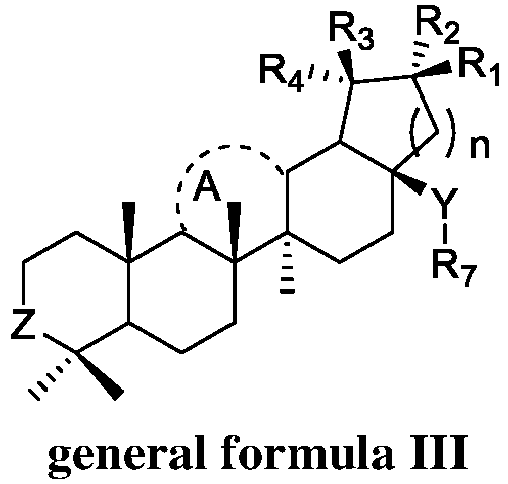
- R1, R2 and R3 are each independently selected from the group consisting of hydrogen, and methyl;
- R4 is selected from the group consisting of hydrogen, and isopropenyl;
- R7 is selected from the group consisting of hydrogen, substituted or unsubstituted C5-C9 furanosyl, and substituted or unsubstituted C5-C9 pyranosyl; the "substituted" means that one or more hydrogens or hydroxyls on the glycosyl ring are substituted by substituents which are selected from the group consisting of hydrogen, deuterium, tritium, halogen, cyano, amino, nitro, sulfydryl, aldehyde group, carboxyl, benzyl, substituted or unsubstituted C1-C12 alkoxycarbonyl, substituted or unsubstituted C2-C12 alkaminocarbonyl, substituted or unsubstituted C2-C10 acyl, sulfonyl, phosphoryl, C5-C9 furanosyl, and C5-C9 pyranosyl;
- Y is selected from the group consisting of -(CH2)mCHR9-, and carbonyl;
- m is 0 or 1;
- R9 is selected from the group consisting of hydrogen, deuterium, tritium, halogen, cyano, amino, nitro, hydroxyl, and sulfydryl;
- Z is selected from the group consisting of carbonyl, -CH(R9)2, =N-R8, and -X-R6;
- R9 is selected from the group consisting of hydrogen, halogen, cyano, amino, nitro, hydroxyl, and sulfydryl;
- X is selected from the group consisting of -CHR9-, carbonyl, S, -NHC(O)-R8, -NHS(O)2-R8, - NHC(O)NH-R8, -NHC(S)NH-R8, -COO-, and -O-S(O)2-R8;
- R6 is selected from the group consisting of hydrogen, substituted or unsubstituted C1-C6 alkyl, substituted or unsubstituted C2-C6 alkenyl, substituted or unsubstituted 5-7 membered heterocycle containing 1-3 heteroatoms selected from oxygen, sulfur and nitrogen, substituted or unsubstituted C5-C9 furanosyl, and substituted or unsubstituted C5-C9 pyranosyl; the "substituted" means that one or more hydrogens or hydroxyls on the glycosyl ring are substituted by substituents which are selected from the group consisting of hydrogen, deuterium, tritium, halogen, cyano, amino, nitro, sulfydryl, aldehyde group, carboxyl, benzyl, substituted or unsubstituted C1-C12 alkoxycarbonyl, substituted or unsubstituted C2-C12 alkaminocarbonyl, substituted or unsubstituted C2-C10 acyl, sulfonyl, phosphoryl, C5-C9 furanosyl, and C5-C9 pyranosyl;
- ring A is selected from the group consisting of 6-membered saturated carbon ring or unsaturated carbon ring;
- n is 1 or 2.
- In another preferred embodiment, the compound of formula I has the structure shown in the following general formulas IV, V, and VI:

- In another preferred embodiment, R5 is selected from the group consisting of hydrogen, halogen, hydroxyl, carboxyl, substituted or unsubstituted C1-C6 alkyl, substituted or unsubstituted C1-C6 alkoxy, substituted or unsubstituted C2-C10 acyl, substituted or unsubstituted C2-C10 ester group, and substituted or unsubstituted C1-C6 amido.
- In another preferred embodiment, R9 is selected from the group consisting of hydrogen, hydroxyl, aldehyde group, sulfydryl, and -X-R6;
- X is selected from the group consisting of -CHR9-, carbonyl, S, -NHC(O)-R8, -NHS(O)2-R8, - NHC(O)NH-R8, -NHC(S)NH-R8, -COO-, and -O-S(O)2-R8;
- R6 is selected from the group consisting of substituted or unsubstituted C1-C6 alkyl, substituted or unsubstituted C2-C6 alkenyl, substituted or unsubstituted 5-7 membered heterocycle containing 1-3 heteroatoms selected from oxygen, sulfur and nitrogen, substituted or unsubstituted C5-C9 furanosyl, and substituted or unsubstituted C5-C9 pyranosyl; the "substituted" means that one or more hydrogens or hydroxyls on the glycosyl ring are substituted by substituents which are selected from the group consisting of hydrogen, deuterium, tritium, halogen, cyano, amino, nitro, sulfydryl, aldehyde group, carboxyl, benzyl, substituted or unsubstituted C1-C12 alkoxycarbonyl, substituted or unsubstituted C2-C12 alkaminocarbonyl, substituted or unsubstituted C2-C10 acyl, sulfonyl, phosphoryl, C5-C9 furanosyl, and C5-C9 pyranosyl.
- In another preferred embodiment, the pentacyclic triterpenoid carbon glycoside compounds are the compounds described in the example.
- The second aspect of the invention provides a preparation method of the compound according to the first aspect of the invention, wherein the preparation method includes the following
scheme 1 or scheme 2:
- step a: reacting compound IV with compound III to obtain the product of step a;
- step b: reducing the product of step a to obtain the product of step b;
- step c: alkylating the product of step b to obtain the product of step c;
- step d: reacting the product of step c with Des Martin reagent to obtain a compound of formula II;
- The third aspect of the invention provides a pharmaceutical composition, which contains the therapeutically effective amount of one or more of the compound of formula I, or pharmaceutical salts, racemates, R-isomers and S-isomers thereof according to the first aspect of the invention, as well as one or more pharmaceutical carriers, excipients, adjuvants, accessories and/or diluents.
- The fourth aspect of the invention provides a use of a compound of formula I and formula II, racemates, R-isomers, S-isomers or pharmaceutical salts thereof according to the first aspect of the invention for preparing a medicament for treating or preventing metabolic diseases related to diabetes and viral diseases; preferably, the diseases are selected from the group consisting of diabetes, influenza, obesity, liver fibrosis, metabolic diseases, and viral diseases.
- It should be understood that, within the scope of the present invention, the above technical features of the present invention and the technical features specifically described in the following descriptions (such as the examples) can be combined with each other to form a new or preferred technical solution. Due to space limitations, they will not be repeated herein.
-
-
Figure 1 shows the OGTT experimental data of ICR mice of A2, A4, A6, A10, A25, A43, A44, A47 and A67. -
Figure 2 shows good in vivo hypoglycemic effect of A25 and A43. -
Figure 3 shows the EC50 and the in vitro effect of promoting GLP secretion of A64 and the positive drug ANT777. -
Figure 4 shows that the compounds of the invention show equivalent virus inhibition rate and low cytotoxicity to the positive drug ribavirin, of which the virus inhibition rate is similar to that of the positive drug ribavirin, but the cytotoxicity is lower than that of ribavirin. -
Figure 5 shows the experimental data of the affinity to SARS Cov-2 N protein of A102, A104, A106, A108, A112, A114, A116, A117, A120, A121, A122, A123, A124, A125, A126, and A127. -
Figure 6 shows the experimental data of the affinity of compounds A102, A114 and A116 to N protein. -
Figures 7 and 8 show the SARS Cov-2 virus replication inhibition experimental data of A102, A104, A114, A117, A118, A119, A120, A121, A122, A123, A124, A125, A126, A127, A128, and A129. -
Figures 9 and10 show the good PK properties of compound A104 in mice. - After extensive and in-depth research, the inventor accidentally discovered a class of pentacyclic triterpenoid carbon glycoside compounds with novel structure and excellent oral hypoglycemic activity or antiviral activity for the first time. On this basis, the invention is completed.
- In the present invention, the halogen refers to F, Cl, Br, and I.
- In the invention, unless otherwise specified, the terms used have the general meaning known to those skilled in the art.
- In the invention, the term "C1-C6 alkyl" refers to linear or branched alkyl group with 1 to 6 carbon atoms, including methyl, ethyl, propyl, isopropyl, butyl, isobutyl, sec-butyl, tert-butyl, pentyl and hexyl etc.; preferably ethyl, propyl, isopropyl, butyl, isobutyl, sec-butyl and tert-butyl.
- In the invention, the term "C1-C6 alkoxy" refers to linear or branched alkoxy group with 1 to 6 carbon atoms, including methoxy, ethoxy, propoxy, isopropoxy, butoxy, etc..
- In the invention, the term "C2-C6 alkenyl" refers to linear or branched alkenyl group containing a double bond with 2 to 6 carbon atoms, including vinyl, propenyl, butenyl, isobutenyl, pentenyl, hexenyl, etc. unlimitedly.
- In the present invention, the term "C2-C6 alkynyl" refers to a linear or branched alkynyl group containing one triple bond with 2 to 6 carbon atoms, including acetynyl, proynyl, butyryl, isobutyryl, pentynyl, hexynyl etc. unlimitedly.
- In the present invention, the term "C3-C10 cycloalkyl" refers to cycloalkyl group with 3 to 10 carbon atoms on the ring, including cyclopropyl, cyclobutyl, cyclopentyl, cyclohexyl, cycloheptyl, cyclooctyl, cyclodecyl, etc. unlimitedly. The terms "C3-C8 cycloalkyl", "C3-C7 cycloalkyl" and "C3-C6 cycloalkyl" have similar meanings.
- In the present invention, the term "C3-C10 cycloalkenyl" refers to cycloalkenyl group with 3 to 10 carbon atoms on the ring, including cyclopropenyl, cyclobutenyl, cyclopentenyl, cyclohexenyl, cyclohexenyl, cyclooctenyl, cyclodecyl, etc. unlimitedly. The term "C3-C7 cycloalkenyl" has a similar meaning.
- In the invention, the term "C1-C12 alkoxycarbonyl" refers to alkoxycarbonyl group with 1 to 12 carbon atoms on the alkyl chain, including methoxycarbonyl, ethoxycarbonyl, propoxycarbonyl, isopropoxycarbonyl, tert-butoxycarbonyl, benzyloxycarbonyl, etc. unlimitedly.
- In the present invention, the term "C1-C12 alkaminocarbonyl" refers to alkaminocarbonyl group with 1 to 12 carbon atoms on the alkyl chain, including methylaminocarbonyl, ethylaminocarbonyl, propylaminocarbonyl, isopropylaminocarbonyl, tert-butylaminocarbonyl, benzylaminocarbonyl, dimethylaminocarbonyl, etc. unlimitedly.
- In the present invention, the term "C5-C9 furanosyl" refers to furanosyl group with 5 to 9 carbon atoms, wherein the 1 position of the glycosyl group is connected to the main chain, including ribofuranosyl, desoxyribofuranosyl, galactofuranosyl, etc. unlimitedly.
- In the present invention, the term "C5-C9 pyranosyl" refers to a pyranosyl with 5 to 9 carbon atoms, wherein the 1 position of the glycosyl group is connected to the main chain, including glucopyranosyl, glucopyranuronyl, rhamnopyranosyl, galactopyranosyl, mannopyranosyl, xylpyranosyl, etc.
- In the present invention, the terms "aromatic ring" or "aryl" have the same meaning, preferably "aryl" is "C6-C12 aryl" or "C6-C10 aryl". The term "C6-C12 aryl" refers to aromatic cylic group with 6 to 12 carbon atoms without heteroatoms on the ring, such as phenyl, naphthyl, etc. The term "C6-C10 aryl" has a similar meaning.
- In the present invention, the terms "aromatic heterocyclic ring" or "heteroaryl" have the same meaning, which refer to heteroaromatic group containing one to more heteroatoms. The heteroatoms referred herein include oxygen, sulfur and nitrogen. For example, furanyl, thiophenyl, pyridinyl, pyrazolyl, pyrrolyl, N-alkyl pyrrolyl, pyrimidinyl, pyrazinyl, imidazolyl, tetrazolyl, etc. The heteroaryl ring can be fused on aryl, heterocyclic ring or cycloalkyl ring, wherein the ring connected with the parent structure is the heteroaryl ring. The heteroaryl group may be optionally substituted or unsubstituted.
- In the present invention, the term "3-12 membered heterocyclyl" refers to the saturated or unsaturated 3-12 membered cyclic group containing 1-3 heteroatoms selected from oxygen, sulfur and nitrogen on the ring, such as dioxolanyl, etc. The term "3-7 membered heterocyclyl" has a similar meaning.
- In the present invention, the term "substituted" means that one or more hydrogen atoms on a specific group are substituted by a specific substituent. The specific substituent is the substituent described correspondingly in the preceding text, or the substituent in each example. Unless otherwise specified, a substituented group can have substituent selected from a specific group at any substitutable site of the group, and the substituents can be the same or different in each position. A cyclic substituent, such as heterocyclyl, can be attached to another ring, such as a cycloalkyl, to form a spiro bicyclic system, for example, two rings have a common carbon atom. Those skilled in the art should understand that the combinations of substituents expected by the invention are those stable or chemically achievable. The substituents are, for example (but not limited to) C1-8 alkyl, C2-8 alkenyl, C2-8 alkynyl, C3-8 cycloalkyl, 3- to 12- membered heterocyclyl, aryl, heteroaryl, halogen, hydroxyl, carboxyl(-COOH), C1-8 aldehyde group, C2-10 acyl, C2-10 ester group, C1-C12 alkoxycarbonyl, amino, alkoxy, C1-10 sulfonyl, etc.
- The invention provides a pentacyclic triterpenoid carbon glycoside derivative compound with the structure shown in the following general formula I or general formula II, or racemates, R-isomers, S-isomers, pharmaceutically acceptable salts thereof or the mixtures thereof:

- R1, R2 and R3 are each independently selected from the group consisting of hydrogen, and methyl; R4 is selected from the group consisting of hydrogen, and isopropenyl;
- R5 is selected from the group consisting of hydrogen, deuterium, tritium, halogen, cyano, amino, nitro, hydroxyl, sulfydryl, aldehyde group, carboxyl, sulfonyl, phosphate group, substituted or unsubstituted C1-C6 alkyl, substituted or unsubstituted C1-C6 alkoxy, substituted or unsubstituted C6-C10 aryl, substituted or unsubstituted 5-7 membered heterocycle containing 1-3 heteroatoms selected from oxygen, sulfur and nitrogen, substituted or unsubstituted C1-C6 alkyl-phenyl, substituted or unsubstituted C3-C12 cycloalkyl, substituted or unsubstituted C2-C10 acyl, substituted or unsubstituted C2-C10 ester group, substituted or unsubstituted C6-C10 aryloxy, substituted or unsubstituted C1-C6 amido;
- R6 is selected from the group consisting of substituted or unsubstituted C5-C9 furanosyl, and substituted or unsubstituted C5-C9 pyranosyl; the "substituted" means that one or more hydrogens or hydroxyls on the glycosyl ring are substituted by substituents which are selected from the group consisting of hydrogen, deuterium, tritium, halogen, cyano, amino, nitro, sulfydryl, aldehyde group, carboxyl, benzyl, substituted or unsubstituted C1-C12 alkoxycarbonyl, substituted or unsubstituted C2-C12 alkaminocarbonyl, substituted or unsubstituted C2-C10 acyl, sulfonyl, phosphoryl, C5-C9 furanosyl, and C5-C9 pyranosyl;
- X is selected from the group consisting of -CHR9-, and carbonyl;
- R9 is selected from the group consisting of hydrogen, deuterium, tritium, halogen, cyano, amino, nitro, hydroxyl, and sulfydryl;
- ring A is selected from the group consisting of 6-membered saturated carbon ring or unsaturated carbon ring;
- n is 1 or 2.

- R1, R2 and R3 are each independently selected from the group consisting of hydrogen, and methyl; R4 is selected from the group consisting of hydrogen, and isopropenyl;
- R7 is selected from the group consisting of substituted or unsubstituted C5-C9 furanosyl, and substituted or unsubstituted C5-C9 pyranosyl; the "substituted" means that one or more hydrogens or hydroxyls on the glycosyl ring are substituted by substituents which are selected from the group consisting of hydrogen, deuterium, tritium, halogen, cyano, amino, nitro, sulfydryl, aldehyde group, carboxyl, benzyl, substituted or unsubstituted C1-C12 alkoxycarbonyl, substituted or unsubstituted C2-C12 alkaminocarbonyl, substituted or unsubstituted C2-C10 acyl, sulfonyl, phosphoryl, C5-C9 furanosyl, and C5-C9 pyranosyl;
- Y is selected from the group consisting of -(CH2)mCHR9-, and carbonyl;
- m is 0 or 1;
- R9 is selected from the group consisting of hydrogen, deuterium, tritium, halogen, cyano, amino, nitro, hydroxyl, and sulfydryl;
- Z is selected from the group consisting of carbonyl, -CH(R8)2, =N-Rs;
- R8 is selected from the group consisting of hydrogen, deuterium, tritium, halogen, cyano, amino, nitro, hydroxyl, sulfydryl, aldehyde group, carboxyl, sulfonyl, substituted or unsubstituted C1-C6 alkyl, substituted or unsubstituted C1-C6 alkoxy, substituted or unsubstituted C6-C10 aryl, substituted or unsubstituted 5-7 membered heterocycle containing 1-3 heteroatoms selected from oxygen, sulfur and nitrogen, substituted or unsubstituted C1-C6 alkyl-phenyl, substituted or unsubstituted C3-C12 cycloalkyl, substituted or unsubstituted C2-C10 acyl, substituted or unsubstituted C2-C10 ester group, substituted or unsubstituted C6-C10 aryloxy, and substituted or unsubstituted C1-C6 amido;
- ring A is selected from the group consisting of 6-membered saturated carbon ring or unsaturated carbon ring;
- n is 1 or 2.
- In a more preferred embodiment of the invention, the compounds of general formula I and general formula II of the invention are preferably the following specific compounds:
Number Structure Name A1 
(3S,5S,8R,9R,10S,14R,17R,18S)-28-O-Benzyloleanolicacid-3-(1'R)-(hydroxyl)methyl-2",3",4",6"-O-tetrabenzyl-β-D-glucopyranoside A2 
(3S,5S,8R,9R,10S,14R,17R,18S)-Oleanolicacid-3-(1'R)-(hydroxyl)methyl-β-D-glucopyranoside A3 
(3R,5S,8R,9R,10S,14R,17R,18S)-28-O-Benzyloleanolicacid-3-(1'R)-(hydroxyl)methyl-2",3",4",6"-O-tetrabenzyl-β-D-glucopyranoside A4 
(3R,5S,8R,9R,10S,14R,17R,18S)-Oleanolicacid-3-(1''R)-(hydroxyl)methyl-β-D-glucopyranoside A5 
(3S,5S,8R,9R,10S,14R,17R,18S)-28-O-Benzyloleanolicacid-3-methyl-2",3",4",6"-O-tetrabenzyl-β-D-glucopyranoside A6 
(3S,5S,8R,9R,10S,14R,17R,18S)-Oleanolicacid-methyl-β-D-glucopyranoside A7 
(3R,5S,8R,9R,10S,14R,17R,18S)-28-O-Benzyloleanolicacid-3-methyl-2", 3 ",4", 6"-O-tetrabenzyl-β-D-glucopyranoside A8 
(3R,5S,8R,9R,10S,14R,17R,18S)-Oleanolicacid-3-methyl-β-D-glucopyranoside A9 
(3S,5S,8R,9R, 10S, 14R, 17R, 18S)-28-O-Benzyloleanolicacid-3-carbonyl-2",3",4",6"-O-tetrabenzyl-β-D-glucopyranoside A10 
(3S,5S,8R,9R,10S,14R,17R,18S)-Oleanolicacid-3-carbonyl-β-D-glucopyranoside A11 
(3R,5S,8R,9R,10S,14R,17R,18S)-28-O-Benzyloleanolicacid-3-carbonyl-2",3",4",6"-O-tetrabenzyl-β-D-glucopyranoside A12 
(3R,5S,8R,9R,10S,14R,17R,18S)-Oleanolicacid-3-carbonyl-β-D-glucopyranoside A13 
(3S,5S,8R,9R,10S,14R,17R,18S)-Oleanolicacid-3-(1'R)-(hydroxyl)methyl-β-D-galactopyrano side A14 
(3R,5S,8R,9R,10S,14R,17R,18S)-Oleanolicacid-3-(1'R)-(hydroxyl)methyl-β-D-galactopyrano side A15 
(3S,5S,8R,9R,10S,14R,17R,18S)-Oleanolicacid-3-methyl-β-D-galactopyrano side A16 
(3R,5S,8R,9R,10S,14R,17R,18S)-Oleanolicacid-3-methyl-β-D-galactopyrano side A17 
(3S,5S,8R,9R,10S,14R,17R, 18S)-Oleanolicacid-3-carbonyl-β-D-galactopyrano side A18 
(3R,5S,8R,9R,10S,14R,17R,18S)-Oleanolicacid-3-carbonyl-β-D-galactopyrano side A19 
(3S,5S,8R,9R,10S,14R,17R,18S)-Oleanolicacid-3-(1'S)-(hydroxyl)methyl-α-D-mannopyranoside A20 
(3R,5S,8R,9R,10S,14R,17R,18S)-Oleanolicacid-3-(1'S)-(hydroxyl)methyl-α-D-mannopyranoside A21 
(3S,5S,8R,9R,10S,14R,17R,18S)-Oleanolicacid-3-methyl-α-D-mannopyranoside A22 
(3R,5S,8R,9R,10S,14R,17R,18S)-Oleanolicacid-3-methyl-α-D-mannopyranoside A23 
(3S,5S,8R,9R,10S,14R,17R,18S)-Oleanolicacid-3-carbonyl-α-D-mannopyranoside A24 
(3R,5S,8R,9R,10S,14R,17R,18S)-Oleanolicacid-3-carbonyl-α-D-mannopyranoside A25 
(3S,5S,8R,9R,10S,14R,17R,18S)-Oleanolicacid-3-(1'R)-(hydroxyl)methyl-β-D-glucurouopyranoside A26 
(3R,5S,8R,9R,10S,14R,17R,18S)-Oleanolicacid-3-(1'R)-(hydroxyl)methyl-β-D-glucurouopyranoside A27 
(3S,5S,8R,9R,10S,14R,17R,18S)-Oleanolicacid-3-methyl-β-D-glucurouopyranoside A28 
(3R,5S,8R,9R,10S,14R,17R,18S)-Oleanolicacid-3-methyl-β-D-glucurouopyranoside A29 
(3S,5S,8R,9R,10S,14R,17R,18S)-Oleanolicacid-3-carbonyl-β-D-glucurouopyranoside A30 
(3R,5S,8R,9R,10S,14R,17R,18S)-Oleanolicacid-3-carbonyl-β-D-glucurouopyranoside A31 
(3S,5S,8R,9R,10S,14R,17R,18S)-Oleanolicacid-3-(1'R)-(hydroxyl)methyl-6"-deoxy-β-D-glucopyranoside A32 
(3R,5S,8R,9R,10S,14R,17R,18S)-Oleanolicacid-3-(1'R)-(hydroxyl)methyl-6"-deoxy-β-D-glucopyranoside A33 
(3S,5S,8R,9R,10S,14R,17R,18S)-Oleanolicacid-3-methyl-6"-deoxy-β-D-glucopyranoside A34 
(3R,5S,8R,9R,10S,14R,17R,18S)-Oleanolicacid-3-methyl-6"-deoxy-β-D-glucopyranoside A35 
(3S,5S,8R,9R,10S,14R,17R,18S)-Oleanolicacid-3-carbonyl-6"-deoxy-β-D-glucopyranoside A36 
(3R,5S,8R,9R,10S,14R,17R,18S)-Oleanolicacid-3-carbonyl-6"-deoxy-β-D-glucopyranoside A37 
(3S,5S,8R,9R,10S,14R,17R,18S)-Oleanolicacid-3-(1'R)-(hydroxyl)methyl-β-D-xylopyranoside A38 
(3R,5S,8R,9R,10S,14R,17R,18S)-Oleanolicacid-3-(1'R)-(hydroxyl)methyl-β-D-xylopyranoside A39 
(3S,5S,8R,9R,10S,14R,17R,18S)-Oleanolicacid-3-methyl-β-D-xylopyranoside A40 
(3R,5S,8R,9R,10S,14R,17R,18S)-Oleanolicacid-3-methyl-β-D-xylopyranoside A41 
(3S,5S,8R,9R,10S,14R,17R,18S)-Oleanolicacid-3-carbonyl-β-D-xylopyranoside A42 
(3R,5S,8R,9R,10S,14R,17R,18S)-Oleanolicacid-3-carbonyl-β-D-xylopyranoside A43 
(3S,5S,8R,9R,10S,14R,17R,18S)-Oleanolicacid-3-(1'S)-(hydroxyl)methyl-α-L-rhamnopyranoside A44 
(3R,5S,8R,9R,10S,14R,17R,18S)-Oleanolicacid-3-(1'S)-(hydroxyl)methyl-α-L-rhamnopyranoside A45 
(3S,5S,8R,9R,10S,14R,17R,18S)-Oleanolicacid-3-(1'S)-methyl-α-L-rhamnopyranoside A46 
(3R,5S,8R,9R,10S,14R,17R,18S)-Oleanolicacid-3-(1'S)-methyl-α-L-rhamnopyranoside A47 
(3S,5S,8R,9R,10S,14R,17R,18S)-Oleanolicacid-3-(1'S)-carbonyl-α-L-rhamnopyranoside A48 
(3R,5S,8R,9R,10S,14R,17R,18S)-Oleanolicacid-3-1'S)-carbonyl-α-L-rhamnopyranoside A49 
(3S,5S,8R,9R,10S,14R,17R,18S)-Oleanolicacid-3-(1'S)-(hydroxyl)methyl-α-L-fucopyranoside A50 
(3R,5S,8R,9R,10S,14R,17R,18S)-Oleanolicacid-3-(1'S)-(hydroxyl)methyl-α-L-fucopyranoside A51 
(3S,5S,8R,9R,10S,14R,17R,18S)-Oleanolicacid-3-(1'S)-methyl-α-L-fucopyranoside A52 
(3R,5S,8R,9R,10S,14R,17R,18S)-Oleanolicacid-3-(1'S)-methyl-α-L-fucopyranoside A53 
(3S,5S,8R,9R,10S,14R,17R,18S)-Oleanolicacid-3-(1'S)-carbonyl-α-L-fucopyranoside A54 
(3R,5S,8R,9R,10S,14R,17R,18S)-Oleanolicacid-3-(1'S)-carbonyl-α-L-fucopyranoside A55 
(3S,5S,8R,9R,10S,14R,17R,18S)-Oleanolicacid-3-(1'R)-(hydroxyl)methyl-6"-deoxy-6"-fluoro-β-D-glucopyranoside A56 
(3R,5S,8R,9R,10S,14R,17R,18S)-Oleanolicacid-3-(1'R)-(hydroxyl)methyl-6"-deoxy-6"-fluoro-β-D-glucopyranoside A57 
(3S,5S,8R,9R,10S,14R,17R,18S)-Oleanolicacid-3-methyl-6"-deoxy-6"-fluoro-β-D-glucopyranoside A58 
(3R,5S,8R,9R,10S,14R,17R,18S)-Oleanolicacid-3-methyl-6"-deoxy-6"-fluoro-β-D-glucopyranoside A59 
(3S,5S,8R,9R,10S,14R,17R,18S)-Oleanolicacid-3-carbonyl-6"-deoxy-6"-fluoro-β-D-glucopyranoside A60 
(3R,5S,8R,9R,10S,14R,17R,18S)-Oleanolicacid-3-carbonyl-6"-deoxy-6"-fluoro-β-D-glucopyranoside A61 
(3S,5S,8R,9R,10S,14R,17R,18S)-Oleanolicacid-3-(1'R)-(hydroxyl)methyl-β-D-xylopyranosyl(1→3)-β-D-glucurouopyranoside A62 
(3R,5S,8R,9R,10S,14R,17R,18S)-Oleanolicacid-3-(1'R)-(hydroxyl)methyl-β-D-xylopyranosyl(1→3)-β-D-glucurouopyranoside A63 
(3S,5S,8R,9R,10S,14R,17R,18S)-Oleanolicacid-3-methyl-β-D-xylopyranosyl(1→3)-β-D-glucurouopyranoside A64 
(3R,5S,8R,9R,10S,14R,17R,18S)-Oleanolicacid-3-methyl-β-D-xylopyranosyl(1→3)-β-D-glucurouopyranoside A65 
(3S,5S,8R,9R,10S,14R,17R,18S)-Oleanolicacid-3-carbonyl-β-D-xylopyranosyl(1→3)-β-D-glucurouopyranoside A66 
(3R,5S,8R,9R,10S,14R,17R,18S)-Oleanolicacid-3-carbonyl-β-D-xylopyranosyl(1→3)-β-D-glucurouopyranoside A67 
(3S,5S,8R,9R,10S,14R,17R,18S,1 9S,20R)-Ursolicacid-3-(1'R)-(hydroxyl)methyl-(3-D-glucurouopyranoside A68 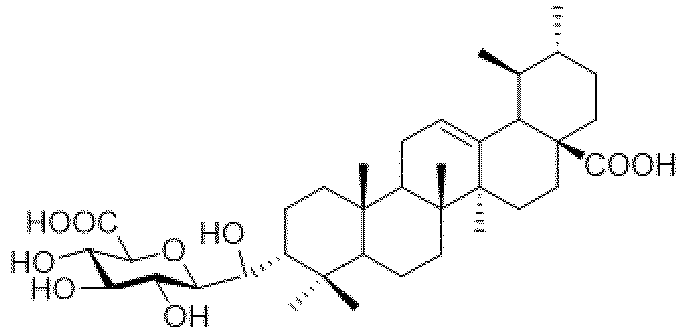
(3R,5S,8R,9R,10S,14R,17R,18S,1 9S,20R)-Ursolicacid-3-(1'R)-(hydroxyl)methyl-β-D-glucurouopyranoside A69 
(3S,5S,8R,9R,10S,14R,17R,18S,1 9S,20R)-Ursolicacid-3-methyl-β-D-glucurouopyranoside A70 
(3R,5S,8R,9R,10S,14R,17R,18S,1 9S,20R)-Ursolicacid-3-methyl-β-D-glucurouopyranoside A71 
(3S,5S,8R,9R,10S,14R,17R,18S,1 9S,20R)-Ursolicacid-3-carbonyl-β-D-glucurouopyranoside A72 
(3R,5S,8R,9R,10S,14R,17R,18S,1 9S,20R)-Ursolicacid-3-carbonyl-β-D-glucurouopyranoside A73 
(3S,5S,8R,9R,10S,13R,14R,17S,1 8R,19R)-Betulinicacid-3-(1'R)-(hydroxyl)methyl-β-D-glucurouopyranoside A74 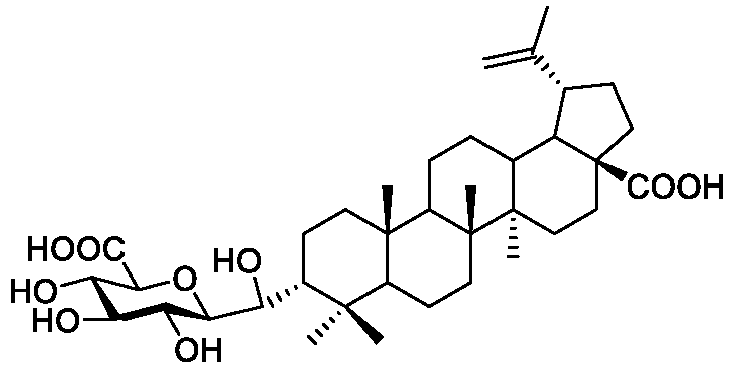
(3S,5S,8R,9R,10S,13R,14R,17S,1 8R,19R)-Betulinicacid-3-(1'R)-(hydroxyl)methyl-β-D-glucurouopyranoside A75 
(3S,5S,8R,9R,10S,13R,14R,17S,1 8R,19R)-Betulinicacid-3-methyl-β-D-glucurouopyranoside A76 
(3S,5S,8R,9R,10S,13R,14R,17S,1 8R,19R)-Betulinicacid-3-methyl-β-D-glucurouopyranoside A77 
(3S,5S,8R,9R,10S,13R,14R,17S,1 8R,19R)-Betulinicacid-3-carbonyl-β-D-glucurouopyranoside A78 
(3S,5S,8R,9R,10S,13R,14R,17S,1 8R,19R)-Betulinicacid-3-carbonyl-β-D-glucurouopyranoside A79 
(5S,8R,9R,10S,14R,17R,18S)-3-Carbonyloleanolicacid-28-β-D-glucurouopyranoside A80 
(5S,8R,9R,10S,14R,17R,18S)-3-Carbonyloleanolicacid-17-(1'R)-(hydroxyl)methyl-β-D-glucurouopyranoside A81 
(5S,8R,9R,10S,14R,17R,18S)-3-Carbonyloleanolicacid-17-methyl-β-D-glucurouopyranoside A82 
(5S,8R,9R,10S,14R,17R,18S19S, 20R)-3-Carbonylursolicacid-28-β-D-glucurouopyranoside A83 
(5S,8R,9R,10S,14R,17R,18S19S, 20R)-3-Carbonylursolicacid-17-(1'R)-(hydroxyl)methyl-β-D-glucurouopyranoside A84 
(5S,8R,9R,10S,14R,17R,18S,19S, 20R)-3-Carbonylursolicacid-17-methyl-β-D-glucurouopyranoside A85 
(5S,8R,9R,10S,13R,14R,17S,18R, 19R)-3-Carbonylbetulinicacid-28-β-D-glucurouopyranoside A86 
(5S,8R,9R,10S,13R,14R,17S,18R, 19R)-3-Carbonylbetulinicacid-17-(1'R)-(hydroxyl)methyl-β-D-glucurouopyranoside A87 
(5S,8R,9R,10S,13R,14R,17S,18R, 19R)-3-Carbonylbetulinicacid-17-methyl-β-D-glucurouopyranoside A88 
(3S,5S,8R,9R,10S,14R,17R,18S)-28-O-Ethyloleanolicacid-3-(1'R)-(hydroxyl)methyl-β-D-glucurouopyranoside A89 
(3S,5S,8R,9R,10S,14R,17R,18S)-28-O-Allyloleanolicacid-3-(1'R)-(hydroxyl)methyl-β-D-glucurouopyranoside A90 
(3S,5S,8R,9R,10S,14R,17R,18S)-28-O-(O-Ethyl)carboxymethyloleanolicaci d-3-(1'R)-(hydroxyl)methyl-β-D-glucurouopyranoside A91 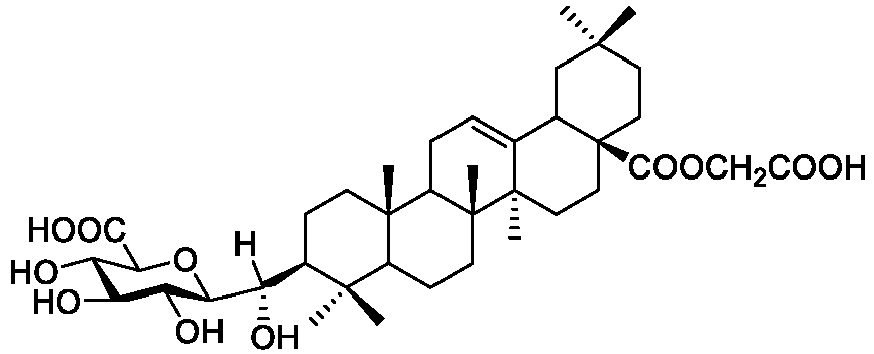
(3S,5S,8R,9R,10S,14R,17R,18S)-28-O-Acetoxyoleanolicacid-3-(1'R)-(hydroxyl)methyl-β-D-glucurouopyranoside A92 
(3S,5S,8R,9R,10S,14R,17R,18S)-28-O-Hydroxyethyloleanolicacid-3-(1'R)-(hydroxyl)methyl-β-D-glucurouopyranoside A93 
(3S,5S,8R,9R,10S,14R,17R,18S)-28-O-(N-Methyl)aminoethyloleanolicacid-3-(1'R)-(hydroxyl)methyl-β-D-glucurouopyranoside A94 
(3S,5S,8R,9R,10S,14R,17R,18S)-28-O-(N,N-Diethyl)aminoethyloleanolicacid-3-(1'R)-(hydroxyl)methyl-β-D-glucurouopyranoside A95 
(3S,5S,8R,9R,10S,14R,17R,18S)-28-O-Hydroxylbut-2‴ynyloleanolicacid-3-(1'R)-(hydroxyl)methyl-β-D-glucurouopyranoside A96 
(3S,5S,8R,9R,10S,14R,17R,18S)-28-O-Cyclohexyloleanolicacid-3-(1'R)-(hydroxyl)methyl-β-D-glucurouopyranoside A97 
(3S,5S,8R,9R,10S,14R,17R,18S)-28-(O-Methyl)carboxymethylaminoolea nolicacid-3-(1'R)-(hydroxyl)methyl-β-D-glucurouopyranoside A98 
(3S,5S,8R,9R,10S,14R,17R,18S)-28-Carboxymethylaminooleanolicaci d-3-(1'R)-(hydroxyl)methyl-β-D-glucurouopyranoside A99 
(3S,5S,8R,9R,10S,14R,17R,18S)-28-(N,N-Diethyl)aminopropylaminooleano licacid-3-(1'R)-(hydroxyl)methyl-β-D-glucurouopyranoside A100 
(3S,5S,8R,9R,10S,14R,17R,18S)-28-(N-Acetyl)aminopropylaminooleanol icacid-3-(1'R)-(hydroxyl)methyl-β-D-glucurouopyranoside A101 
(3S,5S,8R,9R,10S,14R,17R,18S)-28-(N,N-Diethyl)aminohexylaminooleanoli cacid-3-(1'R)-(hydroxyl)methyl-β-D-glucurouopyranoside A 102 
(3S,5S,8R,9R,10S,14R,17R,18S)-28-(N-Acetyl)aminohexylaminooleanoli cacid-3-(1'R)-(hydroxyl)methyl-β-D-glucurouopyranoside A 103 
(3S,5S,8R,9R,10S,14R,17R,18S)-28-(N-Ethyl)aminohexylaminooleanolic acid-3-(1'R)-(hydroxyl)methyl-β-D-glucurouopyranoside A104 
(3S,5S,8R,9R,10S,14R,17R,18S)-28-O-(Pyrazol-1"yl)methyloleanolicacid-3-(1'R)-(hydroxyl)methyl-β-D-glucurouopyranoside A105 
(3S,5S,8R,9R,10S,14R,17R,18S)-28-O-(Piperidin-1"-yl)methyloleanolicacid-3-(1'R)-(hydroxyl)methyl-β-D-glucurouopyranoside A106 
(3S,5S,8R,9R,10S,14R,17R,18S)-28-O-(Morpholin-4"-yl)methyloleanolicacid-3-(1'R)-(hydroxyl)methyl-β-D-glucurouopyranoside A 107 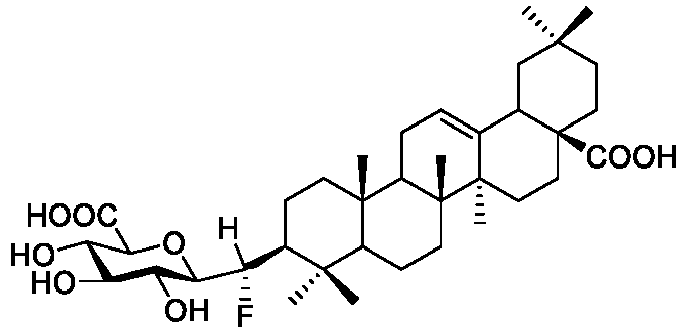
(3S,5S,8R,9R,10S,14R,17R,18S)-Oleanolicacid-3-(1'R)-fluoromethyl-β-D-glucurouopyranoside A108 
(3S,5S,8R,9R,10S,14R,17R,18S)-Oleanolicacid-3-(1'R)-(hydroxyl)methyl-28-(1"R)-(hydroxyl)methyl-β-D-diglucurouopyranoside A109 
(3S,5S,8R,9R,10S,14R,17R,18S)-Oleanolicacid-3-(1'R)-(hydroxyl)methyl-6"-O-methyl-β-D-glucurouopyranoside A110 
(3S,5S,8R,9R,10S,14R,17R,18S)-Oleanolicacid-3-(1''R)-(hydroxyl)methyl-6"-O-n-butyl-β-D-glucurouopyranoside A111 
(3S,5S,8R,9R,10S,14R,17R,18S)-Oleanolicacid-3-(1'R)-(hydroxyl)methyl-6"-O-isobutyl-β-D-glucurouopyranoside A112 
(3S,5S,8R,9R,10S,14R,17R,18S)-Oleanolicacid-3-(1'R)-(hydroxyl)methyl-6"-O-benzyl-β-D-glucurouopyranoside A113 
(3S,5S,8R,9R,10S,14R,17R,18S)-Oleanolicacid-3-(1'R)-(hydroxyl)methyl-6"-O-(1-fluoroacetyl)-β-D-glucurouopyranoside A114 
(3S,5S,8R,9R,10S,14R,17R,18S)-Oleanolicacid-3-(1'R)-(hydroxyl)methyl-6"-methylamino-β-D-glucurouopyranoside A115 
(3S,5S,8R,9R,10S,14R,17R,18S)-Oleanolicacid-3-(1'R)-(hydroxyl)methyl-6"-n-butylamino-β-D-glucurouopyranoside A116 
(3S,5S,8R,9R,10S,14R,17R,18S)-Oleanolicacid-3-(1'R)-(hydroxyl)methyl-6"-isobutylamino-β-D-glucurouopyranoside A117 
(3S,5S,8R,9R,10S,14R,17R,18S)-Oleanolicacid-3-(1'R)-(hydroxyl)methyl-6"-benzylamino-β-D-glucurouopyranoside A118 
(3S,5S,8R,9R,10S,14R,17R,18S)-Oleanolicacid-3-(1'R)-(hydroxyl)methyl-6"-dimethylamino-β-D-glucurouopyranoside A119 
(3S,5S,8R,9R,10S,14R,17R,18S)-Oleanolicacid-3-(1'R)-(hydroxyl)methyl-6"-(1-fluoroethylamino)-β-D-glucurouopyranoside A 120 
(3S,5S,8R,9R,10S,14R,17R,18S)-Oleanolicacid-3-(1'R)-(hydroxyl)methyl-5"-cyano-β-D-xylopyranoside A121 
(5S,8R,9R,10S,14R,17R,18S)-3-Carbonyloleanolicacid-17-(1'S)-(hydroxyl)methyl-β-D-mannopyranoside A 122 
(3S,5S,8R,9R,10S,14R,17R,18S)-Oleanolicacid-17-(1'S)-(hydroxyl)methyl-β-D-mannopyranoside A123 
(3S,5S,8R,9R,10S,14R,17R,18S)-3-Methoxyoleanolicacid-17-(1'S)-(hydroxyl)methyl-β-D-mannopyranoside A124 
(3S,5S,8R,9R,10S,14R,17R,18S)-3-(4-Fluorocyclohexoxy)oleanolicacid-17-(1'S)-(hydroxyl)methyl-β-D-mannopyranoside A125 
(3S,5S,8R,9R,10S,14R,17R,18S)-3-Acetoxyoleanolicacid-17-(1'S)-(hydroxyl)methyl-β-D-mannopyranoside A126 
(3S,5S,8R,9R,10S,14R,17R,18S)-3-Fluorocetoxyoleanolicacid-17-(1'S)-(hydroxyl)methyl-β-D-mannopyranoside A 127 
(3S,5S,8R,9R,10S,14R,17R,18S)-3-(4-fluorophenylacetoxy)oleanolicaci d-17-(1'S)-(hydroxyl)methyl-β-D-mannopyranoside A128 
(3S,5S,8R,9R,10S,14R,17R,18S)-3-(4-Trifluoromethylphenylsulfonylox y)oleanolicacid-17-(1'S)-(hydroxyl)methyl-β-D-mannopyranoside A 129 
(3S,5S,8R,9R,10S,14R,17R,18S)-3-(2,3,5,6-Tetrafluorobenzamide)oleanolicac id-17-(1'S)-(hydroxyl)methyl-β-D-mannopyranoside A130 
(3S,5S,8R,9R,10S,14R,17R,18S)-3-(4-Trifluoromethylbenzenesulfonami do)oleanolicacid-17-(1'S)-(hydroxyl)methyl-β-D-mannopyranoside A131 
(5S,8R,9R,10S,14R,17R,18S)-3-Oximidooleanolicacid-17-(1'S)-(hydroxyl)methyl-β-D-mannopyranoside A132 
(5S,8R,9R,10S,14R,17R,18S)-3-Methylhydrazinylideneoleanolica cid-17-(1'S)-(hydroxyl)methyl-β-D-mannopyranoside A133 
(5S,8R,9R,10S,14R,17R,18S)-3-Phenylhydrazinylideneoleanolicac id-17-(1'S)-(hydroxyl)methyl-β-D-mannopyranoside A134 
(3S,5S,8R,9R,10S,14R,17R,18S)-3-(4-Fluorophenylureido)oleanolicacid -17-(1'S)-(hydroxyl)methyl-β-D-mannopyranoside A135 
(3S,5S,8R,9R,10S,14R,17R,18S)-3-(4-Fluorophenylthioureido)oleanolic acid-17-(1'S)-(hydroxyl)methyl-β-D-mannopyranoside A136 
(3S,5S,8R,9R,10S,14R,17R,18S)-3-Formyloleanolicacid-17-(1'S)-(hydroxyl)methyl-β-D-mannopyranoside A137 
(3S,5S,8R,9R,10S,14R,17R,18S)-3-(3-Fluorocyclobutylthio)oleanolicaci d-17-(1'S)-(hydroxyl)methyl-β-D-mannopyranoside A138 
(3S,5S,8R,9R,10S,14R,17R,18S)-3 -Phenylthiooleanolic acid- 17-(1'S)-(hydroxyl)methyl-β-D-mannopyranoside A139 
(5S,8R,9R,10S,14R,17R,18S)-3-Carbonyloleanolicacid-28-β-D-mannopyranoside A140 
(5S,8R,9R,10S,14R,17R,18S)-3-Carbonyloleanolicacid-17-(1'S)-fluoromethyl-β-D-mannopyranoside A141 
(5S,8R,9R,10S,14R,17R,18S)-3-Carbonyloleanolicacid-17-methyl-β-D-mannopyranoside A142 
(5S,8R,9R,10S,14R,17R,18S)-3-Carbonyloleanolicacid-17-(1'S)-(hydroxyl)methyl-2",3",4",6"-O-Tetraacetyl-β-D-mannopyranoside A143 
(3S,5S,8R,9R,10S,14R,17R,18S)-Oleanolicacid-17-(1'S)-(hydroxyl)methyl-2",3",4",6"-O-tetraacetyl-β-D-mannopyranoside A144 
(5S,8R,9R,10S,14R,17R,18S)-3-Carbonyloleanolicacid-17-methyl-2", 3 ",4", 6"-O-tetraacetyl-β-D-mannopyranoside A145 
(5S,8R,9R,10S,14R,17R,18S)-3-Carbonyloleanolicacid-17-(2'S)-(hydroxyl)ethyl-β-D-mannopyranoside A146 
(5S,8R,9R,10S,14R,17R,18S)-3-Carbonyloleanolicacid-17-(2'S)-(hydroxyl)ethyl-2",3",4",6"-O-Tetraacetyl-β-D-mannopyranoside A147 
(5S,8R,9R,10S,14R,17R,18S)-3-Carbonylursolicacid-17-(2'S)-(hydroxyl)ethyl-2",3",4",6"-O-tetraacetyl-β-D-mannopyranoside A148 
(5S,8R,9R,10S,14R,17R,18S)-3-Carbonylbetulinicacid-17-(2'S)-(hydroxyl)ethyl-2",3",4",6"-O-tetraacetyl-β-D-mannopyranoside A149 
(5S,8R,9R,10S,14R,17R,18S)-3-Carbonyloleanolicacid-17-(1'R)-(hydroxyl)methyl-β-D-xylopyranoside A150 
(5S,8R,9R,10S,14R,17R,18S)-3-Carbonyloleanolicacid-17methyl-β-D-xylopyranoside A151 
(3S,5S,8R,9R,10S,14R,17R,18S)-Oleanolicacid-17-(1'R)-(hydroxyl)methyl-β-D-xylopyranoside A152 
(5S,8R,9R,10S,14R,17R,18S)-3-Carbonyloleanolicacid-17-(1 'R)-(hydroxyl)methyl-2",3",4"-O-triacetyl-β-D-xylopyranoside A153 
(5S,8R,9R,10S,14R,17R,18S)-3-Carbonyloleanolicacid-17-methyl-2",3",4"-O-triacetyl-β-D-xylopyranoside A154 
(5S,8R,9R,10S,14R,17R,18S)-3-Carbonyloleanolicacid-17-(2'R)-(hydroxyl)ethyl-2",3",4"-O-triacetyl-β-D-xylopyranoside A155 
(5S,8R,9R,10S,14R,17R,18S)-3-Carbonylursolicacid-17-(2'R)-(hydroxyl)ethyl-2",3",4"-O-triacetyl-β-D-xylopyranoside A156 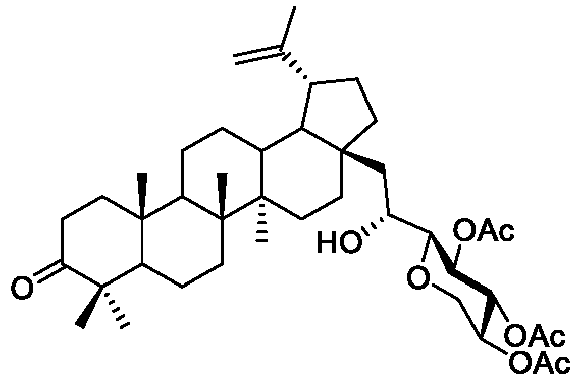
(5S,8R,9R,10S,14R,17R,18S)-3-Carbonylbetulinicacid-17-(2'R)-(hydroxyl)ethyl-2",3",4"-O-triacetyl-β-D-xylopyranoside A157 
(5S,8R,9R,10S,14R,17R,18S)-3-Carbonyloleanolicacid-17-(1'R)-(hydroxyl)methyl-β-D-galactopyrano side A158 
(5S,8R,9R,10S,14R,17R,18S)-3-Carbonyloleanolicacid-17-methyl-β-D-galactopyranoside A159 
(3S,5S,8R,9R,10S,14R,17R,18S)-Oleanolicacid-17-(1'R)-(hydroxyl)methyl-β-D-galactopyrano side A 160 
(5S,8R,9R,10S,14R,17R,18S)-3-Carbonyloleanolicacid-17-(1'R)-(hydroxyl)methyl-2",3",4",6"-O-tetraacetyl-β-D-galactopyrano side A161 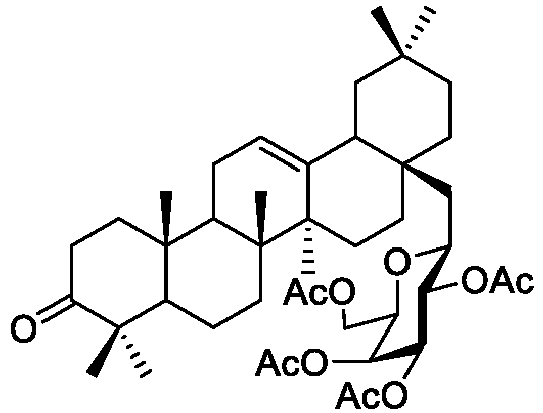
(5S,8R,9R,10S,14R,17R,18S)-3-Carbonyloleanolicacid-17-methyl-2",3 ",4",6"-O-tetraacetyl-β-D-galactopyranoside A162 
(5S,8R,9R,10S,14R,17R,18S)-3-Carbonyloleanolicacid-17-(2'R)-(hydroxyl)ethyl-β-D-galactopyranoside A163 
(5S,8R,9R,10S,14R,17R,18S)-3-Carbonyloleanolicacid-17-(2'R)-(hydroxyl)ethyl-2",3",4",6"-O-tetraacetyl-β-D-galactopyranoside A164 
(5S,8R,9R,10S,14R,17R,18S)-3-Carbonylursolicacid-17-(2'R)-(hydroxyl)ethyl-2",3",4",6"-O-tetraacetyl-β-D-galactopyranoside A165 
(5S,8R,9R,10S,14R,17R,18S)-3-Carbonylbetulinicacid-17-(2'R)-(hydroxyl)ethyl-2",3",4",6"-O-tetraacetyl-β-D-galactopyranoside A166 
(5S,8R,9R,10S,14R,17R,18S)-3-Carbonyloleanolicacid-17-(1'R)-(hydroxyl)methyl-α-L-rhamnopyranoside A167 
(5S,8R,9R,10S,14R,17R,18S)-3-Carbonyloleanolicacid-17-methyl-α-L-rhamnopyranoside A168 
(3S,5S,8R,9R,10S,14R,17R,18S)-Oleanolicacid-17-(1 'R)-(hydroxyl)methyl-α-L-rhamnopyrano side A169 
(5S,8R,9R,10S,14R,17R,18S)-3-Carbonyloleanolicacid-17-(1'R)-(hydroxyl)methyl-2",3",4"-O-triacetyl-α-L-rhamnopyranoside A170 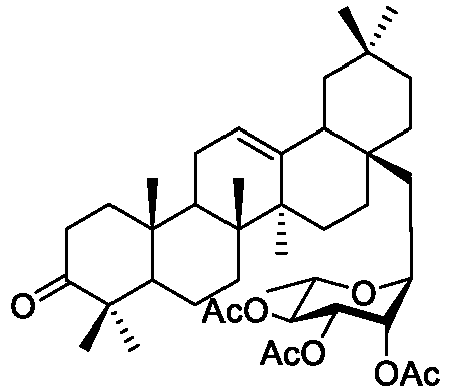
(5S,8R,9R,10S,14R,17R,18S)-3-Carbonyloleanolicacid-17-methyl-2",3",4"-O-triacetyl-α-L-rhamnopyranoside A171 
(5S,8R,9R,10S,14R,17R,18S)-3-Carbonyloleanolicacid-17-(2'R)-(hydroxyl)ethyl-α-L-rhamnopyrano side A172 
(5S,8R,9R,10S,14R,17R,18S)-3-Carbonyloleanolicacid-17-(2'R)-(hydroxyl)ethyl-2",3",4"-O-triacetyl-α-L-rhamnopyranoside A173 
(5S,8R,9R,10S,14R,17R,18S)-3-Carbonylursolicacid- 17-(2'R)-(hydroxyl)ethyl-2",3",4"-O-triacetyl-α-L-rhamnopyranoside A174 
(5S,8R,9R,10S,14R,17R,18S)-3-Carbonylbetulinicacid-17-(2'R)-(hydroxyl)ethyl-2",3",4"-O-triacetyl-α-L-rhamnopyranoside A175 
(3S,5S,8R,9R,10S,14R,17R,18S)-Oleanolicacid-17-(1'R)-(hydroxyl)methyl-β-D-glucurouopyranoside A176 
(5S,8R,9R,10S,14R,17R,18S)-3-Carbonyloleanolicacid-17-carbonyl-2",3",4"-O-triacetyl-β-D-glucurouopyranoside A177 
(5S,8R,9R,10S,14R,17R,18S)-3-Carbonyloleanolicacid-17-(1'R)-(hydroxyl)methyl-2",3",4"-O-triacetyl-β-D-glucurouopyranoside A178 
(5S,8R,9R,10S,14R,17R,18S)-3-Carbonyloleanolicacid-17-methyl-2",3",4"-O-triacetyl-β-D-glucurouopyranoside A179 
(5S,8R,9R,10S,14R,17R,18S)-3-Carbonyloleanolicacid-17-(2'R)-(hydroxyl)ethyl-β-D-glucurouopyranoside A180 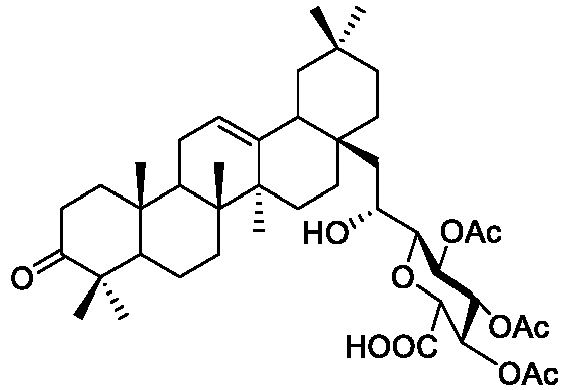
(5S,8R,9R,10S,14R,17R,18S)-3-Carbonyloleanolicacid-17-(2'R)-(hydroxyl)ethyl-2",3",4"-O-triacetyl-β-D-glucurouopyranoside A181 
(5S,8R,9R,10S,14R,17R,18S)-3-Carbonylursolicacid-17-(2'R)-(hydroxyl)ethyl-2",3",4"-O-triacetyl-β-D-glucurouopyranoside A182 
(5S,8R,9R,10S,14R,17R,18S)-3-Carbonylbetulinicacid-17-(2'R)-(hydroxyl)ethyl-2",3",4"-O-triacetyl-β-D-glucurouopyranoside A183 
(5S,8R,9R,10S,14R,17R,18S)-3-Carbonyloleanolicacid-17-(1'R)-(hydroxyl)methyl-6"-deoxy-6"-fluoro-β-D-glucopyranoside A184 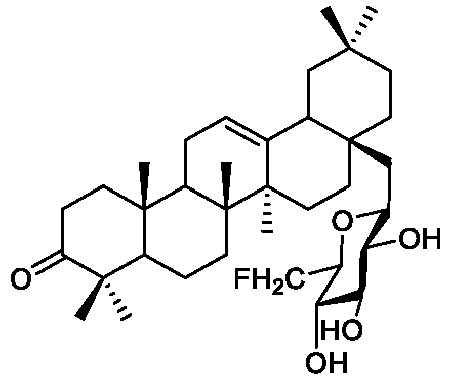
(5S,8R,9R,10S,14R,17R,18S)-3-Carbonyloleanolicacid-17methyl-6"-deoxy-6"-fluoro-β-D-glucopyranoside A185 
(3S,5S,8R,9R,10S,14R,17R,18S)-Oleanolicacid-17-(1'R)-(hydroxyl)methyl-6"-deoxy-6"-fluoro-β-D-glucopyranoside A186 
(5S,8R,9R, 10S, 14R, 17R, 1 8S)-3-Carbonyloleanolicacid-17-(1'R)-(hydroxyl)methyl-2",3",4"-O-triacetyl-6"-deoxy-6"-fluoro-β-D-glucopyrano side A187 
(5S,8R,9R,10S,14R,17R,18S)-3-Carbonyloleanolicacid-17-methyl-2",3",4"-O-triacetyl-6"-deoxy-6"-fluoro-β-D-glucopyranoside A188 
(5S,8R,9R,10S,14R,17R,18S)-3-Carbonyloleanolicacid-17-(2'R)-(hydroxyl)ethyl-6"-deoxy-6"-fluoro-β-D-glucopyranoside A189 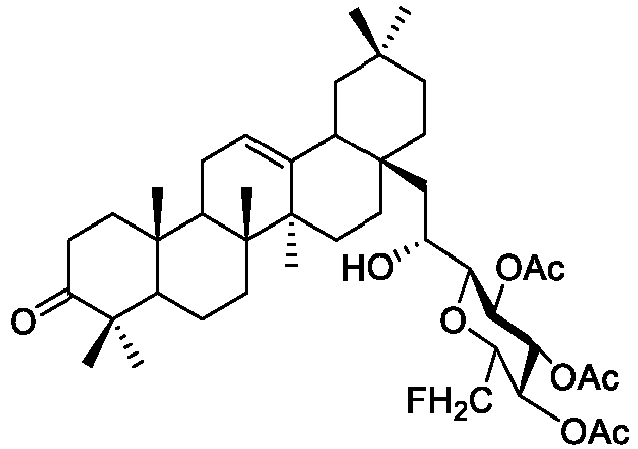
(5S,8R,9R,10S,14R,17R,18S)-3-Carbonyloleanolicacid-17-(2'R)-(hydroxyl)ethyl-2",3",4"-O-triacetyl-6"-deoxy-6"-fluoro-β-D-glucopyranoside A190 
(5S,8R,9R,10S,14R,17R,18S)-3-Carbonylursolicacid-17-(2'R)-(hydroxyl)ethyl-2",3",4"-O-triacetyl-6"-deoxy-6"-fluoro-β-D-glucopyranoside A191 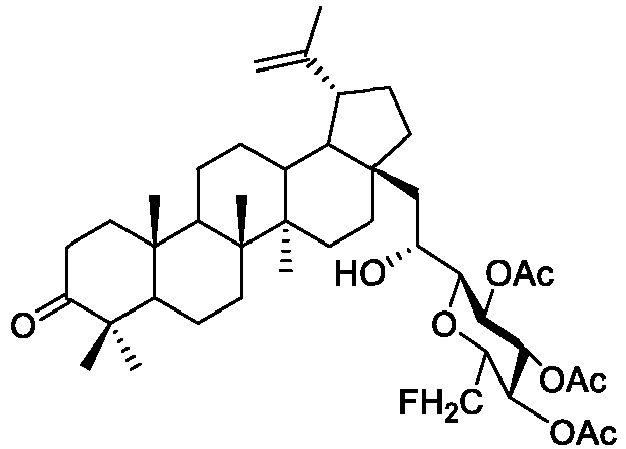
(5S,8R,9R,10S,14R,17R,18S)-3-Carbonylbetulinicacid-17-(2'R)-(hydroxyl)ethyl-2",3",4"-O-triacetyl-6"-deoxy-6"-fluoro-β-D-glucopyranoside A192 
(5S,8R,9R,10S,14R,17R,18S)-3-Carbonyloleanolicacid-17-(1'R)-(hydroxyl)methyl-β-D-glucopyranoside A193 
(5S,8R,9R,10S,14R,17R,18S)-3-Carbonyloleanolicacid-17methyl--β-D-glucopyranoside A194 
(3S,5S,8R,9R,10S,14R,17R,18S)-Oleanolicacid-17-(1'R)-(hydroxyl)methyl-β-D-glucopyranoside A195 
(5S,8R,9R,10S,14R,17R,18S)-3-Carbonyloleanolicacid-17-(1'R)-(hydroxyl)methyl-2",3",4",6"-O-tetraacetyl-β-D-glucopyranoside A196 
(5S,8R,9R,10S,14R,17R,18S)-3-Carbonyloleanolicacid-17-methyl-2",3",4",6"-O-tetraacetyl-β-D-glucopyranoside A 197 
(5S,8R,9R,10S,14R,17R,18S)-3-Carbonyloleanolicacid-17-(2'R)-(hydroxyl)ethyl-β-D-glucopyranoside A198 
(5S,8R,9R,10S,14R,17R,18S)-3-Carbonyloleanolicacid-17-(2'R)-(hydroxyl)ethyl-2",3",4",6"-O-tetraacetyl-β-D-glucopyranoside A199 
(5S,8R,9R,10S,14R,17R,18S)-3-Carbonylursolicacid-17-(2'R)-(hydroxyl)ethyl-2",3",4",6"-O-tetraacetyl-β-D-glucopyranoside A200 
(5S,8R,9R,10S,14R,17R,18S)-3-Carbonylbetulinicacid-17-(2'R)-(hydroxyl)ethyl-2",3",4",6"-O-tetraacetyl-β-D-glucopyranoside A201 
(5S,8R,9R,10S,14R,17R,18S)-3-Carbonyloleanolicacid-28-β-D-glucopyranoside A202 
(5S,8R,9R,10S,14R,17R,18S)-3-Carbonylursolicacid-28-β-D-glucopyranoside A203 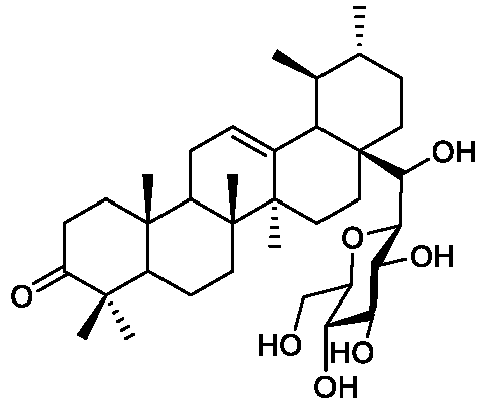
(5S,8R,9R,10S,14R,17R,18S)-3-Carbonylursolicacid-17-(1'R)-(hydroxyl)methyl-β-D-glucopyranoside A204 
(3S,5S,8R,9R,10S,14R,17R,18S)-Ursolicacid-17-(1'R)-(hydroxyl)methyl-β-D-glucopyranoside A205 
(3S,5S,8R,9R,10S,14R,17R,18S)-Ursolicacid-28-β-D-glucopyranoside A206 
(3S,5S,8R,9R,10S,14R,17R,18S)-Oleanolicacid-28-β-D-glucopyranoside A207 
(3S,5S,8R,9R,10S,13R,14R,17S,1 8R,19R)-Betulinicacid-28-β-D-glucopyranoside A208 
(3S,5S,8R,9R,10S,13R,14R,17S,1 8R,19R)-Betulinicacid-17-(1'R)-(hydroxyl)methyl-β-D-glucopyranoside A209 
(5S,8R,9R,10S,13R,14R,17S,18R, 19R)-3-Carbonylbetulinicacid-17-(1'R)-(hydroxyl)methyl-β-D-glucopyranoside A210 
(5S,8R,9R,10S,13R,14R,17S,18R, 19R)-3-Carbonylbetulinicacid-28-β-D-glucopyranoside A211 
(5S,8R,9R,10S,13R,14R,17S,18R, 19R)-3-Carbonylbetulinicacid-17-methyl-β-D-glucopyranoside A212 
(5S,8R,9R,10S,14R,17R,18S)-3-Carbonylursolicacid-17-methyl-β-D-glucopyranoside A213 
(3S,5S,8R,9R,10S,14R,17R,18S)-Oleanolicacid-17-methyl-β-D-glucopyranoside A214 
(3S,5S,8R,9R,10S,14R,17R,18S)-3-Carbonylursolicacid-17-methyl-β-D-glucopyranoside A215 
(3S,5S,8R,9R,10S,13R, 4R,17S,1 8R,19R)-Betulinicacid-17-methyl-β-D-glucopyranoside A216 
(3R,5S,8R,9R,10S,14R,17R,18S)-Oleanolicacid-28-β-D-glucopyranoside A217 
(3R,5S,8R,9R,10S,14R,17R,18S)-Oleanolicacid-17-(1'R)-(hydroxyl)methyl-β-D-glucopyranoside A218 
(3R,5S,8R,9R,10S,14R,17R,18S)-Ursolicacid-17-(1'R)-(hydroxyl)methyl-β-D-glucopyranoside A219 
(3R,5S,8R,9R,10S,14R,17R,18S)-Ursolicacid-28-β-D-glucopyranoside A220 
(5S,8R,9R,10S,14R,17R,18S)-3-Carbonyloleanolicacid-28-6"-O-methyl-β-D-glucurouopyranoside A221 
(5S,8R,9R,10S,14R,17R,18S)-3-Carbonyloleanolicacid-28-6"-O-ethyl-β-D-glucurouopyranoside A222 
(5S,8R,9R,10S,14R,17R,18S)-3-Carbonyloleanolicacid-28-6"-O-2‴-fluoroethyl-β-D-glucurouopyranoside A223 
(5S,8R,9R,10S,14R,17R,18S)-3-Carbonyloleanolicacid-17-(1'R)-(hydroxyl)methyl-6"-O-methyl-β-D-glucurouopyranoside A224 
(5S,8R,9R,10S,14R,17R,18S)-3-Carbonylursolicacid-28-6"-O-methyl-β-D-glucurouopyranoside A225 
(3S,5S,8R,9R,10S,13R,14R,17S,1 8R,19R)-Betulinicacid-28-6"-O-methyl-β-D-glucurouopyranoside A226 
(5S,8R,9R,10S,14R,17R,18S)-3-Carbonylbetulinicacid-17-(1'R)-(hydroxyl)methyl-6"-O-methyl-β-D-glucurouopyranoside A227 
(5S,8R,9R,10S,14R,17R,18S)-3-Carbonyloleanolicacid-28-6"-O-isopropyl-β-D-glucurouopyranoside A228 
(5S,8R,9R,10S,14R,17R,18S)-3-Carbonyloleanolicacid-28-6"-O-cyclopropylmethyl-β-D-glucurouopyranoside A229 
(5S,8R,9R,10S,14R,17R,18S)-3-Carbonyloleanolicacid-28-6"-N-ethyl-β-D-glucurouopyranoside A230 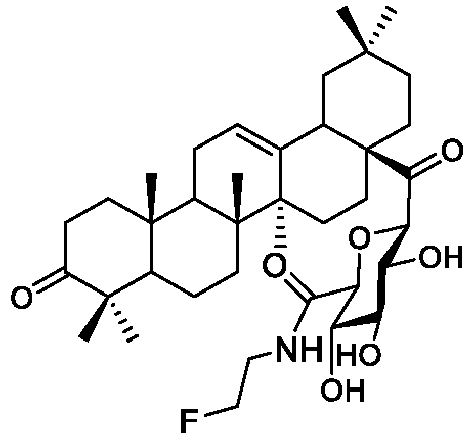
(5S,8R,9R,10S,14R,17R,18S)-3-Carbonyloleanolicacid-28-6"-N-2‴-fluoroethyl-β-D-glucurouopyranoside - The compounds of the invention can be acrylic acid derivative compounds with the structure shown in the following general formula I, or racemates, R-isomers, S-isomers, pharmaceutically acceptable salts thereof, or the mixtures thereof:

- The definition of each group is the same as before.
- The compounds of the invention have asymmetric center, chiral axis and chiral plane, and can present in the form of racemate, R-isomer or S-isomer. Those skilled in the art can obtain R-isomer and/or S-isomer from racemate by conventional technical means.
- The invention provides medicinal salts of compounds of general formula I and general formula II, in particular, the conventional medicinal salts formed by reacting the compounds of general formula I and general formula II with inorganic acids or organic acids. For example, the conventional medicinal salts can be prepared by reacting compounds of general formula I and general formula II with inorganic acids or organic acids. The inorganic acids include hydrochloric acid, hydrobromic acid, sulfuric acid, nitric acid, sulfamic acid and phosphoric acid, etc., and the organic acids include citric acid, tartaric acid, lactic acid, pyruvic acid, acetic acid, benzenesulfonic acid, p-toluenesulfonic acid, methanesulfonic acid, naphthalene sulfonic acid, ethanesulfonic acid, naphthalene disulfonic acid, maleic acid, malic acid, malonic acid fumaric acid, succinic acid, propionic acid, oxalic acid, trifluoroacetic acid, stearic acid, pamoic acid, hydroxy maleic acid, phenylacetic acid, benzoic acid, salicylic acid, glutamic acid, ascorbic acid, p-aminobenzenesulfonic acid, 2-acetoxybenzoic acid and hydroxyethanesulfonic acid, etc.; or sodium salts, potassium salts, calcium salts, aluminum salts or ammonium salts formed by compounds of general formula I and general formula II and inorganic bases; or methylamine salts, ethylamine salts or ethanolamine salts formed by compounds of general formula I and general formula II and organic bases.
- On the other hand, the invention provides a preparation method of compounds represented by general formula I and general formula II, and the preparation method is carried out according to the following
scheme 1 orscheme 2. - The compound of formula I can be prepared by the method shown in
scheme 1 below. - The structural formula and R group label used in the following scheme are only used in this part. Compound of formula (III), compound of formula (IV) and compound of formula (V) can be commercially available or synthesized using conventional techniques in the art.

- The definition of each group is the same as before.
- Step a: adding compound IV and compound III to 0.1mol/L of redistilled tetrahydrofuran solution of samarium diiodide at 0 °C,, and reacting for 1h under the protection of argon.
- Step b: dissolving the product of the previous step in the mixed solvent of ethyl acetate: methanol (1:1), adding Pd/C, and reacting for 12h at 50 °C, in the hydrogen environment.
- Step c: dissolving the product of the previous step in CS2, then adding NaH (60% oil mixture), and stirring for 2 hours at room temperature. Then adding CH3I for reaction overnight, and after column chromatography, dissolving the reaction mixture in ultra dry toluene. Adding AIBN and tributyltin hydride under stirring, and stirring under reflux for 4 hours.
- Step d: Dissolving the product of the previous step in dichloromethane, adding Des Martin reagent and stirring for 2h.
- Wherein, the structure of compound IV is:


- The definition of each group is the same as before.
- The definitions of steps a, b, c and d are the same as those in
Scheme 1. - Since the compounds of the present invention have excellent hypoglycemic and influenza virus inhibiting activities, the compound of the present invention and various crystal forms thereof, pharmaceutically acceptable inorganic or organic salts, hydrates or solvates thereof, and pharmaceutical composition containing the compound according to the present invention as main active ingredient can be used to treat, prevent and alleviate diseases associated with high blood glucose and influenza virus.
- The pharmaceutical composition of the invention comprises the compound of the present invention or the pharmaceutically acceptable salts thereof in a safe and effective dosage range and pharmaceutically acceptable excipients or carriers. Wherein the "safe and effective dosage" means that the amount of compound is sufficient to significantly ameliorate the condition without causing significant side effects. Generally, the pharmaceutical composition contains 1-2000 mg compounds of the invention per dose, preferably, 5-200mg compounds of the present invention per dose. Preferably, the "dose" is a capsule or tablet.
- "Pharmaceutically acceptable carrier" means one or more compatible solids or liquid fillers, or gelatinous materials which are suitable for human use and should be of sufficient purity and sufficiently low toxicity. "Compatibility" means that each component in the composition can be admixed with the compounds of the present invention and with each other without significantly reducing the efficacy of the compounds. Some examples of pharmaceutically acceptable carriers include cellulose and the derivatives thereof (such as sodium carboxymethyl cellulose, sodium ethyl cellulose, cellulose acetate, etc.), gelatin, talc, solid lubricants (such as stearic acid, magnesium stearate), calcium sulfate, vegetable oils (such as soybean oil, sesame oil, peanut oil, olive oil, etc.), polyols (such as propylene glycol, glycerol, mannitol, sorbitol, etc.), emulsifiers (such as Tween®), wetting agent (such as sodium dodecyl sulfate), coloring agents, flavoring agents, stabilizers, antioxidants, preservatives, pyrogen-free water, etc.
- There is no special limitation of administration mode for the compound or pharmaceutical compositions of the present invention, and the representative administration mode includes (but is not limited to): oral administration, intratumoral administration, rectal administration, parenteral (intravenous, intramuscular or subcutaneous) administration, and topical administration.
- Solid dosage forms for oral administration include capsules, tablets, pills, powders and granules. In these solid dosage forms, the active compounds are mixed with at least one conventional inert excipient (or carrier), such as sodium citrate or CaHPO4, or mixed with any of the following components: (a) fillers or compatibilizer, for example, starch, lactose, sucrose, glucose, mannitol and silicic acid; (b) binders, for example, hydroxymethyl cellulose, alginates, gelatin, polyvinylpyrrolidone, sucrose and arabic gum; (c) humectant, such as, glycerol; (d) disintegrating agents such as agar, calcium carbonate, potato starch or tapioca starch, alginic acid, certain composite silicates, and sodium carbonate; (e) dissolution-retarding agents, such as paraffin; (f) absorption accelerators, for example, quaternary ammonium compounds; (g) wetting agents, such as cetyl alcohol and glyceryl monostearate; (h) adsorbents, for example, kaolin; and (i) lubricants such as talc, stearin calcium, magnesium stearate, solid polyethylene glycol, sodium lauryl sulfate, or the mixtures thereof. In capsules, tablets and pills, the dosage forms may also contain buffering agents.
- The solid dosage forms such as tablets, sugar pills, capsules, pills and granules can be prepared by using coating and shell materials, such as enteric coatings and any other materials known in the art. They can contain an opaque agent. The release of the active compounds or compounds in the compositions can be released in a delayed mode in a given portion of the digestive tract. Examples of the embedding components include polymers and waxes. If necessary, the active compounds and one or more above excipients can form microcapsules.
- Liquid dosage forms for oral administration include pharmaceutically acceptable emulsions, solutions, suspensions, syrups or tinctures. In addition to the active compounds, the liquid dosage forms may contain any conventional inert diluents known in the art such as water or other solvents, solubilizers and emulsifiers, for example, ethanol, isopropanol, ethyl carbonate, ethyl acetate, propylene glycol, 1,3-butanediol, dimethyl formamide, as well as oil, in particular, cottonseed oil, peanut oil, corn germ oil, olive oil, castor oil and sesame oil, or the combination thereof.
- Besides these inert diluents, the composition may also contain additives such as wetting agents, emulsifiers, and suspending agent, sweetener, flavoring agents and perfume.
- In addition to the active compounds, the suspension may contain suspending agent, for example, ethoxylated isooctadecanol, polyoxyethylene sorbitol and sorbitan esters, microcrystalline cellulose, methanol aluminum and agar, or a combination thereof.
- The compositions for parenteral injection may comprise physiologically acceptable sterile aqueous or anhydrous solutions, dispersions, suspensions or emulsions, and sterile powders which can be re-dissolved into sterile injectable solutions or dispersions. Suitable aqueous and non-aqueous carriers, diluents, solvents or excipients include water, ethanol, polyols and any suitable mixtures thereof.
- The dosage forms of the compounds of the invention for topical administration include ointment, powder, patch, spray and inhalation. The active ingredients are mixed under sterile conditions with physiologically acceptable carriers and any preservatives, buffers, or propellants that may be required when necessary.
- Compounds of the present invention can be administrated alone, or in combination with any other pharmaceutically acceptable compounds.
- When the pharmaceutical compositions are used, a safe and effective amount of compound of the present invention is applied to a mammal (such as human) in need thereof, wherein the dose of administration is a pharmaceutically effective dose. For a person weighed 60 kg, the daily dose is usually 1-2000 mg, preferably 5-500mg. Of course, the particular dose should also depend on various factors, such as the route of administration, patient healthy status, which are well within the skills of an experienced physician.
- The invention provides a pentacyclic triterpenoid carbon glycoside derivative compound shown in general formula I or pharmaceutically acceptable salts, racemates, R-isomers or S-isomers thereof or the mixtures thereof.
- The invention also provides a preparation method of the above compounds.
- The invention also provides the use of the above pentacyclic triterpenoid carbon glycoside derivative compound or pharmaceutically acceptable salts, racemates, R-isomers or S-isomers thereof or the mixtures thereof in the preparation of medicine for treating or preventing metabolic diseases such as diabetes and hyperlipidemia.
- The present invention will be further illustrated below with reference to the specific examples. It should be understood that these examples are only to illustrate the invention but not to limit the scope of the invention. The experimental methods with no specific conditions described in the following examples are generally performed under the conventional conditions, or according to the manufacturer's instructions. Unless indicated otherwise, parts and percentage are calculated by weight.
- The experimental materials and reagents used in the following examples can be commercially available unless otherwise specified.
- The invention will be further illustrated in the following examples. These examples are only to illustrate the invention, but not to limit the invention in any way.
-

- Compounds (3S,5S,8R,9R,10S,14R,17R,18S)-28-O-benzyl-3-aldehydeoleanolic acid (100.0 mg, 0.18 mmol) and 2,3,4,6-O-tetrabenzyl-1-(pyridin-1-yl) sulfonyl-β-D-thioglucopyranoside (207.7 mg, 0.36 mmol) were dissolved in 15 mL of redistilled tetrahydrofuran. Under argon protection, 0.1 mol/L of tetrahydrofuran solution of amarium diiodide (15 mL, 1.5 mmol) was added at 0 °C, and the mixture was stirred for 1 hour. The reaction was completed as shown by TLC test. The reaction solution was quenched with saturated ammonium chloride and extracted with dichloromethane. The organic layers were combined, washed with saturated sodium chloride solution, dried over anhydrous sodium sulfate and concentrated. The crude product was subjected to column chromatography to obtain the target product A1 (152 mg, 78%). 1H NMR (600 MHz, CDCl3) δ 7.40 - 7.08 (m, 26H), 5.29 (t, J = 3.4 Hz, 1H), 5.05 (dt, J = 16.2, 11.9 Hz, 3H), 4.95 (d, J = 11.0 Hz, 1H), 4.83 (dd, J = 19.7, 11.0 Hz, 2H), 4.74 (d, J = 11.2 Hz, 1H), 4.65 - 4.47 (m, 3H), 4.01 (d, J = 5.8 Hz, 1H), 3.78 (t, J = 8.9 Hz, 1H), 3.68 (s, 1H), 3.66 - 3.62 (m, 1H), 3.58 (t, J = 9.1 Hz, 1H), 3.39 (dt, J = 9.7, 3.0 Hz, 1H), 3.31 (dd, J = 9.2, 6.7 Hz, 1H), 2.89 (dd, J = 13.6, 4.0 Hz, 1H), 1.98 (td, J = 13.5, 3.9 Hz, 1H), 1.87 - 1.76 (m, 2H), 1.26 (s, 3H), 1.12 (s, 3H), 0.94 (s, 3H), 0.91 (d, J = 1.5 Hz, 4H), 0.89 (s, 3H), 0.85 (s, 3H), 0.61 (s, 3H). LRMS (ESI):1083.66 [M+H]+.
-

- Compounds (3S, 5S, 8R, 9R, 10S, 14R, 17R, 18S)-28-O-benzyl-3-aldehyde oleanolic acid (100.0 mg, 0.18 mmol) and 2,3,4,6-O-tetrabenzyl-1-(pyridin-1-yl) sulfonyl-β-D-thioglucopyranoside (207.7 mg, 0.36 mmol) were dissolved in 15 mL of redistilled tetrahydrofuran. Under argon protection, 0.1 mol/L of tetrahydrofuran solution of samarium diiodide (15 mL, 1.5 mmol) was added at 0 °C, and the mixture was stirred for 1 hour. The reaction was completed as shown by TLC test. The reaction solution was quenched with saturated ammonium chloride and extracted with dichloromethane. The organic layers were combined, washed with saturated sodium chloride solution, dried over anhydrous sodium sulfate and concentrated. The crude product was subjected to column chromatography to obtain 152 mg of A1. Then it was dissolved in the mixed solution of ethyl acetate: methanol (15 mL: 15 mL), 30 mg of Pd/C was added in hydrogen environment and the mixture was reacted at 50 °C for 12 hours. Then the target product A2 (70 mg, 79%) was obtained by column chromatography. 1H NMR (500 MHz, MeOD) δ 5.28 (s, 1H), 4.16 (s, 1H), 3.79 (d, J = 2.0 Hz, 2H), 3.46 (dd, J = 20.4, 9.3 Hz, 2H), 3.38 (s, 1H), 3.35 - 3.31 (m, 1H), 3.23 (d, J = 9.5 Hz, 1H), 3.11 (d, J = 9.5 Hz, 1H), 2.88 (dd, J = 13.5, 3.0 Hz, 1H), 2.03 (dd, J = 13.5, 10.3 Hz, 1H), 1.93 (d, J = 7.1 Hz, 2H), 1.86 - 1.05 (m, 21H), 1.06 - 0.93 (m, 12H), 0.90 - 0.82 (m, 6H), 0.81 (d, J = 11.4 Hz, 1H). LRMS (ESI):631.43 [M-H]-.
- (3S,5S,8R,9R,10S,14R,17R,18S)-28-O-Benzyl-3-aldehydeoleanolic acid was replaced by (3R,5S,8R,9R,10S,14R,17R,18S)-28-O-benzyl-3-aldehydeoleanolic acid. Other required raw materials, reagents and preparation methods were the same as those in Example 1 to obtain A3 (yield 85%). 1H NMR (600 MHz, CDCl3) δ 7.40 - 7.08 (m, 26H), 5.29 (t, J = 3.4 Hz, 1H), 5.05 (dt, J = 16.2, 11.9 Hz, 3H), 4.95 (d, J = 11.0 Hz, 1H), 4.83 (dd, J = 19.7, 11.0 Hz, 2H), 4.74 (d, J = 11.2 Hz, 1H), 4.65 - 4.47 (m, 3H), 4.01 (d, J = 5.8 Hz, 1H), 3.78 (t, J = 8.9 Hz, 1H), 3.68 (s, 1H), 3.66 - 3.62 (m, 1H), 3.58 (t, J = 9.1 Hz, 1H), 3.39 (dt, J = 9.7, 3.0 Hz, 1H), 3.31 (dd, J = 9.2, 6.7 Hz, 1H), 2.89 (dd, J = 13.6, 4.0 Hz, 1H), 1.98 (td, J = 13.5, 3.9 Hz, 1H), 1.87 - 1.76 (m, 2H), 1.26 (s, 3H), 1.12 (s, 3H), 0.94 (s, 3H), 0.91 (d, J = 1.5 Hz, 4H), 0.89 (s, 3H), 0.85 (s, 3H), 0.61 (s, 3H). LRMS (ESI): 1083.66 [M+H]+.
- (3S,5S,8R,9R,10S,14R,17R,18S)-28-O-Benzyl-3-aldehyde oleanolic acid was replaced by (3R,5S,8R,9R,10S,14R,17R,18S)-3-aldehyde oleanolic acid. Other required raw materials, reagents and preparation methods are the same as those in Example 2 to obtain A4 (yield 74%). 1H NMR (500 MHz, MeOD) δ 5.28 (s, 1H), 4.16 (s, 1H), 3.79 (d, J = 2.0 Hz, 2H), 3.46 (dd, J = 20.4, 9.3 Hz, 2H), 3.38 (s, 1H), 3.35 - 3.31 (m, 1H), 3.23 (d, J = 9.5 Hz, 1H), 3.11 (d, J = 9.5 Hz, 1H), 2.88 (dd, J = 13.5, 3.0 Hz, 1H), 2.03 (dd, J = 13.5, 10.3 Hz, 1H), 1.93 (d, J = 7.1 Hz, 2H), 1.86 - 1.05 (m, 21H), 1.06 - 0.93 (m, 12H), 0.90 - 0.82 (m, 6H), 0.81 (d, J = 11.4 Hz, 1H). LRMS (ESI):631.43 [M-H]-.
-

- Compounds (3S,5S,8R,9R,10S,14R,17R,18S)-28-O-benzyl-3-aldehyde oleanolic acid (66.7 mg, 0.12 mmol) and 2,3,4,6-O-tetrabenzyl-1-(pyridin-1-yl)sulfonyl-β-D-thioglucopyranoside (138.5 mg, 0.24 mmol) were dissolved in 15 mL of redistilled tetrahydrofuran. Under argon protection, 0.1 mol/L of tetrahydrofuran solution of samarium diiodide (15 mL, 1.5 mmol) was added at 0 °C, and the mixture was stirred for 1 hour. The reaction was completed as shown by TLC test. The reaction solution was quenched with saturated ammonium chloride and extracted with dichloromethane. The organic layers were combined, washed with saturated sodium chloride solution, dried over anhydrous sodium sulfate and concentrated. The crude product was subjected to column chromatography to obtain 152 mg of A1. Then it was dissolved in 10 mL of CS2, NaH (15 mg, 0.37 mmol, 60% oil mixture) was added, and the mixture was stirred for 2 hours at room temperature. Then CH3I (31 µL, 0.50 mmol) was added to react overnight. The reaction was completed as shown by TLC test. The reaction solution was quenched with saturated ammonium chloride and extracted with dichloromethane. The organic layers were combined, washed with saturated sodium chloride solution, dried over anhydrous sodium sulfate and concentrated. The crude product was subjected to column chromatography to obtain intermediate A. Intermediate A and AIBN (23 mg, 0.14 mmol) were dissolved in 20mL of ultradry toluene, tributyltin hydride (0.12 mL, 0.45 mmol) was added under stirring, and the mixture was stirred under reflux for 4 hours. The reaction was completed as shown by TLC test. The final reaction solution was concentrated and subjected to column chromatography to obtain the target product A5 (64 mg, 65%).
- 1H NMR (600 MHz, CDCl3) δ 7.40 - 7.08 (m, 26H), 5.29 (t, J = 3.4 Hz, 1H), 5.05 (dt, J = 16.2, 11.9 Hz, 3H), 4.95 (d, J = 11.0 Hz, 1H), 4.83 (dd, J = 19.7, 11.0 Hz, 2H), 4.74 (d, J = 11.2 Hz, 1H), 4.65 - 4.47 (m, 3H), 4.01 (d, J = 5.8 Hz, 1H), 3.78 (t, J = 8.9 Hz, 1H), 3.68 (s, 1H), 3.66 - 3.62 (m, 1H), 3.58 (t, J = 9.1 Hz, 1H), 3.39 (dt, J = 9.7, 3.0 Hz, 1H), 3.31 (dd, J = 9.2, 6.7 Hz, 1H), 2.89 (dd, J = 13.6, 4.0 Hz, 1H), 1.98 (td, J = 13.5, 3.9 Hz, 1H), 1.87 - 1.76 (m, 2H), 1.26 (s, 3H), 1.12 (s, 3H), 0.94 (s, 3H), 0.91 (d, J = 1.5 Hz, 4H), 0.89 (s, 3H), 0.85 (s, 3H), 0.61 (s, 3H). LRMS (ESI): 1067.67 [M+H]+.
-

- Compounds (3S,5S,8R,9R,10S,14R,17R,18S)-28-O-benzyl-3-aldehydeoleanolic acid (66.7 mg, 0.12 mmol) and 2,3,4,6-O-tetrabenzyl-1-(pyridin-1-yl)sulfonyl-β-D-thioglucopyranoside (138.5 mg, 0.24 mmol) were dissolved in 15 mL of redistilled tetrahydrofuran. Under argon protection, 0.1 mol/L of tetrahydrofuran solution of amarium diiodide (15 mL, 1.5 mmol) was added at 0 °C, and the mixture was stirred for 1 hour. The reaction was completed as shown by TLC test. The reaction solution was quenched with saturated ammonium chloride and extracted with dichloromethane. The organic layers were combined, washed with saturated sodium chloride solution, dried over anhydrous sodium sulfate and concentrated. The crude product was subjected to column chromatography to obtain A1. Then it was dissolved in 10 mL of CS2, NaH (15 mg, 0.37 mmol, 60% oil mixture) was added, and the mixture was stirred for 2 hours at room temperature. Then CH3I (31 µL, 0.50 mmol) was added to react overnight. The reaction was completed as shown by TLC test. The reaction solution was quenched with saturated ammonium chloride and extracted with dichloromethane. The organic layers were combined, washed with saturated sodium chloride solution, dried over anhydrous sodium sulfate and concentrated. The crude product was subjected to column chromatography to obtain intermediate A. Intermediate A and AIBN (23 mg, 0.14 mmol) were dissolved in 20mL of ultradry toluene, tributyltin hydride (0.12 mL, 0.45 mmol) was added under stirring, and the mixture was stirred under reflux for 4 hours. The reaction was completed as shown by TLC test. The final reaction solution was concentrated and subjected to column chromatography to obtain 64 mg of A5. Then it was dissolved in the mixed solution of ethyl acetate: methanol (15 mL: 15 mL), 13 mg of Pd/C was added in hydrogen environment and the mixture was reacted at 50 °C for 12 hours. Then the target product A6 (27 mg, 75%) was obtained by column chromatography.
- 1H NMR (500 MHz, MeOD) δ 5.28 (s, 1H), 4.16 (s, 1H), 3.79 (d, J = 2.0 Hz, 2H), 3.46 (dd, J = 20.4, 9.3 Hz, 2H), 3.38 (s, 1H), 3.35 - 3.31 (m, 1H), 3.23 (d, J = 9.5 Hz, 1H), 3.11 (d, J = 9.5 Hz, 1H), 2.88 (dd, J = 13.5, 3.0 Hz, 1H), 2.03 (dd, J = 13.5, 10.3 Hz, 1H), 1.93 (d, J = 7.1 Hz, 2H), 1.86 - 1.05 (m, 21H), 1.06 - 0.93 (m, 12H), 0.90 - 0.82 (m, 6H), 0.81 (d, J = 11.4 Hz, 1H). LRMS (ESI):615.43 [M-H]-.
- (3S,5S,8R,9R,10S,14R,17R,18S)-28-O-Benzyl-3-aldehyde oleanolic acid was replaced by (3R,5S,8R,9R,10S,14R,17R,18S)-28-O-benzyl-3-aldehydeoleanolic acid. Other required raw materials, reagents and preparation methods are the same as those in Example 5 to obtain A7 (yield 67%). 1H NMR (600 MHz, CDCl3) δ 7.40 - 7.08 (m, 26H), 5.29 (t, J = 3.4 Hz, 1H), 5.05 (dt, J = 16.2, 11.9 Hz, 3H), 4.95 (d, J = 11.0 Hz, 1H), 4.83 (dd, J = 19.7, 11.0 Hz, 2H), 4.74 (d, J = 11.2 Hz, 1H), 4.65 - 4.47 (m, 3H), 4.01 (d, J = 5.8 Hz, 1H), 3.78 (t, J = 8.9 Hz, 1H), 3.68 (s, 1H), 3.66 - 3.62 (m, 1H), 3.58 (t, J = 9.1 Hz, 1H), 3.39 (dt, J = 9.7, 3.0 Hz, 1H), 3.31 (dd, J = 9.2, 6.7 Hz, 1H), 2.89 (dd, J = 13.6, 4.0 Hz, 1H), 1.98 (td, J = 13.5, 3.9 Hz, 1H), 1.87 - 1.76 (m, 2H), 1.26 (s, 3H), 1.12 (s, 3H), 0.94 (s, 3H), 0.91 (d, J = 1.5 Hz, 4H), 0.89 (s, 3H), 0.85 (s, 3H), 0.61 (s, 3H). LRMS (ESI): 1067.67 [M+H]+.
- Replace (3S,5S,8R,9R,10S,14R,17R,18S)-28-O-benzyl-3-aldehyde oleanolic acid was replaced by (3R,5S,8R,9R,10S,14R,17R,18S)-28-O-benzyl-3-aldehydeoleanolic acid. Other required raw materials, reagents and preparation methods are the same as those in Example 6 to obtain A8 (yield 71%).1H NMR (500 MHz, MeOD) δ 5.28 (s, 1H), 4.16 (s, 1H), 3.79 (d, J = 2.0 Hz, 2H), 3.46 (dd, J = 20.4, 9.3 Hz, 2H), 3.38 (s, 1H), 3.35 - 3.31 (m, 1H), 3.23 (d, J = 9.5 Hz, 1H), 3.11 (d, J = 9.5 Hz, 1H), 2.88 (dd, J = 13.5, 3.0 Hz, 1H), 2.03 (dd, J = 13.5, 10.3 Hz, 1H), 1.93 (d, J = 7.1 Hz, 2H), 1.86 - 1.05 (m, 21H), 1.06 - 0.93 (m, 12H), 0.90 - 0.82 (m, 6H), 0.81 (d, J = 11.4 Hz, 1H). LRMS (ESI):615.43 [M-H]-.
-

- Compounds (3S,5S,8R,9R,10S,14R,17R,18S)-28-O-benzyl-3-aldehydeoleanolic acid (66.7 mg, 0.12 mmol) and 2,3,4,6-O-tetrabenzyl-1-(pyridin-1-yl)sulfonyl-β-D-thioglucopyranoside (138.5 mg, 0.24 mmol) were dissolved in 15 mL of redistilled tetrahydrofuran. Under argon protection, 0.1 mol/L of tetrahydrofuran solution of samarium diiodide (15 mL, 1.5 mmol) was added at 0 °C, and the mixture was stirred for 1 hour. The reaction was completed as shown by TLC test. The reaction solution was quenched with saturated ammonium chloride and extracted with dichloromethane. The organic layers were combined, washed with saturated sodium chloride solution, dried over anhydrous sodium sulfate and concentrated. The crude product was subjected to column chromatography to obtain 152 mg of A1. Then it was dissolved in 10 mL of dichloromethane, Des Martin reagent (76 mg, 0.18 mmol) was added, and the mixture was stirred for 2 hours at room temperature. The reaction was completed as shown by TLC test. The reaction solution was quenched with saturated sodium thiosulfate and extracted with dichloromethane. The organic layers were combined, washed with saturated sodium chloride solution, dried over anhydrous sodium sulfate and concentrated. The crude product was subjected to column chromatography to obtain the target product A9 (90 mg, 90%). 1H NMR (600 MHz, CDCl3) δ 7.40 - 7.08 (m, 26H), 5.29 (t, J = 3.4 Hz, 1H), 5.05 (dt, J = 16.2, 11.9 Hz, 3H), 4.95 (d, J = 11.0 Hz, 1H), 4.83 (dd, J = 19.7, 11.0 Hz, 2H), 4.74 (d, J = 11.2 Hz, 1H), 4.65 - 4.47 (m, 3H), 4.01 (d, J = 5.8 Hz, 1H), 3.78 (t, J = 8.9 Hz, 1H), 3.68 (s, 1H), 3.66 - 3.62 (m, 1H), 3.58 (t, J = 9.1 Hz, 1H), 3.39 (dt, J = 9.7, 3.0 Hz, 1H), 3.31 (dd, J = 9.2, 6.7 Hz, 1H), 2.89 (dd, J = 13.6, 4.0 Hz, 1H), 1.98 (td, J = 13.5, 3.9 Hz, 1H), 1.87 - 1.76 (m, 2H), 1.26 (s, 3H), 1.12 (s, 3H), 0.94 (s, 3H), 0.91 (d, J = 1.5 Hz, 4H), 0.89 (s, 3H), 0.85 (s, 3H), 0.61 (s, 3H). LRMS (ESI): 1081.65 [M+H]+.
-

- Compounds (3S,5S,8R,9R,10S,14R,17R,18S)-28-O-benzyl-3-aldehydeoleanolic acid (66.7 mg, 0.12 mmol) and 2,3,4,6-O-tetrabenzyl-1-(pyridin-1-yl)sulfonyl-β-D-thioglucopyranoside (138.5 mg, 0.24 mmol) were dissolved in 15 mL of redistilled tetrahydrofuran. Under argon protection, 0.1 mol/L of tetrahydrofuran solution of samarium diiodide (15 mL, 1.5 mmol) was added at 0 °C, and the mixture was stirred for 1 hour. The reaction was completed as shown by TLC test. The reaction solution was quenched with saturated ammonium chloride and extracted with dichloromethane. The organic layers were combined, washed with saturated sodium chloride solution, dried over anhydrous sodium sulfate and concentrated. The crude product was subjected to column chromatography to obtain A1. Then it was dissolved in 10 mL of dichloromethane, Des Martin reagent (76 mg, 0.18 mmol) was added, and the mixture was stirred for 2 hours at room temperature. The reaction was completed as shown by TLC test. The reaction solution was quenched with saturated sodium thiosulfate and extracted with dichloromethane. The organic layers were combined, washed with saturated sodium chloride solution, dried over anhydrous sodium sulfate and concentrated. The crude product was subjected to column chromatography to obtain 90mg of A9. Then it was dissolved in the mixed solution of ethyl acetate: methanol (15 mL: 15 mL), 13 mg of Pd/C was added in hydrogen environment and the mixture was reacted at 50 °C for 12 hours. Then the target product A10 (38 mg, 73%) was obtained by column chromatography.
- 1H NMR (500 MHz, MeOD) δ 5.28 (s, 1H), 4.16 (s, 1H), 3.79 (d, J = 2.0 Hz, 2H), 3.46 (dd, J = 20.4, 9.3 Hz, 2H), 3.38 (s, 1H), 3.35 - 3.31 (m, 1H), 3.23 (d, J = 9.5 Hz, 1H), 3.11 (d, J = 9.5 Hz, 1H), 2.88 (dd, J = 13.5, 3.0 Hz, 1H), 2.03 (dd, J = 13.5, 10.3 Hz, 1H), 1.93 (d, J = 7.1 Hz, 2H), 1.86 - 1.05 (m, 21H), 1.06 - 0.93 (m, 12H), 0.90 - 0.82 (m, 6H), 0.81 (d, J = 11.4 Hz, 1H). LRMS (ESI):629.41 [M-H]-.
- (3S,5S,8R,9R,10S,14R,17R,18S)-28-O-Benzyl-3-aldehyde oleanolic acid was replaced by (3R,5S,8R,9R,10S,14R,17R,18S)-28-O-benzyl-3-aldehyde oleanolic acid. Other required raw materials, reagents and preparation methods are the same as those in Example 9 to obtain A11 (yield 89%). 1H NMR (600 MHz, CDCl3) δ 5.28 (s, 1H), 4.16 (s, 1H), 3.79 (d, J = 2.0 Hz, 2H), 3.46 (dd, J = 20.4, 9.3 Hz, 2H), 3.38 (s, 1H), 3.35 - 3.31 (m, 1H), 3.23 (d, J = 9.5 Hz, 1H), 3.11 (d, J = 9.5 Hz, 1H), 2.88 (dd, J = 13.5, 3.0 Hz, 1H), 2.03 (dd, J = 13.5, 10.3 Hz, 1H), 1.93 (d, J = 7.1 Hz, 2H), 1.86 - 1.05 (m, 21H), 1.06 - 0.93 (m, 12H), 0.90 - 0.82 (m, 6H), 0.81 (d, J = 11.4 Hz, 1H). LRMS (ESI): 1081.65 [M+H]+.
- (3S,5S,8R,9R,10S,14R,17R,18S)-28-O-Benzyl-3-aldehyde oleanolic acid was replaced by (3R,5S,8R,9R,10S,14R,17R,18S)-28-O-benzyl-3-aldehyde oleanolic acid. Other required raw materials, reagents and preparation methods are the same as those in Example 10 to obtain A12 (yield 91%). 1H NMR (500 MHz, MeOD) δ 5.28 (s, 1H), 4.16 (s, 1H), 3.79 (d, J= 2.0 Hz, 2H), 3.46 (dd, J = 20.4, 9.3 Hz, 2H), 3.38 (s, 1H), 3.35 - 3.31 (m, 1H), 3.23 (d, J = 9.5 Hz, 1H), 3.11 (d, J = 9.5 Hz, 1H), 2.88 (dd, J = 13.5, 3.0 Hz, 1H), 2.03 (dd, J = 13.5, 10.3 Hz, 1H), 1.93 (d, J = 7.1 Hz, 2H), 1.86 - 1.05 (m, 21H), 1.06 - 0.93 (m, 12H), 0.90 - 0.82 (m, 6H), 0.81 (d, J = 11.4 Hz, 1H). LRMS (ESI):629.41 [M-H]-.
- 2,3,4,6-O-Tetrabenzyl-1-(pyridin-1-yl)sulfonyl-β-D-thioglucopyranoside was replaced by 2,3,4,6-O-tetrabenzyl-1-(pyridin-1-yl) sulfonyl-β-D-thiogalactopyranoside. Other required raw materials, reagents and preparation methods are the same as those in Example 2 to obtain A13 (yield 77%). 1H NMR (500 MHz, MeOD) δ 5.28 (s, 1H), 4.16 (s, 1H), 3.79 (d, J = 2.0 Hz, 2H), 3.46 (dd, J = 20.4, 9.3 Hz, 2H), 3.38 (s, 1H), 3.35 - 3.31 (m, 1H), 3.23 (d, J = 9.5 Hz, 1H), 3.11 (d, J = 9.5 Hz, 1H), 2.88 (dd, J = 13.5, 3.0 Hz, 1H), 2.03 (dd, J = 13.5, 10.3 Hz, 1H), 1.93 (d, J = 7.1 Hz, 2H), 1.86 - 1.05 (m, 21H), 1.06 - 0.93 (m, 12H), 0.90 - 0.82 (m, 6H), 0.81 (d, J = 11.4 Hz, 1H). LRMS (ESI):631.43 [M-H]-.
- 2,3,4,6-O-Tetrabenzyl-1-(pyridin-1-yl)sulfonyl-β-D-thioglucopyranoside was replaced by 2,3,4,6-O-tetrabenzyl-1-(pyridin-1-yl)sulfonyl-β-D-thiogalactopyranoside, and (3S,5S,8R,9R,10S,14R,17R,18S)-28-O-benzyl-3-aldehyde oleanolic acid was replaced by (3R,5S,8R,9R,10S,14R,17R,18S)-28-O-benzyl-3-aldehyde oleanolic acid. Other required raw materials, reagents and preparation methods are the same as those in Example 2 to obtain A14 (yield 74%). 1H NMR (500 MHz, MeOD) δ 5.28 (s, 1H), 4.16 (s, 1H), 3.79 (d, J = 2.0 Hz, 2H), 3.46 (dd, J = 20.4, 9.3 Hz, 2H), 3.38 (s, 1H), 3.35 - 3.31 (m, 1H), 3.23 (d, J = 9.5 Hz, 1H), 3.11 (d, J = 9.5 Hz, 1H), 2.88 (dd, J = 13.5, 3.0 Hz, 1H), 2.03 (dd, J = 13.5, 10.3 Hz, 1H), 1.93 (d, J = 7.1 Hz, 2H), 1.86 - 1.05 (m, 21H), 1.06 - 0.93 (m, 12H), 0.90 - 0.82 (m, 6H), 0.81 (d, J = 11.4 Hz, 1H). LRMS (ESI):631.43 [M-H]-.
- 2,3,4,6-O-Tetrabenzyl-1-(pyridin-1-yl)sulfonyl-β-D-thioglucopyranoside was replaced by 2,3,4,6-O-tetrabenzyl-1-(pyridin-1-yl)sulfonyl-β-D-thiogalactopyranoside. Other required raw materials, reagents and preparation methods are the same as those in Example 6 to obtain A15 (yield 63%). 1H NMR (500 MHz, MeOD) δ 5.28 (s, 1H), 4.16 (s, 1H), 3.79 (d, J = 2.0 Hz, 2H), 3.46 (dd, J = 20.4, 9.3 Hz, 2H), 3.38 (s, 1H), 3.35 - 3.31 (m, 1H), 3.23 (d, J = 9.5 Hz, 1H), 3.11 (d, J = 9.5 Hz, 1H), 2.88 (dd, J = 13.5, 3.0 Hz, 1H), 2.03 (dd, J = 13.5, 10.3 Hz, 1H), 1.93 (d, J = 7.1 Hz, 2H), 1.86 - 1.05 (m, 21H), 1.06 - 0.93 (m, 12H), 0.90 - 0.82 (m, 6H), 0.81 (d, J = 11.4 Hz, 1H). LRMS (ESI):615.43 [M-H]-.
- 2,3,4,6-O-Tetrabenzyl-1-(pyridin-1-yl)sulfonyl-β-D-thioglucopyranoside was replaced by 2,3,4,6-O-tetrabenzyl-1-(pyridin-1-yl)sulfonyl-β-D-thiogalactopyranoside, and (3S,5S,8R,9R,10S,14R,17R,18S)-28-O-benzyl-3-aldehyde oleanolic acid was replaced by (3R,5S,8R,9R,10S,14R,17R,18S)-28-O-benzyl-3-aldehyde oleanolic acid. Other required raw materials, reagents and preparation methods are the same as those in Example 6 to obtain A16 (yield 74%). 1H NMR (500 MHz, MeOD) δ 5.28 (s, 1H), 4.16 (s, 1H), 3.79 (d, J = 2.0 Hz, 2H), 3.46 (dd, J = 20.4, 9.3 Hz, 2H), 3.38 (s, 1H), 3.35 - 3.31 (m, 1H), 3.23 (d, J = 9.5 Hz, 1H), 3.11 (d, J = 9.5 Hz, 1H), 2.88 (dd, J = 13.5, 3.0 Hz, 1H), 2.03 (dd, J = 13.5, 10.3 Hz, 1H), 1.93 (d, J = 7.1 Hz, 2H), 1.86 - 1.05 (m, 21H), 1.06 - 0.93 (m, 12H), 0.90 - 0.82 (m, 6H), 0.81 (d, J = 11.4 Hz, 1H). LRMS (ESI):615.43 [M-H]-.
- 2,3,4,6-O-Tetrabenzyl-1-(pyridin-1-yl)sulfonyl-β-D-thioglucopyranoside was replaced by 2,3,4,6-O-tetrabenzyl-1-(pyridin-1-yl)sulfonyl-β-D-thiogalactopyranoside. Other required raw materials, reagents and preparation methods are the same as those in Example 10 to obtain A17 (yield 81%). 1H NMR (500 MHz, MeOD) δ 5.28 (s, 1H), 4.16 (s, 1H), 3.79 (d, J = 2.0 Hz, 2H), 3.46 (dd, J = 20.4, 9.3 Hz, 2H), 3.38 (s, 1H), 3.35 - 3.31 (m, 1H), 3.23 (d, J = 9.5 Hz, 1H), 3.11 (d, J = 9.5 Hz, 1H), 2.88 (dd, J = 13.5, 3.0 Hz, 1H), 2.03 (dd, J = 13.5, 10.3 Hz, 1H), 1.93 (d, J = 7.1 Hz, 2H), 1.86 - 1.05 (m, 21H), 1.06 - 0.93 (m, 12H), 0.90 - 0.82 (m, 6H), 0.81 (d, J = 11.4 Hz, 1H). LRMS (ESI):629.41 [M-H]-.
- 2,3,4,6-O-Tetrabenzyl-1-(pyridin-1-yl)sulfonyl-β-D-thioglucopyranoside was replaced by 2,3,4,6-O-tetrabenzyl-1-(pyridin-1-yl)sulfonyl-β-D-thiogalactopyranoside, and (3S,5S,8R,9R,10S,14R,17R,18S)-28-O-benzyl-3-aldehyde oleanolic acid was replaced by (3R,5S,8R,9R,10S,14R,17R,18S)-28-O-benzyl-3-aldehyde oleanolic acid. Other required raw materials, reagents and preparation methods are the same as those in Example10 to obtain A18 (yield 86%). 1H NMR (500 MHz, MeOD) δ 5.28 (s, 1H), 4.16 (s, 1H), 3.79 (d, J = 2.0 Hz, 2H), 3.46 (dd, J = 20.4, 9.3 Hz, 2H), 3.38 (s, 1H), 3.35 - 3.31 (m, 1H), 3.23 (d, J = 9.5 Hz, 1H), 3.11 (d, J = 9.5 Hz, 1H), 2.88 (dd, J = 13.5, 3.0 Hz, 1H), 2.03 (dd, J = 13.5, 10.3 Hz, 1H), 1.93 (d, J = 7.1 Hz, 2H), 1.86 - 1.05 (m, 21H), 1.06 - 0.93 (m, 12H), 0.90 - 0.82 (m, 6H), 0.81 (d, J = 11.4 Hz, 1H). LRMS (ESI):629.41 [M-H]-.
- 2,3,4,6-O-Tetrabenzyl-1-(pyridin-1-yl)sulfonyl-β-D-thioglucopyranoside was replaced by 2,3,4,6-O-tetrabenzyl-1-(pyridin-1-yl)sulfonyl-α-D-thiomannopyranoside. Other required raw materials, reagents and preparation methods are the same as those in Example 2 to obtain A19 (yield 73%). 1H NMR (500 MHz, MeOD) δ 5.28 (s, 1H), 4.16 (s, 1H), 3.79 (d, J = 2.0 Hz, 2H), 3.46 (dd, J = 20.4, 9.3 Hz, 2H), 3.38 (s, 1H), 3.35 - 3.31 (m, 1H), 3.23 (d, J = 9.5 Hz, 1H), 3.11 (d, J = 9.5 Hz, 1H), 2.88 (dd, J = 13.5, 3.0 Hz, 1H), 2.03 (dd, J = 13.5, 10.3 Hz, 1H), 1.93 (d, J = 7.1 Hz, 2H), 1.86 - 1.05 (m, 21H), 1.06 - 0.93 (m, 12H), 0.90 - 0.82 (m, 6H), 0.81 (d, J = 11.4 Hz, 1H). LRMS (ESI):631.43 [M-H]-.
- 2,3,4,6-O-Tetrabenzyl-1-(pyridin-1-yl)sulfonyl-β-D-thioglucopyranoside was replaced by 2,3,4,6-O-tetrabenzyl-1-(pyridin-1-yl)sulfonyl-α-D-thiomannopyranoside, and (3S,5S,8R,9R,10S,14R,17R,18S)-28-O-benzyl-3-aldehyde oleanolic acid was replaced by (3R,5S,8R,9R,10S,14R,17R,18S)-28-O-benzyl-3-aldehyde oleanolic acid. Other required raw materials, reagents and preparation methods are the same as those in Example 2 to obtain A20 (yield 62%). 1H NMR (500 MHz, MeOD) δ 5.28 (s, 1H), 4.16 (s, 1H), 3.79 (d, J = 2.0 Hz, 2H), 3.46 (dd, J = 20.4, 9.3 Hz, 2H), 3.38 (s, 1H), 3.35 - 3.31 (m, 1H), 3.23 (d, J = 9.5 Hz, 1H), 3.11 (d, J = 9.5 Hz, 1H), 2.88 (dd, J = 13.5, 3.0 Hz, 1H), 2.03 (dd, J = 13.5, 10.3 Hz, 1H), 1.93 (d, J = 7.1 Hz, 2H), 1.86 - 1.05 (m, 21H), 1.06 - 0.93 (m, 12H), 0.90 - 0.82 (m, 6H), 0.81 (d, J = 11.4 Hz, 1H). LRMS (ESI):631.43 [M-H]-.
- 2,3,4,6-O-Tetrabenzyl-1-(pyridin-1-yl)sulfonyl-β-D-thioglucopyranoside was replaced by 2,3,4,6-O-tetrabenzyl-1-(pyridin-1-yl)sulfonyl-α-D-thiomannopyranoside. Other required raw materials, reagents and preparation methods are the same as those in Example 6 to obtain A21 (yield 65%). 1H NMR (500 MHz, MeOD) δ 5.28 (s, 1H), 4.16 (s, 1H), 3.79 (d, J = 2.0 Hz, 2H), 3.46 (dd, J = 20.4, 9.3 Hz, 2H), 3.38 (s, 1H), 3.35 - 3.31 (m, 1H), 3.23 (d, J = 9.5 Hz, 1H), 3.11 (d, J = 9.5 Hz, 1H), 2.88 (dd, J = 13.5, 3.0 Hz, 1H), 2.03 (dd, J = 13.5, 10.3 Hz, 1H), 1.93 (d, J = 7.1 Hz, 2H), 1.86 - 1.05 (m, 21H), 1.06 - 0.93 (m, 12H), 0.90 - 0.82 (m, 6H), 0.81 (d, J = 11.4 Hz, 1H). LRMS (ESI):615.43 [M-H]-.
- 2,3,4,6-O-Tetrabenzyl-1-(pyridin-1-yl)sulfonyl-β-D-thioglucopyranoside was replaced by 2,3,4,6-O-tetrabenzyl-1-(pyridin-1-yl)sulfonyl-α-D-thiomannopyranoside, and (3S,5S,8R,9R,10S,14R,17R,18S)-28-O-benzyl-3-aldehyde oleanolic acid was replaced by (3R,5S,8R,9R,10S,14R,17R,18S)-28-O-benzyl-3-aldehyde oleanolic acid. Other required raw materials, reagents and preparation methods are the same as those in Example 6 to obtain A22 (yield 64%). 1H NMR (500 MHz, MeOD) δ 5.28 (s, 1H), 4.16 (s, 1H), 3.79 (d, J = 2.0 Hz, 2H), 3.46 (dd, J = 20.4, 9.3 Hz, 2H), 3.38 (s, 1H), 3.35 - 3.31 (m, 1H), 3.23 (d, J = 9.5 Hz, 1H), 3.11 (d, J = 9.5 Hz, 1H), 2.88 (dd, J = 13.5, 3.0 Hz, 1H), 2.03 (dd, J = 13.5, 10.3 Hz, 1H), 1.93 (d, J = 7.1 Hz, 2H), 1.86 - 1.05 (m, 21H), 1.06 - 0.93 (m, 12H), 0.90 - 0.82 (m, 6H), 0.81 (d, J = 11.4 Hz, 1H). LRMS (ESI):615.43 [M-H]-.
- 2,3,4,6-O-Tetrabenzyl-1-(pyridin-1-yl)sulfonyl-β-D-thioglucopyranoside was replaced by 2,3,4,6-O-tetrabenzyl-1-(pyridin-1-yl)sulfonyl-α-D-thiomannopyranoside. Other required raw materials, reagents and preparation methods are the same as those in Example 10 to obtain A23 (yield 91%). 1H NMR (500 MHz, MeOD) δ 5.28 (s, 1H), 4.16 (s, 1H), 3.79 (d, J = 2.0 Hz, 2H), 3.46 (dd, J = 20.4, 9.3 Hz, 2H), 3.38 (s, 1H), 3.35 - 3.31 (m, 1H), 3.23 (d, J = 9.5 Hz, 1H), 3.11 (d, J = 9.5 Hz, 1H), 2.88 (dd, J = 13.5, 3.0 Hz, 1H), 2.03 (dd, J = 13.5, 10.3 Hz, 1H), 1.93 (d, J = 7.1 Hz, 2H), 1.86 - 1.05 (m, 21H), 1.06 - 0.93 (m, 12H), 0.90 - 0.82 (m, 6H), 0.81 (d, J = 11.4 Hz, 1H). LRMS (ESI):629.41 [M-H]-.
- 2,3,4,6-O-Tetrabenzyl-1-(pyridin-1-yl)sulfonyl-β-D-thioglucopyranoside was replaced by 2,3,4,6-O-tetrabenzyl-1-(pyridin-1-yl)sulfonyl-α-D-thiomannopyranoside, and (3S,5S,8R,9R,10S,14R,17R,18S)-28-O-benzyl-3-aldehyde oleanolic acid was replaced by (3R,5S,8R,9R,10S,14R,17R,18S)-28-O-benzyl-3-aldehyde oleanolic acid. Other required raw materials, reagents and preparation methods are the same as those in Example 10 to obtain A24 (yield 86%). 1H NMR (500 MHz, MeOD) δ 5.28 (s, 1H), 4.16 (s, 1H), 3.79 (d, J = 2.0 Hz, 2H), 3.46 (dd, J = 20.4, 9.3 Hz, 2H), 3.38 (s, 1H), 3.35 - 3.31 (m, 1H), 3.23 (d, J = 9.5 Hz, 1H), 3.11 (d, J = 9.5 Hz, 1H), 2.88 (dd, J = 13.5, 3.0 Hz, 1H), 2.03 (dd, J = 13.5, 10.3 Hz, 1H), 1.93 (d, J = 7.1 Hz, 2H), 1.86 - 1.05 (m, 21H), 1.06 - 0.93 (m, 12H), 0.90 - 0.82 (m, 6H), 0.81 (d, J = 11.4 Hz, 1H). LRMS (ESI):629.41 [M-H]-.
- 2,3,4,6-O-Tetrabenzyl-1-(pyridin-1-yl)sulfonyl-β-D-thioglucopyranoside was replaced by 2,3,4,6-O-tetrabenzyl-1-(pyridin-1-yl)sulfonyl-β-D-thioglucurouopyranoside. Other required raw materials, reagents and preparation methods are the same as those in Example 2 to obtain A25 (yield 77%). 1H NMR (500 MHz, MeOD) δ 5.28 (s, 1H), 4.16 (s, 1H), 3.79 (d, J = 2.0 Hz, 2H), 3.46 (dd, J = 20.4, 9.3 Hz, 2H), 3.38 (s, 1H), 3.35 - 3.31 (m, 1H), 3.23 (d, J = 9.5 Hz, 1H), 3.11 (d, J = 9.5 Hz, 1H), 2.88 (dd, J = 13.5, 3.0 Hz, 1H), 2.03 (dd, J = 13.5, 10.3 Hz, 1H), 1.93 (d, J = 7.1 Hz, 2H), 1.86 - 1.05 (m, 21H), 1.06 - 0.93 (m, 12H), 0.90 - 0.82 (m, 6H), 0.81 (d, J = 11.4 Hz, 1H). LRMS (ESI):645.41 [M-H]-.
- 2,3,4,6-O-Tetrabenzyl-1-(pyridin-1-yl)sulfonyl-β-D-thioglucopyranoside was replaced by 2,3,4,6-O-tetrabenzyl-1-(pyridin-1-yl)sulfonyl-β-D-thioglucurouopyranoside, and (3S,5S,8R,9R,10S,14R,17R,18S)-28-O-benzyl-3-aldehyde oleanolic acid was replaced by (3R,5S,8R,9R,10S,14R,17R,18S)-28-O-benzyl-3-aldehyde oleanolic acid. Other required raw materials, reagents and preparation methods are the same as those in Example 2 to obtain A26 (yield 72%). 1H NMR (500 MHz, MeOD) δ 5.28 (s, 1H), 4.16 (s, 1H), 3.79 (d, J = 2.0 Hz, 2H), 3.46 (dd, J = 20.4, 9.3 Hz, 2H), 3.38 (s, 1H), 3.35 - 3.31 (m, 1H), 3.23 (d, J = 9.5 Hz, 1H), 3.11 (d, J = 9.5 Hz, 1H), 2.88 (dd, J = 13.5, 3.0 Hz, 1H), 2.03 (dd, J = 13.5, 10.3 Hz, 1H), 1.93 (d, J = 7.1 Hz, 2H), 1.86 - 1.05 (m, 21H), 1.06 - 0.93 (m, 12H), 0.90 - 0.82 (m, 6H), 0.81 (d, J = 11.4 Hz, 1H). LRMS (ESI):645.41 [M-H]-.
- 2,3,4,6-O-Tetrabenzyl-1-(pyridin-1-yl)sulfonyl-β-D-thioglucopyranoside was replaced by 2,3,4,6-O-tetrabenzyl-1-(pyridin-1-yl)sulfonyl-β-D-thioglucurouopyranoside. Other required raw materials, reagents and preparation methods are the same as those in Example 6 to obtain A27 (yield 65%). 1H NMR (500 MHz, MeOD) δ 5.28 (s, 1H), 4.16 (s, 1H), 3.79 (d, J = 2.0 Hz, 2H), 3.46 (dd, J = 20.4, 9.3 Hz, 2H), 3.38 (s, 1H), 3.35 - 3.31 (m, 1H), 3.23 (d, J = 9.5 Hz, 1H), 3.11 (d, J = 9.5 Hz, 1H), 2.88 (dd, J = 13.5, 3.0 Hz, 1H), 2.03 (dd, J = 13.5, 10.3 Hz, 1H), 1.93 (d, J = 7.1 Hz, 2H), 1.86 - 1.05 (m, 21H), 1.06 - 0.93 (m, 12H), 0.90 - 0.82 (m, 6H), 0.81 (d, J = 11.4 Hz, 1H). LRMS (ESI):629.41 [M-H]-.
- 2,3,4,6-O-Tetrabenzyl-1-(pyridin-1-yl)sulfonyl-β-D-thioglucopyranoside was replaced by 2,3,4,6-O-tetrabenzyl-1-(pyridin-1-yl)sulfonyl-β-D-thioglucurouopyranoside, and (3S,5S,8R,9R,10S,14R,17R,18S)-28-O-benzyl-3-aldehyde oleanolic acid was replaced by (3R,5S,8R,9R,10S,14R,17R,18S)-28-O-benzyl-3-aldehyde oleanolic acid. Other required raw materials, reagents and preparation methods are the same as those in Example 6 to obtain A28 (yield 65%). 1H NMR (500 MHz, MeOD) δ 5.28 (s, 1H), 4.16 (s, 1H), 3.79 (d, J = 2.0 Hz, 2H), 3.46 (dd, J = 20.4, 9.3 Hz, 2H), 3.38 (s, 1H), 3.35 - 3.31 (m, 1H), 3.23 (d, J = 9.5 Hz, 1H), 3.11 (d, J = 9.5 Hz, 1H), 2.88 (dd, J = 13.5, 3.0 Hz, 1H), 2.03 (dd, J = 13.5, 10.3 Hz, 1H), 1.93 (d, J = 7.1 Hz, 2H), 1.86 - 1.05 (m, 21H), 1.06 - 0.93 (m, 12H), 0.90 - 0.82 (m, 6H), 0.81 (d, J = 11.4 Hz, 1H). LRMS (ESI):629.41 [M-H]-.
- 2,3,4,6-O-Tetrabenzyl-1-(pyridin-1-yl)sulfonyl-β-D-thioglucopyranoside was replaced by 2,3,4,6-O-tetrabenzyl-1-(pyridin-1-yl)sulfonyl-β-D-thioglucurouopyranoside. Other required raw materials, reagents and preparation methods are the same as those in Example 10 to obtain A29 (yield 89%). 1H NMR (500 MHz, MeOD) δ 5.28 (s, 1H), 4.16 (s, 1H), 3.79 (d, J = 2.0 Hz, 2H), 3.46 (dd, J = 20.4, 9.3 Hz, 2H), 3.38 (s, 1H), 3.35 - 3.31 (m, 1H), 3.23 (d, J = 9.5 Hz, 1H), 3.11 (d, J = 9.5 Hz, 1H), 2.88 (dd, J = 13.5, 3.0 Hz, 1H), 2.03 (dd, J = 13.5, 10.3 Hz, 1H), 1.93 (d, J = 7.1 Hz, 2H), 1.86 - 1.05 (m, 21H), 1.06 - 0.93 (m, 12H), 0.90 - 0.82 (m, 6H), 0.81 (d, J = 11.4 Hz, 1H). LRMS (ESI):643.39 [M-H]-.
- 2,3,4,6-O-Tetrabenzyl-1-(pyridin-1-yl)sulfonyl-β-D-thioglucopyranoside was replaced by 2,3,4,6-O-tetrabenzyl-1-(pyridin-1-yl)sulfonyl-β-D-thioglucurouopyranoside, and (3S,5S,8R,9R,10S,14R,17R,18S)-28-O-benzyl-3-aldehyde oleanolic acid was replaced by (3R,5S,8R,9R,10S,14R,17R,18S)-28-O-benzyl-3-aldehyde oleanolic acid. Other required raw materials, reagents and preparation methods are the same as those in Example 10 to obtain A30 (yield 88%). 1H NMR (500 MHz, MeOD) δ 5.28 (s, 1H), 4.16 (s, 1H), 3.79 (d, J = 2.0 Hz, 2H), 3.46 (dd, J = 20.4, 9.3 Hz, 2H), 3.38 (s, 1H), 3.35 - 3.31 (m, 1H), 3.23 (d, J = 9.5 Hz, 1H), 3.11 (d, J = 9.5 Hz, 1H), 2.88 (dd, J = 13.5, 3.0 Hz, 1H), 2.03 (dd, J = 13.5, 10.3 Hz, 1H), 1.93 (d, J = 7.1 Hz, 2H), 1.86 - 1.05 (m, 21H), 1.06 - 0.93 (m, 12H), 0.90 - 0.82 (m, 6H), 0.81 (d, J = 11.4 Hz, 1H). LRMS (ESI):643.39 [M-H]-.
- 2,3,4,6-O-Tetrabenzyl-1-(pyridin-1-yl)sulfonyl-β-D-thioglucopyranoside was replaced by 2,3,4,6-O-tetrabenzyl-1-(pyridin-1-yl)sulfonyl-6-deoxy-β-D-thioglucopyranoside. Other required raw materials, reagents and preparation methods are the same as those in Example 2 to obtain A31 (yield 67%). 1H NMR (500 MHz, MeOD) δ 5.28 (s, 1H), 4.16 (s, 1H), 3.79 (d, J = 2.0 Hz, 2H), 3.46 (dd, J = 20.4, 9.3 Hz, 2H), 3.38 (s, 1H), 3.35 - 3.31 (m, 1H), 3.23 (d, J = 9.5 Hz, 1H), 3.11 (d, J = 9.5 Hz, 1H), 2.88 (dd, J = 13.5, 3.0 Hz, 1H), 2.03 (dd, J = 13.5, 10.3 Hz, 1H), 1.93 (d, J = 7.1 Hz, 2H), 1.86 - 1.05 (m, 21H), 1.06 - 0.93 (m, 12H), 0.90 - 0.82 (m, 6H), 0.81 (d, J = 11.4 Hz, 1H). LRMS (ESI):615.43 [M-H]-.
- 2,3,4,6-O-Tetrabenzyl-1-(pyridin-1-yl)sulfonyl-β-D-thioglucopyranoside was replaced by 2,3,4,6-O-tetrabenzyl-1-(pyridin-1-yl)sulfonyl-6-deoxy-β-D-thioglucopyranoside, and (3S,5S,8R,9R,10S,14R,17R,18S)-28-O-benzyl-3-aldehyde oleanolic acid was replaced by (3R,5S,8R,9R,10S,14R,17R,18S)-28-O-benzyl-3-aldehyde oleanolic acid. Other required raw materials, reagents and preparation methods are the same as those in Example 2 to obtain A32 (yield 78%). 1H NMR (500 MHz, MeOD) δ 5.28 (s, 1H), 4.16 (s, 1H), 3.79 (d, J = 2.0 Hz, 2H), 3.46 (dd, J = 20.4, 9.3 Hz, 2H), 3.38 (s, 1H), 3.35 - 3.31 (m, 1H), 3.23 (d, J = 9.5 Hz, 1H), 3.11 (d, J = 9.5 Hz, 1H), 2.88 (dd, J = 13.5, 3.0 Hz, 1H), 2.03 (dd, J = 13.5, 10.3 Hz, 1H), 1.93 (d, J = 7.1 Hz, 2H), 1.86 - 1.05 (m, 21H), 1.06 - 0.93 (m, 12H), 0.90 - 0.82 (m, 6H), 0.81 (d, J = 11.4 Hz, 1H). LRMS (ESI):615.43 [M-H]-.
- 2,3,4,6-O-Tetrabenzyl-1-(pyridin-1-yl)sulfonyl-β-D-thioglucopyranoside was replaced by 2,3,4,6-O-tetrabenzyl-1-(pyridin-1-yl)sulfonyl-6-deoxy-β-D-thioglucopyranoside. Other required raw materials, reagents and preparation methods are the same as those in Example 6 to obtain A33 (yield 68%). 1H NMR (500 MHz, MeOD) δ 5.28 (s, 1H), 4.16 (s, 1H), 3.79 (d, J = 2.0 Hz, 2H), 3.46 (dd, J = 20.4, 9.3 Hz, 2H), 3.38 (s, 1H), 3.35 - 3.31 (m, 1H), 3.23 (d, J = 9.5 Hz, 1H), 3.11 (d, J = 9.5 Hz, 1H), 2.88 (dd, J = 13.5, 3.0 Hz, 1H), 2.03 (dd, J = 13.5, 10.3 Hz, 1H), 1.93 (d, J = 7.1 Hz, 2H), 1.86 - 1.05 (m, 21H), 1.06 - 0.93 (m, 12H), 0.90 - 0.82 (m, 6H), 0.81 (d, J = 11.4 Hz, 1H). LRMS (ESI):599.44 [M-H]-.
- 2,3,4,6-O-Tetrabenzyl-1-(pyridin-1-yl)sulfonyl-β-D-thioglucopyranoside was replaced by 2,3,4,6-O-tetrabenzyl-1-(pyridin-1-yl)sulfonyl-6-deoxy-β-D-thioglucopyranoside, and (3S,5S,8R,9R,10S,14R,17R,18S)-28-O-benzyl-3-aldehyde oleanolic acid was replaced by (3R,5S,8R,9R,10S,14R,17R,18S)-28-O-benzyl-3-aldehyde oleanolic acid. Other required raw materials, reagents and preparation methods are the same as those in Example 6 to obtain A34 (yield 65%). 1H NMR (500 MHz, MeOD) δ 5.28 (s, 1H), 4.16 (s, 1H), 3.79 (d, J = 2.0 Hz, 2H), 3.46 (dd, J = 20.4, 9.3 Hz, 2H), 3.38 (s, 1H), 3.35 - 3.31 (m, 1H), 3.23 (d, J = 9.5 Hz, 1H), 3.11 (d, J = 9.5 Hz, 1H), 2.88 (dd, J = 13.5, 3.0 Hz, 1H), 2.03 (dd, J = 13.5, 10.3 Hz, 1H), 1.93 (d, J = 7.1 Hz, 2H), 1.86 - 1.05 (m, 21H), 1.06 - 0.93 (m, 12H), 0.90 - 0.82 (m, 6H), 0.81 (d, J = 11.4 Hz, 1H). LRMS (ESI):599.44 [M-H]-.
- 2,3,4,6-O-Tetrabenzyl-1-(pyridin-1-yl)sulfonyl-β-D-thioglucopyranoside was replaced by 2,3,4,6-O-tetrabenzyl-1-(pyridin-1-yl)sulfonyl-6-deoxy-β-D-thioglucopyranoside. Other required raw materials, reagents and preparation methods are the same as those in Example 10 to obtain A35 (yield 86%). 1H NMR (500 MHz, MeOD) δ 5.28 (s, 1H), 4.16 (s, 1H), 3.79 (d, J = 2.0 Hz, 2H), 3.46 (dd, J = 20.4, 9.3 Hz, 2H), 3.38 (s, 1H), 3.35 - 3.31 (m, 1H), 3.23 (d, J = 9.5 Hz, 1H), 3.11 (d, J = 9.5 Hz, 1H), 2.88 (dd, J = 13.5, 3.0 Hz, 1H), 2.03 (dd, J = 13.5, 10.3 Hz, 1H), 1.93 (d, J = 7.1 Hz, 2H), 1.86 - 1.05 (m, 21H), 1.06 - 0.93 (m, 12H), 0.90 - 0.82 (m, 6H), 0.81 (d, J = 11.4 Hz, 1H). LRMS (ESI):613.42 [M-H]-.
- 2,3,4,6-O-Tetrabenzyl-1-(pyridin-1-yl)sulfonyl-β-D-thioglucopyranoside was replaced by 2,3,4,6-O-tetrabenzyl-1-(pyridin-1-yl)sulfonyl-6-deoxy-β-D-thioglucopyranoside, and (3S,5S,8R,9R,10S,14R,17R,18S)-28-O-benzyl-3-aldehyde oleanolic acid was replaced by (3R,5S,8R,9R,10S,14R,17R,18S)-28-O-benzyl-3-aldehyde oleanolic acid. Other required raw materials, reagents and preparation methods are the same as those in Example 10 to obtain A36 (yield 85%). 1H NMR (500 MHz, MeOD) δ 5.28 (s, 1H), 4.16 (s, 1H), 3.79 (d, J = 2.0 Hz, 2H), 3.46 (dd, J = 20.4, 9.3 Hz, 2H), 3.38 (s, 1H), 3.35 - 3.31 (m, 1H), 3.23 (d, J = 9.5 Hz, 1H), 3.11 (d, J = 9.5 Hz, 1H), 2.88 (dd, J = 13.5, 3.0 Hz, 1H), 2.03 (dd, J = 13.5, 10.3 Hz, 1H), 1.93 (d, J = 7.1 Hz, 2H), 1.86 - 1.05 (m, 21H), 1.06 - 0.93 (m, 12H), 0.90 - 0.82 (m, 6H), 0.81 (d, J = 11.4 Hz, 1H). LRMS (ESI):613.42 [M-H]-.
- 2,3,4,6-O-Tetrabenzyl-1-(pyridin-1-yl)sulfonyl-β-D-thioglucopyranoside was replaced by 2,3,4,6-O-tetrabenzyl-1-(pyridin-1-yl)sulfonyl-β-D-thioxylopyranoside. Other required raw materials, reagents and preparation methods are the same as those in Example 2 to obtain A37 (yield 77%). 1H NMR (500 MHz, MeOD) δ 5.28 (s, 1H), 4.16 (s, 1H), 3.79 (d, J = 2.0 Hz, 2H), 3.46 (dd, J = 20.4, 9.3 Hz, 2H), 3.38 (s, 1H), 3.35 - 3.31 (m, 1H), 3.23 (d, J = 9.5 Hz, 1H), 3.11 (d, J = 9.5 Hz, 1H), 2.88 (dd, J = 13.5, 3.0 Hz, 1H), 2.03 (dd, J = 13.5, 10.3 Hz, 1H), 1.93 (d, J = 7.1 Hz, 2H), 1.86 - 1.05 (m, 21H), 1.06 - 0.93 (m, 12H), 0.90 - 0.82 (m, 6H), 0.81 (d, J = 11.4 Hz, 1H). LRMS (ESI):601.42 [M-H]-.
- 2,3,4,6-O-Tetrabenzyl-1-(pyridin-1-yl)sulfonyl-β-D-thioglucopyranoside was replaced by 2,3,4,6-O-tetrabenzyl-1-(pyridin-1-yl)sulfonyl-β-D-thioxylopyranoside, and (3S,5S,8R,9R,10S,14R,17R,18S)-28-O-benzyl-3-aldehyde oleanolic acid was replaced by (3R,5S,8R,9R,10S,14R,17R,18S)-28-O-benzyl-3-aldehyde oleanolic acid. Other required raw materials, reagents and preparation methods are the same as those in Example 2 to obtain A38 (yield 78%). 1H NMR (500 MHz, MeOD) δ 5.28 (s, 1H), 4.16 (s, 1H), 3.79 (d, J = 2.0 Hz, 2H), 3.46 (dd, J = 20.4, 9.3 Hz, 2H), 3.38 (s, 1H), 3.35 - 3.31 (m, 1H), 3.23 (d, J = 9.5 Hz, 1H), 3.11 (d, J = 9.5 Hz, 1H), 2.88 (dd, J = 13.5, 3.0 Hz, 1H), 2.03 (dd, J = 13.5, 10.3 Hz, 1H), 1.93 (d, J = 7.1 Hz, 2H), 1.86 - 1.05 (m, 21H), 1.06 - 0.93 (m, 12H), 0.90 - 0.82 (m, 6H), 0.81 (d, J = 11.4 Hz, 1H). LRMS (ESI):601.42 [M-H]-.
- 2,3,4,6-O-Tetrabenzyl-1-(pyridin-1-yl)sulfonyl-β-D-thioglucopyranoside was replaced by 2,3,4,6-O-tetrabenzyl-1-(pyridin-1-yl)sulfonyl-β-D-thioxylopyranoside. Other required raw materials, reagents and preparation methods are the same as those in Example 6 to obtain A39 (yield 69%). 1H NMR (500 MHz, MeOD) δ 5.28 (s, 1H), 4.16 (s, 1H), 3.79 (d, J = 2.0 Hz, 2H), 3.46 (dd, J = 20.4, 9.3 Hz, 2H), 3.38 (s, 1H), 3.35 - 3.31 (m, 1H), 3.23 (d, J = 9.5 Hz, 1H), 3.11 (d, J = 9.5 Hz, 1H), 2.88 (dd, J = 13.5, 3.0 Hz, 1H), 2.03 (dd, J = 13.5, 10.3 Hz, 1H), 1.93 (d, J = 7.1 Hz, 2H), 1.86 - 1.05 (m, 21H), 1.06 - 0.93 (m, 12H), 0.90 - 0.82 (m, 6H), 0.81 (d, J = 11.4 Hz, 1H). LRMS (ESI):585.42 [M-H]-.
- 2,3,4,6-O-Tetrabenzyl-1-(pyridin-1-yl)sulfonyl-β-D-thioglucopyranoside was replaced by 2,3,4,6-O-tetrabenzyl-1-(pyridin-1-yl)sulfonyl-β-D-thioxylopyranoside, and (3S,5S,8R,9R,10S,14R,17R,18S)-28-O-benzyl-3-aldehyde oleanolic acid was replaced by (3R,5S,8R,9R,10S,14R,17R,18S)-28-O-benzyl-3-aldehyde oleanolic acid. Other required raw materials, reagents and preparation methods are the same as those in Example 6 to obtain A40 (yield 66%). 1H NMR (500 MHz, MeOD) δ 5.28 (s, 1H), 4.16 (s, 1H), 3.79 (d, J = 2.0 Hz, 2H), 3.46 (dd, J = 20.4, 9.3 Hz, 2H), 3.38 (s, 1H), 3.35 - 3.31 (m, 1H), 3.23 (d, J = 9.5 Hz, 1H), 3.11 (d, J = 9.5 Hz, 1H), 2.88 (dd, J = 13.5, 3.0 Hz, 1H), 2.03 (dd, J = 13.5, 10.3 Hz, 1H), 1.93 (d, J = 7.1 Hz, 2H), 1.86 - 1.05 (m, 21H), 1.06 - 0.93 (m, 12H), 0.90 - 0.82 (m, 6H), 0.81 (d, J = 11.4 Hz, 1H). LRMS (ESI):585.42 [M-H]-.
- 2,3,4,6-O-Tetrabenzyl-1-(pyridin-1-yl)sulfonyl-β-D-thioglucopyranoside was replaced by 2,3,4,6-O-tetrabenzyl-1-(pyridin-1-yl)sulfonyl-β-D-thioxylopyranoside. Other required raw materials, reagents and preparation methods are the same as those in Example 10 to obtain A41 (yield 88%). 1H NMR (500 MHz, MeOD) δ 5.28 (s, 1H), 4.16 (s, 1H), 3.79 (d, J = 2.0 Hz, 2H), 3.46 (dd, J = 20.4, 9.3 Hz, 2H), 3.38 (s, 1H), 3.35 - 3.31 (m, 1H), 3.23 (d, J = 9.5 Hz, 1H), 3.11 (d, J = 9.5 Hz, 1H), 2.88 (dd, J = 13.5, 3.0 Hz, 1H), 2.03 (dd, J = 13.5, 10.3 Hz, 1H), 1.93 (d, J = 7.1 Hz, 2H), 1.86 - 1.05 (m, 21H), 1.06 - 0.93 (m, 12H), 0.90 - 0.82 (m, 6H), 0.81 (d, J = 11.4 Hz, 1H). LRMS (ESI):599.40 [M-H]-.
- 2,3,4,6-O-Tetrabenzyl-1-(pyridin-1-yl)sulfonyl-β-D-thioglucopyranoside was replaced by 2,3,4,6-O-tetrabenzyl-1-(pyridin-1-yl)sulfonyl-β-D-thioxylopyranoside, and (3S,5S,8R,9R,10S,14R,17R,18S)-28-O-benzyl-3-aldehyde oleanolic acid was replaced by (3R,5S,8R,9R,10S,14R,17R,18S)-28-O-benzyl-3-aldehyde oleanolic acid. Other required raw materials, reagents and preparation methods are the same as those in Example 10 to obtain A42 (yield 81%). 1H NMR (500 MHz, MeOD) δ 5.28 (s, 1H), 4.16 (s, 1H), 3.79 (d, J = 2.0 Hz, 2H), 3.46 (dd, J = 20.4, 9.3 Hz, 2H), 3.38 (s, 1H), 3.35 - 3.31 (m, 1H), 3.23 (d, J = 9.5 Hz, 1H), 3.11 (d, J = 9.5 Hz, 1H), 2.88 (dd, J = 13.5, 3.0 Hz, 1H), 2.03 (dd, J = 13.5, 10.3 Hz, 1H), 1.93 (d, J = 7.1 Hz, 2H), 1.86 - 1.05 (m, 21H), 1.06 - 0.93 (m, 12H), 0.90 - 0.82 (m, 6H), 0.81 (d, J = 11.4 Hz, 1H). LRMS (ESI):599.40 [M-H]-.
- 2,3,4,6-O-Tetrabenzyl-1-(pyridin-1-yl)sulfonyl-β-D-thioglucopyranoside was replaced by 2,3,4,6-O-tetrabenzyl-1-(pyridin-1-yl)sulfonyl-α-D-thiorhamnopyranoside. Other required raw materials, reagents and preparation methods are the same as those in Example 2 to obtain A43 (yield 75%). 1H NMR (500 MHz, MeOD) δ 5.28 (s, 1H), 4.16 (s, 1H), 3.79 (d, J = 2.0 Hz, 2H), 3.46 (dd, J = 20.4, 9.3 Hz, 2H), 3.38 (s, 1H), 3.35 - 3.31 (m, 1H), 3.23 (d, J = 9.5 Hz, 1H), 3.11 (d, J = 9.5 Hz, 1H), 2.88 (dd, J = 13.5, 3.0 Hz, 1H), 2.03 (dd, J = 13.5, 10.3 Hz, 1H), 1.93 (d, J = 7.1 Hz, 2H), 1.86 - 1.05 (m, 21H), 1.06 - 0.93 (m, 12H), 0.90 - 0.82 (m, 6H), 0.81 (d, J = 11.4 Hz, 1H). LRMS (ESI):615.43 [M-H]-.
- 2,3,4,6-O-Tetrabenzyl-1-(pyridin-1-yl)sulfonyl-β-D-thioglucopyranoside was replaced by 2,3,4,6-O-tetrabenzyl-1-(pyridin-1-yl)sulfonyl-α-D-thiorhamnopyranoside, and (3S,5S,8R,9R,10S,14R,17R,18S)-28-O-benzyl-3-aldehyde oleanolic acid was replaced by (3R,5S,8R,9R,10S,14R,17R,18S)-28-O-benzyl-3-aldehyde oleanolic acid. Other required raw materials, reagents and preparation methods are the same as those in Example 2 to obtain A44 (yield 71%). 1H NMR (500 MHz, MeOD) δ 5.28 (s, 1H), 4.16 (s, 1H), 3.79 (d, J = 2.0 Hz, 2H), 3.46 (dd, J = 20.4, 9.3 Hz, 2H), 3.38 (s, 1H), 3.35 - 3.31 (m, 1H), 3.23 (d, J = 9.5 Hz, 1H), 3.11 (d, J = 9.5 Hz, 1H), 2.88 (dd, J = 13.5, 3.0 Hz, 1H), 2.03 (dd, J = 13.5, 10.3 Hz, 1H), 1.93 (d, J = 7.1 Hz, 2H), 1.86 - 1.05 (m, 21H), 1.06 - 0.93 (m, 12H), 0.90 - 0.82 (m, 6H), 0.81 (d, J = 11.4 Hz, 1H). LRMS (ESI):615.43 [M-H]-.
- 2,3,4,6-O-Tetrabenzyl-1-(pyridin-1-yl)sulfonyl-β-D-thioglucopyranoside was replaced by 2,3,4,6-O-tetrabenzyl-1-(pyridin-1-yl)sulfonyl-α-D-thiorhamnopyranoside. Other required raw materials, reagents and preparation methods are the same as those in Example 6 to obtain A45 (yield 68%). 1H NMR (500 MHz, MeOD) δ 5.28 (s, 1H), 4.16 (s, 1H), 3.79 (d, J = 2.0 Hz, 2H), 3.46 (dd, J = 20.4, 9.3 Hz, 2H), 3.38 (s, 1H), 3.35 - 3.31 (m, 1H), 3.23 (d, J = 9.5 Hz, 1H), 3.11 (d, J = 9.5 Hz, 1H), 2.88 (dd, J = 13.5, 3.0 Hz, 1H), 2.03 (dd, J = 13.5, 10.3 Hz, 1H), 1.93 (d, J = 7.1 Hz, 2H), 1.86 - 1.05 (m, 21H), 1.06 - 0.93 (m, 12H), 0.90 - 0.82 (m, 6H), 0.81 (d, J = 11.4 Hz, 1H). LRMS (ESI):599.44 [M-H]-.
- 2,3,4,6-O-Tetrabenzyl-1-(pyridin-1-yl)sulfonyl-(3-D-thioglucopyranoside was replaced by 2,3,4,6-O-tetrabenzyl-1-(pyridin-1-yl)sulfonyl-α-D-thiorhamnopyranoside, and (3S,5S,8R,9R,10S,14R,17R,18S)-28-O-benzyl-3-aldehyde oleanolic acid was replaced by (3R,5S,8R,9R,10S,14R,17R,18S)-28-O-benzyl-3-aldehyde oleanolic acid. Other required raw materials, reagents and preparation methods are the same as those in Example 6 to obtain A46 (yield 66%). 1H NMR (500 MHz, MeOD) δ 5.28 (s, 1H), 4.16 (s, 1H), 3.79 (d, J = 2.0 Hz, 2H), 3.46 (dd, J = 20.4, 9.3 Hz, 2H), 3.38 (s, 1H), 3.35 - 3.31 (m, 1H), 3.23 (d, J = 9.5 Hz, 1H), 3.11 (d, J = 9.5 Hz, 1H), 2.88 (dd, J = 13.5, 3.0 Hz, 1H), 2.03 (dd, J = 13.5, 10.3 Hz, 1H), 1.93 (d, J = 7.1 Hz, 2H), 1.86 - 1.05 (m, 21H), 1.06 - 0.93 (m, 12H), 0.90 - 0.82 (m, 6H), 0.81 (d, J = 11.4 Hz, 1H). LRMS (ESI):599.44 [M-H]-.
- 2,3,4,6-O-Tetrabenzyl-1-(pyridin-1-yl)sulfonyl-β-D-thioglucopyranoside was replaced by 2,3,4,6-O-tetrabenzyl-1-(pyridin-1-yl)sulfonyl-α-D-thiorhamnopyranoside. Other required raw materials, reagents and preparation methods are the same as those in Example 10 to obtain A47 (yield 84%). 1H NMR (500 MHz, MeOD) δ 5.28 (s, 1H), 4.16 (s, 1H), 3.79 (d, J = 2.0 Hz, 2H), 3.46 (dd, J = 20.4, 9.3 Hz, 2H), 3.38 (s, 1H), 3.35 - 3.31 (m, 1H), 3.23 (d, J = 9.5 Hz, 1H), 3.11 (d, J = 9.5 Hz, 1H), 2.88 (dd, J = 13.5, 3.0 Hz, 1H), 2.03 (dd, J = 13.5, 10.3 Hz, 1H), 1.93 (d, J = 7.1 Hz, 2H), 1.86 - 1.05 (m, 21H), 1.06 - 0.93 (m, 12H), 0.90 - 0.82 (m, 6H), 0.81 (d, J = 11.4 Hz, 1H). LRMS (ESI):613.42 [M-H]-.
- 2,3,4,6-O-Tetrabenzyl-1-(pyridin-1-yl)sulfonyl-β-D-thioglucopyranoside was replaced by 2,3,4,6-O-tetrabenzyl-1-(pyridin-1-yl)sulfonyl-α-D-thiorhamnopyranoside, and (3S,5S,8R,9R,10S,14R,17R,18S)-28-O-benzyl-3-aldehyde oleanolic acid was replaced by (3R,5S,8R,9R,10S,14R,17R,18S)-28-O-benzyl-3-aldehyde oleanolic acid. Other required raw materials, reagents and preparation methods are the same as those in Example 10 to obtain A48 (yield 87%). 1H NMR (500 MHz, MeOD) δ 5.28 (s, 1H), 4.16 (s, 1H), 3.79 (d, J = 2.0 Hz, 2H), 3.46 (dd, J = 20.4, 9.3 Hz, 2H), 3.38 (s, 1H), 3.35 - 3.31 (m, 1H), 3.23 (d, J = 9.5 Hz, 1H), 3.11 (d, J = 9.5 Hz, 1H), 2.88 (dd, J = 13.5, 3.0 Hz, 1H), 2.03 (dd, J = 13.5, 10.3 Hz, 1H), 1.93 (d, J = 7.1 Hz, 2H), 1.86 - 1.05 (m, 21H), 1.06 - 0.93 (m, 12H), 0.90 - 0.82 (m, 6H), 0.81 (d, J = 11.4 Hz, 1H). LRMS (ESI):613.42 [M-H]-.
- 2,3,4,6-O-Tetrabenzyl-1-(pyridin-1-yl)sulfonyl-β-D-thioglucopyranoside was replaced by 2,3,4,6-O-tetrabenzyl-1-(pyridin-1-yl)sulfonyl-β-D-thiofucopyranoside. Other required raw materials, reagents and preparation methods are the same as those in Example 2 to obtain A49 (yield 72%). 1H NMR (500 MHz, MeOD) δ 5.28 (s, 1H), 4.16 (s, 1H), 3.79 (d, J = 2.0 Hz, 2H), 3.46 (dd, J = 20.4, 9.3 Hz, 2H), 3.38 (s, 1H), 3.35 - 3.31 (m, 1H), 3.23 (d, J = 9.5 Hz, 1H), 3.11 (d, J = 9.5 Hz, 1H), 2.88 (dd, J = 13.5, 3.0 Hz, 1H), 2.03 (dd, J = 13.5, 10.3 Hz, 1H), 1.93 (d, J = 7.1 Hz, 2H), 1.86 - 1.05 (m, 21H), 1.06 - 0.93 (m, 12H), 0.90 - 0.82 (m, 6H), 0.81 (d, J = 11.4 Hz, 1H). LRMS (ESI):615.43 [M-H]-.
- 2,3,4,6-O-Tetrabenzyl-1-(pyridin-1-yl)sulfonyl-β-D-thioglucopyranoside was replaced by 2,3,4,6-O-tetrabenzyl-1-(pyridin-1-yl)sulfonyl-β-D-thiofucopyranoside, and (3S,5S,8R,9R,10S,14R,17R,18S)-28-O-benzyl-3-aldehyde oleanolic acid was replaced by (3R,5S,8R,9R,10S,14R,17R,18S)-28-O-benzyl-3-aldehyde oleanolic acid. Other required raw materials, reagents and preparation methods are the same as those in Example 2 to obtain A50 (yield 71%). 1H NMR (500 MHz, MeOD) δ 5.28 (s, 1H), 4.16 (s, 1H), 3.79 (d, J = 2.0 Hz, 2H), 3.46 (dd, J = 20.4, 9.3 Hz, 2H), 3.38 (s, 1H), 3.35 - 3.31 (m, 1H), 3.23 (d, J = 9.5 Hz, 1H), 3.11 (d, J = 9.5 Hz, 1H), 2.88 (dd, J = 13.5, 3.0 Hz, 1H), 2.03 (dd, J = 13.5, 10.3 Hz, 1H), 1.93 (d, J = 7.1 Hz, 2H), 1.86 - 1.05 (m, 21H), 1.06 - 0.93 (m, 12H), 0.90 - 0.82 (m, 6H), 0.81 (d, J = 11.4 Hz, 1H). LRMS (ESI):615.43 [M-H]-.
- 2,3,4,6-O-Tetrabenzyl-1-(pyridin-1-yl)sulfonyl-(3-D-thioglucopyranoside was replaced by 2,3,4,6-O-tetrabenzyl-1-(pyridin-1-yl)sulfonyl-β-D-thiofucopyranoside. Other required raw materials, reagents and preparation methods are the same as those in Example 6 to obtain A51 (yield 69%). 1H NMR (500 MHz, MeOD) δ 5.28 (s, 1H), 4.16 (s, 1H), 3.79 (d, J = 2.0 Hz, 2H), 3.46 (dd, J = 20.4, 9.3 Hz, 2H), 3.38 (s, 1H), 3.35 - 3.31 (m, 1H), 3.23 (d, J = 9.5 Hz, 1H), 3.11 (d, J = 9.5 Hz, 1H), 2.88 (dd, J = 13.5, 3.0 Hz, 1H), 2.03 (dd, J = 13.5, 10.3 Hz, 1H), 1.93 (d, J = 7.1 Hz, 2H), 1.86 - 1.05 (m, 21H), 1.06 - 0.93 (m, 12H), 0.90 - 0.82 (m, 6H), 0.81 (d, J = 11.4 Hz, 1H). LRMS (ESI):599.44 [M-H]-.
- 2,3,4,6-O-Tetrabenzyl-1-(pyridin-1-yl)sulfonyl-β-D-thioglucopyranoside was replaced by 2,3,4,6-O-tetrabenzyl-1-(pyridin-1-yl)sulfonyl-β-D-thiofucopyranoside, and (3S,5S,8R,9R,10S,14R,17R,18S)-28-O-benzyl-3-aldehyde oleanolic acid was replaced by (3R,5S,8R,9R,10S,14R,17R,18S)-28-O-benzyl-3-aldehyde oleanolic acid. Other required raw materials, reagents and preparation methods are the same as those in Example 6 to obtain A52 (yield 61%). 1H NMR (500 MHz, MeOD) δ 5.28 (s, 1H), 4.16 (s, 1H), 3.79 (d, J = 2.0 Hz, 2H), 3.46 (dd, J = 20.4, 9.3 Hz, 2H), 3.38 (s, 1H), 3.35 - 3.31 (m, 1H), 3.23 (d, J = 9.5 Hz, 1H), 3.11 (d, J = 9.5 Hz, 1H), 2.88 (dd, J = 13.5, 3.0 Hz, 1H), 2.03 (dd, J = 13.5, 10.3 Hz, 1H), 1.93 (d, J = 7.1 Hz, 2H), 1.86 - 1.05 (m, 21H), 1.06 - 0.93 (m, 12H), 0.90 - 0.82 (m, 6H), 0.81 (d, J = 11.4 Hz, 1H). LRMS (ESI):599.44 [M-H]-.
- 2,3,4,6-O-Tetrabenzyl-1-(pyridin-1-yl)sulfonyl-β-D-thioglucopyranoside was replaced by 2,3,4,6-O-tetrabenzyl-1-(pyridin-1-yl)sulfonyl-β-D-thiofucopyranoside. Other required raw materials, reagents and preparation methods are the same as those in Example 10 to obtain A53 (yield 86%). 1H NMR (500 MHz, MeOD) δ 5.28 (s, 1H), 4.16 (s, 1H), 3.79 (d, J = 2.0 Hz, 2H), 3.46 (dd, J = 20.4, 9.3 Hz, 2H), 3.38 (s, 1H), 3.35 - 3.31 (m, 1H), 3.23 (d, J = 9.5 Hz, 1H), 3.11 (d, J = 9.5 Hz, 1H), 2.88 (dd, J = 13.5, 3.0 Hz, 1H), 2.03 (dd, J = 13.5, 10.3 Hz, 1H), 1.93 (d, J = 7.1 Hz, 2H), 1.86 - 1.05 (m, 21H), 1.06 - 0.93 (m, 12H), 0.90 - 0.82 (m, 6H), 0.81 (d, J = 11.4 Hz, 1H). LRMS (ESI):613.42 [M-H]-.
- 2,3,4,6-O-Tetrabenzyl-1-(pyridin-1-yl)sulfonyl-β-D-thioglucopyranoside was replaced by 2,3,4,6-O-tetrabenzyl-1-(pyridin-1-yl)sulfonyl-β-D-thiofucopyranoside, and (3S,5S,8R,9R,10S,14R,17R,18S)-28-O-benzyl-3-aldehyde oleanolic acid was replaced by (3R,5S,8R,9R,10S,14R,17R,18S)-28-O-benzyl-3-aldehyde oleanolic acid. Other required raw materials, reagents and preparation methods are the same as those in Example 10 to obtain A54 (yield 82%). 1H NMR (500 MHz, MeOD) δ 5.28 (s, 1H), 4.16 (s, 1H), 3.79 (d, J = 2.0 Hz, 2H), 3.46 (dd, J = 20.4, 9.3 Hz, 2H), 3.38 (s, 1H), 3.35 - 3.31 (m, 1H), 3.23 (d, J = 9.5 Hz, 1H), 3.11 (d, J = 9.5 Hz, 1H), 2.88 (dd, J = 13.5, 3.0 Hz, 1H), 2.03 (dd, J = 13.5, 10.3 Hz, 1H), 1.93 (d, J = 7.1 Hz, 2H), 1.86 - 1.05 (m, 21H), 1.06 - 0.93 (m, 12H), 0.90 - 0.82 (m, 6H), 0.81 (d, J = 11.4 Hz, 1H). LRMS (ESI):613.42 [M-H]-.
- 2,3,4,6-O-Tetrabenzyl-1-(pyridin-1-yl)sulfonyl-β-D-thioglucopyranoside was replaced by 2,3,4,6-O-tetrabenzyl-1-(pyridin-1-yl)sulfonyl-6-deoxy-6-fluoro-β-D-thioglucopyranoside. Other required raw materials, reagents and preparation methods are the same as those in Example 2 to obtain A55 (yield 72%). 1H NMR (500 MHz, MeOD) δ 5.28 (s, 1H), 4.16 (s, 1H), 3.79 (d, J = 2.0 Hz, 2H), 3.46 (dd, J = 20.4, 9.3 Hz, 2H), 3.38 (s, 1H), 3.35 - 3.31 (m, 1H), 3.23 (d, J = 9.5 Hz, 1H), 3.11 (d, J = 9.5 Hz, 1H), 2.88 (dd, J = 13.5, 3.0 Hz, 1H), 2.03 (dd, J = 13.5, 10.3 Hz, 1H), 1.93 (d, J = 7.1 Hz, 2H), 1.86 - 1.05 (m, 21H), 1.06 - 0.93 (m, 12H), 0.90 - 0.82 (m, 6H), 0.81 (d, J = 11.4 Hz, 1H). LRMS (ESI):633.42 [M-H]-.
- 2,3,4,6-O-Tetrabenzyl-1-(pyridin-1-yl)sulfonyl-β-D-thioglucopyranoside was replaced by 2,3,4,6-O-tetrabenzyl-1-(pyridin-1-yl)sulfonyl-6-deoxy-6-fluoro-β-D-thioglucopyranoside, and (3S,5S,8R,9R,10S,14R,17R,18S)-28-O-benzyl-3-aldehyde oleanolic acid was replaced by (3R,5S,8R,9R,10S,14R,17R,18S)-28-O-benzyl-3-aldehyde oleanolic acid. Other required raw materials, reagents and preparation methods are the same as those in Example 2 to obtain A56 (yield 68%). 1H NMR (500 MHz, MeOD) δ 5.28 (s, 1H), 4.16 (s, 1H), 3.79 (d, J = 2.0 Hz, 2H), 3.46 (dd, J = 20.4, 9.3 Hz, 2H), 3.38 (s, 1H), 3.35 - 3.31 (m, 1H), 3.23 (d, J = 9.5 Hz, 1H), 3.11 (d, J = 9.5 Hz, 1H), 2.88 (dd, J = 13.5, 3.0 Hz, 1H), 2.03 (dd, J = 13.5, 10.3 Hz, 1H), 1.93 (d, J = 7.1 Hz, 2H), 1.86 - 1.05 (m, 21H), 1.06 - 0.93 (m, 12H), 0.90 - 0.82 (m, 6H), 0.81 (d, J = 11.4 Hz, 1H). LRMS (ESI):633.42 [M-H]-.
- 2,3,4,6-O-Tetrabenzyl-1-(pyridin-1-yl)sulfonyl-β-D-thioglucopyranoside was replaced by 2,3,4,6-O-tetrabenzyl-1-(pyridin-1-yl)sulfonyl-6-deoxy-6-fluoro-β-D-thioglucopyranoside. Other required raw materials, reagents and preparation methods are the same as those in Example 6 to obtain A57 (yield 65%). 1H NMR (500 MHz, MeOD) δ 5.28 (s, 1H), 4.16 (s, 1H), 3.79 (d, J = 2.0 Hz, 2H), 3.46 (dd, J = 20.4, 9.3 Hz, 2H), 3.38 (s, 1H), 3.35 - 3.31 (m, 1H), 3.23 (d, J = 9.5 Hz, 1H), 3.11 (d, J = 9.5 Hz, 1H), 2.88 (dd, J = 13.5, 3.0 Hz, 1H), 2.03 (dd, J = 13.5, 10.3 Hz, 1H), 1.93 (d, J = 7.1 Hz, 2H), 1.86 - 1.05 (m, 21H), 1.06 - 0.93 (m, 12H), 0.90 - 0.82 (m, 6H), 0.81 (d, J = 11.4 Hz, 1H). LRMS (ESI):617.43 [M-H]-.
- 2,3,4,6-O-Tetrabenzyl-1-(pyridin-1-yl)sulfonyl-β-D-thioglucopyranoside was replaced by 2,3,4,6-O-tetrabenzyl-1-(pyridin-1-yl)sulfonyl-6-deoxy-6-fluoro-β-D-thioglucopyranoside, and (3S,5S,8R,9R,10S,14R,17R,18S)-28-O-benzyl-3-aldehyde oleanolic acid was replaced by (3R,5S,8R,9R,10S,14R,17R,18S)-28-O-benzyl-3-aldehyde oleanolic acid. Other required raw materials, reagents and preparation methods are the same as those in Example 6 to obtain A58 (yield 66%). 1H NMR (500 MHz, MeOD) δ 5.28 (s, 1H), 4.16 (s, 1H), 3.79 (d, J = 2.0 Hz, 2H), 3.46 (dd, J = 20.4, 9.3 Hz, 2H), 3.38 (s, 1H), 3.35 - 3.31 (m, 1H), 3.23 (d, J = 9.5 Hz, 1H), 3.11 (d, J = 9.5 Hz, 1H), 2.88 (dd, J = 13.5, 3.0 Hz, 1H), 2.03 (dd, J = 13.5, 10.3 Hz, 1H), 1.93 (d, J = 7.1 Hz, 2H), 1.86 - 1.05 (m, 21H), 1.06 - 0.93 (m, 12H), 0.90 - 0.82 (m, 6H), 0.81 (d, J = 11.4 Hz, 1H). LRMS (ESI):617.43 [M-H]-.
- 2,3,4,6-O-Tetrabenzyl-1-(pyridin-1-yl)sulfonyl-β-D-thioglucopyranoside was replaced by 2,3,4,6-O-tetrabenzyl-1-(pyridin-1-yl)sulfonyl-6-deoxy-6-fluoro-β-D-thioglucopyranoside. Other required raw materials, reagents and preparation methods are the same as those in Example 10 to obtain A59 (yield 86%). 1H NMR (500 MHz, MeOD) δ 5.28 (s, 1H), 4.16 (s, 1H), 3.79 (d, J = 2.0 Hz, 2H), 3.46 (dd, J = 20.4, 9.3 Hz, 2H), 3.38 (s, 1H), 3.35 - 3.31 (m, 1H), 3.23 (d, J = 9.5 Hz, 1H), 3.11 (d, J = 9.5 Hz, 1H), 2.88 (dd, J = 13.5, 3.0 Hz, 1H), 2.03 (dd, J = 13.5, 10.3 Hz, 1H), 1.93 (d, J = 7.1 Hz, 2H), 1.86 - 1.05 (m, 21H), 1.06 - 0.93 (m, 12H), 0.90 - 0.82 (m, 6H), 0.81 (d, J = 11.4 Hz, 1H). LRMS (ESI):631.41 [M-H]-.
- 2,3,4,6-O-Tetrabenzyl-1-(pyridin-1-yl)sulfonyl-β-D-thioglucopyranoside was replaced by 2,3,4,6-O-tetrabenzyl-1-(pyridin-1-yl)sulfonyl-6-deoxy-6-fluoro-β-D-thioglucopyranoside, and (3S,5S,8R,9R,10S,14R,17R,18S)-28-O-benzyl-3-aldehyde oleanolic acid was replaced by (3R,5S,8R,9R,10S,14R,17R,18S)-28-O-benzyl-3-aldehyde oleanolic acid. Other required raw materials, reagents and preparation methods are the same as those in Example 10 to obtain A60 (yield 89%). 1H NMR (500 MHz, MeOD) δ 5.28 (s, 1H), 4.16 (s, 1H), 3.79 (d, J = 2.0 Hz, 2H), 3.46 (dd, J = 20.4, 9.3 Hz, 2H), 3.38 (s, 1H), 3.35 - 3.31 (m, 1H), 3.23 (d, J = 9.5 Hz, 1H), 3.11 (d, J = 9.5 Hz, 1H), 2.88 (dd, J = 13.5, 3.0 Hz, 1H), 2.03 (dd, J = 13.5, 10.3 Hz, 1H), 1.93 (d, J = 7.1 Hz, 2H), 1.86 - 1.05 (m, 21H), 1.06 - 0.93 (m, 12H), 0.90 - 0.82 (m, 6H), 0.81 (d, J = 11.4 Hz, 1H). LRMS (ESI):631.41 [M-H]-.
- 2,3,4,6-O-Tetrabenzyl-1-(pyridin-1-yl)sulfonyl-β-D-thioglucopyranoside was replaced by 2,3,4,6-O-tetrabenzyl-1-(pyridin-1-yl)sulfonyl-β-D-xylopyranosyl(1→3)-β-D-thioglucurouopyranoside. Other required raw materials, reagents and preparation methods are the same as those in Example 2 to obtain A61 (yield 70%). 1H NMR (500 MHz, MeOD) δ 5.28 (s, 1H), 4.16 (s, 1H), 3.79 (d, J = 2.0 Hz, 2H), 3.46 (dd, J = 20.4, 9.3 Hz, 2H), 3.38 (s, 1H), 3.35 - 3.31 (m, 1H), 3.23 (d, J = 9.5 Hz, 1H), 3.11 (d, J = 9.5 Hz, 1H), 2.88 (dd, J = 13.5, 3.0 Hz, 1H), 2.03 (dd, J = 13.5, 10.3 Hz, 1H), 1.93 (d, J = 7.1 Hz, 2H), 1.86 - 1.05 (m, 21H), 1.06 - 0.93 (m, 12H), 0.90 - 0.82 (m, 6H), 0.81 (d, J = 11.4 Hz, 1H). LRMS (ESI):777.45[M-H]-.
- 2,3,4,6-O-Tetrabenzyl-1-(pyridin-1-yl)sulfonyl-β-D-thioglucopyranoside was replaced by 2,3,4,6-O-tetrabenzyl-1-(pyridin-1-yl)sulfonyl-β-D-xylopyranosyl(1→3)-β-D-thioglucurouopyranoside, and (3S,5S,8R,9R,10S,14R,17R,18S)-28-O-benzyl-3-aldehyde oleanolic acid was replaced by (3R,5S,8R,9R,10S,14R,17R,18S)-28-O-benzyl-3-aldehyde oleanolic acid. Other required raw materials, reagents and preparation methods are the same as those in Example 2 to obtain A62 (yield 68%). 1H NMR (500 MHz, MeOD) δ 5.28 (s, 1H), 4.16 (s, 1H), 3.79 (d, J = 2.0 Hz, 2H), 3.46 (dd, J = 20.4, 9.3 Hz, 2H), 3.38 (s, 1H), 3.35 - 3.31 (m, 1H), 3.23 (d, J = 9.5 Hz, 1H), 3.11 (d, J = 9.5 Hz, 1H), 2.88 (dd, J = 13.5, 3.0 Hz, 1H), 2.03 (dd, J = 13.5, 10.3 Hz, 1H), 1.93 (d, J = 7.1 Hz, 2H), 1.86 - 1.05 (m, 21H), 1.06 - 0.93 (m, 12H), 0.90 - 0.82 (m, 6H), 0.81 (d, J = 11.4 Hz, 1H). LRMS (ESI):777.45 [M-H]-.
- 2,3,4,6-O-Tetrabenzyl-1-(pyridin-1-yl)sulfonyl-β-D-thioglucopyranoside was replaced by 2,3,4,6-O-tetrabenzyl-1-(pyridin-1-yl)sulfonyl-β-D-xylopyranosyl(1→3)-β-D-thioglucurouopyranoside. Other required raw materials, reagents and preparation methods are the same as those in Example 6 to obtain A63 (yield 69%). 1H NMR (500 MHz, MeOD) δ 5.28 (s, 1H), 4.16 (s, 1H), 3.79 (d, J = 2.0 Hz, 2H), 3.46 (dd, J = 20.4, 9.3 Hz, 2H), 3.38 (s, 1H), 3.35 - 3.31 (m, 1H), 3.23 (d, J = 9.5 Hz, 1H), 3.11 (d, J = 9.5 Hz, 1H), 2.88 (dd, J = 13.5, 3.0 Hz, 1H), 2.03 (dd, J = 13.5, 10.3 Hz, 1H), 1.93 (d, J = 7.1 Hz, 2H), 1.86 - 1.05 (m, 21H), 1.06 - 0.93 (m, 12H), 0.90 - 0.82 (m, 6H), 0.81 (d, J = 11.4 Hz, 1H). LRMS (ESI):761.46 [M-H].
- 2,3,4,6-O-Tetrabenzyl-1-(pyridin-1-yl)sulfonyl-β-D-thioglucopyranoside was replaced by 2,3,4,6-O-tetrabenzyl-1-(pyridin-1-yl)sulfonyl-β-D-xylopyranosyl(1→3)-β-D-thioglucurouopyranoside, and (3S,5S,8R,9R,10S,14R,17R,18S)-28-O-benzyl-3-aldehyde oleanolic acid was replaced by (3R,5S,8R,9R,10S,14R,17R,18S)-28-O-benzyl-3-aldehyde oleanolic acid. Other required raw materials, reagents and preparation methods are the same as those in Example 6 to obtain A64 (yield 70%). 1H NMR (500 MHz, MeOD) δ 5.28 (s, 1H), 4.16 (s, 1H), 3.79 (d, J = 2.0 Hz, 2H), 3.46 (dd, J = 20.4, 9.3 Hz, 2H), 3.38 (s, 1H), 3.35 - 3.31 (m, 1H), 3.23 (d, J = 9.5 Hz, 1H), 3.11 (d, J = 9.5 Hz, 1H), 2.88 (dd, J = 13.5, 3.0 Hz, 1H), 2.03 (dd, J = 13.5, 10.3 Hz, 1H), 1.93 (d, J = 7.1 Hz, 2H), 1.86 - 1.05 (m, 21H), 1.06 - 0.93 (m, 12H), 0.90 - 0.82 (m, 6H), 0.81 (d, J = 11.4 Hz, 1H). LRMS (ESI):761.46 [M-H]-.
- 2,3,4,6-O-Tetrabenzyl-1-(pyridin-1-yl)sulfonyl-β-D-thioglucopyranoside was replaced by 2,3,4,6-O-tetrabenzyl-1-(pyridin-1-yl)sulfonyl-β-D-xylopyranosyl(1→3)-β-D-thioglucurouopyranoside. Other required raw materials, reagents and preparation methods are the same as those in Example 10 to obtain A65 (yield 86%). 1H NMR (500 MHz, MeOD) δ 5.28 (s, 1H), 4.16 (s, 1H), 3.79 (d, J = 2.0 Hz, 2H), 3.46 (dd, J = 20.4, 9.3 Hz, 2H), 3.38 (s, 1H), 3.35 - 3.31 (m, 1H), 3.23 (d, J = 9.5 Hz, 1H), 3.11 (d, J = 9.5 Hz, 1H), 2.88 (dd, J = 13.5, 3.0 Hz, 1H), 2.03 (dd, J = 13.5, 10.3 Hz, 1H), 1.93 (d, J = 7.1 Hz, 2H), 1.86 - 1.05 (m, 21H), 1.06 - 0.93 (m, 12H), 0.90 - 0.82 (m, 6H), 0.81 (d, J = 11.4 Hz, 1H). LRMS (ESI):775.43 [M-H]-.
- 2,3,4,6-O-Tetrabenzyl-1-(pyridin-1-yl)sulfonyl-β-D-thioglucopyranoside was replaced by 2,3,4,6-O-tetrabenzyl-1-(pyridin-1-yl)sulfonyl-β-D-xylopyranosyl(1→3)-β-D-thioglucurouopyranoside, and (3S,5S,8R,9R,10S,14R,17R,18S)-28-O-benzyl-3-aldehyde oleanolic acid was replaced by (3R,5S,8R,9R,10S,14R,17R,18S)-28-O-benzyl-3-aldehyde oleanolic acid. Other required raw materials, reagents and preparation methods are the same as those in Example 10 to obtain A66 (yield 89%). 1H NMR (500 MHz, MeOD) δ 5.28 (s, 1H), 4.16 (s, 1H), 3.79 (d, J = 2.0 Hz, 2H), 3.46 (dd, J = 20.4, 9.3 Hz, 2H), 3.38 (s, 1H), 3.35 - 3.31 (m, 1H), 3.23 (d, J = 9.5 Hz, 1H), 3.11 (d, J = 9.5 Hz, 1H), 2.88 (dd, J = 13.5, 3.0 Hz, 1H), 2.03 (dd, J = 13.5, 10.3 Hz, 1H), 1.93 (d, J = 7.1 Hz, 2H), 1.86 - 1.05 (m, 21H), 1.06 - 0.93 (m, 12H), 0.90 - 0.82 (m, 6H), 0.81 (d, J = 11.4 Hz, 1H). LRMS (ESI):775.43 [M-H]-.
- 2,3,4,6-O-Tetrabenzyl-1-(pyridin-1-yl)sulfonyl-β-D-thioglucopyranoside was replaced by 2,3,4,6-O-tetrabenzyl-1-(pyridin-1-yl)sulfonyl-β-D-thioglucurouopyranoside, and (3S,5S,8R,9R,10S,14R,17R,18S)-28-O-benzyl-3-aldehyde oleanolic acid was replaced by (3S,5S,8R,9R,10S,14R,17R,18S,19S,20R)-28-O-benzyl-3-aldehyde ursolic acid. Other required raw materials, reagents and preparation methods are the same as those in Example 2 to obtain A67 (yield 72%). 1H NMR (500 MHz, MeOD) δ 5.28 (s, 1H), 4.16 (s, 1H), 3.79 (d, J = 2.0 Hz, 2H), 3.46 (dd, J = 20.4, 9.3 Hz, 2H), 3.38 (s, 1H), 3.35 - 3.31 (m, 1H), 3.23 (d, J = 9.5 Hz, 1H), 3.11 (d, J = 9.5 Hz, 1H), 2.88 (dd, J = 13.5, 3.0 Hz, 1H), 2.03 (dd, J = 13.5, 10.3 Hz, 1H), 1.93 (d, J = 7.1 Hz, 2H), 1.86 - 1.05 (m, 21H), 1.06 - 0.93 (m, 12H), 0.90 - 0.82 (m, 6H), 0.81 (d, J = 11.4 Hz, 1H). LRMS (ESI):645.41 [M-H]-.
- 2,3,4,6-O-Tetrabenzyl-1-(pyridin-1-yl)sulfonyl-β-D-thioglucopyranoside was replaced by 2,3,4,6-O-tetrabenzyl-1-(pyridin-1-yl)sulfonyl-β-D-thioglucurouopyranoside, and (3S,5S,8R,9R,10S,14R,17R,18S)-28-O-benzyl-3-aldehyde oleanolic acid was replaced by (3R,5S,8R,9R,10S,14R,17R,18S,19S,20R)-28-O-benzyl-3-aldehyde ursolic acid. Other required raw materials, reagents and preparation methods are the same as those in Example 2 to obtain A68 (yield 68%). 1H NMR (500 MHz, MeOD) δ 5.28 (s, 1H), 4.16 (s, 1H), 3.79 (d, J = 2.0 Hz, 2H), 3.46 (dd, J = 20.4, 9.3 Hz, 2H), 3.38 (s, 1H), 3.35 - 3.31 (m, 1H), 3.23 (d, J = 9.5 Hz, 1H), 3.11 (d, J = 9.5 Hz, 1H), 2.88 (dd, J = 13.5, 3.0 Hz, 1H), 2.03 (dd, J = 13.5, 10.3 Hz, 1H), 1.93 (d, J = 7.1 Hz, 2H), 1.86 - 1.05 (m, 21H), 1.06 - 0.93 (m, 12H), 0.90 - 0.82 (m, 6H), 0.81 (d, J = 11.4 Hz, 1H). LRMS (ESI):645.41 [M-H]-.
- 2,3,4,6-O-Tetrabenzyl-1-(pyridin-1-yl)sulfonyl-β-D-thioglucopyranoside was replaced by 2,3,4,6-O-tetrabenzyl-1-(pyridin-1-yl)sulfonyl-β-D-thioglucurouopyranoside, and (3S,5S,8R,9R,10S,14R,17R,18S)-28-O-benzyl-3-aldehyde oleanolic acid was replaced by (3S,5S,8R,9R,10S,14R,17R,18S,19S,20R)-28-O-benzyl-3-aldehyde ursolic acid. Other required raw materials, reagents and preparation methods are the same as those in Example 6 to obtain A69 (yield 68%). 1H NMR (500 MHz, MeOD) δ 5.28 (s, 1H), 4.16 (s, 1H), 3.79 (d, J = 2.0 Hz, 2H), 3.46 (dd, J = 20.4, 9.3 Hz, 2H), 3.38 (s, 1H), 3.35 - 3.31 (m, 1H), 3.23 (d, J = 9.5 Hz, 1H), 3.11 (d, J = 9.5 Hz, 1H), 2.88 (dd, J = 13.5, 3.0 Hz, 1H), 2.03 (dd, J = 13.5, 10.3 Hz, 1H), 1.93 (d, J = 7.1 Hz, 2H), 1.86 - 1.05 (m, 21H), 1.06 - 0.93 (m, 12H), 0.90 - 0.82 (m, 6H), 0.81 (d, J = 11.4 Hz, 1H). LRMS (ESI):613.42 [M-H]-.
- 2,3,4,6-O-Tetrabenzyl-1-(pyridin-1-yl)sulfonyl-β-D-thioglucopyranoside was replaced by 2,3,4,6-O-tetrabenzyl-1-(pyridin-1-yl)sulfonyl-β-D-thioglucurouopyranoside, and (3S,5S,8R,9R,10S,14R,17R,18S)-28-O-benzyl-3-aldehyde oleanolic acid was replaced by (3R,5S,8R,9R,10S,14R,17R,18S,19S,20R)-28-O-benzyl-3-aldehyde ursolic acid. Other required raw materials, reagents and preparation methods are the same as those in Example 6 to obtain A70 (yield 63%). 1H NMR (500 MHz, MeOD) δ 5.28 (s, 1H), 4.16 (s, 1H), 3.79 (d, J = 2.0 Hz, 2H), 3.46 (dd, J = 20.4, 9.3 Hz, 2H), 3.38 (s, 1H), 3.35 - 3.31 (m, 1H), 3.23 (d, J = 9.5 Hz, 1H), 3.11 (d, J = 9.5 Hz, 1H), 2.88 (dd, J = 13.5, 3.0 Hz, 1H), 2.03 (dd, J = 13.5, 10.3 Hz, 1H), 1.93 (d, J = 7.1 Hz, 2H), 1.86 - 1.05 (m, 21H), 1.06 - 0.93 (m, 12H), 0.90 - 0.82 (m, 6H), 0.81 (d, J = 11.4 Hz, 1H). LRMS (ESI):613.42 [M-H]-.
- 2,3,4,6-O-Tetrabenzyl-1-(pyridin-1-yl)sulfonyl-β-D-thioglucopyranoside was replaced by 2,3,4,6-O-tetrabenzyl-1-(pyridin-1-yl)sulfonyl-β-D-thioglucurouopyranoside, and (3S,5S,8R,9R,10S,14R,17R,18S)-28-O-benzyl-3-aldehyde oleanolic acid was replaced by (3S,5S,8R,9R,10S,14R,17R,18S,19S,20R)-28-O-benzyl-3-aldehyde ursolic acid. Other required raw materials, reagents and preparation methods are the same as those in Example 10 to obtain A71 (yield 85%). 1H NMR (500 MHz, MeOD) δ 5.28 (s, 1H), 4.16 (s, 1H), 3.79 (d, J = 2.0 Hz, 2H), 3.46 (dd, J = 20.4, 9.3 Hz, 2H), 3.38 (s, 1H), 3.35 - 3.31 (m, 1H), 3.23 (d, J = 9.5 Hz, 1H), 3.11 (d, J = 9.5 Hz, 1H), 2.88 (dd, J = 13.5, 3.0 Hz, 1H), 2.03 (dd, J = 13.5, 10.3 Hz, 1H), 1.93 (d, J = 7.1 Hz, 2H), 1.86 - 1.05 (m, 21H), 1.06 - 0.93 (m, 12H), 0.90 - 0.82 (m, 6H), 0.81 (d, J = 11.4 Hz, 1H). LRMS (ESI):627.40 [M-H]-.
- 2,3,4,6-O-Tetrabenzyl-1-(pyridin-1-yl)sulfonyl-β-D-thioglucopyranoside was replaced by 2,3,4,6-O-tetrabenzyl-1-(pyridin-1-yl)sulfonyl-β-D-thioglucurouopyranoside, and (3S,5S,8R,9R,10S,14R,17R,18S)-28-O-benzyl-3-aldehyde oleanolic acid was replaced by (3R,5S,8R,9R,10S,14R,17R,18S,19S,20R)-28-O-benzyl-3-aldehyde ursolic acid. Other required raw materials, reagents and preparation methods are the same as those in Example 10 to obtain A72 (yield 89%). 1H NMR (500 MHz, MeOD) δ 5.28 (s, 1H), 4.16 (s, 1H), 3.79 (d, J = 2.0 Hz, 2H), 3.46 (dd, J = 20.4, 9.3 Hz, 2H), 3.38 (s, 1H), 3.35 - 3.31 (m, 1H), 3.23 (d, J = 9.5 Hz, 1H), 3.11 (d, J = 9.5 Hz, 1H), 2.88 (dd, J = 13.5, 3.0 Hz, 1H), 2.03 (dd, J = 13.5, 10.3 Hz, 1H), 1.93 (d, J = 7.1 Hz, 2H), 1.86 - 1.05 (m, 21H), 1.06 - 0.93 (m, 12H), 0.90 - 0.82 (m, 6H), 0.81 (d, J = 11.4 Hz, 1H). LRMS (ESI):627.40 [M-H]-.
- 2,3,4,6-O-Tetrabenzyl-1-(pyridin-1-yl)sulfonyl-β-D-thioglucopyranoside was replaced by 2,3,4,6-O-tetrabenzyl-1-(pyridin-1-yl)sulfonyl-β-D-thioglucurouopyranoside, and (3S,5S,8R,9R,10S,14R,17R,18S)-28-O-benzyl-3-aldehyde oleanolic acid was replaced by (3S,5S,8R,9R,10S,13R,14R,17S,18R,19R)-28-O-benzyl-3-aldehyde betulinic acid. Other required raw materials, reagents and preparation methods are the same as those in Example 2 to obtain A73 (yield 71%). 1H NMR (500 MHz, MeOD) δ 5.28 (s, 1H), 4.16 (s, 1H), 3.79 (d, J = 2.0 Hz, 2H), 3.46 (dd, J = 20.4, 9.3 Hz, 2H), 3.38 (s, 1H), 3.35 - 3.31 (m, 1H), 3.23 (d, J = 9.5 Hz, 1H), 3.11 (d, J = 9.5 Hz, 1H), 2.88 (dd, J = 13.5, 3.0 Hz, 1H), 2.03 (dd, J = 13.5, 10.3 Hz, 1H), 1.93 (d, J = 7.1 Hz, 2H), 1.86 - 1.05 (m, 21H), 1.06 - 0.93 (m, 12H), 0.90 - 0.82 (m, 6H), 0.81 (d, J = 11.4 Hz, 1H). LRMS (ESI):645.41 [M-H]-.
- 2,3,4,6-O-Tetrabenzyl-1-(pyridin-1-yl)sulfonyl-β-D-thioglucopyranoside was replaced by 2,3,4,6-O-tetrabenzyl-1-(pyridin-1-yl)sulfonyl-β-D-thioglucurouopyranoside, and (3S,5S,8R,9R,10S,14R,17R,18S)-28-O-benzyl-3-aldehyde oleanolic acid was replaced by (3R,5S,8R,9R,10S,13R,14R,17S,18R,19R)-28-O-benzyl-3-aldehyde betulinic acid. Other required raw materials, reagents and preparation methods are the same as those in Example 2 to obtain A74 (yield 69%). 1H NMR (500 MHz, MeOD) δ 5.28 (s, 1H), 4.16 (s, 1H), 3.79 (d, J = 2.0 Hz, 2H), 3.46 (dd, J = 20.4, 9.3 Hz, 2H), 3.38 (s, 1H), 3.35 - 3.31 (m, 1H), 3.23 (d, J = 9.5 Hz, 1H), 3.11 (d, J = 9.5 Hz, 1H), 2.88 (dd, J = 13.5, 3.0 Hz, 1H), 2.03 (dd, J = 13.5, 10.3 Hz, 1H), 1.93 (d, J = 7.1 Hz, 2H), 1.86 - 1.05 (m, 21H), 1.06 - 0.93 (m, 12H), 0.90 - 0.82 (m, 6H), 0.81 (d, J = 11.4 Hz, 1H). LRMS (ESI):645.41 [M-H]-.
- 2,3,4,6-O-Tetrabenzyl-1-(pyridin-1-yl)sulfonyl-β-D-thioglucopyranoside was replaced by 2,3,4,6-O-tetrabenzyl-1-(pyridin-1-yl)sulfonyl-β-D-thioglucurouopyranoside, and (3S,5S,8R,9R,10S,14R,17R,18S)-28-O-benzyl-3-aldehyde oleanolic acid was replaced by (3S,5S,8R,9R,10S,13R,14R,17S,18R,19R)-28-O-benzyl-3-aldehyde betulinic acid. Other required raw materials, reagents and preparation methods are the same as those in Example 6 to obtain A75 (yield 70%). 1H NMR (500 MHz, MeOD) δ 5.28 (s, 1H), 4.16 (s, 1H), 3.79 (d, J = 2.0 Hz, 2H), 3.46 (dd, J = 20.4, 9.3 Hz, 2H), 3.38 (s, 1H), 3.35 - 3.31 (m, 1H), 3.23 (d, J = 9.5 Hz, 1H), 3.11 (d, J = 9.5 Hz, 1H), 2.88 (dd, J = 13.5, 3.0 Hz, 1H), 2.03 (dd, J = 13.5, 10.3 Hz, 1H), 1.93 (d, J = 7.1 Hz, 2H), 1.86 - 1.05 (m, 21H), 1.06 - 0.93 (m, 12H), 0.90 - 0.82 (m, 6H), 0.81 (d, J = 11.4 Hz, 1H). LRMS (ESI):613.42 [M-H]-.
- 2,3,4,6-O-Tetrabenzyl-1-(pyridin-1-yl)sulfonyl-β-D-thioglucopyranoside was replaced by 2,3,4,6-O-tetrabenzyl-1-(pyridin-1-yl)sulfonyl-β-D-thioglucurouopyranoside, and (3S,5S,8R,9R,10S,14R,17R,18S)-28-O-benzyl-3-aldehyde oleanolic acid was replaced by (3R,5S,8R,9R,10S,13R,14R,17S,18R,19R)-28-O-benzyl-3-aldehyde betulinic acid. Other required raw materials, reagents and preparation methods are the same as those in Example 6 to obtain A76 (yield 65%). 1H NMR (500 MHz, MeOD) δ 5.28 (s, 1H), 4.16 (s, 1H), 3.79 (d, J = 2.0 Hz, 2H), 3.46 (dd, J = 20.4, 9.3 Hz, 2H), 3.38 (s, 1H), 3.35 - 3.31 (m, 1H), 3.23 (d, J = 9.5 Hz, 1H), 3.11 (d, J = 9.5 Hz, 1H), 2.88 (dd, J = 13.5, 3.0 Hz, 1H), 2.03 (dd, J = 13.5, 10.3 Hz, 1H), 1.93 (d, J = 7.1 Hz, 2H), 1.86 - 1.05 (m, 21H), 1.06 - 0.93 (m, 12H), 0.90 - 0.82 (m, 6H), 0.81 (d, J = 11.4 Hz, 1H). LRMS (ESI):613.42 [M-H]-.
- 2,3,4,6-O-Tetrabenzyl-1-(pyridin-1-yl)sulfonyl-β-D-thioglucopyranoside was replaced by 2,3,4,6-O-tetrabenzyl-1-(pyridin-1-yl)sulfonyl-β-D-thioglucurouopyranoside, and (3S,5S,8R,9R,10S,14R,17R,18S)-28-O-benzyl-3-aldehyde oleanolic acid was replaced by (3S,5S,8R,9R,10S,13R,14R,17S,18R,19R)-28-O-benzyl-3-aldehyde betulinic acid. Other required raw materials, reagents and preparation methods are the same as those in Example 10 to obtain A77 (yield 88%). 1H NMR (500 MHz, MeOD) δ 5.28 (s, 1H), 4.16 (s, 1H), 3.79 (d, J = 2.0 Hz, 2H), 3.46 (dd, J = 20.4, 9.3 Hz, 2H), 3.38 (s, 1H), 3.35 - 3.31 (m, 1H), 3.23 (d, J = 9.5 Hz, 1H), 3.11 (d, J = 9.5 Hz, 1H), 2.88 (dd, J = 13.5, 3.0 Hz, 1H), 2.03 (dd, J = 13.5, 10.3 Hz, 1H), 1.93 (d, J = 7.1 Hz, 2H), 1.86 - 1.05 (m, 21H), 1.06 - 0.93 (m, 12H), 0.90 - 0.82 (m, 6H), 0.81 (d, J = 11.4 Hz, 1H). LRMS (ESI):627.40 [M-H]-.
- 2,3,4,6-O-Tetrabenzyl-1-(pyridin-1-yl)sulfonyl-β-D-thioglucopyranoside was replaced by 2,3,4,6-O-tetrabenzyl-1-(pyridin-1-yl)sulfonyl-β-D-thioglucurouopyranoside, and (3S,5S,8R,9R,10S,14R,17R,18S)-28-O-benzyl-3-aldehyde oleanolic acid was replaced by (3R,5S,8R,9R,10S,13R,14R,17S,18R,19R)-28-O-benzyl-3-aldehyde betulinic acid. Other required raw materials, reagents and preparation methods are the same as those in Example 10 to obtain A78 (yield 89%). 1H NMR (500 MHz, MeOD) δ 5.28 (s, 1H), 4.16 (s, 1H), 3.79 (d, J = 2.0 Hz, 2H), 3.46 (dd, J = 20.4, 9.3 Hz, 2H), 3.38 (s, 1H), 3.35 - 3.31 (m, 1H), 3.23 (d, J = 9.5 Hz, 1H), 3.11 (d, J = 9.5 Hz, 1H), 2.88 (dd, J = 13.5, 3.0 Hz, 1H), 2.03 (dd, J = 13.5, 10.3 Hz, 1H), 1.93 (d, J = 7.1 Hz, 2H), 1.86 - 1.05 (m, 21H), 1.06 - 0.93 (m, 12H), 0.90 - 0.82 (m, 6H), 0.81 (d, J = 11.4 Hz, 1H). LRMS (ESI):627.40 [M-H]-.
- 2,3,4,6-O-Tetrabenzyl-1-(pyridin-1-yl)sulfonyl-β-D-thioglucopyranoside was replaced by 2,3,4,6-O-tetrabenzyl-1-(pyridin-1-yl)sulfonyl-β-D-thioglucurouopyranoside, and (3S,5S,8R,9R,10S,14R,17R,18S)-28-O-benzyl-3-aldehyde oleanolic acid was replaced by (5S,8R,9R,10S,14R,17R,18S)-3-carbonyl-17-aldehyde oleanolic acid. Other required raw materials, reagents and preparation methods are the same as those in Example 2 to obtain A79 (yield 71%). 1H NMR (500 MHz, MeOD) δ 5.28 (s, 1H), 4.16 (s, 1H), 3.79 (d, J = 2.0 Hz, 2H), 3.46 (dd, J = 20.4, 9.3 Hz, 2H), 3.38 (s, 1H), 3.35 - 3.31 (m, 1H), 3.23 (d, J = 9.5 Hz, 1H), 3.11 (d, J = 9.5 Hz, 1H), 2.88 (dd, J = 13.5, 3.0 Hz, 1H), 2.03 (dd, J = 13.5, 10.3 Hz, 1H), 1.93 (d, J = 7.1 Hz, 2H), 1.86 - 1.05 (m, 21H), 1.06 - 0.93 (m, 12H), 0.90 - 0.82 (m, 6H), 0.81 (d, J = 11.4 Hz, 1H). LRMS (ESI):613.38 [M-H]-.
- 2,3,4,6-O-Tetrabenzyl-1-(pyridin-1-yl)sulfonyl-β-D-thioglucopyranoside was replaced by 2,3,4,6-O-tetrabenzyl-1-(pyridin-1-yl)sulfonyl-β-D-thioglucurouopyranoside, and (3S,5S,8R,9R,10S,14R,17R,18S)-28-O-benzyl-3-aldehyde oleanolic acid was replaced by (5S,8R,9R,10S,14R,17R,18S)-3-carbonyl-17-aldehyde oleanolic acid. Other required raw materials, reagents and preparation methods are the same as those in Example 6 to obtain A80 (yield 69%). 1H NMR (500 MHz, MeOD) δ 5.28 (s, 1H), 4.16 (s, 1H), 3.79 (d, J = 2.0 Hz, 2H), 3.46 (dd, J = 20.4, 9.3 Hz, 2H), 3.38 (s, 1H), 3.35 - 3.31 (m, 1H), 3.23 (d, J = 9.5 Hz, 1H), 3.11 (d, J = 9.5 Hz, 1H), 2.88 (dd, J = 13.5, 3.0 Hz, 1H), 2.03 (dd, J = 13.5, 10.3 Hz, 1H), 1.93 (d, J = 7.1 Hz, 2H), 1.86 - 1.05 (m, 21H), 1.06 - 0.93 (m, 12H), 0.90 - 0.82 (m, 6H), 0.81 (d, J = 11.4 Hz, 1H). LRMS (ESI):615.40 [M-H]-.
- 2,3,4,6-O-Tetrabenzyl-1-(pyridin-1-yl)sulfonyl-β-D-thioglucopyranoside was replaced by 2,3,4,6-O-tetrabenzyl-1-(pyridin-1-yl)sulfonyl-β-D-thioglucurouopyranoside, and (3S,5S,8R,9R,10S,14R,17R,18S)-28-O-benzyl-3-aldehyde oleanolic acid was replaced by (5S,8R,9R,10S,14R,17R,18S)-3-carbonyl-17-aldehyde oleanolic acid. Other required raw materials, reagents and preparation methods are the same as those in Example 10 to obtain A81 (yield 90%). 1H NMR (500 MHz, MeOD) δ 5.28 (s, 1H), 4.16 (s, 1H), 3.79 (d, J = 2.0 Hz, 2H), 3.46 (dd, J = 20.4, 9.3 Hz, 2H), 3.38 (s, 1H), 3.35 - 3.31 (m, 1H), 3.23 (d, J = 9.5 Hz, 1H), 3.11 (d, J = 9.5 Hz, 1H), 2.88 (dd, J = 13.5, 3.0 Hz, 1H), 2.03 (dd, J = 13.5, 10.3 Hz, 1H), 1.93 (d, J = 7.1 Hz, 2H), 1.86 - 1.05 (m, 21H), 1.06 - 0.93 (m, 12H), 0.90 - 0.82 (m, 6H), 0.81 (d, J = 11.4 Hz, 1H). LRMS (ESI):599.40 [M-H]-.
- 2,3,4,6-O-Tetrabenzyl-1-(pyridin-1-yl)sulfonyl-β-D-thioglucopyranoside was replaced by 2,3,4,6-O-tetrabenzyl-1-(pyridin-1-yl)sulfonyl-β-D-thioglucurouopyranoside, and (3S,5S,8R,9R,10S,14R,17R,18S)-28-O-benzyl-3-aldehyde oleanolic acid was replaced by (5S,8R,9R,10S,14R,17R,18S19S,20R)-3-carbonyl-17-aldehyde ursolic acid. Other required raw materials, reagents and preparation methods are the same as those in Example 2 to obtain A82 (yield 72%). 1H NMR (500 MHz, MeOD) δ 5.28 (s, 1H), 4.16 (s, 1H), 3.79 (d, J = 2.0 Hz, 2H), 3.46 (dd, J = 20.4, 9.3 Hz, 2H), 3.38 (s, 1H), 3.35 - 3.31 (m, 1H), 3.23 (d, J = 9.5 Hz, 1H), 3.11 (d, J = 9.5 Hz, 1H), 2.88 (dd, J = 13.5, 3.0 Hz, 1H), 2.03 (dd, J = 13.5, 10.3 Hz, 1H), 1.93 (d, J = 7.1 Hz, 2H), 1.86 - 1.05 (m, 21H), 1.06 - 0.93 (m, 12H), 0.90 - 0.82 (m, 6H), 0.81 (d, J = 11.4 Hz, 1H). LRMS (ESI):613.38 [M-H]-.
- 2,3,4,6-O-Tetrabenzyl-1-(pyridin-1-yl)sulfonyl-β-D-thioglucopyranoside was replaced by 2,3,4,6-O-tetrabenzyl-1-(pyridin-1-yl)sulfonyl-β-D-thioglucurouopyranoside, and (3S,5S,8R,9R,10S,14R,17R,18S)-28-O-benzyl-3-aldehyde oleanolic acid was replaced by (5S,8R,9R,10S,14R,17R,18S19S,20R)-3-carbonyl-17-aldehyde ursolic acid. Other required raw materials, reagents and preparation methods are the same as those in Example 6 to obtain A83 (yield 69%). 1HNMR (500 MHz, MeOD) δ 5.28 (s, 1H), 4.16 (s, 1H), 3.79 (d, J = 2.0 Hz, 2H), 3.46 (dd, J = 20.4, 9.3 Hz, 2H), 3.38 (s, 1H), 3.35 - 3.31 (m, 1H), 3.23 (d, J = 9.5 Hz, 1H), 3.11 (d, J = 9.5 Hz, 1H), 2.88 (dd, J = 13.5, 3.0 Hz, 1H), 2.03 (dd, J = 13.5, 10.3 Hz, 1H), 1.93 (d, J = 7.1 Hz, 2H), 1.86 - 1.05 (m, 21H), 1.06 - 0.93 (m, 12H), 0.90 - 0.82 (m, 6H), 0.81 (d, J = 11.4 Hz, 1H). LRMS (ESI):615.40 [M-H]-.
- 2,3,4,6-O-Tetrabenzyl-1-(pyridin-1-yl)sulfonyl-β-D-thioglucopyranoside was replaced by 2,3,4,6-O-tetrabenzyl-1-(pyridin-1-yl)sulfonyl-β-D-thioglucurouopyranoside, and (3S,5S,8R,9R,10S,14R,17R,18S)-28-O-benzyl-3-aldehyde oleanolic acid was replaced by (5S,8R,9R,10S,14R,17R,18S19S,20R)-3-carbonyl-17-aldehyde ursolic acid. Other required raw materials, reagents and preparation methods are the same as those in Example 10 to obtain A84 (yield 86%). 1H NMR (500 MHz, MeOD) δ 5.28 (s, 1H), 4.16 (s, 1H), 3.79 (d, J = 2.0 Hz, 2H), 3.46 (dd, J = 20.4, 9.3 Hz, 2H), 3.38 (s, 1H), 3.35 - 3.31 (m, 1H), 3.23 (d, J = 9.5 Hz, 1H), 3.11 (d, J = 9.5 Hz, 1H), 2.88 (dd, J = 13.5, 3.0 Hz, 1H), 2.03 (dd, J = 13.5, 10.3 Hz, 1H), 1.93 (d, J = 7.1 Hz, 2H), 1.86 - 1.05 (m, 21H), 1.06 - 0.93 (m, 12H), 0.90 - 0.82 (m, 6H), 0.81 (d, J = 11.4 Hz, 1H). LRMS (ESI):599.40 [M-H]-.
- 2,3,4,6-O-Tetrabenzyl-1-(pyridin-1-yl)sulfonyl-β-D-thioglucopyranoside was replaced by 2,3,4,6-O-tetrabenzyl-1-(pyridin-1-yl)sulfonyl-β-D-thioglucurouopyranoside, and (3S,5S,8R,9R,10S,14R,17R,18S)-28-O-benzyl-3-aldehyde oleanolic acid was replaced by (5S,8R,9R,10S,13R,14R,17S,18R,19R)-3-carbonyl-17-aldehyde betulinic acid. Other required raw materials, reagents and preparation methods are the same as those in Example 2 to obtain A85 (yield 74%). 1H NMR (500 MHz, MeOD) δ 5.28 (s, 1H), 4.16 (s, 1H), 3.79 (d, J = 2.0 Hz, 2H), 3.46 (dd, J = 20.4, 9.3 Hz, 2H), 3.38 (s, 1H), 3.35 - 3.31 (m, 1H), 3.23 (d, J = 9.5 Hz, 1H), 3.11 (d, J = 9.5 Hz, 1H), 2.88 (dd, J = 13.5, 3.0 Hz, 1H), 2.03 (dd, J = 13.5, 10.3 Hz, 1H), 1.93 (d, J = 7.1 Hz, 2H), 1.86 - 1.05 (m, 21H), 1.06 - 0.93 (m, 12H), 0.90 - 0.82 (m, 6H), 0.81 (d, J = 11.4 Hz, 1H). LRMS (ESI):613.38 [M-H]-.
- 2,3,4,6-O-Tetrabenzyl-1-(pyridin-1-yl)sulfonyl-β-D-thioglucopyranoside was replaced by 2,3,4,6-O-tetrabenzyl-1-(pyridin-1-yl)sulfonyl-β-D-thioglucurouopyranoside, and (3S,5S,8R,9R,10S,14R,17R,18S)-28-O-benzyl-3-aldehyde oleanolic acid was replaced by (5S,8R,9R,10S,13R,14R,17S,18R,19R)-3-carbonyl-17-aldehyde betulinic acid. Other required raw materials, reagents and preparation methods are the same as those in Example 6 to obtain A86 (yield 71%). 1H NMR (500 MHz, MeOD) δ 5.28 (s, 1H), 4.16 (s, 1H), 3.79 (d, J = 2.0 Hz, 2H), 3.46 (dd, J = 20.4, 9.3 Hz, 2H), 3.38 (s, 1H), 3.35 - 3.31 (m, 1H), 3.23 (d, J = 9.5 Hz, 1H), 3.11 (d, J = 9.5 Hz, 1H), 2.88 (dd, J = 13.5, 3.0 Hz, 1H), 2.03 (dd, J = 13.5, 10.3 Hz, 1H), 1.93 (d, J = 7.1 Hz, 2H), 1.86 - 1.05 (m, 21H), 1.06 - 0.93 (m, 12H), 0.90 - 0.82 (m, 6H), 0.81 (d, J = 11.4 Hz, 1H). LRMS (ESI):615.40 [M-H]-.
- 2,3,4,6-O-Tetrabenzyl-1-(pyridin-1-yl)sulfonyl-β-D-thioglucopyranoside was replaced by 2,3,4,6-O-tetrabenzyl-1-(pyridin-1-yl)sulfonyl-β-D-thioglucurouopyranoside, and (3S,5S,8R,9R,10S,14R,17R,18S)-28-O-benzyl-3-aldehyde oleanolic acid was replaced by (5S,8R,9R,10S,13R,14R,17S,18R,19R)-3-carbonyl-17-aldehyde betulinic acid. Other required raw materials, reagents and preparation methods are the same as those in Example 10 to obtain A87 (yield 85%). 1H NMR (500 MHz, MeOD) δ 5.28 (s, 1H), 4.16 (s, 1H), 3.79 (d, J = 2.0 Hz, 2H), 3.46 (dd, J = 20.4, 9.3 Hz, 2H), 3.38 (s, 1H), 3.35 - 3.31 (m, 1H), 3.23 (d, J = 9.5 Hz, 1H), 3.11 (d, J = 9.5 Hz, 1H), 2.88 (dd, J = 13.5, 3.0 Hz, 1H), 2.03 (dd, J = 13.5, 10.3 Hz, 1H), 1.93 (d, J = 7.1 Hz, 2H), 1.86 - 1.05 (m, 21H), 1.06 - 0.93 (m, 12H), 0.90 - 0.82 (m, 6H), 0.81 (d, J = 11.4 Hz, 1H). LRMS (ESI):599.40 [M-H]-.
- 2,3,4,6-O-Tetrabenzyl-1-(pyridin-1-yl)sulfonyl-β-D-thioglucopyranoside was replaced by 2,3,4,6-O-tetrabenzyl-1-(pyridin-1-yl)sulfonyl-β-D-thioglucurouopyranoside, and (3S,5S,8R,9R,10S,14R,17R,18S)-28-O-benzyl-3-aldehyde oleanolic acid was replaced by (3S,5S,8R,9R,10S,14R,17R,18S)-28-O-ethyl-3-aldehyde oleanolic acid. Other required raw materials, reagents and preparation methods are the same as those in Example 2 to obtain A88 (yield 71%). 1H NMR (500 MHz, MeOD) δ 5.28 (s, 1H), 4.16 (s, 1H), 3.79 (d, J = 2.0 Hz, 2H), 3.46 (dd, J = 20.4, 9.3 Hz, 2H), 3.38 (s, 1H), 3.35 - 3.31 (m, 1H), 3.23 (d, J = 9.5 Hz, 1H), 3.11 (d, J = 9.5 Hz, 1H), 2.88 (dd, J = 13.5, 3.0 Hz, 1H), 2.03 (dd, J = 13.5, 10.3 Hz, 1H), 1.93 (d, J = 7.1 Hz, 2H), 1.86 - 1.05 (m, 21H), 1.06 - 0.93 (m, 12H), 0.90 - 0.82 (m, 6H), 0.81 (d, J = 11.4 Hz, 1H). LRMS (ESI):673.44 [M-H]-.
- 2,3,4,6-O-Tetrabenzyl-1-(pyridin-1-yl)sulfonyl-β-D-thioglucopyranoside was replaced by 2,3,4,6-O-tetrabenzyl-1-(pyridin-1-yl)sulfonyl-β-D-thioglucurouopyranoside, and (3S,5S,8R,9R,10S,14R,17R,18S)-28-O-benzyl-3-aldehyde oleanolic acid was replaced by (3S,5S,8R,9R,10S,14R,17R,18S)-28-O-allyl-3-aldehyde oleanolic acid. Other required raw materials, reagents and preparation methods are the same as those in Example 2 to obtain A89 (yield 70%). 1H NMR (500 MHz, MeOD) δ 5.28 (s, 1H), 4.16 (s, 1H), 3.79 (d, J = 2.0 Hz, 2H), 3.46 (dd, J = 20.4, 9.3 Hz, 2H), 3.38 (s, 1H), 3.35 - 3.31 (m, 1H), 3.23 (d, J = 9.5 Hz, 1H), 3.11 (d, J = 9.5 Hz, 1H), 2.88 (dd, J = 13.5, 3.0 Hz, 1H), 2.03 (dd, J = 13.5, 10.3 Hz, 1H), 1.93 (d, J = 7.1 Hz, 2H), 1.86 - 1.05 (m, 21H), 1.06 - 0.93 (m, 12H), 0.90 - 0.82 (m, 6H), 0.81 (d, J = 11.4 Hz, 1H). LRMS (ESI):685.44 [M-H]-.
- 2,3,4,6-O-Tetrabenzyl-1-(pyridin-1-yl)sulfonyl-β-D-thioglucopyranoside was replaced by 2,3,4,6-O-tetrabenzyl-1-(pyridin-1-yl)sulfonyl-β-D-thioglucurouopyranoside, and (3S,5S,8R,9R,10S,14R,17R,18S)-28-O-benzyl-3-aldehyde oleanolic acid was replaced by (3S,5S,8R,9R,10S,14R,17R,18S)-28-O-(O-ethyl)carboxymethyl-3-aldehyde oleanolic acid. Other required raw materials, reagents and preparation methods are the same as those in Example 2 to obtain A90 (yield 71%). 1H NMR (500 MHz, MeOD) δ 5.28 (s, 1H), 4.16 (s, 1H), 3.79 (d, J = 2.0 Hz, 2H), 3.46 (dd, J = 20.4, 9.3 Hz, 2H), 3.38 (s, 1H), 3.35 - 3.31 (m, 1H), 3.23 (d, J = 9.5 Hz, 1H), 3.11 (d, J = 9.5 Hz, 1H), 2.88 (dd, J = 13.5, 3.0 Hz, 1H), 2.03 (dd, J = 13.5, 10.3 Hz, 1H), 1.93 (d, J = 7.1 Hz, 2H), 1.86 - 1.05 (m, 21H), 1.06 - 0.93 (m, 12H), 0.90 - 0.82 (m, 6H), 0.81 (d, J = 11.4 Hz, 1H). LRMS (ESI):731.44 [M-H]-.
- 2,3,4,6-O-Tetrabenzyl-1-(pyridin-1-yl)sulfonyl-β-D-thioglucopyranoside was replaced by 2,3,4,6-O-tetrabenzyl-1-(pyridin-1-yl)sulfonyl-β-D-thioglucurouopyranoside, and (3S,5S,8R,9R,10S,14R,17R,18S)-28-O-benzyl-3-aldehyde oleanolic acid was replaced by (3S,5S,8R,9R,10S,14R,17R,18S)-28-O-acetoxy-3-aldehyde oleanolic acid. Other required raw materials, reagents and preparation methods are the same as those in Example 2 to obtain A91 (yield 69%). 1H NMR (500 MHz, MeOD) δ 5.28 (s, 1H), 4.16 (s, 1H), 3.79 (d, J = 2.0 Hz, 2H), 3.46 (dd, J = 20.4, 9.3 Hz, 2H), 3.38 (s, 1H), 3.35 - 3.31 (m, 1H), 3.23 (d, J = 9.5 Hz, 1H), 3.11 (d, J = 9.5 Hz, 1H), 2.88 (dd, J = 13.5, 3.0 Hz, 1H), 2.03 (dd, J = 13.5, 10.3 Hz, 1H), 1.93 (d, J = 7.1 Hz, 2H), 1.86 - 1.05 (m, 21H), 1.06 - 0.93 (m, 12H), 0.90 - 0.82 (m, 6H), 0.81 (d, J = 11.4 Hz, 1H). LRMS (ESI):703.41 [M-H]-.
- 2,3,4,6-O-Tetrabenzyl-1-(pyridin-1-yl)sulfonyl-β-D-thioglucopyranoside was replaced by 2,3,4,6-O-tetrabenzyl-1-(pyridin-1-yl)sulfonyl-β-D-thioglucurouopyranoside, and (3S,5S,8R,9R,10S,14R,17R,18S)-28-O-benzyl-3-aldehyde oleanolic acid was replaced by (3S,5S,8R,9R,10S,14R,17R,18S)-28-O-hydroxyethyl-3-aldehyde oleanolic acid. Other required raw materials, reagents and preparation methods are the same as those in Example 2 to obtain A92 (yield 71%). 1H NMR (500 MHz, MeOD) δ 5.28 (s, 1H), 4.16 (s, 1H), 3.79 (d, J = 2.0 Hz, 2H), 3.46 (dd, J = 20.4, 9.3 Hz, 2H), 3.38 (s, 1H), 3.35 - 3.31 (m, 1H), 3.23 (d, J = 9.5 Hz, 1H), 3.11 (d, J = 9.5 Hz, 1H), 2.88 (dd, J = 13.5, 3.0 Hz, 1H), 2.03 (dd, J = 13.5, 10.3 Hz, 1H), 1.93 (d, J = 7.1 Hz, 2H), 1.86 - 1.05 (m, 21H), 1.06 - 0.93 (m, 12H), 0.90 - 0.82 (m, 6H), 0.81 (d, J = 11.4 Hz, 1H). LRMS (ESI):689.43 [M-H]-.
- 2,3,4,6-O-Tetrabenzyl-1-(pyridin-1-yl)sulfonyl-β-D-thioglucopyranoside was replaced by 2,3,4,6-O-tetrabenzyl-1-(pyridin-1-yl)sulfonyl-β-D-thioglucurouopyranoside, and (3S,5S,8R,9R,10S,14R,17R,18S)-28-O-benzyl-3-aldehyde oleanolic acid was replaced by (3S,5S,8R,9R,10S,14R,17R,18S)-28-O-(N-methyl) aminoethyl-3-aldehyde oleanolic acid. Other required raw materials, reagents and preparation methods are the same as those in Example 2 to obtain A93 (yield 69%). 1H NMR (500 MHz, MeOD) δ 5.28 (s, 1H), 4.16 (s, 1H), 3.79 (d, J = 2.0 Hz, 2H), 3.46 (dd, J = 20.4, 9.3 Hz, 2H), 3.38 (s, 1H), 3.35 - 3.31 (m, 1H), 3.23 (d, J = 9.5 Hz, 1H), 3.11 (d, J = 9.5 Hz, 1H), 2.88 (dd, J = 13.5, 3.0 Hz, 1H), 2.03 (dd, J = 13.5, 10.3 Hz, 1H), 1.93 (d, J = 7.1 Hz, 2H), 1.86 - 1.05 (m, 21H), 1.06 - 0.93 (m, 12H), 0.90 - 0.82 (m, 6H), 0.81 (d, J = 11.4 Hz, 1H). LRMS (ESI):702.47 [M-H]-.
- 2,3,4,6-O-Tetrabenzyl-1-(pyridin-1-yl)sulfonyl-β-D-thioglucopyranoside was replaced by 2,3,4,6-O-tetrabenzyl-1-(pyridin-1-yl)sulfonyl-β-D-thioglucurouopyranoside, and (3S,5S,8R,9R,10S,14R,17R,18S)-28-O-benzyl-3-aldehyde oleanolic acid was replaced by (3S,5S,8R,9R,10S,14R,17R,18S)-28-O-(N,N-diethyl)aminoethyl-3-aldehyde oleanolic acid. Other required raw materials, reagents and preparation methods are the same as those in Example 2 to obtain A94 (yield 68%). 1H NMR (500 MHz, MeOD) δ 5.28 (s, 1H), 4.16 (s, 1H), 3.79 (d, J = 2.0 Hz, 2H), 3.46 (dd, J = 20.4, 9.3 Hz, 2H), 3.38 (s, 1H), 3.35 - 3.31 (m, 1H), 3.23 (d, J = 9.5 Hz, 1H), 3.11 (d, J = 9.5 Hz, 1H), 2.88 (dd, J = 13.5, 3.0 Hz, 1H), 2.03 (dd, J = 13.5, 10.3 Hz, 1H), 1.93 (d, J = 7.1 Hz, 2H), 1.86 - 1.05 (m, 21H), 1.06 - 0.93 (m, 12H), 0.90 - 0.82 (m, 6H), 0.81 (d, J = 11.4 Hz, 1H). LRMS (ESI):744.51 [M-H]-.
- 2,3,4,6-O-Tetrabenzyl-1-(pyridin-1-yl)sulfonyl-β-D-thioglucopyranoside was replaced by 2,3,4,6-O-tetrabenzyl-1-(pyridin-1-yl)sulfonyl-β-D-thioglucurouopyranoside, and (3S,5S,8R,9R,10S,14R,17R,18S)-28-O-benzyl-3-aldehyde oleanolic acid was replaced by (3S,5S,8R,9R,10S,14R,17R,18S)-28-O-hydroxylbut-2"'-ynyl-3-aldehyde oleanolic acid. Other required raw materials, reagents and preparation methods are the same as those in Example 2 to obtain A95 (yield 62%). 1H NMR (500 MHz, MeOD) δ 5.28 (s, 1H), 4.16 (s, 1H), 3.79 (d, J = 2.0 Hz, 2H), 3.46 (dd, J = 20.4, 9.3 Hz, 2H), 3.38 (s, 1H), 3.35 - 3.31 (m, 1H), 3.23 (d, J = 9.5 Hz, 1H), 3.11 (d, J = 9.5 Hz, 1H), 2.88 (dd, J = 13.5, 3.0 Hz, 1H), 2.03 (dd, J = 13.5, 10.3 Hz, 1H), 1.93 (d, J = 7.1 Hz, 2H), 1.86 - 1.05 (m, 21H), 1.06 - 0.93 (m, 12H), 0.90 - 0.82 (m, 6H), 0.81 (d, J = 11.4 Hz, 1H). LRMS (ESI):713.43 [M-H]-.
- 2,3,4,6-O-Tetrabenzyl-1-(pyridin-1-yl)sulfonyl-β-D-thioglucopyranoside was replaced by 2,3,4,6-O-tetrabenzyl-1-(pyridin-1-yl)sulfonyl-β-D-thioglucurouopyranoside, and (3S,5S,8R,9R,10S,14R,17R,18S)-28-O-benzyl-3-aldehyde oleanolic acid was replaced by (3S,5S,8R,9R,10S,14R,17R,18S)-28-O-cyclohexyl-3-aldehyde oleanolic acid. Other required raw materials, reagents and preparation methods are the same as those in Example 2 to obtain A96 (yield 69%). 1H NMR (500 MHz, MeOD) δ 5.28 (s, 1H), 4.16 (s, 1H), 3.79 (d, J = 2.0 Hz, 2H), 3.46 (dd, J = 20.4, 9.3 Hz, 2H), 3.38 (s, 1H), 3.35 - 3.31 (m, 1H), 3.23 (d, J = 9.5 Hz, 1H), 3.11 (d, J = 9.5 Hz, 1H), 2.88 (dd, J = 13.5, 3.0 Hz, 1H), 2.03 (dd, J = 13.5, 10.3 Hz, 1H), 1.93 (d, J = 7.1 Hz, 2H), 1.86 - 1.05 (m, 21H), 1.06 - 0.93 (m, 12H), 0.90 - 0.82 (m, 6H), 0.81 (d, J = 11.4 Hz, 1H). LRMS (ESI):727.49 [M-H]-.
- 2,3,4,6-O-Tetrabenzyl-1-(pyridin-1-yl)sulfonyl-β-D-thioglucopyranoside was replaced by 2,3,4,6-O-tetrabenzyl-1-(pyridin-1-yl)sulfonyl-β-D-thioglucurouopyranoside, and (3S,5S,8R,9R,10S,14R,17R,18S)-28-O-benzyl-3-aldehyde oleanolic acid was replaced by (3S,5S,8R,9R,10S,14R,17R,18S)-28-O-(O-methyl)carboxymethylamino-3-aldehyde oleanolic acid. Other required raw materials, reagents and preparation methods are the same as those in Example 2 to obtain A97 (yield 73%). 1H NMR (500 MHz, MeOD) δ 5.28 (s, 1H), 4.16 (s, 1H), 3.79 (d, J = 2.0 Hz, 2H), 3.46 (dd, J = 20.4, 9.3 Hz, 2H), 3.38 (s, 1H), 3.35 - 3.31 (m, 1H), 3.23 (d, J = 9.5 Hz, 1H), 3.11 (d, J = 9.5 Hz, 1H), 2.88 (dd, J = 13.5, 3.0 Hz, 1H), 2.03 (dd, J = 13.5, 10.3 Hz, 1H), 1.93 (d, J = 7.1 Hz, 2H), 1.86 - 1.05 (m, 21H), 1.06 - 0.93 (m, 12H), 0.90 - 0.82 (m, 6H), 0.81 (d, J = 11.4 Hz, 1H). LRMS (ESI):716.45 [M-H]-.
- 2,3,4,6-O-Tetrabenzyl-1-(pyridin-1-yl)sulfonyl-β-D-thioglucopyranoside was replaced by 2,3,4,6-O-tetrabenzyl-1-(pyridin-1-yl)sulfonyl-β-D-thioglucurouopyranoside, and (3S,5S,8R,9R,10S,14R,17R,18S)-28-O-benzyl-3-aldehyde oleanolic acid was replaced by (3S,5S,8R,9R,10S,14R,17R,18S)-28-O-carboxymethylamino-3-aldehyde oleanolic acid. Other required raw materials, reagents and preparation methods are the same as those in Example 2 to obtain A98 (yield 62%). 1H NMR (500 MHz, MeOD) δ 5.28 (s, 1H), 4.16 (s, 1H), 3.79 (d, J = 2.0 Hz, 2H), 3.46 (dd, J = 20.4, 9.3 Hz, 2H), 3.38 (s, 1H), 3.35 - 3.31 (m, 1H), 3.23 (d, J = 9.5 Hz, 1H), 3.11 (d, J = 9.5 Hz, 1H), 2.88 (dd, J = 13.5, 3.0 Hz, 1H), 2.03 (dd, J = 13.5, 10.3 Hz, 1H), 1.93 (d, J = 7.1 Hz, 2H), 1.86 - 1.05 (m, 21H), 1.06 - 0.93 (m, 12H), 0.90 - 0.82 (m, 6H), 0.81 (d, J = 11.4 Hz, 1H). LRMS (ESI):702.43 [M-H]-.
- 2,3,4,6-O-Tetrabenzyl-1-(pyridin-1-yl)sulfonyl-β-D-thioglucopyranoside was replaced by 2,3,4,6-O-tetrabenzyl-1-(pyridin-1-yl)sulfonyl-β-D-thioglucurouopyranoside, and (3S,5S,8R,9R,10S,14R,17R,18S)-28-O-benzyl-3-aldehyde oleanolic acid was replaced by (3S,5S,8R,9R,10S,14R,17R,18S)-28-O-(N,N-diethyl)aminopropylamino-3-aldehyde oleanolic acid. Other required raw materials, reagents and preparation methods are the same as those in Example 2 to obtain A99 (yield 66%). 1H NMR (500 MHz, MeOD) δ 5.28 (s, 1H), 4.16 (s, 1H), 3.79 (d, J = 2.0 Hz, 2H), 3.46 (dd, J = 20.4, 9.3 Hz, 2H), 3.38 (s, 1H), 3.35 - 3.31 (m, 1H), 3.23 (d, J = 9.5 Hz, 1H), 3.11 (d, J = 9.5 Hz, 1H), 2.88 (dd, J = 13.5, 3.0 Hz, 1H), 2.03 (dd, J = 13.5, 10.3 Hz, 1H), 1.93 (d, J = 7.1 Hz, 2H), 1.86 - 1.05 (m, 21H), 1.06 - 0.93 (m, 12H), 0.90 - 0.82 (m, 6H), 0.81 (d, J = 11.4 Hz, 1H). LRMS (ESI):757.54 [M-H]-.
- 2,3,4,6-O-Tetrabenzyl-1-(pyridin-1-yl)sulfonyl-β-D-thioglucopyranoside was replaced by 2,3,4,6-O-tetrabenzyl-1-(pyridin-1-yl)sulfonyl-β-D-thioglucurouopyranoside, and (3S,5S,8R,9R,10S,14R,17R,18S)-28-O-benzyl-3-aldehyde oleanolic acid was replaced by (3S,5S,8R,9R,10S,14R,17R,18S)-28-O-(N-acetyl) aminopropylamino-3-aldehyde oleanolic acid. Other required raw materials, reagents and preparation methods are the same as those in Example 2 to obtain A100 (yield 65%). 1H NMR (500 MHz, MeOD) δ 5.28 (s, 1H), 4.16 (s, 1H), 3.79 (d, J = 2.0 Hz, 2H), 3.46 (dd, J = 20.4, 9.3 Hz, 2H), 3.38 (s, 1H), 3.35 - 3.31 (m, 1H), 3.23 (d, J = 9.5 Hz, 1H), 3.11 (d, J = 9.5 Hz, 1H), 2.88 (dd, J = 13.5, 3.0 Hz, 1H), 2.03 (dd, J = 13.5, 10.3 Hz, 1H), 1.93 (d, J = 7.1 Hz, 2H), 1.86 - 1.05 (m, 21H), 1.06 - 0.93 (m, 12H), 0.90 - 0.82 (m, 6H), 0.81 (d, J = 11.4 Hz, 1H). LRMS (ESI):743.49 [M-H]-.
- 2,3,4,6-O-Tetrabenzyl-1-(pyridin-1-yl)sulfonyl-β-D-thioglucopyranoside was replaced by 2,3,4,6-O-tetrabenzyl-1-(pyridin-1-yl)sulfonyl-β-D-thioglucurouopyranoside, and (3S,5S,8R,9R,10S,14R,17R,18S)-28-O-benzyl-3-aldehyde oleanolic acid was replaced by (3S,5S,8R,9R,10S,14R,17R,18S)-28-O-(N,N-diethyl)aminohexylamino-3-aldehyde oleanolic acid. Other required raw materials, reagents and preparation methods are the same as those in Example 2 to obtain A101 (yield 71%). 1H NMR (500 MHz, MeOD) δ 5.28 (s, 1H), 4.16 (s, 1H), 3.79 (d, J = 2.0 Hz, 2H), 3.46 (dd, J = 20.4, 9.3 Hz, 2H), 3.38 (s, 1H), 3.35 - 3.31 (m, 1H), 3.23 (d, J = 9.5 Hz, 1H), 3.11 (d, J = 9.5 Hz, 1H), 2.88 (dd, J = 13.5, 3.0 Hz, 1H), 2.03 (dd, J = 13.5, 10.3 Hz, 1H), 1.93 (d, J = 7.1 Hz, 2H), 1.86 - 1.05 (m, 21H), 1.06 - 0.93 (m, 12H), 0.90 - 0.82 (m, 6H), 0.81 (d, J = 11.4 Hz, 1H). LRMS (ESI):799.59 [M-H]-.
- 2,3,4,6-O-Tetrabenzyl-1-(pyridin-1-yl)sulfonyl-β-D-thioglucopyranoside was replaced by 2,3,4,6-O-tetrabenzyl-1-(pyridin-1-yl)sulfonyl-β-D-thioglucurouopyranoside, and (3S,5S,8R,9R,10S,14R,17R,18S)-28-O-benzyl-3-aldehyde oleanolic acid was replaced by (3S,5S,8R,9R,10S,14R,17R,18S)-28-O-(N-acetyl)aminohexylamino-3-aldehyde oleanolic acid. Other required raw materials, reagents and preparation methods are the same as those in Example 2 to obtain A102 (yield 68%). 1H NMR (500 MHz, MeOD) δ 5.28 (s, 1H), 4.16 (s, 1H), 3.79 (d, J = 2.0 Hz, 2H), 3.46 (dd, J = 20.4, 9.3 Hz, 2H), 3.38 (s, 1H), 3.35 - 3.31 (m, 1H), 3.23 (d, J = 9.5 Hz, 1H), 3.11 (d, J = 9.5 Hz, 1H), 2.88 (dd, J = 13.5, 3.0 Hz, 1H), 2.03 (dd, J = 13.5, 10.3 Hz, 1H), 1.93 (d, J = 7.1 Hz, 2H), 1.86 - 1.05 (m, 21H), 1.06 - 0.93 (m, 12H), 0.90 - 0.82 (m, 6H), 0.81 (d, J = 11.4 Hz, 1H). LRMS (ESI):785.54 [M-H]-.
- 2,3,4,6-O-tetrabenzyl-1-(pyridin-1-yl)sulfonyl-β-D-thioglucopyranoside was replaced by 2,3,4,6-O-tetrabenzyl-1-(pyridin-1-yl)sulfonyl-β-D-thioglucurouopyranoside, and (3S,5S,8R,9R,10S,14R,17R,18S)-28-O-benzyl-3-aldehyde oleanolic acid was replaced by (3S,5S,8R,9R,10S,14R,17R,18S)-28-O-(N-ethyl) aminohexylamino-3-aldehyde oleanolic acid. Other required raw materials, reagents and preparation methods are the same as those in Example 2 to obtain A103 (yield 69%). 1H NMR (500 MHz, MeOD) δ 5.28 (s, 1H), 4.16 (s, 1H), 3.79 (d, J = 2.0 Hz, 2H), 3.46 (dd, J = 20.4, 9.3 Hz, 2H), 3.38 (s, 1H), 3.35 - 3.31 (m, 1H), 3.23 (d, J = 9.5 Hz, 1H), 3.11 (d, J = 9.5 Hz, 1H), 2.88 (dd, J = 13.5, 3.0 Hz, 1H), 2.03 (dd, J = 13.5, 10.3 Hz, 1H), 1.93 (d, J = 7.1 Hz, 2H), 1.86 - 1.05 (m, 21H), 1.06 - 0.93 (m, 12H), 0.90 - 0.82 (m, 6H), 0.81 (d, J = 11.4 Hz, 1H). LRMS (ESI):771.56 [M-H]-.
- 2,3,4,6-O-Tetrabenzyl-1-(pyridin-1-yl)sulfonyl-β-D-thioglucopyranoside was replaced by 2,3,4,6-O-tetrabenzyl-1-(pyridin-1-yl)sulfonyl-β-D-thioglucurouopyranoside, and (3S,5S,8R,9R,10S,14R,17R,18S)-28-O-benzyl-3-aldehyde oleanolic acid was replaced by (3S,5S,8R,9R,10S,14R,17R,18S)-28-O-(pyrazol-1-yl)methyl-3-aldehyde oleanolic acid. Other required raw materials, reagents and preparation methods are the same as those in Example 2 to obtain A104 (yield 65%). 1H NMR (500 MHz, MeOD) δ 5.28 (s, 1H), 4.16 (s, 1H), 3.79 (d, J = 2.0 Hz, 2H), 3.46 (dd, J = 20.4, 9.3 Hz, 2H), 3.38 (s, 1H), 3.35 - 3.31 (m, 1H), 3.23 (d, J = 9.5 Hz, 1H), 3.11 (d, J = 9.5 Hz, 1H), 2.88 (dd, J = 13.5, 3.0 Hz, 1H), 2.03 (dd, J = 13.5, 10.3 Hz, 1H), 1.93 (d, J = 7.1 Hz, 2H), 1.86 - 1.05 (m, 21H), 1.06 - 0.93 (m, 12H), 0.90 - 0.82 (m, 6H), 0.81 (d, J = 11.4 Hz, 1H). LRMS (ESI):725.45 [M-H]-.
- 2,3,4,6-O-Tetrabenzyl-1-(pyridin-1-yl)sulfonyl-β-D-thioglucopyranoside was replaced by 2,3,4,6-O-tetrabenzyl-1-(pyridin-1-yl)sulfonyl-β-D-thioglucurouopyranoside, and (3S,5S,8R,9R,10S,14R,17R,18S)-28-O-benzyl-3-aldehyde oleanolic acid was replaced by (3S,5S,8R,9R,10S,14R,17R,18S)-28-O-(piperidin-1-yl)methyl-3-aldehyde oleanolic acid. Other required raw materials, reagents and preparation methods are the same as those in Example 2 to obtain A105 (yield 70%). 1H NMR (500 MHz, MeOD) δ 5.28 (s, 1H), 4.16 (s, 1H), 3.79 (d, J = 2.0 Hz, 2H), 3.46 (dd, J = 20.4, 9.3 Hz, 2H), 3.38 (s, 1H), 3.35 - 3.31 (m, 1H), 3.23 (d, J = 9.5 Hz, 1H), 3.11 (d, J = 9.5 Hz, 1H), 2.88 (dd, J = 13.5, 3.0 Hz, 1H), 2.03 (dd, J = 13.5, 10.3 Hz, 1H), 1.93 (d, J = 7.1 Hz, 2H), 1.86 - 1.05 (m, 21H), 1.06 - 0.93 (m, 12H), 0.90 - 0.82 (m, 6H), 0.81 (d, J = 11.4 Hz, 1H). LRMS (ESI):756.51 [M-H]-.
- 2,3,4,6-O-Tetrabenzyl-1-(pyridin-1-yl)sulfonyl-β-D-thioglucopyranoside was replaced by 2,3,4,6-O-tetrabenzyl-1-(pyridin-1-yl)sulfonyl-β-D-thioglucurouopyranoside, and (3S,5S,8R,9R,10S,14R,17R,18S)-28-O-benzyl-3-aldehyde oleanolic acid was replaced by (3S,5S,8R,9R,10S,14R,17R,18S)-28-O-(morpholin-4-yl)methyl-3-aldehyde oleanolic acid. Other required raw materials, reagents and preparation methods are the same as those in Example 2 to obtain A106 (yield 67%). 1H NMR (500 MHz, MeOD) δ 5.28 (s, 1H), 4.16 (s, 1H), 3.79 (d, J = 2.0 Hz, 2H), 3.46 (dd, J = 20.4, 9.3 Hz, 2H), 3.38 (s, 1H), 3.35 - 3.31 (m, 1H), 3.23 (d, J = 9.5 Hz, 1H), 3.11 (d, J = 9.5 Hz, 1H), 2.88 (dd, J = 13.5, 3.0 Hz, 1H), 2.03 (dd, J = 13.5, 10.3 Hz, 1H), 1.93 (d, J = 7.1 Hz, 2H), 1.86 - 1.05 (m, 21H), 1.06 - 0.93 (m, 12H), 0.90 - 0.82 (m, 6H), 0.81 (d, J = 11.4 Hz, 1H). LRMS (ESI):758.49 [M-H]-.
-

- 2,3,4,6-O-Tetrabenzyl-1-(pyridin-1-yl)sulfonyl-β-D-thioglucopyranoside was replaced by 2,3,4,6-O-tetrabenzyl-1-(pyridin-1-yl)sulfonyl-β-D-thioglucurouopyranoside, and Des Martin reagent was replaced by DAST. Other required raw materials, reagents and preparation methods are the same as those in Example 10 to obtain A107 (yield 65%). 1H NMR (500 MHz, MeOD) δ 5.28 (s, 1H), 4.16 (s, 1H), 3.79 (d, J = 2.0 Hz, 2H), 3.46 (dd, J = 20.4, 9.3 Hz, 2H), 3.38 (s, 1H), 3.35 - 3.31 (m, 1H), 3.23 (d, J = 9.5 Hz, 1H), 3.11 (d, J = 9.5 Hz, 1H), 2.88 (dd, J = 13.5, 3.0 Hz, 1H), 2.03 (dd, J = 13.5, 10.3 Hz, 1H), 1.93 (d, J = 7.1 Hz, 2H), 1.86 - 1.05 (m, 21H), 1.06 - 0.93 (m, 12H), 0.90 - 0.82 (m, 6H), 0.81 (d, J = 11.4 Hz, 1H). LRMS (ESI):647.40 [M-H]-.
- 2,3,4,6-O-Tetrabenzyl-1-(pyridin-1-yl)sulfonyl-β-D-thioglucopyranoside was replaced by 2,3,4,6-O-tetrabenzyl-1-(pyridin-1-yl)sulfonyl-β-D-thioglucurouopyranoside, and (3S,5S,8R,9R,10S,14R,17R,18S)-28-O-benzyl-3-aldehyde oleanolic acid was replaced by (3S,5S,8R,9R,10S,14R,17R,18S)-3,17-dialdehyde oleanolic acid. Other required raw materials, reagents and preparation methods are the same as those in Example 2 to obtain A108 (yield 62%). 1H NMR (500 MHz, MeOD) δ 5.28 (s, 1H), 4.16 (s, 1H), 3.79 (d, J = 2.0 Hz, 4H), 3.46 (dd, J = 20.4, 9.3 Hz, 4H), 3.38 (s, 2H), 3.35 - 3.31 (m, 2H), 3.23 (d, J = 9.5 Hz, 2H), 3.11 (d, J = 9.5 Hz, 2H), 2.88 (dd, J = 13.5, 3.0 Hz, 1H), 2.03 (dd, J = 13.5, 10.3 Hz, 1H), 1.93 (d, J = 7.1 Hz, 2H), 1.86 - 1.05 (m, 21H), 1.06 - 0.93 (m, 12H), 0.90 - 0.82 (m, 6H), 0.81 (d, J = 11.4 Hz, 1H). LRMS (ESI):807.46 [M-H]-.
- 2,3,4,6-O-Tetrabenzyl-1-(pyridin-1-yl)sulfonyl-β-D-thioglucopyranoside was replaced by 2,3,4,6-O-tetrabenzyl-1-(pyridin-1-yl)sulfonyl-6-O-methyl-(3-D-thioglucurouopyranoside. Other required raw materials, reagents and preparation methods are the same as those in Example 2 to obtain A109 (yield 71%). 1H NMR (500 MHz, MeOD) δ 5.28 (s, 1H), 4.16 (s, 1H), 3.79 (d, J = 2.0 Hz, 2H), 3.46 (dd, J = 20.4, 9.3 Hz, 2H), 3.38 (s, 1H), 3.35 - 3.31 (m, 1H), 3.23 (d, J = 9.5 Hz, 1H), 3.11 (d, J = 9.5 Hz, 1H), 2.88 (dd, J = 13.5, 3.0 Hz, 1H), 2.03 (dd, J = 13.5, 10.3 Hz, 1H), 1.93 (d, J = 7.1 Hz, 2H), 1.86 - 1.05 (m, 21H), 1.06 - 0.93 (m, 12H), 0.90 - 0.82 (m, 6H), 0.81 (d, J = 11.4 Hz, 1H). LRMS (ESI):659.42 [M-H]-.
- 2,3,4,6-O-Tetrabenzyl-1-(pyridin-1-yl)sulfonyl-β-D-thioglucopyranoside was replaced by 2,3,4,6-O-tetrabenzyl-1-(pyridin-1-yl)sulfonyl-6-0-n-butyl-β-D-thioglucurouopyranoside. Other required raw materials, reagents and preparation methods are the same as those in Example 2 to obtain A110 (yield 71%). 1H NMR (500 MHz, MeOD) δ 5.28 (s, 1H), 4.16 (s, 1H), 3.79 (d, J = 2.0 Hz, 2H), 3.46 (dd, J = 20.4, 9.3 Hz, 2H), 3.38 (s, 1H), 3.35 - 3.31 (m, 1H), 3.23 (d, J = 9.5 Hz, 1H), 3.11 (d, J = 9.5 Hz, 1H), 2.88 (dd, J = 13.5, 3.0 Hz, 1H), 2.03 (dd, J = 13.5, 10.3 Hz, 1H), 1.93 (d, J = 7.1 Hz, 2H), 1.86 - 1.05 (m, 21H), 1.06 - 0.93 (m, 12H), 0.90 - 0.82 (m, 6H), 0.81 (d, J = 11.4 Hz, 1H). LRMS (ESI):701.47 [M-H]-.
- 2,3,4,6-O-Tetrabenzyl-1-(pyridin-1-yl)sulfonyl-β-D-thioglucopyranoside was replaced by 2,3,4, 6-O-tetrabenzyl-1-(pyridin-1-yl) sulfonyl-6-O-isobutyl-β-D-thioglucurouopyrano side. Other required raw materials, reagents and preparation methods are the same as those in Example 2 to obtain A111 (yield 61%). 1H NMR (500 MHz, MeOD) δ 5.28 (s, 1H), 4.16 (s, 1H), 3.79 (d, J = 2.0 Hz, 2H), 3.46 (dd, J = 20.4, 9.3 Hz, 2H), 3.38 (s, 1H), 3.35 - 3.31 (m, 1H), 3.23 (d, J = 9.5 Hz, 1H), 3.11 (d, J = 9.5 Hz, 1H), 2.88 (dd, J = 13.5, 3.0 Hz, 1H), 2.03 (dd, J = 13.5, 10.3 Hz, 1H), 1.93 (d, J = 7.1 Hz, 2H), 1.86 - 1.05 (m, 21H), 1.06 - 0.93 (m, 12H), 0.90 - 0.82 (m, 6H), 0.81 (d, J = 11.4 Hz, 1H). LRMS (ESI):701.47 [M-H]-.
- 2,3,4,6-O-Tetrabenzyl-1-(pyridin-1-yl)sulfonyl-β-D-thioglucopyranoside was replaced by 2,3,4,6-0-tetrabenzyl-1-(pyridin-1-yl)sulfonyl-6-0-benzyl-β-D-thioglucurouopyranoside. Other required raw materials, reagents and preparation methods are the same as those in Example 2 to obtain A112 (yield 68%). 1H NMR (500 MHz, MeOD) δ 7.32 (m, 5H), 5.28 (s, 1H), 4.16 (s, 1H), 3.79 (d, J = 2.0 Hz, 2H), 3.46 (dd, J = 20.4, 9.3 Hz, 2H), 3.38 (s, 1H), 3.35 - 3.31 (m, 1H), 3.23 (d, J = 9.5 Hz, 1H), 3.11 (d, J = 9.5 Hz, 1H), 2.88 (dd, J = 13.5, 3.0 Hz, 1H), 2.03 (dd, J = 13.5, 10.3 Hz, 1H), 1.93 (d, J = 7.1 Hz, 2H), 1.86 - 1.05 (m, 21H), 1.06 - 0.93 (m, 12H), 0.90 - 0.82 (m, 6H), 0.81 (d, J = 11.4 Hz, 1H). LRMS (ESI):735.46 [M-H]-.
- 2,3,4,6-O-Tetrabenzyl-1-(pyridin-1-yl)sulfonyl-β-D-thioglucopyranoside was replaced by 2,3,4,6-O-tetrabenzyl-1-(pyridin-1-yl)sulfonyl-6"-O-(1-fluoroacetyl)-β-D-thioglucurouopyranoside. Other required raw materials, reagents and preparation methods are the same as those in Example 2 to obtain A113 (yield 72%). 1H NMR (500 MHz, MeOD) δ 5.28 (s, 1H), 4.16 (s, 1H), 3.79 (d, J = 2.0 Hz, 2H), 3.46 (dd, J = 20.4, 9.3 Hz, 2H), 3.38 (s, 1H), 3.35 - 3.31 (m, 1H), 3.23 (d, J = 9.5 Hz, 1H), 3.11 (d, J = 9.5 Hz, 1H), 2.88 (dd, J = 13.5, 3.0 Hz, 1H), 2.03 (dd, J = 13.5, 10.3 Hz, 1H), 1.93 (d, J = 7.1 Hz, 2H), 1.86 - 1.05 (m, 21H), 1.06 - 0.93 (m, 12H), 0.90 - 0.82 (m, 6H), 0.81 (d, J = 11.4 Hz, 1H). LRMS (ESI):658.44 [M-H]-.
- 2,3,4,6-O-Tetrabenzyl-1-(pyridin-1-yl)sulfonyl-β-D-thioglucopyranoside was replaced by 2,3,4,6-O-tetrabenzyl-1-(pyridin-1-yl)sulfonyl-6-methylamino-β-D-thioglucurouopyranoside. Other required raw materials, reagents and preparation methods are the same as those in Example 2 to obtain A114 (yield 72%). 1H NMR (500 MHz, MeOD) δ 5.28 (s, 1H), 4.16 (s, 1H), 3.79 (d, J = 2.0 Hz, 2H), 3.46 (dd, J = 20.4, 9.3 Hz, 2H), 3.38 (s, 1H), 3.35 - 3.31 (m, 1H), 3.23 (d, J = 9.5 Hz, 1H), 3.11 (d, J = 9.5 Hz, 1H), 2.88 (dd, J = 13.5, 3.0 Hz, 1H), 2.03 (dd, J = 13.5, 10.3 Hz, 1H), 1.93 (d, J = 7.1 Hz, 2H), 1.86 - 1.05 (m, 21H), 1.06 - 0.93 (m, 12H), 0.90 - 0.82 (m, 6H), 0.81 (d, J = 11.4 Hz, 1H). LRMS (ESI):658.44 [M-H]-.
- 2,3,4,6-O-Tetrabenzyl-1-(pyridin-1-yl)sulfonyl-β-D-thioglucopyranoside was replaced by 2,3,4,6-O-tetrabenzyl-1-(pyridin-1-yl)sulfonyl-6-butylamino-β-D-thioglucurouopyranoside. Other required raw materials, reagents and preparation methods are the same as those in Example 2 to obtain A115(yield 70%). 1H NMR (500 MHz, MeOD) δ 5.28 (s, 1H), 4.16 (s, 1H), 3.79 (d, J = 2.0 Hz, 2H), 3.46 (dd, J = 20.4, 9.3 Hz, 2H), 3.38 (s, 1H), 3.35 - 3.31 (m, 1H), 3.23 (d, J = 9.5 Hz, 1H), 3.11 (d, J = 9.5 Hz, 1H), 2.88 (dd, J = 13.5, 3.0 Hz, 1H), 2.03 (dd, J = 13.5, 10.3 Hz, 1H), 1.93 (d, J = 7.1 Hz, 2H), 1.86 - 1.05 (m, 21H), 1.06 - 0.93 (m, 12H), 0.90 - 0.82 (m, 6H), 0.81 (d, J = 11.4 Hz, 1H). LRMS (ESI):600.49 [M-H]-.
- 2,3,4,6-O-Tetrabenzyl-1-(pyridin-1-yl)sulfonyl-β-D-thioglucopyranoside was replaced by 2,3,4,6-0-tetrabenzyl-1-(pyridin-1-yl)sulfonyl-6-isobutylamino-β-D-thioglucurouopyranoside. Other required raw materials, reagents and preparation methods are the same as those in Example 2 to obtain A116 (yield 80%). 1H NMR (500 MHz, MeOD) δ 5.28 (s, 1H), 4.16 (s, 1H), 3.79 (d, J = 2.0 Hz, 2H), 3.46 (dd, J = 20.4, 9.3 Hz, 2H), 3.38 (s, 1H), 3.35 - 3.31 (m, 1H), 3.23 (d, J = 9.5 Hz, 1H), 3.11 (d, J = 9.5 Hz, 1H), 2.88 (dd, J = 13.5, 3.0 Hz, 1H), 2.03 (dd, J = 13.5, 10.3 Hz, 1H), 1.93 (d, J = 7.1 Hz, 2H), 1.86 - 1.05 (m, 21H), 1.06 - 0.93 (m, 12H), 0.90 - 0.82 (m, 6H), 0.81 (d, J = 11.4 Hz, 1H). LRMS (ESI):700.49 [M-H]-.
- 2,3,4,6-O-Tetrabenzyl-1-(pyridin-1-yl)sulfonyl-β-D-thioglucopyranoside was replaced by 2,3,4,6-0-tetrabenzyl-1-(pyridin-1-yl)sulfonyl-6-benzylamino-β-D-thioglucurouopyranoside. Other required raw materials, reagents and preparation methods are the same as those in Example 2 to obtain A117 (yield 82%). 1H NMR (500 MHz, MeOD) δ 7.33(m, 5H), 5.28 (s, 1H), 4.16 (s, 1H), 3.79 (d, J = 2.0 Hz, 2H), 3.46 (dd, J = 20.4, 9.3 Hz, 2H), 3.38 (s, 1H), 3.35 - 3.31 (m, 1H), 3.23 (d, J = 9.5 Hz, 1H), 3.11 (d, J = 9.5 Hz, 1H), 2.88 (dd, J = 13.5, 3.0 Hz, 1H), 2.03 (dd, J = 13.5, 10.3 Hz, 1H), 1.93 (d, J = 7.1 Hz, 2H), 1.86 - 1.05 (m, 21H), 1.06 - 0.93 (m, 12H), 0.90 - 0.82 (m, 6H), 0.81 (d, J = 11.4 Hz, 1H). LRMS (ESI):734.47 [M-H]-.
- 2,3,4,6-O-Tetrabenzyl-1-(pyridin-1-yl)sulfonyl-β-D-thioglucopyranoside was replaced by 2,3,4,6-O-tetrabenzyl-1-(pyridin-1-yl)sulfonyl-6-dimethylamino-β-D-thioglucurouopyranoside. Other required raw materials, reagents and preparation methods are the same as those in Example 2 to obtain A118 (yield 72%). 1H NMR (500 MHz, MeOD) δ 5.28 (s, 1H), 4.16 (s, 1H), 3.79 (d, J = 2.0 Hz, 2H), 3.46 (dd, J = 20.4, 9.3 Hz, 2H), 3.38 (s, 1H), 3.35 - 3.31 (m, 1H), 3.23 (d, J = 9.5 Hz, 1H), 3.11 (d, J = 9.5 Hz, 1H), 2.88 (dd, J = 13.5, 3.0 Hz, 1H), 2.03 (dd, J = 13.5, 10.3 Hz, 1H), 1.93 (d, J = 7.1 Hz, 2H), 1.86 - 1.05 (m, 21H), 1.06 - 0.93 (m, 12H), 0.90 - 0.82 (m, 6H), 0.81 (d, J = 11.4 Hz, 1H). LRMS (ESI):672.46 [M-H]-.
- 2,3,4,6-O-Tetrabenzyl-1-(pyridin-1-yl)sulfonyl-β-D-thioglucopyranoside was replaced by 2,3,4,6-O-tetrabenzyl-1-(pyridin-1-yl) sulfonyl-6-(1-fluoroethylamino)-β-D-thioglucurouopyranoside. Other required raw materials, reagents and preparation methods are the same as those in Example 2 to obtain A119 (yield 72%). 1H NMR (500 MHz, MeOD) δ 5.28 (s, 1H), 4.16 (s, 1H), 3.79 (d, J = 2.0 Hz, 2H), 3.46 (dd, J = 20.4, 9.3 Hz, 2H), 3.38 (s, 1H), 3.35 - 3.31 (m, 1H), 3.23 (d, J = 9.5 Hz, 1H), 3.11 (d, J = 9.5 Hz, 1H), 2.88 (dd, J = 13.5, 3.0 Hz, 1H), 2.03 (dd, J = 13.5, 10.3 Hz, 1H), 1.93 (d, J = 7.1 Hz, 2H), 1.86 - 1.05 (m, 21H), 1.06 - 0.93 (m, 12H), 0.90 - 0.82 (m, 6H), 0.81 (d, J = 11.4 Hz, 1H). LRMS (ESI):672.46 [M-H]-.
- 2,3,4,6-O-Tetrabenzyl-1-(pyridin-1-yl)sulfonyl-β-D-thioglucopyranoside was replaced by 2,3,4,6-O-tetrabenzyl-1-(pyridin-1-yl)sulfonyl-5-cyano-β-D-thioxylopyranoside. Other required raw materials, reagents and preparation methods are the same as those in Example 2 to obtain A120 (yield 78%). 1H NMR (500 MHz, MeOD) δ 5.28 (s, 1H), 4.16 (s, 1H), 3.79 (d, J = 2.0 Hz, 2H), 3.46 (dd, J = 20.4, 9.3 Hz, 2H), 3.38 (s, 1H), 3.35 - 3.31 (m, 1H), 3.23 (d, J = 9.5 Hz, 1H), 3.11 (d, J = 9.5 Hz, 1H), 2.88 (dd, J = 13.5, 3.0 Hz, 1H), 2.03 (dd, J = 13.5, 10.3 Hz, 1H), 1.93 (d, J = 7.1 Hz, 2H), 1.86 - 1.05 (m, 21H), 1.06 - 0.93 (m, 12H), 0.90 - 0.82 (m, 6H), 0.81 (d, J = 11.4 Hz, 1H). LRMS (ESI):626.41 [M-H]-.
- 2,3,4,6-O-Tetrabenzyl-1-(pyridin-1-yl)sulfonyl-β-D-thioglucopyranoside was replaced by 2,3,4,6-O-tetrabenzyl-1-(pyridin-1-yl)sulfonyl-β-D-thiomannopyranoside, and (3S,5S,8R,9R,10S,14R,17R,18S)-28-O-benzyl-3-aldehyde oleanolic acid was replaced by (5S,8R,9R,10S,14R,17R,18S)-3-carbonyl-17-aldehyde oleanolic acid. Other required raw materials, reagents and preparation methods are the same as those in Example 6 to obtain A121 (yield 69%). 1H NMR (500 MHz, MeOD) δ 5.28 (s, 1H), 4.16 (s, 1H), 3.79 (d, J = 2.0 Hz, 2H), 3.46 (dd, J = 20.4, 9.3 Hz, 2H), 3.38 (s, 1H), 3.35 - 3.31 (m, 1H), 3.23 (d, J = 9.5 Hz, 1H), 3.11 (d, J = 9.5 Hz, 1H), 2.88 (dd, J = 13.5, 3.0 Hz, 1H), 2.03 (dd, J = 13.5, 10.3 Hz, 1H), 1.93 (d, J = 7.1 Hz, 2H), 1.86 - 1.05 (m, 21H), 1.06 - 0.93 (m, 12H), 0.90 - 0.82 (m, 6H), 0.81 (d, J = 11.4 Hz, 1H). LRMS (ESI):603.42 [M+H]+.
- 2,3,4,6-O-Tetrabenzyl-1-(pyridin-1-yl)sulfonyl-β-D-thioglucopyranoside was replaced by 2,3,4,6-O-tetrabenzyl-1-(pyridin-1-yl)sulfonyl-β-D-thiomannopyranoside, and (3S,5S,8R,9R,10S,14R,17R,18S)-28-O-benzyl-3-aldehyde oleanolic acid was replaced by (5S,8R,9R,10S,14R,17R,18S)-3-hydroxy-17-aldehyde oleanolic acid. Other required raw materials, reagents and preparation methods are the same as those in Example 6 to obtain A122 (yield 73%). 1H NMR (500 MHz, MeOD) δ 5.28 (s, 1H), 4.16 (s, 1H), 3.79 (d, J = 2.0 Hz, 2H), 3.46 (dd, J = 20.4, 9.3 Hz, 2H), 3.38 (s, 1H), 3.35 - 3.31 (m, 1H), 3.23 (d, J = 9.5 Hz, 1H), 3.11 (d, J = 9.5 Hz, 1H), 2.88 (dd, J = 13.5, 3.0 Hz, 1H), 2.03 (dd, J = 13.5, 10.3 Hz, 1H), 1.93 (d, J = 7.1 Hz, 2H), 1.86 - 1.05 (m, 21H), 1.06 - 0.93 (m, 12H), 0.90 - 0.82 (m, 6H), 0.81 (d, J = 11.4 Hz, 1H). LRMS (ESI):605.43 [M+H]+.
- 2,3,4,6-O-Tetrabenzyl-1-(pyridin-1-yl)sulfonyl-β-D-thioglucopyranoside was replaced by 2,3,4,6-O-tetrabenzyl-1-(pyridin-1-yl)sulfonyl-β-D-thiomannopyranoside, and (3S,5S,8R,9R,10S,14R,17R,18S)-28-O-benzyl-3-aldehyde oleanolic acid was replaced by (5S,8R,9R,10S,14R,17R,18S)-3-methoxy-17-aldehyde oleanolic acid. Other required raw materials, reagents and preparation methods are the same as those in Example 6 to obtain A123 (yield 70%). 1H NMR (500 MHz, MeOD) δ 5.28 (s, 1H), 4.16 (s, 1H), 3.79 (d, J = 2.0 Hz, 2H), 3.46 (dd, J = 20.4, 9.3 Hz, 2H), 3.38 (s, 1H), 3.35 - 3.31 (m, 1H), 3.23 (d, J = 9.5 Hz, 1H), 3.11 (d, J = 9.5 Hz, 1H), 2.88 (dd, J = 13.5, 3.0 Hz, 1H), 2.03 (dd, J = 13.5, 10.3 Hz, 1H), 1.93 (d, J = 7.1 Hz, 2H), 1.86 - 1.05 (m, 21H), 1.06 - 0.93 (m, 12H), 0.90 - 0.82 (m, 6H), 0.81 (d, J = 11.4 Hz, 1H). LRMS (ESI):619.45 [M+H]+.
- 2,3,4,6-O-Tetrabenzyl-1-(pyridin-1-yl)sulfonyl-β-D-thioglucopyranoside was replaced by 2,3,4,6-O-tetrabenzyl-1-(pyridin-1-yl)sulfonyl-β-D-thiomannopyranoside, and (3S,5S,8R,9R,10S,14R,17R,18S)-28-O-benzyl-3-aldehyde oleanolic acid was replaced by (5S,8R,9R,10S,14R,17R,18S)-3-(4-fluorocyclohexoxy)-17-aldehyde oleanolic acid. Other required raw materials, reagents and preparation methods are the same as those in Example 6 to obtain A124 (yield 72%). 1H NMR (500 MHz, MeOD) δ 5.28 (s, 1H), 4.16 (s, 1H), 3.79 (d, J = 2.0 Hz, 2H), 3.46 (dd, J = 20.4, 9.3 Hz, 2H), 3.38 (s, 1H), 3.35 - 3.31 (m, 1H), 3.23 (d, J = 9.5 Hz, 1H), 3.11 (d, J = 9.5 Hz, 1H), 2.88 (dd, J = 13.5, 3.0 Hz, 1H), 2.03 (dd, J = 13.5, 10.3 Hz, 1H), 1.93 (d, J = 7.1 Hz, 2H), 1.86 - 1.05 (m, 21H), 1.06 - 0.93 (m, 12H), 0.90 - 0.82 (m, 6H), 0.81 (d, J = 11.4 Hz, 1H). LRMS (ESI):705.50 [M+H]+.
- 2,3,4,6-O-Tetrabenzyl-1-(pyridin-1-yl)sulfonyl-β-D-thioglucopyranoside was replaced by 2,3,4,6-O-tetrabenzyl-1-(pyridin-1-yl)sulfonyl-β-D-thiomannopyranoside, and (3S,5S,8R,9R,10S,14R,17R,18S)-28-O-benzyl-3-aldehyde oleanolic acid was replaced by (5S,8R,9R,10S,14R,17R,18S)-3-acetoxy-17-aldehyde oleanolic acid. Other required raw materials, reagents and preparation methods are the same as those in Example 6 to obtain A125 (yield77%). 1H NMR (500 MHz, MeOD) δ 5.28 (s, 1H), 4.16 (s, 1H), 3.79 (d, J = 2.0 Hz, 2H), 3.46 (dd, J = 20.4, 9.3 Hz, 2H), 3.38 (s, 1H), 3.35 - 3.31 (m, 1H), 3.23 (d, J = 9.5 Hz, 1H), 3.11 (d, J = 9.5 Hz, 1H), 2.88 (dd, J = 13.5, 3.0 Hz, 1H), 2.03 (dd, J = 13.5, 10.3 Hz, 1H), 1.93 (d, J = 7.1 Hz, 2H), 1.86 - 1.05 (m, 21H), 1.06 - 0.93 (m, 12H), 0.90 - 0.82 (m, 6H), 0.81 (d, J = 11.4 Hz, 1H). LRMS (ESI):647.44 [M+H]+.
- 2,3,4,6-O-Tetrabenzyl-1-(pyridin-1-yl)sulfonyl-β-D-thioglucopyranoside was replaced by 2,3,4,6-O-tetrabenzyl-1-(pyridin-1-yl)sulfonyl-β-D-thiomannopyranoside, and (3S,5S,8R,9R,10S,14R,17R,18S)-28-O-benzyl-3-aldehyde oleanolic acid was replaced by (5S,8R,9R,10S,14R,17R,18S)-3-fluoroacetoxy-17-aldehyde oleanolic acid. Other required raw materials, reagents and preparation methods are the same as those in Example 6 to obtain A126 (yield 72%). 1H NMR (500 MHz, MeOD) δ 5.28 (s, 1H), 4.16 (s, 1H), 3.79 (d, J = 2.0 Hz, 2H), 3.46 (dd, J = 20.4, 9.3 Hz, 2H), 3.38 (s, 1H), 3.35 - 3.31 (m, 1H), 3.23 (d, J = 9.5 Hz, 1H), 3.11 (d, J = 9.5 Hz, 1H), 2.88 (dd, J = 13.5, 3.0 Hz, 1H), 2.03 (dd, J = 13.5, 10.3 Hz, 1H), 1.93 (d, J = 7.1 Hz, 2H), 1.86 - 1.05 (m, 21H), 1.06 - 0.93 (m, 12H), 0.90 - 0.82 (m, 6H), 0.81 (d, J = 11.4 Hz, 1H). LRMS (ESI):665.44 [M+H]+.
- 2,3,4,6-O-Tetrabenzyl-1-(pyridin-1-yl)sulfonyl-β-D-thioglucopyranoside was replaced by 2,3,4,6-O-tetrabenzyl-1-(pyridin-1-yl)sulfonyl-β-D-thiomannopyranoside, and (3S,5S,8R,9R,10S,14R,17R,18S)-28-O-benzyl-3-aldehyde oleanolic acid was replaced by (5S,8R,9R,10S,14R,17R,18S)-3-(4-fluorophenylacetoxy)-17-aldehyde oleanolic acid. Other required raw materials, reagents and preparation methods are the same as those in Example 6 to obtain A127 (yield 71%). 1H NMR (500 MHz, MeOD) δ 5.28 (s, 1H), 4.16 (s, 1H), 3.79 (d, J = 2.0 Hz, 2H), 3.46 (dd, J = 20.4, 9.3 Hz, 2H), 3.38 (s, 1H), 3.35 - 3.31 (m, 1H), 3.23 (d, J = 9.5 Hz, 1H), 3.11 (d, J = 9.5 Hz, 1H), 2.88 (dd, J = 13.5, 3.0 Hz, 1H), 2.03 (dd, J = 13.5, 10.3 Hz, 1H), 1.93 (d, J = 7.1 Hz, 2H), 1.86 - 1.05 (m, 21H), 1.06 - 0.93 (m, 12H), 0.90 - 0.82 (m, 6H), 0.81 (d, J = 11.4 Hz, 1H). LRMS (ESI):727.45 [M+H]+.
- 2,3,4,6-O-Tetrabenzyl-1-(pyridin-1-yl)sulfonyl-β-D-thioglucopyranoside was replaced by 2,3,4,6-O-tetrabenzyl-1-(pyridin-1-yl)sulfonyl-β-D-thiomannopyranoside, and (3S,5S,8R,9R,10S,14R,17R,18S)-28-O-benzyl-3-aldehyde oleanolic acid was replaced by (5S,8R,9R,10S,14R,17R,18S)-3-(4-trifluoromethylphenylsulfonyloxy)-17-aldehyde oleanolic acid. Other required raw materials, reagents and preparation methods are the same as those in Example 6 to obtain A128 (yield 69%). 1H NMR (500 MHz, MeOD) δ 5.28 (s, 1H), 4.16 (s, 1H), 3.79 (d, J = 2.0 Hz, 2H), 3.46 (dd, J = 20.4, 9.3 Hz, 2H), 3.38 (s, 1H), 3.35 - 3.31 (m, 1H), 3.23 (d, J = 9.5 Hz, 1H), 3.11 (d, J = 9.5 Hz, 1H), 2.88 (dd, J = 13.5, 3.0 Hz, 1H), 2.03 (dd, J = 13.5, 10.3 Hz, 1H), 1.93 (d, J = 7.1 Hz, 2H), 1.86 - 1.05 (m, 21H), 1.06 - 0.93 (m, 12H), 0.90 - 0.82 (m, 6H), 0.81 (d, J = 11.4 Hz, 1H). LRMS (ESI):813.41 [M+H]+.
- 2,3,4,6-O-Tetrabenzyl-1-(pyridin-1-yl)sulfonyl-β-D-thioglucopyranoside was replaced by 2,3,4,6-O-tetrabenzyl-1-(pyridin-1-yl)sulfonyl-β-D-thiomannopyranoside, and (3S,5S,8R,9R,10S,14R,17R,18S)-28-O-benzyl-3-aldehyde oleanolic acid was replaced by (5S,8R,9R,10S,14R,17R,18S)-3-(2,3,5,6-tetrafluorobenzamide)-17-aldehyde oleanolic acid. Other required raw materials, reagents and preparation methods are the same as those in Example 6 to obtain A129 (yield 76%). 1H NMR (500 MHz, MeOD) δ 5.28 (s, 1H), 4.16 (s, 1H), 3.79 (d, J = 2.0 Hz, 2H), 3.46 (dd, J = 20.4, 9.3 Hz, 2H), 3.38 (s, 1H), 3.35 - 3.31 (m, 1H), 3.23 (d, J = 9.5 Hz, 1H), 3.11 (d, J = 9.5 Hz, 1H), 2.88 (dd, J = 13.5, 3.0 Hz, 1H), 2.03 (dd, J = 13.5, 10.3 Hz, 1H), 1.93 (d, J = 7.1 Hz, 2H), 1.86 - 1.05 (m, 21H), 1.06 - 0.93 (m, 12H), 0.90 - 0.82 (m, 6H), 0.81 (d, J = 11.4 Hz, 1H). LRMS (ESI):780.44 [M+H]+.
- 2,3,4,6-O-Tetrabenzyl-1-(pyridin-1-yl)sulfonyl-β-D-thioglucopyranoside was replaced by 2,3,4,6-O-tetrabenzyl-1-(pyridin-1-yl)sulfonyl-β-D-thiomannopyranoside, and (3S,5S,8R,9R,10S,14R,17R,18S)-28-O-benzyl-3-aldehyde oleanolic acid was replaced by (5S,8R,9R,10S,14R,17R,18S)-3-(4-trifluoromethylbenzenesulfonamido)-17-aldehyde oleanolic acid. Other required raw materials, reagents and preparation methods are the same as those in Example 6 to obtain A130 (yield 68%). 1H NMR (500 MHz, MeOD) δ 5.28 (s, 1H), 4.16 (s, 1H), 3.79 (d, J = 2.0 Hz, 2H), 3.46 (dd, J = 20.4, 9.3 Hz, 2H), 3.38 (s, 1H), 3.35 - 3.31 (m, 1H), 3.23 (d, J = 9.5 Hz, 1H), 3.11 (d, J = 9.5 Hz, 1H), 2.88 (dd, J = 13.5, 3.0 Hz, 1H), 2.03 (dd, J = 13.5, 10.3 Hz, 1H), 1.93 (d, J = 7.1 Hz, 2H), 1.86 - 1.05 (m, 21H), 1.06 - 0.93 (m, 12H), 0.90 - 0.82 (m, 6H), 0.81 (d, J = 11.4 Hz, 1H). LRMS (ESI):812.43 [M+H]+.
- 2,3,4,6-O-Tetrabenzyl-1-(pyridin-1-yl)sulfonyl-β-D-thioglucopyranoside was replaced by 2,3,4,6-O-tetrabenzyl-1-(pyridin-1-yl)sulfonyl-β-D-thiomannopyranoside, and (3S,5S,8R,9R,10S,14R,17R,18S)-28-O-benzyl-3-aldehyde oleanolic acid was replaced by (5S,8R,9R,10S,14R,17R,18S)-3-oximido-17-aldehyde oleanolic acid. Other required raw materials, reagents and preparation methods are the same as those in Example 6 to obtain A131 (yield 69%). 1H NMR (500 MHz, MeOD) δ 5.28 (s, 1H), 4.16 (s, 1H), 3.79 (d, J = 2.0 Hz, 2H), 3.46 (dd, J = 20.4, 9.3 Hz, 2H), 3.38 (s, 1H), 3.35 - 3.31 (m, 1H), 3.23 (d, J = 9.5 Hz, 1H), 3.11 (d, J = 9.5 Hz, 1H), 2.88 (dd, J = 13.5, 3.0 Hz, 1H), 2.03 (dd, J = 13.5, 10.3 Hz, 1H), 1.93 (d, J = 7.1 Hz, 2H), 1.86 - 1.05 (m, 21H), 1.06 - 0.93 (m, 12H), 0.90 - 0.82 (m, 6H), 0.81 (d, J = 11.4 Hz, 1H). LRMS (ESI):618.43 [M+H]+.
- 2,3,4,6-O-Tetrabenzyl-1-(pyridin-1-yl)sulfonyl-β-D-thioglucopyranoside was replaced by 2,3,4,6-O-tetrabenzyl-1-(pyridin-1-yl)sulfonyl-β-D-thiomannopyranoside, and (3S,5S,8R,9R,10S,14R,17R,18S)-28-O-benzyl-3-aldehyde oleanolic acid was replaced by (5S,8R,9R,10S,14R,17R,18S)-3-methylhydrazinylidene-17-aldehyde oleanolic acid. Other required raw materials, reagents and preparation methods are the same as those in Example 6 to obtain A132 (yield 79%). 1H NMR (500 MHz, MeOD) δ 5.28 (s, 1H), 4.16 (s, 1H), 3.79 (d, J = 2.0 Hz, 2H), 3.46 (dd, J = 20.4, 9.3 Hz, 2H), 3.38 (s, 1H), 3.35 - 3.31 (m, 1H), 3.23 (d, J = 9.5 Hz, 1H), 3.11 (d, J = 9.5 Hz, 1H), 2.88 (dd, J = 13.5, 3.0 Hz, 1H), 2.03 (dd, J = 13.5, 10.3 Hz, 1H), 1.93 (d, J = 7.1 Hz, 2H), 1.86 - 1.05 (m, 21H), 1.06 - 0.93 (m, 12H), 0.90 - 0.82 (m, 6H), 0.81 (d, J = 11.4 Hz, 1H). LRMS (ESI):631.46 [M+H]+.
- 2,3,4,6-O-Tetrabenzyl-1-(pyridin-1-yl)sulfonyl-β-D-thioglucopyranoside was replaced by 2,3,4,6-O-tetrabenzyl-1-(pyridin-1-yl)sulfonyl-β-D-thiomannopyranoside, and (3S,5S,8R,9R,10S,14R,17R,18S)-28-O-benzyl-3-aldehyde oleanolic acid was replaced by (5S,8R,9R,10S,14R,17R,18S)-3-phenylhydrazinylidene-17-aldehyde oleanolic acid. Other required raw materials, reagents and preparation methods are the same as those in Example 6 to obtain A133 (yield 76%). 1H NMR (500 MHz, MeOD) δ 5.28 (s, 1H), 4.16 (s, 1H), 3.79 (d, J = 2.0 Hz, 2H), 3.46 (dd, J = 20.4, 9.3 Hz, 2H), 3.38 (s, 1H), 3.35 - 3.31 (m, 1H), 3.23 (d, J = 9.5 Hz, 1H), 3.11 (d, J = 9.5 Hz, 1H), 2.88 (dd, J = 13.5, 3.0 Hz, 1H), 2.03 (dd, J = 13.5, 10.3 Hz, 1H), 1.93 (d, J = 7.1 Hz, 2H), 1.86 - 1.05 (m, 21H), 1.06 - 0.93 (m, 12H), 0.90 - 0.82 (m, 6H), 0.81 (d, J = 11.4 Hz, 1H). LRMS (ESI):693.48 [M+H]+.
- 2,3,4,6-O-Tetrabenzyl-1-(pyridin-1-yl)sulfonyl-β-D-thioglucopyranoside was replaced by 2,3,4,6-O-tetrabenzyl-1-(pyridin-1-yl)sulfonyl-β-D-thiomannopyranoside, and (3S,5S,8R,9R,10S,14R,17R,18S)-28-O-benzyl-3-aldehyde oleanolic acid was replaced by (5S,8R,9R,10S,14R,17R,18S)-3-(4-fluorophenylureido)-17-aldehyde oleanolic acid. Other required raw materials, reagents and preparation methods are the same as those in Example 6 to obtain A134 (yield 68%). 1H NMR (500 MHz, MeOD) δ 5.28 (s, 1H), 4.16 (s, 1H), 3.79 (d, J = 2.0 Hz, 2H), 3.46 (dd, J = 20.4, 9.3 Hz, 2H), 3.38 (s, 1H), 3.35 - 3.31 (m, 1H), 3.23 (d, J = 9.5 Hz, 1H), 3.11 (d, J = 9.5 Hz, 1H), 2.88 (dd, J = 13.5, 3.0 Hz, 1H), 2.03 (dd, J = 13.5, 10.3 Hz, 1H), 1.93 (d, J = 7.1 Hz, 2H), 1.86 - 1.05 (m, 21H), 1.06 - 0.93 (m, 12H), 0.90 - 0.82 (m, 6H), 0.81 (d, J = 11.4 Hz, 1H). LRMS (ESI):741.48 [M+H]+.
- 2,3,4,6-O-Tetrabenzyl-1-(pyridin-1-yl)sulfonyl-β-D-thioglucopyranoside was replaced by 2,3,4,6-O-tetrabenzyl-1-(pyridin-1-yl)sulfonyl-β-D-thiomannopyranoside, and (3S,5S,8R,9R,10S,14R,17R,18S)-28-O-benzyl-3-aldehyde oleanolic acid was replaced by (5S,8R,9R,10S,14R,17R,18S)-3-(4-fluorophenylthioureido)-17-aldehyde oleanolic acid. Other required raw materials, reagents and preparation methods are the same as those in Example 6 to obtain A135 (yield 71%). 1H NMR (500 MHz, MeOD) δ 5.28 (s, 1H), 4.16 (s, 1H), 3.79 (d, J = 2.0 Hz, 2H), 3.46 (dd, J = 20.4, 9.3 Hz, 2H), 3.38 (s, 1H), 3.35 - 3.31 (m, 1H), 3.23 (d, J = 9.5 Hz, 1H), 3.11 (d, J = 9.5 Hz, 1H), 2.88 (dd, J = 13.5, 3.0 Hz, 1H), 2.03 (dd, J = 13.5, 10.3 Hz, 1H), 1.93 (d, J = 7.1 Hz, 2H), 1.86 - 1.05 (m, 21H), 1.06 - 0.93 (m, 12H), 0.90 - 0.82 (m, 6H), 0.81 (d, J = 11.4 Hz, 1H). LRMS (ESI):757.45 [M+H]+.
- 2,3,4,6-O-Tetrabenzyl-1-(pyridin-1-yl)sulfonyl-β-D-thioglucopyranoside was replaced by 2,3,4,6-O-tetrabenzyl-1-(pyridin-1-yl)sulfonyl-β-D-thiomannopyranoside, and (3S,5S,8R,9R,10S,14R,17R,18S)-28-O-benzyl-3-aldehyde oleanolic acid was replaced by (5S,8R,9R,10S,14R,17R,18S)-3-formyl-17-aldehyde oleanolic acid. Other required raw materials, reagents and preparation methods are the same as those in Example 6 to obtain A136 (yield 72%). 1H NMR (500 MHz, MeOD) δ 5.28 (s, 1H), 4.16 (s, 1H), 3.79 (d, J = 2.0 Hz, 2H), 3.46 (dd, J = 20.4, 9.3 Hz, 2H), 3.38 (s, 1H), 3.35 - 3.31 (m, 1H), 3.23 (d, J = 9.5 Hz, 1H), 3.11 (d, J = 9.5 Hz, 1H), 2.88 (dd, J = 13.5, 3.0 Hz, 1H), 2.03 (dd, J = 13.5, 10.3 Hz, 1H), 1.93 (d, J = 7.1 Hz, 2H), 1.86 - 1.05 (m, 21H), 1.06 - 0.93 (m, 12H), 0.90 - 0.82 (m, 6H), 0.81 (d, J = 11.4 Hz, 1H). LRMS (ESI):617.43 [M+H]+.
- 2,3,4,6-O-Tetrabenzyl-1-(pyridin-1-yl)sulfonyl-β-D-thioglucopyranoside was replaced by 2,3,4,6-O-tetrabenzyl-1-(pyridin-1-yl)sulfonyl-β-D-thiomannopyranoside, and (3S,5S,8R,9R,10S,14R,17R,18S)-28-O-benzyl-3-aldehyde oleanolic acid was replaced by (5S,8R,9R,10S,14R,17R,18S)-3-(3-fluorocyclobutylthio)-17-aldehyde oleanolic acid. Other required raw materials, reagents and preparation methods are the same as those in Example 6 to obtain A137 (yield 73%). 1H NMR (500 MHz, MeOD) δ 5.28 (s, 1H), 4.16 (s, 1H), 3.79 (d, J = 2.0 Hz, 2H), 3.46 (dd, J = 20.4, 9.3 Hz, 2H), 3.38 (s, 1H), 3.35 - 3.31 (m, 1H), 3.23 (d, J = 9.5 Hz, 1H), 3.11 (d, J = 9.5 Hz, 1H), 2.88 (dd, J = 13.5, 3.0 Hz, 1H), 2.03 (dd, J = 13.5, 10.3 Hz, 1H), 1.93 (d, J = 7.1 Hz, 2H), 1.86 - 1.05 (m, 21H), 1.06 - 0.93 (m, 12H), 0.90 - 0.82 (m, 6H), 0.81 (d, J = 11.4 Hz, 1H). LRMS (ESI):693.45 [M+H]+.
- 2,3,4,6-O-Tetrabenzyl-1-(pyridin-1-yl)sulfonyl-β-D-thioglucopyranoside was replaced by 2,3,4,6-O-tetrabenzyl-1-(pyridin-1-yl)sulfonyl-β-D-thiomannopyranoside, and (3S,5S,8R,9R,10S,14R,17R,18S)-28-O-benzyl-3-aldehyde oleanolic acid was replaced by (5S,8R,9R,10S,14R,17R,18S)-3-phenylthio-17-aldehyde oleanolic acid. Other required raw materials, reagents and preparation methods are the same as those in Example 6 to obtain A138 (yield 69%). 1H NMR (500 MHz, MeOD) δ 5.28 (s, 1H), 4.16 (s, 1H), 3.79 (d, J = 2.0 Hz, 2H), 3.46 (dd, J = 20.4, 9.3 Hz, 2H), 3.38 (s, 1H), 3.35 - 3.31 (m, 1H), 3.23 (d, J = 9.5 Hz, 1H), 3.11 (d, J = 9.5 Hz, 1H), 2.88 (dd, J = 13.5, 3.0 Hz, 1H), 2.03 (dd, J = 13.5, 10.3 Hz, 1H), 1.93 (d, J = 7.1 Hz, 2H), 1.86 - 1.05 (m, 21H), 1.06 - 0.93 (m, 12H), 0.90 - 0.82 (m, 6H), 0.81 (d, J = 11.4 Hz, 1H). LRMS (ESI):697.44 [M+H]+.
- 2,3,4,6-O-Tetrabenzyl-1-(pyridin-1-yl)sulfonyl-β-D-thioglucopyranoside was replaced by 2,3,4,6-O-tetrabenzyl-1-(pyridin-1-yl)sulfonyl-β-D-thiomannopyranoside, and (3S,5S,8R,9R,10S,14R,17R,18S)-28-O-benzyl-3-aldehyde oleanolic acid was replaced by (5S,8R,9R,10S,14R,17R,18S)-3-carbonyl-17-aldehyde oleanolic acid. Other required raw materials, reagents and preparation methods are the same as those in Example 2 to obtain A139 (yield 71%). 1H NMR (500 MHz, MeOD) δ 5.28 (s, 1H), 4.16 (s, 1H), 3.79 (d, J = 2.0 Hz, 2H), 3.46 (dd, J = 20.4, 9.3 Hz, 2H), 3.38 (s, 1H), 3.35 - 3.31 (m, 1H), 3.23 (d, J = 9.5 Hz, 1H), 3.11 (d, J = 9.5 Hz, 1H), 2.88 (dd, J = 13.5, 3.0 Hz, 1H), 2.03 (dd, J = 13.5, 10.3 Hz, 1H), 1.93 (d, J = 7.1 Hz, 2H), 1.86 - 1.05 (m, 21H), 1.06 - 0.93 (m, 12H), 0.90 - 0.82 (m, 6H), 0.81 (d, J = 11.4 Hz, 1H). LRMS (ESI):601.40 [M+H]+.
- 2,3,4,6-O-Tetrabenzyl-1-(pyridin-1-yl)sulfonyl-β-D-thioglucopyranoside was replaced by 2,3,4,6-O-tetrabenzyl-1-(pyridin-1-yl)sulfonyl-β-D-thiomannopyranoside, and (3S,5S,8R,9R,10S,14R,17R,18S)-28-O-benzyl-3-aldehyde oleanolic acid was replaced by (5S,8R,9R,10S,14R,17R,18S)-3-fluoromethyl-17-aldehyde oleanolic acid, and Des Martin reagent was replaced by DAST. Other required raw materials, reagents and preparation methods are the same as those in Example 10 to obtain A140 (yield 67%). 1H NMR (500 MHz, MeOD) δ 5.28 (s, 1H), 4.16 (s, 1H), 3.79 (d, J = 2.0 Hz, 2H), 3.46 (dd, J = 20.4, 9.3 Hz, 2H), 3.38 (s, 1H), 3.35 - 3.31 (m, 1H), 3.23 (d, J = 9.5 Hz, 1H), 3.11 (d, J = 9.5 Hz, 1H), 2.88 (dd, J = 13.5, 3.0 Hz, 1H), 2.03 (dd, J = 13.5, 10.3 Hz, 1H), 1.93 (d, J = 7.1 Hz, 2H), 1.86 - 1.05 (m, 21H), 1.06 - 0.93 (m, 12H), 0.90 - 0.82 (m, 6H), 0.81 (d, J = 11.4 Hz, 1H). LRMS (ESI):645.41 [M+H]+.
- 2,3,4,6-O-Tetrabenzyl-1-(pyridin-1-yl)sulfonyl-β-D-thioglucopyranoside was replaced by 2,3,4,6-O-tetrabenzyl-1-(pyridin-1-yl)sulfonyl-β-D-thiomannopyranoside, and (3S,5S,8R,9R,10S,14R,17R,18S)-28-O-benzyl-3-aldehyde oleanolic acid was replaced by (5S,8R,9R,10S,14R,17R,18S)-3-carbonyl-17-aldehyde oleanolic acid. Other required raw materials, reagents and preparation methods are the same as those in Example 10 to obtain A141 (yield 80%). 1H NMR (500 MHz, MeOD) δ 5.28 (s, 1H), 4.16 (s, 1H), 3.79 (d, J = 2.0 Hz, 2H), 3.46 (dd, J = 20.4, 9.3 Hz, 2H), 3.38 (s, 1H), 3.35 - 3.31 (m, 1H), 3.23 (d, J = 9.5 Hz, 1H), 3.11 (d, J = 9.5 Hz, 1H), 2.88 (dd, J = 13.5, 3.0 Hz, 1H), 2.03 (dd, J = 13.5, 10.3 Hz, 1H), 1.93 (d, J = 7.1 Hz, 2H), 1.86 - 1.05 (m, 21H), 1.06 - 0.93 (m, 12H), 0.90 - 0.82 (m, 6H), 0.81 (d, J = 11.4 Hz, 1H). LRMS (ESI):587.42 [M+H]+.
- 2,3,4,6-O-Tetrabenzyl-1-(pyridin-1-yl)sulfonyl-β-D-thioglucopyranoside was replaced by 2,3,4,6-O-tetraacetyl-1-(pyridin-1-yl)sulfonyl-β-D-thiomannopyranoside, and (3S,5S,8R,9R,10S,14R,17R,18S)-28-O-benzyl-3-aldehyde oleanolic acid was replaced by (5S,8R,9R,10S,14R,17R,18S)-3-carbonyl-17-aldehyde oleanolic acid. Other required raw materials, reagents and preparation methods are the same as those in Example 6 to obtain A142 (yield 67%). 1H NMR (500 MHz, MeOD) δ 5.28 (s, 1H), 4.16 (s, 1H), 3.79 (d, J = 2.0 Hz, 2H), 3.46 (dd, J = 20.4, 9.3 Hz, 2H), 3.38 (s, 1H), 3.35 - 3.31 (m, 1H), 3.23 (d, J = 9.5 Hz, 1H), 3.11 (d, J = 9.5 Hz, 1H), 2.88 (dd, J = 13.5, 3.0 Hz, 1H), 2.03 (dd, J = 13.5, 10.3 Hz, 1H), 1.93 (d, J = 7.1 Hz, 2H), 1.86 - 1.05 (m, 21H), 1.06 - 0.93 (m, 12H), 0.90 - 0.82 (m, 6H), 0.81 (d, J = 11.4 Hz, 1H). LRMS (ESI):771.46 [M+H]+.
- 2,3,4,6-O-Tetrabenzyl-1-(pyridin-1-yl)sulfonyl-β-D-thioglucopyranoside was replaced by 2,3,4,6-O-tetraacetyl-1-(pyridin-1-yl)sulfonyl-β-D-thiomannopyranoside, and (3S,5S,8R,9R,10S,14R,17R,18S)-28-O-benzyl-3-aldehyde oleanolic acid was replaced by (5S,8R,9R,10S,14R,17R,18S)-3-hydroxy-17-aldehyde oleanolic acid. Other required raw materials, reagents and preparation methods are the same as those in Example 6 to obtain A143 (yield 66%). 1H NMR (500 MHz, MeOD) δ 5.28 (s, 1H), 4.16 (s, 1H), 3.79 (d, J = 2.0 Hz, 2H), 3.46 (dd, J = 20.4, 9.3 Hz, 2H), 3.38 (s, 1H), 3.35 - 3.31 (m, 1H), 3.23 (d, J = 9.5 Hz, 1H), 3.11 (d, J = 9.5 Hz, 1H), 2.88 (dd, J = 13.5, 3.0 Hz, 1H), 2.03 (dd, J = 13.5, 10.3 Hz, 1H), 1.93 (d, J = 7.1 Hz, 2H), 1.86 - 1.05 (m, 21H), 1.06 - 0.93 (m, 12H), 0.90 - 0.82 (m, 6H), 0.81 (d, J = 11.4 Hz, 1H). LRMS (ESI): 773.48 [M+H]+.
- 2,3,4,6-O-Tetrabenzyl-1-(pyridin-1-yl)sulfonyl-β-D-thioglucopyranoside was replaced by 2,3,4,6-O-tetraacetyl-1-(pyridin-1-yl)sulfonyl-β-D-thiomannopyranoside, and (3S,5S,8R,9R,10S,14R,17R,18S)-28-O-benzyl-3-aldehyde oleanolic acid was replaced by (5S,8R,9R,10S,14R,17R,18S)-3-carbonyl-17-aldehyde oleanolic acid. Other required raw materials, reagents and preparation methods are the same as those in Example 10 to obtain A144 (yield 70%). 1H NMR (500 MHz, MeOD) δ 5.28 (s, 1H), 4.16 (s, 1H), 3.79 (d, J = 2.0 Hz, 2H), 3.46 (dd, J = 20.4, 9.3 Hz, 2H), 3.38 (s, 1H), 3.35 - 3.31 (m, 1H), 3.23 (d, J = 9.5 Hz, 1H), 3.11 (d, J = 9.5 Hz, 1H), 2.88 (dd, J = 13.5, 3.0 Hz, 1H), 2.03 (dd, J = 13.5, 10.3 Hz, 1H), 1.93 (d, J = 7.1 Hz, 2H), 1.86 - 1.05 (m, 21H), 1.06 - 0.93 (m, 12H), 0.90 - 0.82 (m, 6H), 0.81 (d, J = 11.4 Hz, 1H). LRMS (ESI):755.47 [M+H]+.
- 2,3,4,6-O-Tetrabenzyl-1-(pyridin-1-yl)sulfonyl-β-D-thioglucopyranoside was replaced by 2,3,4,6-O-tetrabenzyl-1-(pyridin-1-yl)sulfonyl-β-D-thiomannopyranoside, and (3S,5S,8R,9R,10S,14R,17R,18S)-28-O-benzyl-3-aldehyde oleanolic acid was replaced by (5S,8R,9R,10S,14R,17R,18S)-3-carbonyl-17-formylmethyl oleanolic acid. Other required raw materials, reagents and preparation methods are the same as those in Example 6 to obtain A145 (yield 68%). 1H NMR (500 MHz, MeOD) δ 5.28 (s, 1H), 4.16 (s, 1H), 3.79 (d, J = 2.0 Hz, 2H), 3.46 (dd, J = 20.4, 9.3 Hz, 2H), 3.38 (s, 1H), 3.35 - 3.31 (m, 1H), 3.23 (d, J = 9.5 Hz, 1H), 3.11 (d, J = 9.5 Hz, 1H), 2.88 (dd, J = 13.5, 3.0 Hz, 1H), 2.03 (dd, J = 13.5, 10.3 Hz, 1H), 1.93 (d, J = 7.1 Hz, 2H), 1.86 - 1.05 (m, 21H), 1.06 - 0.93 (m, 12H), 0.90 - 0.82 (m, 6H), 0.81 (d, J = 11.4 Hz, 1H). LRMS (ESI):617.43 [M+H]+.
- 2,3,4,6-O-Tetrabenzyl-1-(pyridin-1-yl)sulfonyl-β-D-thioglucopyranoside was replaced by 2,3,4,6-O-tetraacetyl-1-(pyridin-1-yl)sulfonyl-β-D-thiomannopyranoside, and (3S,5'S,8R,9R,10S,14R,17R,18S)-28-O-benzyl-3-aldehyde oleanolic acid was replaced by (5S,8R,9R,10S,14R,17R,18S)-3-carbonyl-17-formylmethyl oleanolic acid. Other required raw materials, reagents and preparation methods are the same as those in Example 6 to obtain A146 (yield 68%). 1H NMR (500 MHz, MeOD) δ 5.28 (s, 1H), 4.16 (s, 1H), 3.79 (d, J = 2.0 Hz, 2H), 3.46 (dd, J = 20.4, 9.3 Hz, 2H), 3.38 (s, 1H), 3.35 - 3.31 (m, 1H), 3.23 (d, J = 9.5 Hz, 1H), 3.11 (d, J = 9.5 Hz, 1H), 2.88 (dd, J = 13.5, 3.0 Hz, 1H), 2.03 (dd, J = 13.5, 10.3 Hz, 1H), 1.93 (d, J = 7.1 Hz, 2H), 1.86 - 1.05 (m, 21H), 1.06 - 0.93 (m, 12H), 0.90 - 0.82 (m, 6H), 0.81 (d, J = 11.4 Hz, 1H). LRMS (ESI):685.48 [M+H]+.
- 2,3,4,6-O-Tetrabenzyl-1-(pyridin-1-yl)sulfonyl-β-D-thioglucopyranoside was replaced by 2,3,4,6-O-tetraacetyl-1-(pyridin-1-yl)sulfonyl-β-D-thiomannopyranoside, and (3S,5S,8R,9R,10S,14R,17R,18S)-28-O-benzyl-3-aldehyde oleanolic acid was replaced by (5S,8R,9R,10S,14R,17R,18S)-3-carbonyl-17-formylmethyl ursolic acid. Other required raw materials, reagents and preparation methods are the same as those in Example 6 to obtain A147 (yield 69%). 1H NMR (500 MHz, MeOD) δ 5.28 (s, 1H), 4.16 (s, 1H), 3.79 (d, J = 2.0 Hz, 2H), 3.46 (dd, J = 20.4, 9.3 Hz, 2H), 3.38 (s, 1H), 3.35 - 3.31 (m, 1H), 3.23 (d, J = 9.5 Hz, 1H), 3.11 (d, J = 9.5 Hz, 1H), 2.88 (dd, J = 13.5, 3.0 Hz, 1H), 2.03 (dd, J = 13.5, 10.3 Hz, 1H), 1.93 (d, J = 7.1 Hz, 2H), 1.86 - 1.05 (m, 21H), 1.06 - 0.93 (m, 12H), 0.90 - 0.82 (m, 6H), 0.81 (d, J = 11.4 Hz, 1H). LRMS (ESI):685.48 [M+H]+.
- 2,3,4,6-O-Tetrabenzyl-1-(pyridin-1-yl)sulfonyl-β-D-thioglucopyranoside was replaced by 2,3,4,6-O-tetraacetyl-1-(pyridin-1-yl)sulfonyl-β-D-thiomannopyranoside, and (3S,5S,8R,9R,10S,14R,17R,18S)-28-O-benzyl-3-aldehyde oleanolic acid was replaced by (5S,8R,9R,10S,14R,17R,18S)-3-carbonyl-17-formylmethyl betulinic acid. Other required raw materials, reagents and preparation methods are the same as those in Example 6 to obtain A148 (yield 71%). 1H NMR (500 MHz, MeOD) δ 5.28 (s, 1H), 4.16 (s, 1H), 3.79 (d, J = 2.0 Hz, 2H), 3.46 (dd, J = 20.4, 9.3 Hz, 2H), 3.38 (s, 1H), 3.35 - 3.31 (m, 1H), 3.23 (d, J = 9.5 Hz, 1H), 3.11 (d, J = 9.5 Hz, 1H), 2.88 (dd, J = 13.5, 3.0 Hz, 1H), 2.03 (dd, J = 13.5, 10.3 Hz, 1H), 1.93 (d, J = 7.1 Hz, 2H), 1.86 - 1.05 (m, 21H), 1.06 - 0.93 (m, 12H), 0.90 - 0.82 (m, 6H), 0.81 (d, J = 11.4 Hz, 1H). LRMS (ESI):685.48 [M+H]+.
- 2,3,4,6-O-Tetrabenzyl-1-(pyridin-1-yl)sulfonyl-β-D-thioglucopyranoside was replaced by 2,3,4-O-tribenzyl-1-(pyridin-1-yl)sulfonyl-β-D-thioxylopyranoside, and (3S,5S,8R,9R,10S,14R,17R,18S)-28-O-benzyl-3-aldehyde oleanolic acid was replaced by (5S,8R,9R,10S,14R,17R,18S)-3-carbonyl-17-aldehyde oleanolic acid. Other required raw materials, reagents and preparation methods are the same as those in Example 6 to obtain A149 (yield 71%). 1H NMR (500 MHz, MeOD) δ 5.28 (s, 1H), 4.16 (s, 1H), 3.79 (d, J = 2.0 Hz, 2H), 3.46 (dd, J = 20.4, 9.3 Hz, 2H), 3.38 (s, 1H), 3.35 - 3.31 (m, 1H), 3.23 (d, J = 9.5 Hz, 1H), 3.11 (d, J = 9.5 Hz, 1H), 2.88 (dd, J = 13.5, 3.0 Hz, 1H), 2.03 (dd, J = 13.5, 10.3 Hz, 1H), 1.93 (d, J = 7.1 Hz, 2H), 1.86 - 1.05 (m, 21H), 1.06 - 0.93 (m, 12H), 0.90 - 0.82 (m, 6H), 0.81 (d, J = 11.4 Hz, 1H). LRMS (ESI):573.41 [M+H]+.
- 2,3,4,6-O-Tetrabenzyl-1-(pyridin-1-yl)sulfonyl-β-D-thioglucopyranoside was replaced by 2,3,4-O-tribenzyl-1-(pyridin-1-yl)sulfonyl-β-D-thioxylopyranoside, and (3S,5S,8R,9R,10S,14R,17R,18S)-28-O-benzyl-3-aldehyde oleanolic acid was replaced by (5S,8R,9R,10S,14R,17R,18S)-3-carbonyl-17-aldehyde oleanolic acid. Other required raw materials, reagents and preparation methods are the same as those in Example 10 to obtain A150 (yield 77%). 1H NMR (500 MHz, MeOD) δ 5.28 (s, 1H), 4.16 (s, 1H), 3.79 (d, J = 2.0 Hz, 2H), 3.46 (dd, J = 20.4, 9.3 Hz, 2H), 3.38 (s, 1H), 3.35 - 3.31 (m, 1H), 3.23 (d, J = 9.5 Hz, 1H), 3.11 (d, J = 9.5 Hz, 1H), 2.88 (dd, J = 13.5, 3.0 Hz, 1H), 2.03 (dd, J = 13.5, 10.3 Hz, 1H), 1.93 (d, J = 7.1 Hz, 2H), 1.86 - 1.05 (m, 21H), 1.06 - 0.93 (m, 12H), 0.90 - 0.82 (m, 6H), 0.81 (d, J = 11.4 Hz, 1H). LRMS (ESI):557.41 [M+H]+.
- 2,3,4,6-O-Tetrabenzyl-1-(pyridin-1-yl)sulfonyl-β-D-thioglucopyranoside was replaced by 2,3,4-O-tribenzyl-1-(pyridin-1-yl)sulfonyl-β-D-thioxylopyranoside, and (3S,5S,8R,9R,10S,14R,17R,18S)-28-O-benzyl-3-aldehyde oleanolic acid was replaced by (5S,8R,9R,10S,14R,17R,18S)-3-hydroxy-17-aldehyde oleanolic acid. Other required raw materials, reagents and preparation methods are the same as those in Example 6 to obtain A151 (yield 73%). 1H NMR (500 MHz, MeOD) δ 5.28 (s, 1H), 4.16 (s, 1H), 3.79 (d, J = 2.0 Hz, 2H), 3.46 (dd, J = 20.4, 9.3 Hz, 2H), 3.38 (s, 1H), 3.35 - 3.31 (m, 1H), 3.23 (d, J = 9.5 Hz, 1H), 3.11 (d, J = 9.5 Hz, 1H), 2.88 (dd, J = 13.5, 3.0 Hz, 1H), 2.03 (dd, J = 13.5, 10.3 Hz, 1H), 1.93 (d, J = 7.1 Hz, 2H), 1.86 - 1.05 (m, 21H), 1.06 - 0.93 (m, 12H), 0.90 - 0.82 (m, 6H), 0.81 (d, J = 11.4 Hz, 1H). LRMS (ESI):575.42 [M+H]+.
- 2,3,4,6-O-Tetrabenzyl-1-(pyridin-1-yl)sulfonyl-β-D-thioglucopyranoside was replaced by 2,3,4-O-triacetyl-1-(pyridin-1-yl)sulfonyl-β-D-thioxylopyranoside, and (3S,5S,8R,9R,10S,14R,17R,18S)-28-O-benzyl-3-aldehyde oleanolic acid was replaced by (5S,8R,9R,10S,14R,17R,18S)-3-carbonyl-17-aldehyde oleanolic acid. Other required raw materials, reagents and preparation methods are the same as those in Example 6 to obtain A152 (yield 69%). 1H NMR (500 MHz, MeOD) δ 5.28 (s, 1H), 4.16 (s, 1H), 3.79 (d, J = 2.0 Hz, 2H), 3.46 (dd, J = 20.4, 9.3 Hz, 2H), 3.38 (s, 1H), 3.35 - 3.31 (m, 1H), 3.23 (d, J = 9.5 Hz, 1H), 3.11 (d, J = 9.5 Hz, 1H), 2.88 (dd, J = 13.5, 3.0 Hz, 1H), 2.03 (dd, J = 13.5, 10.3 Hz, 1H), 1.93 (d, J = 7.1 Hz, 2H), 1.86 - 1.05 (m, 21H), 1.06 - 0.93 (m, 12H), 0.90 - 0.82 (m, 6H), 0.81 (d, J = 11.4 Hz, 1H). LRMS (ESI):698.44 [M+H]+.
- 2,3,4,6-O-Tetrabenzyl-1-(pyridin-1-yl)sulfonyl-β-D-thioglucopyranoside was replaced by 2,3,4-O-triacetyl-1-(pyridin-1-yl) sulfonyl-β-D-thioxylopyranoside, and (3S,5S,8R,9R,10S,14R,17R,18S)-28-O-benzyl-3-aldehyde oleanolic acid was replaced by (5S,8R,9R,10S,14R,17R,18S)-3-carbonyl-17-aldehyde oleanolic acid. Other required raw materials, reagents and preparation methods are the same as those in Example 10 to obtain A153 (yield 74%). 1H NMR (500 MHz, MeOD) δ 5.28 (s, 1H), 4.16 (s, 1H), 3.79 (d, J = 2.0 Hz, 2H), 3.46 (dd, J = 20.4, 9.3 Hz, 2H), 3.38 (s, 1H), 3.35 - 3.31 (m, 1H), 3.23 (d, J = 9.5 Hz, 1H), 3.11 (d, J = 9.5 Hz, 1H), 2.88 (dd, J = 13.5, 3.0 Hz, 1H), 2.03 (dd, J = 13.5, 10.3 Hz, 1H), 1.93 (d, J = 7.1 Hz, 2H), 1.86 - 1.05 (m, 21H), 1.06 - 0.93 (m, 12H), 0.90 - 0.82 (m, 6H), 0.81 (d, J = 11.4 Hz, 1H). LRMS (ESI):683.44 [M+H]+.
- 2,3,4,6-O-Tetrabenzyl-1-(pyridin-1-yl)sulfonyl-β-D-thioglucopyranoside was replaced by 2,3,4-O-triacetyl-1-(pyridin-1-yl) sulfonyl-β-D-thioxylopyranoside, and (3S,5S,8R,9R,10S,14R,17R,18S)-28-O-benzyl-3-aldehyde oleanolic acid was replaced by (5S,8R,9R,10S,14R,17R,18S)-3-carbonyl-17-formylmethyl oleanolic acid. Other required raw materials, reagents and preparation methods are the same as those in Example 6 to obtain A154 (yield 70%). 1H NMR (500 MHz, MeOD) δ 5.28 (s, 1H), 4.16 (s, 1H), 3.79 (d, J = 2.0 Hz, 2H), 3.46 (dd, J = 20.4, 9.3 Hz, 2H), 3.38 (s, 1H), 3.35 - 3.31 (m, 1H), 3.23 (d, J = 9.5 Hz, 1H), 3.11 (d, J = 9.5 Hz, 1H), 2.88 (dd, J = 13.5, 3.0 Hz, 1H), 2.03 (dd, J = 13.5, 10.3 Hz, 1H), 1.93 (d, J = 7.1 Hz, 2H), 1.86 - 1.05 (m, 21H), 1.06 - 0.93 (m, 12H), 0.90 - 0.82 (m, 6H), 0.81 (d, J = 11.4 Hz, 1H). LRMS (ESI):713.46 [M+H]+.
- 2,3,4,6-O-Tetrabenzyl-1-(pyridin-1-yl)sulfonyl-β-D-thioglucopyranoside was replaced by 2,3,4-O-triacetyl-1-(pyridin-1-yl) sulfonyl-β-D-thioxylopyranoside, and (3S,5S,8R,9R,10S,14R,17R,18S)-28-O-benzyl-3-aldehyde oleanolic acid was replaced by (5S,8R,9R,10S,14R,17R,18S)-3-carbonyl-17-formylmethyl ursolic acid. Other required raw materials, reagents and preparation methods are the same as those in Example 6 to obtain A155 (yield 69%). 1H NMR (500 MHz, MeOD) δ 5.28 (s, 1H), 4.16 (s, 1H), 3.79 (d, J = 2.0 Hz, 2H), 3.46 (dd, J = 20.4, 9.3 Hz, 2H), 3.38 (s, 1H), 3.35 - 3.31 (m, 1H), 3.23 (d, J = 9.5 Hz, 1H), 3.11 (d, J = 9.5 Hz, 1H), 2.88 (dd, J = 13.5, 3.0 Hz, 1H), 2.03 (dd, J = 13.5, 10.3 Hz, 1H), 1.93 (d, J = 7.1 Hz, 2H), 1.86 - 1.05 (m, 21H), 1.06 - 0.93 (m, 12H), 0.90 - 0.82 (m, 6H), 0.81 (d, J = 11.4 Hz, 1H). LRMS (ESI):713.46 [M+H]+.
- 2,3,4,6-O-Tetrabenzyl-1-(pyridin-1-yl)sulfonyl-β-D-thioglucopyranoside was replaced by 2,3,4-O-triacetyl-1-(pyridin-1-yl) sulfonyl-β-D-thioxylopyranoside, and (3S,5S,8R,9R,10S,14R,17R,18S)-28-O-benzyl-3-aldehyde oleanolic acid was replaced by (5S,8R,9R,10S,14R,17R,18S)-3-carbonyl-17-formylmethyl betulinic acid. Other required raw materials, reagents and preparation methods are the same as those in Example 6 to obtain A156 (yield 71%). 1H NMR (500 MHz, MeOD) δ 5.28 (s, 1H), 4.16 (s, 1H), 3.79 (d, J = 2.0 Hz, 2H), 3.46 (dd, J = 20.4, 9.3 Hz, 2H), 3.38 (s, 1H), 3.35 - 3.31 (m, 1H), 3.23 (d, J = 9.5 Hz, 1H), 3.11 (d, J = 9.5 Hz, 1H), 2.88 (dd, J = 13.5, 3.0 Hz, 1H), 2.03 (dd, J = 13.5, 10.3 Hz, 1H), 1.93 (d, J = 7.1 Hz, 2H), 1.86 - 1.05 (m, 21H), 1.06 - 0.93 (m, 12H), 0.90 - 0.82 (m, 6H), 0.81 (d, J = 11.4 Hz, 1H). LRMS (ESI) :713.46 [M+H]+.
- 2,3,4,6-O-Tetrabenzyl-1-(pyridin-1-yl)sulfonyl-β-D-thioglucopyranoside was replaced by 2,3,4,6-O-tetrabenzyl-1-(pyridin-1-yl)sulfonyl-β-D-thiogalactopyranoside, and (3S,5S,8R,9R,10S,14R,17R,18S)-28-O-benzyl-3-aldehyde oleanolic acid was replaced by (5S,8R,9R,10S,14R,17R,18S)-3-carbonyl-17-aldehyde oleanolic acid. Other required raw materials, reagents and preparation methods are the same as those in Example 6 to obtain A157 (yield 70%). 1H NMR (500 MHz, MeOD) δ 5.28 (s, 1H), 4.16 (s, 1H), 3.79 (d, J = 2.0 Hz, 2H), 3.46 (dd, J = 20.4, 9.3 Hz, 2H), 3.38 (s, 1H), 3.35 - 3.31 (m, 1H), 3.23 (d, J = 9.5 Hz, 1H), 3.11 (d, J = 9.5 Hz, 1H), 2.88 (dd, J = 13.5, 3.0 Hz, 1H), 2.03 (dd, J = 13.5, 10.3 Hz, 1H), 1.93 (d, J = 7.1 Hz, 2H), 1.86 - 1.05 (m, 21H), 1.06 - 0.93 (m, 12H), 0.90 - 0.82 (m, 6H), 0.81 (d, J = 11.4 Hz, 1H). LRMS (ESI):603.42 [M+H]+.
- 2,3,4,6-O-Tetrabenzyl-1-(pyridin-1-yl)sulfonyl-β-D-thioglucopyranoside was replaced by 2,3,4,6-O-tetrabenzyl-1-(pyridin-1-yl)sulfonyl-β-D-thiogalactopyranoside, and (3S,5S,8R,9R,10S,14R,17R,18S)-28-O-benzyl-3-aldehyde oleanolic acid was replaced by (5S,8R,9R,10S,14R,17R,18S)-3-carbonyl-17-aldehyde oleanolic acid. Other required raw materials, reagents and preparation methods are the same as those in Example 10 to obtain A158 (yield 76%). 1H NMR (500 MHz, MeOD) δ 5.28 (s, 1H), 4.16 (s, 1H), 3.79 (d, J = 2.0 Hz, 2H), 3.46 (dd, J = 20.4, 9.3 Hz, 2H), 3.38 (s, 1H), 3.35 - 3.31 (m, 1H), 3.23 (d, J = 9.5 Hz, 1H), 3.11 (d, J = 9.5 Hz, 1H), 2.88 (dd, J = 13.5, 3.0 Hz, 1H), 2.03 (dd, J = 13.5, 10.3 Hz, 1H), 1.93 (d, J = 7.1 Hz, 2H), 1.86 - 1.05 (m, 21H), 1.06 - 0.93 (m, 12H), 0.90 - 0.82 (m, 6H), 0.81 (d, J = 11.4 Hz, 1H). LRMS (ESI):587.42 [M+H]+.
- 2,3,4,6-O-Tetrabenzyl-1-(pyridin-1-yl)sulfonyl-β-D-thioglucopyranoside was replaced by 2,3,4,6-O-tetrabenzyl-1-(pyridin-1-yl)sulfonyl-β-D-thiogalactopyranoside, and (3S,5S,8R,9R,10S,14R,17R,18S)-28-O-benzyl-3-aldehyde oleanolic acid was replaced by (5S,8R,9R,10S,14R,17R,18S)-3-hydroxy-17-aldehyde oleanolic acid. Other required raw materials, reagents and preparation methods are the same as those in Example 6 to obtain A159 (yield 74%). 1H NMR (500 MHz, MeOD) δ 5.28 (s, 1H), 4.16 (s, 1H), 3.79 (d, J = 2.0 Hz, 2H), 3.46 (dd, J = 20.4, 9.3 Hz, 2H), 3.38 (s, 1H), 3.35 - 3.31 (m, 1H), 3.23 (d, J = 9.5 Hz, 1H), 3.11 (d, J = 9.5 Hz, 1H), 2.88 (dd, J = 13.5, 3.0 Hz, 1H), 2.03 (dd, J = 13.5, 10.3 Hz, 1H), 1.93 (d, J = 7.1 Hz, 2H), 1.86 - 1.05 (m, 21H), 1.06 - 0.93 (m, 1H), 0.90 - 0.82 (m, 6H), 0.81 (d, J = 11.4 Hz, 1H). LRMS (ESI):605.43 [M+H]+.
- 2,3,4,6-O-Tetrabenzyl-1-(pyridin-1-yl)sulfonyl-β-D-thioglucopyranoside was replaced by 2,3,4,6-O-tetraacetyl-1-(pyridin-1-yl)sulfonyl-β-D-thiogalactopyranoside, and (3S,5S,8R,9R,10S,14R,17R,18S)-28-O-benzyl-3-aldehyde oleanolic acid was replaced by (5S,8R,9R,10S,14R,17R,18S)-3-carbonyl-17-aldehyde oleanolic acid. Other required raw materials, reagents and preparation methods are the same as those in Example 6 to obtain A160 (yield 70%). 1H NMR (500 MHz, MeOD) δ 5.28 (s, 1H), 4.16 (s, 1H), 3.79 (d, J = 2.0 Hz, 2H), 3.46 (dd, J = 20.4, 9.3 Hz, 2H), 3.38 (s, 1H), 3.35 - 3.31 (m, 1H), 3.23 (d, J = 9.5 Hz, 1H), 3.11 (d, J = 9.5 Hz, 1H), 2.88 (dd, J = 13.5, 3.0 Hz, 1H), 2.03 (dd, J = 13.5, 10.3 Hz, 1H), 1.93 (d, J = 7.1 Hz, 2H), 1.86 - 1.05 (m, 21H), 1.06 - 0.93 (m, 12H), 0.90 - 0.82 (m, 6H), 0.81 (d, J = 11.4 Hz, 1H). LRMS (ESI):771.46 [M+H]+.
- 2,3,4,6-O-Tetrabenzyl-1-(pyridin-1-yl)sulfonyl-β-D-thioglucopyranoside was replaced by 2,3,4,6-O-tetraacetyl-1-(pyridin-1-yl)sulfonyl-β-D-thiogalactopyranoside, and (3S,5S,8R,9R,10S,14R,17R,18S)-28-O-benzyl-3-aldehyde oleanolic acid was replaced by (5S,8R,9R,10S,14R,17R,18S)-3-carbonyl-17-aldehyde oleanolic acid. Other required raw materials, reagents and preparation methods are the same as those in Example 10 to obtain A161 (yield 74%). 1H NMR (500 MHz, MeOD) δ 5.28 (s, 1H), 4.16 (s, 1H), 3.79 (d, J = 2.0 Hz, 2H), 3.46 (dd, J = 20.4, 9.3 Hz, 2H), 3.38 (s, 1H), 3.35 - 3.31 (m, 1H), 3.23 (d, J = 9.5 Hz, 1H), 3.11 (d, J = 9.5 Hz, 1H), 2.88 (dd, J = 13.5, 3.0 Hz, 1H), 2.03 (dd, J = 13.5, 10.3 Hz, 1H), 1.93 (d, J = 7.1 Hz, 2H), 1.86 - 1.05 (m, 21H), 1.06 - 0.93 (m, 12H), 0.90 - 0.82 (m, 6H), 0.81 (d, J = 11.4 Hz, 1H). LRMS (ESI):755.47 [M+H]+.
- 2,3,4,6-O-Tetrabenzyl-1-(pyridin-1-yl)sulfonyl-β-D-thioglucopyranoside was replaced by 2,3,4,6-O-tetrabenzyl-1-(pyridin-1-yl)sulfonyl-β-D-thiogalactopyranoside, and (3S,5S,8R,9R,10S,14R,17R,18S)-28-O-benzyl-3-aldehyde oleanolic acid was replaced by (5S,8R,9R,10S,14R,17R,18S)-3-carbonyl-17-formylmethyl oleanolic acid. Other required raw materials, reagents and preparation methods are the same as those in Example 6 to obtain A162 (yield 68%). 1H NMR (500 MHz, MeOD) δ 5.28 (s, 1H), 4.16 (s, 1H), 3.79 (d, J = 2.0 Hz, 2H), 3.46 (dd, J = 20.4, 9.3 Hz, 2H), 3.38 (s, 1H), 3.35 - 3.31 (m, 1H), 3.23 (d, J = 9.5 Hz, 1H), 3.11 (d, J = 9.5 Hz, 1H), 2.88 (dd, J = 13.5, 3.0 Hz, 1H), 2.03 (dd, J = 13.5, 10.3 Hz, 1H), 1.93 (d, J = 7.1 Hz, 2H), 1.86 - 1.05 (m, 21H), 1.06 - 0.93 (m, 12H), 0.90 - 0.82 (m, 6H), 0.81 (d, J = 11.4 Hz, 1H). LRMS (ESI):617.43 [M+H]+.
- 2,3,4,6-O-Tetrabenzyl-1-(pyridin-1-yl)sulfonyl-β-D-thioglucopyranoside was replaced by 2,3,4,6-O-tetraacetyl-1-(pyridin-1-yl)sulfonyl-β-D-thiogalactopyranoside, and (3S,5S,8R,9R,10S,14R,17R,18S)-28-O-benzyl-3-aldehyde oleanolic acid was replaced by (5S,8R,9R,10S,14R,17R,18S)-3-carbonyl-17-formylmethyl oleanolic acid. Other required raw materials, reagents and preparation methods are the same as those in Example 6 to obtain A163 (yield 72%). 1H NMR (500 MHz, MeOD) δ 5.28 (s, 1H), 4.16 (s, 1H), 3.79 (d, J = 2.0 Hz, 2H), 3.46 (dd, J = 20.4, 9.3 Hz, 2H), 3.38 (s, 1H), 3.35 - 3.31 (m, 1H), 3.23 (d, J = 9.5 Hz, 1H), 3.11 (d, J = 9.5 Hz, 1H), 2.88 (dd, J = 13.5, 3.0 Hz, 1H), 2.03 (dd, J = 13.5, 10.3 Hz, 1H), 1.93 (d, J = 7.1 Hz, 2H), 1.86 - 1.05 (m, 21H), 1.06 - 0.93 (m, 12H), 0.90 - 0.82 (m, 6H), 0.81 (d, J = 11.4 Hz, 1H). LRMS (ESI):785.48 [M+H]+.
- 2,3,4,6-O-Tetrabenzyl-1-(pyridin-1-yl)sulfonyl-β-D-thioglucopyranoside was replaced by 2,3,4,6-O-tetraacetyl-1-(pyridin-1-yl)sulfonyl-β-D-thiogalactopyranoside, and (3S,5S,8R,9R,10S,14R,17R,18S)-28-O-benzyl-3-aldehyde oleanolic acid was replaced by (5S,8R,9R,10S,14R,17R,18S)-3-carbonyl-17-formylmethyl ursolic acid. Other required raw materials, reagents and preparation methods are the same as those in Example 6 to obtain A164 (yield 68%). 1H NMR (500 MHz, MeOD) δ 5.28 (s, 1H), 4.16 (s, 1H), 3.79 (d, J = 2.0 Hz, 2H), 3.46 (dd, J = 20.4, 9.3 Hz, 2H), 3.38 (s, 1H), 3.35 - 3.31 (m, 1H), 3.23 (d, J = 9.5 Hz, 1H), 3.11 (d, J = 9.5 Hz, 1H), 2.88 (dd, J = 13.5, 3.0 Hz, 1H), 2.03 (dd, J = 13.5, 10.3 Hz, 1H), 1.93 (d, J = 7.1 Hz, 2H), 1.86 - 1.05 (m, 21H), 1.06 - 0.93 (m, 12H), 0.90 - 0.82 (m, 6H), 0.81 (d, J = 11.4 Hz, 1H). LRMS (ESI): 785.48 [M+H]+.
- 2,3,4,6-O-Tetrabenzyl-1-(pyridin-1-yl)sulfonyl-β-D-thioglucopyranoside was replaced by 2,3,4,6-O-tetraacetyl-1-(pyridin-1-yl)sulfonyl-β-D-thiogalactopyranoside, and (3S,5S,8R,9R,10S,14R,17R,18S)-28-O-benzyl-3-aldehyde oleanolic acid was replaced by (5S,8R,9R,10S,14R,17R,18S)-3-carbonyl-17-formylmethyl betulinic acid. Other required raw materials, reagents and preparation methods are the same as those in Example 6 to obtain A165 (yield 74%). 1H NMR (500 MHz, MeOD) δ 5.28 (s, 1H), 4.16 (s, 1H), 3.79 (d, J = 2.0 Hz, 2H), 3.46 (dd, J = 20.4, 9.3 Hz, 2H), 3.38 (s, 1H), 3.35 - 3.31 (m, 1H), 3.23 (d, J = 9.5 Hz, 1H), 3.11 (d, J = 9.5 Hz, 1H), 2.88 (dd, J = 13.5, 3.0 Hz, 1H), 2.03 (dd, J = 13.5, 10.3 Hz, 1H), 1.93 (d, J = 7.1 Hz, 2H), 1.86 - 1.05 (m, 21H), 1.06 - 0.93 (m, 12H), 0.90 - 0.82 (m, 6H), 0.81 (d, J = 11.4 Hz, 1H). LRMS (ESI) : 785.48 [M+H]+.
- 2,3,4,6-O-Tetrabenzyl-1-(pyridin-1-yl)sulfonyl-β-D-thioglucopyranoside was replaced by 2,3,4-O-tribenzyl-1-(pyridin-1-yl)sulfonyl-β-D-thiorhamnopyranoside, and (3S,5S,8R,9R,10S,14R,17R,18S)-28-O-benzyl-3-aldehyde oleanolic acid was replaced by (5S,8R,9R,10S,14R,17R,18S)-3-carbonyl-17-aldehyde oleanolic acid. Other required raw materials, reagents and preparation methods are the same as those in Example 6 to obtain A166 (yield 74%). 1H NMR (500 MHz, MeOD) δ 5.28 (s, 1H), 4.16 (s, 1H), 3.79 (d, J = 2.0 Hz, 2H), 3.46 (dd, J = 20.4, 9.3 Hz, 2H), 3.38 (s, 1H), 3.35 - 3.31 (m, 1H), 3.23 (d, J = 9.5 Hz, 1H), 3.11 (d, J = 9.5 Hz, 1H), 2.88 (dd, J = 13.5, 3.0 Hz, 1H), 2.03 (dd, J = 13.5, 10.3 Hz, 1H), 1.93 (d, J = 7.1 Hz, 2H), 1.86 - 1.05 (m, 21H), 1.06 - 0.93 (m, 12H), 0.90 - 0.82 (m, 6H), 0.81 (d, J = 11.4 Hz, 1H). LRMS (ESI):587.42 [M+H]+.
- 2,3,4,6-O-Tetrabenzyl-1-(pyridin-1-yl)sulfonyl-β-D-thioglucopyranoside was replaced by 2,3,4-O-tribenzyl-1-(pyridin-1-yl)sulfonyl-β-D-thiorhamnopyranoside, and (3S,5S,8R,9R,10S,14R,17R,18S)-28-O-benzyl-3-aldehyde oleanolic acid was replaced by (5S,8R,9R,10S,14R,17R,18S)-3-carbonyl-17-aldehyde oleanolic acid. Other required raw materials, reagents and preparation methods are the same as those in Example 10 to obtain A167 (yield 74%). 1H NMR (500 MHz, MeOD) δ 5.28 (s, 1H), 4.16 (s, 1H), 3.79 (d, J = 2.0 Hz, 2H), 3.46 (dd, J = 20.4, 9.3 Hz, 2H), 3.38 (s, 1H), 3.35 - 3.31 (m, 1H), 3.23 (d, J = 9.5 Hz, 1H), 3.11 (d, J = 9.5 Hz, 1H), 2.88 (dd, J = 13.5, 3.0 Hz, 1H), 2.03 (dd, J = 13.5, 10.3 Hz, 1H), 1.93 (d, J = 7.1 Hz, 2H), 1.86 - 1.05 (m, 21H), 1.06 - 0.93 (m, 12H), 0.90 - 0.82 (m, 6H), 0.81 (d, J = 11.4 Hz, 1H). LRMS (ESI):571.43 [M+H]+.
- 2,3,4,6-O-Tetrabenzyl-1-(pyridin-1-yl)sulfonyl-β-D-thioglucopyranoside was replaced by 2,3,4-O-tribenzyl-1-(pyridin-1-yl)sulfonyl-β-D-thiorhamnopyranoside, and (3S,5S,8R,9R,10S,14R,17R,18S)-28-O-benzyl-3-aldehyde oleanolic acid was replaced by (5S,8R,9R,10S,14R,17R,18S)-3-hydroxy-17-aldehyde oleanolic acid. Other required raw materials, reagents and preparation methods are the same as those in Example 6 to obtain A168 (yield 75%). 1H NMR (500 MHz, MeOD) δ 5.28 (s, 1H), 4.16 (s, 1H), 3.79 (d, J = 2.0 Hz, 2H), 3.46 (dd, J = 20.4, 9.3 Hz, 2H), 3.38 (s, 1H), 3.35 - 3.31 (m, 1H), 3.23 (d, J = 9.5 Hz, 1H), 3.11 (d, J = 9.5 Hz, 1H), 2.88 (dd, J = 13.5, 3.0 Hz, 1H), 2.03 (dd, J = 13.5, 10.3 Hz, 1H), 1.93 (d, J = 7.1 Hz, 2H), 1.86 - 1.05 (m, 21H), 1.06 - 0.93 (m, 1H), 0.90 - 0.82 (m, 6H), 0.81 (d, J = 11.4 Hz, 1H). LRMS (ESI):589.44 [M+H]+.
- 2,3,4,6-O-Tetrabenzyl-1-(pyridin-1-yl)sulfonyl-β-D-thioglucopyranoside was replaced by 2,3,4-O-triacetyl-1-(pyridin-1-yl)sulfonyl-β-D-thiorhamnopyranoside, and (3S,5S,8R,9R,10S,14R,17R,18S)-28-O-benzyl-3-aldehyde oleanolic acid was replaced by (5S,8R,9R,10S,14R,17R,18S)-3-carbonyl-17-aldehyde oleanolic acid. Other required raw materials, reagents and preparation methods are the same as those in Example 6 to obtain A169 (yield 73%). 1H NMR (500 MHz, MeOD) δ 5.28 (s, 1H), 4.16 (s, 1H), 3.79 (d, J = 2.0 Hz, 2H), 3.46 (dd, J = 20.4, 9.3 Hz, 2H), 3.38 (s, 1H), 3.35 - 3.31 (m, 1H), 3.23 (d, J = 9.5 Hz, 1H), 3.11 (d, J = 9.5 Hz, 1H), 2.88 (dd, J = 13.5, 3.0 Hz, 1H), 2.03 (dd, J = 13.5, 10.3 Hz, 1H), 1.93 (d, J = 7.1 Hz, 2H), 1.86 - 1.05 (m, 21H), 1.06 - 0.93 (m, 12H), 0.90 - 0.82 (m, 6H), 0.81 (d, J = 11.4 Hz, 1H). LRMS (ESI):713.46 [M+H]+.
- 2,3,4,6-O-Tetrabenzyl-1-(pyridin-1-yl)sulfonyl-β-D-thioglucopyranoside was replaced by 2,3,4-O-triacetyl-1-(pyridin-1-yl) sulfonyl-β-D-thiorhamnopyranoside, and (3S,5S,8R,9R,10S,14R,17R,18S)-28-O-benzyl-3-aldehyde oleanolic acid was replaced by (5S,8R,9R,10S,14R,17R,18S)-3-carbonyl-17-aldehyde oleanolic acid. Other required raw materials, reagents and preparation methods are the same as those in Example 10 to obtain A170 (yield 74%). 1H NMR (500 MHz, MeOD) δ 5.28 (s, 1H), 4.16 (s, 1H), 3.79 (d, J = 2.0 Hz, 2H), 3.46 (dd, J = 20.4, 9.3 Hz, 2H), 3.38 (s, 1H), 3.35 - 3.31 (m, 1H), 3.23 (d, J = 9.5 Hz, 1H), 3.11 (d, J = 9.5 Hz, 1H), 2.88 (dd, J = 13.5, 3.0 Hz, 1H), 2.03 (dd, J = 13.5, 10.3 Hz, 1H), 1.93 (d, J = 7.1 Hz, 2H), 1.86 - 1.05 (m, 21H), 1.06 - 0.93 (m, 12H), 0.90 - 0.82 (m, 6H), 0.81 (d, J = 11.4 Hz, 1H). LRMS (ESI):697.46 [M+H]+.
- 2,3,4,6-O-Tetrabenzyl-1-(pyridin-1-yl)sulfonyl-β-D-thioglucopyranoside was replaced by 2,3,4-O-tribenzyl-1-(pyridin-1-yl)sulfonyl-β-D-thiorhamnopyranoside, and (3S,5S,8R,9R,10S,14R,17R,18S)-28-O-benzyl-3-aldehyde oleanolic acid was replaced by (5S,8R,9R,10S,14R,17R,18S)-3-carbonyl-17-formylmethyl oleanolic acid. Other required raw materials, reagents and preparation methods are the same as those in Example 6 to obtain A171 (yield 70%). 1H NMR (500 MHz, MeOD) δ 5.28 (s, 1H), 4.16 (s, 1H), 3.79 (d, J = 2.0 Hz, 2H), 3.46 (dd, J = 20.4, 9.3 Hz, 2H), 3.38 (s, 1H), 3.35 - 3.31 (m, 1H), 3.23 (d, J = 9.5 Hz, 1H), 3.11 (d, J = 9.5 Hz, 1H), 2.88 (dd, J = 13.5, 3.0 Hz, 1H), 2.03 (dd, J = 13.5, 10.3 Hz, 1H), 1.93 (d, J = 7.1 Hz, 2H), 1.86 - 1.05 (m, 21H), 1.06 - 0.93 (m, 12H), 0.90 - 0.82 (m, 6H), 0.81 (d, J = 11.4 Hz, 1H). LRMS (ESI):601.44 [M+H]+.
- 2,3,4,6-O-Tetrabenzyl-1-(pyridin-1-yl)sulfonyl-β-D-thioglucopyranoside was replaced by 2,3,4-O-triacetyl-1-(pyridin-1-yl)sulfonyl-β-D-thiorhamnopyranoside, and (3S,5S,8R,9R,10S,14R,17R,18S)-28-O-benzyl-3-aldehyde oleanolic acid was replaced by (5S,8R,9R,10S,14R,17R,18S)-3-carbonyl-17-formylmethyl oleanolic acid. Other required raw materials, reagents and preparation methods are the same as those in Example 6 to obtain A172 (yield 72%). 1H NMR (500 MHz, MeOD) δ 5.28 (s, 1H), 4.16 (s, 1H), 3.79 (d, J = 2.0 Hz, 2H), 3.46 (dd, J = 20.4, 9.3 Hz, 2H), 3.38 (s, 1H), 3.35 - 3.31 (m, 1H), 3.23 (d, J = 9.5 Hz, 1H), 3.11 (d, J = 9.5 Hz, 1H), 2.88 (dd, J = 13.5, 3.0 Hz, 1H), 2.03 (dd, J = 13.5, 10.3 Hz, 1H), 1.93 (d, J = 7.1 Hz, 2H), 1.86 - 1.05 (m, 21H), 1.06 - 0.93 (m, 12H), 0.90 - 0.82 (m, 6H), 0.81 (d, J = 11.4 Hz, 1H). LRMS (ESI):727.47 [M+H]+.
- 2,3,4,6-O-Tetrabenzyl-1-(pyridin-1-yl)sulfonyl-β-D-thioglucopyranoside was replaced by 2,3,4-O-triacetyl-1-(pyridin-1-yl) sulfonyl-β-D-thiorhamnopyranoside, and (3S,5S,8R,9R,10S,14R,17R,18S)-28-O-benzyl-3-aldehyde oleanolic acid was replaced by (5S,8R,9R,10S,14R,17R,18S)-3-carbonyl-17-formylmethyl ursolic acid. Other required raw materials, reagents and preparation methods are the same as those in Example 6 to obtain A173 (yield 69%). 1H NMR (500 MHz, MeOD) δ 5.28 (s, 1H), 4.16 (s, 1H), 3.79 (d, J = 2.0 Hz, 2H), 3.46 (dd, J = 20.4, 9.3 Hz, 2H), 3.38 (s, 1H), 3.35 - 3.31 (m, 1H), 3.23 (d, J = 9.5 Hz, 1H), 3.11 (d, J = 9.5 Hz, 1H), 2.88 (dd, J = 13.5, 3.0 Hz, 1H), 2.03 (dd, J = 13.5, 10.3 Hz, 1H), 1.93 (d, J = 7.1 Hz, 2H), 1.86 - 1.05 (m, 21H), 1.06 - 0.93 (m, 12H), 0.90 - 0.82 (m, 6H), 0.81 (d, J = 11.4 Hz, 1H). LRMS (ESI): 727.47 [M+H]+.
- 2,3,4,6-O-Tetrabenzyl-1-(pyridin-1-yl)sulfonyl-β-D-thioglucopyranoside was replaced by 2,3,4-O-triacetyl-1-(pyridin-1-yl)sulfonyl-β-D-thiorhamnopyranoside, and (3S,5S,8R,9R,10S,14R,17R,18S)-28-O-benzyl-3-aldehyde oleanolic acid was replaced by (5S,8R,9R,10S,14R,17R,18S)-3-carbonyl-17-formylmethyl betulinic acid. Other required raw materials, reagents and preparation methods are the same as those in Example 6 to obtain A174 (yield 71%). 1H NMR (500 MHz, MeOD) δ 5.28 (s, 1H), 4.16 (s, 1H), 3.79 (d, J = 2.0 Hz, 2H), 3.46 (dd, J = 20.4, 9.3 Hz, 2H), 3.38 (s, 1H), 3.35 - 3.31 (m, 1H), 3.23 (d, J = 9.5 Hz, 1H), 3.11 (d, J = 9.5 Hz, 1H), 2.88 (dd, J = 13.5, 3.0 Hz, 1H), 2.03 (dd, J = 13.5, 10.3 Hz, 1H), 1.93 (d, J = 7.1 Hz, 2H), 1.86 - 1.05 (m, 21H), 1.06 - 0.93 (m, 12H), 0.90 - 0.82 (m, 6H), 0.81 (d, J = 11.4 Hz, 1H). LRMS (ESI) : 727.47 [M+H]+.
- 2,3,4,6-O-Tetrabenzyl-1-(pyridin-1-yl)sulfonyl-β-D-thioglucopyranoside was replaced by 2,3,4-O-tribenzyl-1-(pyridin-1-yl)sulfonyl-β-D-thioglucurouopyranoside, and (3S,5S,8R,9R,10S,14R,17R,18S)-28-O-benzyl-3-aldehyde oleanolic acid was replaced by (5S,8R,9R,10S,14R,17R,18S)-3-hydroxy-17-aldehyde oleanolic acid. Other required raw materials, reagents and preparation methods are the same as those in Example 6 to obtain A175 (yield 70%). 1H NMR (500 MHz, MeOD) δ 5.28 (s, 1H), 4.16 (s, 1H), 3.79 (d, J = 2.0 Hz, 2H), 3.46 (dd, J = 20.4, 9.3 Hz, 2H), 3.38 (s, 1H), 3.35 - 3.31 (m, 1H), 3.23 (d, J = 9.5 Hz, 1H), 3.11 (d, J = 9.5 Hz, 1H), 2.88 (dd, J = 13.5, 3.0 Hz, 1H), 2.03 (dd, J = 13.5, 10.3 Hz, 1H), 1.93 (d, J = 7.1 Hz, 2H), 1.86 - 1.05 (m, 21H), 1.06 - 0.93 (m, 1H), 0.90 - 0.82 (m, 6H), 0.81 (d, J = 11.4 Hz, 1H). LRMS (ESI):619.41 [M+H]+.
- 2,3,4,6-O-Tetrabenzyl-1-(pyridin-1-yl)sulfonyl-β-D-thioglucopyranoside was replaced by 2,3,4-O-triacetyl-1-(pyridin-1-yl)sulfonyl-β-D-thioglucurouopyranoside, and (3S,5S,8R,9R,10S,14R,17R,18S)-28-O-benzyl-3-aldehyde oleanolic acid was replaced by (5S,8R,9R,10S,14R,17R,18S)-3-carbonyl-17-aldehyde oleanolic acid. Other required raw materials, reagents and preparation methods are the same as those in Example 10 to obtain A176 (yield 70%). 1H NMR (500 MHz, MeOD) δ 5.28 (s, 1H), 4.16 (s, 1H), 3.79 (d, J = 2.0 Hz, 2H), 3.46 (dd, J = 20.4, 9.3 Hz, 2H), 3.38 (s, 1H), 3.35 - 3.31 (m, 1H), 3.23 (d, J = 9.5 Hz, 1H), 3.11 (d, J = 9.5 Hz, 1H), 2.88 (dd, J = 13.5, 3.0 Hz, 1H), 2.03 (dd, J = 13.5, 10.3 Hz, 1H), 1.93 (d, J = 7.1 Hz, 2H), 1.86 - 1.05 (m, 21H), 1.06 - 0.93 (m, 1H), 0.90 - 0.82 (m, 6H), 0.81 (d, J = 11.4 Hz, 1H). LRMS (ESI):741.41 [M+H]+.
- 2,3,4,6-O-Tetrabenzyl-1-(pyridin-1-yl)sulfonyl-β-D-thioglucopyranoside was replaced by 2,3,4-O-triacetyl-1-(pyridin-1-yl)sulfonyl-β-D-thioglucurouopyranoside, and (3S,5S,8R,9R,10S,14R,17R,18S)-28-O-benzyl-3-aldehyde oleanolic acid was replaced by (5S,8R,9R,10S,14R,17R,18S)-3-carbonyl-17-aldehyde oleanolic acid. Other required raw materials, reagents and preparation methods are the same as those in Example 6 to obtain A177 (yield 71%). 1H NMR (500 MHz, MeOD) δ 5.28 (s, 1H), 4.16 (s, 1H), 3.79 (d, J = 2.0 Hz, 2H), 3.46 (dd, J = 20.4, 9.3 Hz, 2H), 3.38 (s, 1H), 3.35 - 3.31 (m, 1H), 3.23 (d, J = 9.5 Hz, 1H), 3.11 (d, J = 9.5 Hz, 1H), 2.88 (dd, J = 13.5, 3.0 Hz, 1H), 2.03 (dd, J = 13.5, 10.3 Hz, 1H), 1.93 (d, J = 7.1 Hz, 2H), 1.86 - 1.05 (m, 21H), 1.06 - 0.93 (m, 12H), 0.90 - 0.82 (m, 6H), 0.81 (d, J = 11.4 Hz, 1H). LRMS (ESI):743.43 [M+H]+.
- 2,3,4,6-O-Tetrabenzyl-1-(pyridin-1-yl)sulfonyl-β-D-thioglucopyranoside was replaced by 2,3,4-O-triacetyl-1-(pyridin-1-yl)sulfonyl-β-D-thioglucurouopyranoside, and (3S,5S,8R,9R,10S,14R,17R,18S)-28-O-benzyl-3-aldehyde oleanolic acid was replaced by (5S,8R,9R,10S,14R,17R,18S)-3-carbonyl-17-aldehyde oleanolic acid. Other required raw materials, reagents and preparation methods are the same as those in Example 10 to obtain A178 (yield 69%). 1H NMR (500 MHz, MeOD) δ 5.28 (s, 1H), 4.16 (s, 1H), 3.79 (d, J = 2.0 Hz, 2H), 3.46 (dd, J = 20.4, 9.3 Hz, 2H), 3.38 (s, 1H), 3.35 - 3.31 (m, 1H), 3.23 (d, J = 9.5 Hz, 1H), 3.11 (d, J = 9.5 Hz, 1H), 2.88 (dd, J = 13.5, 3.0 Hz, 1H), 2.03 (dd, J = 13.5, 10.3 Hz, 1H), 1.93 (d, J = 7.1 Hz, 2H), 1.86 - 1.05 (m, 21H), 1.06 - 0.93 (m, 12H), 0.90 - 0.82 (m, 6H), 0.81 (d, J = 11.4 Hz, 1H). LRMS (ESI):727.43 [M+H]+.
- 2,3,4,6-O-Tetrabenzyl-1-(pyridin-1-yl)sulfonyl-β-D-thioglucopyranoside was replaced by 2,3,4-O-tribenzyl-1-(pyridin-1-yl)sulfonyl-β-D-thioglucurouopyranoside, and (3S,5S,8R,9R,10S,14R,17R,18S)-28-O-benzyl-3-aldehyde oleanolic acid was replaced by (5S,8R,9R,10S,14R,17R,18S)-3-carbonyl-17-formylmethyl oleanolic acid. Other required raw materials, reagents and preparation methods are the same as those in Example 6 to obtain A179 (yield 70%). 1H NMR (500 MHz, MeOD) δ 5.28 (s, 1H), 4.16 (s, 1H), 3.79 (d, J = 2.0 Hz, 2H), 3.46 (dd, J = 20.4, 9.3 Hz, 2H), 3.38 (s, 1H), 3.35 - 3.31 (m, 1H), 3.23 (d, J = 9.5 Hz, 1H), 3.11 (d, J = 9.5 Hz, 1H), 2.88 (dd, J = 13.5, 3.0 Hz, 1H), 2.03 (dd, J = 13.5, 10.3 Hz, 1H), 1.93 (d, J = 7.1 Hz, 2H), 1.86 - 1.05 (m, 21H), 1.06 - 0.93 (m, 12H), 0.90 - 0.82 (m, 6H), 0.81 (d, J = 11.4 Hz, 1H). LRMS (ESI):631.41 [M+H]+.
- 2,3,4,6-O-Tetrabenzyl-1-(pyridin-1-yl)sulfonyl-β-D-thioglucopyranoside was replaced by 2,3,4-O-triacetyl-1-(pyridin-1-yl)sulfonyl-β-D-thioglucurouopyranoside, and (3S,5S,8R,9R,10S,14R,17R,18S)-28-O-benzyl-3-aldehyde oleanolic acid was replaced by (5S,8R,9R,10S,14R,17R,18S)-3-carbonyl-17-formylmethyl oleanolic acid. Other required raw materials, reagents and preparation methods are the same as those in Example 6 to obtain A180 (yield 69%). 1H NMR (500 MHz, MeOD) δ 5.28 (s, 1H), 4.16 (s, 1H), 3.79 (d, J = 2.0 Hz, 2H), 3.46 (dd, J = 20.4, 9.3 Hz, 2H), 3.38 (s, 1H), 3.35 - 3.31 (m, 1H), 3.23 (d, J = 9.5 Hz, 1H), 3.11 (d, J = 9.5 Hz, 1H), 2.88 (dd, J = 13.5, 3.0 Hz, 1H), 2.03 (dd, J = 13.5, 10.3 Hz, 1H), 1.93 (d, J = 7.1 Hz, 2H), 1.86 - 1.05 (m, 21H), 1.06 - 0.93 (m, 12H), 0.90 - 0.82 (m, 6H), 0.81 (d, J = 11.4 Hz, 1H). LRMS (ESI):757.44 [M+H]+.
- 2,3,4,6-O-Tetrabenzyl-1-(pyridin-1-yl)sulfonyl-β-D-thioglucopyranoside was replaced by 2,3,4-O-triacetyl-1-(pyridin-1-yl)sulfonyl-β-D-thioglucurouopyranoside, and (3S,5S,8R,9R,10S,14R,17R,18S)-28-O-benzyl-3-aldehyde oleanolic acid was replaced by (5S,8R,9R,10S,14R,17R,18S)-3-carbonyl-17-formylmethyl ursolic acid. Other required raw materials, reagents and preparation methods are the same as those in Example 6 to obtain A181 (yield 77%). 1H NMR (500 MHz, MeOD) δ 5.28 (s, 1H), 4.16 (s, 1H), 3.79 (d, J = 2.0 Hz, 2H), 3.46 (dd, J = 20.4, 9.3 Hz, 2H), 3.38 (s, 1H), 3.35 - 3.31 (m, 1H), 3.23 (d, J = 9.5 Hz, 1H), 3.11 (d, J = 9.5 Hz, 1H), 2.88 (dd, J = 13.5, 3.0 Hz, 1H), 2.03 (dd, J = 13.5, 10.3 Hz, 1H), 1.93 (d, J = 7.1 Hz, 2H), 1.86 - 1.05 (m, 21H), 1.06 - 0.93 (m, 12H), 0.90 - 0.82 (m, 6H), 0.81 (d, J = 11.4 Hz, 1H). LRMS (ESI): 757.44 [M+H]+.
- 2,3,4,6-O-Tetrabenzyl-1-(pyridin-1-yl)sulfonyl-β-D-thioglucopyranoside was replaced by 2,3,4-O-triacetyl-1-(pyridin-1-yl)sulfonyl-β-D-thioglucurouopyranoside, and (3S,5S,8R,9R,10S,14R,17R,18S)-28-O-benzyl-3-aldehyde oleanolic acid was replaced by (5S,8R,9R,10S,14R,17R,18S)-3-carbonyl-17-formylmethyl betulinic acid. Other required raw materials, reagents and preparation methods are the same as those in Example 6 to obtain A182 (yield 72%). 1H NMR (500 MHz, MeOD) δ 5.28 (s, 1H), 4.16 (s, 1H), 3.79 (d, J = 2.0 Hz, 2H), 3.46 (dd, J = 20.4, 9.3 Hz, 2H), 3.38 (s, 1H), 3.35 - 3.31 (m, 1H), 3.23 (d, J = 9.5 Hz, 1H), 3.11 (d, J = 9.5 Hz, 1H), 2.88 (dd, J = 13.5, 3.0 Hz, 1H), 2.03 (dd, J = 13.5, 10.3 Hz, 1H), 1.93 (d, J = 7.1 Hz, 2H), 1.86 - 1.05 (m, 21H), 1.06 - 0.93 (m, 12H), 0.90 - 0.82 (m, 6H), 0.81 (d, J = 11.4 Hz, 1H). LRMS (ESI) : 757.44 [M+H]+.
- 2,3,4,6-O-Tetrabenzyl-1-(pyridin-1-yl)sulfonyl-β-D-thioglucopyranoside was replaced by 2,3,4-O-tribenzyl-1-(pyridin-1-yl)sulfonyl-6-deoxy-6-fluoro-β-D-thioglucopyranoside, and (3S,5S,8R,9R,10S,14R,17R,18S)-28-O-benzyl-3-aldehyde oleanolic acid was replaced by (5S,8R,9R,10S,14R,17R,18S)-3-carbonyl-17-aldehyde oleanolic acid. Other required raw materials, reagents and preparation methods are the same as those in Example 6 to obtain A183 (yield 70%). 1H NMR (500 MHz, MeOD) δ 5.28 (s, 1H), 4.16 (s, 1H), 3.79 (d, J = 2.0 Hz, 2H), 3.46 (dd, J = 20.4, 9.3 Hz, 2H), 3.38 (s, 1H), 3.35 - 3.31 (m, 1H), 3.23 (d, J = 9.5 Hz, 1H), 3.11 (d, J = 9.5 Hz, 1H), 2.88 (dd, J = 13.5, 3.0 Hz, 1H), 2.03 (dd, J = 13.5, 10.3 Hz, 1H), 1.93 (d, J = 7.1 Hz, 2H), 1.86 - 1.05 (m, 21H), 1.06 - 0.93 (m, 12H), 0.90 - 0.82 (m, 6H), 0.81 (d, J = 11.4 Hz, 1H). LRMS (ESI):605.41 [M+H]+.
- 2,3,4,6-O-Tetrabenzyl-1-(pyridin-1-yl)sulfonyl-β-D-thioglucopyranoside was replaced by 2,3,4-O-tribenzyl-1-(pyridin-1-yl)sulfonyl-6-deoxy-6-fluoro-β-D-thioglucopyranoside, and (3S,5S,8R,9R,10S,14R,17R,18S)-28-O-benzyl-3-aldehyde oleanolic acid was replaced by (5S,8R,9R,10S,14R,17R,18S)-3-carbonyl-17-aldehyde oleanolic acid. Other required raw materials, reagents and preparation methods are the same as those in Example 10 to obtain A184 (yield 71%). 1H NMR (500 MHz, MeOD) δ 5.28 (s, 1H), 4.16 (s, 1H), 3.79 (d, J = 2.0 Hz, 2H), 3.46 (dd, J = 20.4, 9.3 Hz, 2H), 3.38 (s, 1H), 3.35 - 3.31 (m, 1H), 3.23 (d, J = 9.5 Hz, 1H), 3.11 (d, J = 9.5 Hz, 1H), 2.88 (dd, J = 13.5, 3.0 Hz, 1H), 2.03 (dd, J = 13.5, 10.3 Hz, 1H), 1.93 (d, J = 7.1 Hz, 2H), 1.86 - 1.05 (m, 21H), 1.06 - 0.93 (m, 12H), 0.90 - 0.82 (m, 6H), 0.81 (d, J = 11.4 Hz, 1H). LRMS (ESI):589.42 [M+H]+.
- 2,3,4,6-O-Tetrabenzyl-1-(pyridin-1-yl)sulfonyl-β-D-thioglucopyranoside was replaced by 2,3,4-O-tribenzyl-1-(pyridin-1-yl)sulfonyl-6-deoxy-6-fluoro-β-D-thioglucopyranoside, and (3S,5S,8R,9R,10S,14R,17R,18S)-28-O-benzyl-3-aldehyde oleanolic acid was replaced by (5S,8R,9R,10S,14R,17R,18S)-3-hydroxy-17-aldehyde oleanolic acid. Other required raw materials, reagents and preparation methods are the same as those in Example 6 to obtain A185 (yield 75%). 1H NMR (500 MHz, MeOD) δ 5.28 (s, 1H), 4.16 (s, 1H), 3.79 (d, J = 2.0 Hz, 2H), 3.46 (dd, J = 20.4, 9.3 Hz, 2H), 3.38 (s, 1H), 3.35 - 3.31 (m, 1H), 3.23 (d, J = 9.5 Hz, 1H), 3.11 (d, J = 9.5 Hz, 1H), 2.88 (dd, J = 13.5, 3.0 Hz, 1H), 2.03 (dd, J = 13.5, 10.3 Hz, 1H), 1.93 (d, J = 7.1 Hz, 2H), 1.86 - 1.05 (m, 21H), 1.06 - 0.93 (m, 1H), 0.90 - 0.82 (m, 6H), 0.81 (d, J = 11.4 Hz, 1H). LRMS (ESI):607.43 [M+H]+.
- 2,3,4,6-O-Tetrabenzyl-1-(pyridin-1-yl)sulfonyl-β-D-thioglucopyranoside was replaced by 2,3,4-O-triacetyl-1-(pyridin-1-yl)sulfonyl-6-deoxy-6-fluoro-β-D-thioglucopyranoside, and (3S,5S,8R,9R,10S,14R,17R,18S)-28-O-benzyl-3-aldehyde oleanolic acid was replaced by (5S,8R,9R,10S,14R,17R,18S)-3-carbonyl-17-aldehyde oleanolic acid. Other required raw materials, reagents and preparation methods are the same as those in Example 6 to obtain A186 (yield 70%). 1H NMR (500 MHz, MeOD) δ 5.28 (s, 1H), 4.16 (s, 1H), 3.79 (d, J = 2.0 Hz, 2H), 3.46 (dd, J = 20.4, 9.3 Hz, 2H), 3.38 (s, 1H), 3.35 - 3.31 (m, 1H), 3.23 (d, J = 9.5 Hz, 1H), 3.11 (d, J = 9.5 Hz, 1H), 2.88 (dd, J = 13.5, 3.0 Hz, 1H), 2.03 (dd, J = 13.5, 10.3 Hz, 1H), 1.93 (d, J = 7.1 Hz, 2H), 1.86 - 1.05 (m, 21H), 1.06 - 0.93 (m, 12H), 0.90 - 0.82 (m, 6H), 0.81 (d, J = 11.4 Hz, 1H). LRMS (ESI):731.45 [M+H]+.
- 2,3,4,6-O-Tetrabenzyl-1-(pyridin-1-yl)sulfonyl-β-D-thioglucopyranoside was replaced by 2,3,4-O-triacetyl-1-(pyridin-1-yl)sulfonyl-6-deoxy-6-fluoro-β-D-thioglucopyranoside, and (3S,5S,8R,9R,10S,14R,17R,18S)-28-O-benzyl-3-aldehyde oleanolic acid was replaced by (5S,8R,9R,10S,14R,17R,18S)-3-carbonyl-17-aldehyde oleanolic acid. Other required raw materials, reagents and preparation methods are the same as those in Example 10 to obtain A187 (yield 75%). 1H NMR (500 MHz, MeOD) δ 5.28 (s, 1H), 4.16 (s, 1H), 3.79 (d, J = 2.0 Hz, 2H), 3.46 (dd, J = 20.4, 9.3 Hz, 2H), 3.38 (s, 1H), 3.35 - 3.31 (m, 1H), 3.23 (d, J = 9.5 Hz, 1H), 3.11 (d, J = 9.5 Hz, 1H), 2.88 (dd, J = 13.5, 3.0 Hz, 1H), 2.03 (dd, J = 13.5, 10.3 Hz, 1H), 1.93 (d, J = 7.1 Hz, 2H), 1.86 - 1.05 (m, 21H), 1.06 - 0.93 (m, 12H), 0.90 - 0.82 (m, 6H), 0.81 (d, J = 11.4 Hz, 1H). LRMS (ESI):715.45 [M+H]+.
- 2,3,4,6-O-Tetrabenzyl-1-(pyridin-1-yl)sulfonyl-β-D-thioglucopyranoside was replaced by 2,3,4-O-tribenzyl-1-(pyridin-1-yl)sulfonyl-6-deoxy-6-fluoro-β-D-thioglucopyranoside, and (3S,5S,8R,9R,10S,14R,17R,18S)-28-O-benzyl-3-aldehyde oleanolic acid was replaced by (5S,8R,9R,10S,14R,17R,18S)-3-carbonyl-17-formylmethyl oleanolic acid. Other required raw materials, reagents and preparation methods are the same as those in Example 6 to obtain A188 (yield 76%). 1H NMR (500 MHz, MeOD) δ 5.28 (s, 1H), 4.16 (s, 1H), 3.79 (d, J = 2.0 Hz, 2H), 3.46 (dd, J = 20.4, 9.3 Hz, 2H), 3.38 (s, 1H), 3.35 - 3.31 (m, 1H), 3.23 (d, J = 9.5 Hz, 1H), 3.11 (d, J = 9.5 Hz, 1H), 2.88 (dd, J = 13.5, 3.0 Hz, 1H), 2.03 (dd, J = 13.5, 10.3 Hz, 1H), 1.93 (d, J = 7.1 Hz, 2H), 1.86 - 1.05 (m, 21H), 1.06 - 0.93 (m, 12H), 0.90 - 0.82 (m, 6H), 0.81 (d, J = 11.4 Hz, 1H). LRMS (ESI):619.43 [M+H]+.
- 2,3,4,6-O-Tetrabenzyl-1-(pyridin-1-yl)sulfonyl-β-D-thioglucopyranoside was replaced by 2,3,4-O-triacetyl-1-(pyridin-1-yl)sulfonyl-6-deoxy-6-fluoro-β-D-thioglucopyranoside, and (3S,5S,8R,9R,10S,14R,17R,18S)-28-O-benzyl-3-aldehyde oleanolic acid was replaced by (5S,8R,9R,10S,14R,17R,18S)-3-carbonyl-17-formylmethyl oleanolic acid. Other required raw materials, reagents and preparation methods are the same as those in Example 6 to obtain A189 (yield 69%). 1H NMR (500 MHz, MeOD) δ 5.28 (s, 1H), 4.16 (s, 1H), 3.79 (d, J = 2.0 Hz, 2H), 3.46 (dd, J = 20.4, 9.3 Hz, 2H), 3.38 (s, 1H), 3.35 - 3.31 (m, 1H), 3.23 (d, J = 9.5 Hz, 1H), 3.11 (d, J = 9.5 Hz, 1H), 2.88 (dd, J = 13.5, 3.0 Hz, 1H), 2.03 (dd, J = 13.5, 10.3 Hz, 1H), 1.93 (d, J = 7.1 Hz, 2H), 1.86 - 1.05 (m, 21H), 1.06 - 0.93 (m, 12H), 0.90 - 0.82 (m, 6H), 0.81 (d, J = 11.4 Hz, 1H). LRMS (ESI):745.46 [M+H]+.
- 2,3,4,6-O-Tetrabenzyl-1-(pyridin-1-yl)sulfonyl-β-D-thioglucopyranoside was replaced by 2,3,4-O-triacetyl-1-(pyridin-1-yl)sulfonyl-6-deoxy-6-fluoro-β-D-thioglucopyranoside, and (3S,5S,8R,9R,10S,14R,17R,18S)-28-O-benzyl-3-aldehyde oleanolic acid was replaced by (5S,8R,9R,10S,14R,17R,18S)-3-carbonyl-17-formylmethyl ursolic acid. Other required raw materials, reagents and preparation methods are the same as those in Example 6 to obtain A190 (yield 67%). 1H NMR (500 MHz, MeOD) δ 5.28 (s, 1H), 4.16 (s, 1H), 3.79 (d, J = 2.0 Hz, 2H), 3.46 (dd, J = 20.4, 9.3 Hz, 2H), 3.38 (s, 1H), 3.35 - 3.31 (m, 1H), 3.23 (d, J = 9.5 Hz, 1H), 3.11 (d, J = 9.5 Hz, 1H), 2.88 (dd, J = 13.5, 3.0 Hz, 1H), 2.03 (dd, J = 13.5, 10.3 Hz, 1H), 1.93 (d, J = 7.1 Hz, 2H), 1.86 - 1.05 (m, 21H), 1.06 - 0.93 (m, 12H), 0.90 - 0.82 (m, 6H), 0.81 (d, J = 11.4 Hz, 1H). LRMS (ESI): 745.46 [M+H]+.
- 2,3,4,6-O-Tetrabenzyl-1-(pyridin-1-yl)sulfonyl-β-D-thioglucopyranoside was replaced by 2,3,4-O-triacetyl-1-(pyridin-1-yl)sulfonyl-6-deoxy-6-fluoro-β-D-thioglucopyranoside, and (3S,5S,8R,9R,10S,14R,17R,18S)-28-O-benzyl-3-aldehyde oleanolic acid was replaced by (5S,8R,9R,10S,14R,17R,18S)-3-carbonyl-17-formylmethyl betulinic acid. Other required raw materials, reagents and preparation methods are the same as those in Example 6 to obtain A191 (yield 71%). 1H NMR (500 MHz, MeOD) δ 5.28 (s, 1H), 4.16 (s, 1H), 3.79 (d, J = 2.0 Hz, 2H), 3.46 (dd, J = 20.4, 9.3 Hz, 2H), 3.38 (s, 1H), 3.35 - 3.31 (m, 1H), 3.23 (d, J = 9.5 Hz, 1H), 3.11 (d, J = 9.5 Hz, 1H), 2.88 (dd, J = 13.5, 3.0 Hz, 1H), 2.03 (dd, J = 13.5, 10.3 Hz, 1H), 1.93 (d, J = 7.1 Hz, 2H), 1.86 - 1.05 (m, 21H), 1.06 - 0.93 (m, 12H), 0.90 - 0.82 (m, 6H), 0.81 (d, J = 11.4 Hz, 1H). LRMS (ESI) : 745.46 [M+H]+.
- 2,3,4,6-O-Tetrabenzyl-1-(pyridin-1-yl)sulfonyl-β-D-thioglucopyranoside was replaced by 2,3,4,6-O-tetrabenzyl-1-(pyridin-1-yl)sulfonyl-β-D-thioglucopyranoside, and (3S,5S,8R,9R,10S,14R,17R,18S)-28-O-benzyl-3-aldehyde oleanolic acid was replaced by (5S,8R,9R,10S,14R,17R,18S)-3-carbonyl-17-aldehyde oleanolic acid. Other required raw materials, reagents and preparation methods are the same as those in Example 6 to obtain A192 (yield 70%). 1H NMR (500 MHz, MeOD) δ 5.28 (s, 1H), 4.16 (s, 1H), 3.79 (d, J = 2.0 Hz, 2H), 3.46 (dd, J = 20.4, 9.3 Hz, 2H), 3.38 (s, 1H), 3.35 - 3.31 (m, 1H), 3.23 (d, J = 9.5 Hz, 1H), 3.11 (d, J = 9.5 Hz, 1H), 2.88 (dd, J = 13.5, 3.0 Hz, 1H), 2.03 (dd, J = 13.5, 10.3 Hz, 1H), 1.93 (d, J = 7.1 Hz, 2H), 1.86 - 1.05 (m, 21H), 1.06 - 0.93 (m, 12H), 0.90 - 0.82 (m, 6H), 0.81 (d, J = 11.4 Hz, 1H). LRMS (ESI):603.42 [M+H]+.
- 2,3,4,6-O-Tetrabenzyl-1-(pyridin-1-yl)sulfonyl-β-D-thioglucopyranoside was replaced by 2,3,4,6-O-tetrabenzyl-1-(pyridin-1-yl)sulfonyl-β-D-thioglucopyranoside, and (3S,5S,8R,9R,10S,14R,17R,18S)-28-O-benzyl-3-aldehyde oleanolic acid was replaced by (5S,8R,9R,10S,14R,17R,18S)-3-carbonyl-17-aldehyde oleanolic acid. Other required raw materials, reagents and preparation methods are the same as those in Example 10 to obtain A193 (yield 84%). 1H NMR (500 MHz, MeOD) δ 5.28 (s, 1H), 4.16 (s, 1H), 3.79 (d, J = 2.0 Hz, 2H), 3.46 (dd, J = 20.4, 9.3 Hz, 2H), 3.38 (s, 1H), 3.35 - 3.31 (m, 1H), 3.23 (d, J = 9.5 Hz, 1H), 3.11 (d, J = 9.5 Hz, 1H), 2.88 (dd, J = 13.5, 3.0 Hz, 1H), 2.03 (dd, J = 13.5, 10.3 Hz, 1H), 1.93 (d, J = 7.1 Hz, 2H), 1.86 - 1.05 (m, 21H), 1.06 - 0.93 (m, 12H), 0.90 - 0.82 (m, 6H), 0.81 (d, J = 11.4 Hz, 1H). LRMS (ESI):587.42 [M+H]+.
- 2,3,4,6-O-Tetrabenzyl-1-(pyridin-1-yl)sulfonyl-β-D-thioglucopyranoside was replaced by 2,3,4,6-O-tetrabenzyl-1-(pyridin-1-yl)sulfonyl-β-D-thioglucopyranoside, and (3S,5S,8R,9R,10S,14R,17R,18S)-28-O-benzyl-3-aldehyde oleanolic acid was replaced by (5S,8R,9R,10S,14R,17R,18S)-3-hydroxy-17-aldehyde oleanolic acid. Other required raw materials, reagents and preparation methods are the same as those in Example 6 to obtain A194 (yield 79%). 1H NMR (500 MHz, MeOD) δ 5.28 (s, 1H), 4.16 (s, 1H), 3.79 (d, J = 2.0 Hz, 2H), 3.46 (dd, J = 20.4, 9.3 Hz, 2H), 3.38 (s, 1H), 3.35 - 3.31 (m, 1H), 3.23 (d, J = 9.5 Hz, 1H), 3.11 (d, J = 9.5 Hz, 1H), 2.88 (dd, J = 13.5, 3.0 Hz, 1H), 2.03 (dd, J = 13.5, 10.3 Hz, 1H), 1.93 (d, J = 7.1 Hz, 2H), 1.86 - 1.05 (m, 21H), 1.06 - 0.93 (m, 1H), 0.90 - 0.82 (m, 6H), 0.81 (d, J = 11.4 Hz, 1H). LRMS (ESI):605.43[M+H]+.
- 2,3,4,6-O-Tetrabenzyl-1-(pyridin-1-yl)sulfonyl-β-D-thioglucopyranoside was replaced by 2,3,4,6-O-tetraacetyl-1-(pyridin-1-yl)sulfonyl-β-D-thioglucopyranoside, and (3S,5S,8R,9R,10S,14R,17R,18S)-28-O-benzyl-3-aldehyde oleanolic acid was replaced by (5S,8R,9R,10S,14R,17R,18S)-3-carbonyl-17-aldehyde oleanolic acid. Other required raw materials, reagents and preparation methods are the same as those in Example 6 to obtain A195 (yield 79%). 1H NMR (500 MHz, MeOD) δ 5.28 (s, 1H), 4.16 (s, 1H), 3.79 (d, J = 2.0 Hz, 2H), 3.46 (dd, J = 20.4, 9.3 Hz, 2H), 3.38 (s, 1H), 3.35 - 3.31 (m, 1H), 3.23 (d, J = 9.5 Hz, 1H), 3.11 (d, J = 9.5 Hz, 1H), 2.88 (dd, J = 13.5, 3.0 Hz, 1H), 2.03 (dd, J = 13.5, 10.3 Hz, 1H), 1.93 (d, J = 7.1 Hz, 2H), 1.86 - 1.05 (m, 21H), 1.06 - 0.93 (m, 12H), 0.90 - 0.82 (m, 6H), 0.81 (d, J = 11.4 Hz, 1H). LRMS (ESI):771.46 [M+H]+.
- 2,3,4,6-O-Tetrabenzyl-1-(pyridin-1-yl)sulfonyl-β-D-thioglucopyranoside was replaced by 2,3,4,6-O-tetraacetyl-1-(pyridin-1-yl)sulfonyl-β-D-thioglucopyranoside, and (3S,5S,8R,9R,10S,14R,17R,18S)-28-O-benzyl-3-aldehyde oleanolic acid was replaced by (5S,8R,9R,10S,14R,17R,18S)-3-carbonyl-17-aldehyde oleanolic acid. Other required raw materials, reagents and preparation methods are the same as those in Example 10 to obtain A196 (yield 78%). 1H NMR (500 MHz, MeOD) δ 5.28 (s, 1H), 4.16 (s, 1H), 3.79 (d, J = 2.0 Hz, 2H), 3.46 (dd, J = 20.4, 9.3 Hz, 2H), 3.38 (s, 1H), 3.35 - 3.31 (m, 1H), 3.23 (d, J = 9.5 Hz, 1H), 3.11 (d, J = 9.5 Hz, 1H), 2.88 (dd, J = 13.5, 3.0 Hz, 1H), 2.03 (dd, J = 13.5, 10.3 Hz, 1H), 1.93 (d, J = 7.1 Hz, 2H), 1.86 - 1.05 (m, 21H), 1.06 - 0.93 (m, 12H), 0.90 - 0.82 (m, 6H), 0.81 (d, J = 11.4 Hz, 1H). LRMS (ESI):755.47 [M+H]+.
- 2,3,4,6-O-Tetrabenzyl-1-(pyridin-1-yl)sulfonyl-β-D-thioglucopyranoside was replaced by 2,3,4,6-O-tetrabenzyl-1-(pyridin-1-yl)sulfonyl-β-D-thioglucopyranoside, and (3S,5S,8R,9R,10S,14R,17R,18S)-28-O-benzyl-3-aldehyde oleanolic acid was replaced by (5S,8R,9R,10S,14R,17R,18S)-3-carbonyl-17-formylmethyl oleanolic acid. Other required raw materials, reagents and preparation methods are the same as those in Example 6 to obtain A197 (yield 75%). 1H NMR (500 MHz, MeOD) δ 5.28 (s, 1H), 4.16 (s, 1H), 3.79 (d, J = 2.0 Hz, 2H), 3.46 (dd, J = 20.4, 9.3 Hz, 2H), 3.38 (s, 1H), 3.35 - 3.31 (m, 1H), 3.23 (d, J = 9.5 Hz, 1H), 3.11 (d, J = 9.5 Hz, 1H), 2.88 (dd, J = 13.5, 3.0 Hz, 1H), 2.03 (dd, J = 13.5, 10.3 Hz, 1H), 1.93 (d, J = 7.1 Hz, 2H), 1.86 - 1.05 (m, 21H), 1.06 - 0.93 (m, 12H), 0.90 - 0.82 (m, 6H), 0.81 (d, J = 11.4 Hz, 1H). LRMS (ESI):617.43[M+H]+.
- 2,3,4,6-O-Tetrabenzyl-1-(pyridin-1-yl)sulfonyl-β-D-thioglucopyranoside was replaced by 2,3,4,6-O-tetraacetyl-1-(pyridin-1-yl)sulfonyl-β-D-thioglucopyranoside, and (3S,5S,8R,9R,10S,14R,17R,18S)-28-O-benzyl-3-aldehyde oleanolic acid was replaced by (5S,8R,9R,10S,14R,17R,18S)-3-carbonyl-17-formylmethyl oleanolic acid. Other required raw materials, reagents and preparation methods are the same as those in Example 6 to obtain A198 (yield 72%). 1H NMR (500 MHz, MeOD) δ 5.28 (s, 1H), 4.16 (s, 1H), 3.79 (d, J = 2.0 Hz, 2H), 3.46 (dd, J = 20.4, 9.3 Hz, 2H), 3.38 (s, 1H), 3.35 - 3.31 (m, 1H), 3.23 (d, J = 9.5 Hz, 1H), 3.11 (d, J = 9.5 Hz, 1H), 2.88 (dd, J = 13.5, 3.0 Hz, 1H), 2.03 (dd, J = 13.5, 10.3 Hz, 1H), 1.93 (d, J = 7.1 Hz, 2H), 1.86 - 1.05 (m, 21H), 1.06 - 0.93 (m, 12H), 0.90 - 0.82 (m, 6H), 0.81 (d, J = 11.4 Hz, 1H). LRMS (ESI):785.48 [M+H]+.
- 2,3,4,6-O-Tetrabenzyl-1-(pyridin-1-yl)sulfonyl-β-D-thioglucopyranoside was replaced by 2,3,4,6-O-tetraacetyl-1-(pyridin-1-yl)sulfonyl-β-D-thiorhamnopyranoside, and (3S,5S,8R,9R,10S,14R,17R,18S)-28-O-benzyl-3-aldehyde oleanolic acid was replaced by (5S,8R,9R,10S,14R,17R,18S)-3-carbonyl-17-formylmethyl ursolic acid. Other required raw materials, reagents and preparation methods are the same as those in Example 6 to obtain A199 (yield 79%). 1H NMR (500 MHz, MeOD) δ 5.28 (s, 1H), 4.16 (s, 1H), 3.79 (d, J = 2.0 Hz, 2H), 3.46 (dd, J = 20.4, 9.3 Hz, 2H), 3.38 (s, 1H), 3.35 - 3.31 (m, 1H), 3.23 (d, J = 9.5 Hz, 1H), 3.11 (d, J = 9.5 Hz, 1H), 2.88 (dd, J = 13.5, 3.0 Hz, 1H), 2.03 (dd, J = 13.5, 10.3 Hz, 1H), 1.93 (d, J = 7.1 Hz, 2H), 1.86 - 1.05 (m, 21H), 1.06 - 0.93 (m, 12H), 0.90 - 0.82 (m, 6H), 0.81 (d, J = 11.4 Hz, 1H). LRMS (ESI): 785.48 [M+H]+.
- 2,3,4,6-O-Tetrabenzyl-1-(pyridin-1-yl)sulfonyl-β-D-thioglucopyranoside was replaced by 2,3,4,6-O-tetraacetyl-1-(pyridin-1-yl)sulfonyl-β-D-thiorhamnopyranoside, and (3S,5S,8R,9R,10S,14R,17R,18S)-28-O-benzyl-3-aldehyde oleanolic acid was replaced by (5S,8R,9R,10S,14R,17R,18S)-3-carbonyl-17-formylmethyl betulinic acid. Other required raw materials, reagents and preparation methods are the same as those in Example 6 to obtain A200 (yield 77%). 1H NMR (500 MHz, MeOD) δ 5.28 (s, 1H), 4.16 (s, 1H), 3.79 (d, J = 2.0 Hz, 2H), 3.46 (dd, J = 20.4, 9.3 Hz, 2H), 3.38 (s, 1H), 3.35 - 3.31 (m, 1H), 3.23 (d, J = 9.5 Hz, 1H), 3.11 (d, J = 9.5 Hz, 1H), 2.88 (dd, J = 13.5, 3.0 Hz, 1H), 2.03 (dd, J = 13.5, 10.3 Hz, 1H), 1.93 (d, J = 7.1 Hz, 2H), 1.86 - 1.05 (m, 21H), 1.06 - 0.93 (m, 12H), 0.90 - 0.82 (m, 6H), 0.81 (d, J = 11.4 Hz, 1H). LRMS (ESI) : 785.48 [M+H]+.
- Compound (3S,5S,8R,9R,10S,14R,17R,18S)-28-O-benzyl-3-aldehyde oleanolic acid was replaced by (5S,8R,9R,10S,14R,17R,18S)-3-carbonyl-17-formyl oleanolic acid. Other required raw materials, reagents and preparation methods are the same as those in Example 10 to obtain A201(yield 72%). 1H NMR (500 MHz, CDCl3) δ 5.48 (d, J = 5.9 Hz, 1H), 5.33 (tdd, J = 5.1, 1.8, 1.1 Hz, 1H), 5.07 (d, J = 5.7 Hz, 1H), 4.57 (d, J = 6.3 Hz, 1H), 4.44 (dd, J = 8.8, 2.6 Hz, 1H), 4.19 (t, J = 4.5 Hz, 1H), 3.71 - 3.58 (m, 3H), 3.58 (dt, J = 7.7, 3.5 Hz, 1H), 3.58 - 3.49 (m, 1H), 3.31 (dddd, J = 8.5, 7.8, 5.8, 1.8 Hz, 1H), 2.48 (ddd, J = 12.5, 6.5, 4.0 Hz, 1H), 2.40 (ddd, J = 12.5, 6.6, 4.0 Hz, 1H), 2.17 (tq, J = 5.1, 1.0 Hz, 1H), 2.04 (dddd, J = 12.6, 6.4, 5.1, 1.0 Hz, 1H), 1.95 - 1.87 (m, 1H), 1.91 - 1.84 (m, 1H), 1.86 - 1.81 (m, 1H), 1.84 - 1.78 (m, 2H), 1.72 - 1.59 (m, 6H), 1.62 - 1.48 (m, 3H), 1.51 - 1.41 (m, 1H), 1.44 - 1.36 (m, 2H), 1.40 - 1.33 (m, 1H), 1.36 - 1.29 (m, 1H), 1.15 (s, 2H), 1.08 (t, J = 1.6 Hz, 5H), 0.99 - 0.92 (m, 6H), 0.93 (d, J = 6.6 Hz, 5H). LRMS (ESI): 601.4 [M+H]+.
- Compound (3S,5S,8R,9R,10S,14R,17R,18S)-28-O-benzyl-3-aldehyde oleanolic acid was replaced by (5S,8R,9R,10S,14R,17R,18S)-3-carbonyl-17-formyl ursolic acid. Other required raw materials, reagents and preparation methods are the same as those in Example 10 to obtain A202(yield 72%). 1H NMR (500 MHz, CDCl3) δ 5.53 - 5.46 (m, 2H), 5.07 (d, J = 5.7 Hz, 1H), 4.57 (d, J = 6.3 Hz, 1H), 4.51 (dd, J = 8.8, 2.6 Hz, 1H), 4.19 (t, J = 4.5 Hz, 1H), 3.71 - 3.58 (m, 3H), 3.58 (dt, J = 7.7, 3.5 Hz, 1H), 3.58 - 3.49 (m, 1H), 3.31 (dddd, J = 8.4, 7.8, 5.8, 1.8 Hz, 1H), 2.48 (ddd, J = 12.5, 6.5, 4.0 Hz, 1H), 2.40 (ddd, J = 12.5, 6.6, 4.0 Hz, 1H), 2.28 - 2.22 (m, 1H), 2.06 - 1.91 (m, 2H), 1.89 - 1.78 (m, 4H), 1.77 (ddd, J = 12.5, 7.7, 5.2 Hz, 1H), 1.73 - 1.57 (m, 5H), 1.60 - 1.54 (m, 1H), 1.57 - 1.51 (m, 1H), 1.48 - 1.41 (m, 1H), 1.44 - 1.38 (m, 2H), 1.41 - 1.35 (m, 1H), 1.35 (dtd, J = 6.5, 3.2, 1.6 Hz, 1H), 1.34 - 1.25 (m, 1H), 1.20 (s, 2H), 1.08 (t, J = 1.6 Hz, 5H), 0.99 - 0.90 (m, 9H), 0.91 (d, J = 2.0 Hz, 2H). LRMS (ESI): 601.4 [M+H]+.
- Compound (3S,5S,8R,9R,10S,14R,17R,18S)-28-O-benzyl-3-aldehyde oleanolic acid was replaced by (5S,8R,9R,10S,14R,17R,18S)-3-carbonyl-17-formyl ursolic acid. Other required raw materials, reagents and preparation methods are the same as those in Example 2 to obtain A203(yield 64%). 1H NMR (500 MHz,CDCl3) δ 5.47 (tdd, J = 4.9, 1.7, 1.0 Hz, 1H), 4.95 (d, J = 5.3 Hz, 1H), 4.81 (dd, J = 11.0, 5.7 Hz, 2H), 4.61 (d, J = 6.2 Hz, 1H), 4.20 (t, J = 4.5 Hz, 1H), 4.00 - 3.88 (m, 2H), 3.72 (dddd, J = 8.8, 7.9, 6.1, 2.8 Hz, 1H), 3.70 - 3.65 (m, 1H), 3.68 - 3.55 (m, 4H), 2.48 (ddd, J = 12.5, 6.5, 4.0 Hz, 1H), 2.40 (ddd, J = 12.5, 6.6, 4.0 Hz, 1H), 2.06 - 1.86 (m, 4H), 1.84 (ddd, J = 6.6, 2.9, 1.5 Hz, 1H), 1.84 - 1.78 (m, 1H), 1.71 - 1.64 (m, 1H), 1.65 (dd, J = 3.9, 1.6 Hz, 1H), 1.66 - 1.54 (m, 4H), 1.57 - 1.51 (m, 1H), 1.54 - 1.44 (m, 1H), 1.47 - 1.39 (m, 2H), 1.42 - 1.35 (m, 3H), 1.37 - 1.32 (m, 1H), 1.35 - 1.25 (m, 1H), 1.11 - 1.05 (m, 8H), 0.99 - 0.88 (m, 11H). LRMS (ESI): 603.4 [M+H]+.
- Compound (3S,5S,8R,9R,10S,14R,17R,18S)-28-O-benzyl-3-aldehyde oleanolic acid was replaced by (3S,5S,8R,9R,10S,14R,17R,18S)-17-formyl ursolic acid. Other required raw materials, reagents and preparation methods are the same as those in Example 2 to obtain A204(yield 50%). 1H NMR (500 MHz, CDCl3) δ 5.47 (tdd, J = 4.9, 1.7, 1.0 Hz, 1H), 4.95 (d, J = 5.3 Hz, 1H), 4.81 (dd, J = 11.0, 5.7 Hz, 2H), 4.61 (d, J = 6.2 Hz, 1H), 4.20 (t, J = 4.5 Hz, 1H), 4.00 - 3.88 (m, 2H), 3.76 - 3.55 (m, 6H), 3.31 - 3.23 (m, 1H), 3.00 (d, J = 10.8 Hz, 1H), 2.01 - 1.86 (m, 4H), 1.74 - 1.25 (m, 19H), 1.09 (s, 2H), 0.97 (d, J = 1.5 Hz, 3H), 0.95 - 0.90 (m, 9H), 0.93 - 0.87 (m, 6H). LRMS (ESI): 605.4 [M+H]+.
- Compound (3S,5S,8R,9R,10S,14R,17R,18S)-28-O-benzyl-3-aldehyde oleanolic acid was replaced by (3S,5S,8R,9R,10S,14R,17R,18S)-17-formyl ursolic acid. Other required raw materials, reagents and preparation methods are the same as those in Example 10 to obtain A205(yield 50%). 1H NMR (500 MHz, CDCl3) δ 5.53 - 5.46 (m, 2H), 5.07 (d, J = 5.7 Hz, 1H), 4.57 (d, J = 6.3 Hz, 1H), 4.51 (dd, J = 8.8, 2.6 Hz, 1H), 4.19 (t, J = 4.5 Hz, 1H), 3.71 - 3.49 (m, 5H), 3.36 - 3.23 (m, 2H), 3.00 (d, J = 10.8 Hz, 1H), 2.28 - 2.22 (m, 1H), 2.01 - 1.93 (m, 1H), 1.89 - 1.24 (m, 20H), 1.20 (s, 2H), 0.99 - 0.87 (m, 16H). LRMS (ESI): 603.4 [M+H]+.
- Compound (3S,5S,8R,9R,10S,14R,17R,18S)-28-O-benzyl-3-aldehyde oleanolic acid was replaced by (3S,5S,8R,9R,10S,14R,17R,18S)-17-formyl oleanolic acid. Other required raw materials, reagents and preparation methods are the same as those in Example 10 to obtain A206(yield 50%). 1H NMR (500 MHz, CDCl3) δ 5.48 (d, J = 5.9 Hz, 1H), 5.33 (tdd, J = 5.1, 1.8, 1.1 Hz, 1H), 5.07 (d, J = 5.7 Hz, 1H), 4.57 (d, J = 6.3 Hz, 1H), 4.44 (dd, J = 8.8, 2.6 Hz, 1H), 4.19 (t, J = 4.5 Hz, 1H), 3.71 - 3.58 (m, 3H), 3.58 (dt, J = 7.7, 3.5 Hz, 1H), 3.58 - 3.49 (m, 1H), 3.36 - 3.23 (m, 2H), 3.00 (d, J = 10.8 Hz, 1H), 2.17 (tq, J = 5.1, 1.0 Hz, 1H), 2.05 (dddd, J = 12.5, 6.2, 5.1, 1.0 Hz, 1H), 1.96 - 1.78 (m, 3H), 1.74 - 1.39 (m, 15H), 1.42 - 1.27 (m, 4H), 1.15 (s, 2H), 0.99 - 0.87 (m, 17H). LRMS (ESI): 603.4 [M+H]+.
- Compound (3S,5S,8R,9R,10S,14R,17R,18S)-28-O-benzyl-3-aldehyde oleanolic acid was replaced by (3S,5S,8R,9R,10S,14R,17R,18S)-17-formyl betulinic acid. Other required raw materials, reagents and preparation methods are the same as those in Example 10 to obtain A207(yield 55%). 1H NMR (500 MHz, CDCl3) δ 5.48 (d, J = 5.9 Hz, 1H), 5.07 (d, J = 5.7 Hz, 1H), 4.83 (h, J = 1.6 Hz, 1H), 4.67 (h, J = 1.5 Hz, 1H), 4.57 (d, J = 6.3 Hz, 1H), 4.47 (dd, J = 8.8, 2.5 Hz, 1H), 4.19 (t, J = 4.5 Hz, 1H), 3.72 - 3.49 (m, 5H), 3.36 - 3.23 (m, 2H), 3.04 - 2.96 (m, 2H), 1.82 - 1.48 (m, 22H), 1.51 - 1.47 (m, 1H), 1.50 - 1.43 (m, 1H), 1.45 - 1.35 (m, 1H), 1.31 (ddq, J = 6.8, 4.0, 1.5 Hz, 1H), 1.18 (ddp, J = 7.4, 4.4, 1.5 Hz, 1H), 0.99 - 0.91 (m, 11H), 0.82 (t, J = 1.5 Hz, 3H). LRMS (ESI): 603.4 [M+H]+.
- Compound (3S,5S,8R,9R,10S,14R,17R,18S)-28-O-benzyl-3-aldehyde oleanolic acid was replaced by (3S,5S,8R,9R,10S,14R,17R,18S)-17-formyl betulinic acid. Other required raw materials, reagents and preparation methods are the same as those in Example 2 to obtain A208(yield 56%). 1H NMR (500 MHz, CDCl3) δ 4.95 (d, J = 5.1 Hz, 1H), 4.84 - 4.79 (m, 2H), 4.69 (d, J = 5.3 Hz, 1H), 4.65 (h, J = 1.6 Hz, 1H), 4.61 (d, J = 6.2 Hz, 1H), 4.20 (t, J = 4.5 Hz, 1H), 3.93 (dddd, J = 8.6, 7.6, 5.9, 1.8 Hz, 1H), 3.85 (ddd, J = 7.7, 5.1, 2.8 Hz, 1H), 3.72 (dddd, J = 8.8, 7.5, 6.0, 2.9 Hz, 1H), 3.71 - 3.64 (m, 1H), 3.68 - 3.61 (m, 2H), 3.64 - 3.58 (m, 1H), 3.57 (ddd, J = 12.3, 4.6, 3.3 Hz, 1H), 3.31 - 3.23 (m, 1H), 2.18 - 2.09 (m, 1H), 1.76 - 1.27 (m, 25H), 1.18 (ddp, J = 7.4, 4.4, 1.5 Hz, 1H), 0.99 - 0.90 (m, 11H), 0.82 (t, J = 1.5 Hz, 3H). LRMS (ESI): 605.4 [M+H]+.
- Compound (3S,5S,8R,9R,10S,14R,17R,18S)-28-O-benzyl-3-aldehyde oleanolic acid was replaced by (5S,8R,9R,10S,14R,17R,18S)-3-carbonyl-17-formyl betulinic acid. Other required raw materials, reagents and preparation methods are the same as those in Example 2 to obtain A209(yield 60%). 1H NMR (500 MHz, CDCl3) δ 4.84 - 4.79 (m, 1H), 4.71 - 4.59 (m, 1H), 3.76 - 3.53 (m, 2H), 2.53 - 2.41 (m, 1H), 1.86 - 1.76 (m, 1H), 1.73 (q, J = 1.4 Hz, 1H), 1.63 - 1.28 (m, 7H), 1.13 - 1.05 (m, 2H), 0.97 (d, J = 1.5 Hz, 1H), 0.92 (d, J = 1.5 Hz, 1H), 0.85 (t, J = 1.4 Hz, 1H). LRMS (ESI): 603.4 [M+H]+.
- Compound (3S,5S,8R,9R,10S,14R,17R,18S)-28-O-benzyl-3-aldehyde oleanolic acid was replaced by (5S,8R,9R,10S,14R,17R,18S)-3-carbonyl-17-formyl betulinic acid. Other required raw materials, reagents and preparation methods are the same as those in Example 10 to obtain A210(yield 51%). 1H NMR (500 MHz, CDCl3) δ 5.48 (d, J = 5.9 Hz, 1H), 5.07 (d, J = 5.7 Hz, 1H), 4.83 (h, J = 1.6 Hz, 1H), 4.67 (h, J = 1.5 Hz, 1H), 4.57 (d, J = 6.3 Hz, 1H), 4.47 (dd, J = 8.8, 2.5 Hz, 1H), 4.19 (t, J = 4.5 Hz, 1H), 3.72 - 3.49 (m, 5H), 3.31 (dddd, J = 8.4, 7.7, 5.8, 1.8 Hz, 1H), 3.00 (dddt, J = 10.3, 5.0, 3.3, 1.6 Hz, 1H), 2.53 - 2.41 (m, 2H), 1.86 - 1.59 (m, 11H), 1.62 - 1.57 (m, 1H), 1.59 - 1.53 (m, 2H), 1.51 (ddddd, J = 12.4, 7.7, 6.5, 2.6, 1.4 Hz, 7H), 1.50 - 1.40 (m, 3H), 1.44 - 1.34 (m, 2H), 1.13 - 1.05 (m, 7H), 0.96 (dd, J = 12.7, 1.5 Hz, 6H), 0.85 (t, J = 1.4 Hz, 3H). LRMS (ESI): 601.4 [M+H]+.
- Compound (3S,5S,8R,9R,10S,14R,17R,18S)-28-O-benzyl-3-aldehyde oleanolic acid was replaced by (5S,8R,9R,10S,14R,17R,18S)-3-carbonyl-17-formyl betulinic acid. Other required raw materials, reagents and preparation methods are the same as those in Example 6 to obtain A211(yield 61%). 1H NMR (500 MHz, CDCl3) δ 4.85 (d, J = 5.9 Hz, 1H), 4.83 - 4.78 (m, 2H), 4.65 (h, J = 1.5 Hz, 1H), 4.61 (d, J = 6.4 Hz, 1H), 4.23 - 4.16 (m, 1H), 3.88 (ddtd, J = 32.6, 9.0, 7.5, 2.1 Hz, 2H), 3.73 (dddd, J = 8.8, 7.7, 6.2, 2.2 Hz, 1H), 3.70 - 3.63 (m, 2H), 3.60 - 3.51 (m, 2H), 2.53 - 2.41 (m, 2H), 2.23 (dtq, J = 7.0, 5.3, 1.7 Hz, 1H), 1.96 (dd, J = 13.8, 7.2 Hz, 1H), 1.83 (ddd, J = 5.7, 2.8, 1.4 Hz, 1H), 1.83 - 1.76 (m, 1H), 1.73 (q, J = 1.5 Hz, 3H), 1.70 - 1.60 (m, 1H), 1.63 - 1.57 (m, 1H), 1.59 - 1.54 (m, 1H), 1.57 - 1.44 (m, 10H), 1.47 - 1.42 (m, 1H), 1.44 - 1.37 (m, 3H), 1.40 - 1.33 (m, 1H), 1.21 (dd, J = 6.9, 5.6 Hz, 1H), 1.13 - 1.05 (m, 7H), 0.97 (d, J = 1.5 Hz, 3H), 0.92 (d, J = 1.3 Hz, 3H), 0.85 (t, J = 1.5 Hz, 3H). LRMS (ESI): 587.4[M+H]+.
- Compound (3S,5S,8R,9R,10S,14R,17R,18S)-28-O-benzyl-3-aldehyde oleanolic acid was replaced by (5S,8R,9R,10S,14R,17R,18S)-3-carbonyl-17-formyl ursolic acid. Other required raw materials, reagents and preparation methods are the same as those in Example 6 to obtain A212(yield 57%). 1H NMR (500 MHz, CDCl3) δ 5.45 (tdd, J = 4.9, 1.8, 1.1 Hz, 1H), 4.85 (d, J = 5.9 Hz, 1H), 4.80 (d, J = 5.7 Hz, 1H), 4.61 (d, J = 6.4 Hz, 1H), 4.23 - 4.17 (m, 1H), 3.96 - 3.88 (m, 1H), 3.84 (dtd, J = 9.3, 7.0, 2.3 Hz, 1H), 3.73 (dddd, J = 8.9, 7.9, 6.3, 2.3 Hz, 1H), 3.70 - 3.62 (m, 2H), 3.62 - 3.51 (m, 2H), 2.48 (ddd, J = 12.5, 6.5, 4.0 Hz, 1H), 2.40 (ddd, J = 12.5, 6.6, 4.0 Hz, 1H), 2.07 - 2.01 (m, 1H), 2.04 - 1.98 (m, 1H), 1.96 (dddd, J = 12.5, 6.3, 4.9, 1.0 Hz, 1H), 1.84 (ddd, J = 6.6, 2.9, 1.5 Hz, 1H), 1.84 - 1.78 (m, 1H), 1.80 - 1.70 (m, 3H), 1.70 - 1.20 (m, 15H), 1.11 - 1.05 (m, 9H), 0.97 (d, J = 1.5 Hz, 3H), 0.95 - 0.86 (m, 9H). LRMS (ESI): 587.4[M+H]+.
- Compound (3S,5S,8R,9R,10S,14R,17R,18S)-28-O-benzyl-3-aldehyde oleanolic acid was replaced by (3S, and 5S,8R,9R,10S,14R,17R,18S)-17-formyl oleanolic acid. Other required raw materials, reagents and preparation methods are the same as those in Example 6 to obtain A213(yield 56%). 1H NMR (500 MHz, CDCl3) δ 5.26 (tdd, J = 5.3, 1.8, 1.0 Hz, 1H), 4.85 (d, J = 5.9 Hz, 1H), 4.80 (d, J = 5.7 Hz, 1H), 4.61 (d, J = 6.4 Hz, 1H), 4.23 - 4.17 (m, 1H), 3.96 - 3.87 (m, 1H), 3.84 - 3.70 (m, 2H), 3.70 - 3.62 (m, 2H), 3.62 - 3.51 (m, 2H), 3.31 - 3.23 (m, 1H), 3.00 (d, J = 10.8 Hz, 1H), 2.68 (tq, J = 4.8, 1.0 Hz, 1H), 2.03 (dd, J = 14.0, 6.7 Hz, 1H), 1.85 (dddd, J = 12.7, 6.4, 5.2, 1.0 Hz, 1H), 1.76 (dddd, J = 12.5, 6.4, 5.1, 1.0 Hz, 1H), 1.74 - 1.20 (m, 22H), 1.09 (s, 2H), 0.99 - 0.87 (m, 17H). LRMS (ESI): 589.4[M+H]+.
- Compound (3S,5S,8R,9R,10S,14R,17R,18S)-28-O-benzyl-3-aldehyde oleanolic acid was replaced by (3S,5S,8R,9R,10S,14R,17R,18S)-17-formyl ursolic acid. Other required raw materials, reagents and preparation methods are the same as those in Example 6 to obtain A214(yield 56%). 1H NMR (500 MHz, CDCl3) δ 5.45 (tdd, J = 5.0, 1.8, 1.1 Hz, 1H), 4.85 (d, J = 5.9 Hz, 1H), 4.80 (d, J = 5.7 Hz, 1H), 4.61 (d, J = 6.4 Hz, 1H), 4.23 - 4.17 (m, 1H), 3.96 - 3.88 (m, 1H), 3.84 (dtd, J = 9.3, 7.0, 2.3 Hz, 1H), 3.73 (dddd, J = 8.9, 7.9, 6.3, 2.3 Hz, 1H), 3.70 - 3.62 (m, 2H), 3.62 - 3.51 (m, 2H), 3.31 - 3.23 (m, 1H), 3.00 (d, J = 10.8 Hz, 1H), 2.03 (dd, J = 13.9, 7.0 Hz, 1H), 2.00 - 1.91 (m, 2H), 1.80 - 1.20 (m, 23H), 1.09 (s, 2H), 0.97 (d, J = 1.5 Hz, 3H), 0.95 - 0.86 (m, 14H). LRMS (ESI): 589.4[M+H]+.
- Compound (3S,5S,8R,9R,10S,14R,17R,18S)-28-O-benzyl-3-aldehyde oleanolic acid was replaced by (3S,5S,8R,9R,10S,14R,17R,18S)-17-formyl betulinic acid. Other required raw materials, reagents and preparation methods are the same as those in Example 6 to obtain A215(yield 48%). 1H NMR (500 MHz, CDCl3) δ 4.85 (d, J = 5.9 Hz, 1H), 4.83 - 4.78 (m, 2H), 4.65 (h, J = 1.5 Hz, 1H), 4.61 (d, J = 6.4 Hz, 1H), 4.23 - 4.16 (m, 1H), 3.88 (ddtd, J = 32.6, 9.0, 7.5, 2.1 Hz, 2H), 3.73 (dddd, J = 8.8, 7.7, 6.2, 2.2 Hz, 1H), 3.70 - 3.63 (m, 2H), 3.60 - 3.51 (m, 2H), 3.31 - 3.23 (m, 1H), 3.00 (d, J = 10.8 Hz, 1H), 2.23 (dtq, J = 7.0, 5.3, 1.7 Hz, 1H), 1.96 (dd, J = 13.8, 7.2 Hz, 1H), 1.76 - 1.33 (m, 24H), 1.31 (ddq, J = 6.8, 4.1, 1.5 Hz, 1H), 1.24 - 1.15 (m, 2H), 0.99 - 0.91 (m, 11H), 0.82 (t, J = 1.5 Hz, 3H). LRMS (ESI): 589.4[M+H]+.
- Compound (3S,5S,8R,9R,10S,14R,17R,18S)-28-O-benzyl-3-aldehyde oleanolic acid was replaced by (3R,5S,8R,9R,10S,14R,17R,18S)-17-formyl oleanolic acid. Other required raw materials, reagents and preparation methods are the same as those in Example 10 to obtain A216(yield 55%). 1H NMR (500 MHz, CDCl3) δ 5.48 (d, J = 5.9 Hz, 1H), 5.33 (tdd, J = 5.1, 1.8, 1.1 Hz, 1H), 5.07 (d, J = 5.7 Hz, 1H), 4.57 (d, J = 6.2 Hz, 1H), 4.44 (dd, J = 8.8, 2.6 Hz, 1H), 4.19 (t, J = 4.5 Hz, 1H), 3.67 (ddd, J = 10.9, 3.9, 2.8 Hz, 1H), 3.67 - 3.61 (m, 1H), 3.64 - 3.49 (m, 3H), 3.36 - 3.25 (m, 2H), 3.00 (d, J = 10.8 Hz, 1H), 2.17 (tq, J = 5.1, 1.0 Hz, 1H), 2.05 (dddd, J = 12.5, 6.2, 5.1, 1.0 Hz, 1H), 1.96 - 1.79 (m, 3H), 1.79 - 1.40 (m, 15H), 1.43 - 1.27 (m, 4H), 1.15 (s, 2H), 0.99 - 0.88 (m, 17H). LRMS (ESI): 603.4[M+H]+.
- Compound (3S,5S,8R,9R,10S,14R,17R,18S)-28-O-benzyl-3-aldehyde oleanolic acid was replaced by (3R,5S,8R,9R,10S,14R,17R,18S)-17-formyl oleanolic acid. Other required raw materials, reagents and preparation methods are the same as those in Example 2 to obtain A217(yield 55%). 1H NMR (500 MHz, CDCl3) δ 5.24 (tdd, J = 5.1, 1.8, 1.0 Hz, 1H), 4.95 (d, J = 5.2 Hz, 1H), 4.82 (d, J = 5.9 Hz, 1H), 4.71 (d, J = 5.7 Hz, 1H), 4.61 (d, J = 6.2 Hz, 1H), 4.20 (t, J = 4.5 Hz, 1H), 3.98 - 3.88 (m, 2H), 3.76 - 3.55 (m, 6H), 3.29 (ddd, J = 10.8, 7.4, 4.7 Hz, 1H), 3.00 (d, J = 10.8 Hz, 1H), 2.23 (tq, J = 4.6, 1.1 Hz, 1H), 1.95 - 1.81 (m, 2H), 1.80 - 1.74 (m, 1H), 1.77 - 1.72 (m, 1H), 1.74 - 1.67 (m, 2H), 1.70 - 1.61 (m, 1H), 1.63 - 1.55 (m, 1H), 1.58 - 1.52 (m, 2H), 1.55 - 1.49 (m, 2H), 1.50 (dd, J = 5.3, 1.6 Hz, 2H), 1.49 - 1.44 (m, 3H), 1.47 - 1.40 (m, 1H), 1.44 - 1.26 (m, 4H), 1.10 (s, 2H), 0.99 - 0.88 (m, 17H). LRMS (ESI): 605.4[M+H]+
- Compound (3S,5S,8R,9R,10S,14R,17R,18S)-28-O-benzyl-3-aldehyde oleanolic acid was replaced by (3R,5S,8R,9R,10S,14R,17R,18S)-17-formyl oleanolic acid. Other required raw materials, reagents and preparation methods are the same as those in Example 2 to obtain A218(yield 56%). 1H NMR (500 MHz, CDCl3) δ 5.47 (tdd, J = 4.9, 1.7, 1.0 Hz, 1H), 4.95 (d, J = 5.3 Hz, 1H), 4.81 (dd, J = 11.0, 5.7 Hz, 2H), 4.61 (d, J = 6.2 Hz, 1H), 4.20 (t, J = 4.5 Hz, 1H), 3.96 (ddd, J = 10.2, 5.1, 2.3 Hz, 1H), 3.94 - 3.87 (m, 1H), 3.76 - 3.50 (m, 7H), 3.29 (ddd, J = 10.8, 7.4, 4.7 Hz, 1H), 3.00 (d, J = 10.8 Hz, 1H), 2.06 - 1.24 (m, 25H), 1.09 (s, 2H), 0.97 (d, J = 1.5 Hz, 3H), 0.95 (d, J = 1.5 Hz, 3H), 0.93 (d, J = 1.5 Hz, 3H), 0.93 - 0.89 (m, 10H). LRMS (ESI): 605.4[M+H]+
- Compound (3S,5S,8R,9R,10S,14R,17R,18S)-28-O-benzyl-3-aldehyde oleanolic acid was replaced by (3R,5S,8R,9R,10S,14R,17R,18S)-17-formyl ursolic acid. Other required raw materials, reagents and preparation methods are the same as those in Example 10 to obtain A219(yield 56%). 1H NMR (500 MHz, CDCl3) δ 5.53 - 5.46 (m, 2H), 5.07 (d, J = 5.7 Hz, 1H), 4.57 (d, J = 6.3 Hz, 1H), 4.51 (dd, J = 8.8, 2.6 Hz, 1H), 4.19 (t, J = 4.5 Hz, 1H), 3.71 - 3.58 (m, 3H), 3.58 (dt, J = 7.7, 3.5 Hz, 1H), 3.58 - 3.49 (m, 1H), 3.36 - 3.25 (m, 2H), 3.00 (d, J = 10.8 Hz, 1H), 2.28 - 2.22 (m, 1H), 2.01 - 1.93 (m, 1H), 1.89 - 1.24 (m, 21H), 1.20 (s, 2H), 0.99 - 0.93 (m, 4H), 0.96 - 0.90 (m, 8H), 0.91 (s, 2H), 0.91 (d, J = 5.7 Hz, 1H), 0.90 (d, J = 1.5 Hz, 2H). LRMS (ESI): 603.4[M+H]+
- 2,3,4,6-O-tetrabenzyl-1-(pyridin-1-yl)sulfonyl-β-D-thioglucopyranoside was replaced by 2,3,4-O-tribenzyl-1-(pyridin-1-yl)sulfonyl-6-methoxy-β-D-thioglucurouopyranoside. Compound (3S,5S,8R,9R,10S,14R,17R,18S)-28-O-benzyl-3-aldehyde oleanolic acid was replaced by (5S,8R,9R,10S,14R,17R,18S)-3-carbonyl-17-formyl oleanolic acid. Other required raw materials, reagents and preparation methods are the same as those in Example 10 to obtain A220(yield 58%). 1H NMR (500 MHz, CDCl3) δ 5.42 (d, J = 5.8 Hz, 1H), 5.33 (tdd, J = 5.1, 1.8, 1.1 Hz, 1H), 4.89 (d, J = 6.4 Hz, 1H), 4.77 (d, J = 6.3 Hz, 1H), 4.50 (dd, J = 8.7, 2.7 Hz, 1H), 4.39 (d, J = 7.9 Hz, 1H), 3.89 - 3.80 (m, 1H), 3.73 (s, 2H), 3.71 - 3.57 (m, 2H), 2.48 (ddd, J = 12.4, 6.5, 4.0 Hz, 1H), 2.40 (ddd, J = 12.5, 6.6, 4.0 Hz, 1H), 2.17 (tq, J = 5.1, 1.0 Hz, 1H), 2.04 (dddd, J = 12.7, 6.4, 5.1, 1.0 Hz, 1H), 1.95 - 1.87 (m, 1H), 1.91 - 1.83 (m, 1H), 1.83 (dtt, J = 7.1, 2.7, 1.5 Hz, 2H), 1.83 - 1.78 (m, 1H), 1.72 - 1.65 (m, 2H), 1.65 (d, J = 1.6 Hz, 1H), 1.66 - 1.62 (m, 1H), 1.65 - 1.61 (m, 1H), 1.64 - 1.52 (m, 3H), 1.55 - 1.48 (m, 1H), 1.51 - 1.29 (m, 5H), 1.15 (s, 2H), 1.08 (t, J = 1.6 Hz, 5H), 0.97 (d, J = 1.5 Hz, 3H), 0.95 - 0.90 (m, 8H). LRMS (ESI): 629.4[M+H]+.
- 2,3,4,6-O-tetrabenzyl-1-(pyridin-1-yl)sulfonyl-β-D-thioglucopyranoside was replaced by 2,3,4-O-tribenzyl-1-(pyridin-1-yl)sulfonyl-6-ethoxy-β-D-thioglucurouopyranoside. Compound (3S,5S,8R,9R,10S,14R,17R,18S)-28-O-benzyl-3-aldehyde oleanolic acid was replaced by (5S,8R,9R,10S,14R,17R,18S)-3-carbonyl-17-formyl oleanolic acid. Other required raw materials, reagents and preparation methods are the same as those in Example 10 to obtain A221(yield 53%). 1H NMR (500 MHz, CDCl3) δ 5.42 (d, J = 5.8 Hz, 1H), 5.33 (tdd, J = 5.1, 1.8, 1.1 Hz, 1H), 4.95 (d, J = 6.4 Hz, 1H), 4.77 (d, J = 6.3 Hz, 1H), 4.51 (dd, J = 8.7, 2.7 Hz, 1H), 4.45 (d, J = 8.2 Hz, 1H), 4.21 (qd, J = 6.3, 2.5 Hz, 2H), 3.85 (tdd, J = 8.3, 6.4, 1.9 Hz, 1H), 3.71 - 3.57 (m, 2H), 2.48 (ddd, J = 12.5, 6.5, 4.0 Hz, 1H), 2.40 (ddd, J = 12.5, 6.6, 4.0 Hz, 1H), 2.17 (tq, J = 5.1, 1.0 Hz, 1H), 2.04 (dddd, J = 12.6, 6.4, 5.1, 1.0 Hz, 1H), 1.95 - 1.87 (m, 1H), 1.91 - 1.83 (m, 1H), 1.86 - 1.80 (m, 2H), 1.83 - 1.78 (m, 1H), 1.72 - 1.29 (m, 14H), 1.22 - 1.13 (m, 5H), 1.08 (t, J = 1.6 Hz, 5H), 0.99 - 0.92 (m, 6H), 0.93 (d, J = 6.6 Hz, 5H). LRMS (ESI): 643.4[M+H]+.
- 2,3,4,6-O-tetrabenzyl-1-(pyridin-1-yl)sulfonyl-β-D-thioglucopyranoside was replaced by 2,3,4-O-tribenzyl-1-(pyridin-1-yl)sulfonyl-6-2-fluoroethyl-β-D-thioglucurouopyranoside. Compound (3S,5S,8R,9R,10S,14R,17R,18S)-28-O-benzyl-3-aldehyde oleanolic acid was replaced by (5S,8R,9R,10S,14R,17R,18S)-3-carbonyl-17-formyl oleanolic acid. Other required raw materials, reagents and preparation methods are the same as those in Example 10 to obtain A222(yield 53%). 1H NMR (500 MHz, CDCl3) δ 6.11 (s, 1H), 6.02 (s, 1H), 5.42 (d, J = 5.8 Hz, 1H), 5.33 (tdd, J = 5.1, 1.8, 1.1 Hz, 1H), 4.95 (d, J = 6.3 Hz, 1H), 4.77 (d, J = 6.2 Hz, 1H), 4.51 (dd, J = 8.7, 2.7 Hz, 1H), 3.93 (d, J = 8.2 Hz, 1H), 3.85 (tdd, J = 8.3, 6.3, 1.9 Hz, 1H), 3.71 - 3.57 (m, 2H), 2.48 (ddd, J = 12.5, 6.5, 4.0 Hz, 1H), 2.40 (ddd, J = 12.5, 6.6, 4.0 Hz, 1H), 2.17 (tq, J = 5.1, 1.0 Hz, 1H), 2.04 (dddd, J = 12.6, 6.4, 5.1, 1.0 Hz, 1H), 1.95 - 1.87 (m, 1H), 1.91 - 1.84 (m, 1H), 1.86 - 1.81 (m, 1H), 1.84 - 1.78 (m, 2H), 1.72 - 1.66 (m, 1H), 1.69 - 1.63 (m, 2H), 1.66 - 1.62 (m, 1H), 1.65 - 1.58 (m, 2H), 1.62 - 1.51 (m, 2H), 1.54 - 1.47 (m, 1H), 1.50 - 1.41 (m, 1H), 1.44 - 1.36 (m, 2H), 1.36 (ddd, J = 6.4, 3.4, 1.6 Hz, 1H), 1.36 - 1.29 (m, 1H), 1.15 (s, 2H), 1.08 (t, J = 1.6 Hz, 5H), 0.97 (d, J = 1.5 Hz, 3H), 0.95 - 0.90 (m, 8H). LRMS (ESI): 647.4[M+H]+.
- 2,3,4,6-O-Tetrabenzyl-1-(pyridin-1-yl)sulfonyl-β-D-thioglucopyranoside was replaced by 2,3,4-O-tribenzyl-1-(pyridin-1-yl)sulfonyl-6-methoxy-β-D-thioglucurouopyranoside. Compound (3S,5S,8R,9R,10S,14R,17R,18S)-28-O-benzyl-3-aldehyde oleanolic acid was replaced by (5S,8R,9R,10S,14R,17R,18S)-3-carbonyl-17-formyl oleanolic acid. Other required raw materials, reagents and preparation methods are the same as those in Example 2 to obtain A223(yield 58%). 1H NMR (500 MHz, CDCl3) δ 5.24 (tdd, J = 5.1, 1.8, 1.0 Hz, 1H), 4.99 (d, J = 5.3 Hz, 1H), 4.87 (d, J = 6.4 Hz, 1H), 4.75 (d, J = 5.7 Hz, 1H), 4.62 (d, J = 6.1 Hz, 1H), 4.09 (d, J = 7.5 Hz, 1H), 3.93 (ddd, J = 7.3, 5.7, 2.5 Hz, 1H), 3.84 (dddd, J = 8.3, 7.5, 6.4, 1.8 Hz, 1H), 3.77 - 3.69 (m, 1H), 3.73 (s, 3H), 3.68 - 3.60 (m, 1H), 3.56 (tdd, J = 8.3, 6.1, 2.6 Hz, 1H), 2.48 (ddd, J = 12.4, 6.5, 4.0 Hz, 1H), 2.40 (ddd, J = 12.5, 6.6, 4.0 Hz, 1H), 2.23 (tq, J = 4.6, 1.1 Hz, 1H), 1.99 (dddd, J = 12.6, 6.4, 5.2, 1.0 Hz, 1H), 1.95 - 1.86 (m, 1H), 1.89 - 1.78 (m, 3H), 1.78 - 1.59 (m, 4H), 1.59 - 1.26 (m, 11H), 1.11 - 1.05 (m, 8H), 0.99 - 0.92 (m, 8H), 0.90 (s, 2H). LRMS (ESI): 631.4[M+H]+.
- 2,3,4,6-O-Tetrabenzyl-1-(pyridin-1-yl)sulfonyl-β-D-thioglucopyranoside was replaced by 2,3,4-O-tribenzyl-1-(pyridin-1-yl)sulfonyl-6-methoxy-β-D-thioglucurouopyranoside. Compound (3S,5S,8R,9R,10S,14R,17R,18S)-28-O-benzyl-3-aldehyde oleanolic acid was replaced by (5S,8R,9R,10S,14R,17R,18S)-3-carbonyl-17-formyl ursolic acid. Other required raw materials, reagents and preparation methods are the same as those in Example 10 to obtain A224(yield 62%). 1H NMR (500 MHz, CDCl3) δ 5.50 (tdd, J = 4.9, 1.8, 0.9 Hz, 1H), 5.42 (d, J = 5.8 Hz, 1H), 4.89 (d, J = 6.4 Hz, 1H), 4.77 (d, J = 6.3 Hz, 1H), 4.55 (dd, J = 8.7, 2.6 Hz, 1H), 4.39 (d, J = 7.9 Hz, 1H), 3.89 - 3.80 (m, 1H), 3.73 (s, 2H), 3.71 - 3.57 (m, 2H), 2.48 (ddd, J = 12.5, 6.5, 4.0 Hz, 1H), 2.40 (ddd, J = 12.5, 6.6, 4.0 Hz, 1H), 2.28 - 2.22 (m, 1H), 2.06 - 1.91 (m, 2H), 1.89 - 1.78 (m, 4H), 1.77 (ddd, J = 12.5, 7.7, 5.2 Hz, 1H), 1.73 - 1.57 (m, 5H), 1.60 - 1.55 (m, 1H), 1.57 - 1.51 (m, 1H), 1.47 - 1.39 (m, 2H), 1.40 (td, J = 2.1, 1.1 Hz, 1H), 1.41 - 1.31 (m, 2H), 1.34 - 1.25 (m, 1H), 1.20 (s, 2H), 1.08 (t, J = 1.6 Hz, 5H), 0.99 - 0.90 (m, 9H), 0.91 (d, J = 2.0 Hz, 2H). LRMS (ESI): 629.4[M+H]+.
- 2,3,4,6-O-Tetrabenzyl-1-(pyridin-1-yl)sulfonyl-β-D-thioglucopyranoside was replaced by 2,3,4-O-tribenzyl-1-(pyridin-1-yl)sulfonyl-6-methoxy-β-D-thioglucurouopyranoside. Compound (3S,5S,8R,9R,10S,14R,17R,18S)-28-O-benzyl-3-aldehyde oleanolic acid was replaced by (5S,8R,9R,10S,14R,17R,18S)-3-carbonyl-17-formyl betulinic acid. Other required raw materials, reagents and preparation methods are the same as those in Example 10 to obtain A225(yield 50%). 1H NMR (500 MHz, CDCl3) δ 5.42 (d, J = 5.9 Hz, 1H), 4.89 (d, J = 6.4 Hz, 1H), 4.83 (h, J = 1.4 Hz, 1H), 4.77 (d, J = 6.3 Hz, 1H), 4.67 (h, J = 1.6 Hz, 1H), 4.51 (dd, J = 8.8, 2.6 Hz, 1H), 3.89 - 3.80 (m, 1H), 3.73 (s, 2H), 3.71 - 3.57 (m, 2H), 3.00 (dddt, J = 10.3, 5.0, 3.3, 1.6 Hz, 1H), 2.53 - 2.41 (m, 2H), 1.86 - 1.34 (m, 26H), 1.13 - 1.05 (m, 7H), 0.96 (dd, J = 12.7, 1.5 Hz, 6H), 0.85 (t, J = 1.4 Hz, 3H). LRMS (ESI): 629.4[M+H]+.
- 2,3,4,6-O-Tetrabenzyl-1-(pyridin-1-yl)sulfonyl-β-D-thioglucopyranoside was replaced by 2,3,4-O-tribenzyl-1-(pyridin-1-yl)sulfonyl-6-methoxy-β-D-thioglucurouopyranoside. Compound (3S,5S,8R,9R,10S,14R,17R,18S)-28-O-benzyl-3-aldehyde oleanolic acid was replaced by (5S,8R,9R,10S,14R,17R,18S)-3-carbonyl-17-formyl betulinic acid. Other required raw materials, reagents and preparation methods are the same as those in Example 2 to obtain A226(yield 53%). 1H NMR (500 MHz, CDCl3) δ 4.99 (d, J = 5.3 Hz, 1H), 4.87 (d, J = 6.4 Hz, 1H), 4.81 (h, J = 1.4 Hz, 1H), 4.69 (d, J = 5.3 Hz, 1H), 4.67 - 4.60 (m, 2H), 4.09 (d, J = 7.5 Hz, 1H), 3.91 - 3.80 (m, 2H), 3.75 - 3.66 (m, 3H), 3.66 - 3.52 (m, 2H), 2.53 - 2.41 (m, 2H), 2.13 (dddd, J = 10.4, 5.5, 3.5, 1.7 Hz, 1H), 1.83 (ddd, J = 5.7, 2.8, 1.4 Hz, 1H), 1.83 - 1.76 (m, 1H), 1.73 (q, J = 1.4 Hz, 3H), 1.63 - 1.28 (m, 20H), 1.13 - 1.05 (m, 7H), 0.97 (d, J = 1.5 Hz, 3H), 0.92 (d, J = 1.5 Hz, 3H), 0.85 (t, J = 1.4 Hz, 3H). LRMS (ESI): 631.4[M+H]+.
- 2,3,4,6-O-Tetrabenzyl-1-(pyridin-1-yl)sulfonyl-β-D-thioglucopyranoside was replaced by 2,3,4-O-tribenzyl-1-(pyridin-1-yl)sulfonyl-6-isopropoxy-β-D-thioglucurouopyranoside. Compound (3S,5S,8R,9R,10S,14R,17R,18S)-28-O-benzyl-3-aldehyde oleanolic acid was replaced by (5S,8R,9R,10S,14R,17R,18S)-3-carbonyl-17-formyl oleanolic acid. Other required raw materials, reagents and preparation methods are the same as those in Example 10 to obtain A227(yield 53%). 1H NMR (500 MHz, CDCl3) δ 5.42 (d, J = 5.9 Hz, 1H), 5.33 (tdd, J = 5.1, 1.8, 1.1 Hz, 1H), 5.03 (hept, J = 5.8 Hz, 1H), 4.95 (d, J = 6.4 Hz, 1H), 4.77 (d, J = 6.3 Hz, 1H), 4.51 (dd, J = 8.7, 2.6 Hz, 1H), 4.07 (d, J = 7.9 Hz, 1H), 3.86 (tdd, J = 8.3, 6.4, 1.8 Hz, 1H), 3.72 - 3.57 (m, 2H), 2.48 (ddd, J = 12.4, 6.5, 4.0 Hz, 1H), 2.40 (ddd, J = 12.5, 6.6, 4.0 Hz, 1H), 2.17 (tq, J = 5.1, 1.0 Hz, 1H), 2.04 (dddd, J = 12.7, 6.4, 5.1, 1.0 Hz, 1H), 1.95 - 1.87 (m, 1H), 1.91 - 1.83 (m, 1H), 1.83 (dddd, J = 7.0, 2.7, 1.9, 1.1 Hz, 2H), 1.83 - 1.78 (m, 1H), 1.72 - 1.29 (m, 14H), 1.25 (d, J = 5.7 Hz, 3H), 1.20 (d, J = 5.9 Hz, 3H), 1.15 (s, 2H), 1.08 (t, J = 1.6 Hz, 5H), 0.97 (d, J = 1.5 Hz, 3H), 0.95 - 0.90 (m, 8H). LRMS (ESI): 631.4[M+H]+.
- 2,3,4,6-O-Tetrabenzyl-1-(pyridin-1-yl)sulfonyl-β-D-thioglucopyranoside was replaced by 2,3,4-O-tribenzyl-1-(pyridin-1-yl)sulfonyl-6-cyclopropylmethoxy-β-D-thioglucurouopyranoside. Compound (3S,5S,8R,9R,10S,14R,17R,18S)-28-O-benzyl-3-aldehyde oleanolic acid was replaced by (5S,8R,9R,10S,14R,17R,18S)-3-carbonyl-17-formyl oleanolic acid. Other required raw materials, reagents and preparation methods are the same as those in Example 10 to obtain A228(yield54%). 1H NMR (500 MHz, CDCl3) δ 5.42 (d, J = 5.8 Hz, 1H), 5.33 (tdd, J = 5.1, 1.8, 1.1 Hz, 1H), 4.95 (d, J = 6.4 Hz, 1H), 4.77 (d, J = 6.3 Hz, 1H), 4.51 (dd, J = 8.7, 2.7 Hz, 1H), 4.12 - 4.05 (m, 3H), 3.85 (tdd, J = 8.2, 6.3, 1.8 Hz, 1H), 3.71 - 3.57 (m, 2H), 2.48 (ddd, J = 12.5, 6.5, 4.0 Hz, 1H), 2.40 (ddd, J = 12.5, 6.6, 4.0 Hz, 1H), 2.17 (tq, J = 5.1, 1.0 Hz, 1H), 2.04 (dddd, J = 12.6, 6.4, 5.1, 1.0 Hz, 1H), 1.95 - 1.83 (m, 2H), 1.86 - 1.78 (m, 3H), 1.72 - 1.66 (m, 1H), 1.69 - 1.63 (m, 2H), 1.66 - 1.62 (m, 1H), 1.65 - 1.47 (m, 6H), 1.50 - 1.41 (m, 1H), 1.44 - 1.36 (m, 2H), 1.36 (ddd, J = 6.4, 3.4, 1.6 Hz, 1H), 1.36 - 1.29 (m, 1H), 1.15 (s, 2H), 1.08 (t, J = 1.6 Hz, 5H), 0.97 (d, J = 1.5 Hz, 3H), 0.95 - 0.90 (m, 8H), 0.58 - 0.44 (m, 4H). LRMS (ESI): 669.4[M+H]+.
- 2,3,4,6-O-Tetrabenzyl-1-(pyridin-1-yl)sulfonyl-β-D-thioglucopyranoside was replaced by 2,3,4-O-tribenzyl-1-(pyridin-1-yl)sulfonyl-6-ethylamino-β-D-thioglucurouopyranoside. Compound (3S,5S,8R,9R,10S,14R,17R,18S)-28-O-benzyl-3-aldehyde oleanolic acid was replaced by (5S,8R,9R,10S,14R,17R,18S)-3-carbonyl-17-formyl oleanolic acid. Other required raw materials, reagents and preparation methods are the same as those in Example 10 to obtain A229(yield58%). 1H NMR (500 MHz, CDCl3) δ 7.28 (t, J = 3.9 Hz, 1H), 5.46 - 5.39 (m, 1H), 5.33 (tdd, J = 5.1, 1.8, 1.1 Hz, 1H), 4.89 (d, J = 6.1 Hz, 1H), 4.78 - 4.71 (m, 1H), 4.50 - 4.43 (m, 1H), 4.09 (d, J = 7.5 Hz, 1H), 3.81 - 3.72 (m, 1H), 3.68 - 3.57 (m, 2H), 3.23 (qd, J = 6.2, 3.9 Hz, 2H), 2.48 (ddd, J = 12.5, 6.5, 4.0 Hz, 1H), 2.40 (ddd, J = 12.5, 6.6, 4.0 Hz, 1H), 2.17 (tq, J = 5.1, 1.0 Hz, 1H), 2.04 (dddd, J = 12.6, 6.4, 5.1, 1.0 Hz, 1H), 1.95 - 1.84 (m, 2H), 1.86 - 1.81 (m, 1H), 1.84 - 1.78 (m, 2H), 1.72 - 1.29 (m, 14H), 1.21 - 1.13 (m, 5H), 1.08 (t, J = 1.6 Hz, 6H), 0.99 - 0.92 (m, 6H), 0.93 (d, J = 6.6 Hz, 5H). LRMS (ESI): 642.4[M+H]+.
- 2,3,4,6-O-Tetrabenzyl-1-(pyridin-1-yl)sulfonyl-β-D-thioglucopyranoside was replaced by 2,3,4-O-tribenzyl-1-(pyridin-1-yl)sulfonyl-6-2-fluoroethylamino-β-D-thioglucurouopyranoside. Compound (3S,5S,8R,9R,10S,14R,17R,18S)-28-O-benzyl-3-aldehyde oleanolic acid was replaced by (5S,8R,9R,10S,14R,17R,18S)-3-carbonyl-17-formyl oleanolic acid. Other required raw materials, reagents and preparation methods are the same as those in Example 10 to obtain A230(yield51%). 1H NMR (500 MHz, CDCl3) δ 7.80 (t, J = 4.9 Hz, 1H), 5.46 - 5.39 (m, 1H), 5.33 (tdd, J = 5.1, 1.8, 1.1 Hz, 1H), 4.89 (d, J = 6.1 Hz, 1H), 4.78 - 4.71 (m, 1H), 4.58 (td, J = 3.4, 2.3 Hz, 1H), 4.53 - 4.43 (m, 2H), 4.05 (d, J = 7.4 Hz, 1H), 3.81 - 3.72 (m, 1H), 3.68 - 3.57 (m, 2H), 3.44 (dtd, J = 4.6, 3.4, 1.2 Hz, 1H), 3.39 (dtd, J = 4.8, 3.4, 1.1 Hz, 1H), 2.48 (ddd, J = 12.5, 6.5, 4.0 Hz, 1H), 2.40 (ddd, J = 12.5, 6.6, 4.0 Hz, 1H), 2.17 (tq, J = 5.1, 1.0 Hz, 1H), 2.04 (dddd, J = 12.6, 6.4, 5.1, 1.0 Hz, 1H), 1.95 - 1.87 (m, 1H), 1.91 - 1.84 (m, 1H), 1.86 - 1.81 (m, 1H), 1.84 - 1.78 (m, 2H), 1.72 - 1.29 (m, 14H), 1.15 (s, 2H), 1.08 (t, J = 1.6 Hz, 6H), 0.99 - 0.92 (m, 6H), 0.93 (d, J = 6.6 Hz, 5H). LRMS (ESI): 650.4[M+H]+.
-
Table 6: Use of Animals Strain ICR mice Grade SPF Animal weight 20∼25g Gender Male Supplier Shanghai Slake Methods of animal identification Animal rearing in single cage, cage label identification Animal number 114 - After the animals arrived at WuXi AppTec facilities, they were kept in the animal feeding room with strictly controlled environmental conditions. The temperature was kept at 20-24 °C and the humidity was kept at 30-70% in the feeding room. The temperature and humidity of the feeding room were monitored in real time through the temperature and humidity meter, and the temperature and humidity were recorded twice a day (once in the morning and once in the afternoon). The lighting in the animal feeding room was controlled by an electronic timing lighting system, which was turned on for 12 hours every day and turned off for 12 hours (on at 7:00 a.m. and off at 19:00 p.m.). During the experiment, the animals were raised in a single cage and toys were provided for mice in each cage. During the experiment, the animals freely took food (growth/reproduction feed for rats and mice) and water.
- After the animals arrived, they can adapt to the environment for 1-2 weeks before conducting the experiment.
-
Table 3: Reference solvent information Name: 0.5% MC solution Supplier: prepared when to be used Physical characteristics: clear solution Storage condition: 4 °C - 1) Preparation of liquid medicine: each compound was prepared on the first day of the experiment, and then stored in a 4 °C refrigerator for use on the next day.
- 2) Administration: After grouping, animals in each group were administered 0.5 hours before sugar administration.
- 3) Oral glucose tolerance experiment: sugar was administrated to the animals by gavage 0.5 hour after the end of the animal administration, and the time of sugar administration was recorded as 0 min. The oral dose of glucose was 5 g/kg, 10 ml/kg. The blood glucose of animals was detected before administration, before sugar administration, and 15, 30, 60, 90, and 120 minutes after sugar administration. The blood glucose was detected with a blood glucose meter and the corresponding blood glucose test paper.
- The results showed that oral administration of pentacyclic triterpenoid carbon glycosides could effectively reduce the postprandial blood glucose level of ICR mice (
Figure 1 ), among which A25 and A43 have the best hypoglycemic activity, with obvious hypoglycemic effect at 25 mg/kg and further enhanced hypoglycemic effect at 50 mg/kg (Figure 2 ). -
- Cell line: intestinal endocrine cell line STC-1 cell
- Negative control: DMSO
- Positive control: INT777 (TGR5 receptor agonist)
- Test tool: HTRF kit
- Others: KRBH buffer, BSA, DPP4 inhibitor
- STC-1 cells were seeded with a certain density. After the cells adhered to the wall overnight, they were starved with KRBH buffer, while BSA was used to maintain nutrition, and degradation of GLP-1 was reduced with DPP4 inhibitors. After 1h, they were replaced with glucose free or glucose containing KRBH buffer to stimulate GLP-1 secretion. At the same time, compounds of certain concentrations were added. After 1h of treatment, supernatant was collected and tested for GLP-1 concentration with HTRF kit. The secretion of LDH was also detected to indicate the toxicity of the compounds.
- The experimental results showed that A64 had a good in vitro effect of promoting GLP-1 secretion, and its in vitro EC50 was 7.231 µM, which is obviously superior to the positive compound INT777 (EC50=22.82 µM) (
Figure 3 ). -
- Cell lines: MDCK cell
- Negative control: DMSO
- Positive control: Zanamivir/Oseltamivir(50 µ M)
- CellTiter-Glo® Luminescent Cell Viability Assay
- Preparation of the compound mother liquor: diluting compounds 1-7 to 10 mM/L; Screening concentration: 50 µM
- MDCK cells were laid with 96 well plates (1×10⁴/well) and incubated in 37°C and 5% CO2 incubators for 24 h, then the medicine was added.
- After dosing, the 96 well plate was put in the 37°C, 5% CO2 incubator for 36h, and detected with the microplate reader.
- Formula of inhibition rate: I(inhibition rate)=[1-(Xi-Xj)/(Yi-Yj)]×100%
- Xi: number of surviving cells without virus in the test group; Xj: number of surviving cells with virus in the test group
- Yi: number of surviving cells without virus in DMSO group; Yj: number of surviving cells with virus in DMSO group
- The results showed that pentacyclic triterpenoid carbon glycosides can produce effective pharmacological activity against influenza virus, in which A2 has the same virus inhibition rate and low cytotoxicity as the positive drug zanamivir, similar virus inhibition rate to that of the positive drug ribavirin, but lower cytotoxicity than that of ribavirin (
Figure 4 ). -
- N protein diluent: 20 µg/mL
- Buffer solution: 10 mM HEPES, pH 7.4, 150 mM NaCl, 3.0 mM EDTA, and 0.005% (v/v) surfactant P20, 5% DMSO.
- Instrument: Biacore 8K (GE Healthcare)
- Biacore 8K (GE Healthcare) was used to test the affinity between the compound with N protein by surface plasmon resonance (SPR). Firstly, the N proteins were diluted to 20 µg/mL, standard amino coupling method was used to couple the full length N proteins to CM5 chip respectively at 25 °C, with the signal value of 10,000 signal units (RU). The running buffer used was 10 mM HEPES, pH 7.4, 150 mM NaCl, 3.0 mM EDTA, and 0.005% (v/v) surfactant P20, 5% DMSO. 10 mM of DMSO stock solution of the compound was diluted to 7 gradient concentrations (1.56 µM-100 µM) with running buffer. During the test, the instrument was initialized for three times using the running buffer, then the test compounds were injected and flown through the chip in turn, and the binding and dissociation time were set as 100 seconds. After one cycle, 50% DMSO was used to wash the remaining compounds on the chip and continued with the next cycle. Finally, solvent correction was carried out with running buffer solution containing 4.5%-5.8%. According to the generated spectrum, the value of the control group was deducted and solvent correction was conducted. The data was generated using the Biacore 8K data processing software and KD values were calculated by the static affinity model according to the fixed Rmax value.
- The results show that pentacyclic triterpenoid carbon glycosides have enhanced affinity with N protein, and Ki of some compounds were less than 10 µM. (
Figures 5 and6 ) -
- Vero E6 cells (ATCC-1586)
- 48well plate (50000 cells/ well); 96 well plate (20000 cells/well)
- 2019-nCoV (nCoV-2019BetaCoV/Wuhan/WIV04/2019)
- Vero E6 cells (ATCC-1586) were laid in a 48 well plate (50000 cells/well), and 100 µL/well of culture medium containing gradient concentration compounds was added, then 2019-nCoV (nCoV-2019BetaCoV/Wuhan/WIV04/2019) was added, whose multiple infection index (MOI) is 0.05. After the mixture was incubated for 1 hour, the supernatant was suck out, the cells were washed and 200 µL/well of medium containing gradient concentration compound was added again, and the mixture was incubated at 37 °C for 24 hours. After 24 hours, the cell supernatant was collected, the viral RNA in the supernatant was extracted, and the viral copy number in the supernatant was detected by real-time fluorescent quantitative PCR. The inhibition rate of the compound was calculated according to the viral copy number, and EC50 of the compound was calculated by using prism 6.0.
- Vero E6 cells (ATCC-1586) were laid in a 96 well plate (20000 cells/well), and 100 µL/well of culture medium containing gradient concentration compounds was added. After 24 hours, CCK8 detection kit was used to detect the effect of compounds on cell activity, and CC50 of the compound was calculated by using prism 6.0.
- The results show that pentacyclic triterpenoid carbon glycosides could effectively inhibit the replication of SARS Cov-2 virus, among which the EC50 of A104 and A114 was 3.6 µM and 4.6 µM and inhibition rate of some compounds at 10 µM level was 100% (
Figures 7 and 8 ). -
- Species/strain: ICR (CD-1) mice
- Gender/number of rats: male (n=6)
- Weight (g): male (20-24 g)
- Type of diet: standard rodent diet
- freely drink
- Fasted for 12 hours before administration and keeping fasting for 2 hours.
- Feeding: animal room environment control (target conditions: temperature 18 to 29 °C, relative humidity 30 to 70%. Temperature and relative humidity were monitored every day. The electronic time control lighting system was used to provide 12 hours of light/12 hours of dark cycle.
- Dosage for adminstration was shown in the table below:
Administration route Dose (mg/kg) Dosing volume (mL/kg) Carrier P0 25 10 DMS0/0. 5% HPMC (5/95, v/v/) IV 3 5 DMSO/EtOH/PEG300/0.9%NaCl (5/5/40/50, v/v/v/v) - The results show that the pentacyclic triterpenoid carbon glycosides of the invention have good pharmacokinetic properties, and the specific conclusions are shown in
Figure 9 andFigure 10 .Figure 9 shows that the compound of the invention can reach the required drug exposure within the experimental time after oral and intestinal administration.Figure 10 shows that the compound of the invention was rapidly released within 8 hours after administration and completely released within 24 hours. - All documents mentioned herein are incorporated by reference in the present invention as if each document was individually incorporated by reference. In addition, it should be understood that after reading the above teaching content of the present invention, those skilled in the art can make various changes or modifications to the present invention, and these equivalent forms also fall within the scope defined by the appended claims of the present application.

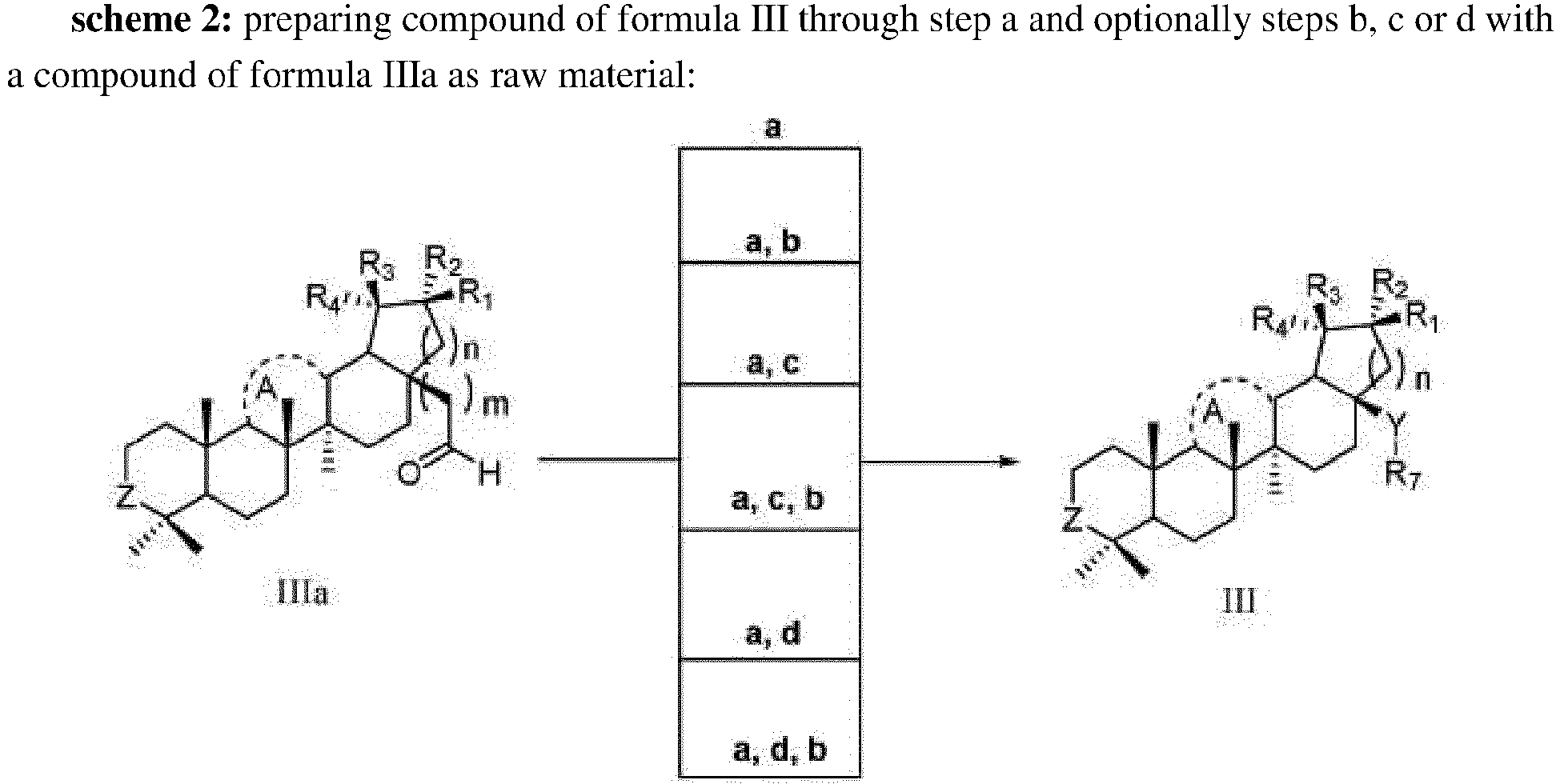
Claims (10)
- A pentacyclic triterpenoid carbon glycoside derivative compound with the structure shown in the following general formula I, or racemates, R-isomers, S-isomers, pharmaceutically acceptable salts thereof, or the mixtures thereof:
 ring A is selected from the group consisting of 6-membered saturated carbon ring or unsaturated carbon ring;R1, R2 and R3 are each independently selected from the group consisting of hydrogen, and methyl; R4 is selected from the group consisting of hydrogen, and isopropenyl;R5 is selected from the group consisting of hydrogen, deuterium, tritium, halogen, cyano, amino, nitro, hydroxyl, sulfydryl, aldehyde group, carboxyl, sulfonyl, phosphate group, substituted or unsubstituted C1-C6 alkyl, substituted or unsubstituted C1-C6 alkoxy, substituted or unsubstituted C6-C10 aryl, substituted or unsubstituted 5-7 membered heterocycle containing 1-3 heteroatoms selected from oxygen, sulfur and nitrogen, substituted or unsubstituted C1-C6 alkyl-phenyl, substituted or unsubstituted C3-C12 cycloalkyl, substituted or unsubstituted C2-C10 acyl, substituted or unsubstituted C2-C10 ester group, substituted or unsubstituted C6-C10 aryloxy, substituted or unsubstituted C1-C6 amido, and Y-R7; wherein,Y is selected from the group consisting of -(CH2)mCHR9-, carbonyl, -CONH-, and -COO-;wherein m is 0 or 1;R7 is selected from the group consisting of hydrogen, substituted or unsubstituted C1-C6 alkyl, substituted or unsubstituted C2-C6 alkenyl, substituted or unsubstituted 5-7 membered heterocycle containing 1-3 heteroatoms selected from oxygen, sulfur and nitrogen, substituted or unsubstituted C2-C10 ester group, substituted or unsubstituted C5-C9 furanosyl, and substituted or unsubstituted C5-C9 pyranosyl;Z is selected from the group consisting of carbonyl, -CH(R9)2, C=N-R8, C=N-NH-R8, and -X-R6;R8 is selected from the group consisting of hydrogen, deuterium, tritium, halogen, cyano, amino, nitro, hydroxyl, sulfydryl, aldehyde group, carboxyl, sulfonyl, substituted or unsubstituted C1-C6 alkyl, substituted or unsubstituted C1-C6 alkoxy, substituted or unsubstituted C6-C10 aryl, substituted or unsubstituted 5-7 membered heterocycle containing 1-3 heteroatoms selected from oxygen, sulfur and nitrogen, substituted or unsubstituted C1-C6 alkyl-phenyl, substituted or unsubstituted C3-C12 cycloalkyl, substituted or unsubstituted C2-C10 acyl, substituted or unsubstituted C2-C10 ester group, substituted or unsubstituted C6-C10 aryloxy, and substituted or unsubstituted C1-C6 amido;R9 is selected from the group consisting of hydrogen, deuterium, tritium, halogen, cyano, amino, nitro, hydroxyl, and sulfydryl;R6 is selected from the group consisting of hydrogen, substituted or unsubstituted C1-C6 alkyl, substituted or unsubstituted C2-C6 alkenyl, substituted or unsubstituted 5-7 membered heterocycle containing 1-3 heteroatoms selected from oxygen, sulfur and nitrogen, substituted or unsubstituted C5-C9 furanosyl, and substituted or unsubstituted C5-C9 pyranosyl; the "substituted" means that one or more hydrogens or hydroxyls on the glycosyl ring are substituted by substituents which are selected from the group consisting of hydrogen, deuterium, tritium, halogen, cyano, amino, nitro, sulfydryl, aldehyde group, carboxyl, benzyl, substituted or unsubstituted C1-C12 alkoxycarbonyl, substituted or unsubstituted C2-C12 alkaminocarbonyl, substituted or unsubstituted C2-C10 acyl, sulfonyl, phosphoryl, C5-C9 furanosyl, and C5-C9 pyranosyl;X is selected from the group consisting of -CHR9-, carbonyl, S, -NHC(O)-Rs, -NHS(O)2-R8, - NHC(O)NH-Rs, - NHC(S)NH-R8, -COO-, and -O-S(O)2-R8;n is 1 or 2;unless otherwise specified, the "substituted" in the above formulas means that the hydrogen atom on the corresponding group, or the hydroxyl group on the glycosyl ring is substituted by one or more substituents which are selected from the group consisting of deuterium, tritium, halogen, hydroxyl, carboxyl, sulfydryl, benzyl, C1-C12 alkoxycarbonyl, C1-C6 aldehyde group, amino, C1-C6 amide, nitro, cyano, unsubstituted or halogenated C1-C6 alkyl, C2-C10 alkenyl, C1-C6 alkoxy, C1-C6 alkylamino, C6-C10 aryl, five or six membered heteroaryl, five or six membered non-aromatic heterocyclyl, -O-(C6-C10 aryl), -O-(five or six membered heteroaryl), C1-C12 alkaminocarbonyl, substituted or unsubstituted C2-C10 acyl, sulfonyl (-SO2-OH), phosphoryl (-PO3-OH), C5-C9 furanosyl, and C5-C9 pyranosyl.
 - The compound or racemates, R-isomers, S-isomers, medicinal salts thereof, or the mixtures thereof according to claim 1, wherein the compound of formula I has the structure shown in the following general formula II:
 R5 is selected from the group consisting of hydrogen, deuterium, tritium, halogen, cyano, amino, nitro, hydroxyl, sulfydryl, aldehyde group, carboxyl, sulfonyl, phosphate group, substituted or unsubstituted C1-C6 alkyl, substituted or unsubstituted C1-C6 alkoxy, substituted or unsubstituted C6-C10 aryl, substituted or unsubstituted 5-7 membered heterocycle containing 1-3 heteroatoms selected from oxygen, sulfur and nitrogen, substituted or unsubstituted C1-C6 alkyl-phenyl, substituted or unsubstituted C3-C12 cycloalkyl, substituted or unsubstituted C2-C10 acyl, substituted or unsubstituted C2-C10 ester group, substituted or unsubstituted C6-C10 aryloxy, and substituted or unsubstituted C1-C6 amido;X is selected from the group consisting of -CHR9-, and carbonyl;R6 is selected from the group consisting of substituted or unsubstituted C5-C9 furanosyl, and substituted or unsubstituted C5-C9 pyranosyl; the "substituted" means that one or more hydrogens or hydroxyls on the glycosyl ring are substituted by substituents which are selected from the group consisting of hydrogen, deuterium, tritium, halogen, cyano, amino, nitro, sulfydryl, aldehyde group, carboxyl, benzyl, substituted or unsubstituted C1-C12 alkoxycarbonyl, substituted or unsubstituted C2-C12 alkaminocarbonyl, substituted or unsubstituted C2-C10 acyl, sulfonyl, phosphoryl, C5-C9 furanosyl, and C5-C9 pyranosyl;R9 is selected from the group consisting of hydrogen, deuterium, tritium, halogen, cyano, amino, nitro, hydroxyl, and sulfydryl;ring A is selected from the group consisting of 6-membered saturated carbon ring or unsaturated carbon ring;n is 1 or 2.
 - The compound or racemates, R-isomers, S-isomers, medicinal salts thereof, or the mixtures thereof according to claim 1, wherein the compound of formula I has the structure shown in the following general formula III:
 R1, R2 and R3 are each independently selected from the group consisting of hydrogen, and methyl;R4 is selected from the group consisting of hydrogen, and isopropenyl;R7 is selected from the group consisting of hydrogen, substituted or unsubstituted C5-C9 furanosyl, and substituted or unsubstituted C5-C9 pyranosyl; the "substituted" means that one or more hydrogens or hydroxyls on the glycosyl ring are substituted by substituents which are selected from the group consisting of hydrogen, deuterium, tritium, halogen, cyano, amino, nitro, sulfydryl, aldehyde group, carboxyl, benzyl, substituted or unsubstituted C1-C12 alkoxycarbonyl, substituted or unsubstituted C2-C12 alkaminocarbonyl, substituted or unsubstituted C2-C10 acyl, sulfonyl, phosphoryl, C5-C9 furanosyl, and C5-C9 pyranosyl;Y is selected from the group consisting of -(CH2)mCHR9-, and carbonyl;m is 0 or 1;R9 is selected from the group consisting of hydrogen, deuterium, tritium, halogen, cyano, amino, nitro, hydroxyl, and sulfydryl;Z is selected from the group consisting of carbonyl, -CH(R9)2, =N-Rs, and -X-R6;R9 is selected from the group consisting of hydrogen, halogen, cyano, amino, nitro, hydroxyl, and sulfydryl;X is selected from the group consisting of -CHR9-, carbonyl, S, -NHC(O)-Rs, -NHS(O)2-R8, - NHC(O)NH-Rs, -NHC(S)NH-R8, -COO-, and -O-S(O)2-R8;R6 is selected from the group consisting of hydrogen, substituted or unsubstituted C1-C6 alkyl, substituted or unsubstituted C2-C6 alkenyl, substituted or unsubstituted 5-7 membered heterocycle containing 1-3 heteroatoms selected from oxygen, sulfur and nitrogen, substituted or unsubstituted C5-C9 furanosyl, and substituted or unsubstituted C5-C9 pyranosyl; the "substituted" means that one or more hydrogens or hydroxyls on the glycosyl ring are substituted by substituents which are selected from the group consisting of hydrogen, deuterium, tritium, halogen, cyano, amino, nitro, sulfydryl, aldehyde group, carboxyl, benzyl, substituted or unsubstituted C1-C12 alkoxycarbonyl, substituted or unsubstituted C2-C12 alkaminocarbonyl, substituted or unsubstituted C2-C10 acyl, sulfonyl, phosphoryl, C5-C9 furanosyl, and C5-C9 pyranosyl;ring A is selected from the group consisting of 6-membered saturated carbon ring or unsaturated carbon ring;n is 1 or 2.
 - The compound or racemates, R-isomers, S-isomers, medicinal salts thereof, or the mixtures thereof according to claim 1, wherein the compound of formula I has the structure shown in the following general formulas IV, V, and VI:

- The compound or racemates, R-isomers, S-isomers, medicinal salts thereof, or the mixtures thereof according to claim 2, wherein R5 is selected from the group consisting of hydrogen, halogen, hydroxyl, carboxyl, substituted or unsubstituted C1-C6 alkyl, substituted or unsubstituted C1-C6 alkoxy, substituted or unsubstituted C2-C10 acyl, substituted or unsubstituted C2-C10 ester group, and substituted or unsubstituted C1-C6 amido.
- The compound or racemates, R-isomers, S-isomers, medicinal salts thereof, or the mixtures thereof according to claim 3, wherein R9 is selected from the group consisting of hydrogen, hydroxyl, aldehyde group, sulfydryl, and -X-R6;X is selected from the group consisting of -CHR9-, carbonyl, S, -NHC(O)-Rs, -NHS(O)2-R8, - NHC(O)NH-Rs, -NHC(S)NH-R8, -COO-, and -O-S(O)2-R8;R6 is selected from the group consisting of substituted or unsubstituted C1-C6 alkyl, substituted or unsubstituted C2-C6 alkenyl, substituted or unsubstituted 5-7 membered heterocycle containing 1-3 heteroatoms selected from oxygen, sulfur and nitrogen, substituted or unsubstituted C5-C9 furanosyl, and substituted or unsubstituted C5-C9 pyranosyl; the "substituted" means that one or more hydrogens or hydroxyls on the glycosyl ring are substituted by substituents which are selected from the group consisting of hydrogen, deuterium, tritium, halogen, cyano, amino, nitro, sulfydryl, aldehyde group, carboxyl, benzyl, substituted or unsubstituted C1-C12 alkoxycarbonyl, substituted or unsubstituted C2-C12 alkaminocarbonyl, substituted or unsubstituted C2-C10 acyl, sulfonyl, phosphoryl, C5-C9 furanosyl, and C5-C9 pyranosyl.
- The compound or racemates, R-isomers, S-isomers, medicinal salts thereof, or the mixtures thereof according to claim 1, wherein the pentacyclic triterpenoid carbon glycoside compounds are selected from the group consisting of:
Number Structure Name A1 
(3S,5S,8R,9R,10S,14R,17R,18 S)-28-O-Benzyloleanolicacid-3-(1'R)-(hydroxyl)methyl-2",3",4",6"-O-tetrabenzyl-β-D-glucopyranoside A2 
(3S,5S,8R,9R,10S,14R,17R,18 S)-Oleanolicacid-3-(1'R)-(hydroxyl)methyl-β-D-glucopyranoside A3 
(3R,5S,8R,9R,10S,14R,17R,18 S)-28-O-Benzyloleanolicacid-3-(1'R)-(hydroxyl)methyl-2",3",4",6"-O-tetrabenzyl-β-D-glucopyranoside A4 
(3R,5S,8R,9R, 10S, 14R, 17R, 18 S)-Oleanolicacid-3-(1'R)-(hydroxyl)methyl-β-D-glucopyranoside A5 
(3S,5S,8R,9R,10S,14R,17R,18 S)-28-O-Benzyloleanolicacid-3-methyl-2",3",4",6"-O-tetrabenzyl-β-D-glucopyranoside A6 
(3S,5S,8R,9R,10S,14R,17R,18 S)-Oleanolicacid-methyl-β-D-glucopyranoside A7 
(3R,5S,8R,9R,10S, 14R, 17R, 18 S)-28-O-Benzyloleanolicacid-3-methyl-2",3",4",6"-O-tetrabenzyl-β-D-glucopyranoside A8 
(3R,5S,8R,9R,10S,14R,17R,18 S)-Oleanolicacid-3-methyl-β-D-glucopyranoside A9 
(3S,5S,8R,9R,10S,14R,17R,18 S)-28-O-Benzyloleanolicacid-3-carbonyl-2",3",4",6"-O-tetrabenzyl-β-D-glucopyranoside A10 
(3S,5S,8R,9R,10S,14R,17R,18 S)-Oleanolicacid-3-carbonyl-β-D-glucopyranoside A11 
(3R,5S,8R,9R,10S,14R,17R,18 S)-28-O-Benzyloleanolicacid-3-carbonyl-2",3",4",6"-O-tetrabenzyl-β-D-glucopyranoside A12 
(3R,5S,8R,9R,10S,14R,17R,18 S)-Oleanolicacid-3-carbonyl-β-D-glucopyranoside A13 
(3S,5S,8R,9R,10S,14R,17R,18 S)-Oleanolicacid-3-(1'R)-(hydroxyl)methyl-β-D-galactopyranoside A14 
(3R,5S,8R,9R,10S,14R,17R,18 S)-Oleanolicacid-3-(1'R)-(hydroxyl)methyl-β-D-galactopyranoside A15 
(3S,5S,8R,9R,10S,14R,17R,18 S)-Oleanolicacid-3-methyl-β-D-galactopyranoside A16 
(3R,5S,8R,9R,10S,14R,17R,18 S)-Oleanolicacid-3-methyl-β-D-galactopyranoside A17 
(3S,5S,8R,9R,10S,14R,17R,18 S)-Oleanolicacid-3-carbonyl-β-D-galactopyranoside A18 
(3R,5S,8R,9R, 10S, 14R, 17R, 18 S)-Oleanolicacid-3-carbonyl-β-D-galactopyranoside A19 
(3S,5S,8R,9R,10S,14R,17R,18 S)-Oleanolicacid-3-(1'S)-(hydroxyl)methyl-α-D-mannopyranoside A20 
(3R,5S,8R,9R, 10S, 14R, 17R, 18 S)-Oleanolicacid-3-(1'S)-(hydroxyl)methyl-α-D-mannopyranoside A21 
(3S,5S,8R,9R,10S,14R,17R,18 S)-Oleanolicacid-3-methyl-α-D-mannopyranoside A22 
(3R,5S,8R,9R,10S,14R,17R,18 S)-Oleanolicacid-3-methyl-α-D-mannopyranoside A23 
(3S,5S,8R,9R,10S,14R,17R,18 S)-Oleanolicacid-3-carbonyl-α-D-mannopyranoside A24 
(3R,5S,8R,9R, 10S, 14R, 17R, 18 S)-Oleanolicacid-3-carbonyl-α-D-mannopyranoside A25 
(3S,5S,8R,9R,10S,14R,17R,18 S)-Oleanolicacid-3-(1'R)-(hydroxyl)methyl-β-D-glucurouopyranoside A26 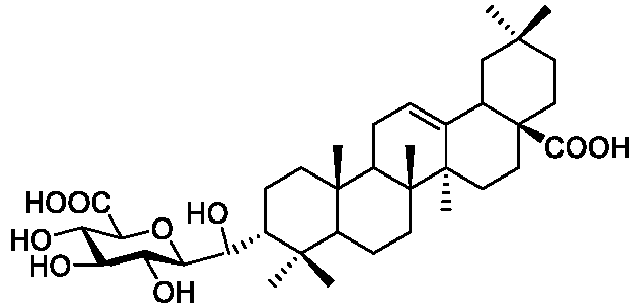
(3R,5S,8R,9R, 10S, 14R, 17R, 18 S)-Oleanolicacid-3-(1'R)-(hydroxyl)methyl-β-D-glucurouopyranoside A27 
(3S,5S,8R,9R,10S,14R,17R,18 S)-Oleanolicacid-3-methyl-β-D-glucurouopyranoside A28 
(3R,5S,8R,9R,10S,14R,17R,18 S)-Oleanolicacid-3-methyl-β-D-glucurouopyranoside A29 
(3S,5S,8R,9R,10S,14R,17R,18 S)-Oleanolicacid-3-carbonyl-β-D-glucurouopyranoside A30 
(3R,5S,8R,9R, 10S, 14R, 17R, 18 S)-Oleanolicacid-3-carbonyl-β-D-glucurouopyranoside A31 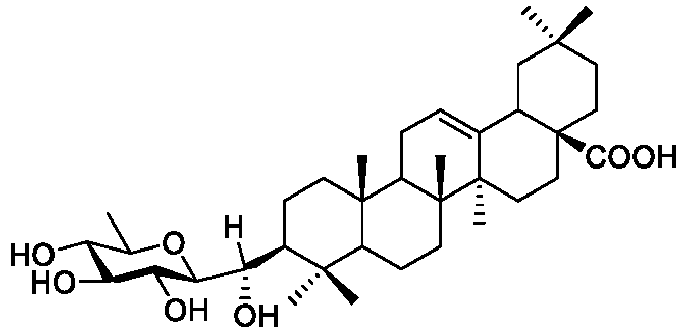
(3S,5S,8R,9R,10S,14R,17R,18 S)-Oleanolicacid-3-(1'R)-(hydroxyl)methyl-6"-deoxy-β-D-glucopyranoside A32 
(3R,5S,8R,9R,10S,14R,17R,18 S)-Oleanolicacid-3-(1'R)-(hydroxyl)methyl-6"-deoxy-β-D-glucopyranoside A33 
(3S,5S,8R,9R,10S,14R,17R,18 S)-Oleanolicacid-3-methyl-6"-deoxy-β-D-glucopyranoside A34 
(3R,5S,8R,9R,10S,14R,17R,18 S)-Oleanolicacid-3-methyl-6"-deoxy-β-D-glucopyranoside A35 
(3S,5S,8R,9R,10S,14R,17R,18 S)-Oleanolicacid-3-carbonyl-6"-deoxy-β-D-glucopyranoside A36 
(3R,5S,8R,9R,10S,14R,17R,18 S)-Oleanolicacid-3-carbonyl-6"-deoxy-β-D-glucopyranoside A37 
(3S,5S,8R,9R,10S,14R,17R,18 S)-Oleanolicacid-3-(1'R)-(hydroxyl)methyl-β-D-xylopyranoside A38 
(3R,5S,8R,9R,10S,14R,17R,18 S)-Oleanolicacid-3-(1'R)-(hydroxyl)methyl-β-D-xylopyranoside A39 
(3S,5S,8R,9R,10S,14R,17R,18 S)-Oleanolicacid-3-methyl-β-D-xylopyranoside A40 
(3R,5S,8R,9R,10S,14R,17R,18 S)-Oleanolicacid-3-methyl-β-D-xylopyranoside A41 
(3S,5S,8R,9R,10S,14R,17R,18 S)-Oleanolicacid-3-carbonyl-β-D-xylopyranoside A42 
(3R,5S,8R,9R,10S,14R,17R,18 S)-Oleanolicacid-3-carbonyl-β-D-xylopyranoside A43 
(3S,5S,8R,9R,10S,14R,17R,18 S)-Oleanolicacid-3-(1'S)-(hydroxyl)methyl-α-L-rhamnopyrano side A44 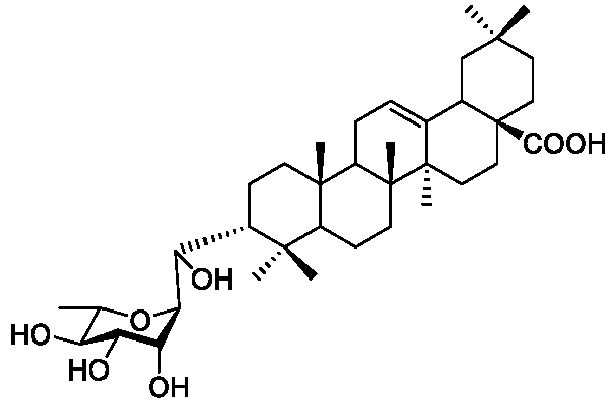
(3R,5S,8R,9R,10S,14R,17R,18 S)-Oleanolicacid-3-(1'S)-(hydroxyl)methyl-α-L-rhamnopyrano side A45 
(3S,5S,8R,9R,10S,14R,17R,18 S)-Oleanolicacid-3-(1' S)-methyl-α-L-rhamnopyranoside A46 
(3R,5S,8R,9R,10S,14R,17R,18 S)-Oleanolicacid-3-(1'S)-methyl-α-L-rhamnopyranoside A47 
(3S,5S,8R,9R,10S,14R,17R,18 S)-Oleanolicacid-3-(1'S)-carbonyl-α-L-rhamnopyrano side A48 
(3R,5S,8R,9R,10S,14R,17R,18 S)-Oleanolicacid-3-(1'S)-carbonyl-α-L-rhamnopyrano side A49 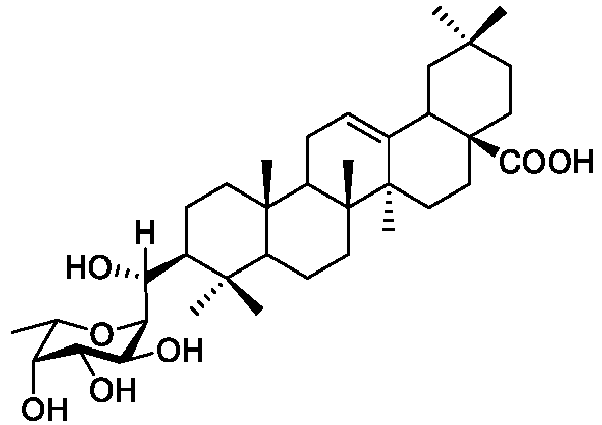
(3S,5S,8R,9R,10S,14R,17R,18 S)-Oleanolicacid-3-(1'S)-(hydroxyl)methyl-α-L-fucopyranoside A50 
(3R,5S,8R,9R,10S,14R,17R,18 S)-Oleanolicacid-3-(1'S)-(hydroxyl)methyl-α-L-fucopyranoside A51 
(3S,5S,8R,9R,10S,14R,17R,18 S)-Oleanolicacid-3-(1'S)-methyl-α-L-fucopyranoside A52 
(3R,5S,8R,9R,10S,14R,17R,18 S)-Oleanolicacid-3-(1'S)-methyl-α-L-fucopyranoside A53 
(3S,5S,8R,9R,10S,14R,17R,18 S)-Oleanolicacid-3-(1'S)-carbonyl-α-L-fucopyranoside A54 
(3R,5S,8R,9R,10S,14R,17R,18 S)-Oleanolicacid-3-(1' S)-carbonyl-α-L-fucopyranoside A55 
(3S,5S,8R,9R,10S,14R,17R,18 S)-Oleanolicacid-3-(1'R)-(hydroxyl)methyl-6"-deoxy-6"-fluoro-β-D-glucopyranoside A56 
(3R,5S,8R,9R,10S,14R,17R,18 S)-Oleanolicacid-3-(1'R)-(hydroxyl)methyl-6"-deoxy-6"-fluoro-β-D-glucopyranoside A57 
(3S,5S,8R,9R,10S,14R,17R,18 S)-Oleanolicacid-3-methyl-6"-deoxy-6"-fluoro-β-D-glucopyranoside A58 
(3R,5S,8R,9R, 10S, 14R, 17R, 18 S) -Oleanolic acid- 3 -methyl-6"-deoxy-6"-fluoro-β-D-glucopyranoside A59 
(3S,5S,8R,9R, 10S, 14R, 17R, 18 S) -Oleanolic acid- 3 -carbonyl-6"-deoxy-6"-fluoro-β-D-glucopyranoside A60 
(3R,5S,8R,9R,10S,14R,17R,18 S)-Oleanolic acid-3-carbonyl-6"-deoxy-6"-fluoro-β-D-glucopyranoside A61 
(3S,5S,8R,9R,10S,14R,17R,18 S)-Oleanolicacid-3-(1'R)-(hydroxyl)methyl-β-D-xylopyranosyl(1→3)-β-D-glucurouopyranoside A62 
(3R,5S,8R,9R,10S,14R,17R,18 S)-Oleanolicacid-3-(1'R)-(hydroxyl)methyl-β-D-xylopyranosyl(1→3)-β-D-glucurouopyranoside A63 
(3S,5S,8R,9R,10S,14R,17R,18 S)-Oleanolicacid-3-methyl-β-D-xylopyranosyl(1→3)-β-D-glucurouopyranoside A64 
(3R,5S,8R,9R,10S,14R,17R,18 S)-Oleanolicacid-3-methyl-β-D-xylopyranosyl(1→3)-β-D-glucurouopyranoside A65 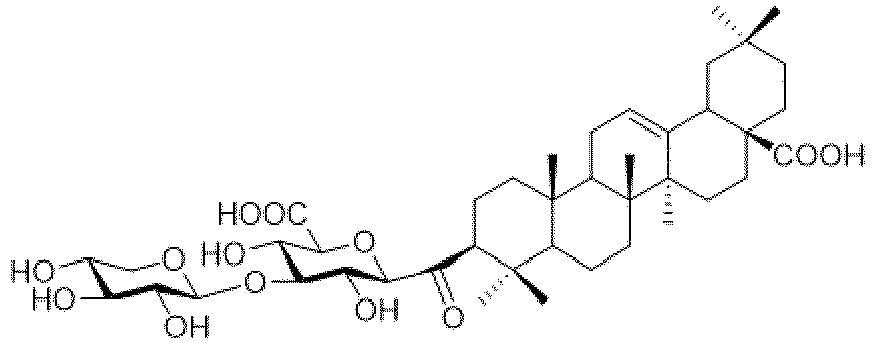
(3S,5S,8R,9R,10S,14R,17R,18 S)-Oleanolicacid-3-carbonyl-β-D-xylopyranosyl(1→3)-β-D-glucurouopyranoside A66 
(3R,5S,8R,9R,10S,14R,17R,18 S)-Oleanolicacid-3-carbonyl-β-D-xylopyranosyl(1→3)-β-D-glucurouopyranoside A67 
(3S,5S,8R,9R,10S,14R,17R,18 S,19S,20R)-Ursolicacid-3-(1'R)-(hydroxyl)methyl-β-D-glucurouopyranoside A68 
(3R,5S,8R,9R,10S,14R,17R,18 S,19S,20R)-Ursolicacid-3-(1'R)-(hydroxyl)methyl-β-D-glucurouopyranoside A69 
(3S,5S,8R,9R,10S,14R,17R,18 S,19S,20R)-Ursolicacid-3-methyl-β-D-glucurouopyranoside A70 
(3R,5S,8R,9R,10S,14R,17R,18 S,19S,20R)-Ursolicacid-3-methyl-β-D-glucurouopyranoside A71 
(3S,5S,8R,9R,10S,14R,17R,18 S,19S,20R)-Ursolicacid-3-carbonyl-β-D-glucurouopyranoside A72 
(3R,5S,8R,9R,10S,14R,17R,18 S,19S,20R)-Ursolicacid-3-carbonyl-β-D-glucurouopyranoside A73 
(3S,5S,8R,9R,10S,13R,14R,17 S,18R,19R)-Betulinicacid-3-(1'R)-(hydroxyl)methyl-β-D-glucurouopyranoside A74 
(3S,5S,8R,9R,10S,13R,14R,17 S,18R,19R)-Betulinicacid-3-(1'R)-(hydroxyl)methyl-β-D-glucurouopyranoside A75 
(3S,5S,8R,9R,10S,13R,14R,17 S,18R,19R)-Betulinicacid-3-methyl-β-D-glucurouopyranoside A76 
(3S,5S,8R,9R,10S,13R,14R, 17 S,18R,19R)-Betulinicacid-3-methyl-β-D-glucurouopyranoside A77 
(3S,5S,8R,9R,10S,13R,14R,17 S,18R,19R)-Betulinicacid-3-carbonyl-β-D-glucurouopyranoside A78 
(3S,5S,8R,9R,10S,13R,14R,17 S,18R,19R)-Betulinicacid-3-carbonyl-β-D-glucurouopyranoside A79 
(5S,8R,9R,10S,14R,17R,18S)-3-Carbonyloleanolicacid-28-β-D-glucurouopyranoside A80 
(5S,8R,9R,10S,14R,17R,18S)-3-Carbonyloleanolicacid-17-(1'R)-(hydroxyl)methyl-β-D-glucurouopyranoside A81 
(5S,8R,9R,10S,14R,17R,18S)-3-Carbonyloleanolicacid-17-methyl-β-D-glucurouopyranoside A82 
(5S,8R,9R,10S,14R,17R,18S1 9S,20R)-3-Carbonylursolicacid-28-β-D-glucurouopyranoside A83 
(5S,8R,9R,10S,14R,17R,18S1 9S,20R)-3-Carbonylursolicacid-17-(1'R)-(hydroxyl)methyl-β-D-glucurouopyranoside A84 
(5S,8R,9R,10S,14R,17R,18S,1 9S,20R)-3-Carbonylursolicacid-17-methyl-β-D-glucurouopyranoside A85 
(5S,8R,9R,10S,13R,14R,17S,1 8R,19R)-3-Carbonylbetulinicacid-28-(3-D-glucurouopyranoside A86 
(5S,8R,9R,10S,13R,14R,17S,1 8R,19R)-3-Carbonylbetulinicacid-17-(1'R)-(hydroxyl)methyl-β-D-glucurouopyranoside A87 
(5S,8R,9R,10S,13R,14R,17S,1 8R,19R)-3-Carbonylbetulinicacid-17-methyl-β-D-glucurouopyranoside A88 
(3S,5S,8R,9R,10S,14R,17R,18 S)-28-O-Ethyloleanolicacid-3-(1'R)-(hydroxyl)methyl-β-D-glucurouopyranoside A89 
(3S,5S,8R,9R,10S,14R,17R,18 S)-28-O-Allyloleanolicacid-3-(1'R)-(hydroxyl)methyl-β-D-glucurouopyranoside A90 
(3S,5S,8R,9R,10S,14R,17R,18 S)-28-O-(O-Ethyl)carboxymethyloleanolic acid-3-(1'R)-(hydroxyl)methyl-β-D-glucurouopyranoside A91 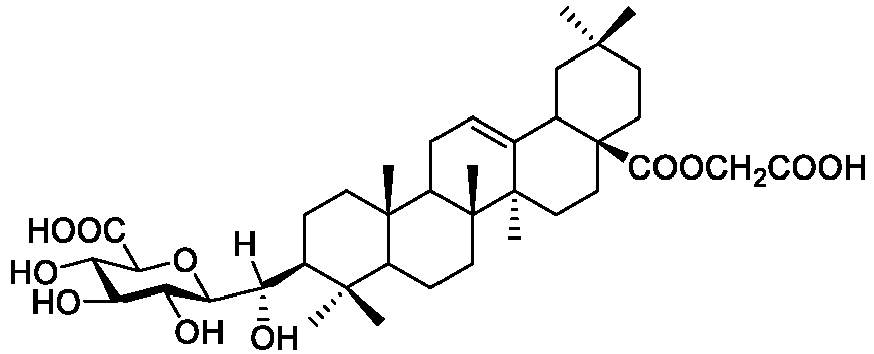
(3S,5S,8R,9R,10S,14R,17R,18 S)-28-O-Acetoxyoleanolicacid-3-(1'R) - (hydroxyl)methyl-β-D-glucurouopyranoside A92 
(3S,5S,8R,9R,10S,14R,17R,18 S)-28-O-Hydroxyethyloleanolicacid-3-(1'R)-(hydroxyl)methyl-β-D-glucurouopyranoside A93 
(3S,5S,8R,9R,10S,14R,17R,18 S)-28-O-(N-Methyl)aminoethyloleanolicac id-3-(1'R)-(hydroxyl)methyl-β-D-glucurouopyranoside A94 
(3S,5S,8R,9R,10S,14R,17R,18 S)-28-O-(N,N-Diethyl)aminoethyloleanolicac id-3-(1'R)-(hydroxyl)methyl-β-D-glucurouopyranoside A95 
(3S,5S,8R,9R,10S,14R,17R,18 S)-28-O-Hydroxylbut-2" "-ynyloleanolicacid-3-(1'R)-(hydroxyl)methyl-β-D-glucurouopyranoside A96 
(3S,5S,8R,9R,10S,14R,17R,18 S)-28-O-Cyclohexyloleanolicacid-3-(1'R)-(hydroxyl)methyl-β-D-glucurouopyranoside A97 
(3S,5S,8R,9R,10S,14R,17R,18 S)-28-(O-Methyl)carboxymethylaminool eanolicacid-3-(1'R)-(hydroxyl)methyl-β-D-glucurouopyranoside A98 
(3S,5S,8R,9R,10S,14R,17R,18 S)-28-Carboxymethylaminooleanolic acid-3-(1'R)-(hydroxyl)methyl-β-D-glucurouopyranoside A99 
(3S,5S,8R,9R,10S,14R,17R,18 S)-28-(N,N-Diethyl)aminopropylaminoole anolicacid-3-(1'R)-(hydroxyl)methyl-β-D-glucurouopyranoside A100 
(3S,5S,8R,9R,10S,14R,17R,18 S)-28-(N-Acetyl)aminopropylaminoolea nolicacid-3-(1'R)-(hydroxyl)methyl-β-D-glucurouopyranoside A101 
(3S,5S,8R,9R,10S,14R,17R,18 S)-28-(N,N-Diethyl)aminohexylaminoolea nolicacid-3-(1'R)-(hydroxyl)methyl-β-D-glucurouopyranoside A102 
(3S,5S,8R,9R,10S,14R,17R,18 S)-28-(N-Acetyl)aminohexylaminoolean olicacid-3-(1'R)-(hydroxyl)methyl-β-D-glucurouopyranoside A103 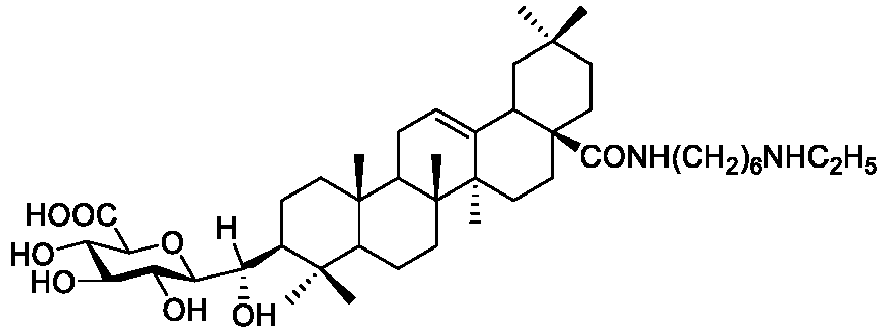
(3S,5S,8R,9R,10S,14R,17R,18 S)-28-(N-Ethyl)aminohexylaminooleano licacid-3-(1'R)-(hydroxyl)methyl-β-D-glucurouopyranoside A104 
(3S,5S,8R,9R,10S,14R,17R,18 S)-28-O-(Pyrazol-1"-yl)methyloleanolicacid-3-(1'R)-(hydroxyl)methyl-β-D-glucurouopyranoside A105 
(3S,5S,8R,9R,10S,14R,17R,18 S)-28-O-(Piperidin-1"-yl)methyloleanolicacid-3-(1'R)-(hydroxyl)methyl-β-D-glucurouopyranoside A106 
(3S,5S,8R,9R,10S,14R,17R,18 S)-28-O-(Morpholin-4"-yl)methyloleanolicacid-3-(1'R)-(hydroxyl)methyl-β-D-glucurouopyranoside A107 
(3S,5S,8R,9R,10S,14R,17R,18 S)-Oleanolicacid-3-(1'R)-fluoromethyl-β-D-glucurouopyranoside A108 
(3S,5S,8R,9R,10S,14R,17R,18 S)-Oleanolicacid-3-(1'R)-(hydroxyl)methyl-28-(1"R)-(hydroxyl)methyl-β-D-diglucurouopyrano side A109 
(3S,5S,8R,9R,10S,14R,17R,18 S)-Oleanolicacid-3-(1'R)-(hydroxyl)methyl-6"-O-methyl-β-D-glucurouopyranoside A110 
(3S,5S,8R,9R,10S,14R,17R,18 S)-Oleanolicacid-3-(1'R)-(hydroxyl)methyl-6"-O-n-butyl-β-D-glucurouopyranoside A111 
(3S,5S,8R,9R,10S,14R,17R,18 S)-Oleanolicacid-3-(1'R)-(hydroxyl)methyl-6"-O-isobutyl-β-D-glucurouopyranoside A112 
(3S,5S,8R,9R,10S,14R,17R,18 S)-Oleanolicacid-3-(1'R)-(hydroxyl)methyl-6"-O-benzyl-β-D-glucurouopyranoside A113 
(3S,5S,8R,9R,10S,14R,17R,18 S)-Oleanolicacid-3-(1'R)-(hydroxyl)methyl-6"-O-(1-fluoroacetyl)-β-D-glucurouopyranoside A114 
(3S,5S,8R,9R,10S,14R,17R,18 S)-Oleanolicacid-3-(1'R)-(hydroxyl)methyl-6"-methylamino-β-D-glucurouopyranoside A115 
(3S,5S,8R,9R,10S,14R,17R,18 S)-Oleanolicacid-3-(1'R)-(hydroxyl)methyl-6"-n-butylamino-β-D-glucurouopyranoside A116 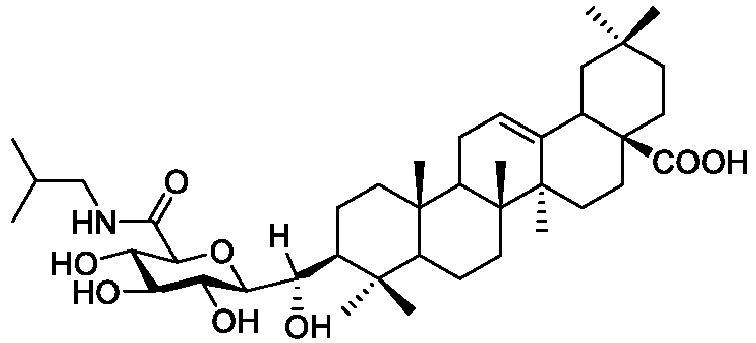
(3S,5S,8R,9R,10S,14R,17R,18 S)-Oleanolicacid-3-(1'R)-(hydroxyl)methyl-6"-isobutylamino-β-D-glucurouopyranoside A117 
(3S,5S,8R,9R,10S,14R,17R,18 S)-Oleanolicacid-3-(1'R)-(hydroxyl)methyl-6"-benzylamino-β-D-glucurouopyranoside A118 
(3S,5S,8R,9R,10S,14R,17R,18 S)-Oleanolicacid-3-(1'R)-(hydroxyl)methyl-6"-dimethylamino-β-D-glucurouopyranoside A119 
(3S,5S,8R,9R,10S,14R,17R,18 S)-Oleanolicacid-3-(1'R)-(hydroxyl)methyl-6"-(1-fluoroethylamino)-β-D-glucurouopyranoside A120 
(3S,5S,8R,9R,10S,14R,17R,18 S)-Oleanolicacid-3-(1'R)-(hydroxyl)methyl-5"-cyano-β-D-xylopyranoside A121 
(5S,8R,9R,10S,14R,17R,18S)-3-Carbonyloleanolicacid-17-(1'S)-(hydroxyl)methyl-β-D-mannopyranoside A122 
(3S,5S,8R,9R,10S,14R,17R,18 S)-Oleanolicacid-17-(1'S)-(hydroxyl)methyl-β-D-mannopyranoside A123 
(3S,5S,8R,9R,10S,14R,17R,18 S)-3-Methoxyoleanolicacid-17-(1'S)-(hydroxyl)methyl-β-D-mannopyranoside A124 
(3S,5S,8R,9R,10S,14R,17R,18 S)-3-(4-Fluorocyclohexoxy)oleanolica cid-17-(1'S)-(hydroxyl)methyl-β-D-mannopyranoside A125 
(3S,5S,8R,9R,10S,14R,17R,18 S)-3-Acetoxyoleanolicacid-17-(1'S)-(hydroxyl)methyl-β-D-mannopyranoside A126 
(3S,5S,8R,9R,10S,14R,17R,18 S)-3-Fluorocetoxyoleanolicacid-17-(1'S)-(hydroxyl)methyl-β-D-mannopyranoside A127 
(3S,5S,8R,9R,10S,14R,17R,18 S)-3-(4-fluorophenylacetoxy)oleanolic acid-17-(1'S)-(hydroxyl)methyl-β-D-mannopyranoside A128 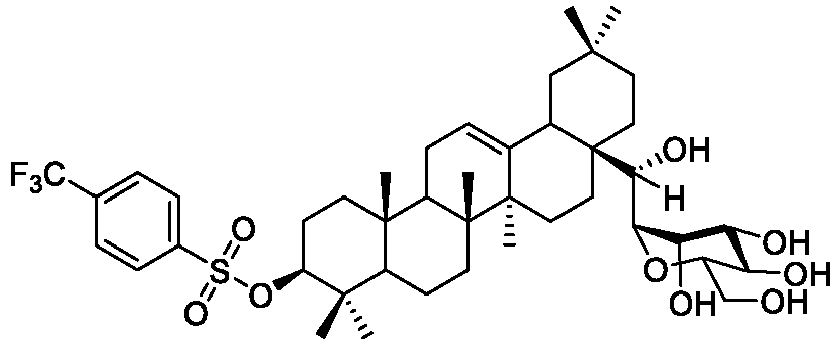
(3S,5S,8R,9R,10S,14R,17R,18 S)-3-(4-Trifluoromethylphenylsulfonyl oxy)oleanolicacid-17-(1'S)-(hydroxyl)methyl-β-D-mannopyranoside A129 
(3S,5S,8R,9R,10S,14R,17R,18 S)-3-(2,3,5,6-Tetrafluorobenzamide)oleanoli cacid-17-(1'S)-(hydroxyl)methyl-β-D-mannopyranoside A130 
(3S,5S,8R,9R,10S,14R,17R,18 S)-3-(4-Trifluoromethylbenzenesulfon amido)oleanolicacid-17-(1'S)-(hydroxyl)methyl-β-D-mannopyranoside A131 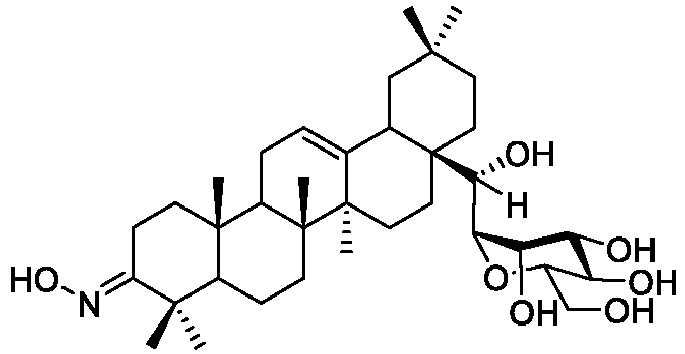
(5S,8R,9R,10S,14R,17R,18S)-3 -Oximidooleanolicacid-17-(1'S)-(hydroxyl)methyl-β-D-mannopyranoside A132 
(5S,8R,9R,10S,14R,17R,18S)-3-Methylhydrazinylideneoleanol icacid-17-(1'S)-(hydroxyl)methyl-β-D-mannopyranoside A133 
(5S,8R,9R,10S,14R,17R,18S)-3-Phenylhydrazinylideneoleanoli cacid-17-(1'S)-(hydroxyl)methyl-β-D-mannopyranoside A134 
(3S,5S,8R,9R,10S,14R,17R,18 S)-3-(4-Fluorophenylureido)oleanolica cid-17-(1'S)-(hydroxyl)methyl-β-D-mannopyranoside A135 
(3S,5S,8R,9R,10S,14R,17R,18 S)-3-(4-Fluorophenylthioureido)oleano licacid-17-(1'S)-(hydroxyl)methyl-β-D-mannopyranoside A136 
(3S,5S,8R,9R,10S,14R,17R,18 S)-3-Formyloleanolicacid-17-(1'S)-(hydroxyl)methyl-β-D-mannopyranoside A137 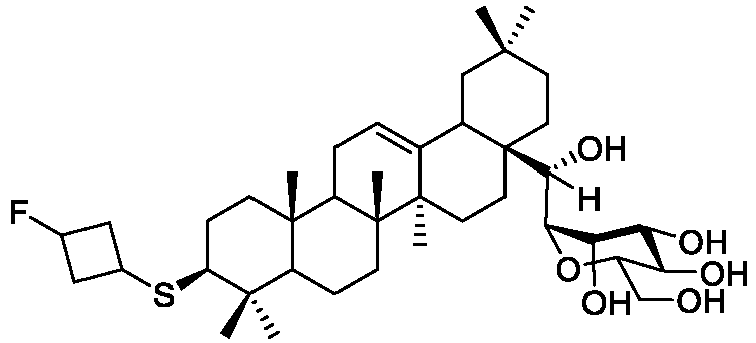
(3S,5S,8R,9R,10S,14R,17R,18 S)-3-(3-Fluorocyclobutylthio)oleanolic acid-17-(1'S)-(hydroxyl)methyl-β-D-mannopyranoside A138 
(3S,5S,8R,9R,10S,14R,17R,18 S)-3-Phenylthiooleanolicacid-17-(1'S)-(hydroxyl)methyl-β-D-mannopyranoside A139 
(5S,8R,9R,10S,14R,17R,18S)-3-Carbonyloleanolicacid-28-β-D-mannopyranoside A140 
(5S,8R,9R,10S,14R,17R,18S)-3-Carbonyloleanolicacid-17-(1'S)-fluoromethyl-β-D-mannopyranoside A141 
(5S,8R,9R,10S,14R,17R,18S)-3-Carbonyloleanolicacid-17-methyl-β-D-mannopyranoside A142 
(5S,8R,9R,10S,14R,17R,18S)-3-Carbonyloleanolicacid-17-(1'S)-(hydroxyl)methyl-2",3",4",6"-O-Tetraacetyl-β-D-mannopyranoside A143 
(3S,5S,8R,9R,10S,14R,17R,18 S)-Oleanolicacid-17-(1'S)-(hydroxyl)methyl-2",3",4",6"-O-tetraacetyl-β-D-mannopyranoside A144 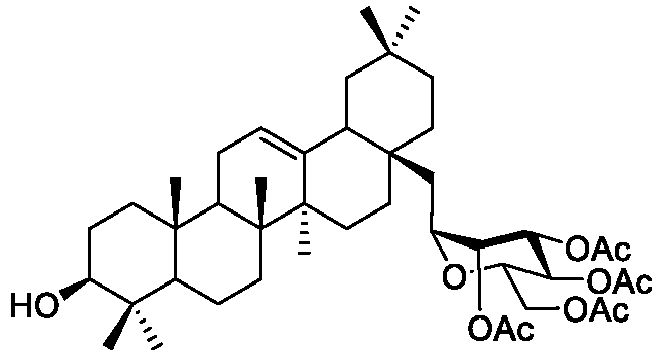
(5S,8R,9R,10S,14R,17R,18S)-3-Carbonyloleanolicacid-17-methyl-2",3",4",6"-O-tetraacetyl-β-D-mannopyranoside A145 
(5S,8R,9R,10S,14R,17R,18S)-3-Carbonyloleanolicacid-17-(2'S)-(hydroxyl)ethyl-β-D-mannopyranoside A146 
(5S,8R,9R,10S,14R,17R,18S)-3-Carbonyloleanolicacid-17-(2'S)-(hydroxyl)ethyl-2",3",4",6"-O-Tetraacetyl-β-D-mannopyranoside A147 
(5S,8R,9R,10S,14R,17R,18S)-3-Carbonylursolicacid-17-(2' S)-(hydroxyl)ethyl-2",3",4",6"-O-tetraacetyl-β-D-mannopyranoside A148 
(5S,8R,9R,10S,14R,17R,18S)-3-C arbonylbetulinic acid-17-(2' S)-(hydroxyl)ethyl-2",3",4",6"-O-tetraacetyl-β-D-mannopyranoside A149 
(5S,8R,9R,10S,14R,17R,18S)-3-Carbonyloleanolicacid-17-(1'R)-(hydroxyl)methyl-β-D-xylopyranoside A150 
(5S,8R,9R,10S,14R,17R,18S)-3-Carbonyloleanolicacid-17methyl-β-D-xylopyranoside A151 
(3S,5S,8R,9R,10S,14R,17R,18 S)-Oleanolicacid-17-(1'R)-(hydroxyl)methyl-β-D-xylopyranoside A152 
(5S,8R,9R,10S,14R,17R,18S)-3-Carbonyloleanolicacid-17-(1'R)-(hydroxyl)methyl-2",3",4"-O-triacetyl-β-D-xylopyranoside A153 
(5S,8R,9R,10S,14R,17R,18S)-3-Carbonyloleanolicacid-17-methyl-2",3",4"-O-triacetyl-β-D-xylopyranoside A154 
(5S,8R,9R,10S,14R,17R,18S)-3-Carbonyloleanolicacid-17-(2'R)-(hydroxyl)ethyl-2",3",4"-O-triacetyl-β-D-xylopyranoside A155 
(5S,8R,9R,10S,14R,17R,18S)-3-Carbonylursolicacid-17-(2'R)-(hydroxyl)ethyl-2",3",4"-O-triacetyl-β-D-xylopyranoside A156 
(5S,8R,9R,10S,14R,17R,18S)-3-C arbonylbetulinic acid-17-(2'R)-(hydroxyl)ethyl-2",3",4"-O-triacetyl-β-D-xylopyranoside A157 
(5S,8R,9R,10S,14R,17R,18S)-3-Carbonyloleanolicacid-17-(1'R)-(hydroxyl)methyl-β-D-galactopyrano side A158 
(5S,8R,9R,10S,14R,17R,18S)-3-Carbonyloleanolicacid-17-methyl-β-D-galactopyranoside A159 
(3S,5S,8R,9R,10S,14R,17R,18 S)-Oleanolicacid-17-(1'R)-(hydroxyl)methyl-β-D-galactopyrano side A160 
(5S,8R,9R,10S,14R,17R,18S)-3-Carbonyloleanolicacid-17-(1'R)-(hydroxyl)methyl-2",3",4",6"-O-tetraacetyl-β-D-galactopyranoside A161 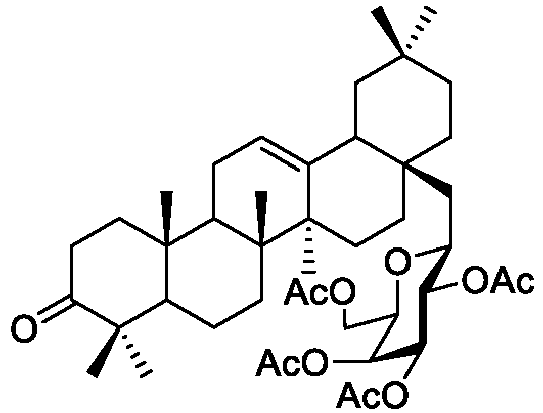
(5S,8R,9R,10S,14R,17R,18S)-3-Carbonyloleanolicacid-17-methyl-2",3",4",6"-O-tetraacetyl-β-D-galactopyrano side A162 
(5S,8R,9R,10S,14R,17R,18S)-3-Carbonyloleanolicacid-17-(2'R)-(hydroxyl)ethyl-(3-D-galactopyrano side A163 
(5S,8R,9R,10S,14R,17R,18S)-3-Carbonyloleanolicacid-17-(2'R)-(hydroxyl)ethyl-2",3",4",6"-O-tetraacetyl-β-D-galactopyranoside A164 
(5S,8R,9R,10S,14R,17R,18S)-3-Carbonylursolicacid-17-(2'R)-(hydroxyl)ethyl-2",3",4",6"-O-tetraacetyl-β-D-galactopyranoside A165 
(5S,8R,9R,10S,14R,17R,18S)-3-C arbonylbetulinic acid-17-(2'R)-(hydroxyl)ethyl-2",3",4",6"-O-tetraacetyl-β-D-galactopyranoside A166 
(5S,8R,9R,10S,14R,17R,18S)-3-Carbonyloleanolicacid-17-(1'R)-(hydroxyl)methyl-α-L-rhamnopyrano side A167 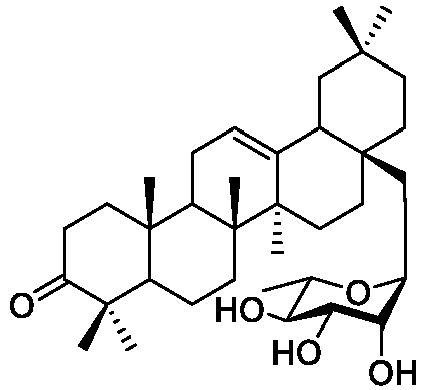
(5S,8R,9R,10S,14R,17R,18S)-3-Carbonyloleanolicacid-17-methyl-α-L-rhamnopyranoside A168 
(3S,5S,8R,9R,10S,14R,17R,18 S)-Oleanolicacid-17-(1'R)-(hydroxyl)methyl-α-L-rhamnopyrano side A169 
(5S,8R,9R,10S,14R,17R,18S)-3-Carbonyloleanolicacid-17-(1 'R)-(hydroxyl)methyl-2",3",4"-O-triacetyl-α-L-rhamnopyrano side A170 
(5S,8R,9R,10S,14R,17R,18S)-3-Carbonyloleanolicacid-17-methyl-2",3",4"-O-triacetyl-α-L-rhamnopyranoside A171 
(5S,8R,9R,10S,14R,17R,18S)-3-Carbonyloleanolicacid-17-(2'R)-(hydroxyl)ethyl-α-L-rhamnopyrano side A172 
(5S,8R,9R,10S,14R,17R,18S)-3-Carbonyloleanolicacid-17-(2'R)-(hydroxyl)ethyl-2",3",4"-O-triacetyl-α-L-rhamnopyranoside A173 
(5S,8R,9R,10S,14R,17R,18S)-3-Carbonylursolicacid-17-(2'R)-(hydroxyl)ethyl-2",3",4"-O-triacetyl-α-L-rhamnopyrano side A174 
(5S,8R,9R,10S,14R,17R,18S)-3-C arbonylbetulinic acid-17-(2'R)-(hydroxyl)ethyl-2",3",4"-O-triacetyl-α-L-rhamnopyrano side A175 
(3S,5S,8R,9R,10S,14R,17R,18 S)-Oleanolicacid-17-(1'R)-(hydroxyl)methyl-β-D-glucurouopyranoside A176 
(5S,8R,9R,10S,14R,17R,18S)-3-Carbonyloleanolicacid-17-carbonyl-2",3",4"-O-triacetyl-β-D-glucurouopyranoside A177 
(5S,8R,9R,10S,14R,17R,18S)-3-Carbonyloleanolicacid-17-(1'R)-(hydroxyl)methyl-2",3",4"-O-triacetyl-β-D-glucurouopyranoside A178 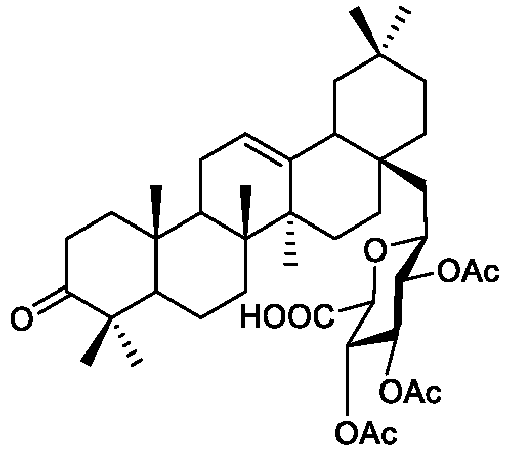
(5S,8R,9R,10S,14R,17R,18S)-3-Carbonyloleanolicacid-17-methyl-2",3",4"-O-triacetyl-β-D-glucurouopyranoside A179 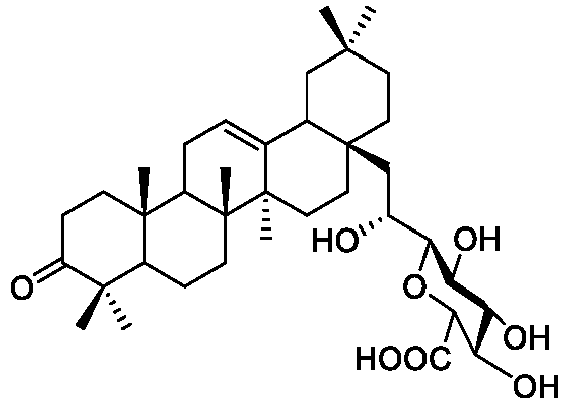
(5S,8R,9R,10S,14R,17R,18S)-3-Carbonyloleanolicacid-17-(2'R)-(hydroxyl)ethyl-(3-D-glucurouopyranoside A180 
(5S,8R,9R,10S,14R,17R,18S)-3-Carbonyloleanolicacid-17-(2'R)-(hydroxyl)ethyl-2",3",4"-O-triacetyl-β-D-glucurouopyranoside A181 
(5S,8R,9R,10S,14R,17R,18S)-3-Carbonylursolicacid-17-(2'R)-(hydroxyl)ethyl-2",3",4"-O-triacetyl-β-D-glucurouopyranoside A182 
(5S,8R,9R,10S,14R,17R,18S)-3-C arbonylbetulinic acid-17-(2'R)-(hydroxyl)ethyl-2",3",4"-O-triacetyl-β-D-glucurouopyranoside A183 
(5S,8R,9R,10S,14R,17R,18S)-3-Carbonyloleanolicacid-17-(1'R)-(hydroxyl)methyl-6"-deoxy-6"-fluoro-β-D-glucopyranoside A184 
(5S,8R,9R,10S,14R,17R,18S)-3-Carbonyloleanolicacid-17methyl-6"-deoxy-6"-fluoro-β-D-glucopyranoside A185 
(3S,5S,8R,9R, 10S, 14R, 17R, 18 S)-Oleanolicacid-17-(1'R)-(hydroxyl)methyl-6"-deoxy-6"-fluoro-β-D-glucopyranoside A186 
(5S,8R,9R,10S,14R,17R,18S)-3-Carbonyloleanolicacid-17-(1'R)-(hydroxyl)methyl-2",3",4"-O-triacetyl-6"-deoxy-6"-fluoro-β-D-glucopyranoside A187 
(5S,8R,9R,10S,14R,17R,18S)-3-Carbonyloleanolicacid-17-methyl-2",3",4"-O-triacetyl-6"-deoxy-6"-fluoro-β-D-glucopyranoside A188 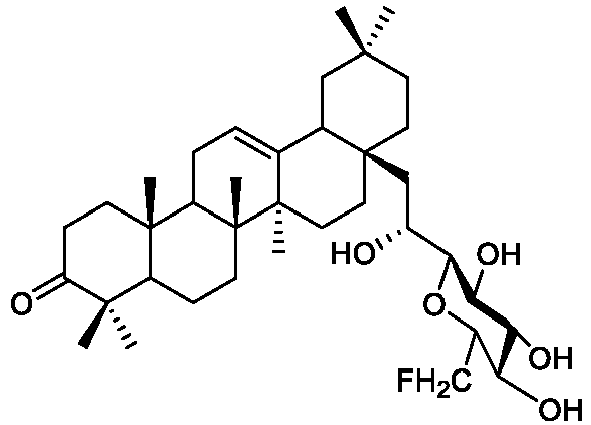
(5S,8R,9R,10S,14R,17R,18S)-3-Carbonyloleanolicacid-17-(2'R)-(hydroxyl)ethyl-6"-deoxy-6"-fluoro-β-D-glucopyranoside A189 
(5S,8R,9R,10S,14R,17R,18S)-3-Carbonyloleanolicacid-17-(2'R)-(hydroxyl)ethyl-2",3",4"-O-triacetyl-6"-deoxy-6"-fluoro-β-D-glucopyranoside A190 
(5S,8R,9R,10S,14R,17R,18S)-3-Carbonylursolicacid-17-(2'R)-(hydroxyl)ethyl-2",3 ",4"-O-triacetyl-6"-deoxy-6"-fluoro-β-D-glucopyranoside A191 
(5S,8R,9R,10S,14R,17R,18S)-3-Carbonylbetulinicacid-17-(2'R)-(hydroxyl)ethyl-2",3",4"-O-triacetyl-6"-deoxy-6"-fluoro-β-D-glucopyranoside A192 
(5S,8R,9R,10S,14R,17R,18S)-3-Carbonyloleanolicacid-17-(1'R)-(hydroxyl)methyl-β-D-glucopyranoside A193 
(5S,8R,9R,10S,14R,17R,18S)-3-Carbonyloleanolicacid-17methyl--β-D-glucopyranoside A194 
(3S,5S,8R,9R,10S,14R,17R,18 S)-Oleanolicacid-17-(1'R)-(hydroxyl)methyl-β-D-glucopyranoside A195 
(5S,8R,9R,10S,14R,17R,18S)-3-Carbonyloleanolicacid-17-(1 'R)-(hydroxyl)methyl-2",3",4",6"-O-tetraacetyl-β-D-glucopyranoside A196 
(5S,8R,9R,10S,14R,17R,18S)-3-Carbonyloleanolicacid-17-methyl-2",3",4",6"-O-tetraacetyl-β-D-glucopyranoside A197 
(5S,8R,9R,10S,14R,17R,18S)-3-Carbonyloleanolicacid-17-(2'R)-(hydroxyl)ethyl-P-D-glucopyranoside A198 
(5S,8R,9R,10S,14R,17R,18S)-3-Carbonyloleanolicacid-17-(2'R)-(hydroxyl)ethyl-2",3",4",6"-O-tetraacetyl-β-D-glucopyranoside A199 
(5S,8R,9R,10S,14R,17R,18S)-3-Carbonylursolicacid-17-(2'R)-(hydroxyl)ethyl-2",3",4",6"-O-tetraacetyl-β-D-glucopyranoside A200 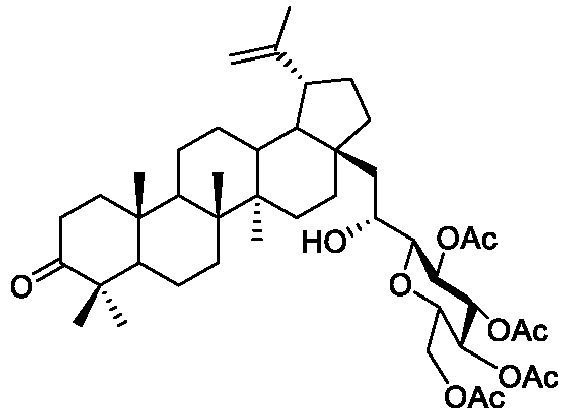
(5S,8R,9R,10S,14R,17R,18S)-3-C arbonylbetulinic acid-17-(2'R)-(hydroxyl)ethyl-2",3",4",6"-O-tetraacetyl-β-D-glucopyranoside A201 
(5S,8R,9R,10S,14R,17R,18S)-3-Carbonyloleanolicacid-28-β-D-glucopyranoside A202 
(5S,8R,9R,10S,14R,17R,18S)-3-Carbonylursolicacid-28-β-D-glucopyranoside A203 
(5S,8R,9R,10S,14R,17R,18S)-3-Carbonylursolicacid-17-(1'R)-(hydroxyl)methyl-β-D-glucopyranoside A204 
(3S,5S,8R,9R,10S,14R,17R,18 S)-Ursolicacid-17-(1'R)-(hydroxyl)methyl-β-D-glucopyranoside A205 
(3S,5S,8R,9R,10S,14R,17R,18 S)-Ursolicacid-28-β-D-glucopyranoside A206 
(3S,5S,8R,9R,10S,14R,17R,18 S)-Oleanolicacid-28-β-D-glucopyranoside A207 
(3S,5S,8R,9R,10S,13R,14R,17 S,18R,19R)-Betulinicacid-28-β-D-glucopyranoside A208 
(3S,5S,8R,9R,10S,13R,14R,17 S,18R,19R)-Betulinicacid-17-(1'R)-(hydroxyl)methyl-β-D-glucopyranoside A209 
(5S,8R,9R,10S,13R,14R,17S,1 8R,19R)-3-Carbonylbetulinicacid-17-(1'R)-(hydroxyl)methyl-β-D-glucopyranoside A210 
(5S,8R,9R,10S,13R,14R,17S,1 8R,19R)-3-Carbonylbetulinicacid-28-β-D-glucopyranoside A211 
(5S,8R,9R,10S,13R,14R,17S,1 8R,19R)-3-Carbonylbetulinicacid-17-methyl-β-D-glucopyranoside A212 
(5S,8R,9R,10S,14R,17R,18S)-3-Carbonylursolicacid-17-methyl-β-D-glucopyranoside A213 
(3S,5S,8R,9R,10S,14R,17R,18 S)-Oleanolicacid-17-methyl-β-D-glucopyranoside A214 
(3S,5S,8R,9R,10S,14R,17R,18 S)-3-Carbonylursolicacid-17-methyl-β-D-glucopyranoside A215 
(3S,5S,8R,9R,10S,13R,14R,17 S,18R,19R)-Betulinicacid-17-methyl-β-D-glucopyranoside A216 
(3R,5S,8R,9R,10S,14R,17R,18 S)-Oleanolicacid-28-β-D-glucopyranoside A217 
(3R,5S,8R,9R,10S,14R,17R,18 S)-Oleanolicacid-17-(1'R)-(hydroxyl)methyl-β-D-glucopyranoside A218 
(3R,5S,8R,9R,10S,14R,17R,18 S)-Ursolicacid-17-(1'R)-(hydroxyl)methyl-β-D-glucopyranoside A219 
(3R,5S,8R,9R,10S,14R,17R,18 S)-Ursolicacid-28-β-D-glucopyranoside A220 
(5S,8R,9R,10S,14R,17R,18S)-3-Carbonyloleanolicacid-28-6"-O-methyl-β-D-glucurouopyranoside A221 
(5S,8R,9R,10S,14R,17R,18S)-3-Carbonyloleanolicacid-28-6"-O-ethyl-β-D-glucurouopyranoside A222 
(5S,8R,9R,10S,14R,17R,18S)-3-Carbonyloleanolicacid-28-6"-O-2‴-fluoroethyl-β-D-glucurouopyranoside A223 
(5S,8R,9R,10S,14R,17R,18S)-3-Carbonyloleanolicacid-17-(1'R)-(hydroxyl)methyl-6"-O-methyl-β-D-glucurouopyranoside A224 
(5S,8R,9R,10S,14R,17R,18S)-3-Carbonylursolicacid-28-6" - O-methyl-β-D-glucurouopyranoside A225 
(3S,5S,8R,9R,10S,13R,14R,17 S,18R,19R)-Betulinicacid-28-6"-O-methyl-β-D-glucurouopyranoside A226 
(5S,8R,9R,10S,14R,17R,18S)-3-C arbonylbetulinic acid-17-(1'R)-(hydroxyl)methyl-6"-O-methyl-β-D-glucurouopyranoside A227 
(5S,8R,9R,10S,14R,17R,18S)-3-Carbonyloleanolicacid-28-6"-O-isopropyl-β-D-glucurouopyranoside A228 
(5S,8R,9R,10S,14R,17R,18S)-3-Carbonyloleanolicacid-28-6"-O-cyclopropylmethyl-β-D-glucurouopyranoside A229 
(5S,8R,9R,10S,14R,17R,18S)-3-Carbonyloleanolicacid-28-6"-N-ethyl-β-D-glucurouopyranoside A230 
(5S,8R,9R,10S,14R,17R,18S)-3-Carbonyloleanolicacid-28-6"-N-2"'-fluoroethyl-β-D-glucurouopyranoside - A preparation method of the compound according to claim 1, wherein the preparation method includes the following scheme 1 or scheme 2:

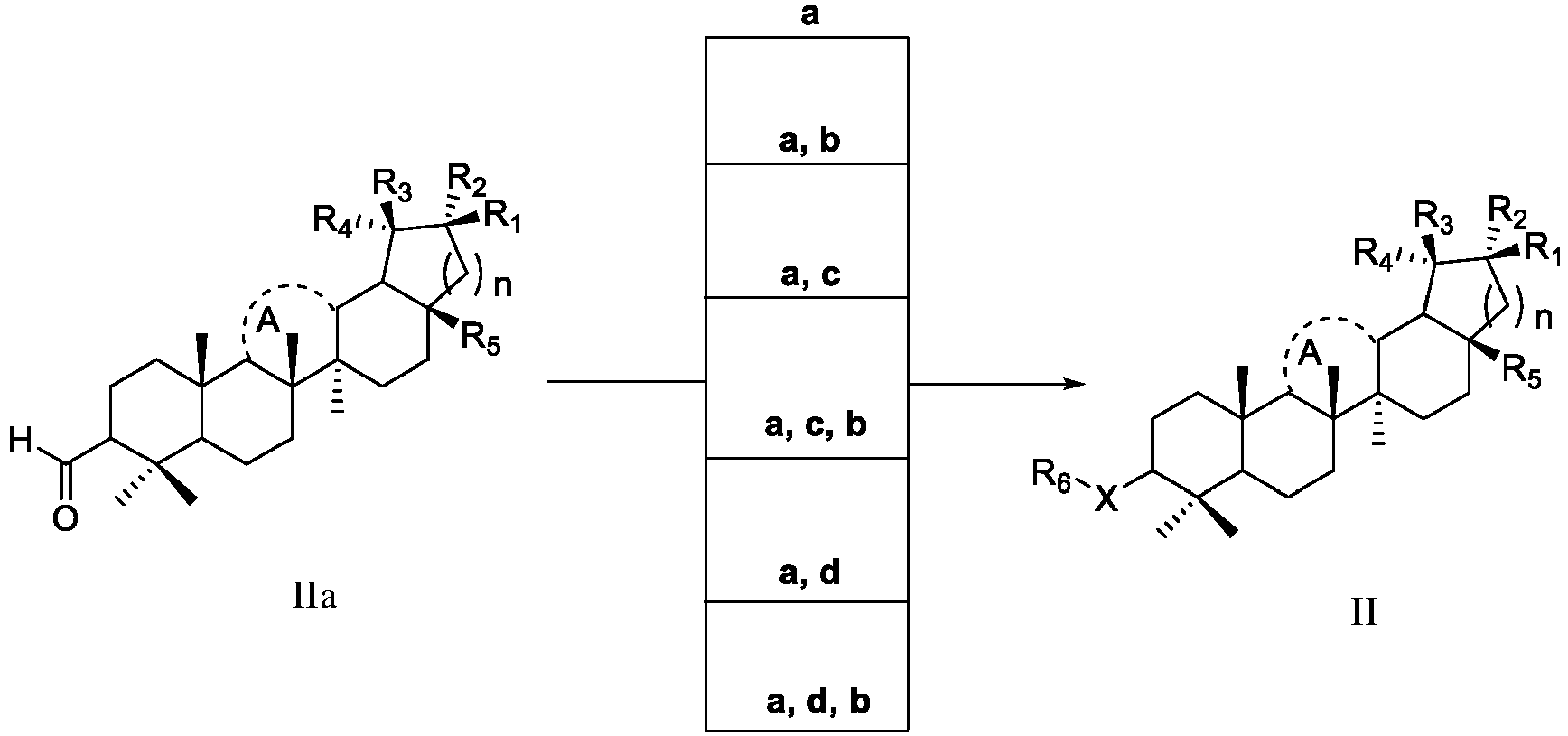 step a: reacting compound IV with compound III to obtain the product of step a;step b: reducing the product of step a to obtain the product of step b;step c: alkylating the product of step b to obtain the product of step c;step d: reacting the product of step c with Des Martin reagent to obtain a compound of formula II;wherein the structure of compound IV is:
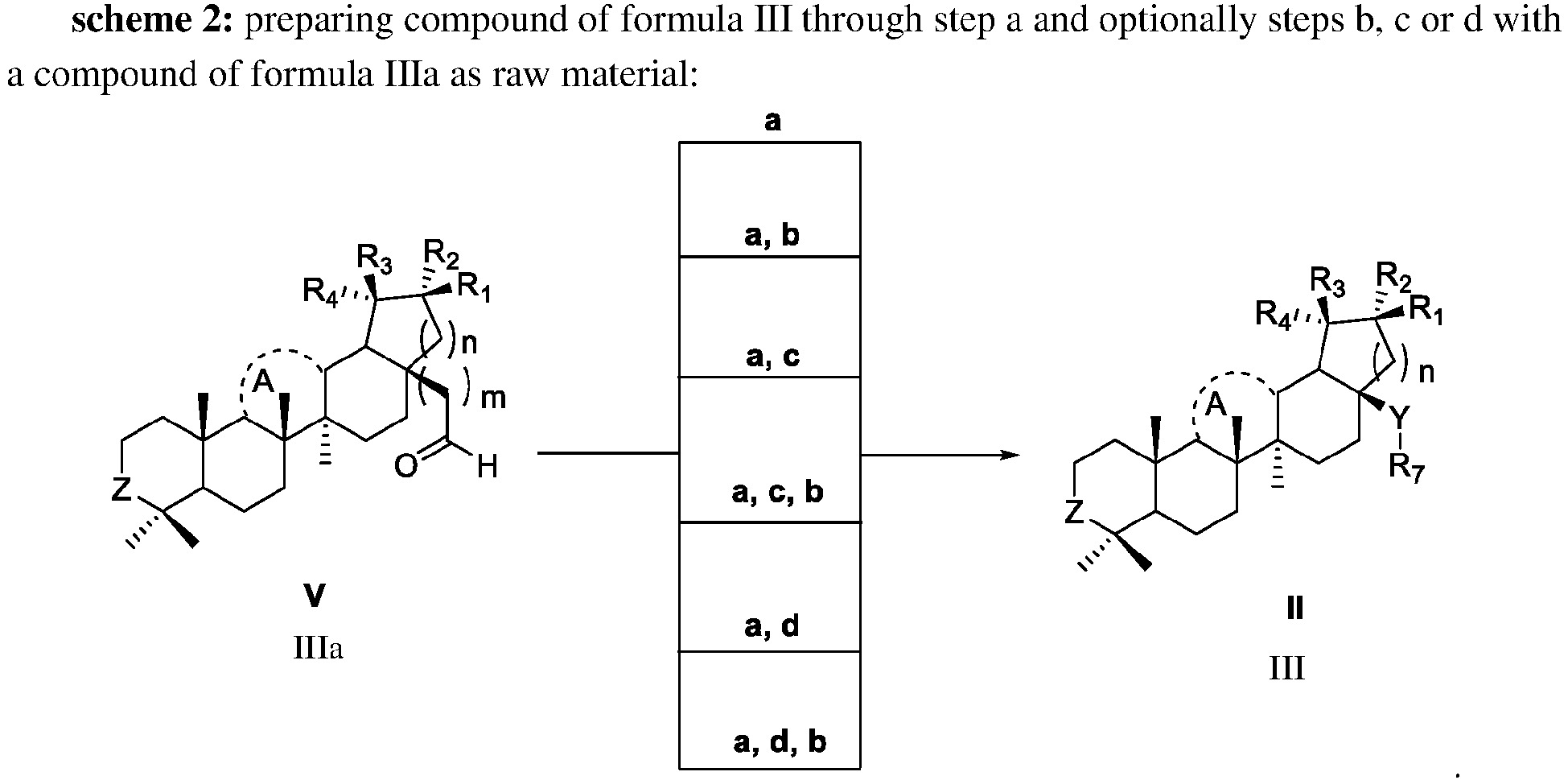
- A pharmaceutical composition, wherein the pharmaceutical composition contains the therapeutically effective amount of one or more of the compound of formula I, or pharmaceutical salts, racemates, R-isomers and S-isomers thereof according to claim 1, as well as one or more pharmaceutical carriers, excipients, adjuvants, accessories and/or diluents.
- A use of a compound of formula I and formula II, racemates, R-isomers, S-isomers or pharmaceutical salts thereof according to claim 1 for preparing a medicament for treating or preventing metabolic diseases related to diabetes and viral diseases; preferably, the diseases are selected from the group consisting of diabetes, influenza, obesity, liver fibrosis, metabolic diseases, and viral diseases.
Applications Claiming Priority (2)
| Application Number | Priority Date | Filing Date | Title |
|---|---|---|---|
| CN202010647960 | 2020-07-07 | ||
| PCT/CN2021/104599 WO2022007765A1 (en) | 2020-07-07 | 2021-07-05 | Pentacyclic triterpenoid glycoside compound, and preparation method therefor and use thereof |
Publications (2)
| Publication Number | Publication Date |
|---|---|
| EP4180445A1 true EP4180445A1 (en) | 2023-05-17 |
| EP4180445A4 EP4180445A4 (en) | 2024-10-02 |
Family
ID=79187545
Family Applications (1)
| Application Number | Title | Priority Date | Filing Date |
|---|---|---|---|
| EP21838780.1A Withdrawn EP4180445A4 (en) | 2020-07-07 | 2021-07-05 | Pentacyclic triterpenoid glycoside compound, and preparation method therefor and use thereof |
Country Status (8)
| Country | Link |
|---|---|
| US (1) | US20240262860A1 (en) |
| EP (1) | EP4180445A4 (en) |
| JP (2) | JP2023533557A (en) |
| KR (1) | KR20230043878A (en) |
| CN (1) | CN113896757B (en) |
| AU (1) | AU2021304754B2 (en) |
| CA (1) | CA3185288A1 (en) |
| WO (1) | WO2022007765A1 (en) |
Families Citing this family (1)
| Publication number | Priority date | Publication date | Assignee | Title |
|---|---|---|---|---|
| CN117402204A (en) * | 2022-07-07 | 2024-01-16 | 北京大学 | Triterpenoids and their antiviral uses |
Family Cites Families (28)
| Publication number | Priority date | Publication date | Assignee | Title |
|---|---|---|---|---|
| JP2003508543A (en) * | 1999-09-09 | 2003-03-04 | ダブール リサーチ ファンデーション | Novel betulinic acid derivatives with anti-angiogenic activity, methods of preparing the derivatives, and their use for treating angiogenesis associated with tumors |
| DE10158281A1 (en) * | 2001-11-19 | 2003-05-28 | Mediwirk Gmbh | Pharmaceutical preparation comprises ginsenoside enclosed in micro-shell, e.g. liposome, providing targeted and controlled delivery, useful e.g. in treatment of liver tumors, diabetes mellitus or hypertension |
| WO2004089357A2 (en) * | 2003-04-02 | 2004-10-21 | Regents Of The University Of Minnesota | Anti-fungal formulation of triterpene and essential oil |
| CN1853637B (en) * | 2005-03-11 | 2010-05-12 | 中国药科大学 | Pharmaceutical use of pentacyclic triterpenoids as glycogen phosphorylase inhibitors |
| GB0604535D0 (en) * | 2006-03-07 | 2006-04-12 | Sndv Sprl | Betulonic acid derivatives |
| CN101367861A (en) * | 2007-08-15 | 2009-02-18 | 中国药科大学 | 2-Hydroxy-3-deoxypentacyclic triterpenes and derivatives thereof, preparation method and use thereof |
| CN101161670B (en) * | 2007-11-20 | 2011-07-27 | 沈阳化工学院 | Ursolic acid chemical modified compound amine having antitumor activity |
| CN101463029B (en) * | 2007-12-20 | 2014-06-18 | 中国医学科学院药物研究所 | Taxane derivative, and preparation and use thereof |
| CN101817862A (en) * | 2009-02-26 | 2010-09-01 | 中国药科大学 | Ursolic acid-3-O-beta-D-pyranglucuronide and derivatives thereof, and preparation method and medicinal application thereof |
| CN101607979A (en) * | 2009-03-02 | 2009-12-23 | 中国药科大学 | Pentacyclic triterpene-vitamin C conjugate, its preparation method and its medical application |
| CN101724007B (en) * | 2009-12-15 | 2012-07-25 | 中国药科大学 | Oleanolic acid derivatives and application thereof serving as alpha-glucosidase inhibitor |
| CN102339254A (en) * | 2011-06-17 | 2012-02-01 | 杭州炬华科技股份有限公司 | Flash data storage method for intelligent electric energy meter |
| US20140107049A1 (en) * | 2012-10-04 | 2014-04-17 | Vertex Pharmaceuticals Incorporated | Mannose derivatives for treating bacterial infections |
| CN103768078B (en) * | 2012-10-22 | 2019-02-05 | 北京大学 | Triterpene derivatives and their anti-influenza use |
| KR101543720B1 (en) * | 2014-01-08 | 2015-08-12 | 강원대학교산학협력단 | A composition comprising the ivy leaf extract and the compound isolated therefrom for preventing and treating enterovirus-involved diseases |
| CN104910239B (en) * | 2014-03-14 | 2018-12-07 | 中国科学院上海药物研究所 | Pentacyclic triterpenoid and preparation method thereof, pharmaceutical composition and purposes |
| CN104910238B (en) * | 2014-03-14 | 2017-08-11 | 中国科学院上海药物研究所 | One class pentacyclic triterpenoid and its purposes in the medicine for preparing treatment alzheimer disease |
| CN105566435B (en) * | 2014-10-11 | 2017-12-19 | 中国科学院上海有机化学研究所 | A kind of oleanolic acid derivate and its production and use |
| WO2016086453A1 (en) * | 2014-12-04 | 2016-06-09 | 中国药科大学 | Pentacyclic triterpenoid cholesterol ester transfer protein inhibitor, pharmaceutical composition and medical use thereof |
| CN104744549B (en) * | 2015-02-16 | 2017-03-29 | 华东师范大学 | Betulic acid derivant and preparation method thereof and the application in antitumor drug is prepared |
| DK3389669T3 (en) * | 2015-12-17 | 2023-05-01 | Memorial Sloan Kettering Cancer Center | TRITERPENSAPONINE VARIANTS, METHODS OF SYNTHESIS AND USE THEREOF |
| CN107304221B (en) * | 2016-04-20 | 2019-09-13 | 北京大学 | Triterpene derivatives and their application against Ebola virus |
| CN108456239A (en) * | 2017-02-20 | 2018-08-28 | 雷鹏程 | Compound BA-X with antitumor action and its preparation method and application |
| US11464795B2 (en) * | 2017-07-13 | 2022-10-11 | East China University Of Science And Technology | Saponin compound targeting PD-1 and application thereof |
| CN108530508B (en) * | 2018-06-11 | 2020-01-03 | 西北大学 | Oleanolic alkane type nitrogen glycoside compound and application thereof in preparation of antidiabetic drugs |
| CN108640964B (en) * | 2018-06-21 | 2020-11-17 | 昆明理工大学 | Triterpene-amino acid derivative, preparation method and application thereof |
| CN109481684B (en) * | 2018-12-21 | 2020-10-27 | 浙江大学 | Application of Optineurin as target in preparation of medicine for preventing and treating autoimmune diseases |
| CN113620969B (en) * | 2020-05-07 | 2024-05-14 | 贵州医科大学 | Cyclohexane dicarboxylic acid derivative with bridged ring, and pharmaceutical composition and application thereof |
-
2021
- 2021-07-05 AU AU2021304754A patent/AU2021304754B2/en active Active
- 2021-07-05 CA CA3185288A patent/CA3185288A1/en active Pending
- 2021-07-05 CN CN202110758853.1A patent/CN113896757B/en active Active
- 2021-07-05 KR KR1020237004426A patent/KR20230043878A/en active Pending
- 2021-07-05 US US18/014,932 patent/US20240262860A1/en active Pending
- 2021-07-05 EP EP21838780.1A patent/EP4180445A4/en not_active Withdrawn
- 2021-07-05 JP JP2023501493A patent/JP2023533557A/en active Pending
- 2021-07-05 WO PCT/CN2021/104599 patent/WO2022007765A1/en not_active Ceased
-
2025
- 2025-07-08 JP JP2025114951A patent/JP2025165936A/en active Pending
Also Published As
| Publication number | Publication date |
|---|---|
| AU2021304754A1 (en) | 2023-02-16 |
| CA3185288A1 (en) | 2022-01-13 |
| WO2022007765A1 (en) | 2022-01-13 |
| CN113896757A (en) | 2022-01-07 |
| JP2023533557A (en) | 2023-08-03 |
| CN113896757B (en) | 2024-12-06 |
| AU2021304754B2 (en) | 2024-07-25 |
| EP4180445A4 (en) | 2024-10-02 |
| KR20230043878A (en) | 2023-03-31 |
| JP2025165936A (en) | 2025-11-05 |
| US20240262860A1 (en) | 2024-08-08 |
Similar Documents
| Publication | Publication Date | Title |
|---|---|---|
| EP3835296A1 (en) | Ketoamide compound and preparation method, pharmaceutical composition, and use thereof | |
| EP3866794B1 (en) | Methods of treating rheumatic diseases using trimetazidine-based compounds | |
| US20220226313A1 (en) | Combination therapies that include an agent that promotes glucose oxidation and an inhibitor of pyruvate dehydrogenase kinase | |
| EP4119546A1 (en) | Bifunctional compound, preparation method therefor, and use thereof | |
| KR102867827B1 (en) | N-heterocyclic 5-membered ring-containing capsid protein assembly inhibitor, pharmaceutical composition and use thereof | |
| TW202504593A (en) | Fused ring compounds, pharmaceutical compositions containing the same and use thereof | |
| US20240101546A1 (en) | Heteroaryl-acetylenes, pharmaceutical compositions thereof, and their therapeutic applications | |
| EP2407474A1 (en) | Triacetyl-3-hydroxyphenyladenosine and its use for regulating blood fat | |
| EP3315502B1 (en) | C,o-spiro aryl glycoside compounds, preparation therefor and use thereof | |
| EP4371981A1 (en) | Sulfur/phosphorus-containing aryl compound and application thereof | |
| JP2025165936A (en) | Pentacyclic triterpenoid C-glycosides, their preparation and use | |
| RU2833479C1 (en) | Pentacyclic triterpene glycoside compound, method for production and use thereof | |
| KR101705390B1 (en) | Novel bicyclic compound as glucose-protein coupled receptor agonists | |
| CN112204018A (en) | Acrylic acid compounds, preparation method thereof, pharmaceutical composition and application | |
| CN106749228A (en) | A kind of jamaicin medicine and preparation method and application | |
| CN108623555B (en) | A kind of benzoxane compound, its preparation method and pharmaceutical composition and use | |
| EP4043447B1 (en) | Halogenated tetracyclic triterpene derivative, preparation and application thereof | |
| US20030144345A1 (en) | Treatment of metabolic diseases with soraphen derivatives | |
| ES2528045T3 (en) | New derivative of ecdisterone synthesis, preparation and use procedure | |
| RU2802259C2 (en) | Capsid protein assembly inhibitor containing n-heterocyclic five-membered ring, its pharmaceutical composition and use | |
| CN117586257A (en) | A compound containing 2,8-diazaspiro[4.5]dec-1-one skeleton and its application | |
| HK40057712A (en) | N-heterocyclic five-membered ring-containing capsid protein assembly inhibitor, pharmaceutical composition and uses thereof | |
| HK40057712B (en) | N-heterocyclic five-membered ring-containing capsid protein assembly inhibitor, pharmaceutical composition and uses thereof | |
| NZ754996B2 (en) | Nucleotide hemi-sulfate salt for the treatment of hepatitis c virus | |
| CN110511222A (en) | Pyrazolo-pyridines and its purposes in treatment diabetes |
Legal Events
| Date | Code | Title | Description |
|---|---|---|---|
| STAA | Information on the status of an ep patent application or granted ep patent |
Free format text: STATUS: THE INTERNATIONAL PUBLICATION HAS BEEN MADE |
|
| PUAI | Public reference made under article 153(3) epc to a published international application that has entered the european phase |
Free format text: ORIGINAL CODE: 0009012 |
|
| STAA | Information on the status of an ep patent application or granted ep patent |
Free format text: STATUS: REQUEST FOR EXAMINATION WAS MADE |
|
| 17P | Request for examination filed |
Effective date: 20230206 |
|
| AK | Designated contracting states |
Kind code of ref document: A1 Designated state(s): AL AT BE BG CH CY CZ DE DK EE ES FI FR GB GR HR HU IE IS IT LI LT LU LV MC MK MT NL NO PL PT RO RS SE SI SK SM TR |
|
| DAV | Request for validation of the european patent (deleted) | ||
| DAX | Request for extension of the european patent (deleted) | ||
| A4 | Supplementary search report drawn up and despatched |
Effective date: 20240903 |
|
| RIC1 | Information provided on ipc code assigned before grant |
Ipc: A61K 31/7034 20060101ALI20240828BHEP Ipc: A61P 3/00 20060101ALI20240828BHEP Ipc: A61P 1/16 20060101ALI20240828BHEP Ipc: A61P 3/04 20060101ALI20240828BHEP Ipc: A61P 31/16 20060101ALI20240828BHEP Ipc: A61K 31/58 20060101ALI20240828BHEP Ipc: C07J 63/00 20060101AFI20240828BHEP |
|
| STAA | Information on the status of an ep patent application or granted ep patent |
Free format text: STATUS: THE APPLICATION IS DEEMED TO BE WITHDRAWN |
|
| 18D | Application deemed to be withdrawn |
Effective date: 20250201 |