EP4180440A1 - Cyclische biarylphosphine als liganden für palladiumhaltige katalysatoren in kreuzkupplungsreaktionen - Google Patents
Cyclische biarylphosphine als liganden für palladiumhaltige katalysatoren in kreuzkupplungsreaktionen Download PDFInfo
- Publication number
- EP4180440A1 EP4180440A1 EP21208544.3A EP21208544A EP4180440A1 EP 4180440 A1 EP4180440 A1 EP 4180440A1 EP 21208544 A EP21208544 A EP 21208544A EP 4180440 A1 EP4180440 A1 EP 4180440A1
- Authority
- EP
- European Patent Office
- Prior art keywords
- phosphine
- palladium
- formula
- sup
- compound
- Prior art date
- Legal status (The legal status is an assumption and is not a legal conclusion. Google has not performed a legal analysis and makes no representation as to the accuracy of the status listed.)
- Granted
Links
Classifications
-
- C—CHEMISTRY; METALLURGY
- C07—ORGANIC CHEMISTRY
- C07F—ACYCLIC, CARBOCYCLIC OR HETEROCYCLIC COMPOUNDS CONTAINING ELEMENTS OTHER THAN CARBON, HYDROGEN, HALOGEN, OXYGEN, NITROGEN, SULFUR, SELENIUM OR TELLURIUM
- C07F9/00—Compounds containing elements of Groups 5 or 15 of the Periodic Table
- C07F9/02—Phosphorus compounds
- C07F9/547—Heterocyclic compounds, e.g. containing phosphorus as a ring hetero atom
- C07F9/6596—Heterocyclic compounds, e.g. containing phosphorus as a ring hetero atom having atoms other than oxygen, sulfur, selenium, tellurium, nitrogen or phosphorus as ring hetero atoms
-
- B—PERFORMING OPERATIONS; TRANSPORTING
- B01—PHYSICAL OR CHEMICAL PROCESSES OR APPARATUS IN GENERAL
- B01J—CHEMICAL OR PHYSICAL PROCESSES, e.g. CATALYSIS OR COLLOID CHEMISTRY; THEIR RELEVANT APPARATUS
- B01J31/00—Catalysts comprising hydrides, coordination complexes or organic compounds
- B01J31/16—Catalysts comprising hydrides, coordination complexes or organic compounds containing coordination complexes
- B01J31/24—Phosphines, i.e. phosphorus bonded to only carbon atoms, or to both carbon and hydrogen atoms, including e.g. sp2-hybridised phosphorus compounds such as phosphabenzene, phosphole or anionic phospholide ligands
- B01J31/2404—Cyclic ligands, including e.g. non-condensed polycyclic ligands, the phosphine-P atom being a ring member or a substituent on the ring
- B01J31/2419—Cyclic ligands, including e.g. non-condensed polycyclic ligands, the phosphine-P atom being a ring member or a substituent on the ring comprising P as ring member
- B01J31/2438—Cyclic ligands, including e.g. non-condensed polycyclic ligands, the phosphine-P atom being a ring member or a substituent on the ring comprising P as ring member and further hetero atoms as ring members, excluding the positions adjacent to P
-
- B—PERFORMING OPERATIONS; TRANSPORTING
- B01—PHYSICAL OR CHEMICAL PROCESSES OR APPARATUS IN GENERAL
- B01J—CHEMICAL OR PHYSICAL PROCESSES, e.g. CATALYSIS OR COLLOID CHEMISTRY; THEIR RELEVANT APPARATUS
- B01J31/00—Catalysts comprising hydrides, coordination complexes or organic compounds
- B01J31/16—Catalysts comprising hydrides, coordination complexes or organic compounds containing coordination complexes
- B01J31/1608—Catalysts comprising hydrides, coordination complexes or organic compounds containing coordination complexes the ligands containing silicon
-
- B—PERFORMING OPERATIONS; TRANSPORTING
- B01—PHYSICAL OR CHEMICAL PROCESSES OR APPARATUS IN GENERAL
- B01J—CHEMICAL OR PHYSICAL PROCESSES, e.g. CATALYSIS OR COLLOID CHEMISTRY; THEIR RELEVANT APPARATUS
- B01J37/00—Processes, in general, for preparing catalysts; Processes, in general, for activation of catalysts
- B01J37/16—Reducing
-
- C—CHEMISTRY; METALLURGY
- C07—ORGANIC CHEMISTRY
- C07D—HETEROCYCLIC COMPOUNDS
- C07D215/00—Heterocyclic compounds containing quinoline or hydrogenated quinoline ring systems
- C07D215/02—Heterocyclic compounds containing quinoline or hydrogenated quinoline ring systems having no bond between the ring nitrogen atom and a non-ring member or having only hydrogen atoms or carbon atoms directly attached to the ring nitrogen atom
- C07D215/16—Heterocyclic compounds containing quinoline or hydrogenated quinoline ring systems having no bond between the ring nitrogen atom and a non-ring member or having only hydrogen atoms or carbon atoms directly attached to the ring nitrogen atom with hetero atoms or with carbon atoms having three bonds to hetero atoms with at the most one bond to halogen, e.g. ester or nitrile radicals, directly attached to ring carbon atoms
- C07D215/38—Nitrogen atoms
-
- C—CHEMISTRY; METALLURGY
- C07—ORGANIC CHEMISTRY
- C07D—HETEROCYCLIC COMPOUNDS
- C07D401/00—Heterocyclic compounds containing two or more hetero rings, having nitrogen atoms as the only ring hetero atoms, at least one ring being a six-membered ring with only one nitrogen atom
- C07D401/02—Heterocyclic compounds containing two or more hetero rings, having nitrogen atoms as the only ring hetero atoms, at least one ring being a six-membered ring with only one nitrogen atom containing two hetero rings
- C07D401/04—Heterocyclic compounds containing two or more hetero rings, having nitrogen atoms as the only ring hetero atoms, at least one ring being a six-membered ring with only one nitrogen atom containing two hetero rings directly linked by a ring-member-to-ring-member bond
-
- C—CHEMISTRY; METALLURGY
- C07—ORGANIC CHEMISTRY
- C07D—HETEROCYCLIC COMPOUNDS
- C07D403/00—Heterocyclic compounds containing two or more hetero rings, having nitrogen atoms as the only ring hetero atoms, not provided for by group C07D401/00
- C07D403/02—Heterocyclic compounds containing two or more hetero rings, having nitrogen atoms as the only ring hetero atoms, not provided for by group C07D401/00 containing two hetero rings
- C07D403/04—Heterocyclic compounds containing two or more hetero rings, having nitrogen atoms as the only ring hetero atoms, not provided for by group C07D401/00 containing two hetero rings directly linked by a ring-member-to-ring-member bond
-
- C—CHEMISTRY; METALLURGY
- C07—ORGANIC CHEMISTRY
- C07D—HETEROCYCLIC COMPOUNDS
- C07D413/00—Heterocyclic compounds containing two or more hetero rings, at least one ring having nitrogen and oxygen atoms as the only ring hetero atoms
- C07D413/02—Heterocyclic compounds containing two or more hetero rings, at least one ring having nitrogen and oxygen atoms as the only ring hetero atoms containing two hetero rings
- C07D413/04—Heterocyclic compounds containing two or more hetero rings, at least one ring having nitrogen and oxygen atoms as the only ring hetero atoms containing two hetero rings directly linked by a ring-member-to-ring-member bond
-
- C—CHEMISTRY; METALLURGY
- C07—ORGANIC CHEMISTRY
- C07F—ACYCLIC, CARBOCYCLIC OR HETEROCYCLIC COMPOUNDS CONTAINING ELEMENTS OTHER THAN CARBON, HYDROGEN, HALOGEN, OXYGEN, NITROGEN, SULFUR, SELENIUM OR TELLURIUM
- C07F15/00—Compounds containing elements of Groups 8, 9, 10 or 18 of the Periodic Table
- C07F15/0006—Compounds containing elements of Groups 8, 9, 10 or 18 of the Periodic Table compounds of the platinum group
- C07F15/0086—Platinum compounds
-
- B—PERFORMING OPERATIONS; TRANSPORTING
- B01—PHYSICAL OR CHEMICAL PROCESSES OR APPARATUS IN GENERAL
- B01J—CHEMICAL OR PHYSICAL PROCESSES, e.g. CATALYSIS OR COLLOID CHEMISTRY; THEIR RELEVANT APPARATUS
- B01J2231/00—Catalytic reactions performed with catalysts classified in B01J31/00
- B01J2231/40—Substitution reactions at carbon centres, e.g. C-C or C-X, i.e. carbon-hetero atom, cross-coupling, C-H activation or ring-opening reactions
- B01J2231/42—Catalytic cross-coupling, i.e. connection of previously not connected C-atoms or C- and X-atoms without rearrangement
- B01J2231/4205—C-C cross-coupling, e.g. metal catalyzed or Friedel-Crafts type
- B01J2231/4211—Suzuki-type, i.e. RY + R'B(OR)2, in which R, R' are optionally substituted alkyl, alkenyl, aryl, acyl and Y is the leaving group
- B01J2231/4227—Suzuki-type, i.e. RY + R'B(OR)2, in which R, R' are optionally substituted alkyl, alkenyl, aryl, acyl and Y is the leaving group with Y= Cl
-
- B—PERFORMING OPERATIONS; TRANSPORTING
- B01—PHYSICAL OR CHEMICAL PROCESSES OR APPARATUS IN GENERAL
- B01J—CHEMICAL OR PHYSICAL PROCESSES, e.g. CATALYSIS OR COLLOID CHEMISTRY; THEIR RELEVANT APPARATUS
- B01J2231/00—Catalytic reactions performed with catalysts classified in B01J31/00
- B01J2231/40—Substitution reactions at carbon centres, e.g. C-C or C-X, i.e. carbon-hetero atom, cross-coupling, C-H activation or ring-opening reactions
- B01J2231/42—Catalytic cross-coupling, i.e. connection of previously not connected C-atoms or C- and X-atoms without rearrangement
- B01J2231/4277—C-X Cross-coupling, e.g. nucleophilic aromatic amination, alkoxylation or analogues
- B01J2231/4283—C-X Cross-coupling, e.g. nucleophilic aromatic amination, alkoxylation or analogues using N nucleophiles, e.g. Buchwald-Hartwig amination
-
- B—PERFORMING OPERATIONS; TRANSPORTING
- B01—PHYSICAL OR CHEMICAL PROCESSES OR APPARATUS IN GENERAL
- B01J—CHEMICAL OR PHYSICAL PROCESSES, e.g. CATALYSIS OR COLLOID CHEMISTRY; THEIR RELEVANT APPARATUS
- B01J2531/00—Additional information regarding catalytic systems classified in B01J31/00
- B01J2531/80—Complexes comprising metals of Group VIII as the central metal
- B01J2531/82—Metals of the platinum group
- B01J2531/824—Palladium
Definitions
- a cross-coupling is a coupling reaction in which two different molecules react with one another in the presence of a suitable catalyst to form a carbon-carbon or carbon-heteroatom bond.
- palladium-catalyzed cross-coupling reactions are of great practical importance (e.g. in the synthesis of active pharmaceutical ingredients).
- Suzuki coupling also known as Suzuki-Miyaura coupling
- Negishi coupling can be mentioned as examples.
- Customary catalysts in the field of coupling reactions are palladium complexes which contain one or more phosphine ligands and optionally other ligands. These Pd complexes with suitable phosphine ligands can be prepared in advance and stored until they are used, or alternatively generated in situ during the reaction to be catalyzed (e.g. by adding a palladium salt and the phosphine separately to the reaction medium, so that the formation of a phosphine-containing Pd complex only takes place in the reaction medium).
- non-cyclic biarylphosphines can act as ligands for Pd complexes in palladium-catalyzed coupling reactions (such as the Buchwald–Hartwig coupling), see eg SL Buchwald et al., "Dialkylbiaryl phosphines in Pd-catalyzed amination: a user's guide", Chem. Sci., 2011, 2, pp. 27-50 .
- There is no phosphorus-containing ring ie, no ring containing phosphorus as a ring atom
- Cyclic biarylphosphines i.e. phosphines in which the phosphorus atom is one of the ring-forming atoms
- ligands for Pd complexes in palladium-catalyzed coupling reactions are also known as ligands for Pd complexes in palladium-catalyzed coupling reactions.
- An object of the present invention is to provide suitable phosphines which can be used as ligands in palladium complexes in palladium-catalyzed cross-coupling reactions.
- these phosphines as ligands in palladium complexes should enable efficient C ⁇ N coupling reactions (e.g. in the form of a Buchwald–Hartwig coupling) even when N-heterocyclic aryl halides or pseudohalides are used as reactants.
- the cyclic biarylphosphines of the present invention contain another heteroatom as ring atom in the heterocyclic ring, this additional heteroring atom being Si, Ge, Sn, As or Se.
- this additional heteroring atom being Si, Ge, Sn, As or Se.
- the use of the phosphine according to the invention as a ligand in Pd complexes makes it possible to carry out a C-C cross-coupling reaction or a C-N cross-coupling reaction, for example the Buchwald-Hartwig coupling, which can be carried out at relatively low reaction temperatures and relatively short reaction times yields even when an N-heterocyclic aryl halide or pseudohalide is employed as the reactant.
- the palladium complex containing the phosphine according to the invention as a ligand can be prepared before the reaction to be catalyzed and optionally stored until it is used.
- the phosphine according to the invention and a palladium compound acting as a precursor are added to the reaction medium, so that the formation of a palladium complex containing the phosphine according to the invention as a ligand takes place in situ in the reaction medium of the coupling reaction.
- the phosphine has the following formula (1b): whereby p is 0, 1, 2, 3, 4 or 5, more preferably 1, 2, 3 or 4.
- Suitable bases with which a primary phosphine can be converted into a phosphide by deprotonation are known to the person skilled in the art.
- the base is an organolithium compound (e.g., butyllithium).
- the reducing agent is, for example, a metal hydride (e.g. lithium aluminum hydride).
- the present invention also relates to a palladium complex which contains the phosphine according to the invention described above as a ligand L 1 .
- the palladium complex can additionally contain one or more ligands L 2 which are each not a phosphine according to the invention. Suitable ligands for palladium complexes are known to those skilled in the art.
- the other ligands L 2 of the Pd complex according to the invention are independently selected from a halide (eg Cl - , Br - or I - ); an aryl; a nitrile (e.g. acetonitrile, propionitrile or benzonitrile); a carboxylate (e.g. acetate); a conjugated dienone (eg a 1,4-dien-3-one such as dibenzylideneacetone (dba)); a phosphine other than a phosphine of the invention (eg, a non-cyclic phosphine); a pseudohalide (e.g. CN - or OCN - ) an amine or acetylacetonate.
- a halide eg Cl - , Br - or I -
- an aryl e.g. a nitrile (e.g. acetonitrile, propionitrile or benz
- the ligand L 2 which is not a phosphine according to the invention can be a monodentate or, alternatively, a polydentate ligand.
- polydentate ligands include arylalkylamines or arylamines (e.g. phenethylamine or naphthylamine) and monoanions thereof.
- the ligand L 2 is a phosphine, it is preferably a non-cyclic phosphine, ie a phosphine that does not have a phosphorus-containing ring.
- Suitable non-cyclic phosphine ligands for palladium complexes are known to those skilled in the art.
- the phosphine ligand L 2 which is not a phosphine according to the invention is, for example, a tri-C 1-6 -alkylphosphine, a tri-C 5-7 -cycloalkylphosphine or a triarylphosphine (especially a triphenylphosphine), where each of the aryl groups (which are preferably phenyl groups) is optionally substituted by one or more C 1-4 haloalkyl groups (e.g. -CF 3 ), C 1-4 alkyl groups (e.g. methyl) or C 1-4 alkoxy groups (e.g. methoxy).
- C 1-4 haloalkyl groups e.g. -CF 3
- C 1-4 alkyl groups e.g. methyl
- C 1-4 alkoxy groups e.g. methoxy
- the phosphine ligand L 2 has one of the following formulas (7.1), (7.2) or (7.3):
- the phosphine ligand L 2 has one of the following formulas (8.1), (8.2), (8.3) or (8.4):
- the ligands L 2a and L 2b of the Pd complex according to the invention are independently selected from a halide (eg Cl - , Br or I - ); an aryl; a nitrile (e.g. acetonitrile, propionitrile or benzonitrile); a carboxylate (e.g.
- acetate a conjugated dienone (eg a 1,4-dien-3-one such as dibenzylideneacetone (dba)); a phosphine other than a phosphine of the invention (eg, a non-cyclic phosphine); a pseudohalide (e.g. CN - or OCN - ) an amine or acetylacetonate.
- a conjugated dienone eg a 1,4-dien-3-one such as dibenzylideneacetone (dba)
- a phosphine other than a phosphine of the invention eg, a non-cyclic phosphine
- a pseudohalide e.g. CN - or OCN -
- An exemplary palladium complex of the present invention has the following formula (10.1): where the ligands L 2a and L 2b have the meanings given above and p is 0, 1, 2, 3 or 4.
- the ligand L 2a is dibenzylideneacetone (dba) or acetonitrile and the ligand L 2b is selected from one of the ligands given above for L 2 .
- Another exemplary palladium complex of the present invention has the following formula (10.2): where p is 0, 1, 2, 3 or 4.
- Another exemplary palladium complex of the present invention has the following formula (10.3): where p is 0, 1, 2, 3 or 4.
- the phosphine according to the invention and a precursor palladium compound which does not yet contain the phosphine according to the invention can be added to the reaction medium so that the formation of a palladium complex containing the phosphine according to the invention as a ligand can take place in situ in the reaction medium coupling reaction takes place.
- the palladium compound of the composition according to the invention usually does not contain any phosphine according to the invention.
- composition may be in the form of a kit containing the palladium compound and the phosphine of the invention in separate containers.
- the palladium compound is, for example, a palladium salt or a palladium complex whose ligands are not a phosphine according to the invention.
- the palladium salt is, for example, a palladium acetate, a palladium halide (eg a palladium chloride, palladium bromide or palladium iodide) or a palladium pseudohalide or a mixture of at least two of these salts.
- a palladium acetate e.g. a palladium acetate, a palladium halide (eg a palladium chloride, palladium bromide or palladium iodide) or a palladium pseudohalide or a mixture of at least two of these salts.
- the palladium compound is a palladium complex
- its ligands are independently selected from, for example, a halide (eg Cl - , Br - or I - ); a phosphine other than a phosphine of the invention (eg, a non-cyclic phosphine); a conjugated dienone (eg a 1,4-dien-3-one such as dibenzylideneacetone (dba)); a polyene (for example a polyene with 2-4 double bonds, preferably a cyclic polyene, in particular a cyclic with 2-4 double bonds such as cyclooctadiene or cyclooctatetraene); a nitrile (e.g.
- a halide eg Cl - , Br - or I -
- a phosphine other than a phosphine of the invention eg, a non-cyclic phosphine
- acetonitrile propionitrile or benzonitrile
- an acetylacetonate a carboxylate (e.g. acetate); a pseudohalide (e.g. CN - or OCN - ), an amine or an aryl.
- the phosphine ligand which is not a phosphine according to the invention is preferably a non-cyclic phosphine, ie a phosphine which does not have a phosphorus-containing ring.
- Suitable non-cyclic phosphine ligands for palladium complexes are known to those skilled in the art.
- the phosphine ligand which is not a phosphine according to the invention is, for example, a tri-C 1-6 -alkylphosphine, a tri-C 5-7 -cycloalkylphosphine or a triarylphosphine (especially a triphenylphosphine), where each of the aryl groups (which is preferred phenyl groups) is optionally substituted by one or more C 1-4 haloalkyl groups (eg -CF 3 ), C 1-4 alkyl groups (eg methyl) or C 1-4 alkoxy groups (eg methoxy).
- the phosphine ligand which is not a phosphine according to the invention may be, for example, a phosphine of formula (8) described above.
- a palladium dibenzylidene complex eg, Pd 2 (dba) 3 or Pd(dba) 2
- PdCl 2 (PR 3 ) 2 wherein R is phenyl (optionally substituted with one or more C 1-6 alkyl groups), C 5-7 cycloalkyl or C 1-6 alkyl
- a palladium acetate e.g. Pd 2 (OAc) 3
- a palladium acetylacetonate a PdX 2 where X is a halide or pseudohalide
- Pd(RCN) 2 Cl 2 where R is phenyl or methyl.
- the present invention also relates to the use of the palladium complex according to the invention described above or the composition according to the invention described above as a catalyst in a cross-coupling reaction.
- the cross-coupling reaction is, for example, a CC or CN cross-coupling reaction.
- the C-C cross-coupling reaction is, for example, a Suzuki-Miyaura coupling.
- the Suzuki-Miyaura coupling is a coupling reaction in which an organoboron compound and, for example, an aryl or heteroaryl halide, pseudohalide or sulfonate, in the presence of a palladium-containing catalyst to form a C-C bond be implemented with each other.
- Suitable reaction conditions for the Buchwald-Hartwig coupling are known to those skilled in the art.
- the reaction preferably takes place in the presence of a base.
- a cyclic biarylphosphine of the present invention represented by the following formula (I) was prepared according to the following reaction scheme: Chemical name of the cyclic biarylphosphine of formula (I): 4,4-dimethyl-1-(2',4',6'-triisopropyl-[1,1'-biphenyl]-2-yl)-1,4-phosphasilinane
- reaction solution was then stirred at room temperature for 5 hours.
- the reaction was quenched with an aqueous saturated solution of NH 4 Cl (7 mL), filtered and the aqueous phase extracted with EtOAc (3 x 7 mL).
- the combined organic phases were washed with saturated sodium chloride solution (7 mL) and dried over Na 2 SO 4 .
- the solvent was removed in vacuo .
- the residue was purified by column chromatography (silica gel, hexane/EtOAc: 0-60% EtOAc). The product (335 mg; 0.80 mmol; 75%) was obtained as a colorless solid.
- reaction solution was stirred at room temperature overnight, then cooled to 0 °C and quenched with EtOAc (10 mL) and a 1M HCl aqueous solution (26 mL). The reaction mixture was stirred for 1 hour and the aqueous phase extracted with EtOAc (2 ⁇ 10 mL). The combined organic phases were washed with saturated brine (10 mL) over Na 2 SO 4 dried and the solvent removed in vacuo . The product (239 mg; 0.76 mmol; 95%) was obtained as a colorless solid.
- the reaction was quenched with a degassed aqueous saturated solution of NH 4 Cl (5 mL).
- the aqueous phase was washed with degassed, dry EtOAc (3 ⁇ 7 mL) and the combined organic phases dried over Na 2 SO 4 .
- the solvent was removed in vacuo .
- the product (259 mg; 0.61 mmol; 95%) could be isolated as a colorless, viscous liquid.
- compositions containing a biarylphosphine and a palladium compound as a catalyst in a Buchwald-Hartwig coupling
- a palladium dibenzylidene complex (Pd 2 (dba) 3 ) was used as the palladium compound in all examples (ie, Examples 1-13 of the invention and Comparative Example 1).
- This palladium compound and the phosphine of formula (I) or (II) were added to the reaction medium so that a palladium complex containing the phosphine as one of its ligands could form in situ .
- Example 1 2-chloroquinoline and piperidine were used as reactants for the Buchwald-Hartwig coupling.
- 2-Chloroquinoline (150 mg; 0.92 mmol; 1.00 equiv.) was dissolved in dry, degassed toluene (6 mL).
- Pd 2 (dba) 3 (16.8 mg; 0.02 mmol; 0.02 equiv.), NaOtBu (123 mg; 1.28 mmol; 1.40 equiv.), the cyclic biarylphosphine of formula (I) ( 0.5 M in toluene; 0.07 mL; 0.04 mmol; 0.04 equiv.) and piperidine (109 mL; 1.10 mmol; 1.20 equiv.) were added.
- Examples 2-13 of the invention the reactants were varied (see Table 1 below), but the synthesis conditions were identical to the synthesis conditions used in Example 1.
- the reactants was an N-heterocyclic aryl halide and a rather short reaction time and relatively mild reaction temperature was chosen, the use of the cyclic biarylphosphine of the invention as a ligand of a palladium complex in a palladium-catalyzed Buchwald-Hartwig coupling resulted in high product yields.
Landscapes
- Chemical & Material Sciences (AREA)
- Organic Chemistry (AREA)
- Engineering & Computer Science (AREA)
- Materials Engineering (AREA)
- Chemical Kinetics & Catalysis (AREA)
- Inorganic Chemistry (AREA)
- Health & Medical Sciences (AREA)
- Life Sciences & Earth Sciences (AREA)
- Biochemistry (AREA)
- General Health & Medical Sciences (AREA)
- Molecular Biology (AREA)
- Low-Molecular Organic Synthesis Reactions Using Catalysts (AREA)
Abstract
Description
- Die vorliegende Erfindung betrifft cyclische Biarylphosphine und deren Verwendung als Liganden in Palladiumkomplexen bei palladiumkatalysierten Kupplungsreaktionen (wie z.B. der Buchwald-Hartwig-Kupplung).
- Unter einer Kreuzkupplung wird eine Kupplungsreaktion verstanden, bei der zwei unterschiedliche Moleküle in Anwesenheit eines geeigneten Katalysators unter Ausbildung einer Kohlenstoff-Kohlenstoff- oder Kohlenstoff-Heteroatom-Bindung miteinander reagieren. Von großer praktischer Bedeutung (z.B. bei der Synthese pharmazeutischer Wirkstoffe) sind insbesondere palladiumkatalysierte Kreuzkupplungen. Beispielhaft können in diesem Zusammenhang die Stille-Kupplung, Suzuki-Kupplung (auch als Suzuki-Miyaura-Kupplung bekannt) oder Negishi-Kupplung genannt werden. Im Jahr 2010 erhielten R.F. Heck, E. Negishi und A. Suzuki den Nobelpreis für Chemie für ihre Arbeiten zu Kupplungsreaktionen.
- In den folgenden Übersichtsartikeln wird die Verwendung von Kreuzkupplungsreaktionen bei der Synthese pharmazeutischer Wirkstoffe eingehender beschrieben:
- H.C. Shen, "Selected Applications of Transition Metal-Catalyzed Carbon-Carbon Cross-Coupling Reactions in the Pharmaceutical Industry", S. 25-96, in " Applications of Transition Metal Catalysis in Drug Discovery and Development: An Industrial Perspective", Ed.: M.L. Crawley and B.M. Trost, 2012, John Wiley & Sons;
- Q. Gu et al., "Palladium catalyzed C-C and C-N bond forming reactions: An update on the synthesis of pharmaceuticals from 2015-2020", Org. Chem. Front., 2021, 8, S. 384-414.
- Eine weitere dem Fachmann bekannte Kupplungsreaktion ist die Buchwald-Hartwig-Kupplung, bei der ein Aryl- oder Heteroarylhalogenid oder -pseudohalogenid und ein primäres oder sekundäres Amin in Anwesenheit einer Base und eines palladiumhaltigen Katalysators unter Ausbildung einer C-N-Bindung miteinander umgesetzt werden.
- In den folgenden Übersichtsartikeln wird der aktuelle Stand auf dem Gebiet der C-N-Kupplungsreaktionen zusammengefasst:
- R. Dorel et al., "The Buchwald-Hartwig Amination After 25 Years", Angew. Chem. Int. Ed., 2019, 58, S. 17118-17129;
- S.L. Buchwald et al., "Dialkylbiaryl phosphines in Pd-catalyzed amination: a user's guide", Chem. Sci., 2011, 2, S. 27-50;
- S.L. Buchwald et al., "Biaryl Phosphane Ligands in Palladium-Catalyzed Amination", Angew. Chem. Int. Ed., 2008, 47, S. 6338-6361;
- S.L. Buchwald et al., "Applications of Palladium-Catalyzed C-N Cross-Coupling Reactions", Chem. Rev., 2016 116, S. 12564-12649.
- Übliche Katalysatoren auf dem Gebiet der Kupplungsreaktionen sind Palladiumkomplexe, die einen oder mehrere Phosphinliganden und optional noch weitere Liganden enthalten. Diese Pd-Komplexe mit geeigneten Phosphinliganden können vorab hergestellt und bis zu ihrer Verwendung gelagert oder alternativ in situ während der zu katalysierenden Reaktion generiert werden (z.B. durch getrennte Zugabe eines Palladiumsalzes und des Phosphins zum Reaktionsmedium, so dass die Ausbildung eines phosphinhaltigen Pd-Komplexes erst im Reaktionsmedium erfolgt).
- Es ist bekannt, dass nicht-cyclische Biarylphosphine als Liganden für Pd-Komplexe in palladiumkatalysierten Kupplungsreaktionen (wie z.B. der Buchwald-Hartwig-Kupplung) fungieren können, siehe z.B. S.L. Buchwald et al., "Dialkylbiaryl phosphines in Pd-catalyzed amination: a user's guide", Chem. Sci., 2011, 2, S. 27-50. In diesen nicht-cyclischen Phosphinen liegt kein phosphorhaltiger Ring (d.h. kein Ring, der Phosphor als Ringatom enthält) vor.
- Es sind auch cyclische Biarylphosphine (d.h. Phosphine, in denen das Phosphoratom eines der ringbildenden Atome ist) als Liganden für Pd-Komplexe in palladiumkatalysierten Kupplungsreaktionen bekannt.
- S. Shekhar et al., ACS Catal., 2019, 9, S. 11691-11708, und S. Shekhar et al., ACS Catal., 2020, 10, S. 15008-15018, beschreiben Biarylphosphorinane und deren Verwendung als Pd-Komplexliganden für palladiumkatalysierte Kupplungsreaktionen.
- C. Maumela et al., RSC Adv., 2021, 11, S. 26883-26891, beschreiben Biarylphobane und Biarylphosphatrioxadamantane und deren Verwendung als Pd-Komplexliganden für palladiumkatalysierte Suzuki-Kupplungen.
-
WO 2012/009698 A1 beschreibt ein monocyclisches, bicyclisches oder tricyclisches Biarylphosphin, wobei das heterocyclische Ringsystem neben dem Phosphoratom noch vier Kohlenstoffatome und optional mindestens ein weiteres Ringatom, das aus Kohlenstoff, Sauerstoff, Stickstoff, Phosphor und Schwefel ausgewählt ist, enthält. - Die Ausbildung einer Kohlenstoff-Heteroatom-Bindung (insbesondere einer C-N-Bindung) über eine Kupplungsreaktion, insbesondere eine Buchwald-Hartwig-Kupplung, erfordert bei der Verwendung N-heterocyclischer Arylhalogenide üblicherweise relativ lange Reaktionszeiten. Sofern keine effizienteren Katalysatoren zur Verfügung stehen, kann beispielsweise die Reaktionstemperatur erhöht werden, um kürzere Reaktionszeiten zu realisieren. Dies führt aber üblicherweise zu unerwünschten Nebenreaktionen, die die Ausbeute des erwünschten Kupplungsprodukts weiter reduzieren.
- Eine Aufgabe der vorliegenden Erfindung ist die Bereitstellung geeigneter Phosphine, die als Liganden in Palladiumkomplexen bei palladiumkatalysierten Kreuzkupplungsreaktionen verwendbar sind. Insbesondere sollten diese Phosphine als Liganden in Palladiumkomplexen auch dann effiziente C-N-Kupplungsreaktionen (z.B. in Form einer Buchwald-Hartwig-Kupplung) ermöglichen, wenn N-heterocyclische Arylhalogenide oder -pseudohalogenide als Reaktanten eingesetzt werden.
- Gelöst wird die Aufgabe durch ein Phosphin der Formel (1)

- Q SiR3R4, GeR3R4, SnR3R4, AsR3 oder Se ist;
- m 0, 1, 2 oder 3 ist; n 0, 1, 2 oder 3 ist; unter der Maßgabe, dass m + n ≥ 1;
- die Reste R unabhängig voneinander ein Wasserstoffatom oder ein C1-4-Alkyl sind; oder zwei Reste R, die mit demselben Kohlenstoffatom verbunden sind, jeweils eine bivalente Alkylengruppe sind und zusammen mit dem Kohlenstoffatom, mit dem sie verbunden sind, einen 4- bis 7-gliedrigen (insbesondere 5- bis 6-gliedrigen) Ring bilden; oder, unter der Maßgabe, dass m + n ≥ 2, zwei Reste R, die mit unterschiedlichen Kohlenstoffatomen verbunden sind, jeweils eine bivalente Alkylengruppe sind und zusammen mit den Kohlenstoffatomen, mit denen sie verbunden sind, einen 4- bis 7-gliedrigen (insbesondere 5- bis 6-gliedrigen) Ring bilden;
- Ar1 ein Aryl ist, das optional mit einer oder mehreren C1-6-Alkylgruppen substituiert ist;
- Ar2 ein Aryl ist, das optional mit einer oder mehreren C1-6-Alkylgruppen substituiert ist;
- R3 und R4 unabhängig voneinander ein C1-4-Alkyl, ein C5-7-Cycloalkyl oder ein Aryl (insbesondere ein Phenyl, das optional mit einer oder mehreren C1-6-Alkylgruppen substituiert ist) sind; oder R3 und R4 jeweils eine bivalente Alkylengruppe sind und zusammen mit dem Si-, Ge- oder Sn-Atom einen 4- bis 7-gliedrigen Ring bilden.
- Die cyclischen Biarylphosphine der vorliegenden Erfindung enthalten in dem heterocyclischen Ring neben dem Phosphoratom noch ein weiteres Heteroatom als Ringatom, wobei dieses zusätzliche Heteroringatom Si, Ge, Sn, As oder Se ist. Wie nachfolgend noch eingehender beschrieben wird, ermöglicht die Verwendung des erfindungsgemäßen Phosphins als Ligand in Pd-Komplexen die Durchführung einer C-C-Kreuzkupplungsreaktion oder einer C-N-Kreuzkupplungsreaktion, beispielsweise der Buchwald-Hartwig-Kupplung, die bei relativ niedrigen Reaktionstemperaturen und relativ kurzen Reaktionszeiten zu hohen Ausbeuten führt, selbst wenn ein N-heterocyclisches Arylhalogenid oder -pseudohalogenid als Reaktant eingesetzt wird.
- Der Palladiumkomplex, der das erfindungsgemäße Phosphin als einen Liganden enthält, kann bereits vor der zu katalysierenden Reaktion hergestellt und gegebenenfalls bis zu seiner Verwendung gelagert werden. Alternativ ist es auch möglich, dass das erfindungsgemäße Phosphin und eine als Präkursor fungierende Palladiumverbindung dem Reaktionsmedium zugegeben werden, so dass die Bildung eines Palladiumkomplexes, der das erfindungsgemäße Phosphin als einen Liganden enthält, in situ im Reaktionsmedium der Kupplungsreaktion erfolgt.
- Wenn in der Formel (1) zwei Reste R, die mit demselben Kohlenstoffatom verbunden sind, zusammen mit diesem Kohlenstoffatom einen 4-bis 7-gliedrigen Ring bilden, liegt ein Spiro-Ringsystem vor.
- Wenn in der Formel (1) zwei Reste R, die mit zwei benachbarten Kohlenstoffatomen verbunden sind, zusammen mit diesen benachbarten Kohlenstoffatomen einen 4- bis 7-gliedrigen Ring bilden, liegt ein anelliertes Ringsystem vor.
- Wenn in der Formel (1) zwei Reste R, die mit zwei nicht benachbarten Kohlenstoffatomen verbunden sind, zusammen mit diesen nicht benachbarten Kohlenstoffatomen einen 4- bis 7-gliedrigen Ring bilden, liegt ein verbrücktes Ringsystem vor.
- In einer bevorzugten Ausführungsform gilt für das Phosphin gemäß Formel (1) Folgendes:
- Q ist SiR3R4 oder SnR3R4 (bevorzugter SiR3R4);
- m ist 1, 2 oder 3; n ist 1, 2 oder 3; unter der Maßgabe, dass folgende Beziehung erfüllt ist: 3 ≤ m + n ≤ 5;
- Ar1 ist ein Phenyl oder Naphthyl, wobei das Phenyl oder Naphthyl optional mit einer oder mehreren C1-6-Alkylgruppen substituiert ist;
- Ar2 ist ein Phenyl oder Naphthyl, wobei das Phenyl oder Naphthyl optional mit einer oder mehreren C1-6-Alkylgruppen substituiert ist;
- R3 und R4 sind unabhängig voneinander ein C1-4-Alkyl oder ein Phenyl, das optional mit einer oder mehreren C1-6-Alkylgruppen substituiert ist.
- Bevorzugt weist das erfindungsgemäße Phosphin die folgende Formel (1a) auf:

- m 0 oder 1 (bevorzugter m=1) und n 1 oder 2 (bevorzugter n=1) sind;
- k 0, 1, 2, 3 oder 4 ist;
- p 0, 1, 2, 3, 4 oder 5 ist;
- Q und R jeweils die oben angegebene Bedeutung aufweisen.
- Bevorzugt gilt für Formel (1a) Folgendes:
- Q ist SiR3R4 oder SnR3R4, besonders bevorzugt SiR3R4;
- R3 und R4 sind unabhängig voneinander ein C1-4-Alkyl oder ein Phenyl, das optional mit einer oder mehreren C1-6-Alkylgruppen substituiert ist.
- In einer bevorzugten Ausführungsform der vorliegenden Erfindung weist das Phosphin die folgende Formel (1b) auf:

p 0, 1, 2, 3, 4 oder 5, bevorzugter 1, 2, 3 oder 4 ist. - Außerdem betrifft die vorliegende Erfindung ein Verfahren zur Herstellung des oben beschriebenen erfindungsgemäßen Phosphins, wobei ein Phosphin der Formel (5)
Ar1-Ar2-PH2 (5)
wobei
Ar1 und Ar2 jeweils die oben beschriebene Bedeutung aufweisen; mit einer Base zumindest teilweise deprotoniert wird und das dabei erhaltene Phosphid umgesetzt wird mit einer Verbindung der Formel (6)
- X ein Halogenatom (z.B. Cl, Br oder I) ist,
- Q, R, m und n jeweils die obene beschriebene Bedeutung aufweisen.
- Geeignete Basen, mit denen sich ein primäres Phosphin durch Deprotonierung in ein Phosphid überführen lässt, sind dem Fachmann bekannt. Beispielsweise ist die Base eine Organolithiumverbindung (z.B. Butyllithium).
- Das Phosphin der Formel (5) kann beispielsweise erhalten werden, indem eine Verbindung der Formel (4)

- Ar1 und Ar2 jeweils die oben beschriebene Bedeutung aufweisen;
- in Anwesenheit eines Reduktionsmittels zu dem Phosphin der Formel (5) reduziert wird.
- Das Reduktionsmittel ist beispielsweise ein Metallhydrid (z.B. Lithiumaluminiumhydrid).
- Wird mit dem erfindungsgemäßen Verfahren das Phosphin der obigen Formel (1a) hergestellt, erfolgt die Umsetzung des nach der Deprotonierung des Phosphins der Formel (5) erhaltenen Phosphids mit einer Verbindung der Formel (6a):

- m 0 oder 1 (bevorzugter m=1) und n 1 oder 2 (bevorzugter n=1) sind;
- X jeweils ein Halogenatom (z.B. Cl, Br oder I) ist;
- Q und R jeweils die oben für Formel (1a) angegebene Bedeutung haben.
- Wird mit dem erfindungsgemäßen Verfahren das Phosphin der obigen Formel (1b) hergestellt, erfolgt die Umsetzung des nach der Deprotonierung des Phosphins der Formel (5) erhaltenen Phosphids mit einer Verbindung der Formel (6b):

- Die Verbindung der Formel (4) kann beispielsweise hergestellt werden, indem eine Verbindung der Formel (2)
Ar1-Ar2-X (2)
wobei - X ein Halogenatom (z.B. Cl, Br oder I) ist,
- Ar1 und Ar2 jeweils die oben beschriebene Bedeutung aufweisen,
- Außerdem betrifft die vorliegende Erfindung einen Palladiumkomplex, der als einen Liganden L1 das oben beschriebene erfindungsgemäße Phosphin enthält.
- Der Palladiumkomplex kann zusätzlich noch einen oder mehrere Liganden L2 enthalten, die jeweils kein erfindungsgemäßes Phosphin sind. Geeignete Liganden für Palladiumkomplexe sind dem Fachmann bekannt.
- Beispielsweise sind die weiteren Liganden L2 des erfindungsgemäßen Pd-Komplexes unabhängig voneinander ausgewählt aus einem Halogenid (z.B. Cl-, Br- oder I-); einem Aryl; einem Nitril (z.B. Acetonitril, Propionitril oder Benzonitril); einem Carboxylat (z.B. Acetat); einem konjugierten Dienon (z.B. ein 1,4-Dien-3-on wie Dibenzylidenaceton (dba)); einem Phosphin, das kein erfindungsgemäßes Phosphin ist (z.B. ein nicht-cyclisches Phosphin); einem Pseudohalogenid (z.B. CN- oder OCN-) einem Amin oder Acetylacetonat.
- Der Ligand L2, der kein erfindungsgemäßes Phosphin ist, kann ein einzähniger oder alternativ ein mehrzähniger Ligand sein. Beispiele für solche mehrzähnigen Liganden umfassen Arylalkylamine oder Arylamine (z.B. Phenethylamin oder Naphthylamin) und Monoanionen davon.
- Sofern der Ligand L2 ein Phosphin ist, handelt es sich bevorzugt um ein nicht-cyclisches Phosphin, d.h. ein Phosphin, das keinen phosphorhaltigen Ring aufweist. Geeignete nicht-cyclische Phosphinliganden für Palladiumkomplexe sind dem Fachmann bekannt.
- Bei dem Phosphinliganden L2, der kein erfindungsgemäßes Phosphin ist, handelt es sich beispielsweise um ein Tri-C1-6-Alkylphosphin, ein Tri-C5-7-Cycloalkylphosphin oder ein Triarylphosphin (insbesondere ein Triphenylphosphin), wobei jede der Arylgruppen (die bevorzugt Phenylgruppen sind) optional durch eine oder mehrere C1-4-Haloalkylgruppen (z.B. - CF3), C1-4-Alkylgruppen (z.B. Methyl) oder C1-4 -Alkoxygruppen (z.B. Methoxy) substituiert ist.
- Beispielsweise weist der Phosphinligand L2 eine der folgenden Formeln (7.1), (7.2) oder (7.3) auf:


- Alternativ kann es sich bei dem Phosphinliganden L2 um ein Phosphin der folgenden Formel (8) handeln:
P(R1)(R2)(R3) (8)
wobei - R1 und R2 unabhängig voneinander ausgewählt sind aus C1-6-Alkyl and C5-7-Cycloalkyl (z.B. Cyclohexyl),
- R3 Biphenyl ist, das optional durch eine oder mehrere C1-6-Alkylgruppen, C1-6-Alkoxygruppen, Phenylgruppen oder Pyridylgruppen substituiert ist.
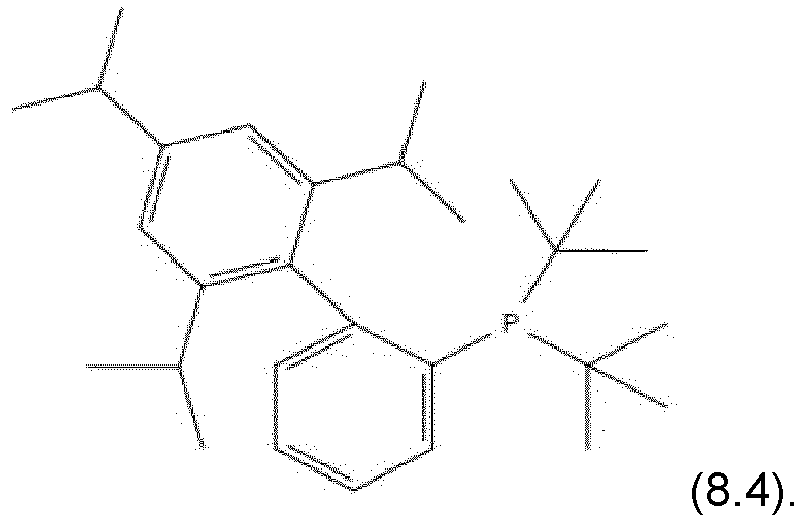
- Beispielsweise weist der Phosphinligand L2 eine der folgenden Formeln (8.1), (8.2), (8.3) oder (8.4) auf:


- Der erfindungsgemäße Palladiumkomplex weist beispielsweise die folgende Formel (10) auf:

- L1 ein erfindungsgemäßes Phosphin ist,
- L2a und L2b jeweils ein Ligand ist, der kein erfindungsgemäßes Phosphin ist.
- Hinsichtlich geeigneter Liganden L2a und L2b kann auf die obigen Ausführungen zu dem Liganden L2 verwiesen werden. Beispielsweise sind die Liganden L2a und L2b des erfindungsgemäßen Pd-Komplexes unabhängig voneinander ausgewählt aus einem Halogenid (z.B. Cl-, Br oder I-); einem Aryl; einem Nitril (z.B. Acetonitril, Propionitril oder Benzonitril); einem Carboxylat (z.B. Acetat); einem konjugierten Dienon (z.B. ein 1,4-Dien-3-on wie Dibenzylidenaceton (dba)); einem Phosphin, das kein erfindungsgemäßes Phosphin ist (z.B. ein nicht-cyclisches Phosphin); einem Pseudohalogenid (z.B. CN- oder OCN-) einem Amin oder Acetylacetonat.
- Ein beispielhafter Palladiumkomplex der vorliegenden Erfindung weist die folgende Formel (10.1) auf:

- Beispielsweise ist der Ligand L2a Dibenzylidenaceton (dba) oder Acetonitril und der Ligand L2b wird aus einem der oben für L2 angegebenen Liganden ausgewählt.
- Ein weiterer beispielhafter Palladiumkomplex der vorliegenden Erfindung weist die folgende Formel (10.2) auf:

- Ein weiterer beispielhafter Palladiumkomplex der vorliegenden Erfindung weist die folgende Formel (10.3) auf:

- Wie oben bereits erwähnt, können das erfindungsgemäße Phosphin und eine als Präkursor fungierende Palladiumverbindung, die das erfindungsgemäße Phosphin noch nicht enthält, dem Reaktionsmedium zugegeben werden, so dass die Bildung eines Palladiumkomplexes, der das erfindungsgemäße Phosphin als einen Liganden enthält, in situ im Reaktionsmedium der Kupplungsreaktion erfolgt.
- Die vorliegende Erfindung betrifft daher auch eine Zusammensetzung, enthaltend
- eine Palladiumverbindung und
- das oben beschriebene erfindungsgemäße Phosphin.
- Die Palladiumverbindung der erfindungsgemäßen Zusammensetzung enthält üblicherweise kein erfindungsgemäßes Phosphin.
- Optional kann die Zusammensetzung in Form eines Kits, der die Palladiumverbindung und das erfindungsgemäße Phosphin in getrennten Behältern enthält, vorliegen.
- Die Palladiumverbindung ist beispielsweise ein Palladiumsalz oder ein Palladiumkomplex, dessen Liganden kein erfindungsgemäßes Phosphin sind.
- Das Palladiumsalz ist beispielsweise ein Palladiumacetat, ein Palladiumhalogenid (z.B. ein Palladiumchlorid, Palladiumbromid oder Palladiumiodid) oder ein Palladiumpseudohalogenid oder ein Gemisch aus mindestens zwei dieser Salze.
- Handelt es sich bei der Palladiumverbindung um einen Palladiumkomplex, so sind dessen Liganden unabhängig voneinander beispielsweise ausgewählt aus einem Halogenid (z.B. Cl-, Br- oder I-); einem Phosphin, das kein erfindungsgemäßes Phosphin ist (z.B. ein nicht-cyclisches Phosphin); einem konjugierten Dienon (z.B. ein 1,4-Dien-3-on wie Dibenzylidenaceton (dba)); einem Polyen (beispielsweise ein Polyen mit 2-4 Doppelbindungen, bevorzugt ein cyclisches Polyen, insbesondere ein cyclisches mit 2-4 Doppelbindungen wie z.B. Cyclooctadien oder Cyclooctatetraen); einem Nitril (z.B. Acetonitril, Propionitril oder Benzonitril); einem Acetylacetonat; einem Carboxylat (z.B. Acetat); einem Pseudohalogenid (z.B. CN- oder OCN-), einem Amin oder einem Aryl.
- Hinsichtlich des Phosphinliganden, der kein erfindungsgemäßes Phosphin ist, kann auf die obigen Ausführungen zu Ligand L2 verwiesen werden. Bevorzugt ist der Phosphinligand, der kein erfindungsgemäßes Phosphin ist, ein nicht-cyclisches Phosphin, d.h. ein Phosphin, das keinen phosphorhaltigen Ring aufweist. Geeignete nicht-cyclische Phosphinliganden für Palladiumkomplexe sind dem Fachmann bekannt. Bei dem Phosphinliganden, der kein erfindungsgemäßes Phosphin ist, handelt es sich beispielsweise um ein Tri-C1-6-Alkylphosphin, ein Tri-C5-7-Cycloalkylphosphin oder ein Triarylphosphin (insbesondere ein Triphenylphosphin), wobei jede der Arylgruppen (die bevorzugt Phenylgruppen sind) optional durch eine oder mehrere C1-4-Haloalkylgruppen (z.B. -CF3), C1-4-Alkylgruppen (z.B. Methyl) oder C1-4 - Alkoxygruppen (z.B. Methoxy) substituiert ist. Alternativ kann es sich bei dem Phosphinliganden, der kein erfindungsgemäßes Phosphin ist, beispielsweise um ein Phosphin der oben beschriebenen Formel (8) handeln.
- Als beispielhafte Palladiumverbindungen der erfindungsgemäßen Zusammensetzung können Folgende genannt werden: ein Palladiumdibenzylidenkomplex (z.B. Pd2(dba)3 oder Pd(dba)2); PdCl2(PR3)2, wobei R ein Phenyl (das optional mit einer oder mehreren C1-6-Alkylgruppen substituiert ist), ein C5-7-Cycloalkyl oder ein C1-6-Alkyl ist; ein Palladiumacetat (z.B. Pd2(OAc)3); ein Palladiumacetylacetonat; ein PdX2, wobei X ein Halogenid oder Pseudehalogenid ist; ein Pd(RCN)2Cl2, wobei R ein Phenyl oder Methyl ist.
- Die vorliegende Erfindung betrifft außerdem die Verwendung des oben beschriebenen erfindungsgemäßen Palladiumkomplexes oder der oben beschriebenen erfindungsgemäßen Zusammensetzung als Katalysator in einer Kreuzkupplungsreaktion.
- Die Kreuzkupplungsreaktion ist beispielsweise eine C-C- oder C-N-Kreuzkupplungsreaktion.
- Eine bevorzugte C-N-Kreuzkupplungsreaktion ist die Buchwald-Hartwig-Kupplung. Wie dem Fachmann bekannt ist, handelt es sich bei der Buchwald-Hartwig-Kupplung um eine Kupplungsreaktion, bei der ein Aryl- oder Heteroarylhalogenid, -pseudohalogenid oder -sulfonat und ein primäres oder sekundäres Amin in Anwesenheit eines palladiumhaltigen Katalysators (und bevorzugt einer Base) unter Ausbildung einer C-N-Bindung miteinander umgesetzt werden.
- Die C-C-Kreuzkupplungsreaktion ist beispielsweise eine Suzuki-Miyaura-Kupplung. Wie dem Fachmann bekannt ist, handelt es sich bei der Suzuki-Miyaura-Kupplung um eine Kupplungsreaktion, bei der eine Organobor-Verbindung und beispielsweise ein Aryl- oder Heteroarylhalogenid, -pseudohalogenid oder -sulfonat in Anwesenheit eines palladiumhaltigen Katalysators unter Ausbildung einer C-C-Bindung miteinander umgesetzt werden.
- Die vorliegende Erfindung betrifft außerdem ein Verfahren zur Herstellung eines Aryl- oder Heteroarylamins, wobei eine Verbindung der Formel (9)
Ar-X (9)
wobei - Ar ein Aryl oder Heteroaryl ist,
- X ein Halogenatom, eine Sulfonatgruppe (z.B. Trifluormethansulfonat -O-Tf) oder eine
- Pseudohalogengruppe (z.B. -CN, -OCN oder -NCO) ist,
- Geeignete Reaktionsbedingungen für die Buchwald-Hartwig-Kupplung sind dem Fachmann bekannt. Bevorzugt erfolgt die Umsetzung in Anwesenheit einer Base.
- Ein erfindungsgemäßes cyclisches Biarylphosphin der folgenden Formel (I)


- Die Herstellung der Zwischenprodukte


- 2'-Iodo-2,4,6-triisopropyl-1,1'-biphenyl (438 mg; 1,08 mmol; 1,00 equiv.) unter Argon wurde in entgastem, trockenem THF (5 mL) gelöst und n-BuLi (2,50 M in Hexan; 0,47 mL; 1,10 mmol; 1,10 equiv.) bei -78 °C über 30 Minuten langsam hinzugetropft. Die Lösung wurde bei -78 °C für 30 Minuten gerührt. Diethylchlorphosphat (0,19 mL; 1,29 mmol; 1,20 equiv.) wurden bei -78 °C hinzugefügt und die Lösung weitere 30 Minuten bei -78 °C gerührt. Anschließend wurde die Reaktionslösung für 5 Stunden bei Raumtemperatur gerührt. Die Reaktion wurde mit einer wässrigen, gesättigten Lösung von NH4Cl (7 mL) gequencht, abfiltriert und die wässrige Phase mit EtOAc (3 × 7 mL) extrahiert. Die vereinten organischen Phasen wurden mit gesättigter Kochsalzlösung (7 mL) gewaschen und über Na2SO4 getrocknet. Das Lösungsmittel wurde in vacuo entfernt. Der Rückstand wurde durch Säulenchromatographie (Kieselgel, Hexan/EtOAc: 0-60 % EtOAc) aufgereinigt. Das Produkt (335 mg; 0,80 mmol; 75 %) wurde als farbloser Feststoff erhalten.
- LiAlH4 (1,00 M in THF; 5,04 mL; 5.04 mmol; 3,00 equiv.) wurde unter Argon bei 0 °C in entgastes, trockenes THF (5 mL) gegeben. Trimethylchlorsilan (0,64 mL; 5,04 mmol; 3,00 equiv.) wurde bei 0 °C hinzugegeben und die Lösung für 30 Minuten bei 0 °C gerührt. Die Lösung wurde zu einer Lösung von Diethyl (2',4',6'-triisopropyl-[1,1'-biphenyl]-2-yl)phosphonat (335 mg; 0,80 mmol; 1,00 equiv.) in THF (5 mL) bei 0 °C hinzugetropft. Die Reaktionslösung wurde über Nacht bei Raumtemperatur gerührt, anschließend auf 0 °C gekühlt und mit EtOAc (10 mL) und einer wässriger 1M HCl-Lösung (26 mL) gequencht. Das Reaktionsgemisch wurde für eine Stunde gerührt und die wässrige Phase mit EtOAc (2 × 10 mL) extrahiert. Die vereinten organischen Phasen wurden mit gesättigter Kochsalzlösung (10 mL) gewaschen, über Na2SO4 getrocknet und das Lösungsmittel in vacuo entfernt. Das Produkt (239 mg; 0,76 mmol; 95 %) wurde als farbloser Feststoff erhalten.
- (2',4',6'-Triisopropyl-[1,1'-biphenyl]-2-yl)phosphan (200 mg; 0,64 mmol; 1,00 equiv.) wurden in trockenem, entgastem THF (3 mL) gelöst. n-BuLi (2,5 M in Hexan; 0,51 mL; 1,28 mmol; 2,00 equiv.) wurde bei -78 °C hinzugetropft. Es wurde für 10 Minuten bei Raumtemperatur gerührt. Anschließend wurde Bis(bromoethyl)dimethylsilan (175 mg; 0,64 mmol; 1,00 equiv.) bei -78 °C hinzugegeben. Die Reaktion wurde für 4 Stunden bei Raumtemperatur gerührt. Die Reaktion wurde mit einer entgasten, wässrigen, gesättigten Lösung von NH4Cl (5 mL) gequencht. Die wässrige Phase wurde mit entgastem, trockenem EtOAc (3 × 7 mL) gewaschen und die vereinten organischen Phasen über Na2SO4 getrocknet. Das Lösungsmittel wurde in vacuo entfernt. Das Produkt (259 mg; 0,61 mmol; 95 %) konnte als farblose, viskose Flüssigkeit isoliert werden.
- In den nachfolgend beschriebenen erfindungsgemäßen Beispielen 1-13 wurde das cyclische Biarylphosphin der Formel (I) verwendet, d.h.:

- In dem Vergleichsbeipiel 1 wurde ein nicht-cyclisches Biarylphosphin der folgenden Formel (II) verwendet:

- Als Palladiumverbindung wurde in allen Beispielen (d.h. den erfindungsgemäßen Beispielen 1-13 und dem Vergleichsbeispiel 1) ein Palladiumdibenzylidenkomplex (Pd2(dba)3) verwendet. Diese Palladiumverbindung und das Phosphin der Formel (I) oder (II) wurden dem Reaktionsmedium zugegeben, so dass sich in situ ein Palladiumkomplex, der das Phosphin als einen seiner Liganden enthält, bilden konnte.
- In Beispiel 1 wurden 2-Chlorchinolin und Piperidin als Reaktanten für die Buchwald-Hartwig Kupplung verwendet.
- 2-Chlorochinolin (150 mg; 0,92 mmol; 1,00 equiv.) wurde in trockenem, entgastem Toluol (6 mL) gelöst. Pd2(dba)3 (16,8 mg; 0,02 mmol; 0,02 equiv.), NaOtBu (123 mg; 1,28 mmol; 1,40 equiv.), das cyclische Biarylphosphin der Formel (I) (0,5 M in Toluol; 0,07 mL; 0,04 mmol; 0,04 equiv.) und Piperidin (109 mL; 1,10 mmol; 1,20 equiv.) wurden hinzugegeben. Die Reaktion wurde bei 60 °C für 2 Stunden gerührt und anschließend mit einer wässrigen, gesättigten Lösung von NH4Cl gequencht. Die wässrige Phase wurde mit EtOAc (3 × 8 mL) gewaschen und die vereinten organischen Phasen über Na2SO4 getrocknet. Das Lösungsmittel wurde in vacuo entfernt. Das Produkt wurde durch Säulenchromatograpie (Kieselgel, Hexan/EtOAc: 20/1) aufgereinigt. 2-(Piperidin-1-yl)chinolin (173 mg; 0,81 mmol; 89 %) konnte als farbloser Feststoff isoliert werden.
- In den erfindungsgemäßen Beispielen 2-13 wurden die Reaktanten variiert (siehe nachfolgende Tabelle 1), die Synthesebedingungen waren jedoch identisch mit den in Beispiel 1 verwendeten Synthesebedingungen.
- In Vergleichsbeispiel 1 waren die Reaktanten und die Synthesebedingungen identisch mit den in Beispiel 1 verwendeten Reaktanten und Synthesebedingungen. Allerdings wurde anstelle des erfindungsgemäßen Phosphins der Formel (I) das Phosphin der Formel (II) verwendet.
- Die Ergebnisse der erfindungsgemäßen Beispiele 1-13 sind in der nachfolgenden Tabelle 1 zusammengefasst.
Tabelle 1: Als Reaktanten verwendete Amine, bei der Buchwald-Hartwig-Kupplung erhaltene Reaktionsprodukte und Produktausbeuten in den erfindungsgemäßen Beispielen 1-13 Beispiel Heteroaryl Amin Reaktionsprodukt Ausbeute [%] 1 


88 2 


74 3 


100 4 


42 5 


86 6 


95 7 
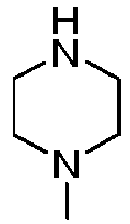

67 8 


79 9 


82 10 


100 11 


98 12 


40 13 


86 - Obwohl in allen Beispielen einer der Reaktanten ein N-heterocyclisches Arylhalogenid war und eine recht kurze Reaktionsdauer bei relativ milder Reaktionstemperatur gewählt wurde, führte die Verwendung des erfindungsgemäßen cyclischen Biarylphosphins als Ligand eines Palladiumkomplexes bei einer palladiumkatalysierten Buchwald-Hartwig-Kupplung zu hohen Produktausbeuten.
- Das Ergebnis des Vergleichsbeispiels 1 ist in der nachfolgenden Tabelle 2 angegeben.
Tabelle 2: Als Reaktanten verwendete Amine und Produktausbeute bei der Buchwald-Hartwig-Kupplung im Vergleichsbeispiel 1 Heteroaryl Amin Erwünschtes Reaktionsprodukt Ausbeute Vergl.bsp. 1 


0 % - Unter Verwendung eines erfindungsgemäßen cyclischen Biarylphosphins der Formel (I) wurde in den erfindungsgemäßen Beispielen 14-17 eine Suzuki-Miyaura-Kupplung mit den im nachfolgenden Reaktionsschema und in der Tabelle 3 angegebenen Reaktanten und Reaktionsbedingungen durchgeführt. Die Ausbeuten sind in der Tabelle 3 angegeben.
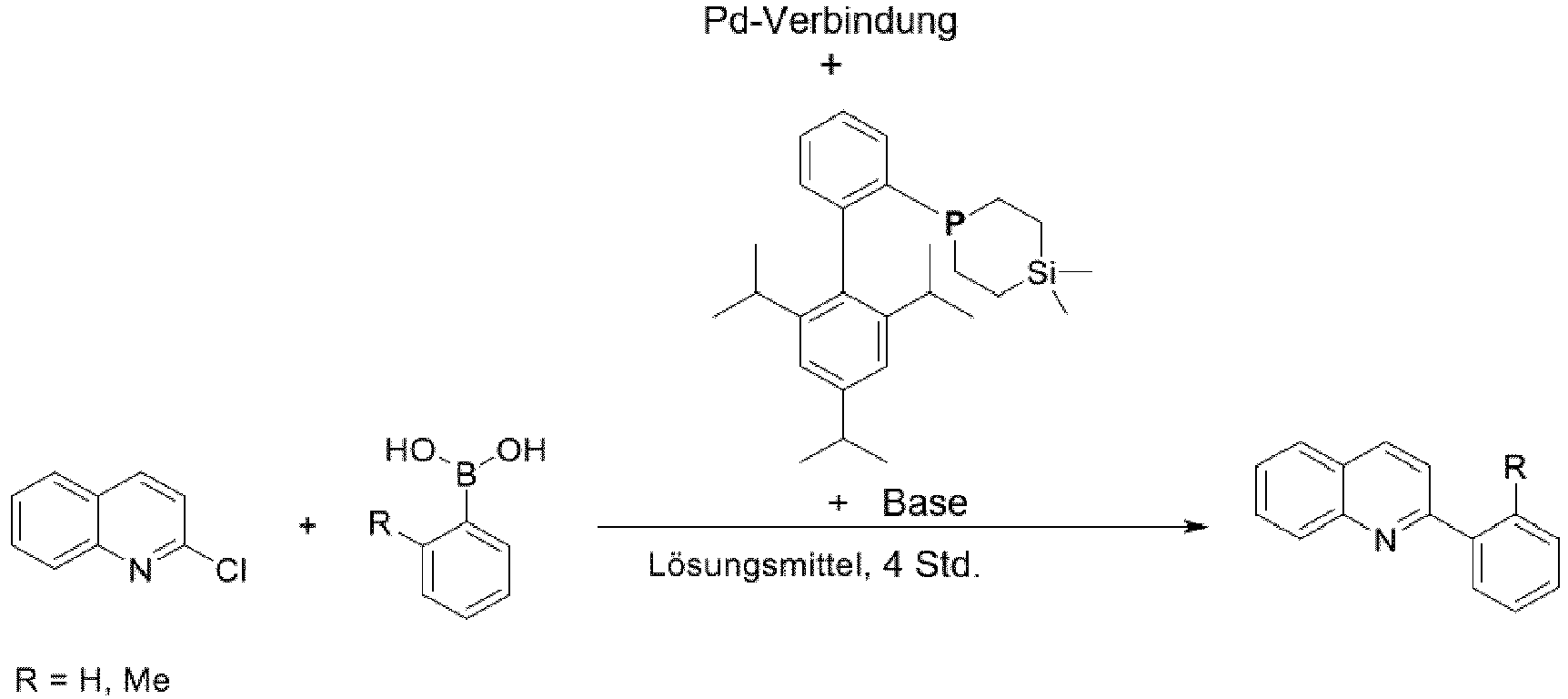
- In Beispiel 14 erfolgte die Herstellung von 2-(o-Tolyl)chinolin (d.h. R=Me) folgendermaßen:
2-Chlorochinolin (150 mg; 0,92 mmol; 1,00 equiv.) wurde in trockenem, entgastem THF (5 mL) und entgastem Wasser (1mL) gelöst. Pd2(dba)3 (16,8 mg; 0,02 mmol; 0,02 equiv.), CsOH × H2O (216 mg; 1,28 mmol; 1,40 equiv.), das cyclische Biarylphosphin der Formel (I)
- Die Suzuki-Miyaura-Kupplung in den erfindungsgemäßen Beispielen 15-17 basierte auf Beispiel 14, allerdings mit den aus der Tabelle 3 ersichtlichen Variationen der Synthesebedingungen.
- In jedem der Beispiele 14-17 wurden somit dem Reaktionsmedium das cyclische Biarylphosphin der Formel (I) und eine Palladiumverbindung (Pd2(dba)3) oder Pd(OAc)2) zugegeben, so dass sich in situ ein Palladiumkomplex, der das erfindungsgemäße cyclische Biarylphosphin als einen seiner Liganden enthält, bilden konnte.
Tabelle 3: Reaktionsausbeuten in den Beispielen 14-17 Pd-Verbindung R Base Lösungsmittel Reaktionstemperatur Ausbeute Beispiel 14 Pd2(dba)3 Me CsOH x H2O THF/H2O 60°C 89 % Beispiel 15 Pd2(dba)3 H NaOtBu THF/H2O Raumtemperatur 35 % Beispiel 16 Pd2(dba)3 H CsOH x H2O THF/H2O Raumtemperatur 54 % Beispiel 17 Pd(OAc)2 H CsOH x H2O THF/H2O Raumtemperatur 46 % - Obwohl in allen Beispielen einer der Reaktanten ein N-heterocyclisches Arylhalogenid war und eine recht kurze Reaktionsdauer (4 Std.) bei milder Reaktionstemperatur gewählt wurde, führte die Verwendung des erfindungsgemäßen cyclischen Biarylphosphins als Ligand eines Palladiumkomplexes bei einer palladiumkatalysierten Suzuki-Miyaura-Kupplung zu hohen Produktausbeuten.
O=P(O-C1-4-Alkyl)2X (3)
wobei
X ein Halogenatom (z.B. Cl, Br oder I) ist.
Claims (17)
- Ein Phosphin der Formel (1)
 - Q SiR3R4, GeR3R4, SnR3R4, AsR3 oder Se ist;- m 0, 1, 2 oder 3 ist; n 0, 1, 2 oder 3 ist; unter der Maßgabe, dass m + n ≥ 1;- die Reste R unabhängig voneinander ein Wasserstoffatom oder ein C1-4-Alkyl sind; oder zwei Reste R, die mit demselben Kohlenstoffatom verbunden sind, jeweils eine bivalente Alkylengruppe sind und zusammen mit dem Kohlenstoffatom, mit dem sie verbunden sind, einen 4- bis 7-gliedrigen Ring bilden; oder, unter der Maßgabe, dass m + n ≥ 2, zwei Reste R, die mit unterschiedlichen Kohlenstoffatomen verbunden sind, jeweils eine bivalente Alkylengruppe sind und zusammen mit den Kohlenstoffatomen, mit denen sie verbunden sind, einen 4- bis 7-gliedrigen Ring bilden;- Ar1 ein Aryl ist, das optional mit einer oder mehreren C1-6-Alkylgruppen substituiert ist;- Ar2 ein Aryl ist, das optional mit einer oder mehreren C1-6-Alkylgruppen substituiert ist;- R3 und R4 unabhängig voneinander ein C1-4-Alkyl, ein C5-7-Cycloalkyl oder ein Aryl sind; oder R3 und R4 jeweils eine bivalente Alkylengruppe sind und zusammen mit dem Si-, Geoder Sn-Atom einen 4- bis 7-gliedrigen Ring bilden.
 - Das Phosphin nach Anspruch 1, wobei- Q SiR3R4 oder SnR3R4, bevorzugter SiR3R4 ist;- m 1, 2 oder 3 ist; n 1, 2 oder 3 ist; unter der Maßgabe, dass folgende Beziehung erfüllt ist: 3 ≤ m + n ≤ 5;- Ar1 ein Phenyl oder Naphthyl ist, das optional mit einer oder mehreren C1-6-Alkylgruppen substituiert ist;- Ar2 ein Phenyl oder Naphthyl ist, das optional mit einer oder mehreren C1-6-Alkylgruppen substituiert ist;- R3 und R4 unabhängig voneinander ein C1-4-Alkyl oder ein Phenyl, das optional mit einer oder mehreren C1-6-Alkylgruppen substituiert ist, sind.
- Das Phosphin nach Anspruch 1 oder 2, die folgende Formel (1a) aufweisend:
 m 0 oder 1 (bevorzugter m=1) und n 1 oder 2 (bevorzugter n=1) sind;k 0, 1, 2, 3 oder 4 ist;p 0, 1, 2, 3, 4 oder 5 ist;Q und R jeweils die in Anspruch 1 oder Anspruch 2 angegebene Bedeutung aufweisen.
 - Das Phosphin nach einem der Ansprüche 1 bis 3, folgende Formel (1b) aufweisend:

p 0, 1, 2, 3, 4 oder 5, bevorzugter 1, 2, 3 oder 4 ist. - Ein Verfahren zur Herstellung des Phosphins gemäß einem der Ansprüche 1 bis 4, wobei ein Phosphin der Formel (5)
Ar1-Ar2-PH2 (5)
wobei
Ar1 und Ar2 jeweils die in einem der Ansprüche 1-4 angegebene Bedeutung aufweisen,
mit einer Base zumindest teilweise deprotoniert wird und das dabei erhaltene Phosphid umgesetzt wird mit einer Verbindung der Formel (6)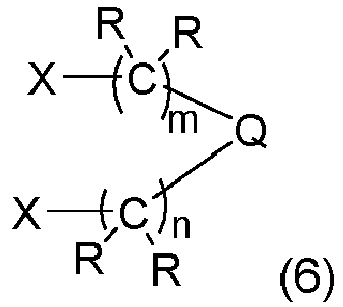 X ein Halogenatom ist,Q, R, m und n jeweils die in einem der Ansprüche 1-4 angegebene Bedeutung aufweisen.
 - Das Verfahren nach Anspruch 5, wobei das Phosphin der Formel (5) hergestellt wird, indem eine Verbindung der Formel (4)

Ar1 und Ar2 jeweils die in einem der Ansprüche 1-4 angegebene Bedeutung aufweisen;
in Anwesenheit eines Reduktionsmittels reduziert wird. - Das Verfahren nach Anspruch 5 oder 6, wobei die Verbindung der Formel (4) hergestellt wird, indem eine Verbindung der Formel (2)
Ar1-Ar2-X (2)
wobeiX ein Halogenatom ist,Ar1 und Ar2 jeweils die in einem der Ansprüche 1-4 angegebene Bedeutung aufweisen,mit einer metallorganischen Verbindung, bevorzugt einer Organolithiumverbindung, zu einem Zwischenprodukt umgesetzt wird und das Zwischenprodukt anschließend umgesetzt wird mit einer Verbindung der Formel (3)
O=P(O-C1-4-Alkyl)2X (3)
wobei X ein Halogenatom ist. - Ein Palladiumkomplex, enthaltend als einen Liganden L1 das Phosphin gemäß einem der Ansprüche 1 bis 4.
- Der Palladiumkomplex nach Anspruch 8, zusätzlich enthaltend einen oder mehrere Liganden L2, die jeweils kein Phosphin gemäß einem der Ansprüche 1 bis 4 sind.
- Der Palladiumkomplex nach Anspruch 9, wobei die Liganden L2 unabhängig voneinander ausgewählt sind aus einem Halogenid; einem Aryl; einem Nitril; einem Carboxylat; einem konjugierten Dienon; einem Phosphin, das kein Phosphin nach einem der Ansprüche 1 bis 4 ist; einem Amin oder Acetylacetonat.
- Eine Zusammensetzung, enthaltend- eine Palladiumverbindung und- das Phosphin gemäß einem der Ansprüche 1-4.
- Die Zusammensetzung nach Anspruch 11, wobei die Palladiumverbindung ein Palladiumsalz oder ein Palladiumkomplex, der kein Phosphin gemäß einem der Ansprüche 1-4 als Liganden enthält, ist.
- Die Zusammensetzung nach Anspruch 11 oder 12, wobei das Palladiumsalz ein Palladiumacetat, ein Palladiumhalogenid, ein Palladiumpseudohalogenid oder ein Gemisch aus mindestens zwei dieser Salze ist.
- Die Zusammensetzung nach Anspruch 12, wobei die Liganden des Palladiumkomplexes unabhängig voneinander ausgewählt sind aus einem Halogenid; einem Phosphin, das kein Phosphin gemäß einem der Ansprüche 1 bis 4 ist; einem konjugierten Dienon (bevorzugt einem 1,4-Dien-3-on wie Dibenzylidenaceton (dba)); einem Polyen (bevorzugt einem cyclischen Polyen mit 2-4 Doppelbindungen wie Cyclooctadien oder Cyclooctatetraen); einem Nitril; einem Acetylacetonat; einem Carboxylat; einem Pseudohalogenid; einem Amin oder einem Aryl.
- Verwendung des Palladiumkomplexes gemäß einem der Ansprüche 8 bis 10 oder der Zusammensetzung gemäß einem der Ansprüche 11 bis 14 als Katalysator in einer Kreuzkupplungsreaktion.
- Die Verwendung nach Anspruch 15, wobei die Kreuzkupplungsreaktion eine C-C- oder eine C-N-Kreuzkupplungsreaktion, insbesondere eine Buchwald-Hartwig-Kupplung ist.
- Ein Verfahren zur Herstellung eines Aryl- oder Heteroarylamins, wobei eine Verbindung der Formel (9)
Ar-X (9)
wobeiAr ein Aryl oder Heteroaryl ist,X ein Halogenatom, eine Sulfonatgruppe oder eine Pseudohalogengruppe ist,mit einem primären oder sekundären Amin in Anwesenheit des Palladiumkomplexes gemäß einem der Ansprüche 8 bis 10 oder der Zusammensetzung gemäß einem der Ansprüche 11 bis 14 umgesetzt wird.
Priority Applications (4)
| Application Number | Priority Date | Filing Date | Title |
|---|---|---|---|
| EP21208544.3A EP4180440B1 (de) | 2021-11-16 | 2021-11-16 | Cyclische biarylphosphine als liganden für palladiumhaltige katalysatoren in kreuzkupplungsreaktionen |
| US18/709,119 US20260158481A1 (en) | 2021-11-16 | 2022-10-17 | Cyclic biaryl phosphines as ligands for palladium-containing catalysts in cross-coupling reactions |
| CN202280076049.8A CN118355021A (zh) | 2021-11-16 | 2022-10-17 | 环状联芳基膦在交叉偶联反应中作为含钯催化剂的配体 |
| PCT/EP2022/078804 WO2023088620A1 (de) | 2021-11-16 | 2022-10-17 | Cyclische biarylphosphine als liganden für palladiumhaltige katalysatoren in kreuzkupplungsreaktionen |
Applications Claiming Priority (1)
| Application Number | Priority Date | Filing Date | Title |
|---|---|---|---|
| EP21208544.3A EP4180440B1 (de) | 2021-11-16 | 2021-11-16 | Cyclische biarylphosphine als liganden für palladiumhaltige katalysatoren in kreuzkupplungsreaktionen |
Publications (3)
| Publication Number | Publication Date |
|---|---|
| EP4180440A1 true EP4180440A1 (de) | 2023-05-17 |
| EP4180440C0 EP4180440C0 (de) | 2026-01-28 |
| EP4180440B1 EP4180440B1 (de) | 2026-01-28 |
Family
ID=78676366
Family Applications (1)
| Application Number | Title | Priority Date | Filing Date |
|---|---|---|---|
| EP21208544.3A Active EP4180440B1 (de) | 2021-11-16 | 2021-11-16 | Cyclische biarylphosphine als liganden für palladiumhaltige katalysatoren in kreuzkupplungsreaktionen |
Country Status (4)
| Country | Link |
|---|---|
| US (1) | US20260158481A1 (de) |
| EP (1) | EP4180440B1 (de) |
| CN (1) | CN118355021A (de) |
| WO (1) | WO2023088620A1 (de) |
Families Citing this family (3)
| Publication number | Priority date | Publication date | Assignee | Title |
|---|---|---|---|---|
| EP4782455A1 (de) | 2025-01-24 | 2026-07-29 | Ludwig-Maximilians-Universität München | Synthese luftstabiler biaryl-phosphasilinan-liganden via radikal-initiierter, doppelter giese-reaktion |
| EP4782456A1 (de) | 2025-01-24 | 2026-07-29 | Ludwig-Maximilians-Universität München | Synthese und anwendung luftstabiler sauerstoff-substituierter biaryl-phosphasilinan-liganden in c x-kreuzkupplungsreaktionen |
| EP4782457A1 (de) | 2025-01-24 | 2026-07-29 | Ludwig-Maximilians-Universität München | Synthese und verwendung eines luftstabilen ferrocenylphosphasilinan-liganden in c x-kreuzkupplungsreaktionen |
Citations (1)
| Publication number | Priority date | Publication date | Assignee | Title |
|---|---|---|---|---|
| WO2012009698A1 (en) | 2010-07-16 | 2012-01-19 | Abbott Laboratories | Phosphine ligands for catalytic reactions |
-
2021
- 2021-11-16 EP EP21208544.3A patent/EP4180440B1/de active Active
-
2022
- 2022-10-17 WO PCT/EP2022/078804 patent/WO2023088620A1/de not_active Ceased
- 2022-10-17 US US18/709,119 patent/US20260158481A1/en active Pending
- 2022-10-17 CN CN202280076049.8A patent/CN118355021A/zh active Pending
Patent Citations (2)
| Publication number | Priority date | Publication date | Assignee | Title |
|---|---|---|---|---|
| WO2012009698A1 (en) | 2010-07-16 | 2012-01-19 | Abbott Laboratories | Phosphine ligands for catalytic reactions |
| US20140371446A1 (en) * | 2010-07-16 | 2014-12-18 | Abbvie Inc. | Phosphine ligands for catalytic reactions |
Non-Patent Citations (10)
| Title |
|---|
| C. MAUMELA ET AL., RSC ADV, vol. 11, 2021, pages 26883 - 26891 |
| H.C. SHEN: "Applications of Transition Metal Catalysis in Drug Discovery and Development: An Industrial Perspective", 2012, JOHN WILEY & SONS, article "Selected Applications of Transition Metal-Catalyzed Carbon-Carbon Cross-Coupling Reactions in the Pharmaceutical Industry", pages: 25 - 96 |
| Q. GU ET AL.: "Palladium catalyzed C-C and C-N bond forming reactions: An update on the synthesis of pharmaceuticals from 2015-2020", ORG. CHEM. FRONT., vol. 8, 2021, pages 384 - 414 |
| R. DOREL ET AL.: "The Buchwald-Hartwig Amination After 25 Years", ANGEW. CHEM. INT. ED., vol. 58, 2019, pages 17118 - 17129 |
| S. SHEKHAR ET AL., ACS CATAL, vol. 10, 2020, pages 15008 - 15018 |
| S. SHEKHAR ET AL., ACS CATAL, vol. 9, 2019, pages 11691 - 11708 |
| S.L. BUCHWALD ET AL.: "Applications of Palladium-Catalyzed C-N Cross-Coupling Reactions", CHEM. REV., vol. 116, 2016, pages 12564 - 12649, XP055576488, DOI: 10.1021/acs.chemrev.6b00512 |
| S.L. BUCHWALD ET AL.: "Biaryl Phosphane Ligands in Palladium-Catalyzed Amination", ANGEW. CHEM. INT. ED., vol. 47, 2008, pages 6338 - 6361 |
| S.L. BUCHWALD ET AL.: "Dialkylbiaryl phosphines in Pd-catalyzed amination: a user's guide", CHEM. SCI., vol. 2, 2011, pages 27 - 50 |
| YA A VERESHCHAGINA ET AL: "Conformational analysis of 1,4-heterophosphinanes", RUSSIAN JOURNAL OF GENERAL CHEMISTRY, NAUKA/INTERPERIODICA, MO, vol. 77, no. 1, 1 January 2007 (2007-01-01), pages 36 - 39, XP019484190, ISSN: 1608-3350, DOI: 10.1134/S1070363207010057 * |
Also Published As
| Publication number | Publication date |
|---|---|
| WO2023088620A1 (de) | 2023-05-25 |
| EP4180440C0 (de) | 2026-01-28 |
| US20260158481A1 (en) | 2026-06-11 |
| CN118355021A (zh) | 2024-07-16 |
| EP4180440B1 (de) | 2026-01-28 |
Similar Documents
| Publication | Publication Date | Title |
|---|---|---|
| EP1303525B1 (de) | Adamantylgruppen enthaltende phosphanliganden, deren herstellung und ihre verwendung in katalytischen reaktionen | |
| DE60306795T2 (de) | Ruthenium-komplexe als (pre)katalysatoren für metathesereaktionen | |
| EP1373279B1 (de) | Verfahren zur herstellung von diphosphinen und deren verwendung | |
| WO2023088620A1 (de) | Cyclische biarylphosphine als liganden für palladiumhaltige katalysatoren in kreuzkupplungsreaktionen | |
| EP0719758B1 (de) | Verfahren zur Herstellung aromatischer Olefine | |
| EP2173702B1 (de) | Verfahren zur decarboxylierenden c-c verknüpfung von carbonsäuren mit kohlenstoffelektrophilen | |
| EP2459579B1 (de) | Imidazolgruppenhaltige phosphinoboran-verbindungen und verfahren zur herstellung von imidazolgruppenhaltige phosphorverbindungen | |
| EP1202952B1 (de) | Verfahren zur herstellung von aminen durch homogen katalysierte reduktive aminierung von carbonylverbindungen | |
| DE10322408A1 (de) | Stickstoffhaltige monodentate Phosphine und deren Verwendung in der Katalyse | |
| EP3994117B1 (de) | Hydrierung von estern zu alkoholen in gegenwart eines ru-pnn-komplexes | |
| EP0842183A1 (de) | Katalysatoren zur durchführung von kreuzkupplungsreaktionen | |
| EP2254895A1 (de) | Imidazolgruppenhaltige phosphorverbindungen | |
| EP4644353A2 (de) | Ylid-funktionalisierte phosphane zur verwendung in metallkomplexen und der homogenen katalyse | |
| EP1177199A1 (de) | Ionische flüssigkeiten, ihre herstellung und ihre verwendung | |
| EP1526917B1 (de) | Neue nickel-, palladium- und platin-carbenkomplexe, ihre herstellung und verwendung in katalytischen reaktionen | |
| EP1521745A1 (de) | Verfahren zur herstellung von imidazoliumsalzen | |
| EP0218970A2 (de) | Chirale Rhodium-diphosphinkomplexe für asymmetrische Hydrierungen | |
| EP0970028B1 (de) | Verfahren zur synthese von aromatisch substituierten olefinen | |
| EP1161437B1 (de) | Phosphabenzolverbindungen und ihre verwendung als liganden für hydroformylierungskatalysatoren | |
| EP1409493B1 (de) | Verfahren zur herstellung von nicht-chiralen und optisch aktiven hydroxygruppen enthaltenden organischen verbindungen | |
| DE102014201122A1 (de) | Verfahren zur katalytischen Herstellung von ungesättigten Aldehyden | |
| EP1937613A1 (de) | Verfahren zur herstellung von 2-arylcarbonylverbindungen, 2-arylestern und 2-arylnitrilen sowie ihrer heteroaromatischen analoga | |
| DE102010001364B4 (de) | Neue P,O-Ferrocene, deren Herstellung und Verwendung in katalytischen Reaktionen | |
| DE102004006422A1 (de) | Heterocyclische Carbenkomplexe und deren Anwendungen | |
| DE10236079A1 (de) | Neue Nickel-, Palladium- und Platin-Carbenkomplexe, ihre Herstellung und Verwendung in katalytischen Reaktionen |
Legal Events
| Date | Code | Title | Description |
|---|---|---|---|
| PUAI | Public reference made under article 153(3) epc to a published international application that has entered the european phase |
Free format text: ORIGINAL CODE: 0009012 |
|
| STAA | Information on the status of an ep patent application or granted ep patent |
Free format text: STATUS: REQUEST FOR EXAMINATION WAS MADE |
|
| 17P | Request for examination filed |
Effective date: 20211116 |
|
| AK | Designated contracting states |
Kind code of ref document: A1 Designated state(s): AL AT BE BG CH CY CZ DE DK EE ES FI FR GB GR HR HU IE IS IT LI LT LU LV MC MK MT NL NO PL PT RO RS SE SI SK SM TR |
|
| RAP1 | Party data changed (applicant data changed or rights of an application transferred) |
Owner name: HERAEUS PRECIOUS METALS GMBH & CO. KG |
|
| GRAP | Despatch of communication of intention to grant a patent |
Free format text: ORIGINAL CODE: EPIDOSNIGR1 |
|
| STAA | Information on the status of an ep patent application or granted ep patent |
Free format text: STATUS: GRANT OF PATENT IS INTENDED |
|
| RIC1 | Information provided on ipc code assigned before grant |
Ipc: B01J 31/16 20060101ALI20250127BHEP Ipc: C07D 413/04 20060101ALI20250127BHEP Ipc: C07D 403/04 20060101ALI20250127BHEP Ipc: C07D 401/04 20060101ALI20250127BHEP Ipc: C07D 215/38 20060101ALI20250127BHEP Ipc: B01J 31/24 20060101ALI20250127BHEP Ipc: C07F 15/00 20060101ALI20250127BHEP Ipc: C07F 9/6596 20060101AFI20250127BHEP |
|
| INTG | Intention to grant announced |
Effective date: 20250211 |
|
| GRAJ | Information related to disapproval of communication of intention to grant by the applicant or resumption of examination proceedings by the epo deleted |
Free format text: ORIGINAL CODE: EPIDOSDIGR1 |
|
| STAA | Information on the status of an ep patent application or granted ep patent |
Free format text: STATUS: REQUEST FOR EXAMINATION WAS MADE |
|
| INTC | Intention to grant announced (deleted) | ||
| GRAP | Despatch of communication of intention to grant a patent |
Free format text: ORIGINAL CODE: EPIDOSNIGR1 |
|
| STAA | Information on the status of an ep patent application or granted ep patent |
Free format text: STATUS: GRANT OF PATENT IS INTENDED |
|
| INTG | Intention to grant announced |
Effective date: 20250929 |
|
| GRAS | Grant fee paid |
Free format text: ORIGINAL CODE: EPIDOSNIGR3 |
|
| GRAA | (expected) grant |
Free format text: ORIGINAL CODE: 0009210 |
|
| STAA | Information on the status of an ep patent application or granted ep patent |
Free format text: STATUS: THE PATENT HAS BEEN GRANTED |
|
| AK | Designated contracting states |
Kind code of ref document: B1 Designated state(s): AL AT BE BG CH CY CZ DE DK EE ES FI FR GB GR HR HU IE IS IT LI LT LU LV MC MK MT NL NO PL PT RO RS SE SI SK SM TR |
|
| REG | Reference to a national code |
Ref country code: CH Ref legal event code: F10 Free format text: ST27 STATUS EVENT CODE: U-0-0-F10-F00 (AS PROVIDED BY THE NATIONAL OFFICE) Effective date: 20260128 Ref country code: GB Ref legal event code: FG4D Free format text: NOT ENGLISH |
|
| REG | Reference to a national code |
Ref country code: CH Ref legal event code: R17 Free format text: ST27 STATUS EVENT CODE: U-0-0-R10-R17 (AS PROVIDED BY THE NATIONAL OFFICE) Effective date: 20260204 |
|
| REG | Reference to a national code |
Ref country code: DE Ref legal event code: R096 Ref document number: 502021009688 Country of ref document: DE |
|
| REG | Reference to a national code |
Ref country code: IE Ref legal event code: FG4D Free format text: LANGUAGE OF EP DOCUMENT: GERMAN |
|
| U01 | Request for unitary effect filed |
Effective date: 20260129 |
|
| U07 | Unitary effect registered |
Designated state(s): AT BE BG DE DK EE FI FR IT LT LU LV MT NL PT RO SE SI Effective date: 20260204 |
|
| PG25 | Lapsed in a contracting state [announced via postgrant information from national office to epo] |
Ref country code: RS Free format text: LAPSE BECAUSE OF FAILURE TO SUBMIT A TRANSLATION OF THE DESCRIPTION OR TO PAY THE FEE WITHIN THE PRESCRIBED TIME-LIMIT Effective date: 20260428 |
|
| PG25 | Lapsed in a contracting state [announced via postgrant information from national office to epo] |
Ref country code: ES Free format text: LAPSE BECAUSE OF FAILURE TO SUBMIT A TRANSLATION OF THE DESCRIPTION OR TO PAY THE FEE WITHIN THE PRESCRIBED TIME-LIMIT Effective date: 20260128 |
|
| PG25 | Lapsed in a contracting state [announced via postgrant information from national office to epo] |
Ref country code: PL Free format text: LAPSE BECAUSE OF FAILURE TO SUBMIT A TRANSLATION OF THE DESCRIPTION OR TO PAY THE FEE WITHIN THE PRESCRIBED TIME-LIMIT Effective date: 20260128 |
|
| PG25 | Lapsed in a contracting state [announced via postgrant information from national office to epo] |
Ref country code: GR Free format text: LAPSE BECAUSE OF FAILURE TO SUBMIT A TRANSLATION OF THE DESCRIPTION OR TO PAY THE FEE WITHIN THE PRESCRIBED TIME-LIMIT Effective date: 20260429 |
|
| PG25 | Lapsed in a contracting state [announced via postgrant information from national office to epo] |
Ref country code: NO Free format text: LAPSE BECAUSE OF FAILURE TO SUBMIT A TRANSLATION OF THE DESCRIPTION OR TO PAY THE FEE WITHIN THE PRESCRIBED TIME-LIMIT Effective date: 20260428 |
|
| PG25 | Lapsed in a contracting state [announced via postgrant information from national office to epo] |
Ref country code: HR Free format text: LAPSE BECAUSE OF FAILURE TO SUBMIT A TRANSLATION OF THE DESCRIPTION OR TO PAY THE FEE WITHIN THE PRESCRIBED TIME-LIMIT Effective date: 20260128 |
|
| PG25 | Lapsed in a contracting state [announced via postgrant information from national office to epo] |
Ref country code: IS Free format text: LAPSE BECAUSE OF FAILURE TO SUBMIT A TRANSLATION OF THE DESCRIPTION OR TO PAY THE FEE WITHIN THE PRESCRIBED TIME-LIMIT Effective date: 20260528 |