EP4179878A1 - Method for processing a protein-rich residue and uses thereof - Google Patents
Method for processing a protein-rich residue and uses thereof Download PDFInfo
- Publication number
- EP4179878A1 EP4179878A1 EP22207357.9A EP22207357A EP4179878A1 EP 4179878 A1 EP4179878 A1 EP 4179878A1 EP 22207357 A EP22207357 A EP 22207357A EP 4179878 A1 EP4179878 A1 EP 4179878A1
- Authority
- EP
- European Patent Office
- Prior art keywords
- protein
- fraction
- previous
- dry
- mbm
- Prior art date
- Legal status (The legal status is an assumption and is not a legal conclusion. Google has not performed a legal analysis and makes no representation as to the accuracy of the status listed.)
- Withdrawn
Links
- 108090000623 proteins and genes Proteins 0.000 title claims abstract description 120
- 102000004169 proteins and genes Human genes 0.000 title claims abstract description 120
- 238000000034 method Methods 0.000 title claims abstract description 61
- 238000012545 processing Methods 0.000 title claims abstract description 12
- 229910052500 inorganic mineral Inorganic materials 0.000 claims abstract description 69
- 239000011707 mineral Substances 0.000 claims abstract description 69
- 239000006227 byproduct Substances 0.000 claims abstract description 44
- 239000002904 solvent Substances 0.000 claims abstract description 33
- 235000013305 food Nutrition 0.000 claims abstract description 29
- 238000010335 hydrothermal treatment Methods 0.000 claims abstract description 28
- XLYOFNOQVPJJNP-UHFFFAOYSA-N water Substances O XLYOFNOQVPJJNP-UHFFFAOYSA-N 0.000 claims abstract description 25
- 244000144977 poultry Species 0.000 claims abstract description 24
- 241001465754 Metazoa Species 0.000 claims abstract description 18
- 235000013372 meat Nutrition 0.000 claims abstract description 16
- 239000003337 fertilizer Substances 0.000 claims abstract description 14
- 229910019142 PO4 Inorganic materials 0.000 claims abstract description 8
- 239000011575 calcium Substances 0.000 claims abstract description 8
- 235000021317 phosphate Nutrition 0.000 claims abstract description 8
- 150000003013 phosphoric acid derivatives Chemical class 0.000 claims abstract description 8
- OYPRJOBELJOOCE-UHFFFAOYSA-N Calcium Chemical compound [Ca] OYPRJOBELJOOCE-UHFFFAOYSA-N 0.000 claims abstract description 7
- 229910052791 calcium Inorganic materials 0.000 claims abstract description 7
- 235000018102 proteins Nutrition 0.000 claims description 116
- 235000019735 Meat-and-bone meal Nutrition 0.000 claims description 99
- HEMHJVSKTPXQMS-UHFFFAOYSA-M Sodium hydroxide Chemical compound [OH-].[Na+] HEMHJVSKTPXQMS-UHFFFAOYSA-M 0.000 claims description 69
- 239000007787 solid Substances 0.000 claims description 53
- 239000007788 liquid Substances 0.000 claims description 28
- 230000007062 hydrolysis Effects 0.000 claims description 27
- 238000006460 hydrolysis reaction Methods 0.000 claims description 27
- 235000013594 poultry meat Nutrition 0.000 claims description 20
- 239000000203 mixture Substances 0.000 claims description 14
- 239000003513 alkali Substances 0.000 claims description 13
- 235000012054 meals Nutrition 0.000 claims description 13
- 238000001035 drying Methods 0.000 claims description 12
- KWYUFKZDYYNOTN-UHFFFAOYSA-M Potassium hydroxide Chemical compound [OH-].[K+] KWYUFKZDYYNOTN-UHFFFAOYSA-M 0.000 claims description 9
- 210000000988 bone and bone Anatomy 0.000 claims description 9
- 229910052799 carbon Inorganic materials 0.000 claims description 9
- 235000021120 animal protein Nutrition 0.000 claims description 6
- 238000005119 centrifugation Methods 0.000 claims description 6
- 239000006193 liquid solution Substances 0.000 claims description 6
- 108090000765 processed proteins & peptides Proteins 0.000 claims description 6
- 238000005406 washing Methods 0.000 claims description 5
- 102000004196 processed proteins & peptides Human genes 0.000 claims description 4
- 238000001914 filtration Methods 0.000 claims description 3
- 230000003301 hydrolyzing effect Effects 0.000 claims description 3
- VHUUQVKOLVNVRT-UHFFFAOYSA-N Ammonium hydroxide Chemical compound [NH4+].[OH-] VHUUQVKOLVNVRT-UHFFFAOYSA-N 0.000 claims description 2
- 239000000908 ammonium hydroxide Substances 0.000 claims description 2
- 238000004519 manufacturing process Methods 0.000 abstract description 12
- 239000000126 substance Substances 0.000 abstract description 5
- 150000003018 phosphorus compounds Chemical class 0.000 abstract description 3
- 239000007858 starting material Substances 0.000 abstract description 2
- 235000010755 mineral Nutrition 0.000 description 56
- 239000002956 ash Substances 0.000 description 51
- 235000011121 sodium hydroxide Nutrition 0.000 description 22
- 239000007795 chemical reaction product Substances 0.000 description 20
- 230000007928 solubilization Effects 0.000 description 14
- 238000005063 solubilization Methods 0.000 description 14
- 238000011282 treatment Methods 0.000 description 14
- 238000000926 separation method Methods 0.000 description 13
- 238000006243 chemical reaction Methods 0.000 description 12
- 239000000047 product Substances 0.000 description 12
- 239000000654 additive Substances 0.000 description 9
- 238000002474 experimental method Methods 0.000 description 9
- IJGRMHOSHXDMSA-UHFFFAOYSA-N Atomic nitrogen Chemical compound N#N IJGRMHOSHXDMSA-UHFFFAOYSA-N 0.000 description 8
- 238000001027 hydrothermal synthesis Methods 0.000 description 8
- 239000000463 material Substances 0.000 description 8
- 230000000694 effects Effects 0.000 description 7
- BHEPBYXIRTUNPN-UHFFFAOYSA-N hydridophosphorus(.) (triplet) Chemical compound [PH] BHEPBYXIRTUNPN-UHFFFAOYSA-N 0.000 description 7
- QTBSBXVTEAMEQO-UHFFFAOYSA-N Acetic acid Chemical compound CC(O)=O QTBSBXVTEAMEQO-UHFFFAOYSA-N 0.000 description 6
- 235000019750 Crude protein Nutrition 0.000 description 6
- 235000002918 Fraxinus excelsior Nutrition 0.000 description 6
- NBIIXXVUZAFLBC-UHFFFAOYSA-N Phosphoric acid Chemical compound OP(O)(O)=O NBIIXXVUZAFLBC-UHFFFAOYSA-N 0.000 description 6
- 238000009835 boiling Methods 0.000 description 6
- 239000002994 raw material Substances 0.000 description 6
- 235000001014 amino acid Nutrition 0.000 description 5
- 150000001413 amino acids Chemical class 0.000 description 5
- 239000007864 aqueous solution Substances 0.000 description 5
- 239000000413 hydrolysate Substances 0.000 description 5
- 230000000717 retained effect Effects 0.000 description 5
- 239000002699 waste material Substances 0.000 description 5
- DHMQDGOQFOQNFH-UHFFFAOYSA-N Glycine Chemical compound NCC(O)=O DHMQDGOQFOQNFH-UHFFFAOYSA-N 0.000 description 4
- 230000000996 additive effect Effects 0.000 description 4
- 230000015556 catabolic process Effects 0.000 description 4
- 238000006731 degradation reaction Methods 0.000 description 4
- 239000012153 distilled water Substances 0.000 description 4
- 230000007613 environmental effect Effects 0.000 description 4
- JVTAAEKCZFNVCJ-UHFFFAOYSA-N lactic acid Chemical compound CC(O)C(O)=O JVTAAEKCZFNVCJ-UHFFFAOYSA-N 0.000 description 4
- 229910052757 nitrogen Inorganic materials 0.000 description 4
- 150000007524 organic acids Chemical class 0.000 description 4
- 235000005985 organic acids Nutrition 0.000 description 4
- 238000011084 recovery Methods 0.000 description 4
- 239000000243 solution Substances 0.000 description 4
- 238000003756 stirring Methods 0.000 description 4
- 108090000790 Enzymes Proteins 0.000 description 3
- 102000004190 Enzymes Human genes 0.000 description 3
- 108010009736 Protein Hydrolysates Proteins 0.000 description 3
- 208000018756 Variant Creutzfeldt-Jakob disease Diseases 0.000 description 3
- 238000004458 analytical method Methods 0.000 description 3
- 208000005881 bovine spongiform encephalopathy Diseases 0.000 description 3
- 230000003247 decreasing effect Effects 0.000 description 3
- 230000029087 digestion Effects 0.000 description 3
- 210000003746 feather Anatomy 0.000 description 3
- 238000004108 freeze drying Methods 0.000 description 3
- 239000005416 organic matter Substances 0.000 description 3
- 239000012071 phase Substances 0.000 description 3
- 235000011007 phosphoric acid Nutrition 0.000 description 3
- 238000002360 preparation method Methods 0.000 description 3
- 230000007065 protein hydrolysis Effects 0.000 description 3
- 238000012360 testing method Methods 0.000 description 3
- 235000013311 vegetables Nutrition 0.000 description 3
- ODHCTXKNWHHXJC-VKHMYHEASA-N 5-oxo-L-proline Chemical compound OC(=O)[C@@H]1CCC(=O)N1 ODHCTXKNWHHXJC-VKHMYHEASA-N 0.000 description 2
- 241000251468 Actinopterygii Species 0.000 description 2
- 235000001674 Agaricus brunnescens Nutrition 0.000 description 2
- XKRFYHLGVUSROY-UHFFFAOYSA-N Argon Chemical compound [Ar] XKRFYHLGVUSROY-UHFFFAOYSA-N 0.000 description 2
- 239000005996 Blood meal Substances 0.000 description 2
- 241000283690 Bos taurus Species 0.000 description 2
- 241000196324 Embryophyta Species 0.000 description 2
- 239000004471 Glycine Substances 0.000 description 2
- VEXZGXHMUGYJMC-UHFFFAOYSA-N Hydrochloric acid Chemical compound Cl VEXZGXHMUGYJMC-UHFFFAOYSA-N 0.000 description 2
- 238000007696 Kjeldahl method Methods 0.000 description 2
- QNAYBMKLOCPYGJ-REOHCLBHSA-N L-alanine Chemical compound C[C@H](N)C(O)=O QNAYBMKLOCPYGJ-REOHCLBHSA-N 0.000 description 2
- OAICVXFJPJFONN-UHFFFAOYSA-N Phosphorus Chemical compound [P] OAICVXFJPJFONN-UHFFFAOYSA-N 0.000 description 2
- ODHCTXKNWHHXJC-GSVOUGTGSA-N Pyroglutamic acid Natural products OC(=O)[C@H]1CCC(=O)N1 ODHCTXKNWHHXJC-GSVOUGTGSA-N 0.000 description 2
- QAOWNCQODCNURD-UHFFFAOYSA-N Sulfuric acid Chemical compound OS(O)(=O)=O QAOWNCQODCNURD-UHFFFAOYSA-N 0.000 description 2
- 239000002253 acid Substances 0.000 description 2
- ODHCTXKNWHHXJC-UHFFFAOYSA-N acide pyroglutamique Natural products OC(=O)C1CCC(=O)N1 ODHCTXKNWHHXJC-UHFFFAOYSA-N 0.000 description 2
- 238000013019 agitation Methods 0.000 description 2
- 235000004279 alanine Nutrition 0.000 description 2
- 239000012670 alkaline solution Substances 0.000 description 2
- 229910000147 aluminium phosphate Inorganic materials 0.000 description 2
- 239000010828 animal waste Substances 0.000 description 2
- 239000001506 calcium phosphate Substances 0.000 description 2
- 235000011010 calcium phosphates Nutrition 0.000 description 2
- 235000013330 chicken meat Nutrition 0.000 description 2
- 239000002131 composite material Substances 0.000 description 2
- 238000001816 cooling Methods 0.000 description 2
- 230000007071 enzymatic hydrolysis Effects 0.000 description 2
- 238000006047 enzymatic hydrolysis reaction Methods 0.000 description 2
- 238000000855 fermentation Methods 0.000 description 2
- 230000004151 fermentation Effects 0.000 description 2
- 238000005227 gel permeation chromatography Methods 0.000 description 2
- 150000004679 hydroxides Chemical class 0.000 description 2
- 238000009616 inductively coupled plasma Methods 0.000 description 2
- 239000004615 ingredient Substances 0.000 description 2
- 239000004310 lactic acid Substances 0.000 description 2
- 235000014655 lactic acid Nutrition 0.000 description 2
- 238000012986 modification Methods 0.000 description 2
- 230000004048 modification Effects 0.000 description 2
- 238000006386 neutralization reaction Methods 0.000 description 2
- 235000015097 nutrients Nutrition 0.000 description 2
- 239000011574 phosphorus Substances 0.000 description 2
- 229910052698 phosphorus Inorganic materials 0.000 description 2
- 238000011002 quantification Methods 0.000 description 2
- 230000035484 reaction time Effects 0.000 description 2
- 241000894007 species Species 0.000 description 2
- 239000006228 supernatant Substances 0.000 description 2
- QORWJWZARLRLPR-UHFFFAOYSA-H tricalcium bis(phosphate) Chemical compound [Ca+2].[Ca+2].[Ca+2].[O-]P([O-])([O-])=O.[O-]P([O-])([O-])=O QORWJWZARLRLPR-UHFFFAOYSA-H 0.000 description 2
- 229910021642 ultra pure water Inorganic materials 0.000 description 2
- 239000012498 ultrapure water Substances 0.000 description 2
- 239000005995 Aluminium silicate Substances 0.000 description 1
- 239000002028 Biomass Substances 0.000 description 1
- 240000002791 Brassica napus Species 0.000 description 1
- 235000004977 Brassica sinapistrum Nutrition 0.000 description 1
- OKTJSMMVPCPJKN-UHFFFAOYSA-N Carbon Chemical compound [C] OKTJSMMVPCPJKN-UHFFFAOYSA-N 0.000 description 1
- 241000195493 Cryptophyta Species 0.000 description 1
- WHUUTDBJXJRKMK-UHFFFAOYSA-N Glutamic acid Natural products OC(=O)C(N)CCC(O)=O WHUUTDBJXJRKMK-UHFFFAOYSA-N 0.000 description 1
- DGAQECJNVWCQMB-PUAWFVPOSA-M Ilexoside XXIX Chemical compound C[C@@H]1CC[C@@]2(CC[C@@]3(C(=CC[C@H]4[C@]3(CC[C@@H]5[C@@]4(CC[C@@H](C5(C)C)OS(=O)(=O)[O-])C)C)[C@@H]2[C@]1(C)O)C)C(=O)O[C@H]6[C@@H]([C@H]([C@@H]([C@H](O6)CO)O)O)O.[Na+] DGAQECJNVWCQMB-PUAWFVPOSA-M 0.000 description 1
- WHUUTDBJXJRKMK-VKHMYHEASA-N L-glutamic acid Chemical compound OC(=O)[C@@H](N)CCC(O)=O WHUUTDBJXJRKMK-VKHMYHEASA-N 0.000 description 1
- FYYHWMGAXLPEAU-UHFFFAOYSA-N Magnesium Chemical compound [Mg] FYYHWMGAXLPEAU-UHFFFAOYSA-N 0.000 description 1
- 244000061176 Nicotiana tabacum Species 0.000 description 1
- 235000002637 Nicotiana tabacum Nutrition 0.000 description 1
- GRYLNZFGIOXLOG-UHFFFAOYSA-N Nitric acid Chemical compound O[N+]([O-])=O GRYLNZFGIOXLOG-UHFFFAOYSA-N 0.000 description 1
- 108091005804 Peptidases Proteins 0.000 description 1
- 102000035195 Peptidases Human genes 0.000 description 1
- 239000001888 Peptone Substances 0.000 description 1
- 108010080698 Peptones Proteins 0.000 description 1
- BUGBHKTXTAQXES-UHFFFAOYSA-N Selenium Chemical compound [Se] BUGBHKTXTAQXES-UHFFFAOYSA-N 0.000 description 1
- 244000000231 Sesamum indicum Species 0.000 description 1
- 235000003434 Sesamum indicum Nutrition 0.000 description 1
- 235000019764 Soybean Meal Nutrition 0.000 description 1
- 108090000787 Subtilisin Proteins 0.000 description 1
- 108010056079 Subtilisins Proteins 0.000 description 1
- 102000005158 Subtilisins Human genes 0.000 description 1
- 102000004142 Trypsin Human genes 0.000 description 1
- 108090000631 Trypsin Proteins 0.000 description 1
- 238000005903 acid hydrolysis reaction Methods 0.000 description 1
- 239000000853 adhesive Substances 0.000 description 1
- 230000001070 adhesive effect Effects 0.000 description 1
- 238000005904 alkaline hydrolysis reaction Methods 0.000 description 1
- 235000012211 aluminium silicate Nutrition 0.000 description 1
- 239000008346 aqueous phase Substances 0.000 description 1
- 229910052786 argon Inorganic materials 0.000 description 1
- 235000019606 astringent taste Nutrition 0.000 description 1
- 230000000721 bacterilogical effect Effects 0.000 description 1
- 239000011230 binding agent Substances 0.000 description 1
- 230000015572 biosynthetic process Effects 0.000 description 1
- 210000004556 brain Anatomy 0.000 description 1
- 238000001354 calcination Methods 0.000 description 1
- 229910000389 calcium phosphate Inorganic materials 0.000 description 1
- 229940069978 calcium supplement Drugs 0.000 description 1
- 239000003054 catalyst Substances 0.000 description 1
- 239000012141 concentrate Substances 0.000 description 1
- 239000000470 constituent Substances 0.000 description 1
- 230000018044 dehydration Effects 0.000 description 1
- 238000006297 dehydration reaction Methods 0.000 description 1
- 238000011161 development Methods 0.000 description 1
- 235000019621 digestibility Nutrition 0.000 description 1
- AIUDWMLXCFRVDR-UHFFFAOYSA-N dimethyl 2-(3-ethyl-3-methylpentyl)propanedioate Chemical class CCC(C)(CC)CCC(C(=O)OC)C(=O)OC AIUDWMLXCFRVDR-UHFFFAOYSA-N 0.000 description 1
- 238000004821 distillation Methods 0.000 description 1
- 238000009826 distribution Methods 0.000 description 1
- 239000003480 eluent Substances 0.000 description 1
- 230000002255 enzymatic effect Effects 0.000 description 1
- 238000001704 evaporation Methods 0.000 description 1
- 230000008020 evaporation Effects 0.000 description 1
- 108010007119 flavourzyme Proteins 0.000 description 1
- 235000013922 glutamic acid Nutrition 0.000 description 1
- 239000004220 glutamic acid Substances 0.000 description 1
- 239000001963 growth medium Substances 0.000 description 1
- 238000010438 heat treatment Methods 0.000 description 1
- 229910001385 heavy metal Inorganic materials 0.000 description 1
- 239000008241 heterogeneous mixture Substances 0.000 description 1
- 238000004128 high performance liquid chromatography Methods 0.000 description 1
- 230000002209 hydrophobic effect Effects 0.000 description 1
- 229910052588 hydroxylapatite Inorganic materials 0.000 description 1
- 208000015181 infectious disease Diseases 0.000 description 1
- 238000011081 inoculation Methods 0.000 description 1
- 150000002500 ions Chemical class 0.000 description 1
- 238000002955 isolation Methods 0.000 description 1
- NLYAJNPCOHFWQQ-UHFFFAOYSA-N kaolin Chemical compound O.O.O=[Al]O[Si](=O)O[Si](=O)O[Al]=O NLYAJNPCOHFWQQ-UHFFFAOYSA-N 0.000 description 1
- 108010059345 keratinase Proteins 0.000 description 1
- 239000012263 liquid product Substances 0.000 description 1
- 239000011777 magnesium Substances 0.000 description 1
- 229910052749 magnesium Inorganic materials 0.000 description 1
- 150000002681 magnesium compounds Chemical class 0.000 description 1
- 239000000395 magnesium oxide Substances 0.000 description 1
- CPLXHLVBOLITMK-UHFFFAOYSA-N magnesium oxide Inorganic materials [Mg]=O CPLXHLVBOLITMK-UHFFFAOYSA-N 0.000 description 1
- AXZKOIWUVFPNLO-UHFFFAOYSA-N magnesium;oxygen(2-) Chemical compound [O-2].[Mg+2] AXZKOIWUVFPNLO-UHFFFAOYSA-N 0.000 description 1
- 239000011159 matrix material Substances 0.000 description 1
- 239000002609 medium Substances 0.000 description 1
- 229910052751 metal Inorganic materials 0.000 description 1
- 239000002184 metal Substances 0.000 description 1
- 238000000120 microwave digestion Methods 0.000 description 1
- 238000002156 mixing Methods 0.000 description 1
- 229910017604 nitric acid Inorganic materials 0.000 description 1
- 239000012299 nitrogen atmosphere Substances 0.000 description 1
- 239000000618 nitrogen fertilizer Substances 0.000 description 1
- 239000003895 organic fertilizer Substances 0.000 description 1
- 238000000643 oven drying Methods 0.000 description 1
- 239000008188 pellet Substances 0.000 description 1
- XYJRXVWERLGGKC-UHFFFAOYSA-D pentacalcium;hydroxide;triphosphate Chemical compound [OH-].[Ca+2].[Ca+2].[Ca+2].[Ca+2].[Ca+2].[O-]P([O-])([O-])=O.[O-]P([O-])([O-])=O.[O-]P([O-])([O-])=O XYJRXVWERLGGKC-UHFFFAOYSA-D 0.000 description 1
- 235000019319 peptone Nutrition 0.000 description 1
- 229940066779 peptones Drugs 0.000 description 1
- 229920001184 polypeptide Polymers 0.000 description 1
- 159000000001 potassium salts Chemical class 0.000 description 1
- 238000001556 precipitation Methods 0.000 description 1
- 239000013630 prepared media Substances 0.000 description 1
- 230000001737 promoting effect Effects 0.000 description 1
- 239000003531 protein hydrolysate Substances 0.000 description 1
- 230000007925 protein solubilization Effects 0.000 description 1
- 238000001799 protein solubilization Methods 0.000 description 1
- 230000017854 proteolysis Effects 0.000 description 1
- 238000010298 pulverizing process Methods 0.000 description 1
- 230000003014 reinforcing effect Effects 0.000 description 1
- 238000009877 rendering Methods 0.000 description 1
- 230000005070 ripening Effects 0.000 description 1
- 239000012852 risk material Substances 0.000 description 1
- 229910052711 selenium Inorganic materials 0.000 description 1
- 239000011669 selenium Substances 0.000 description 1
- 238000007873 sieving Methods 0.000 description 1
- 239000002893 slag Substances 0.000 description 1
- 239000011734 sodium Substances 0.000 description 1
- 229910052708 sodium Inorganic materials 0.000 description 1
- 239000012265 solid product Substances 0.000 description 1
- 239000004455 soybean meal Substances 0.000 description 1
- 239000012853 specific risk material Substances 0.000 description 1
- 210000000278 spinal cord Anatomy 0.000 description 1
- 238000001694 spray drying Methods 0.000 description 1
- 229910001220 stainless steel Inorganic materials 0.000 description 1
- 239000010935 stainless steel Substances 0.000 description 1
- 238000010561 standard procedure Methods 0.000 description 1
- 230000001954 sterilising effect Effects 0.000 description 1
- 238000004659 sterilization and disinfection Methods 0.000 description 1
- 239000000758 substrate Substances 0.000 description 1
- 235000019640 taste Nutrition 0.000 description 1
- 238000009283 thermal hydrolysis Methods 0.000 description 1
- 238000007669 thermal treatment Methods 0.000 description 1
- 238000002411 thermogravimetry Methods 0.000 description 1
- 238000004448 titration Methods 0.000 description 1
- 239000012588 trypsin Substances 0.000 description 1
- 230000004580 weight loss Effects 0.000 description 1
Images



Classifications
-
- A—HUMAN NECESSITIES
- A23—FOODS OR FOODSTUFFS; TREATMENT THEREOF, NOT COVERED BY OTHER CLASSES
- A23L—FOODS, FOODSTUFFS OR NON-ALCOHOLIC BEVERAGES, NOT OTHERWISE PROVIDED FOR; PREPARATION OR TREATMENT THEREOF
- A23L13/00—Meat products; Meat meal; Preparation or treatment thereof
- A23L13/20—Meat products; Meat meal; Preparation or treatment thereof from offal, e.g. rinds, skins, marrow, tripes, feet, ears or snouts
-
- A—HUMAN NECESSITIES
- A23—FOODS OR FOODSTUFFS; TREATMENT THEREOF, NOT COVERED BY OTHER CLASSES
- A23J—PROTEIN COMPOSITIONS FOR FOODSTUFFS; WORKING-UP PROTEINS FOR FOODSTUFFS; PHOSPHATIDE COMPOSITIONS FOR FOODSTUFFS
- A23J1/00—Obtaining protein compositions for foodstuffs; Bulk opening of eggs and separation of yolks from whites
- A23J1/001—Obtaining protein compositions for foodstuffs; Bulk opening of eggs and separation of yolks from whites from waste materials, e.g. kitchen waste
- A23J1/002—Obtaining protein compositions for foodstuffs; Bulk opening of eggs and separation of yolks from whites from waste materials, e.g. kitchen waste from animal waste materials
-
- A—HUMAN NECESSITIES
- A23—FOODS OR FOODSTUFFS; TREATMENT THEREOF, NOT COVERED BY OTHER CLASSES
- A23J—PROTEIN COMPOSITIONS FOR FOODSTUFFS; WORKING-UP PROTEINS FOR FOODSTUFFS; PHOSPHATIDE COMPOSITIONS FOR FOODSTUFFS
- A23J1/00—Obtaining protein compositions for foodstuffs; Bulk opening of eggs and separation of yolks from whites
- A23J1/10—Obtaining protein compositions for foodstuffs; Bulk opening of eggs and separation of yolks from whites from hair, feathers, horn, skins, leather, bones, or the like
-
- A—HUMAN NECESSITIES
- A23—FOODS OR FOODSTUFFS; TREATMENT THEREOF, NOT COVERED BY OTHER CLASSES
- A23J—PROTEIN COMPOSITIONS FOR FOODSTUFFS; WORKING-UP PROTEINS FOR FOODSTUFFS; PHOSPHATIDE COMPOSITIONS FOR FOODSTUFFS
- A23J3/00—Working-up of proteins for foodstuffs
- A23J3/04—Animal proteins
-
- A—HUMAN NECESSITIES
- A23—FOODS OR FOODSTUFFS; TREATMENT THEREOF, NOT COVERED BY OTHER CLASSES
- A23J—PROTEIN COMPOSITIONS FOR FOODSTUFFS; WORKING-UP PROTEINS FOR FOODSTUFFS; PHOSPHATIDE COMPOSITIONS FOR FOODSTUFFS
- A23J3/00—Working-up of proteins for foodstuffs
- A23J3/30—Working-up of proteins for foodstuffs by hydrolysis
- A23J3/32—Working-up of proteins for foodstuffs by hydrolysis using chemical agents
-
- A—HUMAN NECESSITIES
- A23—FOODS OR FOODSTUFFS; TREATMENT THEREOF, NOT COVERED BY OTHER CLASSES
- A23K—FODDER
- A23K10/00—Animal feeding-stuffs
- A23K10/20—Animal feeding-stuffs from material of animal origin
-
- A—HUMAN NECESSITIES
- A23—FOODS OR FOODSTUFFS; TREATMENT THEREOF, NOT COVERED BY OTHER CLASSES
- A23K—FODDER
- A23K10/00—Animal feeding-stuffs
- A23K10/20—Animal feeding-stuffs from material of animal origin
- A23K10/26—Animal feeding-stuffs from material of animal origin from waste material, e.g. feathers, bones or skin
-
- A—HUMAN NECESSITIES
- A23—FOODS OR FOODSTUFFS; TREATMENT THEREOF, NOT COVERED BY OTHER CLASSES
- A23K—FODDER
- A23K20/00—Accessory food factors for animal feeding-stuffs
- A23K20/10—Organic substances
- A23K20/142—Amino acids; Derivatives thereof
- A23K20/147—Polymeric derivatives, e.g. peptides or proteins
-
- A—HUMAN NECESSITIES
- A23—FOODS OR FOODSTUFFS; TREATMENT THEREOF, NOT COVERED BY OTHER CLASSES
- A23K—FODDER
- A23K20/00—Accessory food factors for animal feeding-stuffs
- A23K20/20—Inorganic substances, e.g. oligoelements
- A23K20/24—Compounds of alkaline earth metals, e.g. magnesium
-
- A—HUMAN NECESSITIES
- A23—FOODS OR FOODSTUFFS; TREATMENT THEREOF, NOT COVERED BY OTHER CLASSES
- A23K—FODDER
- A23K20/00—Accessory food factors for animal feeding-stuffs
- A23K20/20—Inorganic substances, e.g. oligoelements
- A23K20/26—Compounds containing phosphorus
-
- A—HUMAN NECESSITIES
- A23—FOODS OR FOODSTUFFS; TREATMENT THEREOF, NOT COVERED BY OTHER CLASSES
- A23L—FOODS, FOODSTUFFS OR NON-ALCOHOLIC BEVERAGES, NOT OTHERWISE PROVIDED FOR; PREPARATION OR TREATMENT THEREOF
- A23L13/00—Meat products; Meat meal; Preparation or treatment thereof
- A23L13/30—Meat extracts
-
- A—HUMAN NECESSITIES
- A23—FOODS OR FOODSTUFFS; TREATMENT THEREOF, NOT COVERED BY OTHER CLASSES
- A23V—INDEXING SCHEME RELATING TO FOODS, FOODSTUFFS OR NON-ALCOHOLIC BEVERAGES AND LACTIC OR PROPIONIC ACID BACTERIA USED IN FOODSTUFFS OR FOOD PREPARATION
- A23V2002/00—Food compositions, function of food ingredients or processes for food or foodstuffs
Definitions
- the present disclosure relates to the valorisation of agro-industrial by-products, in particular, by-products for food and feed processing.
- Meat and bone meal is a by-product of the rendering industries made from animal parts that are not suited for human consumption.
- category 1 corresponds to high-risk wastes, which includes by-products of animals suspected to be infected with BSE and specific risk materials (such as bovine brain and spinal cord);
- category 2 corresponds to medium-risk wastes and includes by-products of animals presenting risk of other infections or animals that died in farms, and is therefore also considered of limited application;
- category 3 consists in low risk by-products arising from animals considered for human consumption.
- MBM is a category 3 by-product and its annual average production in Europe exceeds 3.5 million tons. Some of the MBM produced is used as ingredients for feed and pet food, but the majority is being incinerated or disposed in landfills. Moreover, in Europe, around 50 % of the material that could be used to produce MBM are often collected as category 1 substrates, being incinerated. This leads to a negative environmental impact, and also economic losses for meat industry.
- MBM is a heterogenous mixture with high protein (crude protein (CP) > 50 % of total dry MBM weight) and mineral (ash content of 10-34 % of total dry MBM weight) contents. Proteins have been used as feedstock to develop value-added products. On the other hand, mineral constituents could also be employed in phosphorous fertilizers production.
- CP crude protein
- mineral ash content of 10-34 % of total dry MBM weight
- SWH is a process that uses water in the subcritical state, i.e., water that, despite being at temperatures above its boiling point, remains in the liquid state due to the high pressures applied in the process (100 - 374 °C; 0.1 - 22 MPa).
- the application of SWH to extract and hydrolyse biomolecules from plants, algae and animal and vegetable by-products revealed as a powerful process.
- protein hydrolysis under sub-critical conditions has been reported for valorisation of animal wastes, such as fish entrails, offal, poultry waste, silk waste and pig hair.
- MBM digested peptide solution presented 60 % (w/w) of protein and 9 % (w/w) of ash and could be considered for inclusion in animal feeds or edible food products.
- both inventions considered enzymatic hydrolysis, which is characterized for long processing times, and elevated cost of enzymes.
- Pyroglutamic acid showed the maximum yield among the organic acids identified (0.05 kg/kg dry MBM at 563 K). The yield was constant after the 10 min of reaction. The other organic acids, such us acetic acid and lactic acid also showed constant yields after 10 min of reaction, but values were below 0.02 kg/kg dry MBM. The yields of glycine and alanine were 0.019 kg/kg dry MBM and 0.013 kg/kg dry MBM, respectively, at 533 K and 15 min reaction. The process is much more severe than the one described in the present disclosure, and final products in the liquid fraction consist mainly in monomeric organic acids and amino acids, resulting from extensive thermal hydrolysis and degradation of the protein fraction.
- Document DE102008015883A1 discloses the development of phosphorous optimized plant feed material by reacting MBM with orthophosphoric acid in a stirring reactor at temperatures range of 10-100 °C and reaction time of 1-30 s. According to this document, phosphorus optimized feed material presents a water solubility of 80 % and contains a considerable amount of amino acids, which are readily absorbed by the animals.
- Document KR20020079321A describes a method of manufacturing a vegetable bio-feedstock from MBM using effective mushroom strains.
- the production steps comprise (i) preparation of the culture medium containing MBM previously dried to a 50-70 % RH of water; (ii) sterilization of the prepared medium; (iii) cooling and spawn inoculation, in which the medium is cooled to 20-25 °C and mushroom seedlings are inoculated; (iv) culture and ripening, preferably temperature is 20-25 °C and the humidity is 50-70 % RH; (v) dehydration; and (vi) drying, separating foreign matter and pulverizing, producing vegetable bio-feed.
- Document CN110627554A provides a method for the preparation of a MBM organic fertilizer.
- the process comprises an initial step of mixing materials, where MBM (40-50 % by mass) is mixed with rapeseed cakes (10-15 %) sesame cakes (10-15 %), soybean meal (5-10 %), tobacco slag (20-30 %), composite fermentation strains (0.1-0.2 %) and composite enzymes (0.05-0.1 %). pH is adjusted by adding light-burned magnesium (2-4 %).
- a decomposing stage where the materials are fully decomposed and fermented is performed.
- the final step for obtaining the fertilizer comprises airing, sieving the aired materials, extruding, and granulating, drying and cooling.
- the end-product presents a percentage of organic matter up than 80 %, a percentage of total nutrients ⁇ 8 % and a water content of 12 %. According to the invention the fertilizer produced meets the requirements of industrial standards.
- Document CZ302089B6 discloses a process for producing MBM based fertilizer.
- the process comprises exothermic reaction of MBM with phosphoric acid, followed by the formation of a solidifying binder system by reaction with a magnesium compound.
- the resulting organomineral phosphorous-nitrogen fertilizer contains 20-32 % (wt) of phosphoric oxide, 3-8 % (wt) of total nitrogen and 4-15 % (wt) of magnesium oxide
- Document WO2019149898A1 concerns the preparation of purified calcium phosphate(s) using ash from calcined animal meal or calcined processed animal protein (such as MBM) as raw material.
- the mineral ash is dissolved in a solution of hydrochloric acid, which is then filtered to remove the metal phases. After that, a neutralization precipitation step followed by a step of washing and drying (T ⁇ 60 °C) allows to obtain a very pure hydroxyapatite.
- Document PL235540B1 relates to a thermal treatment of MBM, in order to obtain phosphoric acid or calcium phosphates.
- the method consists in the calcination of a mixture containing MBM and recycled ash using a weight ratio of MBM to ash ranging from 1/0.25 to 1/10. At the end of the process the ash obtained has 17 % of phosphorus content and does not have any heavy metals or organic carbon, making possible its use for the production of chemical phosphorus compounds.
- MBM by-products which mostly consists in incineration and/or landfill disposal but may also include feed and fertilizers, new alternatives and treatments of such product are being exploited as a way to decrease the industry economic losses and environmental burden-related issues.
- MBM has high protein content (CP > 50 % dry w/w) and considerable mineral content.
- MBM usually contains 5-6 % (dry w/w) of total phosphorous and up to 2.2 times this value of total calcium.
- This feedstock is usually explored as a "whole", but easy separation of its fractions can provide both a wider range of applications and/or higher added-value.
- Proteins have been used as feedstock for the developing of value-added products as feed and food, flocculant, adhesives, among others.
- mineral fractions can be used for poultry feed, fertilizer's production and to produce food or medical phosphates. Giving the fact that the phosphorous geological resources are estimated to be exhausted in the next 60-70 years, and that the average production of MBM is 3.5 tons per year in Europe, the valorisation of phosphates contained in MBM is an effective way to respond and minimize the problems related to the rarefaction of geological phosphorous resources.
- the present disclosure relates to a hydrothermal treatment of a protein-rich by-product, with a significant amount of insoluble mineral, usually due to bone, derived from meat or poultry industry, to produce simultaneously liquid protein-enriched solutions (hydrolysates) and mineral-enriched solids.
- the hydrolysates are suitable for feed and/or food products and mineral-enriched solids could have a wide range of applications, such as fertilizers, calcium supplements, among others. These end products result from SWH treatment, with or without alkaline additives.
- the protein-rich by-product with insoluble minerals derived from meat and/or poultry industry is selected from meat and bone meal (MBM), poultry meal (PM), feather meal (FM), or other processed animal proteins (PAP) with relevant insoluble minerals, preferably meat and bone meal.
- MBM meat and bone meal
- PM poultry meal
- FM feather meal
- PAP processed animal proteins
- MBM is submitted to a hydrothermal treatment, specially designed for industrial-scale implementation, with low costs and using poorly concentrated alkaline solutions (or none).
- the disclosed method allows the simultaneous separation of the protein fraction from the mineral fraction present on MBM, giving two high-value end products: protein-enriched hydrolysates with protein content greater than 60 % (w/w dry ) and ash contents less or equal to 20 % (w/w dry ); and high pure mineral-enriched solids with ash content higher than 60 % (w/w dry ) and nitrogen content less than 30 % (w/w dry ).
- the disclosed method allows the simultaneous separation of the protein fraction from the mineral fraction present on MBM, giving two high-value end products: protein-enriched hydrolysates with protein content greater than 65 % (w/w) and ash contents less or equal to 20 % (w/w); and high pure mineral-enriched solids with ash content higher than 60 % (w/w) and nitrogen content less than 30 % (w/w).
- the two fractions are separated and recovered using a hydrothermal treatment, with small amounts of alkali or just water as solvents.
- the protein fraction is thermally solubilized, improving its digestibility through partial hydrolysis, to be incorporated in food or animal feed, while simultaneously promoting the isolation/concentration of the inorganic matter, in the solid fraction, for further potential valorisation.
- a third fraction can be collected by solid-liquid separation of the suspended solids in the liquid fraction, still rich in both mineral and protein.
- the method for processing the protein rich by-product includes the following steps:
- the protein fraction is effectively separated from the mineral fraction.
- the solubility of the protein fraction is increased, with low costs and using low concentration of chemicals.
- other animal-sourced by-products rich in proteins and insoluble minerals namely other processed animal proteins (PAP), such as food grade MBM, poultry meals, poultry by-product meals and other by-products from meat and poultry industry presenting a suitable insoluble mineral fraction, may also be employed in this method for protein and mineral separation and valorisation.
- PAP processed animal proteins
- the present disclosure relates to a method for processing a protein-rich by-product derived from meat and/or poultry industry with minimum insoluble mineral content of 4 % (w/w dry ) and a protein content higher than 45 % (w/w dry ), by hydrothermal treatment, wherein the insoluble mineral content is mainly derived from bone tissue, comprising the following steps: hydrolysing the protein-rich by-product with an aqueous liquid solution under sub-critical conditions for obtaining two fractions: a liquid protein fraction and a solid mineral fraction; recovering and separating the liquid protein fraction from the solid mineral fraction; wherein the hydrolysis step occurs at sub-critical conditions with a temperature greater than or equal to 130 °C, to obtain a solid mineral fraction with more than 60 % (w/w dry ) ash, and a protein fraction with more than 60 % (w/w dry ) of protein content, wherein at least 30 % (w/w dry ) of the protein content is in the form of soluble proteins or peptides, preferably and not
- the present disclosure also relates to a method for processing a protein-rich by-product derived from meat and/or poultry industry with a minimum insoluble mineral content of 4 % (w/w) and a protein content higher than 45 % (dry w/w), by hydrothermal treatment, wherein the mineral content is derived from bone tissue, comprising the following steps: hydrolysing the protein-rich by-product with an aqueous liquid solution under sub-critical conditions for obtaining two fractions: a liquid protein fraction and a solid mineral fraction; recovering and separating the liquid protein fraction from the solid mineral fraction; wherein the hydrolysis step occurs at a temperature greater than or equal to 130 °C and at sub-critical conditions, to obtain a solid mineral fraction with more than 60% (w/w) ash, and a protein fraction with more than 60% (w/w) of proteins, wherein at least 15% (w/w) of proteins are proteins with a molecular weight equal or higher than 3000 Da.
- the term "mainly derived from bone” refers to a content higher than 50%, i.e., at least 50% of the insoluble mineral content of the protein rich by-product is derived from bone; preferably 60%, 70%, 80% or 90% of the insoluble mineral content of the protein rich by-product is derived from bone.
- the hydrolysis step occurs at a temperature greater than or equal to 130 °C and at a pressure above the boiling point of the aqueous solution at the selected temperature.
- sub-critical conditions relates to temperature and pressure conditions compatible with the existence of liquid aqueous solutions under pressure at temperatures above the usual boiling point at atmospheric pressure of the said aqueous solutions.
- the protein fraction comprises an ash content less or equal to 20 % (w/w dry ). In a further embodiment, the protein content of the mineral fraction is less than 30 % (w/w dry ).
- the protein fraction comprises an ash content less or equal to 20 % (w/w). In a further embodiment, the protein content of the mineral fraction is less than 30% (w/w).
- the concentration of the protein-rich by-product used as raw material in the hydrolysis step is equal to or lower than 100 g dry weight /100 mL of solvent. In a further embodiment, the concentration of the protein-rich by-product in the hydrolysis step ranges from 5 g dry weight /100 mL of solvent to 60 g dry weight /100 mL of solvent.
- the concentration of the protein-rich by-product used in the hydrolysis step is equal or lower than 80 % (dry weight/volume). In another embodiment, the concentration of the protein-rich by-product used in the hydrolysis step (solids content) ranges from 30 % (dry weight/volume) to 70 % .
- the protein-rich by-product derived from meat or poultry industry is selected from a list comprising processed animal proteins (PAP), meat and bone meal (MBM), poultry meal (PM), or poultry by-product meal (PB-PM), or mixtures thereof.
- PAP processed animal proteins
- MBM meat and bone meal
- PM poultry meal
- PB-PM poultry by-product meal
- the protein-rich by-product derived from meat or poultry industry is feed or food grade.
- the protein-rich by-product derived from meat or poultry industry is derived from a single specie (mono-specie) or from different species (multispecies).
- the protein-rich by-product is meat and bone meal (MBM).
- the aqueous liquid solution comprises up to 1 M of an alkali, preferably 0.01 to 0.1 M of an alkali.
- the aqueous liquid solution comprises an alkali selected from a list comprising: sodium hydroxide, potassium hydroxide, ammonium hydroxide, or mixtures thereof.
- the hydrolysis step occurs at a temperature ranging from 130 °C to 250 °C, preferably 140 °C to 250 °C. In another embodiment the hydrolysis step occurs at a temperature ranging from 130 °C to 200 °C, preferably 150 °C to 200 °C. In another embodiment the hydrolysis step occurs at a temperature ranging from 140 °C to 195 °C.
- the hydrolysis step occurs at a pressure below 22 MPa and above the equilibrium pressure at the boiling point for the selected temperature.
- hydrolysis step occurs at 130 °C and at a pressure greater than 0.27 MPa, or at 150 °C and at a pressure greater than 0.48 MPa, or at 200 °C and at a pressure greater than 1.56 MPa.
- the disclosed method further comprises a step of concentrating and purifying the liquid protein fraction and the solid mineral fraction, preferably by centrifugation, washing with water, filtration, or combinations thereof.
- the disclosed method further comprises a step of drying the obtained protein fraction and/or the mineral fraction.
- the drying step can be achieved by different means known in the state of the art such as spray-drying, lyophilization, or oven drying.
- An aspect of the present disclosure relates to feed (including but not limited to poultry feed), food and feed phosphates, medical phosphates, food and feed calcium, or fertilizers comprising a mineral fraction obtainable by the disclosed method.
- Another aspect of the present disclosure relates to food, animal feed, including but not limited to pet food and fish food, or fertilizers comprising a protein fraction obtainable by the disclosed method.
- the present disclosure relates to a method for processing a protein-rich by-product derived from meat or poultry industry by hydrothermal treatment, for obtaining two separated and concentrated valuable fractions: protein and minerals. These fractions are useful as a starting material e.g., for the production of feed and food products and chemical phosphorus compounds, respectively.
- the organic matter of MBM was separated by a hydrothermal method that uses SWH.
- the organic matter was solubilized to the liquid fraction, producing high value protein-enriched fraction (CP > 60 % w/w) that are suitable for feed (including, but not limited to, pet food and aquafeed) and food applications.
- CP > 60 % w/w protein-enriched fraction
- feed including, but not limited to, pet food and aquafeed
- protein-enriched hydrolysates may have a minor impact on the final taste of food products.
- the remaining insoluble solids were whitish in colour and mostly consisting in ash (greater than 60 % dry weight basis), making possible its further use as mineral source for food, feed and fertilizers, or preferably to be further processed for phosphorous and /or calcium sources for food and feed.
- the process for the production of protein-enriched hydrolysates and insoluble ash-enriched solids included the following steps: (i) hydrothermal treatment with or without alkali additives; (ii) separation of liquid and solid fractions and (iii) concentration/purifying and drying of materials.
- hydrophilimal treatment is defined as a treatment using sub-critical liquid water (SCW) or an alkali aqueous solution under subcritical conditions.
- SCW is water maintained in the liquid state at temperatures higher that its boiling point (100 °C to 374 °C) due the high pressures applied in the process (0.1 - 22 MPa).
- the decrease in the dielectric constant enables its use as solvent in the recovery of more hydrophobic matters, and the increase in the water ionic product, increases the amount of OH - and H + ions available and consequently its potential to act as an acid- or base-like catalyst in the hydrolysis of different types of biomass.
- the "hydrothermal treatment" disclosed in the present invention is conducted at temperature range from 125 to 250 °C, preferably 130 °C to 200 °C, more preferably 140 °C to 195 °C, preferably under agitation, at pressures above the water vapor equilibrium pressure at the operational temperature and below the critical point.
- alkaline additive is defined as an aqueous alkaline solution, preferably caustic soda at concentrations up to 1 M, but may include other hydroxides, such as potassium hydroxide.
- concentration/purifying relates to processes conducted to improve the concentration and quality of end products. Depending on the end-product, it can include centrifugation, washing with water, filtration, evaporation and/or drying. These processes are widely known by those skilled in the art and are commonly used in the industry.
- the invention relates to the simultaneous separation and recovery of the different fractions (protein and minerals) from processed animal proteins (PAP) with insoluble minerals, such as MBM, by the hydrothermal treatment with SCW, with or without alkali as additive.
- the examples presented bellow illustrate the disclosed method.
- the reactor vessel used in these examples consisted in pressurized reactor Parr4523, made of 316L stainless steel.
- the pressure inside the reactor was slightly above the pressure of water vapor at the testing temperature (0.5 MPa for the experiments at 150 °C; 1.6 MPa for 200 °C; 4.1 MPa for 250 °C).
- the reaction occurred during 60 min under stirring.
- MBM was hydrolysed (step i) as follows:
- the third step consisted in centrifuging the liquid fraction at 5000 rpm for 60 min, washing the insoluble solids with distilled water and drying the materials. Liquid fractions were dried by lyophilization, after neutralization. Insoluble solids were dried in oven at temperatures ranging from 50 °C to 60 °C.
- the example shows the effect of the disclosed hydrothermal treatment employed in MBM on solubilization and in the amount of protein and ash obtained in end products, when considering a ratio of 10 % (dry weight/volume), i.e., 10 g dry weight /100 mL of solvent of MBM.
- MBM The processing of MBM was carried out as follows: 50 g of MBM were added to the reactor vessel followed by 0.5 L of caustic soda at 0.05 M. The reaction occurred at 150 °C in a pressurized reactor (Parr, 4523, USA), at a pressure between 0.4 to 0.5 MPa, preferably of 0.5 MPa, for 60 min with a stirring rate of 180 rpm. At the end of the treatment, two end products were obtained: the liquid fraction (l) and the insoluble solid (II). The liquid fraction (I) was decanted and subjected to a centrifugation at 5000 rpm and 4 °C during 60 min. The supernatant was collected and frozen for further lyophilization. The insoluble solid product (II) was collected and washed with 0.2 L of distilled water and allowed to dry in a 60 °C oven (Termaks, USA).
- insoluble mass was the mass of insoluble solid collected from the vessel plus the mass of the pellets resulting from the centrifugation process.
- the protein quantification was performed by the Kjeldahl method. Briefly 0.5 g of each sample was added to a digestion flask along with 10 mL of sulfuric acid 96% and selenium tablets.
- the example shows the effect of the disclosed hydrothermal treatment employed in MBM on solubilization and in the amount of protein and ash in end products, when considering a ratio of 20 % (dry weight/volume), i.e., 20 g dry weight /100 mL of solvent of MBM.
- the example shows the effect of the disclosed hydrothermal treatment employed in MBM on solubilization and in the amount of protein and ash in end products of hydrolysis, when considering a ratio of 15 % (dry weight/volume), i.e., g dry weight /100 mL of solvent of MBM.
- the example shows the effect of the disclosed hydrothermal treatment employed in MBM on solubilization and in the amount of protein and ash in end products of hydrolysis, when considering a ratio of 5 % (dry weight/volume), i.e., 5 g dry weight /100 mL of solvent of MBM, different additive's concentration (0 ⁇ NaOH ⁇ 0.1 M) and different temperatures (150 °C ⁇ T ⁇ 250 °C).
- Example 2 25 g of MBM were treated as described in Example 1. Three temperatures were tested using 0.5 L of caustic soda at 0.1 M: 150 °C, 200 °C and 250 °C using a stirring rate of 160 rpm. For temperatures of 150 °C and 200 °C the hydrothermal method was also tested using distilled water and caustic soda at 0.05 M. For 150 °C caustic soda at 0.01 M was also tested.
- the example shows the mineral content (mg/L) of the final products when considering a hydrothermal treatment using a ratio of 5 % (dry weight/volume), i.e., 5 g dry weight /100 mL of solvent of MBM and NaOH at 0.1 M.
- ICP Inductively Coupled Plasma
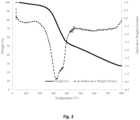
- the example shows the composition and thermal gravimetrical behaviour of the tested MBM.
- the composition of the MBM was determined as described for the hydrolysates in example 1 and is presented in Table 7.
- Table 7. MBM composition used in these examples Parameter Mean Ash (w/w dry ) 29.26 % Protein (% w/w dry ) 53.19 ⁇ 0.09 % Humidity (% w/w) 1.71 ⁇ 0.01 % Phosphorous (total, %) 5.00 ⁇ 1.00 % Calcium (mg/L) 5869.40 mg/L
- This example shows the protein/peptide profile of a protein fraction obtained after processing the MBM using the disclosed method at 150 °C, with NaOH 0.1 M and considering a ratio of 3 g dry weight /100 mL of solvent of MBM.
- the molecular weight distribution of the protein fraction was evaluated by gel permeation chromatography (GPC). The analysis was made in a PolySep-GFC-P Linear column (300 ⁇ 7.8 mm, Phenomenex ® , USA) using a UV detector. Ultrapure water was used as eluent, at a flow rate of 0.8 mL min -1 .
- the gel permeation chromatogram ( Figure 4 ) shows the molecular weight profile obtained. A pronounced peak is observed starting at 9 min (corresponding to 70 kDa, approximately) until a maximum intensity at 10.96 min (ca. 14 kDa), confirming the presence of an important fraction of proteins and high molecular weight peptides.
- the example shows the effect of the hydrothermal treatment employed in a mixture of fresh chicken meat and bone (CMB) solubilization and in the amount of protein and ash in end products of hydrolysis, when considering a ratio of 5 % (dry weight/volume), i.e., 5 g dry weight /100 mL of solvent of CMB.
- the initial amount of ashes in the mixture was 12 % (dry weight).
- the mixture was previously cooked at 100 °C for 20 min and grinded.
Landscapes
- Life Sciences & Earth Sciences (AREA)
- Chemical & Material Sciences (AREA)
- Polymers & Plastics (AREA)
- Engineering & Computer Science (AREA)
- Food Science & Technology (AREA)
- Zoology (AREA)
- Health & Medical Sciences (AREA)
- Animal Husbandry (AREA)
- Nutrition Science (AREA)
- Biochemistry (AREA)
- Inorganic Chemistry (AREA)
- Proteomics, Peptides & Aminoacids (AREA)
- Biomedical Technology (AREA)
- Biotechnology (AREA)
- Molecular Biology (AREA)
- Physiology (AREA)
- Chemical Kinetics & Catalysis (AREA)
- General Chemical & Material Sciences (AREA)
- Fertilizers (AREA)
Abstract
The present disclosure relates to a method for processing a protein-rich by-product derived from meat or poultry industry with a minimum insoluble mineral content of 4 % (w/wdry), by a hydrothermal treatment under subcritical water/solvent conditions, for obtaining two separated and concentrated valuable fractions: protein and minerals. These fractions are useful as a starting material for the production of feed and food products, and chemical phosphorus compounds, respectively. Feed, food and feed phosphates, medical phosphates, food and feed calcium, or fertilizers comprising the mineral fraction; and food, animal feed, or fertilizer comprising the protein fraction obtainable by the disclosed method are also disclosed.
Description
- The present disclosure relates to the valorisation of agro-industrial by-products, in particular, by-products for food and feed processing.
- Meat and bone meal (MBM) is a by-product of the rendering industries made from animal parts that are not suited for human consumption.
- Since the Bovine Spongiform Encephalopathy (BSE) epidemic, the use of MBM for animal feed production in Europe was restricted. In order to prevent the use of risk material in cattle feed production, the animal wastes were classified in three categories, according to their risk:
category 1 corresponds to high-risk wastes, which includes by-products of animals suspected to be infected with BSE and specific risk materials (such as bovine brain and spinal cord); category 2 corresponds to medium-risk wastes and includes by-products of animals presenting risk of other infections or animals that died in farms, and is therefore also considered of limited application; andcategory 3 consists in low risk by-products arising from animals considered for human consumption. - MBM is a
category 3 by-product and its annual average production in Europe exceeds 3.5 million tons. Some of the MBM produced is used as ingredients for feed and pet food, but the majority is being incinerated or disposed in landfills. Moreover, in Europe, around 50 % of the material that could be used to produce MBM are often collected ascategory 1 substrates, being incinerated. This leads to a negative environmental impact, and also economic losses for meat industry. - Thus, new processes and treatments that could valorise animal by-products are needed, not only to avoid economic losses in industries, but also to make a full use of protein sources (as a shortage of nutrients, and in particular protein, is expected to occur in the near future), and to avoid environmental issues related with their landfills disposal. Moreover, the market price of rendered products, such as MBM, blood meal and feather meal has been declining since 2014, reinforcing the needed to find innovative ways to valorise these low-value by-products.
- MBM is a heterogenous mixture with high protein (crude protein (CP) > 50 % of total dry MBM weight) and mineral (ash content of 10-34 % of total dry MBM weight) contents. Proteins have been used as feedstock to develop value-added products. On the other hand, mineral constituents could also be employed in phosphorous fertilizers production.
- Thermally denatured proteins in MBM have very low solubility in water, thus limiting its processability and hindering its valorisation. Hydrolysis is a common treatment employed to improve the solubility and functionality of proteins. Protein hydrolysis procedures usually use chemicals (acid or alkali), enzymes or a combination of both. In recent years, proteins have also been extracted using sub-critical water hydrolysis (SWH).
- SWH is a process that uses water in the subcritical state, i.e., water that, despite being at temperatures above its boiling point, remains in the liquid state due to the high pressures applied in the process (100 - 374 °C; 0.1 - 22 MPa). In recent years, the application of SWH to extract and hydrolyse biomolecules from plants, algae and animal and vegetable by-products revealed as a powerful process. In particular, protein hydrolysis under sub-critical conditions has been reported for valorisation of animal wastes, such as fish entrails, offal, poultry waste, silk waste and pig hair.
- There are few studies relying on animal by-products valorisation, showing that protein-rich residue derived from meat or poultry industry, MBM, can be valorised by means of protein or minerals recovery.
- Document
US4473589, by Sawhill et al. (1984 ), describes a process of protein hydrolysis using residues and waste products as raw materials. In this process the raw materials are hydrolysed to end liquid products containing peptones and smaller polypeptides, by combining alkaline and enzymatic treatments. Products obtained are claimed to be used in feed (e.g.fermentation ingredients) foods, and bacteriological media. Same authors, in documentUS6030649 , used a similar process to treat pre-dried animal meals. This process results from the combination of a hot water wash of meal with alkaline liquification and proteolytic enzyme treatments. At the end of the process MBM digested peptide solution presented 60 % (w/w) of protein and 9 % (w/w) of ash and could be considered for inclusion in animal feeds or edible food products. Despite good outcomes achieved, both inventions considered enzymatic hydrolysis, which is characterized for long processing times, and elevated cost of enzymes. - Nakahashi and Yoshida (2004), described a severe SWH treatment of MBM. In this study, around 4×10⁻⁴ kg of MBM was subjected to SWH using 2×10⁻³ Kg of ultrapure water. The reactor was purged with argon and temperature of reaction ranged from 473 K to 563 K (200-290 °C). Reaction time varied from 1 to 20 min. After hydrolysis four phases were generated: oil, fat, aqueous solution and residual solids. The organic acids and amino acids content in the aqueous phase were analysed by HPLC, and it mainly consisted in pyroglutamic acid, acetic acid, lactic acid, glycine, alanine and glutamic acid. Pyroglutamic acid showed the maximum yield among the organic acids identified (0.05 kg/kg dry MBM at 563 K). The yield was constant after the 10 min of reaction. The other organic acids, such us acetic acid and lactic acid also showed constant yields after 10 min of reaction, but values were below 0.02 kg/kg dry MBM. The yields of glycine and alanine were 0.019 kg/kg dry MBM and 0.013 kg/kg dry MBM, respectively, at 533 K and 15 min reaction. The process is much more severe than the one described in the present disclosure, and final products in the liquid fraction consist mainly in monomeric organic acids and amino acids, resulting from extensive thermal hydrolysis and degradation of the protein fraction.
- Document
DE102008015883A1 discloses the development of phosphorous optimized plant feed material by reacting MBM with orthophosphoric acid in a stirring reactor at temperatures range of 10-100 °C and reaction time of 1-30 s. According to this document, phosphorus optimized feed material presents a water solubility of 80 % and contains a considerable amount of amino acids, which are readily absorbed by the animals. - Document
KR20020079321A - Garcia and Piazza (2014) showed that proteolysis treatment of MBM with trypsin and subtilisin can convert all protein present in MBM to the soluble hydrolysates and that the produced hydrolysates present kaolin flocculant activity. Garcia and Piazza (2014) also showed that partial alkaline hydrolysis or enzymatic hydrolysis with versazyme, alcalase, and flavourzyme of MBM, blood meal and feather meal are effective treatments to produce products with flocculant activity. Essandoh et al. (2017) conducted acid hydrolysis of MBM at 105 °C during 1h, followed by centrifugation of contents and supernatant collection and protein hydrolysates produced also showed flocculant properties.
- Document
CN110627554A provides a method for the preparation of a MBM organic fertilizer. The process comprises an initial step of mixing materials, where MBM (40-50 % by mass) is mixed with rapeseed cakes (10-15 %) sesame cakes (10-15 %), soybean meal (5-10 %), tobacco slag (20-30 %), composite fermentation strains (0.1-0.2 %) and composite enzymes (0.05-0.1 %). pH is adjusted by adding light-burned magnesium (2-4 %). Then, a decomposing stage where the materials are fully decomposed and fermented is performed. The final step for obtaining the fertilizer comprises airing, sieving the aired materials, extruding, and granulating, drying and cooling. The end-product presents a percentage of organic matter up than 80 %, a percentage of total nutrients ≤ 8 % and a water content of 12 %. According to the invention the fertilizer produced meets the requirements of industrial standards. - Document
CZ302089B6 - Document
WO2019149898A1 concerns the preparation of purified calcium phosphate(s) using ash from calcined animal meal or calcined processed animal protein (such as MBM) as raw material. In this process the mineral ash is dissolved in a solution of hydrochloric acid, which is then filtered to remove the metal phases. After that, a neutralization precipitation step followed by a step of washing and drying (T ≤ 60 °C) allows to obtain a very pure hydroxyapatite. - Document
PL235540B1 - Some of the inventions and studies reported imply long processing time and the use of severe conditions of alkalinity and/or acidity. Thus, new improved and alternative processes to valorise animal by-products are needed as way to minimize the economic loss and environmental burden of their incineration and landfill disposal.
- Due to the actual treatment of MBM by-products, which mostly consists in incineration and/or landfill disposal but may also include feed and fertilizers, new alternatives and treatments of such product are being exploited as a way to decrease the industry economic losses and environmental burden-related issues.
- MBM has high protein content (CP > 50 % dry w/w) and considerable mineral content. In particular, MBM usually contains 5-6 % (dry w/w) of total phosphorous and up to 2.2 times this value of total calcium. This feedstock is usually explored as a "whole", but easy separation of its fractions can provide both a wider range of applications and/or higher added-value.
- Proteins have been used as feedstock for the developing of value-added products as feed and food, flocculant, adhesives, among others. On the other hand, mineral fractions can be used for poultry feed, fertilizer's production and to produce food or medical phosphates. Giving the fact that the phosphorous geological resources are estimated to be exhausted in the next 60-70 years, and that the average production of MBM is 3.5 tons per year in Europe, the valorisation of phosphates contained in MBM is an effective way to respond and minimize the problems related to the rarefaction of geological phosphorous resources.
- These facts are disclosed in order to illustrate the technical problem addressed by the present disclosure.
- The present disclosure relates to a hydrothermal treatment of a protein-rich by-product, with a significant amount of insoluble mineral, usually due to bone, derived from meat or poultry industry, to produce simultaneously liquid protein-enriched solutions (hydrolysates) and mineral-enriched solids. The hydrolysates are suitable for feed and/or food products and mineral-enriched solids could have a wide range of applications, such as fertilizers, calcium supplements, among others. These end products result from SWH treatment, with or without alkaline additives.
- In an embodiment, the protein-rich by-product with insoluble minerals derived from meat and/or poultry industry is selected from meat and bone meal (MBM), poultry meal (PM), feather meal (FM), or other processed animal proteins (PAP) with relevant insoluble minerals, preferably meat and bone meal.
- In an embodiment, MBM is submitted to a hydrothermal treatment, specially designed for industrial-scale implementation, with low costs and using poorly concentrated alkaline solutions (or none).
- In an embodiment, the disclosed method allows the simultaneous separation of the protein fraction from the mineral fraction present on MBM, giving two high-value end products: protein-enriched hydrolysates with protein content greater than 60 % (w/wdry) and ash contents less or equal to 20 % (w/wdry); and high pure mineral-enriched solids with ash content higher than 60 % (w/wdry) and nitrogen content less than 30 % (w/wdry).
- In another embodiment, the disclosed method allows the simultaneous separation of the protein fraction from the mineral fraction present on MBM, giving two high-value end products: protein-enriched hydrolysates with protein content greater than 65 % (w/w) and ash contents less or equal to 20 % (w/w); and high pure mineral-enriched solids with ash content higher than 60 % (w/w) and nitrogen content less than 30 % (w/w).
- In an embodiment, the two fractions are separated and recovered using a hydrothermal treatment, with small amounts of alkali or just water as solvents. In an embodiment, the protein fraction is thermally solubilized, improving its digestibility through partial hydrolysis, to be incorporated in food or animal feed, while simultaneously promoting the isolation/concentration of the inorganic matter, in the solid fraction, for further potential valorisation. In a further embodiment, a third fraction can be collected by solid-liquid separation of the suspended solids in the liquid fraction, still rich in both mineral and protein.
- In an embodiment, the method for processing the protein rich by-product includes the following steps:
- Hydrothermal treatment of a protein-rich by-product with insoluble minerals derived from meat and/or poultry industry (such as MBM), with or without alkali, at temperatures ≥ 125, preferably ≥ 130 °C, and pressure above the boiling point at the selected temperature to keep water in the sub-critical liquid state (e.g., for 130 °C, pressure should be above 0.27 MPa). In an embodiment, additives such as caustic soda or other hydroxides may be used in the hydrolysis, in a concentration up to 1 M;
- Recovery, separation, and treatment (e.g., concentration/purifying and drying) of end products to its final delivery form.
- In an embodiment, the protein fraction is effectively separated from the mineral fraction. The solubility of the protein fraction is increased, with low costs and using low concentration of chemicals.
- In an embodiment, other animal-sourced by-products rich in proteins and insoluble minerals, namely other processed animal proteins (PAP), such as food grade MBM, poultry meals, poultry by-product meals and other by-products from meat and poultry industry presenting a suitable insoluble mineral fraction, may also be employed in this method for protein and mineral separation and valorisation.
- The present disclosure relates to a method for processing a protein-rich by-product derived from meat and/or poultry industry with minimum insoluble mineral content of 4 % (w/wdry) and a protein content higher than 45 % (w/wdry), by hydrothermal treatment, wherein the insoluble mineral content is mainly derived from bone tissue, comprising the following steps: hydrolysing the protein-rich by-product with an aqueous liquid solution under sub-critical conditions for obtaining two fractions: a liquid protein fraction and a solid mineral fraction; recovering and separating the liquid protein fraction from the solid mineral fraction; wherein the hydrolysis step occurs at sub-critical conditions with a temperature greater than or equal to 130 °C, to obtain a solid mineral fraction with more than 60 % (w/wdry) ash, and a protein fraction with more than 60 % (w/wdry) of protein content, wherein at least 30 % (w/wdry) of the protein content is in the form of soluble proteins or peptides, preferably and not in the form of single amino acids.
- The present disclosure also relates to a method for processing a protein-rich by-product derived from meat and/or poultry industry with a minimum insoluble mineral content of 4 % (w/w) and a protein content higher than 45 % (dry w/w), by hydrothermal treatment, wherein the mineral content is derived from bone tissue, comprising the following steps: hydrolysing the protein-rich by-product with an aqueous liquid solution under sub-critical conditions for obtaining two fractions: a liquid protein fraction and a solid mineral fraction; recovering and separating the liquid protein fraction from the solid mineral fraction; wherein the hydrolysis step occurs at a temperature greater than or equal to 130 °C and at sub-critical conditions, to obtain a solid mineral fraction with more than 60% (w/w) ash, and a protein fraction with more than 60% (w/w) of proteins, wherein at least 15% (w/w) of proteins are proteins with a molecular weight equal or higher than 3000 Da.
- For the scope and interpretation of the present disclosure, the term "mainly derived from bone" refers to a content higher than 50%, i.e., at least 50% of the insoluble mineral content of the protein rich by-product is derived from bone; preferably 60%, 70%, 80% or 90% of the insoluble mineral content of the protein rich by-product is derived from bone.
- In an embodiment, the hydrolysis step occurs at a temperature greater than or equal to 130 °C and at a pressure above the boiling point of the aqueous solution at the selected temperature.
- For the scope and interpretation of the present disclosure the term "sub-critical conditions" relates to temperature and pressure conditions compatible with the existence of liquid aqueous solutions under pressure at temperatures above the usual boiling point at atmospheric pressure of the said aqueous solutions.
- In an embodiment, the protein fraction comprises an ash content less or equal to 20 % (w/wdry).In a further embodiment, the protein content of the mineral fraction is less than 30 % (w/wdry).
- In another embodiment, the protein fraction comprises an ash content less or equal to 20 % (w/w). In a further embodiment, the protein content of the mineral fraction is less than 30% (w/w).
- In an embodiment the concentration of the protein-rich by-product used as raw material in the hydrolysis step is equal to or lower than 100 gdry weight/100 mL of solvent. In a further embodiment, the concentration of the protein-rich by-product in the hydrolysis step ranges from 5 gdry weight/100 mL of solvent to 60 gdry weight/100 mL of solvent.
- In an embodiment, the concentration of the protein-rich by-product used in the hydrolysis step (solids content) is equal or lower than 80 % (dry weight/volume). In another embodiment, the concentration of the protein-rich by-product used in the hydrolysis step (solids content) ranges from 30 % (dry weight/volume) to 70 % .
- In an embodiment the protein-rich by-product derived from meat or poultry industry is selected from a list comprising processed animal proteins (PAP), meat and bone meal (MBM), poultry meal (PM), or poultry by-product meal (PB-PM), or mixtures thereof. In a further embodiment the protein-rich by-product derived from meat or poultry industry is feed or food grade. In a yet further embodiment, the protein-rich by-product derived from meat or poultry industry is derived from a single specie (mono-specie) or from different species (multispecies).
- In an embodiment the protein-rich by-product is meat and bone meal (MBM).
- In an embodiment the aqueous liquid solution comprises up to 1 M of an alkali, preferably 0.01 to 0.1 M of an alkali. In a further embodiment, the aqueous liquid solution comprises an alkali selected from a list comprising: sodium hydroxide, potassium hydroxide, ammonium hydroxide, or mixtures thereof.
- In an embodiment, the hydrolysis step occurs at a temperature ranging from 130 °C to 250 °C, preferably 140 °C to 250 °C. In another embodiment the hydrolysis step occurs at a temperature ranging from 130 °C to 200 °C, preferably 150 °C to 200 °C. In another embodiment the hydrolysis step occurs at a temperature ranging from 140 °C to 195 °C.
- In an embodiment, the hydrolysis step occurs at a pressure below 22 MPa and above the equilibrium pressure at the boiling point for the selected temperature.
- In an embodiment, hydrolysis step occurs at 130 °C and at a pressure greater than 0.27 MPa, or at 150 °C and at a pressure greater than 0.48 MPa, or at 200 °C and at a pressure greater than 1.56 MPa.
- In an embodiment, the disclosed method further comprises a step of concentrating and purifying the liquid protein fraction and the solid mineral fraction, preferably by centrifugation, washing with water, filtration, or combinations thereof.
- In an embodiment, the disclosed method further comprises a step of drying the obtained protein fraction and/or the mineral fraction. The drying step can be achieved by different means known in the state of the art such as spray-drying, lyophilization, or oven drying.
- An aspect of the present disclosure relates to feed (including but not limited to poultry feed), food and feed phosphates, medical phosphates, food and feed calcium, or fertilizers comprising a mineral fraction obtainable by the disclosed method.
- Another aspect of the present disclosure relates to food, animal feed, including but not limited to pet food and fish food, or fertilizers comprising a protein fraction obtainable by the disclosed method.
- The following figures provide preferred embodiments for illustrating the disclosure and should not be seen as limiting the scope of invention.
-
Figure 1 : Embodiment of mineral quantification by Inductively Coupled Plasma on solid fraction (A) and hydrolysates (B) after hydrothermal treatment, when considering a ratio of 5 % (dry weight/volume) of MBM and 0.1 M of NaOH. -
Figure 2 : Embodiment of thermal gravimetric analysis of MBM. -
Figure 3 : Schematic representation of the hydrothermal treatment, the obtention of 2 phases after the treatment and the look of some final products after separation and drying. -
Figure 4 : Embodiment of a gel permeation chromatogram with the molecular weight profile of a protein fraction obtained at 150 °C, with NaOH 0.1 M and considering a ratio of 3 gdry weight MBM/ 100 mL solvent. Standards: t=10.9 min - Mw=14.3 kDa; t=10.0 min - Mw=37.4 kDa; t=9.7 min - 66 kDa. - The present disclosure relates to a method for processing a protein-rich by-product derived from meat or poultry industry by hydrothermal treatment, for obtaining two separated and concentrated valuable fractions: protein and minerals. These fractions are useful as a starting material e.g., for the production of feed and food products and chemical phosphorus compounds, respectively.
- In an embodiment, to valorise the mineral part of MBM, the organic matter of MBM was separated by a hydrothermal method that uses SWH. The organic matter was solubilized to the liquid fraction, producing high value protein-enriched fraction (CP > 60 % w/w) that are suitable for feed (including, but not limited to, pet food and aquafeed) and food applications. In opposition to hydrolysates rich in amino acids, which increase the astringency of food products, less hydrolyzed protein-fractions, or protein-enriched hydrolysates, may have a minor impact on the final taste of food products.
- The remaining insoluble solids were whitish in colour and mostly consisting in ash (greater than 60 % dry weight basis), making possible its further use as mineral source for food, feed and fertilizers, or preferably to be further processed for phosphorous and /or calcium sources for food and feed.
- In an embodiment, the process for the production of protein-enriched hydrolysates and insoluble ash-enriched solids included the following steps: (i) hydrothermal treatment with or without alkali additives; (ii) separation of liquid and solid fractions and (iii) concentration/purifying and drying of materials.
- For the scope and interpretation of the present disclosure "hydrothermal treatment" is defined as a treatment using sub-critical liquid water (SCW) or an alkali aqueous solution under subcritical conditions. SCW is water maintained in the liquid state at temperatures higher that its boiling point (100 °C to 374 °C) due the high pressures applied in the process (0.1 - 22 MPa). Besides the usual advantages associated with high temperatures, including increased kinetics and solubility, and decreased surface tension, when water is in the subcritical state it acquires unique properties: the decrease in the dielectric constant enables its use as solvent in the recovery of more hydrophobic matters, and the increase in the water ionic product, increases the amount of OH- and H+ ions available and consequently its potential to act as an acid- or base-like catalyst in the hydrolysis of different types of biomass. In an embodiment, the "hydrothermal treatment" disclosed in the present invention is conducted at temperature range from 125 to 250 °C, preferably 130 °C to 200 °C, more preferably 140 °C to 195 °C, preferably under agitation, at pressures above the water vapor equilibrium pressure at the operational temperature and below the critical point.
- For the scope and interpretation of the present disclosure "alkaline additive" is defined as an aqueous alkaline solution, preferably caustic soda at concentrations up to 1 M, but may include other hydroxides, such as potassium hydroxide.
- The term "concentration/purifying" relates to processes conducted to improve the concentration and quality of end products. Depending on the end-product, it can include centrifugation, washing with water, filtration, evaporation and/or drying. These processes are widely known by those skilled in the art and are commonly used in the industry.
- In this context, the invention relates to the simultaneous separation and recovery of the different fractions (protein and minerals) from processed animal proteins (PAP) with insoluble minerals, such as MBM, by the hydrothermal treatment with SCW, with or without alkali as additive.
- The examples presented bellow illustrate the disclosed method. The reactor vessel used in these examples consisted in pressurized reactor Parr4523, made of 316L stainless steel. The pressure inside the reactor was slightly above the pressure of water vapor at the testing temperature (0.5 MPa for the experiments at 150 °C; 1.6 MPa for 200 °C; 4.1 MPa for 250 °C). The reaction occurred during 60 min under stirring.
- In an embodiment, MBM was hydrolysed (step i) as follows:
- (a) MBM initial concentration in reactor vessel ranged from 5 % (dry weight/volume), i.e., 5 gdry weight/100 mL of solvent to 20 % (dry weight/volume), i.e., 20 gdry weight/100 mL of solvent;
- (b) Tests were made using only water as solvent;
- (c) In order to increase MBM solubility, and therefore protein solubility, tests included the use of NaOH (0.01 to 0.1 M) as an additive. For the lowest temperature tested (150 °C), the addition of NaOH increased the MBM solubilization by 1.4 times.
- (d) When considering concentrations of MBM equal or higher than 10 % (dry weight/volume), i.e.,10 gdry weight/100 mL of solvent, the hydrothermal treatment needed additives, such as caustic soda (sodium hydroxide) at 0.05 M, to increase protein solubility and achieve a desired protein mineral separation.
- Separation of fractions was achieved after the hydrothermal treatment by decanting the obtained liquid fractions and manually collecting the insoluble solids. In order to purify and/or concentrate the obtained fractions, the third step consisted in centrifuging the liquid fraction at 5000 rpm for 60 min, washing the insoluble solids with distilled water and drying the materials. Liquid fractions were dried by lyophilization, after neutralization. Insoluble solids were dried in oven at temperatures ranging from 50 °C to 60 °C.
- However, the scope of the present invention is not limited by the following examples, and ordinary changes (e.g reactor, time of reaction, additives, agitation, concentration of PAP (e.g., MBM) and/or other similar raw materials, drying process) are possible within the scope of the technical idea of the present invention.
- The example shows the effect of the disclosed hydrothermal treatment employed in MBM on solubilization and in the amount of protein and ash obtained in end products, when considering a ratio of 10 % (dry weight/volume), i.e., 10 gdry weight/100 mL of solvent of MBM.
- The processing of MBM was carried out as follows: 50 g of MBM were added to the reactor vessel followed by 0.5 L of caustic soda at 0.05 M. The reaction occurred at 150 °C in a pressurized reactor (Parr, 4523, USA), at a pressure between 0.4 to 0.5 MPa, preferably of 0.5 MPa, for 60 min with a stirring rate of 180 rpm. At the end of the treatment, two end products were obtained: the liquid fraction (l) and the insoluble solid (II). The liquid fraction (I) was decanted and subjected to a centrifugation at 5000 rpm and 4 °C during 60 min. The supernatant was collected and frozen for further lyophilization. The insoluble solid product (II) was collected and washed with 0.2 L of distilled water and allowed to dry in a 60 °C oven (Termaks, USA).
- The solubilization percentage was determined as follows:

- Where the insoluble mass was the mass of insoluble solid collected from the vessel plus the mass of the pellets resulting from the centrifugation process.
- The two end products obtained, along with the raw material, were analysed regarding their protein content (Kjeldahl method) and ash content (incineration with gravimetric determination; AOAC International 923.03 method, 1990 or ISO 2171:2007, with minor modifications as suggested by ASTM Standard Method E1755-01, 2003, using only 1 g of sample instead of the 3-5 g proposed in the original AOAC method 923.03). Distinct methods are available in the state of art to quantify the protein content. In an embodiment, the protein quantification was performed by the Kjeldahl method. Briefly 0.5 g of each sample was added to a digestion flask along with 10 mL of sulfuric acid 96% and selenium tablets. Digestion was performed using meat AOAC program from the Digestor™ auto 2508 (Foss Analytic) and the distillation and titration steps were conducted by automatic Kjeltec™ 8400 (Foss Analytic) unit. The results are expressed as percentage of crude protein (CP), which were obtained by multiplying the nitrogen content (%) measured in Kjeltec™ 8400 (Foss Analytic) unit with the factor 6.25. With both analyses (protein and ash), it was possible to assess the composition in protein and ashes content in all fractions involved, the total initial amount of protein and ash available in process, and to quantify the amount of protein and ash that was solubilized into the liquid fraction and/or retained in the solid fraction.
- The results in Table 1 and 2 show that the hydrothermal treatment applied can effectively separate the protein fraction from the mineral fraction, with minimal lost, allowing the obtention of (I) protein-rich hydrolysates with low minerals and (II) a solid fraction which is mostly minerals and with low organic composition.
Table 1. Protein and ash contents of hydrolysates and insoluble solids after hydrothermal treatment, when considering a ratio of 10 % (dry weight/volume), i.e., 10 gdry weight/100 mL of solvent of MBM. Hydrolysate Insoluble solid Protein (%, w/w) 85.86 ± 1.64 % 3.58 ± 0.22 % Ash (%, w/w) 7.72 ± 0.30 % 78.02 ± 1.03 % Table 2. Balances of the hydrothermal process when considering a ratio of 10 % (dry weight/volume), i.e., 10 gdry weight/100 mL of solvent of MBM. Parameter Mean MBM solubilization (%) 59.83 % Protein solubilized (%, w/w) 90.44 % Ash solubilized (%, w/w) 14.52 % Protein retained in insoluble solid (%, w/w) 2.08 % Ash isolated from insoluble solid (%, w/w) 78.27 % - The example shows the effect of the disclosed hydrothermal treatment employed in MBM on solubilization and in the amount of protein and ash in end products, when considering a ratio of 20 % (dry weight/volume), i.e., 20 gdry weight/100 mL of solvent of MBM.
- 100 g (dry weight) of MBM were added to the reactor vessel followed by the solvent (0.05 M caustic soda, 0.5 L). The reaction and procedure to obtain the end products occurred as mentioned in Example 1.
- The results on Table 3 and 4 show that it is viable to increase the ratio of solids at least until 20 % (dry weight/volume), i.e., 20 gdry weight/100 mL of solvent, and that the contents in ash and protein in the end products confirm the separation into two fractions: in this case, the ash content in the solid fraction was 71 % (w/w), preferably 71 % (w/wdry), and the protein content in the liquid fraction was 89 % (w/w), preferably 89 % (w/wdry), corresponding to 88 % of protein content that was solubilized from the initial matrix into the liquid fraction and 79 % of the initial minerals that were retained in the solid fraction.
Table 3. Protein and ash contents of end products of hydrolysis, when considering a ratio of 20 % (dry weight/volume), i.e., 20 gdry weight/100 mL of solvent of MBM. Hydrolysate Insoluble solid Protein (%, w/w dry ) 89.67 ± 0.09 % 9.72 ± 0.34 % Ash (%, w/w dry ) 6.69 ± 0.29 % 71.33 ± 1.60 % Table 4. Balances of the hydrothermal treatment of 20 % (dry weight/volume) MBM Parameter Mean MBM solubilization (%) 55.71 % Protein solubilized (%, w/w) 88.63 % Ash solubilized (%, w/w) 12.49 % Protein retained in insoluble solid (%, w/w) 5.94 % Ash isolated in insoluble solid (%, w/w) 79.76 % - The example shows the effect of the disclosed hydrothermal treatment employed in MBM on solubilization and in the amount of protein and ash in end products of hydrolysis, when considering a ratio of 15 % (dry weight/volume), i.e., gdry weight/100 mL of solvent of MBM.
- 75 g (dry weight) of MBM were added to the reactor vessel followed by the solvent (caustic soda at 0.05 M, 0.5 L). The reaction and procedure to obtain the end products occurred as mentioned in Example 1.
- The results on Table 5 and 6 show that the hydrothermal method employed can effectively separate the protein fraction from the mineral fraction when considering a ratio of 15 % (dry weight/volume), i.e., 15 gdry weight/100 mL of solvent MBM.
Table 5. Protein and ash contents of hydrolysates and insoluble solids after hydrothermal treatment, when considering a ratio of 15 % (dry weight/volume), i.e., 15 gdry weight/100 mL of solvent of MBM Hydrolysate Insoluble solid Protein (%, w/w dry ) 85.73 ± 2.75 % 11.66 ± 2.70 % Ash (%, w/w dry ) 7.17 ± 0.25 % 75.05 ± 0.69 % Table 6. Balances of the hydrothermal process when considering a ratio of 15 % (dry weight/volume), i.e., 15 gdry weight/100 mL of solvent of MBM. Parameter Mean MBM solubilization (%) 52.89 % Protein solubilized (%, w/w) 81.24 % Ash solubilized (%, w/w) 12.31 % Protein retained in insoluble solid (%, w/w) 7.63 % Ash isolated from insoluble solid (%, w/w) 87.41 % - The example shows the effect of the disclosed hydrothermal treatment employed in MBM on solubilization and in the amount of protein and ash in end products of hydrolysis, when considering a ratio of 5 % (dry weight/volume), i.e., 5 gdry weight/100 mL of solvent of MBM, different additive's concentration (0 ≤ NaOH ≤ 0.1 M) and different temperatures (150 °C ≤ T ≤ 250 °C).
- 25 g of MBM were treated as described in Example 1. Three temperatures were tested using 0.5 L of caustic soda at 0.1 M: 150 °C, 200 °C and 250 °C using a stirring rate of 160 rpm. For temperatures of 150 °C and 200 °C the hydrothermal method was also tested using distilled water and caustic soda at 0.05 M. For 150 °C caustic soda at 0.01 M was also tested.
- At 150 °C results show that sodium hydroxide is needed for improving protein solubilization, at least at a concentration of 0.05 M, decreasing the protein amount in insoluble solid from 25.31 ± 0.7 % (w/w) to 3.44 ± 2.13 % (w/w), preferably 25.31 ± 0.7 % (w/wdry) to 3.44 ± 2.13 % (w/wdry). Increasing temperature to higher values, allowed decreasing the amount of alkali needed or even discard its use. In fact, at 200 °C the hydrothermal treatment of 5 % (dry weight/volume), i.e., 5 gdry weight/100 mL of solvent using only distilled water showed to be efficient, allowing to obtain an amount of protein in hydrolysate of 91.8 % (w/w) against only 7.1 % (w/w) in insoluble solid. Moreover, at this condition, the insoluble solid shows 72 % (w/w) of ash and hydrolysate only presents 6.2 % (w/w) of ash content.
- The example shows the mineral content (mg/L) of the final products when considering a hydrothermal treatment using a ratio of 5 % (dry weight/volume), i.e., 5 gdry weight/100 mL of solvent of MBM and NaOH at 0.1 M.
- Minerals in end products were quantified by Inductively Coupled Plasma (ICP). Briefly, 0.4 g of each product were digested in an acid solution containing HNO3 65 % (v/v) and H2O2 35 % (v/v) in a proportion of 8:1. Digestion was undertaken in a Berghof microwave digestion system according to the program described by the supplier manual. For each mineral, a calibration standard curve was performed.
- The results on
Figure 1A and 1B show that the hydrothermal method employed can effectively isolate the mineral fraction on the insoluble solid fraction, remaining only substantial amounts of soluble sodium and (some minor) potassium salts in the hydrolysates (the first from the added sodium hydroxide). In particular, calcium (Ca), the most abundant insoluble mineral in MBM (5869 ± 47 mg/L), was isolated in great amounts on solid fraction being detected only 20 to 50 mg/L in hydrolysates, thus corroborating the effectiveness of separation and the purity of solid fraction. - The example shows the composition and thermal gravimetrical behaviour of the tested MBM.
- Thermal gravimetric analyses were performed in a PerkinElmer TGA 4000 (PerkinElmer, Massachusetts, EUA). Samples were heated from 25 °C to 800 °C at a heating rate of 10 °C min-1 under a nitrogen atmosphere.
- In an embodiment, the composition of the MBM was determined as described for the hydrolysates in example 1 and is presented in Table 7.
Table 7. MBM composition used in these examples Parameter Mean Ash (w/wdry) 29.26 % Protein (% w/w dry ) 53.19 ± 0.09 % Humidity (% w/w) 1.71 ± 0.01 % Phosphorous (total, %) 5.00 ± 1.00 % Calcium (mg/L) 5869.40 mg/L - The results on
Figure 2 show that MBM has a sharp region of weight loss starting at ca. 200 °C, indicating thermal degradation of the MBM components, probably mainly of the proteins, present in higher amounts. This confirms that, up to 200 °C, extensive degradation is not likely to occur. Even so, although the onset temperature is slightly above 200 °C, not significant degradation of the sample occurred up to 250 °C. - This example shows the protein/peptide profile of a protein fraction obtained after processing the MBM using the disclosed method at 150 °C, with NaOH 0.1 M and considering a ratio of 3 gdry weight/100 mL of solvent of MBM.
- The molecular weight distribution of the protein fraction was evaluated by gel permeation chromatography (GPC). The analysis was made in a PolySep-GFC-P Linear column (300 × 7.8 mm, Phenomenex®, USA) using a UV detector. Ultrapure water was used as eluent, at a flow rate of 0.8 mL min-1.
- The gel permeation chromatogram (
Figure 4 ) shows the molecular weight profile obtained. A pronounced peak is observed starting at 9 min (corresponding to 70 kDa, approximately) until a maximum intensity at 10.96 min (ca. 14 kDa), confirming the presence of an important fraction of proteins and high molecular weight peptides. - The example shows the effect of the hydrothermal treatment employed in a mixture of fresh chicken meat and bone (CMB) solubilization and in the amount of protein and ash in end products of hydrolysis, when considering a ratio of 5 % (dry weight/volume), i.e., 5 gdry weight/100 mL of solvent of CMB. The initial amount of ashes in the mixture was 12 % (dry weight). The mixture was previously cooked at 100 °C for 20 min and grinded.
- 25 g (dry weight) of CMB were added to the reactor vessel followed by the solvent (caustic soda at 0.05 M, 0.5 L). The reaction and procedure to obtain the end products occurred as mentioned in Example 1.
- The results (Table 8) indicated that 76.4 ± 0.2 % of solubilization was achieved and 81.7 ± 6.1 % of the ashes from the CMB remained in the insoluble fraction. The final amount of ashes in the insoluble fraction was 63.8 ± 1.7 % and in the soluble part was 13.7 ± 1.2 %. In the case of the soluble part, 8.6 % of ashes can be ascribed to the added NaOH, being only 5.1 % from the CMB. Therefore, the hydrothermal method employed can also effectively separate the mineral fraction when considering a mixture of chicken meat and bone.
Table 8. Balances of the hydrothermal process when considering a ratio of 5 % (dry weight/volume), i.e., 5 gdry weight/100 mL of solvent of CMB. Parameter Mean CMB solubilization (%) 76.4± 0.2 % CMB solubilization not considering insoluble ashes (%, w/w) 85.1±0.9 % Ash solubilized (%, w/w) 8.3±1.1 % Ash remaining in the insoluble solid (%, w/w) 81.7±6.1% - The term "comprising" whenever used in this document is intended to indicate the presence of stated features, integers, steps, components, but not to preclude the presence or addition of one or more other features, integers, steps, components or groups thereof.
- The disclosure should not be seen in any way restricted to the embodiments described and a person with ordinary skill in the art will foresee many possibilities to modifications thereof. The above described embodiments are combinable.
- The following claims further set out particular embodiments of the disclosure.
Claims (15)
- A method for processing a protein-rich by-product derived from meat and/or poultry industry with a minimum insoluble mineral content of 4 % (w/wdry) and a protein content higher than 45 % (w/wdry), by hydrothermal treatment, wherein the insoluble mineral content is mainly derived from bone tissue, comprising the following steps:hydrolysing the protein-rich by-product with an aqueous liquid solution under sub-critical conditions for obtaining two fractions: a liquid protein fraction and a solid mineral fraction;recovering and separating the liquid protein fraction from the solid mineral fraction;wherein the hydrolysis step occurs at sub-critical conditions with a temperature greater than or equal to 130 °C, to obtain a solid mineral fraction with more than 60 % (w/wdry) ash, and a protein fraction with more than 60 % (w/wdry) of protein content, wherein at least 30 % (w/wdry) of the protein content is in the form of soluble proteins or peptides.
- The method according to any of the previous claims wherein the protein fraction comprises an ash content less or equal to 20 % (w/wdry).
- The method according to any of the previous claims wherein the protein content of the mineral fraction is less than 30 % (w/wdry).
- The method according to any of the previous claims wherein the concentration of the protein-rich by-product in the hydrolysis step is equal or lower than 100 gdry weight/100 mL of solvent
- The method according to any of the previous claims wherein the concentration of the protein-rich by-product in the hydrolysis step ranges from 5 gdry weight/100 mL of solvent to 60 gdry weight/100 mL of solvent.
- The method according to any of the previous claims wherein the protein-rich by-product derived from meat or poultry industry is selected from a list comprising processed animal protein, meat and bone meal, poultry meal, poultry by-product meal, or mixtures thereof.
- The method according to any of the previous claims wherein the protein-rich by-product is meat and bone meal.
- The method according to any of the previous claims wherein the aqueous liquid solution comprises up to 1 M of an alkali, preferably 0.01 to 0.1 M of an alkali, preferably wherein the alkali is selected from a list comprising: sodium hydroxide, potassium hydroxide, ammonium hydroxide, or mixtures thereof.
- The method according to any of the previous claims wherein the hydrolysis step occurs at a temperature ranging from 130 °C to 250 °C, preferably 130 °C to 200 °C, more preferably 140 °C to 195 °C.
- The method according to any of the previous claims wherein the hydrolysis step occurs at 130 °C and at a pressure greater than 0.27 MPa, or at 150 °C and at a pressure greater than 0.48 MPa, or at 200 °C and at a pressure greater than 1.56 MPa.
- The method according to any of the previous claims further comprising a step of concentrating and purifying the liquid protein fraction and the solid mineral fraction.
- The method according to any of the previous claims wherein the liquid protein fraction and the solid mineral fraction are concentrated and purified, preferably by centrifugation, washing with water, filtration, or combinations thereof.
- The method according to any of the previous claims further comprising a step of drying the protein fraction and/or the mineral fraction.
- Feed, food and feed phosphates, medical phosphates, food and feed calcium, or fertilizers comprising a mineral fraction obtainable by the method described in any of the previous claims.
- Food, animal feed, or fertilizer comprising a protein fraction obtainable by the method described in any of the previous claims.
Applications Claiming Priority (2)
| Application Number | Priority Date | Filing Date | Title |
|---|---|---|---|
| PT11757421 | 2021-11-12 | ||
| PT11759121 | 2021-11-19 |
Publications (1)
| Publication Number | Publication Date |
|---|---|
| EP4179878A1 true EP4179878A1 (en) | 2023-05-17 |
Family
ID=85937977
Family Applications (1)
| Application Number | Title | Priority Date | Filing Date |
|---|---|---|---|
| EP22207357.9A Withdrawn EP4179878A1 (en) | 2021-11-12 | 2022-11-14 | Method for processing a protein-rich residue and uses thereof |
Country Status (1)
| Country | Link |
|---|---|
| EP (1) | EP4179878A1 (en) |
Citations (9)
| Publication number | Priority date | Publication date | Assignee | Title |
|---|---|---|---|---|
| US4473589A (en) | 1981-04-22 | 1984-09-25 | Freeman Leon D | Protein liquefication process and products |
| US6030649A (en) | 1998-11-25 | 2000-02-29 | Sawhill; James W. | Process for treating pre-dried animal meal |
| KR20020079321A (en) | 2001-04-03 | 2002-10-19 | (주)이엔이티 | A Method of Manufacturing Plant Bio-Feed from Animal MBM (Meat and Bone Meal) using Effective Mushroom Strains, and the Plant Bio-Feed Manufactured thereof |
| JP2007117793A (en) * | 2005-10-25 | 2007-05-17 | Osaka Prefecture Univ | A method for extracting high-value-added useful components from chicken-derived by-products by subcritical water treatment |
| DE102008015883A1 (en) | 2008-03-26 | 2009-10-01 | Axel Bruckert | Single feedstuff, obtained by reacting e.g. meat bone meal and/or animal meal, as calcium phosphate carrier with phosphoric acid, useful to provide e.g. calcium to cattle, where protein compound is reacted with hydrated phosphoric acid |
| CZ302089B6 (en) | 2006-06-28 | 2010-10-06 | Fosfa akciová spolecnost | Process for producing meat and bone meal-based fertilizer and fertilizer produced in such a manner |
| WO2019149898A1 (en) | 2018-02-01 | 2019-08-08 | Saria Industries | Method for producing very pure hydroxyapatites from waste containing calcium phosphates, particularly meat and bone meal |
| CN110627554A (en) | 2018-06-22 | 2019-12-31 | 潍坊市云涛有机肥料有限公司 | Meat and bone meal organic fertilizer and preparation process thereof |
| PL235540B1 (en) | 2017-08-14 | 2020-08-24 | Zakład Rolniczoprzemysłowy Farmutil Hs Społka Akcyjna | Method for thermal utilization of meat-and-bone meal |
-
2022
- 2022-11-14 EP EP22207357.9A patent/EP4179878A1/en not_active Withdrawn
Patent Citations (9)
| Publication number | Priority date | Publication date | Assignee | Title |
|---|---|---|---|---|
| US4473589A (en) | 1981-04-22 | 1984-09-25 | Freeman Leon D | Protein liquefication process and products |
| US6030649A (en) | 1998-11-25 | 2000-02-29 | Sawhill; James W. | Process for treating pre-dried animal meal |
| KR20020079321A (en) | 2001-04-03 | 2002-10-19 | (주)이엔이티 | A Method of Manufacturing Plant Bio-Feed from Animal MBM (Meat and Bone Meal) using Effective Mushroom Strains, and the Plant Bio-Feed Manufactured thereof |
| JP2007117793A (en) * | 2005-10-25 | 2007-05-17 | Osaka Prefecture Univ | A method for extracting high-value-added useful components from chicken-derived by-products by subcritical water treatment |
| CZ302089B6 (en) | 2006-06-28 | 2010-10-06 | Fosfa akciová spolecnost | Process for producing meat and bone meal-based fertilizer and fertilizer produced in such a manner |
| DE102008015883A1 (en) | 2008-03-26 | 2009-10-01 | Axel Bruckert | Single feedstuff, obtained by reacting e.g. meat bone meal and/or animal meal, as calcium phosphate carrier with phosphoric acid, useful to provide e.g. calcium to cattle, where protein compound is reacted with hydrated phosphoric acid |
| PL235540B1 (en) | 2017-08-14 | 2020-08-24 | Zakład Rolniczoprzemysłowy Farmutil Hs Społka Akcyjna | Method for thermal utilization of meat-and-bone meal |
| WO2019149898A1 (en) | 2018-02-01 | 2019-08-08 | Saria Industries | Method for producing very pure hydroxyapatites from waste containing calcium phosphates, particularly meat and bone meal |
| CN110627554A (en) | 2018-06-22 | 2019-12-31 | 潍坊市云涛有机肥料有限公司 | Meat and bone meal organic fertilizer and preparation process thereof |
Non-Patent Citations (3)
| Title |
|---|
| MEKONNEN TIZAZU H ET AL: "Recovery and characterization of proteinacious material recovered from thermal and alkaline hydrolyzed specified risk materials", PROCESS BIOCHEMISTRY, ELSEVIER LTD, GB, vol. 48, no. 5, 29 April 2013 (2013-04-29), pages 885 - 892, XP028562932, ISSN: 1359-5113, DOI: 10.1016/J.PROCBIO.2013.04.015 * |
| MEKONNEN TIZAZU H. ET AL: "Subcritical hydrolysis and characterization of waste proteinaceous biomass for value added applications", JOURNAL OF CHEMICAL TECHNOLOGY AND BIOTECHNOLOGY, vol. 90, no. 3, 22 February 2014 (2014-02-22), Hoboken, USA, pages 476 - 483, XP093019284, ISSN: 0268-2575, DOI: 10.1002/jctb.4333 * |
| PESTI G M ET AL: "Nutritive Value of Poultry By-Product Meal. 1. Metabolizable Energy Values as Influenced by Method of Determination and Level of Substitution", POULTRY SCIENCE, vol. 65, 1 January 1986 (1986-01-01), pages 2258 - 2267, XP093020208 * |
Similar Documents
| Publication | Publication Date | Title |
|---|---|---|
| Gildberg et al. | Utilisation of cod backbone by biochemical fractionation | |
| Marcet et al. | The use of sub-critical water hydrolysis for the recovery of peptides and free amino acids from food processing wastes. Review of sources and main parameters | |
| Zhang et al. | Application of steam explosion treatment on the collagen peptides extraction from cattle bone | |
| Suo-Lian et al. | Technology for extracting effective components from fish scale | |
| CN113481269A (en) | Preparation method of sea buckthorn protein polypeptide | |
| DK179243B1 (en) | Process for Preparation of Acidic 50% Concentrated Solution and Dry Powder of Peptides from Protein Products and Animal Waste, Fish and Aquaculture Origins | |
| CN103243143A (en) | Method for extracting hydrolyzed collagen by using bone meal | |
| CN117603341A (en) | Technological method for obtaining collagen polypeptide from bovine bone-derived collagen through enzymolysis and composite microbial fermentation | |
| Shanthi et al. | Recovery and characterization of protein hydrolysate from chrome shavings by microbial degradation | |
| CN114045323B (en) | Method for preparing fish skin and scale collagen peptide powder by multistage enzymolysis process | |
| CN113234181B (en) | Preparation method of chondroitin sulfate | |
| US6602985B1 (en) | Extraction of zein protein from gluten meal | |
| CN1733925A (en) | Method for preparing compound amino acid liquid with waste protein | |
| JP4156621B2 (en) | A method for extracting high-value-added useful components from by-products derived from chicken by subcritical water treatment | |
| JP3720324B2 (en) | Method for producing mild water-soluble collagen | |
| RU2283000C2 (en) | Method for protein production | |
| CN1291032C (en) | Enzymolysis method for preparing protein oligopeptide powder using Pacific Ocean alaska pollack | |
| CN106497997A (en) | A kind of method that haemachrome is produced by the enzymatic isolation method that interlocks | |
| CN102429091B (en) | Defatting method of fat-containing protein powder and preparation method of compound amino acid chelated calcium | |
| KR100355808B1 (en) | Fish extract using waste matter of fishes, method for preparing the same and livestock feed containing the same | |
| CN114845560A (en) | Method for producing collagen peptide from bone and collagen peptide produced thereby | |
| KR100203917B1 (en) | Processing method of soy sauce | |
| Chaipet et al. | Efficiency of protein extraction from palm kernel cake via different chemical extraction methods | |
| JP2003259892A (en) | Method for producing sugar solution by direct liquefaction method of starch-stored harvest and method for fermentative production of amino acid with the sugar solution | |
| CN100417332C (en) | Method for extracting animal protein from by-products of beef and mutton processing |
Legal Events
| Date | Code | Title | Description |
|---|---|---|---|
| PUAI | Public reference made under article 153(3) epc to a published international application that has entered the european phase |
Free format text: ORIGINAL CODE: 0009012 |
|
| STAA | Information on the status of an ep patent application or granted ep patent |
Free format text: STATUS: THE APPLICATION HAS BEEN PUBLISHED |
|
| AK | Designated contracting states |
Kind code of ref document: A1 Designated state(s): AL AT BE BG CH CY CZ DE DK EE ES FI FR GB GR HR HU IE IS IT LI LT LU LV MC ME MK MT NL NO PL PT RO RS SE SI SK SM TR |
|
| STAA | Information on the status of an ep patent application or granted ep patent |
Free format text: STATUS: THE APPLICATION IS DEEMED TO BE WITHDRAWN |
|
| 18D | Application deemed to be withdrawn |
Effective date: 20231118 |