EP4178637B1 - Medical devices having anti-microbial properties and methods for making the same - Google Patents
Medical devices having anti-microbial properties and methods for making the same Download PDFInfo
- Publication number
- EP4178637B1 EP4178637B1 EP21749508.4A EP21749508A EP4178637B1 EP 4178637 B1 EP4178637 B1 EP 4178637B1 EP 21749508 A EP21749508 A EP 21749508A EP 4178637 B1 EP4178637 B1 EP 4178637B1
- Authority
- EP
- European Patent Office
- Prior art keywords
- sulfanilamide
- medical device
- diaminodiphenyl sulfone
- diazonium
- salt
- Prior art date
- Legal status (The legal status is an assumption and is not a legal conclusion. Google has not performed a legal analysis and makes no representation as to the accuracy of the status listed.)
- Active
Links
Images

Classifications
-
- A—HUMAN NECESSITIES
- A61—MEDICAL OR VETERINARY SCIENCE; HYGIENE
- A61L—METHODS OR APPARATUS FOR STERILISING MATERIALS OR OBJECTS IN GENERAL; DISINFECTION, STERILISATION OR DEODORISATION OF AIR; CHEMICAL ASPECTS OF BANDAGES, DRESSINGS, ABSORBENT PADS OR SURGICAL ARTICLES; MATERIALS FOR BANDAGES, DRESSINGS, ABSORBENT PADS OR SURGICAL ARTICLES
- A61L29/00—Materials for catheters, medical tubing, cannulae, or endoscopes or for coating catheters
- A61L29/04—Macromolecular materials
-
- A—HUMAN NECESSITIES
- A61—MEDICAL OR VETERINARY SCIENCE; HYGIENE
- A61L—METHODS OR APPARATUS FOR STERILISING MATERIALS OR OBJECTS IN GENERAL; DISINFECTION, STERILISATION OR DEODORISATION OF AIR; CHEMICAL ASPECTS OF BANDAGES, DRESSINGS, ABSORBENT PADS OR SURGICAL ARTICLES; MATERIALS FOR BANDAGES, DRESSINGS, ABSORBENT PADS OR SURGICAL ARTICLES
- A61L29/00—Materials for catheters, medical tubing, cannulae, or endoscopes or for coating catheters
- A61L29/08—Materials for coatings
- A61L29/085—Macromolecular materials
-
- A—HUMAN NECESSITIES
- A61—MEDICAL OR VETERINARY SCIENCE; HYGIENE
- A61L—METHODS OR APPARATUS FOR STERILISING MATERIALS OR OBJECTS IN GENERAL; DISINFECTION, STERILISATION OR DEODORISATION OF AIR; CHEMICAL ASPECTS OF BANDAGES, DRESSINGS, ABSORBENT PADS OR SURGICAL ARTICLES; MATERIALS FOR BANDAGES, DRESSINGS, ABSORBENT PADS OR SURGICAL ARTICLES
- A61L29/00—Materials for catheters, medical tubing, cannulae, or endoscopes or for coating catheters
- A61L29/14—Materials characterised by their function or physical properties, e.g. lubricating compositions
-
- A—HUMAN NECESSITIES
- A61—MEDICAL OR VETERINARY SCIENCE; HYGIENE
- A61L—METHODS OR APPARATUS FOR STERILISING MATERIALS OR OBJECTS IN GENERAL; DISINFECTION, STERILISATION OR DEODORISATION OF AIR; CHEMICAL ASPECTS OF BANDAGES, DRESSINGS, ABSORBENT PADS OR SURGICAL ARTICLES; MATERIALS FOR BANDAGES, DRESSINGS, ABSORBENT PADS OR SURGICAL ARTICLES
- A61L29/00—Materials for catheters, medical tubing, cannulae, or endoscopes or for coating catheters
- A61L29/14—Materials characterised by their function or physical properties, e.g. lubricating compositions
- A61L29/16—Biologically active materials, e.g. therapeutic substances
-
- A—HUMAN NECESSITIES
- A61—MEDICAL OR VETERINARY SCIENCE; HYGIENE
- A61L—METHODS OR APPARATUS FOR STERILISING MATERIALS OR OBJECTS IN GENERAL; DISINFECTION, STERILISATION OR DEODORISATION OF AIR; CHEMICAL ASPECTS OF BANDAGES, DRESSINGS, ABSORBENT PADS OR SURGICAL ARTICLES; MATERIALS FOR BANDAGES, DRESSINGS, ABSORBENT PADS OR SURGICAL ARTICLES
- A61L2300/00—Biologically active materials used in bandages, wound dressings, absorbent pads or medical devices
- A61L2300/20—Biologically active materials used in bandages, wound dressings, absorbent pads or medical devices containing or releasing organic materials
- A61L2300/204—Biologically active materials used in bandages, wound dressings, absorbent pads or medical devices containing or releasing organic materials with nitrogen-containing functional groups, e.g. aminoxides, nitriles, guanidines
-
- A—HUMAN NECESSITIES
- A61—MEDICAL OR VETERINARY SCIENCE; HYGIENE
- A61L—METHODS OR APPARATUS FOR STERILISING MATERIALS OR OBJECTS IN GENERAL; DISINFECTION, STERILISATION OR DEODORISATION OF AIR; CHEMICAL ASPECTS OF BANDAGES, DRESSINGS, ABSORBENT PADS OR SURGICAL ARTICLES; MATERIALS FOR BANDAGES, DRESSINGS, ABSORBENT PADS OR SURGICAL ARTICLES
- A61L2300/00—Biologically active materials used in bandages, wound dressings, absorbent pads or medical devices
- A61L2300/40—Biologically active materials used in bandages, wound dressings, absorbent pads or medical devices characterised by a specific therapeutic activity or mode of action
- A61L2300/404—Biocides, antimicrobial agents, antiseptic agents
-
- A—HUMAN NECESSITIES
- A61—MEDICAL OR VETERINARY SCIENCE; HYGIENE
- A61L—METHODS OR APPARATUS FOR STERILISING MATERIALS OR OBJECTS IN GENERAL; DISINFECTION, STERILISATION OR DEODORISATION OF AIR; CHEMICAL ASPECTS OF BANDAGES, DRESSINGS, ABSORBENT PADS OR SURGICAL ARTICLES; MATERIALS FOR BANDAGES, DRESSINGS, ABSORBENT PADS OR SURGICAL ARTICLES
- A61L2300/00—Biologically active materials used in bandages, wound dressings, absorbent pads or medical devices
- A61L2300/40—Biologically active materials used in bandages, wound dressings, absorbent pads or medical devices characterised by a specific therapeutic activity or mode of action
- A61L2300/404—Biocides, antimicrobial agents, antiseptic agents
- A61L2300/406—Antibiotics
-
- A—HUMAN NECESSITIES
- A61—MEDICAL OR VETERINARY SCIENCE; HYGIENE
- A61L—METHODS OR APPARATUS FOR STERILISING MATERIALS OR OBJECTS IN GENERAL; DISINFECTION, STERILISATION OR DEODORISATION OF AIR; CHEMICAL ASPECTS OF BANDAGES, DRESSINGS, ABSORBENT PADS OR SURGICAL ARTICLES; MATERIALS FOR BANDAGES, DRESSINGS, ABSORBENT PADS OR SURGICAL ARTICLES
- A61L2400/00—Materials characterised by their function or physical properties
- A61L2400/10—Materials for lubricating medical devices
-
- A—HUMAN NECESSITIES
- A61—MEDICAL OR VETERINARY SCIENCE; HYGIENE
- A61L—METHODS OR APPARATUS FOR STERILISING MATERIALS OR OBJECTS IN GENERAL; DISINFECTION, STERILISATION OR DEODORISATION OF AIR; CHEMICAL ASPECTS OF BANDAGES, DRESSINGS, ABSORBENT PADS OR SURGICAL ARTICLES; MATERIALS FOR BANDAGES, DRESSINGS, ABSORBENT PADS OR SURGICAL ARTICLES
- A61L2420/00—Materials or methods for coatings medical devices
- A61L2420/02—Methods for coating medical devices
Definitions
- the present disclosure is directed to lubricious medical devices that include an anti-microbial disposed on an outer surface of the medical device to enhance the anti-microbial properties of the medical device. More specifically, the present disclosure is directed to medical devices that include a sulfanilamide, substituted sulfanilamide and/or a sulfanilamide derivative disposed on the outer surface of the medical device.
- Insertable medical devices such as catheters are used to treat and facilitate treatment for a wide variety of medical conditions. These insertable medical devices have a myriad of uses including opening bodily passageways, delivering drugs, and aiding surgeons in surgeries. For example, urinary catheters are used to treat urinary incontinence. Intermittent urinary catheters are often used for self-catherization in non-sterile environments. Because these devices are inserted into the body, sterility and maintaining sterility is advantageous in preventing infections.
- pathogens including bacteria and microbes may be present on the surface or, where applicable, the coating of the medical devices. These pathogens can contaminate the medical device, causing the sterility of the catheter to be compromised. This contamination may result in catheter users, many of whom may be at an increased risk for infection, developing an infection. Thus, there remains a need for medical devices which resist pathogenic contamination.
- US 2007/093894 A1 discloses a bacteriostatic and bactericidial antimicrobial composition to reduce putative colonization of a medical device by coating the medical device; and a method for coating a medical device comprising the steps of applying to at least a portion of the medical device, a bactericidal coating layer comprising a bactericidal agent; and applying to at least a portion of the surface of the medical device, a bacteriostatic coating comprising a bacteriostatic agent.
- the bactericidal agent can be a sulfonamide, such as sulfamethoxazole, sulfadiazine, sulfamethoxazole, sulfamethizole, sulfacarbamide, sulfadoxine.
- the antimicrobial agents can be applied to the medical device in a variety of methods, such as spraying, painting, dipping, sponging, atomizing, smearing, impregnating and spreading.
- the invention relates to a method of making a medical device having antimicrobial properties.
- the method includes reducing a diazonium sulfanilamide salt or a diazonium diaminodiphenyl sulfone salt in the presence of a reducing agent and a surface of the medical device whereby at least one of a sulfanilamide or a diaminodiphenyl sulfone attaches to the surface of the medical device.
- Fig. 1 shows a medical device 100, such as a urinary catheter.
- a medical device 100 such as a urinary catheter.
- the medical devices may be, for example, those which are configured for insertion into a lumen of a human body, such as the urethra, fallopian tubes, nasal passages or esophagus.
- Such medical devices may include, but are not limited to, catheters and endoscopes.
- the medical device 100 comprises a surface 102.
- a sulfanilamide 104 (shown in Fig. 2 ) may be associated with the surface 102 and may be attached to the surface 102.
- the sulfanilamide 104 may be attached to the surface 102 by grafting (i.e. chemical grafting). Grafting the sulfanilamide 104 to the surface 102 results in the surface having biocidal and antimicrobial properties.
- sulfanilamide(s) may encompass sulfanilamides, substituted sulfanilamides, and/or sulfanilamide derivatives.
- the sulfanilamide 104 may be attached to the surface 102 by reducing a diazonium sulfanilamide salt in the presence of a reducing agent and, also in the presence of the surface 102 of the medical device 100, thereby attaching the sulfanilamide 104 to the surface 102 of the medical device 100.
- the surface of a medical device may be placed in contact with a solution containing the diazonium sulfanilamide salt, a reducing agent, and an acid.
- the acid may be a Bronsted acid, such acids may include nitric acid, phosphoric acid, hydrochloric acid, sulfuric acid, tetrafluoroboric acid or hexafluorophosphoric acid. Some acids may not be suitable for and would not be used in the process described herein. Such acids include hexafluorometallic acids such as hexafluorozironic or hexafluorotitanic acid. In one embodiment, the pH of the solution may be less than 7, and may be for example, between 2 and 4.
- the surface 102 of the medical device 100 may be a plastic or polymer surface.
- the reducing agent may include a metal, such as steel or aluminum.
- the reducing agent may be metallic powders including, but not limited to, steel, aluminum, iron, or zinc powder.
- the surface of the device itself could be or could include the reducing agent.
- the surface of the device could be a metal surface that acts as a reducing agent, or the surface could be a polymer that includes a metal reducing agent incorporated therein.
- organic reducing agents such as but not limited to: acetyl phenyl hydrazine, tannic acid, benzoin, ascorbic acid (vitamin A), ascorbic acid 6-palmitate, alpha-tocopherol, gamma -tocopherol, 2,2,5,7,8-pentamethylchromanol, gallic acid [3,4,5-trihydroxybenzoic acid], pyrogallol [benzene-1 ,2,3-triol], hydroquinone and combinations thereof, may be used.
- the reducing agent may be formed in solution.
- the sulfanilamide 104 may undergo a diazotization reaction, as shown in the first reaction in the schematic of Fig. 2 .
- the sulfanilamide 104 may be reacted with a nitrogen source, such as a nitrite, which may include but is not limited to sodium nitrite, and dicyclohexylammonium nitrite.
- the nitrogen source also may be nitrous acid, or other group I or group II salts of nitrous acid, such as potassium nitrite, or calcium nitrite. Additionally, any other suitable nitrogen source may be used.
- the sulfanilamide and nitrogen source may be placed in a solution to form the diazonium salt.
- the diazonium salt may be formed from a sulfanilamide such as: wherein R1 comprises one of (i) hydrogen, (ii) acetyl groups, (iii) amido groups, (iv) guanidyl groups, (v) 5 or 6 membered heterocyclic aromatic groups, (vii) methoxy-substituted heteroaromatic compounds and (vi) alkyl-substituted heteroaromatic compounds.
- R1 comprises one of (i) hydrogen, (ii) acetyl groups, (iii) amido groups, (iv) guanidyl groups, (v) 5 or 6 membered heterocyclic aromatic groups, (vii) methoxy-substituted heteroaromatic compounds and (vi) alkyl-substituted heteroaromatic compounds.
- the 5 or 6 membered heterocyclic aromatic groups contain one or more of nitrogen atom(s), oxygen atom(s) or sulfur atom(s).
- the sulfanilamide 104 may be one or more of the below:
- sulfanilamides Other known suitable sulfanilamides besides those listed above may also be used.
- sulfanilamides also represent corresponding derivatives of sulfanilamides.
- the corresponding derivatives of the sulfanilamides When attached to the medical device, the corresponding derivatives of the sulfanilamides have substantially the same structure as the above sulfanilamides except that the primary amine group of the sulfanilamides has been removed by reduction to facilitate attachment to the surface of the medical device. Reduction results in a covalently bound sulfanilamide attached to the surface of the medical device.
- diaminodiphenyl sulfone may be attached to the surface of a medical device using the same or similar mechanisms as disclosed herein.
- Diaminodiphenyl sulfone includes derivatives thereof, such as the diazonium forms of diaminodiphenyl sulfone.
- diaminodiphenyl sulfone may be transformed into its mono or bis diazonium salt forms by the same or similar mechanisms as disclosed herein. The diazonium diaminodiphenyl sulfone salt may then be reduced in the presence of a medical device surface to attach diaminodiphenyl sulfone.
- reduction of the diazonium salt and the surface grafting process may result in stoichiometric amounts of nitrogen gas being released.
- the organic groups may also be bound to each other during the reduction process (coupling).
- Diazonium compounds may also be usable as coupling agents for further surface modification.
- the sulfanamide 104 attached to the surface of the medical device may be any of the above mentioned sulfanilamides.
- the sulfanilamide may be: wherein R1 is any of the above-mentioned components or functional groups.
- the grafting of the sulfanilamide 104 to the surface 102 of the medical device 100 may result in a monolayer--a thin layer of organic groups grafted to the surface 102.
- a plurality of layers may be grafted onto the medical device, for example a bilayer may be formed on the surface, resulting in a thicker layer of organic groups grafted onto the surface.
- the medical device 100 may be a catheter. As illustrated in Fig. 1 , the medical device 100 may be a urinary catheter.
- the catheter such as the illustrated urinary catheter, may include a shaft 103 and the sulfanilamide 104 may be attached to the shaft 103.
- the medical device surface may be bare plastic and the sulfanilamide may be grafted onto the plastic.
- the medical device 100 may be made of any appropriate material known to one of ordinary skill in the art including, but not limited to, low-density polyethylene (LDPE), TPE, PU, or other polymeric materials.
- the medical device may have a hydrophilic coating on a surface of the medical device.
- a urinary catheter may have a hydrophilic coating disposed on the outer surface of the catheter.
- the sulfanilamide may be attached to the hydrophilic coating.
- a lubricious hydrophilic polymer coating may be on the surface of the medical device.
- the hydrophilic coating may be formed from polyvinylpyrrolidone or polyethylene oxide, which may optionally include agents and additives.
- the sulfanilamide may be grafted onto the hydrophilic coating. When the hydrophilic coating is contacted, wetted or hydrated with a hydration medium, it becomes lubricious.
- the lubricity eases introduction of the medical device into the body and aids in reducing pain and discomfort associated with such introduction.
- the hydrophilic coating can be a single layer or a multilayer hydrophilic coating. Multi-layered coating can include at least a base coat and a top layer. In other alternatives, coatings other than hydrophilic coatings may be on a surface of the medical device, wherein the sulfanilamide is attached to the coating.
- the sulfanilamides described above are anti-bacterial, and anti-microbial.
- the sulfanilamides may be used to resist pathogens that infect the urinary tract and other areas of the body.
- both sulfamethoxazole in combination with trimethoprim, and sulfadiazine may be useful in the treatment of urinary tract infections (UTIs).
- UTIs urinary tract infections
- Sulfacetamide and its sodium salt are used in treatments for bacterial eye infections and also as a lotion used for the treatment of acne and dermatitis.
- Sulfaguanidine is a veterinary anti-bacterial used for intestinal infections.
- adding sulfanilamides to a surface of the medical device and/or to the hydrophilic coating may help prevent contamination of the medical device and/or the coating by inhibiting the proliferation of pathogens such as bacteria, and microbes.
Landscapes
- Health & Medical Sciences (AREA)
- Life Sciences & Earth Sciences (AREA)
- Epidemiology (AREA)
- Veterinary Medicine (AREA)
- Public Health (AREA)
- General Health & Medical Sciences (AREA)
- Animal Behavior & Ethology (AREA)
- Engineering & Computer Science (AREA)
- Molecular Biology (AREA)
- Medicinal Chemistry (AREA)
- Biomedical Technology (AREA)
- Chemical & Material Sciences (AREA)
- Materials For Medical Uses (AREA)
- Prostheses (AREA)
- Medicines Containing Material From Animals Or Micro-Organisms (AREA)
Description
- Provisional Application No.
63/050,935, filed July 13, 2020 - The present disclosure is directed to lubricious medical devices that include an anti-microbial disposed on an outer surface of the medical device to enhance the anti-microbial properties of the medical device. More specifically, the present disclosure is directed to medical devices that include a sulfanilamide, substituted sulfanilamide and/or a sulfanilamide derivative disposed on the outer surface of the medical device.
- Insertable medical devices such as catheters are used to treat and facilitate treatment for a wide variety of medical conditions. These insertable medical devices have a myriad of uses including opening bodily passageways, delivering drugs, and aiding surgeons in surgeries. For example, urinary catheters are used to treat urinary incontinence. Intermittent urinary catheters are often used for self-catherization in non-sterile environments. Because these devices are inserted into the body, sterility and maintaining sterility is advantageous in preventing infections.
- In such devices, pathogens including bacteria and microbes may be present on the surface or, where applicable, the coating of the medical devices. These pathogens can contaminate the medical device, causing the sterility of the catheter to be compromised. This contamination may result in catheter users, many of whom may be at an increased risk for infection, developing an infection. Thus, there remains a need for medical devices which resist pathogenic contamination.
-
US 2007/093894 A1 discloses a bacteriostatic and bactericidial antimicrobial composition to reduce putative colonization of a medical device by coating the medical device; and a method for coating a medical device comprising the steps of applying to at least a portion of the medical device, a bactericidal coating layer comprising a bactericidal agent; and applying to at least a portion of the surface of the medical device, a bacteriostatic coating comprising a bacteriostatic agent. The bactericidal agent can be a sulfonamide, such as sulfamethoxazole, sulfadiazine, sulfamethoxazole, sulfamethizole, sulfacarbamide, sulfadoxine. The antimicrobial agents can be applied to the medical device in a variety of methods, such as spraying, painting, dipping, sponging, atomizing, smearing, impregnating and spreading. - The invention relates to a method of making a medical device having antimicrobial properties. The method includes reducing a diazonium sulfanilamide salt or a diazonium diaminodiphenyl sulfone salt in the presence of a reducing agent and a surface of the medical device whereby at least one of a sulfanilamide or a diaminodiphenyl sulfone attaches to the surface of the medical device.
-
-
Fig. 1 is a perspective view of a medical device; and -
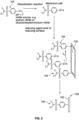
Fig. 2 is a schematic view of a chemical process, showing formation of a sulfanilamide and the attachment of the sulfanilamide to a surface of the medical device ofFig. 1 . - The embodiments disclosed herein are for the purpose of providing a description of the present subject matter, and it is understood that the subject matter may be embodied in various other forms and combinations not shown in detail. Therefore, specific embodiments and features disclosed herein are not to be interpreted as limiting the subject matter as defined in the accompanying claims.
-
Fig. 1 shows amedical device 100, such as a urinary catheter. Although the subject matter disclosed herein may be described relative to urinary catheters, the subject matter is not limited to such, and such subject matter may apply to other suitable medical devices as well. The medical devices may be, for example, those which are configured for insertion into a lumen of a human body, such as the urethra, fallopian tubes, nasal passages or esophagus. Such medical devices may include, but are not limited to, catheters and endoscopes. - The
medical device 100 comprises asurface 102. A sulfanilamide 104 (shown inFig. 2 ) may be associated with thesurface 102 and may be attached to thesurface 102. In an embodiment, thesulfanilamide 104 may be attached to thesurface 102 by grafting (i.e. chemical grafting). Grafting thesulfanilamide 104 to thesurface 102 results in the surface having biocidal and antimicrobial properties. As used herein the term sulfanilamide(s) may encompass sulfanilamides, substituted sulfanilamides, and/or sulfanilamide derivatives. - Turning to
Fig. 2 , thesulfanilamide 104 may be attached to thesurface 102 by reducing a diazonium sulfanilamide salt in the presence of a reducing agent and, also in the presence of thesurface 102 of themedical device 100, thereby attaching thesulfanilamide 104 to thesurface 102 of themedical device 100. For example, the surface of a medical device may be placed in contact with a solution containing the diazonium sulfanilamide salt, a reducing agent, and an acid. In one alternative, the acid may be a Bronsted acid, such acids may include nitric acid, phosphoric acid, hydrochloric acid, sulfuric acid, tetrafluoroboric acid or hexafluorophosphoric acid. Some acids may not be suitable for and would not be used in the process described herein. Such acids include hexafluorometallic acids such as hexafluorozironic or hexafluorotitanic acid. In one embodiment, the pH of the solution may be less than 7, and may be for example, between 2 and 4. - The
surface 102 of themedical device 100 may be a plastic or polymer surface. The reducing agent may include a metal, such as steel or aluminum. Alternatively, the reducing agent may be metallic powders including, but not limited to, steel, aluminum, iron, or zinc powder. In another alternative the surface of the device itself could be or could include the reducing agent. For example, the surface of the device could be a metal surface that acts as a reducing agent, or the surface could be a polymer that includes a metal reducing agent incorporated therein. In another alternative, organic reducing agents, such as but not limited to: acetyl phenyl hydrazine, tannic acid, benzoin, ascorbic acid (vitamin A), ascorbic acid 6-palmitate, alpha-tocopherol, gamma -tocopherol, 2,2,5,7,8-pentamethylchromanol, gallic acid [3,4,5-trihydroxybenzoic acid], pyrogallol [benzene-1 ,2,3-triol], hydroquinone and combinations thereof, may be used. The reducing agent may be formed in solution. - To form the diazonium sulfanilamide salt, the
sulfanilamide 104 may undergo a diazotization reaction, as shown in the first reaction in the schematic ofFig. 2 . Thesulfanilamide 104 may be reacted with a nitrogen source, such as a nitrite, which may include but is not limited to sodium nitrite, and dicyclohexylammonium nitrite. The nitrogen source also may be nitrous acid, or other group I or group II salts of nitrous acid, such as potassium nitrite, or calcium nitrite. Additionally, any other suitable nitrogen source may be used. In one embodiment, the sulfanilamide and nitrogen source may be placed in a solution to form the diazonium salt. - The diazonium salt may be formed from a sulfanilamide such as:

- The 5 or 6 membered heterocyclic aromatic groups contain one or more of nitrogen atom(s), oxygen atom(s) or sulfur atom(s).
- For example, the
sulfanilamide 104 may be one or more of the below:


- Other known suitable sulfanilamides besides those listed above may also be used. One of ordinary skill could readily understand that the above listed sulfanilamide and substituted sulfanilamides ("sulfanilamides") also represent corresponding derivatives of sulfanilamides. When attached to the medical device, the corresponding derivatives of the sulfanilamides have substantially the same structure as the above sulfanilamides except that the primary amine group of the sulfanilamides has been removed by reduction to facilitate attachment to the surface of the medical device. Reduction results in a covalently bound sulfanilamide attached to the surface of the medical device.
- In an alternative to sulfanilamides, or in addition to, diaminodiphenyl sulfone (Dapsone) may be attached to the surface of a medical device using the same or similar mechanisms as disclosed herein. Diaminodiphenyl sulfone includes derivatives thereof, such as the diazonium forms of diaminodiphenyl sulfone. For example, diaminodiphenyl sulfone may be transformed into its mono or bis diazonium salt forms by the same or similar mechanisms as disclosed herein. The diazonium diaminodiphenyl sulfone salt may then be reduced in the presence of a medical device surface to attach diaminodiphenyl sulfone.
- As shown in
Fig. 2 , reduction of the diazonium salt and the surface grafting process may result in stoichiometric amounts of nitrogen gas being released. The organic groups may also be bound to each other during the reduction process (coupling). Diazonium compounds may also be usable as coupling agents for further surface modification. - Thus, upon grafting, the
sulfanamide 104 attached to the surface of the medical device may be any of the above mentioned sulfanilamides. In particular, the sulfanilamide may be:
- In an embodiment, the grafting of the
sulfanilamide 104 to thesurface 102 of themedical device 100 may result in a monolayer--a thin layer of organic groups grafted to thesurface 102. In alternative embodiments, a plurality of layers may be grafted onto the medical device, for example a bilayer may be formed on the surface, resulting in a thicker layer of organic groups grafted onto the surface. - The
medical device 100 may be a catheter. As illustrated inFig. 1 , themedical device 100 may be a urinary catheter. The catheter, such as the illustrated urinary catheter, may include ashaft 103 and thesulfanilamide 104 may be attached to theshaft 103. In an embodiment, the medical device surface may be bare plastic and the sulfanilamide may be grafted onto the plastic. Themedical device 100 may be made of any appropriate material known to one of ordinary skill in the art including, but not limited to, low-density polyethylene (LDPE), TPE, PU, or other polymeric materials. - In alternative embodiments, the medical device may have a hydrophilic coating on a surface of the medical device. For example, a urinary catheter may have a hydrophilic coating disposed on the outer surface of the catheter. The sulfanilamide may be attached to the hydrophilic coating. For example, a lubricious hydrophilic polymer coating may be on the surface of the medical device. For example, the hydrophilic coating may be formed from polyvinylpyrrolidone or polyethylene oxide, which may optionally include agents and additives. In such an embodiment, the sulfanilamide may be grafted onto the hydrophilic coating. When the hydrophilic coating is contacted, wetted or hydrated with a hydration medium, it becomes lubricious. The lubricity eases introduction of the medical device into the body and aids in reducing pain and discomfort associated with such introduction. The hydrophilic coating can be a single layer or a multilayer hydrophilic coating. Multi-layered coating can include at least a base coat and a top layer. In other alternatives, coatings other than hydrophilic coatings may be on a surface of the medical device, wherein the sulfanilamide is attached to the coating.
- The sulfanilamides described above are anti-bacterial, and anti-microbial. The sulfanilamides may be used to resist pathogens that infect the urinary tract and other areas of the body. For example, both sulfamethoxazole in combination with trimethoprim, and sulfadiazine may be useful in the treatment of urinary tract infections (UTIs). Sulfacetamide and its sodium salt are used in treatments for bacterial eye infections and also as a lotion used for the treatment of acne and dermatitis. Sulfaguanidine is a veterinary anti-bacterial used for intestinal infections. Thus, adding sulfanilamides to a surface of the medical device and/or to the hydrophilic coating may help prevent contamination of the medical device and/or the coating by inhibiting the proliferation of pathogens such as bacteria, and microbes.
Claims (16)
- A method of making a medical device having antimicrobial properties, the method comprising:
reducing a diazonium sulfanilamide salt or a diazonium diaminodiphenyl sulfone salt in the presence of a reducing agent and a surface of a medical device, thereby attaching at least one of a sulfanilamide or a diaminodiphenyl sulfone to the surface of the medical device. - The method of claim 1, further including forming a diazonium sulfanilamide salt from a sulfanilamide or forming a diazonium diaminodiphenyl sulfone salt from a diaminodiphenyl sulfone.
- The method of claim 2, wherein the diazonium sulfanilamide salt or the diazonium diaminodiphenyl sulfone salt is formed by a diazotization reaction.
- The method of any one of claims 2 and 3, wherein forming the diazonium sulfanilamide salt or diazonium diaminodiphenyl sulfone salt comprises reacting the sulfanilamide or the diaminodiphenyl sulfone with a nitrogen source, preferably sodium nitrite or dicyclohexylammonium nitrite.
- The method of any one of claims 2-4, wherein the sulfanilamide comprises:

- The method of claim 5, wherein the 5 or 6 membered heterocyclic aromatic groups contains one or more of nitrogen atom(s), oxygen atom(s) or sulfur atoms.
- The method of any one of claims 2-6, wherein the sulfanilamide is one or more of: sulfanilamide, sulfapyridine, sulfamethoxydiazene, sulfathiazole, sulfacetamide, sulfadiazine, sulfadoxine, sulfamethizole, sulfacarbamide, sulfamethazine, sulfamethoxypyridazine, sulfamethoxazole, sulfafurazole, sulfaguanidine, sulfaisodimidine, sulfamethoxine, and sulfamoxole.
- The method of any one of claims 1-7, wherein at least one of the sulfanilamide or the diaminodiphenyl sulfone is attached to the surface of the medical device by grafting.
- The method of any one of claims 1-8, wherein the reducing agent comprises a metal, the metal comprising at least one of steel and aluminum.
- The method of any one of claims 1-8, wherein the reducing agent comprises at least one of: iron powder, zinc powder, acetyl phenyl hydrazine, tannic acid, benzoin, ascorbic acid (vitamin A), ascorbic acid 6-palmitate, alpha-tocopherol, gamma - tocopherol, 2,2,5,7,8-pentamethylchromanol, gallic acid [3,4,5-trihydroxybenzoic acid], pyrogallol [benzene-1 ,2,3-triol], hydroquinone and combinations thereof.
- The method of any one of claims 1-10, wherein the sulfanilamide comprises:

- The method of claim 11, wherein the 5 or 6 membered heterocyclic aromatic groups contains one or more of nitrogen atom(s), oxygen atom(s) or sulfur atoms.
- The method of any one of claims 1-12, wherein the sulfanilamide is one or more of: sulfanilamide, sulfapyridine, sulfamethoxydiazene, sulfathiazole, sulfacetamide, sulfadiazine, sulfadoxine, sulfamethizole, sulfacarbamide, sulfamethazine, sulfamethoxypyridazine, sulfamethoxazole, sulfafurazole, sulfaguanidine, sulfaisodimidine, sulfamethoxine, and sulfamoxole.
- The method of any one of claims 1-13, wherein the medical device is a catheter having a shaft.
- The method of claim 14, wherein at least one of the sulfanilamide or the diaminodiphenyl sulfone is attached to the shaft.
- The method of any one of claims 1-14, wherein the medical device has a hydrophilic coating, wherein at least one of the sulfanilamide or the diaminodiphenyl sulfone is attached to the hydrophilic coating.
Priority Applications (1)
| Application Number | Priority Date | Filing Date | Title |
|---|---|---|---|
| EP25165417.4A EP4552661A3 (en) | 2020-07-13 | 2021-07-13 | Medical devices having anti-microbial properties and methods for making the same |
Applications Claiming Priority (2)
| Application Number | Priority Date | Filing Date | Title |
|---|---|---|---|
| US202063050935P | 2020-07-13 | 2020-07-13 | |
| PCT/US2021/041470 WO2022015755A1 (en) | 2020-07-13 | 2021-07-13 | Medical devices having anti-microbial properties and methods for making the same |
Related Child Applications (2)
| Application Number | Title | Priority Date | Filing Date |
|---|---|---|---|
| EP25165417.4A Division-Into EP4552661A3 (en) | 2020-07-13 | 2021-07-13 | Medical devices having anti-microbial properties and methods for making the same |
| EP25165417.4A Division EP4552661A3 (en) | 2020-07-13 | 2021-07-13 | Medical devices having anti-microbial properties and methods for making the same |
Publications (2)
| Publication Number | Publication Date |
|---|---|
| EP4178637A1 EP4178637A1 (en) | 2023-05-17 |
| EP4178637B1 true EP4178637B1 (en) | 2025-05-14 |
Family
ID=77168504
Family Applications (2)
| Application Number | Title | Priority Date | Filing Date |
|---|---|---|---|
| EP25165417.4A Pending EP4552661A3 (en) | 2020-07-13 | 2021-07-13 | Medical devices having anti-microbial properties and methods for making the same |
| EP21749508.4A Active EP4178637B1 (en) | 2020-07-13 | 2021-07-13 | Medical devices having anti-microbial properties and methods for making the same |
Family Applications Before (1)
| Application Number | Title | Priority Date | Filing Date |
|---|---|---|---|
| EP25165417.4A Pending EP4552661A3 (en) | 2020-07-13 | 2021-07-13 | Medical devices having anti-microbial properties and methods for making the same |
Country Status (8)
| Country | Link |
|---|---|
| US (1) | US20230263946A1 (en) |
| EP (2) | EP4552661A3 (en) |
| AU (1) | AU2021309661B2 (en) |
| CA (1) | CA3185819A1 (en) |
| DK (1) | DK4178637T3 (en) |
| HU (1) | HUE072436T2 (en) |
| LT (1) | LT4178637T (en) |
| WO (1) | WO2022015755A1 (en) |
Family Cites Families (6)
| Publication number | Priority date | Publication date | Assignee | Title |
|---|---|---|---|---|
| US20070093894A1 (en) * | 2005-10-25 | 2007-04-26 | Baylor College Of Medicine | Incorporation of antimicrobial combinations onto devices to reduce infection |
| US20070166344A1 (en) * | 2006-01-18 | 2007-07-19 | Xin Qu | Non-leaching surface-active film compositions for microbial adhesion prevention |
| US20080306427A1 (en) * | 2007-06-05 | 2008-12-11 | Cook Incorporated | Chronic Hemodialysis Catheter with Balloon |
| WO2012154946A1 (en) * | 2011-05-11 | 2012-11-15 | Boston Scientific Scimed, Inc. | Medical apparatuses for delivery of urologically beneficial agents |
| WO2016187454A1 (en) * | 2015-05-19 | 2016-11-24 | Sabic Global Technologies B.V. | Polymeric implantable medical devices and surgical instruments |
| WO2018106938A1 (en) * | 2016-12-07 | 2018-06-14 | Pendant Biosciences, Inc. | Crosslinked coatings |
-
2021
- 2021-07-13 EP EP25165417.4A patent/EP4552661A3/en active Pending
- 2021-07-13 EP EP21749508.4A patent/EP4178637B1/en active Active
- 2021-07-13 HU HUE21749508A patent/HUE072436T2/en unknown
- 2021-07-13 US US18/005,240 patent/US20230263946A1/en active Pending
- 2021-07-13 LT LTEPPCT/US2021/041470T patent/LT4178637T/en unknown
- 2021-07-13 DK DK21749508.4T patent/DK4178637T3/en active
- 2021-07-13 AU AU2021309661A patent/AU2021309661B2/en active Active
- 2021-07-13 CA CA3185819A patent/CA3185819A1/en active Pending
- 2021-07-13 WO PCT/US2021/041470 patent/WO2022015755A1/en not_active Ceased
Also Published As
| Publication number | Publication date |
|---|---|
| LT4178637T (en) | 2025-06-25 |
| CA3185819A1 (en) | 2022-01-20 |
| DK4178637T3 (en) | 2025-06-16 |
| AU2021309661B2 (en) | 2025-09-11 |
| US20230263946A1 (en) | 2023-08-24 |
| HUE072436T2 (en) | 2025-11-28 |
| EP4178637A1 (en) | 2023-05-17 |
| AU2021309661A1 (en) | 2023-03-02 |
| WO2022015755A1 (en) | 2022-01-20 |
| EP4552661A3 (en) | 2025-07-23 |
| EP4552661A2 (en) | 2025-05-14 |
Similar Documents
| Publication | Publication Date | Title |
|---|---|---|
| AU2008276020B2 (en) | Catheter and method of minimizing likelihood of infection resulting from use of a catheter | |
| CA2639838C (en) | Antimicrobial lubricious coating | |
| JP5054383B2 (en) | Lubricating composition, method of preparation, and article coated thereby | |
| EP2477670B1 (en) | Anti-infective lubricant for medical devices and methods for preparing the same | |
| US20100074932A1 (en) | Antimicrobial compositions containing gallium | |
| US20050064210A1 (en) | Coating for use with medical devices and method of making same | |
| ATE469666T1 (en) | MEDICAL ARTICLE HAVING A COATING CONTAINING HYDROGEN PEROXIDE AND PACKAGING THEREOF | |
| US20090255536A1 (en) | Biofilm-Inhibiting Catheters and Tubings | |
| EP3436094B1 (en) | Anti-microbial medical materials and devices | |
| EP1786413B1 (en) | Antimicrobial elastomer composition and method for making | |
| EP4051328B1 (en) | Urinary catheters and methods for preventing bacterial infections | |
| EP4552661A2 (en) | Medical devices having anti-microbial properties and methods for making the same | |
| CA3185752A1 (en) | Hydrophilic medical products and hydration mediums for hydrating the same | |
| JP2001521945A (en) | Prepolymer composition containing fungicide | |
| Wang et al. | POLYPHENOL-INSPIRED HYDROGELS AND COATINGS FOR ANTIMICROBIAL APPLICATIONS | |
| WO2025250370A1 (en) | Coated catheter with bio-mimicked glycocalyx structures and nitric oxide release function providing antithrombogenic and antimicrobial properties | |
| Tobler et al. | Current Silver Antimicrobial Technologies |
Legal Events
| Date | Code | Title | Description |
|---|---|---|---|
| STAA | Information on the status of an ep patent application or granted ep patent |
Free format text: STATUS: UNKNOWN |
|
| STAA | Information on the status of an ep patent application or granted ep patent |
Free format text: STATUS: THE INTERNATIONAL PUBLICATION HAS BEEN MADE |
|
| PUAI | Public reference made under article 153(3) epc to a published international application that has entered the european phase |
Free format text: ORIGINAL CODE: 0009012 |
|
| STAA | Information on the status of an ep patent application or granted ep patent |
Free format text: STATUS: REQUEST FOR EXAMINATION WAS MADE |
|
| 17P | Request for examination filed |
Effective date: 20230124 |
|
| AK | Designated contracting states |
Kind code of ref document: A1 Designated state(s): AL AT BE BG CH CY CZ DE DK EE ES FI FR GB GR HR HU IE IS IT LI LT LU LV MC MK MT NL NO PL PT RO RS SE SI SK SM TR |
|
| P01 | Opt-out of the competence of the unified patent court (upc) registered |
Effective date: 20230520 |
|
| DAV | Request for validation of the european patent (deleted) | ||
| DAX | Request for extension of the european patent (deleted) | ||
| GRAP | Despatch of communication of intention to grant a patent |
Free format text: ORIGINAL CODE: EPIDOSNIGR1 |
|
| STAA | Information on the status of an ep patent application or granted ep patent |
Free format text: STATUS: GRANT OF PATENT IS INTENDED |
|
| GRAS | Grant fee paid |
Free format text: ORIGINAL CODE: EPIDOSNIGR3 |
|
| INTG | Intention to grant announced |
Effective date: 20250226 |
|
| GRAA | (expected) grant |
Free format text: ORIGINAL CODE: 0009210 |
|
| STAA | Information on the status of an ep patent application or granted ep patent |
Free format text: STATUS: THE PATENT HAS BEEN GRANTED |
|
| AK | Designated contracting states |
Kind code of ref document: B1 Designated state(s): AL AT BE BG CH CY CZ DE DK EE ES FI FR GB GR HR HU IE IS IT LI LT LU LV MC MK MT NL NO PL PT RO RS SE SI SK SM TR |
|
| REG | Reference to a national code |
Ref country code: GB Ref legal event code: FG4D |
|
| REG | Reference to a national code |
Ref country code: CH Ref legal event code: EP |
|
| REG | Reference to a national code |
Ref country code: IE Ref legal event code: FG4D |
|
| REG | Reference to a national code |
Ref country code: DE Ref legal event code: R096 Ref document number: 602021030803 Country of ref document: DE |
|
| REG | Reference to a national code |
Ref country code: DK Ref legal event code: T3 Effective date: 20250613 |
|
| REG | Reference to a national code |
Ref country code: NL Ref legal event code: FP |
|
| PGFP | Annual fee paid to national office [announced via postgrant information from national office to epo] |
Ref country code: LT Payment date: 20250618 Year of fee payment: 5 |
|
| PGFP | Annual fee paid to national office [announced via postgrant information from national office to epo] |
Ref country code: NL Payment date: 20250726 Year of fee payment: 5 |
|
| PG25 | Lapsed in a contracting state [announced via postgrant information from national office to epo] |
Ref country code: FI Free format text: LAPSE BECAUSE OF FAILURE TO SUBMIT A TRANSLATION OF THE DESCRIPTION OR TO PAY THE FEE WITHIN THE PRESCRIBED TIME-LIMIT Effective date: 20250514 Ref country code: ES Free format text: LAPSE BECAUSE OF FAILURE TO SUBMIT A TRANSLATION OF THE DESCRIPTION OR TO PAY THE FEE WITHIN THE PRESCRIBED TIME-LIMIT Effective date: 20250514 Ref country code: PT Free format text: LAPSE BECAUSE OF FAILURE TO SUBMIT A TRANSLATION OF THE DESCRIPTION OR TO PAY THE FEE WITHIN THE PRESCRIBED TIME-LIMIT Effective date: 20250915 |
|
| PGFP | Annual fee paid to national office [announced via postgrant information from national office to epo] |
Ref country code: DE Payment date: 20250729 Year of fee payment: 5 Ref country code: DK Payment date: 20250725 Year of fee payment: 5 |
|
| PG25 | Lapsed in a contracting state [announced via postgrant information from national office to epo] |
Ref country code: NO Free format text: LAPSE BECAUSE OF FAILURE TO SUBMIT A TRANSLATION OF THE DESCRIPTION OR TO PAY THE FEE WITHIN THE PRESCRIBED TIME-LIMIT Effective date: 20250814 Ref country code: GR Free format text: LAPSE BECAUSE OF FAILURE TO SUBMIT A TRANSLATION OF THE DESCRIPTION OR TO PAY THE FEE WITHIN THE PRESCRIBED TIME-LIMIT Effective date: 20250815 |
|
| PG25 | Lapsed in a contracting state [announced via postgrant information from national office to epo] |
Ref country code: PL Free format text: LAPSE BECAUSE OF FAILURE TO SUBMIT A TRANSLATION OF THE DESCRIPTION OR TO PAY THE FEE WITHIN THE PRESCRIBED TIME-LIMIT Effective date: 20250514 |
|
| REG | Reference to a national code |
Ref country code: AT Ref legal event code: MK05 Ref document number: 1794285 Country of ref document: AT Kind code of ref document: T Effective date: 20250514 |
|
| PG25 | Lapsed in a contracting state [announced via postgrant information from national office to epo] |
Ref country code: BG Free format text: LAPSE BECAUSE OF FAILURE TO SUBMIT A TRANSLATION OF THE DESCRIPTION OR TO PAY THE FEE WITHIN THE PRESCRIBED TIME-LIMIT Effective date: 20250514 |
|
| PGFP | Annual fee paid to national office [announced via postgrant information from national office to epo] |
Ref country code: HU Payment date: 20250625 Year of fee payment: 5 Ref country code: GB Payment date: 20250728 Year of fee payment: 5 |
|
| PG25 | Lapsed in a contracting state [announced via postgrant information from national office to epo] |
Ref country code: HR Free format text: LAPSE BECAUSE OF FAILURE TO SUBMIT A TRANSLATION OF THE DESCRIPTION OR TO PAY THE FEE WITHIN THE PRESCRIBED TIME-LIMIT Effective date: 20250514 |
|
| PG25 | Lapsed in a contracting state [announced via postgrant information from national office to epo] |
Ref country code: AT Free format text: LAPSE BECAUSE OF FAILURE TO SUBMIT A TRANSLATION OF THE DESCRIPTION OR TO PAY THE FEE WITHIN THE PRESCRIBED TIME-LIMIT Effective date: 20250514 |
|
| PGFP | Annual fee paid to national office [announced via postgrant information from national office to epo] |
Ref country code: FR Payment date: 20250725 Year of fee payment: 5 |
|
| PG25 | Lapsed in a contracting state [announced via postgrant information from national office to epo] |
Ref country code: RS Free format text: LAPSE BECAUSE OF FAILURE TO SUBMIT A TRANSLATION OF THE DESCRIPTION OR TO PAY THE FEE WITHIN THE PRESCRIBED TIME-LIMIT Effective date: 20250814 |
|
| PGFP | Annual fee paid to national office [announced via postgrant information from national office to epo] |
Ref country code: IE Payment date: 20250728 Year of fee payment: 5 |
|
| PG25 | Lapsed in a contracting state [announced via postgrant information from national office to epo] |
Ref country code: IS Free format text: LAPSE BECAUSE OF FAILURE TO SUBMIT A TRANSLATION OF THE DESCRIPTION OR TO PAY THE FEE WITHIN THE PRESCRIBED TIME-LIMIT Effective date: 20250914 |
|
| PG25 | Lapsed in a contracting state [announced via postgrant information from national office to epo] |
Ref country code: LV Free format text: LAPSE BECAUSE OF FAILURE TO SUBMIT A TRANSLATION OF THE DESCRIPTION OR TO PAY THE FEE WITHIN THE PRESCRIBED TIME-LIMIT Effective date: 20250514 |
|
| REG | Reference to a national code |
Ref country code: HU Ref legal event code: AG4A Ref document number: E072436 Country of ref document: HU |
|
| PG25 | Lapsed in a contracting state [announced via postgrant information from national office to epo] |
Ref country code: SM Free format text: LAPSE BECAUSE OF FAILURE TO SUBMIT A TRANSLATION OF THE DESCRIPTION OR TO PAY THE FEE WITHIN THE PRESCRIBED TIME-LIMIT Effective date: 20250514 |
|
| PG25 | Lapsed in a contracting state [announced via postgrant information from national office to epo] |
Ref country code: CZ Free format text: LAPSE BECAUSE OF FAILURE TO SUBMIT A TRANSLATION OF THE DESCRIPTION OR TO PAY THE FEE WITHIN THE PRESCRIBED TIME-LIMIT Effective date: 20250514 |
|
| PG25 | Lapsed in a contracting state [announced via postgrant information from national office to epo] |
Ref country code: EE Free format text: LAPSE BECAUSE OF FAILURE TO SUBMIT A TRANSLATION OF THE DESCRIPTION OR TO PAY THE FEE WITHIN THE PRESCRIBED TIME-LIMIT Effective date: 20250514 |
|
| PG25 | Lapsed in a contracting state [announced via postgrant information from national office to epo] |
Ref country code: SK Free format text: LAPSE BECAUSE OF FAILURE TO SUBMIT A TRANSLATION OF THE DESCRIPTION OR TO PAY THE FEE WITHIN THE PRESCRIBED TIME-LIMIT Effective date: 20250514 |
|
| PG25 | Lapsed in a contracting state [announced via postgrant information from national office to epo] |
Ref country code: IT Free format text: LAPSE BECAUSE OF FAILURE TO SUBMIT A TRANSLATION OF THE DESCRIPTION OR TO PAY THE FEE WITHIN THE PRESCRIBED TIME-LIMIT Effective date: 20250514 |
|
| REG | Reference to a national code |
Ref country code: DE Ref legal event code: R097 Ref document number: 602021030803 Country of ref document: DE |
|
| REG | Reference to a national code |
Ref country code: CH Ref legal event code: H13 Free format text: ST27 STATUS EVENT CODE: U-0-0-H10-H13 (AS PROVIDED BY THE NATIONAL OFFICE) Effective date: 20260224 |
|
| PG25 | Lapsed in a contracting state [announced via postgrant information from national office to epo] |
Ref country code: RO Free format text: LAPSE BECAUSE OF FAILURE TO SUBMIT A TRANSLATION OF THE DESCRIPTION OR TO PAY THE FEE WITHIN THE PRESCRIBED TIME-LIMIT Effective date: 20250514 |
|
| PG25 | Lapsed in a contracting state [announced via postgrant information from national office to epo] |
Ref country code: LU Free format text: LAPSE BECAUSE OF NON-PAYMENT OF DUE FEES Effective date: 20250713 |
|
| PLBE | No opposition filed within time limit |
Free format text: ORIGINAL CODE: 0009261 |
|
| STAA | Information on the status of an ep patent application or granted ep patent |
Free format text: STATUS: NO OPPOSITION FILED WITHIN TIME LIMIT |
|
| REG | Reference to a national code |
Ref country code: CH Ref legal event code: L10 Free format text: ST27 STATUS EVENT CODE: U-0-0-L10-L00 (AS PROVIDED BY THE NATIONAL OFFICE) Effective date: 20260325 |
|
| REG | Reference to a national code |
Ref country code: BE Ref legal event code: MM Effective date: 20250731 |
|
| PG25 | Lapsed in a contracting state [announced via postgrant information from national office to epo] |
Ref country code: BE Free format text: LAPSE BECAUSE OF NON-PAYMENT OF DUE FEES Effective date: 20250731 |
|
| 26N | No opposition filed |
Effective date: 20260217 |
|
| PG25 | Lapsed in a contracting state [announced via postgrant information from national office to epo] |
Ref country code: CH Free format text: LAPSE BECAUSE OF NON-PAYMENT OF DUE FEES Effective date: 20250731 |