EP4178071A1 - Battery bank unit, remaining charge time calculation method, and remaining charge time calculation program - Google Patents
Battery bank unit, remaining charge time calculation method, and remaining charge time calculation program Download PDFInfo
- Publication number
- EP4178071A1 EP4178071A1 EP22205371.2A EP22205371A EP4178071A1 EP 4178071 A1 EP4178071 A1 EP 4178071A1 EP 22205371 A EP22205371 A EP 22205371A EP 4178071 A1 EP4178071 A1 EP 4178071A1
- Authority
- EP
- European Patent Office
- Prior art keywords
- charge
- bank
- time
- battery bank
- battery
- Prior art date
- Legal status (The legal status is an assumption and is not a legal conclusion. Google has not performed a legal analysis and makes no representation as to the accuracy of the status listed.)
- Pending
Links
Images




Classifications
-
- H—ELECTRICITY
- H01—ELECTRIC ELEMENTS
- H01M—PROCESSES OR MEANS, e.g. BATTERIES, FOR THE DIRECT CONVERSION OF CHEMICAL ENERGY INTO ELECTRICAL ENERGY
- H01M10/00—Secondary cells; Manufacture thereof
- H01M10/42—Methods or arrangements for servicing or maintenance of secondary cells or secondary half-cells
- H01M10/44—Methods for charging or discharging
- H01M10/443—Methods for charging or discharging in response to temperature
-
- G—PHYSICS
- G01—MEASURING; TESTING
- G01R—MEASURING ELECTRIC VARIABLES; MEASURING MAGNETIC VARIABLES
- G01R31/00—Arrangements for testing electric properties; Arrangements for locating electric faults; Arrangements for electrical testing characterised by what is being tested not provided for elsewhere
- G01R31/36—Arrangements for testing, measuring or monitoring the electrical condition of accumulators or electric batteries, e.g. capacity or state of charge [SoC]
- G01R31/3644—Constructional arrangements
- G01R31/3648—Constructional arrangements comprising digital calculation means, e.g. for performing an algorithm
-
- G—PHYSICS
- G01—MEASURING; TESTING
- G01R—MEASURING ELECTRIC VARIABLES; MEASURING MAGNETIC VARIABLES
- G01R31/00—Arrangements for testing electric properties; Arrangements for locating electric faults; Arrangements for electrical testing characterised by what is being tested not provided for elsewhere
- G01R31/36—Arrangements for testing, measuring or monitoring the electrical condition of accumulators or electric batteries, e.g. capacity or state of charge [SoC]
- G01R31/367—Software therefor, e.g. for battery testing using modelling or look-up tables
-
- H—ELECTRICITY
- H01—ELECTRIC ELEMENTS
- H01M—PROCESSES OR MEANS, e.g. BATTERIES, FOR THE DIRECT CONVERSION OF CHEMICAL ENERGY INTO ELECTRICAL ENERGY
- H01M10/00—Secondary cells; Manufacture thereof
- H01M10/42—Methods or arrangements for servicing or maintenance of secondary cells or secondary half-cells
- H01M10/44—Methods for charging or discharging
- H01M10/441—Methods for charging or discharging for several batteries or cells simultaneously or sequentially
-
- H—ELECTRICITY
- H01—ELECTRIC ELEMENTS
- H01M—PROCESSES OR MEANS, e.g. BATTERIES, FOR THE DIRECT CONVERSION OF CHEMICAL ENERGY INTO ELECTRICAL ENERGY
- H01M10/00—Secondary cells; Manufacture thereof
- H01M10/42—Methods or arrangements for servicing or maintenance of secondary cells or secondary half-cells
- H01M10/48—Accumulators combined with arrangements for measuring, testing or indicating the condition of cells, e.g. the level or density of the electrolyte
- H01M10/482—Accumulators combined with arrangements for measuring, testing or indicating the condition of cells, e.g. the level or density of the electrolyte for several batteries or cells simultaneously or sequentially
-
- H—ELECTRICITY
- H01—ELECTRIC ELEMENTS
- H01M—PROCESSES OR MEANS, e.g. BATTERIES, FOR THE DIRECT CONVERSION OF CHEMICAL ENERGY INTO ELECTRICAL ENERGY
- H01M10/00—Secondary cells; Manufacture thereof
- H01M10/42—Methods or arrangements for servicing or maintenance of secondary cells or secondary half-cells
- H01M10/48—Accumulators combined with arrangements for measuring, testing or indicating the condition of cells, e.g. the level or density of the electrolyte
- H01M10/486—Accumulators combined with arrangements for measuring, testing or indicating the condition of cells, e.g. the level or density of the electrolyte for measuring temperature
-
- H—ELECTRICITY
- H02—GENERATION; CONVERSION OR DISTRIBUTION OF ELECTRIC POWER
- H02J—ELECTRIC POWER NETWORKS; CIRCUIT ARRANGEMENTS OR SYSTEMS FOR SUPPLYING OR DISTRIBUTING ELECTRIC POWER; SYSTEMS FOR STORING ELECTRIC ENERGY
- H02J7/00—Circuit arrangements for charging or discharging batteries or for supplying loads from batteries
- H02J7/50—Circuit arrangements for charging or discharging batteries or for supplying loads from batteries acting upon multiple batteries simultaneously or sequentially
-
- H—ELECTRICITY
- H02—GENERATION; CONVERSION OR DISTRIBUTION OF ELECTRIC POWER
- H02J—ELECTRIC POWER NETWORKS; CIRCUIT ARRANGEMENTS OR SYSTEMS FOR SUPPLYING OR DISTRIBUTING ELECTRIC POWER; SYSTEMS FOR STORING ELECTRIC ENERGY
- H02J7/00—Circuit arrangements for charging or discharging batteries or for supplying loads from batteries
- H02J7/50—Circuit arrangements for charging or discharging batteries or for supplying loads from batteries acting upon multiple batteries simultaneously or sequentially
- H02J7/585—Sequential battery discharge in systems with a plurality of batteries
-
- H—ELECTRICITY
- H02—GENERATION; CONVERSION OR DISTRIBUTION OF ELECTRIC POWER
- H02J—ELECTRIC POWER NETWORKS; CIRCUIT ARRANGEMENTS OR SYSTEMS FOR SUPPLYING OR DISTRIBUTING ELECTRIC POWER; SYSTEMS FOR STORING ELECTRIC ENERGY
- H02J7/00—Circuit arrangements for charging or discharging batteries or for supplying loads from batteries
- H02J7/90—Regulation of charging or discharging current or voltage
- H02J7/92—Regulation of charging or discharging current or voltage with prioritisation of loads or sources
-
- H—ELECTRICITY
- H02—GENERATION; CONVERSION OR DISTRIBUTION OF ELECTRIC POWER
- H02J—ELECTRIC POWER NETWORKS; CIRCUIT ARRANGEMENTS OR SYSTEMS FOR SUPPLYING OR DISTRIBUTING ELECTRIC POWER; SYSTEMS FOR STORING ELECTRIC ENERGY
- H02J7/00—Circuit arrangements for charging or discharging batteries or for supplying loads from batteries
- H02J7/90—Regulation of charging or discharging current or voltage
- H02J7/96—Regulation of charging or discharging current or voltage in response to battery voltage
-
- H—ELECTRICITY
- H02—GENERATION; CONVERSION OR DISTRIBUTION OF ELECTRIC POWER
- H02J—ELECTRIC POWER NETWORKS; CIRCUIT ARRANGEMENTS OR SYSTEMS FOR SUPPLYING OR DISTRIBUTING ELECTRIC POWER; SYSTEMS FOR STORING ELECTRIC ENERGY
- H02J7/00—Circuit arrangements for charging or discharging batteries or for supplying loads from batteries
- H02J7/90—Regulation of charging or discharging current or voltage
- H02J7/971—Regulation of charging or discharging current or voltage the charge cycle being controlled or terminated in response to non-electric parameters
- H02J7/975—Regulation of charging or discharging current or voltage the charge cycle being controlled or terminated in response to non-electric parameters in response to temperature
- H02J7/977—Regulation of charging or discharging current or voltage the charge cycle being controlled or terminated in response to non-electric parameters in response to temperature of the battery
-
- G—PHYSICS
- G01—MEASURING; TESTING
- G01R—MEASURING ELECTRIC VARIABLES; MEASURING MAGNETIC VARIABLES
- G01R31/00—Arrangements for testing electric properties; Arrangements for locating electric faults; Arrangements for electrical testing characterised by what is being tested not provided for elsewhere
- G01R31/36—Arrangements for testing, measuring or monitoring the electrical condition of accumulators or electric batteries, e.g. capacity or state of charge [SoC]
- G01R31/396—Acquisition or processing of data for testing or for monitoring individual cells or groups of cells within a battery
-
- H—ELECTRICITY
- H01—ELECTRIC ELEMENTS
- H01M—PROCESSES OR MEANS, e.g. BATTERIES, FOR THE DIRECT CONVERSION OF CHEMICAL ENERGY INTO ELECTRICAL ENERGY
- H01M10/00—Secondary cells; Manufacture thereof
- H01M10/04—Construction or manufacture in general
- H01M10/0445—Multimode batteries, e.g. containing auxiliary cells or electrodes switchable in parallel or series connections
-
- H—ELECTRICITY
- H01—ELECTRIC ELEMENTS
- H01M—PROCESSES OR MEANS, e.g. BATTERIES, FOR THE DIRECT CONVERSION OF CHEMICAL ENERGY INTO ELECTRICAL ENERGY
- H01M10/00—Secondary cells; Manufacture thereof
- H01M10/42—Methods or arrangements for servicing or maintenance of secondary cells or secondary half-cells
- H01M10/44—Methods for charging or discharging
-
- H—ELECTRICITY
- H01—ELECTRIC ELEMENTS
- H01M—PROCESSES OR MEANS, e.g. BATTERIES, FOR THE DIRECT CONVERSION OF CHEMICAL ENERGY INTO ELECTRICAL ENERGY
- H01M10/00—Secondary cells; Manufacture thereof
- H01M10/42—Methods or arrangements for servicing or maintenance of secondary cells or secondary half-cells
- H01M10/48—Accumulators combined with arrangements for measuring, testing or indicating the condition of cells, e.g. the level or density of the electrolyte
-
- H—ELECTRICITY
- H01—ELECTRIC ELEMENTS
- H01M—PROCESSES OR MEANS, e.g. BATTERIES, FOR THE DIRECT CONVERSION OF CHEMICAL ENERGY INTO ELECTRICAL ENERGY
- H01M10/00—Secondary cells; Manufacture thereof
- H01M10/42—Methods or arrangements for servicing or maintenance of secondary cells or secondary half-cells
- H01M10/425—Structural combination with electronic components, e.g. electronic circuits integrated to the outside of the casing
- H01M2010/4271—Battery management systems including electronic circuits, e.g. control of current or voltage to keep battery in healthy state, cell balancing
-
- H—ELECTRICITY
- H01—ELECTRIC ELEMENTS
- H01M—PROCESSES OR MEANS, e.g. BATTERIES, FOR THE DIRECT CONVERSION OF CHEMICAL ENERGY INTO ELECTRICAL ENERGY
- H01M50/00—Constructional details or processes of manufacture of the non-active parts of electrochemical cells other than fuel cells, e.g. hybrid cells
- H01M50/50—Current conducting connections for cells or batteries
- H01M50/502—Interconnectors for connecting terminals of adjacent batteries; Interconnectors for connecting cells outside a battery casing
- H01M50/509—Interconnectors for connecting terminals of adjacent batteries; Interconnectors for connecting cells outside a battery casing characterised by the type of connection, e.g. mixed connections
- H01M50/512—Connection only in parallel
-
- H—ELECTRICITY
- H02—GENERATION; CONVERSION OR DISTRIBUTION OF ELECTRIC POWER
- H02J—ELECTRIC POWER NETWORKS; CIRCUIT ARRANGEMENTS OR SYSTEMS FOR SUPPLYING OR DISTRIBUTING ELECTRIC POWER; SYSTEMS FOR STORING ELECTRIC ENERGY
- H02J2207/00—Details of circuit arrangements for charging or discharging batteries or supplying loads from batteries
- H02J2207/20—Charging or discharging characterised by the power electronics converter
-
- H—ELECTRICITY
- H02—GENERATION; CONVERSION OR DISTRIBUTION OF ELECTRIC POWER
- H02J—ELECTRIC POWER NETWORKS; CIRCUIT ARRANGEMENTS OR SYSTEMS FOR SUPPLYING OR DISTRIBUTING ELECTRIC POWER; SYSTEMS FOR STORING ELECTRIC ENERGY
- H02J7/00—Circuit arrangements for charging or discharging batteries or for supplying loads from batteries
- H02J7/80—Circuit arrangements for charging or discharging batteries or for supplying loads from batteries including monitoring or indicating arrangements
-
- H—ELECTRICITY
- H02—GENERATION; CONVERSION OR DISTRIBUTION OF ELECTRIC POWER
- H02J—ELECTRIC POWER NETWORKS; CIRCUIT ARRANGEMENTS OR SYSTEMS FOR SUPPLYING OR DISTRIBUTING ELECTRIC POWER; SYSTEMS FOR STORING ELECTRIC ENERGY
- H02J7/00—Circuit arrangements for charging or discharging batteries or for supplying loads from batteries
- H02J7/80—Circuit arrangements for charging or discharging batteries or for supplying loads from batteries including monitoring or indicating arrangements
- H02J7/82—Control of state of charge [SOC]
-
- H—ELECTRICITY
- H02—GENERATION; CONVERSION OR DISTRIBUTION OF ELECTRIC POWER
- H02J—ELECTRIC POWER NETWORKS; CIRCUIT ARRANGEMENTS OR SYSTEMS FOR SUPPLYING OR DISTRIBUTING ELECTRIC POWER; SYSTEMS FOR STORING ELECTRIC ENERGY
- H02J7/00—Circuit arrangements for charging or discharging batteries or for supplying loads from batteries
- H02J7/80—Circuit arrangements for charging or discharging batteries or for supplying loads from batteries including monitoring or indicating arrangements
- H02J7/82—Control of state of charge [SOC]
- H02J7/825—Detection of fully charged condition
-
- H—ELECTRICITY
- H02—GENERATION; CONVERSION OR DISTRIBUTION OF ELECTRIC POWER
- H02J—ELECTRIC POWER NETWORKS; CIRCUIT ARRANGEMENTS OR SYSTEMS FOR SUPPLYING OR DISTRIBUTING ELECTRIC POWER; SYSTEMS FOR STORING ELECTRIC ENERGY
- H02J7/00—Circuit arrangements for charging or discharging batteries or for supplying loads from batteries
- H02J7/855—Circuit arrangements for charging or discharging batteries or for supplying loads from batteries with circuits adapted for supplying loads from the battery
-
- Y—GENERAL TAGGING OF NEW TECHNOLOGICAL DEVELOPMENTS; GENERAL TAGGING OF CROSS-SECTIONAL TECHNOLOGIES SPANNING OVER SEVERAL SECTIONS OF THE IPC; TECHNICAL SUBJECTS COVERED BY FORMER USPC CROSS-REFERENCE ART COLLECTIONS [XRACs] AND DIGESTS
- Y02—TECHNOLOGIES OR APPLICATIONS FOR MITIGATION OR ADAPTATION AGAINST CLIMATE CHANGE
- Y02E—REDUCTION OF GREENHOUSE GAS [GHG] EMISSIONS, RELATED TO ENERGY GENERATION, TRANSMISSION OR DISTRIBUTION
- Y02E60/00—Enabling technologies; Technologies with a potential or indirect contribution to GHG emissions mitigation
- Y02E60/10—Energy storage using batteries
Definitions
- the present disclosure relates to a battery bank unit, a remaining charge time calculation method, and a remaining charge time calculation program.
- Patent Literature 1 discloses a battery bank unit that discharges electricity to a load apparatus connected to an external power source when the external power source is unable to supply power due to a power outage.
- the battery bank unit includes a plurality of battery banks.
- the plurality of battery banks are each composed of a plurality of secondary batteries, and are connected in parallel to each other.
- the plurality of battery banks are charged by electric power from the external power source under ordinary circumstances.
- the battery bank unit is configured so that the plurality of battery banks are switched in turn to be charged and a battery bank that is not being charged can discharge electricity to the load apparatus. This allows the battery bank unit to discharge electricity to the load apparatus even while the battery bank unit is charging.
- the objective of the present disclosure is to provide a battery bank unit capable of accurately calculating time required to complete charging.
- a battery bank unit includes: a first battery bank and a second battery bank that are connected in parallel to each other; and a control apparatus that performs collective charge for collectively charging the first battery bank and the second battery bank, performs first bank charge for charging only the first battery bank after the collective charge, and performs second bank charge for charging only the second battery bank after the first bank charge, wherein, the control apparatus calculates remaining time to complete charge of the battery bank unit based on a temperature of the battery bank unit at a start of the collective charge.
- a remaining charge time calculation method is a method for a computer to calculate remaining time to complete charge of a battery bank unit, the charge including collective charge for collectively charging a first battery bank and a second battery bank connected in parallel to the first battery bank, first bank charge for charging only the first battery bank after the collective charge, and second bank charge for charging only the second battery bank after the first bank charge, the method including: acquiring a temperature of the battery bank unit at a start of the collective charge; and calculating the remaining time based on the temperature of the battery bank unit.
- a remaining charge time calculation program is a program stored in a non-transitory storage medium, wherein, when the program is executed by a computer that controls a battery bank unit for which collective charge for collectively charging a first battery bank and a second battery bank connected in parallel to the first battery bank is performed, first bank charge for charging only the first battery bank is performed after the collective charge, and second bank charge for charging only the second battery bank is performed after the first bank charge, the program is configured to cause the computer to perform operations including: acquiring a temperature of the battery bank unit at a start of the collective charge; and calculating remaining time to complete charge of the battery bank unit based on the temperature of the battery bank unit.
- FIG. 1 is a schematic diagram illustrating battery bank unit 1 in Embodiment 1 of the present disclosure.
- Battery bank unit 1 supplies power to load apparatus 3 connected to external power source 2 when external power source 2 loses power.
- Battery bank unit 1 is charged by power from external power source 2.
- External power source 2 is, for example, an apparatus that converts commercial AC power into DC power and outputs the DC power.
- Load apparatus 3 is an apparatus (e.g., server apparatus) that operates with DC power.
- battery bank unit 1 includes input/output terminal 10, first and second battery banks 20 and 30, charge/discharge circuitry 40, and control apparatus 50.
- Input/output terminal 10 is connected to power line 4 that supplies power to load apparatus 3 from external power source 2.
- First and second battery banks 20 and 30 are composed of a plurality of secondary batteries (e.g., nickel-hydrogen secondary batteries) connected in series, for example.
- the secondary battery is not necessarily a nickel-hydrogen secondary battery, and may be another secondary battery such as a lithium-ion secondary battery.
- the configurations of first and second battery banks 20 and 30 are similar to each other. First and second battery banks 20 and 30 are connected in parallel to each other.
- Charge/discharge circuitry 40 functions as circuitry that performs charge and discharge of first and second battery banks 20 and 30 via input/output terminal 10.
- Charge/discharge circuitry 40 includes boost DC/DC converter 41, switch 42, first charge switch 43, first discharge switch 44, second charge switch 45, and second discharge switch 46.
- Boost DC/DC converter 41 is a power conversion apparatus that boosts power supplied from external power source 2 and outputs the boosted power.
- Switch 42 switches a value of voltage applied to first and second battery banks 20 and 30.
- first terminal 42a is connected to an output terminal of boost DC/DC converter 41
- second terminal 42b is connected to input/output terminal 10.
- third terminal 42c is connected to first and second battery banks 20 and 30 via first and second charge switches 43 and 45.
- first terminal 42a and third terminal 42c are connected to each other, and the power outputted from boost DC/DC converter 41 is supplied to first and second battery banks 20 and 30 via first and second charge switches 43 and 45.
- second terminal 42b and third terminal 42c are connected to each other, and the power outputted from external power source 2 is supplied to first and second battery banks 20 and 30 via first and second charge switches 43 and 45.
- First charge switch 43 allows first battery bank 20 to be charged when in the on state, and does not allow first battery bank 20 to be charged when in the off state.
- first terminal 43a is connected to third terminal 42c of switch 42 and second terminal 43b is connected to the positive electrode of first battery bank 20. Note that the negative electrode of first battery bank 20 is connected to the ground.
- First discharge switch 44 allows first battery bank 20 to discharge when in the on state, and does not allow first battery bank 20 to discharge when in the off state.
- first terminal 44a is connected to the positive electrode of first battery bank 20 and second terminal 44b is connected to input/output terminal 10.
- Second charge switch 45 allows second battery bank 30 to be charged when in the on state, and does not allow second battery bank 30 to be charged when in the off state.
- first terminal 45a is connected to third terminal 42c of switch 42 and second terminal 45b is connected to the positive electrode of second battery bank 30. Note that the negative electrode of second battery bank 30 is connected to the ground.
- Second discharge switch 46 allows second battery bank 30 to discharge when in the on state, and does not allow second battery bank 30 to discharge when in the off state.
- first terminal 46a is connected to the positive electrode of second battery bank 30 and second terminal 46b is connected to input/output terminal 10.
- FIG. 2 is a block diagram of battery bank unit 1. As illustrated in FIG. 2 , battery bank unit 1 further includes current sensor 60, first voltage sensor 61, first temperature sensor 62, second voltage sensor 63, and second temperature sensor 64.
- Current sensor 60 detects a value of current flowing in or out of power line 4 via input/output terminal 10. To be more specific, current sensor 60 detects a value of current between input/output terminal 10 and connecting point 40a of charge/discharge circuitry 40.
- First voltage sensor 61 detects a voltage value of first battery bank 20.
- First temperature sensor 62 detects the temperature of first battery bank 20.
- Second voltage sensor 63 detects a voltage value of second battery bank 30.
- Second temperature sensor 64 detects the temperature of second battery bank 30.
- Current sensor 60, first voltage sensor 61, first temperature sensor 62, second voltage sensor 63, and second temperature sensor 64 each transmit the detected value to control apparatus 50.
- Battery bank unit 1 further includes a third voltage sensor (not illustrated) that detects a power source voltage value that is a voltage value of external power source 2.
- Control apparatus 50 detects a power outage of external power source 2 based on the power source voltage value detected by the third voltage sensor.
- Control apparatus 50 controls the charge/discharge of battery bank unit 1 by controlling the states of switches 42 to 46.
- Control apparatus 50 includes storage 51.
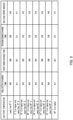
- Storage 51 stores table T illustrated in FIG. 3 .
- Table T is a table that is referred to when control apparatus 50 calculates remaining time that is the time required to complete the charge of battery bank unit 1 to be described later.
- the temperature, collective charge time, first bank charge time, second bank charge time, and voltage drop amount are associated with each other.
- the temperature is divided into eight temperature zones in total, and between 0°C and 60°C, there are six zones each including a range of 10°C. Needless to say, the temperature range in each temperature zone and the number of temperature zones are not limited to those illustrated in FIG. 3 .
- the collective charge time, first bank charge time, second bank charge time, and voltage drop amount will be described later in detail.
- Control apparatus 50 also calculates the state of charge (SOC) of battery bank unit 1 by a known method based on the current value detected by current sensor 60.
- SOC of battery bank unit 1 is a charge rate (%) corresponding to the sum of the charge amounts of first and second battery banks 20 and 30.
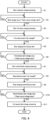
- control apparatus 50 charge control for battery bank unit 1 performed by control apparatus 50 will be described with reference to the flowchart in FIG. 4 and the timing chart in FIG. 5 .
- first and second battery banks 20 and 30 are both in the on state and first and second discharge switches 44 and 46 are both in the on state: accordingly, the discharge of first and second battery banks 20 and 30 are allowed.
- the configurations of first and second battery banks 20 and 30 are similar to each other, and they are connected in parallel.
- the voltage values and charge amounts of first and second battery banks 20 and 30 are approximately equal to each other. That is, the SOC of battery bank unit 1 is approximately equal to each of the SOCs of first and second battery banks 20 and 30.
- Control apparatus 50 starts the charge control when detecting connection to external power source 2 or detecting the end of the power outage of external power source 2 based on the detection value of the third voltage sensor.
- Control apparatus 50 starts collective charge processing in S1.
- the collective charge processing is processing of charging first and second battery banks 20 and 30 collectively.
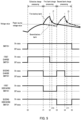
- control apparatus 50 switches switch 42 and first and second charge switches 43 and 45 to the on state (time t0) from the state where switch 42 and first and second charge switches 43 and 45 are all in the off state and first and second discharge switches 44 and 46 are both in the on state.
- First and second discharge switches 44 and 46 remain the on state. This allows battery bank unit 1 to discharge to load apparatus 3 even when external power source 2 loses power during the collective charge processing.
- the solid-line voltage value indicates the voltage value of first battery bank 20
- the chain-line voltage value indicates the voltage value of second battery bank 30.
- the voltage values of first and second battery banks 20 and 30 are approximately equal before the start of the collective charge processing and during the collective charge processing.
- the lines indicating the voltage values of first and second battery banks 20 and 30 are overlapped with each other, resulting in the solid line.
- control apparatus 50 determines whether the bank voltage value, which is the voltage value of battery bank unit 1, is equal to or greater than the power source voltage value.
- the bank voltage value is specifically a mean value of the voltage value of first battery bank 20 and the voltage value of second battery bank 30. Note that the bank voltage value may be either one of the voltage values of first and second battery banks 20 and 30.
- the bank voltage value is lower than the power source voltage value (NO in S2), the collective charge processing is continued.
- control apparatus 50 ends the collective charge processing and starts first bank charge processing in S3.
- the first bank charge processing is processing of charging only first battery bank 20.
- first battery bank 20 is fully charged at a voltage value higher than the power source voltage value.
- Second battery bank 30 is not charged in the first bank charge processing.
- control apparatus 50 switches second charge switch 45 to the off state and first discharge switch 44 to the off state (time t1).
- the power of boost DC/DC converter 41 is supplied only to first battery bank 20, and the voltage value of first battery bank 20 further increases from the power source voltage value.
- first discharge switch 44 is in the off state and first battery bank 20 does not discharge. This makes it possible to prevent application of a voltage value higher than the power source voltage value to load apparatus 3, thereby preventing failure of load apparatus 3, for example.
- Second discharge switch 46 is in the on state in first bank charge processing.
- second battery bank 30 can discharge to load apparatus 3 even when external power source 2 loses power during the first bank charge processing.
- control apparatus 50 determines whether first battery bank 20 is fully charged in S4. To be more specific, control apparatus 50 determines whether the detection value of first temperature sensor 62 has reached a predetermined first temperature.
- the first temperature is a temperature at which first battery bank 20 is fully charged. When the detection value of first temperature sensor 62 is lower than the first temperature (NO in S4), control apparatus 50 continues to charge first battery bank 20 only.
- control apparatus 50 stops charging first battery bank 20 in S5.
- control apparatus 50 switches first charge switch 43 to the off state (time t2). As a result, the charge of first battery bank 20 is stopped, and the voltage value of first battery bank 20 gradually decreases due to self-discharge. At this time, the temperature of first battery bank 20 is higher than the temperature of second battery bank 30. Thus, the drop amount of the voltage value of first battery bank 20 per unit time is larger than the drop amount of the voltage value of second battery bank 30 per unit time.
- control apparatus 50 determines whether the voltage value of first battery bank 20 is equal to or lower than the power source voltage value. When the voltage value of first battery bank 20 is higher than the power source voltage value (NO in S6), control apparatus 50 continues the state where first and second battery banks 20 and 30 are not charged.
- control apparatus 50 ends the first bank charge processing and starts second bank charge processing in S7.
- the second bank charge processing is processing of charging only second battery bank 30.
- second battery bank 30 is fully charged at a voltage value higher than the power source voltage value.
- First battery bank 20 is not charged in the second bank charge processing.
- control apparatus 50 switches second charge switch 45 to the on state, first discharge switch 44 to the on state, and second discharge switch 46 to the off state (time t3).
- power is supplied from boost DC/DC converter 41 to second battery bank 30 only, and the voltage value of second battery bank 30 increases and exceeds the power source voltage value.
- second discharge switch 46 is in the off state and second battery bank 30 does not discharge. This makes it possible to prevent application of a voltage value higher than the power source voltage value to load apparatus 3, thereby preventing failure of load apparatus 3, for example.
- first battery bank 20 can discharge to load apparatus 3 even when external power source 2 loses power during the second bank charge processing.
- control apparatus 50 determines whether second battery bank 30 is fully charged in S8. To be more specific, control apparatus 50 determines whether the detection value of second temperature sensor 64 has reached a predetermined second temperature.
- the second temperature is the temperature at which second battery bank 30 is fully charged. When the detection value of second temperature sensor 64 is lower than the second temperature (NO in S8), control apparatus 50 continues to charge second battery bank 30 only. Note that the second temperature may be the same as the first temperature, which is the temperature at which first battery bank 20 is fully charged.
- control apparatus 50 stops charging second battery bank 30 in S9.
- control apparatus 50 switches second charge switch 45 to the off state (time t4). Accordingly, the charge of second battery bank 30 is stopped, and the voltage of second battery bank 30 gradually decreases due to self-discharge. At this time, the temperature of second battery bank 30 is higher than the temperature of first battery bank 20. Thus, the drop amount of the voltage value of second battery bank 30 per unit time is larger than the drop amount of the voltage value of first battery bank 20 per unit time.
- control apparatus 50 determines whether the voltage value of second battery bank 30 is equal to or lower than the power source voltage value. When the voltage value of second battery bank 30 is higher than the power source voltage value (NO in S10), control apparatus 50 continues the state where first and second battery banks 20 and 30 are not charged.
- control apparatus 50 ends the second bank charge processing in S11. To be more specific, control apparatus 50 switches switch 42 to the off state and second discharge switch 46 to the on state (time t5). This is the end of the charge of battery bank unit 1. Control apparatus 50 specifies the SOC of battery bank unit 1 at the end of the charge of battery bank unit 1 as 100%.
- battery bank unit 1 may include three or more battery banks.
- the m battery banks are collectively charged in the collective charge processing.
- m battery banks are charged one by one in turn as is the case with the above first and second bank charge processing.
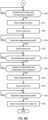
- control apparatus 50 calculates the remaining time while performing the charge control described above.
- control apparatus 50 acquires, from table T, collective charge time, first bank charge time, and second bank charge time that are associated with the temperature at the start of the collective charge processing for battery bank unit 1.
- the temperature of battery bank unit 1 is, for example, the mean temperature of first and second battery banks 20 and 30. Note that the temperature of battery bank unit 1 may be either one of the temperatures of first and second battery banks 20 and 30.
- the collective charge time corresponds to the time required from the start (time t0 in FIG. 5 ) to the end (time t1 in FIG. 5 ) of collective charge processing in a case where the SOC of battery bank unit 1 at the start of the collective charge processing is a first predetermined charge rate (e.g., 0%).
- the first predetermined charge rate is any value determined in, for example, an experiment performed to determine the collective charge time stored in table T in advance.
- the first bank charge time corresponds to the time required from the start (time t1) to the end (time t3) of first bank charge processing.
- the second bank charge time corresponds to the time required from the start (time t3) to the end (time t5) of second bank charge processing.
- the collective charge time, first bank charge time, and second bank charge time are determined for each temperature zone by actual measurement performed in advance through experiments, for example, and are stored in table T.
- control apparatus 50 acquires the collective charge time "A3", first bank charge time "B3", and second bank charge time "C3" that are associated with the temperature "20°C or higher and lower than 30°C” from table T in FIG. 3 .
- control apparatus 50 calculates the remaining time in S21. To be more specific, control apparatus 50 calculates the remaining time at the start of charge, which is the remaining time at the time of starting the charge, using Expression 1.
- Tm0, Tm1, and Tm2 respectively represent the collective charge time, first bank charge time, and second bank charge time acquired from table T.
- Control apparatus 50 also indicates the calculated remaining time at the start of charge to load apparatus 3.
- Load apparatus 3 displays the remaining time at the start of charge on a display section such as a display. This allows an administrator of load apparatus 3 to recognize the time from the start to the completion of the charge of battery bank unit 1.
- control apparatus 50 measures the time elapsed from the start of the charge of battery bank unit 1. Control apparatus 50 subtracts the elapsed time from the remaining time at the start of charge calculated in S21 at predetermined time intervals to calculate the remaining time at that time, updates the remaining time to the latest, and indicates the updated remaining time to load apparatus 3. Load apparatus 3 displays the updated remaining time on the display section.
- control apparatus 50 determines whether the collective charge processing has ended. When the collective charge processing is in progress (NO in S22), control apparatus 50 continues updating and indicating the remaining time.
- control apparatus 50 corrects the remaining time in S23. To be more specific, control apparatus 50 corrects the remaining time based on the actual collective charge time, which is the time actually spent for the collective charge processing. Control apparatus 50 subtracts the actual collective charge time from the collective charge time acquired from table T, and adds the calculated value to the remaining time at the end of the collective charge processing.
- control apparatus 50 corrects the remaining time by using the difference between the experimental value (collective charge time) and the measured value (actual collective charge time) of the time required for the collective charge processing. This allows control apparatus 50 to accurately correct the remaining time at the end of collective charge. Note that control apparatus 50 need not correct the remaining time in S23.
- control apparatus 50 updates the collective charge time in S24.
- control apparatus 50 updates the collective charge time associated with the temperature of battery bank unit 1 at the start of the charge with the actual collective charge time in table T. For example, in the case where the temperature of battery bank unit 1 is 25°C at the start of the charge of battery bank unit 1, control apparatus 50 updates the collective charge time "A3" associated with the temperature "20°C or higher and lower than 30°C" in table T with the actual collective charge time.
- control apparatus 50 determines whether the charge of first battery bank 20 is stopped during the first bank charge processing. When first battery bank 20 is not fully charged and the charge of first battery bank 20 is not stopped (NO in S25), control apparatus 50 continues updating and indicating the remaining time.
- control apparatus 50 determines, in S26, whether the temperature of first battery bank 20 is equal to or lower than a first determination temperature.
- the first determination temperature is a temperature of first battery bank 20 when the drop amount of the voltage value of first battery bank 20 per unit time is almost constant.
- time t2 the temperature of first battery bank 20 is relatively high and the drop amount of the voltage value of first battery bank 20 per unit time is relatively large.
- the first determination temperature is specified to be the temperature of first battery bank 20 at point P.
- the first determination temperature is specified by actual measurement performed in advance through experiments or the like.
- control apparatus 50 may calculate the first determination temperature. To be more specific, control apparatus 50 calculates the first determination temperature by adding the first predetermined temperature to the temperature of first battery bank 20 at the start of the collective charge processing.
- the first predetermined temperature is determined in advance by experimentally measuring the relation between the temperature of first battery bank 20 at the start of the collective charge processing and the temperature of first battery bank 20 at which the drop amount of the voltage value of first battery bank 20 per unit time is almost constant.
- the first determination temperature may be a temperature obtained by adding the first predetermined temperature to the temperature of first battery bank 20 at the start of the first bank charge processing.
- control apparatus 50 When the temperature of first battery bank 20 is higher than the first determination temperature (NO in S26), control apparatus 50 continues updating and indicating the remaining time. When the temperature of first battery bank 20 is decreased and becomes equal to or lower than the first determination temperature (YES in S26), control apparatus 50 acquires the voltage drop amount from table T in S27. Specifically, control apparatus 50 acquires, from table T, the voltage drop amount associated with the temperature of first battery bank 20 at that time.
- control apparatus 50 acquires the voltage drop amount "V5" associated with the temperature "40°C or higher and lower than 50°C" from table T in FIG. 3 .
- the voltage drop amount is a drop amount of the voltage value of first battery bank 20 per unit time after first battery bank 20 is fully charged and stops charging.
- the voltage drop amount is determined for each temperature zone by actual measurement performed in advance through experiments, for example, and is stored in table T.
- control apparatus 50 corrects the remaining time in S28.
- control apparatus 50 calculates, based on the voltage drop amount acquired from table T, a first charge stop time, which is the time required from when the temperature of first battery bank 20 becomes equal to or lower than the first determination temperature to when the second bank charge processing is started (time t3).
- control apparatus 50 calculates the first charge stop time by subtracting the power source voltage value from the voltage value of first battery bank 20 at the time when the temperature of first battery bank 20 becomes equal to or lower than the first determination temperature, and dividing the subtracted value by the voltage drop amount acquired from table T.
- Control apparatus 50 corrects the remaining time based on the calculated first charge stop time. Specifically, control apparatus 50 corrects the remaining time by replacing the remaining time at the time when the temperature of first battery bank 20 becomes equal to or lower than the first determination temperature with the sum of the calculated first charge stop time and the second bank charge time acquired in S20. After the temperature of first battery bank 20 becomes equal to or lower than the first determination temperature, control apparatus 50 subtracts the time elapsed from when the temperature of first battery bank 20 becomes equal to or lower than the first determination temperature from the corrected remaining time at predetermined time intervals to calculate the remaining time at that time and update the remaining time to the latest. Control apparatus 50 then indicates the updated remaining time to load apparatus 3. This allows control apparatus 50 to accurately correct the remaining time while the charge of first battery bank 20 is stopped during the first bank charge processing.
- control apparatus 50 determines whether the second bank charge processing has started. When the second bank charge processing has not started (NO in S29), control apparatus 50 continues updating and indicating the remaining time.
- control apparatus 50 corrects the remaining time in S30. Specifically, control apparatus 50 replaces the remaining time at time t3 (at the start of the second bank charge processing) with the actual first bank charge time that is the time actually spent for the first bank charge processing. When the remaining time at time t3 is corrected, control apparatus 50 updates the latest remaining time as follows. That is, control apparatus 50 subtracts the time elapsed from time t3 from the actual first bank charge time at predetermined time intervals after time t3 to calculate the remaining time at that time and update the remaining time to the latest. Control apparatus 50 then indicates the updated remaining time to load apparatus 3.
- first and second battery banks 20 and 30 are similar to each other as described above, and the surroundings (e.g., temperature and humidity) of first and second battery banks 20 and 30 are almost the same. Accordingly, the actual duration of the second bank charge processing is approximately equal to the actual first bank charge time. That is, when the first bank charge processing is finished, control apparatus 50 can accurately correct the remaining time by replacing the remaining time with the actual first bank charge time, and indicate the corrected remaining time. Note that control apparatus 50 need not correct the remaining time in S30.
- control apparatus 50 determines whether the charge of second battery bank 30 is stopped during the second bank charge processing. When second battery bank 30 is not fully charged and the charge of second battery bank 30 is not stopped (NO in S31), control apparatus 50 continues updating and indicating the remaining time.
- control apparatus 50 determines, in S32, whether the temperature of second battery bank 30 is equal to or lower than a second determination temperature.
- the second determination temperature is a temperature of second battery bank 30 when the drop amount of the voltage value of second battery bank 30 per unit time is almost constant.
- time t4 the temperature of second battery bank 30 is relatively high and the drop amount of the voltage value of second battery bank 30 per unit time is relatively large.
- the second determination temperature is specified to be the temperature of second battery bank 30 at point Q.
- the second determination temperature is specified in advance by actual measurement through experiments or the like. Note that the second determination temperature may be the same as the first determination temperature in a case where the configurations of first and second battery banks 20 and 30 are similar to each other.
- control apparatus 50 may calculate the second determination temperature. To be more specific, control apparatus 50 calculates the second determination temperature by adding a second predetermined temperature to the temperature of second battery bank 30 at the start of the collective charge processing.
- the second predetermined temperature is determined in advance by experimentally measuring the relation between the temperature of second battery bank 30 at the start of the collective charge processing and the temperature of second battery bank 30 at which the drop amount of the voltage value of second battery bank 30 per unit time is almost constant.
- the second determination temperature may be a temperature obtained by adding the second predetermined temperature to the temperature of second battery bank 30 at the start of the second bank charge processing.
- the second predetermined temperature may be the same as the first predetermined temperature in a case where the configurations of first and second battery banks 20 and 30 are similar to each other.
- control apparatus 50 When the temperature of second battery bank 30 is higher than the second determination temperature (NO in S32), control apparatus 50 continues updating and indicating the remaining time. When the temperature of second battery bank 30 is decreased and becomes equal to or lower than the second determination temperature (YES in S32), control apparatus 50 acquires the voltage drop amount from table T in S33. Specifically, control apparatus 50 acquires, from table T, the voltage drop amount associated with the temperature of second battery bank 30 at that time.
- control apparatus 50 acquires the voltage drop amount "V5" associated with the temperature "40°C or higher and lower than 50°C" from table T.
- control apparatus 50 corrects the remaining time in S34.
- control apparatus 50 calculates, based on the voltage drop amount acquired from table T, a second charge stop time, which is the time required from when the temperature of second battery bank 30 becomes equal to or lower than the second determination temperature to when the second bank charge processing is finished (time t5).
- control apparatus 50 calculates the second charge stop time by subtracting the power source voltage value from the voltage value of second battery bank 30 at the time when the temperature of second battery bank 30 becomes equal to or lower than the second determination temperature, and dividing the subtracted value by the voltage drop amount acquired from table T.
- Control apparatus 50 corrects the remaining time based on the calculated second charge stop time. Specifically, control apparatus 50 corrects the remaining time by replacing the remaining time at the time when the temperature of the second battery bank 20 becomes equal to or lower than the second determination temperature with the calculated second charge stop time. After the temperature of second battery bank 30 becomes equal to or lower than the second determination temperature, control apparatus 50 subtracts the time elapsed from when the temperature of second battery bank 30 becomes equal to or lower than the second determination temperature from the corrected remaining time at predetermined time intervals to calculate the remaining time at that time and update the remaining time to the latest. Control apparatus 50 then indicates the updated remaining time to load apparatus 3. This allows control apparatus 50 to accurately correct the remaining time while the charge of second battery bank 30 is stopped during the second bank charge processing.
- control apparatus 50 determines whether the second bank charge processing has ended. When the second bank charge processing has not ended (NO in S35), control apparatus 50 continues updating and indicating the remaining time.
- control apparatus 50 updates the first and second bank charge times in S36.
- control apparatus 50 updates the first bank charge time associated with the temperature of battery bank unit 1 at the start of the charge with the actual first bank charge time in table T. For example, in the case where the temperature of battery bank unit 1 is 25°C at the start of the charge of battery bank unit 1, control apparatus 50 updates the first bank charge time "B3" associated with the temperature "20°C or higher and lower than 30°C" in table T with the actual first bank charge time.
- control apparatus 50 updates the second bank charge time associated with the temperature of battery bank unit 1 at the start of the charge with the actual second bank charge time that is the time actually spent for the second bank charge processing. For example, in the case where the temperature of battery bank unit 1 is 25°C at the start of the charge of battery bank unit 1, control apparatus 50 updates the second bank charge time "C3" associated with the temperature "20°C or higher and lower than 30°C" in table T with the actual second bank charge time. After updating the second bank charge time, control apparatus 50 ends the control for calculating the remaining time.
- the actual collective charge time, actual first bank charge time, and actual second bank charge time vary depending on the surroundings of battery bank unit 1, power source voltage value, temperatures of first and second battery banks 20 and 30, aging of battery bank unit 1, and degree of deterioration of first and second battery banks 20 and 30 (hereinafter, referred to as the surroundings of battery bank unit 1, etc.).
- control apparatus 50 updates table T so as to adapt to a change in the surroundings of battery bank unit 1, etc. every time first and second battery banks 20 and 30 are charged, thereby accurately calculating the remaining time in performing the charge control.
- Embodiment 2 of the present disclosure will be described mainly about aspects different from the above Embodiment 1.
- Table T in Embodiment 2 has no voltage drop amount.
- the control for calculating the remaining time performed by control apparatus 50 in Embodiment 2 is different from that in the above Embodiment 1.
- the control for calculating the remaining time in Embodiment 2 will be described with reference to FIGS. 6A , 7A , and 7B .
- control apparatus 50 When starting the control for calculating the remaining time, control apparatus 50 performs S20 to S25 in FIG. 6A as in the above Embodiment 1. When the charge of first battery bank 20 is stopped (YES in S25), control apparatus 50 calculates, in S126 of FIG. 7A , a first actual drop amount that is the actual drop amount of the voltage value of first battery bank 20 per unit time at that time.
- control apparatus 50 determines whether the first actual drop amount is equal to or less than a first predetermined amount.
- the first predetermined amount is a value determined in advance by actual measurement through experiments or the like, and is determined to be the value of the first actual drop amount at point P in FIG. 5 . That is, the first predetermined amount is the value of the first actual drop amount when the first actual drop amount becomes smaller and almost constant after the charge of first battery bank 20 is stopped.
- control apparatus 50 When the temperature of first battery bank 20 is relatively high and the first actual drop amount is greater than the first predetermined amount (NO in S127), control apparatus 50 continues calculating the first actual drop amount (S126) and updating and indicating the remaining time. In contrast, when the voltage value of first battery bank 20 and the temperature of first battery bank 20 decrease and the first actual drop amount becomes equal to or less than the first predetermined amount (YES in S127), control apparatus 50 corrects the remaining time in S128.
- control apparatus 50 calculates another first charge stop time, which is the time required from when the first actual drop amount becomes equal to or less than the first predetermined amount to when the second bank charge processing is started, and corrects the remaining time based on the calculated another first charge stop time.
- Control apparatus 50 calculates the another first charge stop time by subtracting the power source voltage value from the voltage value of first battery bank 20 at the time when the first actual drop amount becomes equal to or less than the first predetermined amount, and dividing the subtracted value by the first actual drop amount at the time when the first actual drop amount becomes equal to or less than the first predetermined amount.
- control apparatus 50 corrects the remaining time by replacing the remaining time at the time when the first actual drop amount becomes equal to or less than the first predetermined amount with the sum of the calculated another first charge stop time and the second bank charge time acquired in S20. After the first actual drop amount becomes equal to or less than the first predetermined amount, control apparatus 50 subtracts the time elapsed from when the first actual drop amount becomes equal to or less than the first predetermined amount from the corrected remaining time at predetermined time intervals to calculate the remaining time at that time and update the remaining time to the latest. Control apparatus 50 then indicates the updated remaining time to load apparatus 3.
- control apparatus 50 performs S129 to S131 as in S29 to S31 in Embodiment 1.
- control apparatus 50 calculates a second actual drop amount that is the actual drop amount of the voltage value of second battery bank 30 per unit time at that time.
- control apparatus 50 determines whether the second actual drop amount is equal to or less than a second predetermined amount.
- the second predetermined amount is a value determined in advance by actual measurement through experiments or the like, and is determined to be the value of the second actual drop amount at point Q in FIG. 5 . That is, the second predetermined amount is the value of the second actual drop amount when the second actual drop amount becomes smaller and almost constant after the charge of second battery bank 30 is stopped. Note that the second predetermined amount may be the same as the first predetermined amount in a case where the configurations of first and second battery banks 20 and 30 are similar to each other.
- control apparatus 50 When the temperature of second battery bank 30 is relatively high and the second actual drop amount is greater than the second predetermined amount (NO in S133), control apparatus 50 continues calculating the second actual drop amount (S132) and updating and indicating the remaining time. In contrast, when the voltage value of second battery bank 30 and the temperature of second battery bank 30 decrease and the second actual drop amount becomes equal to or less than the second predetermined amount (YES in S133), control apparatus 50 corrects the remaining time in S134.
- control apparatus 50 calculates another second charge stop time, which is the time required from when the second actual drop amount becomes equal to or less than the second predetermined amount to when the second bank charge processing is ended, and corrects the remaining time based on the calculated another second charge stop time.
- Control apparatus 50 calculates the another second charge stop time by subtracting the power source voltage value from the voltage value of second battery bank 30 at the time when the second actual drop amount becomes equal to or less than the second predetermined amount, and dividing the subtracted value by the second actual drop amount at the time when the second actual drop amount becomes equal to or less than the second predetermined amount.
- control apparatus 50 corrects the remaining time by replacing the remaining time at the time when the second actual drop amount becomes equal to or less than the second predetermined amount with the calculated another second charge stop time. After the second actual drop amount becomes equal to or less than the second predetermined amount, control apparatus 50 subtracts the time elapsed from when the second actual drop amount becomes equal to or less than the second predetermined amount from the corrected remaining time at predetermined time intervals to calculate the remaining time at that time and update the remaining time to the latest. Control apparatus 50 then indicates the updated remaining time to load apparatus 3.
- control apparatus 50 performs S135 and S136 as in S35 and S36 in Embodiment 1, and ends the control for calculating the remaining time.
- Expression 1 may be altered into the following Expression 2.
- Remaining time at the start of charge Tm 0 ⁇ 100 ⁇ So / 100 ⁇ ⁇ + Tm 1 + Tm 2
- So (%) is the SOC of battery bank unit 1 at the start of charge control (time t0).
- ⁇ (%) is the first predetermined charge rate and is the SOC of a battery bank unit at the start of an experiment to determine the total charge time to be stored in table T.
- Tm0 is multiplied by "(100 - So) / (100 - ⁇ )" in Expression 2, which is a difference from Expression 1.
- Tm0 is the collective charge time, and corresponds to the time required from the start (time t0) to the end (time t1) of collective charge processing in a case where the SOC of battery bank unit 1 at the start of charge is the first predetermined charge rate ( ⁇ ).
- (100 - So) / (100 - ⁇ ) is a ratio of the amount of charge for the SOC of battery bank unit 1 to be 100% from So to the amount of charge for the SOC of battery bank unit 1 to be 100% from ⁇ .
- Tm0 ⁇ (100 - So) / (100 - ⁇ ) corresponds to the time required from the start (time t0) to the end (time t1) of collective charge processing in a case where the SOC of battery bank unit 1 at the start of collective charge is So.
- Expression 2 makes it possible to calculate the remaining time at the start of charge excluding the time required for charging the charge amount corresponding to the SOC of battery bank unit 1 at the start of collective charge.
- Control apparatus 50 calculates the remaining time to complete the charge of battery bank unit 1 based on the temperature of battery bank unit 1 and the SOC of battery bank unit 1 at the start of collective charge processing. Thus, control apparatus 50 can accurately calculate the remaining time at the start of charge.
- Control apparatus 50 may start the charge control in a case where the SOC of battery bank unit 1 decreases due to self-discharge of first and second battery banks 20 and 30 and becomes equal to or lower than a second predetermined charge rate (e.g., 90%).
- the second predetermined charge rate is determined so that the SOC of battery bank unit 1 is not relatively low due to self-discharge.
- the second predetermined charge rate may be determined to be equal to the first predetermined charge rate.
- Tm0 (collective charge time) in Expressions 1 and 2 is determined based on the second predetermined charge rate, and is relatively highly accurate in a case where the SOC of battery bank unit 1 at the start of charge control is equal to the second predetermined charge rate.
- control apparatus 50 can calculate the remaining time more accurately in the case where the SOC of battery bank unit 1 at the start of charge control is equal to the second predetermined charge rate.
- control apparatus 50 may correct the remaining time in S30 based on the corrected charge time obtained by adding, to the actual first bank charge time, the charge time corresponding to the drop amount of the voltage value dropped due to self-discharge of second battery bank 30 during the first bank charge processing. Specifically, control apparatus 50 calculates the corrected charge time by multiplying the actual first bank charge time by a predetermined factor (e.g., 1.05). The predetermined factor is determined in advance by experimentally measuring the drop amount of the voltage value dropped due to self-discharge of second battery bank 30 during the first bank charge processing. Control apparatus 50 corrects the remaining time at time t3 (at the start of the second bank charge processing) by replacing it with the corrected charge time.
- a predetermined factor e.g., 1.05
- first and second battery banks 20 and 30 may be different from each other.
- the temperature, collective charge time, first bank charge time, second bank charge time, voltage drop amount, and second voltage drop amount which is the drop amount of the voltage value of second battery bank 30 per unit time after second battery bank 30 is fully charged, may be associated with each other.
- control apparatus 50 acquires the second voltage drop amount in S33.
- the remaining time may not be corrected at the start of the second bank charge processing, that is, S30 in FIG. 6B and S130 in FIG. 7A may not be performed.
- Battery bank unit 1 may be configured so that first and second battery banks 20 and 30 are removable. In addition, battery bank unit 1 need not include first and second battery banks 20 and 30 as the components of battery bank unit 1 itself. That is, battery bank unit 1 may be configured by including input/output terminal 10, charge/discharge circuitry 40, control apparatus 50, and sensors 60 to 64. In this case, battery bank unit 1 can function as a back-up apparatus for external power source 2 by retrofitting separately arranged first and second battery banks 20 and 30.
- storage 51 may be configured separately from control apparatus 50 and communicable with control apparatus 50.
- storage 51 may be communicably connected to control apparatus 50 via a network such as the Internet.
- the information of the table can be shared by a plurality of battery bank units 1; furthermore, the table can be updated by the plurality of battery bank units 1 so as to store more accurate information.
- control apparatus 50 may be configured separately from battery bank unit 1. In this case, control apparatus 50 can remotely control battery bank unit 1 and calculate the remaining time via a network such as the Internet.
- storage 51 may be a non-transitory storage medium that stores a remaining charge time calculation program for calculating the remaining time, and control apparatus 50 may calculate the remaining time as described above by reading and executing the remaining charge time calculation program.
- the present disclosure is particularly useful as a battery bank unit.
Landscapes
- Engineering & Computer Science (AREA)
- Power Engineering (AREA)
- Manufacturing & Machinery (AREA)
- Chemical & Material Sciences (AREA)
- Chemical Kinetics & Catalysis (AREA)
- Electrochemistry (AREA)
- General Chemical & Material Sciences (AREA)
- Physics & Mathematics (AREA)
- General Physics & Mathematics (AREA)
- Charge And Discharge Circuits For Batteries Or The Like (AREA)
- Secondary Cells (AREA)
Abstract
Description
- The present disclosure relates to a battery bank unit, a remaining charge time calculation method, and a remaining charge time calculation program.
-
Patent Literature 1 discloses a battery bank unit that discharges electricity to a load apparatus connected to an external power source when the external power source is unable to supply power due to a power outage. The battery bank unit includes a plurality of battery banks. The plurality of battery banks are each composed of a plurality of secondary batteries, and are connected in parallel to each other. The plurality of battery banks are charged by electric power from the external power source under ordinary circumstances. - The battery bank unit is configured so that the plurality of battery banks are switched in turn to be charged and a battery bank that is not being charged can discharge electricity to the load apparatus. This allows the battery bank unit to discharge electricity to the load apparatus even while the battery bank unit is charging.
-
PTL 1
Japanese Patent Application Laid-Open No. 2016-10250 - For the load apparatus management, for example, there is a need to know how long it takes to complete the charge of a battery bank unit while the battery bank unit is charging.
- The objective of the present disclosure is to provide a battery bank unit capable of accurately calculating time required to complete charging.
- A battery bank unit according to the present disclosure includes: a first battery bank and a second battery bank that are connected in parallel to each other; and a control apparatus that performs collective charge for collectively charging the first battery bank and the second battery bank, performs first bank charge for charging only the first battery bank after the collective charge, and performs second bank charge for charging only the second battery bank after the first bank charge, wherein, the control apparatus calculates remaining time to complete charge of the battery bank unit based on a temperature of the battery bank unit at a start of the collective charge.
- A remaining charge time calculation method according to the present disclosure is a method for a computer to calculate remaining time to complete charge of a battery bank unit, the charge including collective charge for collectively charging a first battery bank and a second battery bank connected in parallel to the first battery bank, first bank charge for charging only the first battery bank after the collective charge, and second bank charge for charging only the second battery bank after the first bank charge, the method including: acquiring a temperature of the battery bank unit at a start of the collective charge; and calculating the remaining time based on the temperature of the battery bank unit.
- A remaining charge time calculation program according to the present disclosure is a program stored in a non-transitory storage medium, wherein, when the program is executed by a computer that controls a battery bank unit for which collective charge for collectively charging a first battery bank and a second battery bank connected in parallel to the first battery bank is performed, first bank charge for charging only the first battery bank is performed after the collective charge, and second bank charge for charging only the second battery bank is performed after the first bank charge, the program is configured to cause the computer to perform operations including: acquiring a temperature of the battery bank unit at a start of the collective charge; and calculating remaining time to complete charge of the battery bank unit based on the temperature of the battery bank unit.
- According to the present disclosure, it is possible to provide a battery bank unit capable of accurately calculating time required to complete charging.
-
-
FIG. 1 is a schematic diagram illustrating a battery bank unit inEmbodiment 1 of the present disclosure; -
FIG. 2 is a block diagram of the battery bank unit; -
FIG. 3 illustrates a table; -
FIG. 4 is a flowchart illustrating a procedure performed by a control apparatus to charge the battery bank unit; -
FIG. 5 is a timing chart for the procedure in the flowchart inFIG. 4 ; -
FIG. 6A is a flowchart illustrating a procedure performed by the control apparatus to calculate remaining time; -
FIG. 6B is a flowchart following the procedure inFIG. 6A ; -
FIG. 7A is a flowchart illustrating a procedure performed by the control apparatus to calculate remaining time according toEmbodiment 2 of the present disclosure; and -
FIG. 7B is a flowchart following the procedure inFIG. 7A . - Hereinafter, a battery bank unit according to
Embodiment 1 of the present disclosure will be described with reference to the accompanying drawings.FIG. 1 is a schematic diagram illustratingbattery bank unit 1 inEmbodiment 1 of the present disclosure.Battery bank unit 1 supplies power to loadapparatus 3 connected toexternal power source 2 whenexternal power source 2 loses power.Battery bank unit 1 is charged by power fromexternal power source 2. -
External power source 2 is, for example, an apparatus that converts commercial AC power into DC power and outputs the DC power.Load apparatus 3 is an apparatus (e.g., server apparatus) that operates with DC power. - As illustrated in
FIG. 1 ,battery bank unit 1 includes input/output terminal 10, first andsecond battery banks discharge circuitry 40, andcontrol apparatus 50. - Input/
output terminal 10 is connected topower line 4 that supplies power to loadapparatus 3 fromexternal power source 2. - First and
second battery banks second battery banks second battery banks - Charge/
discharge circuitry 40 functions as circuitry that performs charge and discharge of first andsecond battery banks output terminal 10. Charge/discharge circuitry 40 includes boost DC/DC converter 41,switch 42,first charge switch 43,first discharge switch 44,second charge switch 45, andsecond discharge switch 46. - Boost DC/
DC converter 41 is a power conversion apparatus that boosts power supplied fromexternal power source 2 and outputs the boosted power. - Switch 42 switches a value of voltage applied to first and
second battery banks switch 42,first terminal 42a is connected to an output terminal of boost DC/DC converter 41, andsecond terminal 42b is connected to input/output terminal 10. Additionally,third terminal 42c is connected to first andsecond battery banks second charge switches - When
switch 42 is in the on state,first terminal 42a andthird terminal 42c are connected to each other, and the power outputted from boost DC/DC converter 41 is supplied to first andsecond battery banks second charge switches switch 42 is in the off state,second terminal 42b andthird terminal 42c are connected to each other, and the power outputted fromexternal power source 2 is supplied to first andsecond battery banks second charge switches -
First charge switch 43 allowsfirst battery bank 20 to be charged when in the on state, and does not allowfirst battery bank 20 to be charged when in the off state. Infirst charge switch 43,first terminal 43a is connected tothird terminal 42c ofswitch 42 andsecond terminal 43b is connected to the positive electrode offirst battery bank 20. Note that the negative electrode offirst battery bank 20 is connected to the ground. -
First discharge switch 44 allowsfirst battery bank 20 to discharge when in the on state, and does not allowfirst battery bank 20 to discharge when in the off state. Infirst discharge switch 44,first terminal 44a is connected to the positive electrode offirst battery bank 20 andsecond terminal 44b is connected to input/output terminal 10. -
Second charge switch 45 allowssecond battery bank 30 to be charged when in the on state, and does not allowsecond battery bank 30 to be charged when in the off state. Insecond charge switch 45,first terminal 45a is connected tothird terminal 42c ofswitch 42 andsecond terminal 45b is connected to the positive electrode ofsecond battery bank 30. Note that the negative electrode ofsecond battery bank 30 is connected to the ground. -
Second discharge switch 46 allowssecond battery bank 30 to discharge when in the on state, and does not allowsecond battery bank 30 to discharge when in the off state. Insecond discharge switch 46,first terminal 46a is connected to the positive electrode ofsecond battery bank 30 andsecond terminal 46b is connected to input/output terminal 10. -
FIG. 2 is a block diagram ofbattery bank unit 1. As illustrated inFIG. 2 ,battery bank unit 1 further includescurrent sensor 60,first voltage sensor 61,first temperature sensor 62,second voltage sensor 63, andsecond temperature sensor 64. -
Current sensor 60 detects a value of current flowing in or out ofpower line 4 via input/output terminal 10. To be more specific,current sensor 60 detects a value of current between input/output terminal 10 and connectingpoint 40a of charge/discharge circuitry 40.First voltage sensor 61 detects a voltage value offirst battery bank 20.First temperature sensor 62 detects the temperature offirst battery bank 20. -
Second voltage sensor 63 detects a voltage value ofsecond battery bank 30.Second temperature sensor 64 detects the temperature ofsecond battery bank 30.Current sensor 60,first voltage sensor 61,first temperature sensor 62,second voltage sensor 63, andsecond temperature sensor 64 each transmit the detected value to controlapparatus 50. -
Battery bank unit 1 further includes a third voltage sensor (not illustrated) that detects a power source voltage value that is a voltage value ofexternal power source 2.Control apparatus 50 detects a power outage ofexternal power source 2 based on the power source voltage value detected by the third voltage sensor. -
Control apparatus 50 controls the charge/discharge ofbattery bank unit 1 by controlling the states ofswitches 42 to 46.Control apparatus 50 includesstorage 51.Storage 51 stores table T illustrated inFIG. 3 . - Table T is a table that is referred to when
control apparatus 50 calculates remaining time that is the time required to complete the charge ofbattery bank unit 1 to be described later. In table T, the temperature, collective charge time, first bank charge time, second bank charge time, and voltage drop amount are associated with each other. In table T, the temperature is divided into eight temperature zones in total, and between 0°C and 60°C, there are six zones each including a range of 10°C. Needless to say, the temperature range in each temperature zone and the number of temperature zones are not limited to those illustrated inFIG. 3 . The collective charge time, first bank charge time, second bank charge time, and voltage drop amount will be described later in detail. -
Control apparatus 50 also calculates the state of charge (SOC) ofbattery bank unit 1 by a known method based on the current value detected bycurrent sensor 60. The SOC ofbattery bank unit 1 is a charge rate (%) corresponding to the sum of the charge amounts of first andsecond battery banks - Next, charge control for
battery bank unit 1 performed bycontrol apparatus 50 will be described with reference to the flowchart inFIG. 4 and the timing chart inFIG. 5 . - In a state where the charge control is not started, switch 42 and first and second charge switches 43 and 45 are all in the off state and first and second discharge switches 44 and 46 are both in the on state: accordingly, the discharge of first and
second battery banks second battery banks second battery banks battery bank unit 1 is approximately equal to each of the SOCs of first andsecond battery banks -
Control apparatus 50 starts the charge control when detecting connection toexternal power source 2 or detecting the end of the power outage ofexternal power source 2 based on the detection value of the third voltage sensor. -
Control apparatus 50 starts collective charge processing in S1. The collective charge processing is processing of charging first andsecond battery banks FIG. 5 ,control apparatus 50 switches switch 42 and first and second charge switches 43 and 45 to the on state (time t0) from the state whereswitch 42 and first and second charge switches 43 and 45 are all in the off state and first and second discharge switches 44 and 46 are both in the on state. - First and second discharge switches 44 and 46 remain the on state. This allows
battery bank unit 1 to discharge to loadapparatus 3 even whenexternal power source 2 loses power during the collective charge processing. - When the collective charge processing is started (time t0), power is supplied from boost DC/
DC converter 41 to first andsecond battery banks second battery banks - In
FIG. 5 , the solid-line voltage value indicates the voltage value offirst battery bank 20, and the chain-line voltage value indicates the voltage value ofsecond battery bank 30. The voltage values of first andsecond battery banks second battery banks - Next, in S2,
control apparatus 50 determines whether the bank voltage value, which is the voltage value ofbattery bank unit 1, is equal to or greater than the power source voltage value. The bank voltage value is specifically a mean value of the voltage value offirst battery bank 20 and the voltage value ofsecond battery bank 30. Note that the bank voltage value may be either one of the voltage values of first andsecond battery banks - Meanwhile, when the voltage values of first and
second battery banks control apparatus 50 ends the collective charge processing and starts first bank charge processing in S3. - The first bank charge processing is processing of charging only
first battery bank 20. In the first bank charge processing,first battery bank 20 is fully charged at a voltage value higher than the power source voltage value.Second battery bank 30 is not charged in the first bank charge processing. - To be more specific,
control apparatus 50 switchessecond charge switch 45 to the off state andfirst discharge switch 44 to the off state (time t1). As a result, the power of boost DC/DC converter 41 is supplied only tofirst battery bank 20, and the voltage value offirst battery bank 20 further increases from the power source voltage value. In the first bank charge processing,first discharge switch 44 is in the off state andfirst battery bank 20 does not discharge. This makes it possible to prevent application of a voltage value higher than the power source voltage value to loadapparatus 3, thereby preventing failure ofload apparatus 3, for example. - Meanwhile, the charge of
second battery bank 30 is stopped, and the voltage value ofsecond battery bank 30 gradually decreases due to self-discharge.Second discharge switch 46 is in the on state in first bank charge processing. Thus,second battery bank 30 can discharge to loadapparatus 3 even whenexternal power source 2 loses power during the first bank charge processing. - Subsequently,
control apparatus 50 determines whetherfirst battery bank 20 is fully charged in S4. To be more specific,control apparatus 50 determines whether the detection value offirst temperature sensor 62 has reached a predetermined first temperature. The first temperature is a temperature at whichfirst battery bank 20 is fully charged. When the detection value offirst temperature sensor 62 is lower than the first temperature (NO in S4),control apparatus 50 continues to chargefirst battery bank 20 only. - In contrast, when
first battery bank 20 is fully charged and the detection value offirst temperature sensor 62 reaches the first temperature (time t2; YES in S4),control apparatus 50 stops chargingfirst battery bank 20 in S5. - To be more specific,
control apparatus 50 switchesfirst charge switch 43 to the off state (time t2). As a result, the charge offirst battery bank 20 is stopped, and the voltage value offirst battery bank 20 gradually decreases due to self-discharge. At this time, the temperature offirst battery bank 20 is higher than the temperature ofsecond battery bank 30. Thus, the drop amount of the voltage value offirst battery bank 20 per unit time is larger than the drop amount of the voltage value ofsecond battery bank 30 per unit time. - Next, in S6,
control apparatus 50 determines whether the voltage value offirst battery bank 20 is equal to or lower than the power source voltage value. When the voltage value offirst battery bank 20 is higher than the power source voltage value (NO in S6),control apparatus 50 continues the state where first andsecond battery banks - When the voltage value of
first battery bank 20 is equal to or lower than the power source voltage value (time t3; YES in S6), in contrast,control apparatus 50 ends the first bank charge processing and starts second bank charge processing in S7. - The second bank charge processing is processing of charging only
second battery bank 30. In the second bank charge processing,second battery bank 30 is fully charged at a voltage value higher than the power source voltage value.First battery bank 20 is not charged in the second bank charge processing. - To be more specific,
control apparatus 50 switchessecond charge switch 45 to the on state,first discharge switch 44 to the on state, andsecond discharge switch 46 to the off state (time t3). As a result, power is supplied from boost DC/DC converter 41 tosecond battery bank 30 only, and the voltage value ofsecond battery bank 30 increases and exceeds the power source voltage value. In the second bank charge processing,second discharge switch 46 is in the off state andsecond battery bank 30 does not discharge. This makes it possible to prevent application of a voltage value higher than the power source voltage value to loadapparatus 3, thereby preventing failure ofload apparatus 3, for example. - Meanwhile, the charge of
first battery bank 20 remains stopped, and the voltage value offirst battery bank 20 gradually decreases due to self-discharge.First discharge switch 44 is in the on state in second bank charge processing. Thus,first battery bank 20 can discharge to loadapparatus 3 even whenexternal power source 2 loses power during the second bank charge processing. - Then,
control apparatus 50 determines whethersecond battery bank 30 is fully charged in S8. To be more specific,control apparatus 50 determines whether the detection value ofsecond temperature sensor 64 has reached a predetermined second temperature. The second temperature is the temperature at whichsecond battery bank 30 is fully charged. When the detection value ofsecond temperature sensor 64 is lower than the second temperature (NO in S8),control apparatus 50 continues to chargesecond battery bank 30 only. Note that the second temperature may be the same as the first temperature, which is the temperature at whichfirst battery bank 20 is fully charged. - In contrast, when
second battery bank 30 is fully charged and the detection value ofsecond temperature sensor 64 reaches the second temperature (time t4; YES in S8),control apparatus 50 stops chargingsecond battery bank 30 in S9. - To be more specific,
control apparatus 50 switchessecond charge switch 45 to the off state (time t4). Accordingly, the charge ofsecond battery bank 30 is stopped, and the voltage ofsecond battery bank 30 gradually decreases due to self-discharge. At this time, the temperature ofsecond battery bank 30 is higher than the temperature offirst battery bank 20. Thus, the drop amount of the voltage value ofsecond battery bank 30 per unit time is larger than the drop amount of the voltage value offirst battery bank 20 per unit time. - Next, in S10,
control apparatus 50 determines whether the voltage value ofsecond battery bank 30 is equal to or lower than the power source voltage value. When the voltage value ofsecond battery bank 30 is higher than the power source voltage value (NO in S10),control apparatus 50 continues the state where first andsecond battery banks - When the voltage value of
second battery bank 30 is equal to or lower than the power source voltage value (time t5; YES in S10), in contrast,control apparatus 50 ends the second bank charge processing in S11. To be more specific,control apparatus 50 switches switch 42 to the off state andsecond discharge switch 46 to the on state (time t5). This is the end of the charge ofbattery bank unit 1.Control apparatus 50 specifies the SOC ofbattery bank unit 1 at the end of the charge ofbattery bank unit 1 as 100%. - Note that
battery bank unit 1 may include three or more battery banks. In a case of including m battery banks, the m battery banks are collectively charged in the collective charge processing. When the collective charge processing is finished, m battery banks are charged one by one in turn as is the case with the above first and second bank charge processing. - Next, control for calculating remaining time performed by
control apparatus 50 will be described with reference to the flowcharts inFIGS. 6A and6B . The remaining time is time required to complete the charge ofbattery bank unit 1.Control apparatus 50 calculates the remaining time while performing the charge control described above. - In S20,
control apparatus 50 acquires, from table T, collective charge time, first bank charge time, and second bank charge time that are associated with the temperature at the start of the collective charge processing forbattery bank unit 1. The temperature ofbattery bank unit 1 is, for example, the mean temperature of first andsecond battery banks battery bank unit 1 may be either one of the temperatures of first andsecond battery banks - The collective charge time corresponds to the time required from the start (time t0 in
FIG. 5 ) to the end (time t1 inFIG. 5 ) of collective charge processing in a case where the SOC ofbattery bank unit 1 at the start of the collective charge processing is a first predetermined charge rate (e.g., 0%). The first predetermined charge rate is any value determined in, for example, an experiment performed to determine the collective charge time stored in table T in advance. - The first bank charge time corresponds to the time required from the start (time t1) to the end (time t3) of first bank charge processing. The second bank charge time corresponds to the time required from the start (time t3) to the end (time t5) of second bank charge processing. The collective charge time, first bank charge time, and second bank charge time are determined for each temperature zone by actual measurement performed in advance through experiments, for example, and are stored in table T.
- In a case where the temperature of
battery bank unit 1 is 25°C at the start of the charge ofbattery bank unit 1, for example,control apparatus 50 acquires the collective charge time "A3", first bank charge time "B3", and second bank charge time "C3" that are associated with the temperature "20°C or higher and lower than 30°C" from table T inFIG. 3 . - Subsequently,
control apparatus 50 calculates the remaining time in S21. To be more specific,control apparatus 50 calculates the remaining time at the start of charge, which is the remaining time at the time of starting the charge, usingExpression 1. - [1]

- In
Expression 1, Tm0, Tm1, and Tm2 respectively represent the collective charge time, first bank charge time, and second bank charge time acquired from table T. -
Control apparatus 50 also indicates the calculated remaining time at the start of charge to loadapparatus 3.Load apparatus 3 displays the remaining time at the start of charge on a display section such as a display. This allows an administrator ofload apparatus 3 to recognize the time from the start to the completion of the charge ofbattery bank unit 1. - Further,
control apparatus 50 measures the time elapsed from the start of the charge ofbattery bank unit 1.Control apparatus 50 subtracts the elapsed time from the remaining time at the start of charge calculated in S21 at predetermined time intervals to calculate the remaining time at that time, updates the remaining time to the latest, and indicates the updated remaining time to loadapparatus 3.Load apparatus 3 displays the updated remaining time on the display section. - Next, in S22,
control apparatus 50 determines whether the collective charge processing has ended. When the collective charge processing is in progress (NO in S22),control apparatus 50 continues updating and indicating the remaining time. - When the collective charge processing has ended (YES in S22),
control apparatus 50 corrects the remaining time in S23. To be more specific,control apparatus 50 corrects the remaining time based on the actual collective charge time, which is the time actually spent for the collective charge processing.Control apparatus 50 subtracts the actual collective charge time from the collective charge time acquired from table T, and adds the calculated value to the remaining time at the end of the collective charge processing. - That is,
control apparatus 50 corrects the remaining time by using the difference between the experimental value (collective charge time) and the measured value (actual collective charge time) of the time required for the collective charge processing. This allowscontrol apparatus 50 to accurately correct the remaining time at the end of collective charge. Note thatcontrol apparatus 50 need not correct the remaining time in S23. - Then,
control apparatus 50 updates the collective charge time in S24. To be more specific,control apparatus 50 updates the collective charge time associated with the temperature ofbattery bank unit 1 at the start of the charge with the actual collective charge time in table T. For example, in the case where the temperature ofbattery bank unit 1 is 25°C at the start of the charge ofbattery bank unit 1,control apparatus 50 updates the collective charge time "A3" associated with the temperature "20°C or higher and lower than 30°C" in table T with the actual collective charge time. - Next, in S25,
control apparatus 50 determines whether the charge offirst battery bank 20 is stopped during the first bank charge processing. Whenfirst battery bank 20 is not fully charged and the charge offirst battery bank 20 is not stopped (NO in S25),control apparatus 50 continues updating and indicating the remaining time. - Meanwhile, when
first battery bank 20 is fully charged and the charge offirst battery bank 20 is stopped (YES in S25),control apparatus 50 determines, in S26, whether the temperature offirst battery bank 20 is equal to or lower than a first determination temperature. The first determination temperature is a temperature offirst battery bank 20 when the drop amount of the voltage value offirst battery bank 20 per unit time is almost constant. When the charge offirst battery bank 20 is stopped (time t2), the temperature offirst battery bank 20 is relatively high and the drop amount of the voltage value offirst battery bank 20 per unit time is relatively large. After that, as the voltage value offirst battery bank 20 decreases due to self-discharge, the drop amount of the voltage value offirst battery bank 20 per unit time becomes smaller and almost constant at and after point P (time t10) inFIG. 5 . That is, the first determination temperature is specified to be the temperature offirst battery bank 20 at point P. The first determination temperature is specified by actual measurement performed in advance through experiments or the like. - Note that
control apparatus 50 may calculate the first determination temperature. To be more specific,control apparatus 50 calculates the first determination temperature by adding the first predetermined temperature to the temperature offirst battery bank 20 at the start of the collective charge processing. The first predetermined temperature is determined in advance by experimentally measuring the relation between the temperature offirst battery bank 20 at the start of the collective charge processing and the temperature offirst battery bank 20 at which the drop amount of the voltage value offirst battery bank 20 per unit time is almost constant. Note that the first determination temperature may be a temperature obtained by adding the first predetermined temperature to the temperature offirst battery bank 20 at the start of the first bank charge processing. - When the temperature of
first battery bank 20 is higher than the first determination temperature (NO in S26),control apparatus 50 continues updating and indicating the remaining time. When the temperature offirst battery bank 20 is decreased and becomes equal to or lower than the first determination temperature (YES in S26),control apparatus 50 acquires the voltage drop amount from table T in S27. Specifically,control apparatus 50 acquires, from table T, the voltage drop amount associated with the temperature offirst battery bank 20 at that time. - For example, when the temperature of
first battery bank 20 is 45°C at that time,control apparatus 50 acquires the voltage drop amount "V5" associated with the temperature "40°C or higher and lower than 50°C" from table T inFIG. 3 . The voltage drop amount is a drop amount of the voltage value offirst battery bank 20 per unit time afterfirst battery bank 20 is fully charged and stops charging. The voltage drop amount is determined for each temperature zone by actual measurement performed in advance through experiments, for example, and is stored in table T. - Subsequently,
control apparatus 50 corrects the remaining time in S28. First,control apparatus 50 calculates, based on the voltage drop amount acquired from table T, a first charge stop time, which is the time required from when the temperature offirst battery bank 20 becomes equal to or lower than the first determination temperature to when the second bank charge processing is started (time t3). To be more specific,control apparatus 50 calculates the first charge stop time by subtracting the power source voltage value from the voltage value offirst battery bank 20 at the time when the temperature offirst battery bank 20 becomes equal to or lower than the first determination temperature, and dividing the subtracted value by the voltage drop amount acquired from table T. -
Control apparatus 50 corrects the remaining time based on the calculated first charge stop time. Specifically,control apparatus 50 corrects the remaining time by replacing the remaining time at the time when the temperature offirst battery bank 20 becomes equal to or lower than the first determination temperature with the sum of the calculated first charge stop time and the second bank charge time acquired in S20. After the temperature offirst battery bank 20 becomes equal to or lower than the first determination temperature,control apparatus 50 subtracts the time elapsed from when the temperature offirst battery bank 20 becomes equal to or lower than the first determination temperature from the corrected remaining time at predetermined time intervals to calculate the remaining time at that time and update the remaining time to the latest.Control apparatus 50 then indicates the updated remaining time to loadapparatus 3. This allowscontrol apparatus 50 to accurately correct the remaining time while the charge offirst battery bank 20 is stopped during the first bank charge processing. - Next, in S29,
control apparatus 50 determines whether the second bank charge processing has started. When the second bank charge processing has not started (NO in S29),control apparatus 50 continues updating and indicating the remaining time. - When second bank charge processing has started (YES in S29), in contrast,
control apparatus 50 corrects the remaining time in S30. Specifically,control apparatus 50 replaces the remaining time at time t3 (at the start of the second bank charge processing) with the actual first bank charge time that is the time actually spent for the first bank charge processing. When the remaining time at time t3 is corrected,control apparatus 50 updates the latest remaining time as follows. That is,control apparatus 50 subtracts the time elapsed from time t3 from the actual first bank charge time at predetermined time intervals after time t3 to calculate the remaining time at that time and update the remaining time to the latest.Control apparatus 50 then indicates the updated remaining time to loadapparatus 3. - The configurations of first and
second battery banks second battery banks control apparatus 50 can accurately correct the remaining time by replacing the remaining time with the actual first bank charge time, and indicate the corrected remaining time. Note thatcontrol apparatus 50 need not correct the remaining time in S30. - Next, in S31,
control apparatus 50 determines whether the charge ofsecond battery bank 30 is stopped during the second bank charge processing. Whensecond battery bank 30 is not fully charged and the charge ofsecond battery bank 30 is not stopped (NO in S31),control apparatus 50 continues updating and indicating the remaining time. - Meanwhile, when
second battery bank 30 is fully charged and the charge ofsecond battery bank 30 is stopped (YES in S31),control apparatus 50 determines, in S32, whether the temperature ofsecond battery bank 30 is equal to or lower than a second determination temperature. The second determination temperature is a temperature ofsecond battery bank 30 when the drop amount of the voltage value ofsecond battery bank 30 per unit time is almost constant. When the charge ofsecond battery bank 30 is stopped (time t4), the temperature ofsecond battery bank 30 is relatively high and the drop amount of the voltage value ofsecond battery bank 30 per unit time is relatively large. After that, as the voltage value ofsecond battery bank 30 decreases due to self-discharge, the drop amount of the voltage value ofsecond battery bank 30 per unit time becomes smaller and almost constant at and after point Q (time t11) inFIG. 5 . That is, the second determination temperature is specified to be the temperature ofsecond battery bank 30 at point Q. The second determination temperature is specified in advance by actual measurement through experiments or the like. Note that the second determination temperature may be the same as the first determination temperature in a case where the configurations of first andsecond battery banks - Note that
control apparatus 50 may calculate the second determination temperature. To be more specific,control apparatus 50 calculates the second determination temperature by adding a second predetermined temperature to the temperature ofsecond battery bank 30 at the start of the collective charge processing. The second predetermined temperature is determined in advance by experimentally measuring the relation between the temperature ofsecond battery bank 30 at the start of the collective charge processing and the temperature ofsecond battery bank 30 at which the drop amount of the voltage value ofsecond battery bank 30 per unit time is almost constant. Note that the second determination temperature may be a temperature obtained by adding the second predetermined temperature to the temperature ofsecond battery bank 30 at the start of the second bank charge processing. In addition, the second predetermined temperature may be the same as the first predetermined temperature in a case where the configurations of first andsecond battery banks - When the temperature of
second battery bank 30 is higher than the second determination temperature (NO in S32),control apparatus 50 continues updating and indicating the remaining time. When the temperature ofsecond battery bank 30 is decreased and becomes equal to or lower than the second determination temperature (YES in S32),control apparatus 50 acquires the voltage drop amount from table T in S33. Specifically,control apparatus 50 acquires, from table T, the voltage drop amount associated with the temperature ofsecond battery bank 30 at that time. - For example, when the temperature of
second battery bank 30 is 45°C at that time,control apparatus 50 acquires the voltage drop amount "V5" associated with the temperature "40°C or higher and lower than 50°C" from table T. - Subsequently,
control apparatus 50 corrects the remaining time in S34. First,control apparatus 50 calculates, based on the voltage drop amount acquired from table T, a second charge stop time, which is the time required from when the temperature ofsecond battery bank 30 becomes equal to or lower than the second determination temperature to when the second bank charge processing is finished (time t5). To be more specific,control apparatus 50 calculates the second charge stop time by subtracting the power source voltage value from the voltage value ofsecond battery bank 30 at the time when the temperature ofsecond battery bank 30 becomes equal to or lower than the second determination temperature, and dividing the subtracted value by the voltage drop amount acquired from table T. -
Control apparatus 50 corrects the remaining time based on the calculated second charge stop time. Specifically,control apparatus 50 corrects the remaining time by replacing the remaining time at the time when the temperature of thesecond battery bank 20 becomes equal to or lower than the second determination temperature with the calculated second charge stop time. After the temperature ofsecond battery bank 30 becomes equal to or lower than the second determination temperature,control apparatus 50 subtracts the time elapsed from when the temperature ofsecond battery bank 30 becomes equal to or lower than the second determination temperature from the corrected remaining time at predetermined time intervals to calculate the remaining time at that time and update the remaining time to the latest.Control apparatus 50 then indicates the updated remaining time to loadapparatus 3. This allowscontrol apparatus 50 to accurately correct the remaining time while the charge ofsecond battery bank 30 is stopped during the second bank charge processing. - Next, in S35,
control apparatus 50 determines whether the second bank charge processing has ended. When the second bank charge processing has not ended (NO in S35),control apparatus 50 continues updating and indicating the remaining time. - Meanwhile, when the second bank charge processing has ended (YES in S35),
control apparatus 50 updates the first and second bank charge times in S36. To be more specific,control apparatus 50 updates the first bank charge time associated with the temperature ofbattery bank unit 1 at the start of the charge with the actual first bank charge time in table T. For example, in the case where the temperature ofbattery bank unit 1 is 25°C at the start of the charge ofbattery bank unit 1,control apparatus 50 updates the first bank charge time "B3" associated with the temperature "20°C or higher and lower than 30°C" in table T with the actual first bank charge time. - Additionally, in table T,
control apparatus 50 updates the second bank charge time associated with the temperature ofbattery bank unit 1 at the start of the charge with the actual second bank charge time that is the time actually spent for the second bank charge processing. For example, in the case where the temperature ofbattery bank unit 1 is 25°C at the start of the charge ofbattery bank unit 1,control apparatus 50 updates the second bank charge time "C3" associated with the temperature "20°C or higher and lower than 30°C" in table T with the actual second bank charge time. After updating the second bank charge time,control apparatus 50 ends the control for calculating the remaining time. - The actual collective charge time, actual first bank charge time, and actual second bank charge time vary depending on the surroundings of
battery bank unit 1, power source voltage value, temperatures of first andsecond battery banks battery bank unit 1, and degree of deterioration of first andsecond battery banks 20 and 30 (hereinafter, referred to as the surroundings ofbattery bank unit 1, etc.). By updating table T with the actual collective charge time, actual first bank charge time, and actual second bank charge time, it is possible to make the values stored in table T match the surroundings ofbattery bank unit 1, etc. Thus,control apparatus 50 updates table T so as to adapt to a change in the surroundings ofbattery bank unit 1, etc. every time first andsecond battery banks - Next,
Embodiment 2 of the present disclosure will be described mainly about aspects different from theabove Embodiment 1. Table T inEmbodiment 2 has no voltage drop amount. In addition, the control for calculating the remaining time performed bycontrol apparatus 50 inEmbodiment 2 is different from that in theabove Embodiment 1. In the following, the control for calculating the remaining time inEmbodiment 2 will be described with reference toFIGS. 6A ,7A , and7B . - When starting the control for calculating the remaining time,
control apparatus 50 performs S20 to S25 inFIG. 6A as in theabove Embodiment 1. When the charge offirst battery bank 20 is stopped (YES in S25),control apparatus 50 calculates, in S126 ofFIG. 7A , a first actual drop amount that is the actual drop amount of the voltage value offirst battery bank 20 per unit time at that time. - Then, in S127,
control apparatus 50 determines whether the first actual drop amount is equal to or less than a first predetermined amount. The first predetermined amount is a value determined in advance by actual measurement through experiments or the like, and is determined to be the value of the first actual drop amount at point P inFIG. 5 . That is, the first predetermined amount is the value of the first actual drop amount when the first actual drop amount becomes smaller and almost constant after the charge offirst battery bank 20 is stopped. - When the temperature of
first battery bank 20 is relatively high and the first actual drop amount is greater than the first predetermined amount (NO in S127),control apparatus 50 continues calculating the first actual drop amount (S126) and updating and indicating the remaining time. In contrast, when the voltage value offirst battery bank 20 and the temperature offirst battery bank 20 decrease and the first actual drop amount becomes equal to or less than the first predetermined amount (YES in S127),control apparatus 50 corrects the remaining time in S128. - To be more specific,
control apparatus 50 calculates another first charge stop time, which is the time required from when the first actual drop amount becomes equal to or less than the first predetermined amount to when the second bank charge processing is started, and corrects the remaining time based on the calculated another first charge stop time. -
Control apparatus 50 calculates the another first charge stop time by subtracting the power source voltage value from the voltage value offirst battery bank 20 at the time when the first actual drop amount becomes equal to or less than the first predetermined amount, and dividing the subtracted value by the first actual drop amount at the time when the first actual drop amount becomes equal to or less than the first predetermined amount. - Further,
control apparatus 50 corrects the remaining time by replacing the remaining time at the time when the first actual drop amount becomes equal to or less than the first predetermined amount with the sum of the calculated another first charge stop time and the second bank charge time acquired in S20. After the first actual drop amount becomes equal to or less than the first predetermined amount,control apparatus 50 subtracts the time elapsed from when the first actual drop amount becomes equal to or less than the first predetermined amount from the corrected remaining time at predetermined time intervals to calculate the remaining time at that time and update the remaining time to the latest.Control apparatus 50 then indicates the updated remaining time to loadapparatus 3. - Subsequently,
control apparatus 50 performs S129 to S131 as in S29 to S31 inEmbodiment 1. - When the charge of
second battery bank 30 is stopped (YES in S131), in S132,control apparatus 50 calculates a second actual drop amount that is the actual drop amount of the voltage value ofsecond battery bank 30 per unit time at that time. - Then, in S133,
control apparatus 50 determines whether the second actual drop amount is equal to or less than a second predetermined amount. The second predetermined amount is a value determined in advance by actual measurement through experiments or the like, and is determined to be the value of the second actual drop amount at point Q inFIG. 5 . That is, the second predetermined amount is the value of the second actual drop amount when the second actual drop amount becomes smaller and almost constant after the charge ofsecond battery bank 30 is stopped. Note that the second predetermined amount may be the same as the first predetermined amount in a case where the configurations of first andsecond battery banks - When the temperature of
second battery bank 30 is relatively high and the second actual drop amount is greater than the second predetermined amount (NO in S133),control apparatus 50 continues calculating the second actual drop amount (S132) and updating and indicating the remaining time. In contrast, when the voltage value ofsecond battery bank 30 and the temperature ofsecond battery bank 30 decrease and the second actual drop amount becomes equal to or less than the second predetermined amount (YES in S133),control apparatus 50 corrects the remaining time in S134. - To be more specific,
control apparatus 50 calculates another second charge stop time, which is the time required from when the second actual drop amount becomes equal to or less than the second predetermined amount to when the second bank charge processing is ended, and corrects the remaining time based on the calculated another second charge stop time. -
Control apparatus 50 calculates the another second charge stop time by subtracting the power source voltage value from the voltage value ofsecond battery bank 30 at the time when the second actual drop amount becomes equal to or less than the second predetermined amount, and dividing the subtracted value by the second actual drop amount at the time when the second actual drop amount becomes equal to or less than the second predetermined amount. - Further,
control apparatus 50 corrects the remaining time by replacing the remaining time at the time when the second actual drop amount becomes equal to or less than the second predetermined amount with the calculated another second charge stop time. After the second actual drop amount becomes equal to or less than the second predetermined amount,control apparatus 50 subtracts the time elapsed from when the second actual drop amount becomes equal to or less than the second predetermined amount from the corrected remaining time at predetermined time intervals to calculate the remaining time at that time and update the remaining time to the latest.Control apparatus 50 then indicates the updated remaining time to loadapparatus 3. - Next,
control apparatus 50 performs S135 and S136 as in S35 and S36 inEmbodiment 1, and ends the control for calculating the remaining time. - The present disclosure is not limited to the embodiments described above. Various modifications to the embodiments and embodiments with components in different embodiments combined are also included within the scope of the present disclosure, as long as they do not depart from the spirit of the present disclosure.
- For example,
Expression 1 may be altered into the followingExpression 2.
[2]
- In
Expression 2, So (%) is the SOC ofbattery bank unit 1 at the start of charge control (time t0). α (%) is the first predetermined charge rate and is the SOC of a battery bank unit at the start of an experiment to determine the total charge time to be stored in table T. - "Tm0" is multiplied by "(100 - So) / (100 - α)" in
Expression 2, which is a difference fromExpression 1. As described above, Tm0 is the collective charge time, and corresponds to the time required from the start (time t0) to the end (time t1) of collective charge processing in a case where the SOC ofbattery bank unit 1 at the start of charge is the first predetermined charge rate (α). - "(100 - So) / (100 - α)" is a ratio of the amount of charge for the SOC of
battery bank unit 1 to be 100% from So to the amount of charge for the SOC ofbattery bank unit 1 to be 100% from α. - Thus, "Tm0 × (100 - So) / (100 - α)" in
Expression 2 corresponds to the time required from the start (time t0) to the end (time t1) of collective charge processing in a case where the SOC ofbattery bank unit 1 at the start of collective charge is So. - That is,
Expression 2 makes it possible to calculate the remaining time at the start of charge excluding the time required for charging the charge amount corresponding to the SOC ofbattery bank unit 1 at the start of collective charge.Control apparatus 50 calculates the remaining time to complete the charge ofbattery bank unit 1 based on the temperature ofbattery bank unit 1 and the SOC ofbattery bank unit 1 at the start of collective charge processing. Thus,control apparatus 50 can accurately calculate the remaining time at the start of charge. -
Control apparatus 50 may start the charge control in a case where the SOC ofbattery bank unit 1 decreases due to self-discharge of first andsecond battery banks battery bank unit 1 is not relatively low due to self-discharge. Note that the second predetermined charge rate may be determined to be equal to the first predetermined charge rate. In this case, Tm0 (collective charge time) inExpressions battery bank unit 1 at the start of charge control is equal to the second predetermined charge rate. Thus,control apparatus 50 can calculate the remaining time more accurately in the case where the SOC ofbattery bank unit 1 at the start of charge control is equal to the second predetermined charge rate. - Further,
control apparatus 50 may correct the remaining time in S30 based on the corrected charge time obtained by adding, to the actual first bank charge time, the charge time corresponding to the drop amount of the voltage value dropped due to self-discharge ofsecond battery bank 30 during the first bank charge processing. Specifically,control apparatus 50 calculates the corrected charge time by multiplying the actual first bank charge time by a predetermined factor (e.g., 1.05). The predetermined factor is determined in advance by experimentally measuring the drop amount of the voltage value dropped due to self-discharge ofsecond battery bank 30 during the first bank charge processing.Control apparatus 50 corrects the remaining time at time t3 (at the start of the second bank charge processing) by replacing it with the corrected charge time. - The configuration of first and
second battery banks second battery bank 30 per unit time aftersecond battery bank 30 is fully charged, may be associated with each other. In this case,control apparatus 50 acquires the second voltage drop amount in S33. - In the case where the configuration of first and
second battery banks FIG. 6B and S130 inFIG. 7A may not be performed. -
Battery bank unit 1 may be configured so that first andsecond battery banks battery bank unit 1 need not include first andsecond battery banks battery bank unit 1 itself. That is,battery bank unit 1 may be configured by including input/output terminal 10, charge/discharge circuitry 40,control apparatus 50, andsensors 60 to 64. In this case,battery bank unit 1 can function as a back-up apparatus forexternal power source 2 by retrofitting separately arranged first andsecond battery banks - Further,
storage 51 may be configured separately fromcontrol apparatus 50 and communicable withcontrol apparatus 50. In this case,storage 51 may be communicably connected to controlapparatus 50 via a network such as the Internet. With such a configuration, the information of the table can be shared by a plurality ofbattery bank units 1; furthermore, the table can be updated by the plurality ofbattery bank units 1 so as to store more accurate information. Also,control apparatus 50 may be configured separately frombattery bank unit 1. In this case,control apparatus 50 can remotely controlbattery bank unit 1 and calculate the remaining time via a network such as the Internet. Further,storage 51 may be a non-transitory storage medium that stores a remaining charge time calculation program for calculating the remaining time, andcontrol apparatus 50 may calculate the remaining time as described above by reading and executing the remaining charge time calculation program. - The present disclosure is particularly useful as a battery bank unit.
-
- 1 Battery bank unit
- 20 First battery bank
- 30 Second battery bank
- 50 Control apparatus
- T Table
Claims (8)
- A battery bank unit (1), comprising:a first battery bank (20) and a second battery bank (30) that are connected in parallel to each other; anda control apparatus (50) that performs collective charge for collectively charging the first battery bank and the second battery bank, performs first bank charge for charging only the first battery bank after the collective charge, and performs second bank charge for charging only the second battery bank after the first bank charge, wherein,
the control apparatus calculates remaining time to complete charge of the battery bank unit based on a temperature of the battery bank unit at a start of the collective charge. - The battery bank unit according to Claim 1, wherein,
the control apparatus:is configured to acquire information from a table in which a temperature, collective charge time, first bank charge time, and second bank charge time are associated with each other, the collective charge time being time required for the collective charge, the first bank charge time being time required from a start of the first bank charge to a start of the second bank charge, the second bank charge time being time required from the start of the second bank charge to completion of the charge of the battery bank unit, andcalculates the remaining time based on the collective charge time, the first bank charge time, and the second bank charge time that are associated with a temperature of the battery bank unit at the start of the collective charge, and on the temperature of the battery bank unit at the start of the collective charge. - The battery bank unit according to Claim 2, wherein the control apparatus updates the table based on actual collective charge time, actual first bank charge time, and actual second bank charge time, the actual collective charge time being time actually spent from the start of the collective charge to the start of the first bank charge, the actual first bank charge time being time actually spent from the start of the first bank charge to the start of the second bank charge, the actual second bank charge time being time actually spent from the start of the second bank charge to the completion of the charge of the battery bank unit.
- The battery bank unit according to Claim 3, wherein the control apparatus corrects the remaining time during the charge of the battery bank unit based on at least one of the actual collective charge time and/or the actual first bank charge time.
- The battery bank unit according to any one of Claims 2 to 4, wherein,the table stores a voltage drop amount in association with the temperature, the voltage drop amount being an amount of voltage drop while charge of the first battery bank is stopped, andthe control apparatus:stops the charge of the first battery bank until the second bank charge is started after the first battery bank is fully charged in the first bank charge,calculates first charge stop time, when a temperature of the first battery bank becomes equal to or lower than a predetermined determination temperature, based on the voltage drop amount associated with the temperature of the battery bank unit when the temperature of the first battery bank becomes equal to or lower than the determination temperature, the first charge stop time being time required from when the temperature of the first battery bank becomes equal to or lower than the determination temperature to when the second bank charge is started, andcorrects the remaining time based on the first charge stop time.
- The battery bank unit according to any one of Claims 2 to 4, wherein,
the control apparatus:stops charge of the first battery bank until the second bank charge is started after the first battery bank is fully charged in the first bank charge,calculates an actual drop amount of a voltage value of the first battery bank while the charge of the first battery bank is stopped in the first bank charge,calculates second charge stop time based on the actual drop amount when the actual drop amount becomes equal to or less than a predetermined amount, the second charge stop time being time required from when the actual drop amount becomes equal to or less than the predetermined amount to when the second bank charge is started, andcorrects the remaining time based on the second charge stop time. - A remaining charge time calculation method for a computer to calculate remaining time to complete charge of a battery bank unit (1), the charge including collective charge for collectively charging a first battery bank (20) and a second battery bank (30) connected in parallel to the first battery bank, first bank charge for charging only the first battery bank after the collective charge, and second bank charge for charging only the second battery bank after the first bank charge, the method comprising:acquiring a temperature of the battery bank unit at a start of the collective charge; andcalculating the remaining time based on the temperature of the battery bank unit.
- A remaining charge time calculation program stored in a non-transitory storage medium, wherein, when the program is executed by a computer that controls a battery bank unit (1) for which collective charge for collectively charging a first battery bank (20) and a second battery bank (30) connected in parallel to the first battery bank is performed, first bank charge for charging only the first battery bank is performed after the collective charge, and second bank charge for charging only the second battery bank is performed after the first bank charge, the program is configured to cause the computer to perform operations comprising:acquiring a temperature of the battery bank unit at a start of the collective charge; andcalculating remaining time to complete charge of the battery bank unit based on the temperature of the battery bank unit.
Applications Claiming Priority (1)
| Application Number | Priority Date | Filing Date | Title |
|---|---|---|---|
| JP2021181218A JP7773343B2 (en) | 2021-11-05 | 2021-11-05 | Battery bank unit, remaining charge time calculation method, and remaining charge time calculation program |
Publications (1)
| Publication Number | Publication Date |
|---|---|
| EP4178071A1 true EP4178071A1 (en) | 2023-05-10 |
Family
ID=84245946
Family Applications (1)
| Application Number | Title | Priority Date | Filing Date |
|---|---|---|---|
| EP22205371.2A Pending EP4178071A1 (en) | 2021-11-05 | 2022-11-03 | Battery bank unit, remaining charge time calculation method, and remaining charge time calculation program |
Country Status (4)
| Country | Link |
|---|---|
| US (1) | US12506187B2 (en) |
| EP (1) | EP4178071A1 (en) |
| JP (1) | JP7773343B2 (en) |
| CA (1) | CA3180747A1 (en) |
Citations (4)
| Publication number | Priority date | Publication date | Assignee | Title |
|---|---|---|---|---|
| US20130009605A1 (en) * | 2010-03-23 | 2013-01-10 | Nec Corporation | Charging and discharging method for lithium ion secondary batteries and charging and discharging system for the same |
| US20150249355A1 (en) * | 2012-09-21 | 2015-09-03 | Nissan Motor Co., Ltd. | Charge control device and charge time calculation method |
| JP2016010250A (en) | 2014-06-25 | 2016-01-18 | Fdk株式会社 | Uninterruptible power supply |
| US20200309857A1 (en) * | 2019-03-27 | 2020-10-01 | Enersys Delaware Inc. | Methods, systems, and devices for estimating and predicting battery properties |
Family Cites Families (93)
| Publication number | Priority date | Publication date | Assignee | Title |
|---|---|---|---|---|
| JPH0997629A (en) * | 1995-09-29 | 1997-04-08 | Sanyo Electric Co Ltd | Plural lithium ion secondary battery charging method |
| US5780991A (en) * | 1996-07-26 | 1998-07-14 | Telxon Corporation | Multiple station charging apparatus with single charging power supply for parallel charging |
| JP3323832B2 (en) * | 1999-06-08 | 2002-09-09 | インターナショナル・ビジネス・マシーンズ・コーポレーション | Method of controlling charge and discharge of multiple batteries |
| US6307350B1 (en) * | 1999-07-30 | 2001-10-23 | Ja Effect, Llc | Rechargeable direct current power source |
| JP2001211558A (en) * | 2000-01-27 | 2001-08-03 | Sanyo Electric Co Ltd | How to charge multiple batteries |
| KR100793194B1 (en) * | 2001-07-05 | 2008-01-10 | 엘지전자 주식회사 | Multi battery charging method and charging device |
| JP4016881B2 (en) | 2002-11-27 | 2007-12-05 | 富士電機デバイステクノロジー株式会社 | Battery level measuring device |
| US6828759B1 (en) * | 2003-05-15 | 2004-12-07 | Motorola, Inc. | Circuit for regulating current to multiple batteries in a battery charger |
| JP2005110337A (en) * | 2003-09-26 | 2005-04-21 | Sanyo Electric Co Ltd | Multiple battery charger |
| WO2007016191A2 (en) * | 2005-07-27 | 2007-02-08 | Flaugher David J | Battery chargers and methods for extended battery life |
| US7638897B2 (en) * | 2005-09-22 | 2009-12-29 | The General Electric Company | Method and system for powering a patient monitoring system |
| FR2901070B1 (en) * | 2006-05-11 | 2013-04-26 | Commissariat Energie Atomique | METHOD FOR MANAGING A BATTERY OR A PARK OF RECHARGEABLE BATTERIES UTILIZING THE CHARGING WHIPPING EFFECT |
| US8692515B2 (en) * | 2006-06-22 | 2014-04-08 | Fdk Corporation | Series-connected rechargeable cells, series-connected rechargeable cell device, voltage-balance correcting circuit for series-connected cells |
| JP2008136278A (en) | 2006-11-27 | 2008-06-12 | Matsushita Electric Works Ltd | Charger |
| JP2008295169A (en) * | 2007-05-23 | 2008-12-04 | Canon Inc | Battery pack, charging device, and electronic device |
| JP2008295172A (en) * | 2007-05-23 | 2008-12-04 | Canon Inc | Battery pack, charging device, and electronic device |
| JP4640391B2 (en) * | 2007-08-10 | 2011-03-02 | トヨタ自動車株式会社 | Power supply system and vehicle equipped with the same |
| US8660809B2 (en) * | 2008-12-02 | 2014-02-25 | Broadcom Corporation | Method for accurate battery run time estimation utilizing adaptive offset values |
| CN101953015A (en) * | 2009-01-07 | 2011-01-19 | 松下电器产业株式会社 | Battery charging method and battery charging system |
| US8330420B2 (en) * | 2009-04-10 | 2012-12-11 | The Regents Of The University Of Michigan | Dynamically reconfigurable framework for a large-scale battery system |
| FR2948831B1 (en) * | 2009-07-31 | 2022-01-28 | Jerome Gilbert | UNIVERSAL SYSTEM TO RECHARGE AT LEAST ONE PORTABLE DEVICE |
| NL2005026C2 (en) * | 2010-07-05 | 2012-01-09 | Epyon B V | Charger for a battery, plurality of coupled chargers and method of operating. |
| JP2012085390A (en) | 2010-10-07 | 2012-04-26 | Canon Inc | Electronic device |
| US20120319653A1 (en) * | 2011-06-15 | 2012-12-20 | Ajith Kuttannair Kumar | System and method for rechargeable battery |
| US8710800B2 (en) * | 2011-07-26 | 2014-04-29 | GM Global Technology Operations LLC | Vehicle battery with cell balancing current paths and method of charging the same |
| WO2013054672A1 (en) * | 2011-10-11 | 2013-04-18 | 新神戸電機株式会社 | Lead storage battery system |
| US10297855B2 (en) * | 2012-05-29 | 2019-05-21 | Nutech Ventures | Rechargeable multi-cell battery |
| JP5955714B2 (en) * | 2012-09-18 | 2016-07-20 | 株式会社東芝 | Battery pack and electric vehicle |
| US20140253040A1 (en) * | 2013-03-07 | 2014-09-11 | Apple Inc. | Preventive balancing technique for battery packs in portable electronic devices |
| US9837834B2 (en) | 2013-04-03 | 2017-12-05 | Panasonic Intellectual Property Management Co., Ltd. | Battery apparatus |
| KR101592200B1 (en) * | 2013-08-28 | 2016-02-05 | 주식회사 엘지화학 | Method of Rack Voltage Balancing for Battery Pack Having Rack |
| JP6160473B2 (en) * | 2013-12-20 | 2017-07-12 | トヨタ自動車株式会社 | Power storage system |
| KR101534980B1 (en) * | 2013-12-24 | 2015-07-07 | 현대자동차주식회사 | Calculating method of charging time |
| WO2015112178A2 (en) * | 2014-01-27 | 2015-07-30 | Hewlett-Packard Development Company, L.P. | Voltage regulation for battery strings |
| KR101519780B1 (en) * | 2014-03-14 | 2015-05-13 | 현대자동차주식회사 | Control method for battery reservation charge of vehicle |
| US10026998B2 (en) * | 2014-05-15 | 2018-07-17 | Ford Global Technologies, Llc | Electric vehicle operation to manage battery capacity |
| JP6090265B2 (en) * | 2014-08-29 | 2017-03-08 | トヨタ自動車株式会社 | vehicle |
| US9627897B2 (en) * | 2014-10-30 | 2017-04-18 | General Electric Company | String current limited battery charging control |
| JP6555739B2 (en) * | 2015-06-05 | 2019-08-07 | Fdk株式会社 | Charger |
| CN107112767B (en) * | 2015-06-30 | 2019-06-07 | 深圳市大疆创新科技有限公司 | Charging control circuit, charging unit, charging system and charge control method |
| EP3197006B1 (en) * | 2016-01-21 | 2021-06-16 | Samsung Electronics Co., Ltd. | Apparatus and method of charging battery pack |
| JP6555753B2 (en) * | 2016-01-27 | 2019-08-07 | Fdk株式会社 | Charging circuit |
| CA2961094A1 (en) * | 2016-03-16 | 2017-09-16 | Tti (Macao Commercial Offshore) Limited | Power tool battery pack with wireless communication |
| KR20170121628A (en) * | 2016-04-25 | 2017-11-02 | 엘에스산전 주식회사 | Electric vehicle charging system and method for charging electric vehicle |
| JP6326452B2 (en) * | 2016-06-15 | 2018-05-16 | 本田技研工業株式会社 | Battery state estimation device and battery state estimation method |
| US10069313B2 (en) * | 2016-07-10 | 2018-09-04 | Gbatteries Energy Canada Inc. | Modulated pulse charging and discharging of a reconfigurable battery pack |
| CN109565180B (en) * | 2016-07-12 | 2023-03-17 | 深圳市大疆创新科技有限公司 | System and method for battery management |
| US11394216B2 (en) * | 2017-10-27 | 2022-07-19 | Positec Power Tools (Suzhou) Co., Ltd. | Automatic working system |
| US10778013B2 (en) * | 2018-01-10 | 2020-09-15 | Microsoft Technology Licensing, Llc | Distributed battery architecture |
| JP7060383B2 (en) * | 2018-01-12 | 2022-04-26 | Fdk株式会社 | Alkaline storage battery charge control method and alkaline storage battery charger |
| US10950902B2 (en) * | 2018-01-19 | 2021-03-16 | Myeong-Eun Hwang | Battery management system and battery cell array |
| JP7060435B2 (en) * | 2018-04-19 | 2022-04-26 | Fdk株式会社 | Charger with failure detection function and failure detection method |
| JP7101524B2 (en) * | 2018-04-19 | 2022-07-15 | Fdk株式会社 | Automatic charger |
| KR102338938B1 (en) * | 2018-05-03 | 2021-12-10 | 주식회사 엘지에너지솔루션 | Battery management apparatus, and energy storage system including the same |
| US20200006960A1 (en) * | 2018-06-28 | 2020-01-02 | Getac Technology Corporation | Charging device and method thereof |
| JP2020036393A (en) | 2018-08-27 | 2020-03-05 | ヤマハ発動機株式会社 | Method for estimating required charging time, device for estimating required charging time, and electric vehicle |
| KR102587084B1 (en) * | 2018-09-05 | 2023-10-11 | 현대자동차주식회사 | Apparatus and method for providing update of vehicle |
| JP7044671B2 (en) * | 2018-09-07 | 2022-03-30 | Fdk株式会社 | Power storage device and charging method |
| JP7405763B2 (en) * | 2018-10-25 | 2023-12-26 | 株式会社半導体エネルギー研究所 | Power storage device and operating method of power storage device |
| JP7227445B2 (en) * | 2018-12-06 | 2023-02-22 | Fdk株式会社 | Battery polarity determination circuit, charger, and electronic device |
| JP7084290B2 (en) * | 2018-12-07 | 2022-06-14 | Fdk株式会社 | Charger and charging method |
| CN114126912B (en) * | 2019-08-21 | 2024-06-21 | 松下知识产权经营株式会社 | Management system, storage medium and electric vehicle |
| WO2021071655A1 (en) * | 2019-10-11 | 2021-04-15 | Ariens Company | Power source and control system for a lawn mower |
| JP7083858B2 (en) * | 2020-02-10 | 2022-06-13 | 矢崎総業株式会社 | Power supply |
| JP7473290B2 (en) * | 2020-03-27 | 2024-04-23 | Fdk株式会社 | Battery pack |
| JP7577405B2 (en) * | 2020-06-29 | 2024-11-05 | Fdk株式会社 | BACKUP POWER DEVICE AND METHOD FOR CONTROLLING BACKUP POWER DEVICE |
| US12328020B2 (en) * | 2020-08-13 | 2025-06-10 | Entrantech Inc. | System for swappable battery module charging and discharging |
| US11777323B2 (en) * | 2020-08-13 | 2023-10-03 | Entrantech Inc. | Sequential power discharge for batteries in a power system |
| JP7218071B2 (en) | 2020-08-19 | 2023-02-06 | 矢崎総業株式会社 | power supply |
| US20220089054A1 (en) * | 2020-09-18 | 2022-03-24 | Cummins Inc. | Estimation of charging duration for electric vehicles |
| WO2022078420A1 (en) * | 2020-10-16 | 2022-04-21 | Globe (jiangsu) Co., Ltd. | Charger, charging device, energy supply device and control method of charger |
| JP2022097773A (en) * | 2020-12-21 | 2022-07-01 | Fdk株式会社 | Power supply |
| JP7497466B2 (en) * | 2021-01-27 | 2024-06-10 | 武蔵精密工業株式会社 | Battery management device and battery device management method |
| US12374884B2 (en) * | 2021-02-12 | 2025-07-29 | Fdk Corporation | Backup power supply device |
| JP7154338B1 (en) * | 2021-03-31 | 2022-10-17 | 本田技研工業株式会社 | Charge control device and charge control method |
| WO2022205228A1 (en) | 2021-03-31 | 2022-10-06 | 宁德时代新能源科技股份有限公司 | Battery remaining charging time estimation method and apparatus, and battery management system |
| JP2022169913A (en) * | 2021-04-28 | 2022-11-10 | Fdk株式会社 | BACKUP POWER SUPPLY DEVICE AND CHARGE/DISCHARGE CONTROL METHOD |
| KR102897300B1 (en) * | 2021-05-31 | 2025-12-05 | 삼성전자주식회사 | Method and apparatus for generating charging path for battery |
| CN117426040A (en) * | 2021-05-31 | 2024-01-19 | 松下知识产权经营株式会社 | Charger selection system, charger selection method and charger selection procedure |
| CN113553534B (en) | 2021-07-05 | 2024-09-03 | 广州小鹏汽车科技有限公司 | Method and device for calculating remaining time of fast charging, vehicle, and storage medium |
| CN114567028B (en) * | 2021-09-13 | 2023-01-03 | 惠州市乐亿通科技有限公司 | Battery system and parallel operation method and device thereof |
| KR102892947B1 (en) * | 2021-10-18 | 2025-11-27 | 주식회사 엘지에너지솔루션 | Parallel battery system and method of predicting remaining charge time thereof |
| JP2023068406A (en) * | 2021-11-02 | 2023-05-17 | Fdk株式会社 | Charging method and backup power supply device |
| JP7773342B2 (en) * | 2021-11-05 | 2025-11-19 | Fdk株式会社 | Battery bank unit, remaining charge time calculation method, and remaining charge time calculation program |
| EP4246161A4 (en) * | 2022-01-19 | 2024-11-13 | Contemporary Amperex Technology (Hong Kong) Limited | METHOD FOR DETERMINING CHARGING TIME, BMS, BATTERY AND ELECTRICAL ENERGY DEVICE |
| EP4253136A4 (en) * | 2022-02-08 | 2023-11-08 | Contemporary Amperex Technology Co., Limited | Charging time determination method, bms, battery, and electric energy device |
| US20250167331A1 (en) * | 2022-02-25 | 2025-05-22 | Panasonic Intellectual Property Management Co., Ltd. | Battery temperature control system, battery temperature control method, and non-transitory computer-readable recording medium |
| US20230382266A1 (en) * | 2022-05-26 | 2023-11-30 | Transportation Ip Holdings, Llc | Charge transfer timing system and method |
| US12103422B2 (en) * | 2022-05-26 | 2024-10-01 | Transportation Ip Holdings, Llc | Charge transfer timing system and method |
| JP2023177920A (en) * | 2022-06-03 | 2023-12-14 | Fdk株式会社 | Power storage control device, power storage device, remaining charging time calculation method, and remaining charging time calculation program |
| JP7790683B2 (en) * | 2022-09-15 | 2025-12-23 | エルジー エナジー ソリューション リミテッド | Battery management system, battery pack, electric vehicle, and method for predicting battery charging time |
| US20240140256A1 (en) * | 2022-11-02 | 2024-05-02 | GM Global Technology Operations LLC | Estimation of remaining battery charge time in stationary electric vehicles |
| CN116053660B (en) * | 2022-12-07 | 2025-01-07 | 华为数字能源技术有限公司 | Energy storage heating control method, energy storage system and photovoltaic storage system |
-
2021
- 2021-11-05 JP JP2021181218A patent/JP7773343B2/en active Active
-
2022
- 2022-11-01 US US18/051,617 patent/US12506187B2/en active Active
- 2022-11-01 CA CA3180747A patent/CA3180747A1/en active Pending
- 2022-11-03 EP EP22205371.2A patent/EP4178071A1/en active Pending
Patent Citations (5)
| Publication number | Priority date | Publication date | Assignee | Title |
|---|---|---|---|---|
| US20130009605A1 (en) * | 2010-03-23 | 2013-01-10 | Nec Corporation | Charging and discharging method for lithium ion secondary batteries and charging and discharging system for the same |
| US20150249355A1 (en) * | 2012-09-21 | 2015-09-03 | Nissan Motor Co., Ltd. | Charge control device and charge time calculation method |
| JP2016010250A (en) | 2014-06-25 | 2016-01-18 | Fdk株式会社 | Uninterruptible power supply |
| US20170063150A1 (en) * | 2014-06-25 | 2017-03-02 | Fdk Corporation | Uninterruptible power supply unit |
| US20200309857A1 (en) * | 2019-03-27 | 2020-10-01 | Enersys Delaware Inc. | Methods, systems, and devices for estimating and predicting battery properties |
Also Published As
| Publication number | Publication date |
|---|---|
| CA3180747A1 (en) | 2023-05-05 |
| JP7773343B2 (en) | 2025-11-19 |
| US20230144462A1 (en) | 2023-05-11 |
| US12506187B2 (en) | 2025-12-23 |
| JP2023069402A (en) | 2023-05-18 |
Similar Documents
| Publication | Publication Date | Title |
|---|---|---|
| US10566819B2 (en) | Methods and apparatus for optimal fast battery charging | |
| US11214168B2 (en) | Deterioration state computation method and deterioration state computation device | |
| EP3002597B1 (en) | Battery control device | |
| US7688032B2 (en) | Battery remaining capacity detecting apparatus and battery remaining capacity detecting method | |
| US10365334B2 (en) | Storage battery control device, power storage system, control method, and computer-readable medium | |
| EP3832331B1 (en) | Cell state estimation device and cell control device | |
| EP3444625A1 (en) | Electricity storage device, electricity storage system, and power supply system | |
| JPH08140270A (en) | Secondary battery parameter measurement method, secondary battery charge / discharge control method and life prediction method using the same, secondary battery charge / discharge control apparatus, and power storage device using the same | |
| EP3604018A1 (en) | Device and method for diagnosing battery deterioration | |
| EP4178070A1 (en) | Battery bank unit, remaining charge time calculation method, and remaining charge time calculation program | |
| EP3734789A1 (en) | Power storage device, power storage system, power supply system, and control method for power storage device | |
| KR102812769B1 (en) | Control method for power supply | |
| EP3410559A1 (en) | Charging circuit | |
| EP4287453A1 (en) | Power storage control apparatus for determining remaining charge time and computing method thereof | |
| KR20060053725A (en) | Mobile communication terminal displaying the time required for battery charging and its display method | |
| CN112147523B (en) | Button cell allowance measuring method and measuring device | |
| JP2012202687A (en) | Device for observing state of electric double-layer capacitor | |
| EP4178071A1 (en) | Battery bank unit, remaining charge time calculation method, and remaining charge time calculation program | |
| JP2023137389A (en) | Battery state estimation device and battery state estimation method | |
| JP2018501613A (en) | Method and apparatus for detecting overcharge of a battery accumulator | |
| JP2019158531A (en) | Data processing device and diagnosis method | |
| US20150212163A1 (en) | Device for detecting remaining battery capacity, battery system, method of detecting remaining battery capacity and program | |
| US20190389327A1 (en) | Charging control apparatus, charging control method, and storage medium | |
| JP2002247773A (en) | Method for diagnosing deterioration state of secondary battery and remaining amount calculation correction control device using the same | |
| JPH06153413A (en) | Charge control device and charge control method |
Legal Events
| Date | Code | Title | Description |
|---|---|---|---|
| PUAI | Public reference made under article 153(3) epc to a published international application that has entered the european phase |
Free format text: ORIGINAL CODE: 0009012 |
|
| STAA | Information on the status of an ep patent application or granted ep patent |
Free format text: STATUS: THE APPLICATION HAS BEEN PUBLISHED |
|
| AK | Designated contracting states |
Kind code of ref document: A1 Designated state(s): AL AT BE BG CH CY CZ DE DK EE ES FI FR GB GR HR HU IE IS IT LI LT LU LV MC ME MK MT NL NO PL PT RO RS SE SI SK SM TR |
|
| STAA | Information on the status of an ep patent application or granted ep patent |
Free format text: STATUS: REQUEST FOR EXAMINATION WAS MADE |
|
| 17P | Request for examination filed |
Effective date: 20231110 |
|
| RBV | Designated contracting states (corrected) |
Designated state(s): AL AT BE BG CH CY CZ DE DK EE ES FI FR GB GR HR HU IE IS IT LI LT LU LV MC ME MK MT NL NO PL PT RO RS SE SI SK SM TR |
|
| GRAP | Despatch of communication of intention to grant a patent |
Free format text: ORIGINAL CODE: EPIDOSNIGR1 |
|
| STAA | Information on the status of an ep patent application or granted ep patent |
Free format text: STATUS: GRANT OF PATENT IS INTENDED |
|
| RIC1 | Information provided on ipc code assigned before grant |
Ipc: H02J 7/00 20060101AFI20260227BHEP Ipc: H02J 7/50 20260101ALI20260227BHEP Ipc: H02J 7/82 20260101ALI20260227BHEP Ipc: H02J 7/90 20260101ALI20260227BHEP |
|
| INTG | Intention to grant announced |
Effective date: 20260331 |