EP4175225B1 - System und verfahren zur bereitstellung des zugriffs auf ein feld gesicherter inhalte - Google Patents
System und verfahren zur bereitstellung des zugriffs auf ein feld gesicherter inhalte Download PDFInfo
- Publication number
- EP4175225B1 EP4175225B1 EP22203577.6A EP22203577A EP4175225B1 EP 4175225 B1 EP4175225 B1 EP 4175225B1 EP 22203577 A EP22203577 A EP 22203577A EP 4175225 B1 EP4175225 B1 EP 4175225B1
- Authority
- EP
- European Patent Office
- Prior art keywords
- user
- entity system
- trusted
- token
- access
- Prior art date
- Legal status (The legal status is an assumption and is not a legal conclusion. Google has not performed a legal analysis and makes no representation as to the accuracy of the status listed.)
- Active
Links
Images


Classifications
-
- H—ELECTRICITY
- H04—ELECTRIC COMMUNICATION TECHNIQUE
- H04L—TRANSMISSION OF DIGITAL INFORMATION, e.g. TELEGRAPHIC COMMUNICATION
- H04L63/00—Network architectures or network communication protocols for network security
- H04L63/10—Network architectures or network communication protocols for network security for controlling access to devices or network resources
- H04L63/102—Entity profiles
-
- H—ELECTRICITY
- H04—ELECTRIC COMMUNICATION TECHNIQUE
- H04L—TRANSMISSION OF DIGITAL INFORMATION, e.g. TELEGRAPHIC COMMUNICATION
- H04L63/00—Network architectures or network communication protocols for network security
- H04L63/04—Network architectures or network communication protocols for network security for providing a confidential data exchange among entities communicating through data packet networks
- H04L63/0407—Network architectures or network communication protocols for network security for providing a confidential data exchange among entities communicating through data packet networks wherein the identity of one or more communicating identities is hidden
- H04L63/0421—Anonymous communication, i.e. the party's identifiers are hidden from the other party or parties, e.g. using an anonymizer
-
- H—ELECTRICITY
- H04—ELECTRIC COMMUNICATION TECHNIQUE
- H04L—TRANSMISSION OF DIGITAL INFORMATION, e.g. TELEGRAPHIC COMMUNICATION
- H04L63/00—Network architectures or network communication protocols for network security
- H04L63/08—Network architectures or network communication protocols for network security for authentication of entities
- H04L63/0807—Network architectures or network communication protocols for network security for authentication of entities using tickets, e.g. Kerberos
-
- H—ELECTRICITY
- H04—ELECTRIC COMMUNICATION TECHNIQUE
- H04L—TRANSMISSION OF DIGITAL INFORMATION, e.g. TELEGRAPHIC COMMUNICATION
- H04L63/00—Network architectures or network communication protocols for network security
- H04L63/10—Network architectures or network communication protocols for network security for controlling access to devices or network resources
- H04L63/108—Network architectures or network communication protocols for network security for controlling access to devices or network resources when the policy decisions are valid for a limited amount of time
-
- H—ELECTRICITY
- H04—ELECTRIC COMMUNICATION TECHNIQUE
- H04L—TRANSMISSION OF DIGITAL INFORMATION, e.g. TELEGRAPHIC COMMUNICATION
- H04L9/00—Cryptographic mechanisms or cryptographic arrangements for secret or secure communications; Network security protocols
- H04L9/32—Cryptographic mechanisms or cryptographic arrangements for secret or secure communications; Network security protocols including means for verifying the identity or authority of a user of the system or for message authentication, e.g. authorization, entity authentication, data integrity or data verification, non-repudiation, key authentication or verification of credentials
- H04L9/321—Cryptographic mechanisms or cryptographic arrangements for secret or secure communications; Network security protocols including means for verifying the identity or authority of a user of the system or for message authentication, e.g. authorization, entity authentication, data integrity or data verification, non-repudiation, key authentication or verification of credentials involving a third party or a trusted authority
- H04L9/3213—Cryptographic mechanisms or cryptographic arrangements for secret or secure communications; Network security protocols including means for verifying the identity or authority of a user of the system or for message authentication, e.g. authorization, entity authentication, data integrity or data verification, non-repudiation, key authentication or verification of credentials involving a third party or a trusted authority using tickets or tokens, e.g. Kerberos
-
- H—ELECTRICITY
- H04—ELECTRIC COMMUNICATION TECHNIQUE
- H04L—TRANSMISSION OF DIGITAL INFORMATION, e.g. TELEGRAPHIC COMMUNICATION
- H04L9/00—Cryptographic mechanisms or cryptographic arrangements for secret or secure communications; Network security protocols
- H04L9/32—Cryptographic mechanisms or cryptographic arrangements for secret or secure communications; Network security protocols including means for verifying the identity or authority of a user of the system or for message authentication, e.g. authorization, entity authentication, data integrity or data verification, non-repudiation, key authentication or verification of credentials
- H04L9/3234—Cryptographic mechanisms or cryptographic arrangements for secret or secure communications; Network security protocols including means for verifying the identity or authority of a user of the system or for message authentication, e.g. authorization, entity authentication, data integrity or data verification, non-repudiation, key authentication or verification of credentials involving additional secure or trusted devices, e.g. TPM, smartcard, USB or software token
-
- H—ELECTRICITY
- H04—ELECTRIC COMMUNICATION TECHNIQUE
- H04L—TRANSMISSION OF DIGITAL INFORMATION, e.g. TELEGRAPHIC COMMUNICATION
- H04L9/00—Cryptographic mechanisms or cryptographic arrangements for secret or secure communications; Network security protocols
- H04L9/32—Cryptographic mechanisms or cryptographic arrangements for secret or secure communications; Network security protocols including means for verifying the identity or authority of a user of the system or for message authentication, e.g. authorization, entity authentication, data integrity or data verification, non-repudiation, key authentication or verification of credentials
- H04L9/3247—Cryptographic mechanisms or cryptographic arrangements for secret or secure communications; Network security protocols including means for verifying the identity or authority of a user of the system or for message authentication, e.g. authorization, entity authentication, data integrity or data verification, non-repudiation, key authentication or verification of credentials involving digital signatures
Definitions
- the present disclosure generally relates to the field of online security.
- Secured content owned by one of the organizations may be only allowed access when the user requesting access is authenticated.
- an external user is requesting access to said secured content, it is desirable to authenticate the external user without having to comprise the privacy of the user, while still providing an audit trail.
- CN 109 495 426 A relates to a data access method, device, and electronic device.
- a computer-implemented method for providing access to secured content on a provisioning entity system comprises the steps of claim 1.
- Secured content owned by an organization may be accessed by an external user when the user requesting the secured content is properly authenticated.
- the organization may need a number of different types of information for proper authentication.
- the user requesting access to the secured content may wish to protect his or her own privacy and identity.
- a retail store may grant access to its video surveillance system to the local police department upon a proper cause (e.g., potential crime investigation), but the police department may wish to protect the identity of its police officier(s) accessing the secured content (e.g., videos) in the video surveillance system.
- a service provider or authenticating system that facilitates the secure access of secured content owned by a provisioning entity system (e.g., the retail store) to one or more users of a requesting entity system (e.g., the police department) may desire to facilitate the secured access while minimising both cost and liability. For instance, when a user is requesting access to said secured content, it is desirable to authenticate the external user without having to comprise the privacy of the user, while still providing an audit trail.
- a provisioning entity system e.g., the retail store
- a requesting entity system e.g., the police department
- SSO single sign-on
- IAM centralized identity and access management
- Azure AD Azure AD
- Okta Ping
- Auth0 Auth0
- SSO and IAM can be difficult and costly to implement.
- the requesting entity system makes a copy of and transmits the user data to the provisioning entity system, across multiple organizations and systems, the users who sign on through the requesting entity system may risk losing certain levels of privacy. From a privacy perspective, it is important for the users to be anonymous and not identifiable, and further not correlatable based on user activities or other indicators such as MAC address, IP address, and so on.
- the provisioning entity system may lose visibility on content access, and it would be difficult to determine exactly which user(s) have accessed which content using audit trails.
- the example embodiments described herein provides a technical solution configured to provide access to one or more secured content of a provisioning entity system, where user account information may be used to authenticate the user request and hidden from the provisoning entity system.
- the present disclosure provides non-correlation of actions performed by users between different login sessions at the requesting entity system, either through the same application interface (e.g., mobile application) or different application interface (e.g., web browser interface).
- the technical solution further provides the ability to reconstruct an accurate and precise activity log for audits of content access without compromising any user account information.
- FIG. 1 is a high-level schematic diagram of an example computer-implemented platform 100 for providing access to secured content on a provisioning entity system 150, exemplary of embodiments.
- platform 100 includes features adapting it to perform certain specialized purposes, e.g., as a authetication platform to authenticate user requests from a requesting entity system 130 for access to secured content on a separate system (e.g., provisioning entity system 150) and to provide trusted tokens in response to the user requests.
- a separate system e.g., provisioning entity system 150
- platform 100 can include an I/O unit 102, a processor 104, communication interface 106, and data storage 120.
- the I/O unit 102 can enable platform 100 to interconnect with one or more input devices, such as a keyboard, mouse, camera, touch screen and a microphone, and/or with one or more output devices such as a display screen and a speaker.
- Platform 100 can connect to a requesting entity system 130 to receive input data such as user requests for accessing one or more secured content on a remote system, which may be, for example, the provisioning entity system 150.
- a remote system which may be, for example, the provisioning entity system 150.
- a real world example of the requesting entity system 130 may be a system maintained by or associated with the local police department
- a real world example of the provisioning entity system 150 may be a system maintained by or associated with a retail store.
- the secured content may be videos or other media captured by a surveillance system installed throughout the retail store.
- platform 100 is an independent system that acts as an authetication authority, which can receive user requests from the requesting entity system 130, and facilitate access to one or more secured content 155 stored on the provisioning entity system 150 based on authentication of the received user requests.
- some or all of the secured content 155 owned by the provisioning entity system 150 may be stored on one or more databases, which in certain circumstances may reside in servers managed by the same entity which manages the platform 100.
- the servers in which the secured content 155 resides may be managed by a party separate from that which manages the platform 100.
- Platform 100 can be operable to register and authenticate users (using a login, unique identifier, and password for example) prior to providing access to applications, a local network, network resources, other networks and network security devices.
- authentication performed by platform 100 may be claims-based authentication where an identity ascertained from a user request is defined as a set of claims (e.g., key value pairs), and a proof of identity is translated to a token containing these claims.
- the token may be cryptographically signed by a trusted authority such as platform 100, and may be referred to as a trusted token.
- the provisioning entity system 150 may receive the trusted token and verify that it is legimatically issued by platform 100, then grant user access to the requested secure content 155.
- Network 140 (or multiple networks) is capable of carrying data and can involve wired connections, wireless connections, or a combination thereof.
- Network 140 may involve different network communication technologies, standards and protocols, for example.
- the requesting entity system 130 interacts with platform 100 and the provisioning entity system 150 to exchange data (including user commands) and, through an interface application, generates visual elements for display at a user device.
- the visual elements can represent elements configured to receive user commands for a user request for one or more secured content 155 at the provisoning entity system 150, when appropriate.
- the requesting entity system 130 may obtain a set of user information based on the account with which the user is currently logged in.
- the user information may include, for example, name, job title, a reason for the access request, e-mail address, phone number, work address, home address, and so on. These user information may be considered private by the user, because they may be identifiying of the user themselves, that is to say, revealing of their identity.
- Memory 108 may include a suitable combination of any type of computer memory that is located either internally or externally such as, for example, random-access memory (RAM), read-only memory (ROM), compact disc read-only memory (CDROM), electro-optical memory, magneto-optical memory, erasable programmable read-only memory (EPROM), and electrically-erasable programmable read-only memory (EEPROM), Ferroelectric RAM (FRAM) or the like.
- RAM random-access memory
- ROM read-only memory
- CDROM compact disc read-only memory
- electro-optical memory magneto-optical memory
- EPROM erasable programmable read-only memory
- EEPROM electrically-erasable programmable read-only memory
- FRAM Ferroelectric RAM
- the processor 104 can execute instructions in memory 108 to implement aspects of processes described herein.
- the processor 104 can execute instructions in memory 108 to configure a token generator 110, an encryption module 112, an auditing module 115, and other functions described herein.
- the processor 104 can be, for example, any type of general-purpose microprocessor or microcontroller, a digital signal processing (DSP) processor, an integrated circuit, a field programmable gate array (FPGA), a reconfigurable processor, or any combination thereof.
- DSP digital signal processing
- FPGA field programmable gate array
- the token generator 110 can be configured to generate and sign a trusted token based on an individual user request from the requesting entity system 130.
- the user request may include one or more data items, including but not limited to: a timestamp, a domain identifier or system ID, a user ID, one or more user identifying information, and one or more content identifying information.
- the timestamp may indicate a time and date for when the user request is generated by the requesting entity system 130.
- the domain identifier or system ID may indicate the requesting entity system 130.
- the user ID may be an identifier associated with the requesting entity system 130, or with the user associated with the user request provided to the platform 100. In some embodiments, the user ID may be a so-called "stable ID", which is uniquely associated with the user, but not directly identifying thereof.
- the user identifying information may include data representing at least one of: a name, a phone number, a physical address, an e-mail address, a media access control (MAC) address and/or an IP address of the device used to log into the requesting entity system 130, and so on.
- a name a phone number
- a physical address a physical address
- an e-mail address a media access control (MAC) address
- IP address an IP address of the device used to log into the requesting entity system 130, and so on.
- the user request from the requesting entity system 130 may not include any specific user identifying information, as the requesting entity system 130 may be implemented to specifically shield any user identifying information from platform 100.
- the user request from the requesting entity system 130 may still include other information such as described herein.
- the content identifying information may include data representing at least one of: a provisioning entity system, a URL of the provisioning entity system, a type (e.g., video, audio, image or document) of the content being requested, specific identifiers of the content being requested, a URL of each content being requested, and so on.
- a provisioning entity system e.g., a URL of the provisioning entity system
- a type e.g., video, audio, image or document
- the token generator 110 may be configured to first remove one or more data items from the user request prior to generating a token based on the user request. For example, some or all of the user identifying information present in the user request may be removed in order to improve the anonymity of user as represented in the trusted token to be produced based on the user request.
- the token generator 110 can determine the user ID based on the user request.
- the user ID is typically associated with a particular user from the requesting entity system 130 without directly identifying them, and may be a string of numbers, alphabets, symbols or any combination thereof. Put differently, the user ID may not on its own be used by a third party to identify the user. However, the user ID may be uniquely associated with the user, and can be used by the requesting entity system 130, to identify the specific user logged into the requesting entity system 130 when making the user request.
- platform 100 is configured to delete the user identifying information from all temporary and persistent data storage devices of the platform 100, without permanently storing any of the user identifying information from any user request.
- platform 100 may store part or all of the user identifying information in a secured database, in order to help with reconstruction of audit records without involvement of the requesting entity system 130.
- the token generator 110 can use the user ID and domain identifier, as well as other information from the user request to verify that the user request indeed has come from the specific requesting entity system 130, and proceeds to issue a trusted token having at least one claim representing that the user sending the user request is a user or member of the requesting entity system 130.
- the token generator 110 can be configured to generate a variable term (also known as a pseudo-term) to be included in each trusted token based on the user ID from the user request, in order to prevent the user ID from being disclosed to other systems, including the provisioning entity system 150.
- the token generator 110 can be configured to ensure that the respective variable term generated for the respective trusted token for each user request received by the platform 100 is uniquely generated.
- the uniqueness of each variable term for each user request may be enforced during a specific time frame (e.g., in the past three months, the past six months, or in the past year). The uniquness of the variable term and thus of the trusted token helps to ensure that the provisioning entity system 150 cannot correlate activities of any specific user over time, as such correlation could lead to a deduction of the user's identity.
- the token generator 110 can be configured to ensure that the respective variable term for each user request is unique among all the user requests associated with a specific provisoning entity system 150.
- the token generator 110 can be configured to generate a variable term by encrypting the user ID from the respective user request associated with the trusted token.
- the encryption process may add (concatenate) a random, pseudo-random, arbitrary, or predetermined term to the user ID, or may change the user ID in a similar fashion, to generate the variable term.
- the encryption may be performed by the encryption module 112.
- the trusted token may be structured such that the variable term acts as the claim indicating the identity of the user making the user request. In this fashion, the trusted token may be generated such that the variable term replaces the user ID, which would typically act as the claim indicating the identity of the user.
- the user ID itself may be absent from the trusted token, or included in a fashion which is not recoverable by the provisioining entity system 150, having been replaced by the variable term.
- variable term may change over time, per hour, per day, per week, or per any other given period of time.
- the term concatenated to the user ID may be varied over time.
- variable term may include a timestamp generated based on the timestamp included in the user request, or a timestamp generated based on a clock time of platform 100.
- the term concatenated to the user ID may be a timestamp of the user request, a timestamp at which the platform 100 processes the user request, or the like.
- variable term may include a predetermined value, which may be, for example, a login count (e.g., this is the n th login from XYZ requesting entity system 130 today), or a timestamp at the time of token generation.
- a login count e.g., this is the n th login from XYZ requesting entity system 130 today
- timestamp at the time of token generation.
- the term concatenated to the user ID may a count of user requests or login attempts performed by the user using the user ID.
- the token generator 110 may be configured to include the user ID from the user request in the trusted token without randomizing or encrypting it.
- the provisioning entity system 150 may be able to correlate user activities (e.g., multiple user requests for secured content) based on the received trusted tokens sent by the same user from the requesting entity system 130. This may harm privacy of the users of the requesting entity system 130, but may allow the provisioning entity system 150 to perform audits with the requesting entity system 130, and without the involvement of platform 100.
- the token generator 110 may include other data in the trusted token, such as for example, one or more of: a type or scope of secure content being requested, specific URLs of the secure content being requested, a domain identifier identifying the requesting entity system 130 (but nothing identifying the specific user of the system 130), an expiry date and time of the trusted token, and so on.
- the token generator 110 can be configured to add a proof of authentication to the trusted token to allow the provisioning entity system 150 to validate the trusted token.
- this can be the digital signature, which can be generated using a private key belonging to platform 100, and verifiable with a corresponding public key provided by platform 100 to the provisioning entity system 150. This way, when the provisioning entity system 150 receives the trusted token, it can use the public key corresponding to the private key to validate that the trusted token is generated by platform 100, before granting access to the secured content to the user.
- the public key(s) corresponding to the private key used to add the digital signature to the trusted token may be stored in a database accessible by the public, including the provisoning entity system 150.
- the public keys may be managed by platform 100 and updated from time to time.
- the trusted token in some embodiments may include a URL for obtaining the corresponding the public key.
- the provisioning entity system may obtain the relevant public key from the URL included in the trusted token.
- the provisioning entity may compare the URL included in the trusted token to a whitelist or other listing of approved URLs, and accept or reject the trusted token based on whether the URL included in the trusted token is also present in the whitelist.
- the encryption module 112 can be configured to perform an encryption process, as appropriate, when called by components of platform 100, such as the token generator 110.
- the encryption module 112 can perform encryption of part of the trusted token (e.g., the variable term), or of the entire trusted token.
- the encryption may be performed with a random or pseudo-random encryption key generated by an algorithm, or in any other suitable fashion.
- the variable term may be generated by hashing and encrypting the user ID from a user request.
- the encryption When performed on the entire trusted token, the encryption may be decrypted, in some embodiments, with the appropriate key by the provisioning entity system 150.
- the encryption process may be done with symmetric key schemes, or public key schemes (e.g., RSA).
- the auditing module 115 can be configured to perform an auditing process based on a request received by platform 100, with collaboration from one or more systems such as the requesting entity system 130 and the provisioning entity system 150.
- the auditing request may include a plurality of user IDs from an outside system such as the requesting entity system 130.
- the auditing request also can include other information such as a domain identifier identifying the specific requesting entity system 130, a provisioning entity system identifier of the provisioning entity system 150, and optionally a time period during which some of the user IDs may be used to request secured content at the provisioning entity system 150.
- the auditing module 115 is configured to obtain a plurality of validated trusted tokens used to access one or more secured content 155 at the provisioning entity system 150.
- the plurality of validated trusted tokens may be limited to those used to access content at the provisioning entity system 150 during the given time period.
- the time period may be assumed to be within any suitable past duration, e.g., the past week, the past month, the past year, since the inception of the provisioning entity system 150, or since the inception of the provisioning of access to the provisioning entity system 150 for users of the requesting entity system 130, and so on.
- the auditing module 115 may then be configured to determine, based on the plurality of validated trusted tokens, one or more user IDs from the plurality of user IDs, the one or more user IDs used to access the one or more secured content at the provisioning entity system.
- the auditing module 115 may determine the one or more user IDs by decrypting the plurality of validated trusted tokens to obtain, for each of the plurality of validated trusted tokens, an intermediary term.
- the intermediary term may include one or more of: a respective user ID from the one or more user IDs and/or a respective variable term.
- the auditing module 115 may parse each intermediary term to obtain the respective user ID.
- the auditing module 115 may decrypt the intermediary term to obtain the respective user ID.
- the auditing module 115 may parse the intermediary term to obtain the respective user ID.
- the auditing module 115 may then transmit the determined one or more user IDs to the requesting entity system 130 in response to the auditing request. Additionally, the auditing module 115 can provide information about the elements of the secured content 155 that were accessed by each of the user IDs, about the patterns of access (time, frequency, etc.), or other relevant information.
- the communication interface 106 can enable platform 100 to communicate with other components, to exchange data with other components, to access and connect to network resources, to serve applications, and perform other computing applications by connecting to a network (or multiple networks) capable of carrying data including the Internet, Ethernet, plain old telephone service (POTS) line, public switch telephone network (PSTN), integrated services digital network (ISDN), digital subscriber line (DSL), coaxial cable, fiber optics, satellite, mobile, wireless (e.g. Wi-Fi, WiMAX), SS7 signaling network, fixed line, local area network, wide area network, and others, including any combination of these.
- POTS plain old telephone service
- PSTN public switch telephone network
- ISDN integrated services digital network
- DSL digital subscriber line
- coaxial cable fiber optics
- satellite mobile
- wireless e.g. Wi-Fi, WiMAX
- SS7 signaling network fixed line, local area network, wide area network, and others, including any combination of these.
- the data storage 120 may be configured to store information associated with or created by the components in memory 108 and may also include machine executable instructions.
- the data storage 120 includes a persistent storage 124 which may involve various types of storage technologies, such as solid state drives, hard disk drives, flash memory, and may be stored in various formats, such as relational databases, non-relational databases, flat files, spreadsheets, extended markup files, etc.
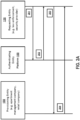
- FIG. 2A is an example schematic flow chart between the systems shown in FIG. 1 , in accordance with an embodiment.
- the requesting entity system 130 may request a token from an authenticating system (e.g., platform 100), which a user of the requesting entity system 130 can use to access resources such as secured content at the provisioning entity system 150.
- the user may submit a user request for the secured content, the user request including at least a user ID and may optionally include certain types of user identifying information.
- the user ID may be referred to as a stable identifier, which allows platform 100 to correlate back to the original user request, but does not directly link back to the user himself without collaboration of the requesting entity system 130.
- platform 100 generates a digitally-signed trusted token through the token generator 110, and transmits the trusted token to the requesting entity system 130.
- the digital signature allows the provisioning entity system 150 to confirm that the platform 100 has issued the trusted token, thereby allowing the provisioning entity system 150 to trust the token.
- platform 100 may first remove all the user identifying information from the user request (if any), and generate a variable term based on the user ID in accordance with processes described above performed by the token generator 110.
- the variable term may be encrypted by the encryption module 112.
- the token generator 110 may include other data in the trusted token, such as for example, one or more of: a type or scope of secure content being requested, specific URLs of the secure content being requested, a domain identifier identifying the requesting entity system 130 (but nothing identifying the specific user of the system 130), an expiry date and time of the trusted token, and so on.
- the token generator 110 can be configured to add a proof of authentication to the trusted token to allow the provisioning entity system 150 to validate the trusted token.
- this can be the digital signature, which can be generated using a private key belonging to paltform 100, and verifiable with a corresponding public key provided by platform 100 to the provisioning entity system 150. This way, when the provisioning entity system 150 receives the trusted token, it can use the public key corresponding to the private key to validate that the trusted token is generated by platform 100, before granting access to the secured content to the user.
- the corresponding public key(s) to the private key used to add the digital signature to the trusted token may be stored in a database accessible by the public, including the provisoning entity system 150.
- the public keys may be managed by platform 100 and updated from time to time.
- the trusted token may include a URL for obtaining the corresponding the public key.
- the user through an application or interface of the requesting entity system 130, sends a request to the provisioning entity system 150 using the trusted token in order to access content at the provisioning entity system 150.
- the provisioning entity system 150 may first verify, using for example a public key corresponding to the private key used to sign the trusted token by platform 100, that the trusted token has been issued by platform 100, a trusted authentication system.
- the provisioning entity system 150 may decrypt, if necessary (e.g., if the trusted token has been encrypted by platform 100), the trusted token to determine information such as the identity of the requesting entity system 130 using a domain identifier included in the trusted token. If the requested content can be shared with members of the requesting entity system 130, the provisioning entity system 150 can facilitate the access to the requested content, and log the access event with part or all of the trusted token, which can be used in the auditing process later. For instance, the access event may be logged with the claims of the trusted token, including the claim indicating the identity of the user making the request using the trusted token.
- the requested content may be specified within the trusted token. In some embodiments, the requested content may be specified within the request sending the trusted token.
- the record or log of the access event by the provisioning entity system 150 may include information such as date and time of access, the trusted token in encrypted and/or decrypted form, the domain identifier linked to the requesting entity system 130, and the exact files accessed.
- An auditing process can be instantiated by either the provisioning entity system 150, which may detect multiple access events to a particular content or multiple access events at similar times or within a set time frame, or by the requesting entity system 130, which may detect that a given user has made multiple requests to the provisioning entity system 150 without knowing what was accessed.
- the auditing request may include user IDs that may have been used to access content at the provisioning entity system 150.
- the auditing request may include a specific time period for when the user IDs may have been used to access the content at the provisioning entity system 150.
- the auditing request may include all the user IDs of the requesting entity system 130.
- platform 100 may request information from the provisioning entity system 150, which can then provide records or logs of what content was accessed and what trusted tokens were used to access the content (which, by themselves, are not identifying or correlatable).
- the logs may include all the trusted tokens used to access content from the specific requesting entity system 130 during a specific time period, which may be included in the auditing request, or an assumed time period (e.g., the past week, the past month, or the past year).
- Platform 100 may then process each of the the trusted tokens to determine the user ID within each trusted token. Once all the user IDs in the trusted tokens are identified, the user IDs can be sent to the requesting entity system 130, which can identifier particular users based on the user IDs.
- platform 100 may, based on its own record, determine which user IDs are used to request access for content at a provisioning entity system 150 during a specific time period. For example, platform 100 may store all the trusted tokens generated and the associated user IDs in a local database. Upon receiving an auditing request from either the requesting entity system 130 or the provisioning entity system 150, platform 100 may determine, based on the stored trusted tokens which user IDs have been used to request content at the provisioning entity system 150 during a specific time period. The list of user IDs may be sent to the requesting entity system 130 for identifying the specific users behind the trusted tokens and user requests.
- the implementations described above allow the provisioning entity system 150 to be assured of the validity of a request without revealing identifying information about the user at the requesting entity system 130.
- the implemetations also facilitate audit of file accesses which may require collaboration of two or three entities to determine which user(s) performed the access to one or more secured content at the provisioning entity system 150.
- FIG. 2B is annother example schematic flow chart between the systems shown in FIG. 1 , in accordance with an embodiment.
- a user device 160 of a user of the requesting entity system 130 may send an unauthenticated request 210 to the provisioning entity system 150 requesting access to one or more secured content stored at the provisioning entity system 150.
- the user may request access to a particular file, or to a particular group of files (e.g., video files on date X for location Y).
- the user device 160 may be, for example, a computer or a mobile device.
- the provisioning entity system 150 may send a request 215 to platform 100 to authenticate the the user account associated with user device 160.
- Platform 100 may send an query 220 to the user device 160 requesting the user to indicate if the user is a member of a requesting entity system 130, and the response 225 from the user device 160 may indicate that the user is a member of requesting entity system 130 (e.g., "Organization B").
- platform 100 may send a request 230 to the requesting entity system 130 to perform a pseudonymous authentication of the user account associated with user device 160.
- the requesting entity system 130 may then send a request 235 to the user device 160 requesting user credentials, and the user may send back requested credentials 237 to the requesting entity system 130.
- the requesting entity system 130 may generate a first token 240 with at least a user ID (e.g., "Bob ID") associated with the user account used to send the user credentials 237.
- the first token 240 may include an encrypted form of the user ID (e.g., a hash of ["Bob ID" + salt]).
- the first token 240 may be signed with a digital signature by the requesting entity system 130.
- the requesting entity system 130 may send the signed first token 240 to platform 100, which may first verify that the signed first token 240 is legitimate, by for example verifying the digital signature with a public key.
- platform 100 may obtain a intermediary ID from the first token 240.
- the intermediary ID may be the user ID in the first token 240.
- the intermediary ID may be the encrypted or hashed form of the user ID in the first token 240.
- Platform 100 may next generate a trusted token 250 with the stable ID, for example, it may add a random or pseudo-random term "rsalt” to the stable ID, and then encrypt "stable ID + rsalt” with an encryption scheme.
- the random or pseudo-random term "rsalt” can be uniquely generated for each user request or first token 240 received by platform 100, even if multiple user requests came from the same user device 160.
- the trusted token 250 may further include a domain identifier identifying the requesting entity system 130 (e.g., "Organization B").
- the trusted token 250 may include other information such as a timestamp, an expiry date, a scope of content being requested, and so on.
- the trusted token 250 may be digitally signed by using a private key owned by platform 100 and sent to the provisioning entity system 150.
- the trusted token 250 may be encrypted before digitally signed.
- the provisoning entity system 150 may first verify, using for example a public key corresponding to the private key used to sign the trusted token 250 by platform 100, that the trusted token 250 has been issued by platform 100, a trusted authentication system.
- the provisioning entity system 150 may decrypt, if necessary (e.g., if the trusted token 250 has been encrypted by platform 100), the trusted token 250 to determine information such as the identity of the requesting entity system 130 using a domain identifier included in the trusted token. If the requested content can be shared with members of the requesting entity system 130, the provisioning entity system 150 can facilitate the access to the requested content 270, and store the access event with the trusted token in an record or log 260, which can be used in the auditing process later.
- the record or log 260 of the access event by the provisioning entity system 150 may include information such as date and time of access, the trusted token in encrypted and/or decrypted form, the domain identifier linked to the requesting entity system 130, and the exact secured content 270 accessed, which is then provided by the provisioning entity system 150 to the user device 160.
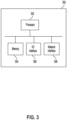
- FIG. 3 is a schematic diagram of another example computing device 300 that implements a system (e.g., platform 100 from FIG. 1 ) for providing access to secured content stored at a provisoning entity system 150, in accordance with an embodiment.
- computing device 300 includes one or more processors 302, memory 304, one or more I/O interfaces 306, and, optionally, one or more network interfaces 308.
- Each processor 302 may be, for example, any type of general-purpose microprocessor or microcontroller, a digital signal processing (DSP) processor, an integrated circuit, a field programmable gate array (FPGA), a reconfigurable processor, a programmable read-only memory (PROM), or any combination thereof.
- DSP digital signal processing
- FPGA field programmable gate array
- PROM programmable read-only memory
- Memory 304 may include a suitable combination of any type of computer memory that is located either internally or externally such as, for example, random-access memory (RAM), read-only memory (ROM), compact disc read-only memory (CDROM), electro-optical memory, magneto-optical memory, erasable programmable read-only memory (EPROM), and electrically-erasable programmable read-only memory (EEPROM), Ferroelectric RAM (FRAM) or the like.
- Memory 304 may store code executable at processor 302, which causes platform 100 to function in manners disclosed herein.
- Memory 304 includes a data storage.
- the data storage includes a secure datastore.
- the data storage stores received data sets, such as textual data, image data, or other types of data.
- Each I/O interface 306 enables computing device 300 to interconnect with one or more input devices, such as a keyboard, mouse, camera, touch screen and a microphone, or with one or more output devices such as a display screen and a speaker.
- input devices such as a keyboard, mouse, camera, touch screen and a microphone
- output devices such as a display screen and a speaker
- Each network interface 308 enables computing device 300 to communicate with other components, to exchange data with other components, to access and connect to network resources, to serve applications, and perform other computing applications by connecting to a network such as network (or multiple networks) capable of carrying data including the Internet, Ethernet, plain old telephone service (POTS) line, public switch telephone network (PSTN), integrated services digital network (ISDN), digital subscriber line (DSL), coaxial cable, fiber optics, satellite, mobile, wireless (e.g. Wi-Fi, WiMAX), SS7 signaling network, fixed line, local area network, wide area network, and others, including any combination of these.
- POTS plain old telephone service
- PSTN public switch telephone network
- ISDN integrated services digital network
- DSL digital subscriber line
- coaxial cable fiber optics
- satellite mobile
- wireless e.g. Wi-Fi, WiMAX
- SS7 signaling network fixed line, local area network, wide area network, and others, including any combination of these.
- the methods disclosed herein may be implemented using a system that includes multiple computing devices 300.
- the computing devices 300 may be the same or different types of devices.
- Each computing devices may be connected in various ways including directly coupled, indirectly coupled via a network, and distributed over a wide geographic area and connected via a network (which may be referred to as “cloud computing").
- each computing device 300 may be a server, network appliance, set-top box, embedded device, computer expansion module, personal computer, laptop, personal data assistant, cellular telephone, smartphone device, UMPC tablets, video display terminal, gaming console, electronic reading device, and wireless hypermedia device or any other computing device capable of being configured to carry out the methods described herein.
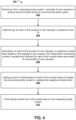
- FIG. 4 shows an example process performed by platform 100 in FIG. 1 (or the system 300 in FIG. 3 ), in accordance with an embodiment.
- platform 100 may receive, through a communication interface from a requesting entity system 130, a plurality of user requests to access secured content stored at a provisioning entity system 150.
- the plurality of user requests may be stored in database 122, for example.
- platform 100 may, determine, for each of the plurality of user requests, a respective user ID.
- platform 100 may generate, for each of the plurality of user requests, a respective trusted token based on the respective user request, the trusted token comprising at least a variable term different for each of the trusted tokens generated for the plurality of user requests.
- variable term may be uniquely generated for each trusted token.
- variable term may be generated by encrypting the user ID from the respective user request associated with the trusted token.
- the method may include, prior to generating the respective trusted token, removing user identifying data from the respective user request.
- the user identifying data may include at least one of, a name, a phone number, a physical address, an e-mail address, a media access control (MAC) address, and an IP address.
- a name a phone number
- a physical address a physical address
- an e-mail address a media access control (MAC) address
- IP address an IP address
- the respective trusted token may include data representing an expiry period of the respective trusted token.
- the respective token may include data representing a scope of the requested secured content stored at the provisioning entity system.
- platform 100 may add a proof of authentication to each of the trusted tokens to enable the provisioning entity system to validate the respective trusted token.
- adding the proof of authentication to a respective trusted token may include adding a digital signature produced using a private key, and wherein the respective trusted token is verifiable using a public key corresponding to the private key.
- platform 100 may transmit at least one of the trusted tokens to the requesting entity system 130, which may send the trusted token to the provisioning entity system 150.
- the provisioning entity system 150 may verify that the trusted token(s) are issued by platform 100 using the public key corresponding to the private key used to add the digital signature to the trusted token. Once verified, the provisioning entity system 150 may process the trusted token to determine a domain identifier associated with the requesting entity system 130, and allow access of the requested content by the user of the requesting entity system 130. This access may be logged by the provisioning entity system 150 for future auditing purposes.
- Operations 404, 406 408 may be performed for each user request in the plurality of user requests received from the requesting entity system 130.
- platform 100 may be further configured to perform: receiving an auditing request including a plurality of user IDs from the requesting entity system; obtaining a plurality of validated trusted tokens used to access one or more secured content at the provisioning entity system; determining, based on the plurality of validated trusted tokens, one or more user IDs from the plurality of user IDs, the one or more user IDs used to access the one or more secured content at the provisioning entity system; and transmitting the one or more user IDs to the requesting entity system in response to the auditing request.
- the auditing request may include a given time period, and the plurality of trusted tokens are used to access the one or more secured content at the provisioning entity system during the given time period.
- determining the one or more user IDs may include: decrypting the plurality of validated trusted tokens to obtain, for each of the plurality of validated trusted tokens, an intermediary term comprising a respective user ID from the one or more user IDs and a respective variable term; and parsing each intermediary term to obtain the respective user ID.
- parsing each intermediary term may include decrypting the respective variable term to obtain the respective user ID.
- Embodiments performing the operations for anomaly detection and anomaly scoring provide certain advantages over manually assessing anomalies. For example, in some embodiments, all data points are assessed, which eliminates subjectivity involved in judgement-based sampling, and may provide more statistically significant results than random sampling. Further, the outputs produced by embodiments of system are reproducible and explainable.
- each computer including at least one processor, a data storage system (including volatile memory or non-volatile memory or other data storage elements or a combination thereof), and at least one communication interface.
- the communication interface may be a network communication interface.
- the communication interface may be a software communication interface, such as those for inter-process communication.
- there may be a combination of communication interfaces implemented as hardware, software, and combination thereof.
- a server can include one or more computers operating as a web server, database server, or other type of computer server in a manner to fulfill described roles, responsibilities, or functions.
- each embodiment represents a single combination of inventive elements, other examples may include all possible combinations of the disclosed elements. Thus if one embodiment comprises elements A, B, and C, and a second embodiment comprises elements B and D, other remaining combinations of A, B, C, or D, may also be used.
- connection or “coupled to” may include both direct coupling (in which two elements that are coupled to each other contact each other) and indirect coupling (in which at least one additional element is located between the two elements).
- the technical solution of embodiments may be in the form of a software product.
- the software product may be stored in a non-volatile or non-transitory storage medium, which can be a compact disk read-only memory (CD-ROM), a USB flash disk, or a removable hard disk.
- the software product includes a number of instructions that enable a computer device (personal computer, server, or network device) to execute the methods provided by the embodiments.
- the embodiments described herein are implemented by physical computer hardware, including computing devices, servers, receivers, transmitters, processors, memory, displays, and networks.
- the embodiments described herein provide useful physical machines and particularly configured computer hardware arrangements.
- the embodiments described herein are directed to electronic machines and methods implemented by electronic machines adapted for processing and transforming electromagnetic signals which represent various types of information.
- the embodiments described herein pervasively and integrally relate to machines, and their uses; and the embodiments described herein have no meaning or practical applicability outside their use with computer hardware, machines, and various hardware components. Substituting the physical hardware particularly configured to implement various acts for non-physical hardware, using mental steps for example, may substantially affect the way the embodiments work.
Landscapes
- Engineering & Computer Science (AREA)
- Computer Security & Cryptography (AREA)
- Computer Networks & Wireless Communication (AREA)
- Signal Processing (AREA)
- Computer Hardware Design (AREA)
- Computing Systems (AREA)
- General Engineering & Computer Science (AREA)
- Storage Device Security (AREA)
Claims (15)
- Computerimplementiertes Verfahren zum Bereitstellen eines Zugriffs auf gesicherten Inhalt (155) auf einem Bereitstellende-Entität-System (150), mit:Empfangen, von einem Anfragende-Entität-System (130), mehrerer Benutzeranfragen zum Zugriff auf den gesicherten Inhalt (155), der bei dem Bereitstellende-Entität-System gespeichert ist, wobei jede der mehreren Benutzeranfragen von einem Benutzer des Anfragende-Entität-Systems (130) empfangen wird und eine jeweilige Benutzer-ID und jeweilige Benutzeridentifizierungsdaten aufweist, wobei die Benutzer-ID den Benutzer für das Anfragende-Entität-System (130) identifiziert, ohne den Benutzer für das Bereitstellende-Entität-System (150) zu identifizieren;Bestimmen, für jede der mehreren Benutzeranfragen, der jeweiligen Benutzer-ID;Löschen der jeweiligen Benutzeridentifizierungsdaten aus jeder der mehreren Benutzeranfragen;Erzeugen, für jede der mehreren Benutzeranfragen, aus denen die jeweiligen Benutzeridentifizierungsdaten gelöscht wurden, eines jeweiligen vertrauenswürdigen Tokens (250) basierend auf der jeweiligen Benutzeranfrage, wobei das vertrauenswürdige Token (250) mindestens einen variablen Ausdruck aufweist, der für jedes der vertrauenswürdigen Token (250), die für die mehreren Benutzeranfragen erzeugt werden, unterschiedlich ist;Hinzufügen eines Authentifizierungsnachweises zu jedem der vertrauenswürdigen Token (250) zum Ermöglichen, dass das Bereitstellende-Entität-System (150) das jeweilige vertrauenswürdige Token (250) validieren kann; undSenden mindestens eines der vertrauenswürdigen Token (250) zu dem Anfragende-Entität-System (130) zur Verwendung durch das Anfragende-Entität-System (130) in einer darauffolgenden Anfrage an das Bereitstellende-Entität-System (150) zum Zugriff auf den gesicherten Inhalt.
- Verfahren nach Anspruch 1, bei dem der variable Ausdruck für jedes jeweilige vertrauenswürdige Token (250) eindeutig erzeugt wird.
- Verfahren nach Anspruch 1 oder 2, bei dem der variable Ausdruck durch Verschlüsseln der jeweiligen Benutzer-ID aus der jeweiligen Benutzeranfrage, die dem jeweiligen vertrauenswürdigen Token (250) zugeordnet ist, erzeugt wird.
- Verfahren nach einem der Ansprüche 1 bis 3,
bei dem die Benutzeridentifizierungsdaten mindestens eines der folgenden aufweisen: einen Namen, eine Telefonnummer, eine physikalische Adresse, eine E-Mail-Adresse, eine Media-Access-Control (MAC)-Adresse und eine IP-Adresse. - Verfahren nach einem der Ansprüche 1 bis 4, bei dem das jeweilige vertrauenswürdige Token (250) Daten aufweist, die mindestens eines der folgenden darstellen: eine Ablaufdauer des jeweiligen vertrauenswürdigen Tokens (250); und einen Typ des angefragten gesicherten Inhalts (155), der bei dem Bereitstellende-Entität-System (150) gespeichert ist.
- Verfahren nach einem der Ansprüche 1 bis 5, bei dem das Hinzufügen des Authentifizierungsnachweises zu einem jeweiligen vertrauenswürdigen Token (250) Hinzufügen einer digitalen Signatur, die unter Verwendung eines privaten Schlüssels erzeugt wird, beinhaltet und bei dem das jeweilige vertrauenswürdige Token (250) unter Verwendung eines öffentlichen Schlüssels, der dem privaten Schlüssel entspricht, verifizierbar ist.
- Verfahren nach einem der Ansprüche 1 bis 6, ferner mit:Empfangen einer Prüfanfrage mit mehreren Benutzer-IDs von dem Anfragende-Entität-System (130);Erhalten mehrerer validierter vertrauenswürdiger Token, die zum Zugriff auf ein oder mehrere gesicherte Inhalte (155) bei dem Bereitstellende-Entität-System (150) verwendet werden;Bestimmen, basierend auf den mehreren validierten vertrauenswürdigen Token, ein oder mehrerer Benutzer-IDs der mehreren Benutzer-IDs, wobei die ein oder mehreren Benutzer-IDs zum Zugriff auf die ein oder mehreren gesicherten Inhalte (155) bei dem Bereitstellende-Entität-System (150) verwendet werden, undSenden der ein oder mehreren Benutzer-IDs zu dem Anfragende-Entität-System (130) ansprechend auf die Prüfanfrage.
- Verfahren nach Anspruch 7, bei dem die Prüfanfrage eine gegebene Zeitdauer aufweist und die mehreren vertrauenswürdigen Token (250) zum Zugriff auf die ein oder mehreren gesicherten Inhalte (155) bei dem Bereitstellende-Entität-System (150) während der gegebenen Zeitdauer verwendet werden.
- Verfahren nach Anspruch 7 oder 8, bei dem das Bestimmen der ein oder mehreren Benutzer-IDs aufweist:Entschlüsseln der mehreren validierten vertrauenswürdigen Token zum Erhalten, für jedes der mehreren validierten vertrauenswürdigen Token, eines Zwischenausdrucks mit einer jeweiligen Benutzer-ID der ein oder mehreren Benutzer-IDs und einem jeweiligen variablen Ausdruck; undVerarbeiten jedes Zwischenausdrucks zum Erhalten der jeweiligen Benutzer-ID; undbei dem das Verarbeiten jedes Zwischenausdrucks optional Entschlüsseln des jeweiligen variablen Ausdrucks zum Erhalten der jeweiligen Benutzer-ID beinhaltet.
- Computerimplementiertes System (100, 300) zum Bereitstellen eines Zugriffs auf einen gesicherten Inhalt (155) auf einem Bereitstellende-Entität-System (150), wobei das System (100, 300) aufweist:eine Kommunikationsschnittstelle (308);mindestens einen Prozessor (302);einen Speicher (304) in Verbindung mit dem mindestens einen Prozessor (302); undAnweisungen, die in dem Speicher (304) gespeichert sind und bei einer Ausführung auf dem mindestens einen Prozessor (302) bewirken, dass das System (100, 300) folgende Schritte durchführt:Empfangen, von einem Anfragende-Entität-System (130), mehrerer Benutzeranfragen zum Zugriff auf den gesicherten Inhalt (155), der bei dem Bereitstellende-Entität-System gespeichert ist, wobei jede der mehreren Benutzeranfragen von einem Benutzer des Anfragende-Entität-Systems (130) empfangen wird und eine jeweilige Benutzer-ID und jeweilige Benutzeridentifizierungsdaten aufweist, wobei die Benutzer-ID den Benutzer für das Anfragende-Entität-System (130) identifiziert, ohne den Benutzer für das Bereitstellende-Entität-System (150) zu identifizieren;Bestimmen, für jede der mehreren Benutzeranfragen, der jeweiligen Benutzer-ID;Löschen der jeweiligen Benutzeridentifizierungsdaten aus jeder der mehreren Benutzeranfragen;Erzeugen, für jede der mehreren Benutzeranfragen, aus denen die jeweiligen Benutzeridentifizierungsdaten gelöscht wurden, eines jeweiligen vertrauenswürdigen Tokens (250) basierend auf der jeweiligen Benutzeranfrage, wobei das vertrauenswürdige Token (250) mindestens einen variablen Ausdruck aufweist, der für jedes der vertrauenswürdigen Token (250), die für die mehreren Benutzeranfragen erzeugt werden, unterschiedlich ist;Hinzufügen eines Authentifizierungsnachweises zu jedem der vertrauenswürdigen Token (250) zum Ermöglichen, dass das Bereitstellende-Entität-System (150) das jeweilige vertrauenswürdige Token (250) validieren kann; undSenden mindestens eines der vertrauenswürdigen Token (250) zu dem Anfragende-Entität-System (130) zur Verwendung durch das Anfragende-Entität-System (130) in einer darauffolgenden Anfrage an das Bereitstellende-Entität-System (150) zum Zugriff auf den gesicherten Inhalt.
- System nach Anspruch 10, bei dem der variable Ausdruck für jedes vertrauenswürdige Token (250) eindeutig erzeugt wird.
- System nach Anspruch 10 oder 11, bei dem das Hinzufügen des Authentifizierungsnachweises zu einem jeweiligen vertrauenswürdigen Token (250) Hinzufügen einer digitalen Signatur, die unter Verwendung eines privaten Schlüssels erzeugt wird, beinhaltet und bei dem das jeweilige vertrauenswürdige Token (250) unter Verwendung eines öffentlichen Schlüssels, der dem privaten Schlüssel entspricht, verifizierbar ist.
- System nach einem der Ansprüche 10 bis 12, bei dem die Anweisungen bei einer Ausführung auf dem mindestens einen Prozessor (302) ferner bewirken, dass das System (100, 300) folgendes durchführt:Empfangen einer Prüfanfrage mit mehreren Benutzer-IDs von dem Anfragende-Entität-System (130);Erhalten mehrerer validierter vertrauenswürdiger Token, die zum Zugriff auf ein oder mehrere gesicherte Inhalte (155) auf dem Bereitstellende-Entität-System (150) verwendet werden;Bestimmen, basierend auf den mehreren validierten vertrauenswürdigen Token, ein oder mehrerer Benutzer-IDs der mehreren Benutzer-IDs, wobei die ein oder mehreren Benutzer-IDs zum Zugriff auf die ein oder mehreren gesicherten Inhalte (155) bei dem Bereitstellende-Entität-System (150) verwendet werden, undSenden der ein oder mehreren Benutzer-IDs zu dem Anfragende-Entität-System (130) ansprechend auf die Prüfanfrage; undbei dem optional:die Prüfanfrage eine gegebene Zeitdauer aufweist, unddie mehreren vertrauenswürdigen Token (250) zum Zugriff auf die ein oder mehreren gesicherten Inhalte (155) bei dem Bereitstellende-Entität-System (150) während der gegebenen Zeitdauer verwendet werden.
- System nach Anspruch 13, bei dem das Bestimmen der ein oder mehreren Benutzer-IDs beinhaltet:Entschlüsseln der mehreren validierten vertrauenswürdigen Token zum Erhalten, für jedes der mehreren validierten vertrauenswürdigen Token, eines Zwischenausdrucks mit einer jeweiligen Benutzer-ID der ein oder mehreren Benutzer-IDs und einem jeweiligen variablen Ausdruck; undVerarbeiten jedes Zwischenausdrucks zum Erhalten der jeweiligen Benutzer-ID; undbei dem das Verarbeiten jedes Zwischenausdrucks optional Entschlüsseln des jeweiligen variablen Ausdrucks zum Erhalten der jeweiligen Benutzer-ID beinhaltet.
- Computerlesbares Speichermedium mit Anweisungen, die bei einer Ausführung bewirken, dass mindestens eine Rechenvorrichtung folgendes durchführt:Empfangen, von einem Anfragende-Entität-System (130), mehrerer Benutzeranfragen zum Zugriff auf den gesicherten Inhalt (155), der bei dem Bereitstellende-Entität-System gespeichert ist, wobei jede der mehreren Benutzeranfragen von einem Benutzer des Anfragende-Entität-Systems (130) empfangen wird und eine jeweilige Benutzer-ID und jeweilige Benutzeridentifizierungsdaten aufweist, wobei die Benutzer-ID den Benutzer für das Anfragende-Entität-System (130) identifiziert, ohne den Benutzer für das Bereitstellende-Entität-System (150) zu identifizieren;Bestimmen, für jede der mehreren Benutzeranfragen, der jeweiligen Benutzer-ID;Löschen der jeweiligen Benutzeridentifizierungsdaten aus jeder der mehreren Benutzeranfragen;Erzeugen, für jede der mehreren Benutzeranfragen, aus denen die jeweiligen Benutzeridentifizierungsdaten gelöscht wurden, eines jeweiligen vertrauenswürdigen Tokens (250) basierend auf der jeweiligen Benutzeranfrage, wobei das vertrauenswürdige Token (250) mindestens einen variablen Ausdruck aufweist, der für jedes der vertrauenswürdigen Token (250), die für die mehreren Benutzeranfragen erzeugt werden, unterschiedlich ist;Hinzufügen eines Authentifizierungsnachweises zu jedem der vertrauenswürdigen Token (250) zum Ermöglichen, dass das Bereitstellende-Entität-System (150) das jeweilige vertrauenswürdige Token (250) validieren kann; undSenden mindestens eines der vertrauenswürdigen Token (250) zu dem Anfragende-Entität-System (130) zur Verwendung durch das Anfragende-Entität-System (130) in einer darauffolgenden Anfrage an das Bereitstellende-Entität-System (150) zum Zugriff auf den gesicherten Inhalt.
Applications Claiming Priority (1)
| Application Number | Priority Date | Filing Date | Title |
|---|---|---|---|
| US17/511,199 US11962573B2 (en) | 2021-10-26 | 2021-10-26 | System and method for providing access to secured content field |
Publications (3)
| Publication Number | Publication Date |
|---|---|
| EP4175225A1 EP4175225A1 (de) | 2023-05-03 |
| EP4175225B1 true EP4175225B1 (de) | 2024-11-06 |
| EP4175225C0 EP4175225C0 (de) | 2024-11-06 |
Family
ID=84044175
Family Applications (1)
| Application Number | Title | Priority Date | Filing Date |
|---|---|---|---|
| EP22203577.6A Active EP4175225B1 (de) | 2021-10-26 | 2022-10-25 | System und verfahren zur bereitstellung des zugriffs auf ein feld gesicherter inhalte |
Country Status (2)
| Country | Link |
|---|---|
| US (2) | US11962573B2 (de) |
| EP (1) | EP4175225B1 (de) |
Families Citing this family (2)
| Publication number | Priority date | Publication date | Assignee | Title |
|---|---|---|---|---|
| US11956240B2 (en) * | 2021-04-19 | 2024-04-09 | EMC IP Holding Company LLC | Systems and methods for temporary access with adaptive trust levels for authentication and authorization |
| US11962573B2 (en) * | 2021-10-26 | 2024-04-16 | Genetec Inc | System and method for providing access to secured content field |
Family Cites Families (29)
| Publication number | Priority date | Publication date | Assignee | Title |
|---|---|---|---|---|
| US7793095B2 (en) | 2002-06-06 | 2010-09-07 | Hardt Dick C | Distributed hierarchical identity management |
| DE60308733T2 (de) | 2003-02-21 | 2007-08-09 | Telefonaktiebolaget Lm Ericsson (Publ) | Dienstanbieteranonymisierung in einem single sign-on system |
| EP1964306B1 (de) | 2005-12-19 | 2012-06-20 | Telecom Italia S.p.A. | Gruppensignaturschema mit verbesserter effizienz, insbesondere eine verbundprozedur |
| JP4812508B2 (ja) | 2006-05-12 | 2011-11-09 | 富士通株式会社 | プレゼンス情報を取り扱うシステム |
| WO2008146667A1 (ja) | 2007-05-24 | 2008-12-04 | Nec Corporation | 匿名認証システムおよび匿名認証方法 |
| KR100953092B1 (ko) | 2007-11-06 | 2010-04-19 | 한국전자통신연구원 | Sso서비스 방법 및 시스템 |
| US20090165098A1 (en) | 2007-12-20 | 2009-06-25 | Meyer Ifrah | method of and system for conducting a trusted transaction and/or communication |
| US20100274634A1 (en) | 2007-12-20 | 2010-10-28 | Meyer Ifrah | Method and system of conducting a communication |
| US8281149B2 (en) | 2009-06-23 | 2012-10-02 | Google Inc. | Privacy-preserving flexible anonymous-pseudonymous access |
| US8499158B2 (en) | 2009-12-18 | 2013-07-30 | Electronics And Telecommunications Research Institute | Anonymous authentication service method for providing local linkability |
| US9032544B2 (en) * | 2010-12-22 | 2015-05-12 | Private Access, Inc. | System and method for controlling communication of private information over a network |
| FR2979044B1 (fr) | 2011-08-09 | 2013-08-30 | Morpho | Procede de gestion et de controle de donnees de differents domaines d'identite organises en ensemble structure |
| KR101543711B1 (ko) | 2011-10-11 | 2015-08-12 | 한국전자통신연구원 | 짧은 서명을 제공하는 경량 그룹서명 방법 및 장치 |
| CN105580038A (zh) * | 2013-07-24 | 2016-05-11 | 维萨国际服务协会 | 用于可互操作的网络令牌处理的系统和方法 |
| US9792426B1 (en) | 2014-01-30 | 2017-10-17 | Dell Software Inc. | System and method for providing anonymous access to shared resources |
| US9628282B2 (en) | 2014-10-10 | 2017-04-18 | Verizon Patent And Licensing Inc. | Universal anonymous cross-site authentication |
| US20160142409A1 (en) | 2014-11-18 | 2016-05-19 | Microsoft Technology Licensing, Llc | Optimized token-based proxy authentication |
| US10366250B1 (en) | 2017-02-21 | 2019-07-30 | Symantec Corporation | Systems and methods for protecting personally identifiable information during electronic data exchanges |
| CN109495426B (zh) | 2017-09-12 | 2021-08-17 | 腾讯科技(深圳)有限公司 | 一种数据访问方法、装置及电子设备 |
| EP3942443A4 (de) * | 2019-03-19 | 2022-12-21 | NIKE Innovate C.V. | Steuerung des zugangs auf eine sichere rechenressource |
| CN110287726B (zh) | 2019-06-13 | 2023-03-10 | 上海交通大学 | 一种基于区块链的多域身份认证管理系统及方法 |
| US11223616B2 (en) * | 2019-08-07 | 2022-01-11 | Cisco Technology, Inc. | Ultrasound assisted device activation |
| CN112533202B (zh) | 2019-08-30 | 2023-12-12 | 华为技术有限公司 | 身份鉴别方法及装置 |
| US11258788B2 (en) * | 2020-05-08 | 2022-02-22 | Cyberark Software Ltd. | Protections against security vulnerabilities associated with temporary access tokens |
| US12423475B2 (en) * | 2020-10-27 | 2025-09-23 | Google Llc | Cryptographically secure request verification |
| WO2022093199A1 (en) * | 2020-10-27 | 2022-05-05 | Google Llc | Cryptographically secure data protection |
| WO2022093221A1 (en) * | 2020-10-28 | 2022-05-05 | Hewlett-Packard Development Company, L.P. | Authorization audit |
| US11706209B2 (en) * | 2021-04-29 | 2023-07-18 | Delinea Inc. | Method and apparatus for securely managing computer process access to network resources through delegated system credentials |
| US11962573B2 (en) * | 2021-10-26 | 2024-04-16 | Genetec Inc | System and method for providing access to secured content field |
-
2021
- 2021-10-26 US US17/511,199 patent/US11962573B2/en active Active
-
2022
- 2022-10-25 EP EP22203577.6A patent/EP4175225B1/de active Active
-
2024
- 2024-03-21 US US18/612,582 patent/US12513121B2/en active Active
Also Published As
| Publication number | Publication date |
|---|---|
| US12513121B2 (en) | 2025-12-30 |
| US11962573B2 (en) | 2024-04-16 |
| EP4175225A1 (de) | 2023-05-03 |
| US20230131790A1 (en) | 2023-04-27 |
| EP4175225C0 (de) | 2024-11-06 |
| US20240236049A1 (en) | 2024-07-11 |
Similar Documents
| Publication | Publication Date | Title |
|---|---|---|
| US12323526B2 (en) | Decentralized data authentication | |
| US9124576B2 (en) | Configuring a valid duration period for a digital certificate | |
| US9264236B2 (en) | Embedded extrinsic source for digital certificate validation | |
| CN111164948A (zh) | 使用区块链网络管理网络安全漏洞 | |
| WO2021169107A1 (zh) | 一种网络身份保护方法、装置及电子设备和存储介质 | |
| US12513121B2 (en) | System and method for providing access to secured content | |
| Danquah et al. | Public key infrastructure: an enhanced validation framework | |
| Bates et al. | Forced perspectives: Evaluating an SSL trust enhancement at scale | |
| Perez et al. | Improving end-to-end verifiable voting systems with blockchain technologies | |
| Zhao et al. | TrustCA: achieving certificate transparency through smart contract in blockchain platforms | |
| Jordan et al. | Viceroy: Gdpr-/ccpa-compliant enforcement of verifiable accountless consumer requests | |
| Culnane et al. | Trust implications of DDoS protection in online elections | |
| Sharma et al. | A Framework of Big Data as a Service Platform for Access Control & Privacy Protection Using Blockchain Network | |
| Li et al. | Pistis: Issuing trusted and authorized certificates with distributed ledger and TEE | |
| US20130061302A1 (en) | Method and Apparatus for the Protection of Computer System Account Credentials | |
| CN110875903B (zh) | 一种安全防御方法及设备 | |
| Al-Rawy et al. | A design for blockchain-based digital voting system | |
| Cho et al. | Guaranteeing the integrity and reliability of distributed personal information access records | |
| CN119316241B (zh) | 基于联盟根证书的网站访问方法、装置、设备和介质 | |
| Kuzminykh et al. | Mechanisms of ensuring security in Keystone service | |
| Kumar et al. | Analysis on the Comprehensive Evaluation of a Trustworthy Block Chain-Based T 2 DNS Prototype | |
| Akama et al. | Poster: Non-repudiable Secure Logging System for the Web | |
| Choo et al. | Cloud authentication and forensics | |
| Melara | CONIKS: Preserving Secure Communication with Untrusted Identity Providers | |
| Ebrahim | Security analysis of website certificate validation |
Legal Events
| Date | Code | Title | Description |
|---|---|---|---|
| PUAI | Public reference made under article 153(3) epc to a published international application that has entered the european phase |
Free format text: ORIGINAL CODE: 0009012 |
|
| STAA | Information on the status of an ep patent application or granted ep patent |
Free format text: STATUS: THE APPLICATION HAS BEEN PUBLISHED |
|
| AK | Designated contracting states |
Kind code of ref document: A1 Designated state(s): AL AT BE BG CH CY CZ DE DK EE ES FI FR GB GR HR HU IE IS IT LI LT LU LV MC ME MK MT NL NO PL PT RO RS SE SI SK SM TR |
|
| STAA | Information on the status of an ep patent application or granted ep patent |
Free format text: STATUS: REQUEST FOR EXAMINATION WAS MADE |
|
| 17P | Request for examination filed |
Effective date: 20231103 |
|
| RBV | Designated contracting states (corrected) |
Designated state(s): AL AT BE BG CH CY CZ DE DK EE ES FI FR GB GR HR HU IE IS IT LI LT LU LV MC ME MK MT NL NO PL PT RO RS SE SI SK SM TR |
|
| GRAP | Despatch of communication of intention to grant a patent |
Free format text: ORIGINAL CODE: EPIDOSNIGR1 |
|
| STAA | Information on the status of an ep patent application or granted ep patent |
Free format text: STATUS: GRANT OF PATENT IS INTENDED |
|
| RIC1 | Information provided on ipc code assigned before grant |
Ipc: H04L 67/306 20220101ALI20240503BHEP Ipc: H04W 12/08 20210101ALI20240503BHEP Ipc: H04W 12/02 20090101ALI20240503BHEP Ipc: H04L 9/32 20060101ALI20240503BHEP Ipc: H04L 9/40 20220101AFI20240503BHEP |
|
| INTG | Intention to grant announced |
Effective date: 20240528 |
|
| GRAS | Grant fee paid |
Free format text: ORIGINAL CODE: EPIDOSNIGR3 |
|
| GRAA | (expected) grant |
Free format text: ORIGINAL CODE: 0009210 |
|
| STAA | Information on the status of an ep patent application or granted ep patent |
Free format text: STATUS: THE PATENT HAS BEEN GRANTED |
|
| AK | Designated contracting states |
Kind code of ref document: B1 Designated state(s): AL AT BE BG CH CY CZ DE DK EE ES FI FR GB GR HR HU IE IS IT LI LT LU LV MC ME MK MT NL NO PL PT RO RS SE SI SK SM TR |
|
| REG | Reference to a national code |
Ref country code: GB Ref legal event code: FG4D |
|
| REG | Reference to a national code |
Ref country code: CH Ref legal event code: EP |
|
| REG | Reference to a national code |
Ref country code: DE Ref legal event code: R096 Ref document number: 602022007463 Country of ref document: DE |
|
| REG | Reference to a national code |
Ref country code: IE Ref legal event code: FG4D |
|
| U01 | Request for unitary effect filed |
Effective date: 20241108 |
|
| U07 | Unitary effect registered |
Designated state(s): AT BE BG DE DK EE FI FR IT LT LU LV MT NL PT RO SE SI Effective date: 20241118 |
|
| PG25 | Lapsed in a contracting state [announced via postgrant information from national office to epo] |
Ref country code: IS Free format text: LAPSE BECAUSE OF FAILURE TO SUBMIT A TRANSLATION OF THE DESCRIPTION OR TO PAY THE FEE WITHIN THE PRESCRIBED TIME-LIMIT Effective date: 20250306 Ref country code: HR Free format text: LAPSE BECAUSE OF FAILURE TO SUBMIT A TRANSLATION OF THE DESCRIPTION OR TO PAY THE FEE WITHIN THE PRESCRIBED TIME-LIMIT Effective date: 20241106 |
|
| PG25 | Lapsed in a contracting state [announced via postgrant information from national office to epo] |
Ref country code: ES Free format text: LAPSE BECAUSE OF FAILURE TO SUBMIT A TRANSLATION OF THE DESCRIPTION OR TO PAY THE FEE WITHIN THE PRESCRIBED TIME-LIMIT Effective date: 20241106 |
|
| PG25 | Lapsed in a contracting state [announced via postgrant information from national office to epo] |
Ref country code: NO Free format text: LAPSE BECAUSE OF FAILURE TO SUBMIT A TRANSLATION OF THE DESCRIPTION OR TO PAY THE FEE WITHIN THE PRESCRIBED TIME-LIMIT Effective date: 20250206 |
|
| PG25 | Lapsed in a contracting state [announced via postgrant information from national office to epo] |
Ref country code: GR Free format text: LAPSE BECAUSE OF FAILURE TO SUBMIT A TRANSLATION OF THE DESCRIPTION OR TO PAY THE FEE WITHIN THE PRESCRIBED TIME-LIMIT Effective date: 20250207 |
|
| PG25 | Lapsed in a contracting state [announced via postgrant information from national office to epo] |
Ref country code: PL Free format text: LAPSE BECAUSE OF FAILURE TO SUBMIT A TRANSLATION OF THE DESCRIPTION OR TO PAY THE FEE WITHIN THE PRESCRIBED TIME-LIMIT Effective date: 20241106 |
|
| PG25 | Lapsed in a contracting state [announced via postgrant information from national office to epo] |
Ref country code: RS Free format text: LAPSE BECAUSE OF FAILURE TO SUBMIT A TRANSLATION OF THE DESCRIPTION OR TO PAY THE FEE WITHIN THE PRESCRIBED TIME-LIMIT Effective date: 20250206 |
|
| PG25 | Lapsed in a contracting state [announced via postgrant information from national office to epo] |
Ref country code: SM Free format text: LAPSE BECAUSE OF FAILURE TO SUBMIT A TRANSLATION OF THE DESCRIPTION OR TO PAY THE FEE WITHIN THE PRESCRIBED TIME-LIMIT Effective date: 20241106 |
|
| PG25 | Lapsed in a contracting state [announced via postgrant information from national office to epo] |
Ref country code: SK Free format text: LAPSE BECAUSE OF FAILURE TO SUBMIT A TRANSLATION OF THE DESCRIPTION OR TO PAY THE FEE WITHIN THE PRESCRIBED TIME-LIMIT Effective date: 20241106 |
|
| PG25 | Lapsed in a contracting state [announced via postgrant information from national office to epo] |
Ref country code: CZ Free format text: LAPSE BECAUSE OF FAILURE TO SUBMIT A TRANSLATION OF THE DESCRIPTION OR TO PAY THE FEE WITHIN THE PRESCRIBED TIME-LIMIT Effective date: 20241106 |
|
| PLBE | No opposition filed within time limit |
Free format text: ORIGINAL CODE: 0009261 |
|
| STAA | Information on the status of an ep patent application or granted ep patent |
Free format text: STATUS: NO OPPOSITION FILED WITHIN TIME LIMIT |
|
| 26N | No opposition filed |
Effective date: 20250807 |
|
| U20 | Renewal fee for the european patent with unitary effect paid |
Year of fee payment: 4 Effective date: 20251023 |