EP4174504B1 - Verfahren zur kalibrierung eines modells zur alterungsschätzung von elektrochemischen akkumulatoren - Google Patents
Verfahren zur kalibrierung eines modells zur alterungsschätzung von elektrochemischen akkumulatoren Download PDFInfo
- Publication number
- EP4174504B1 EP4174504B1 EP22202908.4A EP22202908A EP4174504B1 EP 4174504 B1 EP4174504 B1 EP 4174504B1 EP 22202908 A EP22202908 A EP 22202908A EP 4174504 B1 EP4174504 B1 EP 4174504B1
- Authority
- EP
- European Patent Office
- Prior art keywords
- ageing
- aging
- stress
- type
- accumulators
- Prior art date
- Legal status (The legal status is an assumption and is not a legal conclusion. Google has not performed a legal analysis and makes no representation as to the accuracy of the status listed.)
- Active
Links
Images



Classifications
-
- G—PHYSICS
- G01—MEASURING; TESTING
- G01R—MEASURING ELECTRIC VARIABLES; MEASURING MAGNETIC VARIABLES
- G01R31/00—Arrangements for testing electric properties; Arrangements for locating electric faults; Arrangements for electrical testing characterised by what is being tested not provided for elsewhere
- G01R31/36—Arrangements for testing, measuring or monitoring the electrical condition of accumulators or electric batteries, e.g. capacity or state of charge [SoC]
- G01R31/367—Software therefor, e.g. for battery testing using modelling or look-up tables
-
- G—PHYSICS
- G01—MEASURING; TESTING
- G01R—MEASURING ELECTRIC VARIABLES; MEASURING MAGNETIC VARIABLES
- G01R31/00—Arrangements for testing electric properties; Arrangements for locating electric faults; Arrangements for electrical testing characterised by what is being tested not provided for elsewhere
- G01R31/36—Arrangements for testing, measuring or monitoring the electrical condition of accumulators or electric batteries, e.g. capacity or state of charge [SoC]
- G01R31/392—Determining battery ageing or deterioration, e.g. state of health
Definitions
- the invention relates to the technical field of estimating the aging, and therefore the loss of performance, of electrochemical accumulators, in particular of the Li-ion (Lithium-ion) type. It relates to a method for calibrating a model for estimating the aging of such accumulators and to a method for using such a model.
- the invention applies in particular, but not exclusively, to accumulators for vehicles (terrestrial or other) with electric propulsion.
- Li-ion accumulators today represent the most favorable performances in terms of their use in smart phones, portable power objects as well as electric cars, particularly all-electric ones, 48V hybrids and rechargeable hybrids.
- Li-ion batteries represent the most advanced path in the energy transition for the storage of electrical energy.
- Li-ion batteries represent a significant portion of the cost of a vehicle (up to 40%). Consequently their lifespan must be long and at least equal to that of the vehicle to amortize their significant costs.
- the accumulators, stored in the battery pack will suffer performance losses and therefore impact their lifespan. This criterion is therefore essential both for manufacturers and for users regarding the deployment of this technology and its acceptance.
- the current state of the art does not offer sufficiently relevant lifespan estimation methods, the question of aging and its estimation remains problematic.
- the methods used to predict battery life are based on standardized aging tests and associated models.
- the Fig. 1 illustrates an EV electric vehicle equipped with a PA battery pack comprising a plurality of AE electrochemical accumulators controlled by a BMS battery management system.
- Fig. 2 illustrates a BT test bench comprising an enclosure inside which an AE electrochemical accumulator can be placed.
- the temperature, and sometimes the humidity, inside the enclosure are controlled by an ORD computer.
- Electronic circuits (not shown), controlled by the computer and connected to the AE accumulator, make it possible to apply charge and discharge stresses to the latter, and to subject it to performance tests. The results of these tests are then used by the computer to estimate parameters of an aging model.
- the control of the measuring bench and the estimation of the parameters of the aging model can be carried out by any digital processing system, for example one or more computers, an on-board processor, a networked system, etc.
- Document [12] discloses the use of a first calibration model taking into account only calendar aging and a second aging model combining calendar aging and aging induced by cycling.
- the invention aims to overcome the aforementioned drawbacks of the prior art.
- this goal is achieved thanks to a new accelerated aging methodology and associated modeling making it possible to estimate the lifespan of an accumulator, particularly but not exclusively in Li-ion technology.
- This methodology is based in particular on the usage typologies actually observed and thus allows a more relevant approach to aging and lifespan estimation. This makes it possible to establish more efficient aging prediction algorithms integrated into the BMS and therefore improves the real-time prediction of the service life.
- the invention will be described with reference to the case of Li-ion accumulators used in electric cars. However, it is of more general application and can concern any object using an accumulator, subject to aging linked to different types of use (electric vehicle - land, water or air; portable power tool; emergency batteries, etc.).
- the invention is not limited to Li-ion technology.
- the methodology underlying the invention is based on an analysis of the use to which the accumulator is subjected in order to extract the different phases corresponding to the different types of stress to which it is subjected, contributing in different ways to its aging .
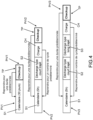
- the first aging protocol PrV1 corresponds to the main use of the accumulator defined as being that which introduces the most aging either because it is the main request in temporal terms, or because it is the most damaging. This first phase makes it possible to construct a first elementary aging model ME1.
- the third type of S3 request corresponds to long journeys (between 10 and 20km), the third most important contribution to aging in the use case considered. Indeed, 10 to 20% represents the share of journeys made in European territories, and 30% represents the share of French commuters who live less than 20km from their work. Longer journeys are made less frequently and therefore will not be covered by the protocol.
- the first aging phase PV1 which consists of aging the accumulator on a calendar basis at different SOC values (i.e. states of charge) and temperature values. This is the first, and most important, type of S1 solicitation. To do this, the cell is placed in a given state of charge, then left as it is at constant temperature. TP performance tests (or “checkups”) are carried out at the end of a determined duration (for example 30 days) of the PV1 aging phase to quantify the degradation mechanisms.
- the first aging protocol PrV1 includes one or (preferably) several iterations of the first phase of calendar aging - performance test pair for a predetermined duration.
- the low and high temperature values, and high powers, will be used in the test protocol to accelerate aging. It is important to clearly define these values. Indeed, taking values that are too high, if they accelerate the loss of performance even more, would generate degradation mechanisms which do not reverse in the event of real use. This is why we simply accelerate the protocol by using extreme values from the usage analysis.
- Table 1 below indicates the stresses to be applied in the different accelerated aging protocols.
- Type of solicitation Temperature SOC Power Duration S1 Calendar choose the temperatures that correspond to the extreme conditions and one to the median eg 0°C - 20°C - 45°C Choose at least three values eg 50% - 70% - 90% - - S2 Short trips Keep the same calendar aging conditions By starting the discharge phase with the SOC in calendar Three power values linked to vehicle consumption eg 300 Wh/km for cold climates Estimated duration for a journey of less than 10km, therefore approximately 15min 170 Wh/km for temperate climate 240 Wh/km for hot climate S3 Long journeys Keep the same calendar aging conditions To be completed by the SOC achieved in the short journey strategy Three power values linked to the type of vehicle journey: Duration of 15 minutes additional to the previous strategy Highway 200 Wh/km Urban 140 Wh/km Mixed of both 170 Wh/km
- EOL End of Life
- OCV Open Circuit Voltage
- Calendar + short trips 1 Repeat steps 1 and 2 of phase PV 1 2 Keep at OCV for 4 hours 3 Keep the temperature of the calendar phase (PV1), and discharge at the power equivalent to the given temperature for 15 min 4 Charge up to equivalent SOC 5
- Step 2 Checkup for performance characterization 7 Resume from step 1 of phase PV2 Stopping the test after reaching the end of life level (EOL) PrV3.
- Calendar + short trips + long trips 1 Resume step 1 of step PV1 2 Repeat steps 2 and 3 of step PV2 4 Discharge equivalent to the type of journey for an additional duration of 15min 5 Charge up to equivalent SOC 6 Repeat step 2 for the duration of 30 days 7
- Checkup for performance characterization 8 Resume from step 1 of step PV3 Stopping the test after reaching the end of life level (EOL)
- test protocols may vary depending on the type of modeling used as well as the type of battery tested. They are given as an example. [Table 3] Setting Protocol from USABC for BEV Rev 3 2015 Energy (Wh) T(°C): 30°C I discharge : C/3 Power (W) T°C: 30°C I pulse : 1C for 30s
- Calendar 1 Reach the selected SOC level (three SOC values minimum) 2 Stabilize at the given temperature (three temperature values) 3 Keep at OCV for 30 days 4
- Checkup for performance characterization 5 Resume from step 1 of strategy phase PV1 Stopping the test after reaching the end of life level PV2.
- Calendar + short trips 1
- Repeat steps 1 and 2 of phase PV 1 2 Keep at OCV for 4 hours 3
- Checkup for performance characterization 7 Resume from step 1 of phase PV2 Stopping the test after reaching the end of life level PV3.
- time and distance values for short journeys and long journeys in this protocol are based on European studies, a usage which favors short distance journeys.
- this protocol should apply in a territory which favors long journeys, for example the United States, the values will have to be adapted following the same methodology based on the analysis of usage.
Landscapes
- Physics & Mathematics (AREA)
- General Physics & Mathematics (AREA)
- Secondary Cells (AREA)
- Testing Resistance To Weather, Investigating Materials By Mechanical Methods (AREA)
Claims (15)
- Verfahren zur Kalibrierung eines Modells zur Alterungsschätzung von elektrochemischen Akkumulatoren (AE), umfassend die folgenden Schritte:a) Unterwerfen von elektrochemischen Akkumulatoren mindestens einer ersten Alterungsphase (PV1), während welcher sie einer ersten Art von Spannung (S1) unterworfen werden, wobei ein Leistungstest (TP) der Akkumulatoren nach der oder jeder ersten Phase ausgeführt wird,b) anhand der Ergebnisse des oder der Leistungstests, die während des vorhergehenden Schrittes durchgeführt werden, Schätzen von Parametern eines ersten elementaren Alterungsmodells (ME1) mittels eines digitalen Verarbeitungssystems (ORD);c) Unterwerfen der elektrochemischen Akkumulatoren mindestens einer zweiten Alterungsphase (PV2), wobei die oder jede zweite Alterungsphase einen Zeitraum umfasst, während welchem sie der ersten Art von Spannung (S1) unterworfen werden, gefolgt von einem Zeitraum, während welchem sie einer zweiten Art von Spannung (S2) unterworfen werden, die sich von der ersten Art unterscheidet, wobei ein Leistungstest (TP) der Akkumulatoren nach der oder jeder zweiten Phase ausgeführt wird;d) anhand der Ergebnisse des oder der Leistungstests, die während des vorhergehenden Schrittes durchgeführt werden, Schätzen von Parametern eines zweiten elementaren Alterungsmodells (ME2) mittels des oder eines anderen digitalen Verarbeitungssystems (ORD);dadurch gekennzeichnet, dass das Alterungsschätzungsmodell (MV) von elektrochemischen Akkumulatoren das erste (ME1) und das zweite (ME2) elementare Modell umfasst.
- Verfahren nach Anspruch 1, wobei die elektrochemischen Akkumulatoren während des Schrittes a) einer Vielzahl von ersten aufeinanderfolgenden Alterungsphasen unterworfen werden und sie während des Schrittes c) einer Vielzahl von zweiten aufeinanderfolgenden Alterungsphasen unterworfen werden.
- Verfahren nach Anspruch 1, wobei jede erste Alterungsphase und/oder jede zweite Alterungsphase außerdem einen Aufladungszeitraum (CH) umfasst.
- Verfahren nach einem der vorhergehenden Ansprüche, wobei die erste Art von Spannung der Art von Spannung entspricht, die in einem bestimmten Gebrauchsprofil dem quantitativ größten Beitrag zur Alterung der elektrochemischen Akkumulatoren entspricht, und die zweite Art von Spannung der Art von Spannung entspricht, die in einem bestimmten Gebrauchsprofil dem zweiten quantitativ größten Beitrag zur Alterung der elektrochemischen Akkumulatoren entspricht.
- Verfahren nach einem der vorhergehenden Ansprüche, wobei die erste Art von Spannung einer kalendarischen Alterung entspricht und die zweite Art von Spannung einer ersten Nutzungsbetriebsart entspricht.
- Verfahren nach Anspruch 4, außerdem umfassend einen vorausgehenden Schritt des Schätzens der Beiträge zur Alterung der elektrochemischen Akkumulatoren von verschiedenen Arten von Spannungen in einem bestimmten Gebrauchsprofil.
- Verfahren nach einem der vorhergehenden Ansprüche, außerdem umfassend die folgenden Schritte:d) Unterwerfen der elektrochemischen Akkumulatoren mindestens einer dritten Alterungsphase (PV3), wobei die oder jede dritte Alterungsphase einen Zeitraum umfasst, während welchem sie der ersten Art von Spannung (S1) unterworfen werden, gefolgt von einem Zeitraum, während welchem sie der zweiten Art von Spannung (S2) unterworfen werden, dann von einem Zeitraum, während welchem sie einer dritten Art von Spannung (S3) unterworfen werden, wobei ein Leistungstest (TP) der Akkumulatoren nach der oder jeder dritten Phase ausgeführt wird,e) anhand der Ergebnisse des oder der Leistungstests, die während des vorhergehenden Schrittes durchgeführt werden, Schätzen von Parametern eines dritten elementaren Alterungsmodells (ME3) mittels des oder eines anderen digitalen Verarbeitungssystems;wobei das Alterungsschätzungsmodell von elektrochemischen Akkumulatoren das erste, das zweite und das dritte elementare Modell umfasst.
- Verfahren nach Anspruch 7, wobei die elektrochemischen Akkumulatoren Akkumulatoren von Elektrofahrzeugen (VE) sind, wobei die erste Betriebsart einer Nutzung auf als kurz bezeichneten Strecken entspricht, die eine vordefinierte Länge nicht überschreiten, und die zweite Betriebsart einer Nutzung auf als lang bezeichneten Strecken entspricht, die die vordefinierte Länge überschreiten.
- Verfahren nach einem der vorhergehenden Ansprüche, wobei die aufeinanderfolgenden Alterungsphasen für verschiedene Nutzungs- oder Lagerungsbedingungen wiederholt werden, wobei die elementaren Alterungsmodelle zum Berechnen einer Größe, die für eine Alterung eines elektrochemischen Akkumulators steht, in Abhängigkeit der Nutzungsbedingungen und der Zeit angepasst werden.
- Verfahren nach Anspruch 9, wobei die verschiedenen Nutzungs- oder Lagerungsbedingungen durch mindestens eine Temperatur und einen ursprünglichen Aufladungszustand definiert werden.
- Verfahren nach Anspruch 10, wobei bei mindestens einer der Arten von Spannung die verschiedenen Nutzungs- oder Lagerungsbedingungen außerdem durch eine Entladungs- oder Aufladungsleistung und eine Entladungstiefe definiert werden.
- Verfahren nach Anspruch 5 oder einem der Ansprüche 6 bis 11, wenn er von Anspruch 5 abhängt, wobei alle elementaren Alterungsmodelle eine gleiche Abhängigkeit von der Zeit aufweisen, die während des Schrittes b) bestimmt wird.
- Verfahren nach einem der vorhergehenden Ansprüche, außerdem umfassend einen Schritt des Bestimmens des individuellen Beitrags mindestens einer Nutzungsbetriebsart durch die Differenz zwischen zwei elementaren Modellen.
- Verfahren nach einem der vorhergehenden Ansprüche, wobei die elektrochemischen Akkumulatoren vom Li-Ionen-Typ sind.
- Verfahren zur Alterungsschätzung eines elektrochemischen Akkumulators (AE) mittels eines Modells (MV), das mittels eines Verfahrens zur Kalibrierung nach einem der vorhergehenden Ansprüche erhalten wird, umfassend die folgenden Schritte:I) Bestimmen einer Art von Spannung, die bei der Kalibrierung des Modells (MV) genutzt wird, der der Akkumulator unterworfen wird, und Auswählen des entsprechenden elementaren Modells;II) Schätzen der Alterung des Akkumulators durch Anwenden des ausgewählten elementaren Modells;wobei die Schritte durch ein Batterieverwaltungssystem (BMS) ausgeführt werden.
Applications Claiming Priority (1)
| Application Number | Priority Date | Filing Date | Title |
|---|---|---|---|
| FR2111401A FR3128538B1 (fr) | 2021-10-27 | 2021-10-27 | Procédé d’étalonnage d’un modèle d’estimation du vieillissement d’accumulateurs électrochimiques |
Publications (2)
| Publication Number | Publication Date |
|---|---|
| EP4174504A1 EP4174504A1 (de) | 2023-05-03 |
| EP4174504B1 true EP4174504B1 (de) | 2024-07-10 |
Family
ID=79269869
Family Applications (1)
| Application Number | Title | Priority Date | Filing Date |
|---|---|---|---|
| EP22202908.4A Active EP4174504B1 (de) | 2021-10-27 | 2022-10-21 | Verfahren zur kalibrierung eines modells zur alterungsschätzung von elektrochemischen akkumulatoren |
Country Status (2)
| Country | Link |
|---|---|
| EP (1) | EP4174504B1 (de) |
| FR (1) | FR3128538B1 (de) |
Families Citing this family (4)
| Publication number | Priority date | Publication date | Assignee | Title |
|---|---|---|---|---|
| CN117406123B (zh) * | 2023-11-22 | 2024-12-17 | 暨南大学 | 一种动力电池循环老化回收利用的方法 |
| US12613286B2 (en) | 2024-01-22 | 2026-04-28 | Garrett Transportation I Inc. | System and method for battery parameter recharacterization |
| AT528033B1 (de) * | 2024-02-15 | 2025-10-15 | Avl List Gmbh | Alterungsverfahren für eine nutzungsspezifische beschleunigte Alterung von Batteriezellen auf einem Prüfstand zur Erzeugung von Kalibrierinformationen |
| FR3168269A1 (fr) * | 2024-11-07 | 2026-05-08 | Ampere Sas | Procédé et système de détermination d’un état de santé final d’une batterie d’un véhicule automobile électrique ou hybride. |
Family Cites Families (1)
| Publication number | Priority date | Publication date | Assignee | Title |
|---|---|---|---|---|
| US9535132B2 (en) * | 2014-03-20 | 2017-01-03 | GM Global Technology Operations LLC | Systems and methods for determining battery system performance degradation |
-
2021
- 2021-10-27 FR FR2111401A patent/FR3128538B1/fr active Active
-
2022
- 2022-10-21 EP EP22202908.4A patent/EP4174504B1/de active Active
Also Published As
| Publication number | Publication date |
|---|---|
| FR3128538A1 (fr) | 2023-04-28 |
| EP4174504A1 (de) | 2023-05-03 |
| FR3128538B1 (fr) | 2024-08-09 |
Similar Documents
| Publication | Publication Date | Title |
|---|---|---|
| EP4174504A1 (de) | Verfahren zur kalibrierung eines modells zur alterungsschätzung von elektrochemischen akkumulatoren | |
| EP3565748B1 (de) | Verfahren zur optimierung des energieverbrauchs eines hybridfahrzeugs | |
| KR101619634B1 (ko) | 배터리 모델 파라미터를 이용한 배터리 성능상태 추정 시스템 및 그 방법 | |
| EP2774246B1 (de) | Verfahren und system zur verwaltung der elektrischen ladungen in batteriezellen | |
| Timmermans et al. | Batteries 2020—Lithium-ion battery first and second life ageing, validated battery models, lifetime modelling and ageing assessment of thermal parameters | |
| Tannahill et al. | Future vision for reduction of range anxiety by using an improved state of charge estimation algorithm for electric vehicle batteries implemented with low‐cost microcontrollers | |
| EP2344900B1 (de) | Verfahren zur bestimmung des ladungszustands einer batterie in einer lade- und entladephase | |
| Guo et al. | An electric vehicle-oriented approach for battery multi-constraint state of power estimation under constant power operations | |
| CN114184969B (zh) | 一种电芯可逆自放电容量损失测试方法及装置 | |
| WO2014064349A1 (fr) | Procédé d'utilisation d'un système de stockage d'énergie électrique | |
| Spagnol et al. | Aging and characterization of li-ion batteries in a hev application for lifetime estimation | |
| US20240003981A1 (en) | Method for estimating a power or current limit for an electrical energy storage system | |
| WO2023104472A1 (fr) | Procede de determination et de recalage de l'etat de charge des batteries d'un vehicule hybride | |
| FR3069647B1 (fr) | Methode d'estimation d'un etat d'energie d'une batterie et batterie mettant en oeuvre une telle methode | |
| EP3899561B1 (de) | Gesundheitszustand einer batterie | |
| FR3044773A1 (fr) | Procede d'evaluation de l'etat de sante d'une batterie electrochimique | |
| Haber | Improving the lifetime prediction methodology of Li-ion batteries for electric vehicles | |
| Finley | Battery degradation modeling for vehicle applications | |
| FR2946150A1 (fr) | Systeme et procede de determination de la perte de capacite d'une batterie. | |
| EP3254885A1 (de) | Verfahren zur bestimmung der physikalischen eigenschaften von batterien an bord eines elektrofahrzeugs in abhängigkeit von den auszuführenden aufgaben | |
| EP4386403B1 (de) | Verfahren und vorrichtung zur bestimmung eines die zukünftigen nutzung einer batterie repräsentativen belastungsprofils für eine bestimmte anwendung | |
| FR3153895A1 (fr) | Analyse de l’autodécharge de cellule(s) d’une batterie cellulaire | |
| FR3163167A1 (fr) | Détermination d’une information représentative d’une variation d’état de charge d’une batterie rechargeable cellulaire d’un système | |
| FR3165726A1 (fr) | Estimation contrôlée de l’état de charge d’une batterie cellulaire d’un système | |
| EP4484983A1 (de) | Verfahren zur überwachung des gesundheitszustands einer batterie |
Legal Events
| Date | Code | Title | Description |
|---|---|---|---|
| PUAI | Public reference made under article 153(3) epc to a published international application that has entered the european phase |
Free format text: ORIGINAL CODE: 0009012 |
|
| STAA | Information on the status of an ep patent application or granted ep patent |
Free format text: STATUS: REQUEST FOR EXAMINATION WAS MADE |
|
| 17P | Request for examination filed |
Effective date: 20221021 |
|
| AK | Designated contracting states |
Kind code of ref document: A1 Designated state(s): AL AT BE BG CH CY CZ DE DK EE ES FI FR GB GR HR HU IE IS IT LI LT LU LV MC ME MK MT NL NO PL PT RO RS SE SI SK SM TR |
|
| GRAP | Despatch of communication of intention to grant a patent |
Free format text: ORIGINAL CODE: EPIDOSNIGR1 |
|
| STAA | Information on the status of an ep patent application or granted ep patent |
Free format text: STATUS: GRANT OF PATENT IS INTENDED |
|
| RIC1 | Information provided on ipc code assigned before grant |
Ipc: G01R 31/392 20190101ALI20240119BHEP Ipc: G01R 31/367 20190101AFI20240119BHEP |
|
| INTG | Intention to grant announced |
Effective date: 20240212 |
|
| RIN1 | Information on inventor provided before grant (corrected) |
Inventor name: RACCURT, OLIVIER Inventor name: HABER, MARC |
|
| GRAS | Grant fee paid |
Free format text: ORIGINAL CODE: EPIDOSNIGR3 |
|
| GRAA | (expected) grant |
Free format text: ORIGINAL CODE: 0009210 |
|
| STAA | Information on the status of an ep patent application or granted ep patent |
Free format text: STATUS: THE PATENT HAS BEEN GRANTED |
|
| AK | Designated contracting states |
Kind code of ref document: B1 Designated state(s): AL AT BE BG CH CY CZ DE DK EE ES FI FR GB GR HR HU IE IS IT LI LT LU LV MC ME MK MT NL NO PL PT RO RS SE SI SK SM TR |
|
| REG | Reference to a national code |
Ref country code: CH Ref legal event code: EP |
|
| REG | Reference to a national code |
Ref country code: DE Ref legal event code: R096 Ref document number: 602022004467 Country of ref document: DE |
|
| RAP4 | Party data changed (patent owner data changed or rights of a patent transferred) |
Owner name: COMMISSARIAT A L'ENERGIE ATOMIQUE ET AUX ENERGIESALTERNATIVES |
|
| REG | Reference to a national code |
Ref country code: LT Ref legal event code: MG9D |
|
| REG | Reference to a national code |
Ref country code: NL Ref legal event code: MP Effective date: 20240710 |
|
| PG25 | Lapsed in a contracting state [announced via postgrant information from national office to epo] |
Ref country code: PT Free format text: LAPSE BECAUSE OF FAILURE TO SUBMIT A TRANSLATION OF THE DESCRIPTION OR TO PAY THE FEE WITHIN THE PRESCRIBED TIME-LIMIT Effective date: 20241111 |
|
| REG | Reference to a national code |
Ref country code: AT Ref legal event code: MK05 Ref document number: 1702496 Country of ref document: AT Kind code of ref document: T Effective date: 20240710 |
|
| PG25 | Lapsed in a contracting state [announced via postgrant information from national office to epo] |
Ref country code: NL Free format text: LAPSE BECAUSE OF FAILURE TO SUBMIT A TRANSLATION OF THE DESCRIPTION OR TO PAY THE FEE WITHIN THE PRESCRIBED TIME-LIMIT Effective date: 20240710 |
|
| PG25 | Lapsed in a contracting state [announced via postgrant information from national office to epo] |
Ref country code: PT Free format text: LAPSE BECAUSE OF FAILURE TO SUBMIT A TRANSLATION OF THE DESCRIPTION OR TO PAY THE FEE WITHIN THE PRESCRIBED TIME-LIMIT Effective date: 20241111 Ref country code: NL Free format text: LAPSE BECAUSE OF FAILURE TO SUBMIT A TRANSLATION OF THE DESCRIPTION OR TO PAY THE FEE WITHIN THE PRESCRIBED TIME-LIMIT Effective date: 20240710 |
|
| PG25 | Lapsed in a contracting state [announced via postgrant information from national office to epo] |
Ref country code: NO Free format text: LAPSE BECAUSE OF FAILURE TO SUBMIT A TRANSLATION OF THE DESCRIPTION OR TO PAY THE FEE WITHIN THE PRESCRIBED TIME-LIMIT Effective date: 20241010 |
|
| PG25 | Lapsed in a contracting state [announced via postgrant information from national office to epo] |
Ref country code: GR Free format text: LAPSE BECAUSE OF FAILURE TO SUBMIT A TRANSLATION OF THE DESCRIPTION OR TO PAY THE FEE WITHIN THE PRESCRIBED TIME-LIMIT Effective date: 20241011 Ref country code: FI Free format text: LAPSE BECAUSE OF FAILURE TO SUBMIT A TRANSLATION OF THE DESCRIPTION OR TO PAY THE FEE WITHIN THE PRESCRIBED TIME-LIMIT Effective date: 20240710 Ref country code: PL Free format text: LAPSE BECAUSE OF FAILURE TO SUBMIT A TRANSLATION OF THE DESCRIPTION OR TO PAY THE FEE WITHIN THE PRESCRIBED TIME-LIMIT Effective date: 20240710 |
|
| PG25 | Lapsed in a contracting state [announced via postgrant information from national office to epo] |
Ref country code: BG Free format text: LAPSE BECAUSE OF FAILURE TO SUBMIT A TRANSLATION OF THE DESCRIPTION OR TO PAY THE FEE WITHIN THE PRESCRIBED TIME-LIMIT Effective date: 20240710 |
|
| PG25 | Lapsed in a contracting state [announced via postgrant information from national office to epo] |
Ref country code: LV Free format text: LAPSE BECAUSE OF FAILURE TO SUBMIT A TRANSLATION OF THE DESCRIPTION OR TO PAY THE FEE WITHIN THE PRESCRIBED TIME-LIMIT Effective date: 20240710 |
|
| PG25 | Lapsed in a contracting state [announced via postgrant information from national office to epo] |
Ref country code: AT Free format text: LAPSE BECAUSE OF FAILURE TO SUBMIT A TRANSLATION OF THE DESCRIPTION OR TO PAY THE FEE WITHIN THE PRESCRIBED TIME-LIMIT Effective date: 20240710 Ref country code: IS Free format text: LAPSE BECAUSE OF FAILURE TO SUBMIT A TRANSLATION OF THE DESCRIPTION OR TO PAY THE FEE WITHIN THE PRESCRIBED TIME-LIMIT Effective date: 20241110 |
|
| PG25 | Lapsed in a contracting state [announced via postgrant information from national office to epo] |
Ref country code: HR Free format text: LAPSE BECAUSE OF FAILURE TO SUBMIT A TRANSLATION OF THE DESCRIPTION OR TO PAY THE FEE WITHIN THE PRESCRIBED TIME-LIMIT Effective date: 20240710 |
|
| PG25 | Lapsed in a contracting state [announced via postgrant information from national office to epo] |
Ref country code: ES Free format text: LAPSE BECAUSE OF FAILURE TO SUBMIT A TRANSLATION OF THE DESCRIPTION OR TO PAY THE FEE WITHIN THE PRESCRIBED TIME-LIMIT Effective date: 20240710 Ref country code: RS Free format text: LAPSE BECAUSE OF FAILURE TO SUBMIT A TRANSLATION OF THE DESCRIPTION OR TO PAY THE FEE WITHIN THE PRESCRIBED TIME-LIMIT Effective date: 20241010 |
|
| PG25 | Lapsed in a contracting state [announced via postgrant information from national office to epo] |
Ref country code: RS Free format text: LAPSE BECAUSE OF FAILURE TO SUBMIT A TRANSLATION OF THE DESCRIPTION OR TO PAY THE FEE WITHIN THE PRESCRIBED TIME-LIMIT Effective date: 20241010 Ref country code: PL Free format text: LAPSE BECAUSE OF FAILURE TO SUBMIT A TRANSLATION OF THE DESCRIPTION OR TO PAY THE FEE WITHIN THE PRESCRIBED TIME-LIMIT Effective date: 20240710 Ref country code: NO Free format text: LAPSE BECAUSE OF FAILURE TO SUBMIT A TRANSLATION OF THE DESCRIPTION OR TO PAY THE FEE WITHIN THE PRESCRIBED TIME-LIMIT Effective date: 20241010 Ref country code: LV Free format text: LAPSE BECAUSE OF FAILURE TO SUBMIT A TRANSLATION OF THE DESCRIPTION OR TO PAY THE FEE WITHIN THE PRESCRIBED TIME-LIMIT Effective date: 20240710 Ref country code: IS Free format text: LAPSE BECAUSE OF FAILURE TO SUBMIT A TRANSLATION OF THE DESCRIPTION OR TO PAY THE FEE WITHIN THE PRESCRIBED TIME-LIMIT Effective date: 20241110 Ref country code: HR Free format text: LAPSE BECAUSE OF FAILURE TO SUBMIT A TRANSLATION OF THE DESCRIPTION OR TO PAY THE FEE WITHIN THE PRESCRIBED TIME-LIMIT Effective date: 20240710 Ref country code: GR Free format text: LAPSE BECAUSE OF FAILURE TO SUBMIT A TRANSLATION OF THE DESCRIPTION OR TO PAY THE FEE WITHIN THE PRESCRIBED TIME-LIMIT Effective date: 20241011 Ref country code: FI Free format text: LAPSE BECAUSE OF FAILURE TO SUBMIT A TRANSLATION OF THE DESCRIPTION OR TO PAY THE FEE WITHIN THE PRESCRIBED TIME-LIMIT Effective date: 20240710 Ref country code: ES Free format text: LAPSE BECAUSE OF FAILURE TO SUBMIT A TRANSLATION OF THE DESCRIPTION OR TO PAY THE FEE WITHIN THE PRESCRIBED TIME-LIMIT Effective date: 20240710 Ref country code: BG Free format text: LAPSE BECAUSE OF FAILURE TO SUBMIT A TRANSLATION OF THE DESCRIPTION OR TO PAY THE FEE WITHIN THE PRESCRIBED TIME-LIMIT Effective date: 20240710 Ref country code: AT Free format text: LAPSE BECAUSE OF FAILURE TO SUBMIT A TRANSLATION OF THE DESCRIPTION OR TO PAY THE FEE WITHIN THE PRESCRIBED TIME-LIMIT Effective date: 20240710 |
|
| REG | Reference to a national code |
Ref country code: DE Ref legal event code: R097 Ref document number: 602022004467 Country of ref document: DE |
|
| PG25 | Lapsed in a contracting state [announced via postgrant information from national office to epo] |
Ref country code: DK Free format text: LAPSE BECAUSE OF FAILURE TO SUBMIT A TRANSLATION OF THE DESCRIPTION OR TO PAY THE FEE WITHIN THE PRESCRIBED TIME-LIMIT Effective date: 20240710 Ref country code: RO Free format text: LAPSE BECAUSE OF FAILURE TO SUBMIT A TRANSLATION OF THE DESCRIPTION OR TO PAY THE FEE WITHIN THE PRESCRIBED TIME-LIMIT Effective date: 20240710 Ref country code: SM Free format text: LAPSE BECAUSE OF FAILURE TO SUBMIT A TRANSLATION OF THE DESCRIPTION OR TO PAY THE FEE WITHIN THE PRESCRIBED TIME-LIMIT Effective date: 20240710 |
|
| PG25 | Lapsed in a contracting state [announced via postgrant information from national office to epo] |
Ref country code: EE Free format text: LAPSE BECAUSE OF FAILURE TO SUBMIT A TRANSLATION OF THE DESCRIPTION OR TO PAY THE FEE WITHIN THE PRESCRIBED TIME-LIMIT Effective date: 20240710 |
|
| PG25 | Lapsed in a contracting state [announced via postgrant information from national office to epo] |
Ref country code: CZ Free format text: LAPSE BECAUSE OF FAILURE TO SUBMIT A TRANSLATION OF THE DESCRIPTION OR TO PAY THE FEE WITHIN THE PRESCRIBED TIME-LIMIT Effective date: 20240710 |
|
| PG25 | Lapsed in a contracting state [announced via postgrant information from national office to epo] |
Ref country code: IT Free format text: LAPSE BECAUSE OF FAILURE TO SUBMIT A TRANSLATION OF THE DESCRIPTION OR TO PAY THE FEE WITHIN THE PRESCRIBED TIME-LIMIT Effective date: 20240710 Ref country code: SK Free format text: LAPSE BECAUSE OF FAILURE TO SUBMIT A TRANSLATION OF THE DESCRIPTION OR TO PAY THE FEE WITHIN THE PRESCRIBED TIME-LIMIT Effective date: 20240710 |
|
| PLBE | No opposition filed within time limit |
Free format text: ORIGINAL CODE: 0009261 |
|
| STAA | Information on the status of an ep patent application or granted ep patent |
Free format text: STATUS: NO OPPOSITION FILED WITHIN TIME LIMIT |
|
| 26N | No opposition filed |
Effective date: 20250411 |
|
| PG25 | Lapsed in a contracting state [announced via postgrant information from national office to epo] |
Ref country code: MC Free format text: LAPSE BECAUSE OF FAILURE TO SUBMIT A TRANSLATION OF THE DESCRIPTION OR TO PAY THE FEE WITHIN THE PRESCRIBED TIME-LIMIT Effective date: 20240710 |
|
| PG25 | Lapsed in a contracting state [announced via postgrant information from national office to epo] |
Ref country code: BE Free format text: LAPSE BECAUSE OF NON-PAYMENT OF DUE FEES Effective date: 20241031 Ref country code: LU Free format text: LAPSE BECAUSE OF NON-PAYMENT OF DUE FEES Effective date: 20241021 |
|
| REG | Reference to a national code |
Ref country code: BE Ref legal event code: MM Effective date: 20241031 |
|
| PG25 | Lapsed in a contracting state [announced via postgrant information from national office to epo] |
Ref country code: SE Free format text: LAPSE BECAUSE OF FAILURE TO SUBMIT A TRANSLATION OF THE DESCRIPTION OR TO PAY THE FEE WITHIN THE PRESCRIBED TIME-LIMIT Effective date: 20240710 |
|
| PG25 | Lapsed in a contracting state [announced via postgrant information from national office to epo] |
Ref country code: IE Free format text: LAPSE BECAUSE OF NON-PAYMENT OF DUE FEES Effective date: 20241021 |
|
| PGFP | Annual fee paid to national office [announced via postgrant information from national office to epo] |
Ref country code: DE Payment date: 20251020 Year of fee payment: 4 |
|
| PGFP | Annual fee paid to national office [announced via postgrant information from national office to epo] |
Ref country code: FR Payment date: 20251023 Year of fee payment: 4 |
|
| PG25 | Lapsed in a contracting state [announced via postgrant information from national office to epo] |
Ref country code: CY Free format text: LAPSE BECAUSE OF FAILURE TO SUBMIT A TRANSLATION OF THE DESCRIPTION OR TO PAY THE FEE WITHIN THE PRESCRIBED TIME-LIMIT; INVALID AB INITIO Effective date: 20221021 |
|
| PG25 | Lapsed in a contracting state [announced via postgrant information from national office to epo] |
Ref country code: HU Free format text: LAPSE BECAUSE OF FAILURE TO SUBMIT A TRANSLATION OF THE DESCRIPTION OR TO PAY THE FEE WITHIN THE PRESCRIBED TIME-LIMIT; INVALID AB INITIO Effective date: 20221021 |