EP4174161A1 - Biological tissue forming device and method for forming biological tissue - Google Patents
Biological tissue forming device and method for forming biological tissue Download PDFInfo
- Publication number
- EP4174161A1 EP4174161A1 EP21828931.2A EP21828931A EP4174161A1 EP 4174161 A1 EP4174161 A1 EP 4174161A1 EP 21828931 A EP21828931 A EP 21828931A EP 4174161 A1 EP4174161 A1 EP 4174161A1
- Authority
- EP
- European Patent Office
- Prior art keywords
- biological tissue
- soluble material
- forming device
- culture
- readily
- Prior art date
- Legal status (The legal status is an assumption and is not a legal conclusion. Google has not performed a legal analysis and makes no representation as to the accuracy of the status listed.)
- Pending
Links
Images




Classifications
-
- C—CHEMISTRY; METALLURGY
- C12—BIOCHEMISTRY; BEER; SPIRITS; WINE; VINEGAR; MICROBIOLOGY; ENZYMOLOGY; MUTATION OR GENETIC ENGINEERING
- C12M—APPARATUS FOR ENZYMOLOGY OR MICROBIOLOGY; APPARATUS FOR CULTURING MICROORGANISMS FOR PRODUCING BIOMASS, FOR GROWING CELLS OR FOR OBTAINING FERMENTATION OR METABOLIC PRODUCTS, i.e. BIOREACTORS OR FERMENTERS
- C12M21/00—Bioreactors or fermenters specially adapted for specific uses
- C12M21/08—Bioreactors or fermenters specially adapted for specific uses for producing artificial tissue or for ex-vivo cultivation of tissue
-
- C—CHEMISTRY; METALLURGY
- C12—BIOCHEMISTRY; BEER; SPIRITS; WINE; VINEGAR; MICROBIOLOGY; ENZYMOLOGY; MUTATION OR GENETIC ENGINEERING
- C12M—APPARATUS FOR ENZYMOLOGY OR MICROBIOLOGY; APPARATUS FOR CULTURING MICROORGANISMS FOR PRODUCING BIOMASS, FOR GROWING CELLS OR FOR OBTAINING FERMENTATION OR METABOLIC PRODUCTS, i.e. BIOREACTORS OR FERMENTERS
- C12M25/00—Means for supporting, enclosing or fixing the microorganisms, e.g. immunocoatings
- C12M25/02—Membranes; Filters
- C12M25/04—Membranes; Filters in combination with well or multiwell plates, i.e. culture inserts
-
- C—CHEMISTRY; METALLURGY
- C12—BIOCHEMISTRY; BEER; SPIRITS; WINE; VINEGAR; MICROBIOLOGY; ENZYMOLOGY; MUTATION OR GENETIC ENGINEERING
- C12M—APPARATUS FOR ENZYMOLOGY OR MICROBIOLOGY; APPARATUS FOR CULTURING MICROORGANISMS FOR PRODUCING BIOMASS, FOR GROWING CELLS OR FOR OBTAINING FERMENTATION OR METABOLIC PRODUCTS, i.e. BIOREACTORS OR FERMENTERS
- C12M23/00—Constructional details, e.g. recesses, hinges
- C12M23/02—Form or structure of the vessel
- C12M23/16—Microfluidic devices; Capillary tubes
-
- C—CHEMISTRY; METALLURGY
- C12—BIOCHEMISTRY; BEER; SPIRITS; WINE; VINEGAR; MICROBIOLOGY; ENZYMOLOGY; MUTATION OR GENETIC ENGINEERING
- C12M—APPARATUS FOR ENZYMOLOGY OR MICROBIOLOGY; APPARATUS FOR CULTURING MICROORGANISMS FOR PRODUCING BIOMASS, FOR GROWING CELLS OR FOR OBTAINING FERMENTATION OR METABOLIC PRODUCTS, i.e. BIOREACTORS OR FERMENTERS
- C12M25/00—Means for supporting, enclosing or fixing the microorganisms, e.g. immunocoatings
- C12M25/02—Membranes; Filters
-
- C—CHEMISTRY; METALLURGY
- C12—BIOCHEMISTRY; BEER; SPIRITS; WINE; VINEGAR; MICROBIOLOGY; ENZYMOLOGY; MUTATION OR GENETIC ENGINEERING
- C12M—APPARATUS FOR ENZYMOLOGY OR MICROBIOLOGY; APPARATUS FOR CULTURING MICROORGANISMS FOR PRODUCING BIOMASS, FOR GROWING CELLS OR FOR OBTAINING FERMENTATION OR METABOLIC PRODUCTS, i.e. BIOREACTORS OR FERMENTERS
- C12M25/00—Means for supporting, enclosing or fixing the microorganisms, e.g. immunocoatings
- C12M25/14—Scaffolds; Matrices
-
- C—CHEMISTRY; METALLURGY
- C12—BIOCHEMISTRY; BEER; SPIRITS; WINE; VINEGAR; MICROBIOLOGY; ENZYMOLOGY; MUTATION OR GENETIC ENGINEERING
- C12M—APPARATUS FOR ENZYMOLOGY OR MICROBIOLOGY; APPARATUS FOR CULTURING MICROORGANISMS FOR PRODUCING BIOMASS, FOR GROWING CELLS OR FOR OBTAINING FERMENTATION OR METABOLIC PRODUCTS, i.e. BIOREACTORS OR FERMENTERS
- C12M35/00—Means for application of stress for stimulating the growth of microorganisms or the generation of fermentation or metabolic products; Means for electroporation or cell fusion
- C12M35/08—Chemical, biochemical or biological means, e.g. plasma jet, co-culture
-
- C—CHEMISTRY; METALLURGY
- C12—BIOCHEMISTRY; BEER; SPIRITS; WINE; VINEGAR; MICROBIOLOGY; ENZYMOLOGY; MUTATION OR GENETIC ENGINEERING
- C12N—MICROORGANISMS OR ENZYMES; COMPOSITIONS THEREOF; PROPAGATING, PRESERVING, OR MAINTAINING MICROORGANISMS; MUTATION OR GENETIC ENGINEERING; CULTURE MEDIA
- C12N5/00—Undifferentiated human, animal or plant cells, e.g. cell lines; Tissues; Cultivation or maintenance thereof; Culture media therefor
- C12N5/0068—General culture methods using substrates
-
- C—CHEMISTRY; METALLURGY
- C12—BIOCHEMISTRY; BEER; SPIRITS; WINE; VINEGAR; MICROBIOLOGY; ENZYMOLOGY; MUTATION OR GENETIC ENGINEERING
- C12N—MICROORGANISMS OR ENZYMES; COMPOSITIONS THEREOF; PROPAGATING, PRESERVING, OR MAINTAINING MICROORGANISMS; MUTATION OR GENETIC ENGINEERING; CULTURE MEDIA
- C12N2533/00—Supports or coatings for cell culture, characterised by material
- C12N2533/30—Synthetic polymers
Definitions
- the present invention relates to a cell culture technique, in particular, relates to a device for forming a biological tissue and a method for forming a biological tissue by culturing cells.
- an organ-on-a-chip is expected to solve these various problems as a device configured to improve a prediction accuracy of the pharmacokinetics in the human.
- the organ-on-a-chip is a reproduction of an organ tissue structure in a microfluidic device, and for the organ-on-a-chip, there have already been proposed a lung-on-a-chip that models a lung structure, one that models a structure of an enterohepatic circulation by combining a small bowel model and a liver model, one that models a kidney structure, such as a glomerulus model and a proximal convoluted tubule model, and the like.
- the organ-on-a-chip ensures reproducing a bloodstream by a pump liquid delivery, and thus, the supply of oxygen and nutrition and the like can be changed by a flow rate, and therefore, it is possible to preferably carry out the test that includes the specific functions of cells and the interactions between organs.
- Patent Document 1 JP-T-2017-504320
- One of such organ-on-a-chips includes flow passages divided into two by a membrane having both surfaces on which cells are cultured to form two cell layers with the membrane interposed therebetween.
- a semipermeable membrane is used for the membrane, and liquid components, such as nutrients and salts, are exchanged between the two cell layers via holes on the semipermeable membrane.
- organ-on-a-chip a biological tissue forming device that ensures a cell-cell interaction and an exchange of liquid components between cell layers of a formed biological tissue with high efficiency.
- a readily-soluble material is used for a membrane of the organ-on-a-chip, and the membrane is dissolved after the cell layers are formed on both surfaces of this membrane, thereby making it possible to prevent reductions in cell-cell interaction and exchange efficiency of liquid components between the two cell layers.
- the membrane formed of the readily-soluble material serves a function as a scaffold material for the cells in forming the cell layers on both the surfaces, this scaffold does not exist any longer after the dissolution of the readily-soluble material, and therefore, the formed cell layers are easily broken in some cases.
- the present inventors further made it possible for the cell layers to be irrefrangible even after the dissolution of the readily-soluble material by forming the membrane with the readily-soluble material and a poorly-soluble material and causing the poorly-soluble material to serve as a support body of the cell layers after the dissolution of the readily-soluble material.
- Patent Document 1 discloses a lung-on-a-chip and describes that a biocompatible polymer can be used as a membrane in this lung-on-a-chip (Claim 53).
- biocompatible refers to any material that does not deteriorate appreciably and does not induce a significant immune response or deleterious tissue reaction (e.g., toxic reaction or significant irritation) over time when implanted into or placed adjacent to the biological tissue of a subject, or induce blood clotting or coagulation when it comes in contact with blood (paragraph 0055), and both biocompatible and biodegradable materials can be used in the present device to facilitate in vivo implantation of the present device (paragraph 0316).
- An object of the present invention is to provide a biological tissue forming device and a method for forming a biological tissue that ensures a cell-cell interaction and an exchange of liquid components between cell layers of a formed biological tissue with high efficiency and is capable of making the cell layers irrefrangible.
- the biological tissue forming device of the present invention is a biological tissue forming device for forming a biological tissue having a plurality of cell layers formed of adherent cells that has a configuration including a culture membrane having both surfaces on which culture regions of the adherent cells are disposed, the culture membrane being arranged between the plurality of cell layers after the adherent cells are cultured, and a plurality of flow passages divided by the culture membrane.
- the culture membrane is formed of a readily-soluble material.
- Another configuration of the biological tissue forming device of the present invention is a biological tissue forming device for forming a biological tissue having a plurality of cell layers formed of adherent cells that has a configuration including a culture membrane having both surfaces on which culture regions of the adherent cells are disposed, the culture membrane being arranged between the plurality of cell layers after the adherent cells are cultured, and a plurality of flow passages divided by the culture membrane.
- the culture membrane is formed of a readily-soluble material and a poorly-soluble material.
- the biological tissue forming device of the present invention is also preferred to have a configuration in which the readily-soluble material in the culture membrane is dissolved to form holes that pass through the culture membrane.
- the biological tissue forming device of the present invention is also preferred to have a configuration in which a porous membrane formed of the poorly-soluble material has hole diameters of 10 microns or more in diameter.
- the biological tissue forming device of the present invention is also preferred to have a configuration in which the readily-soluble material and the poorly-soluble material serve as a scaffold in culturing the adherent cells.
- the biological tissue forming device of the present invention is also preferred to have a configuration in which the poorly-soluble material serves as a support body for the cell layers after the dissolution of the readily-soluble material in the culture membrane.
- the biological tissue forming device of the present invention is also preferred to have a configuration in which the poorly-soluble material is formed of any one of polyethylene terephthalate, polylactic acid, or an ultraviolet ray curable resin.
- the biological tissue forming device of the present invention is also preferred to have a configuration in which the culture membrane is a porous membrane.
- the biological tissue forming device of the present invention is also preferred to have a configuration including the one culture membrane, and two flow passages divided by the culture membrane. A biological tissue having two cell layers is formed.
- the biological tissue forming device of the present invention is also preferred to have a configuration in which the two flow passages are formed with respective surfaces on flow passage sides of two plates having flow passages adhered on both respective surfaces of the culture membrane.
- the biological tissue forming device of the present invention is also preferred to have a configuration in which in the two flow passages, cell layers formed of adherent cells of respective different kinds are formed.
- the biological tissue forming device of the present invention is also preferred to have a configuration in which the readily-soluble material is formed of a water-soluble polymer.
- the biological tissue forming device of the present invention is also preferred to have a configuration in which the water-soluble polymer is polyvinyl alcohol, alginic acid, or methyl cellulose.
- the method for forming a biological tissue of the present invention is a method for forming a biological tissue having a plurality of cell layers formed of adherent cells, the method includes a step of supplying the adherent cells and a culture fluid to two flow passages in a biological tissue forming device, the biological tissue forming device having both surfaces on which culture regions of the adherent cells are disposed, the biological tissue forming device including a culture membrane arranged between the plurality of cell layers after the adherent cells are cultured and the two flow passages divided by the culture membrane, the culture membrane being formed of a readily-soluble material, a step of culturing the adherent cells in the two flow passages to form the cell layers on both the surfaces of the culture membrane, and a step of dissolving the culture membrane.
- Another configuration of the method for forming a biological tissue of the present invention is a method for forming a biological tissue having a plurality of cell layers formed of adherent cells, the method includes a step of supplying the adherent cells and a culture fluid to two flow passages in a biological tissue forming device, the biological tissue forming device having both surfaces on which culture regions of the adherent cells are disposed, the biological tissue forming device including a culture membrane arranged between the plurality of cell layers after the adherent cells are cultured and the two flow passages divided by the culture membrane, the culture membrane being formed of a readily-soluble material and a poorly-soluble material, a step of culturing the adherent cells in the two flow passages to form the cell layers on both the surfaces of the culture membrane, and a step of dissolving the readily-soluble material in the culture membrane.
- the method for forming a biological tissue of the present invention is also preferred to be a method in which the readily-soluble material is alginic acid, an alginic acid degrading enzyme is supplied to at least any one of the two flow passages in the step of dissolving, and the readily-soluble material in the culture membrane is dissolved.
- the method for forming a biological tissue of the present invention is also preferred to be a method in which the readily-soluble material is polyvinyl alcohol, the biological tissue forming device is heated in the step of dissolving, and the readily-soluble material in the culture membrane is dissolved.
- the method for forming a biological tissue of the present invention is also preferred to be a method in which the readily-soluble material is methyl cellulose, the biological tissue forming device is cooled in the step of dissolving, and the readily-soluble material in the culture membrane is dissolved.
- a biological tissue forming device and a method for forming a biological tissue that ensures a cell-cell interaction and an exchange of liquid components between cell layers of a formed biological tissue with high efficiency and is capable of making the cell layers irrefrangible.
- the biological tissue forming device of the embodiment is a device for forming a biological tissue having a plurality of cell layers formed of adherent cells, and can be configured as, what is called, an organ-on-a-chip and the like.
- the organ-on-a-chip uses a microfluidic device to reproduce an organ tissue structure in the device, and can precisely control a culture environment of the cells. Therefore, it has an advantage that the cells develop cell functions similar to those developed in vivo.
- the biological tissue forming device of the embodiment has both surfaces on which culture regions of the adherent cells are disposed, and includes a culture membrane arranged between the plurality of cell layers after the adherent cells are cultured and a plurality of flow passages divided by the culture membrane.
- the culture membrane is formed of a readily-soluble material.
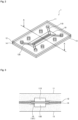
- a biological tissue forming device 1 of the embodiment can be manufactured by arranging a culture membrane 10 having surfaces for culturing the adherent cells between a flow passage plate 11 and a flow passage plate 13, and adhering them with adhesive layers 12 and 14 to be integrated.
- the biological tissue forming device 1 it is also possible for the biological tissue forming device 1 to have a configuration that can form three or more layers of the cell layers by further including a culture membrane and an adhesive layer.
- the flow passage plate 11 includes a flow passage 110 and the flow passage plate 13 includes a flow passage 130, and respective surfaces on flow passage sides of these two plates are adhered on both the surfaces of the culture membrane 10 via the respective adhesive layers, and thus, the two flow passages divided by the culture membrane 10 are formed in the biological tissue forming device 1. These flow passages are used as culture chambers.
- respective cell layers are formed on both the surfaces of the culture membrane 10, thereby forming a biological tissue with two cell layers in the biological tissue forming device 1.
- These two cell layers may be formed of adherent cells of the same kind or may be formed of adherent cells of respective different kinds, and in particular, it is beneficial that they are formed of adherent cells of different kinds.
- the culture membrane 10 is formed of a readily-soluble material 101. While this culture membrane 10 may be a porous membrane or may be a non-porous membrane, it is preferred to be a porous membrane having hole diameters of an extent that the cells do not pass through until the readily-soluble material 101 is dissolved. These hole diameters are preferably 0.4 microns to 8 microns in diameter, and is more preferably a diameter of 3 microns to 6 microns.
- a water-soluble polymer for example, a water-soluble polymer is usable, and, for example, polyvinyl alcohol (PVA), alginic acid, and methyl cellulose are preferably usable.
- PVA polyvinyl alcohol
- alginic acid alginic acid
- methyl cellulose preferably usable.
- a dissolution temperature of the polyvinyl alcohol is not limited to this range, and it is also possible to dissolve the polyvinyl alcohol by heating to 37°C to 80°C.
- a dissolution temperature of the methyl cellulose is not limited to this range, and it is also possible to dissolve the methyl cellulose by cooling to 4°C to 25°C.
- the methyl cellulose is a material that is gelatinized at a high temperature and liquefies when cooled, and can be dissolved to bring it into a low-temperature state.
- an additive In order to adjust the dissolution temperature of the methyl cellulose, it is also preferred to add an additive. Adding the additive into the methyl cellulose ensures increasing its dissolution temperature.
- styrenesulfonic acid sodium NaSS is preferably usable.
- dissolving the culture membrane 10 after forming the cell layers ensures preferably transmitting liquid components between the plurality of cell layers.
- pluripotent stem cells for example, iPS cells
- ES cells embryonic stem cells
- the biological tissue forming device 1 of the embodiment it is also preferred to provide a scaffold material for the cells in order to preferably adhere the cells on the surfaces of the culture membrane.
- a scaffold material for the cells in order to preferably adhere the cells on the surfaces of the culture membrane.
- the scaffold material of the cells for example, collagen, Matrigel, fibronectin, laminins, and chitosan are preferably usable, and it is also possible to use two or more of these materials.
- Examples of the method for adding the cellular scaffold material on the surfaces of the culture membrane can include, for example, a method of coating the surfaces of the culture membrane, a method of mixing the readily-soluble material and the cellular scaffold material, a method of chemically bonding the cellular scaffold material to the readily-soluble material using a reagent, such as a coupling agent, and a method of laminating a product preliminarily processed collagen or chitosan into a fiber form on the surfaces of the culture membrane.
- a reagent such as a coupling agent
- the culture membrane 10 in the biological tissue forming device 1 of the embodiment is, for example, manufactured by applying the readily-soluble material 101 over a base material, stripping the obtained culture membrane 10 off of the base material, and cutting it into a desired shape, and can be used by disposing it in the biological tissue forming device 1.
- the shape of the culture membrane 10 is not limited to the shape illustrated in FIG. 1 , and, for example, is also possible to have a shape for arrangement on entire lower surfaces of the flow passage plates 11 and 13.
- a surface treatment such as a corona treatment, an excimer treatment, or a plasma treatment on the surfaces of the culture membrane 10.
- Performing such a surface treatment ensures an improvement in hydrophilicity of the surfaces of the culture membrane 10, thereby ensuring an improvement in adhesiveness of the adherent cells onto the surfaces of the culture membrane 10.
- cycloolefin polymer, polymethyl methacrylate, and polycarbonate are usable, and the flow passage plate 11 and the flow passage plate 13 can be manufactured by, for example, injection molding.
- an adhesive agent is usable, and the adhesive layer 12 and the adhesive layer 14 can be manufactured by, for example, punching into the shape as illustrated in FIG. 1 .
- the material of the culture membrane 10 in the biological tissue forming device 1 of the embodiment as described above, alginic acid, polyvinyl alcohol, and the like can be used, and the obtained culture membrane 10 can be cut into a desired shape and used.
- the flow passage plates 11, 13 and the culture membrane 10 are then attached together with the adhesive layers 12, 14 to ensure manufacturing the biological tissue forming device 1 of the embodiment.
- the biological tissue forming device 1 of the embodiment may be in a state before the cell layers are formed on the culture membrane 10 or may be in a state after the cell layers are formed on the culture membrane 10.
- the biological tissue forming device 1 of the embodiment includes one that has the readily-soluble material 101 dissolved after the cell layers are formed on the culture membrane 10.
- the biological tissue forming device 1 of the embodiment is formed with the culture membrane 10 including the adherent cells.
- the configuration may have the adherent cells fixed on the surfaces of the culture membrane 10 or the configuration may have the adherent cells contained in the culture membrane 10.
- the adherent cells can be alive in the culture membrane 10 when the culture membrane 10 is manufactured by, for example, the alginic acid.
- the biological tissue forming device 1 of the embodiment with such a configuration ensures omitting a supply of the adherent cells to the flow passages in the method for forming a biological tissue of the embodiment described later.
- the method for forming a biological tissue of the embodiment is a method for forming a biological tissue having a plurality of cell layers formed of adherent cells, and includes a step of supplying the adherent cells and a culture fluid to two flow passages in a biological tissue forming device having both surfaces on which culture regions of the adherent cells are disposed, including a culture membrane arranged between the plurality of cell layers after the adherent cells are cultured and the two flow passages divided by the culture membrane, and the culture membrane being formed of a readily-soluble material, a step of culturing the adherent cells in the two flow passages to form the cell layers on both the surfaces of the culture membrane, and a step of dissolving the culture membrane.
- a semipermeable membrane such as polyester, is typically used as a culture membrane 210, and a cell-cell interaction and an exchange of liquid components take place between two flow passages via this membrane.
- the two cell layers are formed by filling a culture fluid 40 to a flow passage between a flow passage plate 211 and the semipermeable membrane 210 to culture cells 30 on one surface of the semipermeable membrane 210 and by filling a culture fluid 41 to a flow passage between a flow passage plate 213 and the semipermeable membrane 210 to culture cells 31 on the other surface of the semipermeable membrane 210.
- the semipermeable membrane 210 in the conventional biological tissue forming device 20 has hole diameters of approximately 3 ⁇ m. Therefore, when the conventional biological tissue forming device 20 is used, the cells between the cell layers are prevented from contacting one another, thereby leading to a problem of the reduced interaction between the cell layers, and the holes of the semipermeable membrane 210 are blocked as the cells grow, thereby leading to a problem of the reduced exchange efficiency of the liquid components.
- the biological tissue forming device 1 of the embodiment can form the two cell layers by filling the culture fluid 40 to the flow passage 110 between the flow passage plate 11 and the culture membrane 10 to culture the cells 30 on one surface of the culture membrane 10 and by filling the culture fluid 41 to the flow passage 130 between the flow passage plate 13 and the culture membrane 10 to culture the cells 31 on the other surface of the culture membrane 10, as illustrated in FIG. 4 .
- the readily-soluble material 101 in the culture membrane 10 is dissolved to allow the cells to contact one another between the cell layers, thereby ensuring a solution to the problem of the reduced interaction between the cell layers.
- the liquid components can also be exchanged with high efficiency, thereby ensuring a solution to the problem of the reduced exchange efficiency of the liquid components between the two cell layers.
- the alginic acid degrading enzyme is supplied to at least any one of the flow passage 110 and the flow passage 130 in the step of dissolving the culture membrane 10, and thus, the culture membrane 10 can be dissolved.
- the biological tissue forming device 1 is heated in the step of dissolving the culture membrane 10, and thus, the culture membrane 10 can be dissolved.
- the step of dissolving the culture membrane 10 is preferably performed at a time point where the cell layers are formed on the entire culture regions.
- the method for forming a biological tissue of the embodiment is such a method, it is possible to preferably form a biological tissue having the cell layers formed of a plurality of the different cells.
- the adherent cells can be attached on both the surfaces of the culture membrane 10 by culturing the cells while vertically inverting the biological tissue forming device 1 after supplying the adherent cells and the culture fluid in the two flow passages in the biological tissue forming device 1.
- this method wastes the cells, this method has an advantage that the adherent cells can be attached in a short time compared with the former method.
- pluripotent stem cells for example iPS cells
- ES cells embryonic stem cells
- the kind of the manufactured biological tissue is not specifically limited, and various biological tissues, such as a biological tissue in a proximal convoluted tubule model including a tissue formed of renal tubular epithelial cells and a tissue formed of vascular endothelial cells and biological tissues in a glomerulus model, a small bowel model, a liver model, and a lung model, can be a target.
- various biological tissues such as a biological tissue in a proximal convoluted tubule model including a tissue formed of renal tubular epithelial cells and a tissue formed of vascular endothelial cells and biological tissues in a glomerulus model, a small bowel model, a liver model, and a lung model, can be a target.
- the used culture fluid, its flow speed in the flow passage, and the like are also not specifically limited, and they can be appropriately set according to the cultured cells and tissues.
- the culture membrane can be configured using the readily-soluble material in, for example, an organ-on-a-chip, and dissolving the readily-soluble material after forming the cell layers on both the surfaces of this culture membrane ensures the cell-cell interaction and the exchange of liquid components between the cell layers of the formed biological tissue with high efficiency.
- the biological tissue forming device of the embodiment is different from the first embodiment in that the culture membrane is formed of the readily-soluble material and the poorly-soluble material.
- Other configurations are similar to those of the first embodiment except for those described below.
- the biological tissue forming device of the embodiment has both surfaces on which culture regions of the adherent cells are disposed, and includes a culture membrane arranged between the plurality of cell layers after the adherent cells are cultured and a plurality of flow passages divided by the culture membrane.
- the culture membrane is formed of the readily-soluble material and the poorly-soluble material.
- the biological tissue forming device of the embodiment will be described with reference numerals of the configuration similar to the first embodiment in FIGS. 1 to 3 to which a is attached.
- a culture membrane 10a is formed of a readily-soluble material 101a and a poorly-soluble material 102a.
- the readily-soluble material 101a in the culture membrane 10a is dissolved, and thus, only the poorly-soluble material 102a in the culture membrane 10a remains as a support body for the cell layers. This forms holes that pass through the culture membrane 10a.
- the readily-soluble material 101a and the poorly-soluble material 102a in the culture membrane 10a are a scaffold for the adherent cells. After the dissolution of the readily-soluble material 101a, the poorly-soluble material 102a is the support body for the cell layers.
- a water-soluble polymer for example, a water-soluble polymer is usable, and, for example, polyvinyl alcohol (PVA), alginic acid, and methyl cellulose are preferably usable.
- PVA polyvinyl alcohol
- alginic acid alginic acid
- methyl cellulose preferably usable.
- feeding an alginic acid degrading enzyme into a flow passage 110a or a flow passage 130a ensures dissolving the readily-soluble material 101a in the culture membrane 10a in the biological tissue forming device 1.
- cooling the biological tissue forming device 1a to, for example, 5°C to 10°C after forming the cell layers ensures dissolving the readily-soluble material 101a in the culture membrane 10a in the biological tissue forming device 1a.
- the poorly-soluble material 102a for example, polyethylene terephthalate (PET), polylactic acid (PLA), and an ultraviolet ray (UV) curable resin are usable.
- PET polyethylene terephthalate
- PLA polylactic acid
- UV ultraviolet ray
- a porous membrane formed of the poorly-soluble material has hole diameters preferred to be a diameter of 10 microns or more.
- hole diameters preferred to be a diameter of 10 microns or more.
- dissolving the readily-soluble material 101a in the culture membrane 10a after forming the cell layers ensures preferably performing the cell-cell interaction and the transmission of the liquid components between the plurality of cell layers.
- the poorly-soluble material 102a in the culture membrane 10a can remain between the plurality of cell layers, thereby ensuring making the cell layers irrefrangible as the support body of the poorly-soluble material 102a.
- the culture membrane 10a in the biological tissue forming device 1a of the embodiment can be manufactured in, for example, the following method and be used.
- the readily-soluble material 101a is applied over a base material 50.
- the poorly-soluble material 102a is laminated and the readily-soluble material 101a is additionally applied.
- the obtained culture membrane 10a is then stripped off of the base material 50 and cut into a desired shape, and is arranged in the biological tissue forming device 1.
- the alginic acid, the polyvinyl alcohol, and the like are usable as described above.
- the polyethylene terephthalate (PET), the polylactic acid (PLA), the ultraviolet ray (UV) curable resin, and the like are usable.
- PET polyethylene terephthalate
- PLA polylactic acid
- UV ultraviolet ray
- the obtained culture membrane 10a can be cut into the desired shape and used as described above.
- Flow passage plates 11a, 13a and the culture membrane 10a are attached together with adhesive layers 12a, 14a to ensure manufacturing the biological tissue forming device 1a of the embodiment.
- the biological tissue forming device 1a of the embodiment may be in a state before the cell layers are formed on the culture membrane 10a or may be in a state after the cell layers are formed on the culture membrane 10a.
- the biological tissue forming device 1a of the embodiment includes one that has the readily-soluble material 101a dissolved, the poorly-soluble material 102a remaining, and the holes passing through the culture membrane 10a formed after the cell layers are formed on the culture membrane 10a.
- the biological tissue forming device 1a of the embodiment is formed with the culture membrane 10a including the adherent cells.
- the configuration may have the adherent cells fixed on the surfaces of the culture membrane 10a or the configuration may have the adherent cells contained in the readily-soluble material 101a in the culture membrane 10a.
- the method for forming a biological tissue of the embodiment is a method for forming a biological tissue having a plurality of cell layers formed of adherent cells and includes a step of supplying the adherent cells and a culture fluid to two flow passages in a biological tissue forming device having both surfaces on which culture regions of the adherent cells are disposed, including a culture membrane arranged between the plurality of cell layers after the adherent cells are cultured and the two flow passages divided by the culture membrane, the culture membrane being formed of a readily-soluble material and a poorly-soluble material, a step of culturing the adherent cells in the two flow passages to form the cell layers on both the surfaces of the culture membrane, and a step of dissolving the culture membrane.
- the biological tissue forming device 1a of the embodiment can form the two cell layers by filling the culture fluid 40 to the flow passage 110a between the flow passage plate 11a and the culture membrane 10a to culture the cells 30 on one surface of the culture membrane 10a and by filling the culture fluid 41 to the flow passage 130a between the flow passage plate 13a and the culture membrane 10a to culture the cells 31 on the other surface of the culture membrane 10a, as illustrated in FIG. 6 .
- the readily-soluble material 101a in the culture membrane 10a is dissolved to allow the cells to contact one another between the cell layers, thereby ensuring a solution to the problem of the reduced interaction between the cell layers.
- the liquid components can be exchanged with high efficiency, thereby ensuring a solution to the problem of the reduced exchange efficiency of the liquid components between the two cell layers.
- the poorly-soluble material 102a in the culture membrane 10a does not dissolve, this can remain between the two cell layers, thereby ensuring making the cell layers irrefrangible as the support body of the poorly-soluble material 102a.
- the alginic acid degrading enzyme is supplied to at least any one of the flow passage 110a and the flow passage 130a in the step of dissolving the readily-soluble material of the culture membrane 10a, and thus, the culture membrane 10a can be dissolved.
- the biological tissue forming device 1a is heated in the step of dissolving the readily-soluble material in the culture membrane 10a, and thus, the culture membrane 10a can be dissolved.
- the culture membrane can be configured using the readily-soluble material and the poorly-soluble material in, for example, an organ-on-a-chip, and dissolving the readily-soluble material after forming the cell layers on both the surfaces of this culture membrane ensures the cell-cell interaction and the exchange of liquid components between the cell layers of the formed biological tissue with high efficiency, and ensures making the cell layers irrefrangible.
- the following describes experiments that were performed for confirming the dissolution of the readily-soluble material used in the biological tissue forming device according to the embodiment of the present invention.
- the readily-soluble material is used as the culture membrane arranged between the plurality of cell layers after the adherent cells are cultured in the biological tissue forming device, and is dissolved after the cell layers are formed, but the formations of the cell layers were omitted in the respective examples and only solubility of the readily-soluble materials was evaluated.
- the culture fluid is used when the cell layers are formed using the biological tissue forming device, but in the respective examples and the reference examples, a phosphate buffer solution was used instead of the culture fluid and the solubility was evaluated. Those results are shown in FIG. 8 .
- sodium alginate (FUJIFII,M Wako Pure Chemical Corporation, 194-13321) was dissolved in a pure water to prepare a 1% sodium alginate aqueous solution. This sodium alginate aqueous solution was casted on a PET film and was dried for one night at room temperature (25°C).
- the resultant product was immersed in a 0.5 M calcium chloride aqueous solution for ten minutes to cross-link the alginic acid, and thereafter, was rinsed with a pure water.
- the resultant product was dried for one night at room temperature (25°C), and thus, a calcium alginate thin film (film thickness of approximately 10 ⁇ m) was manufactured to be the readily-soluble material.
- the readily-soluble material cut out into a 10 mm square was immersed in a 20 mL of a phosphate buffer solution (Thermo Fisher Scientific Inc., 10010023) and stored for one week at a temperature of 37°C, and thereafter, the state and the transparency of the readily-soluble material were confirmed.
- a phosphate buffer solution Thermo Fisher Scientific Inc., 10010023
- the reason for storing the readily-soluble material for one week before it was dissolved and confirming the state is because it typically needs approximately one week of culture period for forming the cell layers and it is desired that the dissolution does not take place during the period.
- the reason for confirming the transparency of the readily-soluble material is that since the cell layers are formed on the surface of the readily-soluble material, it is desired that the readily-soluble material is transparent in observing the cell layers as it is easy to be visually perceived.
- the sodium citrate was added into the phosphate buffer solution so as to be 1%, and was immersed in the phosphate buffer solution for six hours at a temperature of 37°C. As the result, the readily-soluble material was completely dissolved in the phosphate buffer solution.
- Example 2 similarly to Example 1, a calcium alginate thin film was manufactured to be used as the readily-soluble material, was immersed in a phosphate buffer solution and stored, and thereafter, the state and the transparency of the readily-soluble material were confirmed. As the result, the state and the transparency of the readily-soluble material compared favorably with that before being immersed in the phosphate buffer solution.
- polyvinyl alcohol (FUJIFII,M Wako Pure Chemical Corporation, 160-11485) was dissolved in a pure water to prepare a 5% polyvinyl alcohol aqueous solution.
- This polyvinyl alcohol aqueous solution was casted on a PET film and was dried for one night at room temperature (25°C), and thus, a polyvinyl alcohol thin film (film thickness of approximately 7 ⁇ m) was manufactured to be the readily-soluble material.
- the readily-soluble material cut out into a 10 mm square was immersed in a 20 mL of a phosphate buffer solution (Thermo Fisher Scientific Inc., 10010023) and stored for one week at a temperature of 37°C, and thereafter, the state and the transparency of the readily-soluble material were confirmed.
- a phosphate buffer solution Thermo Fisher Scientific Inc., 10010023
- the state and the transparency of the readily-soluble material compared favorably with that before being immersed in the phosphate buffer solution.
- methyl cellulose manufactured by Shin-Etsu Chemical Co., Ltd., MCE-4000
- a pure water was dissolved in a pure water to prepare a 1% methyl cellulose aqueous solution.
- This methyl cellulose aqueous solution was casted on a PET film and was dried for one night at room temperature (25°C), and thus, a methyl cellulose thin film (film thickness of approximately 20 ⁇ m) was manufactured to be the readily-soluble material.
- the readily-soluble material cut out into a 10 mm square was immersed in a 20 mL of a phosphate buffer solution (Thermo Fisher Scientific Inc., 10010023) and stored for one week at a temperature of 37°C, and thereafter, the state and the transparency of the readily-soluble material were confirmed.
- a phosphate buffer solution Thermo Fisher Scientific Inc., 10010023
- the state and the transparency of the readily-soluble material compared favorably with that before being immersed in the phosphate buffer solution.
- styrenesulfonic acid sodium (FUJIFII,M Wako Pure Chemical Corporation, 192-03292) was added to a methyl cellulose aqueous solution prepared similarly to Example 4 to be 0.1 M in order to adjust the dissolution temperature.
- This methyl cellulose aqueous solution was casted on a PET film and was dried for one night at room temperature (25°C), and thus, a methyl cellulose thin film (film thickness of approximately 20 ⁇ m) was manufactured to be the readily-soluble material.
- the readily-soluble material cut out into a 10 mm square was immersed in a 20 mL of a phosphate buffer solution (Thermo Fisher Scientific Inc., 10010023) and stored for one week at a temperature of 37°C, and thereafter, the state and the transparency of the readily-soluble material were confirmed.
- a phosphate buffer solution Thermo Fisher Scientific Inc., 10010023
- the state and the transparency of the readily-soluble material compared favorably with that before being immersed in the phosphate buffer solution.
- the PET membrane cut out into a 10 mm square was immersed in a 20 mL of a phosphate buffer solution (Thermo Fisher Scientific Inc., 10010023) and stored for one week at a temperature of 37°C, and thereafter, the state and the transparency of the readily-soluble material were confirmed.
- a phosphate buffer solution Thermo Fisher Scientific Inc., 10010023
- the state and the transparency of the readily-soluble material compared favorably with that before being immersed in the phosphate buffer solution.
- This PET membrane was also immersed in the phosphate buffer solution for 24 hours at a temperature of 90°C. As the result, the PET membrane did not dissolve and no change was observed.
- the PET membrane was not usable as an alternative of the readily-soluble material in the biological tissue forming device.
- the PET membrane was preferably usable as the poorly-soluble material in the biological tissue forming device.
- the shape of the flow passage and the shape of the culture membrane in the biological tissue forming device are not limited to those illustrated in FIG. 1 and the like, and can be appropriately changed to any other shapes.
- the present invention can be preferably used, for example, for a case where a biological tissue is formed using, for example, an organ-on-a-chip.
Landscapes
- Health & Medical Sciences (AREA)
- Life Sciences & Earth Sciences (AREA)
- Engineering & Computer Science (AREA)
- Chemical & Material Sciences (AREA)
- Organic Chemistry (AREA)
- Bioinformatics & Cheminformatics (AREA)
- Wood Science & Technology (AREA)
- Zoology (AREA)
- Genetics & Genomics (AREA)
- Biotechnology (AREA)
- Biomedical Technology (AREA)
- Biochemistry (AREA)
- General Engineering & Computer Science (AREA)
- General Health & Medical Sciences (AREA)
- Microbiology (AREA)
- Sustainable Development (AREA)
- Cell Biology (AREA)
- Immunology (AREA)
- Molecular Biology (AREA)
- Physiology (AREA)
- General Chemical & Material Sciences (AREA)
- Dispersion Chemistry (AREA)
- Clinical Laboratory Science (AREA)
- Micro-Organisms Or Cultivation Processes Thereof (AREA)
- Materials For Medical Uses (AREA)
- Apparatus Associated With Microorganisms And Enzymes (AREA)
Abstract
Description
- The present invention relates to a cell culture technique, in particular, relates to a device for forming a biological tissue and a method for forming a biological tissue by culturing cells.
- Conventionally, there has been a problem in, for example, developing pharmaceutical medicines, that, regarding a drug candidate substance, when a human pharmacokinetics is unpredictable by a preclinical test and its toxicity is proven in a clinical test, thereby cancelling the development, research and development expenses until then becomes wasteful.
- That is, in the preclinical test, a cell-based assay, animal testing, and the like are carried out, but there has been a problem that a pharmacokinetics is unevaluable because the cell-based assay cannot reproduce an in-vivo bloodstream and the like, and a development of cell-specific function is insufficient.
- In the animal testing, a result of the pharmacokinetics does not necessarily correspond with that of the human because of the species difference, and therefore, there has been a problem that the pharmacokinetics of the human is hard to predict.
- In such conditions, recently, an organ-on-a-chip is expected to solve these various problems as a device configured to improve a prediction accuracy of the pharmacokinetics in the human.
- The organ-on-a-chip is a reproduction of an organ tissue structure in a microfluidic device, and for the organ-on-a-chip, there have already been proposed a lung-on-a-chip that models a lung structure, one that models a structure of an enterohepatic circulation by combining a small bowel model and a liver model, one that models a kidney structure, such as a glomerulus model and a proximal convoluted tubule model, and the like.
- Here, in an in vitro culture system, which uses a conventional culture dish or the like, a culture environment is semi-static and a supply of oxygen and nutrition and a removal of wastes only depend on a diffusion without reproducing a bloodstream, and therefore, it has been difficult to carry out a test that takes specific functions of cells and interactions between organs into account.
- In contrast to this, the organ-on-a-chip ensures reproducing a bloodstream by a pump liquid delivery, and thus, the supply of oxygen and nutrition and the like can be changed by a flow rate, and therefore, it is possible to preferably carry out the test that includes the specific functions of cells and the interactions between organs.
- Patent Document 1:
JP-T-2017-504320 - One of such organ-on-a-chips includes flow passages divided into two by a membrane having both surfaces on which cells are cultured to form two cell layers with the membrane interposed therebetween. A semipermeable membrane is used for the membrane, and liquid components, such as nutrients and salts, are exchanged between the two cell layers via holes on the semipermeable membrane.
- There are, however, a problem that an interaction between the cell layers is reduced because the semipermeable membrane has hole diameters through which a cell does not pass, and therefore, it interferes with the cells between the cell layers from contacting one another, and a problem that an exchange efficiency of the liquid components is reduced because the holes are easily blocked as the cell layers are formed by the cell culture.
- Then, as a result of extensive studies, the present inventors have developed an organ-on-a-chip (a biological tissue forming device) that ensures a cell-cell interaction and an exchange of liquid components between cell layers of a formed biological tissue with high efficiency.
- Specifically, first, a readily-soluble material is used for a membrane of the organ-on-a-chip, and the membrane is dissolved after the cell layers are formed on both surfaces of this membrane, thereby making it possible to prevent reductions in cell-cell interaction and exchange efficiency of liquid components between the two cell layers.
- Incidentally, while the membrane formed of the readily-soluble material serves a function as a scaffold material for the cells in forming the cell layers on both the surfaces, this scaffold does not exist any longer after the dissolution of the readily-soluble material, and therefore, the formed cell layers are easily broken in some cases.
- Therefore, the present inventors further made it possible for the cell layers to be irrefrangible even after the dissolution of the readily-soluble material by forming the membrane with the readily-soluble material and a poorly-soluble material and causing the poorly-soluble material to serve as a support body of the cell layers after the dissolution of the readily-soluble material.
- Here,
Patent Document 1 discloses a lung-on-a-chip and describes that a biocompatible polymer can be used as a membrane in this lung-on-a-chip (Claim 53).Patent Document 1 also describes that "biocompatible" refers to any material that does not deteriorate appreciably and does not induce a significant immune response or deleterious tissue reaction (e.g., toxic reaction or significant irritation) over time when implanted into or placed adjacent to the biological tissue of a subject, or induce blood clotting or coagulation when it comes in contact with blood (paragraph 0055), and both biocompatible and biodegradable materials can be used in the present device to facilitate in vivo implantation of the present device (paragraph 0316). - For this lung-on-a-chip, however, a configuration of dissolving the membrane is neither described nor suggested. There is again no configuration disclosed to make the cell layers irrefrangible after the dissolution of the membrane.
- The present invention was made in view of the above circumstances. An object of the present invention is to provide a biological tissue forming device and a method for forming a biological tissue that ensures a cell-cell interaction and an exchange of liquid components between cell layers of a formed biological tissue with high efficiency and is capable of making the cell layers irrefrangible.
- In order to achieve the above-described objects, the biological tissue forming device of the present invention is a biological tissue forming device for forming a biological tissue having a plurality of cell layers formed of adherent cells that has a configuration including a culture membrane having both surfaces on which culture regions of the adherent cells are disposed, the culture membrane being arranged between the plurality of cell layers after the adherent cells are cultured, and a plurality of flow passages divided by the culture membrane. The culture membrane is formed of a readily-soluble material.
- Another configuration of the biological tissue forming device of the present invention is a biological tissue forming device for forming a biological tissue having a plurality of cell layers formed of adherent cells that has a configuration including a culture membrane having both surfaces on which culture regions of the adherent cells are disposed, the culture membrane being arranged between the plurality of cell layers after the adherent cells are cultured, and a plurality of flow passages divided by the culture membrane. The culture membrane is formed of a readily-soluble material and a poorly-soluble material.
- The biological tissue forming device of the present invention is also preferred to have a configuration in which the readily-soluble material in the culture membrane is dissolved to form holes that pass through the culture membrane.
- The biological tissue forming device of the present invention is also preferred to have a configuration in which a porous membrane formed of the poorly-soluble material has hole diameters of 10 microns or more in diameter.
- Furthermore, the biological tissue forming device of the present invention is also preferred to have a configuration in which the readily-soluble material and the poorly-soluble material serve as a scaffold in culturing the adherent cells.
- The biological tissue forming device of the present invention is also preferred to have a configuration in which the poorly-soluble material serves as a support body for the cell layers after the dissolution of the readily-soluble material in the culture membrane.
- Furthermore, the biological tissue forming device of the present invention is also preferred to have a configuration in which the poorly-soluble material is formed of any one of polyethylene terephthalate, polylactic acid, or an ultraviolet ray curable resin.
- The biological tissue forming device of the present invention is also preferred to have a configuration in which the culture membrane is a porous membrane.
- The biological tissue forming device of the present invention is also preferred to have a configuration including the one culture membrane, and two flow passages divided by the culture membrane. A biological tissue having two cell layers is formed.
- Furthermore, the biological tissue forming device of the present invention is also preferred to have a configuration in which the two flow passages are formed with respective surfaces on flow passage sides of two plates having flow passages adhered on both respective surfaces of the culture membrane.
- The biological tissue forming device of the present invention is also preferred to have a configuration in which in the two flow passages, cell layers formed of adherent cells of respective different kinds are formed.
- Furthermore, the biological tissue forming device of the present invention is also preferred to have a configuration in which the readily-soluble material is formed of a water-soluble polymer.
- The biological tissue forming device of the present invention is also preferred to have a configuration in which the water-soluble polymer is polyvinyl alcohol, alginic acid, or methyl cellulose.
- The method for forming a biological tissue of the present invention is a method for forming a biological tissue having a plurality of cell layers formed of adherent cells, the method includes a step of supplying the adherent cells and a culture fluid to two flow passages in a biological tissue forming device, the biological tissue forming device having both surfaces on which culture regions of the adherent cells are disposed, the biological tissue forming device including a culture membrane arranged between the plurality of cell layers after the adherent cells are cultured and the two flow passages divided by the culture membrane, the culture membrane being formed of a readily-soluble material, a step of culturing the adherent cells in the two flow passages to form the cell layers on both the surfaces of the culture membrane, and a step of dissolving the culture membrane.
- Another configuration of the method for forming a biological tissue of the present invention is a method for forming a biological tissue having a plurality of cell layers formed of adherent cells, the method includes a step of supplying the adherent cells and a culture fluid to two flow passages in a biological tissue forming device, the biological tissue forming device having both surfaces on which culture regions of the adherent cells are disposed, the biological tissue forming device including a culture membrane arranged between the plurality of cell layers after the adherent cells are cultured and the two flow passages divided by the culture membrane, the culture membrane being formed of a readily-soluble material and a poorly-soluble material, a step of culturing the adherent cells in the two flow passages to form the cell layers on both the surfaces of the culture membrane, and a step of dissolving the readily-soluble material in the culture membrane.
- The method for forming a biological tissue of the present invention is also preferred to be a method in which the readily-soluble material is alginic acid, an alginic acid degrading enzyme is supplied to at least any one of the two flow passages in the step of dissolving, and the readily-soluble material in the culture membrane is dissolved.
- Furthermore, the method for forming a biological tissue of the present invention is also preferred to be a method in which the readily-soluble material is polyvinyl alcohol, the biological tissue forming device is heated in the step of dissolving, and the readily-soluble material in the culture membrane is dissolved.
- The method for forming a biological tissue of the present invention is also preferred to be a method in which the readily-soluble material is methyl cellulose, the biological tissue forming device is cooled in the step of dissolving, and the readily-soluble material in the culture membrane is dissolved.
- According to the present invention, it is possible to provide a biological tissue forming device and a method for forming a biological tissue that ensures a cell-cell interaction and an exchange of liquid components between cell layers of a formed biological tissue with high efficiency and is capable of making the cell layers irrefrangible.
-
-
FIG. 1 is a schematic diagram illustrating constituting members of a biological tissue forming device according to respective embodiments of the present invention. -
FIG. 2 is a schematic diagram illustrating a configuration of the biological tissue forming device according to the respective embodiments of the present invention. -
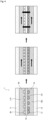
FIG. 3 is a schematic diagram illustrating an A-A cross-sectional surface of the biological tissue forming device according to the respective embodiments of the present invention. -
FIG. 4 is a schematic diagram illustrating a formation process of cell layers by a biological tissue forming device according to a first embodiment of the present invention. -
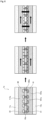
FIG. 5 is a schematic diagram illustrating a manufacturing process of a culture membrane in a biological tissue forming device according to a second embodiment of the present invention. -
FIG. 6 is a schematic diagram illustrating a formation process of cell layers by the biological tissue forming device according to the second embodiment of the present invention. -
FIG. 7 is a schematic diagram illustrating a formation process of cell layers by a conventional biological tissue forming device. -
FIG. 8 is a drawing illustrating results of experiments carried out for confirming dissolutions of readily-soluble materials used in the biological tissue forming device according to the first embodiment of the present invention. - Hereinafter, embodiments of the biological tissue forming device and the method for forming a biological tissue according to the present invention will be described in detail. Note that the present invention is not limited to the specific contents of the following embodiments.
- First, a biological tissue forming device according to a first embodiment of the present invention will be described.
- The biological tissue forming device of the embodiment is a device for forming a biological tissue having a plurality of cell layers formed of adherent cells, and can be configured as, what is called, an organ-on-a-chip and the like.
- The organ-on-a-chip uses a microfluidic device to reproduce an organ tissue structure in the device, and can precisely control a culture environment of the cells. Therefore, it has an advantage that the cells develop cell functions similar to those developed in vivo.
- The biological tissue forming device of the embodiment has both surfaces on which culture regions of the adherent cells are disposed, and includes a culture membrane arranged between the plurality of cell layers after the adherent cells are cultured and a plurality of flow passages divided by the culture membrane. The culture membrane is formed of a readily-soluble material.
- For example, as illustrated in
FIGS. 1 to 3 , a biologicaltissue forming device 1 of the embodiment can be manufactured by arranging aculture membrane 10 having surfaces for culturing the adherent cells between aflow passage plate 11 and aflow passage plate 13, and adhering them withadhesive layers tissue forming device 1 to have a configuration that can form three or more layers of the cell layers by further including a culture membrane and an adhesive layer. - The
flow passage plate 11 includes aflow passage 110 and theflow passage plate 13 includes aflow passage 130, and respective surfaces on flow passage sides of these two plates are adhered on both the surfaces of theculture membrane 10 via the respective adhesive layers, and thus, the two flow passages divided by theculture membrane 10 are formed in the biologicaltissue forming device 1. These flow passages are used as culture chambers. - In these flow passages, respective cell layers are formed on both the surfaces of the
culture membrane 10, thereby forming a biological tissue with two cell layers in the biologicaltissue forming device 1. - These two cell layers may be formed of adherent cells of the same kind or may be formed of adherent cells of respective different kinds, and in particular, it is beneficial that they are formed of adherent cells of different kinds.
- In the biological
tissue forming device 1 of the embodiment, theculture membrane 10 is formed of a readily-soluble material 101. While thisculture membrane 10 may be a porous membrane or may be a non-porous membrane, it is preferred to be a porous membrane having hole diameters of an extent that the cells do not pass through until the readily-soluble material 101 is dissolved. These hole diameters are preferably 0.4 microns to 8 microns in diameter, and is more preferably a diameter of 3 microns to 6 microns. - For the readily-
soluble material 101, for example, a water-soluble polymer is usable, and, for example, polyvinyl alcohol (PVA), alginic acid, and methyl cellulose are preferably usable. - When the alginic acid is used as the readily-
soluble material 101, feeding an alginic acid degrading enzyme into theflow passage 110 or theflow passage 130 ensures dissolving theculture membrane 10 in the biologicaltissue forming device 1. - When the polyvinyl alcohol is used as the readily-
soluble material 101, heating the biologicaltissue forming device 1 to, for example, 37°C to 50°C after forming the cell layers ensures dissolving the readily-soluble material 101 in theculture membrane 10 in the biologicaltissue forming device 1. Note that a dissolution temperature of the polyvinyl alcohol is not limited to this range, and it is also possible to dissolve the polyvinyl alcohol by heating to 37°C to 80°C. - Furthermore, when the methyl cellulose is used as the readily-
soluble material 101, cooling the biologicaltissue forming device 1 to, for example, 5°C to 10°C after forming the cell layers ensures dissolving the readily-soluble material 101 in theculture membrane 10 in the biologicaltissue forming device 1. Note that a dissolution temperature of the methyl cellulose is not limited to this range, and it is also possible to dissolve the methyl cellulose by cooling to 4°C to 25°C. - Here, the methyl cellulose is a material that is gelatinized at a high temperature and liquefies when cooled, and can be dissolved to bring it into a low-temperature state. In order to adjust the dissolution temperature of the methyl cellulose, it is also preferred to add an additive. Adding the additive into the methyl cellulose ensures increasing its dissolution temperature. For this additive, for example, styrenesulfonic acid sodium (NaSS) is preferably usable.
- Thus, with the biological
tissue forming device 1 of the embodiment, dissolving theculture membrane 10 after forming the cell layers ensures preferably transmitting liquid components between the plurality of cell layers. - For the cells cultured using the biological
tissue forming device 1 of the embodiment, for example, pluripotent stem cells (for example, iPS cells) and embryonic stem cells (ES cells) are usable. - In the biological
tissue forming device 1 of the embodiment, it is also preferred to provide a scaffold material for the cells in order to preferably adhere the cells on the surfaces of the culture membrane. The same applies to a second embodiment described later. - Specifically, it is preferred to adhere and culture the cells after adding the scaffold material of the cells on the surfaces of the culture membrane.
- For the scaffold material of the cells, for example, collagen, Matrigel, fibronectin, laminins, and chitosan are preferably usable, and it is also possible to use two or more of these materials.
- Examples of the method for adding the cellular scaffold material on the surfaces of the culture membrane can include, for example, a method of coating the surfaces of the culture membrane, a method of mixing the readily-soluble material and the cellular scaffold material, a method of chemically bonding the cellular scaffold material to the readily-soluble material using a reagent, such as a coupling agent, and a method of laminating a product preliminarily processed collagen or chitosan into a fiber form on the surfaces of the culture membrane.
- It is also preferred to adhere the cells on the surfaces of the culture membrane by adhering the cells on a poorly-soluble material used in the second embodiment described later.
- The
culture membrane 10 in the biologicaltissue forming device 1 of the embodiment is, for example, manufactured by applying the readily-soluble material 101 over a base material, stripping the obtainedculture membrane 10 off of the base material, and cutting it into a desired shape, and can be used by disposing it in the biologicaltissue forming device 1. - Note that it is needless to say that the shape of the
culture membrane 10 is not limited to the shape illustrated inFIG. 1 , and, for example, is also possible to have a shape for arrangement on entire lower surfaces of theflow passage plates - It is also preferred to perform a surface treatment, such as a corona treatment, an excimer treatment, or a plasma treatment on the surfaces of the
culture membrane 10. - Performing such a surface treatment ensures an improvement in hydrophilicity of the surfaces of the
culture membrane 10, thereby ensuring an improvement in adhesiveness of the adherent cells onto the surfaces of theculture membrane 10. - For the material of the
flow passage plate 11 and theflow passage plate 13 in the biologicaltissue forming device 1 of the embodiment, for example, cycloolefin polymer, polymethyl methacrylate, and polycarbonate are usable, and theflow passage plate 11 and theflow passage plate 13 can be manufactured by, for example, injection molding. - For the material of the
adhesive layer 12 and theadhesive layer 14 in the biologicaltissue forming device 1 of the embodiment, for example, an adhesive agent is usable, and theadhesive layer 12 and theadhesive layer 14 can be manufactured by, for example, punching into the shape as illustrated inFIG. 1 . - Furthermore, for the material of the
culture membrane 10 in the biologicaltissue forming device 1 of the embodiment, as described above, alginic acid, polyvinyl alcohol, and the like can be used, and the obtainedculture membrane 10 can be cut into a desired shape and used. - The
flow passage plates culture membrane 10 are then attached together with theadhesive layers tissue forming device 1 of the embodiment. - The biological
tissue forming device 1 of the embodiment may be in a state before the cell layers are formed on theculture membrane 10 or may be in a state after the cell layers are formed on theculture membrane 10. - The biological
tissue forming device 1 of the embodiment includes one that has the readily-soluble material 101 dissolved after the cell layers are formed on theculture membrane 10. - Furthermore, it is also preferred that the biological
tissue forming device 1 of the embodiment is formed with theculture membrane 10 including the adherent cells. In such a case, the configuration may have the adherent cells fixed on the surfaces of theculture membrane 10 or the configuration may have the adherent cells contained in theculture membrane 10. The adherent cells can be alive in theculture membrane 10 when theculture membrane 10 is manufactured by, for example, the alginic acid. - The biological
tissue forming device 1 of the embodiment with such a configuration ensures omitting a supply of the adherent cells to the flow passages in the method for forming a biological tissue of the embodiment described later. - The method for forming a biological tissue of the embodiment is a method for forming a biological tissue having a plurality of cell layers formed of adherent cells, and includes a step of supplying the adherent cells and a culture fluid to two flow passages in a biological tissue forming device having both surfaces on which culture regions of the adherent cells are disposed, including a culture membrane arranged between the plurality of cell layers after the adherent cells are cultured and the two flow passages divided by the culture membrane, and the culture membrane being formed of a readily-soluble material, a step of culturing the adherent cells in the two flow passages to form the cell layers on both the surfaces of the culture membrane, and a step of dissolving the culture membrane.
- Here, as illustrated in
FIG. 7 , for a conventional biologicaltissue forming device 20, a semipermeable membrane, such as polyester, is typically used as aculture membrane 210, and a cell-cell interaction and an exchange of liquid components take place between two flow passages via this membrane. - That is, in the conventional biological
tissue forming device 20, the two cell layers are formed by filling aculture fluid 40 to a flow passage between aflow passage plate 211 and thesemipermeable membrane 210 toculture cells 30 on one surface of thesemipermeable membrane 210 and by filling aculture fluid 41 to a flow passage between aflow passage plate 213 and thesemipermeable membrane 210 toculture cells 31 on the other surface of thesemipermeable membrane 210. - While the cells cultured in the embodiment have a size of, typically, 8 µm to 10 µm, the
semipermeable membrane 210 in the conventional biologicaltissue forming device 20 has hole diameters of approximately 3 µm. Therefore, when the conventional biologicaltissue forming device 20 is used, the cells between the cell layers are prevented from contacting one another, thereby leading to a problem of the reduced interaction between the cell layers, and the holes of thesemipermeable membrane 210 are blocked as the cells grow, thereby leading to a problem of the reduced exchange efficiency of the liquid components. - In contrast to this, the biological
tissue forming device 1 of the embodiment can form the two cell layers by filling theculture fluid 40 to theflow passage 110 between theflow passage plate 11 and theculture membrane 10 to culture thecells 30 on one surface of theculture membrane 10 and by filling theculture fluid 41 to theflow passage 130 between theflow passage plate 13 and theculture membrane 10 to culture thecells 31 on the other surface of theculture membrane 10, as illustrated inFIG. 4 . - After the two cell layers are formed, the readily-
soluble material 101 in theculture membrane 10 is dissolved to allow the cells to contact one another between the cell layers, thereby ensuring a solution to the problem of the reduced interaction between the cell layers. The liquid components can also be exchanged with high efficiency, thereby ensuring a solution to the problem of the reduced exchange efficiency of the liquid components between the two cell layers. - At this time, when the readily-
soluble material 101 is the alginic acid, the alginic acid degrading enzyme is supplied to at least any one of theflow passage 110 and theflow passage 130 in the step of dissolving theculture membrane 10, and thus, theculture membrane 10 can be dissolved. - When the readily-
soluble material 101 is the polyvinyl alcohol, the biologicaltissue forming device 1 is heated in the step of dissolving theculture membrane 10, and thus, theculture membrane 10 can be dissolved. - The step of dissolving the
culture membrane 10 is preferably performed at a time point where the cell layers are formed on the entire culture regions. - It is preferred to form the cell layers formed of the adherent cells of respective different kinds in the
flow passage 110 and theflow passage 130. - When the method for forming a biological tissue of the embodiment is such a method, it is possible to preferably form a biological tissue having the cell layers formed of a plurality of the different cells.
- Here, it is necessary to attach the adherent cells on both the surfaces of the
culture membrane 10 for culturing the adherent cells in the two flow passages in the biologicaltissue forming device 1. - For such a method, the adherent cells can be attached on both the surfaces of the
culture membrane 10 by culturing the cells while vertically inverting the biologicaltissue forming device 1 after supplying the adherent cells and the culture fluid in the two flow passages in the biologicaltissue forming device 1. - It is also possible, without vertically inverting the biological
tissue forming device 1, to attach the adherent cells also on a lower surface of theculture membrane 10 as well as on an upper surface of theculture membrane 10 by filling the adherent cells in theflow passage 130 at a lower side in the biologicaltissue forming device 1 when the adherent cells and the culture fluid are supplied to the two flow passages in the biologicaltissue forming device 1. - In this case, it is possible to keep the adherent cells on the lower surface of the
culture membrane 10 in the attached state by washing away the cells remaining in theflow passage 130 with the culture fluid or the like after attaching the adherent cells on the lower surface of theculture membrane 10. - While this method wastes the cells, this method has an advantage that the adherent cells can be attached in a short time compared with the former method.
- In the method for forming a biological tissue of the embodiment, for the adherent cells, for example, pluripotent stem cells (for example iPS cells) and embryonic stem cells (ES cells) are preferably usable.
- The kind of the manufactured biological tissue is not specifically limited, and various biological tissues, such as a biological tissue in a proximal convoluted tubule model including a tissue formed of renal tubular epithelial cells and a tissue formed of vascular endothelial cells and biological tissues in a glomerulus model, a small bowel model, a liver model, and a lung model, can be a target.
- Furthermore, the used culture fluid, its flow speed in the flow passage, and the like are also not specifically limited, and they can be appropriately set according to the cultured cells and tissues.
- As described above, with the biological tissue forming device and the method for forming a biological tissue of the embodiment, the culture membrane can be configured using the readily-soluble material in, for example, an organ-on-a-chip, and dissolving the readily-soluble material after forming the cell layers on both the surfaces of this culture membrane ensures the cell-cell interaction and the exchange of liquid components between the cell layers of the formed biological tissue with high efficiency.
- Next, a biological tissue forming device according to the second embodiment of the present invention will be described.
- The biological tissue forming device of the embodiment is different from the first embodiment in that the culture membrane is formed of the readily-soluble material and the poorly-soluble material. Other configurations are similar to those of the first embodiment except for those described below.
- That is, the biological tissue forming device of the embodiment has both surfaces on which culture regions of the adherent cells are disposed, and includes a culture membrane arranged between the plurality of cell layers after the adherent cells are cultured and a plurality of flow passages divided by the culture membrane. The culture membrane is formed of the readily-soluble material and the poorly-soluble material.
- The biological tissue forming device of the embodiment will be described with reference numerals of the configuration similar to the first embodiment in
FIGS. 1 to 3 to which a is attached. - In a biological
tissue forming device 1a of the embodiment, aculture membrane 10a is formed of a readily-soluble material 101a and a poorly-soluble material 102a. - After the cell layers are formed, the readily-
soluble material 101a in theculture membrane 10a is dissolved, and thus, only the poorly-soluble material 102a in theculture membrane 10a remains as a support body for the cell layers. This forms holes that pass through theculture membrane 10a. - That is, in a culture step of the adherent cells, the readily-
soluble material 101a and the poorly-soluble material 102a in theculture membrane 10a are a scaffold for the adherent cells. After the dissolution of the readily-soluble material 101a, the poorly-soluble material 102a is the support body for the cell layers. - For the readily-
soluble material 101a, for example, a water-soluble polymer is usable, and, for example, polyvinyl alcohol (PVA), alginic acid, and methyl cellulose are preferably usable. - When the alginic acid is used as the readily-
soluble material 101a, feeding an alginic acid degrading enzyme into aflow passage 110a or aflow passage 130a ensures dissolving the readily-soluble material 101a in theculture membrane 10a in the biologicaltissue forming device 1. - When the polyvinyl alcohol is used as the readily-
soluble material 101a, heating the biologicaltissue forming device 1a to, for example, 37°C to 50°C after forming the cell layers ensures dissolving the readily-soluble material 101a in theculture membrane 10a in the biologicaltissue forming device 1a. - Furthermore, when the methyl cellulose is used as the readily-
soluble material 101a, cooling the biologicaltissue forming device 1a to, for example, 5°C to 10°C after forming the cell layers ensures dissolving the readily-soluble material 101a in theculture membrane 10a in the biologicaltissue forming device 1a. - For the poorly-
soluble material 102a, for example, polyethylene terephthalate (PET), polylactic acid (PLA), and an ultraviolet ray (UV) curable resin are usable. - A porous membrane formed of the poorly-soluble material has hole diameters preferred to be a diameter of 10 microns or more. Thus setting the hole diameters ensures the cell-cell interaction and the exchange of liquid components between the two cell layers with high efficiency.
- Thus, with the biological
tissue forming device 1a of the embodiment, dissolving the readily-soluble material 101a in theculture membrane 10a after forming the cell layers ensures preferably performing the cell-cell interaction and the transmission of the liquid components between the plurality of cell layers. - The poorly-
soluble material 102a in theculture membrane 10a can remain between the plurality of cell layers, thereby ensuring making the cell layers irrefrangible as the support body of the poorly-soluble material 102a. - The
culture membrane 10a in the biologicaltissue forming device 1a of the embodiment can be manufactured in, for example, the following method and be used. - That is, as illustrated in
FIG. 5 , first, the readily-soluble material 101a is applied over abase material 50. Next, the poorly-soluble material 102a is laminated and the readily-soluble material 101a is additionally applied. The obtainedculture membrane 10a is then stripped off of thebase material 50 and cut into a desired shape, and is arranged in the biologicaltissue forming device 1. - For the readily-
soluble material 101a in theculture membrane 10a in the biologicaltissue forming device 1a of the embodiment, the alginic acid, the polyvinyl alcohol, and the like are usable as described above. For the poorly-soluble material 102a in thesame culture membrane 10a, the polyethylene terephthalate (PET), the polylactic acid (PLA), the ultraviolet ray (UV) curable resin, and the like are usable. Furthermore, the obtainedculture membrane 10a can be cut into the desired shape and used as described above. -
Flow passage plates culture membrane 10a are attached together with adhesive layers 12a, 14a to ensure manufacturing the biologicaltissue forming device 1a of the embodiment. - The biological
tissue forming device 1a of the embodiment may be in a state before the cell layers are formed on theculture membrane 10a or may be in a state after the cell layers are formed on theculture membrane 10a. - The biological
tissue forming device 1a of the embodiment includes one that has the readily-soluble material 101a dissolved, the poorly-soluble material 102a remaining, and the holes passing through theculture membrane 10a formed after the cell layers are formed on theculture membrane 10a. - Furthermore, it is also preferred that the biological
tissue forming device 1a of the embodiment is formed with theculture membrane 10a including the adherent cells. In such a case, the configuration may have the adherent cells fixed on the surfaces of theculture membrane 10a or the configuration may have the adherent cells contained in the readily-soluble material 101a in theculture membrane 10a. - The method for forming a biological tissue of the embodiment is a method for forming a biological tissue having a plurality of cell layers formed of adherent cells and includes a step of supplying the adherent cells and a culture fluid to two flow passages in a biological tissue forming device having both surfaces on which culture regions of the adherent cells are disposed, including a culture membrane arranged between the plurality of cell layers after the adherent cells are cultured and the two flow passages divided by the culture membrane, the culture membrane being formed of a readily-soluble material and a poorly-soluble material, a step of culturing the adherent cells in the two flow passages to form the cell layers on both the surfaces of the culture membrane, and a step of dissolving the culture membrane.
- The biological
tissue forming device 1a of the embodiment can form the two cell layers by filling theculture fluid 40 to theflow passage 110a between theflow passage plate 11a and theculture membrane 10a to culture thecells 30 on one surface of theculture membrane 10a and by filling theculture fluid 41 to theflow passage 130a between theflow passage plate 13a and theculture membrane 10a to culture thecells 31 on the other surface of theculture membrane 10a, as illustrated inFIG. 6 . - After the two cell layers are formed, the readily-
soluble material 101a in theculture membrane 10a is dissolved to allow the cells to contact one another between the cell layers, thereby ensuring a solution to the problem of the reduced interaction between the cell layers. The liquid components can be exchanged with high efficiency, thereby ensuring a solution to the problem of the reduced exchange efficiency of the liquid components between the two cell layers. - Since the poorly-
soluble material 102a in theculture membrane 10a does not dissolve, this can remain between the two cell layers, thereby ensuring making the cell layers irrefrangible as the support body of the poorly-soluble material 102a. - At this time, when the readily-
soluble material 101a is the alginic acid, the alginic acid degrading enzyme is supplied to at least any one of theflow passage 110a and theflow passage 130a in the step of dissolving the readily-soluble material of theculture membrane 10a, and thus, theculture membrane 10a can be dissolved. - When the readily-
soluble material 101a is the polyvinyl alcohol, the biologicaltissue forming device 1a is heated in the step of dissolving the readily-soluble material in theculture membrane 10a, and thus, theculture membrane 10a can be dissolved. - As described above, with the biological tissue forming device and the method for forming a biological tissue of the embodiment, the culture membrane can be configured using the readily-soluble material and the poorly-soluble material in, for example, an organ-on-a-chip, and dissolving the readily-soluble material after forming the cell layers on both the surfaces of this culture membrane ensures the cell-cell interaction and the exchange of liquid components between the cell layers of the formed biological tissue with high efficiency, and ensures making the cell layers irrefrangible.
- The following describes experiments that were performed for confirming the dissolution of the readily-soluble material used in the biological tissue forming device according to the embodiment of the present invention. The readily-soluble material is used as the culture membrane arranged between the plurality of cell layers after the adherent cells are cultured in the biological tissue forming device, and is dissolved after the cell layers are formed, but the formations of the cell layers were omitted in the respective examples and only solubility of the readily-soluble materials was evaluated.
- The culture fluid is used when the cell layers are formed using the biological tissue forming device, but in the respective examples and the reference examples, a phosphate buffer solution was used instead of the culture fluid and the solubility was evaluated. Those results are shown in
FIG. 8 . - In this Example, an experiment that used alginic acid as the readily-soluble material in the biological tissue forming device, and dissolved this with sodium citrate was performed.
- Specifically, sodium alginate (FUJIFII,M Wako Pure Chemical Corporation, 194-13321) was dissolved in a pure water to prepare a 1% sodium alginate aqueous solution. This sodium alginate aqueous solution was casted on a PET film and was dried for one night at room temperature (25°C).
- Next, the resultant product was immersed in a 0.5 M calcium chloride aqueous solution for ten minutes to cross-link the alginic acid, and thereafter, was rinsed with a pure water. The resultant product was dried for one night at room temperature (25°C), and thus, a calcium alginate thin film (film thickness of approximately 10 µm) was manufactured to be the readily-soluble material. The readily-soluble material cut out into a 10 mm square was immersed in a 20 mL of a phosphate buffer solution (Thermo Fisher Scientific Inc., 10010023) and stored for one week at a temperature of 37°C, and thereafter, the state and the transparency of the readily-soluble material were confirmed.
- Here, the reason for storing the readily-soluble material for one week before it was dissolved and confirming the state is because it typically needs approximately one week of culture period for forming the cell layers and it is desired that the dissolution does not take place during the period. The reason for confirming the transparency of the readily-soluble material is that since the cell layers are formed on the surface of the readily-soluble material, it is desired that the readily-soluble material is transparent in observing the cell layers as it is easy to be visually perceived.
- As the result of the above-described confirmation, the surface of the readily-soluble material was slightly dissolved by sodium chloride contained in the phosphate buffer solution, and therefore, the transparency was deteriorated.
- In order to dissolve the readily-soluble material, the sodium citrate was added into the phosphate buffer solution so as to be 1%, and was immersed in the phosphate buffer solution for six hours at a temperature of 37°C. As the result, the readily-soluble material was completely dissolved in the phosphate buffer solution.
- In this example, an experiment that used alginic acid as the readily-soluble material in the biological tissue forming device, and dissolved this with an alginic acid degrading enzyme was performed.
- Specifically, similarly to Example 1, a calcium alginate thin film was manufactured to be used as the readily-soluble material, was immersed in a phosphate buffer solution and stored, and thereafter, the state and the transparency of the readily-soluble material were confirmed. As the result, the state and the transparency of the readily-soluble material compared favorably with that before being immersed in the phosphate buffer solution.
- In order to dissolve this readily-soluble material, 100 µg of an alginic acid degrading enzyme (NIPPON GENE CO., LTD., 319-08261) was added to the phosphate buffer solution, and was immersed in the phosphate buffer solution for six hours at a temperature of 37°C. As the result, the readily-soluble material was completely dissolved in the phosphate buffer solution.
- In this example, an experiment that used polyvinyl alcohol as the readily-soluble material in the biological tissue forming device, and dissolved this by heating was performed.
- Specifically, polyvinyl alcohol (FUJIFII,M Wako Pure Chemical Corporation, 160-11485) was dissolved in a pure water to prepare a 5% polyvinyl alcohol aqueous solution. This polyvinyl alcohol aqueous solution was casted on a PET film and was dried for one night at room temperature (25°C), and thus, a polyvinyl alcohol thin film (film thickness of approximately 7 µm) was manufactured to be the readily-soluble material.
- Next, the readily-soluble material cut out into a 10 mm square was immersed in a 20 mL of a phosphate buffer solution (Thermo Fisher Scientific Inc., 10010023) and stored for one week at a temperature of 37°C, and thereafter, the state and the transparency of the readily-soluble material were confirmed. As the result, the state and the transparency of the readily-soluble material compared favorably with that before being immersed in the phosphate buffer solution.
- In order to dissolve this readily-soluble material, it was immersed for three hours at a temperature of 50°C in the phosphate buffer solution. As the result, the readily-soluble material was completely dissolved in the phosphate buffer solution.
- In this example, an experiment that used methyl cellulose as the readily-soluble material in the biological tissue forming device, and dissolved this by cooling was performed.
- Specifically, methyl cellulose (manufactured by Shin-Etsu Chemical Co., Ltd., MCE-4000) was dissolved in a pure water to prepare a 1% methyl cellulose aqueous solution. This methyl cellulose aqueous solution was casted on a PET film and was dried for one night at room temperature (25°C), and thus, a methyl cellulose thin film (film thickness of approximately 20 µm) was manufactured to be the readily-soluble material.
- Next, the readily-soluble material cut out into a 10 mm square was immersed in a 20 mL of a phosphate buffer solution (Thermo Fisher Scientific Inc., 10010023) and stored for one week at a temperature of 37°C, and thereafter, the state and the transparency of the readily-soluble material were confirmed. As the result, the state and the transparency of the readily-soluble material compared favorably with that before being immersed in the phosphate buffer solution.
- In order to dissolve this readily-soluble material, it was immersed in the phosphate buffer solution for ten minutes at a temperature of 10°C. As the result, the readily-soluble material was partly dissolved in the phosphate buffer solution.
- Note that when the readily-soluble material was stored at a temperature of 5°C in order to be dissolved, the readily-soluble material dissolved more in the phosphate buffer solution. Therefore, in order to make it possible to dissolve better the readily-soluble material in the phosphate buffer solution at a temperature of 10°C, an experiment in which the dissolution temperature of the methyl cellulose aqueous solution was adjusted was performed as follows.
- In this example, an experiment that used methyl cellulose as the readily-soluble material in the biological tissue forming device, added styrenesulfonic acid sodium as an additive, and dissolved them by cooling was performed.
- Specifically, styrenesulfonic acid sodium (FUJIFII,M Wako Pure Chemical Corporation, 192-03292) was added to a methyl cellulose aqueous solution prepared similarly to Example 4 to be 0.1 M in order to adjust the dissolution temperature. This methyl cellulose aqueous solution was casted on a PET film and was dried for one night at room temperature (25°C), and thus, a methyl cellulose thin film (film thickness of approximately 20 µm) was manufactured to be the readily-soluble material.
- Next, the readily-soluble material cut out into a 10 mm square was immersed in a 20 mL of a phosphate buffer solution (Thermo Fisher Scientific Inc., 10010023) and stored for one week at a temperature of 37°C, and thereafter, the state and the transparency of the readily-soluble material were confirmed. As the result, the state and the transparency of the readily-soluble material compared favorably with that before being immersed in the phosphate buffer solution.
- In order to dissolve this readily-soluble material, it was immersed in the phosphate buffer solution for ten minutes at a temperature of 10°C. As the result, the readily-soluble material was completely dissolved in the phosphate buffer solution.
- In the reference example, an experiment that changed the readily-soluble material in the biological tissue forming device to a PET membrane (Corning Inc., 353091) as a commercially available semipermeable membrane and dissolved this was performed.
- Specifically, the PET membrane cut out into a 10 mm square was immersed in a 20 mL of a phosphate buffer solution (Thermo Fisher Scientific Inc., 10010023) and stored for one week at a temperature of 37°C, and thereafter, the state and the transparency of the readily-soluble material were confirmed. As the result, the state and the transparency of the readily-soluble material compared favorably with that before being immersed in the phosphate buffer solution.
- This PET membrane was also immersed in the phosphate buffer solution for 24 hours at a temperature of 90°C. As the result, the PET membrane did not dissolve and no change was observed.
- Furthermore, Savinase (Novozymes A/S, 16L) was added to be 0.5% in order to decompose this PET membrane with an enzyme, and was stored for 24 hours at a temperature of 37°C. As the result, the PET membrane did not dissolve and no change was observed.
- From the result of Reference Example 1, it was found that the PET membrane was not usable as an alternative of the readily-soluble material in the biological tissue forming device. On the other hand, it was found that the PET membrane was preferably usable as the poorly-soluble material in the biological tissue forming device.
- The present invention is not limited to the above-mentioned embodiments and examples, and it is needless to say that various modifications are possible within the scope of the present invention.
- For example, the shape of the flow passage and the shape of the culture membrane in the biological tissue forming device are not limited to those illustrated in
FIG. 1 and the like, and can be appropriately changed to any other shapes. - The present invention can be preferably used, for example, for a case where a biological tissue is formed using, for example, an organ-on-a-chip.
- The documents described in the specification and the Japanese patent application claiming the priority under the Paris Convention to the invention are incorporated herein by reference in its entirety.
-
- 1, 1a: Biological tissue forming device
- 10, 10a: Culture membrane
- 101, 101a: Readily-soluble material
- 102a: Poorly-soluble material
- 11, 11a, 13, 13a: Flow passage plate
- 110, 110a, 130, 130a: Flow passage
- 12, 12a, 14, 14a: Adhesive layer
- 20: Biological tissue forming device
- 210: Semipermeable membrane
- 211, 213: Flow passage plate
- 30, 31: Cell
- 40, 41: Culture fluid
- 50: Base material
Claims (24)
- A biological tissue forming device for forming a biological tissue having a plurality of cell layers formed of adherent cells, comprising:a culture membrane having both surfaces on which culture regions of the adherent cells are disposed, the culture membrane being arranged between the plurality of cell layers after the adherent cells are cultured; anda plurality of flow passages divided by the culture membrane, whereinthe culture membrane is formed of a readily-soluble material.
- A biological tissue forming device for forming a biological tissue having a plurality of cell layers formed of adherent cells, comprising:a culture membrane having both surfaces on which culture regions of the adherent cells are disposed, the culture membrane being arranged between the plurality of cell layers after the adherent cells are cultured; anda plurality of flow passages divided by the culture membrane, whereinthe culture membrane is formed of a readily-soluble material and a poorly-soluble material.
- The biological tissue forming device according to claim 2, wherein
the readily-soluble material in the culture membrane is dissolved to form holes that pass through the culture membrane. - The biological tissue forming device according to claim 2 or 3, wherein
a porous membrane formed of the poorly-soluble material has hole diameters of 10 microns or more in diameter. - The biological tissue forming device according to any one of claims 2 to 4, wherein
the readily-soluble material and the poorly-soluble material serve as a scaffold in culturing the adherent cells. - The biological tissue forming device according to any one of claims 2 to 5, wherein
the poorly-soluble material serves as a support body for the cell layers after the dissolution of the readily-soluble material in the culture membrane. - The biological tissue forming device according to any one of claims 2 to 6, wherein
the poorly-soluble material is formed of any one of polyethylene terephthalate, polylactic acid, or an ultraviolet ray curable resin. - The biological tissue forming device according to any one of claims 1 to 7, wherein the culture membrane is a porous membrane.
- The biological tissue forming device according to any one of claims 1 to 8, comprisingthe one culture membrane; andtwo flow passages divided by the culture membrane, whereina biological tissue having two cell layers is formed.
- The biological tissue forming device according to claim 9, wherein
the two flow passages are formed with respective surfaces on flow passage sides of two plates having flow passages adhered on both respective surfaces of the culture membrane. - The biological tissue forming device according to claim 9 or 10, wherein
in the two flow passages, cell layers formed of adherent cells of respective different kinds are formed. - The biological tissue forming device according to any one of claims 1 to 11, wherein the readily-soluble material is formed of a water-soluble polymer.
- The biological tissue forming device according to claim 12, wherein
the water-soluble polymer is polyvinyl alcohol, alginic acid, or methyl cellulose. - The biological tissue forming device according to any one of claims 1 to 13, wherein
cell layers formed of adherent cells are formed on both surfaces of the culture membrane. - The biological tissue forming device according claim 14, wherein
the cell layer is formed, and the readily-soluble material is dissolved. - The biological tissue forming device according to any one of claims 1 to 15, wherein
the culture membrane is formed by containing the adherent cells. - A method for forming a biological tissue having a plurality of cell layers formed of adherent cells, the method comprising:a step of supplying the adherent cells and a culture fluid to two flow passages in a biological tissue forming device, the biological tissue forming device having both surfaces on which culture regions of the adherent cells are disposed, the biological tissue forming device including a culture membrane arranged between the plurality of cell layers after the adherent cells are cultured and the two flow passages divided by the culture membrane, the culture membrane being formed of a readily-soluble material;a step of culturing the adherent cells in the two flow passages to form the cell layers on both the surfaces of the culture membrane; anda step of dissolving the culture membrane.
- A method for forming a biological tissue having a plurality of cell layers formed of adherent cells, the method comprising:a step of supplying the adherent cells and a culture fluid to two flow passages in a biological tissue forming device, the biological tissue forming device having both surfaces on which culture regions of the adherent cells are disposed, the biological tissue forming device including a culture membrane arranged between the plurality of cell layers after the adherent cells are cultured and the two flow passages divided by the culture membrane, the culture membrane being formed of a readily-soluble material and a poorly-soluble material;a step of culturing the adherent cells in the two flow passages to form the cell layers on both the surfaces of the culture membrane; anda step of dissolving the readily-soluble material in the culture membrane.
- The method for forming a biological tissue according to claim 18, wherein
the readily-soluble material in the culture membrane is dissolved to form holes that pass through the culture membrane. - The method for forming a biological tissue according to any one of claims 17 to 19, wherein
the readily-soluble material is alginic acid, an alginic acid degrading enzyme is supplied to at least any one of the two flow passages in the step of dissolving, and the readily-soluble material in the culture membrane is dissolved. - The method for forming a biological tissue according to any one of claims 17 to 19, wherein
the readily-soluble material is polyvinyl alcohol, the biological tissue forming device is heated in the step of dissolving, and the readily-soluble material in the culture membrane is dissolved. - The method for forming a biological tissue according to any one of claims 17 to 19, wherein
the readily-soluble material is methyl cellulose, the biological tissue forming device is cooled in the step of dissolving, and the readily-soluble material in the culture membrane is dissolved. - The method for forming a biological tissue according to any one of claims 17 to 22, wherein
the step of dissolving the culture membrane is performed at a time point where the cell layer is formed in the entire culture regions. - The method for forming a biological tissue according to any one of claims 17 to 23, wherein
in the two flow passages, cell layers formed of adherent cells of respective different kinds are formed.
Applications Claiming Priority (2)
| Application Number | Priority Date | Filing Date | Title |
|---|---|---|---|
| JP2020109308 | 2020-06-25 | ||
| PCT/JP2021/023656 WO2021261495A1 (en) | 2020-06-25 | 2021-06-22 | Biological tissue forming device and method for forming biological tissue |
Publications (2)
| Publication Number | Publication Date |
|---|---|
| EP4174161A1 true EP4174161A1 (en) | 2023-05-03 |
| EP4174161A4 EP4174161A4 (en) | 2025-05-07 |
Family
ID=79281226
Family Applications (1)
| Application Number | Title | Priority Date | Filing Date |
|---|---|---|---|
| EP21828931.2A Pending EP4174161A4 (en) | 2020-06-25 | 2021-06-22 | BIOLOGICAL TISSUE FORMING DEVICE AND BIOLOGICAL TISSUE FORMING METHOD |
Country Status (5)
| Country | Link |
|---|---|
| US (1) | US12570942B2 (en) |
| EP (1) | EP4174161A4 (en) |
| JP (1) | JPWO2021261495A1 (en) |
| CN (1) | CN115698250B (en) |
| WO (1) | WO2021261495A1 (en) |
Families Citing this family (2)
| Publication number | Priority date | Publication date | Assignee | Title |
|---|---|---|---|---|
| JP7842545B2 (en) * | 2021-09-27 | 2026-04-08 | 東洋製罐グループホールディングス株式会社 | Microfluidic devices and methods for using microfluidic devices |
| JP7296046B1 (en) * | 2021-12-22 | 2023-06-22 | 東洋製罐グループホールディングス株式会社 | Cell culture membrane and biological tissue manufacturing method |
Family Cites Families (10)
| Publication number | Priority date | Publication date | Assignee | Title |
|---|---|---|---|---|
| JPWO2009099066A1 (en) * | 2008-02-04 | 2011-05-26 | 株式会社島津製作所 | Biodevice manufacturing method |
| WO2010062911A2 (en) * | 2008-11-26 | 2010-06-03 | Hurel Corporation | Compositions and methods of functionally enhanced in vitro cell culture system |
| JP5858542B2 (en) * | 2010-03-23 | 2016-02-10 | 国立大学法人北海道大学 | Decomposition method of alginic acid |
| DE102011120394B4 (en) * | 2011-12-06 | 2015-06-25 | Universitätsklinikum Freiburg | Method and microstructure device for electrical contacting of biological cells |
| JP2017504320A (en) | 2013-12-20 | 2017-02-09 | プレジデント アンド フェローズ オブ ハーバード カレッジ | Low shear microfluidic device and methods of use and manufacture thereof |
| KR101687291B1 (en) * | 2014-09-19 | 2016-12-19 | (주)세포바이오 | 3d cell culture system and cell culture method using the same |
| WO2017019796A1 (en) | 2015-07-27 | 2017-02-02 | The Trustees Of The University Of Pennsylvania | Fibrosis model on a chip |
| CN110709503B (en) * | 2017-06-09 | 2023-09-08 | 富士胶片株式会社 | Method for manufacturing cell stack |
| KR102345370B1 (en) * | 2017-06-09 | 2021-12-31 | 후지필름 가부시키가이샤 | blood vessel model |
| US20180356399A1 (en) * | 2017-06-09 | 2018-12-13 | Fujifilm Corporation | Blood vessel model |
-
2021
- 2021-06-22 EP EP21828931.2A patent/EP4174161A4/en active Pending
- 2021-06-22 JP JP2022532501A patent/JPWO2021261495A1/ja active Pending
- 2021-06-22 WO PCT/JP2021/023656 patent/WO2021261495A1/en not_active Ceased
- 2021-06-22 CN CN202180036598.8A patent/CN115698250B/en active Active
-
2022
- 2022-12-19 US US18/083,569 patent/US12570942B2/en active Active
Also Published As
| Publication number | Publication date |
|---|---|
| US20230118544A1 (en) | 2023-04-20 |
| EP4174161A4 (en) | 2025-05-07 |
| CN115698250A (en) | 2023-02-03 |
| US12570942B2 (en) | 2026-03-10 |
| WO2021261495A1 (en) | 2021-12-30 |
| JPWO2021261495A1 (en) | 2021-12-30 |
| CN115698250B (en) | 2025-09-02 |
Similar Documents
| Publication | Publication Date | Title |
|---|---|---|
| US10231820B2 (en) | Fabrication of vascularized tissue using microfabricated two-dimensional molds | |
| US12570942B2 (en) | Biological tissue forming device and method for forming biological tissue | |
| US20080233607A1 (en) | Cell Culture Device | |
| WO2009102751A2 (en) | System and method for in vitro blood vessel modeling | |
| Wang et al. | Microvessel scaffold with circular microchannels by photoresist melting | |
| US20110003359A1 (en) | Biodevice | |
| Zheng et al. | 3D construction of shape-controllable tissues through self-bonding of multicellular microcapsules | |
| JP2022536892A (en) | Systems and methods for fabricating microchannel conduit network devices and seeding microchannels | |
| JP2005034069A (en) | Bioreactor and method for culturing cell using the same | |
| US11473054B2 (en) | Method of producing three-dimensional tissue having vascular system structure, and three-dimensional tissue including gel having vascular system structure | |
| Gheibi et al. | Harnessing endogenous signals from hepatocytes using a low volume multi-well plate | |
| Heath et al. | Biomaterials patterned with discontinuous microwalls for vascular smooth muscle cell culture: biodegradable small diameter vascular grafts and stable cell culture substrates | |
| US20050038492A1 (en) | Method for forming matrices of hardened material | |
| WO2024030965A2 (en) | Reinforced gas-permeable container | |
| US10336987B2 (en) | Liver tissue culturing device, liver tissue culturing system, liver tissue culturing method, and liver function evaluation method | |
| JP7296046B1 (en) | Cell culture membrane and biological tissue manufacturing method | |
| BABA et al. | Combined automated culture system for tubular structure assembly and maturation for vascular tissue engineering | |
| Chan et al. | Integrating three-dimensional printing and bioprinting technologies to develop a stretchable in vitro model of the human airway | |
| Skardal | Biopolymers for in vitro tissue model biofabrication | |
| Yoo et al. | 3D on-demand bioprinting for the creation of engineered tissues | |
| US20250382581A1 (en) | Cell culture device and uses thereof | |
| Savery | Bioengineered Liver Assembloids with Zonation | |
| Al-Nuaimi et al. | Development of a 3D in vitro model to investigate sprouting angiogenesis under hydrostatic pressure stimulation | |
| Liu et al. | Fabrication of triple-layered bifurcated vascular scaffold with a certain degree of three-dimensional structure | |
| WO2022189400A1 (en) | Device for modelling a blood labyrinth barrier |
Legal Events
| Date | Code | Title | Description |
|---|---|---|---|
| STAA | Information on the status of an ep patent application or granted ep patent |
Free format text: STATUS: THE INTERNATIONAL PUBLICATION HAS BEEN MADE |
|
| PUAI | Public reference made under article 153(3) epc to a published international application that has entered the european phase |
Free format text: ORIGINAL CODE: 0009012 |
|
| STAA | Information on the status of an ep patent application or granted ep patent |
Free format text: STATUS: REQUEST FOR EXAMINATION WAS MADE |
|
| 17P | Request for examination filed |
Effective date: 20230118 |
|
| AK | Designated contracting states |
Kind code of ref document: A1 Designated state(s): AL AT BE BG CH CY CZ DE DK EE ES FI FR GB GR HR HU IE IS IT LI LT LU LV MC MK MT NL NO PL PT RO RS SE SI SK SM TR |
|
| DAV | Request for validation of the european patent (deleted) | ||
| DAX | Request for extension of the european patent (deleted) | ||
| A4 | Supplementary search report drawn up and despatched |
Effective date: 20250407 |
|
| RIC1 | Information provided on ipc code assigned before grant |
Ipc: C12Q 1/02 20060101ALI20250401BHEP Ipc: C12N 5/071 20100101ALI20250401BHEP Ipc: C12M 3/00 20060101ALI20250401BHEP Ipc: C12M 1/00 20060101AFI20250401BHEP |