EP4170943B1 - Vorrichtung und verfahren für downlink- und uplink-mehrbenutzerübertragungen - Google Patents
Vorrichtung und verfahren für downlink- und uplink-mehrbenutzerübertragungen Download PDFInfo
- Publication number
- EP4170943B1 EP4170943B1 EP22167186.0A EP22167186A EP4170943B1 EP 4170943 B1 EP4170943 B1 EP 4170943B1 EP 22167186 A EP22167186 A EP 22167186A EP 4170943 B1 EP4170943 B1 EP 4170943B1
- Authority
- EP
- European Patent Office
- Prior art keywords
- frame
- wireless device
- stations
- acknowledgement
- response
- Prior art date
- Legal status (The legal status is an assumption and is not a legal conclusion. Google has not performed a legal analysis and makes no representation as to the accuracy of the status listed.)
- Active
Links
Images






Classifications
-
- H—ELECTRICITY
- H04—ELECTRIC COMMUNICATION TECHNIQUE
- H04L—TRANSMISSION OF DIGITAL INFORMATION, e.g. TELEGRAPHIC COMMUNICATION
- H04L5/00—Arrangements affording multiple use of the transmission path
- H04L5/003—Arrangements for allocating sub-channels of the transmission path
- H04L5/0053—Allocation of signalling, i.e. of overhead other than pilot signals
- H04L5/0055—Physical resource allocation for ACK/NACK
-
- H—ELECTRICITY
- H04—ELECTRIC COMMUNICATION TECHNIQUE
- H04L—TRANSMISSION OF DIGITAL INFORMATION, e.g. TELEGRAPHIC COMMUNICATION
- H04L1/00—Arrangements for detecting or preventing errors in the information received
- H04L1/12—Arrangements for detecting or preventing errors in the information received by using return channel
- H04L1/16—Arrangements for detecting or preventing errors in the information received by using return channel in which the return channel carries supervisory signals, e.g. repetition request signals
- H04L1/1607—Details of the supervisory signal
- H04L1/1685—Details of the supervisory signal the supervisory signal being transmitted in response to a specific request, e.g. to a polling signal
-
- H—ELECTRICITY
- H04—ELECTRIC COMMUNICATION TECHNIQUE
- H04L—TRANSMISSION OF DIGITAL INFORMATION, e.g. TELEGRAPHIC COMMUNICATION
- H04L1/00—Arrangements for detecting or preventing errors in the information received
- H04L1/12—Arrangements for detecting or preventing errors in the information received by using return channel
- H04L1/16—Arrangements for detecting or preventing errors in the information received by using return channel in which the return channel carries supervisory signals, e.g. repetition request signals
- H04L1/18—Automatic repetition systems, e.g. Van Duuren systems
-
- H—ELECTRICITY
- H04—ELECTRIC COMMUNICATION TECHNIQUE
- H04L—TRANSMISSION OF DIGITAL INFORMATION, e.g. TELEGRAPHIC COMMUNICATION
- H04L1/00—Arrangements for detecting or preventing errors in the information received
- H04L1/12—Arrangements for detecting or preventing errors in the information received by using return channel
- H04L1/16—Arrangements for detecting or preventing errors in the information received by using return channel in which the return channel carries supervisory signals, e.g. repetition request signals
- H04L1/18—Automatic repetition systems, e.g. Van Duuren systems
- H04L1/1829—Arrangements specially adapted for the receiver end
- H04L1/1861—Physical mapping arrangements
-
- H—ELECTRICITY
- H04—ELECTRIC COMMUNICATION TECHNIQUE
- H04L—TRANSMISSION OF DIGITAL INFORMATION, e.g. TELEGRAPHIC COMMUNICATION
- H04L1/00—Arrangements for detecting or preventing errors in the information received
- H04L1/12—Arrangements for detecting or preventing errors in the information received by using return channel
- H04L1/16—Arrangements for detecting or preventing errors in the information received by using return channel in which the return channel carries supervisory signals, e.g. repetition request signals
- H04L1/18—Automatic repetition systems, e.g. Van Duuren systems
- H04L1/1867—Arrangements specially adapted for the transmitter end
- H04L1/1887—Scheduling and prioritising arrangements
-
- H—ELECTRICITY
- H04—ELECTRIC COMMUNICATION TECHNIQUE
- H04L—TRANSMISSION OF DIGITAL INFORMATION, e.g. TELEGRAPHIC COMMUNICATION
- H04L1/00—Arrangements for detecting or preventing errors in the information received
- H04L1/12—Arrangements for detecting or preventing errors in the information received by using return channel
- H04L1/16—Arrangements for detecting or preventing errors in the information received by using return channel in which the return channel carries supervisory signals, e.g. repetition request signals
- H04L1/18—Automatic repetition systems, e.g. Van Duuren systems
- H04L1/1867—Arrangements specially adapted for the transmitter end
- H04L1/1893—Physical mapping arrangements
-
- H—ELECTRICITY
- H04—ELECTRIC COMMUNICATION TECHNIQUE
- H04L—TRANSMISSION OF DIGITAL INFORMATION, e.g. TELEGRAPHIC COMMUNICATION
- H04L1/00—Arrangements for detecting or preventing errors in the information received
- H04L1/12—Arrangements for detecting or preventing errors in the information received by using return channel
- H04L1/16—Arrangements for detecting or preventing errors in the information received by using return channel in which the return channel carries supervisory signals, e.g. repetition request signals
- H04L1/18—Automatic repetition systems, e.g. Van Duuren systems
- H04L1/1867—Arrangements specially adapted for the transmitter end
- H04L1/1896—ARQ related signaling
-
- H—ELECTRICITY
- H04—ELECTRIC COMMUNICATION TECHNIQUE
- H04W—WIRELESS COMMUNICATION NETWORKS
- H04W72/00—Local resource management
- H04W72/04—Wireless resource allocation
- H04W72/044—Wireless resource allocation based on the type of the allocated resource
- H04W72/0446—Resources in time domain, e.g. slots or frames
-
- H—ELECTRICITY
- H04—ELECTRIC COMMUNICATION TECHNIQUE
- H04W—WIRELESS COMMUNICATION NETWORKS
- H04W72/00—Local resource management
- H04W72/12—Wireless traffic scheduling
- H04W72/1263—Mapping of traffic onto schedule, e.g. scheduled allocation or multiplexing of flows
- H04W72/1268—Mapping of traffic onto schedule, e.g. scheduled allocation or multiplexing of flows of uplink data flows
-
- H—ELECTRICITY
- H04—ELECTRIC COMMUNICATION TECHNIQUE
- H04W—WIRELESS COMMUNICATION NETWORKS
- H04W72/00—Local resource management
- H04W72/20—Control channels or signalling for resource management
- H04W72/23—Control channels or signalling for resource management in the downlink direction of a wireless link, i.e. towards a terminal
-
- H—ELECTRICITY
- H04—ELECTRIC COMMUNICATION TECHNIQUE
- H04L—TRANSMISSION OF DIGITAL INFORMATION, e.g. TELEGRAPHIC COMMUNICATION
- H04L1/00—Arrangements for detecting or preventing errors in the information received
- H04L1/12—Arrangements for detecting or preventing errors in the information received by using return channel
- H04L1/16—Arrangements for detecting or preventing errors in the information received by using return channel in which the return channel carries supervisory signals, e.g. repetition request signals
- H04L1/18—Automatic repetition systems, e.g. Van Duuren systems
- H04L1/1829—Arrangements specially adapted for the receiver end
- H04L1/1854—Scheduling and prioritising arrangements
-
- H—ELECTRICITY
- H04—ELECTRIC COMMUNICATION TECHNIQUE
- H04L—TRANSMISSION OF DIGITAL INFORMATION, e.g. TELEGRAPHIC COMMUNICATION
- H04L1/00—Arrangements for detecting or preventing errors in the information received
- H04L2001/0092—Error control systems characterised by the topology of the transmission link
- H04L2001/0093—Point-to-multipoint
Definitions
- the present description relates in general to wireless communication systems and methods, and more particularly to devices and methods for multi-user transmission of response frames.
- Wireless local area network (WLAN) devices are deployed in diverse environments. These environments are generally characterized by the existence of access points and non-access point stations.
- stations may utilize multi-user (MU) transmissions to more efficiently communicate data.
- an access point may transmit a single downlink (DL) Orthogonal Frequency Division Multiple Access (OFDMA) frame that assigns particular resource units (RUs) to separate stations in the wireless system.
- DL downlink
- OFDMA Orthogonal Frequency Division Multiple Access
- Each RU may include data and/or control information that is intended for a single station or a set of stations.
- MU transmissions may be implemented through the use of Multiple-Input and Multiple-Output (MIMO) techniques.
- MIMO Multiple-Input and Multiple-Output
- MU-MIMO techniques utilize multiple transmit and receive antennas to exploit multipath propagation.
- MIMO may be used separately or jointly with OFDMA to transmit data and control information in both the downlink and uplink directions.
- US 2010/310003 A1 relates to clustering of signaling within wireless communication systems.
- US 2014/307612 A1 relates to a system for backwards-compatible preamble formats for multiple access wireless communication.
- the invention provides a method for transmitting a response frame in a wireless network and a wireless device for transmitting a response frame in a wireless network as recited in the independent claims.
- Advantageous embodiments are set out in the dependent claims.
- the method may comprise: generating, by the network device, a downlink multi-user frame addressed to a plurality of stations operating in the wireless network, the downlink multi-user frame including a plurality of resource units that are each assigned to a station in the plurality of stations, wherein generating the downlink multi-user frame comprises: including a set of MAC Protocol Data Units (MPDUs) in each resource unit of the plurality of resource units, wherein one or more MPDUs in each of the resource units in the downlink multi-user frame includes acknowledgement information for indicating properties of a multi-user acknowledgement transmission transmitted by each respective station in the plurality of stations to acknowledge the downlink multi-user frame; and transmitting the downlink multi-user frame to the plurality of stations over a wireless channel.
- MPDUs MAC Protocol Data Units
- generating the downlink multi-user frame further comprises: including the acknowledgement information, for indicating properties of the multi-user acknowledgement transmission transmitted by each respective station in the plurality of stations to acknowledge the downlink multi-user frame, in a header of the one or more MPDUs.
- the header is a MAC header of the one or more MPDUs.
- one of the one or more MPDUs in each of the resource units in the downlink multi-user frame is a unicast trigger frame that contains the acknowledgement information for the respective station in the plurality of stations.
- the trigger frame instigates each respective station in the plurality of stations to transmit the multi-user acknowledgement transmission after an interframe spacing period following receipt of the downlink multi-user frame.
- the method further comprises: generating, by the network device, a multi-user block acknowledgement request frame to solicit acknowledgements from two or more stations of the plurality of stations; and transmitting the multi-user block acknowledgment request frame following transmission of the downlink multi-user frame.
- the acknowledgement information includes one or more of: (1) whether the acknowledgement transmission is multi-user or single user, (2) whether the acknowledgment transmission is immediate or non-immediate, and (3) resource scheduling information for the multi-user acknowledgement transmission.
- a method helpful for understanding the invention, implemented by a first station in a wireless network, for transmitting an uplink acknowledgment comprises: receiving a downlink multi-user frame addressed to a plurality of stations, including the first station, and received from an access point in the wireless network; processing a first MAC Protocol Data Units (MPDU) in the downlink multi-user frame to determine acknowledgement information for indicating properties of a first multi-user acknowledgement frame to acknowledge the downlink multi-user frame by two or more stations; generating the first multi-user acknowledgment frame based on the acknowledgement information; and transmitting the first multi-user acknowledgement frame to the access point based on the acknowledgement information.
- MPDU MAC Protocol Data Units
- the first MPDU is located in a first resource unit of the downlink multi-user frame allocated to the first station, wherein the downlink multi-user frame includes a second resource unit that contains a second MPDU with acknowledgement information for a second station to transmit a second multi-user acknowledgement frame.
- the first multi-user acknowledgement frame and the second multi-user acknowledgement frame together form a multi-user acknowledgement frame for acknowledging the downlink multi-user frame.
- processing the first MPDU comprises: extracting the acknowledgement information, for indicating properties of the first multi-user acknowledgement frame, in a header of the first MPDU.
- the header is a MAC header of the first MPDU.
- processing the MPDU comprises: extracting the acknowledgement information, for indicating properties of the first multi-user acknowledgement frame transmission, from a payload of the first MPDU, wherein the first MPDU is a unicast trigger frame.
- the method further comprises: processing a second MPDU in a same resource unit as the first MPDU, wherein the second MPDU includes data intended for the first station.
- the trigger frame instigates the first station to transmit the first multi-user acknowledgement after an interframe spacing period following receipt of the downlink multi-user frame.
- the method further comprises: receiving a multi-user block acknowledgement request frame that solicits acknowledgements from two or more stations, wherein the first multi-user acknowledgement frame is transmitted after receipt of and in response to the multi-user block acknowledgement request frame.
- the acknowledgement information includes one or more of: (1) whether the first multi-user acknowledgement frame is part of multi-user or single user transmission, (2) whether the first multi-user acknowledgement frame is transmitted immediately following receipt of the downlink multi-user frame or upon receipt of a multi-user block acknowledgement request frame, and (3) resource scheduling information for an uplink multi-user acknowledgement transmission.
- the method comprises: receiving a downlink multi-user frame addressed to a plurality of stations, including the first station, wherein the downlink multi-user frame is received from an access point in the wireless network; receiving a multi-user block acknowledgement request frame that solicits acknowledgements from two or more stations, wherein the multi-user block acknowledgement request frame includes acknowledgement information for indicating properties of a first multi-user acknowledgement frame that acknowledges receipt of the downlink multi-user frame by the first station; generating the first multi-user acknowledgment frame based on the acknowledgement information; and transmitting the first multi-user acknowledgement frame to the access point based on the acknowledgement information.
- the acknowledgement information includes one or more of: (1) whether the first multi-user acknowledgement frame is part of a multi-user or single user transmission and (2) resource scheduling information for the first multi-user acknowledgement transmission.
- the acknowledgment scheduling information includes properties of a second multi-user acknowledgement frame generated and transmitted by a second station, wherein the first multi-user acknowledgement frame and the second multi-user acknowledgement together form a multi-user transmission.
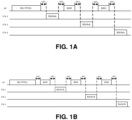
- FIG. 1A depicts an MU transmission that solicits an immediate acknowledgement from a station while Figure 1B depicts an MU transmission that does not solicit an immediate response from any of the participating/target stations.
- OFDMA Orthogonal Frequency Division Multiple Access
- MU-MIMO Multi-User Multiple Input Multiple Output
- an access point transmits a downlink (DL) MU physical layer convergence procedure (PLCP) protocol data unit (PPDU) to a set of stations (STAs) (i.e., addressed, target, or receiving STAs) on a shared wireless channel.
- the PPDU may identify a particular STA in the set of addressed STAs to send back an immediate acknowledgement on the shared wireless channel or a portion of the shared wireless channel (i.e., an implicit block acknowledgment request (BAR)).
- BAR implicit block acknowledgment request
- an "immediate" response or acknowledgement refers to a transmission that is the next transmission on the shared wireless channel or a portion of the shared wireless channel after the DL PPDU.
- the immediate acknowledgment/response and the preceding transmission may be separated by a period during which no activity/transmission is occurring on the shared channel or a designated portion of the shared channel.
- the period between the DL PPDU/frame and the immediate acknowledgment may be a short interframe space (SIFS) period.
- SIFS short interframe space
- other IFS periods may be used.
- a guard interval is a cyclic prefix (CP), and a guard interval duration is a CP length.
- duration may be referred to as a length.
- no guard interval is used for symbols in the L-STF field and/or HE-STF field.
- Each guard interval may be associated with a symbol and may be present between symbols (or between consecutive symbols).
- each OFDM symbol is preceded (or followed) by a guard interval.
- the OFDM symbol may be referred to as including the guard interval that precedes (or follows) the OFDM symbol.
- a GI inserter 385 illustrated in Figure 4A may prepend a guard interval to an OFDM symbol.
- a GI remover 391 of Figure 4B may remove the prepended guard interval.
- the proposed method 500 facilitates UL MU acknowledgement/response transmissions for more advanced STAs (e.g., HE STAs), which support UL MU capabilities (e.g., UL OFDMA or UL MU-MIMO), while still being backwards compatible with legacy devices (e.g., High Throughput (HT) STAs, Very High Throughput (VHT) STAs, or other devices that do not support UL MU transmissions).
- HT High Throughput
- VHT Very High Throughput
- the method 500 may be performed by one or more devices in the network 200.
- one or more operations or sub-operations of the method 500 may be performed by the device 211, which is operating as an AP in the network 200, and/or the device 212-215.
- the AP 211 may be in communication with two or more of the device 212-215, which operate as separate STAs in the network 200.
- the AP 211 and the STAs 212-215 may jointly performed the method 500 to efficiently acknowledge receipt of a DL MU PPDU/frame.
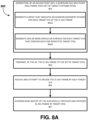
- the method 500 may commence at operation 501 with the generation of a DL MU PPDU/frame by an AP.
- the DL MU frame may be addressed to a set of target STAs operating in a network.
- the DL MU frame may be addressed to STA1, STA2, and STA3.
- STA1 and STA2 are non-legacy devices that support UL MU transmissions
- STA3 is a legacy device that does not support UL MU transmissions.
- STA1 and STA2 may be HE devices (i.e., devices that operate according to the IEEE 802.11ax standard, which is currently in development) and STA3 may be a VHT STA (i.e., a device that operates according to the IEEE 802.11ac standard), a HT STA (i.e., a device that operates according to the IEEE 802.11n standard), or another device that operates according to a wireless standard that does not support UL MU transmissions.
- the generated DL MU frame may be a MU-MIMO frame and/or an OFDMA frame.
- the generation of the frame at operation 501 may include the sub-operations described below.
- the AP may generate one or more MAC Protocol Data Units (MPDUs) or aggregated-MPDUs (A-MPDUs) for each non-legacy STA.
- MPDUs MAC Protocol Data Units
- A-MPDUs aggregated-MPDUs
- Each MPDU may include data and/or control frames intended for each respective STA and may be placed in resource units within the DL MU frame assigned/allocated to each respective STA.
- the resource units may be particular spatial streams or sub-channels of a wireless channel upon which the DL MU frame will be transmitted.
- one or more MPDUs may include acknowledgement information that is used for indicating to respective STAs a scheme/technique used to transmit acknowledgement messages to the AP.
- generation of one or more MPDUs addressed to each STA may include setting an acknowledgement policy subfield (ACK policy subfield) in a header of the one or more MPDUs (i.e., a MAC header) such that STA1 and STA2 can identify which technique/scheme is to be used by each non-legacy STA for acknowledging successful receipt of the MPDUs by each respective STA.
- the ACK policy subfield is two bits and is located in the Quality of Service (QoS) Control Field of the MAC header.
- the ACK policy subfield may be located in different portions of the MAC header and may be of a different length (e.g., 1bit, 3bits, etc.).
- the interpretation of these two bits may be given by Table 1 below.
- the ACK Policy subfield when the ACK Policy subfield is set to indicate an immediate acknowledgement, which in Table 1 above corresponds to "Normal Ack or Implicit Block Ack Request" and a bit sequence "00", another subfield (a second subfield or a MU ACK Policy subfield) indicates if the follow-up acknowledgement shall be a single user (SU) acknowledgement or an MU acknowledgement. Therefore, the MU acknowledgement that follows immediately after the DL MU PPDU transmission happens from those STAs for which the ACK Policy subfield is set to an immediate acknowledgement and the MU ACK Policy subfield is set to an MU acknowledgement.
- both STA1 and STA2 in Figure 5B received MPDUs in which the ACK Policy subfield is set to an immediate acknowledgment (e.g., "00") and the MU ACK Policy subfield is set to "MU acknowledgement". Accordingly, both STA1 and STA2 may participate in an UL MU acknowledgement immediately following the DL MU transmission.
- Both the DL and UL MU transmissions may be an OFDMA transmission and/or may incorporate MU-MIMO techniques.
- a STA may transmit an acknowledgment or a block acknowledgement in an SU manner immediately after the DL MU transmission or may wait for a BAR frame from the AP before transmitting an acknowledgment or a block acknowledgement in an SU manner.
- the QoS AP PS Buffer State subfield in the QoS Control field is used as the MU ACK Policy subfield.
- the 8th bit (B8) of the QoS AP PS Buffer State subfield is used as the MU ACK Policy subfield.
- the MU ACK Policy subfield is set to a MU acknowledgement state, there is a second part in the DL MU PPDU that indicates (1) UL MU transmission method/scheme (e.g., MU-MIMO and/or OFDMA) and/or (2) resource allocation information for the MU acknowledgement frame transmission.
- resource allocation information regarding the UL MU transmission follows a pre-determined rule set and no explicit indication of the resource allocation information regarding UL MU transmission is included in the DL MU PPDU.
- the AP may generate MPDUs for legacy STAs (e.g., VHT STAs, HT STAs, or any STA implementing a protocol that does not support UL MU transmissions). Similar to operation 501A for non-legacy STAs, operation 501B may include setting an ACK Policy subfield in a QoS Control Field of a MAC header. In one example, the ACK Policy subfield for legacy STAs may be set to a state that indicates non-immediate acknowledgement, which in Table 1 above corresponds to "Block Ack".
- the AP may subsequently transmit a BAR frame to trigger STA3 to transmit an acknowledgment or a block acknowledgement in an SU manner.
- the ACK Policy subfield for a legacy STA may be set to an immediate acknowledgement.
- the ACK Policy subfield for all other scheduled STAs, including STAs that support UL MU transmissions, is to be a non-immediate acknowledgement. For example, STAs that are set to transmit a non-immediate MU acknowledgement will wait for a MU-BAR (i.e., a trigger frame) before transmitting.
- MU-BAR i.e., a trigger frame
- the method 500 may move to operation 503.
- the AP transmits the DL MU frame/PPDU to the addressed/targeted STAs.
- the DL MU PPDU may be transmitted to the non-legacy STA1 and STA2 and the legacy STA3.
- the DL MU PPDU may utilize OFDMA and/or MIMO MU transmission techniques.
- each STA addressed by the DL MU PPDU may receive and attempt to decode the DL MU PPDU.
- each targeted STA receives the DL MU PPDU and determines resource units or particular portions of the frame assigned to the STA by examining the preamble portion of the DL MU PPDU/frame.
- the target STAs may examine decoded MPDUs to determine acknowledgement scheme information/properties/characteristics including (1) whether acknowledgement of the DL MU frame is immediate or non-immediate, (2) whether the acknowledgement is multi-user or single user, and/or (3) scheduling information (e.g., a resource unit within a UL transmission) when a multi-user acknowledgement is selected.
- the STAs that successfully received and decoded the appropriate portions of the DL MU PPDU may acknowledge receipt through the generation and the transmission of acknowledgement frames by each respective STA according to the acknowledgement information extracted from the DL frame. Acknowledgment may be performed after a predetermined period has elapsed since receipt of the DL frame (e.g., a short interframe space (SIFS) period or another interframe space (IFS) period).
- a predetermined period elapsed since receipt of the DL frame
- IFS interframe space
- non-legacy STAs may examine the ACK policy subfield and the MU ACK policy subfield in the corresponding MPDU to determine the acknowledgement scheme the STA should use.
- ACK policy and the MU ACK policy subfields for STA1 and STA2 indicate that these devices are to participate in an immediate MU acknowledgement while STA3 is to perform a non-immediate (i.e., triggered by a BAR frame) SU acknowledgement.
- STA1 and STA2 may participate in the transmission of a MU acknowledgement while STA3 may await a BAR frame before transmitting a SU acknowledgement.
- the UL MU transmission may be an OFDMA transmission and/or may incorporate MU-MIMO techniques.
- the method 500 allows non-legacy devices to acknowledge receipt of a DL PPDU in an efficient manner through the use of UL MU techniques while remaining backwards compatible with legacy devices.
- a method 600 will be described for coordinating UL MU acknowledgement/response transmissions to a DL MU transmission according to another example.
- the proposed method 600 facilitates UL MU acknowledgement/response transmissions for more advanced STAs (e.g., HE STAs), which support UL MU capabilities (e.g., UL OFDMA or UL MU-MIMO).
- HE STAs e.g., HE STAs
- UL MU capabilities e.g., UL OFDMA or UL MU-MIMO
- the method 600 may be performed by one or more devices in the network 200.
- one or more operations or sub-operations of the method 600 may be performed by the device 211, which is operating as an AP in the network 200, and/or the devices 212-215, which are operating as STAs in the network 200.
- the method 600 may commence at operation 601 with the generation of a DL MU frame by an AP.
- the DL MU frame may be addressed to a set of STAs operating in a network.
- the DL MU frame may be addressed to STA1 and STA2.
- the AP schedules STA1 and STA2 for a DL OFDMA transmission, wherein STA1 is allocated a lower half of the transmission bandwidth and STA2 is allocated an upper half of the transmission bandwidth.
- STA1 and STA2 are HE STAs or other devices that support UL MU transmissions.
- the generated DL MU frame may be a MU-MIMO frame/PPDU.
- the generation of the frame at operation 601 may include the sub-operations described below.
- the AP may generate a data MPDU for each STA participating in the DL MU transmission.
- the DL MU PPDU/frame may include a data MPDU for STA1 and a data MPDU for STA2.
- the data MPDU may include any type of data (e.g., voice, video, best effort, background, or control data) that is specifically intended for the particular STA and may be placed in resource units within the DL MU frame assigned/allocated to each respective STA.
- the resource units may be particular spatial streams or sub-channels of a wireless channel upon which the DL MU frame will be transmitted.
- the generation of the data MPDU at sub-operation 601A may include setting acknowledgment information in a header of the MPDU (e.g., the MAC header of the data MPDU).
- the acknowledgment information may describe/indicate properties of an acknowledgement technique/scheme used by the corresponding STA to acknowledge receipt of the MPDU.
- the acknowledgment information may include an ACK Policy subfield and/or a MU ACK Policy subfield.
- the ACK Policy subfield may indicate whether the acknowledgement is immediate or non-immediate (e.g., corresponding to values represented in Table 1) and the MU ACK Policy subfield may indicate whether the acknowledgment is MU or SU.
- the MU ACK Policy subfield is optional in the data MPDU.
- the AP may generate an ACK Info MPDU for each STA participating in the DL MU transmission that includes additional acknowledgement information.
- the DL MU PPDU/frame may include an ACK Info MPDU for STA1 and an ACK Info MPDU for STA2 as both of these stations are participating in the UL MU acknowledgment transmission.
- the ACK Info MPDU further describes/indicates acknowledgement technique/scheme and other information/properties/characteristics (in addition to the acknowledgment information in the data MPDU) needed for each respective STA to acknowledge successful receipt of the DL MU transmission.
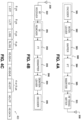
- each ACK Info MPDU may indicate whether the acknowledgement is (1) immediate or non-immediate, (2) multi-user or single user, and/or (3) scheduling information (e.g., a resource unit within a UL transmission) when a multi-user acknowledgement is selected as shown in Figure 6B .
- scheduling information e.g., a resource unit within a UL transmission
- the ACK Info MPDU may only be present when the MU ACK Info subfield of the corresponding data MPDU is set to indicate a MU UL acknowledgment.
- the data MPDU does not include acknowledgment information and all acknowledgment information is included in the ACK Info MPDU.
- the data MPDU includes an ACK Policy subfield and this subfield is interpreted by STAs to indicate immediate/non-immediate and MU/SU acknowledgment.
- the ACK Info MPDU includes scheduling/trigger information when an MU acknowledgment is scheduled. As legacy STAs cannot participate in UL MU transmissions, legacy STAs will be assigned SU acknowledgements, while non-legacy STAs (i.e., STAs that support UL MU transmissions) can be assigned MU acknowledgements.
- the scheduling information for the UL MU acknowledgement frame transmission includes common information and a per-STA information.
- the common information is information that is the same for every STA in the UL MU acknowledgement frame transmission and the per-STA information is specific resource allocation for each STA.
- different STAs scheduled in the same DL MU PPDU have different per-STA information while each STA has the same common information.
- the data MPDU and ACK Info MPDU for each STA may be aggregated into an A-MPDU at operation 601C.
- the DL MU transmission includes a single A-MPDU for each STA that includes both data and acknowledgement scheduling information.
- the ACK Info MPDU is the first MPDU in each A-MPDU while in other embodiments ACK Info MPDU is in another position in each A-MPDU, such as the last MPDU in each A-MPDU.
- each A-MPDU may include one or more data MPDUs.
- each STA may receive multiple A-MPDUs in a single DL MU frame/PPDU.
- the method 600 may move to operation 603.
- the AP transmits the DL MU frame/PPDU to the addressed/target STAs.
- the DL MU PPDU may be sent to the non-legacy STA1 and STA2.
- the DL MU PPDU may utilize OFDMA and/or MIMO MU transmission techniques.
- each STA addressed by the DL MU PPDU may receive and attempt to decode the DL MU PPDU.
- each targeted STA receives the DL MU PPDU and checks the preamble portion of the frame.
- the preamble portion of the frame indicates the allocated resource for each target receiver in the MU transmission.
- Each STA1 and STA2 including (1) whether acknowledgement of the DL MU frame is immediate or non-immediate, (2) whether the acknowledgement is multi-user or single user, and/or (3) scheduling information (e.g., a resource unit within a UL transmission) when a multi-user acknowledgement is selected.
- the unicast transmission directed to STA1 is data specifically intended for this device.
- the broadcast/multicast frame may include scheduling/trigger information for coordinating the UL MU acknowledgment transmission while one or more data MPDUs addressed to each STA may include indications of whether the acknowledgment transmission is immediate/non-immediate and/or MU/SU.
- the STAs that successfully received and decoded the appropriate portions of the DL MU PPDU may acknowledge receipt through the generation and the transmission of acknowledgement frames by each respective STA according to the acknowledgement information extracted from the DL frame. Acknowledgment may be performed after a predetermined period has elapsed since receipt of the DL frame (e.g., a short interframe space (SIFS) period or another interframe space (IFS) period).
- SIFS short interframe space
- IFS interframe space
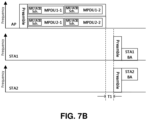
- STA1 and STA2 may participate in an UL MU acknowledgement based on scheduling information included in a multicast/broadcast MPDU. As shown, STA1 is allocated the lower half of an UL OFDMA frame while STA2 is allocated the upper half of the UL OFDMA frame to carry an acknowledgement (e.g., a BA/ACK).
- each target STA of a DL MU transmission may transmit an acknowledgement according to one or more schemes/techniques.
- the acknowledgement schemes/techniques may involve a delayed acknowledgement.
- the AP may transmit a trigger frame to trigger the STAs participating in the delayed acknowledgement to transmit a respective portion of the acknowledgement frame.
- Figure 9 show one example of this procedure.
- an access point transmits a DL MU frame to a set of target STAs (e.g., STA1, STA2, STA3, and STA4).
- the DL MU frame may indicate that a non-immediate acknowledgement is to be transmitted by one or more of the target STAs.
- the ACK policy subfield for each target STA is set to "11", which indicates that each STA is to participate in a non-immediate (i.e., block) acknowledgement.
- an AP sends an A-MPDU to each scheduled STA in the DL MU transmission and the A-MPDU comprises BAR information and UL BA transmission scheduling information.
- an AP sends the following frames in a DL MU transmission: 1) one BAR frame to each STA and 2) one broadcast/multicast frame for UL MU BA transmission. Based on the scheduling information, each STA participates in the MU acknowledgement a predetermined period following receipt of the MU BAR (e.g., a SIFS period).
- either a SU or MU immediate acknowledgement may be scheduled by the DL MU frame and may be transmitted prior to the MU BAR and consequential MU delayed acknowledgement.
- multiple delayed SU or MU acknowledgements may be triggered for one DL MU frame and different sets of STAs.
- a DL MU frame may be addressed to a first set of STAs and a second set of STAs.
- the AP may transmit a first BAR to trigger an acknowledgment transmission from the first set of STAs and a second BAR to trigger an acknowledgement transmission from the second set of STAs.
- acknowledgment information for a first STA may be located in the header of a data MPDU while acknowledgment information for a second STA may be located in a separate MPDU.
- the acknowledgment information may facilitate/trigger both the first and second STA to participate in the same UL MU transmission or in separate UL SU/MU transmissions.
- the UL MU acknowledgment transmission may allow data transmission from some STAs.
- a first set of STAs may transmit a set of acknowledgements while a second set of STAs may transmit data (e.g.,
- the number of spatial streams (or space-time streams) per STA shall be limited to one. Therefore, every STA participating a UL MU transmission in response to a DL MU transmission will send an ACK/BA frame having the same number of HE-LTF symbols regardless of other participating STAs' channel conditions. Since each STA transmits the same number of HE-LTF symbols (e.g., one), the HE-LTF section of the ACK/BA frame can start and end at the same time for all transmission without knowing the transmission conditions for other STAs.
- a UL MU transmission may include both acknowledgment frames from a first set of STAs and data frames from a second set of STAs. In this case, the first set of STAs would transmit using a single spatial stream.
- a control response frame is to be transmitted in a UL MU manner
- all participating STAs transmit the control response frame at a predetermined time after receiving an eliciting frame (e.g., a SIFS period or another IFS period).
- the transmission sets the number of HE-LTF symbols to a value corresponding to a single space-time stream.
- the HE-LTF symbols provide a means for the receiver to estimate the MIMO channel between the set of constellation mapper outputs and the receive chain.
- Figure 12 shows an example of this embodiment.
- an AP transmits data frames to STA1 and STA2 in a DL OFDMA manner, wherein STA1's data is assigned to the upper half of the channel bandwidth and STA2's data is assigned to the lower half of the channel bandwidth. Due to different channel conditions, the AP uses a single stream transmission to STA1 and two stream transmissions (spatial multiplexing) to STA2. To align the transmission time, the AP uses HE-LTF symbols corresponding to a two stream transmission (i.e., the number of HE-LTF symbols is two) for both STA1 and STA2.
- STA1 and STA2 After successfully decoding the DL OFDMA frame, STA1 and STA2 send back acknowledgement (ACK or BA) frames in an OFDMA manner a predetermined time (e.g., SIFS) after receiving the DL OFDMA frame.
- ACK or BA acknowledgement
- the number of HE-LTF symbols is set to a value corresponding to a single space-time stream (i.e., the number of HE-LTF symbols is equal to one).
- a single space-time stream is used herein, in other examples, other numbers of space-time streams may be used (e.g., two space-time streams may be used, which would correspond to two HE-LTF symbols in the UL MU frame)
- Space-Time-Block-Coding shall be disabled for the acknowledgement frame transmission.
- STBC may be disabled when the number of space-time streams is equal to one.
- a first value is indicated by the transmitter of the eliciting frame as the length of the control response frame and the MCS of the control response frame is set such that the length of the control response frame is not greater than the first value.
- the first value may be included in the eliciting frame.
- the first value is indicated before sending the eliciting frame (e.g., the first value is included in a first management frame (e.g., a beacon frame, a Probe Response frame, or an Association response frame) sent by the transmitter of the eliciting frame).
- a first management frame e.g., a beacon frame, a Probe Response frame, or an Association response frame
- an MCS shall be selected from a first set, wherein the MCS defines modulation/coding schemes and the number of space-time streams, wherein the number of space-time streams of the first set is limited to one.
- all ⁇ VHT-MCS, NSS> tuples defined in the IEEE 802.11ac standard are further eliminated from the first set.
- all MCSs that have a data rate greater than the data rate of the eliciting PPDU are further eliminated from the first set.
- a transmitter of an eliciting frame for the control response frame further informs information related to the length of the control response frame.
- All MCSs that result in the encoded control response frame having a length that exceeds the informed length are further eliminated from the first set.
- all MCSs that do not meet certain criteria are further eliminated from the first set and if the first set is empty, the MCS shall be selected from a second set.
- a control response frame is to be transmitted in a UL MU manner
- all participating STAs transmit the control response frame in a predetermined time (e.g., SIFS) after receiving an eliciting frame.
- the eliciting frame may indicate that the number of HE-LTF symbols for the control response frame is a second value.
- the second value is indicated by the transmitter of the eliciting frame and the HE-LTF symbols provide a means for the receiver to estimate the MIMO channel between the set of constellation mapper outputs and the receive chain.
- a first value is indicated by the transmitter of the eliciting frame as the length of the control response frame.
- the MCS of the control response frame is set such that the length of the control response frame is not greater than the first value.
- the first value and/or the second value are included in the eliciting frame.
- the first value and/or the second value are indicated before sending the eliciting frame.
- the first value is included in a first management frame (e.g., a Beacon Frame, a Probe Response frame, or Association Response frame) sent by the transmitter of the eliciting frame.
- an MCS shall be selected from a first set, wherein the MCS defines modulation/coding schemes and the number of space-time streams.
- the number of space-time streams of the first set is limited to a second value.
- information on the second value is included in the eliciting frame.
- the second value is indicated before sending the eliciting frame.
- the second value is included in a first management frame (e.g., a Beacon Frame, a Probe Response frame, or an Association Response frame) sent by the transmitter of the eliciting frame.
- all ⁇ VHT-MCS, NSS> tuples defined in the IEEE 802.11ac standard are further eliminated from the first set.
- all MCSs that have a data rate greater than the data rate of the eliciting PPDU are further eliminated from the first set.
- a transmitter of an eliciting frame for the control response frame further informs information related to the length of the control response frame, and all MCSs that the length of the encoded control response frame exceeds the informed length of the control response frame are further eliminated from the first set.
- the MCS in the first set upon determining that the highest number of spatial streams (or space-time streams) value of the MCS in the first set is less than or equal to a third number of spatial streams (or space-time streams) value of the received frame, eliminating all MCSs from the first set that have the number of spatial streams (or space-time streams) value that is not equal to the third number of streams. In one embodiment, all MCSs that do not meet certain criteria are further eliminated from the first set and if the first set is empty, the MCS shall be selected from a second set.
Landscapes
- Engineering & Computer Science (AREA)
- Signal Processing (AREA)
- Computer Networks & Wireless Communication (AREA)
- Mobile Radio Communication Systems (AREA)
Claims (16)
- Verfahren zum Übertragen eines Antwortrahmens in einem drahtlosen Netzwerk (200), wobei das Verfahren umfasst:Empfangen eines Downlink-, DL-, Mehrbenutzer-, MU-, -Rahmens von einem Zugangspunkt durch eine drahtlose Vorrichtung, wobei der DL MU-Rahmen an eine Vielzahl von Stationen (212-215) in dem drahtlosen Netzwerk (200) adressiert ist, einschließlich der drahtlosen Vorrichtung, wobei jeder Station (212-215) der Vielzahl von Stationen (212-215) eine jeweilige Anzahl von räumlichen Strömen zugewiesen wird und wobei die drahtlose Vorrichtung keinen Trigger-Rahmen von dem Zugangspunkt empfängt, so dass die drahtlose Vorrichtung keine Informationen bezüglich der Anzahl von räumlichen Strömen hat, die anderen Stationen der Vielzahl von Stationen (212-215) zugewiesen sind, wobei ein Trigger-Rahmen ein separater Rahmen ist, der an die Vielzahl von Stationen (212-215) in einer Broadcast- oder Multicast-Weise gesendet wird, um die Vielzahl von Stationen (212-215) zu veranlassen, an einer UL MU-Bestätigung teilzunehmen;Erzeugen eines Uplink-, UL-, MU-Antwortrahmens in Antwort auf den DL MU-Rahmen durch die drahtlose Vorrichtung, wobei der UL MU-Antwortrahmen ein Bestätigungsrahmen ist und nur ein einziges Hochleistungs-Langtrainingsfeld, HE-LTF, enthält, das aus einem einzigen Orthogonal-Frequency-Division-Multiplexing-, OFDM-, Symbol besteht, ungeachtet der jeweiligen Anzahl räumlicher Ströme, die jeder Station (212-215) der Vielzahl von Stationen (212-215) zugewiesen sind, um die HE-LTF-Übertragung mit den anderen Stationen der Vielzahl von Stationen (212-215) abzugleichen; undÜbertragen des UL MU-Antwortrahmens durch die drahtlose Vorrichtung an den Zugangspunkt unter Verwendung eines einzelnen räumlichen Stroms.
- Verfahren nach Anspruch 1, ferner umfassend den Schritt, dass durch die drahtlose Vorrichtung Planungsinformationen in dem DL MU-Rahmen identifiziert werden, wobei die Planungsinformationen den UL MU-Antwortrahmen von der drahtlosen Vorrichtung anfordern, wobei die drahtlose Vorrichtung den UL MU-Antwortrahmen auf der Grundlage der Planungsinformationen als Anrwort darauf erzeugt, dass die Planungsinformationen in einem Media Access Control, MAC, Header in dem DL MU-Rahmen angeordnet sind.
- Verfahren nach Anspruch 2, wobei der UL MU-Antwortrahmen unter Verwendung eines einzelnen räumlichen Stroms als Antwort auf die Planungsinformationen, die in dem MAC-Header in dem DL MU-Rahmen angeordnet sind, übertragen wird.
- Verfahren nach Anspruch 3, wobei der UL MU-Antwortrahmen Teil eines MU-Rahmens ist und wobei die Planungsinformationen eine Zuweisung von Ressourceneinheiten in dem DL MU-Rahmen zu der Vielzahl von Stationen (212-215) beinhalten.
- Verfahren nach Anspruch 3, wobei die Planungsinformationen eine implizite Angabe für die drahtlose Vorrichtung bereitstellen, um den UL MU-Antwortrahmen mit dem einzelnen HE-LTF zu erzeugen, der aus dem einzelnen OFDM-Symbol besteht, und um den UL MU-Antwortrahmen unter Verwendung eines einzelnen räumlichen Stroms zu übertragen.
- Verfahren nach Anspruch 1, wobei das Erzeugen des UL MU-Antwortrahmens das Bereitstellen einer Bestätigung, ACK, oder einer Blockbestätigung, BA, in dem UL MU-Antwortrahmen beinhaltet.
- Verfahren nach Anspruch 6, wobei die ACK oder BA in dem UL MU-Antwortrahmen den erfolgreichen Empfang einer Media Access Control, MAC, Protocol Data Unit, MPDU, innerhalb des DL MU-Rahmens anzeigt und der MAC-Header innerhalb der MPDU ist.
- Verfahren nach Anspruch 1, wobei der UL MU-Antwortrahmen mit deaktivierter Raum-Zeit-Blockcodierung als Antwort auf die Planungsinformationen, die sich im MAC-Header im DL MU-Rahmen befinden, übertragen wird.
- Drahtlose Vorrichtung (300) zum Übertragen eines Antwortrahmens in einem drahtlosen Netzwerk (200), wobei die drahtlose Vorrichtung umfasst:einen oder mehrere Speicher (340) undeinen oder mehrere Prozessoren (310), die mit dem einen oder den mehreren Speichern (340) gekoppelt sind, wobei der eine oder die mehreren Prozessoren (310) konfiguriert sind umeinen von einem Zugangspunkt empfangenen Downlink-, DL-, Mehrbenutzer-, MU-, -Rahmen zu verarbeiten, wobei der DL MU-Rahmen an eine Vielzahl von Stationen (212-215) in dem drahtlosen Netzwerk (200) adressiert ist, einschließlich der drahtlosen Vorrichtung, wobei jeder Station (212-215) der Vielzahl von Stationen (212-215) eine jeweilige Anzahl von räumlichen Strömen zugewiesen ist und wobei die drahtlose Vorrichtung keinen Trigger-Rahmen von dem Zugangspunkt empfängt, so dass die drahtlose Vorrichtung keine Informationen über die Anzahl von räumlichen Strömen hat, die anderen Stationen der Vielzahl von Stationen (212-215) zugewiesen sind, wobei ein Trigger-Rahmen ein separater Rahmen ist, der an die Vielzahl von Stationen (212-215) in einer Broadcast- oder Multicast-Weise gesendet wird, um die Vielzahl von Stationen (212-215) dazu zu veranlassen, an einer UL MU-Bestätigung teilzunehmen;einen Uplink-, UL-, MU-Antwortrahmen auf den DL MU-Rahmen zu erzeugen, wobei der UL MU-Antwortrahmen ein Bestätigungsrahmen ist und nur ein einzelnes High Efficiency Long Training Field, HE-LTF, enthält, das aus einem einzigen Orthogonal Frequency Division Multiplexing-, OFDM-, -Symbol besteht, ungeachtet der jeweiligen Anzahl der jeder Station (212-215) der Vielzahl von Stationen (212-215) zugewiesenen räumlichen Ströme, um die HE-LTF-Übertragung mit den anderen Stationen der Vielzahl von Stationen (212-215) abzugleichen: undden UL MU-Antwortrahmen unter Verwendung eines einzelnen räumlichen Stroms an den Zugangspunkt zu übertragen.
- Drahtlose Vorrichtung nach Anspruch 9, wobei der eine oder die mehreren Prozessoren ferner so konfiguriert sind, dass sie Planungsinformationen in dem DL MU-Rahmen identifizieren, wobei die Planungsinformationen den UL MU-Antwortrahmen von der drahtlosen Vorrichtung anfordern, und den UL MU-Antwortrahmen basierend auf den Planungsinformationen als Antwort darauf erzeugen, dass die Planungsinformationen in einem Media Access Control, MAC, -Header in dem DL MU-Rahmen angeordnet sind.
- Drahtlose Vorrichtung nach Anspruch 10, wobei der eine oder die mehreren Prozessoren ferner so konfiguriert sind, dass sie den UL MU-Antwortrahmen unter Verwendung eines einzelnen räumlichen Stroms als Antwort auf die Planungsinformationen, die im MAC-Header im DL MU-Rahmen angeordnet sind, übertragen.
- Drahtlose Vorrichtung nach Anspruch 10, wobei die Planungsinformationen die Zuweisung von Ressourceneinheiten im DL MU-Rahmen zu der Vielzahl von Stationen (212-215) beinhalten.
- Drahtlose Vorrichtung nach Anspruch 10, wobei die Planungsinformationen eine implizite Angabe für die drahtlose Vorrichtung bereitstellen, um den UL MU-Antwortrahmen mit dem einzelnen HE-LTF, der aus dem einzelnen OFDM-Symbol besteht, zu erzeugen und den UL MU-Antwortrahmen unter Verwendung eines einzelnen räumlichen Stroms zu übertragen.
- Drahtlose Vorrichtung nach Anspruch 9, wobei das Erzeugen des UL MU-Antwortrahmens das Bereitstellen einer Bestätigung, ACK, oder einer Blockbestätigung, BA, in dem UL MU-Antwortrahmen beinhaltet.
- Drahtlose Vorrichtung nach Anspruch 14, wobei die ACK oder BA in dem UL MU-Antwortrahmen einen erfolgreichen Empfang einer Media Access Control, MAC, Protocol Data Unit, MPDU innerhalb des DL MU-Rahmens anzeigt und der MAC-Header innerhalb der MPDU liegt.
- Drahtlose Vorrichtung nach Anspruch 10, wobei der UL MU-Antwortrahmen mit deaktivierter Raum-Zeit-Blockcodierung als Antwort auf die Planungsinformationen, die im MAC-Header im DL MU-Rahmen angeordnet sind, übertragen wird.
Applications Claiming Priority (4)
| Application Number | Priority Date | Filing Date | Title |
|---|---|---|---|
| US201562137138P | 2015-03-23 | 2015-03-23 | |
| US201562140349P | 2015-03-30 | 2015-03-30 | |
| PCT/US2016/023829 WO2016154350A1 (en) | 2015-03-23 | 2016-03-23 | Apparatus and method for downlink and uplink multi-user transmissions |
| EP16769635.0A EP3275113B1 (de) | 2015-03-23 | 2016-03-23 | Vorrichtung und verfahren für downlink- und uplink-mehrbenutzerübertragungen |
Related Parent Applications (1)
| Application Number | Title | Priority Date | Filing Date |
|---|---|---|---|
| EP16769635.0A Division EP3275113B1 (de) | 2015-03-23 | 2016-03-23 | Vorrichtung und verfahren für downlink- und uplink-mehrbenutzerübertragungen |
Publications (3)
| Publication Number | Publication Date |
|---|---|
| EP4170943A1 EP4170943A1 (de) | 2023-04-26 |
| EP4170943B1 true EP4170943B1 (de) | 2025-05-07 |
| EP4170943C0 EP4170943C0 (de) | 2025-05-07 |
Family
ID=56976525
Family Applications (2)
| Application Number | Title | Priority Date | Filing Date |
|---|---|---|---|
| EP16769635.0A Active EP3275113B1 (de) | 2015-03-23 | 2016-03-23 | Vorrichtung und verfahren für downlink- und uplink-mehrbenutzerübertragungen |
| EP22167186.0A Active EP4170943B1 (de) | 2015-03-23 | 2016-03-23 | Vorrichtung und verfahren für downlink- und uplink-mehrbenutzerübertragungen |
Family Applications Before (1)
| Application Number | Title | Priority Date | Filing Date |
|---|---|---|---|
| EP16769635.0A Active EP3275113B1 (de) | 2015-03-23 | 2016-03-23 | Vorrichtung und verfahren für downlink- und uplink-mehrbenutzerübertragungen |
Country Status (3)
| Country | Link |
|---|---|
| US (2) | US9531520B2 (de) |
| EP (2) | EP3275113B1 (de) |
| WO (1) | WO2016154350A1 (de) |
Families Citing this family (43)
| Publication number | Priority date | Publication date | Assignee | Title |
|---|---|---|---|---|
| US9532239B2 (en) * | 2013-02-19 | 2016-12-27 | Intel IP Corporation | Wireless network location techniques |
| FR3007919A1 (fr) * | 2013-06-28 | 2015-01-02 | France Telecom | Procede d'adaptation de lien pour selectionner un mode de transmission de trames et point d'acces wifi correspondant |
| US9992774B2 (en) * | 2014-11-11 | 2018-06-05 | Marvell World Trade Ltd. | Acknowledgment for multiple user communication in a WLAN |
| US9949236B2 (en) * | 2014-12-12 | 2018-04-17 | Qualcomm Incorporated | Traffic advertisement in neighbor aware network (NAN) data path |
| US10827484B2 (en) | 2014-12-12 | 2020-11-03 | Qualcomm Incorporated | Traffic advertisement in neighbor aware network (NAN) data path |
| US10820314B2 (en) | 2014-12-12 | 2020-10-27 | Qualcomm Incorporated | Traffic advertisement in neighbor aware network (NAN) data path |
| US9912462B2 (en) * | 2015-04-28 | 2018-03-06 | Intel IP Corporation | Apparatus, computer readable medium, and method for alignment of long training fields in a high efficiency wireless local-area network |
| US9876544B2 (en) | 2015-04-30 | 2018-01-23 | Intel IP Corporation | Apparatus, system and method of multi-user wireless communication |
| CN106131962B (zh) * | 2015-05-05 | 2019-11-15 | 苹果公司 | Wlan ofdma中的控制信道 |
| US10158474B2 (en) * | 2015-05-06 | 2018-12-18 | Qualcomm Incorporated | Block acknowledgement mechanism for acknowledging DL-MU data on UL-MU wireless communication system |
| WO2016196582A1 (en) * | 2015-06-02 | 2016-12-08 | Newracom, Inc. | Ack policy for uplink and downlink mu ppdu |
| KR102178131B1 (ko) | 2015-06-29 | 2020-11-12 | 주식회사 윌러스표준기술연구소 | 레거시 무선 통신 단말과 공존을 위한 무선 통신 방법 및 무선 통신 단말 |
| WO2017003193A1 (ko) | 2015-06-29 | 2017-01-05 | 주식회사 윌러스표준기술연구소 | 데이터 전송을 위한 채널 접근 방법, 이를 이용한 무선 통신 방법 및 무선 통신 단말 |
| US10615918B2 (en) * | 2015-07-06 | 2020-04-07 | Apple Inc. | Multiuser block acknowledgment request |
| US20170026431A1 (en) * | 2015-07-20 | 2017-01-26 | Intel IP Corporation | Multicast mechanism for wireless devices |
| US9998263B2 (en) * | 2015-08-10 | 2018-06-12 | Intel IP Corporation | Scheduling resources for orthogonal frequency division multiple access uplink transmissions |
| US10129001B2 (en) * | 2015-08-14 | 2018-11-13 | Newracom, Inc. | Block acknowledgment for multi-user transmissions in WLAN systems |
| US10063359B2 (en) * | 2015-08-24 | 2018-08-28 | Lg Electronics Inc. | Method and apparatus for processing ACK signal in a wireless local area network system |
| EP3139532B1 (de) | 2015-09-07 | 2018-12-12 | MediaTek Inc. | Formate und zuordnung des gemeinsamen feldes von he-sig-b |
| US9967773B2 (en) * | 2015-10-08 | 2018-05-08 | Intel IP Corporation | Padding in high-efficiency signal B in a high efficiency wireless local area networks |
| US10256961B2 (en) * | 2015-10-23 | 2019-04-09 | Marvell World Trade Ltd. | Acknowledgment of uplink orthogonal frequency division multiple access transmission |
| US10686641B2 (en) | 2015-11-05 | 2020-06-16 | Mediatek Inc. | Signaling and feedback schemes of time-vary channels in high-efficiency WLAN |
| US20170170884A1 (en) * | 2015-12-14 | 2017-06-15 | Qualcomm Incorporated | Mu-mimo scheduler transmit mode probing with transmit mode scoring |
| US9794879B1 (en) * | 2016-12-23 | 2017-10-17 | Intel IP Corporation | Power saving mechanism for MU-MIMO transmissions |
| KR102101546B1 (ko) * | 2017-01-13 | 2020-04-17 | 아서스테크 컴퓨터 인코포레이션 | 무선 통신 시스템에서의 제어 채널 및 데이터 채널 간 타이밍 관계를 위한 방법 및 장치 |
| US10594525B2 (en) | 2017-04-21 | 2020-03-17 | Mediatek Inc. | Dual-use of doppler mode indication in high efficiency wireless LAN |
| JP2020522192A (ja) | 2017-06-02 | 2020-07-27 | テレフオンアクチーボラゲット エルエム エリクソン(パブル) | フィードバックシグナリングのためのサイズ指示 |
| US11153821B2 (en) | 2017-06-22 | 2021-10-19 | Intel Corporation | Apparatus, system and method of acknowledging a multi user (MU) multiple-input-multiple-output (MIMO) (MU-MIMO) transmission |
| WO2019005574A1 (en) * | 2017-06-25 | 2019-01-03 | Intel IP Corporation | APPARATUS, SYSTEM, AND METHOD FOR TRANSMITTING PPDU |
| CN114245463A (zh) * | 2017-08-17 | 2022-03-25 | 华为技术有限公司 | 一种数据传输的方法和装置 |
| US10764022B2 (en) | 2017-09-29 | 2020-09-01 | Lg Electronics Inc. | Method for transmitting and receiving acknowledgement information in wireless LAN system and device for same |
| DE102018216944A1 (de) * | 2017-10-02 | 2019-04-04 | Marvell World Trade Ltd. | Systeme und Verfahren zum Multi-User-Betrieb mit Duplex-Mediumzugriffssteuerung |
| US20190058511A1 (en) * | 2017-10-24 | 2019-02-21 | Intel Corporation | Signaling for scheduled multi-user multiple-input multiple-output acknowledgement |
| US10601549B2 (en) * | 2017-10-25 | 2020-03-24 | Intel IP Corporation | Apparatus, system and method of communicating a physical layer protocol data unit (PPDU) |
| US11265048B2 (en) * | 2018-02-01 | 2022-03-01 | Mediatek Singapore Pte. Ltd. | Group-based unequal MCS schemes for a single user station in WLAN transmissions |
| US10979169B2 (en) | 2018-04-13 | 2021-04-13 | Intel IP Corporation | High efficiency (HE) beacon and HE formats |
| CN116546629A (zh) * | 2018-07-03 | 2023-08-04 | 上海朗帛通信技术有限公司 | 一种被用于无线通信的用户设备、基站中的方法和装置 |
| US11711183B2 (en) * | 2018-09-04 | 2023-07-25 | Qualcomm Incorporated | Protocols for multi-access point coordinated multi-user transmissions |
| US11184107B2 (en) * | 2019-01-07 | 2021-11-23 | Huawei Technologies Co., Ltd. | Semi-orthogonal multiple access communication of PPDU and acknowledgment |
| US12200751B2 (en) * | 2019-09-05 | 2025-01-14 | Lg Electronics Inc. | Buffer report for low latency |
| US11647456B2 (en) * | 2020-01-10 | 2023-05-09 | Qualcomm Incorporated | Layer 1 activation/deactivation of secondary cell |
| US11290577B2 (en) | 2020-03-11 | 2022-03-29 | Semiconductor Components Industries, Llc | Wireless data transmission |
| GB2595459B (en) * | 2020-05-25 | 2022-09-07 | Canon Kk | Method and apparatus for multi-user direct link transmission |
Family Cites Families (28)
| Publication number | Priority date | Publication date | Assignee | Title |
|---|---|---|---|---|
| US8897209B2 (en) * | 2008-07-15 | 2014-11-25 | Qualcomm Incorporated | Systems and methods for parallel communication with legacy WLAN receivers |
| US10236950B2 (en) * | 2009-02-27 | 2019-03-19 | Qualcomm Incorporated | Video transmission over SDMA |
| US8498359B2 (en) * | 2009-06-05 | 2013-07-30 | Broadcom Corporation | Transmission acknowledgment within multiple user, multiple access, and/or MIMO wireless communications |
| US8582485B2 (en) * | 2009-06-05 | 2013-11-12 | Broadcom Corporation | Scheduled clear to send (CTS) for multiple user, multiple access, and/or MIMO wireless communications |
| US8982758B2 (en) * | 2010-03-29 | 2015-03-17 | Intel Corporation | Techniques for efficient acknowledgement for UL MU MIMO and uplink OFDMA in wireless networks |
| US8594007B2 (en) * | 2010-04-23 | 2013-11-26 | Qualcomm Incorporated | Sequential ACK for multi-user transmissions |
| US10033485B2 (en) * | 2010-08-25 | 2018-07-24 | Qualcomm Incorporated | Managing acknowledgement messages from multiple destinations for multi user MIMO transmissions |
| JP6122039B2 (ja) * | 2012-03-01 | 2017-04-26 | インターデイジタル パテント ホールディングス インコーポレイテッド | Wlanシステムにおけるマルチユーザ並列チャネルアクセス |
| US9608789B2 (en) * | 2012-05-11 | 2017-03-28 | Interdigital Patent Holdings, Inc. | Method and apparatus for transmitting acknowledgements in response to received frames |
| US9853794B2 (en) * | 2013-02-20 | 2017-12-26 | Qualcomm, Incorporated | Acknowledgement (ACK) type indication and deferral time determination |
| US9397805B2 (en) * | 2013-04-15 | 2016-07-19 | Qualcomm Incorporated | Systems and methods for backwards-compatible preamble formats for multiple access wireless communication |
| KR20160004955A (ko) * | 2014-07-04 | 2016-01-13 | 뉴라컴 인코포레이티드 | 고효율 무선랜의 물리계층 프로토콜 데이터 유닛 포맷 |
| US20160021678A1 (en) * | 2014-07-15 | 2016-01-21 | Qualcomm Incorporated | Signaling techniques for ul mu mimo/ofdma transmission |
| KR20160008971A (ko) * | 2014-07-15 | 2016-01-25 | 뉴라컴 인코포레이티드 | 하향링크 다중 사용자 전송에 응답하는 상향링크 확인응답 |
| US9729214B2 (en) * | 2014-07-24 | 2017-08-08 | Marvell World Trade Ltd. | Group acknowledgement for multiple user communication in a wireless local area network |
| US9408184B2 (en) * | 2014-08-01 | 2016-08-02 | Newracom, Inc. | Systems and methods for multi-user simultaneous transmissions |
| US10299261B2 (en) * | 2014-08-12 | 2019-05-21 | Lg Electronics Inc. | Method and device for downlink multi-user transmission in wireless communication system |
| US10153873B2 (en) * | 2014-08-20 | 2018-12-11 | Newracom, Inc. | Physical layer protocol data unit format applied with space time block coding in a high efficiency wireless LAN |
| US20160080115A1 (en) * | 2014-09-12 | 2016-03-17 | Samsung Electronics Co., Ltd. | Methods for efficient acknowledgement in wireless systems |
| KR102438318B1 (ko) * | 2014-10-10 | 2022-08-30 | 뉴라컴 인코포레이티드 | 고효율 무선랜에서 동적 자원 할당 |
| KR20160045023A (ko) * | 2014-10-16 | 2016-04-26 | 뉴라컴 인코포레이티드 | 고효율 무선랜에서 상향링크 채널 액세스 방법 및 장치 |
| US9917679B2 (en) * | 2014-11-03 | 2018-03-13 | Newracom, Inc. | Method and apparatus for transmitting response frame based on type in a high efficiency wireless LAN |
| US9936488B2 (en) * | 2014-11-18 | 2018-04-03 | Newracom, Inc. | Sounding procedure including uplink multiple-user transmission in a high efficiency wireless LAN |
| US10375679B2 (en) * | 2014-12-05 | 2019-08-06 | Marvell World Trade Ltd. | Trigger frame format for orthogonal frequency division multiple access (OFDMA) communication |
| US10327226B2 (en) * | 2014-12-12 | 2019-06-18 | Newracom, Inc. | Method and apparatus for resource allocation for multiple user transmission in a High Efficiency wireless LAN |
| US10575280B2 (en) * | 2014-12-16 | 2020-02-25 | Lg Electronics Inc. | Data transmission method in wireless communication system and device therefor |
| US10021721B2 (en) * | 2015-01-28 | 2018-07-10 | Newracom, Inc. | Transmission control method |
| US9967877B2 (en) * | 2015-02-17 | 2018-05-08 | Newracom, Inc. | Method and apparatus for frame exchange in a high efficiency wireless LAN |
-
2016
- 2016-03-23 US US15/078,920 patent/US9531520B2/en active Active
- 2016-03-23 EP EP16769635.0A patent/EP3275113B1/de active Active
- 2016-03-23 WO PCT/US2016/023829 patent/WO2016154350A1/en not_active Ceased
- 2016-03-23 EP EP22167186.0A patent/EP4170943B1/de active Active
- 2016-11-15 US US15/352,435 patent/US10153886B2/en active Active
Also Published As
| Publication number | Publication date |
|---|---|
| EP4170943A1 (de) | 2023-04-26 |
| EP3275113B1 (de) | 2022-05-04 |
| US20170063511A1 (en) | 2017-03-02 |
| EP3275113A4 (de) | 2018-11-14 |
| US10153886B2 (en) | 2018-12-11 |
| US9531520B2 (en) | 2016-12-27 |
| EP4170943C0 (de) | 2025-05-07 |
| WO2016154350A1 (en) | 2016-09-29 |
| EP3275113A1 (de) | 2018-01-31 |
| US20160285608A1 (en) | 2016-09-29 |
Similar Documents
| Publication | Publication Date | Title |
|---|---|---|
| EP4170943B1 (de) | Vorrichtung und verfahren für downlink- und uplink-mehrbenutzerübertragungen | |
| US11799523B2 (en) | Group acknowledgement for multiple user communication in a wireless local area network | |
| US10517094B2 (en) | Acknowledgement for multiple user communication in a WLAN | |
| US10938454B2 (en) | Method and apparatus for uplink orthogonal frequency division multiple access | |
| US10057806B2 (en) | Multi-user communication in wireless networks | |
| US9991995B2 (en) | Multiuser signaling and access request mechanisms | |
| US8681815B1 (en) | Method and apparatus for multi-user frame aggregation | |
| CN107534472A (zh) | 在无线通信系统中的信道探测方法及其装置 | |
| WO2016104886A1 (ko) | 트리거 프레임을 기반으로 한 데이터 단위의 전송 방법 및 장치 | |
| US10306667B2 (en) | Method for transmitting and receiving uplink acknowledgement signal in wireless LAN system and apparatus therefor | |
| US11411627B1 (en) | Explicit multiuser beamforming training in a wireless local area network | |
| US10812244B2 (en) | Acknowledgment of uplink orthogonal frequency division multiple access transmission | |
| CN102013959B (zh) | 一种实现多用户调度的通信方法及无线通信系统 | |
| CN102013959A (zh) | 一种实现多用户调度的通信方法及无线通信系统 |
Legal Events
| Date | Code | Title | Description |
|---|---|---|---|
| PUAI | Public reference made under article 153(3) epc to a published international application that has entered the european phase |
Free format text: ORIGINAL CODE: 0009012 |
|
| STAA | Information on the status of an ep patent application or granted ep patent |
Free format text: STATUS: THE APPLICATION HAS BEEN PUBLISHED |
|
| AC | Divisional application: reference to earlier application |
Ref document number: 3275113 Country of ref document: EP Kind code of ref document: P |
|
| AK | Designated contracting states |
Kind code of ref document: A1 Designated state(s): AL AT BE BG CH CY CZ DE DK EE ES FI FR GB GR HR HU IE IS IT LI LT LU LV MC MK MT NL NO PL PT RO RS SE SI SK SM TR |
|
| RAP1 | Party data changed (applicant data changed or rights of an application transferred) |
Owner name: ATLAS GLOBAL TECHNOLOGIES GMBH Owner name: ATLAS GLOBAL TECHNOLOGIES LLC |
|
| STAA | Information on the status of an ep patent application or granted ep patent |
Free format text: STATUS: REQUEST FOR EXAMINATION WAS MADE |
|
| 17P | Request for examination filed |
Effective date: 20230929 |
|
| RBV | Designated contracting states (corrected) |
Designated state(s): AL AT BE BG CH CY CZ DE DK EE ES FI FR GB GR HR HU IE IS IT LI LT LU LV MC MK MT NL NO PL PT RO RS SE SI SK SM TR |
|
| STAA | Information on the status of an ep patent application or granted ep patent |
Free format text: STATUS: EXAMINATION IS IN PROGRESS |
|
| 17Q | First examination report despatched |
Effective date: 20240516 |
|
| RAP3 | Party data changed (applicant data changed or rights of an application transferred) |
Owner name: ATLAS GLOBAL TECHNOLOGIES GMBH Owner name: ATLAS GLOBAL TECHNOLOGIES LLC |
|
| GRAP | Despatch of communication of intention to grant a patent |
Free format text: ORIGINAL CODE: EPIDOSNIGR1 |
|
| STAA | Information on the status of an ep patent application or granted ep patent |
Free format text: STATUS: GRANT OF PATENT IS INTENDED |
|
| INTG | Intention to grant announced |
Effective date: 20241202 |
|
| GRAS | Grant fee paid |
Free format text: ORIGINAL CODE: EPIDOSNIGR3 |
|
| GRAA | (expected) grant |
Free format text: ORIGINAL CODE: 0009210 |
|
| STAA | Information on the status of an ep patent application or granted ep patent |
Free format text: STATUS: THE PATENT HAS BEEN GRANTED |
|
| AC | Divisional application: reference to earlier application |
Ref document number: 3275113 Country of ref document: EP Kind code of ref document: P |
|
| AK | Designated contracting states |
Kind code of ref document: B1 Designated state(s): AL AT BE BG CH CY CZ DE DK EE ES FI FR GB GR HR HU IE IS IT LI LT LU LV MC MK MT NL NO PL PT RO RS SE SI SK SM TR |
|
| REG | Reference to a national code |
Ref country code: GB Ref legal event code: FG4D |
|
| REG | Reference to a national code |
Ref country code: CH Ref legal event code: EP |
|
| REG | Reference to a national code |
Ref country code: DE Ref legal event code: R096 Ref document number: 602016092217 Country of ref document: DE |
|
| REG | Reference to a national code |
Ref country code: IE Ref legal event code: FG4D |
|
| U01 | Request for unitary effect filed |
Effective date: 20250605 |
|
| RAP4 | Party data changed (patent owner data changed or rights of a patent transferred) |
Owner name: ATLAS GLOBAL TECHNOLOGIES LLC Owner name: ATLAS GLOBAL TECHNOLOGIES GMBH |
|
| U07 | Unitary effect registered |
Designated state(s): AT BE BG DE DK EE FI FR IT LT LU LV MT NL PT RO SE SI Effective date: 20250715 |
|
| PG25 | Lapsed in a contracting state [announced via postgrant information from national office to epo] |
Ref country code: ES Free format text: LAPSE BECAUSE OF FAILURE TO SUBMIT A TRANSLATION OF THE DESCRIPTION OR TO PAY THE FEE WITHIN THE PRESCRIBED TIME-LIMIT Effective date: 20250507 |
|
| PG25 | Lapsed in a contracting state [announced via postgrant information from national office to epo] |
Ref country code: NO Free format text: LAPSE BECAUSE OF FAILURE TO SUBMIT A TRANSLATION OF THE DESCRIPTION OR TO PAY THE FEE WITHIN THE PRESCRIBED TIME-LIMIT Effective date: 20250807 Ref country code: GR Free format text: LAPSE BECAUSE OF FAILURE TO SUBMIT A TRANSLATION OF THE DESCRIPTION OR TO PAY THE FEE WITHIN THE PRESCRIBED TIME-LIMIT Effective date: 20250808 |
|
| PG25 | Lapsed in a contracting state [announced via postgrant information from national office to epo] |
Ref country code: PL Free format text: LAPSE BECAUSE OF FAILURE TO SUBMIT A TRANSLATION OF THE DESCRIPTION OR TO PAY THE FEE WITHIN THE PRESCRIBED TIME-LIMIT Effective date: 20250507 |
|
| PG25 | Lapsed in a contracting state [announced via postgrant information from national office to epo] |
Ref country code: HR Free format text: LAPSE BECAUSE OF FAILURE TO SUBMIT A TRANSLATION OF THE DESCRIPTION OR TO PAY THE FEE WITHIN THE PRESCRIBED TIME-LIMIT Effective date: 20250507 |
|
| PG25 | Lapsed in a contracting state [announced via postgrant information from national office to epo] |
Ref country code: RS Free format text: LAPSE BECAUSE OF FAILURE TO SUBMIT A TRANSLATION OF THE DESCRIPTION OR TO PAY THE FEE WITHIN THE PRESCRIBED TIME-LIMIT Effective date: 20250807 |
|
| PG25 | Lapsed in a contracting state [announced via postgrant information from national office to epo] |
Ref country code: IS Free format text: LAPSE BECAUSE OF FAILURE TO SUBMIT A TRANSLATION OF THE DESCRIPTION OR TO PAY THE FEE WITHIN THE PRESCRIBED TIME-LIMIT Effective date: 20250907 |